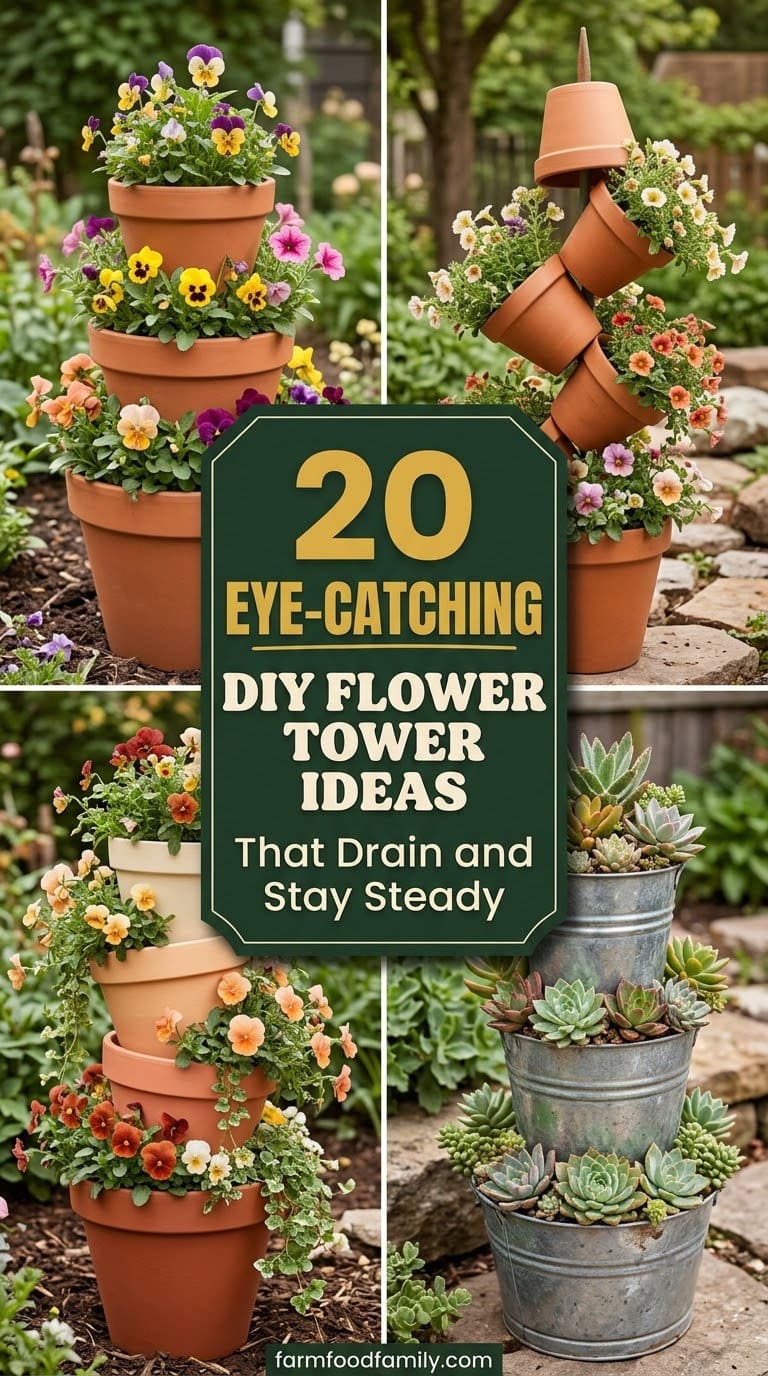
20 Eye-Catching DIY Flower Tower Ideas (Stable, Well-Drained, and Easy to Water)
A flower tower packs a whole bed into one pot-sized footprint, as long as each tier drains, the base stays steady, and the lower pots get water.

Never miss an update — choose FarmFoodFamily as your preferred source on Google.
How it works: Tap the button below to open Google's settings page, then check the box next to FarmFoodFamily.
Tap the checkbox to turn it blue — that's how you know it's set.
A flower tower packs a whole bed into one pot-sized footprint, as long as each tier drains, the base stays steady, and the lower pots get water.
Products We Recommend
This post contains affiliate links. We may earn a commission on qualifying purchases at no extra cost to you.

INGOFIN Terracotta Pots Set with Saucer, 5/6/7 inch
Three graduated clay pots with drainage holes for a nested tower
Shop Now
5-Piece HSS Step Drill Bit Set for Metal
Drills drainage holes in metal buckets, cans, and drawers
Shop Now
Screen Repair Kit, 36 x 90 inch Fiberglass Mesh
Cut-to-size mesh to cover drainage holes so mix stays in
Shop Now
A flower tower turns a small corner into a full garden. You stack pots, buckets, or crates and plant every level. The result is height, color, and almost no footprint.
The catch is that towers fail in quiet ways. Lower pots can stay dry while the top one drowns, and a tall stack can tip in a gust. This guide gives you 20 builds with the drainage, mix, and watering details that keep them alive.
Answer 4 quick questions and get matched to the exact fix for your yard — drainage, budget, layout, or something else entirely.
Take the Free QuizWhat’s the Quick Answer for a Flower Tower That Lasts?
Give every tier a way to drain. Cornell Cooperative Extension of Nassau County says containers must have drainage holes, and that you can drill four to six if a container has none. It also says not to drill ceramic.
Fill the tiers with a soilless potting mix, not garden soil. The same guide says garden soil is too heavy and can carry weed seeds or disease. Leave an inch or two below the rim so water does not spill.
Water until it runs out the bottom. Check lower tiers by hand, because water does not always reach them, and clay pots dry out faster than plastic.
Set the base on level ground, and plan for wind. A tall stack is only as steady as its widest bottom pot, so start with the heaviest one.

Which Tower Style Suits Your Space?
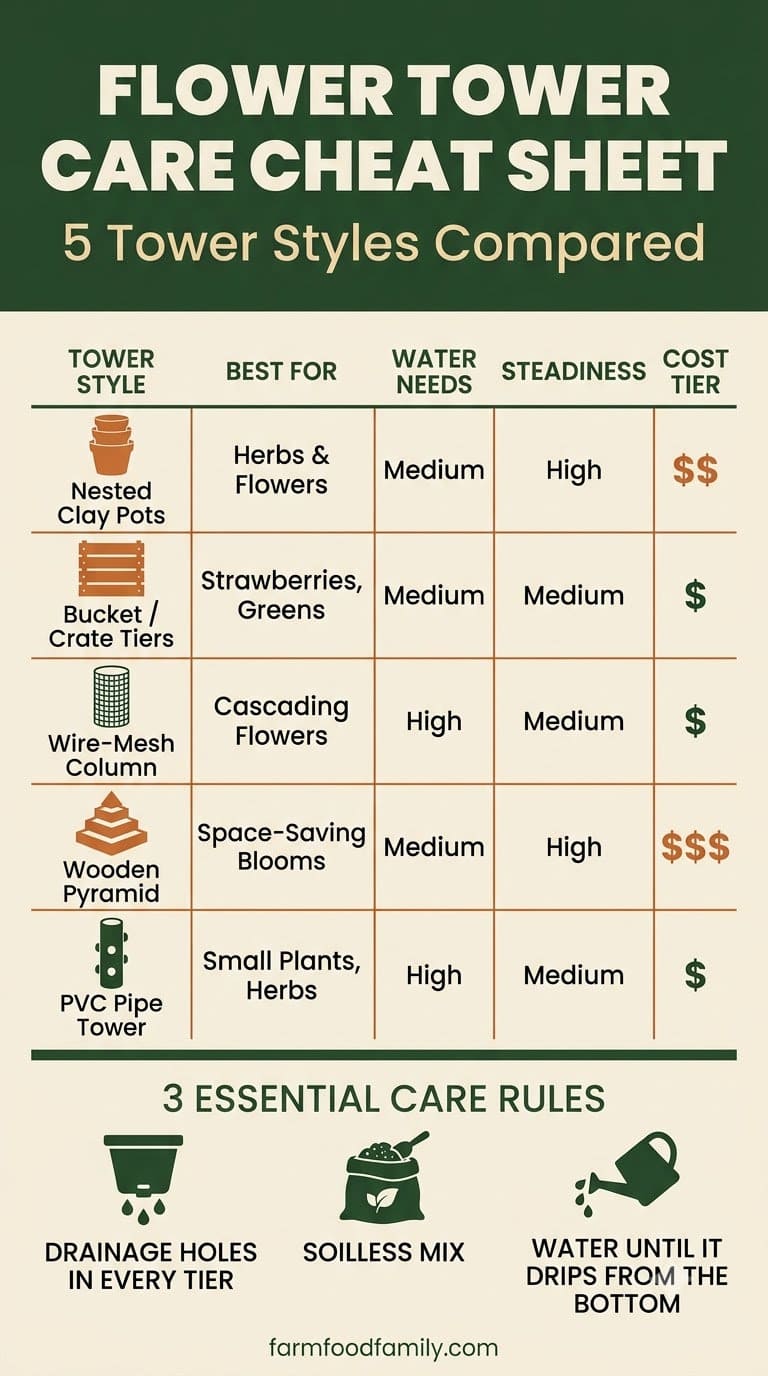
This table is our own planning guide, based on how each style is built. It is not tested data.
Most yard problems trace back to one specific, fixable cause. Find yours in 4 quick questions.
Take the Free Quiz| Style | Best for | Water needs | Steadiness | Cost tier |
|---|---|---|---|---|
| Nested clay pots | Patios, steps | High (clay dries fast) | Medium | Low |
| Bucket or crate tiers | Porches, decks | Medium | Medium to high | Low to medium |
| Wire-mesh column | Small beds | Medium | Needs a firm base | Low |
| Wooden pyramid | Sunny lawns | Medium | High (wide base) | Medium |
| PVC pipe tower | Succulents, balconies | Low to medium | Needs anchoring | Low to medium |
Before You Start: Drainage, Mix, Watering, and Stability
Start with drainage, because stacked pots hold water. The Nassau County guide has a simple fix for washed-out mix. Place window screening or a coffee filter over the whole bottom of the pot. Skip the gravel layer and use the mesh instead.
Pick pots that fit the plan. Clay and moss baskets dry out faster, says the Nassau County guide. Kansas State Extension adds that potting soil in plastic does not dry out as fast as soil in unglazed clay.
Water by touch. The University of Illinois Extension says to feel the soil and water if the top inch or so is dry. It also says to keep leaves dry, because wet foliage invites disease.
Avoid wood treated with creosote or other unsafe preservatives for any tier that holds soil. Test old painted pieces for lead too. The EPA says homes built before 1978 are more likely to have lead-based paint, and that sanding should be wet and minimal.
20 DIY Flower Tower Ideas
1. Classic Nested Clay-Pot Tower
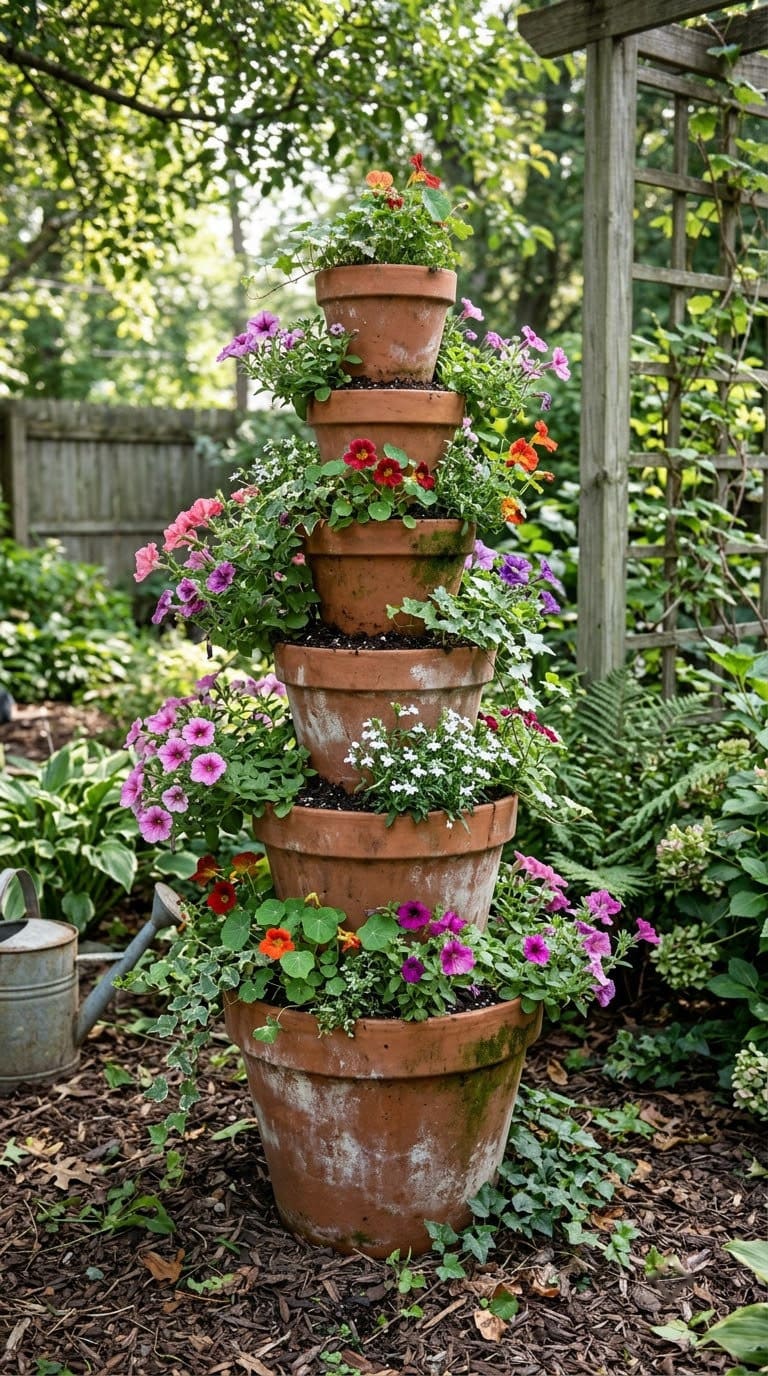
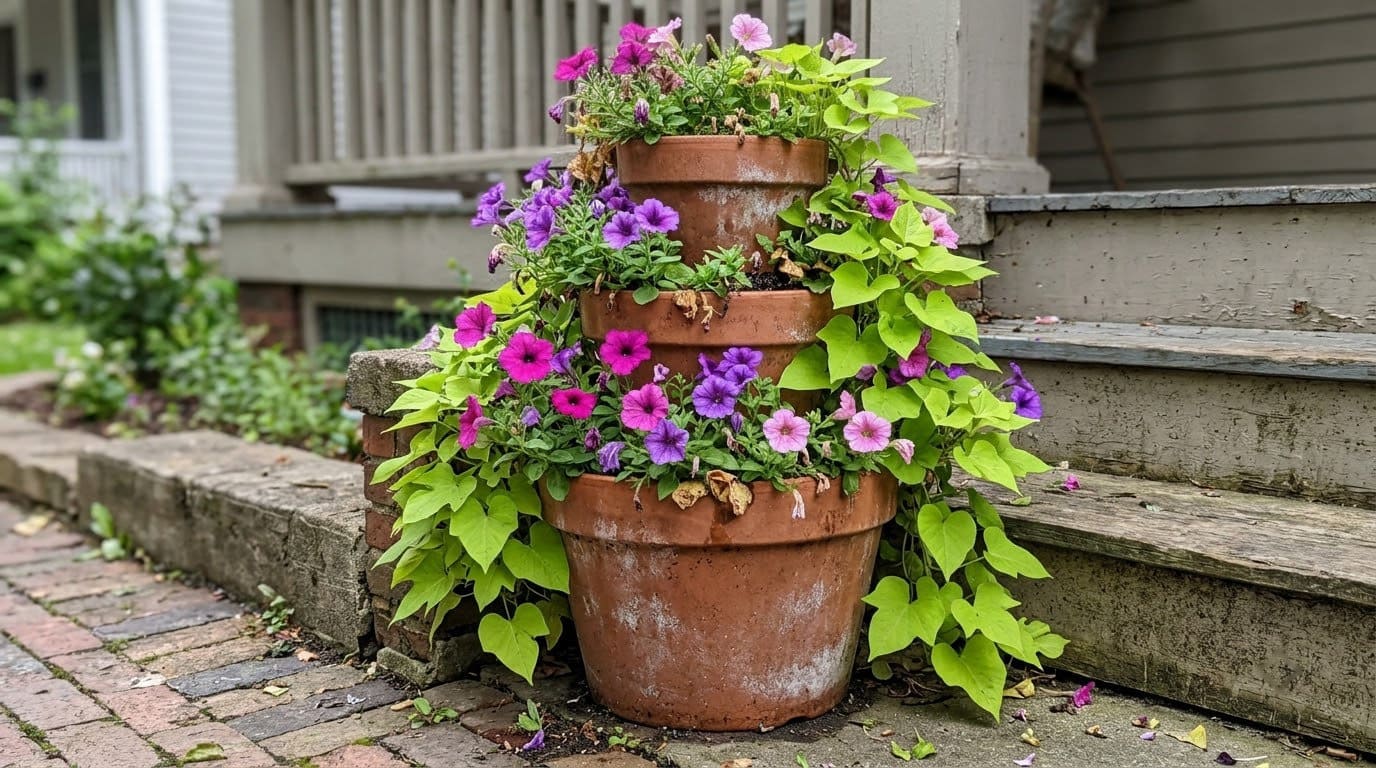
This is the basic tower. Choose three pots in descending sizes, with drainage holes in each. Place the largest pot on level ground, fill it with potting mix, then press the next pot into the mix.
Keep the soil continuous from the bottom to the top, so water moves down. Plant trailing flowers around the rim of each tier. Clay dries fast, so check it daily in hot weather.
Three graduated clay pots with drainage holes for a nested tower
Shop NowThis post contains affiliate links. We may earn a commission on qualifying purchases at no extra cost to you.
Cost tier: low.
2. Tipsy Toppling Pots
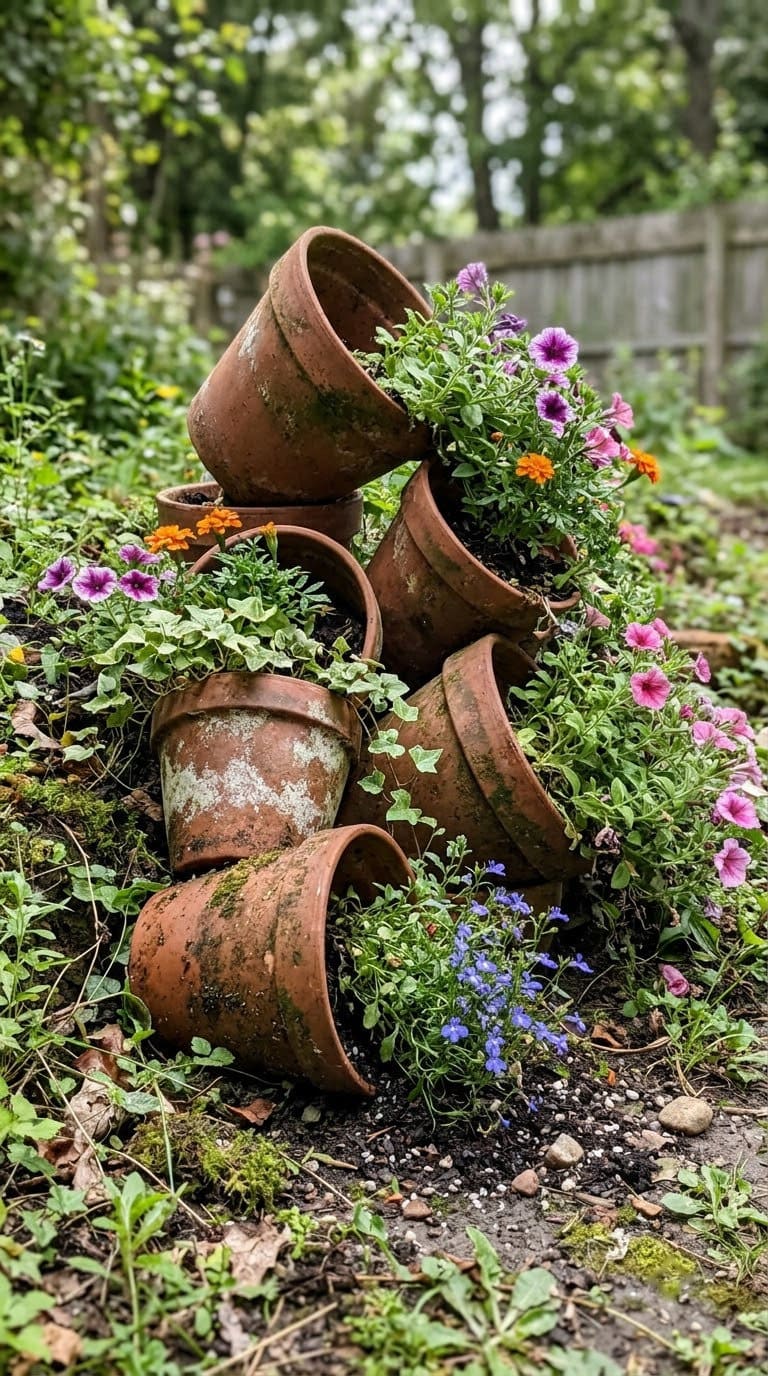
Tip a pot on its side so it looks like it is spilling flowers. Anchor it with a rod or dowel through the drainage hole, and set it deep in a heavy base pot. The look is playful, and it works at a porch corner.
The average homeowner spends $616/year on yard fixes that don't address the real problem. Find out what yours actually is — before you spend another dollar.
Take the Free QuizBecause the pots sit at an angle, water drains unevenly. Water slowly and check that each pot drains. See more containers like this in our flower pot projects.
Cost tier: low.
3. Ombre Waterfall Pots
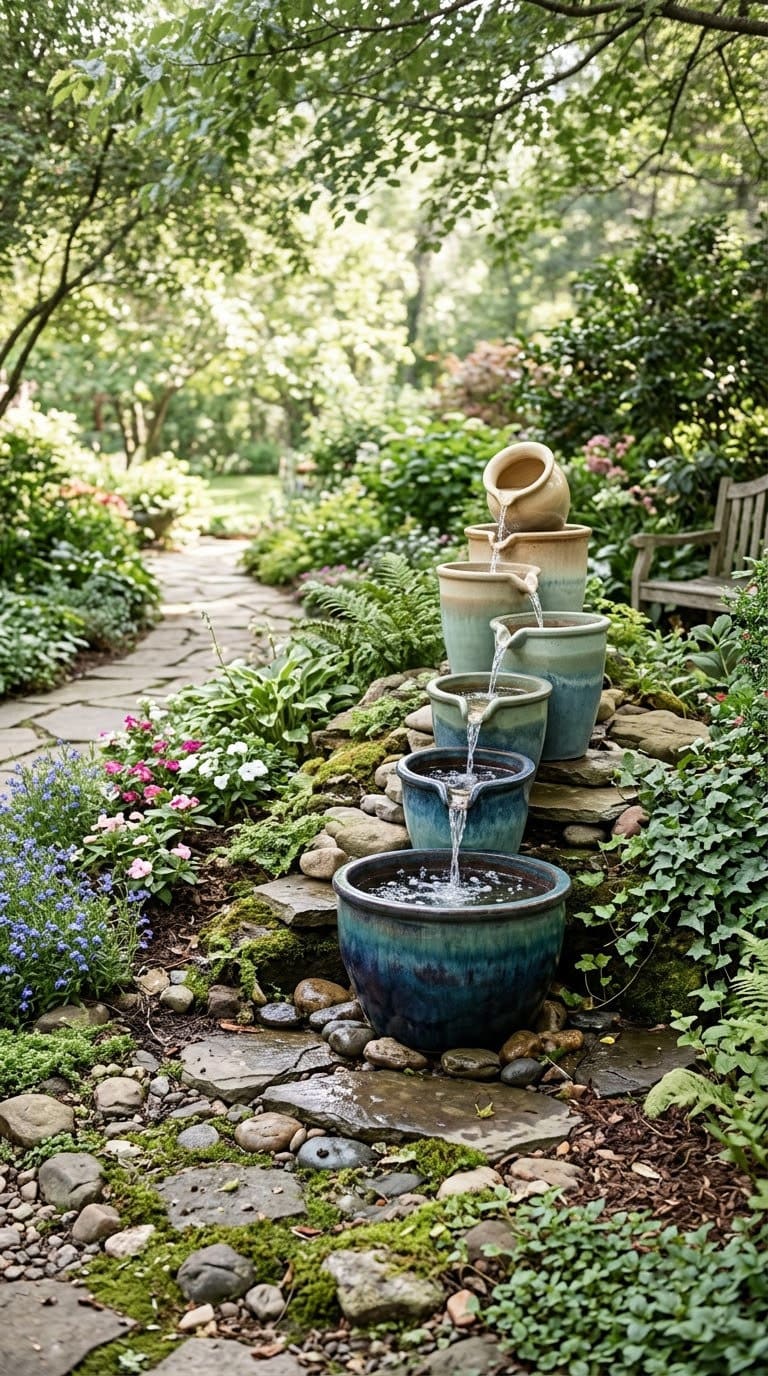
Paint a set of pots in graded shades, from dark at the base to light at the top. Use exterior paint, and finish with a clear exterior sealer. Stack them so each one sits slightly offset from the one below.
Plant cascading flowers in every tier so the color flows down. Paint only the outside, and keep it off the drainage holes.
Cost tier: low.
4. Painted Stenciled Pot Tower
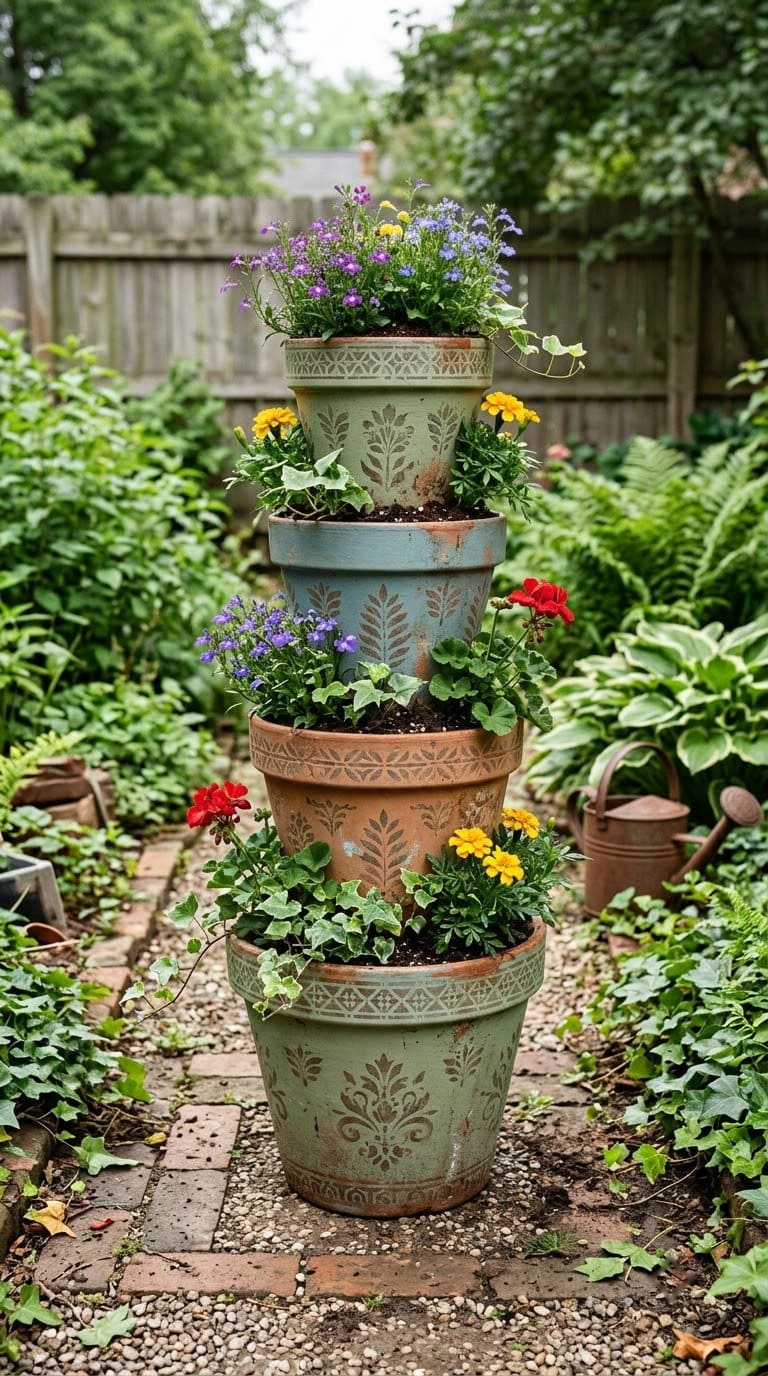
Dab a stencil on each pot for a matching pattern. Use a dry brush so the paint does not bleed under the edge. Seal the finish before planting.


A single repeating pattern makes mismatched pots feel like a set. Pair it with solid-color flowers so the pattern shows.
Cost tier: low.
5. File-Cabinet Tower
Pull the drawers out part way and stagger them like steps. Drill drainage holes in the bottom of each drawer, and line them with landscape fabric. Sand lightly and spray with rust-inhibiting paint.
Check for lead before sanding an old cabinet, per the EPA advice above. A cabinet is heavy once planted, so place it before you fill it.
Cost tier: low to medium.
6. Birdbath Tower
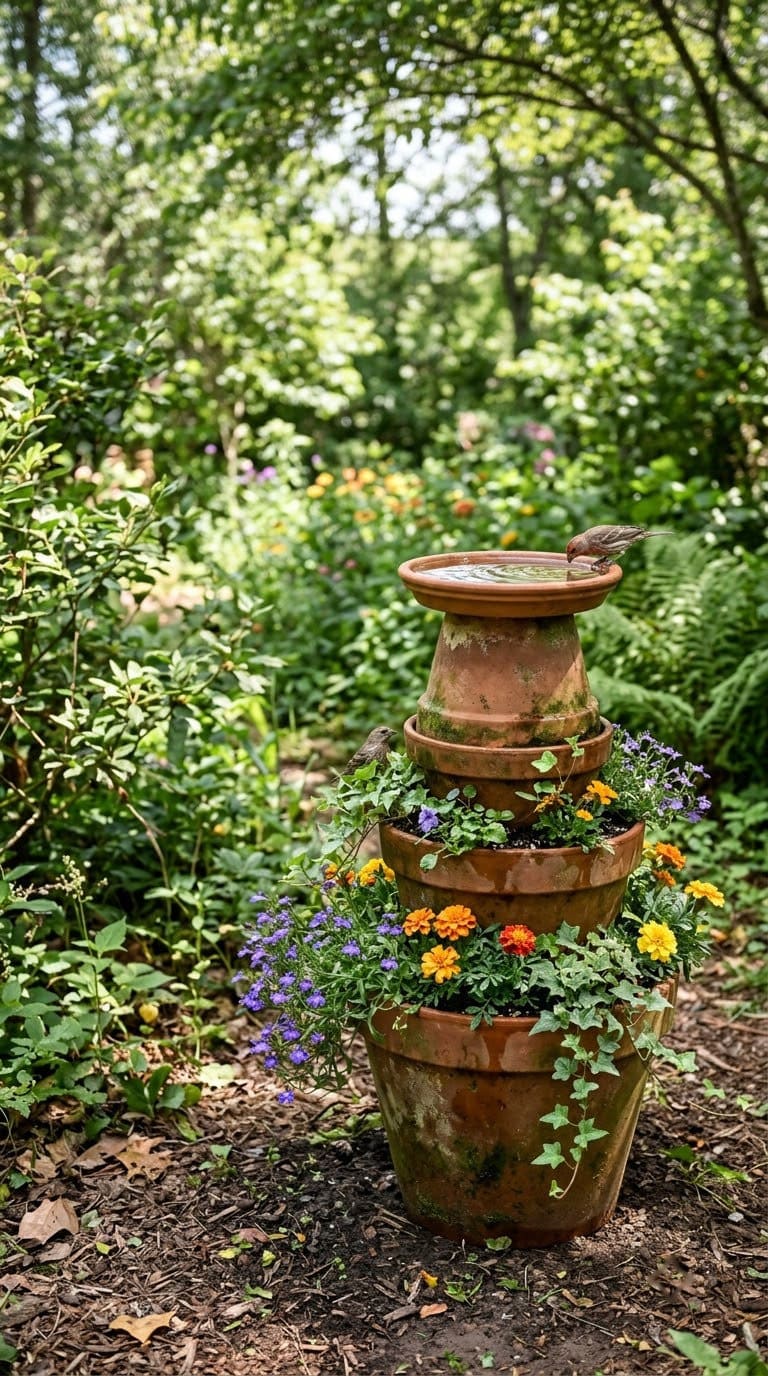
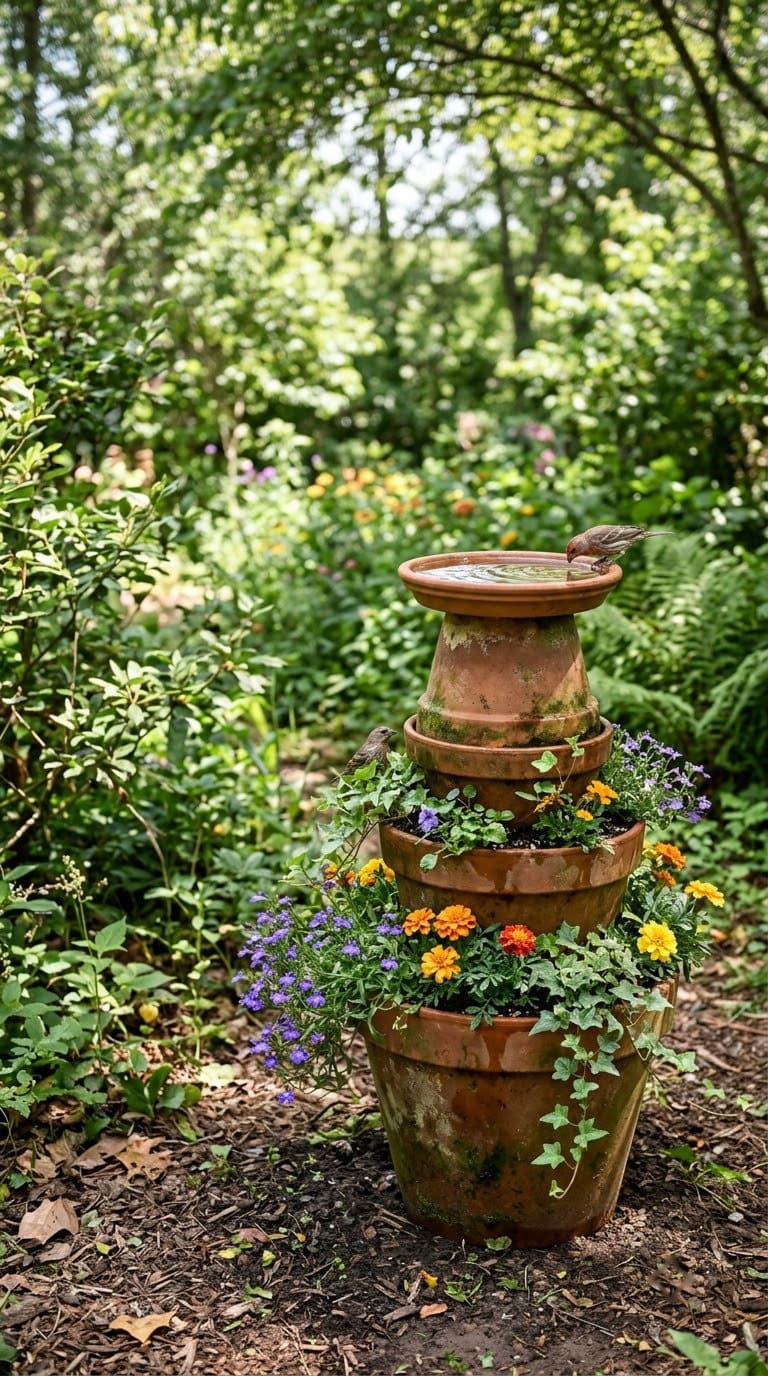
A birdbath makes a ready-made pedestal. Set a pot of flowers in the basin and surround it with trailing plants. The basin has no drain hole, so the pot inside must have its own.
Level the base first, because a tilted pedestal tips easily. Use it as a focal point in a bed.
Cost tier: low to medium.
7. Mini Succulent Tiered Tower
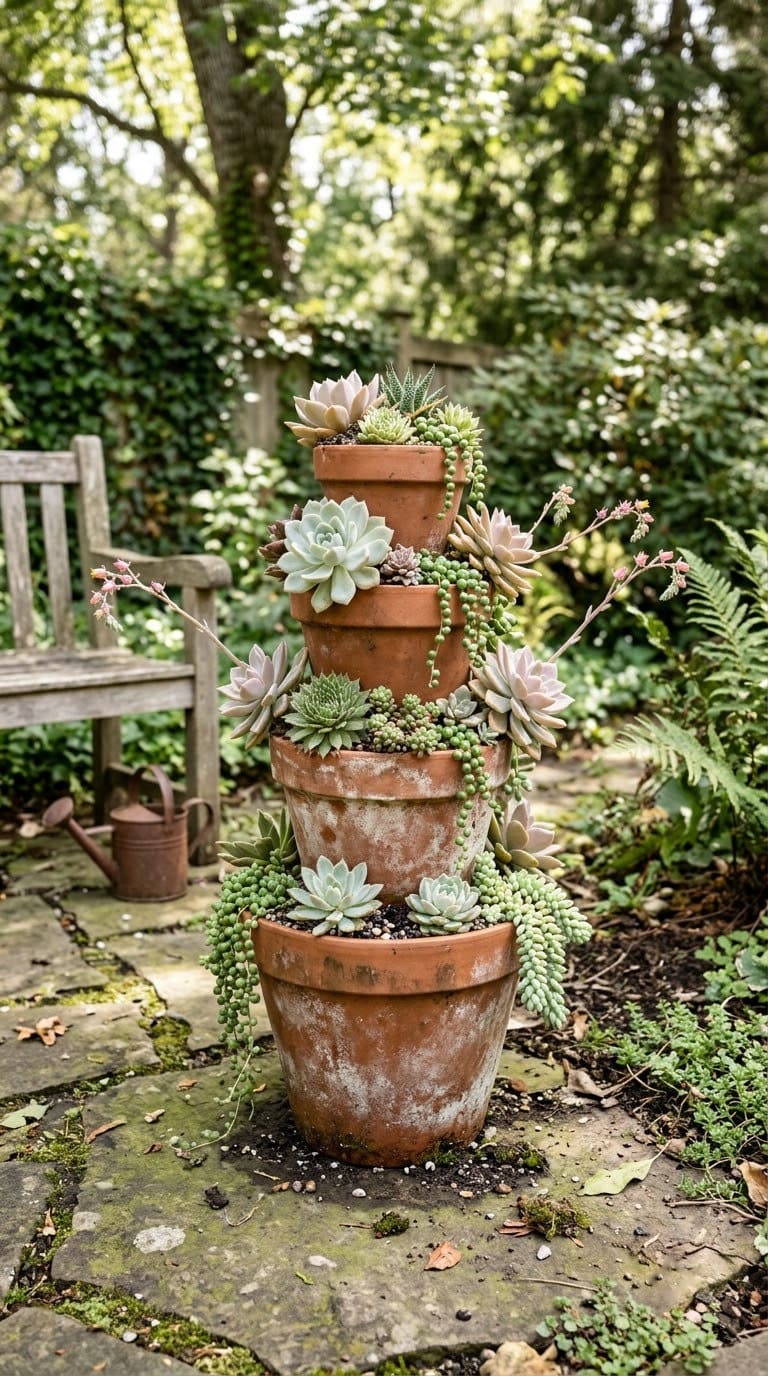
Small pots hold succulents on a tiered stand. Use gritty cactus mix and pots with drainage holes. Water lightly and only when the mix is dry.
Keep this one in a sheltered spot, since small pots dry out quickly and cannot take hard rain. Bring it indoors before a frost.
Cost tier: low.
8. Wooden Sunflower Pyramid
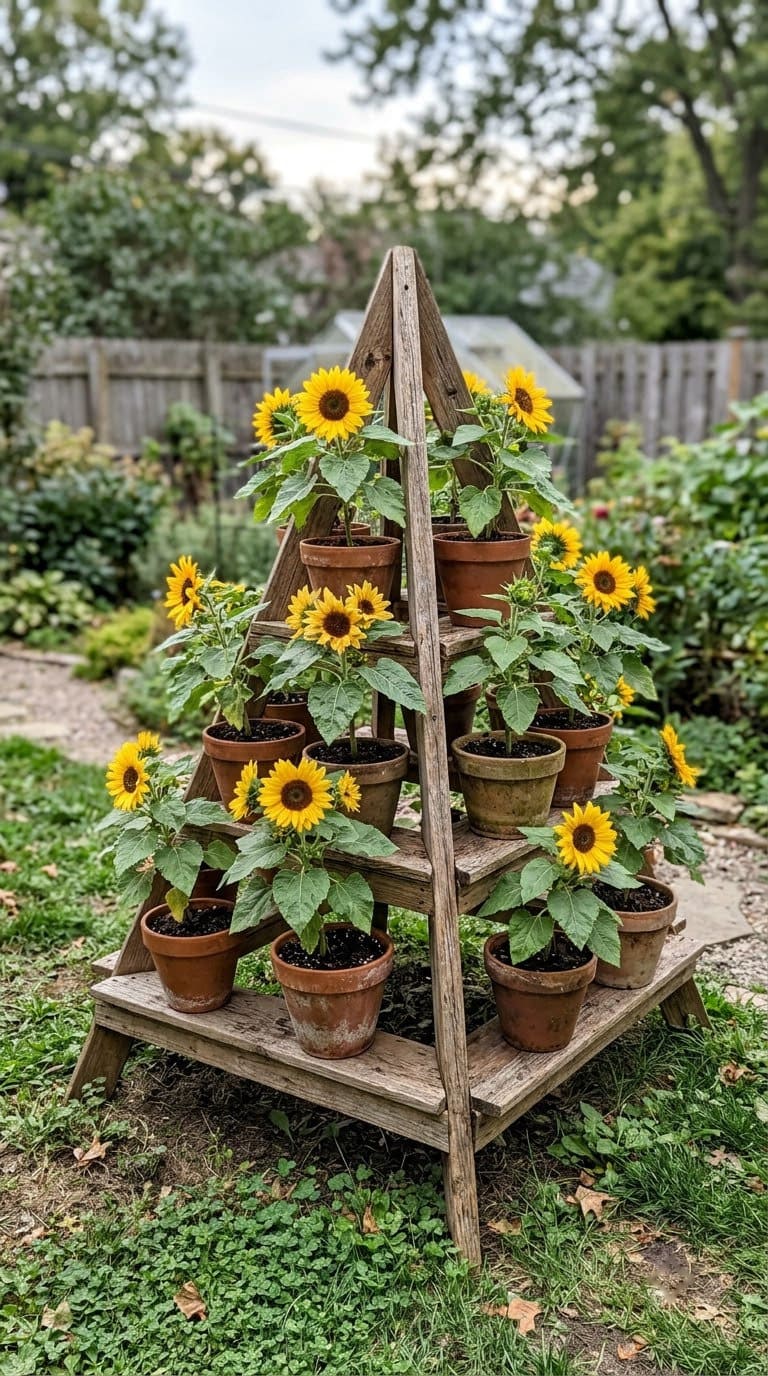
Build three square frames of descending sizes from untreated lumber, and stack them like steps. Nassau County says wood containers should not contain creosote or any unsafe preservative. Set pots on each step.
The wide base makes this the steadiest style. Place it in full sun, and water each pot separately.
Cost tier: medium.
9. Wire-Mesh Column Tower
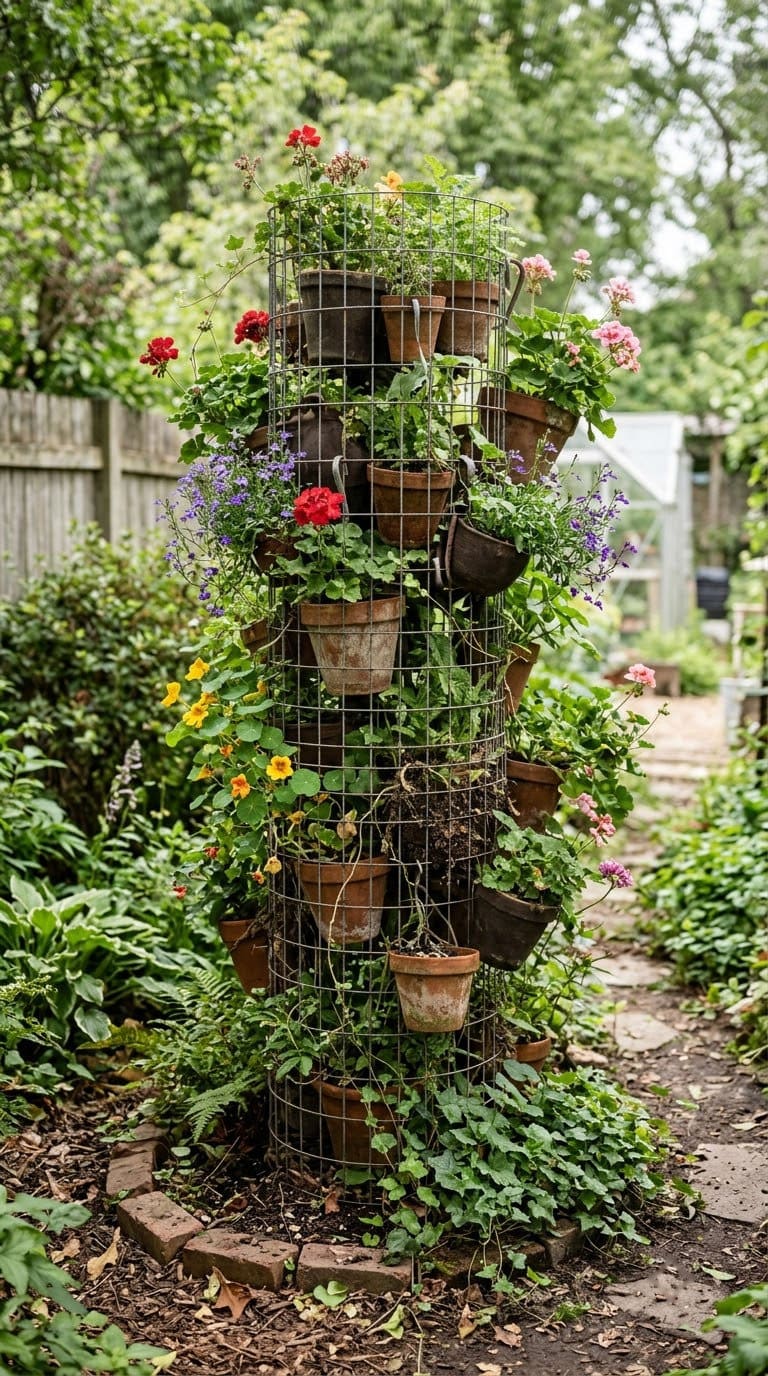
Form fencing into a cylinder and set it in a wide base pot. Line it with landscape fabric or moss and fill with potting mix. Plant flowers through the gaps as you fill.
Water from the top and let it soak down. The center may stay dry, so check it by hand. For wall-mounted versions, browse our vertical garden ideas.
Cost tier: low.
10. House-Number Tower
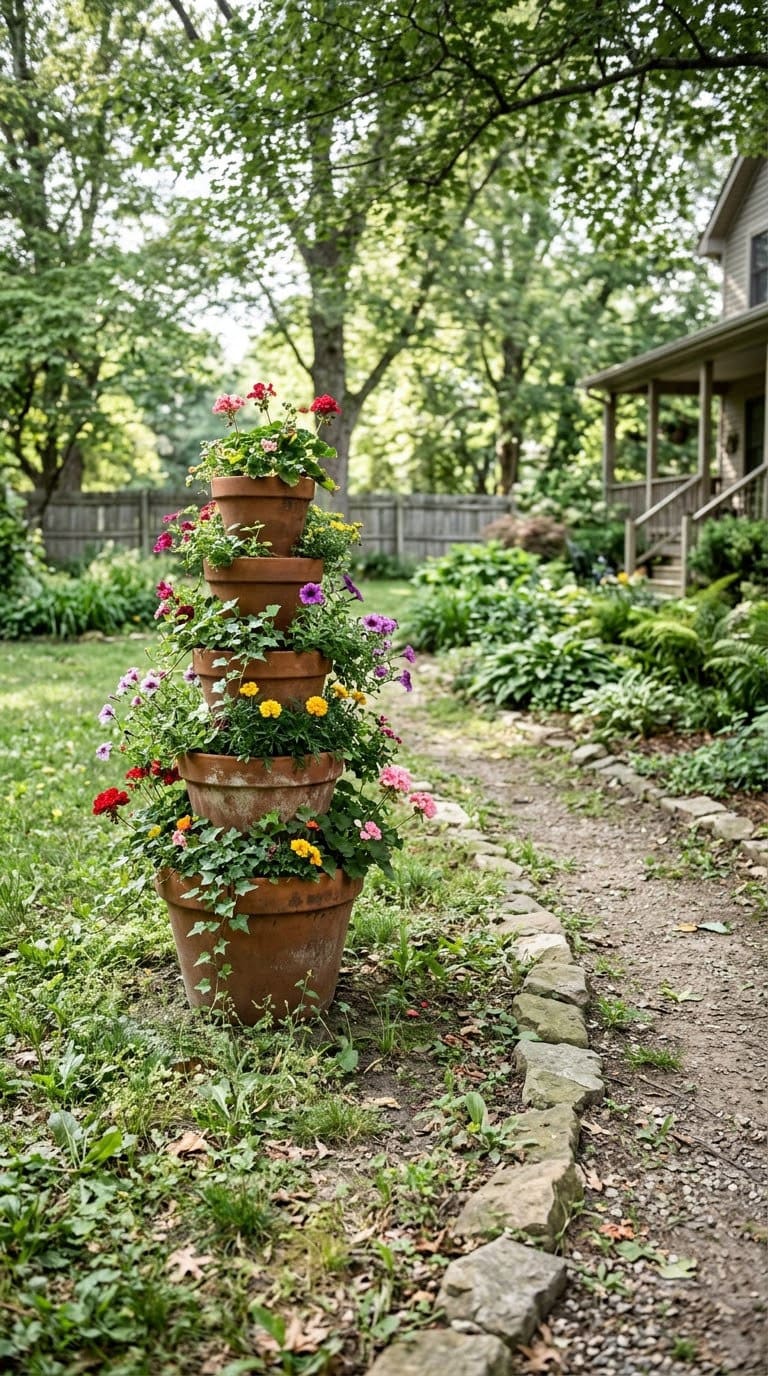
Paint your house number on the top pot in a high-contrast color. Seal it so rain does not wash it out. Place the tower by your front step.
Choose a color that reads from the street. Keep the tower beside the path, not in it.
Cost tier: low.
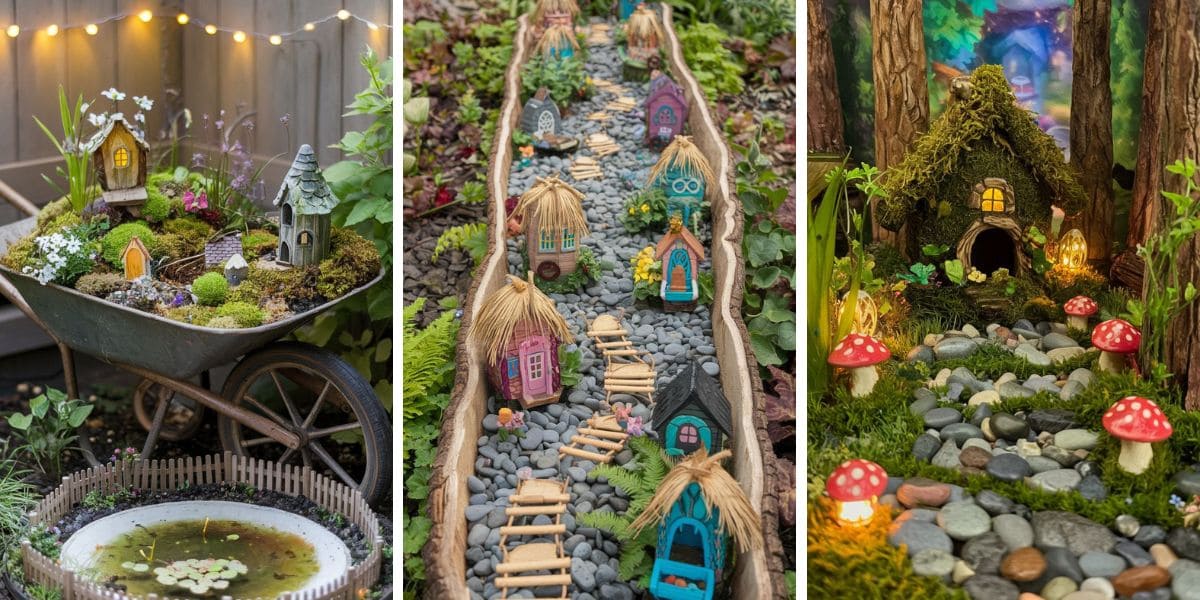
11. Fairy-House Tower
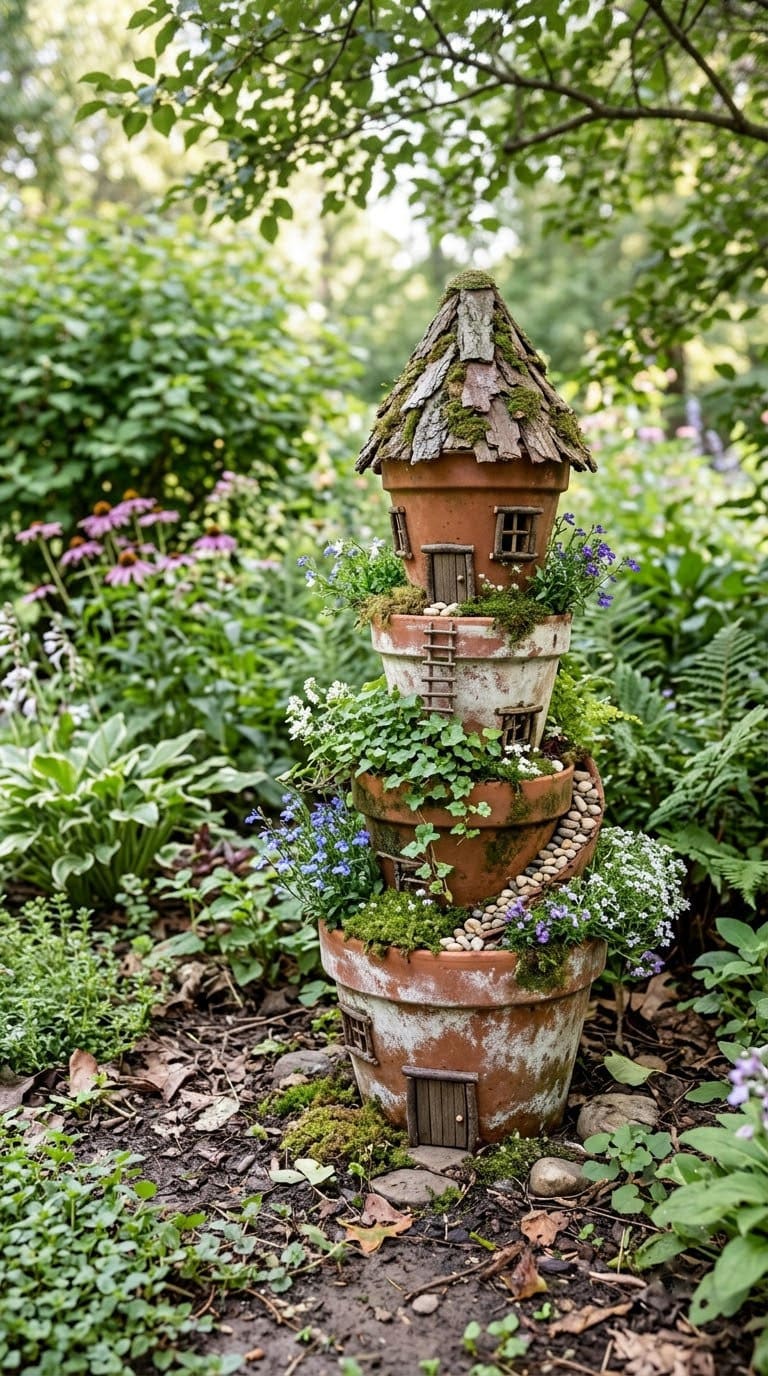
Top a short tower with a small weatherproof house. Plant moss and small flowers around it. Keep it in part shade.
Use a lightweight house so the stack stays steady. Seal any wood pieces.
Cost tier: low.
12. Succulent Bucket Tower
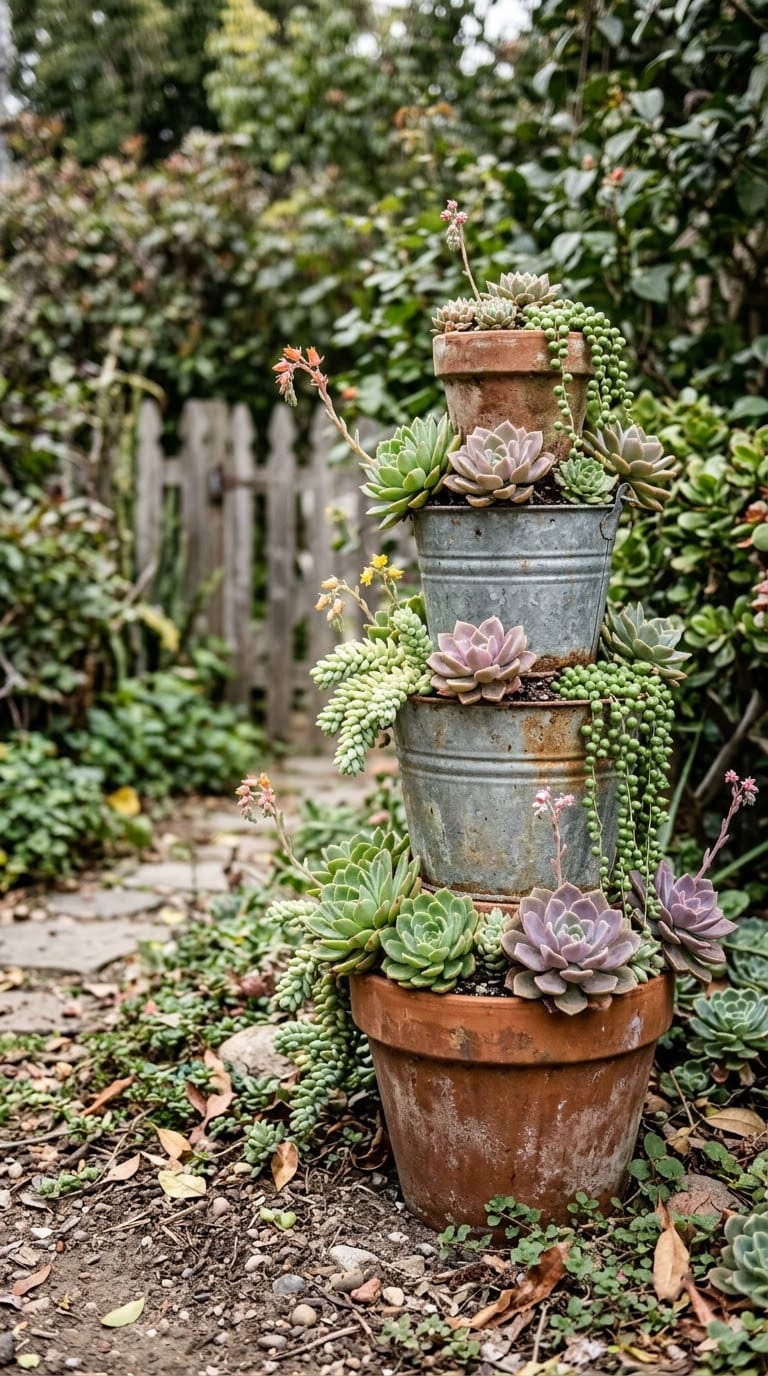
Stack galvanized buckets in descending sizes. Drill drainage holes in every bucket. Plant succulents in a gritty mix.
Metal heats in the sun, so choose a spot with afternoon shade. For other repurposed metal pieces, see our chair planter ideas.
Cost tier: low.
13. Herb-and-Flower Green Tower
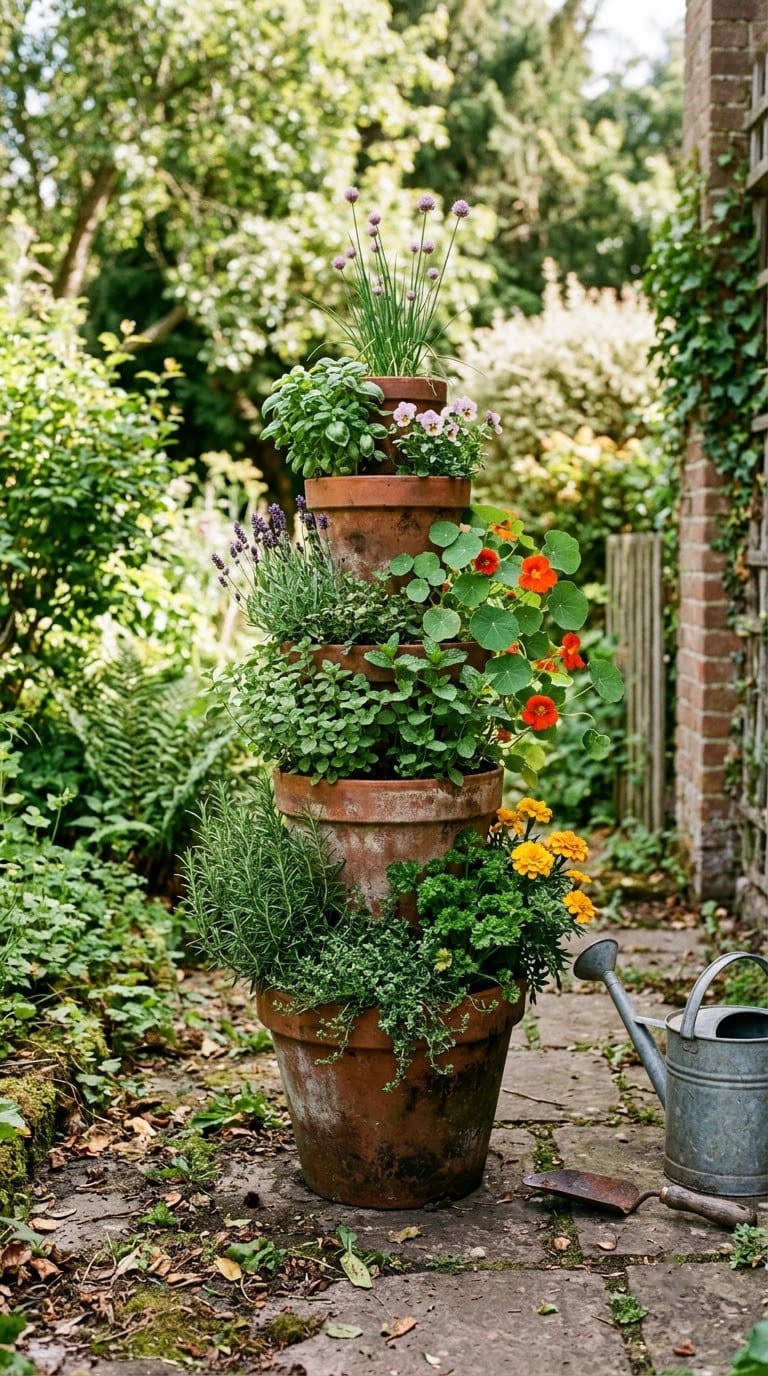
Put herbs in the sunniest top tier and trailing flowers below. Use a soilless mix and a plastic or glazed pot inside if the outer pot is old or antique. Keep leaves dry when you water.
Keep food crops out of old painted or antique containers. A plain plastic pot in a decorative pot is a safe workaround, as Kansas State Extension describes.
Cost tier: low to medium.
14. PVC Pipe Succulent Tower
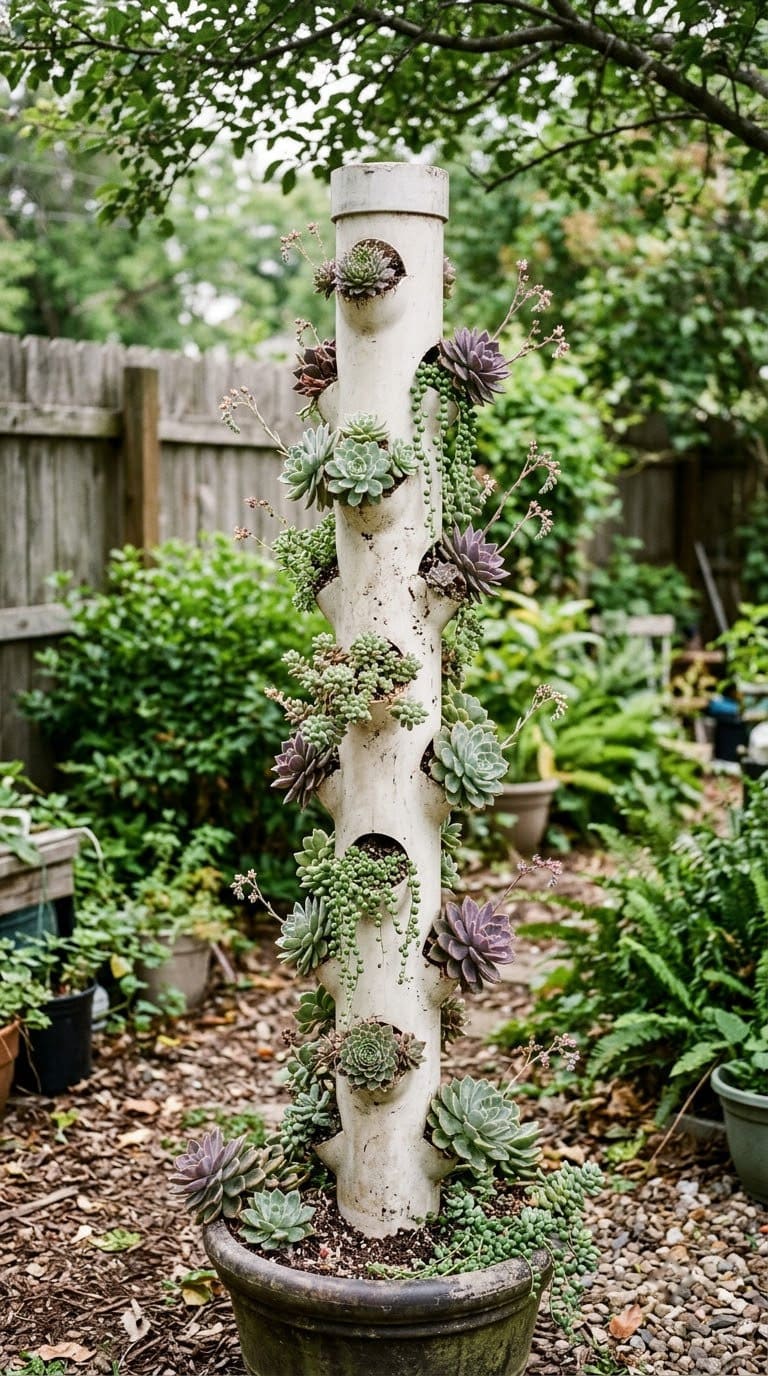
Drill planting holes into a length of pipe and set it upright in a heavy base. Fill with gritty mix and plant succulents in each hole. Add drainage holes at the base.
Anchor the pipe well, since it is light. Keep it to ornamental plants.
Cost tier: low to medium.
15. Watering-Can Waterfall
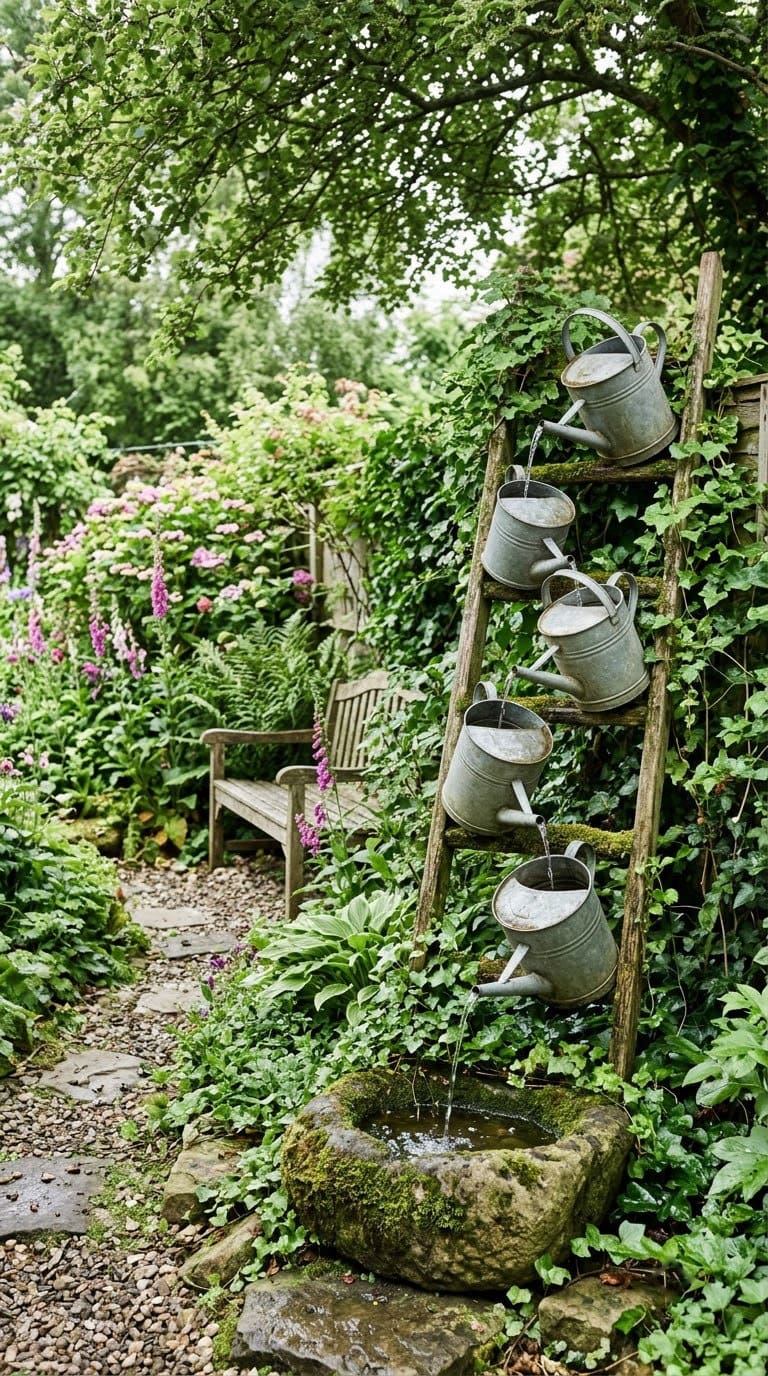
Stack old watering cans on a ladder or stand so flowers spill from the spouts. Drill drainage holes in each can. Seal the metal to slow rust.
Check that the stand is stable before loading it. Keep it under a roof to limit rust.
Cost tier: low.
16. Front-Porch Flower Tower
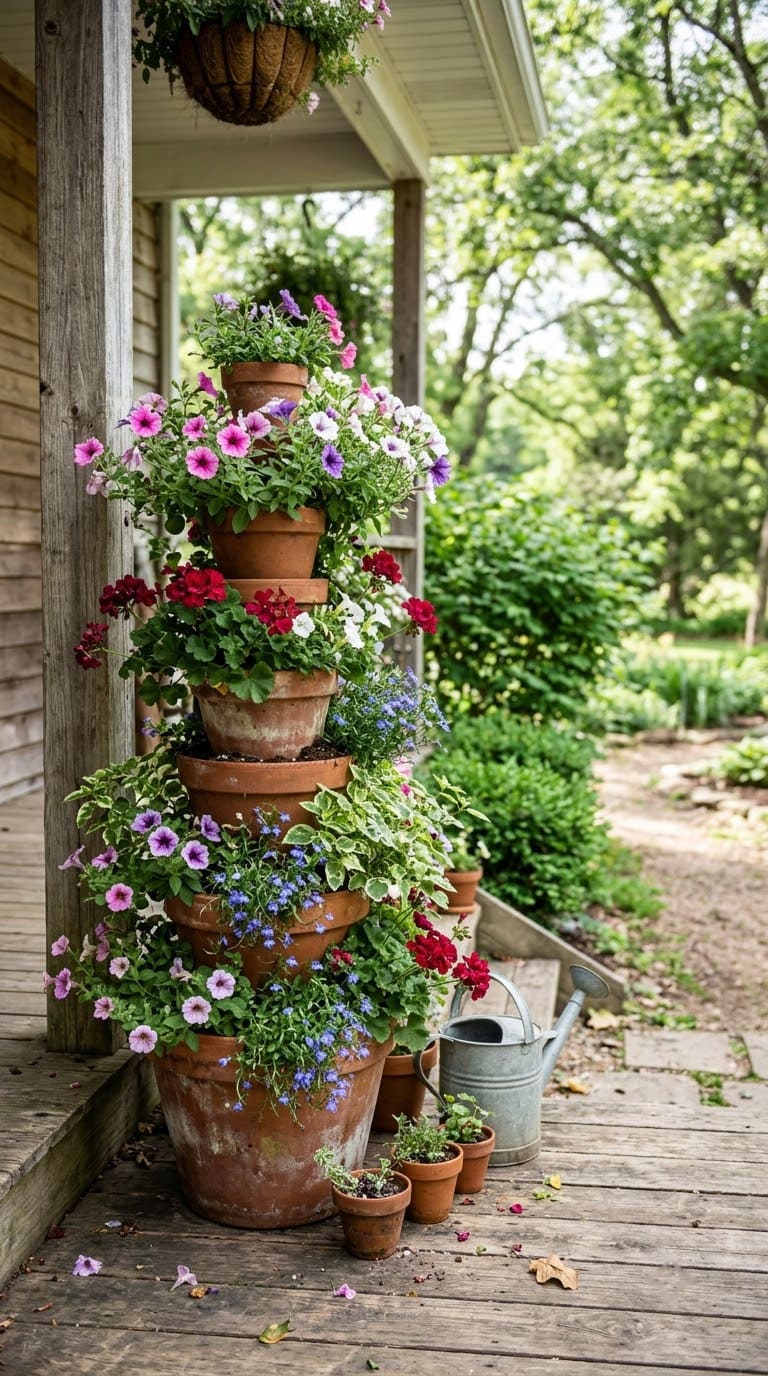
Put a tower beside the door for instant welcome. Use pots that match your door color. Place it where it is out of the way of foot traffic.
Check it after storms. For more entry ideas, see our porch planter ideas.
Cost tier: low to medium.
17. Tiered Crate Tower
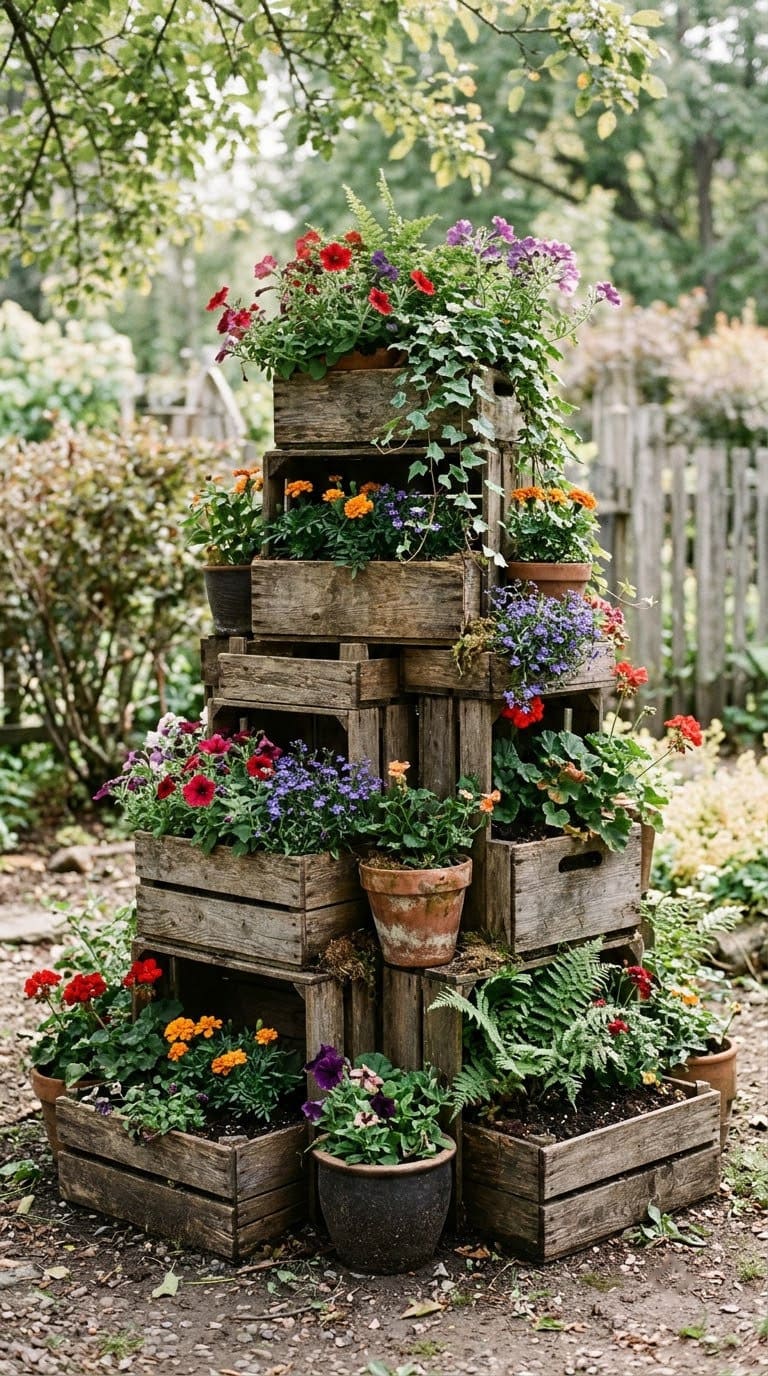
Stack wooden crates in steps and set pots in each. Line crates with landscape fabric if you plant directly. Avoid crates with unknown preservatives.
Crates rot over time. Set the base on bricks so air moves underneath.
Cost tier: low.
18. Hanging Tiered Basket Tower
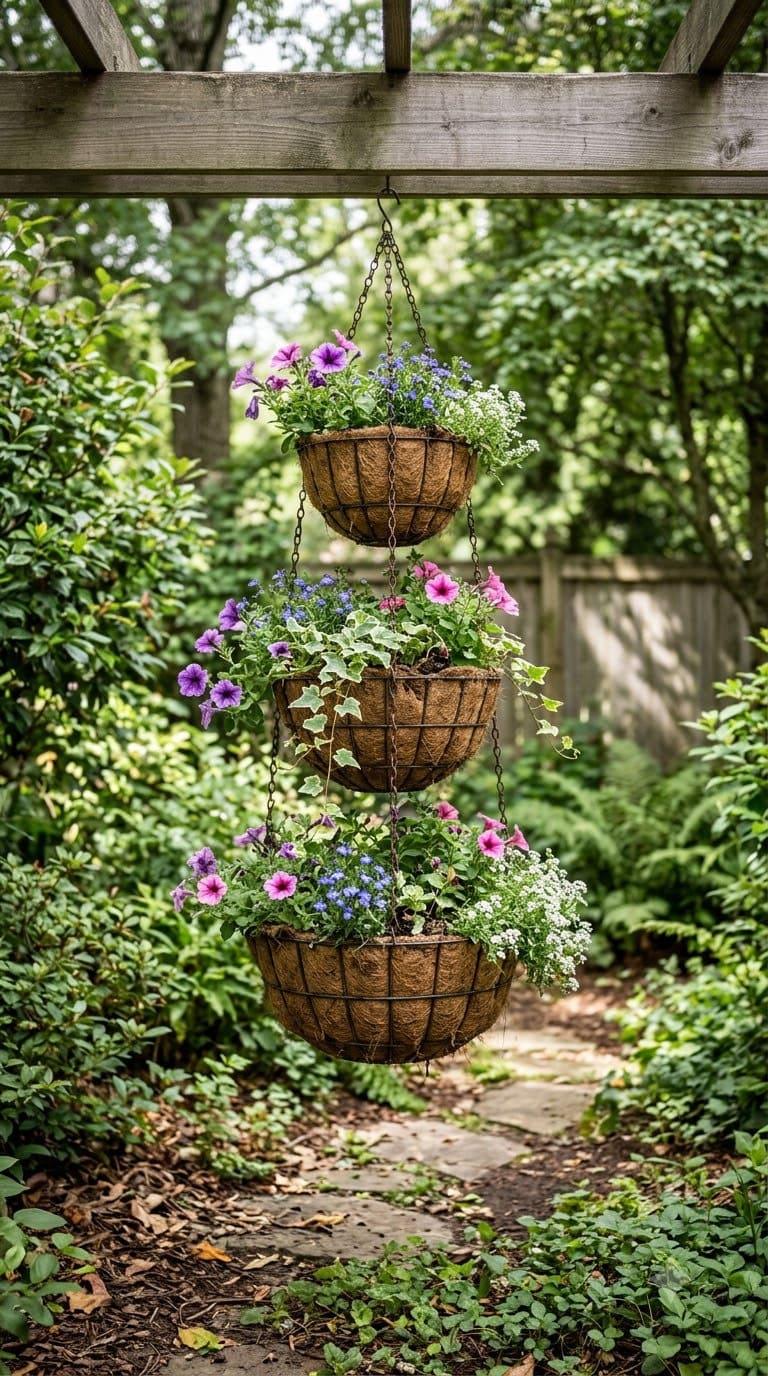
Hang baskets at different heights from a sturdy beam. Use baskets with liners and good drainage. Water thoroughly, since hanging baskets dry fast.
See our hanging planter ideas for hardware tips.
Cost tier: medium.
19. Strawberry-Pot Tower
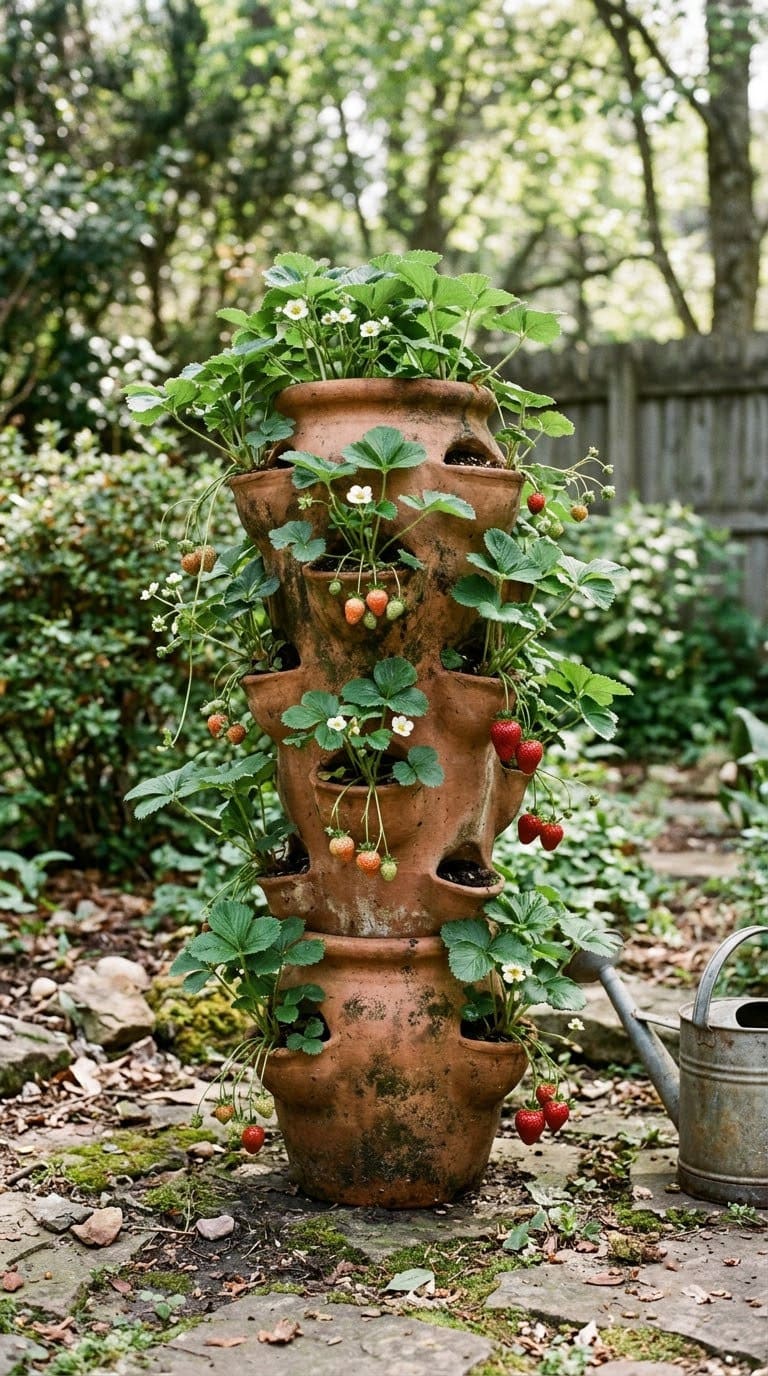
A strawberry jar has built-in pockets. Fill it with soilless mix as you plant each pocket. Run a central tube of mesh or pipe through the middle so water reaches the bottom.
Clay dries fast, so water often. Use flowers or herbs.
Cost tier: low to medium.
20. Rebar-and-Pot Staggered Pole
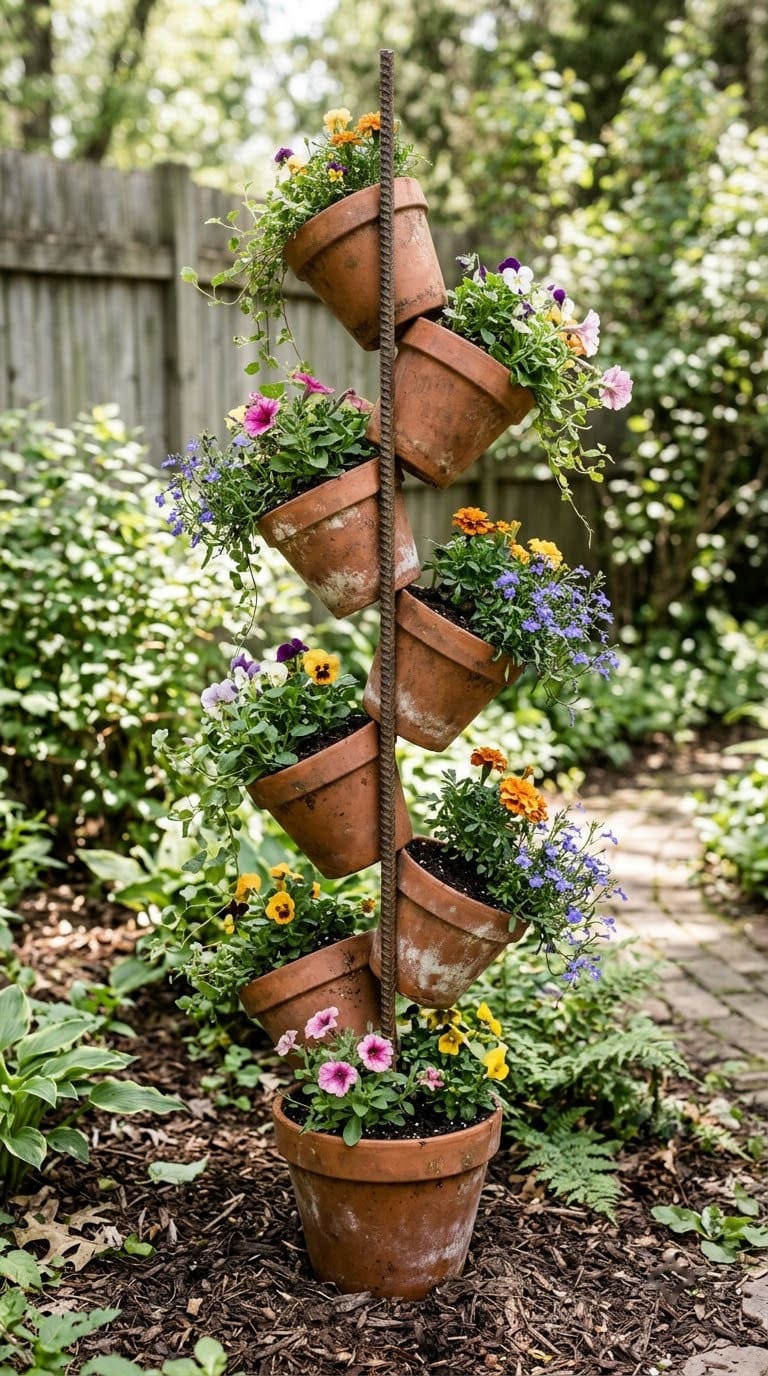
Drive a metal rod into firm ground and thread pots onto it, each staggered at an angle. Plant trailing flowers.
The rod gives the tower its strength. Cap the top so no one gets scratched.
Cost tier: medium.
Which Plants Go in Which Tier?
Put sun lovers on top and trailing plants lower. Trailing plants like sweet potato vine spill over the edge. Short, compact plants suit the narrow upper tiers.
Group plants with the same water needs. A thirsty annual and a succulent in one tower will not both thrive.
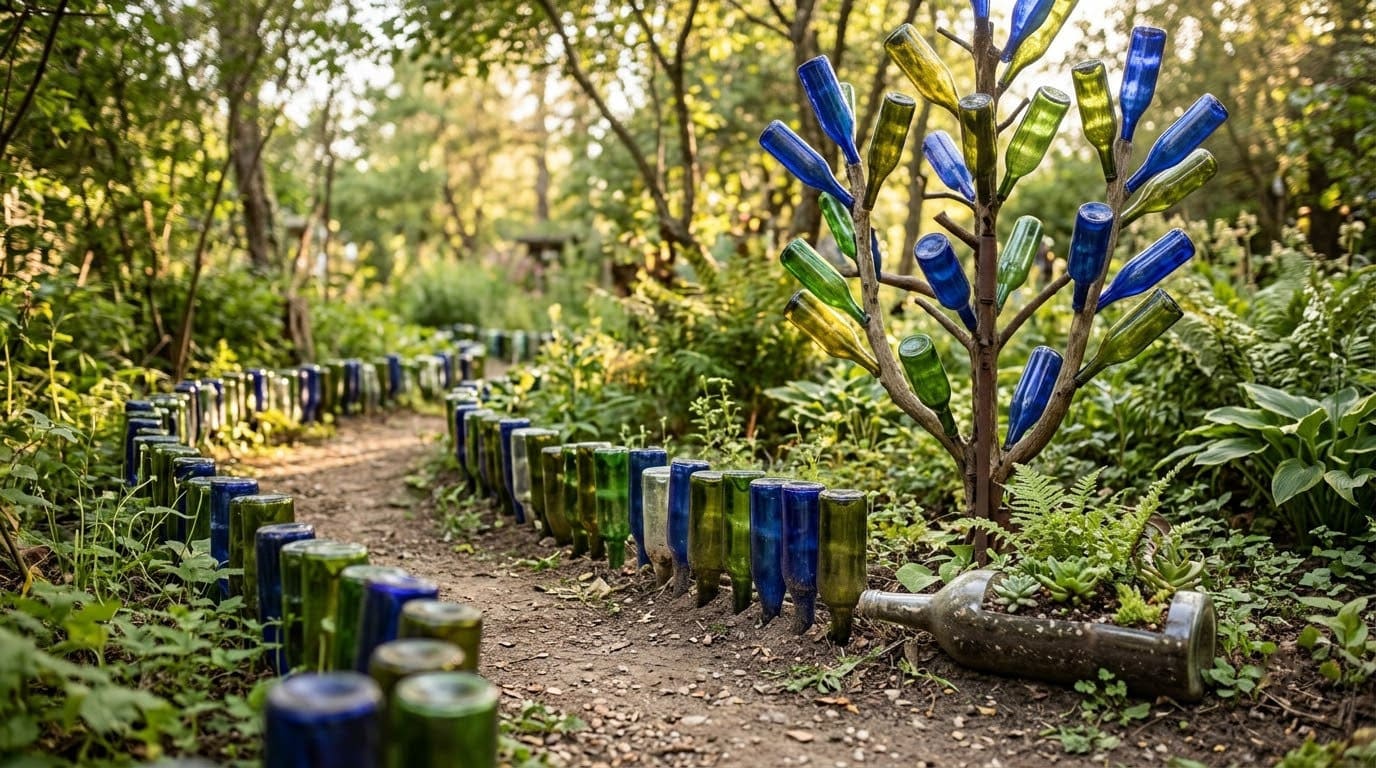
For wall and pocket styles, see our pocket planter ideas. For bottles, see these bottle garden ideas.
How Do You Keep a Flower Tower Steady?
Stability comes from the base. Use the widest, heaviest pot at the bottom, and set it on level ground or a flat paver. A tall, narrow stack with a small base will tip first.
Fill the bottom pots with mix before you add the upper tiers, so the weight sits low. Press each pot firmly into the mix below it. If wind is common where you live, choose a short tower or a wide pyramid style.
Move heavy towers before you plant them, not after. A filled tower is hard to shift, and dragging it can crack a pot.
How Do You Care for a Tower Through the Season?
Check the tower daily in hot weather. University of Illinois Extension says containers dry out fast, and that daily watering is often needed. Use your finger to test the top inch.
If the mix shrinks away from a pot’s edge, water runs straight down the gap. The same source suggests soaking the pot in a bucket so water enters through the bottom holes.
Deadhead spent flowers, and pull the tower apart at season’s end if it holds tender plants. Clean the pots before you store them.
Common Mistakes to Avoid
Skipping drainage is the first mistake. Nassau County says containers must have drainage holes, and it advises drilling four to six if they have none.
Using garden soil is the second. The same guide says garden soil is unsuitable for containers.
Forgetting the lower tiers is the third. University of Illinois Extension advises watering until water reaches the bottom and drips from the holes.
FAQ
How do I water the lower tiers of a flower tower?
Water until it drips from the drainage holes, per University of Illinois Extension, and check each tier by hand.
What soil should I use?
A soilless potting mix. Nassau County Extension says garden soil is unsuitable for containers.
Can I drill drainage holes in ceramic?
Nassau County Extension says not to drill ceramic containers. Use pots that already have holes.
Do clay or plastic pots dry out faster?
Clay. Kansas State Extension says potting soil in plastic does not dry out as fast as in unglazed clay.
How do I keep a tall tower from tipping?
Use the widest, heaviest pot as the base on level ground.
Never miss an update — choose FarmFoodFamily as your preferred source on Google.
How it works: Tap the button below to open Google's settings page, then check the box next to FarmFoodFamily.
Tap the checkbox to turn it blue — that's how you know it's set.