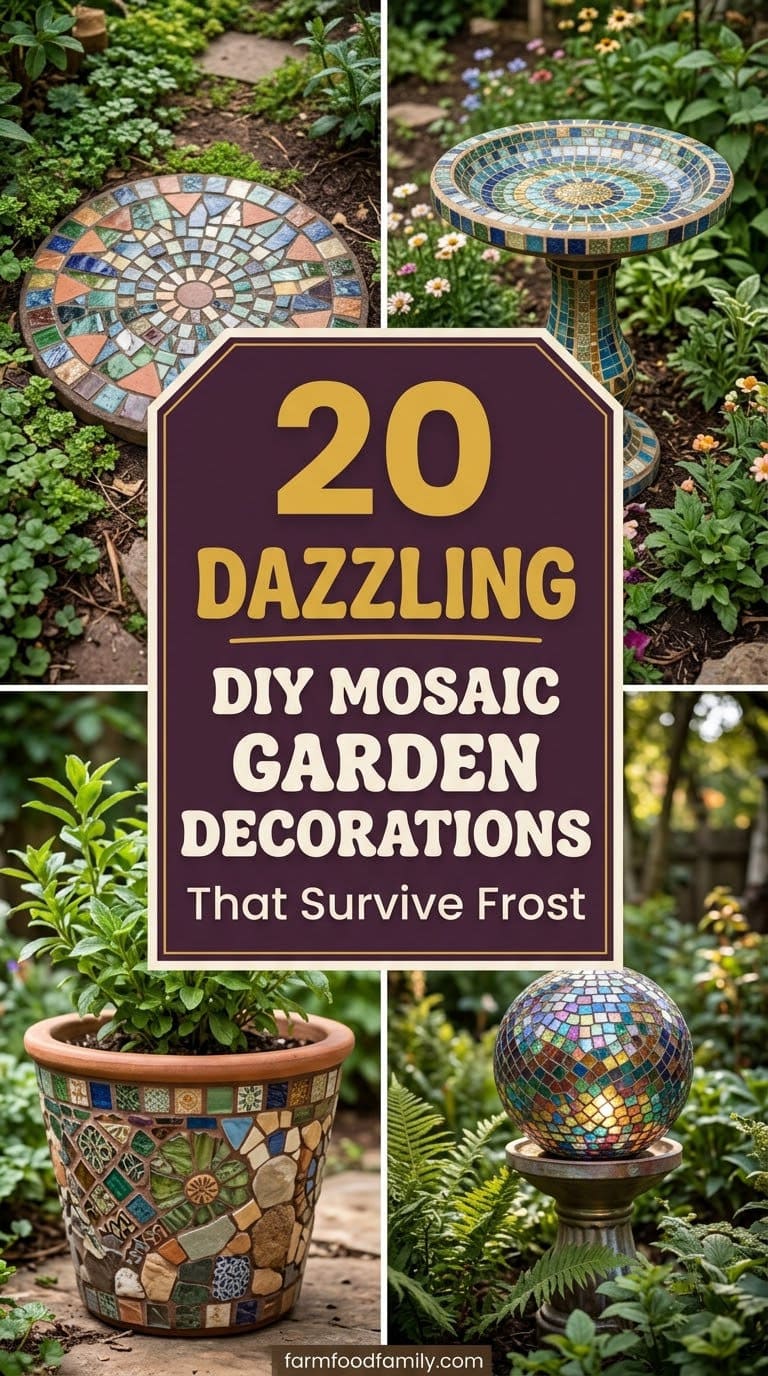
20 Dazzling DIY Mosaic Garden Decorations That Survive Frost
A mosaic can outlast paint in the garden, as long as you use thinset, frost-proof tile, and a sealed base.

Never miss an update — choose FarmFoodFamily as your preferred source on Google.
How it works: Tap the button below to open Google's settings page, then check the box next to FarmFoodFamily.
Tap the checkbox to turn it blue — that's how you know it's set.
A mosaic can outlast paint in the garden, as long as you use thinset, frost-proof tile, and a sealed base.
Products We Recommend
This post contains affiliate links. We may earn a commission on qualifying purchases at no extra cost to you.

A mosaic turns broken tile, glass, and china into garden art. It holds its color for years, with no repainting. A good one can sit by your path through many summers.
A bad one flakes after the first freeze. The tile pops off, the grout cracks, or the base crumbles. This guide gives you 20 mosaic projects with the base, tile, adhesive, and sealer that keep them alive outdoors.
Answer 4 quick questions and get matched to the exact fix for your yard — drainage, budget, layout, or something else entirely.
Take the Free QuizWhat’s the Quick Answer for a Mosaic That Lasts Outdoors?
Use thinset mortar, not craft glue. Mosaic Art Supply says to attach tile outdoors with thinset, and to mix it at about a quarter cup of water per pound.
Pick a solid base. The same source says wood should never be an outdoor backer. It recommends quarter-inch concrete backer board, masonry, or stone. It also says glass tile resists freeze damage, while unglazed ceramic and tumble-finished stone do not.
Grout the joints, then seal the whole piece. Mosaic Art Supply says to apply several coats, because grout stays porous.
Let each stage cure before the next one. Gardening Beyond says to leave a fresh piece flat for at least twenty-four hours before you move it, because moving it early can loosen tiles. Start small. A single stepping stone teaches the whole method, and you can finish it in a weekend.
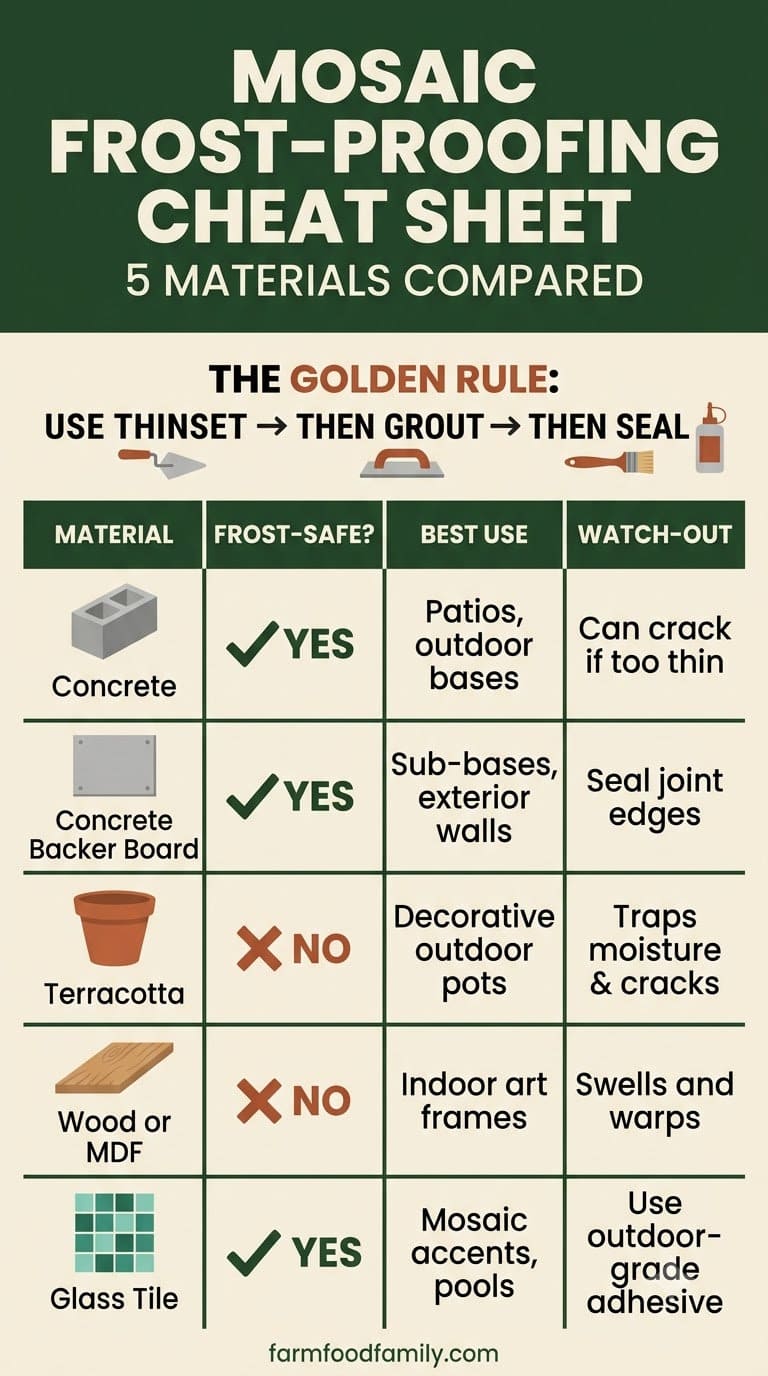
Which Base and Tile Survive Frost?
This table is our own planning guide. The terracotta, wood, glass, and ceramic rows come from the sources linked in this article. The other rows are general practice.


| Material | Frost-safe? | Best use | Watch-out |
|---|---|---|---|
| Concrete (paver, pot, block) | Yes | Stepping stones, planters | Seal the bottom and edges |
| Concrete backer board | Yes | Plaques, number signs | Cut and seal edges |
| Terracotta pot | No | Indoor or sheltered | Absorbs water, flakes after freezing |
| Wood or MDF | No | Dry indoor use only | Swells and warps outdoors |
| Glass tile | Yes | Anywhere outdoors | Sharp when cut |
| Dense porcelain | Yes | Paths and tabletops | Hard to nip |
| Unglazed ceramic | No | Sheltered spots | Porous, freeze damage |
| Thin printed china | No | Sheltered spots | Flakes in freeze-thaw |
Before You Start: Tools, Safety, and Method
Gather glass nippers or a tile cutter, safety glasses, gloves, a dust mask, a bucket with a lid, and a sponge. Work outdoors, since thinset is dusty. Mosaic Art Supply advises a dust mask and mixing outdoors, and says not to pour dry thinset into open containers.
Most yard problems trace back to one specific, fixable cause. Find yours in 4 quick questions.
Take the Free QuizFollow the method in this order, based on the process outlined by Gardening Beyond:
- Sketch the design at full size, using two to four contrasting colors.
- Brush off the base, and seal very porous concrete before you start.
- Cut tiles, and sort them by color.
- Spread thinset over a section you can finish in fifteen to twenty minutes. Mix only what you can use in about half an hour.
- Press each piece firm so it does not rock, and leave gaps wide enough for grout.
- Leave the piece flat for at least twenty-four hours, or longer if the bag says so.
- Grout with outdoor sanded grout, wipe the haze, and let it dry for a day.
- Seal with two thin coats after the grout cures, since the same source says thin coats beat one heavy coat.
Sweep and vacuum every offcut, so no sharp shard hides in the grass later. Check each stone for sharp tile edges before kids or pets use it.
We left out the fire pit mosaic from the old page. We found no fetched source on heat-rated tile, so we could not give you safe guidance. See our stone fire pit ideas for pit builds instead.
Which Tile and Pieces Should You Use?
Glass is the safest choice for most outdoor work. Mosaic Art Supply says glass tile resists moisture and freeze damage. It also keeps its color, so it looks bright in the sun.
Dense porcelain is a good second choice for paths and tabletops. Skip unglazed ceramic and tumble-finished stone, which the same source calls porous and prone to freeze damage.
Broken dishes add charm, but thin printed china can flake in freeze-thaw cycles, per Gardening Beyond. Keep china for sheltered spots such as a covered porch. Sort pieces by color in trays before you start, so you can see the pattern as it grows.

Wheeled nippers for cutting glass and tile pieces
Shop NowThis post contains affiliate links. We may earn a commission on qualifying purchases at no extra cost to you.
Smaller pieces curve around stones and pots better than large ones. Cut tile into rough squares for flat surfaces and slivers for curved shapes. Wear safety glasses and gloves each time you nip.
20 DIY Mosaic Garden Decorations
1. Mosaic Stepping Stones
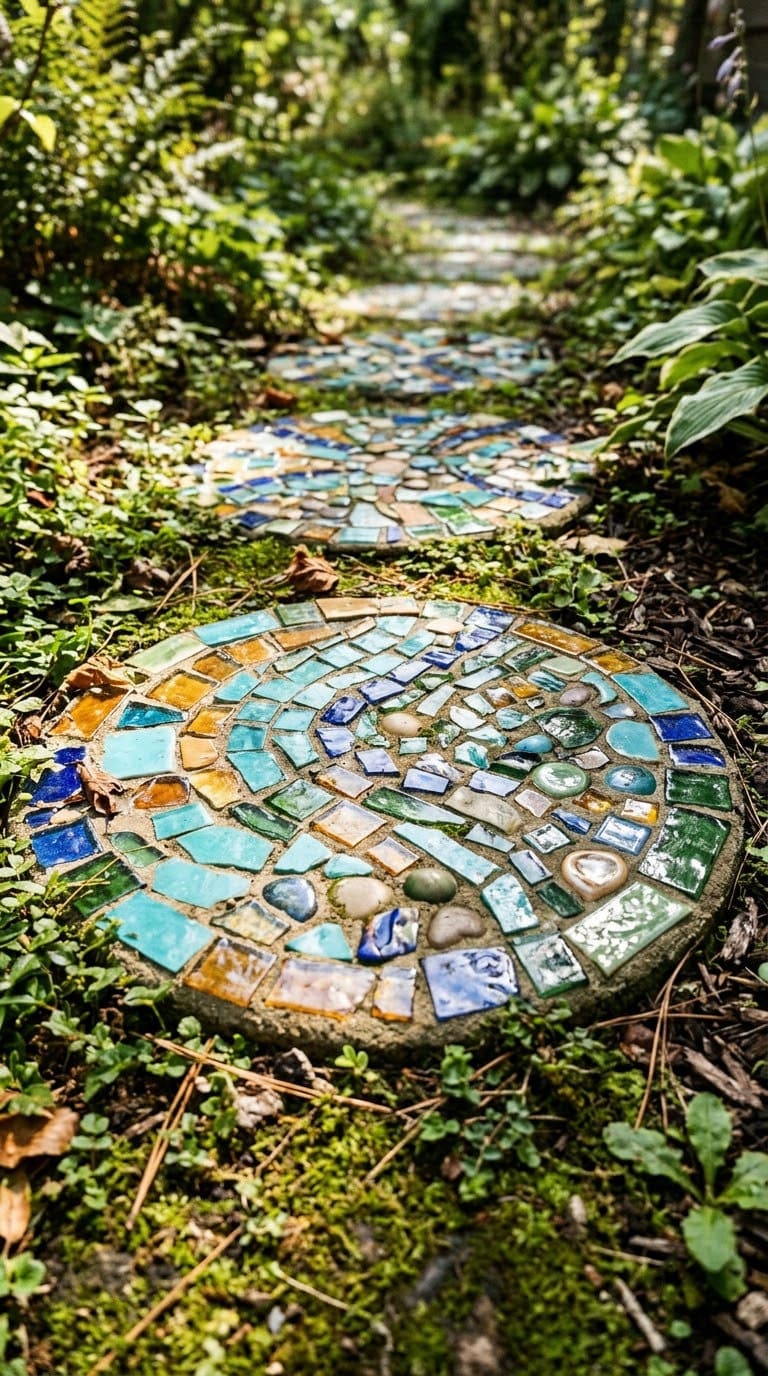
A stepping stone is the best first project. Start with a store-bought concrete paver, scrub it with a wire brush, and set glass or porcelain pieces in thinset. Keep the surface level, because people will walk on it.
Grout, cure, and seal as above, then set the stones on compacted sand. For path layouts, see our garden path ideas.
The average homeowner spends $616/year on yard fixes that don't address the real problem. Find out what yours actually is — before you spend another dollar.
Take the Free QuizCost tier: low.
2. Mosaic Garden Rocks
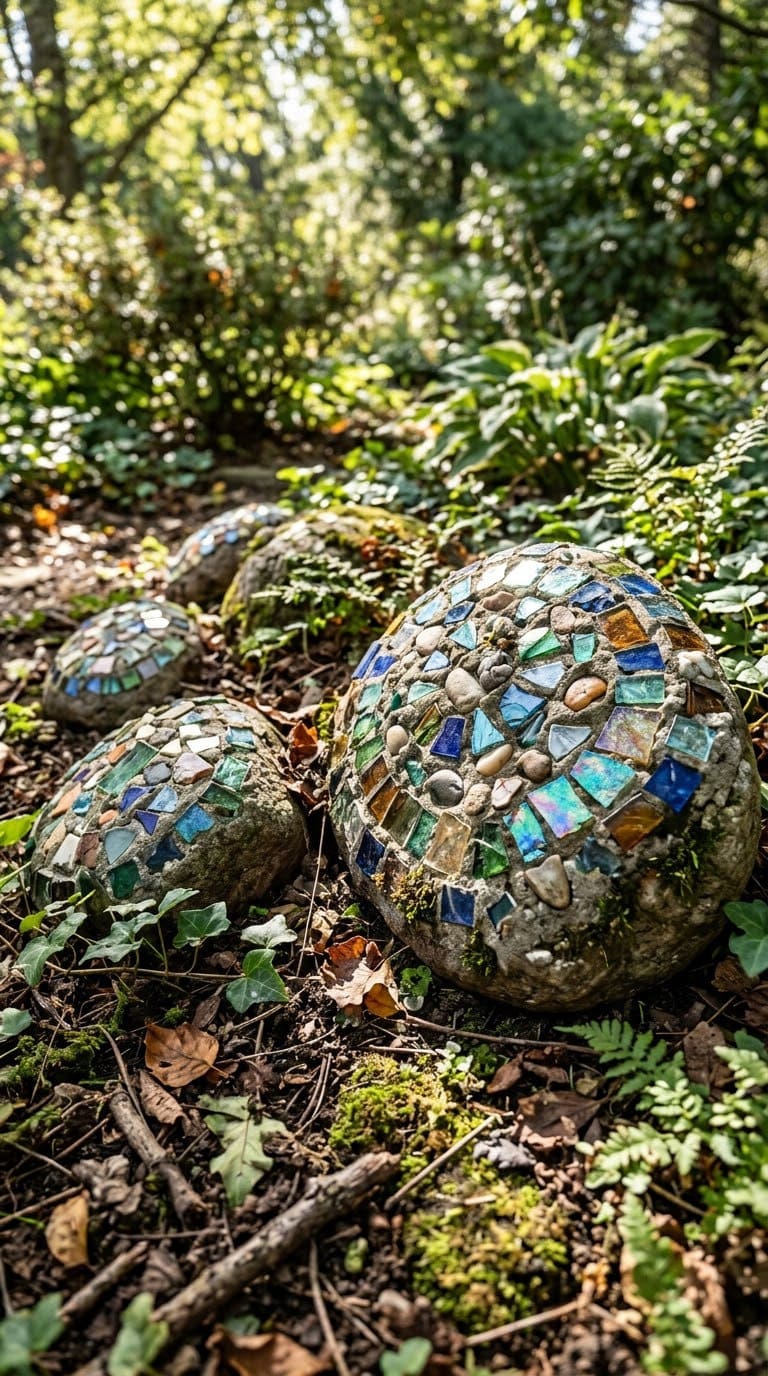
Pick a flat-topped stone and wash it well. Press small tile pieces into thinset in a simple pattern, such as a flower or a spiral. Smaller pieces curve around the stone better.
Seal the whole stone. Compare this with our painted rock ideas for a lighter-weight option.
Cost tier: low.
3. Tiled Birdbath Basin
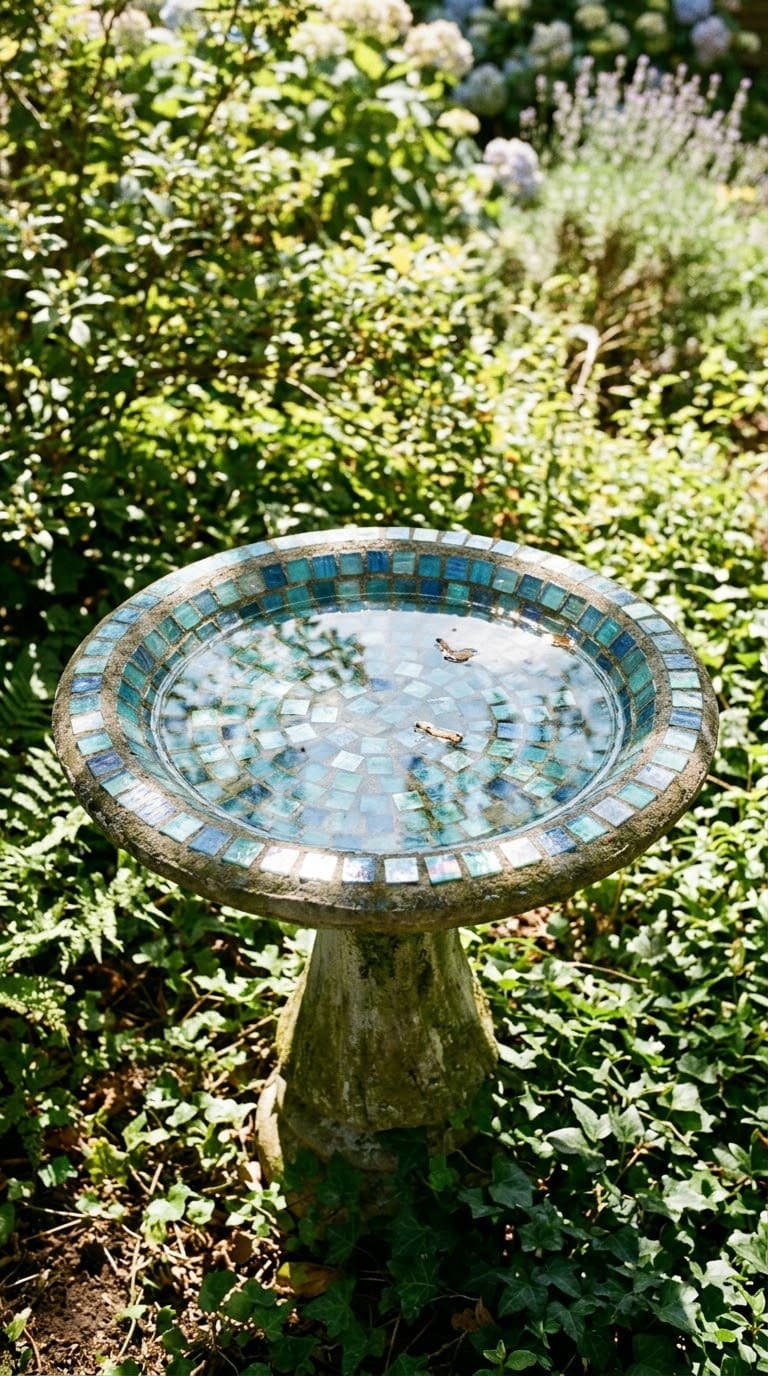
Tile the rim and the inside of a concrete basin. Choose glass tile, because it resists water and freezing. Keep the center shallow and rough so birds can grip.


Grout with a water-resistant product, seal it, and rinse the basin each week. See more bath designs in our DIY bird bath ideas.
Cost tier: medium.
4. Cylinder Planters
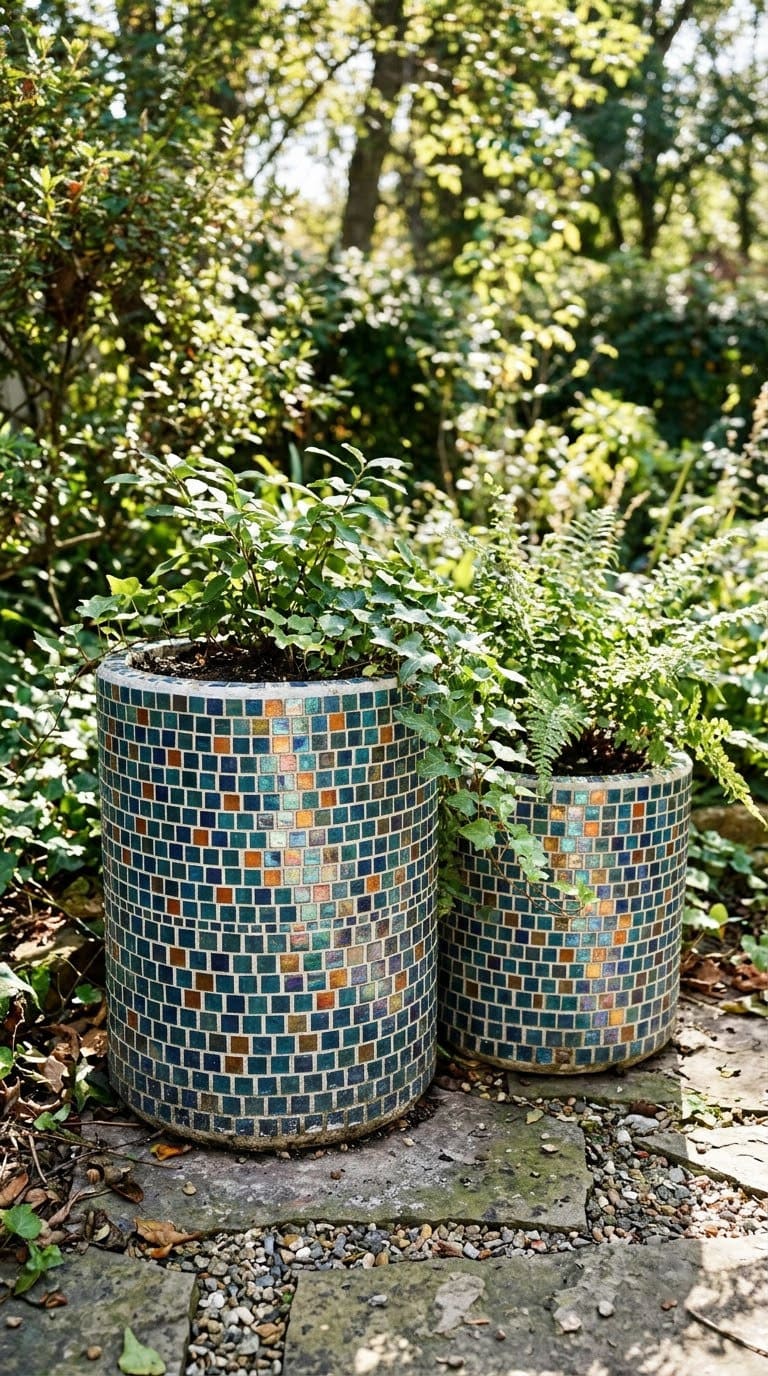
Use a concrete tube or a cylindrical concrete pot as the base. Cover the outside in bands of tile. Work in sections, and let each section cure before you turn the piece.
Drill drainage holes before you tile if the base has none. Seal the inside too.
Cost tier: medium.
5. Broken-China Planter Pots
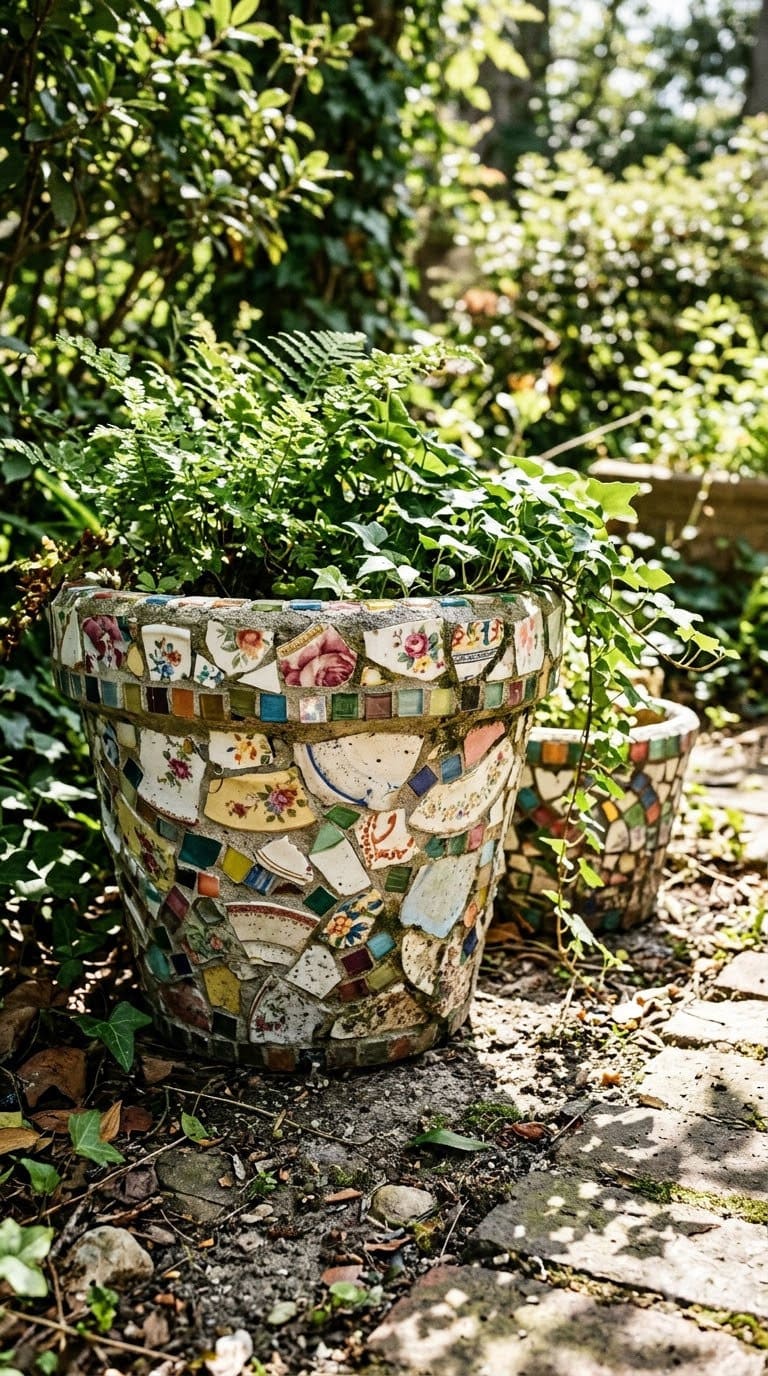
Set china pieces in thinset on a concrete pot. Gardening Beyond warns that thin printed china can flake in freeze-thaw cycles. Use it in a sheltered spot, or choose thicker china.
Terracotta is a poor base. Joe Moorman of the How To Mosaic Blog says terracotta is extremely porous, and that one winter of hard freezes can destroy it. He prefers concrete pots.
Cost tier: low.
6. Mosaic Step Risers
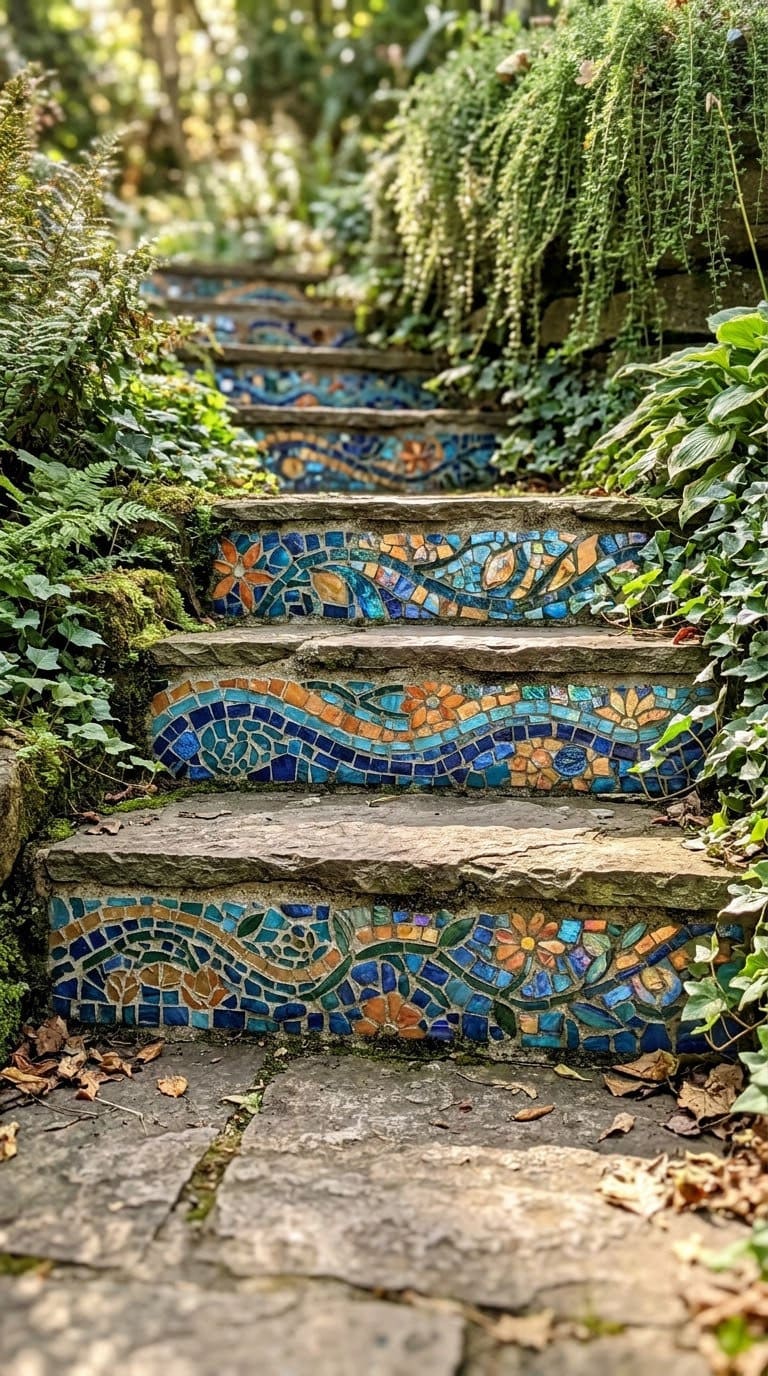
Tile the vertical face of each step, not the tread. Use glass tile on a clean concrete riser, set in thinset. Keep the tread plain so it stays non-slip.
Seal the grout well, since steps get splashed. Plan to reseal each fall.
Cost tier: medium.
7. Outdoor Mosaic Tabletop
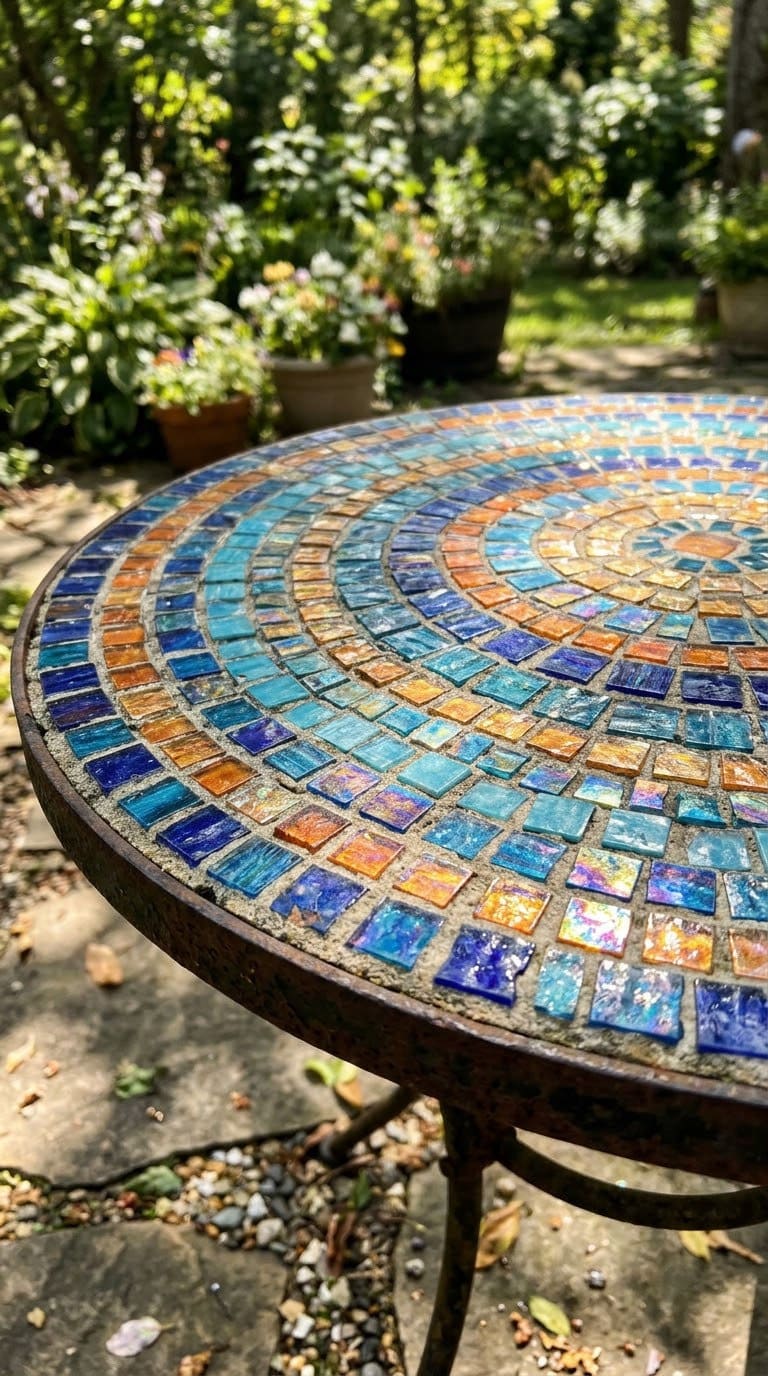
Build the top on a concrete backer board or a solid concrete round. Set tile in thinset and grout it smooth. A smooth grout line makes a table easier to wipe.
Seal the edges and underside of the backer board too, as Mosaic Art Supply advises. Use dense tile that stays flat.
Cost tier: high.
8. Cinder-Block Planters
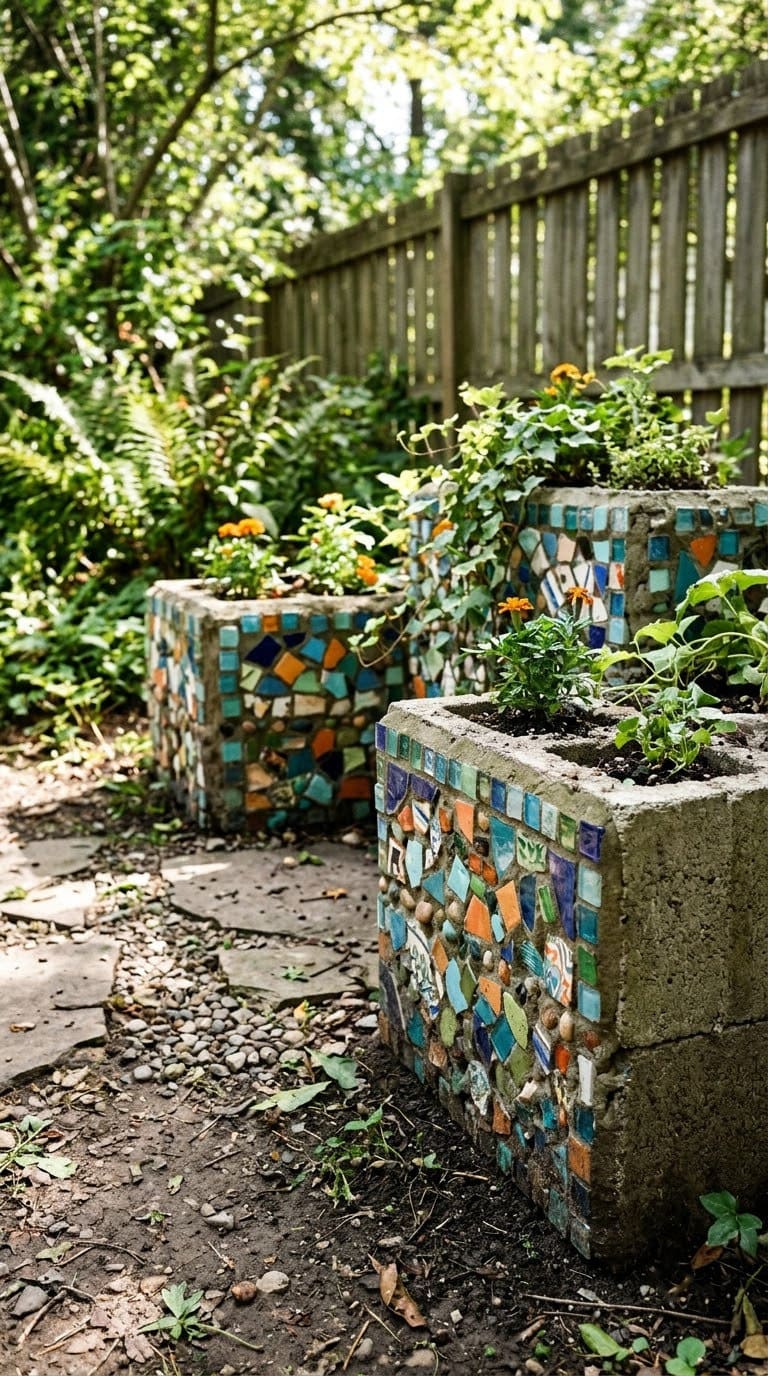
Cinder blocks are cheap and already frost-safe. Brush the block clean, tile the outside, and plant in the holes. See more block builds in our concrete block projects.
Keep the tile off the inside, where soil sits.
Cost tier: low.
9. Dragonfly Stone
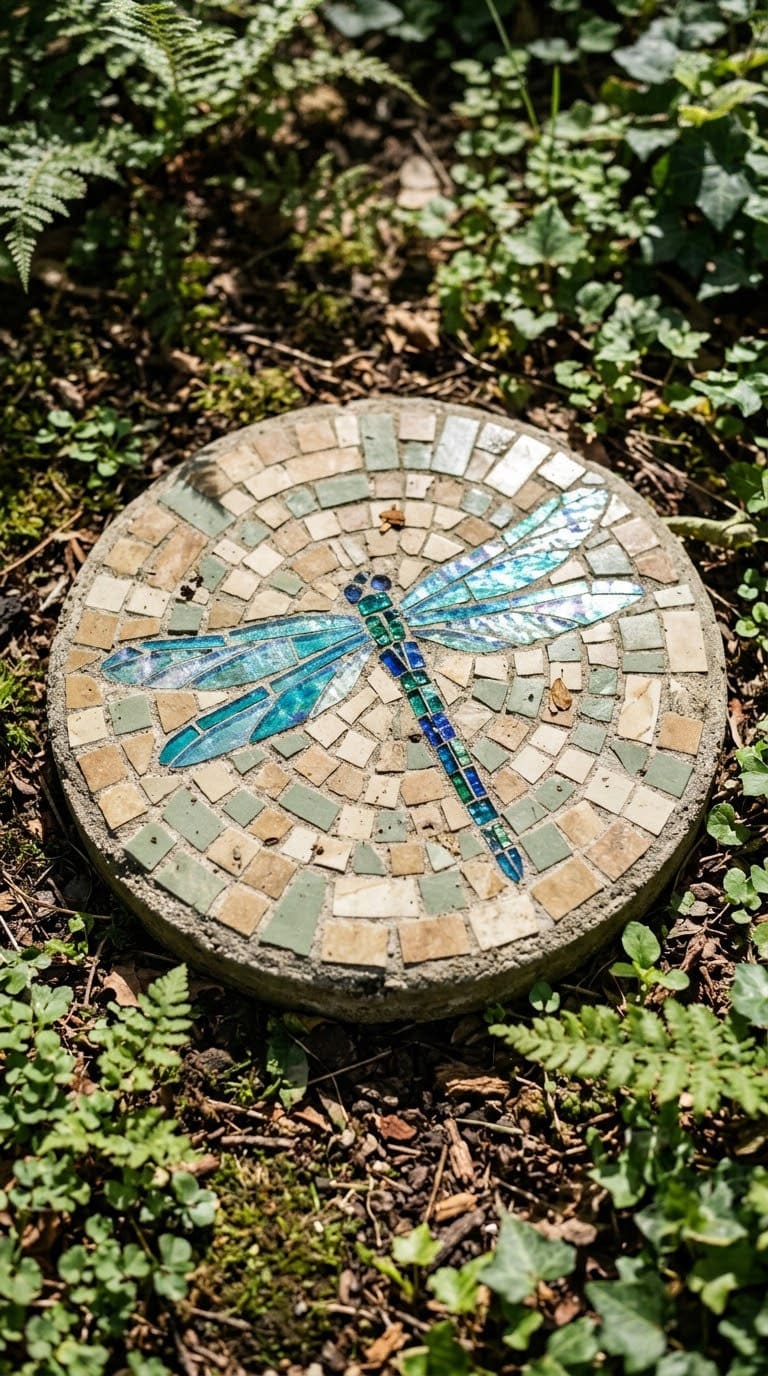
Draw a dragonfly on a flat stone. Cut tile into long slivers for the wings and small squares for the body. Set the outline first, then fill in.
Keep it small, so it is easy to move for winter.
Cost tier: low.
10. Teacup Planter
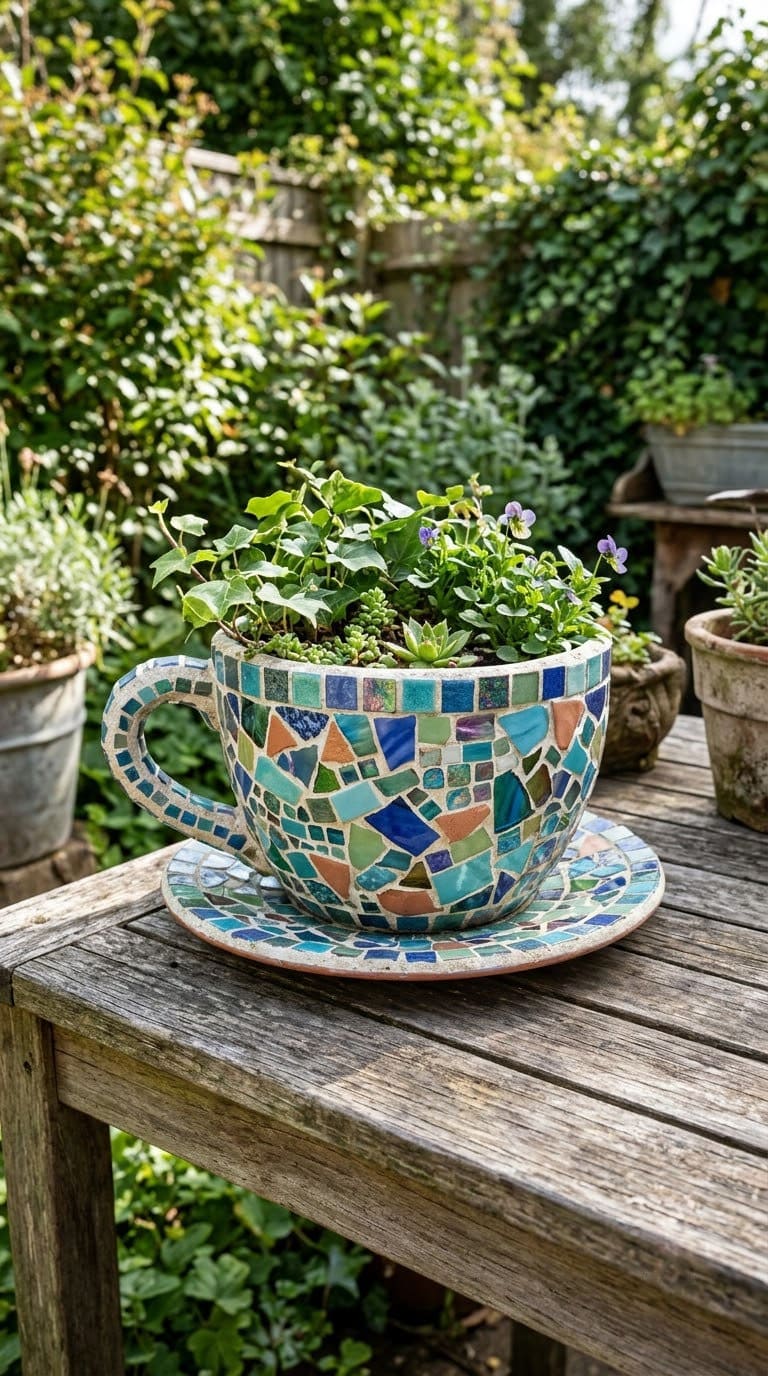
Cover an old cup with tile pieces and plant a small succulent. Choose a glazed cup with a sturdy base. Add a drainage hole with a small diamond bit, or use a liner pot.
Bring it inside before the first hard freeze.
Cost tier: low.
11. Ladybug Garden Stone
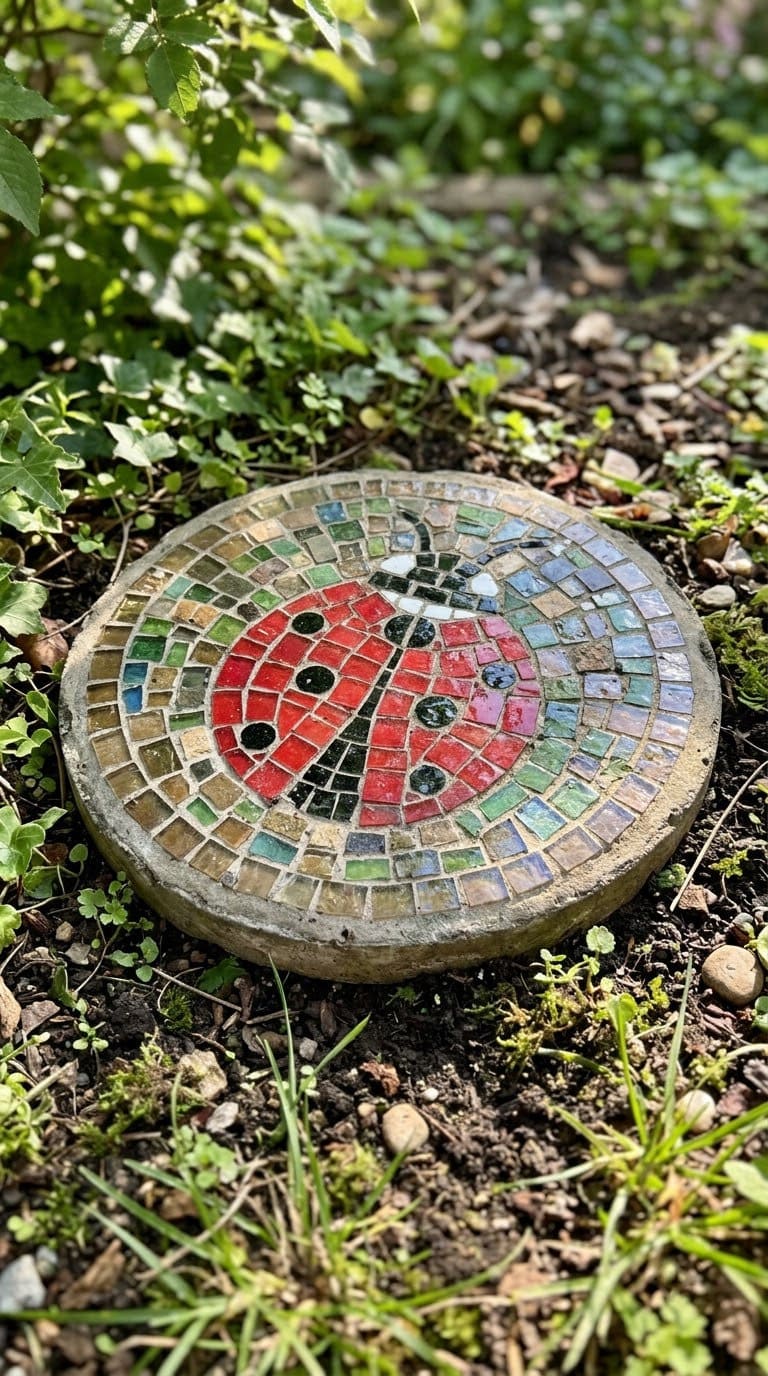
Use red glass for the shell, and black pieces for the spots. Press them into thinset and grout with a dark color to sharpen the shape.
Tuck the stone among low plants. Kids can help place the spots.
Cost tier: very low.
12. Mosaic Window-Frame Art
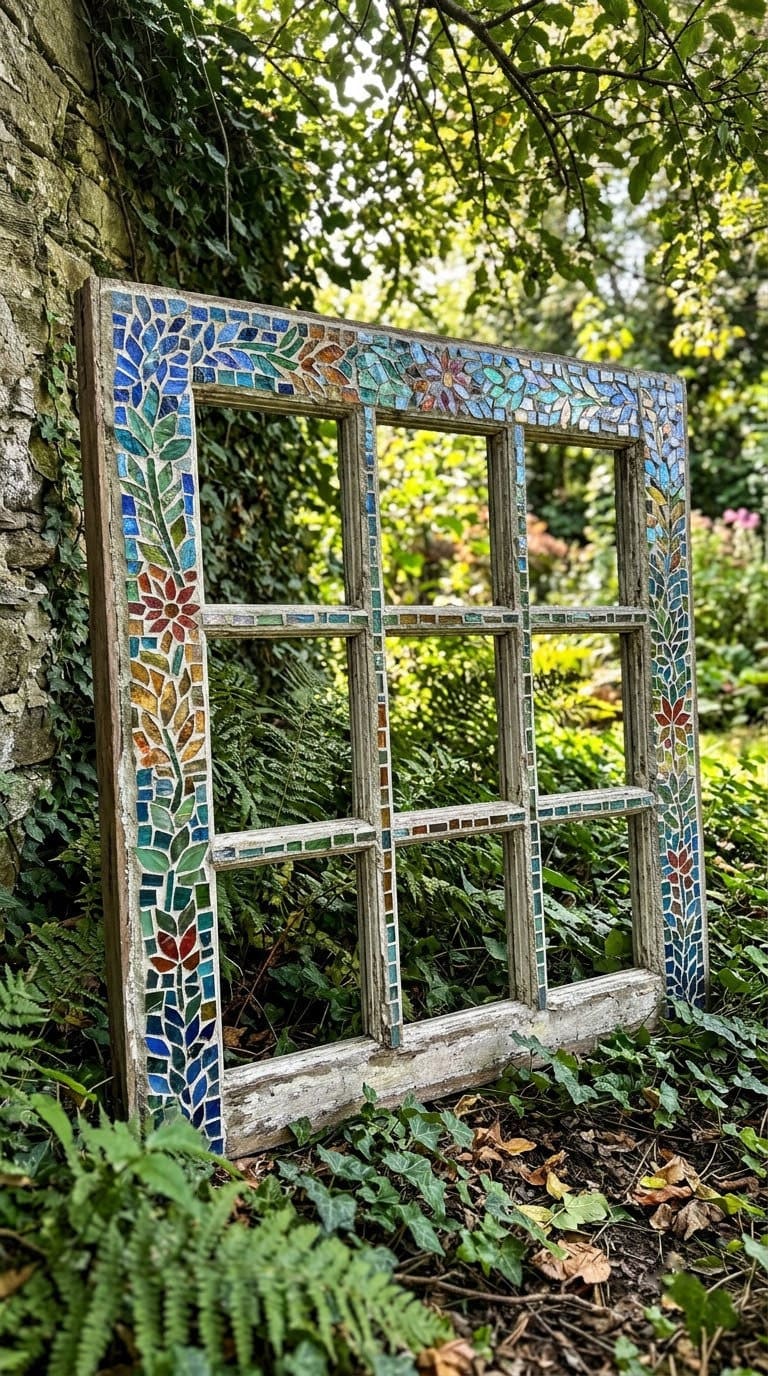
An old frame holds a mosaic panel. Make the panel on backer board, and then fit it into the frame. Avoid setting tile directly on wood, which Mosaic Art Supply says to avoid outdoors.
Seal the frame with exterior paint. Hang it where it stays dry.
Cost tier: medium.
13. Mason-Jar Luminaries
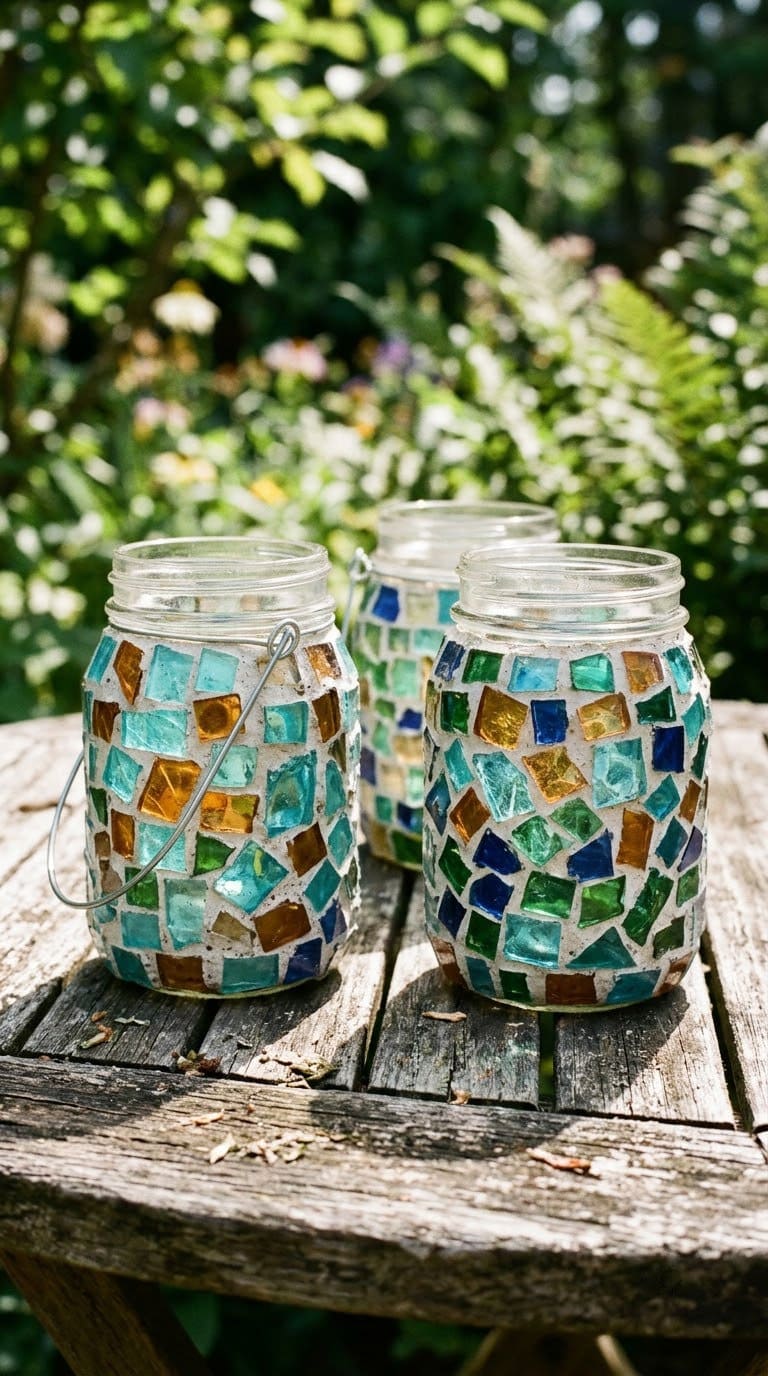
Glue glass pieces to the outside of a jar. Use a clear outdoor adhesive on glass, because thinset is heavy. Use a battery or LED light, not an open flame.
Glass-on-glass lets the light through. Keep these in a sheltered spot.
Cost tier: very low.
14. Mosaic Gazing Ball
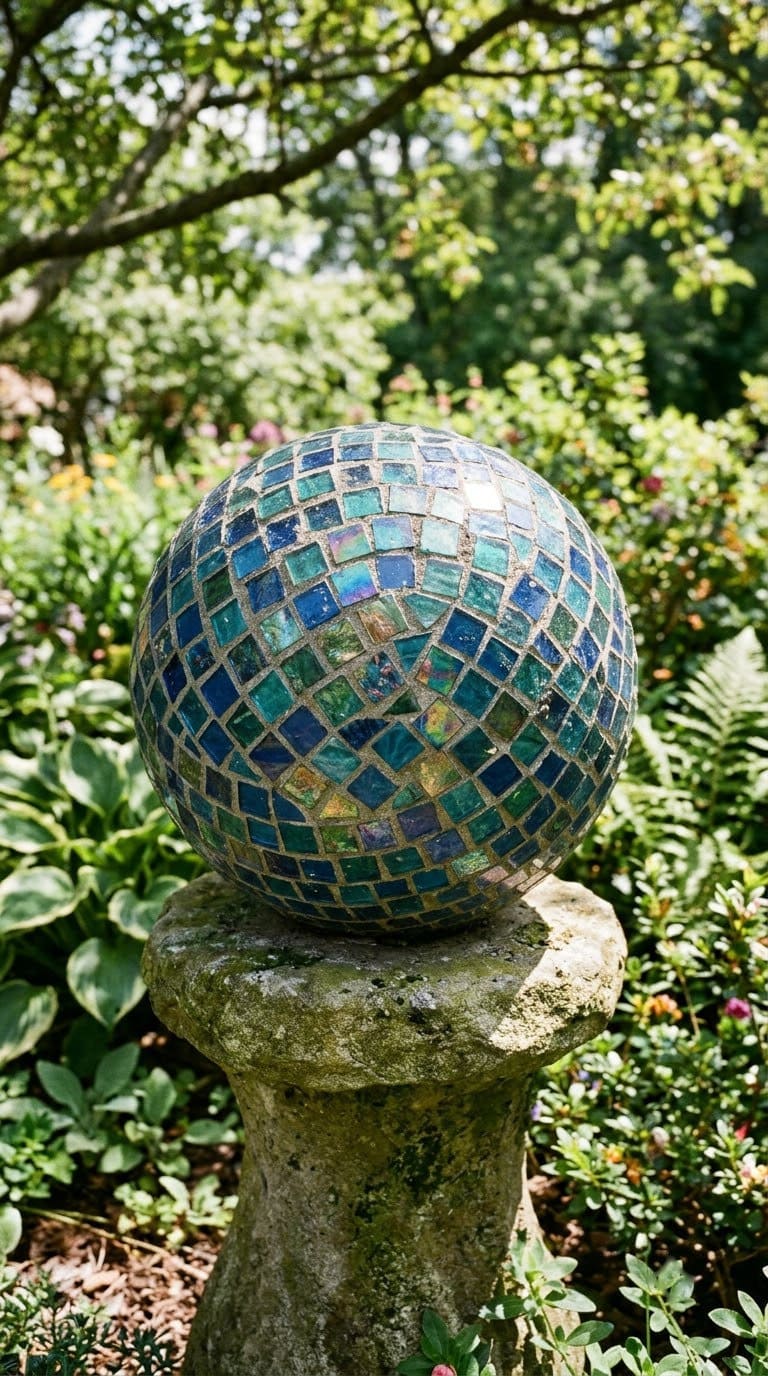
A gazing ball needs a sturdy core. Barb DiPietro of Made by Barb reports that her concrete orbs lasted for years in a Canadian garden. A reader there said early foam-core balls began failing about eight years later.
Use a concrete or solid core, and set glass with exterior thinset. For more gazing ball builds, see our DIY garden ball ideas.
Cost tier: medium.
15. Mosaic House-Number Plaque
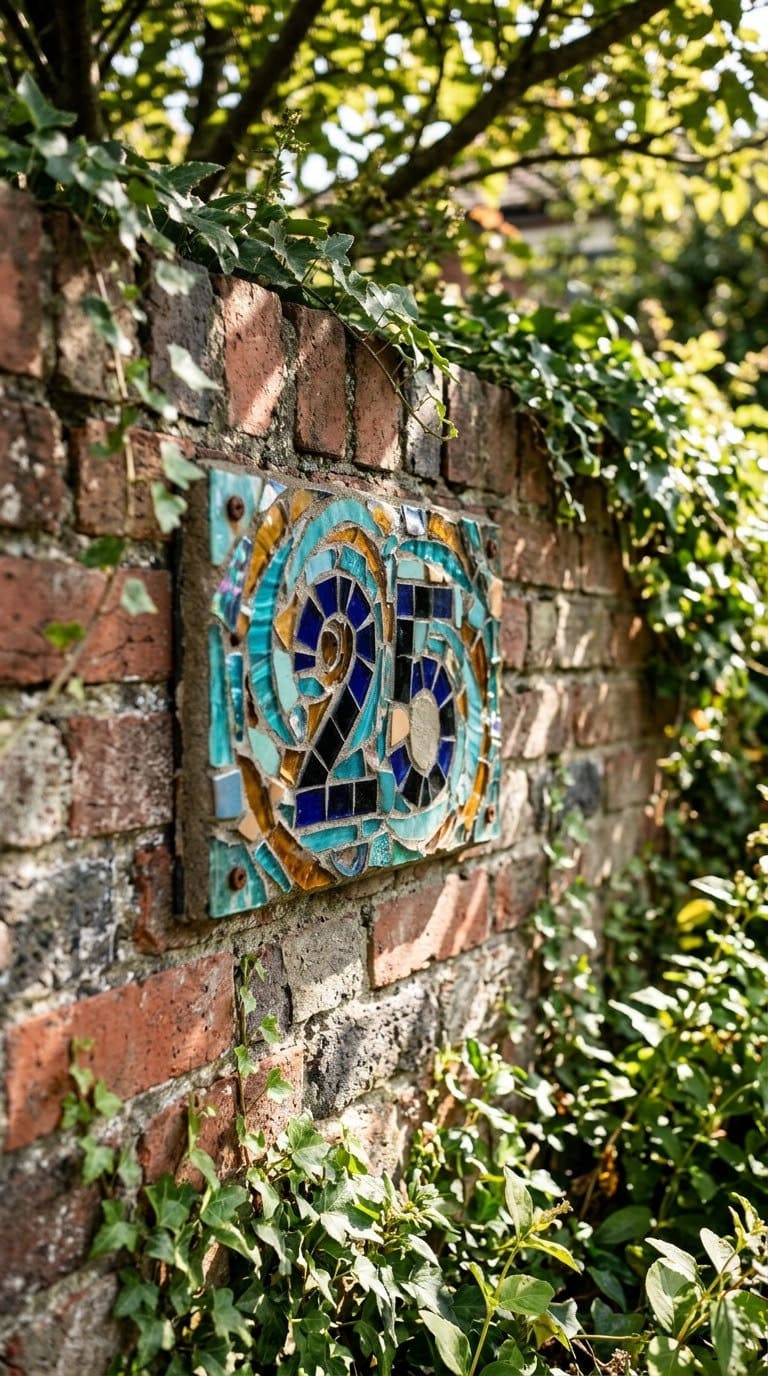
Cut a piece of quarter-inch backer board and set tile in a bold number shape. Use high-contrast colors so the number reads from the street. Seal the board’s bottom and edges.
Fix it to the wall with rated fixings, as Gardening Beyond advises for wall plaques.
Cost tier: medium.
16. Mosaic Birdhouse
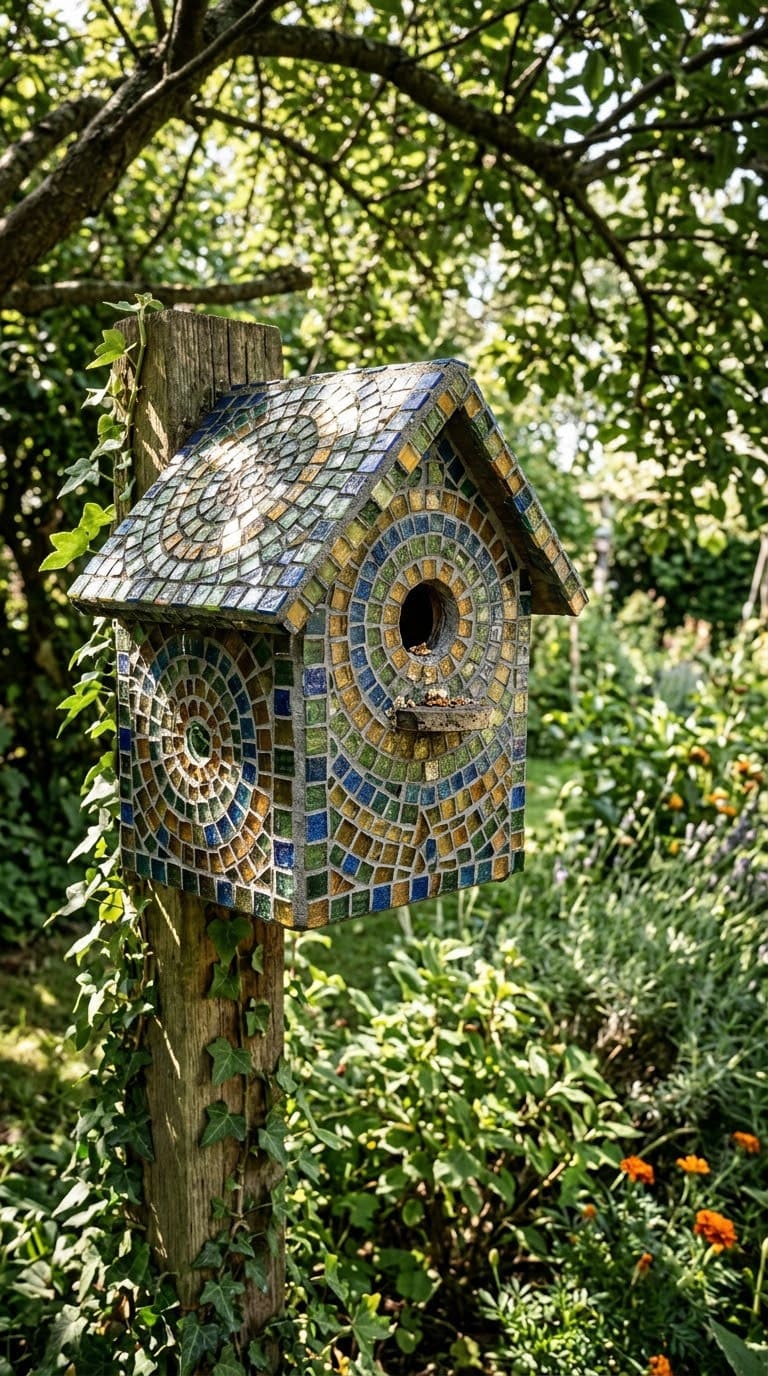
Mosaic Art Supply warns that wood projects have a short life outdoors. If you use wood, cover all non-mosaic surfaces with several coats of exterior paint. Treat it as an ornament.
Keep it under a roof edge to limit rain.
Cost tier: medium.
17. Daisy Planter
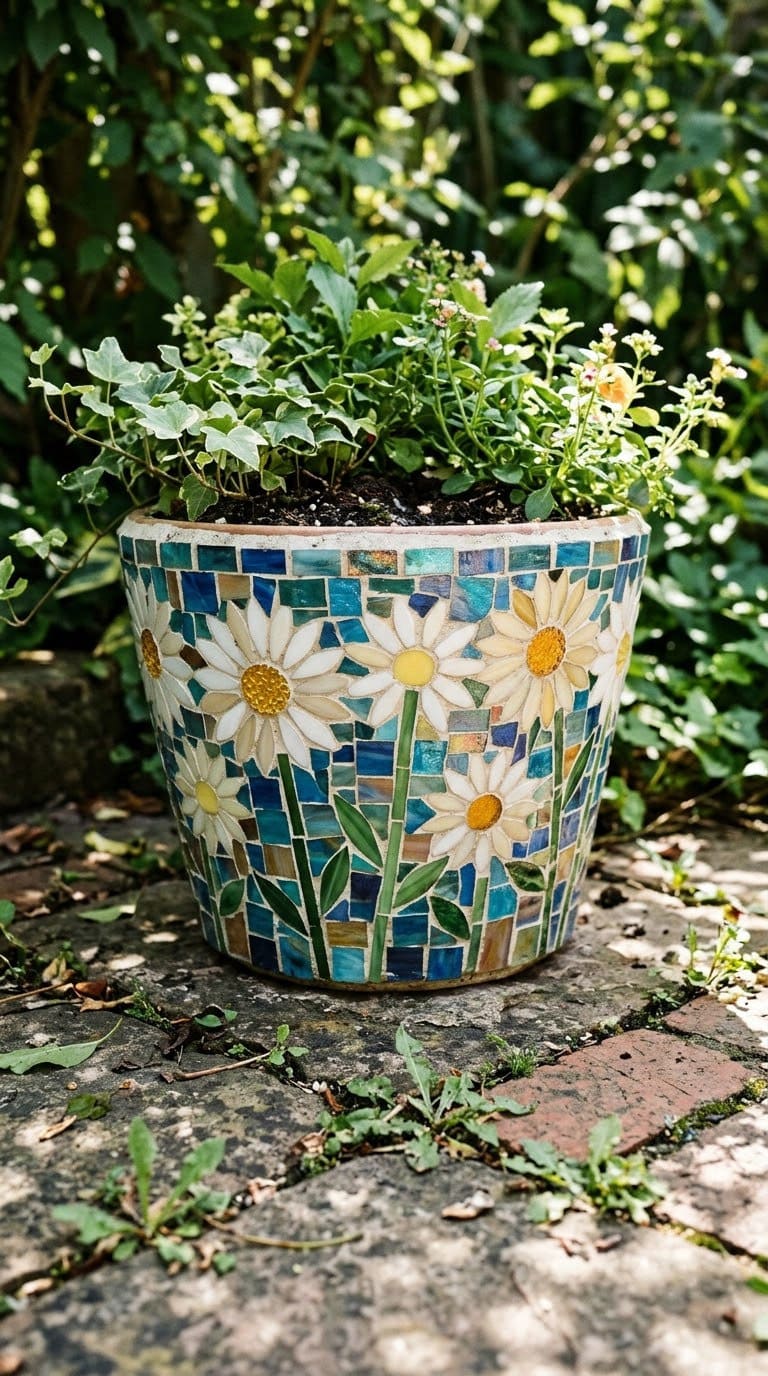
Plan the flower on paper, then press petals around a round center. Use white tile for the petals and yellow for the center. Set them on a concrete pot.
A simple shape reads better from a distance. Seal after grouting.
Cost tier: low.
18. Tin Planter Mosaic
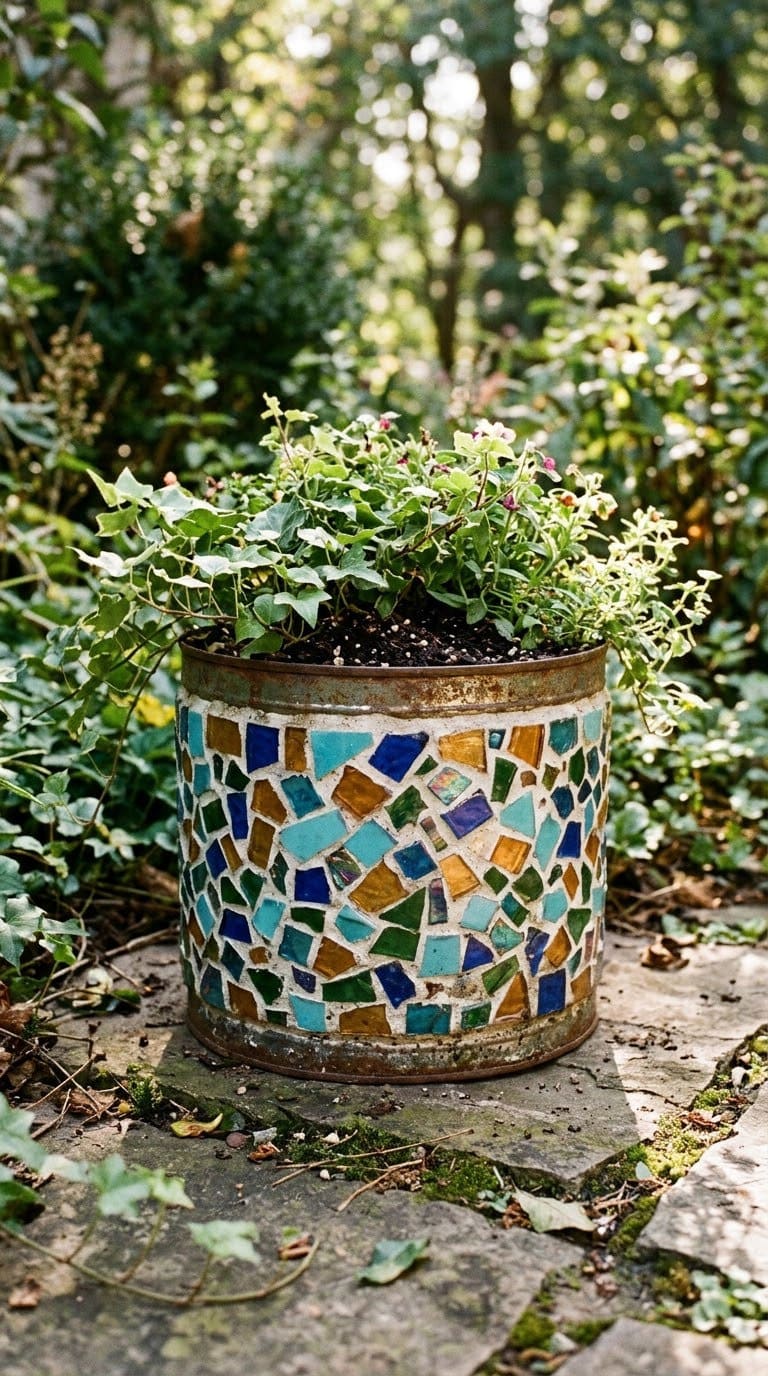
A metal tin makes a quick planter. Drill drainage holes, then cover the outside with tile and flexible exterior adhesive. Metal expands with heat, so keep pieces small.
Bring tins inside for the winter, since metal bases can rust.
Cost tier: low.
19. Succulent Wall Planter
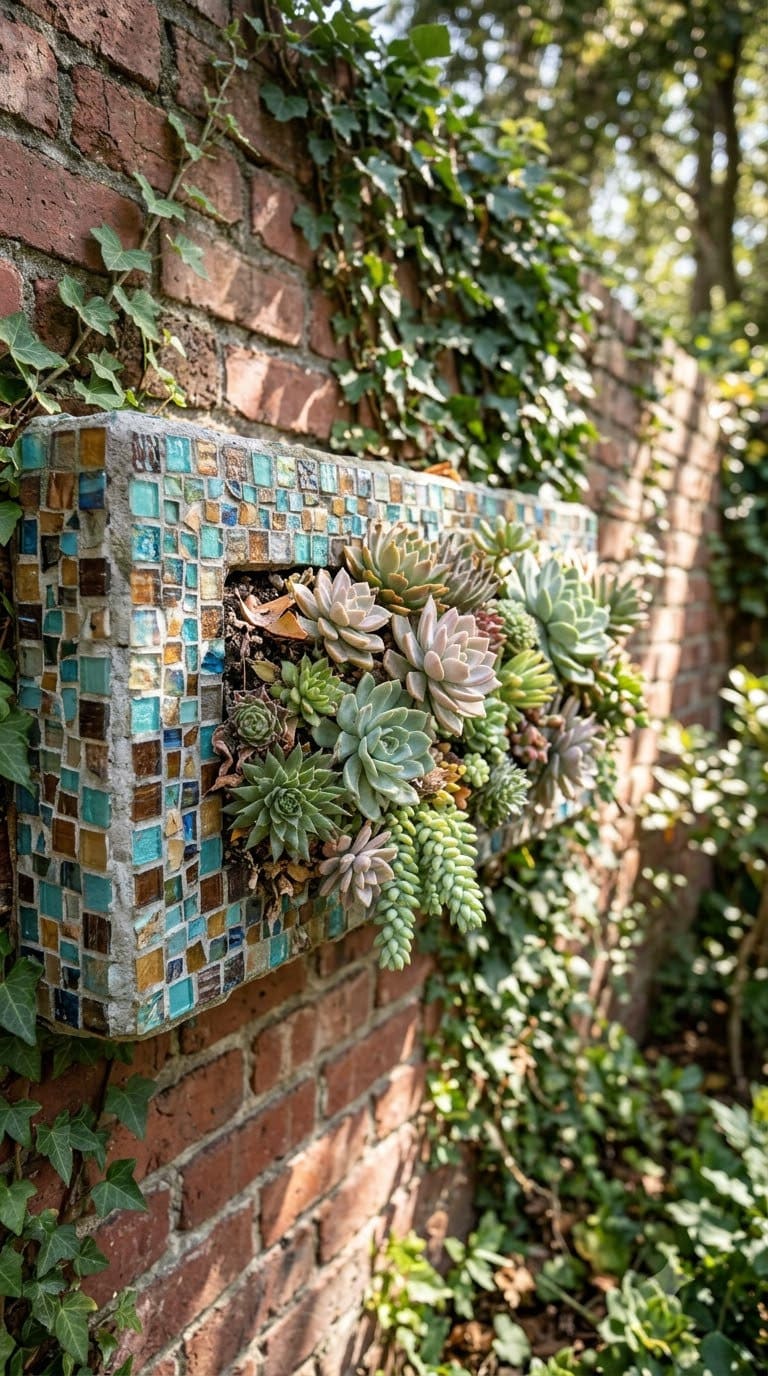
Cover the front of a concrete wall planter in tile. Fix it securely to a wall with rated hardware. Fill it with gritty succulent mix.
Our succulent garden ideas cover plant choices.
Cost tier: medium.
20. Teapot Totem
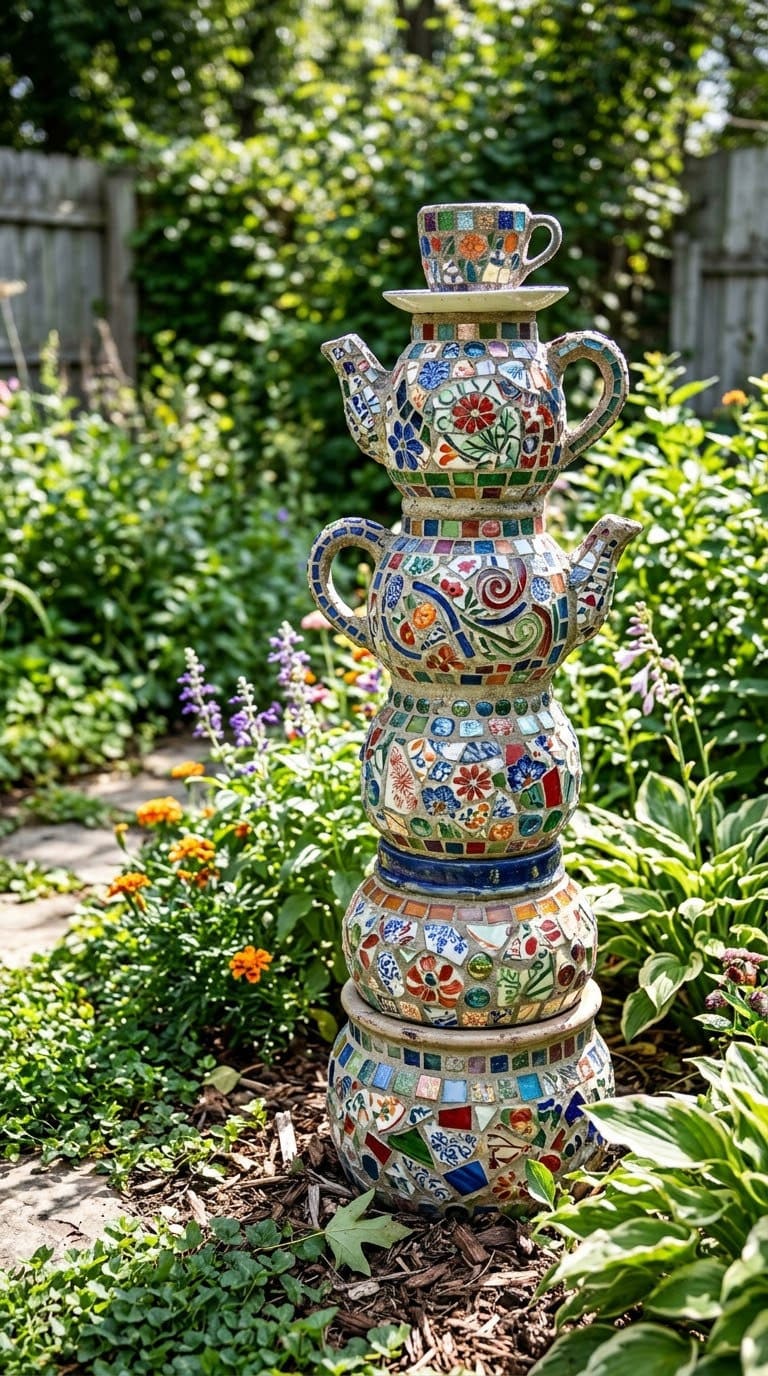
Stack teapots and cups on a metal rod set deep in the ground. Cover each piece in glass tile. Cap the top so no one gets scratched.
Choose thick pieces and seal them well. For more whimsical art, see our garden art projects.
Cost tier: medium.
Where Should You Put Mosaics?
Put the brightest pieces where light hits them. Glass tile sparkles in the sun and glows at dusk. Place stepping stones on a firm base so they do not rock.
Group small pieces in odd numbers for a natural look. Keep delicate pieces in a sheltered spot, away from drifts of snow.
How Do You Care for a Mosaic Through the Year?
Check each piece in fall. Gardening Beyond advises cleaning the grout once or twice a season with mild soap and water, and repairing loose pieces before frost. Reseal the grout when water stops beading, using the water-bead test from Mosaic Art Supply.
Bring small pieces under cover for winter. Horizontal pieces that sit wet are the most at risk, according to Barb DiPietro.
Common Mistakes to Avoid
Using craft glue is the first mistake. Moorman says white PVA glue is only water resistant once cured. He adds that damp soil exposes the back of a planter mosaic to moisture and acids.
Using terracotta or wood is the second. Mosaic Art Supply warns against both outdoors.
Skipping the sealer is the third. The same source says grout stays porous, even with glass tile.
FAQ
What adhesive works best for outdoor mosaics?
Thinset mortar. Mosaic Art Supply says to use thinset rather than adhesive for outdoor tile.
Can I mosaic a terracotta pot?
Not for outdoor use in cold climates. Moorman says one winter of hard freezes can destroy a terracotta pot.
Which tile survives frost?
Glass tile resists freeze damage, per Mosaic Art Supply. Unglazed ceramic and tumble-finished stone are porous and do not.
Do I need to seal the grout?
Yes. Mosaic Art Supply says to apply multiple coats, since grout is still porous.
How long should a mosaic cure before grouting?
Gardening Beyond advises at least twenty-four hours, or longer if the thinset bag says so.
Never miss an update — choose FarmFoodFamily as your preferred source on Google.
How it works: Tap the button below to open Google's settings page, then check the box next to FarmFoodFamily.
Tap the checkbox to turn it blue — that's how you know it's set.