
20 Vibrant DIY Painted Garden Decoration Ideas That Stay Bright Outdoors
Paint can turn old pots, rocks, and furniture into garden color, as long as you match the paint to the surface and seal it before the first rain.

Never miss an update — choose FarmFoodFamily as your preferred source on Google.
How it works: Tap the button below to open Google's settings page, then check the box next to FarmFoodFamily.
Tap the checkbox to turn it blue — that's how you know it's set.
Paint can turn old pots, rocks, and furniture into garden color, as long as you match the paint to the surface and seal it before the first rain.
Products We Recommend
This post contains affiliate links. We may earn a commission on qualifying purchases at no extra cost to you.

A green garden is calm, but a little paint makes it feel yours. A tired pot, a rock from the path, or a rusty chair can become the brightest spot in the yard. The catch is that outdoor paint has a hard life of sun, rain, and frost.
This guide gives you 20 painted ideas with the surface, the paint, and the sealing step for each. We also flag the safety traps: old lead paint, tires in food beds, and paint on beehives. Pick one project, prep the surface, and paint it on a dry day.
Answer 4 quick questions and get matched to the exact fix for your yard — drainage, budget, layout, or something else entirely.
Take the Free QuizWhat’s the Quick Answer for Paint That Lasts Outdoors?
Match the paint to the surface, then seal it. Use exterior paint, or a multi-surface acrylic made for outdoor use. Regular craft acrylics need a clear exterior sealer on top.
The blog Sustain My Craft Habit calls DecoArt Multi-Surface Satin a self-sealing indoor and outdoor paint. For regular acrylics, it says to coat every side with a durable exterior clear spray. It also notes that paint-pen rocks usually need outdoor sealing to keep their color.
Paint in thin coats and let each coat dry fully. Work on a calm, dry day, and spray sealer from a distance so it does not bubble.
Check for lead before sanding any old painted piece. Skip tires for food crops, and keep hive paint on the outside only. Wait for dry weather before you start, because damp surfaces make paint peel.
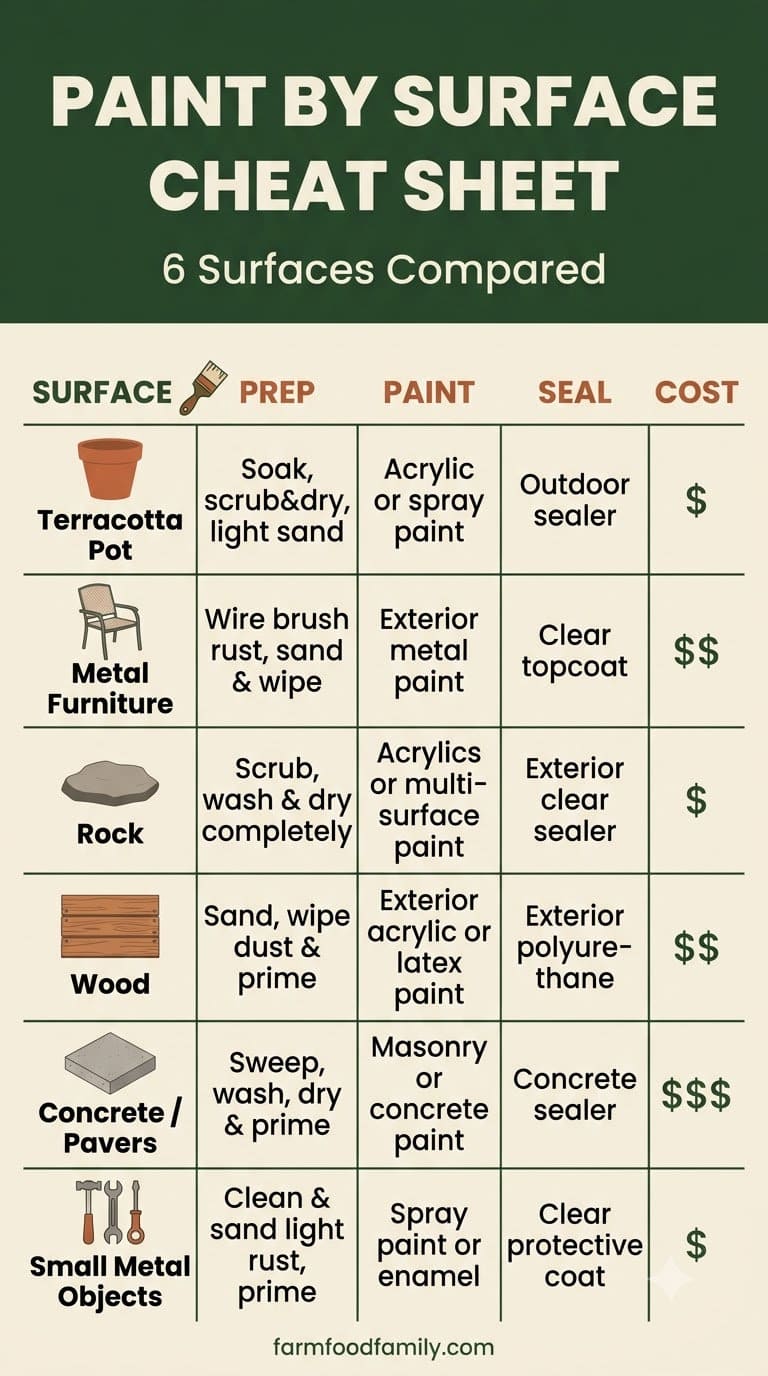
Which Paint Works on Which Surface?
The table below is our own planning guide. It pulls from the sources linked in this article plus general craft practice, not lab tests.


| Surface | Prep | Paint | Seal | Cost tier |
|---|---|---|---|---|
| Terracotta pot | Clean and dry | Exterior or multi-surface acrylic | Clear exterior spray | Low |
| Metal furniture | Wire-brush rust, wipe clean | Rust-inhibiting spray paint | Often built in; add clear coat if chalky | Low to medium |
| Rock | Scrub and dry | Multi-surface acrylic | Clear exterior spray if paint is not self-sealing | Very low |
| Wood | Sand lightly, prime | Exterior latex | Built in | Low |
| Concrete or pavers | Scrub, let dry fully | Masonry or exterior paint | Per can label | Low to medium |
| Metal chimes or small objects | Degrease | Spray enamel | Clear coat | Low |
Before You Start: Prep, Sealing, and Safety
Work outdoors or with plenty of airflow when you spray. Wear gloves and eye protection, and keep spray paint away from pets and kids. Let each coat dry before the next.
Most yard problems trace back to one specific, fixable cause. Find yours in 4 quick questions.
Take the Free QuizBe careful with old painted furniture. The EPA says homes built before 1978 are more likely to have lead-based paint. It advises against sanding unless needed, and says that if you must sand, wet the area first, sand the minimum, and clean up thoroughly. Dust and paint chips are among the most common sources of lead exposure, per the EPA.
If you are unsure what is under the paint, test it before you sand. Do not dry-sand a piece you cannot vouch for.

20 DIY Painted Garden Decoration Ideas
1. Spray-Painted Metal Furniture
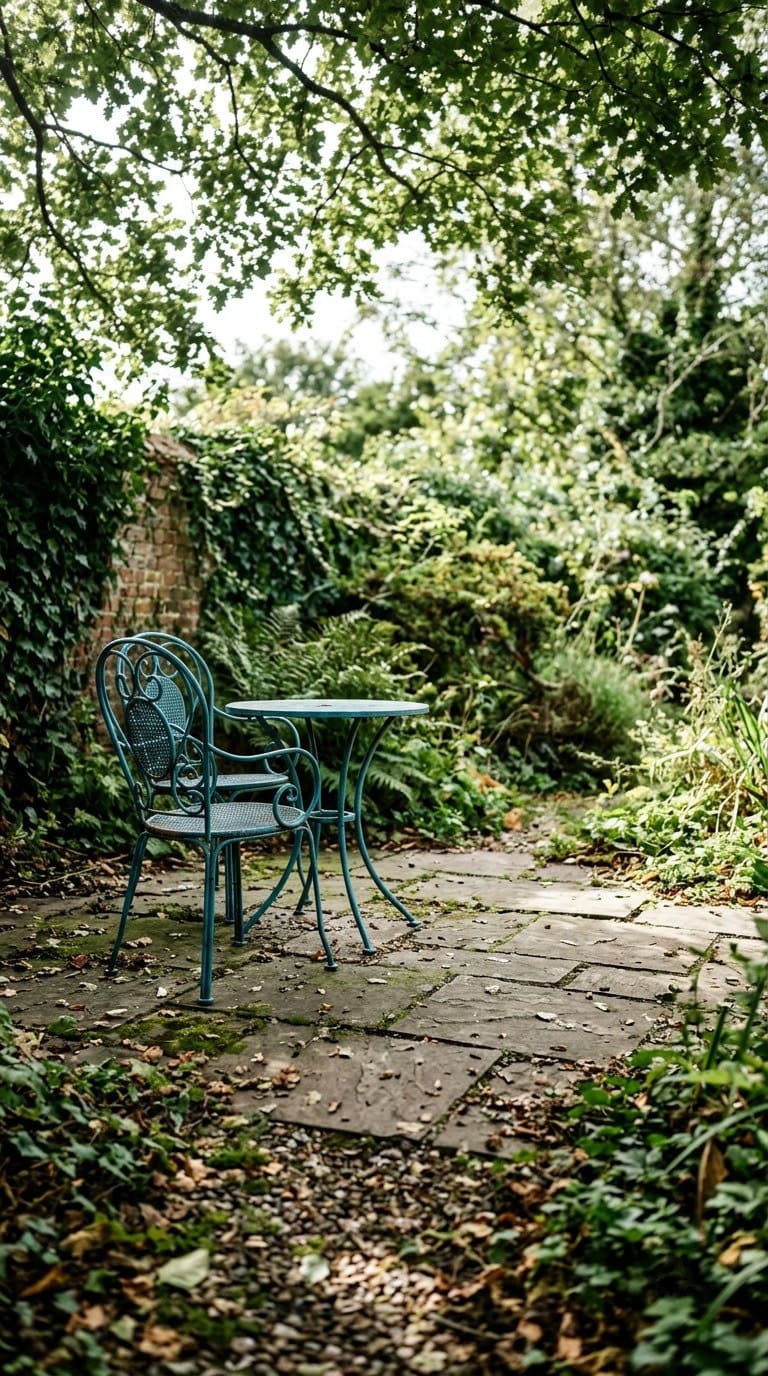
Old metal chairs make a great canvas. Brush off flaking rust with a wire brush, wipe the frame clean, and let it dry. Then spray in thin, even passes with a rust-inhibiting paint.
Apply two light coats rather than one heavy coat, which runs. Check for lead first if the set is old, as in the safety section above. Sky blue or soft yellow pops against green leaves.
Cost tier: low to medium.
2. Summer Painted Planters
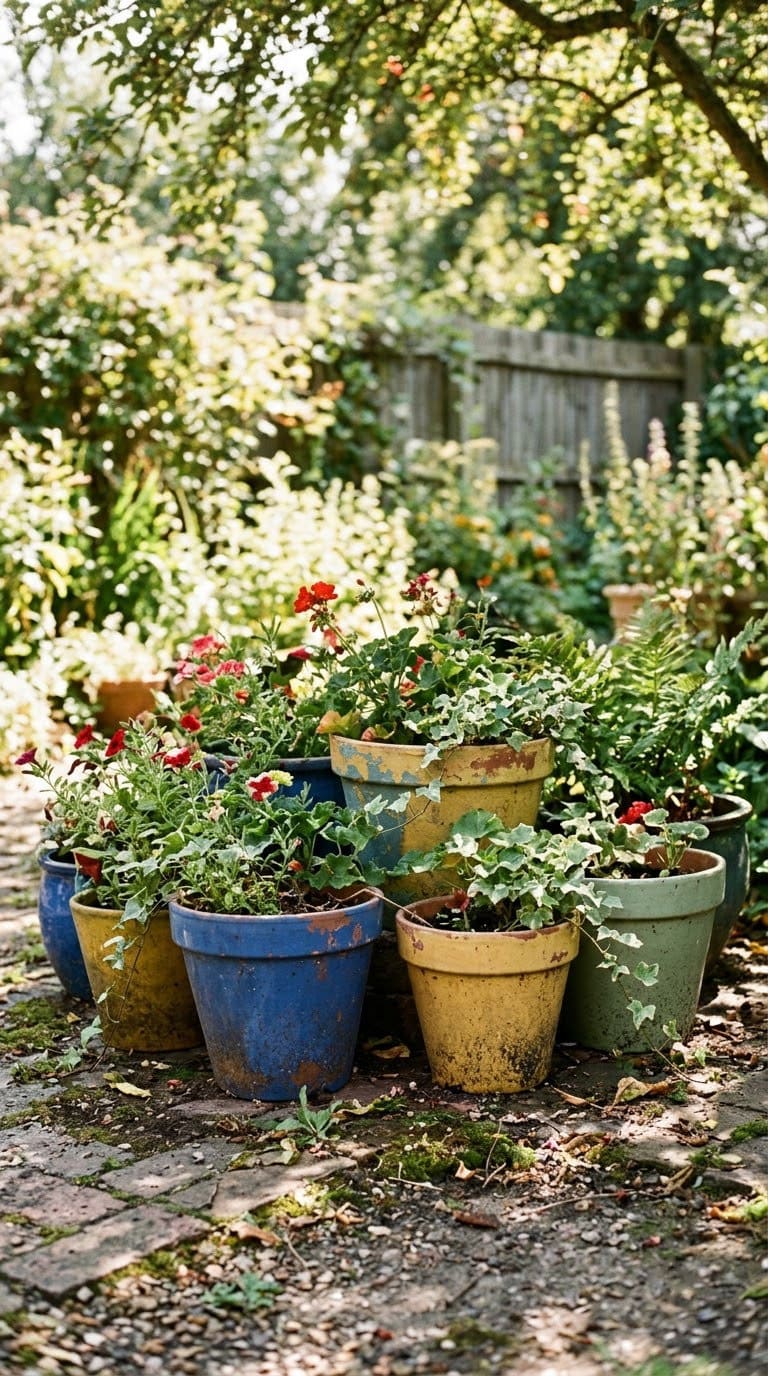
Terracotta takes paint well once it is clean and dry. Paint the outside only, in flat blocks of color. Stripes and fruit shapes look fun with a small brush.

Satin acrylic that works on many surfaces, for pots, rocks, and wood
Shop NowThis post contains affiliate links. We may earn a commission on qualifying purchases at no extra cost to you.
Finish with a clear exterior spray sealer. Keep the drainage hole clear of paint. Group three pots in odd numbers for a lively corner. Vary the heights by stacking a smaller pot on an overturned one, so the cluster reads as a display and not a line.
Cost tier: very low. More pot ideas are in our flower pot projects.
3. Bohemian Wheelbarrow Planter
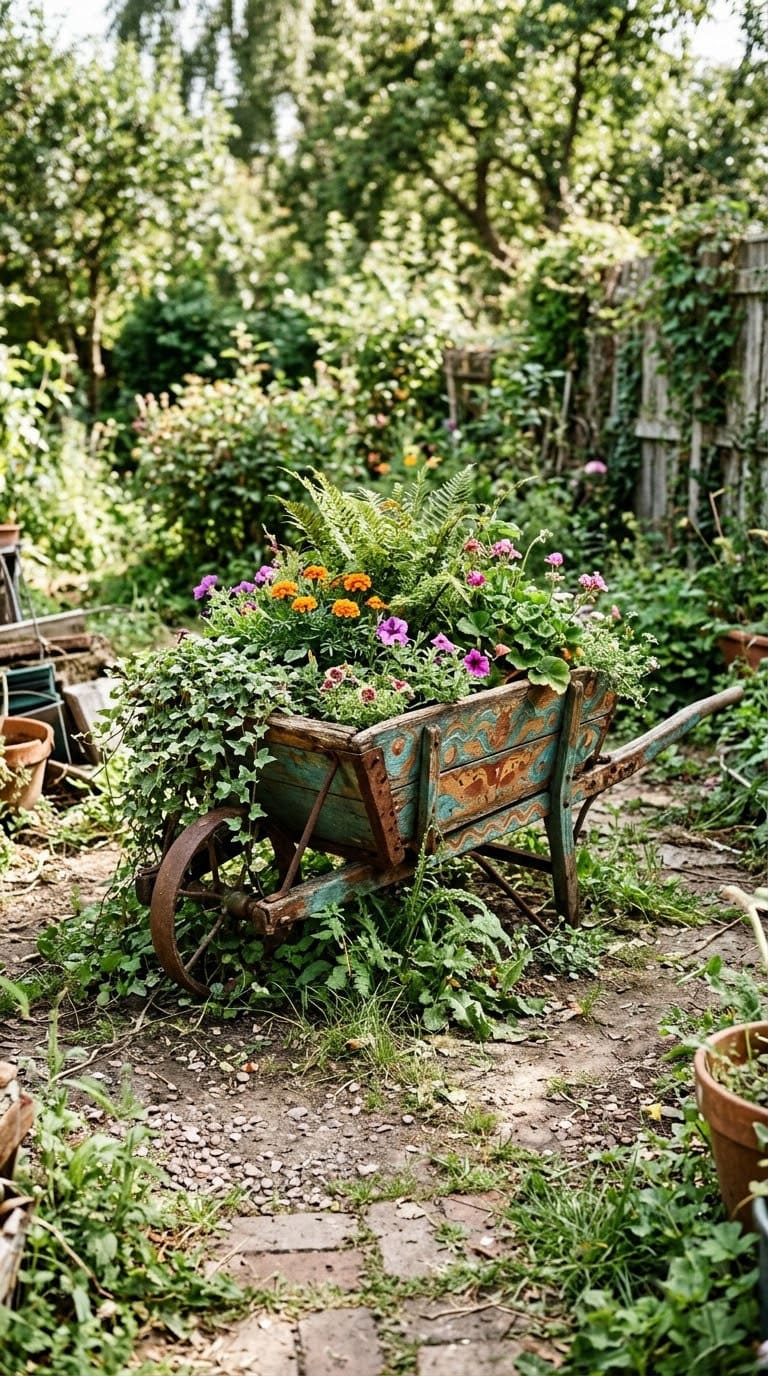
An old wheelbarrow becomes a mobile flower bed. Scrub off dirt, sand glossy patches lightly, and prime bare metal. Paint the tub in a deep color, then add a pattern with a stencil.
The average homeowner spends $616/year on yard fixes that don't address the real problem. Find out what yours actually is — before you spend another dollar.
Take the Free QuizDrill a few drainage holes in the bottom so roots do not sit in water. For build ideas beyond paint, see these wheelbarrow garden projects.
Cost tier: low.
4. Painted Beehive
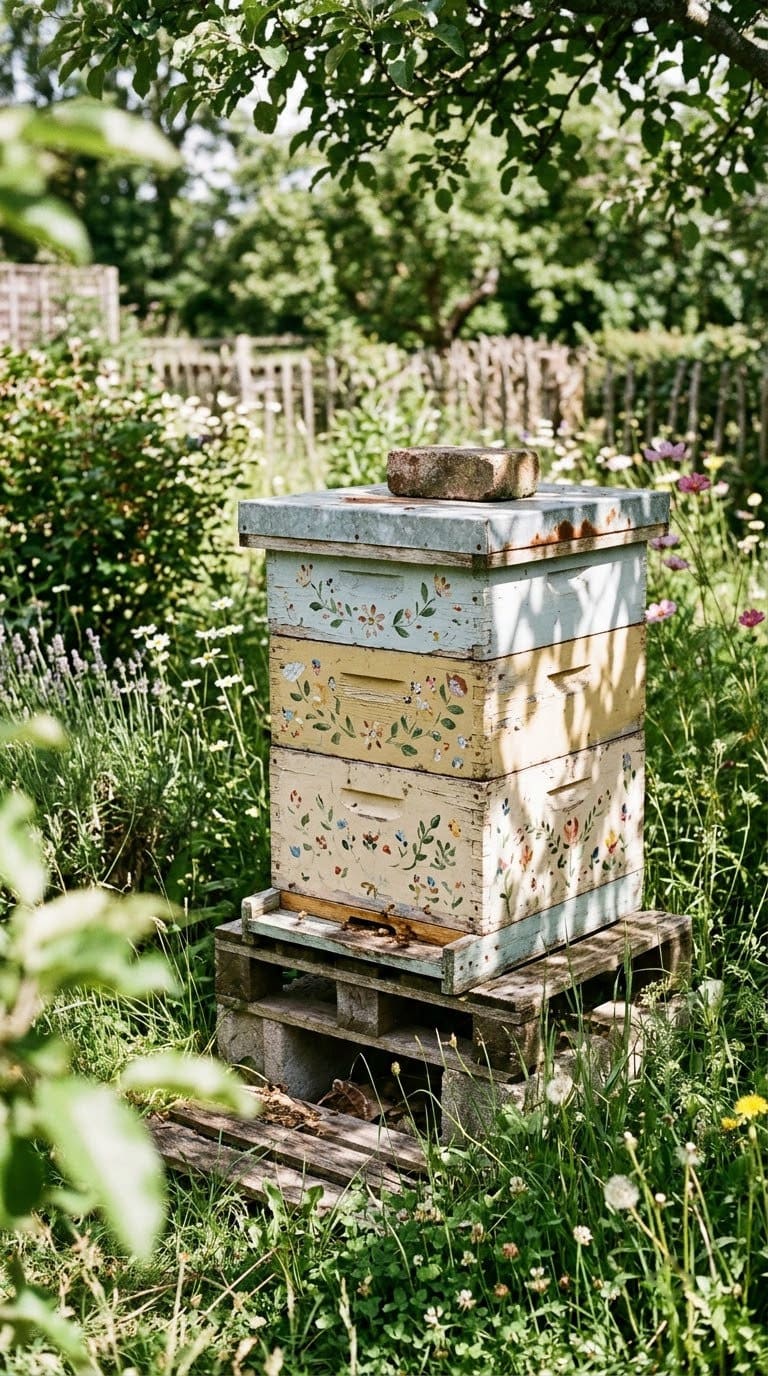
Paint helps a hive survive weather and can match your garden. The Mann Lake beekeeping blog says to use low-VOC, water-based exterior latex paint. It also says to paint the outside of hive boxes and the hive stand, but never the interior.
The same source says light colors suit warm climates, and darker colors suit cold ones. It gives no set curing time, only “plenty of time” to air out before bees move in. Leave the entrance reducer and the screened bottom board unpainted.
Cost tier: low.


5. Painted Tire Planter
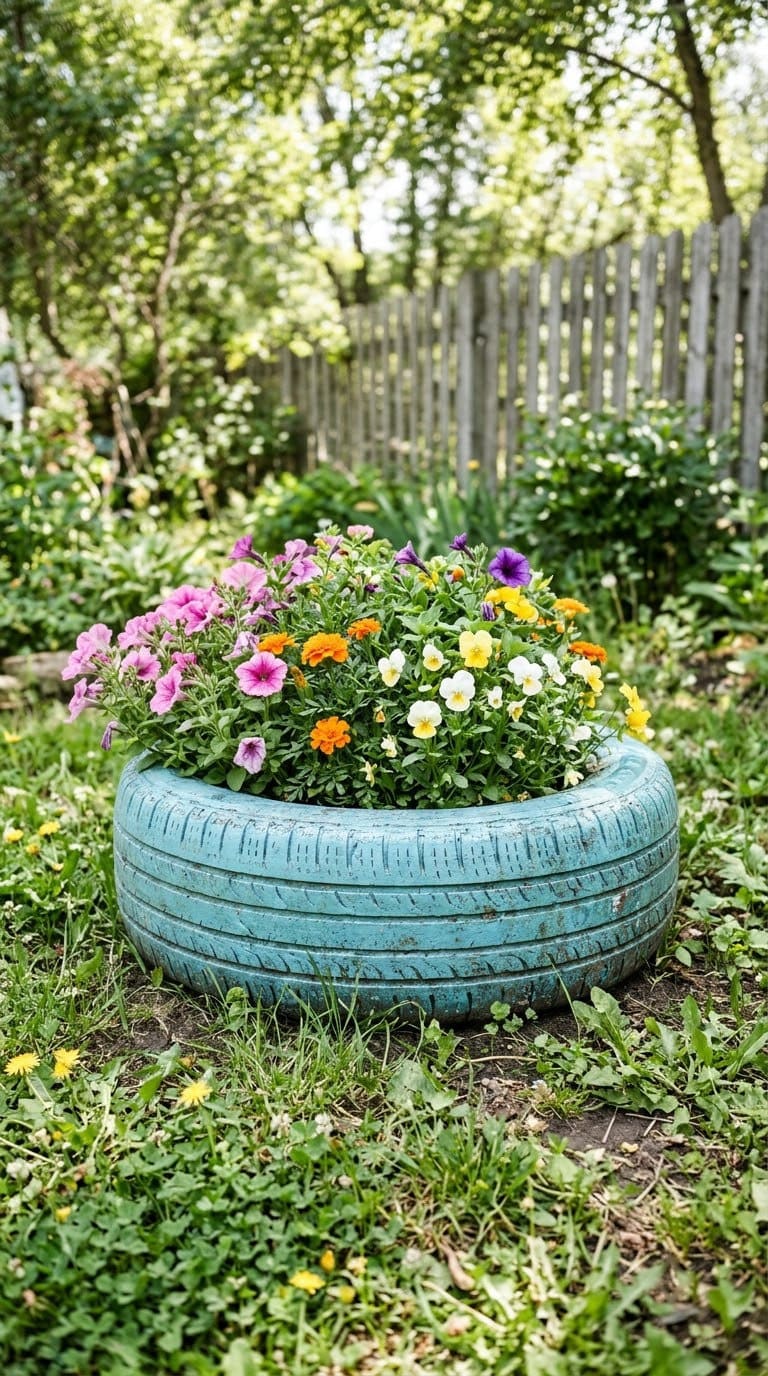
A painted tire planter is cheap, but it has a safety catch. Lucy Bradley of NC State Extension says tires contain metals such as cadmium and lead. She says there is “no need to use tires in the garden.”
Marisa Y. Thompson of New Mexico State University takes a softer view. She suggests above-ground crops, lining the tires, and keeping plants from touching the rubber. We suggest flowers only, and food crops in another container.
Paint seals the outer surface, but it does not change what is inside the rubber. See our tire planter ideas for more.
Cost tier: very low.
6. Painted Rock Garden Signs
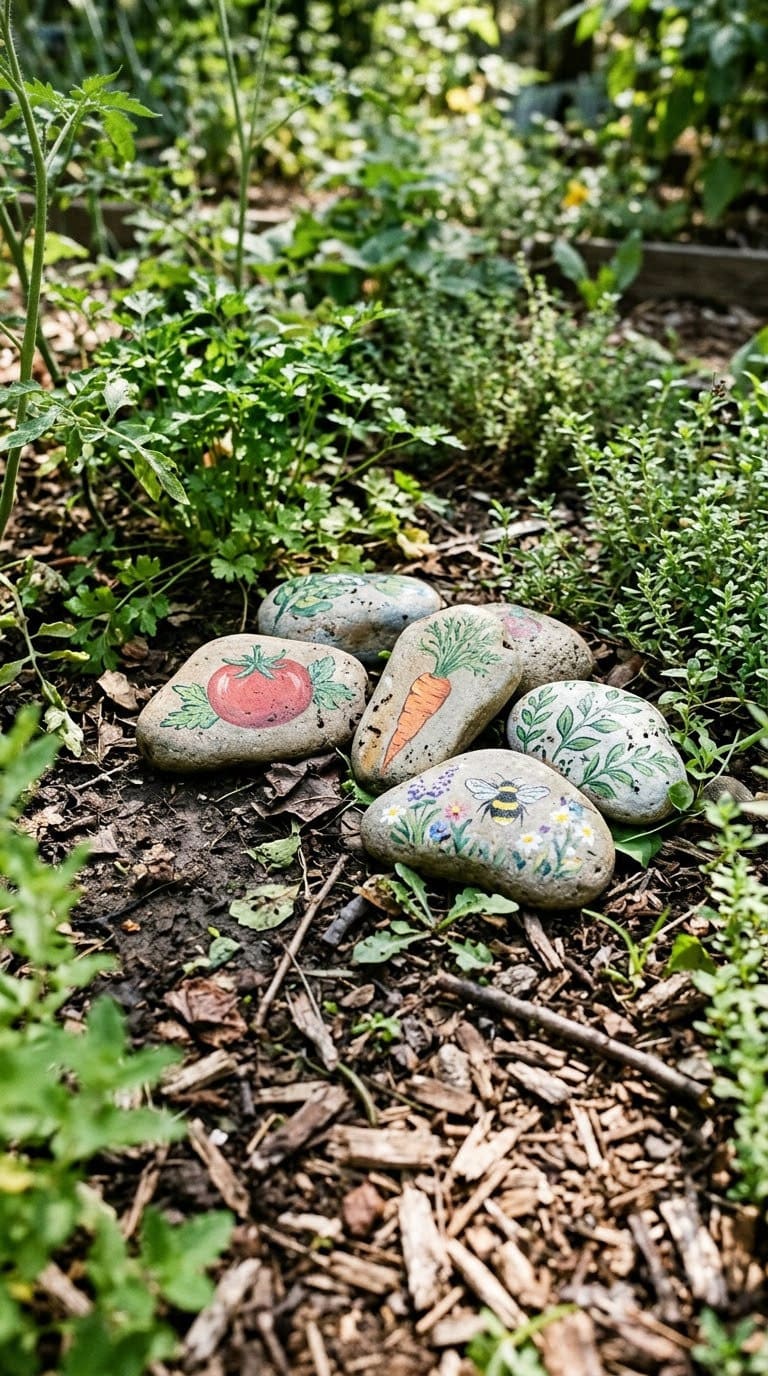
Rocks make sturdy plant markers. Scrub the stone, paint a base coat, and add the plant name with a fine brush. Sustain My Craft Habit says paint pens need outdoor sealing to keep their color.
Seal every side with an exterior clear spray. Spray from at least 8 inches away, as our painted rock guide advises, so the coat does not bubble.
Cost tier: very low.
7. Refinished Old Flower Pots
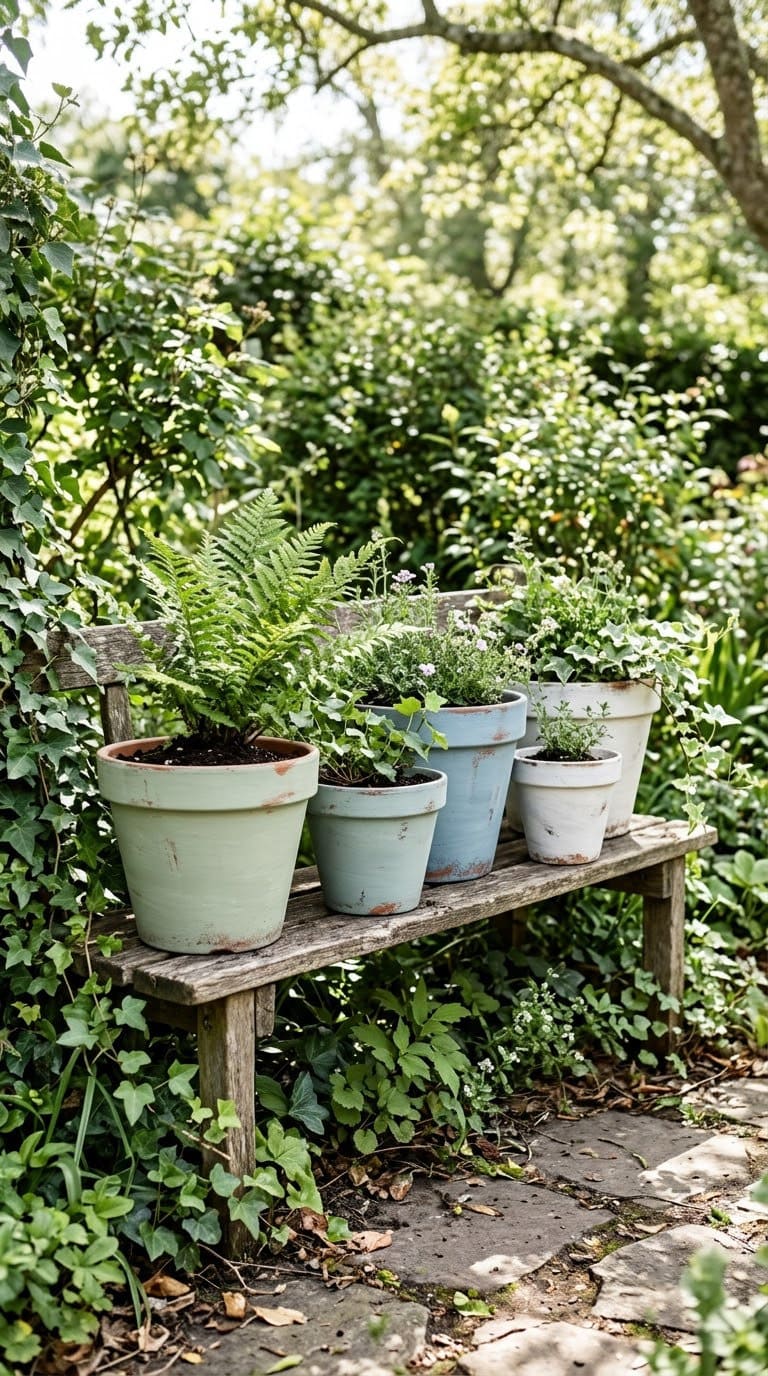
Chalk-style paint gives pots a soft, aged look. Clean the pot, apply two coats, and sand the edges lightly for wear. Wax or a clear exterior sealer protects the finish.
Chalk finishes can stain if left unsealed in the rain. Pair the set with the vintage garden decor look for a cottage feel.
Cost tier: low.
8. Stenciled Garden Rocks
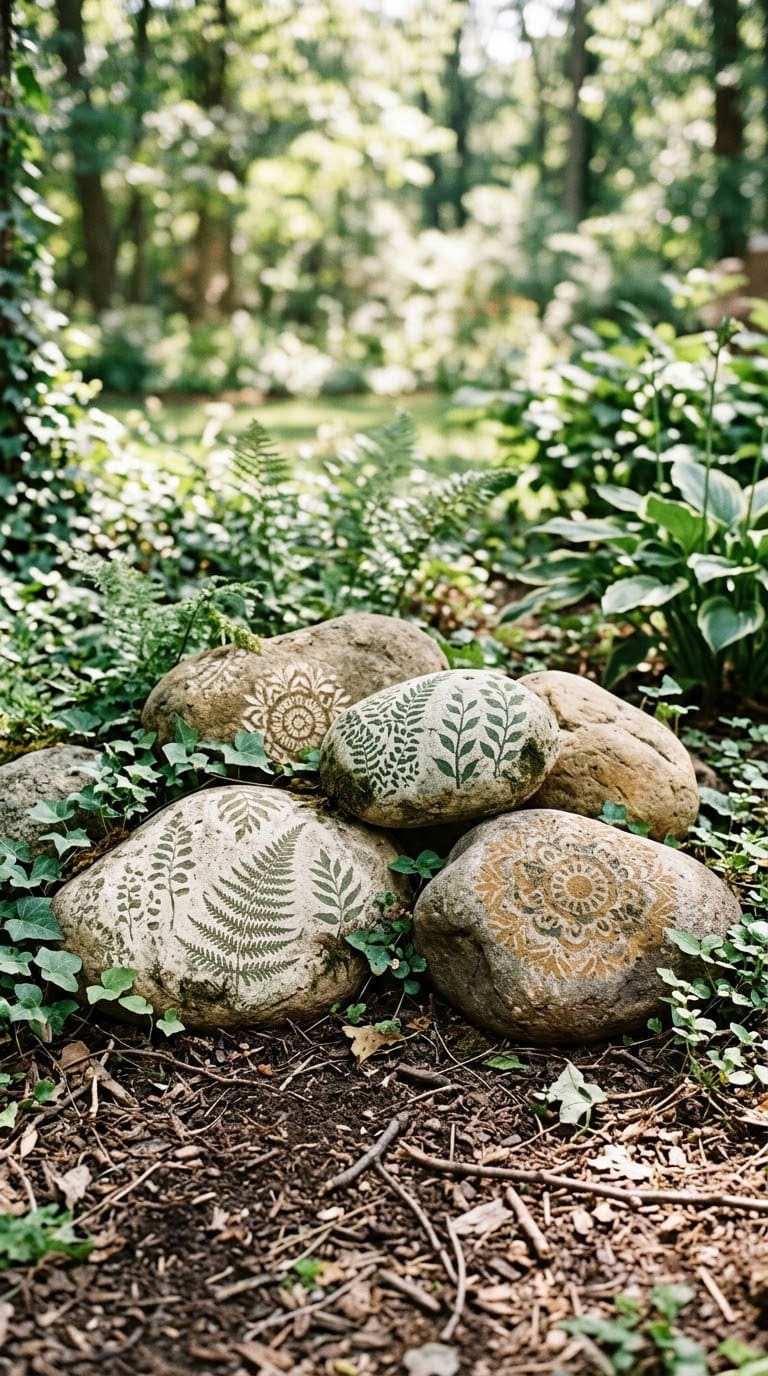
Pick flat rocks with a smooth top. Base coat them in a dark color, then dab a leaf stencil in a light color. Use a dry brush so the paint does not bleed under the stencil.
Peel the stencil while the paint is damp. Seal after the paint cures.
Cost tier: very low.
9. Painted Key Wind Chime
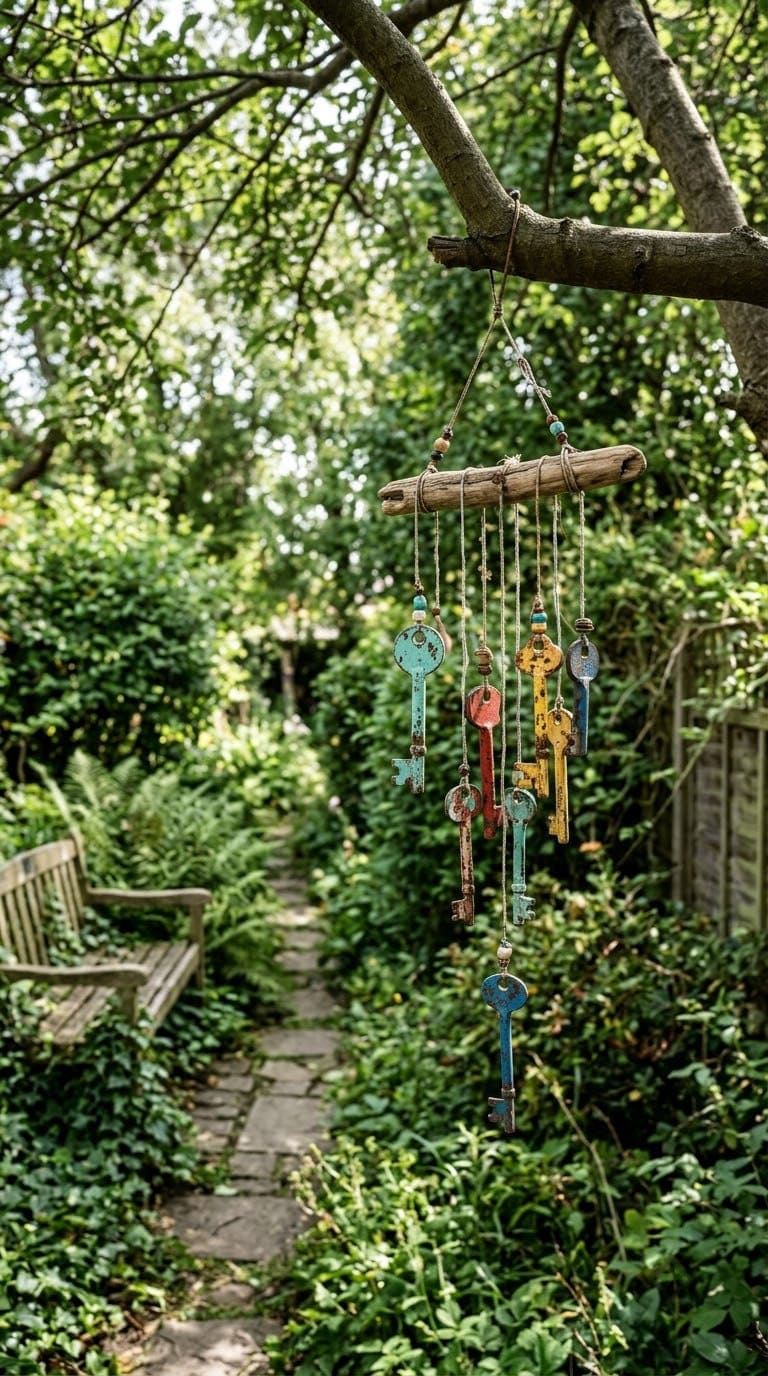
Hang old keys from a ring or a small branch. Spray them in bright colors after degreasing them. Give each side two light coats.
Use fishing line or wire to hang them. For more sound ideas, browse our wind chime ideas.
Cost tier: very low.
10. Chandelier Planter
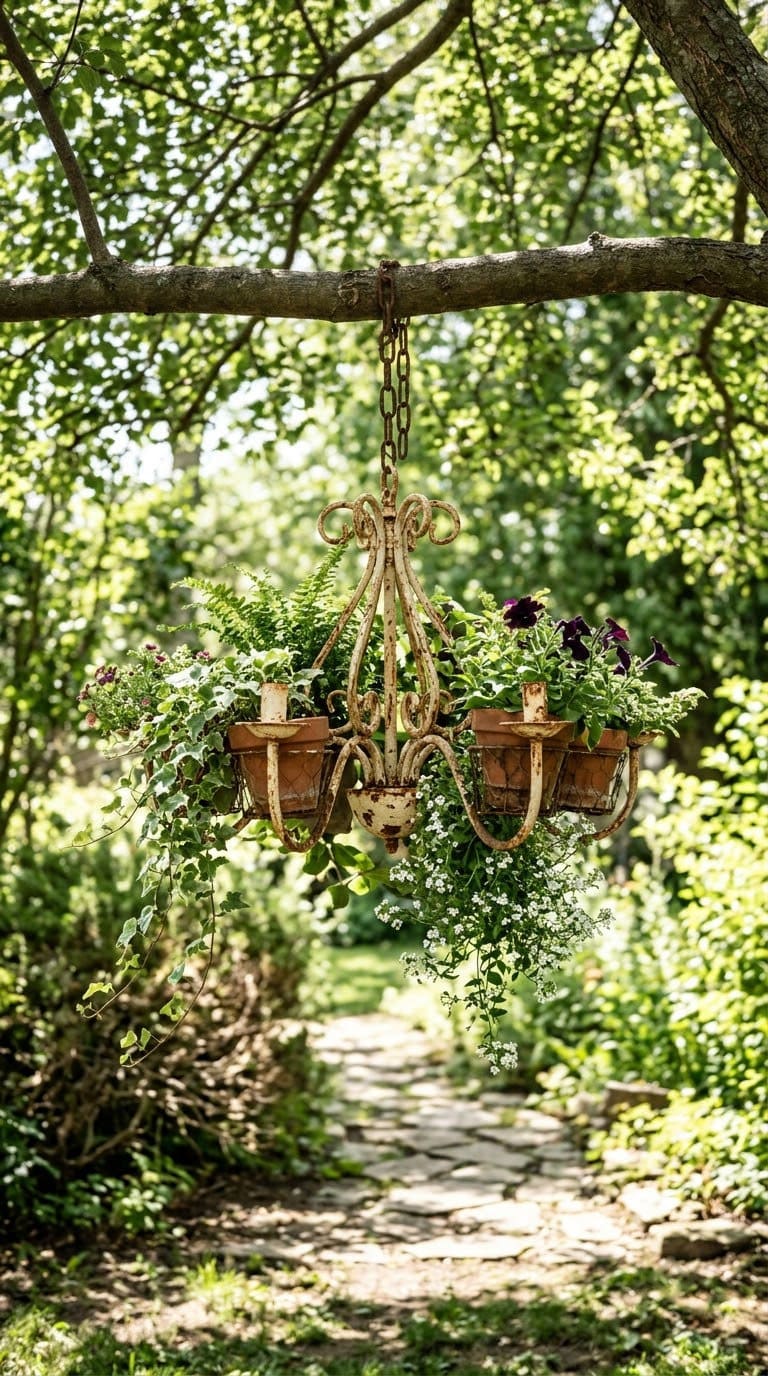
An old chandelier can hold small pots in place of bulbs. Remove the wiring and glass, and wipe it clean. Spray it white or a bold color.
Hang it from a sturdy branch or a pergola beam. Use light pots so the arms do not bend. Add a few drainage holes to each pot, and choose trailing plants like ivy so the arms stay visible.
Cost tier: low.
11. Ladybug Garden Decor
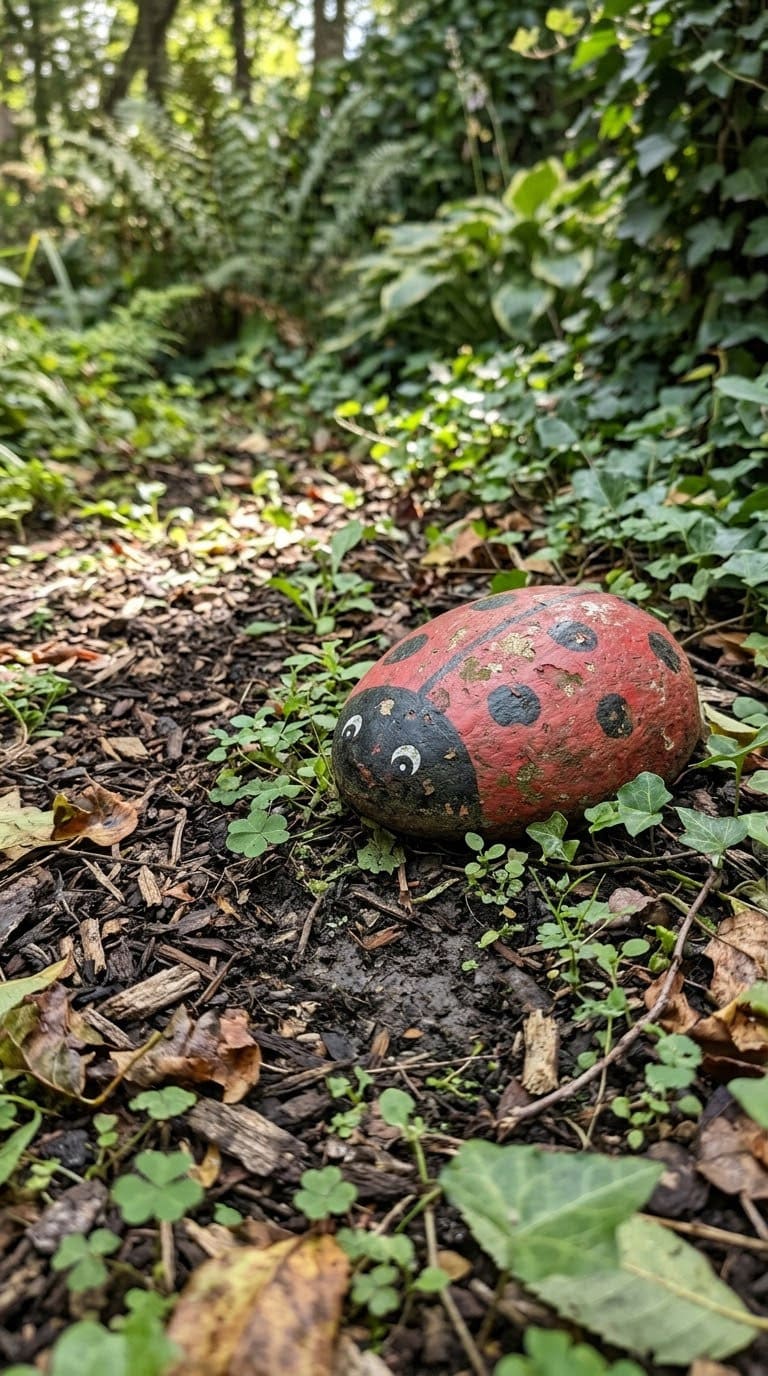
A rock makes a quick ladybug. Paint it red, add black spots and a head, and let it dry. Seal it with a clear exterior spray.
Tuck it into a bed of low plants or herbs. Kids can help with the spots.
Cost tier: very low.
12. Rainbow Painted Pallet
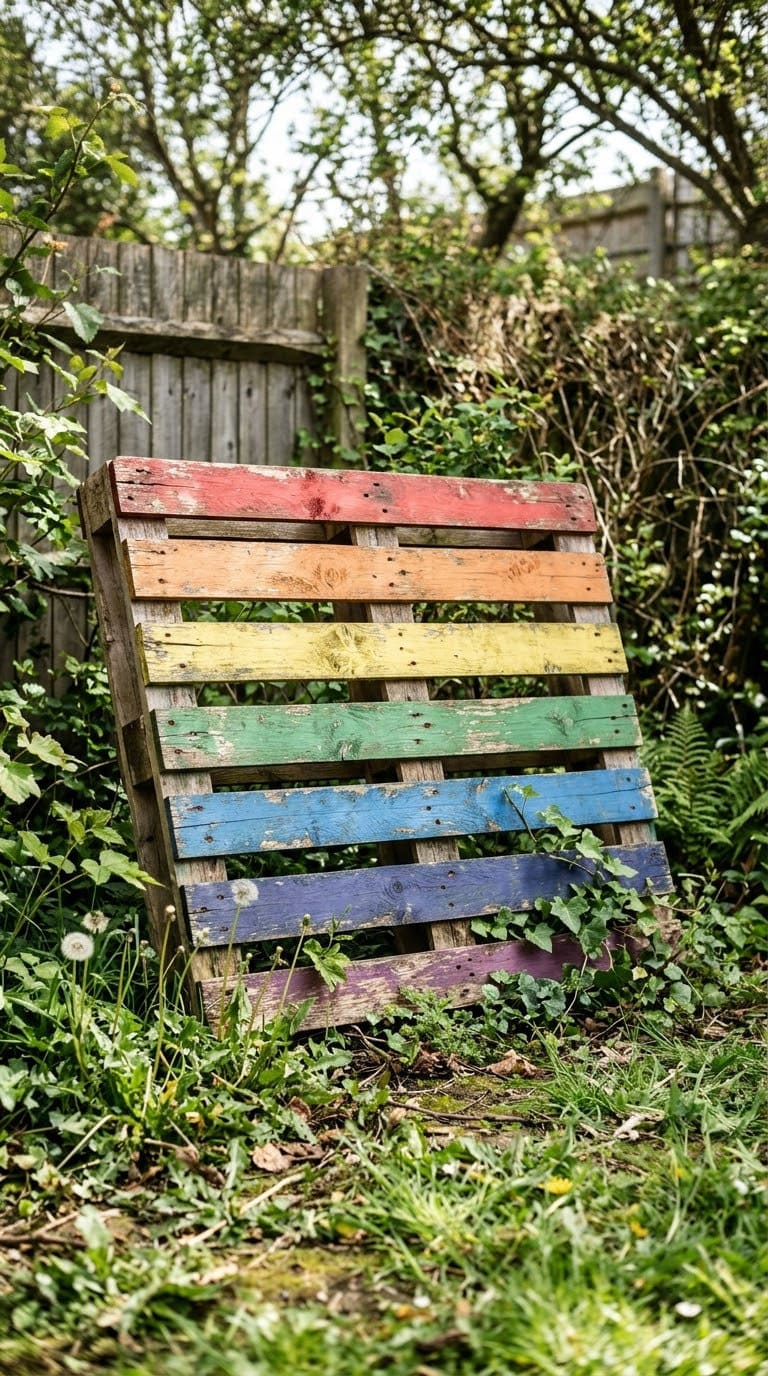
Stand a pallet on end and paint each slat a different color. Sand rough spots first, then apply exterior latex paint. Rest pots in the gaps between slats.
Pick a heat-treated pallet if you can, and avoid ones with chemical stains. Add a coat of clear sealer on the top edges, where rain sits.
Cost tier: low.
13. Polka-Dot Mushrooms
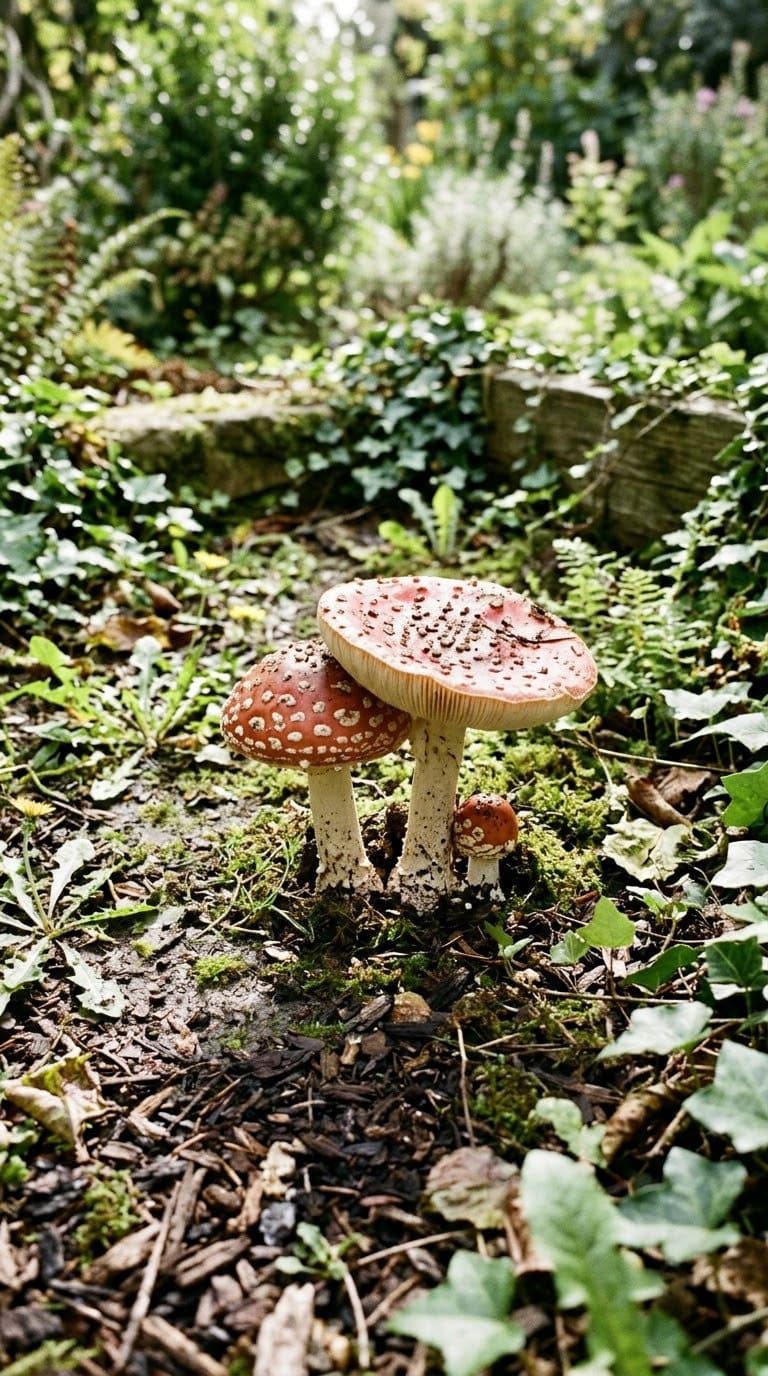
Paint concrete or ceramic mushrooms bright red with white dots. Use exterior paint, and add a clear coat. They hide well among ferns and hostas.
Set them in part shade to slow fading. Add a small dab of paint to any chips each spring.
Cost tier: low.
14. Rainbow Paver Hopscotch
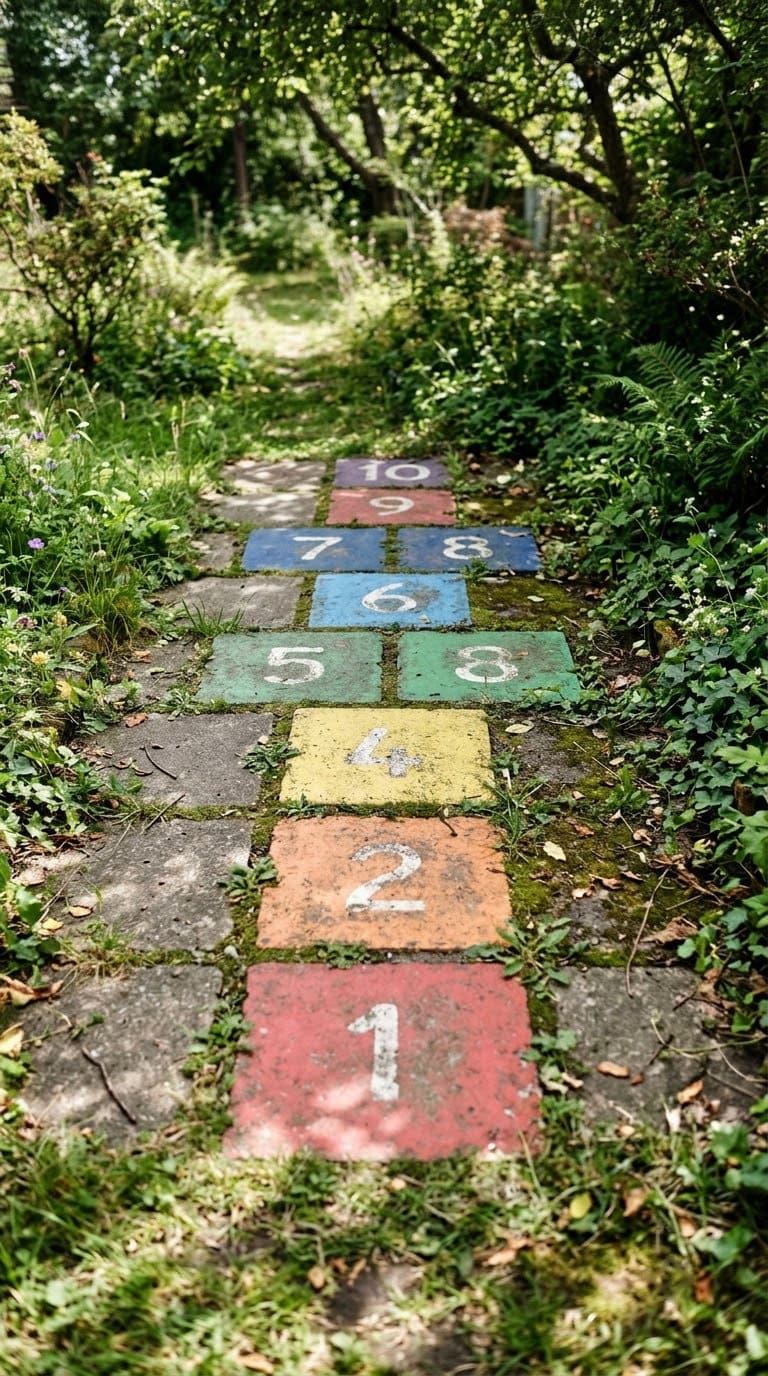
Use masonry paint on clean, dry pavers. Number the squares with a stencil. Let the paint cure fully before anyone steps on it.
Check the can label for cure times, because they vary by product. Reapply the clear coat each spring.
Cost tier: low to medium.
15. Multi-Color Painted Shutters
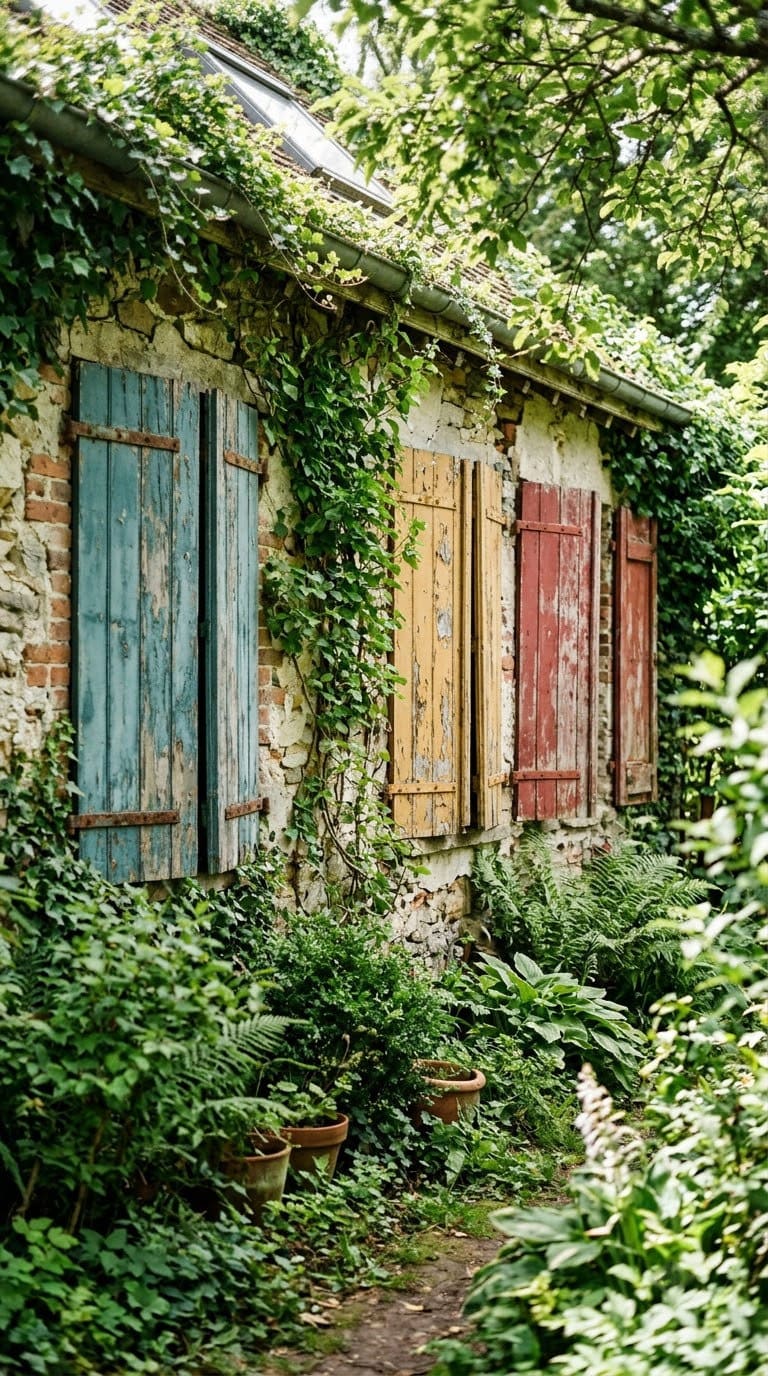
Hang old shutters on a fence or shed wall for color. Scrape loose paint, prime, and paint each slat in a different shade. Test for lead if the shutters are old.
Use exterior paint, and seal the edges where water gets in.
Cost tier: low.
16. Nesting Pots as a House Number
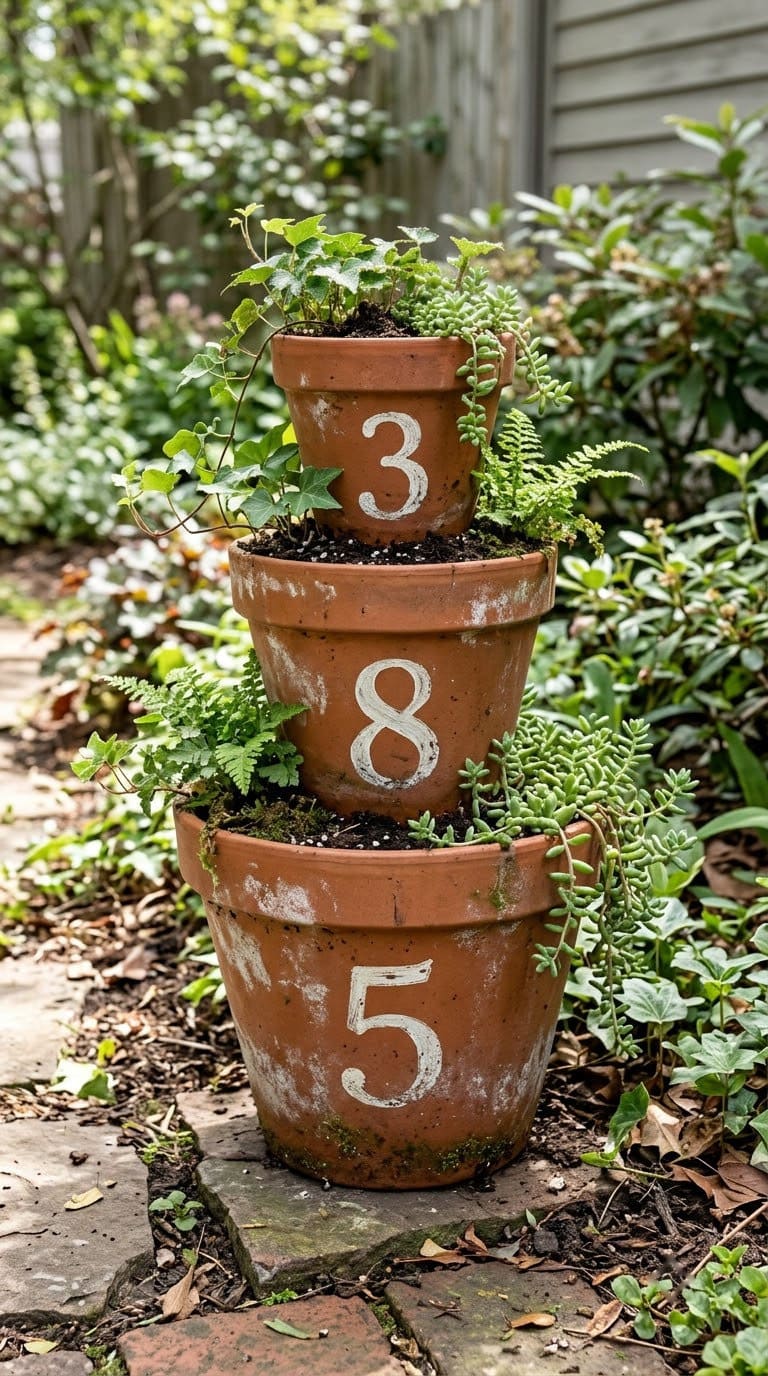
Paint pots in matching colors and stencil numbers on them. Stack them by size. Seal the numbers with a clear coat so rain does not wash them out.
Keep the numbers large and high-contrast so visitors see them.
Cost tier: very low.
17. Geometric Painted Planters
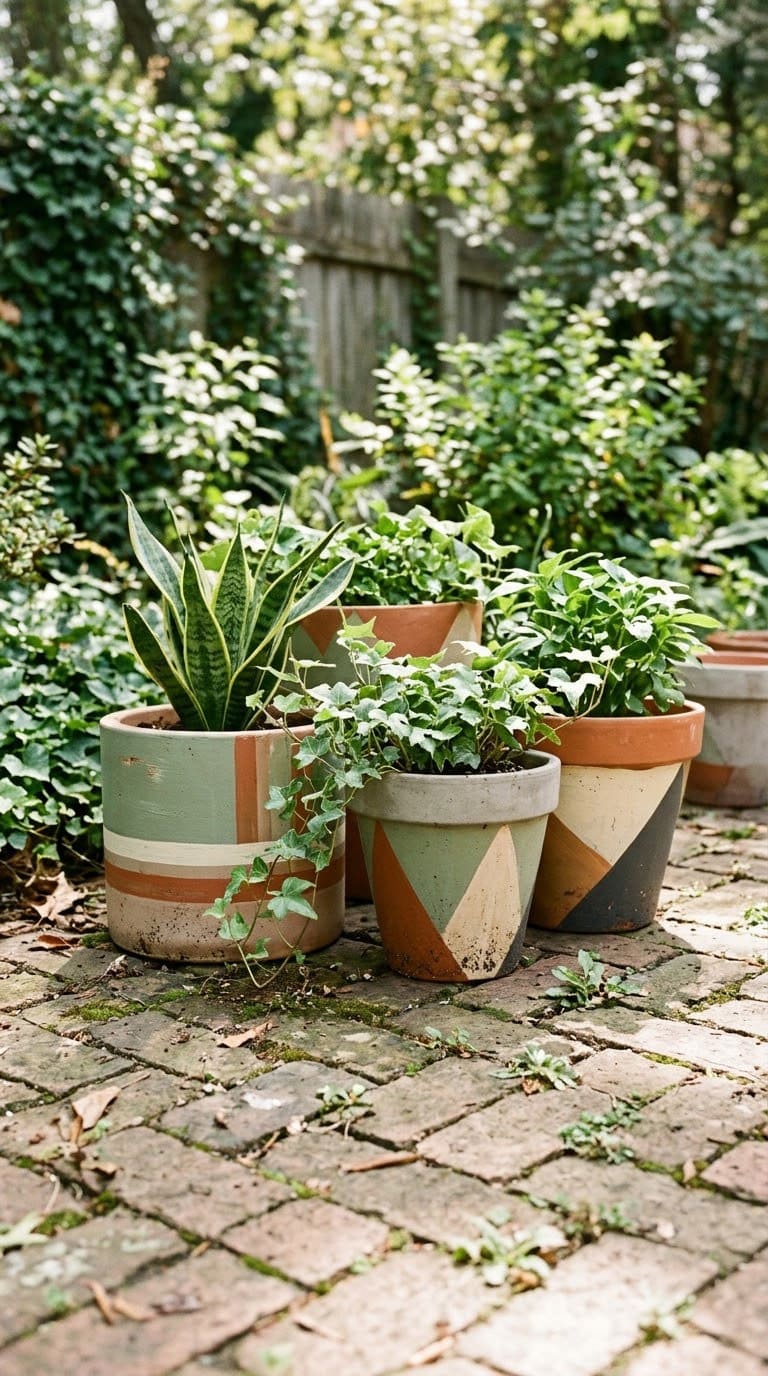
Use painter’s tape to mark triangles and stripes. Paint the first color, let it dry, then tape and paint the next. Pull the tape while the paint is slightly tacky.
For build ideas, see our geometric planter projects.
Cost tier: low.
18. Stenciled Block Wall
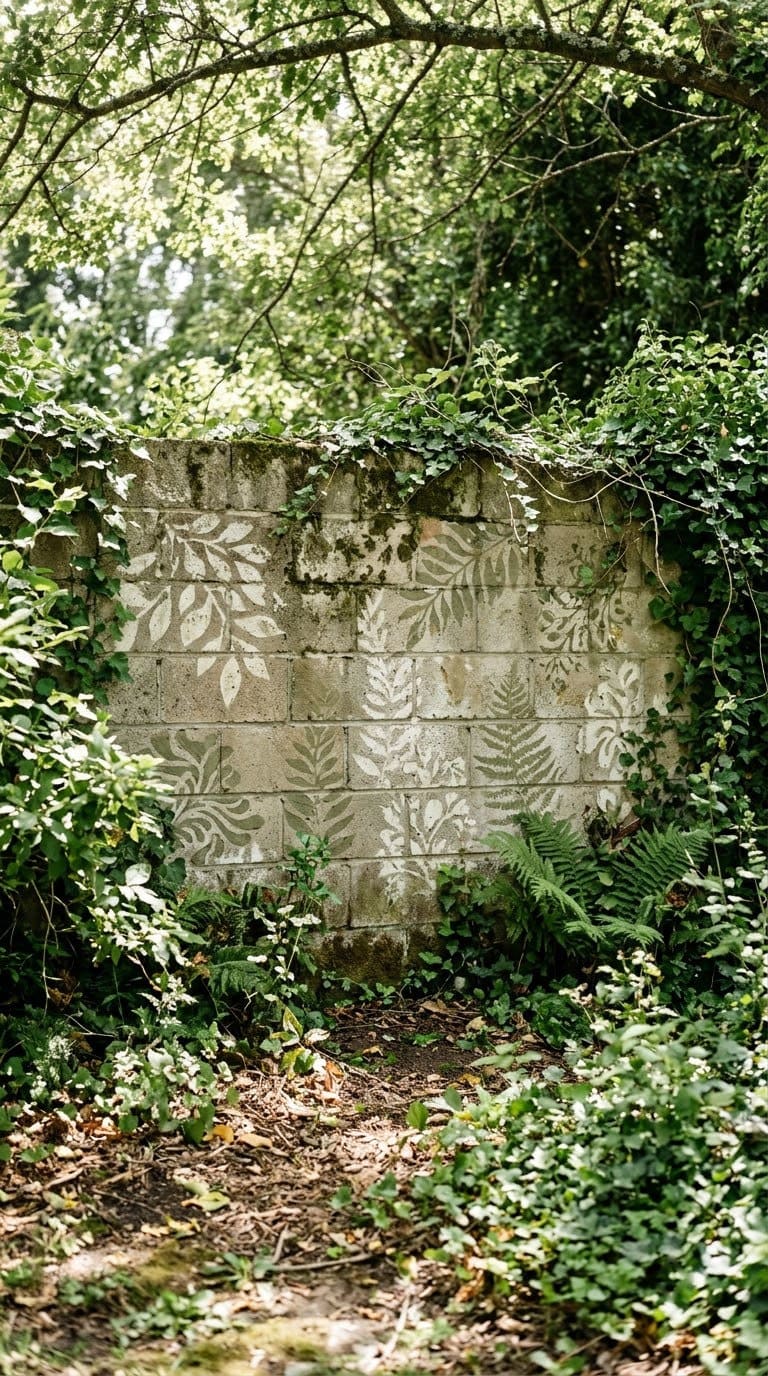
Clean the wall with a stiff brush. Roll on a base color, then pounce a stencil with a dry brush. Work in sections.
Use masonry paint, and check the label for cure time. A repeating pattern hides small mistakes. Rough block texture soaks up paint, so expect to roll on a second coat of the base color before you stencil.
Cost tier: medium.
19. Painted Gnome Pots
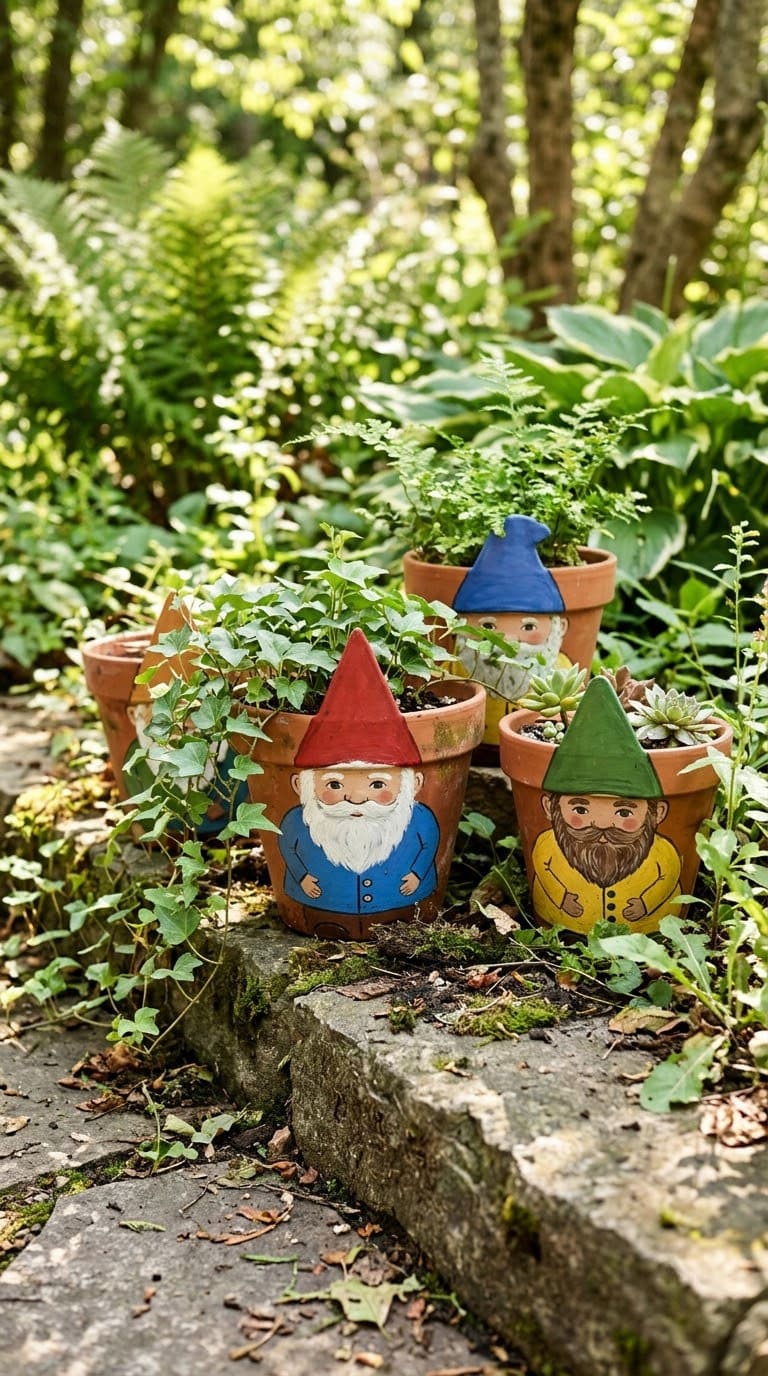
Turn a small pot upside down for a gnome hat. Paint a pointed cone, a face, and a beard. Seal the finished piece.
Set them by the base of larger plants so they peek out.
Cost tier: very low.
20. Sunshine-Yellow Garden Door
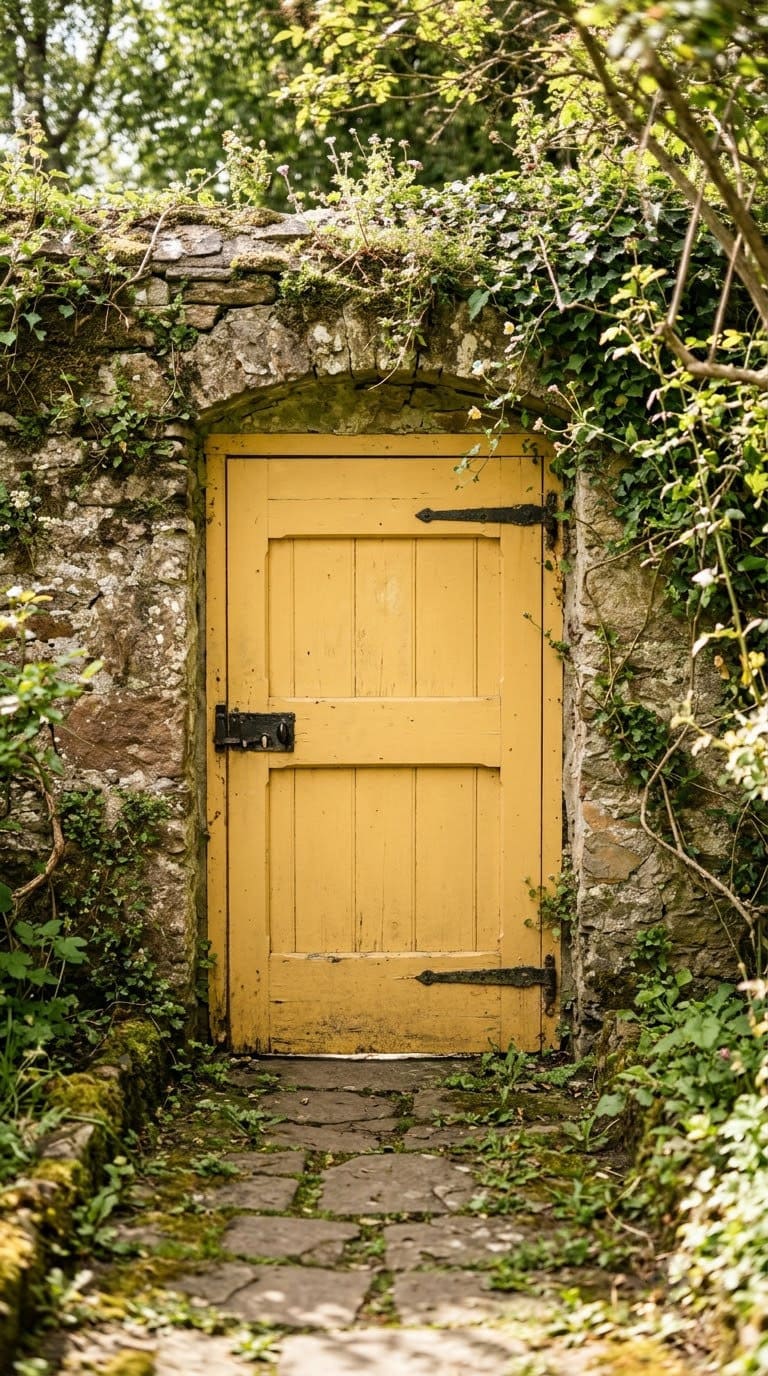
A bright door lifts a shed or fence gate. Sand, prime, and paint with exterior paint in a satin finish. Two thin coats beat one thick coat.
Pick a yellow that holds against green foliage. Refresh it every few years. Remove the hardware or tape it off before you paint, so the hinges do not end up with drips.
Cost tier: low.
How Do You Plan Color in the Garden?
Pick two or three colors and repeat them. Repeating a color ties scattered pieces together. Let plants provide the neutral green.
Place bright pieces in front of dark foliage so they stand out. Put soft pastels in shade, where they glow.
For more focal points, browse our garden art projects.
How Often Should You Repaint and Reseal?
Painted pieces fade, and that is normal. Check them each spring for chips, chalky patches, and bare spots. Touch up early, before water gets under the paint.
Move small pieces under cover in winter if you can. Pots, rocks, and chimes last longer out of freezing rain. Large pieces like furniture and shutters can stay out if the paint and sealer are intact.
Clean pieces with a soft brush and water before touching them up. Let them dry fully, then repaint thin and seal again. This is our own care routine, not a tested schedule, so adjust it for your climate.
Common Mistakes to Avoid
Skipping the sealer is the first one. Sustain My Craft Habit says regular acrylics not made for outdoors need a sealer. Paint pens need one too.
Sanding old paint dry is the second. The EPA says to wet the area and sand the minimum if you must sand.
Putting food in tires is the third. NC State’s Lucy Bradley advises against it.
FAQ
What paint is best for outdoor garden decor?
Use exterior paint or a multi-surface acrylic made for outdoor use. Sustain My Craft Habit names DecoArt Multi-Surface Satin as a self-sealing option.
Do I need to seal painted rocks?
Yes for regular acrylics. Coat every side with a clear exterior spray, and let the paint dry first.
Is it safe to paint a beehive?
Mann Lake advises low-VOC, water-based exterior latex on the outside only, with time to air out before bees move in.
Can I grow vegetables in painted tires?
NC State Extension says there is no need to use tires in the garden. NMSU suggests only above-ground crops and lining the tires if you do.
How do I paint old furniture safely?
Test for lead if the piece is old. The EPA says to wet the area and sand the minimum if sanding is unavoidable.
Never miss an update — choose FarmFoodFamily as your preferred source on Google.
How it works: Tap the button below to open Google's settings page, then check the box next to FarmFoodFamily.
Tap the checkbox to turn it blue — that's how you know it's set.














Thank you for featuring my painted patio set. It’s one of my favorites. I am loving all the colorful projects in this post.