25 Charming Vintage Garden Decor Ideas (With Safety and Sourcing Tips)
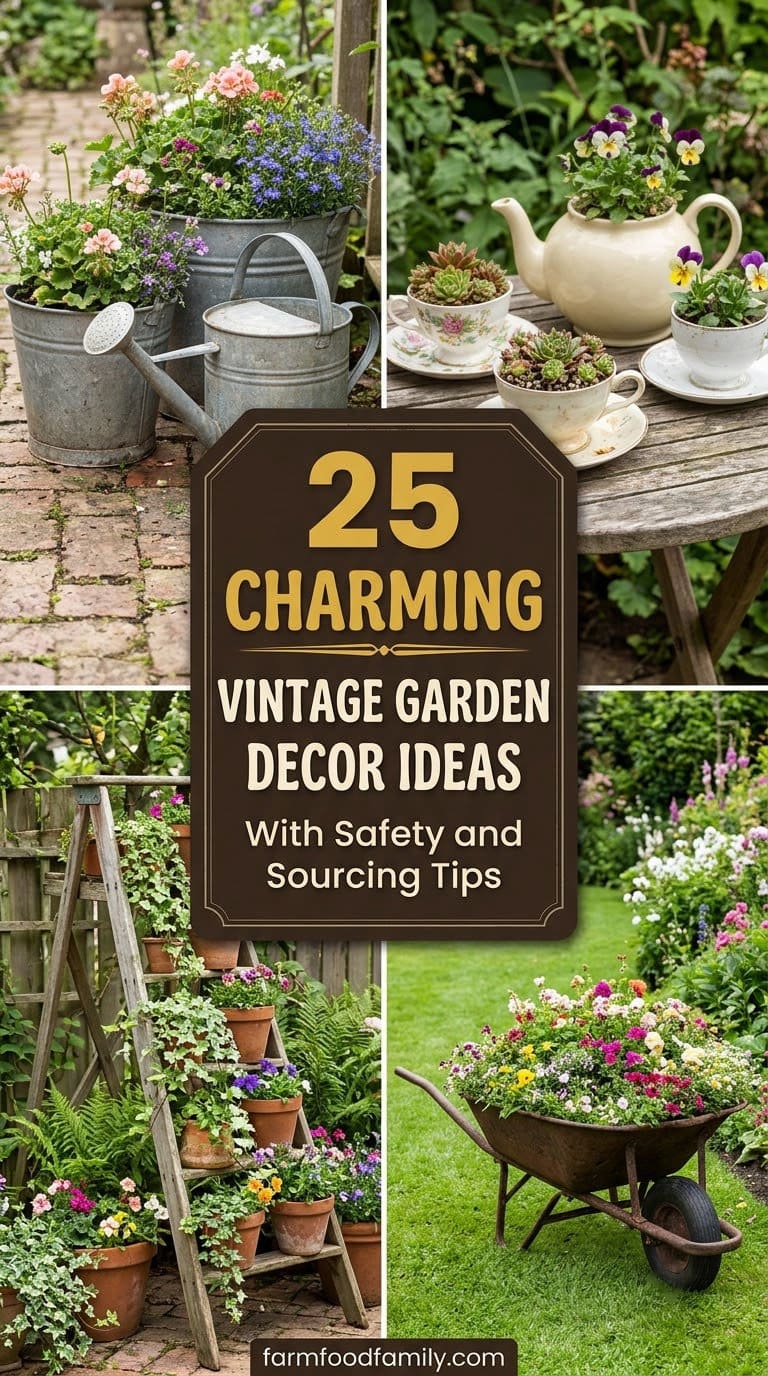
Vintage buckets, teacups, and ladders give a garden instant character, as long as you drain them, check old glazes and paint, and keep food crops out of risky containers.

Never miss an update — choose FarmFoodFamily as your preferred source on Google.
How it works: Tap the button below to open Google's settings page, then check the box next to FarmFoodFamily.
Tap the checkbox to turn it blue — that's how you know it's set.
Vintage buckets, teacups, and ladders give a garden instant character, as long as you drain them, check old glazes and paint, and keep food crops out of risky containers.
Products We Recommend
This post contains affiliate links. We may earn a commission on qualifying purchases at no extra cost to you.


A garden feels older and warmer with a few worn pieces in it. An enamel pitcher, a chipped teacup, or a rusty wheelbarrow can say more than a store-bought planter. The trouble is that old things come with old problems.
Many antique pots have no drainage. Some glazes and paints contain lead. Galvanized metal raises its own questions for food crops. This guide gives you 25 ideas with the safe way to do each one.
In this article
Answer 4 quick questions and get matched to the exact fix for your yard — drainage, budget, layout, or something else entirely.
Take the Free QuizWhat’s the Quick Answer for Safe Vintage Garden Decor?
Use vintage pieces for flowers and foliage first. Keep food crops out of anything you cannot vouch for. Most vintage pieces were never built to hold soil and water, so a little prep keeps them safe, dry, and standing for years.
The Plant Answer Line at the University of Washington’s Miller Library says galvanized containers are potential cadmium sources. Its advice is to grow ornamentals in them and edibles in untreated wood or clay.
The FDA lists antique, handmade, damaged, and flea-market pottery as problem types for lead. It says no amount of washing, boiling, or other process can remove lead from pottery.
Drill drainage holes in every bucket, tin, and basin. Seal rust-prone metal, and check old painted pieces for lead before you sand them. Skip any piece stamped “Not for Food Use” if herbs are the plan.
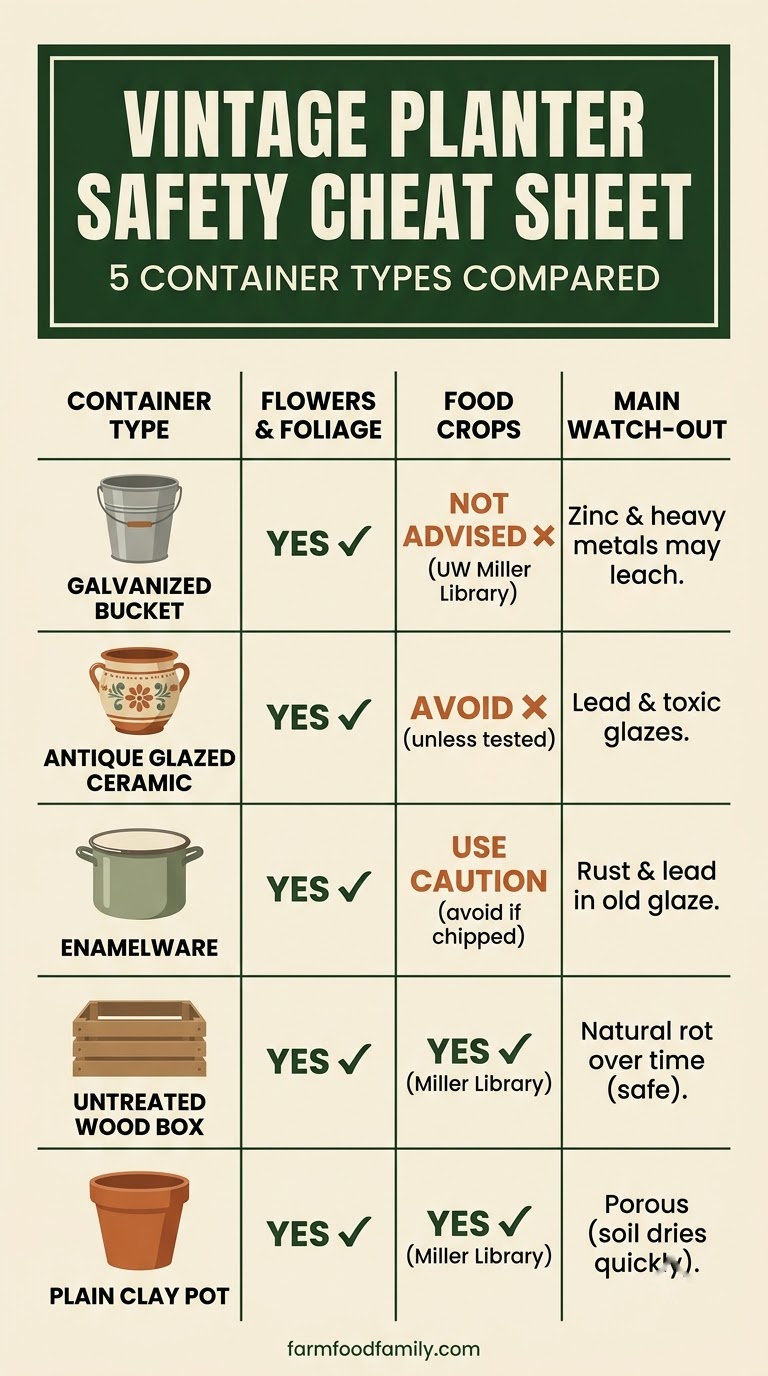
Which Vintage Containers Are Safe for Edibles?
This table is our planning guide. The galvanized and ceramic rows come from the sources linked in this article. The other rows are general practice, not tested claims.


| Container | Flowers and foliage | Food crops | Main watch-out |
|---|---|---|---|
| Galvanized bucket or tub | Yes | Not advised by UW Miller Library | Cadmium concern, heat, acidic soil |
| Antique glazed ceramic | Yes | Avoid unless tested | Lead or cadmium in glaze |
| Enamelware | Yes | Unknown, so skip | Chips expose bare metal |
| Untreated wood box | Yes | Yes, per UW Miller Library | Rots over time |
| Plain clay pot | Yes | Yes, per UW Miller Library | Cracks in hard frost |
Most yard problems trace back to one specific, fixable cause. Find yours in 4 quick questions.
Take the Free QuizBefore You Start: Sourcing, Drainage, Rust, and Lead
Shop thrift stores, yard sales, and flea markets, and inspect each piece in person. Look for cracks, deep rust-through, and sharp edges. Pass on anything that wobbles, because a tipped ladder or chair can hurt someone.
The Miller Library’s page on ceramic pots adds that some glazes contain lead and cadmium. It also says firing alone does not make a pot safe.
Drill drainage holes in the bottom of every container, because water that cannot drain drowns roots. Use a masonry bit for ceramic and a metal bit for tin. Wear eye protection when you drill.
Metal gets hot in full sun, as the UW Miller Library also notes. Set metal planters in part shade, or slip a plastic pot inside as a liner.
Check old painted pieces for lead. The EPA says homes built before 1978 are more likely to have lead-based paint. If you must sand, it advises wetting the area first and sanding the minimum.
How Do You Judge a Vintage Piece Before You Buy It?
Start with the use. Decide whether the piece will hold flowers, hold food crops, or just sit there as decor. Ornamental use opens up almost everything. Food crops narrow it to untreated wood and plain clay.
Then check the structure. Press on the base for soft spots, tip it gently to test for wobble, and run a hand along the edges for sharp metal. Reject anything with rust through the bottom or cracks that run through glaze.

Galvanized buckets for flowers and succulents (drill drainage holes first)
Shop NowThis post contains affiliate links. We may earn a commission on qualifying purchases at no extra cost to you.
Finally, check the finish. Chipping paint on an old piece is a flag for lead, as the EPA guidance above explains. A cheap home lead test swab can help you decide, and the FDA notes such kits exist for pottery.
Walk away from “Not for Food Use” marks if you planned a herb pot. The FDA says to avoid using those pieces for food or drink.
The average homeowner spends $616/year on yard fixes that don't address the real problem. Find out what yours actually is — before you spend another dollar.
Take the Free Quiz25 Charming Vintage Garden Decor Ideas
1. Galvanized Bucket Planter
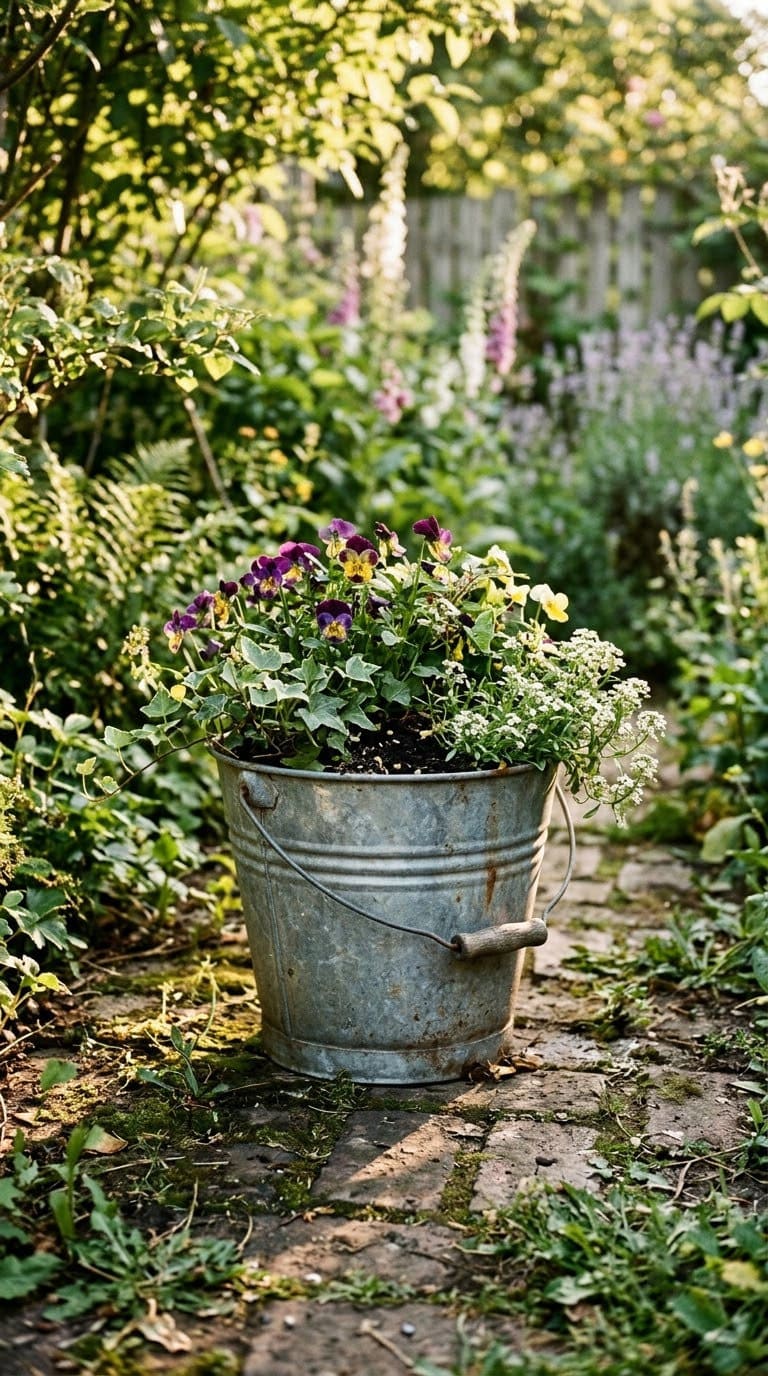
A galvanized bucket is the classic vintage planter. Drill several holes in the base and add a layer of coarse gravel. Fill it with potting mix and plant flowers.
Keep it ornamental, in line with the UW Miller Library advice above. Put it near a door where the silver finish catches the light.
Cost tier: low.
2. Teacup Planter
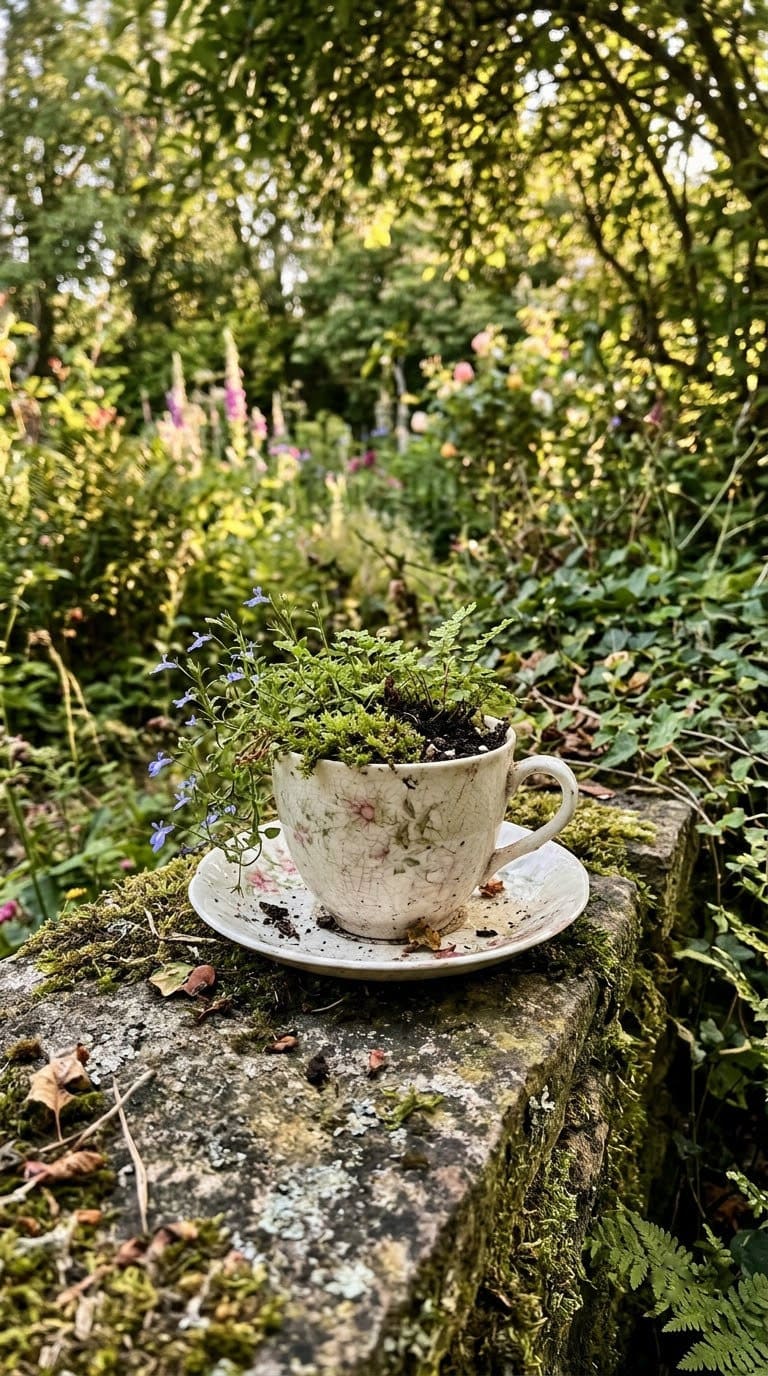
A teacup holds one small succulent or a sprig of moss. Drilling a hole is tricky in thin china, so use a diamond bit and go slowly. If you skip the hole, water very lightly.
Skip herbs you plan to eat, since antique glaze may contain lead per the FDA. Use the cup as a stand-alone accent.
Cost tier: very low.


3. Wash-Basin Hanging Basket
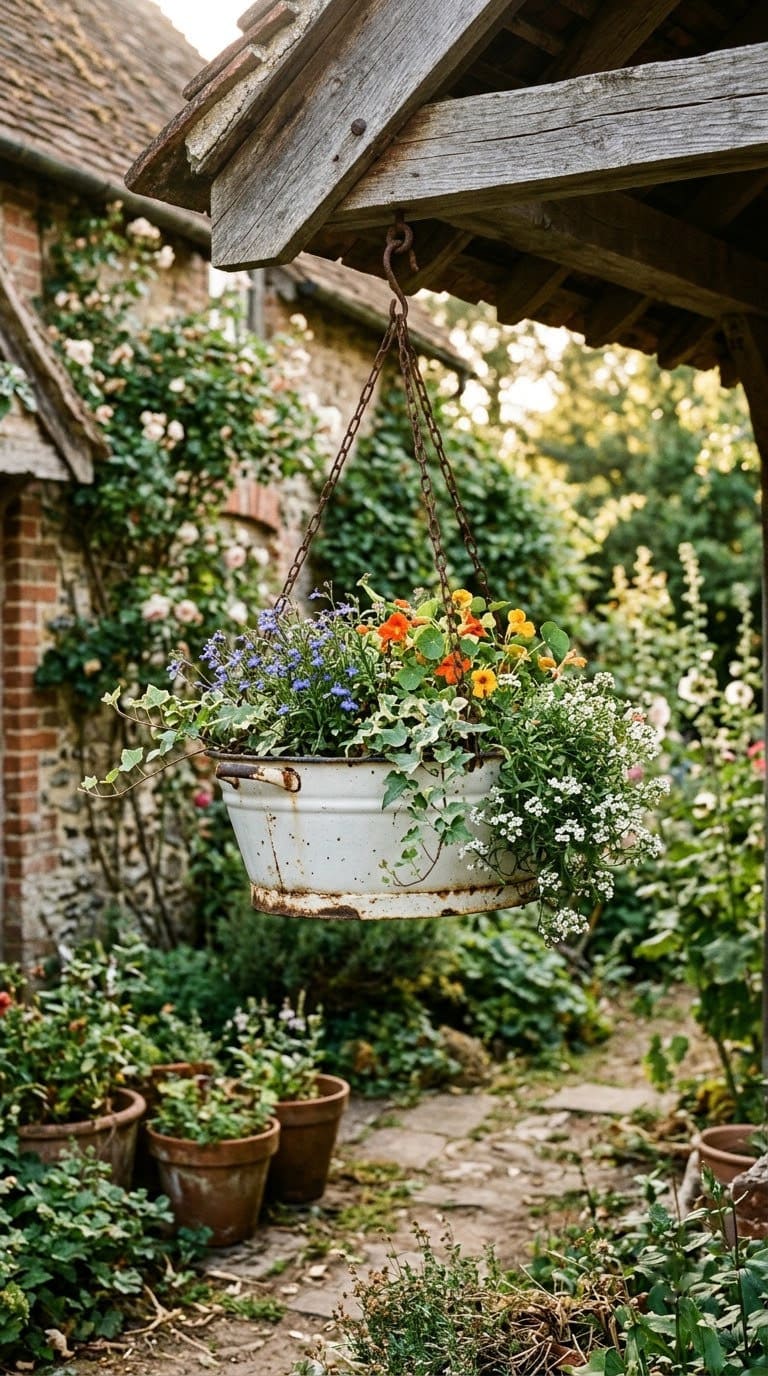
Hang an old basin from three chains attached at even spacing. Drill drainage holes first. Choose trailing plants like ivy and petunias.
Check the hooks and chains for strength, because a wet basin is heavy. Hang it under a porch roof or pergola beam.
Cost tier: low.
4. Enamel Pitcher Planters
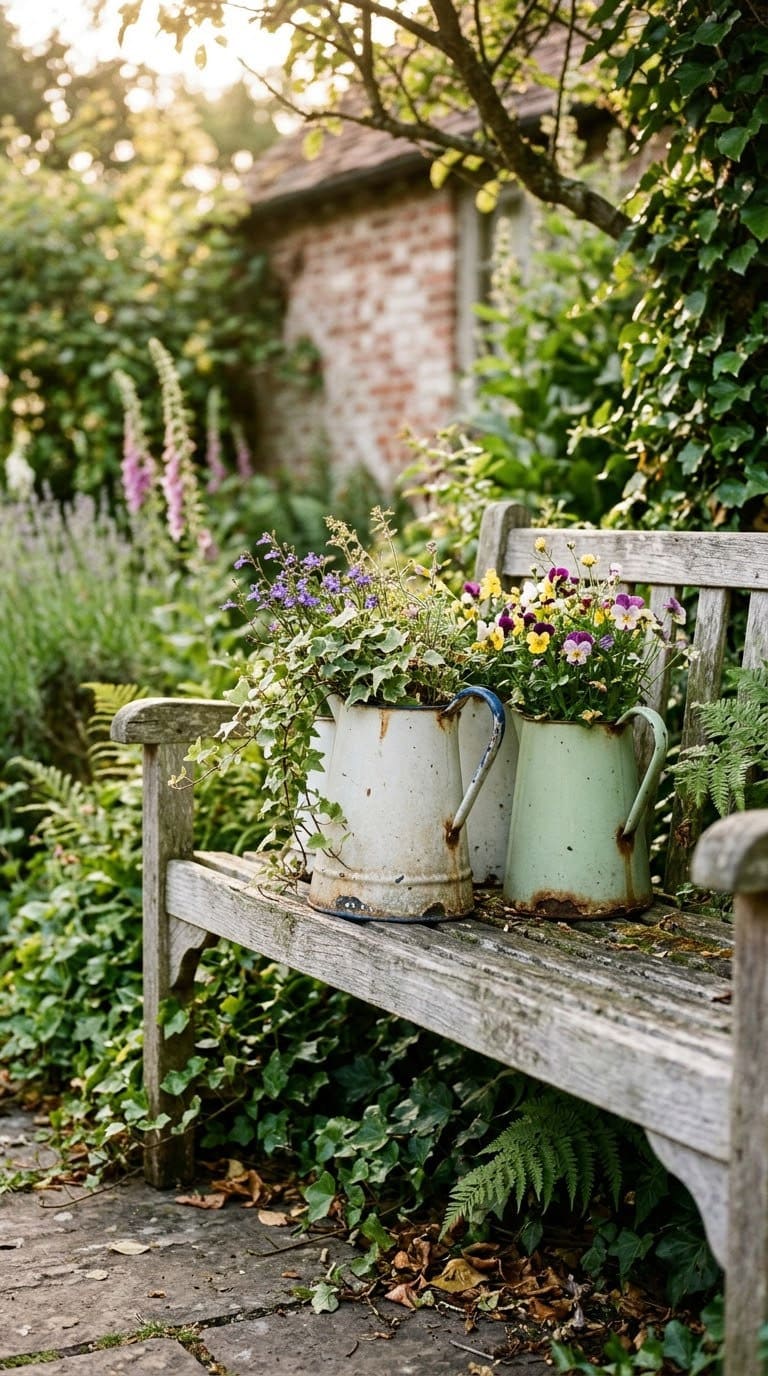
Pitchers with handles look charming on a shelf or hook. Enamel chips, so look for pieces with the base coat intact. Drill holes in the bottom and use a liner pot if the metal is thin.
Group two or three pitchers in different heights. They work well with the soft palette of shabby chic garden ideas.
Cost tier: low.
5. Antique Chair Planter
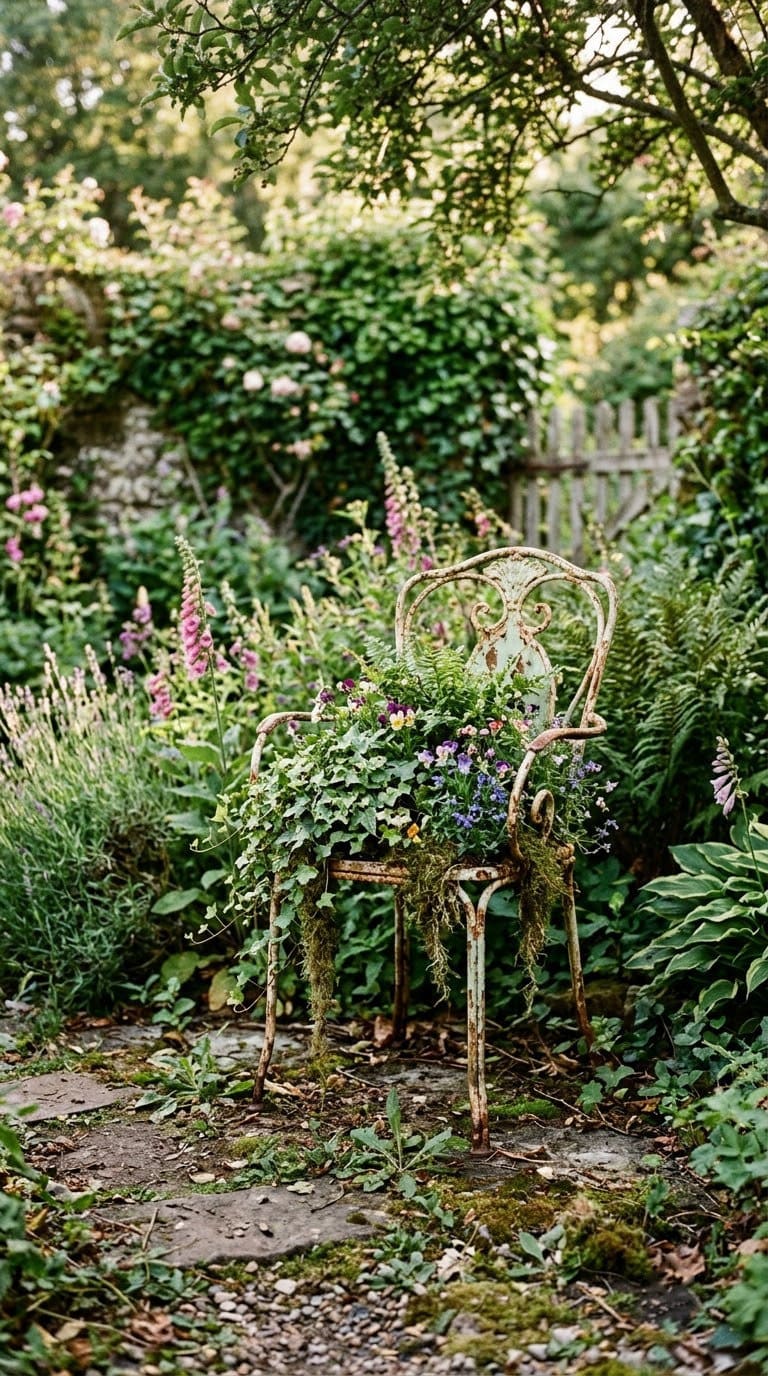
Remove the seat of a worn chair and set a pot into the opening. Brace the legs with a small bracket if they wobble. Seal the wood with an exterior finish.
Test old paint for lead before you sand, as noted above. Do not use the chair for sitting after you drill it.
Cost tier: low to medium.
6. Rusty Wheelbarrow Display
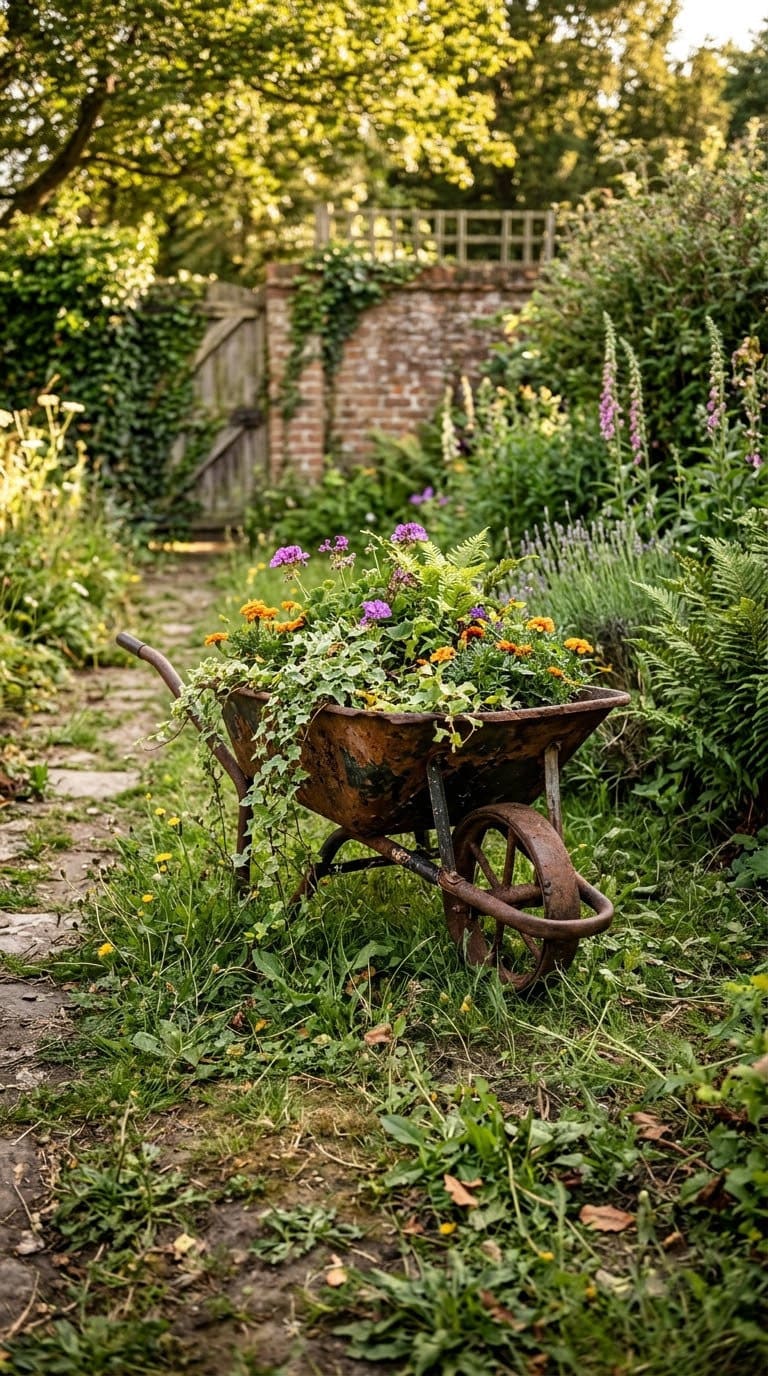
A wheelbarrow works as a ready-made plant stand. Brush off loose rust and drill holes if you plant directly in it. Or set pots inside so the metal stays dry.
We cover more builds in our wheelbarrow garden projects.
Cost tier: low.
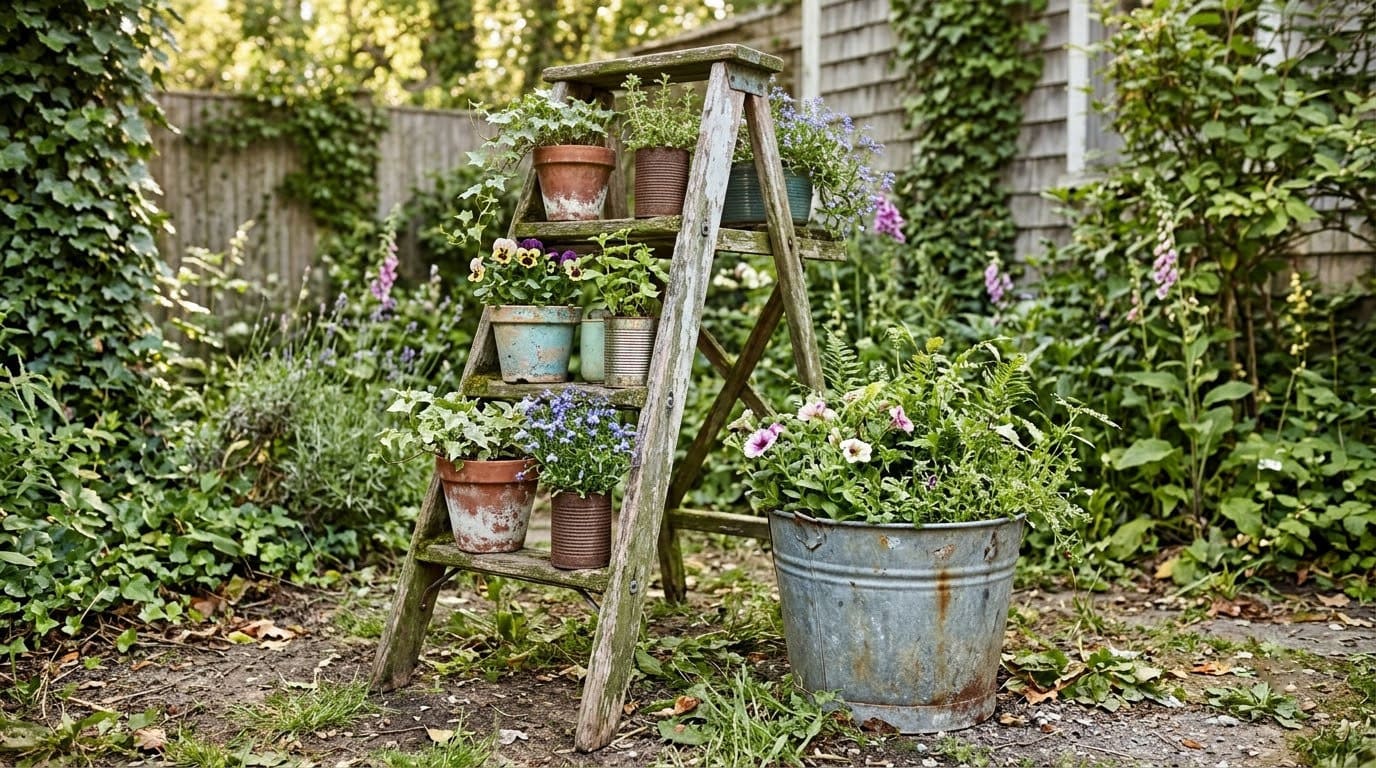
7. Vintage Ladder Pot Display
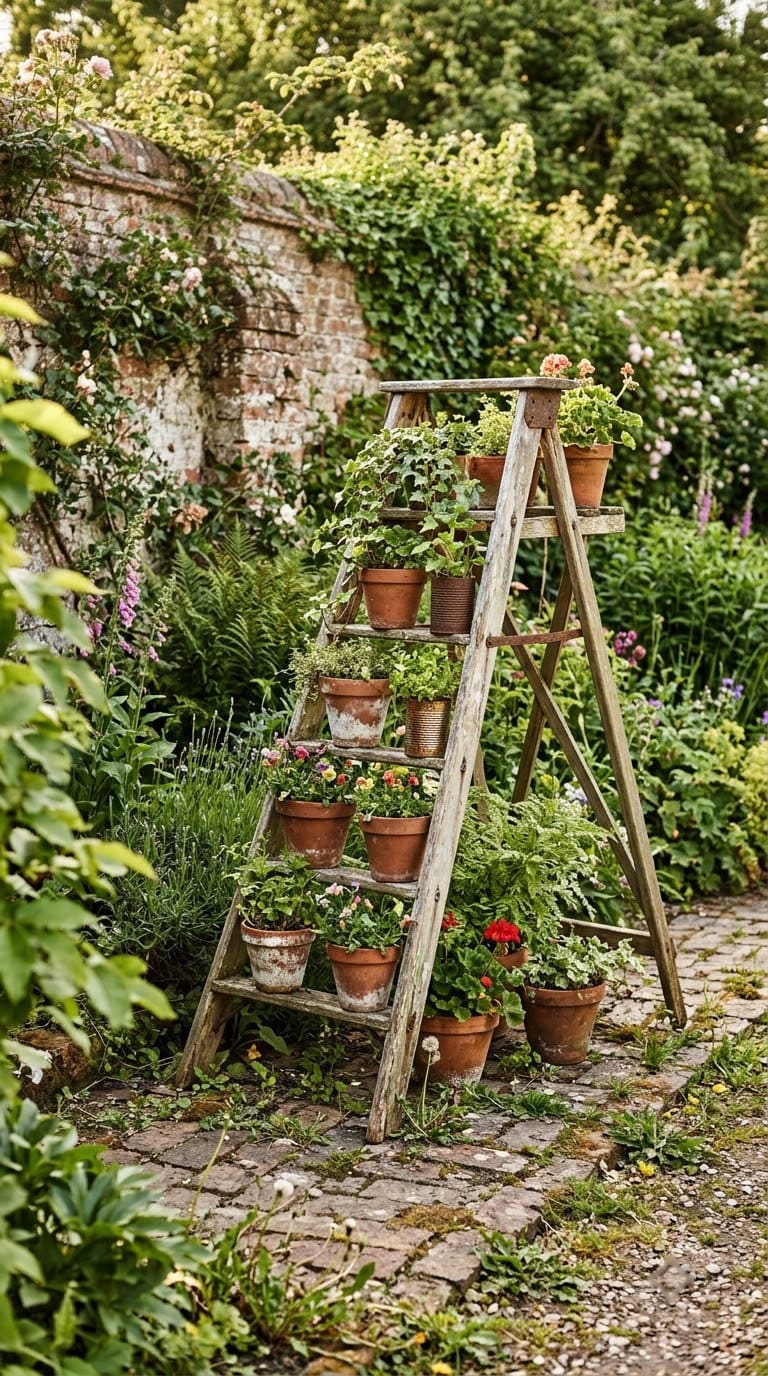
Lean a stepladder against a wall or fence, and set a pot on each step. Make sure it is steady before loading it. Seal the wood and place heavy pots on the bottom steps.
A ladder suits a small patio, where it adds height without taking floor space. For a vertical plant idea, see these upcycled trellis ideas.
Cost tier: low.
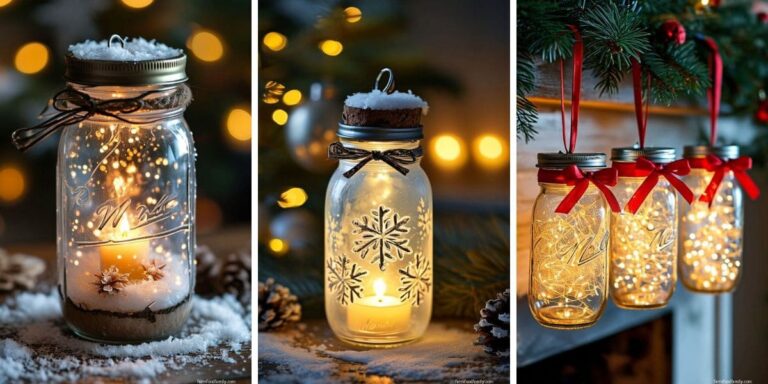
8. Mason-Jar Lanterns
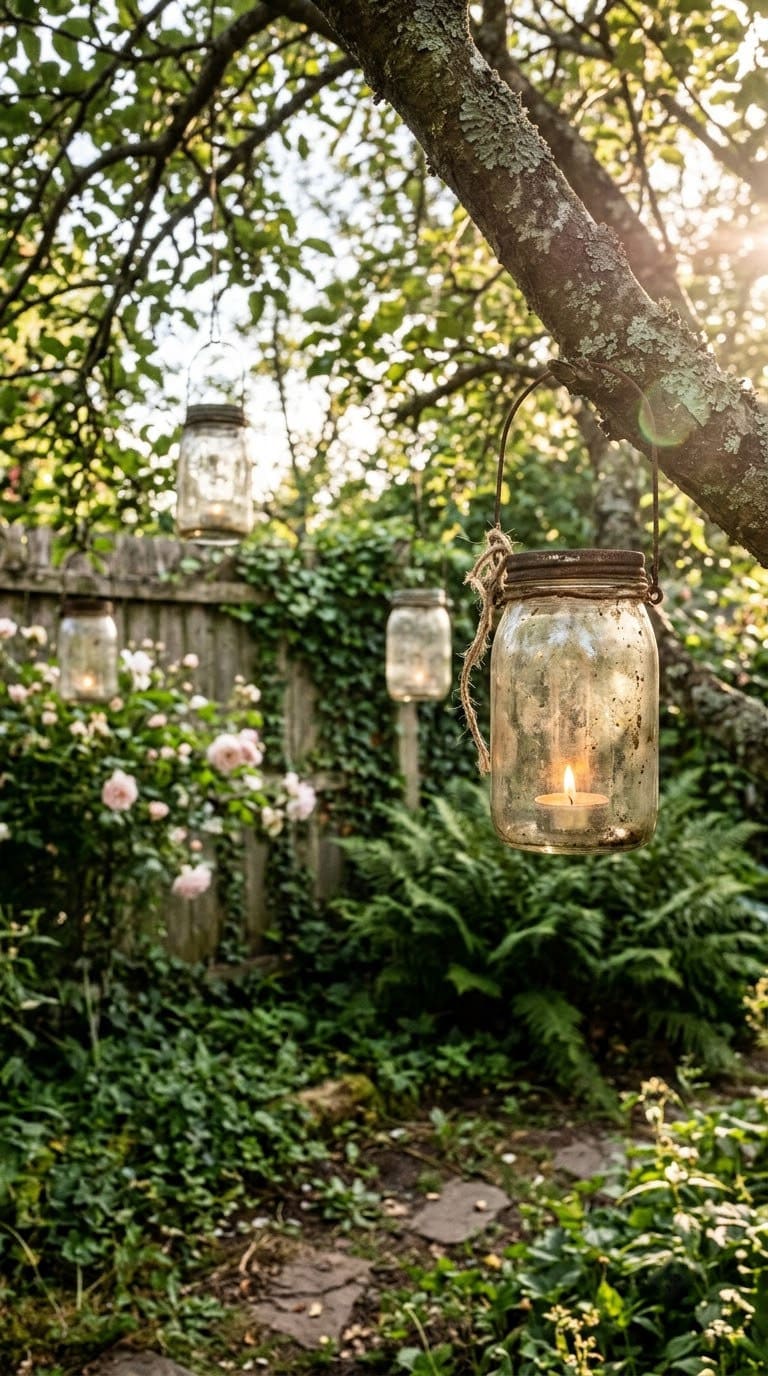
Wire the neck of a jar and hang it from a branch. Use battery or LED lights instead of open flame. Glass breaks, so hang jars away from walkways.
For more light ideas, browse our garden lantern projects.
Cost tier: very low.
9. Coffee-Pot Planters
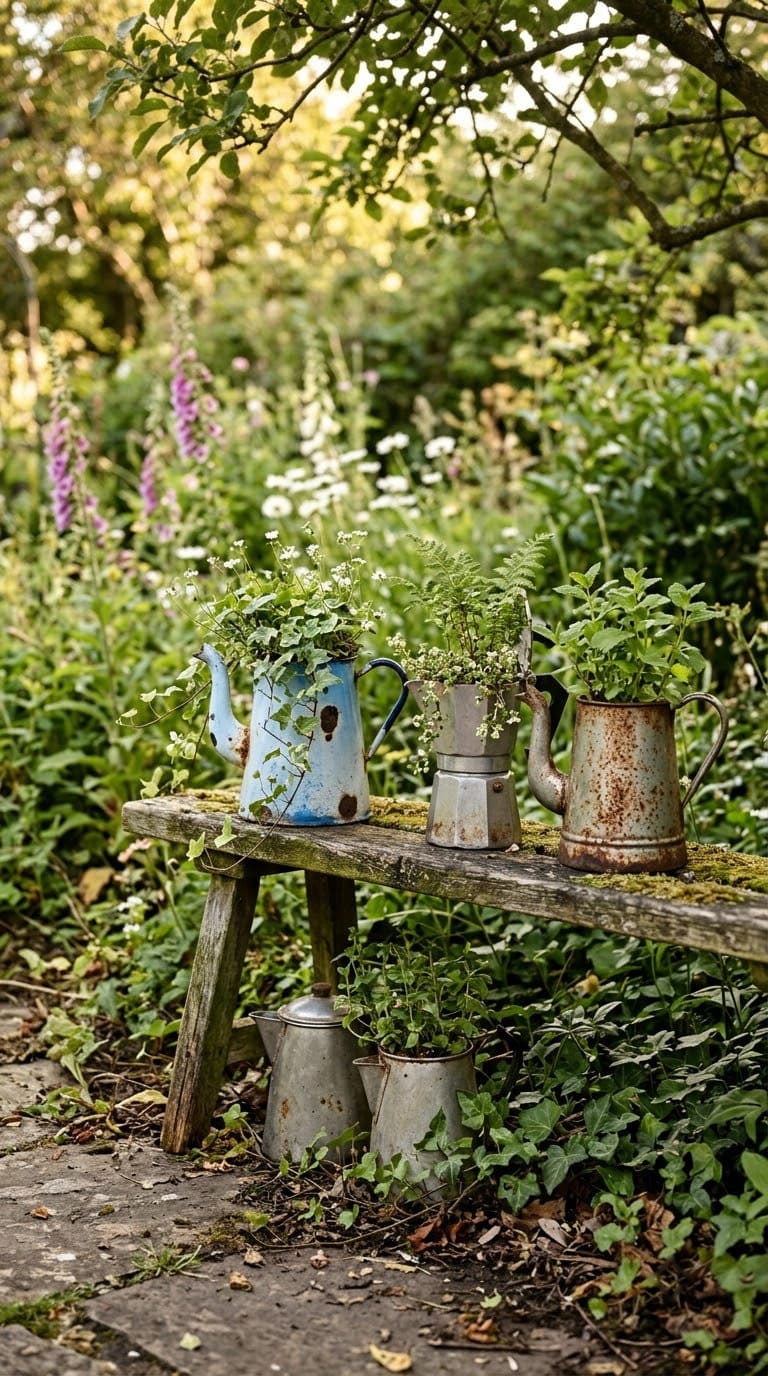
An old percolator makes a small planter. Remove any glass knob and drill the bottom. Fill it with a small flowering plant.
Group several pots on a ladder for impact. Enamel and aluminum pots both work, but skip food crops.
Cost tier: very low.
10. Old Sink Planter
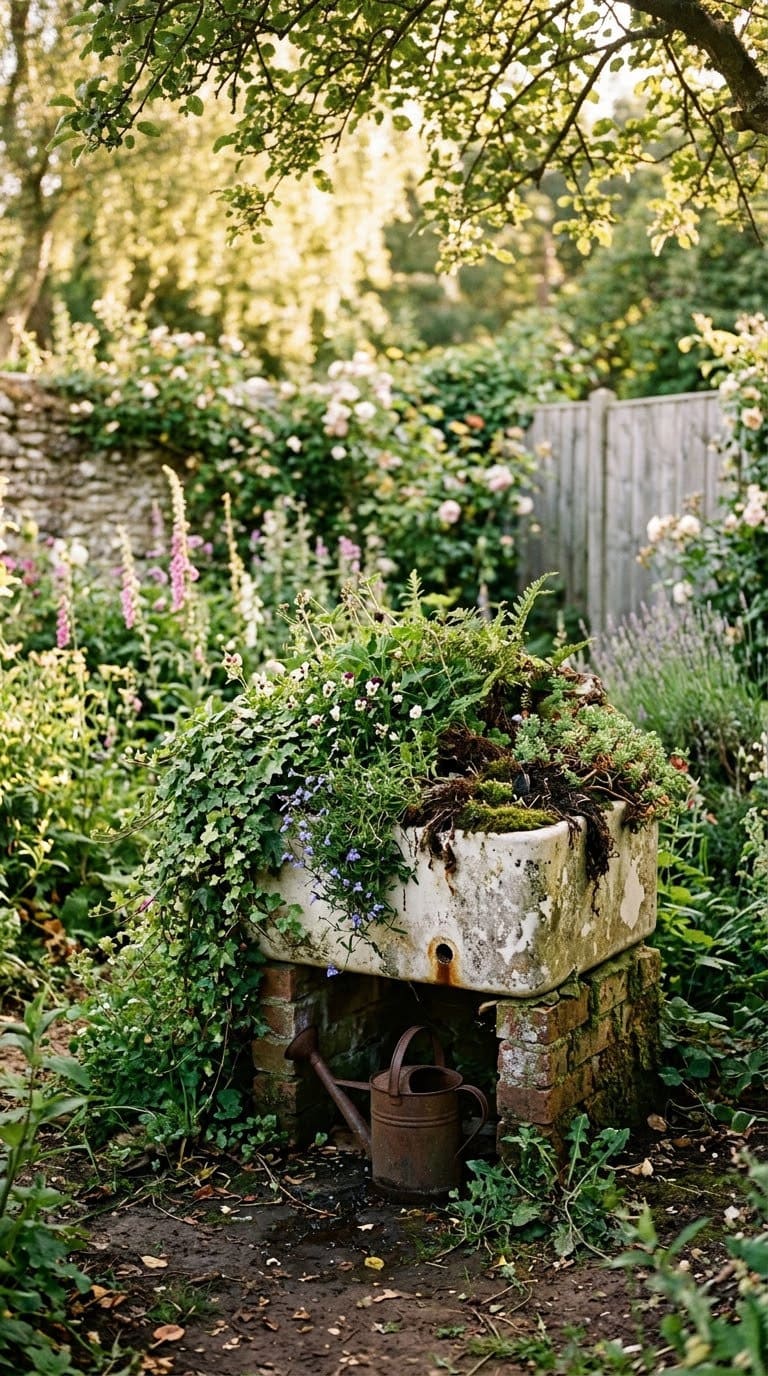
A sink has a built-in drain, which makes it an easy planter. Set it on a sturdy stand or wall, and leave the drain open. Fill with potting mix and plant.
An old porcelain sink may have worn glaze, so keep it to flowers and ornamental leaves. The weight needs a solid base.
Cost tier: medium.
11. String Lights in Trees
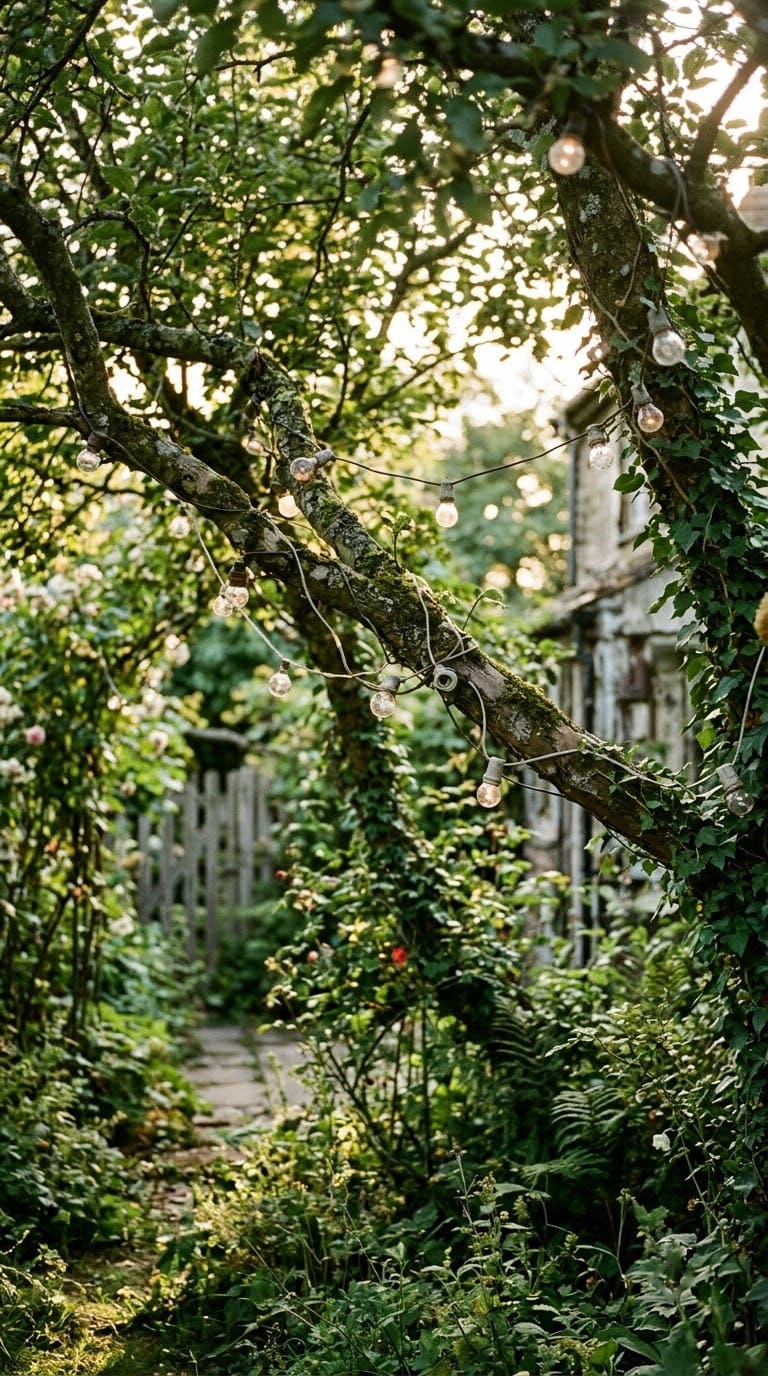
Drape outdoor-rated string lights around a trunk and a few branches. Avoid wrapping tight, so the bark can grow. Use lights rated for outdoor use.
Warm white light suits vintage pieces. Place the plug on a covered outlet.
Cost tier: low.
12. Colander Planter
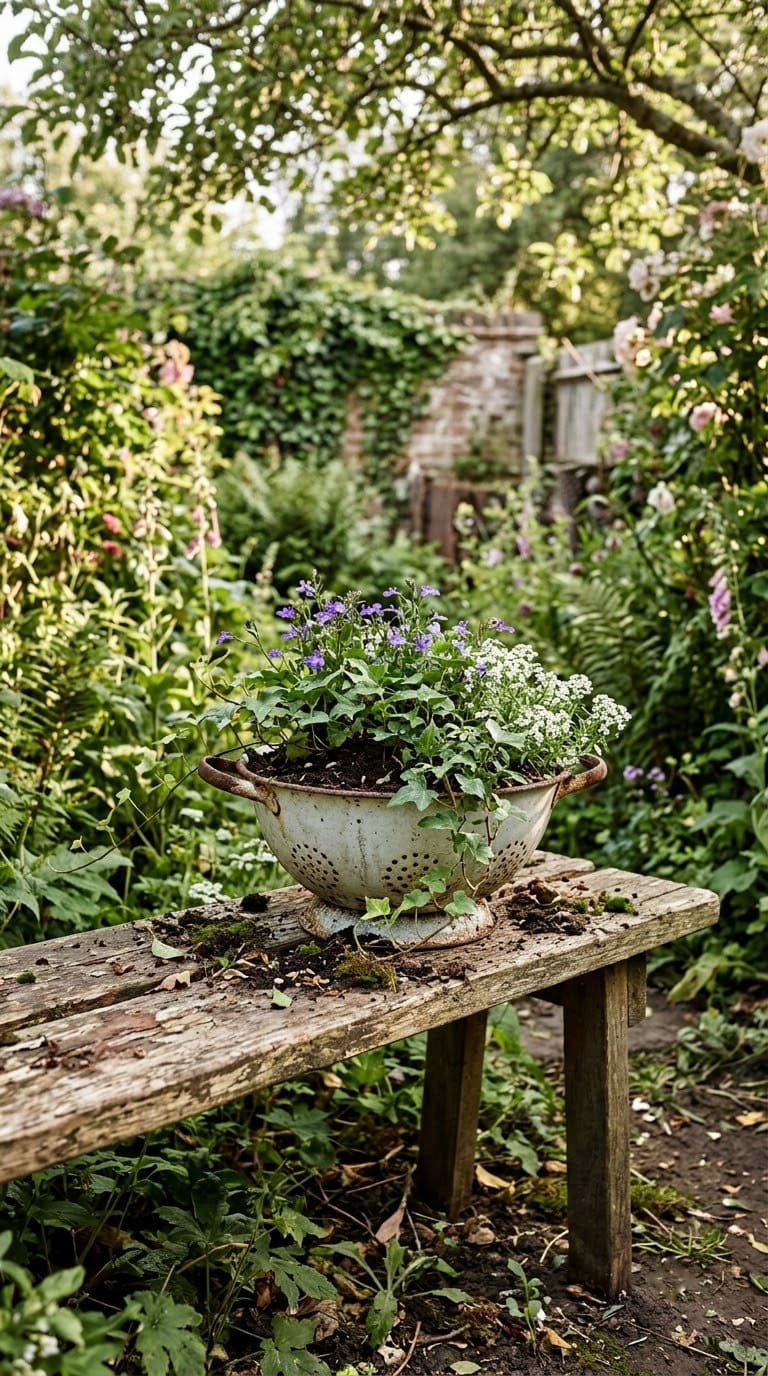
A colander already has drain holes. Line it with coco-fiber liner to hold soil. Hang it with chains or set it on a ring.
Choose a thick, rust-free colander. Water more often, since the open holes dry fast.
Cost tier: very low.
13. Galvanized Trough Planter
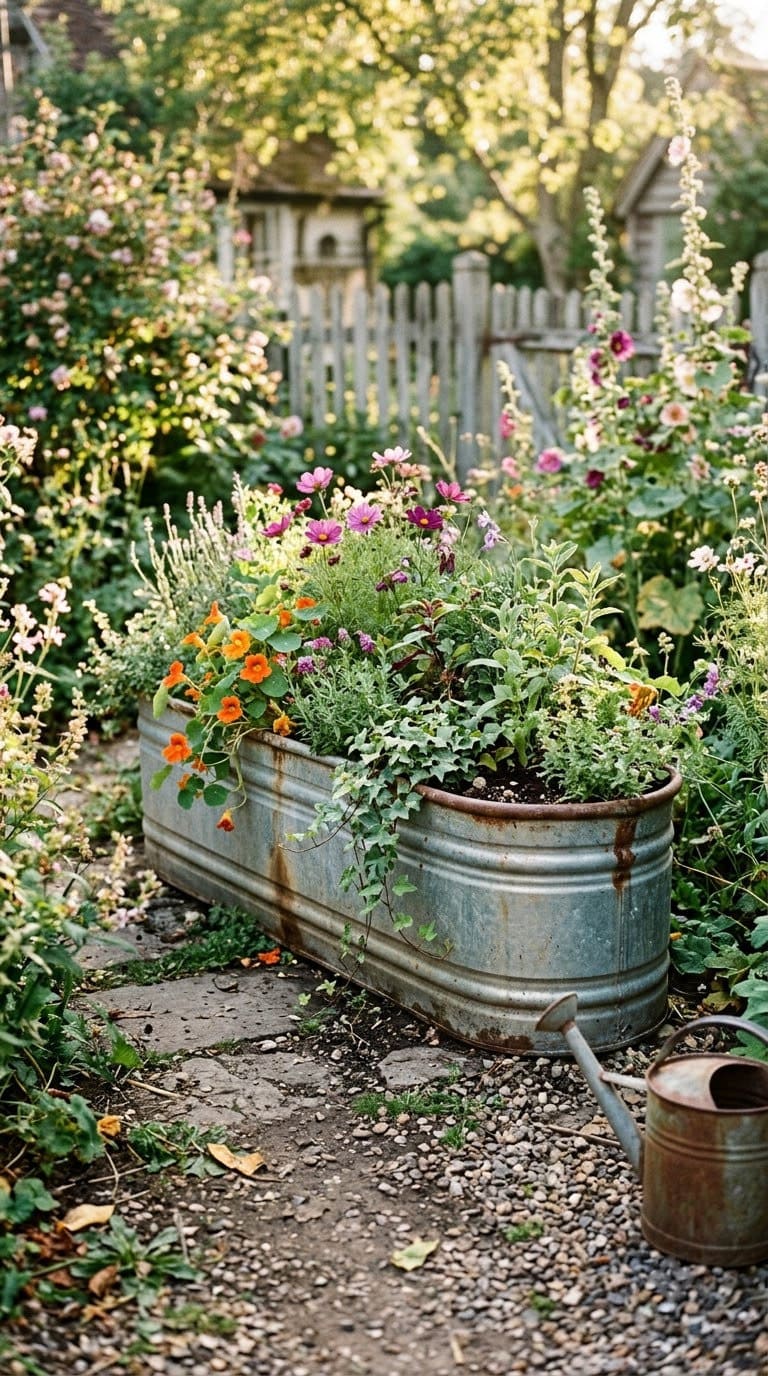
A trough suits a row of herbs for scent or lavender. Drill many holes and raise it on bricks. The UW Miller Library advice applies: favor ornamentals here.
Place it along a patio edge in part shade. Metal heats quickly in full sun.
Cost tier: medium.
14. Teapot and Teacup Stakes
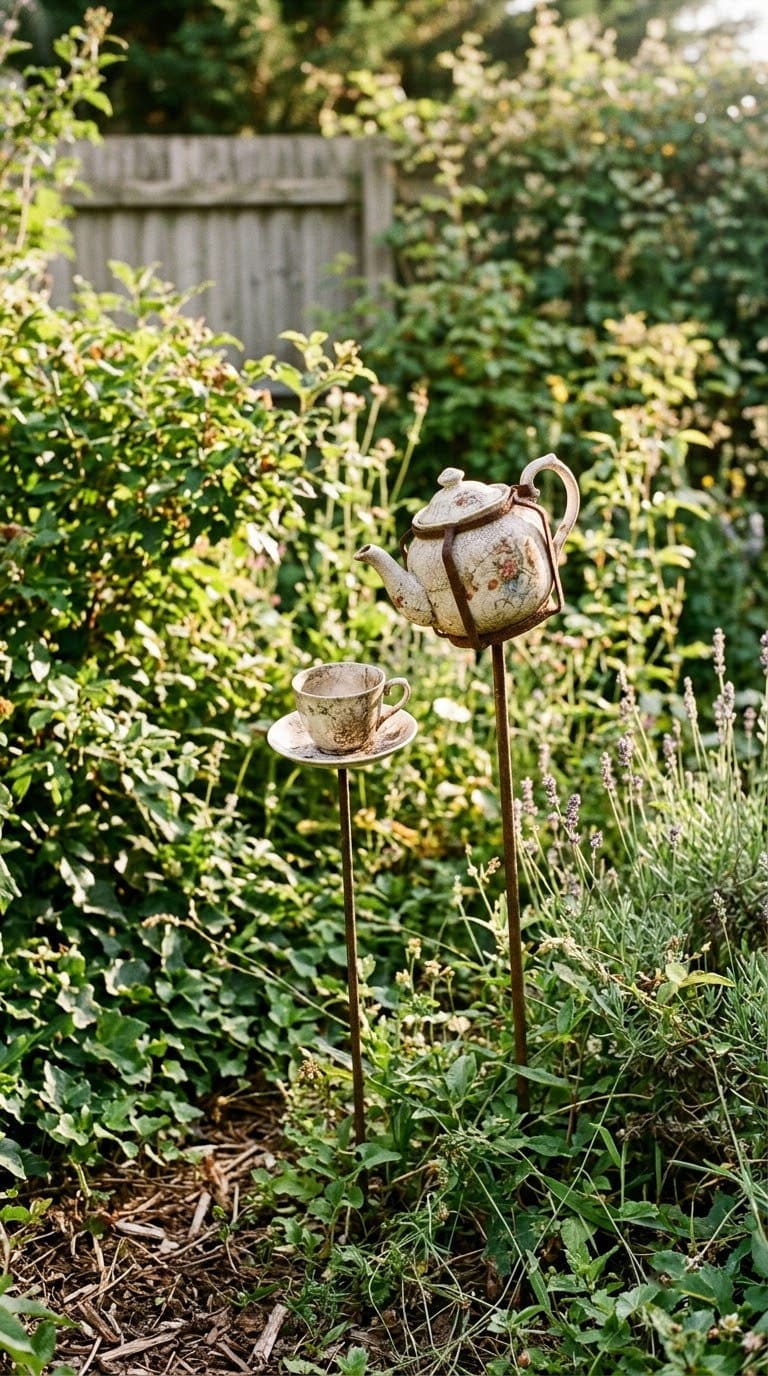
Stack cups and pots on a metal rod for a whimsical garden stake. Glue with outdoor adhesive and drill if needed. Use a rod set deep in the soil.
For more whimsy, see our garden art projects.
Cost tier: low.
15. Rustic Watering Can
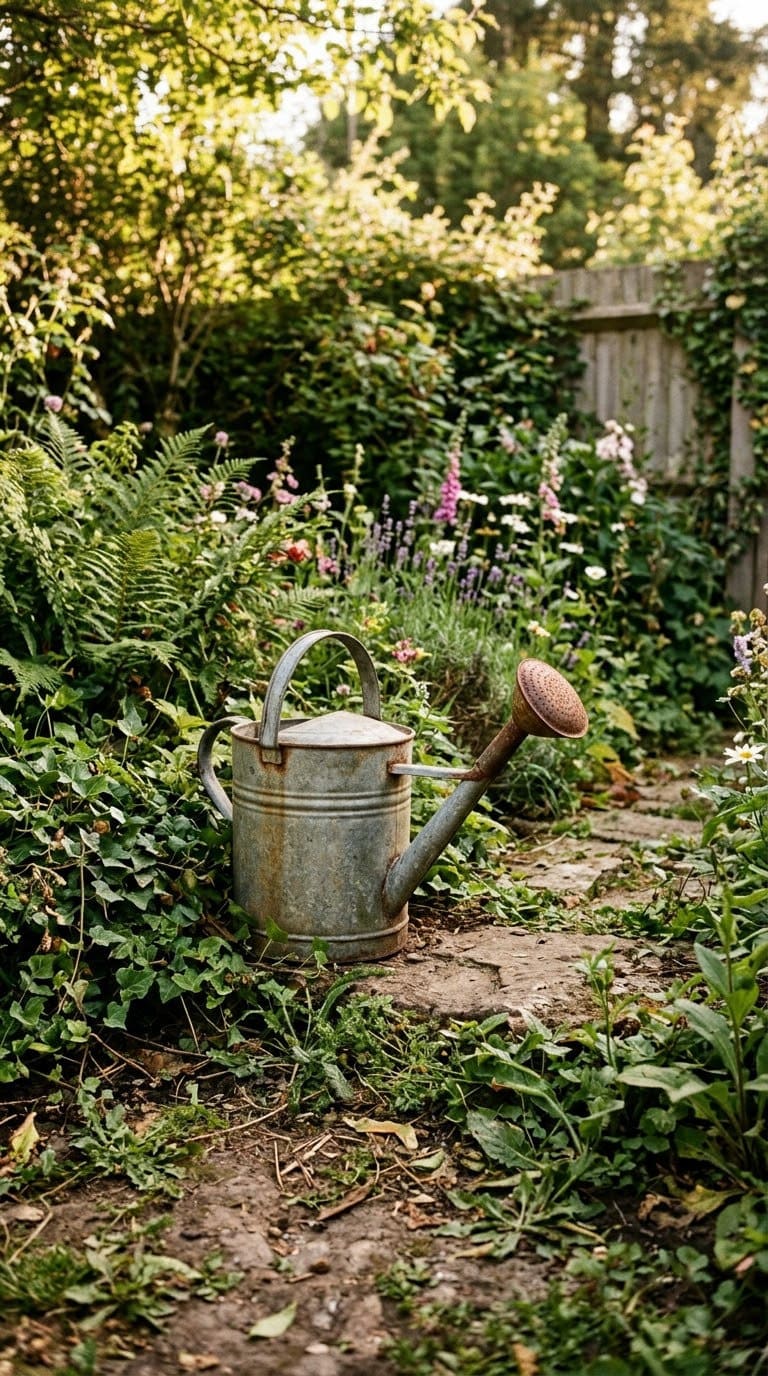
An old watering can looks right on a step or a hook. Punch drainage holes and plant trailing flowers. Seal the metal to slow rust.
Keep the spout pointed outward for a pouring effect.
Cost tier: low.
16. Vintage Desk Planter
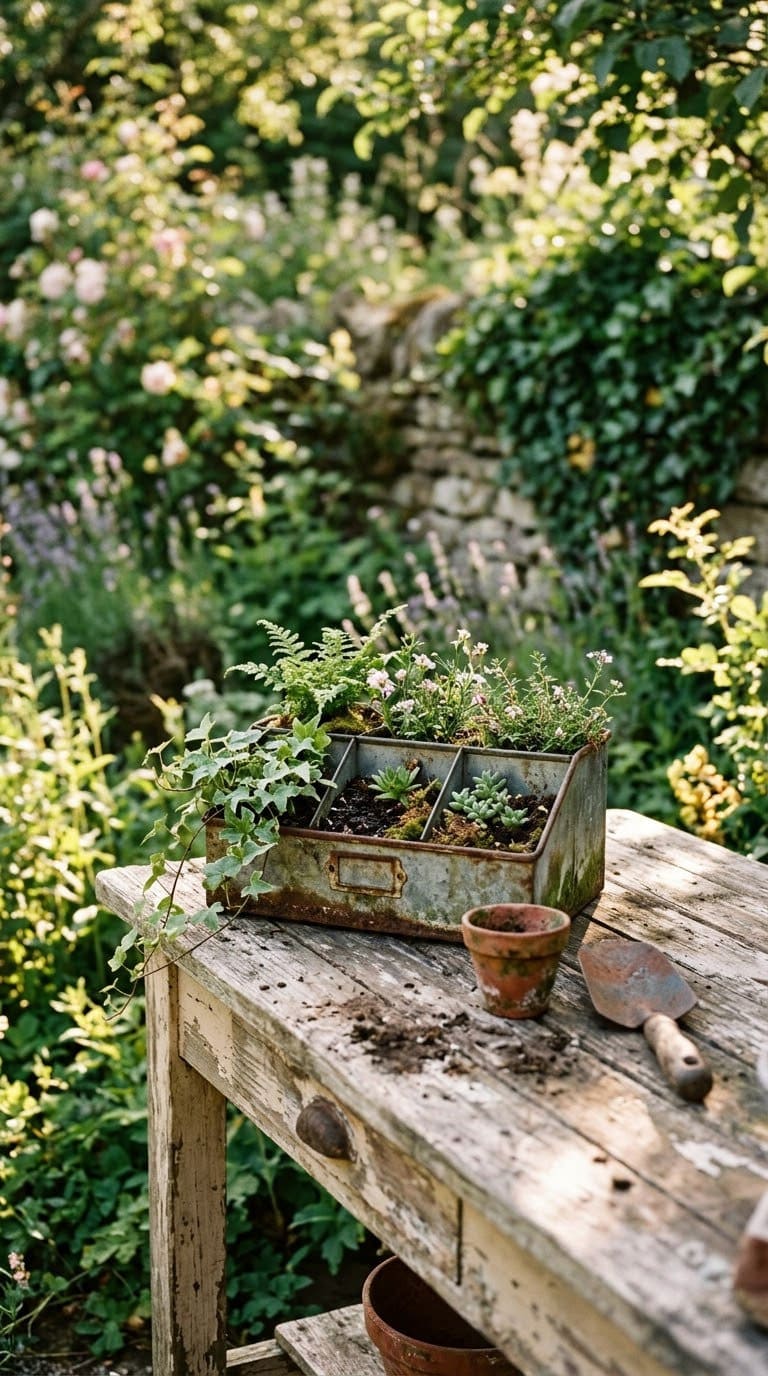
Open a drawer and fill it with soil for a quirky planter. Line the drawer with plastic and add drainage holes. Seal the wood.
Check for lead paint if the desk is painted. Place it under a roof so rain does not rot the wood.
Cost tier: medium.
17. Ladle Succulent Planter
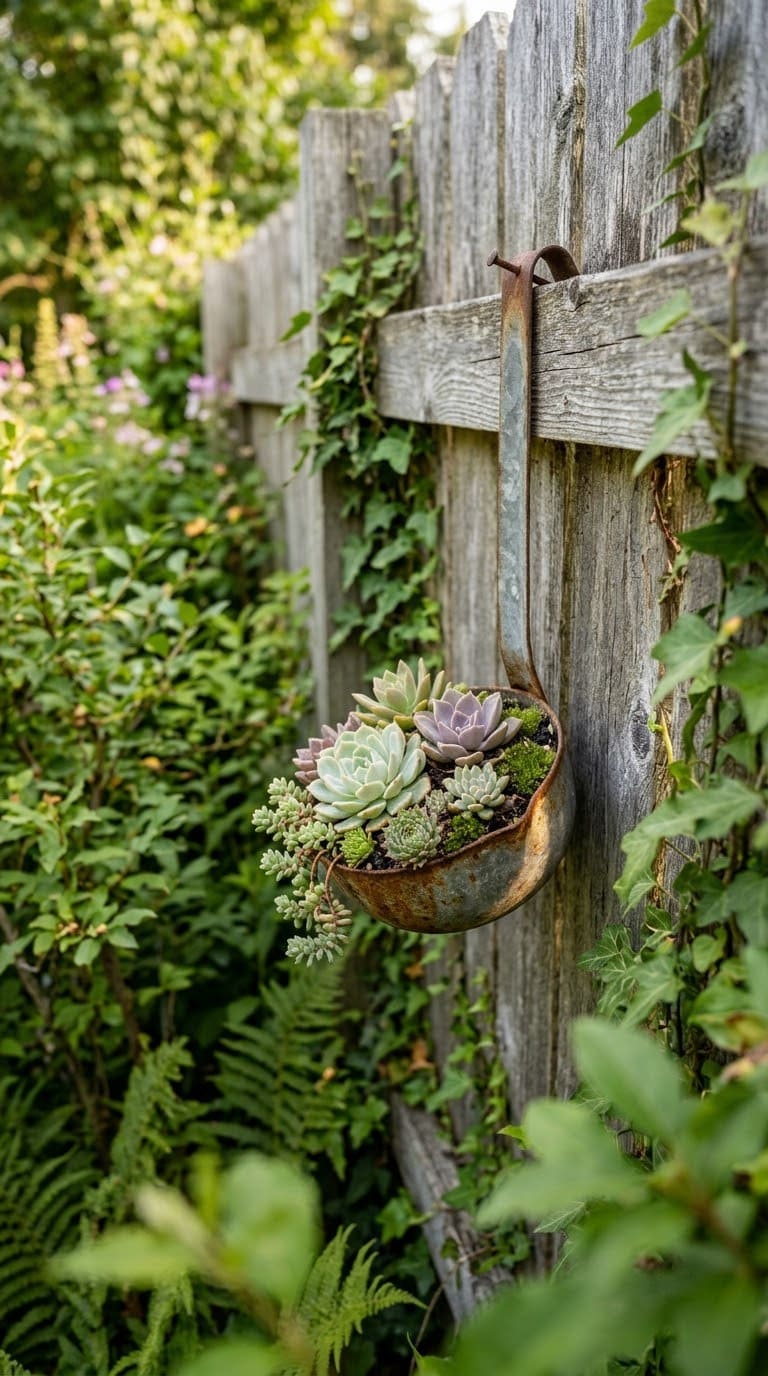
A ladle is a small, light planter. Fill the bowl with gritty mix and one succulent. Hang it from the handle on a fence.
Poke a small hole if the metal allows it. Water lightly.
Cost tier: very low.
18. Doorknob Herb-Drying Hooks
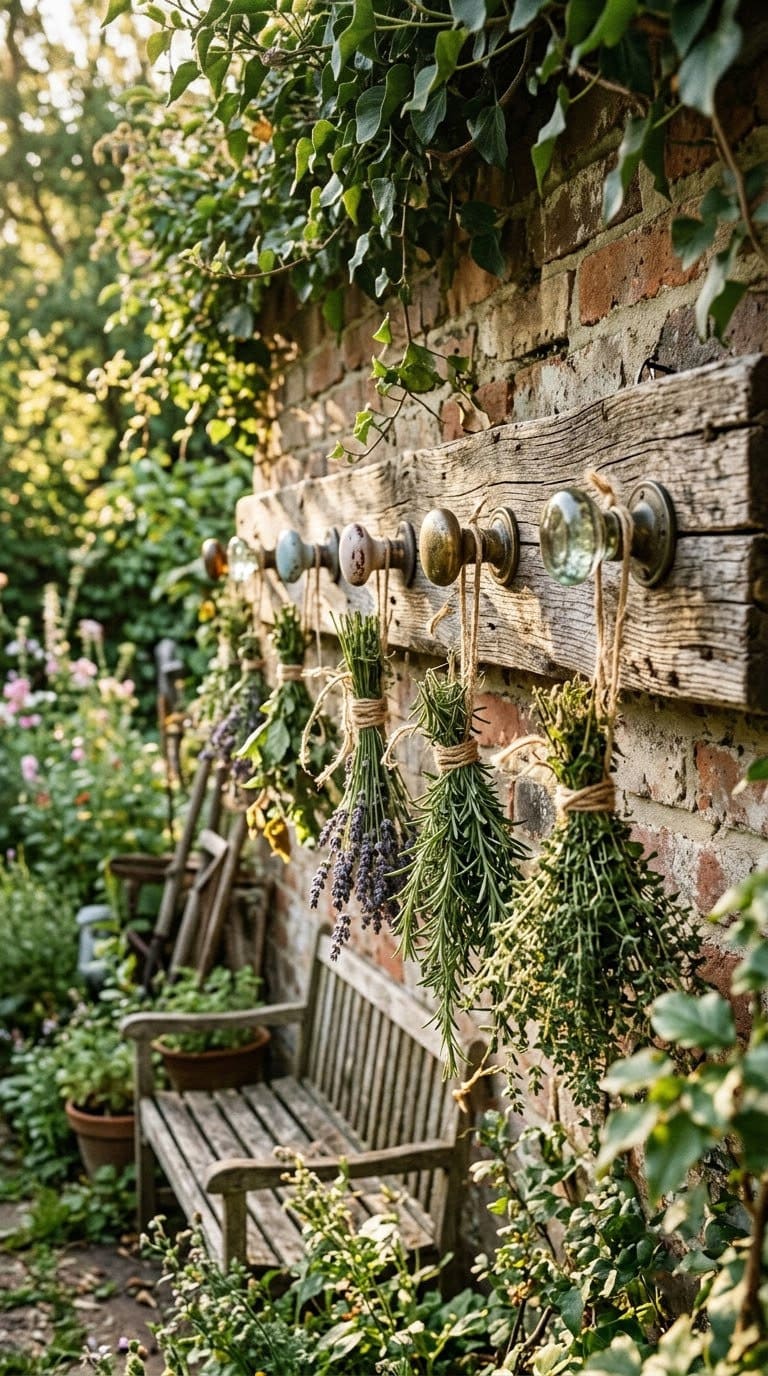
Mount old doorknobs on a board and hang herb bundles to dry. Screw the board to a wall under cover. Use it on a porch, not in rain.
Old glass knobs are decorative. If you plan to eat the herbs, hang them clean and dry them away from painted surfaces.
Cost tier: very low.
19. Monogram Succulent Planter
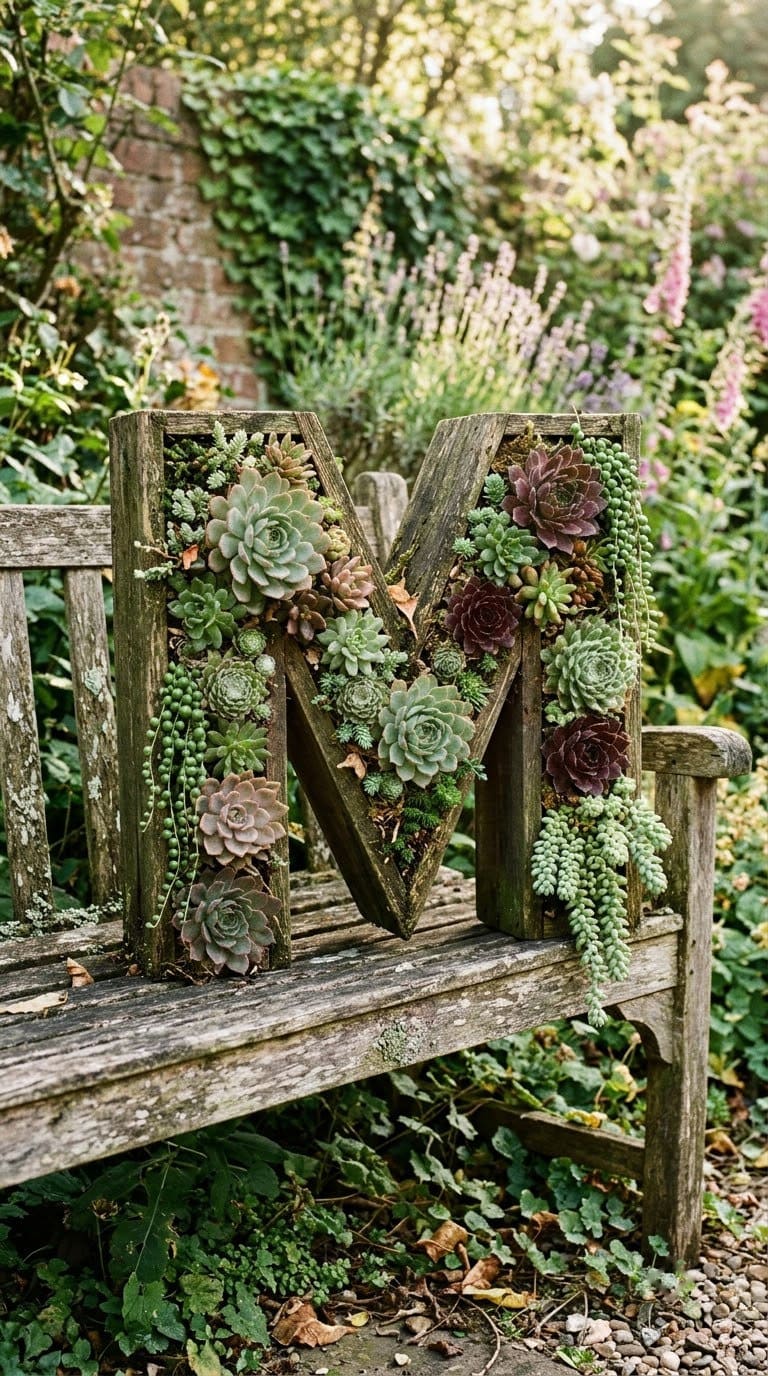
Fill a metal or wooden letter with soil and succulents. Line it with plastic and drill holes. Use a gritty mix.
Pick the first letter of your family name for a porch.
Cost tier: low.
20. Vintage Spoon Hooks
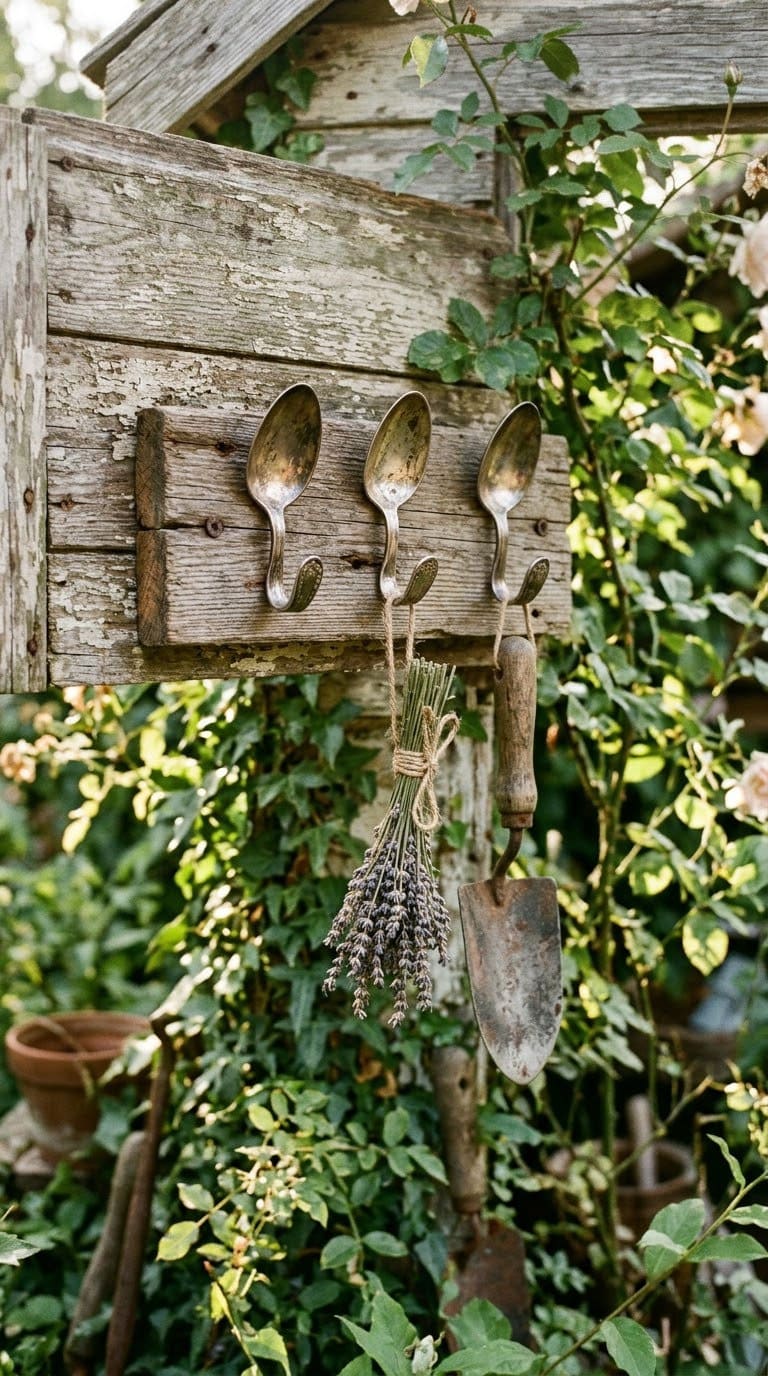
Bend an old spoon over a rail to make a hook. Use a vise and wear gloves. Hang small baskets or tools from it.
Choose sturdy spoons and test their strength before loading.
Cost tier: very low.
21. Wagon-Wheel Display
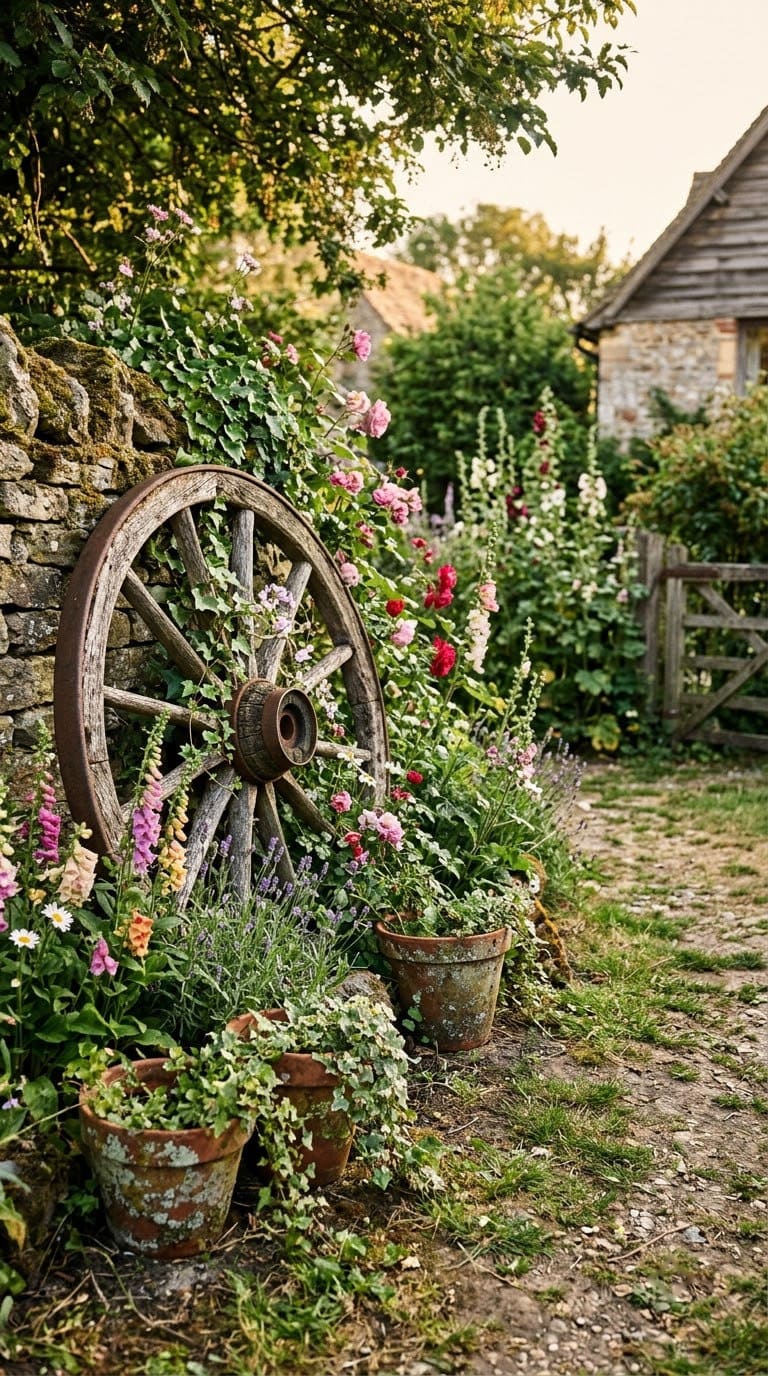
Lean a wheel against a fence or lay it flat as a plant ring. Seal the wood. It gives roses a rustic frame.
For more rustic looks, see these rustic garden ideas.
Cost tier: low.
22. Vintage Door as Garden Gate
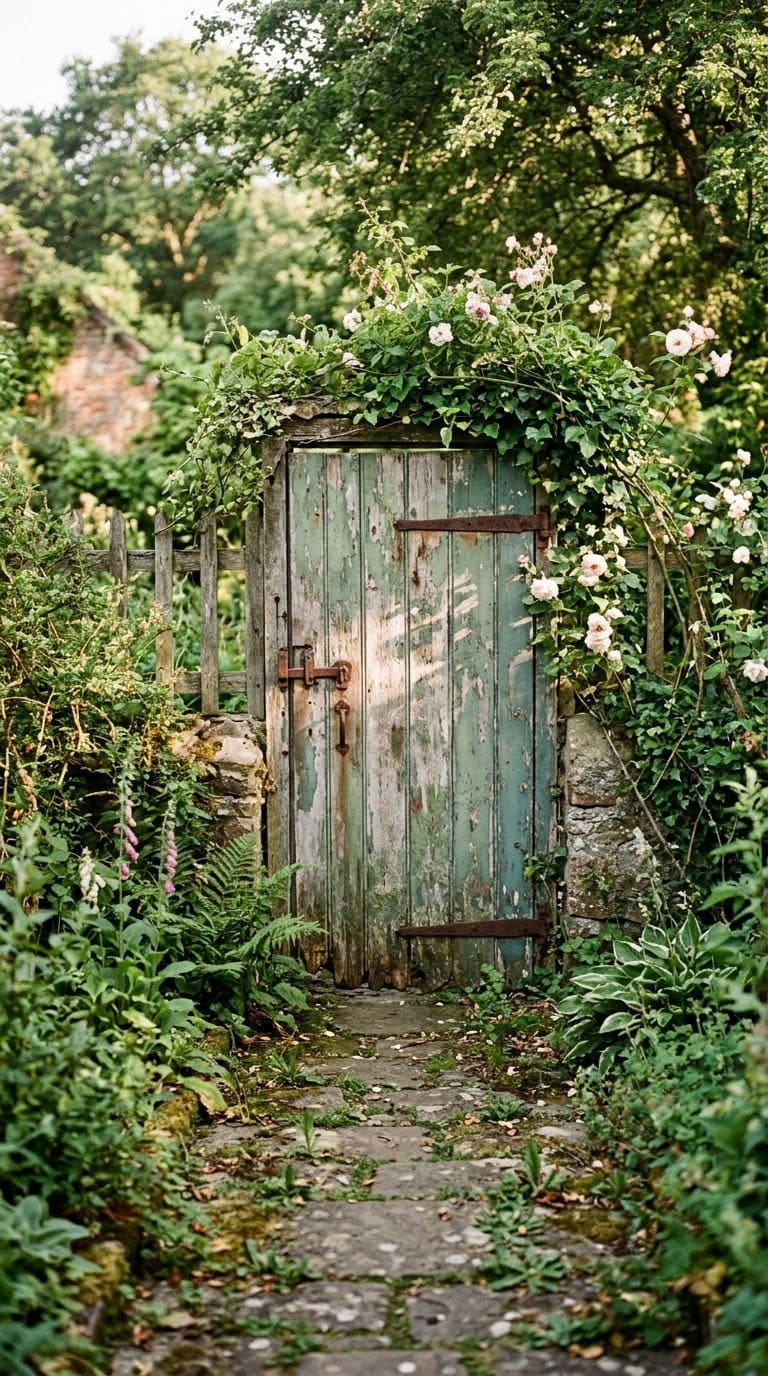
An old door can be a gate or a backdrop. Hang it on heavy hinges and strong posts. Seal the wood, and test old paint for lead first.
See also our old shutter decor ideas for matching pieces.
Cost tier: medium.
23. Sewing-Machine Flower Box
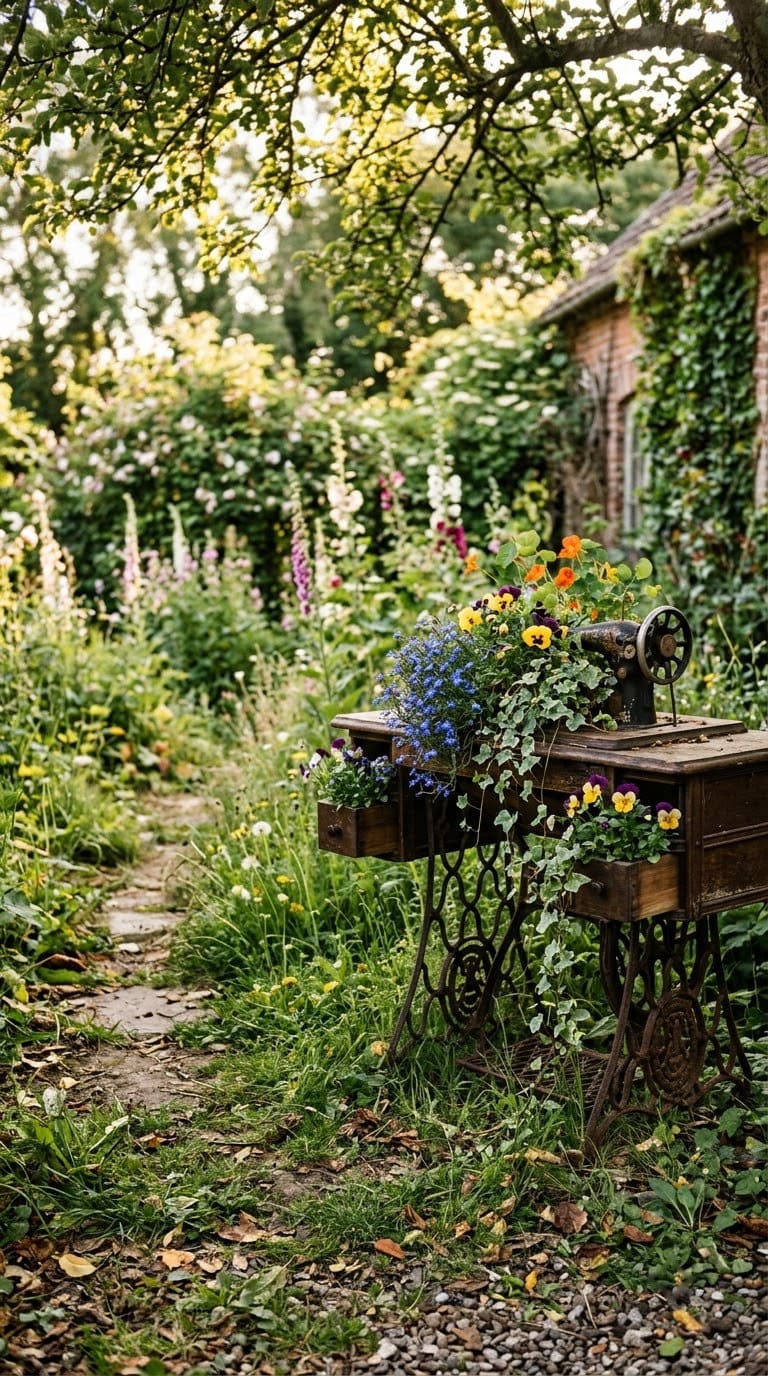
The cast-iron base of an old sewing machine makes a stand. Set a wooden box on top and plant it. Keep it on firm ground.
Cast iron rusts, so apply a sealer. It suits a covered patio.
Cost tier: medium.
24. Birdhouse and Milk-Can Corner
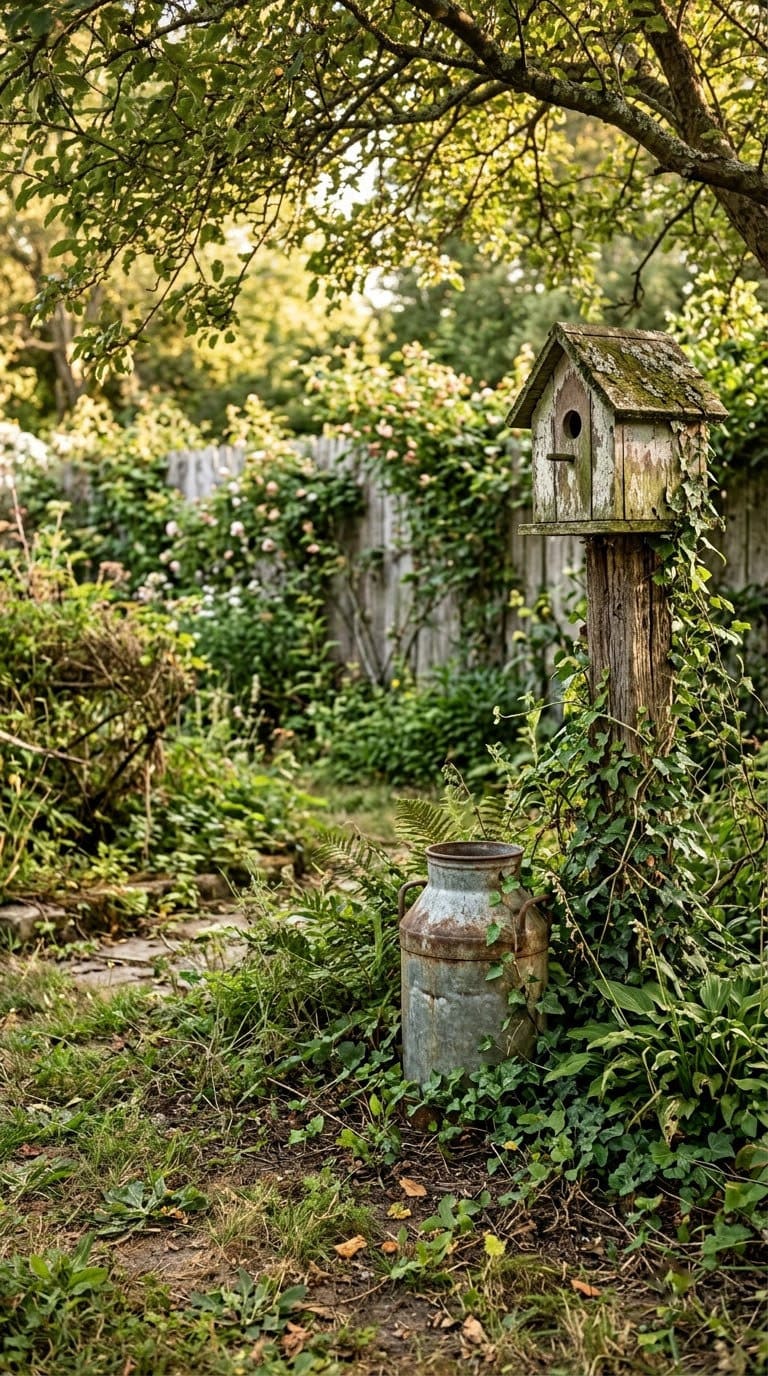
Pair a dented milk can with an old birdhouse for a corner display. Use the can as a planter with drainage holes. Mount the birdhouse on a post.
Treat a decor birdhouse as ornament, not a nesting box.
Cost tier: low.
25. Metal-Accent Display Table
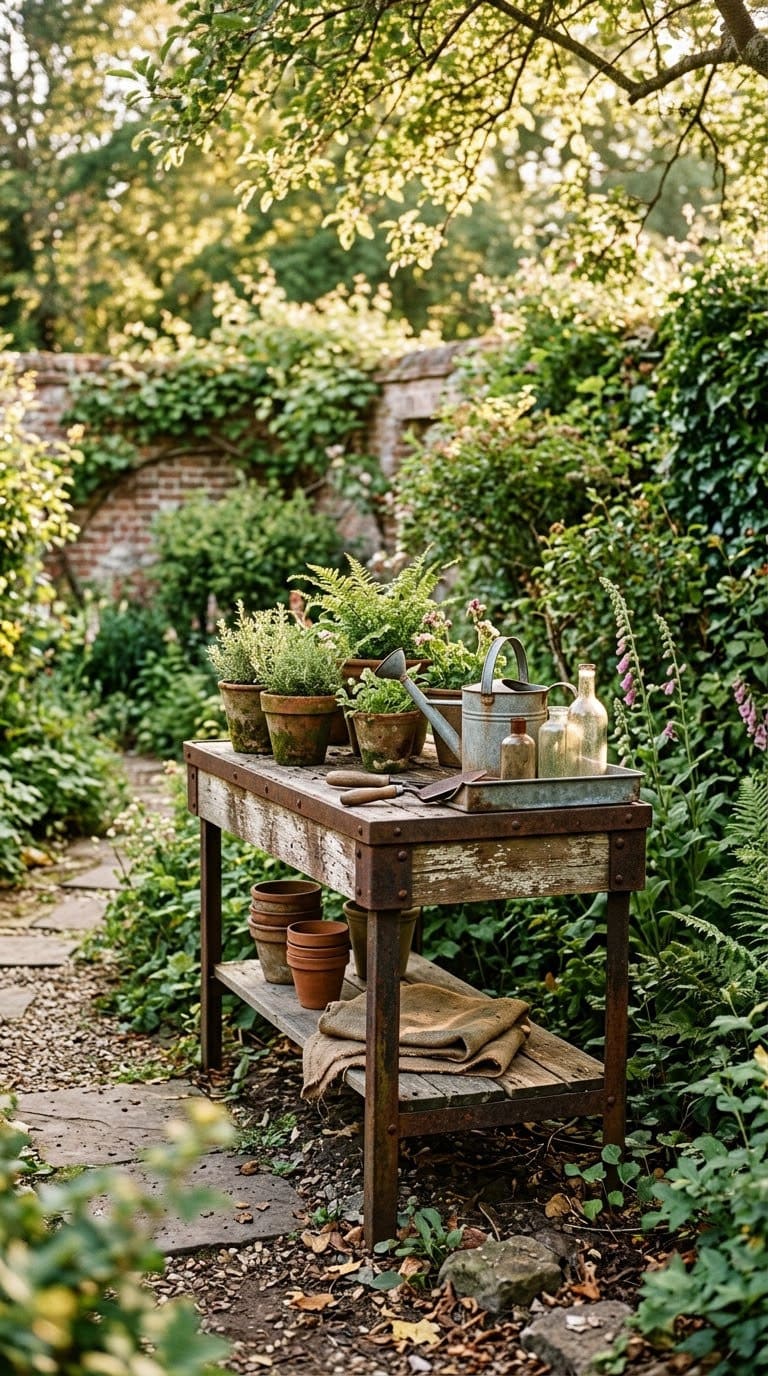
A table with a metal top shows off small pots. Wipe rust and apply a clear sealer. Use it as a potting bench on a patio.
Group pots by height. Leave a small gap between each so air circulates.
Cost tier: medium.
How Do You Style Vintage Pieces Together?
Repeat one material, such as metal or enamel, so the display feels planned. Mix heights using ladders and crates. Keep the greens simple so the old pieces shine.
For cottage looks, see our cottage-style garden ideas. For simple potting setups, try these flower pot projects.
Edit once a season. Take away anything that rusts through or breaks.
Common Mistakes to Avoid
Planting food in doubtful containers is the first mistake. The UW Miller Library advises ornamentals in galvanized tubs and edibles in untreated wood or clay.
Trusting a wash is the second. The FDA says no amount of washing or boiling removes lead from pottery.
Sanding old paint dry is the third. The EPA advises wetting the area first and sanding the minimum.
[EDITOR NOTE: Add a real first-person note and photos only if the team has built these. None of the above is from our own experience.]
FAQ
Can I grow vegetables in a galvanized bucket?
The UW Miller Library advises growing ornamentals in galvanized tubs and edibles in untreated wood or clay.
Is antique pottery safe for herbs?
The FDA lists antique, handmade, damaged, and flea-market pottery as problem types for lead. Avoid food crops unless you test the piece.
Do vintage planters need drainage holes?
Yes. Drill holes in the base of every bucket, tin, and basin so water does not sit around the roots.
How do I handle old painted furniture?
Test for lead if the piece may be old. The EPA says to wet the area and sand the minimum if you must sand.
Does rust hurt plants?
Rust itself is cosmetic, but rust-through leaves sharp edges and weak spots. Seal the metal and replace pieces that fall apart.
Never miss an update — choose FarmFoodFamily as your preferred source on Google.
How it works: Tap the button below to open Google's settings page, then check the box next to FarmFoodFamily.
Tap the checkbox to turn it blue — that's how you know it's set.