
Why Can’t You Lay on Your Back During Pregnancy? Understanding the Risks and Safe Alternatives
Good sleep becomes one of the biggest challenges during pregnancy, especially once your belly grows and your organs shift to make room for the baby. Many expecting moms eventually ask the same important question: why can’t you lay on your back during pregnancy? While lying on your back might feel comfortable early on, this position…

Never miss an update — choose FarmFoodFamily as your preferred source on Google.
How it works: Tap the button below to open Google’s settings page, then check the box next to FarmFoodFamily.
Tap the checkbox to turn it blue — that’s how you know it’s set.
Good sleep becomes one of the biggest challenges during pregnancy, especially once your belly grows and your organs shift to make room for the baby. Many expecting moms eventually ask the same important question: why can’t you lay on your back during pregnancy? While lying on your back might feel comfortable early on, this position gradually becomes risky as pregnancy progresses. It can slow your circulation, affect your baby’s oxygen supply, and cause uncomfortable or even dangerous symptoms for you.
The good news is that safe and comfortable alternatives exist. With the right support—like using a pregnancy sleeping pillow you can maintain a healthy sleep position. You don’t need to sacrifice your rest. Understanding why back-sleeping is discouraged helps you make better decisions for your comfort and your baby’s well-being throughout every stage of pregnancy.

The Core Physiological Issue: Vena Cava Compression and Reduced Blood Return
The main concern with back-sleeping in pregnancy centers on the inferior vena cava, a major vein responsible for carrying blood from your lower body back to your heart. When you lie flat on your back, especially in the second and third trimesters, your growing uterus puts pressure on this vein.
This compression can reduce blood flow to your heart, which in turn affects the following:
- Circulation
- Oxygen delivery
- Blood pressure
- Placental blood flow
Because your circulatory system is already working harder during pregnancy, any additional pressure can trigger symptoms more quickly and more severely.
Identifying the Danger Zone: Why the Risk Increases in the Second Half of Pregnancy
Early in pregnancy, lying on your back is typically safe because the uterus is still small and light. Problems begin when the following occurs:



- The uterus grows heavier
- Blood volume increases
- Organs shift upward
- Pressure builds on abdominal blood vessels
This usually becomes a concern around 20 weeks and beyond, though each mom’s body is different. Once the uterus reaches a certain size, the weight becomes enough to compress blood vessels during back-sleeping.
Impact on the Mother: Symptoms of Supine Hypotensive Syndrome
When vena cava compression becomes significant, you may experience Supine Hypotensive Syndrome—a drop in blood pressure caused specifically by lying on your back.
Common symptoms include the following:
- Dizziness or lightheadedness
- Shortness of breath
- Rapid heartbeat
- Nausea
- Sweating
- Feeling faint
- Sudden increase in discomfort or anxiety
Always remember that these symptoms usually resolve quickly when you shift to your side. So, you better know which side is the best for you.
Impact on the Fetus: Reduced Oxygen and Nutrient Delivery to the Placenta
The placenta relies on strong, steady blood flow to deliver oxygen and nutrients to your baby. When you lie on your back and compress major vessels:
- Placental blood flow decreases
- Oxygen delivery slows
- Fetal movements may decrease
- The baby may experience momentary stress
While a short episode is unlikely to cause harm, prolonged or repeated compression can have negative effects especially during the third trimester when the baby’s oxygen demands are greatest.
The Stillbirth Connection: Medical Evidence Linking Back-Sleeping to Third-Trimester Risk
Several studies have shown that consistent back-sleeping in late pregnancy is associated with a higher risk of stillbirth. This is due to the following:
- Reduced blood flow
- Reduced oxygen supply
- Compromised placental function overnight
Although the overall risk remains low, researchers consider it preventable, since sleeping positions are something mothers can modify.
This evidence is the primary reason why medical organizations now advise pregnant women to avoid lying flat on their backs after the midpoint of pregnancy.
The Recommended Alternative: Maximizing Circulation Through Side Sleeping (Especially the Left)
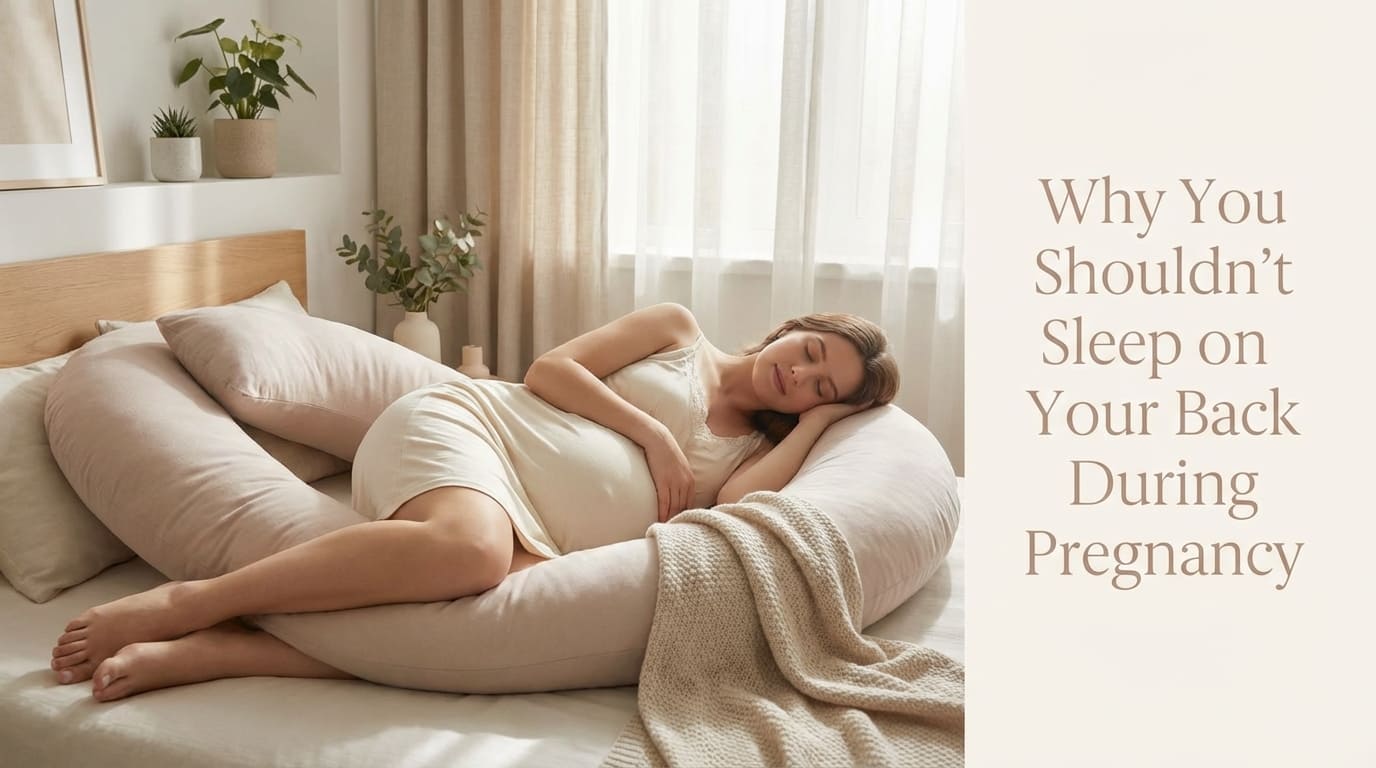
The best position for optimal circulation during pregnancy is side sleeping, particularly on your left side.
Benefits of Left-Side Sleeping:
- Maximizes blood flow to the uterus and placenta
- Improves kidney function
- Reduces swelling in legs, feet, and hands
- Supports better oxygen delivery to the baby
- Eases pressure from major organs
However, the right side is also safe and switching sides throughout the night is normal and healthy.
Practical Prevention: Using Pillows and Props to Maintain a Safe Position
Because your body naturally moves during sleep, pillows can help keep you comfortable and safely positioned.
Useful strategies and tips include the following:
- Placing a pillow behind your back to prevent rolling
- Putting a pillow between your knees for hip alignment
- Elevating your upper body slightly for better breathing
- Using a pregnancy sleeping pillow for full-body support
A full-length maternity pillow helps stabilize your body, keeps your spine aligned, and makes side-sleeping more comfortable especially when you’re dealing with aches, a heavy belly, or third-trimester restlessness.
When It’s Okay to Be on Your Back: Brief Periods and Semi-Reclined Positions
Despite the concerns, it’s important to know that accidentally rolling onto your back at night is not dangerous. Your body will usually alert you with discomfort before any harm occurs.
You can safely be on your back when:
- You are early in pregnancy, for example is before ~20 weeks
- You’re lying at a slight incline, such as propped up with pillows
- You are receiving medical care or ultrasounds
- You’re resting for a short time, not sleeping for hours
A semi-reclined position around 20 – 45 degrees is a safe alternative when you need back support but don’t want to lie flat.



Conclusion
Understanding why you can’t lay on your back during pregnancy empowers you to protect both your comfort and your baby’s well-being as your pregnancy progresses. Back-sleeping becomes risky primarily due to vena cava compression, reduced blood flow, and potential impacts on placental oxygen levels. While these risks increase during the second and third trimesters, they’re easy to manage with simple adjustments to your sleep routine.
Switching to a supported side-sleeping position, especially with the help of a pregnancy sleeping pillow, can dramatically improve your comfort and sleep quality. Remember, occasional back-lying is normal and typically not harmful—what matters is your primary sleep position. With awareness, support, and small adjustments, you can sleep safely and comfortably throughout your pregnancy journey.
Never miss an update — choose FarmFoodFamily as your preferred source on Google.
How it works: Tap the button below to open Google's settings page, then check the box next to FarmFoodFamily.
Tap the checkbox to turn it blue — that's how you know it's set.