30 Amazing Outdoor Backyard Ideas & Activities That Will Keep Your Kids Entertained
Turning a plain backyard into a place your kids actually beg to play in doesn’t take a professional crew and a five-figure budget. Some of the 30 ideas below are a weekend project with a trip to the hardware store; a few, like a fully custom treehouse, are a hire-a-professional undertaking. Knowing which is which…

Never miss an update — choose FarmFoodFamily as your preferred source on Google.
How it works: Tap the button below to open Google’s settings page, then check the box next to FarmFoodFamily.
Tap the checkbox to turn it blue — that’s how you know it’s set.
Turning a plain backyard into a place your kids actually beg to play in doesn’t take a professional crew and a five-figure budget.
Some of the 30 ideas below are a weekend project with a trip to the hardware store; a few, like a fully custom treehouse, are a hire-a-professional undertaking. Knowing which is which before you start saves you from an expensive surprise halfway through.
Before You Build: Budget and Safety Basics
Not every idea here costs the same, and not every idea carries the same real risk. A few things worth settling before you scroll through all 30:
DIY weekend vs. hire a builder.
Most of what’s below (chalkboards, sandboxes, stepping stones, tic-tac-toe boards) is a genuine weekend DIY project for well under $200.
A handful, especially a custom-built treehouse or a full climbing structure, are a different category of project entirely. Barbara Butler, who has designed and built custom treehouses and play structures professionally since 1987 (her work is ASTM-compliant and includes the publicly accessible Magical Bridge Playground in Palo Alto), builds in “lots of ups and downs, with a variety of challenges with some easier to accomplish than others” specifically because a well-designed play space should offer more than one skill level at once, not because bigger and more expensive automatically means better.
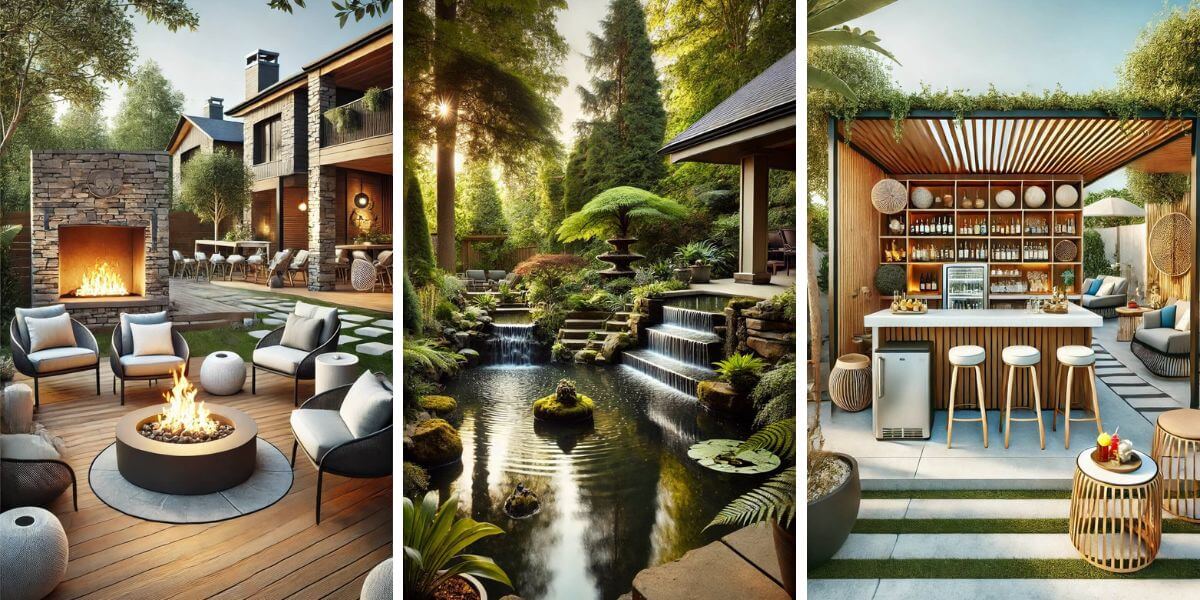
If your budget or your yard doesn’t support a Barbara Butler-level build, several of the ideas below deliver a similar payoff (a low platform, a rope net, a chalk wall) for a fraction of the cost.
Answer 4 quick questions and get matched to the exact fix for your yard — drainage, budget, layout, or something else entirely.
Take the Free QuizReal safety numbers, not vague caution.
The U.S. Consumer Product Safety Commission’s Public Playground Safety Handbook gives concrete numbers that apply just as much to a backyard as a public park: at least 9 inches of protective surfacing (wood chips, mulch, sand, or pea gravel, since a 12-inch initial fill compresses to roughly 9 inches over time) under and around any climbing or swinging equipment, a minimum 6-foot fall zone in every direction from the equipment’s outer edge, and for swings specifically, at least 8 inches of clearance between the seat and the ground, with the fall zone extending in front of and behind the swing a distance equal to twice the height of the pivot point.
None of that requires a contractor, just a tape measure before you dig any post holes.
The trampoline conversation nobody has before buying one.
Parent forums are blunt about this in a way most backyard-inspiration articles aren’t: a widely-shared comment on one thread joked “did you just get a life insurance policy for your kids?”, and it’s only half a joke, several parents report homeowners insurers (Geico among them, per one account) declining or adding exclusions for homes with a trampoline present. Worth a call to your insurer before you buy, not after.
The more useful safety detail buried in those same threads: most trampoline injuries happen getting on and off, or when multiple kids of different sizes are bouncing at once, not mid-jump the way most parents assume.
If you’re putting one in the ground, factor in what goes underneath it too. Real accounts describe snakes and ticks moving into the tall grass that collects under an in-ground trampoline if it’s not kept trimmed and treated.
Match the idea to your actual space and family, don’t force every idea in.
Landscape designer Rochelle Greayer, editor of The American Gardener for the American Horticultural Society and author of “Cultivating Garden Style,” has written specifically about designing better play spaces for kids, arguing that the strongest backyard play zones are planned around how a family actually uses its yard rather than copying a Pinterest board wholesale.
Use that as your filter as you go through the 30 ideas below: pick the handful that fit your yard’s size, your climate, and your kids’ actual ages, rather than trying to cram in everything.
Most yard problems trace back to one specific, fixable cause. Find yours in 4 quick questions.
Take the Free Quiz
100-foot zip line kit with stainless steel spring brake, safety harness, and 2 tree protectors — pairs with idea #3's clearance and anchor-tree guidance
Shop NowThis post contains affiliate links. We may earn a commission on qualifying purchases at no extra cost to you.
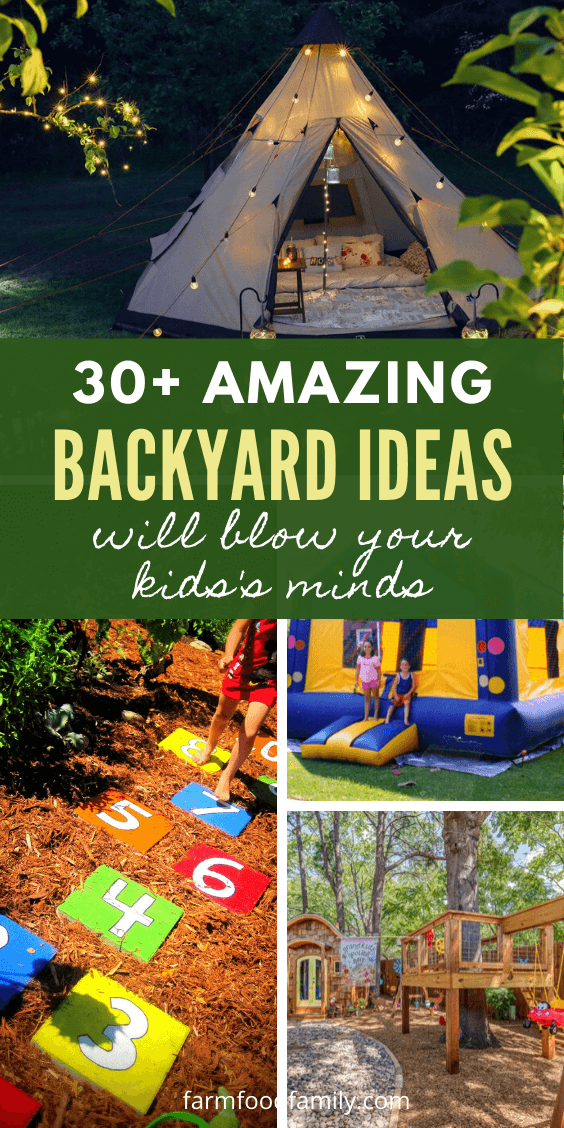
30 Backyard Ideas Kids Will Actually Use
1. A Backyard with a Playhouse under the Deck
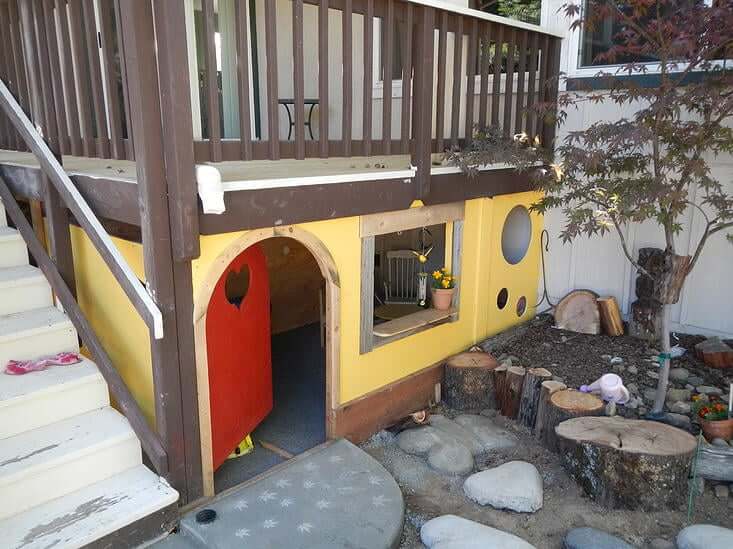
The dead space under a raised deck is usually just storage for lawn chairs, but its low ceiling height is exactly what makes it work as a playhouse for younger kids, who don’t need to stand at full height the way an adult would.
Budget-wise, this is one of the cheapest ideas on the list if your deck already exists: a few sheets of plywood, a coat of paint, and a curtain for a “door” can get you most of the way there in a weekend.
Butler’s philosophy of building “ups and downs” applies here in miniature: even a single step up into the space, or a small window cut into the deck skirting, adds a layer of discovery that a flat, enclosed box doesn’t.
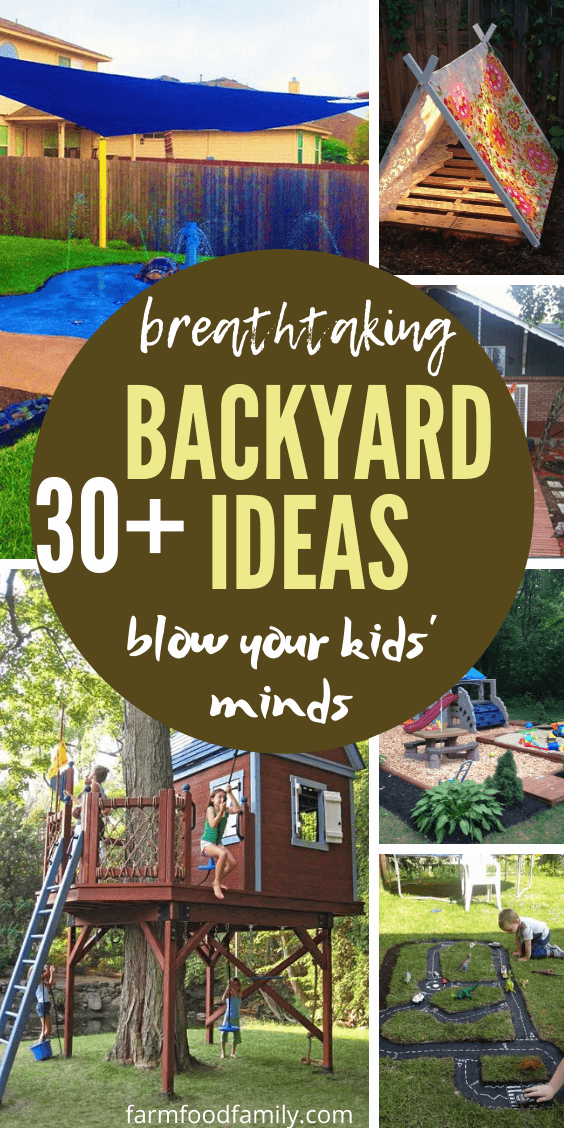
2. A Backyard with a Miniature Race car Street
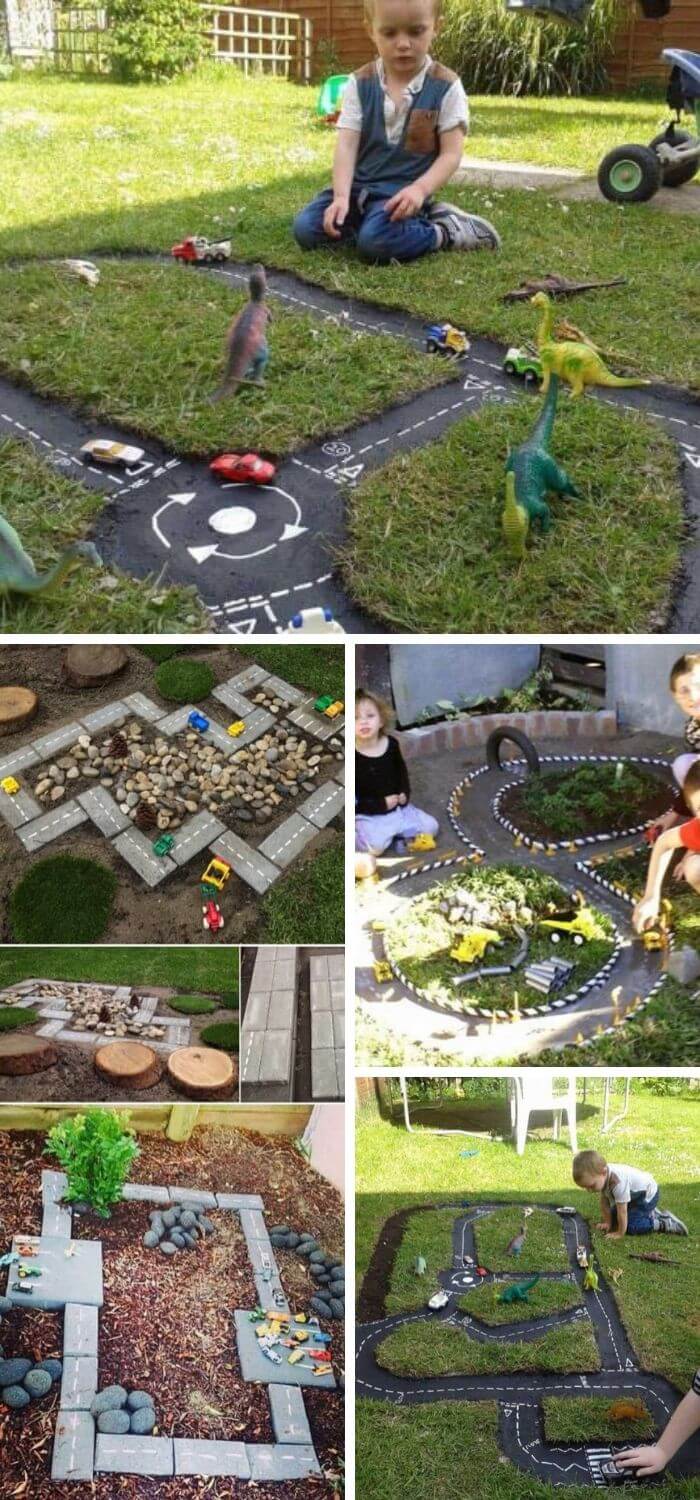
A painted or taped-out miniature “street,” complete with lane lines, a stop sign, and a crosswalk, turns a stretch of patio or driveway into a play space for ride-on cars and trikes without needing any new construction at all.
This is a same-day, low-cost project: exterior-grade paint or even sidewalk chalk is enough to test the idea before committing to something permanent.

It works especially well for younger kids who are into imaginative role-play (running errands, “driving to work”) rather than pure speed.
The average homeowner spends $616/year on yard fixes that don't address the real problem. Find out what yours actually is — before you spend another dollar.
Take the Free Quiz3. A Backyard with a Small Zip Line
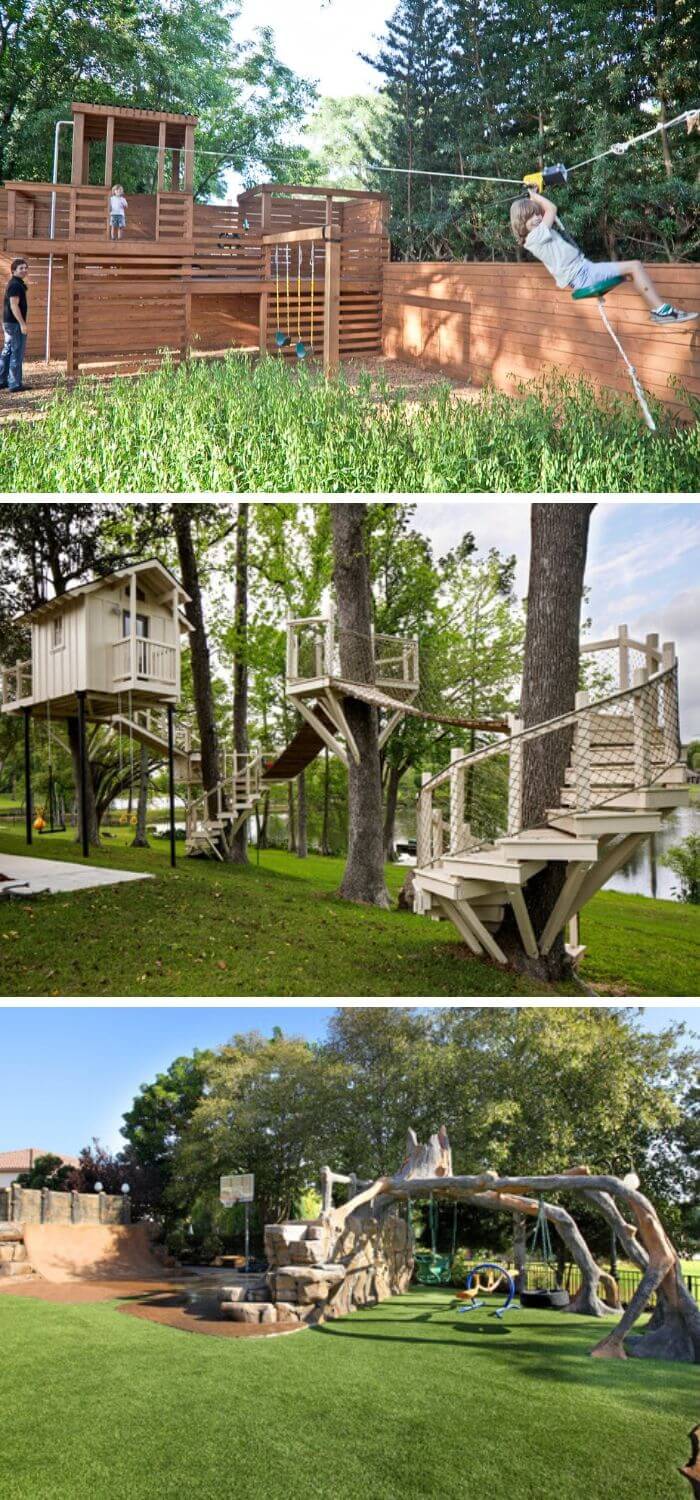
A backyard zip line delivers an outsized thrill for kids relative to its cost, but it’s the idea on this list with the most real safety detail to get right before you buy a kit. Installer guidance from zip line retailers like Zipline Gear and ZipLineStore recommends keeping a full 7 feet of clearance around the entire line, free of branches, rocks, or other hard obstacles, and treating the anchor tree seriously: a certified arborist should assess it before installation, since a failed anchor tree is one of the more common root causes tracked in zip line incident reporting, not a freak accident.
On weight, don’t buy to the exact limit printed on the box; build in a margin below the kit’s rated capacity rather than running it at the edge of what it’s rated for. None of this is expensive to get right, it just has to happen before the first ride, not after.
4. A Backyard with a DIY Chalkboard
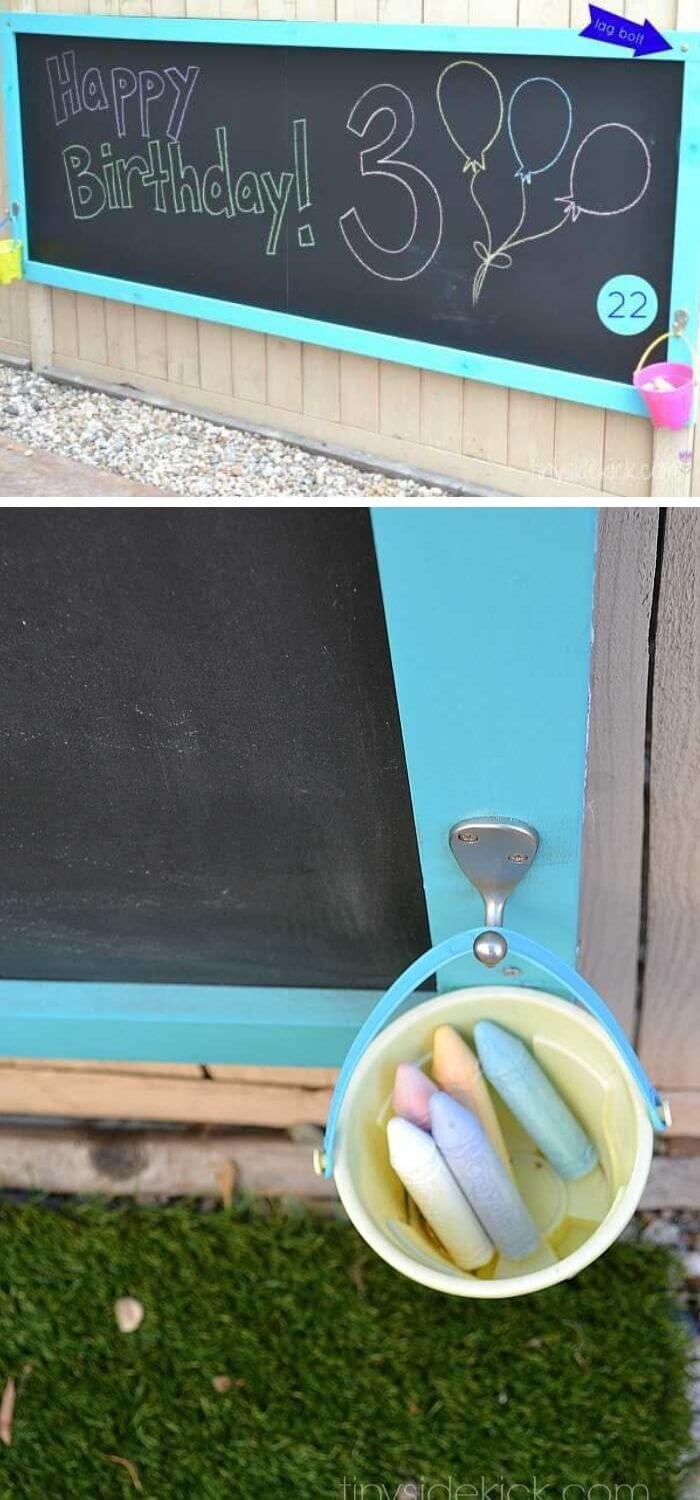
A backyard isn’t only a place to burn off energy, it’s also a place where a low-stakes creative outlet like a giant chalkboard keeps kids occupied for genuinely long stretches.
A sheet of exterior plywood, a few coats of chalkboard paint, and a mounting frame is a true weekend project, and it’s one of the cheapest ideas on this entire list.
It also holds up better than a store-bought easel over a full season outdoors if you give it a simple roof overhang to keep rain off the surface.
5. A Backyard with a Kids Treehouse
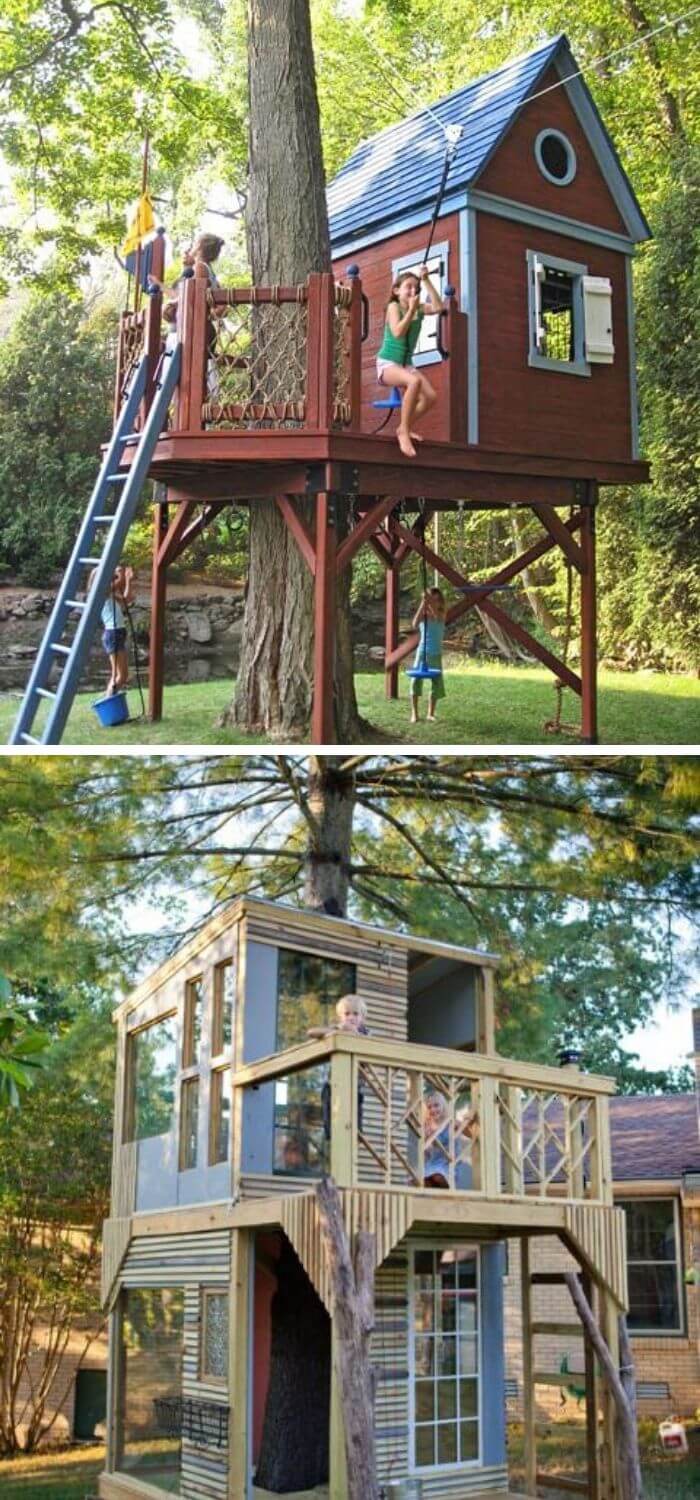
A treehouse remains one of the most requested backyard features for a reason: it gives kids a space that feels entirely their own, at a scale built for them rather than borrowed from the adult parts of the yard.
A simple platform with a ladder and railing is a realistic DIY weekend project if you have a healthy, appropriately-sized tree; a fully enclosed structure with a roof, windows, and a rope bridge moves into hire-a-builder territory, the kind of project Barbara Butler’s firm specializes in.
Either version benefits from the same basic principle: pick a tree a certified arborist confirms is healthy enough to support the load, the same anchor-tree caution that applies to a zip line.
6. A Backyard with a Climb wall and Net course for Kids
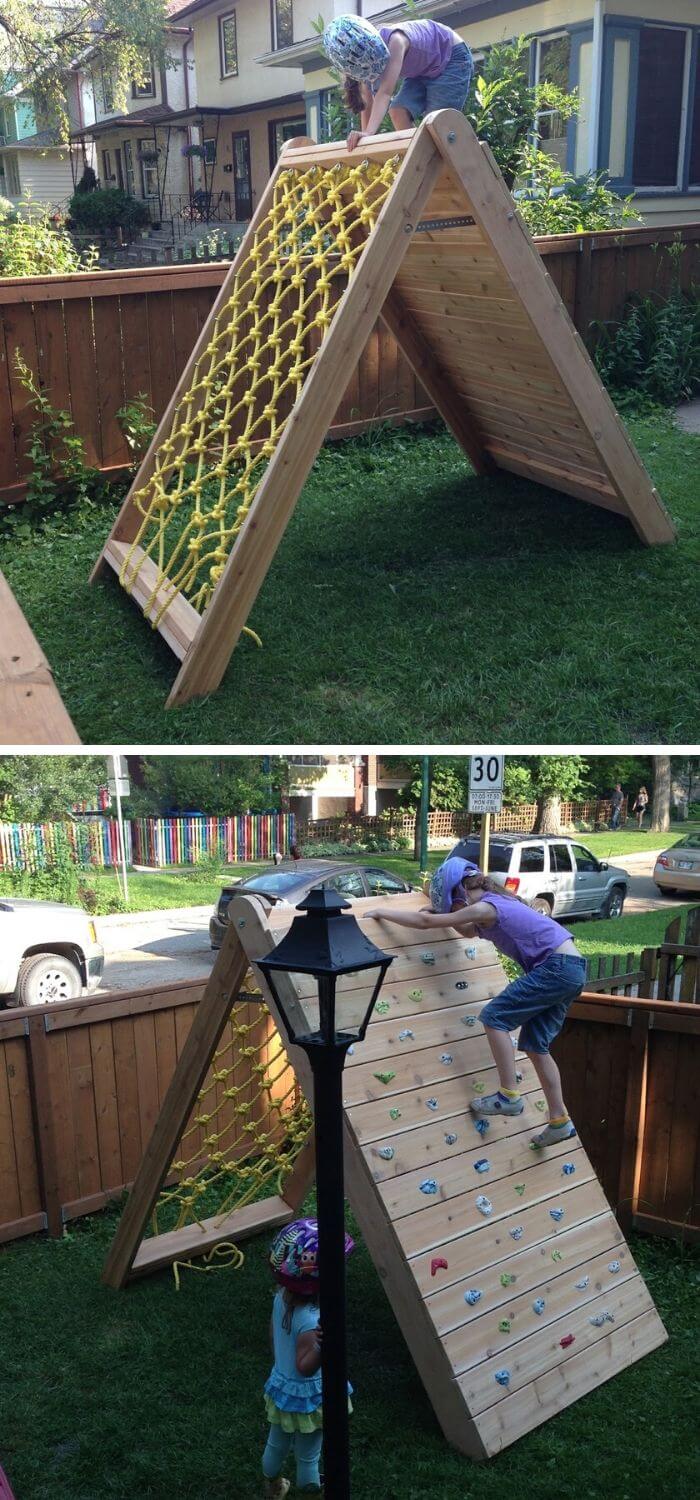
This is one of the ideas on the list where the CPSC’s numbers matter most directly.
If you’re building or buying a climbing wall or net course, plan for at least 9 inches of protective surfacing underneath (wood chips, mulch, sand, or pea gravel) and a fall zone extending a full 6 feet in every direction from the structure’s outer edge, per the CPSC’s Public Playground Safety Handbook.
That fall-zone footprint is worth measuring against your actual yard before you buy, since it’s easy to underestimate how much clear space a climbing structure needs around it.
Budget-wise, a simple net course kit mounted between two posts is moderate; a full rock-climbing wall panel is a bigger investment, closer to hiring installation help.
7. A Backyard with Natural Playscapes
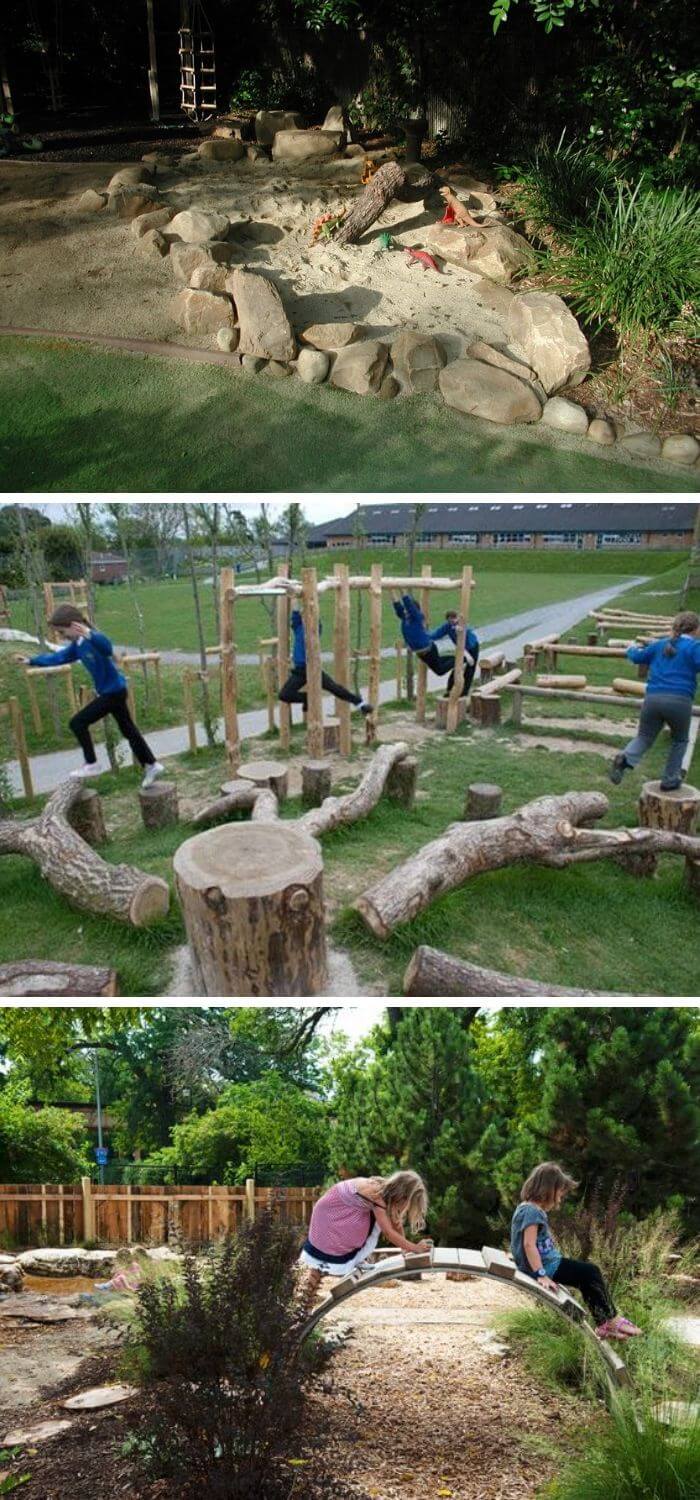
Not every idea here needs lumber or a kit. A “natural playscape,” built from logs, tree stumps, boulders, and simple balance beams arranged into a loose obstacle course, is one of the cheapest options on this list if you already have some of that material sitting around the yard or can source it free from a local tree service.
It also ages well with kids, since a stump to hop between or a log to balance across scales naturally from toddler to older-kid use without needing to be rebuilt.
8. A Backyard with a Boat Ride

An old rowboat, canoe, or even a large plastic tub repurposed as a stationary “boat” gives imaginative play a focal point without any moving parts to worry about.
This is a genuinely low-cost idea if you can find a secondhand boat hull (check local classifieds or a marina’s discard pile) rather than buying new, and it doubles as a small raised planter bed or sandbox insert if you want it to serve double duty when the kids outgrow pirate-ship pretend play.
9. A Backyard with a Kids Pool

A kiddie pool or small in-ground pool is one of the highest-value additions on this list for hot months, but it’s also the idea with the most non-negotiable safety requirement: a proper fence or barrier, not just supervision, since drowning risk rises the moment a pool is left unattended even briefly.
If pool safety and fencing options are new territory, this pool fencing breakdown walks through mesh, chain-link, and privacy-fence options at different price points, and these above-ground pool ideas are worth a look if a full in-ground installation isn’t in the budget this year.
10. A Backyard with an illuminated Kids Tent
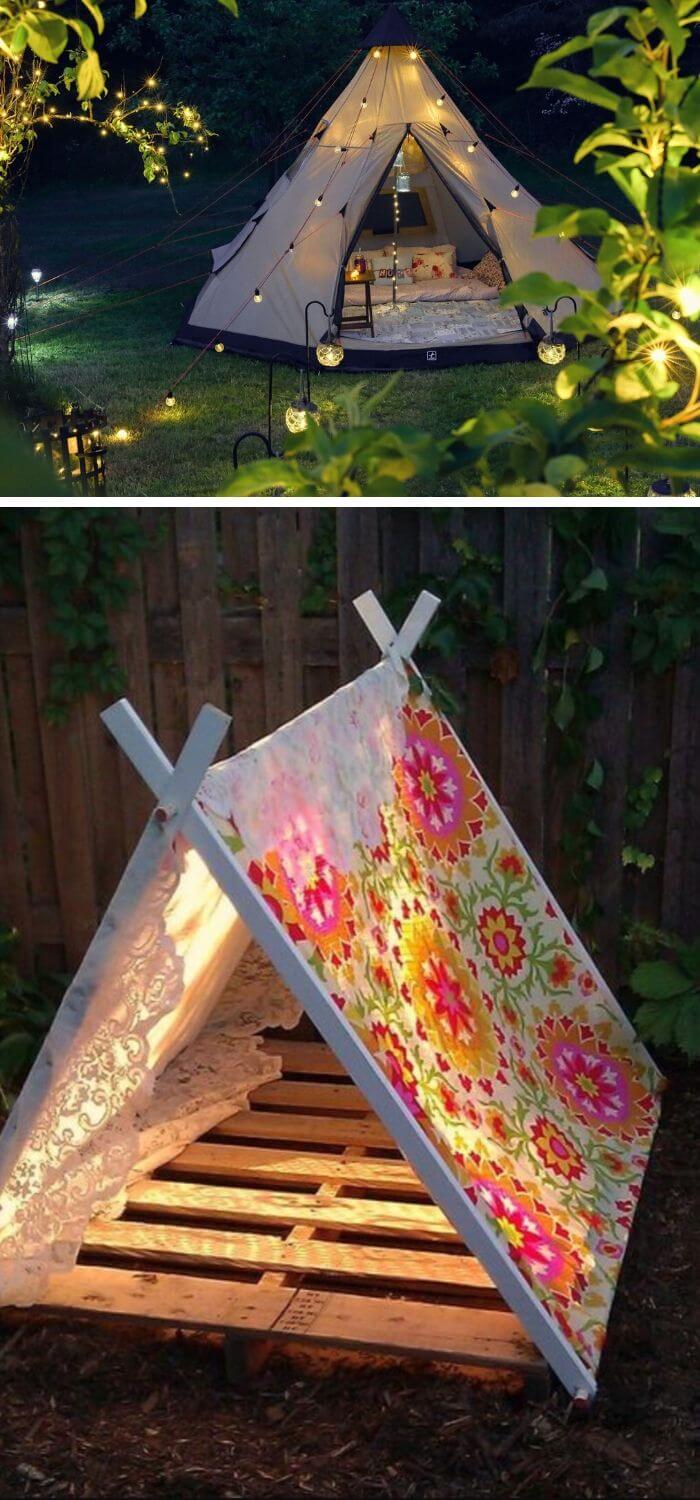
String lights or battery-powered lanterns turn an ordinary pop-up play tent into a magical after-dinner hangout spot, and it’s one of the lowest-cost ideas on this list: most of the cost is the tent itself, since lighting can be as simple as a $10 string of battery fairy lights.
It’s also one of the few ideas here with essentially no safety complications, provided you’re using battery or low-voltage lighting rather than anything that needs an outdoor extension cord run across a play area.
11. A Backyard with a Colored Swing
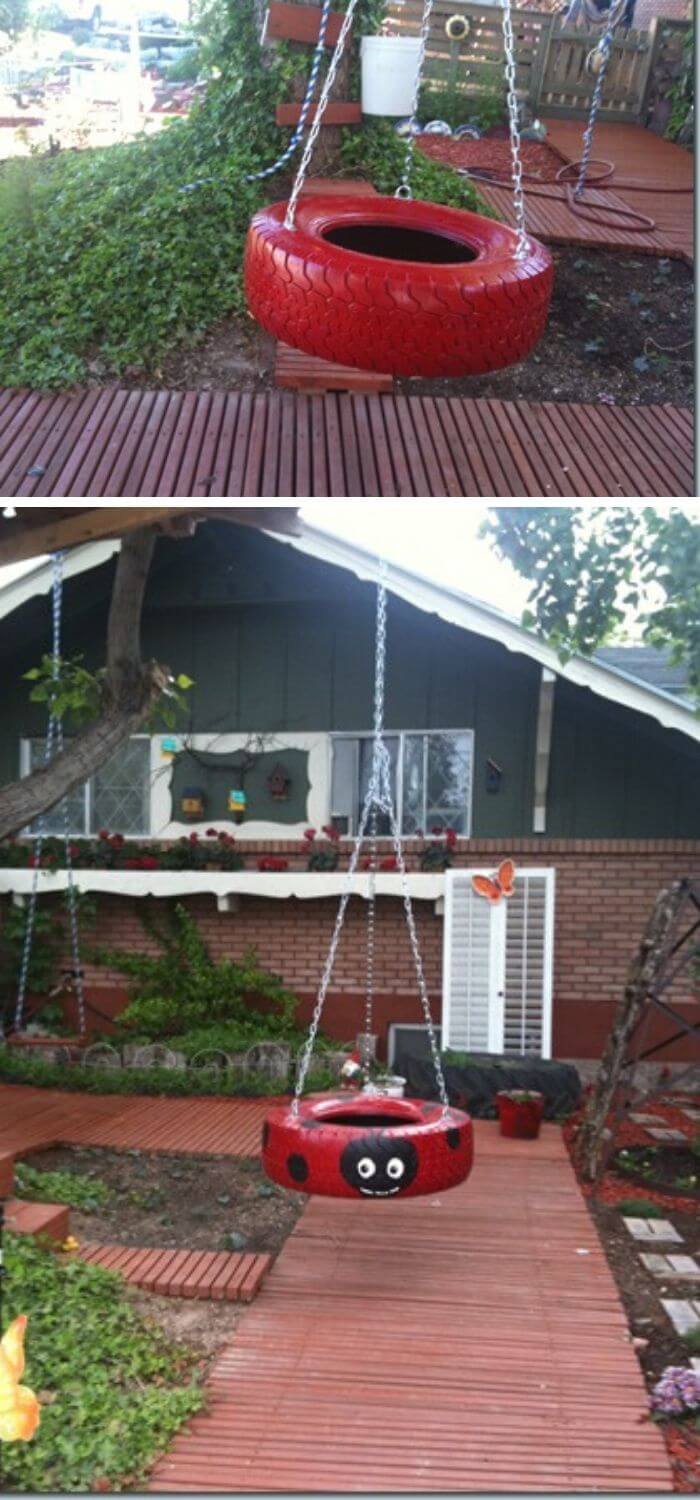
A single brightly-painted swing, whether it’s a simple tire swing or a store-bought seat hung from a sturdy branch or a dedicated frame, is a small addition with an outsized visual impact.
If you’re hanging it yourself, the CPSC’s numbers apply directly: keep at least 8 inches of clearance between the swing seat and the ground, and give the fall zone in front of and behind the swing a distance equal to twice the height of the pivot point, so a swing hung from an 8-foot branch needs roughly 16 feet of clear space ahead and behind it, not just to the sides.
12. A Backyard with a Garden Sandbox
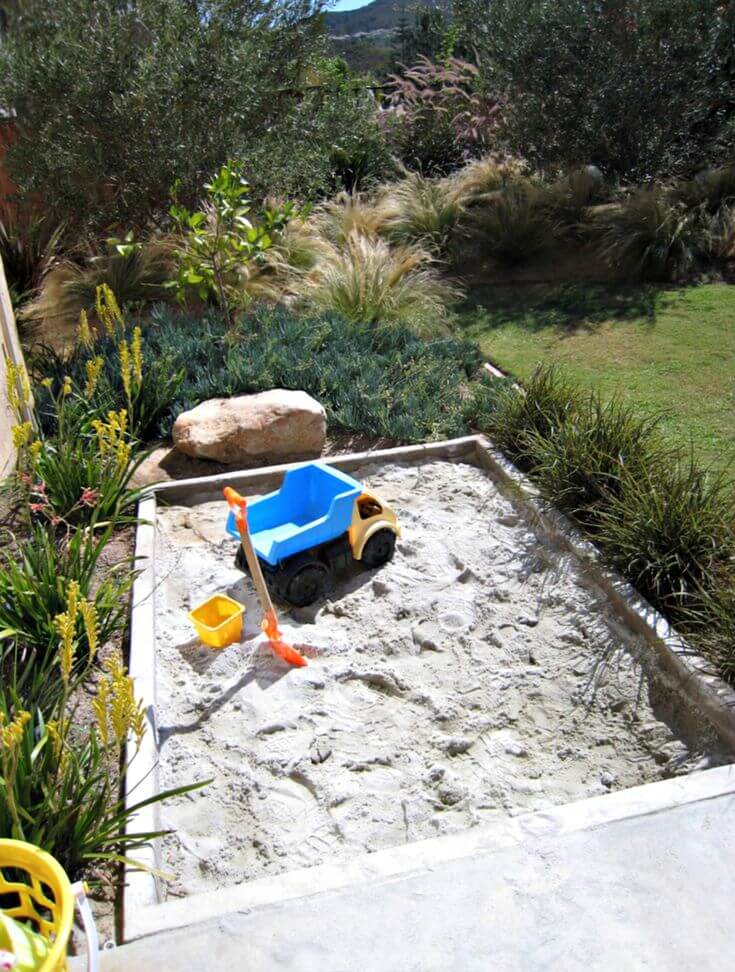
A sandbox built into a raised garden-style frame, rather than a plastic store-bought bin, blends into backyard landscaping better and gives kids more room to dig and build.
This is a straightforward weekend DIY project with untreated lumber (avoid pressure-treated wood in direct contact with sand kids will be handling) and a breathable cover to keep rain and neighborhood cats out between uses.
13. A Backyard with a Tic-Tac-Toe Board
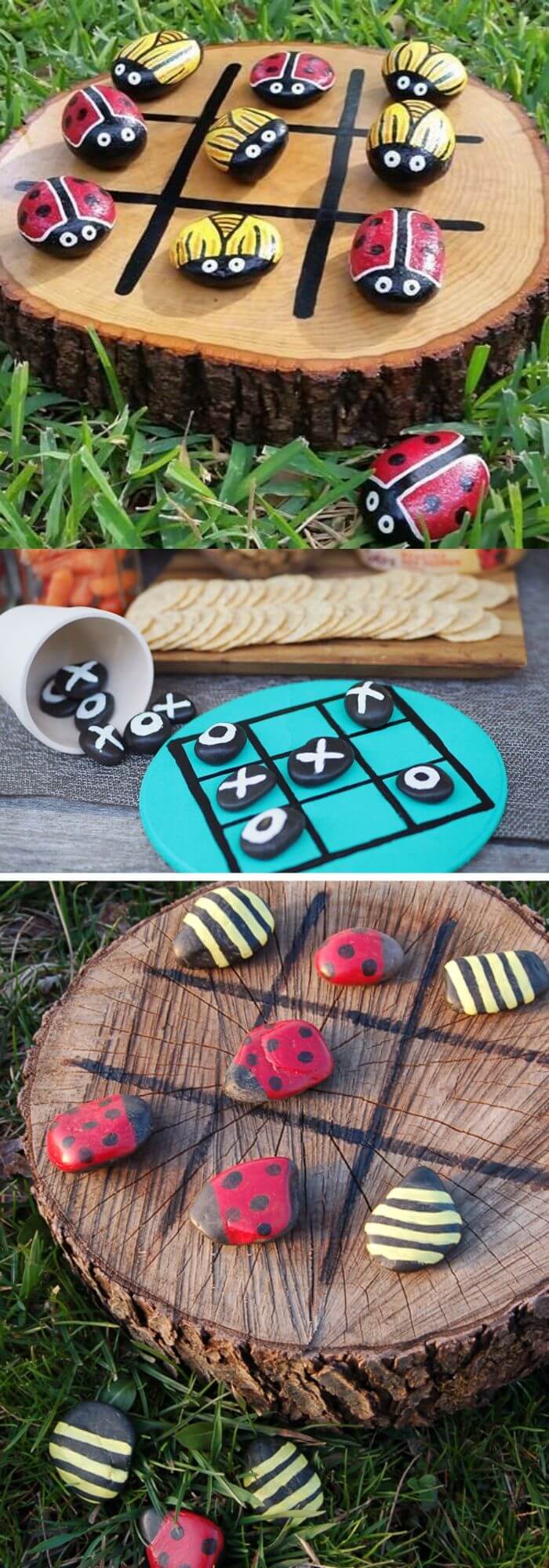
Source: chickenscratchny, juliemeasures
A large-format tic-tac-toe board, whether it’s painted onto a patio slab, built from a simple wood frame with bean-bag “X”s and “O”s, or mounted vertically on a fence, is one of the cheapest and fastest ideas on this entire list to execute, often finishable in an afternoon for under $50 in materials.
It’s a good pick specifically for families who want a quick weekend win before tackling something bigger elsewhere on this list.
14. A Backyard with Rowhouse Play Space
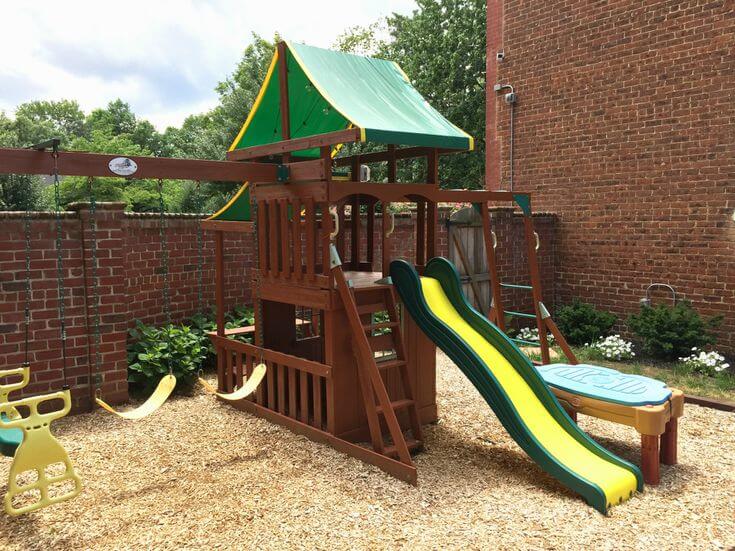
A dedicated row of small connected play “houses” or stalls, whether that’s a run of simple wooden cubbies or a themed row of playhouse fronts, works especially well for families with multiple kids who each want their own space rather than sharing one structure.
It’s a moderate-investment project, more material and build time than a single playhouse, but it scales the family-friendliness of the yard without needing a single oversized structure.
15. A Backyard with a See-Saw
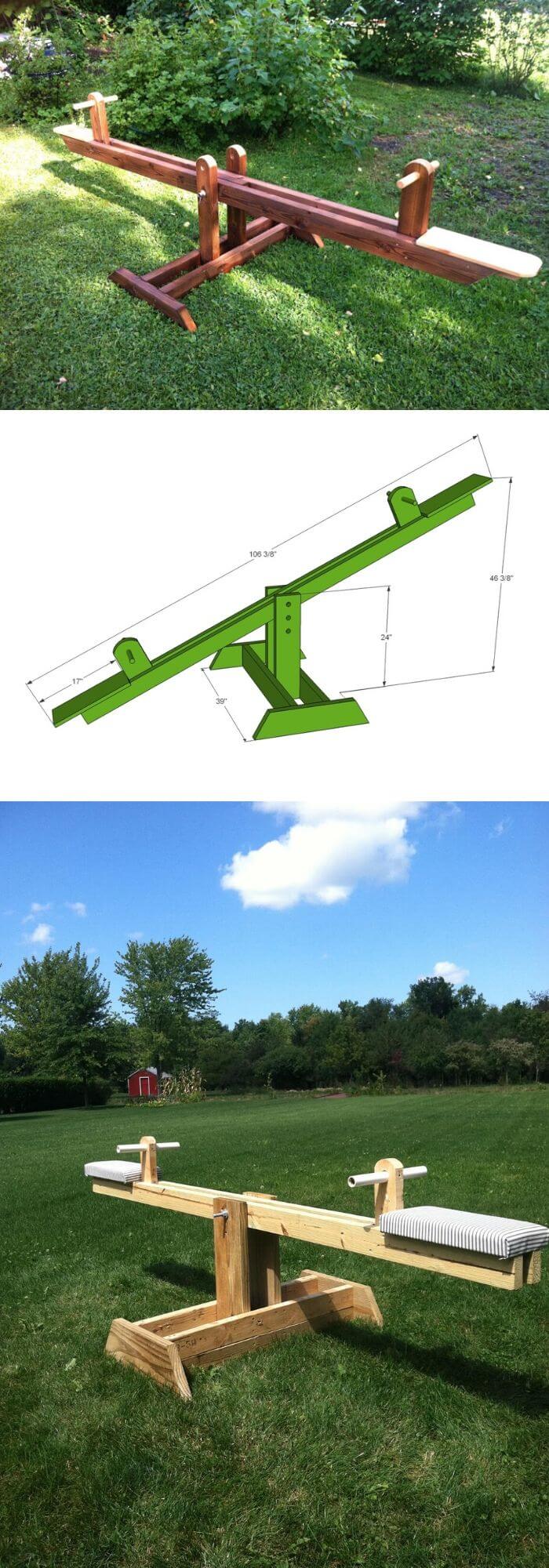
A classic see-saw is inexpensive to build or buy, but it’s another idea where the CPSC’s fall-zone guidance directly applies, since a see-saw’s pivot mechanism means both kids need real clear space to land safely if they slide or jump off unexpectedly.
Budget for at least 9 inches of protective surfacing underneath and clear the same 6-foot perimeter recommended for other climbing and moving equipment, not just the footprint of the see-saw itself.
16. A Backyard with Hobbit House
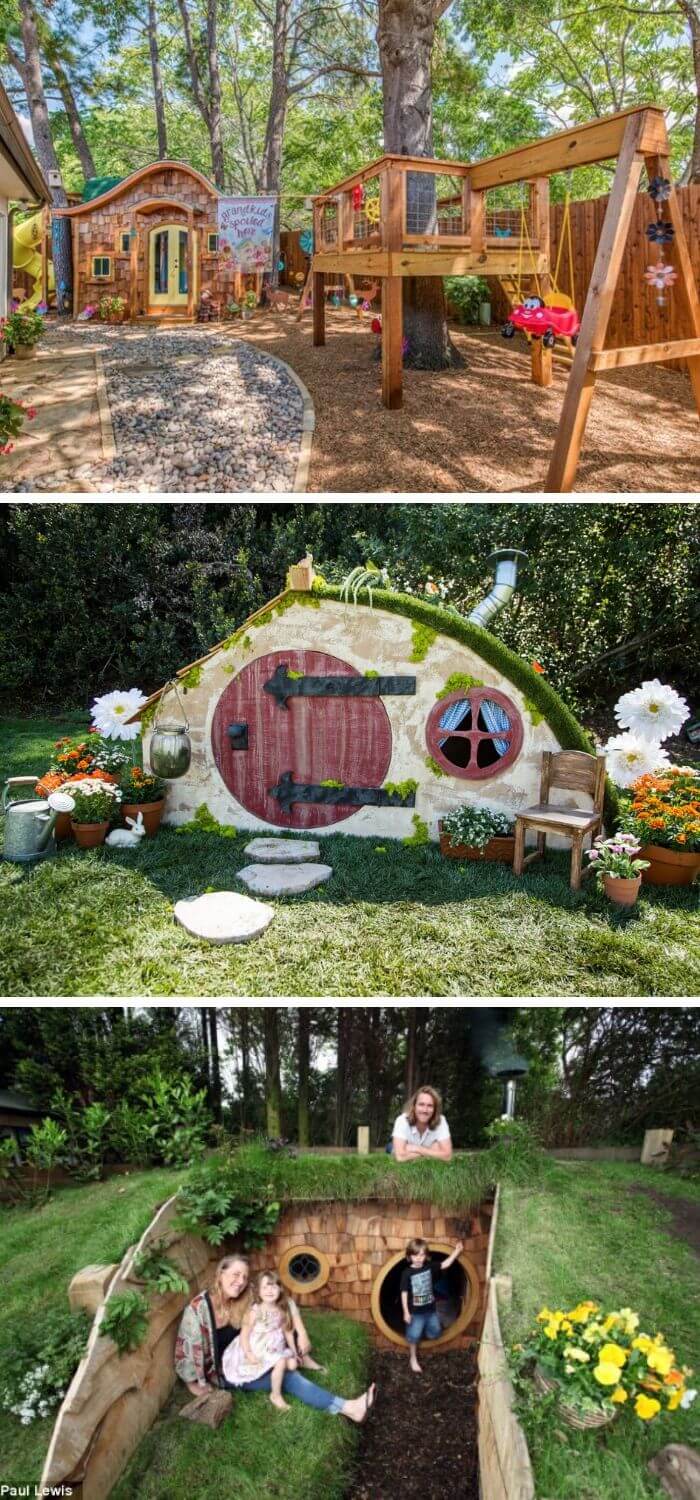
A round door, a grassy mound roof, and a low, cozy interior give a “hobbit house” play structure a distinctive look that stands out from a typical square playhouse.
This is a more involved build than a standard playhouse, closer to moderate-to-hire-a-builder territory depending on how elaborate the roof and mound construction gets, but it’s one of the more visually memorable ideas on this list if you want something that doesn’t look like every other backyard.
17. A Backyard with a dedicated Play Area
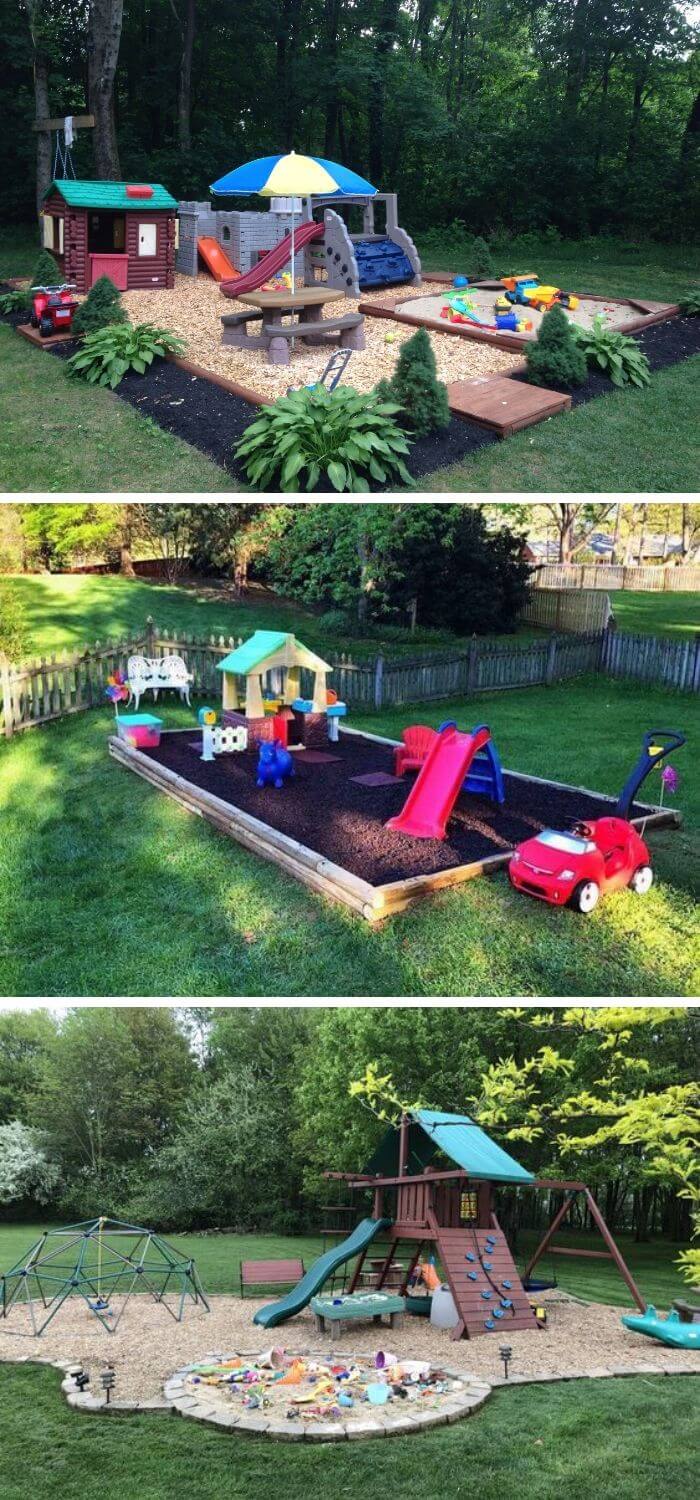
Sometimes the most useful “idea” is simply designating one clear zone of the yard as the kids’ area, defined with a border of mulch, pavers, or low edging, rather than letting play equipment sprawl across the whole yard.
This costs little beyond the edging material itself and pays off in easier mowing, clearer sightlines for supervision (a real point Rochelle Greayer raises in her play-space design work), and a simpler answer to “which part of the yard is safe to run around in.”
18. A Backyard with a small Trampoline
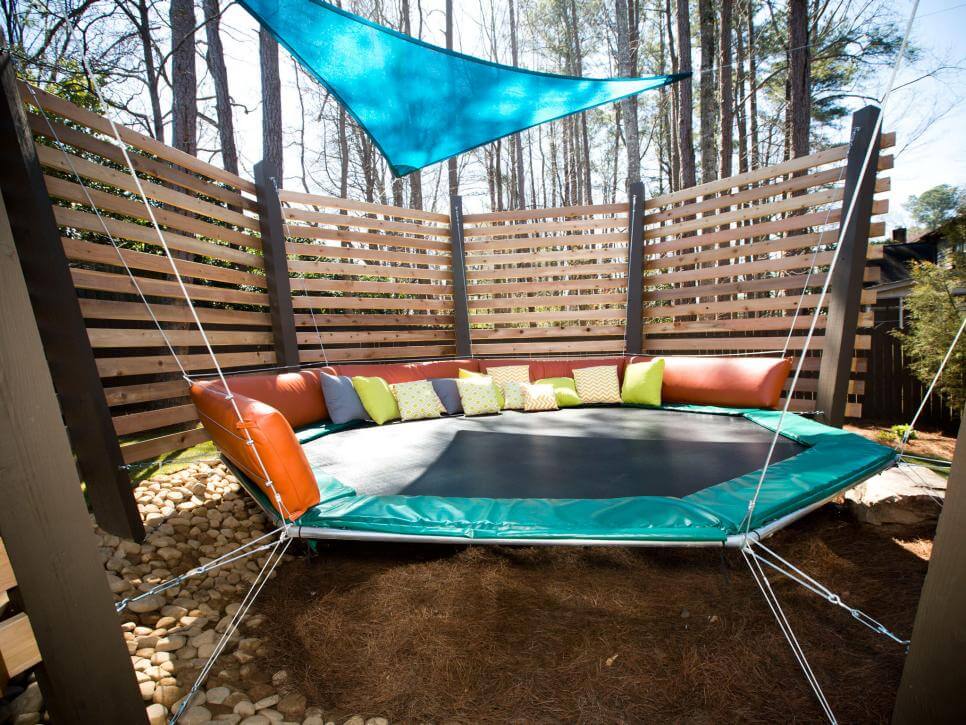
A trampoline is one of the most-requested backyard additions and also, per parent forums, one of the most debated: real accounts describe homeowners insurers adding exclusions or declining coverage for a home with one present, so it’s worth a call to your insurer before buying rather than after.
The safety detail worth acting on: most trampoline injuries happen while getting on or off, or when kids of very different sizes are bouncing together, not mid-jump the way most parents picture the risk.
If you’re setting one into the ground rather than using a frame with a net, plan on keeping the surrounding grass trimmed and treated, since tall grass under an in-ground trampoline is a real magnet for ticks and, in some regions, snakes.
19. A Backyard with a Kids Riding Area
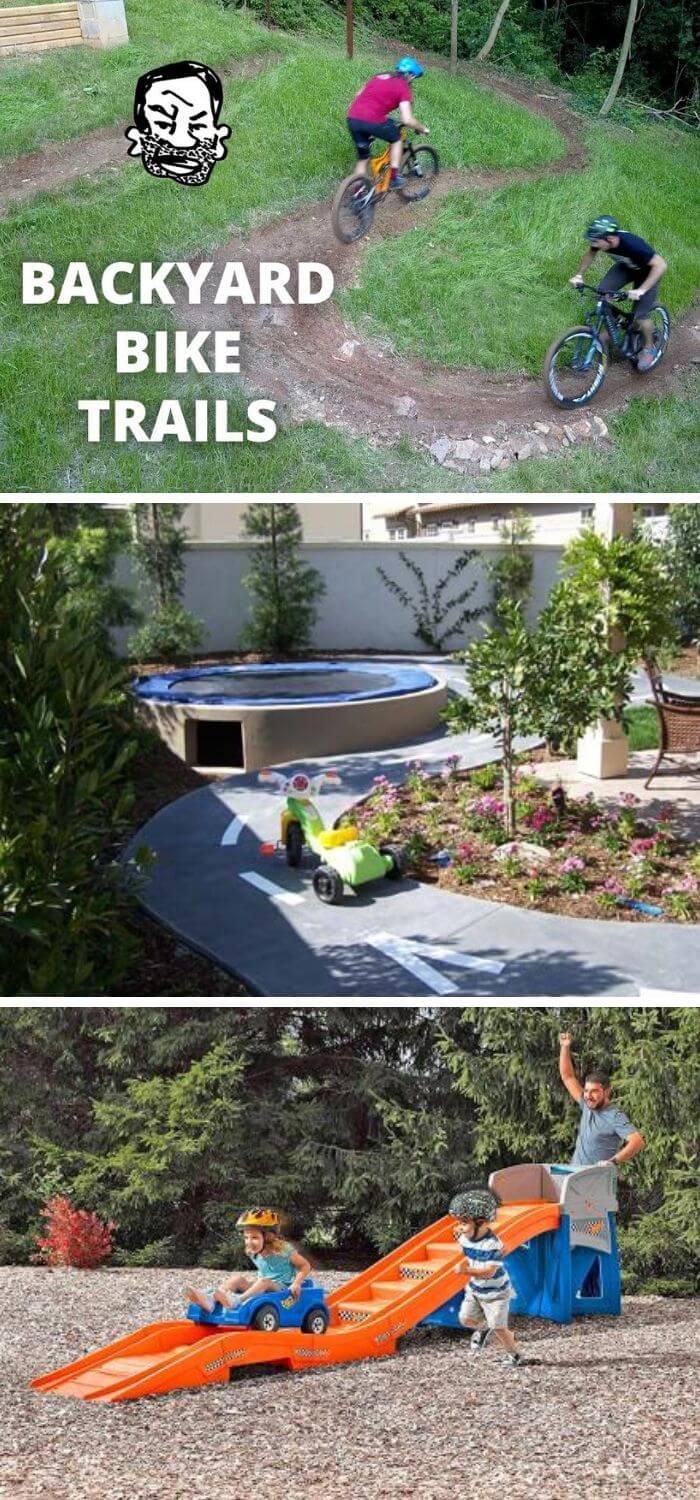
A simple loop or figure-eight path, whether paved, packed gravel, or just mowed shorter than the surrounding lawn, gives trikes, scooters, and balance bikes a dedicated track instead of the whole yard.
This is a low-to-moderate cost project depending on surfacing choice (mowed grass costs nothing; a paved loop is the priciest version), and it pairs well with idea #2’s painted miniature street if you want to combine imaginative play with actual riding practice.
20. A Backyard with Colored Tire Paths
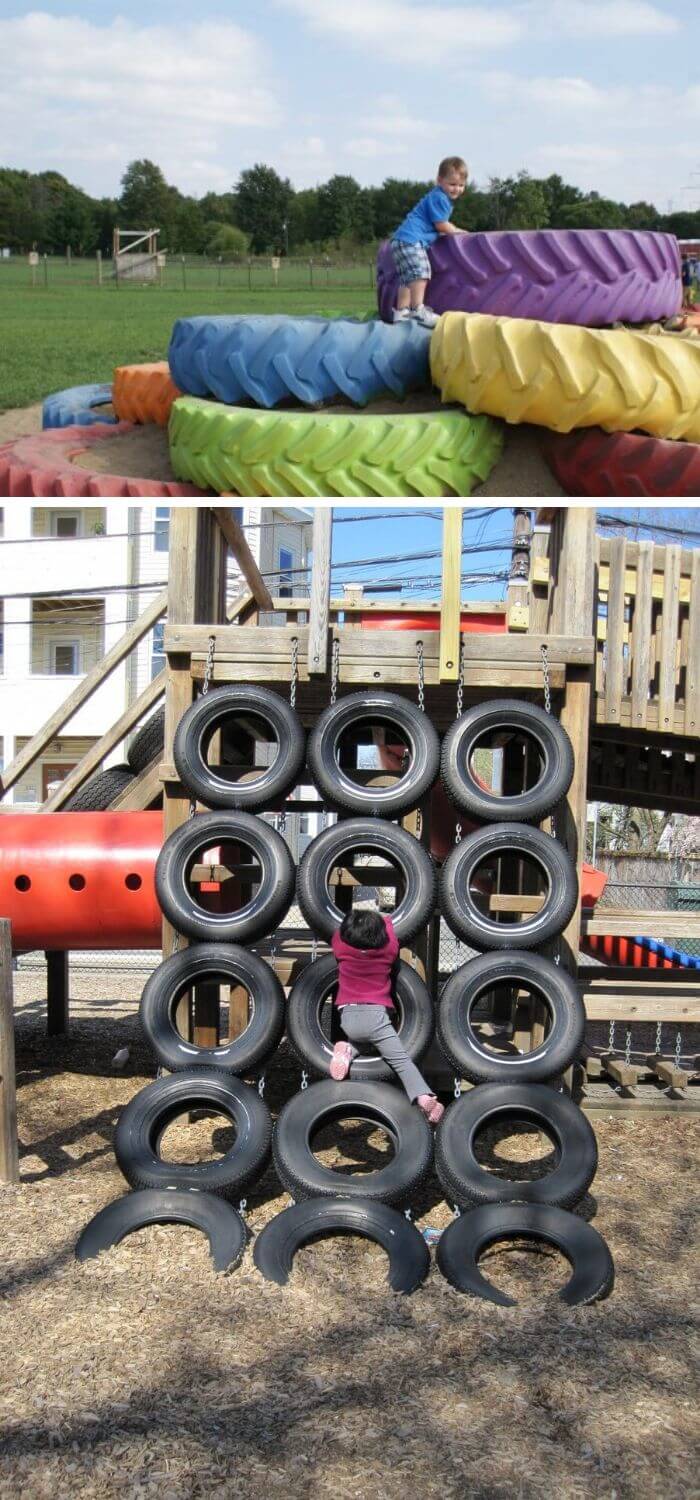
Old tires, painted in bright colors and half-buried or bolted together, make an inexpensive stepping-stone-style path that doubles as a balance challenge for kids.
Most of the cost here is labor rather than materials, since used tires are often free or low-cost from a local shop, but they should be cleaned and drained of any standing water regularly, since a tire’s natural cupped shape collects rainwater and becomes a mosquito breeding spot if left unattended.
21. A Backyard with Kids Campsite
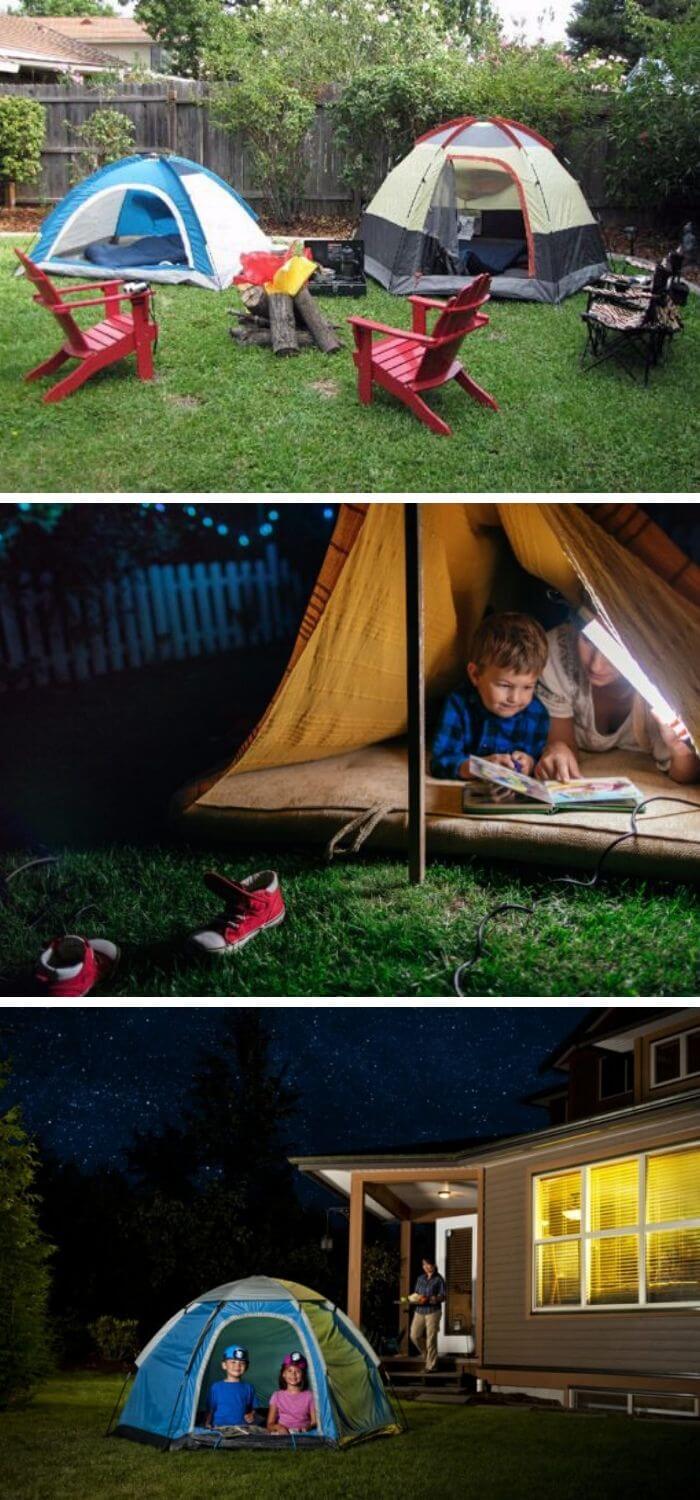
A permanent or semi-permanent “campsite” corner, complete with a small tent, a ring of logs for seating, and maybe a fire-pit-style light feature (battery-powered rather than an actual open flame if young kids are involved), lets a family recreate the fun of camping without leaving the yard.
This is a moderate-cost idea depending on how elaborate the tent and seating setup gets, and it’s a good match for families who camp seasonally and want a lower-stakes way to practice the experience with younger kids first.
22. A Backyard with Playground Sets
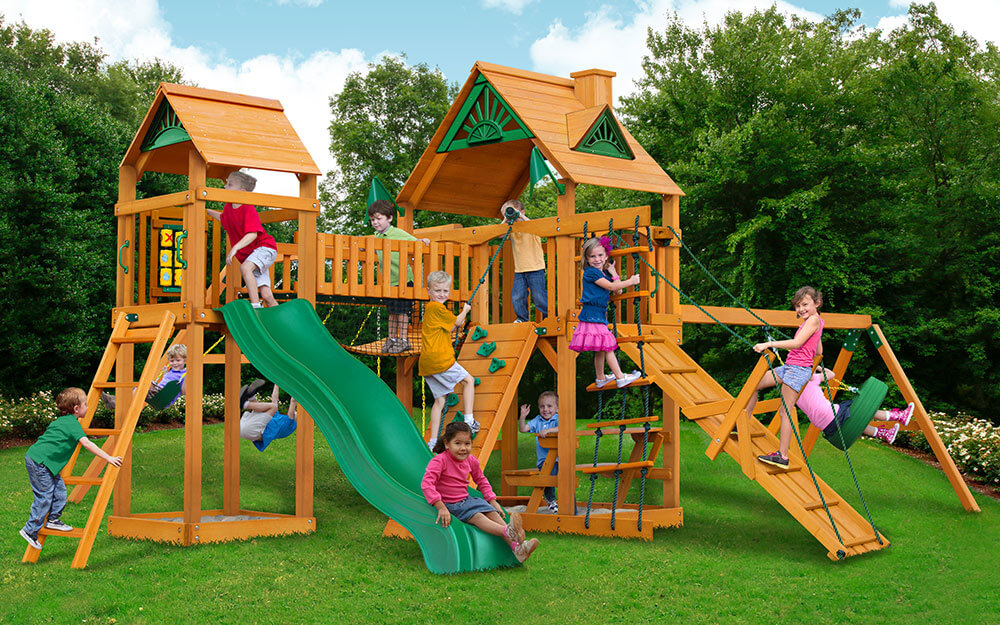
A full store-bought playground set (swing, slide, climbing frame combined into one structure) is one of the pricier ideas on this list, but it also concentrates most of the CPSC’s safety guidance into a single footprint, making it easier to get right in one pass: 9 inches of surfacing, a 6-foot perimeter fall zone, and 8 inches of swing clearance, all around one structure rather than several scattered ones.
Buying secondhand or refurbished is a realistic way to bring the cost down, provided you inspect for rust, splintered wood, and worn hardware before installing.
23. A Backyard with Wood Swing Sets

A dedicated wood-framed swing set, distinct from a single swing hung from a tree, is a moderate investment that holds up longer against weather than a metal frame in most climates, provided the wood is properly sealed and re-treated every couple of years.
The same CPSC swing-clearance numbers apply here directly: 8 inches minimum between seat and ground, and a fall zone in front and behind equal to twice the pivot height.
24. A Backyard with Bounce Houses
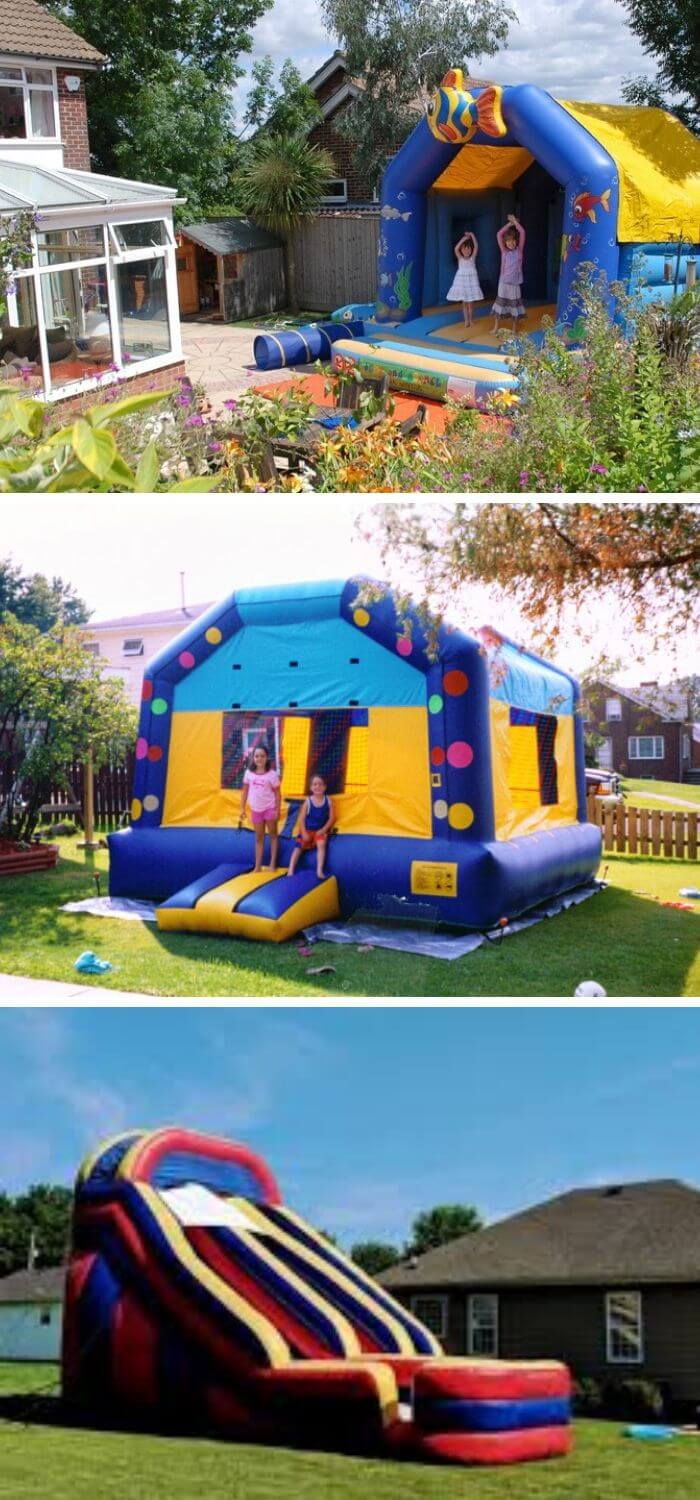
An inflatable bounce house is a rentable, occasional-use option for families who want the fun without a permanent structure, but the practical safety detail most backyard-inspiration articles skip is this: mixing kids of very different sizes and ages in the same inflatable at once is where most of the real risk comes from, since a bigger, heavier kid landing near a smaller one can genuinely hurt them without either one doing anything reckless.
Grouping kids by similar size before letting them in, and having an adult actually watching rather than just nearby, addresses that specific risk better than general supervision does. It’s also worth checking your homeowners’ insurance the same way you would for a trampoline, since some policies treat inflatables similarly.
25. A Backyard with Kids Construction Site
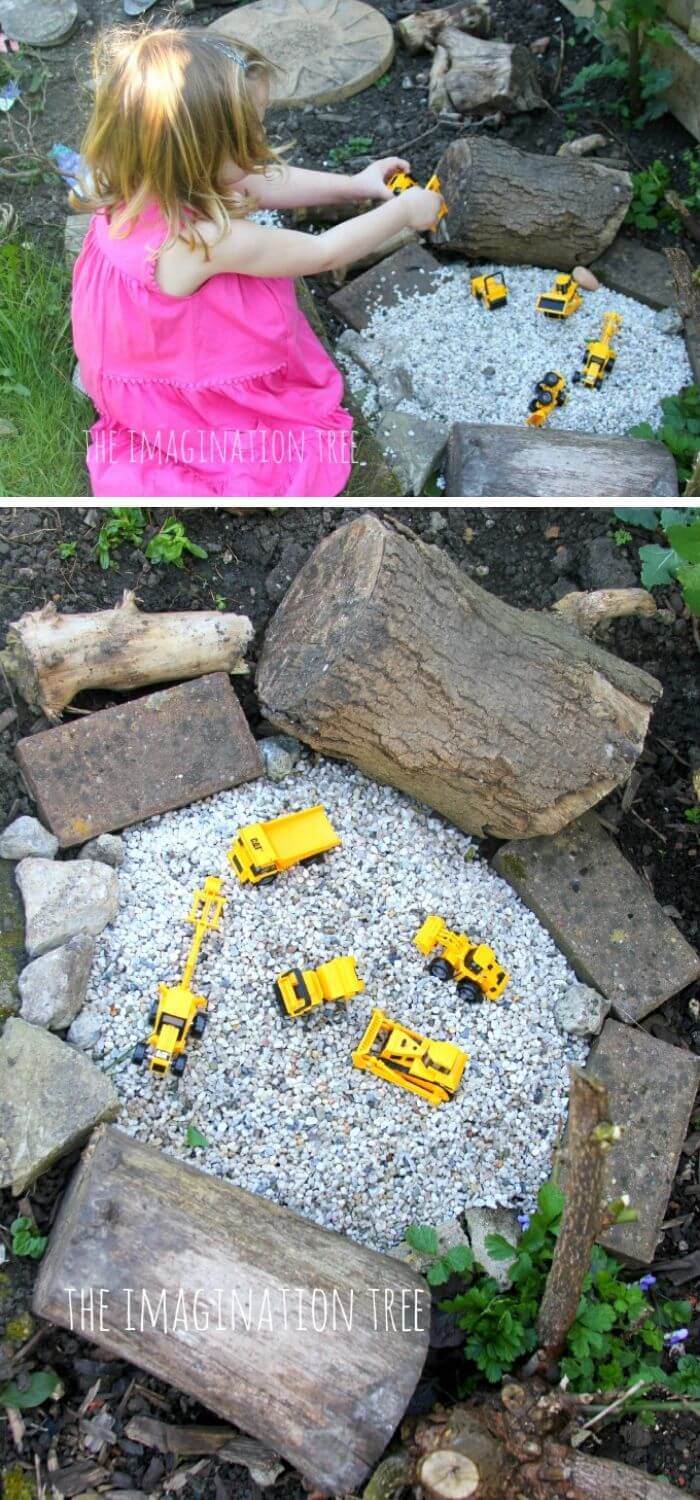
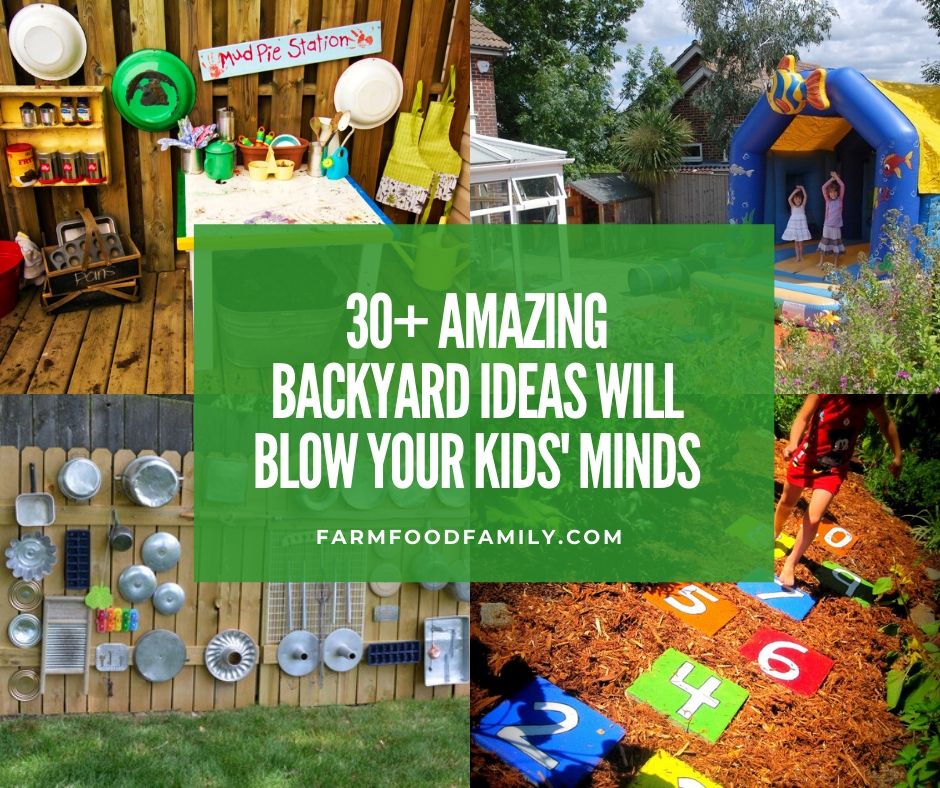
A sandbox or dirt patch stocked with real (kid-sized) construction tools, toy dump trucks, and diggers turns a corner of the yard into an open-ended “construction site” that holds up to repeat play better than most themed structures.
This is one of the cheapest ideas on the list if you already have a sandbox or dirt area, since the toys themselves are the main cost, and it scales easily with age by upgrading the tool complexity as kids get older.
26. A Backyard with Kids Stepping Stones
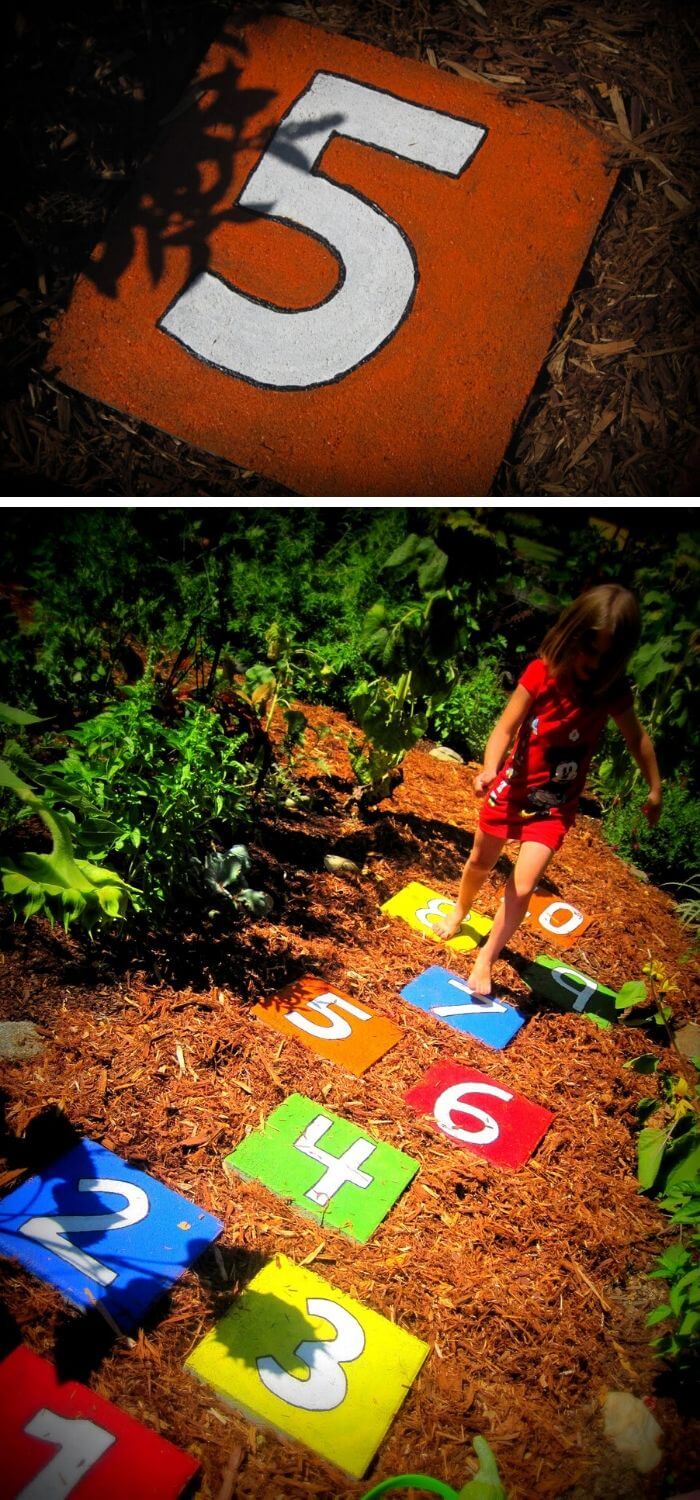
Hand-painted or store-bought stepping stones laid out in a winding path give younger kids a low-key balance challenge and a reason to explore the yard’s edges rather than sticking to open lawn.
This is an inexpensive, genuinely kid-friendly DIY project, and letting kids help paint or decorate their own stones adds a personalization angle that a purely adult-built feature doesn’t.
27. A Backyard with Kitchen Sink Play Area
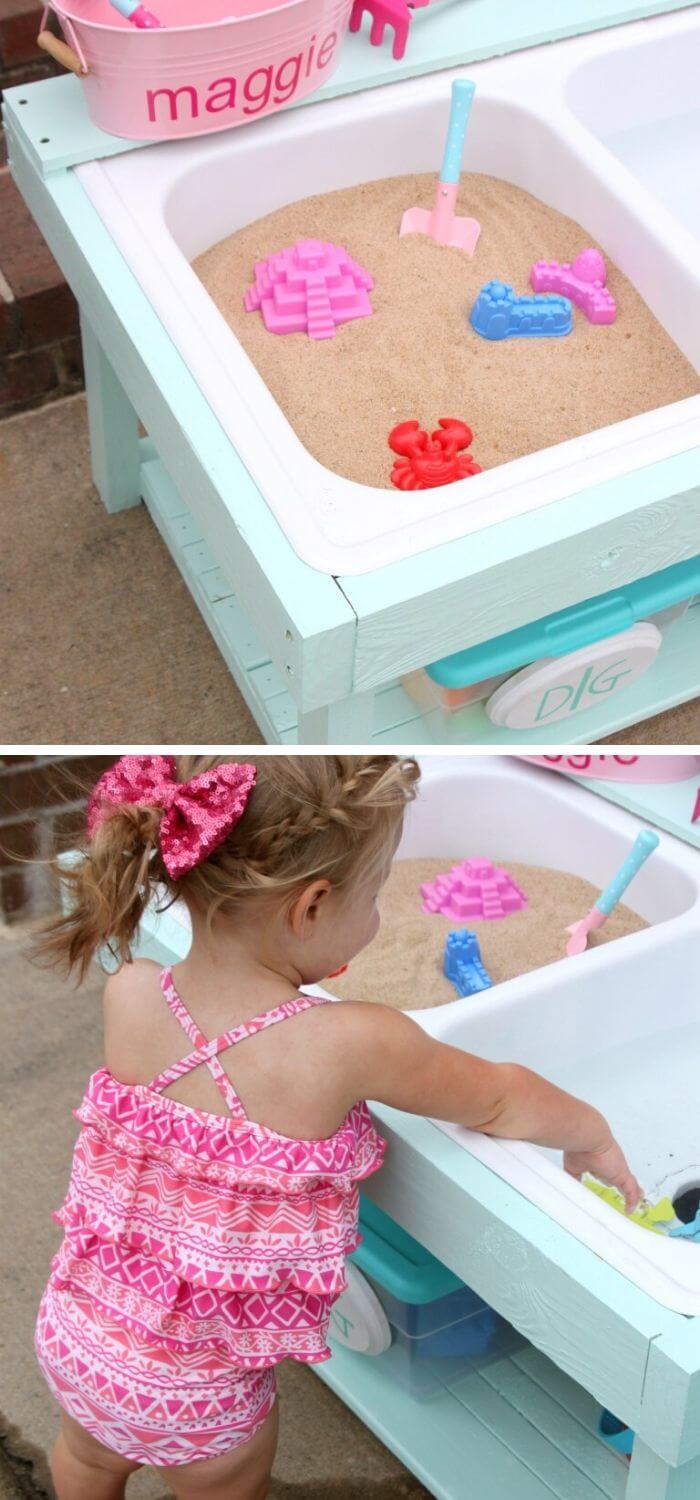
An old sink, salvaged from a renovation or picked up secondhand, plumbed to a garden hose rather than real drainage, creates a genuinely popular “mud kitchen” play area where kids can wash pretend dishes, mix mud “recipes,” and play out kitchen routines outdoors.
This is one of the more affordable ideas on the list if you can source the sink secondhand, and it holds appeal across a wide age range, from toddlers doing simple water play to older kids running more elaborate pretend restaurants.
28. A Backyard with DIY Music Wall

Source: lakesuperioracademy, prekandksharing
A wall-mounted collection of pots, pans, chimes, and other found percussion instruments, fixed to a fence or a dedicated frame, turns noise-making into a legitimate backyard activity instead of something to shush indoors.
This is close to free if you’re repurposing kitchen items headed for donation anyway, and it’s one of the few ideas on this list that genuinely improves with age, since older kids start building actual rhythms rather than just banging.
29. A Backyard with Mud Pie Station
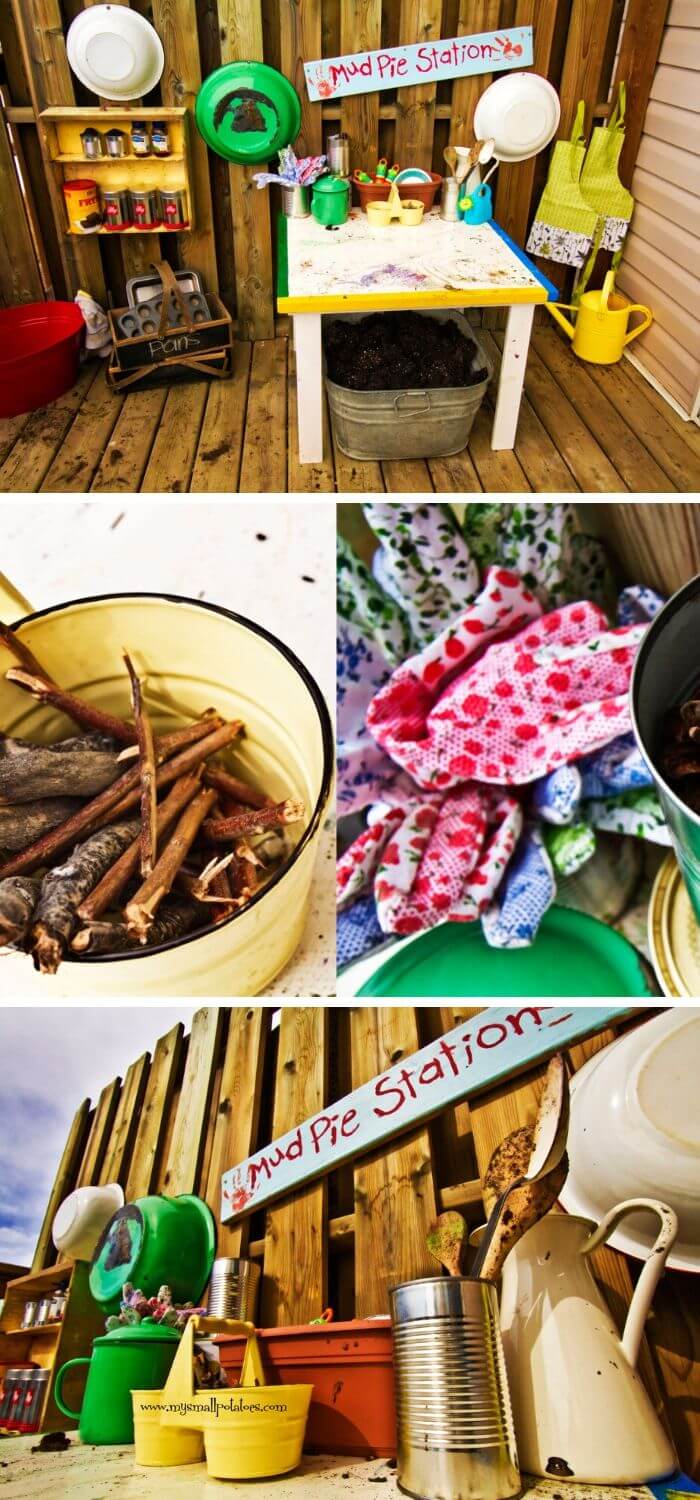
A dedicated “mud kitchen” station, separate from idea #27’s sink setup, focused specifically on a mixing table, a water source, and simple bakeware for making “mud pies,” gives younger kids sensory play that’s genuinely low-cost (a secondhand table and a few dollars of thrifted bakeware) and easy to keep contained to one corner of the yard rather than tracking mud everywhere.
30. A Backyard with Tire Play Area

Beyond the tire-path idea covered in #20, a dedicated cluster of tires, some stacked for climbing, some hung as swings, some laid flat as stepping platforms, creates a more concentrated obstacle-course-style play zone from largely free or low-cost material.
The same standing-water caution from #20 applies here at a larger scale: with more tires clustered together, check and drain them after every rain rather than occasionally.
Conclusion
Backyard ideas for kids can transform your outdoor space into excellent playhouses for the kids. These ideas can be used to make your kids enjoy your backyard space and have a lot of fun and learning in the process.
FAQ
Is a backyard trampoline safe for kids? It can be, but it’s not a simple yes or no. Real accounts from parents describe insurers declining coverage or adding exclusions for homes with a trampoline present, so a call to your insurance company before buying is worth the ten minutes. On the actual injury risk, the detail worth knowing is that most trampoline injuries happen while getting on or off, or when kids of very different sizes are bouncing at the same time, not mid-jump the way most parents assume. A netted enclosure and a one-jumper-at-a-time rule address the actual risk pattern better than general “be careful” caution does.
Do I need a permit for a backyard zip line or treehouse? It depends on your city or county, and it’s genuinely worth checking rather than assuming. Some jurisdictions treat a fixed structure over a certain height or a permanent zip line anchor as requiring a permit the same way a shed or deck would, while others don’t regulate backyard play equipment at all. A quick call to your local building department before you dig post holes or bolt into a tree is cheap insurance against having to undo work later.
What should go under a trampoline? If it’s an in-ground model, keep the surrounding grass trimmed short and treated, since real accounts describe tall grass around an in-ground trampoline attracting ticks and, in some regions, snakes. For an above-ground frame model, the CPSC’s general surfacing guidance still applies: a soft, well-maintained surface like mulch or a rubber mat underneath is safer than bare dirt or concrete if a child falls off rather than bouncing back onto the mat.
Products We Recommend
This post contains affiliate links. We may earn a commission on qualifying purchases at no extra cost to you.
CTSC Zipline Kit for Kids and Adults
100-foot zip line kit with stainless steel spring brake, safety harness, and 2 tree protectors — pairs with idea #3's clearance and anchor-tree guidance
Shop Now
Playsafer Rubber Mulch Nuggets, 40 lb
Recycled rubber playground surfacing for fall protection under swings, climbing structures, and see-saws — matches the CPSC's 9-inch surfacing guidance covered above
Shop Now
Kids Sandbox with Cover, 46.5" Wooden Sand Box
Cedar sandbox with an adjustable UV-resistant canopy and bottom liner to keep sand clean and dry between uses — a ready-made option for idea #12 if building one from scratch isn't in the cards
Shop NowNever miss an update — choose FarmFoodFamily as your preferred source on Google.
How it works: Tap the button below to open Google's settings page, then check the box next to FarmFoodFamily.
Tap the checkbox to turn it blue — that's how you know it's set.