35+ Home Art Studio Ideas That Actually Work (Light, Air, and Budget Included)
A great home art studio isn’t really about how much square footage you have, it’s about getting three things right: light, air, and a layout that matches how you actually work. Below are 35 real ways people have carved out a studio at home, from a full converted room to a single organized wall, each…

Never miss an update — choose FarmFoodFamily as your preferred source on Google.
How it works: Tap the button below to open Google’s settings page, then check the box next to FarmFoodFamily.
Tap the checkbox to turn it blue — that’s how you know it’s set.
A great home art studio isn’t really about how much square footage you have, it’s about getting three things right: light, air, and a layout that matches how you actually work.
Below are 35 real ways people have carved out a studio at home, from a full converted room to a single organized wall, each with enough specific detail that you can act on it today.

Before You Set Up: Light, Air, and Budget
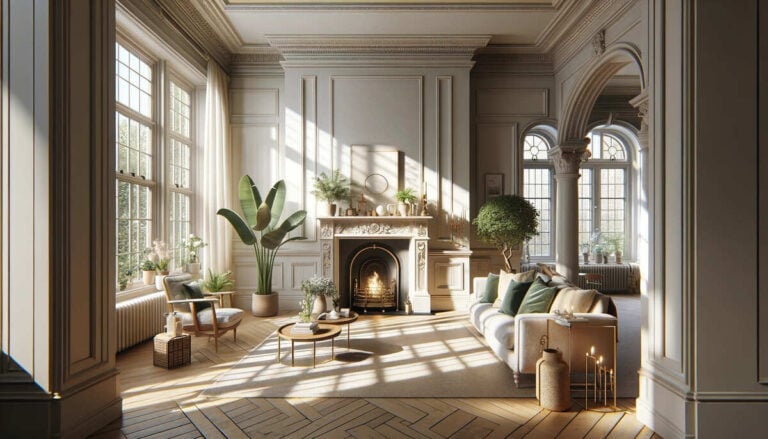
Light: why “north-facing” isn’t just a design cliché.
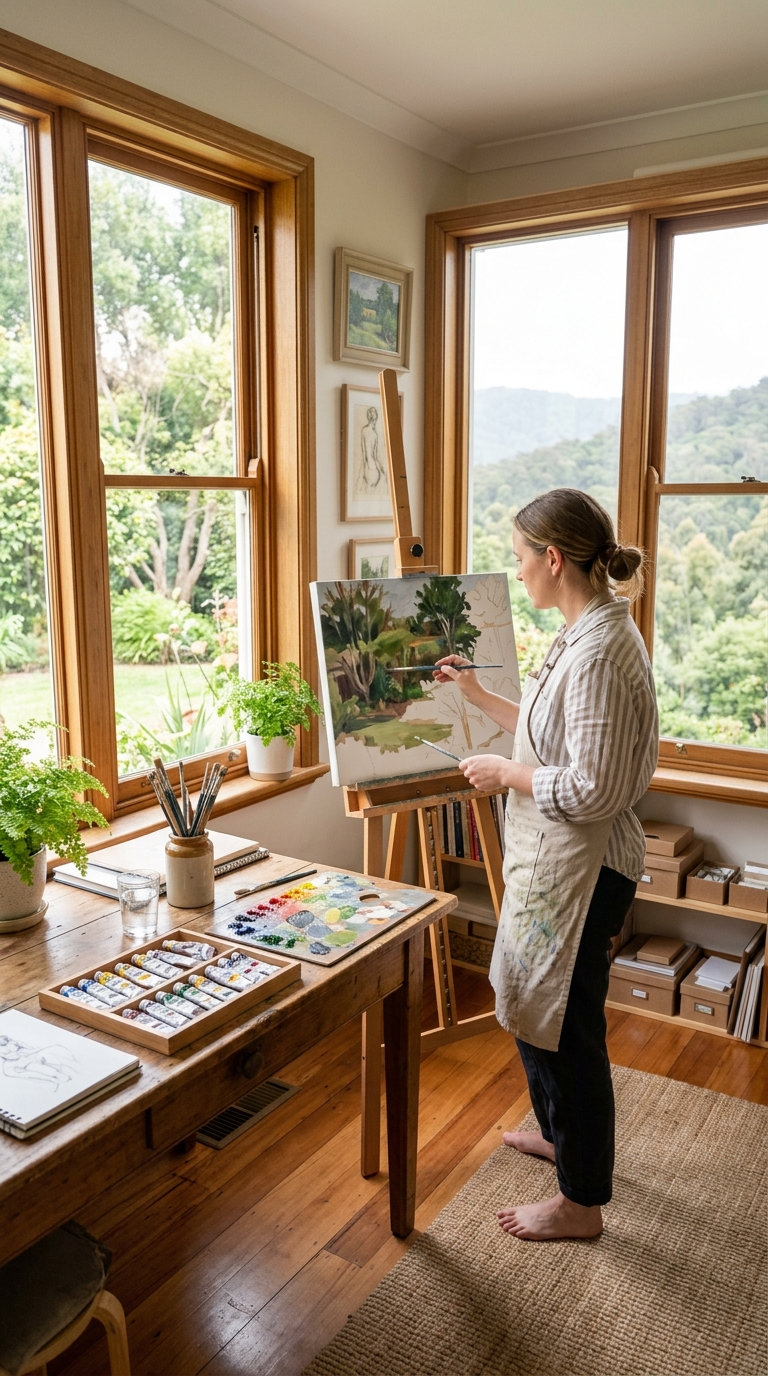
Professional artist Will Kemp, founder of the Will Kemp Art School and trained in Classical Portraiture in Florence, points out that north-facing light is prized specifically because it stays consistent through the day, unlike direct sun, which creates harsh shadows that shift dramatically by the hour.
The practical setup he recommends: a north-facing window positioned roughly 35 degrees above your easel, angled so light falls onto your canvas without glaring back at you.
Fellow professional artist Lori McNee, a Master Artist for Cobra Watermixable Oil Paints and an exhibiting member of Oil Painters of America, makes the same case for north light’s color accuracy: it produces cooler, more controlled value shifts, so you’re judging your actual colors rather than colors distorted by shifting warm sunlight.
If a north-facing window isn’t available, both artists’ guidance points to the same fallback: diffuse whatever direct light you do get with a sheer curtain or tracing paper, or use a daylight-balanced LED lamp instead of guessing.



Air: the safety conversation most studio-inspiration lists skip entirely.
If you’re painting with solvents, thinners, or spray products, ventilation isn’t optional polish, it’s the actual safety-relevant decision in the whole setup.
Guidance drawn from published art-studio safety standards recommends using proper ventilation and PPE any time solvents are involved, mixing glazes under local exhaust ventilation or wearing a respirator if that’s not available, and reaching for water-based or low-VOC paints where the project allows it.
When a solvent is genuinely necessary, denatured or isopropyl alcohol and odorless mineral spirits carry meaningfully lower risk than harsher solvents like xylene. This matters more in a small, enclosed room than a bigger one, which is exactly the situation several of the ideas below (a bedroom corner, an attic, a garage) put you in.
Budget: a free wall vs. a dedicated room are both legitimate.
Several ideas below cost nothing beyond materials you probably already own (a cleared wall, a repurposed closet); a few, like converting a backyard shed into a full studio, are a bigger investment.
Neither is the “right” answer, it depends on how often you’re working and whether you need to leave supplies set up between sessions or pack them away.
35 Home Art Studio Ideas
1. Wooden inspiration
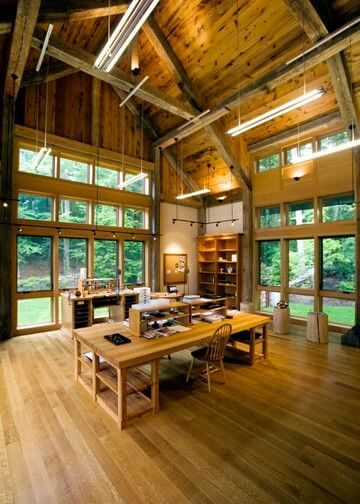
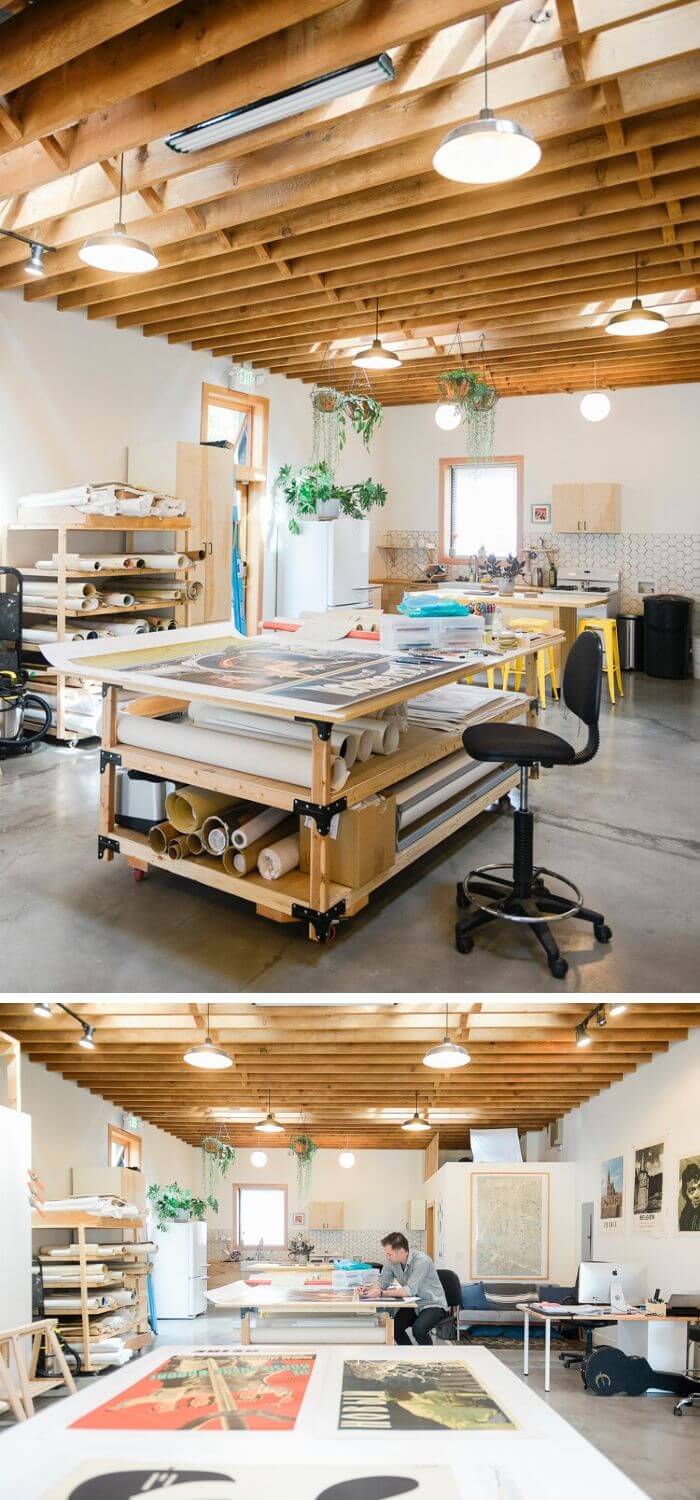
A studio built almost entirely from wood, wood desk, wood shelving, exposed wood beams, creates a warm, grounding environment that a lot of artists find easier to settle into and focus in than an all-white or all-metal space.
If you’re building this from scratch, unfinished or lightly-oiled wood (rather than a heavy varnish) keeps the room from smelling like finish chemicals for weeks after setup, one less ventilation concern before you’ve even started painting.

Wall-mounted pegboard kit with hooks and wire baskets for organizing brushes, paints, and tools — a ready-made option for idea #31
Shop NowThis post contains affiliate links. We may earn a commission on qualifying purchases at no extra cost to you.
2. The glass-windowed table
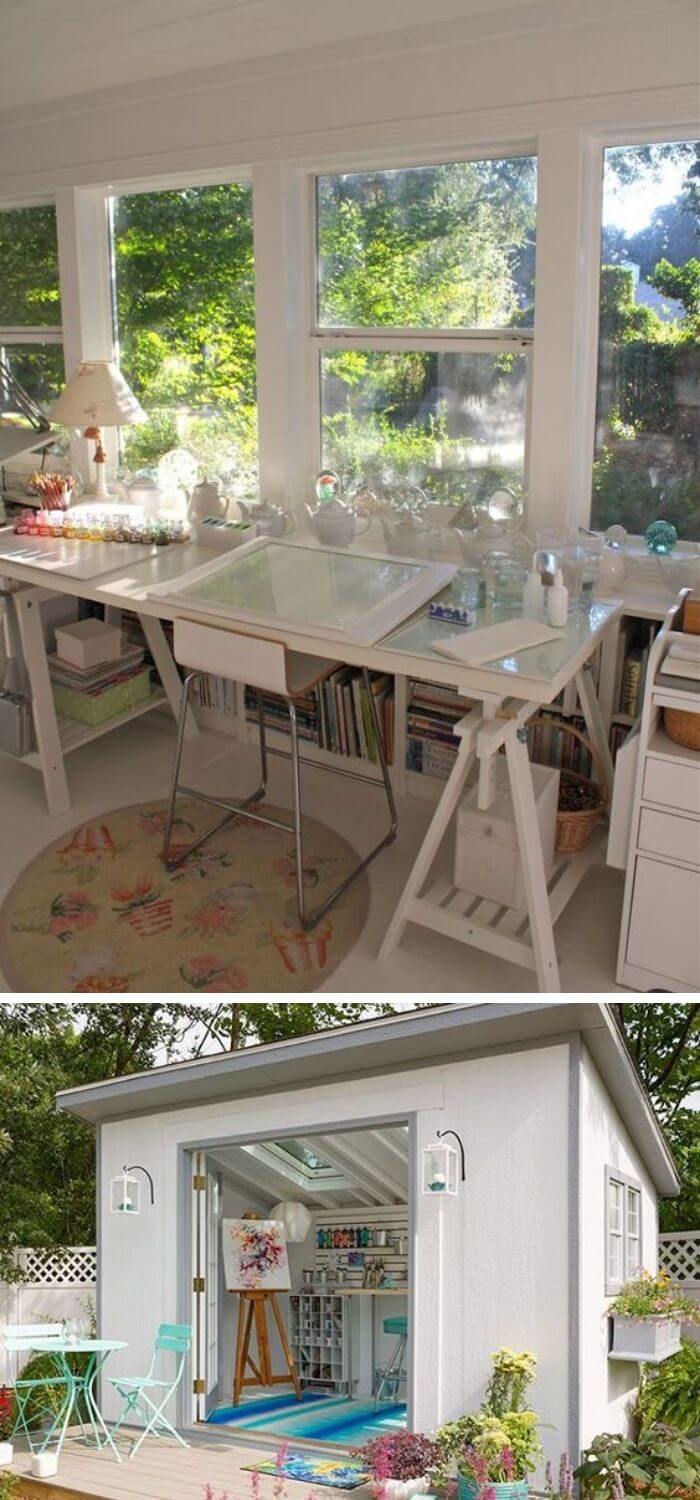
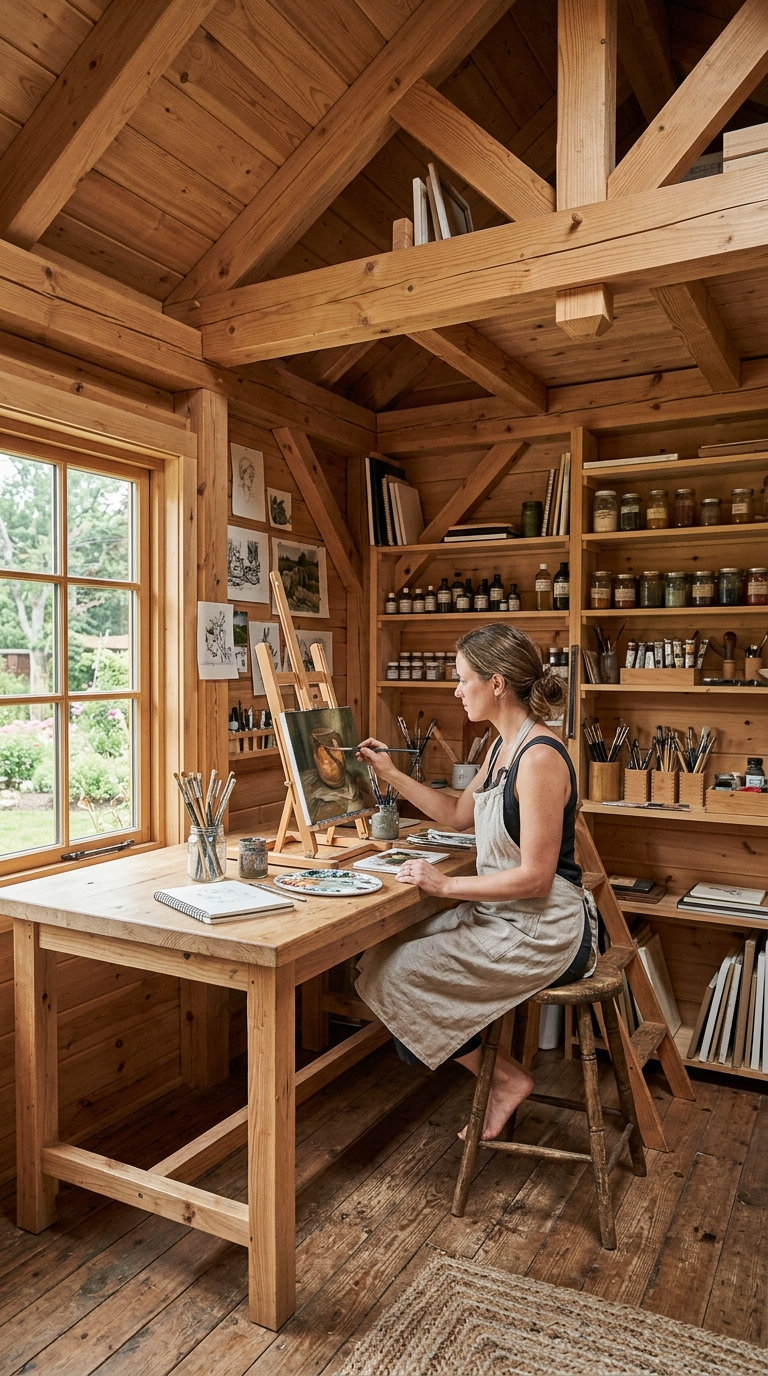
A desk built around or set directly against a run of windows turns your work surface into the brightest spot in the room by default.
Pair it with white drawers and open shelving so supplies stay visible and don’t compete visually with the light coming in.
If the window in question doesn’t face north, a sheer curtain diffuses the harsher midday light Will Kemp and Lori McNee both warn washes out true color judgment.
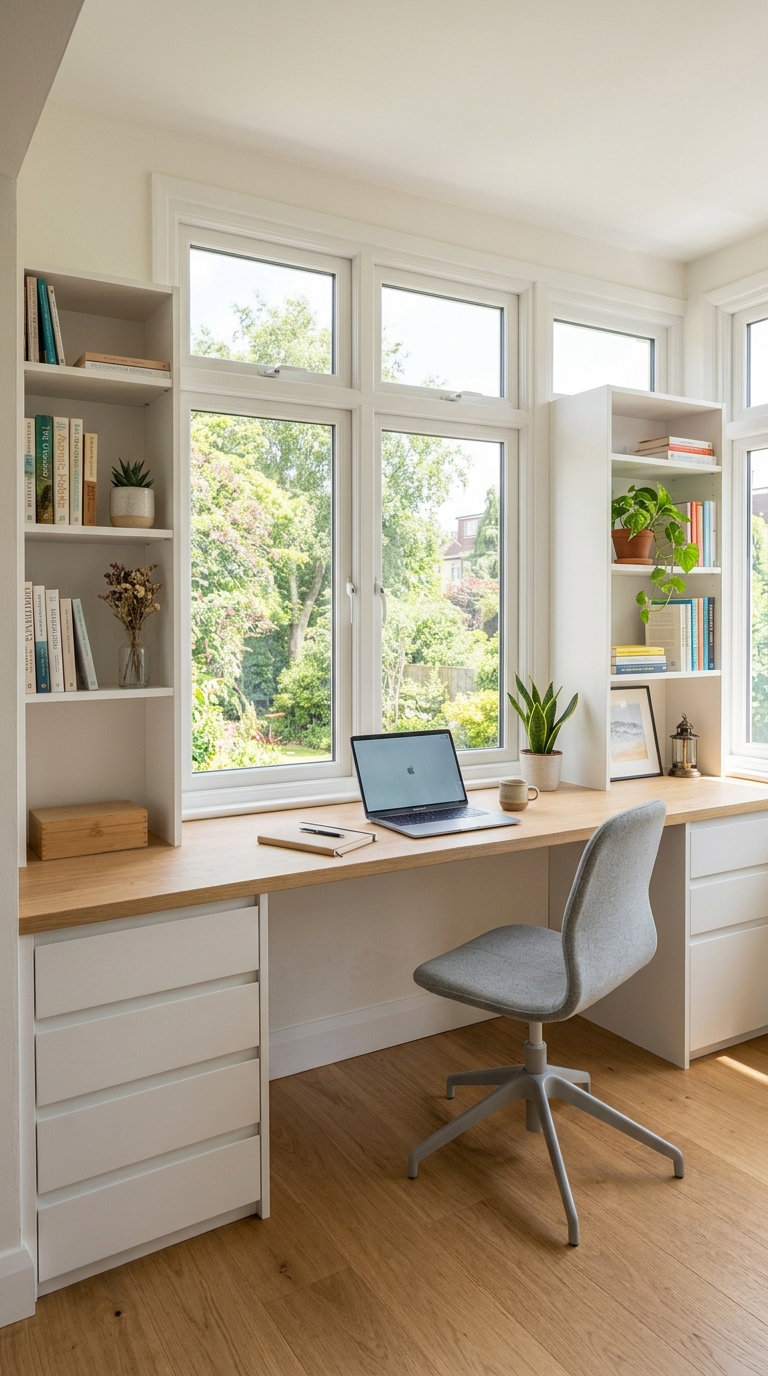
3. Bright studio
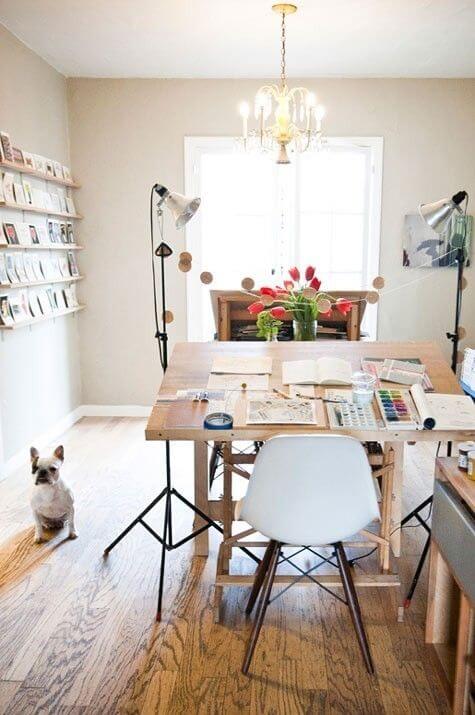
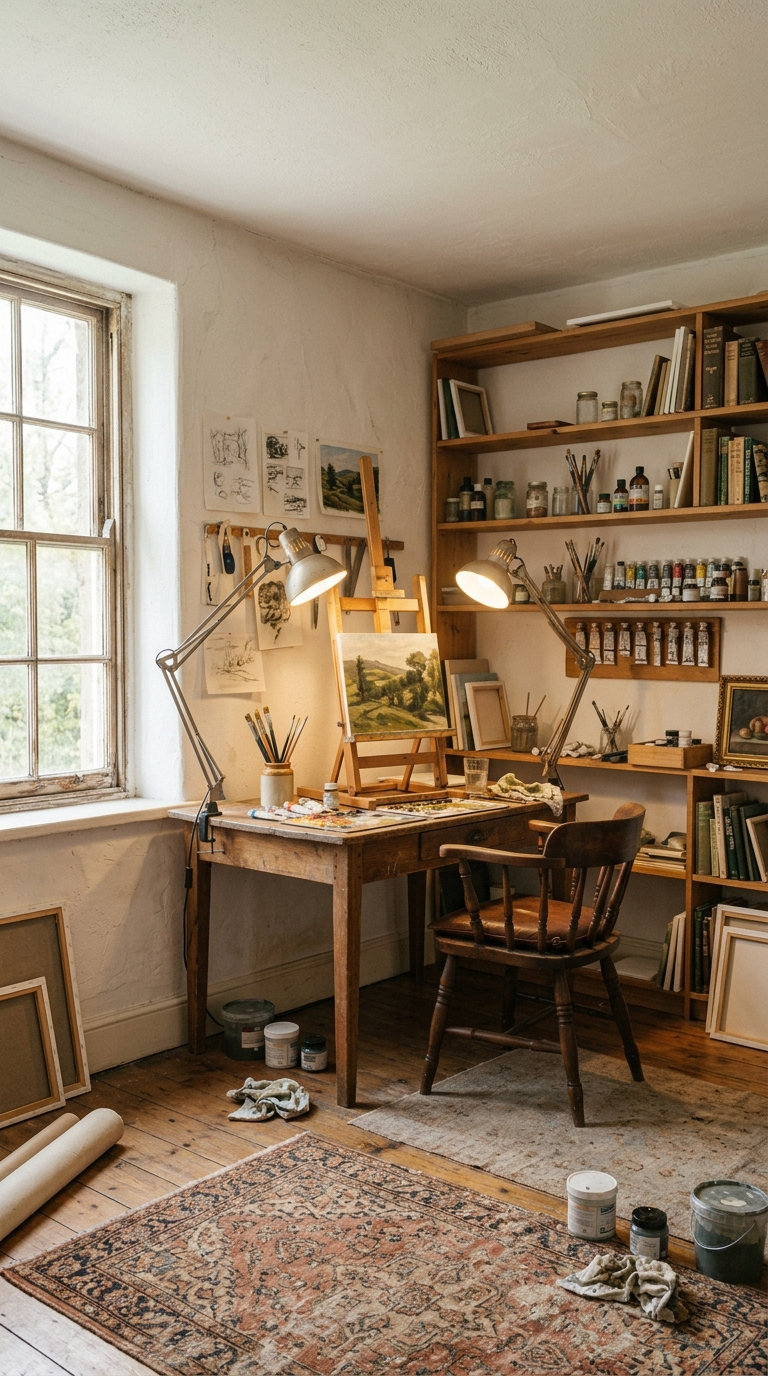
For painters specifically, a simple setup of a wooden desk, a supportive chair, a few open shelves, and two lamps positioned to eliminate shadows on your working surface covers most of what you actually need.
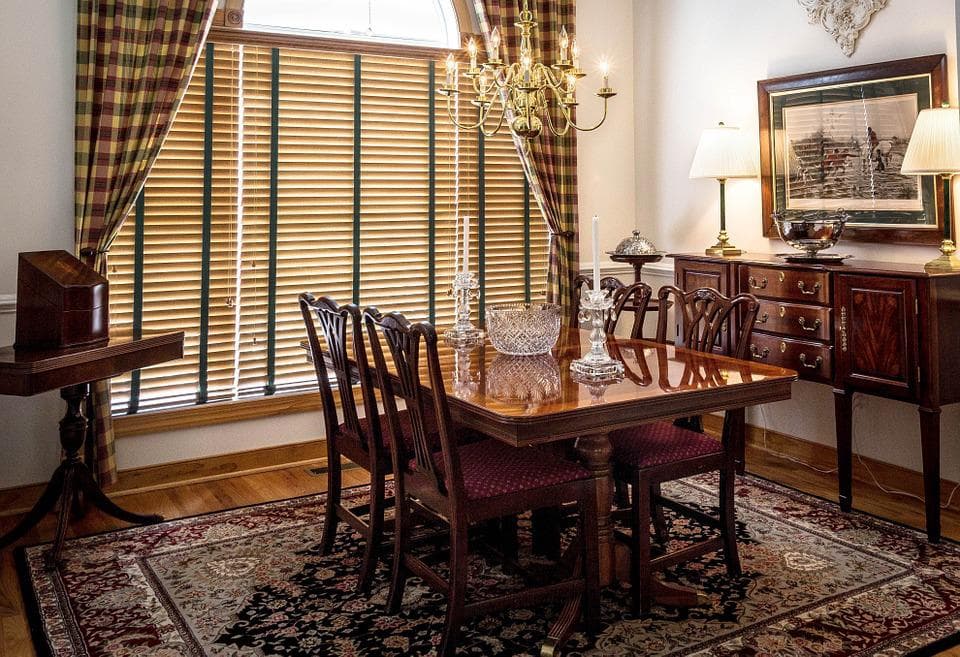

The two-lamp setup matters more than it sounds: one lamp alone tends to throw a shadow from your own hand across the canvas as you work.
4. Big room home studio
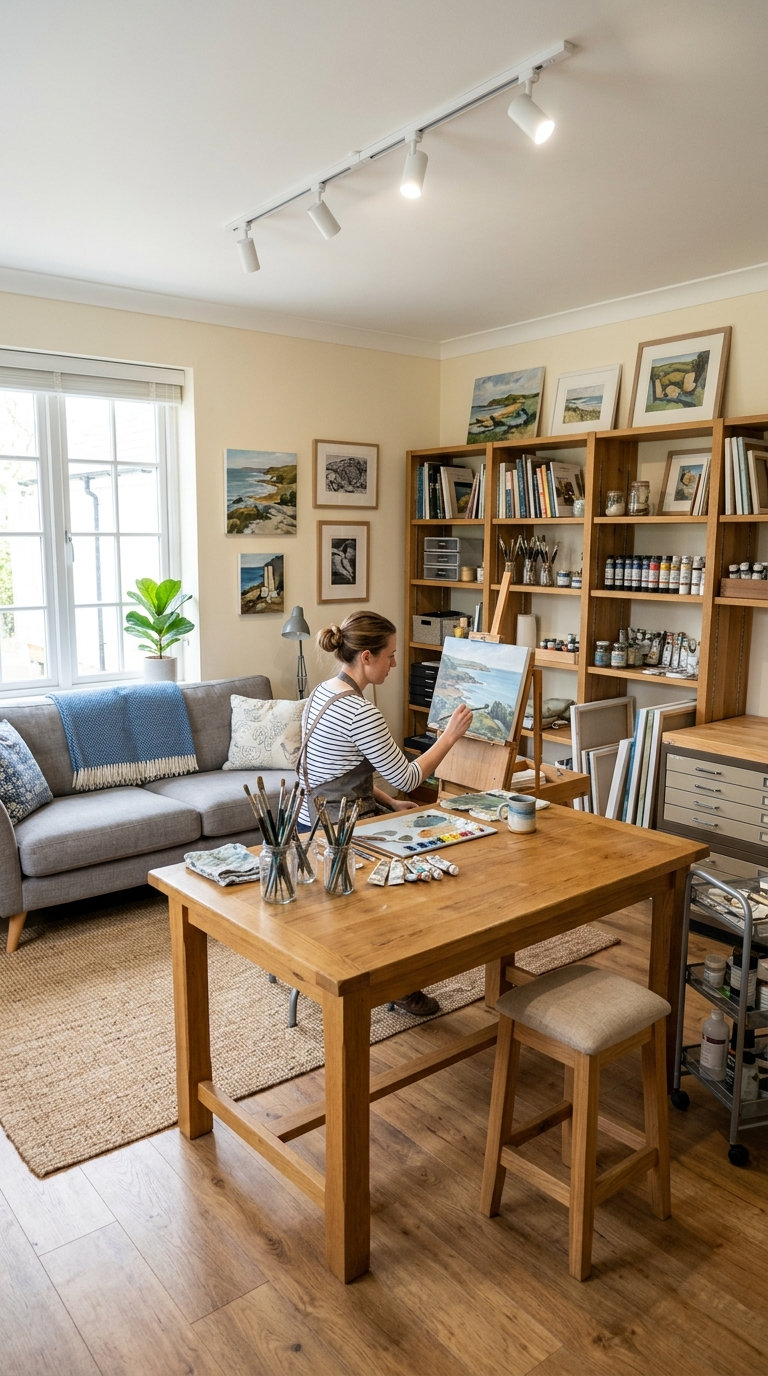
An underused guest room or bonus room, furnished with a couch, a proper wooden work table, and real shelving rather than stacked boxes, is one of the more comfortable full-studio setups on this list precisely because it doesn’t require you to compromise on space.
If the room doesn’t get much natural light, this is a good candidate for adding a daylight-balanced LED fixture rather than relying on the room’s original overhead lighting.
5. The bedroom studio
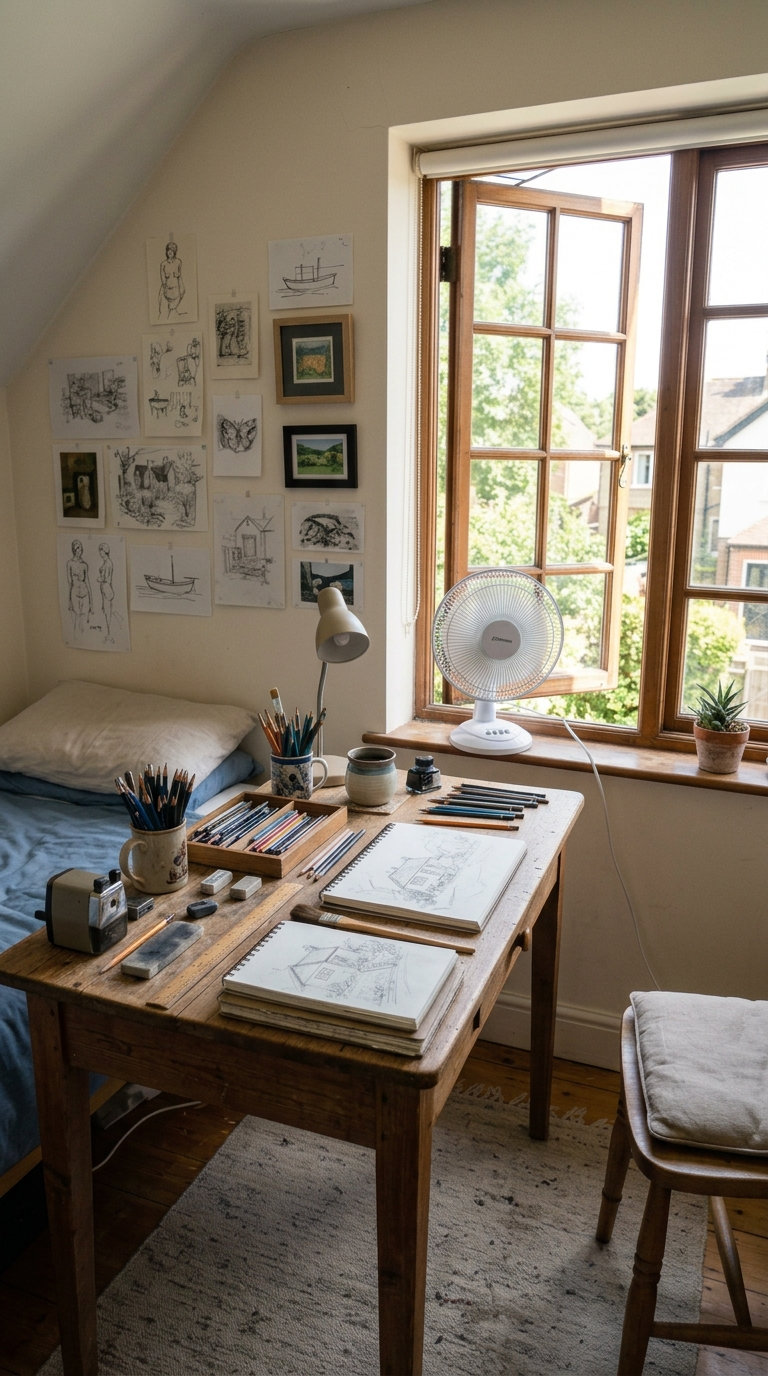
A bedroom corner can absolutely double as a working studio space, plenty of people make it work, but it deserves a real caution the original version of this idea skipped entirely: a genuine artist thread on this exact setup (a college student building an “art studio” in a small bedroom) got a blunt, upvoted response: “much too small a space not to have ventilation.”
If you’re doing anything beyond dry media (graphite, colored pencil) in a bedroom, that’s the room you sleep in for 7-8 hours afterward breathing in whatever’s still off-gassing.
Stick to water-based paints and low-VOC materials in this setup, keep a window cracked or a fan running while you work, and treat solvents as a hard no for a space this size and this close to where you sleep.
6. The little home studio
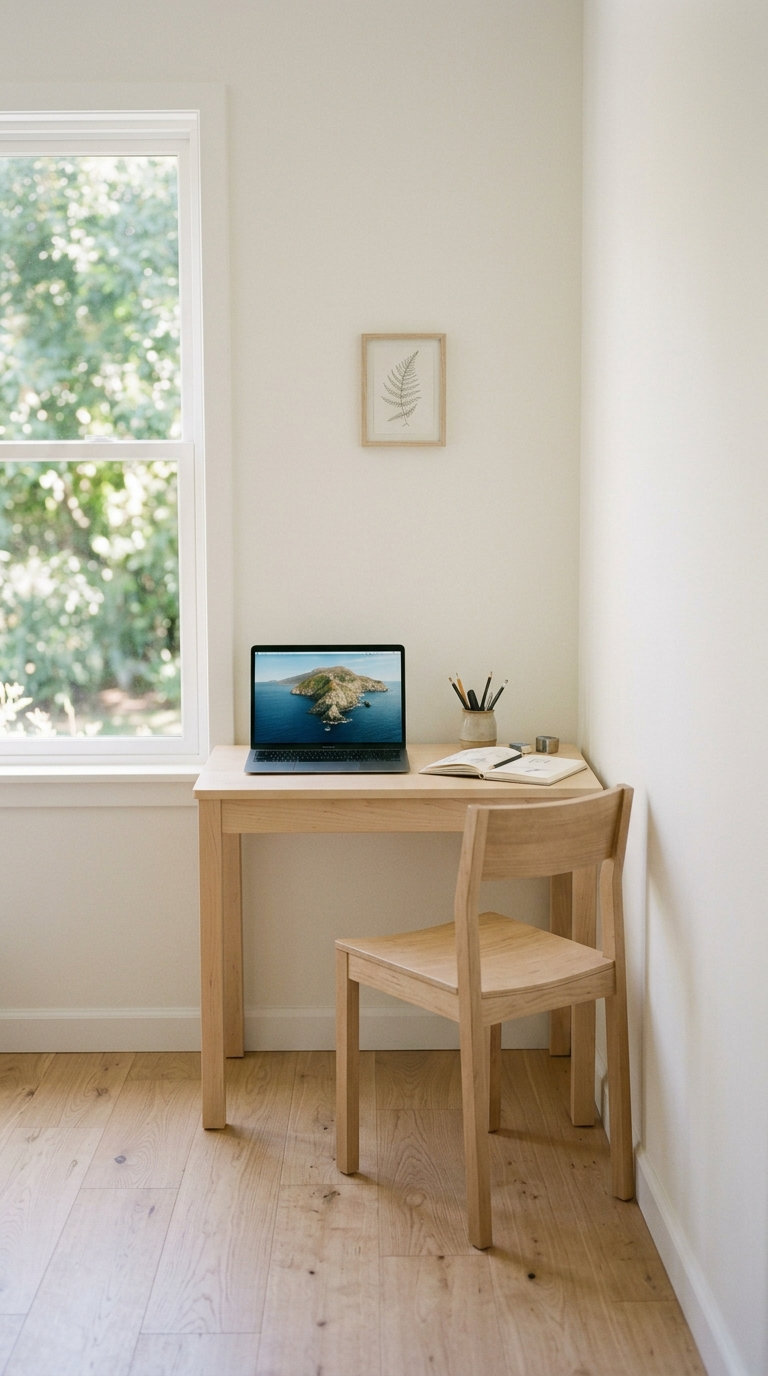
Not every studio needs its own room. A single clear wall with a small desk pushed against it is a legitimate, complete setup if you mostly work digitally or with dry media, and it’s the cheapest entry point on this entire list if you already own the desk.
7. A place for your paintings
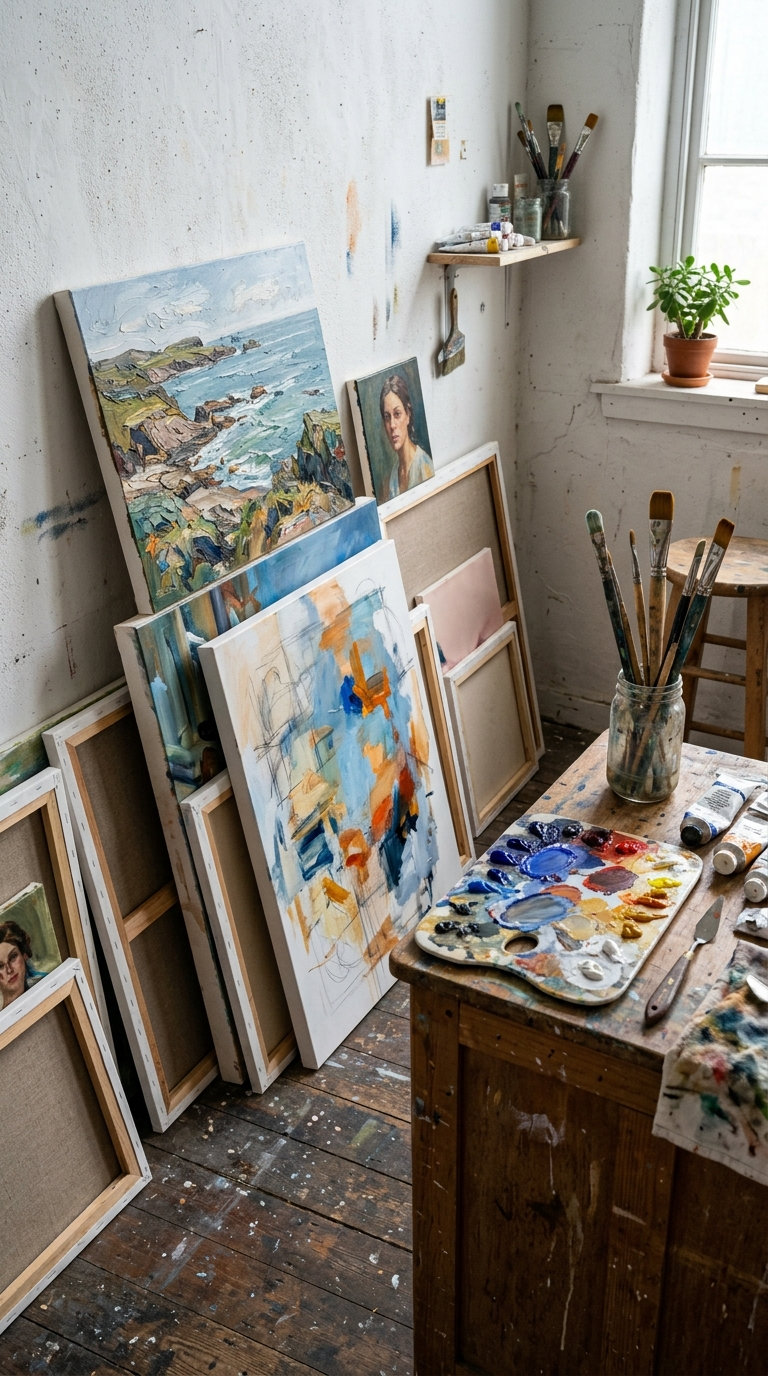
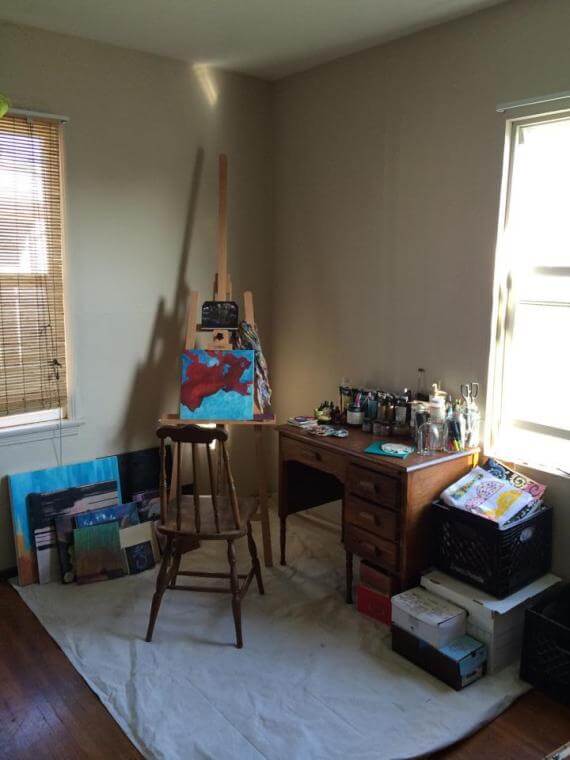
A dedicated corner with enough floor space to lean finished and in-progress canvases against the wall (rather than stacking them flat, which risks smudging) gives painting work room to breathe.
A simple table counter nearby keeps your palette and brushes within reach without cluttering the main work surface.
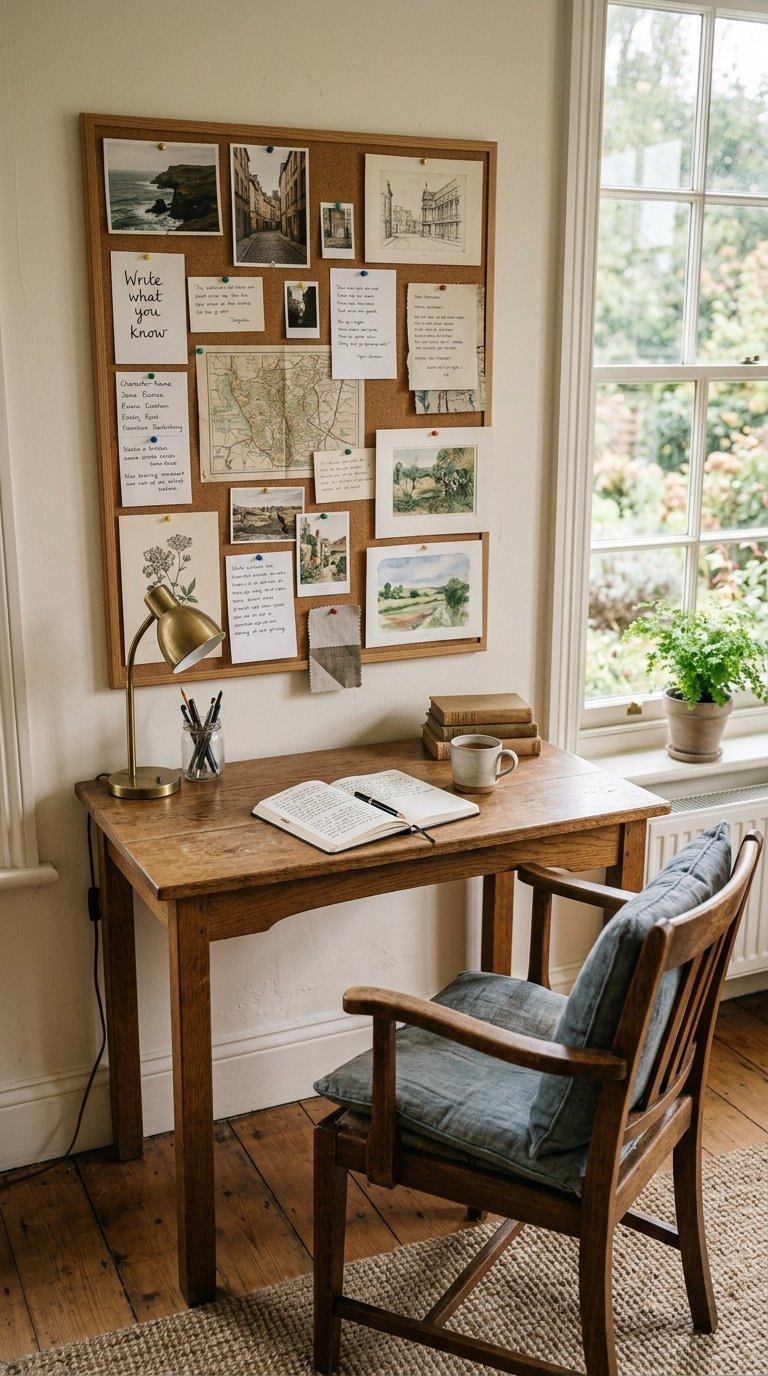
8. Space for your writings

A writing-focused setup is one of the simplest on this list: a desk you actually want to sit at, positioned near a wall where you can pin up reference images or inspiration, covers the essentials.
Since writing doesn’t carry any of the ventilation concerns painting does, this is one of the few ideas here that works in genuinely any room, including a bedroom, without a safety caveat attached.
9. Wood sculptures
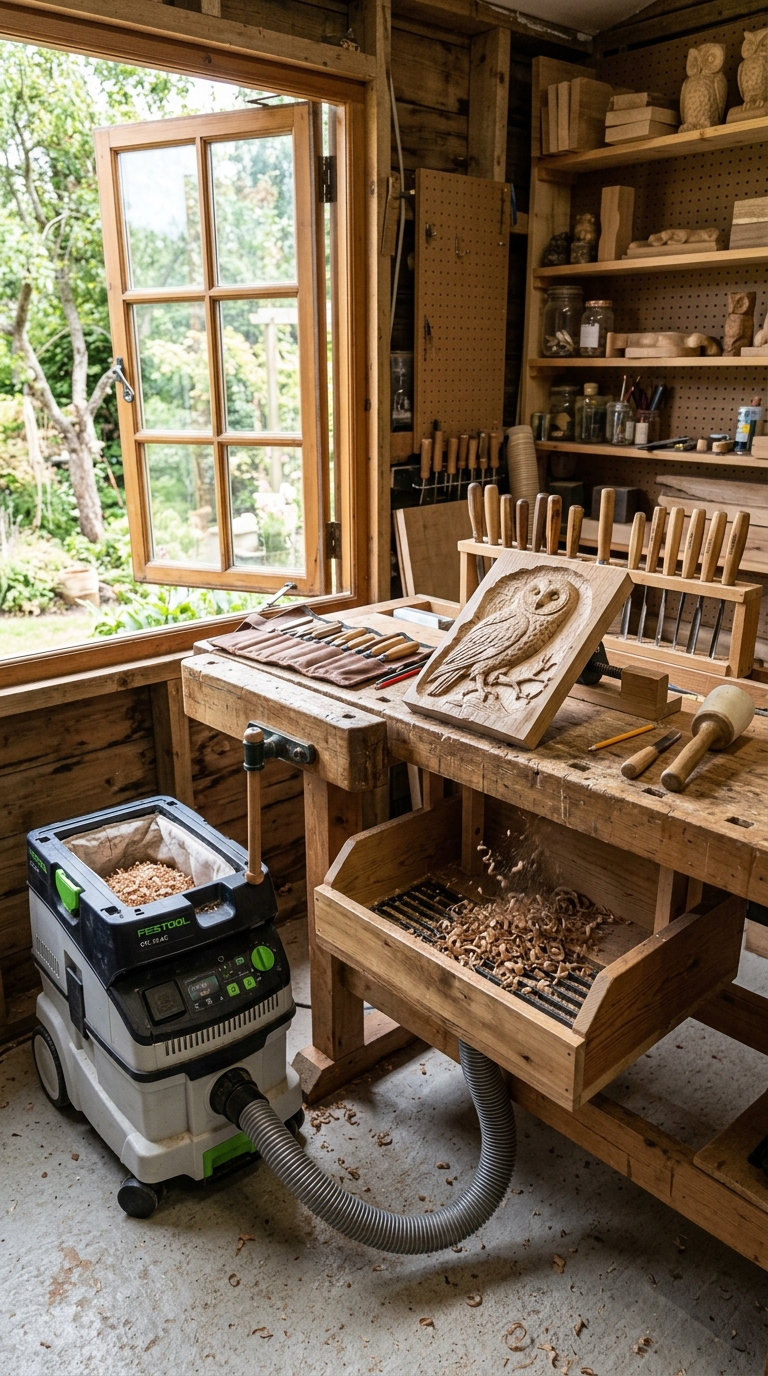
Wood carving and sculpture work benefits from a window and a connection to the outdoors the way the original idea suggested, but the more concrete need is airflow for the sawdust itself, not just inspiration.
A window that actually opens, plus a shop vac or dust collection setup, keeps fine wood dust from building up in your lungs and your workspace both, a genuinely different concern from the paint-fume ventilation covered above but just as real for this specific idea.
10. The productive place
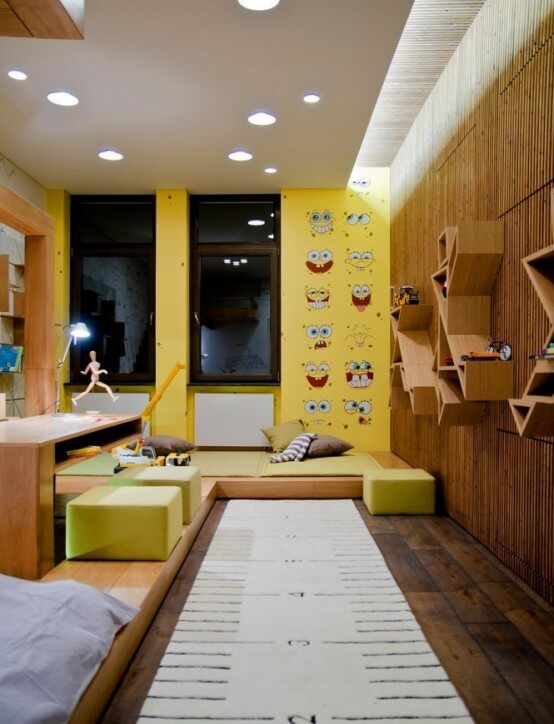
A studio built around focus rather than just supplies, room enough to spread out, a spot to pause and stretch or meditate between sessions, treats the space as a place you’ll spend real hours in rather than just a supply closet with a desk.
This matters most if you’re working long sessions, since a cramped setup you can’t move around in gets uncomfortable fast.
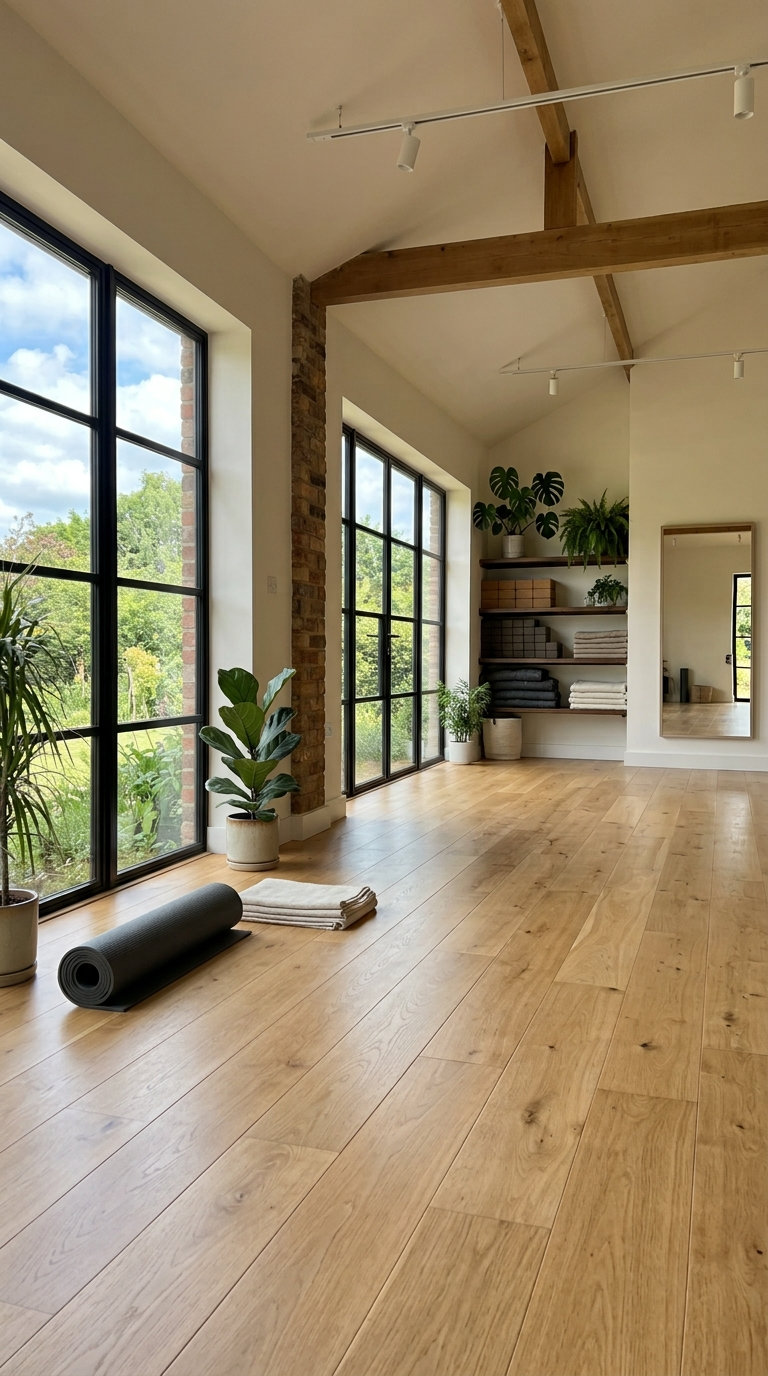
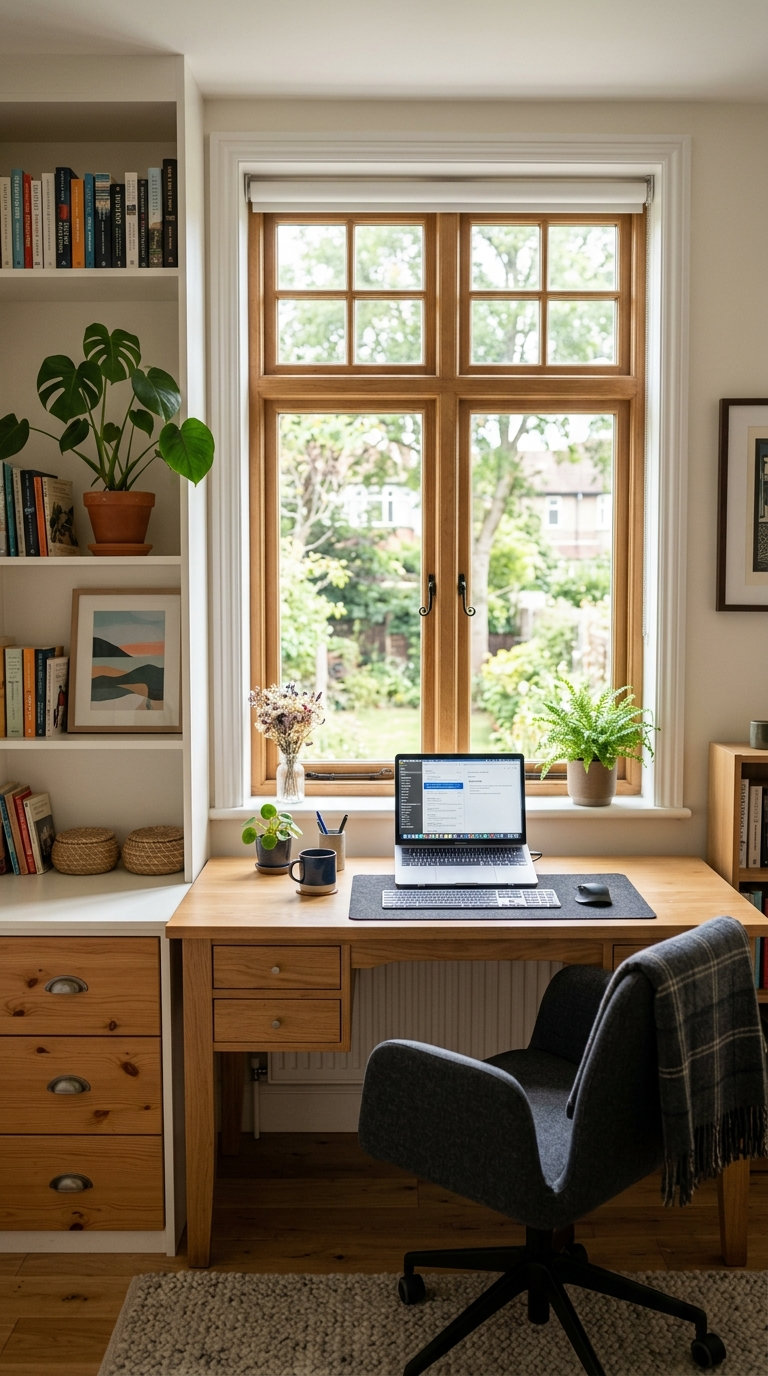
11. Windows desk
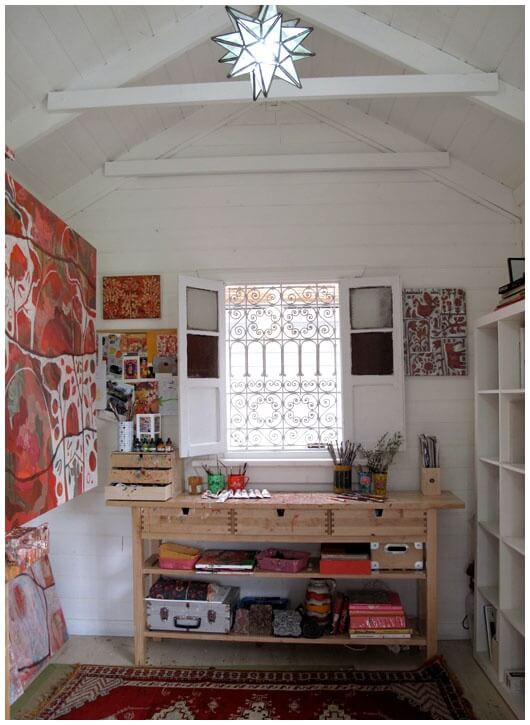
Positioning your desk directly in front of a window maximizes the hours of usable daylight you get before switching to artificial light.
Add shelving and drawers nearby so your most-used supplies don’t have to compete with the window for desk space.
12. The wheeled table
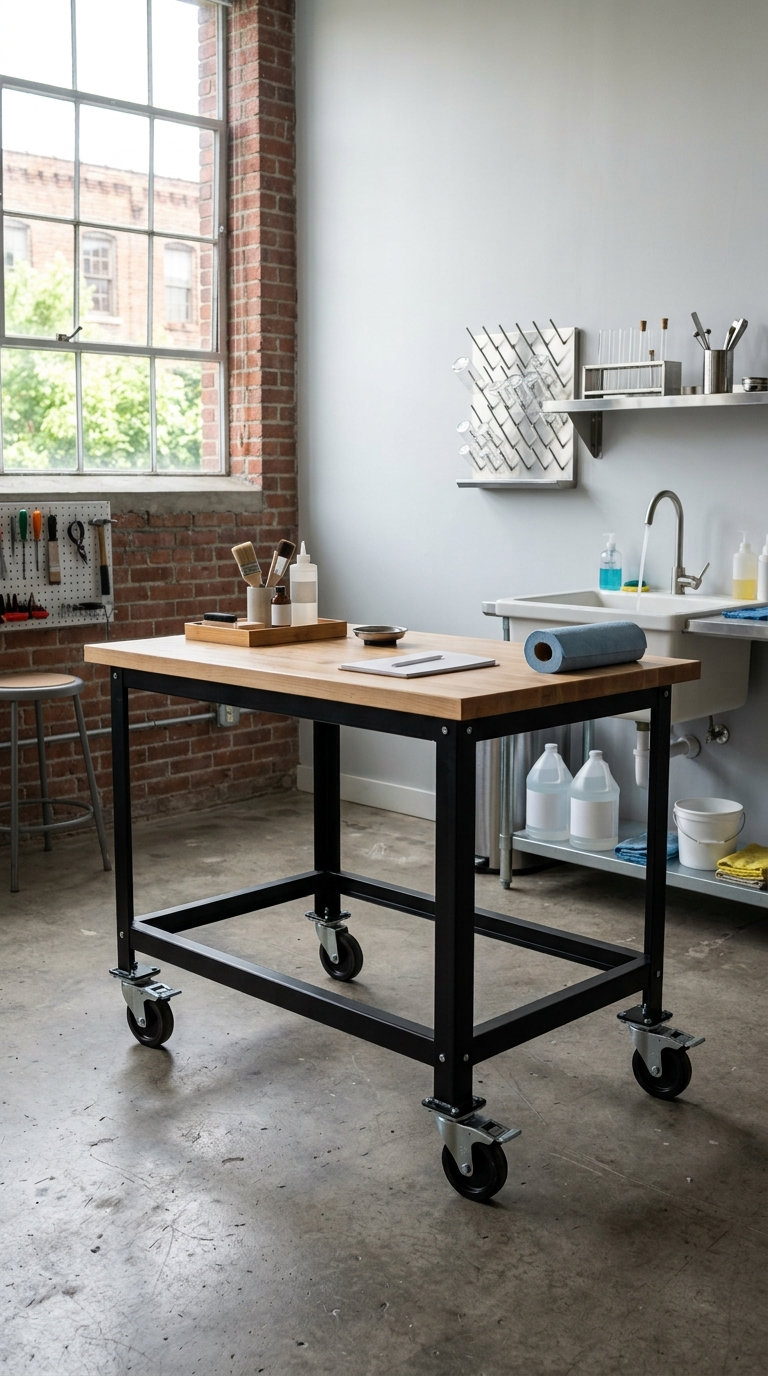
A table on locking casters lets you roll your whole workstation to wherever the light or the project needs it, and makes cleanup genuinely easier since you can wheel it straight to a sink or utility area to rinse palettes and brushes.
One small but genuinely useful adjustment worth making regardless of your desk type: a well-reviewed home-studio setup thread recommended pulling the desk a few feet away from the wall rather than pushing it flush, which gives you room to reach cables, supplies, and the back of your canvas without dragging the whole table out first.
13. Focus studio
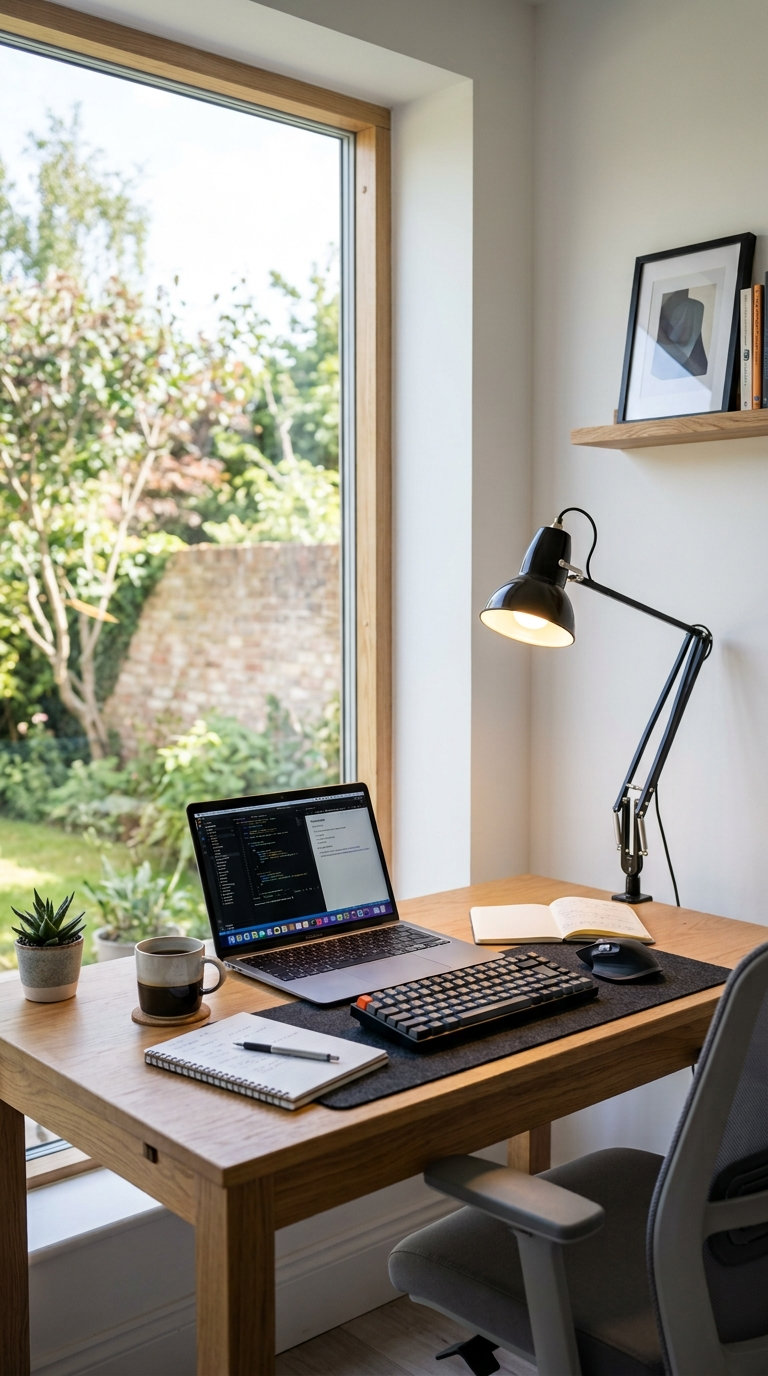
A desk near a window for daytime work, with a dedicated lamp added for after dark, covers both ends of the day without needing to redesign your setup as the light changes. This is a good baseline setup for anyone who isn’t sure yet how elaborate they want their studio to get.
14. Desk & lamp
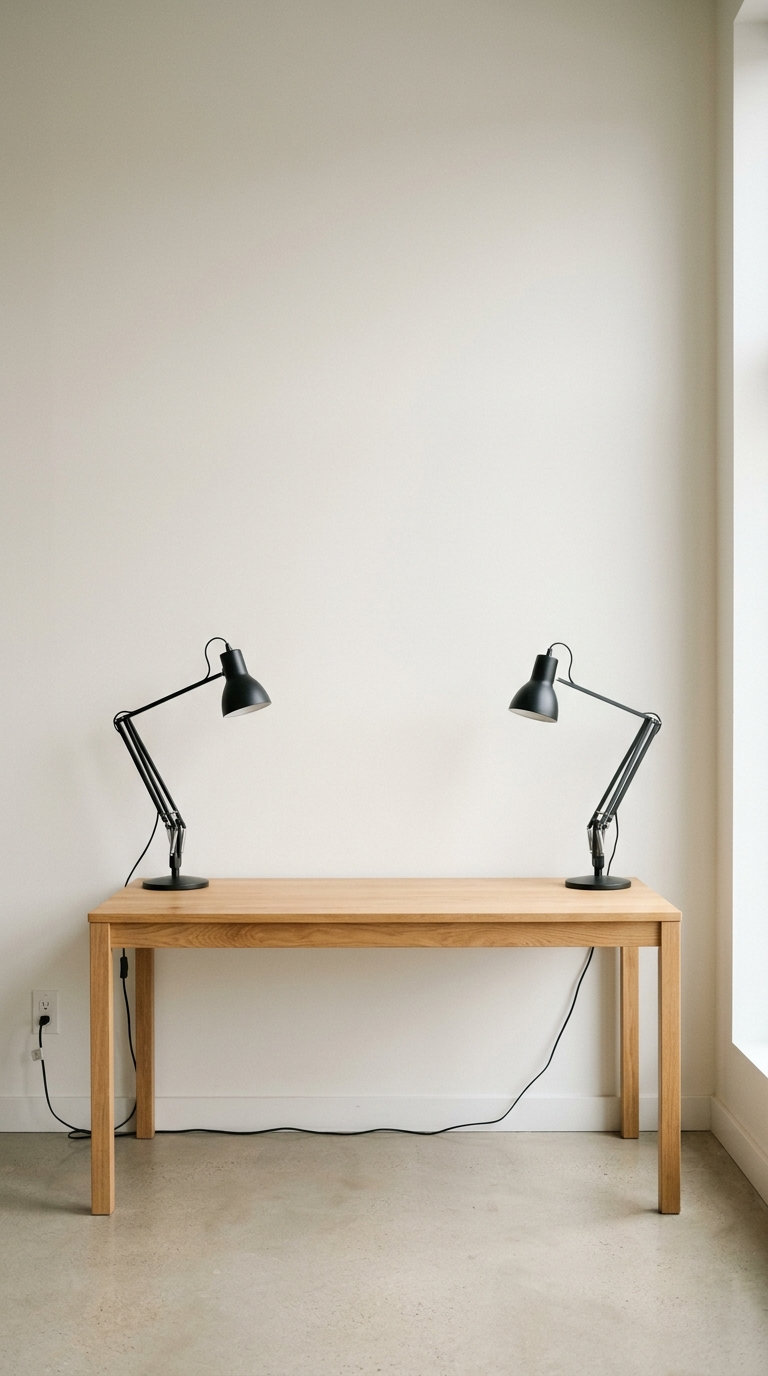
For plenty of artists, the honest answer to “what do I need” is just a desk and one or two good lamps, no elaborate shelving or decor required.
This is the cheapest legitimate studio setup on this entire list, and it’s a smart place to start if you’re not yet sure how much you’ll actually use a dedicated space.
15. A wall
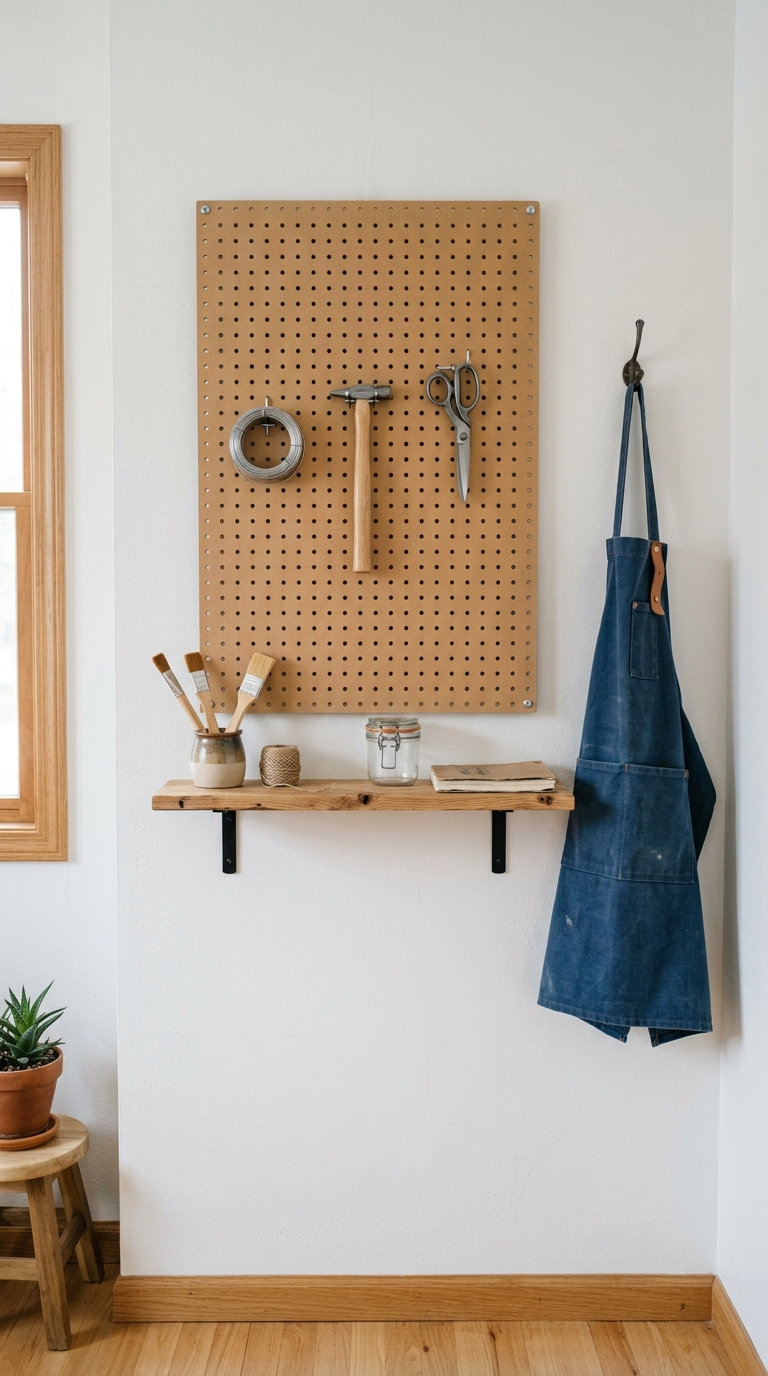
Sometimes the entire studio is a single wall: pegboard, a shelf, a hook for an apron. If you know what you’re making, you often need less physical space than you’d assume to get started, and a wall-based setup is easy to expand later if you outgrow it.
16. Attic studio
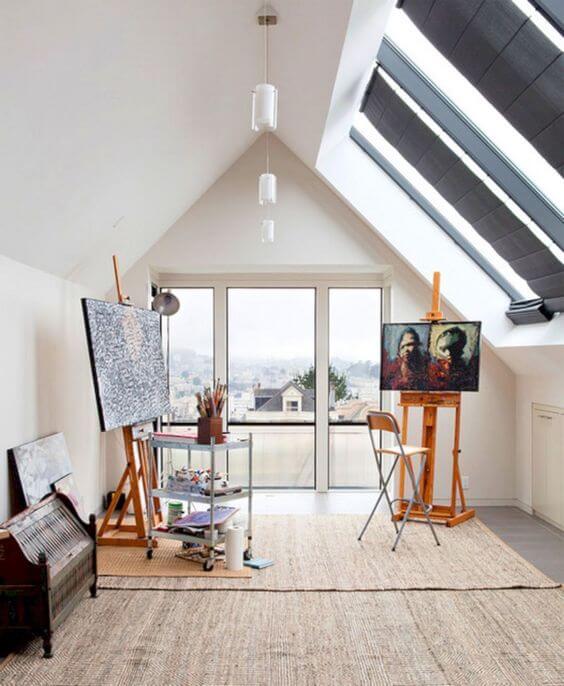
An attic makes one of the more atmospheric studio spaces on this list, but it’s also one of the least ventilated parts of most houses by default, both hot air and any solvent fumes have nowhere to go without help.
If you’re setting up here, a window that opens (even a small gable vent) or a portable fan running during any solvent work isn’t optional the way it might be in a room with a door that opens to the rest of the house.
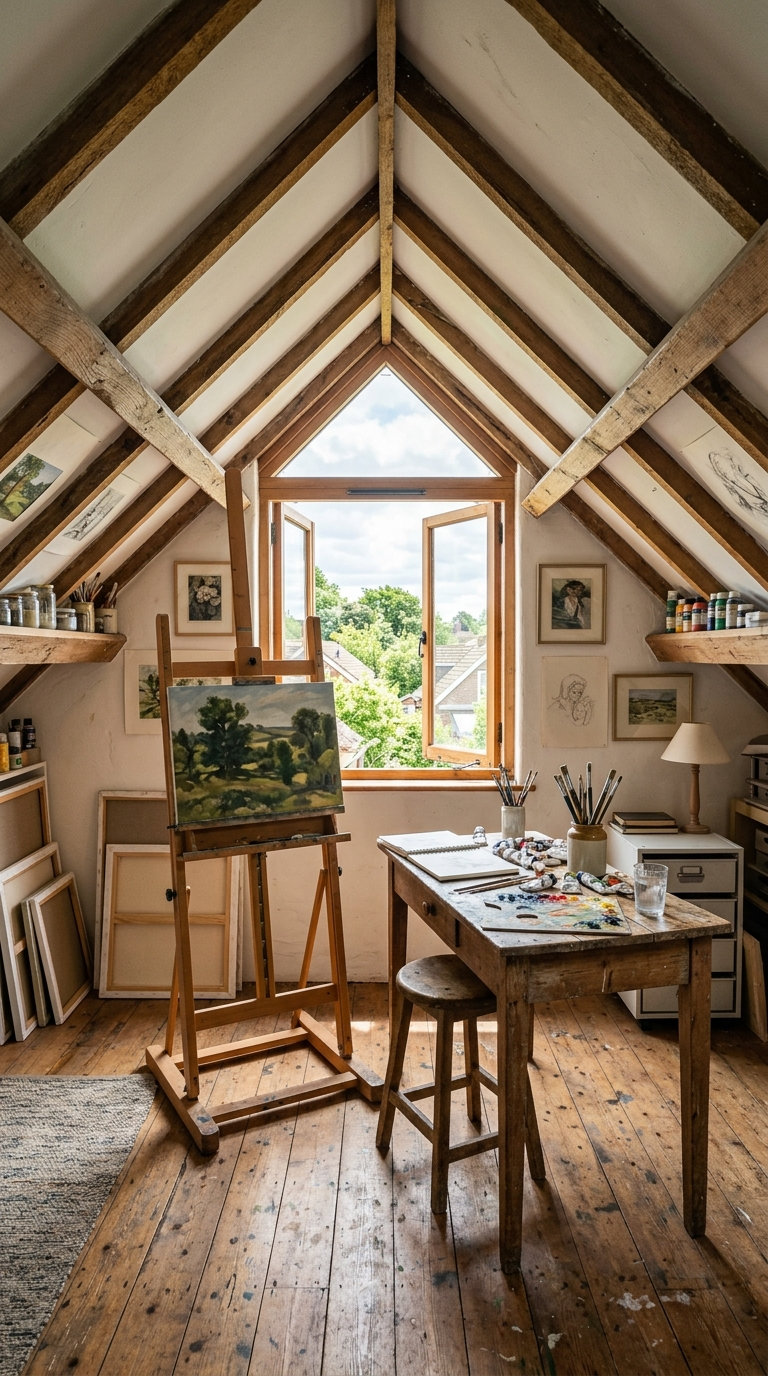
17. An amazing home studio
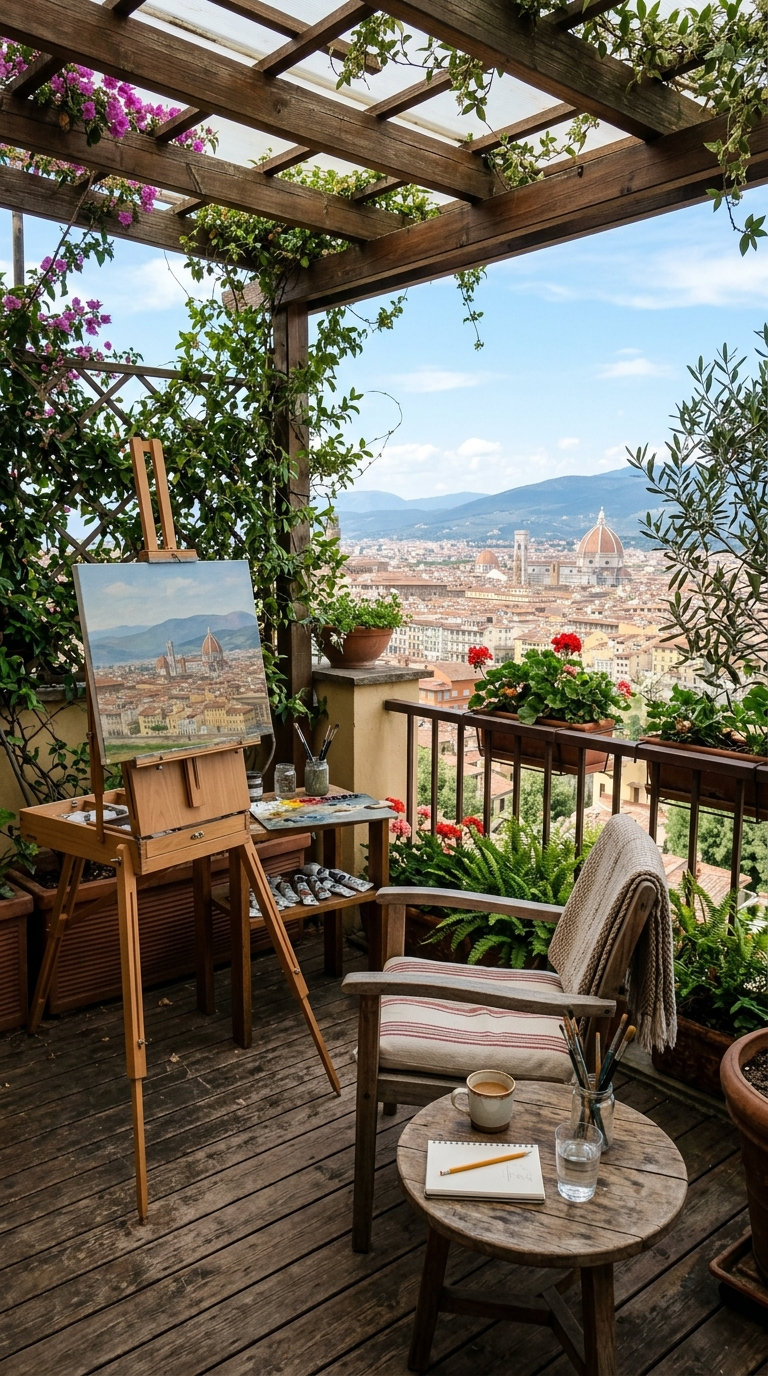
A studio built onto a balcony, where you can paint, relax, and enjoy your coffee in the same space, works well specifically because outdoor or semi-outdoor air handles ventilation for you automatically, one less thing to plan around if you’re doing solvent-based work.
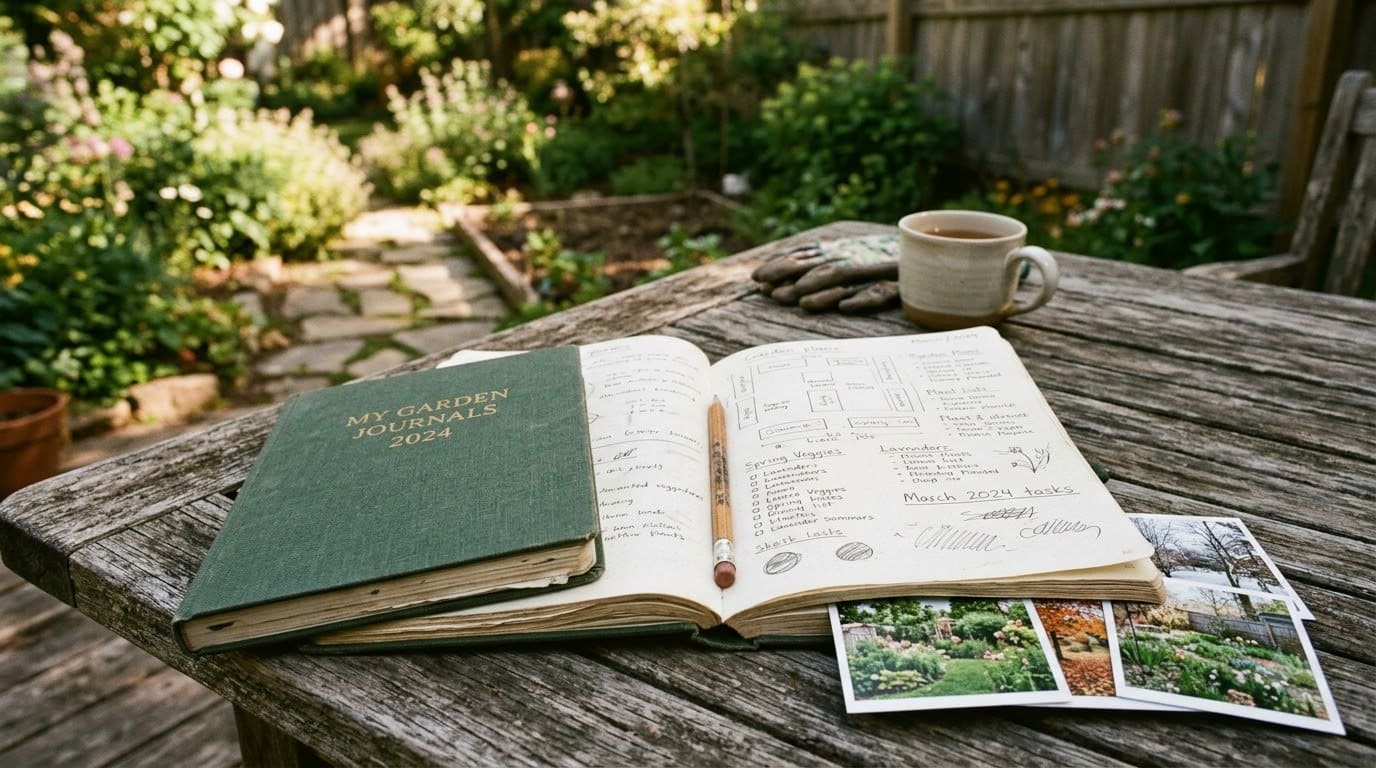
18. The journal home studio
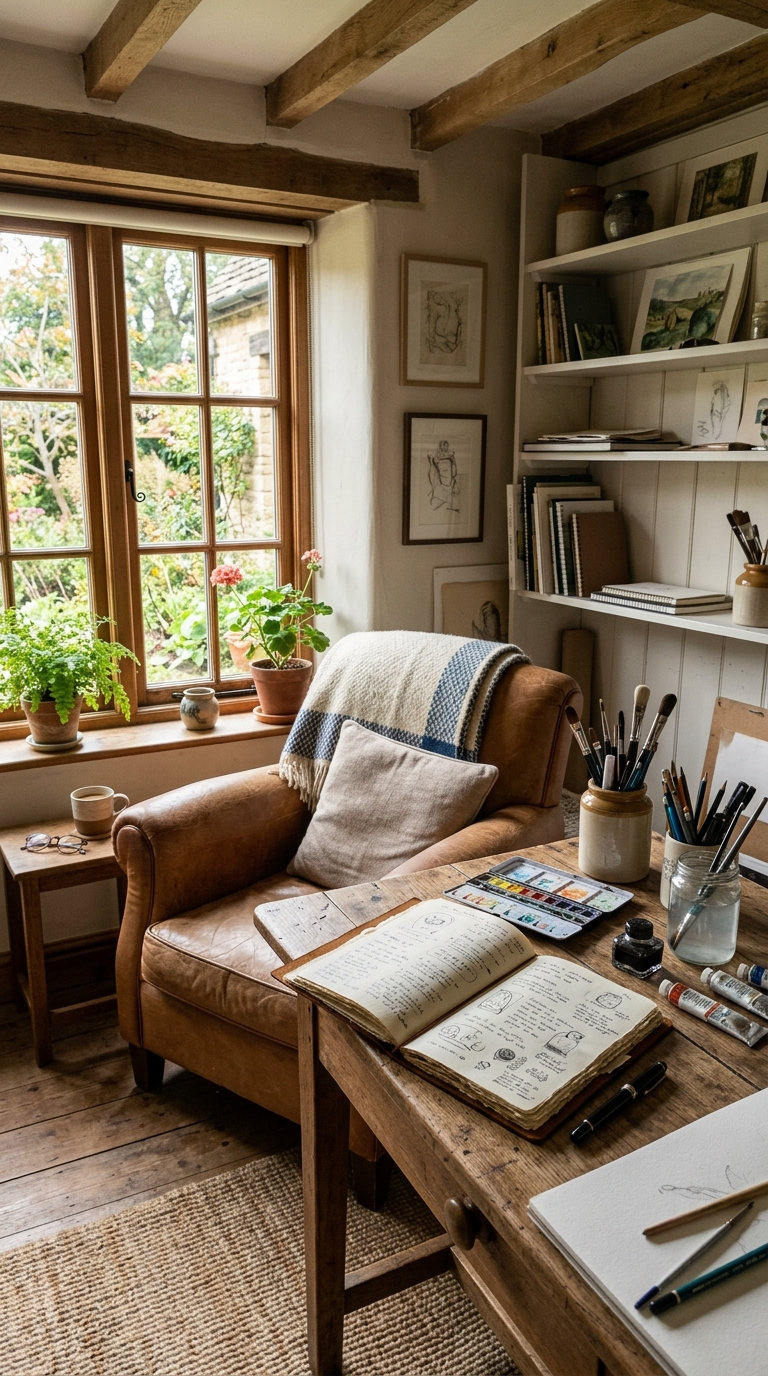
A big window, a comfortable chair, and space for a journal alongside your usual supplies makes this setup less about output and more about a daily creative habit.
It pairs naturally with idea #11’s window-desk placement if you want to combine journaling with other visual work in the same spot.
19. The perfect place
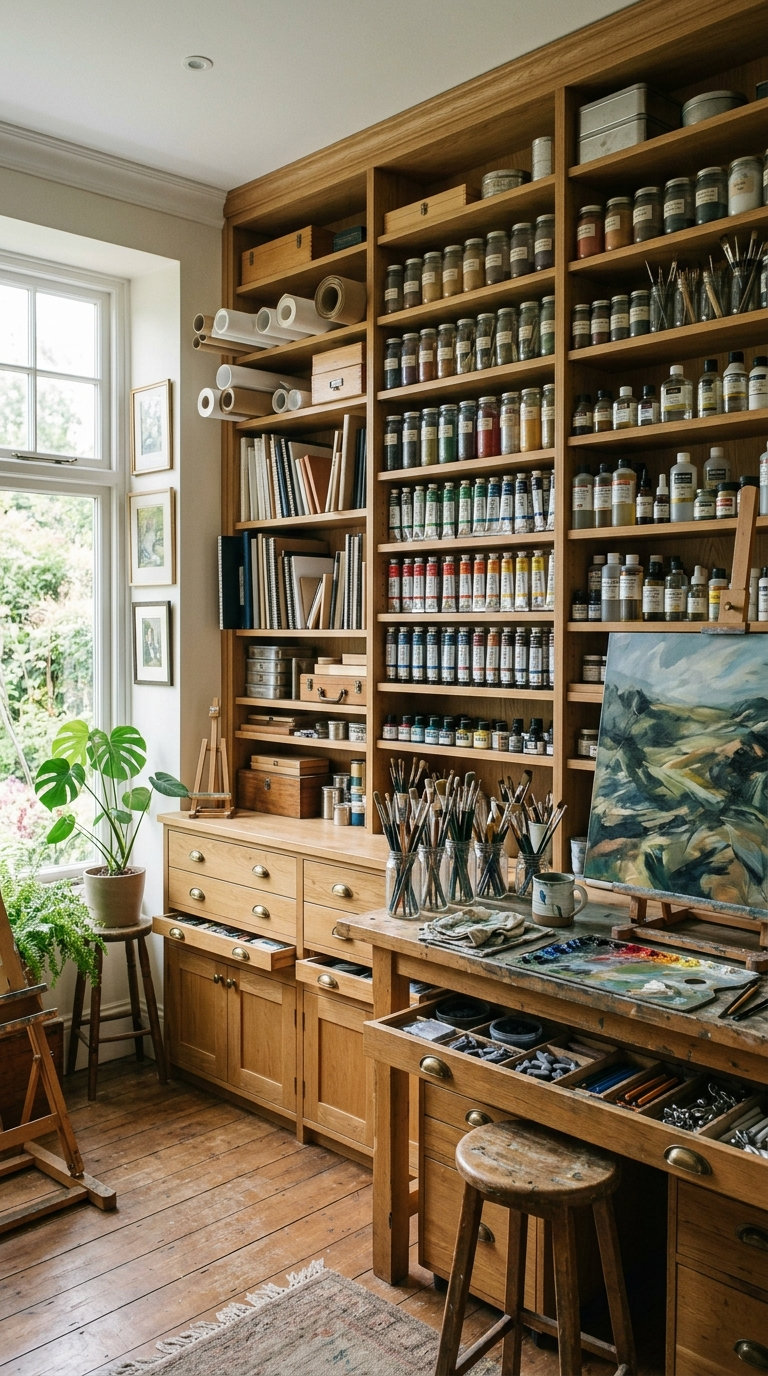
For anyone treating art as a full career move rather than a hobby, a setup with real wooden storage, drawers, and shelving built around your actual supply volume (rather than guessing at storage needs) pays off as your material collection grows.
20. The music room
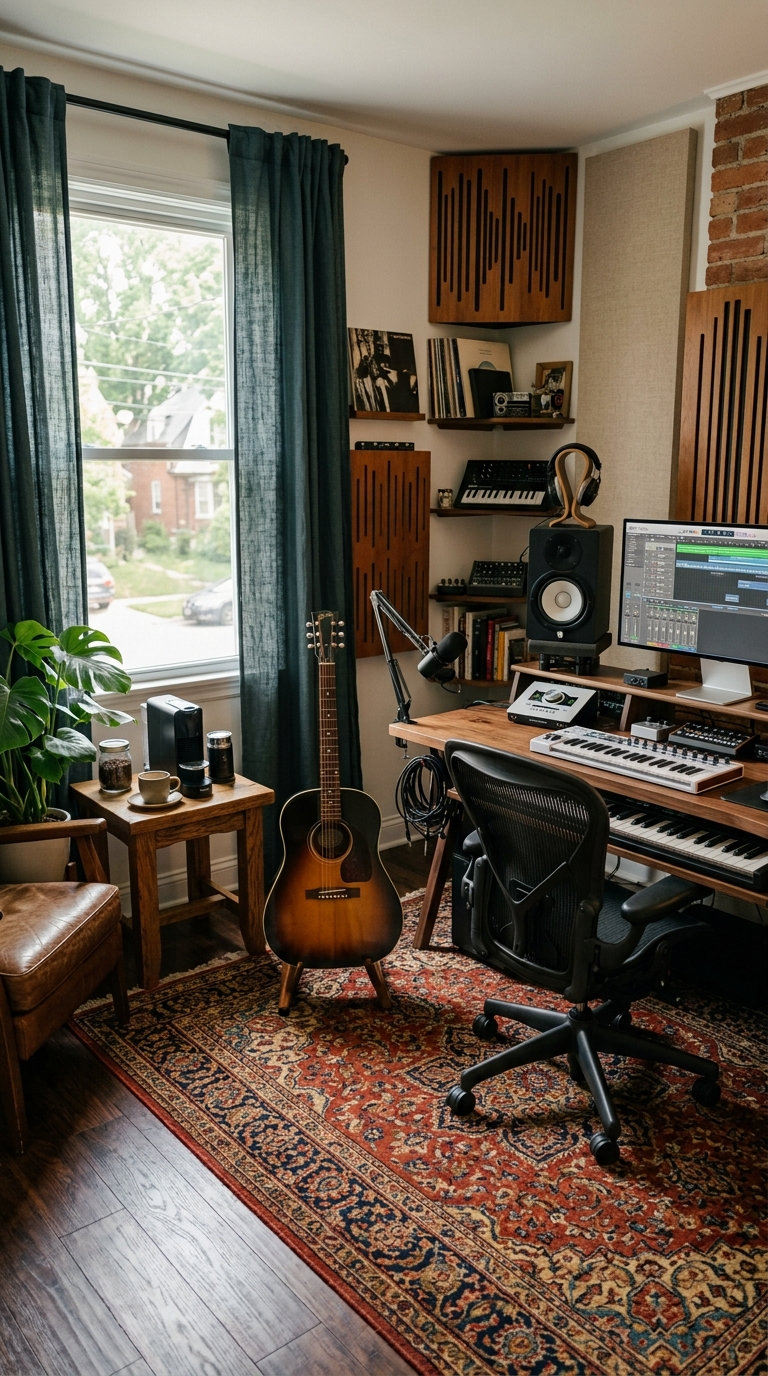
A studio built around music rather than visual art needs the same light and comfort principles as any other creative space, plus enough acoustic thought (rugs, curtains, or foam panels) to keep the sound from bothering the rest of the house.
A spot for coffee nearby is a small but genuinely popular addition across almost every studio idea on this list.
21. Room for activities
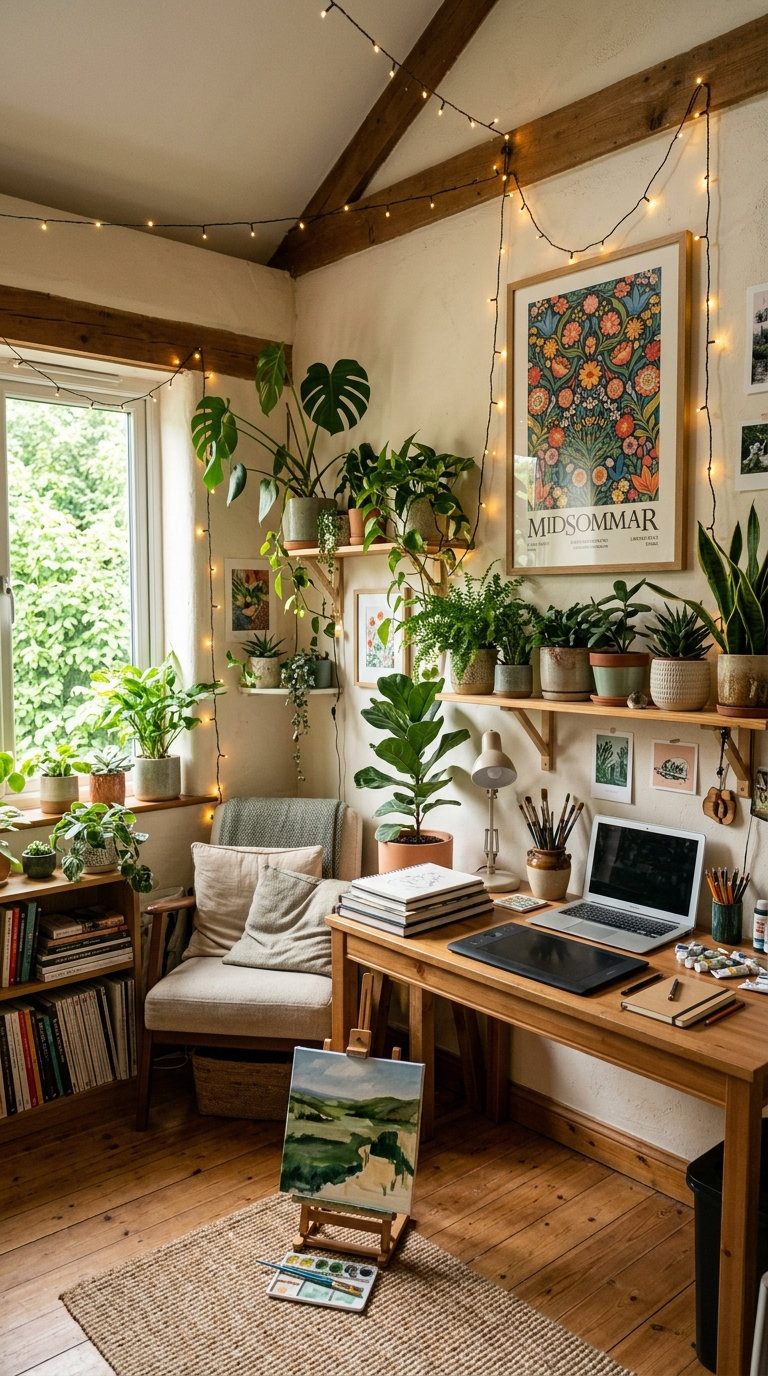
Adding real plants and a few personal decorations, string lights, a favorite poster, gives a multi-use creative room warmth that a purely functional setup doesn’t. This works well specifically because it doesn’t lock you into one single type of creative work.
22. A studio with your partner
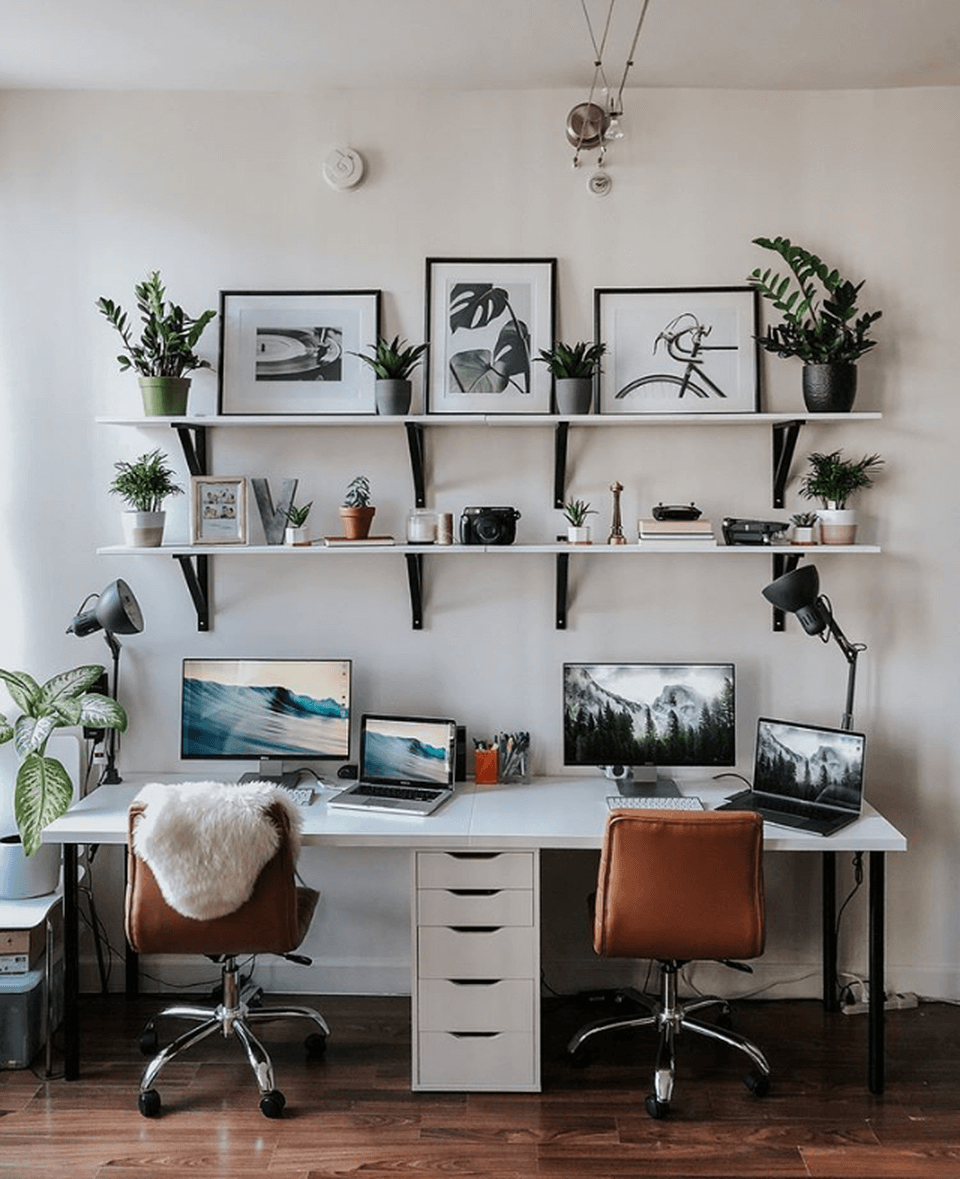
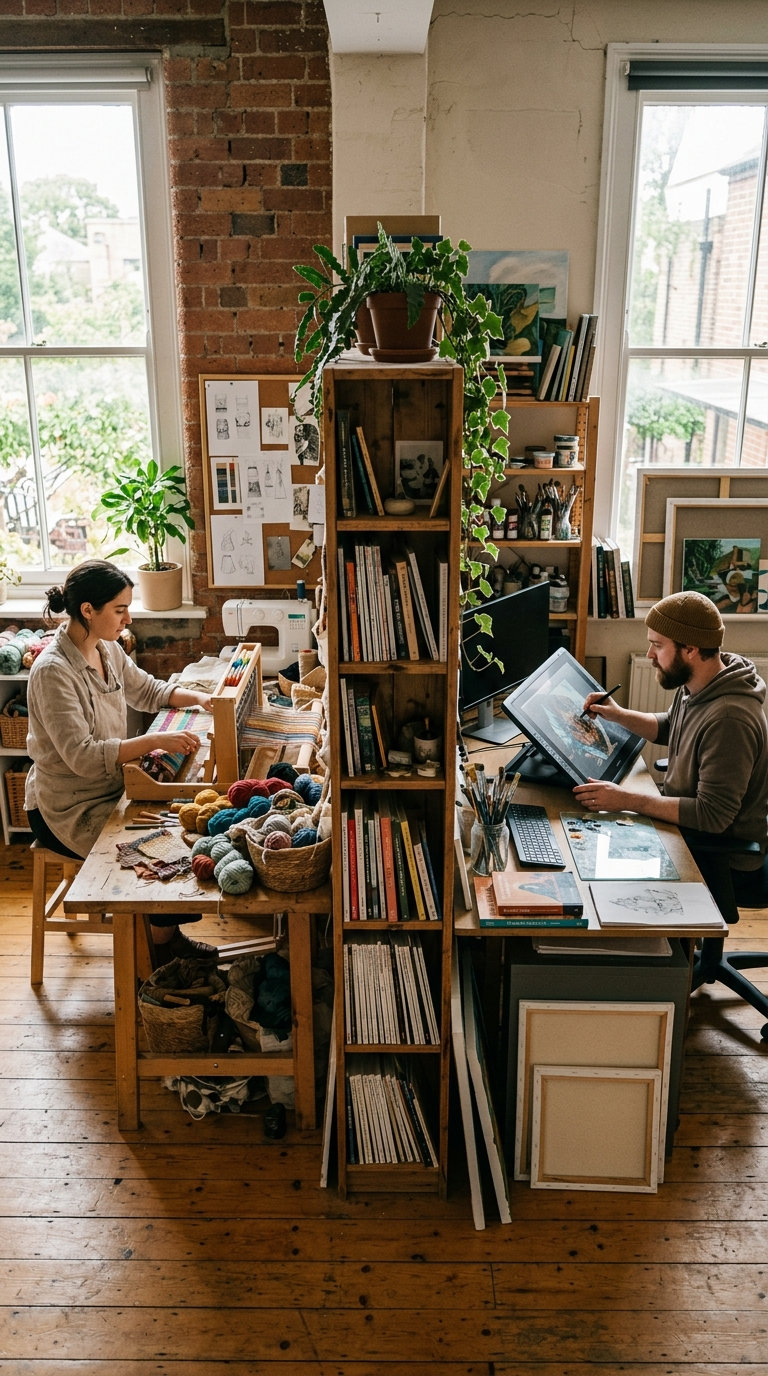
Splitting a studio space between two people’s projects works best when each person gets their own defined section rather than sharing one communal table, the same “dedicated zone” logic that makes a kids’ shared bedroom work.
Simple physical dividers (a bookshelf, a curtain) go a long way toward making a shared space feel like two real workspaces rather than one crowded one.
23. Little artistic touch
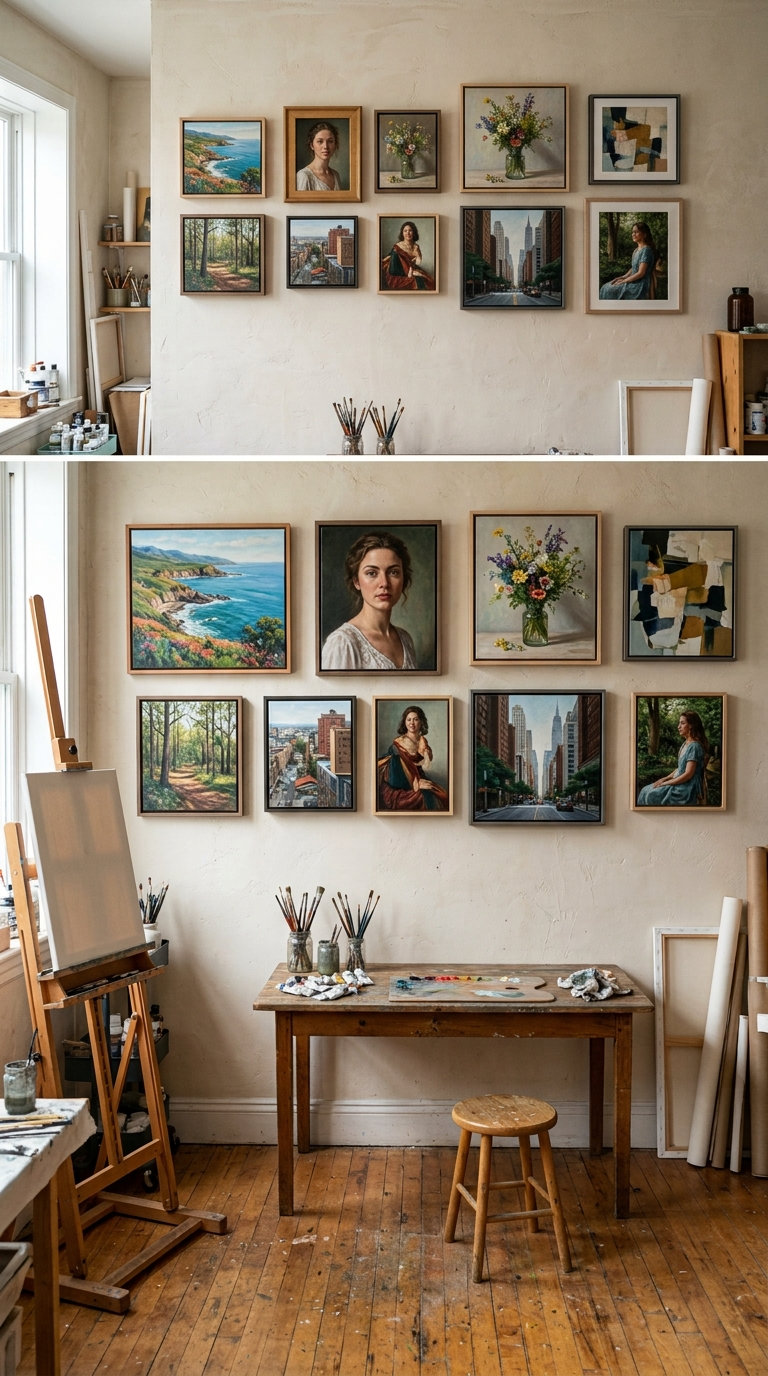
Hanging your own finished paintings on the studio walls does double duty: it’s genuinely motivating to see your own progress, and it’s one of the only “decorating” ideas on this list that costs nothing if you’re already making the art.
24. Converted Garden Shed Studio
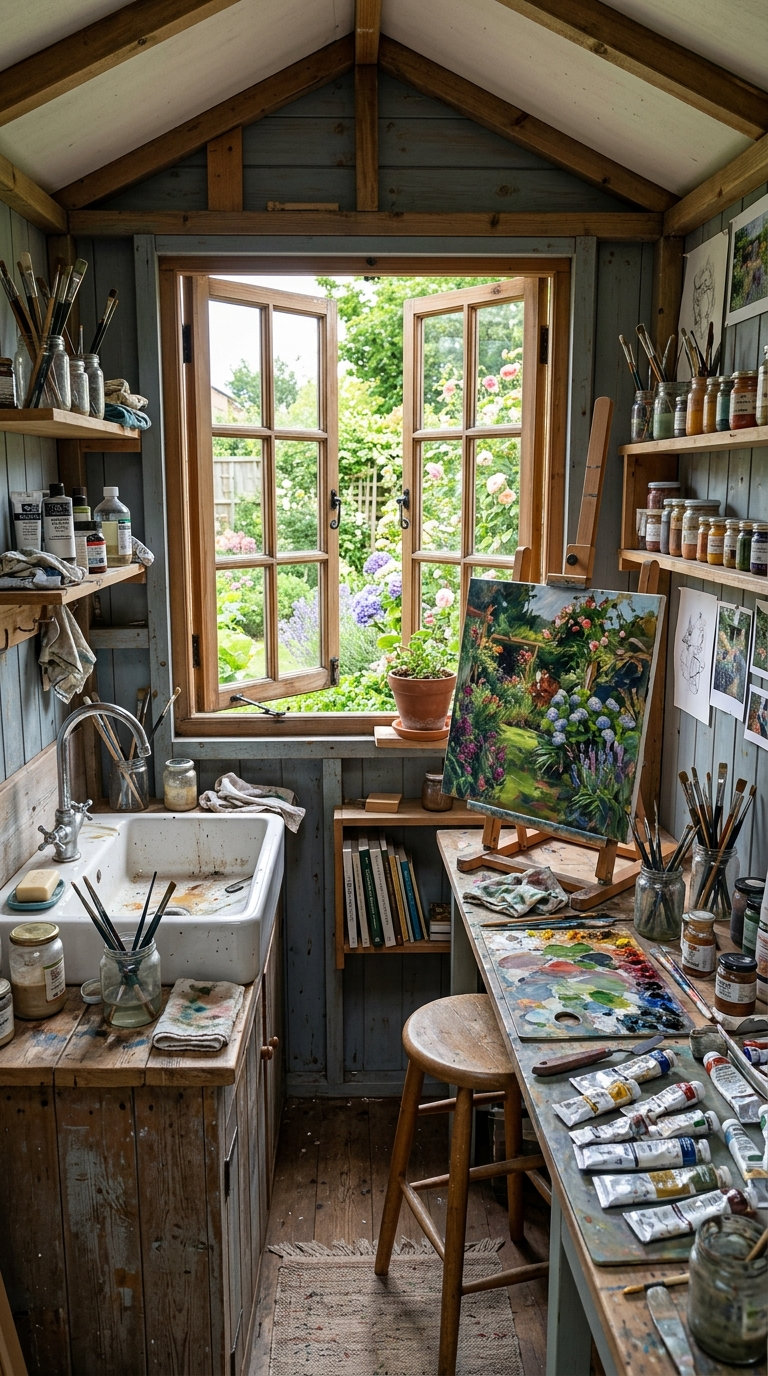
A garden shed or crib-style outbuilding, cleaned out and fitted with a simple sink for rinsing brushes and palettes, gives you a studio that’s fully separate from the rest of the house, useful if solvent smells or mess are a real concern indoors.
Ventilation still matters here: a shed with a single door and no window traps fumes just as effectively as an attic does, so budget for at least one openable window before moving solvent-based work in.
25. Space for everything
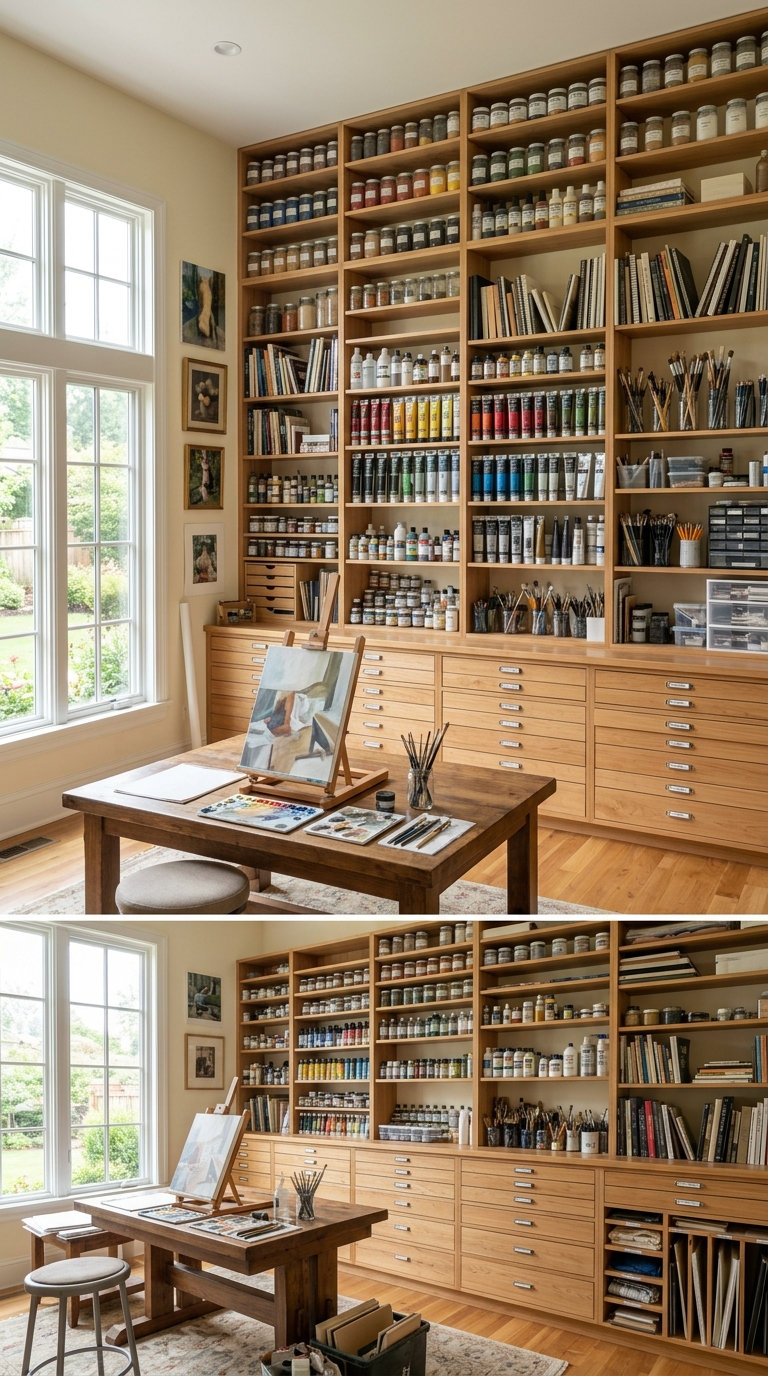
For artists with a large and growing supply collection, a setup built around ample shelving and drawers from the start, rather than added piecemeal later, saves you from the awkward mid-project reorganization almost everyone eventually does anyway.
26. The place where you want to be
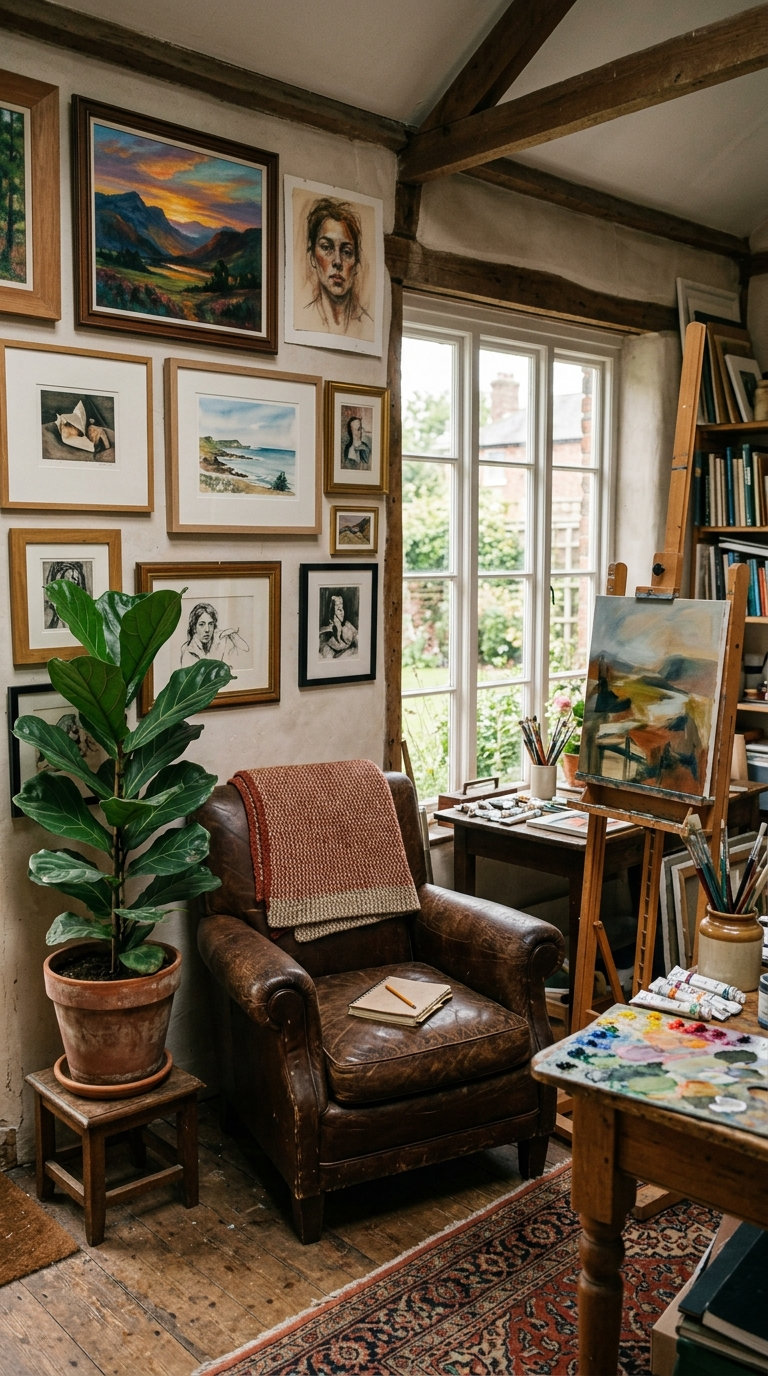
Sometimes the real design brief is simpler than any specific layout: make the space somewhere you actually want to spend time.
A few genuinely personal touches, whether that’s a specific chair, a plant you like, or artwork that matters to you, do more for actually using the space regularly than any particular furniture choice.
27. Paint on something else
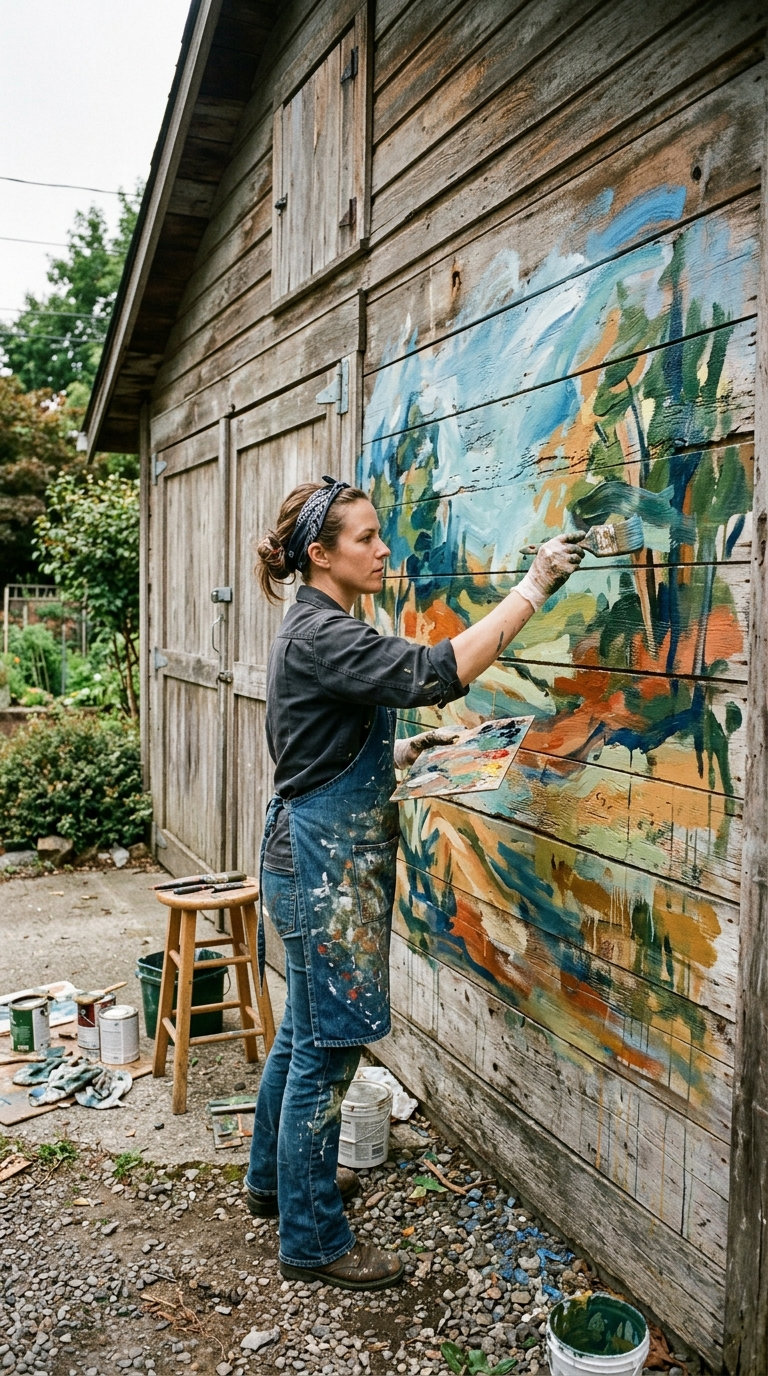
Painting directly on a wall (rather than only on canvas) is a genuinely low-stakes way to build motivation, since there’s no finished piece to be precious about, just practice.
This works best on a wall you’re comfortable repainting or covering later, a garage or shed wall rather than a rental’s living room.
28. The thinking place
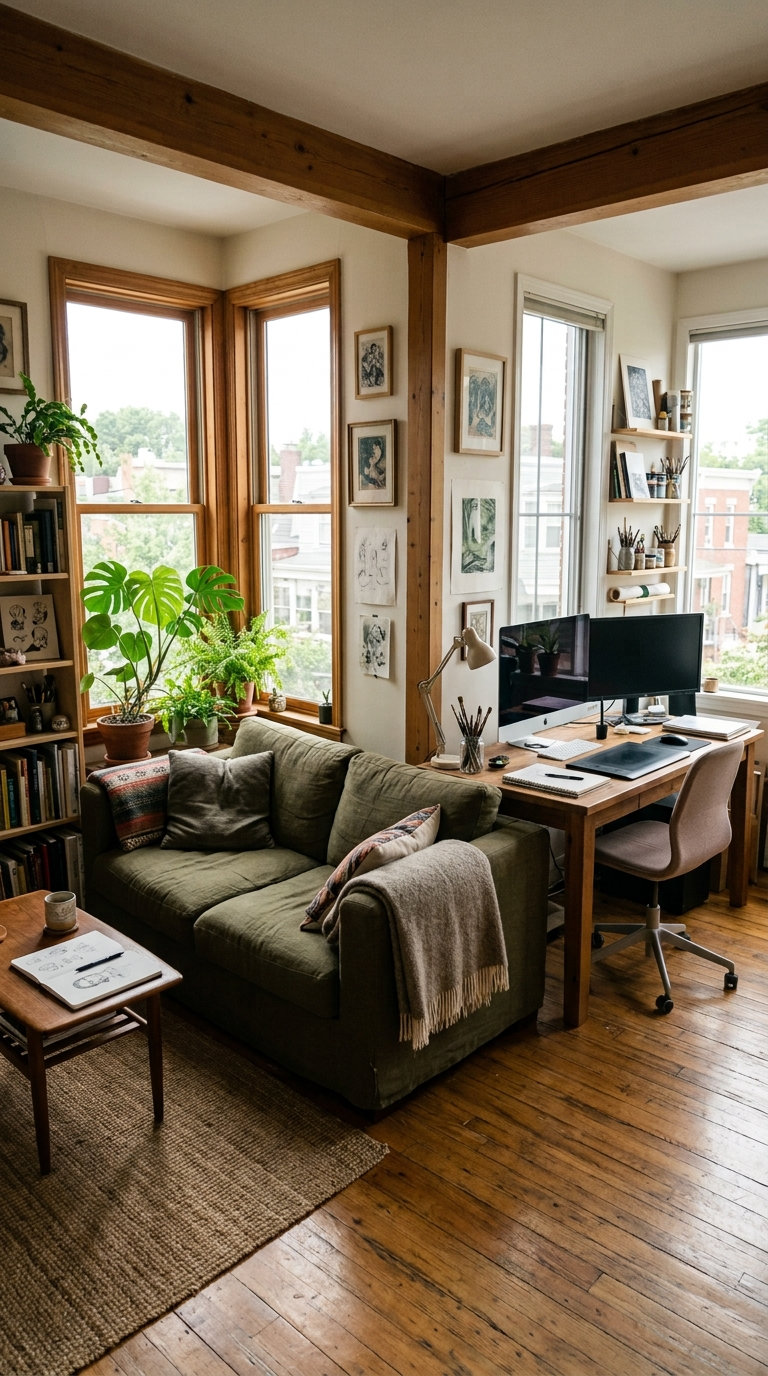
A studio with a sofa or comfortable seating separate from the actual work desk gives you somewhere to sit and think through a piece before touching it, a genuinely underused step in a lot of home setups that go straight from idea to canvas with no pause in between.
29. Even more nature
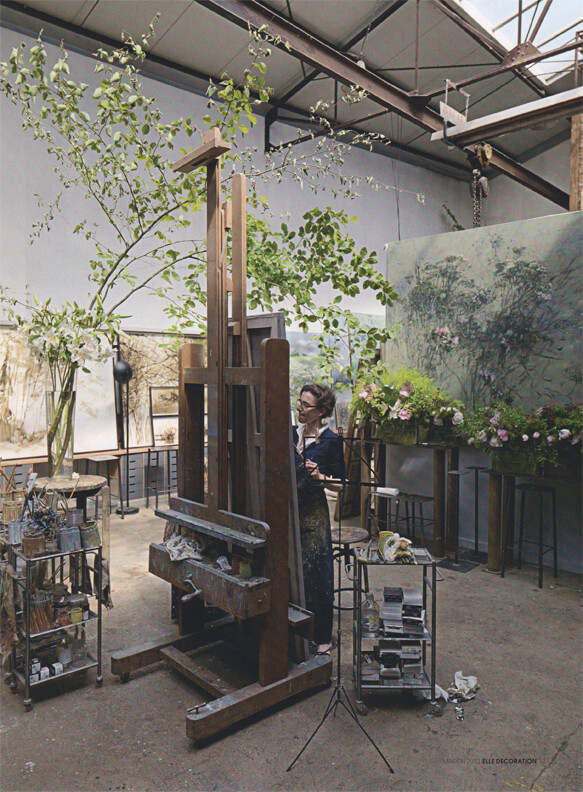
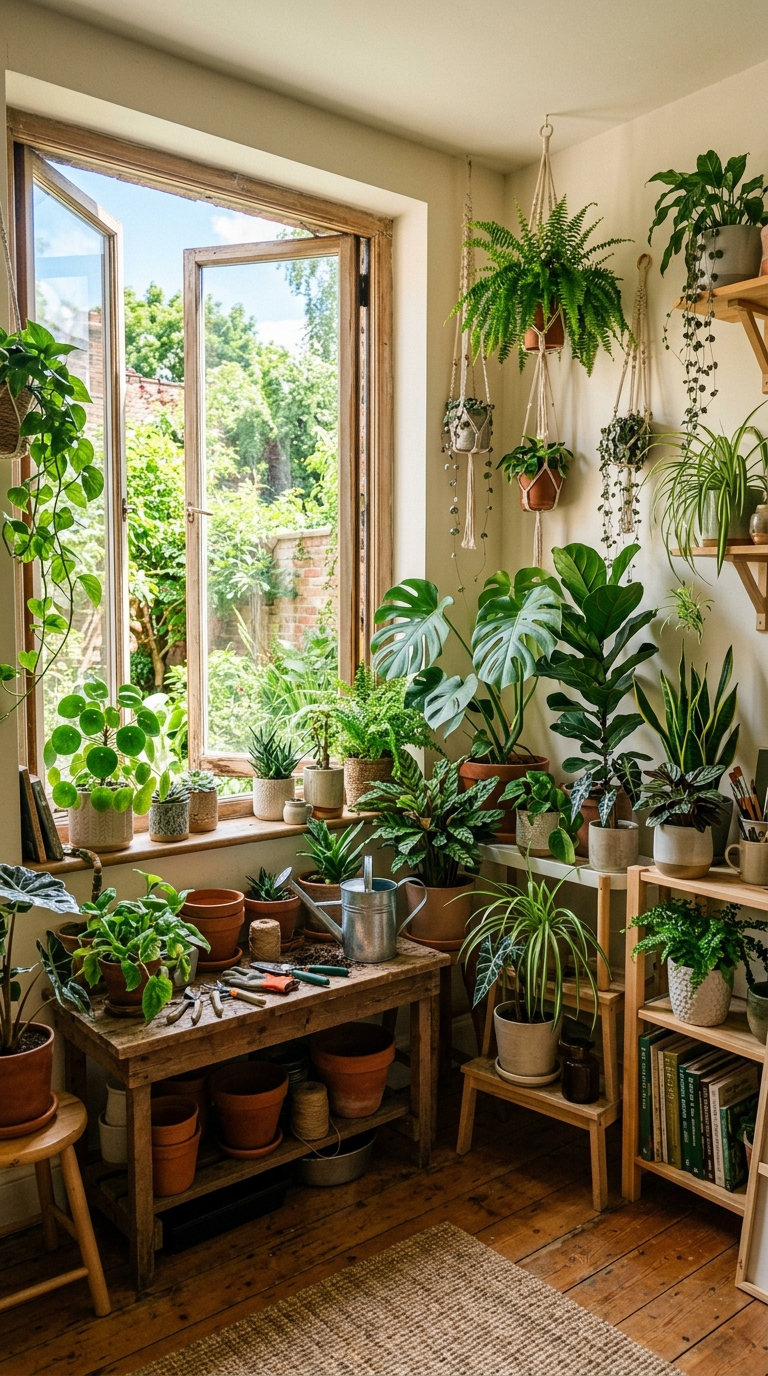
Adding plants to a studio is a small, low-cost change with a real, researched mood and focus benefit, and it pairs naturally with idea #9’s point about wood work needing airflow: a healthy plant and a window that actually opens tend to go together anyway.
30. The garage studio
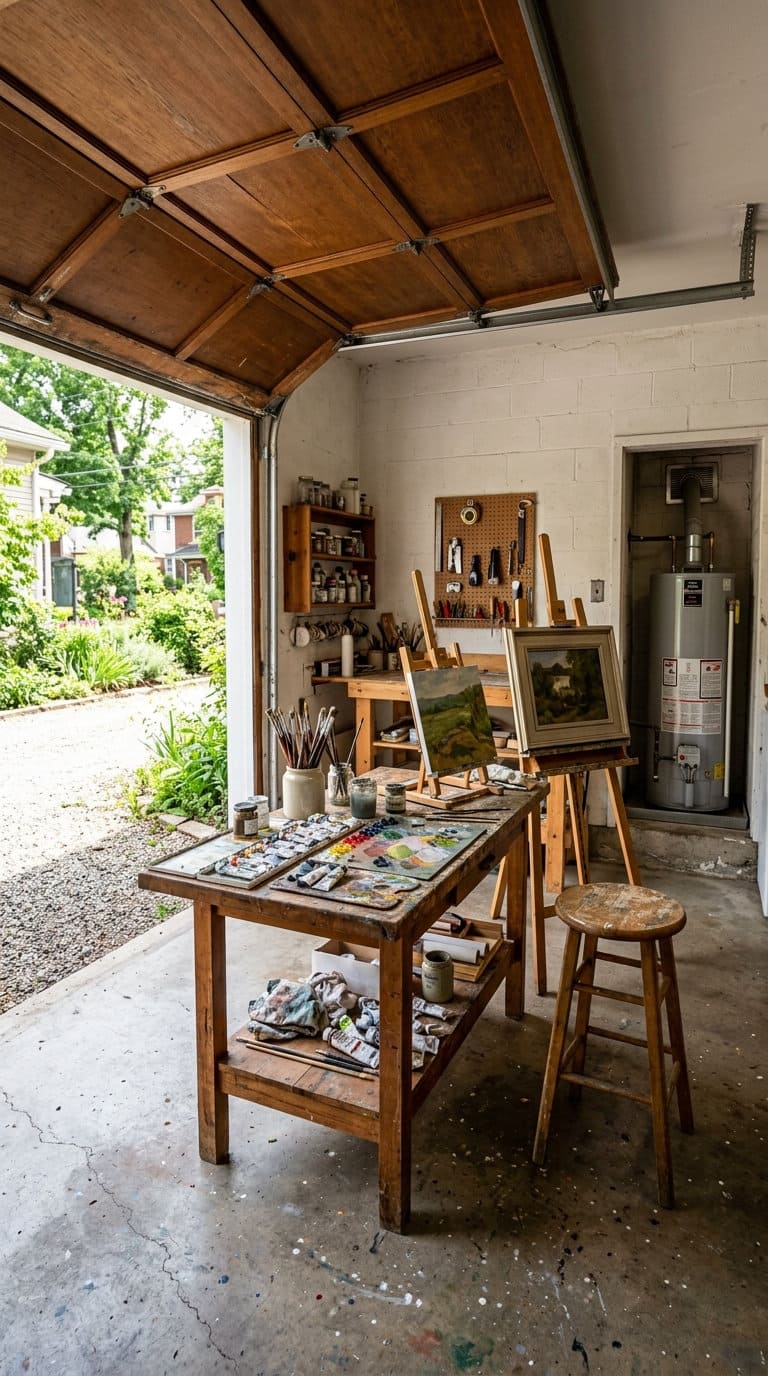
A garage is one of the most practical full-room conversions on this list, since most households genuinely underuse it beyond parking, but it’s also one of the least ventilated enclosed spaces in a typical home if the door stays shut.
Treat garage door and any windows as your primary ventilation, not an afterthought, and keep solvent-based supplies capped and stored away from any pilot lights or water heaters that are often also housed in a garage.
31. Pegboard Organization Wall
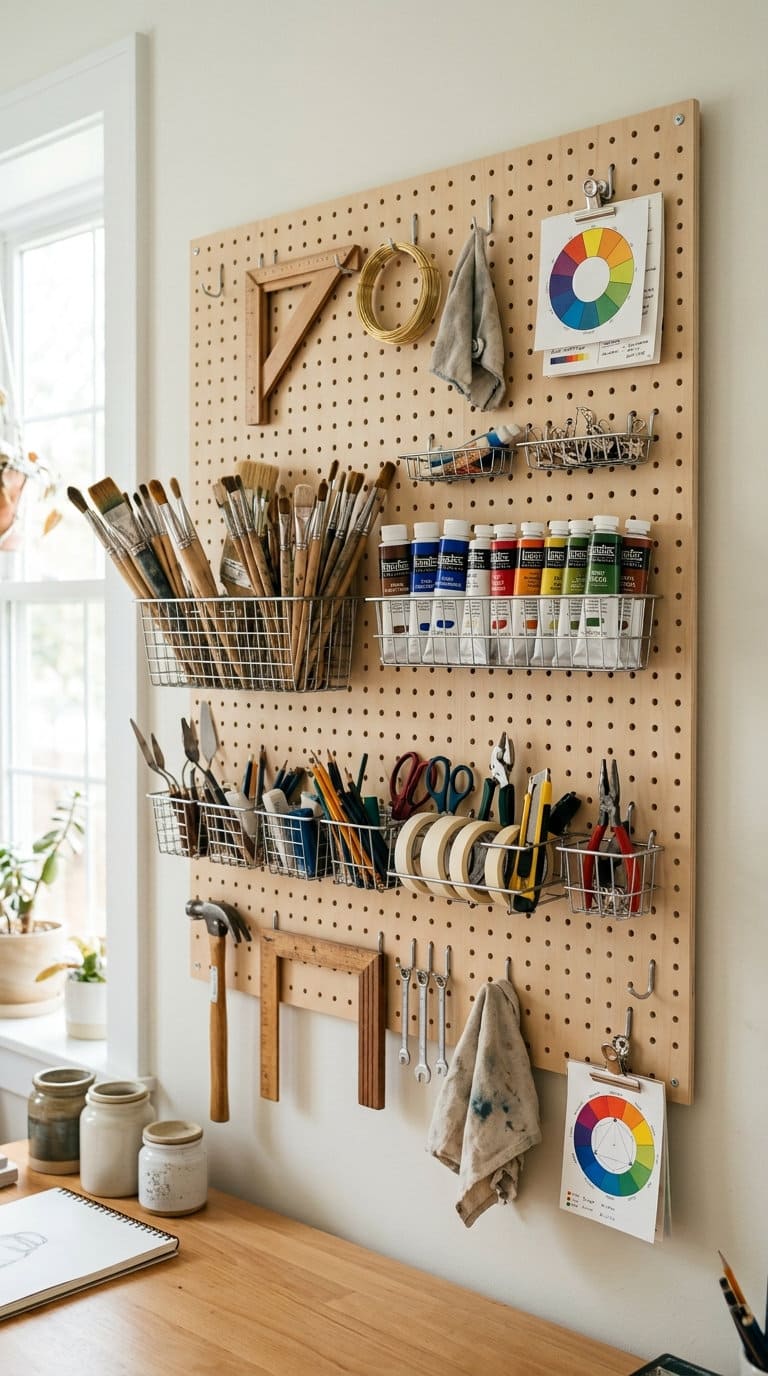
A full pegboard wall with hooks and small wire baskets keeps brushes, paints, and tools visible and off the work surface entirely, a genuinely popular, low-cost upgrade for any of the smaller setups on this list (the single-wall idea #15 especially).
It’s also one of the easiest upgrades to add after the fact if your current setup feels cluttered rather than requiring you to redo the whole space.
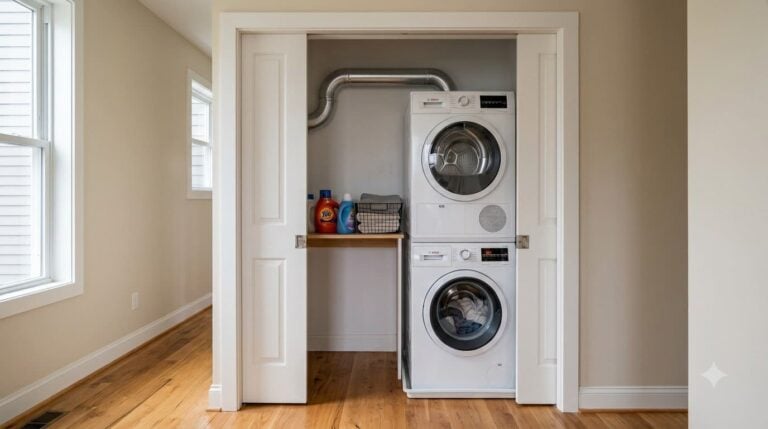
32. Closet Studio
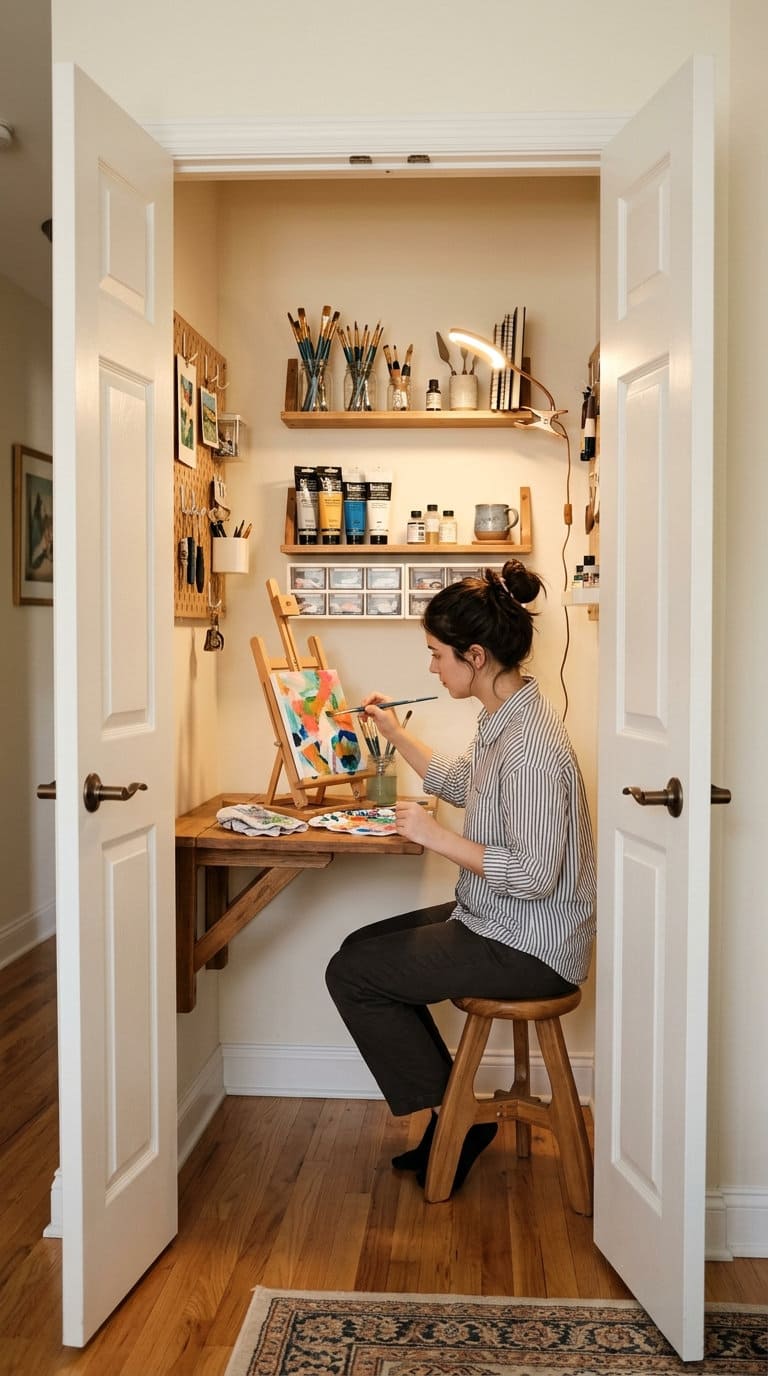
A cleaned-out closet fitted with a compact fold-down table or small desk, plus its existing shelving, makes a genuinely complete small studio for dry media or digital work, and it has the advantage of closing a door on your mess between sessions.
Add a plug-in light fixture since closets rarely have great built-in lighting, and skip solvent work here specifically, a closet is about the least-ventilated space in this entire list.
33. Backyard Office Shed Studio
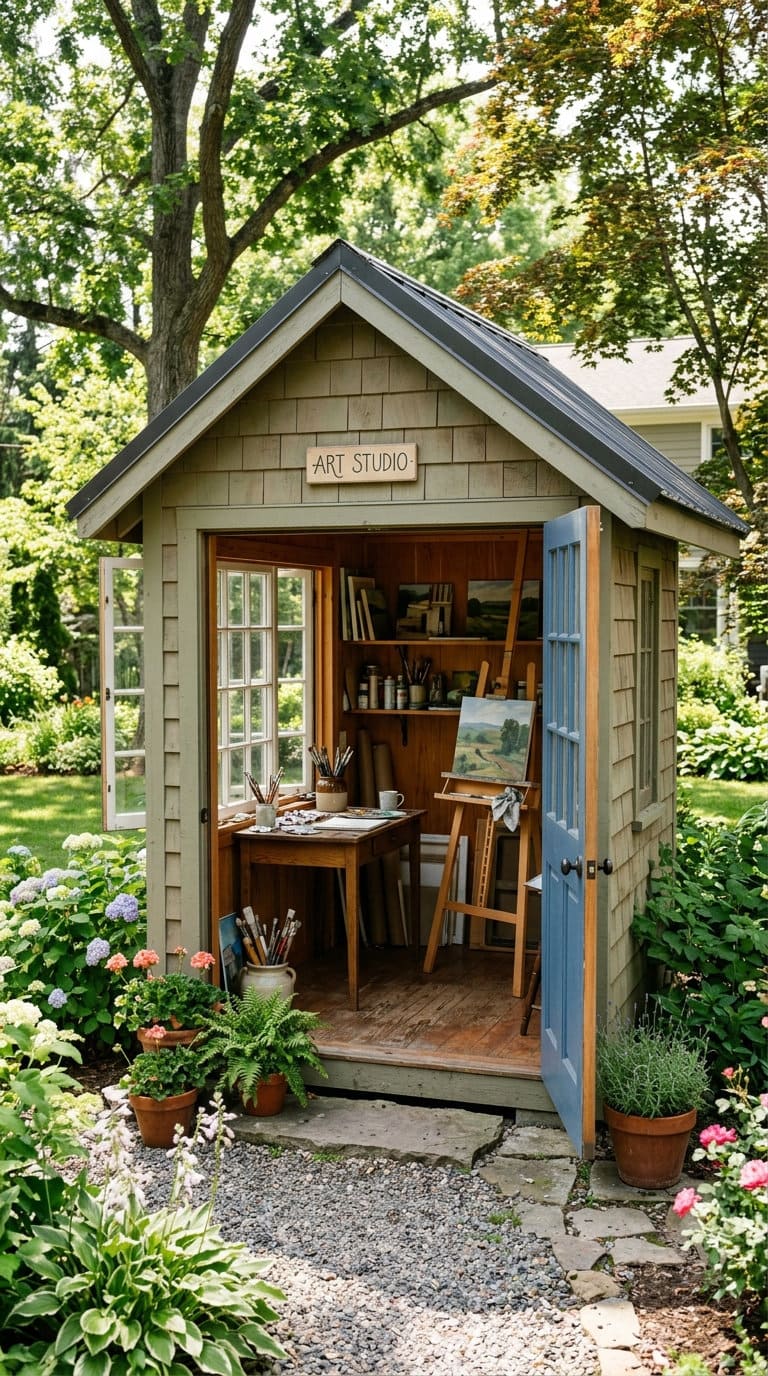
Converting a backyard shed or small outbuilding into a dedicated art studio, distinct from idea #24’s garden-shed setup in that this one’s built and insulated more like a real office, gives you a genuinely separate creative space without an addition to the house.
If a full custom build isn’t in the budget, these backyard office shed ideas cover several lower-cost ways to convert an existing shed rather than building new.
34. North-Light Window Nook
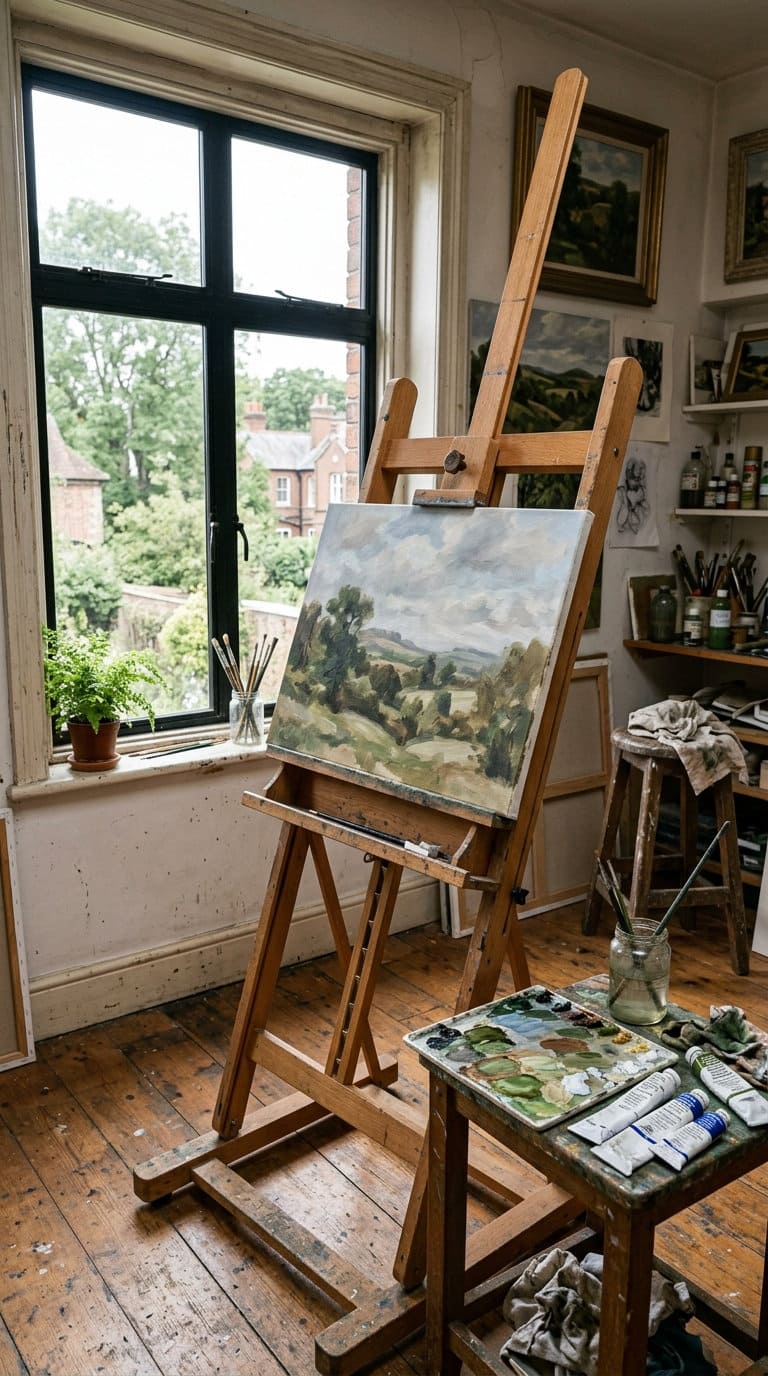
A dedicated nook built specifically around a north-facing window, rather than just any window with a desk pushed near it, applies Will Kemp’s and Lori McNee’s guidance most literally: position your easel roughly 35 degrees below the window line so light falls onto your canvas at an angle rather than glaring back at you.
This is worth the extra planning if you’re doing color-accurate work like portraiture or realistic painting, where inconsistent light genuinely changes how your colors read.
35. Ventilated Solvent Station
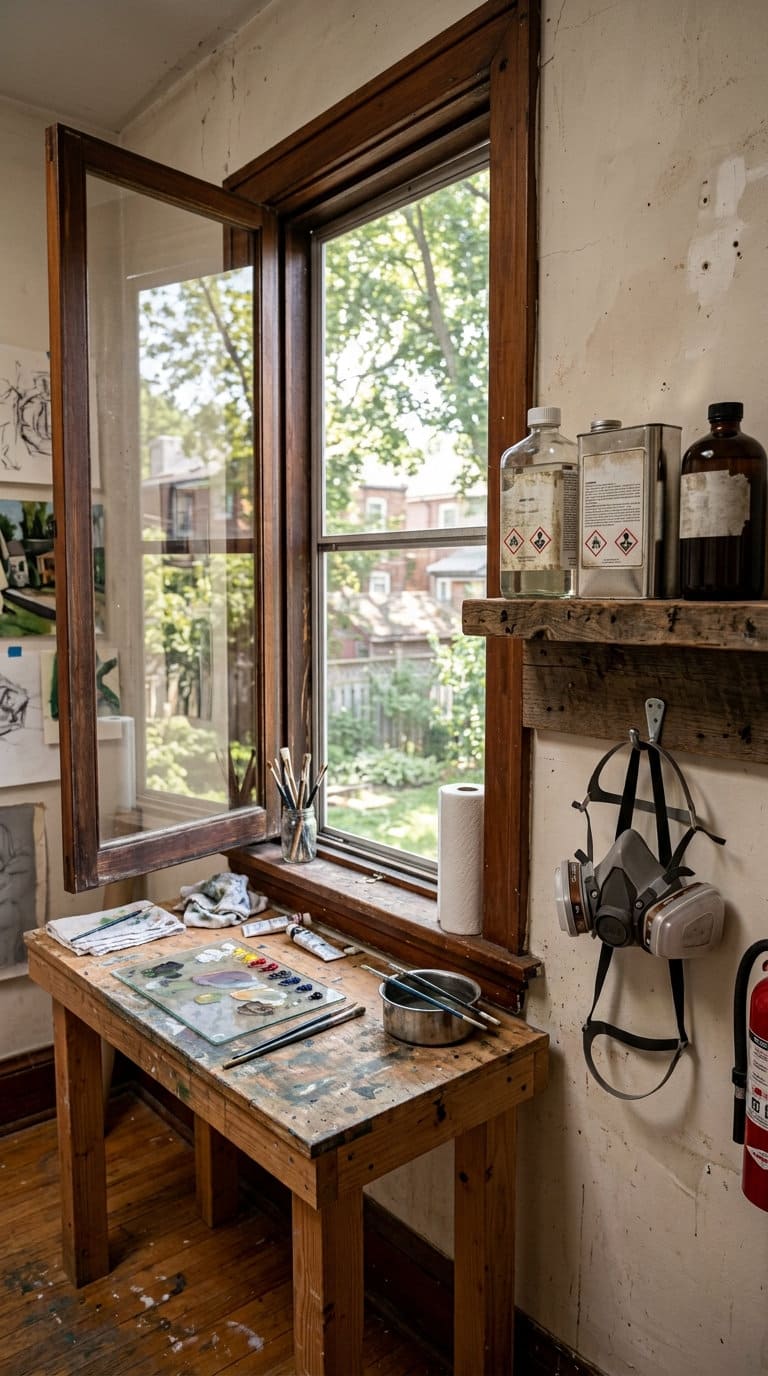
A small, clearly separated corner (not the main desk) set up specifically for anything involving solvents, thinners, or spray fixative, ideally near a window or door that opens directly outside, keeps the riskiest part of the process contained to one spot rather than spread across your whole workspace.
Store solvents capped and in their original containers when not in use, and treat this station, not your main desk, as the place any respirator or PPE actually lives so it’s always within reach when you need it.
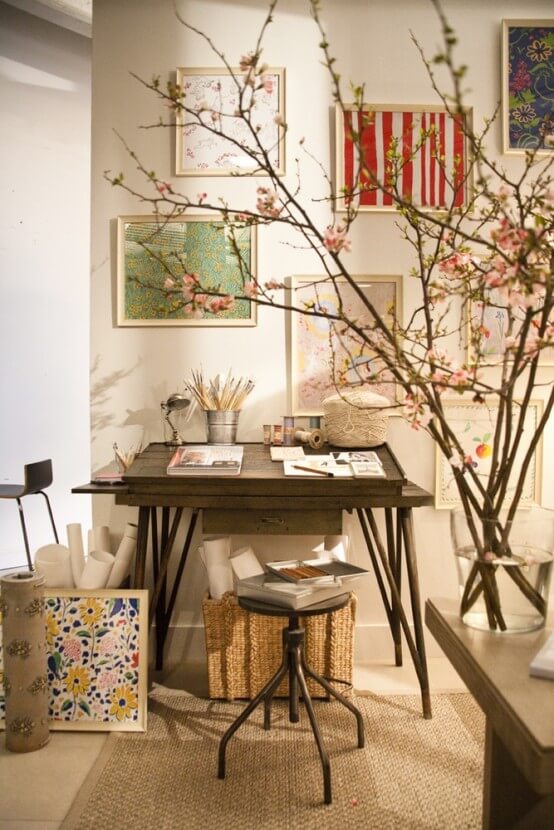
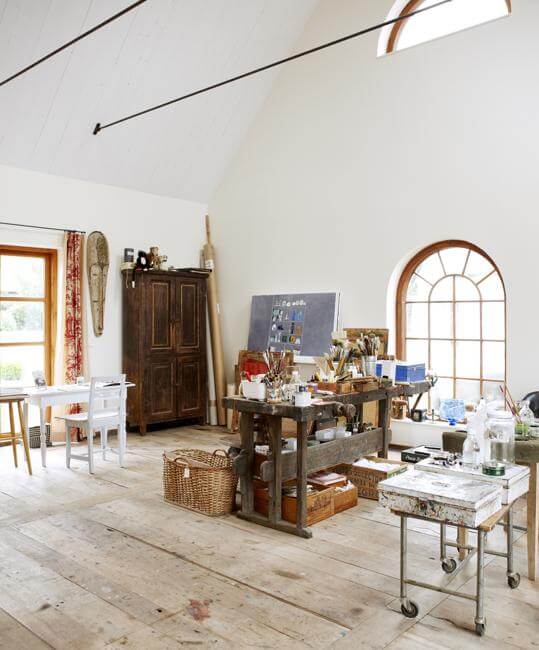
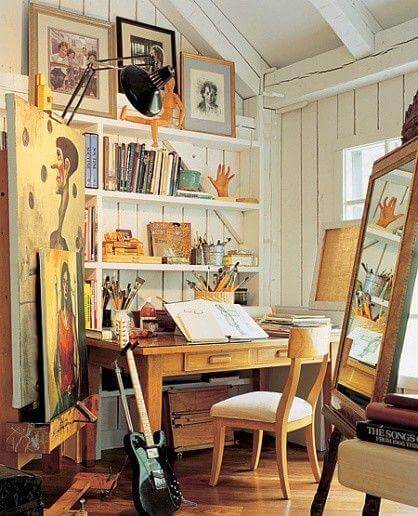
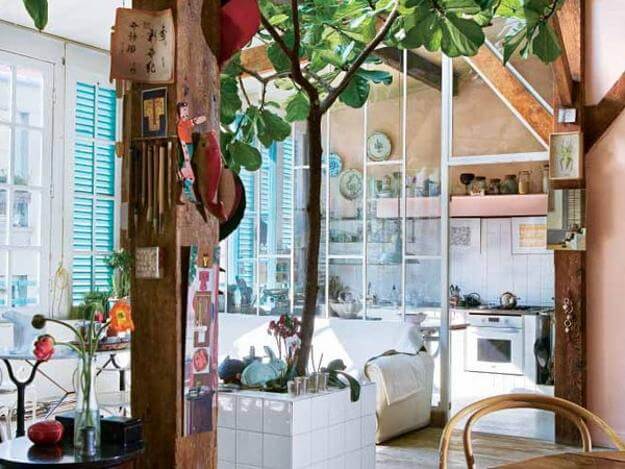
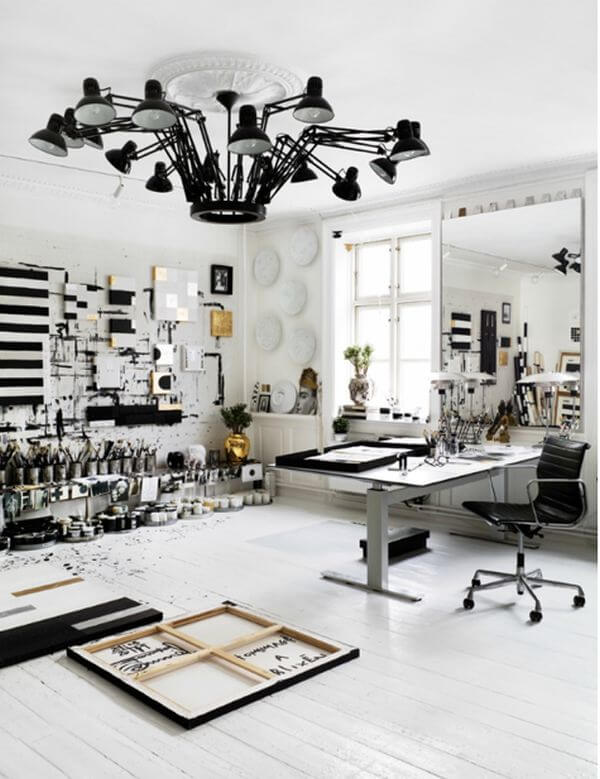
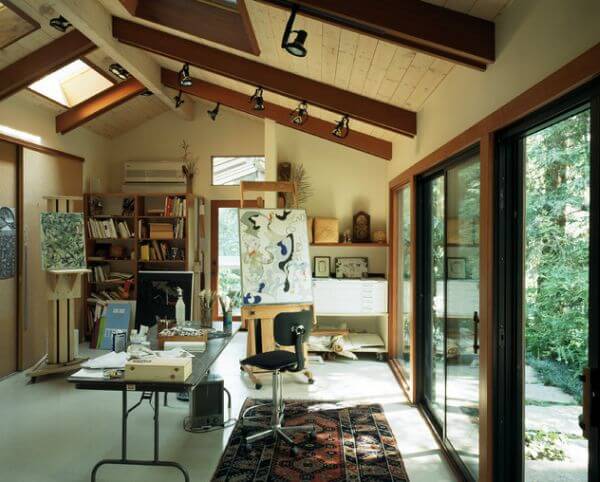
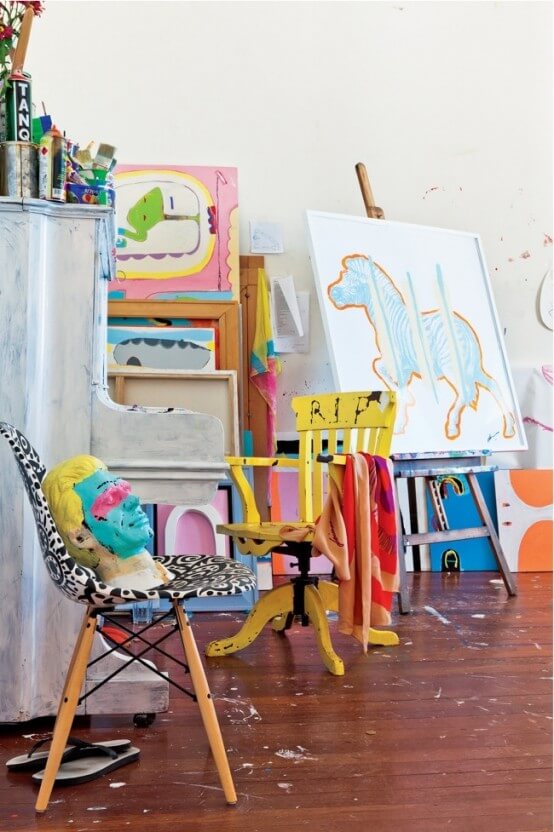
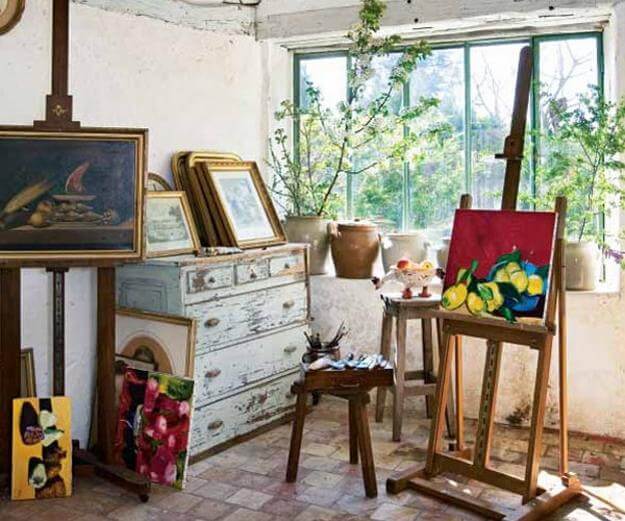
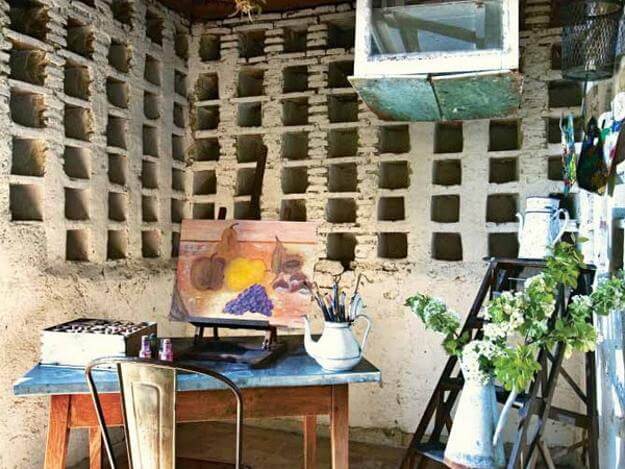
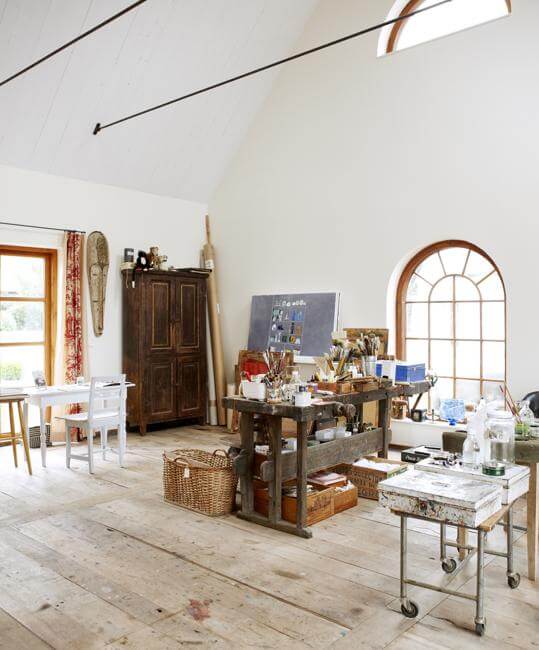
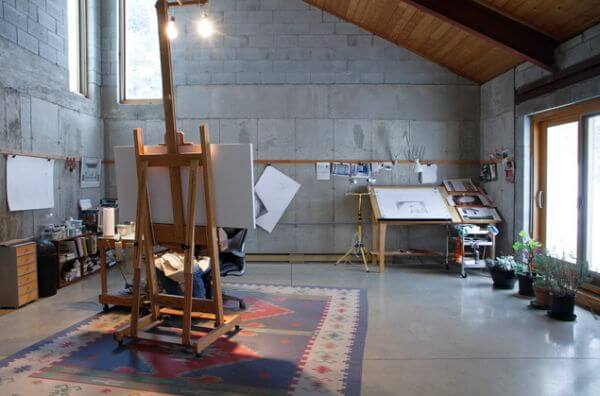
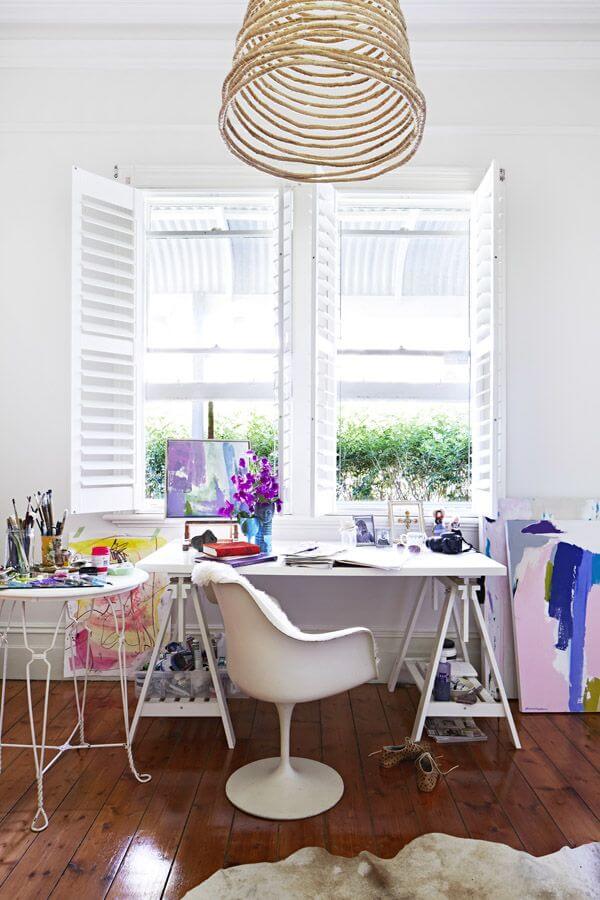
36-50. More home art studio designs




FAQs
Can I paint safely in a small bedroom studio? With real caveats, yes. A blunt, upvoted response to a real artist’s question about exactly this setup put it well: “much too small a space not to have ventilation.” Stick to water-based paints and dry media in a bedroom-sized space, keep a window cracked or a fan running during any session that does involve solvents, and treat spray products and strong thinners as off-limits for a room you’ll be sleeping in a few hours later.
What’s the best window direction for an art studio? North-facing, according to both Will Kemp and Lori McNee, two professional artists who’ve written directly on studio lighting. North light stays consistent through the day rather than shifting dramatically the way direct sun does, which matters most for color-accurate work. If you don’t have a north-facing window available, diffusing whatever direct light you do get with a sheer curtain, or using a daylight-balanced LED lamp, is a reasonable substitute.
How much does it cost to set up a home art studio? It ranges enormously, and that’s genuinely fine. A single organized wall (idea #15) or a desk-and-lamp setup (idea #14) costs whatever you already own plus maybe $50-100 in supplies. A full room conversion with real shelving and lighting lands solidly in the moderate-investment range. A backyard shed or garage conversion is the biggest jump, closer to a small home-improvement project than a weekend one. None of these require the priciest version to actually work, match the investment to how often you expect to use the space.
Final Thoughts
Creating a great environment for your work can lead to massive success. You can create your very own home studio and accomplish great work there – without anyone disrupting you.
You just saw 30 ideas on artistic home studio designs. These are practical ways that you can improve your work and your life. I wish you good luck and a good life.
Products We Recommend
This post contains affiliate links. We may earn a commission on qualifying purchases at no extra cost to you.
Pegboard Organizer with Hooks and Baskets
Wall-mounted pegboard kit with hooks and wire baskets for organizing brushes, paints, and tools — a ready-made option for idea #31
Shop Now
Daylight Artist Studio Lamp, 95+ CRI
Touch-dimmable daylight-balanced LED lamp for accurate color rendering when a north-facing window isn't available, per Will Kemp and Lori McNee's lighting guidance
Shop Now
3M Half Facepiece Respirator, Organic Vapor
NIOSH-approved reusable respirator for solvent-based painting work — matches idea #35's ventilated solvent station guidance
Shop NowNever miss an update — choose FarmFoodFamily as your preferred source on Google.
How it works: Tap the button below to open Google's settings page, then check the box next to FarmFoodFamily.
Tap the checkbox to turn it blue — that's how you know it's set.