15 Dreamy Backyard Hammock Ideas With Safe Hanging Tips
A hammock turns any corner of your yard into a getaway, as long as you hang it at the right height and angle on anchors that can take the load.


Never miss an update — choose FarmFoodFamily as your preferred source on Google.
How it works: Tap the button below to open Google's settings page, then check the box next to FarmFoodFamily.
Tap the checkbox to turn it blue — that's how you know it's set.
A hammock turns any corner of your yard into a getaway, as long as you hang it at the right height and angle on anchors that can take the load.
Products We Recommend
This post contains affiliate links. We may earn a commission on qualifying purchases at no extra cost to you.

Hammock Straps, Set of 2, 2 Inch x 8 Foot with Carabiners
Wide tree-saver straps that protect bark
Shop Now

A hammock looks effortless. But a bad hang can dump you on the ground, hurt a tree, or ruin your back.
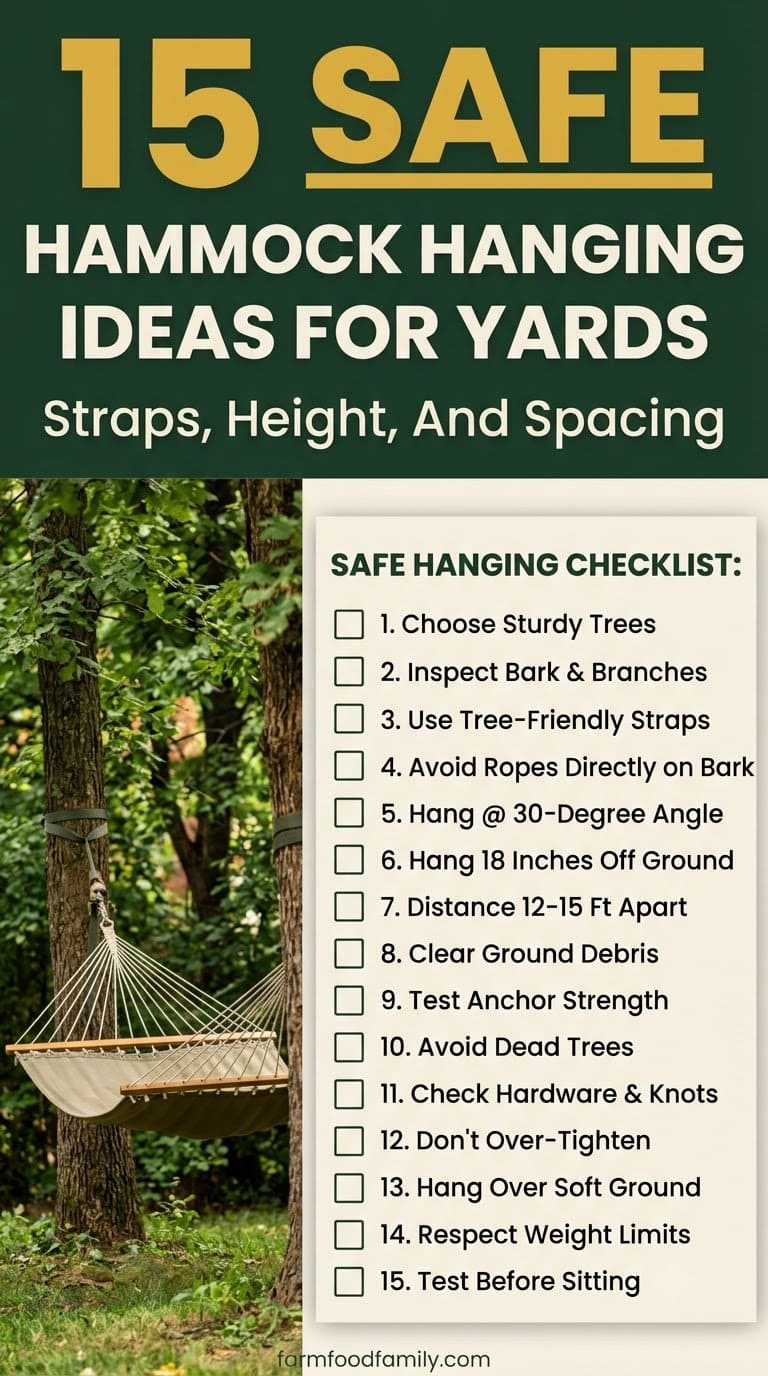
The good news is that the rules are simple. Hang it about 18 inches off the ground, at about a 30-degree angle, on anchors you trust.
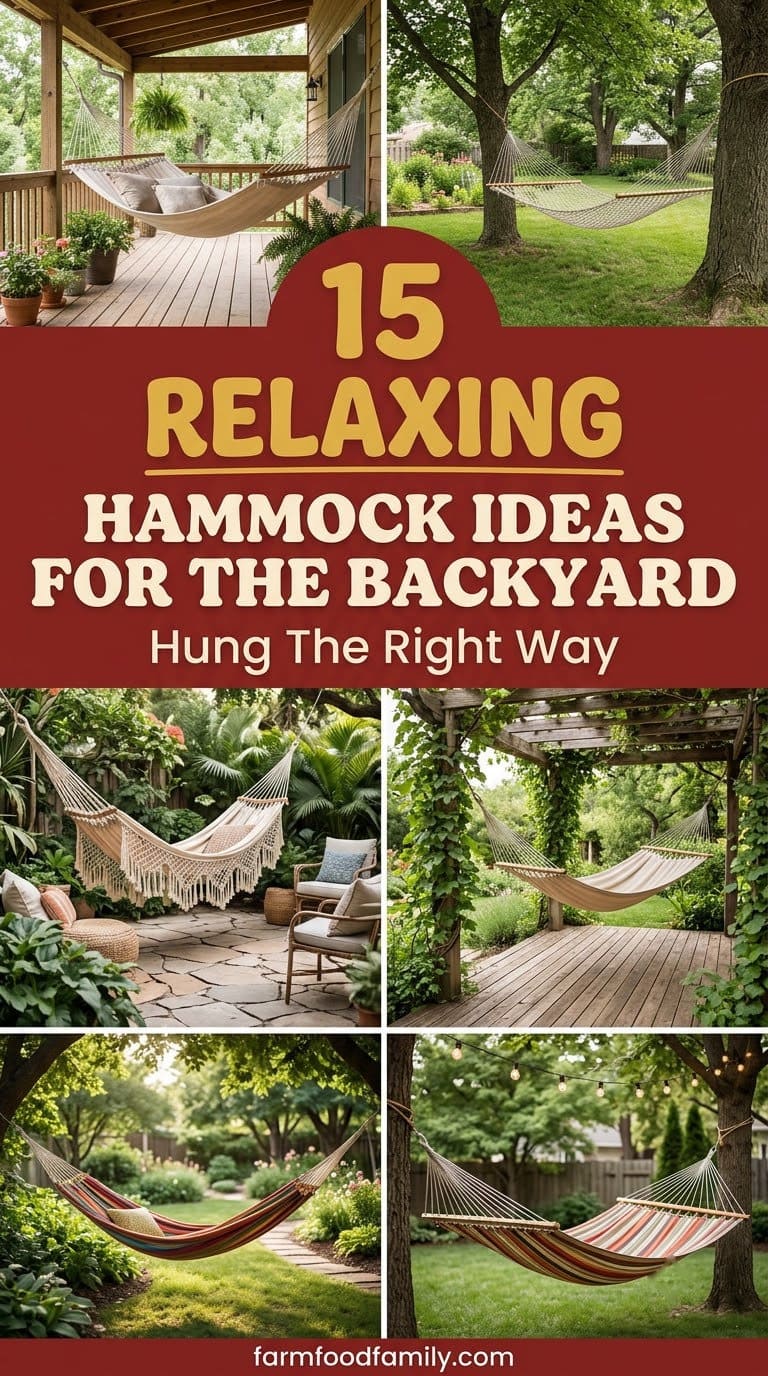
This guide gives you 15 backyard hammock ideas, from two trees to a DIY wooden stand. For each one, you’ll see sizes, hardware, and the safety checks that matter.
Answer 4 quick questions and get matched to the exact fix for your yard — drainage, budget, layout, or something else entirely.
Take the Free QuizQuick Answer
Hang your hammock so the seat sits about 18 inches off the ground when you’re in it, with a 30-degree angle on both sides. Bob Vila also advises trunks that are 10 to 15 feet apart and at least 6 inches across. Many hammocks hold 300 to 400 pounds, so match every anchor to the rating.
Use wide tree-saver straps about 4 feet up the trunk, and lay them flat. Never hammer or screw anything into bark. Avoid dead trees and thin-barked trees like birch.
No good trees? Use a stand, a post, or a porch beam. Check the weight rating on the hammock, the hardware, and the anchor, because the weakest part sets the limit.
Test the hang slowly. Sit down in stages, and if anything shifts, get out and fix it before anyone else climbs in.



Which Hammock Setup Fits Your Yard?
This table is our planning guide. The tree, post, and porch notes come from Bob Vila. The cost and skill columns are our own estimates.
Most yard problems trace back to one specific, fixable cause. Find yours in 4 quick questions.
Take the Free Quiz| Setup | Needs trees? | Drilling or digging? | Cost tier | Skill level |
|---|---|---|---|---|
| Two trees | Yes | No | Low | Beginner |
| One tree plus a post | One | Yes, with concrete | Medium | Intermediate |
| DIY wood stand | No | No | Medium | Intermediate |
| Porch or pergola beam | No | Yes | Low to medium | Intermediate |
| Portable stand | No | No | Medium | Beginner |
| Hanging chair | No | Depends | Low to medium | Beginner |
What Are the Basic Rules for Hanging a Hammock?
Start with the seat height. Bob Vila says the seat should sit about 18 inches off the ground when occupied. That’s about chair height, so you sit into it instead of climbing in.
Next, check the angle. Aim for about 30 degrees on each side. A hammock pulled too tight loses its curve and puts huge force on the anchors.
Then check the weight limit. Bob Vila notes many hammocks hold 300 to 400 pounds, and some hold more. Read the label, and make sure the straps, hooks, and carabiners are rated for the load.
Finally, test it. Sit down slowly and watch the anchors. If a tree or post moves, get out and relocate.
How Do You Protect Your Trees and Your Back?
Trees are living things. Use wide webbing straps instead of rope. Scouting magazine says to use straps between 1.5 and 2 inches wide to limit damage to the tree.
Pick the right tree. Bob Vila says trunks should be at least 6 inches across and warns against dead trees and thin-barked trees like birch. Use one hammock per tree.
Wide tree-saver straps that protect bark
Shop NowThis post contains affiliate links. We may earn a commission on qualifying purchases at no extra cost to you.
For long stays on the same trees, Scouting magazine suggests putting a section of closed-cell foam between the strap and the bark. Take the straps down when you’re done, since lines left strung can tangle wildlife.
Never hang over water or near cars, decor, or anything with wheels. That’s Bob Vila’s advice too. Keep dogs and kids away from the swing path.
The average homeowner spends $616/year on yard fixes that don't address the real problem. Find out what yours actually is — before you spend another dollar.
Take the Free Quiz15 Dreamy Backyard Hammock Ideas
1. Classic Two-Tree Hammock
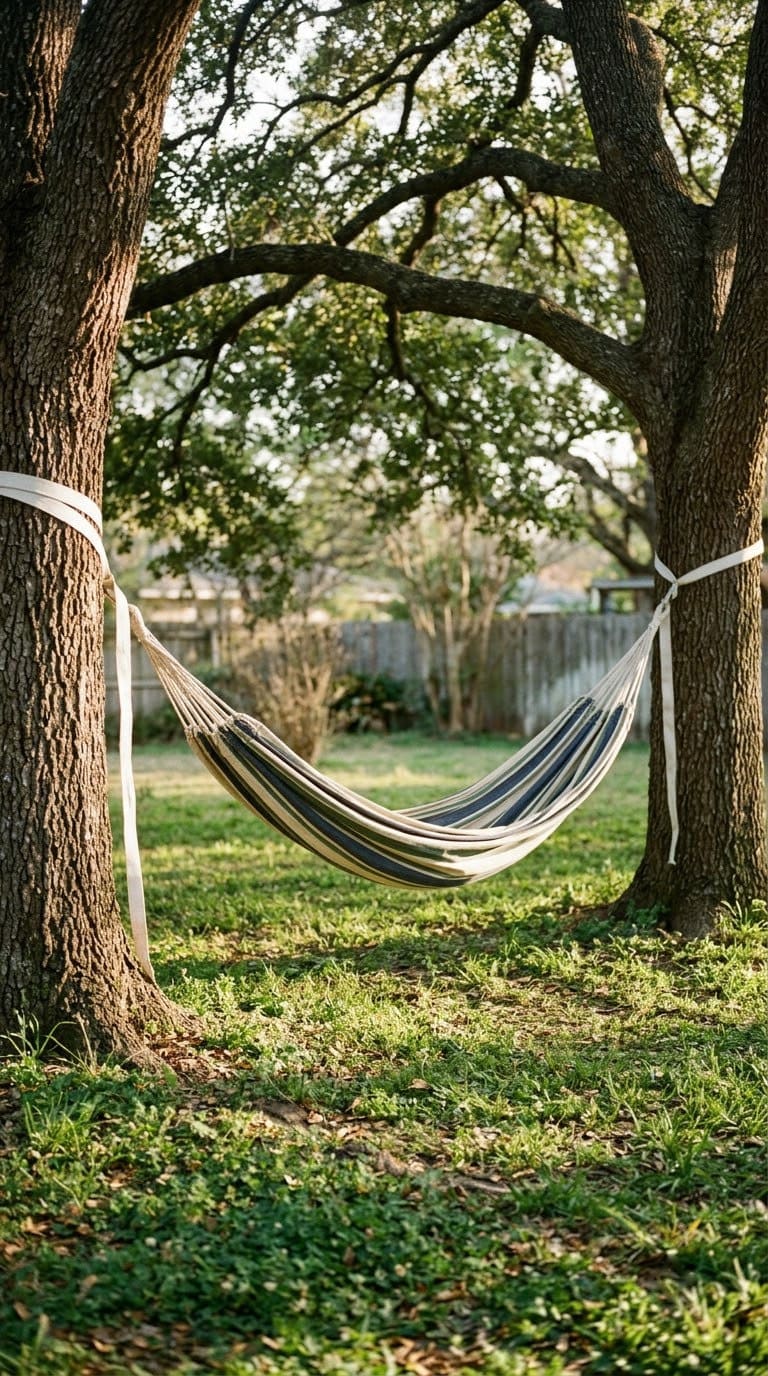
This is the simplest setup. Find two healthy trees 10 to 15 feet apart, per Bob Vila. Each trunk should be at least 6 inches across.
Wrap a wide strap around each trunk about 4 feet up. Clip the hammock to the straps with rated carabiners. Adjust until the seat sits about 18 inches off the ground.
Add a small side table under the shade. Check the trees each year for dead limbs overhead.
Cost tier: low. Pairs well with idea 8’s string lights.
2. One Tree Plus a Wooden Post
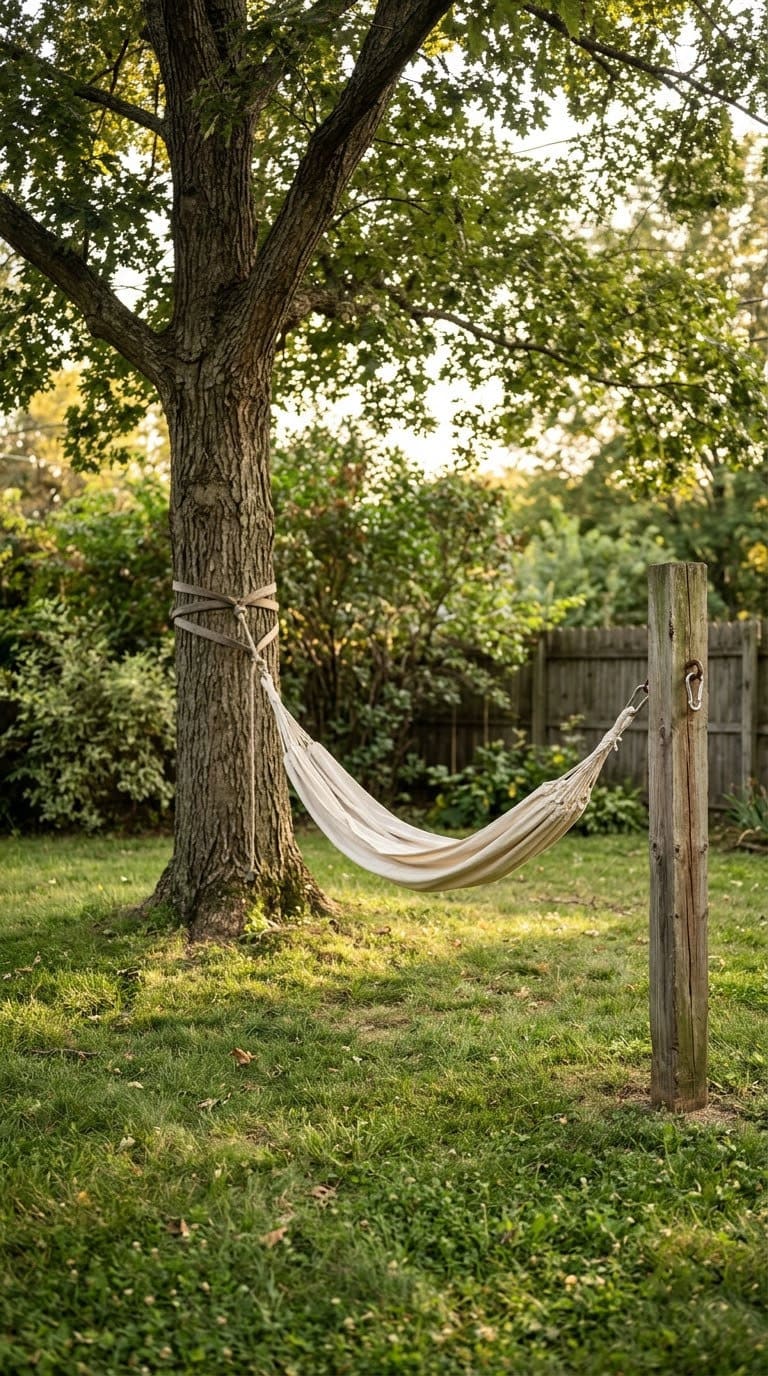
Only one good tree? Add a post. Bob Vila’s setup uses an 8-foot weather-treated 4×4 in a hole at least 2 feet deep.
Place the post at hammock length plus 2 feet from the tree, and no more than 15 feet away. Set anchor hardware about 4 feet up. Fill the hole with concrete to 2 to 3 inches below the top.

Wait at least 24 hours before hanging. Call 811 before you dig, so you don’t hit a buried line. Check local rules and your HOA first.
Cost tier: medium. See idea 3 if you’d rather avoid digging.
3. DIY Wooden Hammock Stand
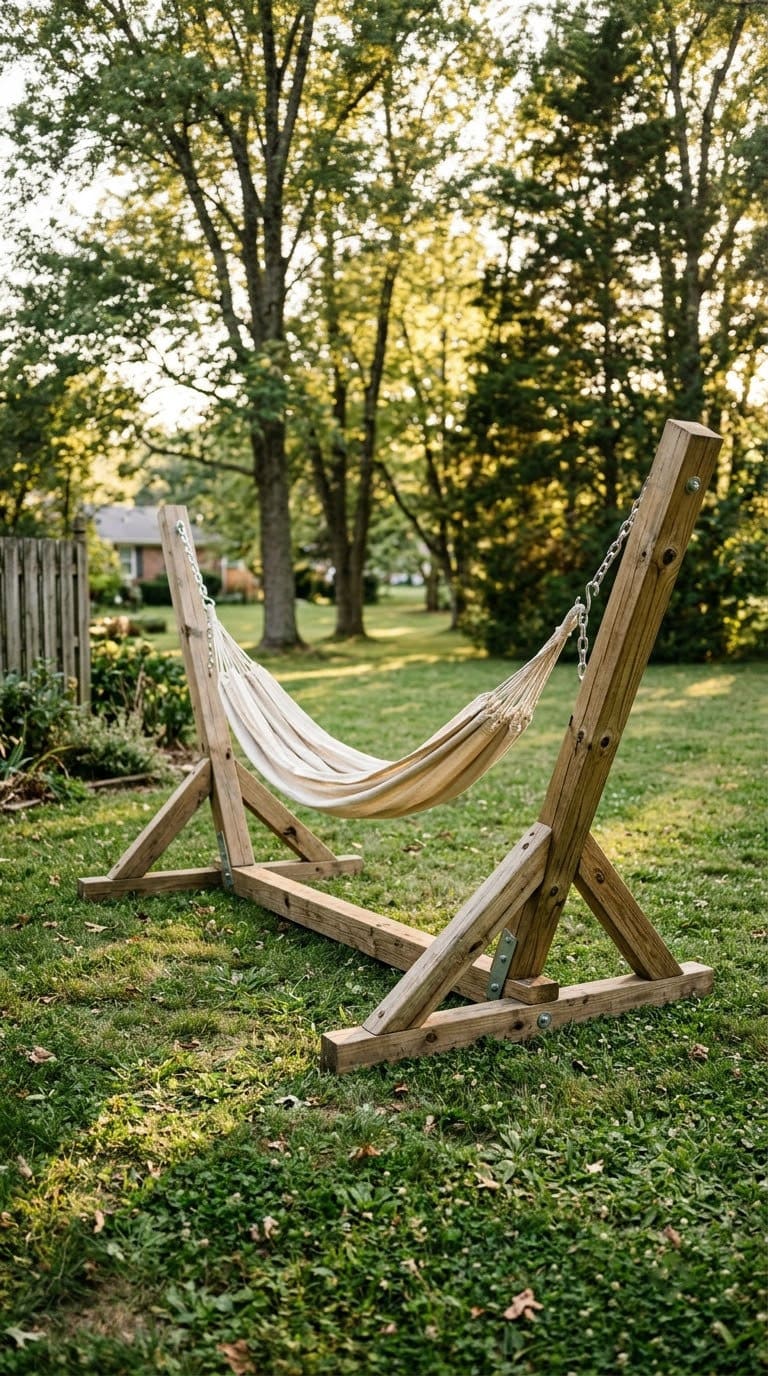
Woodshop Diaries shares a stand that’s about 40-3/4 inches tall, 47-7/8 inches wide, and 132 inches long. The posts sit about 124 inches apart for a 9-foot hammock.
It uses two 4x4x8-foot posts, one 2x4x8, two 2x4x10 runners, two 3/8 by 6-inch eye bolts, and about 40 exterior screws. The posts have 30-degree miters, and the supports have 60-degree miters.
The author’s hammock was rated for 450 pounds. The stand held about 350 pounds, two adults and a dog, but wasn’t tested to 450. The author isn’t a structural expert, so check your own build.
Cost tier: medium. Use lock nuts on the eye bolts, as the author suggests.
4. Pergola Hammock Frame
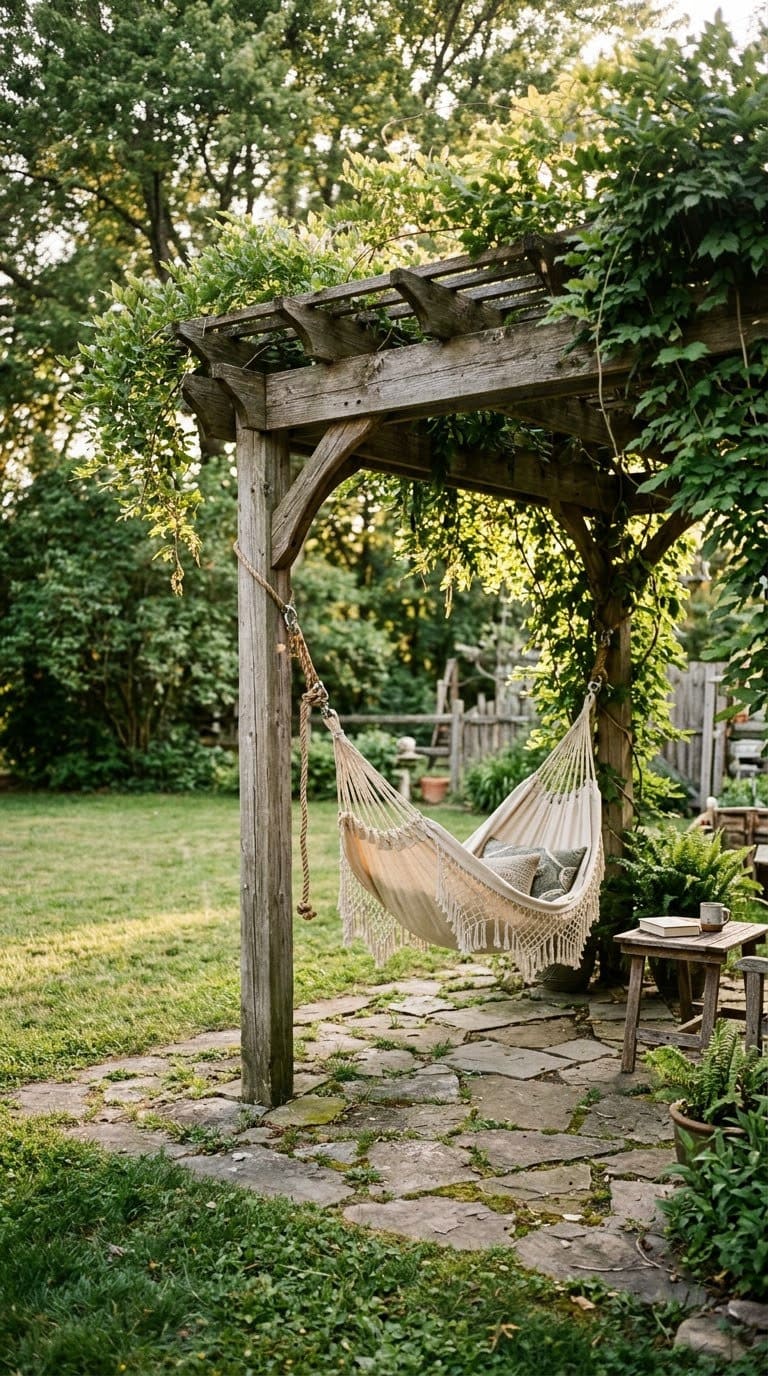
A pergola gives you shade and anchors in one build. Hang the hammock from two stout posts or from beams that are built for the load.
Don’t just hang from decorative cross beams. They’re often not sized for swinging weight. Have a pro check the framing if you’re unsure.
Our pergola ideas show styles, and our guide to building a pergola attached to the house covers the structure. Check local permit rules too.
Cost tier: high.
5. Porch Ceiling Hammock
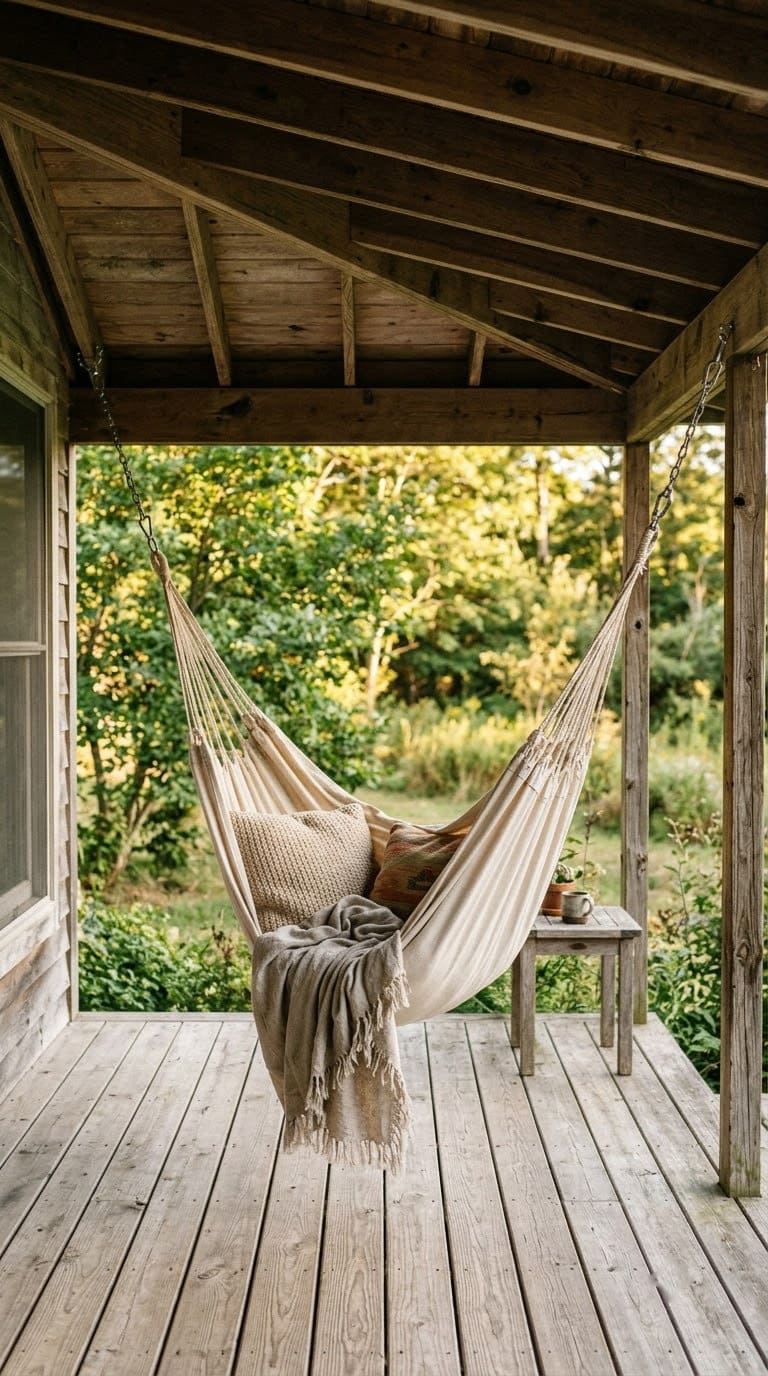
Bob Vila says to anchor into two load-bearing wood studs, posts, or joists no more than about 15 feet apart. Avoid metal studs.
Use eye hooks with a pilot hole in the stud center, or brackets rated for the load. Add short chains with large S-hooks or carabiners.
Find the joists with a stud finder. Never rely on drywall or a ceiling board alone. Pick a spot away from walls so you can swing a little.
Cost tier: low to medium. Pairs with idea 12’s hanging daybed.
6. Spreader-Bar Hammock on a Portable Stand
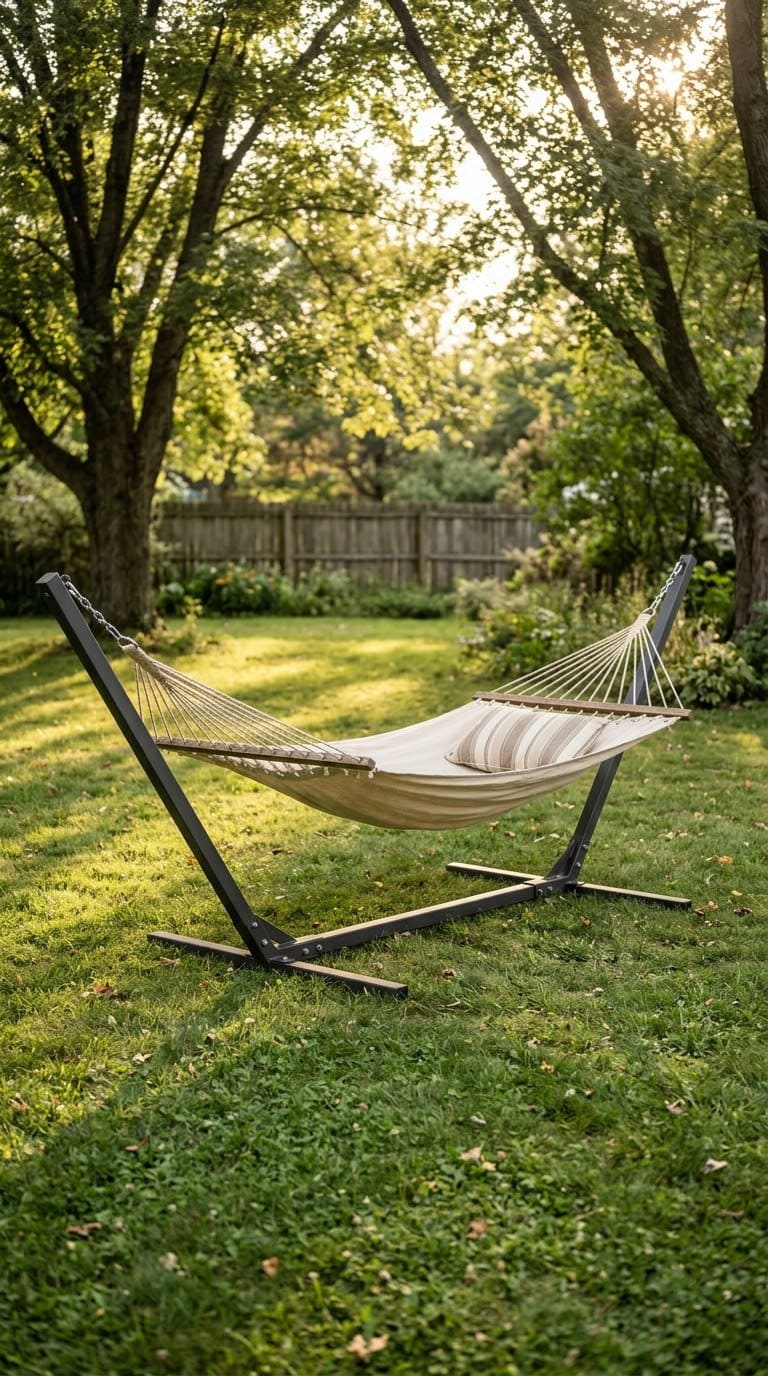
A portable stand works on any flat ground. Bob Vila notes spreader-bar hammocks hang 13 feet between points, with hardware 4 to 5 feet off the ground.
Check the stand’s weight rating against the hammock’s. Inspect it each season. A 2008 recall of wooden stands noted the wood could deteriorate outdoors and break, per the CPSC.
The agency reported 12 injuries needing medical care. Store stands under cover in winter. Look for cracks, rust, and loose bolts before every season.
Cost tier: medium.
7. Hammock With a Shade Sail
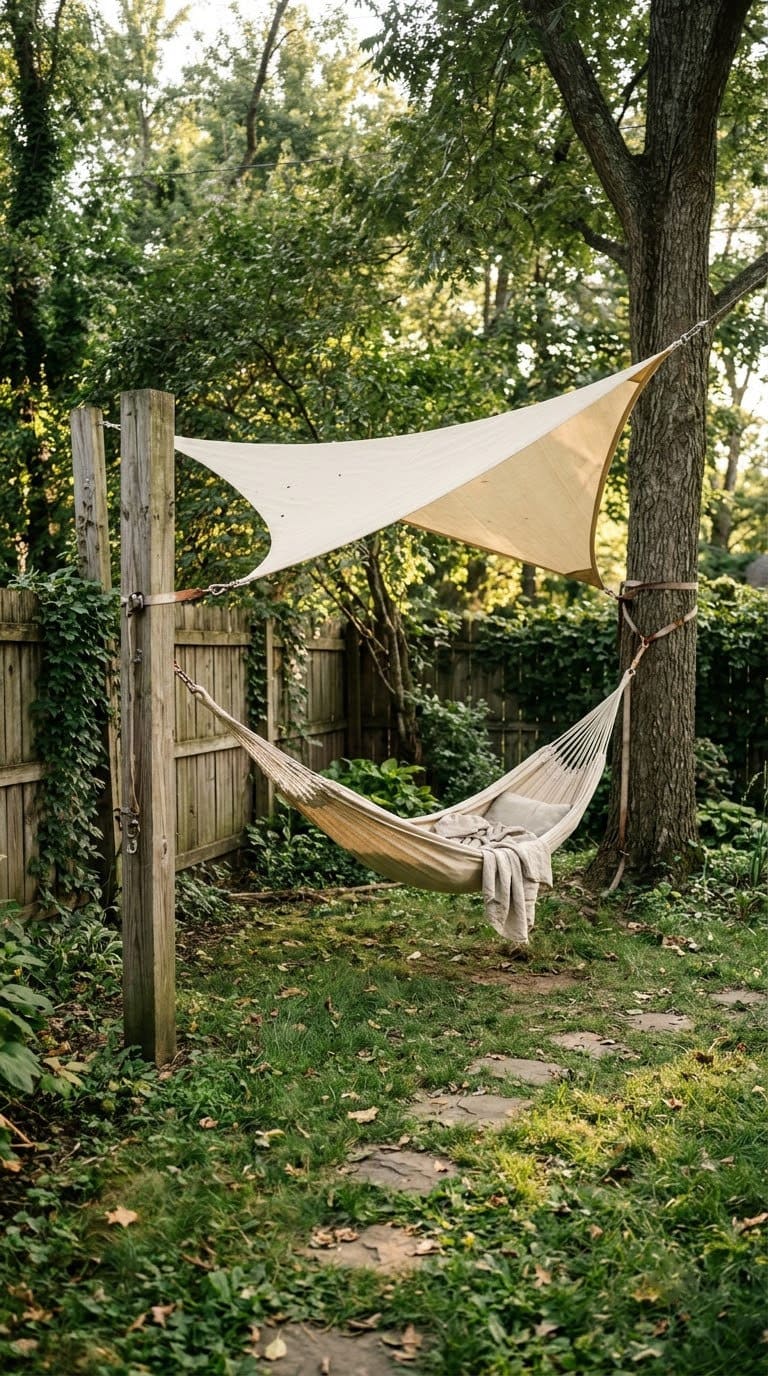
Sun can cook you fast. Anchor a triangle or rectangle shade sail above the hammock on separate posts. Keep the sail’s anchors independent from the hammock’s anchors.
Hang the sail high enough to clear your head when you swing. Angle it so it blocks afternoon sun.
This build uses its own posts, so follow the post advice from idea 2. Our backyard pavilions guide shows other roof options.
Cost tier: medium. Sizes are our own suggestion.
8. String-Light Hammock Nook
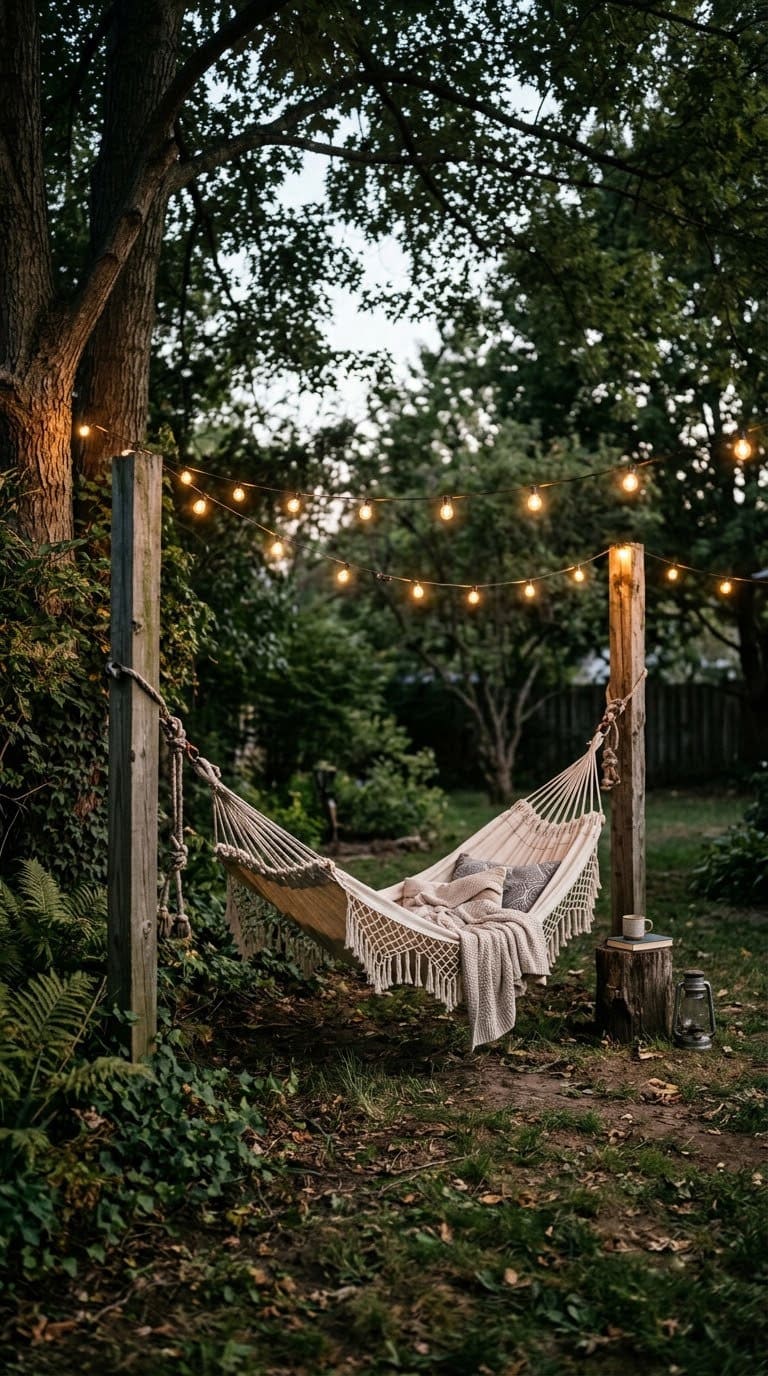
String lights turn a hammock into an evening spot. Hang them on separate lines, not on the hammock’s anchors.
Keep lights well overhead so you don’t catch them with your hands. Use outdoor-rated, low-heat bulbs.
We cover how-to details in how to hang string lights on a pergola.
Cost tier: low. Plug into a weatherproof outlet with a GFCI.
9. Bug-Proof Hammock With Netting
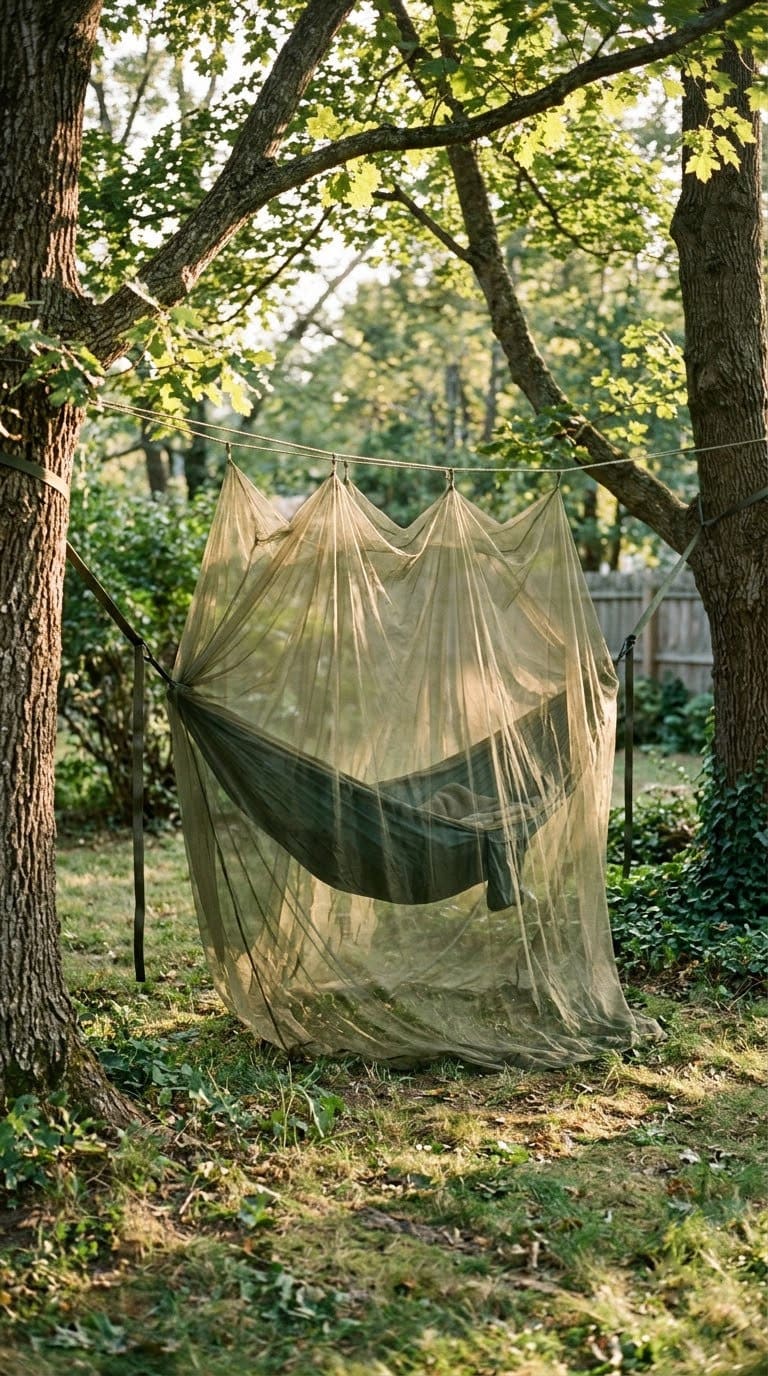
A mosquito net keeps bugs off during dusk. Stretch a ridgeline cord above the hammock and drape the net over it. Tuck the edges under you.
Use a net made for hammocks. Keep it clear of any candle or heat source.
Netting traps heat, so pick a breezy spot. This idea is general practice, not tied to a source.
Cost tier: low to medium.
10. Hammock Near a Fire Pit Lounge
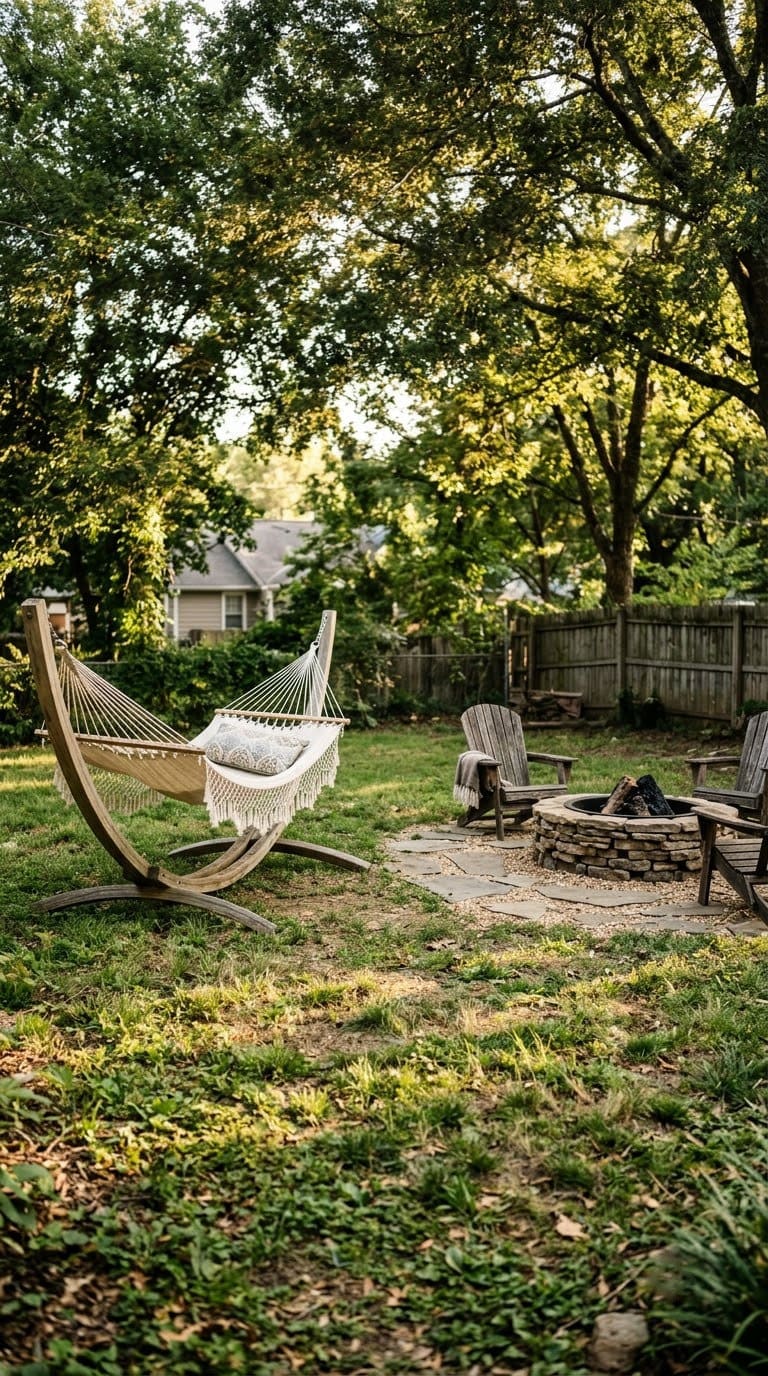
Hammock and fire pit make a great evening pair. Keep the hammock well away from sparks and heat. Fabric burns easily.
Place the hammock upwind and out of the path of drifting embers. Never leave a fire unattended with a person asleep nearby.
See our backyard fire pit lounge ideas for layout ideas.
Cost tier: medium. A safe distance depends on your fire pit, so follow its manual.
11. Hanging Chair or Barrel Seat
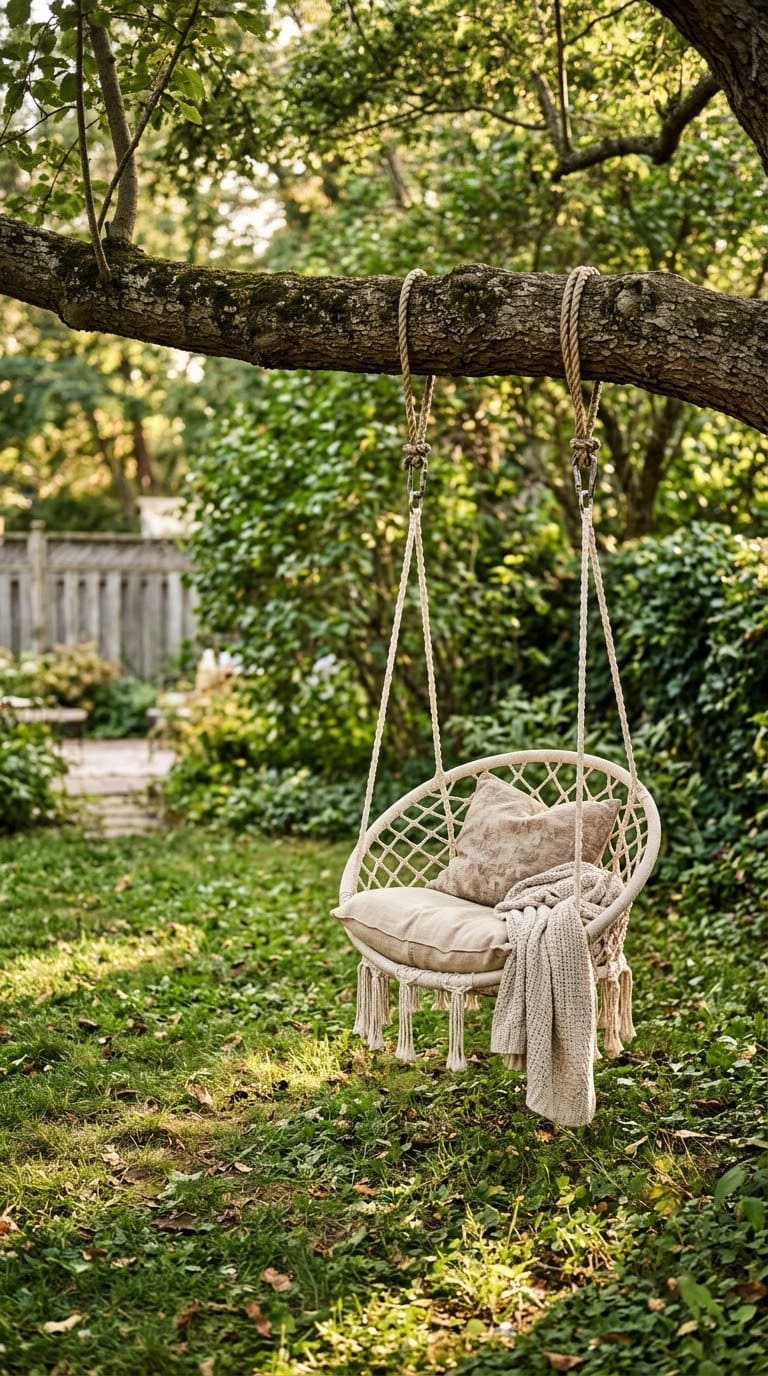
A hanging chair needs one anchor. Use a branch or beam rated well above your weight. Don’t use a small or dead branch.
Check the chair’s weight rating. Follow the instructions exactly, since a loose pin or bolt can fail.
Hang the seat 18 inches or so off the ground, so you can step in and out. Add a cushion and a small footrest.
Cost tier: low to medium. Great for a small yard.
12. Hanging Daybed Swing
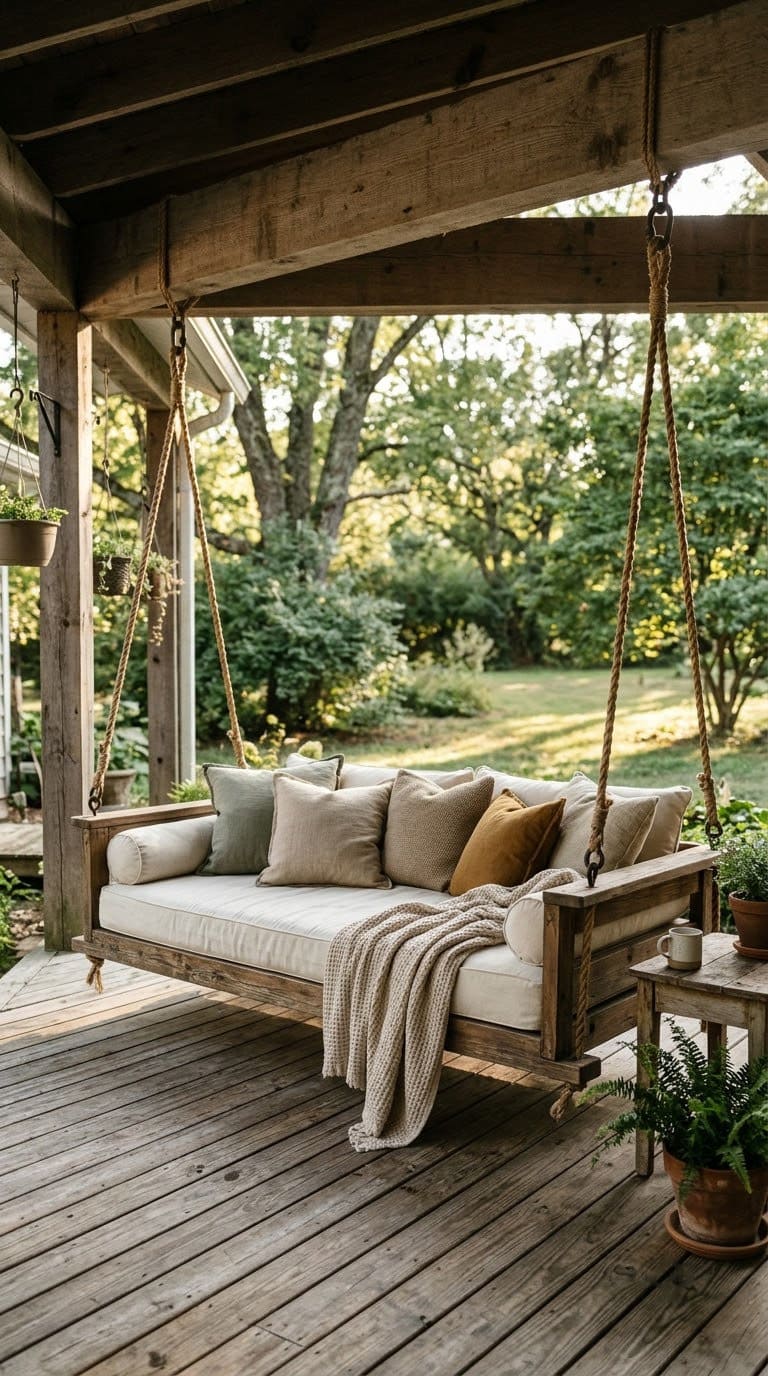
A daybed hangs from two or four points. It’s heavier than a hammock, so use a beam sized for the load.
Use chains or ropes rated far above the swing’s weight, plus bedding and people. Hang it so the seat sits at a comfortable height.
Have a builder check the beam. See our relaxing backyard ideas for places to put it.
Cost tier: high. Sizes depend on your beam.
13. DIY Macramé Hammock
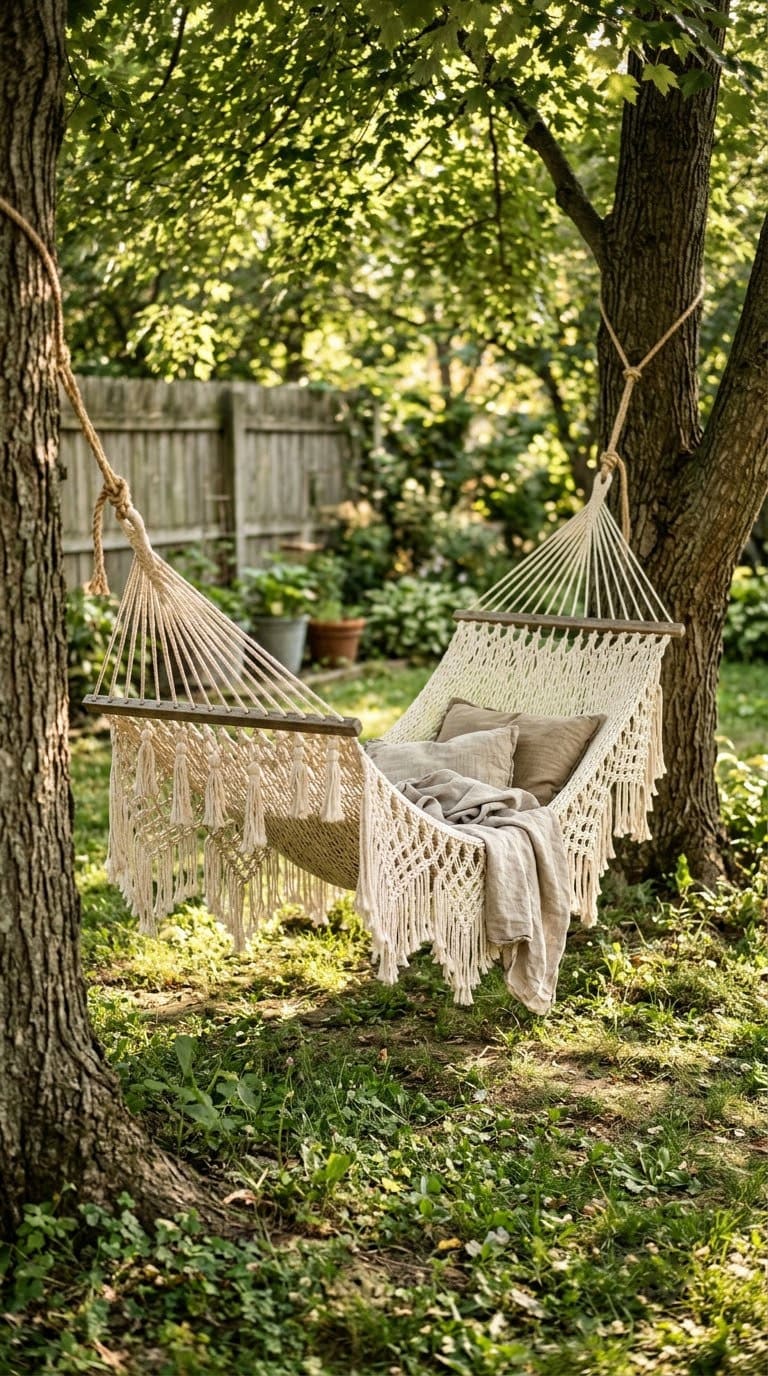
Make a hammock from thick cotton or polyester rope. Cut many long cords and knot them in a net pattern. Add a wooden bar at each end.
Test the weight on a low hang first. Pull on every knot. Rope stretches over time, so check it before each season.
Cotton rots when it stays wet. Bring it in during rain.
Cost tier: low to medium. Plan a weekend.
14. Drop Cloth Hammock
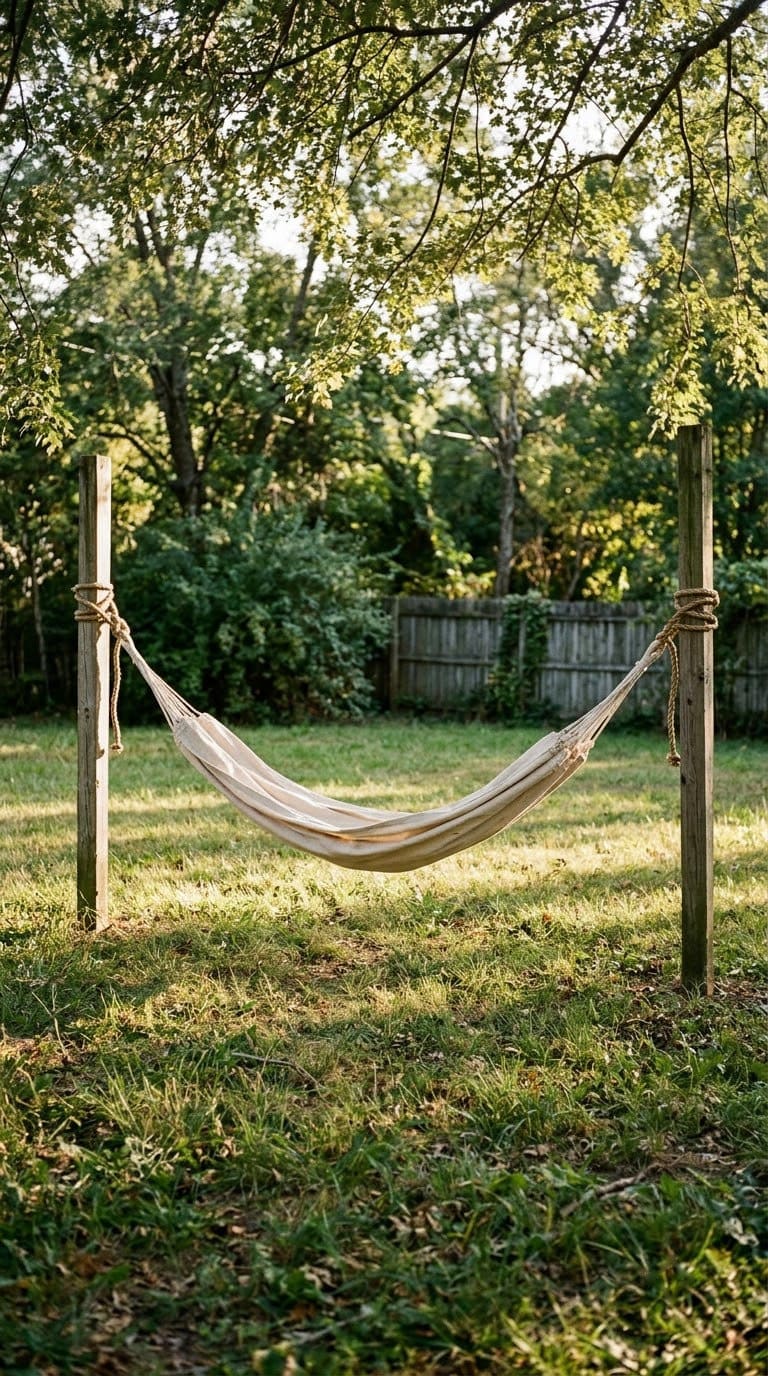
A canvas drop cloth makes a cheap, simple hammock. Fold the cloth, hem the ends, and gather them into rope loops.
Double-stitch every seam. Use heavy thread and test with low weight before you sit in it. Drop cloths vary in strength, so don’t trust the first try with your full weight.
Bring it inside when not in use. Canvas can mildew in damp weather.
Cost tier: low.
15. Compact Small-Yard Hammock Corner
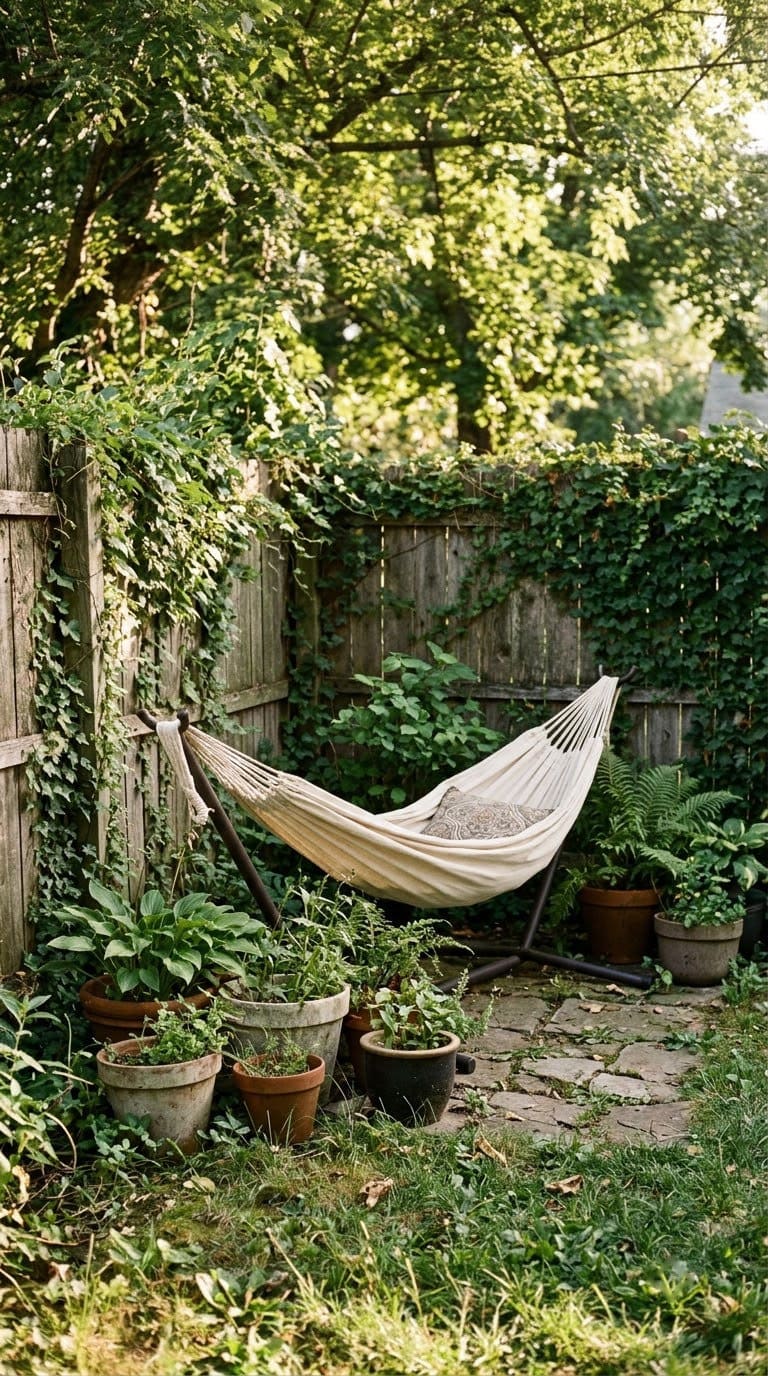
A small yard can still fit a hammock. Choose a compact stand or a hanging chair, which needs less space.
Measure first. A stand needs room for the full length plus space to swing and get in and out.
Screen the corner with tall pots or a trellis. Keep the stand away from fences and walls.
Cost tier: low to medium.
What Should You Check Before You Dig or Drill?
Call 811 before any digging. It’s the free line that marks buried utilities, and a post hole can hit a gas, water, or power line. Wait for the marks before you break ground.
Check local rules for permanent posts and pergolas. Some towns require permits for structures over a certain size. Your HOA may also have a say in what goes in a yard.
Find studs before you drill into a porch. Bob Vila says to use load-bearing wood studs, posts, or joists and to avoid metal studs. Drill a pilot hole in the center of the stud before you drive an eye hook.
Rent your home? Skip the drilling. A freestanding stand or a hanging chair on an existing beam is the cleanest choice, and you can ask your landlord first.
What Does a Weekend Build Plan Look Like?
On Friday evening, walk the yard and mark possible spots. Look up for dead limbs, and check the ground for slopes and roots.
On Saturday morning, gather materials and cut any lumber. If you’re building the stand from idea 3, cut the posts and supports and dry-fit them first.
On Saturday afternoon, assemble and finish. Use exterior-rated screws, and seal the wood. Let the finish dry overnight.
On Sunday, hang the hammock and test it with a low seat height and your own weight. Sit down in stages, then add a second person only if the setup feels solid.
How Do You Care for and Store a Hammock?
Fabric hammocks fade in sun and mildew in damp weather. Bring yours inside when it rains, or at least for winter. Wash it as the label says.
Check ropes, hooks, and stitching each spring. Replace anything frayed or rusted. A rope that looks fine can still be weak.
For stands, inspect every bolt. Tighten loose ones and look for cracks. The CPSC recall above shows how outdoor wood can break down over time.
Take tree straps down when you’re not using them. Scouting magazine says lines left strung can tangle wildlife.
Common Mistakes to Avoid
Hanging too high or too tight is the first one. Bob Vila says to aim for about 18 inches of seat height and a 30-degree angle.
Using rope on trees is the second. Scouting magazine advises wide webbing straps, 1.5 to 2 inches wide.
Trusting an untested stand is the third. The CPSC reported 12 injuries needing medical care from broken wooden stands.
Digging without checking for utilities is the fourth. Call 811 first, and check local rules for post footings.
FAQ
How high should a hammock hang?
Bob Vila says the seat should sit about 18 inches off the ground when someone is in it, with a 30-degree angle on each side.
How far apart should hammock trees be?
Bob Vila says trunks should be 10 to 15 feet apart and at least 6 inches across.
What kind of straps protect trees?
Use wide webbing straps. Scouting magazine suggests 1.5 to 2 inches wide, and says not to use rope or twine.
How much weight can a DIY hammock stand hold?
It depends on your build. Woodshop Diaries’ stand held about 350 pounds, but wasn’t tested to its 450-pound hammock rating, and the author isn’t a structural expert.
Can I hang a hammock from my porch?
Yes, if you anchor into two load-bearing wood studs, posts, or joists no more than about 15 feet apart. Bob Vila says to avoid metal studs.
Never miss an update — choose FarmFoodFamily as your preferred source on Google.
How it works: Tap the button below to open Google's settings page, then check the box next to FarmFoodFamily.
Tap the checkbox to turn it blue — that's how you know it's set.