9 Welcoming Porch Planter Ideas That Match Your Light, Size and Pets
A porch planter looks great on day one and fails by July unless you match the plants to your real light, the pot to your watering habits and the mix to your pets.

Never miss an update — choose FarmFoodFamily as your preferred source on Google.
How it works: Tap the button below to open Google's settings page, then check the box next to FarmFoodFamily.
Tap the checkbox to turn it blue — that's how you know it's set.
A porch planter looks great on day one and fails by July unless you match the plants to your real light, the pot to your watering habits and the mix to your pets.
Products We Recommend
This post contains affiliate links. We may earn a commission on qualifying purchases at no extra cost to you.

12 Inch Coco Liners for Hanging Baskets, 6 Pack
Coir liners that drain freely and fit the 12 to 14 inch baskets Iowa State sizes for 3 to 5 plants.
Shop Now
12 Inch Clear Plastic Plant Saucers, 20 Pack
Drip trays for porch pots. Empty them after rain so water doesn't stain boards or collect.
Shop Now
4-in-1 Digital Soil Moisture Meter
A probe that helps you check how dry the mix is before you water.
Shop NowMost porch planter lists show photos from a garden center in May. Then your own pots wilt, drown or get eaten by the dog.
The fix isn’t a prettier pot. It’s a short checklist: how much sun your porch really gets, how big the container should be and which plants are safe for the animals that live there.
Here are nine planter ideas built around those checks, with the plants, the sizes and the care schedule that keep them alive.
Answer 4 quick questions and get matched to the exact fix for your yard — drainage, budget, layout, or something else entirely.
Take the Free QuizQuick Answer
Start with light, not with looks. Stand on the porch at different times of day and count the hours of direct sun. Covered porches are often shade or part shade, even when the yard is sunny.
Then build each pot with three roles. Iowa State’s Aaron Steil says a 12 to 14 inch basket holds 3 to 5 plants, and a 16 to 18 inch basket holds 5 to 7. Overplanting means more watering later.
Plan the pot before you shop. Write down the light, the pot size and any pets, then buy plants to fit that list.
Use potting mix, never garden soil. Check pots daily once plants are established, and water until it runs out the bottom.
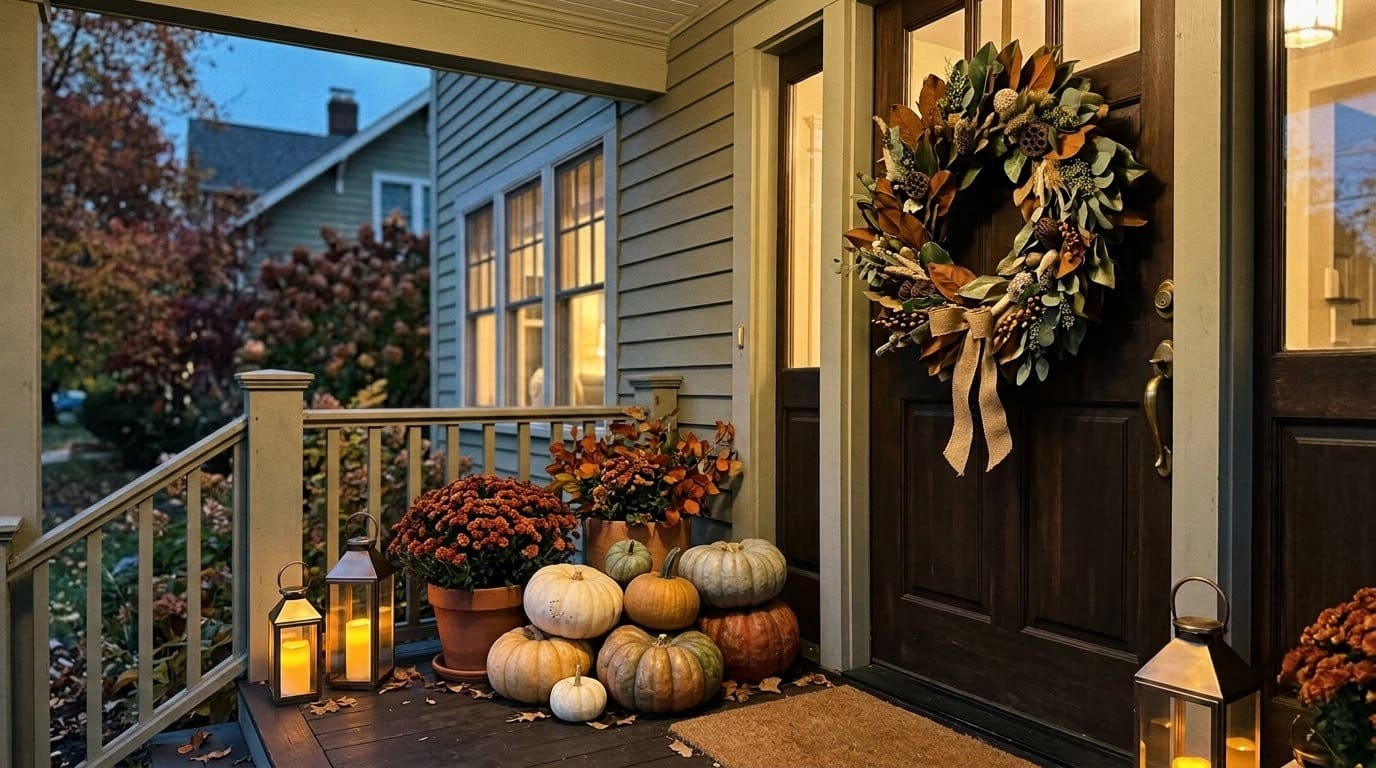
If you have pets, check every plant against the ASPCA list. Lilies are a serious danger to cats, and sago palm, tulips and oleander are toxic too.
Most yard problems trace back to one specific, fixable cause. Find yours in 4 quick questions.
Take the Free QuizWhich Idea Fits Your Porch?
Pick by light first, then by the extras. This table sorts the nine builds below.
| Idea | Light | Best for | Pet note |
|---|---|---|---|
| 1. Full-sun urn | Full sun | South or west porches | Check each plant |
| 2. Covered-porch shade pot | Part to full shade | Deep porches, north sides | Boston fern is non-toxic |
| 3. Hanging basket | Match the plants | Railings and hooks | Check each plant |
| 4. Railing box | Sun or shade | Porches with rails | Check each plant |
| 5. Pet-safe pot | Full sun | Homes with cats or dogs | Built from non-toxic picks |
| 6. Symmetrical pair | Any | Formal doors | Check each plant |
| 7. Herb and edible pot | Full sun | Kitchen-door porches | Check each plant |
| 8. Succulent bowl | Hot, dry, windy | Open porches | Hens and chicks non-toxic |
| 9. Fall swap pot | Sun to part shade | Autumn refresh | Check each plant |
Before You Plant: Four Checks
These apply to every idea. They take ten minutes and decide whether the pot lasts.
Check 1: Count your sun hours
One source defines partial shade as about 4 to 6 hours of direct sun.
It defines full shade as under 4 hours.
But those thresholds aren’t a universal standard, so also read the plant tag.
Covered porches get less light than they appear to. A deep roof can cut the light even when the yard looks sunny. North-facing porches are usually the darkest.
Check 2: Match every plant in a pot to the same light
Match each plant’s sun need to the container’s spot, says Epic Gardening in its thriller, filler and spiller guide. Coleus and impatiens tolerate full shade, while agastache and melampodium need full sun.
Coir liners that drain freely and fit the 12 to 14 inch baskets Iowa State sizes for 3 to 5 plants.
Shop NowThis post contains affiliate links. We may earn a commission on qualifying purchases at no extra cost to you.
Mixing the two in one pot guarantees that one of them struggles.
Check 3: Use potting mix and a drain hole
Steil’s guide says to always use a well-drained potting mix and to avoid garden soil. A soilless mix of peat moss, vermiculite and perlite is the standard.
The average homeowner spends $616/year on yard fixes that don't address the real problem. Find out what yours actually is — before you spend another dollar.
Take the Free QuizFill the pot to within a half to one inch of the rim so water has room to soak in.
Tip: put a saucer or tray under pots on wood decks only if you empty it after rain, because standing water stains boards and breeds mosquitoes.
Check 4: Check the pets
The ASPCA lists lilies (Lilium and daylilies) as lethal to cats, even from small exposure to pollen. Sago palm, tulips, oleander and autumn crocus are also toxic. If your pet eats something, call your vet or the ASPCA hotline at (888) 426-4435.
The 9 Best Porch Planter Ideas
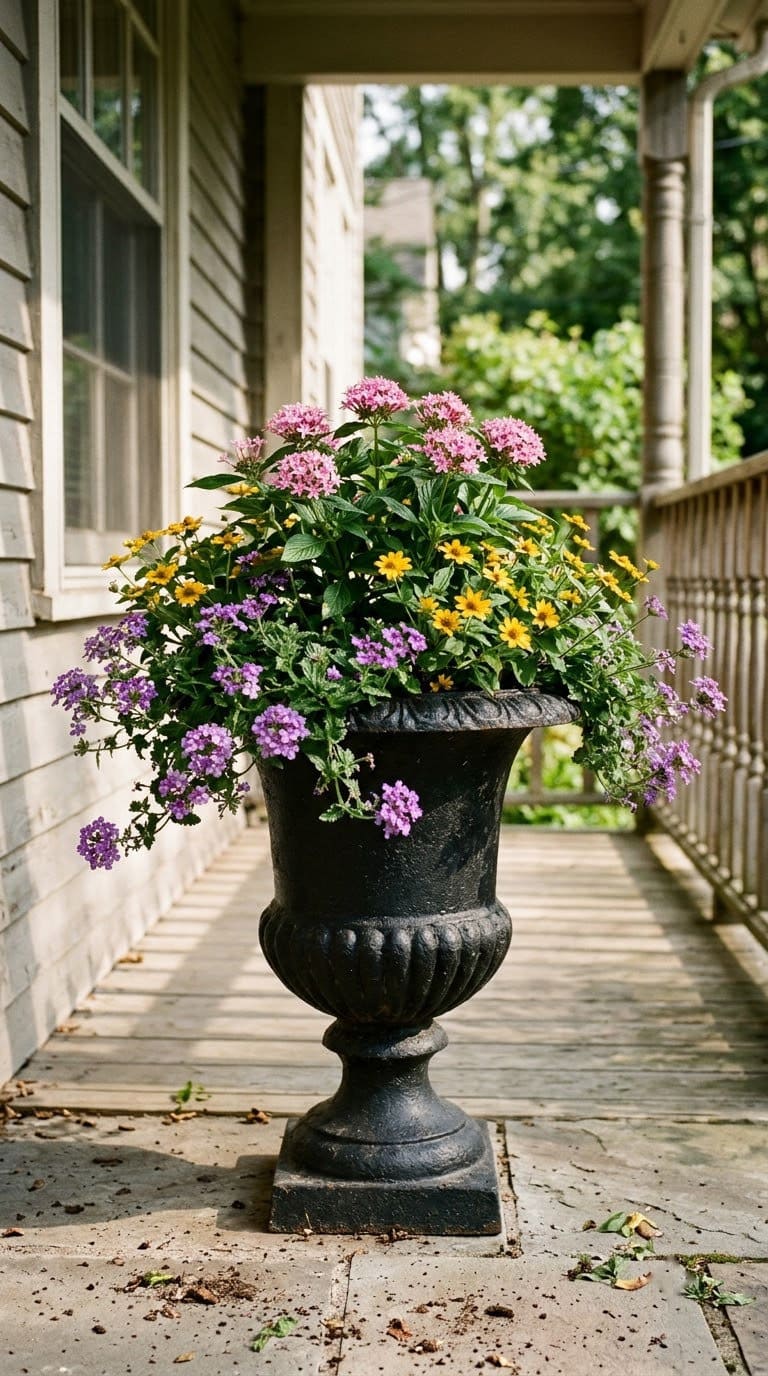
1. A Full-Sun Thriller, Filler and Spiller Urn
This is the classic. A tall plant in the middle or back, a mounded filler around it and a trailing plant over the edge.
Epic Gardening gives the roles. A thriller is the focal plant, a filler adds heft and softens the base and a spiller trails over the rim. For full sun, use Pentas (18 to 24 inches) as the thriller, Melampodium (1 to 2 feet) as the filler and Verbena (6 to 18 inches) as the spiller.
Plant them in a large pot with fresh potting mix. Feed with a soluble fertilizer every 1 to 3 weeks in summer, as Iowa State advises. See more mixes in the site’s container gardening calendar for August.



Quick tip: set the thriller a little off center rather than dead in the middle. An off-center plant looks more natural, and it leaves room for the spiller to drape on the side people see first.
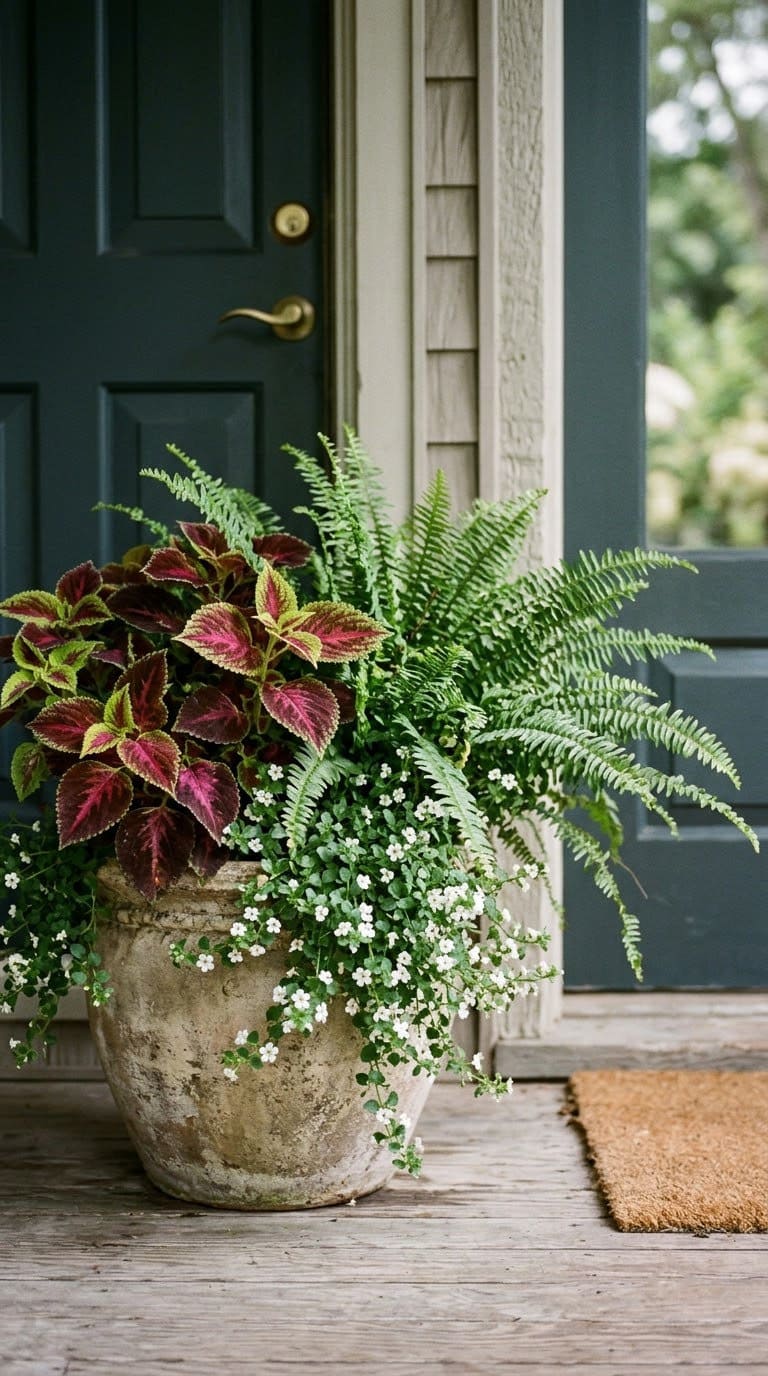
2. A Covered-Porch Shade Pot
Deep porches need plants that bloom or color up without much sun. Foliage does the heavy lifting.
Epic’s table lists plants for the job.
Coleus is a filler for full sun to full shade, and impatiens does the same. Bacopa trails in partial shade. Iowa State adds Boston fern, fuchsia and wax begonia for shade.
Rain rarely reaches a covered porch, so you’ll water by hand.
Check often, because the roof means pots stay dry even in a storm.
3. A Hanging Basket
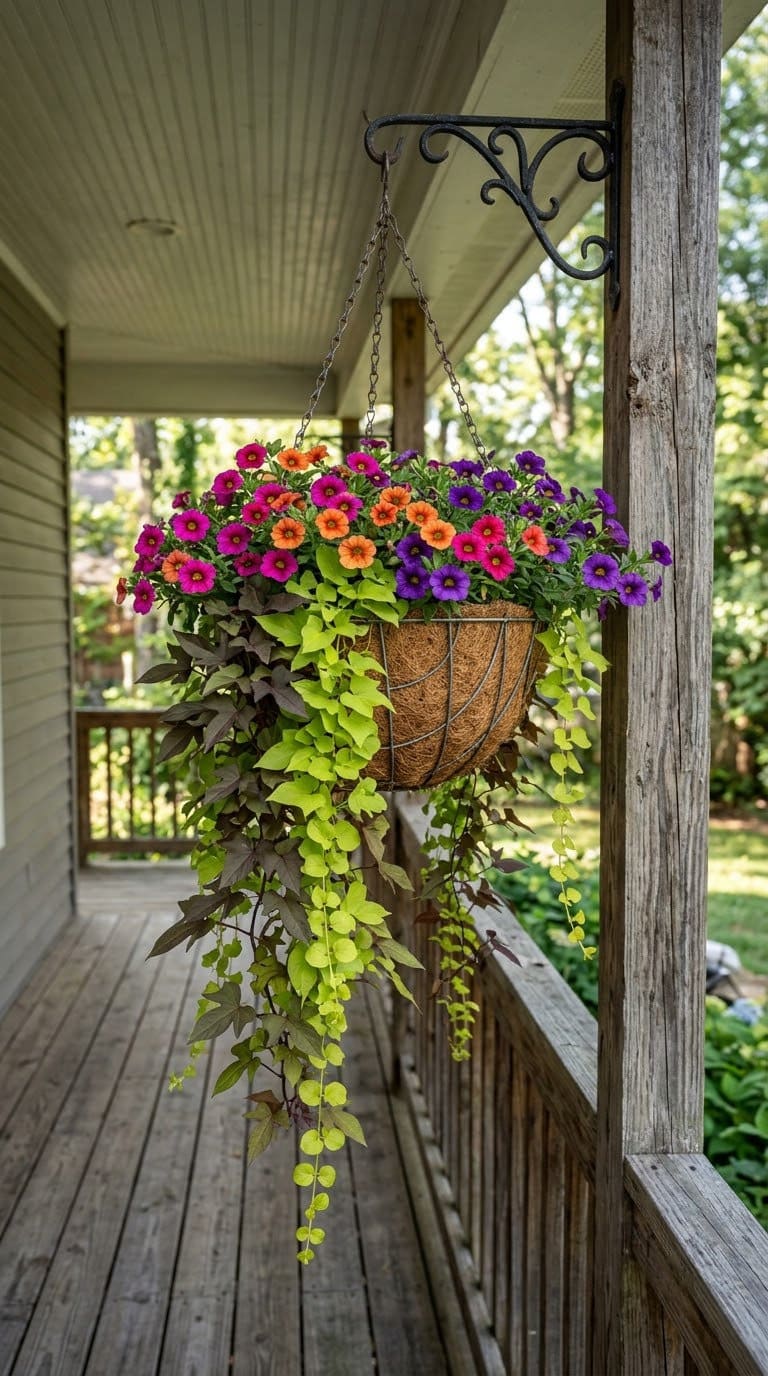
Hanging baskets add height without taking floor space. They also dry out fastest.
Iowa State says a 12 to 14 inch basket holds 3 to 5 plants, and a 16 to 18 inch basket holds 5 to 7. Fill to within a half inch to an inch of the rim. Line the bottom of a metal-frame basket with landscape fabric or plastic and poke drainage holes in the plastic.
Check daily once plants are established, and water until it drains out the bottom. If the soil pulls away from the wall, soak the basket in a tub for a couple of hours, but don’t leave it long or roots can rot. In mid-summer, cut trailing plants back by one-third to one-half to keep them blooming.
Quick tip: hang the basket low enough to reach without a stool. A basket you can’t reach is a basket you forget to water, and the daily check is what keeps it alive.
4. A Railing Planter Box
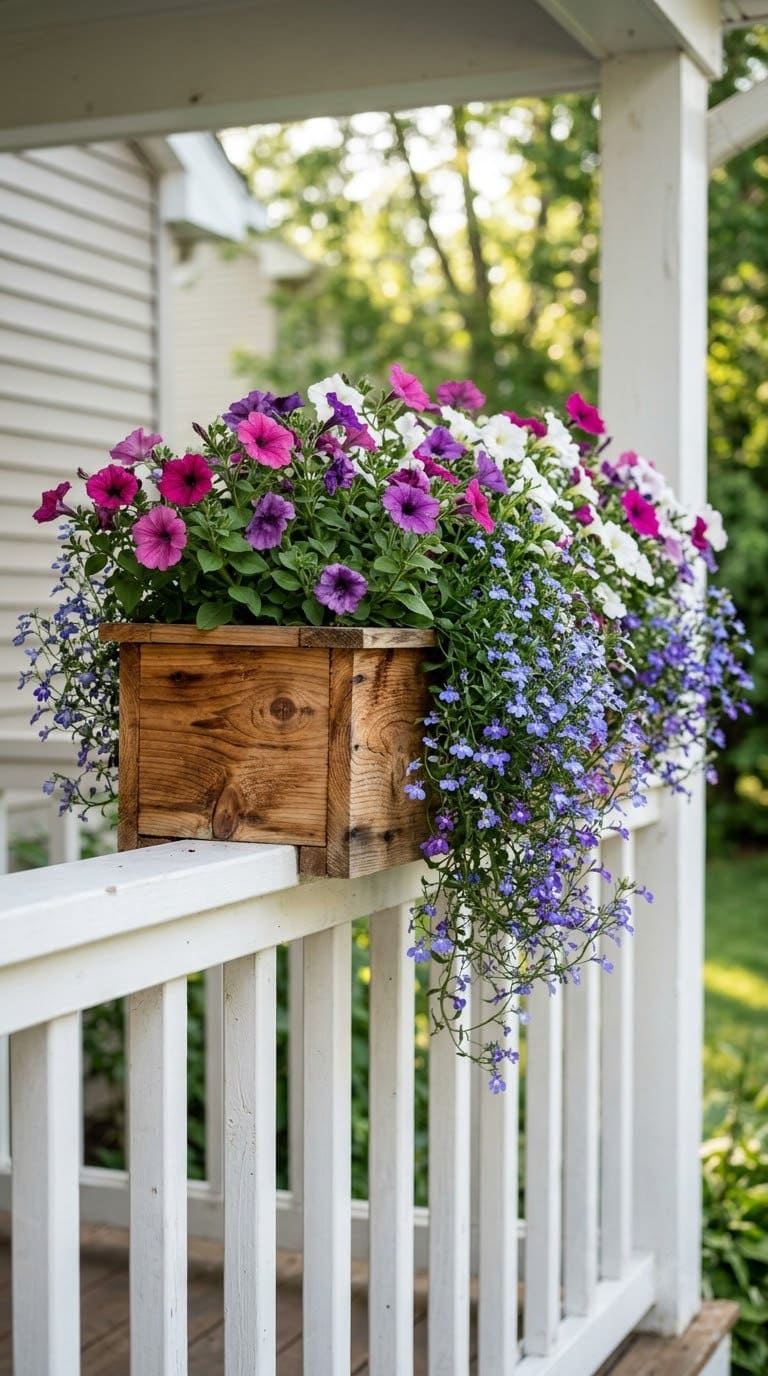
A box on the railing adds color at eye level. It also adds weight to the rail.
Use sturdy brackets that hold the box securely over the railing. Fill with light potting mix, not heavy soil, and weigh a filled, watered box before you hang it. Choose trailing plants in front and upright plants behind.
Add drainage holes and a tray or liner if you don’t want water running down the siding. See pallet and wood planter box ideas for builds you can make yourself.
5. A Pet-Safe Porch Pot
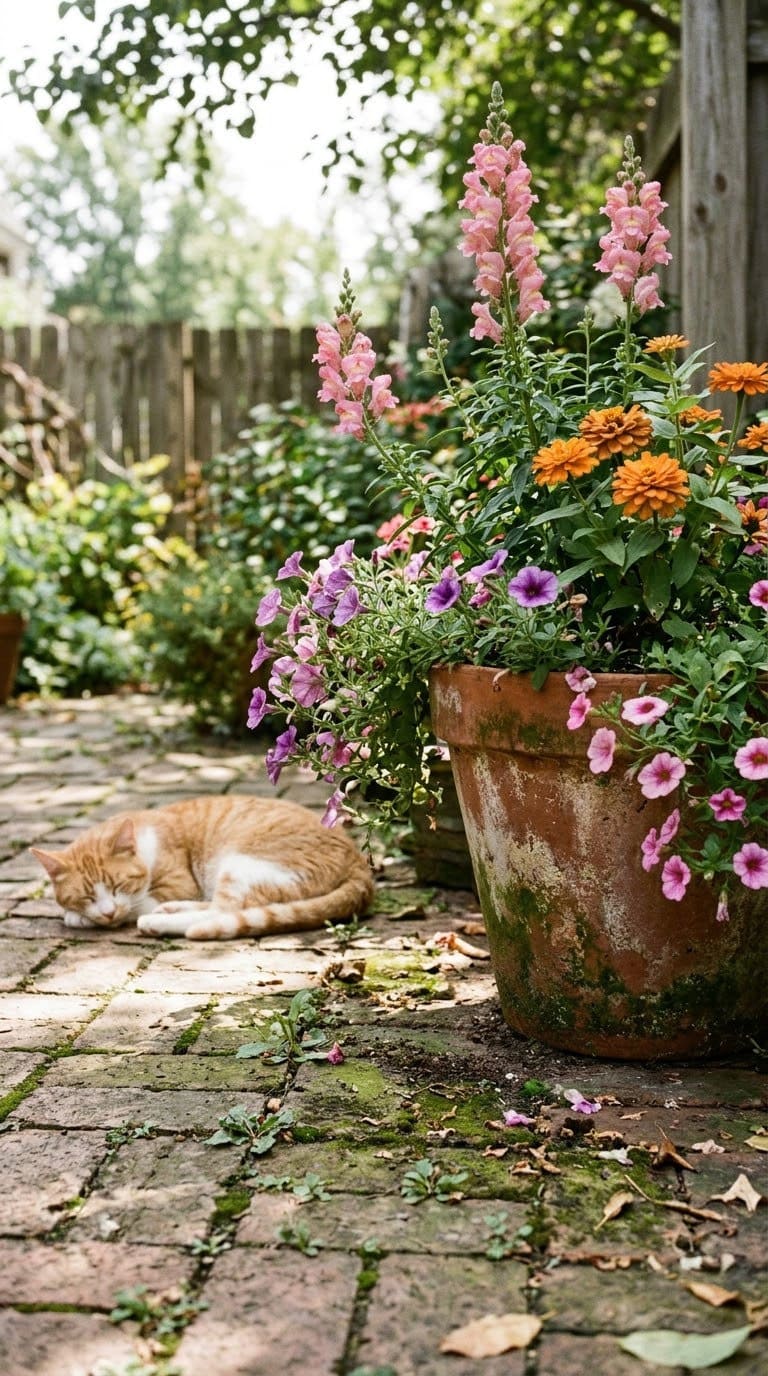
If your cat or dog lives on the porch, build the pot from non-toxic plants. The ASPCA names several that work in containers.
Its non-toxic list includes petunia, zinnia, gerbera daisy, snapdragon, hens and chicks and Boston fern. Combine a gerbera or snapdragon as the thriller, zinnias as filler and petunias as spillers for a sunny pot. Any plant can cause mild stomach upset, the ASPCA notes.
Avoid lilies, sago palm, tulips and oleander near cats and dogs. Keep potting mix and fertilizer pellets out of reach too.
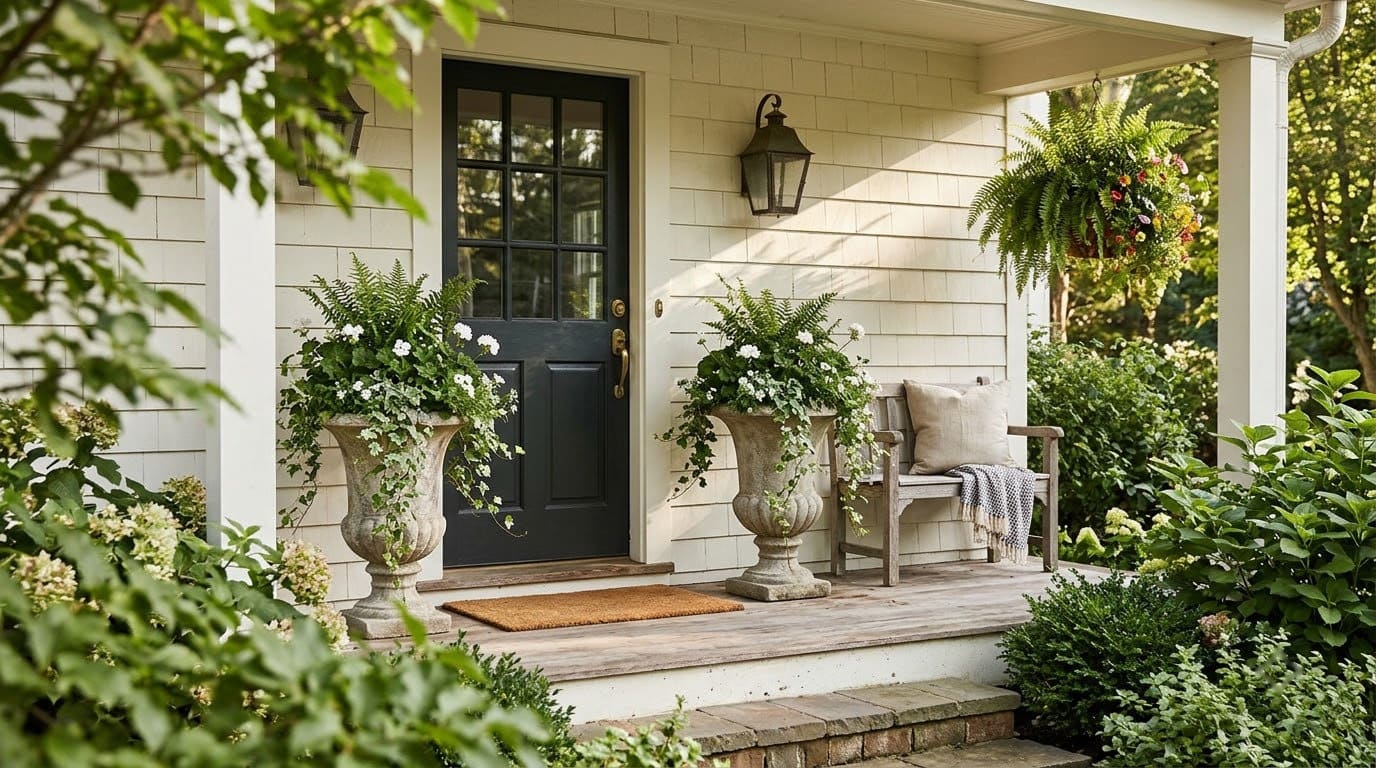
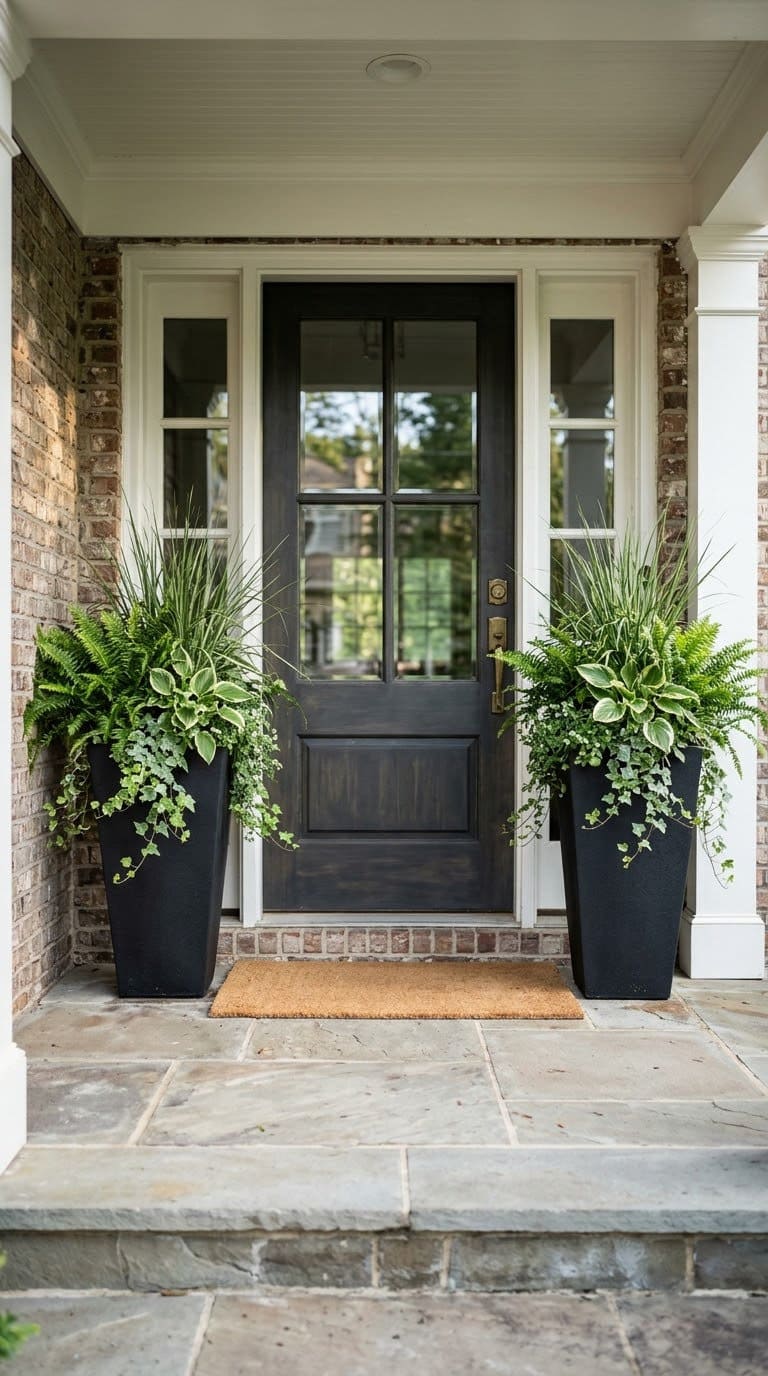
6. A Symmetrical Pair Beside the Door
Two matching planters give the entry a formal frame. They also make a small porch look balanced.
Choose pots of the same height and material.
Plant them with the same mix of plants so the pair reads as a set. Leave at least a clear walking width next to the door, because planters should never block the way in or out. That clearance is our own guideline.
Add a porch light to show them off. Warm light at dusk makes the foliage glow.
Quick tip: stand at the street and look at the pair from the sidewalk. If one pot looks taller or fuller than the other, swap a plant until they match. See porch lighting ideas for fixtures.
7. An Herb and Edible Pot
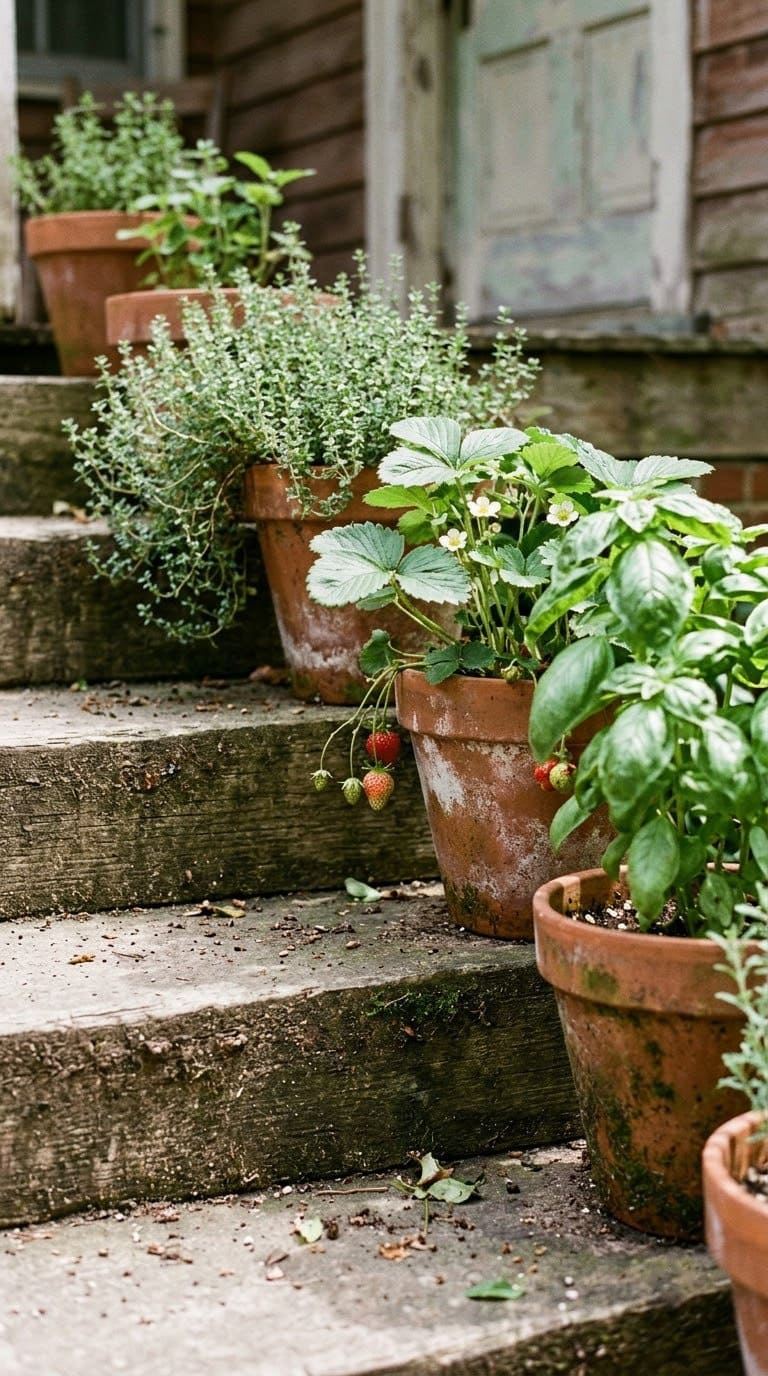
A kitchen-door porch is a good place for herbs. They’re close to the cook and smell good.
Iowa State lists strawberry, compact tomatoes, thyme and mint as edibles that need full sun and steady moisture.
Lettuce tolerates part shade. Plant mint alone in its own pot, because it spreads.
For more, read growing culinary herbs in pots.
8. A Succulent Bowl for Hot, Windy Porches
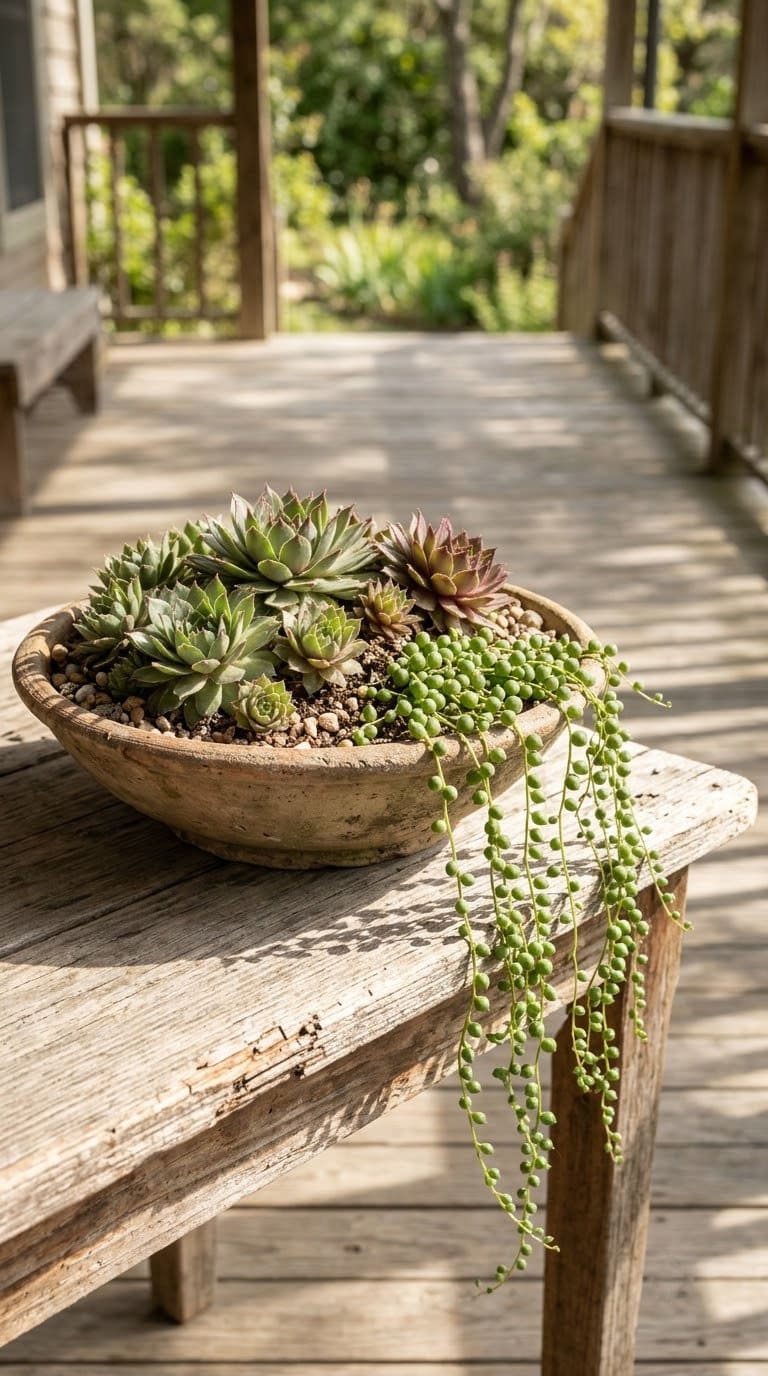
Some porches bake in the afternoon. Succulents suit that.
Iowa State says succulents like string of pearls and hens and chicks suit hot, dry or windy sites. Use a gritty potting mix and a bowl with a drain hole. Water when the mix is dry, and keep it out of constant rain.
Hens and chicks is on the ASPCA non-toxic list. Even non-toxic plants can upset a stomach, so keep curious pets from chewing.
Quick tip: use a gritty mix and a shallow bowl. A deep pot holds more water than succulents want, and they sit wet. For trailing types, see trailing and hanging succulents.
9. A Fall Swap Pot
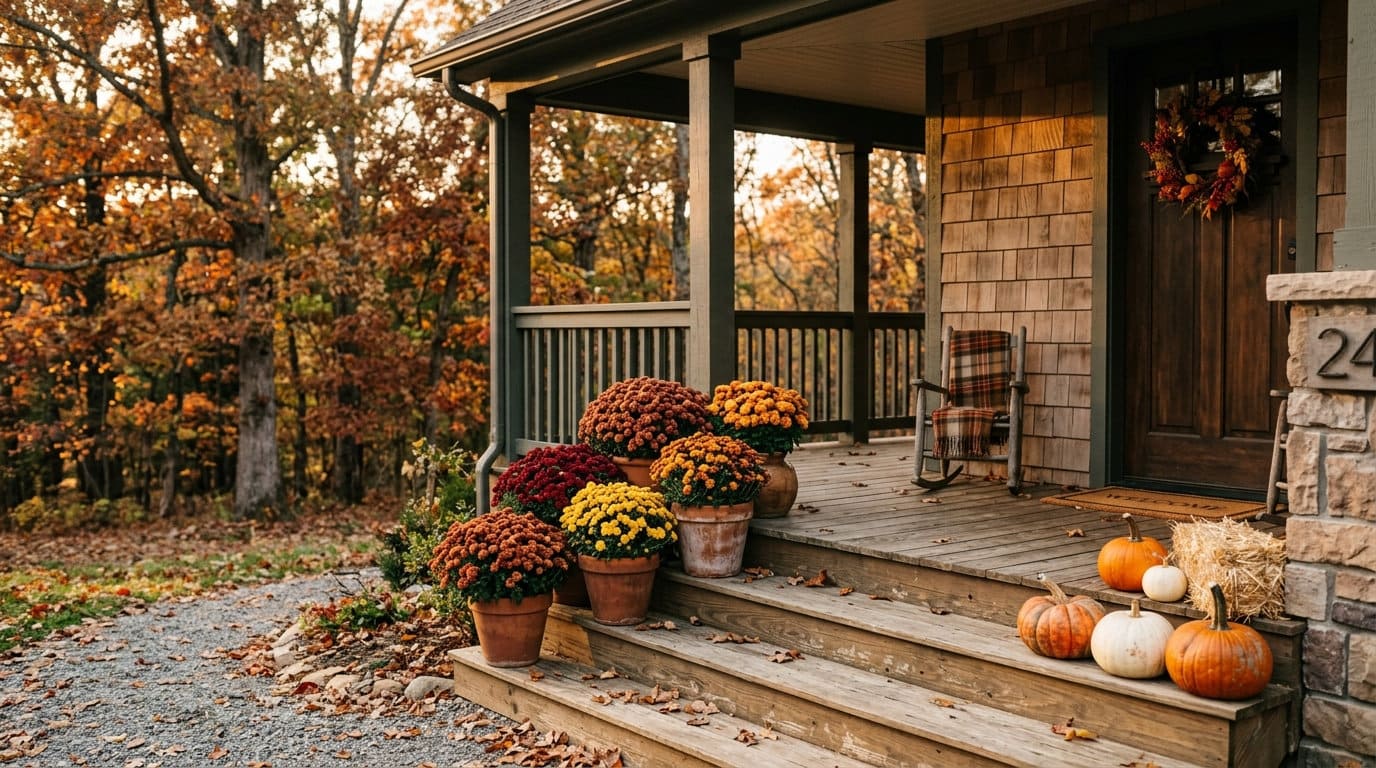
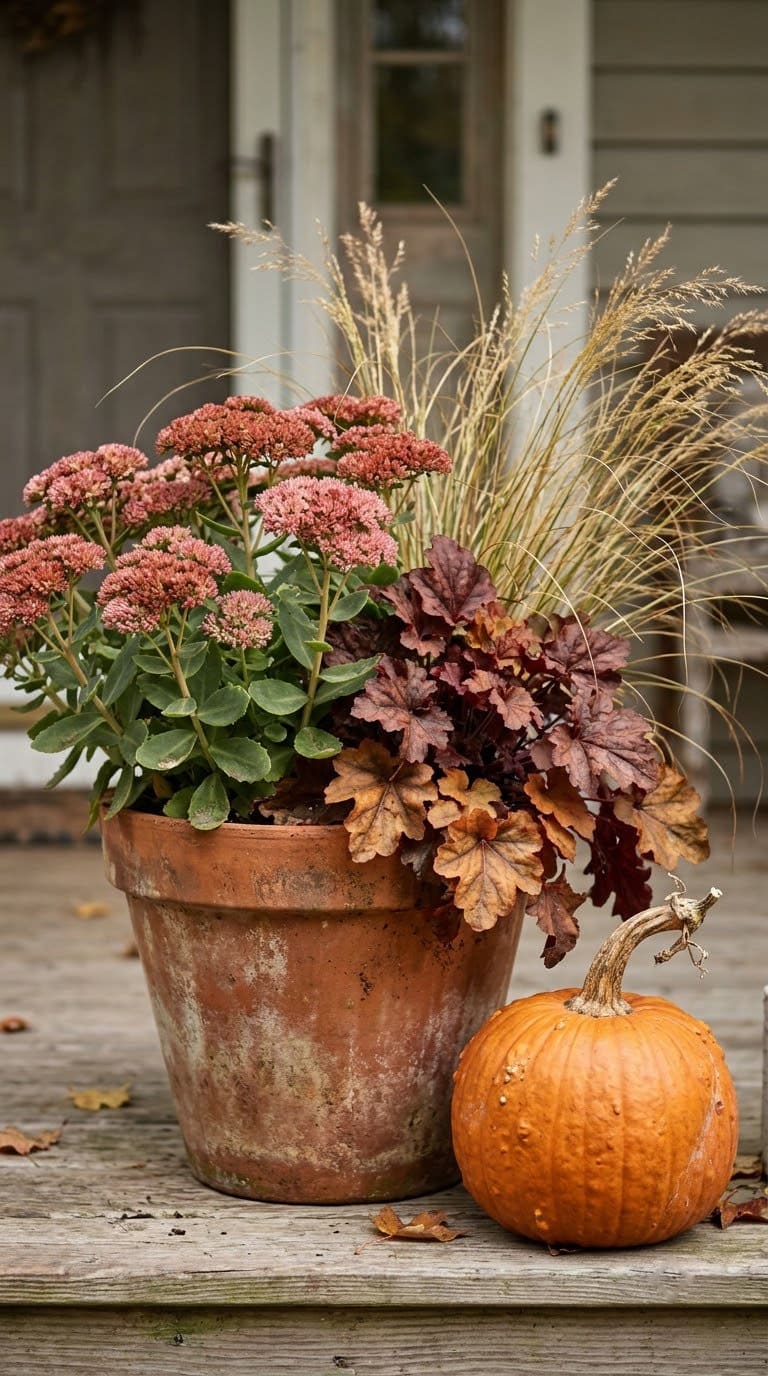
When summer annuals fade, swap them instead of starting over. A fall pot keeps the porch looking cared for.
Epic’s list includes Sedum ‘Autumn Joy’ (18 to 24 inches, full sun) as a filler. Pair it with coral bells for foliage color. Pull spent summer plants, refresh the top few inches of mix and replant.
See ideas for the rest of the porch in the guide to fall porch decorating ideas.
How to Water Porch Planters
Watering is where most porch pots fail. Containers dry faster than ground soil.
Check the soil daily once plants are established. Iowa State says hot, sunny days may need more than one watering. Water until it drains out the bottom, and don’t let the soil dry out completely.
Feed with a complete fertilizer that has a 1:2:1 nitrogen-phosphorus-potassium ratio. Avoid high-nitrogen fertilizers, which grow leaves at the expense of flowers.
Choosing Pot Size
Bigger pots dry out slower and hold more roots. Small pots dry out in a day.
Iowa State’s basket sizing is the clearest sourced guide: 12 to 14 inches for 3 to 5 plants, 16 to 18 inches for 5 to 7. Large pots get too heavy to hang, so put the biggest ones on the floor. Weigh a filled pot before you decide where it goes.
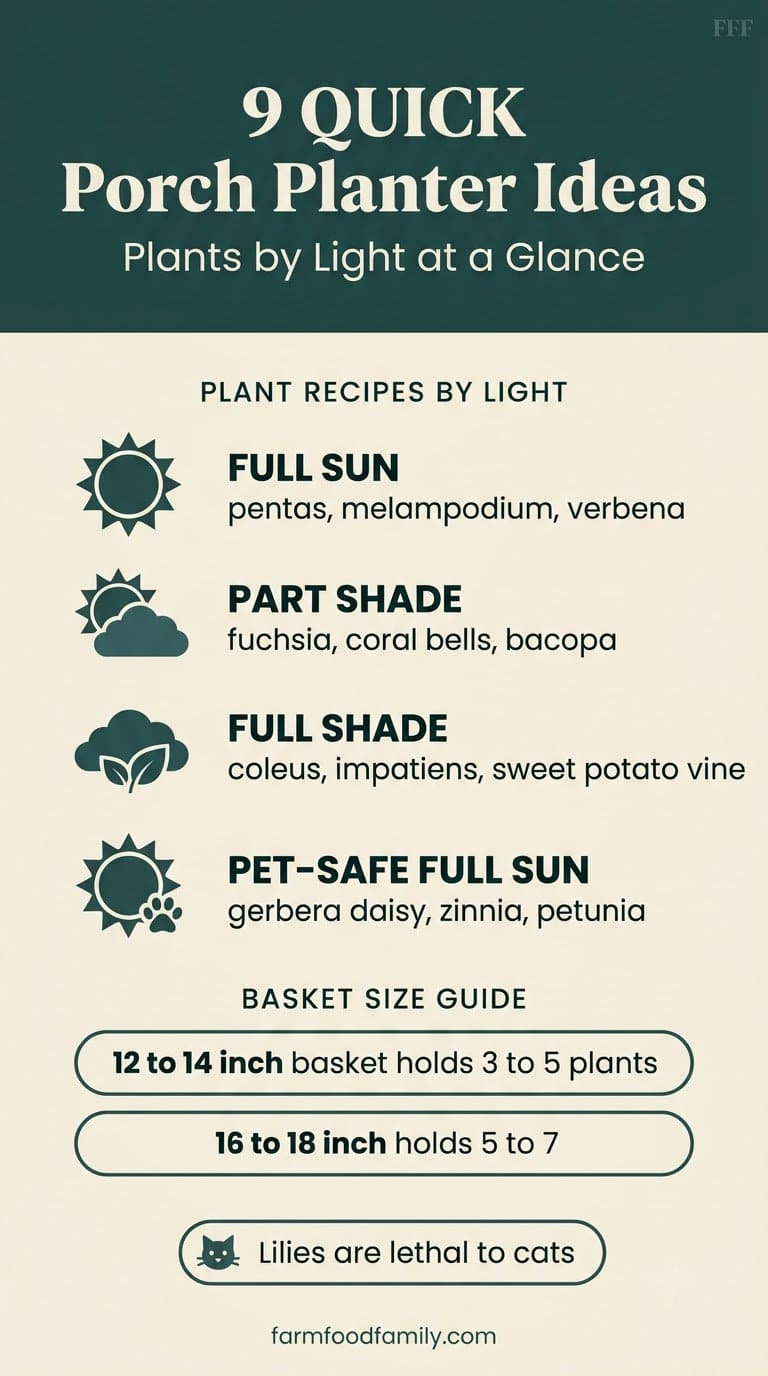
Plant Recipes by Light
Use these combinations as starting points. Every plant comes from the sources cited above.
| Porch light | Thriller | Filler | Spiller |
|---|---|---|---|
| Full sun | Pentas | Melampodium | Verbena |
| Part shade | Fuchsia | Coral bells | Bacopa |
| Full shade | Coleus | Impatiens | Sweet potato vine |
| Pet-safe, full sun | Gerbera daisy | Zinnia | Petunia |
Fuchsia is listed as a shade or part-shade basket plant by Iowa State and as a spiller by Epic Gardening, so it works in either role. Check each plant against the ASPCA list if pets share the porch.
Epic Gardening also notes some plants need extra care. Golden creeping Jenny turns brassy in too much sun, and licorice plant can rot in wet conditions.
Season-by-Season Care
A planter isn’t a one-time project. Small seasonal jobs keep it looking fresh.
Spring: Plant in fresh potting mix. Add a slow-release fertilizer early in spring, as Iowa State suggests.
Summer: Water daily once plants are established and feed every 1 to 3 weeks with a soluble fertilizer. In mid-summer, cut trailing plants back by one-third to one-half to keep them fresh and blooming.
Fall: Pull spent annuals and swap in cold-tolerant plants. Deadhead large-flowered plants like geraniums. Lobelia and sweet alyssum are generally self-cleaning.
Winter: Many porch plants are tender. Move them indoors or empty the pots before a hard freeze, and check your local hardiness zone.
A Simple Weekend Setup Plan
Set up in order so you don’t redo any steps.
Saturday morning: Count sun hours, measure the porch and choose pot sizes. Check every plant against your pet list.
Saturday afternoon: Buy potting mix, pots and plants. Set the pots in place before you fill them, because filled pots are heavy.
Sunday: Plant, water until it drains and set up a feeding reminder on your phone.
Common Mistakes to Avoid
Most porch pots fail for the same few reasons.
Overplanting. Crowded pots overgrow and need more water later, says Iowa State.
Wrong light. Shade-loving plants suffer in full sun, and sun plants bloom poorly in shade.
Ignoring pets. Lilies are lethal to cats, per the ASPCA.
High-nitrogen feed. It grows leaves and few flowers.
Letting the soil dry out. Dry mix pulls away from the pot and wilts plants.
FAQ
What is the thriller, filler, spiller rule?
A thriller is the tall focal plant, a filler adds mass around it and a spiller trails over the rim. Plants in one pot should share the same light needs.
How many plants fit in a hanging basket?
Iowa State says a 12 to 14 inch basket holds 3 to 5 plants and a 16 to 18 inch basket holds 5 to 7.
What plants are safe for pets on a porch?
The ASPCA lists petunia, zinnia, gerbera daisy, snapdragon, hens and chicks and Boston fern as non-toxic. Lilies are lethal to cats.
How often should I water porch planters?
Check daily once plants are established. Hot, sunny days may need more than one watering.
What fertilizer should I use?
Iowa State recommends a complete fertilizer with a 1:2:1 ratio and warns against high-nitrogen feed.
Related Posts
Never miss an update — choose FarmFoodFamily as your preferred source on Google.
How it works: Tap the button below to open Google's settings page, then check the box next to FarmFoodFamily.
Tap the checkbox to turn it blue — that's how you know it's set.