
16 Clever DIY Bamboo Craft Projects (With Cutting, Curing and Care Tips)
Bamboo poles turn into trellises, planters and wind chimes with a saw and some twine, as long as you plan for splitting, rot and spreading roots.

Never miss an update — choose FarmFoodFamily as your preferred source on Google.
How it works: Tap the button below to open Google's settings page, then check the box next to FarmFoodFamily.
Tap the checkbox to turn it blue — that's how you know it's set.
Bamboo poles turn into trellises, planters and wind chimes with a saw and some twine, as long as you plan for splitting, rot and spreading roots.
Products We Recommend
This post contains affiliate links. We may earn a commission on qualifying purchases at no extra cost to you.

Pack of 3 Bamboo Sticks, 6 Feet Long, 1.5 in Diameter
Thick natural bamboo poles for the trellis, bench and screen projects
Shop Now
RUITOOL Japanese Hand Saw 6 Inch Double Edge Ryoba Pull Saw
Fine-tooth pull saw for clean bamboo cuts after scoring the line
Shop Now
ILIKEEC 5mm Jute Twine, 328 Feet
Natural twine for lashing joints on the trellis and tomato cage
Shop NowBamboo is light, strong and easy to cut, so it suits garden crafts like trellises, plant stakes, planters and wind chimes. The best starting point is cured bamboo poles from a garden center. A sharp saw, light sandpaper and twine finish most projects.
Plan for three limits. Bamboo splits when you cut it carelessly.
Untreated bamboo lasts only two to five years, according to a BioResources review. And running bamboo spreads aggressively, so never plant it without a root barrier. Skip the planting entirely and buy cured poles if you just want to craft.
Answer 4 quick questions and get matched to the exact fix for your yard — drainage, budget, layout, or something else entirely.
Take the Free QuizUniversity of Kentucky Extension says culms should be at least 3 to 5 years old before harvest for wood uses. Below are 16 projects, with the cutting steps, care tips and the spots where each one lasts longest, plus a tools list.
Where Should You Get Your Bamboo?
The easiest source is cured poles from a garden center or craft supplier. They are straight, dry and ready to cut. You skip the harvesting and the curing wait.
Growing your own is a bigger commitment. The University of Kentucky Center for Crop Diversification crop profile by Cheryl Kaiser and Matt Ernst says bamboo falls into two groups. “Runners” spread aggressively several feet per year, while “clumpers” spread only a few inches per year.
| Type | How it spreads | What it needs |
|---|---|---|
| Running bamboo | Several feet per year, can send up shoots 20 to 30 feet from the plant | A root barrier 2 to 3 feet deep, or a container |
| Clumping bamboo | A few inches per year | Usually no strong barrier |
The Kentucky profile says herbicides, rhizome pruning and mowing often fail on aggressive species. It recommends fiberglass sheets or high-density polypropylene for barriers. It states that no non-native running bamboo should be planted without an adequate root barrier.


So if you want your own supply, plant a clumping type. And don’t harvest from a neighbor’s or public grove without permission.
Most yard problems trace back to one specific, fixable cause. Find yours in 4 quick questions.
Take the Free Quiz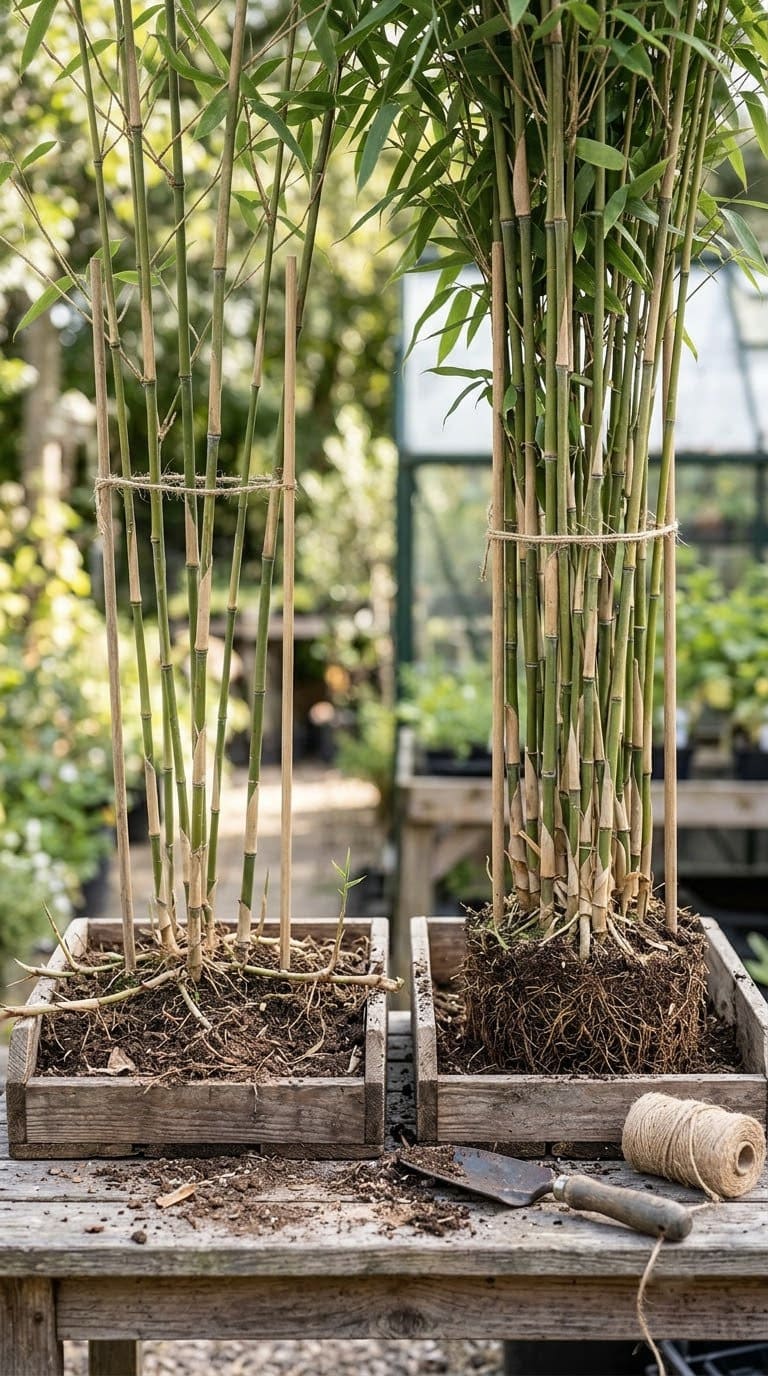
How Do You Cut Bamboo Without Splitting It?
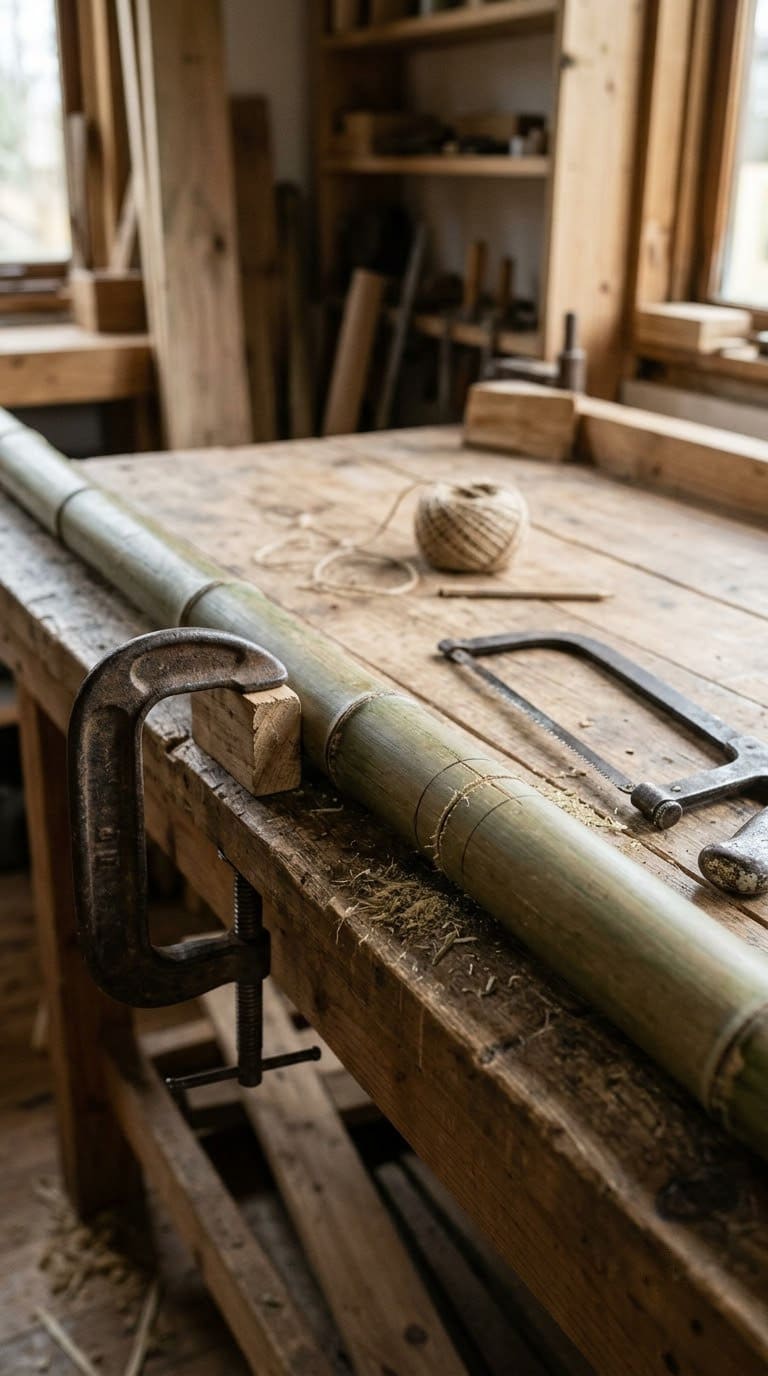
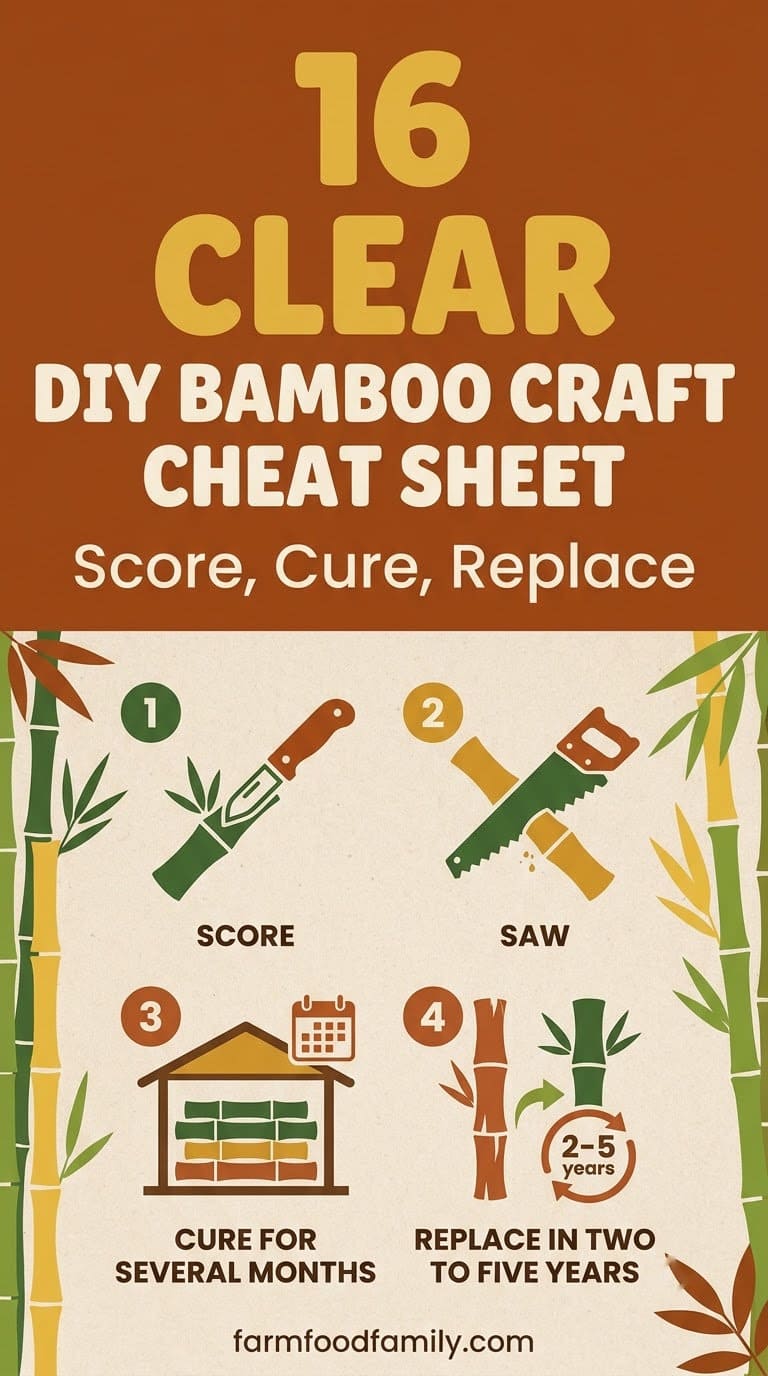
Bamboo splinters easily, so score the cut before you saw. Paul Seaburn at Hunker recommends a sharp knife, a fine-tooth hacksaw and fine sandpaper. Mark the line with a pencil, then score all the way around with light pressure.
Clamp the pole and saw slowly along the score. If it starts to splinter, stop and deepen the score with the knife. Sand the cut edge gently when you finish.
We add two habits of our own. Wear gloves and eye protection, since bamboo shards are sharp. And cut just above a node, the solid ring on the pole, so the end stays closed.
How Long Will Bamboo Last Outdoors?
Not as long as wood. The BioResources review by Perminder Kaur and colleagues says untreated bamboo has a service life of only two to five years. It adds that culms stored for later use may last only one to three years because of insects.
The review says fungi and termites cause serious damage to bamboo. Chemical treatments with CCA or creosote can stretch the life to around 36 years, but the review warns that their toxicity to mammals cannot be ignored. We don’t recommend those for a garden craft.
So treat outdoor bamboo crafts as seasonal or semi-permanent. Keep the ends off wet soil and bring delicate pieces indoors for winter. Expect to replace stakes and trellises every few years.
Do You Need to Cure Bamboo?
Yes, if you cut it yourself. The Kentucky profile says lower, unbranched culms are either sold green or cured for several months in a well-ventilated shed or barn. We found guides that say anything from weeks to years, so we follow the university and plan on months.
Thick natural bamboo poles for the trellis, bench and screen projects
Shop NowThis post contains affiliate links. We may earn a commission on qualifying purchases at no extra cost to you.
Green bamboo is heavy and shrinks as it dries. Cure poles before you build furniture or anything with tight joints. Stakes and trellises are more forgiving.
Which Projects Last Outdoors and Which Belong Inside?
Choose the project to match the spot. This table is our guide.
The average homeowner spends $616/year on yard fixes that don't address the real problem. Find out what yours actually is — before you spend another dollar.
Take the Free Quiz| Project | Best spot | Why |
|---|---|---|
| Tomato stakes, trellis | Outdoors, expect a few seasons | Easy to replace |
| Wind chimes | Covered porch | Protects from rain and wear |
| Planter sections | Covered patio or indoors | Hollow cut ends collect water |
| Furniture, bench | Indoors or covered porch | Needs dry conditions |
| Bamboo lights | Covered or indoors | Electrics need protection |
| Edging | Outdoors, treat as temporary | Ground contact shortens life |
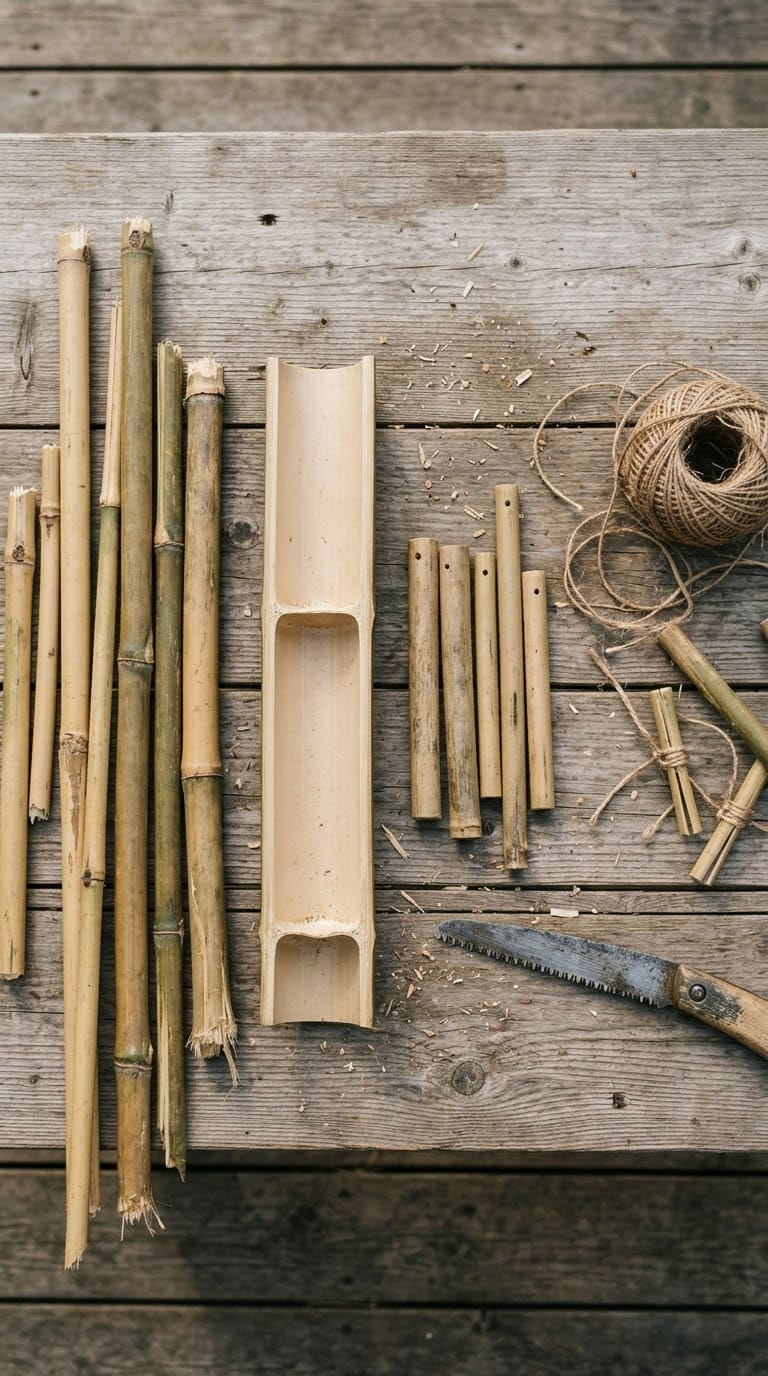
What Tools and Supplies Do You Need?
Most projects use the same small kit. You don’t need a workshop.
| Item | What it does | Note |
|---|---|---|
| Sharp knife | Scores the cut line | Hunker’s method |
| Fine-tooth hacksaw | Makes the cut | Use a miter box for angles |
| Fine sandpaper | Smooths cut edges | Prevents splinters |
| Drill with small bit | Makes holes for cord and drainage | Clamp the pole first |
| Jute or sisal twine | Lashes joints | Replace when it frays |
| Clamps or a vise | Holds the pole | Stops cracking while you cut |
The first four items come from Hunker’s cutting method, and the rest are our additions. Lash joints with a square lashing, which wraps twine around both poles at right angles and finishes with a few turns between them. Pull each wrap snug so the frame doesn’t wobble.
16 DIY Bamboo Craft Projects
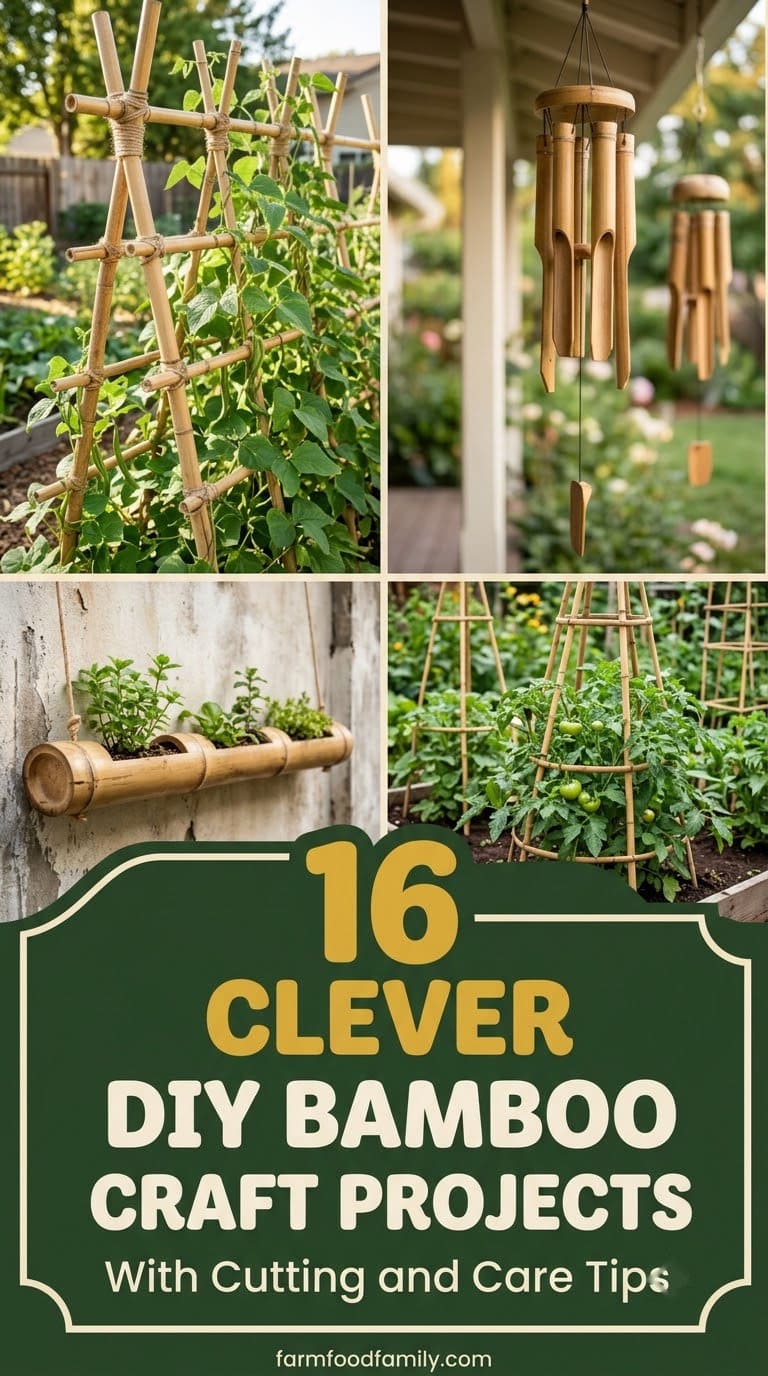
1. Bamboo Tomato Stakes and Cage
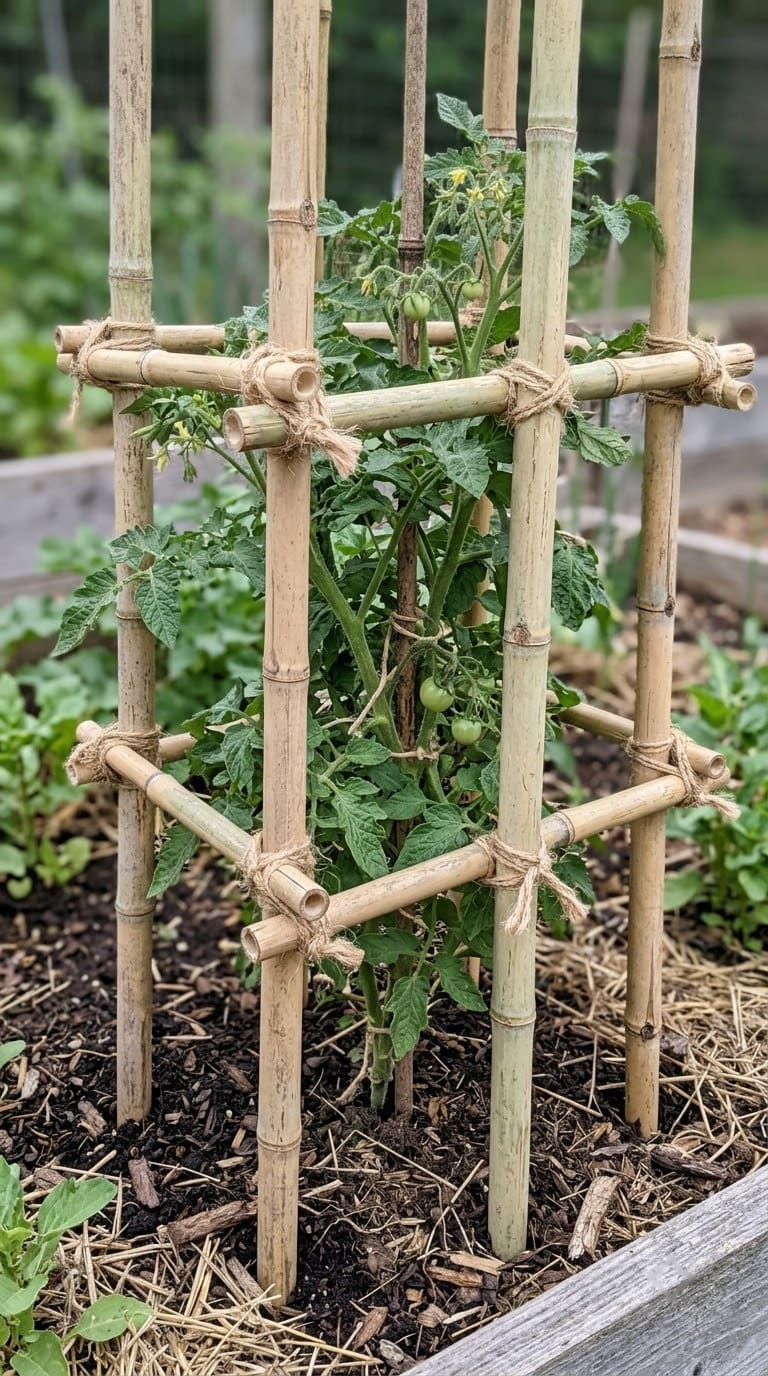
Lash three or four bamboo poles into a cone around a tomato plant. Push the bottoms into the soil about 8 to 10 inches. Tie the tops together with twine and add ring ties down the poles.
Choose poles that are at least as tall as the plant will grow. Check the lashing after every windstorm. Our pea trellis ideas have more lashing patterns.
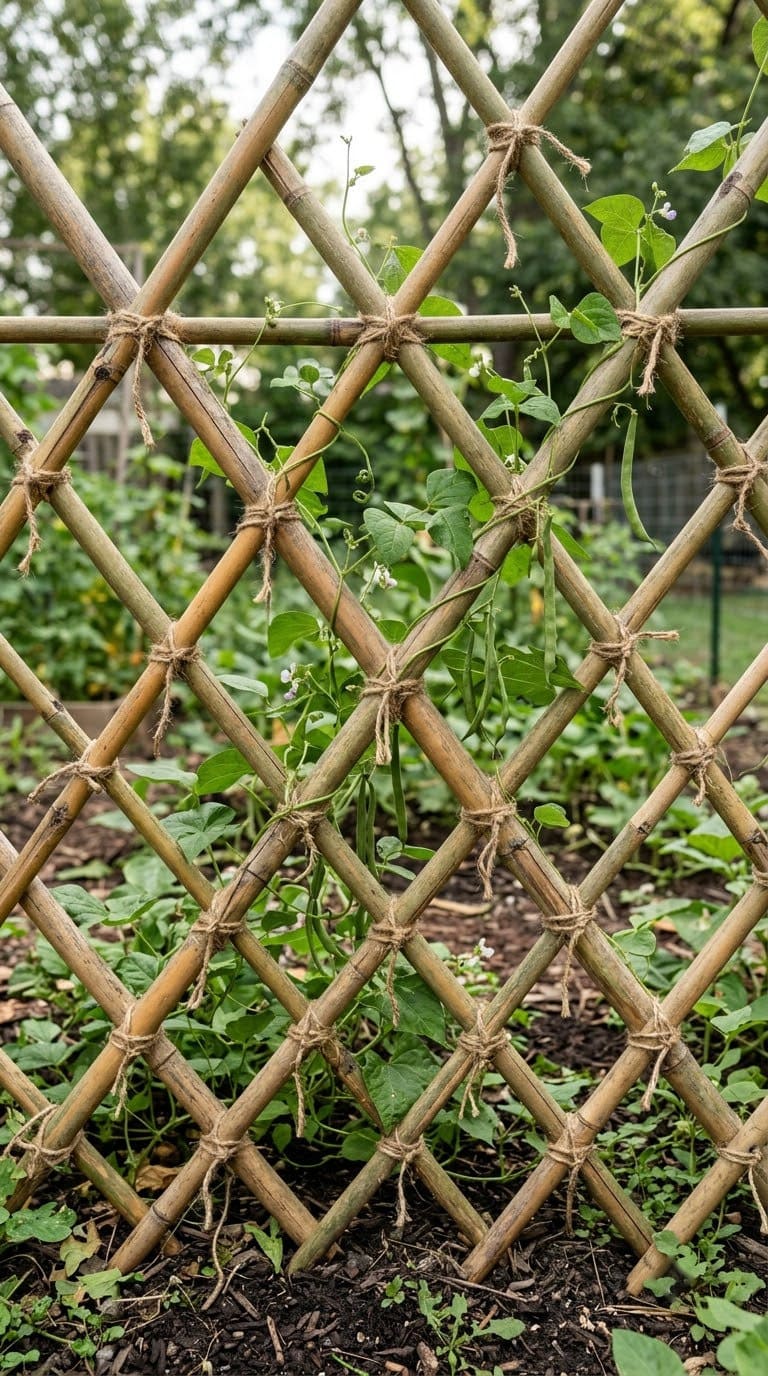
2. Lashed Bamboo Trellis
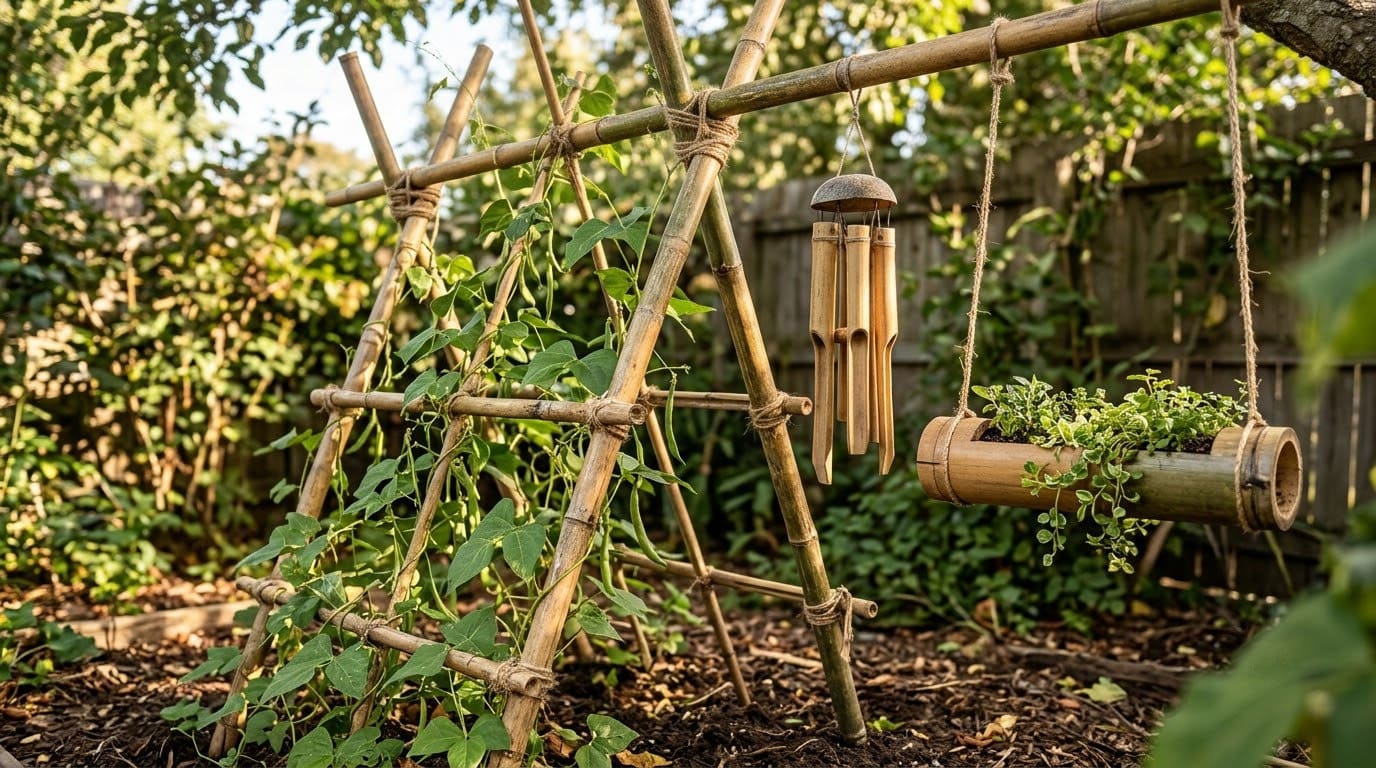
Cross poles in a diamond grid and tie each crossing with twine. Set the legs firmly in the ground. Climbing beans and cucumbers love the grip of bamboo.

Use a square lashing at each joint so it doesn’t slip. Space the cross poles about 6 inches apart for beans. See our fence trellis ideas for more designs.
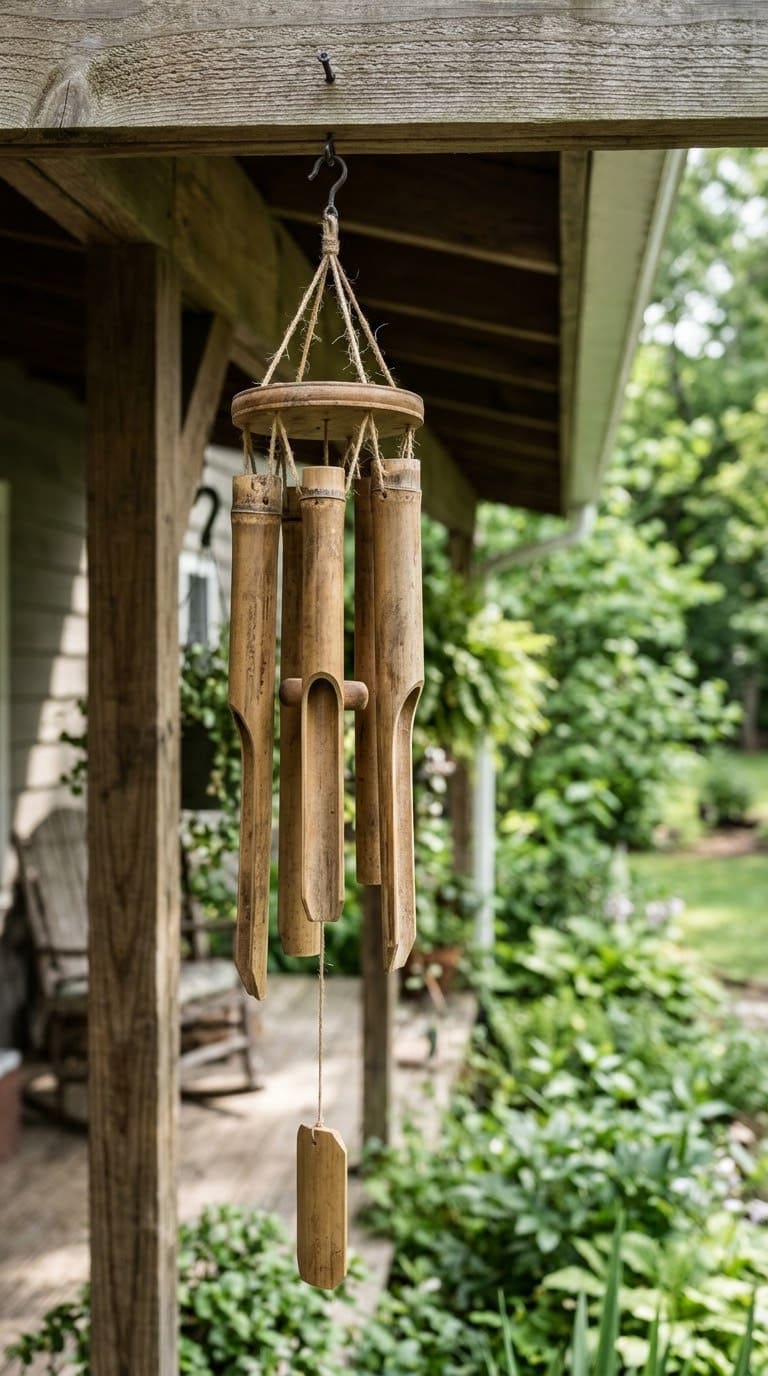
3. Bamboo Wind Chimes
Cut five or six bamboo tubes in different lengths. Drill a small hole through each near the top and hang them from a ring with fishing line or cord. Longer pieces make lower notes.
Sand the cut ends and seal them with a clear exterior finish. Hang the chime under a porch roof. Add a flat clapper from a scrap of bamboo.
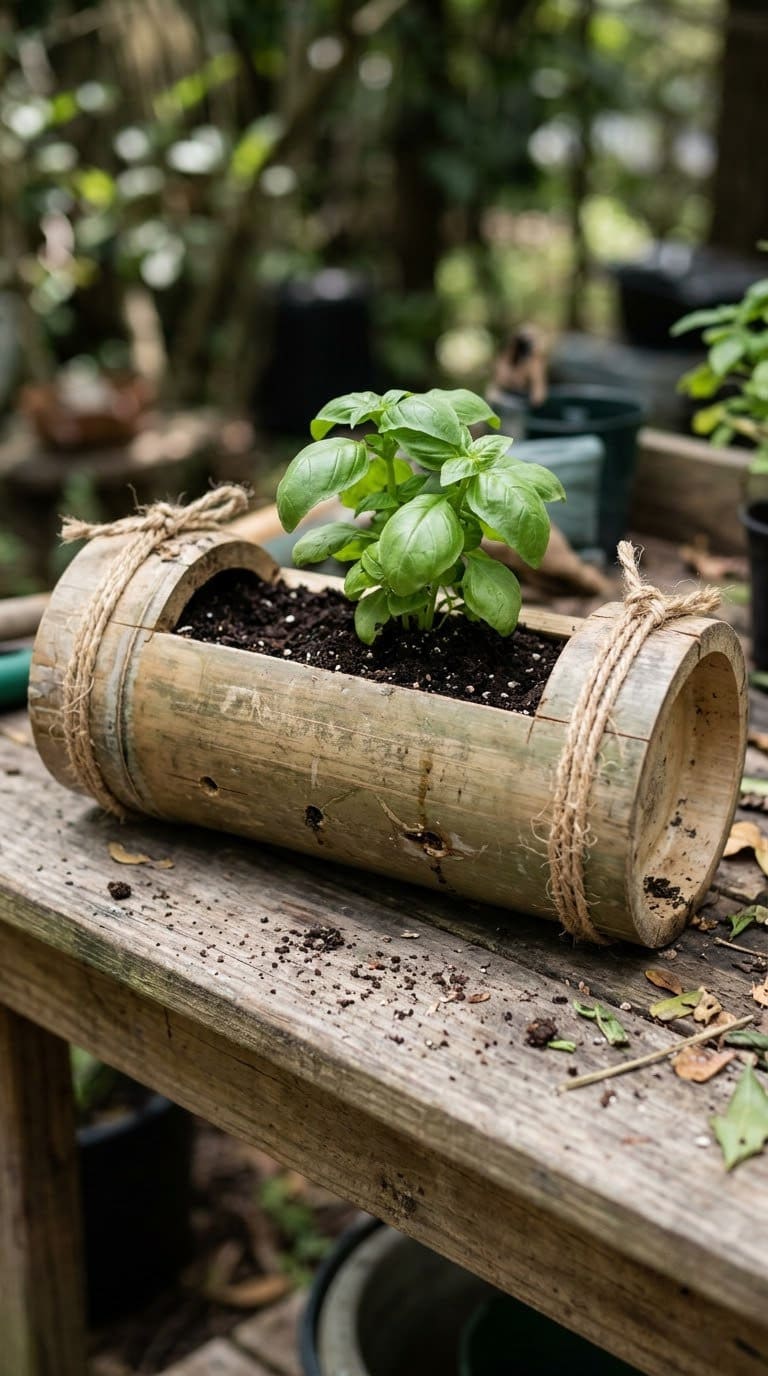
4. Bamboo Pole Planter
Cut a thick pole just below a node so the bottom stays closed. Drill several drainage holes in the bottom. Fill it with potting mix and plant a small herb.
Use a wide pole, at least 3 inches across, so roots have room. Hang or stand it in a stable base. Move it indoors in winter.
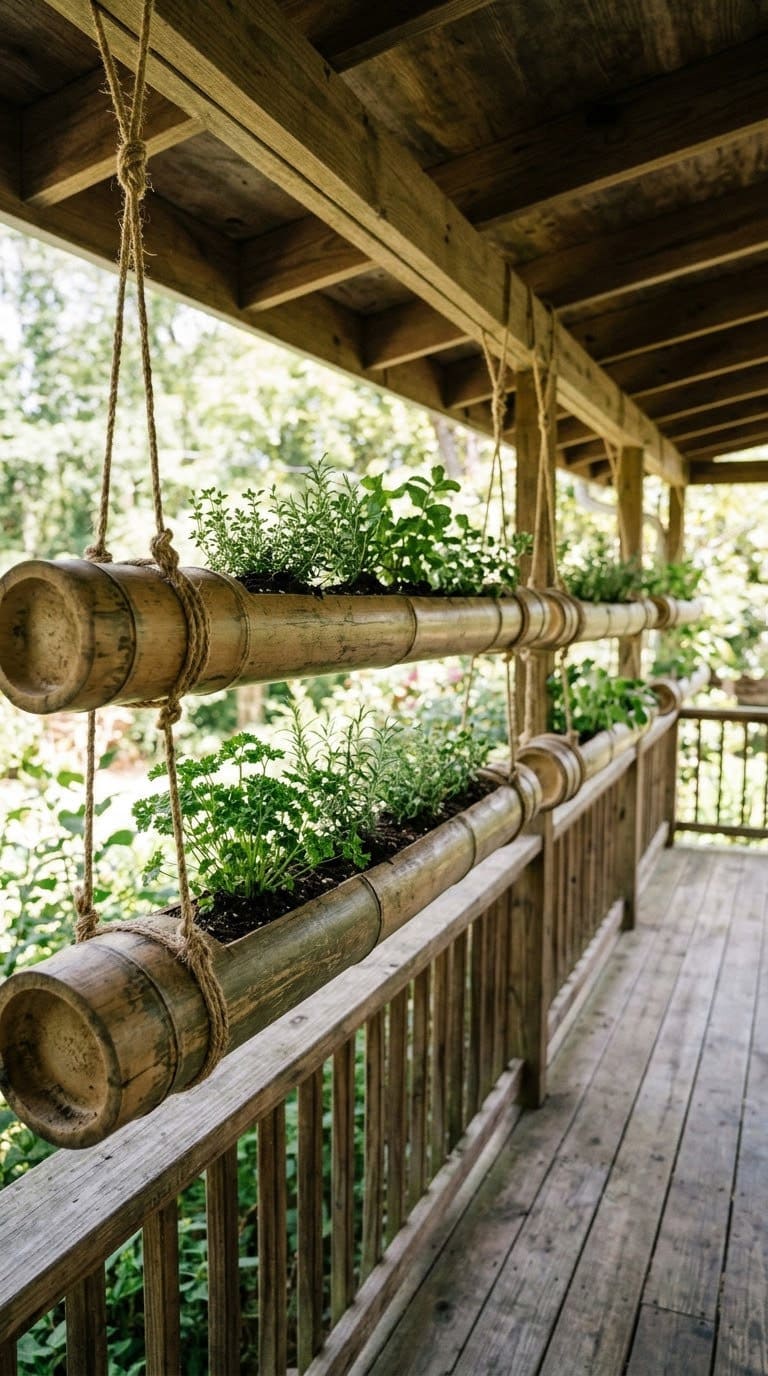
5. Hanging Bamboo Planters
Drill two holes on opposite sides near the top of a pole section. Thread rope through and hang it in a row. This is a neat way to show herbs on a porch.
Check the knots before you load them with wet soil. Space the planters so they don’t knock together. Water lightly, since small sections dry quickly.
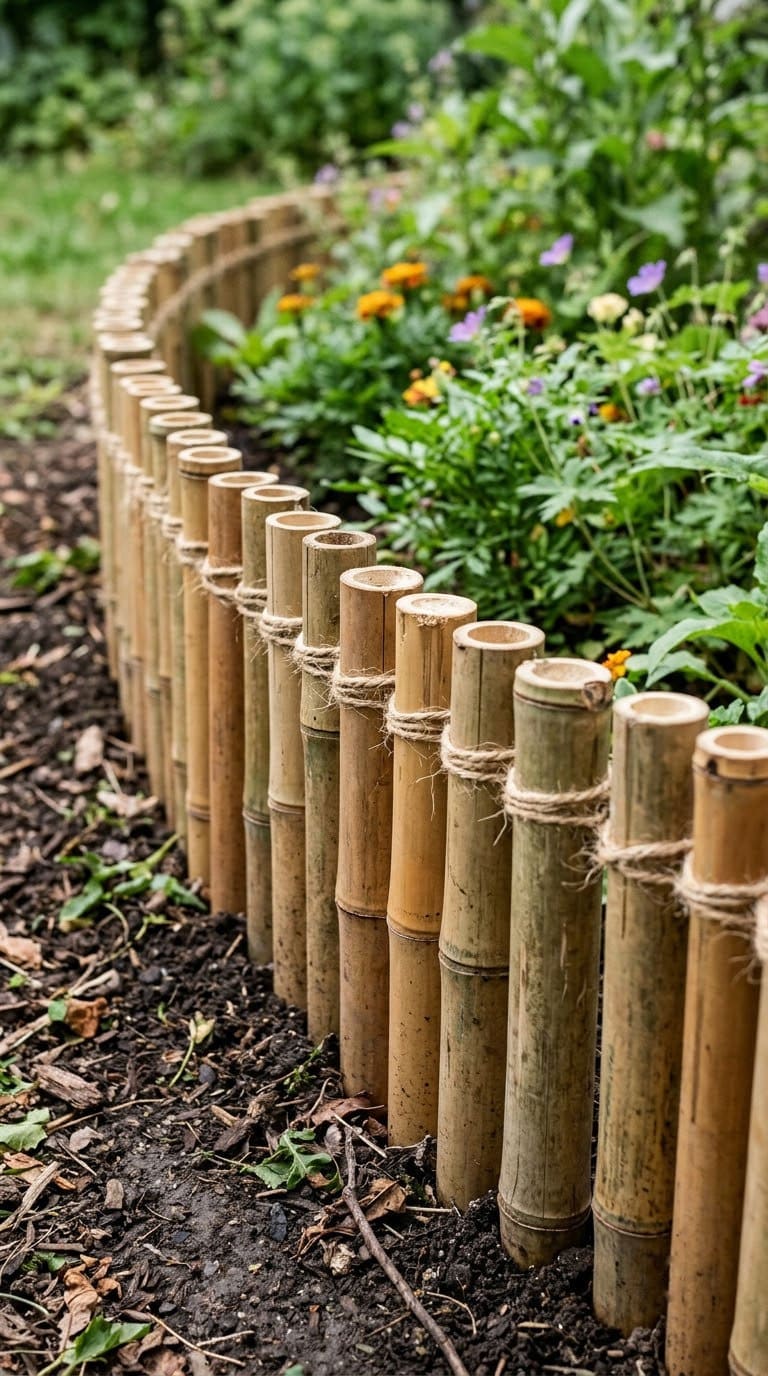
6. Bamboo Garden Edging
Cut poles into 12 inch lengths and push them into the ground side by side. The row marks a bed edge. Tie two rails of twine across for a tidy line.
Ground contact shortens bamboo’s life, so expect to replace the edging. Pick poles about 1 inch wide for a slim line. Our garden art projects have more ideas.
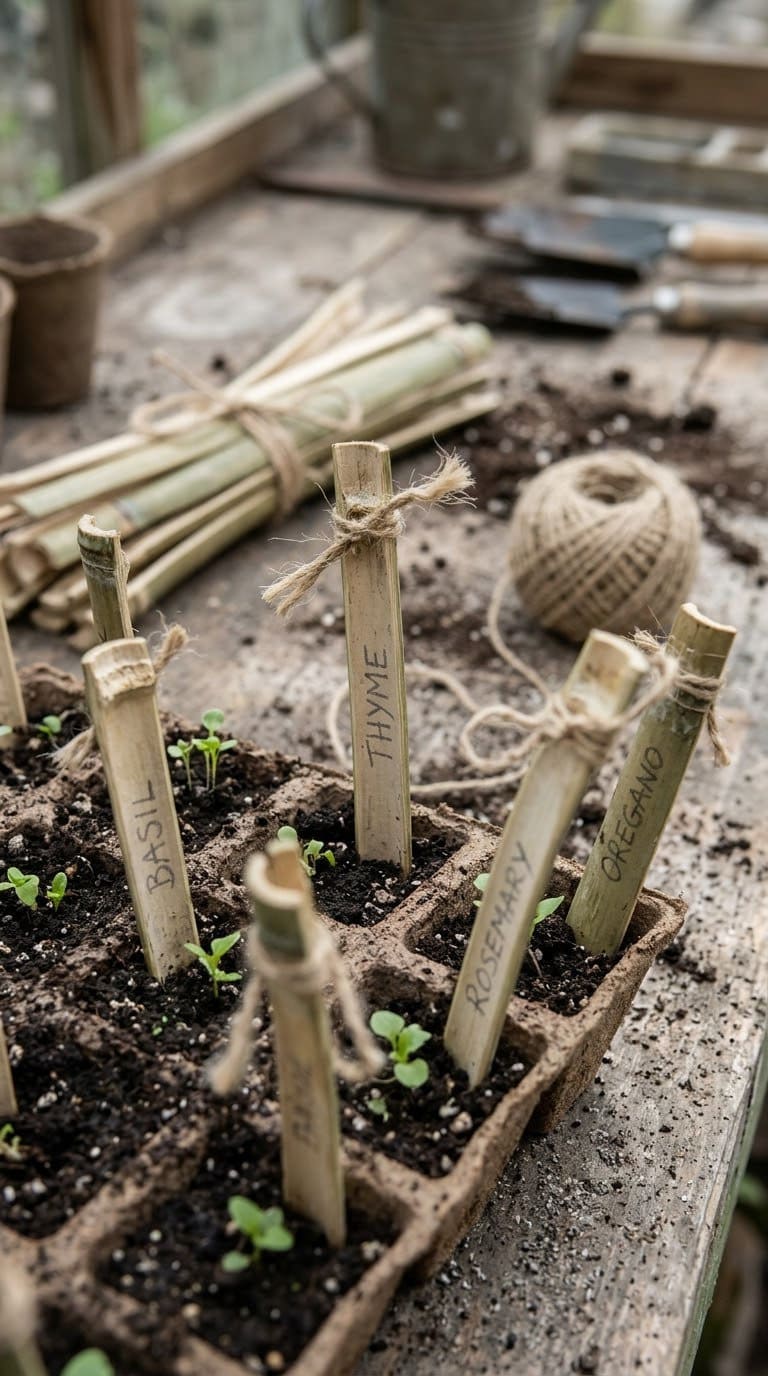
7. Plant Labels and Mini Stakes
Split a thin pole into strips and sharpen one end. Write plant names with a waterproof marker. Push them in beside seedlings.
They are cheap and easy for kids. Replace them each year. Sand the writing end smooth.
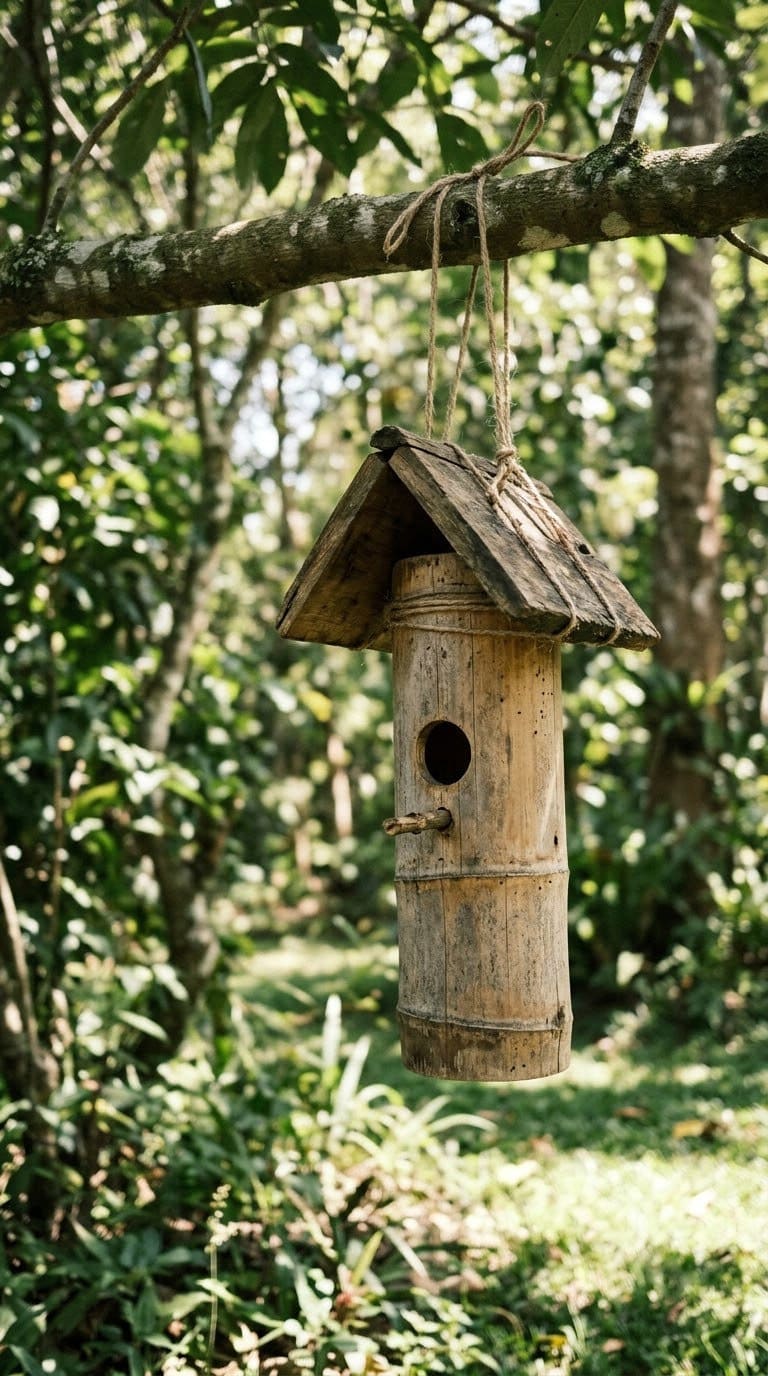
8. Bamboo Bird House
A bamboo tube can serve as a simple nest box with a wood back and a roof. Close one end at a node and add a small entrance hole in the side. Overhang the roof to keep rain out.
Entrance hole size depends on the bird species, so check a local nest box guide before you drill. Hang it in a shaded, sheltered place. Clean it out each fall.
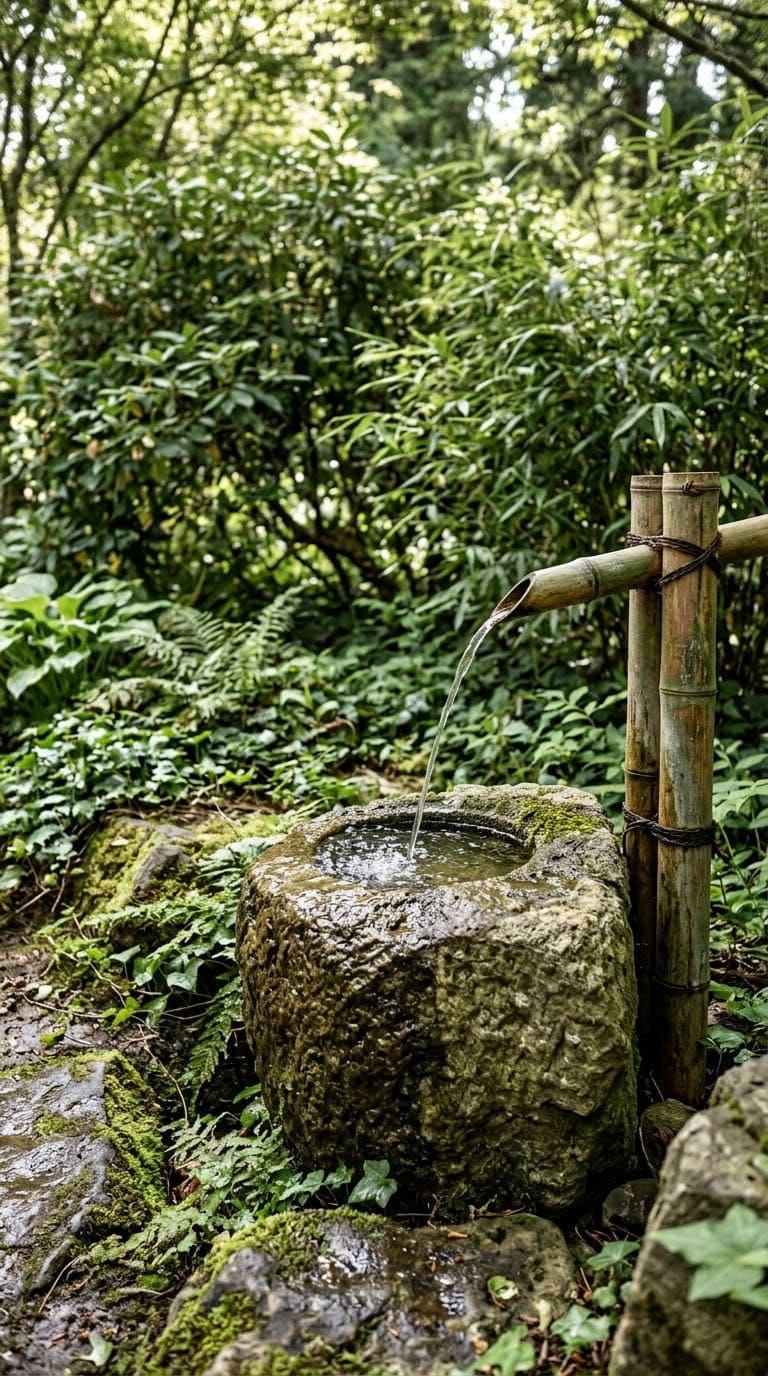
9. Bamboo Fountain
Mount a bamboo spout over a basin and run a small pump through it. The tipping action makes a soothing sound. Use a pump rated for outdoor use and a GFCI outlet.
The CDC says to empty and scrub water-holding items once a week to stop mosquitoes. Do the same for the basin. Keep the cord clear of the water’s edge, per the pump’s manual.
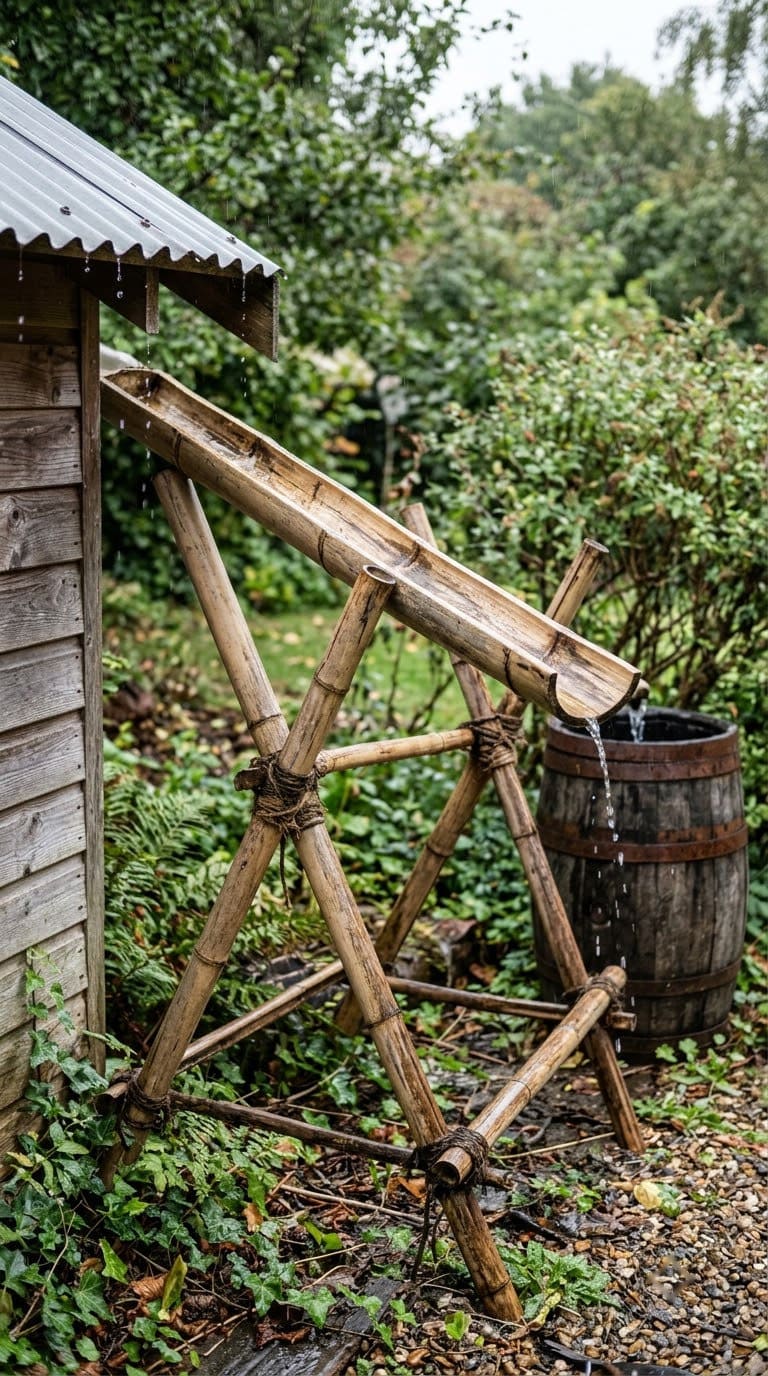
10. Bamboo Rain Gutter and Rain Chain
Split a large pole in half lengthwise to make a trough. Slope it gently to a rain barrel. A half-pipe works for a small shed roof.
Clean out leaves each season. Expect it to rot in a few years if it stays wet. Treat it as a decorative accent, not a main gutter.
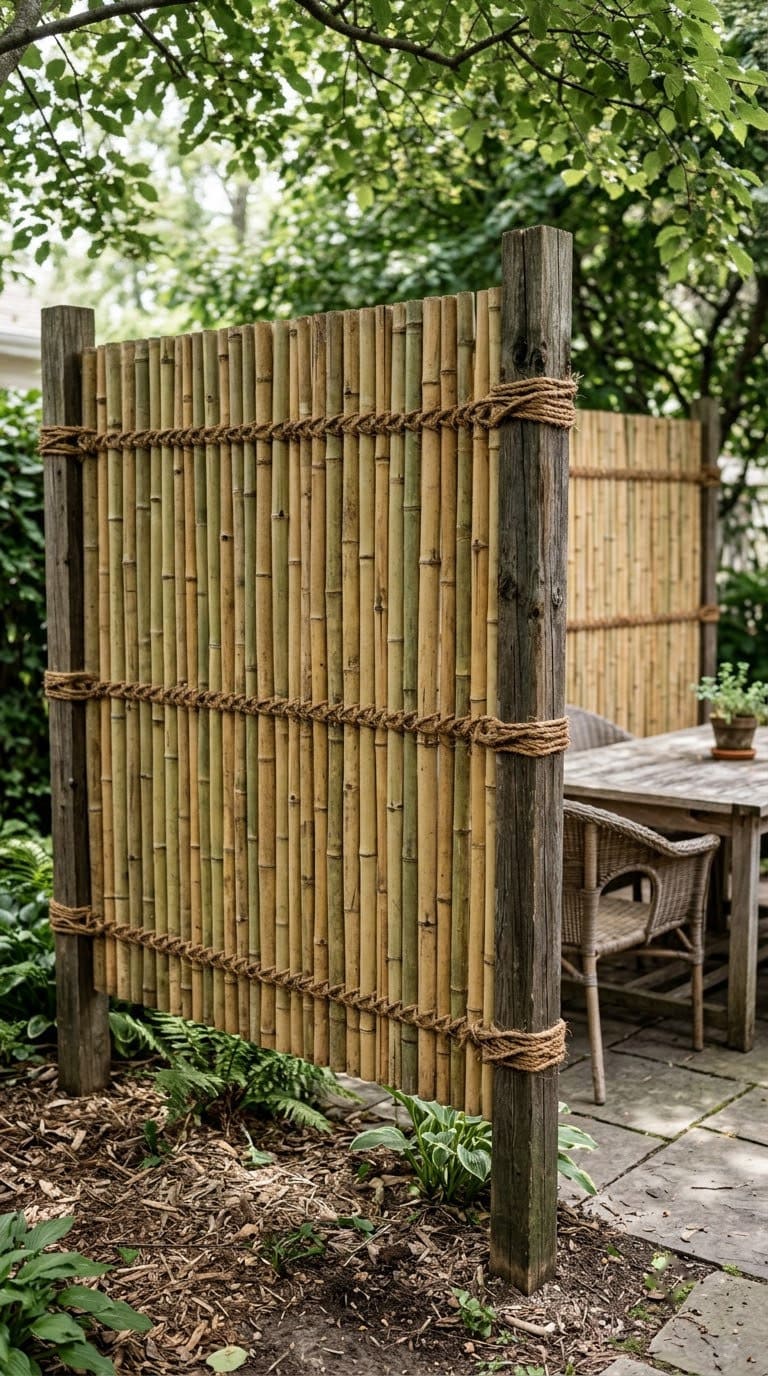
11. Bamboo Privacy Screen
Lash vertical poles to two horizontal rails to make a panel. Set it on posts for a tall screen. A screen filters light and wind.
Fix posts firmly in the ground. Use thick poles for a sturdy panel. Our bamboo fence ideas cover full-height options.
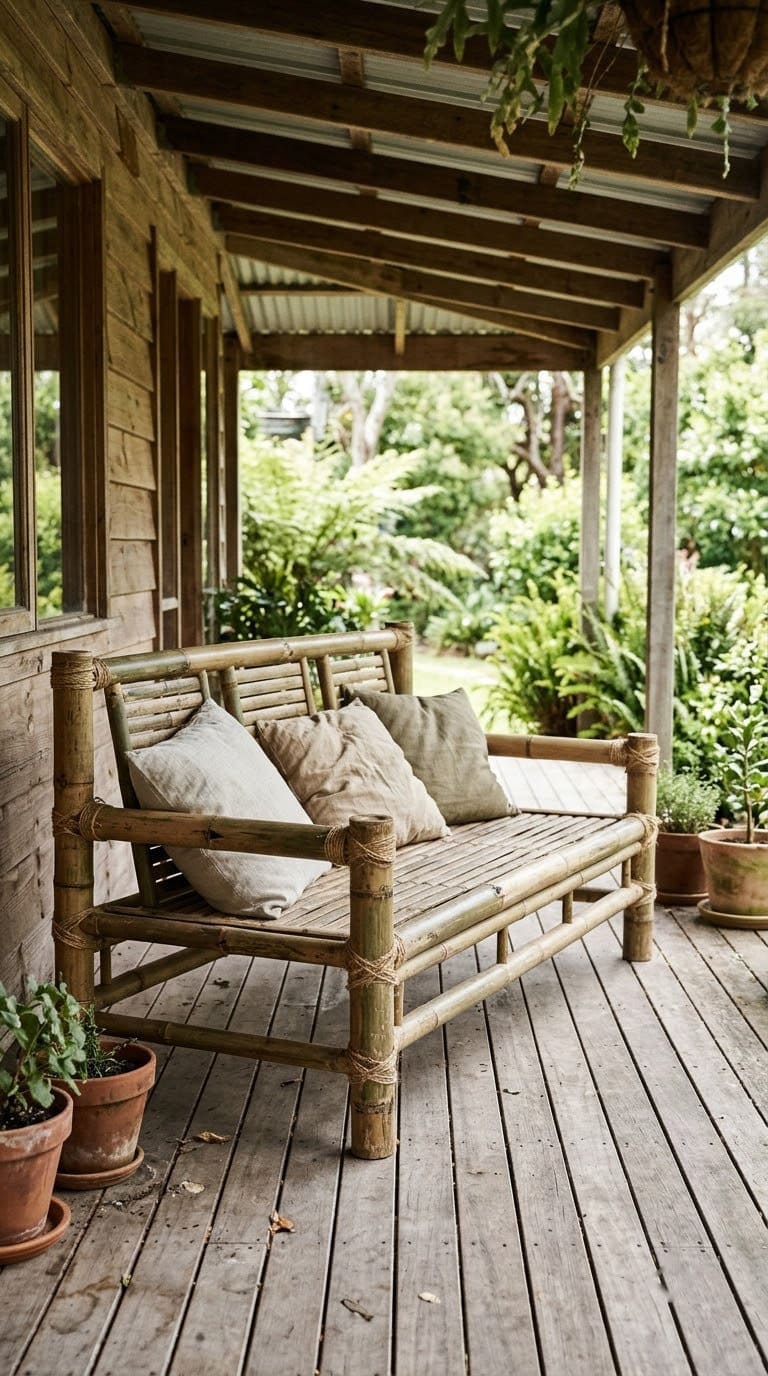
12. Simple Bamboo Bench
Join four thick poles as legs and use split poles as seat slats. Use screws or lashing at the joints. It works best on a covered porch.
Cure the poles first, since green bamboo shrinks and loosens joints. Sand every edge smooth. Test the bench with your weight before guests sit.
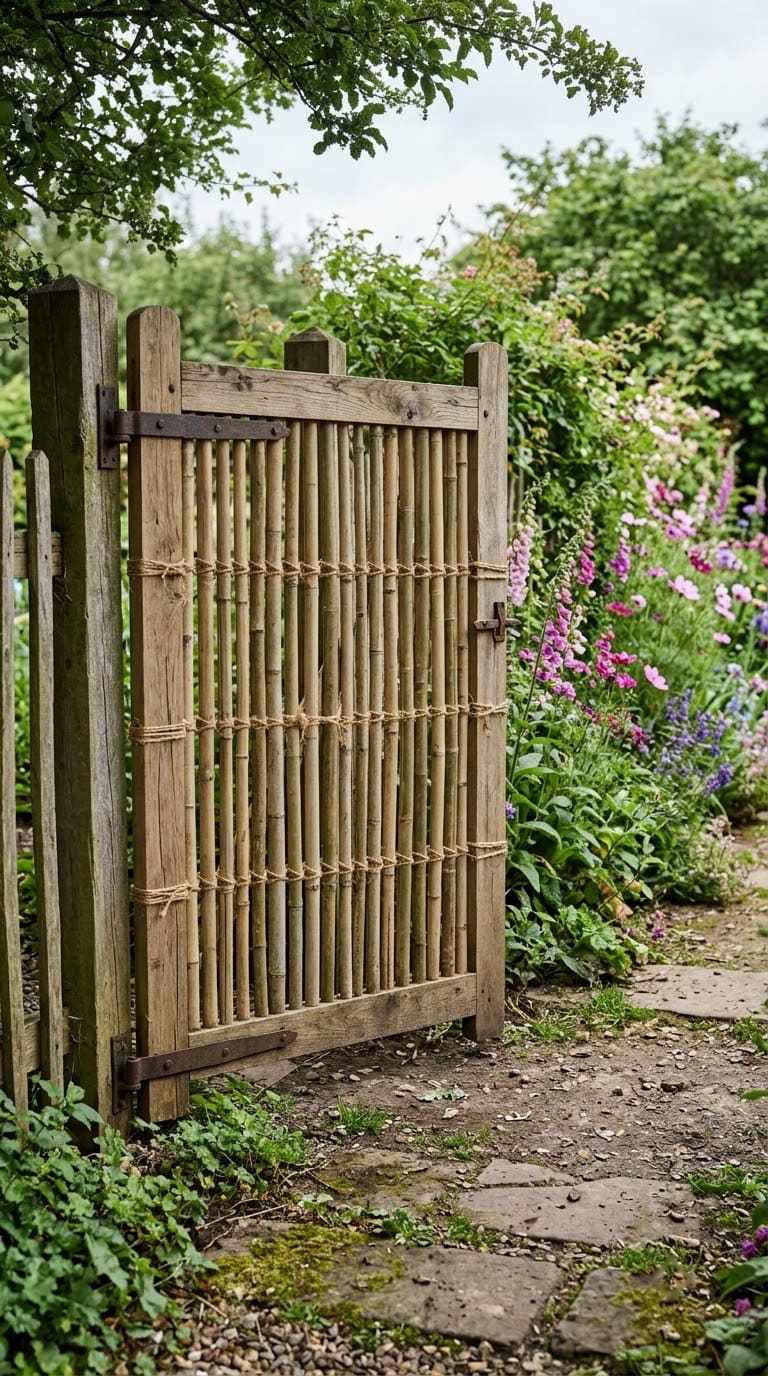
13. Bamboo Gate Panel
Frame a gate with wood and fill it with bamboo poles set vertically. Add a diagonal brace to stop sagging. Use sturdy hinges.
Bamboo infill keeps the weight low. Seal the cut ends. Repair loose poles each spring.
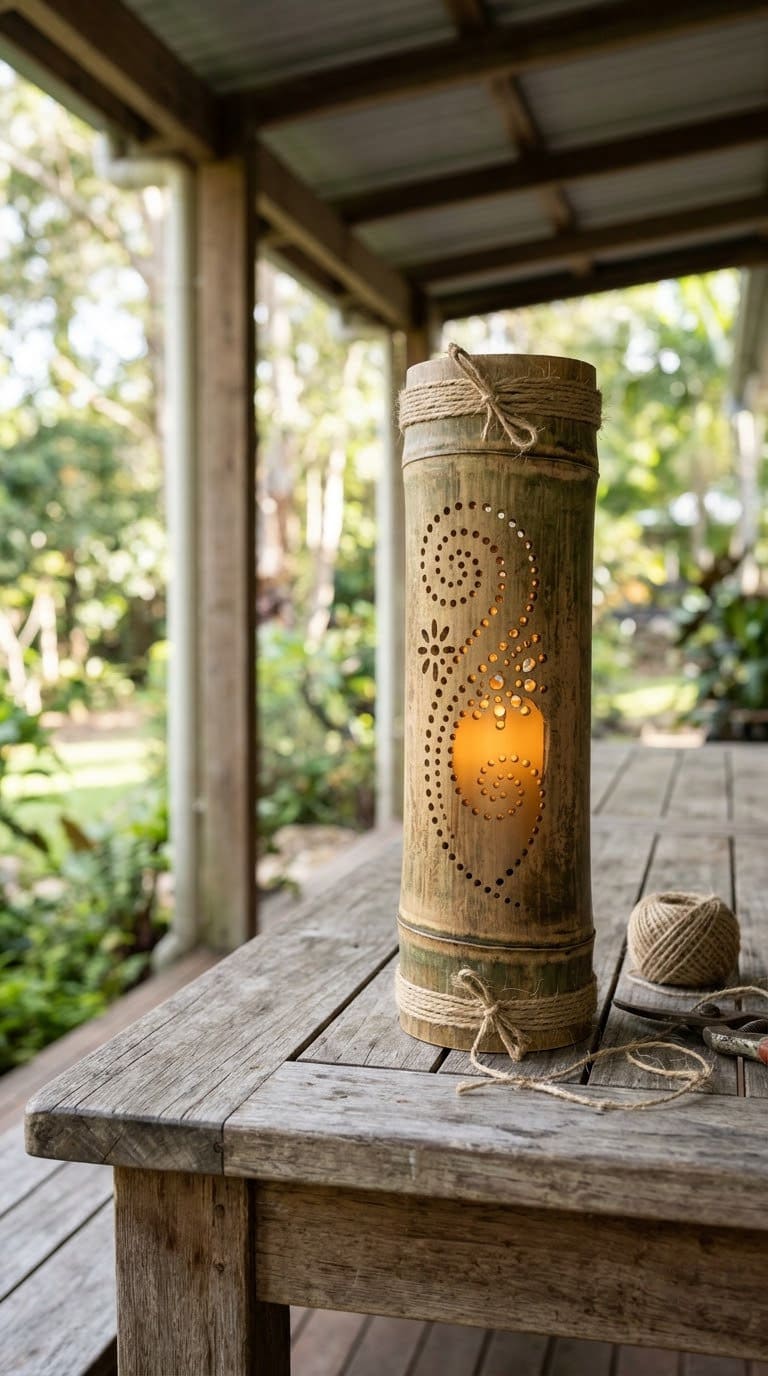
14. Bamboo Tube Lanterns
Drill small holes in a bamboo tube in a pattern and place a battery LED light inside. The light shines through the holes. Keep it under cover.
Use LED lights only, never a flame. Our garden lantern guide has safe lighting tips. Sand the holes smooth.
15. Bamboo Cubby Shelf
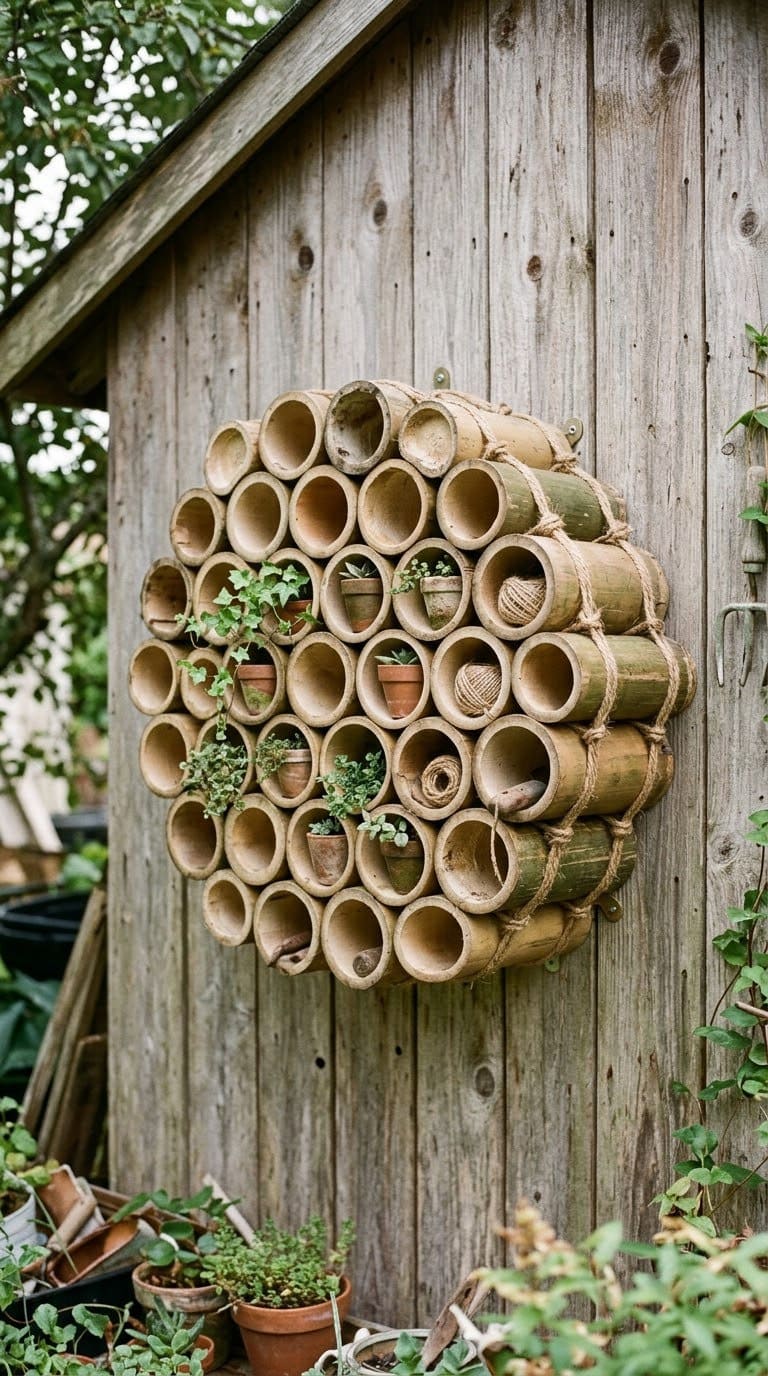
Stack bamboo poles of equal length to make a honeycomb cubby for tools or pots. Lash or glue the poles together. Mount it on a wall.
Keep it indoors or under cover. Fix it to studs if it will hold heavy items. Stain the ends for a neat look.
16. Bamboo Grow Wall
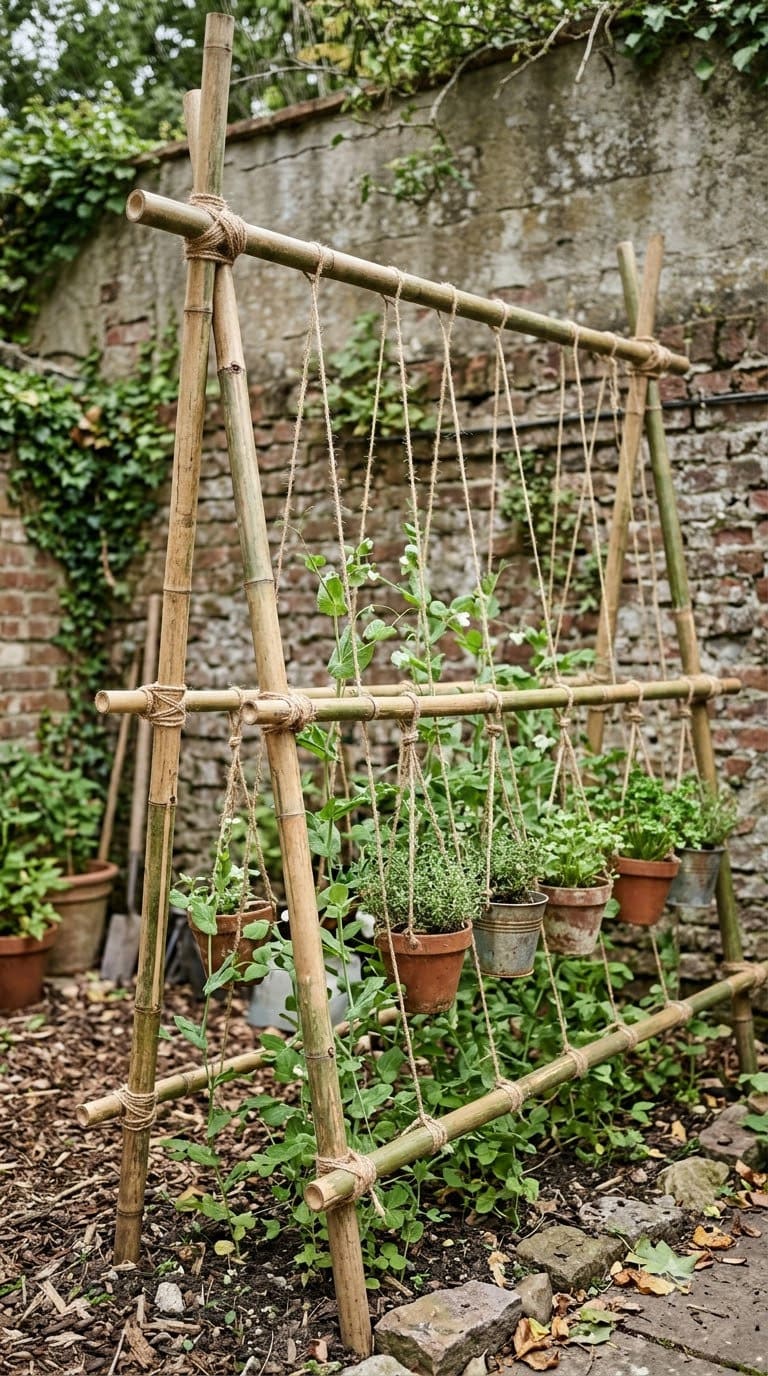
Build a tall frame of poles and attach wire or twine between them. Train vines or hang pots from it. It turns a blank wall into a green screen.
Fix the frame to the wall so wind can’t tip it. Water plants lightly. Our raised bed guide helps plan crops below.
Common Mistakes to Avoid
The first thing to expect is splitting. A pole sawn without a score tends to crack along the grain. A light score around the line fixes most of it, as Hunker explains.
The second is lifespan. Stakes and edging in wet soil can fail within a few seasons, which fits the two to five years the BioResources review reports for untreated bamboo.
If there’s one thing worth doing differently, it’s to buy poles instead of planting runners. Planting spreading bamboo can turn into a long control project, since the Kentucky profile says containment needs ongoing attention.
Frequently Asked Questions
What is the best bamboo for crafts?
Cured, straight poles from a garden center are the easiest. If you grow your own, choose a clumping type. Kentucky Extension says clumpers spread only a few inches a year.
How long does bamboo last outdoors?
Untreated bamboo lasts only two to five years, according to a BioResources review. Wet ground and insects shorten that. Keep ends off the soil and replace stakes regularly.
How do I stop bamboo from splitting when I cut it?
Score all the way around the cut line with a sharp knife first. Then saw slowly with a fine-tooth hacksaw and sand the edge. Clamp the pole so it can’t flex.
Is bamboo invasive?
Running types are. Kentucky Extension says they spread aggressively several feet per year and recommends a root barrier 2 to 3 feet deep. Clumping types spread far less.
Can I use bamboo for a water feature?
Yes, but keep the water fresh. The CDC says to empty and scrub water-holding items once a week to stop mosquitoes.
Never miss an update — choose FarmFoodFamily as your preferred source on Google.
How it works: Tap the button below to open Google's settings page, then check the box next to FarmFoodFamily.
Tap the checkbox to turn it blue — that's how you know it's set.







I would greatly appreciate your emailing your articles of hot houses and bamboo so that I have them to refer to. Many thanks and kindest regards.