12 Sturdy DIY Garden Gate Ideas (With Sizes, Bracing and Safe Latches)
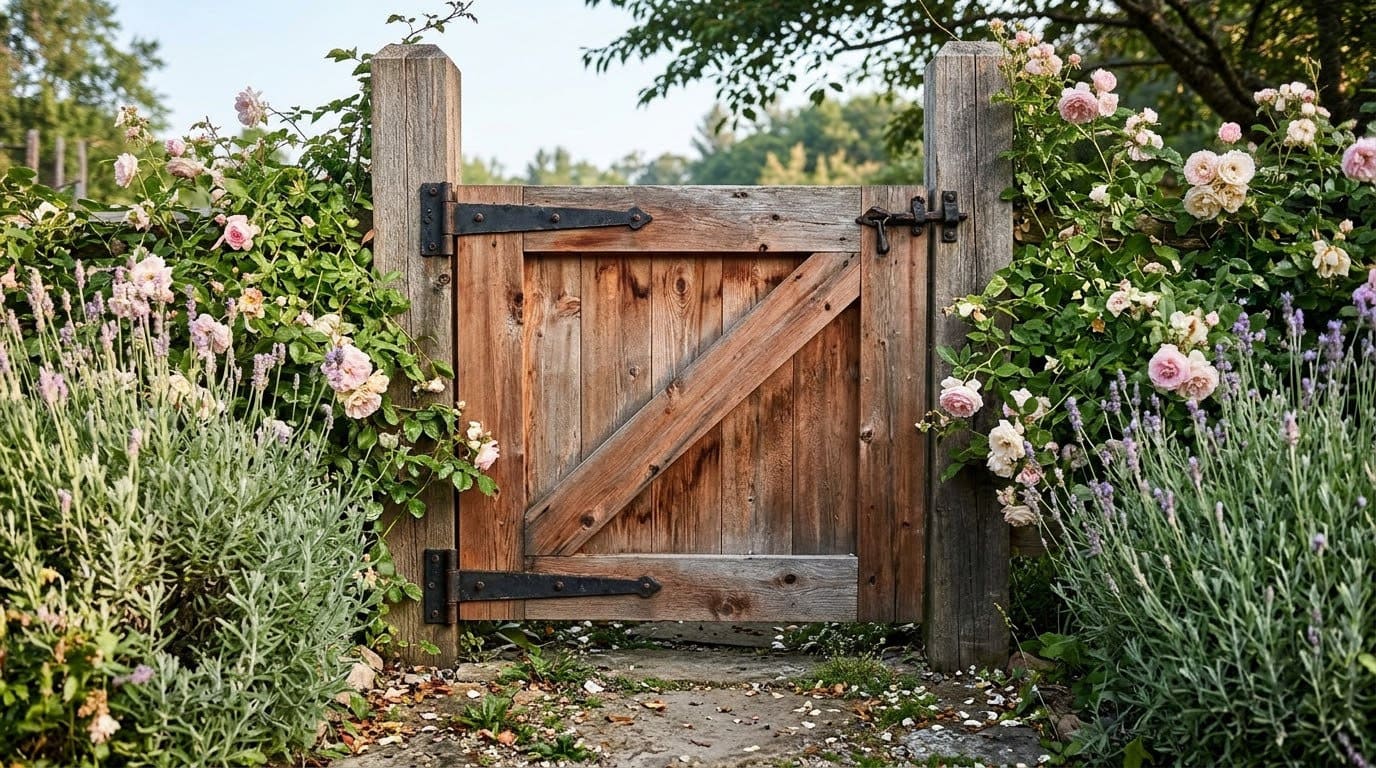
A garden gate looks great on day one, but it only stays that way if the frame is braced the right way and the posts are set solid.

Never miss an update — choose FarmFoodFamily as your preferred source on Google.
How it works: Tap the button below to open Google's settings page, then check the box next to FarmFoodFamily.
Tap the checkbox to turn it blue — that's how you know it's set.
A garden gate looks great on day one, but it only stays that way if the frame is braced the right way and the posts are set solid.
Products We Recommend
This post contains affiliate links. We may earn a commission on qualifying purchases at no extra cost to you.


A good DIY garden gate has three parts that work together. The posts are set deep, the frame has a diagonal brace, and the hardware matches the weight. Pedestrian gates are usually 3 to 4 feet wide, according to This Old House.
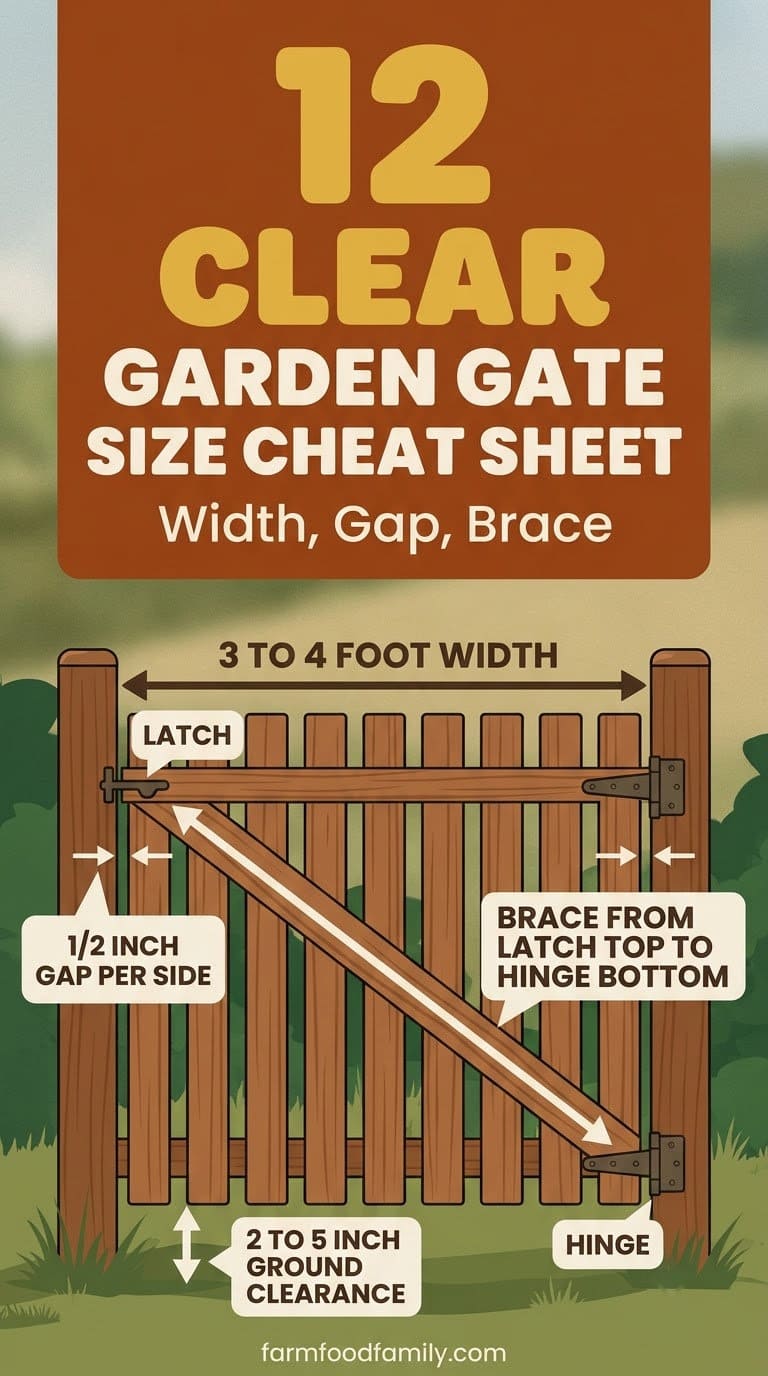
The brace matters most. It should run from the top of the latch side down to the bottom of the hinge side so the wood is squeezed, not pulled. A gate that sags later can be saved with a threaded rod and a turnbuckle, which pulls the free end back up.
Gates near a pool follow stricter rules, so read the safety section below. Gates that guard vegetables need a tight bottom edge, because rabbits and woodchucks dig. Below you’ll find 12 gate ideas, a size table, a post-depth table and a wood-life chart to help you pick one.
Answer 4 quick questions and get matched to the exact fix for your yard — drainage, budget, layout, or something else entirely.
Take the Free QuizWhat Size Should a Garden Gate Be?
Most garden gates are a simple pedestrian size. Sources agree on the width and give slightly different advice on the gaps. This table shows what the fetched sources say.
| Item | Guidance | Source |
|---|---|---|
| Pedestrian gate width | 3 to 4 feet | This Old House, custom gate |
| Double gate (two leaves) | Each leaf about 2 feet in the build shown | This Old House, custom gate |
| Gap per side at the posts | About 1/2 inch | This Old House, custom gate |
| Space under the gate | 2 to 5 inches | This Old House, install a gate |
Vehicle gates run much bigger. They are usually 10 to 12 feet wide, so they belong on our driveway gate ideas page and not here.
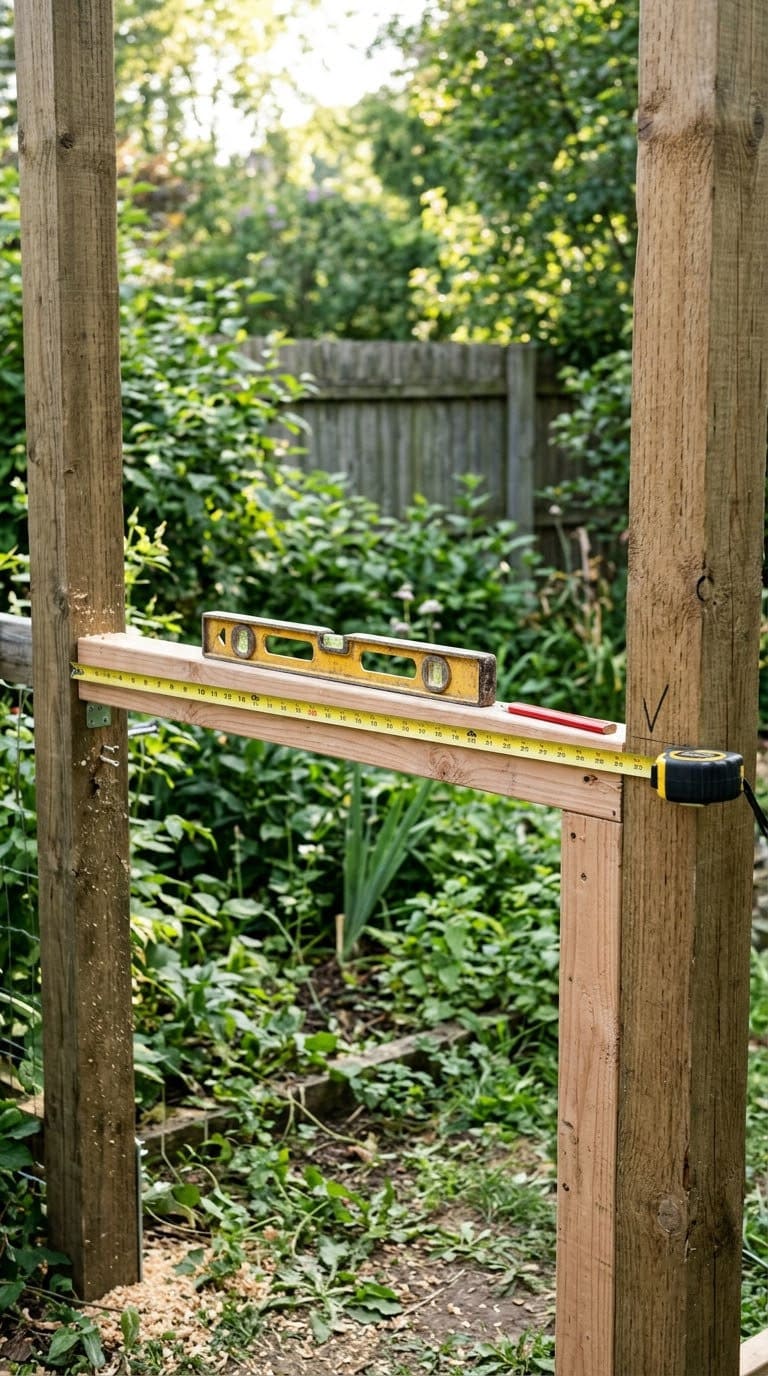
Measure the opening before you cut anything. Cut the top rail 1 inch shorter than the span between the posts. That leaves the 1/2 inch gap on each side that the build calls for.
Check your local rules too. This Old House says to confirm your gate placement with local codes or HOA rules.


How Do You Stop a Garden Gate From Sagging?
Sag happens because the free end of the gate drops. A diagonal brace stops it. But the brace has to point the right way.
Most yard problems trace back to one specific, fixable cause. Find yours in 4 quick questions.
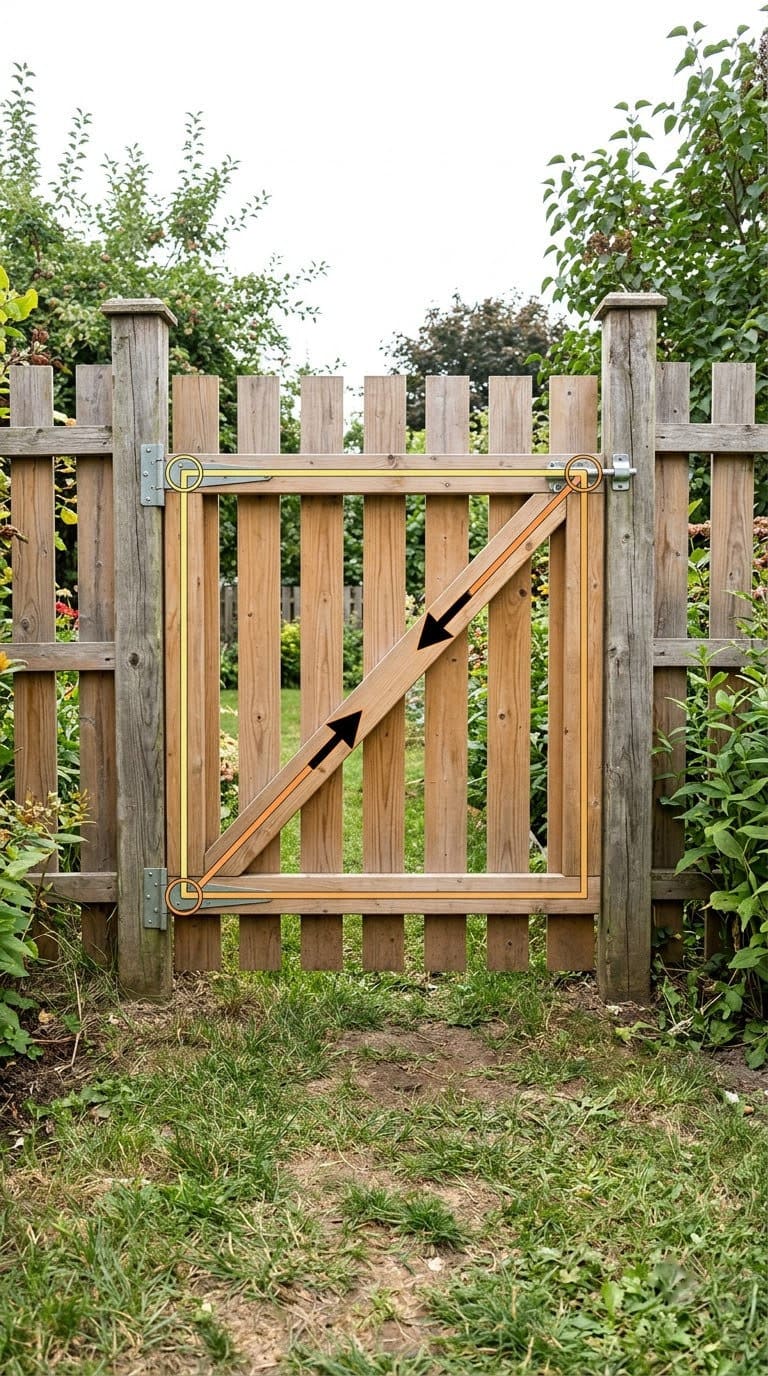
Take the Free QuizThis Old House says the brace should run from the top of the latch side to the bottom of the hinge side. In that position the brace works in compression. Tom Silva’s rule from the install guide is simple: the braces should form an arrow pointing toward the latch.
A brace fitted the wrong way does very little. If you already have a gate with the wrong brace, there is a fix. Raise the latch side about 1/4 inch, take out the old brace and fit two new 2x4s diagonally between the rails.
There is also a second fix for a gate that already sags. A threaded rod or wire with a turnbuckle runs the opposite way, from the top of the hinge side to the bottom of the latch side. It works in tension, so you can tighten it until the gate lifts back into place.
Silva also points out that the back of the gate matters most. That’s where the frame carries the load. Build it with square joints and screws that go in at an angle.
How Deep Should Gate Posts Go?
Sources don’t agree on one depth. The two guides from This Old House use different numbers because they build different gates. This table sets them side by side.
| Method | Hole depth | Fill |
|---|---|---|
| Light 2-foot gates (custom gate guide) | About 2 feet | Expanding foam post mix |
| Standard fence gate (install guide) | About 30 inches | Stiff concrete, stopping about 3 inches below grade |
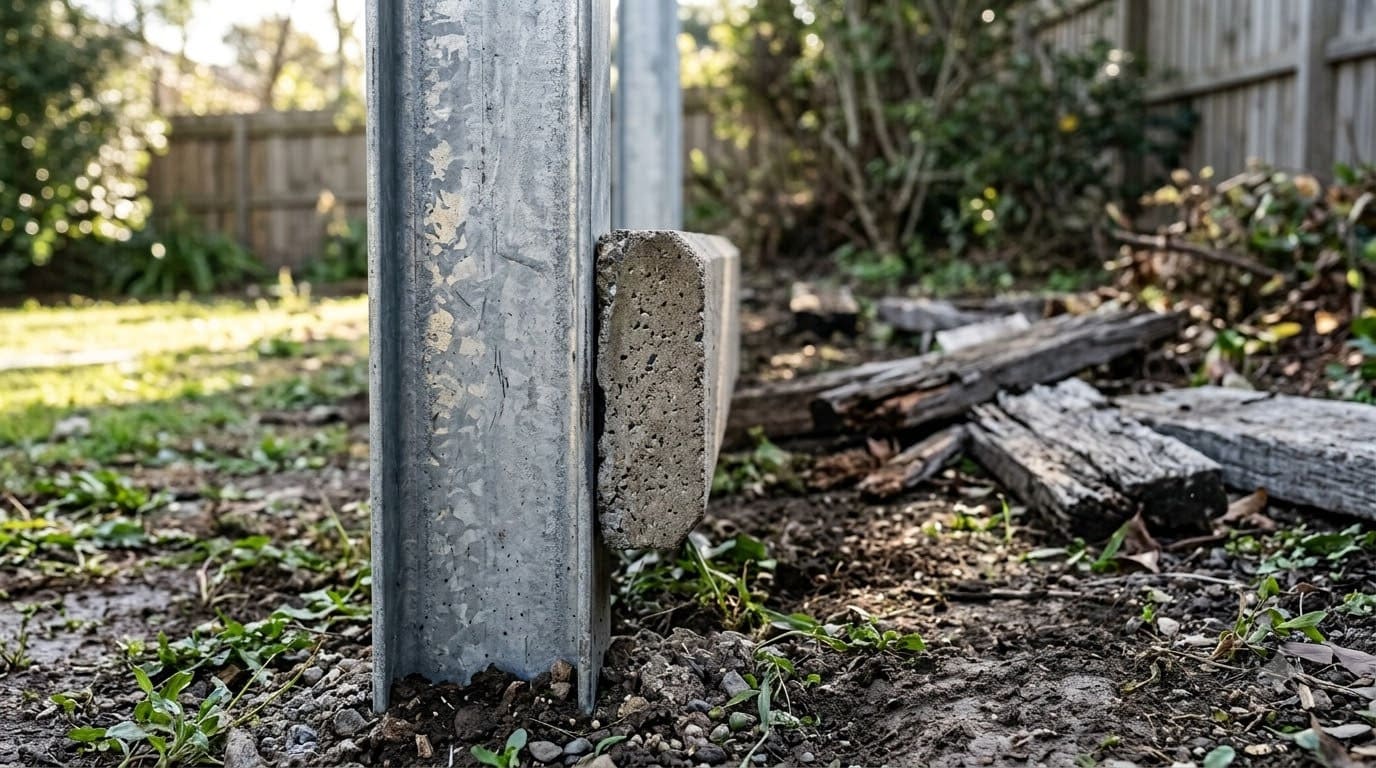
| Standard posts (Cook’s method) | Dig to suit, one-third of the post length when possible | 6 inches of 3/4 inch crushed stone, then soil packed every 6 inches |
Roger Cook’s method calls for concrete only on gateposts or where rock blocks digging to the right depth. Gateposts take the swing and the weight, so they get the extra help. In clay soil the method uses gravel only.
Frost matters in cold climates. Ask your local building department for the frost depth in your area before you dig.

Cable and turnbuckle kit that lifts a sagging gate back into place
Shop NowThis post contains affiliate links. We may earn a commission on qualifying purchases at no extra cost to you.
Brace the hinge post while the concrete cures. This Old House screws two 2x4s to opposite sides of the post about 3 feet above the ground and stakes the lower ends. Leave them on overnight.
Hang the hinges on the gate first, then pre-drill the post and set lag screws. Pre-drilling keeps the wood from splitting.
The average homeowner spends $616/year on yard fixes that don't address the real problem. Find out what yours actually is — before you spend another dollar.
Take the Free QuizWhich Wood Lasts Longest for a Garden Gate?
Posts sit in the ground, so they rot first. The gate frame hangs above the soil and has an easier life. A table in a University of Minnesota Extension folder lists how long untreated heartwood lasts in ground contact.
| Wood (untreated heartwood in ground) | Life expectancy |
|---|---|
| Eastern red cedar | 30+ years |
| Redwood | 10 to 30 years |
| Western red cedar | 10 to 25 years |
The folder dates from 1982, so treat the ranges as rough. It is a good reminder that cedar posts last for years, not forever.
This Old House builds its custom gate from pressure-treated lumber. It primes the pieces and uses 3-inch stainless-steel screws. Stainless screws resist rust.
Reseal or repaint every few years. Clean the gate now and then and oil the hinges and lock. Check for loose hardware and damaged boards each season.
How Do You Keep Animals Out With a Garden Gate?
If your gate guards a vegetable bed, the gate is part of the fence. Michigan State University Extension says both woodchucks and rabbits dig, so the bottom of the fence should be buried. For the best protection, bend the bottom outward so it lies flat, then bury that part.
The same article makes a point that people often miss. It says to be sure the gate is also keeping animals out, with no gaps or cracks to squeeze around or through. Check the ground gap, the hinge side and the latch side.

Deer are harder.
MSU notes that most sources suggest a fence 10 to 12 feet high, which is not practical for most yards. Deer can also reach 4 to 6 feet when they stand on their back legs. A gate can’t solve that problem alone, so match it to the rest of your fence.
A gate that must be animal-proof can’t have the 2 to 5 inch gap under it that the install guide suggests for easy swing. You’ll need a threshold, a sill or a bottom board. Our vegetable garden fence ideas cover the fence side.
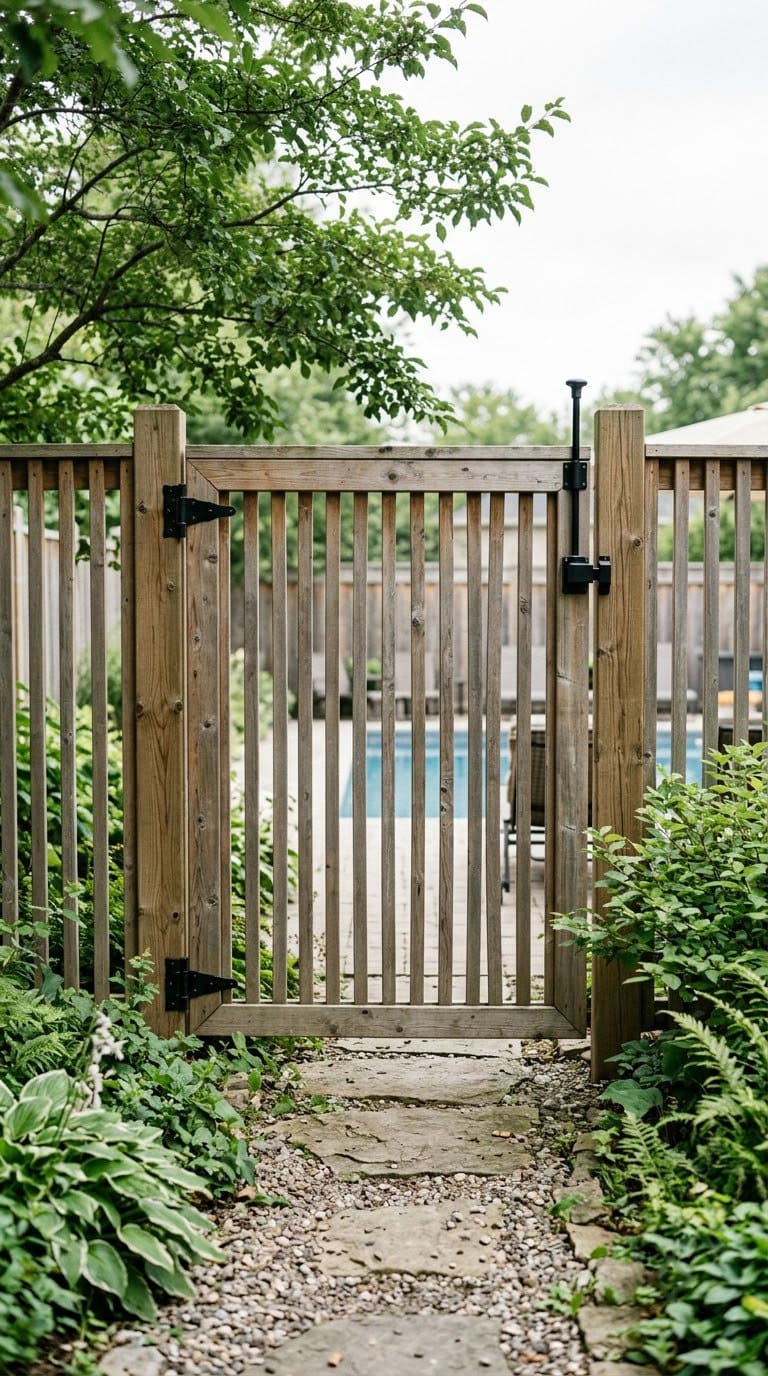
Does a Gate Near a Pool Need a Special Latch?
Yes. The U.S. Consumer Product Safety Commission publishes pool barrier guidelines that cover gates.
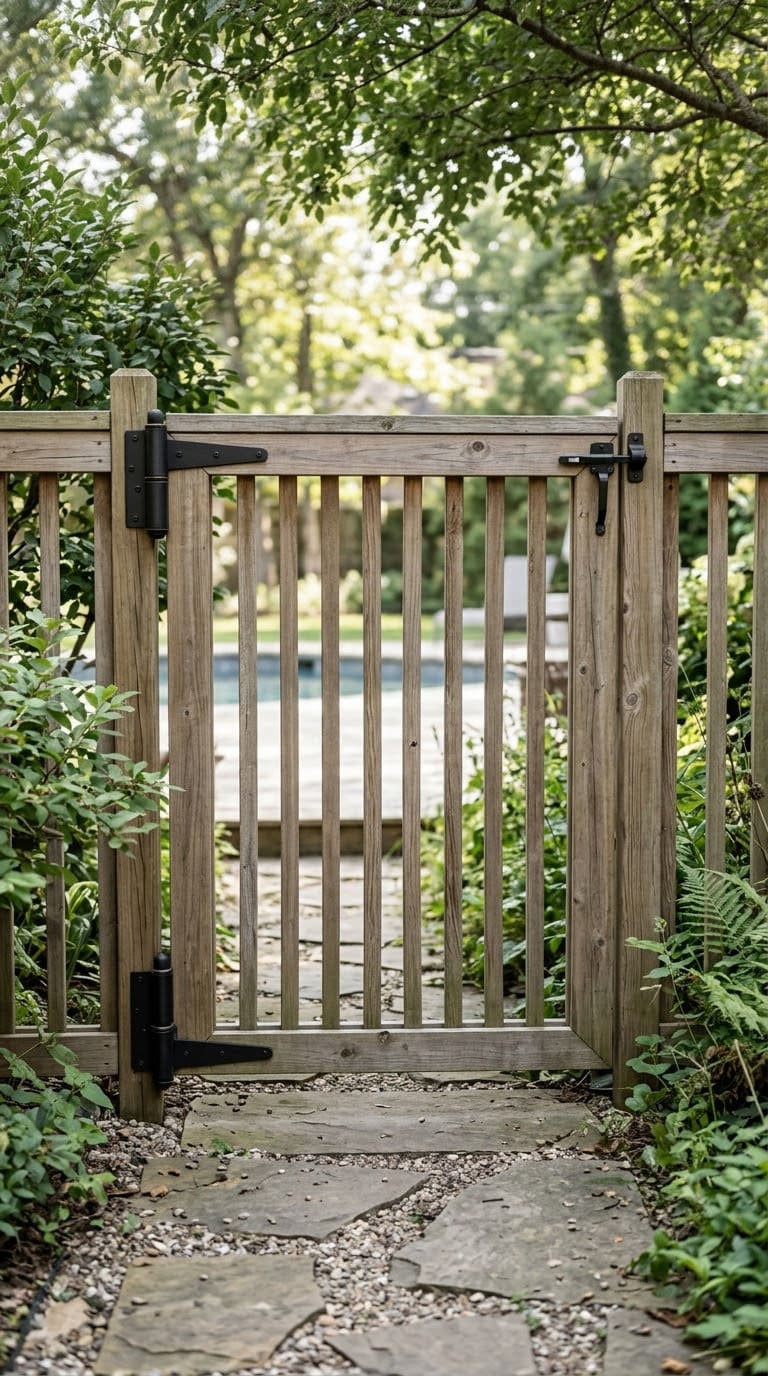
Pedestrian gates should open outward, away from the pool. They should close on their own and latch on their own.
If the latch release sits less than 54 inches above the bottom of the gate, it should be on the pool side. It should also be at least 3 inches below the top of the gate. The gate and barrier should have no opening wider than 1/2 inch within 18 inches of the release.
The CPSC says these are guidelines and not a federal standard. Many towns write them into local code, so check yours before you build. A cute cottage gate is not the right pick near water unless it meets the rule.
12 DIY Garden Gate Ideas
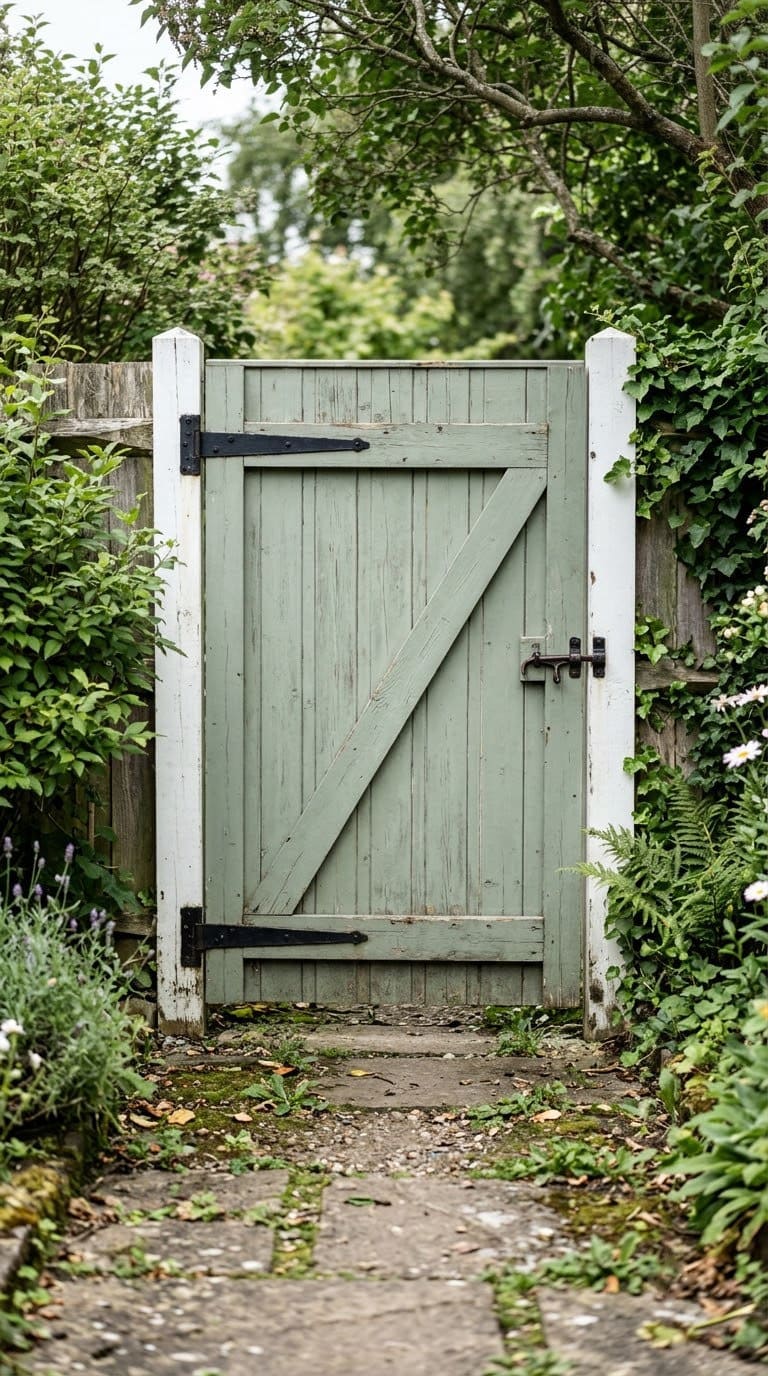
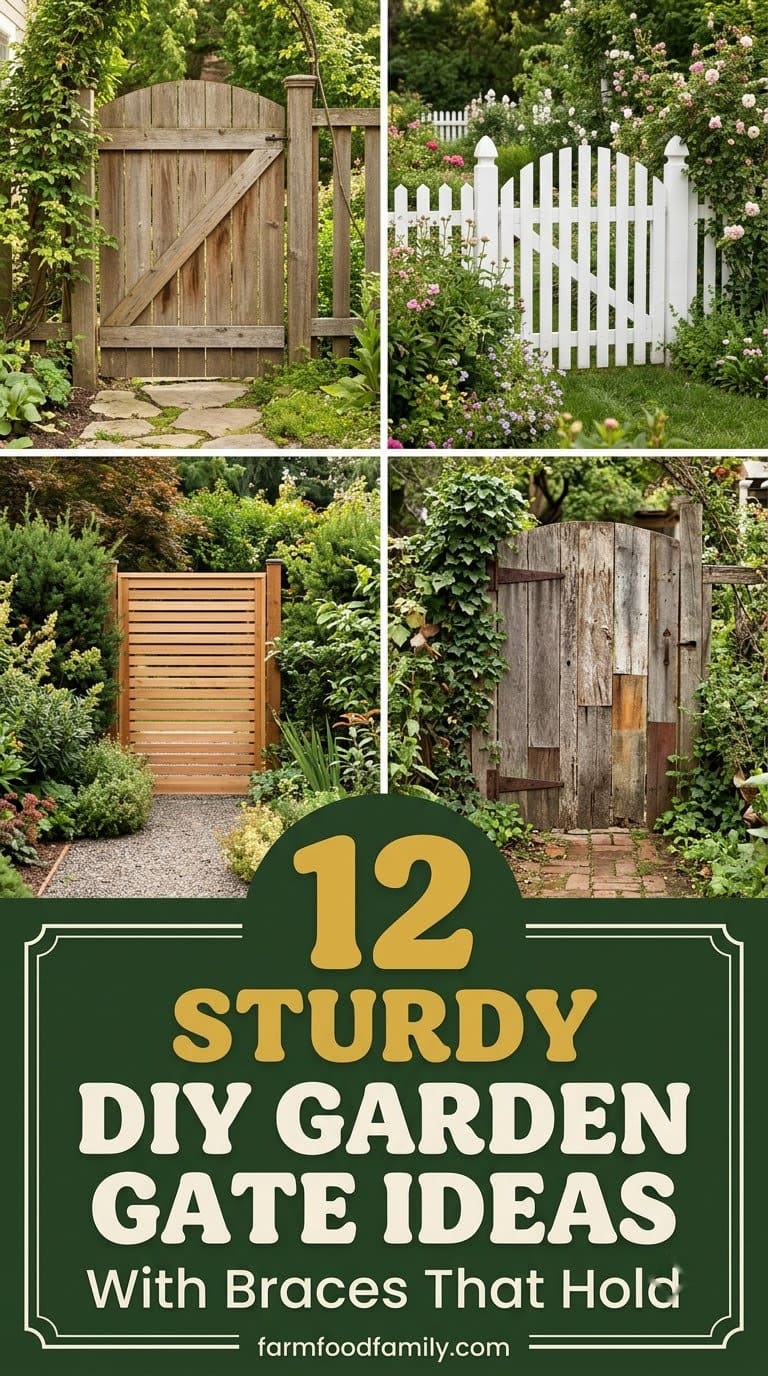
1. Classic Z-Brace Board Gate
Build a frame from 2x4s and cover it with vertical boards. Add a diagonal brace from the top latch corner to the bottom hinge corner. This Old House builds its frame with rails ripped to 4 inches and stiles cut to 22 inches.
Prime every piece before you put it together. Use 3-inch stainless screws driven at an angle. Add a cap board across the top for a clean finish.
2. Picket Gate
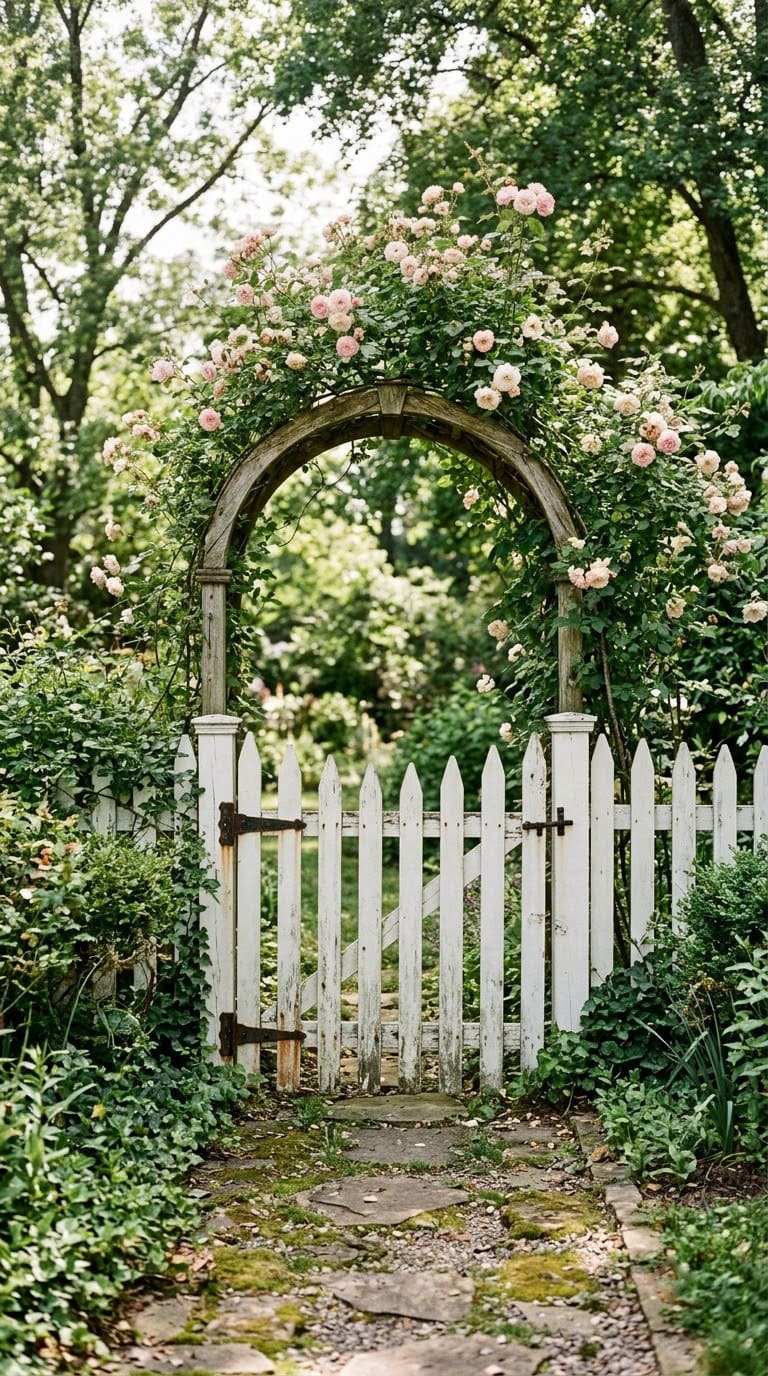
A picket gate matches a picket fence and keeps the cottage look. Space the pickets evenly and keep the tops at the same height. Screw them to two rails and add the diagonal brace behind.
Paint it white or soft blue. Match the picket shape to your fence. Our picket fence ideas show many styles.
3. Slatted Cedar Gate
Horizontal or vertical cedar slats give a clean, modern look. Leave small gaps so air and light pass through. Cedar is a popular choice, but set the posts with care.
Keep the slats straight with a spacer block. Finish with a clear sealer so the color stays warm. Reseal every few years, as the This Old House maintenance tips say.
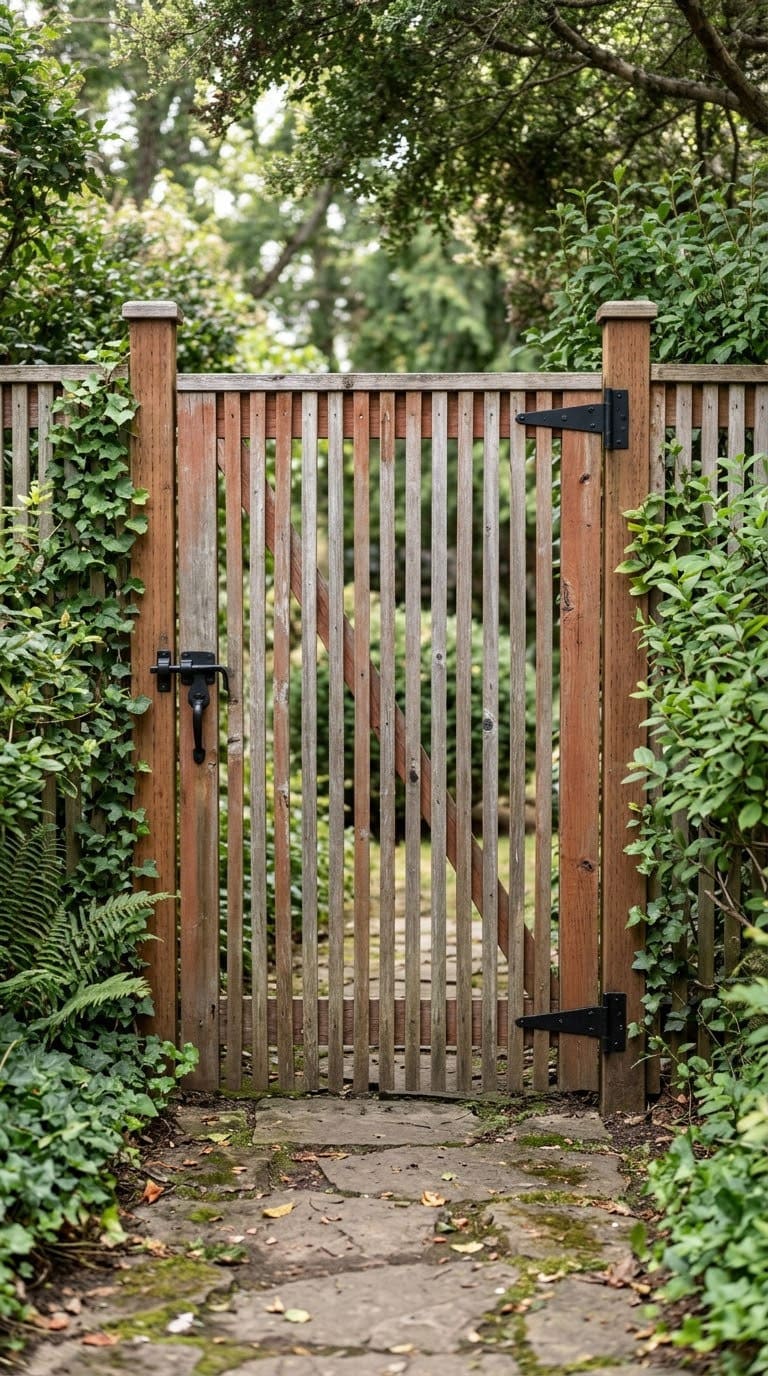
4. Reclaimed Board Gate
Old fence boards and barn wood make a gate with character. Pull the nails, sand the splinters and check each board for rot. Boards with soft spots won’t hold screws.
Old wood can weigh more than new lumber. Use strong T-hinges and the brace. This tip is our own build advice and isn’t from a fetched source.
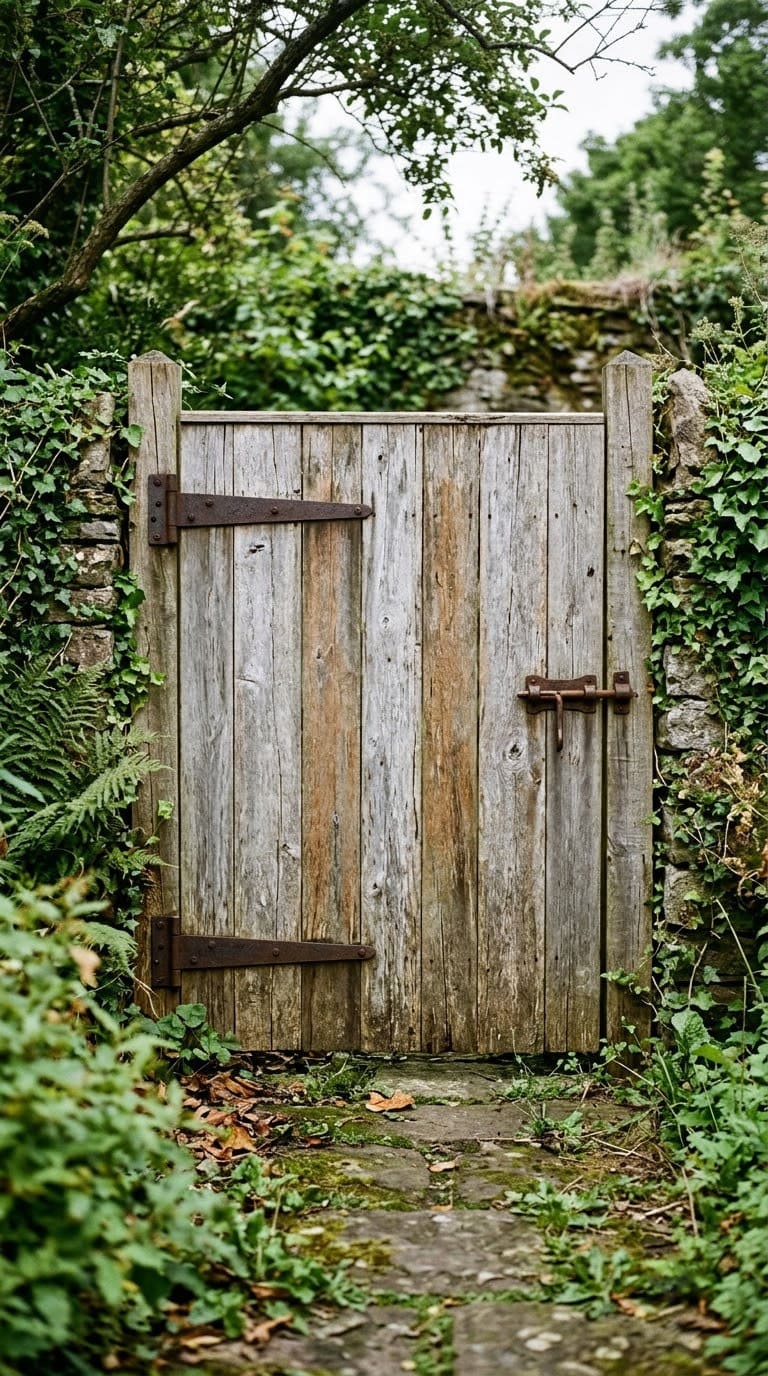
5. Pair of Narrow Gates
Two 2-foot gates make a wide opening without one heavy door. This Old House built its custom gates this way, and they open inward. Each leaf is smaller, which should put less strain on the hinge post (our reasoning, not a sourced claim).
A pair needs a post that touches the string line so both gates line up on their hinges. For a wide pair, add a drop rod that drops into a hole or plate in the ground. Mark the spot where the rod meets the ground before the concrete sets.
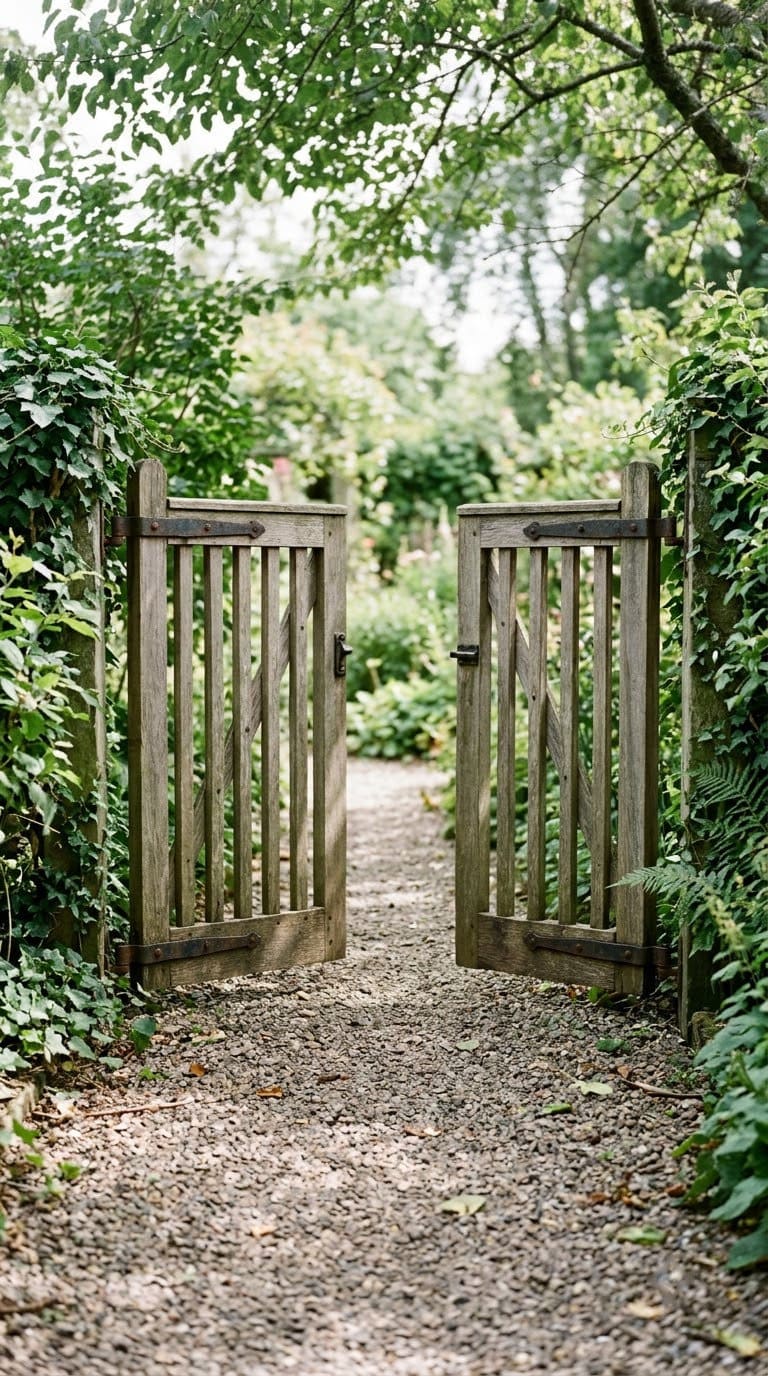
6. Wire and Frame Vegetable Gate
A wood frame with welded wire or hardware cloth makes a light gate for a veggie bed. Add the diagonal brace, since wire adds no strength. Cover the full frame with wire so no part of the gate is a gap.
MSU Extension says there should be no gaps or cracks to squeeze through. Bury or block the bottom so rabbits and woodchucks can’t dig under. Our chicken fence ideas show wire styles that suit this gate too.
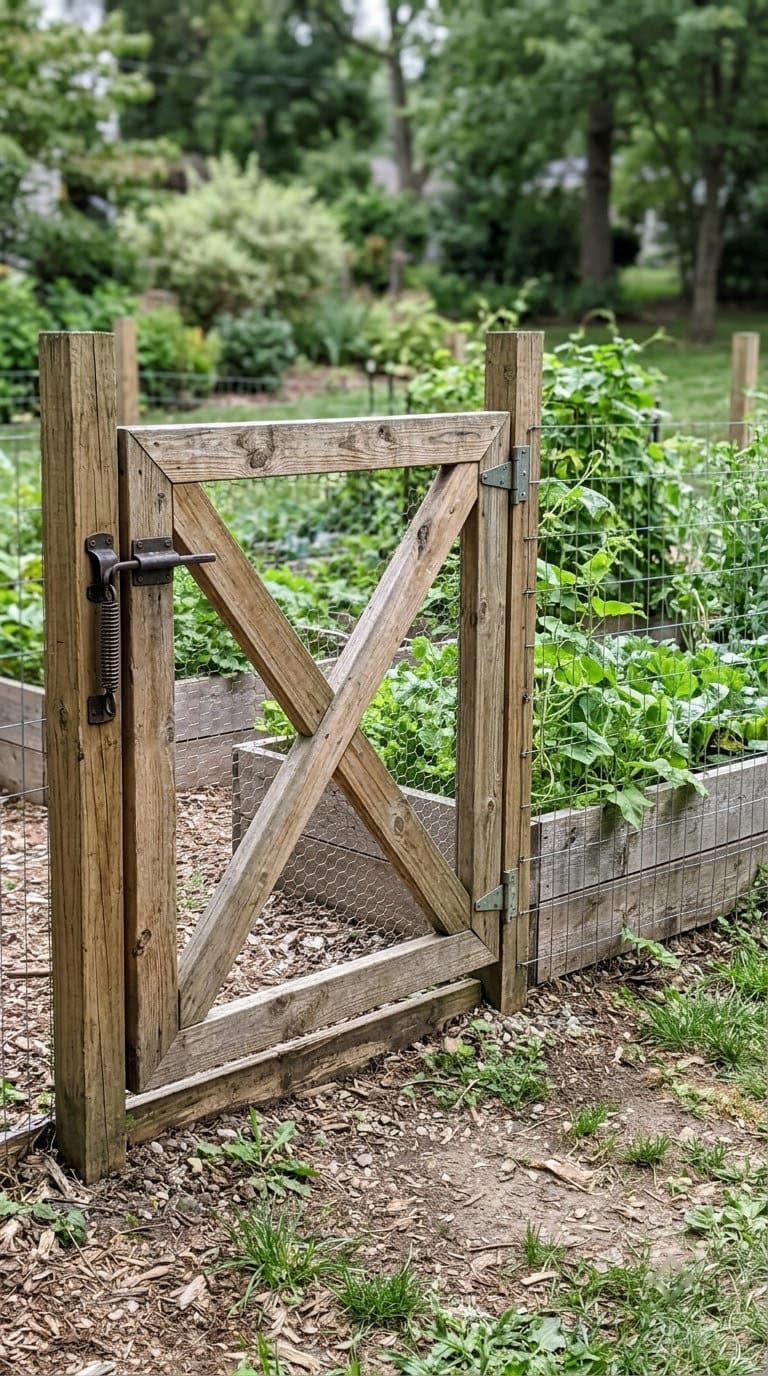
7. Arched Gate Under an Arbor
Place a gate under an arbor and the entrance becomes a feature. Set the arbor posts first and hang the gate between them. The arch frames climbing roses or clematis.
Keep the gate itself simple. A flat-topped gate under an arch is easier to build and easier to brace. Our guide to pergola vs arbor vs trellis helps you choose the structure.
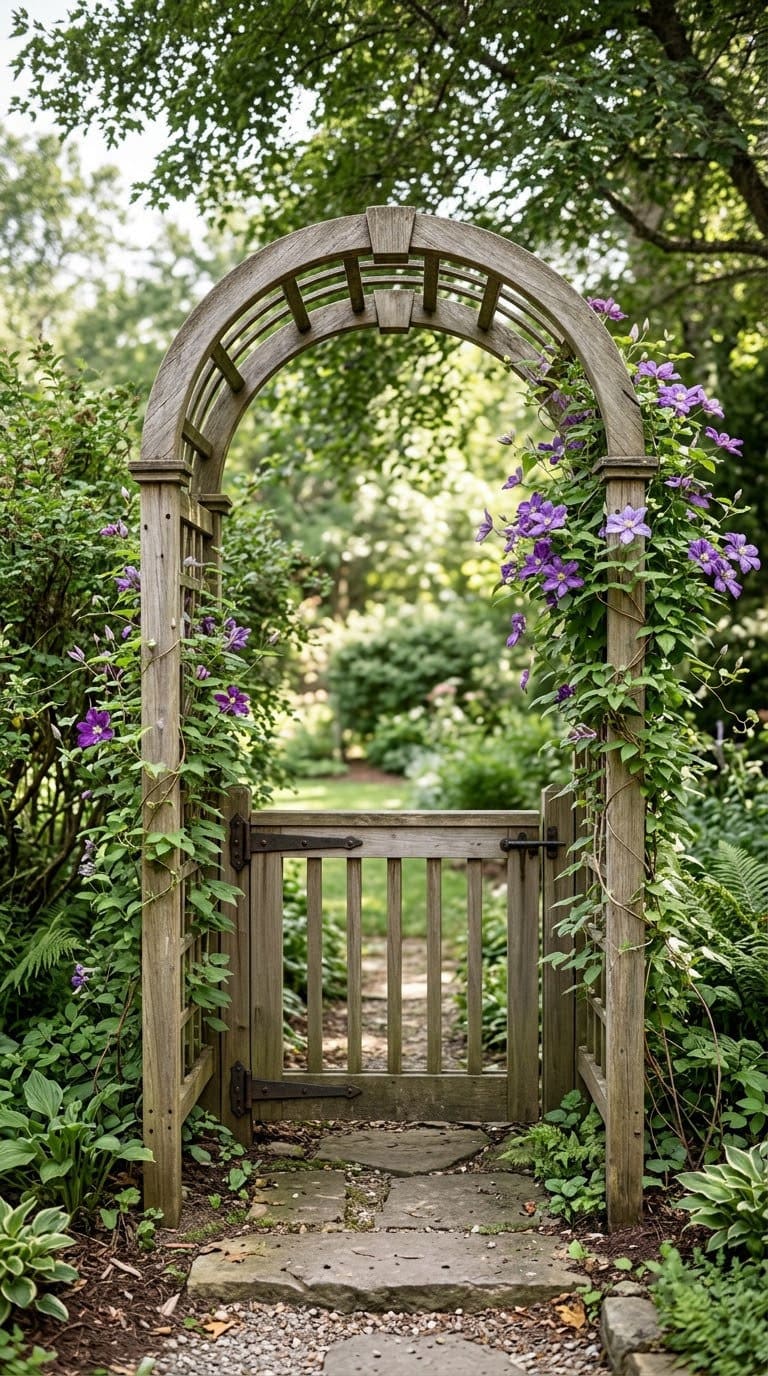
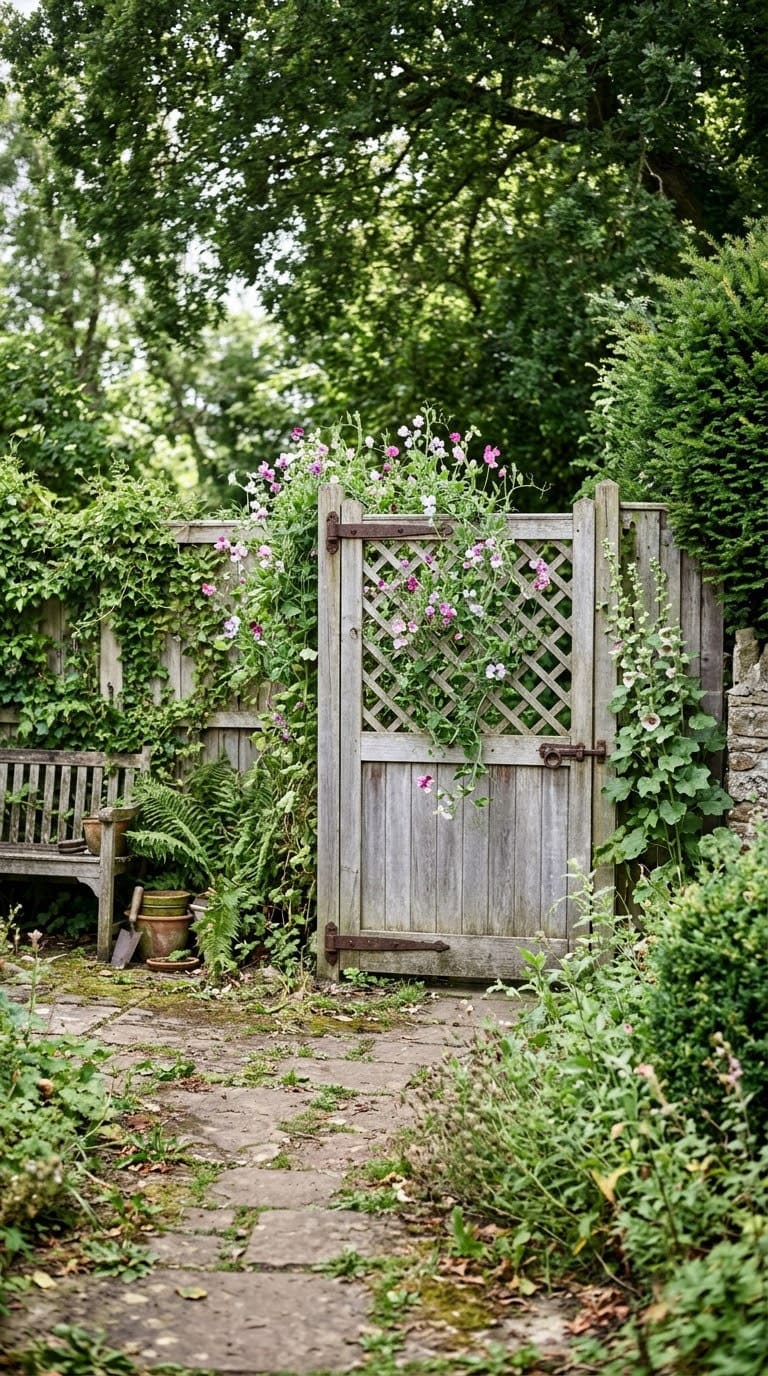
8. Lattice-Top Gate
Use solid boards on the bottom half and lattice on top. The lattice lets air through and gives vines something to grip. It also cuts the weight of the gate.
Frame the lattice with 1x4s so it won’t flex. Keep the brace in the lower, solid half. See our lattice fence ideas for panel styles.
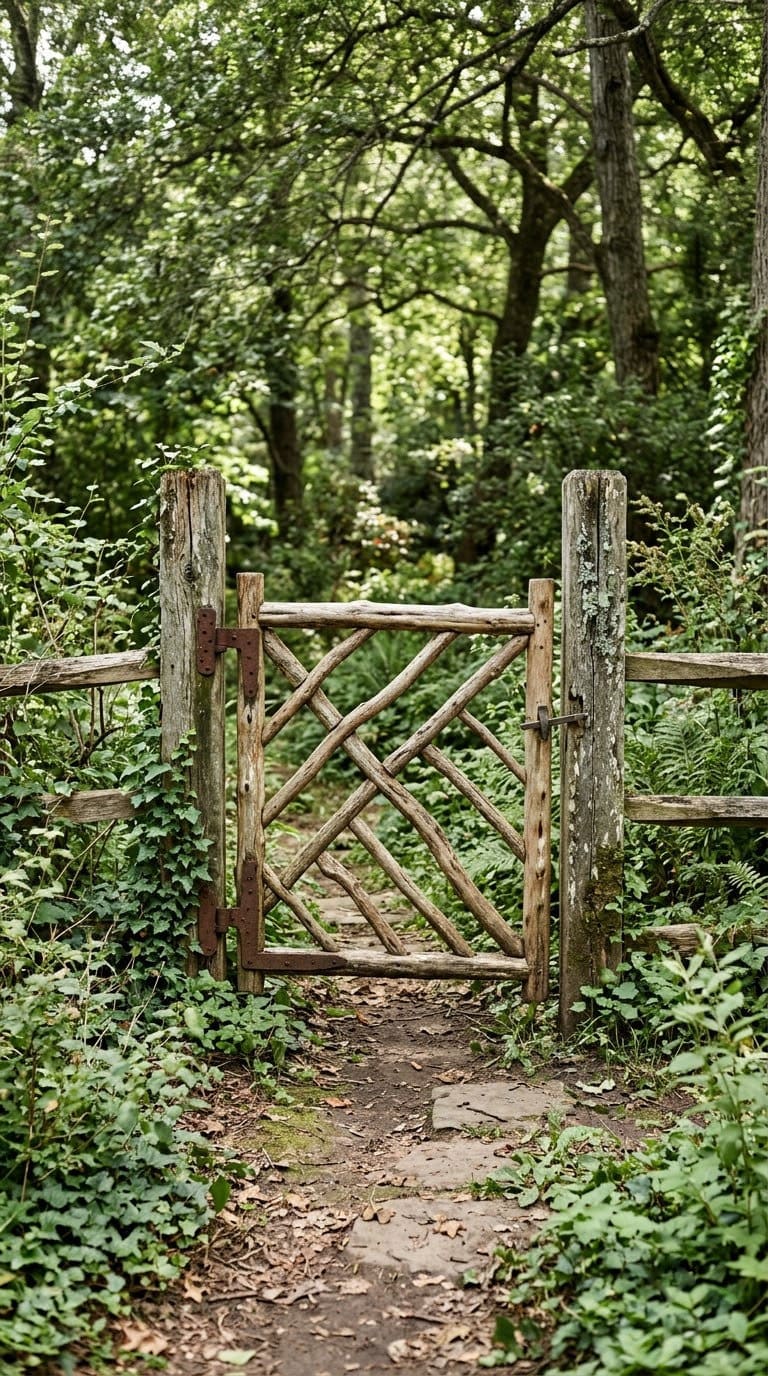
9. Rustic Branch Gate
Straight branches lashed or screwed into a frame make a woodland gate. Use dry, peeled branches and cut the ends square. Keep the frame in the same plane so the gate swings flat.
Branches in the ground will rot, so keep them off the soil. Use treated posts and let the branches sit above grade. Our rustic fence ideas show matching fences.
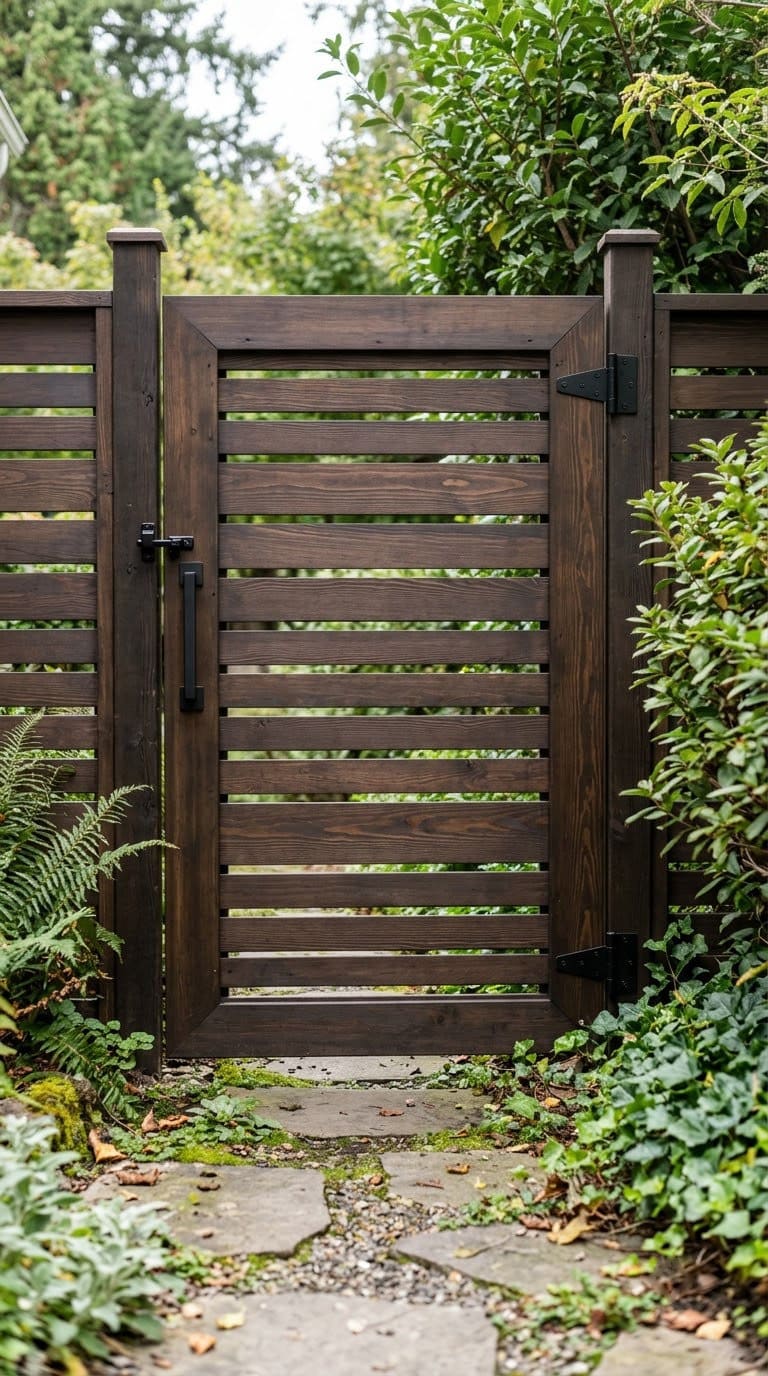
10. Horizontal Slat Privacy Gate
A gate with horizontal boards looks modern and blocks the view. Use a tight spacing for privacy and a wider gap for light. A long horizontal run still needs the diagonal brace, because the boards add weight.
Match the gate to your fence. See our horizontal fence ideas for layouts. Pick a stain that suits the house.
11. Cottage Gate With a Planted Edge
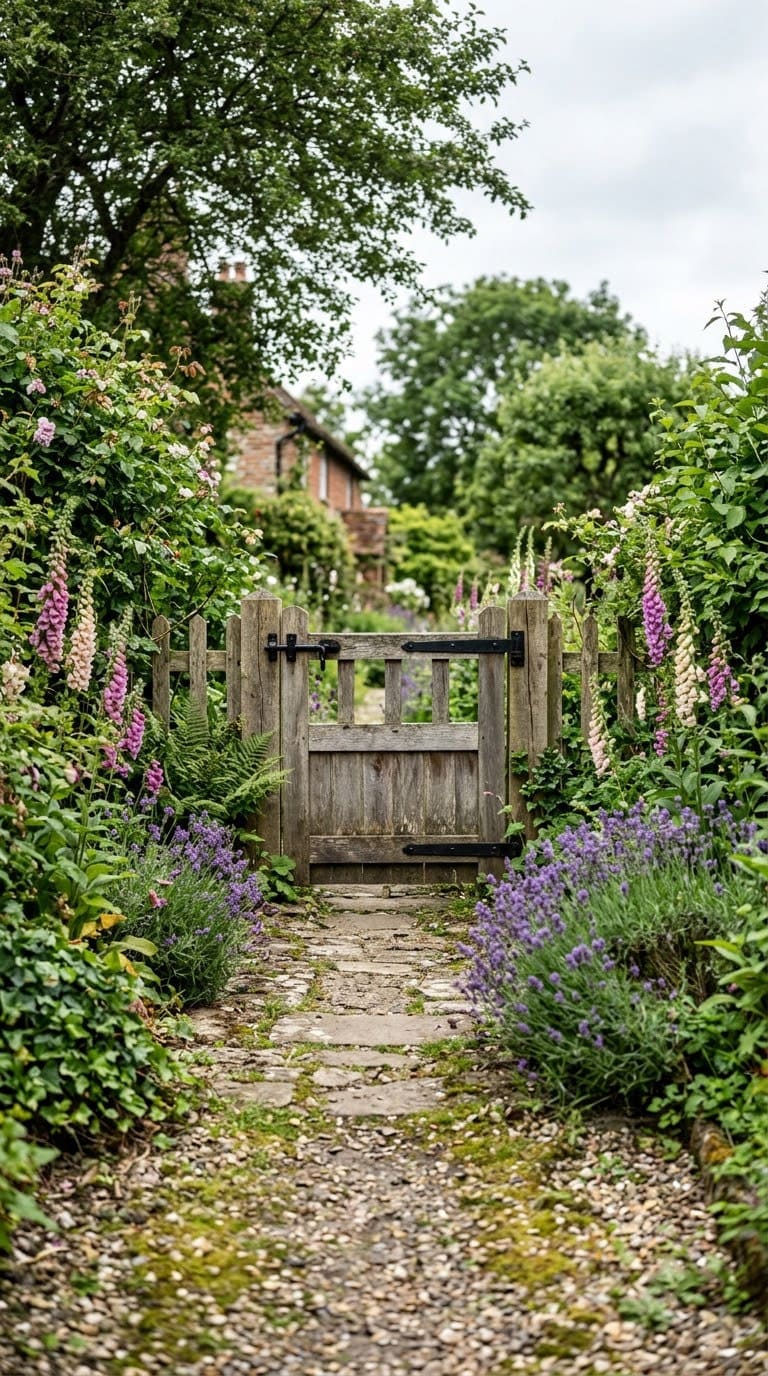
Frame the gate with plants and it feels grown, not built. Lavender, roses and foxglove all suit the style. Start with a simple board or picket gate and let the plants do the work.
Leave room for the swing and keep plants off the latch. Trim them so they don’t catch the gate. Our guide to starting a cottage garden from seed helps with the planting.
12. Self-Closing Gate for a Pool or Play Area
Use a spring hinge or a closing device and a latch that sets itself. The CPSC says pool gates should open outward and close and latch on their own. A latch release placed under 54 inches needs to sit on the pool side.
Choose a design with no wide gaps near the latch. Check your local code before you build. Our fence on slope ideas also help when the ground tilts.
Common Mistakes to Avoid
The biggest mistake is a brace that points the wrong way. This Old House says the diagonal should rise toward the latch, and a reversed brace does little. If the gate sags anyway, a turnbuckle rod fixes it.
The second is soft posts. A gate swings and pulls on its hinge post every day. Set it deep, brace it while the concrete cures, and check the frost depth where you live.
The third is leaving a gap in a gate that is meant to keep animals out. MSU Extension says to leave no gaps or cracks around or through the gate. The same goes for the bottom edge.
The fourth is skipping the pool rules. The CPSC guidelines call for outward-opening, self-closing, self-latching gates near a pool. Check your local code, since some towns require it.
If you only fix one thing, build the brace right. A tight, square frame is the part that lasts.
Frequently Asked Questions
How wide should a garden gate be?
Pedestrian gates are typically 3 to 4 feet wide, according to This Old House. Vehicle gates are usually 10 to 12 feet.
Which way should the brace go on a garden gate?
The brace runs from the top of the latch side to the bottom of the hinge side. That puts the wood in compression, which stops the free end from dropping.
How do you fix a sagging garden gate?
Add a threaded rod or wire with a turnbuckle from the top of the hinge side to the bottom of the latch side. Tighten it to lift the gate. You can also replace a wrong-way brace with two new 2x4s.
How deep should gate posts be?
This Old House digs about 2 feet for light 2-foot gates set in foam and about 30 inches for a standard gate set in concrete. Check your local frost depth before you dig.
Does a gate near a pool need to be self-closing?
The CPSC guidelines say pool gates should open outward and close and latch on their own. They are guidelines, not a federal standard, so follow your local code.
Never miss an update — choose FarmFoodFamily as your preferred source on Google.
How it works: Tap the button below to open Google's settings page, then check the box next to FarmFoodFamily.
Tap the checkbox to turn it blue — that's how you know it's set.