45+ Best Driveway Gate Ideas and Designs for a Sleek and Secure Entrance
My cousin automated his existing wrought iron gate last year and skipped the second sensor his installer recommended, figuring one photo eye was plenty. It honestly wasn’t a huge deal until his dog wandered into the gate’s swing path one evening and the gate kept closing anyway. No injury, just a scare and a very…

Never miss an update — choose FarmFoodFamily as your preferred source on Google.
How it works: Tap the button below to open Google’s settings page, then check the box next to FarmFoodFamily.
Tap the checkbox to turn it blue — that’s how you know it’s set.
My cousin automated his existing wrought iron gate last year and skipped the second sensor his installer recommended, figuring one photo eye was plenty.
It honestly wasn’t a huge deal until his dog wandered into the gate’s swing path one evening and the gate kept closing anyway.
No injury, just a scare and a very fast trip back to the installer for the second sensor. That’s the kind of detail that never makes it into a gate style roundup, so it’s worth covering properly here before getting to the fun part.
Inexpensive driveway gate ideas
This category is for DIYers. These three ideas keep material costs low without looking like a budget afterthought.
1. Wood and wire mesh
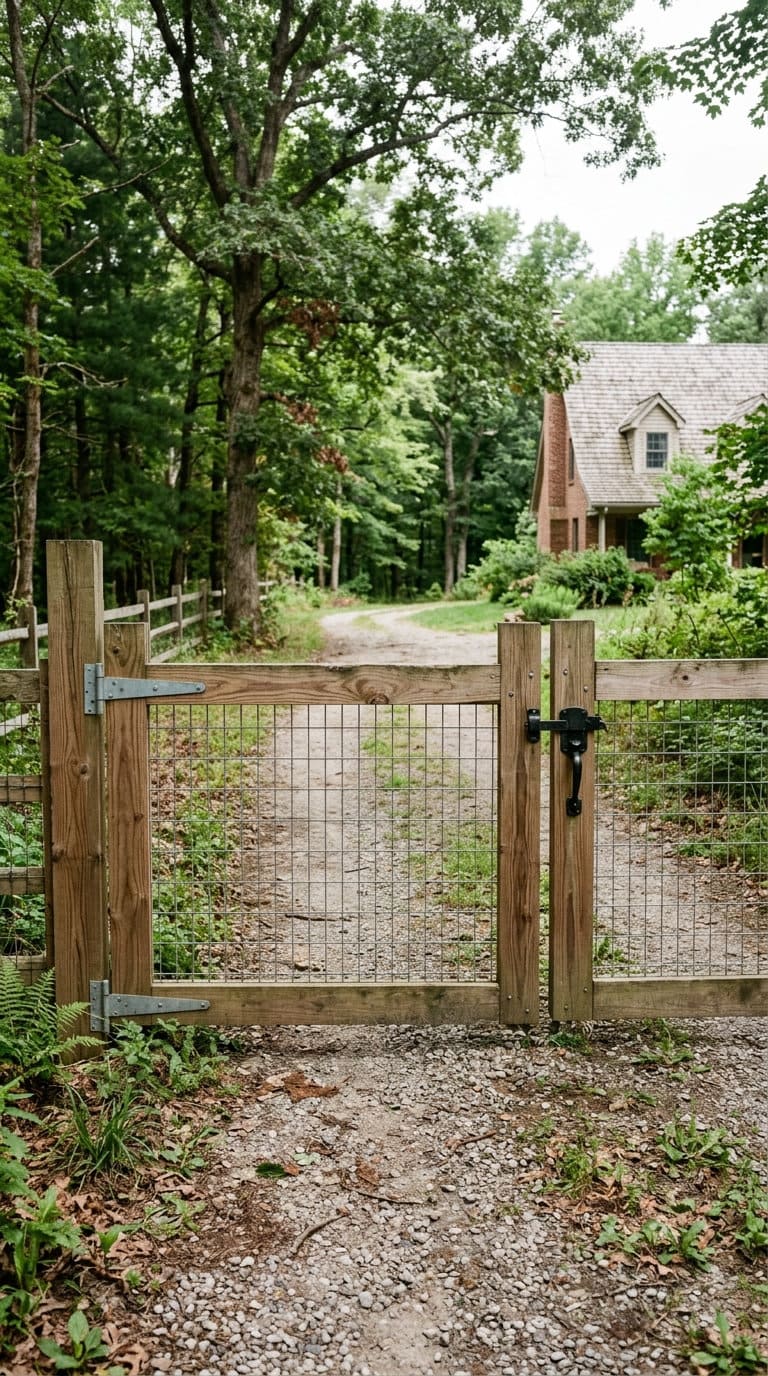
A simple wood frame filled with galvanized wire mesh is one of the most common DIY driveway gate builds, and for good reason: the wood gives it structure and a finished look, while the mesh keeps material costs down and lets you see through to the road.



Pressure-treated lumber for the frame resists rot better than untreated wood exposed to weather year-round.
Answer 4 quick questions and get matched to the exact fix for your yard — drainage, budget, layout, or something else entirely.
Take the Free Quiz2. Traditional ranch entrance
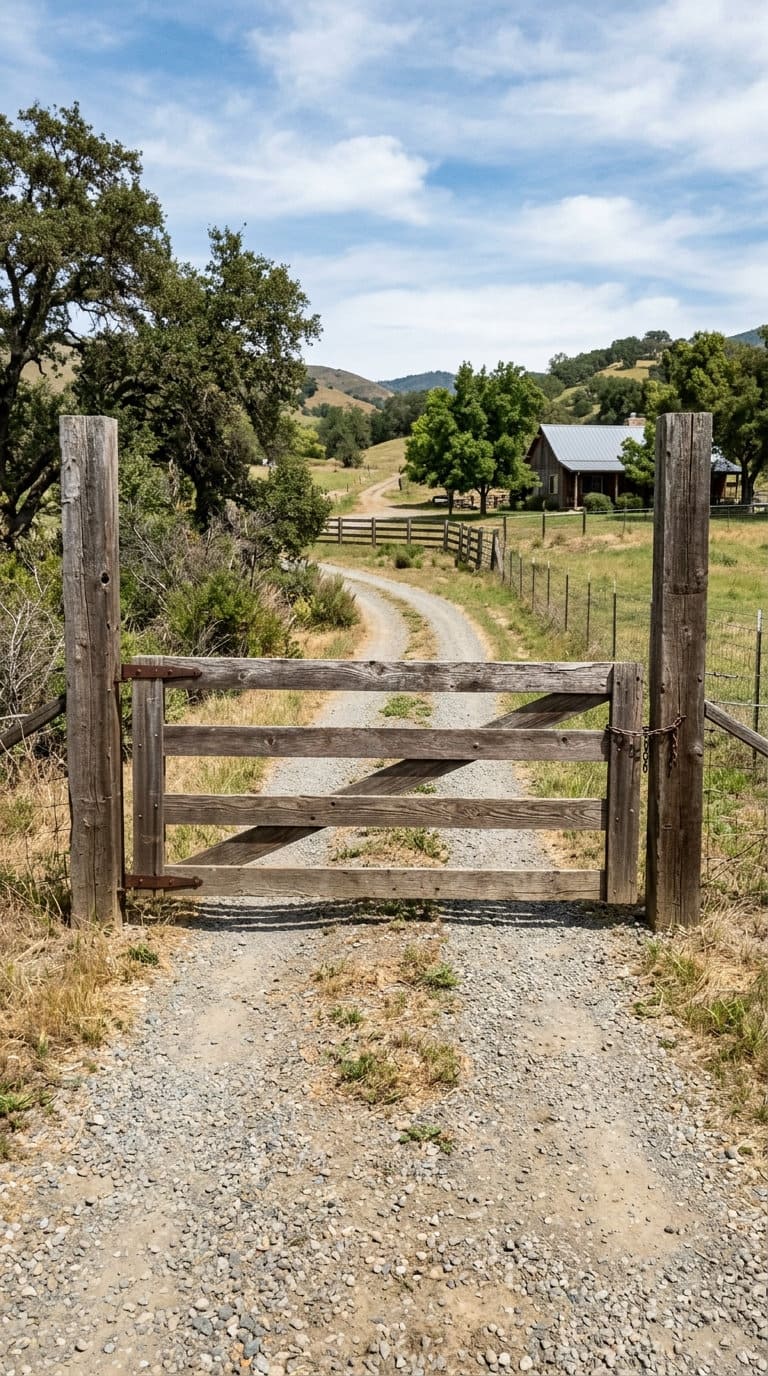
You don’t need much for this one to work: two simple posts and a horizontal-rail gate, the same look ranches have used for generations because it’s functional first and decorative second.
It suits a rural or semi-rural property far better than a dense suburban lot, where the open sightline reads as intentional rather than unfinished.
3. Cheap metal driveway gate
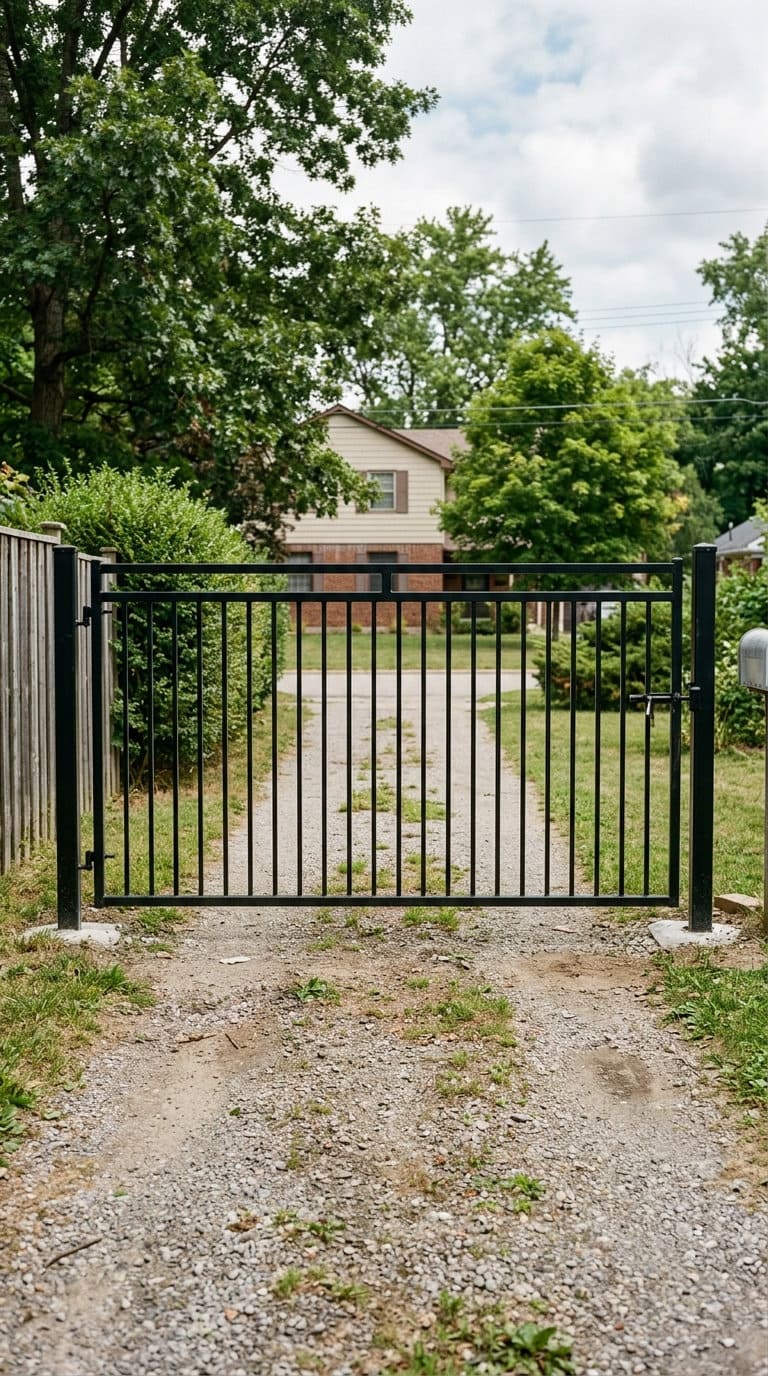
A basic tubular steel gate, the kind sold pre-fabricated at most hardware and farm supply stores, can run under $200 for a single-panel version and still hold up structurally for years with a coat of rust-inhibiting paint every few seasons.
It won’t win any design awards, but it does the actual job a gate is for.
Metal driveway gate ideas
Durable and sleek, metal driveway gates are taking more and more modern designs. They are cost-effective and are also versatile. They are lighter than wrought iron, so they are very manageable. They are perfect for all types of driveway gates.
4. Rollup metal screen driveway gate
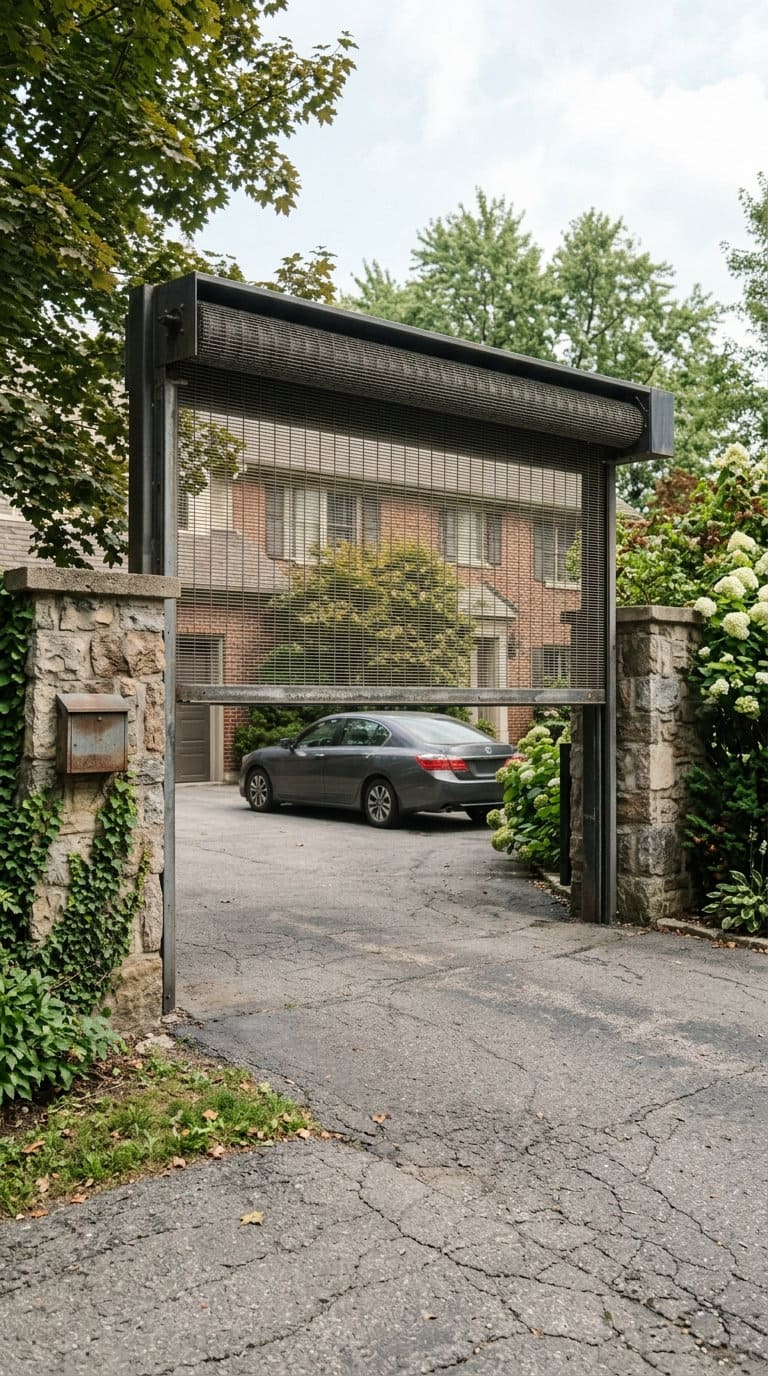
The rollup design isn’t common for driveways specifically (it’s more familiar from storefront security shutters), but it works well for a wide opening where a swinging gate would need too much clearance space.
It rolls up vertically rather than swinging, a real advantage on a tight driveway with limited room on either side.
Most yard problems trace back to one specific, fixable cause. Find yours in 4 quick questions.
Take the Free Quiz5. Metal and mesh
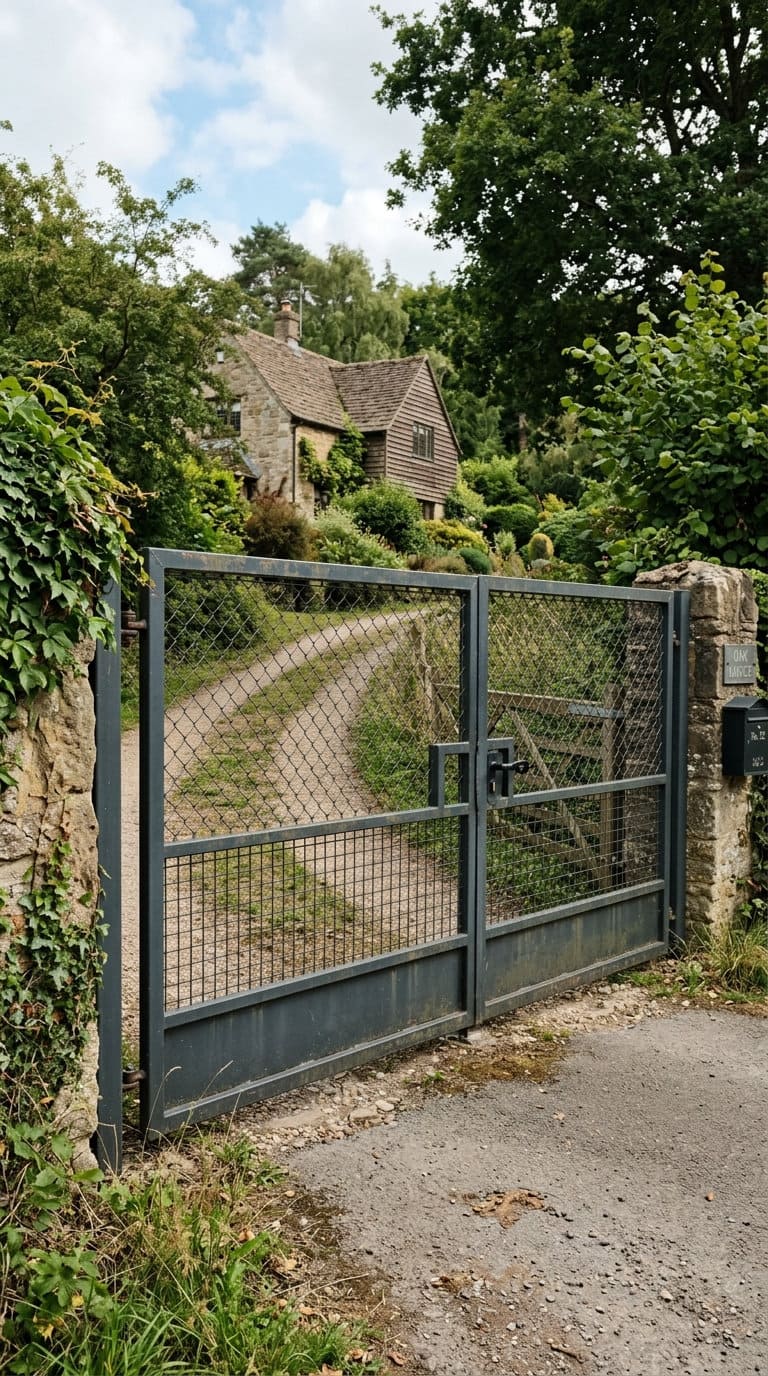
Combining a solid metal frame with mesh panel infill splits the difference between full privacy and full visibility, you get a defined, sturdy structure with sightlines through to the street rather than a completely blank wall.
This reads as more modern than a fully solid metal gate.
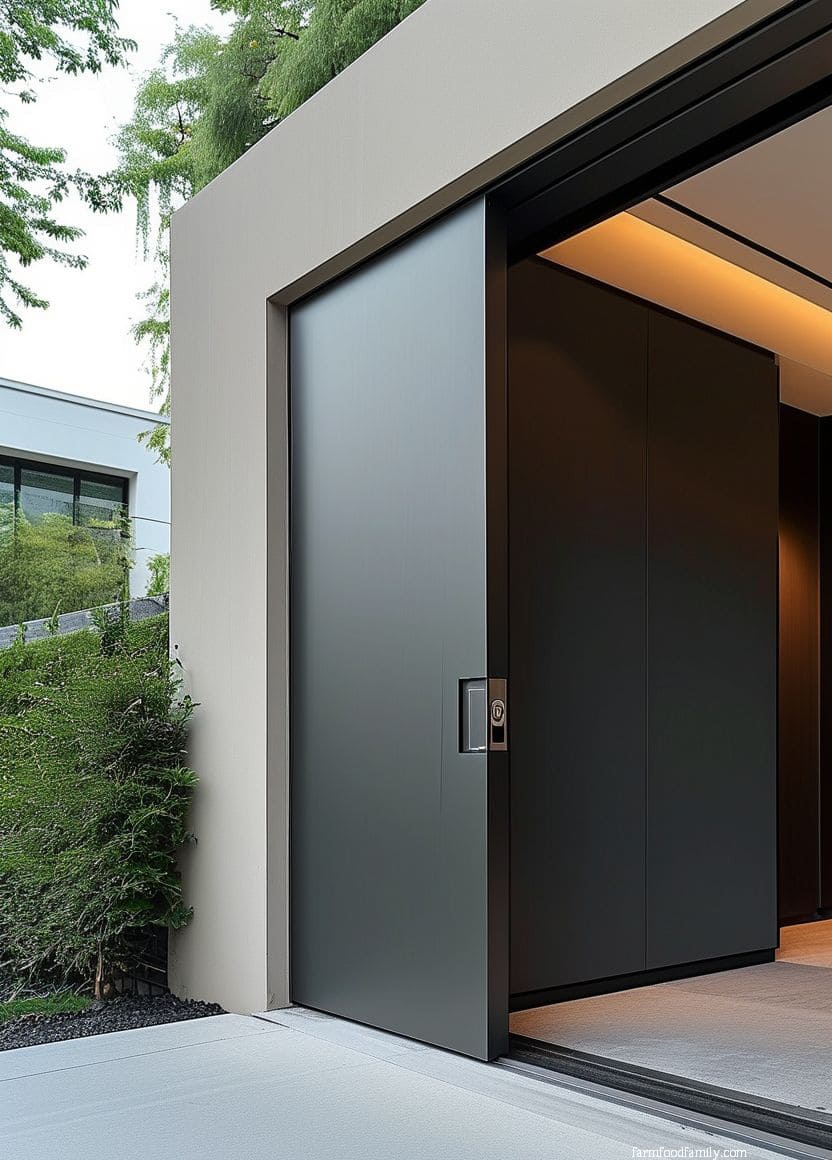
6. Ultra-private black metal slider
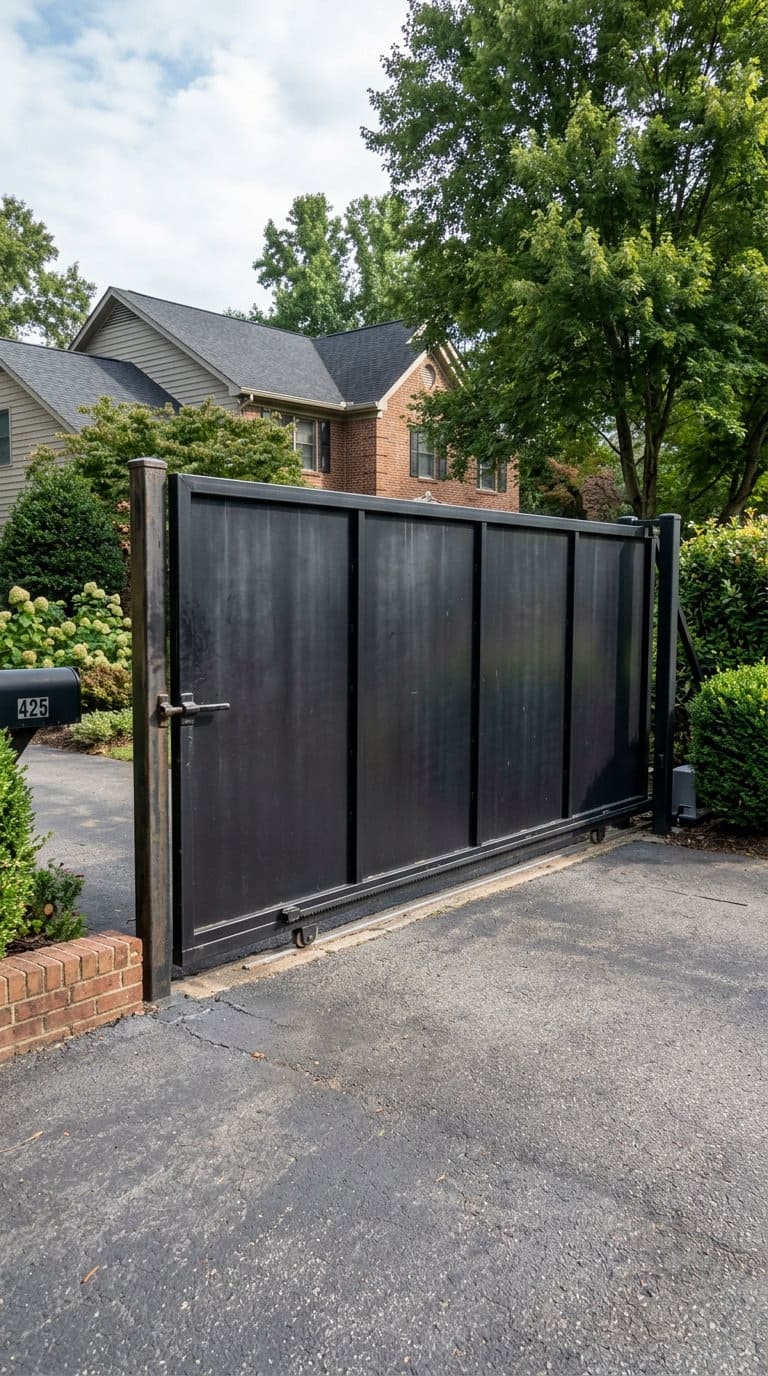
For a sleek, fully private look, a black-finished sliding metal gate with solid (not mesh) panels blocks the driveway from view entirely while sliding open along a track rather than swinging, useful if you don’t have clearance for a swing gate’s arc.
Matte black finishes read as more contemporary than a glossy painted finish.
Wooden driveway gate ideas
Wood is still the most-used material for driveway gates for a simple reason: it’s genuinely versatile across styles from rustic to modern.
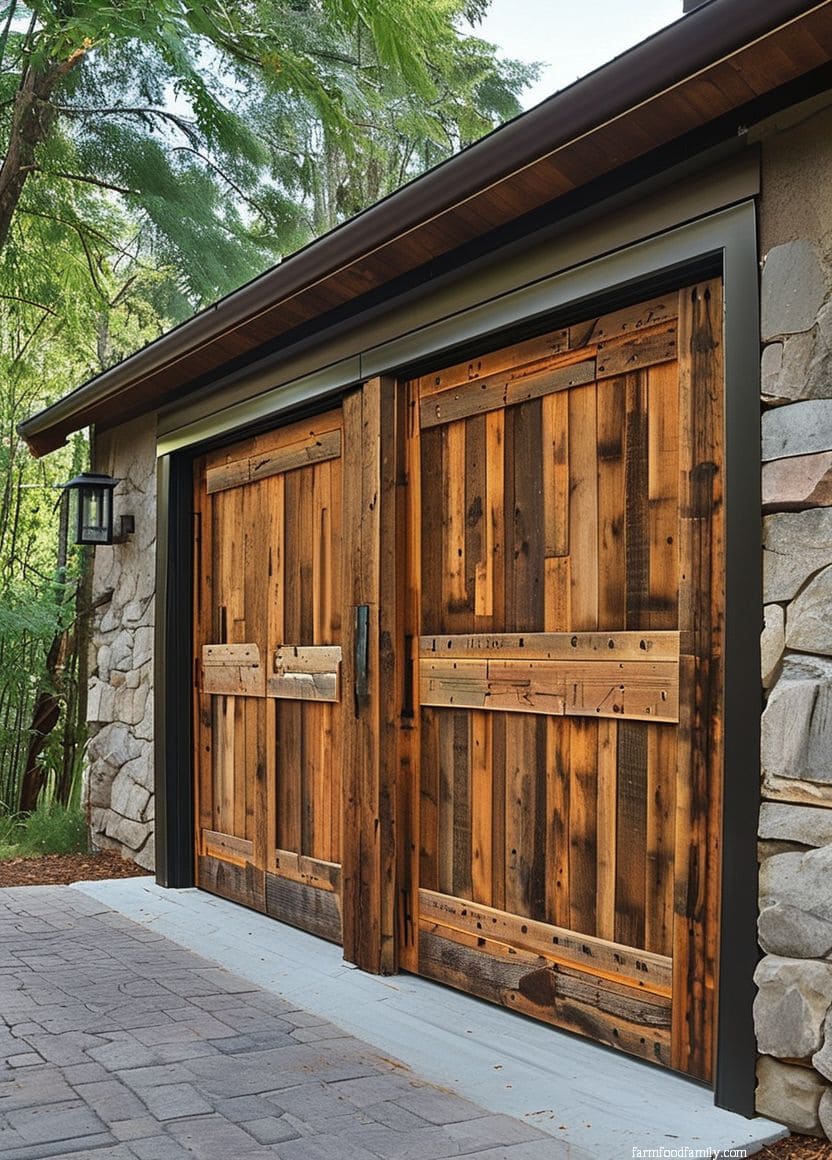
7. Mediterranean barn door
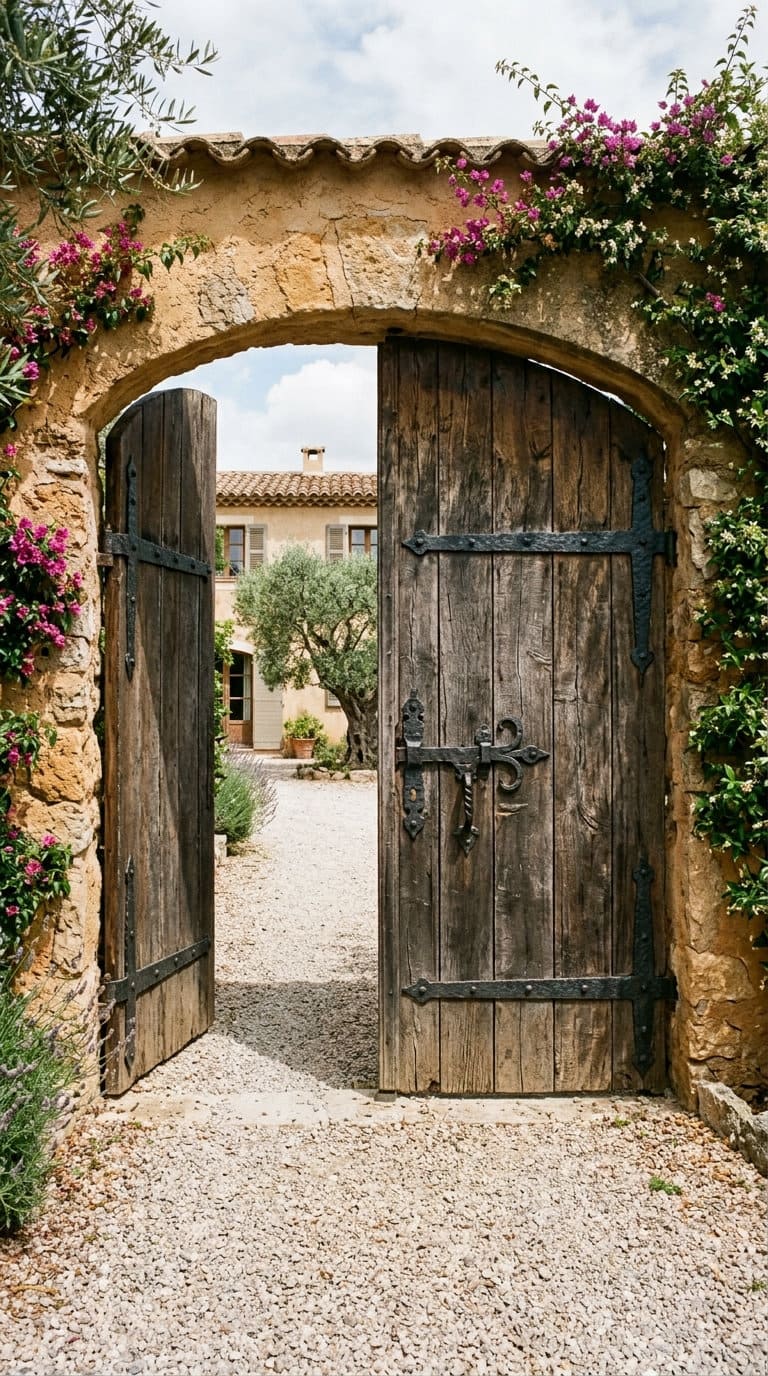
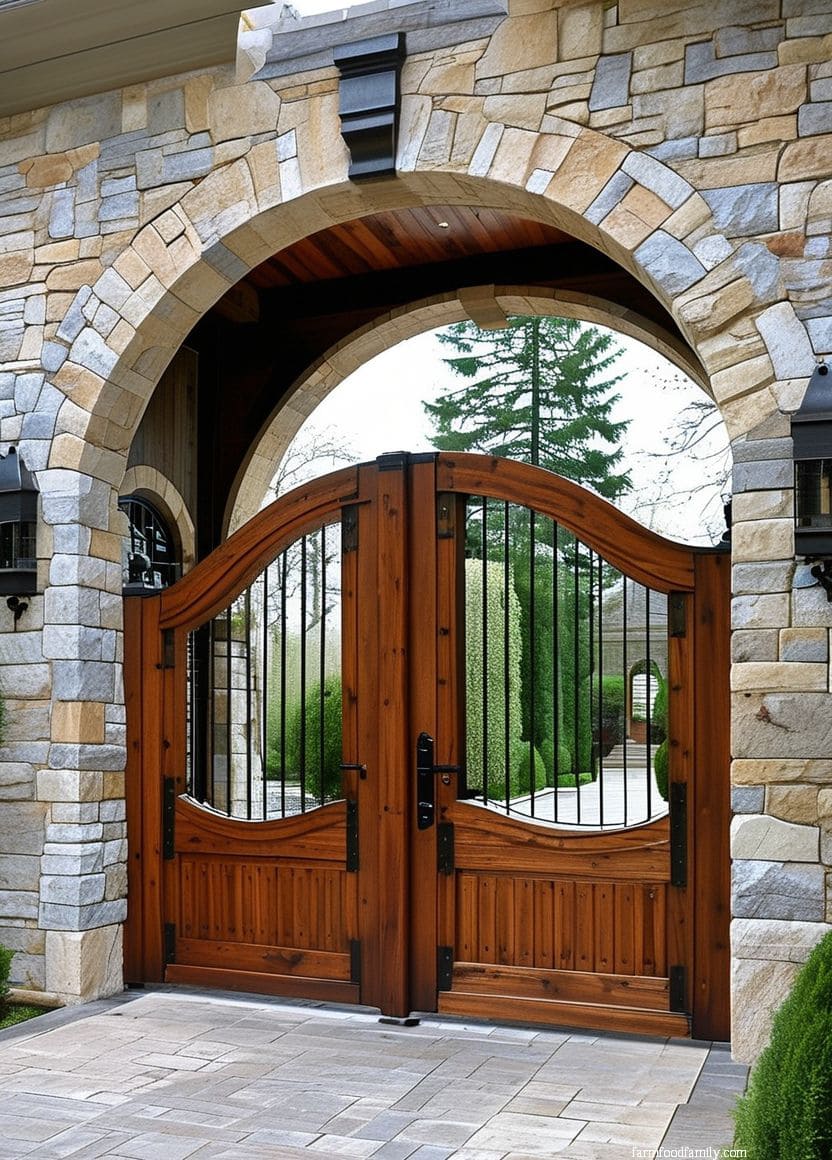
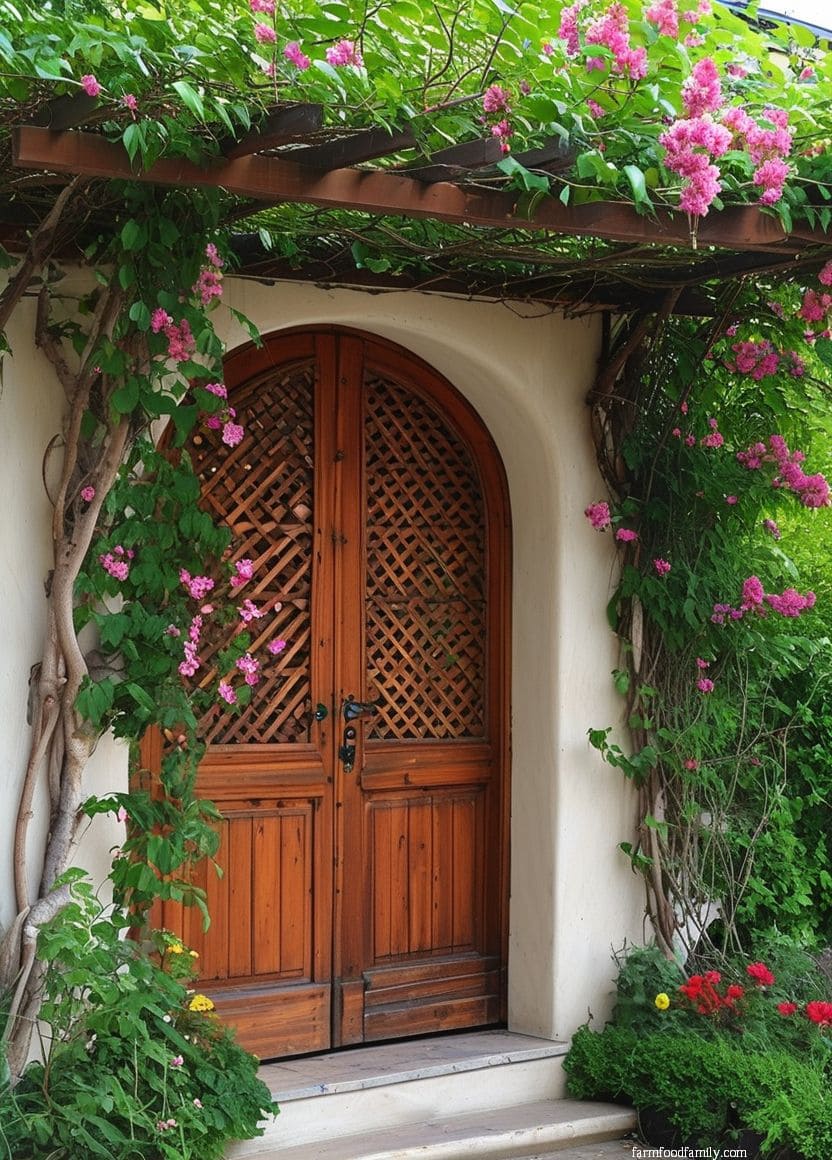
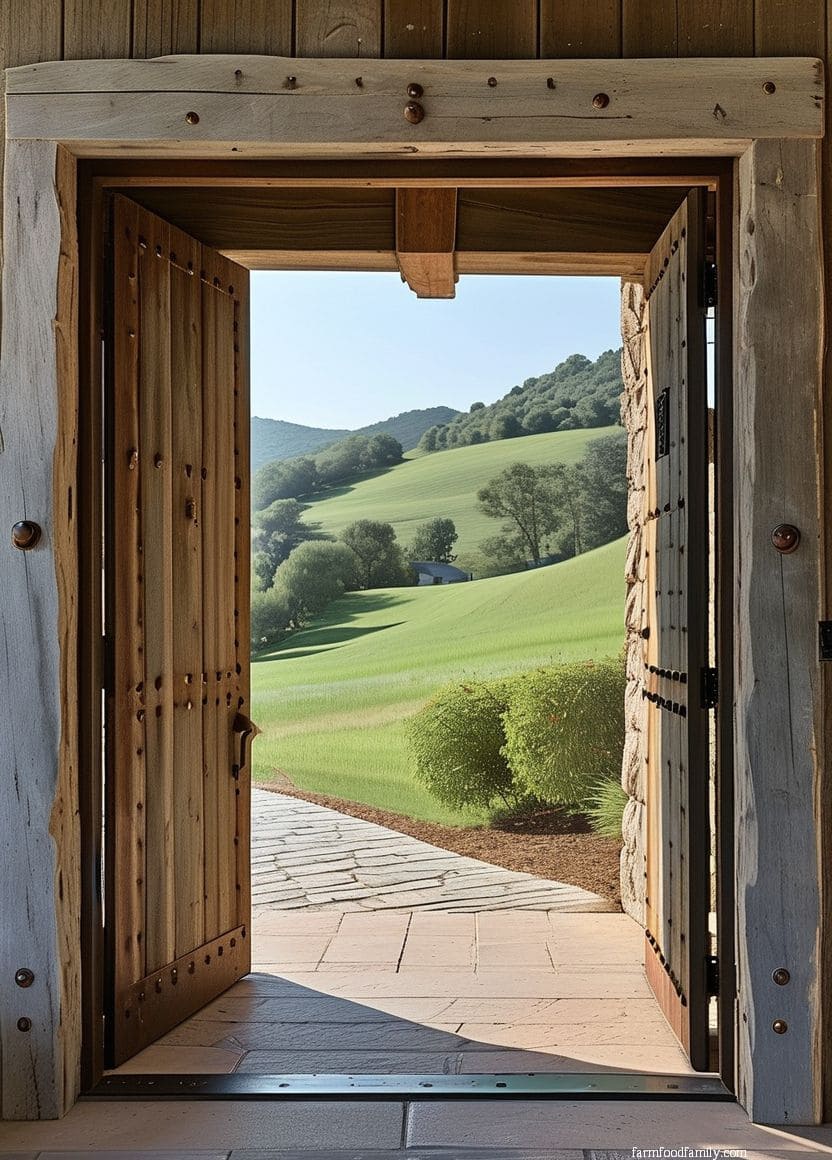
A pair of tall, solid wood panels styled after a Mediterranean barn door bring real old-world character, especially with visible hardware like large iron hinges and a matching handle.
This style pairs naturally with stucco or stone home exteriors more than a modern build.
8. Zen style with glass viewing slots
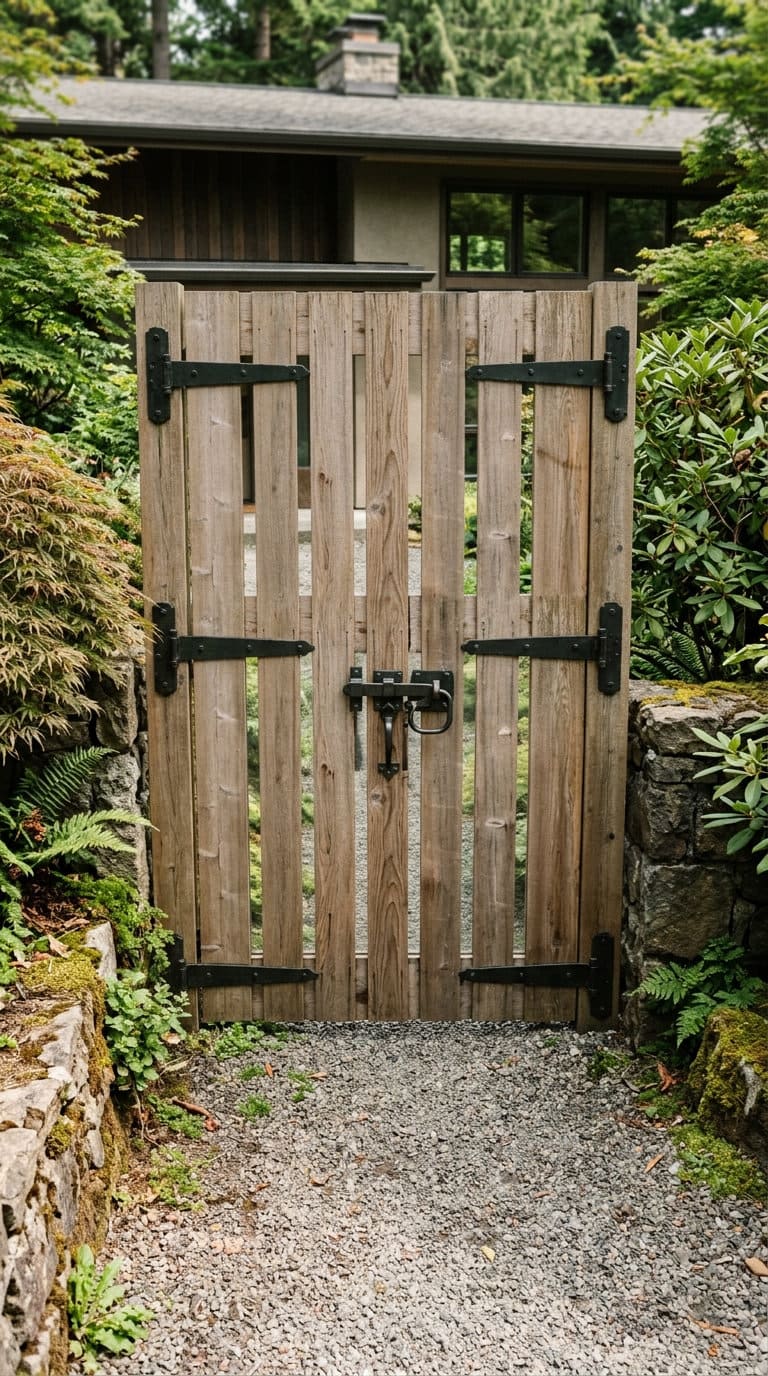
Raw, minimally finished wood panels with narrow vertical glass viewing slots let filtered light and glimpses of the street through without sacrificing the gate’s overall privacy, a genuinely calm, understated look suited to a modern or Japanese-influenced home exterior.
The glass slots need to be tempered safety glass specifically, not standard glass, given they’re at a height where an impact is plausible.
Related: 25+ Best Driveway Lighting Ideas and Designs
9. Mid-century style wooden driveway gate
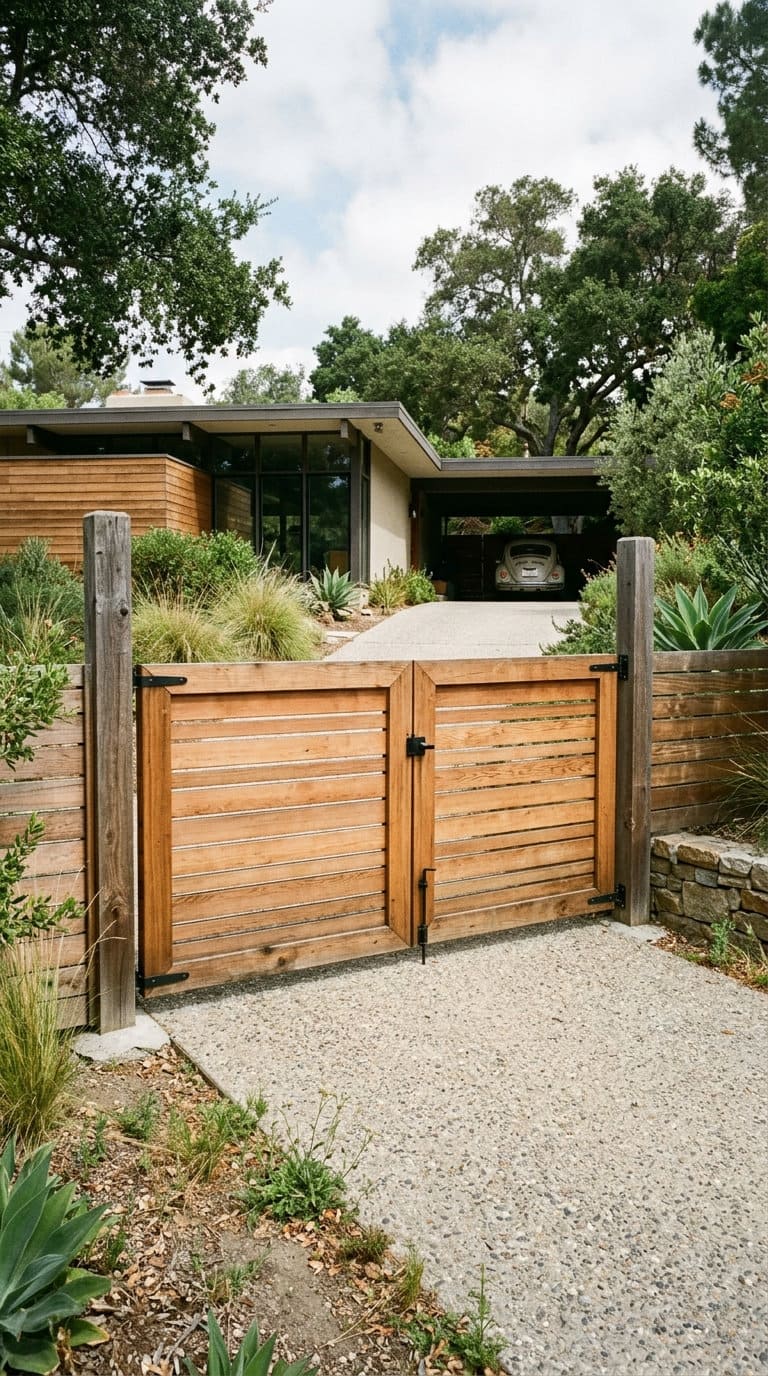
Clean horizontal wood slats with exposed structural framing nod directly to mid-century architecture, and pairing it with a low-profile automatic operator (rather than a bulky visible arm) keeps the whole look from feeling dated by modern hardware bolted onto a period-accurate design.
The average homeowner spends $616/year on yard fixes that don't address the real problem. Find out what yours actually is — before you spend another dollar.
Take the Free QuizRelated: Stone Driveway: Cost, Installation, Pros and Cons
Automatic driveway gate ideas
Automatic gates add real convenience, but they also come with a real safety standard worth understanding before you buy one, covered in full further down this article.
10. Automatic folding wrought iron driveway gate
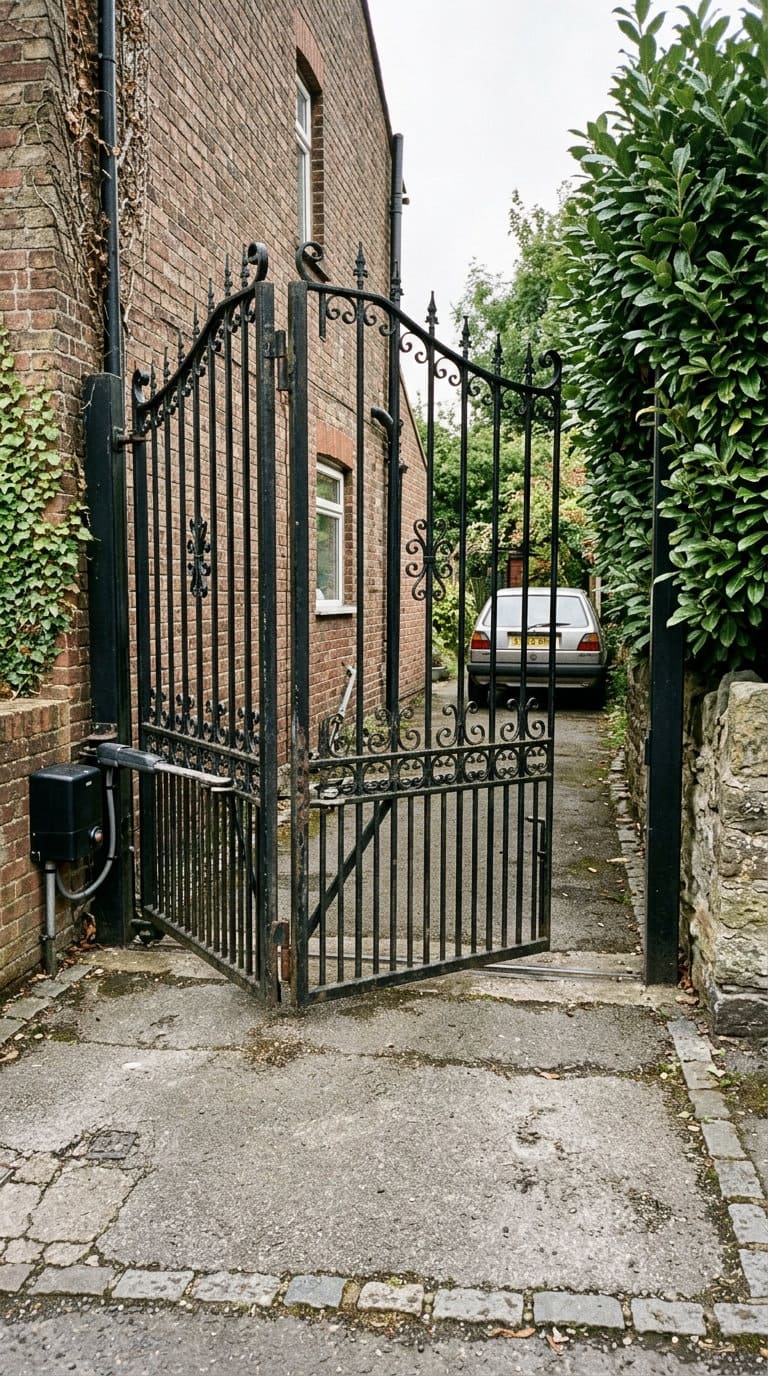
A folding gate operated by remote control needs less swing clearance than a standard swinging gate, since the panels fold back on themselves rather than arcing outward, useful on a driveway with limited side clearance.
Wrought iron folding panels combine the mechanical benefit with real decorative detail.
11. Automatic metal gate driveway
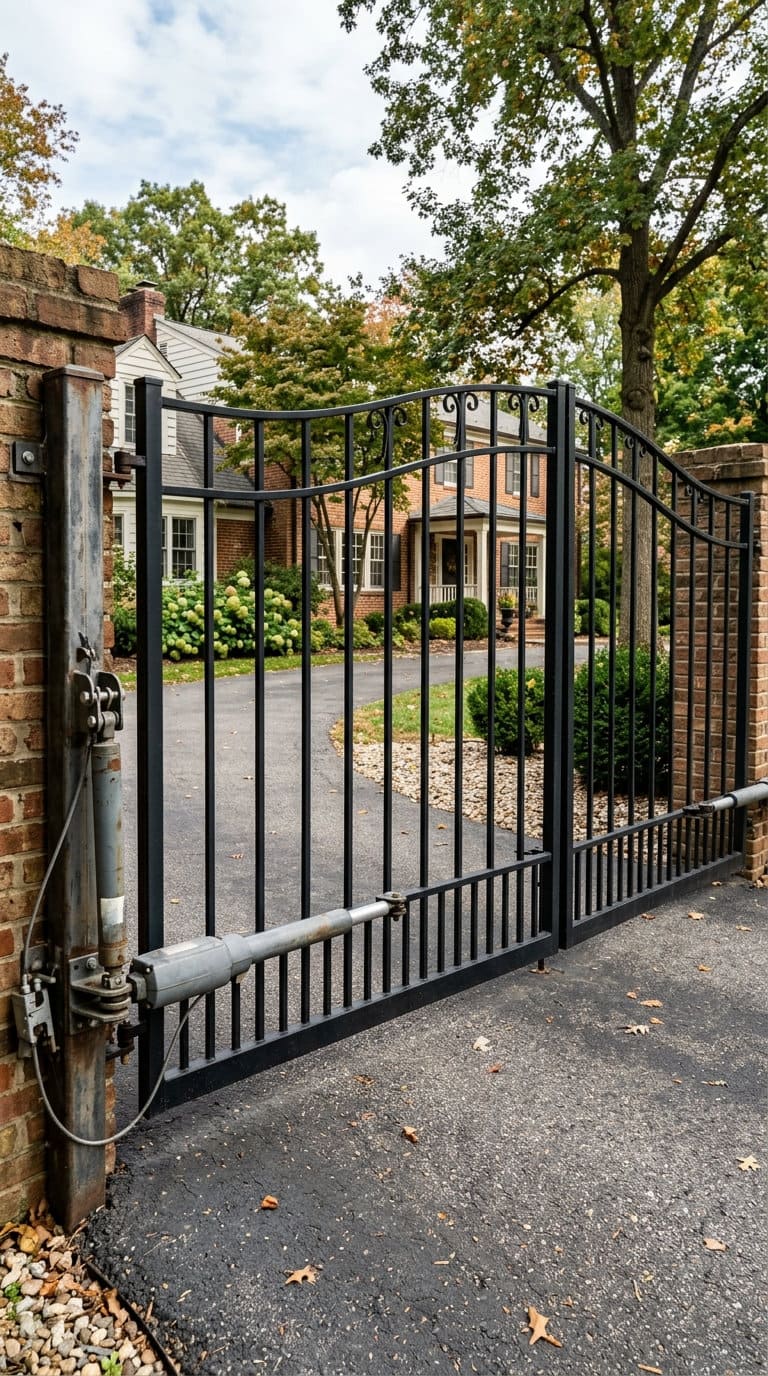
A straightforward automatic swing gate, solid metal panels on a standard swing-arm operator, controlled by remote, is the most common automatic gate configuration for a reason: it’s mechanically simple and well-supported by installers and replacement parts.
12. Electric sliding gate
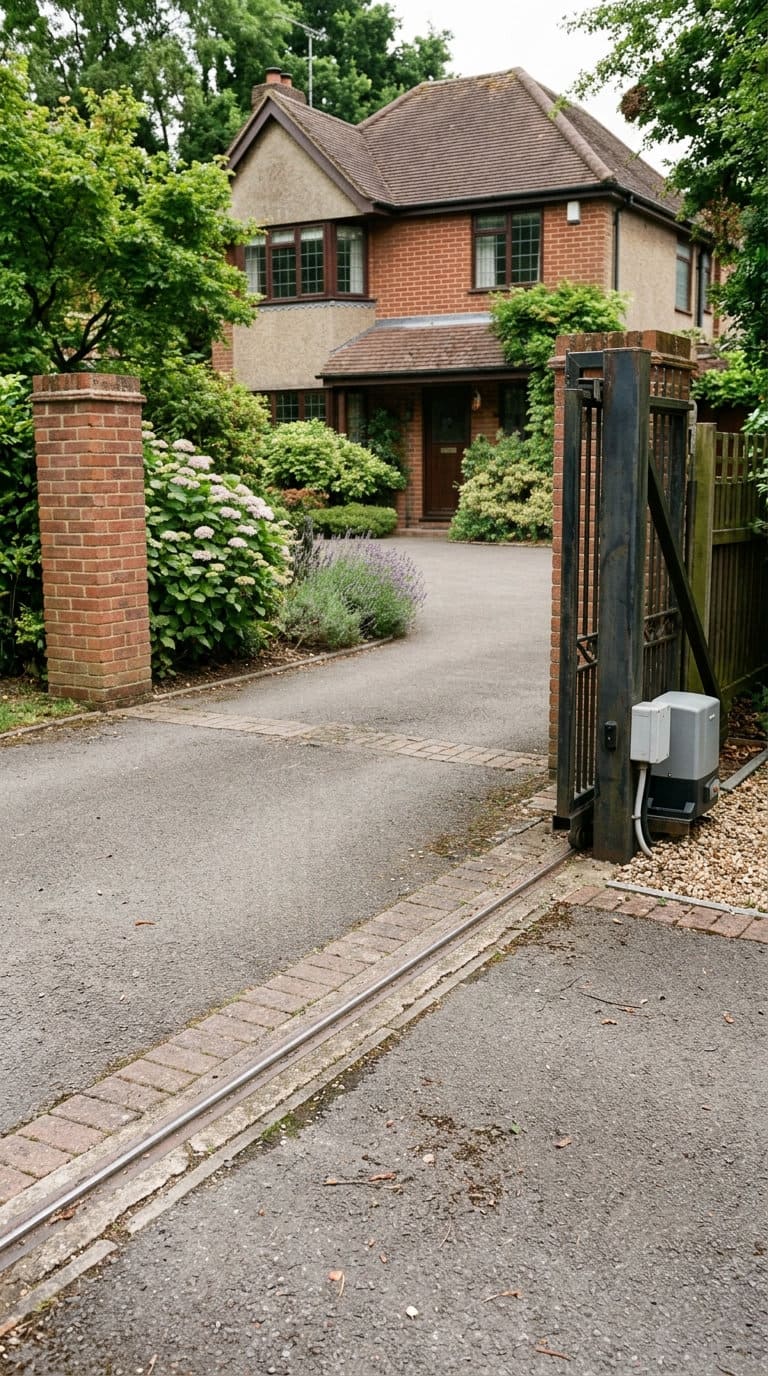
Controlled via a mobile app rather than just a physical remote, an electric sliding gate lets you open the driveway for a delivery or guest without being home, a real practical advantage over a basic remote-only system.
It slides along a ground-level or overhead track rather than swinging.
Sliding driveway gate ideas
Sliding gates aren’t just a style choice, they’re often the practical answer when a swinging gate simply won’t fit the space.
13. Wood and iron classic
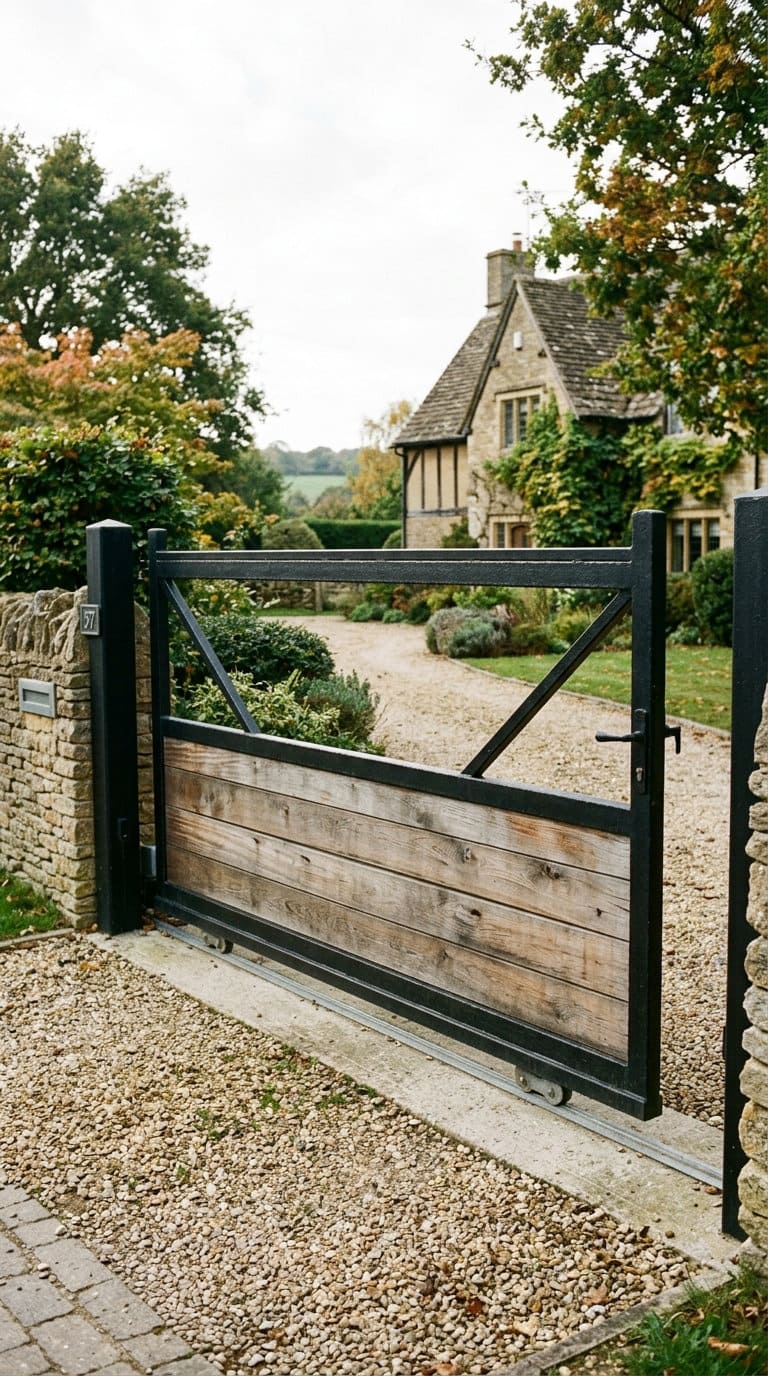
Combining wood infill panels within an iron frame is a genuine mid-century-era classic that still reads as current, since the pairing lets the wood carry warmth while the iron frame provides real structural rigidity for a sliding track system.
Related: Cobblestone Driveway: Cost, Installation, Pros and Cons
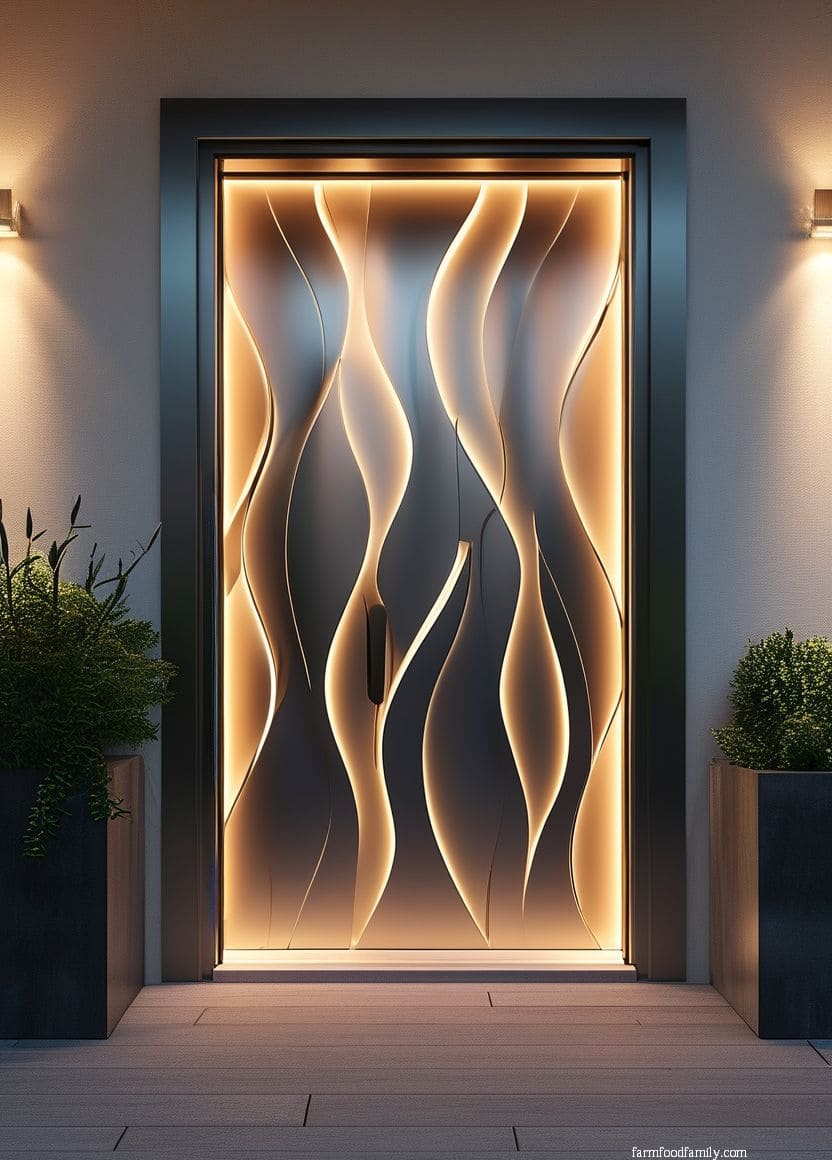
14. Laser etched aluminum driveway gate
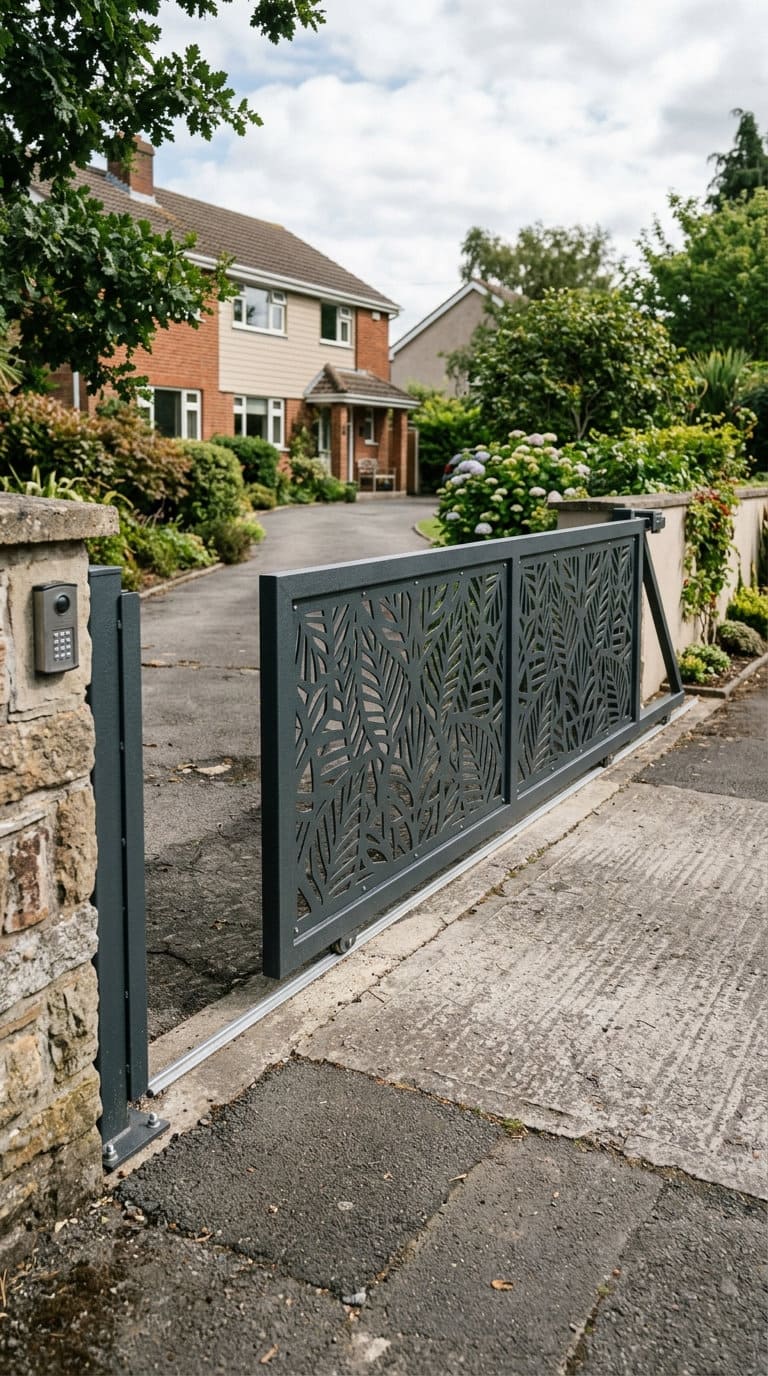
An aluminum sliding gate laser-cut with a decorative pattern (a family monogram, a geometric motif, or a nature-inspired design) turns a purely functional material into a real design statement.
Aluminum’s light weight relative to steel or iron also puts less strain on the sliding track’s motor.
15. Washed wood and steel sliding driveway gate
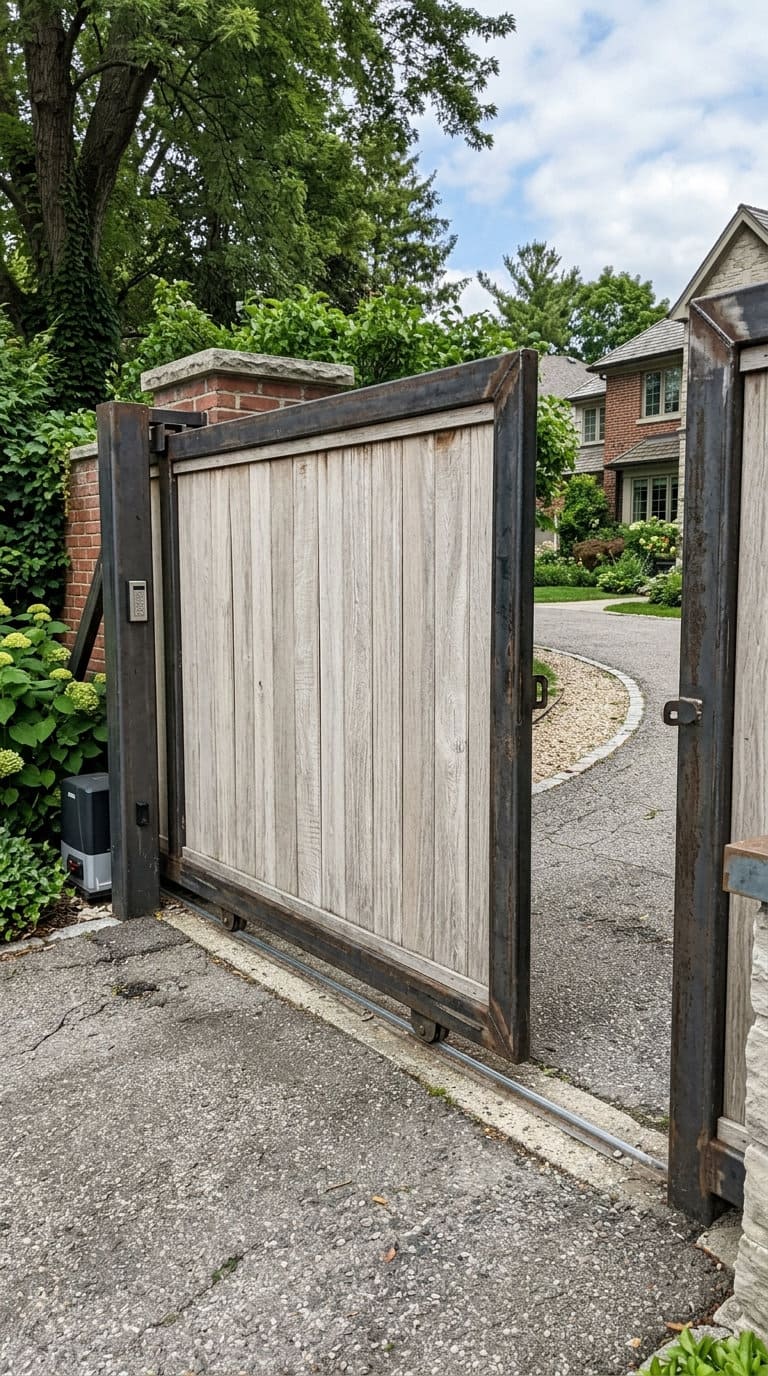
A weathered, “washed” wood finish (a lighter, driftwood-adjacent stain rather than a rich dark tone) paired with steel structural elements balances warmth against the material’s actual durability requirements for a sliding gate that sees daily use.
Modern driveway gate ideas
Modern driveway gates are aspired for their unique look and material combos. They are definitely eye-catching and make illusions of space or compactness. Here are some modern driveway gate ideas that you can ponder on.
16. Laser cut iron and concrete
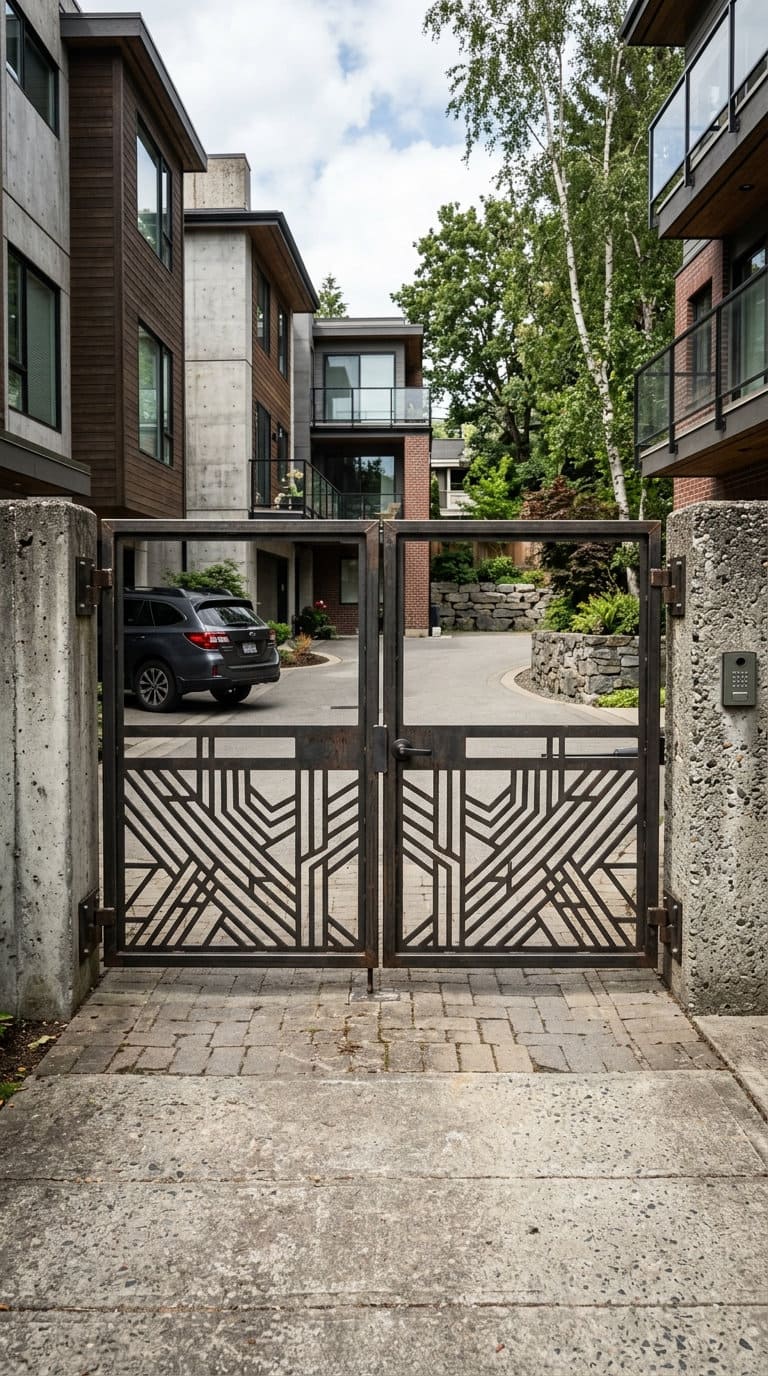
Pairing a laser-cut iron panel gate with concrete or exposed-aggregate posts (rather than traditional brick or stone columns) is a common look on newer contemporary townhomes specifically, where the concrete matches other hardscape elements already on the property.
17. Contemporary steel automatic driveway
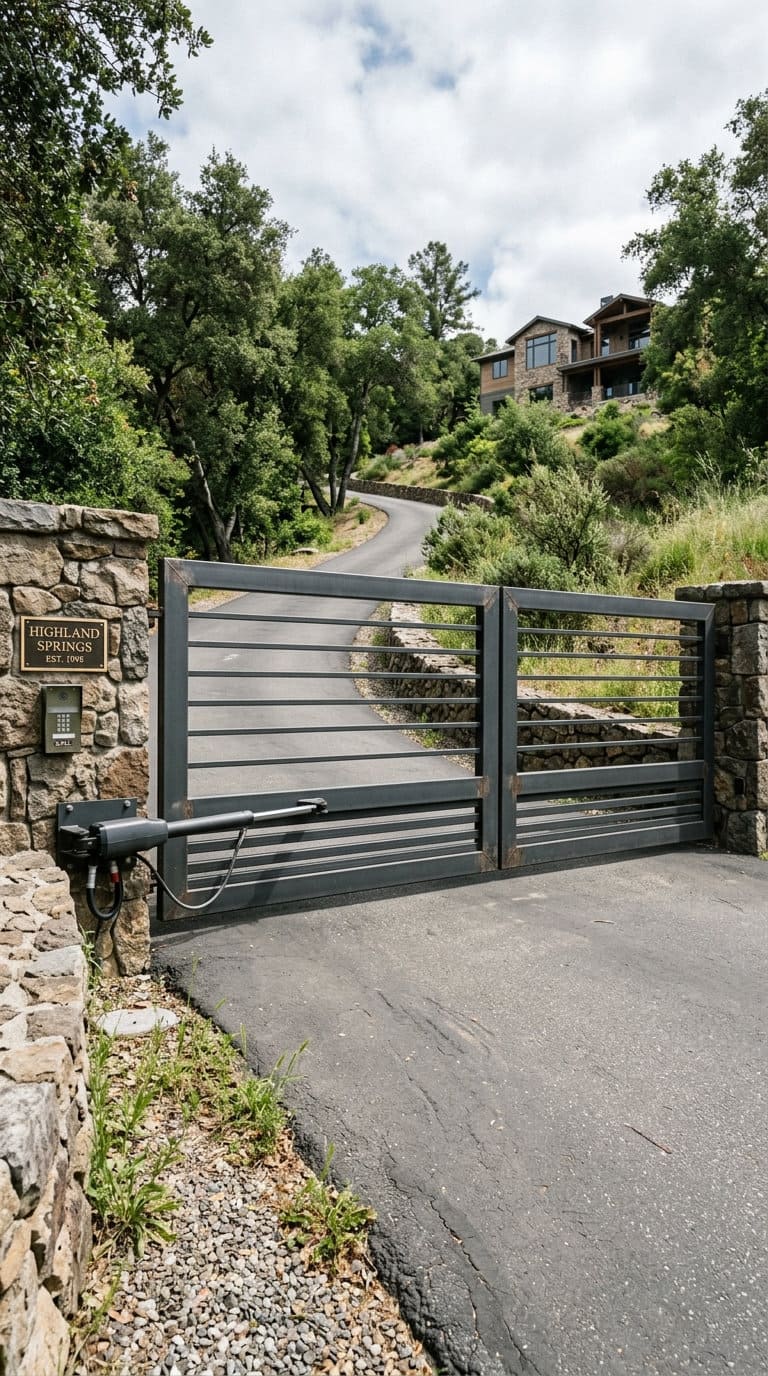
A large, wide steel gate suited to a sloping or estate-scale driveway benefits from an automatic operator specifically, since a gate of this size and weight is genuinely impractical to open and close by hand on a daily basis.
Related: 35+ Best Mailbox Landscaping Ideas
18. Frosted glass modern driveway gate
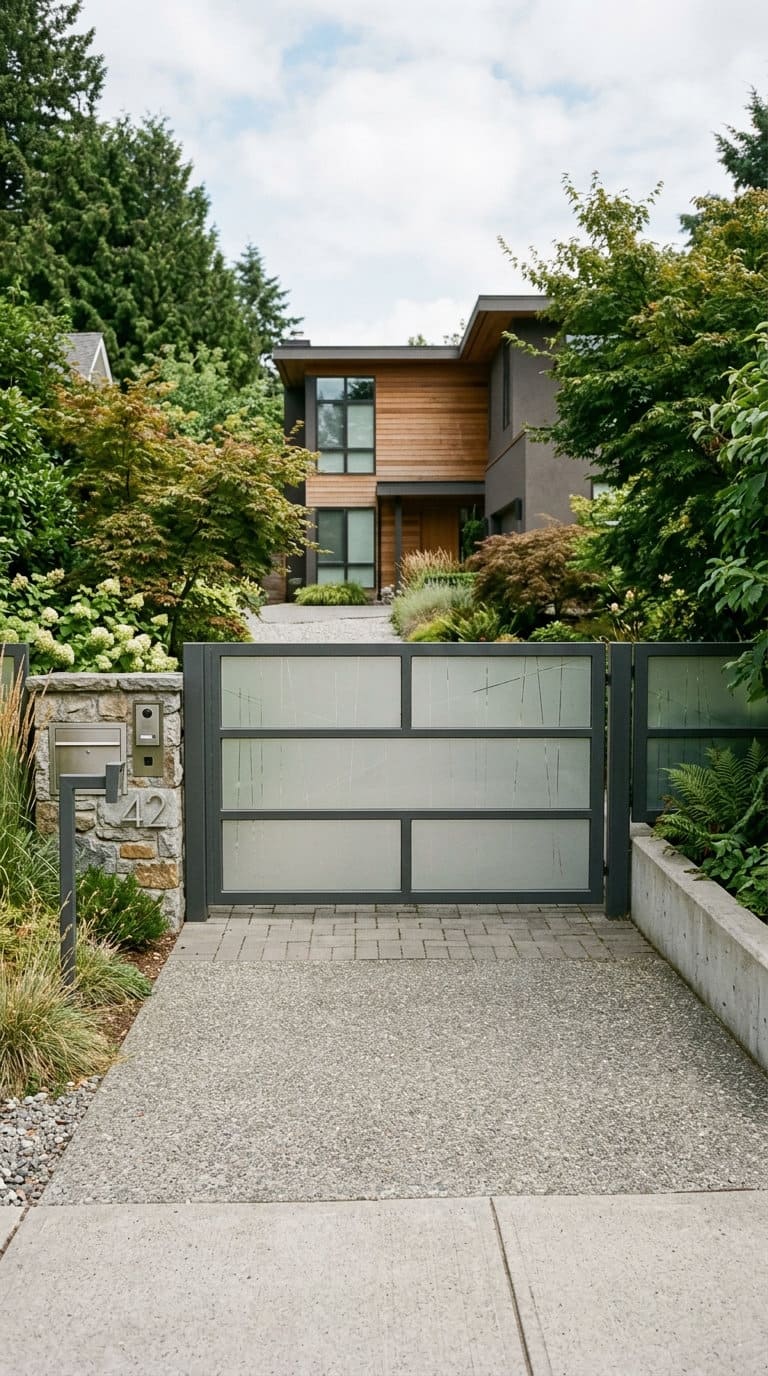
Frosted or etched glass panels set into a metal frame let diffused light through while blocking a clear view, a distinctly modern material choice that reads as more upscale than solid metal or wood alone.
The glass needs to be tempered and rated for exterior structural use, not decorative interior glass.
Driveway fence gate ideas
These pair the gate directly with a matching fence line for a cohesive look rather than a gate that stands apart stylistically from the rest of the property boundary.
Related: 31+ Unique Garden Fence Decoration Ideas To Follow
19. Minimalist sliding driveway fence gate
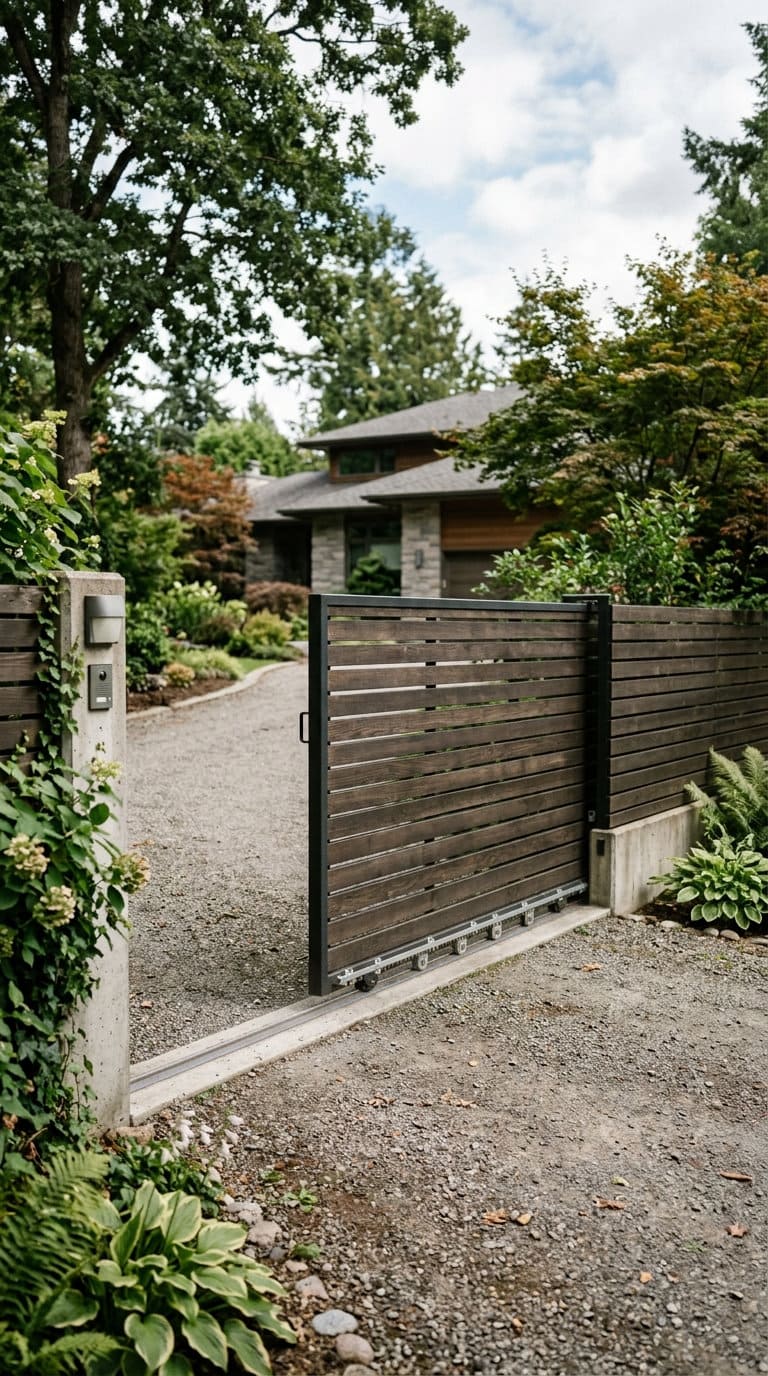
For a clean, naturally modern look, a sliding gate built to match an adjoining horizontal-slat fence reads as one continuous design element rather than two separate structures bolted together.
20. Iron folding driveway fence
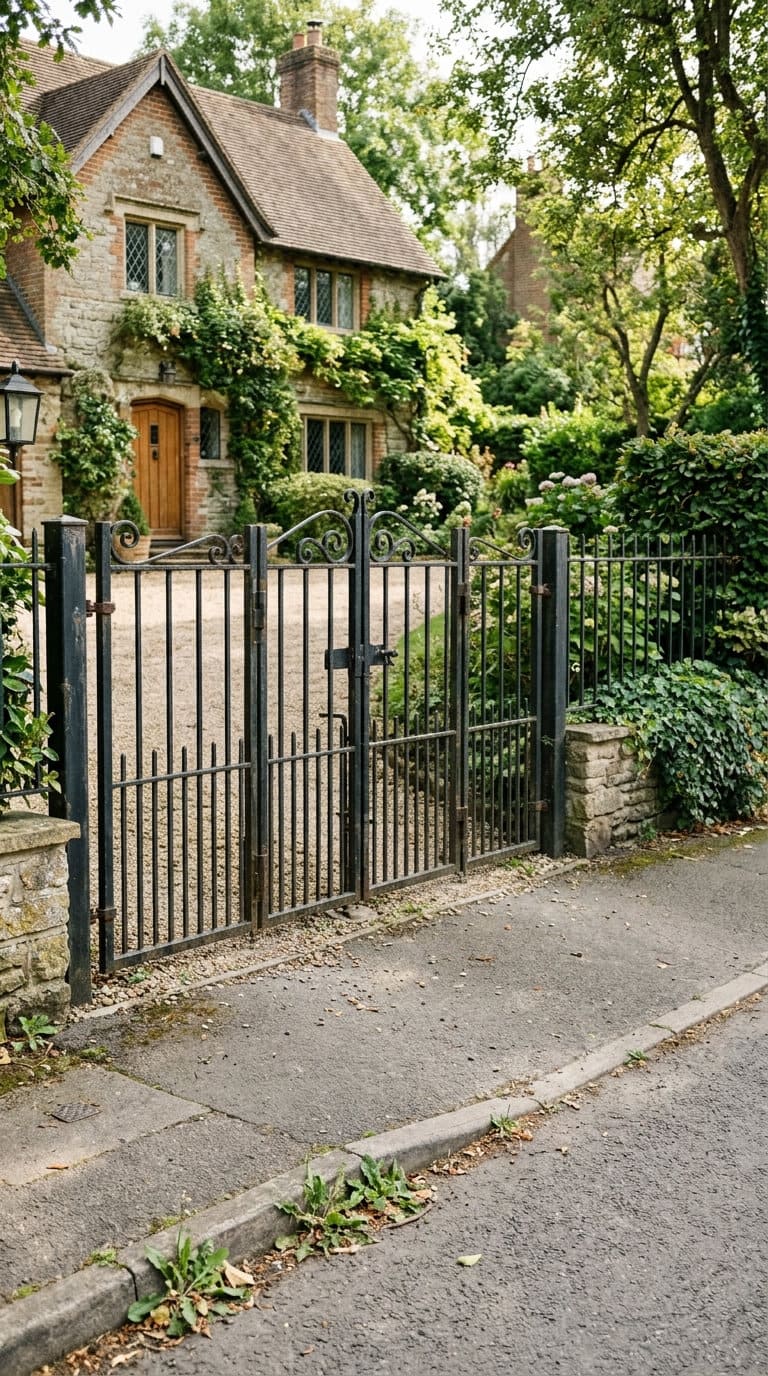
An iron folding gate paired with a matching iron fence line gives a clean, unified look that works with nearly any home style, from traditional to modern, since iron itself is a relatively neutral material aesthetically.
21. Bi-folding picket fence driveway gate
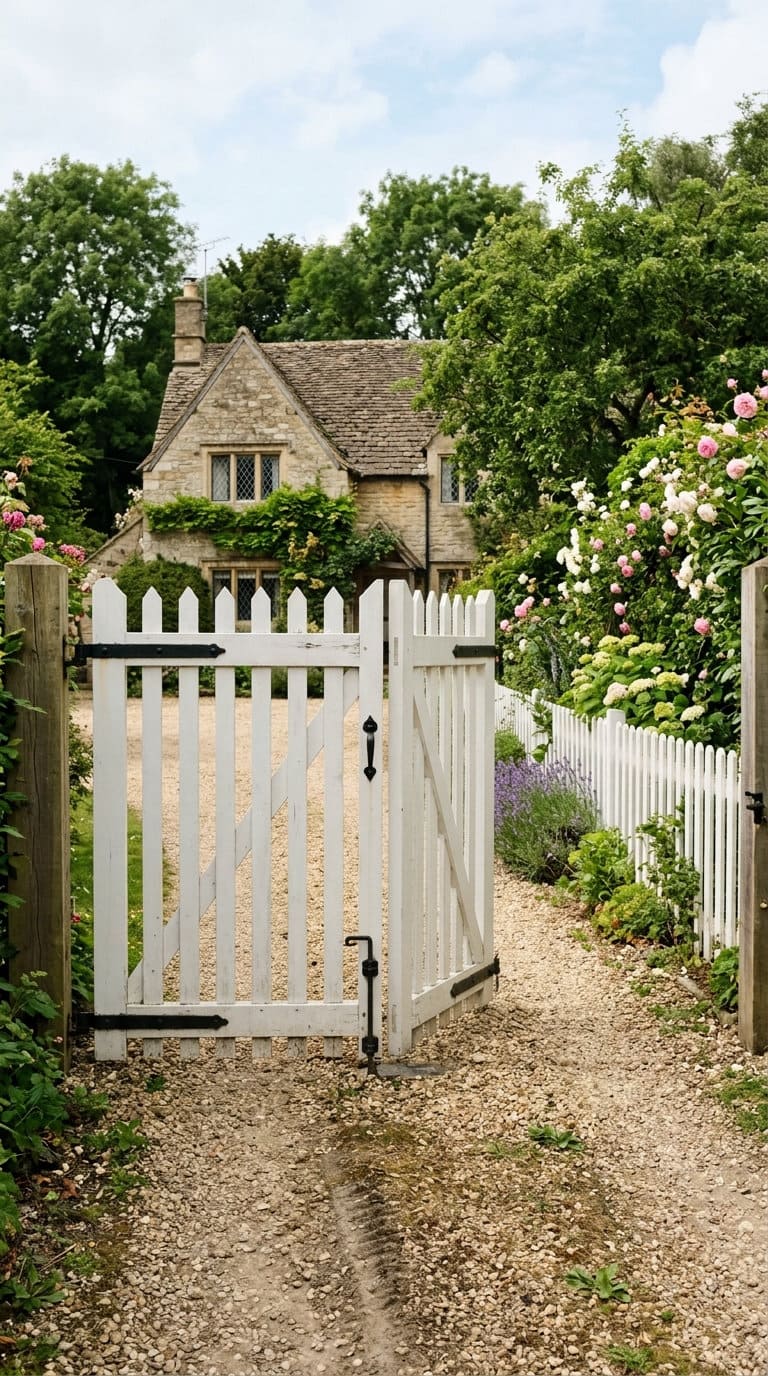
For a countryside feel, a bi-folding gate styled to match a picket fence keeps the whole property line visually consistent while still folding compactly rather than needing a full swing arc.
Iron driveway gate ideas
Iron gates can run as affordable or as elaborate as you want, which is part of why the material shows up across nearly every category on this list.
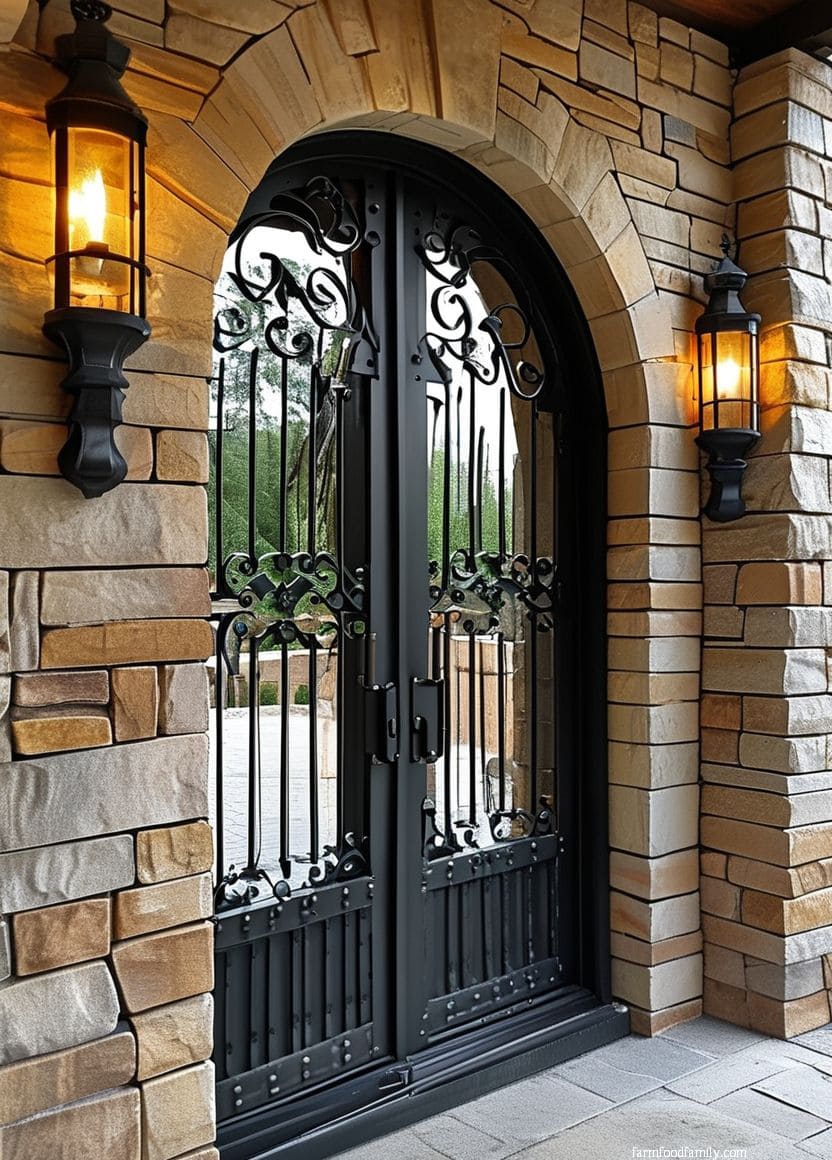
22. Wrought iron lattice driveway gate
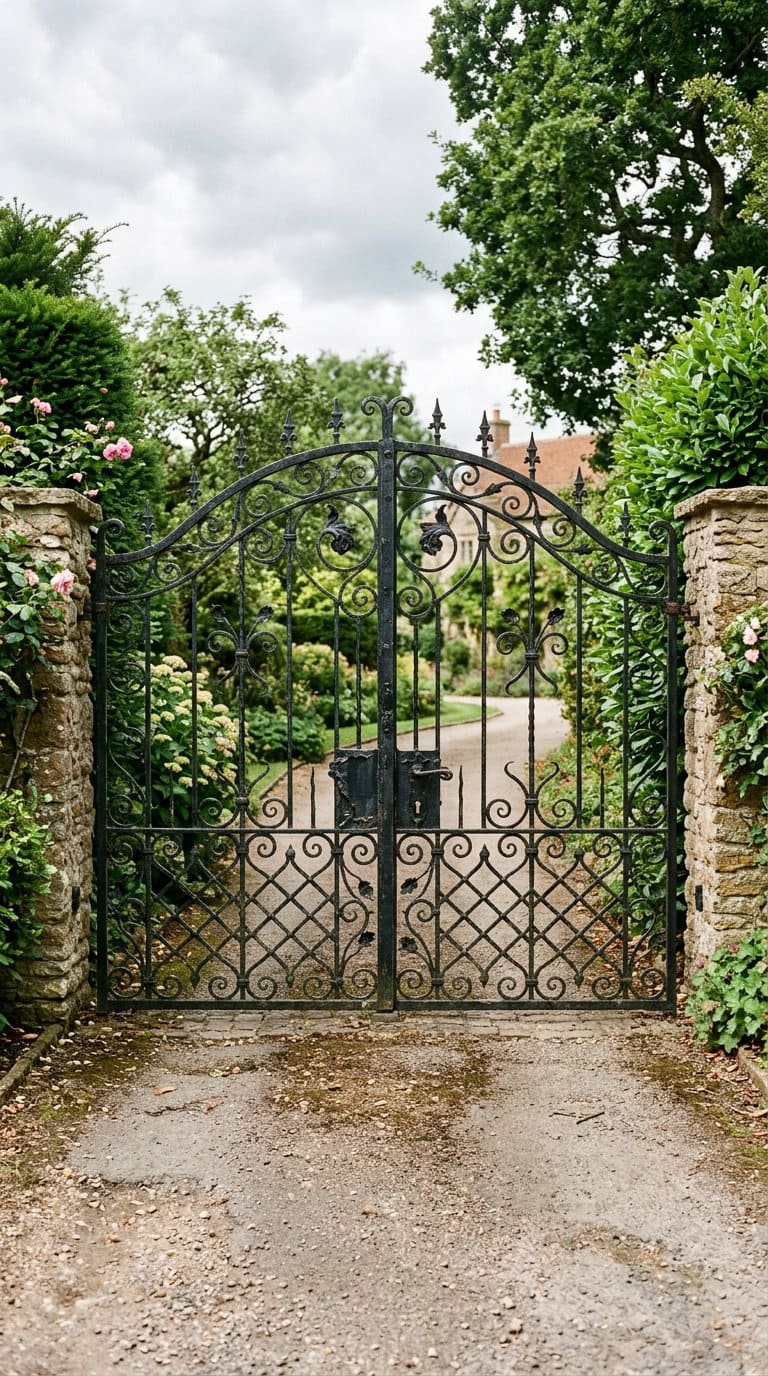
A detailed lattice or scrollwork pattern worked into a wrought iron gate is a genuinely distinctive, eccentric design choice, and because the pattern is structural (not applied decoration), it holds up to weather far better than a painted-on design would.
Related: 23+ Best Lattice Fence Ideas and Designs For Your Garden and Backyard
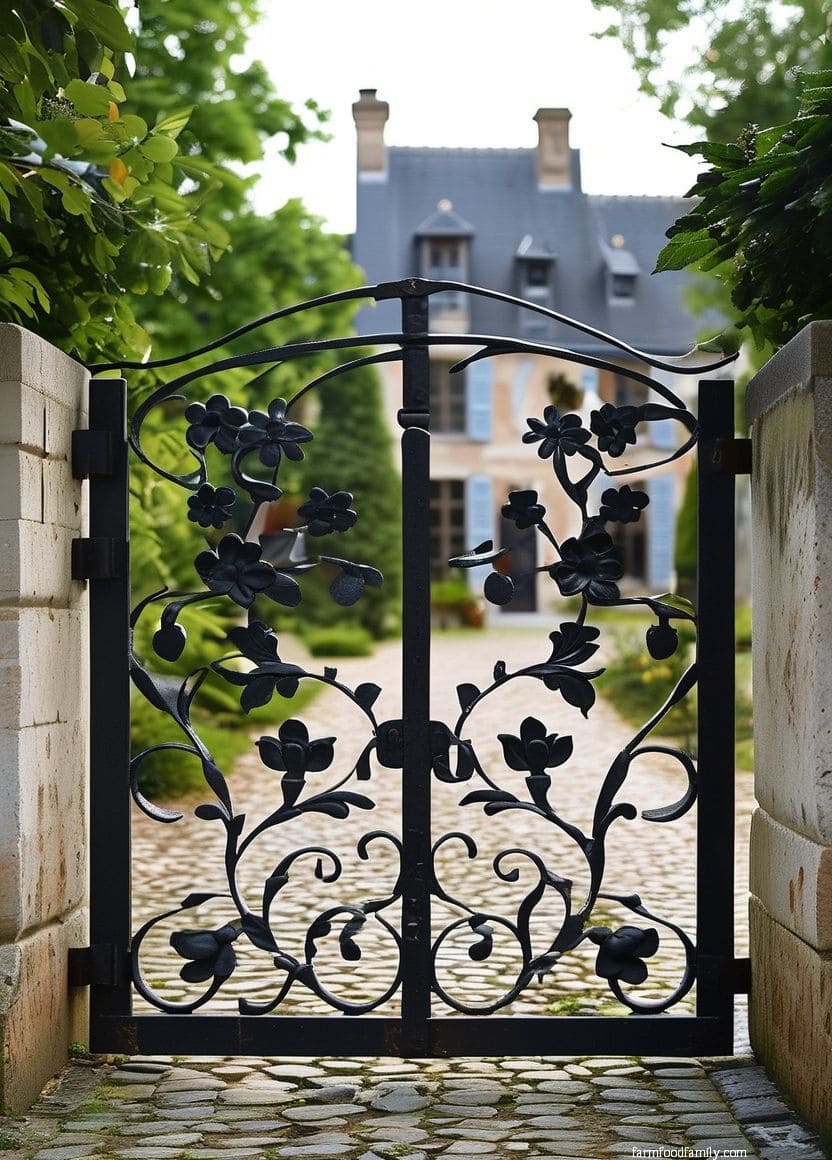
23. Compact wrought iron driveway gate

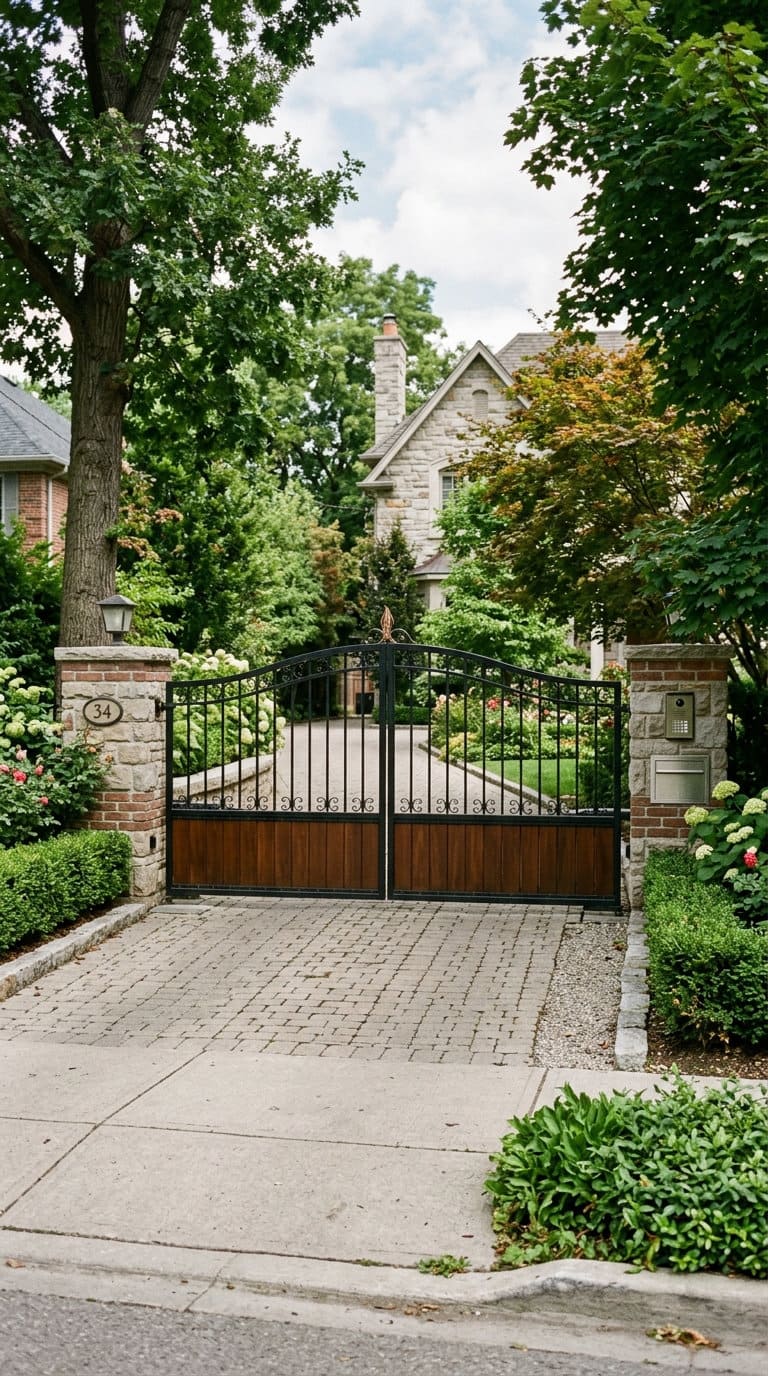
For a property with a lush, established tree line framing the driveway, a smaller, simpler wrought iron gate lets the landscaping stay the visual focal point rather than competing with an elaborate gate design.
24. Curved wrought iron driveway gate
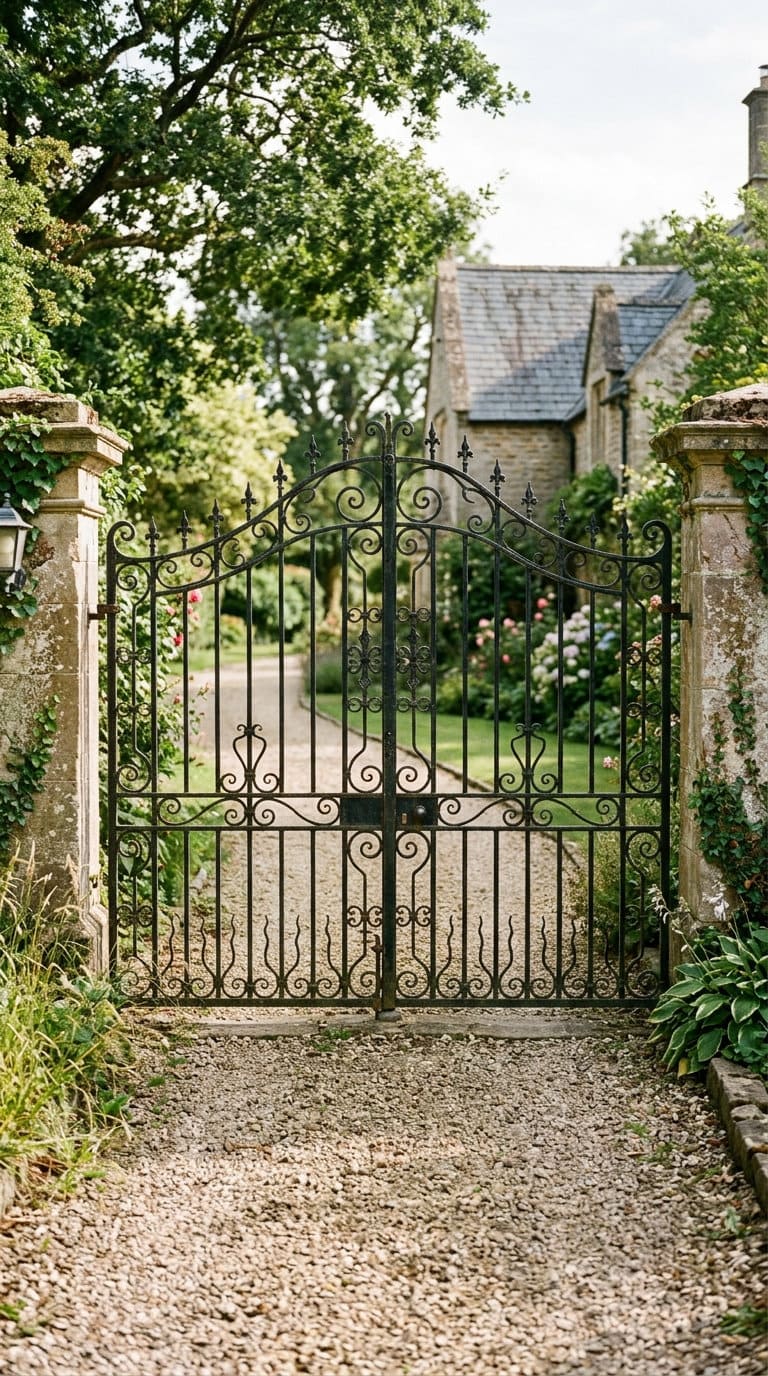
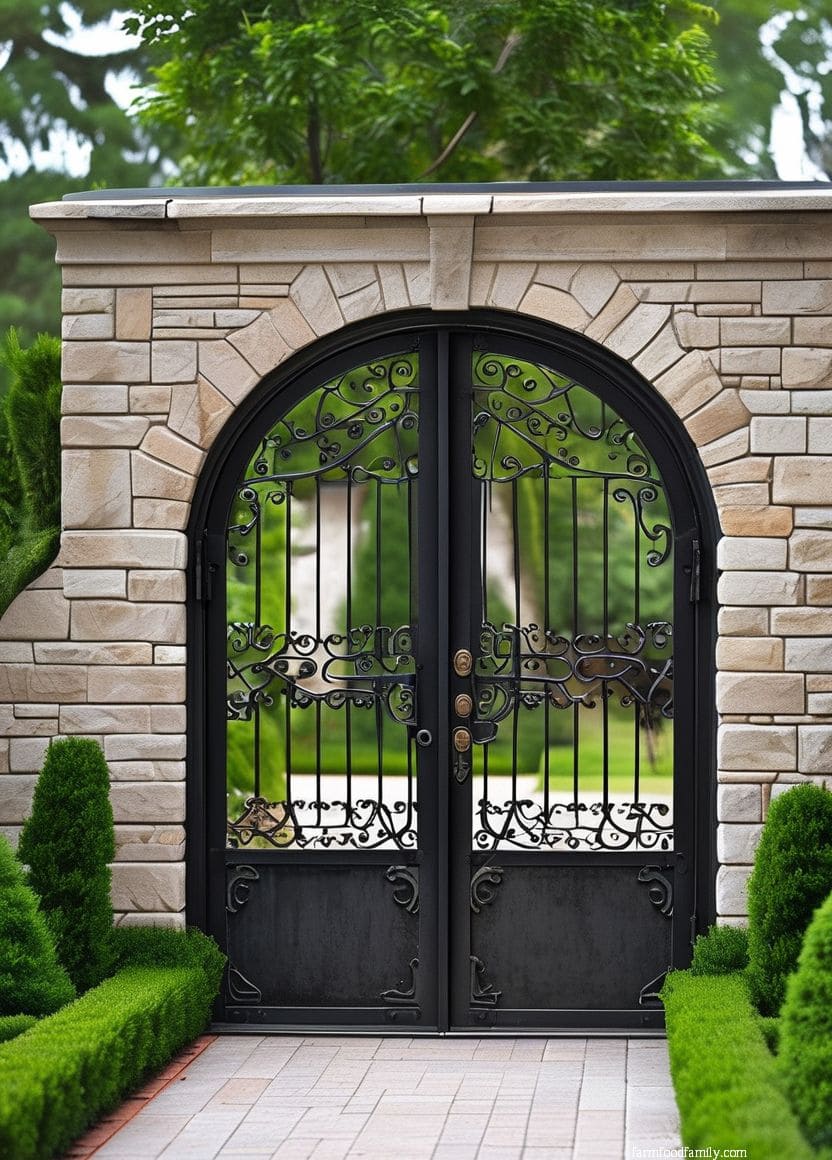
A classic wrought iron gate built with a gentle arched or curved top, rather than a flat horizontal line, softens the entrance and reads as more traditional and formal than a straight-topped version.
Related: Tar And Chip Driveway: Cost, Pros and Cons
Folding driveway gate ideas
Bi-folding and double driveway gates are common for offices to regulate the amount of foot traffic at a given time. But they have now found a way of being incorporated in homes and here are folding driveway gate ideas for your home.
25. Short folding pallet driveway gate
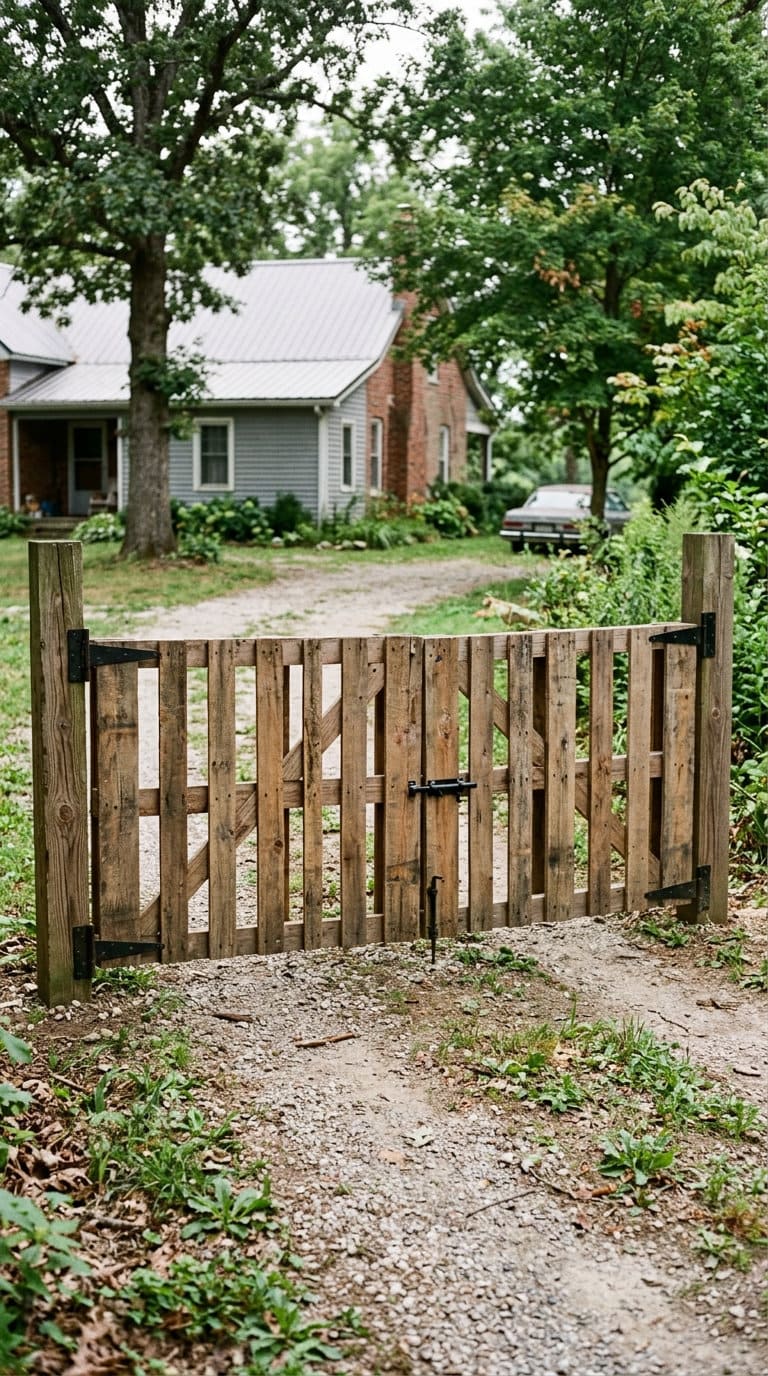
If a rustic reclaimed look appeals to you, a short folding gate built from repurposed pallet wood keeps the material cost close to nothing while still functioning as a genuine, secure gate once properly framed and hinged.
26. Timber with iron frame
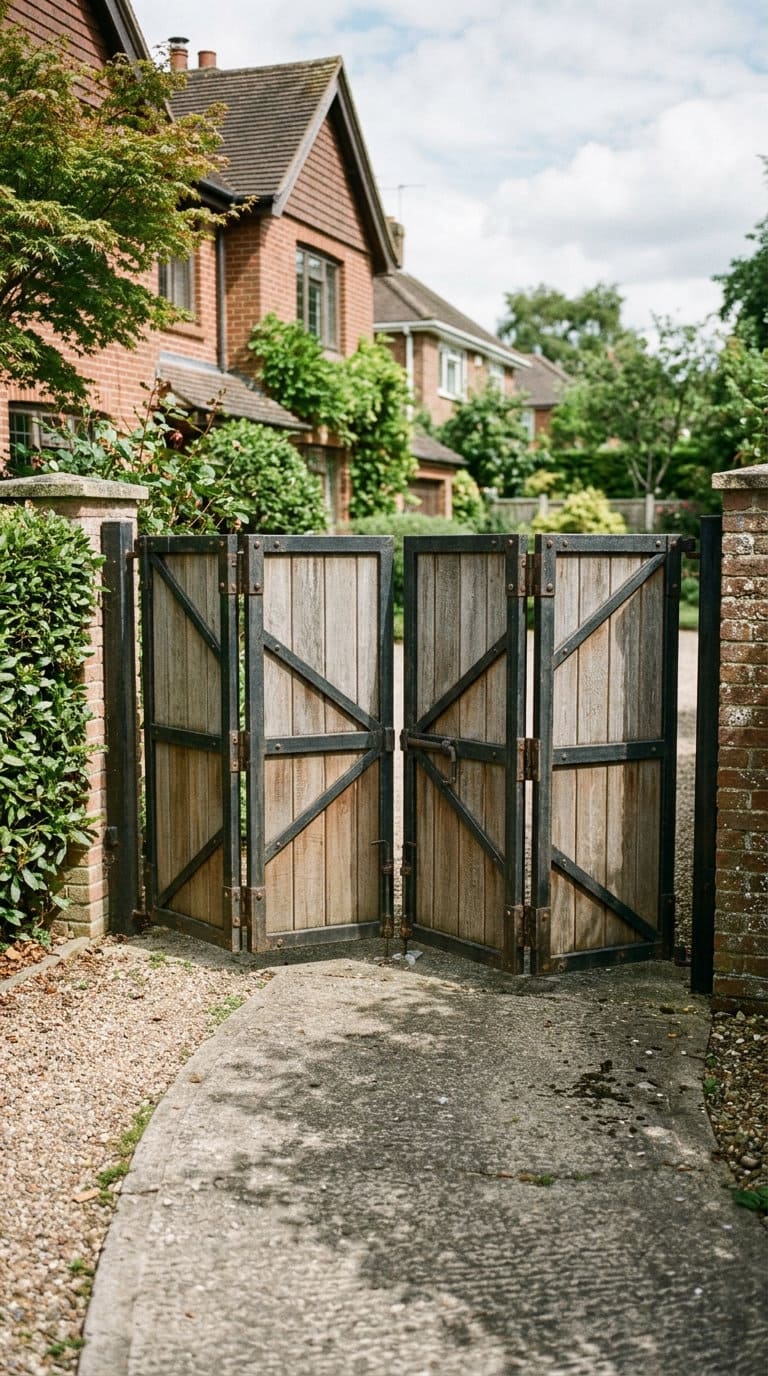
For a more decorative folding gate, timber infill panels set into an iron structural frame combine wood’s warmth with iron’s rigidity, useful specifically because a folding gate’s hinge points see more mechanical stress than a simple swing gate’s.
27. Wood, steel, and concrete
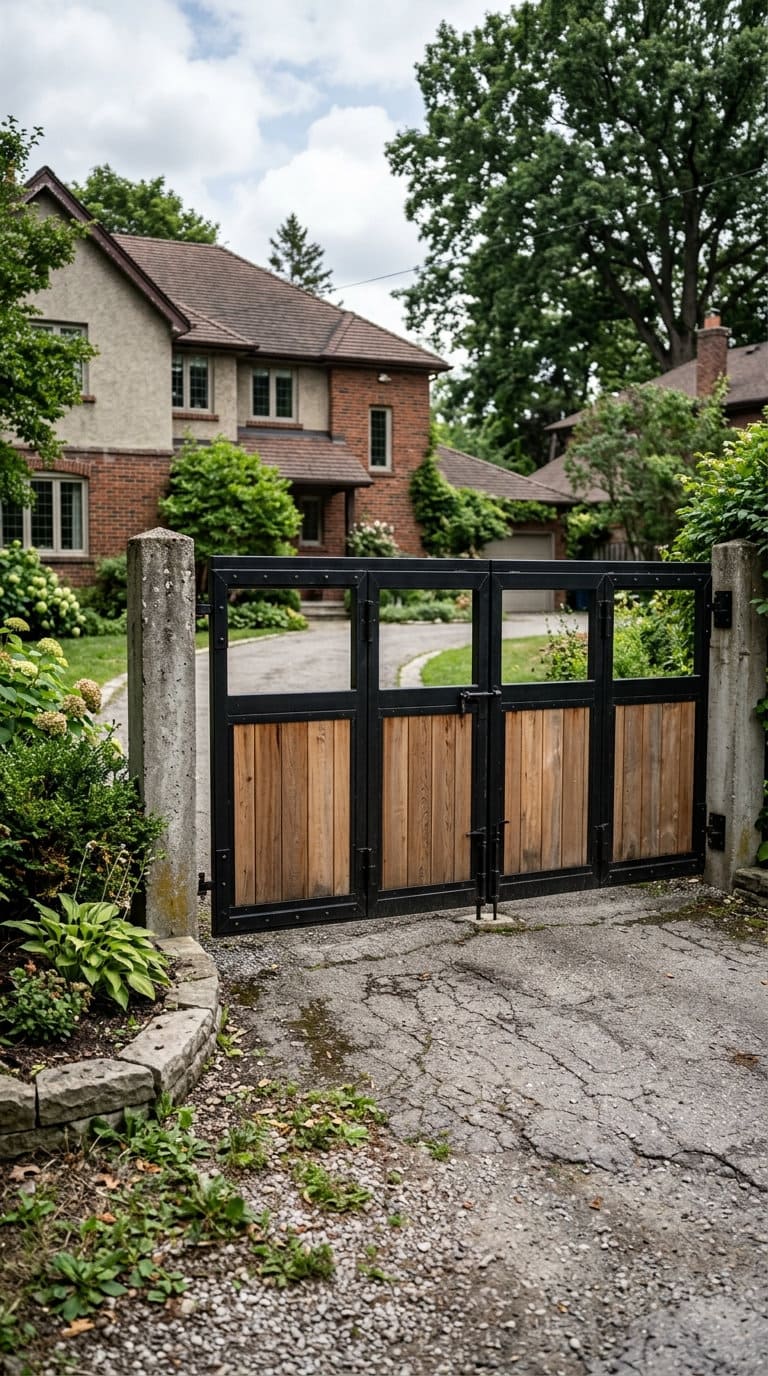
For a folding gate built to look substantial and permanent, combining wood panels, steel framing, and concrete posts creates real visual weight, useful on a property where the gate is meant to read as a genuine architectural feature rather than a purely functional barrier.
Related: 23 Best Concrete Driveway Ideas and Designs
Rustic driveway gate ideas
If you like classic, simple tones but want something with real weathered character, these three lean into that directly.
28. Farmhouse style driveway gate
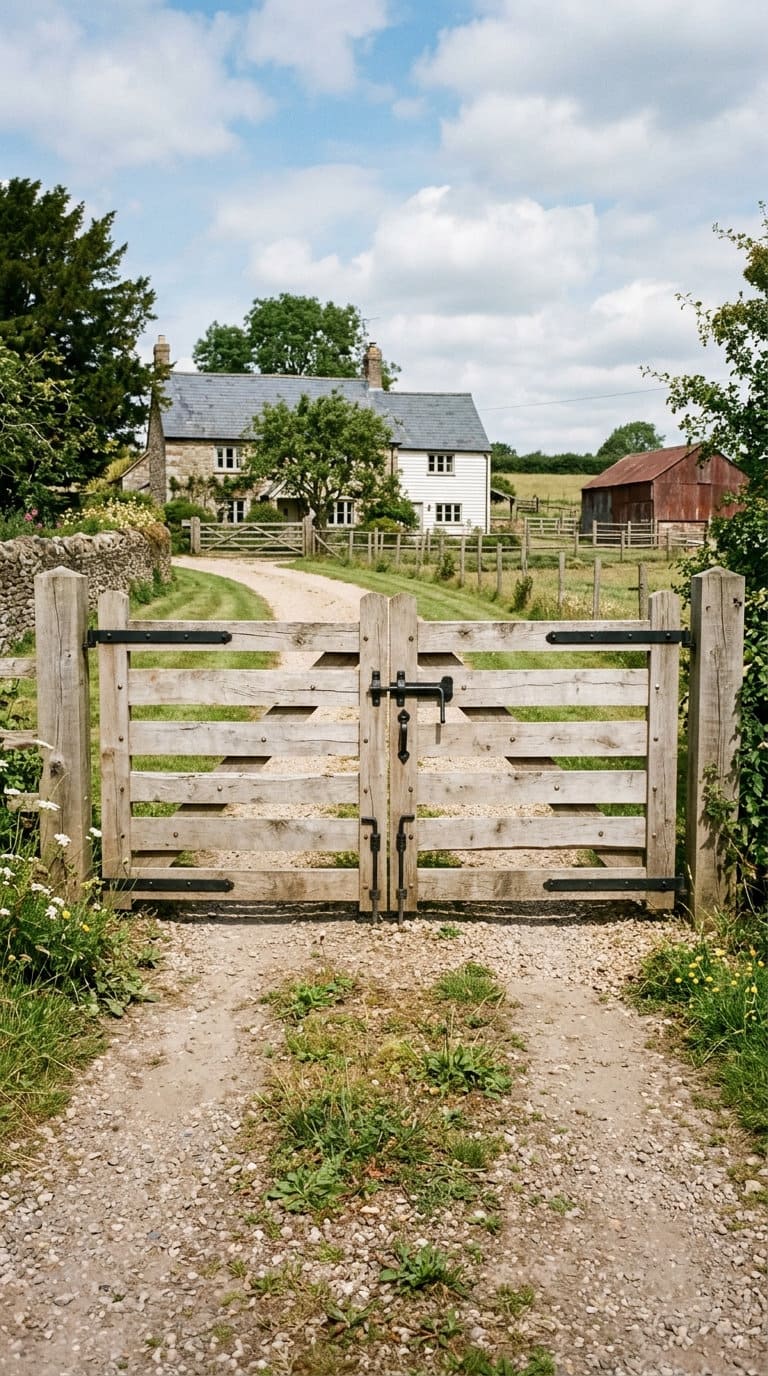
Nothing reads as rustic quite like a simple horizontal-plank farmhouse gate, unfinished or lightly stained wood, basic iron hardware, and a design that looks like it’s been there for generations even when it’s brand new.
Related: Brick Driveway: Cost, Installation, Pros and Cons
29. Classic ranch style driveway gate
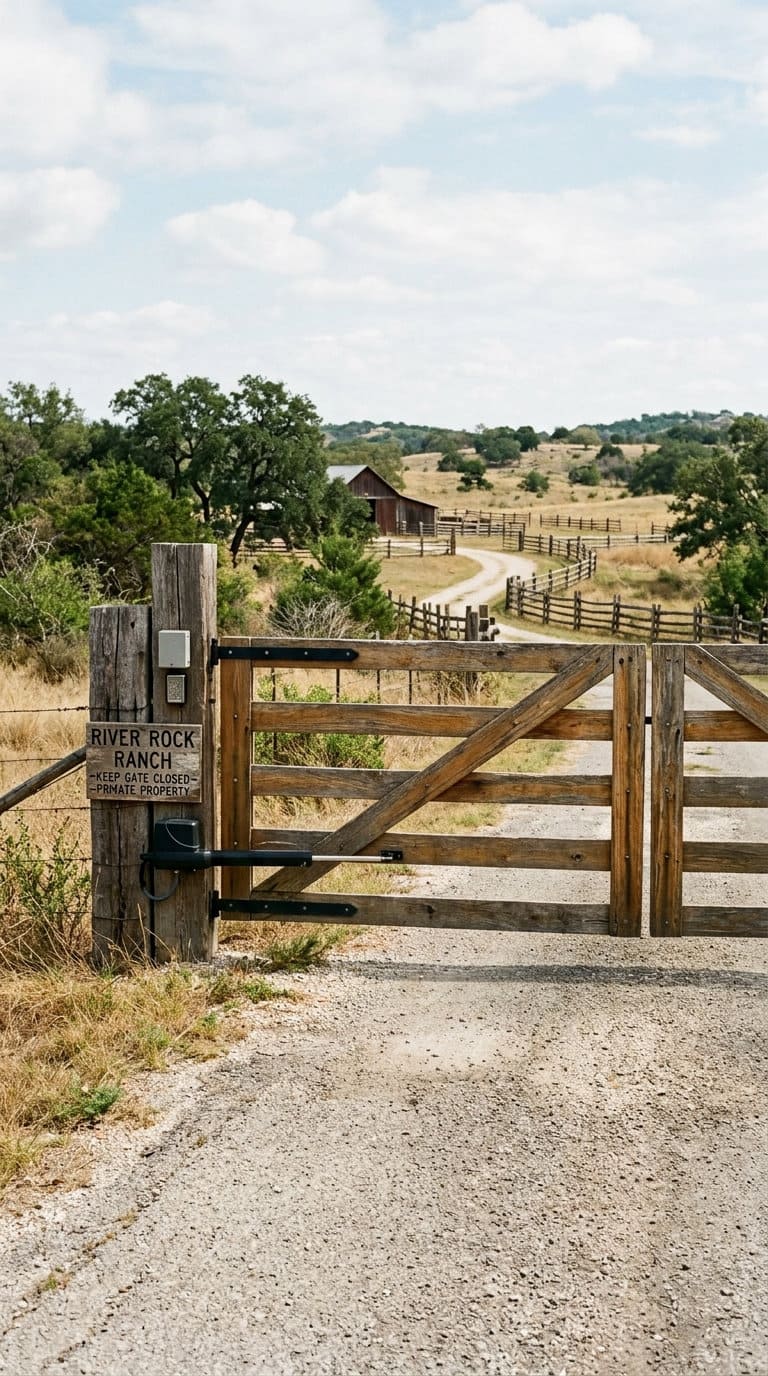
An automatic driveway gate can still look completely rustic if the panel design itself, horizontal rails, weathered wood tone, stays true to the ranch aesthetic. The automation hardware doesn’t have to visually compete with the style.
30. Lodge style driveway gate
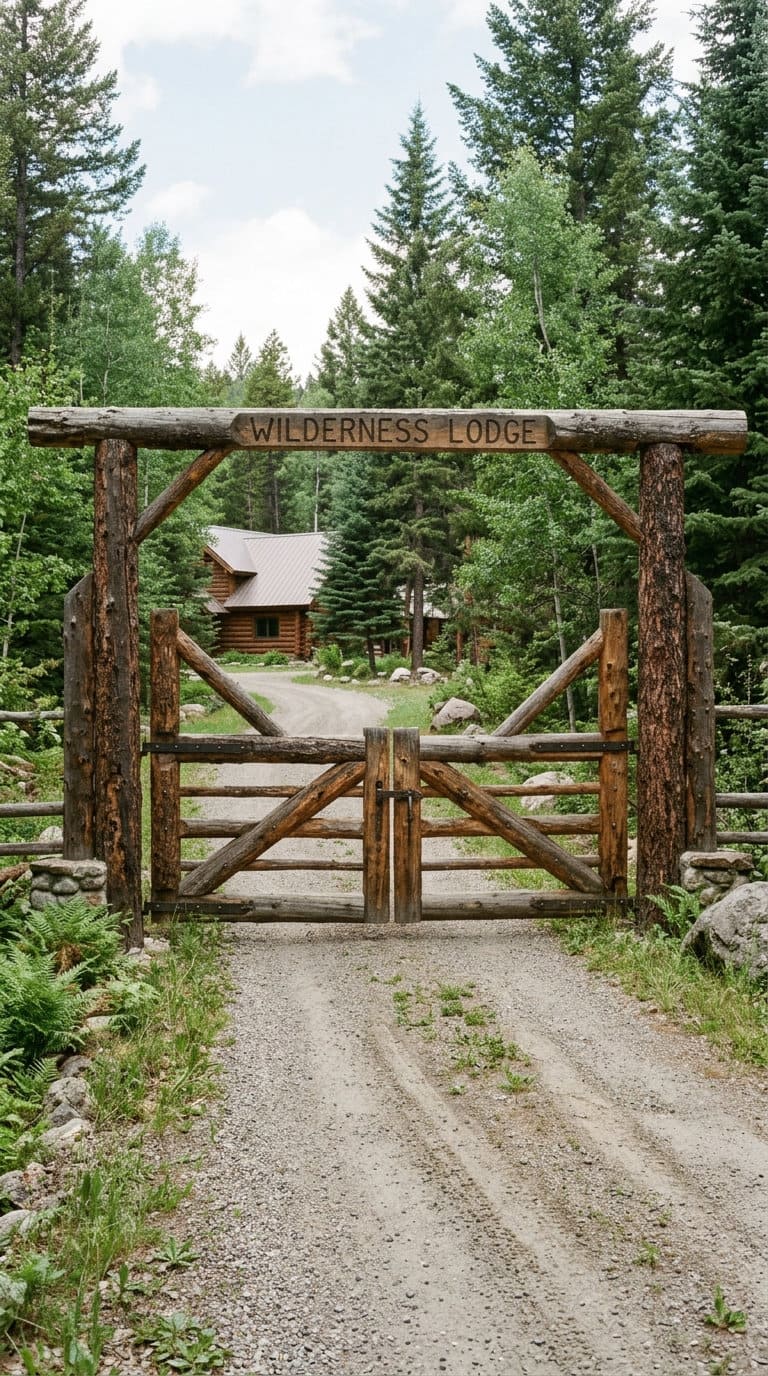
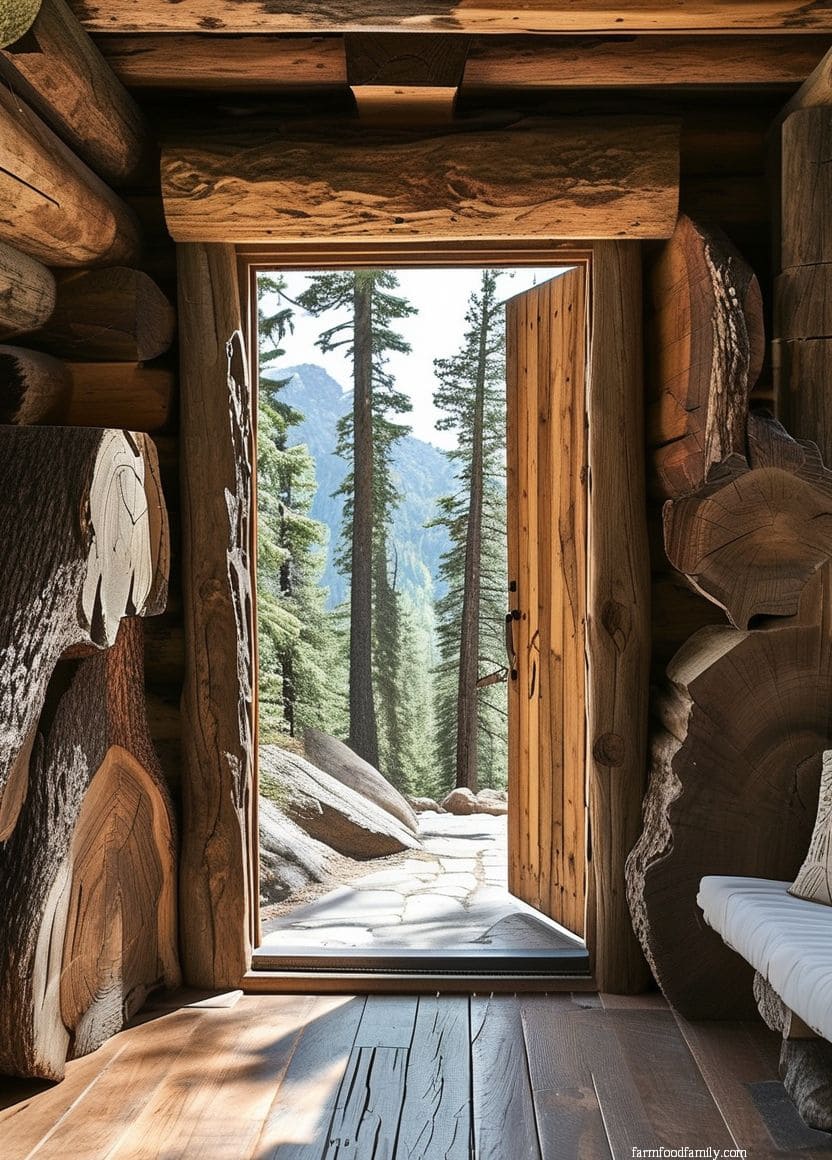
If a full wrought iron or heavy timber gate feels like too much, a lodge-style gate built from lighter log or half-log construction gives the same cabin-adjacent character at a lower material and structural cost.
Before you automate: entrapment safety
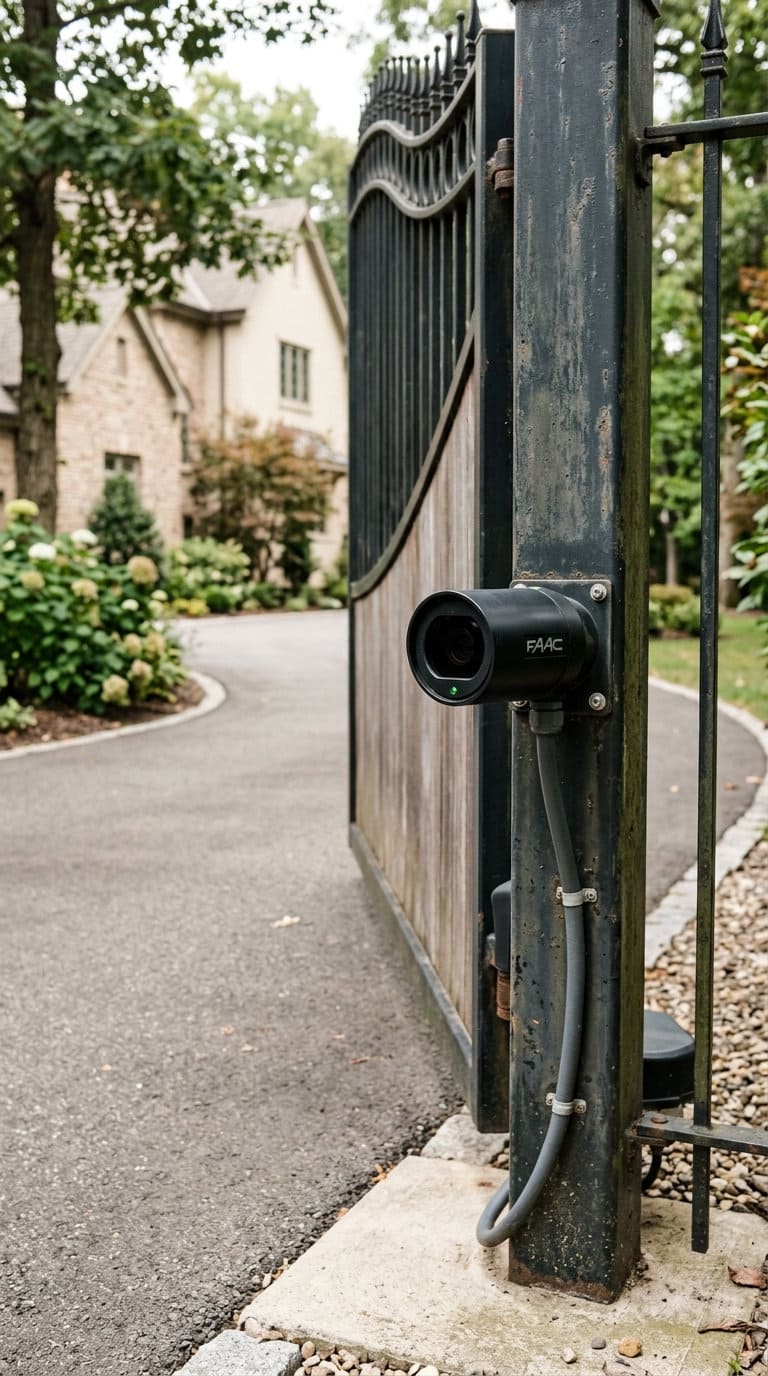
Any automatic gate on this list needs to meet UL 325 and ASTM F2200, the two harmonized US safety standards for automated gates.
A vehicular gate operator needs at least two independent entrapment protection systems installed, commonly a photoelectric sensor (which stops the gate if something breaks the beam) plus a contact edge sensor (which reverses the gate if it physically touches an obstruction), so that one system failing or being blocked doesn’t leave the gate with zero protection.
The gate structure itself also needs to avoid entrapment zones: any opening in the gate should be smaller than 2.25 inches or larger than 16 inches, since a gap in that middle range is exactly the size that can catch a body part between the moving gate and a solid object like a post or wall. And if you’re automating an existing gate rather than buying a new automated system, confirm with your installer that both entrapment protections are actually being added, not just the motor.
Related reading: our rustic driveway ideas article covers the entrance approach beyond just the gate itself, our wood driveway gate ideas piece goes deeper on wood-specific styles if categories 7-9 and 25-27 appeal to you, and our wood fence ideas article has more on matching fence styles for the driveway fence gate ideas above.

FAQs on driveway gates
How much does a driveway gate cost?
According to Fixr, the minimum-to-maximum range for driveway gates runs $1,400 to $12,000, with a typical average of $4,000 to $8,000 and a national average around $6,000 to $7,000. The material you choose (wood, steel, wrought iron, aluminum) and whether the gate is automated both push the price up or down significantly within that range.
What are the best woods used for driveway gates?
Cedar and oak are the two most common choices, both for good reason: cedar resists rot and insects naturally without chemical treatment, while oak brings real structural density and strength for a heavier gate design. Pressure-treated pine works as a lower-cost option but needs more frequent maintenance to match cedar or oak’s natural durability.
What are the best driveway gates?
There’s no single answer here, it depends on your priorities. If security is the main concern, a solid steel or wrought iron gate with a proper automatic operator and entrapment protection wins. If budget matters most, a wood and wire mesh design like idea #1 delivers real function at a fraction of the cost. If curb appeal matters most, a laser-cut or custom wrought iron design earns its higher price in visual impact.
Do driveway gates deter thieves?
The honest answer is that a gate slows down and discourages casual opportunistic entry, but it isn’t an absolute barrier against a determined intruder, no residential gate is. What a gate reliably does is add a visible deterrent layer and buy time, which matters most against the far more common opportunistic case than against a targeted break-in.
Should driveway gates open in or out?
The general rule is that gates should swing inward, into the property, rather than outward toward the street, both so the gate doesn’t create an obstruction or hazard for passing traffic and pedestrians, and because many local codes specifically require this for exactly that reason. Sliding and folding gates sidestep this question entirely since they don’t swing into either space.
How do you secure a driveway gate?
Three things matter most. First, material: steel is genuinely harder to force or climb than wood or aluminum, and setting the gate to a height most people can’t easily scale adds a real physical deterrent. Second, the gate operator: for sliding gates, a hydraulic rail drive with a solenoid lock is the more secure option. For swing gates, a pad-mount operator holds up better against forced entry attempts. Third, a magnetic gate lock is genuinely difficult to pick compared to most mechanical lock styles, worth the upgrade if security is a real priority rather than an afterthought.
Do you need planning permission for driveway gates?
In the US, most jurisdictions require a building permit for a driveway gate installation, and if the gate is automated, you’ll often need a separate electrical permit on top of that. Height limits vary by zone: front-yard gates are commonly capped around 3 to 4 feet for open designs, while automated gates in other zones are sometimes allowed up to 6 to 8 feet. Setback rules commonly require the gate to sit 20 to 30 feet back from the roadway so a vehicle can fully clear the street before stopping. Requirements vary meaningfully by city and county, so confirm with your local building department before installing anything, not after.
Can the driveway gate add value to the home?
Yes, and the real data is more specific than a rough guess. Research from the American Real Estate Society found gated-access homes carry an average premium of roughly $30,000 over comparable non-gated homes, and a separate hedonic analysis of gated-street sales found a 26% overall premium, with about 9 percentage points of that attributable specifically to the gating mechanism itself rather than the neighborhood generally.
Are there different types of automatic driveway gates?
Yes, the two main mechanical types are swing gates (hinged, opening like a door on an arc) and sliding gates (moving horizontally along a track). Within those, operators vary too: hydraulic, electromechanical, and solar-powered systems are all common, with the right choice depending on gate weight, how often it’s used daily, and whether running new electrical service to the gate location is practical.
Can existing gates be automated?
Yes, in most cases. You’ll need to add a compatible gate operator (matched to swing or slide mechanics and the gate’s weight) plus the required entrapment protection sensors covered above, since retrofitting a motor alone without the safety sensors doesn’t meet the actual UL 325/ASTM F2200 standard. A qualified installer can typically assess whether your existing gate’s hinges, frame, and track (if sliding) are structurally sound enough to automate without a rebuild.
Related:
Conclusion

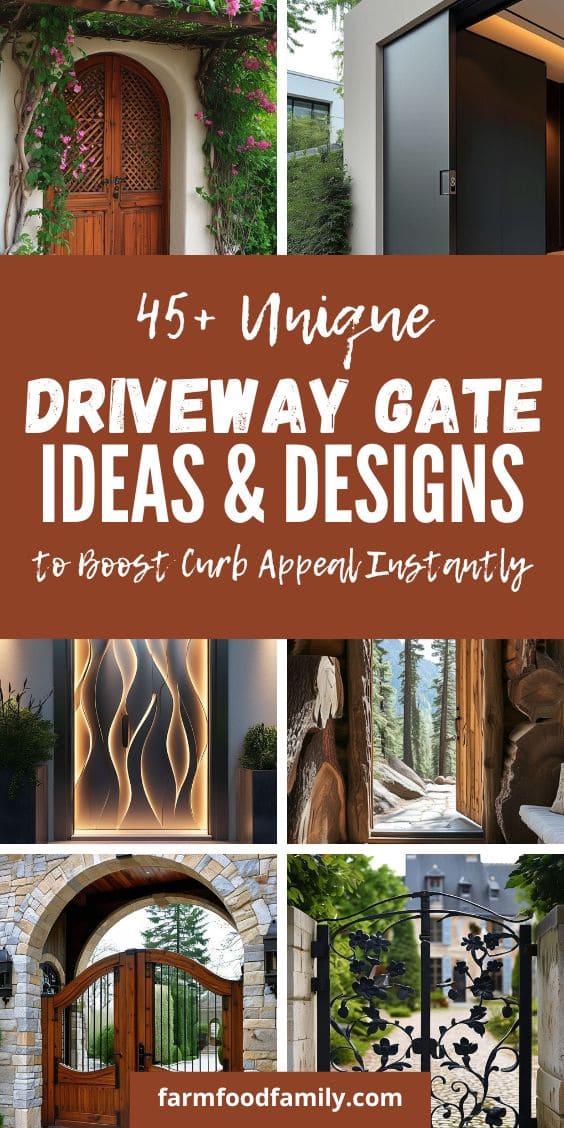
When it comes to driveway gates, one could be inventive because building one means that you can choose from a wide range of materials.
Other than that, you can also be flexible with the design so you can make it as stand out as possible. But this should not derail you from the main purpose of having a driveway gate and that is privacy and security. So, when the driveway gate planning is on the move, make sure that these two functions are your greatest priorities.
Never miss an update — choose FarmFoodFamily as your preferred source on Google.
How it works: Tap the button below to open Google's settings page, then check the box next to FarmFoodFamily.
Tap the checkbox to turn it blue — that's how you know it's set.