35+ Innovative Edging Around Trees Ideas for Every Garden Style
Most “edging around trees” articles are just a parade of materials, stone, brick, metal, pick your favorite, done. What almost none of them mention is that the edging touches a living trunk, and done wrong, it can genuinely hurt the tree. Andrew Conboy, an ISA Certified Arborist, has been pretty blunt about this in interviews:…

Never miss an update — choose FarmFoodFamily as your preferred source on Google.
How it works: Tap the button below to open Google’s settings page, then check the box next to FarmFoodFamily.
Tap the checkbox to turn it blue — that’s how you know it’s set.
Most “edging around trees” articles are just a parade of materials, stone, brick, metal, pick your favorite, done. What almost none of them mention is that the edging touches a living trunk, and done wrong, it can genuinely hurt the tree.
Andrew Conboy, an ISA Certified Arborist, has been pretty blunt about this in interviews: piling material against the trunk “can eat away at the bark and leave trees vulnerable to pathogens and fungi,” and it cuts off oxygen the roots need.
So before you pick a material, get the clearance right. Fifteen edging ideas below, all of them workable once the basics are handled.
Getting the basics right first: clearance, not a volcano
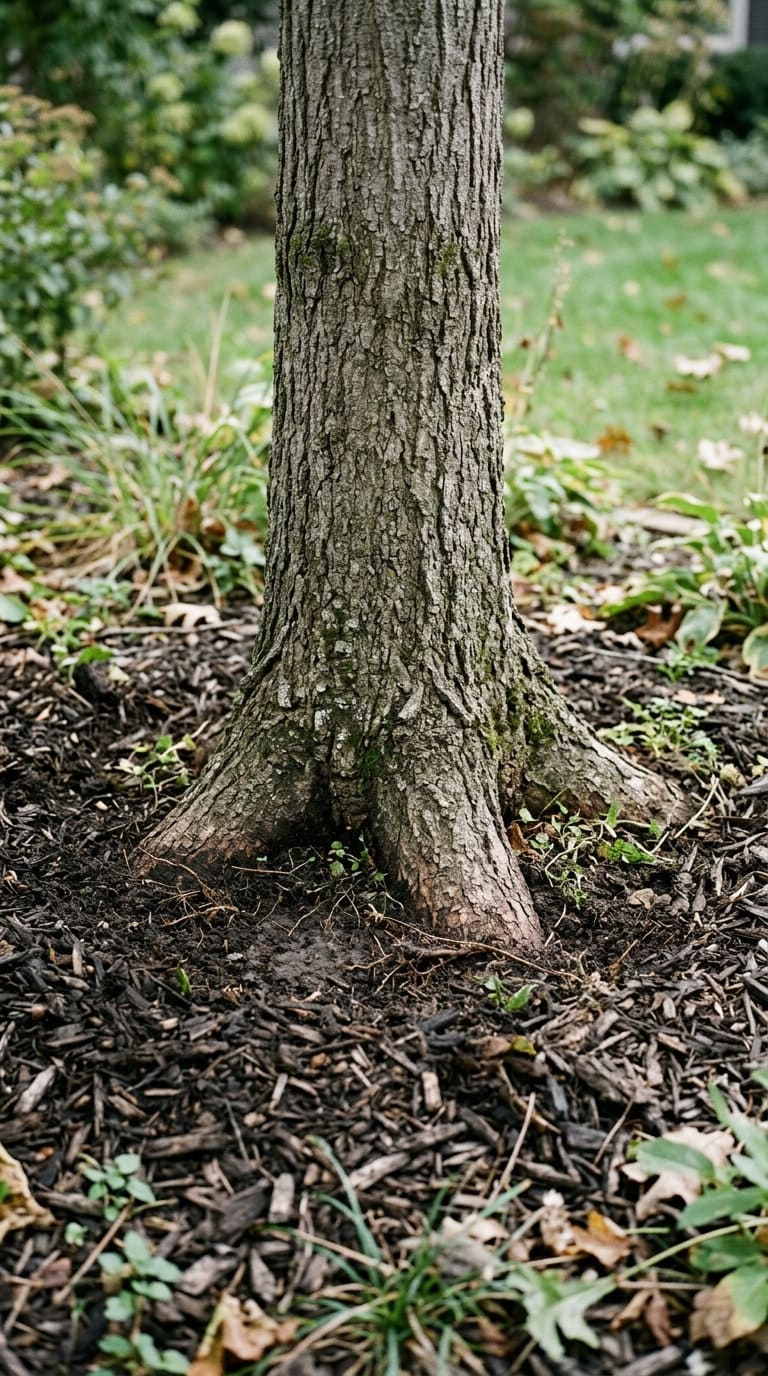
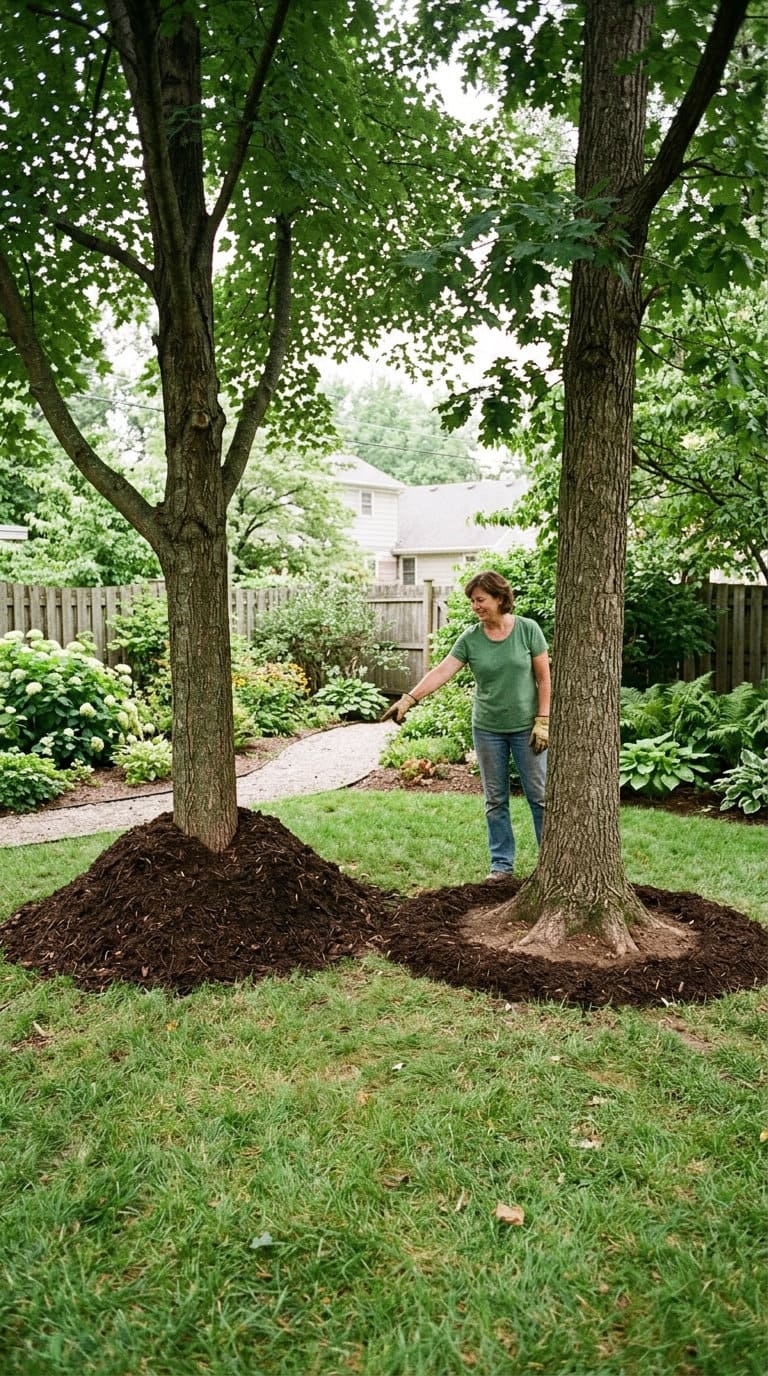
The tree’s root flare, where the trunk widens out right above the soil line, needs to stay visible. The Morton Arboretum recommends keeping mulch 1 to 2 inches back from that flare, not piled up against it. And to be honest, I used to just dump mulch right up to the trunk on my own maple for a solid three years before an arborist neighbor pointed out what I was doing, so this isn’t advice from someone who’s never made the mistake himself.
The International Society of Arboriculture flags mulch volcanoes as one of the most common and most damaging landscaping habits out there, and it’s not a minor cosmetic issue, trapped moisture rots bark, invites fungus, and can eventually girdle the roots.
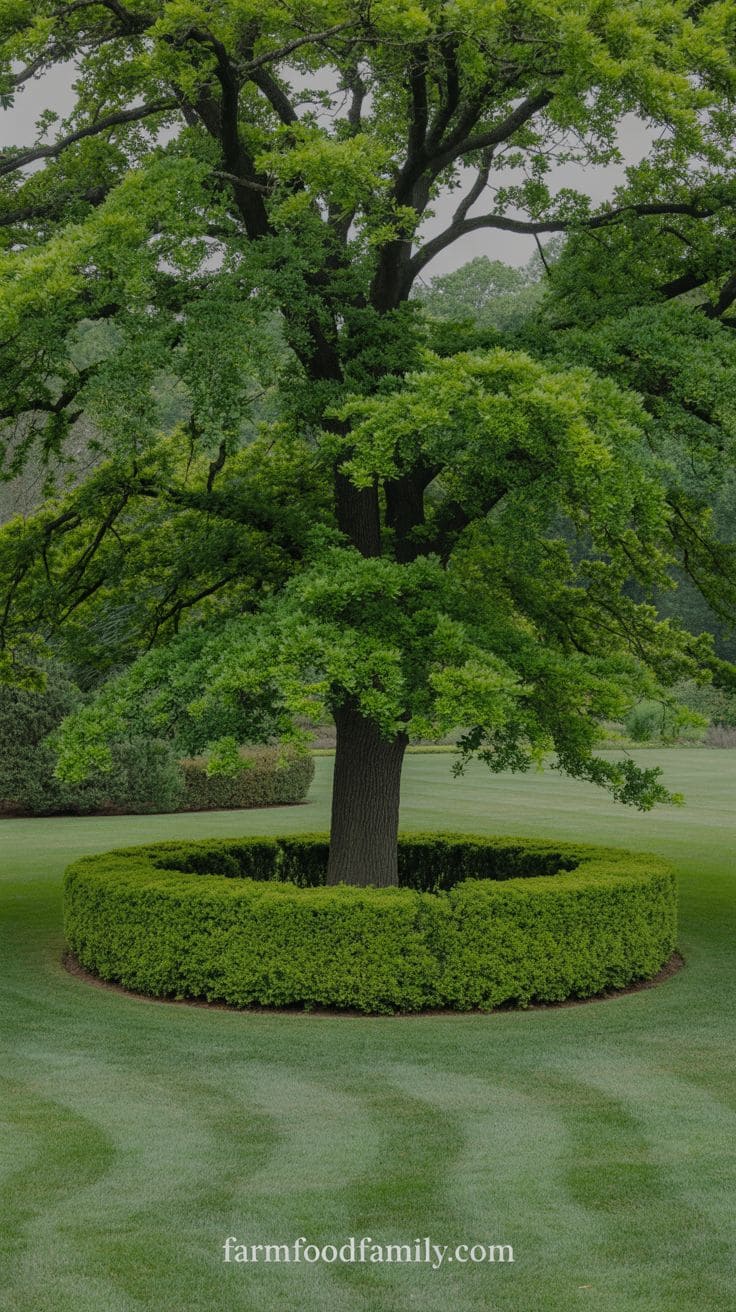
Size the ring to the tree, not to whatever looks tidy from the sidewalk. A small tree might only need a 3-foot radius, but a mature oak benefits from a ring extending closer to the drip line, the edge of the canopy. And don’t let the material, whatever you choose below, actually touch bark. A couple inches of breathing room, always.
Answer 4 quick questions and get matched to the exact fix for your yard — drainage, budget, layout, or something else entirely.
Take the Free Quiz35 Creative Edging Around Trees Ideas to Elevate Your Outdoor Space
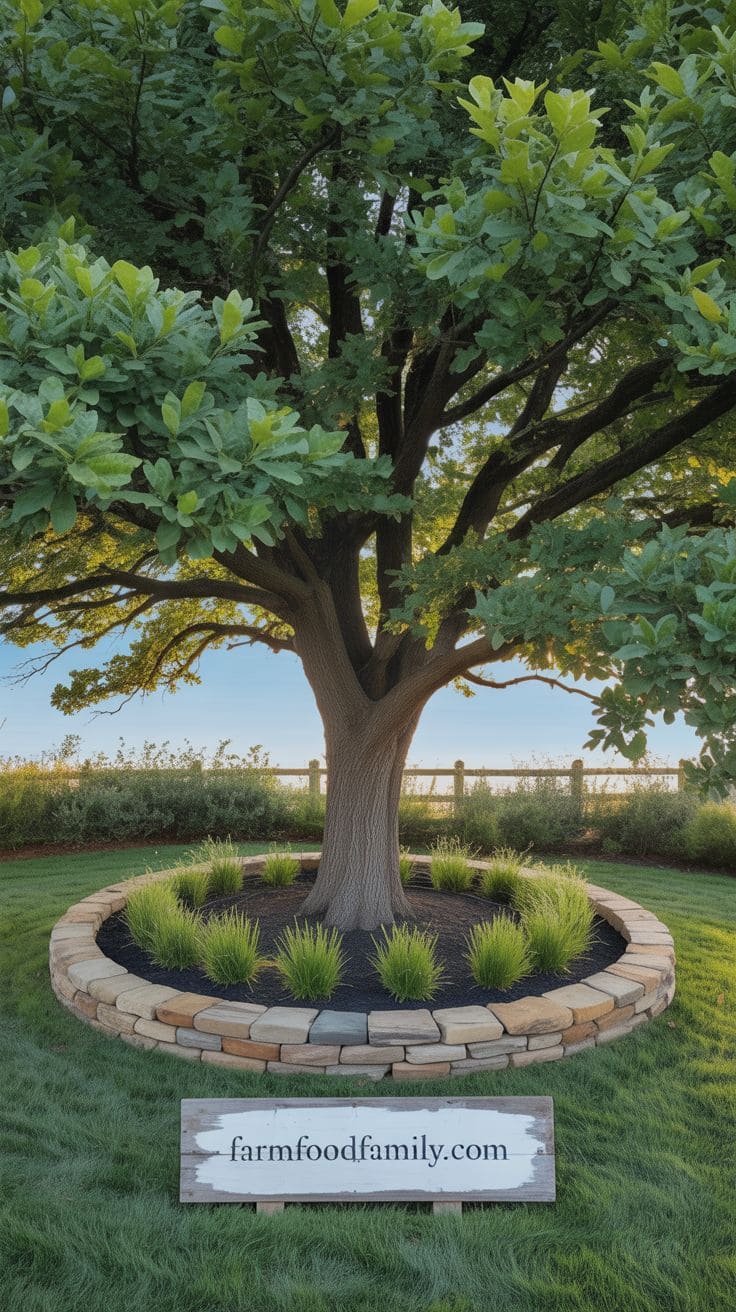
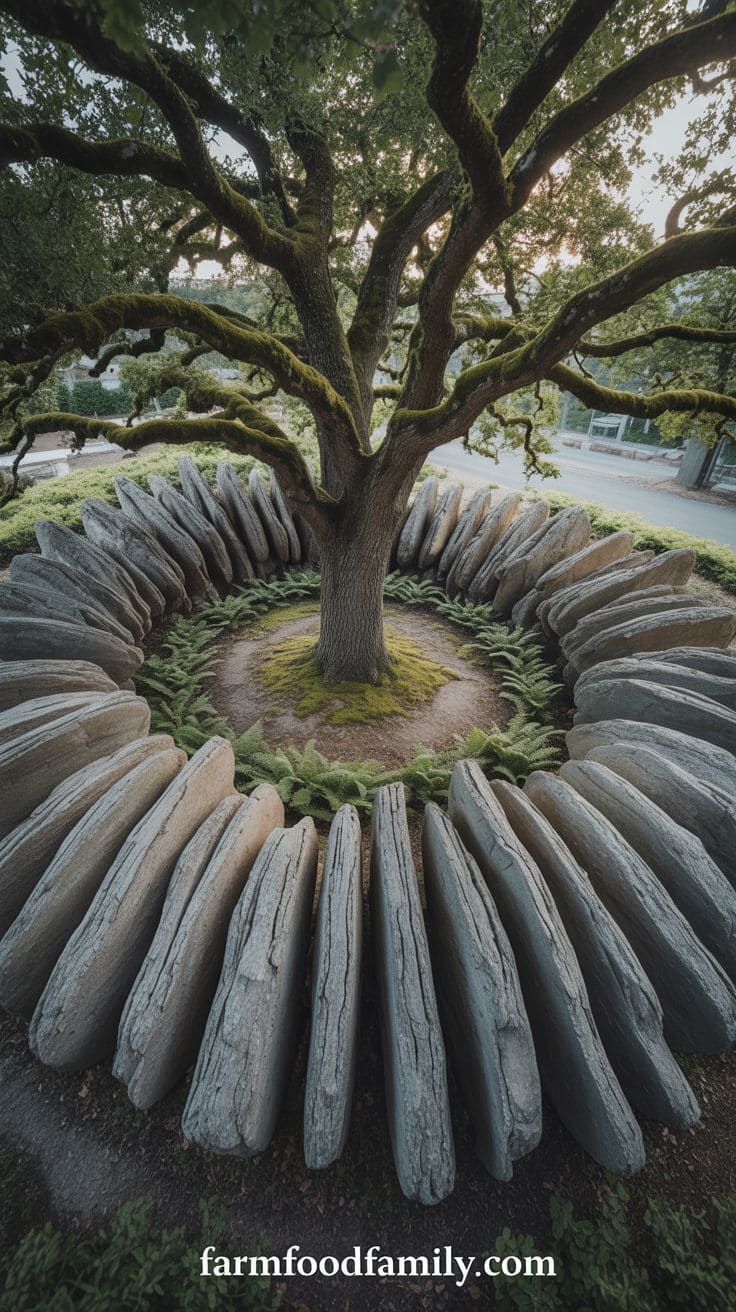
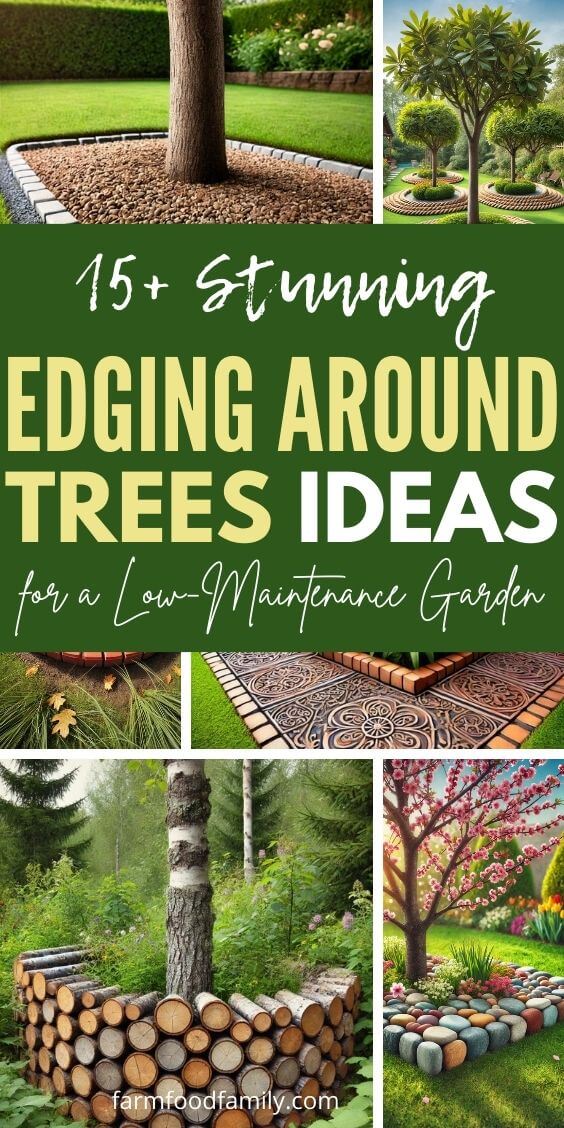
1. Natural Stone Circle Edging
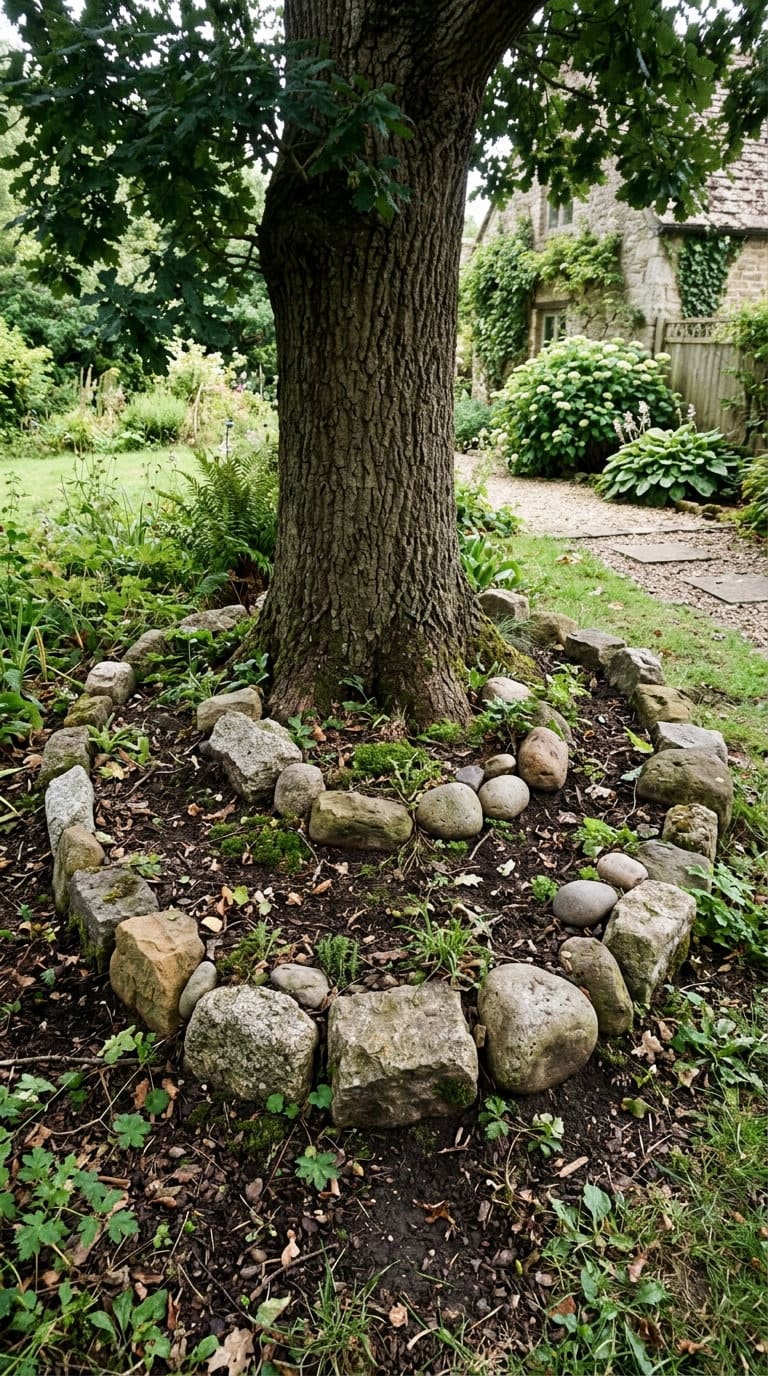
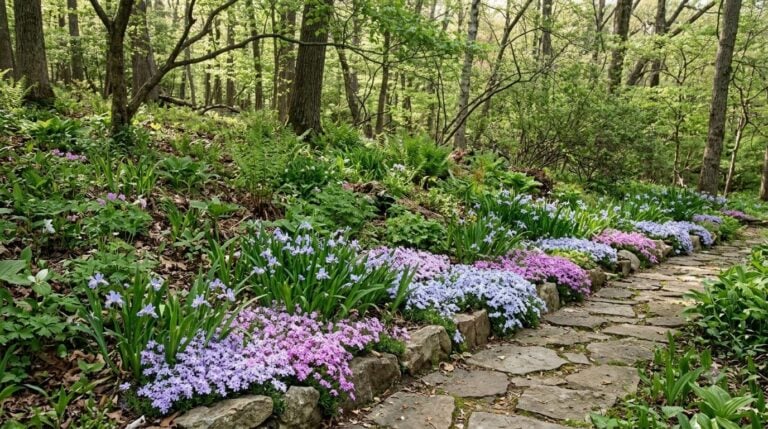
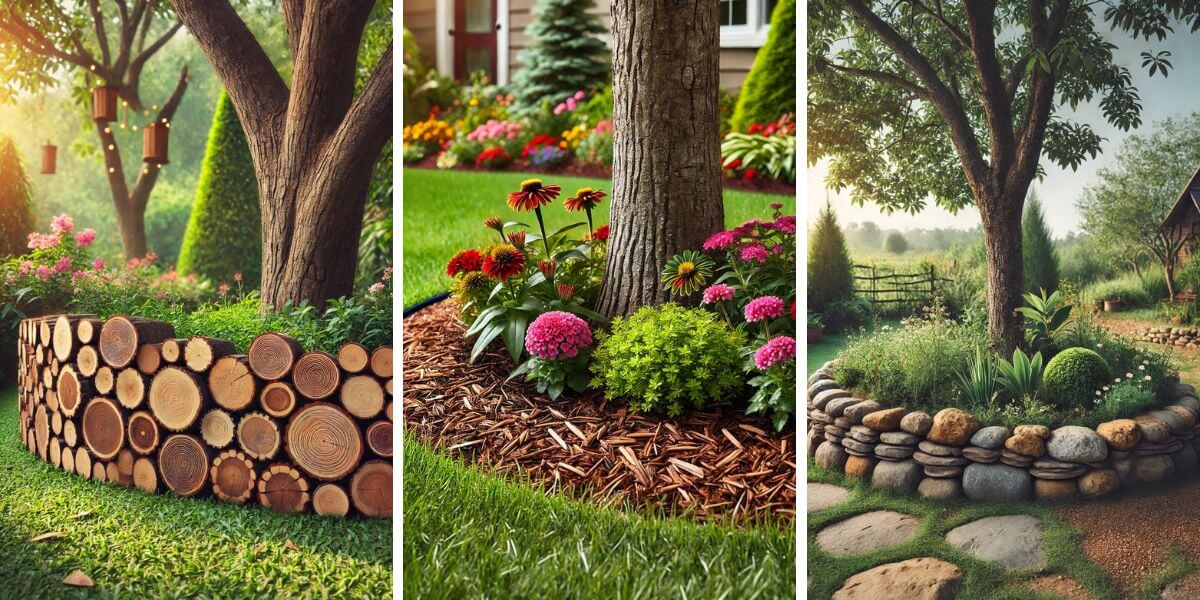
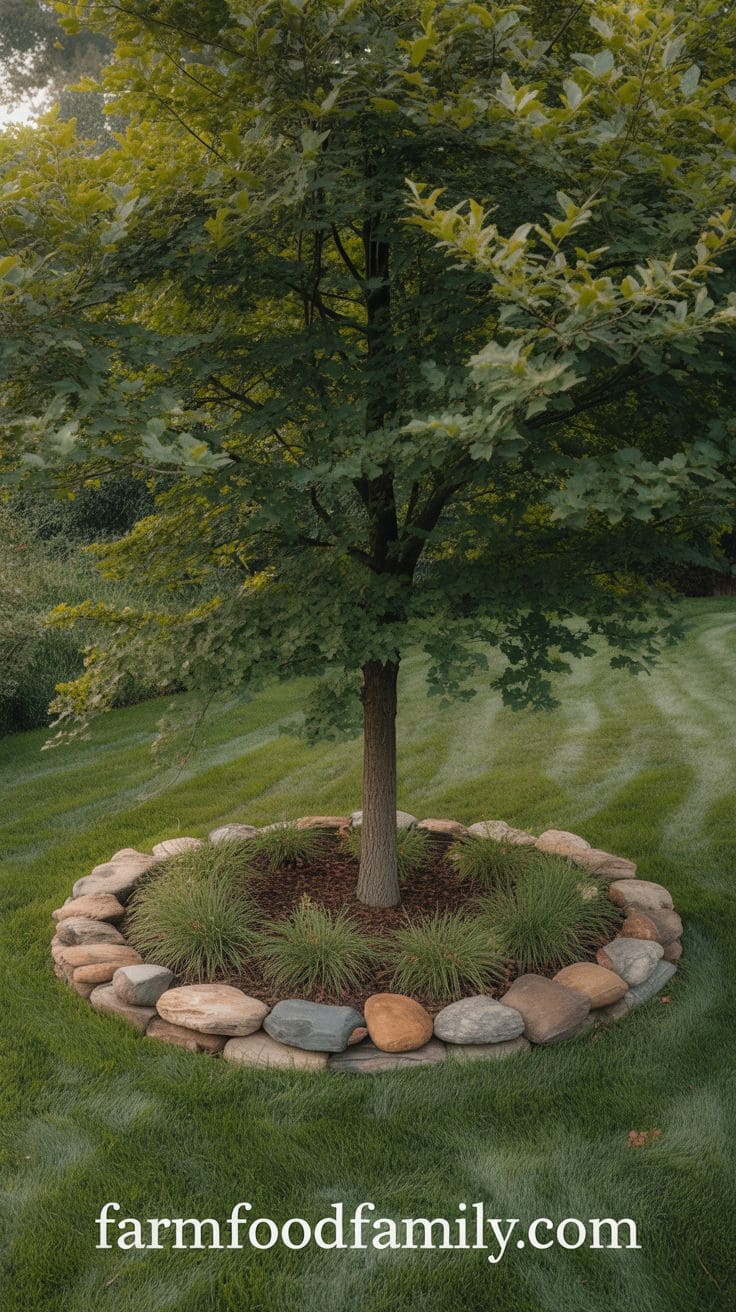
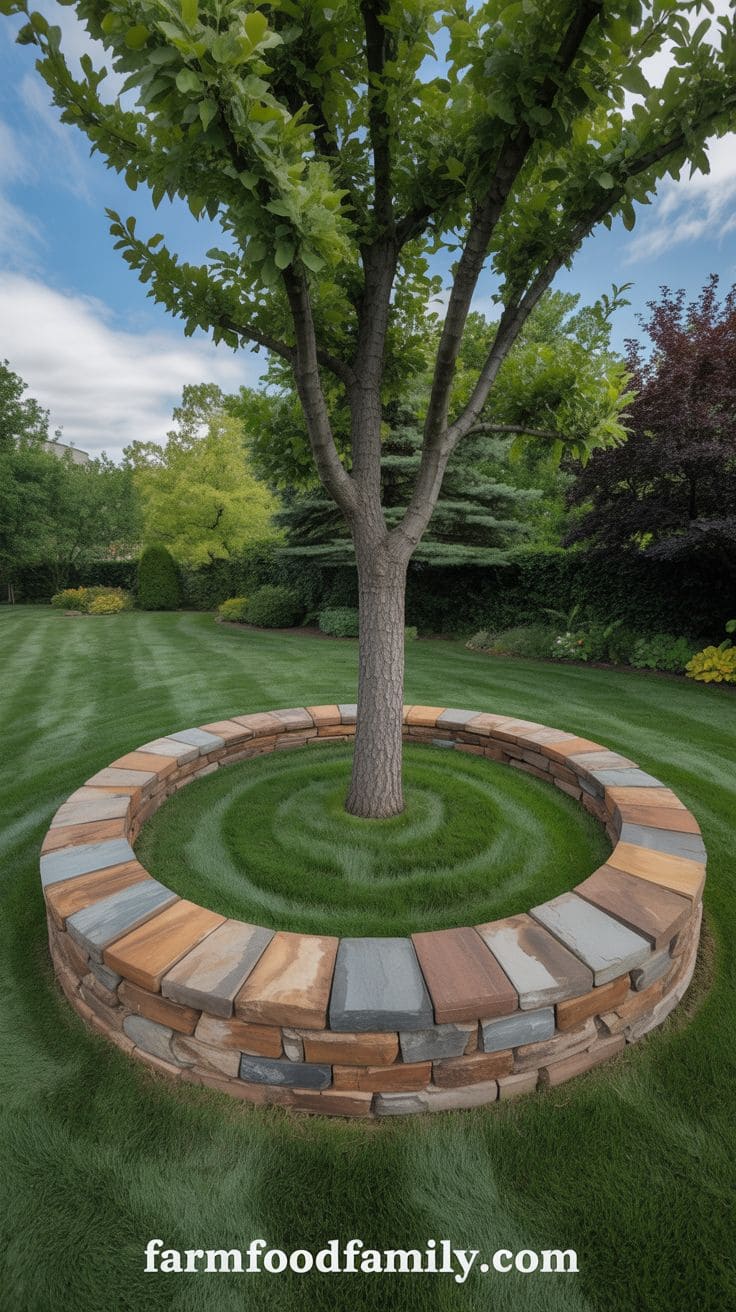
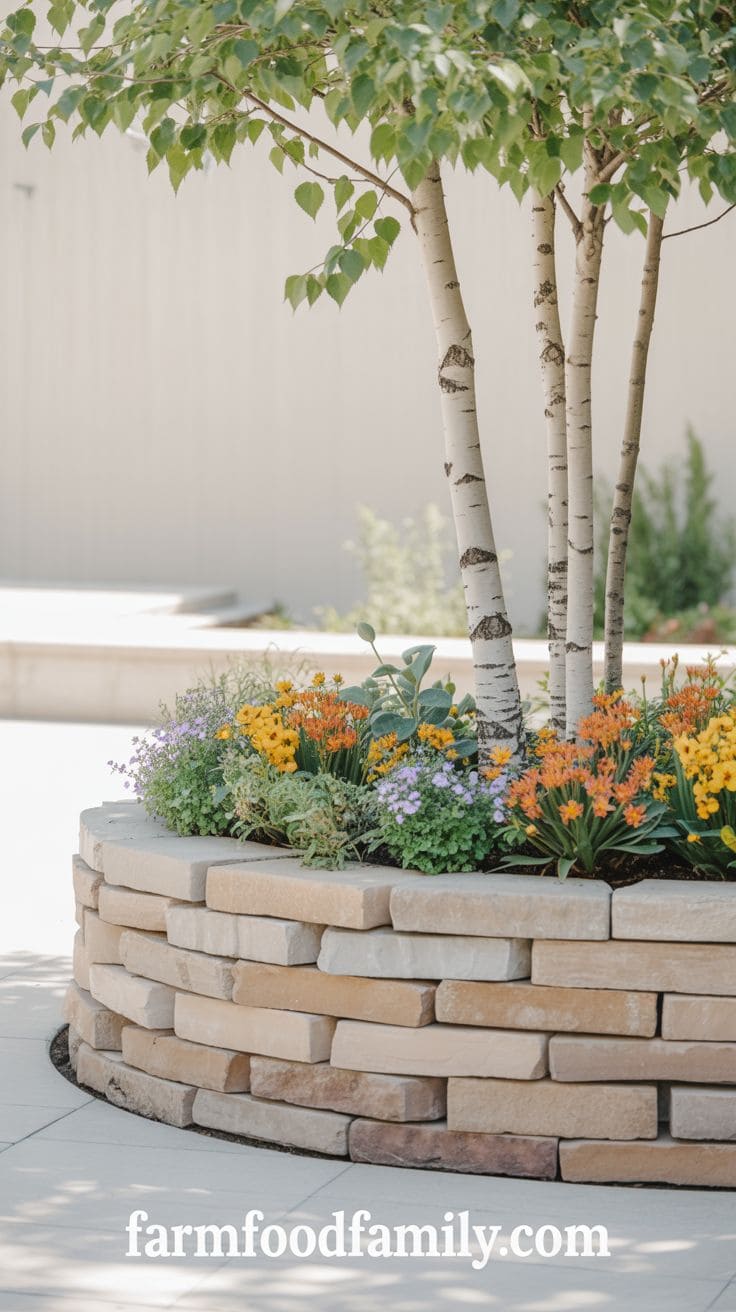
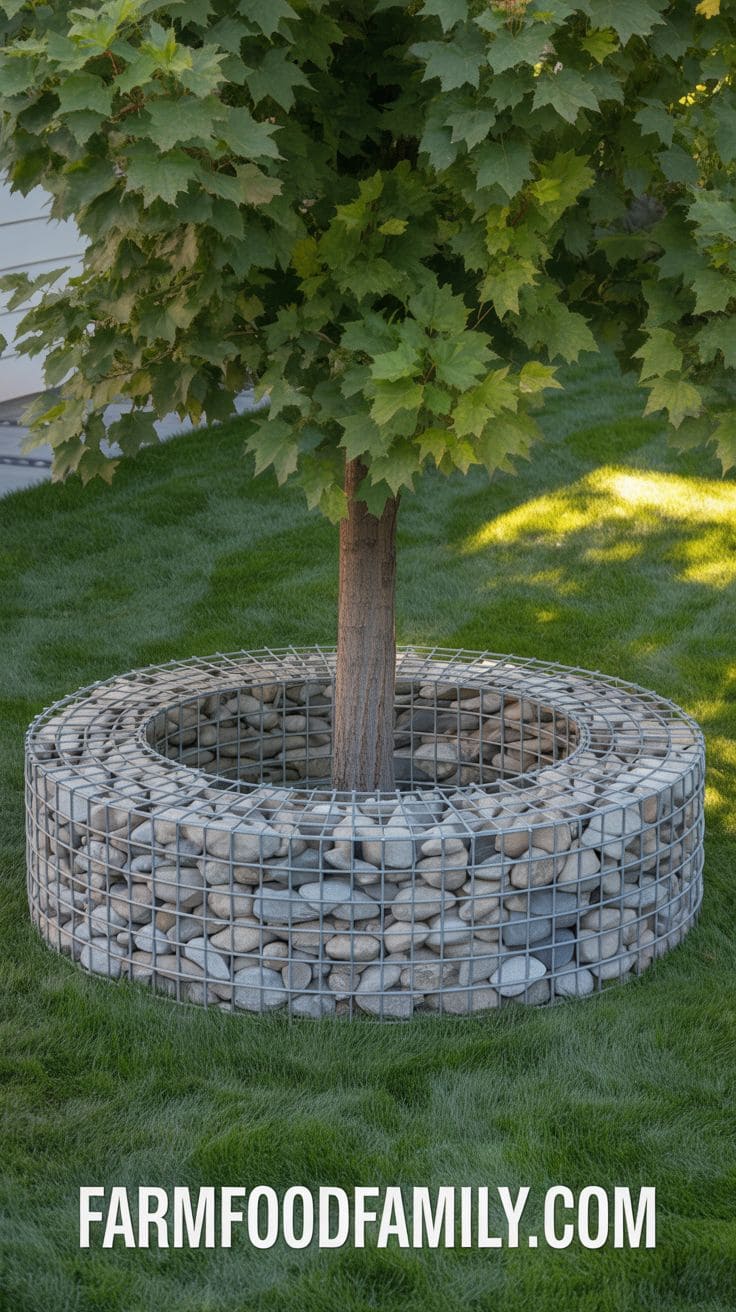
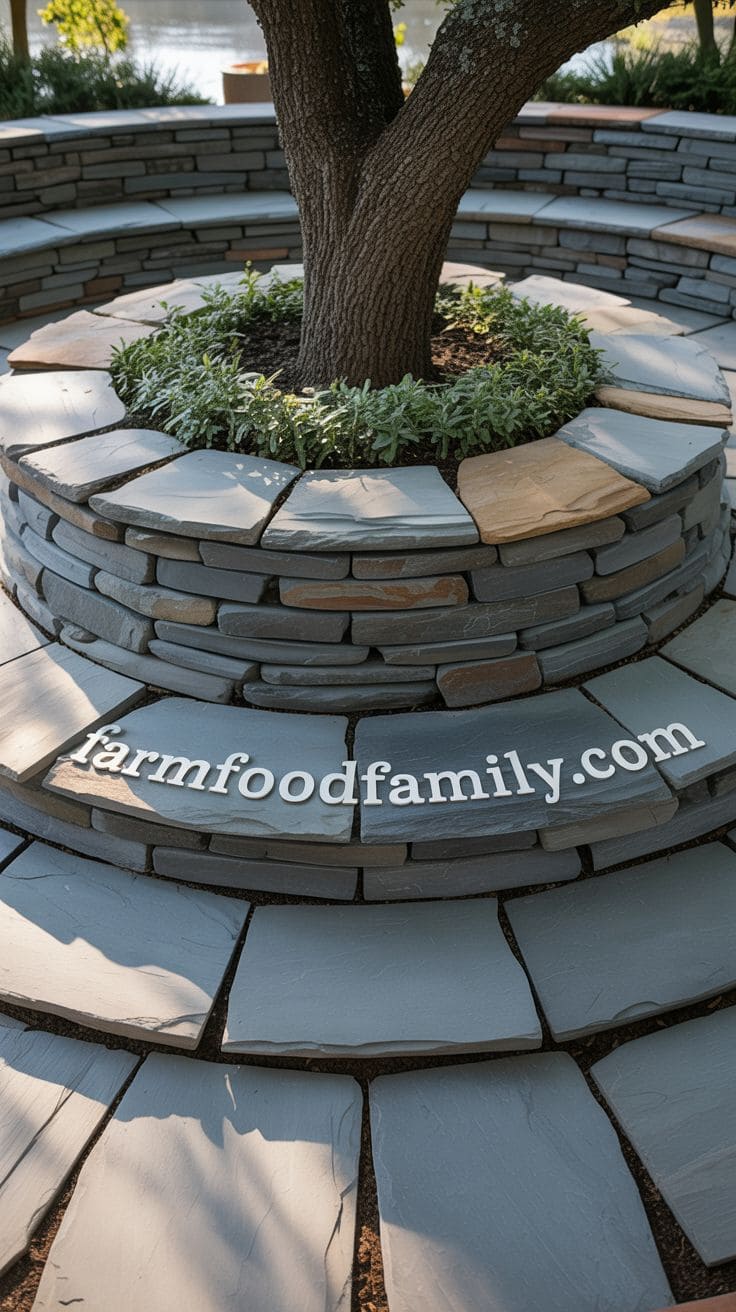
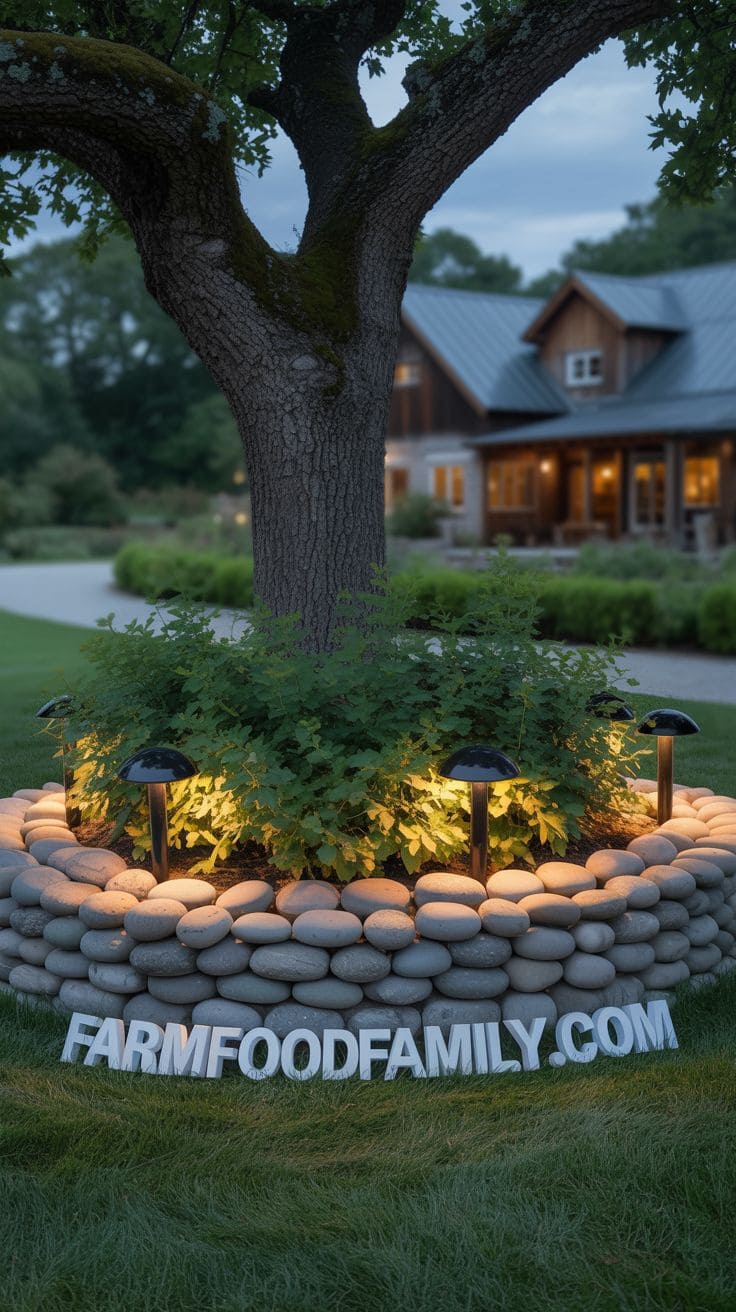
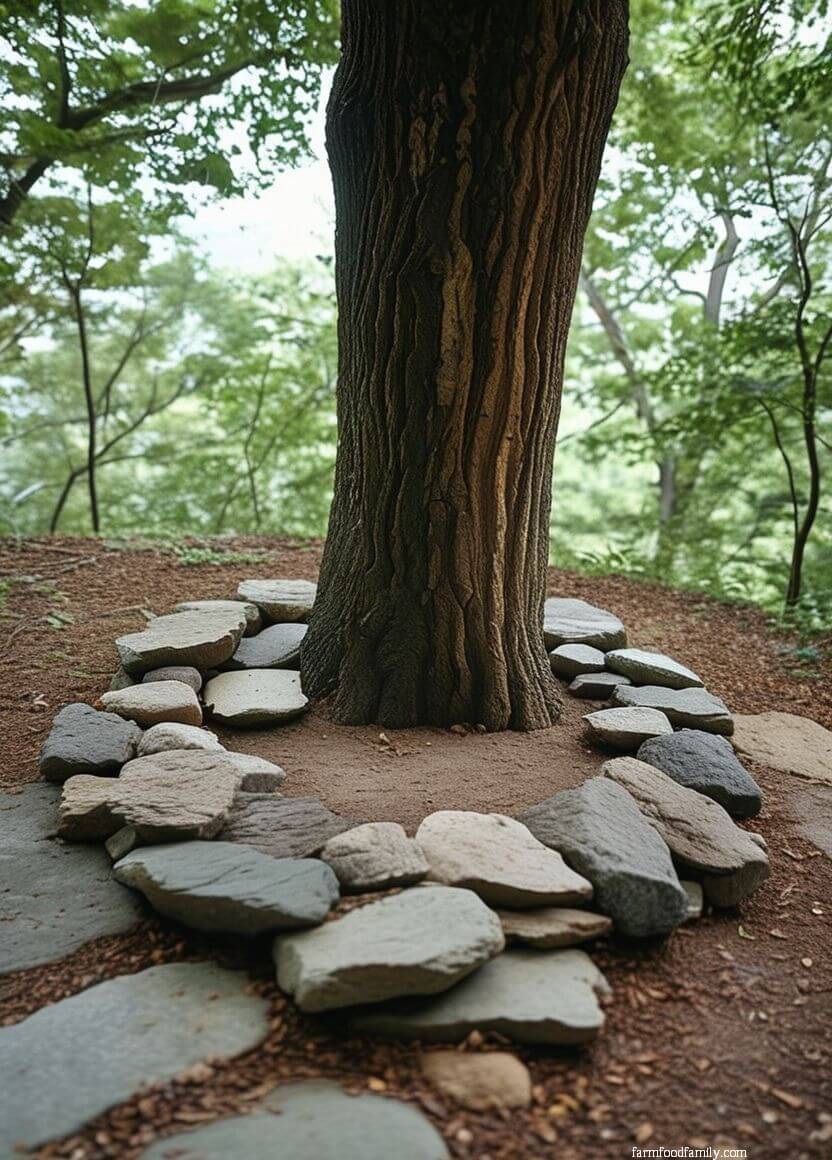
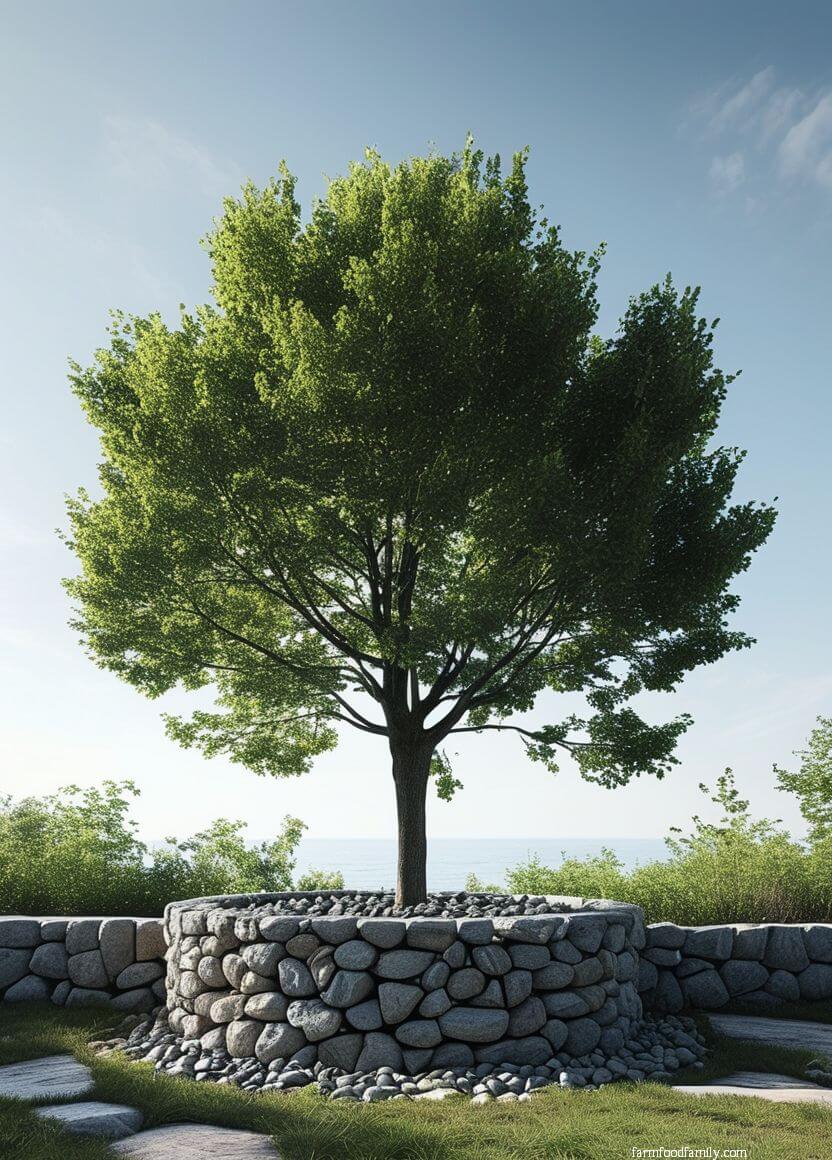
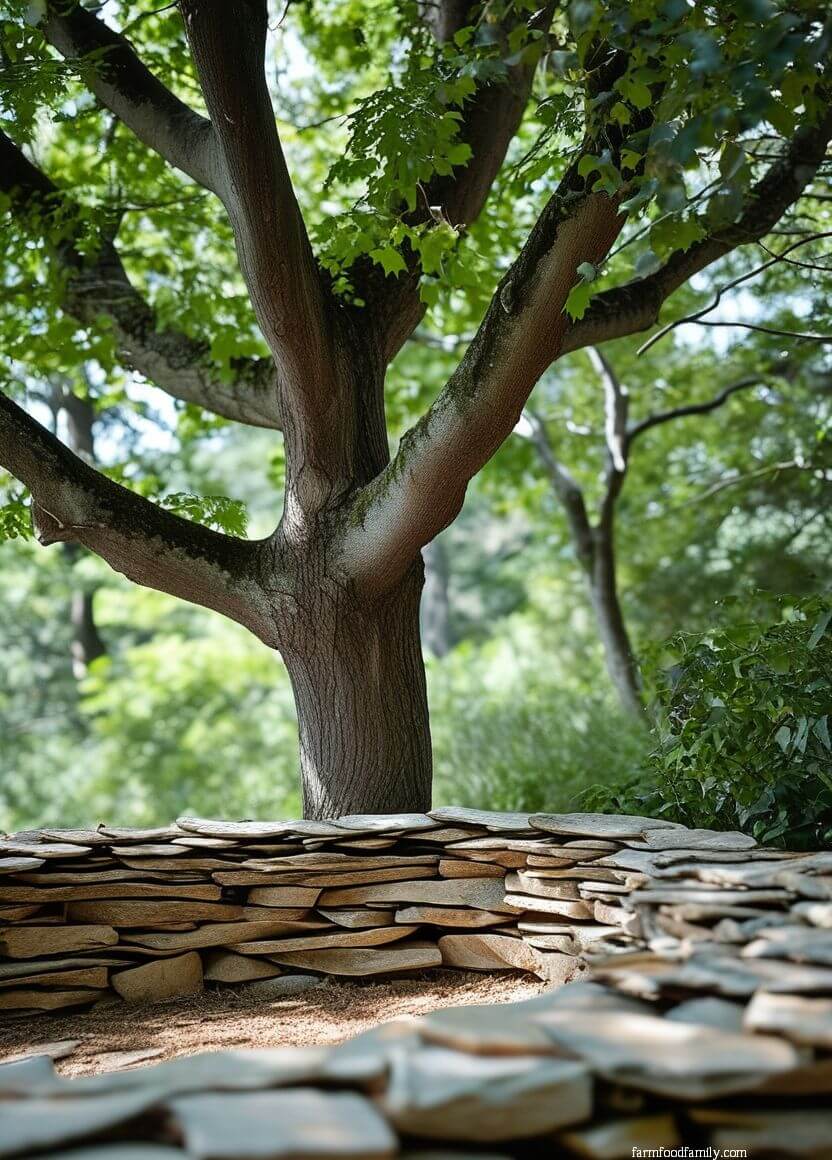
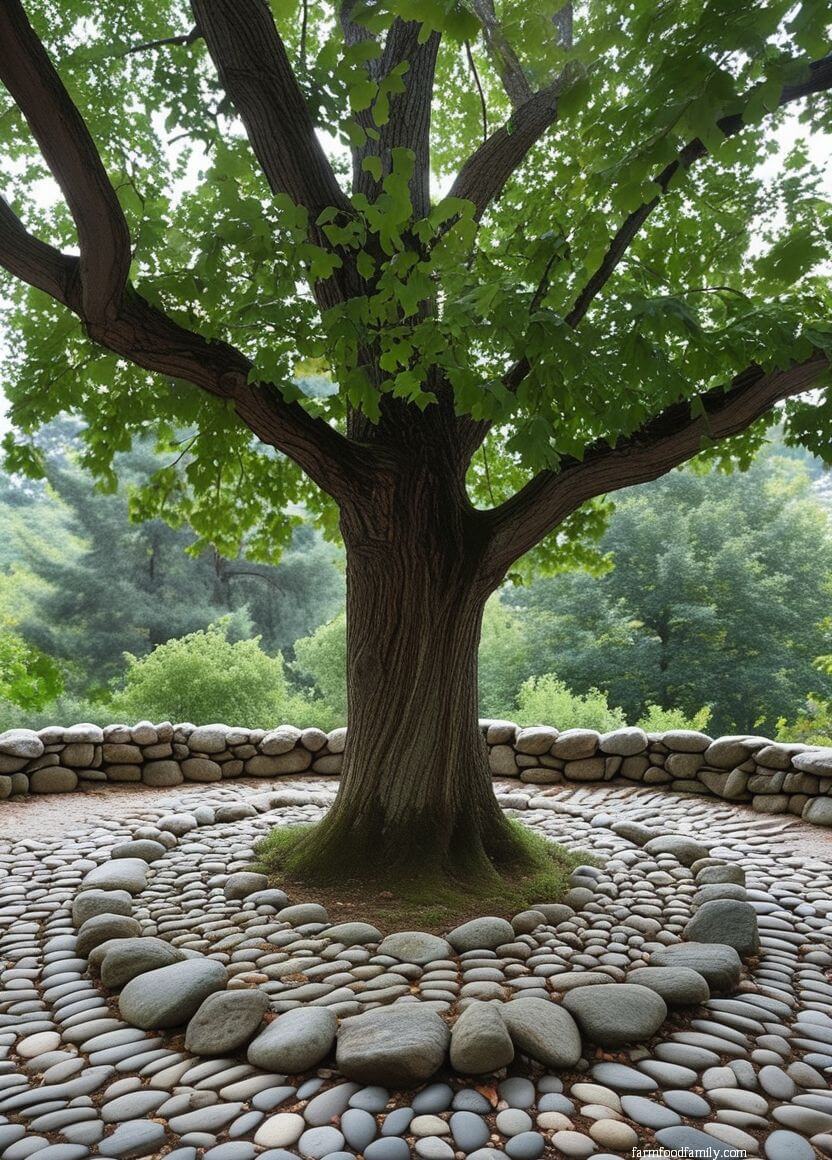
A ring of natural stones, fieldstone, river rock, or flagstone chunks, gives a tree a defined bed without looking manufactured. Irregular stone sizes actually read better here than perfectly matched ones, it looks like it was placed by hand instead of ordered from a catalog.
Set the stones half-buried in the soil so they don’t shift when someone mows nearby, and keep the inner edge at least 2 inches from where mulch will sit against the flare.
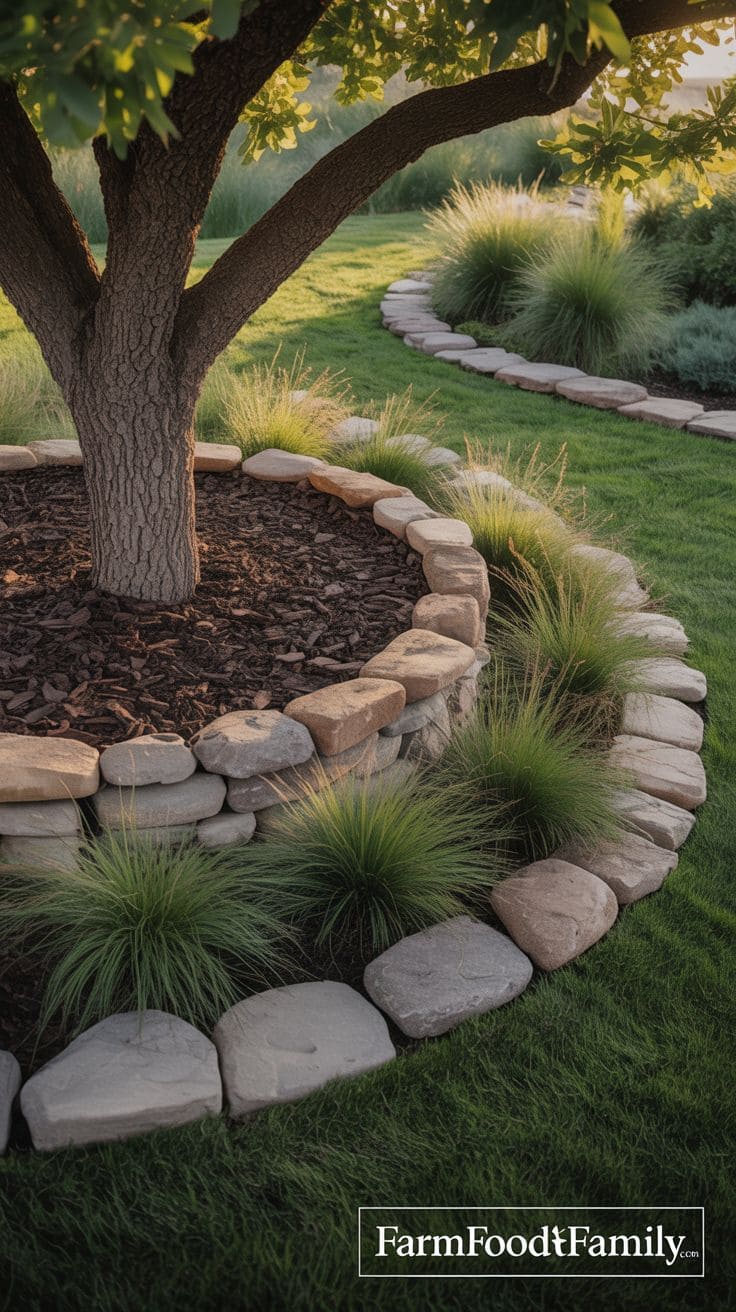
One of the most traditional techniques to edge a tree is to use natural stones arranged in a circular design. Choose flagstone, fieldstone, or river rocks and arrange them tightly around the tree’s base to form a low wall or border.
This not only provides the area a tidy, classic appearance, but it also protects the roots and helps to keep mulch.
Natural stone is long-lasting and weather-resistant, and it complements a wide range of garden styles, from rustic to sophisticated.
The stone sizes can be varied and layered to produce a tiered impression, especially if the tree is on a slight hill.
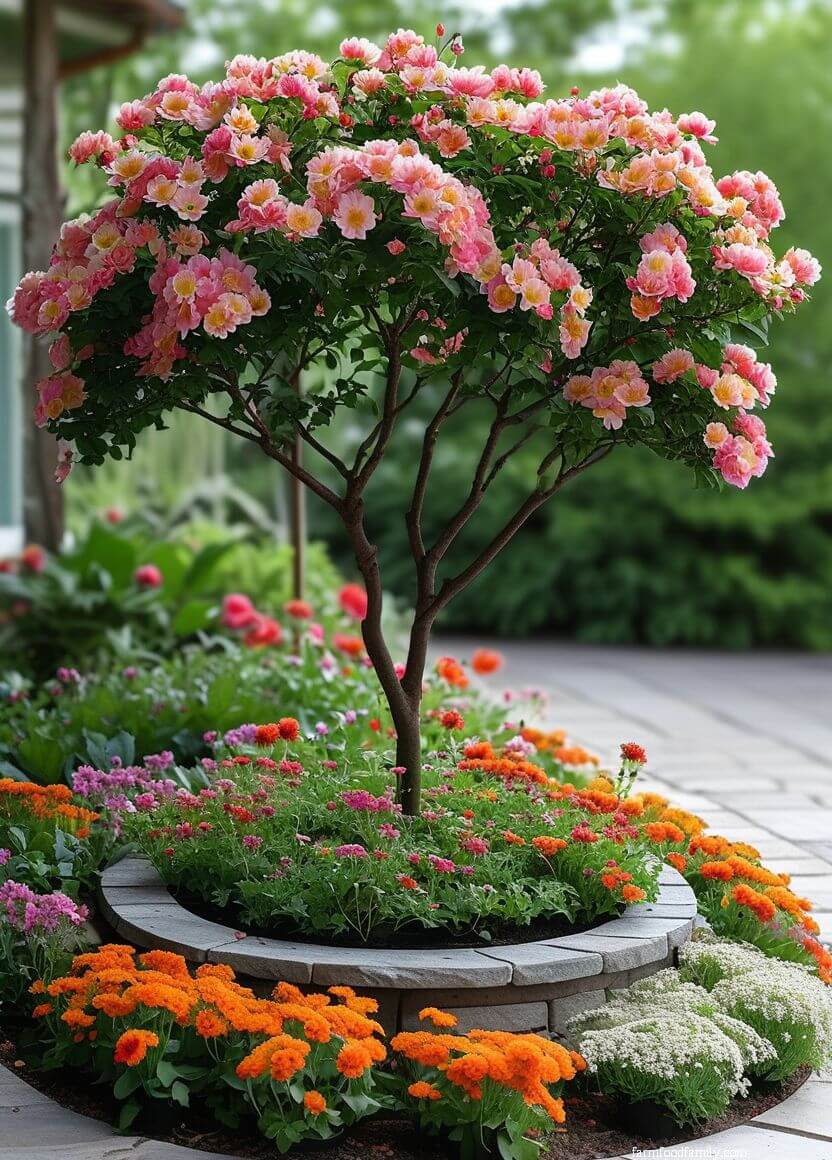
Filling the space within the circle with rich mulch, flowering ground cover, or decorative grasses will provide texture.
Most yard problems trace back to one specific, fixable cause. Find yours in 4 quick questions.
Take the Free Quiz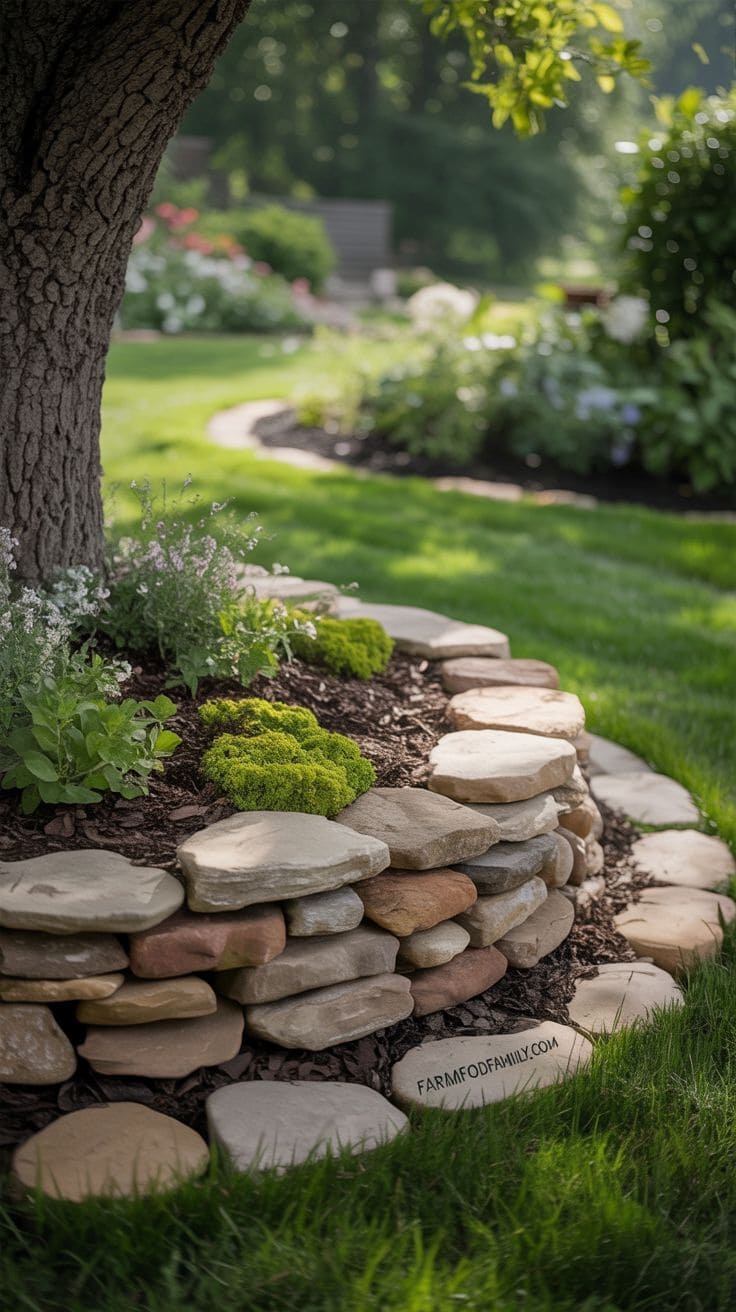
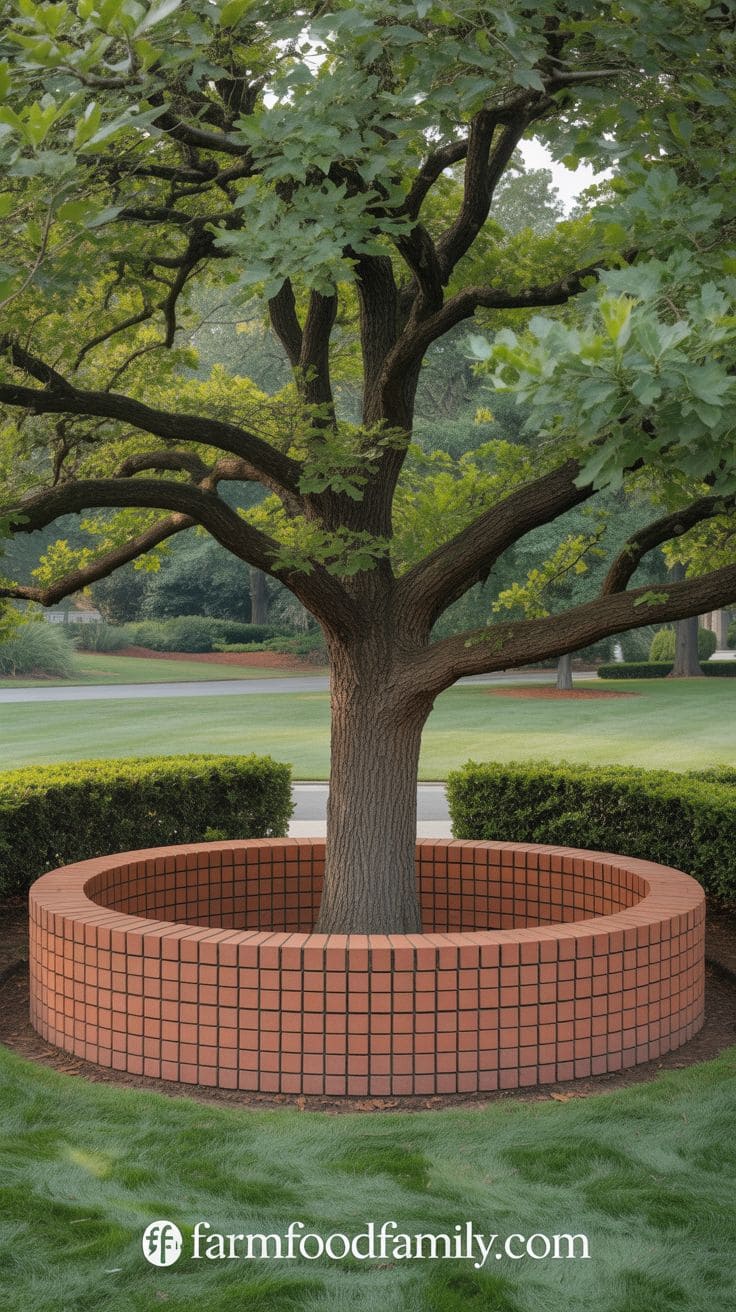
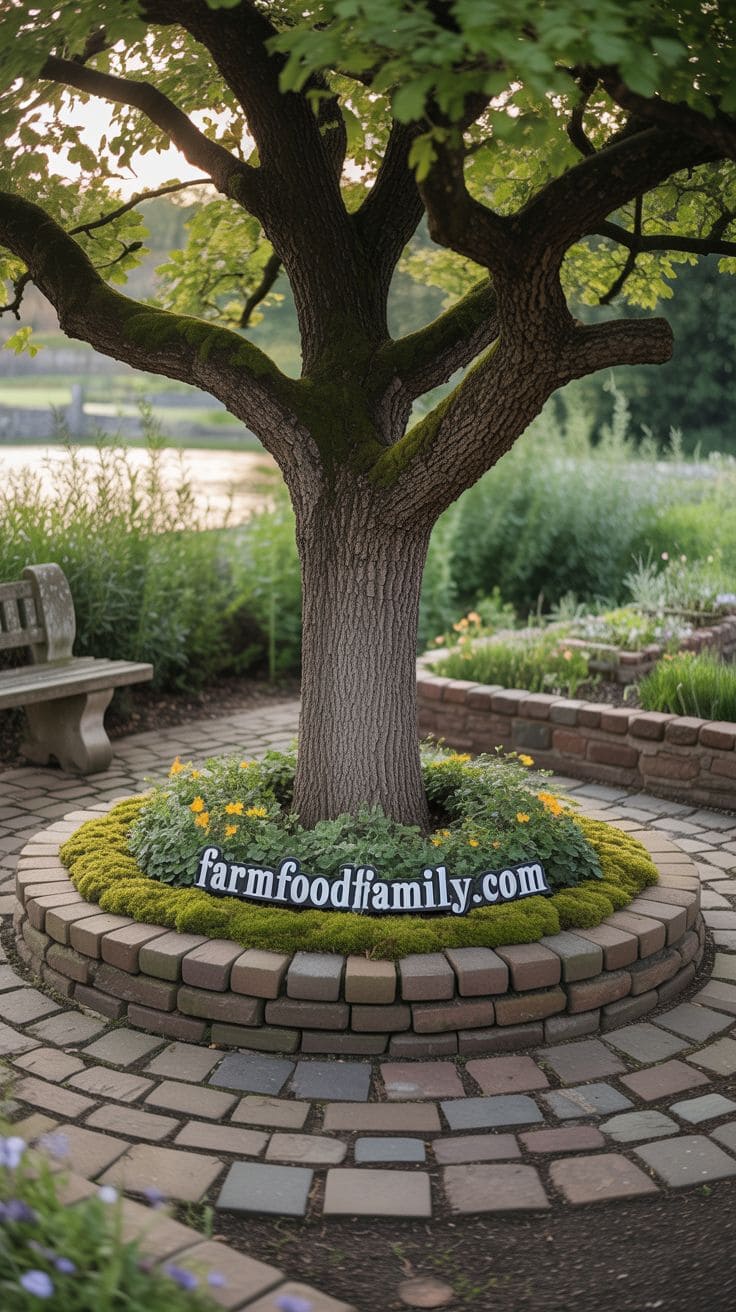
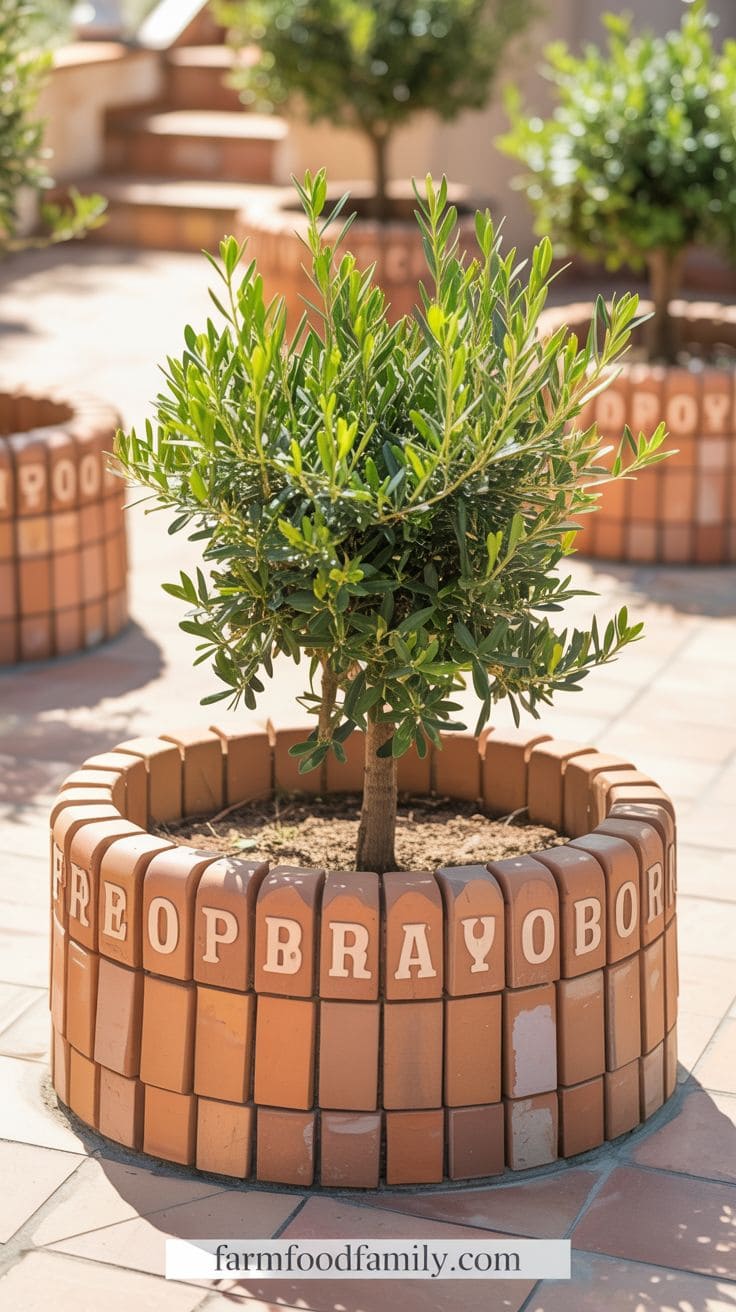
2. Brick Edge Ring with Inset Flowers
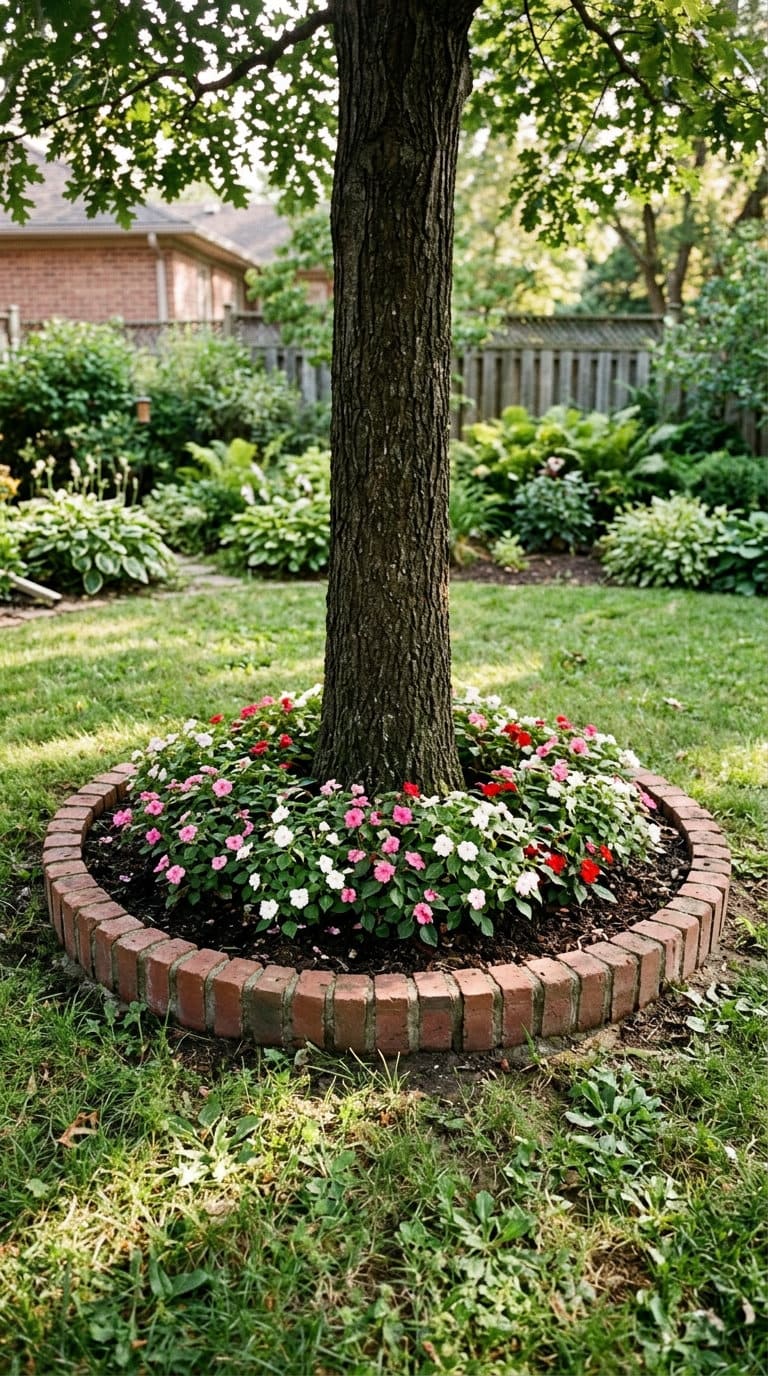
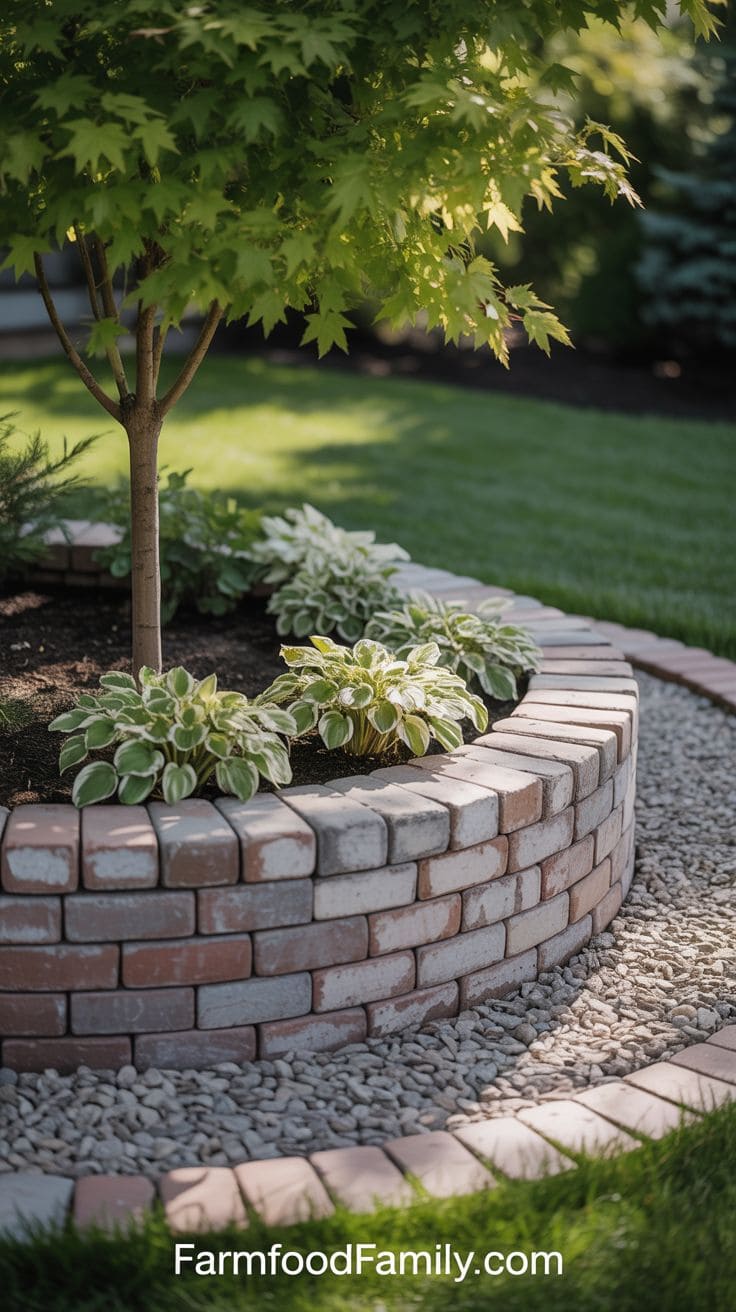
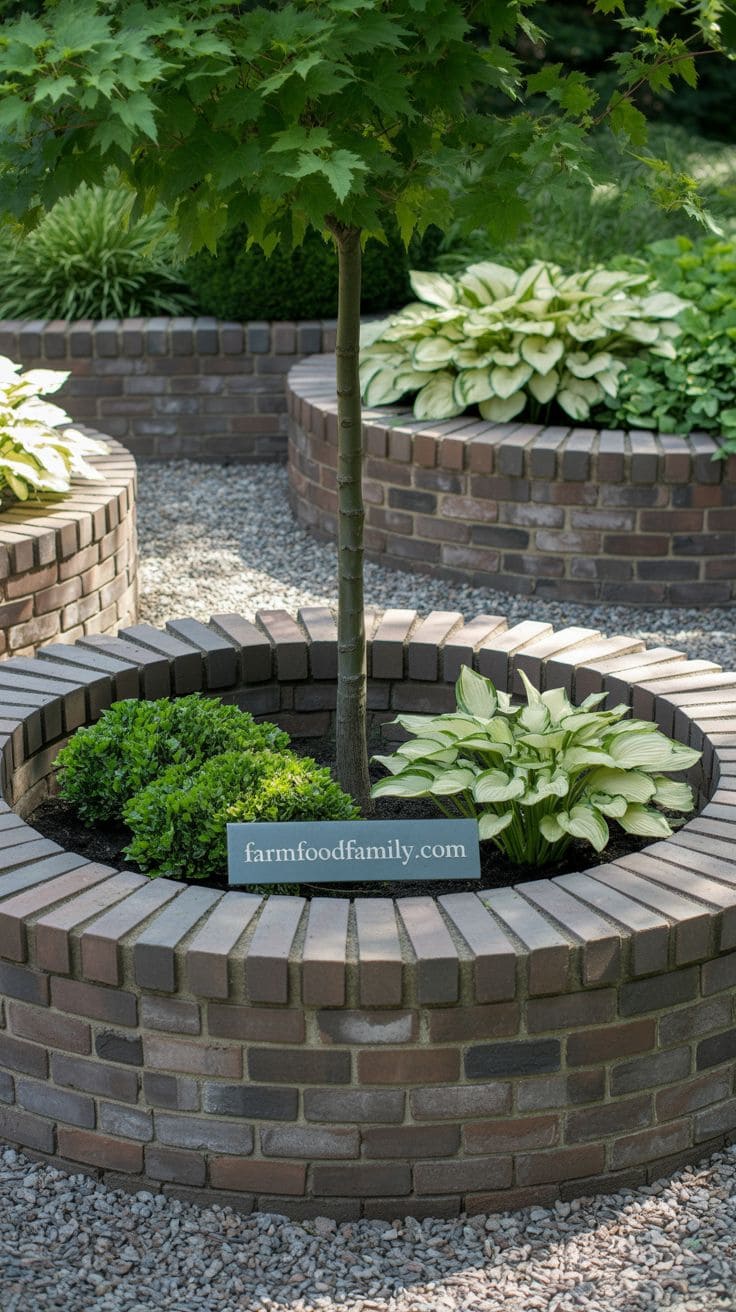
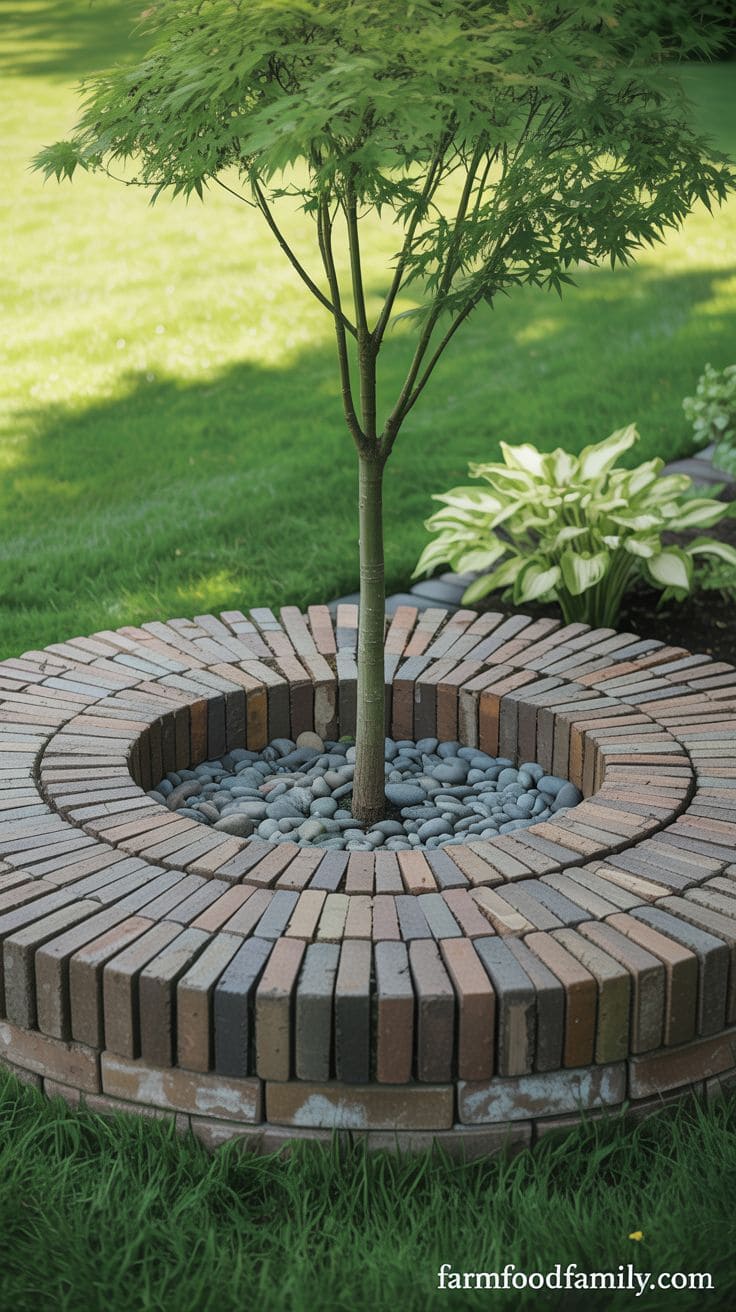
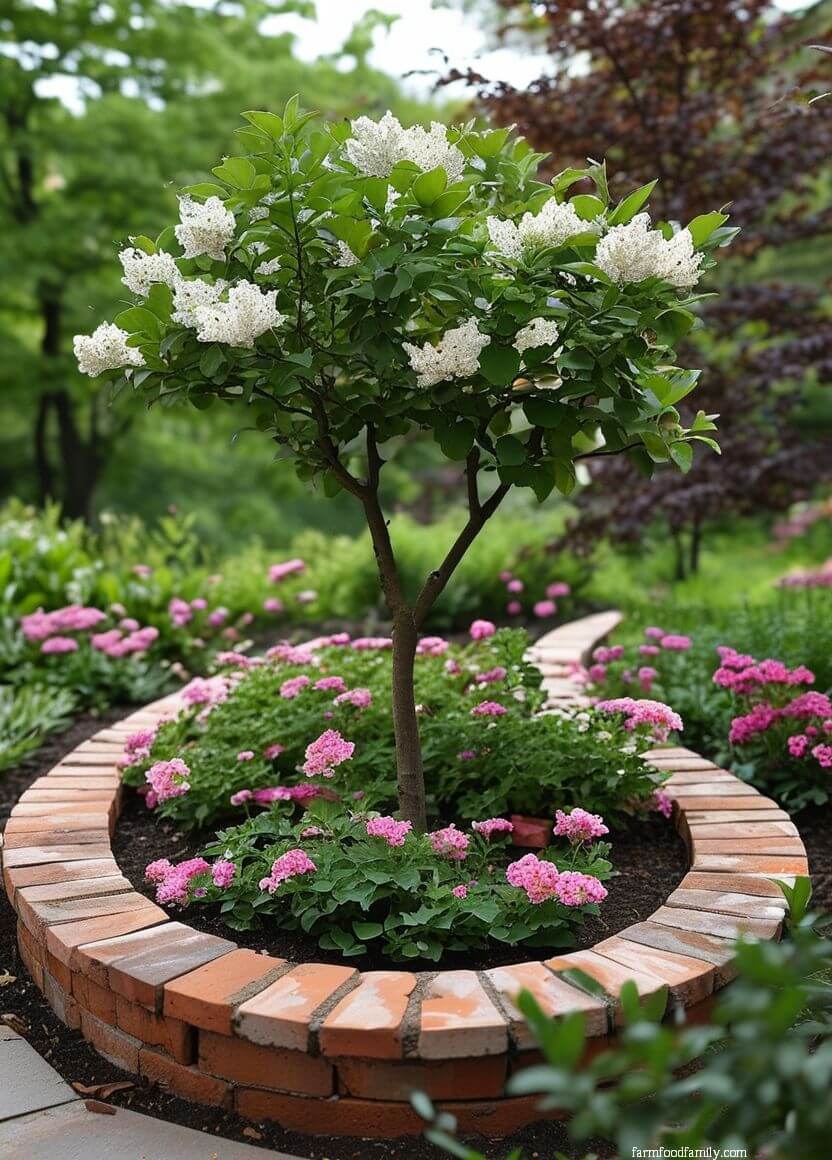
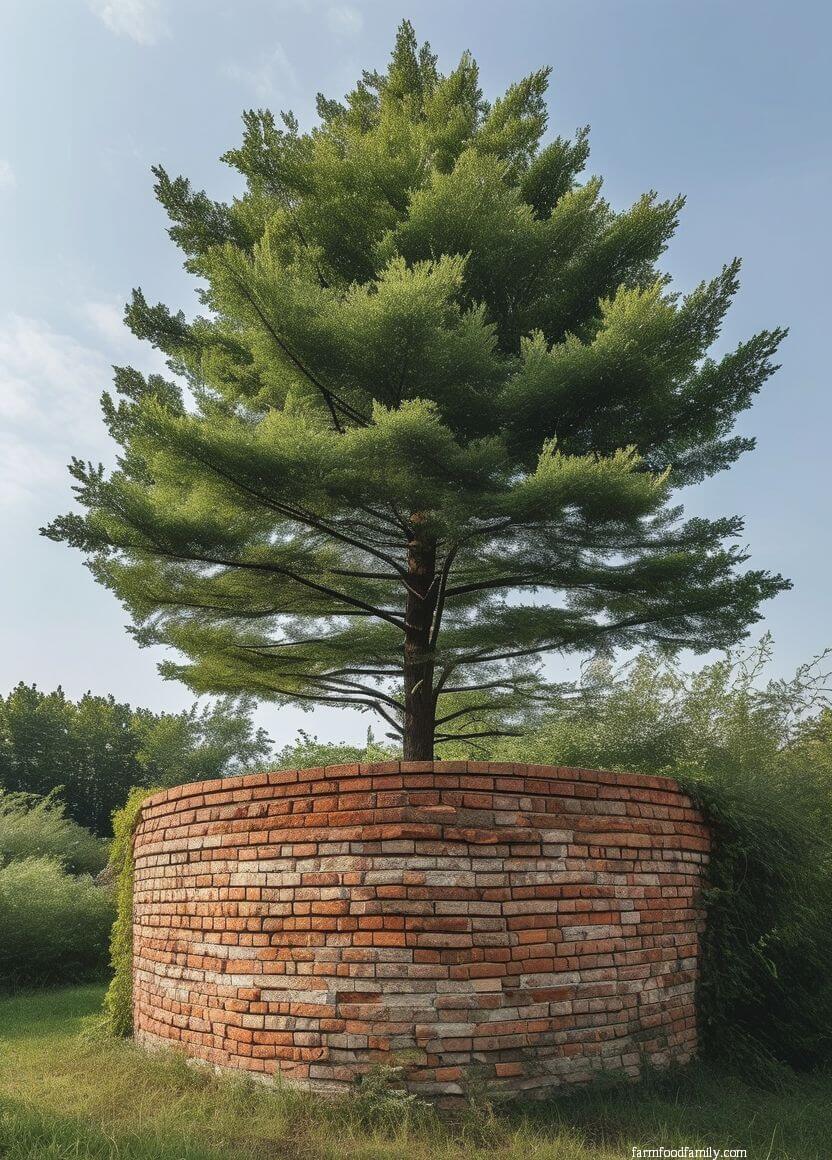
Bricks laid in a soldier course (standing on end) around the tree create a tidy, traditional ring, and working a few low-growing flowers or groundcover into the gap between the bricks and the trunk softens what would otherwise be a stark line. Impatiens, vinca, or hosta in shade all work here.
Mortar the bricks if you want them permanently fixed, or dry-lay them if you’d rather adjust the ring size as the tree grows, which, honestly, is the smarter call for anything under 10 years old.
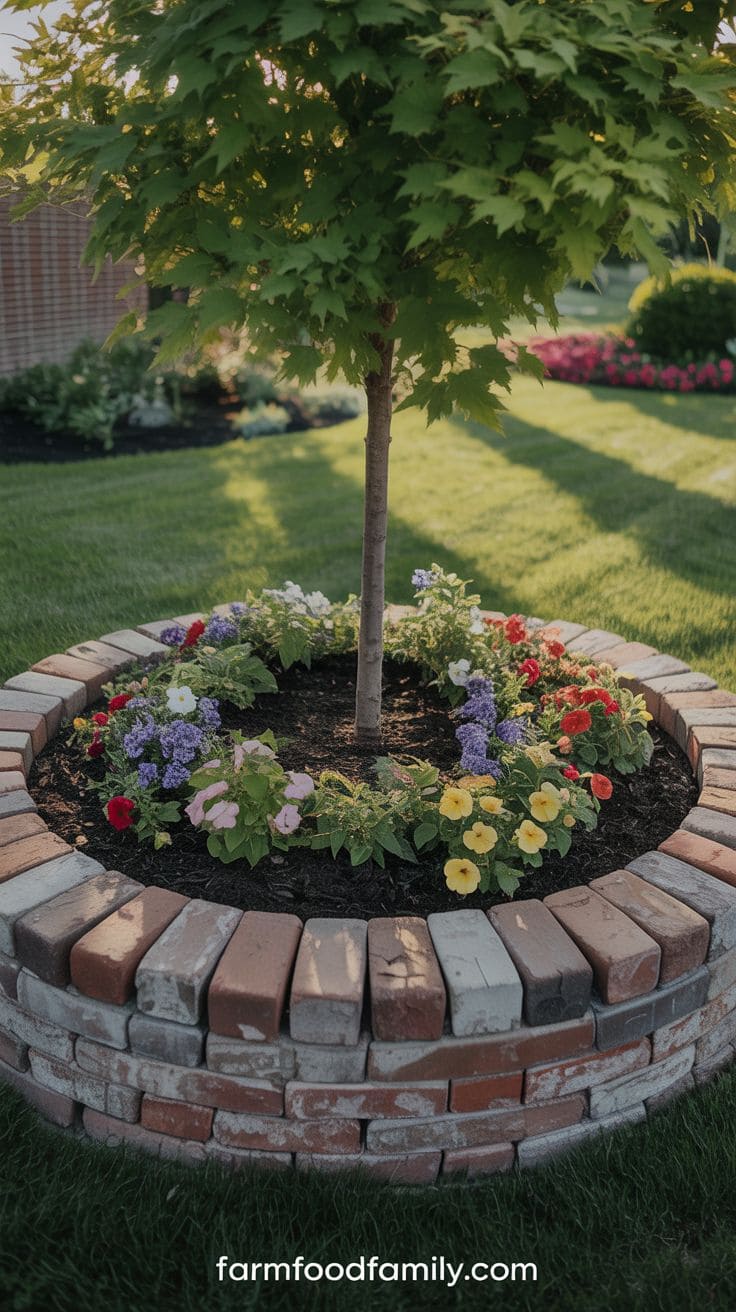
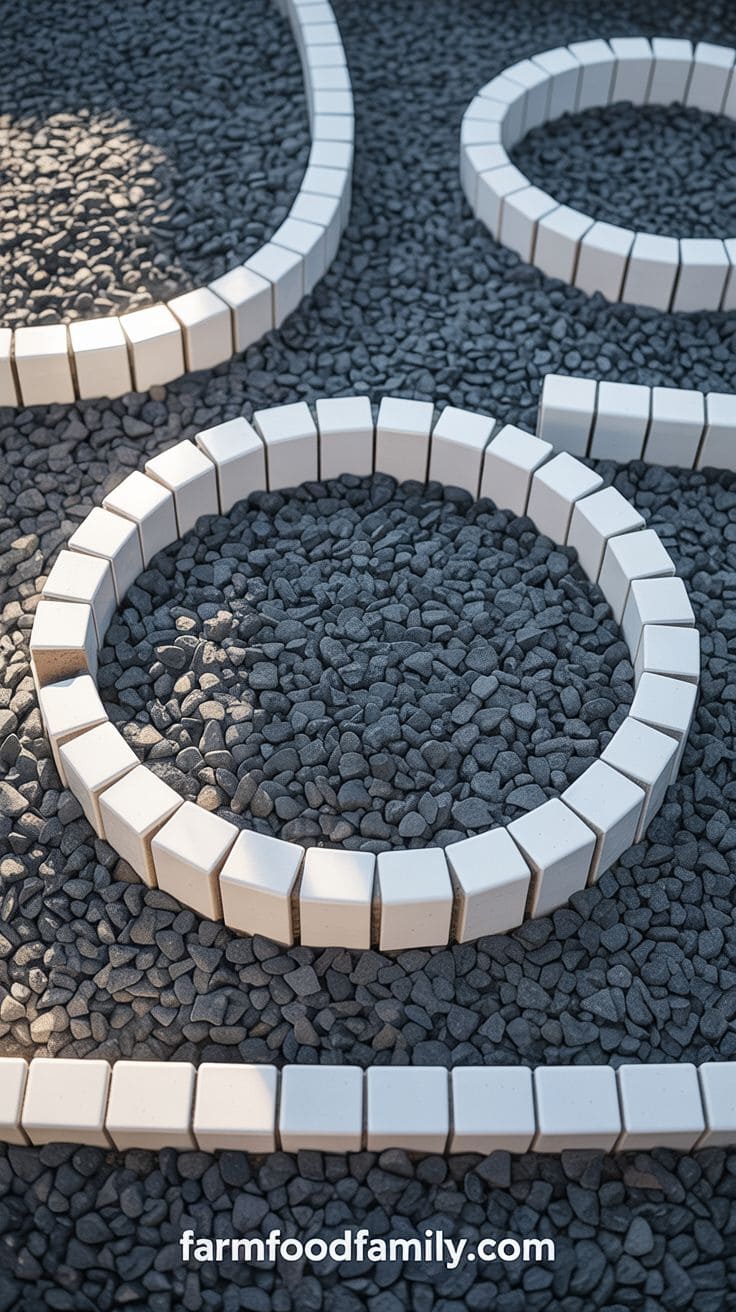
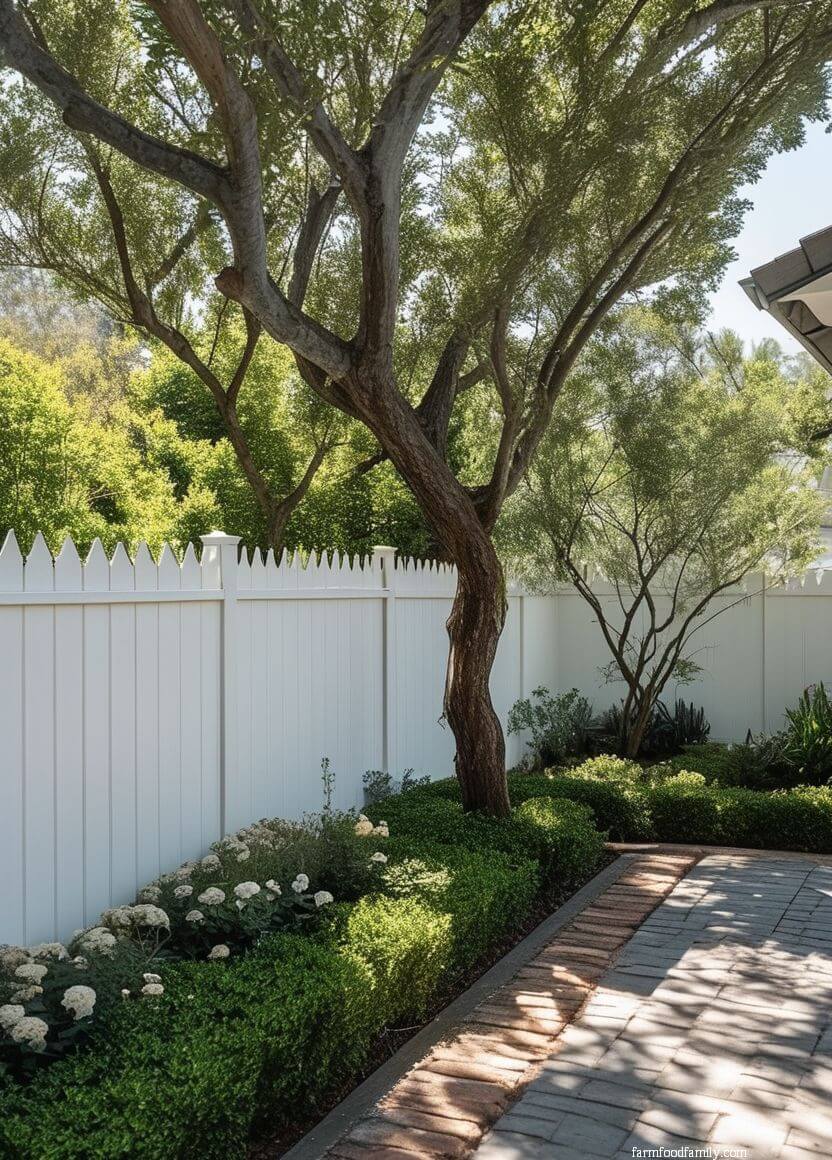
Bricks set edge-to-edge in a circular pattern around the tree produce a clean, classic style that complements both traditional and contemporary yards.
For a warm, comfortable feel, choose red bricks, while gray or white-washed versions provide a more modern aesthetic.
You can bury the bricks into the ground or stack them to create a small raised bed.
Consider planting shade-tolerant flowers in the brick circle, such as impatiens or hosta. The brick keeps mulch and soil contained while allowing water to travel through, resulting in healthy growth.
This style adds a structural, deliberate touch to the base of your tree and looks well with other hardscaping in the yard.
When done correctly, it can resemble a tiny garden created around a tree’s base, providing both structure and natural vibrance.

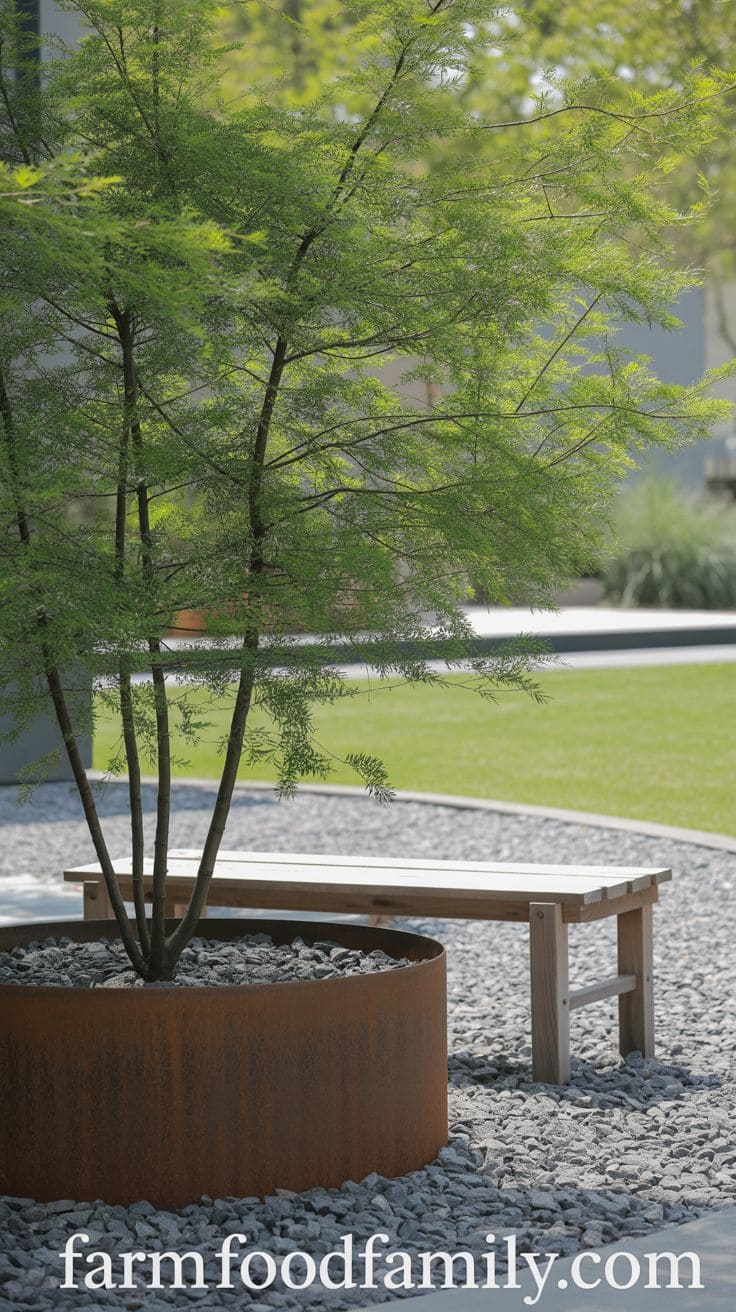
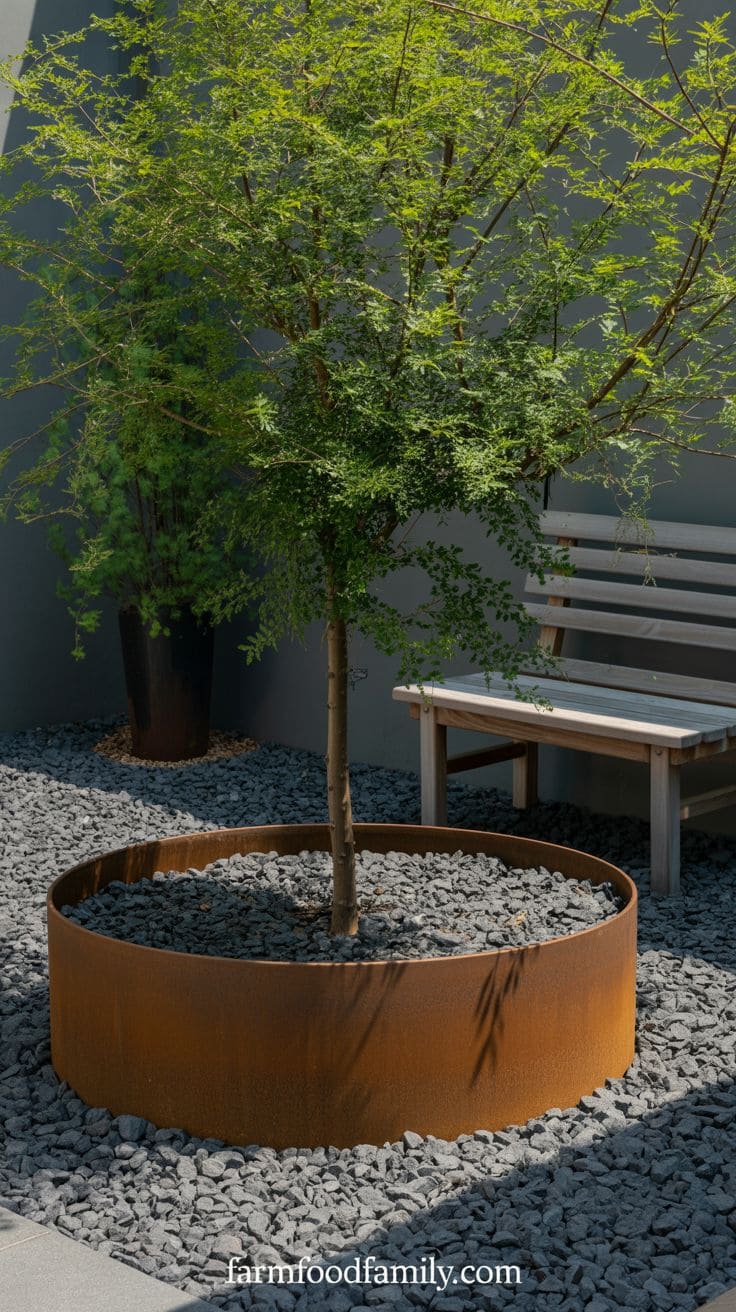
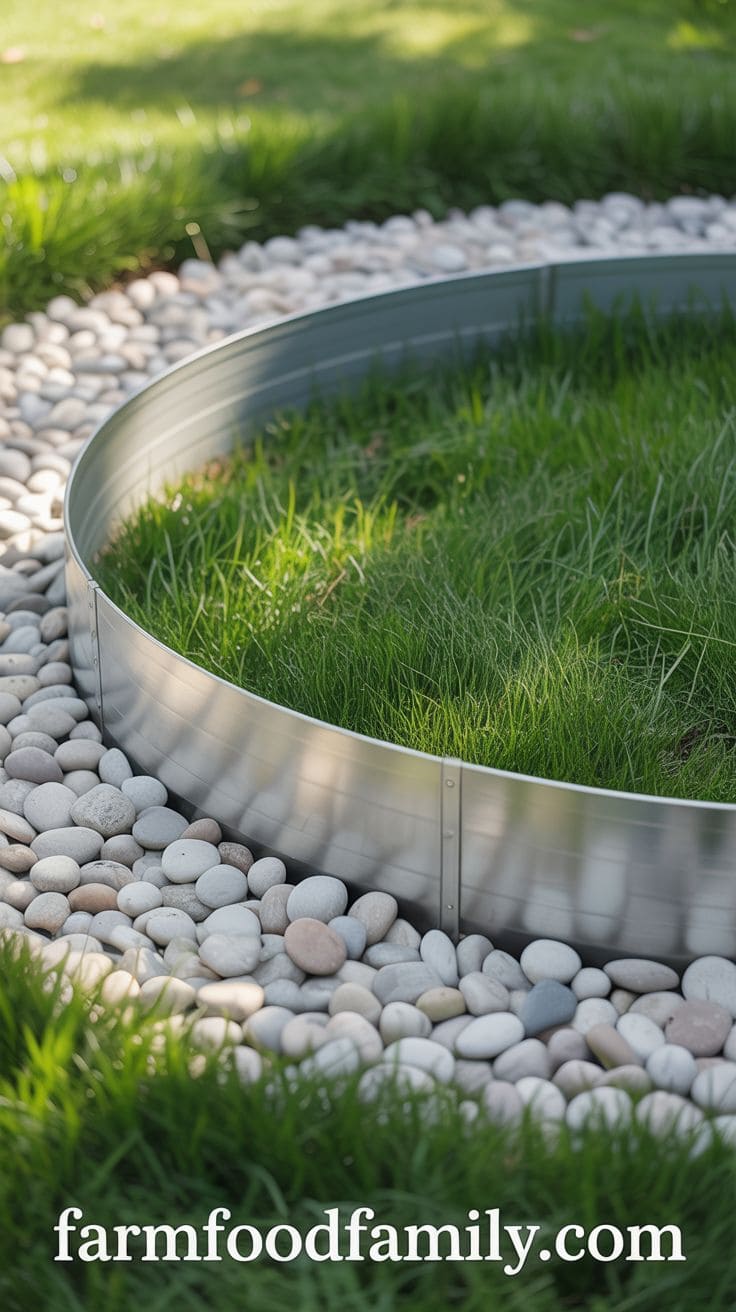
3. Metal Planter Base with Adjacent Bench Seating
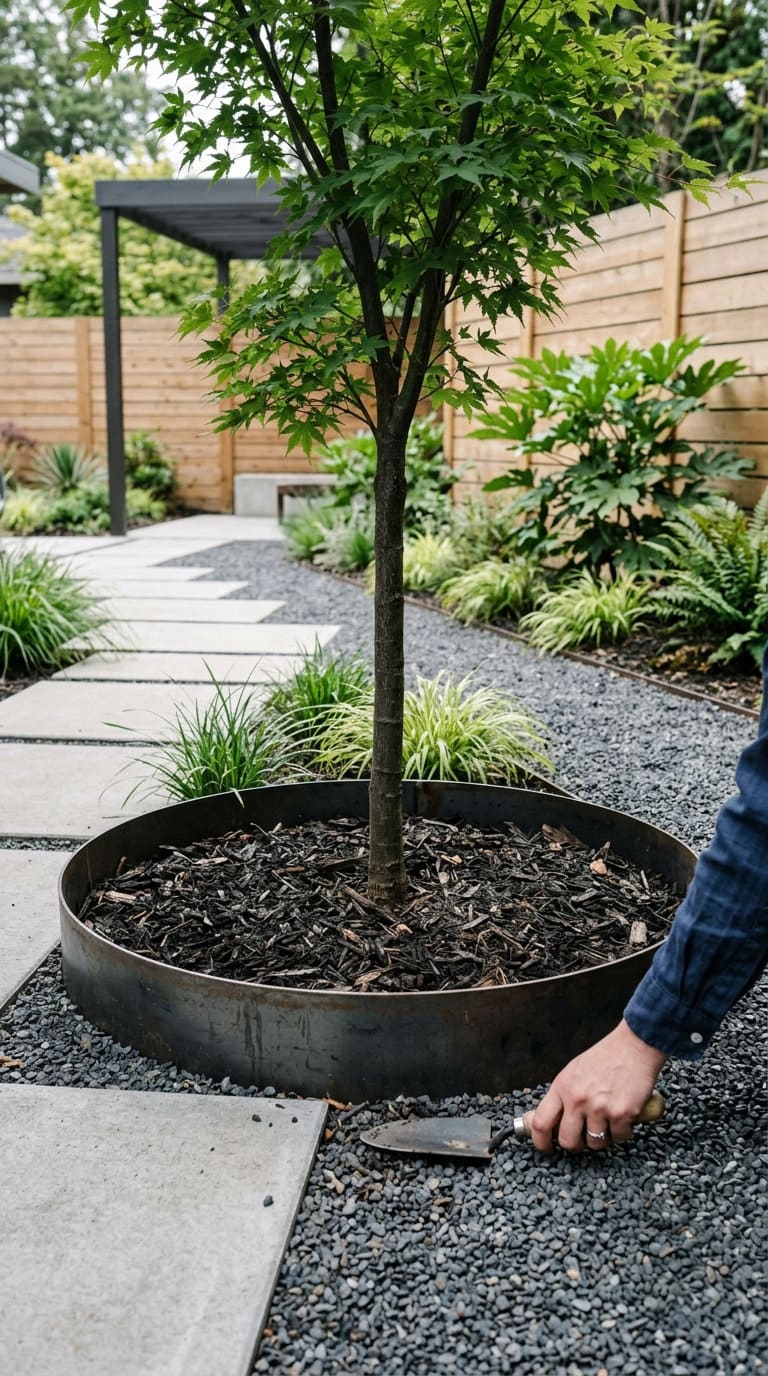
Steel or aluminum edging strips bend into a smooth circle and hold their shape better than almost anything else on this list. It’s the go-to if the rest of your landscaping leans modern or minimalist, since it disappears visually instead of competing with the plant material.
Watch the installation depth. Buried too shallow, mowers catch the edge; buried too deep near the flare, you risk the same moisture-trapping problem as a mulch volcano, just with metal instead of bark-touching mulch.
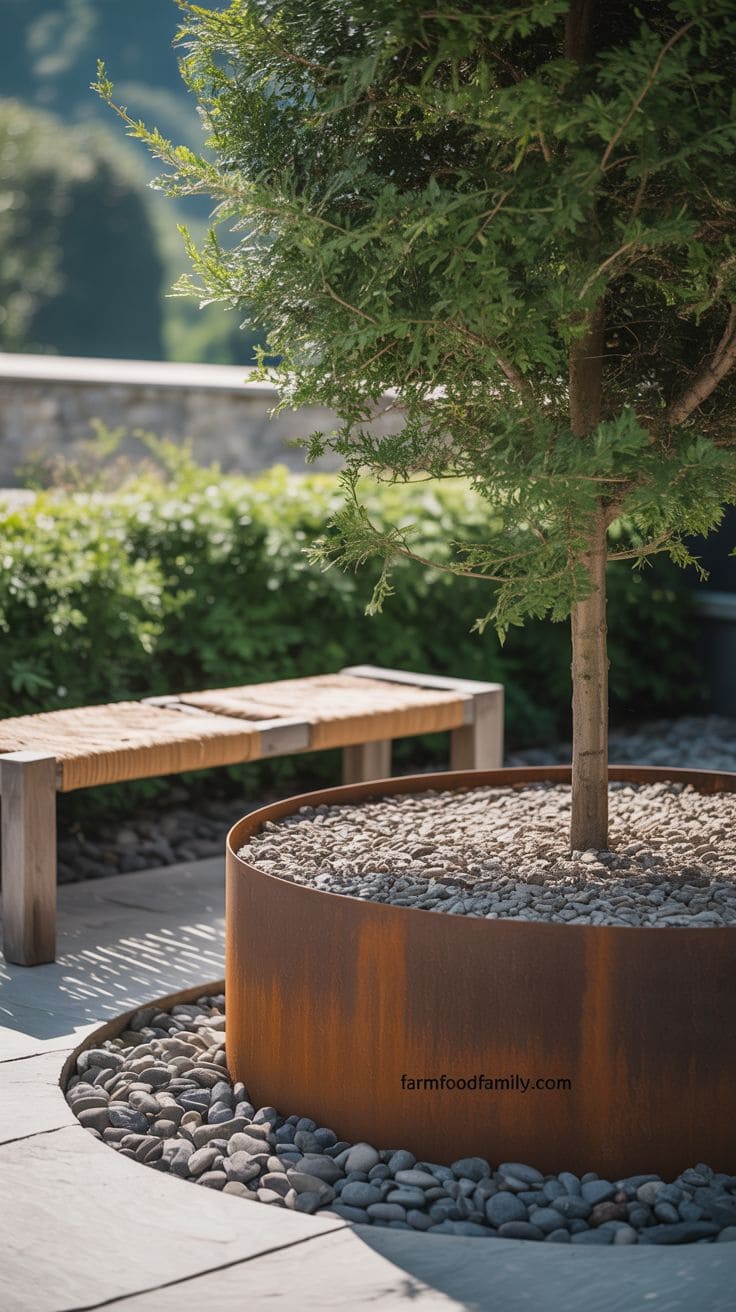
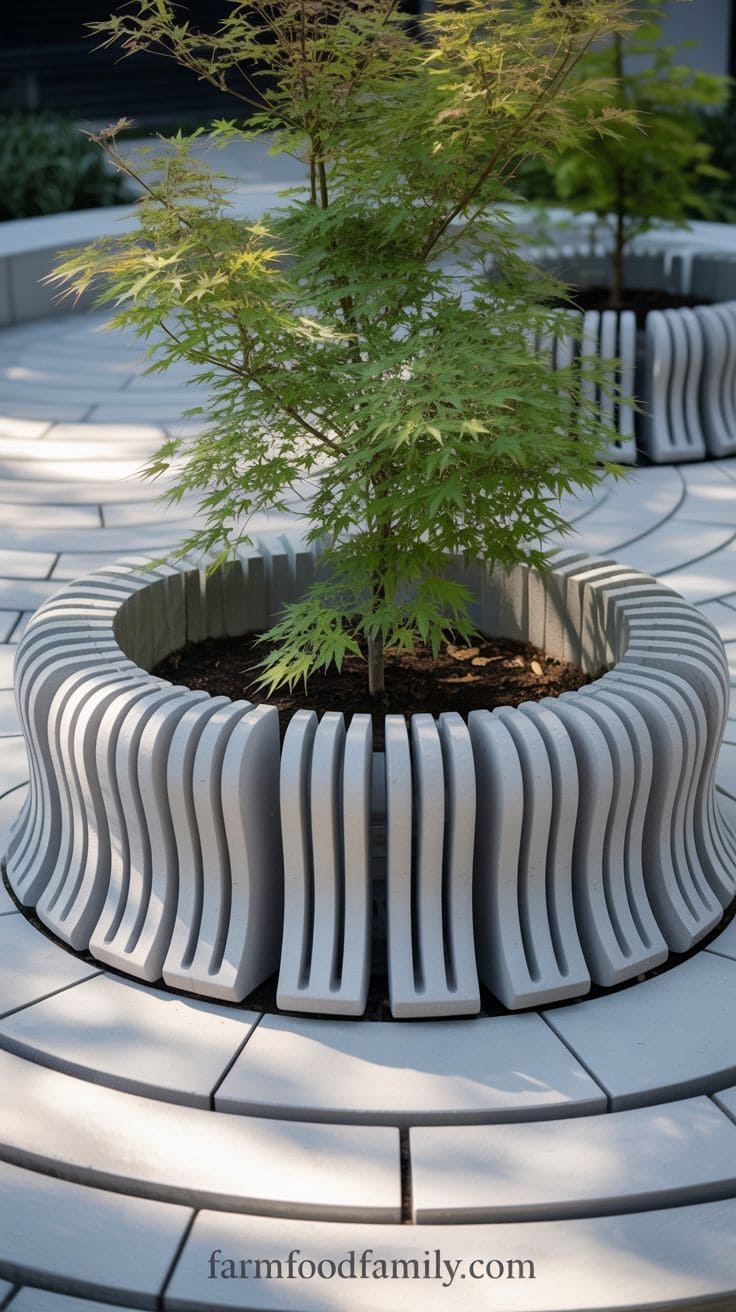
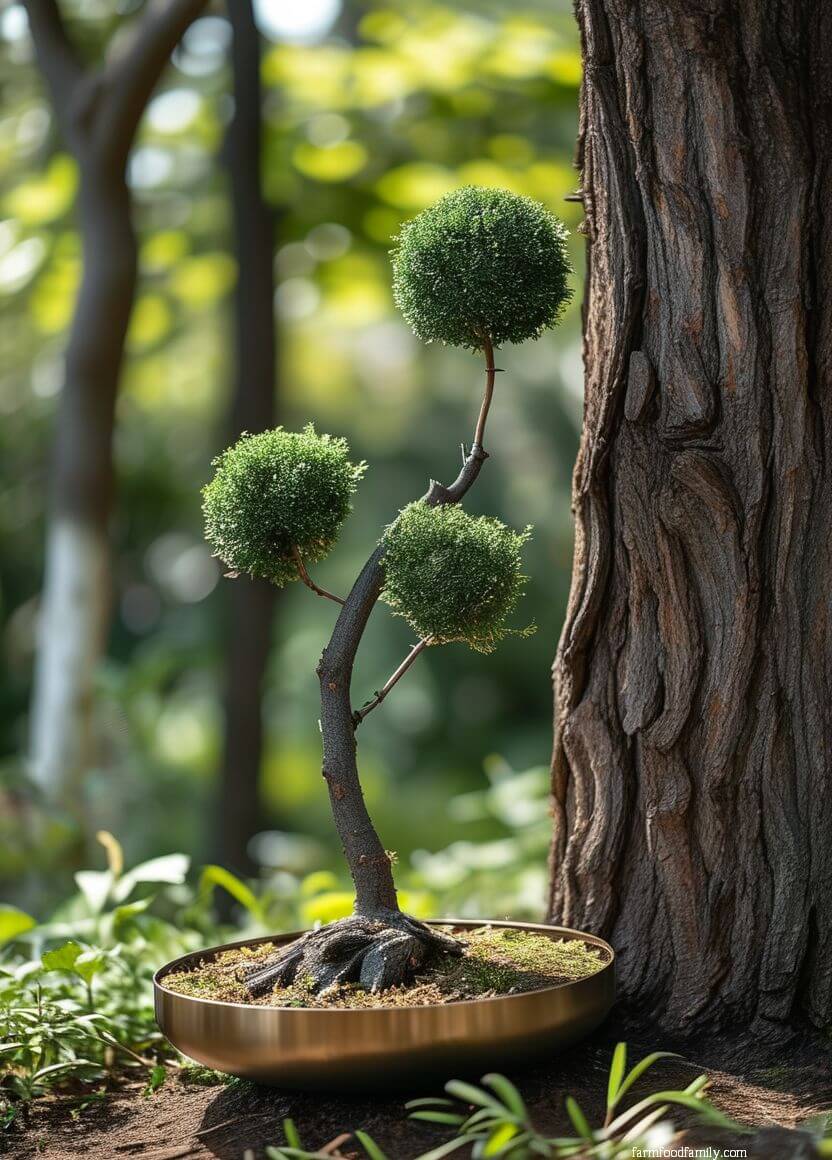
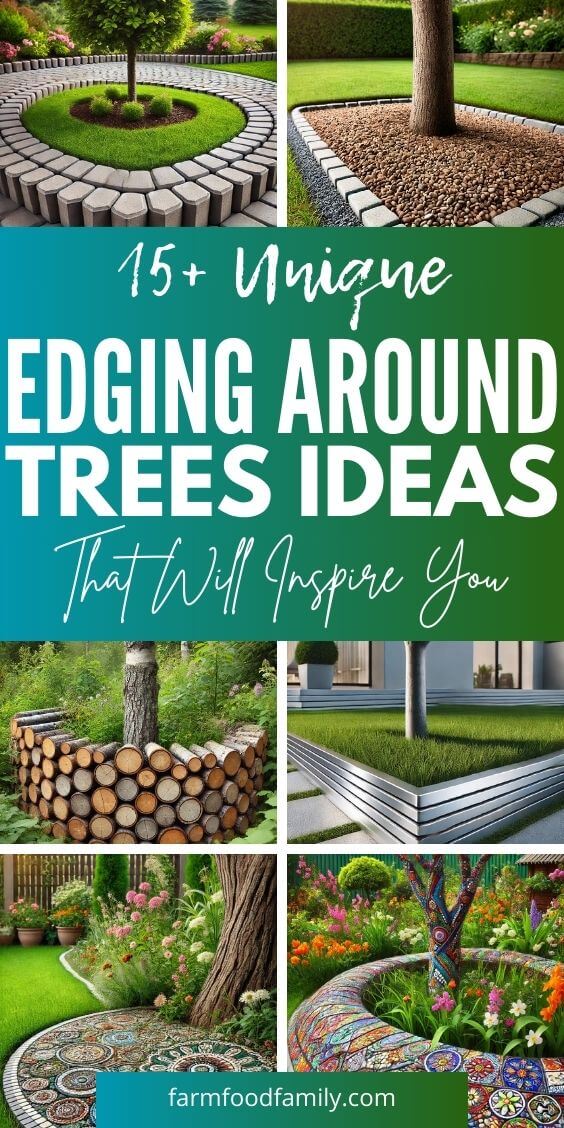
Elevate the appearance and usefulness of your tree edging by planting your tree in a wide, round metal planter base encircled by a decorative frame, then complementing it with a nearby bench for comfort and appeal.
The average homeowner spends $616/year on yard fixes that don't address the real problem. Find out what yours actually is — before you spend another dollar.
Take the Free QuizThis setup is especially effective in courtyards, patio areas, and near garden walkways, transforming your tree into both a deliberate focus point and a utilitarian garden element.
The combination of industrial texture, vegetation, and a quiet seating area creates a tranquil and manicured atmosphere.
How To Make It Work Better
This concept is most effective when used to young saplings that do well under regulated soil conditions or medium-sized ornamental trees.
The metal planter can be deep rusted corten steel, sleek matte black, or brushed stainless steel, with a modern yet earthy appearance depending on the material.
To complete the effect, add gravel or black mulch to the inside surface of the planter. Position a wood or wrought-iron seat next to the tree, facing the planter, to provide a moment of visual respite as well as an ideal area to sit and ponder.
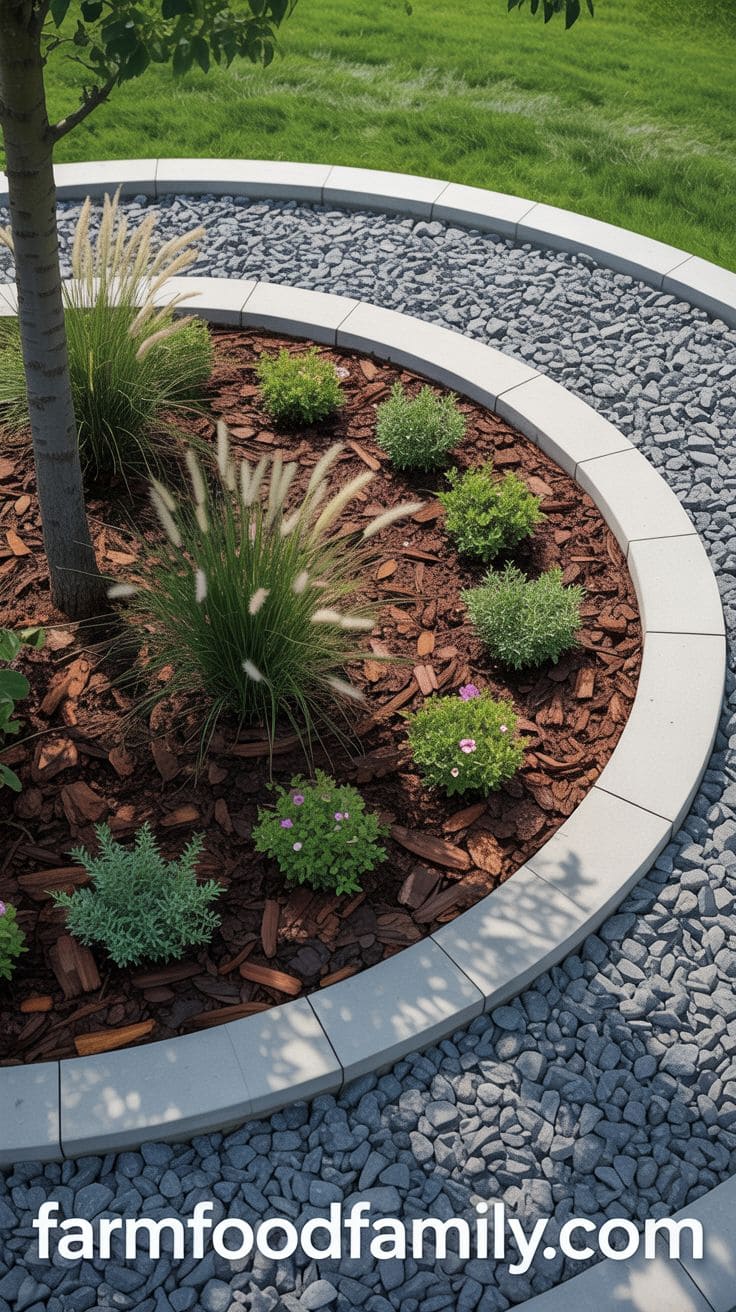
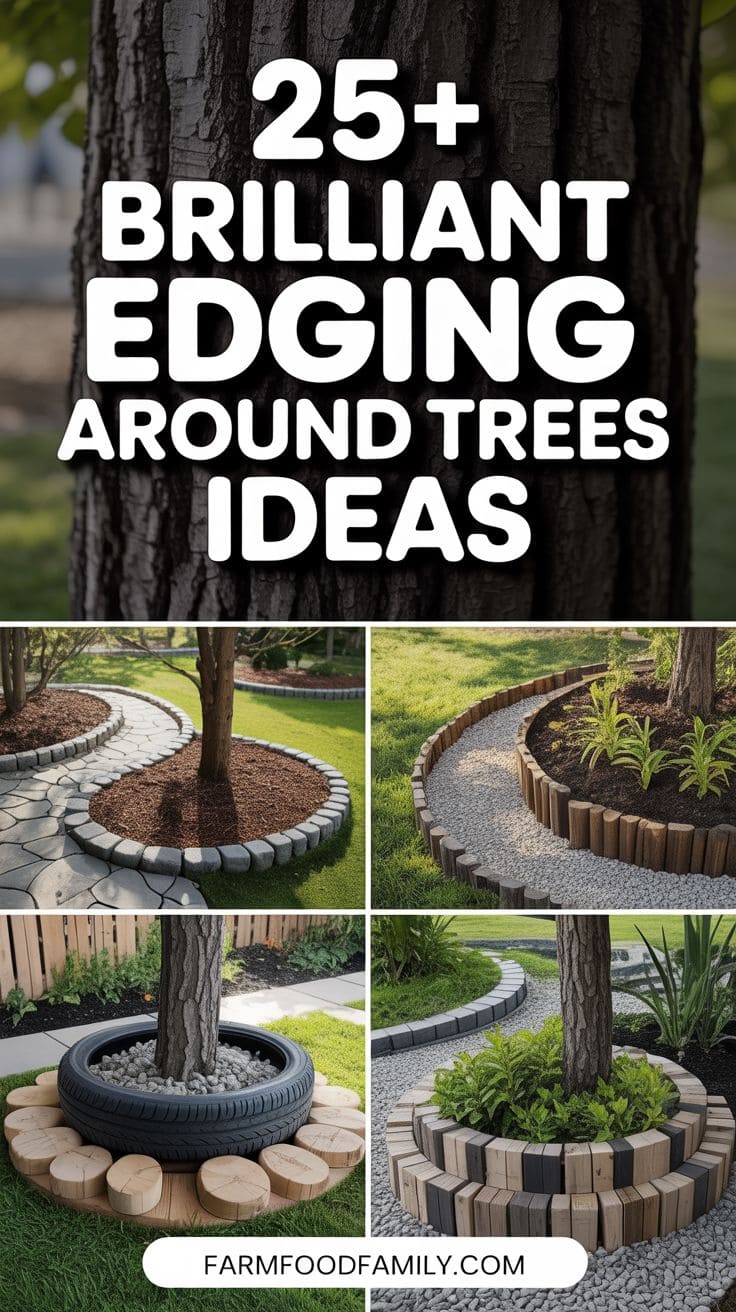
4. Mulch edging done the right way
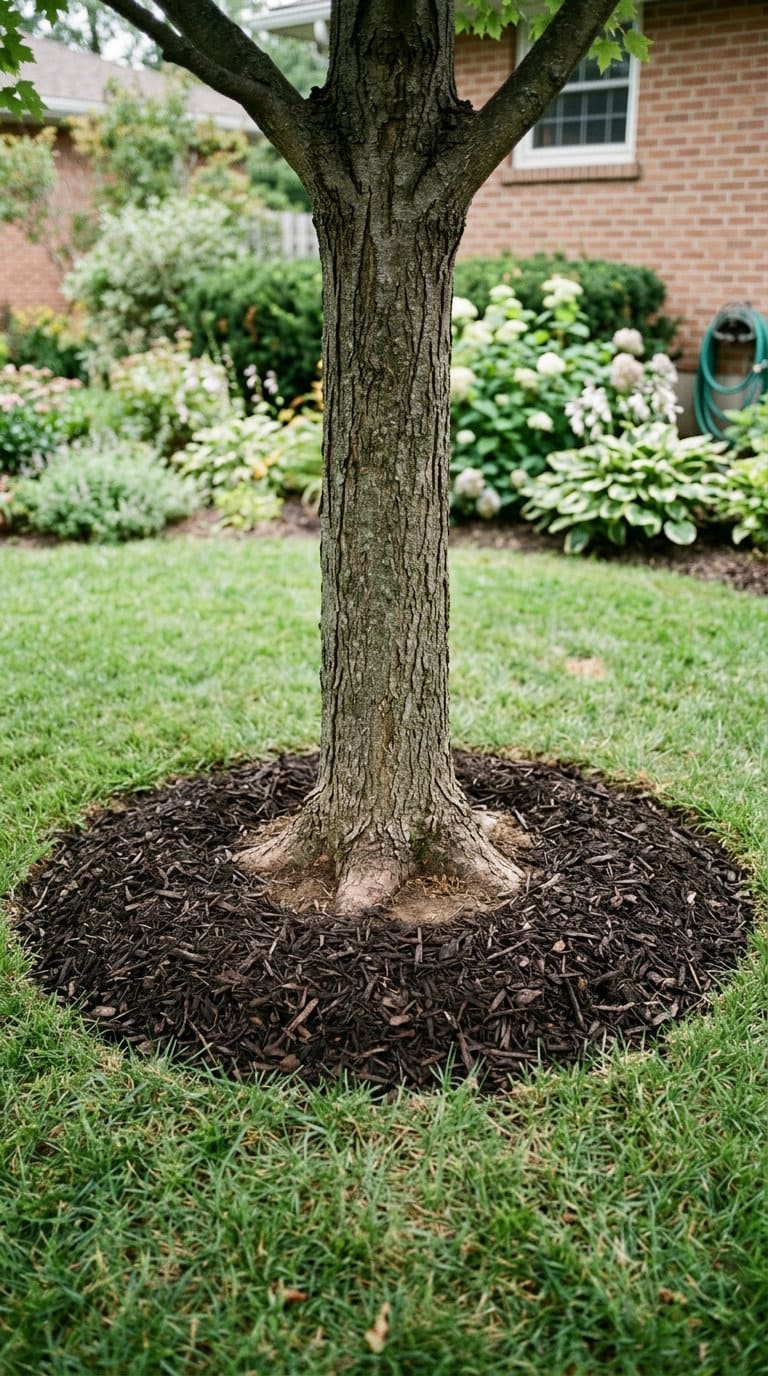
Mulch itself can be the edging, not just the fill, a slightly raised, doughnut-shaped ring of mulch with a flat (not conical) profile, kept a couple inches off the trunk. This directly answers the warning from section 1: the difference between a mulch ring that helps a tree and a mulch volcano that hurts it is entirely in that flat profile and the trunk clearance, not the material itself.
Two to three inches of mulch depth is plenty. More than that and you’re rebuilding the same volcano problem from the top down instead of the sides in.
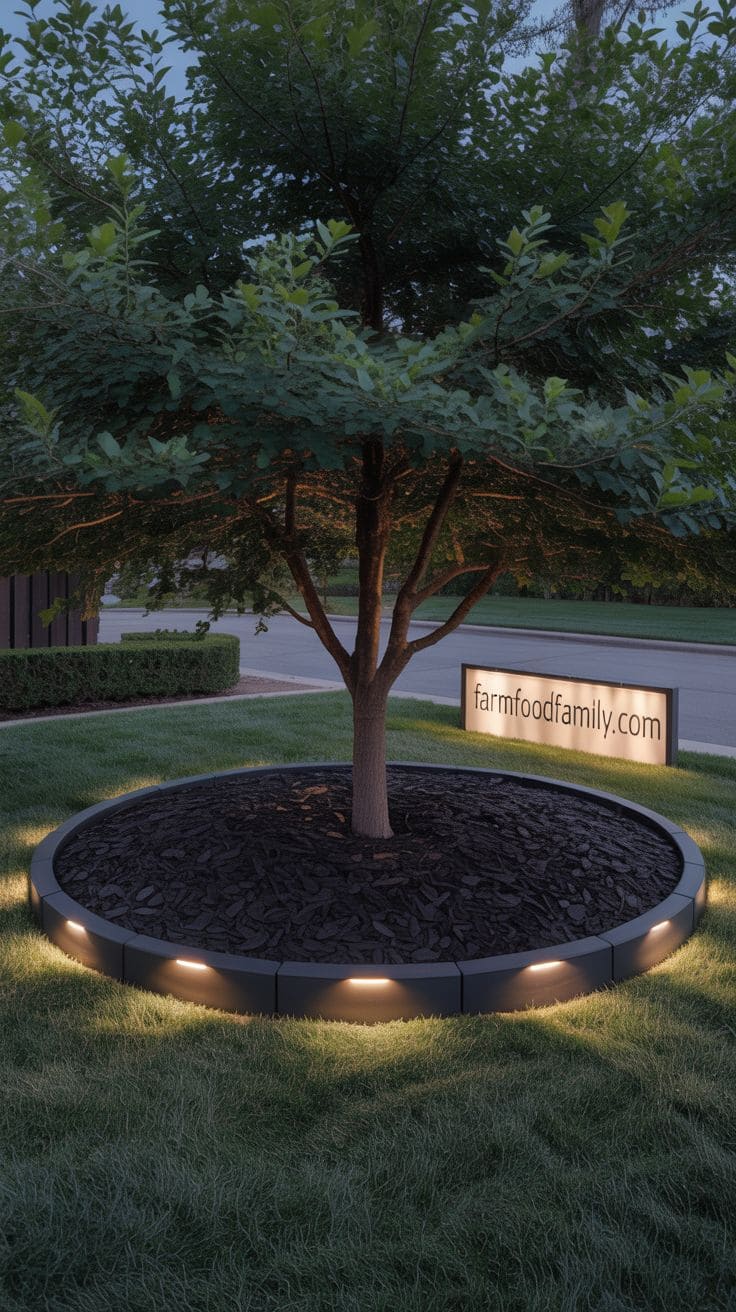
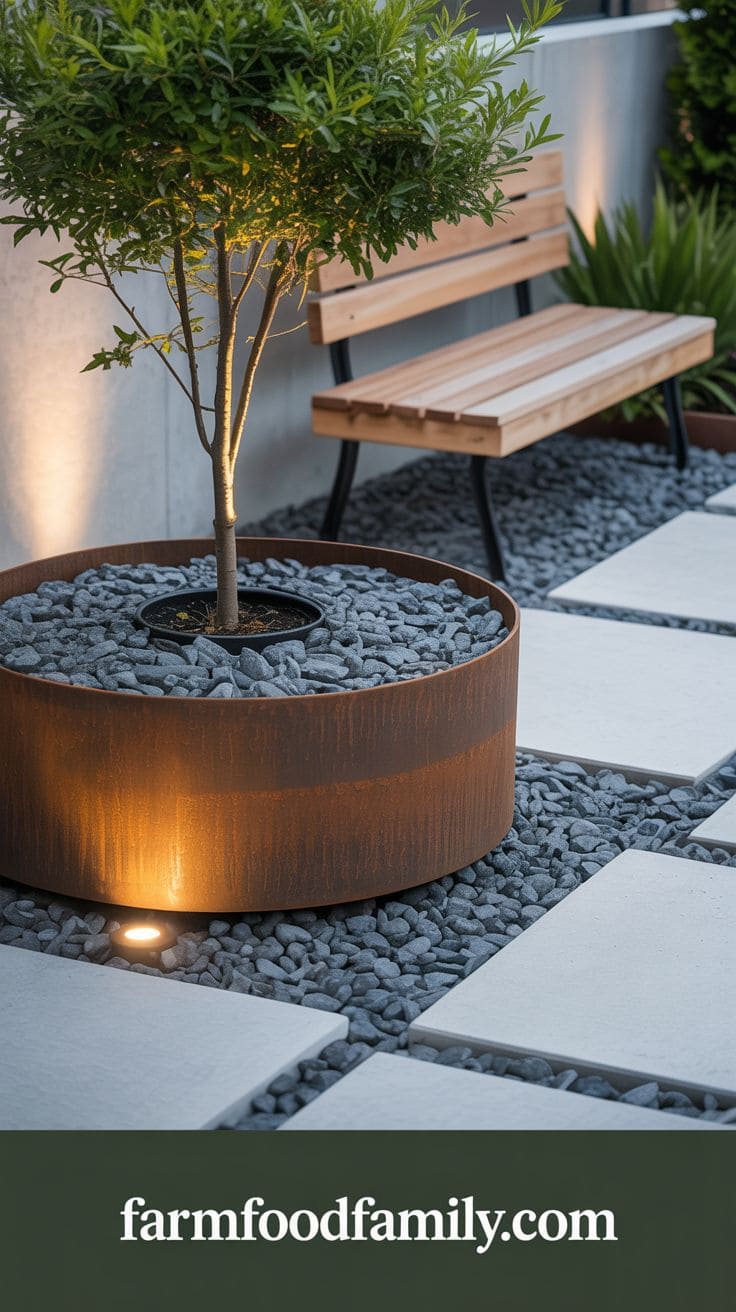
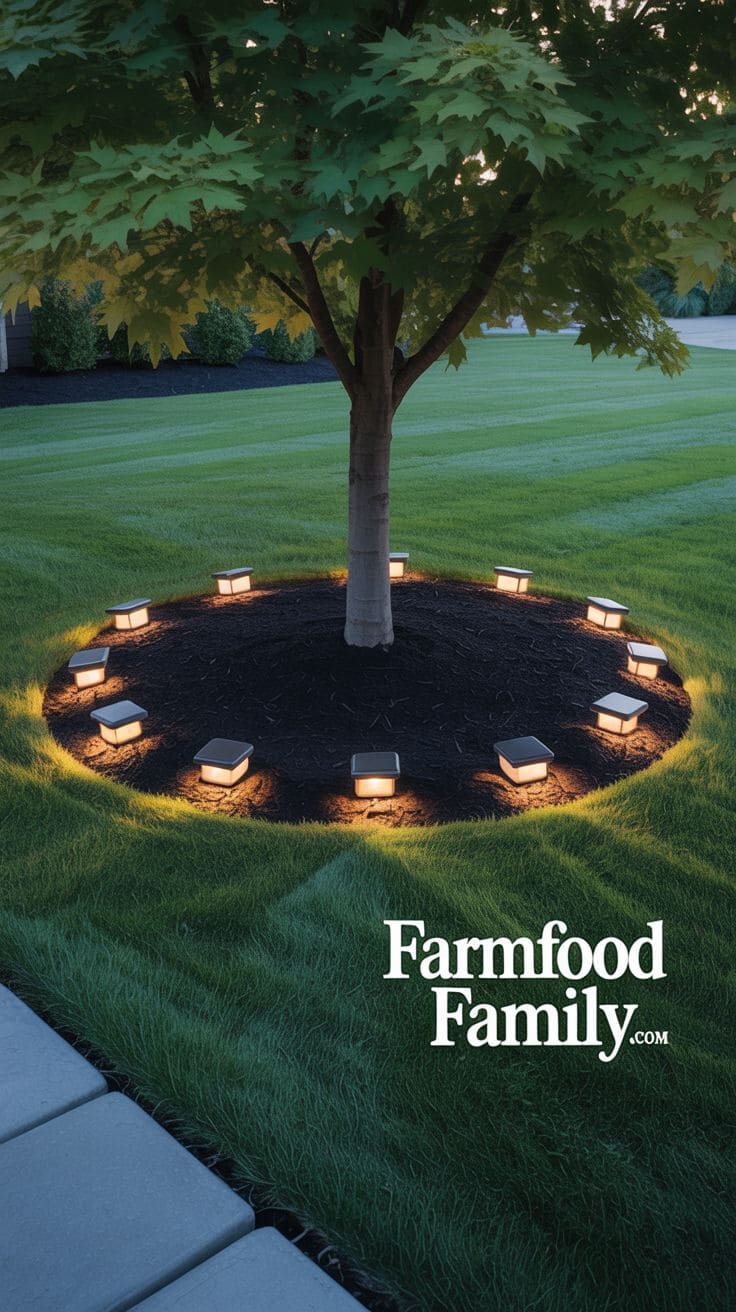
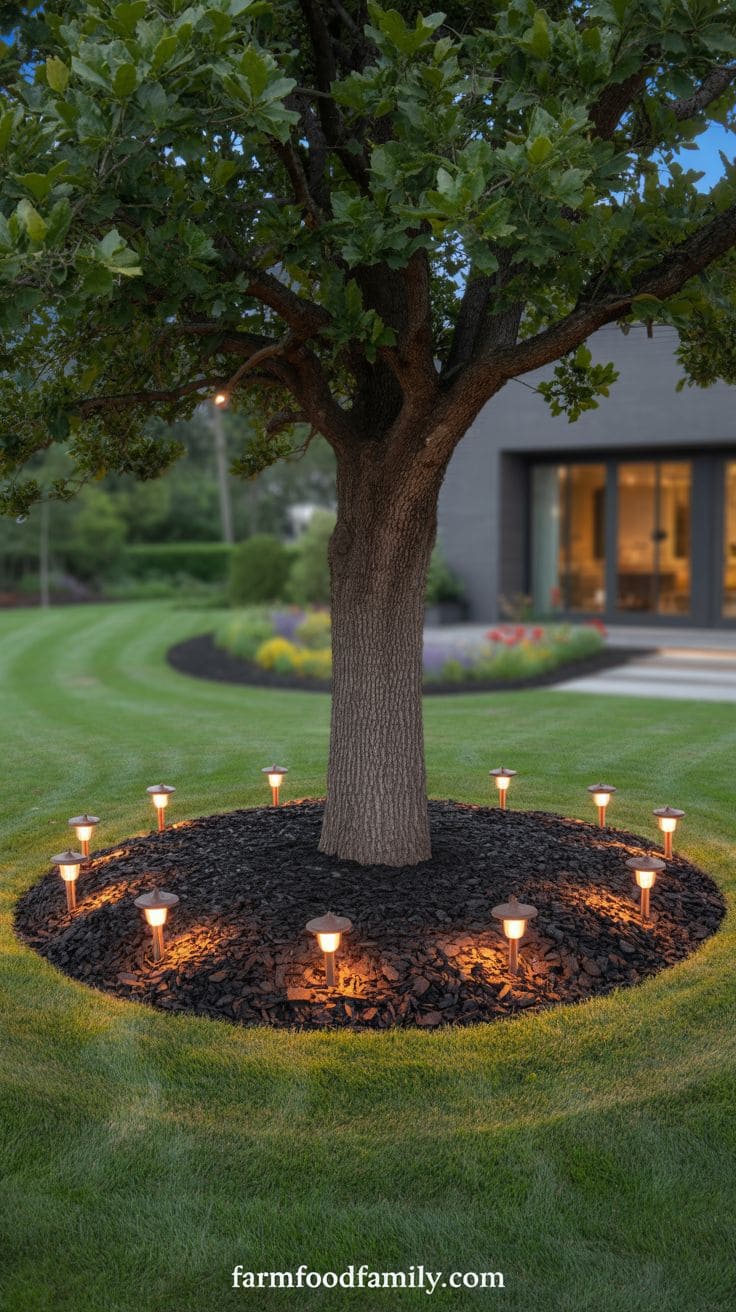
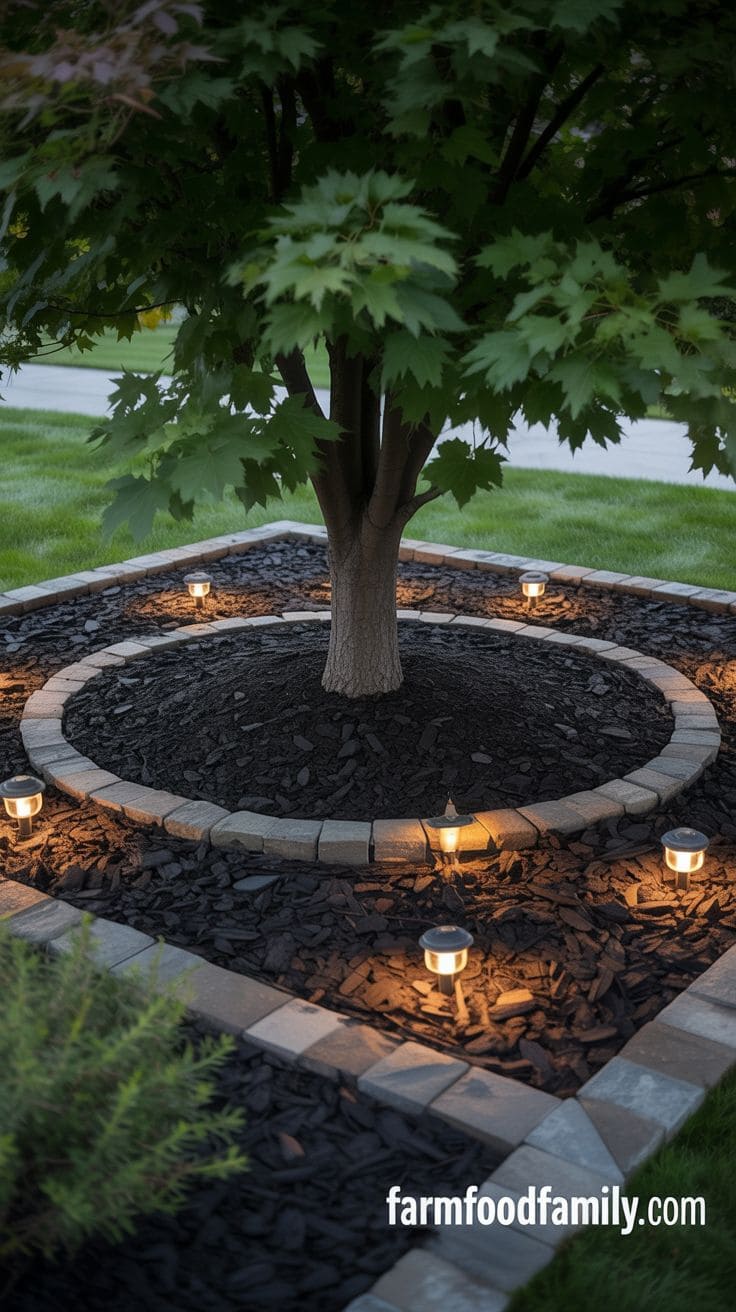
Create a defined ring of black mulch around a tree and install low-profile solar lights along the circumference for a subtle yet attractive look. Use curved plastic or metal edging to keep the mulch in place and away from your lawn.
The mulch nourishes the tree, inhibits weeds, and keeps the soil moist, while the solar lights provide soothing illumination at night. Warm-toned lights provide a pleasant glow, while cool-toned lights create a modern look.
Budget-Friendly Way to Improve Your Look
This edging design is ideal for trees near patios, pathways, or driveways, since the faint nighttime lighting improves safety and ambiance. It’s a simple, cost-effective approach to add gloss to your environment without committing to hardscaping.
The crisp line of mulch contrasts beautifully with the surrounding grass and plants, and the addition of lights makes it visually appealing during the day and night.
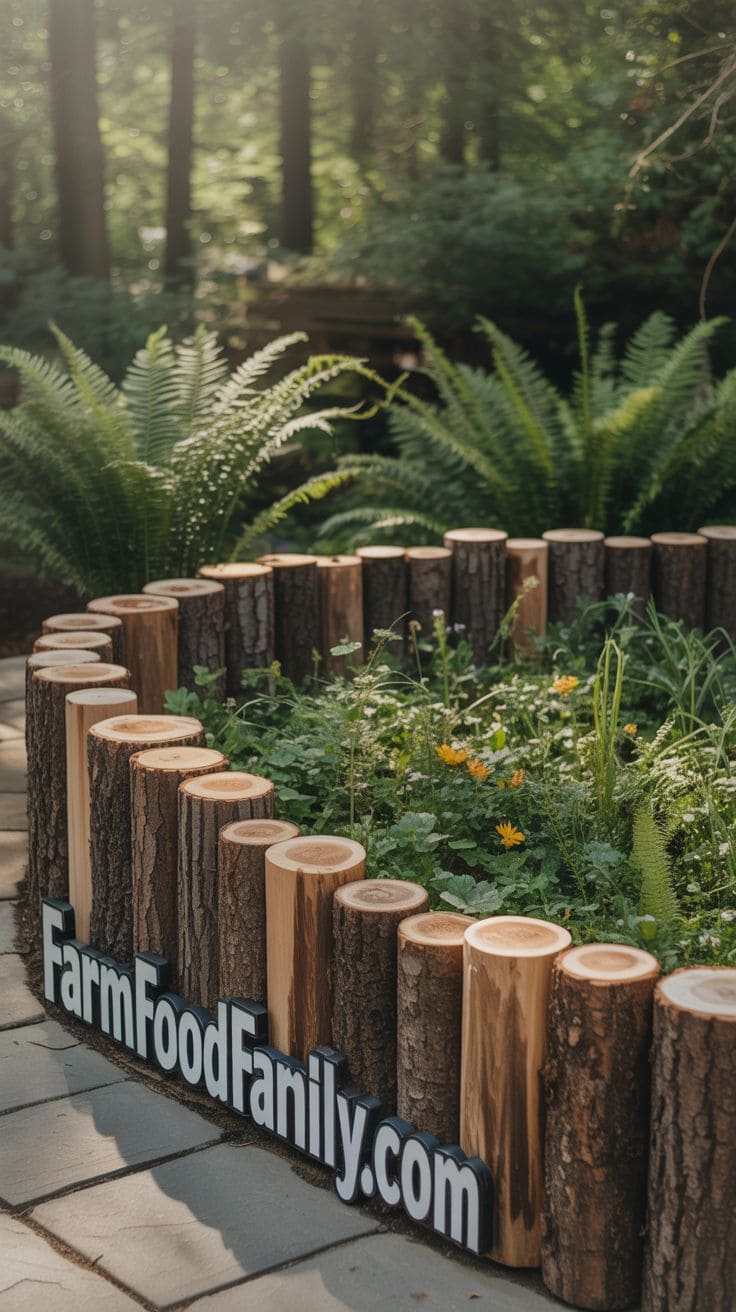
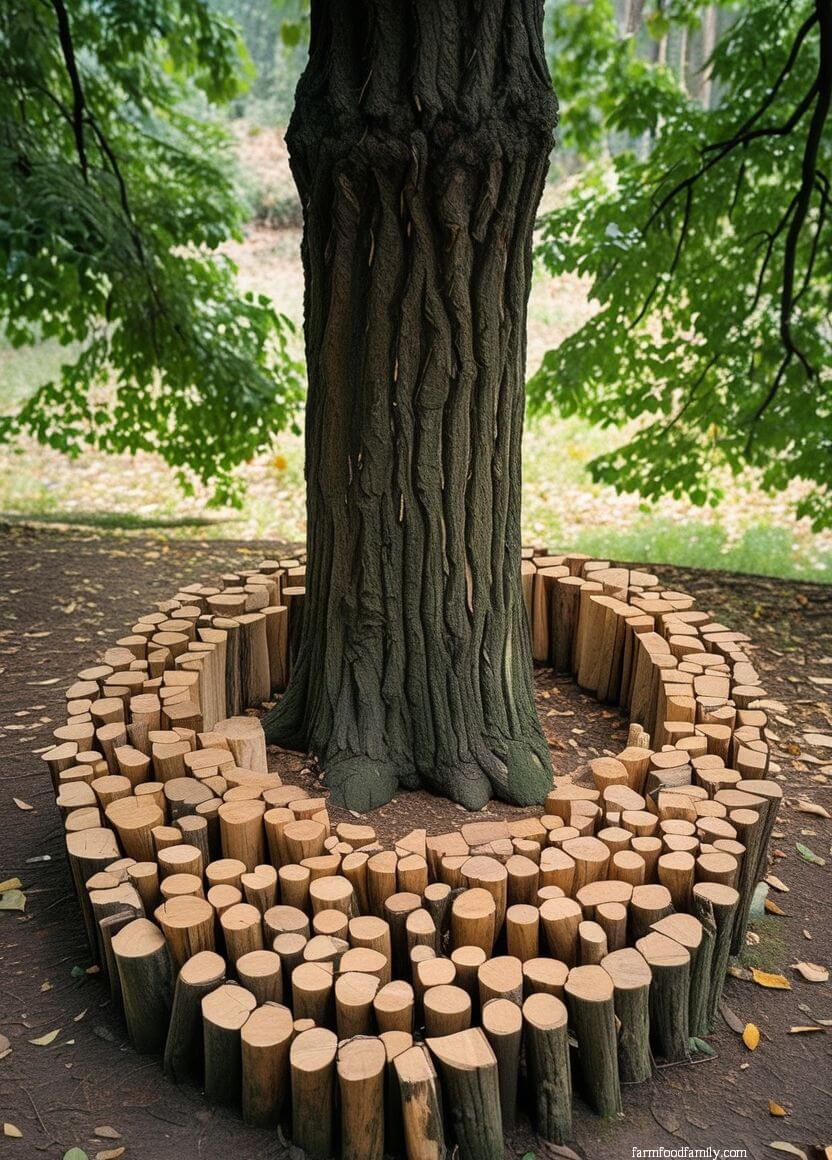
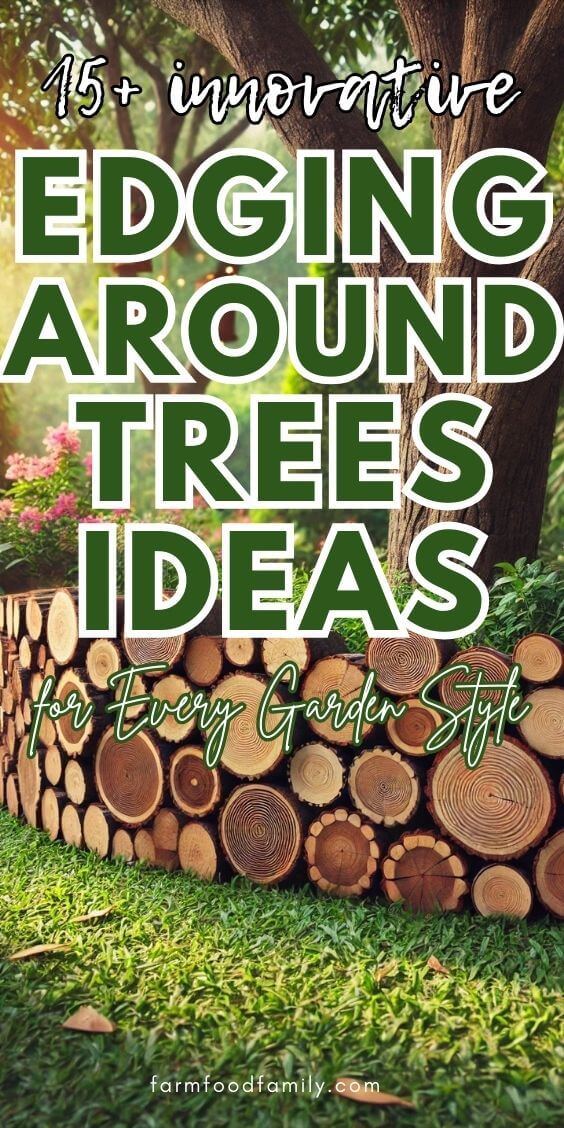
5. Wood log border
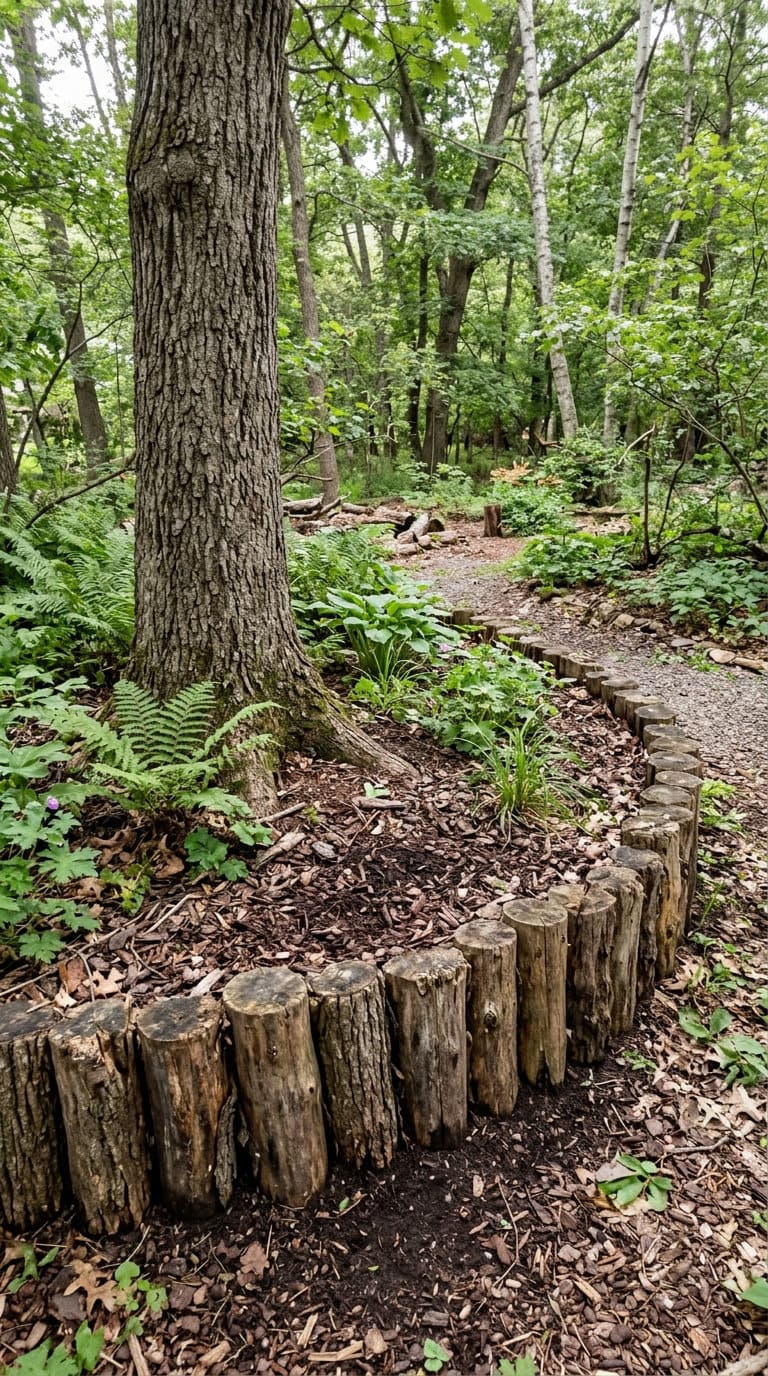
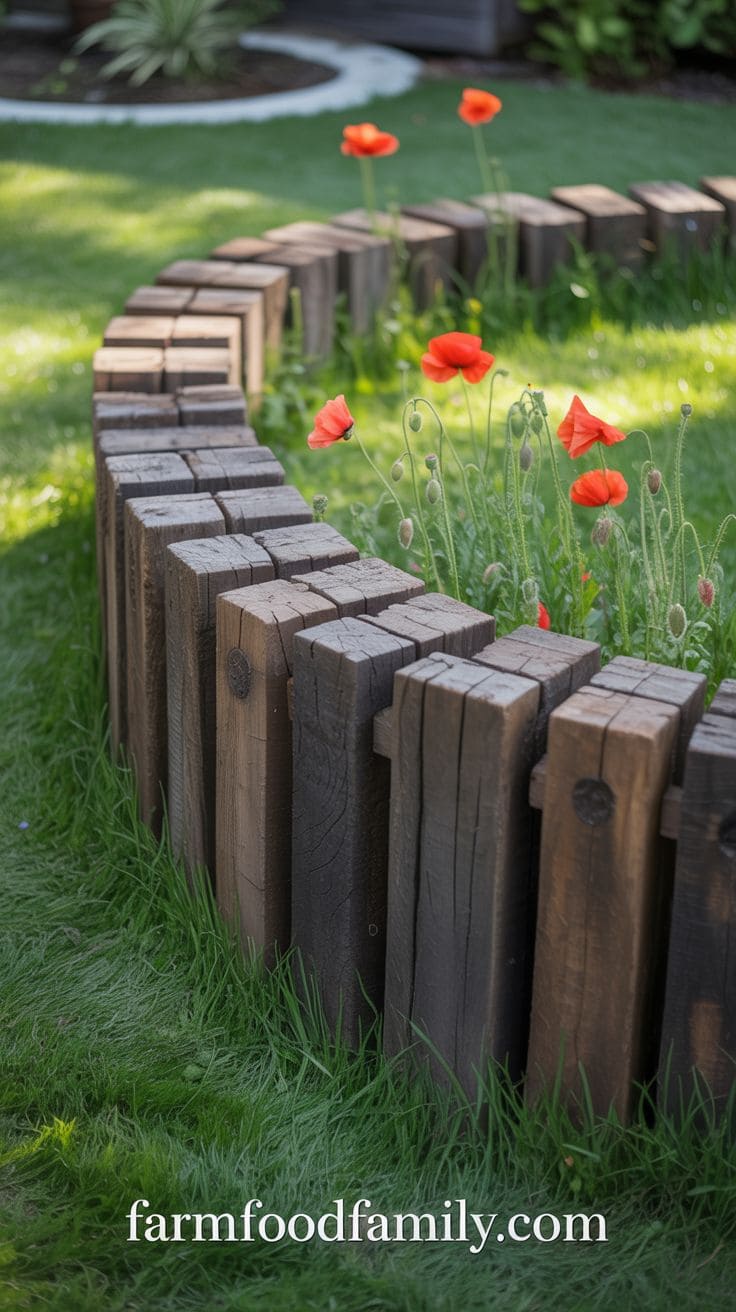
Half-buried logs, cut to roughly matching lengths and set on their sides, ring the tree with a rustic, woodland look that fits naturally under mature shade trees. It’s one of the cheapest options if you’ve already got fallen limbs or a friend with a wood pile.
Untreated wood breaks down over years, which is either a maintenance downside or a feature depending on how you look at it, it composts into the bed instead of becoming landfill waste.
6. Gravel border
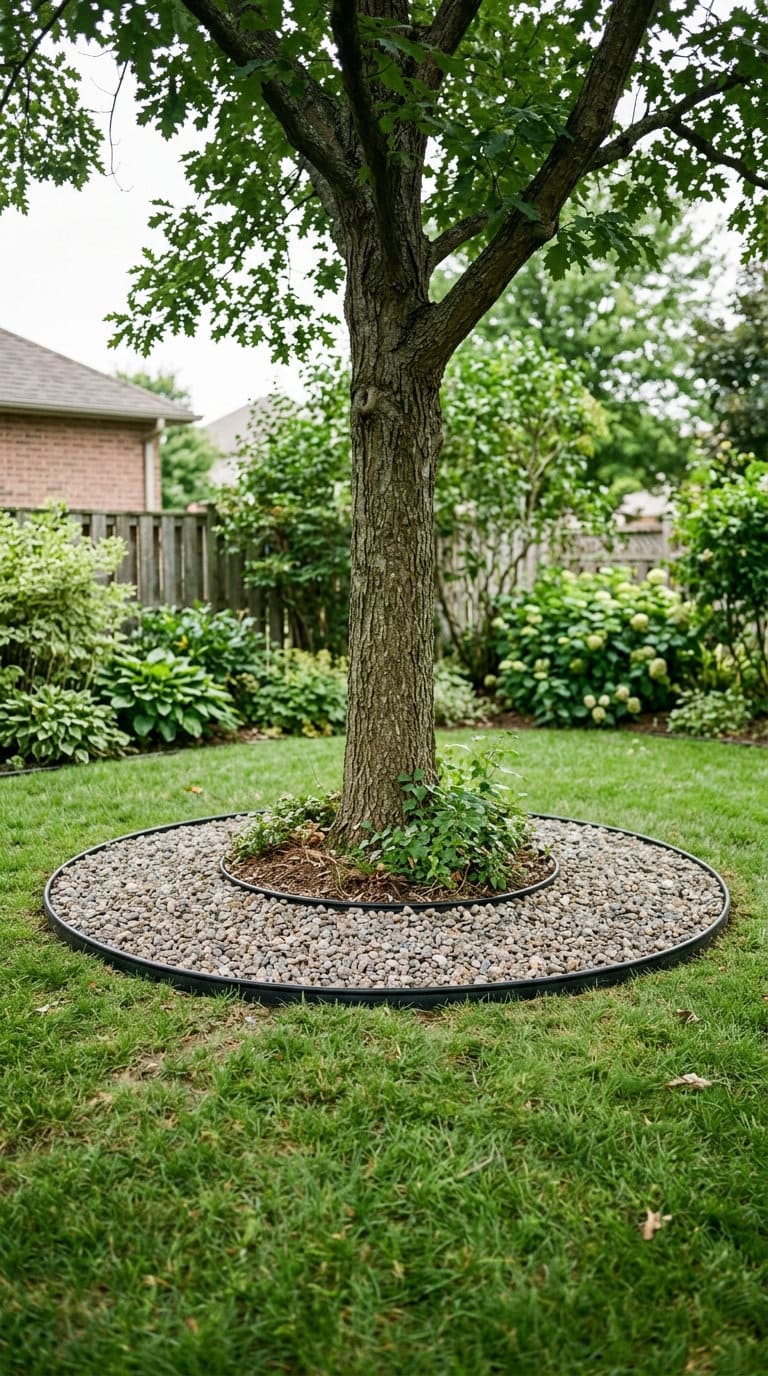
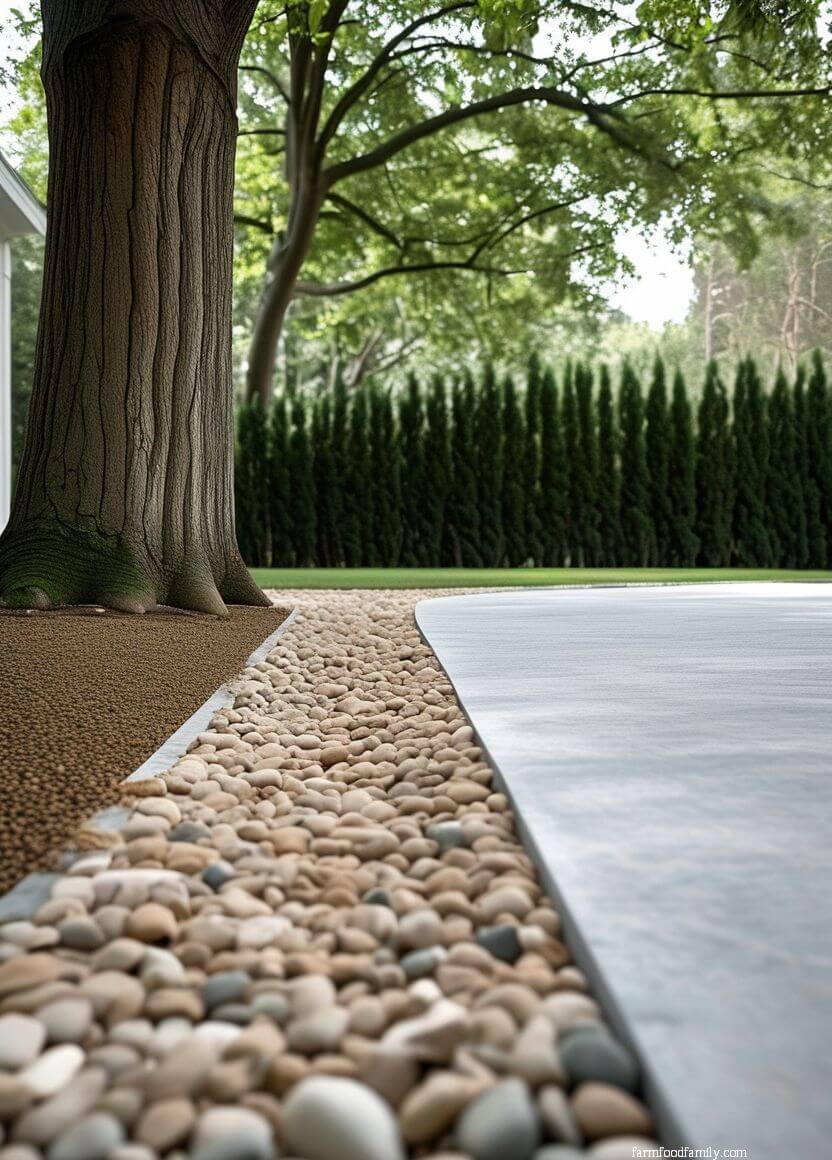
Gravel drains well and gives a clean, low-maintenance look, but it does scatter. Anyone who’s edged a bed with pea gravel near a lawn knows it migrates from mowing, foot traffic, and freeze-thaw cycles, and needs an annual top-up to look right.
A hard edge (metal, plastic, or a shallow trench) around the gravel’s outer boundary cuts down on the scatter significantly.
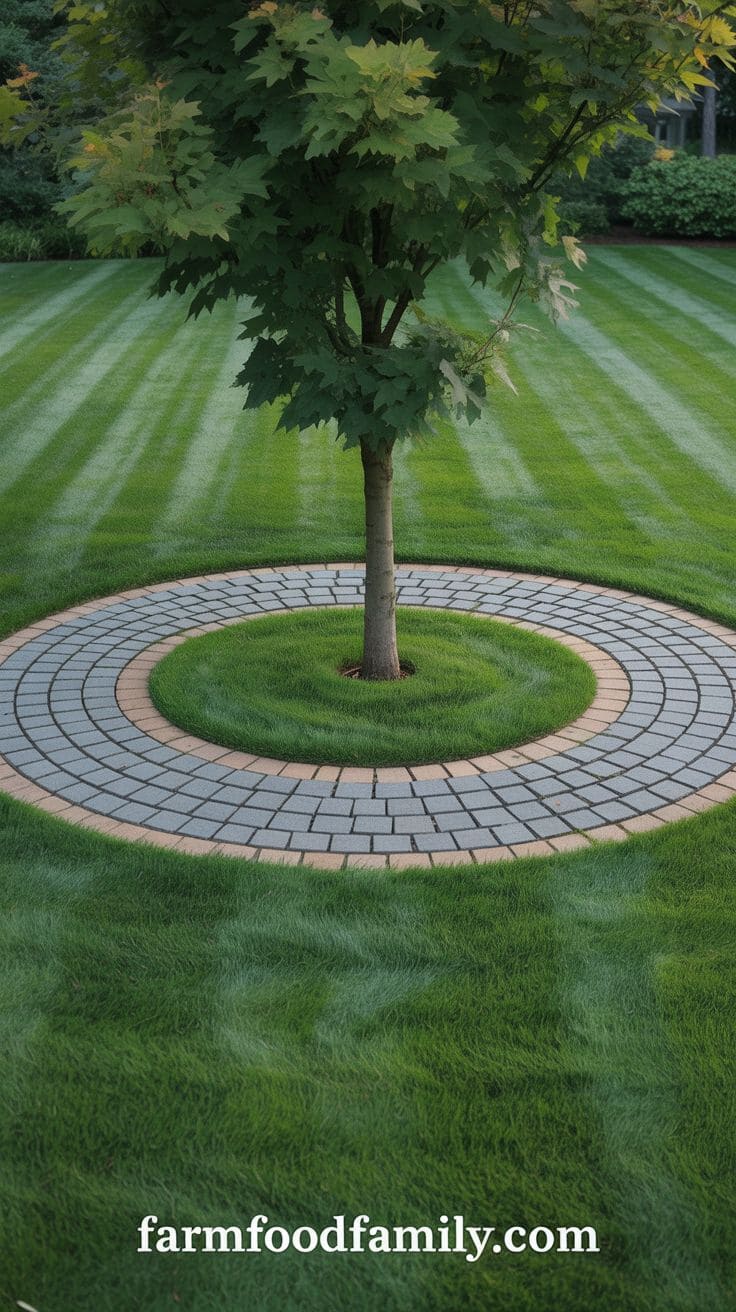
7. Paver stone ring
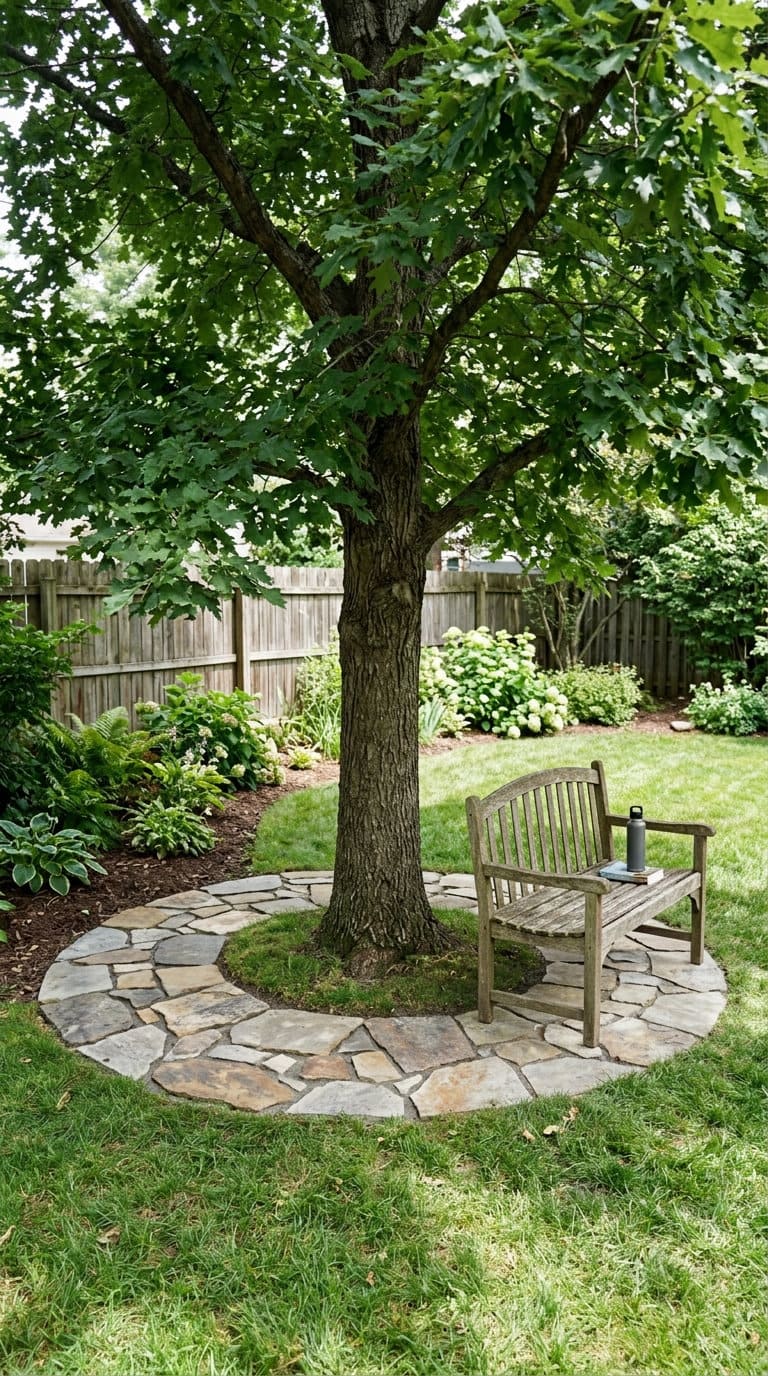
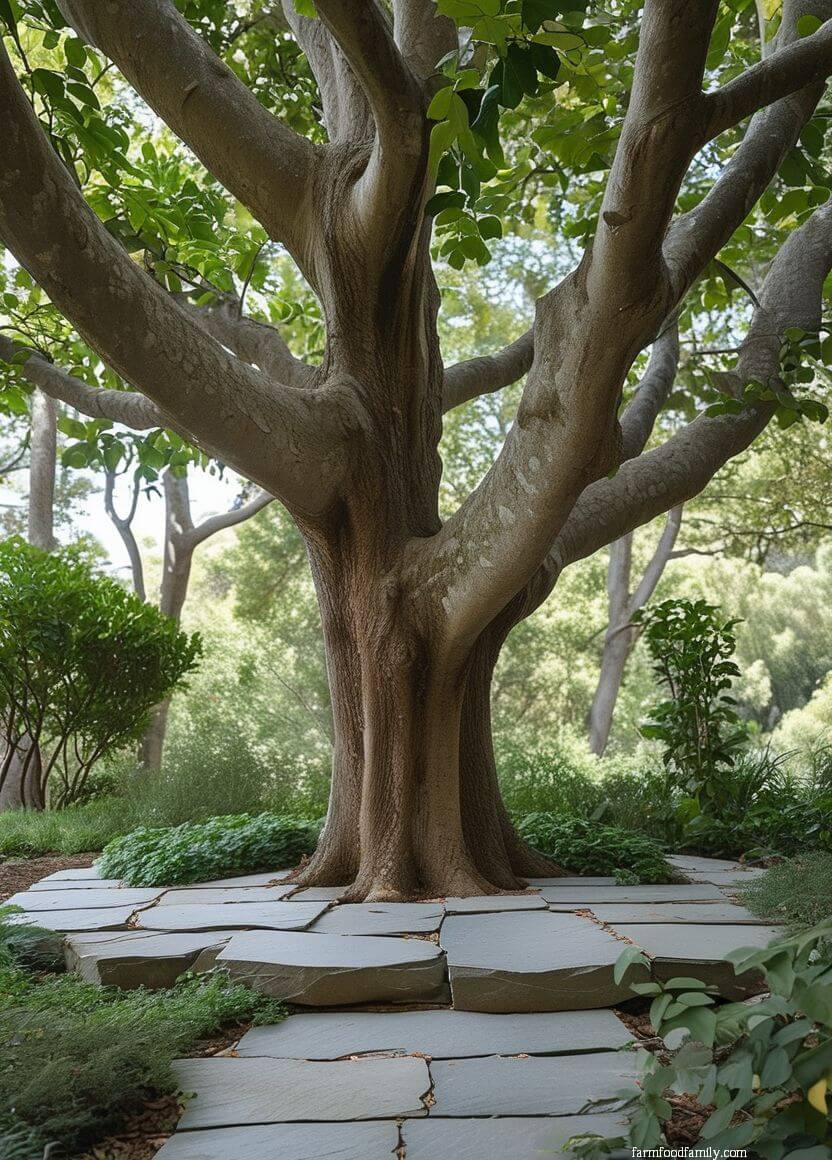
Flat pavers laid in a circle or hexagon pattern around the tree give a more finished, hardscaped look than loose stone, and double as a spot to set a planter or a small bench if the tree throws enough shade to sit under.
Expect some annual releveling after frost heave, individual pavers shift a little every winter in freeze-thaw climates, and that’s normal, not a sign you installed them wrong.
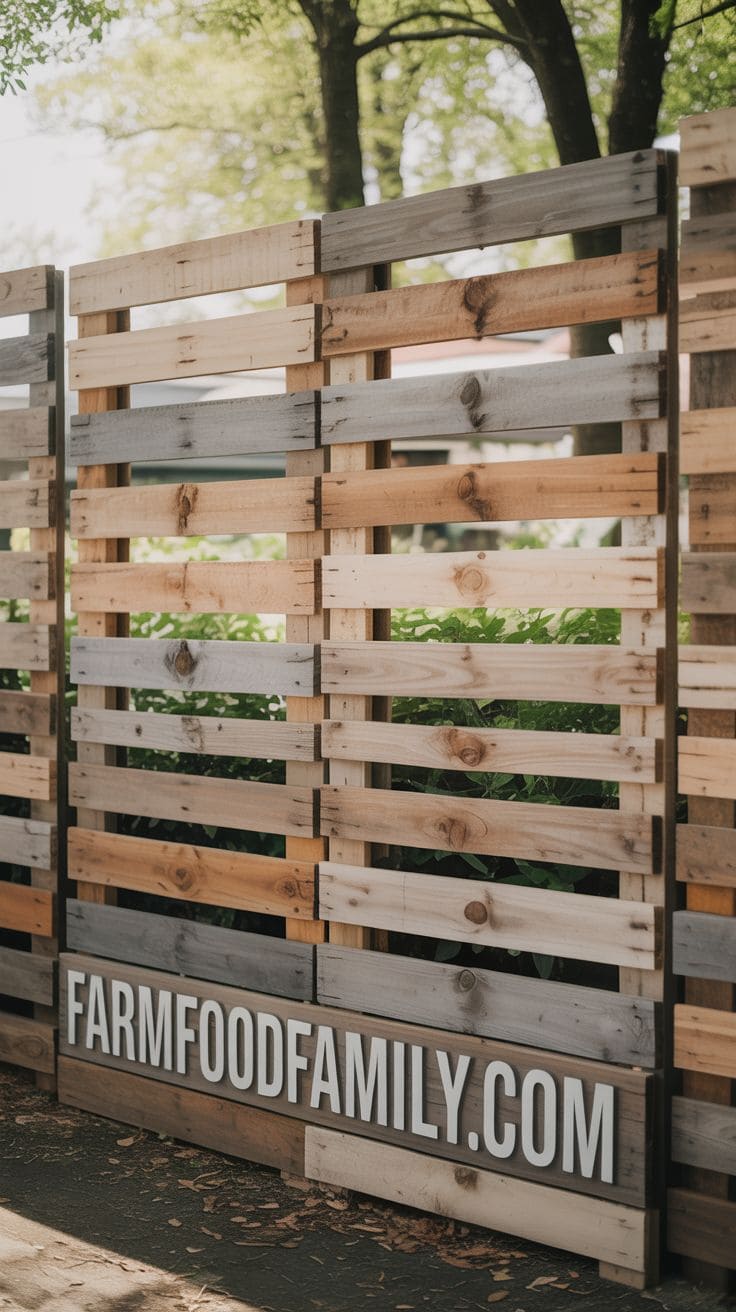
8. Decorative fence ring
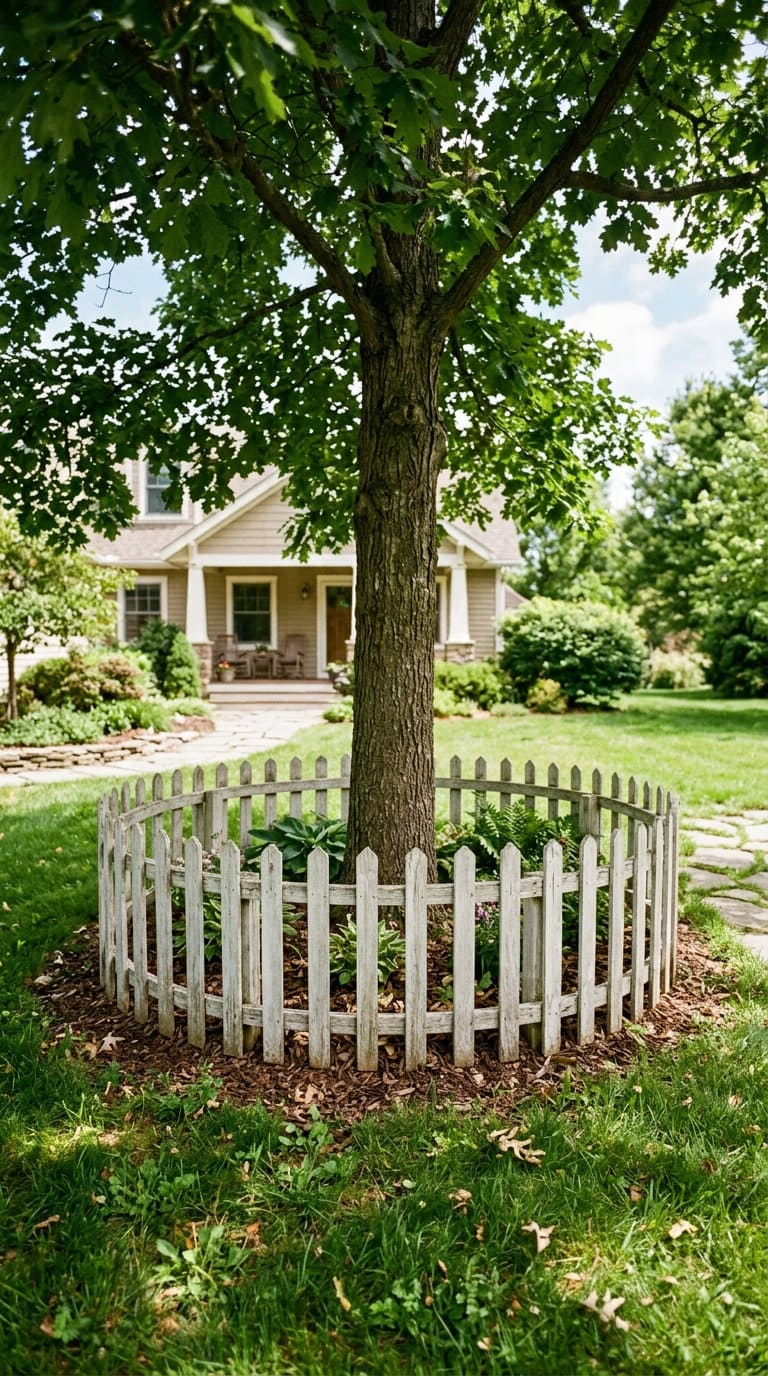
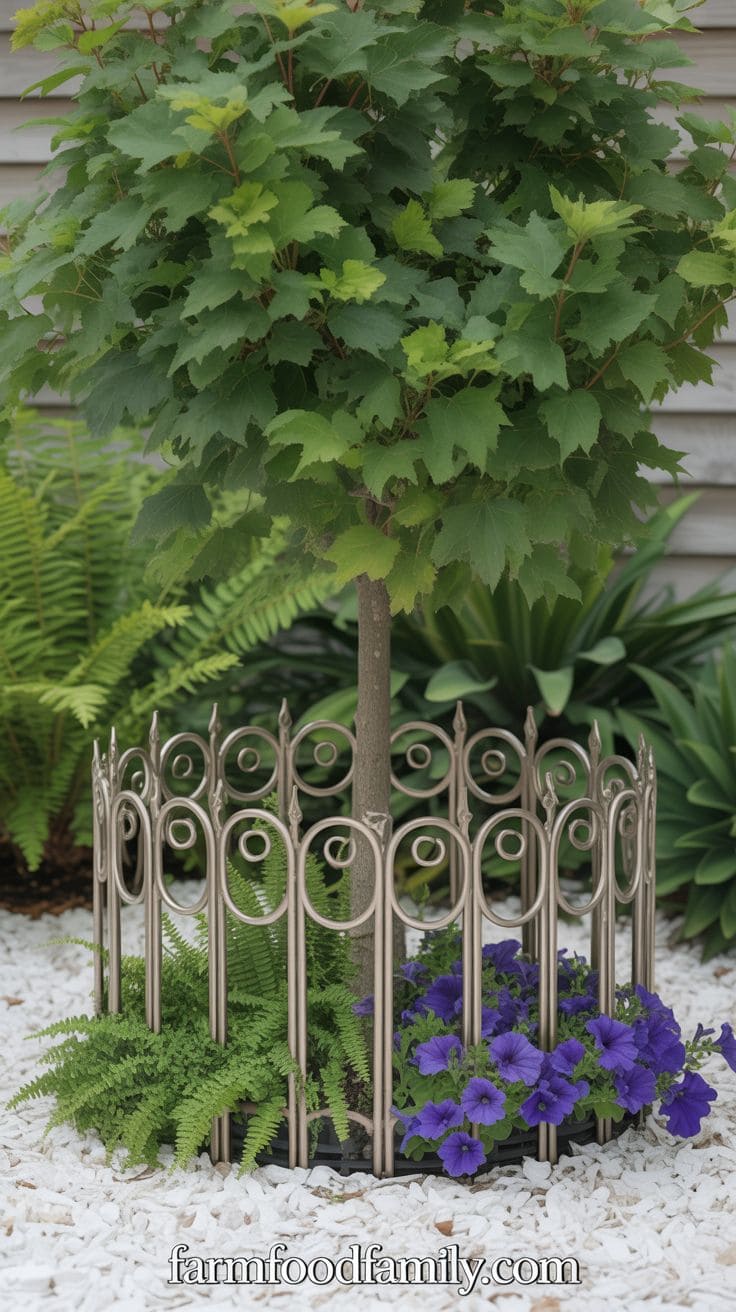
A short, decorative fence section, wood pickets, wrought iron, or even a simple woven willow ring, wraps the tree in a more architectural way than a flat border. This works especially well combined with a bench or as a focal point in an open lawn.
Keep the fence a few inches off the trunk on all sides even as the tree grows, a fixed-diameter fence around a growing trunk is a problem waiting to happen in 5 to 10 years.
9. Cobblestone ring
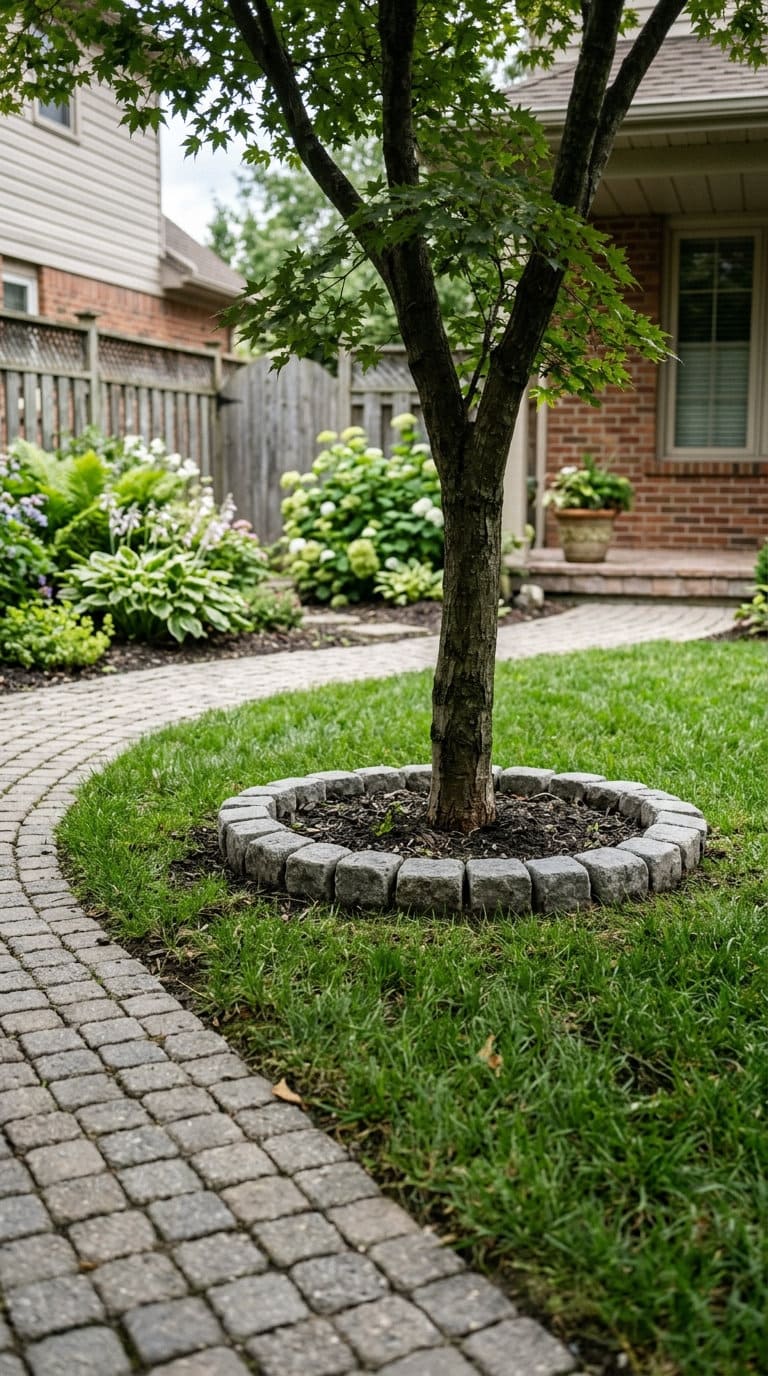
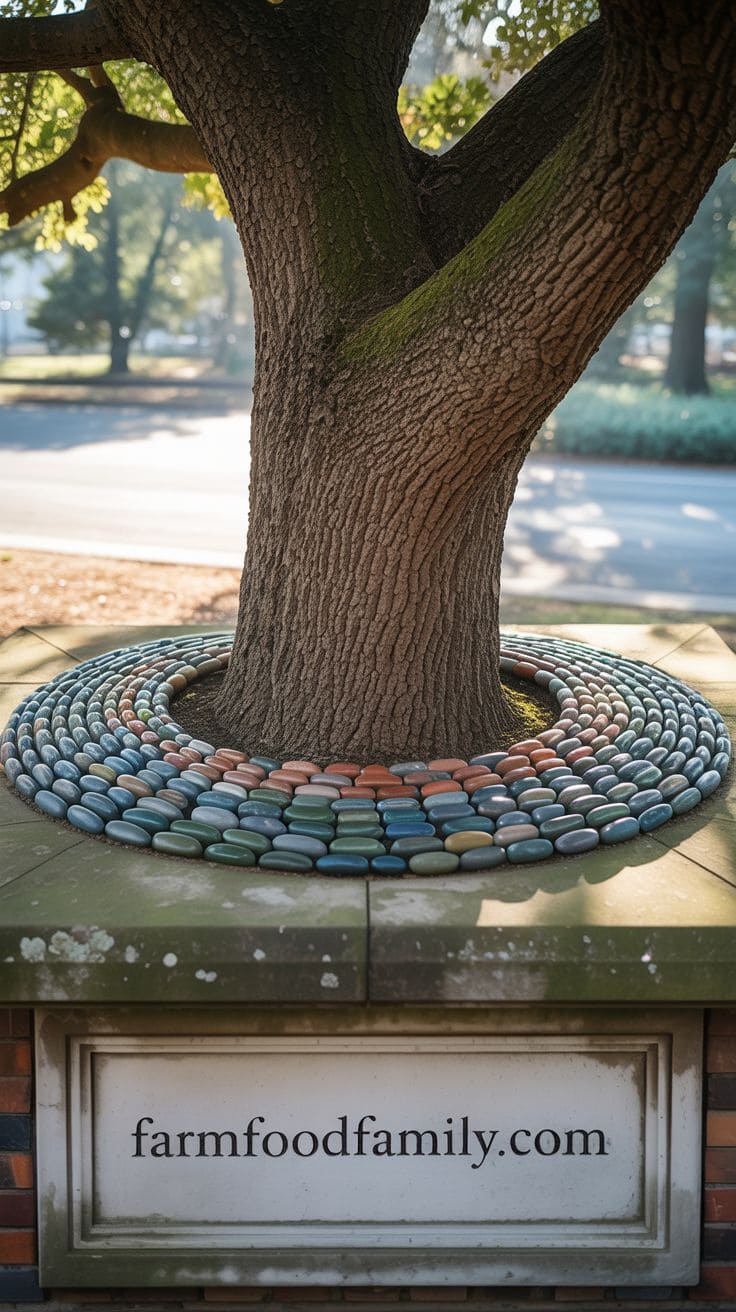
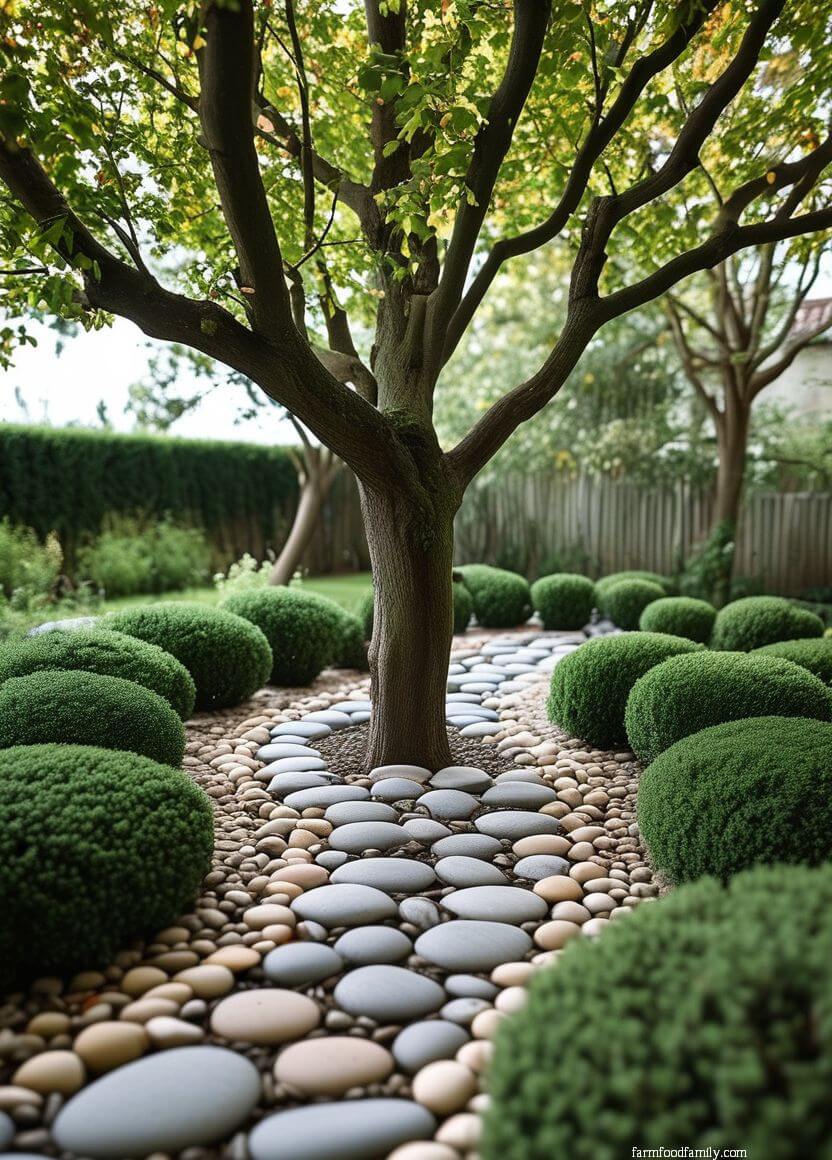
Cobblestones, smaller and more uniform than fieldstone, create a slightly more formal ring than the natural stone option in section 2. They pair especially well with brick or paver walkways nearby since the material palette matches.
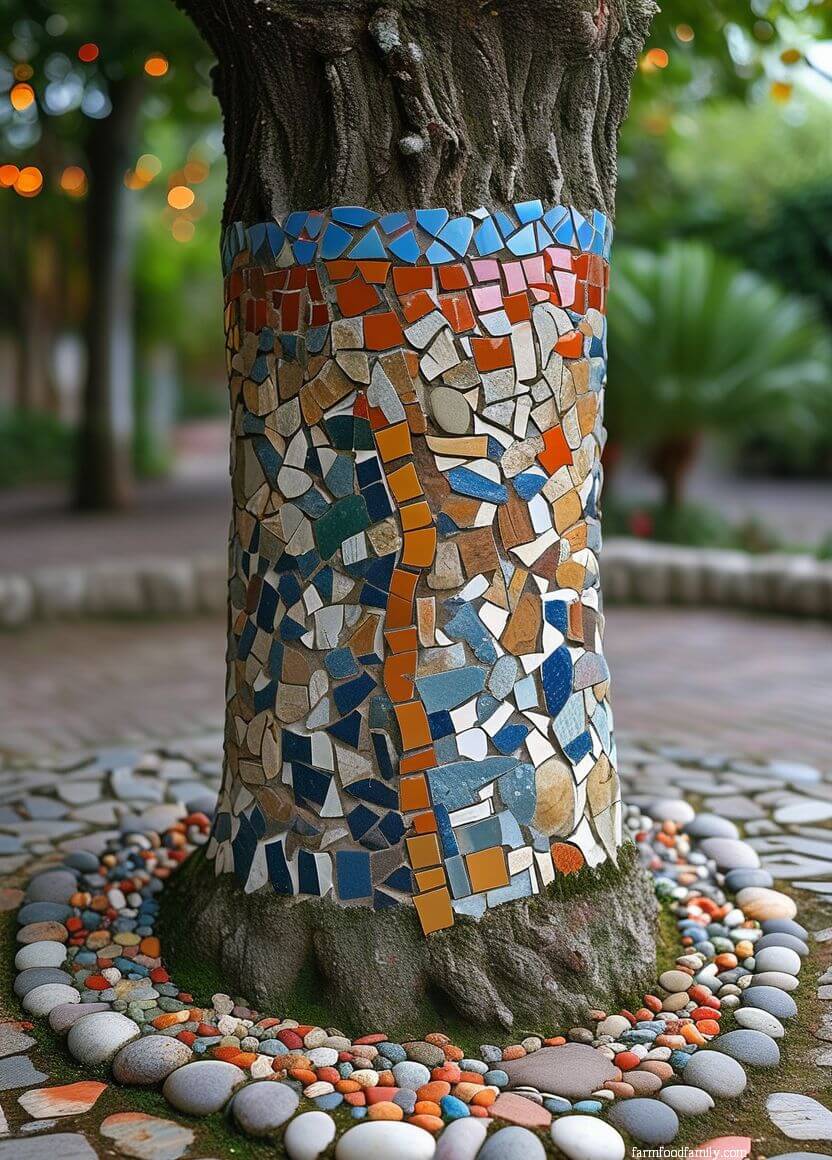
10. Recycled material edging
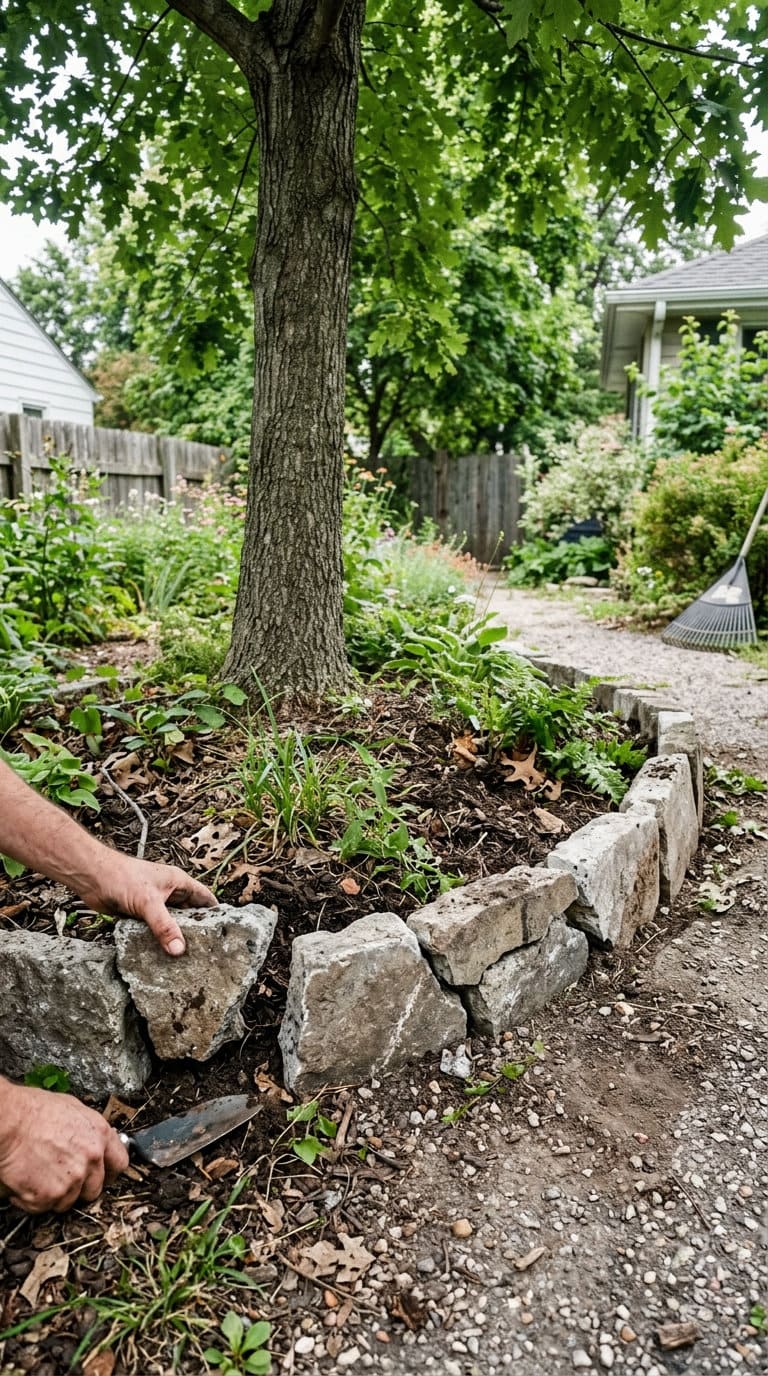
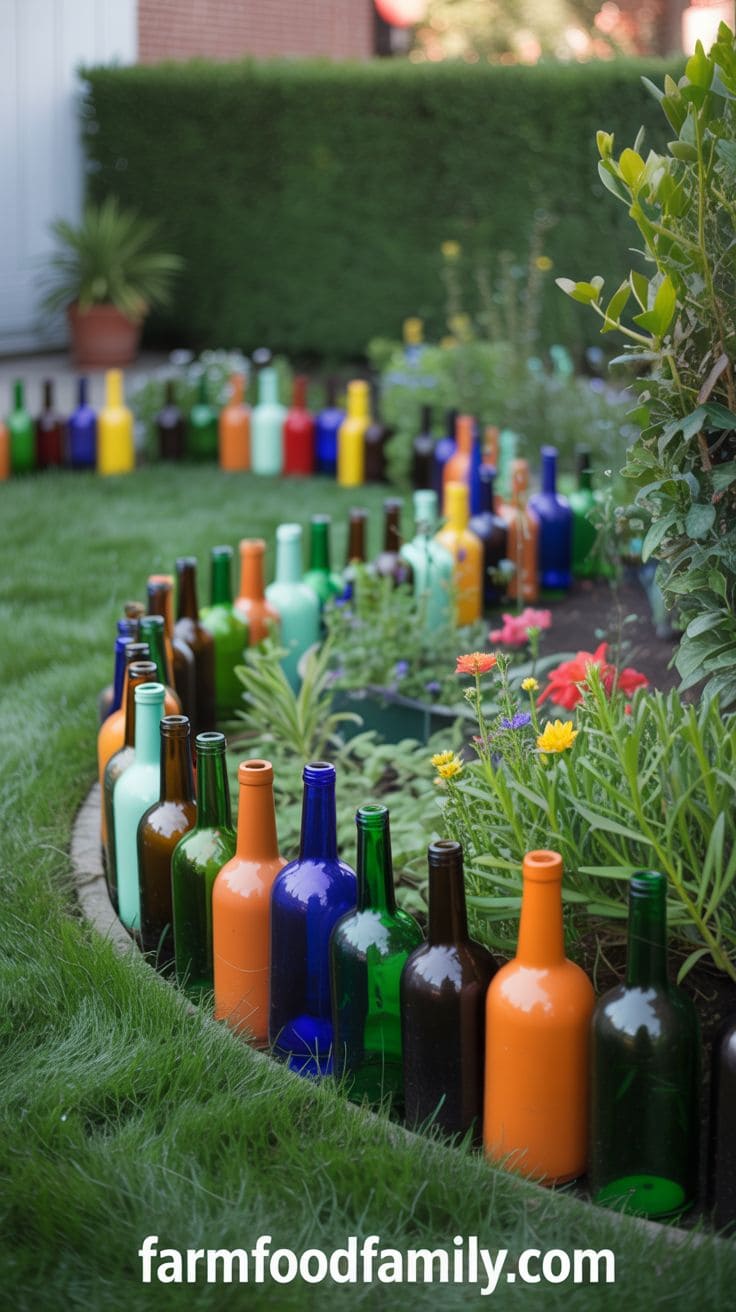
Reclaimed brick, broken concrete pieces (sometimes called “urbanite”), or repurposed wine bottles set neck-down all make workable, budget-friendly edging.
It’s not going to look as uniform as a store-bought kit, and for a lot of yards, that’s actually the appeal.
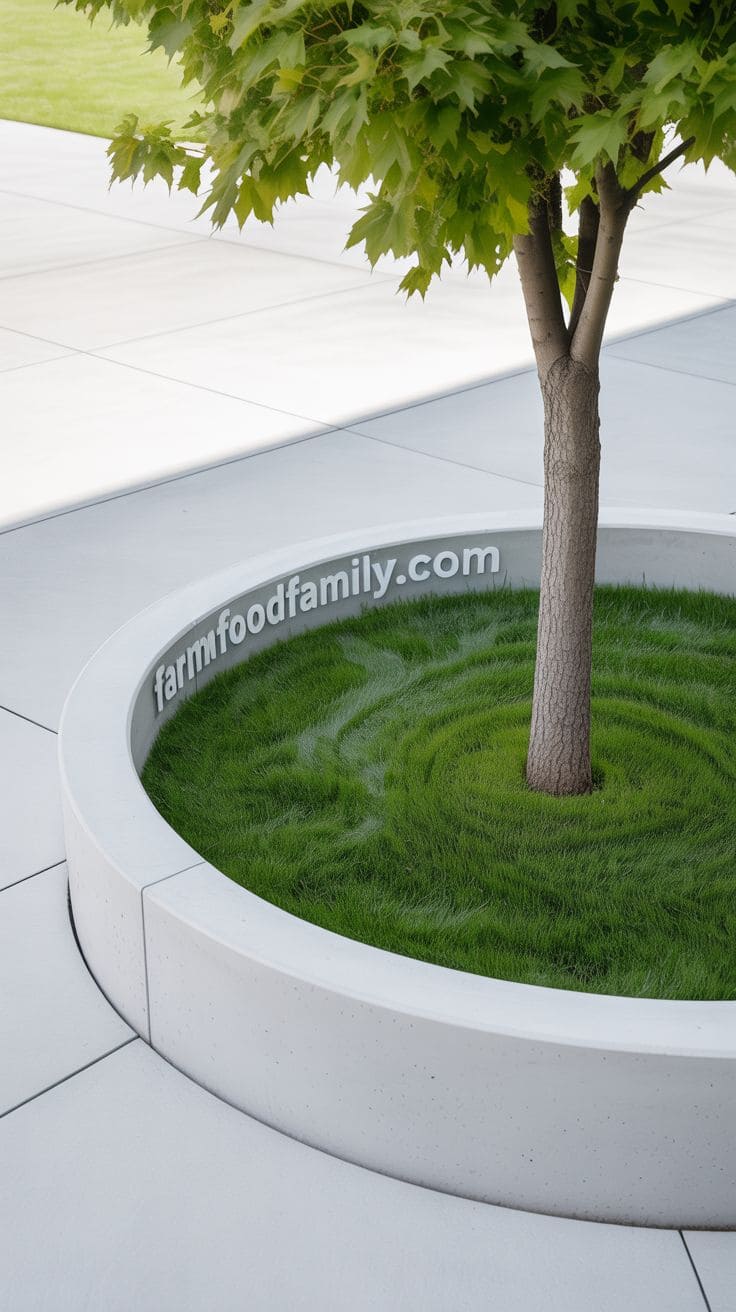
11. Concrete border
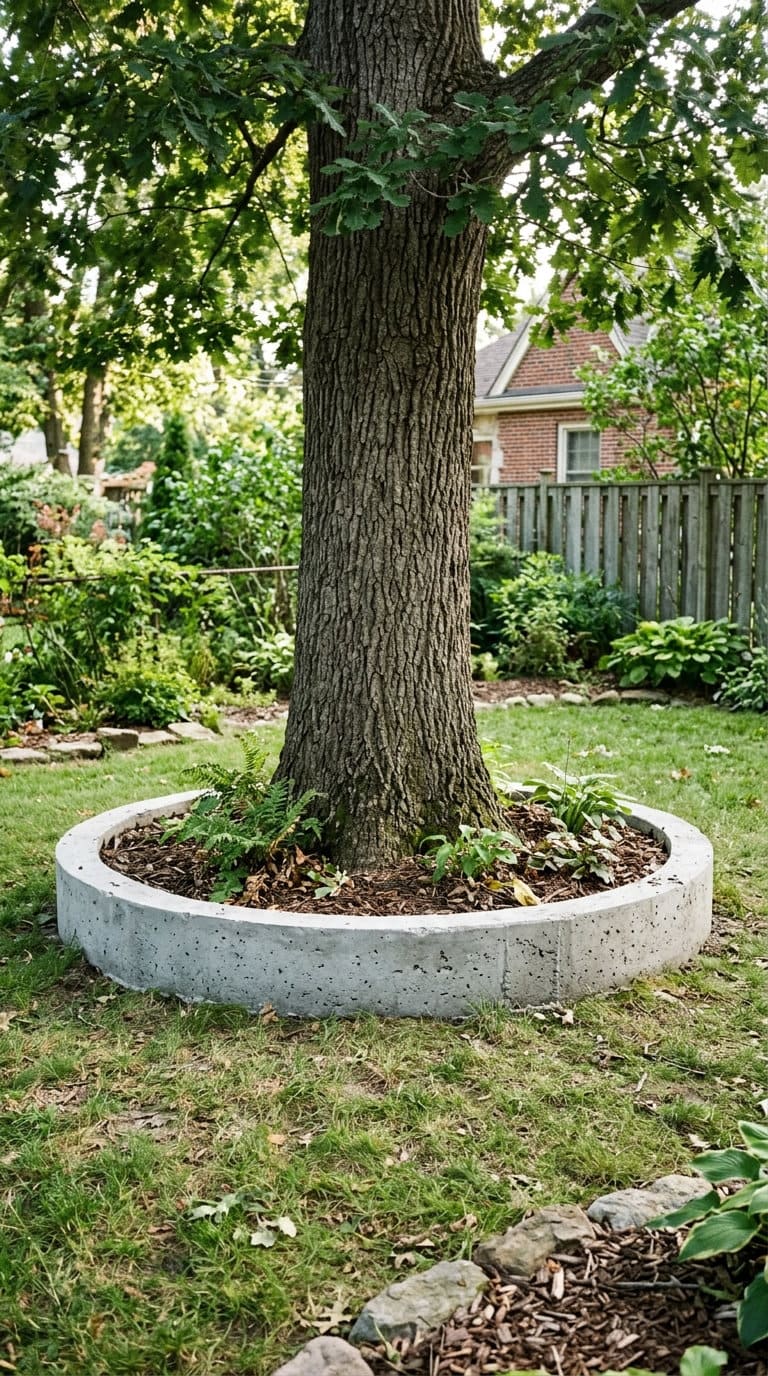
A poured or precast concrete ring gives the most permanent, structural edge of anything on this list. But permanence cuts both ways here.
A real complaint that comes up regularly among homeowners is tree roots eventually cracking or heaving rigid edging as the tree matures, and once that happens, the honest fix is usually removing the edging entirely rather than fighting the roots indefinitely.
If the tree is young and still growing fast, a flexible material (sections 2, 6, or 7) is the safer long-term bet. Save concrete for trees that have mostly finished their root expansion.
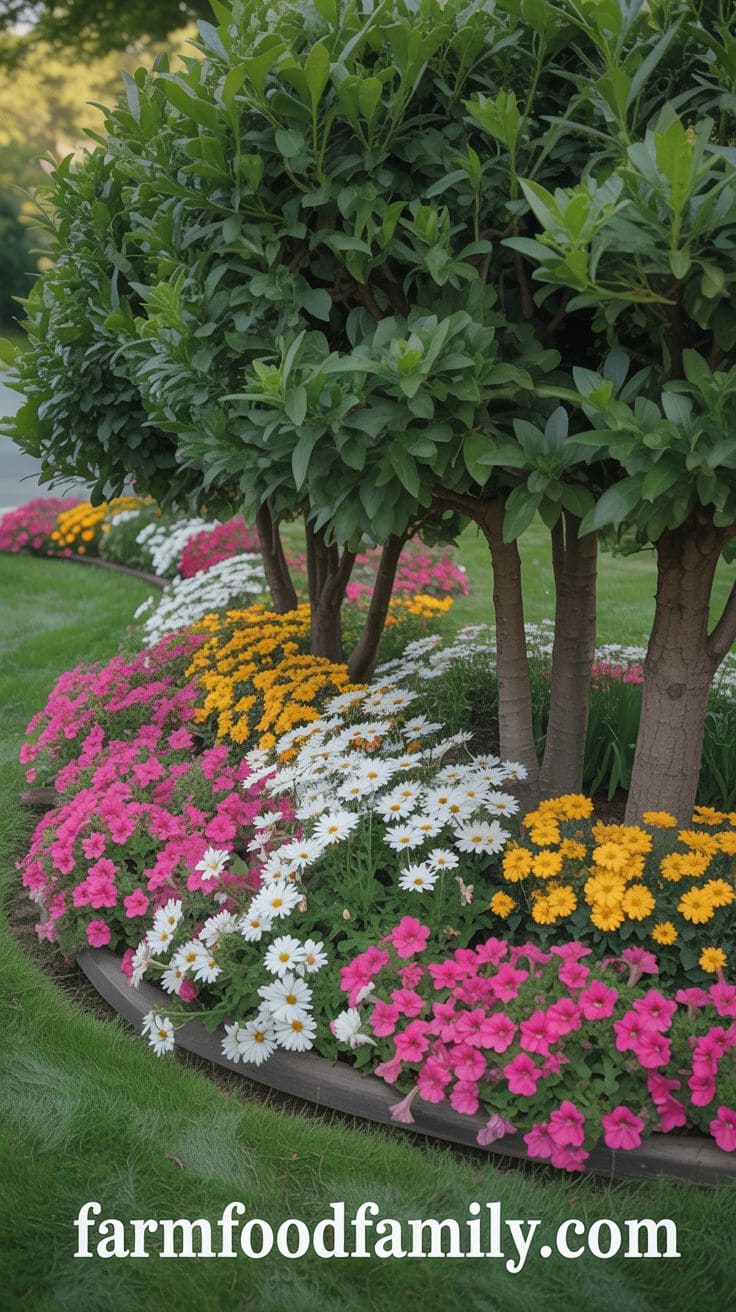
12. Living border (groundcover instead of hard material)
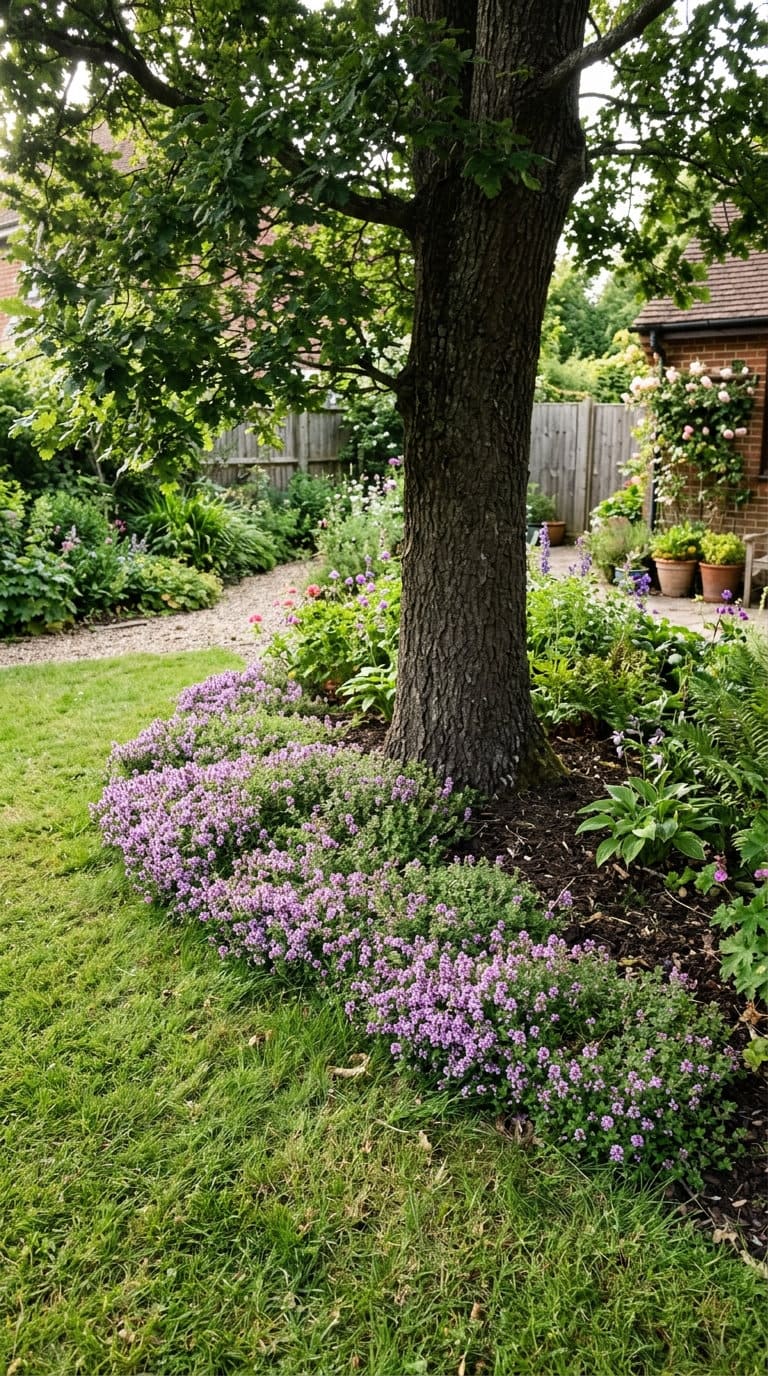
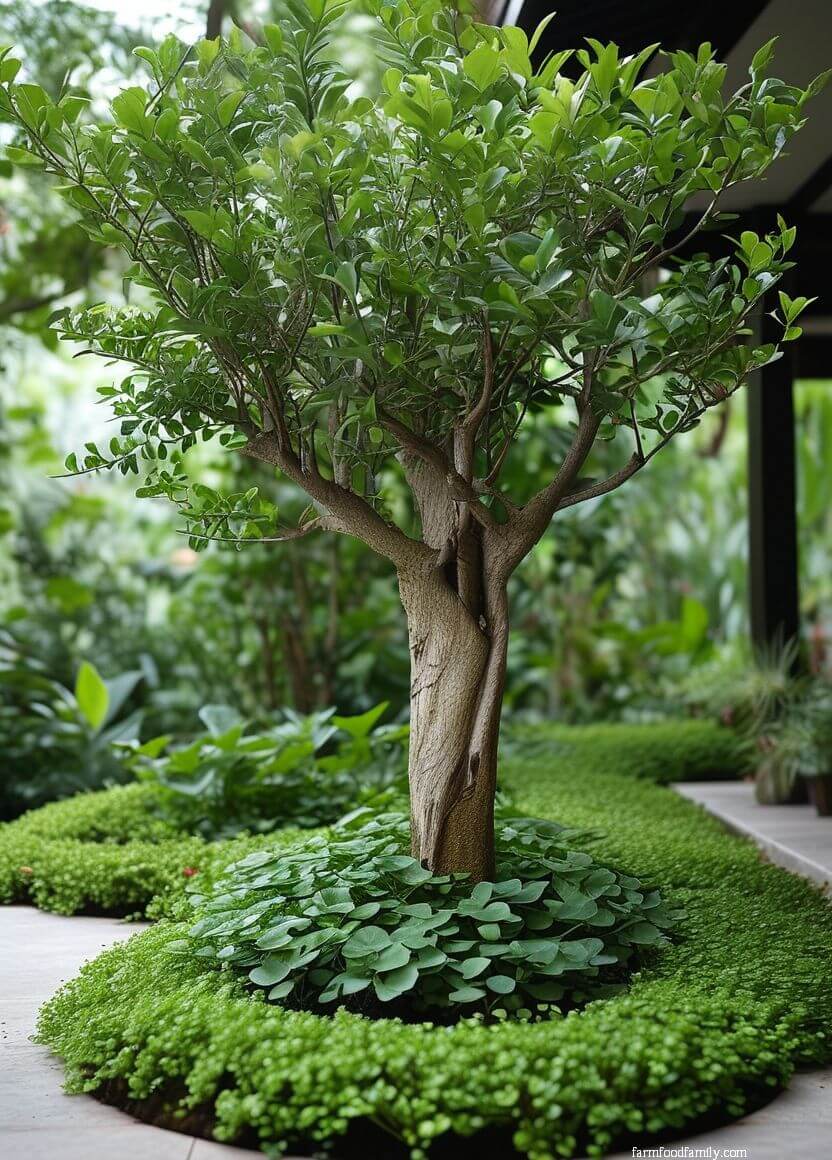
Skip hard edging entirely and ring the tree with a low, spreading groundcover instead, creeping thyme, vinca, or a shade-tolerant sedge depending on your sun exposure.
It softens the transition from lawn to tree bed and, unlike rigid materials, it never cracks or heaves as the tree’s roots expand.
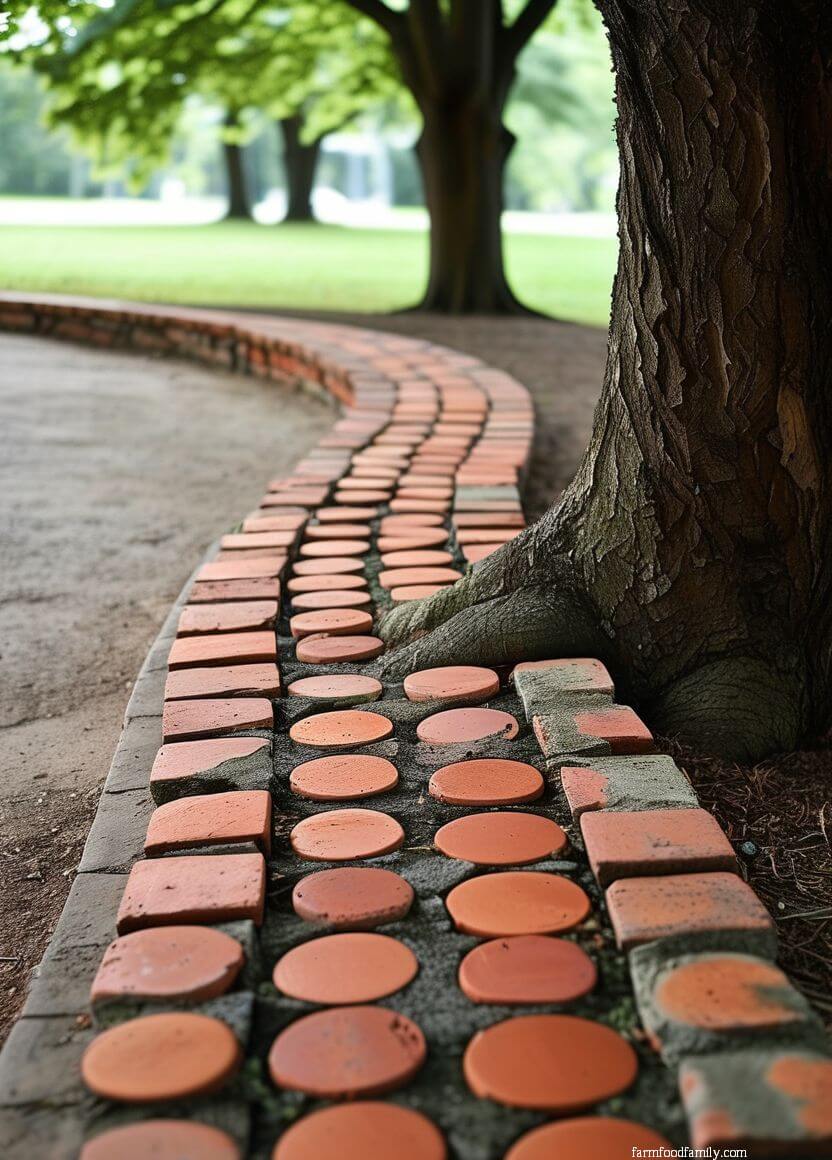
13. Terracotta tile ring
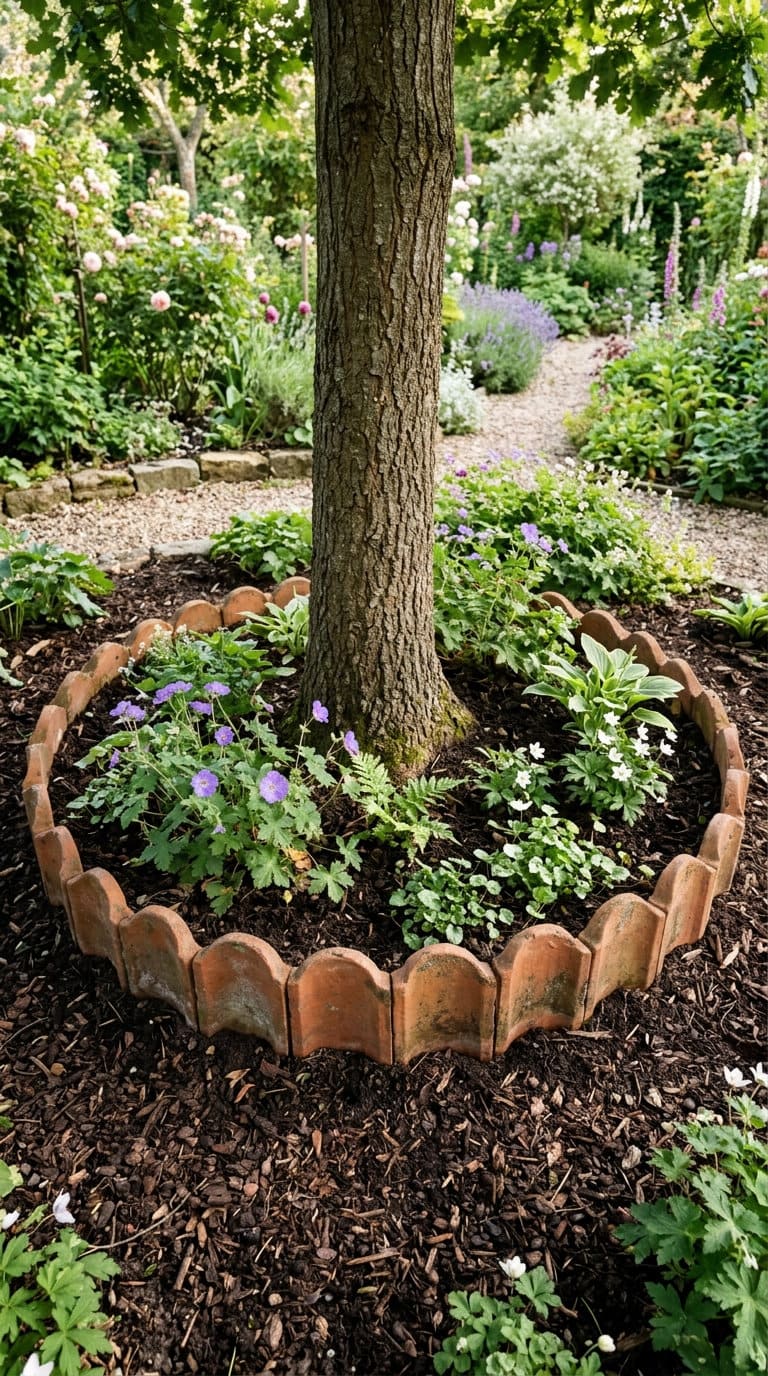
Terracotta edging tiles, the scalloped or rope-top style you’ll recognize from older gardens, bring a warm, traditional look.
They’re more fragile than stone or concrete, a hard mower strike will chip one, so they’re a better fit for beds that are hand-trimmed rather than mowed right up to the edge.
14. Rope border for a casual cottage look
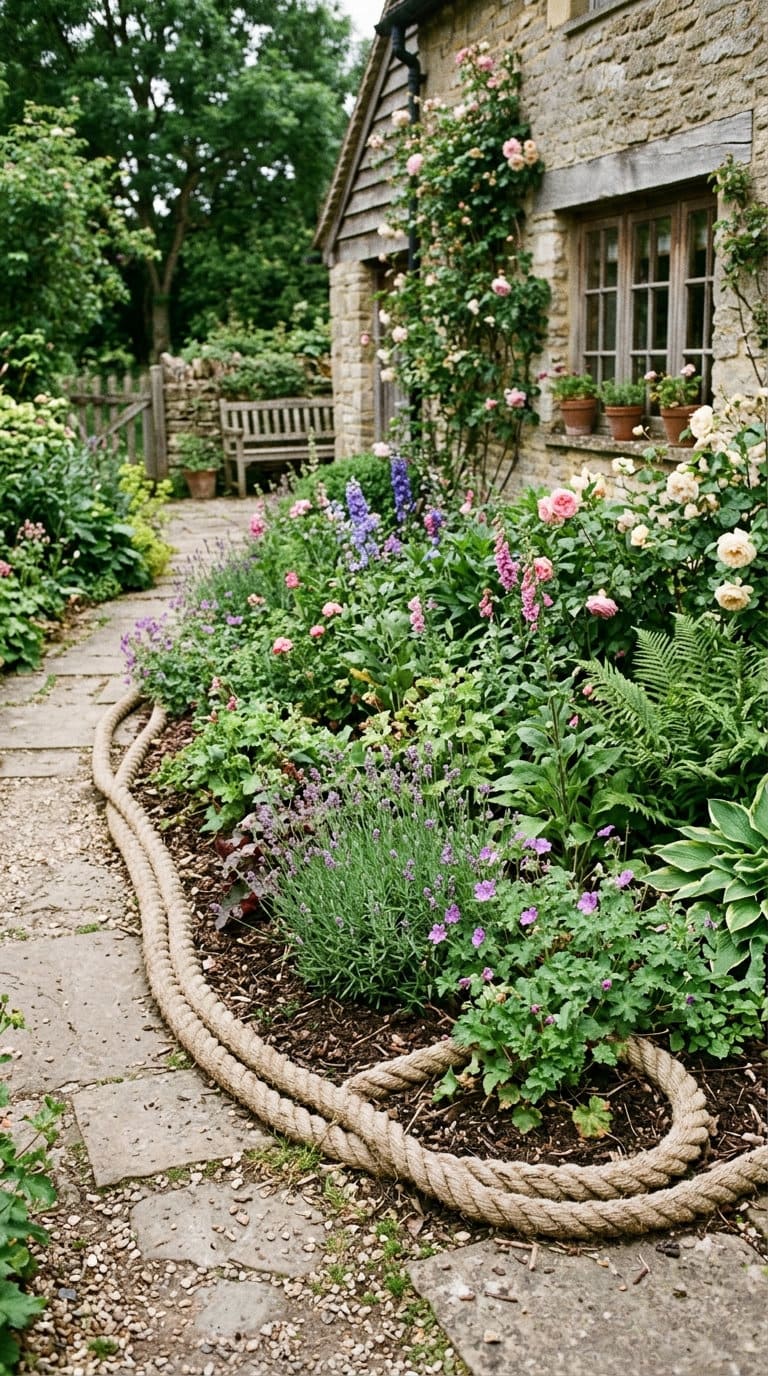
A thick rope, real or the faux-rope concrete/resin kind sold specifically for gardens, coiled loosely around the tree bed gives a relaxed, cottage-style edge without much cost.
It’s more decorative than functional, so pair it with actual mulch depth control from section 5 rather than relying on the rope to do any real job.
A few more things worth planning around
If you’re edging multiple trees across the yard and want the material to feel intentional rather than random, it’s worth looking at mulch edging ideas and stone edging ideas for broader bed applications that extend the same look beyond just the tree ring.
If a mature tree in your yard has already cracked a concrete border, concrete edging ideas covers where rigid concrete still makes sense elsewhere in the yard away from root pressure. And if you’d rather skip hard material near any bed, not just around trees, edging plants for kitchen gardens has more living-border options beyond the groundcover choices in section 13.
FAQ
How far should mulch or edging be from a tree trunk?
At least a couple inches, the Morton Arboretum’s own figure is 1 to 2 inches, and the root flare, where the trunk widens near the soil, should stay visible rather than buried. The Morton Arboretum is specific about this: mulch piled against the flare traps moisture and invites the kind of bark and root damage the ISA has been warning about for years.
Can tree roots damage rigid edging like concrete or pavers?
Yes, and it happens more often than most rigid-edging installers will tell you upfront. As a tree matures, expanding roots can crack, heave, or push rigid materials out of alignment. For a young or fast-growing tree, a flexible edging material is the safer long-term choice, save concrete or mortared brick for trees that have largely finished their root expansion.
Does a mulch ring actually protect a tree from mower or trimmer damage?
Yes, this is one of the most practical reasons to edge around a tree at all. Seattle’s Department of Transportation Urban Forestry program cited a corridor survey finding roughly 60% of monitored young trees had string-trimmer or mower damage, sometimes called “weed whacker blight” by arborists. A properly sized, properly cleared ring keeps the mower deck and trimmer line away from the bark entirely.

Conclusion
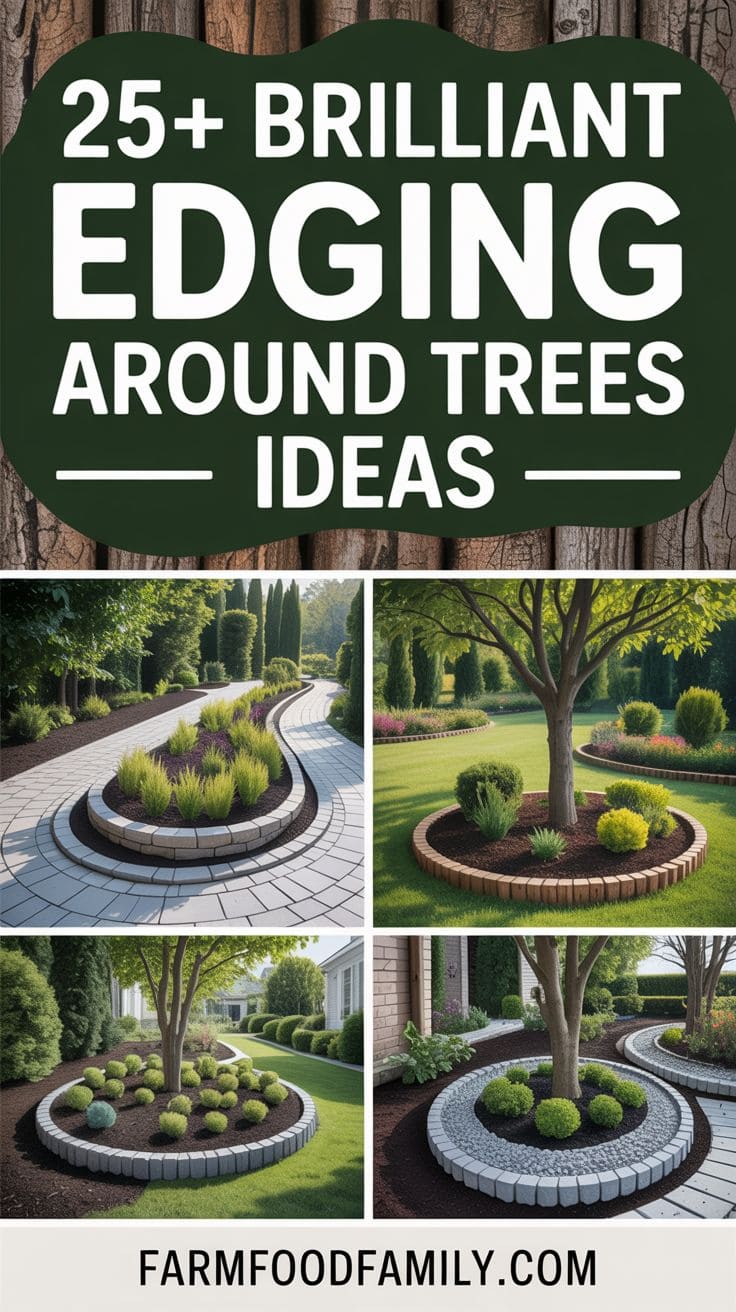
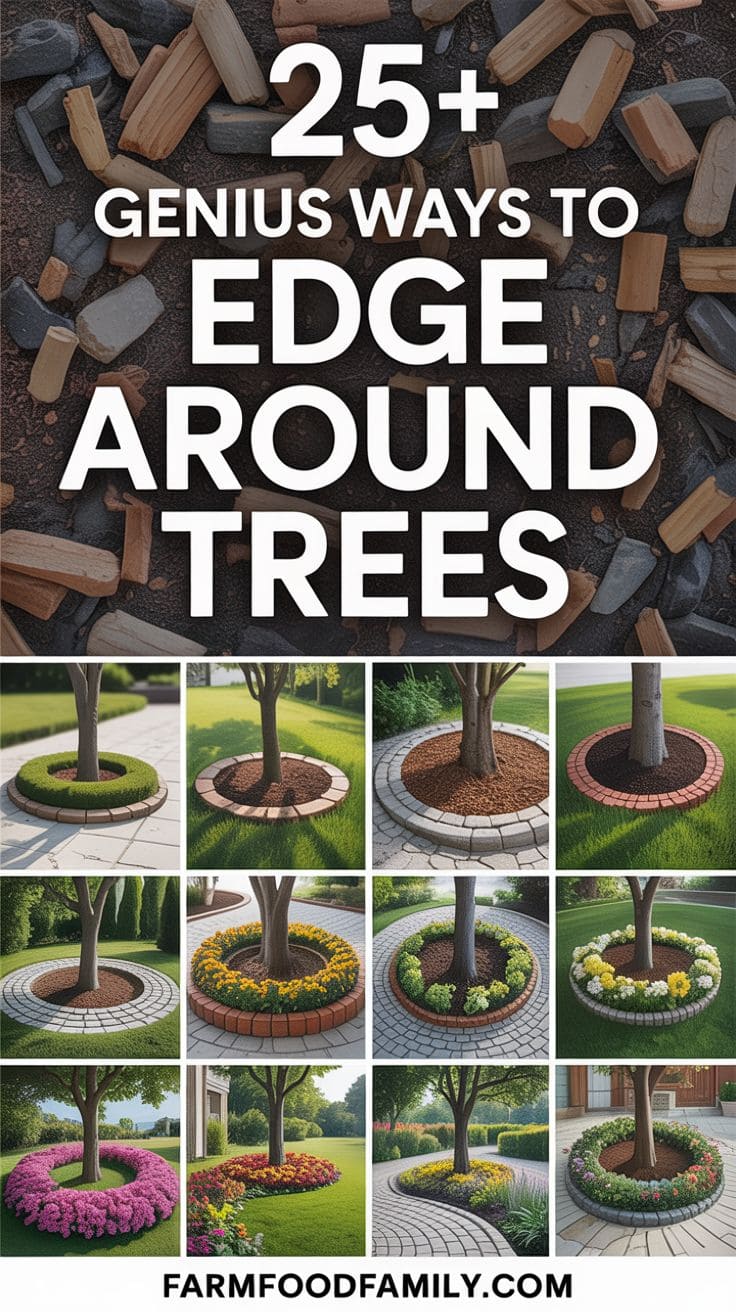
Edging around trees offers a unique opportunity to enhance your landscape’s design, protect your plants, and create organized, beautiful focal points. The right edging will serve as both a practical barrier and a stylish statement.
If you like this article, leave a comment and share it!
Never miss an update — choose FarmFoodFamily as your preferred source on Google.
How it works: Tap the button below to open Google's settings page, then check the box next to FarmFoodFamily.
Tap the checkbox to turn it blue — that's how you know it's set.