11 Charming Spilled Flower Pot Ideas That Stay Put and Survive Winter
A tipped pot spilling flowers is an easy garden showpiece, as long as you bury it so it won’t roll and plan for winter before the first freeze.

Never miss an update — choose FarmFoodFamily as your preferred source on Google.
How it works: Tap the button below to open Google's settings page, then check the box next to FarmFoodFamily.
Tap the checkbox to turn it blue — that's how you know it's set.
A tipped pot spilling flowers is an easy garden showpiece, as long as you bury it so it won't roll and plan for winter before the first freeze.
Products We Recommend
This post contains affiliate links. We may earn a commission on qualifying purchases at no extra cost to you.

Quarut 4 Pack 12 Inch Plastic Plant Pots With Drainage Holes and Saucers
Lightweight polyethylene pots, 12 inches across, that tolerate cold better than terracotta. Hold the saucers back so water can drain.
Shop Now
SLARMOR Long Thorn-Proof Leather Gardening Gloves
Cowhide gauntlet gloves for handling broken pot pieces and digging the hollow.
Shop Now
Rain Bird POTTEDKIT Drip Irrigation Kit
A 16-piece drip kit for up to 3 potted plants that connects to a faucet or hose, for easy watering.
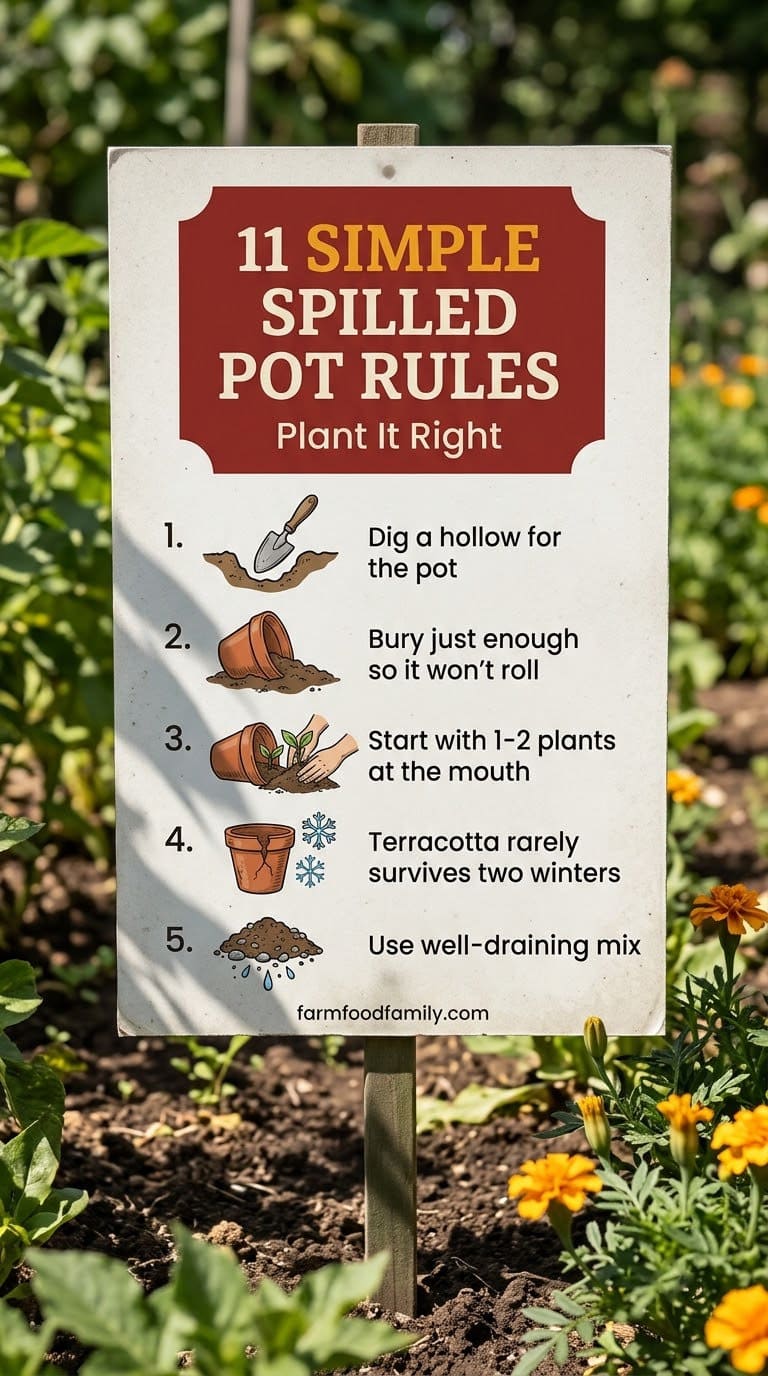
Shop NowA spilled flower pot is a pot laid on its side so plants look like they pour out of it. Dig a small hollow, nestle the pot in, and fill around it just enough that it won’t roll. Fill the pot partway with well-draining potting mix, then plant.
Amy Grant at Gardening Know How says to start with one or two plants halfway into the pot, and add more as you move toward the mouth. That makes the flowers look like they’re pouring out.
Choose plants for your light. Pansies, marigolds and petunias like sun, and impatiens and begonias like shade.
Answer 4 quick questions and get matched to the exact fix for your yard — drainage, budget, layout, or something else entirely.
Take the Free QuizBut terracotta cracks in frost, so plan for winter before you plant. These 11 ideas show how, with steps and a styling tip for each one. Pick the spill that fits your light, your budget and your weekend.
How Do You Make a Spilled Flower Pot?
The method is simple, and you only need one pot. Amy Grant explains the steps in Gardening Know How.
She says to choose a cracked, broken or whole container. Terra cotta, plastic, resin and glazed pottery all work. Pick one with a wide mouth, and the bigger the better.
Here’s the full routine:
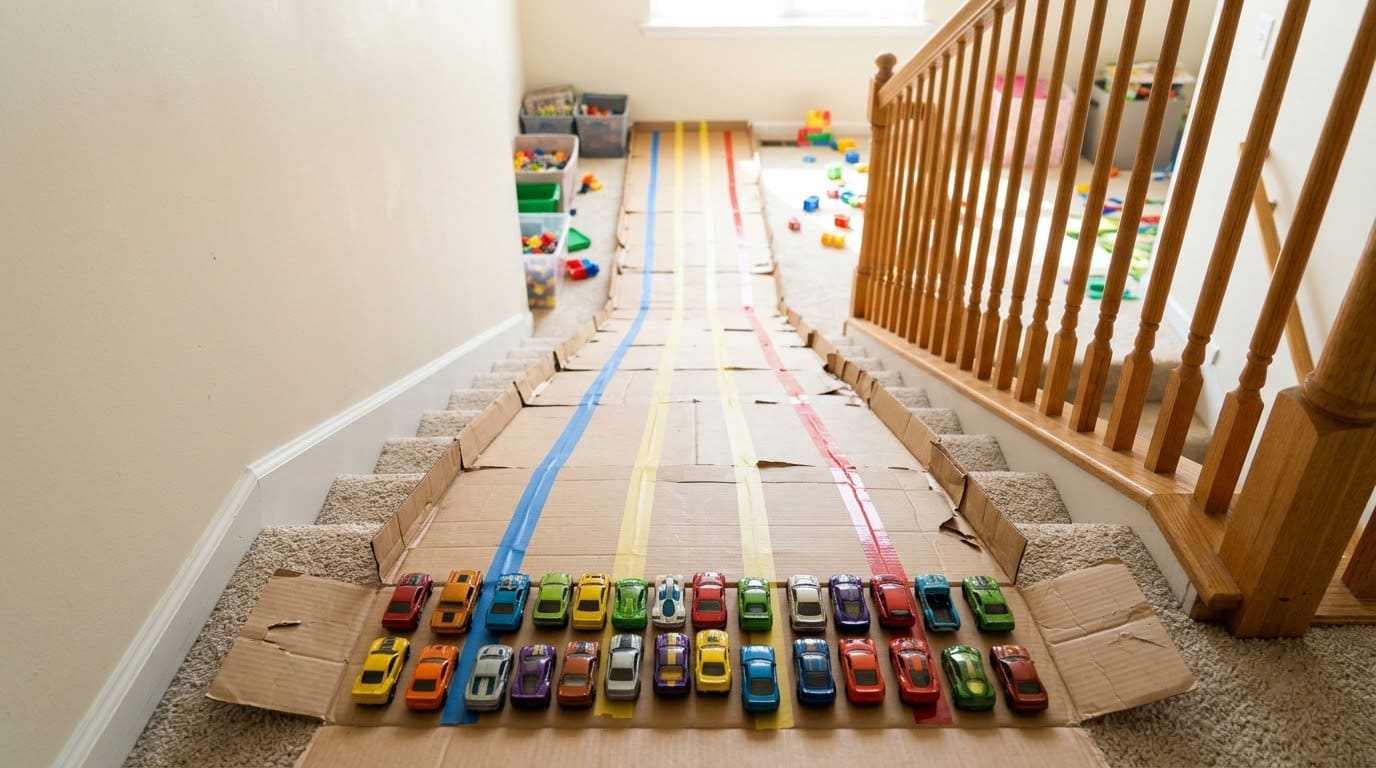

- Dig a hollow in the soil, deep enough to cradle the curve of the pot.
- Lay the pot on its side in the hollow. If the pot is broken, set the broken side facing down.
- Fill soil around the pot partway, leaving most of it exposed. It only needs to sit enough that it won’t roll.
- Fill the pot partly with potting mix, and plant. Start with one or two plants halfway in, and add more toward the mouth.
- Water the transplants, and give it a few weeks to fill in.
Use a good, well-draining potting mix. Skip plain garden soil, which packs down in a pot.
Most yard problems trace back to one specific, fixable cause. Find yours in 4 quick questions.
Take the Free QuizWhat Plants Work Best?
Pick plants that bloom all season and stay low. Pony packs of annuals are the cheapest way to fill a pot. Match the plants to the light first.
| Light | Plants Gardening Know How suggests | Our tip |
|---|---|---|
| Full sun | Pansies, marigolds, petunias, calibrachoa | Water often in summer |
| Part shade or shade | Impatiens, begonias, violas, coleus | Keep the soil evenly moist |
| Dry, sunny spot | Sedum, hen and chicks | Needs sharp drainage |
| Trailing accents | Ivy, sweet potato vine | Tuck along the sides |
Iowa State Extension’s Aaron Steil and Cynthia Haynes add detail on low plants. Their groundcover guide says most creeping thyme species grow 3 to 6 inches high and want well-drained to dry soil. It says low stonecrops 2 to 8 inches tall make excellent groundcovers, grow best in full sun and need well-drained soil.
It also warns that creeping Jenny spreads rapidly and can become invasive. So keep it in the pot, and check your local rules before you plant it.
Will a Spilled Pot Survive Winter?
Not always. Most spilled pots sit half buried, and soil holds water. Water that freezes expands, which can crack a pot.
Larry Hodgson, the Laidback Gardener, says in his winter pot guide that terracotta is among the least cold-resistant materials. He writes that sometimes the pot will survive a first winter, but rarely two. He says to bring terracotta to a frost-free spot.
Hodgson says plastic is more tolerant of cold, and that sun damage is its main threat. He adds that fiberglass and resin tolerate winter outdoors.
| Pot material | Winter outdoors? | Our call |
|---|---|---|
| Terracotta | Rarely survives two winters | Lift and store, or accept it as seasonal |
| Glazed ceramic | Often absorbs water and cracks | Bring inside |
| Plastic | Fine in cold, may fade in sun | Good for cold climates |
| Fiberglass or resin | Tolerates winter | Best for year-round |
| Metal | Handles frost | Watch for rust |
If you live where it freezes, use a resin or plastic pot for the spill. Keep the pretty terracotta for the warm months.
Lightweight polyethylene pots, 12 inches across, that tolerate cold better than terracotta. Hold the saucers back so water can drain.
Shop NowThis post contains affiliate links. We may earn a commission on qualifying purchases at no extra cost to you.
1. Classic Tipped Terracotta With Pansies
The classic is a tipped terracotta pot with a stream of pansies. It’s the one most people picture. Pansies like cool weather, so it works in spring and fall.
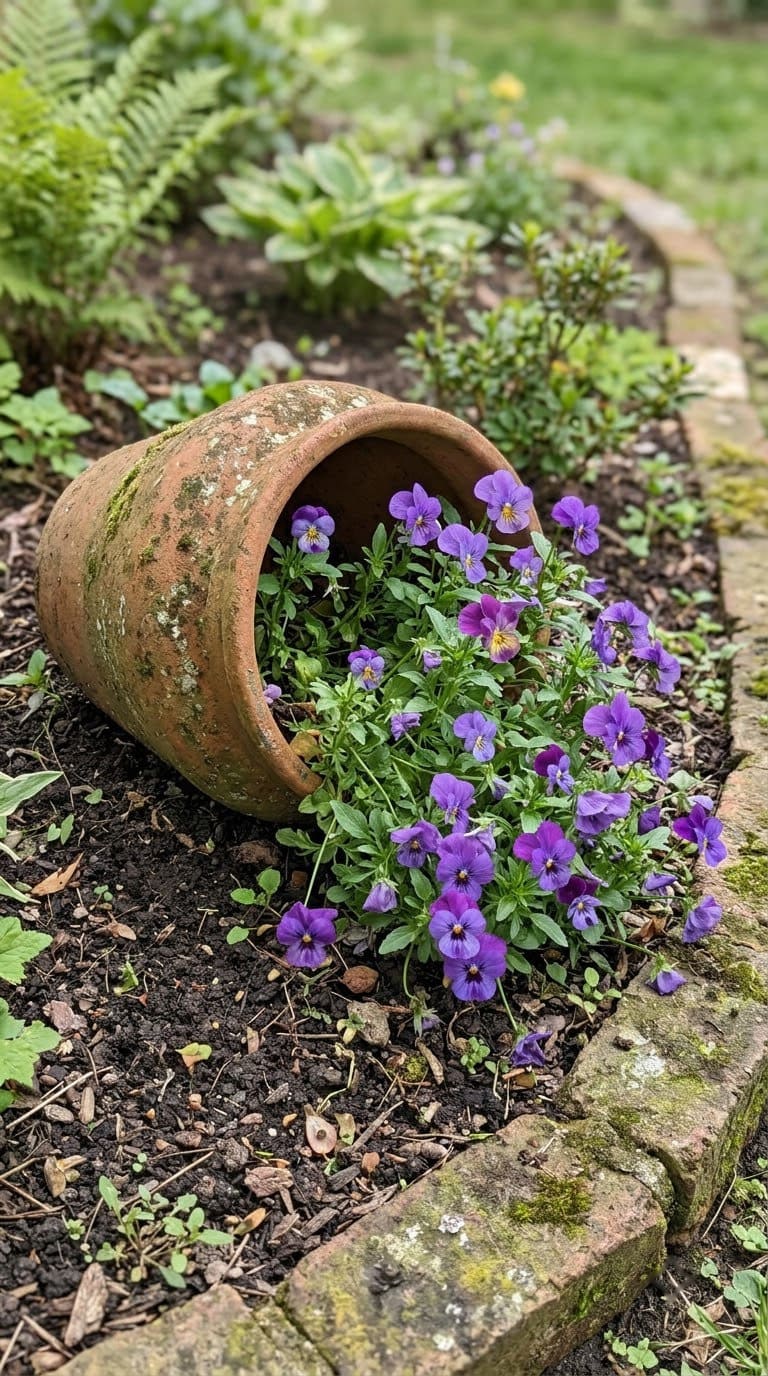
- Choose a terracotta pot at least 10 inches wide.
- Dig a hollow, lay the pot on its side and fill around it.
- Fill it halfway with potting mix.
- Plant two pansies in the mouth, and add more along the spill.
Style tip: use one color, like all purple, for a calm look.
The average homeowner spends $616/year on yard fixes that don't address the real problem. Find out what yours actually is — before you spend another dollar.
Take the Free QuizWhere it goes: the edge of a flower bed. See our flower garden ideas for containers.
2. Broken Pot With the Break Facing Down
A cracked pot is perfect for this. The break sits in the soil, and the whole side looks whole. You don’t waste a pot.
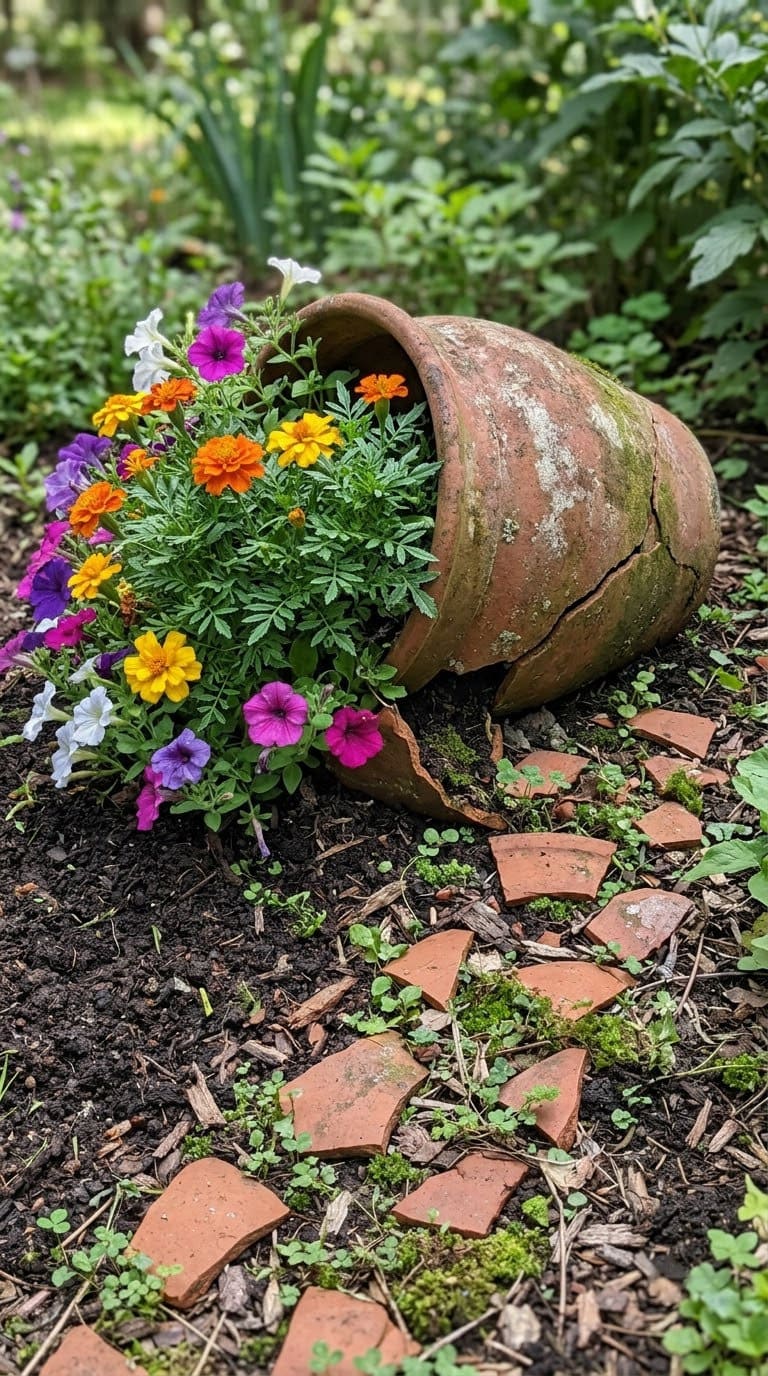
Gardening Know How says to set a broken pot with the broken side facing down into the dirt.
- Wear gloves, and pick up the pieces carefully. Broken terracotta has sharp edges.
- Set the break down into the hollow.
- Fill soil around the pot, and add potting mix inside.
- Plant and water.
Style tip: add a few pot shards on the soil like a path.
More: see our clay pot garden crafts.
3. Succulent Spill
A succulent spill needs almost no care. Sedum and hen and chicks look like a rocky river. It’s the best choice for a dry, sunny corner.

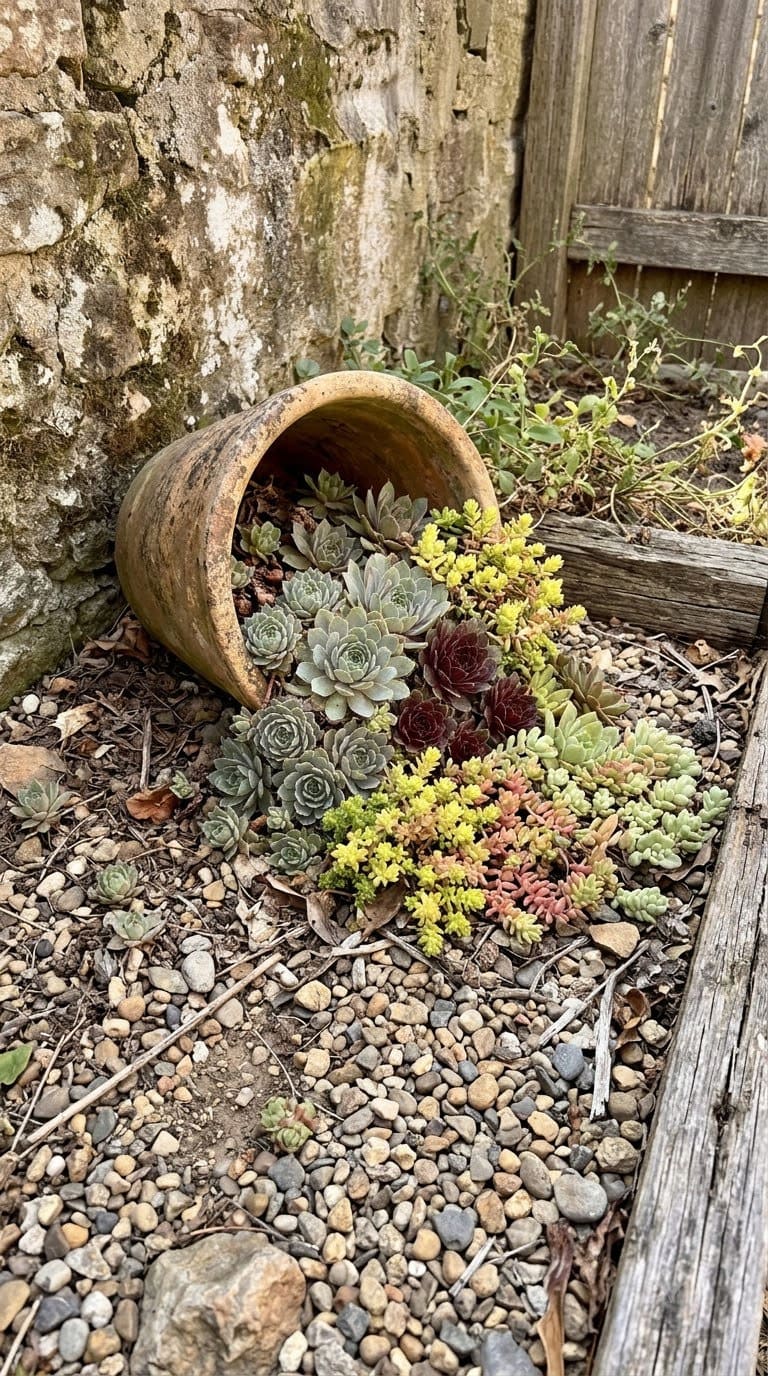
Gardening Know How suggests low succulents like sedum or hen and chicks for a low-maintenance, drought-tolerant spill.
- Use a gritty, fast-draining mix.
- Plant a tall rosette in the mouth.
- Add smaller sedum along the spill.
- Top the soil with a thin layer of pebbles.
Style tip: mix gray, green and burgundy leaves.
More: see our guides to succulent containers and planting succulents without drainage.
4. Creeping Thyme Spill
Thyme smells wonderful and stays low. It spills over the pot’s edge like a green waterfall. Bees love the flowers.
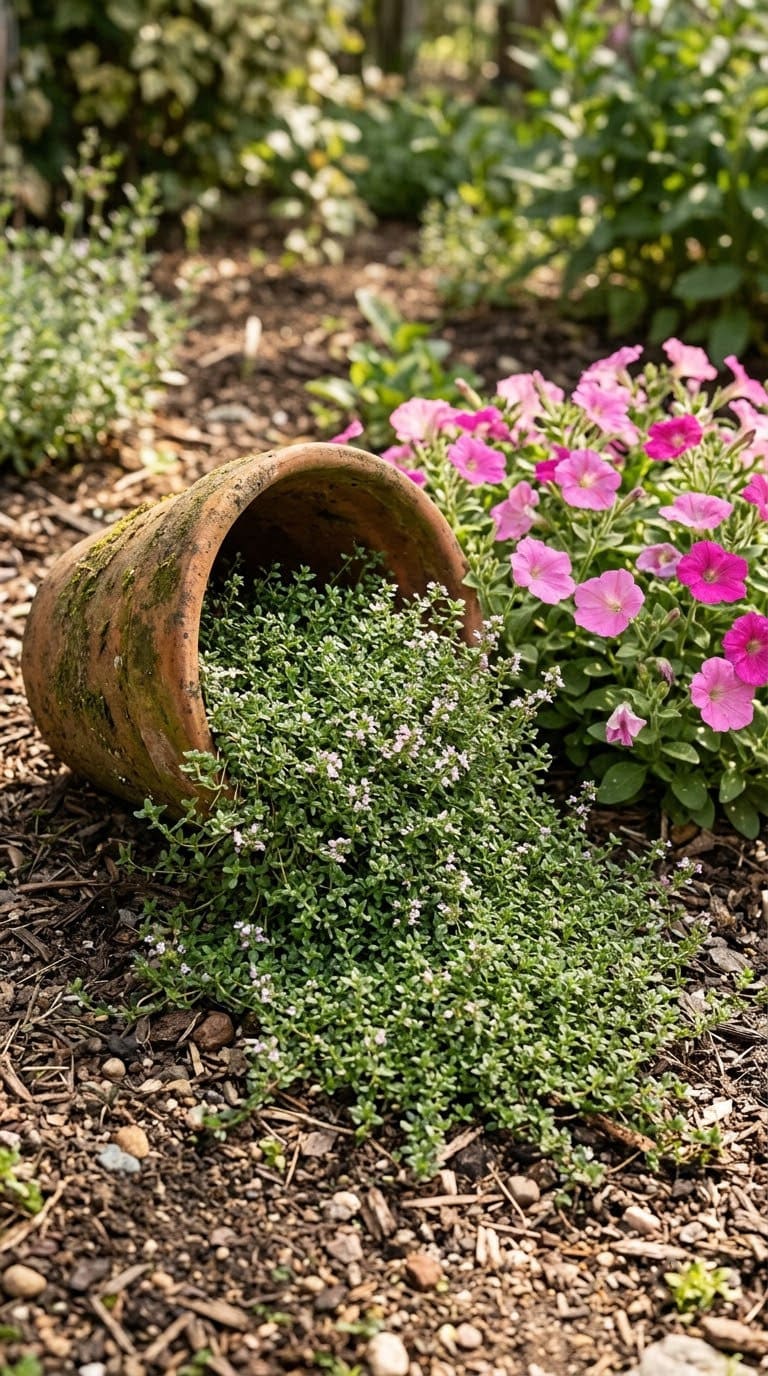
- Pick a sunny spot with well-drained soil.
- Plant two or three thyme plants near the pot’s mouth.
- Let them trail over the edge.
- Water lightly. Thyme won’t tolerate wet conditions, as Iowa State notes.
Style tip: pair thyme with pink petunias for color.
Safety: keep thyme away from areas sprayed with chemicals if you plan to cook with it.
5. Shade Spill With Impatiens and Coleus
Shade gardens need color too. Impatiens, begonias and coleus brighten a dim corner. Amy Grant lists these for part-shade spilled pots.
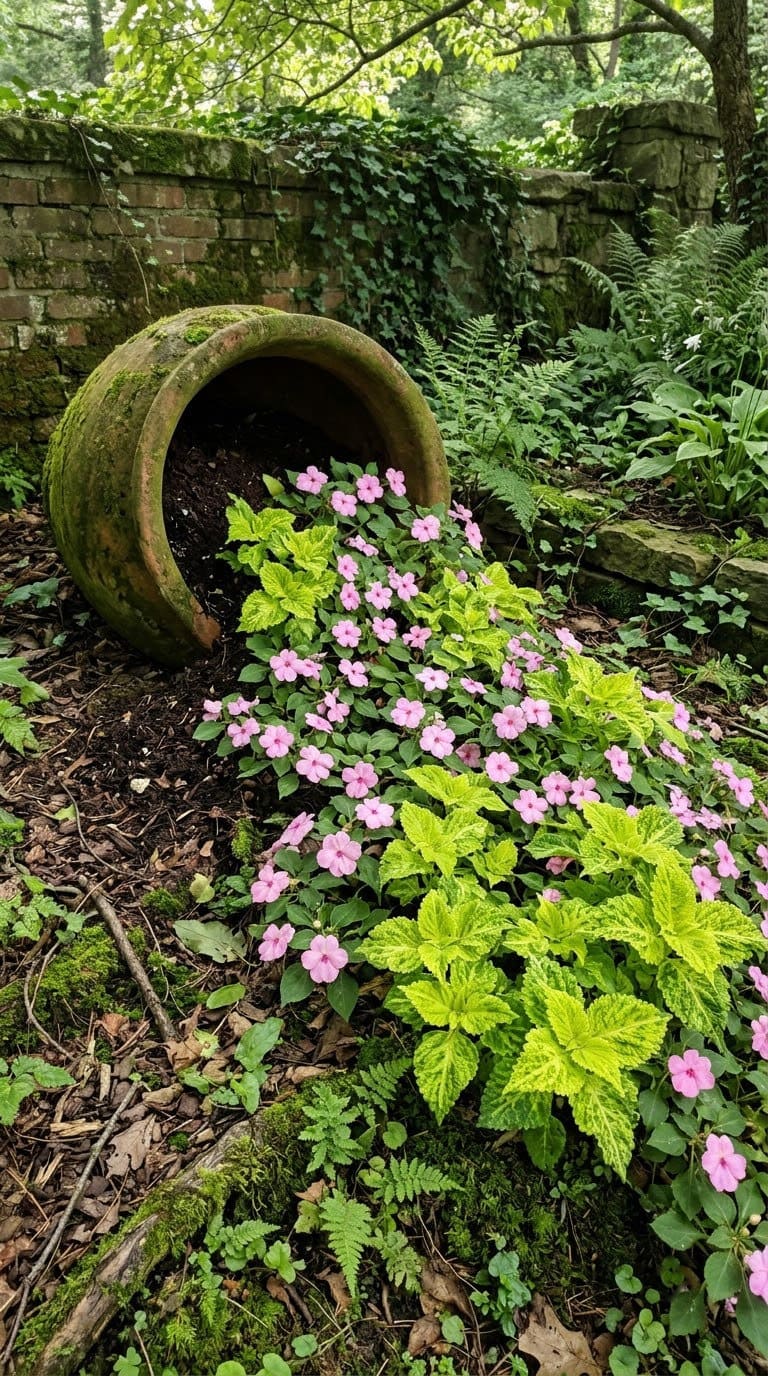
- Choose a spot that gets morning sun or dappled light.
- Plant coleus in the mouth, for bold leaf color.
- Spill impatiens or begonias along the front.
- Keep the soil evenly moist.
Style tip: pick bright pink and lime green for a cheerful look.
More: see our DIY flower pot ideas.
6. Sweet Potato Vine and Ivy Accents
A trailing vine adds length to the spill. Grant suggests tucking a trailing annual like ivy or sweet potato vine along the sides to bring out the spilled effect. It gives the stream a lively edge.
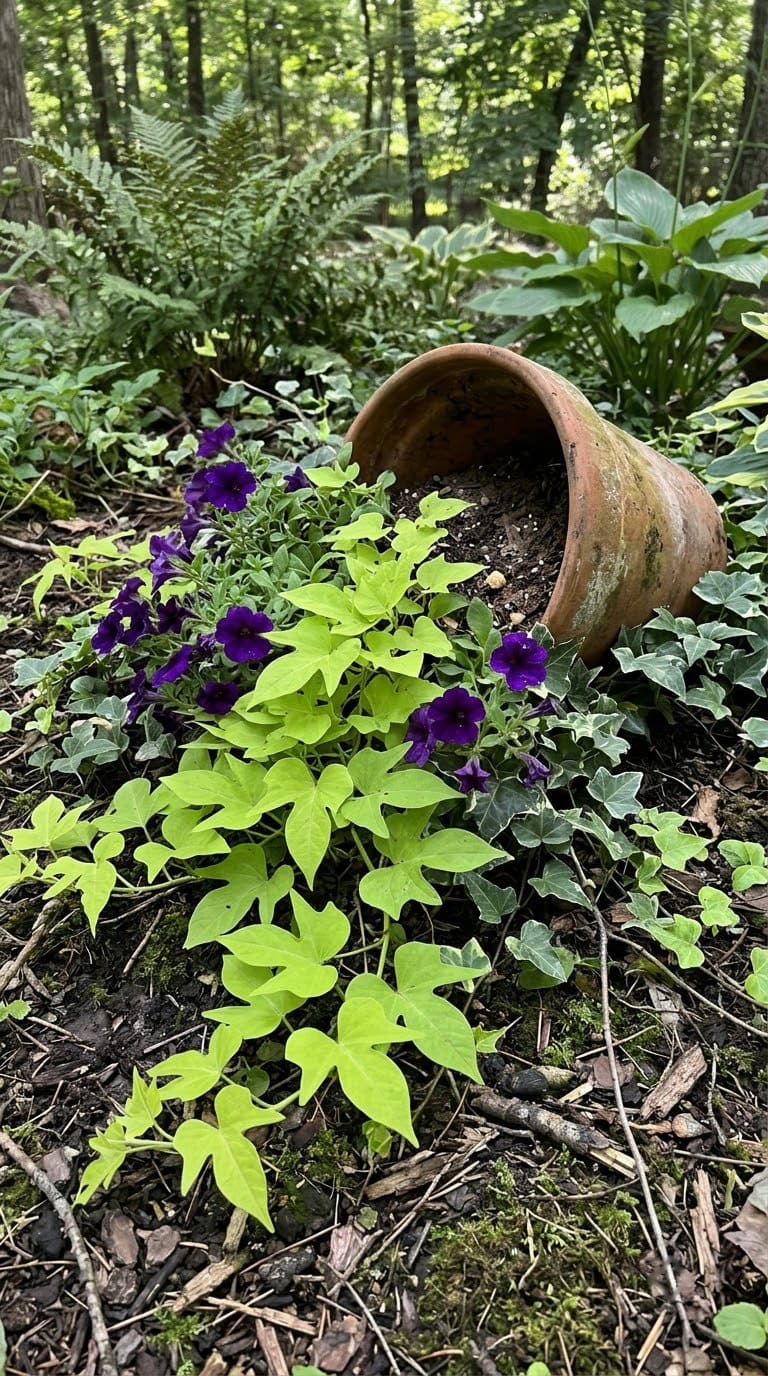
- Plant one vine at each side of the pot’s mouth.
- Train the stems to run along the ground.
- Add flowers in the center.
- Trim the vine if it takes over.
Style tip: use lime green vine with dark purple flowers.
More: see our outdoor hanging planter ideas.
7. A Group of Three in Different Sizes
A group packs more punch than one pot. Grant says to group odd numbers of spilled containers, in various sizes, for more impact. Three pots look planned.
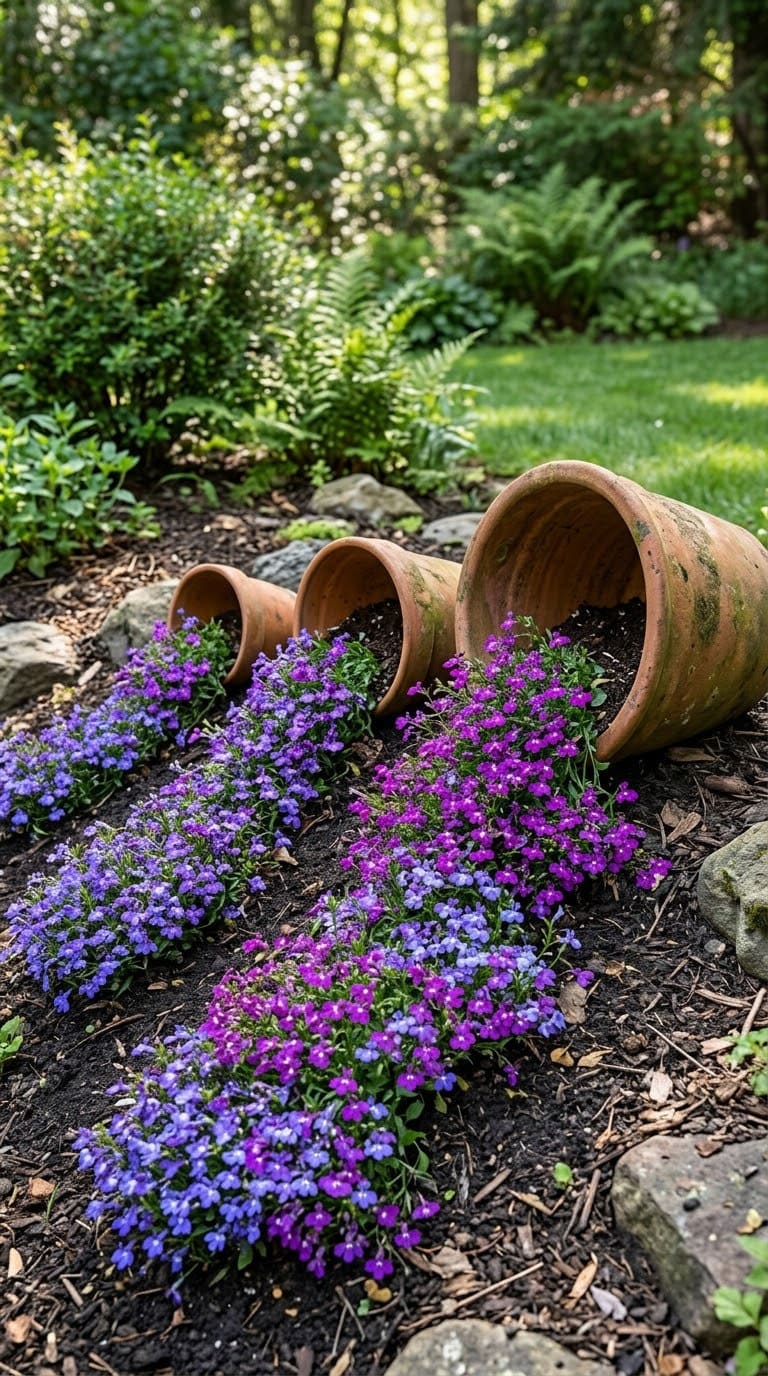
- Choose three pots in small, medium and large sizes.
- Tip them in the same direction, so the spills flow together.
- Plant the same flowers in each, or a matching palette.
- Leave a bit of space between them.
Style tip: vary the colors, but repeat one in all three.
More: see our garden container ideas.
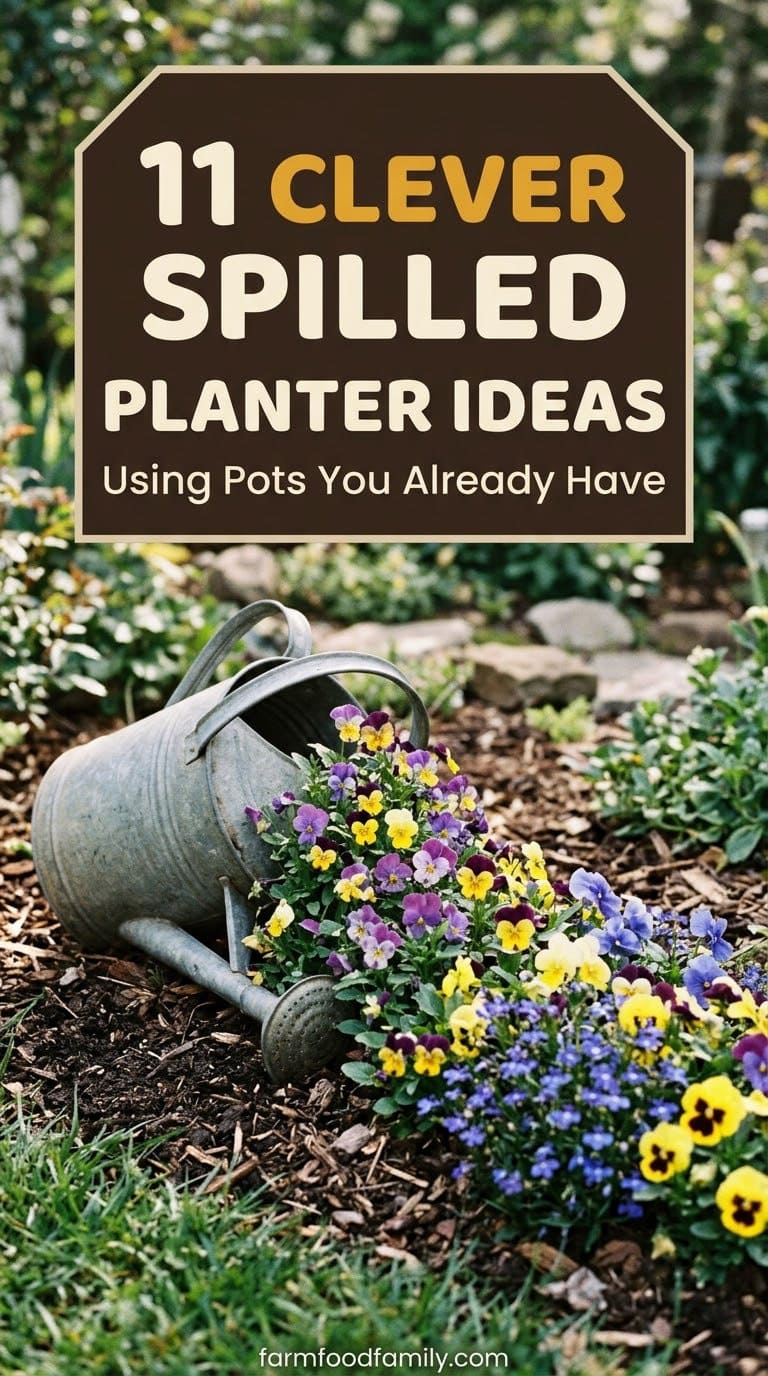
8. Spilled Watering Can or Wheelbarrow
Any container with a wide opening works. A watering can or an old wheelbarrow adds charm. Grant says the opening should be at least 8 to 10 inches.
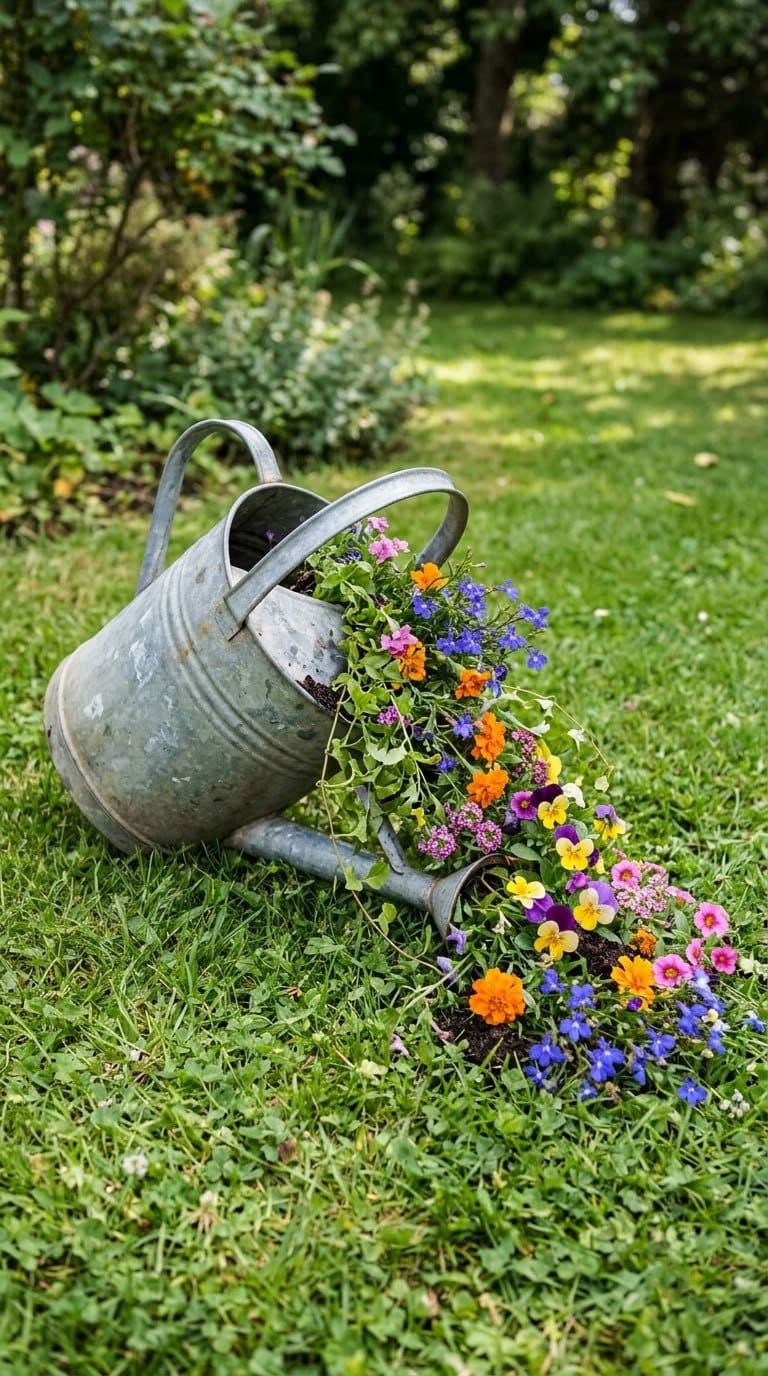
- Choose a can or a bucket with a wide mouth.
- Drill a few small drainage holes in the low side.
- Tip it into a hollow, and fill around it.
- Plant flowers that trail out of the spout or the mouth.
Style tip: use a galvanized can for a farmhouse look.
More: see our repurposed garden container ideas.
9. Painted or Mosaic Pot
A painted or mosaic pot adds art to the spill. Grant suggests decorating a container with paint, mosaic, stones, seashells or marbles. The pot becomes part of the show.
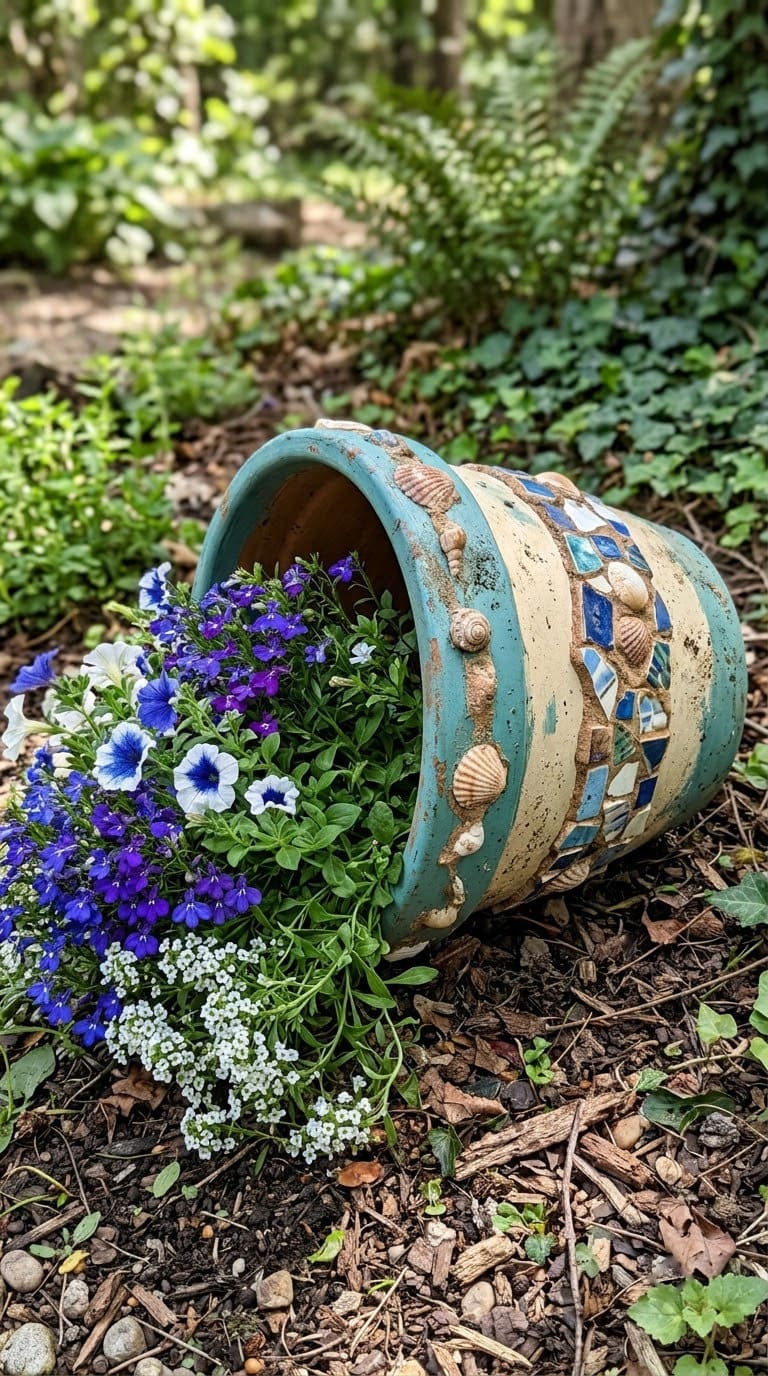
- Clean the pot and let it dry.
- Paint it in two colors, or glue on tiles with outdoor adhesive.
- Seal the outside with a clear sealer.
- Set it in the hollow, and plant.
Style tip: match the paint to the flowers.
Safety: wear gloves when you handle tiles and broken pieces.
10. Tipsy Pot Tower
A tipsy tower stacks tilted pots on a pole. It makes a tall spill of flowers.
Melissa J. Will at Empress of Dirt built one from four 12-inch terracotta pots and a six-foot rebar.
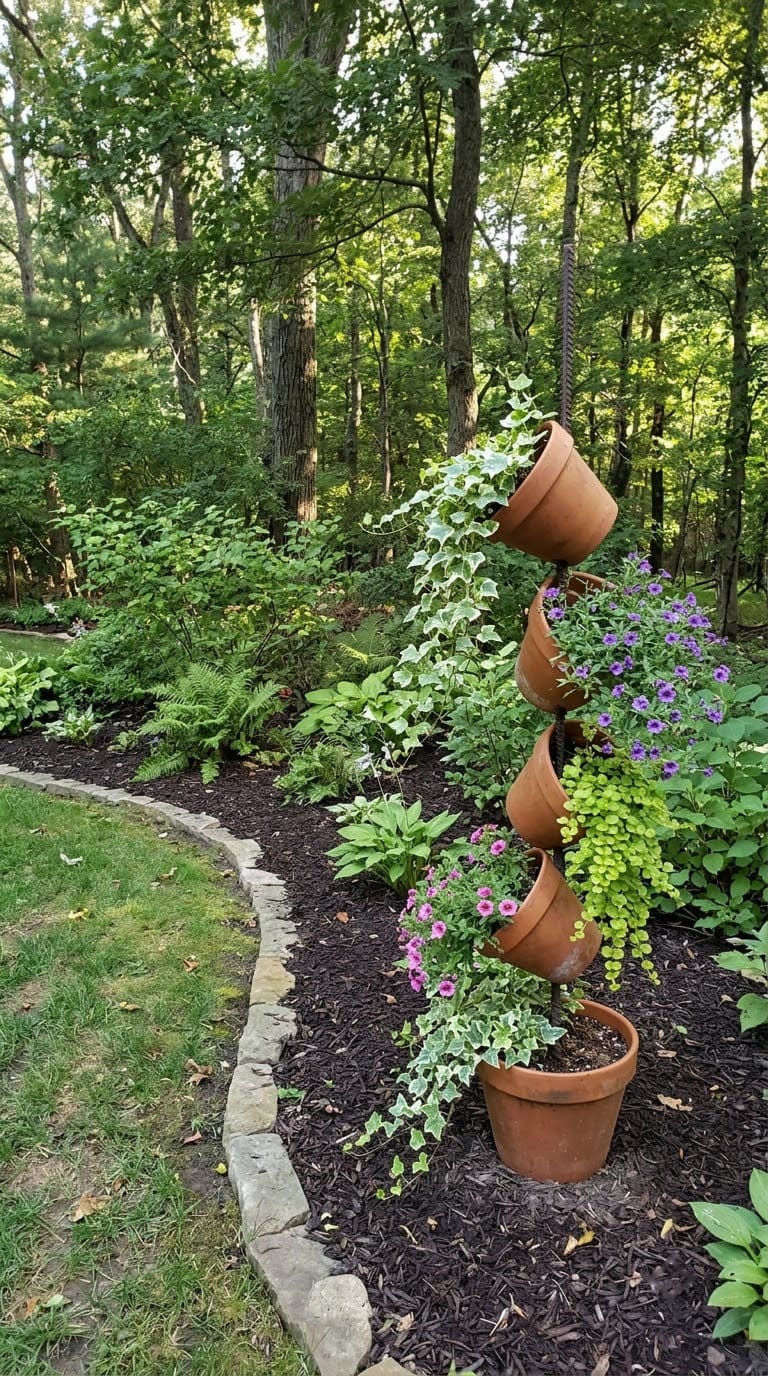
She says to hammer the rebar about two feet into the ground and thread it through the pot bottoms. She leaves about an inch between the soil and the lip, and uses extra soil or stones to steady each pot. Her tower costs about $25 and takes about an hour.
- Hammer the rebar about two feet deep.
- Thread the first pot onto it, and fill with soil and plants.
- Add the next pot, and test that it sits firmly.
- Stagger the pots, and water deeply.
Style tip: use trailing plants at the top and bold flowers below.
Safety: wear gloves and eye protection when hammering. Keep the tower away from walkways.
11. Spilled Pot With a River of Color
A river of flowers, stones or glass makes the spill look like a stream. Plant a strip of flowers that flows away from the pot. It makes a tiny garden story.
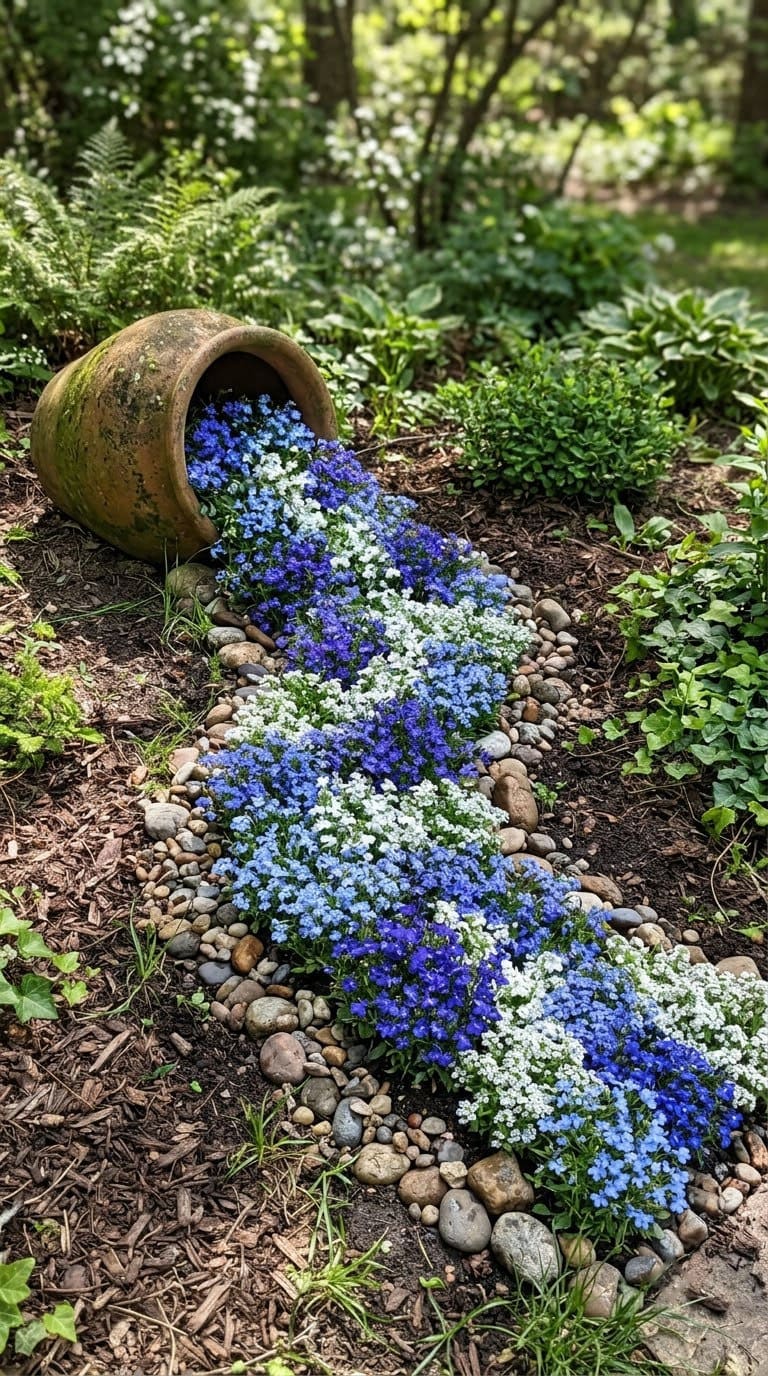
- Lay the pot on its side in a hollow.
- Mark a curved line out from the mouth with a hose.
- Plant a strip of flowers or low groundcover along the line.
- Edge it with small stones or blue glass for a water look.
Style tip: use blue and white flowers for a stream effect.
Note: keep a fast-spreading plant like creeping Jenny in a pot, since Iowa State warns it can become invasive.
What Does a Spilled Pot Cost?
A spilled pot is cheap. A cracked pot is free. A pack of pansies or marigolds costs a few dollars, and a bag of potting mix covers several pots.
| Budget | What to do first | What to wait on |
|---|---|---|
| Free | Use a cracked pot and cuttings from friends | New pots |
| Small | Buy pony packs of annuals and one bag of mix | Large pots |
| About $25 | A tipsy tower, as Melissa J. Will built | A full bed of spills |
Start with one pot and a few flowers. If you like it, add a second and third pot in odd numbers.
Spend on the pot only if you plan to keep it. A resin pot costs more than a plastic one. But it lasts through winter, as Hodgson notes.
Quick Comparison: Which Spill Fits Your Garden?
Here’s how the 11 ideas compare. Use it to pick by light, care and cost.
| Idea | Light | Care | Cost |
|---|---|---|---|
| Pansy terracotta | Sun | Medium | Low |
| Broken pot | Any | Medium | Free |
| Succulent spill | Full sun | Very low | Low |
| Thyme spill | Sun | Low | Low |
| Shade spill | Shade | Medium | Low |
| Vine accents | Sun or part shade | Low | Low |
| Group of three | Any | Medium | Medium |
| Watering can | Any | Medium | Free |
| Painted pot | Any | Medium | Low |
| Tipsy tower | Sun | Medium | About $25 |
| River of color | Sun | Medium | Medium |
How Do You Care for a Spilled Pot?
Water carefully. A spilled pot dries out fast, because it has less soil. Check it every day in hot weather.
Water slowly at the base, so the soil absorbs it. A drip line makes it easy. Grant suggests a drip line kit to make watering easy.
Feed lightly, and deadhead faded flowers. That keeps the stream blooming all season.
Give the pot a few weeks to fill in. Grant says to wait until the plants grow and fill the container and the surrounding dirt.
Common Mistakes to Avoid
Burying the pot too deep. The pot only needs to sit enough that it won’t roll. Grant says to leave most of it exposed.
Planting too many flowers at once. Start with one or two in the middle and add more toward the mouth.
Using terracotta in a freezing climate. Hodgson says terracotta rarely survives two winters. Lift it or use resin.
Letting creeping Jenny escape. Iowa State says it can become invasive. Keep it contained.
Skipping drainage. Use well-draining mix. Our guide to low-budget DIY garden pots covers drainage holes.
A One-Weekend Spilled Pot Project
You can make two or three spilled pots in a weekend. Here’s the order we’d follow.
Friday evening: Gather pots and look for cracked ones. Pick plants for your light.
Saturday morning: Dig the hollows and set the pots. Fill them partway with mix.
Saturday afternoon: Plant from the mouth outward. Water slowly, and add mulch.
Sunday: Step back and adjust. Add stones or a vine, and set up a drip line.
FAQ
What is a spilled flower pot?
It’s a pot laid on its side, with plants arranged to look like they’re pouring out. It’s a simple, whimsical garden feature.
How do I keep a spilled pot from rolling?
Dig a hollow, nestle the pot in and fill soil around it. It only needs to sit enough that it won’t roll.
What plants are best for a spilled flower pot?
Pansies, marigolds, petunias and calibrachoa for sun, and impatiens, begonias and coleus for shade. Sedum and thyme work in dry spots.
Will a terracotta spilled pot survive winter?
Rarely more than a winter or two. Larry Hodgson says terracotta should go to a frost-free spot.
Can I use something besides a pot?
Yes. Use a watering can, a bucket or a wheelbarrow with an opening of at least 8 to 10 inches.
Related Posts
Never miss an update — choose FarmFoodFamily as your preferred source on Google.
How it works: Tap the button below to open Google's settings page, then check the box next to FarmFoodFamily.
Tap the checkbox to turn it blue — that's how you know it's set.