20 Amazing Pallet Fence Ideas (Plus What to Check Before You Build)
A guy two streets over from me built a pallet fence last spring, and by August the city had sent him a letter about it. Turns out his town’s code specifically bans fences that look like stacked pallets, something he found out after he’d already spent a weekend on it. That’s not a story you’ll…

Never miss an update — choose FarmFoodFamily as your preferred source on Google.
How it works: Tap the button below to open Google’s settings page, then check the box next to FarmFoodFamily.
Tap the checkbox to turn it blue — that’s how you know it’s set.
A guy two streets over from me built a pallet fence last spring, and by August the city had sent him a letter about it. Turns out his town’s code specifically bans fences that look like stacked pallets, something he found out after he’d already spent a weekend on it. That’s not a story you’ll find in most pallet fence roundups, and it’s exactly the kind of thing worth knowing before you touch a single board.
Before any of the 20 ideas below, do this one thing: check your local zoning code for the words “pallet” or “used materials.” Some towns are completely fine with it.
Others explicitly aren’t. Whitehall, Ohio’s municipal code, for example, states that no fence shall use or incorporate wood pallets, or materials arranged to resemble them. Palmyra, Missouri’s fence ordinance lists pallets by name right alongside barbed wire and electrified fencing as prohibited materials.
Neither of those is a huge city, which is honestly the point. A lot of smaller municipalities have rules like this, and it’s a five-minute phone call or a search on your city’s website to find out before you build.
Before you build
Basic pallet disassembly
Most of these ideas start with a plain pallet you take apart. Pry the deck boards up with a flat bar and a hammer, working from the edges in rather than yanking from the middle, and pull nails through rather than trying to pry them out sideways, which splits the wood.
A reciprocating saw with a metal-cutting blade run flush against the stringer makes quick work of it if you don’t care about salvaging every board whole. Expect to lose a few boards to splits and old nail damage along the way, reclaimed wood never yields quite as much as it looks like it will.
Answer 4 quick questions and get matched to the exact fix for your yard — drainage, budget, layout, or something else entirely.
Take the Free QuizHT or MB, and why it matters
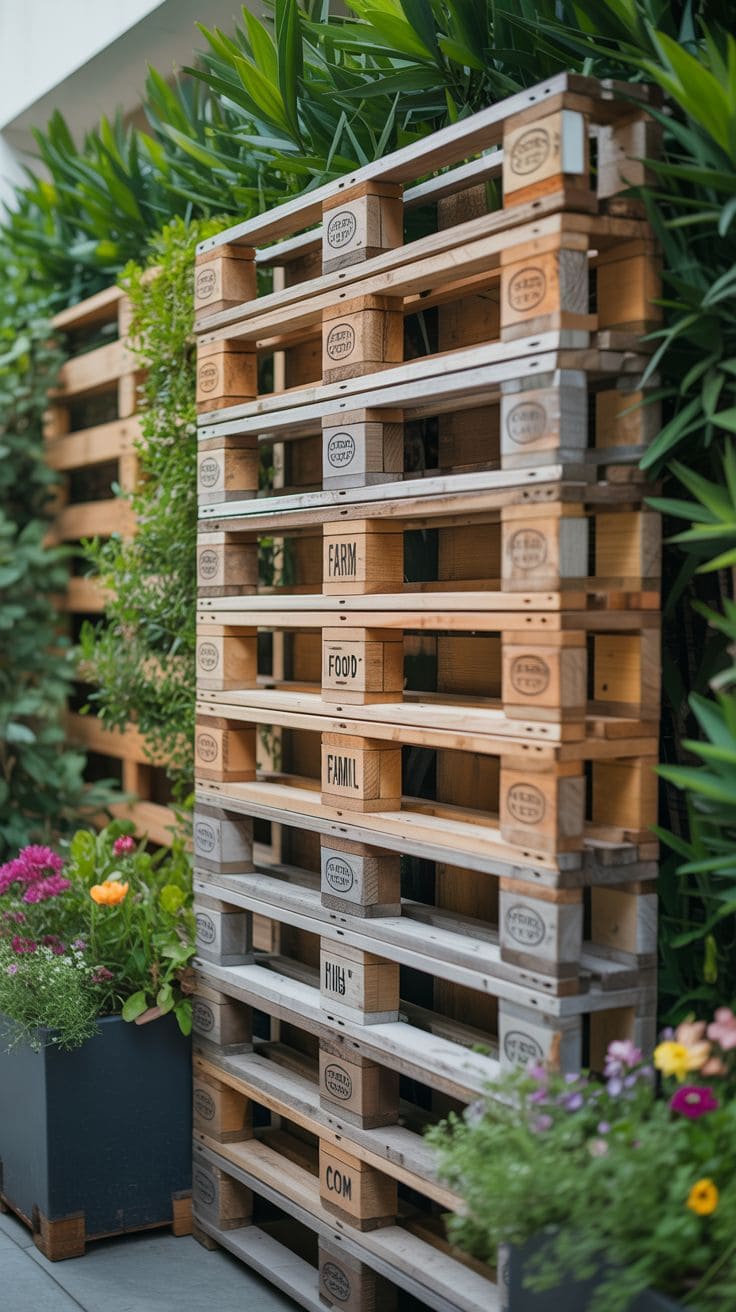
Every pallet has a stamp burned into the wood, usually on one of the corner blocks. Look for HT, which stands for heat-treated. According to PalletOne, a pallet manufacturer and industry authority on the standard, HT means the wood was heated to a core temperature of at least 56°C (132.8°F) for a minimum of 30 minutes to kill off pests, and no chemicals are involved anywhere in the process. That’s the stamp you want.
Never build with a pallet stamped MB. That means methyl bromide, a fumigant gas used to sterilize the wood chemically instead of with heat, and it’s not something you want anywhere near a fence your kids or pets will be around. 1001Pallets, a pallet-reuse community resource that’s basically the authority on this exact question, also recommends skipping any pallet with visible staining, an odd chemical smell, or bright paint you can’t identify, even if the stamp looks fine. When in doubt, don’t use it.
Where to actually get pallets for free
Garden centers, small grocery stores, pet supply stores, and industrial parks are consistently the best bets, and moving companies discard a lot of pallet material once equipment is delivered. The one rule that matters more than any other: ask first. Pallets sitting outside a business aren’t automatically free just because they’re outside. But skip anything stamped CHEP or with a red Block Pallet marking (Red PECO), since those are pooled, company-owned pallets that businesses are financially on the hook for returning. Taking one is a legal problem, not a safety one.
20 Creative Pallet Fence Ideas
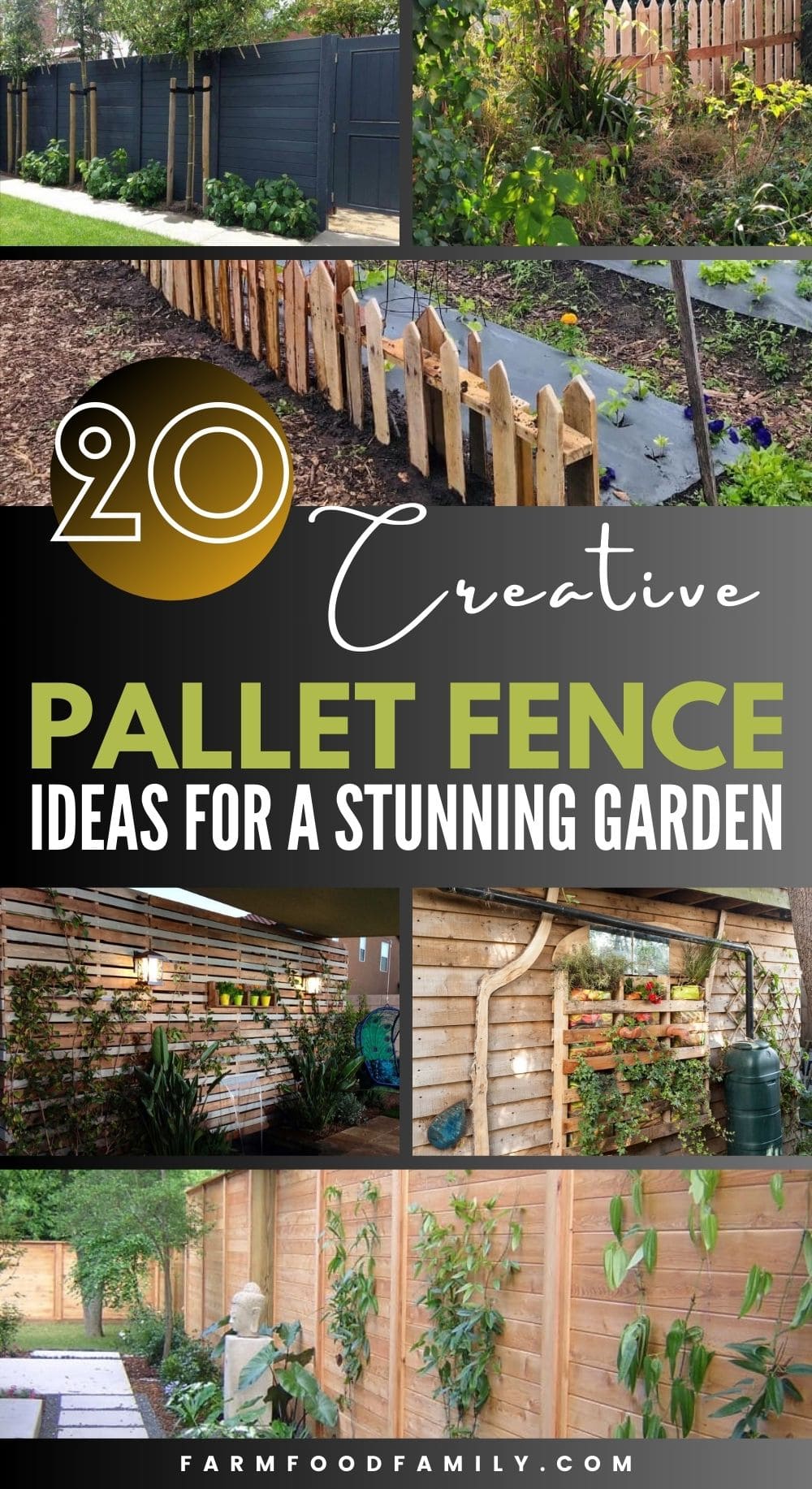
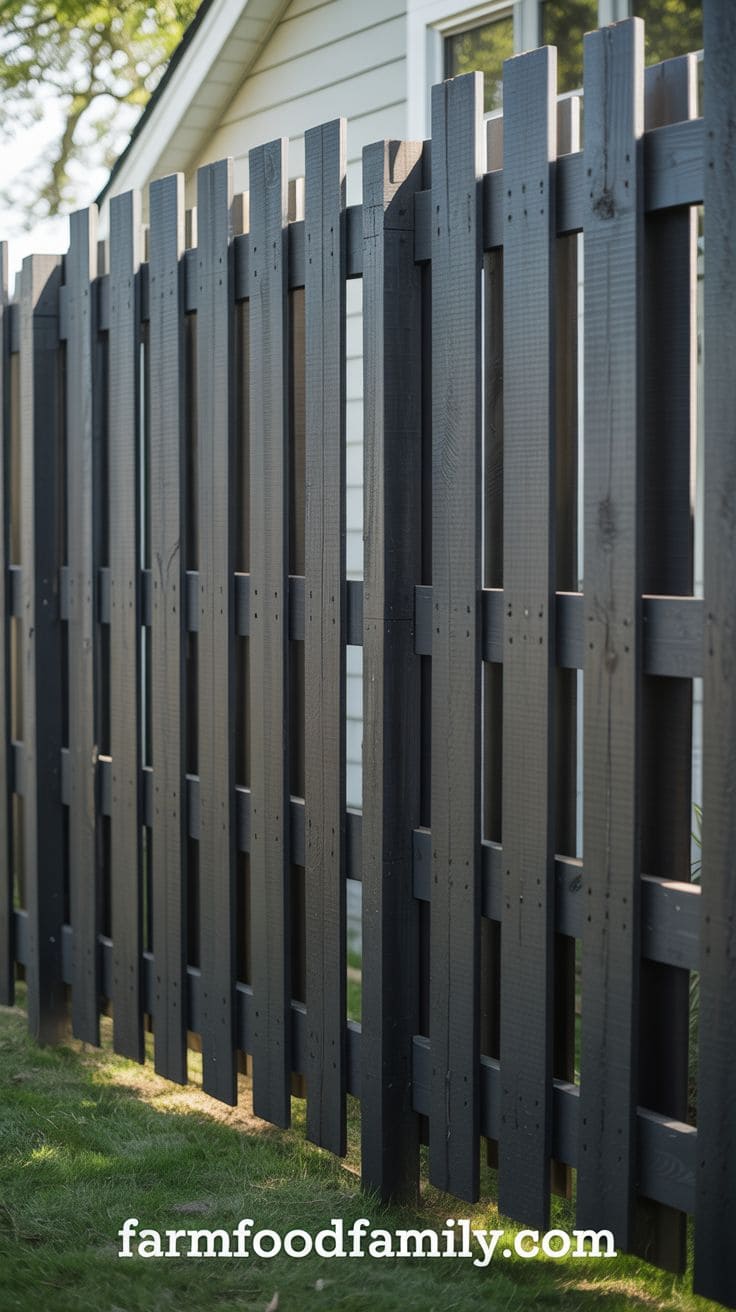
1. Classic Vertical Pallet Privacy Fence
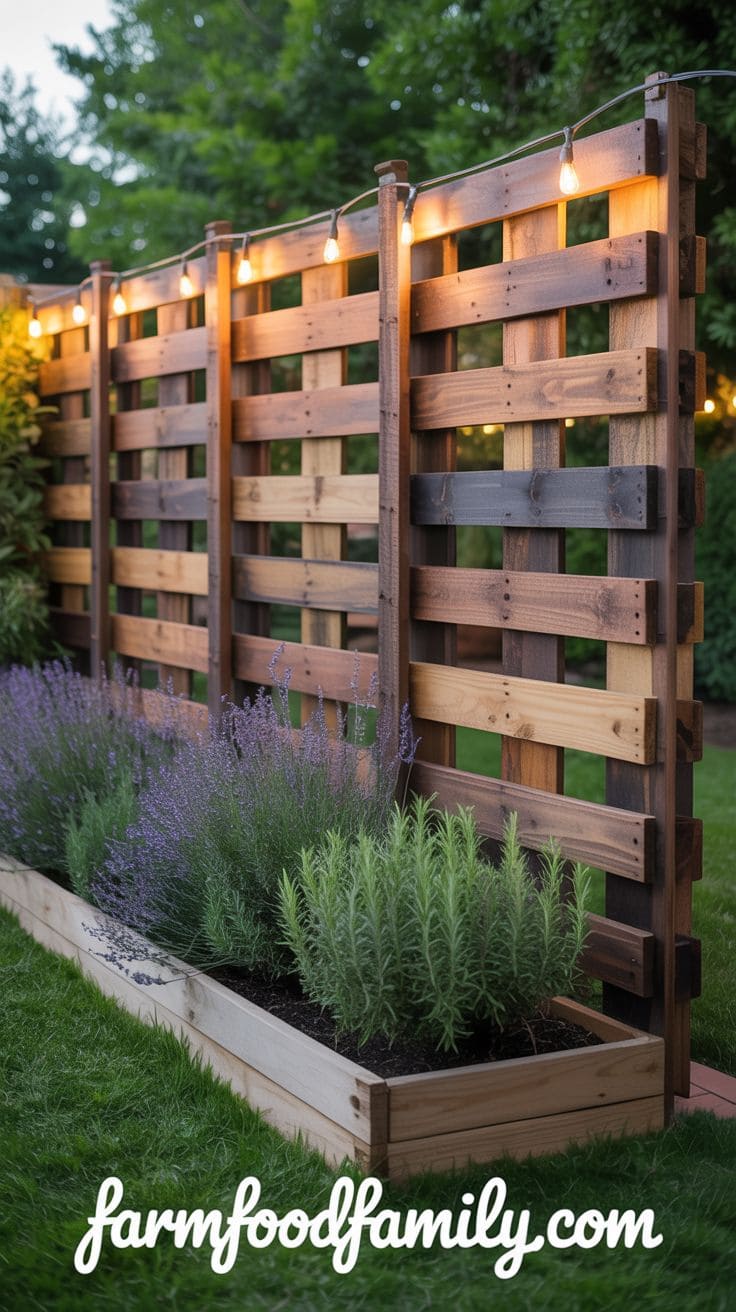
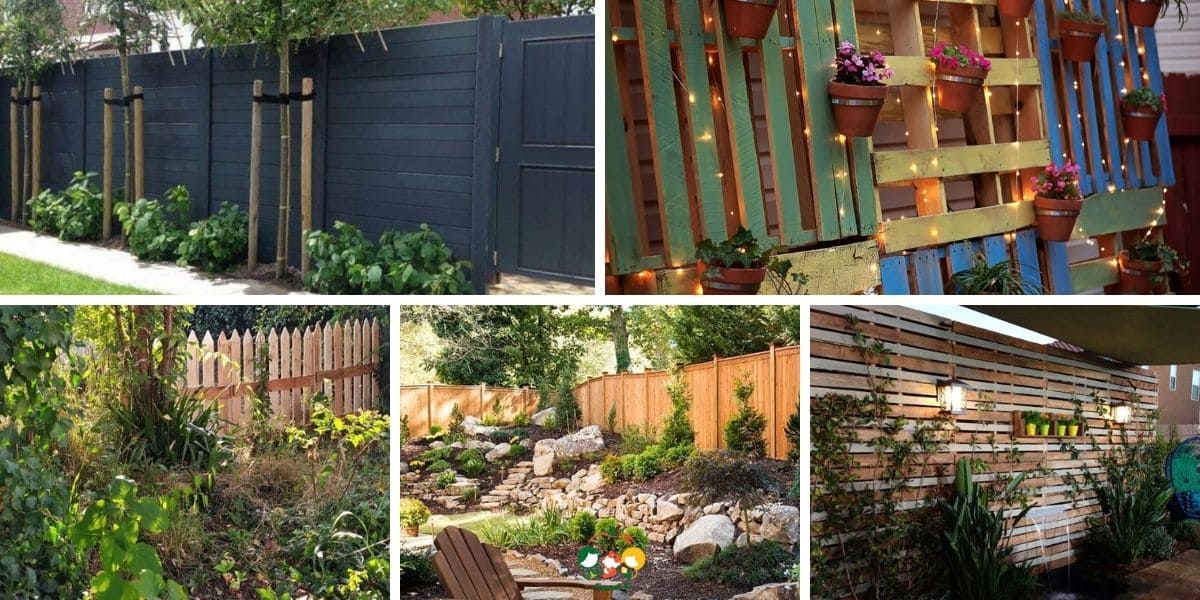
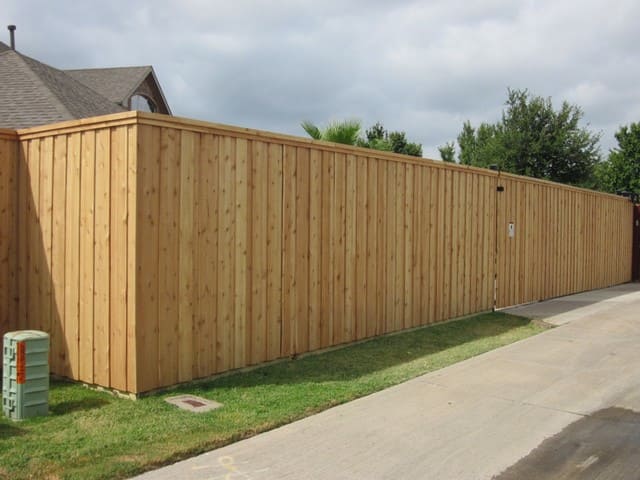
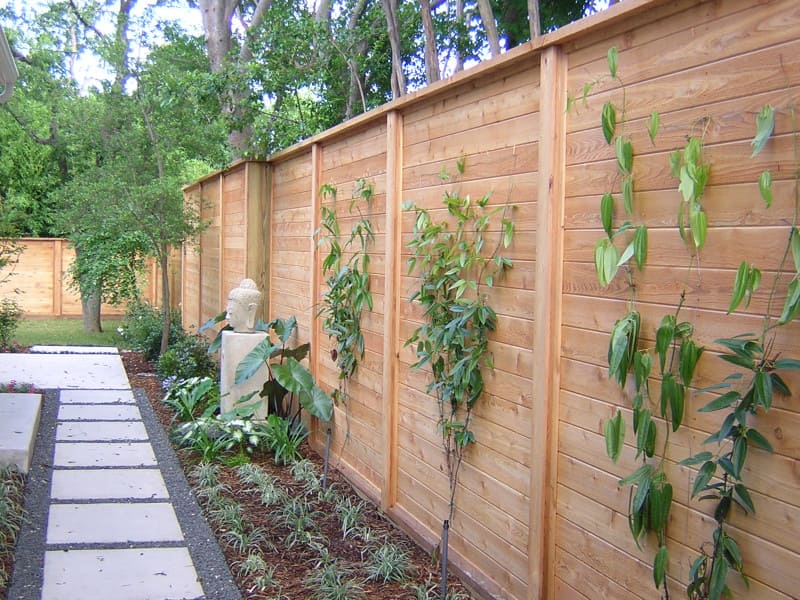
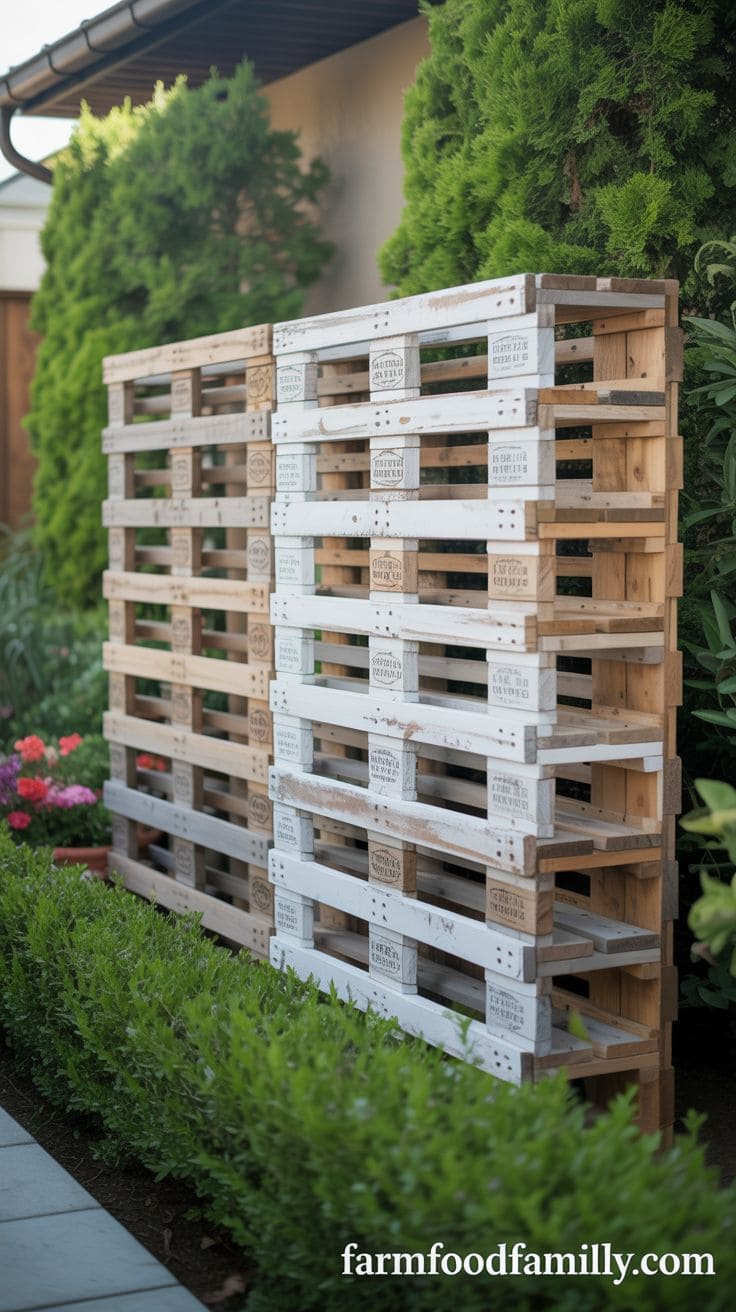
Disassemble your pallets and reassemble the boards vertically, edge to edge, between sturdy posts to form a solid, continuous run. This has the look of a classic wood privacy fence while keeping the reclaimed character of the pallet wood underneath.
Stain it in a rich walnut or cedar tone for a more finished look, or leave it raw if you want the weathering to show. Works well for suburban yards with close neighbors, or around a patio where you want the sightlines blocked.
Climbing plants like clematis or ivy soften the look over time, and solar lights along the top rail add some nighttime ambience without wiring anything.
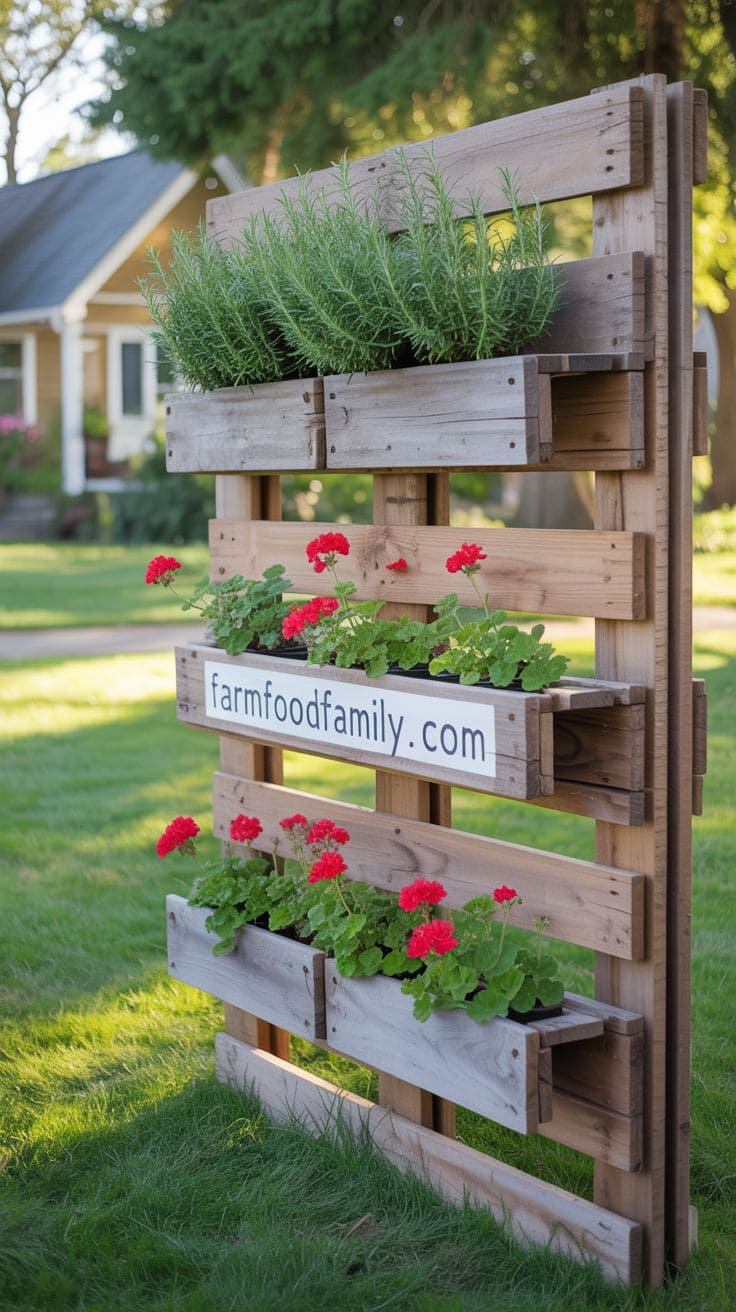
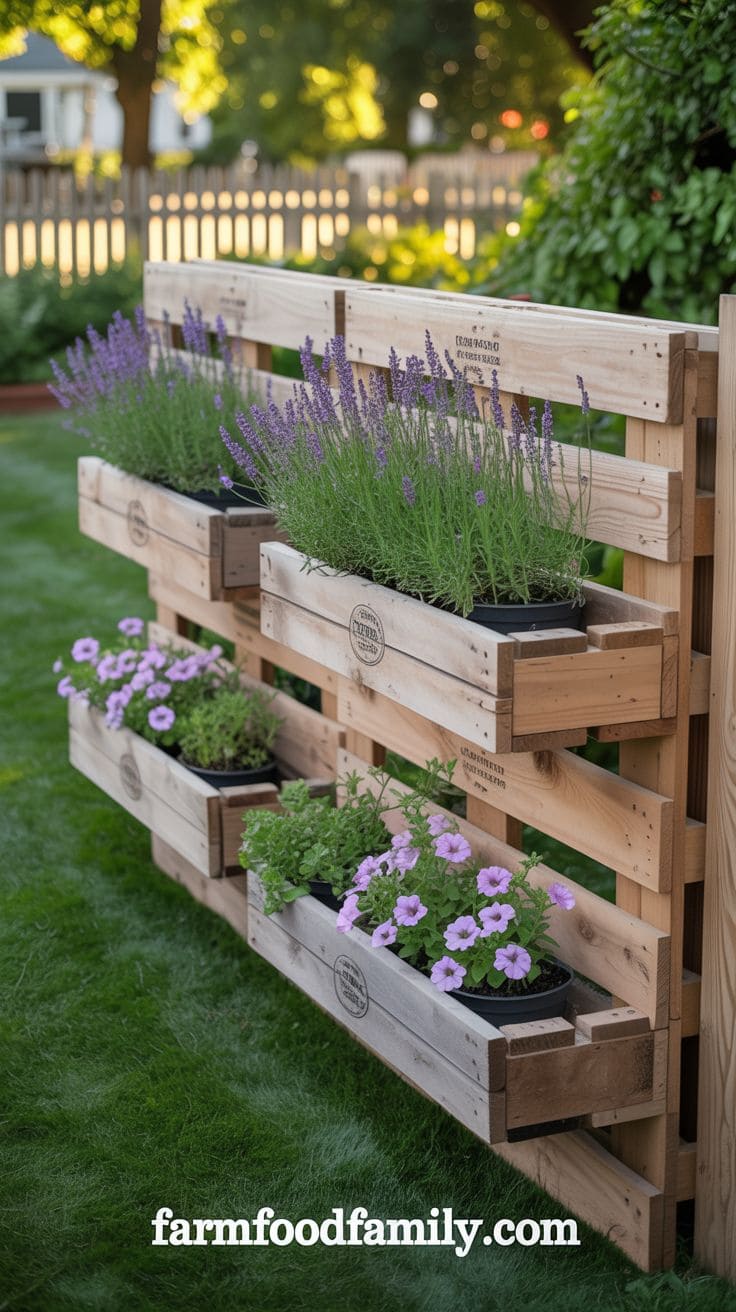
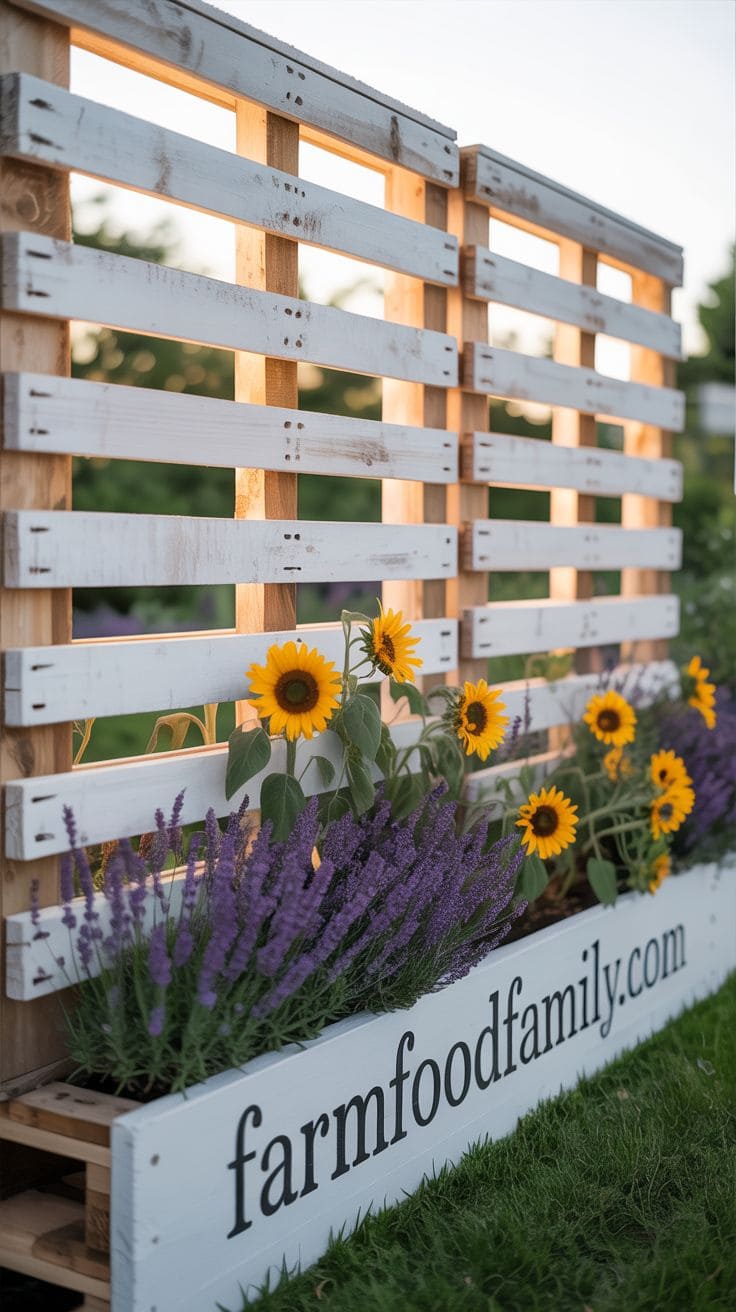
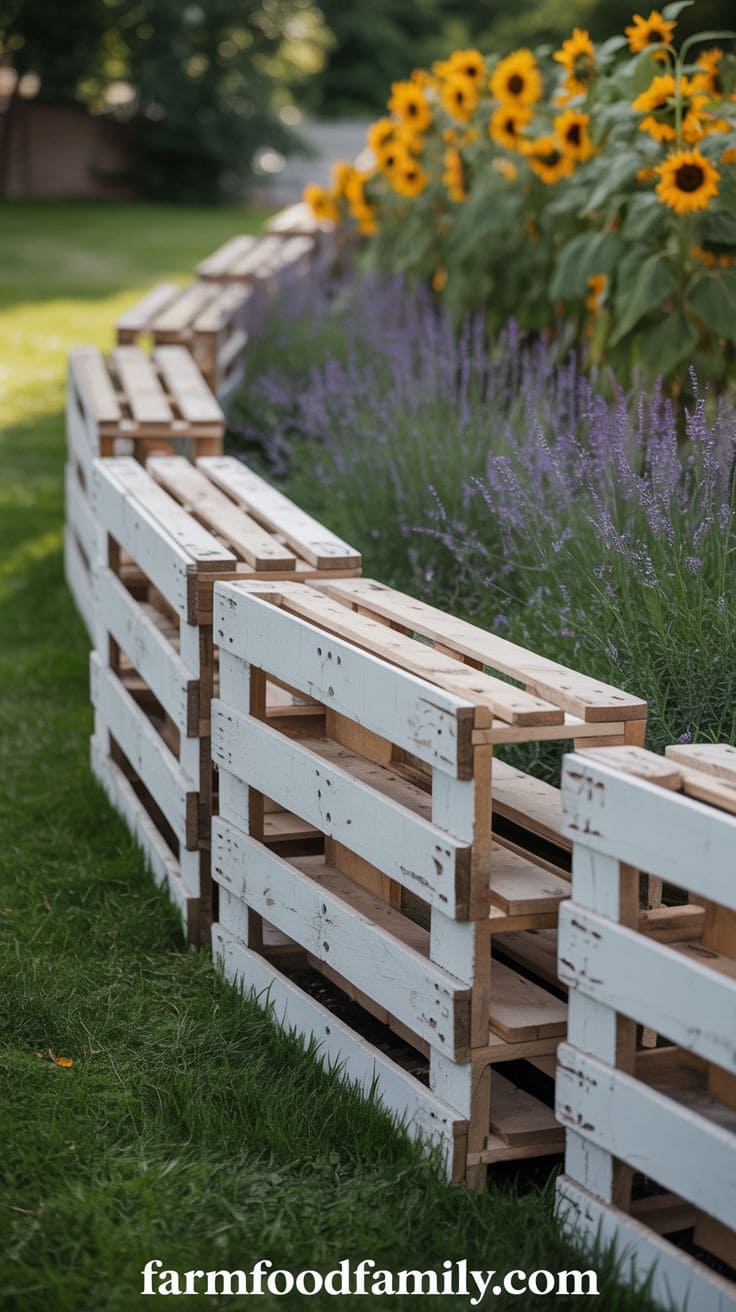
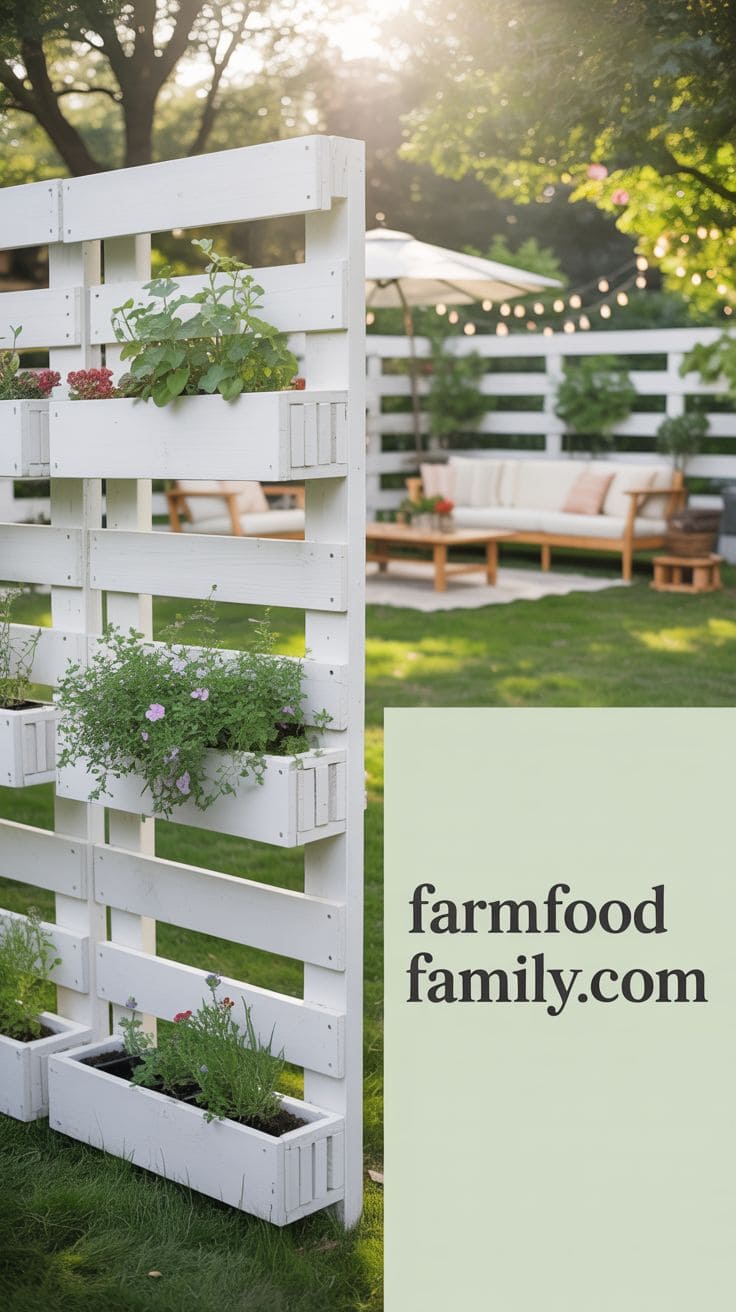
2. Pallet Fence with Built-In Planters
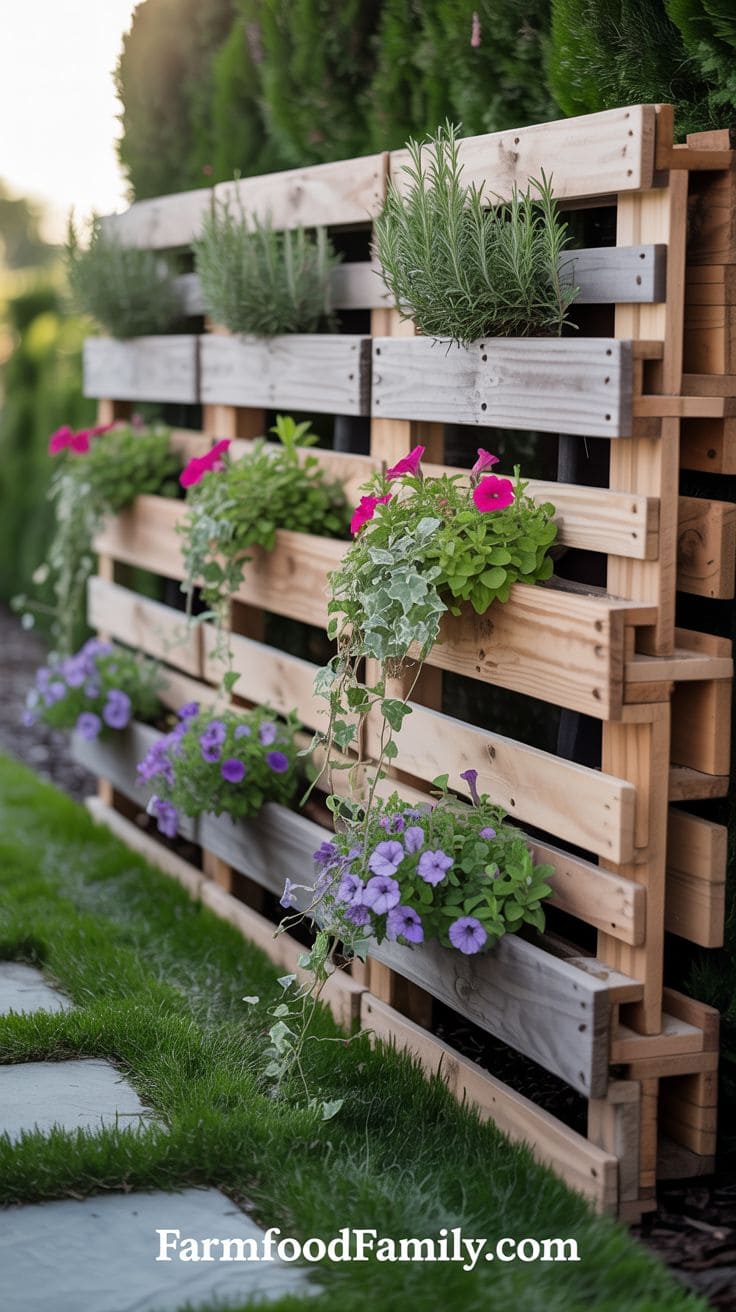
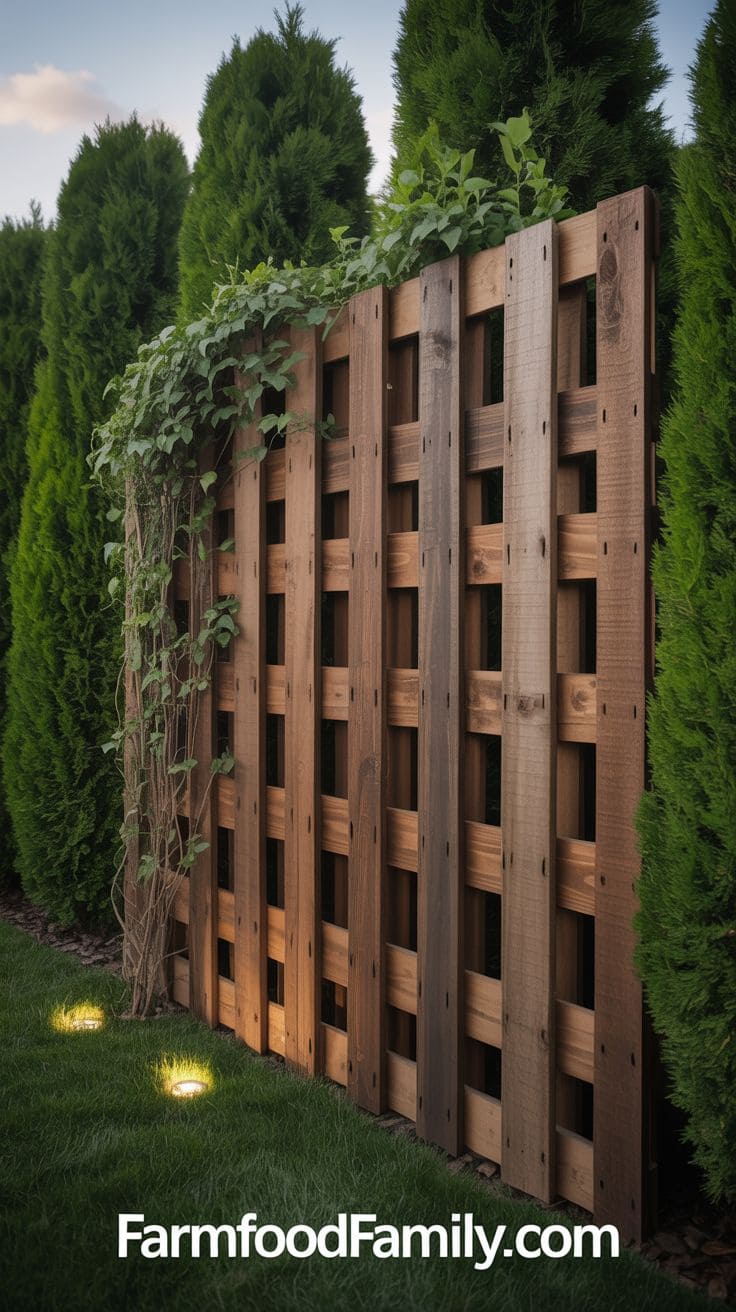
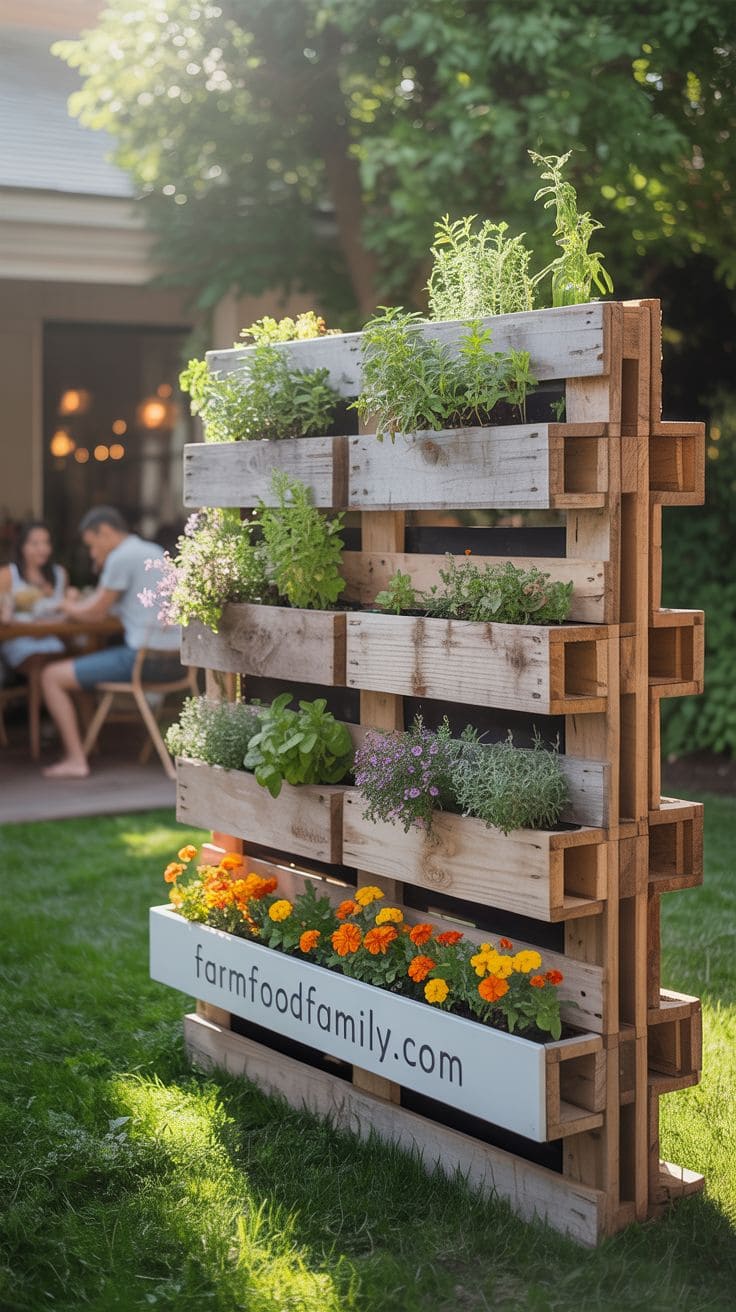
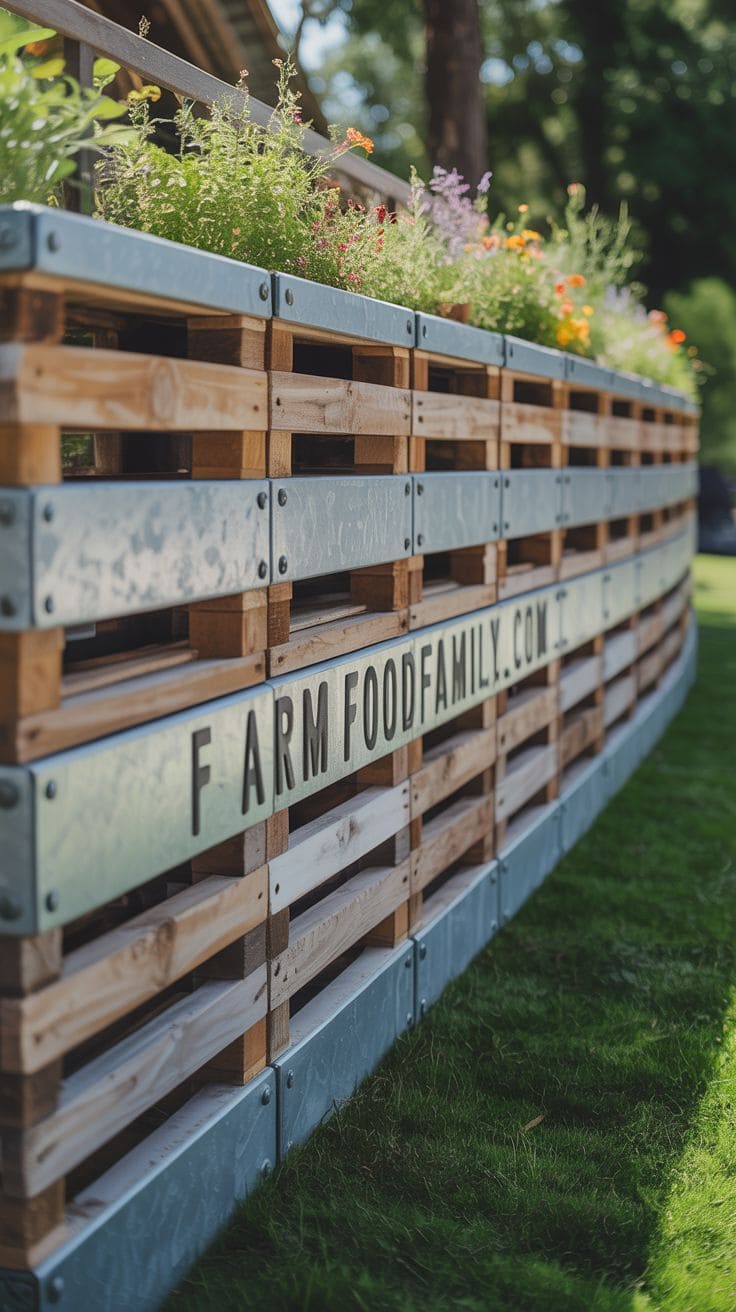
Two versions of this idea, both genuinely useful. The first: attach shallow wooden planter boxes directly to the outward-facing side of a standard pallet fence, spaced every few feet, so it doubles as a living wall from the yard side.
Most yard problems trace back to one specific, fixable cause. Find yours in 4 quick questions.
Take the Free QuizThe second: use the pallet’s natural slat gaps as vertical planting pockets, lining them with landscape fabric and filling with soil, which turns the whole fence into a growing surface rather than adding separate boxes.
Herbs and shallow-rooted flowers do best in either version since the soil depth is limited. See our DIY pallet and wood planter box ideas for more on building the boxes themselves.
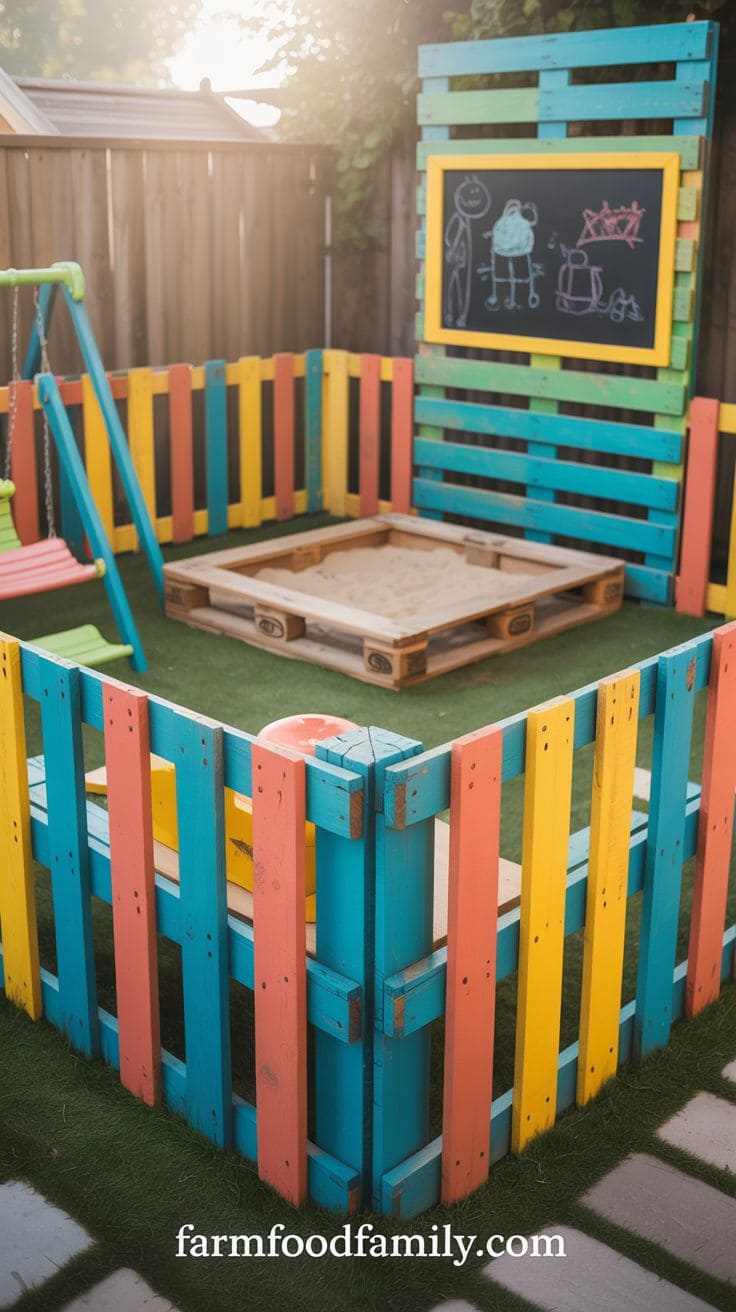
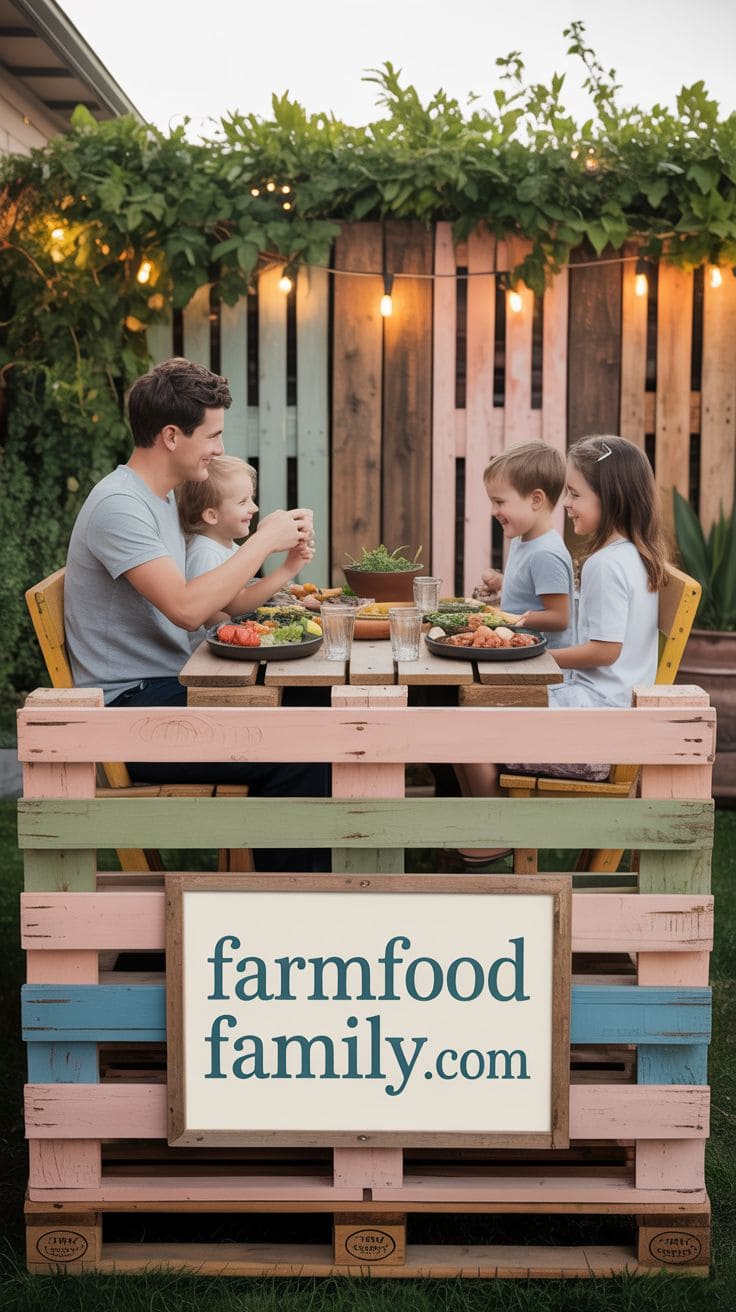
3. Colorful Pallet Fence for Children’s Play Area
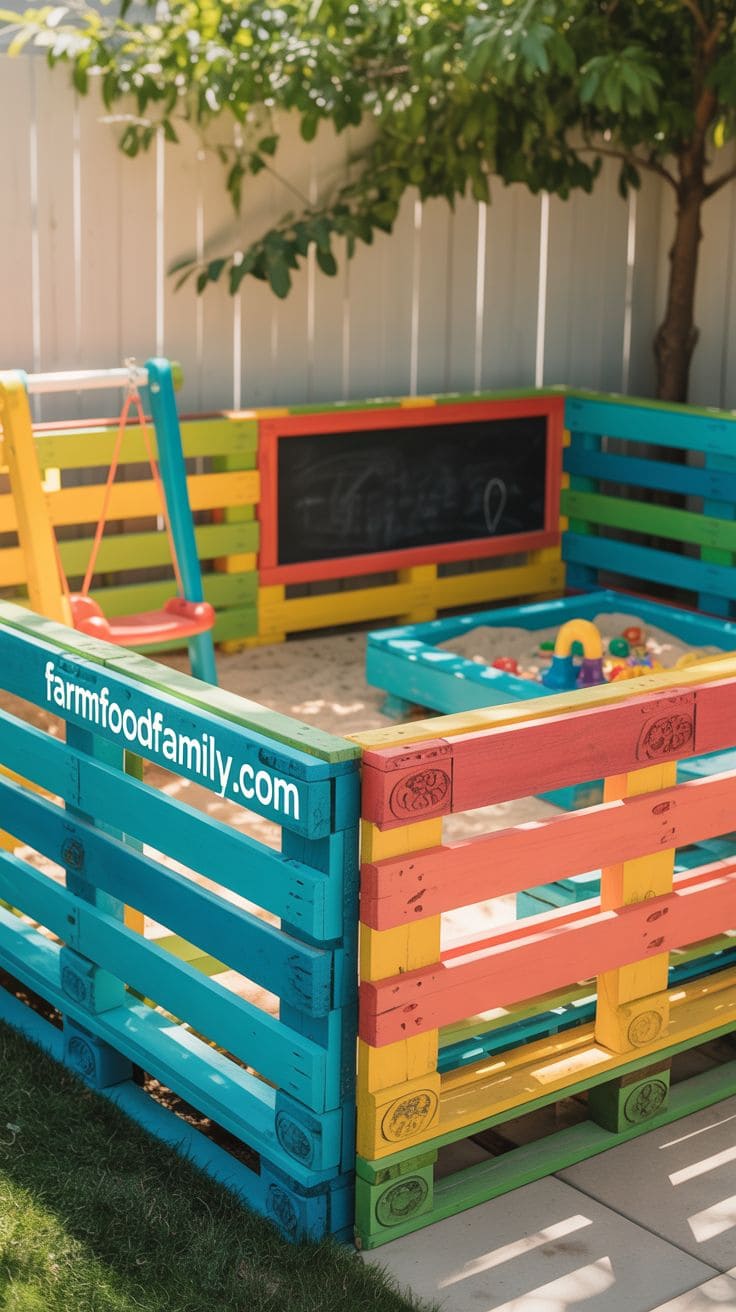
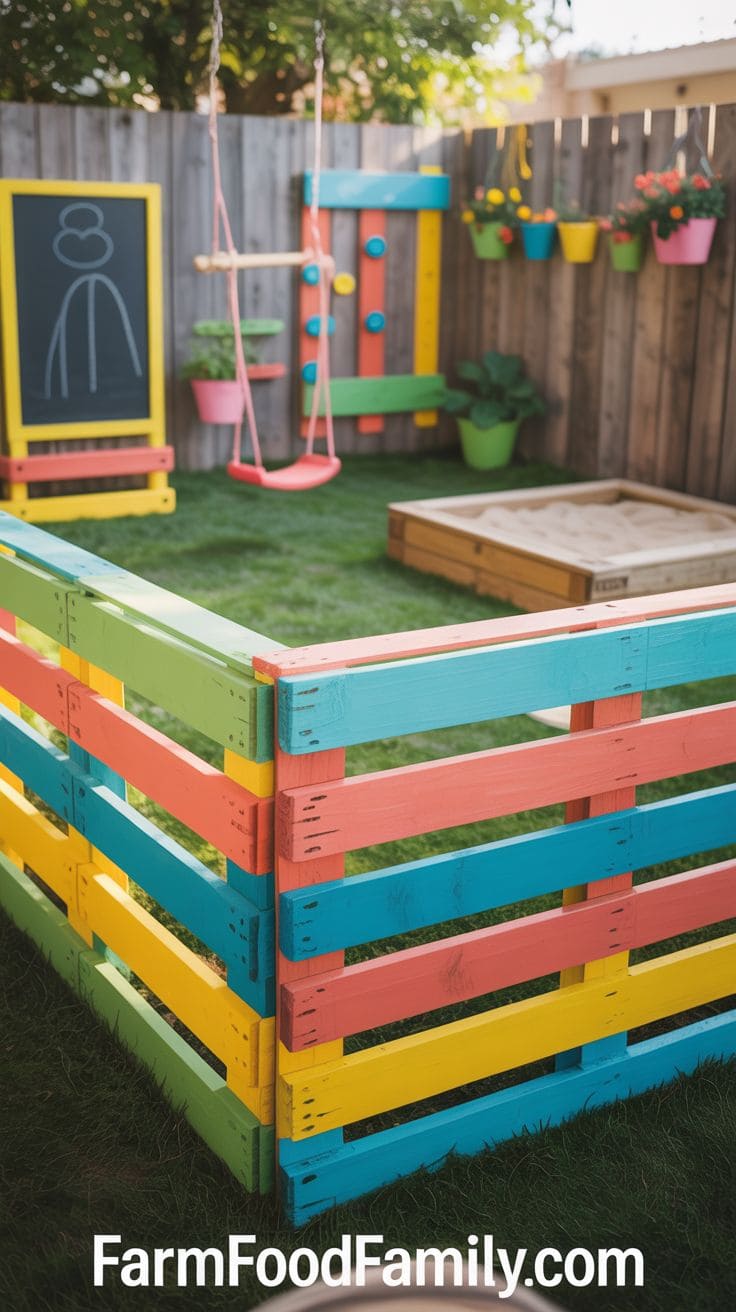
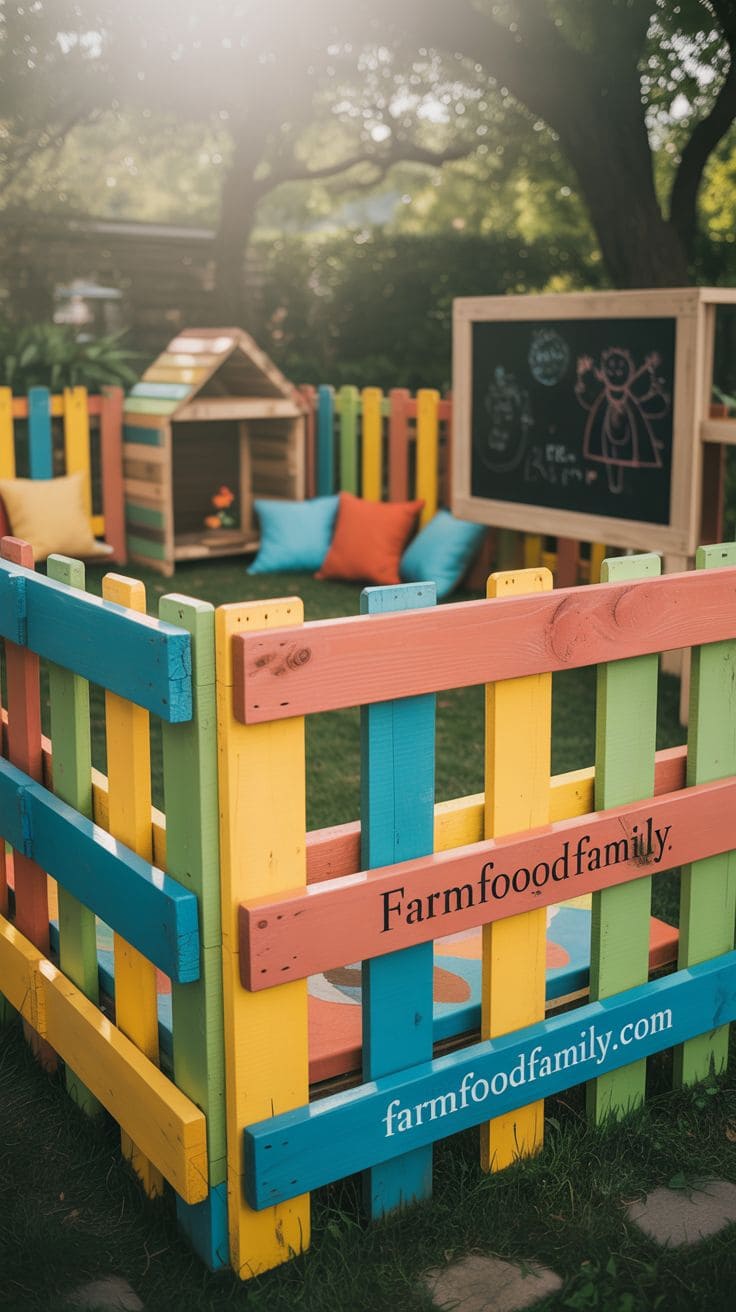
Paint a pallet fence in bright, colorful colors to enclose a children’s play area, adding whimsy and imagination to your garden.
Choose bright colors such as turquoise, lime green, sunshine yellow, and coral, then paint each pallet a different shade to create a rainbow effect.
Secure the pallets upright around a sandbox, playhouse, or swing set for added safety and visual interest.
You can also use chalkboards, climbing grips, or magnetic boards on the inside for interactive play.
This sort of fence encourages creativity and defines the play area, giving children a sense of ownership and parents peace of mind.
This fence becomes part of the fun as it gets brighter, more inventive, and filled with joy and usefulness.
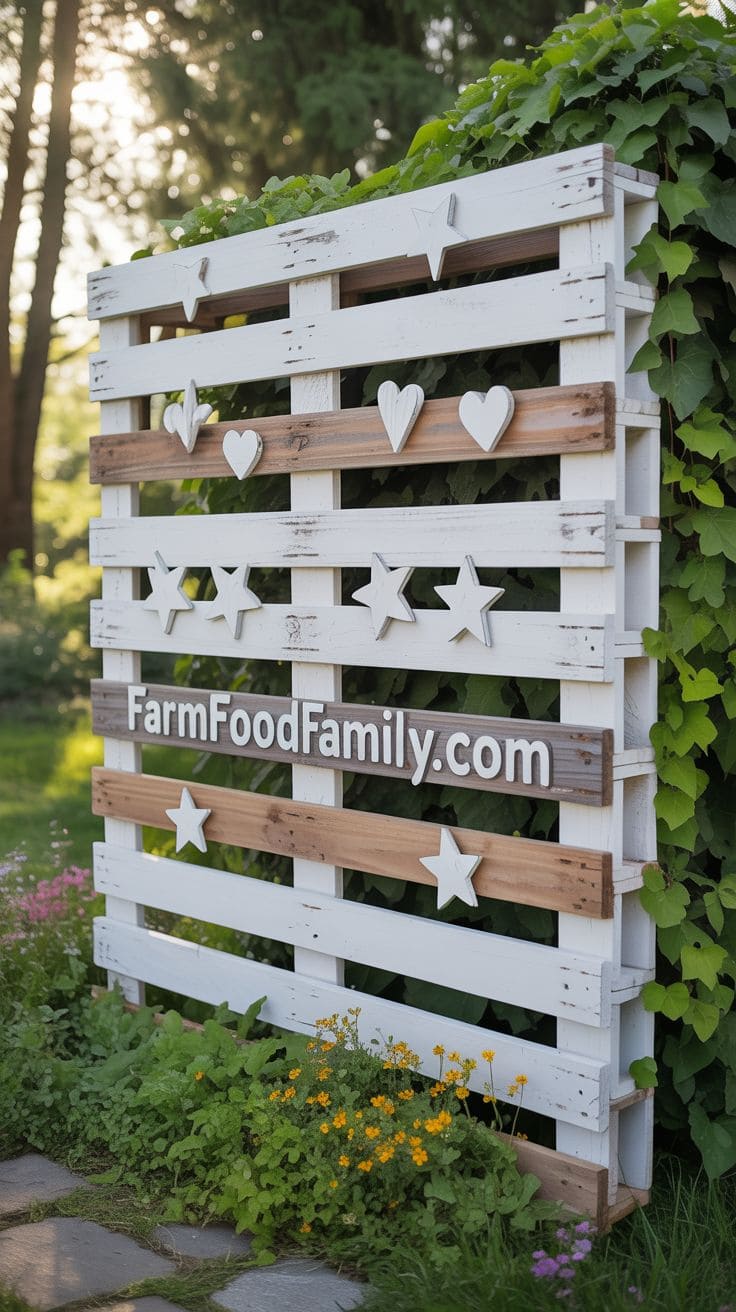
4. Pallet Fence with Decorative Cutout Shapes
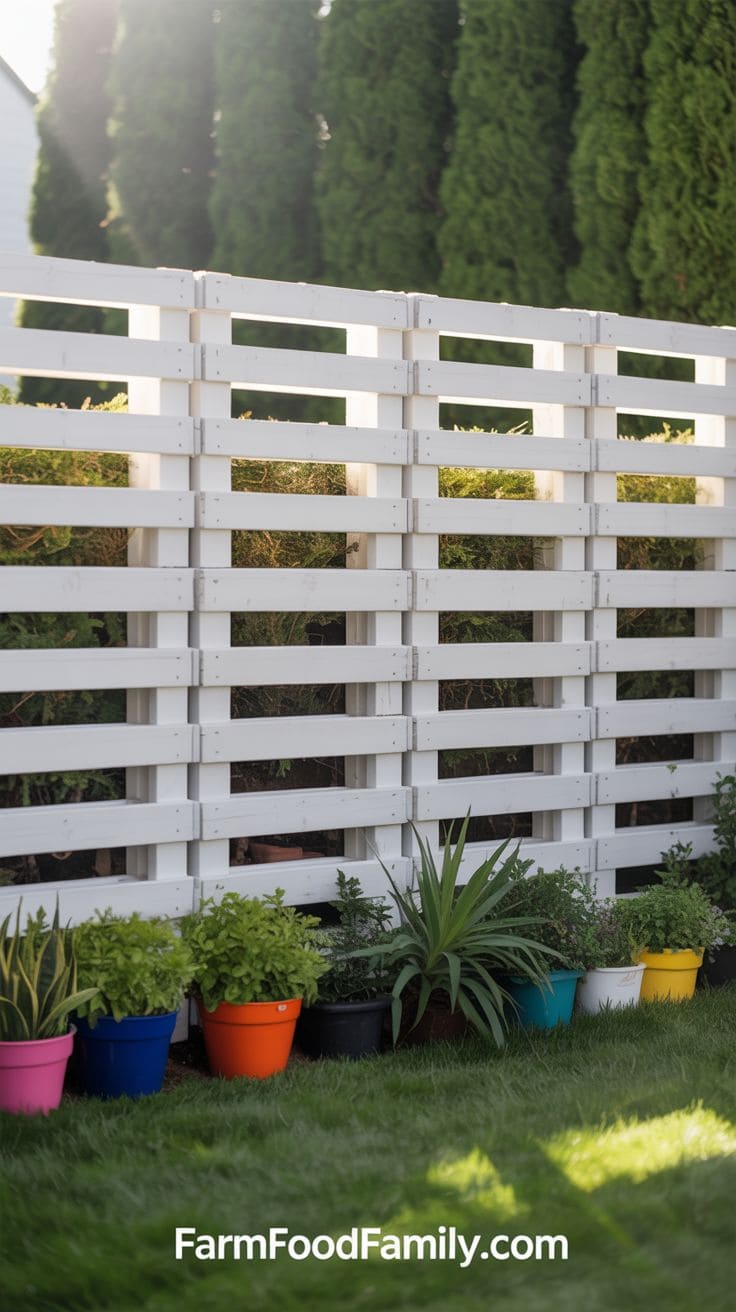
Carve or cut ornamental shapes into the slats of your pallet fence to give it a whimsical or personalized look.
Use jigsaw-cut hearts, stars, or geometric motifs in each panel to give the fence flair and a handcrafted appearance.
This is ideal for themed gardens, imaginative front yards, or children’s settings that require both usefulness and design flair.
The average homeowner spends $616/year on yard fixes that don't address the real problem. Find out what yours actually is — before you spend another dollar.
Take the Free QuizEven minor cuts can transform a basic fence into a focal point, allowing light and air through while adding artistic value.
This fence idea allows you to personalize your outdoor space while also displaying workmanship in a playful, expressive, and warm manner.
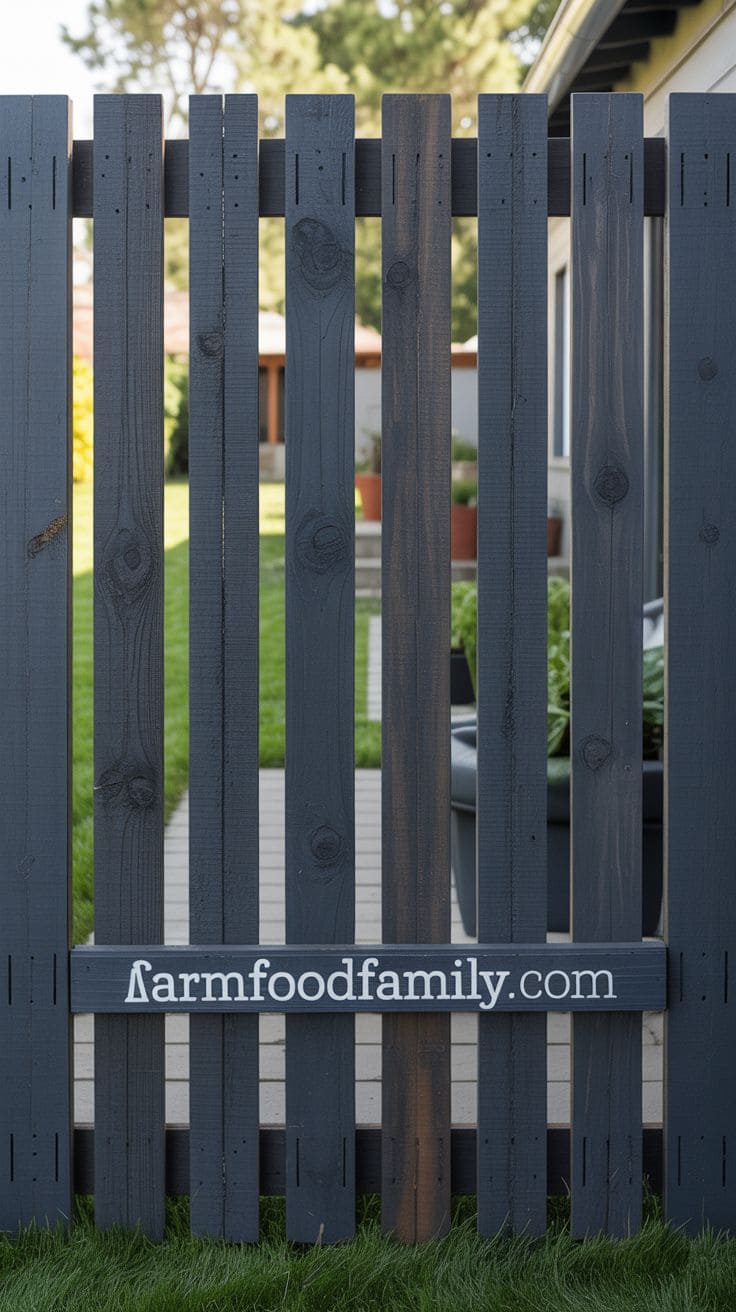
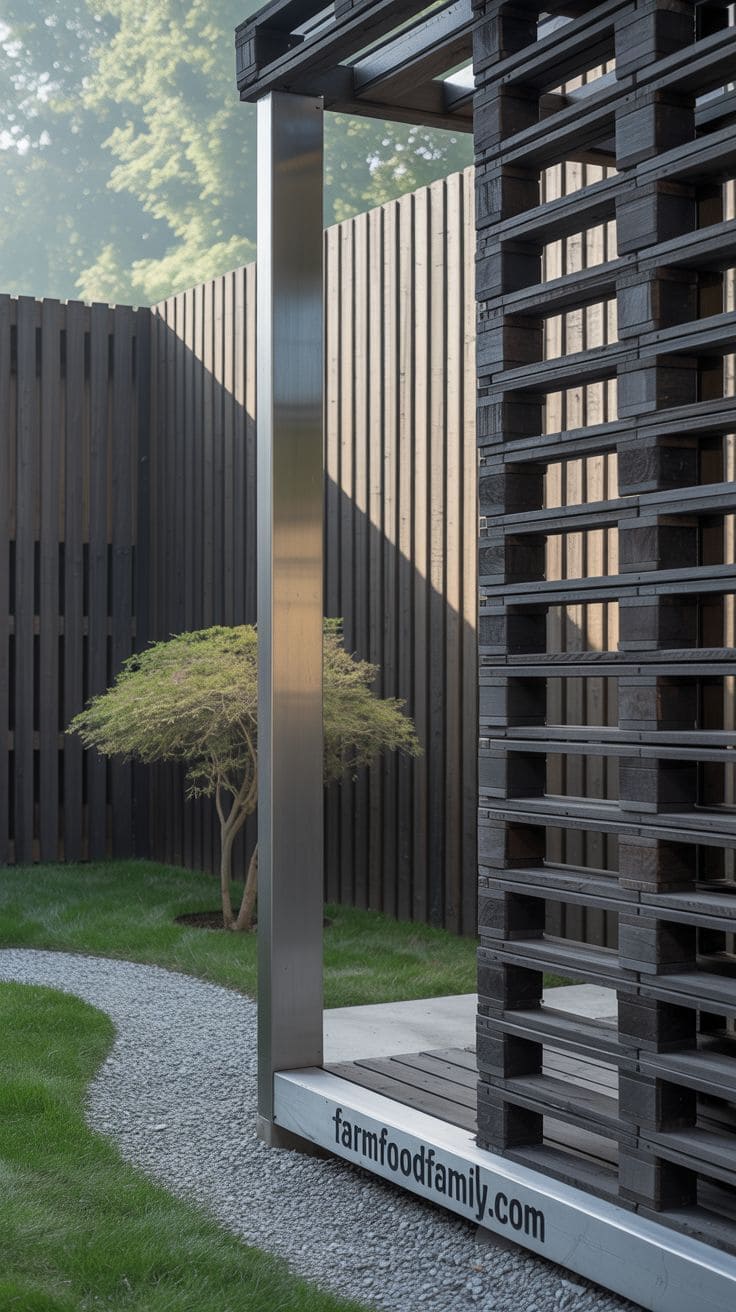
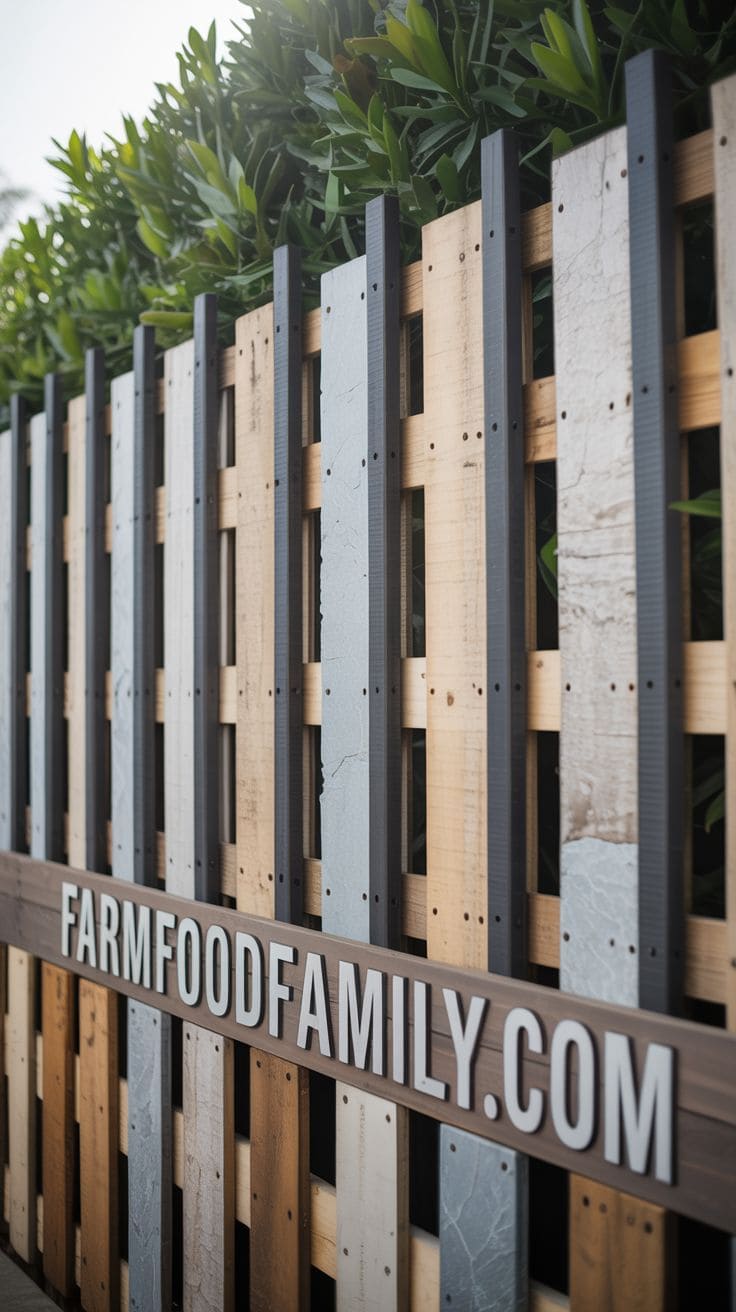
5. Vertical Slat Pallet Fence for a Modern Look
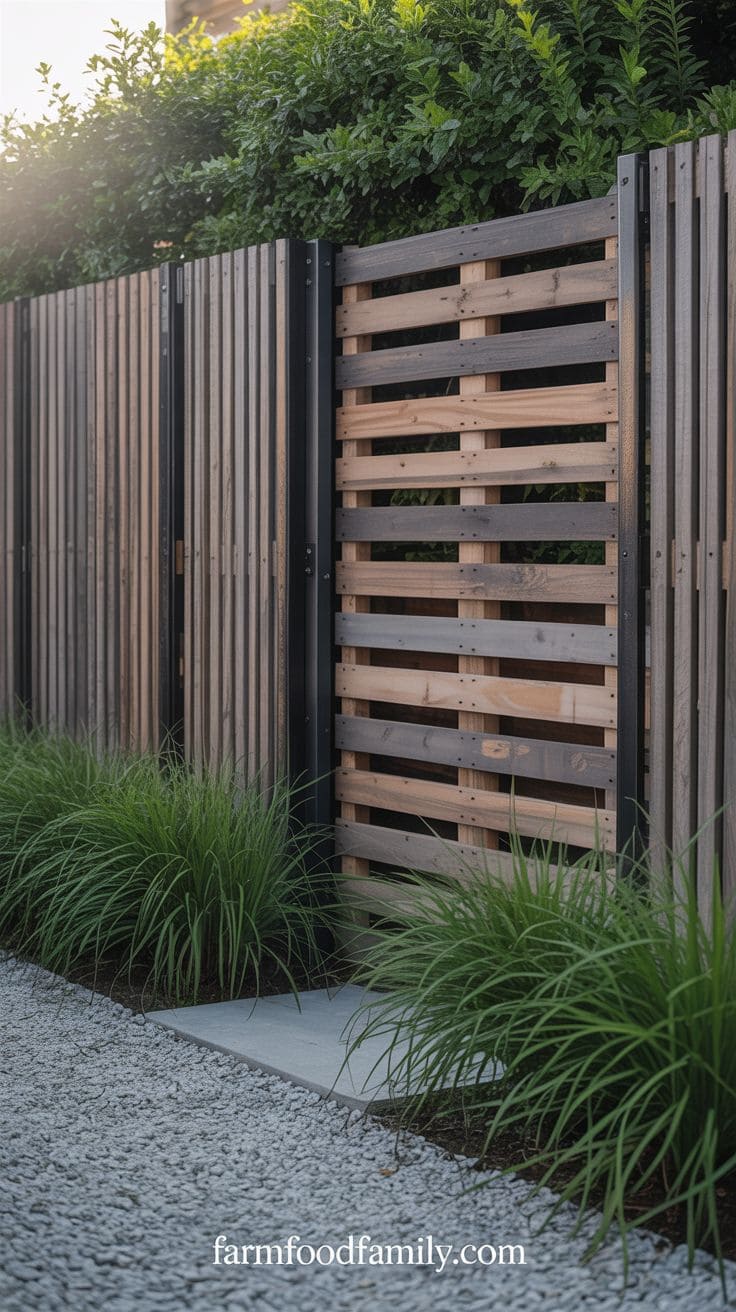
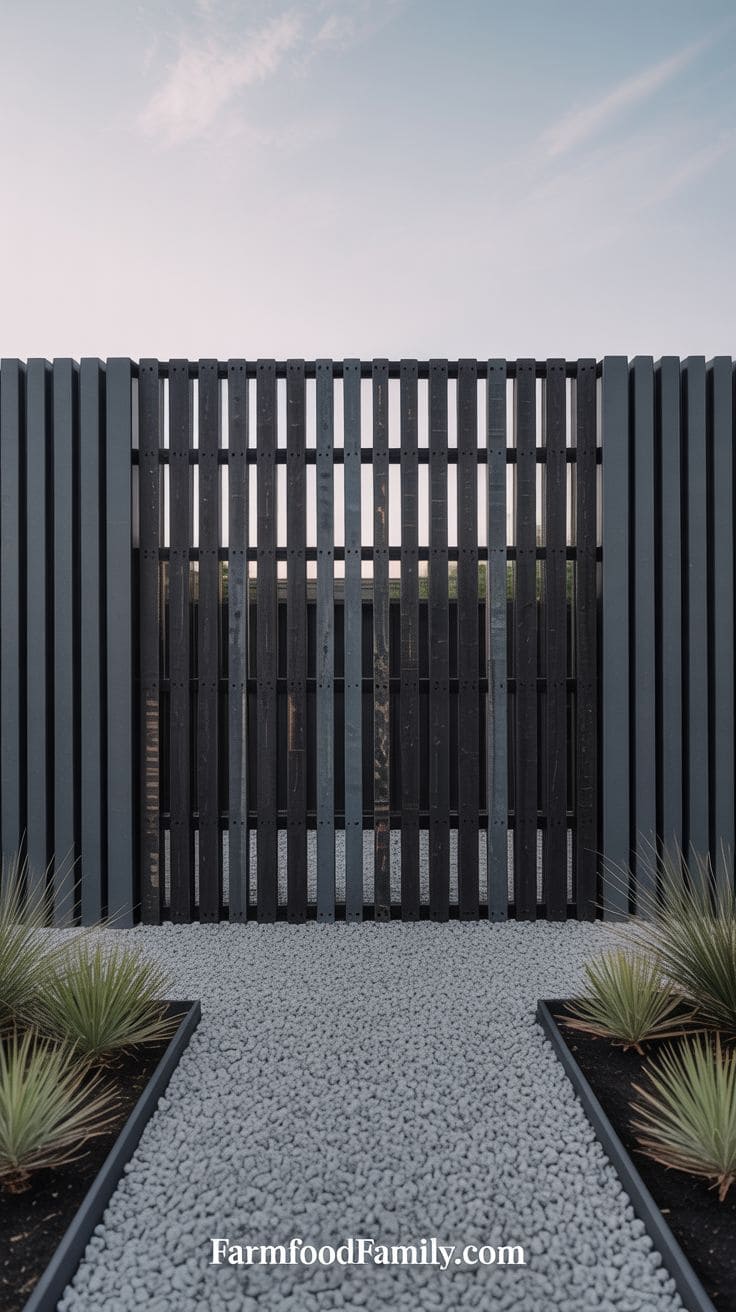
Turn the pallet fence planks vertically and space them equally for a modern slat-style construction.
This method is perfect for achieving clean lines and an airy sense while still defining your space.
For a contemporary style, paint or stain the slats charcoal, deep brown, or matte black and fasten them to horizontal rails between metal or wooden pillars.
This form works well in modern settings where aesthetics are as important as privacy.
It’s a trendy alternative to the more rustic pallet styles, while still providing economic and sustainability benefits.
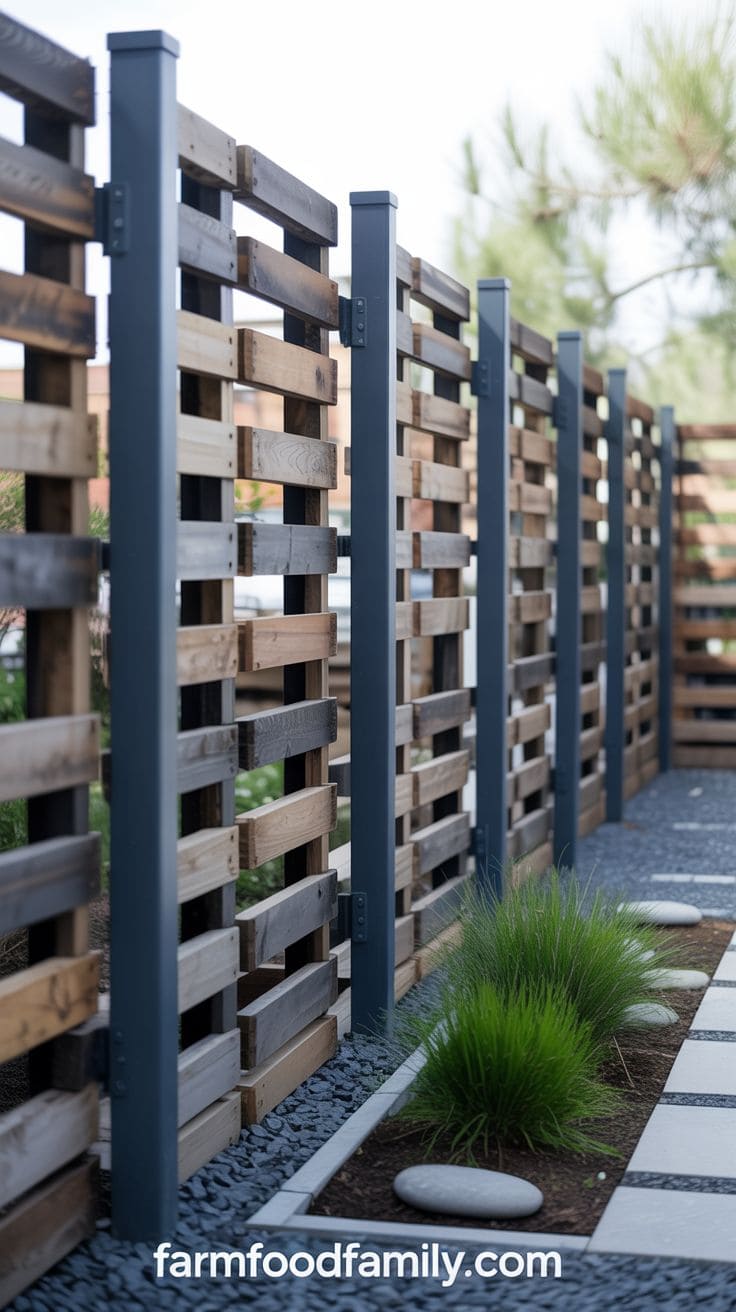
6. Basic Pallet Fence
7. Picket-Style Pallet Fence
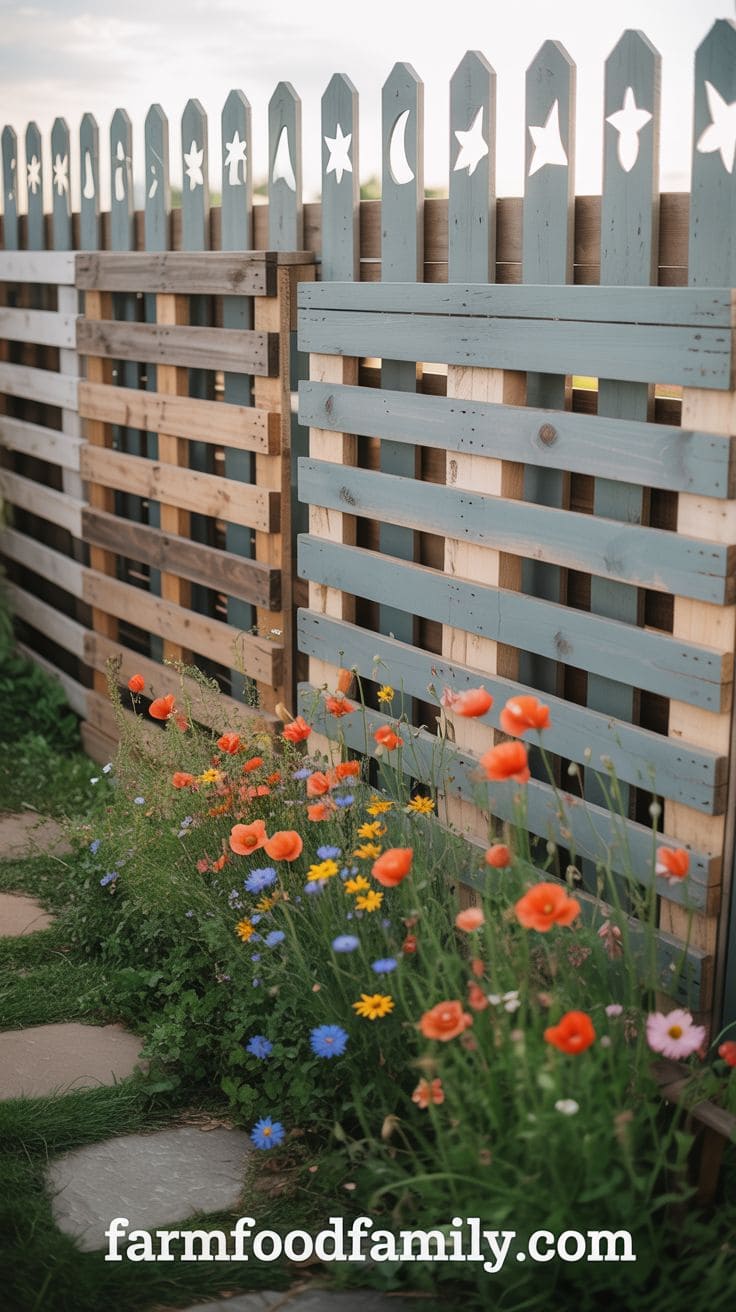
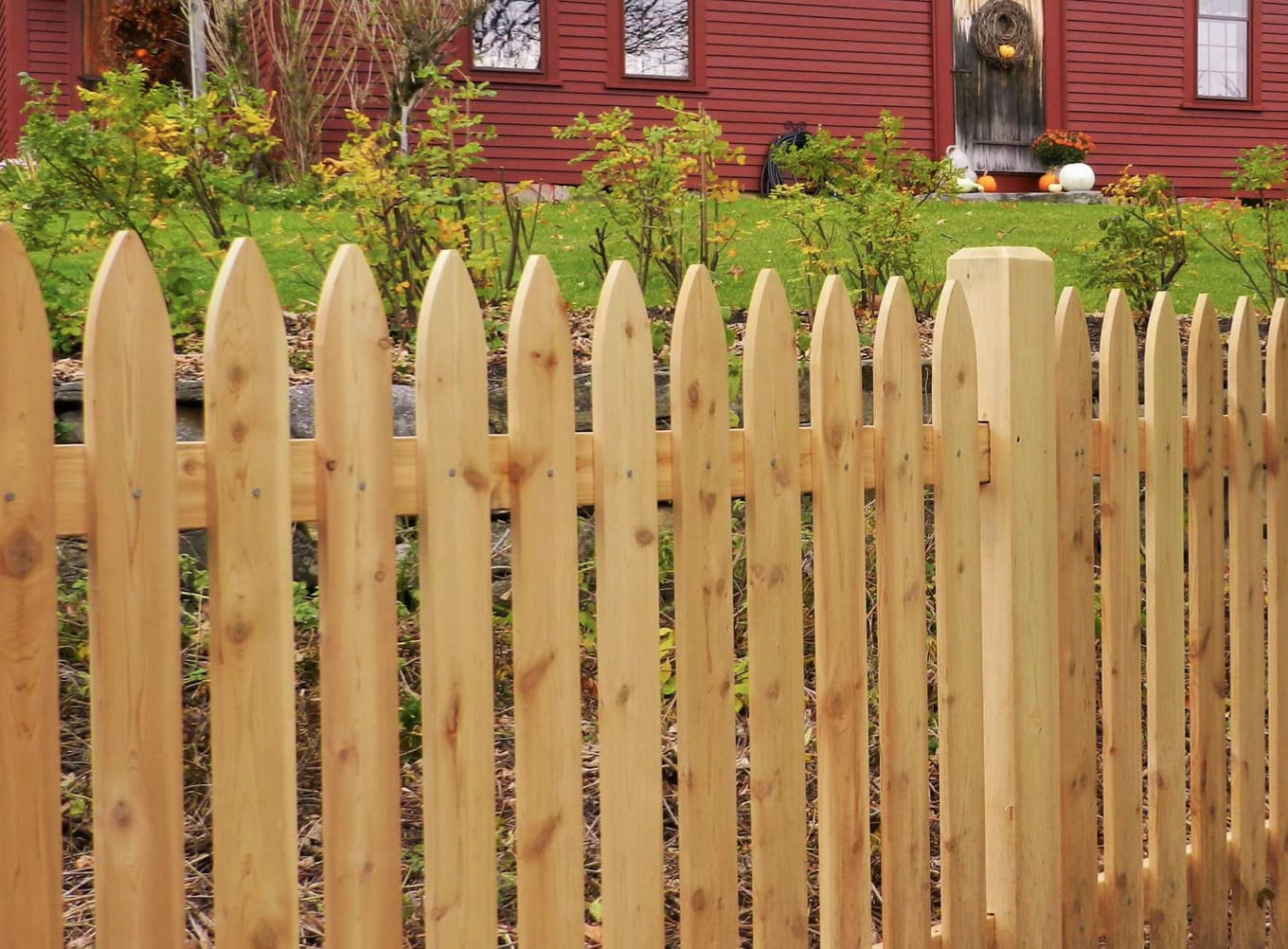
Cut the tops of the boards into simple points before staining or painting, the same silhouette as a classic picket fence, and keep the fence on the shorter side, 3-4 feet, since picket style reads as decorative rather than a privacy barrier.
White paint gives the most traditional look, but a soft sage or blue works well for a more cottage-garden feel.
8. Vertical Pallet Fence
9. Horizontal Pallet Fence
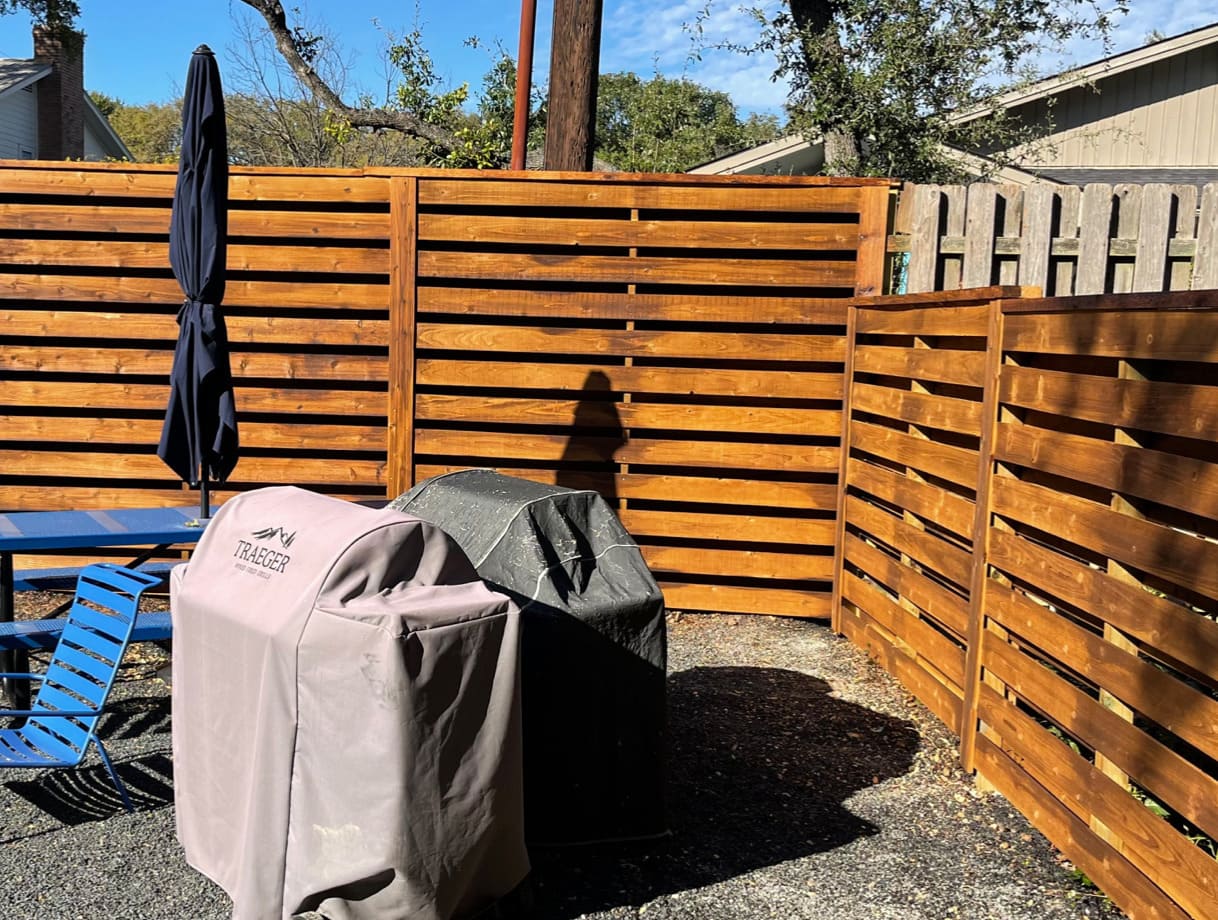
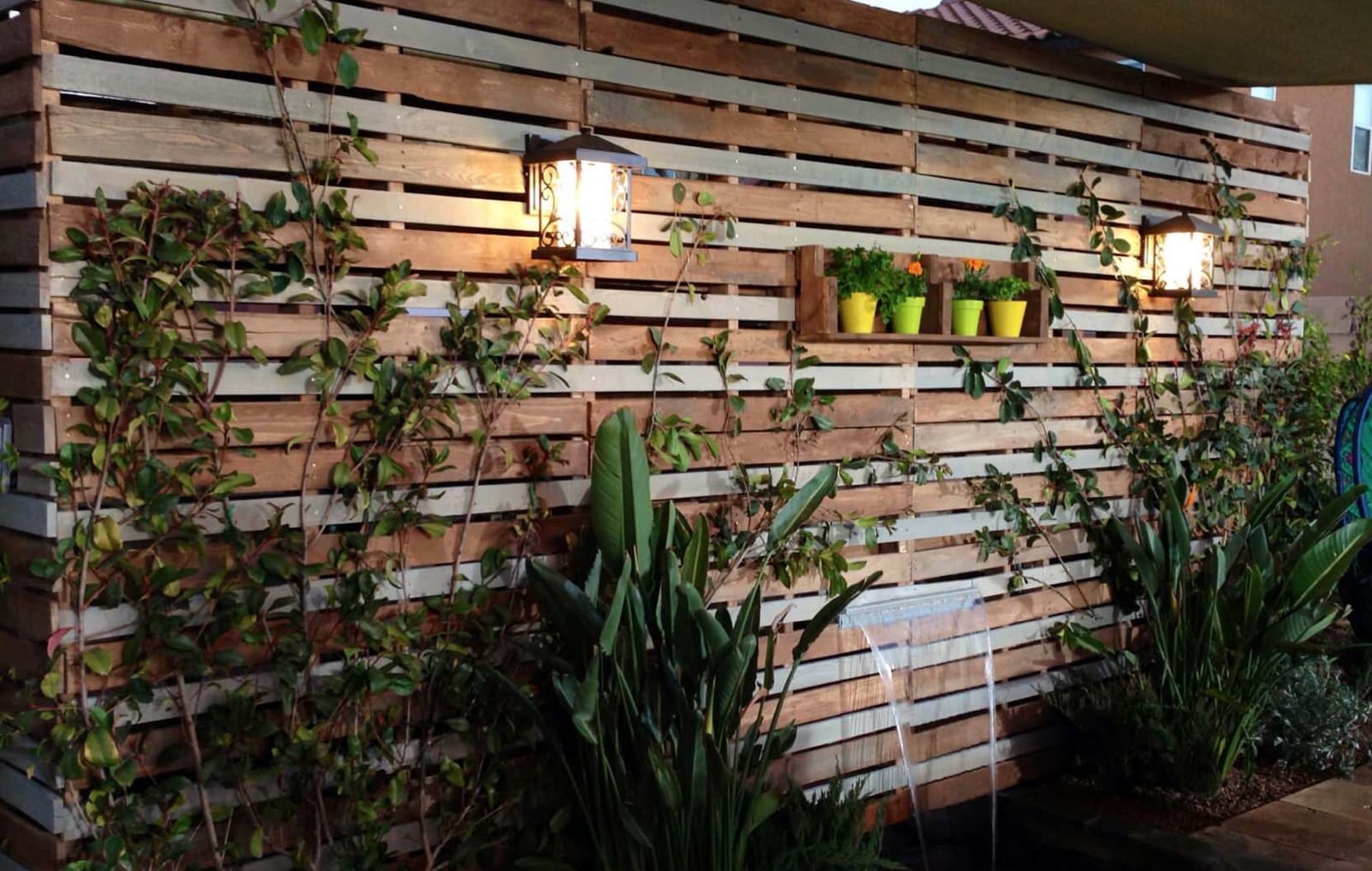
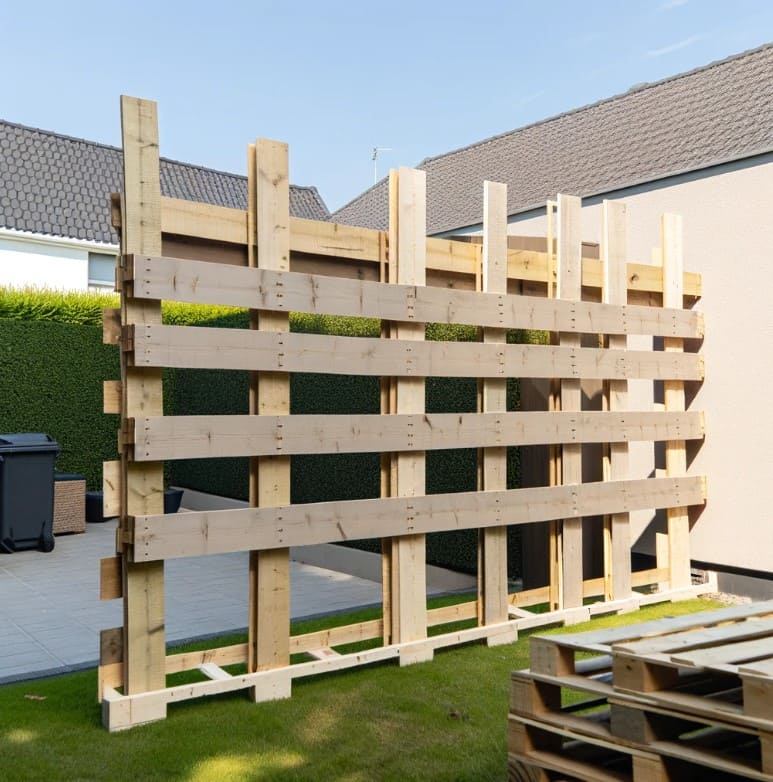
Run the boards horizontally instead of vertically, stacked with small gaps between each row for a more modern, almost shou-sugi-ban-adjacent look.
This orientation uses fewer posts overall since horizontal boards span between them rather than each board needing its own ground contact, which can make it a genuinely cheaper build than a vertical fence of the same length.
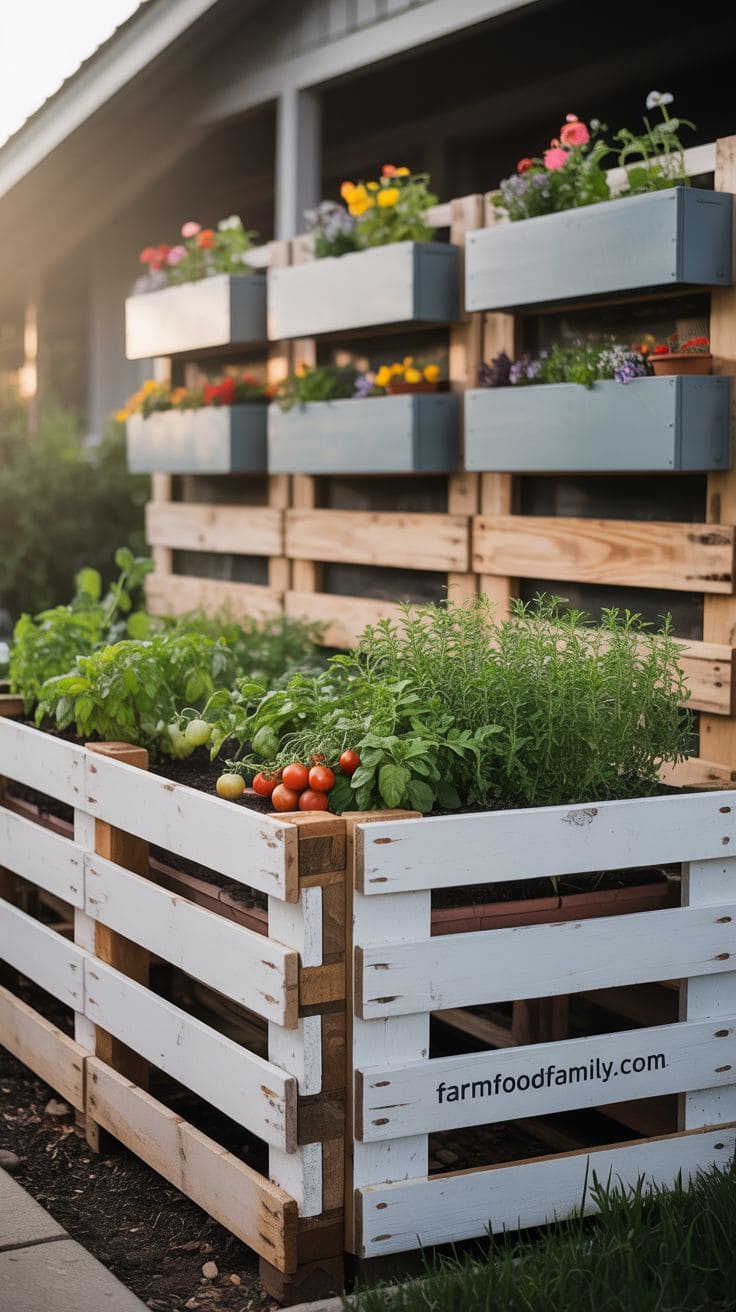
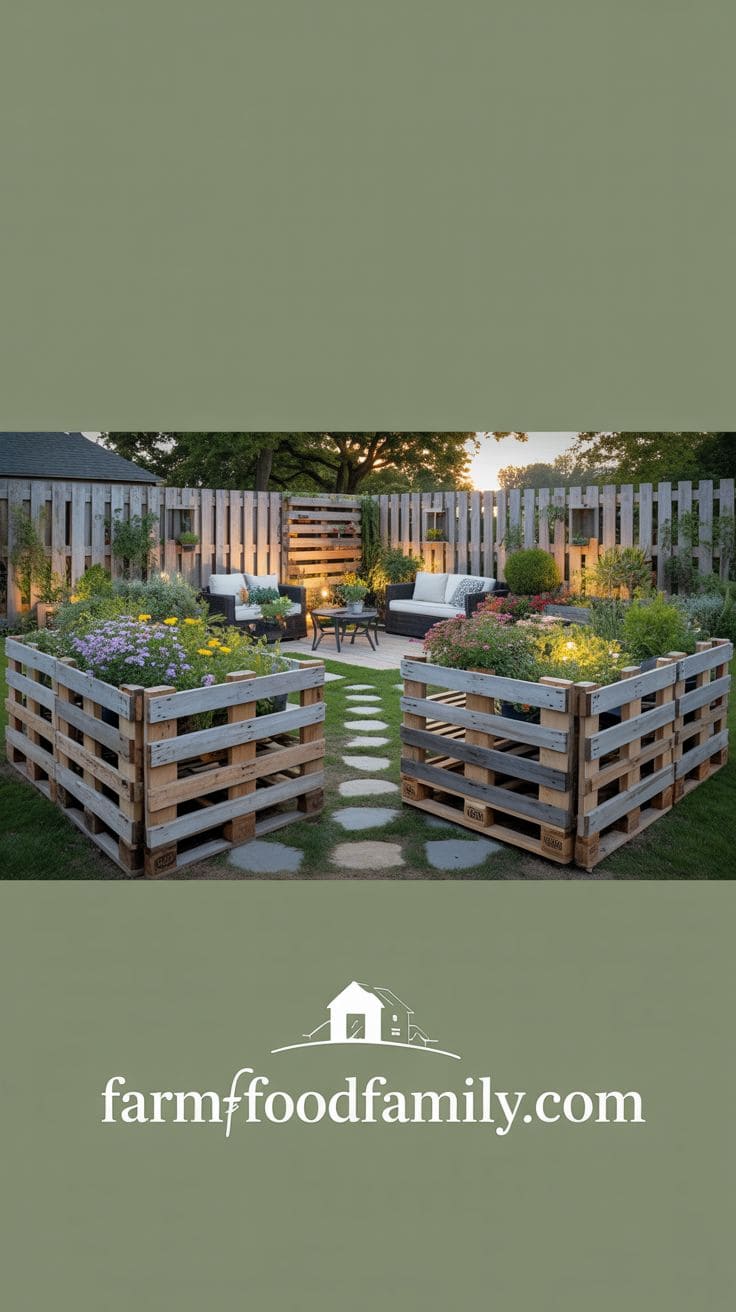
10. Pallet Garden Fence
Cut pallets down to a low 18-24 inch height and use them as a border around a vegetable or flower bed rather than a full yard fence.
This is a different job than privacy, it’s about defining a planting area and keeping foot traffic out, so the shorter height and lighter build are appropriate. See our vegetable garden fence ideas for more low-border options beyond pallet wood specifically.
11. Privacy Pallet Fence
12. Rustic Pallet Fence
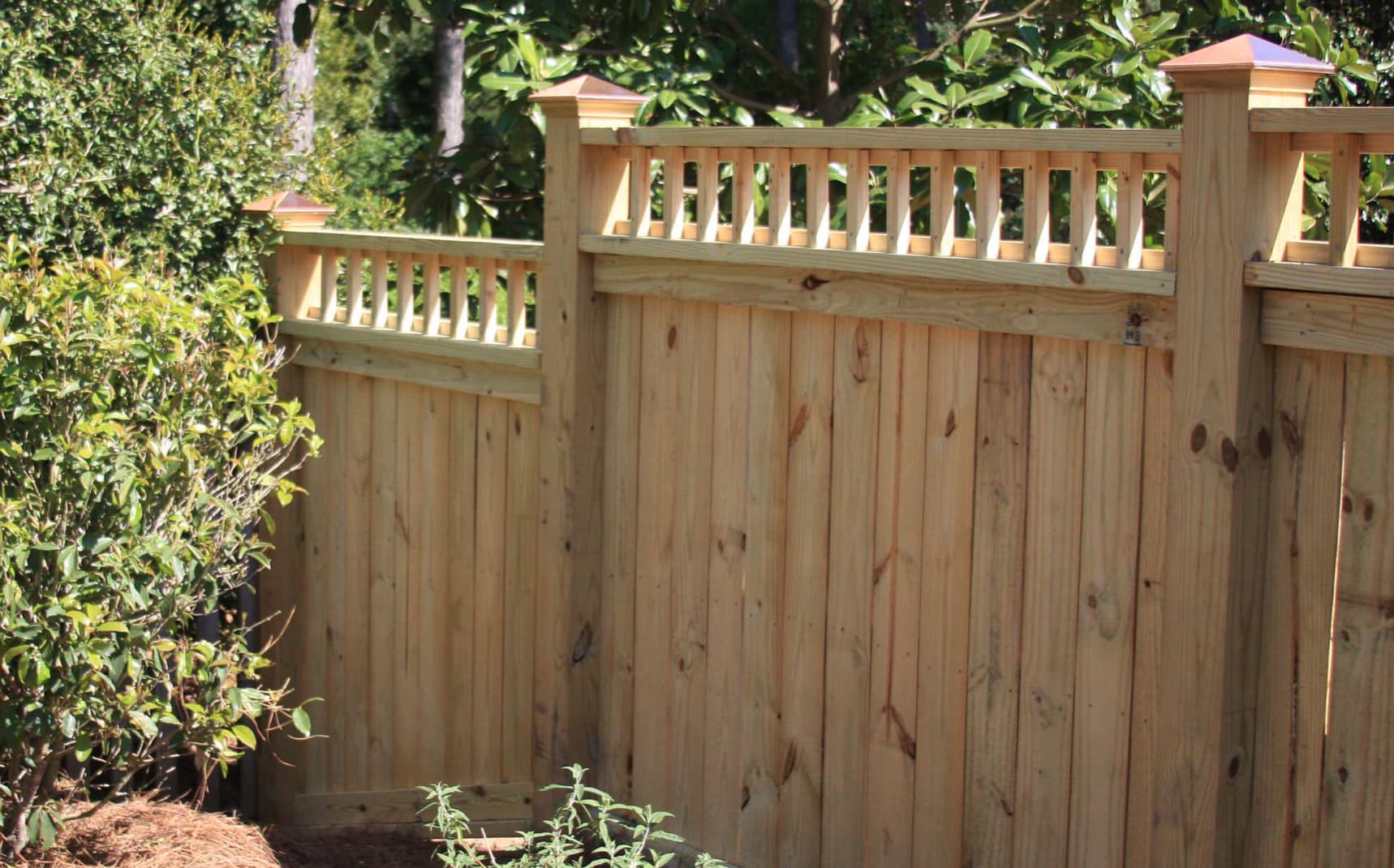
Skip the stain and paint entirely and let the wood weather naturally to a soft gray over a season or two. This is the lowest-effort finish option on this list, but it’s not a lower-quality one, a genuinely rustic, farmhouse-adjacent look is popular precisely because it doesn’t look staged.
Sand only where splinters are a real risk (top rails, anywhere hands will actually touch) and leave the rest alone. Our rustic fence ideas article covers more weathered-wood styles if this direction appeals to you.
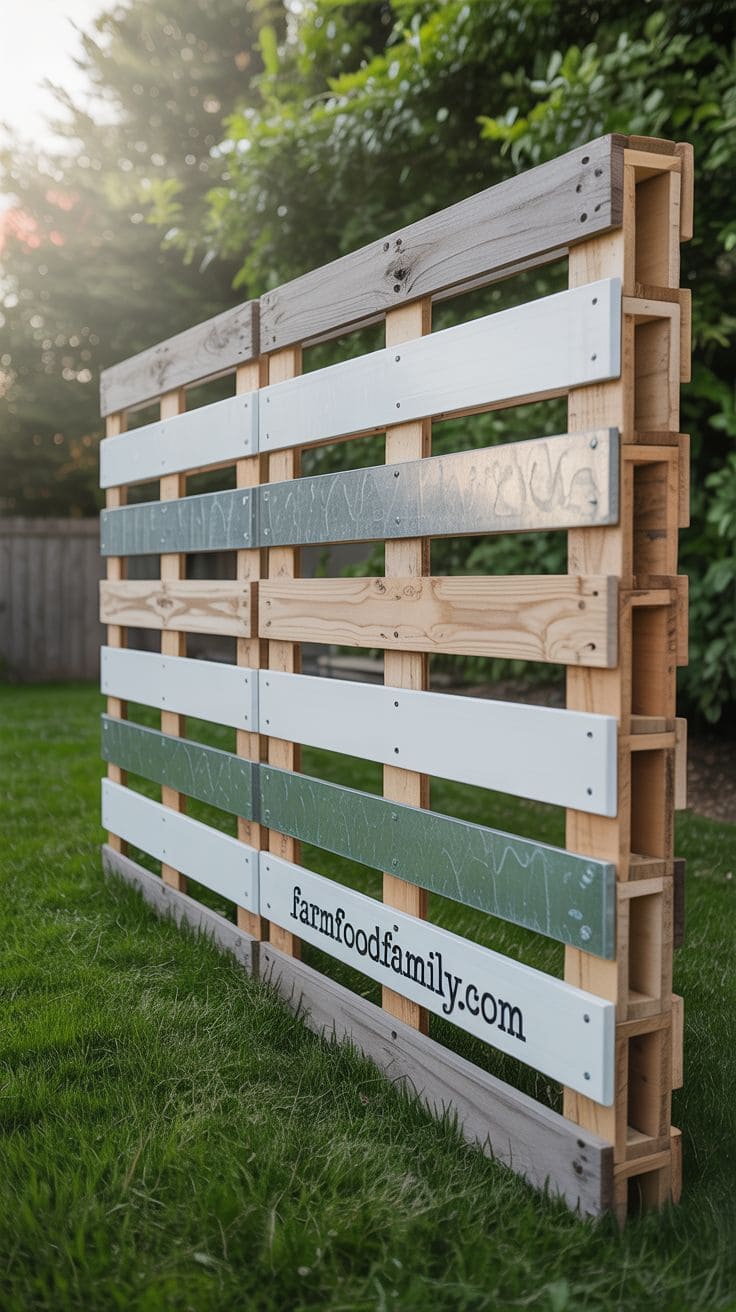
13. Painted Fence
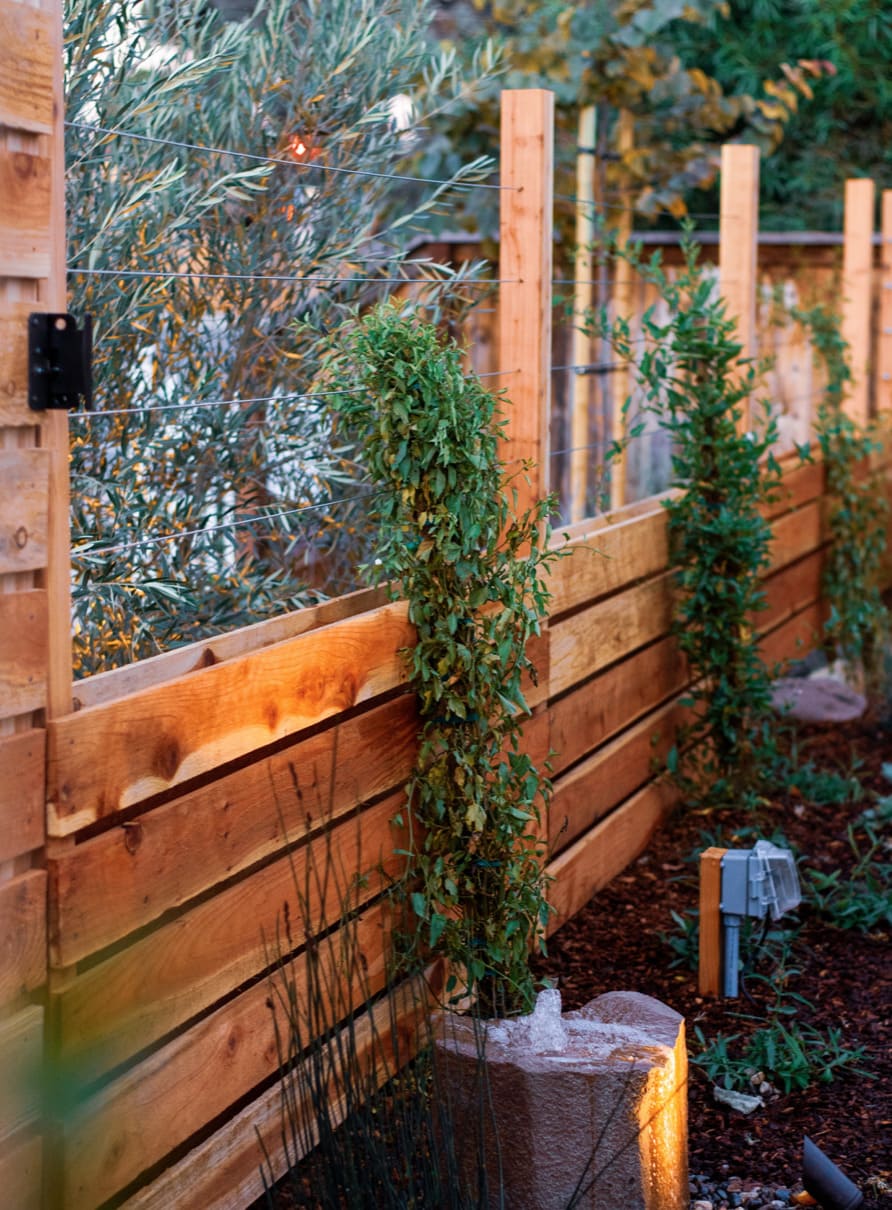
Two finishing techniques worth calling out on their own, since the choice changes the whole feel of any fence on this list. Paint gives full, opaque color coverage, better for a bold or playful look (see idea #3), and needs repainting every few years as it chips.
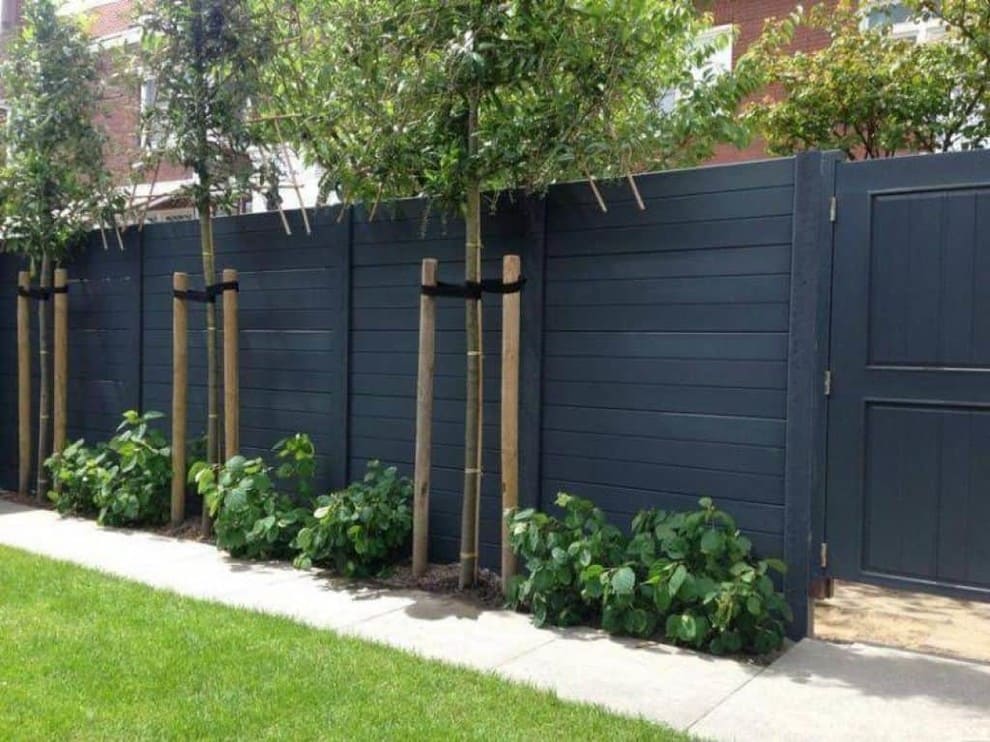
14. Stained Pallet Fence
Stain soaks into the wood and lets the grain show through, which reads as more natural and tends to need reapplication less often since there’s no film to crack. Neither is objectively better, it depends on whether you want the wood itself to be part of the visual or not.
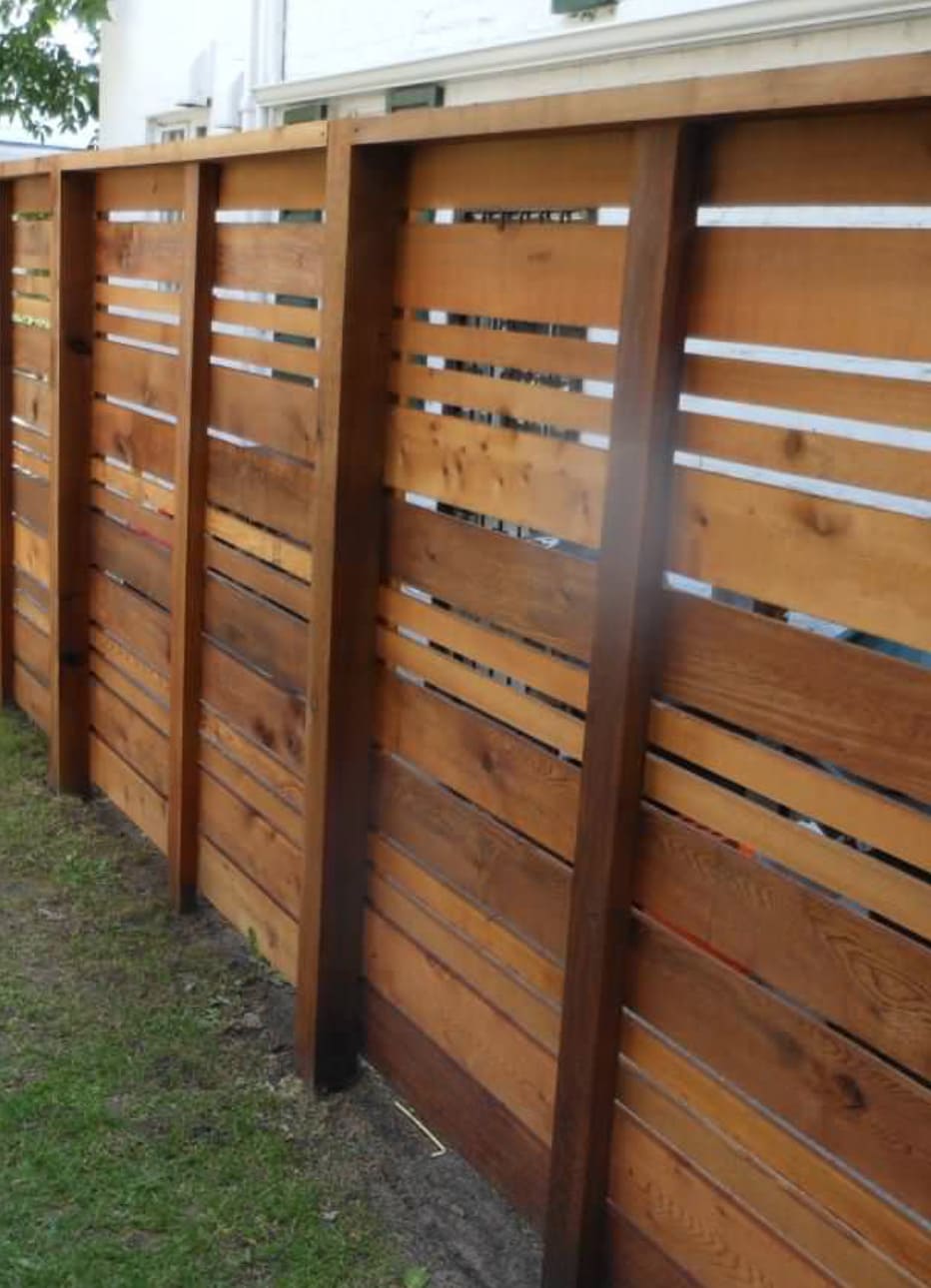
15. Fence with built-in shelves
Leave a section of the pallet’s natural cubby structure intact instead of fully disassembling it, and mount it as a shelf unit built into the fence line itself, useful for potted plants, garden tools, or a mounted hose reel.
This works best as one accent section within a longer fence rather than the whole run, since the open cubbies don’t provide privacy.
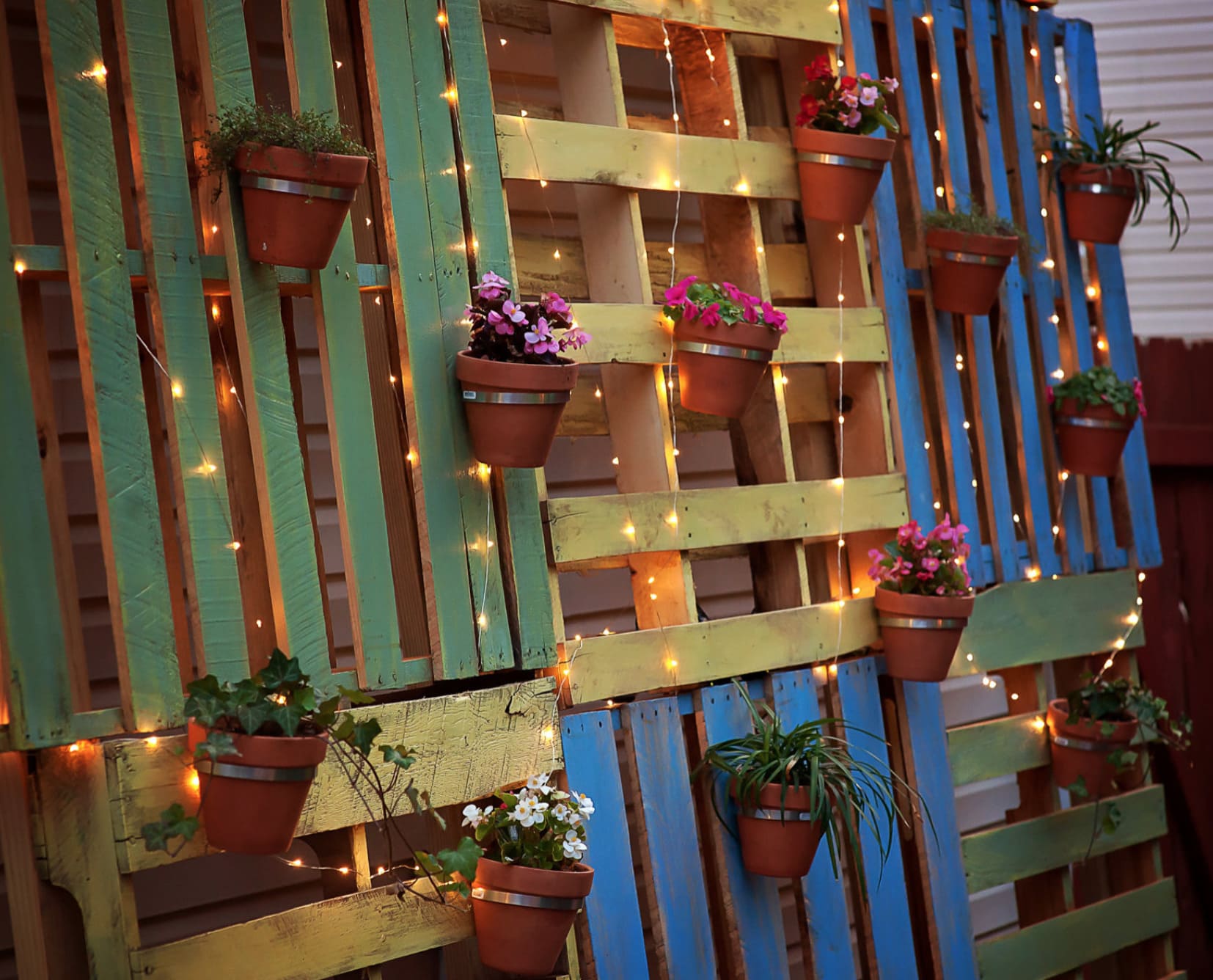
16. Decorative mixed-accent fence
Different from the cutout-shape idea above (#4): here the decoration comes from added-on accents rather than cuts into the wood itself, mounted metal numbers, an old window frame set into one panel, a mosaic of reclaimed tile on a single section.
Pick one or two accent pieces rather than covering the whole fence, since a fence covered edge to edge in mismatched decor reads as cluttered rather than intentional.
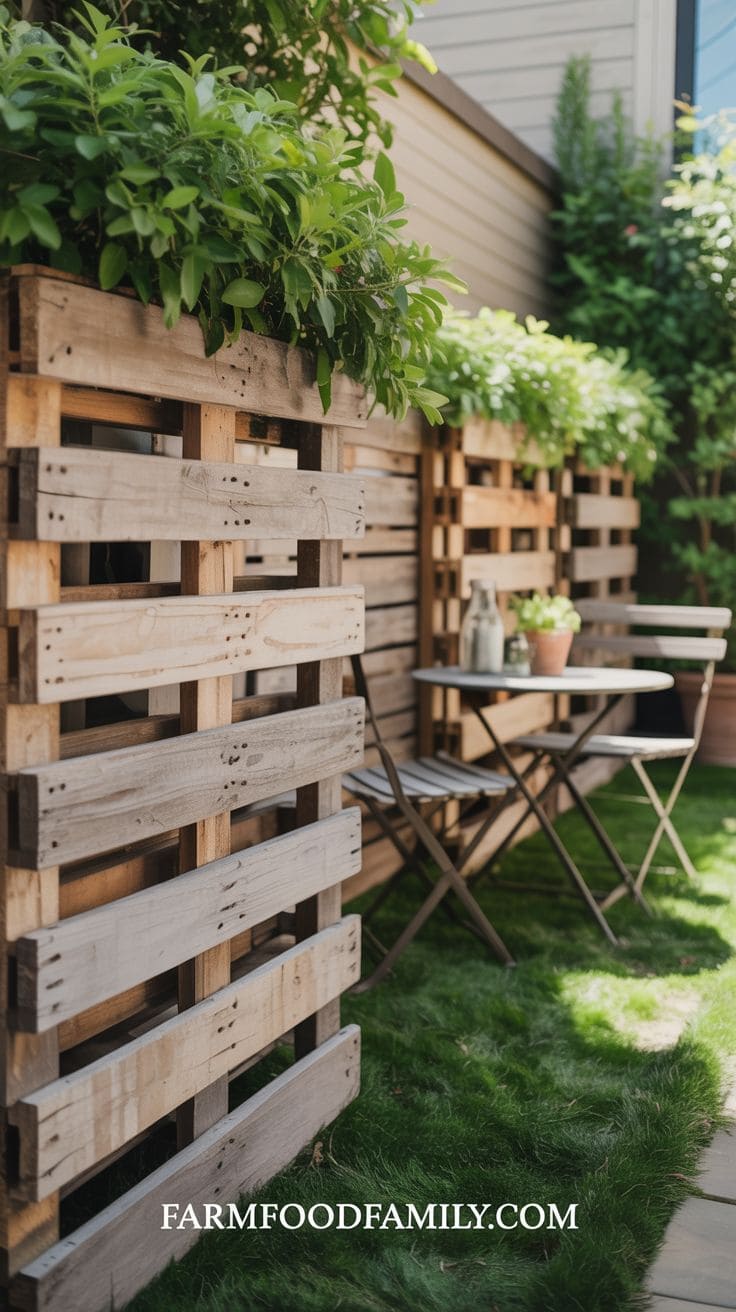
17. Pallet Fence with Planters
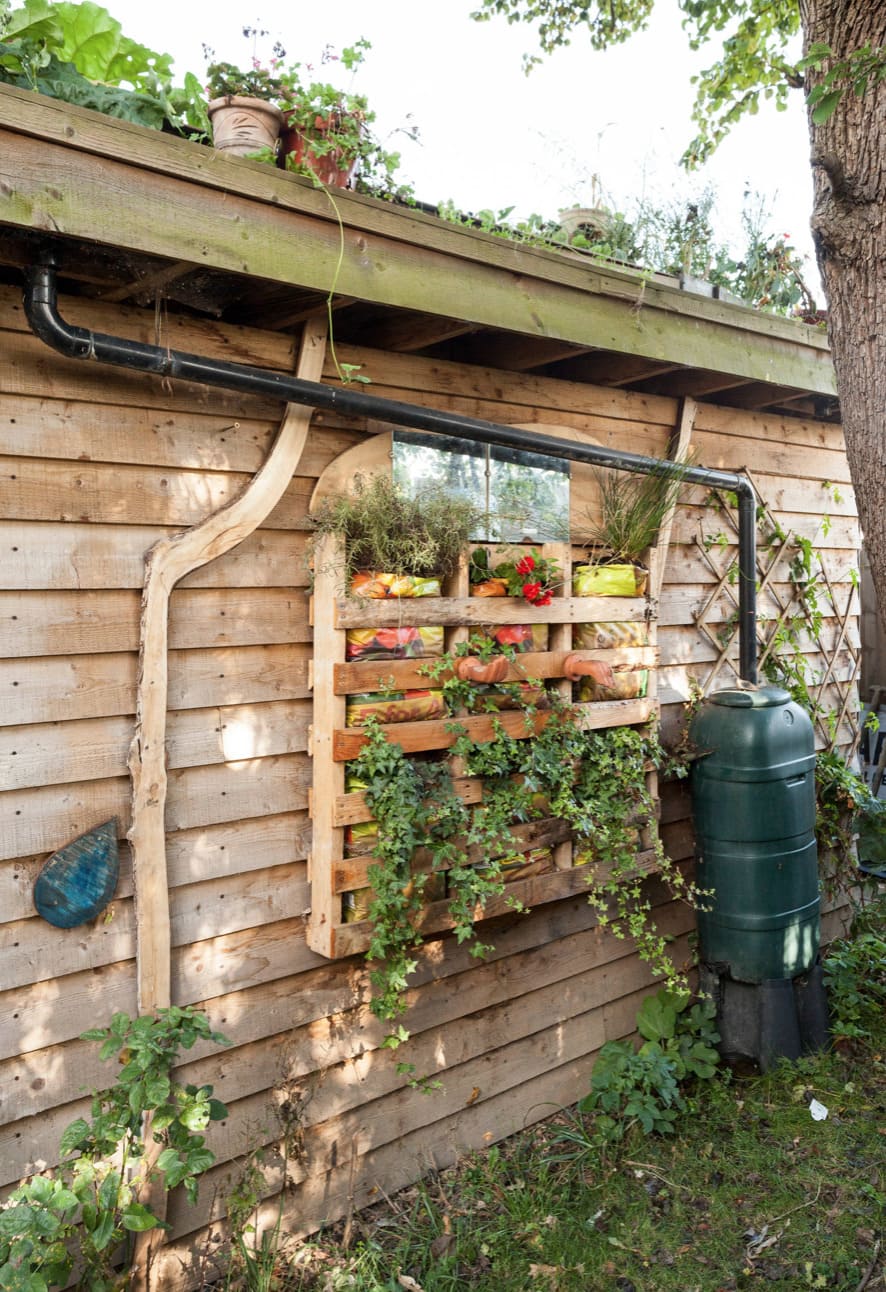
18. Double-Sided Pallet Fence
Finish both faces of the fence, not just the side facing your own yard, which matters more than people expect if a neighbor’s yard, a shared walkway, or the street sees the back of it.
Sand and stain or paint both sides, and make sure any structural bracing sits between the two finished faces rather than screwed onto one visible side, so neither face looks like the “back.”
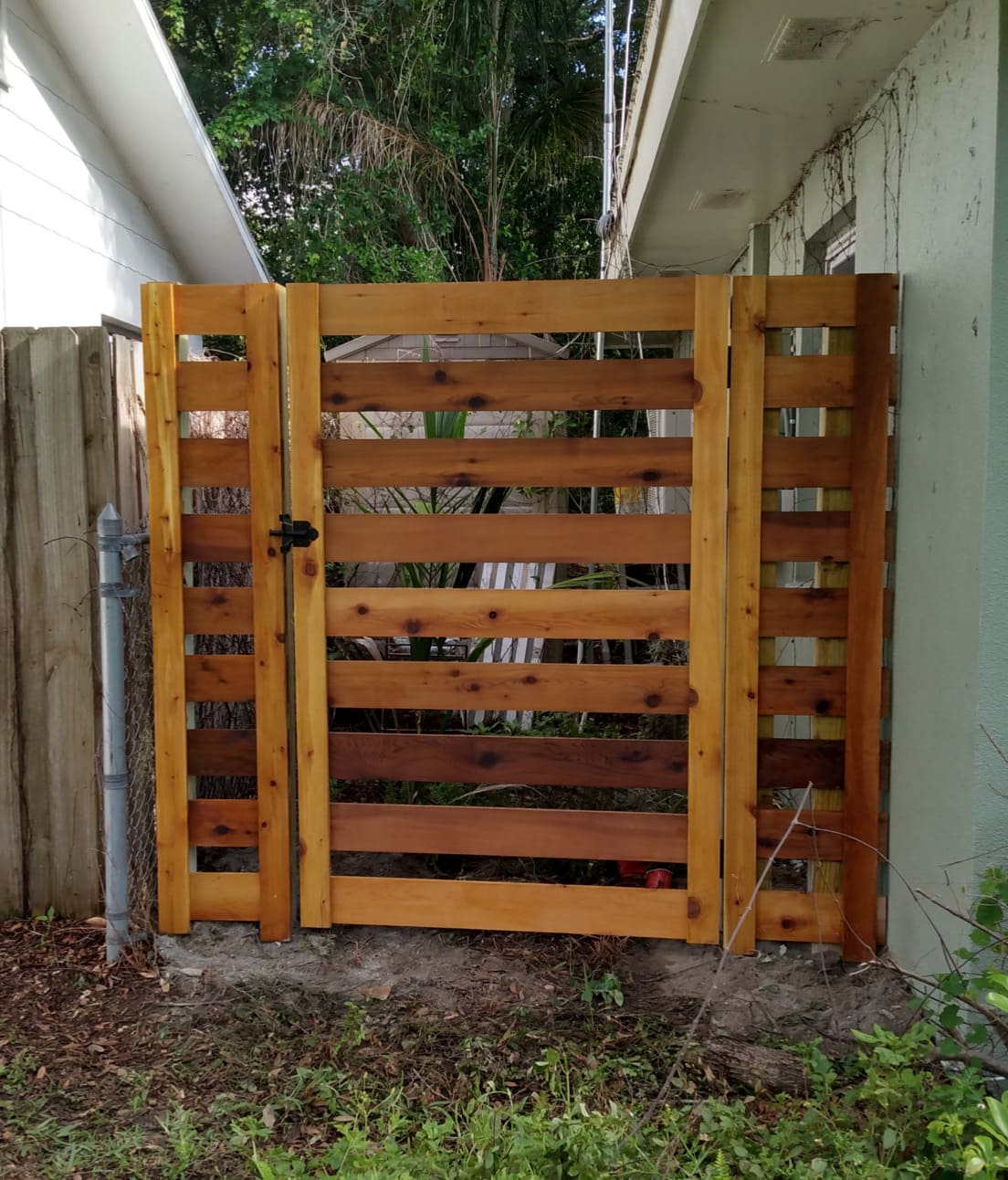
19. Pallet Gate Fence
Build a matching gate section using the same board orientation and finish as the rest of the fence, hung on standard gate hinges with a simple slide bolt or gravity latch.
The gate frame needs to be more structurally solid than a regular fence panel, since it’s the one section taking repeated stress from opening and closing, so use full 2×4 framing at the corners rather than relying on the pallet wood alone for structure.
20. Mixed Material Pallet Fence
Combine pallet wood panels with sections of welded wire, cattle panel, or metal mesh, alternating solid wood runs with open metal sections.
This is a genuinely practical option if you want some privacy but also want airflow or a view through in places, and it stretches your pallet supply further if you’re short on usable boards.
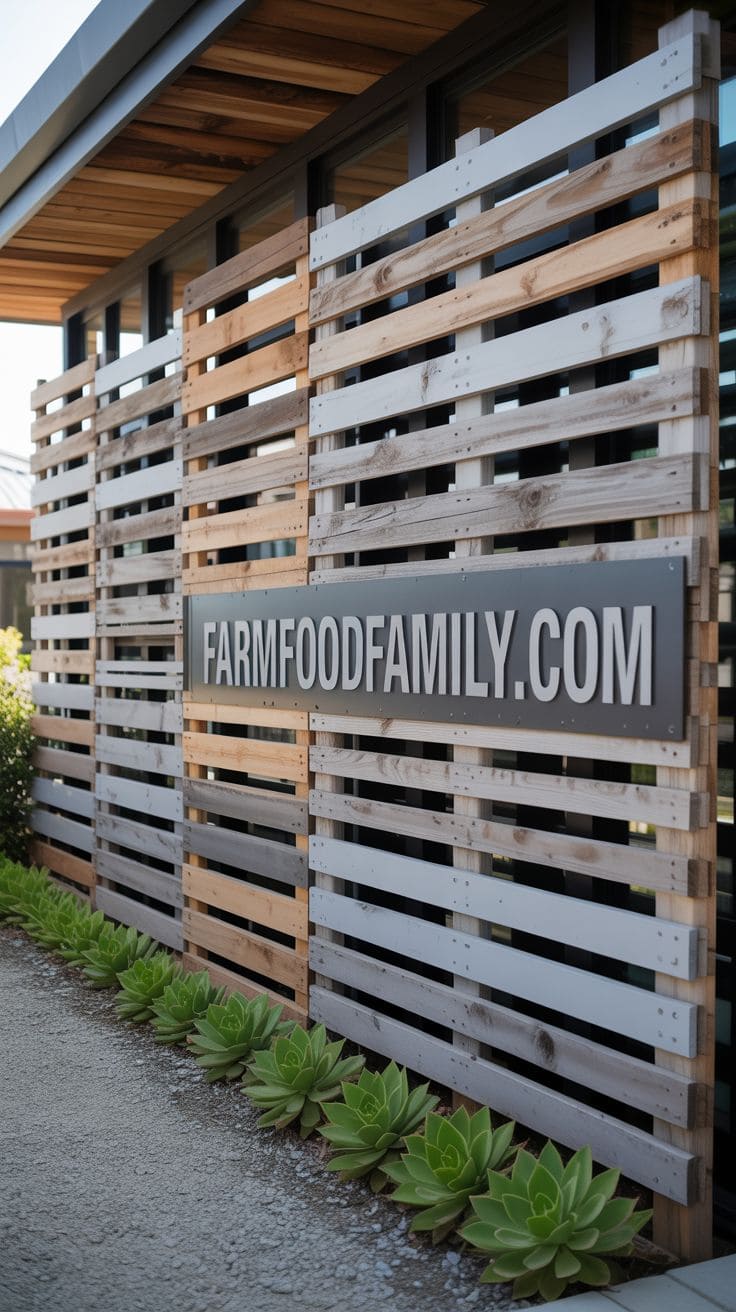
21. Portable or movable fence
Build individual pallet panels on a simple wood frame with feet rather than setting posts in the ground, so sections can be picked up and relocated.
Useful for a temporary garden barrier, a portable pet enclosure, or renters who can’t install a permanent fence. Add diagonal bracing across the back of each panel, since a freestanding panel without ground-set posts needs that extra rigidity to stay upright in wind.
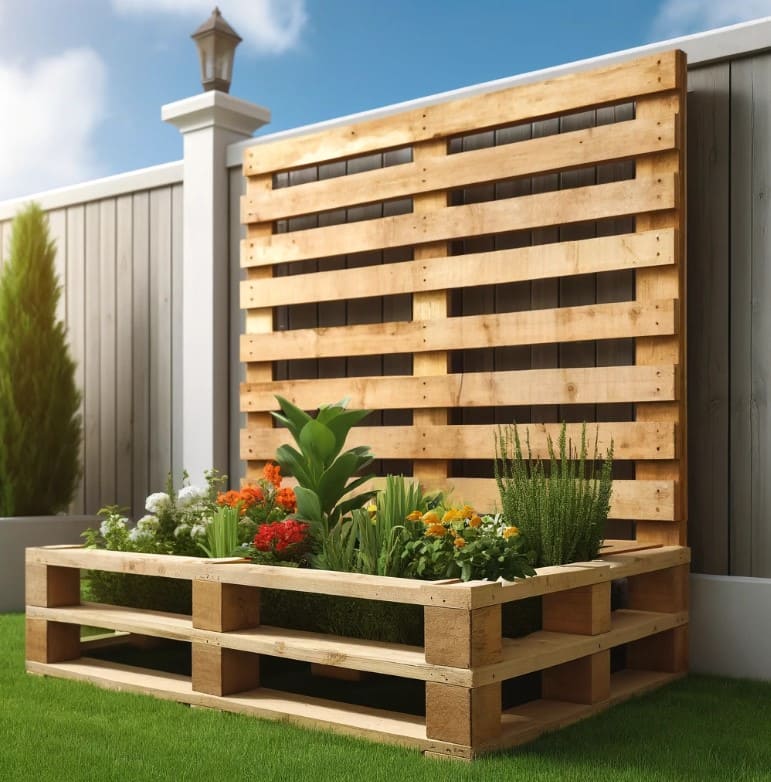
22. Low garden-border fence
A shorter cousin of the garden border idea (#8), but built specifically as a low perimeter marker around an entire yard section rather than a single bed, typically 24-30 inches.
Keep the board spacing looser here since the goal is a visual boundary, not a barrier, and looser spacing means fewer boards needed for the same run length.
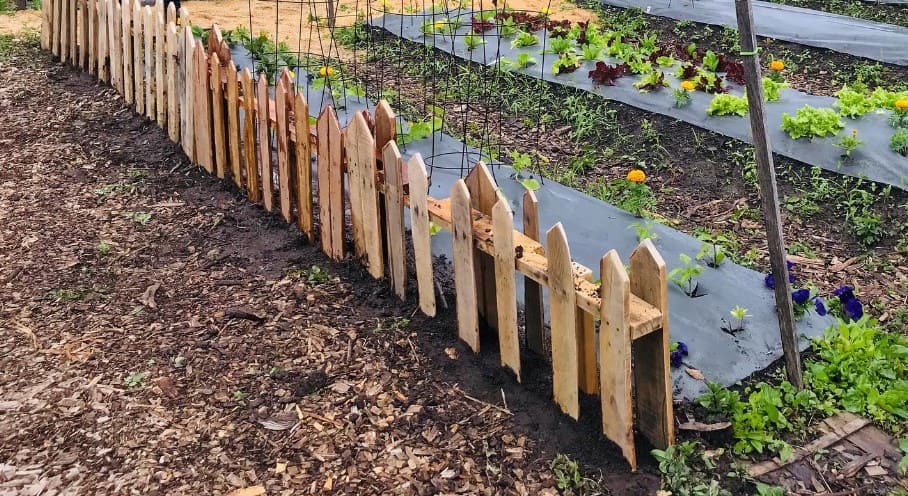
23. Tall privacy fence
Stack two pallets’ worth of boards to reach 6-8 feet for maximum privacy, which means doubling up on post depth and bracing since a taller fence catches significantly more wind load than a 4-foot version.
Set posts at least 2 feet into the ground for this height, deeper than you’d need for anything shorter on this list.
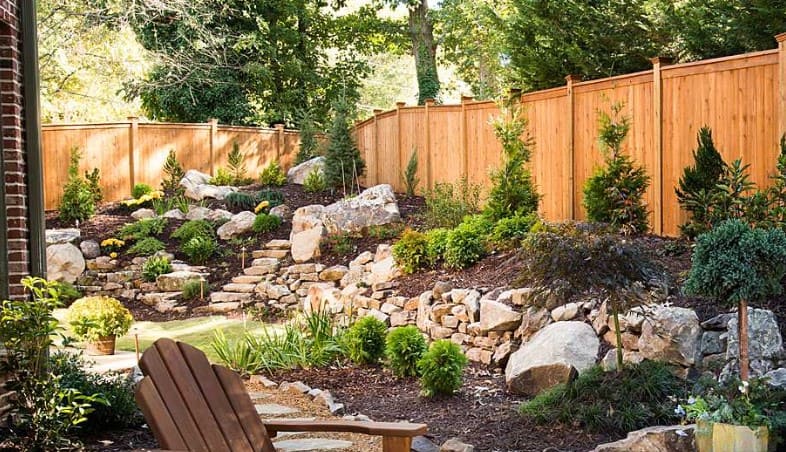
24. Reinforced Pallet Fence
For any fence facing open wind exposure, add diagonal cross-bracing on the back face between posts, not just vertical support, since horizontal wind load is what actually pulls fence panels loose over time, not weight.
A middle horizontal rail between the top and bottom of tall panels (see idea #18) also cuts down on the boards bowing outward over a season.
25. Decorative Lighting Pallet Fence
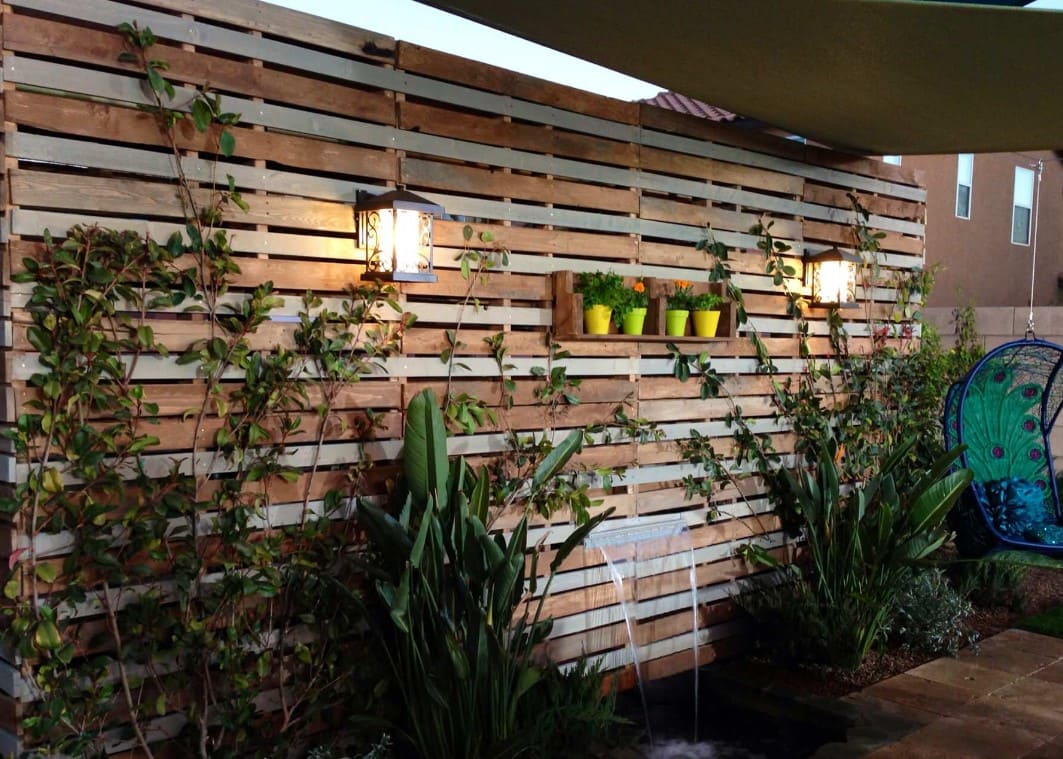
Run outdoor-rated solar string lights or LED rope lights along the top rail, or mount solar puck lights directly into predrilled holes along a horizontal board for a more built-in look.
Solar avoids running any wiring at all, which matters for a fence you might want to reposition or replace boards on later.
FAQs on pallet fences
Is a pallet fence legal where I live?
Check before you build, not after. Some municipalities explicitly restrict or ban fences made from pallets or “used materials,” while plenty of others have no issue with it at all. Whitehall, Ohio’s municipal code bans fences that use or resemble wood pallets outright, and Palmyra, Missouri’s ordinance lists pallets specifically among its prohibited fence materials. A quick call to your local zoning or building department, or a search of your city’s municipal code for “fence materials,” settles this in a few minutes and saves you from having to tear down a finished project.
How do I know if a pallet is safe to use?
Check the stamp on the corner block first. PalletOne explains that a pallet marked HT was heat-treated to at least 56°C (132.8°F) for 30 minutes to kill pests, with no chemicals involved, and that’s the pallet you want. Skip anything stamped MB, which means it was chemically fumigated with methyl bromide. 1001Pallets also recommends passing on any pallet with visible staining, an unusual chemical smell, or unidentified paint, even if the stamp itself looks fine.
Where can I find free pallets, and is it legal?
Garden centers, small grocery stores, pet supply stores, and industrial parks are reliable sources, and always ask the business for permission first rather than assuming pallets sitting outside are free for the taking. Avoid anything marked CHEP or with a red Block Pallet (Red PECO) stamp, both are pooled, company-owned pallets that the business is responsible for returning, and taking one is a legal issue even though it isn’t a safety one.
Will a pallet fence rot or fall apart?
Sand rough boards before you build to cut down on splinters, and check the fence periodically for loose boards, protruding nails, or soft, rotting wood, especially after a stretch of heavy rain or snow. A stain or sealant extends the wood’s life noticeably over leaving it raw, though even an unfinished pallet fence (see idea #9) can last several years if it’s not sitting in standing water at the base.
Conclusion
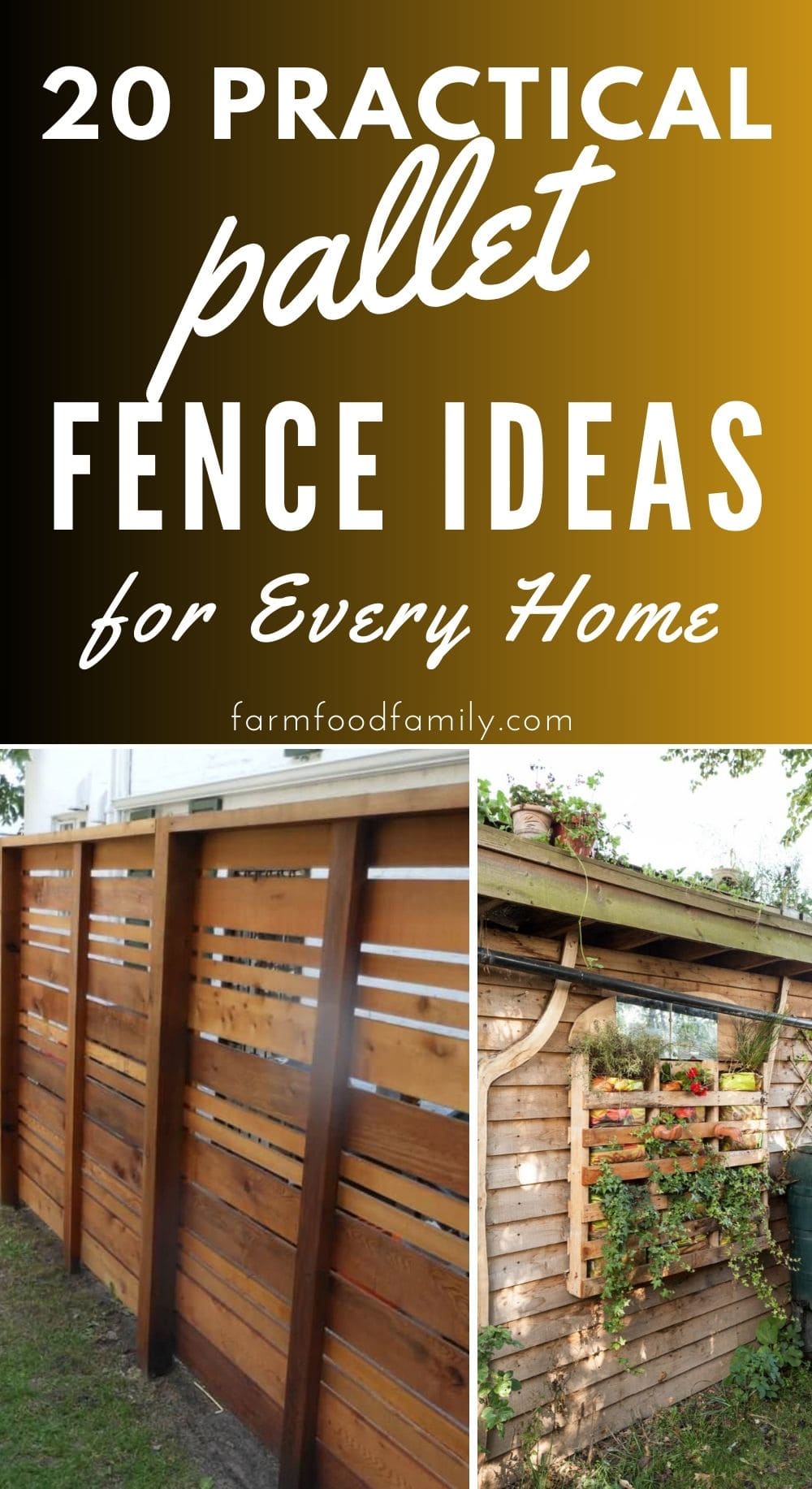
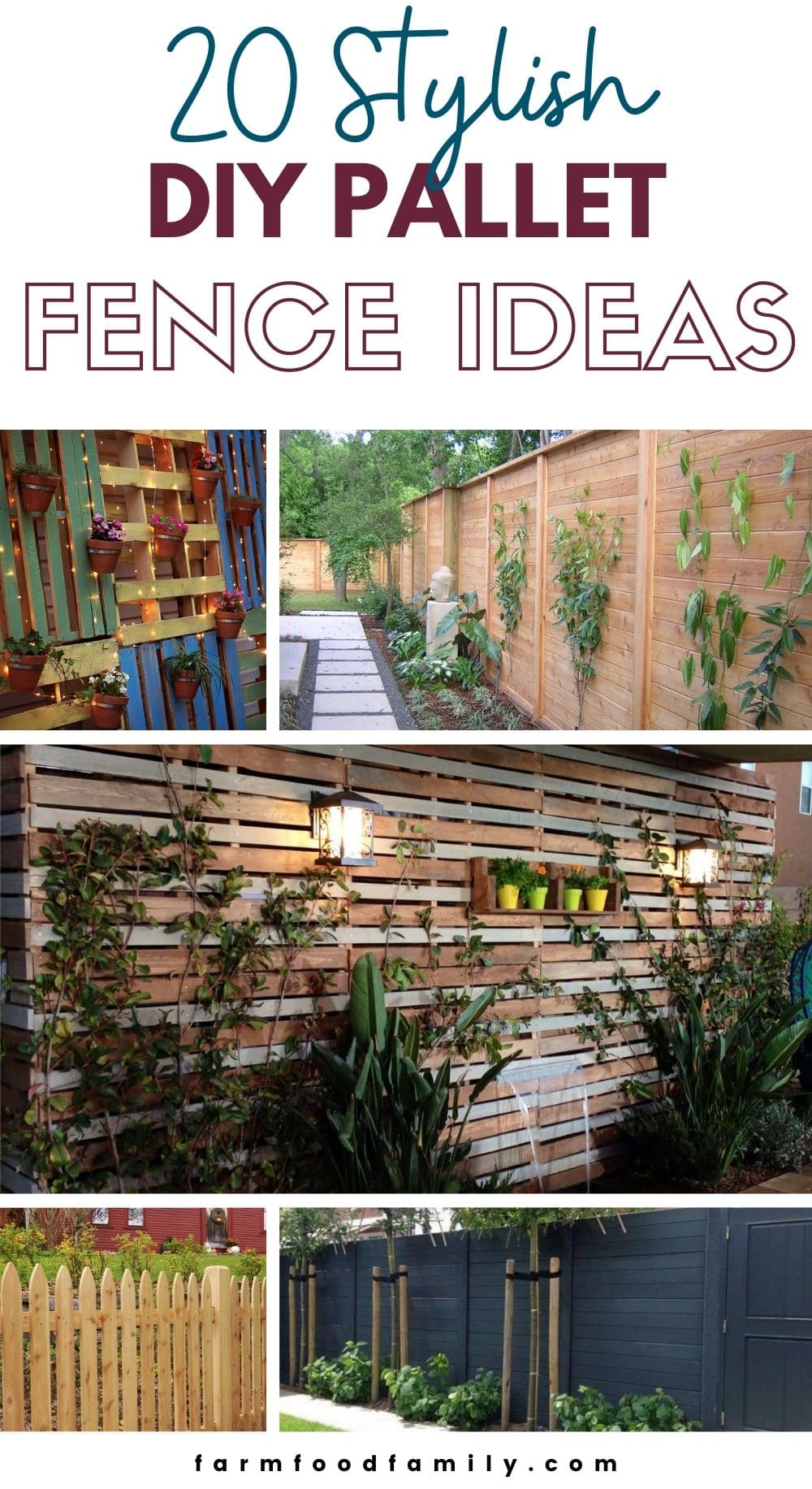
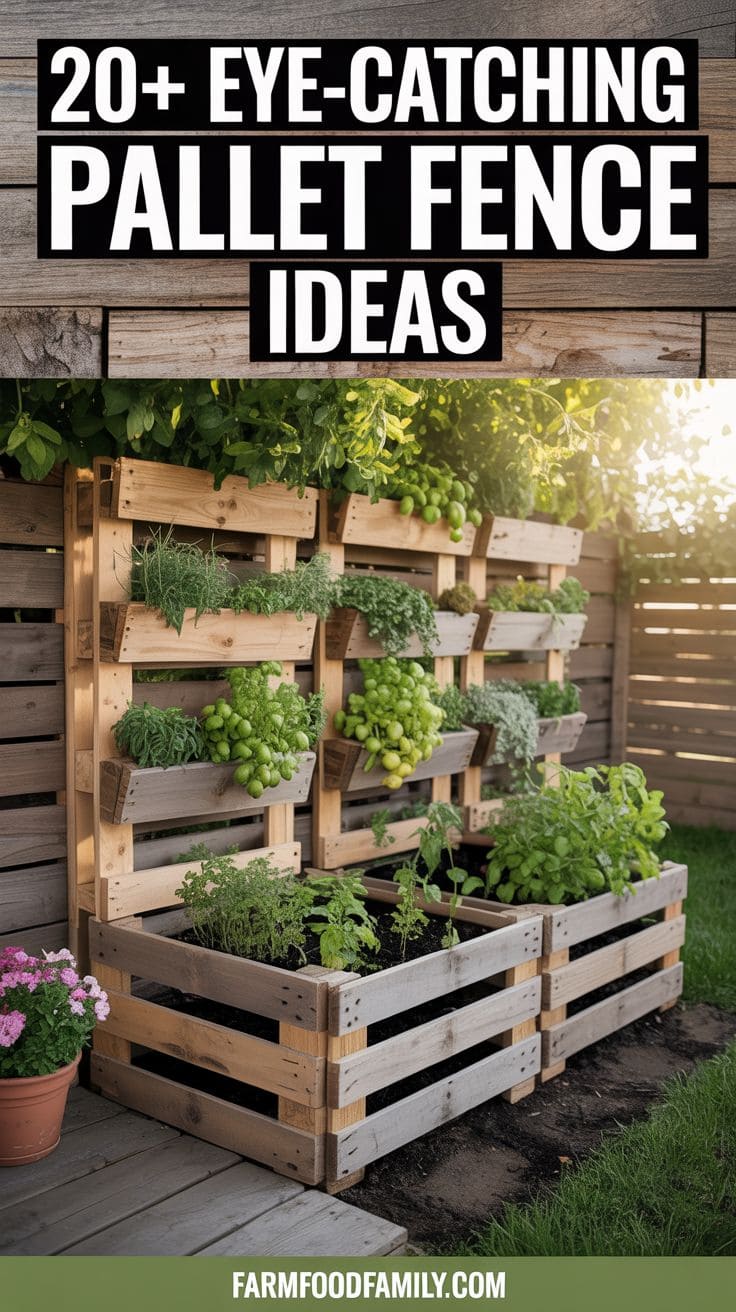
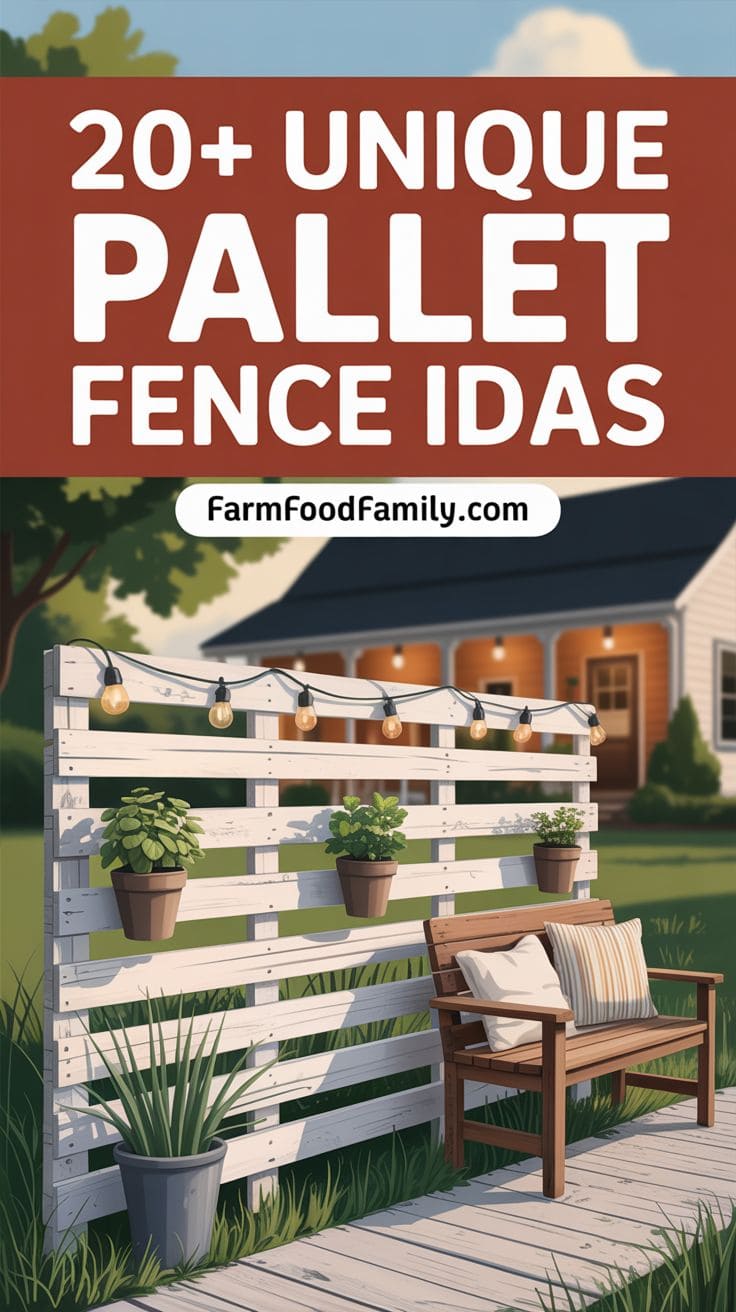
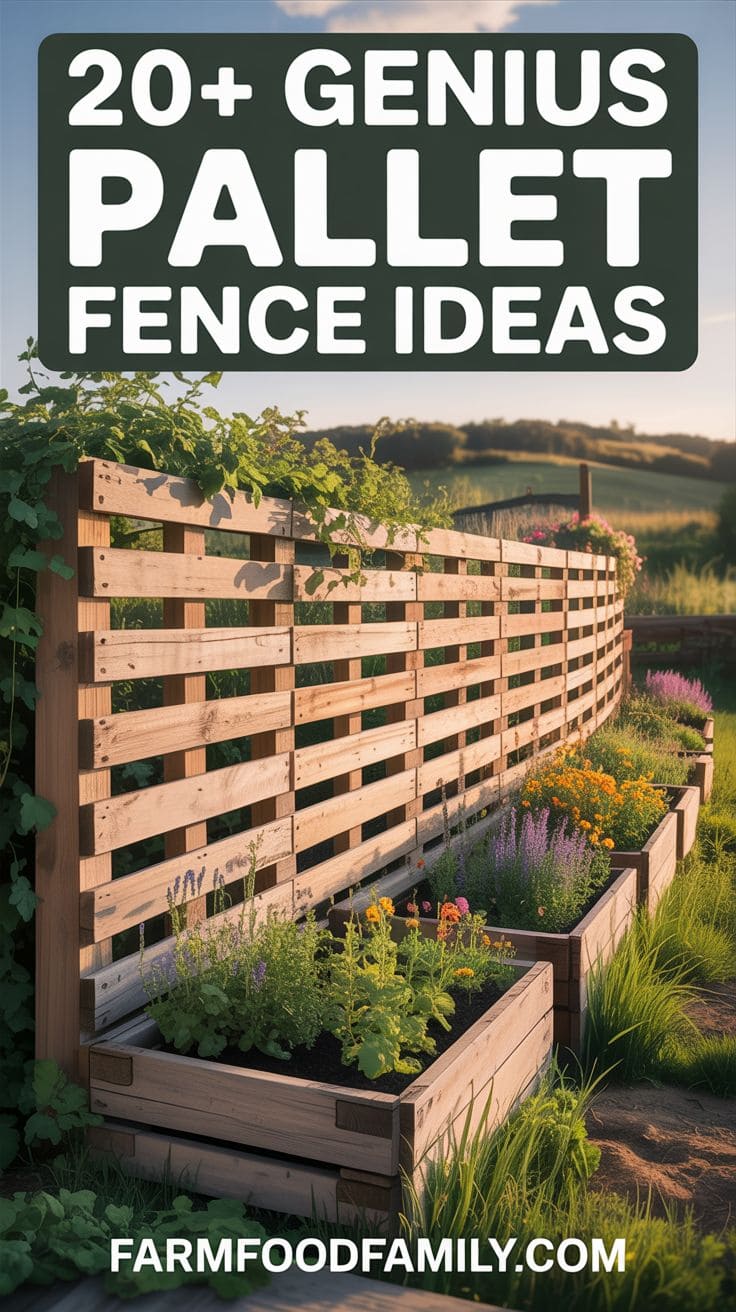
Pallet fences offer an imaginative and sustainable way to shape your outdoor space without breaking the bank. Whether you favor rustic charm, modern structure, playful whimsy, or decorative utility, the versatility of pallets allows for endless creativity.
These ideas show how a simple material can be reinvented into fences that are far more than boundaries. If you liked this list, leave a comment and share it with your family and friends!
Never miss an update — choose FarmFoodFamily as your preferred source on Google.
How it works: Tap the button below to open Google's settings page, then check the box next to FarmFoodFamily.
Tap the checkbox to turn it blue — that's how you know it's set.