15 Best Siding Colors That Go with Black Windows
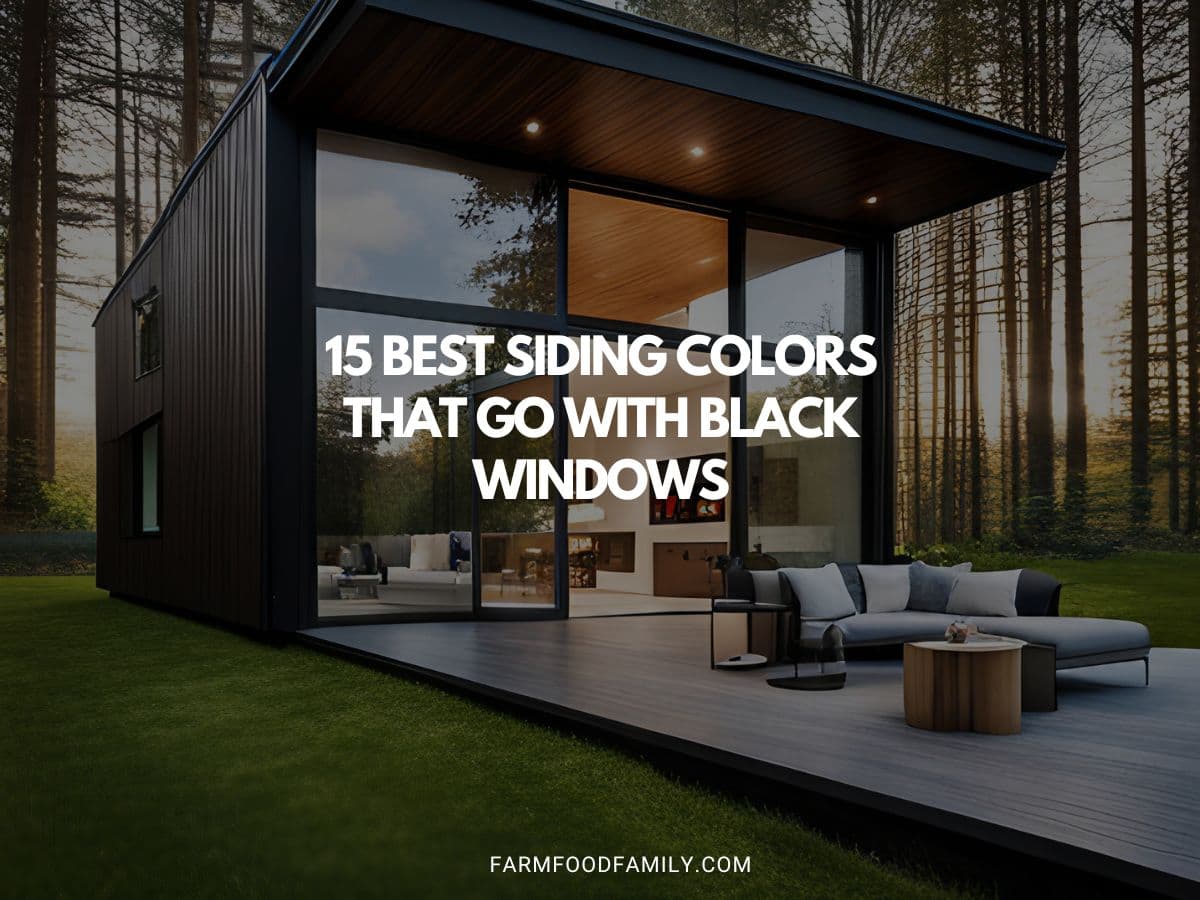
Black windows make almost any siding color look sharper, as long as your siding material can handle the heat that darker shades soak up.

Never miss an update — choose FarmFoodFamily as your preferred source on Google.
How it works: Tap the button below to open Google’s settings page, then check the box next to FarmFoodFamily.
Tap the checkbox to turn it blue — that’s how you know it’s set.
Black windows are the easiest way to make a plain house look designed. They draw a crisp outline around every wall, and they work on farmhouses, ranches, and new builds alike.
But the siding color around them does most of the work. Pick well and the house looks sharp for years. Pick badly and it looks harsh, dirty, or flat.
We went through what building-science writers, paint consultants, and designers say about this pairing. Below are 15 colors, plus the material limits, trim rules, and mistakes most guides skip.
What’s the Best Siding Color for Black Windows?
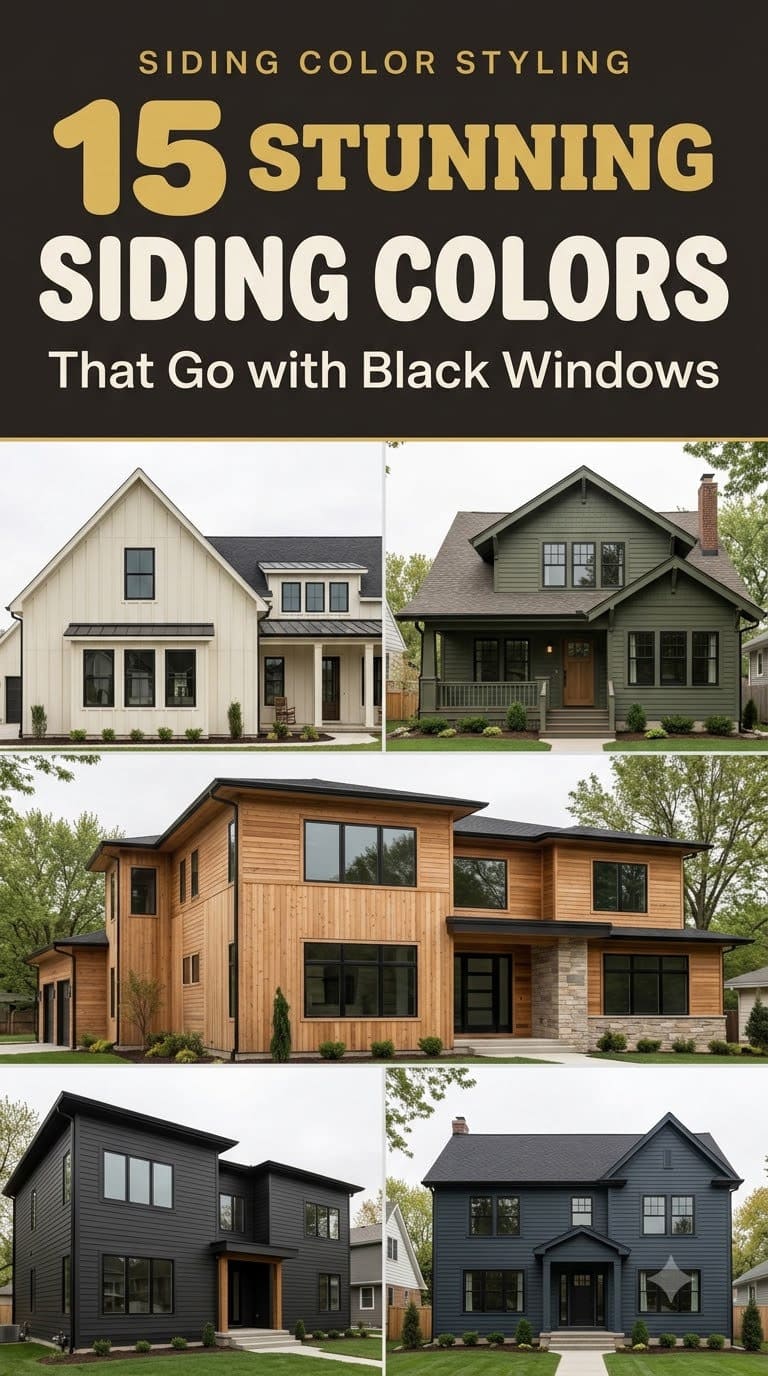
White or cream is the best all-around choice. Designer Katy Byrne told Hunker that white is the best overall field color for black windows because the high contrast looks clean, bold, and sophisticated.
Charcoal and navy are the best dark choices. They give a moody, low-contrast look, and they work best on materials that don’t move much in the sun, like fiber cement.

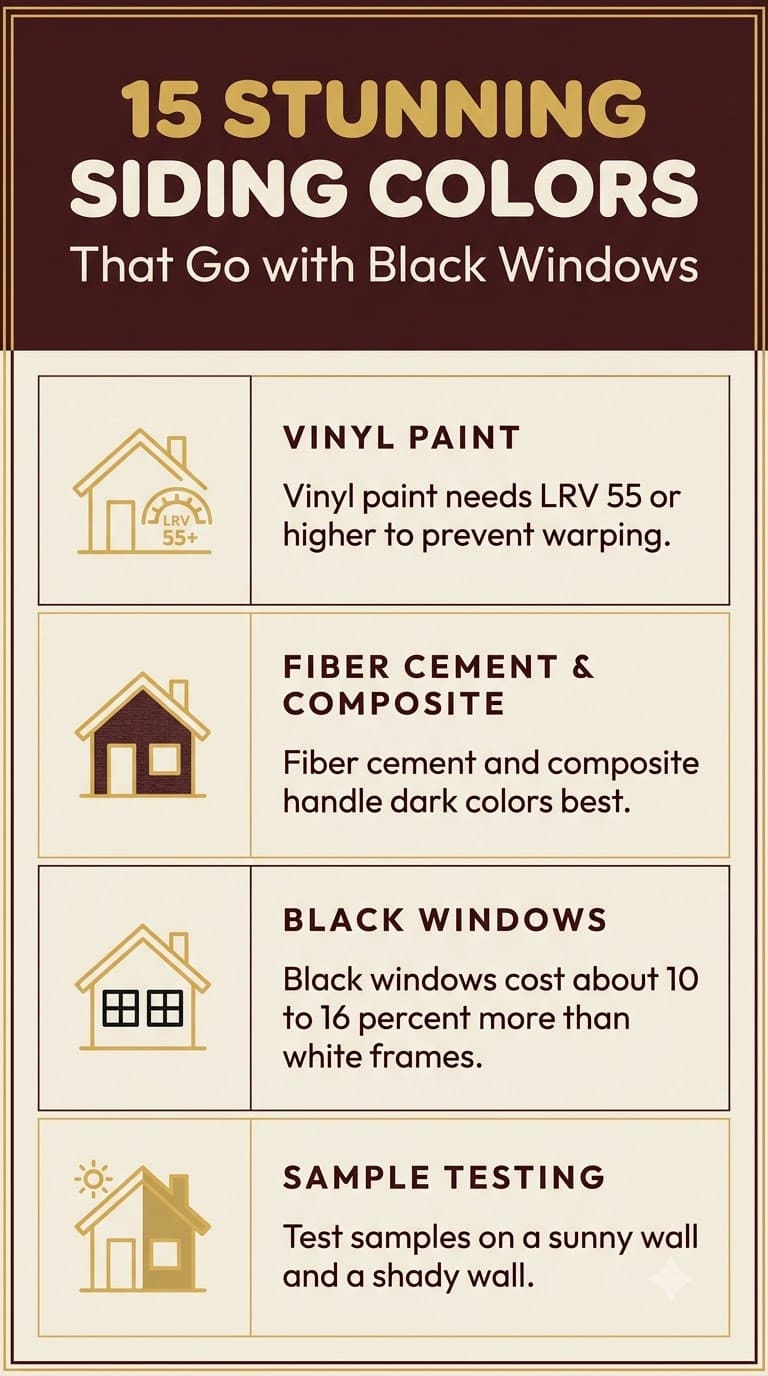
If you have vinyl siding, stay light. Green Building Advisor says paint on vinyl needs a light reflectance value (LRV) of 55 or higher. Dark vinyl can warp and may void your warranty.
Sample every color on a sunny wall and a shady wall first. Add warm wood or a light door so dark siding doesn’t feel flat. And match your trim to your roof, which we cover in the trim section below.
What Do Black Windows Change About Your Siding Choice?
Black frames work like a pen line around a drawing. That means your siding choice is really a choice between two looks.
The first is high contrast. Pair black frames with white, cream, or light gray siding for a classic, timeless look. Brick & Batten describes this as the traditional route.
The second is a monochrome look. Pair black frames with navy, deep greige, or charcoal siding for a cohesive, moody house. The windows fade into the walls instead of popping off them.
Before you choose, keep four facts in mind.
- Cost: Black windows cost about 10 to 16 percent more than white frames, per Hunker.
- Dirt: Black frames show pollen and dust fast. Plan to rinse them a few times a year.
- Fade: Dark finishes fade more visibly than light ones, and they heat and cool in bigger swings.
- Light: A color looks different on a sunny wall than on a shaded one. Test it on both.
Do you want a sample method that actually works? Paint a 3-foot square on the sunniest wall and another on the shadiest wall. Look at both at 9 a.m., noon, and dusk before you commit.
What Are LRV and Undertone, and Why Do They Matter Here?
LRV runs from 0 (absorbs all light) to 100 (reflects all light). It tells you how dark a color really is, and how much heat it will absorb.

Five white panels for testing siding and trim colors. Move them between sunny and shady walls before you commit to a gallon.
Shop NowThis post contains affiliate links. We may earn a commission on qualifying purchases at no extra cost to you.
Undertone is the hidden warm or cool tint inside a color. A gray that looks neutral in the chip can turn pink or blue next to black frames.
Brick & Batten also advises matching undertones to the fixed elements of your home, like the roof, stone, and brick. We agree. Fixed elements are the one thing you can’t change cheaply.
Which Siding Materials Can Go Dark?
Not every siding material handles dark paint equally. Dark colors absorb more solar energy, and materials that expand and contract with temperature move more when they’re hot.
Engineers measure this with a coefficient of thermal expansion, or COTE. Here’s how the common materials compare, based on the figures Fine Homebuilding reports.
| Siding material | Dark colors okay? | What to know |
|---|---|---|
| Vinyl | Light to mid only | Paint needs LRV 55 or higher, and no darker than the original vinyl color. True black vinyl isn’t made. |
| Fiber cement | Yes | A 10-foot plank grows up to about 0.08 inch over a 100°F swing. Installers need to leave room for movement. |
| Wood | Yes, with care | Moves about 1/32 inch over a 100°F swing. Needs a ventilated rainscreen so it doesn’t stay wet and cup. |
| Composite (LP SmartSide) | Yes | Very low movement: under 1/32 inch over 100°F on a 10-foot length. |
| Metal | Yes, with a catch | Dark metal can make ice damming worse in snowy areas with roof overhangs. |
Keep your own material in mind as you read the colors below. A color that looks great on fiber cement can be a bad idea on vinyl.
Can You Paint Vinyl Dark?
Technically yes, but it’s risky. Kristie Barnett of The Decorologist reports that painting PVC or vinyl a color below LRV 55 can void the manufacturer’s warranty.
Some paint lines target this problem. Sherwin-Williams’ VinylSafe line offers roughly 100 colors made to reduce heat gain on vinyl, even at LRV 54 or lower. Barnett notes manufacturers may still decline coverage, so get approval in writing first.
Does Dark Siding Make Your House Hot?
Most homeowners ask this first. The short answer from building-science experts is no, not by much.


On the Green Building Advisor forum, Robert Opaluch explained that heat from a dark wall mostly dissipates into the outside air. It has to cross a ventilated rainscreen gap, exterior insulation, and wall insulation to get inside. Dana Dorsett added that window solar gain matters far more than wall heating in an insulated house.
There are still costs. Peter Engle noted that darker colors go through bigger heat-cool cycles, which means more frequent repainting and faster fade. Bill Wichers advised venting the rainscreen at the top and bottom.
One homeowner in that thread had a harder lesson. Dark blue paint on 128-year-old pine siding got so hot that the wood bled sap down the wall.
How Much Will a Siding Color Change Cost?
Cost depends on the job, not the color. We don’t quote dollar figures here because they swing by region and material, and we’d rather not guess.
Here’s how the three paths compare in effort and risk.
| Path | Best for | Watch out for |
|---|---|---|
| DIY repaint | Wood or fiber cement in good shape | Prep time, ladder safety, and two coats minimum on dark colors |
| Hire a painter | Larger homes, second stories | Ask for LRV and warranty notes in the quote |
| Re-side the house | Failing vinyl, or a house you want in true dark | The highest cost, but the only way to change material |
The 15 Siding Colors That Go with Black Windows
Neutral Siding Colors That Complement Black Windows
1. White
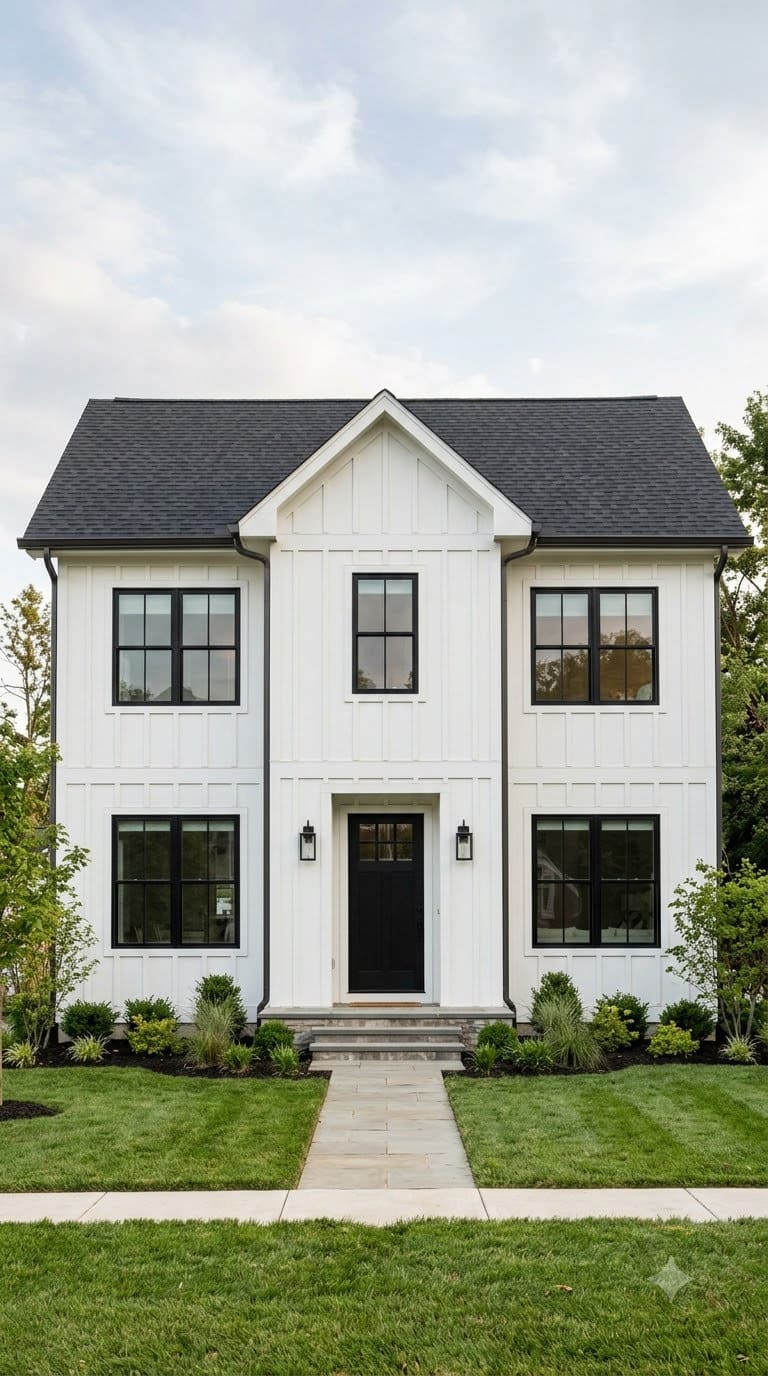
White is the safest answer, and Katy Byrne’s pick for the best overall field color. It makes black frames look like they were drawn on with a marker.
Sherwin-Williams Shell White (a creamy white) and Benjamin Moore Simply White (a clean, soft white) are good examples to sample. Pair either with black trim in Iron Ore for a high-contrast farmhouse look.
White has a high LRV, so it’s the friendliest choice for vinyl. The catch is that bright white shows mildew and dirt. Wash it once a year.
It pairs well with the soft look of idea 4, cream, if pure white feels too stark.
2. Gray
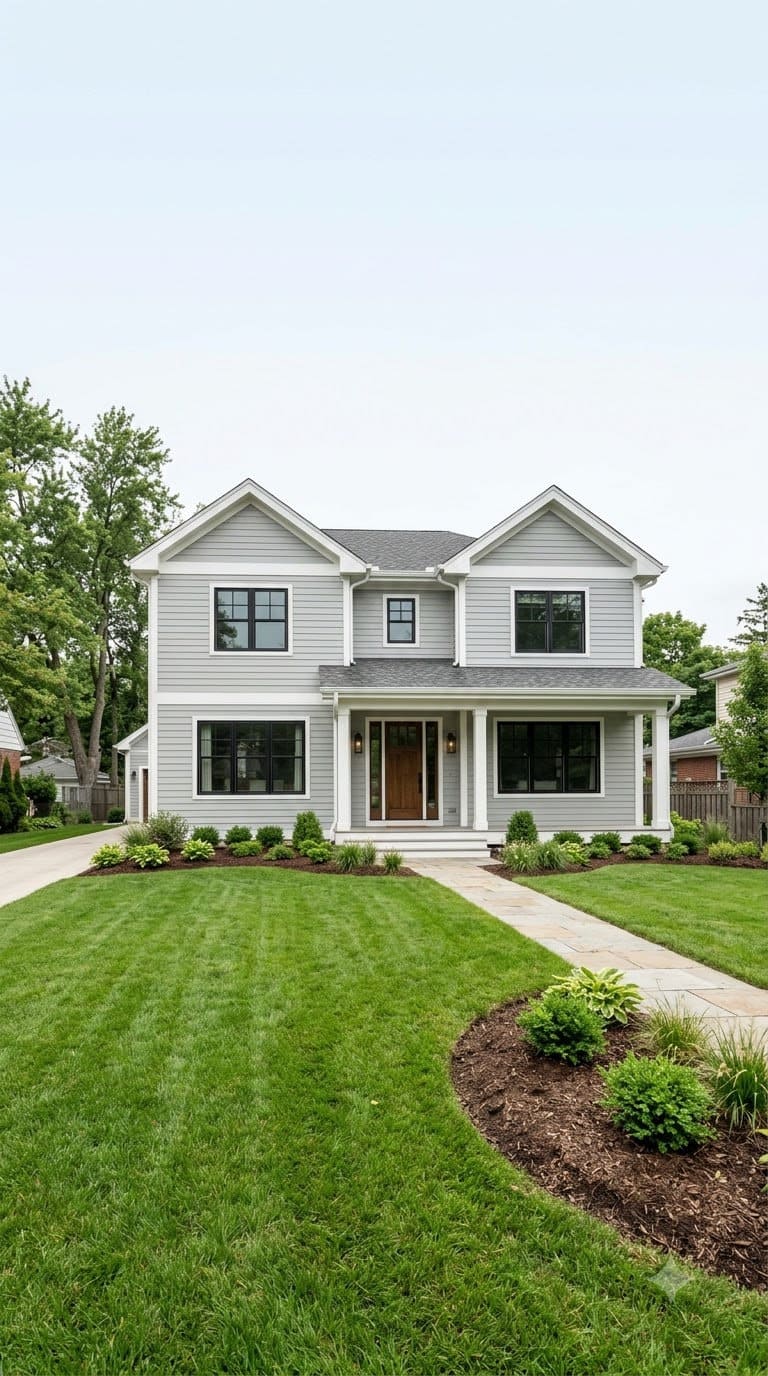
Gray gives you contrast without the starkness of white. A light gray like Sherwin-Williams Light French Gray works with both modern and traditional homes, per Brick & Batten.
Keep an eye on undertone. Cool grays can look blue next to black frames, and warm grays can look beige. Test it on both sunny and shady walls.
Gray also suits a gray or brown asphalt roof. If you’re choosing a front door color next, this site’s guide to doors that suit gray houses shows which shades hold up against gray siding.
3. Beige
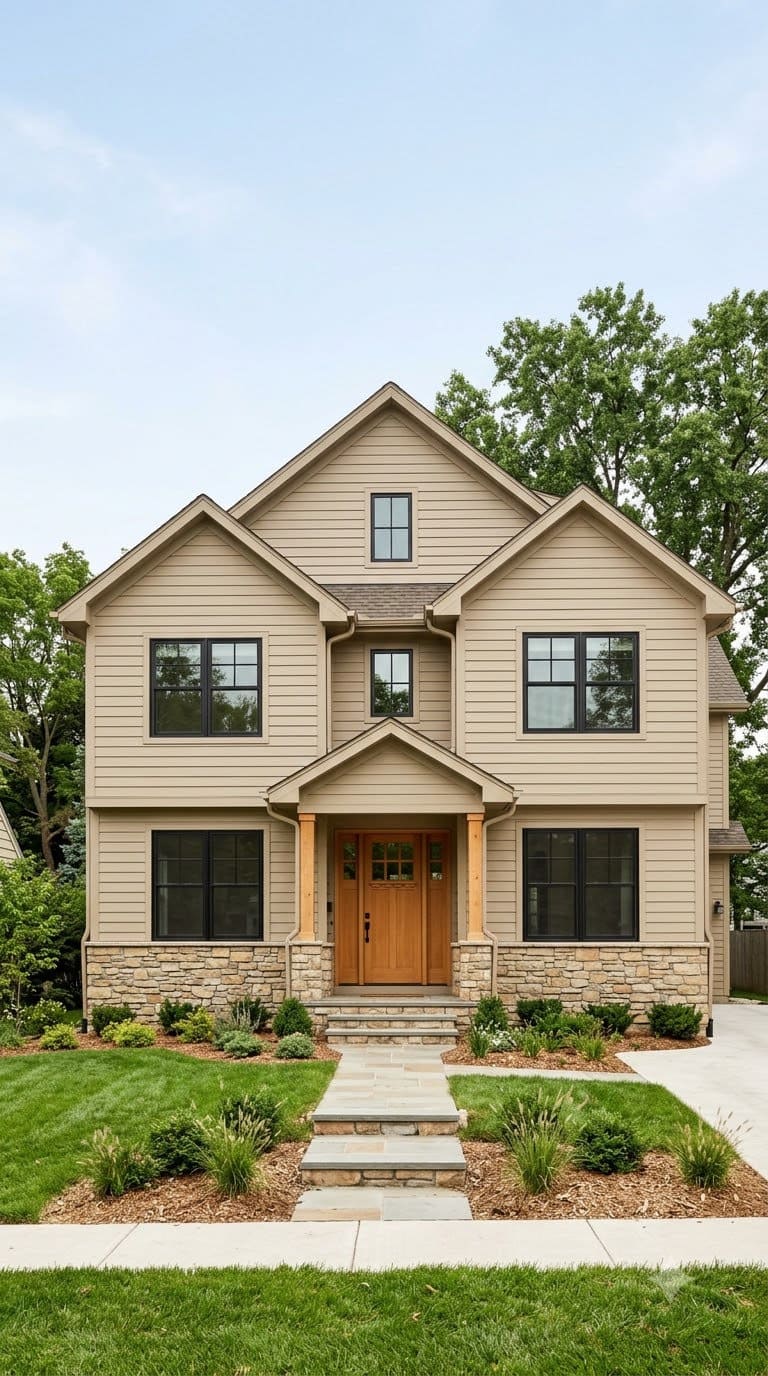
Beige softens black windows and gives a warm, welcoming feel. It’s a good pick if you want black frames without the modern edge.
Choose a beige with a slightly gray undertone. A yellow-leaning beige can make black frames look heavier by comparison.
It’s an easy match with stone and brown roofs. The Color Concierge, a Colorado paint consultancy, suggests neutral blacks for brown roofs. That means a plain black frame works better than a warm black here.
4. Cream
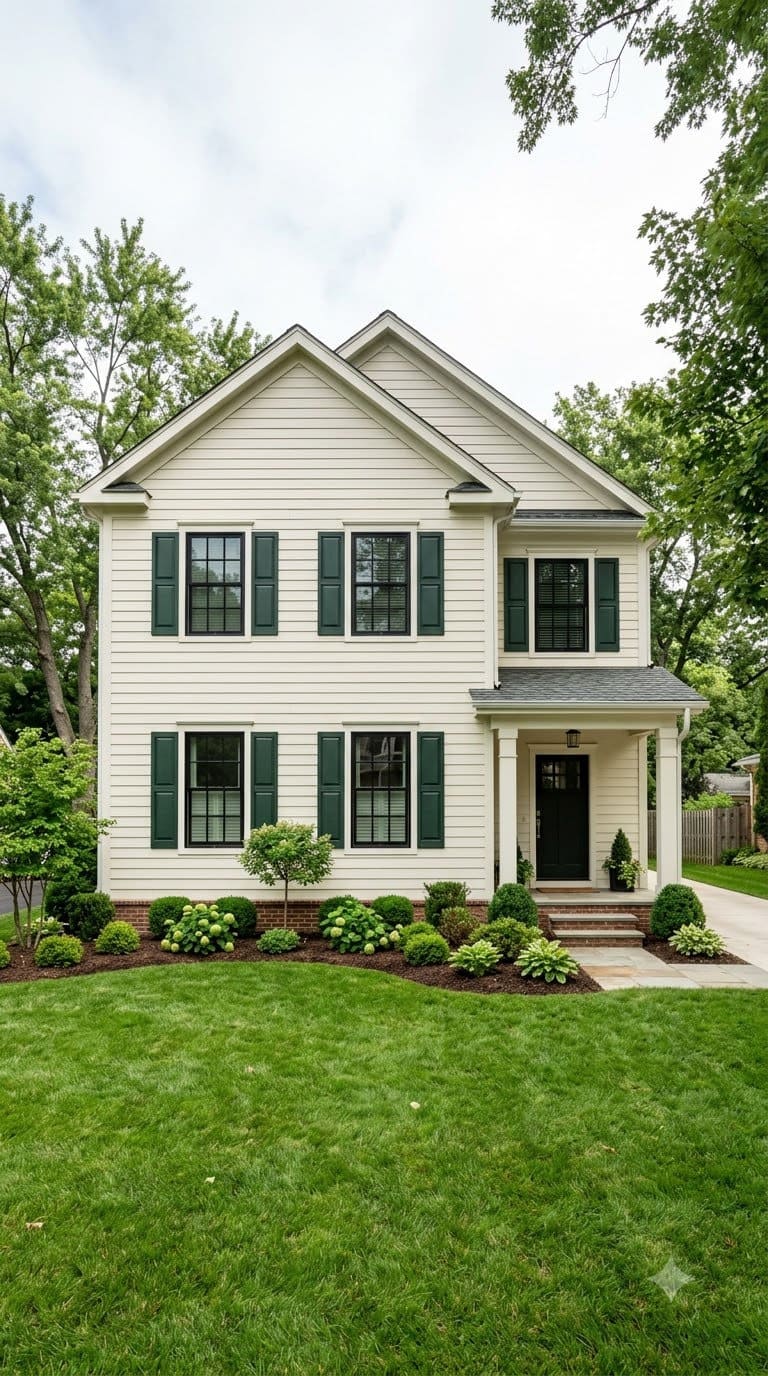
Cream is white’s warmer sibling. It reads as classic and a little traditional.
Sherwin-Williams Alabaster and Greek Villa are soft off-whites worth sampling. Brick & Batten pairs creamy siding with black trim for a timeless look.
Cream works best on homes with wood doors and brass hardware. It’s also forgiving of dirt, so it ages better than pure white.
If you have a red roof, cream is a good balance. The guide on paint colors for a house with a red roof goes into it.
5. Charcoal
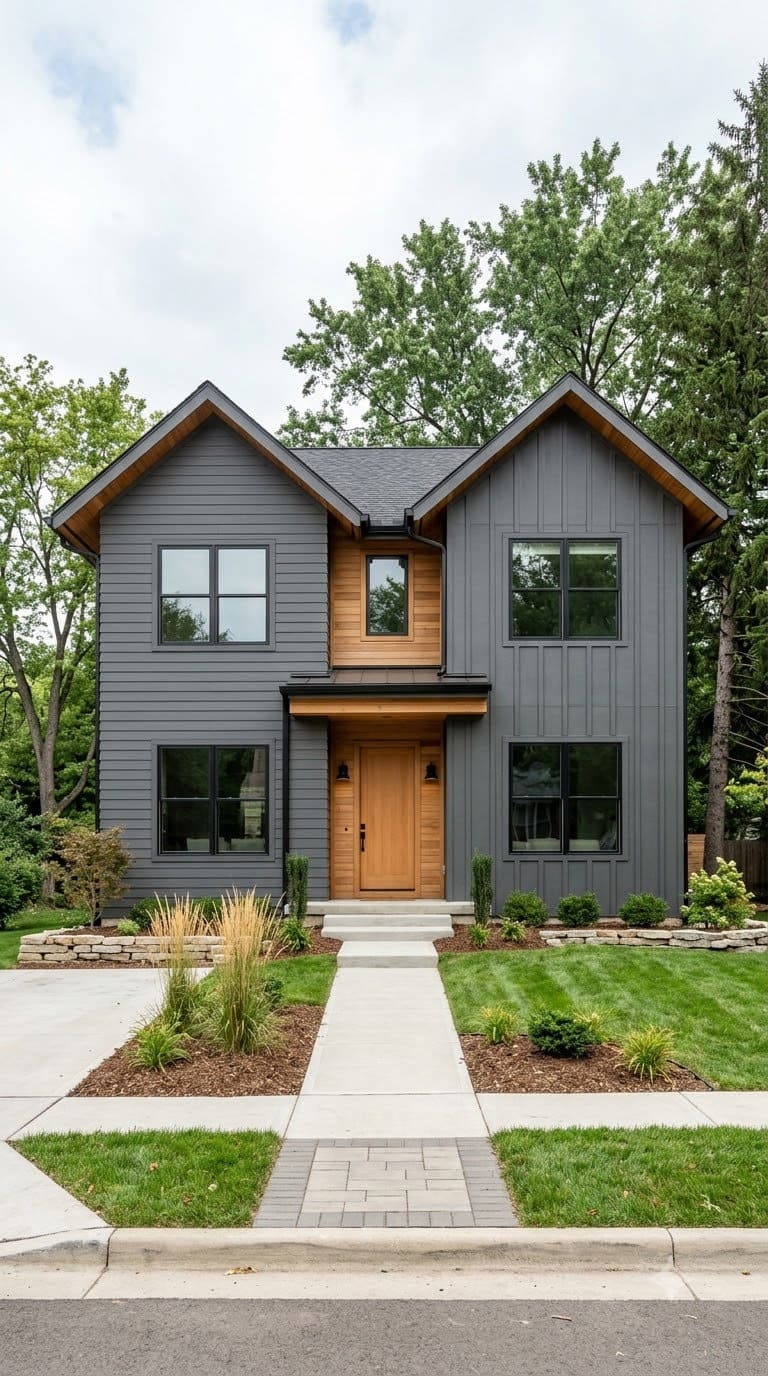
Charcoal with black windows is a monochrome look. The frames nearly disappear into the wall, and the house reads as one sleek shape.
Add warm wood, like a cedar soffit or porch ceiling, so it doesn’t feel flat. Add a light-colored front door for contrast.
This is a fiber cement or composite color. On vinyl it breaks the LRV 55 rule, and on metal it can make ice damming worse. Charcoal also shows pollen and dust.
Earthy Siding Colors That Pair Well with Black Windows
6. Olive Green
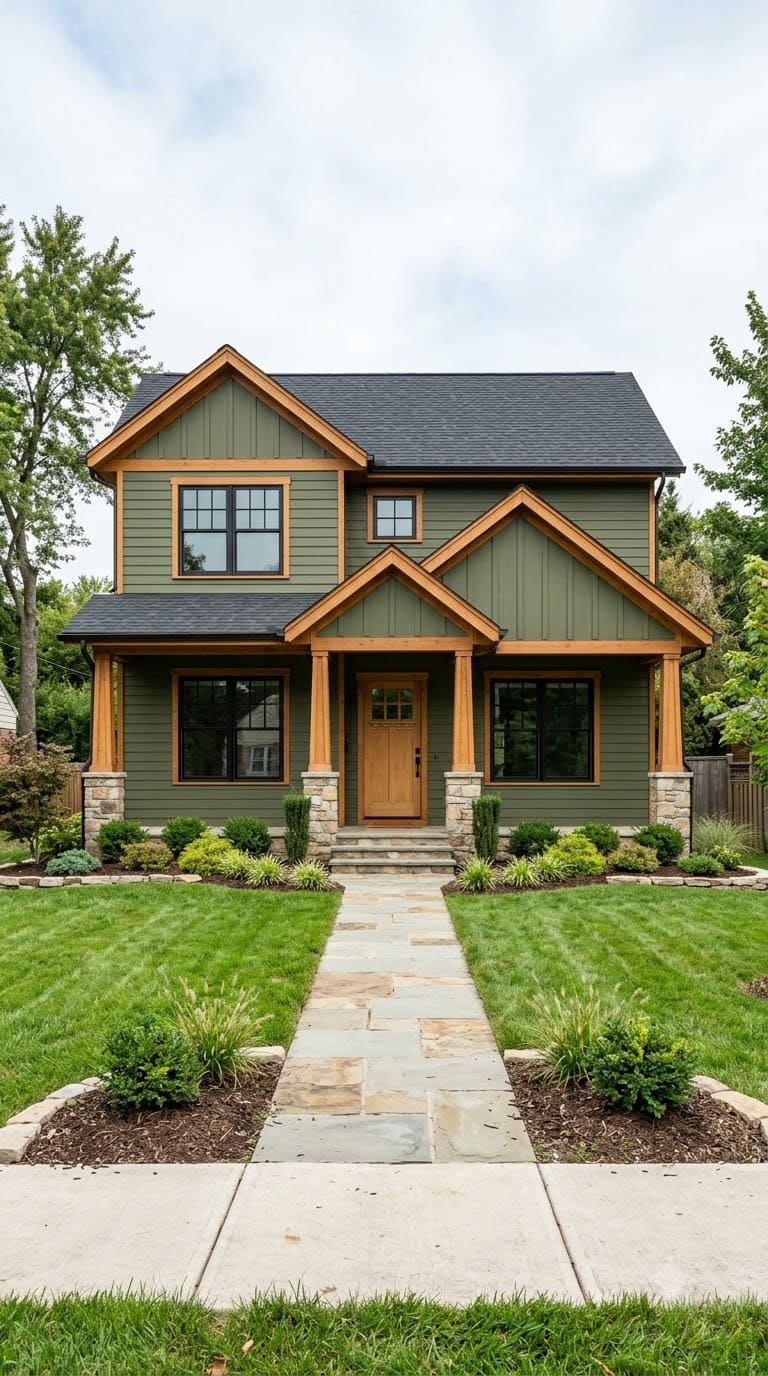
Olive green is earthy and a little unexpected. With black windows it looks grounded rather than flashy.
Pick an olive with a gray or brown base. A yellow-heavy olive can look muddy next to black.
It blends with landscaping. Warm wood and stone suit it. Our take: it’s one of the best colors for a house backed by trees.
7. Sage Green
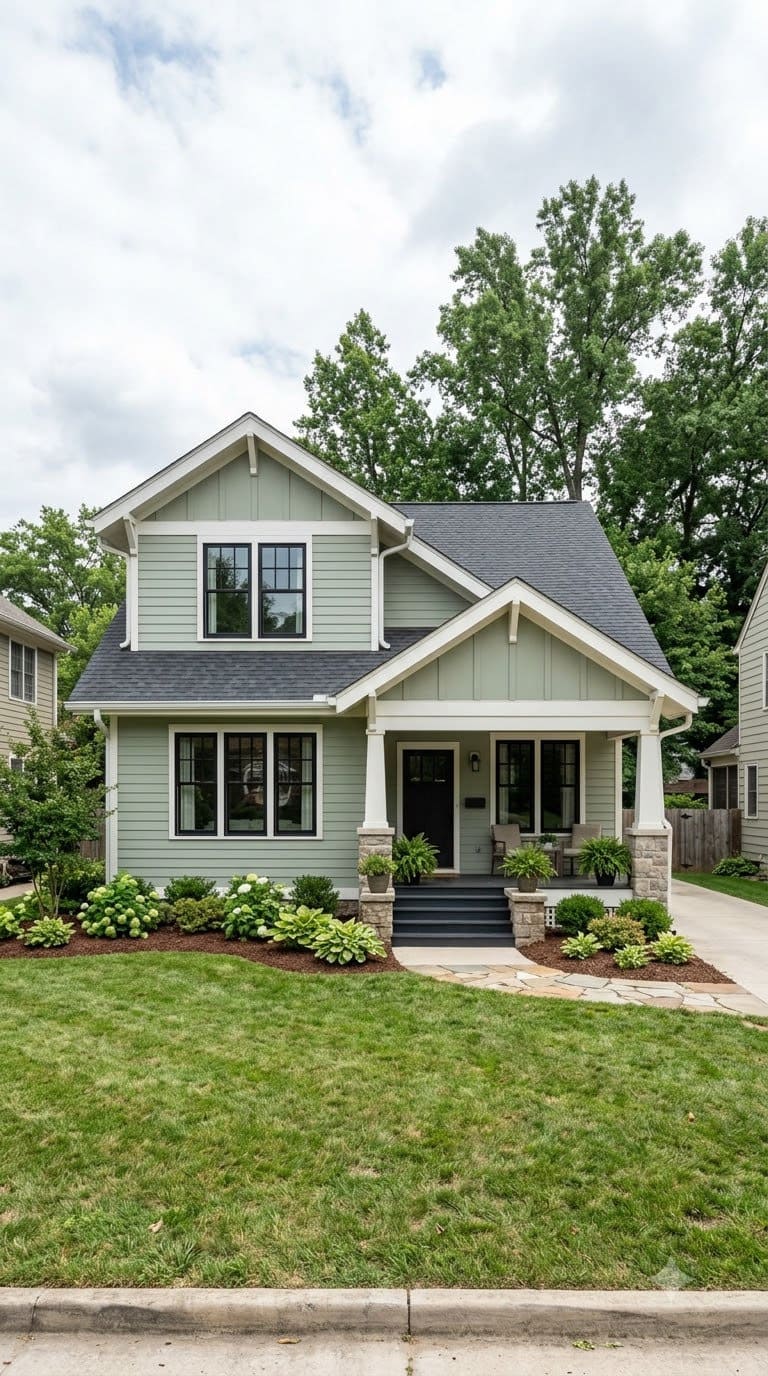
Sage is softer and lighter than olive. It gives black frames a gentle, cottage-friendly counterpoint.
Because sage has a higher LRV than olive, it’s easier on vinyl and on your repainting schedule. Pair it with white trim or a black door.
Sage looks different at every hour. Check your sample at dusk before you buy.
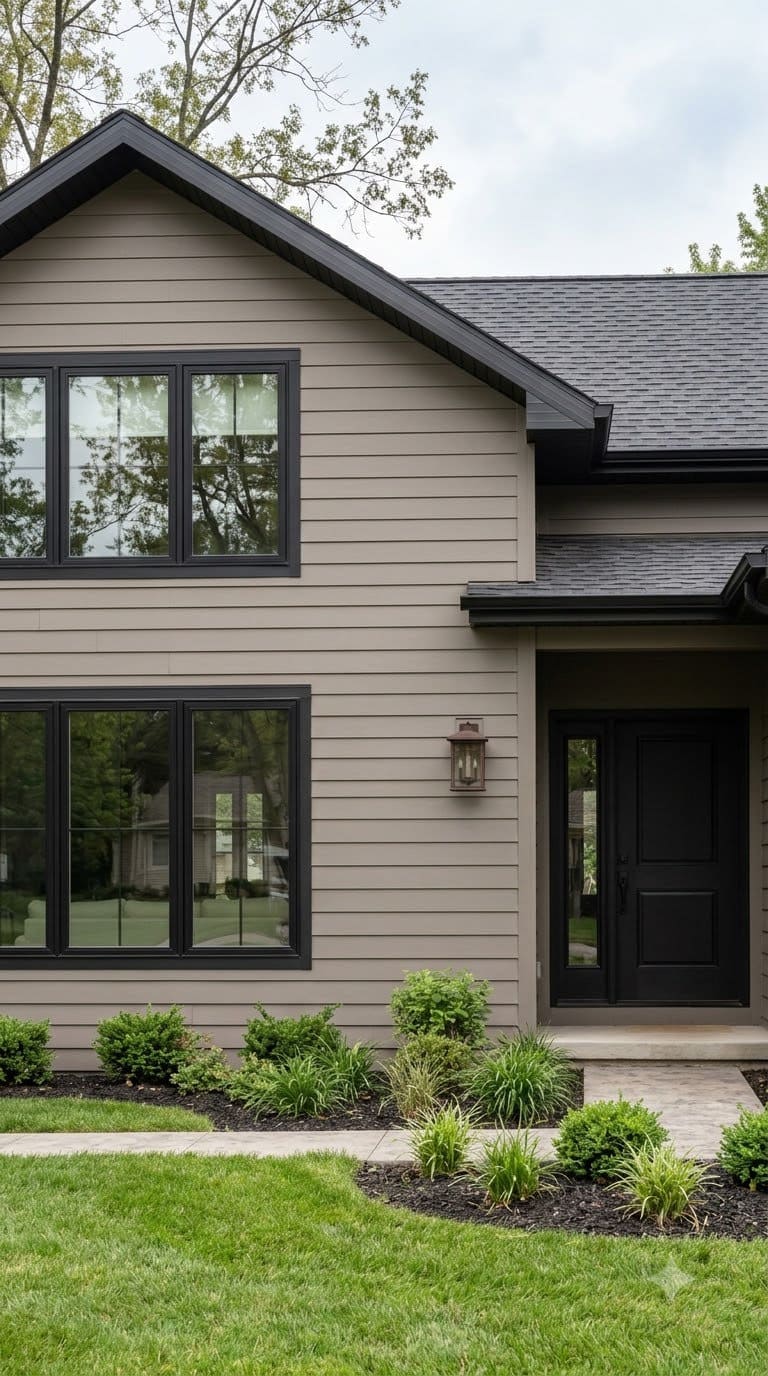
8. Taupe
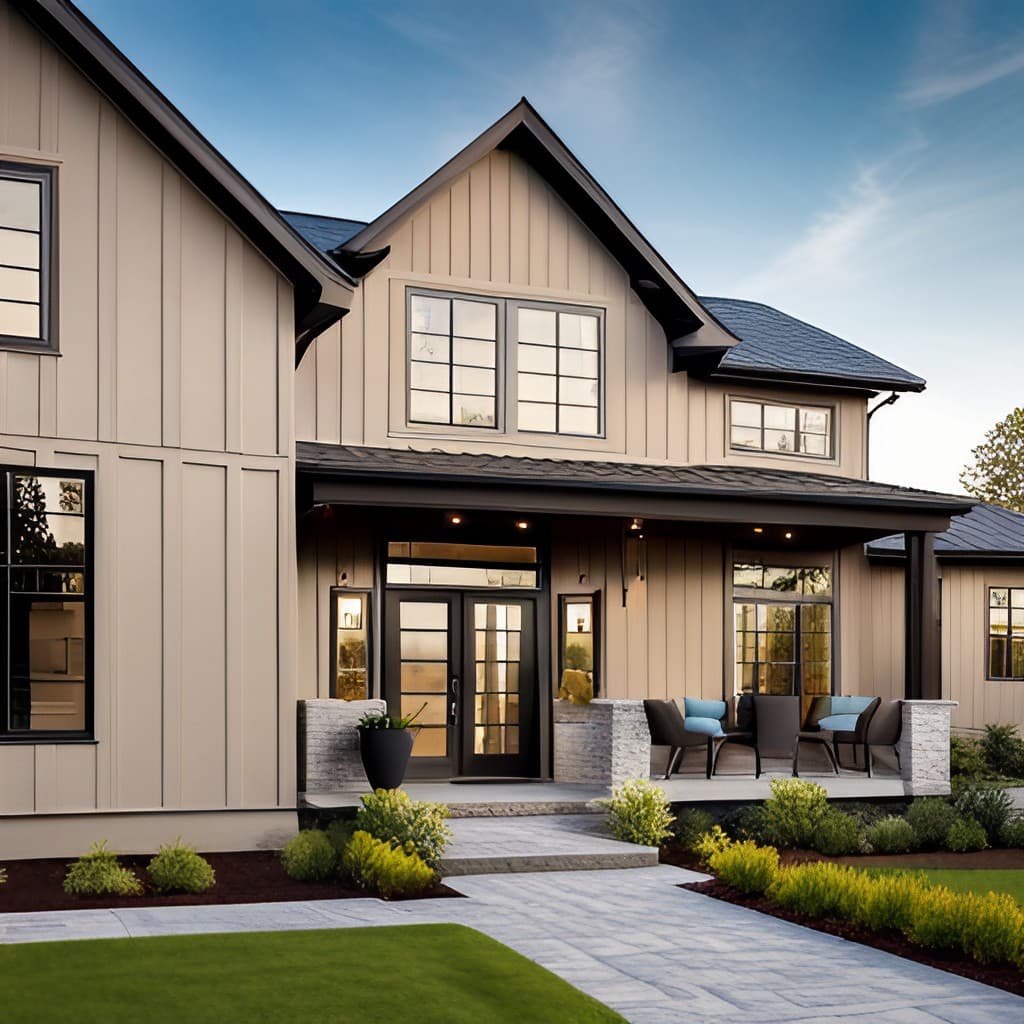
Taupe, or greige, sits between gray and beige. It’s the middle ground when white feels too bright and charcoal too dark.
Brick & Batten shows greige working with black trim, and it’s a favorite for modern homes. Sherwin-Williams Urbane Bronze (a green-undertone bronze) makes a rich trim color for taupe siding, per The Color Concierge.
Keep hardware consistent. Bronze fixtures tie the whole palette together.
Pastel Siding Colors That Go with Black Windows
9. Light Blue
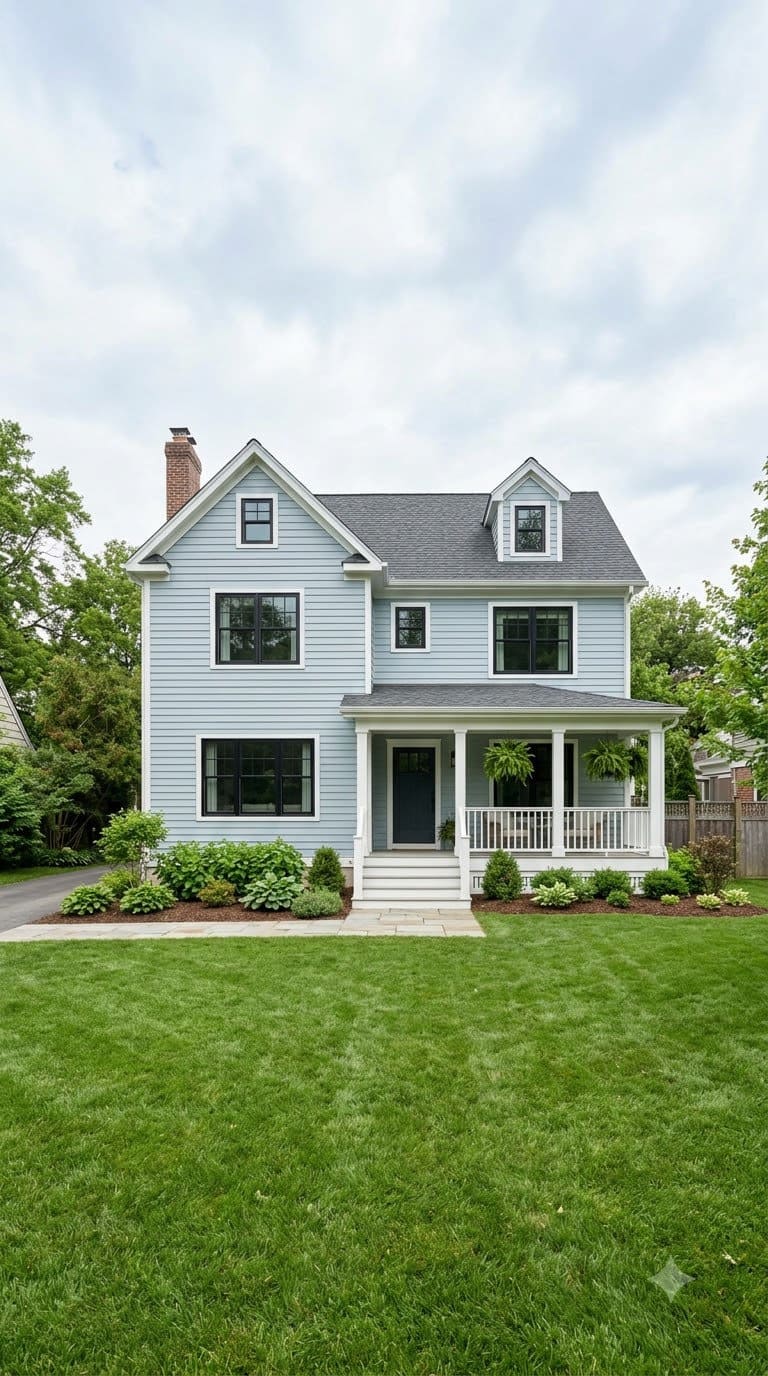
Light blue with black windows feels coastal and fresh. Black gives pastel blue a crisp edge it doesn’t get with white trim.
Benjamin Moore Steel Blue is a good example to sample, per Brick & Batten. Stay with grayish blues. Bright baby blue can look childish.
Light blue also suits a gray roof. For a deeper take on matching to roof tones, see which house colors work with a blue roof.
10. Blush Pink
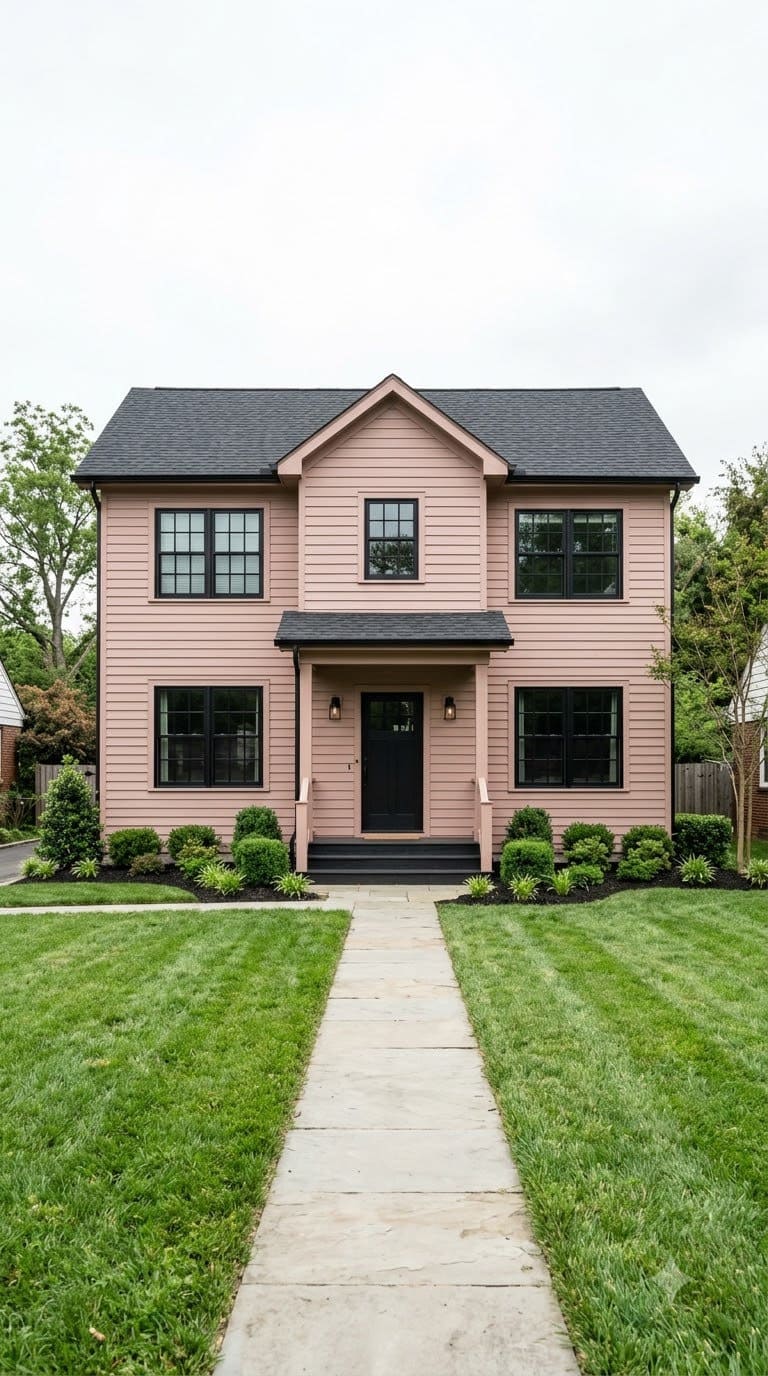
Blush pink is the boldest pastel. Black windows keep it from looking too sweet.
Choose a dusty, gray-leaning pink. A bright pink next to black can turn loud fast.
Undertones matter most here. Test the color beside your roof and brick, because pink can clash with orange-leaning materials.
Bold Siding Colors That Complement Black Windows
11. Navy Blue
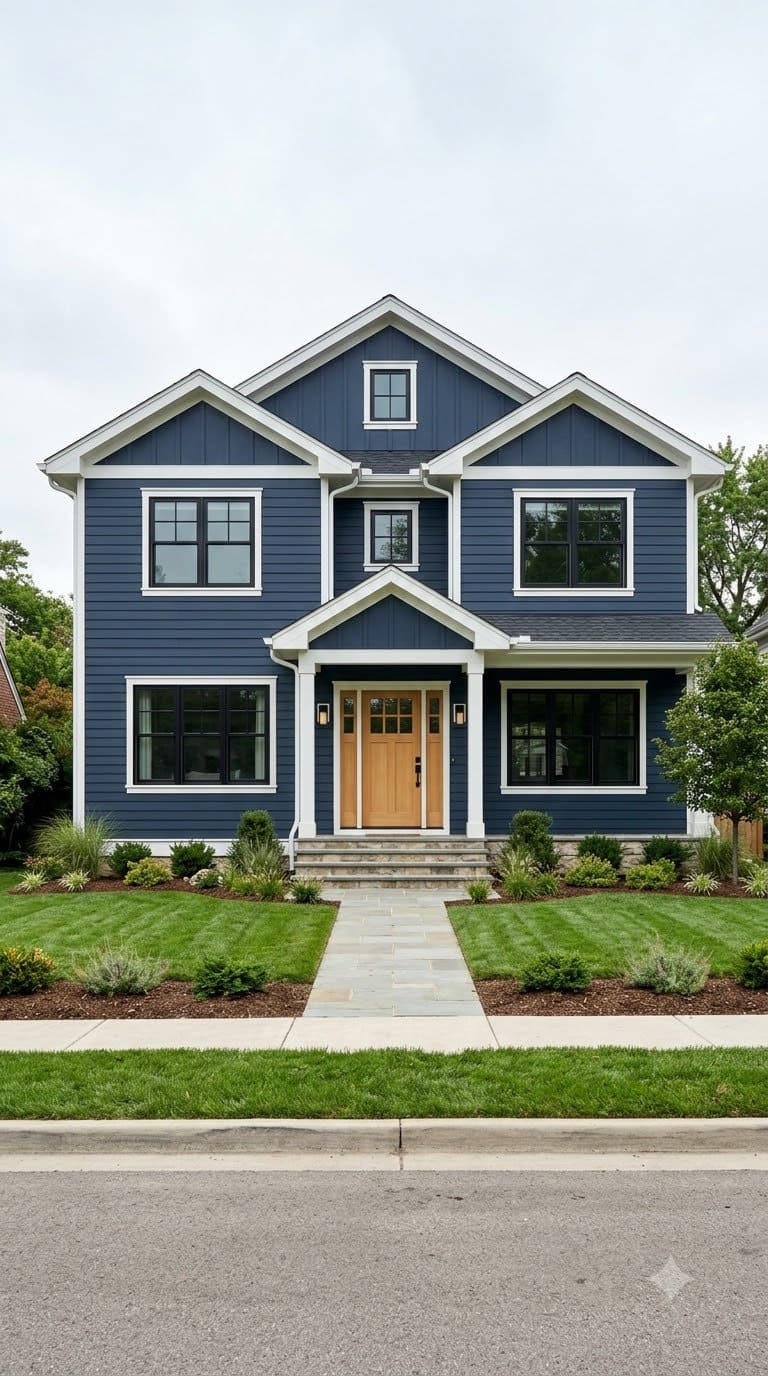
Navy is the classic dark-on-dark choice. Benjamin Moore Hale Navy shows up in Brick & Batten’s black-trim pairings.
Hunker also lists Benjamin Moore Bold Blue as a good example for black windows. Both give a rich blue that reads dark but not black.
Use fiber cement if you can. Navy absorbs a lot of heat, so avoid it on vinyl unless you’ve confirmed a heat-safe line.
12. Deep Forest Green
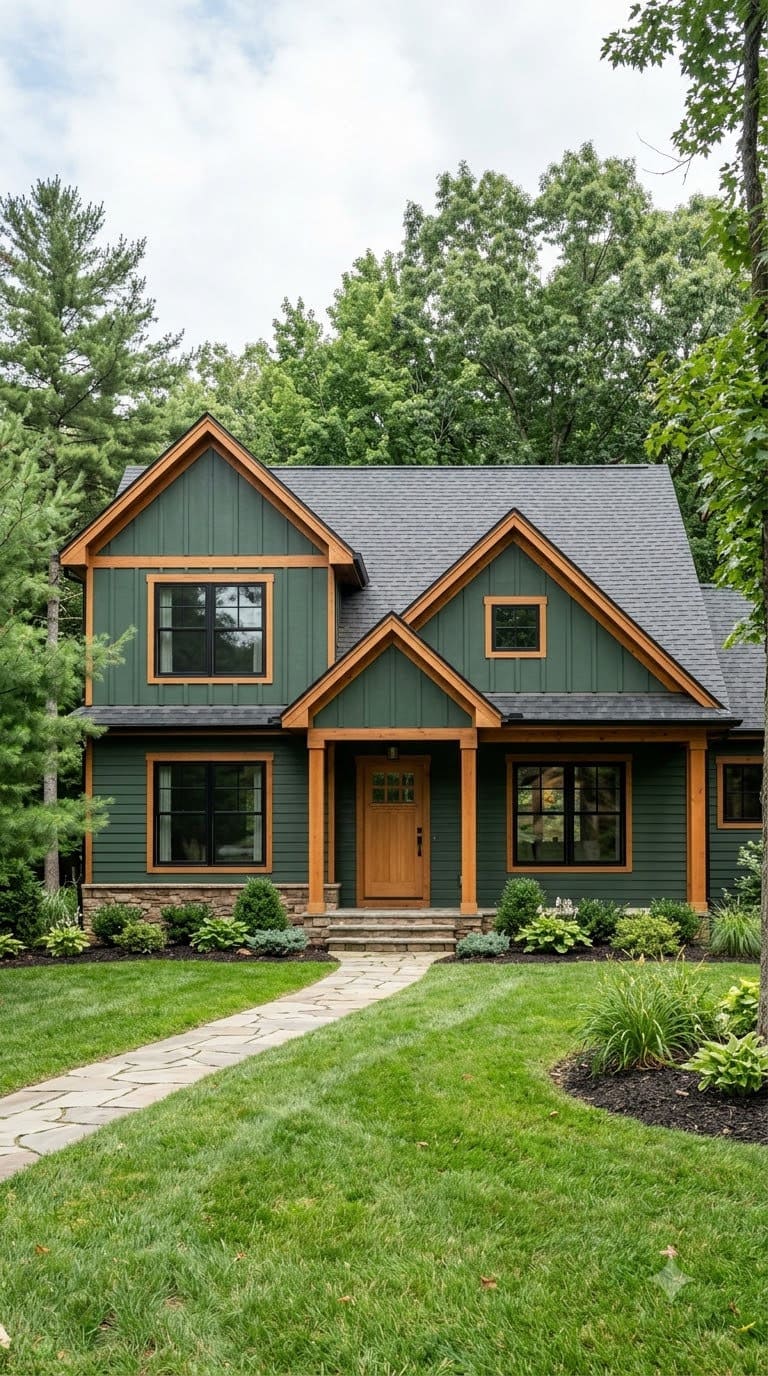
Forest green and black windows make a calm, moody pairing. Sherwin-Williams Roycroft Bottle Green is a good example to sample.
Valspar Nocturnal Green is another, from Hunker’s list. Both lean dark with a hint of blue-black.
Add warm wood accents so the house doesn’t feel heavy. A green roof can tie in, as the guide on house colors that go with a green roof shows.
Unexpected Siding Color Combinations with Black Windows
13. Mustard Yellow
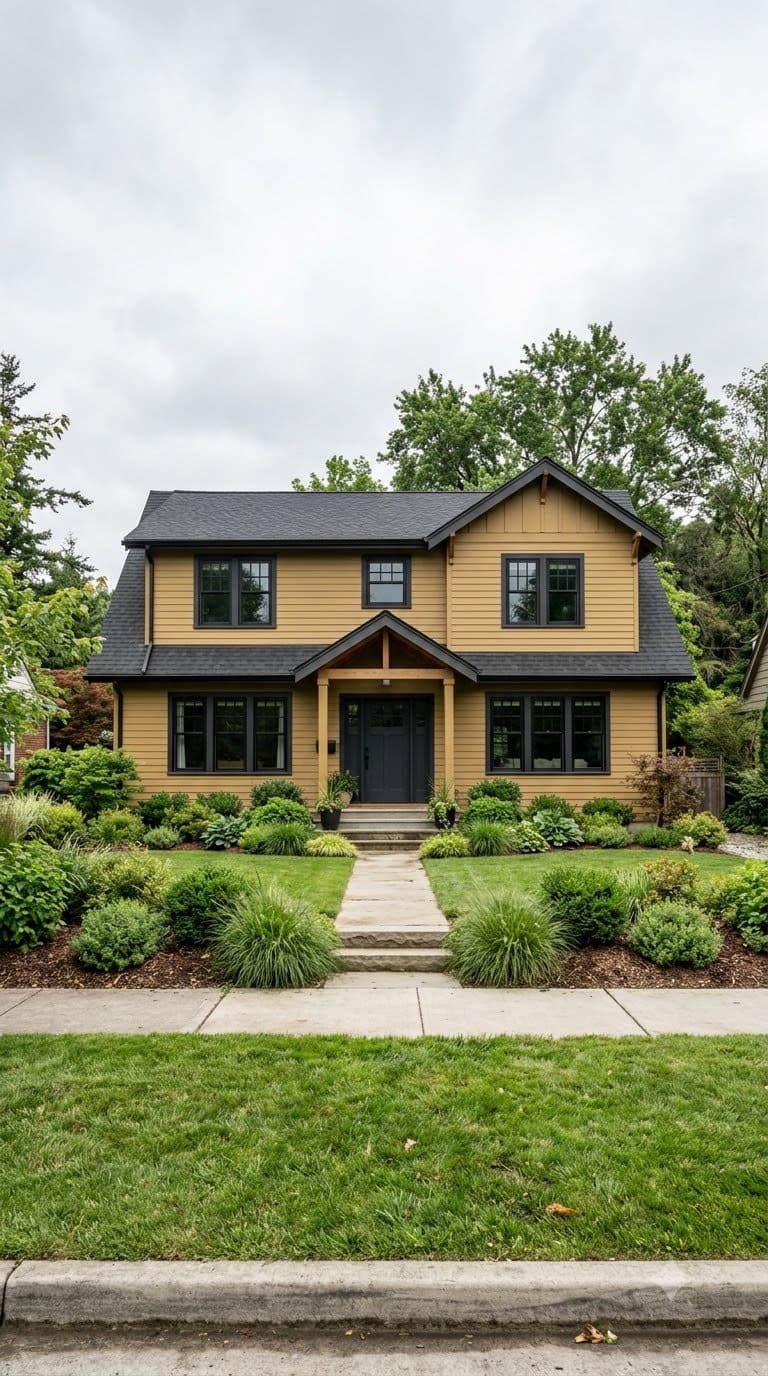
Mustard is a statement color. Black windows make it look intentional rather than loud.
Pick a muted, golden mustard. Avoid a bright lemon yellow next to black, because it can look like a warning sign.
Keep the rest of the palette simple: black frames, white trim, and a dark door. Let the siding carry the show.
14. Burnt Orange
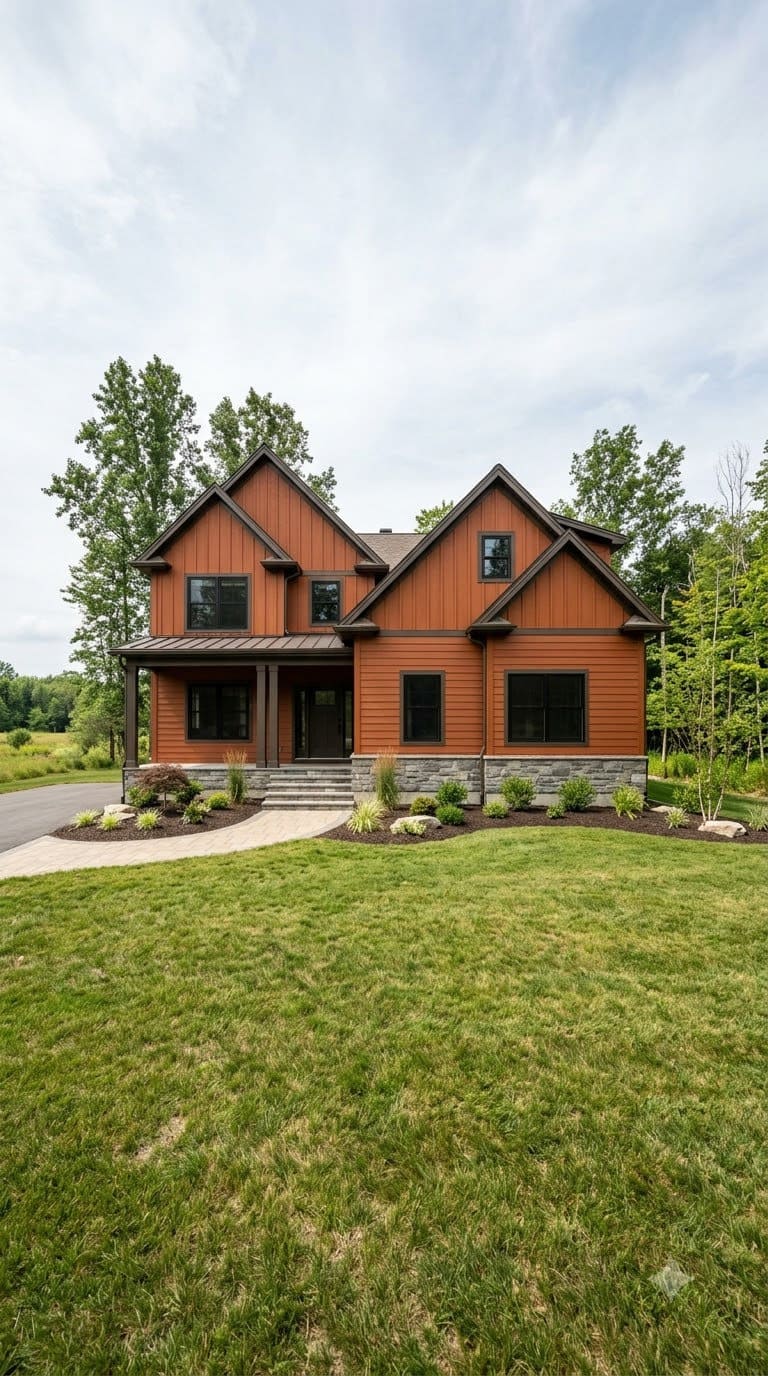
Burnt orange and terra cotta pair well with black frames, but the trim matters. The Color Concierge suggests dark brown or bronze trim for terra cotta roofs.
That tip carries over to burnt orange siding. Dark brown is warmer than black and avoids a harsh edge.
This is the riskiest color on the list. Test it for a full week before you commit.
15. Red
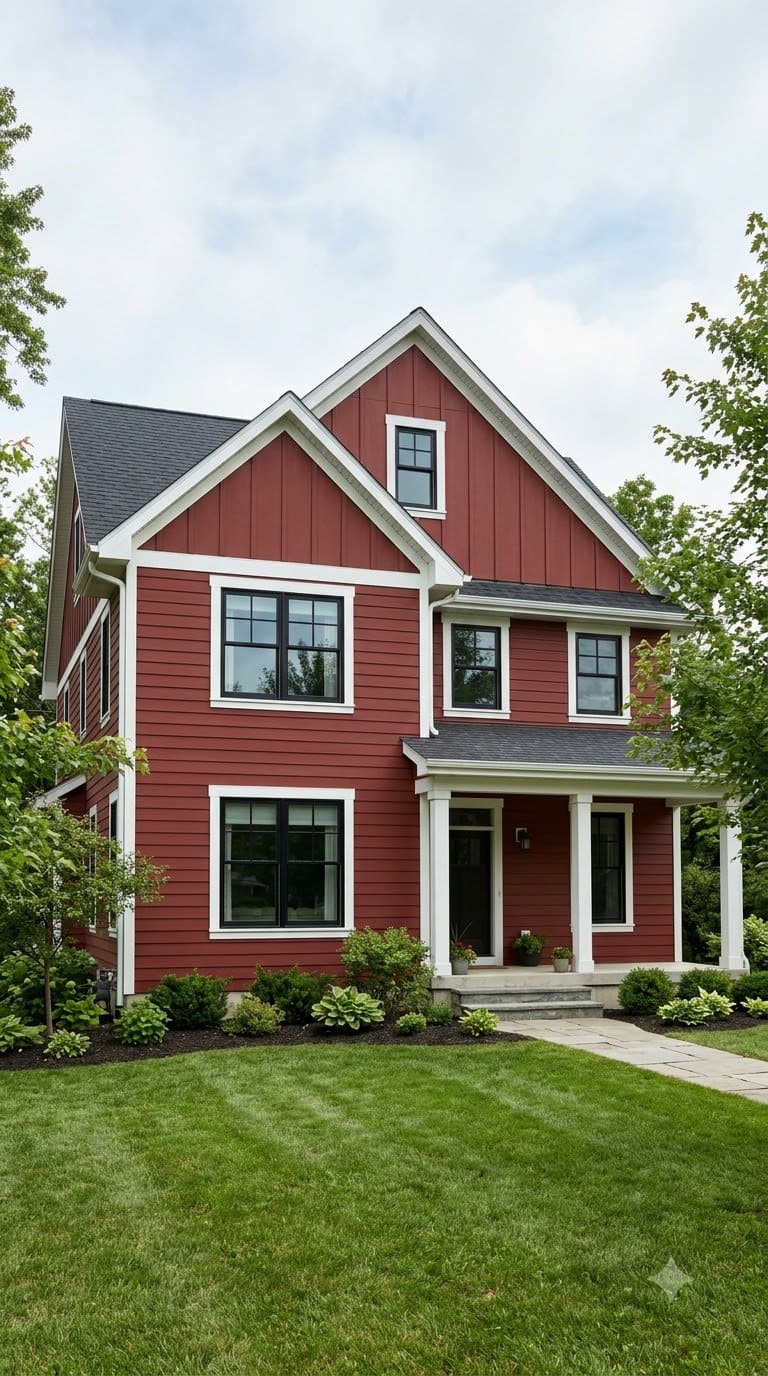
Red with black windows is bold and rooted in barn tradition. A deep, brick-leaning red works better than a bright one.
Benjamin Moore Dark Burgundy appears on Hunker’s list as an option to sample. For red brick specifically, what color siding to pair with red brick covers the details.
Red also fades visibly in strong sun. Plan for a repaint sooner than you would with neutrals.
How Should You Handle Trim, Doors, Roofs, and Brick?
Trim is the second choice after siding. You have two options.
- Match the siding: This makes windows look bigger and the house more modern.
- Contrast with it: White trim around black windows gives a classic frame. Katy Byrne suggests white trim with a neutral gray for a softer look.
The Color Concierge gives simple roof pairings. Warm roofs go with warmer blacks. Brown roofs go with neutral blacks.
Terra cotta roofs go with dark brown or bronze trim.
Doors can echo the windows or add a pop. A black door repeats the frames. A natural wood door warms the whole palette, and front door ideas for a white house show how that plays out.
One more caution from The Color Concierge: avoid dark trim next to white vinyl windows unless you’ve planned the scheme carefully. The contrast gets too sharp.
If you live in an HOA or a historic district, check the color rules first. Many require approval before you paint.
What We Learned the Hard Way
The mistake we see most is picking the color first and the material second. A deep navy looks perfect in a photo of fiber cement, then fails on vinyl. Check the siding material and the LRV rule before you fall in love with a shade.
If there’s one thing worth doing differently, it’s testing your sample on a sunny wall and a shaded wall. A color can look soft in the shade and heavy in direct sun.
Second, black shows dirt. Pollen, dust, and hard-water spots all stand out on black frames and dark siding. Budget a few rinse days per year.
Third, true black can feel stark. If it does, look at bronze or dark brown frames, which are softer.
You can also pair black frames with a lighter greige or taupe wall. Brick & Batten’s contrast approach works the same way.
Finally, remember the sap story. Dark paint on old pine got hot enough to bleed sap. Old wood needs more thought than new fiber cement.
FAQ: Siding Colors with Black Windows
Can vinyl siding be dark with black windows?
Mostly not. Paint on vinyl needs an LRV of 55 or higher, per Green Building Advisor. True black vinyl isn’t made, so pick a lighter shade or switch to fiber cement.
Does dark siding make my house hotter inside?
Not by much. Experts on the Green Building Advisor forum say most of the heat dissipates outside. Window solar gain matters far more.
Should my trim be black too?
You can match black trim for a monochrome look, or use white trim for contrast. Both work. Avoid dark trim next to white vinyl windows unless you’ve planned it.
White trim or black trim with black windows?
White trim gives a classic frame, and black trim gives a sleek, modern look. Pick by the siding color. Light siding takes either, and dark siding looks best with black.
Do black windows fade?
Yes, over time, and darker finishes show it more. Hunker notes that sun can fade the color and heat can stress frames. Choose quality finishes and wash them regularly.
Related Posts
- Front Door Colors for a Brown House
- Low-Cost Exterior Siding Options for a Home Upgrade
- Why Your Roof Matters for Curb Appeal
Products We Recommend
This post contains affiliate links. We may earn a commission on qualifying purchases at no extra cost to you.
Mighty Board Minis Polystyrene Paint Color Test Panels, 12" x 9", Set of 5, White
Five white panels for testing siding and trim colors. Move them between sunny and shady walls before you commit to a gallon.
Shop Now
FoamPRO 120 Color Tester Sample Board, 24-Pack
A larger pack of portable sample sheets for comparing several colors beside your windows, roof, and brick.
Shop Now
RMR House and Siding Wash, 64 oz with Hose-End Adapter
A hose-end wash for mold, mildew, and algae. It helps keep light siding clean, and it suits yearly rinse days on dark frames.
Shop NowNever miss an update — choose FarmFoodFamily as your preferred source on Google.
How it works: Tap the button below to open Google's settings page, then check the box next to FarmFoodFamily.
Tap the checkbox to turn it blue — that's how you know it's set.