20 Colorful DIY Tire Planter Ideas (And Why Flowers Beat Vegetables in Old Tires)
An old tire becomes a bright planter in an afternoon, but extension experts disagree on growing food in it, so we lean on flowers.

Never miss an update — choose FarmFoodFamily as your preferred source on Google.
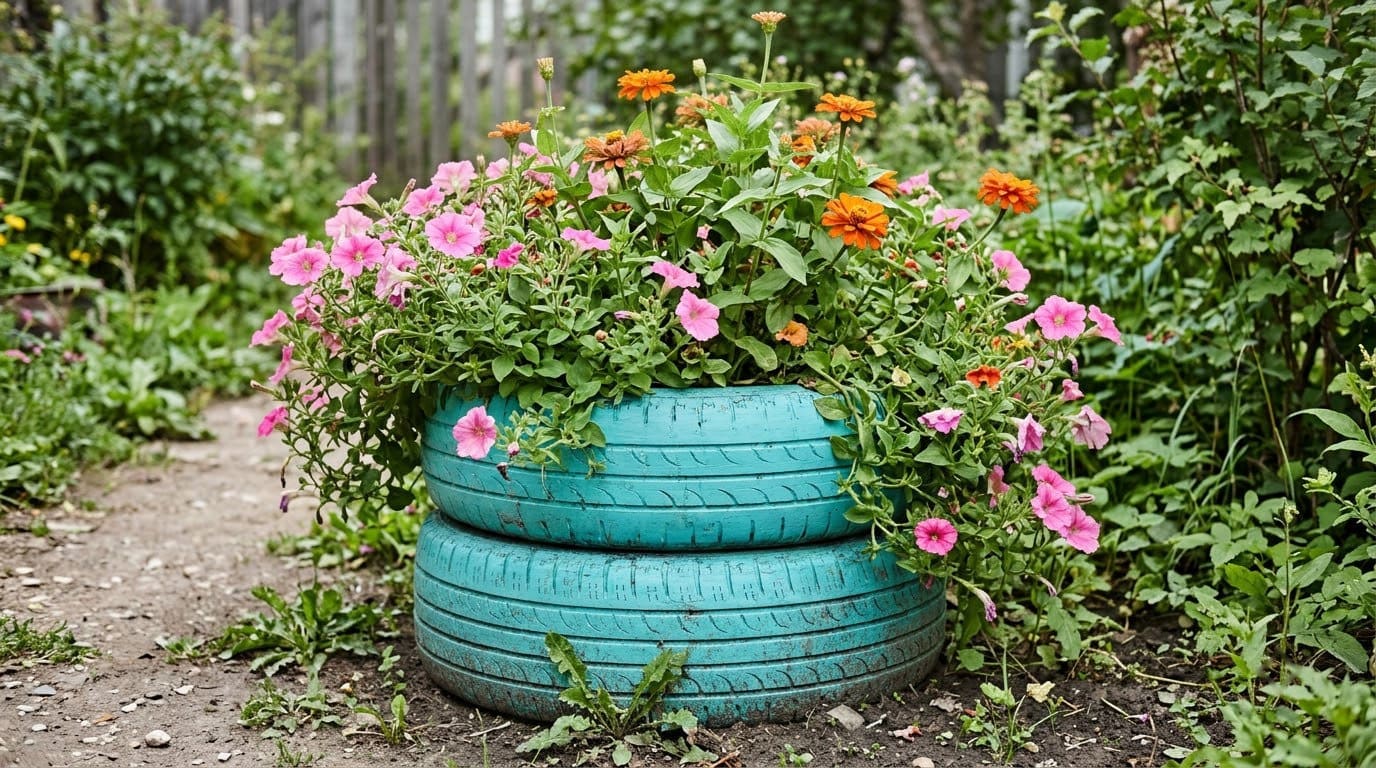
How it works: Tap the button below to open Google's settings page, then check the box next to FarmFoodFamily.
Tap the checkbox to turn it blue — that's how you know it's set.
An old tire becomes a bright planter in an afternoon, but extension experts disagree on growing food in it, so we lean on flowers.
Products We Recommend
This post contains affiliate links. We may earn a commission on qualifying purchases at no extra cost to you.

COOLJOB A3 Cut Resistant Work Gloves, Nitrile Coated
Cut-resistant gloves for handling tires and cut rubber, with steel belt wire
Shop Now
Rust-Oleum Painter's Touch Acrylic Latex Paint, Gloss Apple Red
Brush-on interior and exterior paint to color the outside of a tire
Shop Now
Screen Repair Kit, 36 x 90 inch Fiberglass Mesh
Cut-to-size mesh to cover drainage holes so mix stays in
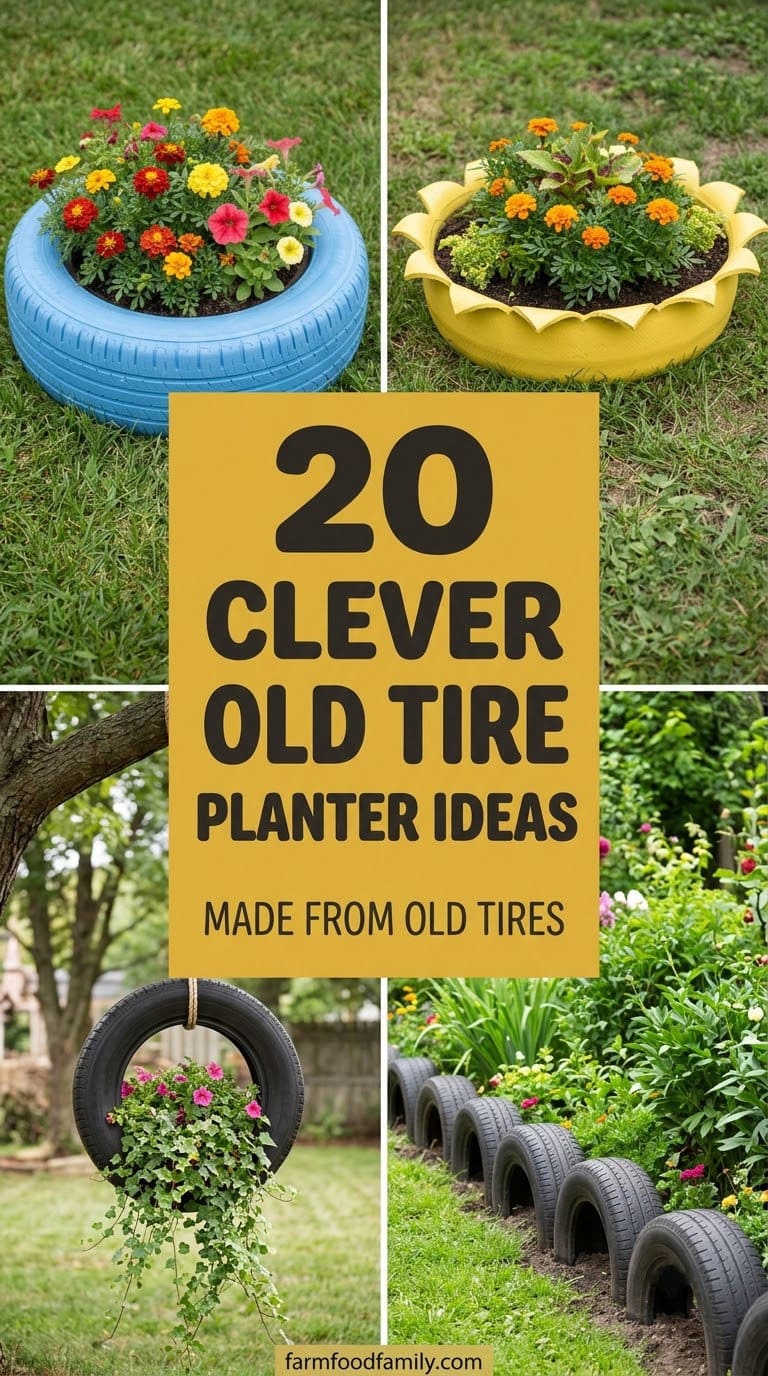
Shop NowAn old tire is free, tough, and already shaped like a planter. Paint it a bright color, fill it with soil, and plant flowers. It costs almost nothing, and it keeps a tire out of the landfill.
Tires also come with real questions. Do they leach into the soil? Can you cut them safely? Do they breed mosquitoes? This guide gives you 20 ideas with the answers, and it explains why we suggest flowers over vegetables.
In this article
Answer 4 quick questions and get matched to the exact fix for your yard — drainage, budget, layout, or something else entirely.
Take the Free QuizWhat’s the Quick Answer for Tire Planters?
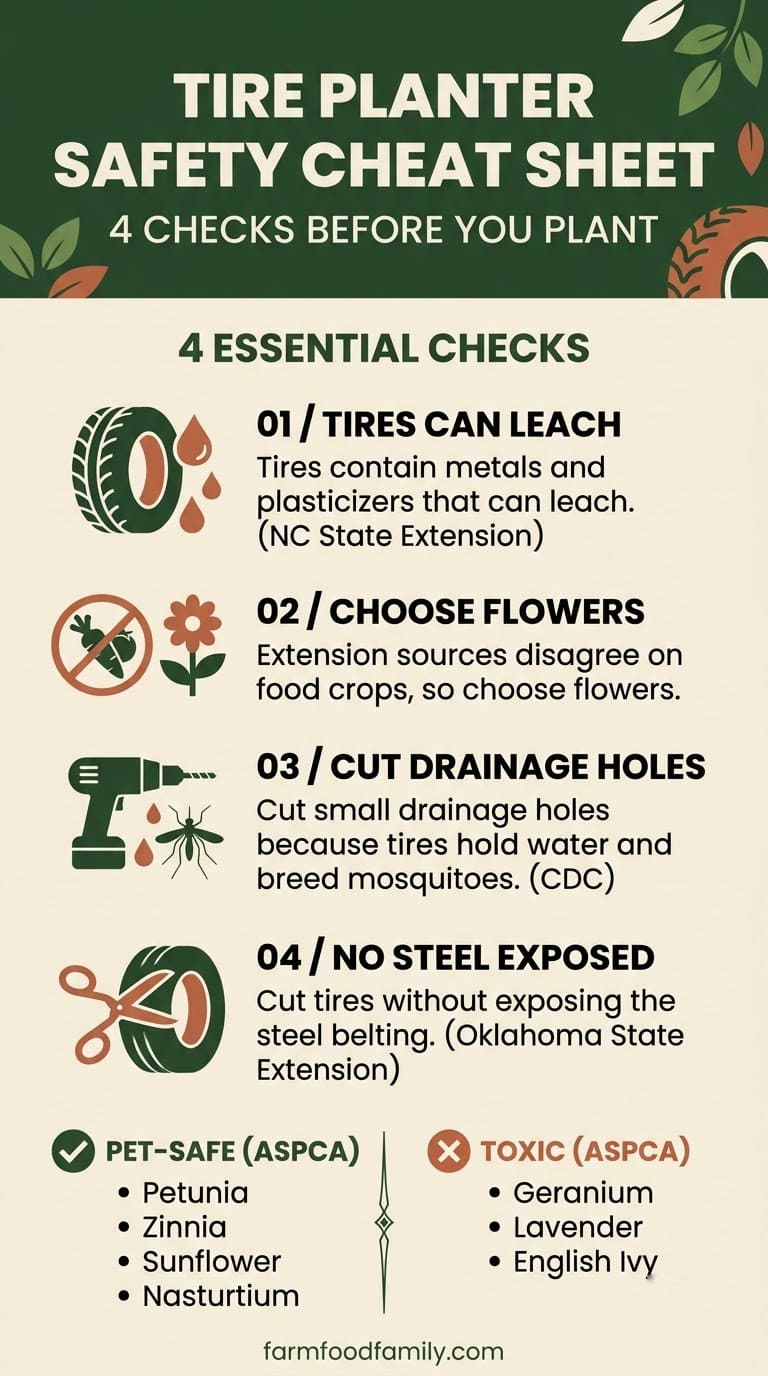
Use tire planters for flowers, and cut small drainage holes. Lucy Bradley of NC State Extension says tires contain metals such as cadmium and a high level of zinc. She adds that rubber can absorb lead, and that these substances leach out as tires break down.
Extension sources disagree on food crops. Marisa Y. Thompson of New Mexico State University suggests above-ground crops and a liner. NC State says there is no need to use tires in the garden at all.
Mosquitoes love tires, so a planter with no drain becomes a breeding pond. The CDC lists tires among the items that hold water, so drain every tire planter.
Pick pet-safe plants, and cut tires carefully. Steel belts are sharp, so wear gloves and eye protection. A little care up front keeps the planter safe, dry, and easy to enjoy for years.
Should You Grow Food in Tires?
This table compares what each source says. None of them gives test data on what actually moves into plants.


| Source | Position | What they suggest |
|---|---|---|
| NC State Extension (Lucy Bradley) | Avoid tires | Use rot-resistant wood, brick or stone, or mound soil with no border |
| New Mexico State University (Marisa Y. Thompson) | Use with care | Line the tire, keep crops off the rubber, grow above-ground crops, wash and peel roots |
| Oklahoma State Extension (Noble Research Institute) | Builds tire planters for crops | Soilless mix, weed-barrier liner, intact used tires |
Our take is simple. Grow flowers in tires, and grow food in a container with no question mark over it. That choice avoids the disagreement entirely.
Most yard problems trace back to one specific, fixable cause. Find yours in 4 quick questions.
Take the Free QuizBefore You Start: Tires, Cutting, Drainage, and Mosquitoes
Choose intact tires from a tire shop. The Oklahoma State Extension instructions, from the Noble Research Institute, use identical used auto or light-truck tires. Avoid tires with exposed steel belts or heavy damage.
Cutting is the risky part. The same instructions use a utility knife and a jigsaw with a fine blade. They say to cut as close to the tread as possible. Do not expose the steel belting. Use an angle grinder to remove any exposed wire. Wear gloves and eye protection.
Wash the tire first. Oklahoma State says to wash the interior surface before use.
Drain every planter. The CDC says to empty, scrub, turn over, cover, or discard items that hold water once a week. A drilled hole stops the tire from becoming a mosquito nursery.
Use soilless potting mix, as the Oklahoma State Extension page advises for drainage in planters with an elevated floor.
Which Tire Planter Plants Are Safe for Pets?
We checked a short list of popular planter flowers on the ASPCA pages. The table shows what each entry said.
| Plant | Dogs and cats | Notes |
|---|---|---|
| Petunia | Non-toxic | Also non-toxic to horses |
| Zinnia | Non-toxic | Also non-toxic to horses |
| Sunflower | Non-toxic | Also non-toxic to horses |
| Nasturtium | Non-toxic | Also non-toxic to horses |
| Thyme | Non-toxic | Also non-toxic to horses |
| Geranium | Toxic | Toxic to dogs, cats, and horses |
| Lavender | Toxic | Toxic to dogs, cats, and horses |
| English ivy | Toxic | Toxic to dogs, cats, and horses |
Geraniums and ivy are common in tire planters, so check before you buy. We could not confirm marigold, pansy, or impatiens, because the ASPCA pages we pulled did not show an entry.
Cut-resistant gloves for handling tires and cut rubber, with steel belt wire
Shop NowThis post contains affiliate links. We may earn a commission on qualifying purchases at no extra cost to you.
How Do You Make a Tire Planter Step by Step?
Pick a tire and wash it inside and out. Set it where it will stay, since a filled tire is heavy. Drill or cut four or five drainage holes in the lowest sidewall.
Cover the holes with window screening or a coffee filter so the mix stays in. Fill with soilless potting mix, and leave an inch or two at the top.
The average homeowner spends $616/year on yard fixes that don't address the real problem. Find out what yours actually is — before you spend another dollar.
Take the Free QuizPaint the outside if you like. Use exterior paint on a clean, dry tire. Plant, water until it drains, and check the planter weekly.
20 DIY Tire Planter Ideas
1. Single Ground Tire Flower Bed
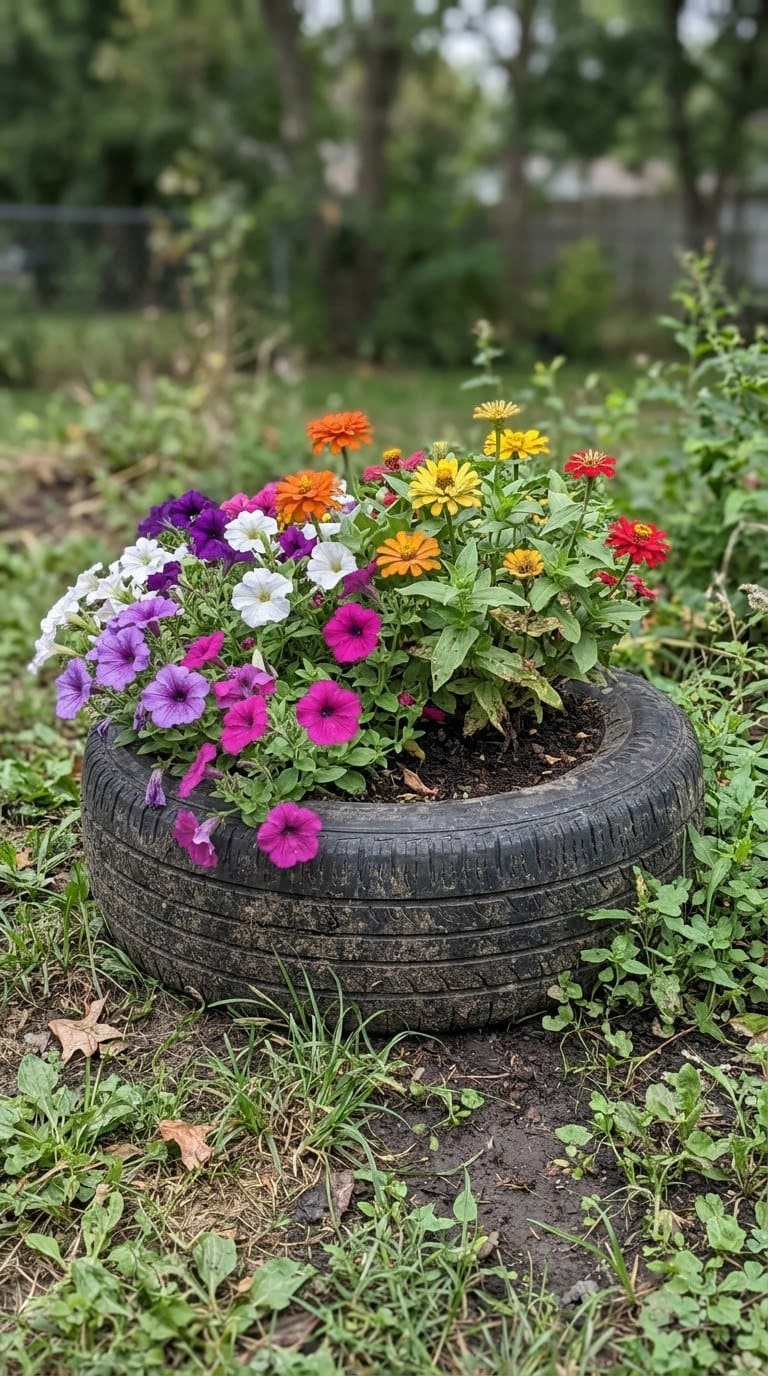
Lay one tire flat in a sunny spot. Fill it with soilless mix and plant petunias or zinnias, which are non-toxic per the ASPCA. A single tire is stable and needs no cutting.
Cut a couple of drainage slits in the sidewall. Paint the tire a bright color to hide the black.
Cost tier: very low.
2. Stacked Two-Tire Bed
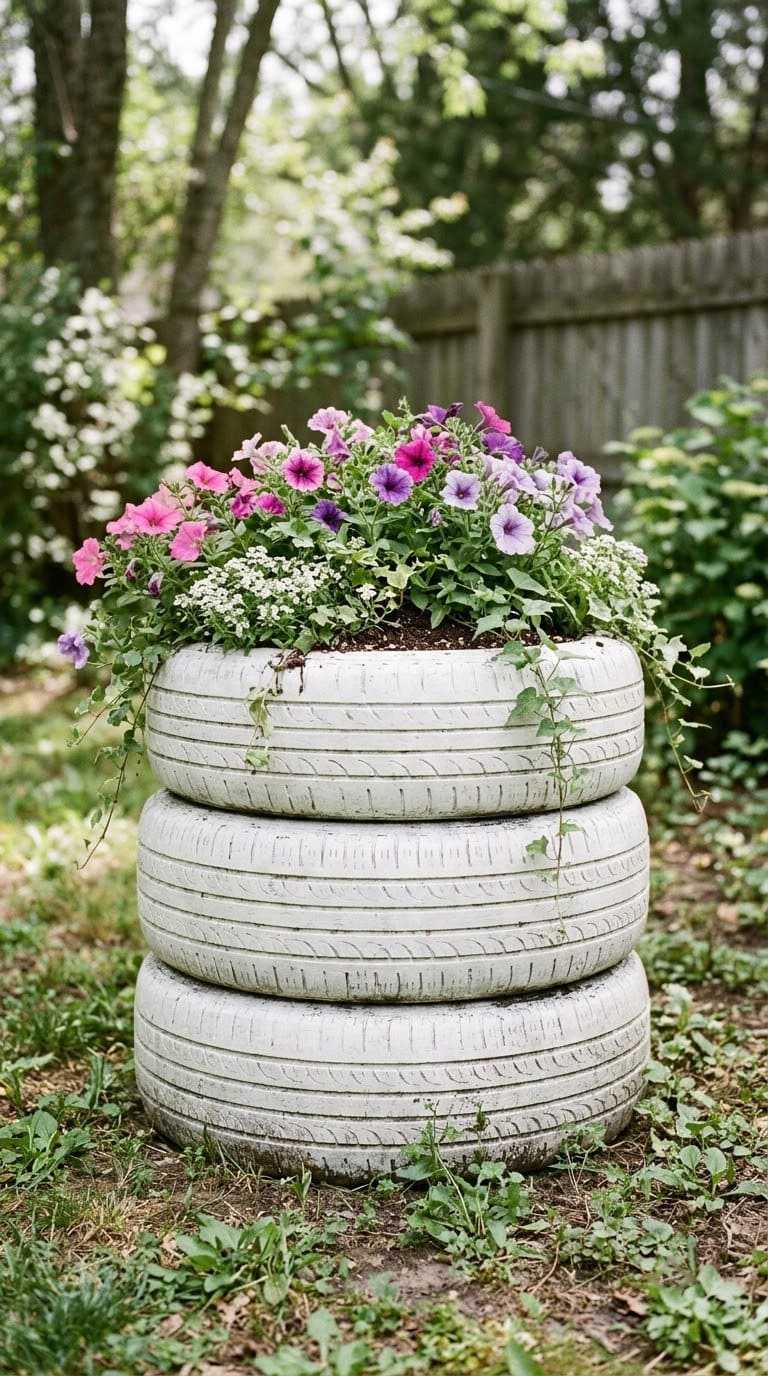
Stack two tires for a deeper bed. Oklahoma State’s modular planter uses modules about 8 inches deep and recommends two growing modules for best results. Deeper beds hold more water and nutrients.
Fasten the tires together with a few screws through the sidewalls. Drill drainage holes in the lowest tire.

Cost tier: very low.
3. Bright Painted Tire Planter
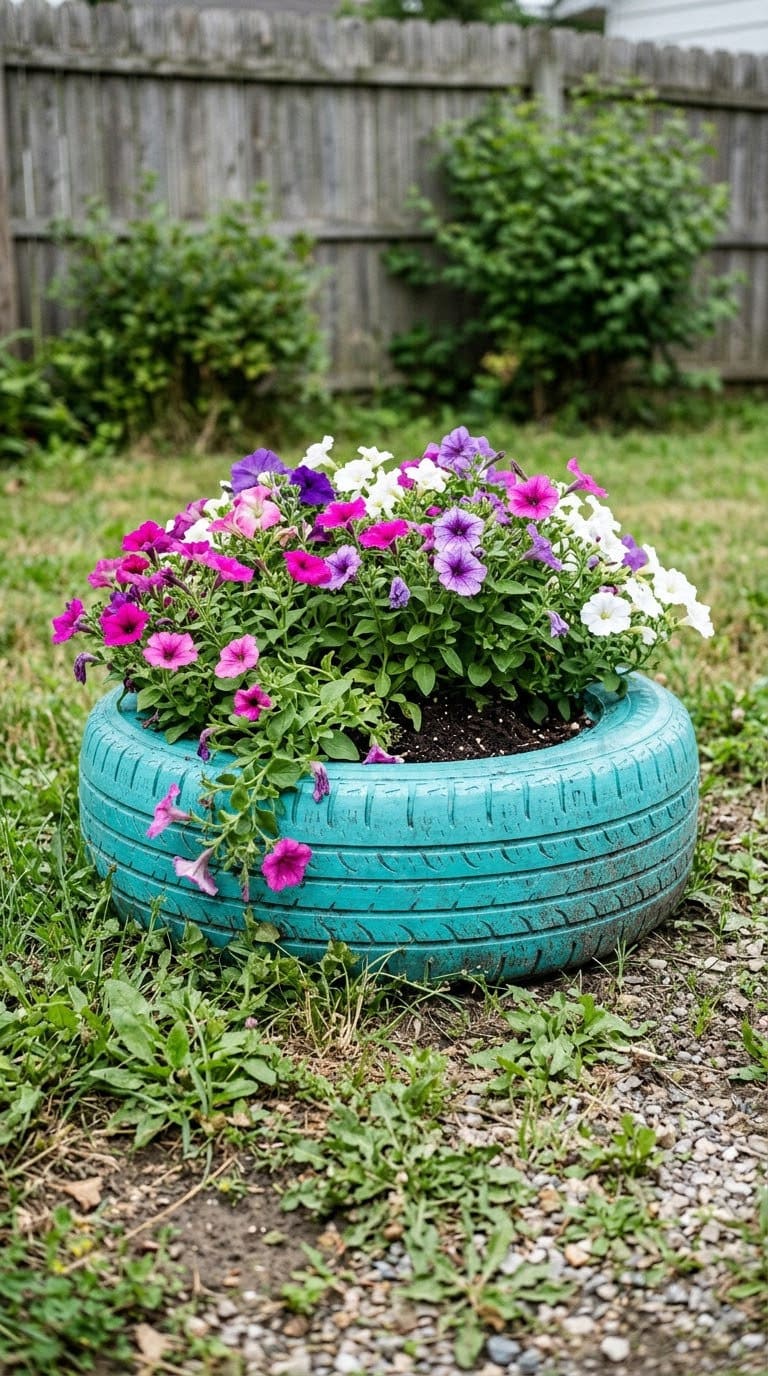
Paint the tire a bold color with exterior paint. Scrub it first, and let it dry fully. Apply two thin coats.
Pick a color that suits your flowers. Turquoise and yellow stand out against green.
Cost tier: low.
4. Swan Planter
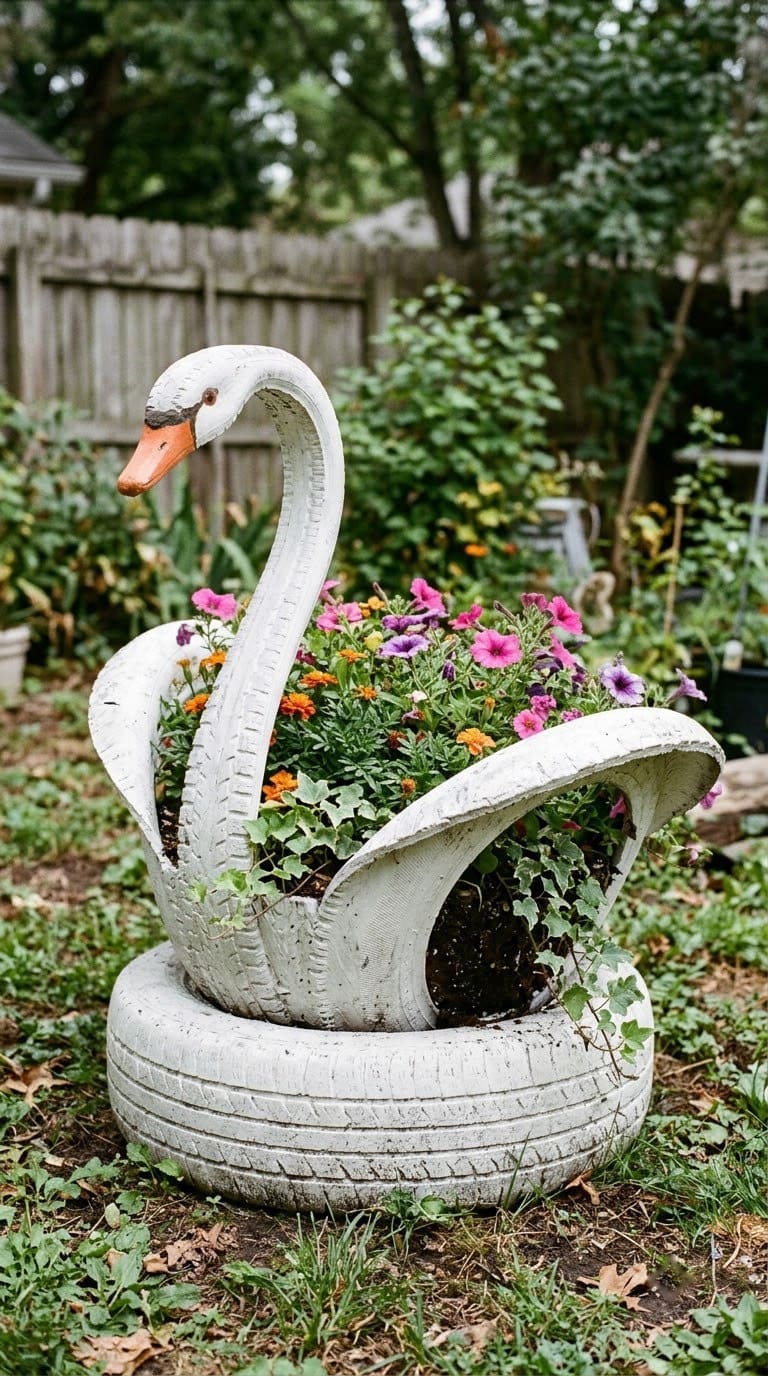
Cutting a swan shape from a tire is the classic project. Mark the shape with a paint marker, and cut with a sharp utility knife or a jigsaw. Oklahoma State advises a fine-toothed blade.
Wear gloves and eye protection, and do not expose the steel belts. Painting the swan white and adding a beak makes it stand out.
Cost tier: medium.
5. Scalloped Flower-Cut Planter
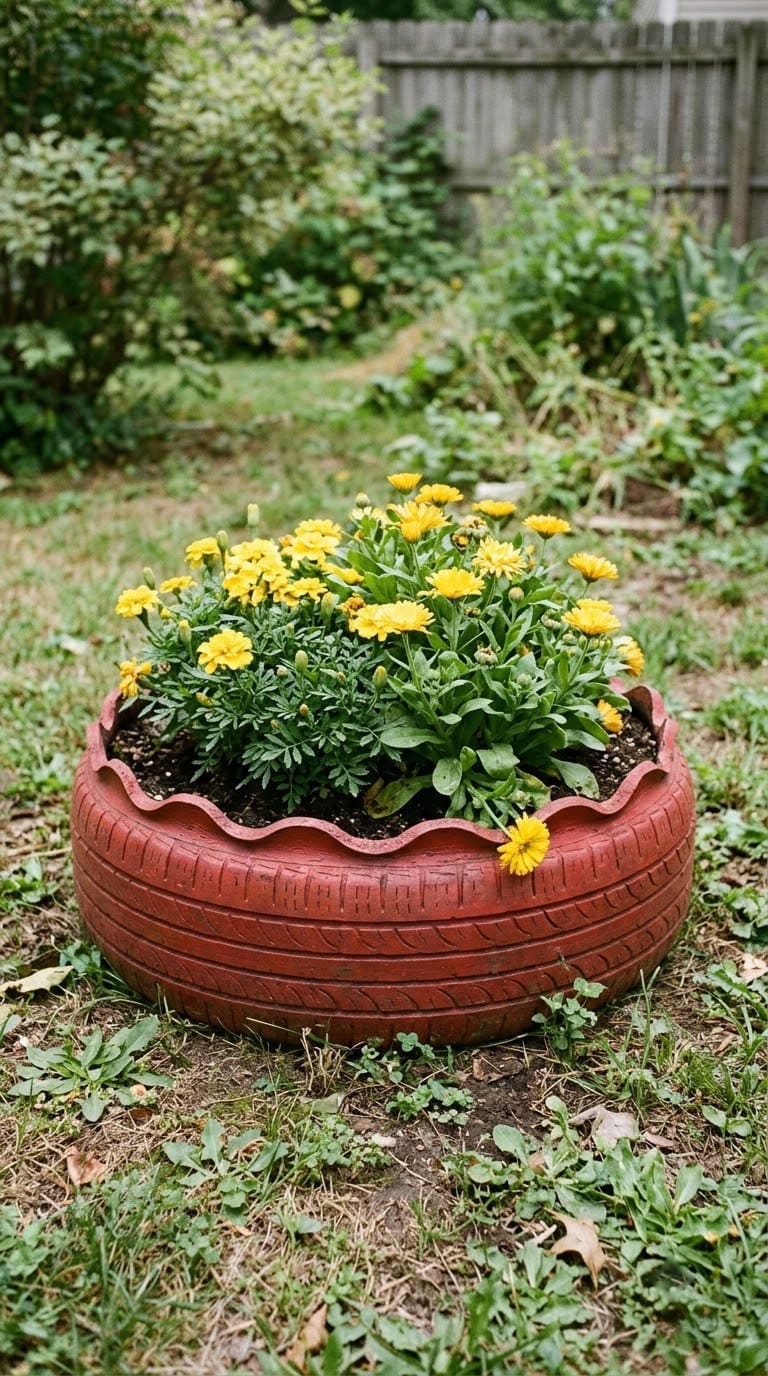
Cut scallops around one sidewall for a flower-petal edge. Mark the pattern with chalk first. Cut slowly along the line.
Keep the cuts shallow, and sand sharp edges with a rasp. Paint the cut edge too.
Cost tier: medium.
6. Tire Swing Planter
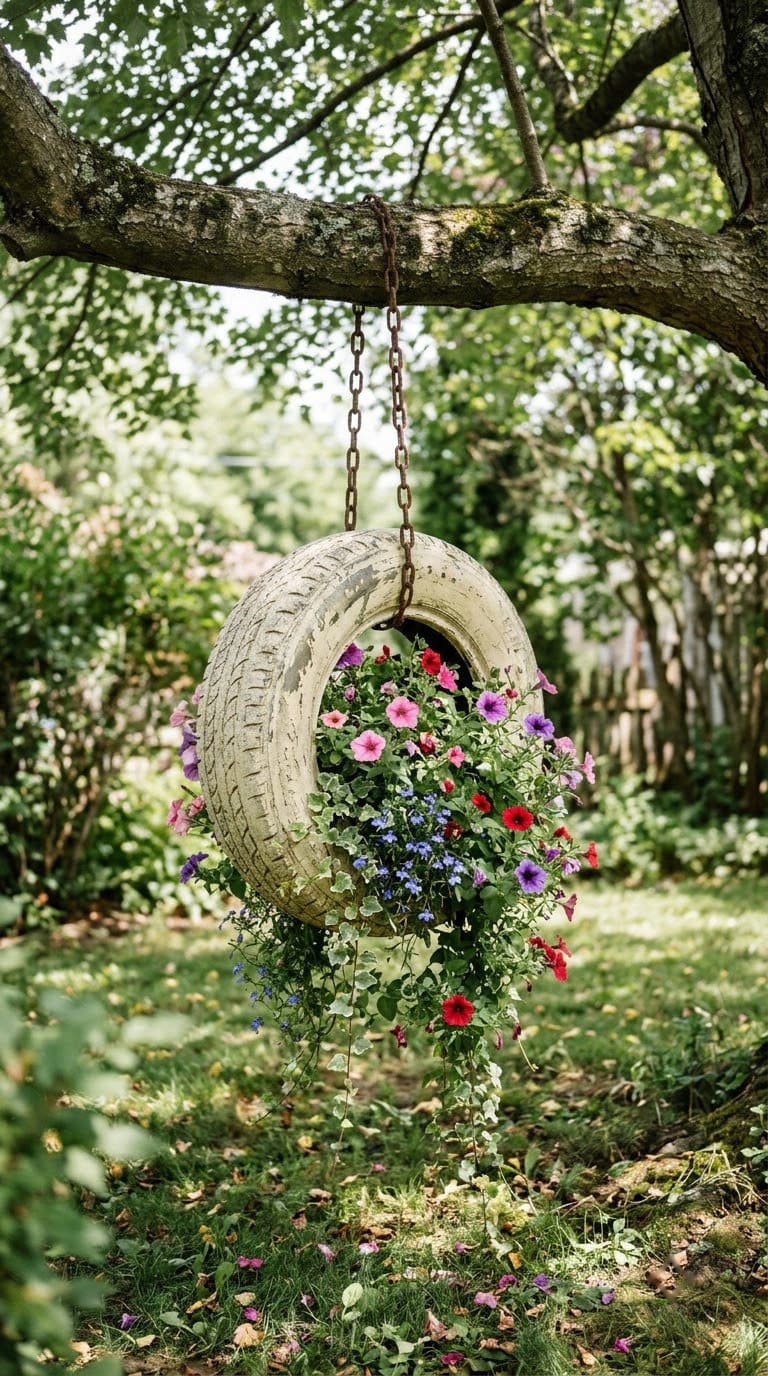
Hang a tire from a sturdy branch with chains, and fill it with flowers. Drill drainage holes first, since a hanging tire holds rain.
Use a lightweight mix. Check the branch and chains for strength.
Cost tier: low.
7. Three-Tire Tower
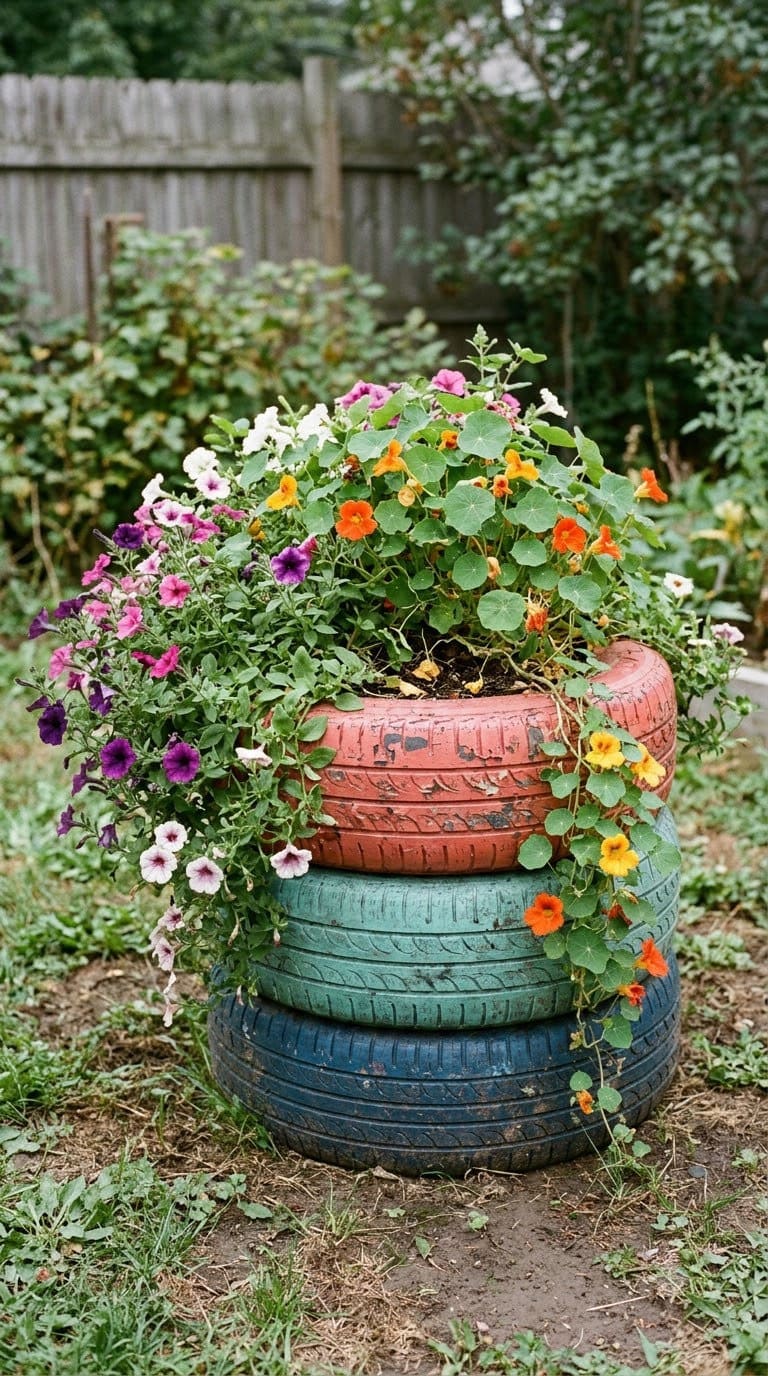
Stack three tires for height, and screw them together. Plant trailing flowers like petunias and nasturtiums, which are non-toxic per the ASPCA. Set the base on level ground.
For more tower builds, see our flower tower ideas. A tall stack can tip, so keep it short.
Cost tier: low.
8. Rim Pedestal Planter
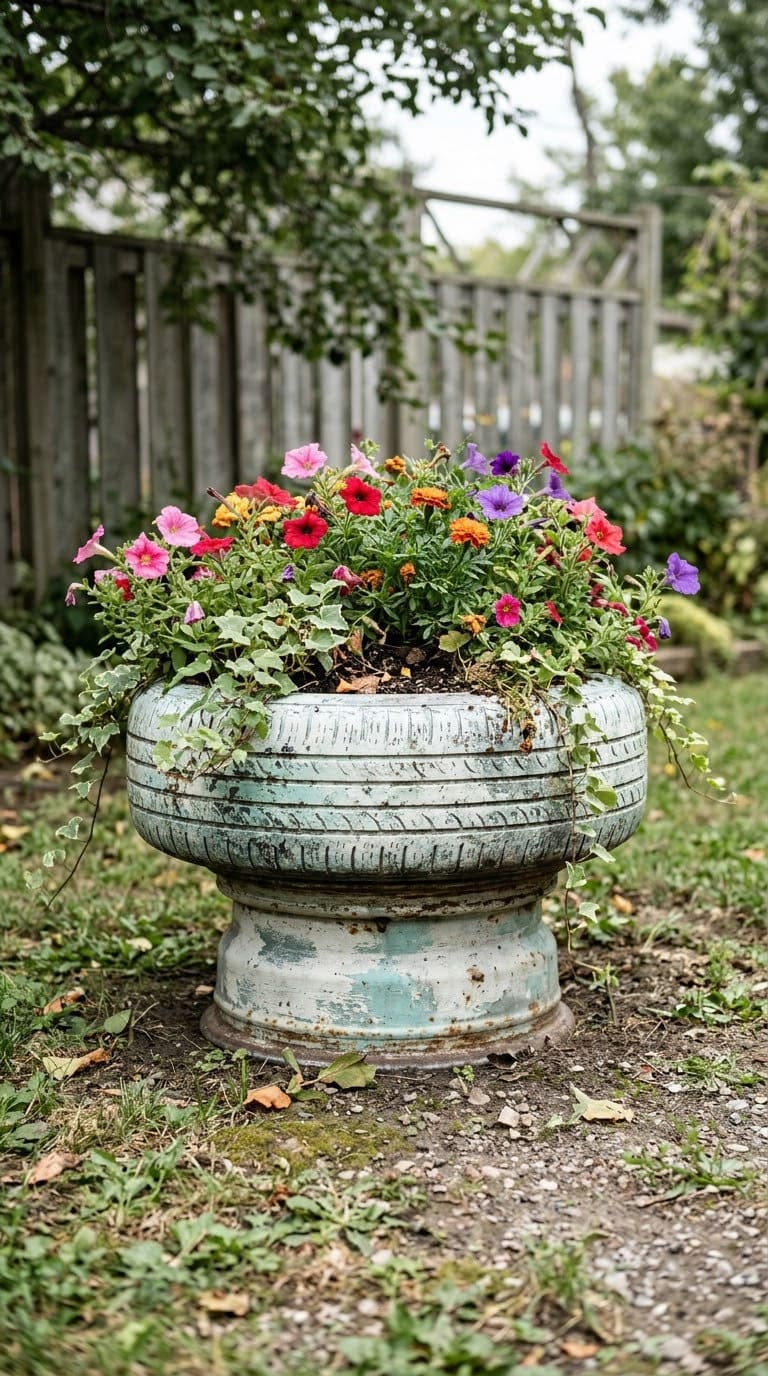
A tire with its rim gives you a pedestal. Leave the rim in place, and cut the top sidewall to open the planter. Drill holes through the rim for drainage.
The rim makes the planter heavy. Place it where it will stay.
Cost tier: low.
9. Tiered Cake Planter
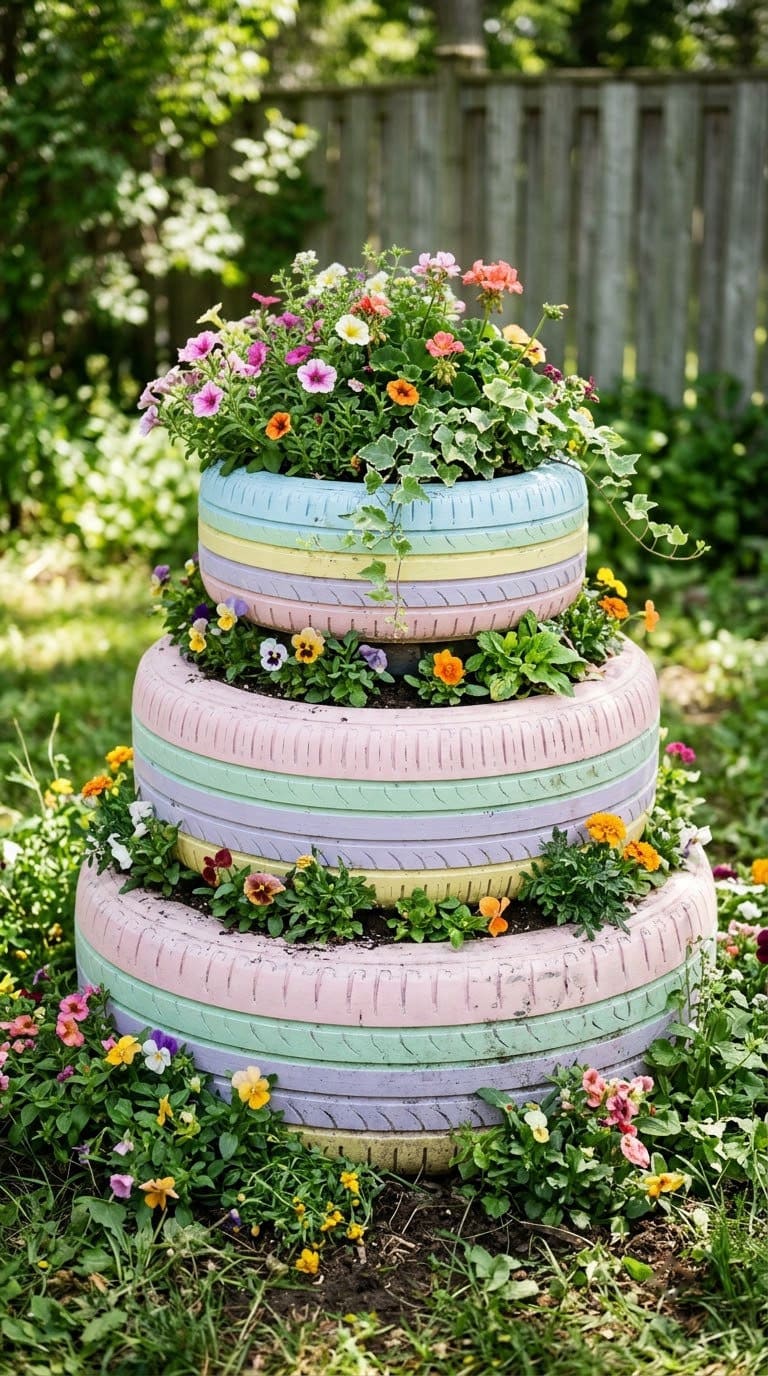
Stack tires from large to small, painted in stripes. Plant each tier with a different flower. Keep the mix continuous from tier to tier.
Check each tier drains. The tiers can tip if the base is uneven.
Cost tier: low.
10. Pollinator Tire Bed
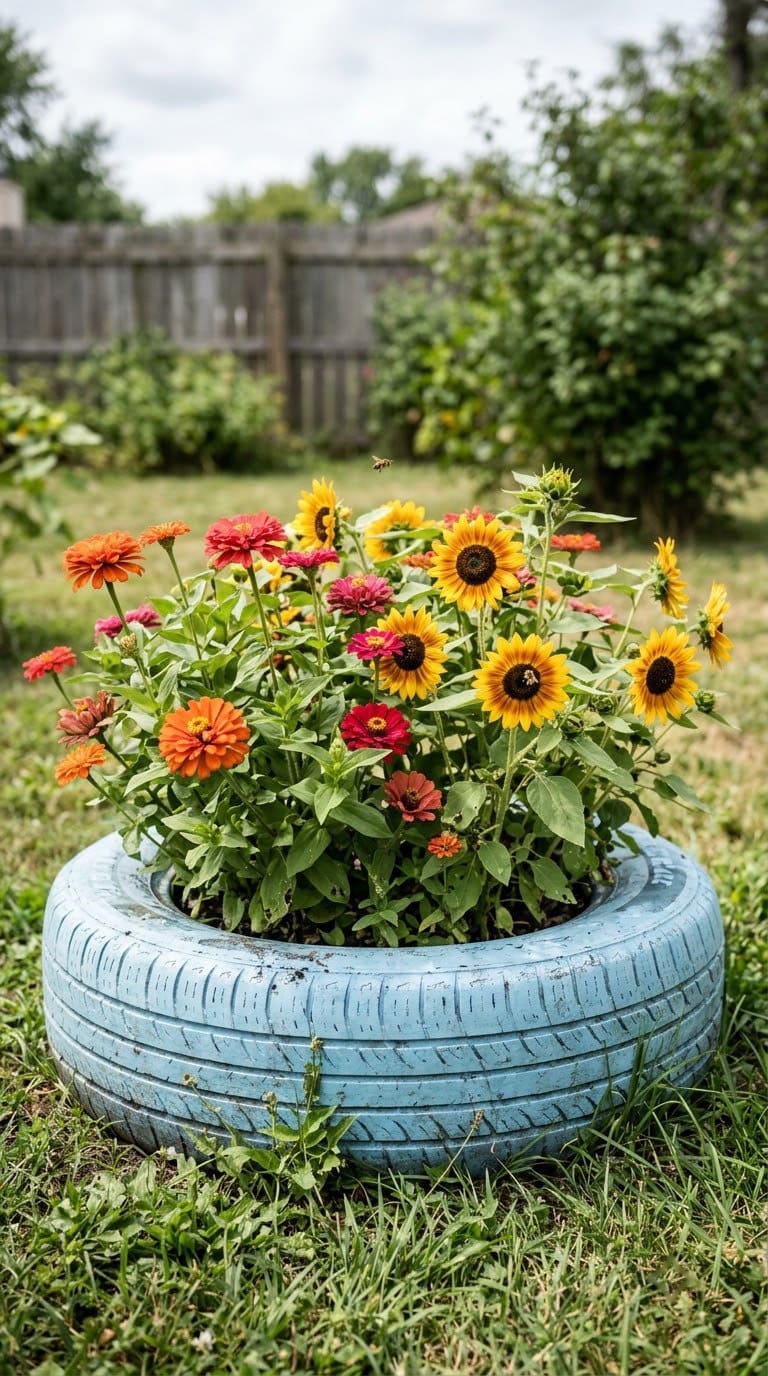
Fill a tire with zinnias and dwarf sunflowers. The ASPCA lists both as non-toxic to dogs and cats. Pollinators love both.
Place it in full sun. Add a shallow dish of water with stones nearby.
Cost tier: very low.
11. Tractor-Tire Raised Bed
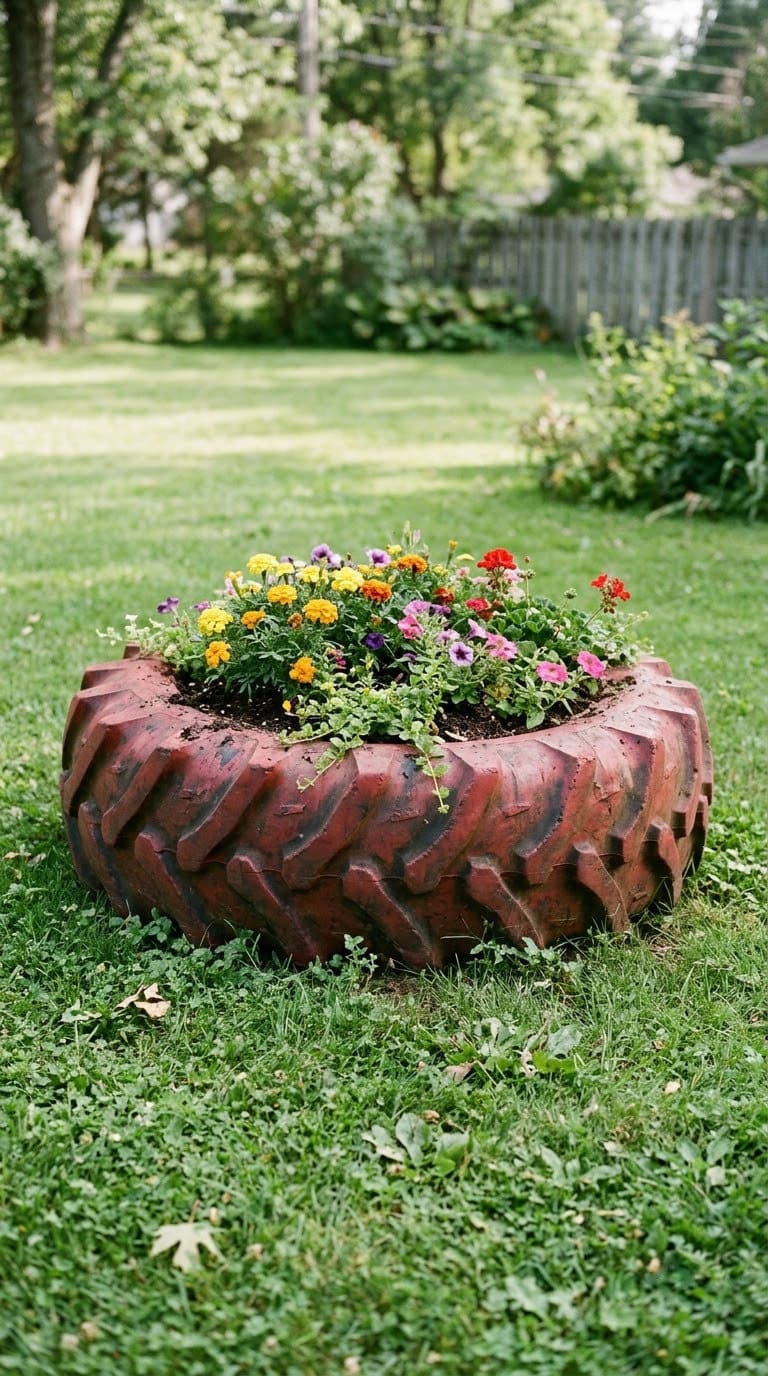
A tractor tire is a large raised bed. Fill it with soilless mix over a base of wood chunks to save on mix. Oklahoma State fills base modules with wood chunks or bricks.
Set it down before you fill it. A large tire is very heavy.
Cost tier: medium.
12. Succulent Tire Pot
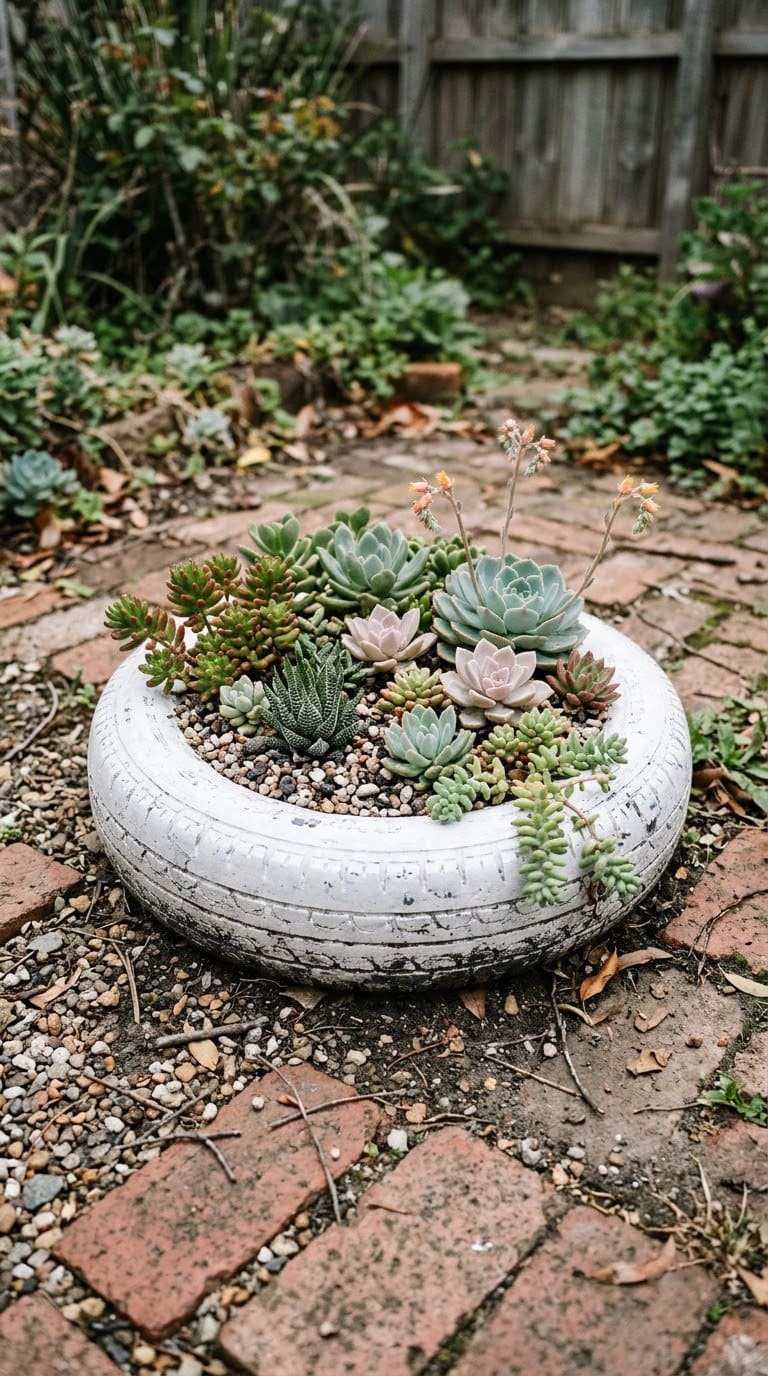
Use a small tire and fill it with gritty cactus mix. Add drainage holes. Plant succulents that you have checked on the ASPCA list.
Keep it in a sunny, sheltered spot. Succulents need little water.
Cost tier: low.
13. Half-Buried Tire Border
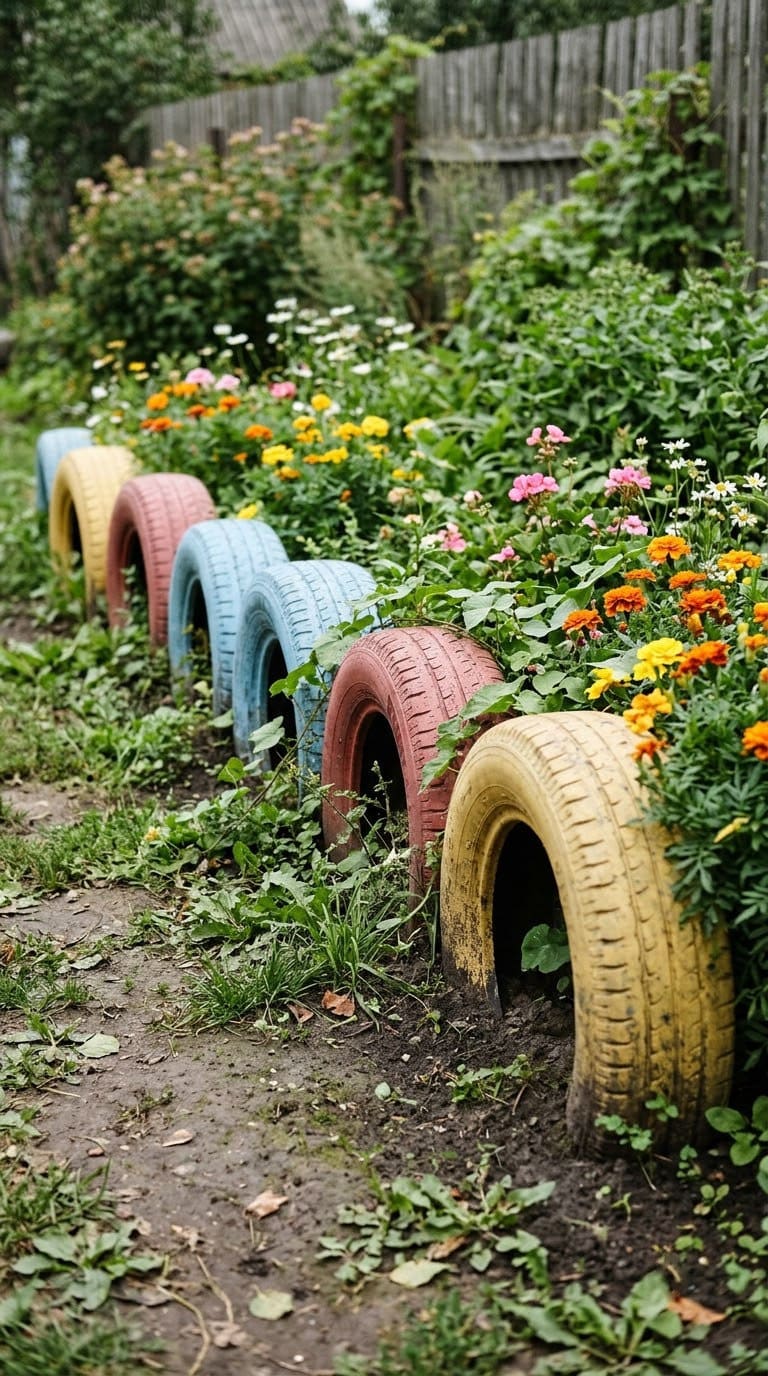
Bury tires halfway along a bed edge, with the upper half showing. Paint the exposed half. Fill each tire with flowers.
The buried half steadies the tire. Dig a level trench first.
Cost tier: very low.
14. Fence-Hung Half-Tire Planter
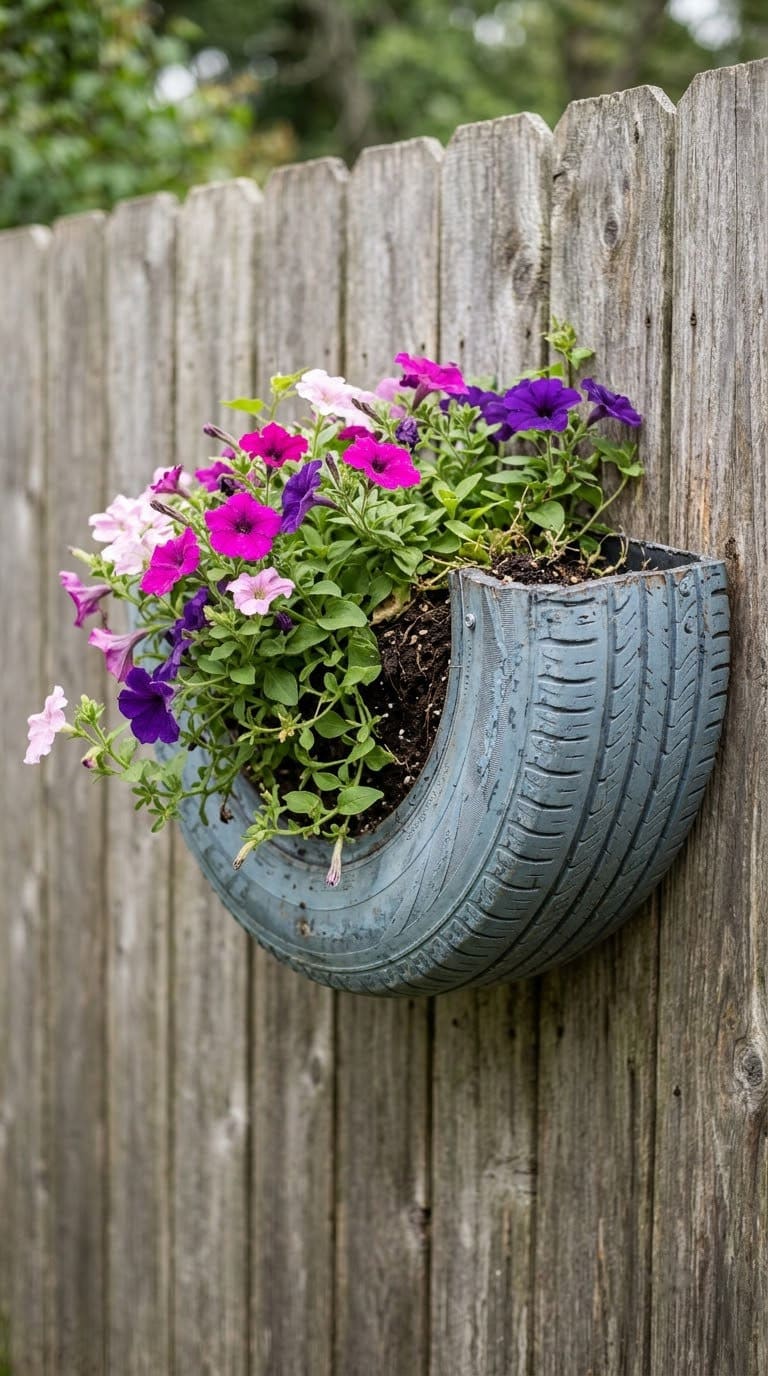
Cut a tire in half through the tread, and screw one half to a fence. Line the bottom with screening and fill with mix.
Mount it into fence posts. A wet tire is heavy, so keep it small.
Cost tier: medium.
15. Hanging Tire Basket
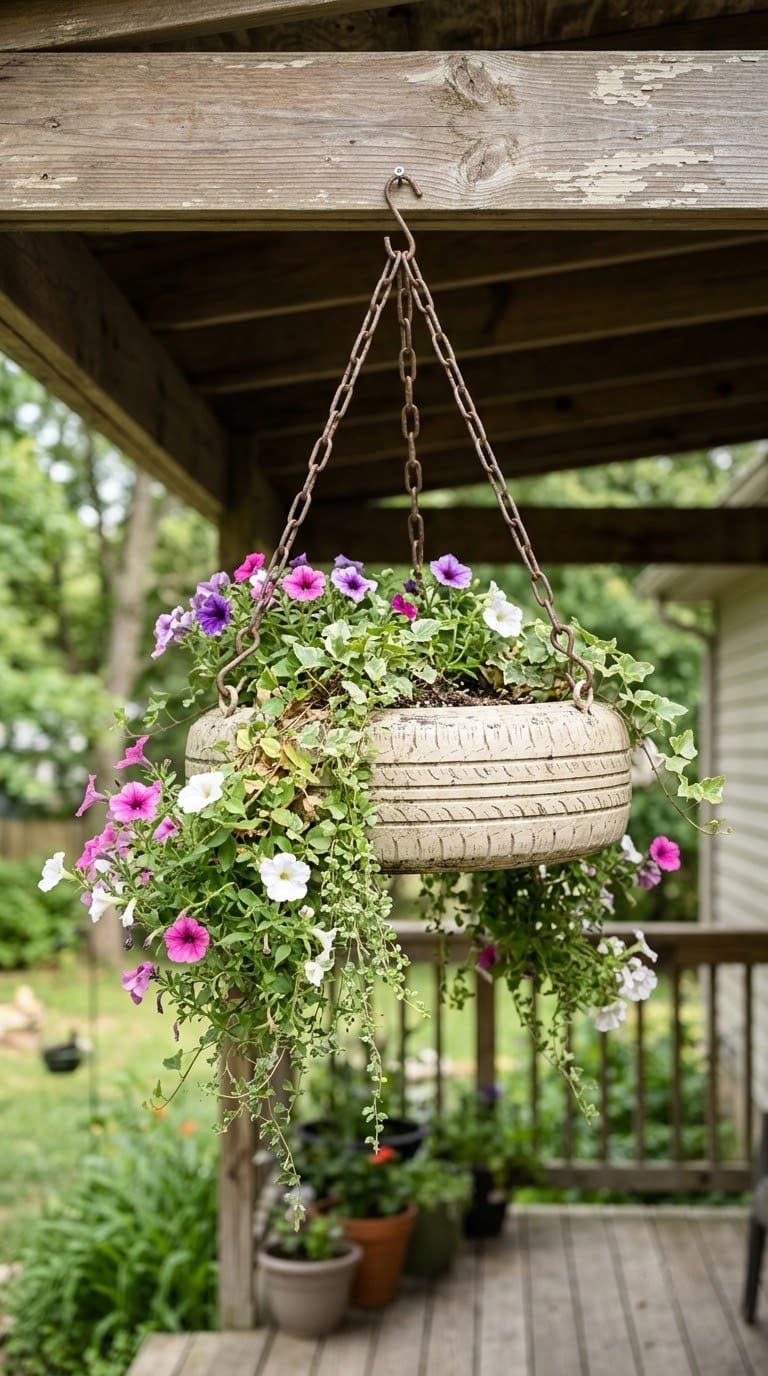
Use a small tire as a hanging basket. Hang it from three chains, and drill drainage holes. Plant trailing flowers.
Hang it from a beam rated for the weight. Take it down in storms.
Cost tier: low.
16. Tire Herb Planter (With Liner)
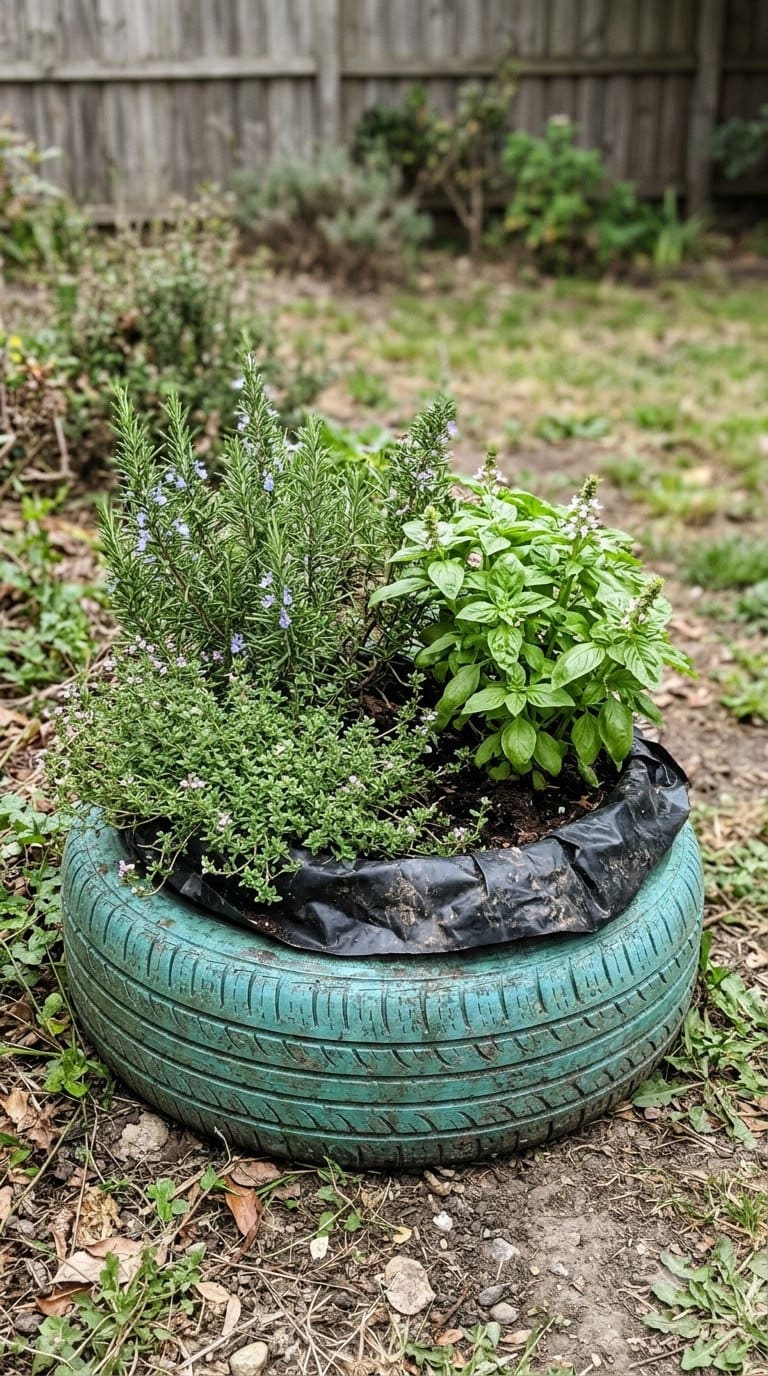
This is the contested one. NC State advises against tires in the garden. NMSU says to line the tire with plastic or non-toxic waterproof paint and keep crops off the rubber.
If you try it, use a liner, and plant thyme, rosemary, or basil, which are non-toxic to dogs and cats per the ASPCA. We lean toward growing herbs in a different container.
Cost tier: low.
17. Whitewashed Tire Planter
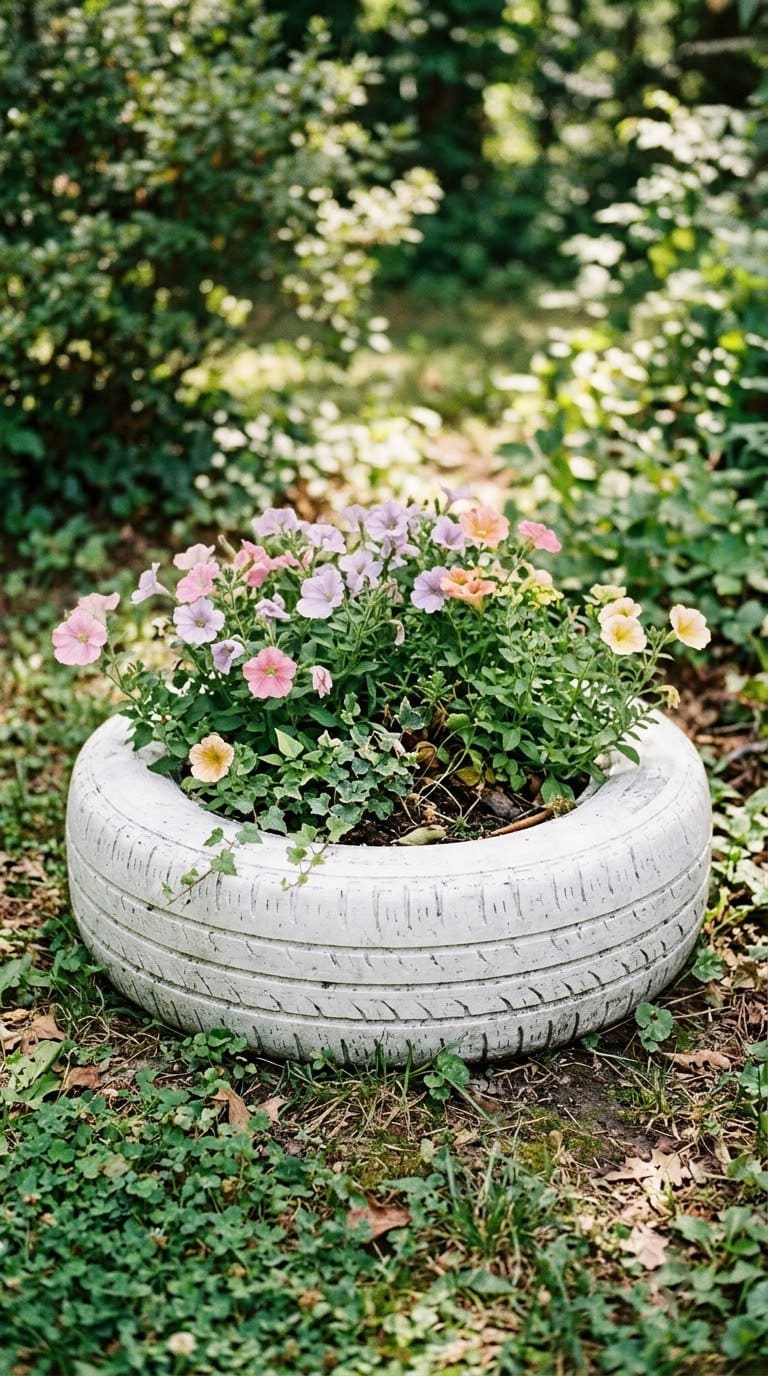
Paint the tire white to look like stone. Use two coats of exterior paint. Fill with soft-colored flowers.
White reflects heat, which can help roots in summer. Seal the paint.
Cost tier: low.
18. Rainbow Stack
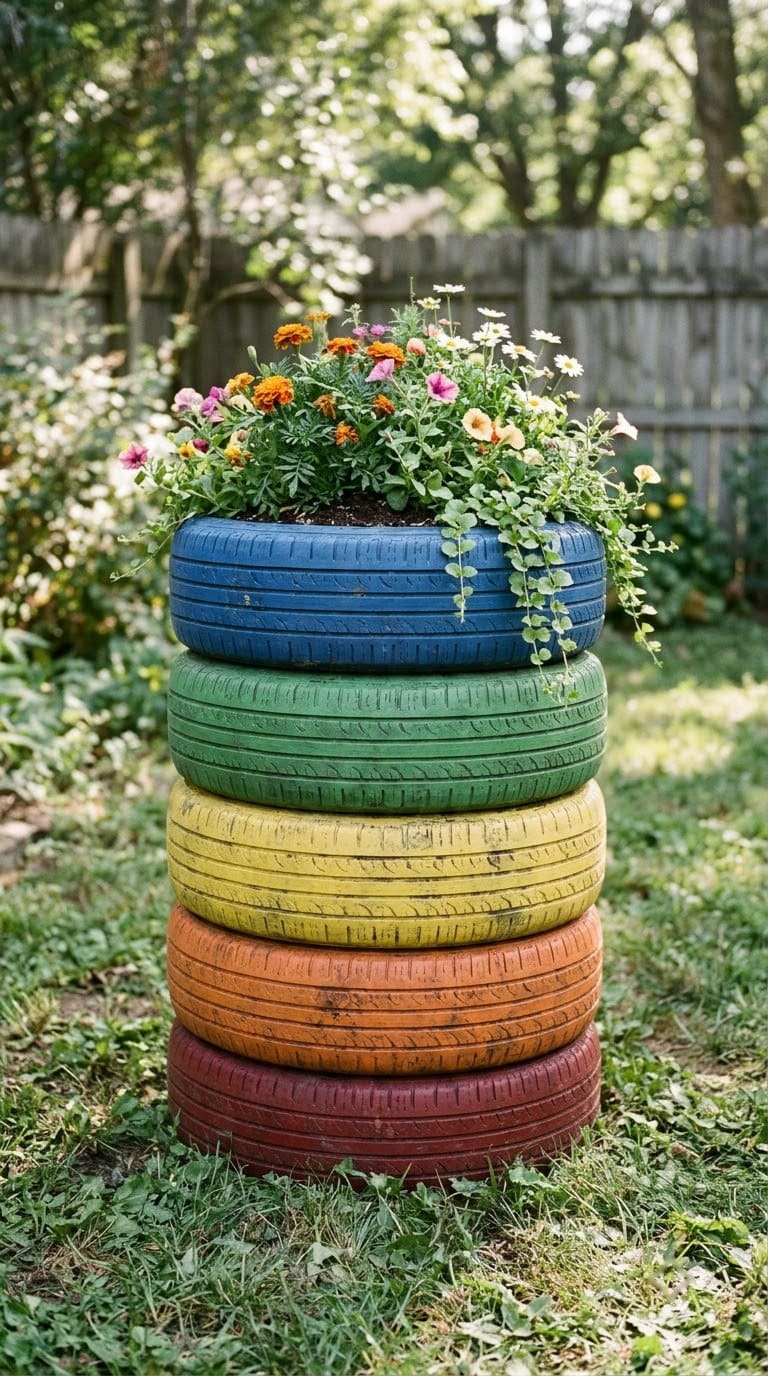
Paint a stack of tires in rainbow colors. Stack only three or four for stability. Fill the top tire with flowers.
Kids love this one. Use non-toxic paint.
Cost tier: low.
19. Climbing Trellis Base
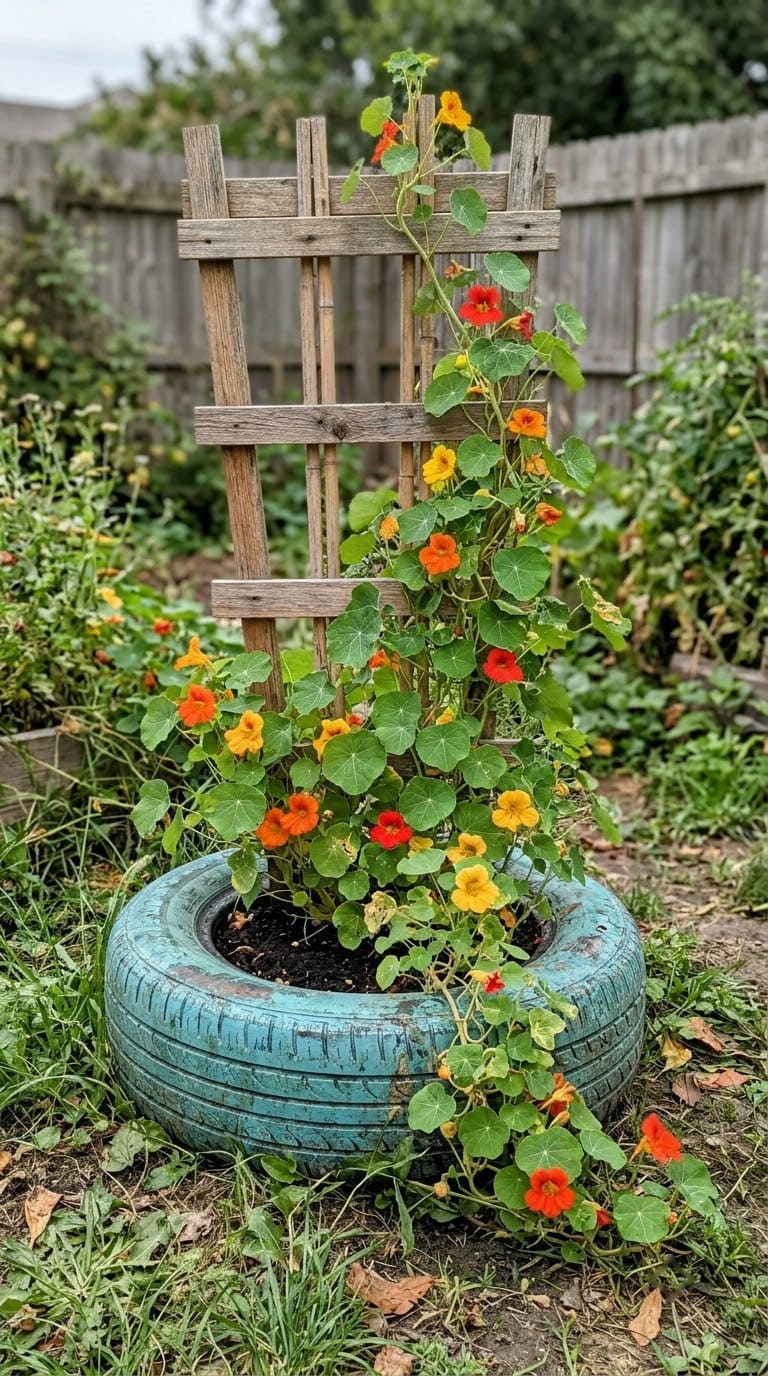
Set a trellis into a tire planter, and let nasturtiums climb it. Nasturtiums are non-toxic per the ASPCA. Anchor the trellis in the mix.
Weight the base with stones. Tie new growth to the trellis.
Cost tier: low.
20. Mini Fairy-Garden Tire
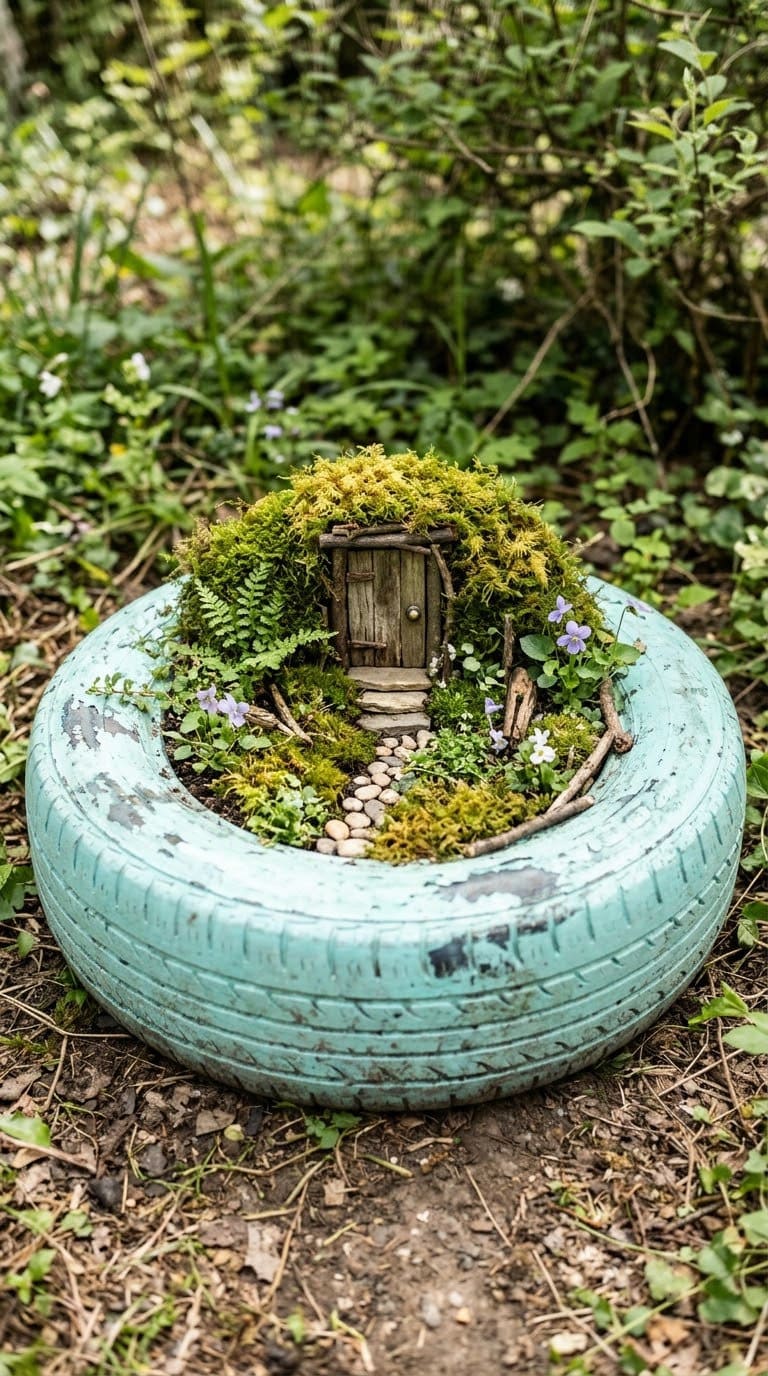
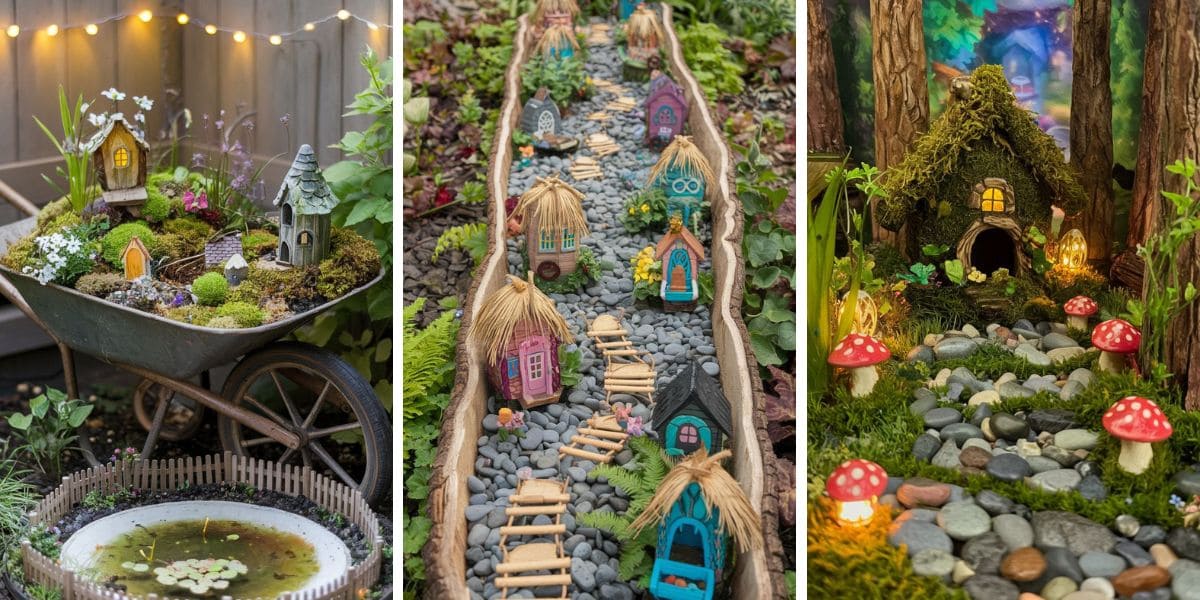
Turn a small tire into a fairy garden. Add moss, small plants, and a tiny door. See our fairy garden ideas.
Keep it light. Drill drainage holes.
Cost tier: low.
Where Should You Put a Tire Planter?
Choose a spot with the right sun for your plants. Most flowering annuals want full sun, so a bright corner or a path edge works well. Set the planter on level ground, since a filled tire is heavy and hard to move.
Group tire planters with other containers to look planned. Mix them with pots from our flower pot projects or the repurposed container ideas. Paint them in one or two repeating colors.
For more upcycled planter ideas, see our wheelbarrow garden projects and bicycle planter ideas. Our painted garden decorations cover paint and sealer steps, and our garden art projects show how to turn finished pieces into focal points.
Keep tire planters away from play areas for small children. NC State notes that young children are at higher risk, because they are closer to the ground and more likely to eat soil.
How Do You Care for a Tire Planter?
Check the drainage holes each month. Clear any soil or leaves that block them. Look inside after rain, and tip out any water that stands.
Water the planter when the top inch of mix feels dry. Tire planters in full sun can get hot, so check them often in summer. Dark rubber absorbs heat, which is another reason to paint tires a light color.
Refresh the mix each spring, and replace any plants that struggle. Touch up the paint where it chips. Rinse the planter out in fall, and tip it on its side so it cannot collect winter rain.
Common Mistakes to Avoid
Planting food without thinking is the first mistake. NC State says there is no need to use tires in the garden.
Skipping drainage is the second. The CDC lists tires among items that hold water and breed mosquitoes.
Cutting without protection is the third. Oklahoma State says to avoid exposing the steel belting.
FAQ
Is it safe to grow vegetables in tires?
Extension sources disagree. NC State advises against it, and New Mexico State University suggests above-ground crops with a liner.
Do tire planters leach chemicals?
NC State says tires contain metals and other chemicals that leach as they break down. No source we read tested uptake.
How do I stop mosquitoes in a tire planter?
Drill drainage holes so no water stands. The CDC says to empty or cover items that hold water once a week.
How do I cut a tire safely?
Use a sharp knife or a fine-toothed jigsaw blade, and do not expose the steel belts, per Oklahoma State. Wear gloves and eye protection.
What paint works on tires?
Use exterior paint on a clean, dry tire.
Never miss an update — choose FarmFoodFamily as your preferred source on Google.
How it works: Tap the button below to open Google's settings page, then check the box next to FarmFoodFamily.
Tap the checkbox to turn it blue — that's how you know it's set.