60+ Creative Vinyl Record Storage Ideas to Try Today
Search “how many records will this cabinet actually hold” and you’ll find the same complaint over and over. One Reddit thread about a flat-pack drawer unit put it bluntly: the manufacturer advertised 550 LPs, real-world capacity turned out closer to 300, because gatefolds and double albums eat way more shelf space than a single sleeve….

Never miss an update — choose FarmFoodFamily as your preferred source on Google.
How it works: Tap the button below to open Google’s settings page, then check the box next to FarmFoodFamily.
Tap the checkbox to turn it blue — that’s how you know it’s set.
Search “how many records will this cabinet actually hold” and you’ll find the same complaint over and over. One Reddit thread about a flat-pack drawer unit put it bluntly: the manufacturer advertised 550 LPs, real-world capacity turned out closer to 300, because gatefolds and double albums eat way more shelf space than a single sleeve. A rough rule collectors use instead: 50 to 70 records per linear foot of shelf, not whatever number is printed on the box.
That gap between marketing and reality is the reason this list leads with what actually works, not a padded count. Sixteen ideas below, plus the mistakes that show up constantly in real collector threads and the storage mistakes nobody puts on the box.
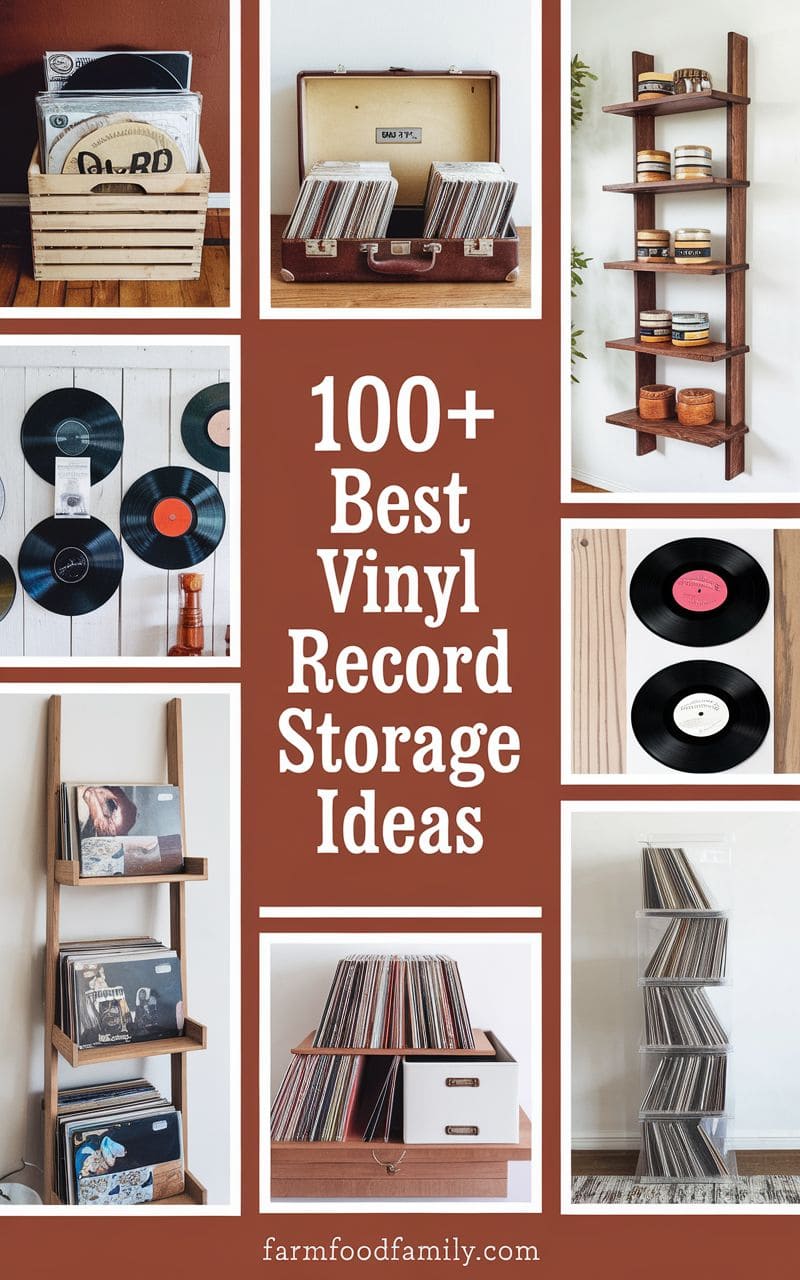
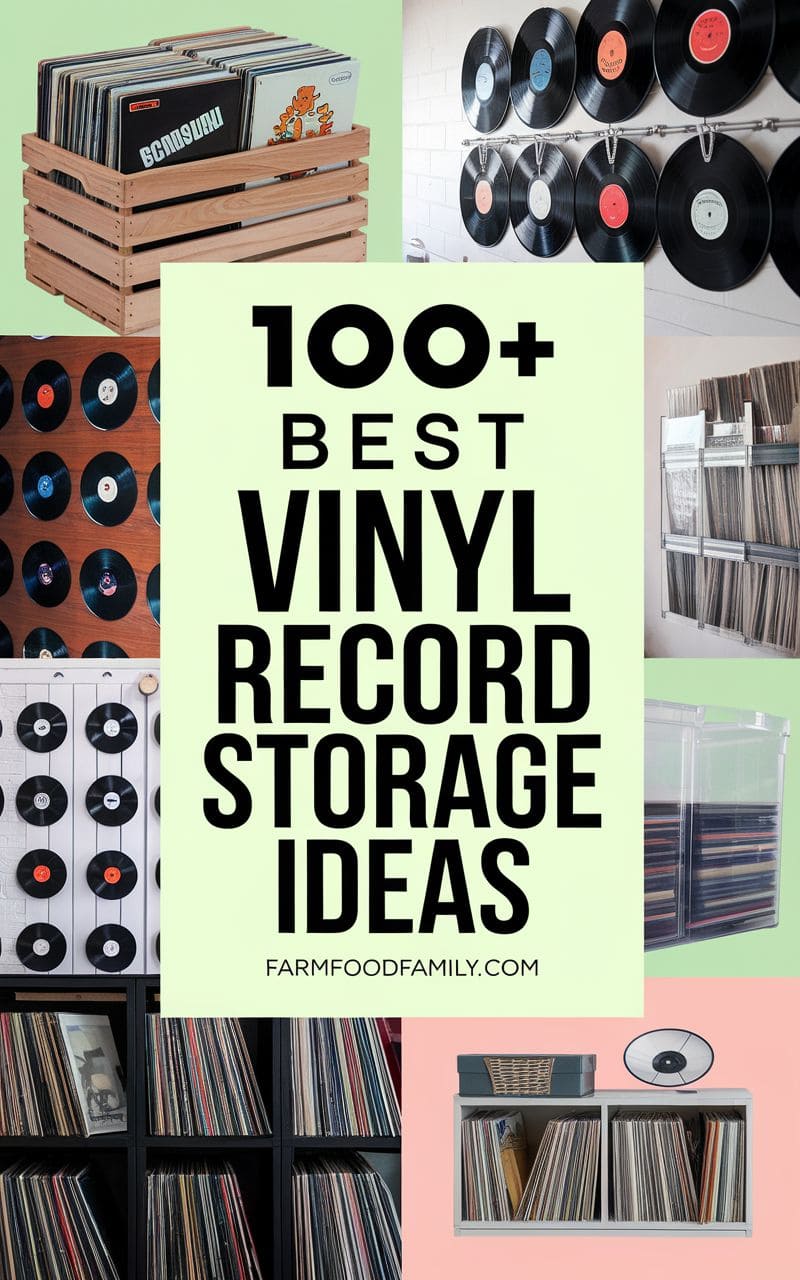
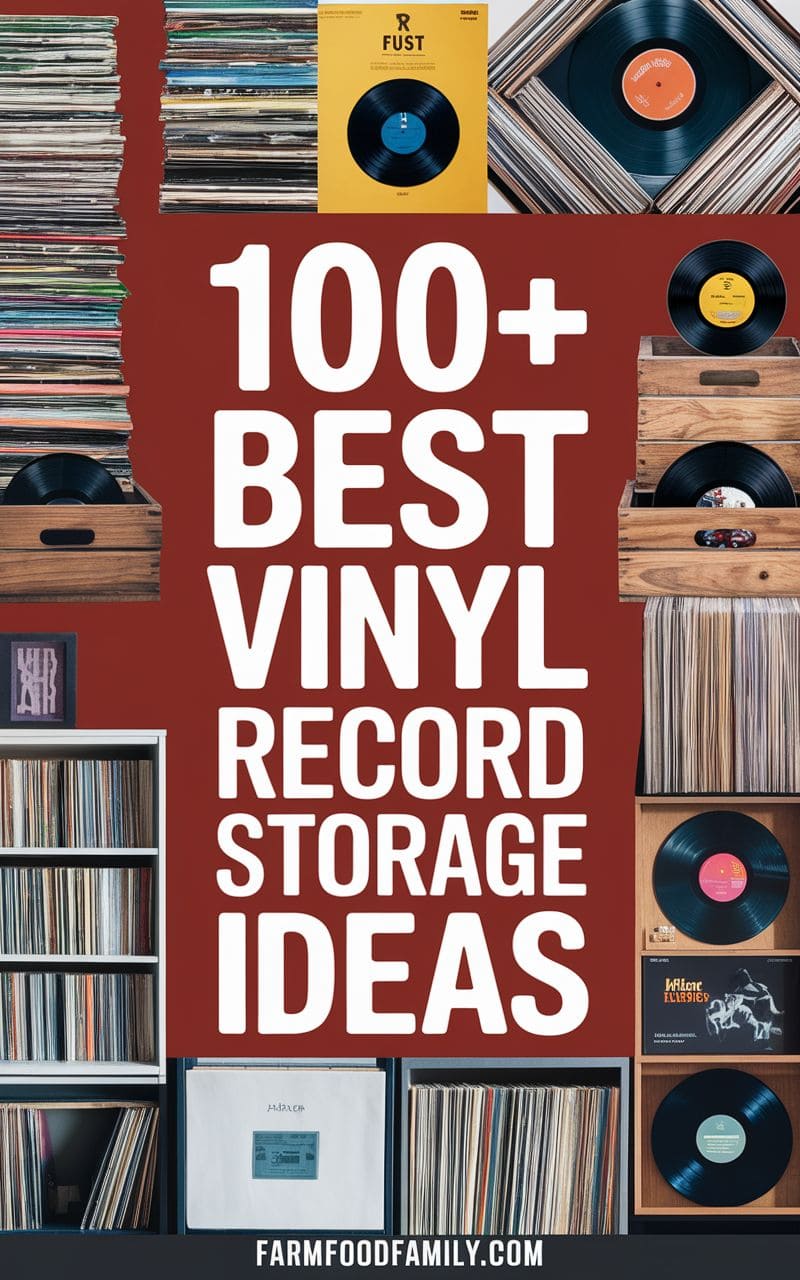
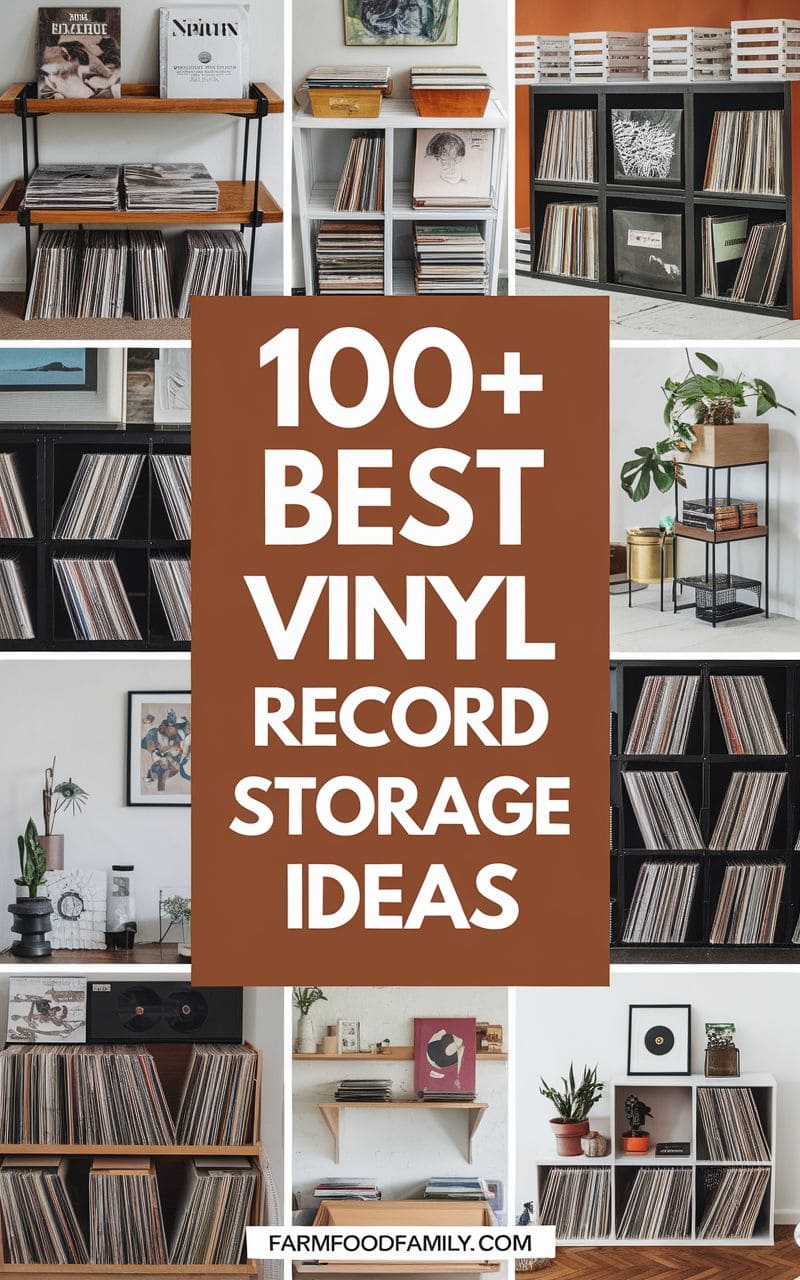
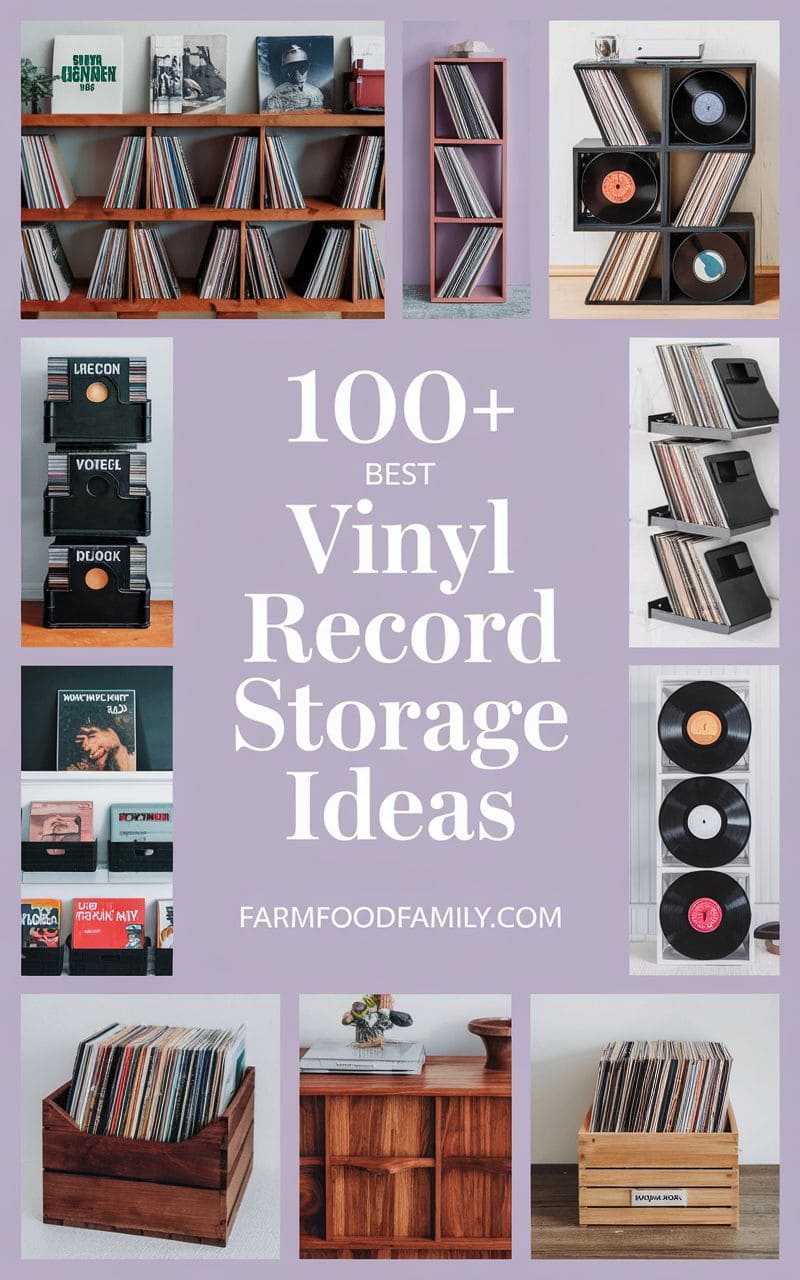
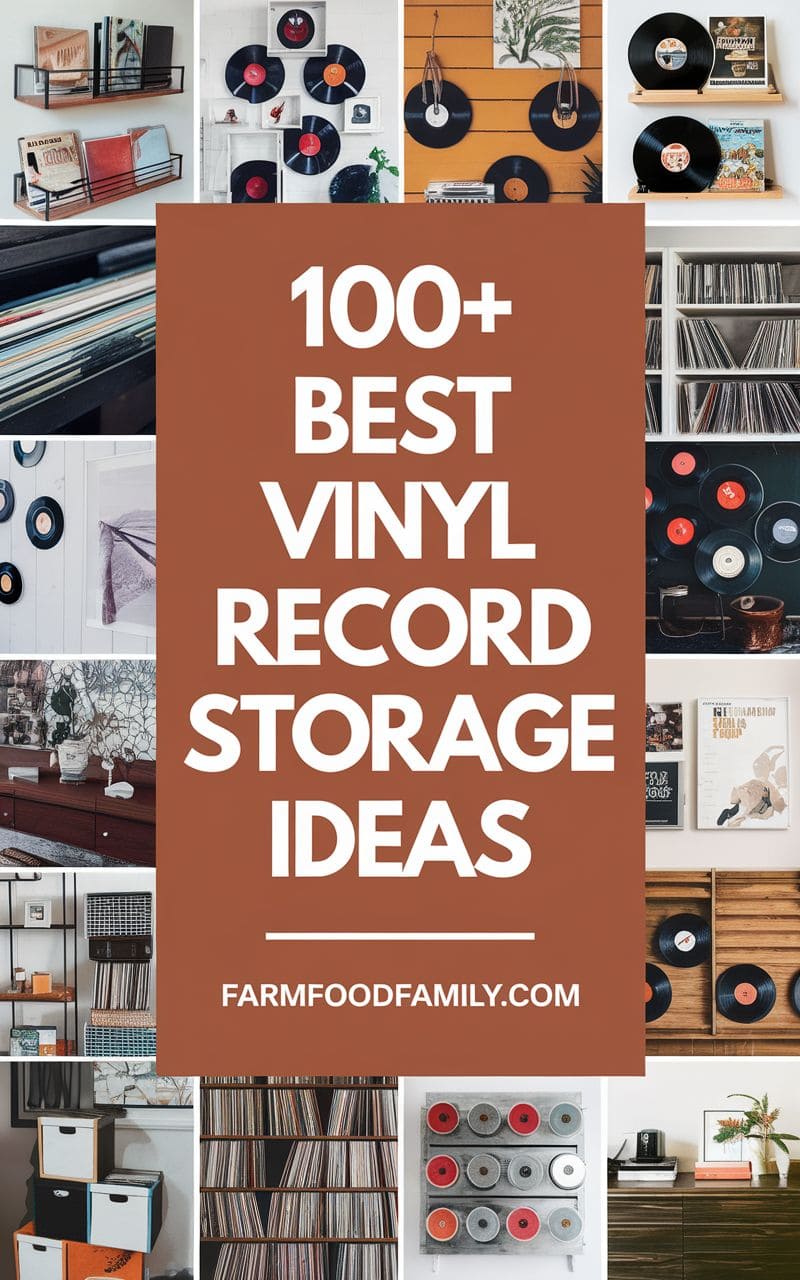
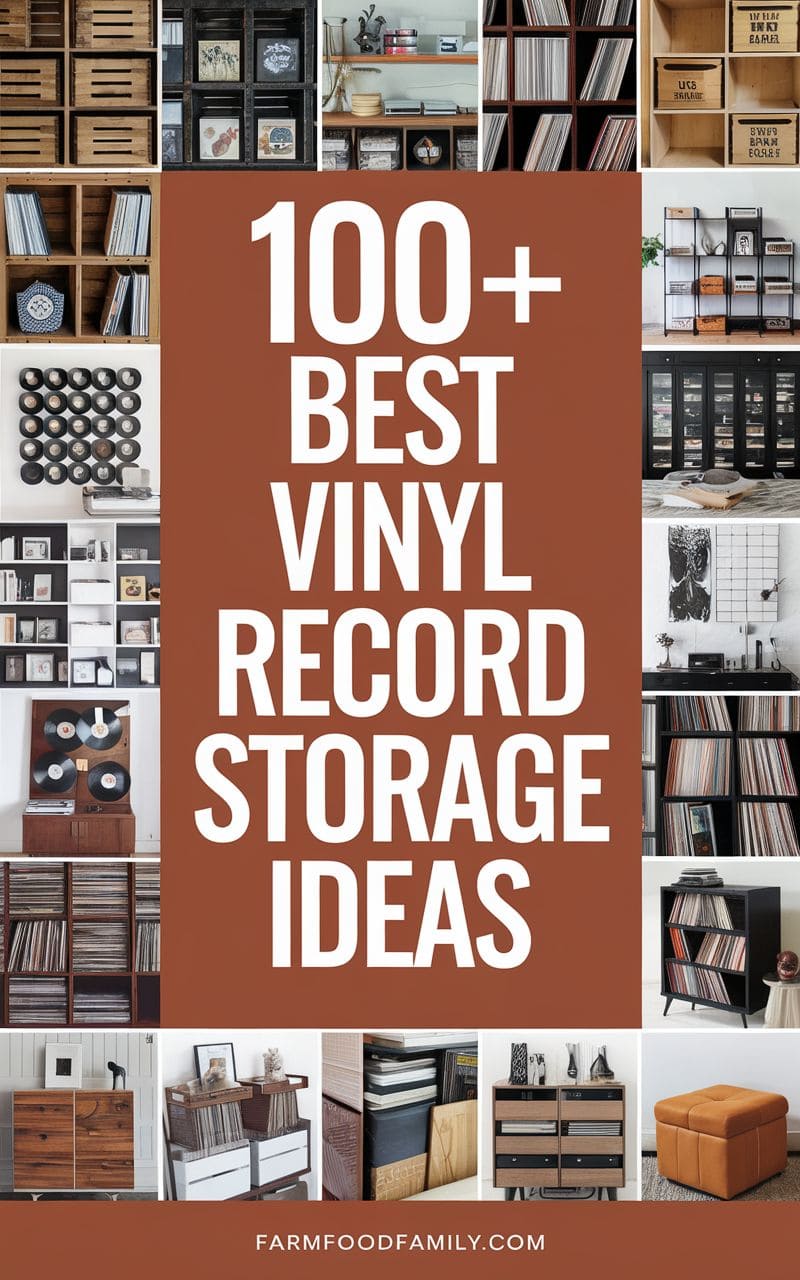
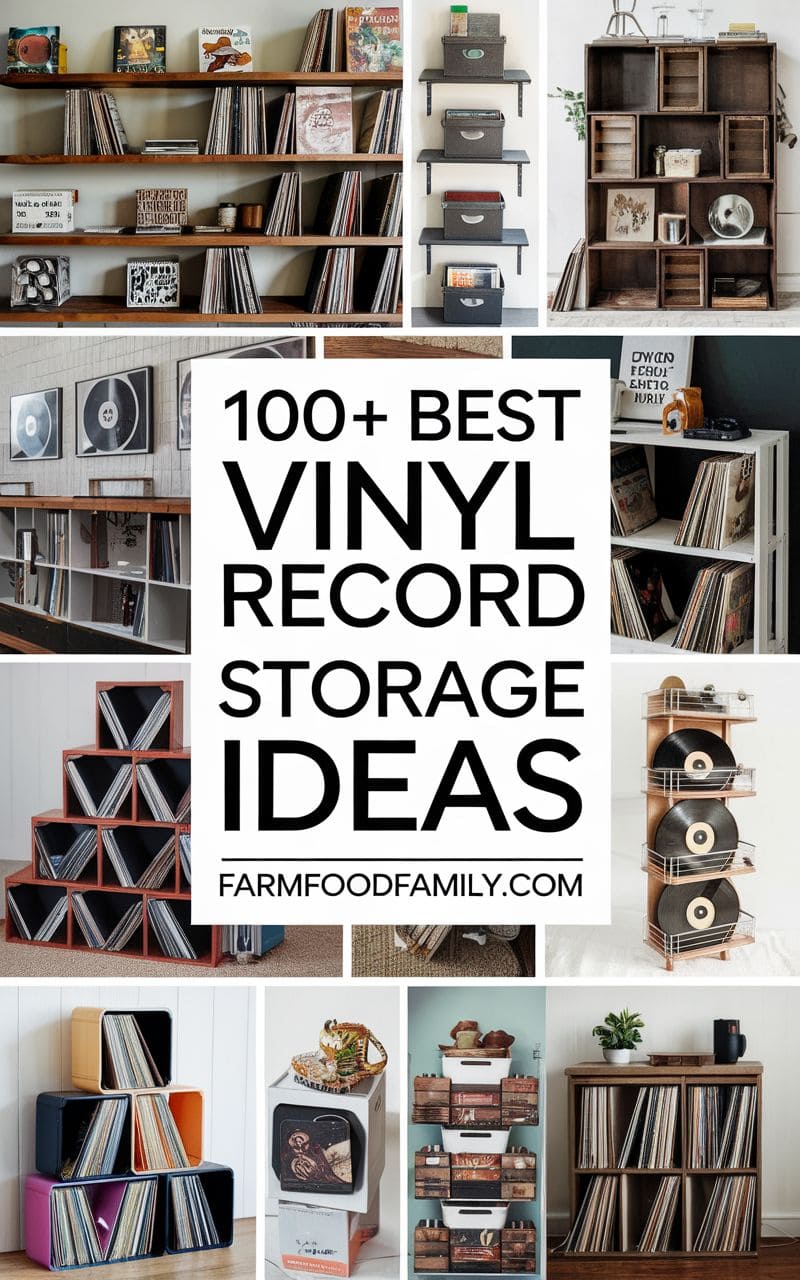
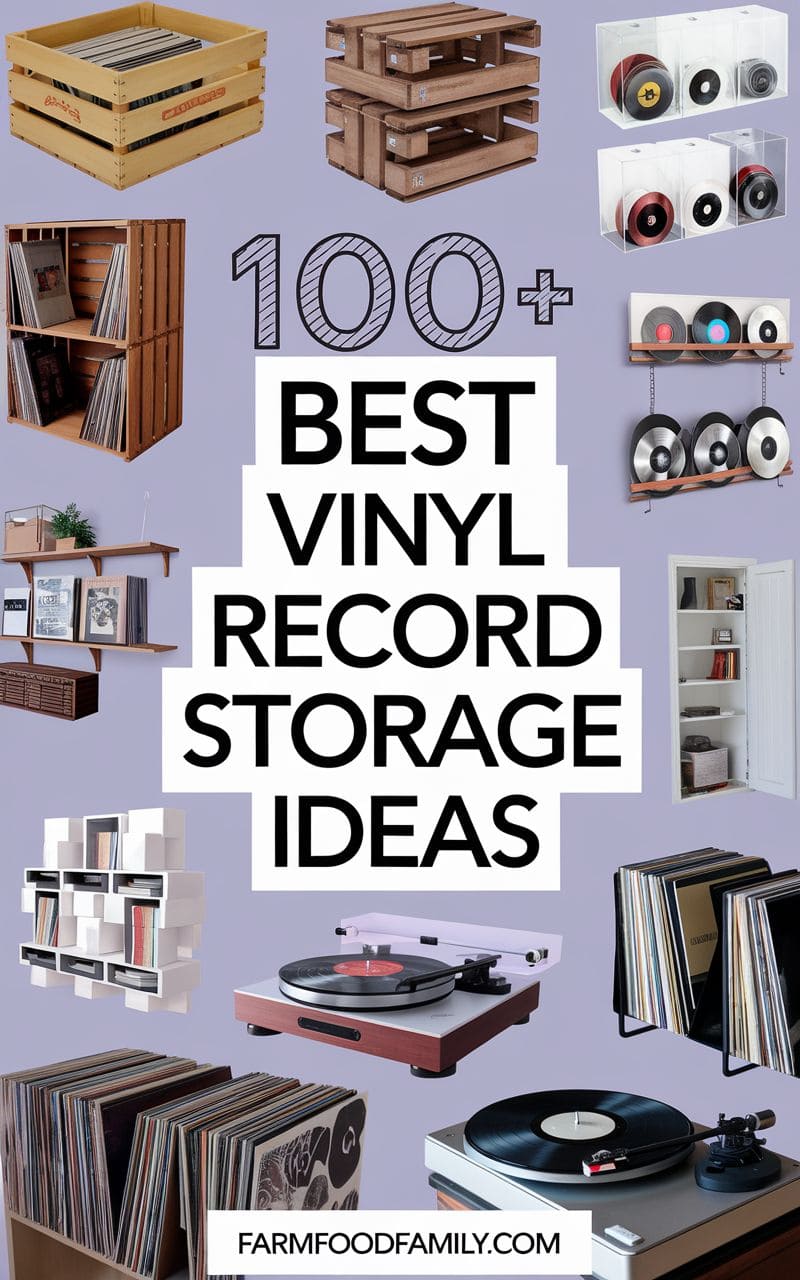
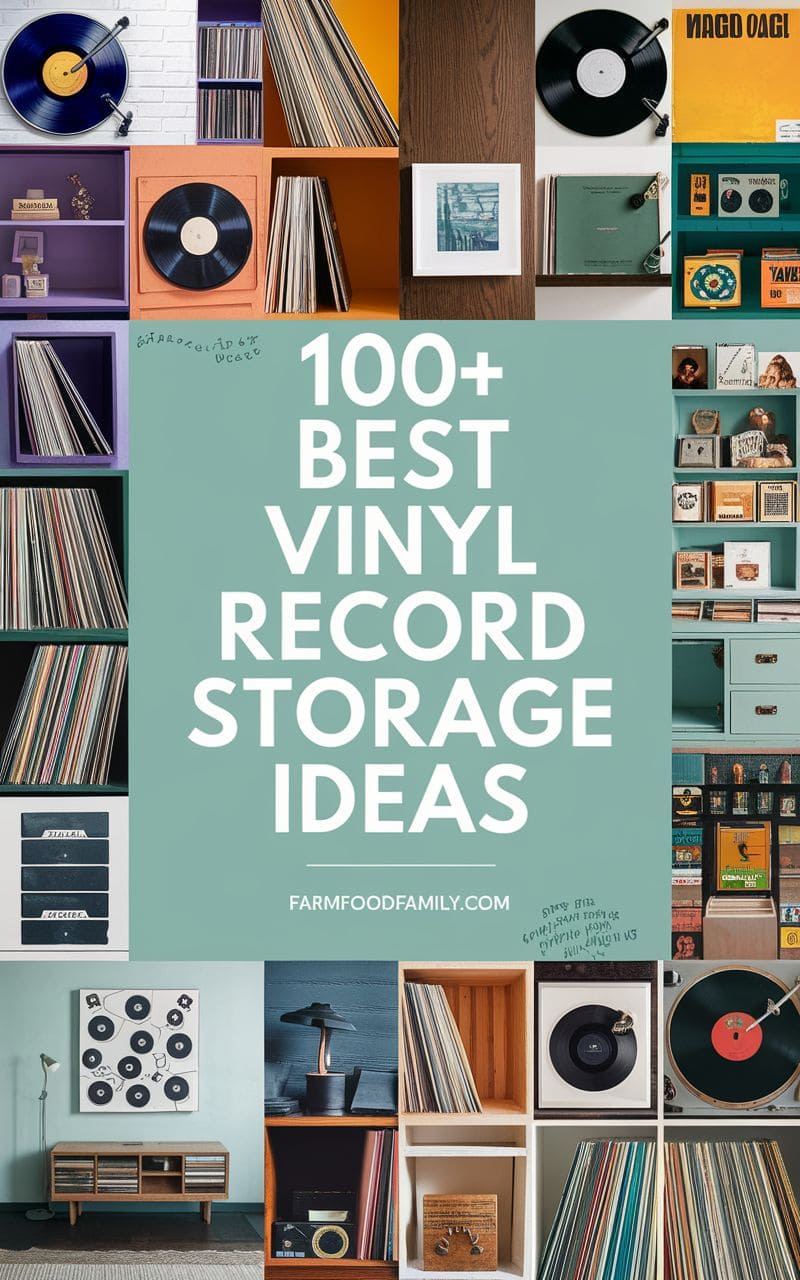
Vinyl Record Storage Ideas
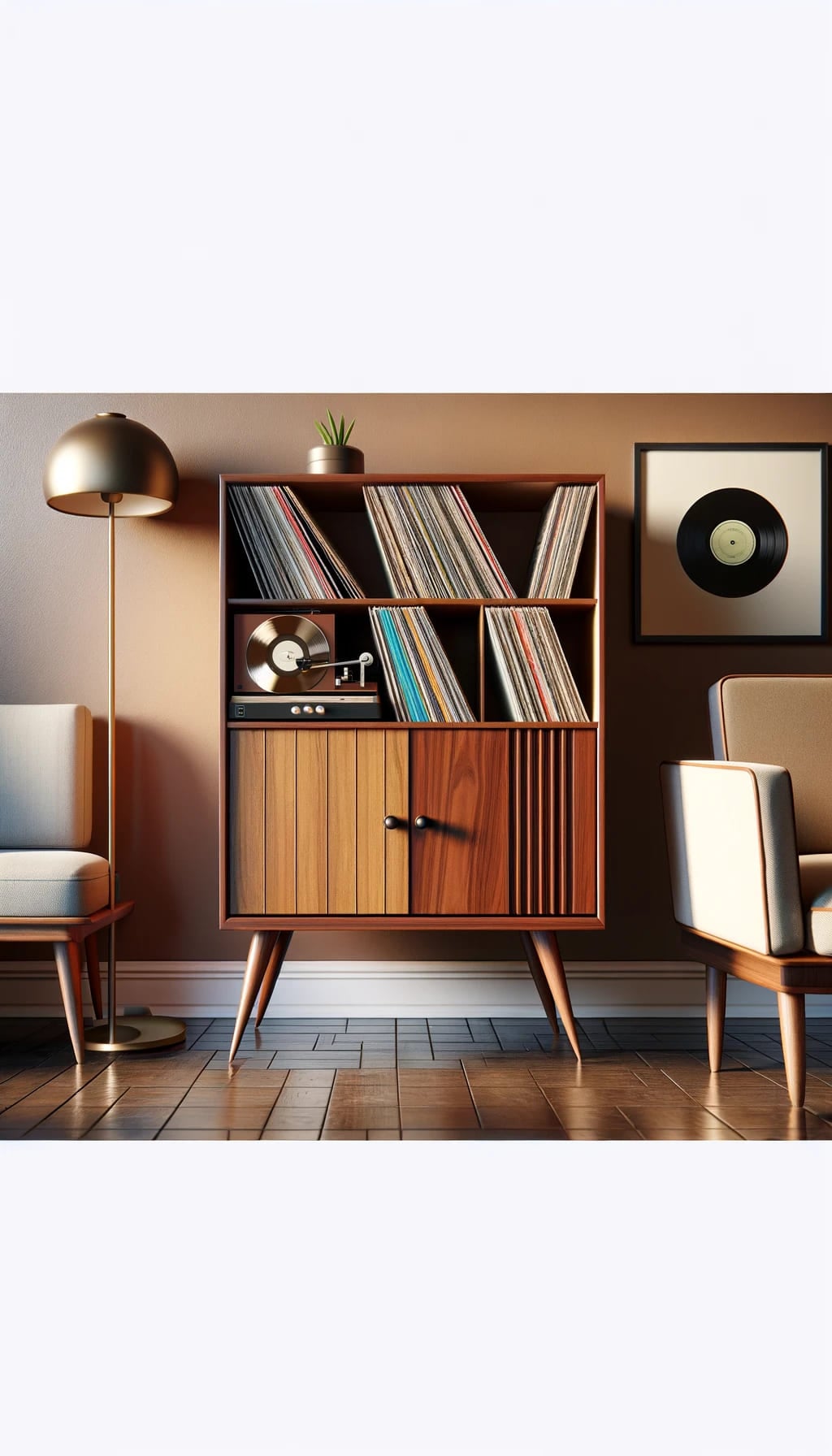
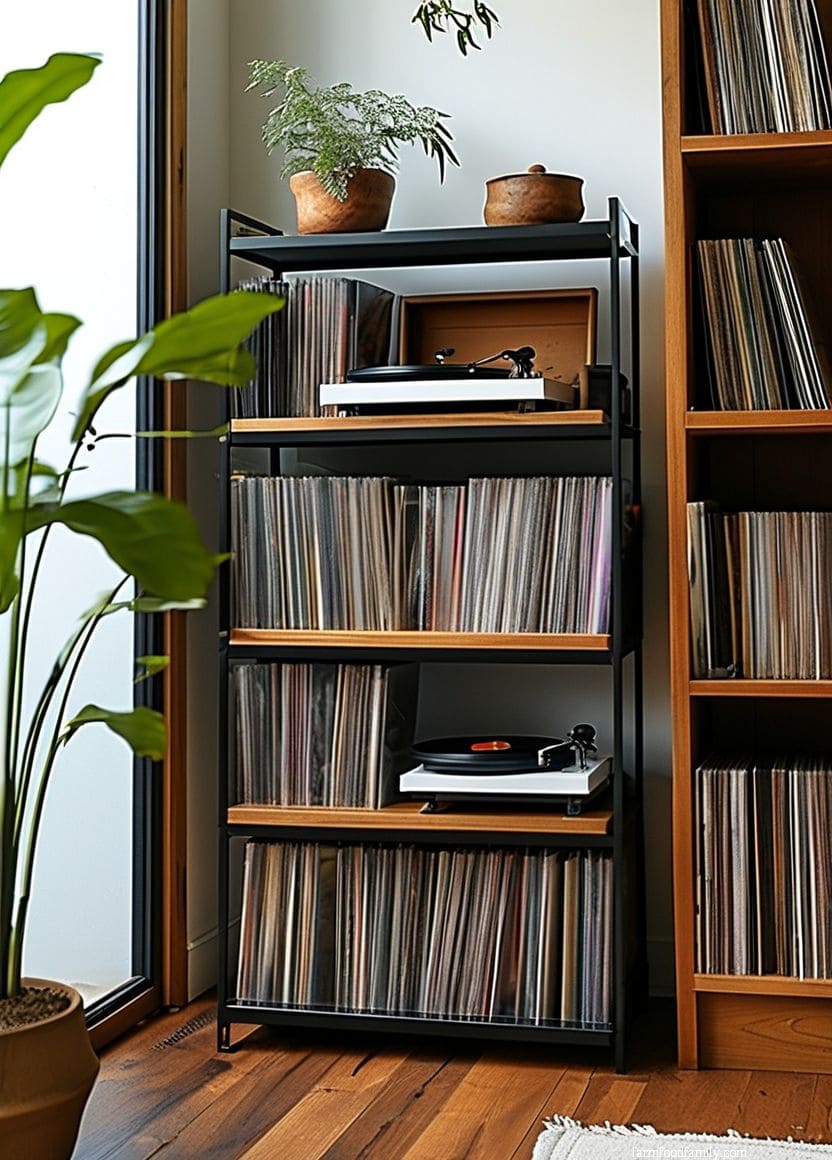
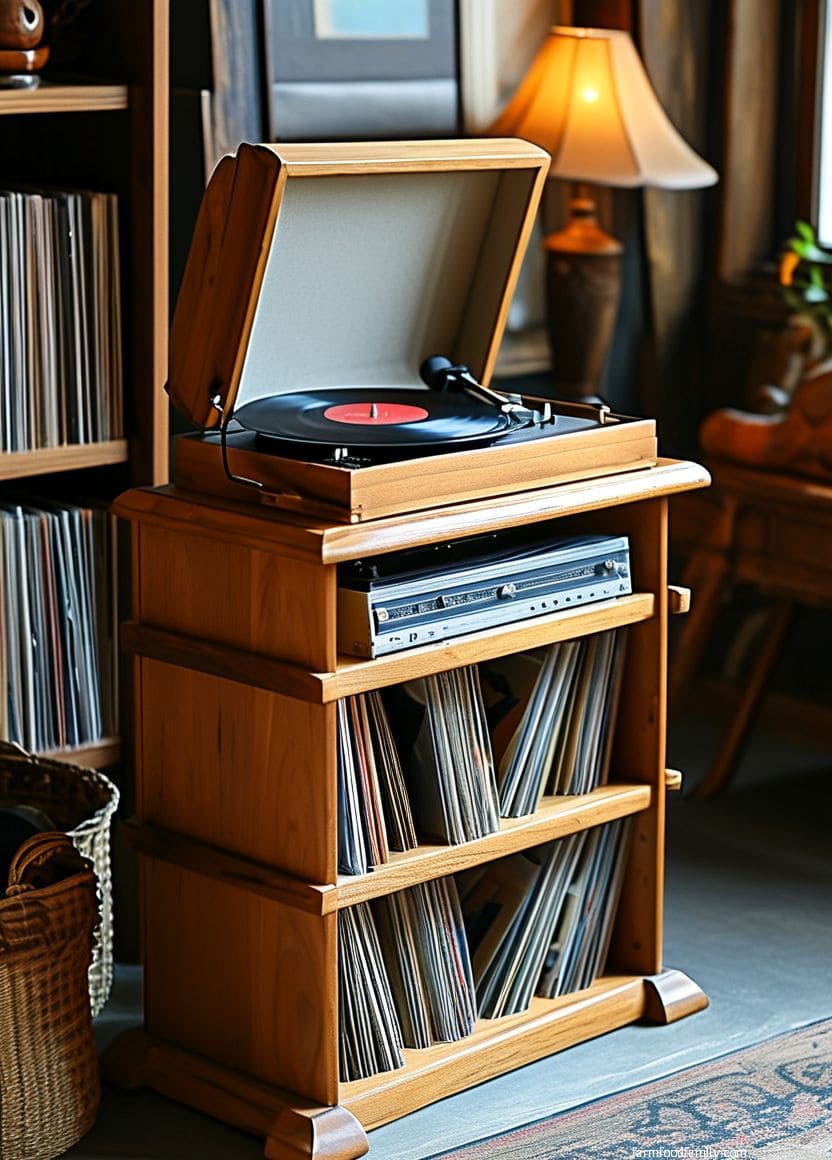
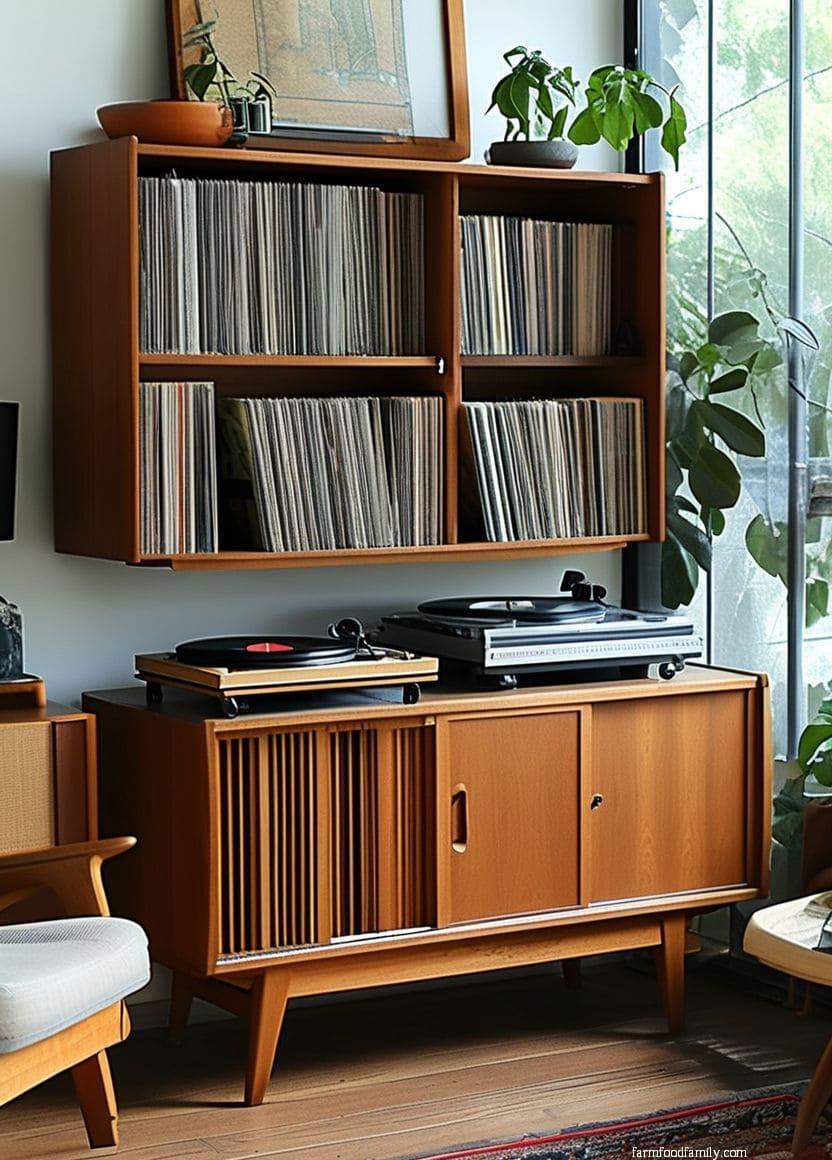
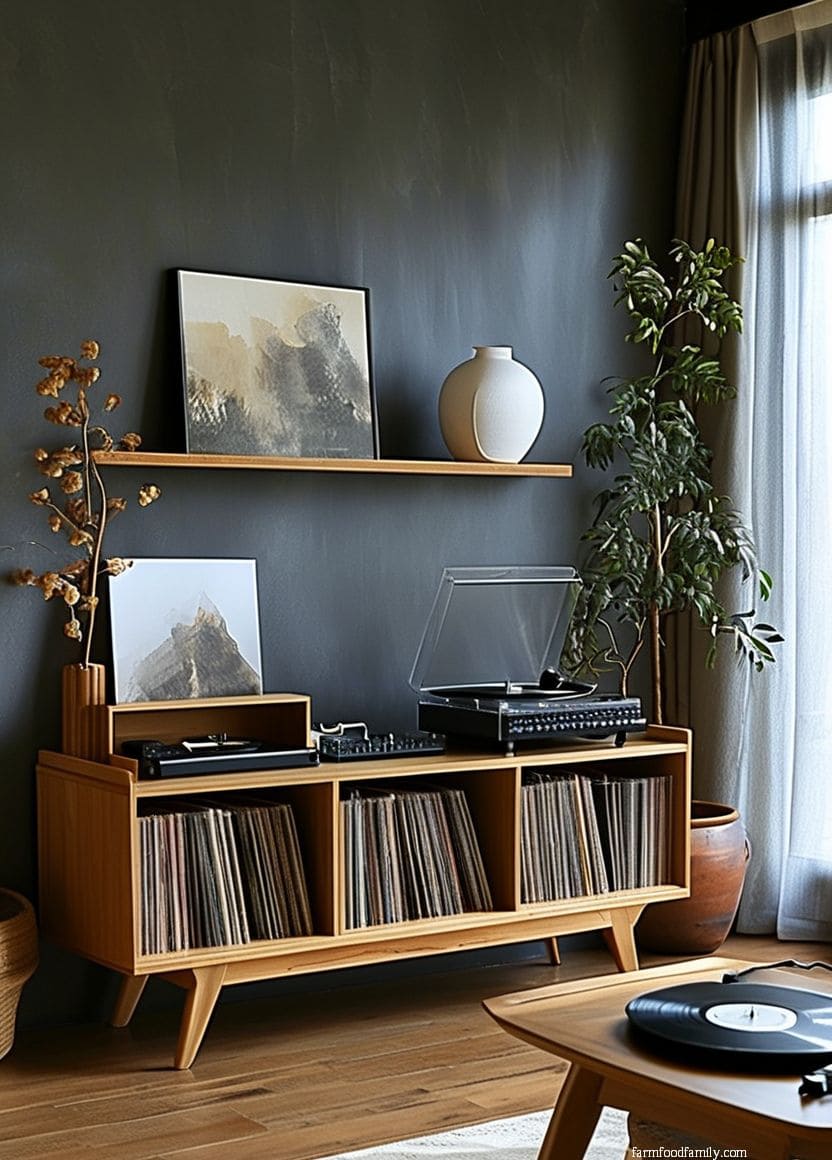
1. Mid-Century Contemporary Console With Integrated Storage
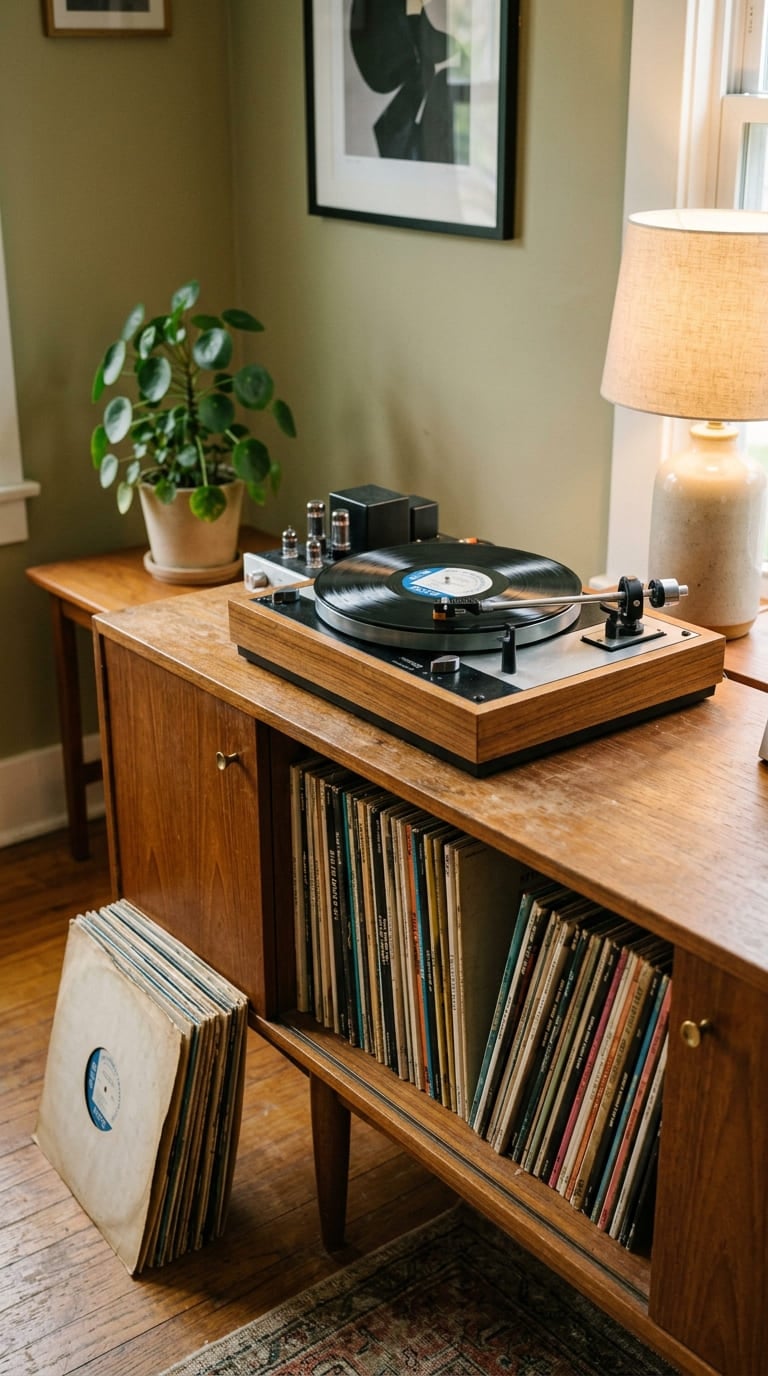
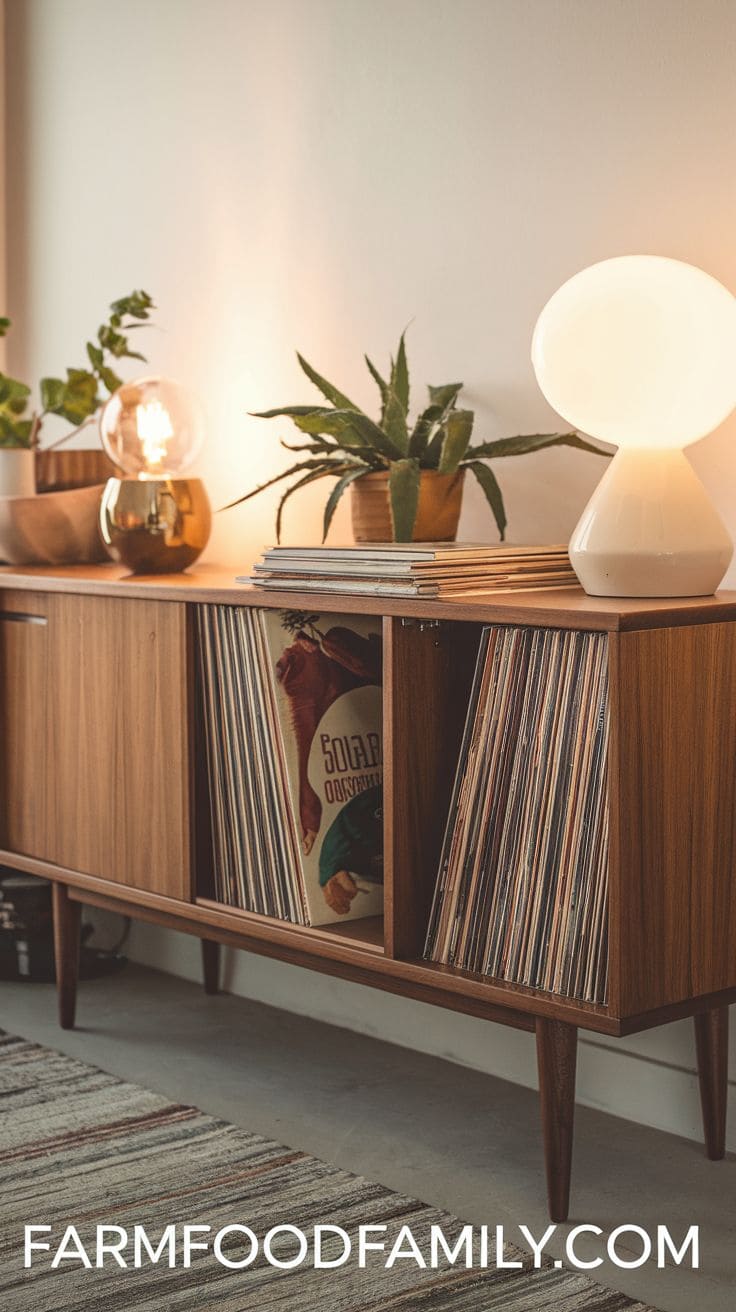
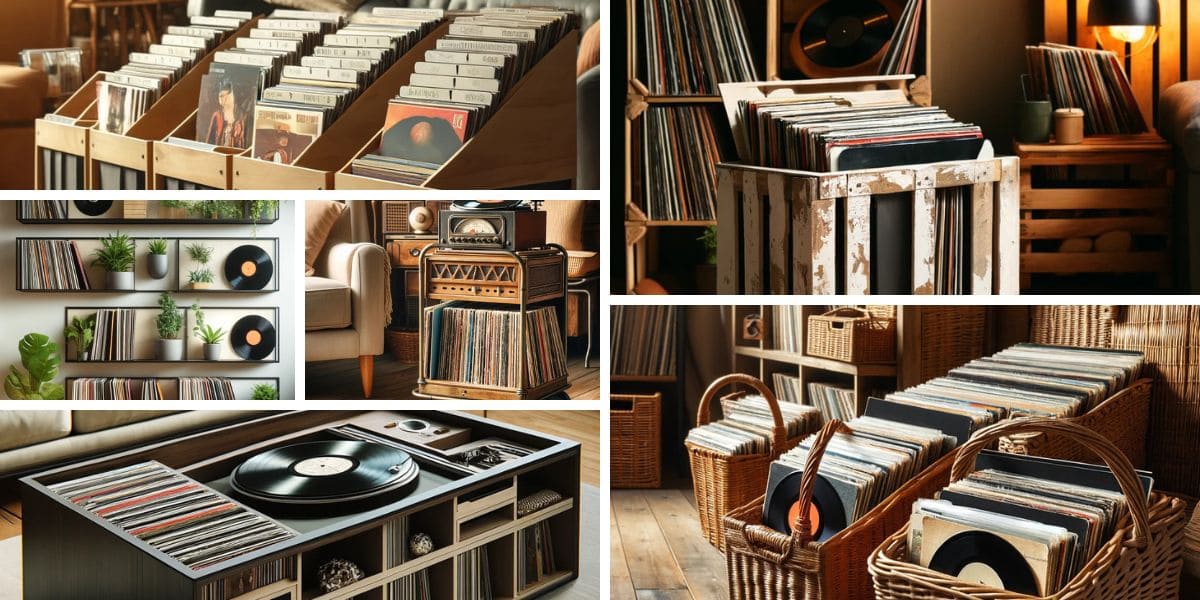
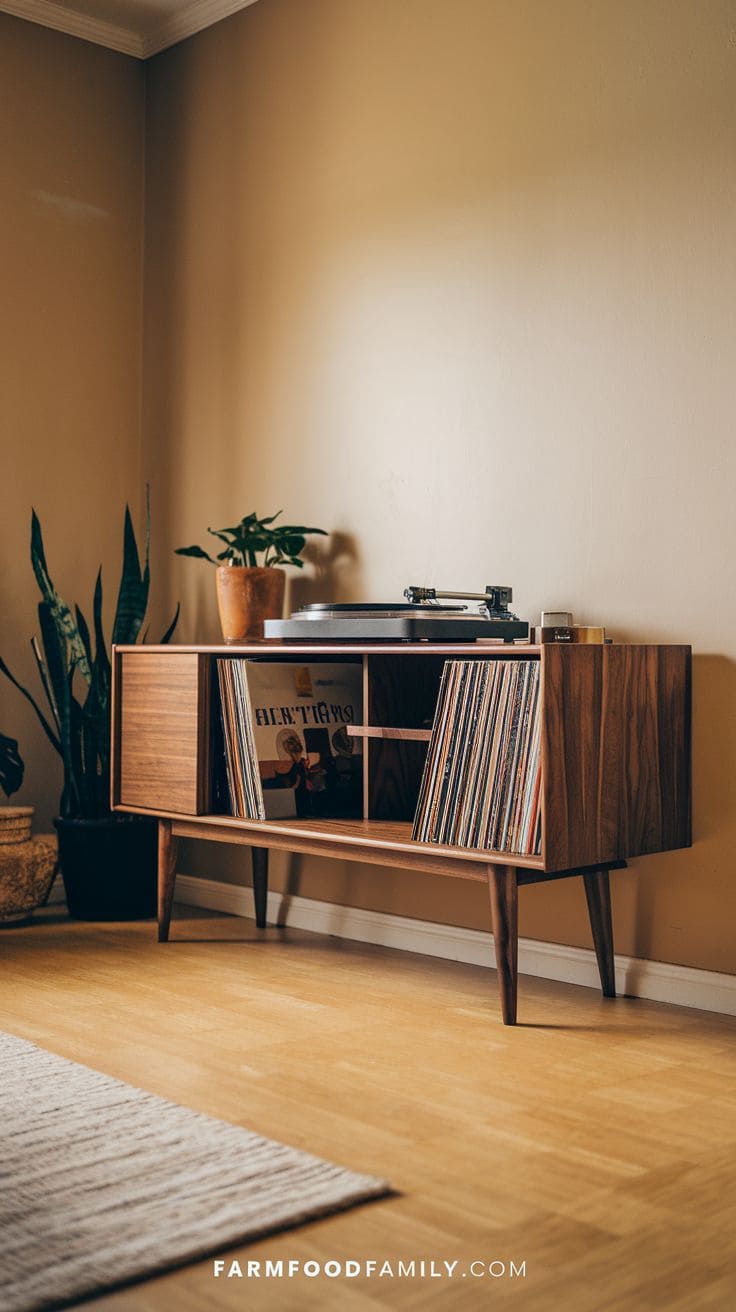
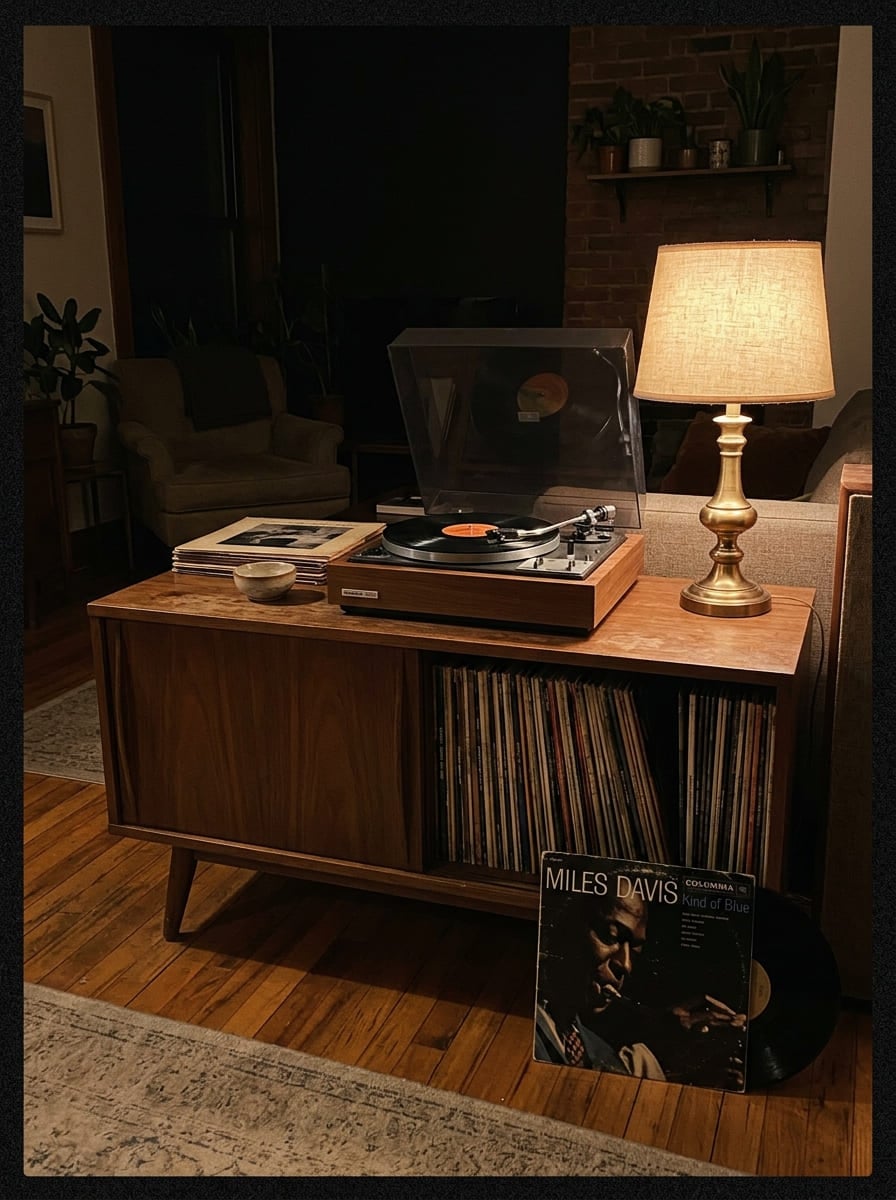
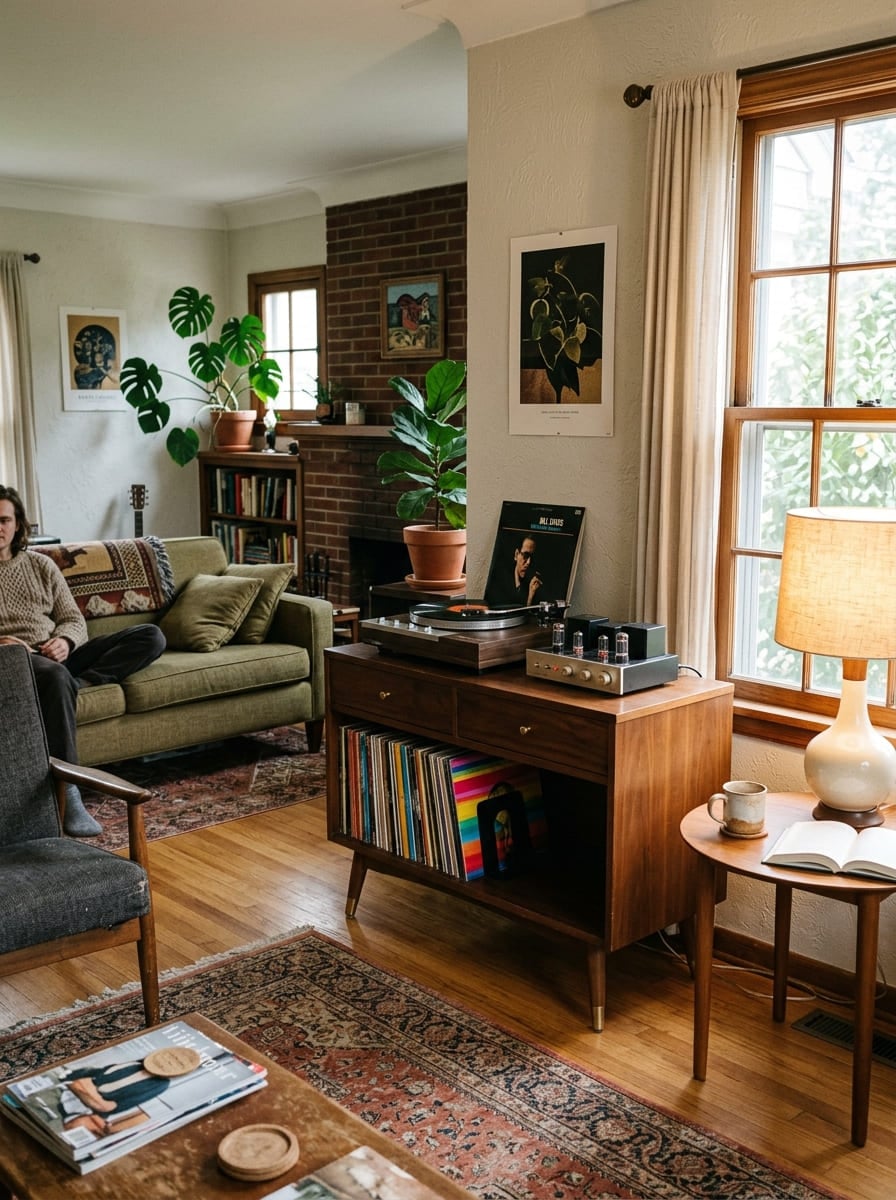
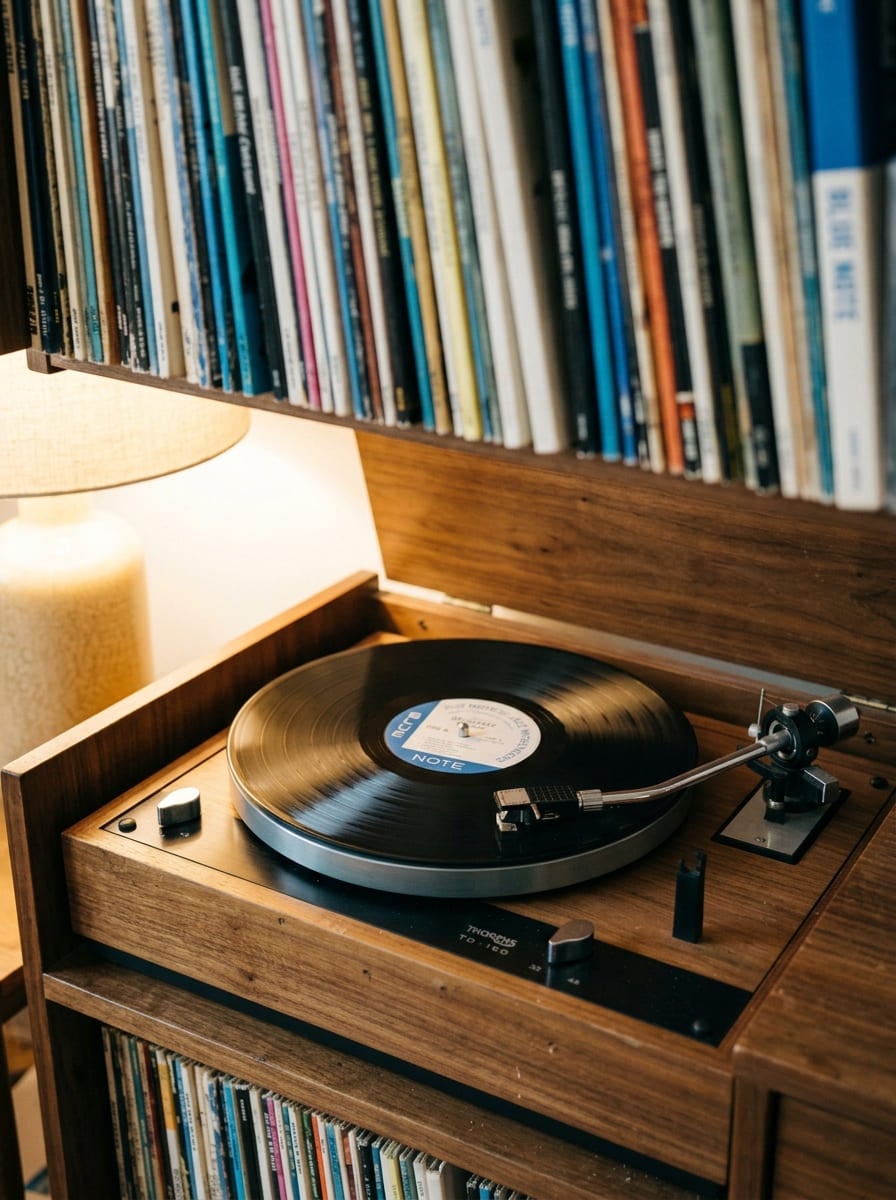
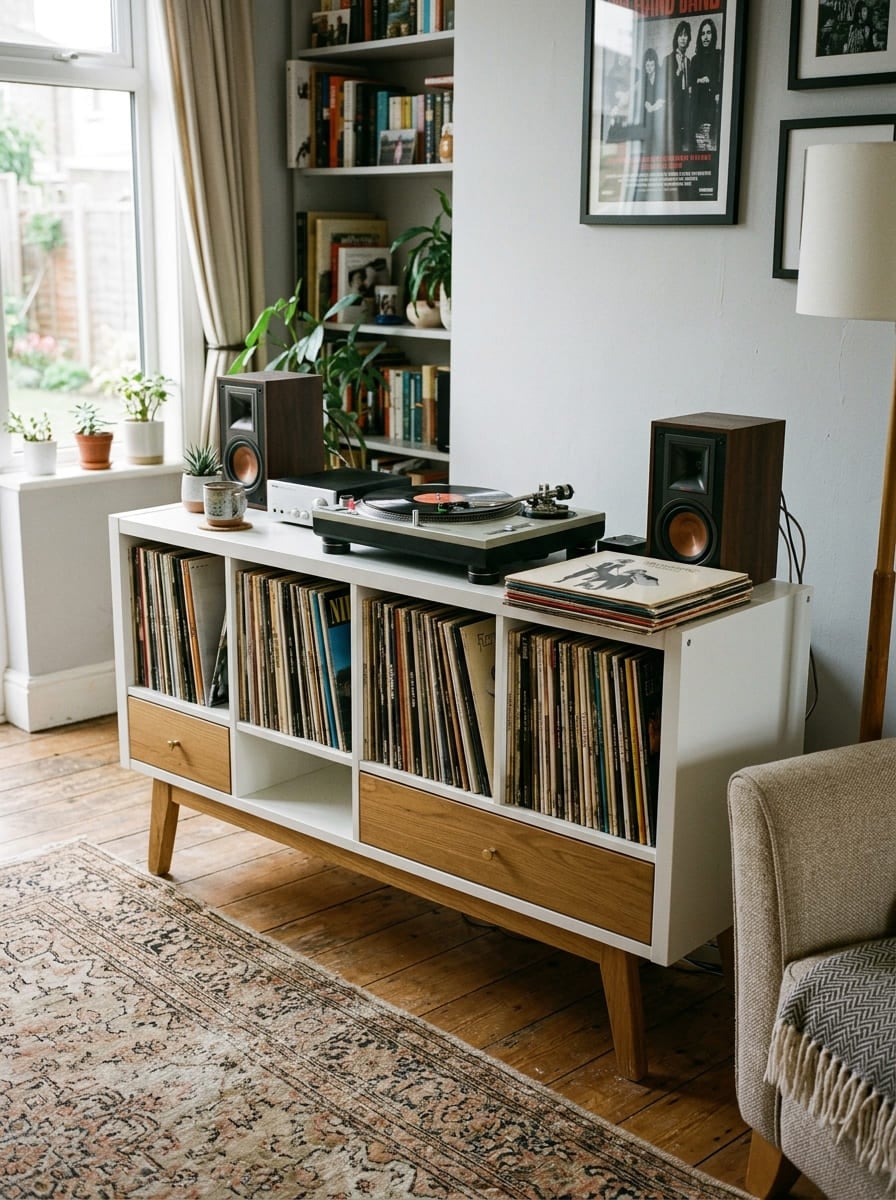
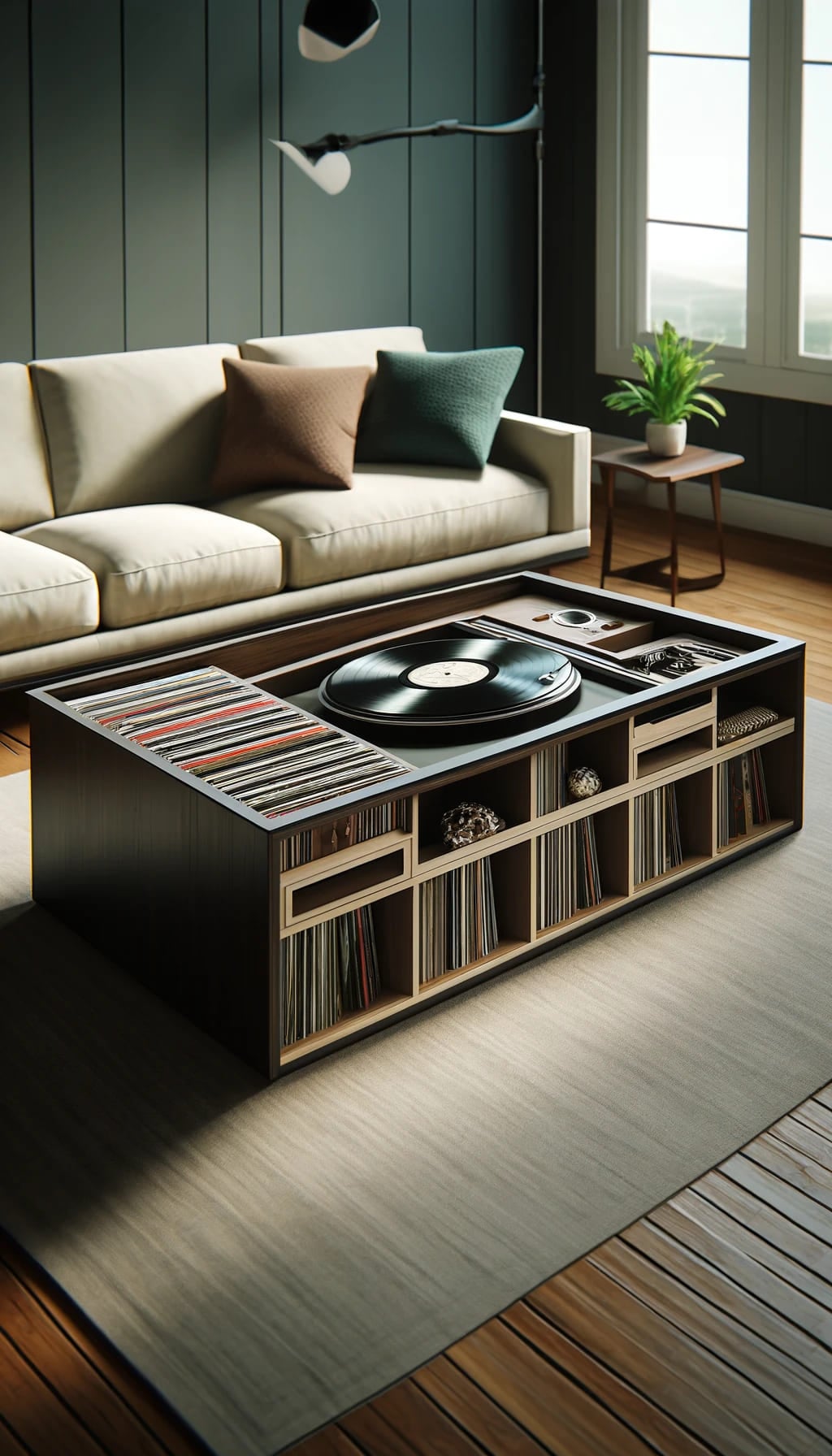
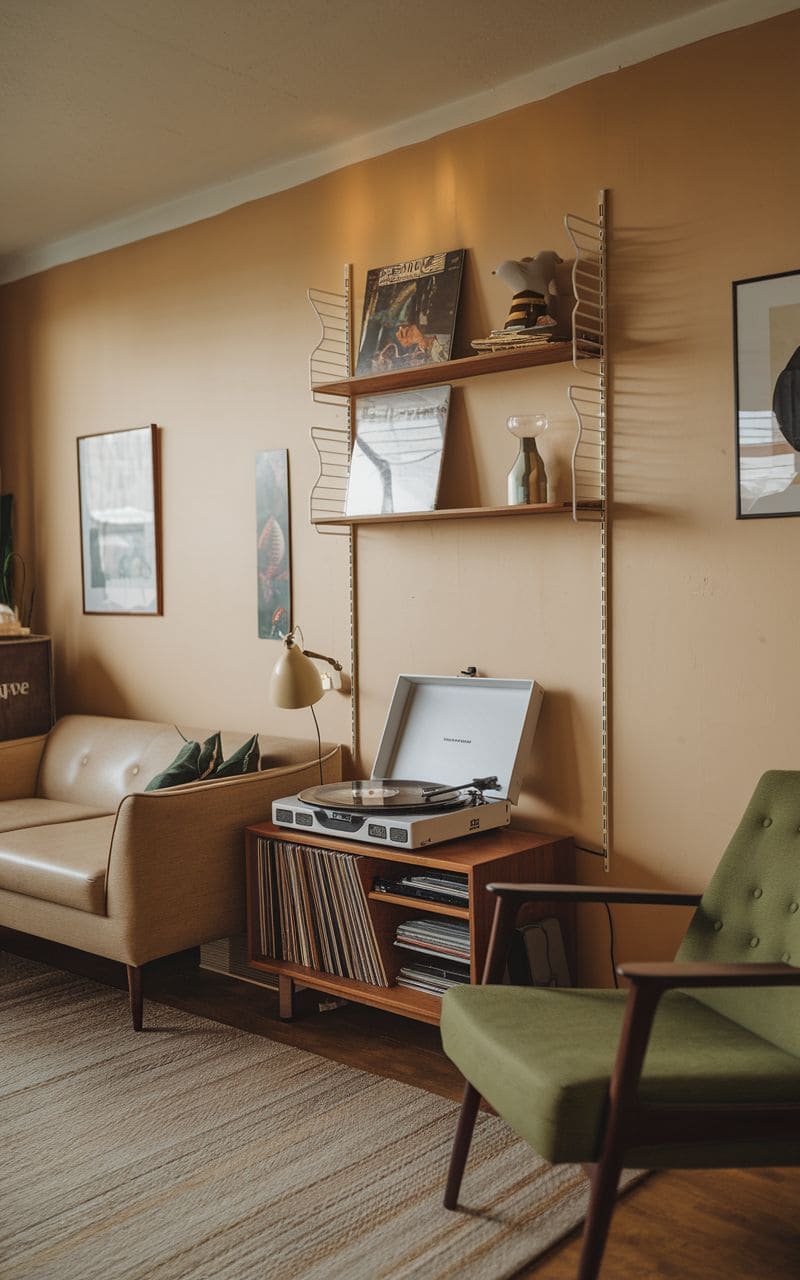
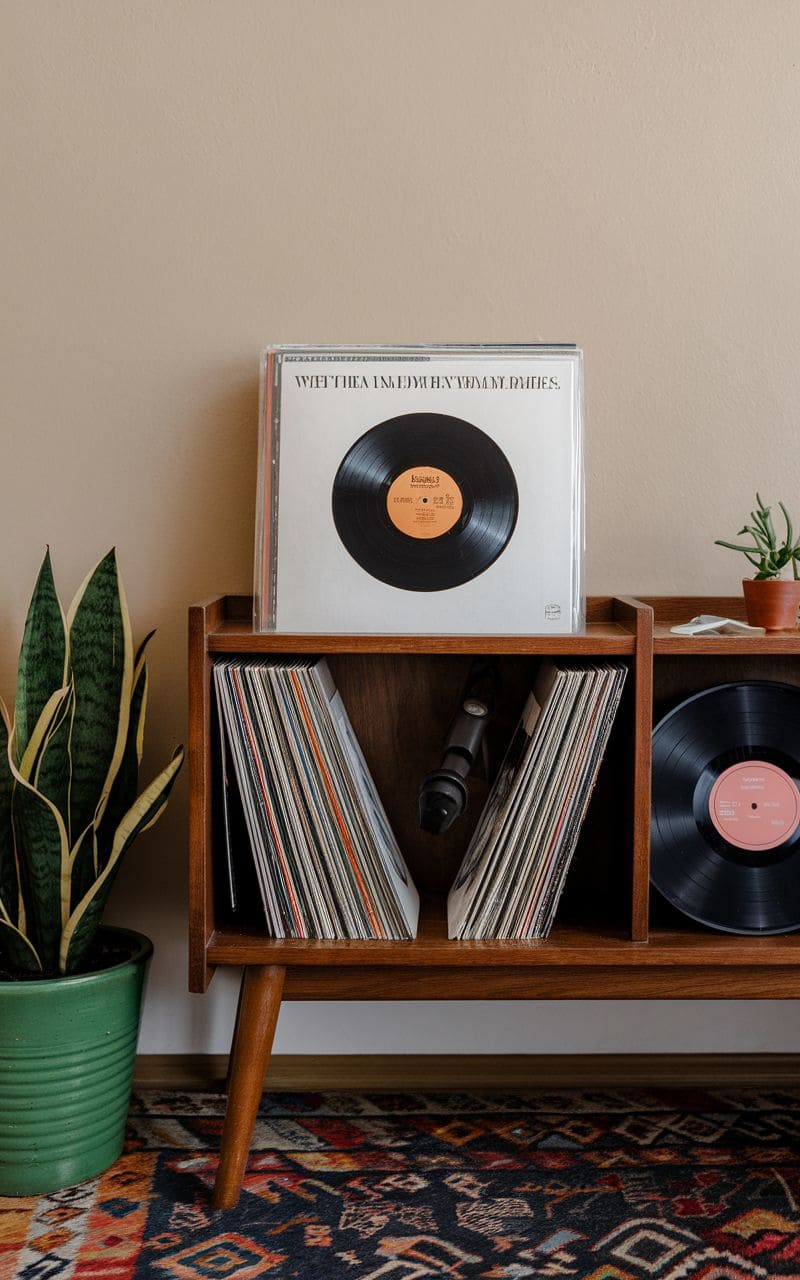
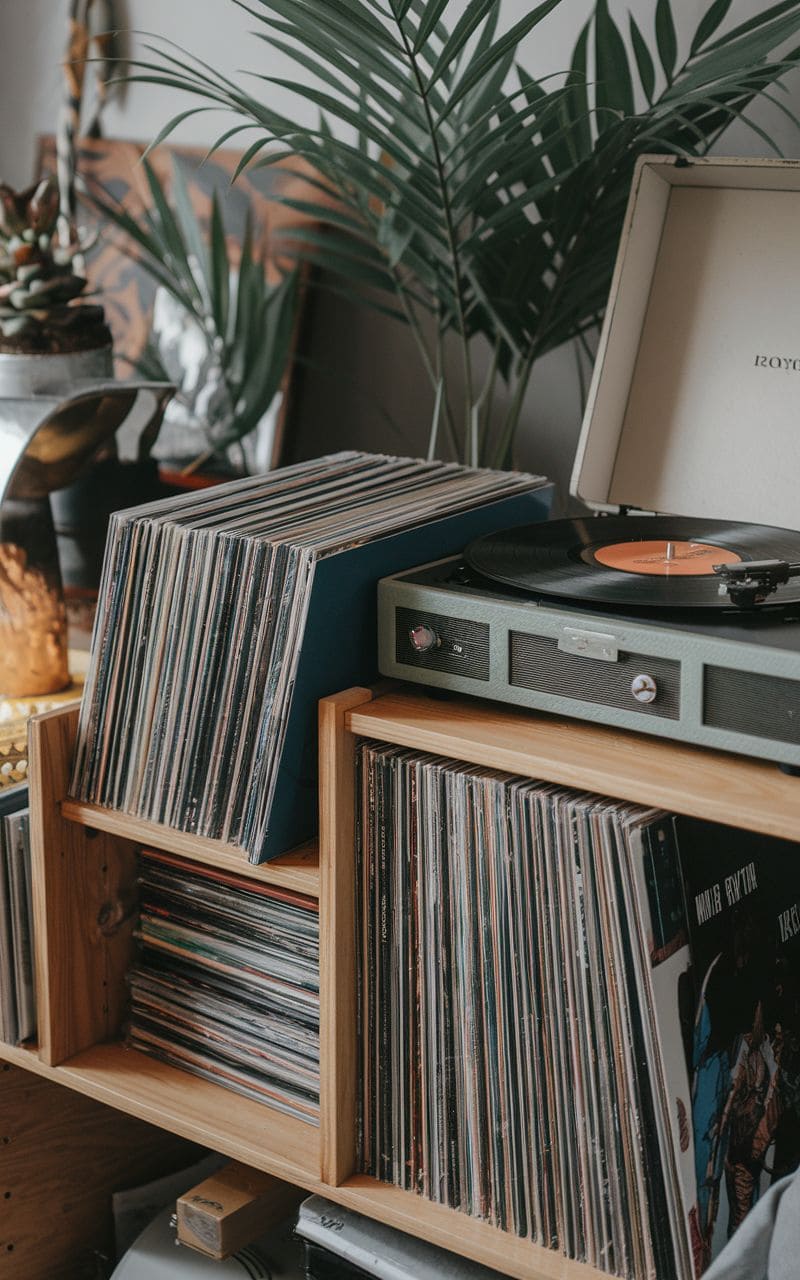
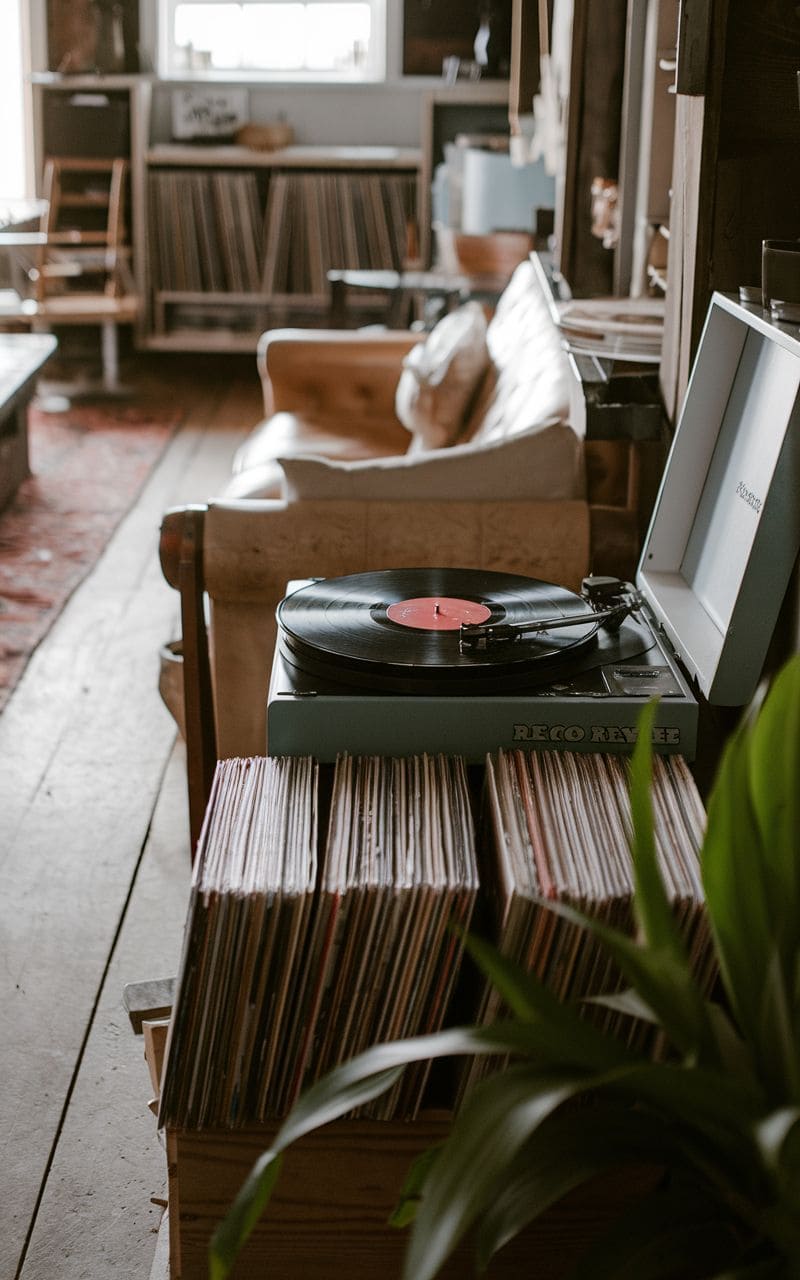
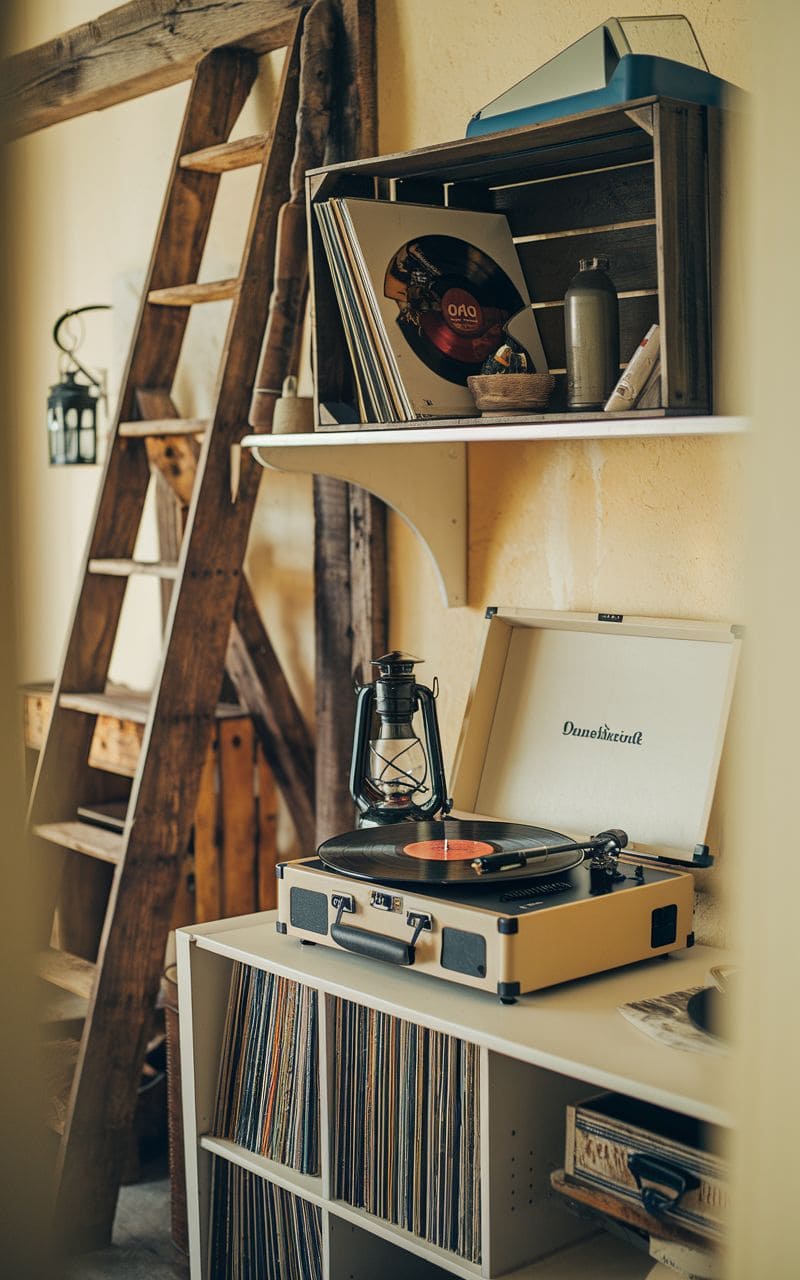
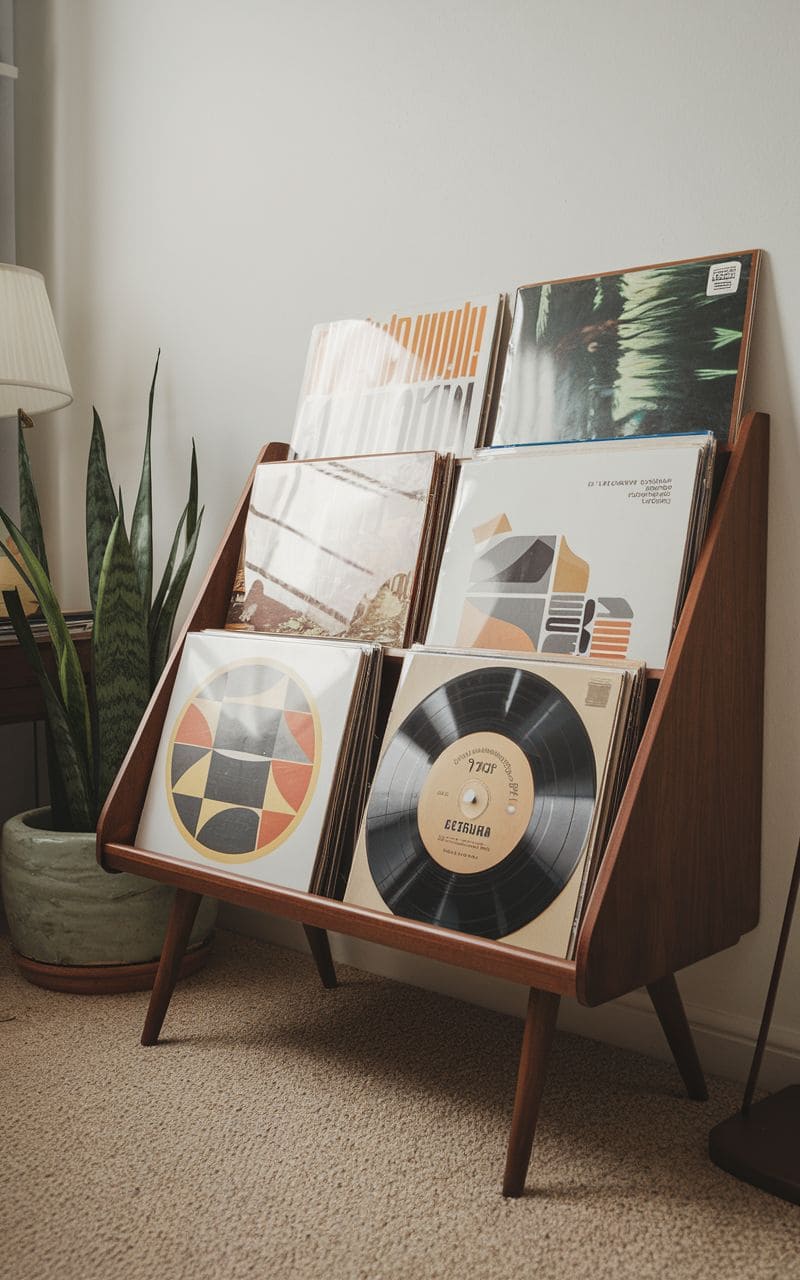
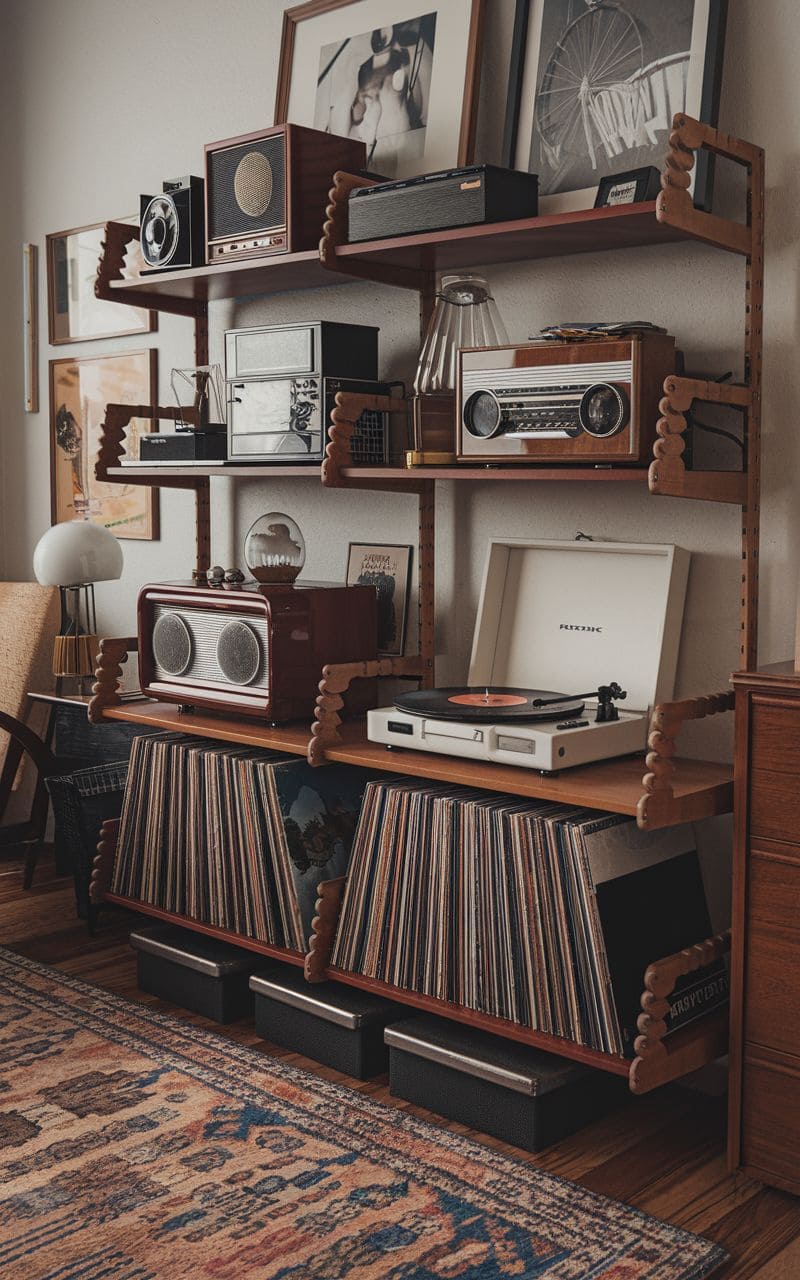
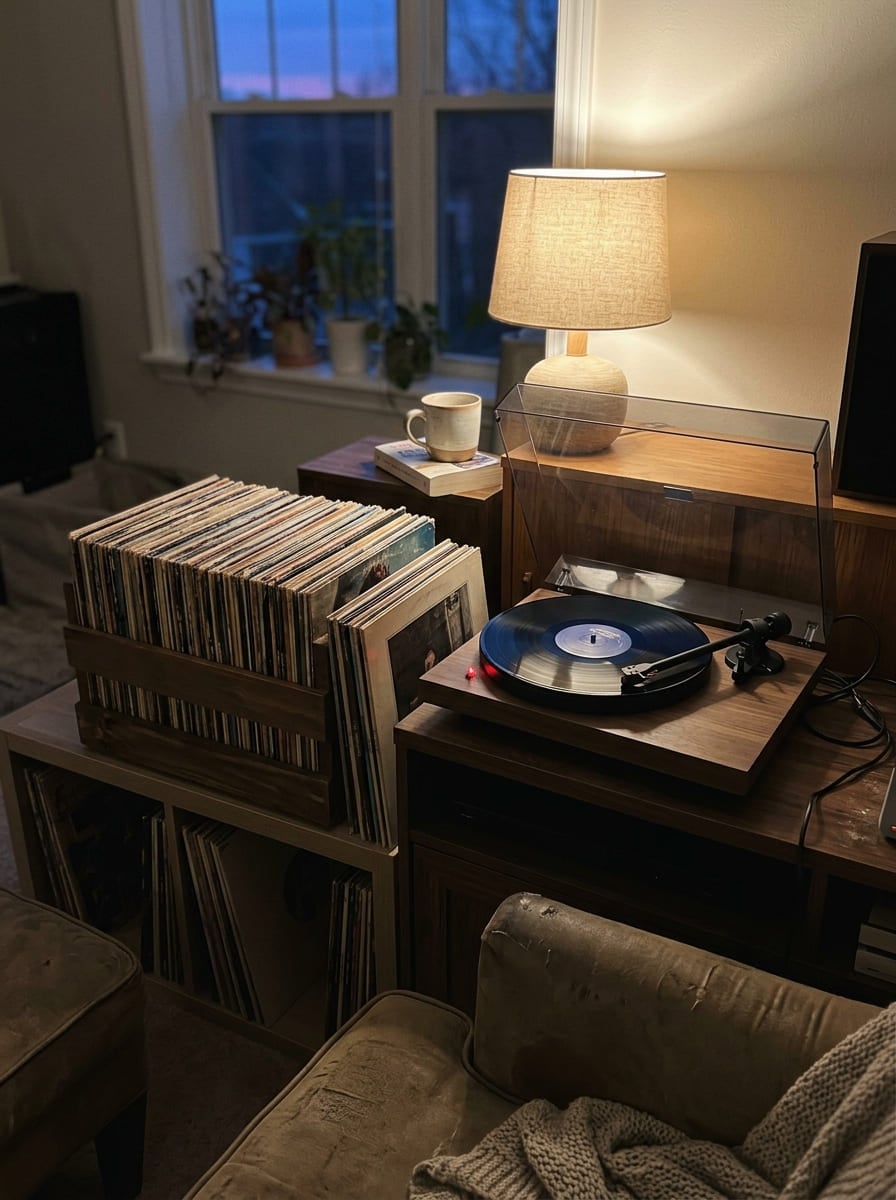
A mid-century console does double duty: turntable surface up top, vinyl-compatible shelving below.
Tapered legs and clean lines are the giveaway details. Walnut and teak tones warm the whole thing up and work whether the rest of the room leans retro or contemporary.
This is less a storage solution than a listening corner. It’s the piece worth spending real money on if the room is going to be built around it.

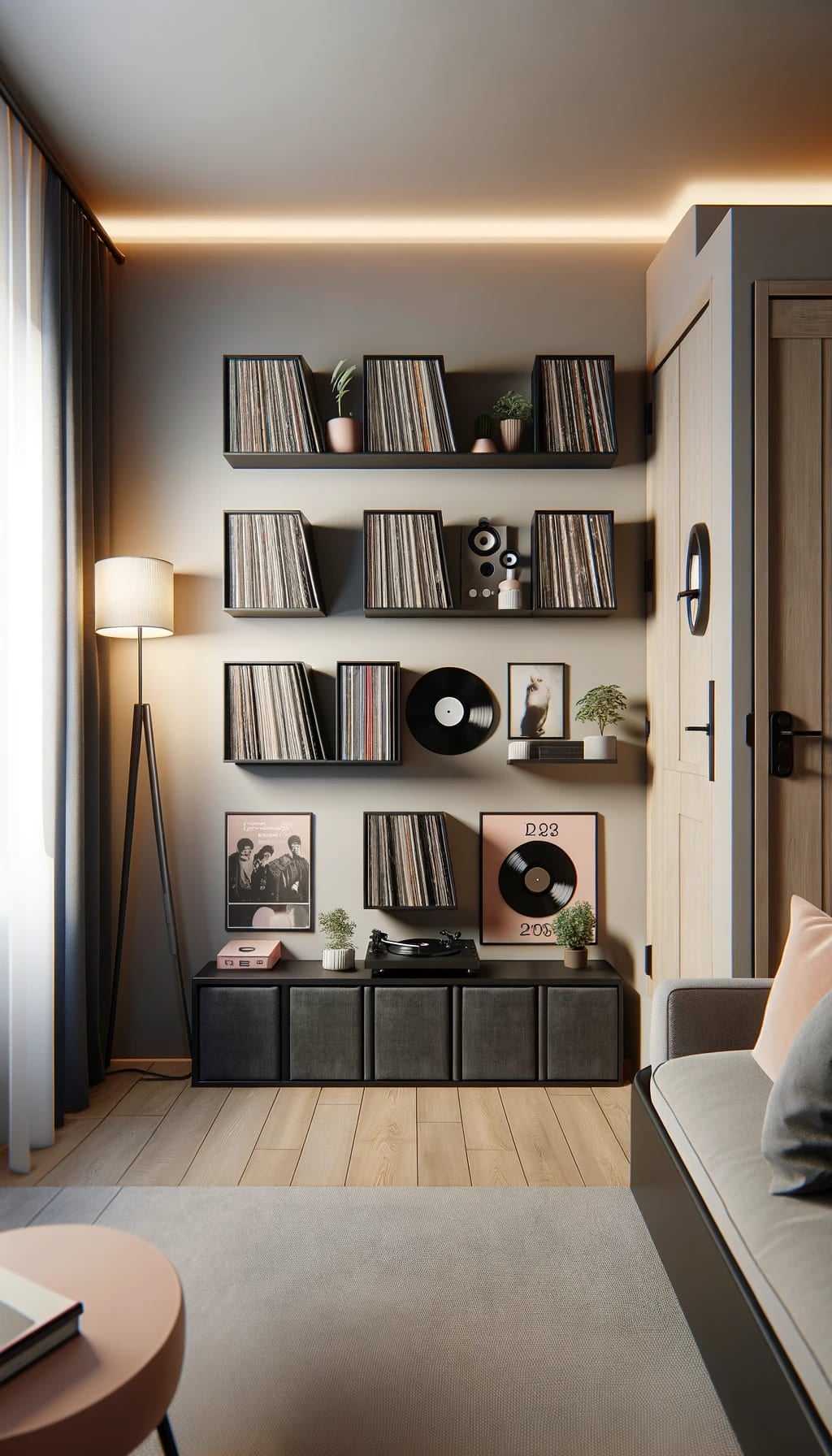
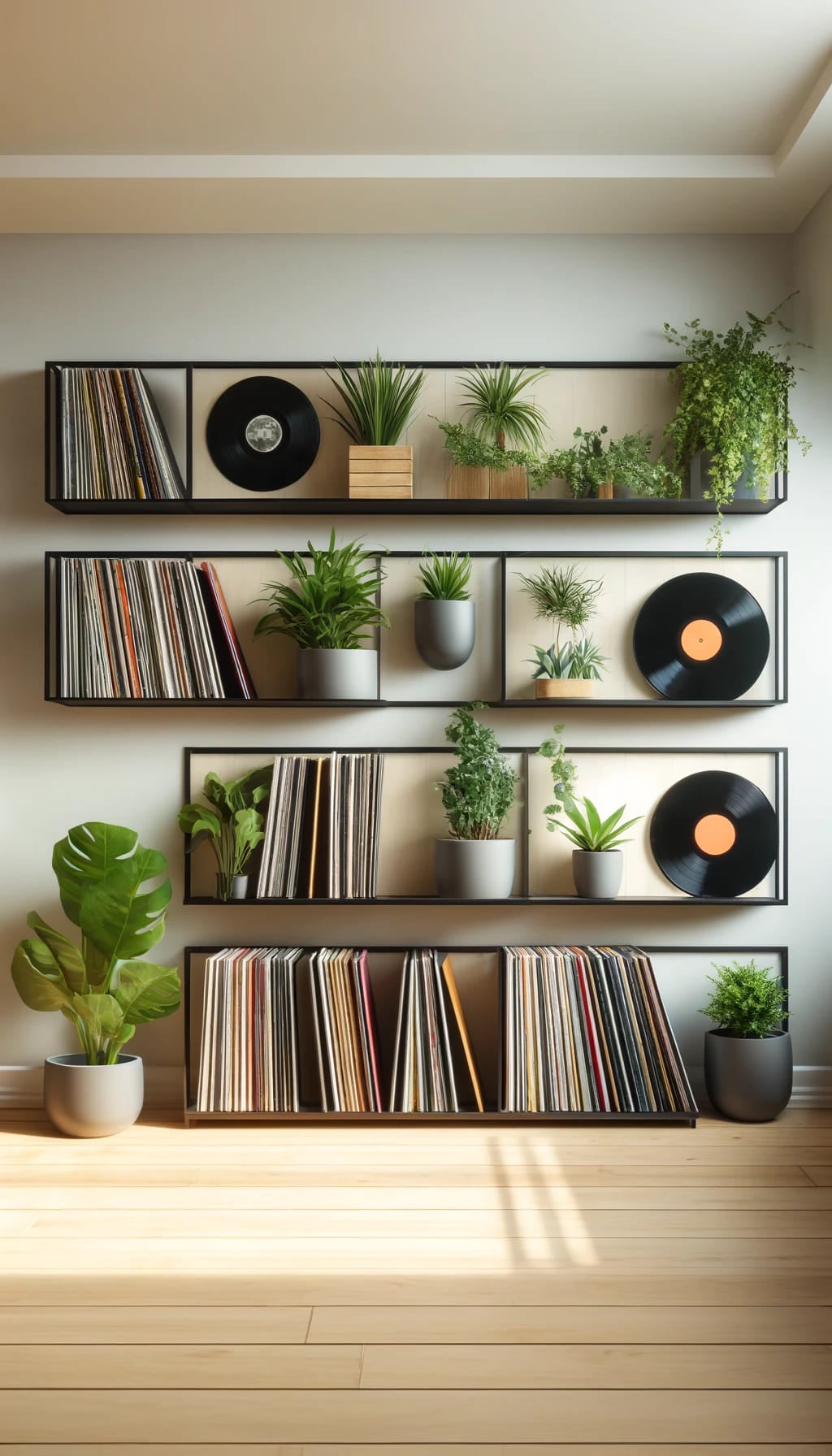
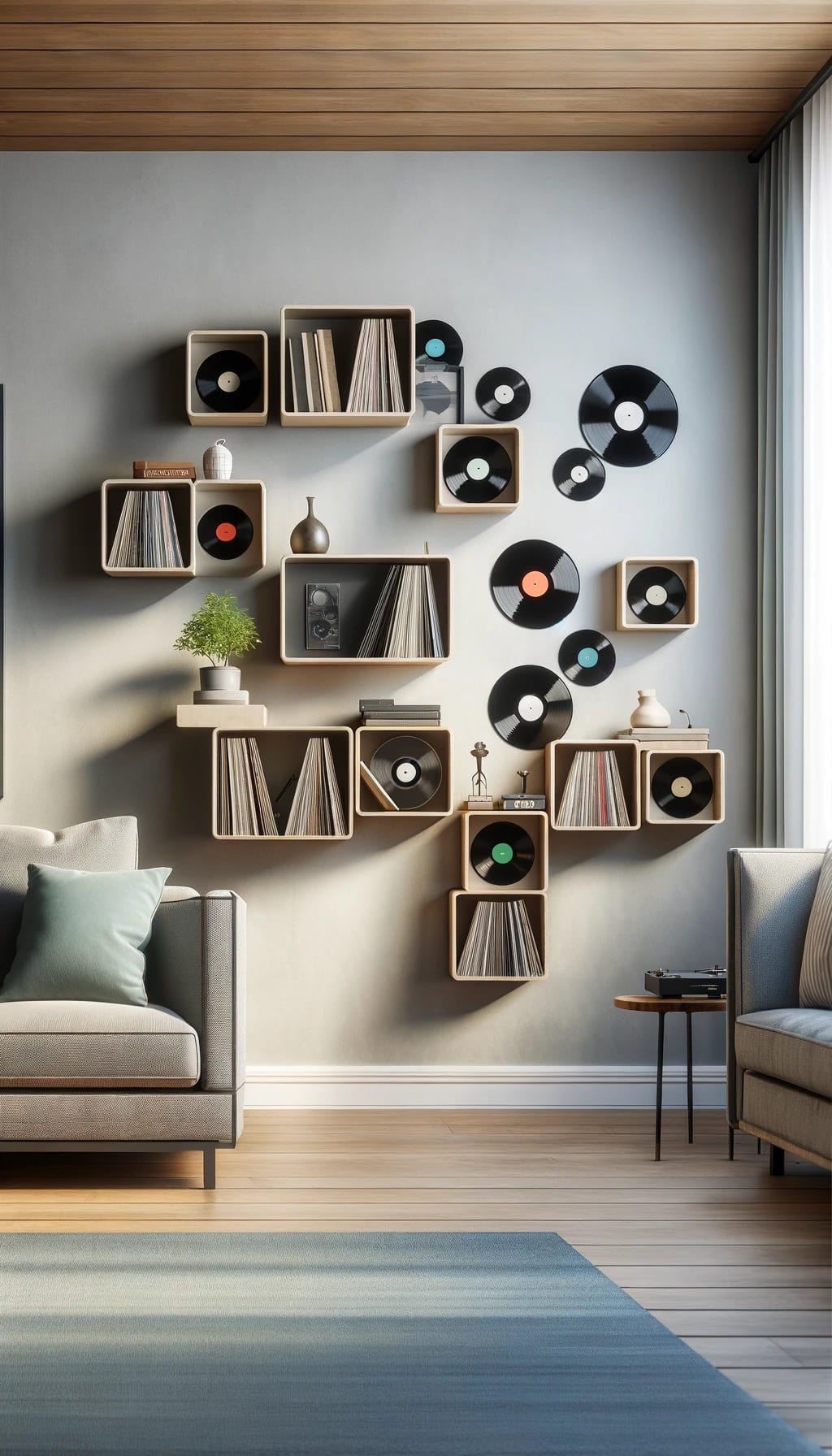
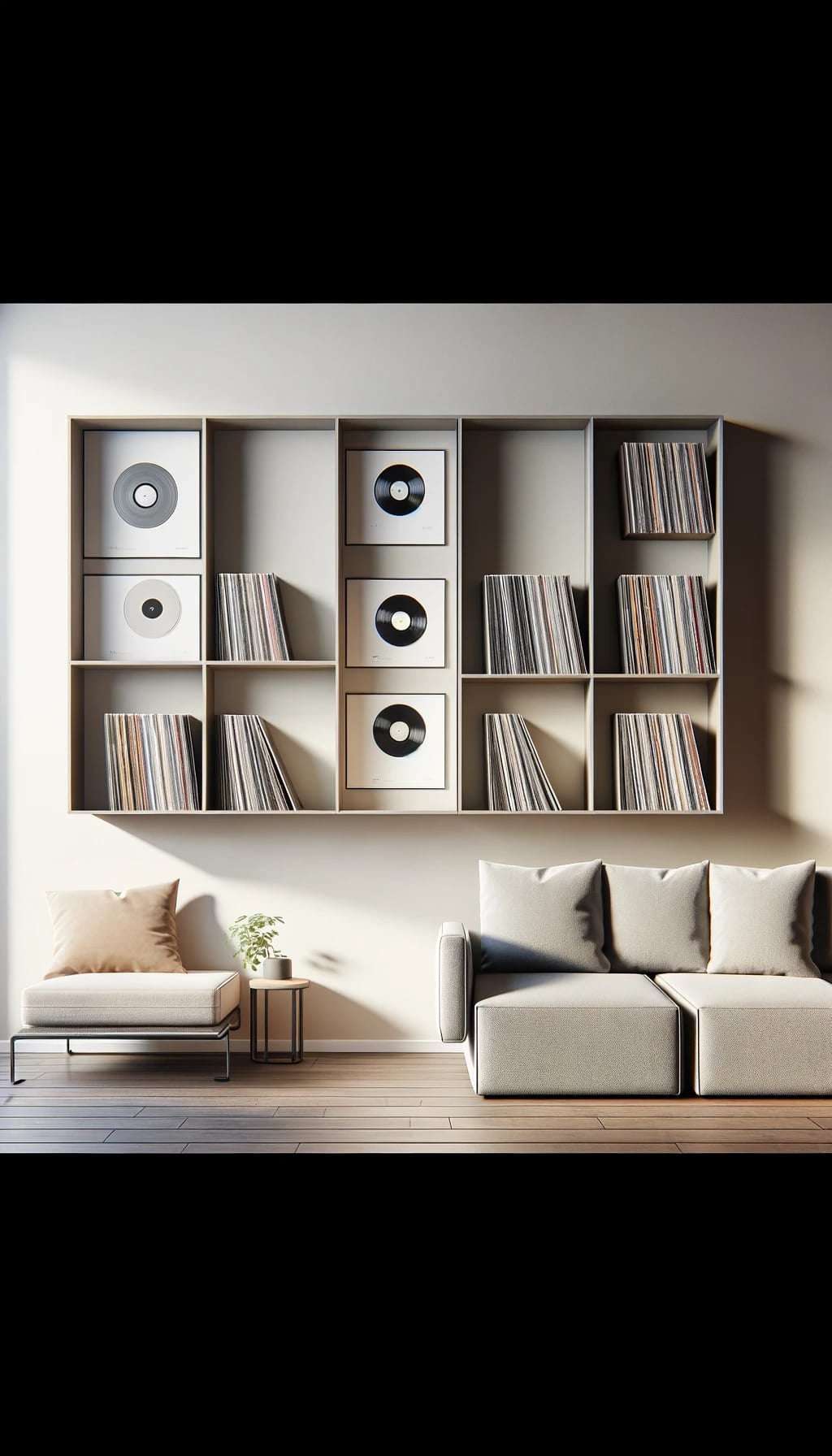
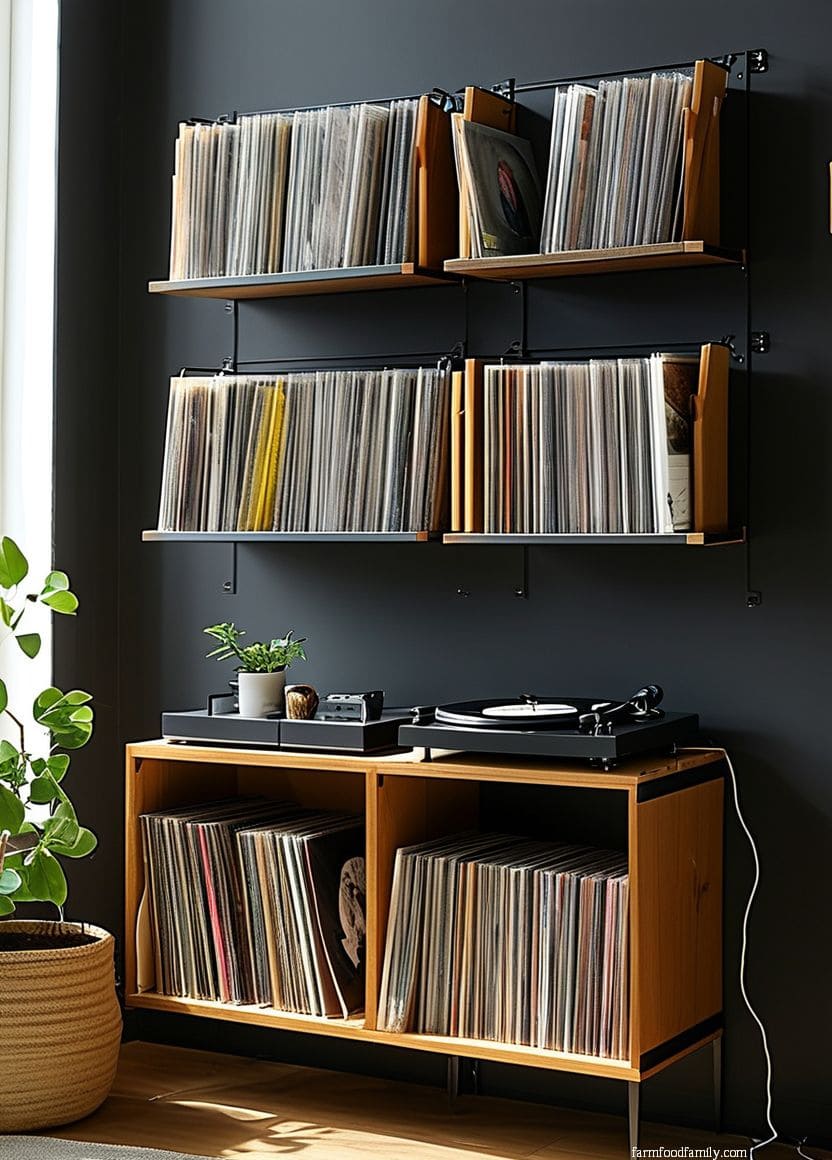
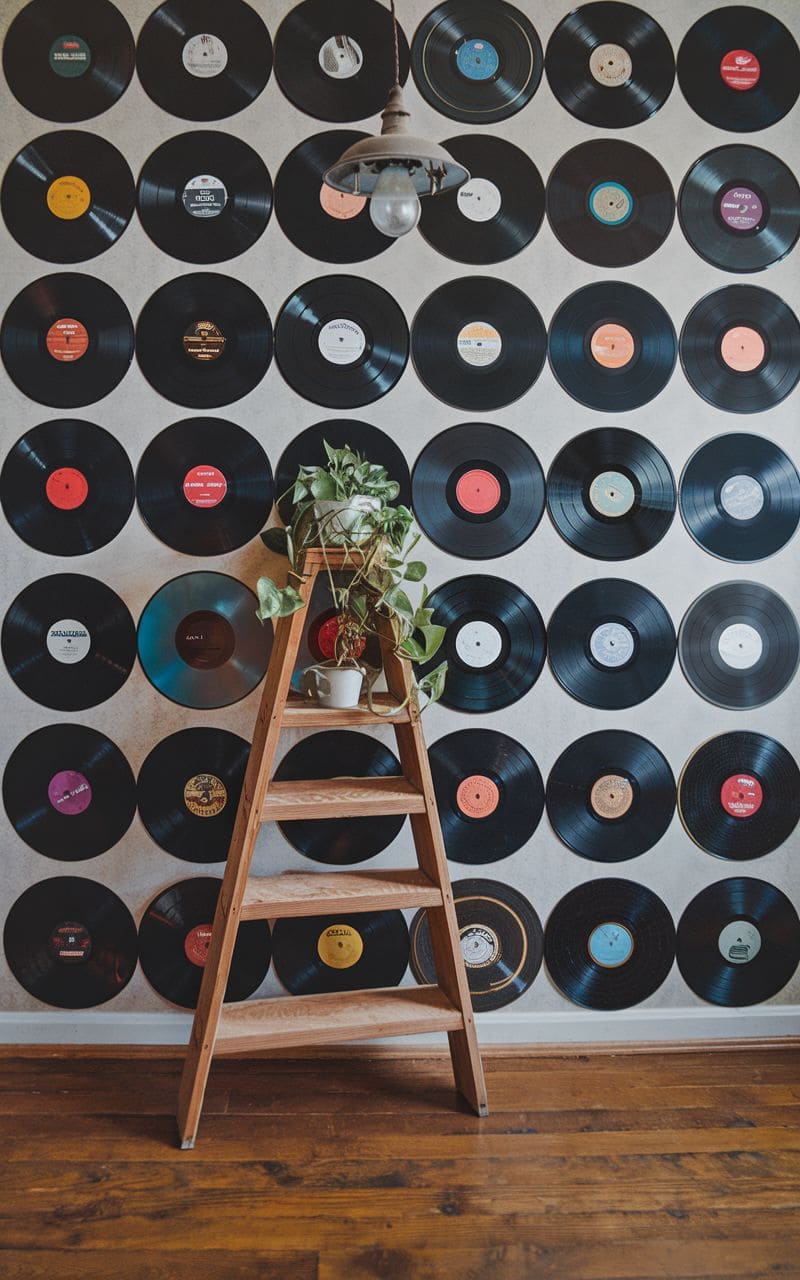
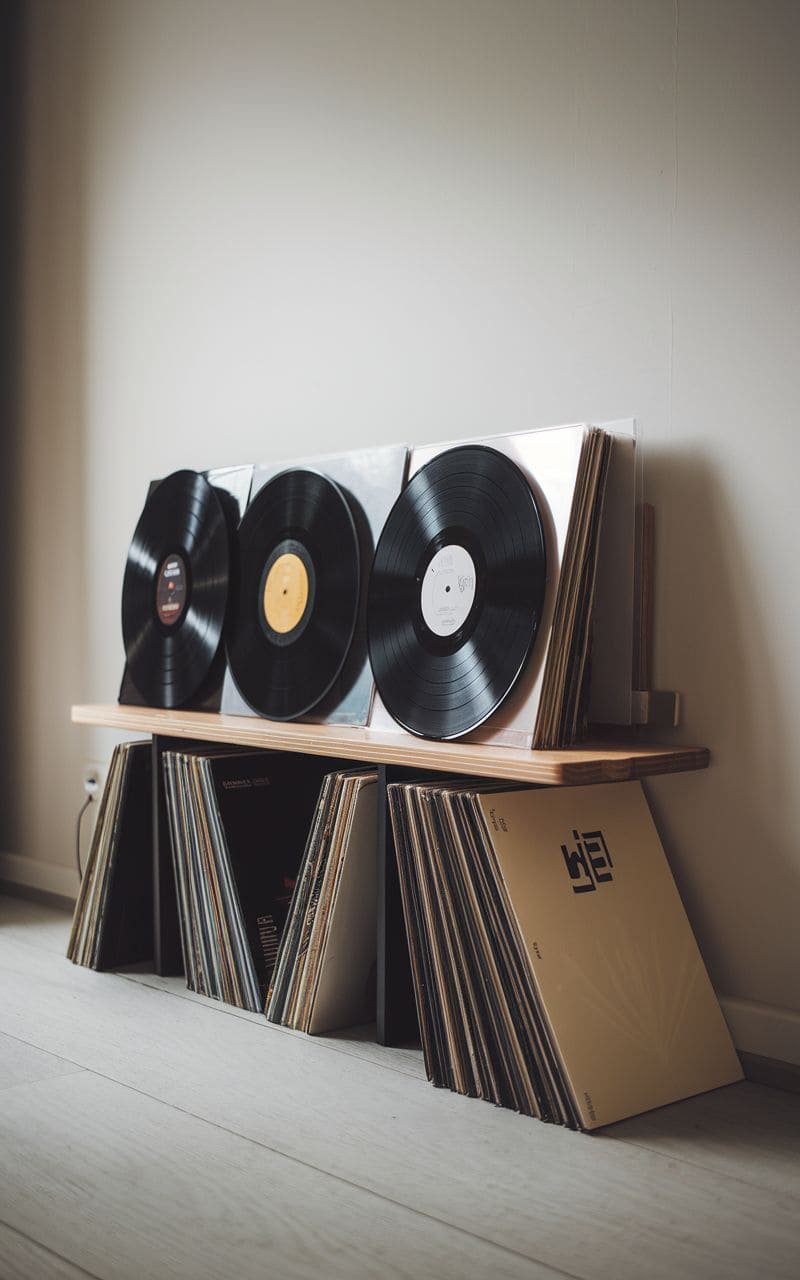
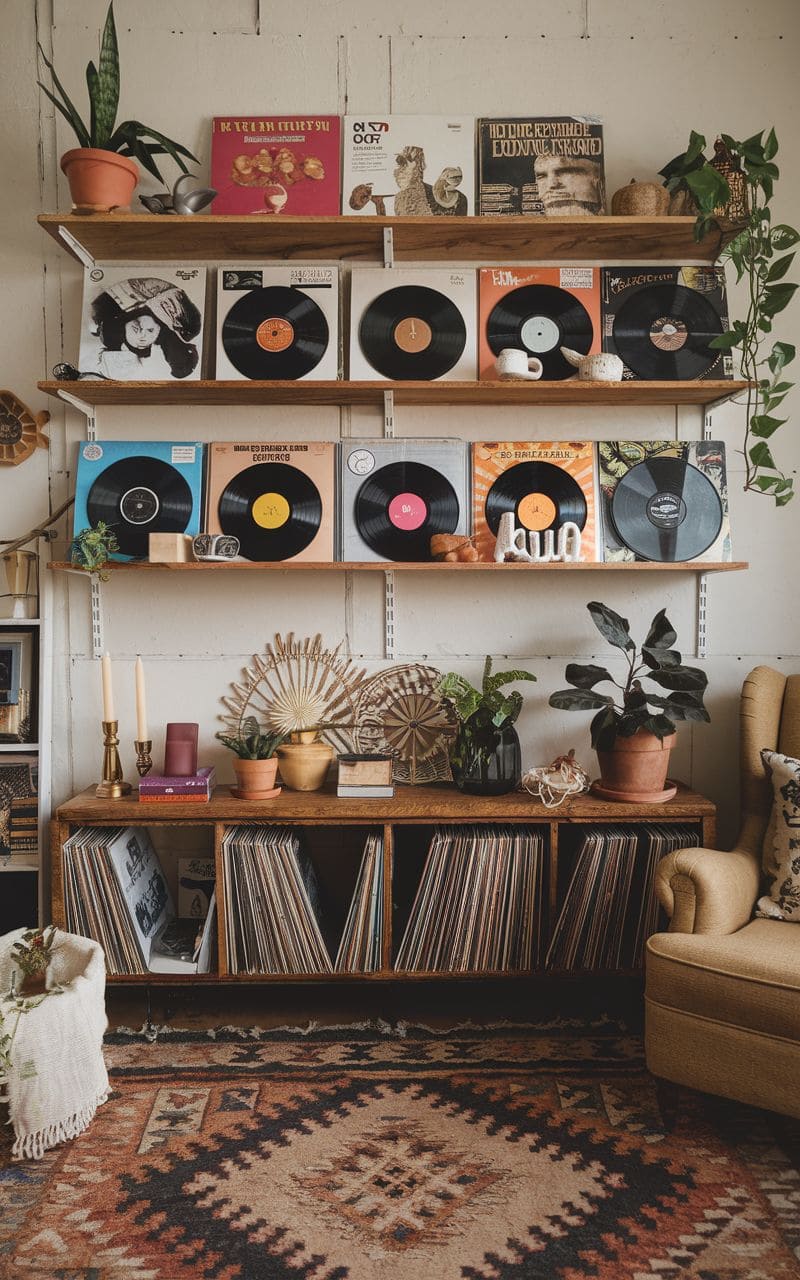
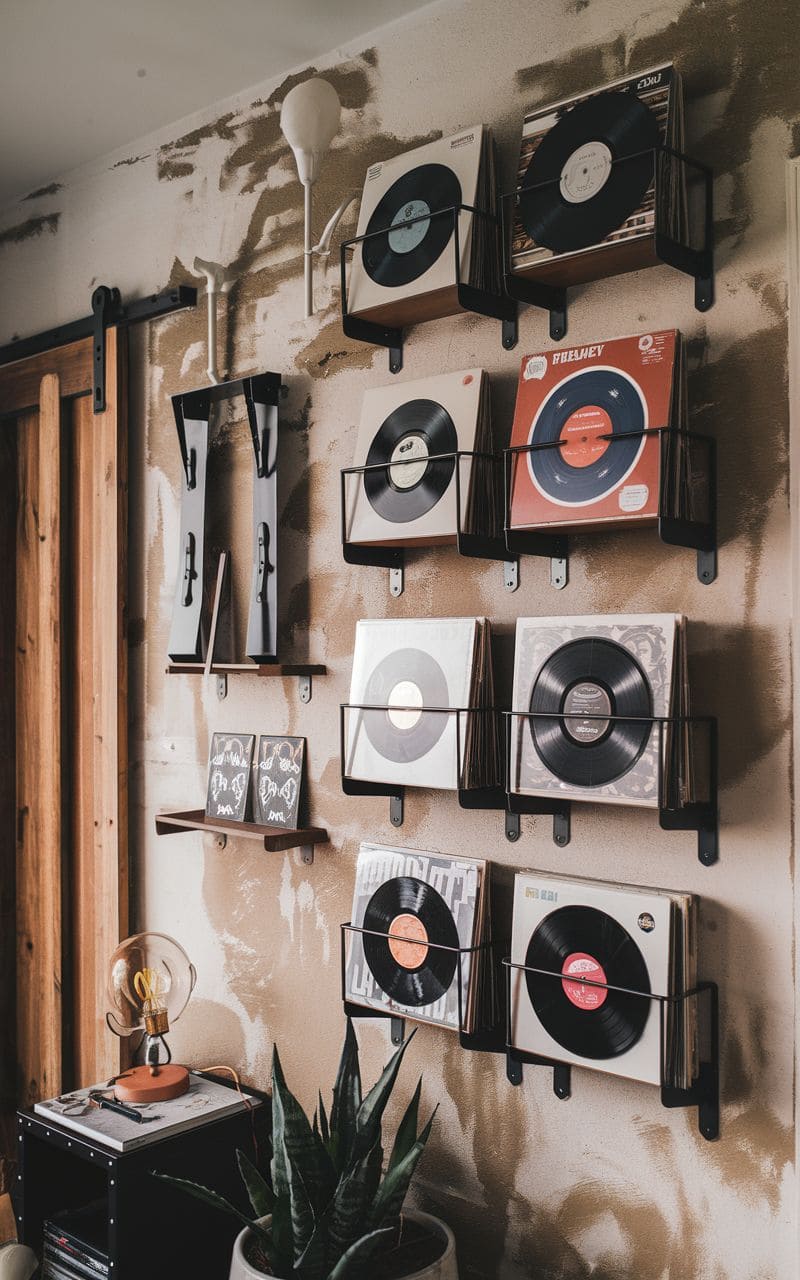
2. Vertical Wall-Mounted Shelves Create a Gallery Look
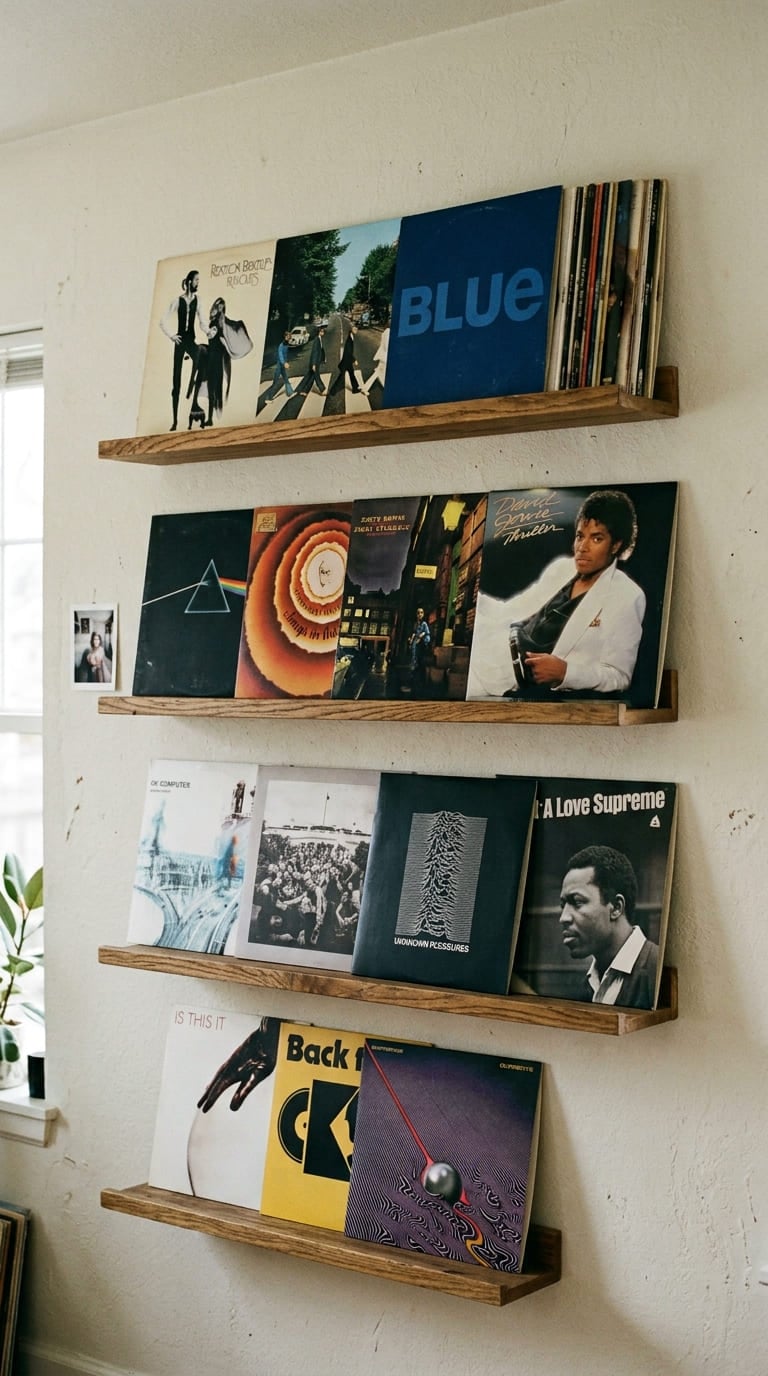
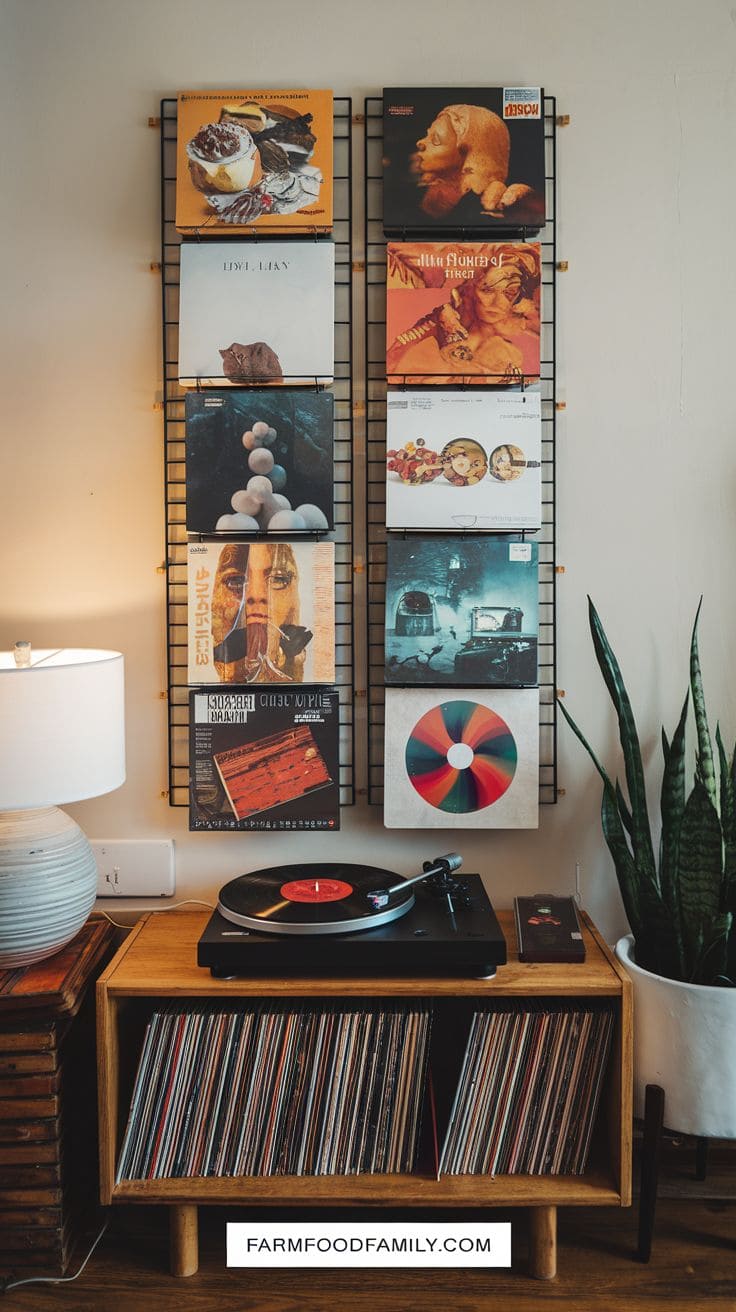
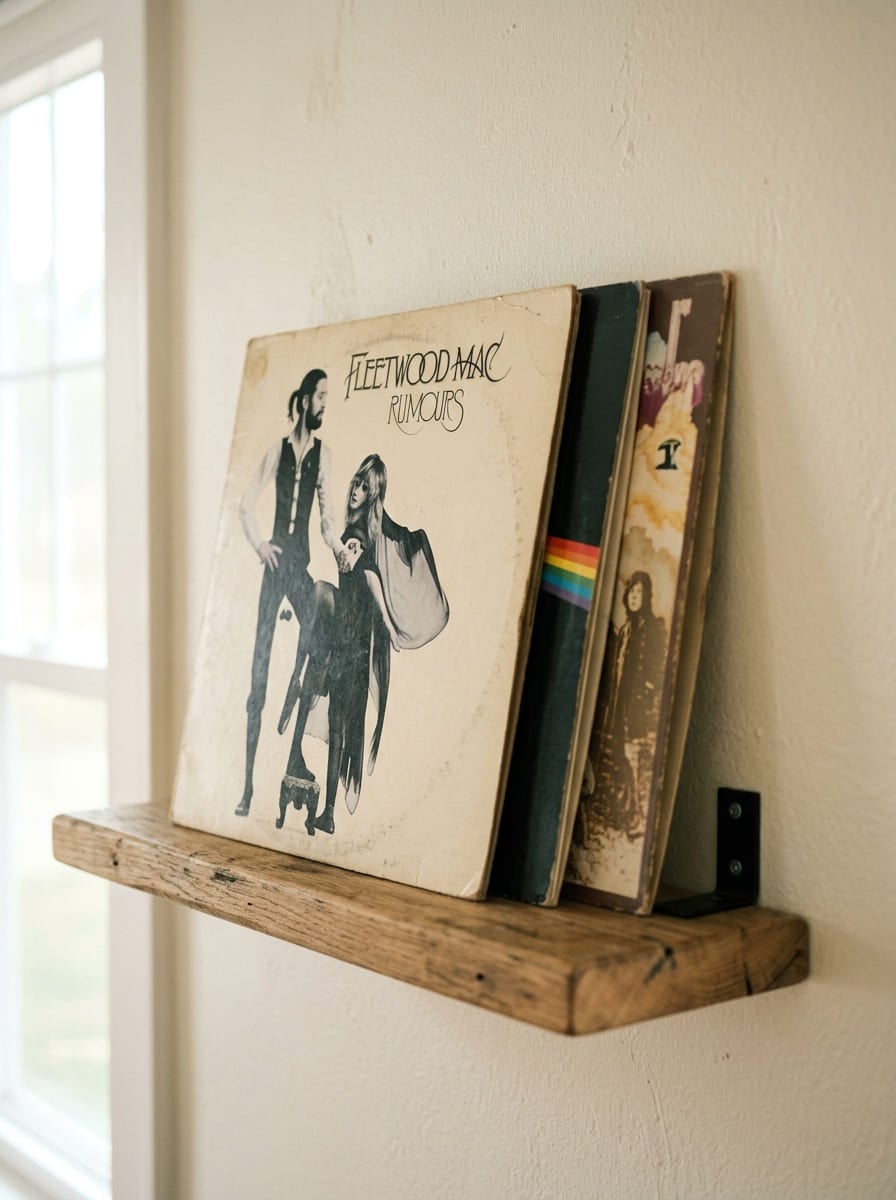
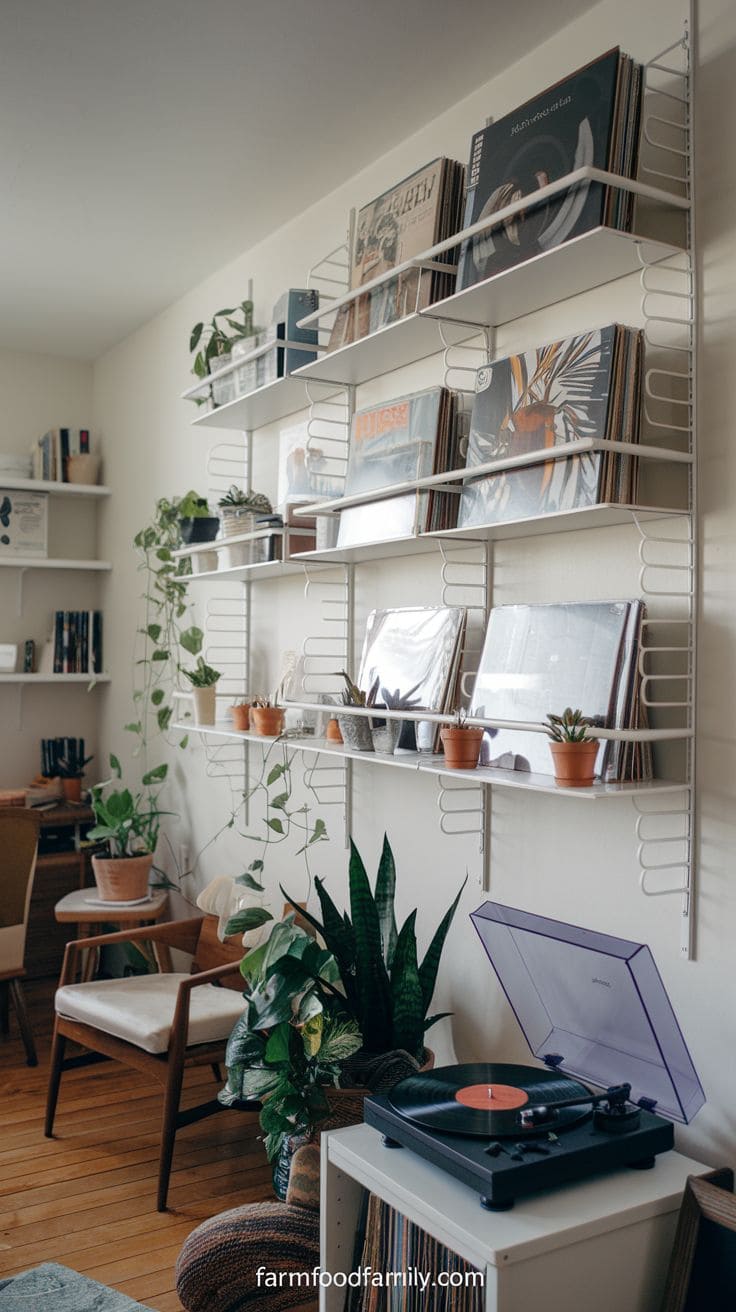
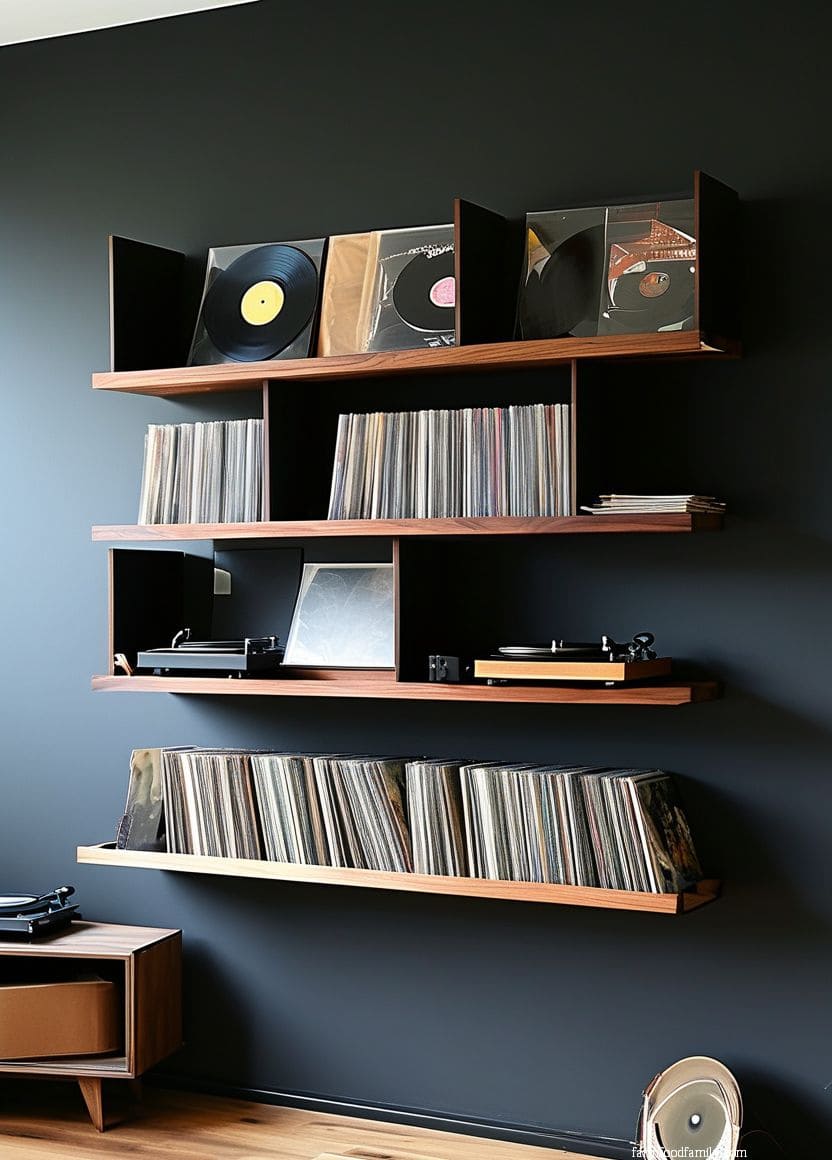
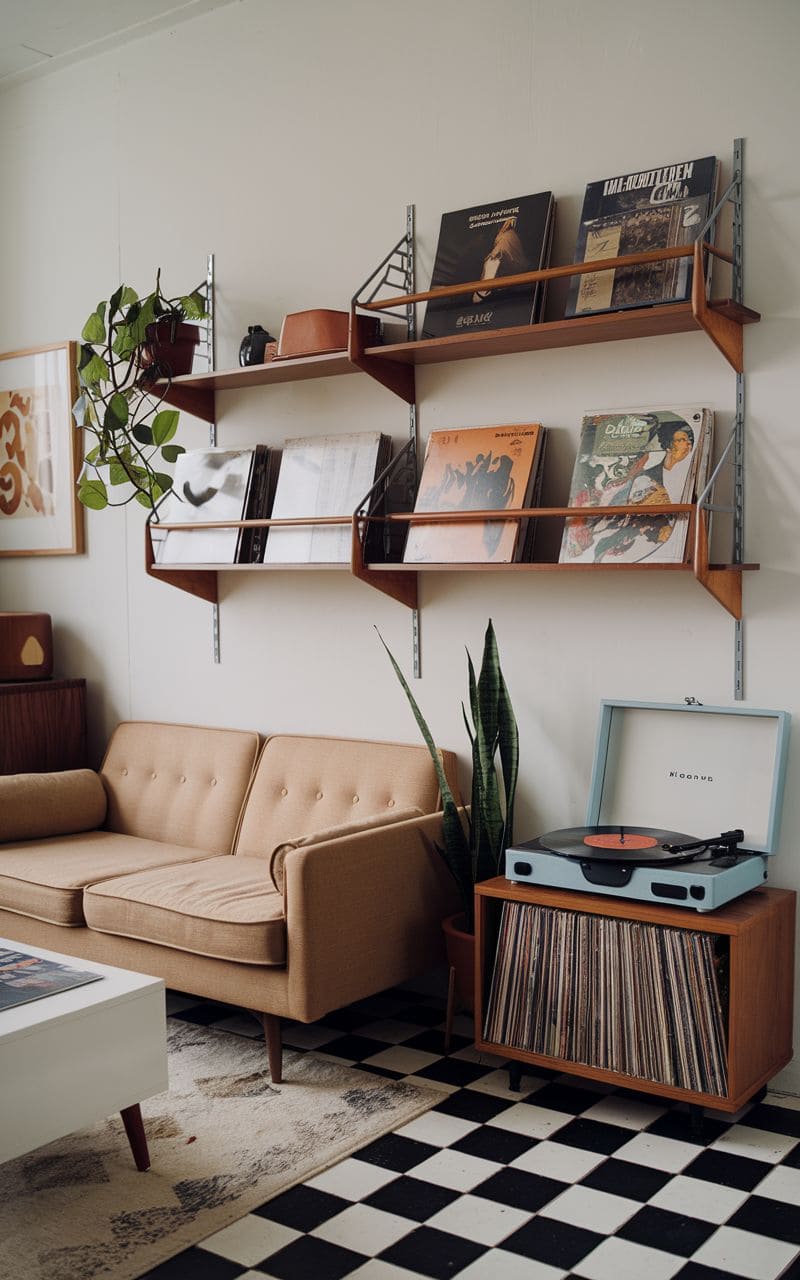
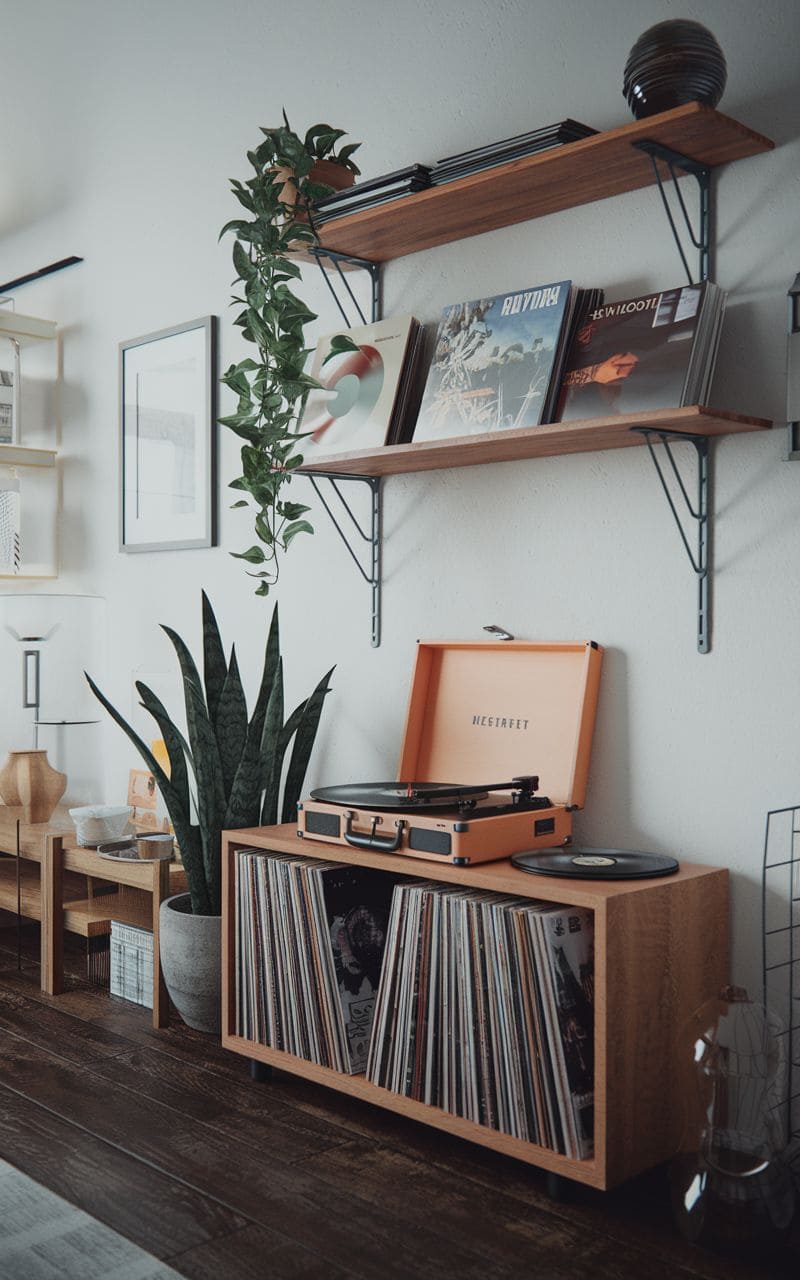
Slim floating shelves or ledges turn album covers into rotating wall art, front-facing covers up top, deeper stock stacked behind. Interior designer Victoria Robinson, Trend and Product Expert at Hillarys, puts it this way: “Think slim ledges, evenly spaced, and album covers facing forward like framed artwork. It’s clean, architectural, and looks incredible against a neutral wall.”
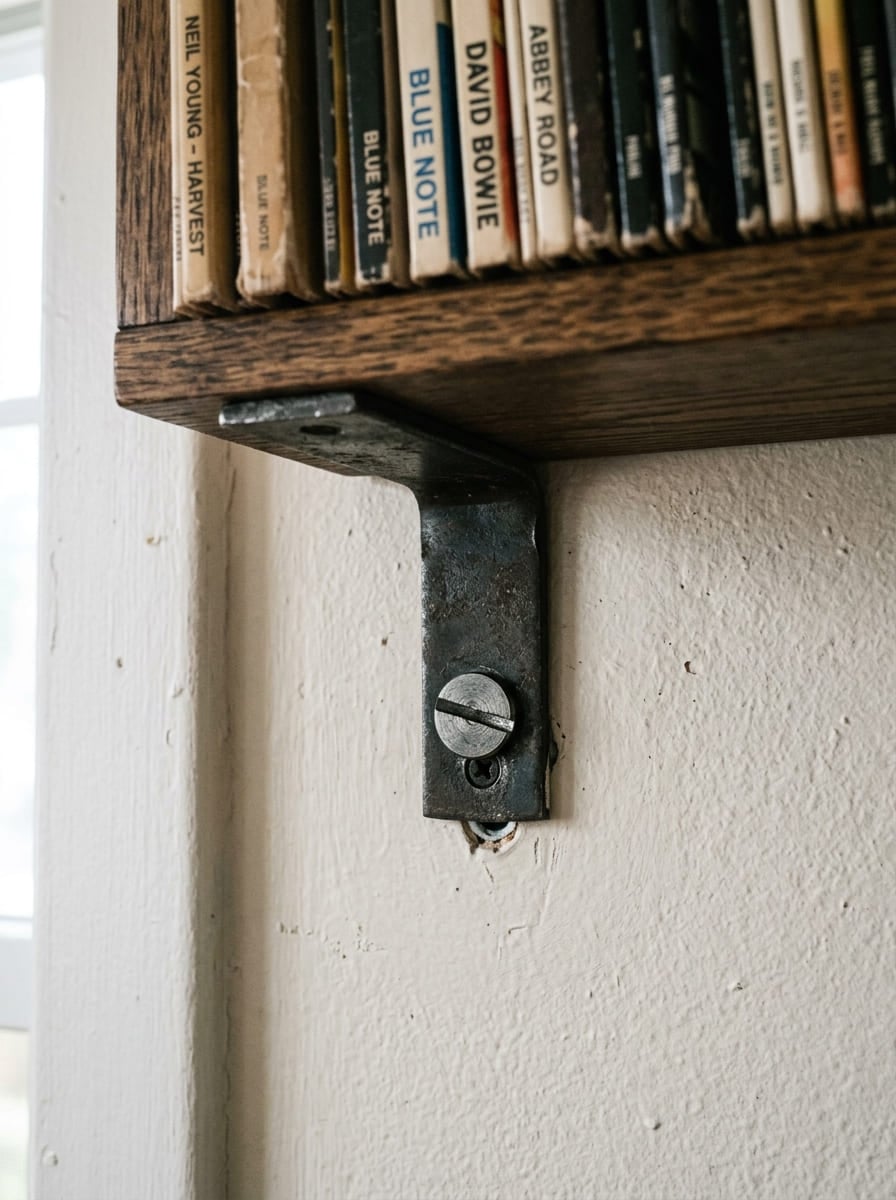
One real warning from r/vinyl worth repeating here: “That shelf is gonna fall off the wall. Records weigh a lot.” Anchor into studs or use rated wall anchors, not just drywall screws, before loading a shelf past a handful of records.
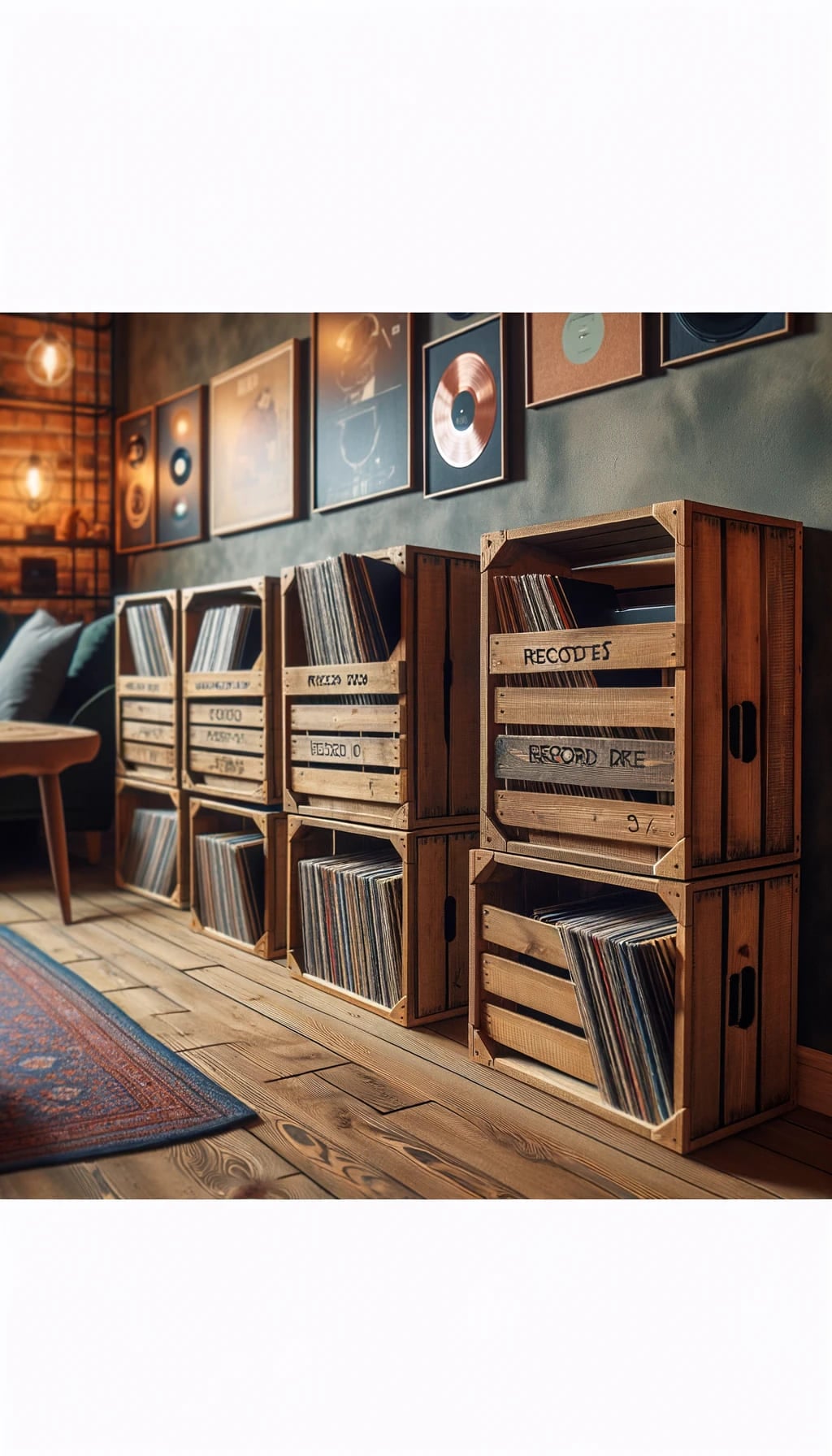
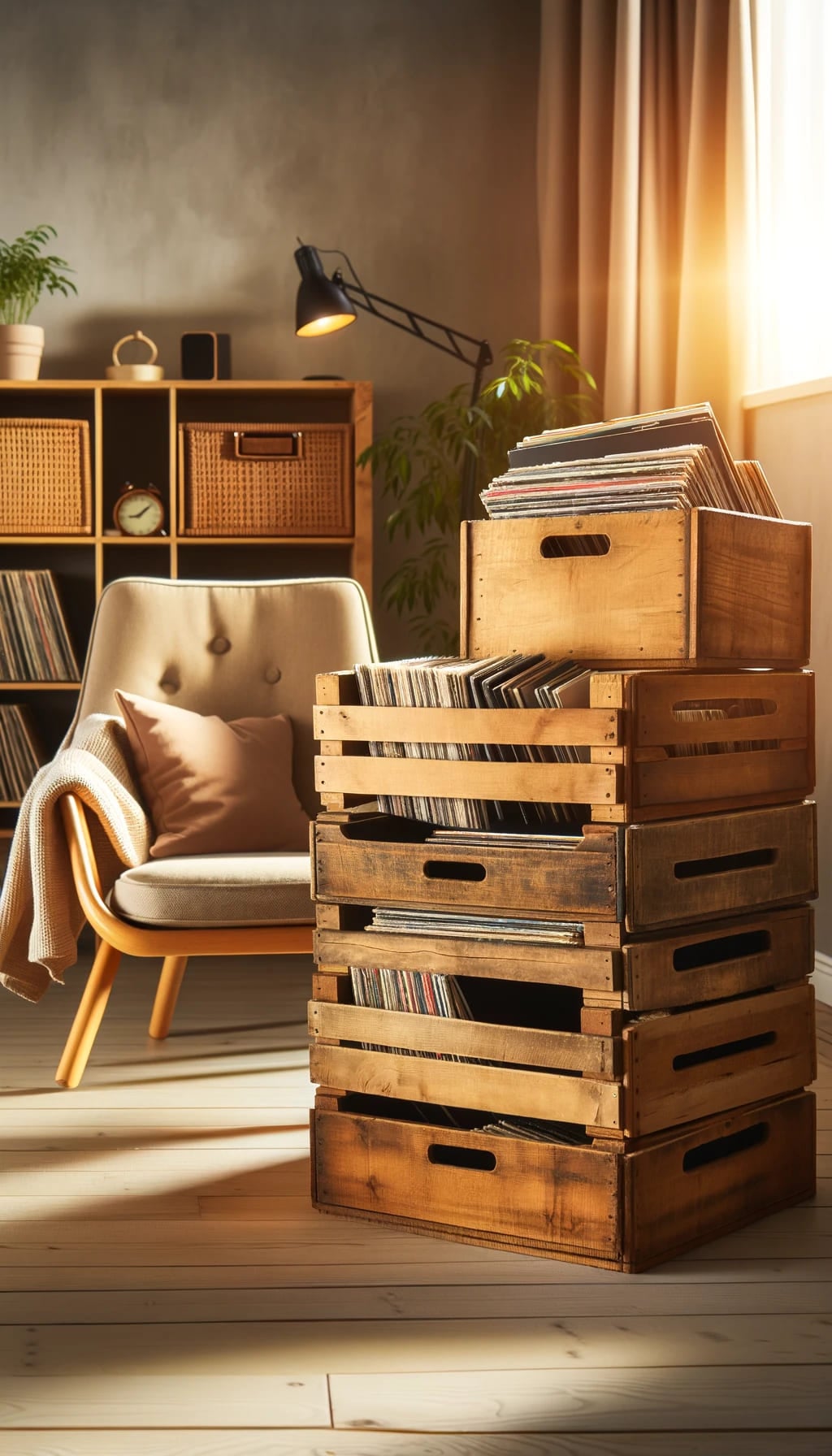
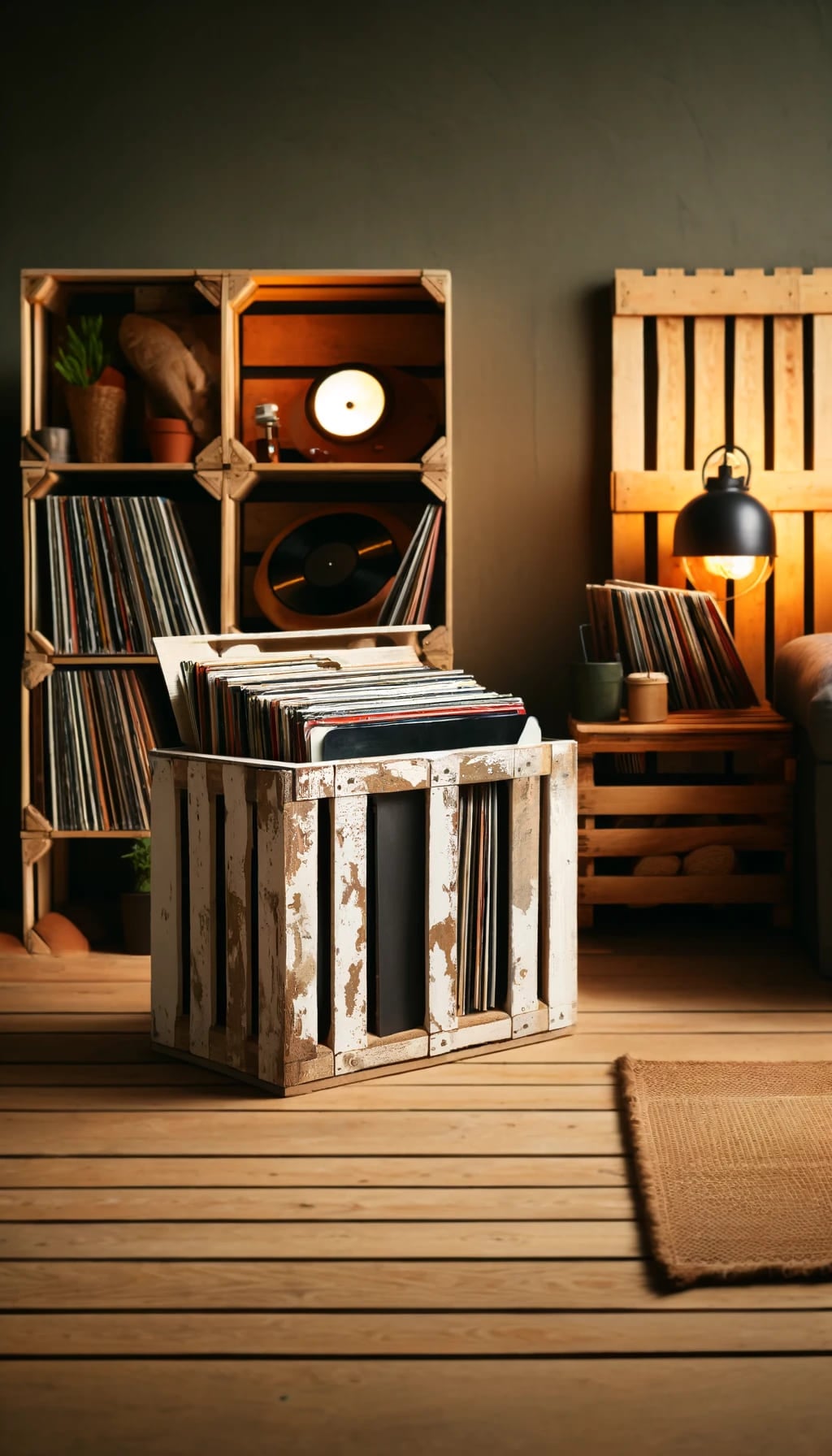
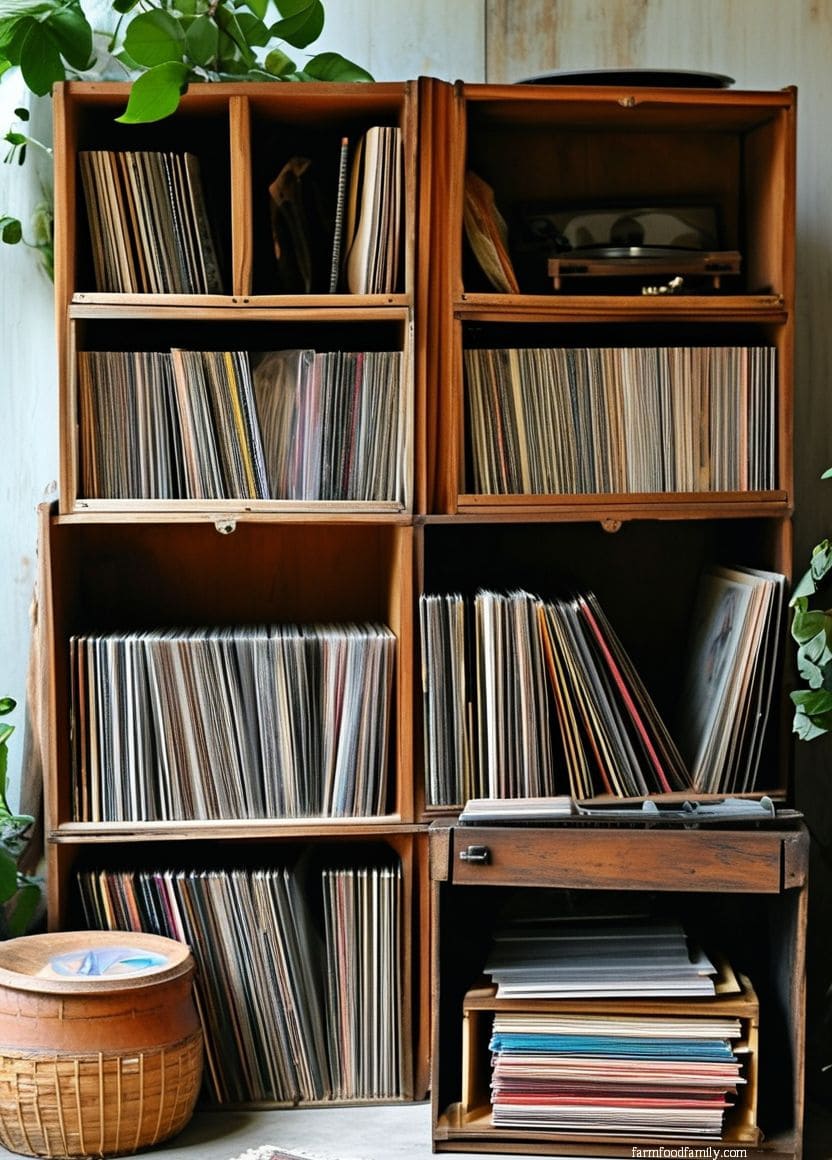
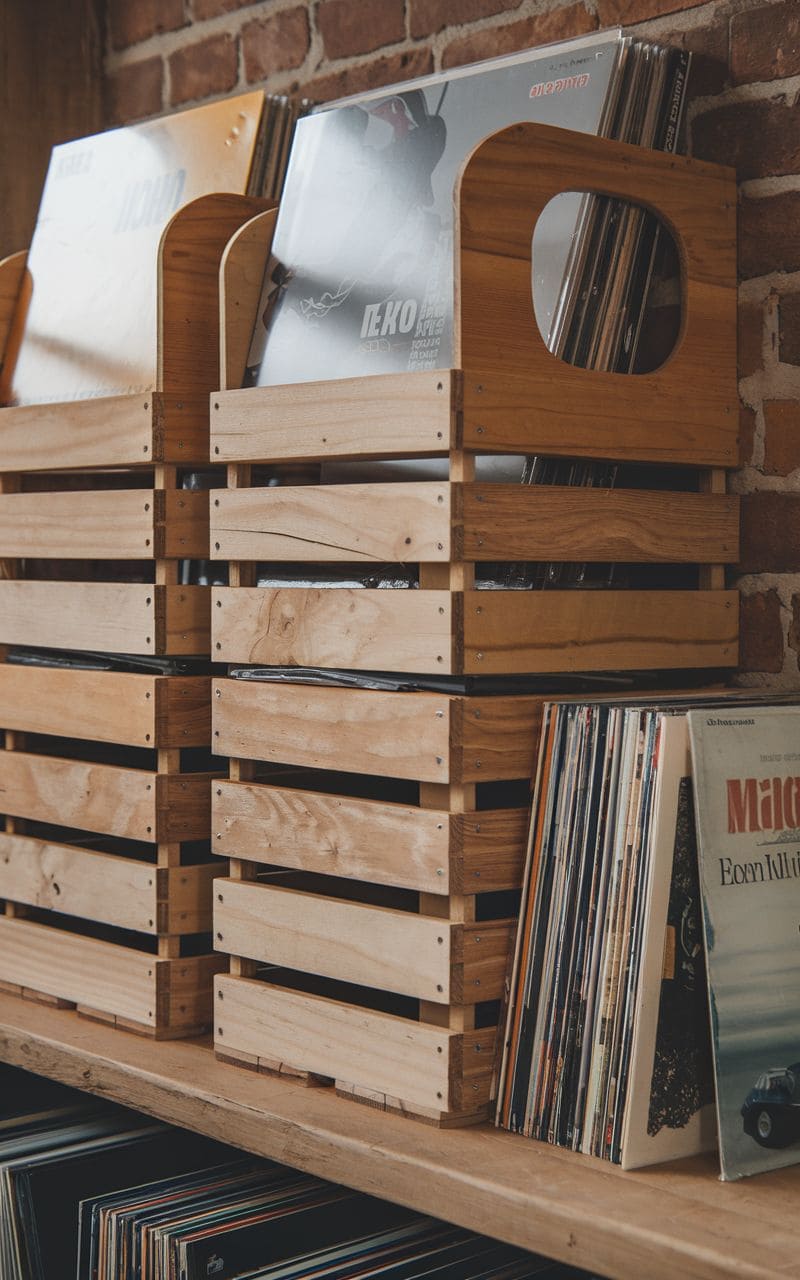
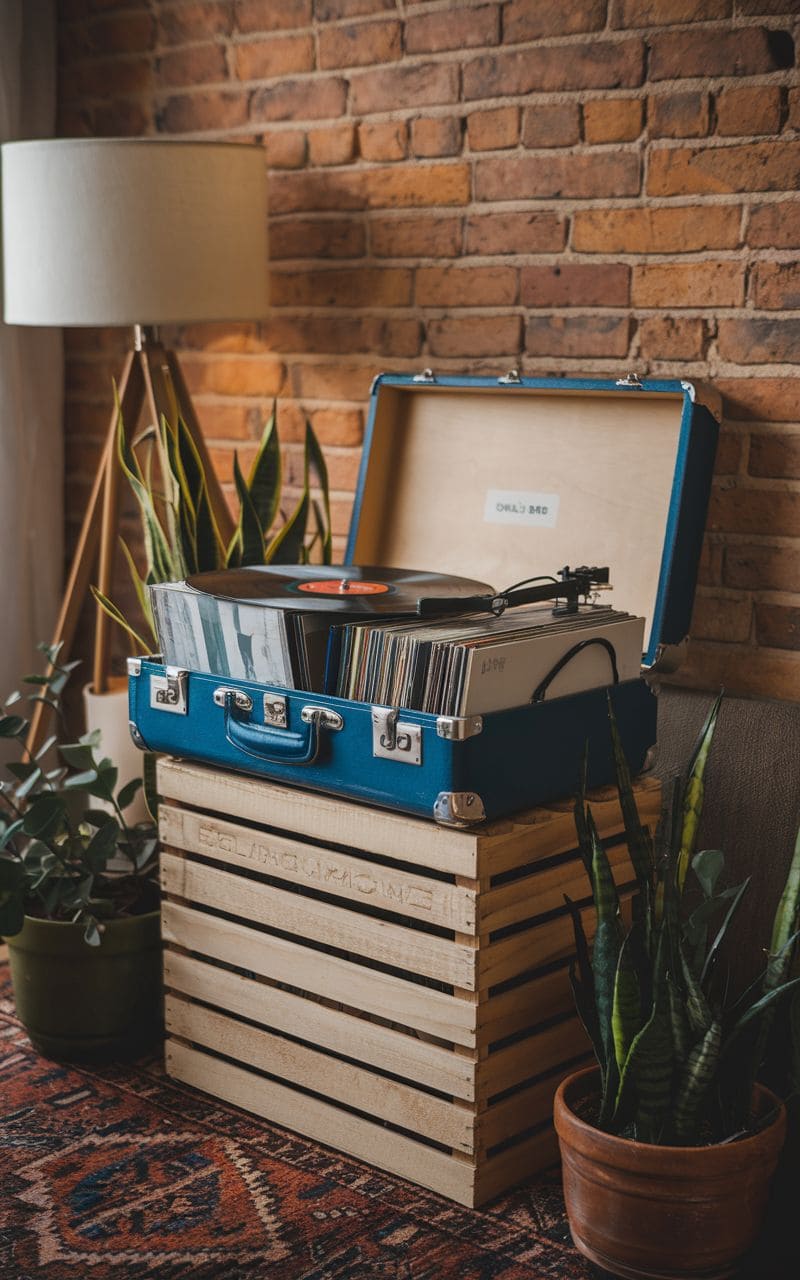
3. Crate Stacking for a Vintage Feel and Flexibility
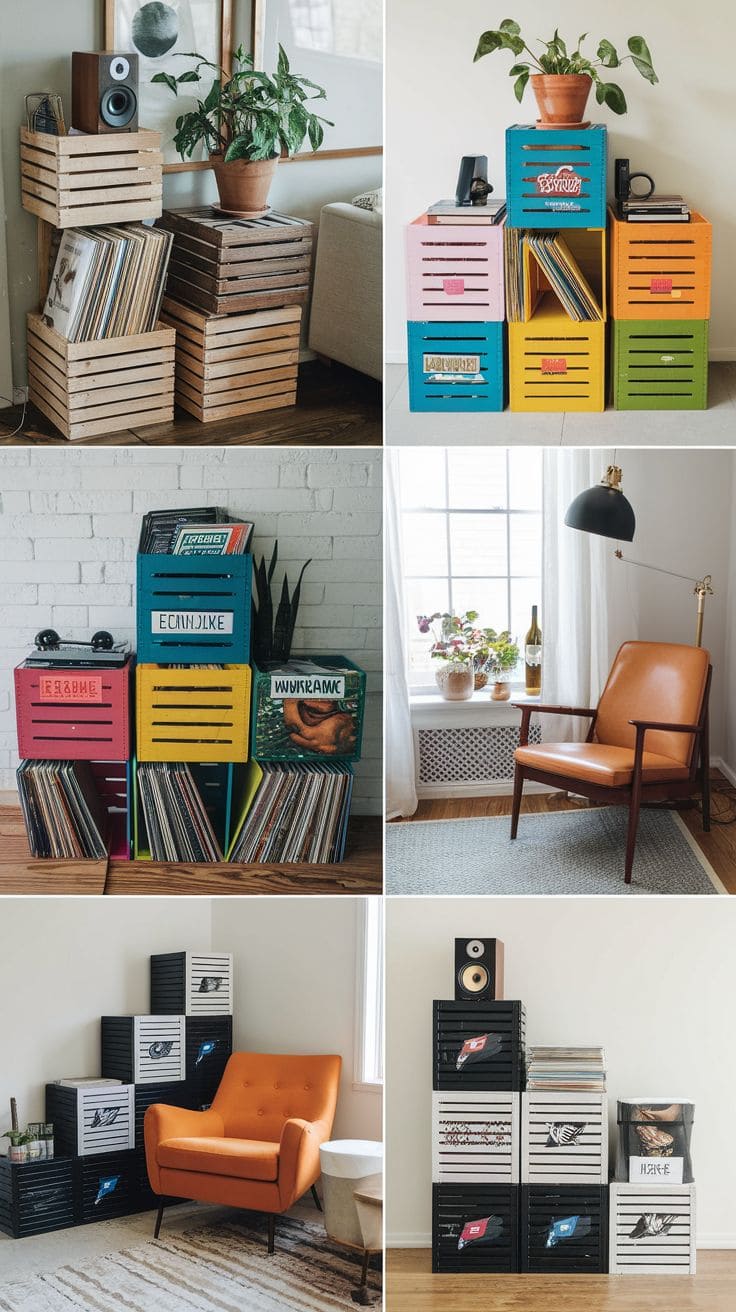
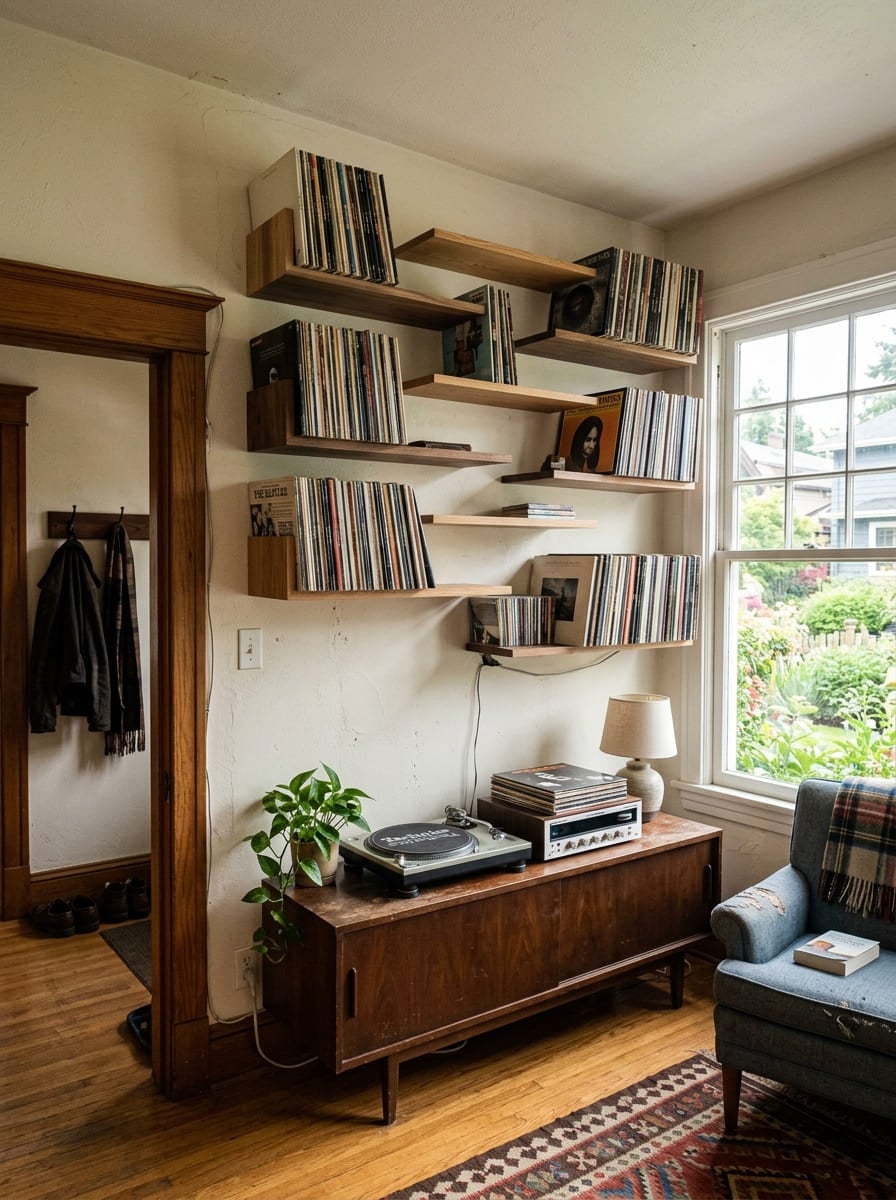
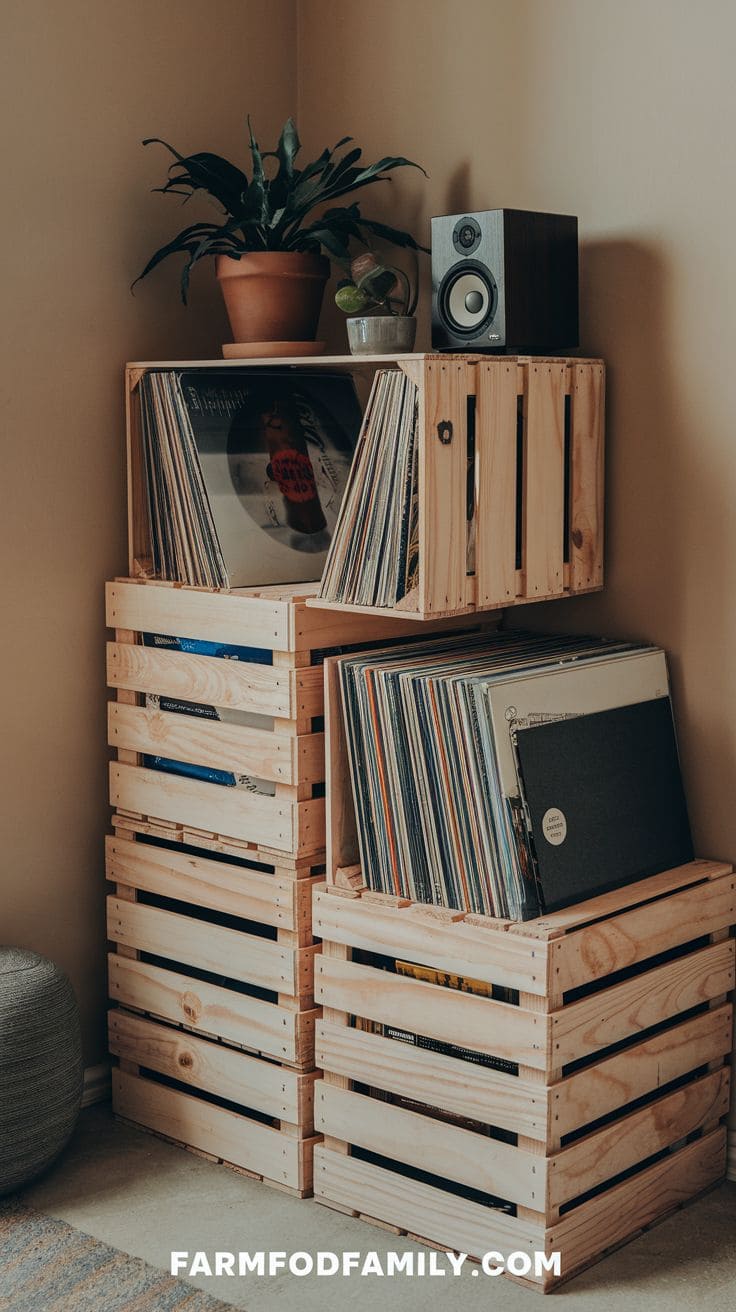
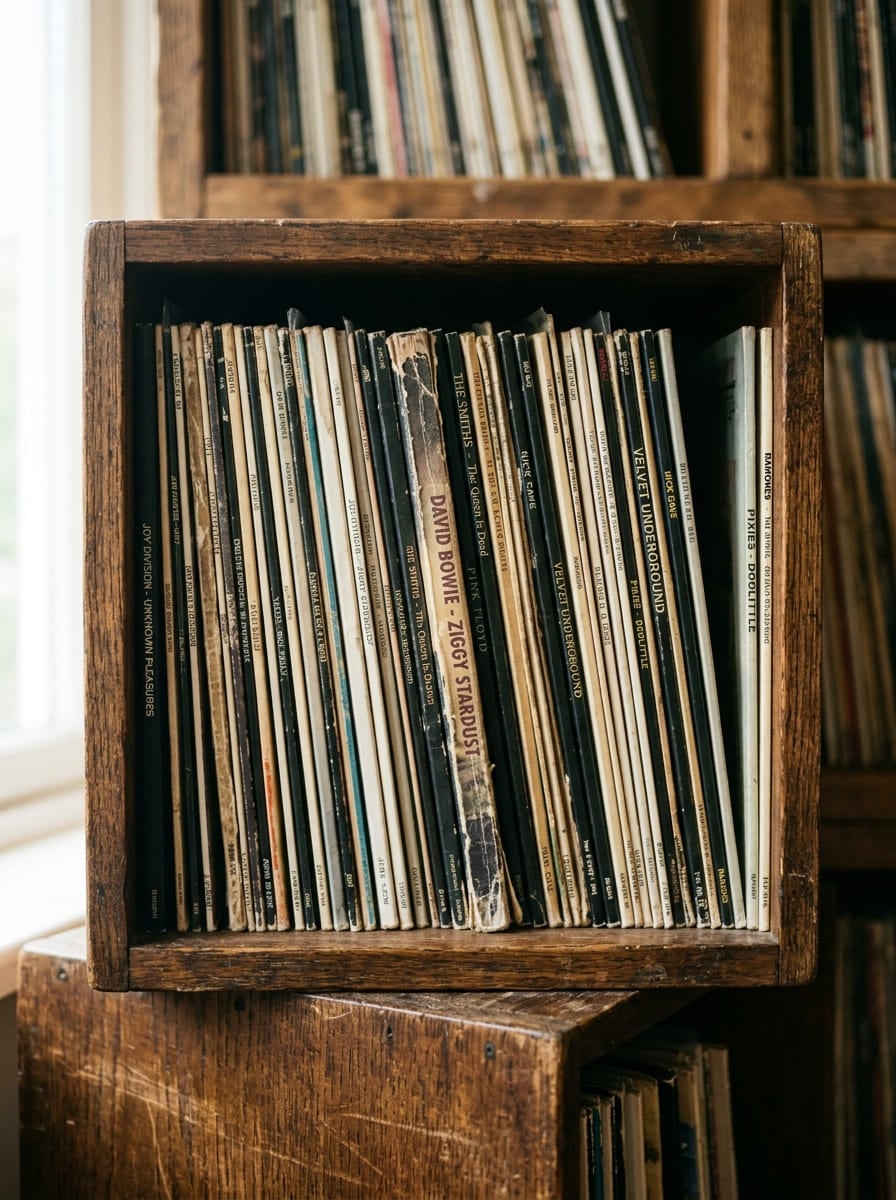
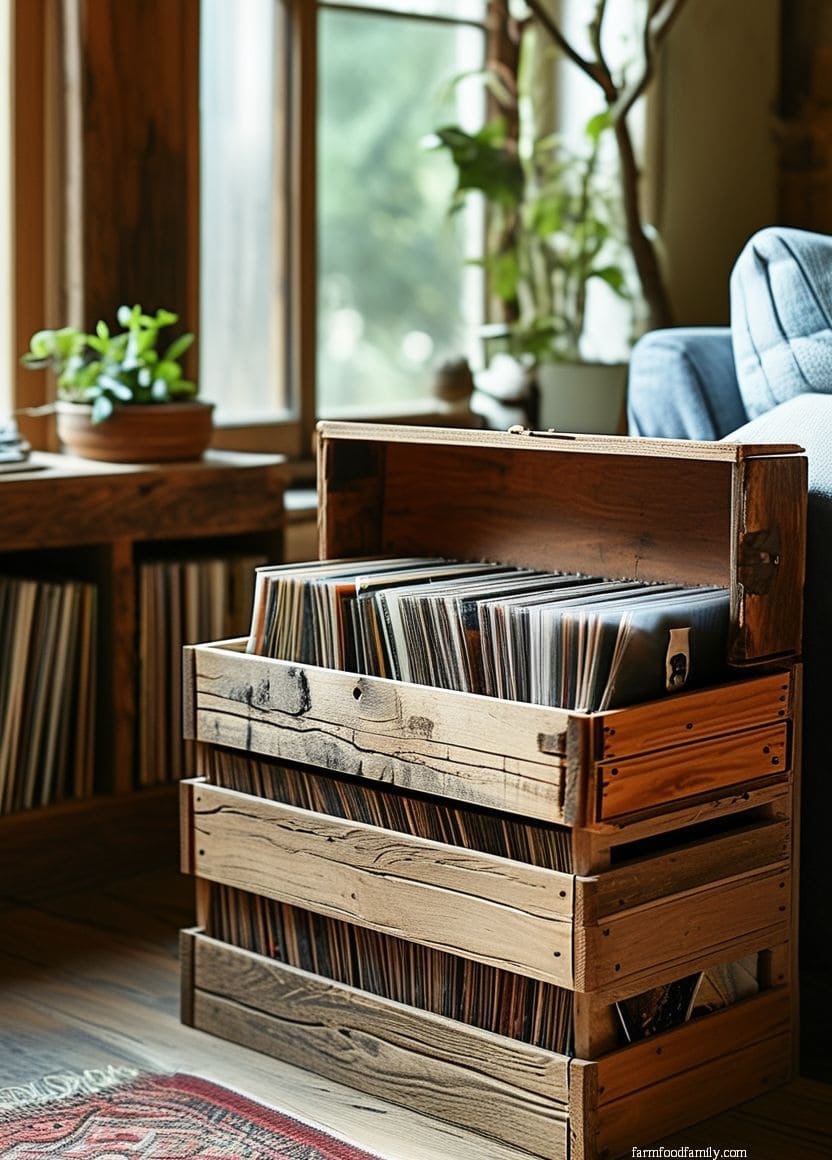
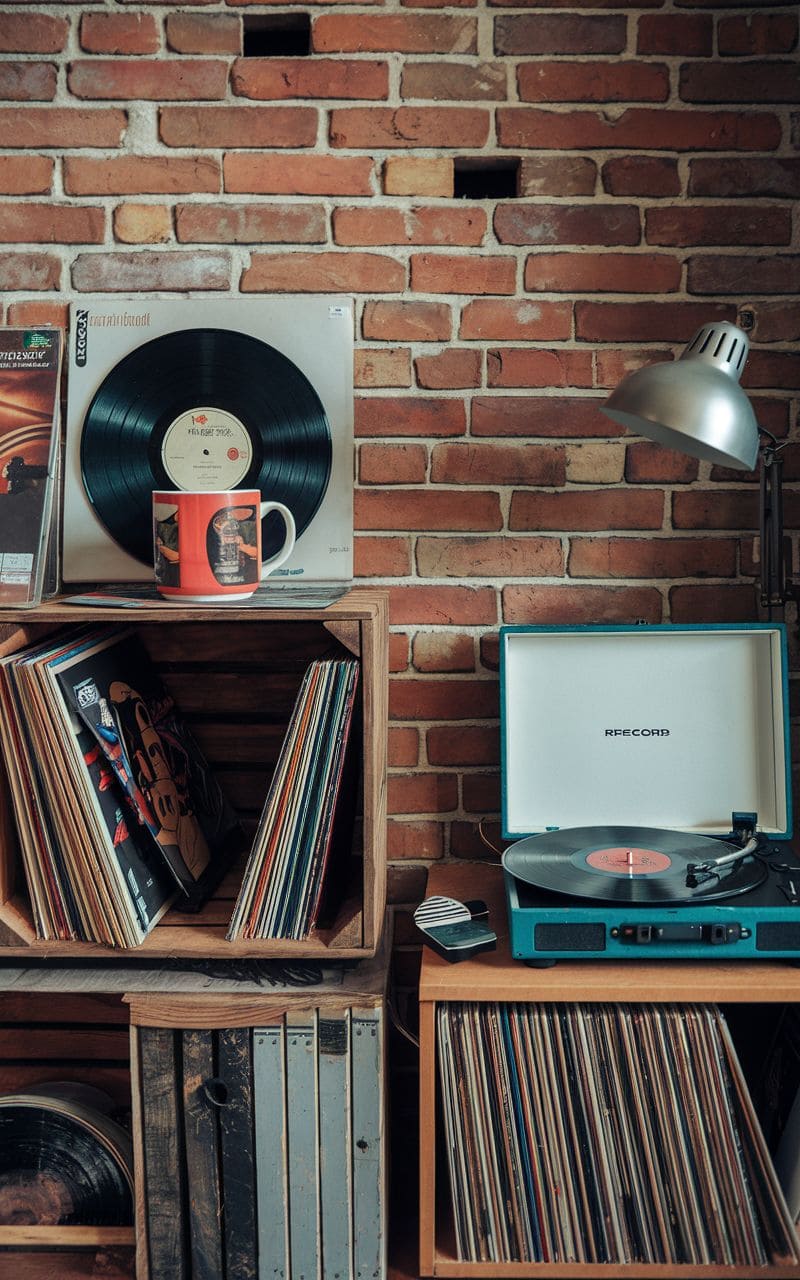
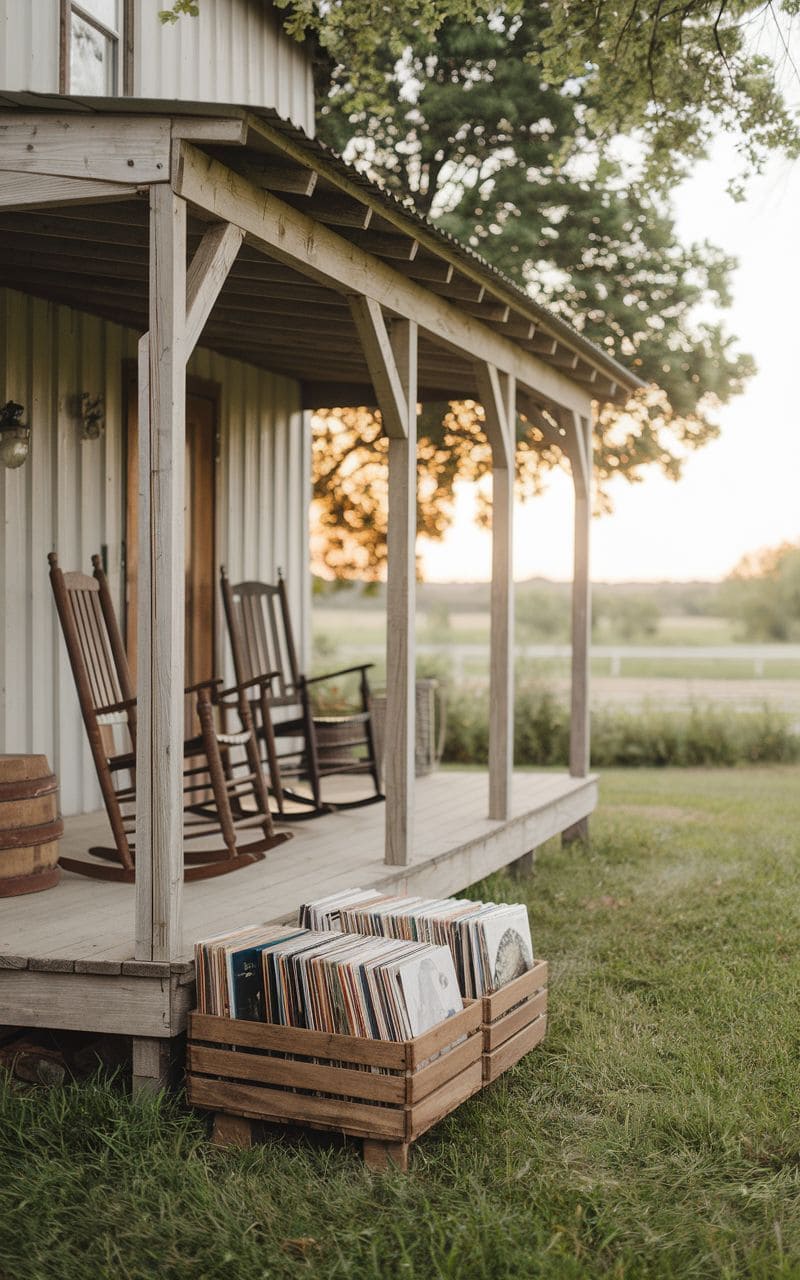
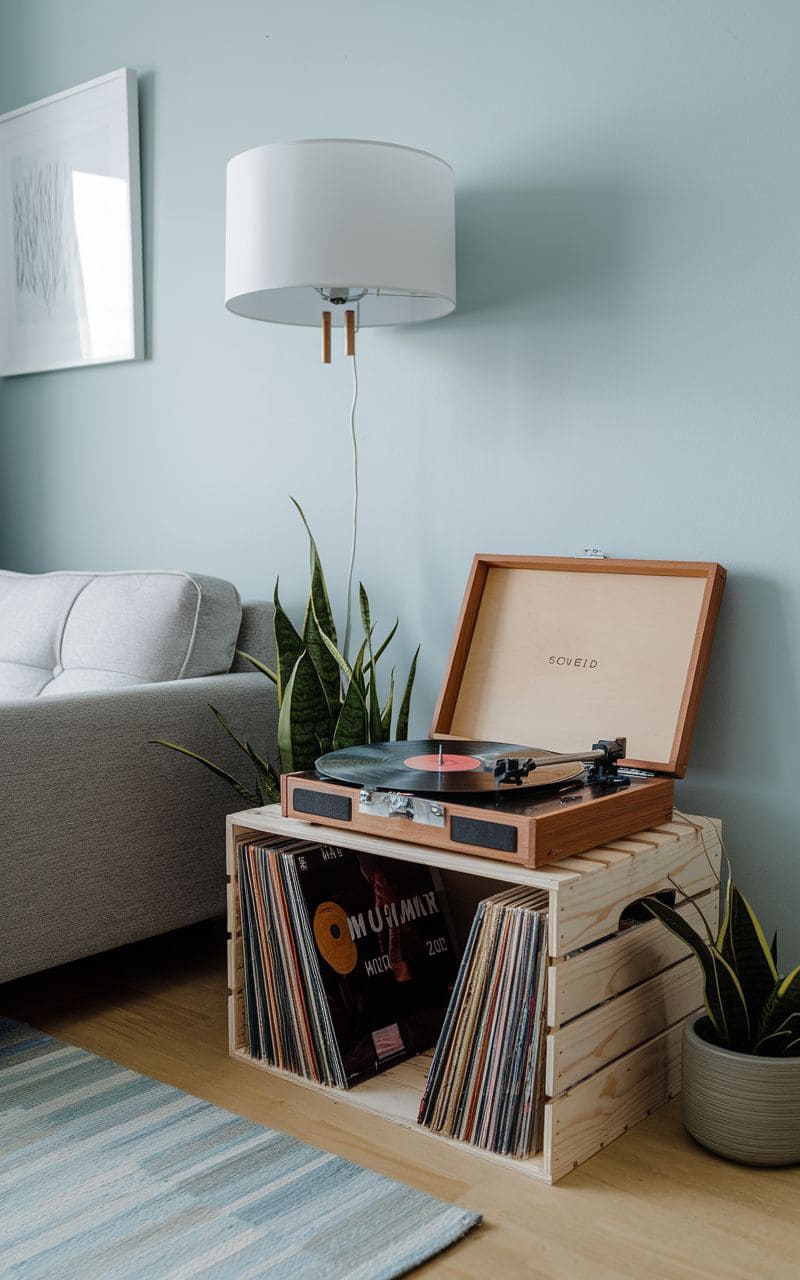
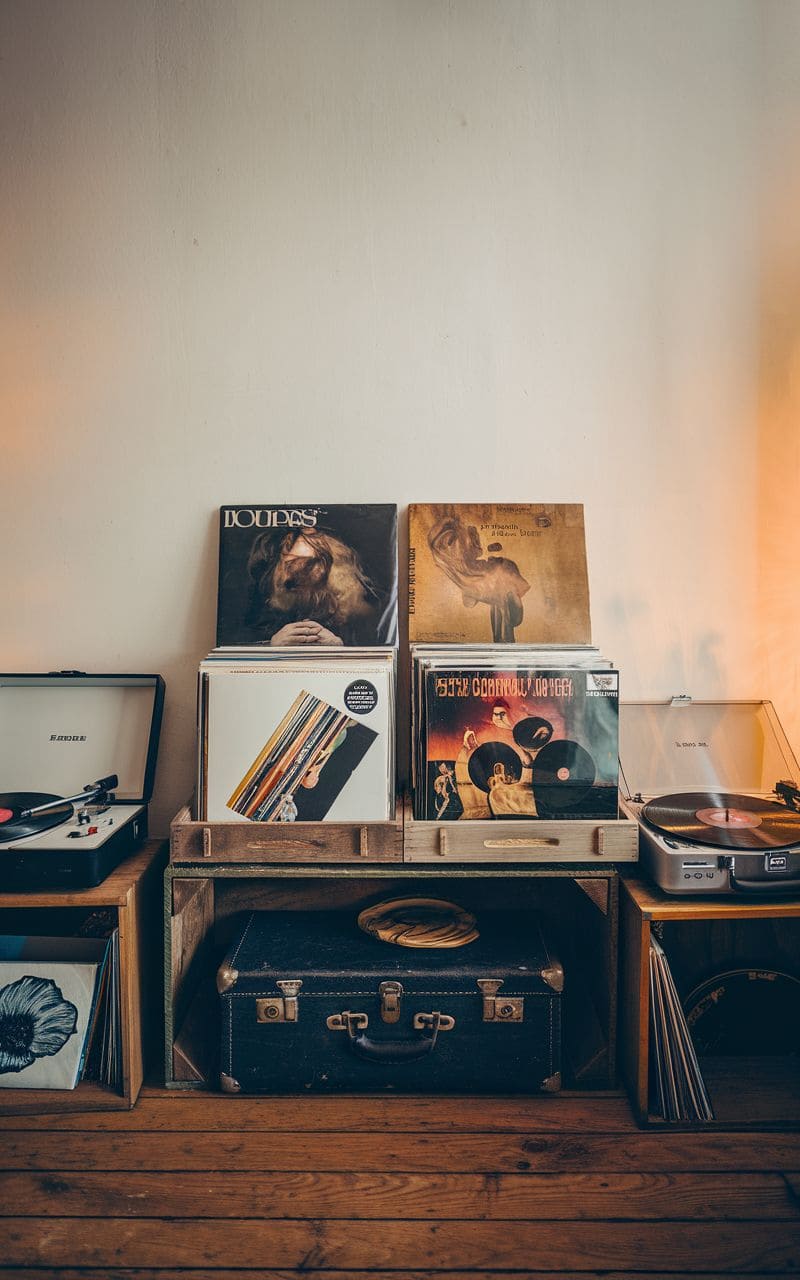
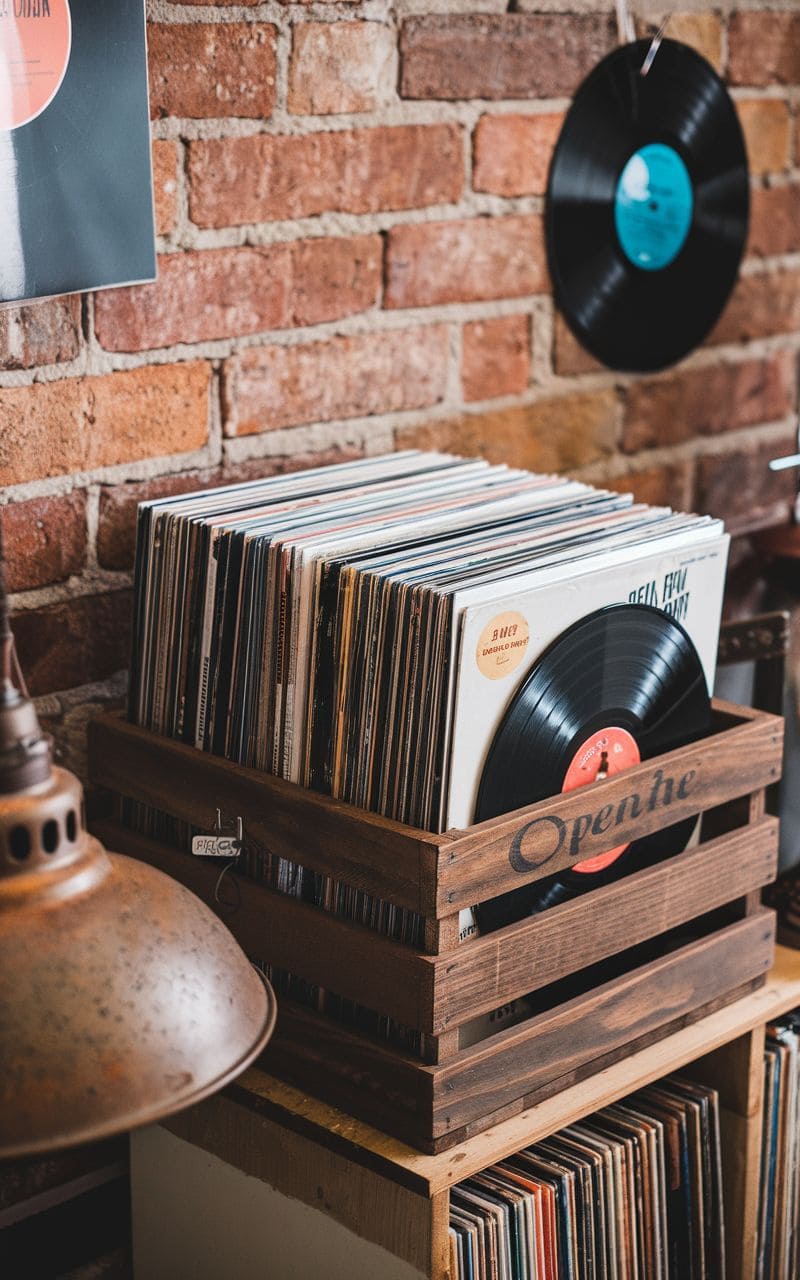
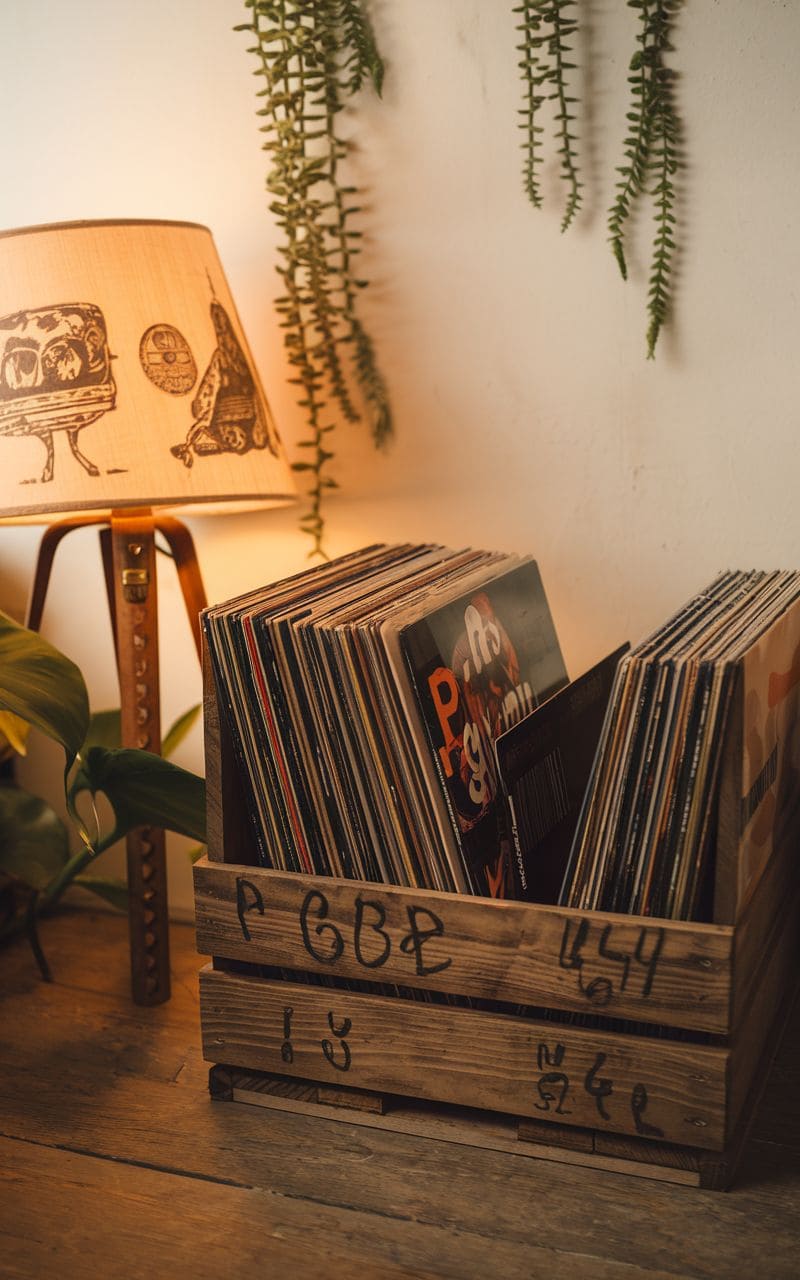
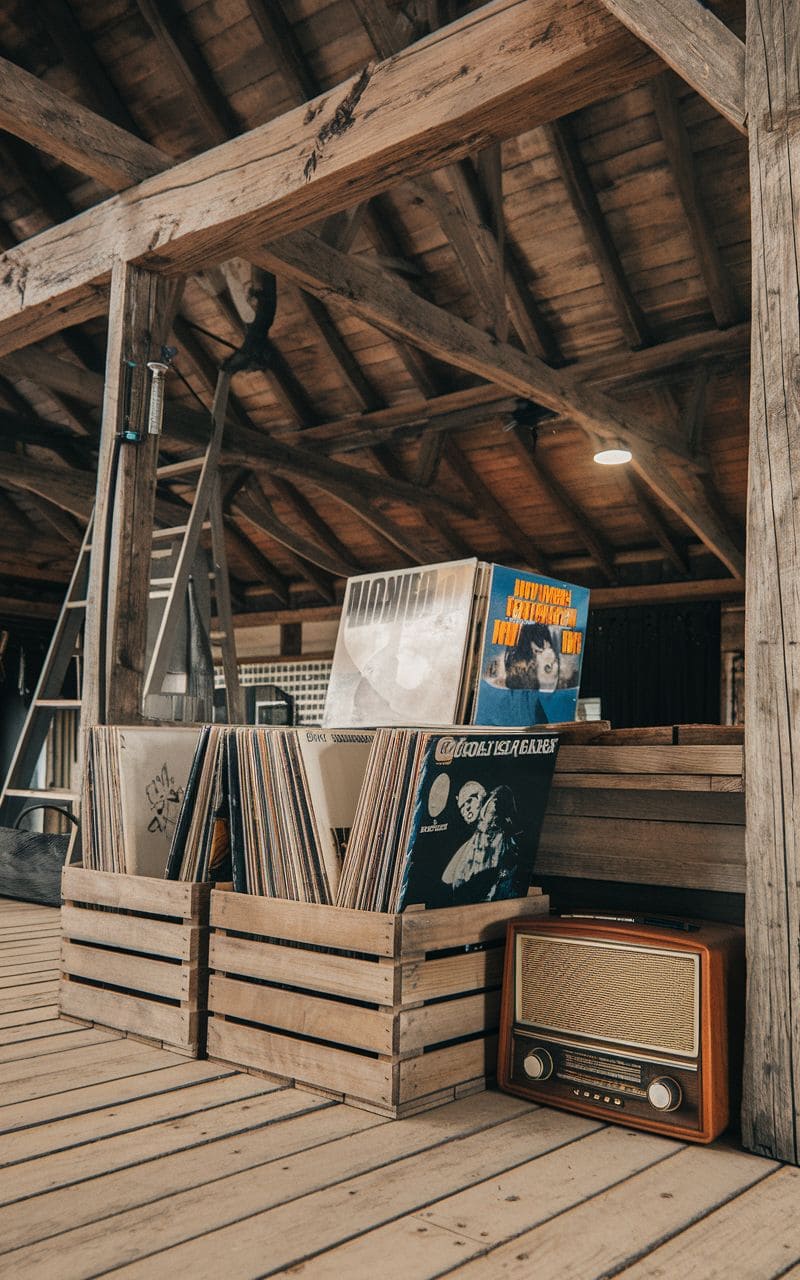
Wooden crates, vintage apple crates or modern reproductions, stack side by side or on top of each other and expand exactly as fast as the collection does. Reddit’s r/vinylsetups community runs on this method: “I use wood crates… each crate holds about 60 albums.” Paint them for a matched look or leave the grain raw for something rougher.
Label each crate by genre or artist and the whole setup stays browsable even after it’s three crates deep.
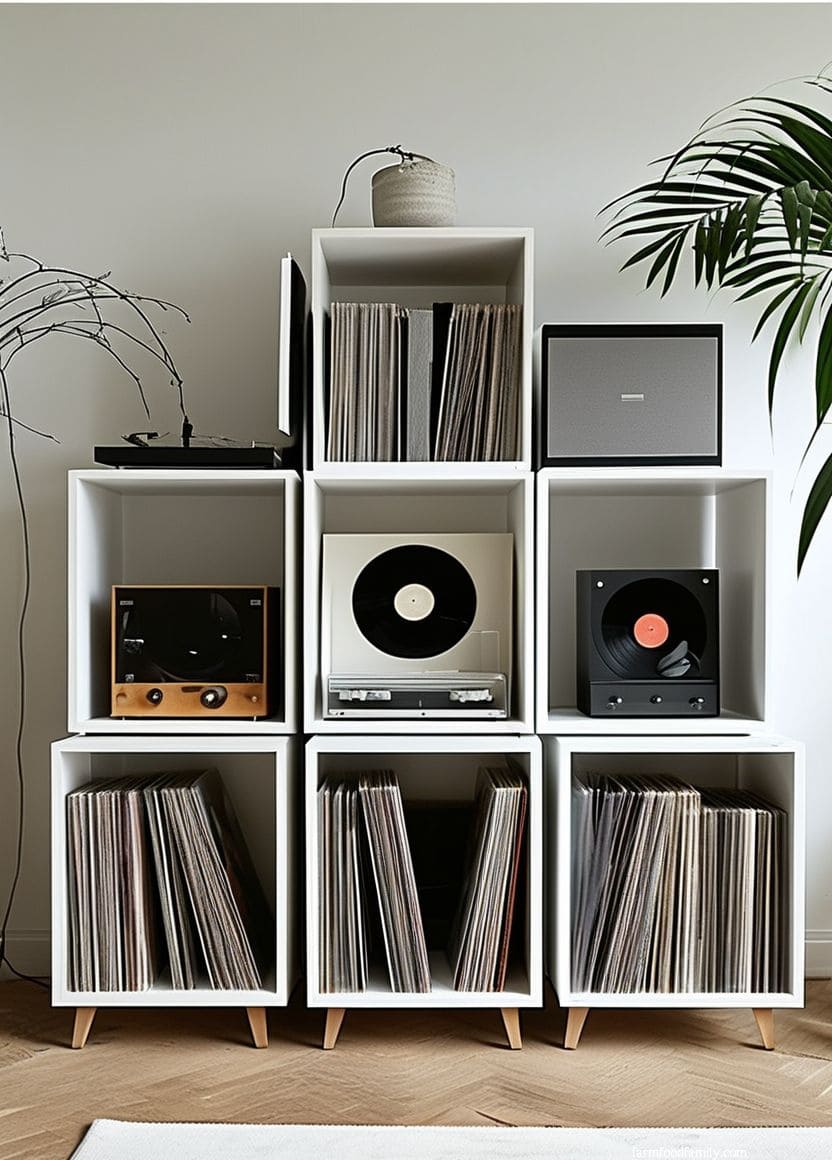
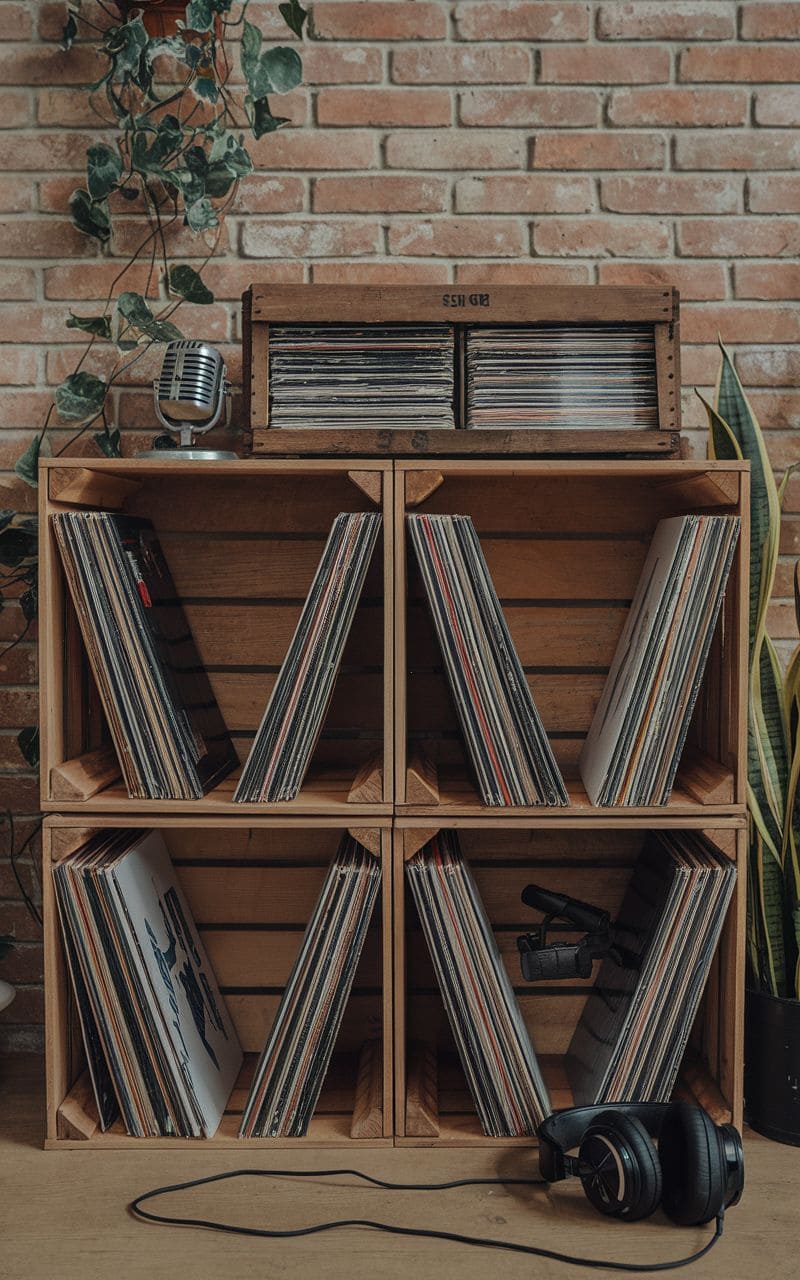
4. Cube Storage for Cost-effective Customization
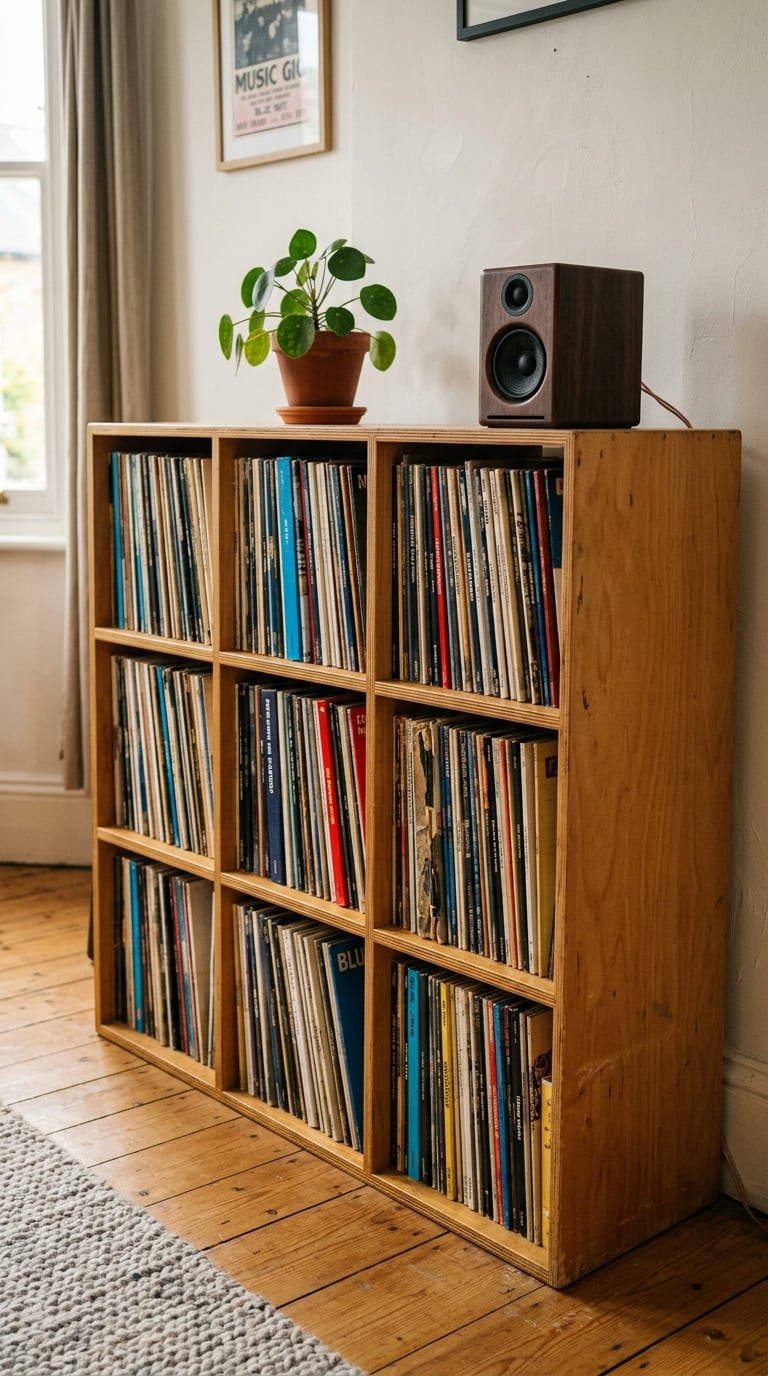
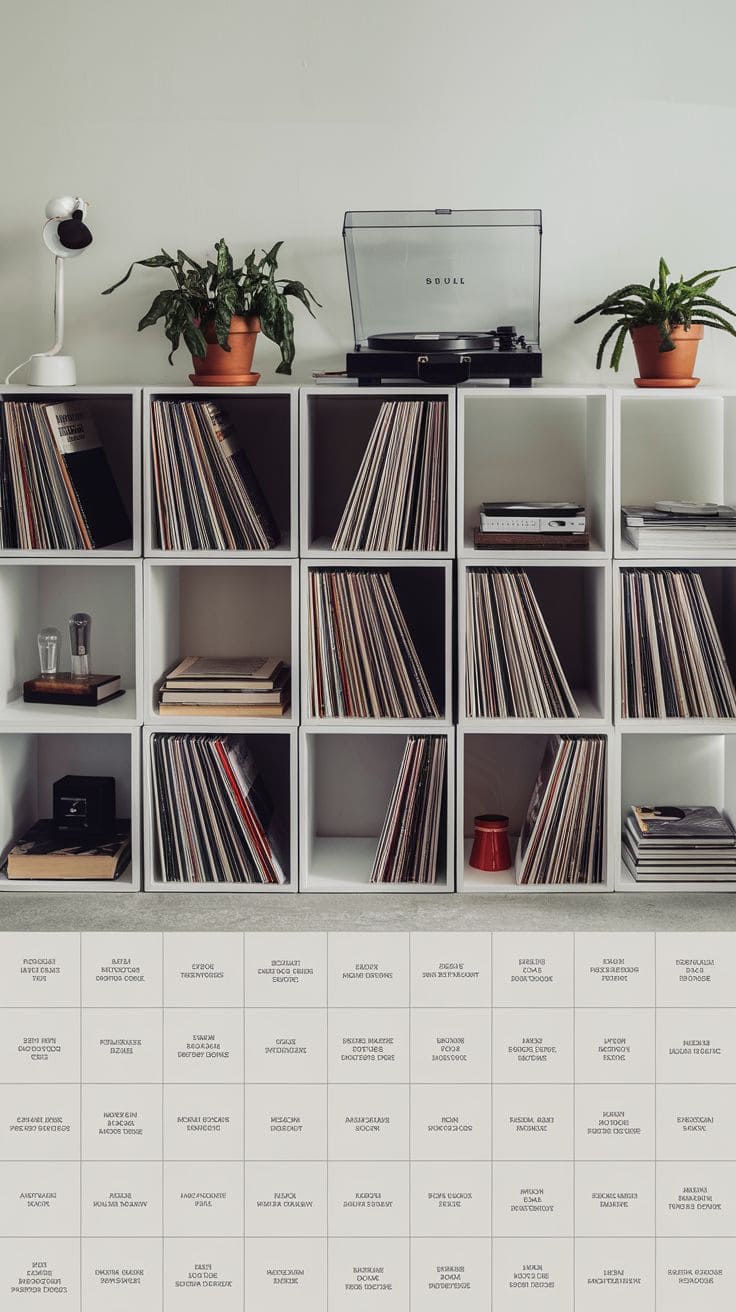
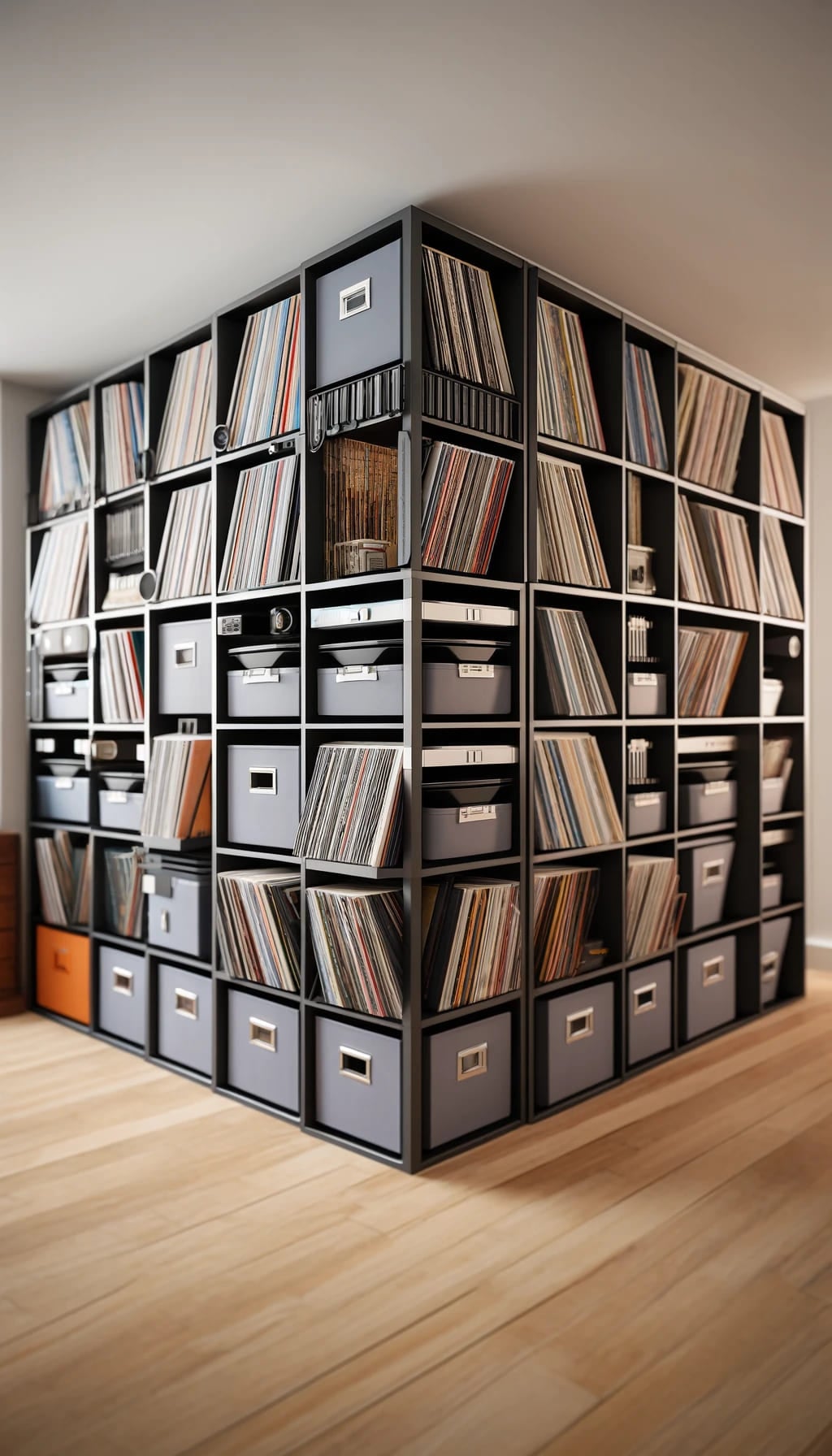
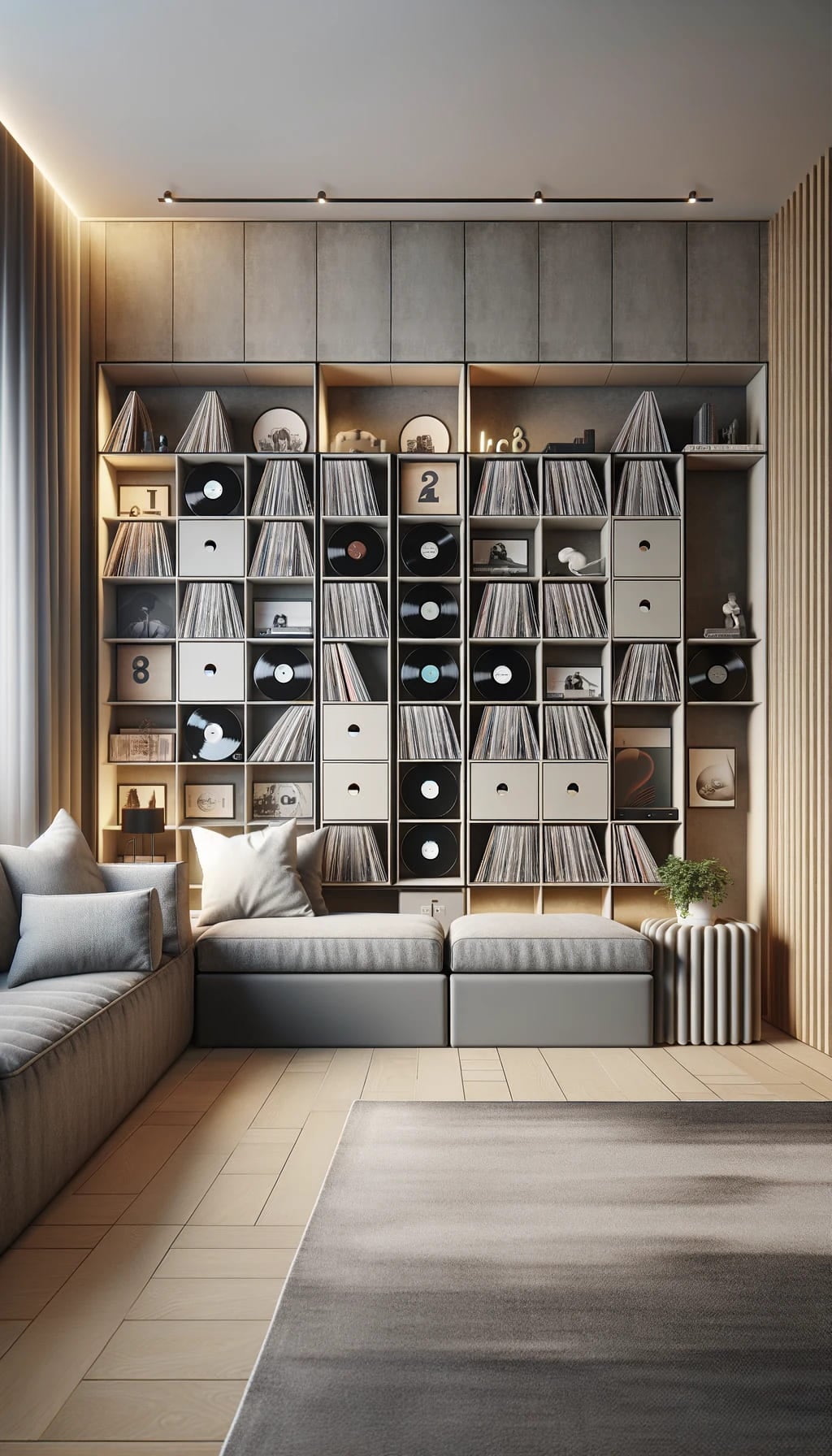
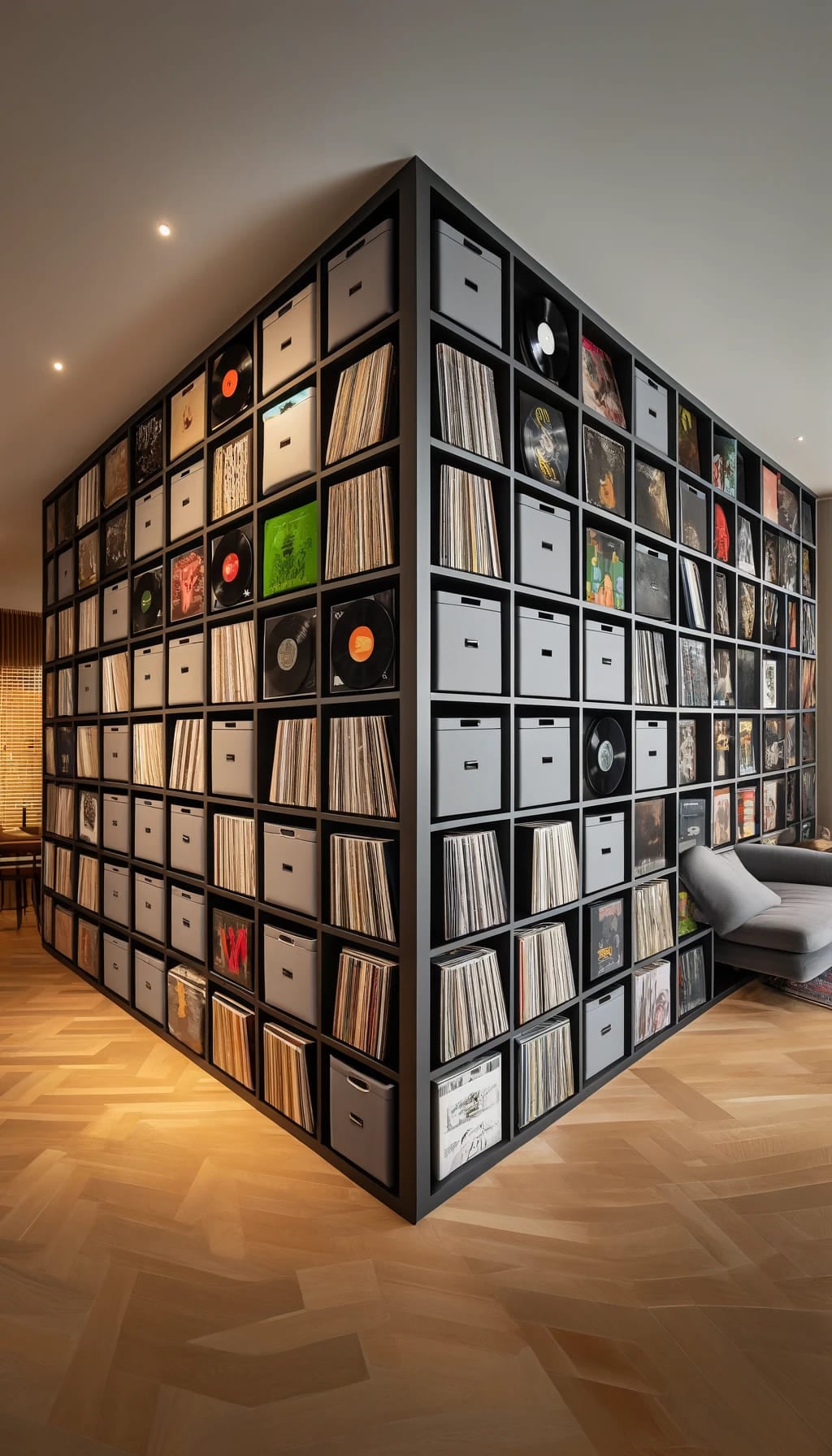
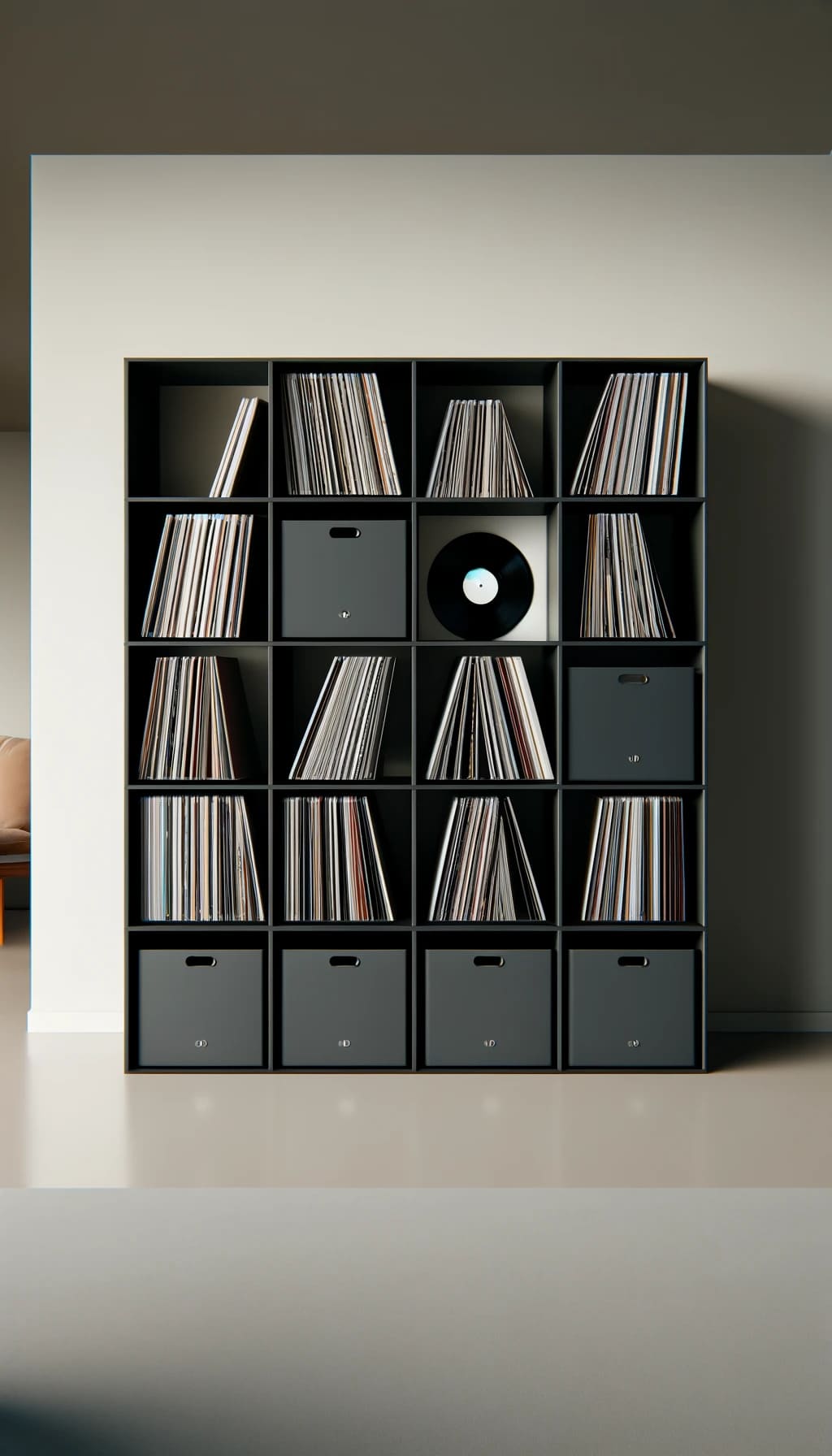
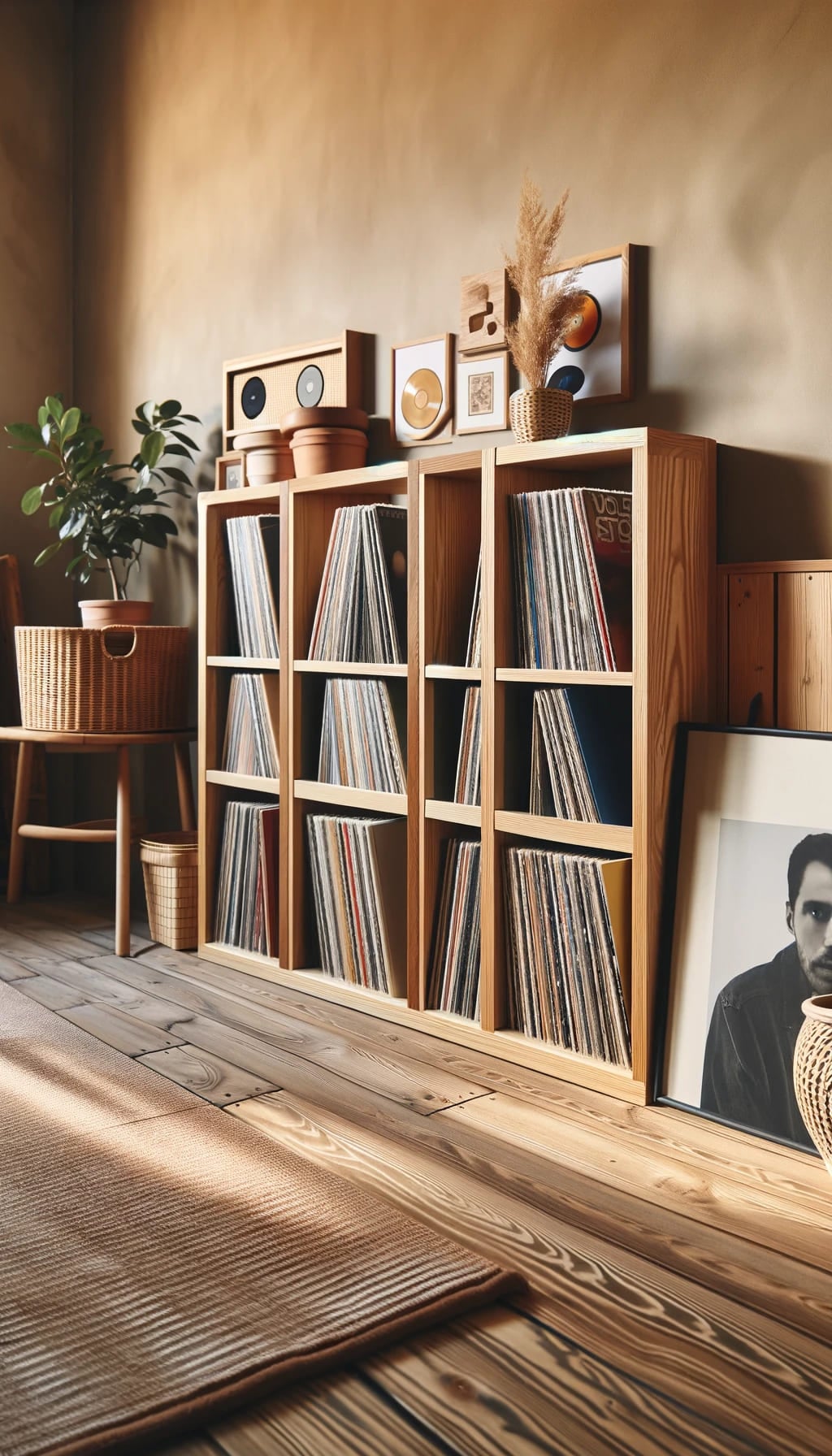
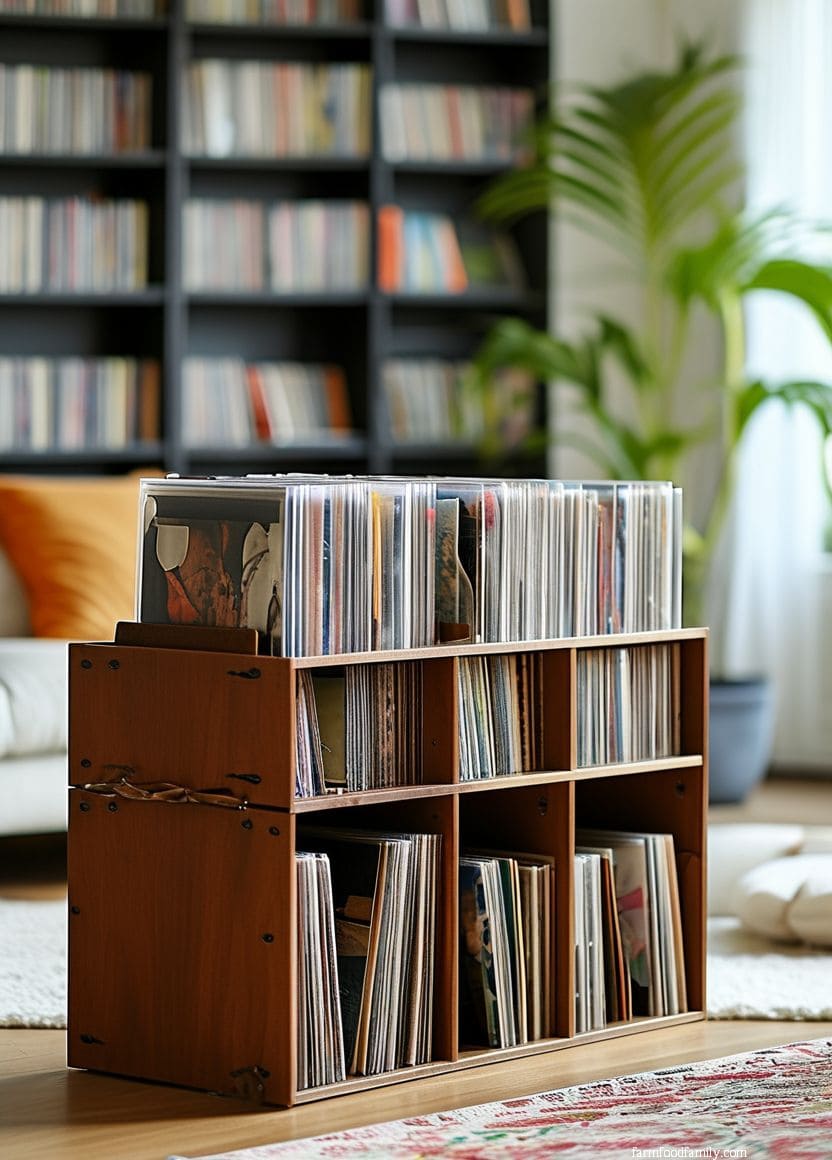
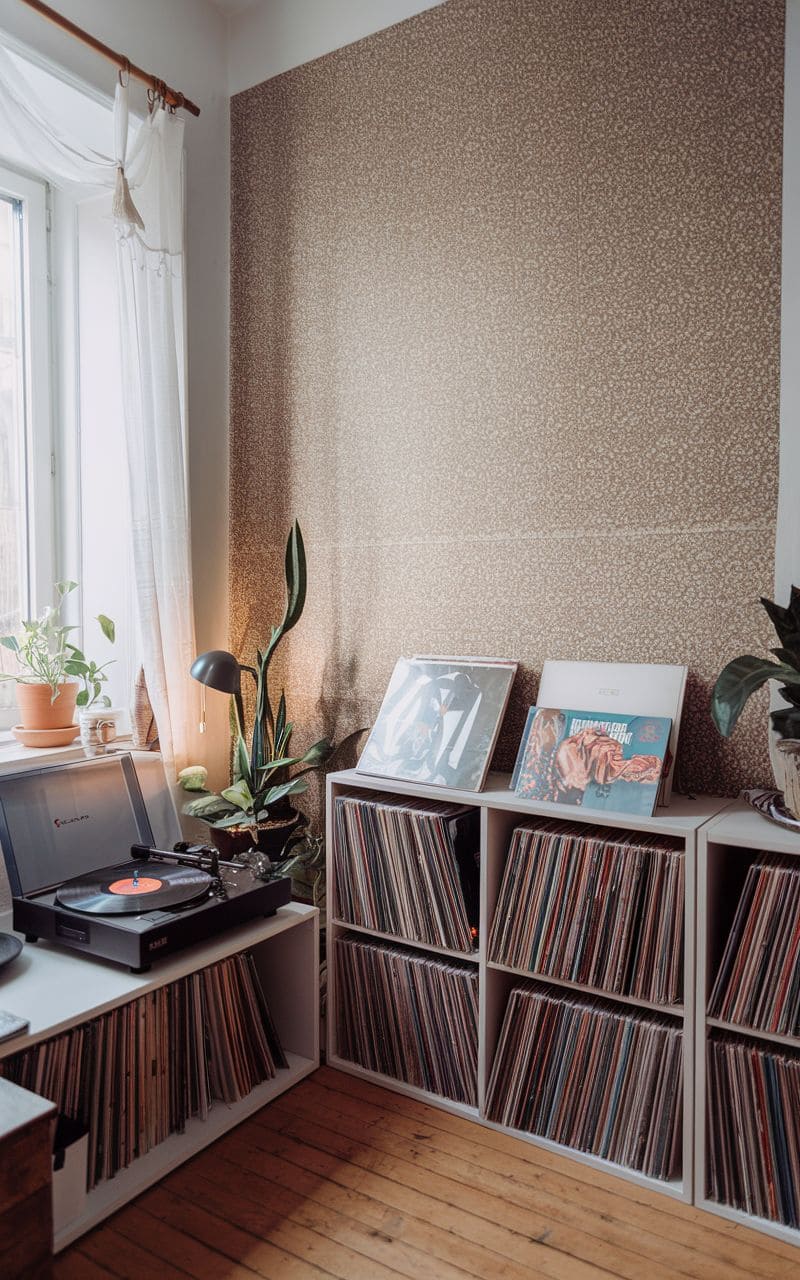
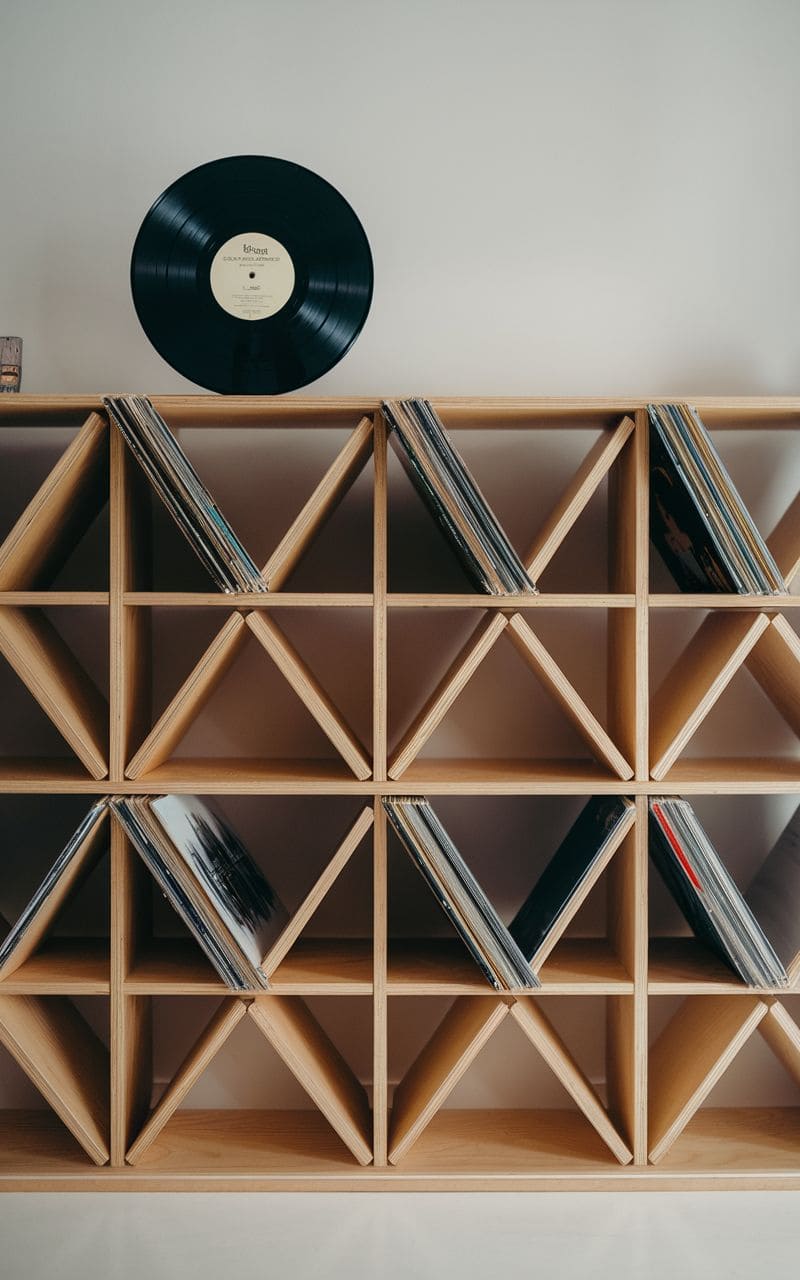
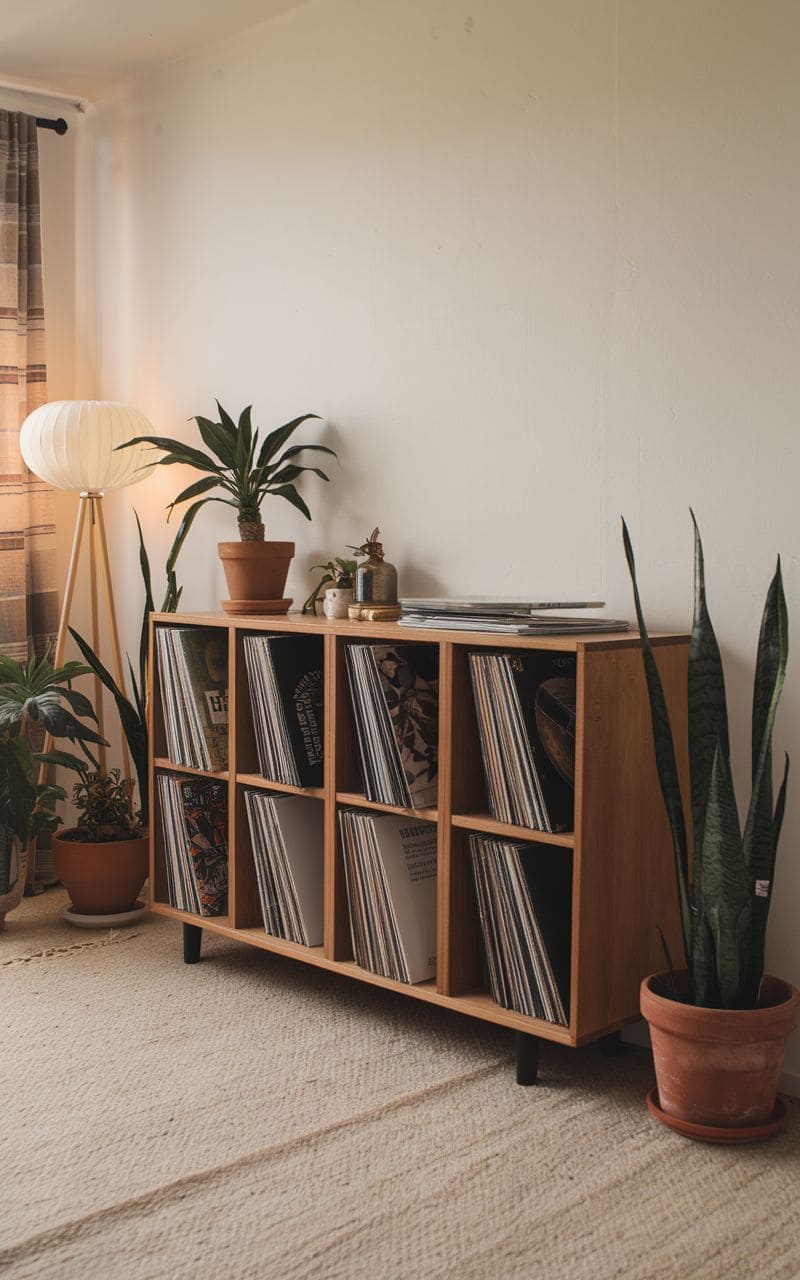
Cube storage units are everywhere in record-collector circles for a reason: the standard cube depth fits 12″ LPs without wasted space, and the grid shape makes genre sorting simple. Add doors, drawers, or legs later and the same cubes become a proper console.
One caution worth knowing before buying the cheapest option: particleboard and MDF cubes, the material most flat-pack units are built from, tend to fail under sustained vinyl weight within 18 to 24 months, and cheap versions usually don’t publish a load rating at all.
Reputable vinyl-specific furniture lists one (a real standard to look for is roughly 25 kg, or about 55 lbs, per 100-LP slot). Solid wood versions cost more and hold up longer under a growing collection.
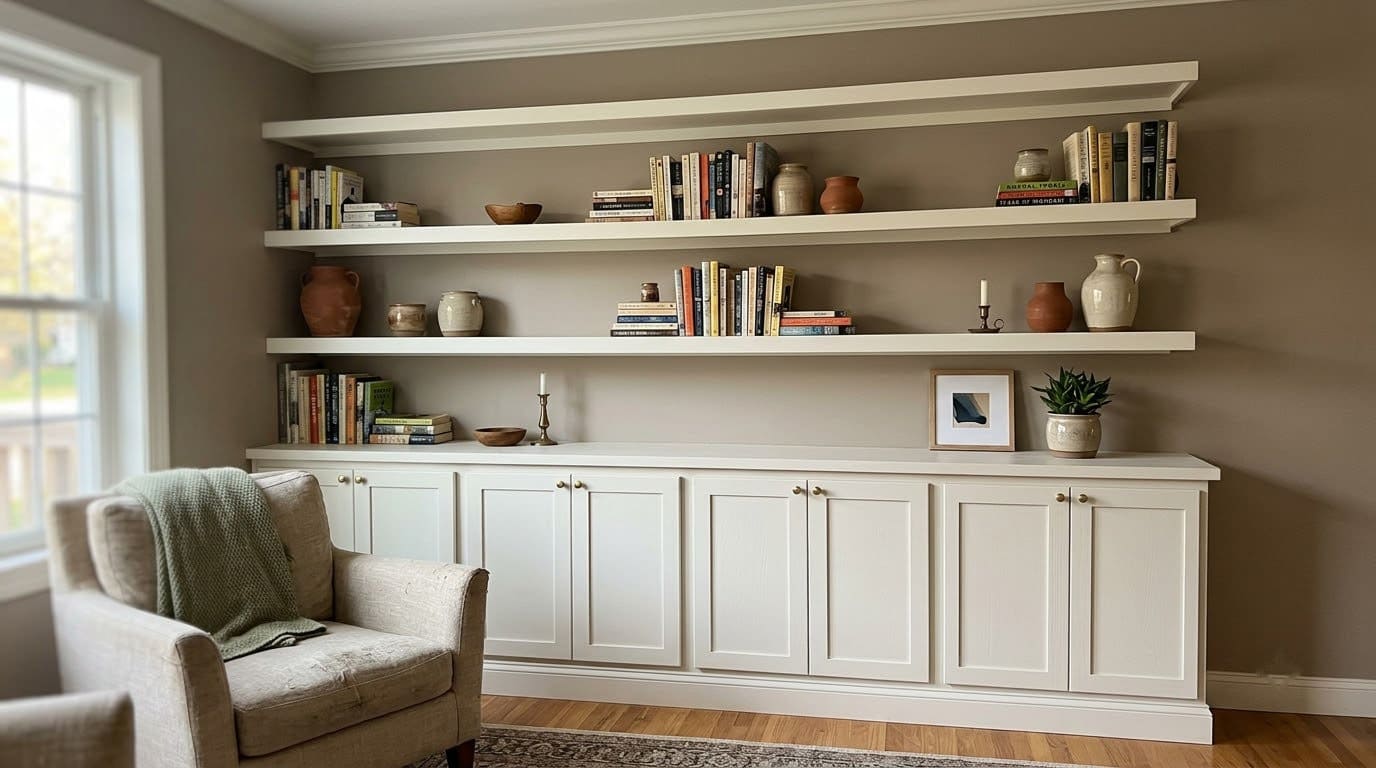
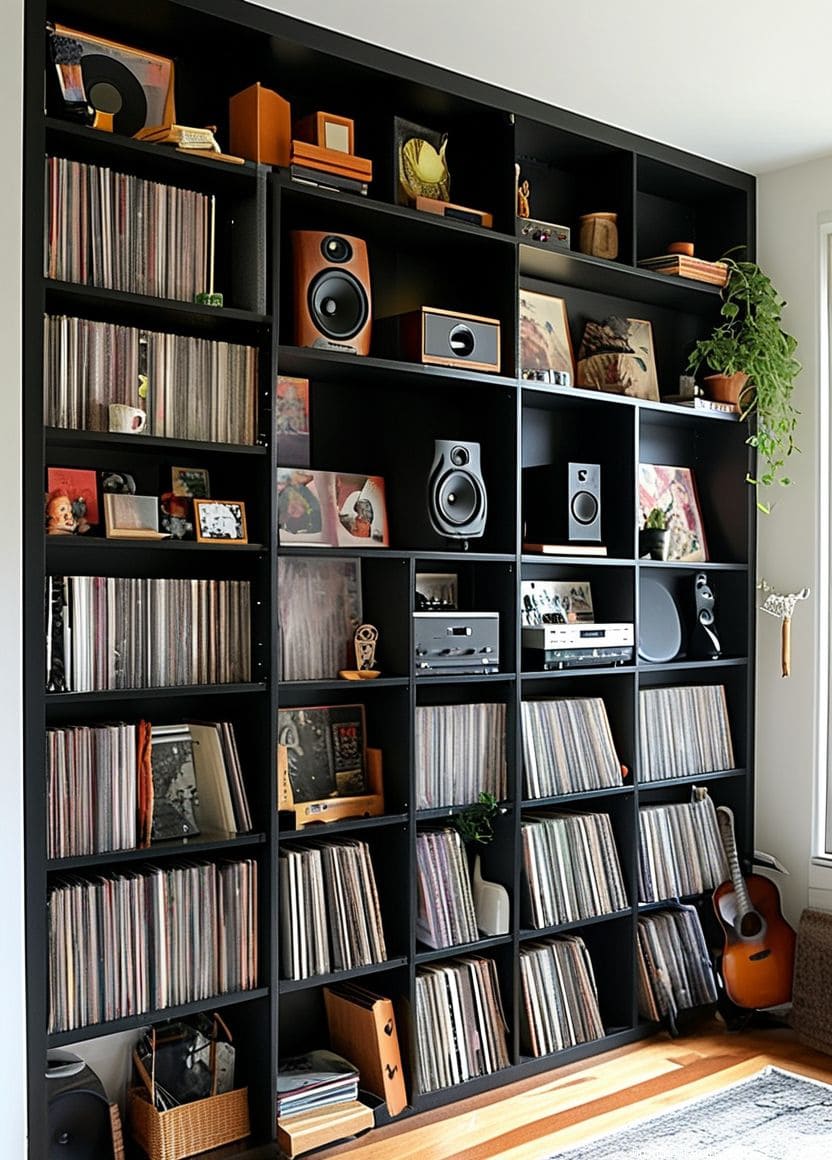
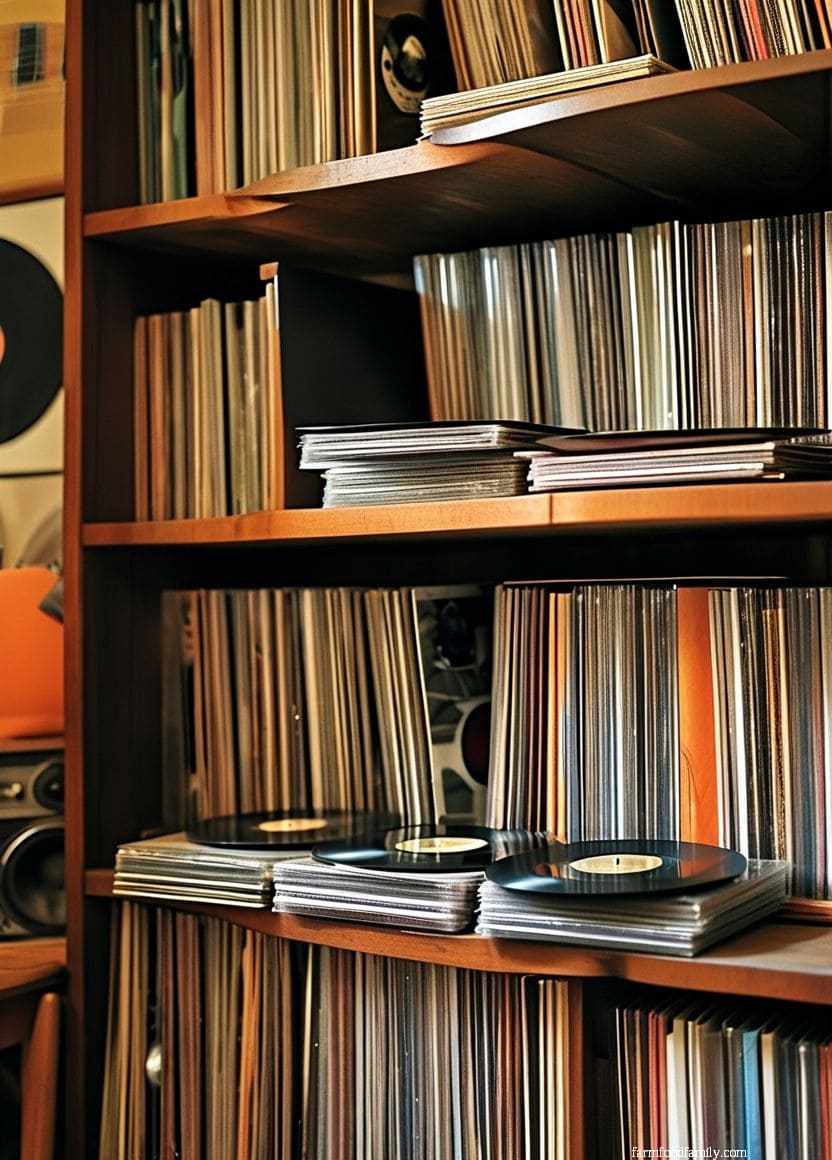
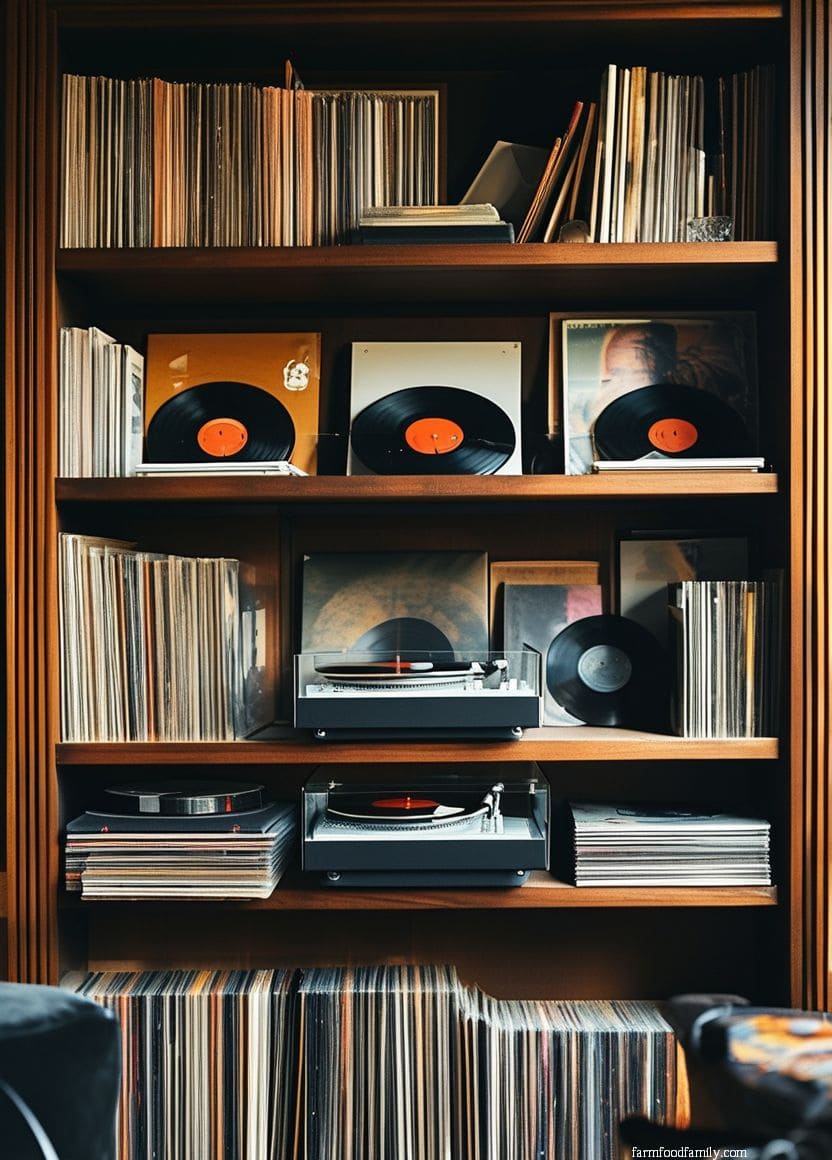
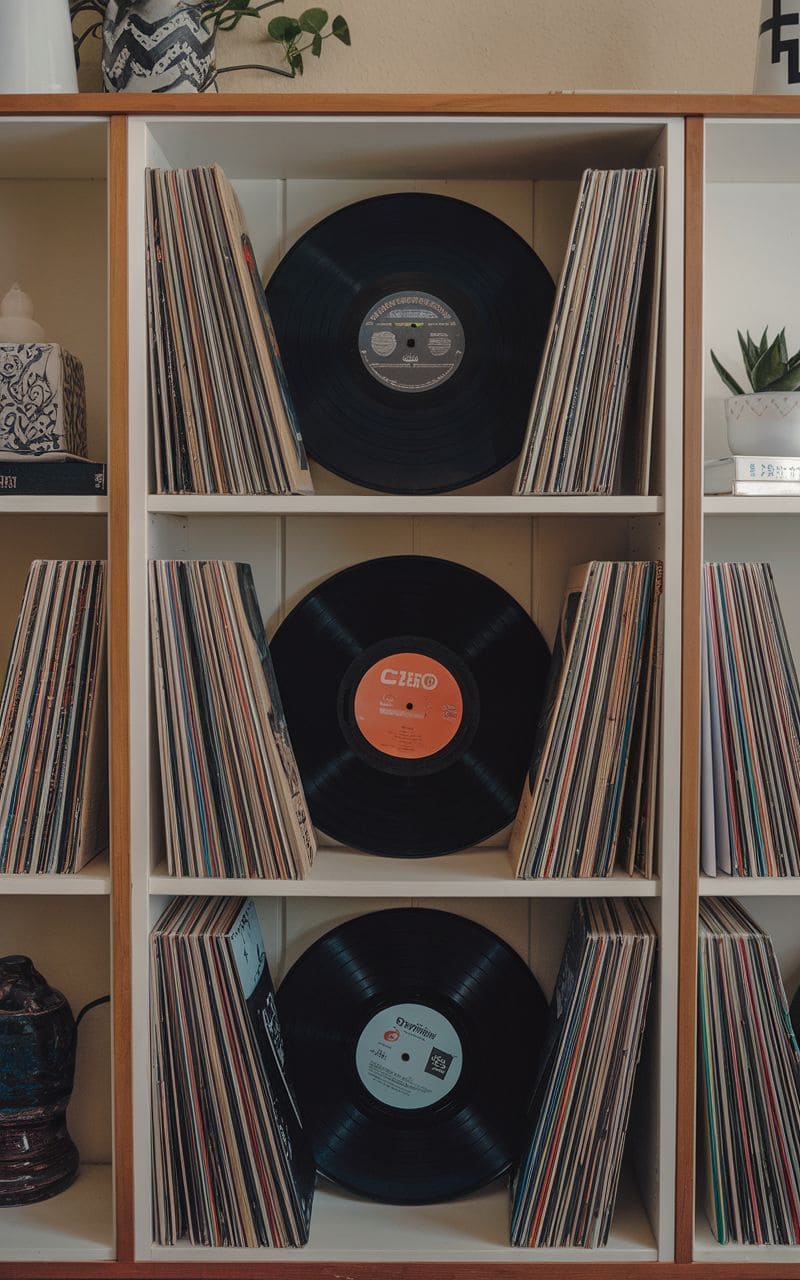
5. Built-In Bookshelf Display for Your Vinyl Records
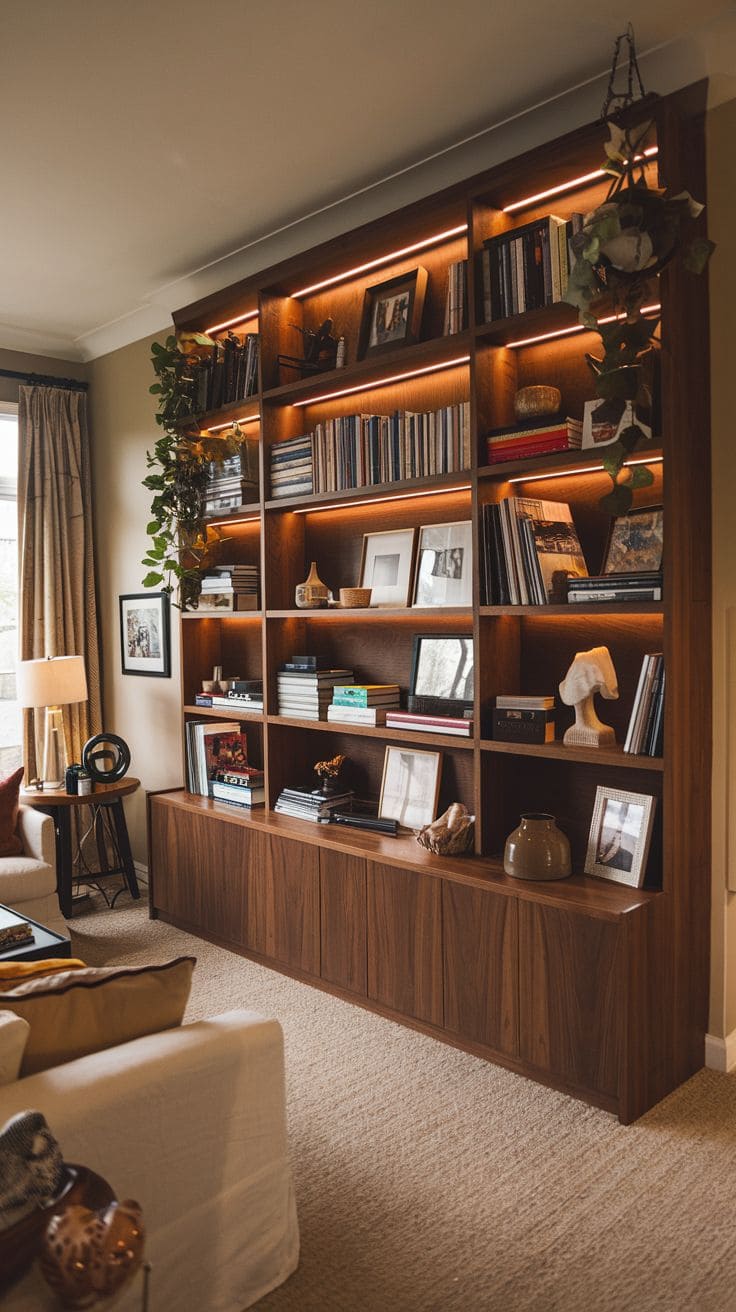
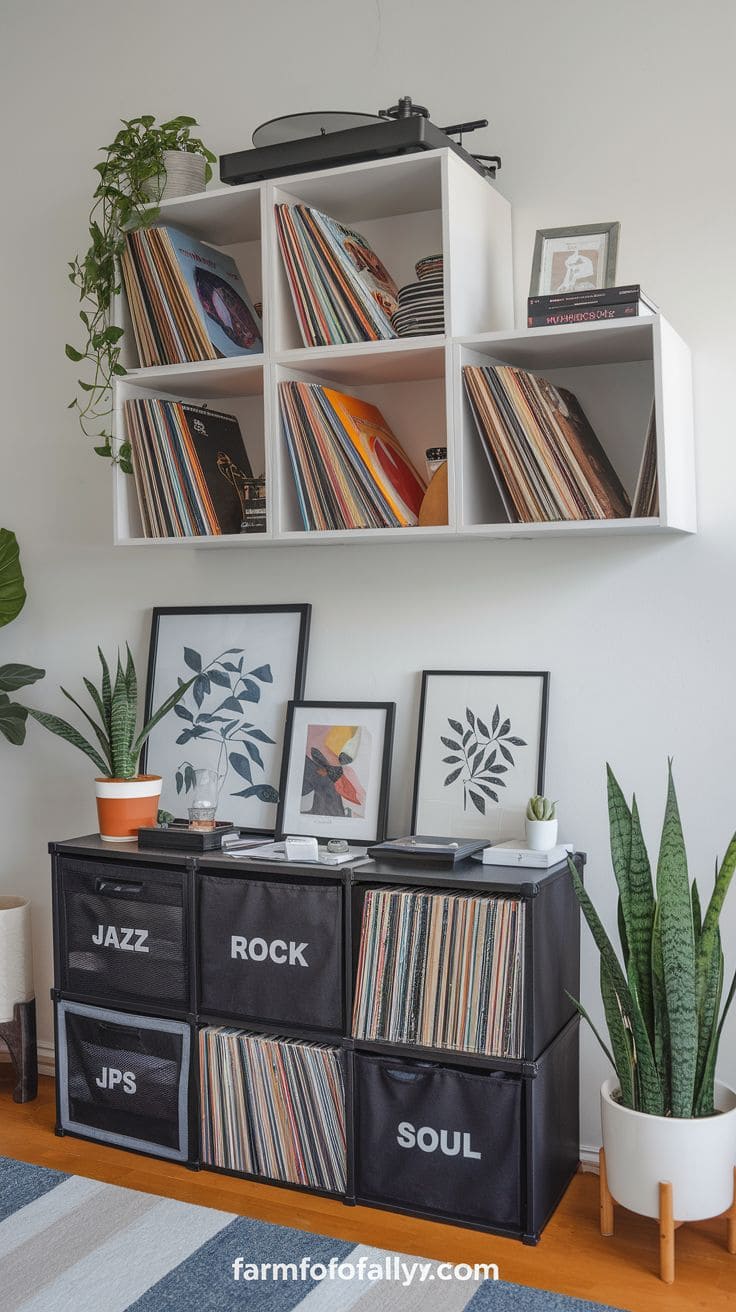
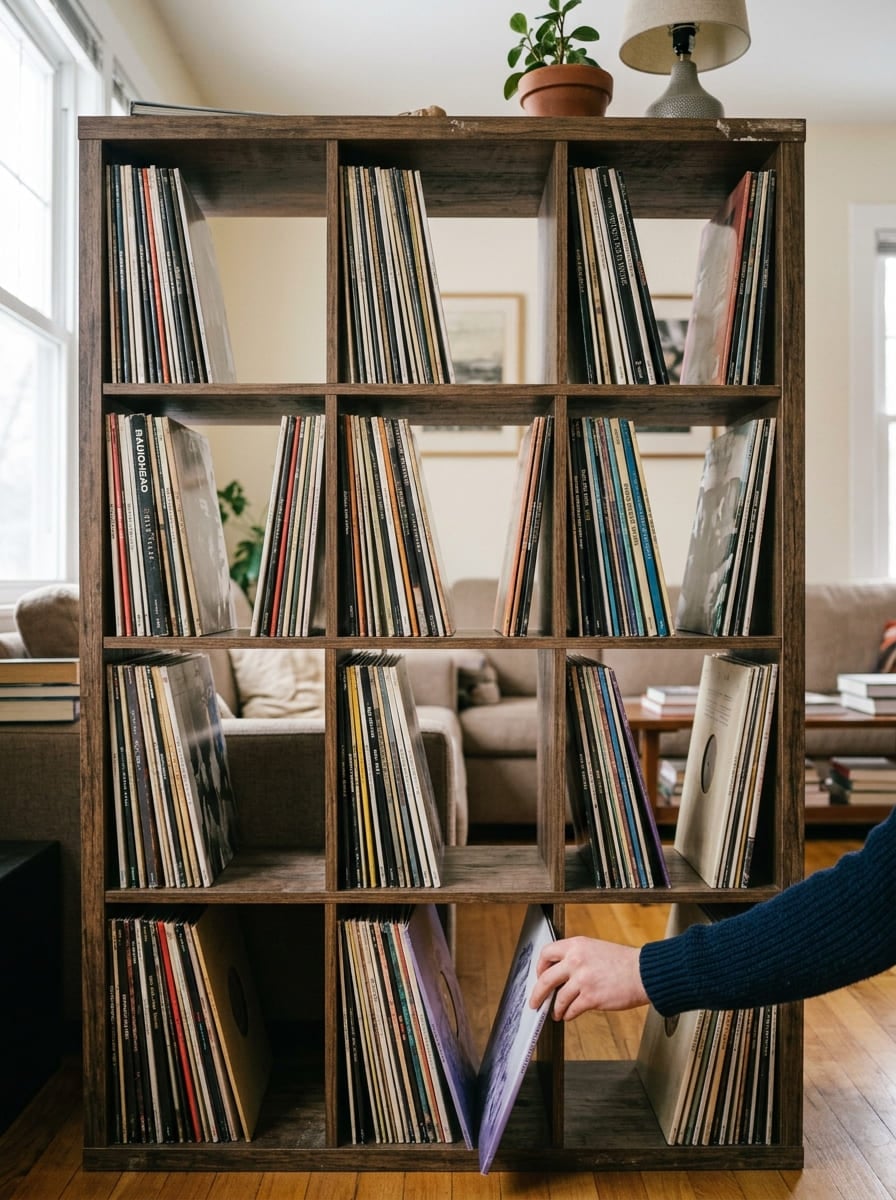
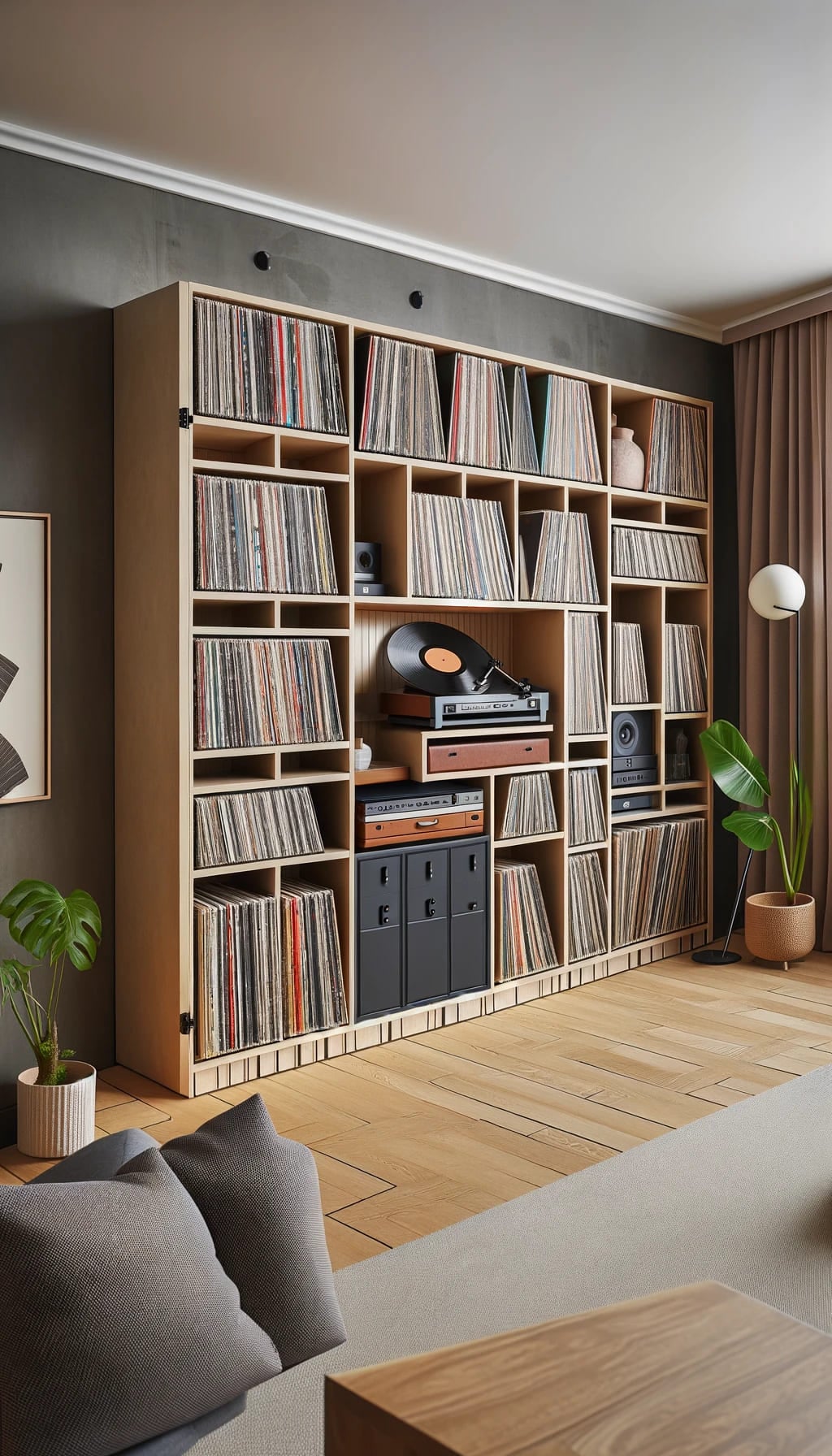
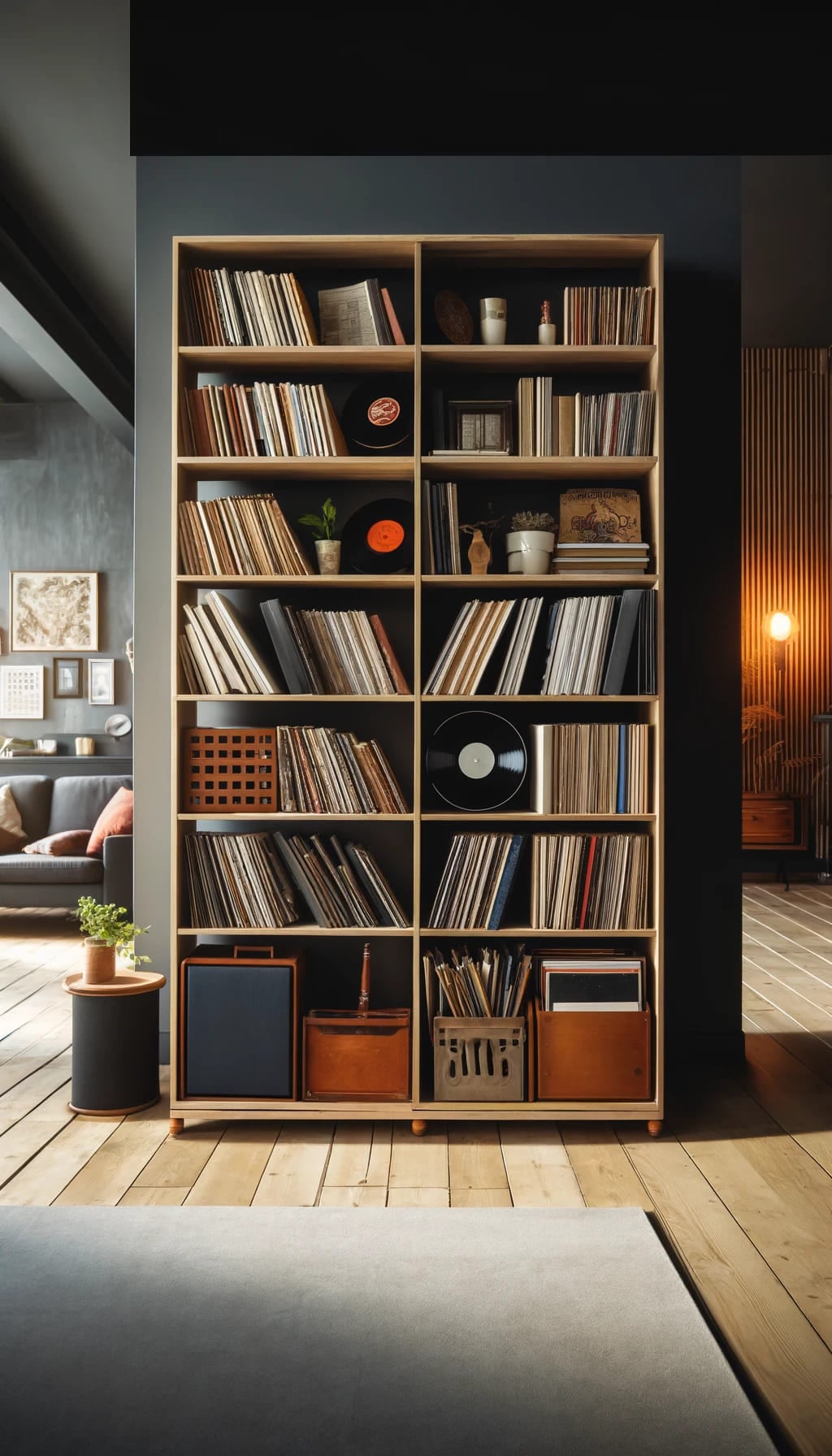
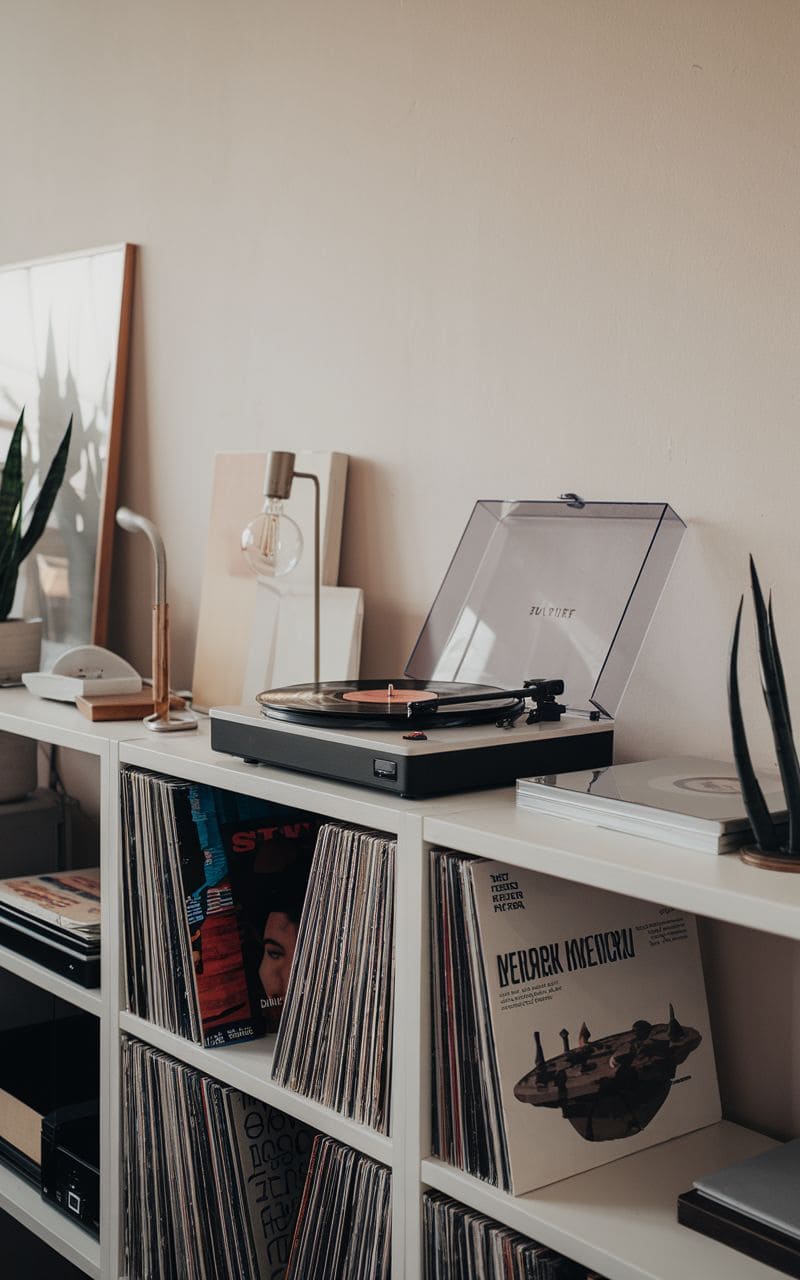
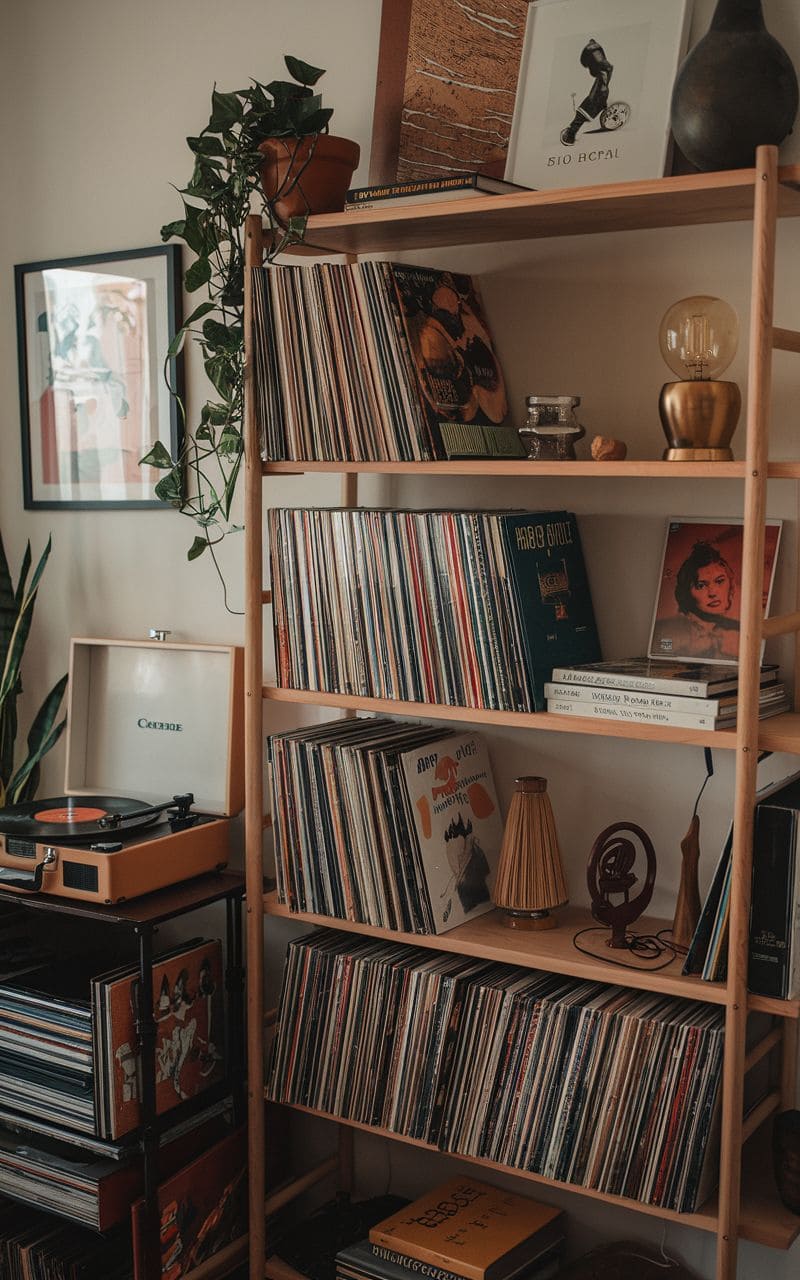
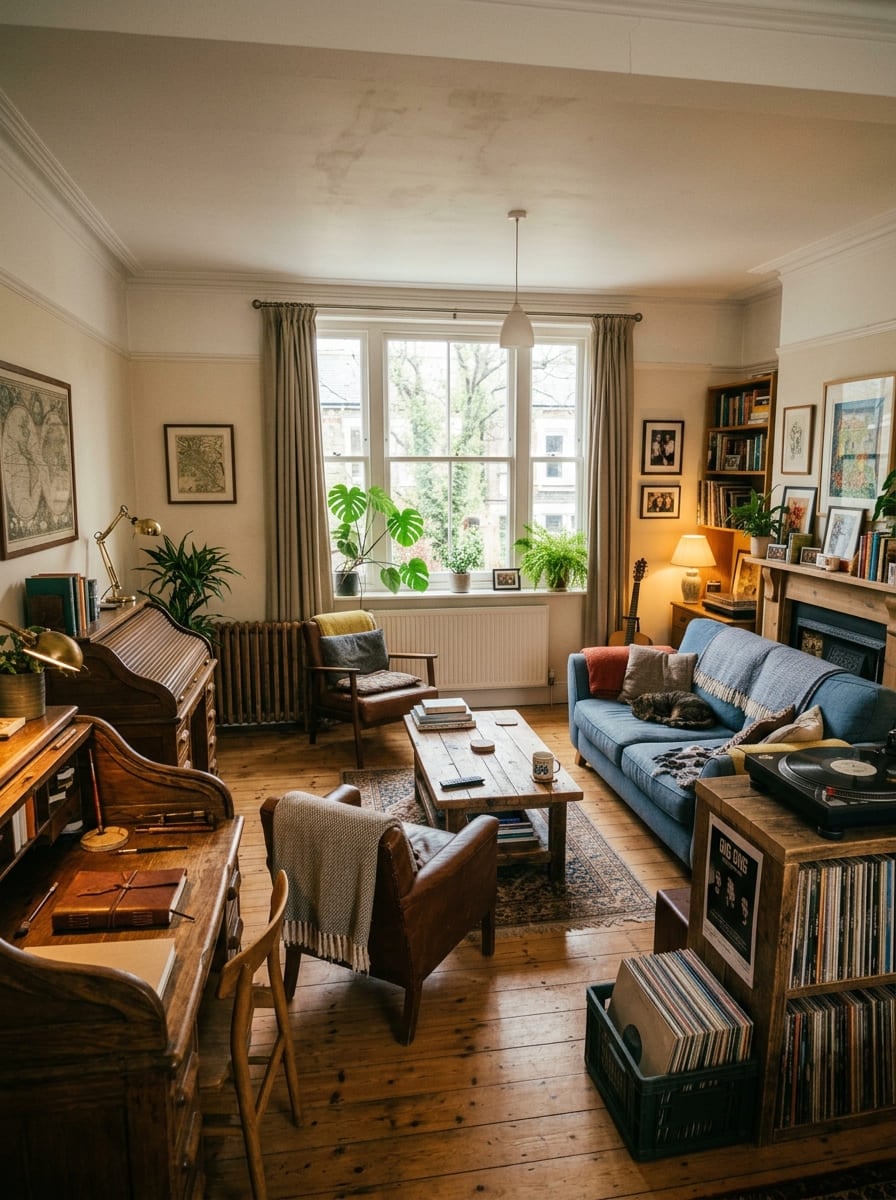
Working vinyl into an existing built-in or wall unit means it lives alongside books, framed photos, and everything else that makes a room feel lived in rather than staged. Adjustable shelving lets you set the right height for sleeves, and a basket or two on a lower shelf handles cleaning supplies or accessories without a dedicated cabinet.
This is the easiest option for anyone who doesn’t want a single piece of furniture dedicated entirely to records.
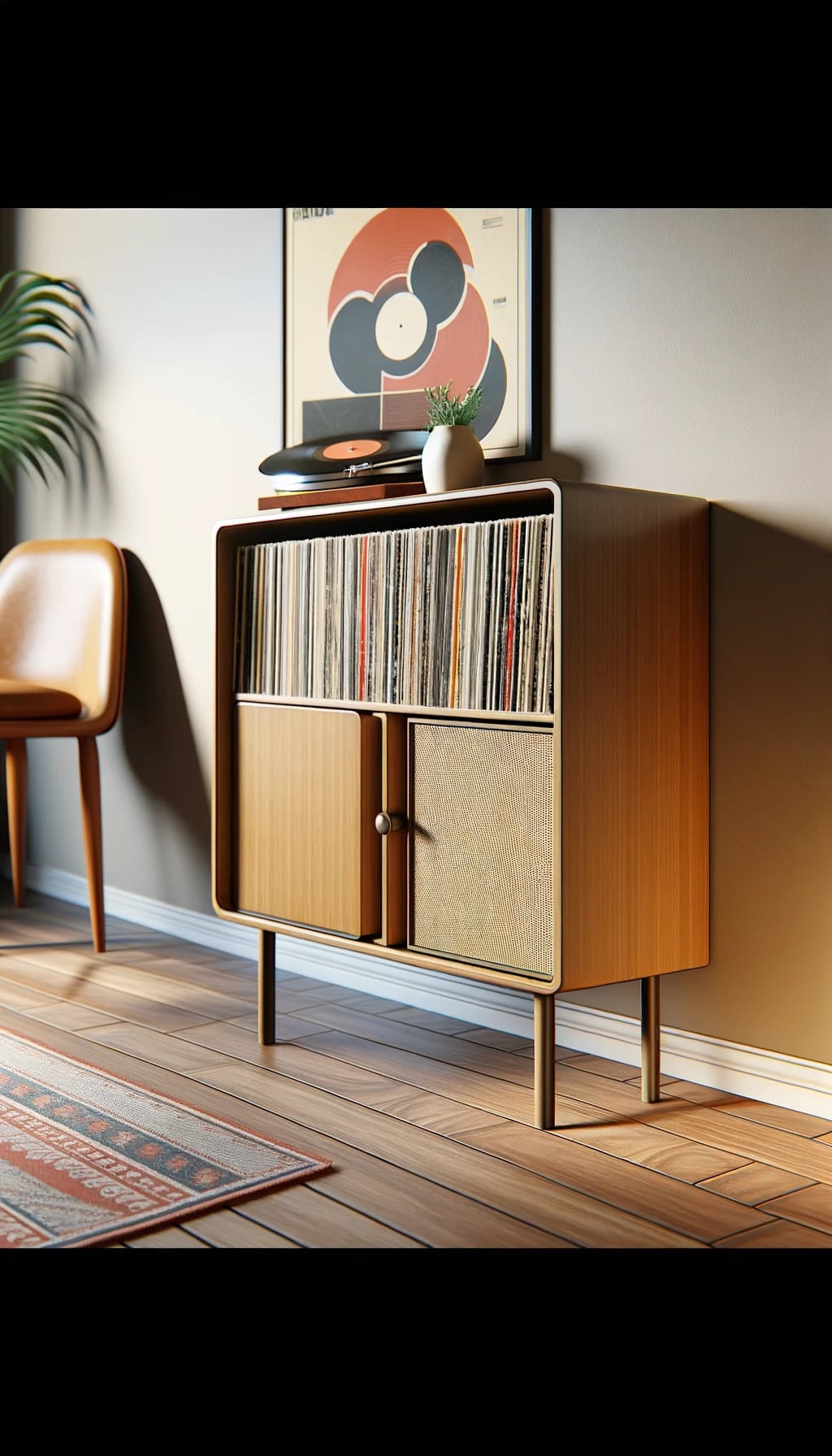
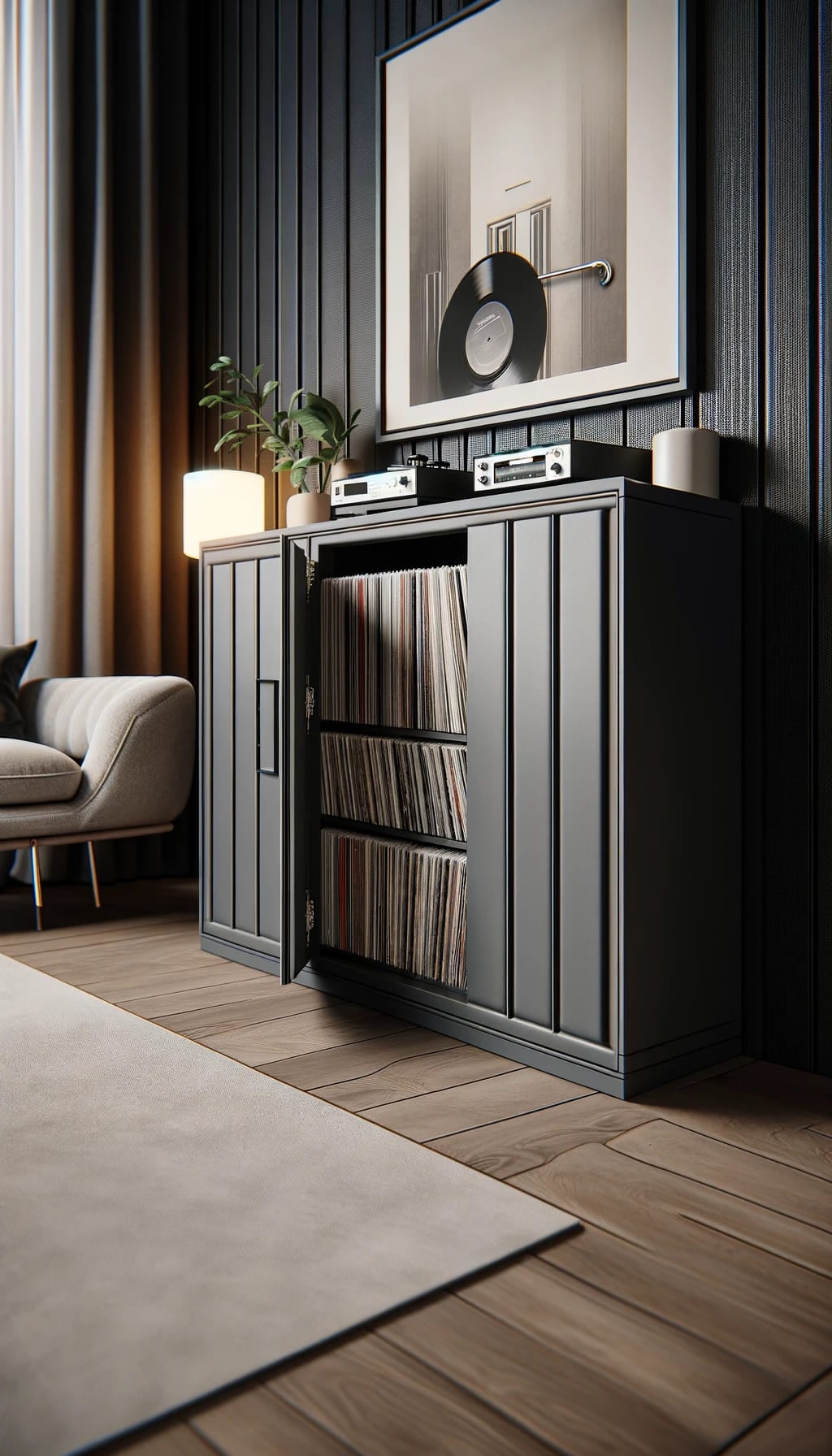
6. Vintage and Mid-Century Record Cabinets
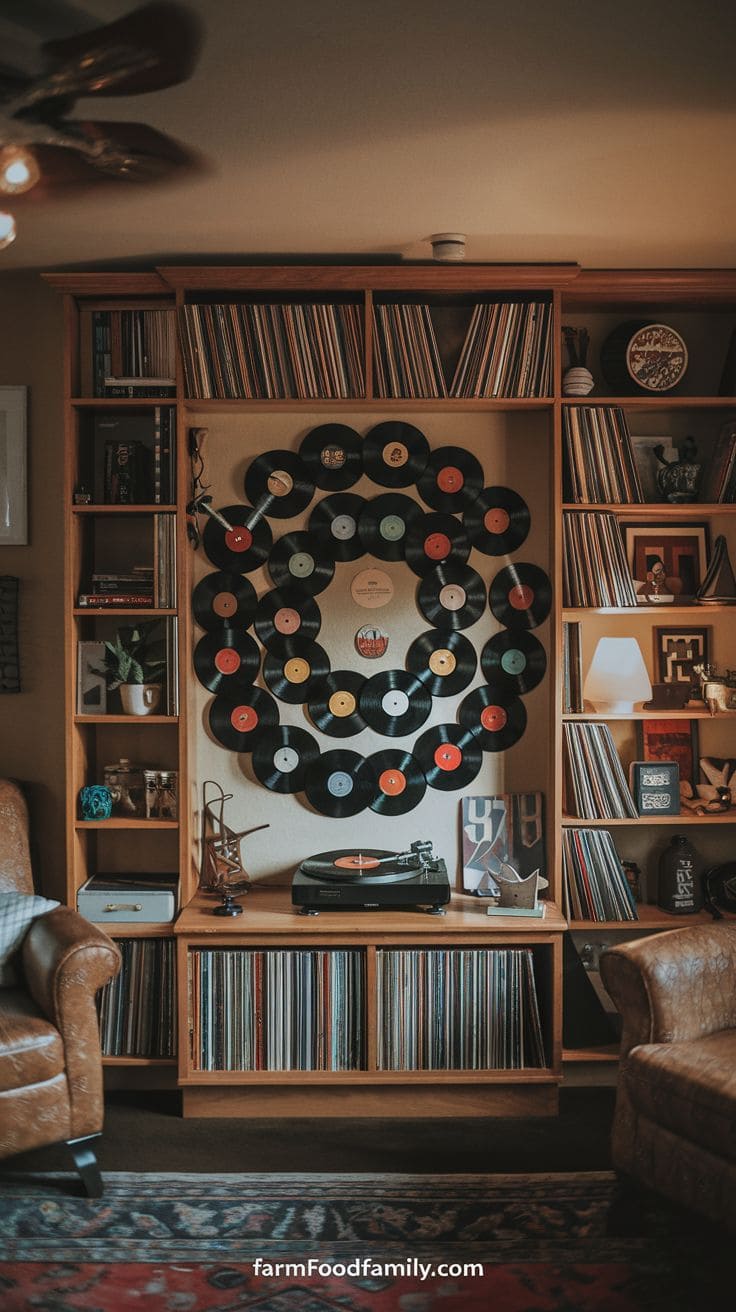
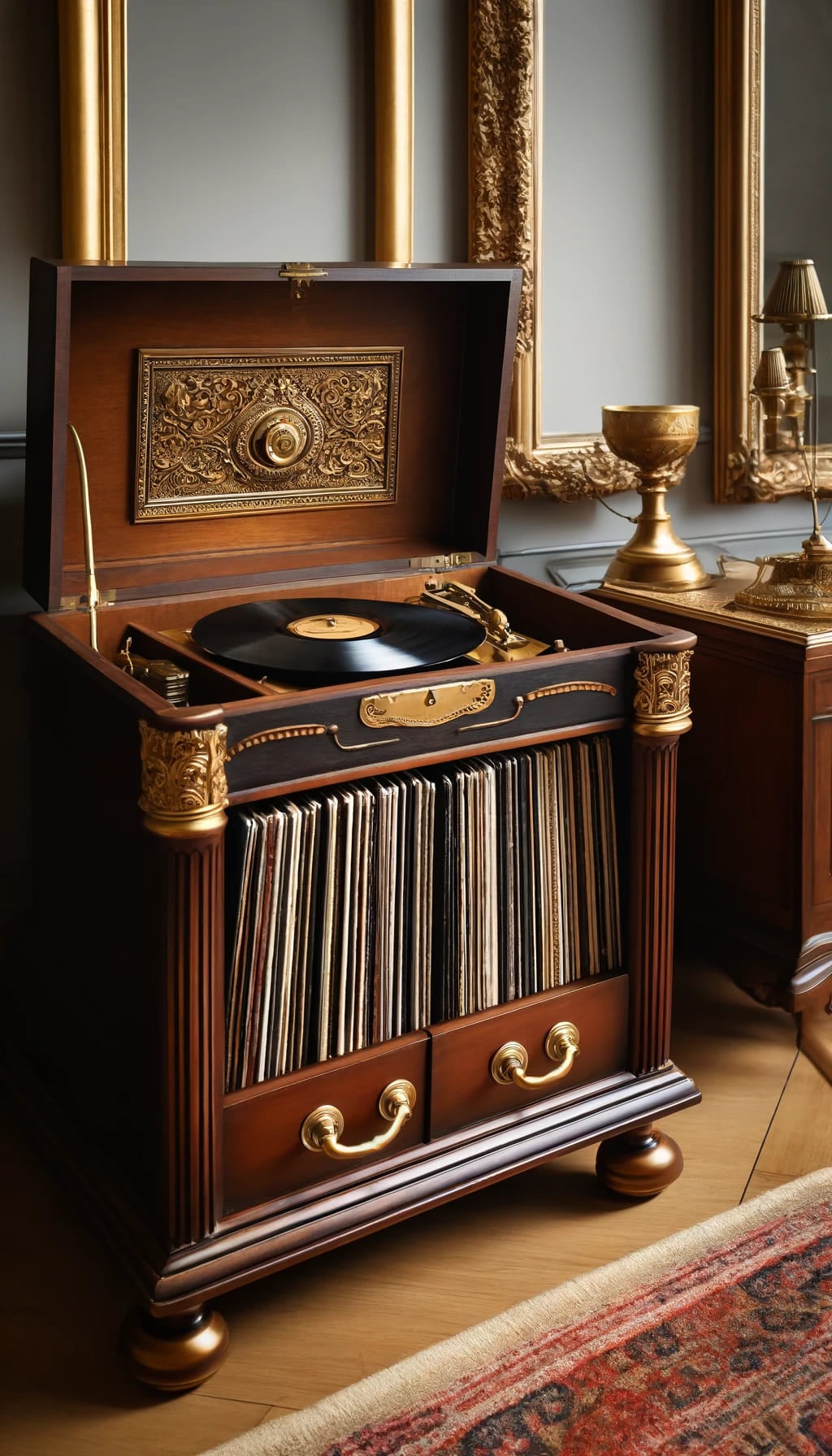
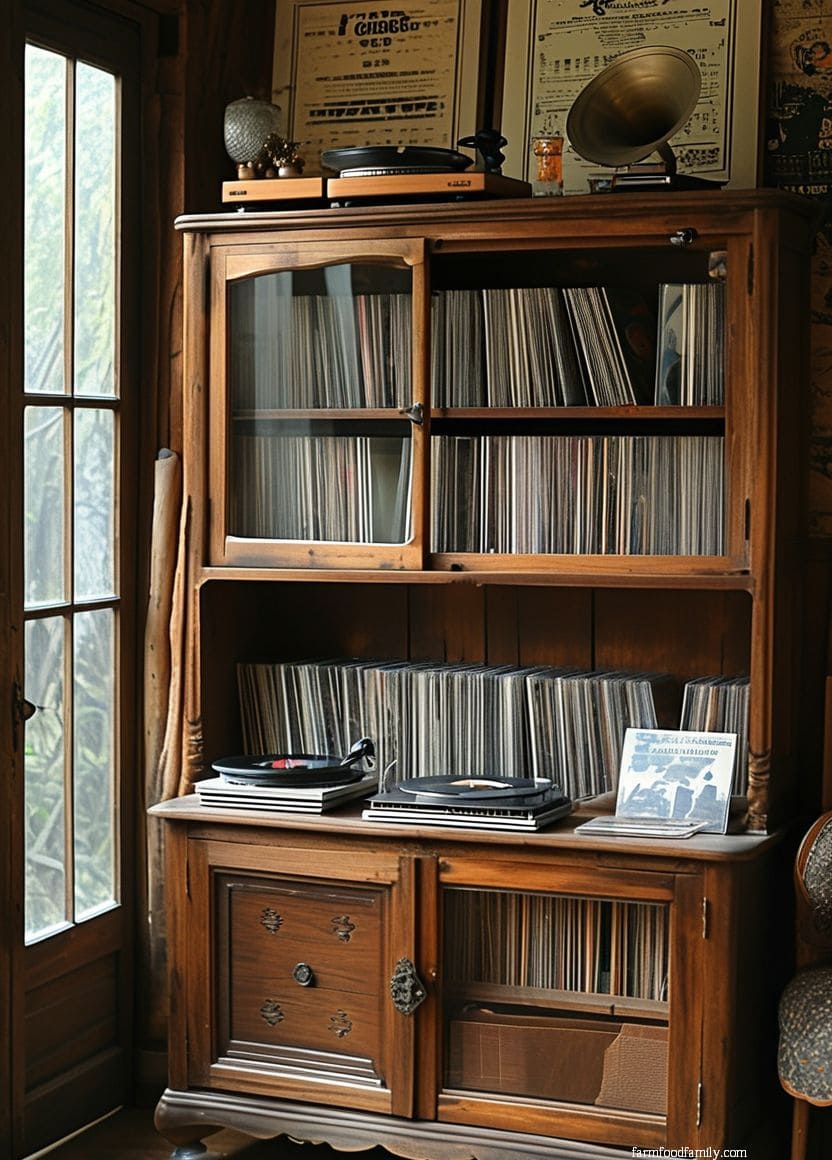
A record cabinet with real doors and a finished top reads as furniture first, storage second, which is exactly the point for anyone tired of records looking like clutter. Look for depth that matches 12″ sleeves rather than generic media cabinets sized for DVDs.
Genuinely vintage pieces from thrift stores or estate sales often have better proportions for this than anything sold new. Check hinges and shelf supports before buying, older cabinets weren’t built with today’s collection sizes in mind.
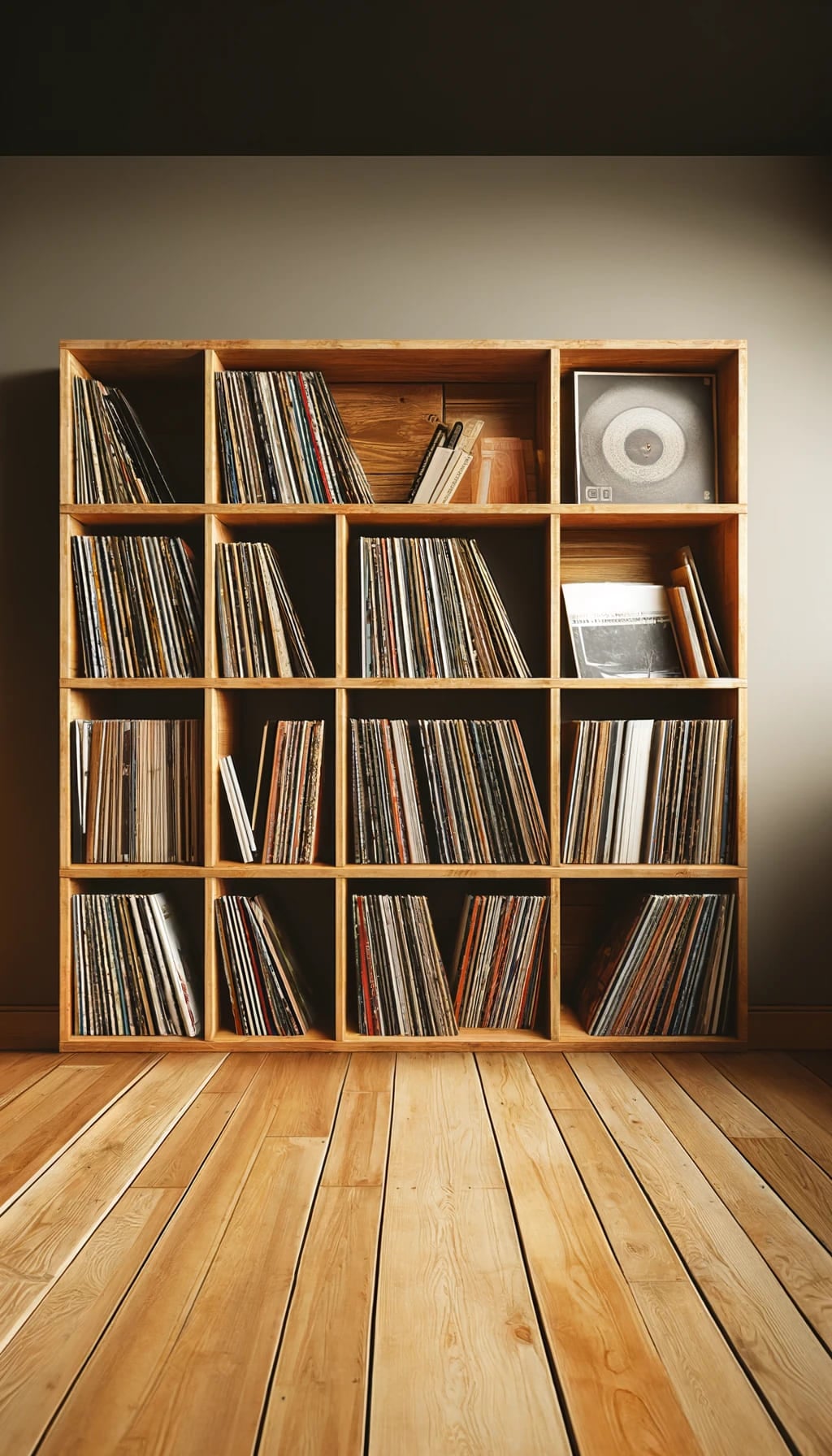
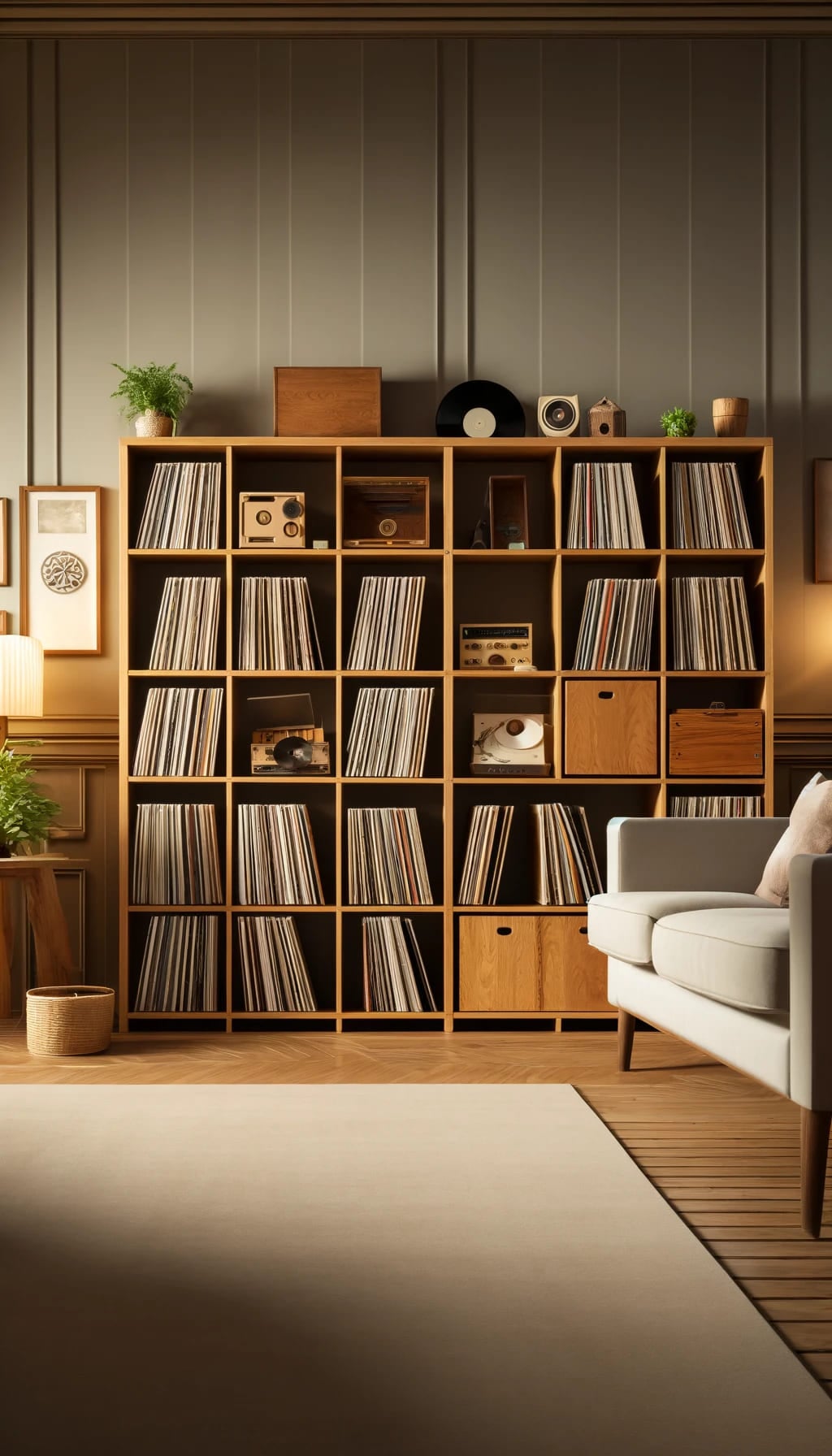
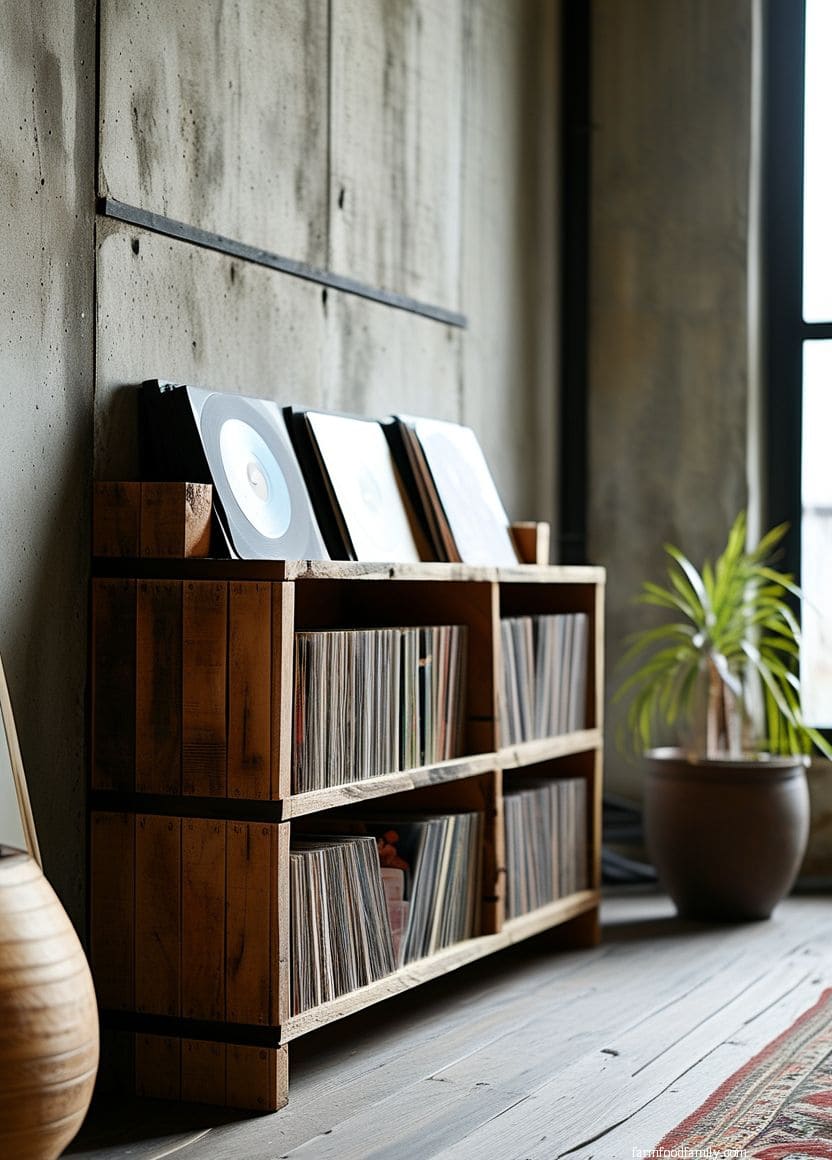
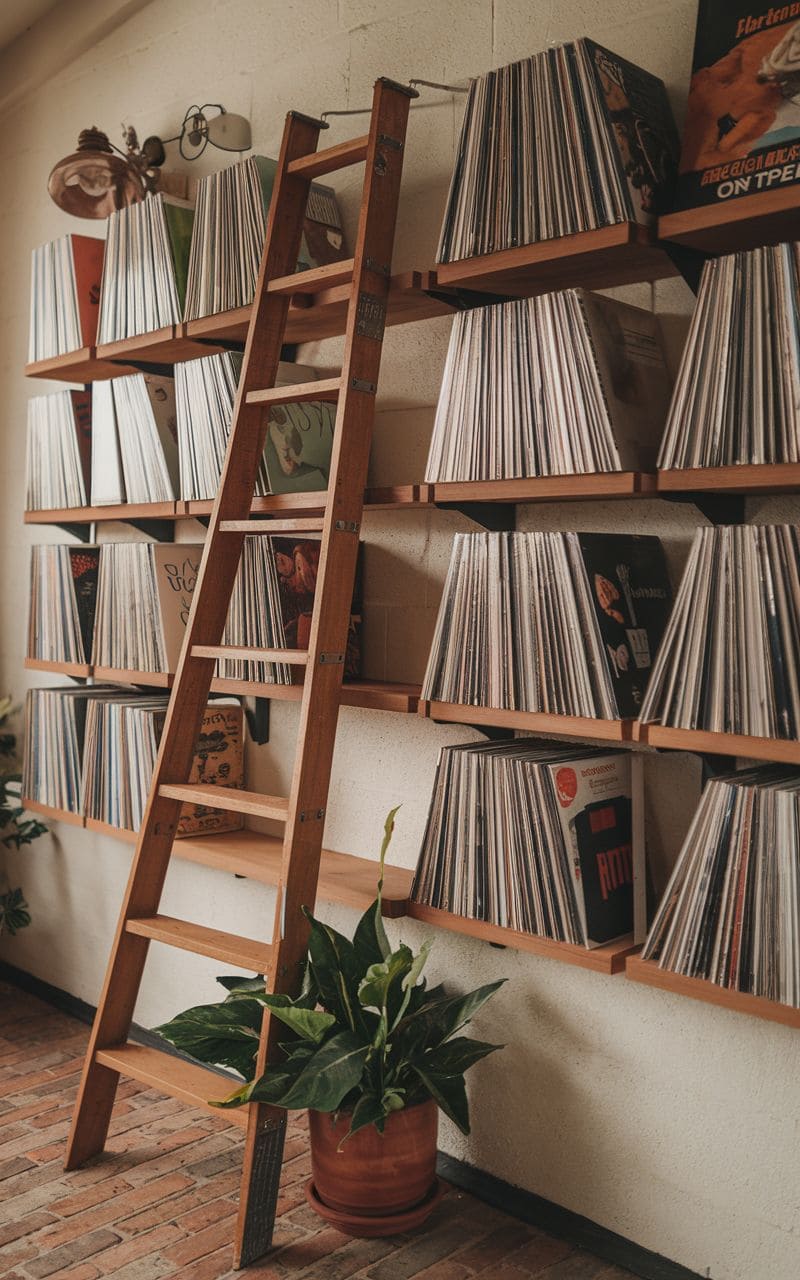
7. Classic Wooden Shelves
8. Modular Storage Units
9. Bins and Boxes for 7″ Singles
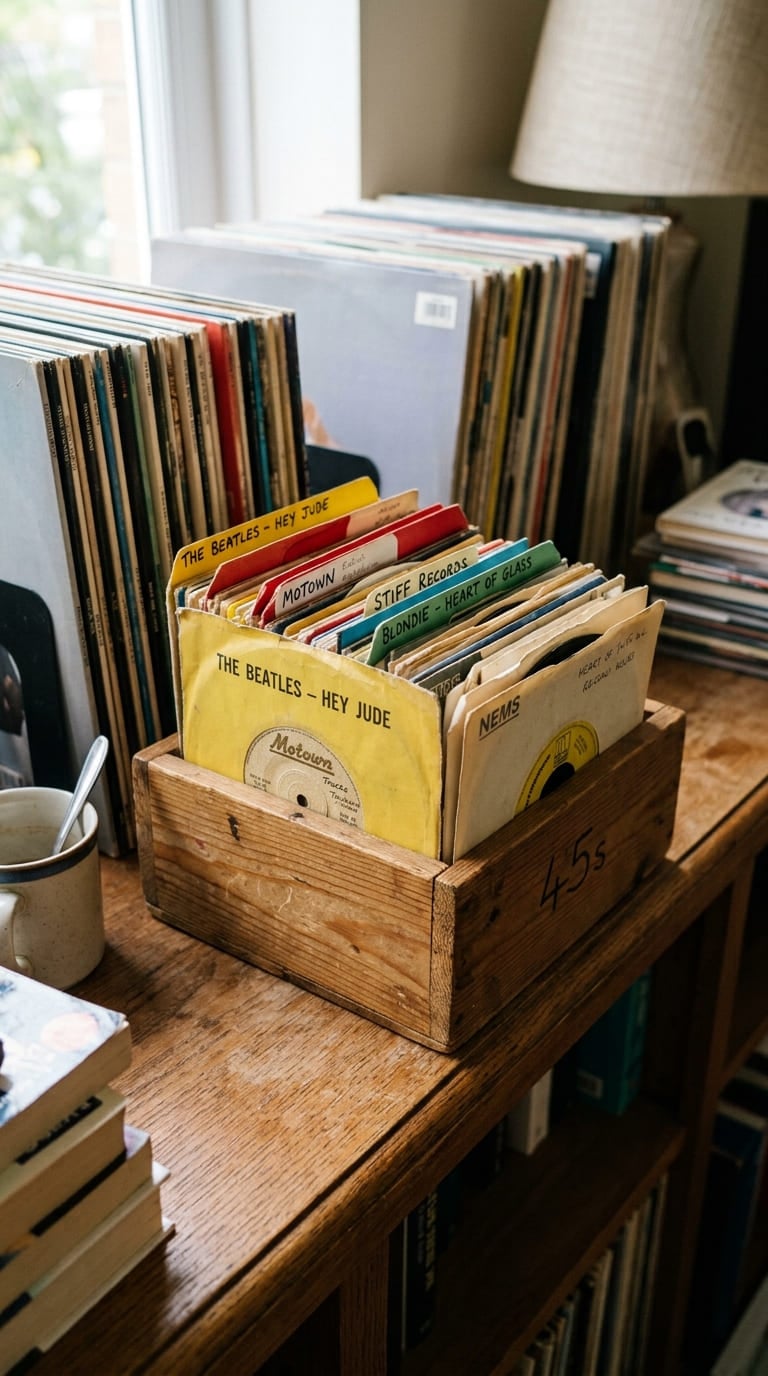
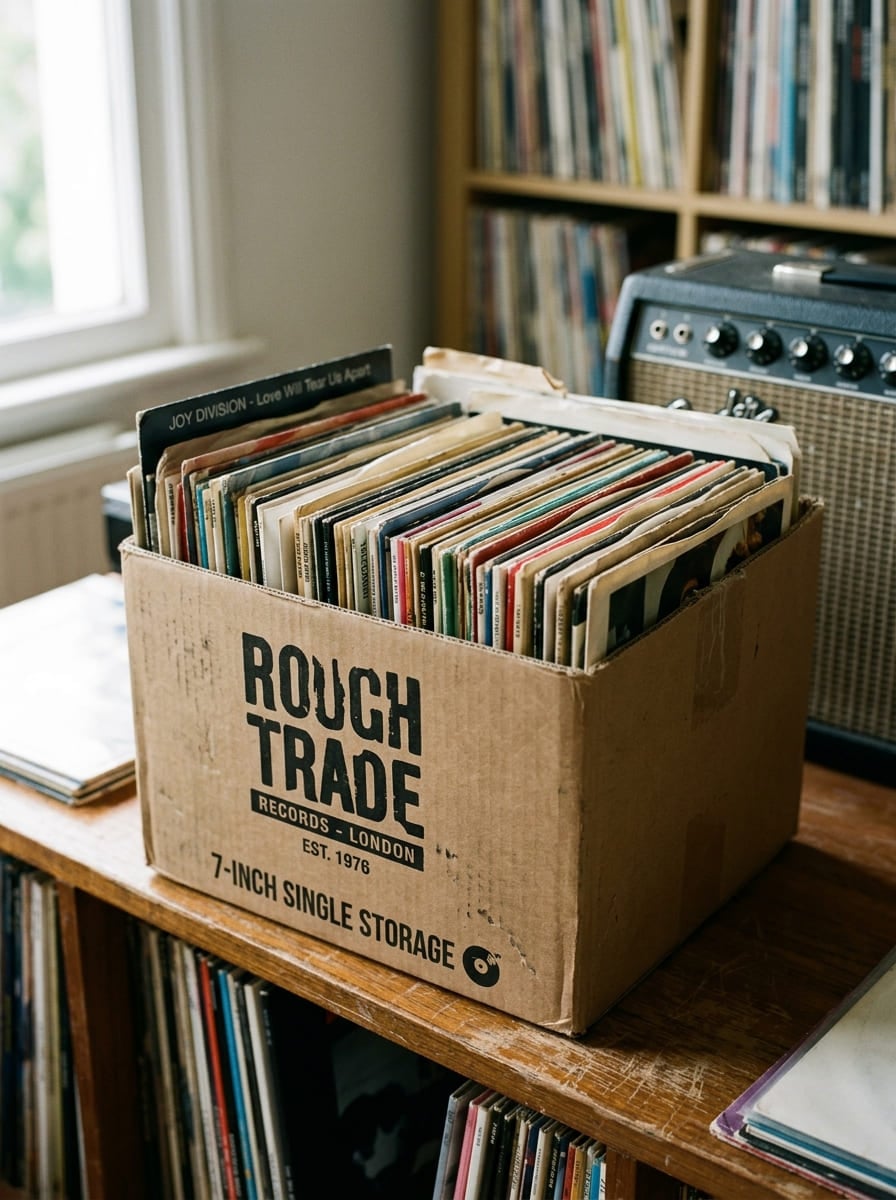
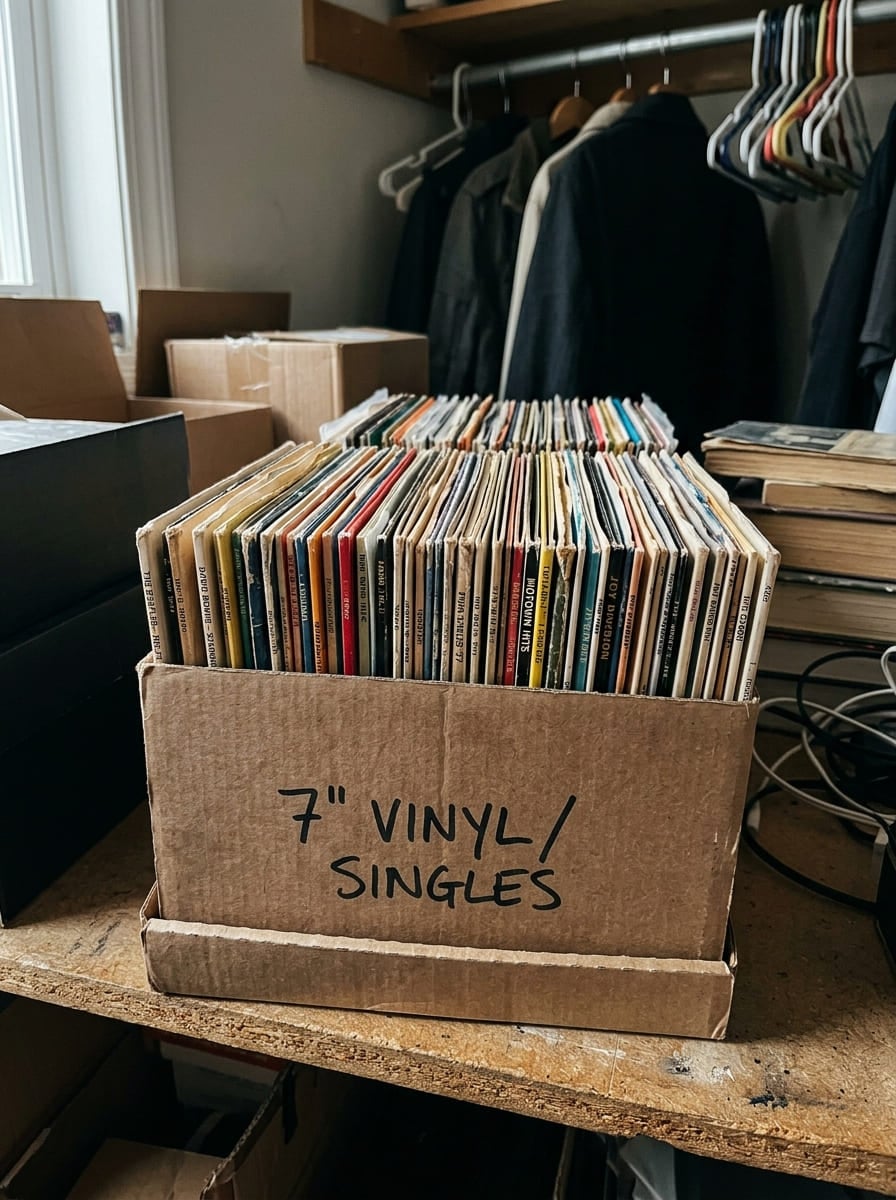
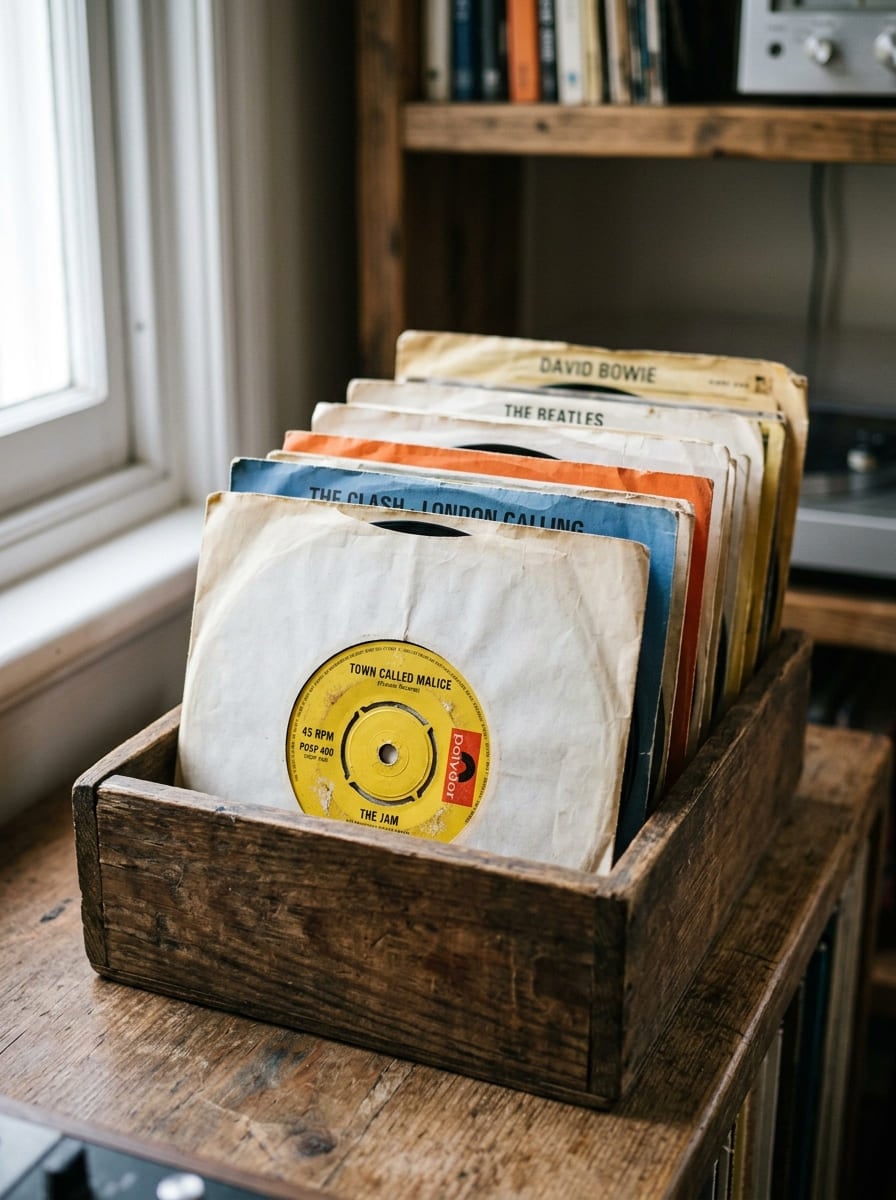
Full-size LP storage doesn’t work for 45s, they need their own solution. Purpose-made 45 boxes from record labels hold around 50 singles each and keep them upright the same way LP storage does. Absent that, r/vinyl regulars go simpler: dollar-store bins sized right, or shoeboxes with the lids pulled off.
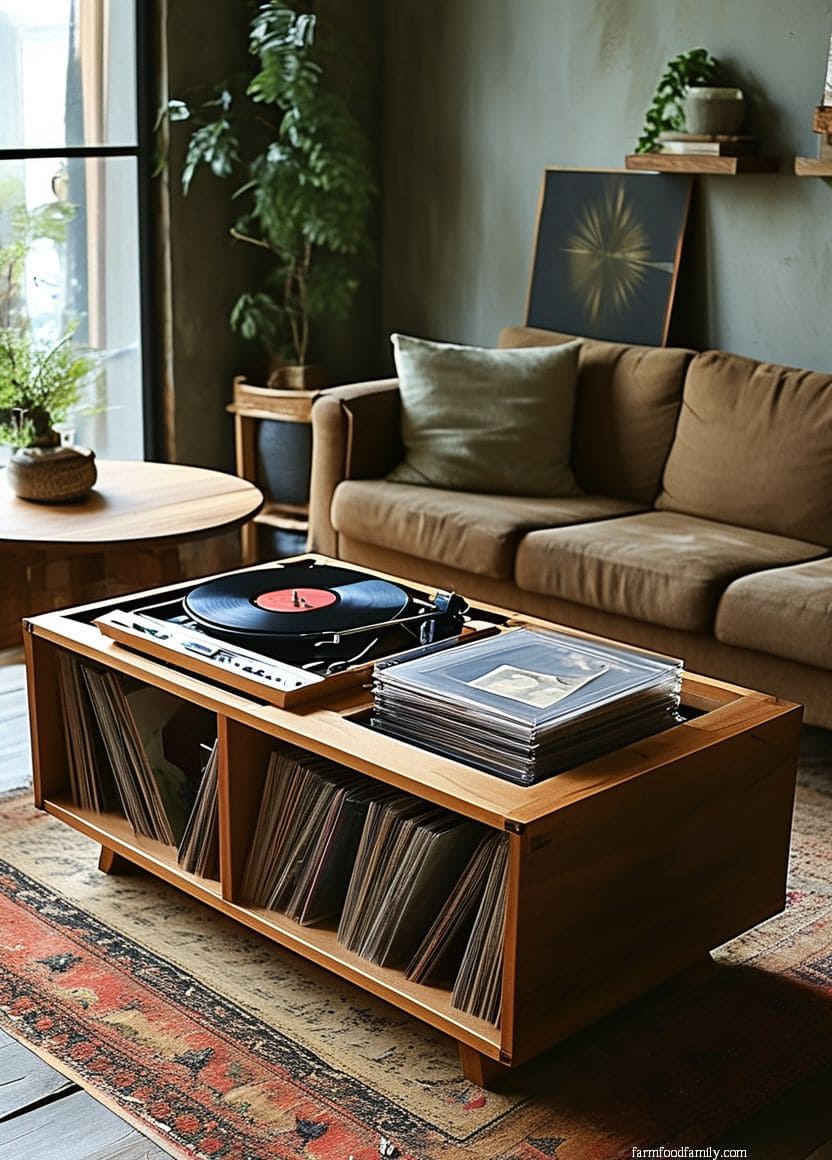
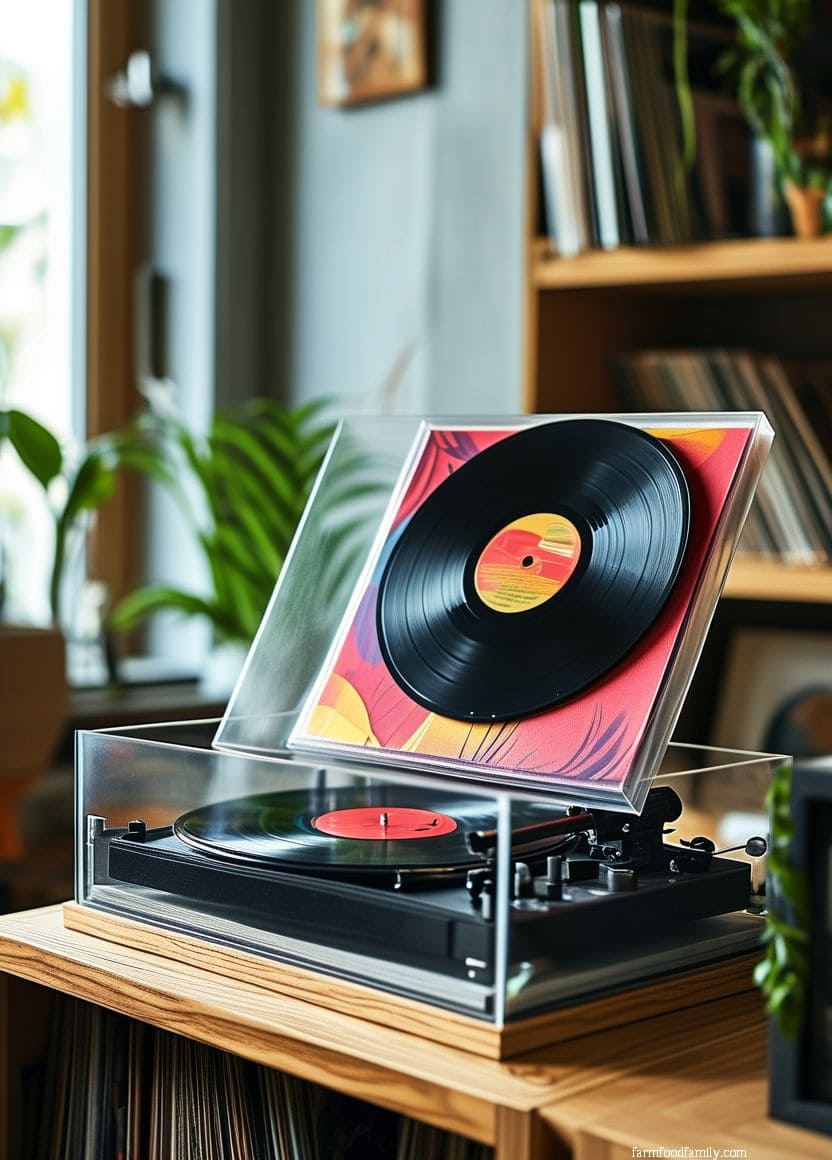
10. Custom-Built Console With Turntable Isolation
For anyone serious enough to commission furniture, a custom console solves the one problem ready-made options can’t: vibration.
If the turntable sits on the same piece of furniture as the record storage, opening a drawer mid-play can audibly disturb the needle. One Reddit builder’s fix was to “build a sandbox” isolating the turntable’s platform from the storage structure underneath.
This is the highest-effort, highest-cost idea on the list, and also the only one built specifically to solve a problem the furniture-store options don’t even acknowledge.


11. Cube Storage Systems
12. Vintage Record Cabinets
13. Wall-Mounted Shelves
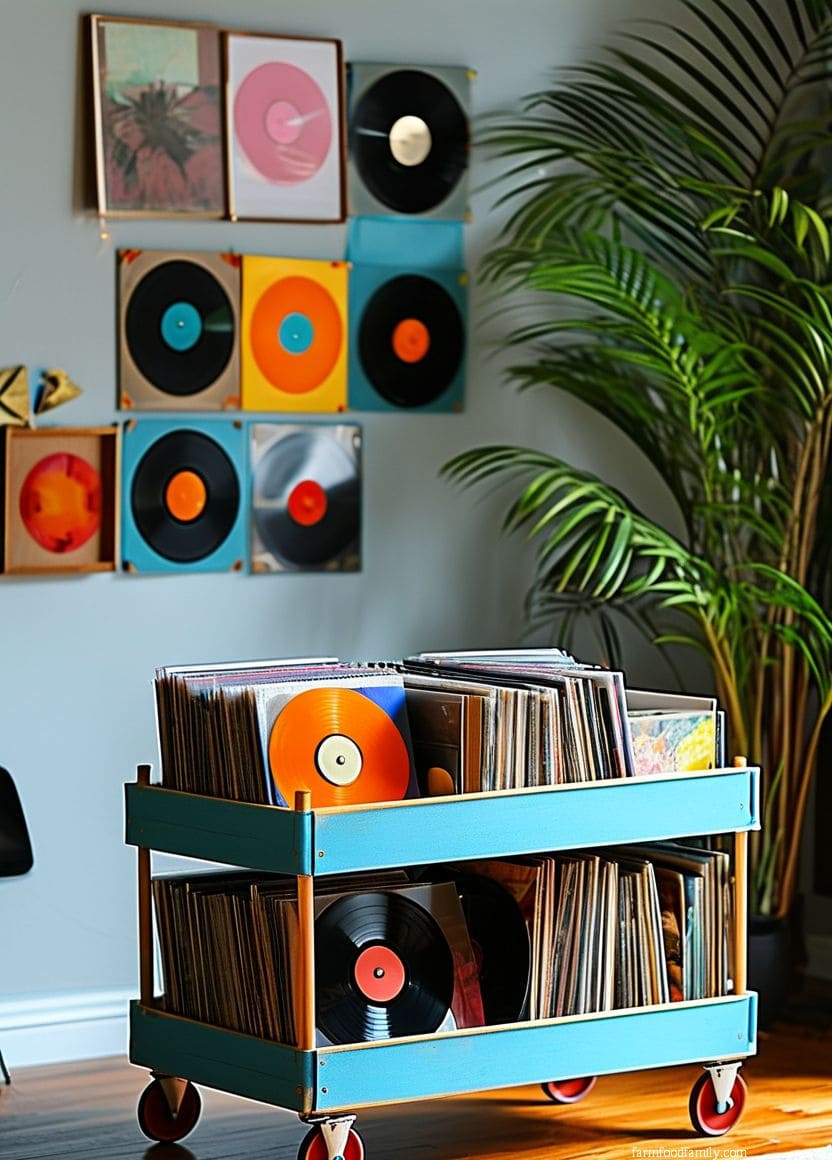
14. Rolling Carts
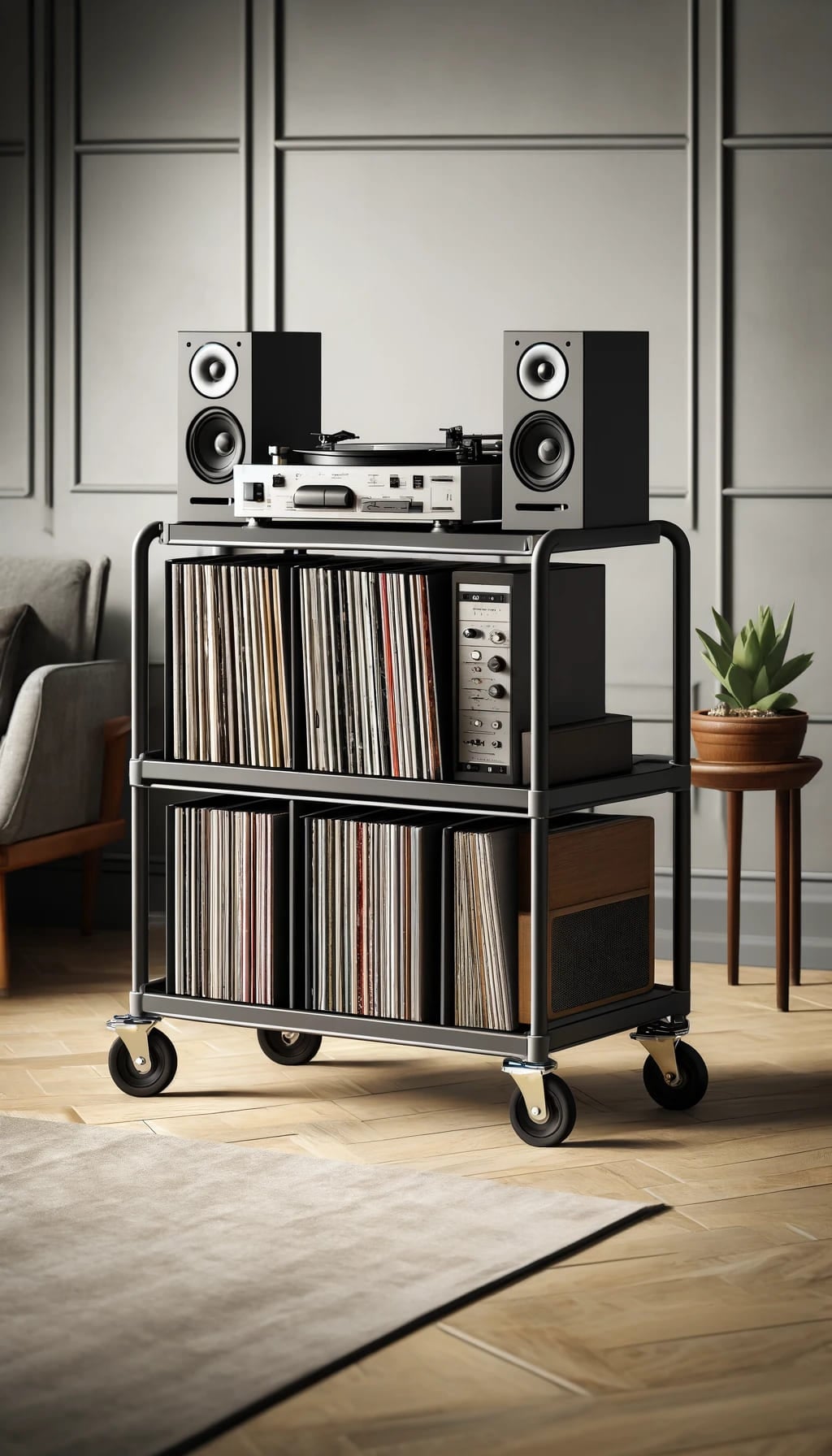
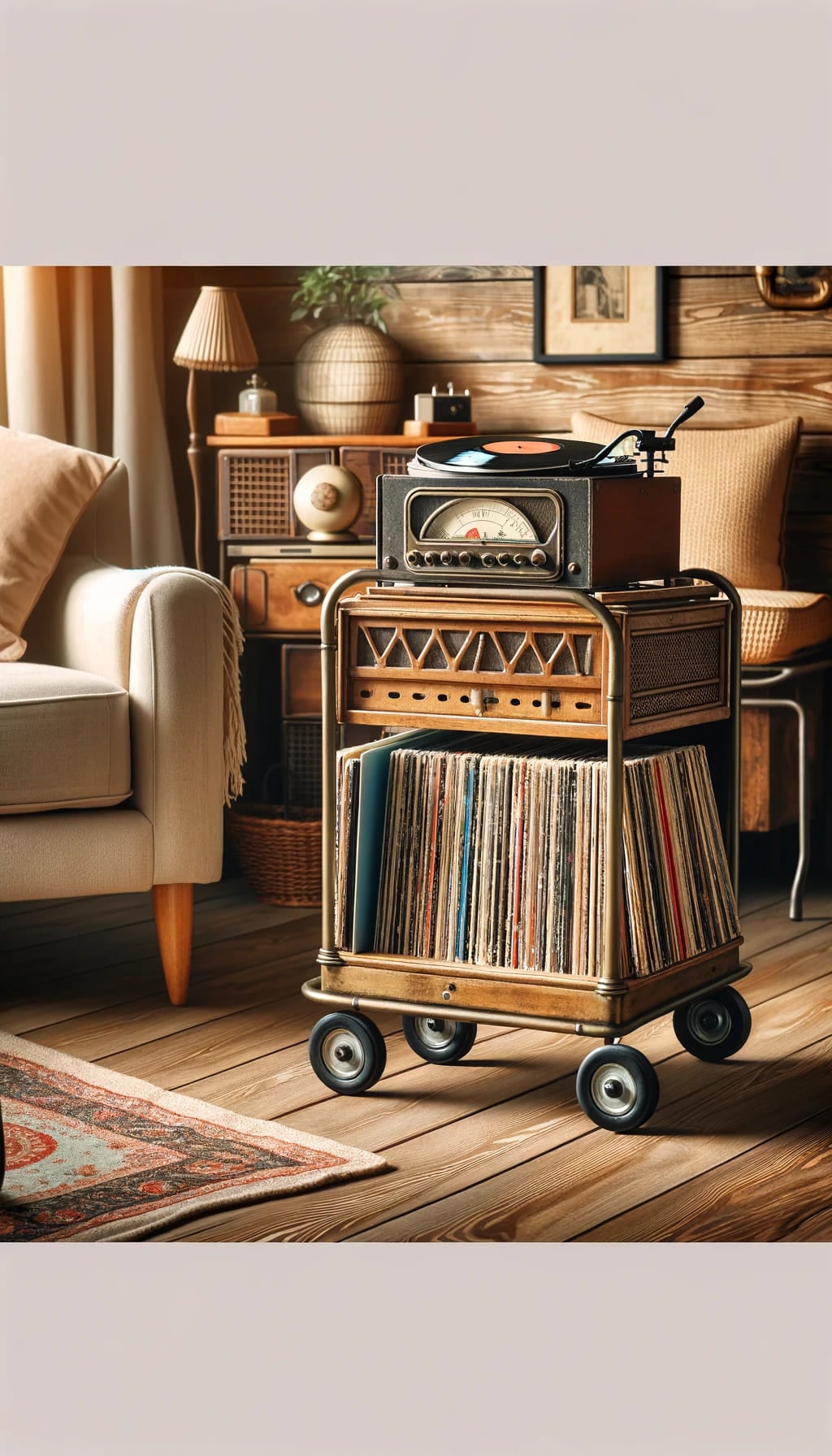
A bar-cart-style rolling unit keeps a working rotation of records within reach of the turntable and moves wherever the listening happens to be that week. It’s a small-footprint option, good for apartments or anyone who doesn’t want a fixed “record corner.”
Don’t expect a cart to hold a whole collection. Think 20 to 40 records max, the current rotation, not the archive.
15. Record Crates
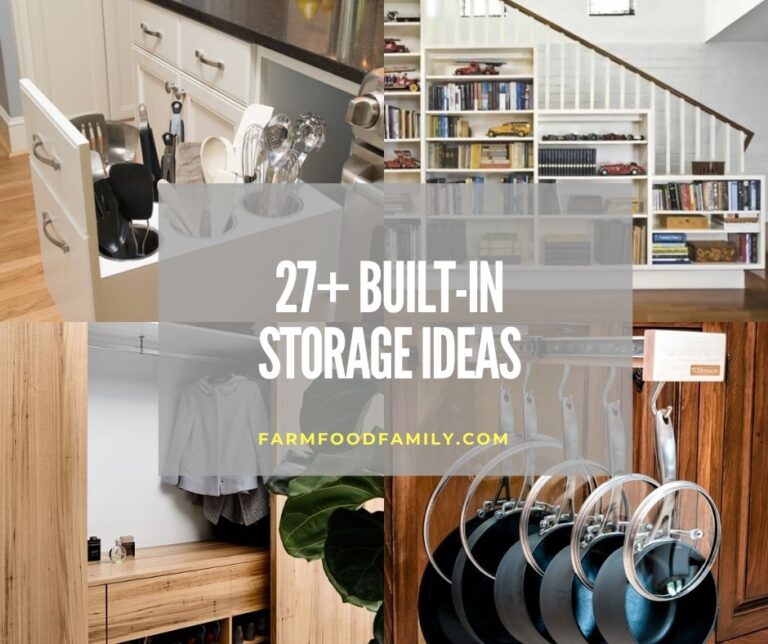
16. Built-in Shelving Units
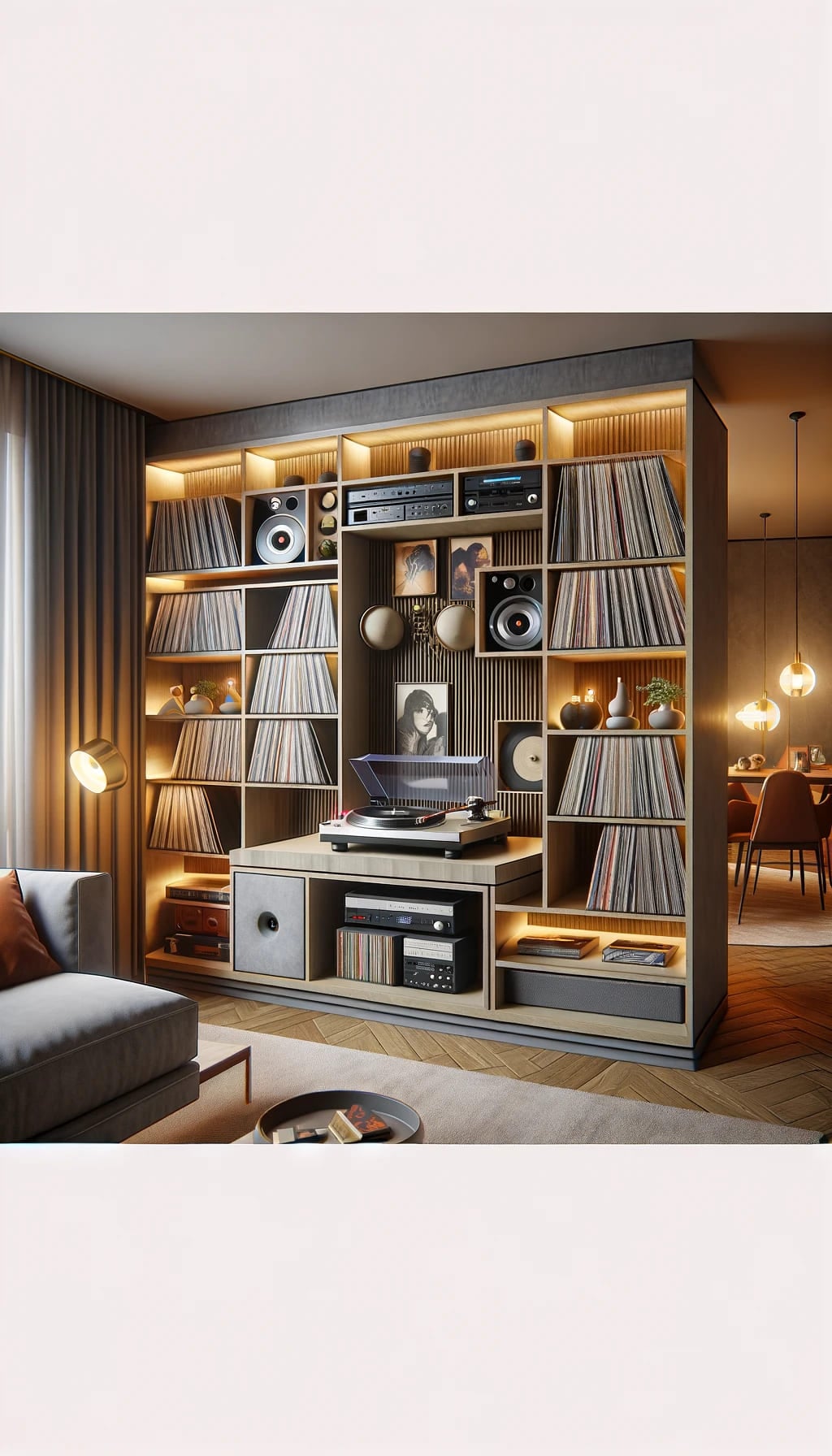
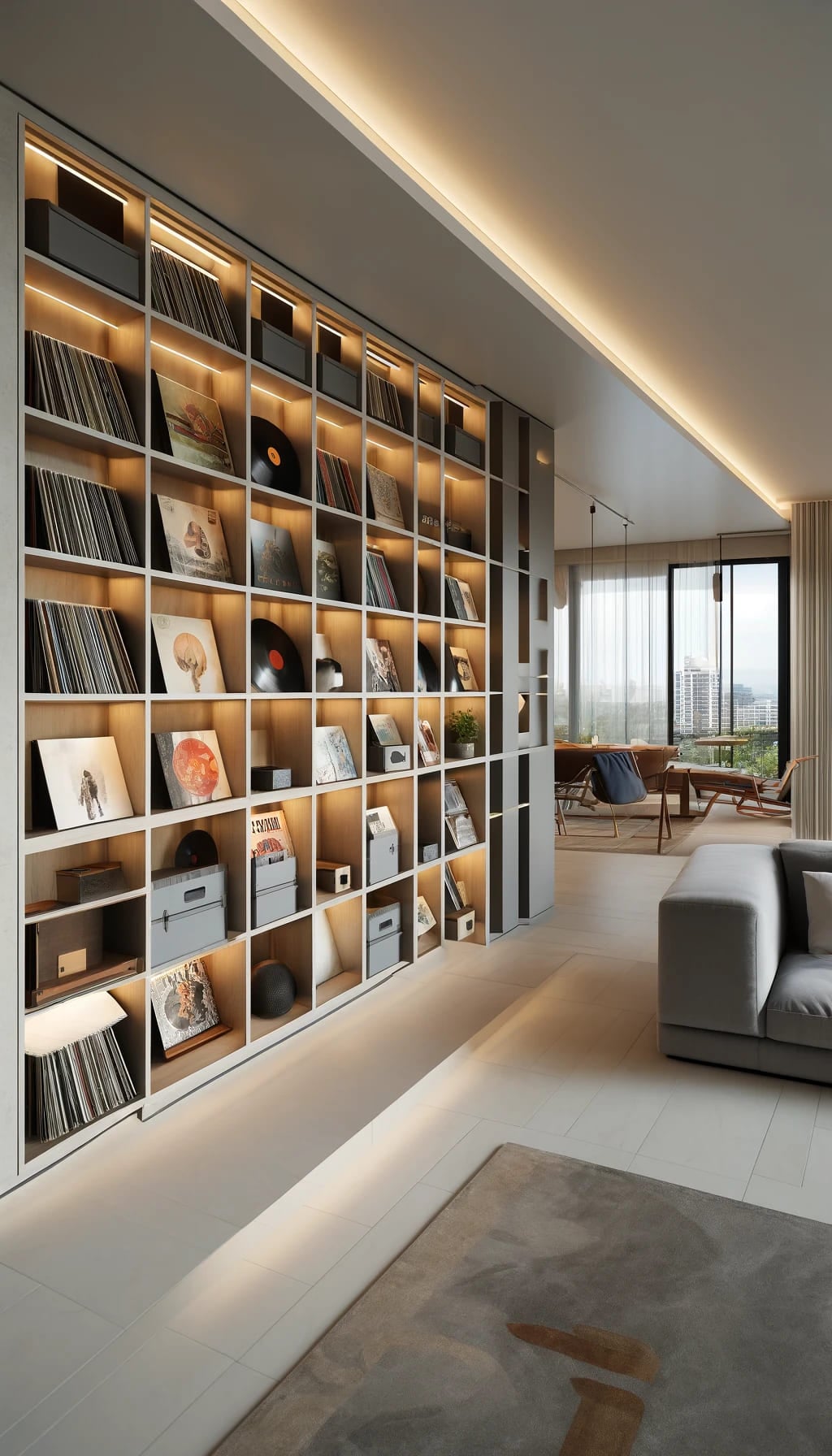
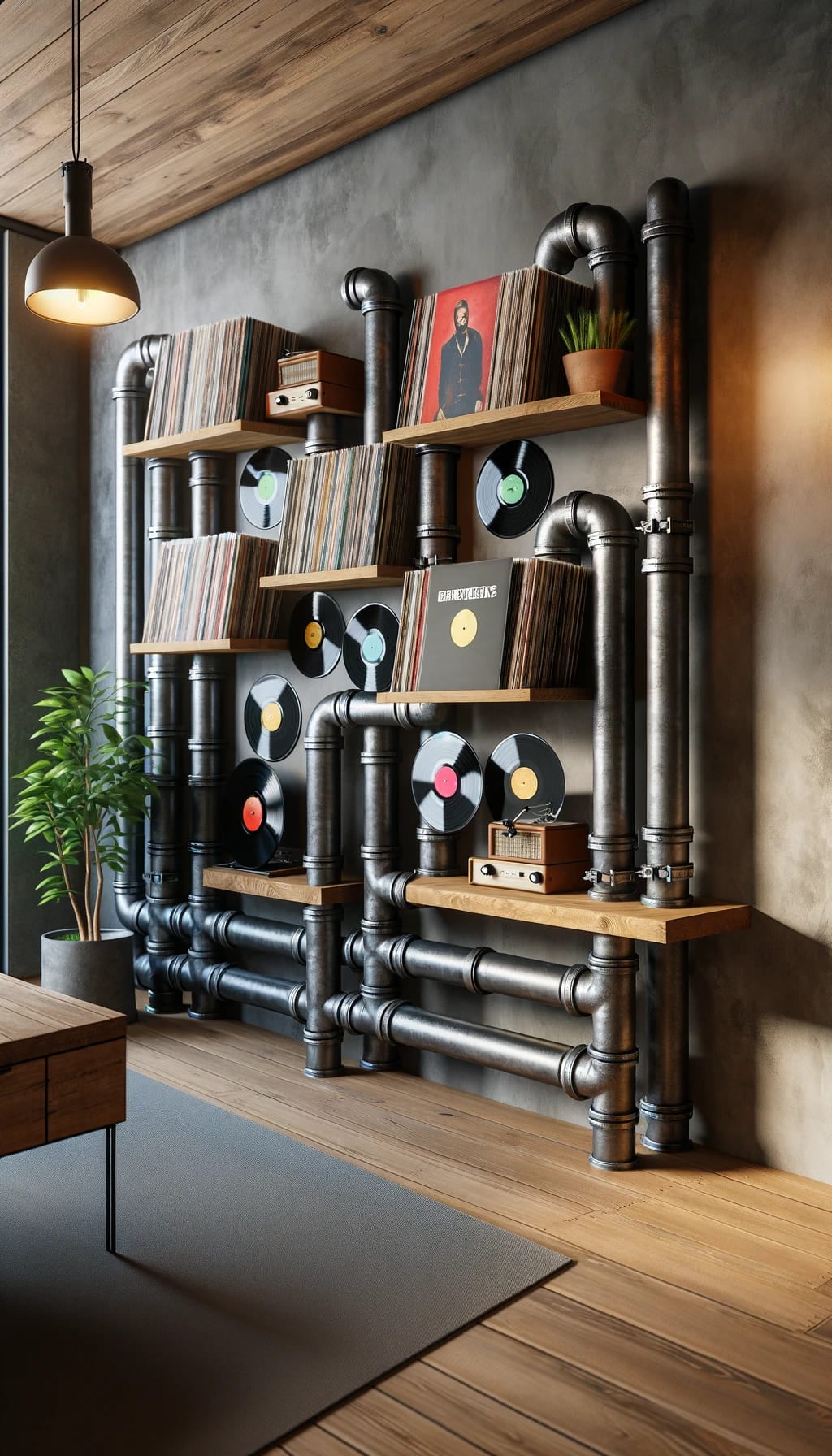
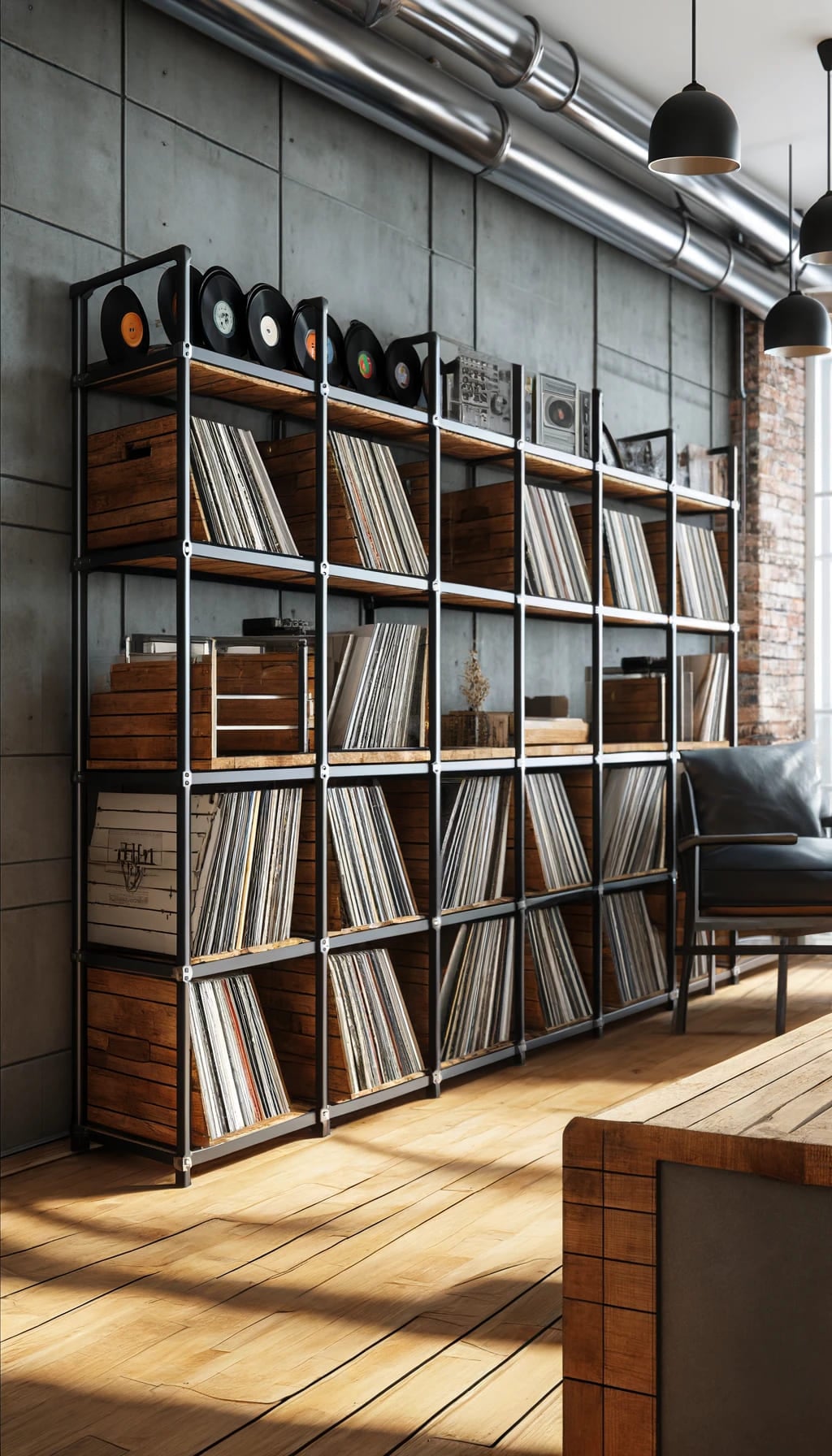
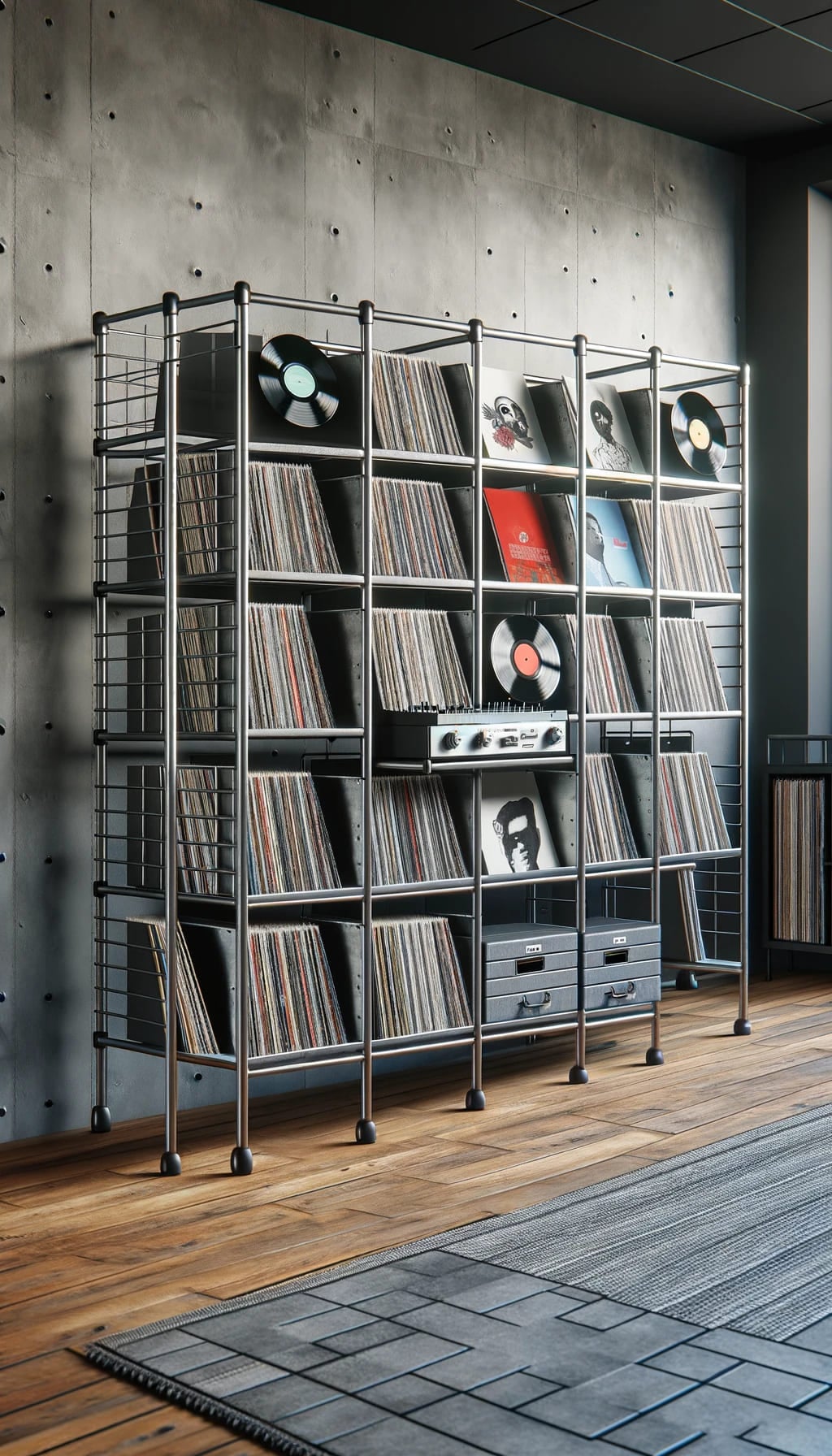
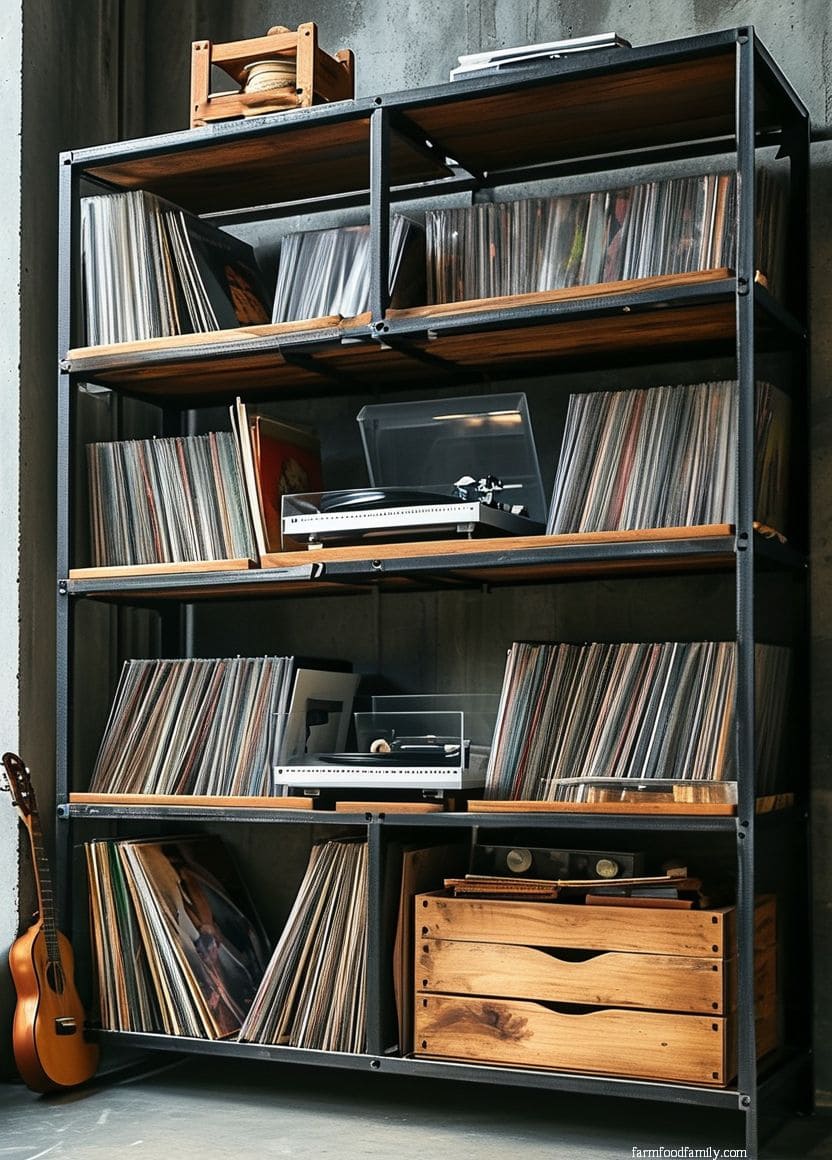
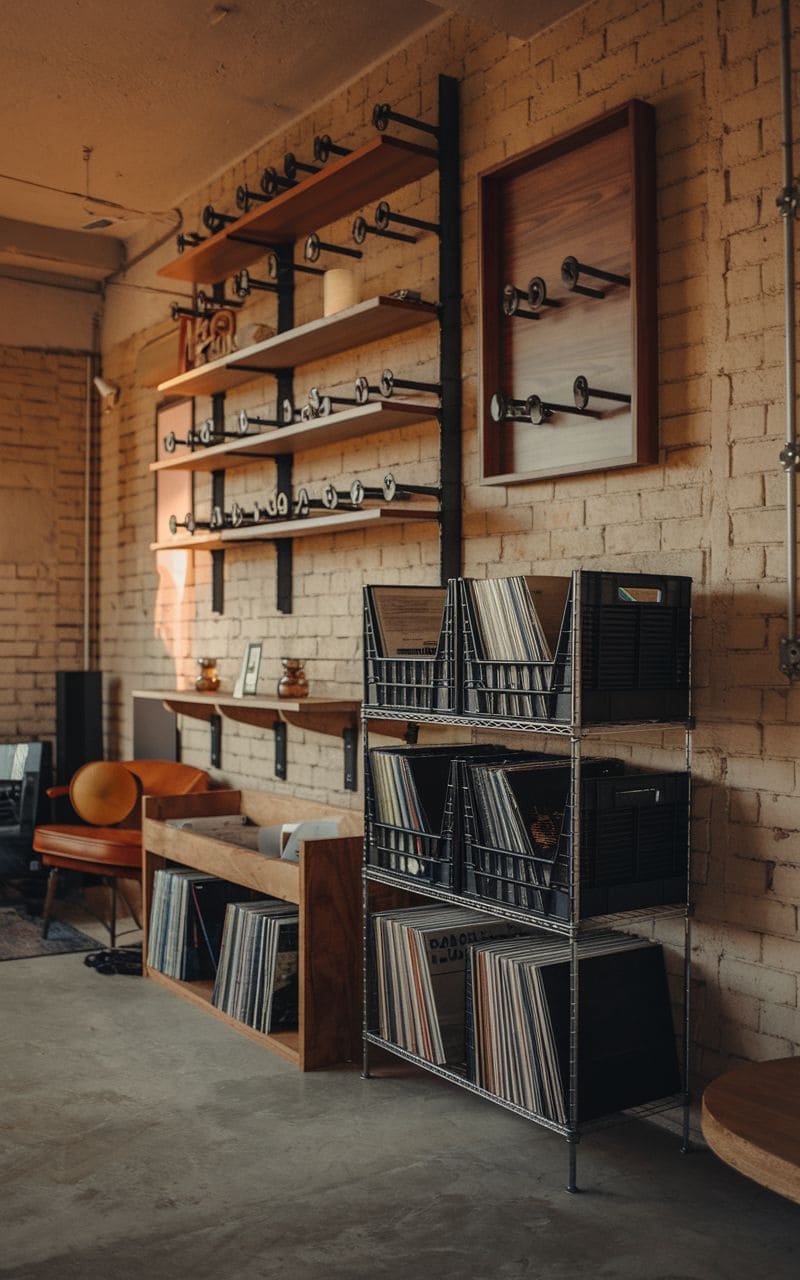
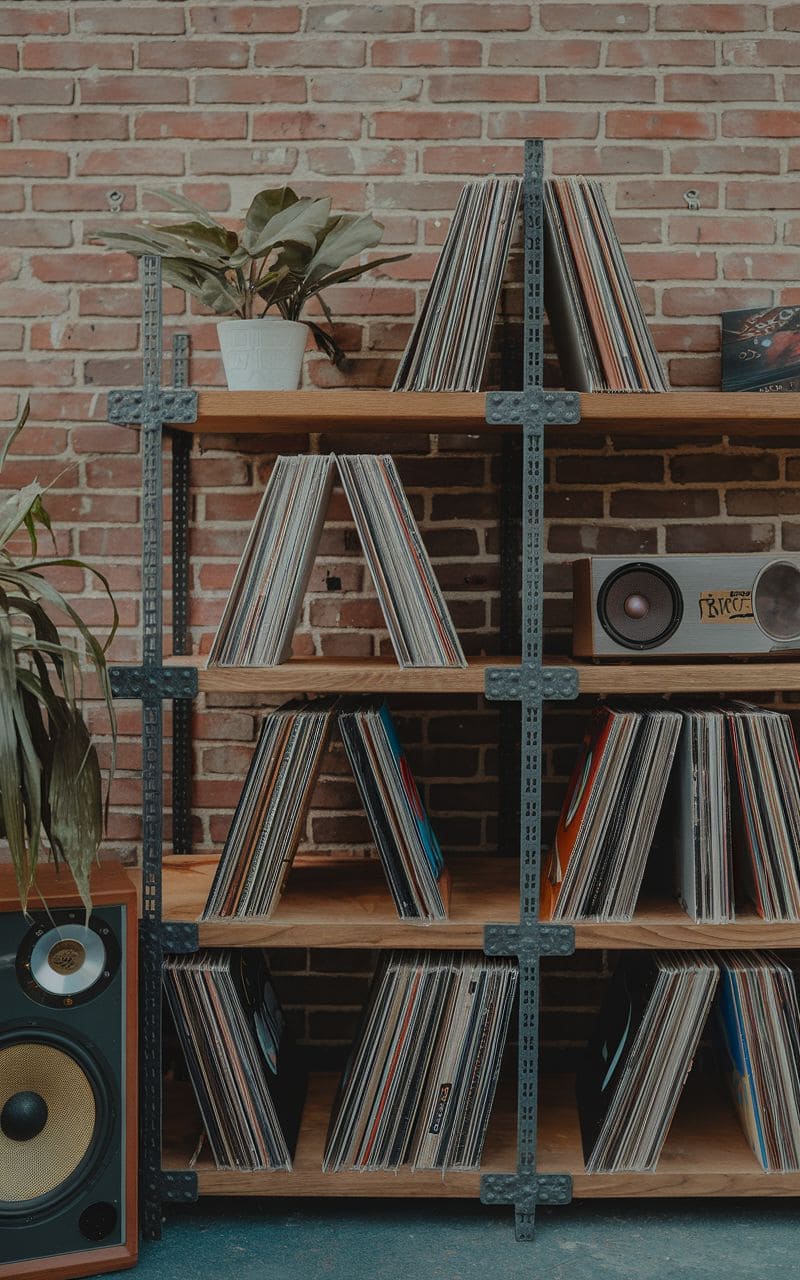
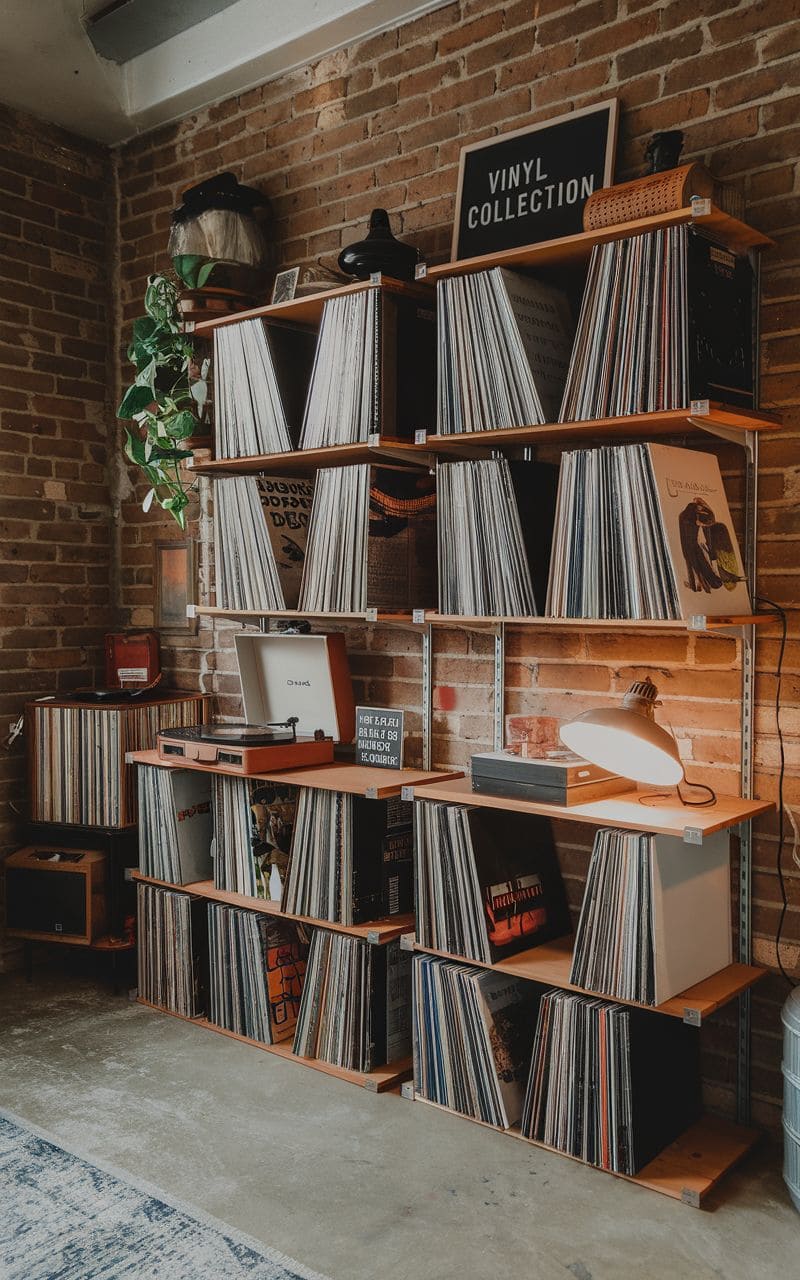
17. Industrial Style Shelving
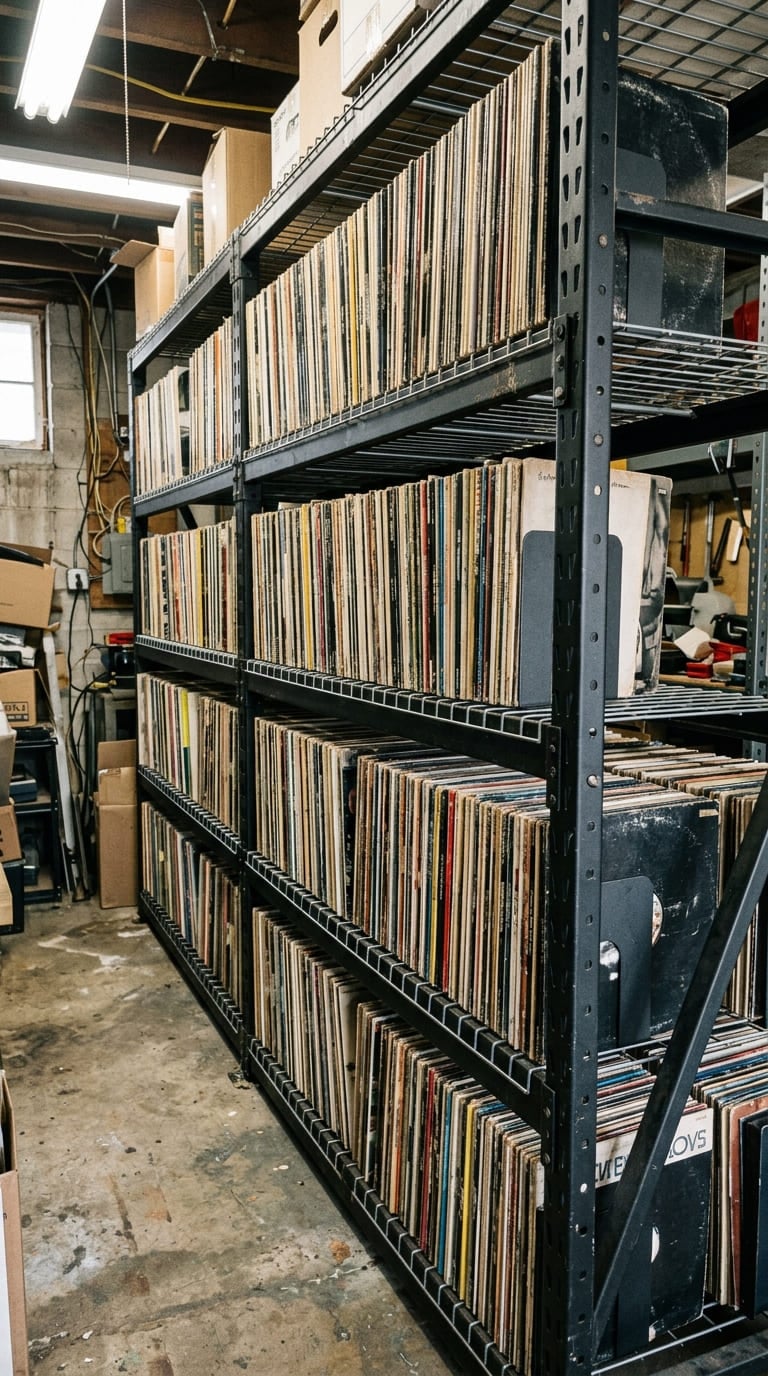
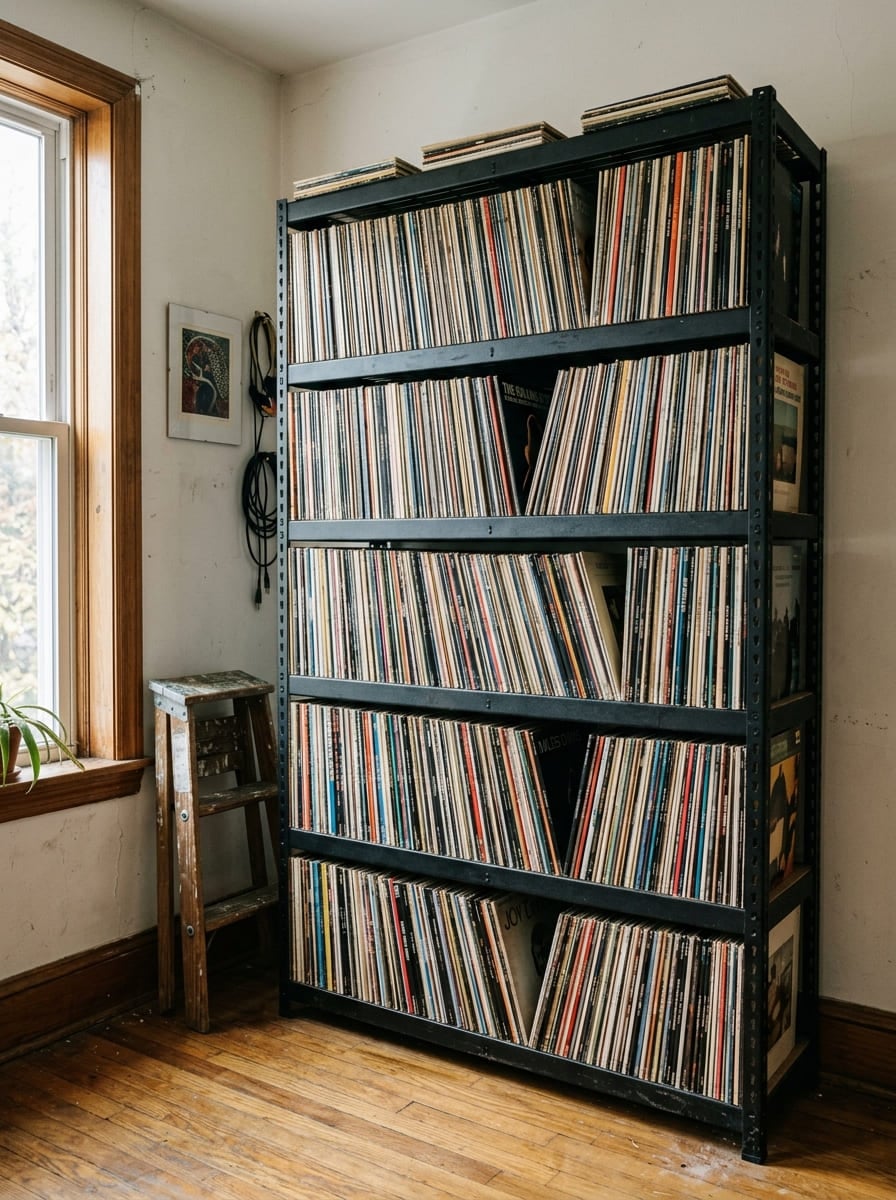
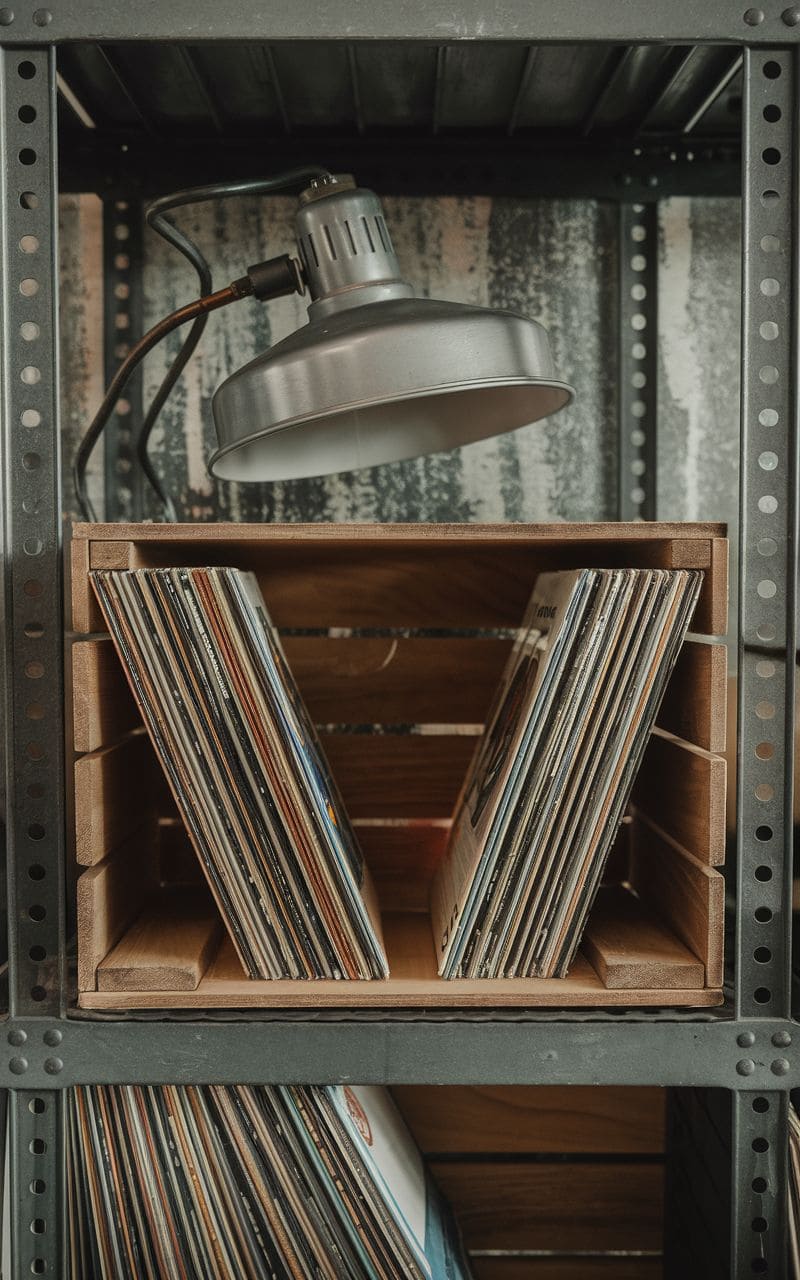
Black metal shelving units, the kind built for garages or warehouses, handle weight that furniture-grade wood shelving can’t. One Reddit collector switched to metal shelving specifically because “the shelves are solid… easier to take albums out and put them back” compared to the flex and sag they were getting from a wooden unit.
It’s not the softest look, but it’s the most honest option for a collection that’s already outgrown its first shelf.
18. Mid-Century Modern Cabinets
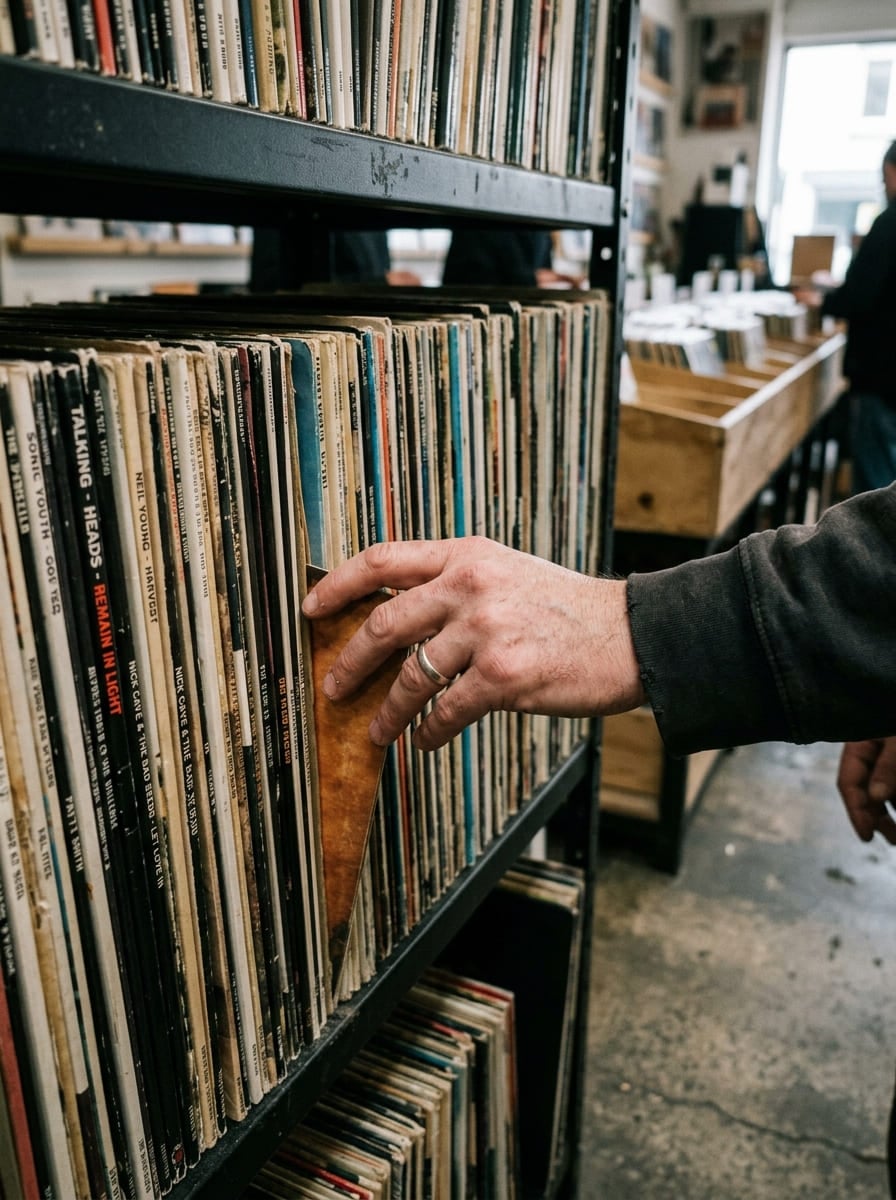
19. Record Store Displays
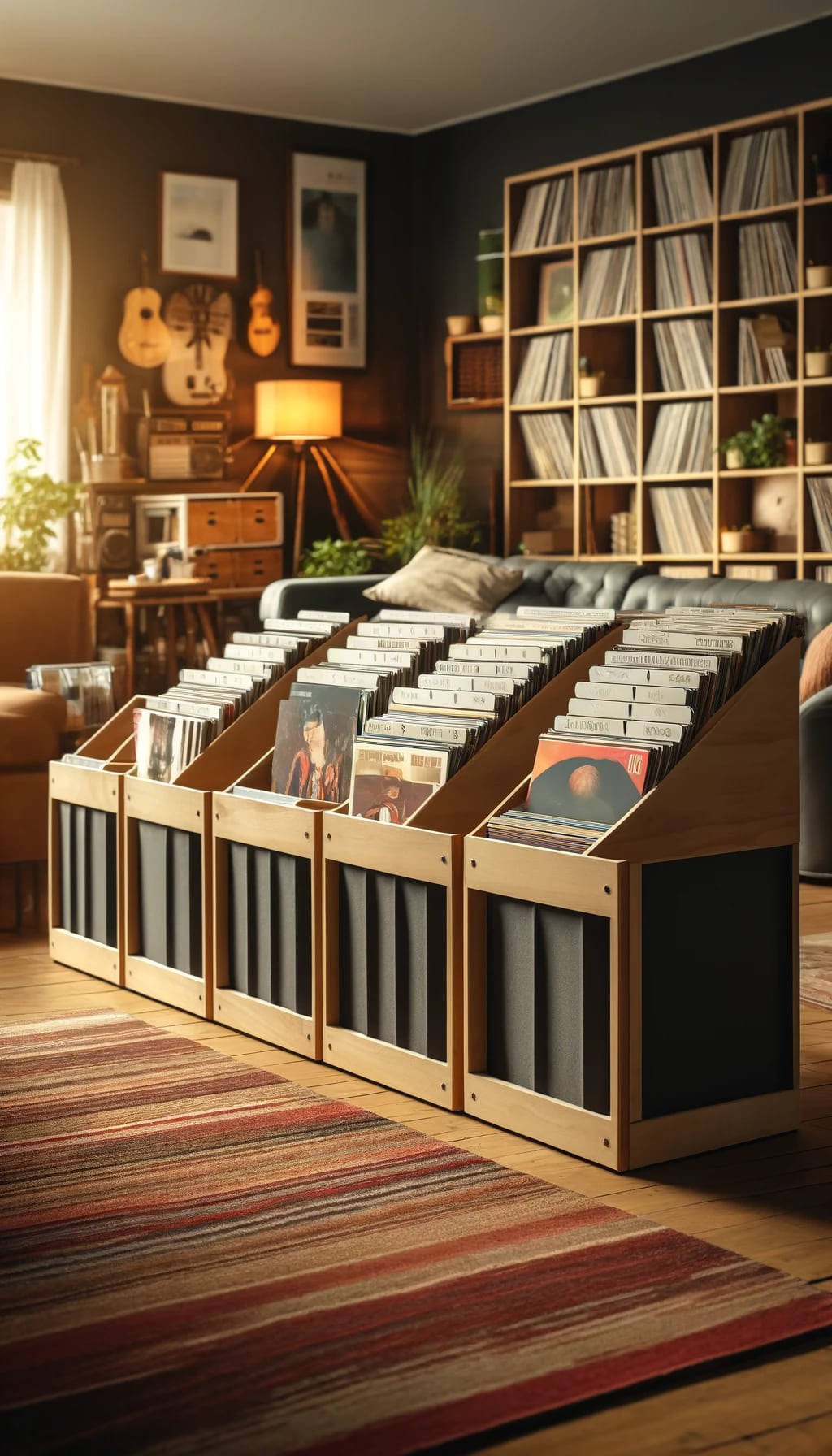
20. Multi-Purpose Furniture
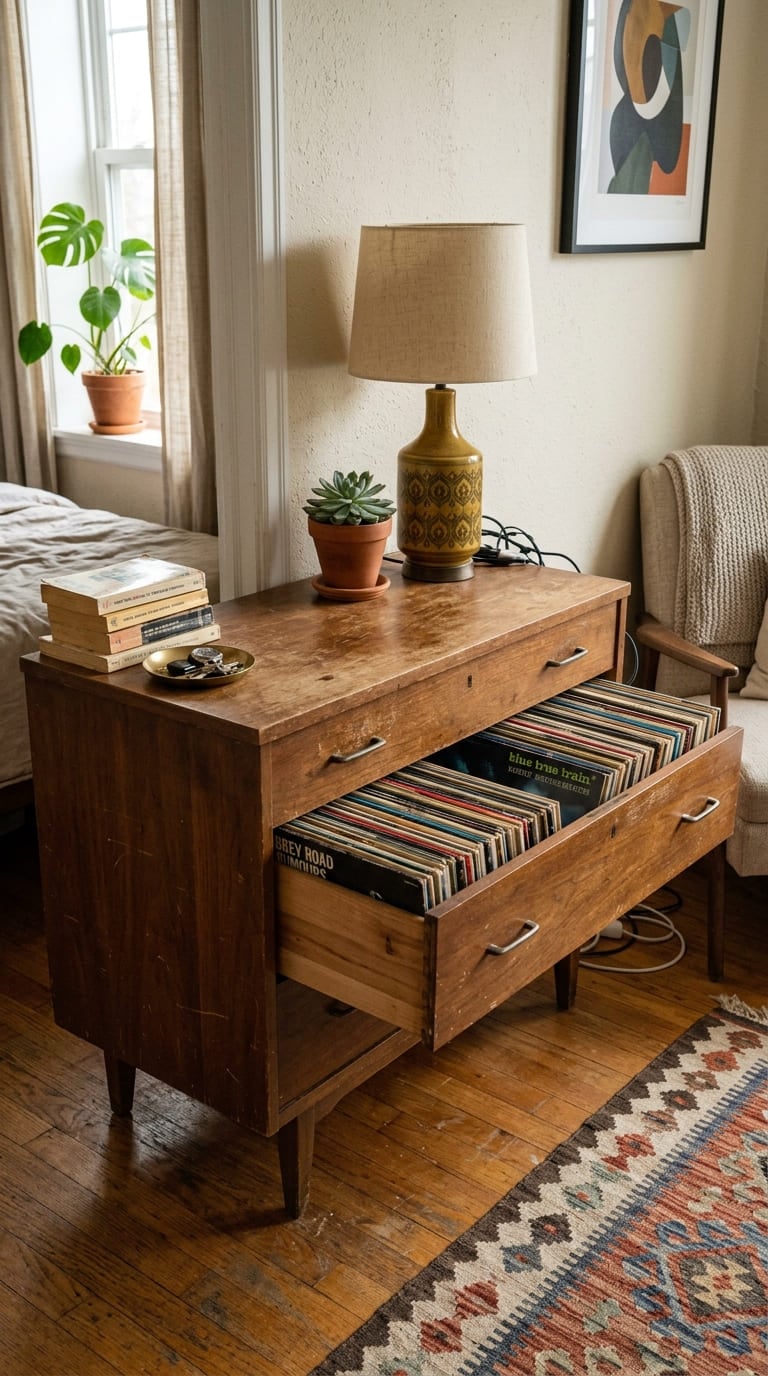
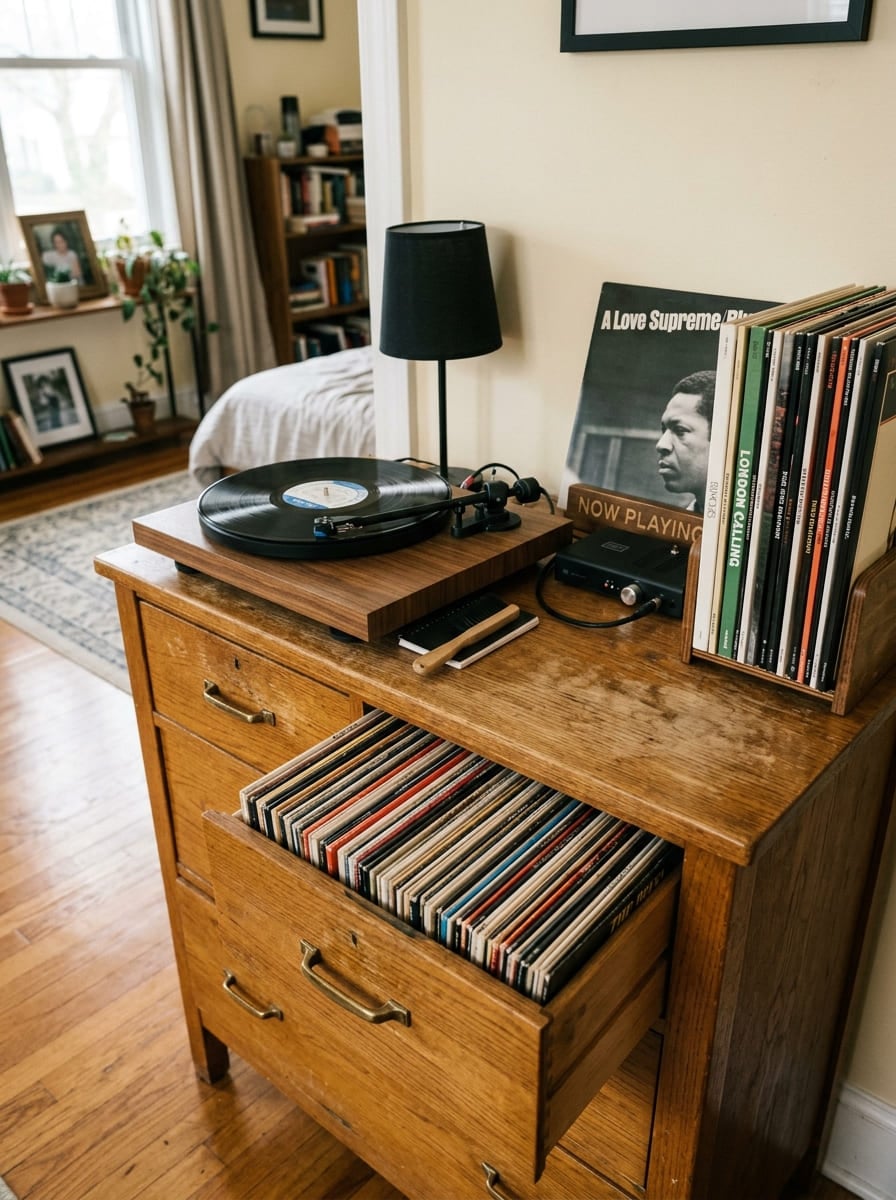
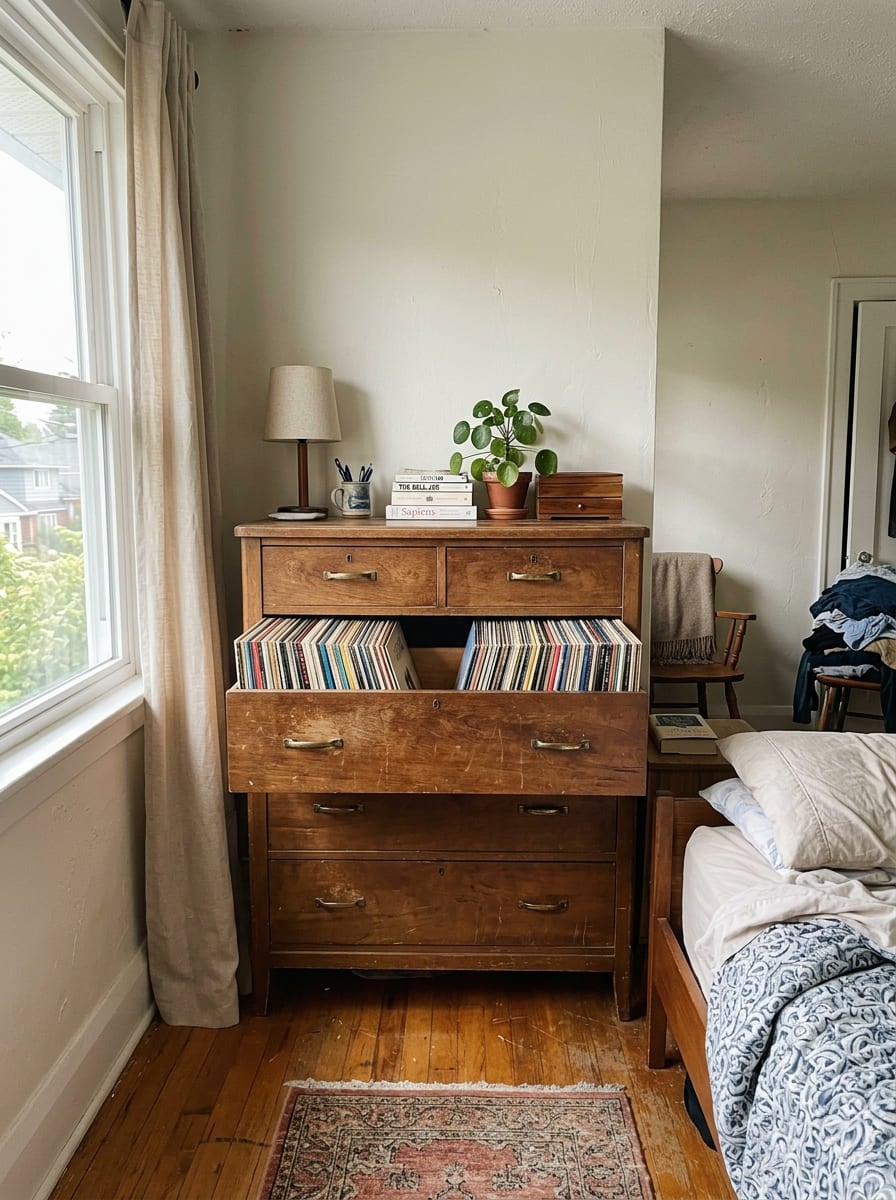
A media console, a low sideboard, even a repurposed dresser with the right internal depth, all can hold vinyl without being marketed as record furniture at all. Measure sleeve depth against shelf depth before committing.
A lot of general-purpose furniture is built a shade too shallow for a standard 12″ sleeve, close but not quite enough clearance.
21. Floating Shelves
Where wall-mounted gallery shelves lean decorative, floating shelves without visible brackets lean minimal, records stacked flat-front with nothing showing but the wood and the album spines.
The trick is spacing: leave gaps every 15 to 20 records rather than packing one continuous run, since an unsupported row that long will start to bow under its own weight over time.
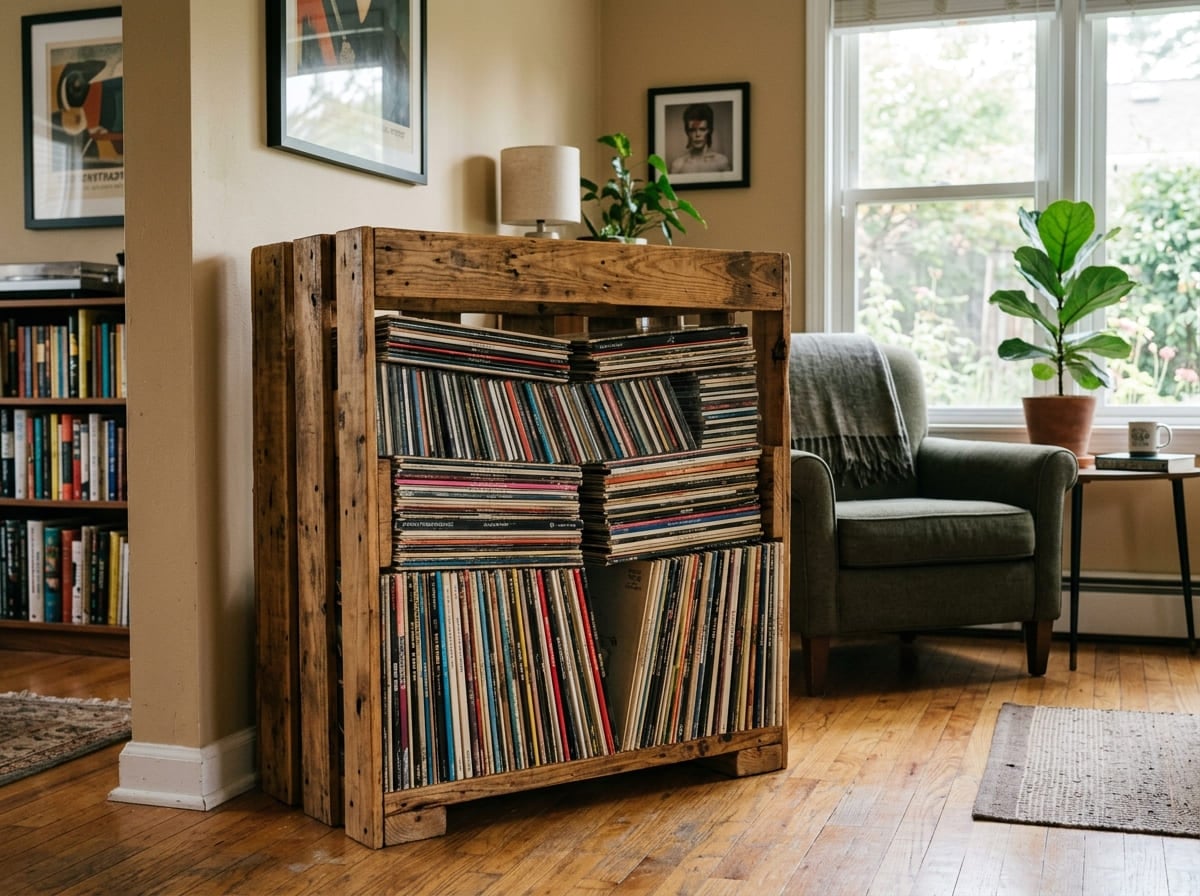
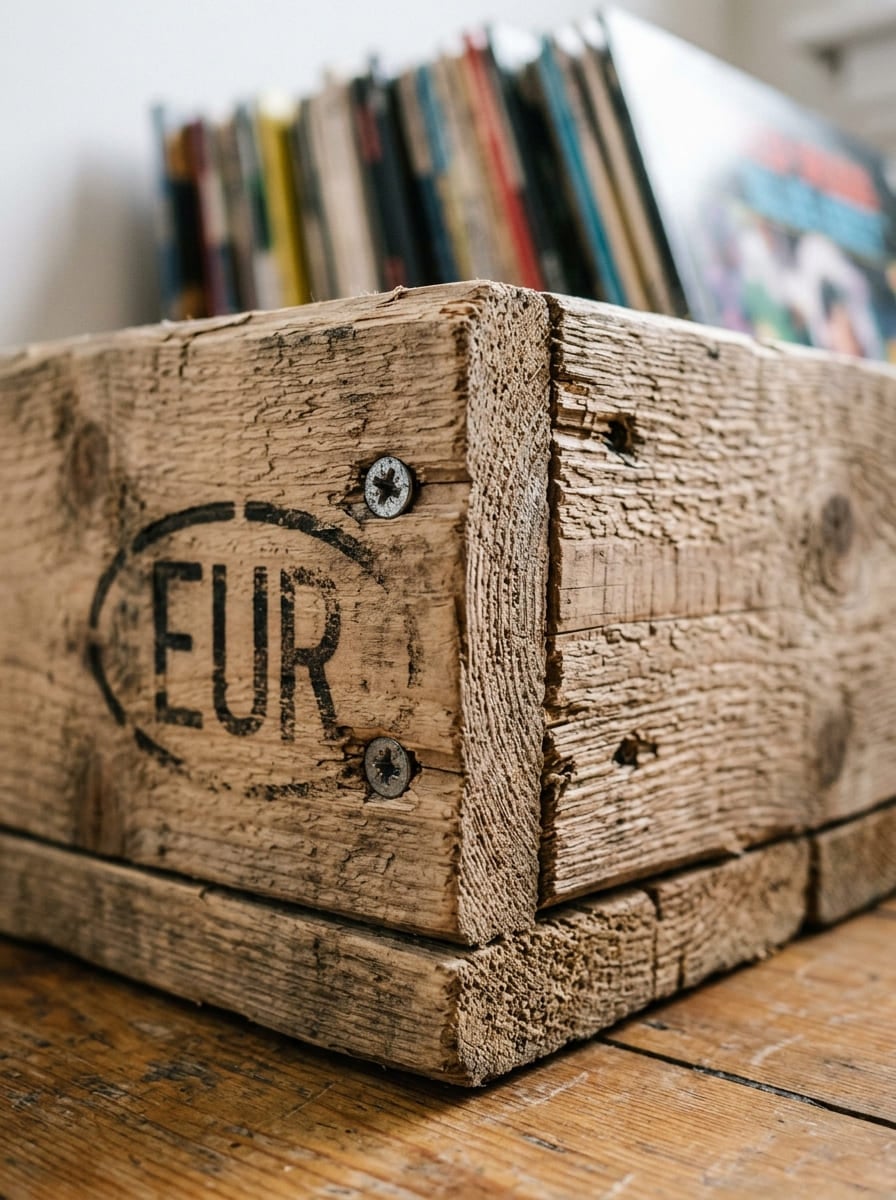
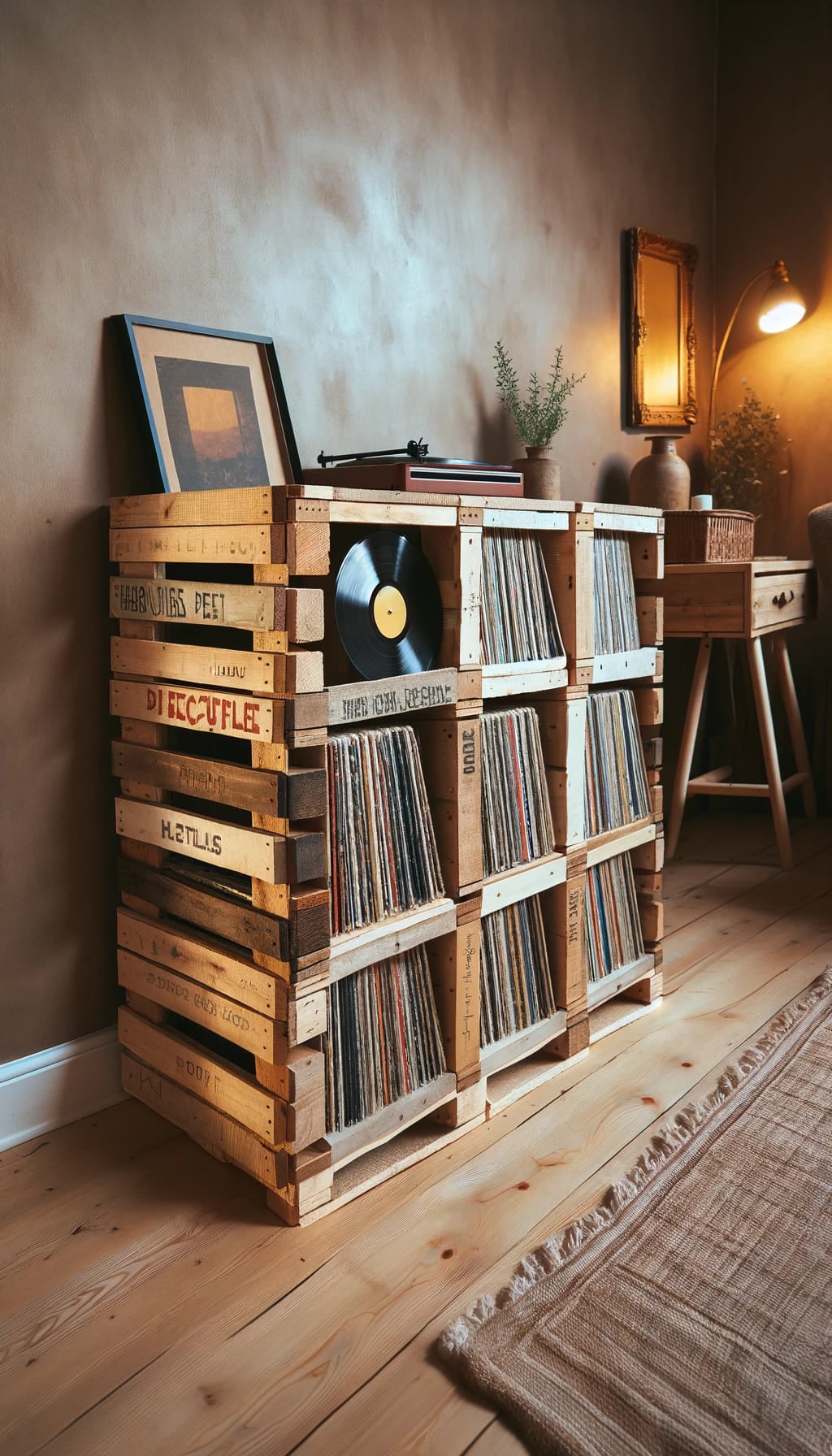
22. DIY Pallet Storage
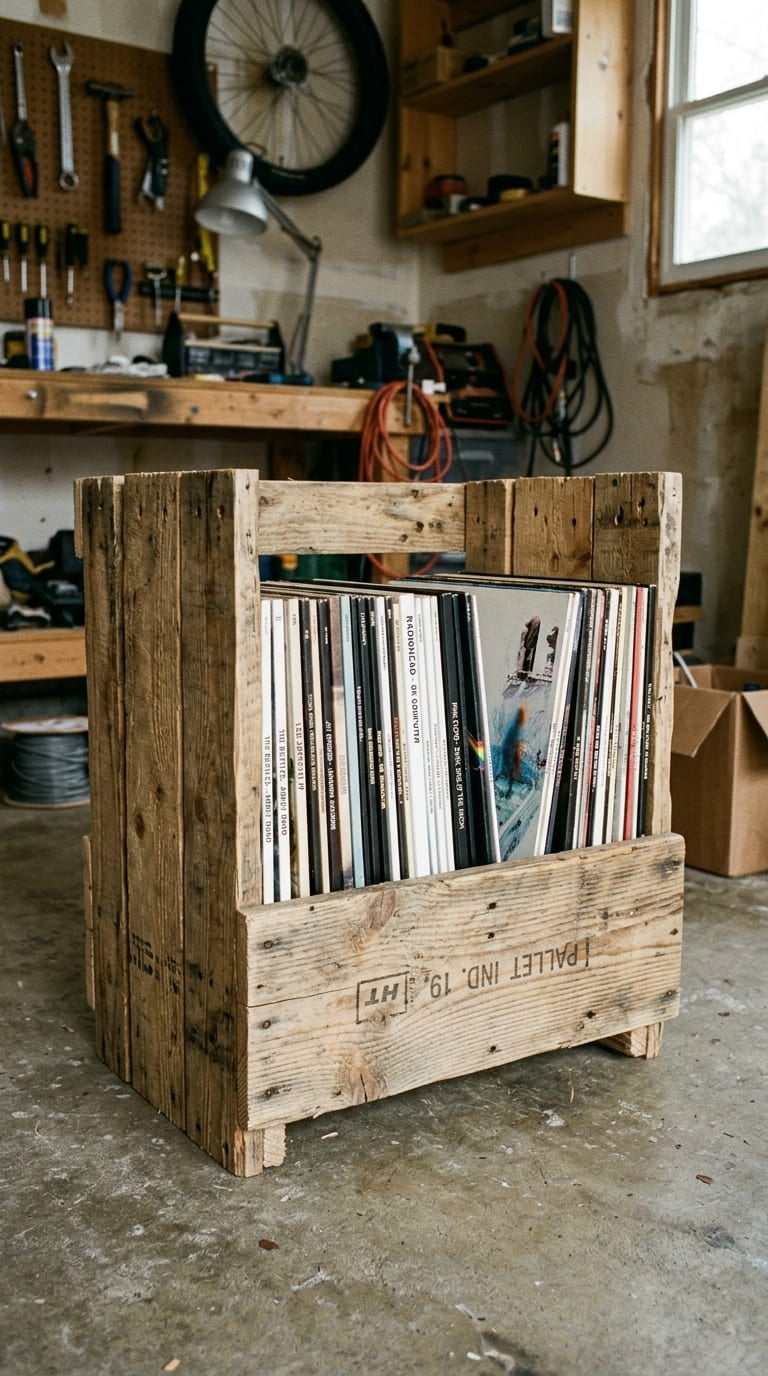
Reclaimed shipping pallets, cut down and reassembled into a rack, cost close to nothing beyond labor and give a rougher, more workshop-built look than anything store-bought. It’s a weekend project, not a purchase, and it’s the cheapest idea on this list by a wide margin.
Sand aggressively before use. Pallet wood picks up splinters and rough edges that will chew through paper sleeves fast.
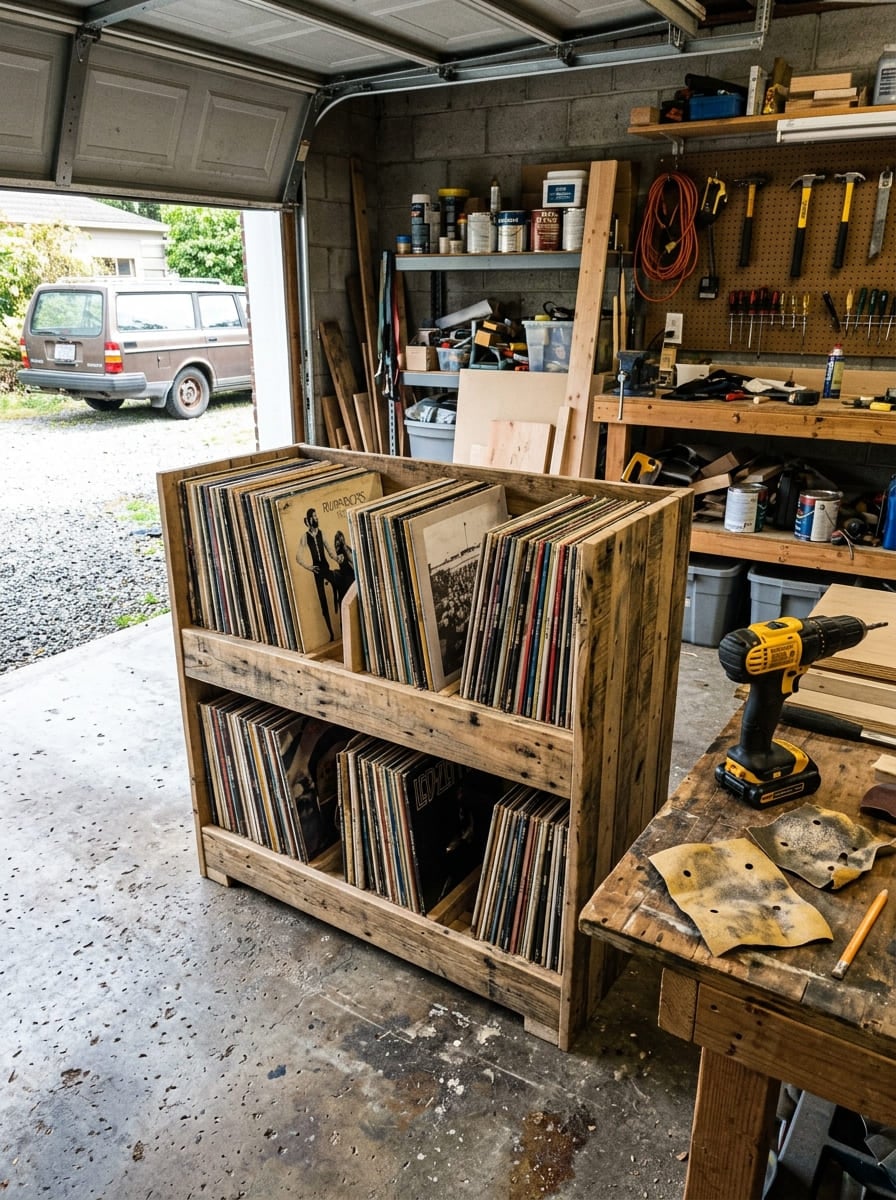
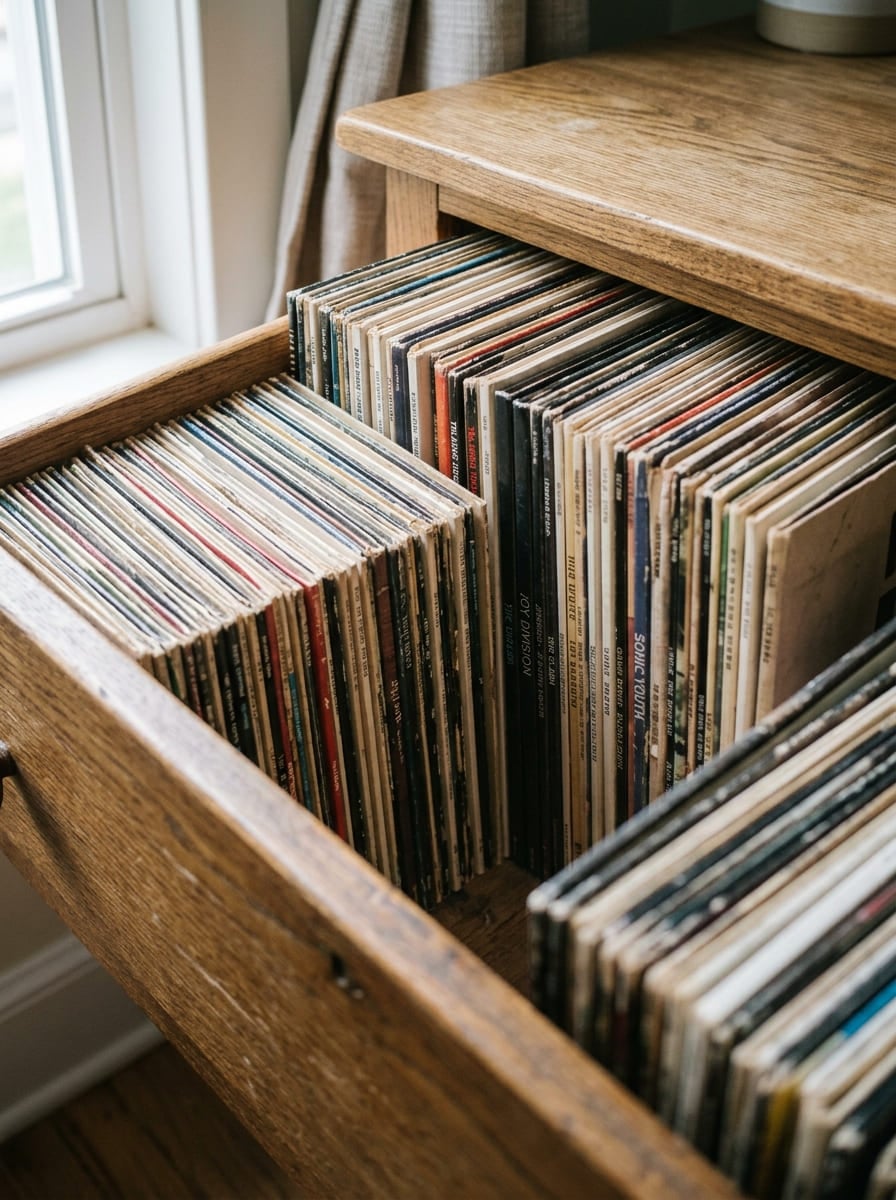
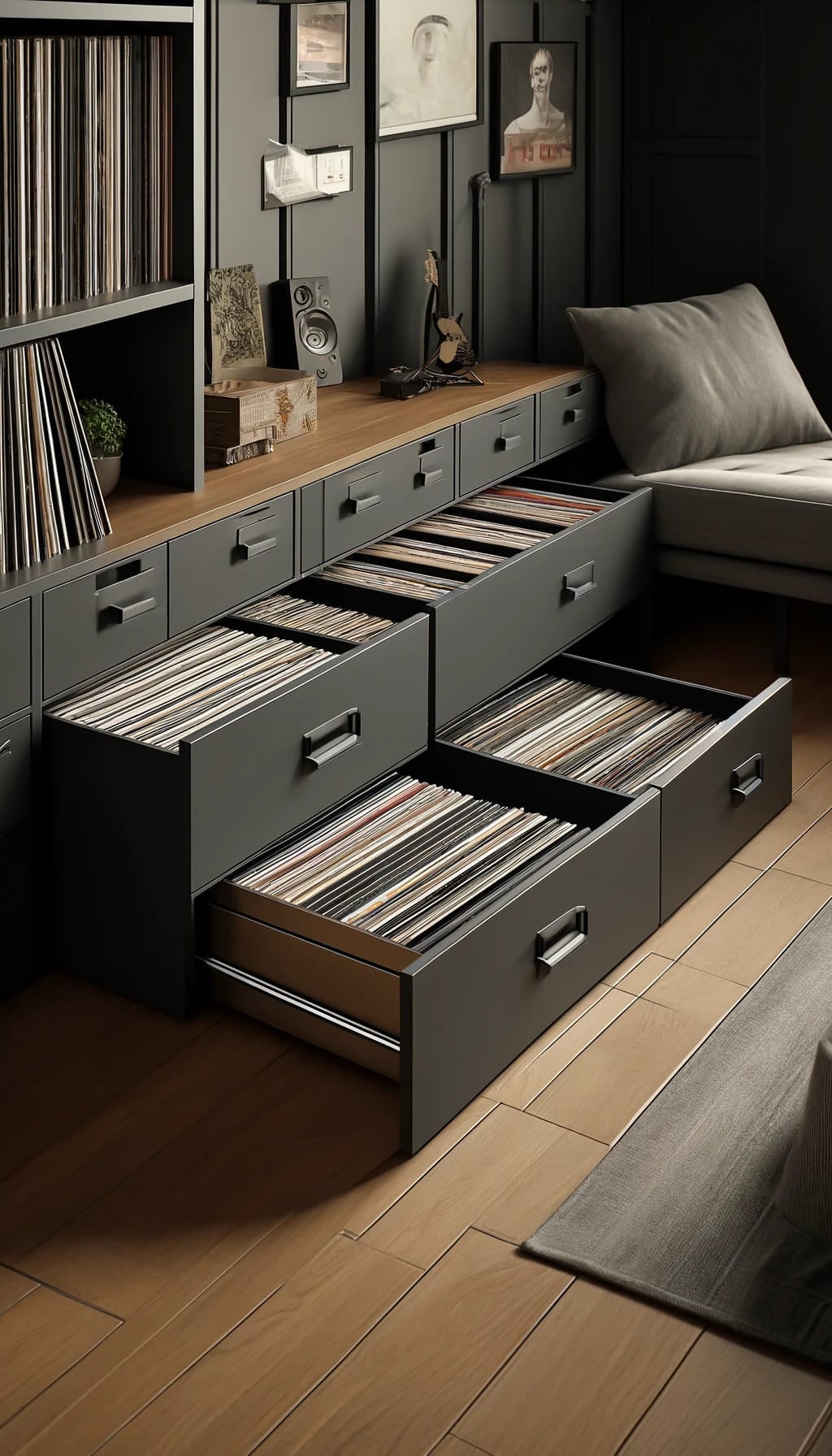
23. Drawer Units
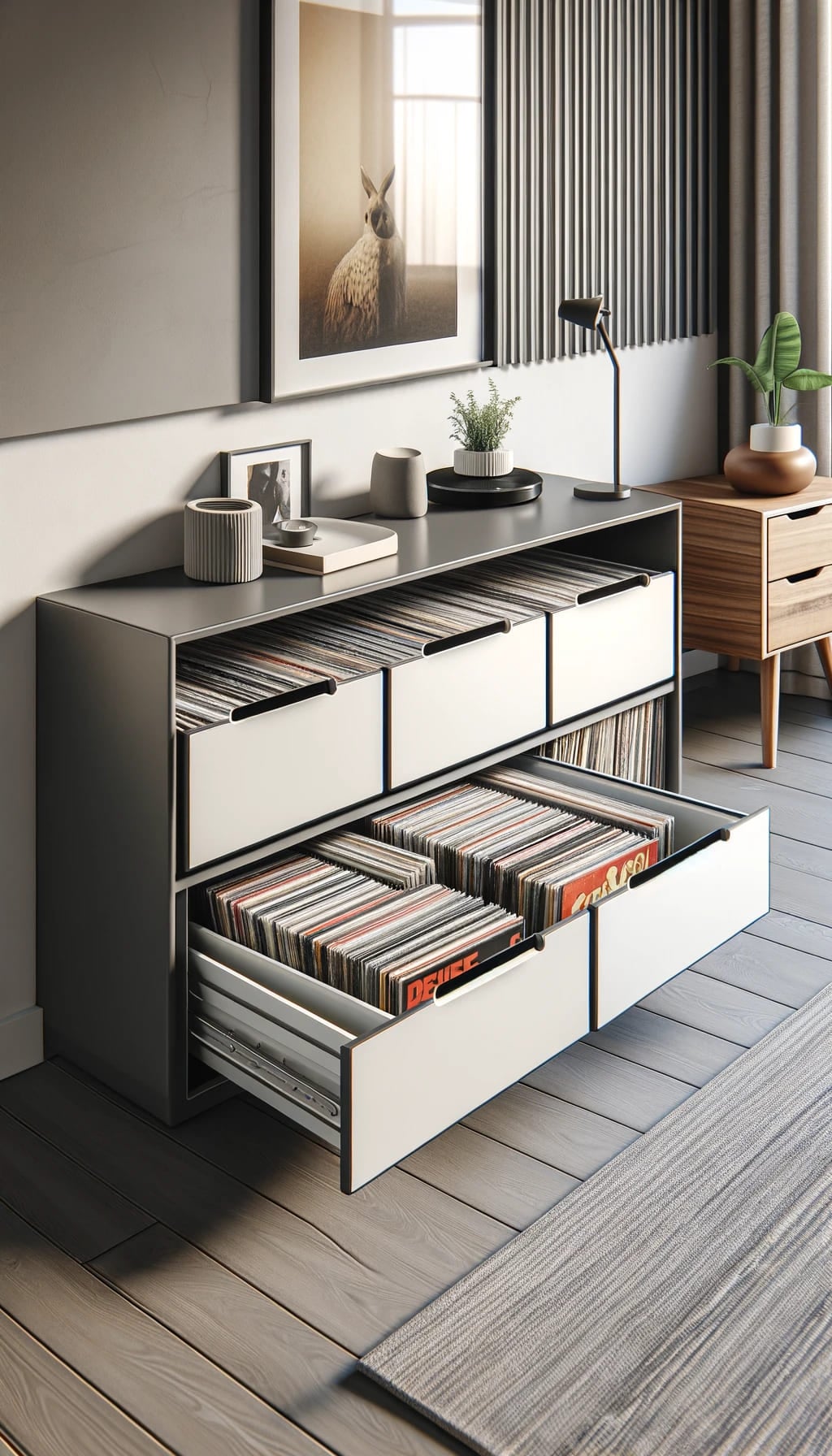
Ready-made drawer cabinets promise big numbers, 300, 400, sometimes 500-plus LPs, and the promised numbers rarely survive contact with a real collection. A Reddit thread specifically about one of these drawer units summed it up: “Manufacturer advertised capacity of 550 LPs was bs, closer to 300 max,” with gatefolds and doubles cited as the reason.
Custom-built versions do better. Collectors who commission cabinet makers report drawers holding around 100 standard-weight records each, with dimensions pulled from shared community plans rather than a manufacturer spec sheet.
24. Bookshelf Conversions
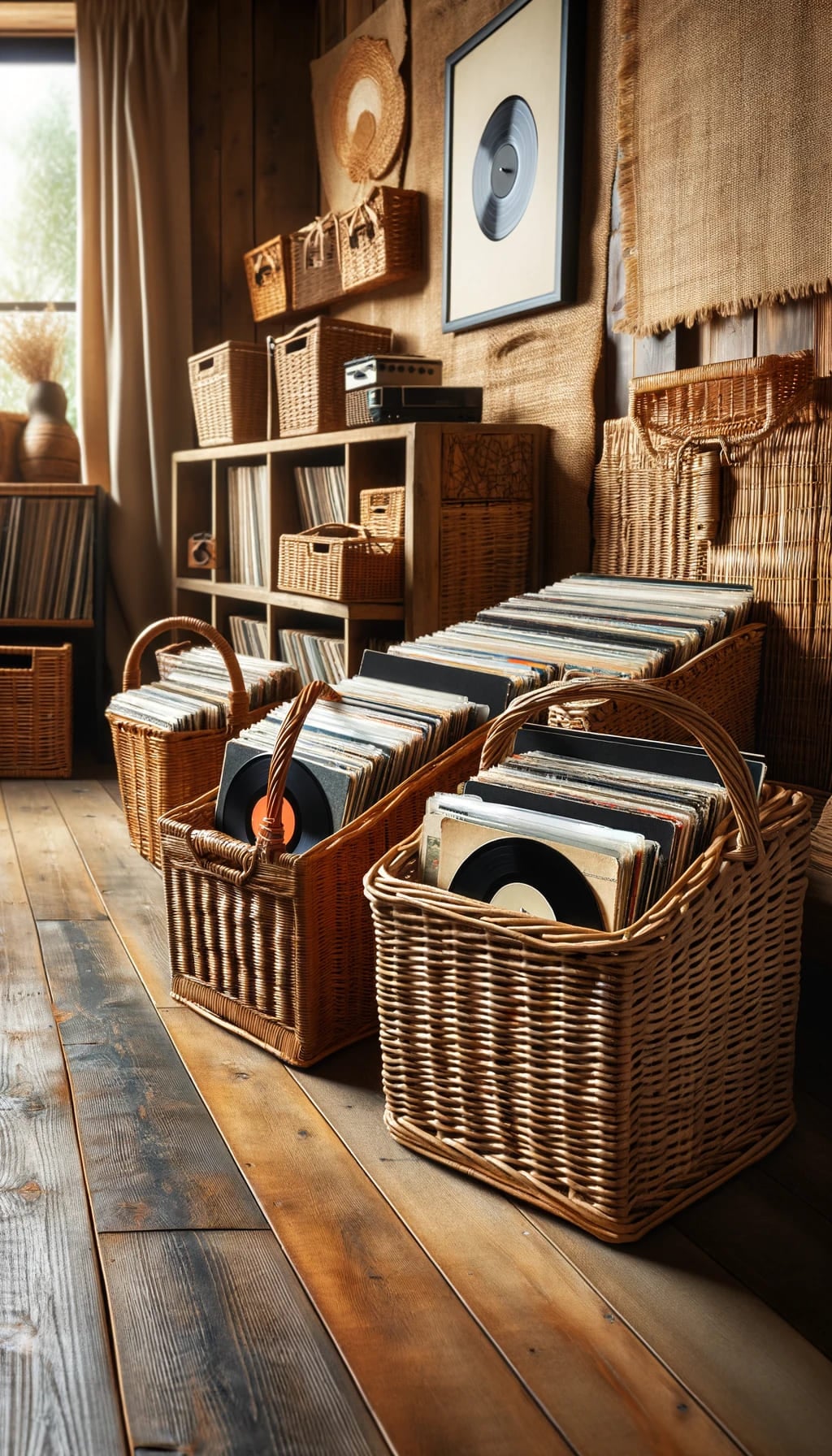
25. Decorative Baskets and Bins
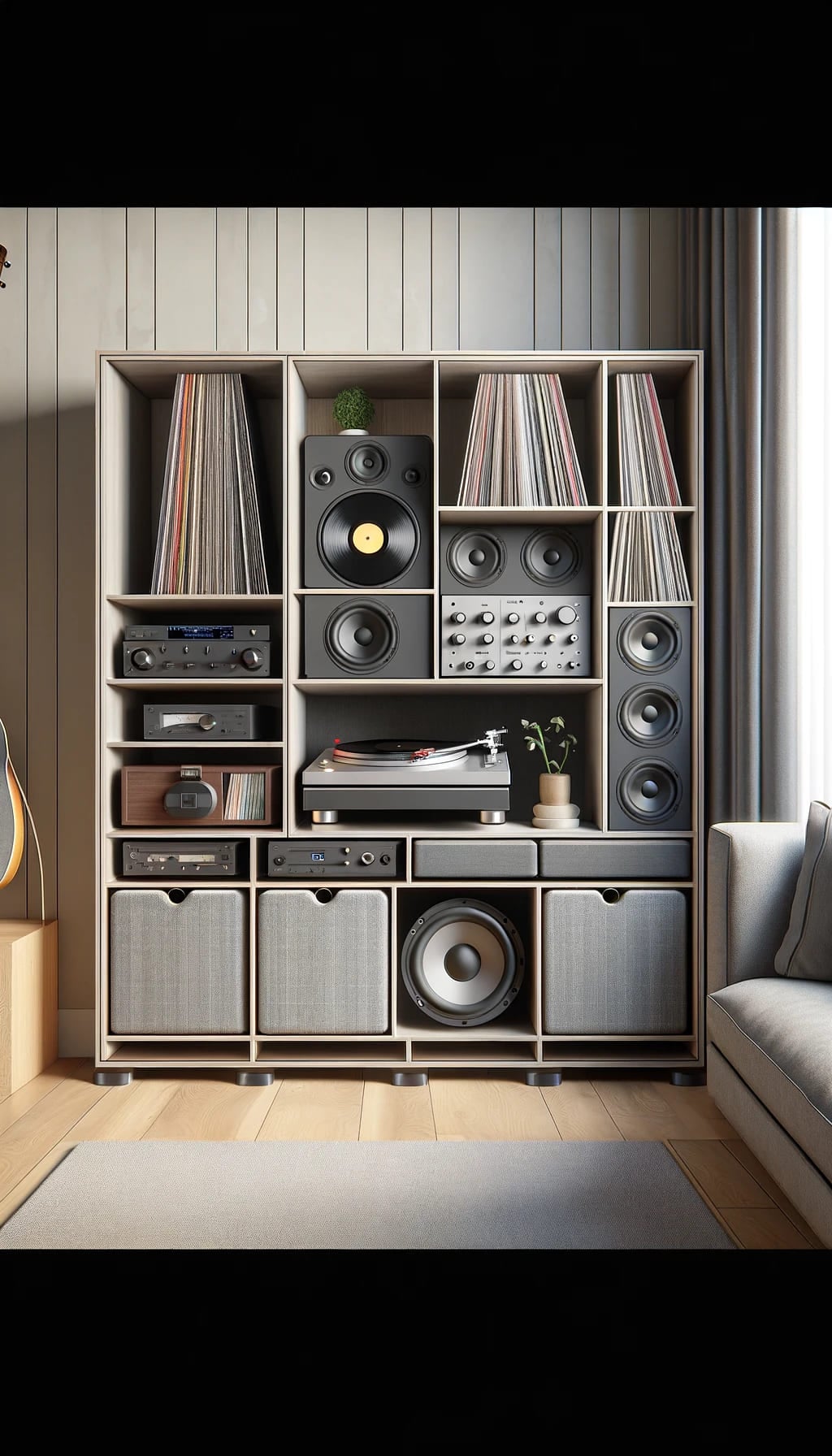
26. Custom-Made Storage Solutions
27. Open Racks
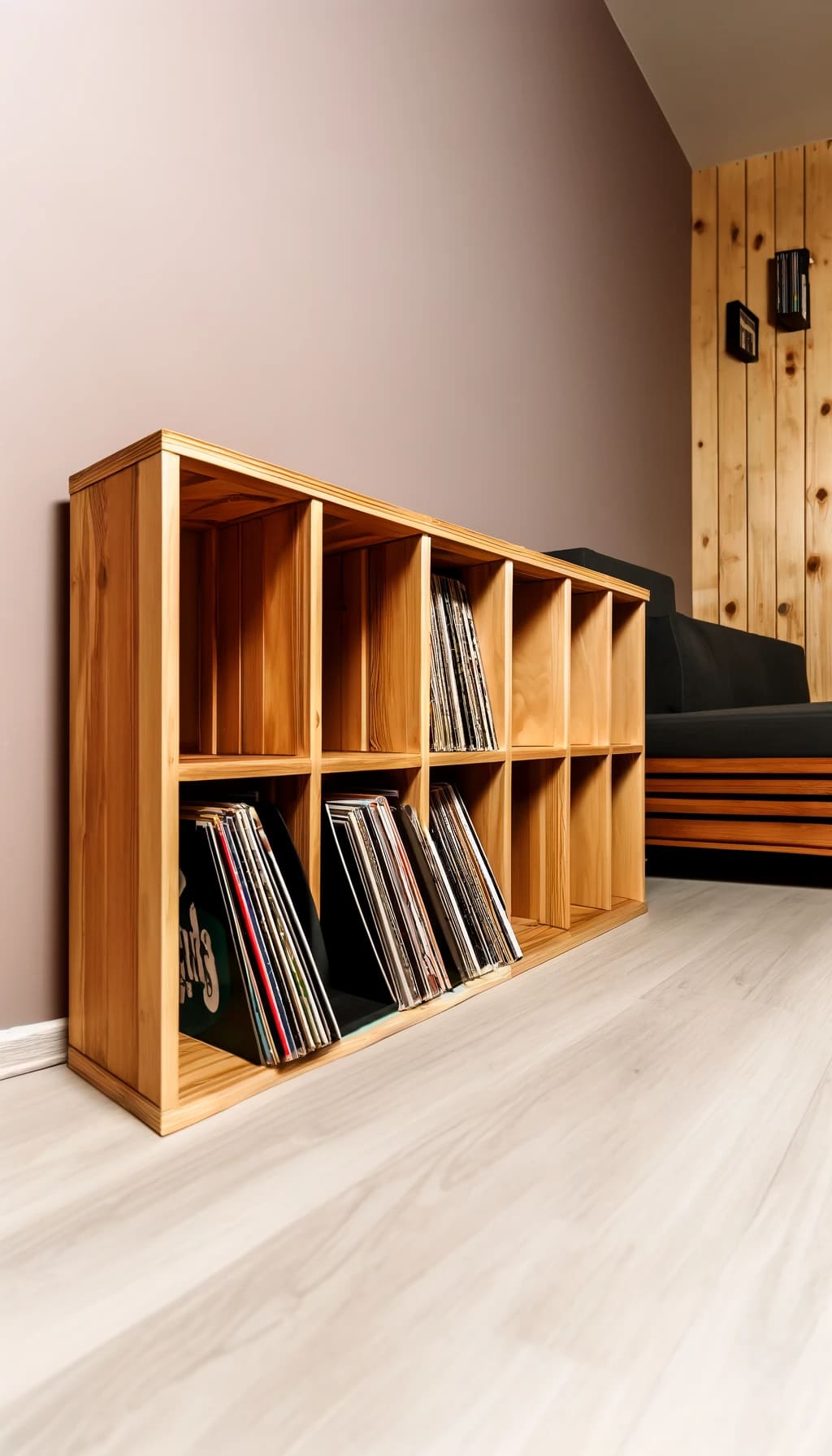
Open, ladder-style racks skip doors and backs entirely, just a frame and dividers. They’re the fastest to flip through and the cheapest to expand, since adding capacity usually means adding another section rather than replacing the whole unit.
The tradeoff is dust. Open racks expose spines and sleeve edges more than anything with doors, so factor in more frequent cleaning if the room isn’t already low-dust.
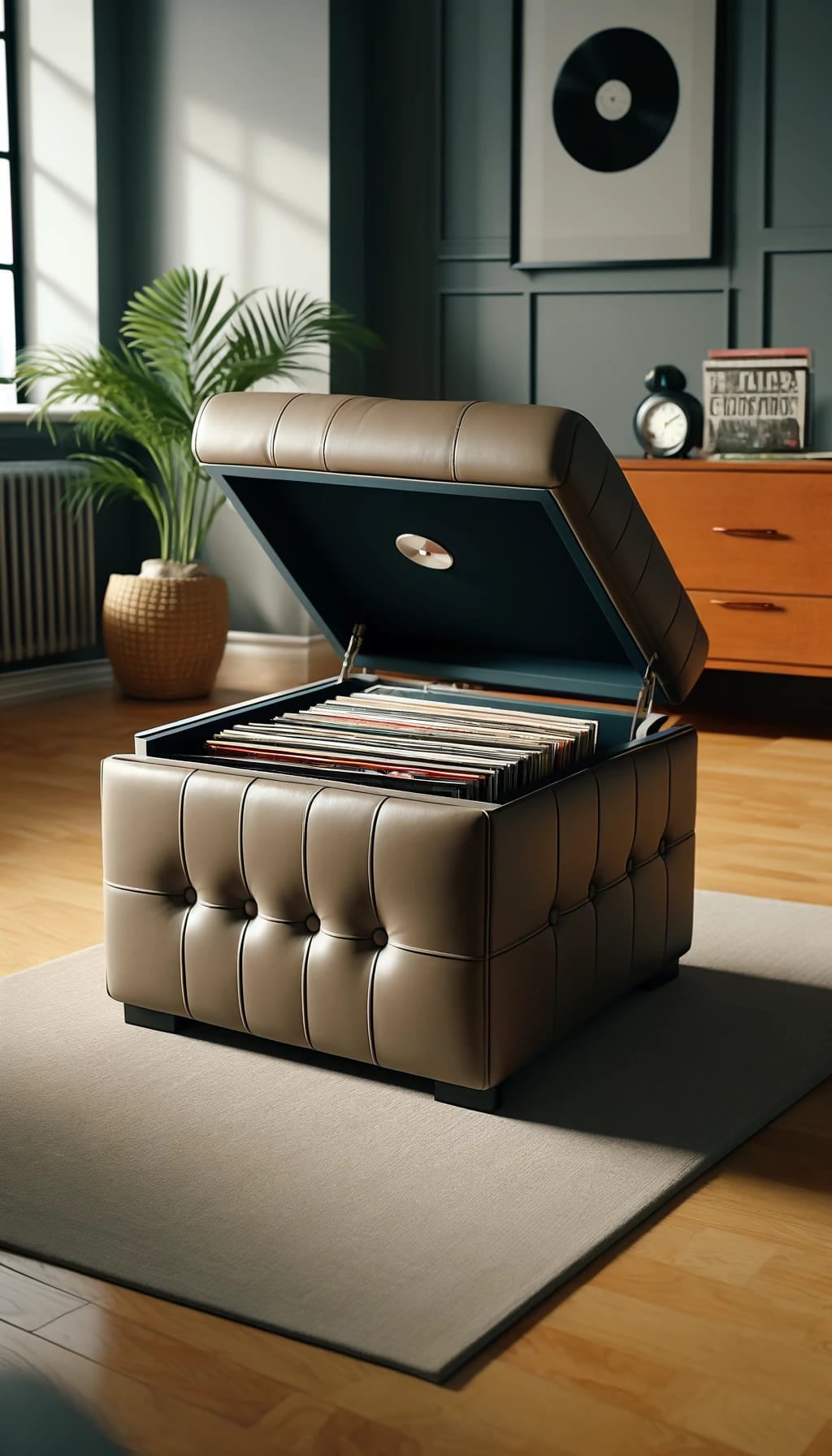
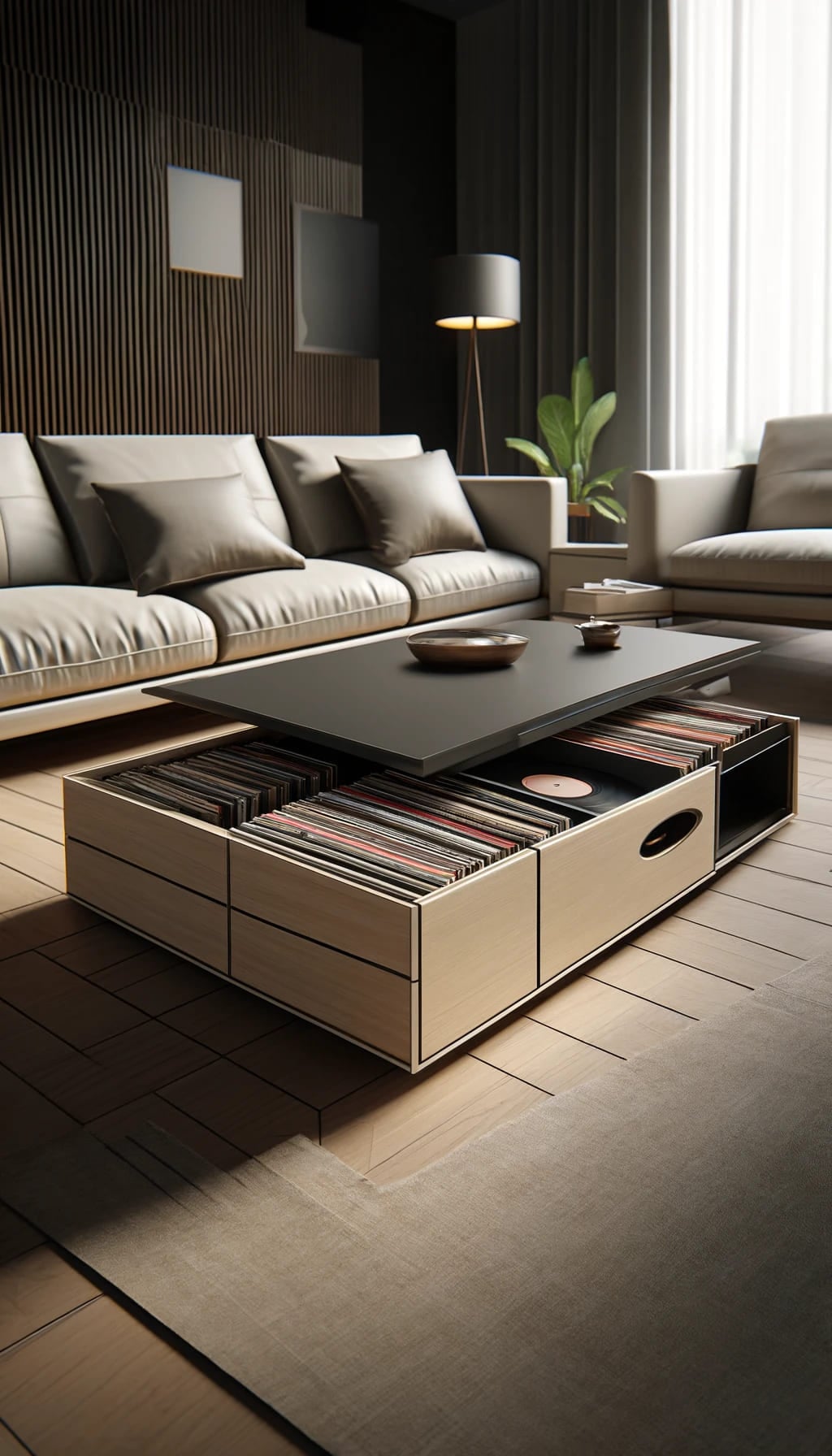
28. Hidden Storage Inside Existing Furniture
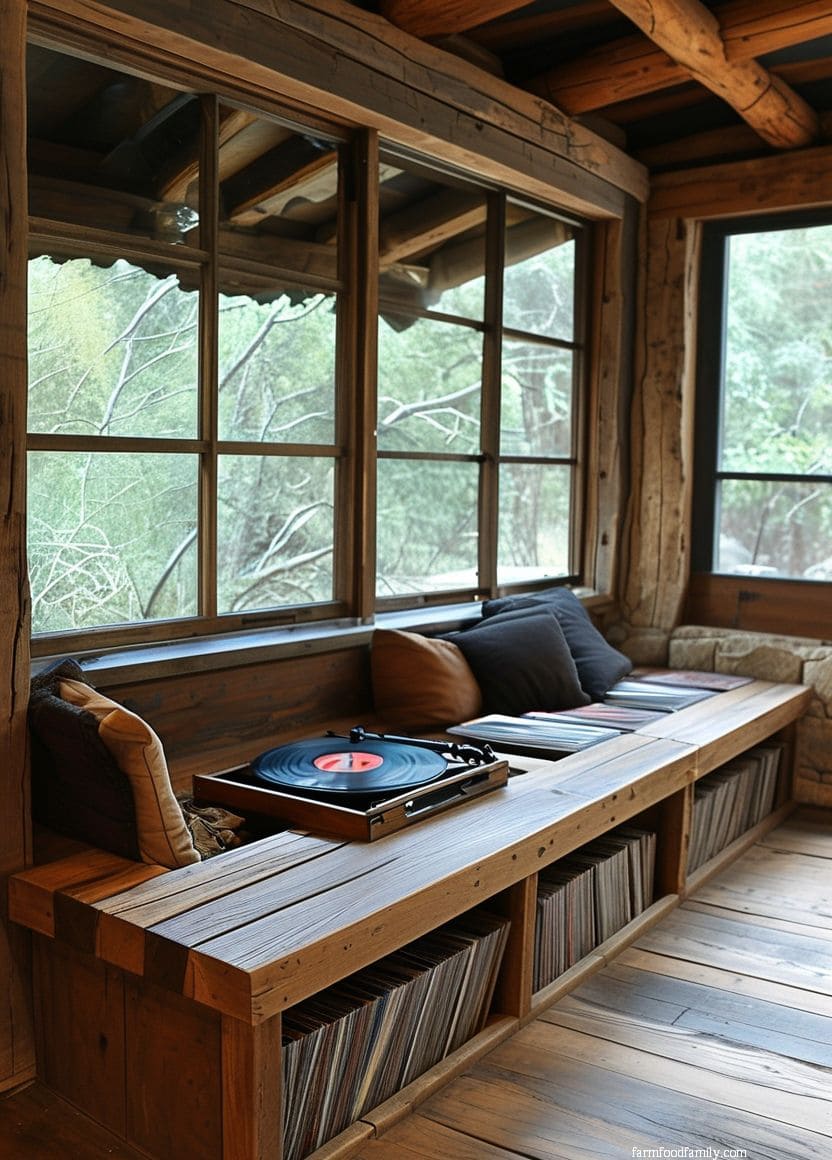
A window seat, an ottoman, a low bench with a lift-top lid, any of these can double as record storage without adding a dedicated piece to the room.
It’s the best option for small spaces where a visible storage unit isn’t practical, though access is slower than open shelving by design. For more ways to squeeze real storage out of furniture you already own, our storage ideas hub covers this same approach room by room.
Storage Mistakes to Avoid
Real collectors run into the same handful of problems, and none of them are about picking the wrong style.
Trusting the advertised capacity.
Sellers count thin, single-sleeve LPs to hit a big number. A real mixed collection, gatefolds, box sets, double albums, will fall well short of the printed figure. Plan around 50 to 70 records per linear foot instead.
Skipping proper wall anchoring.
Records are heavy in bulk. A shelf loaded with even a modest run of LPs needs to hit studs or use rated anchors, not just whatever came in the box. Ignore this and the shelf comes down, records and all.
Ignoring turntable vibration.
Anyone storing records in the same cabinet as an active turntable needs to think about isolation. Opening a drawer while a record is playing can shake the needle enough to hear it. This only matters for shared-furniture setups, not separate shelving.
Storing at the wrong angle.
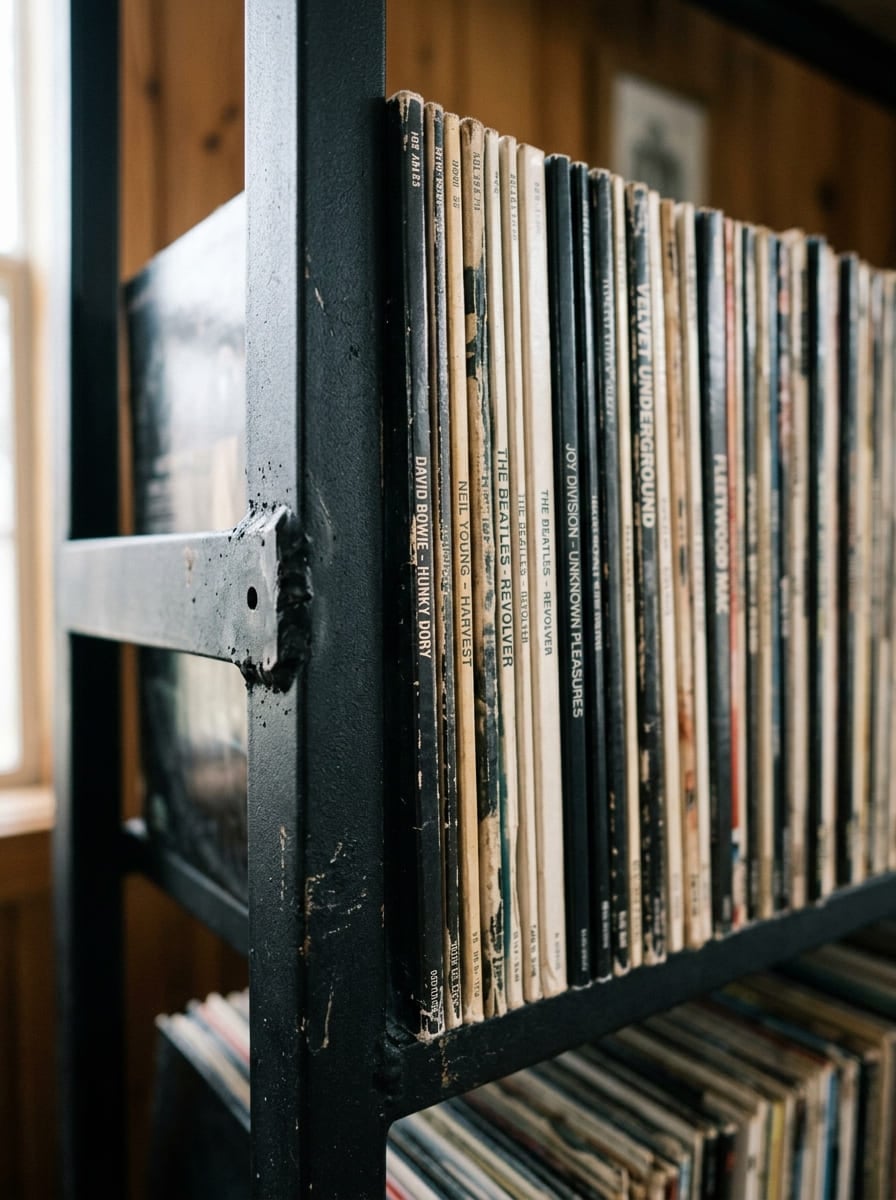
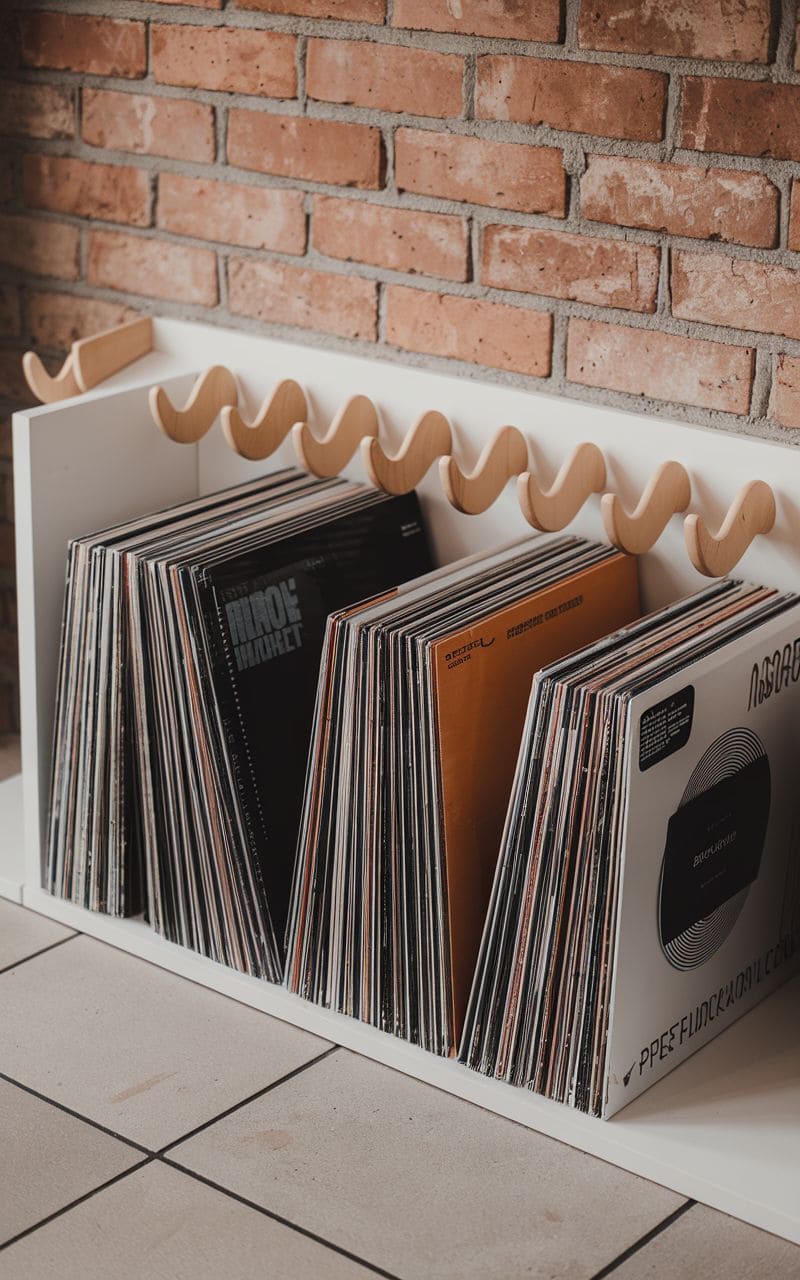
The Library of Congress, which keeps its own vinyl holdings in temperature-controlled vaults, stores discs standing upright on edge for a reason: leaning too far off vertical lets a record’s own weight bow it over time. A 5 to 10 degree lean, broken up with dividers or bookends every 15 to 20 records, is about as far off straight-up as it should go.
Storing near heat or direct sun.
Steve Flesher, owner of Retro Records in Orlando, FL, keeps it simple: “You mainly want to protect your records from heat and bugs, and direct sunlight.” Vinyl starts softening around 86°F, a temperature a sun-facing shelf or a closed car reaches without much effort, according to KeepThemSpinning’s storage guide.
Which Storage Fits Your Collection Size
Starter, under 300 records.
A modular cube system or a couple of stacked crates covers this range without overbuilding. This is also the range where a basic wall-mounted shelf setup works fine on its own.
Browsing-focused collections.
If flipping through covers matters more than density, pair a lower tier of standard shelving with an upper tier built for flip-through access, cover-forward rather than spine-out. It’s more furniture than a plain shelf, but it changes how the collection actually gets used day to day.
Large or growing collections.
Past a few hundred records, custom shelving or a commissioned console starts to make more sense than another flat-pack cube. Heavy-duty drawer glides and, if a turntable shares the furniture, real vibration isolation stop being optional at this size.
Conclusion
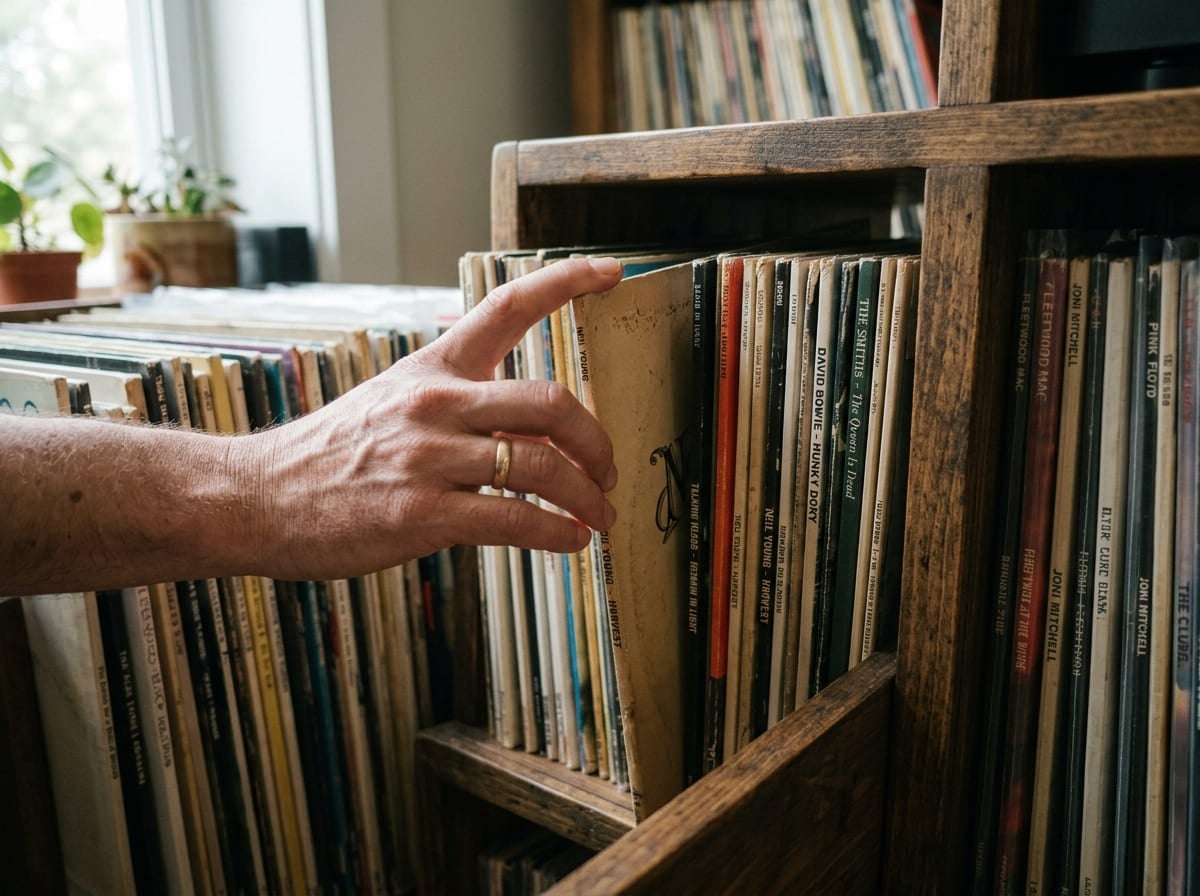
None of this requires buying the biggest cabinet on the page. It requires matching the storage to the collection that actually exists: how many records, what shapes and weights, how often the shelf gets opened. Get the fundamentals right, upright storage, the right angle, out of direct heat, and the style choice on top of that is genuinely just a style choice.
Frequently Asked Questions
How many records can I really fit on a shelf marketed for 300 LPs? Plan on it holding noticeably fewer once gatefolds, box sets, and double albums are mixed in. A rough working number collectors use is 50 to 70 records per linear foot of shelf, not the number printed on the packaging.
What angle should records lean at in storage? As close to fully upright as possible. A 5 to 10 degree lean is fine if it’s supported by dividers or bookends every 15 to 20 records. Anything leaning further than that will start to bow under its own weight over time.
Is it safe to store records and a turntable in the same piece of furniture? It can be, but vibration is a real issue if a drawer gets opened while a record is playing. Serious builds isolate the turntable’s platform from the storage section underneath rather than mounting both directly to the same structure.
Do I need a dedicated record cabinet, or can I use furniture I already own? Existing furniture works fine as long as the interior depth clears a 12″ sleeve. A media console, sideboard, or deep bookshelf often does the job without buying anything built specifically for records.


Never miss an update — choose FarmFoodFamily as your preferred source on Google.
How it works: Tap the button below to open Google's settings page, then check the box next to FarmFoodFamily.
Tap the checkbox to turn it blue — that's how you know it's set.