45+ Practical Zen Office Ideas (Backed by Real Research, Not Just Aesthetics)
Most “zen office” guides are really just aesthetic advice: add plants, pick neutral colors, get soft lighting. None of that is wrong, but it skips the one thing that actually determines whether a workspace feels calm: where you put the desk in the first place. It also skips the real evidence behind why some of…

Never miss an update — choose FarmFoodFamily as your preferred source on Google.
How it works: Tap the button below to open Google’s settings page, then check the box next to FarmFoodFamily.
Tap the checkbox to turn it blue — that’s how you know it’s set.
Most “zen office” guides are really just aesthetic advice: add plants, pick neutral colors, get soft lighting. None of that is wrong, but it skips the one thing that actually determines whether a workspace feels calm: where you put the desk in the first place.
It also skips the real evidence behind why some of these choices work, treating them as vibes instead of something you can point to.
Here’s a more honest version: 13 real ideas, the actual research behind the ones that have it, and one layout fix that matters more than any color you’ll pick.
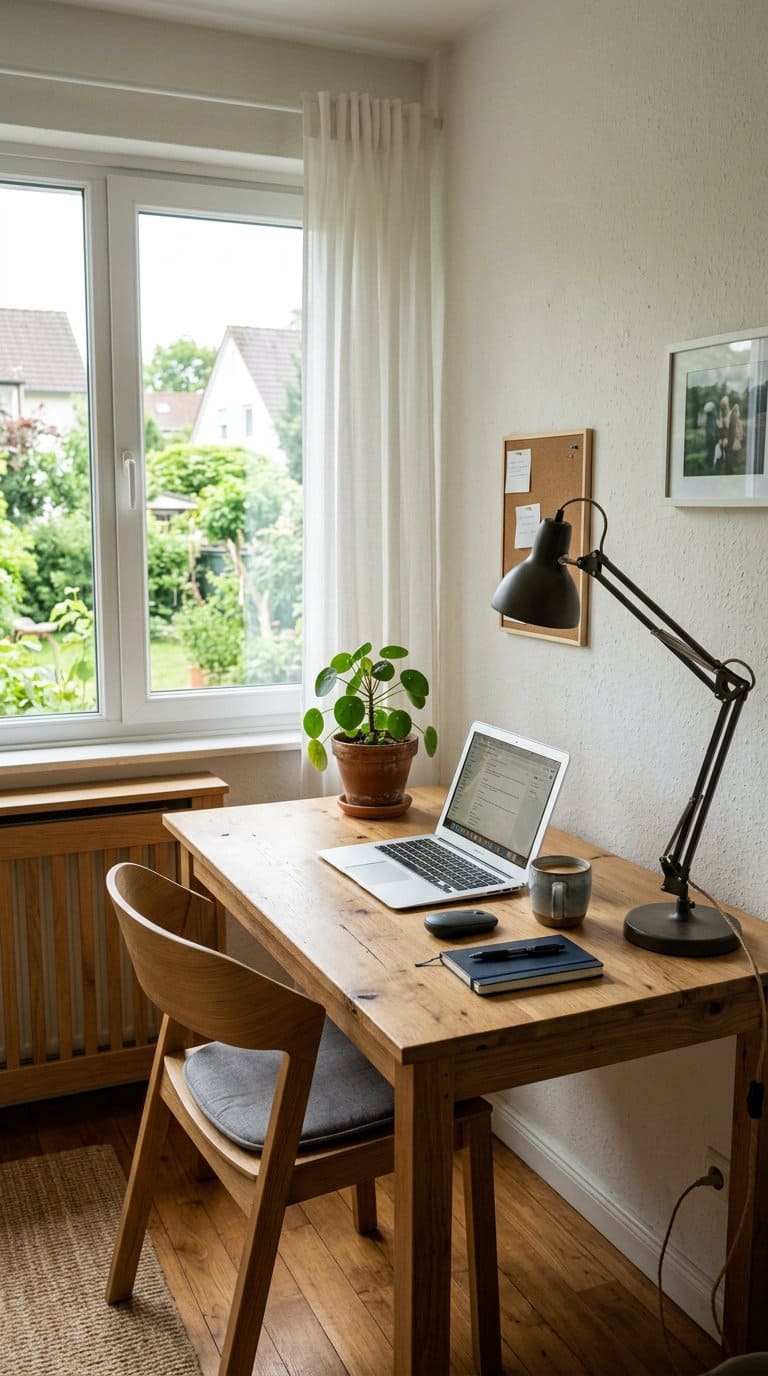
Desk Placement Matters More Than Decor
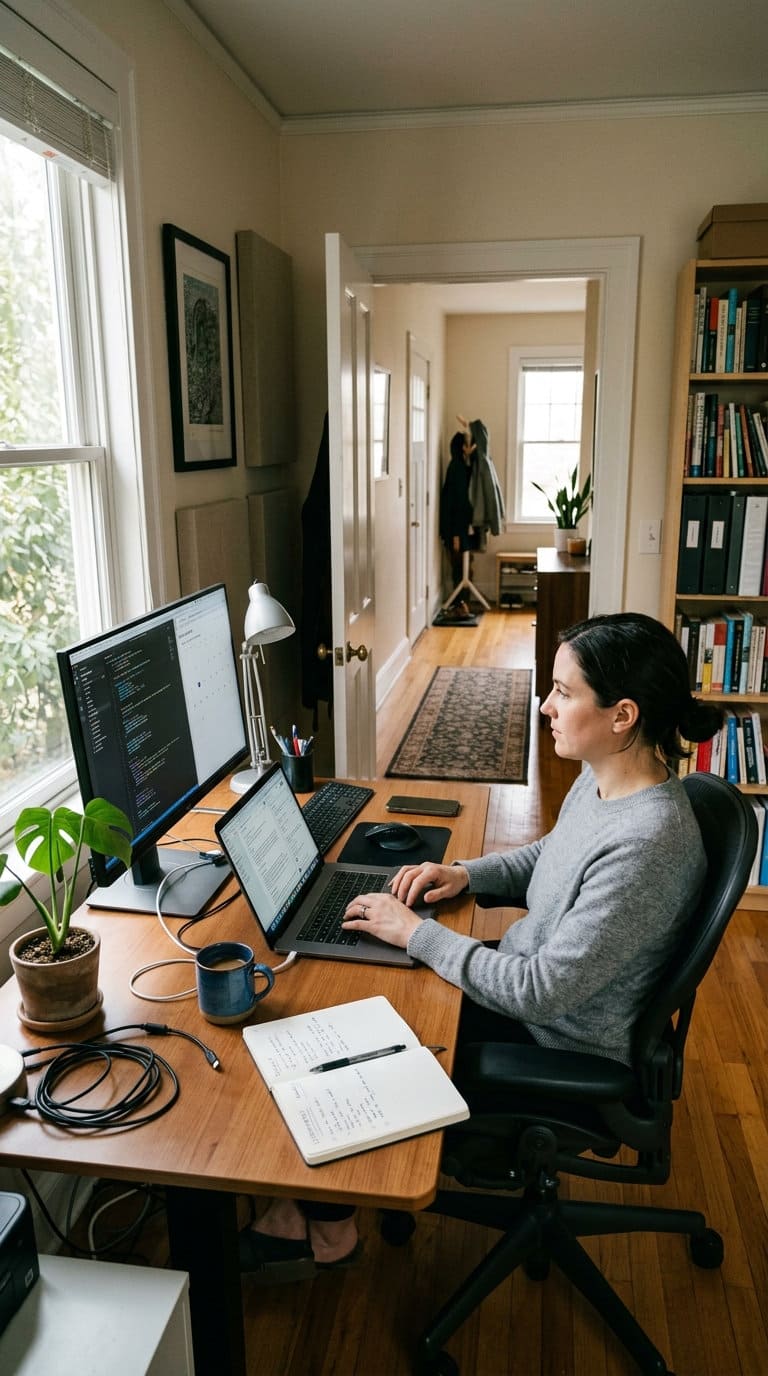
Before you touch a single color swatch, look at where your desk sits relative to the door and the open space in the room. This is the single most common thing people get wrong, and it’s almost never mentioned in typical “zen office” roundups.
A desk positioned with a lot of open space, a doorway, or a sofa behind the person sitting at it creates a real, subconscious “on alert” feeling, even for people who live alone and know no one’s actually going to walk in. It’s sometimes called the “commanding position“: being able to see the room’s entry point without turning around lets your nervous system actually settle instead of staying low-grade alert the whole time you’re trying to focus.


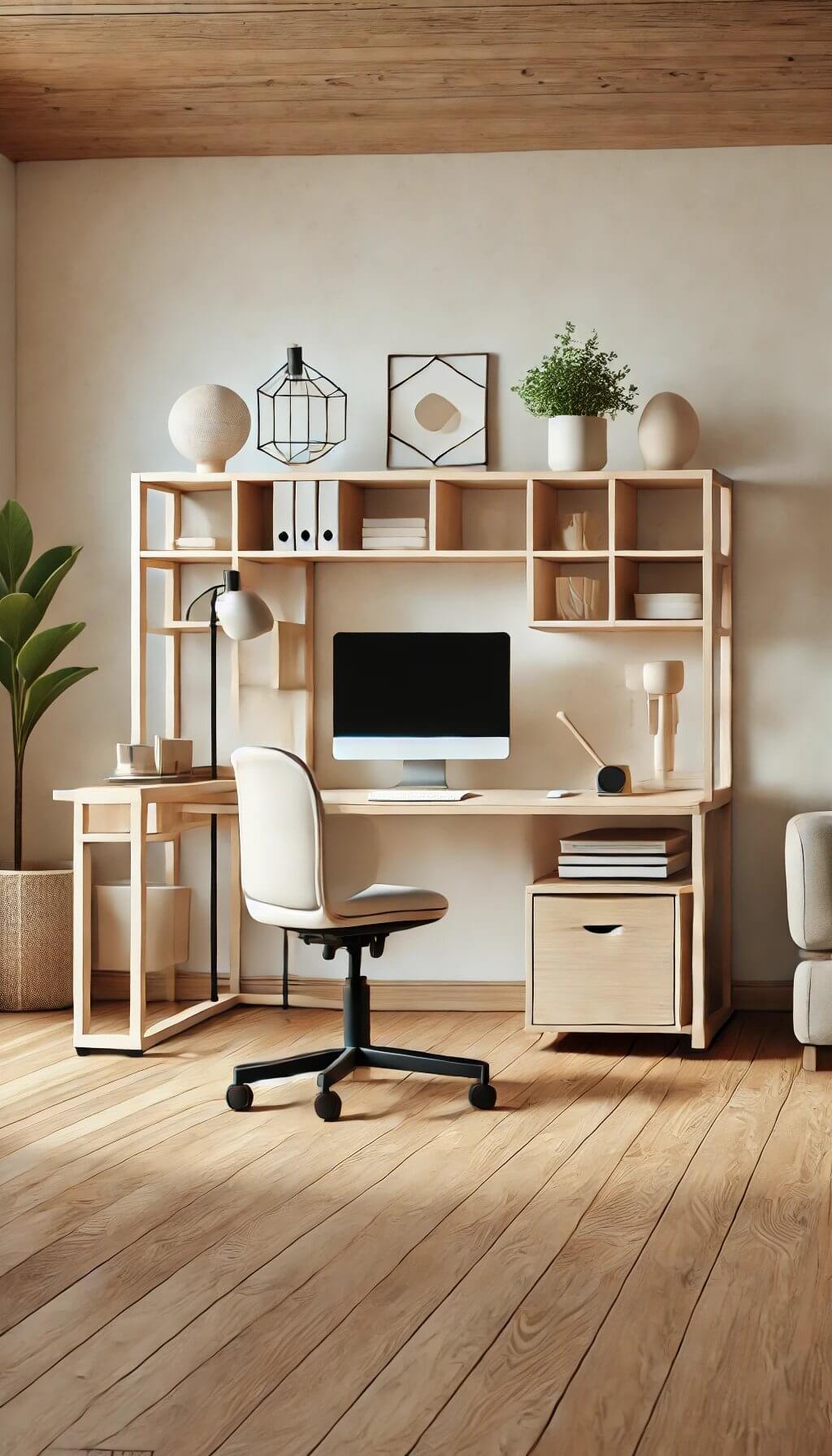
If you can’t move the desk (cable runs, mounted monitors, and other constraints are real), a few workarounds still help: angle the desk into an L-shape so you can swivel toward the door without a full reposition, add a small mirror near your monitor so you can see behind you without turning, or place a low piece of furniture, not a tall shelf, between your back and the open room to soften the exposed feeling without blocking airflow or light.
This same “back to the room” problem shows up in other spaces too, see awkward bedroom layout ideas for the same principle applied to a bed instead of a desk.
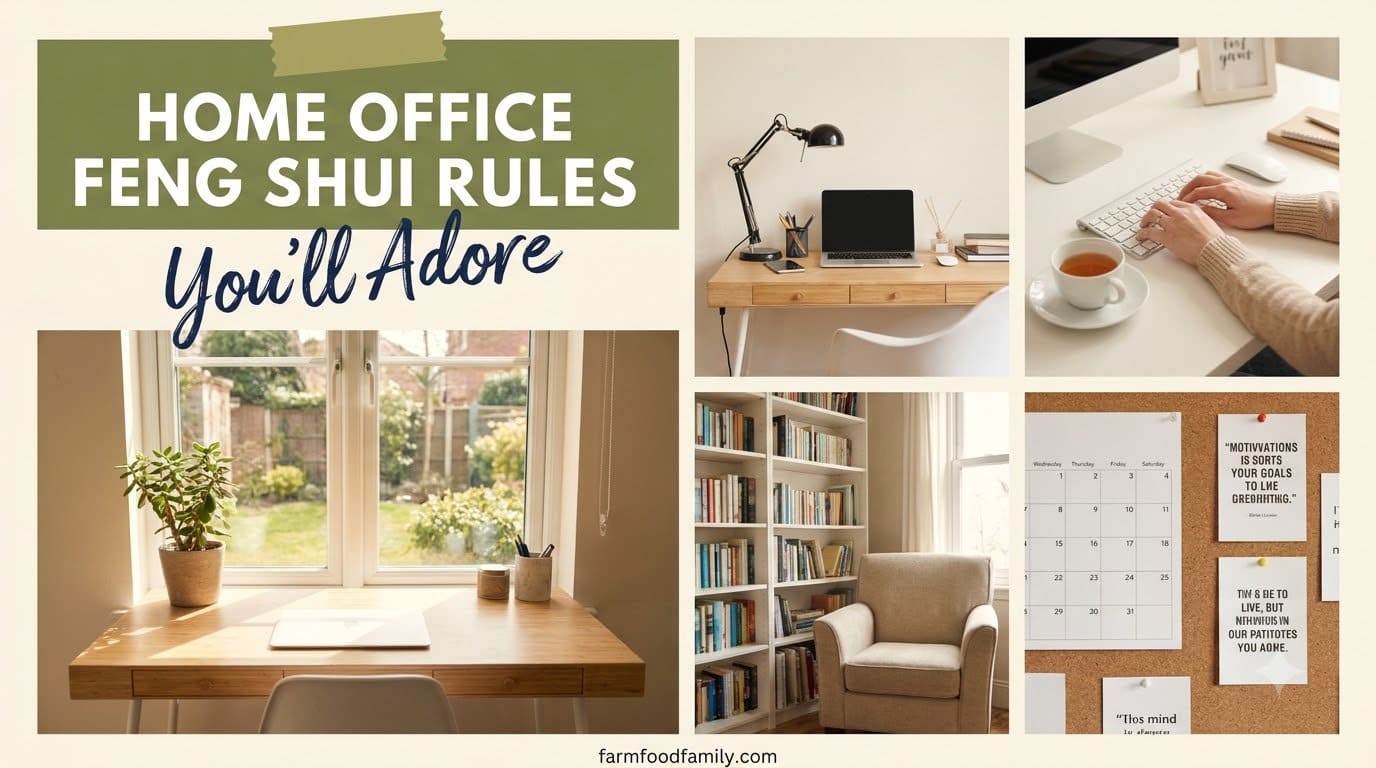
45 Stunning Zen Office Ideas to Boost Productivity
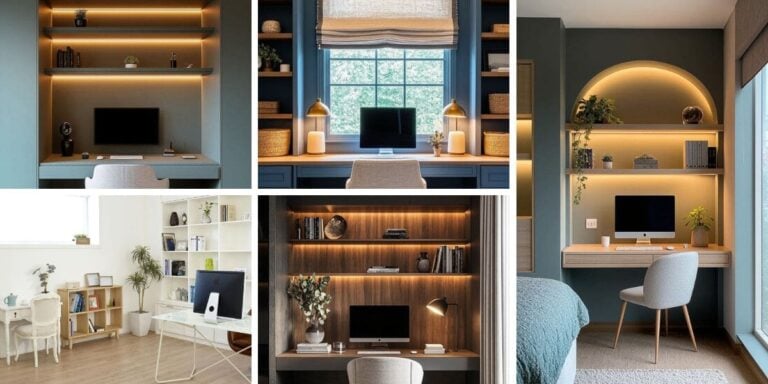
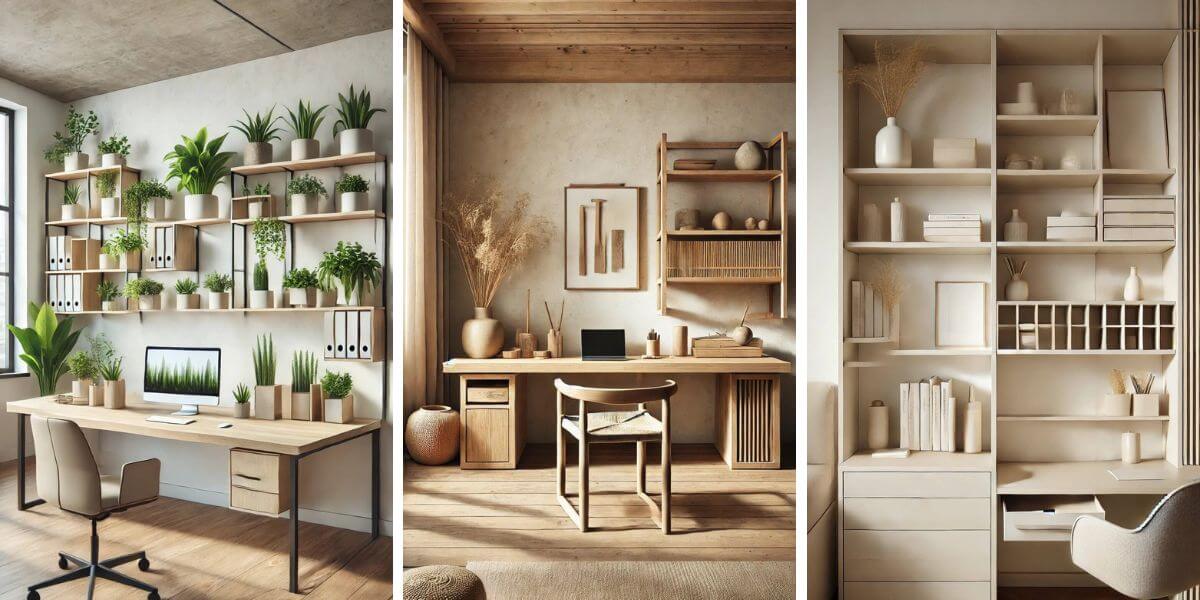
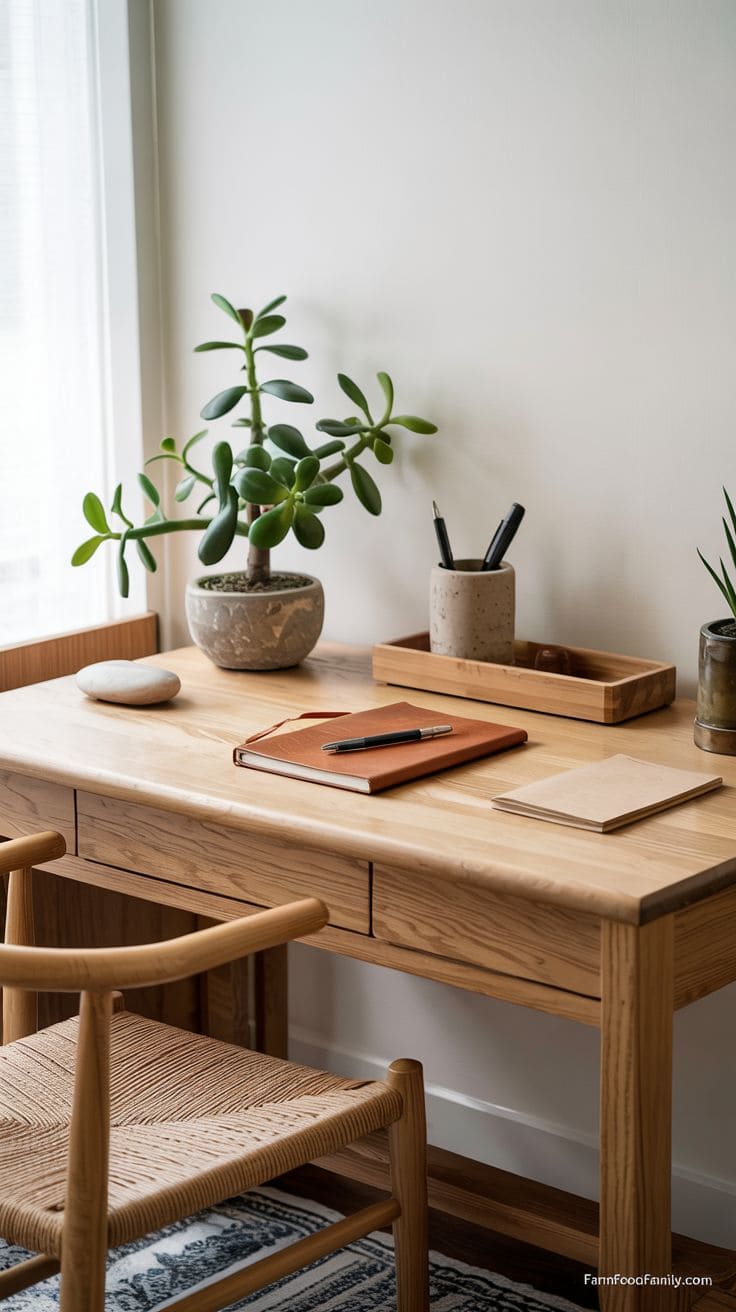
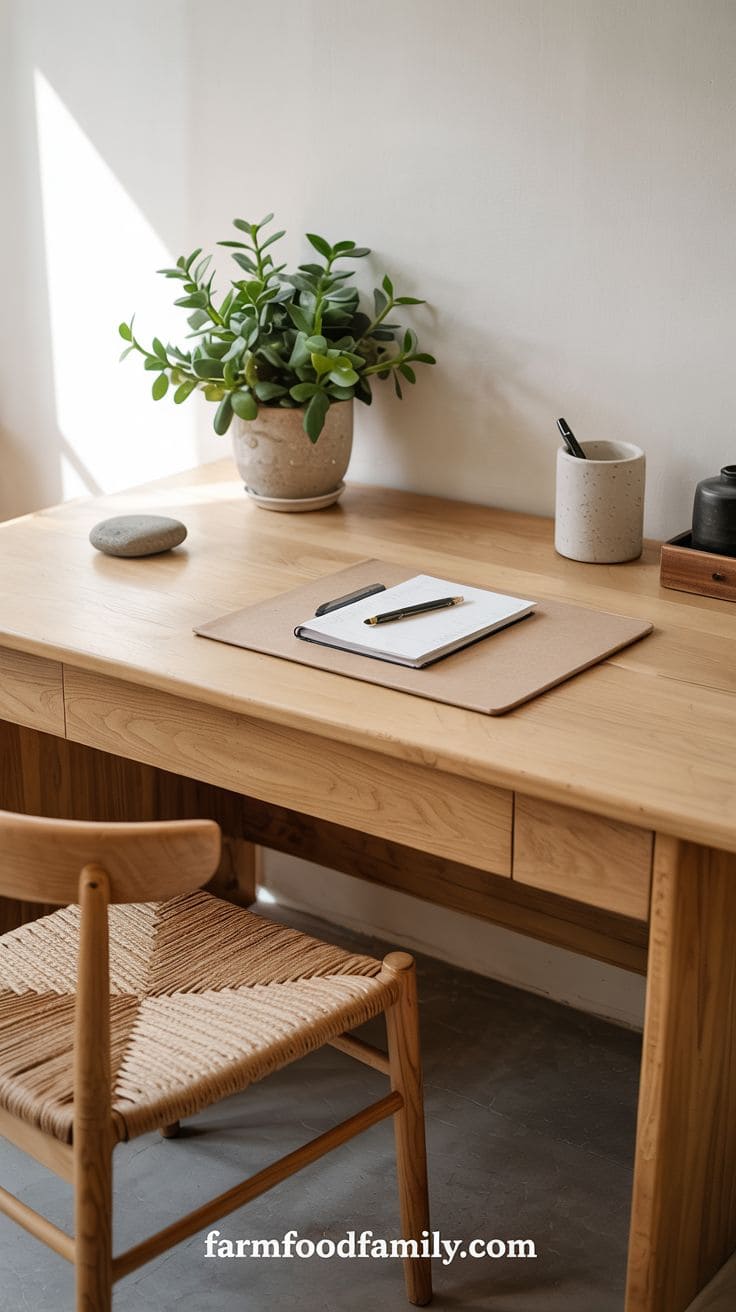
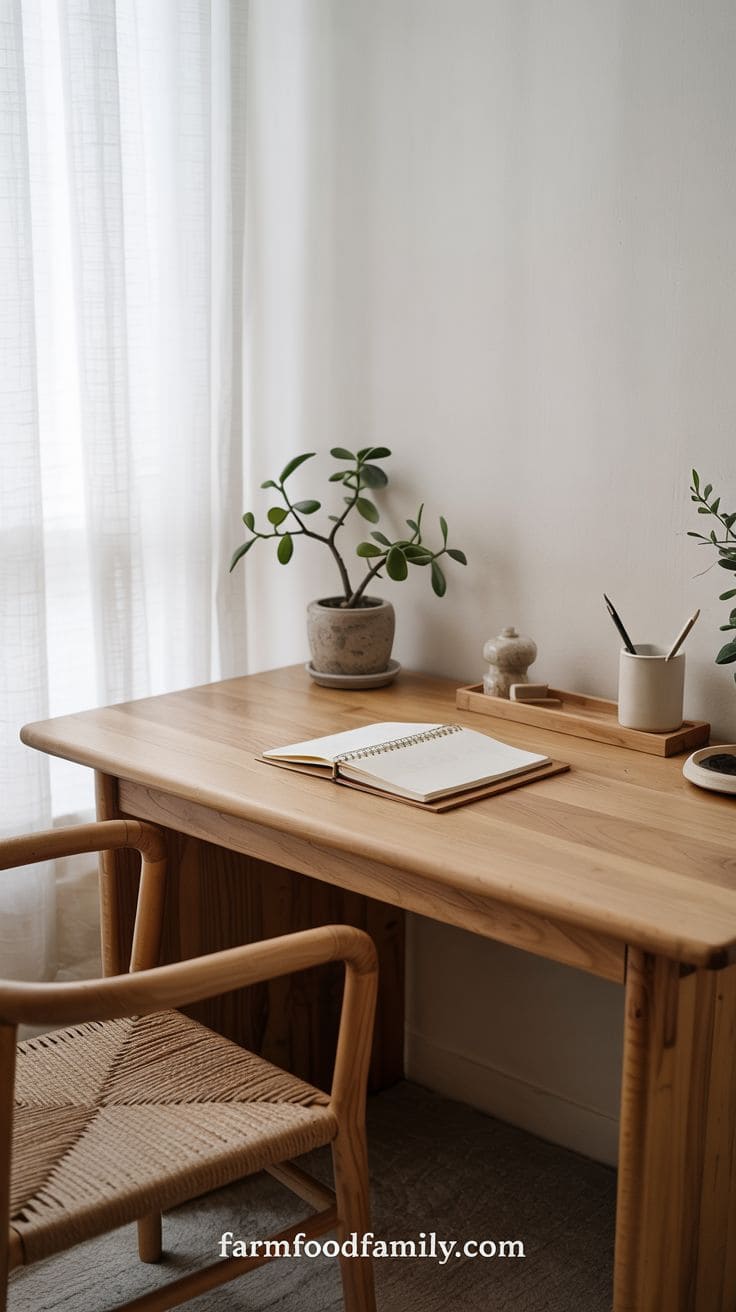
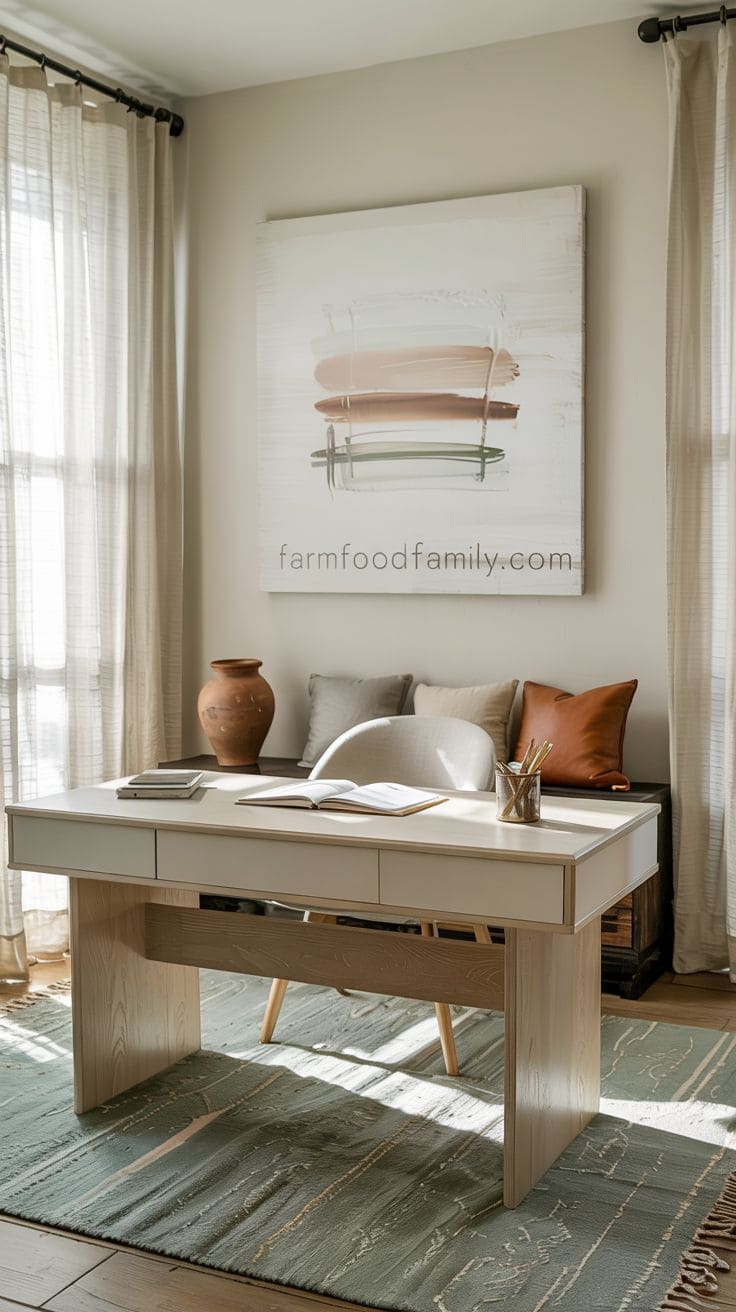
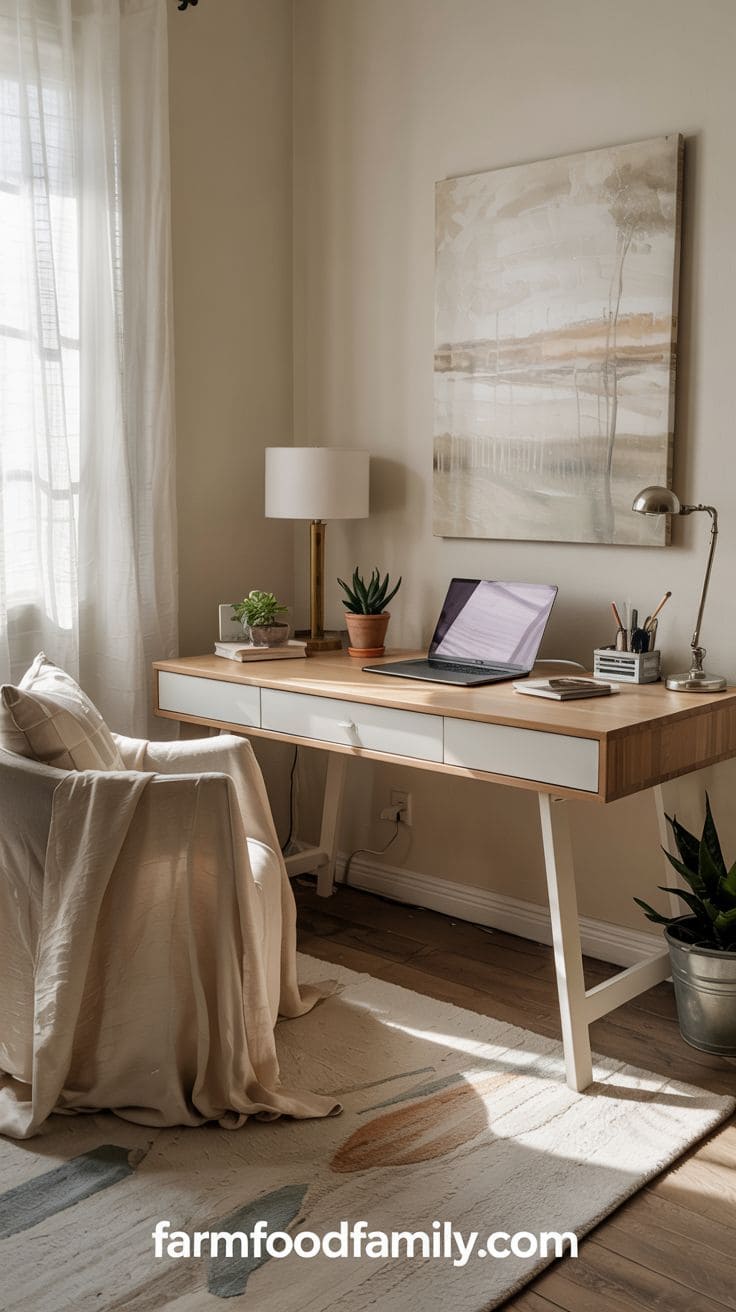
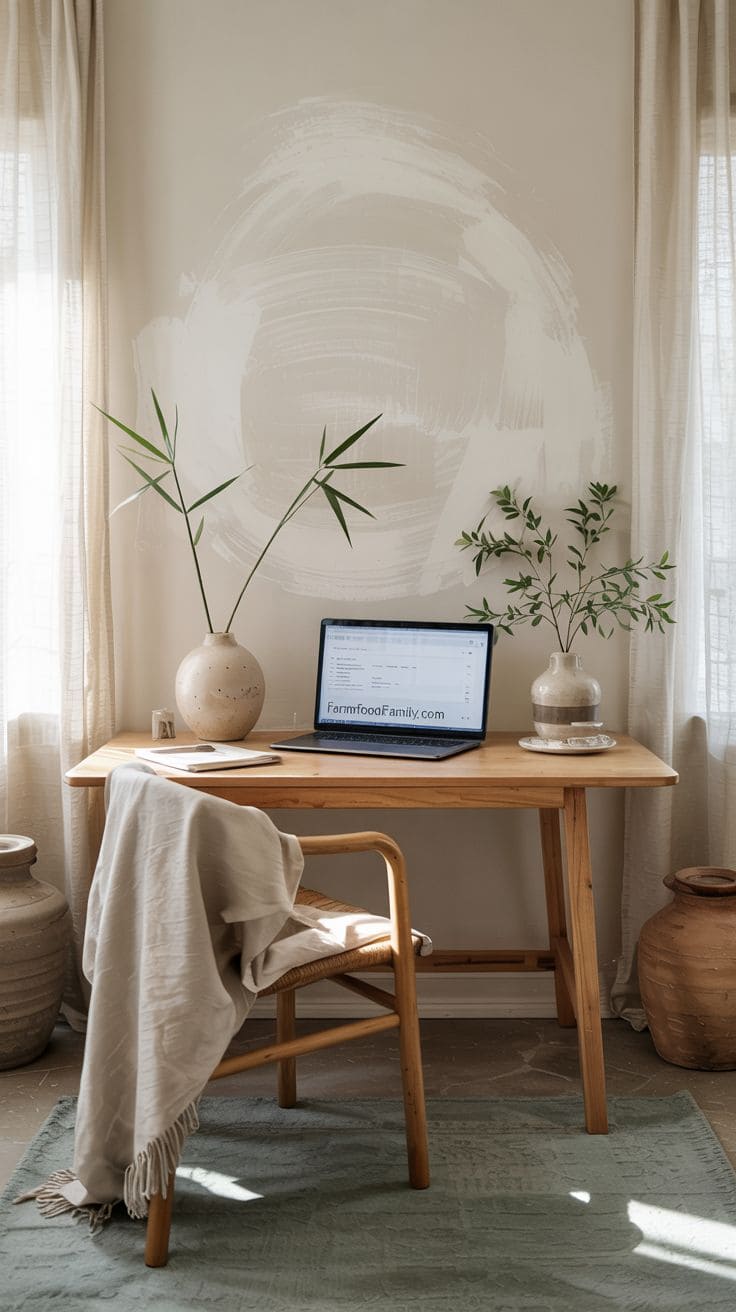
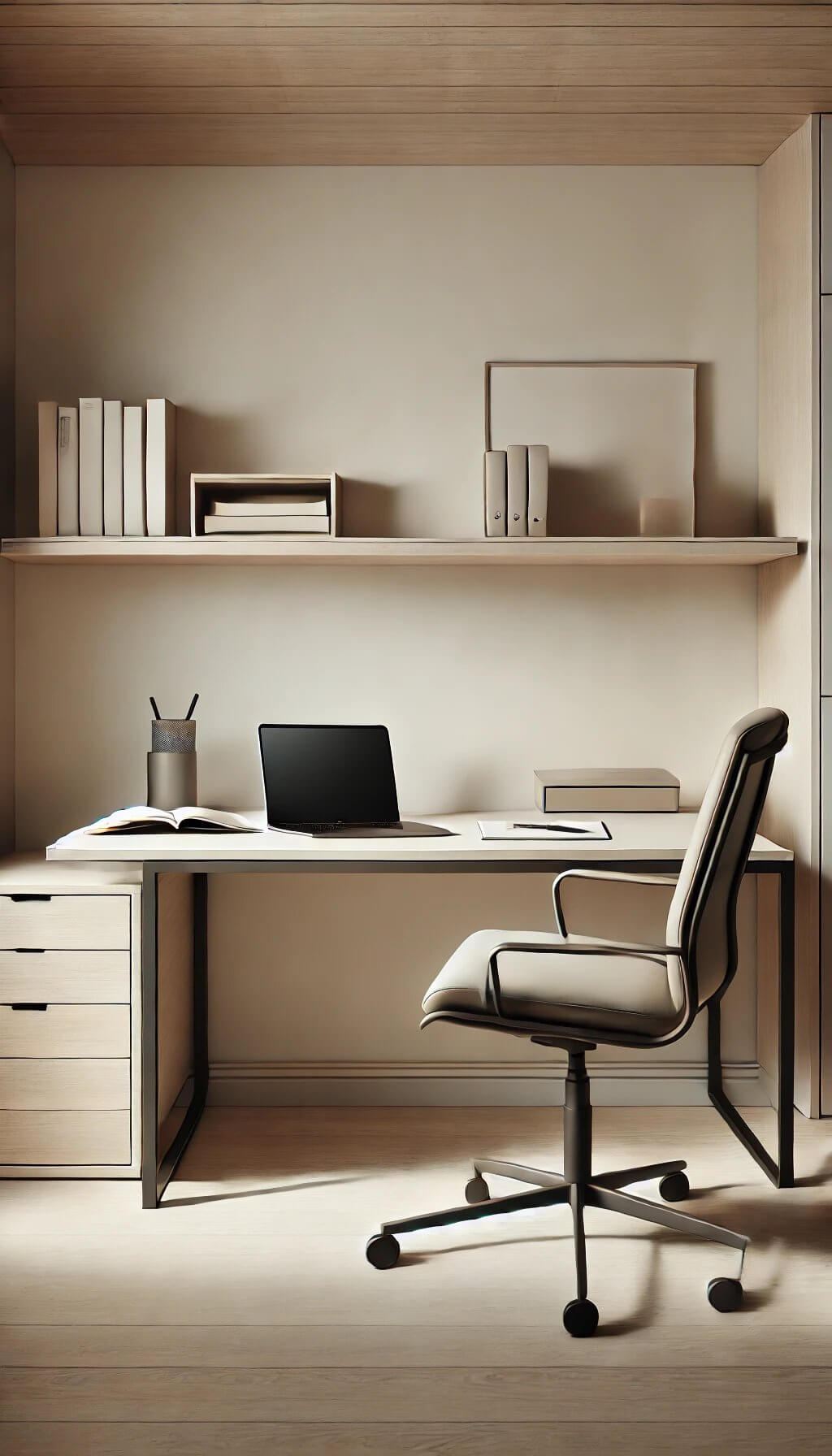
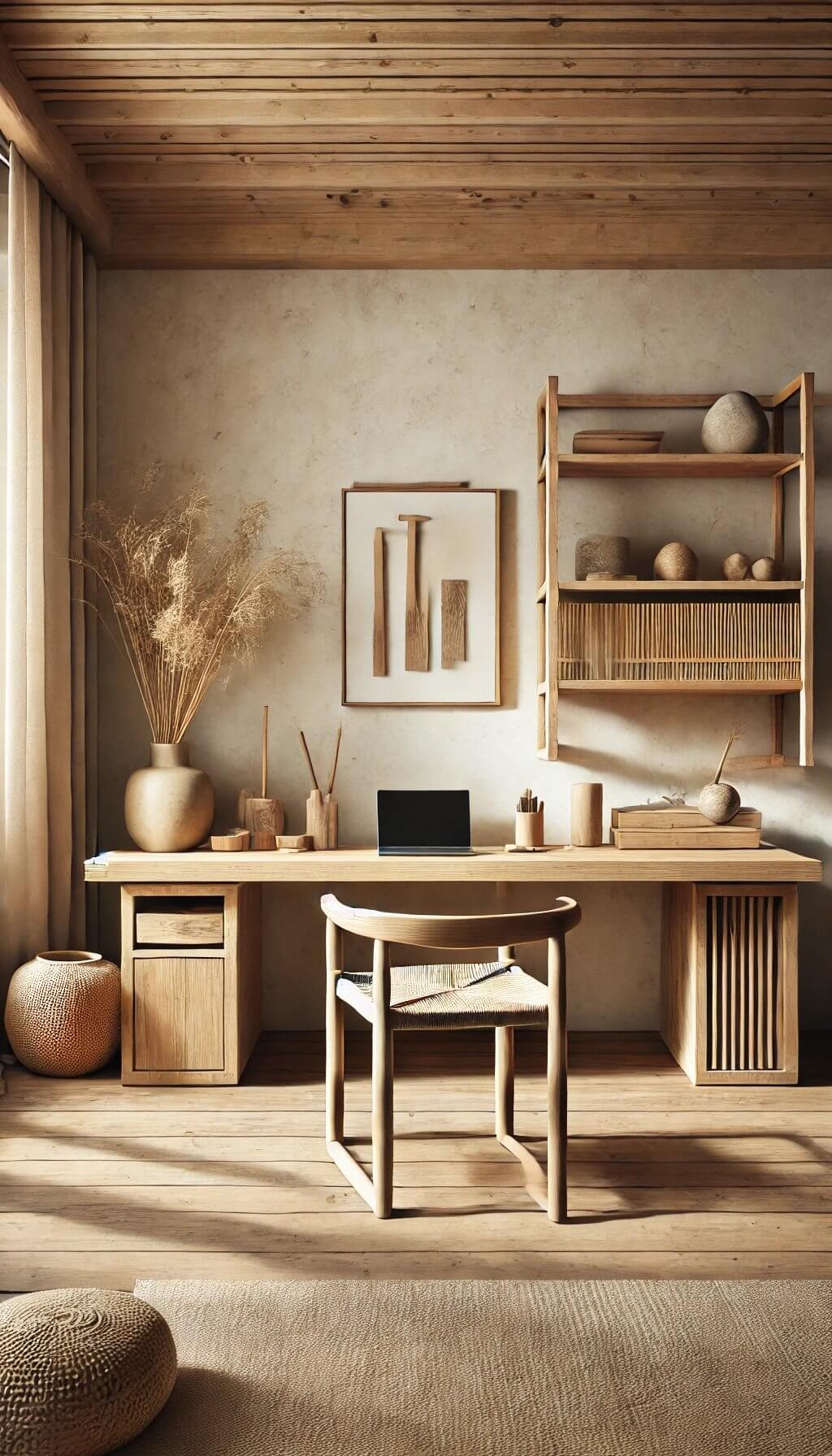
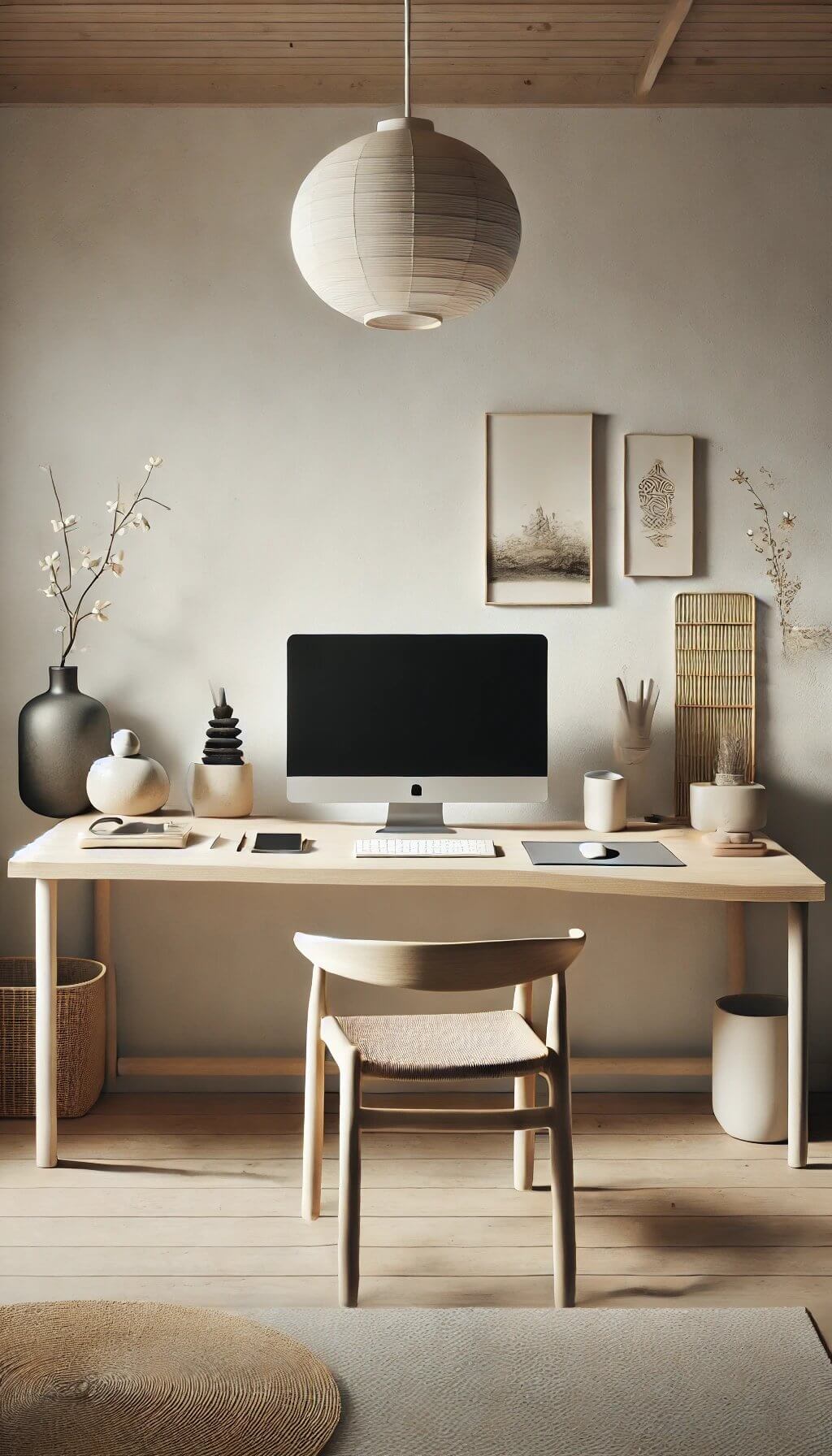
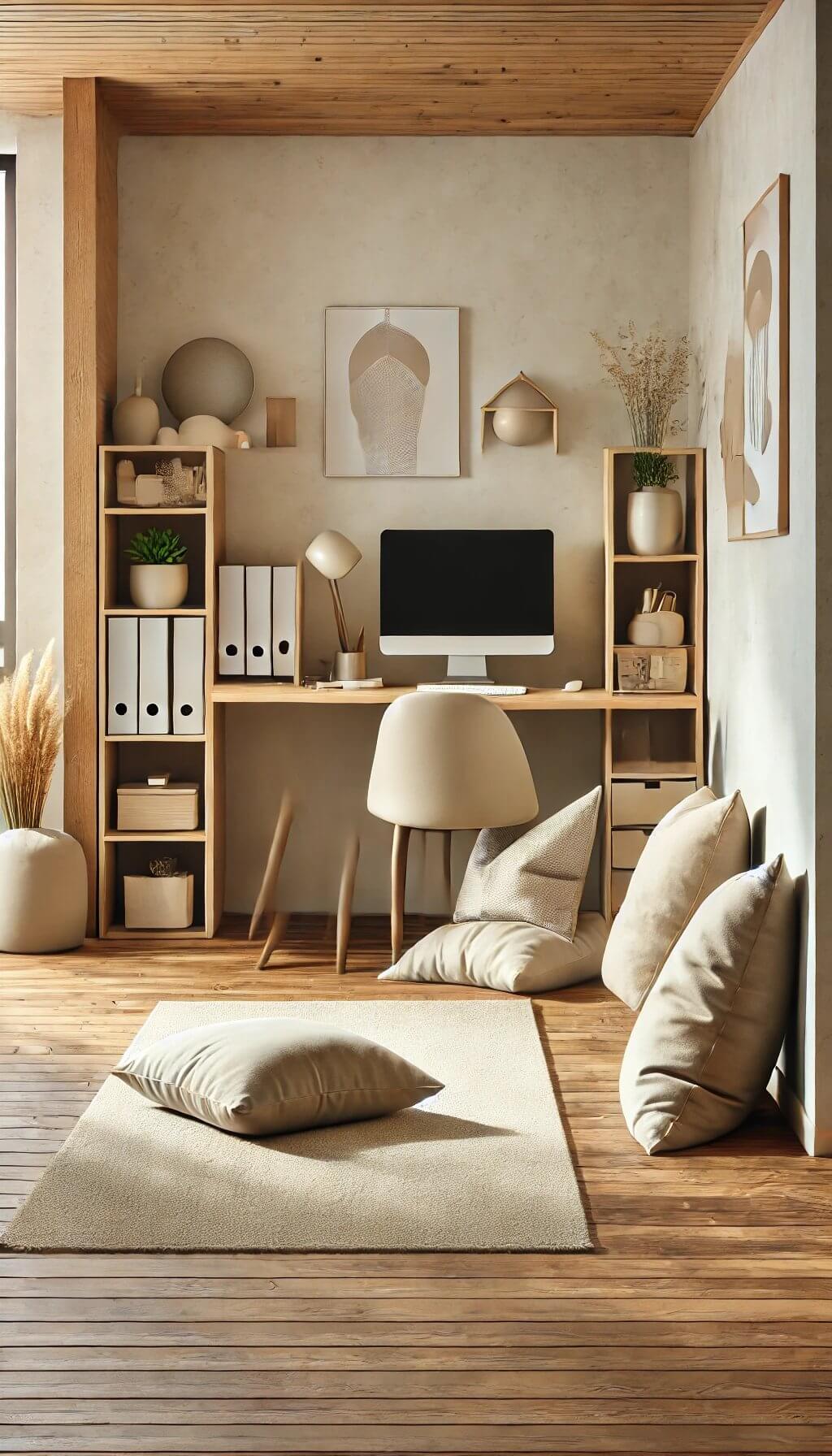
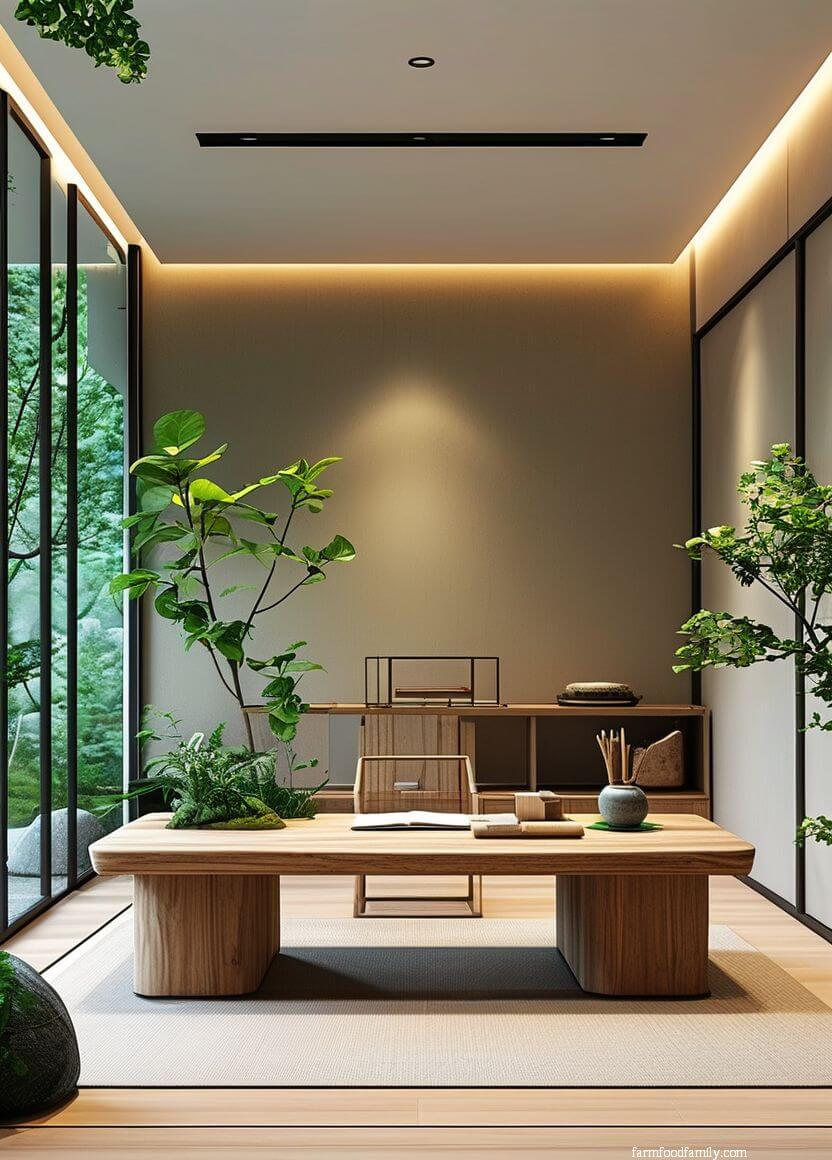
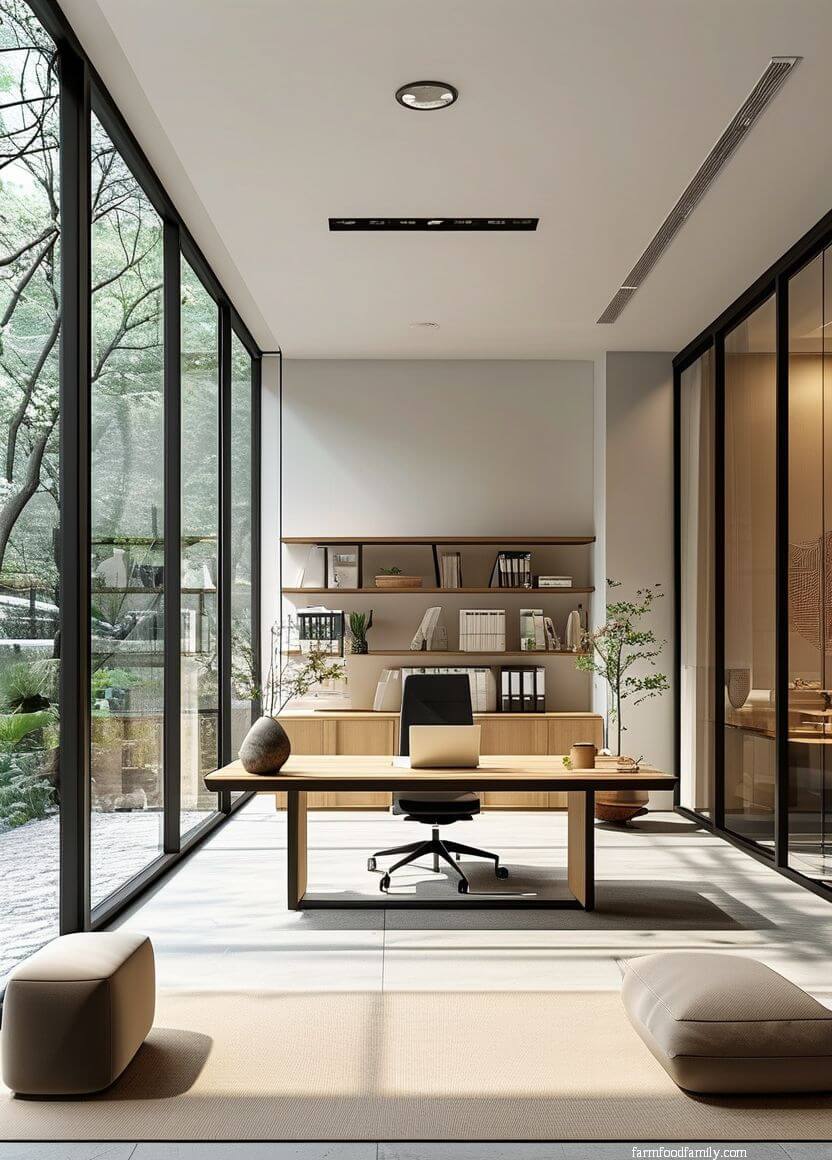
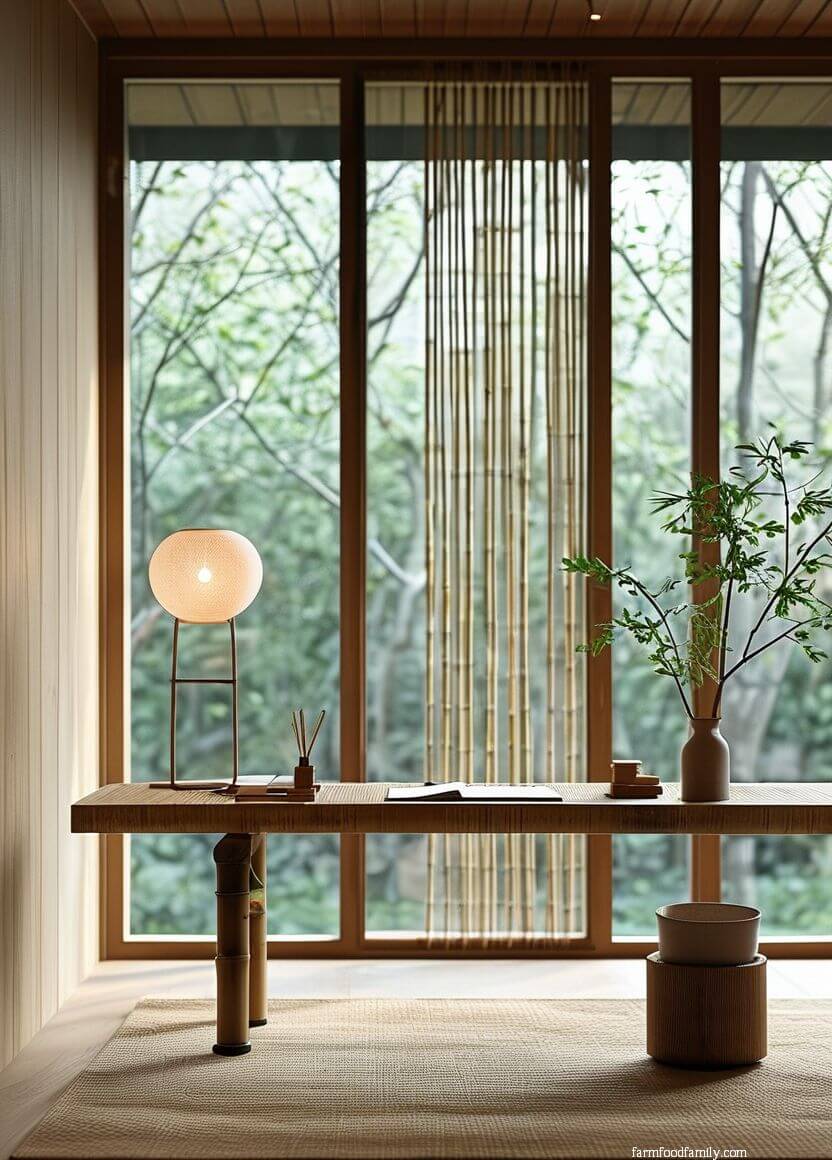
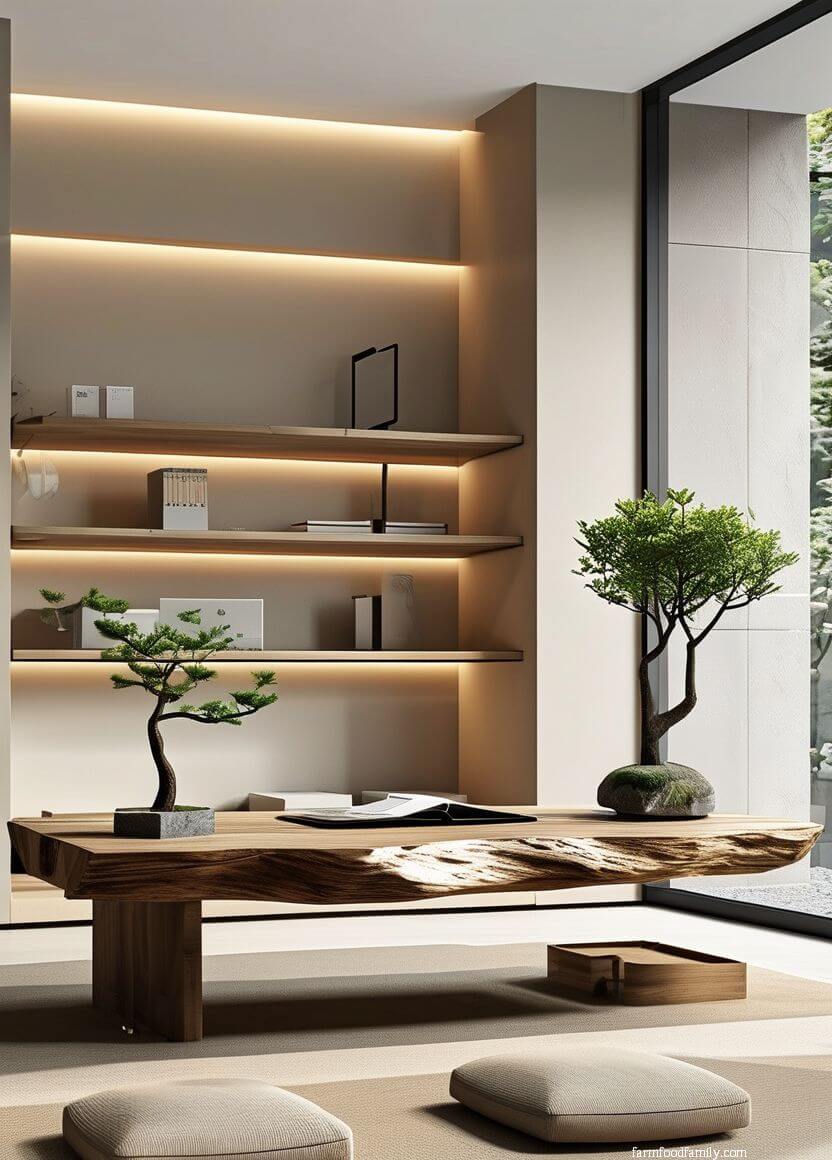
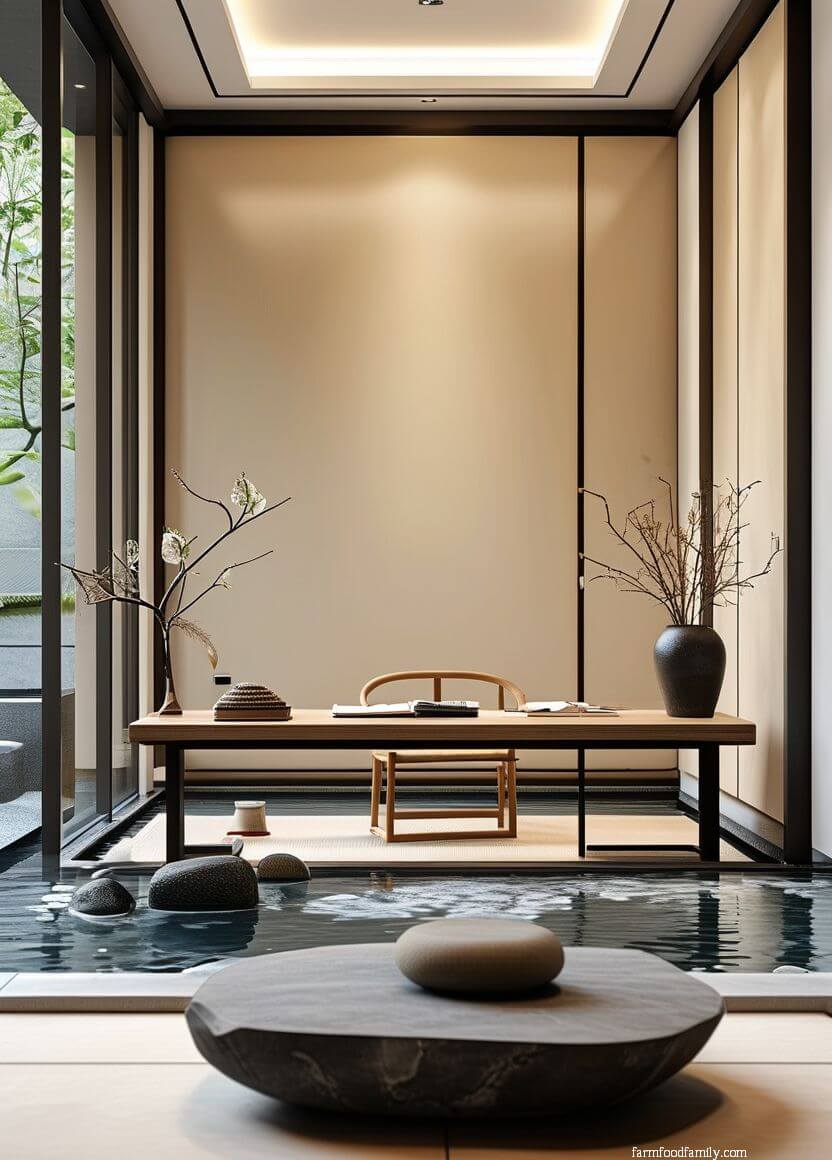
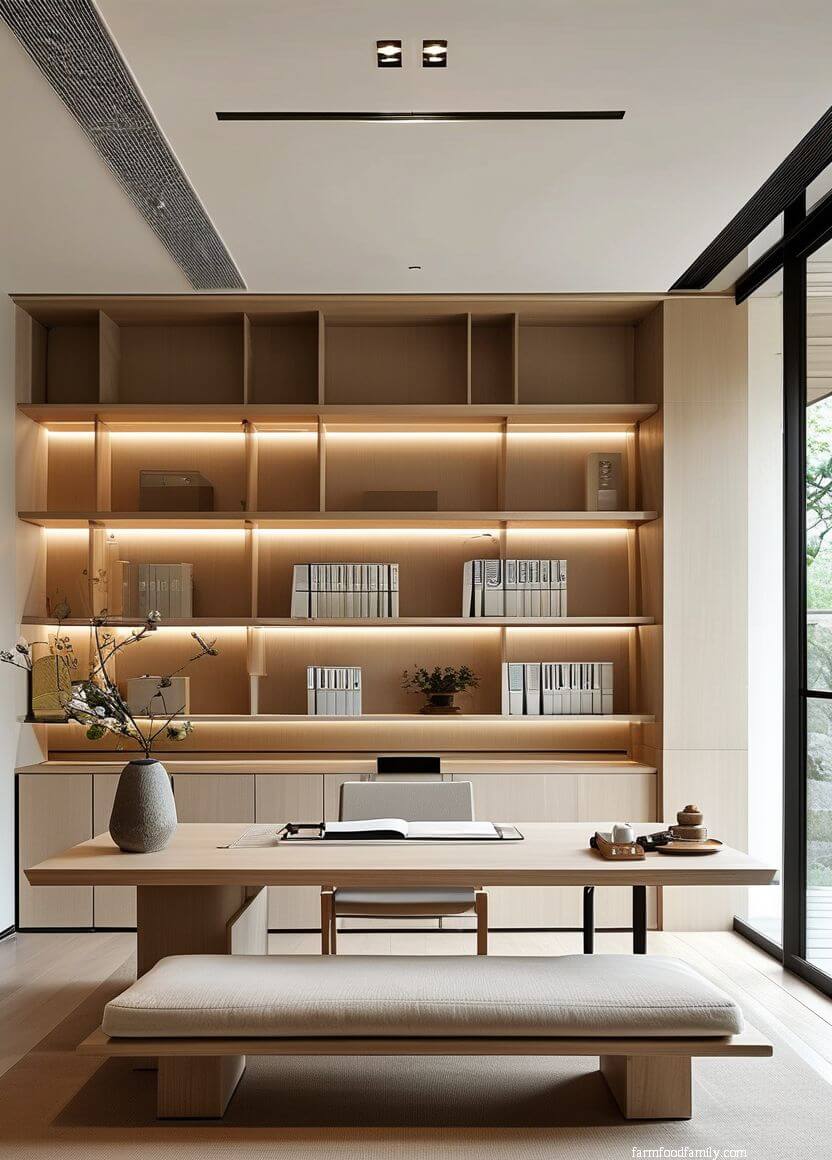
1. Minimalist Desk Layout using Natural Materials
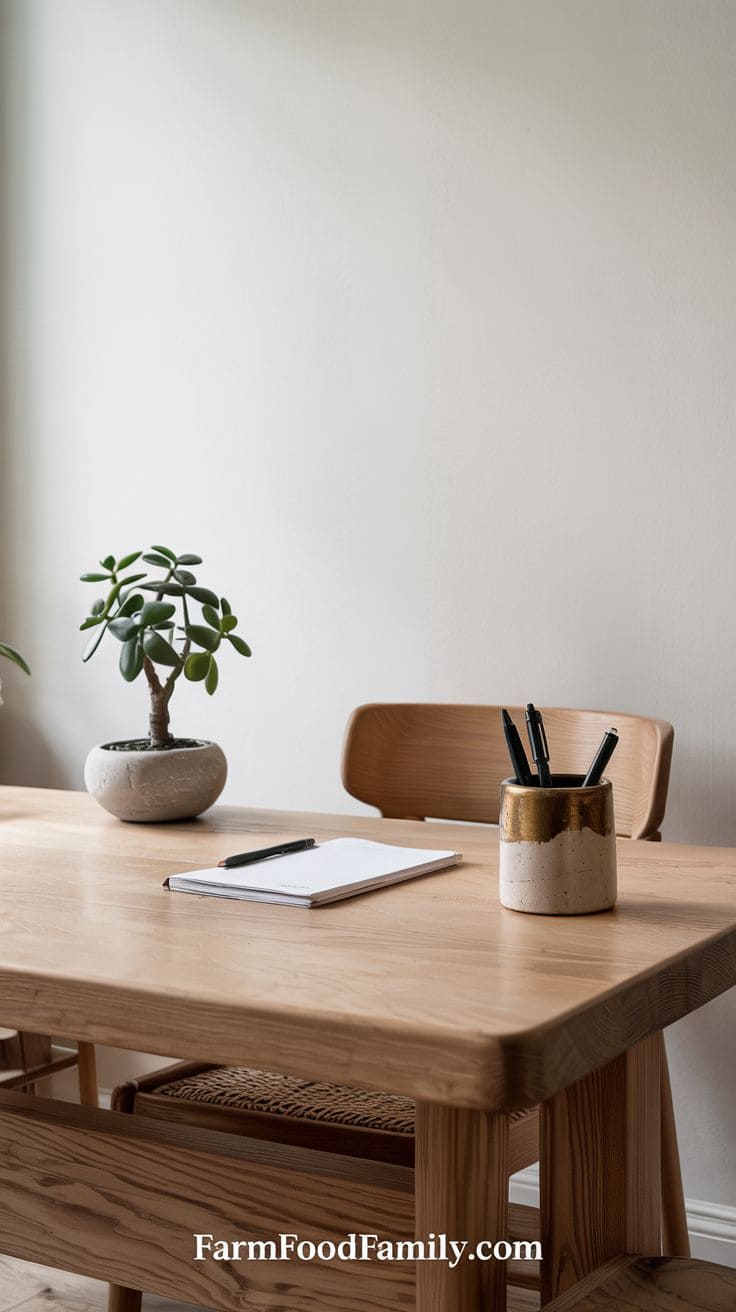
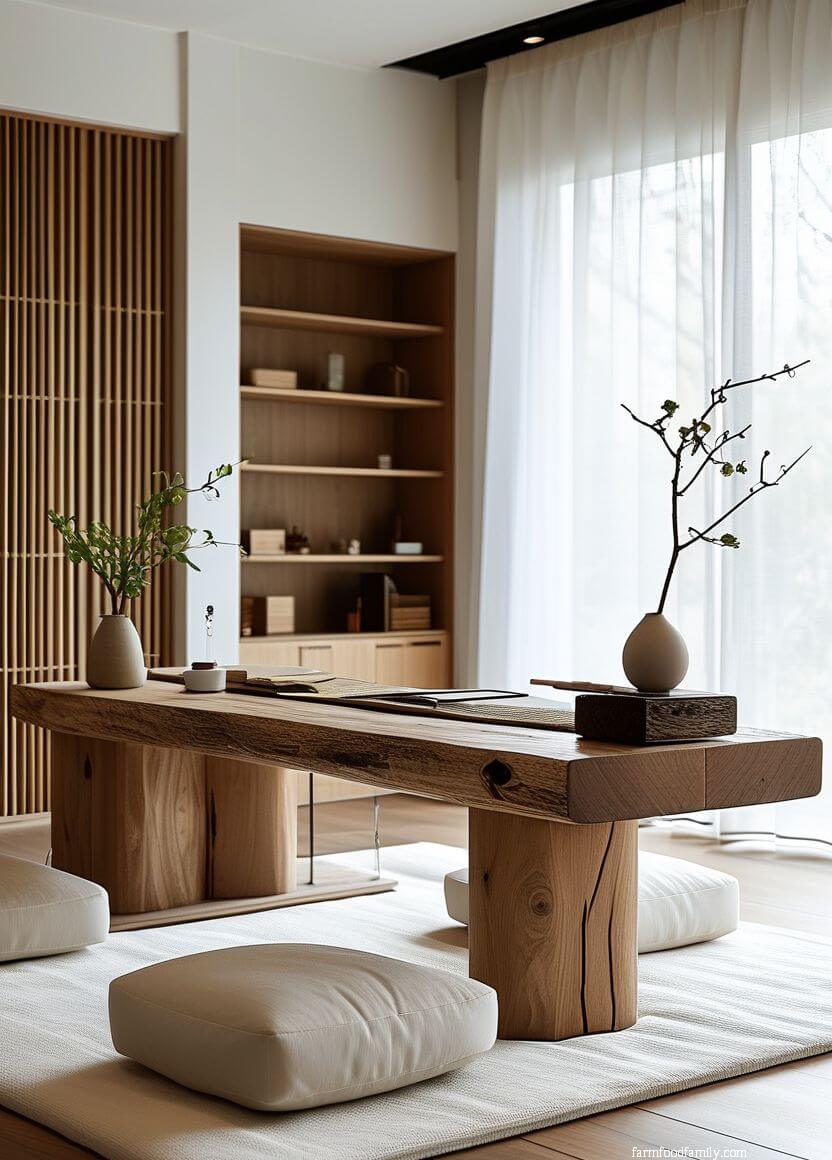
Keep the desktop clear, only what you’re actively using, and pair it with natural materials like wood, linen, or stone-toned accessories. Fewer competing things for the eye to land on. It’s the physical version of a calm inbox: less to process means less low-grade cognitive drag before you’ve even started working.
Sarah Barnard, a WELL AP and LEED AP-certified interior designer who specializes in biophilic, wellness-focused home offices, builds this kind of natural-material, empathetic space planning into her residential work specifically to support the person using the space, not just to look good in photos.
2. Soft, Earthy Accents in a Neutral Color Scheme
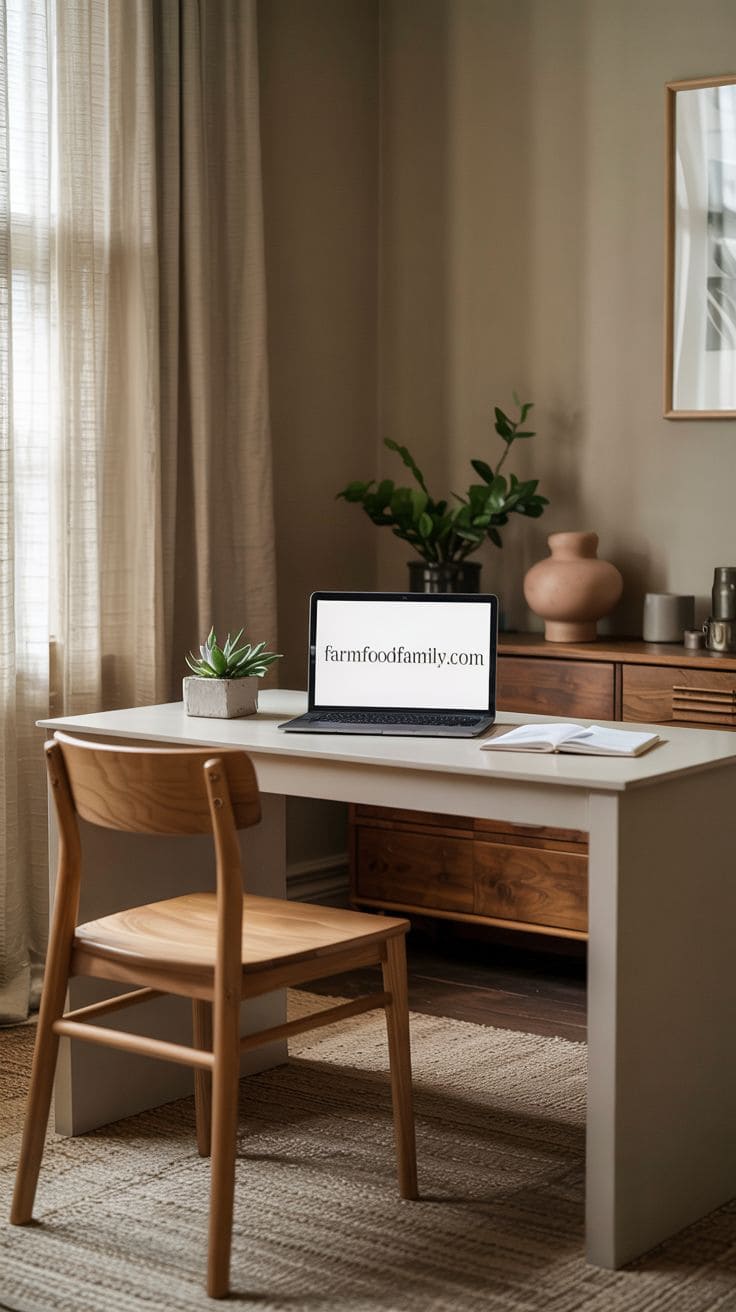
Sage green, warm taupe, and dusty blue are consistently associated with lower perceived stress in interior-design research, though it’s worth being honest that this is design consensus rather than hard clinical proof the way the plant research below is.
Use it as a genuinely reasonable starting palette, not a guaranteed fix.
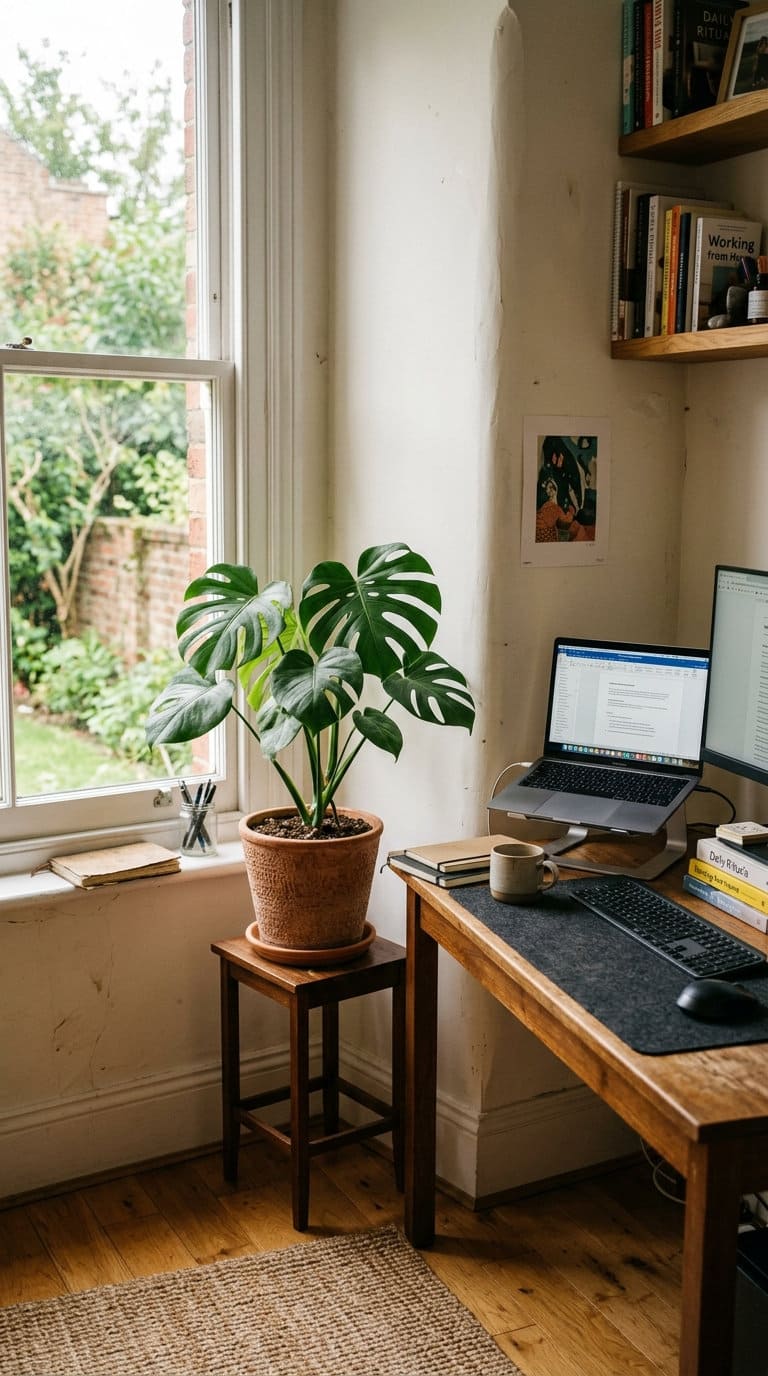
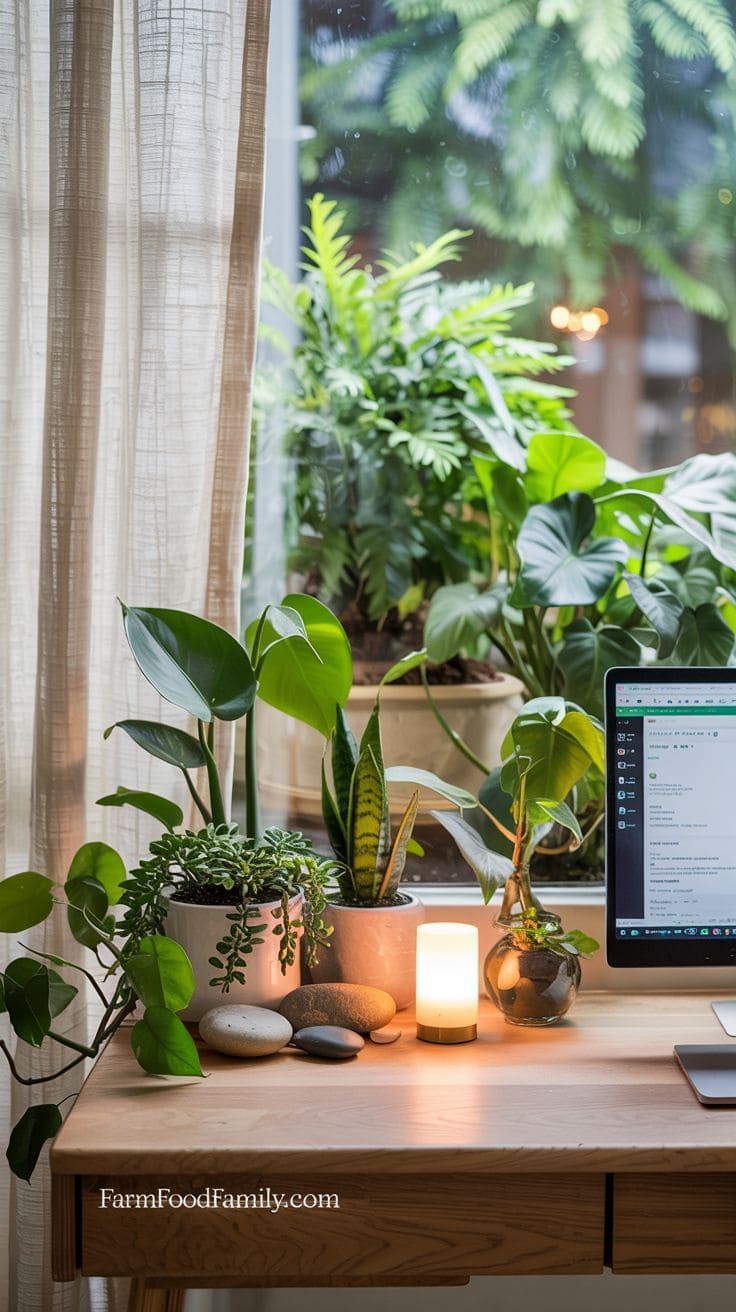
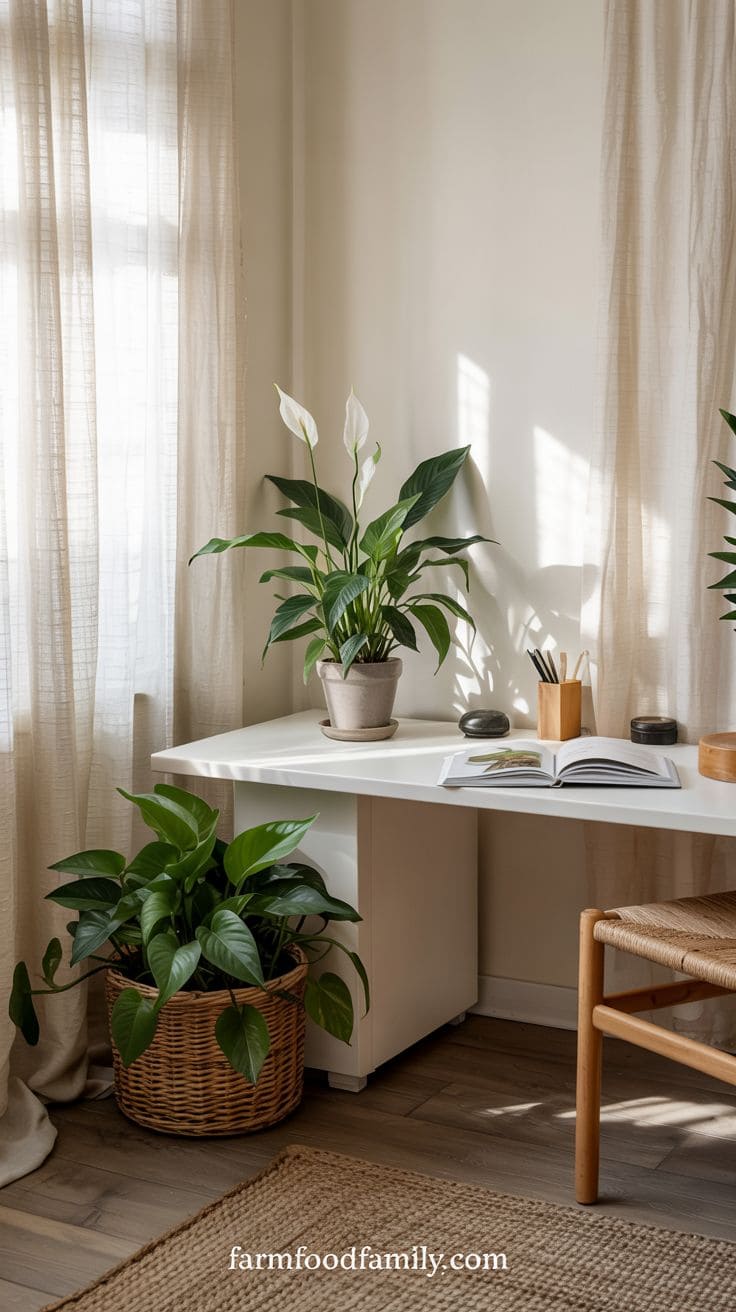
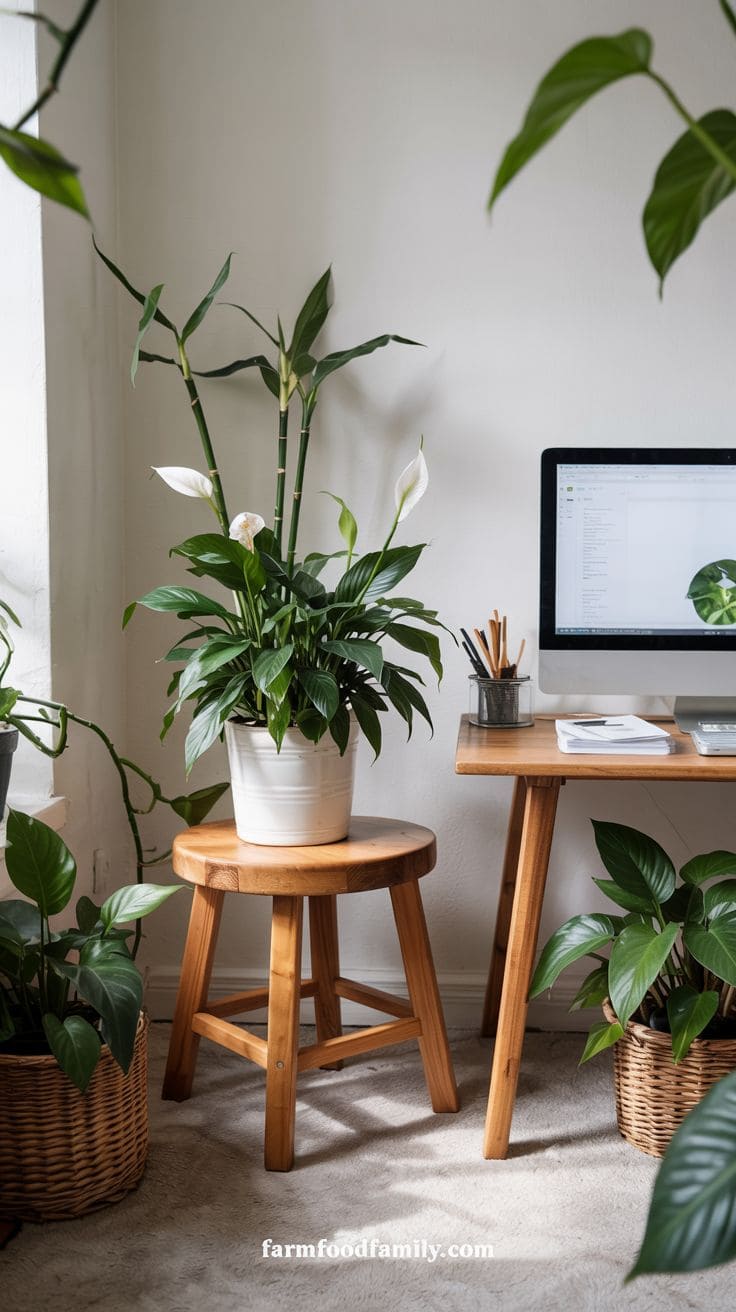
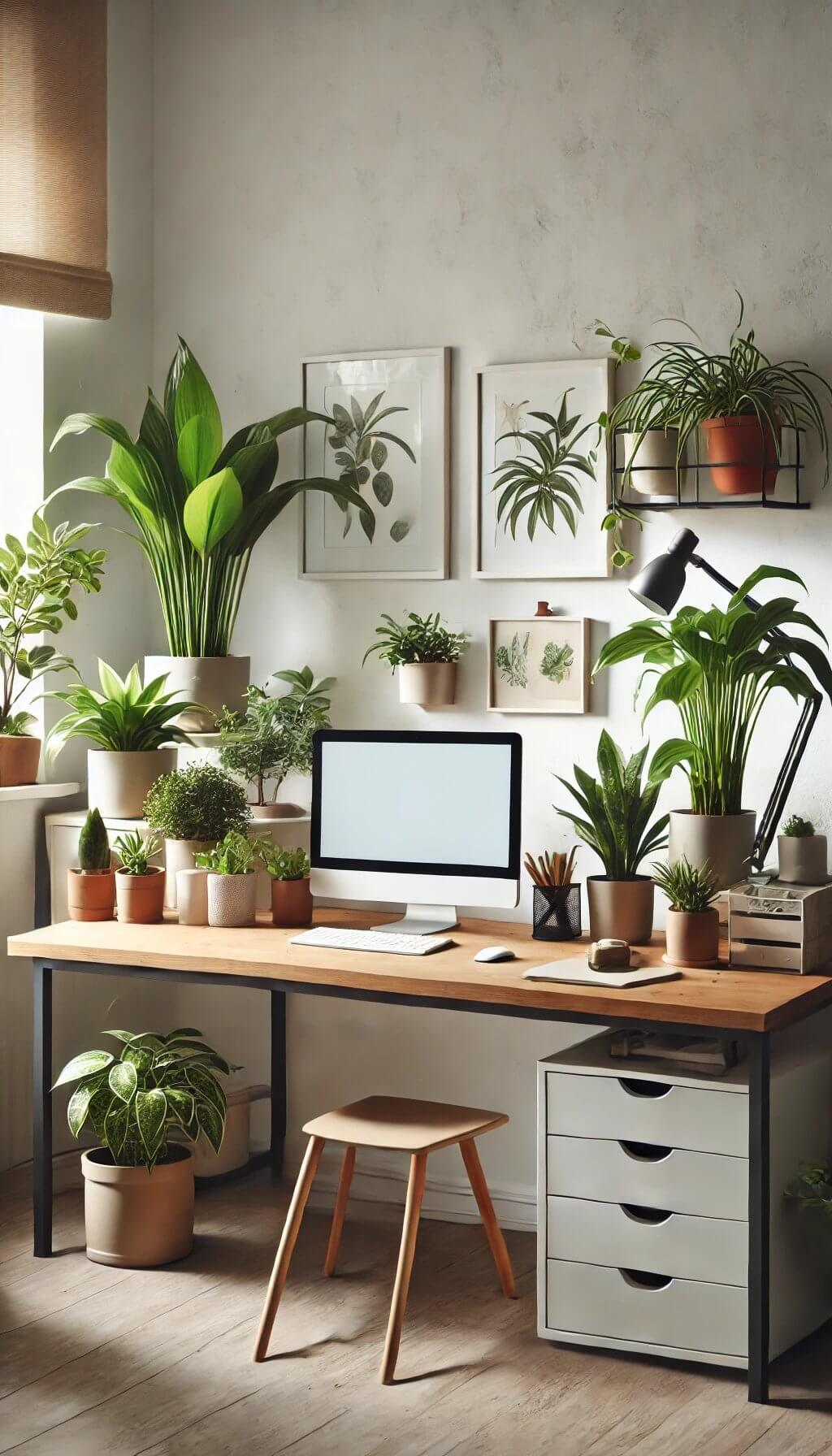
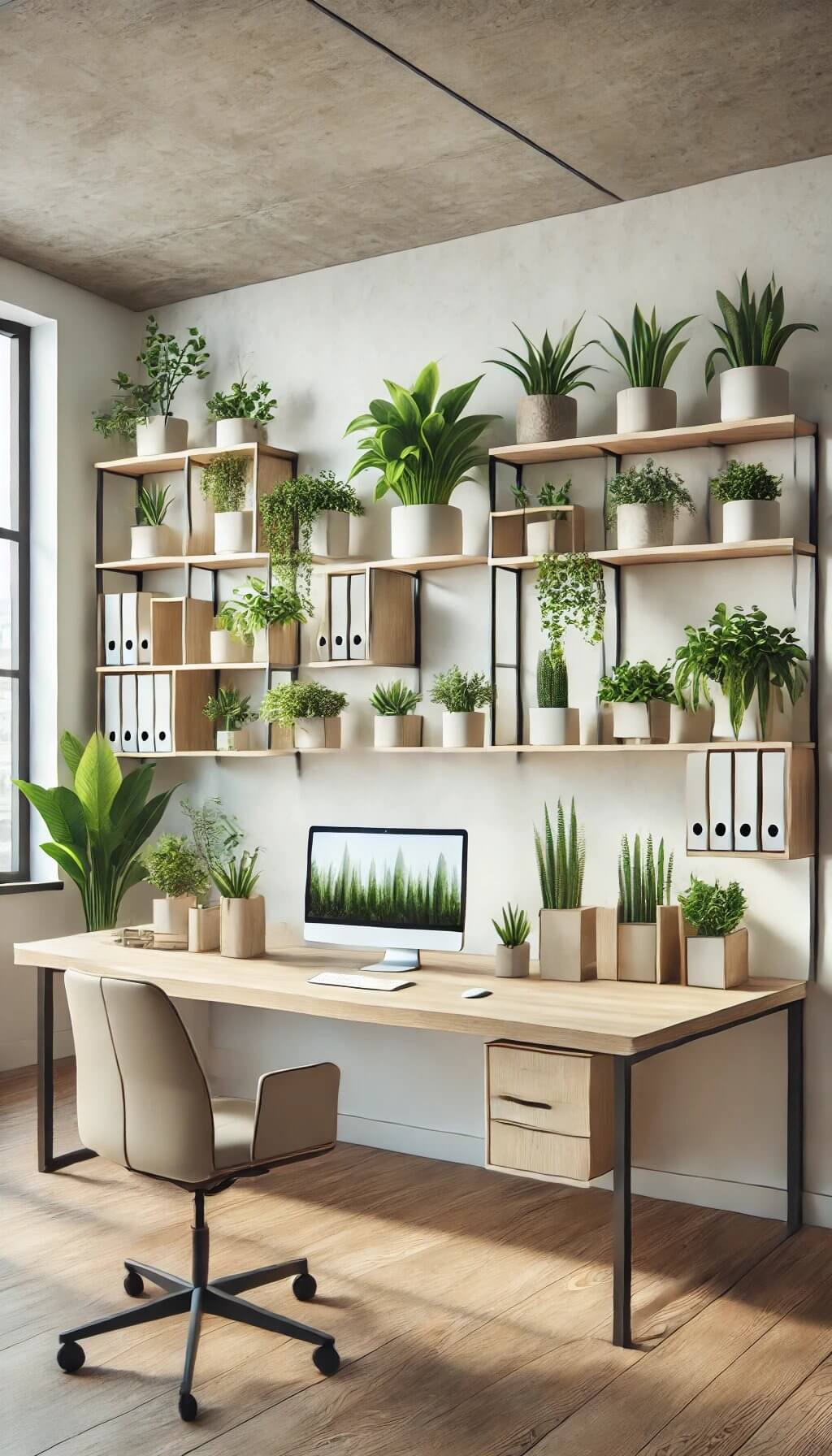
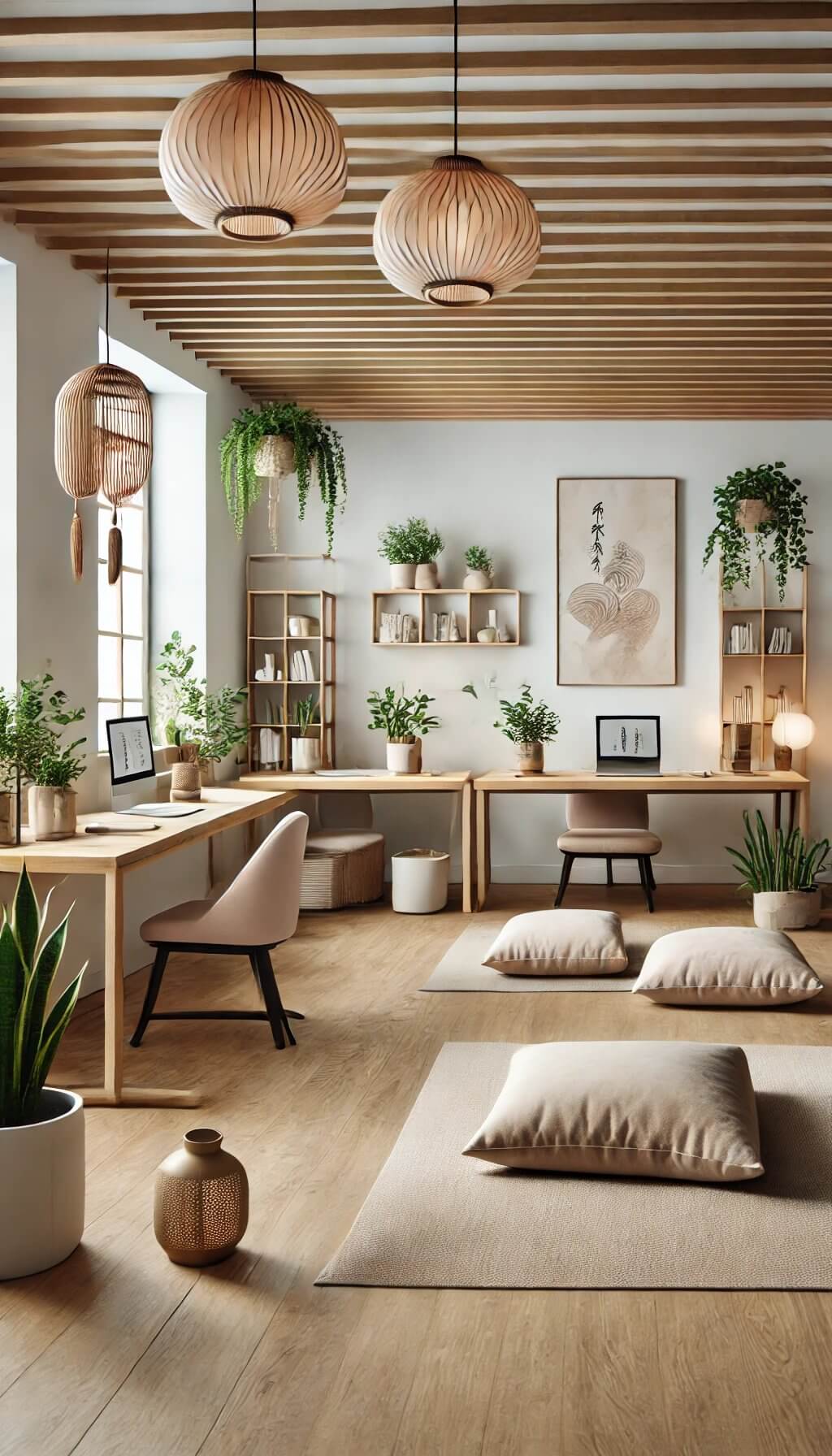
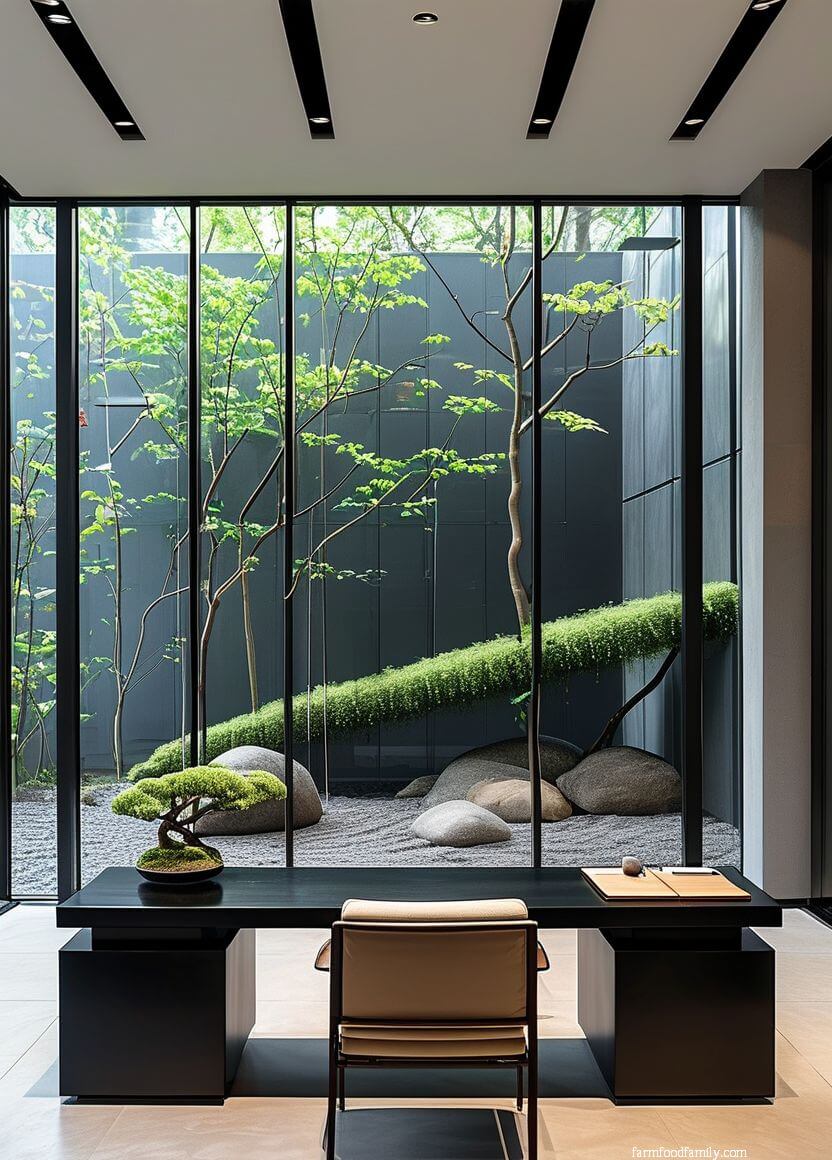
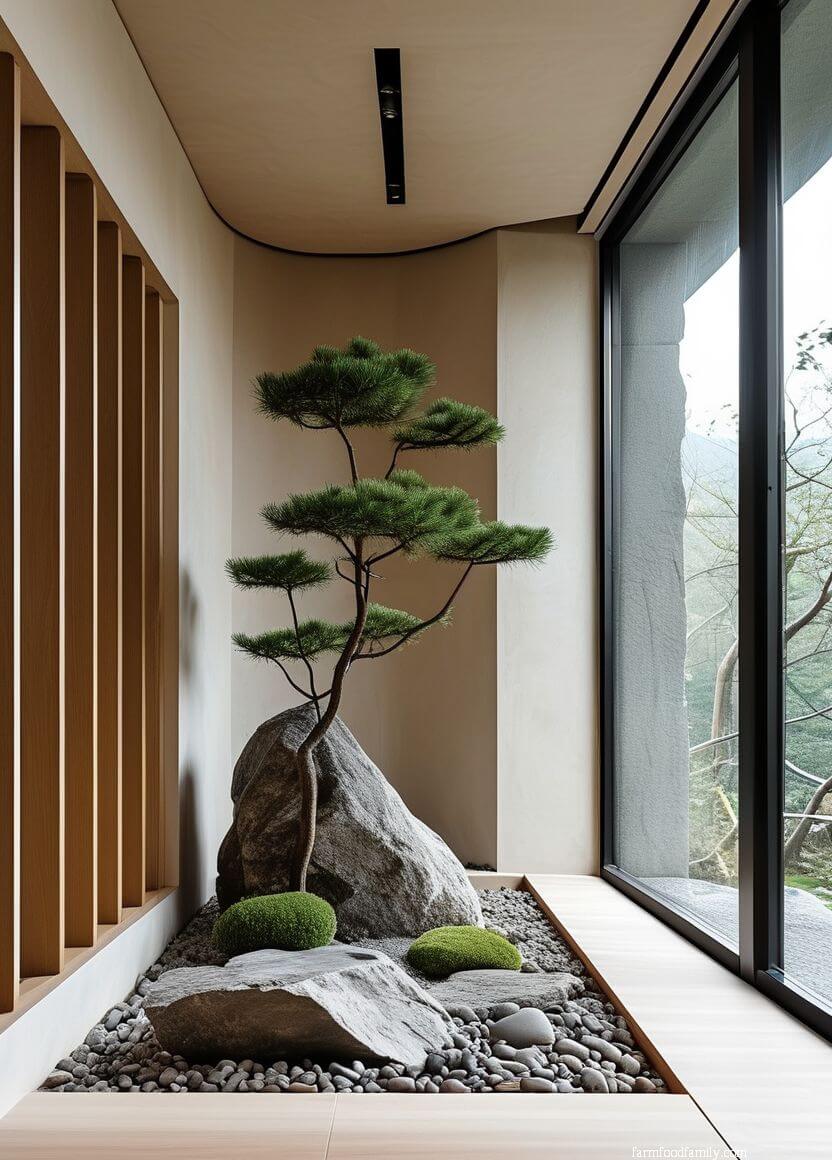
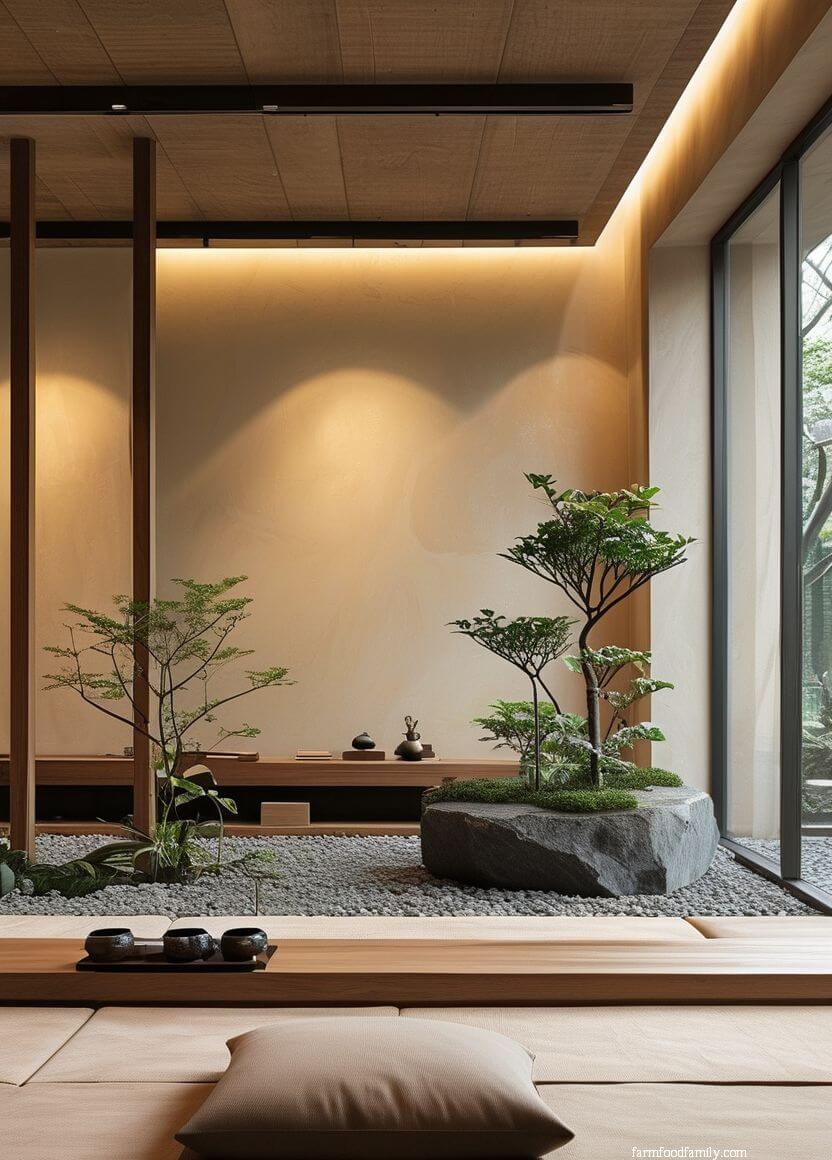
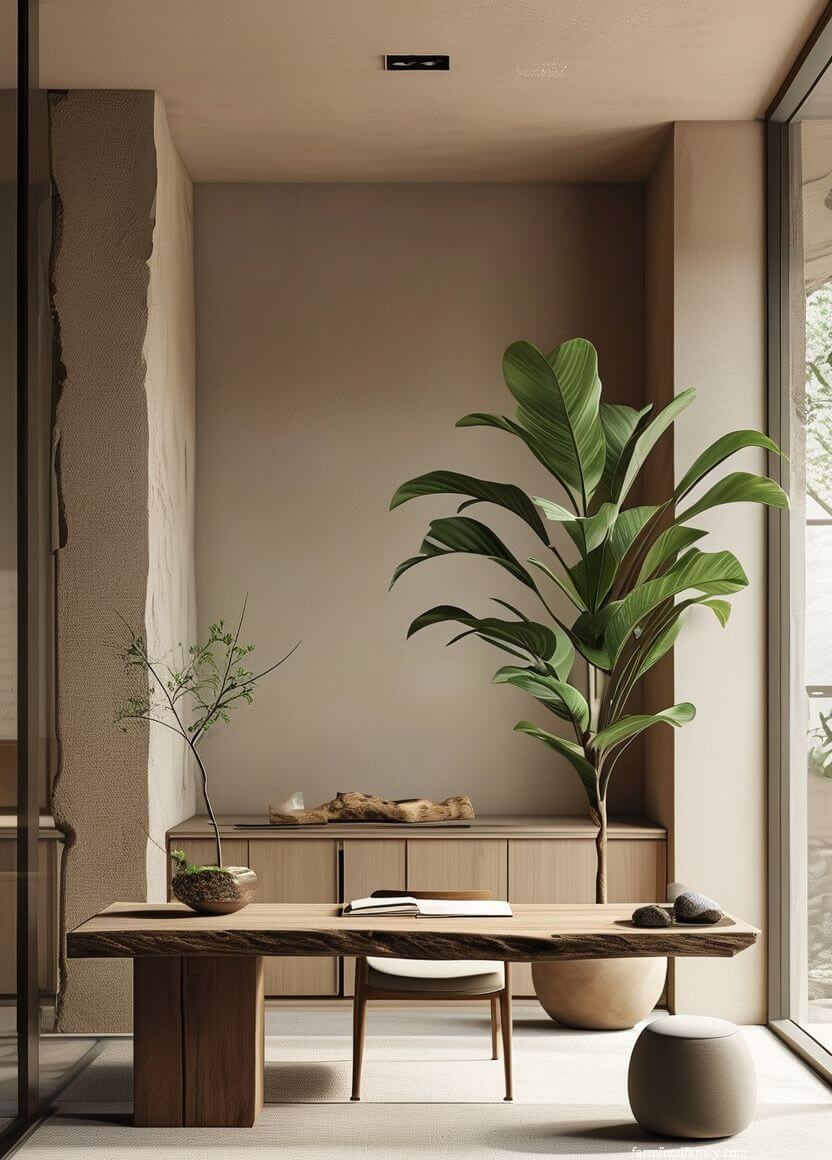
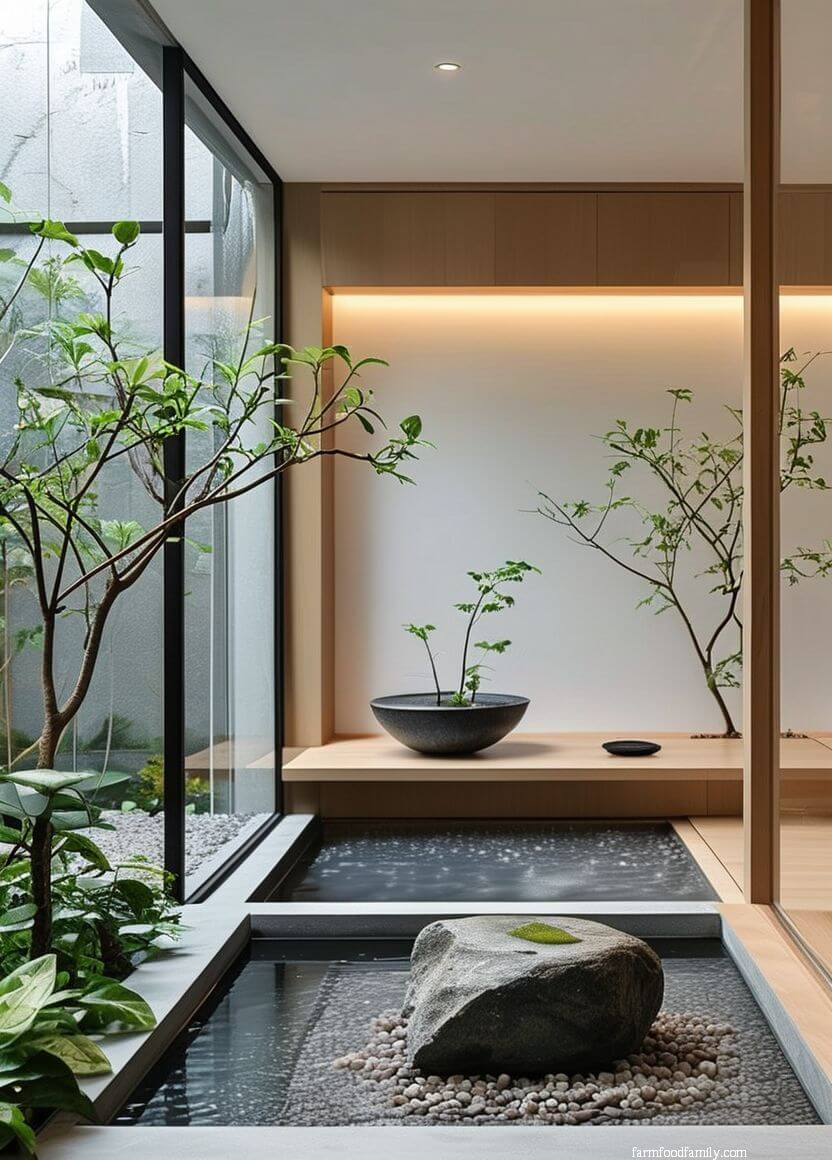
3. Indoor Plant Corner for Relaxation and Freshness
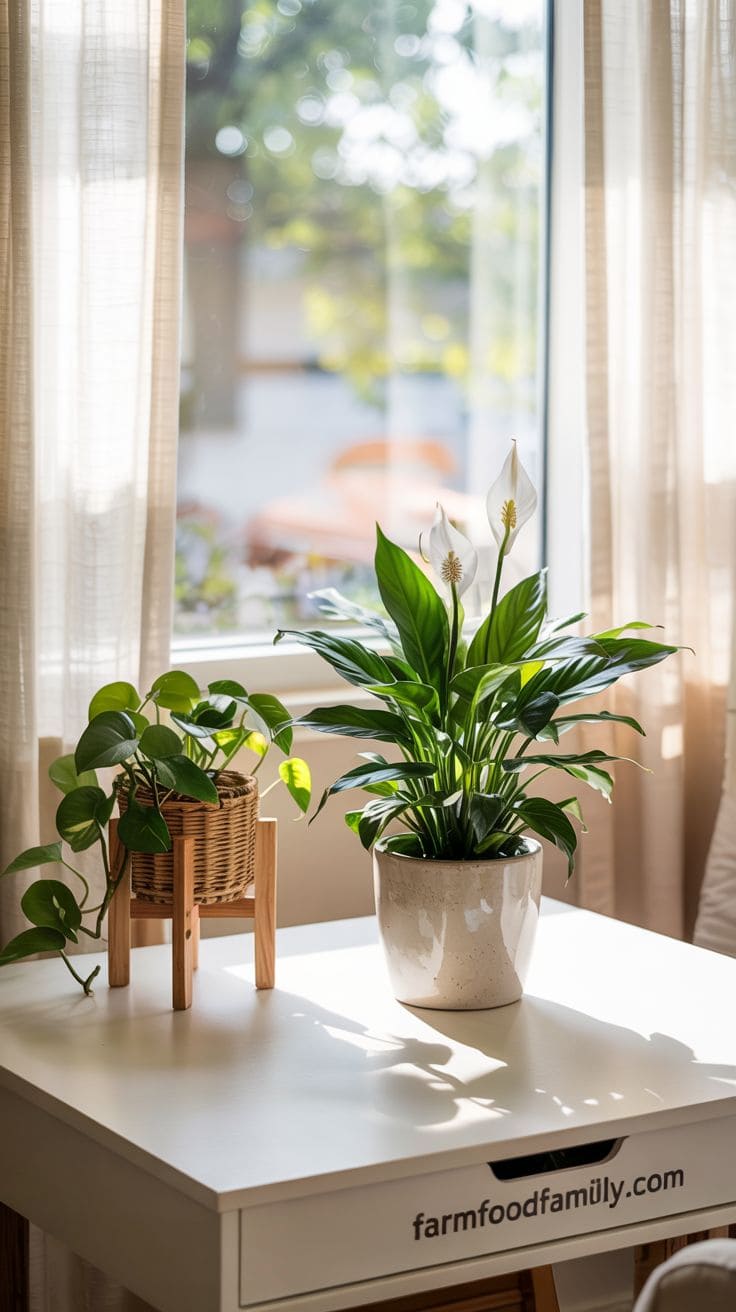
Out of everything on this list, this is the one with genuinely strong research behind it, not just a nice-sounding claim.
A 2018 study co-authored by Joseph G. Allen at the Harvard T.H. Chan School of Public Health found that a biophilic (nature-integrated) indoor environment produced an 8.6 mmHg lower systolic blood pressure, a 3.6 mmHg lower diastolic reading, and 14% better short-term memory performance compared to a non-biophilic control space.
A single well-placed plant corner, not a jungle, is enough to start capturing that effect.
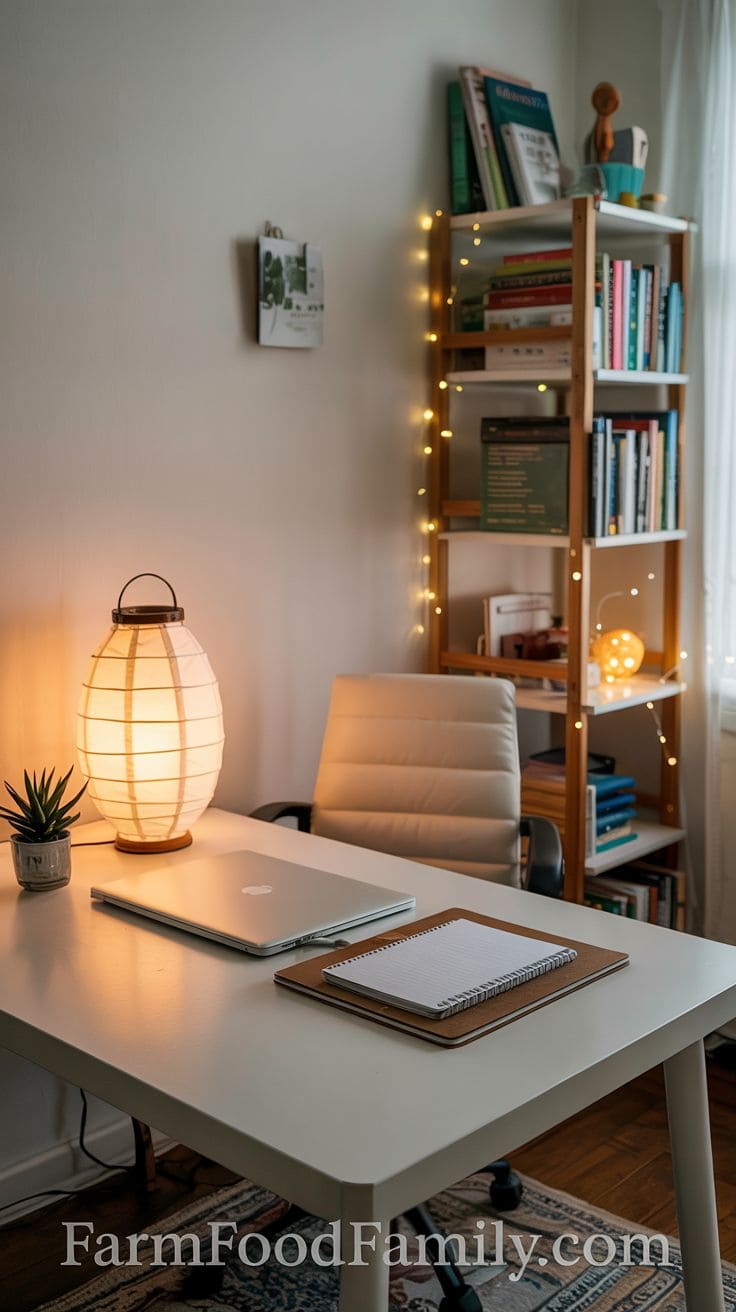
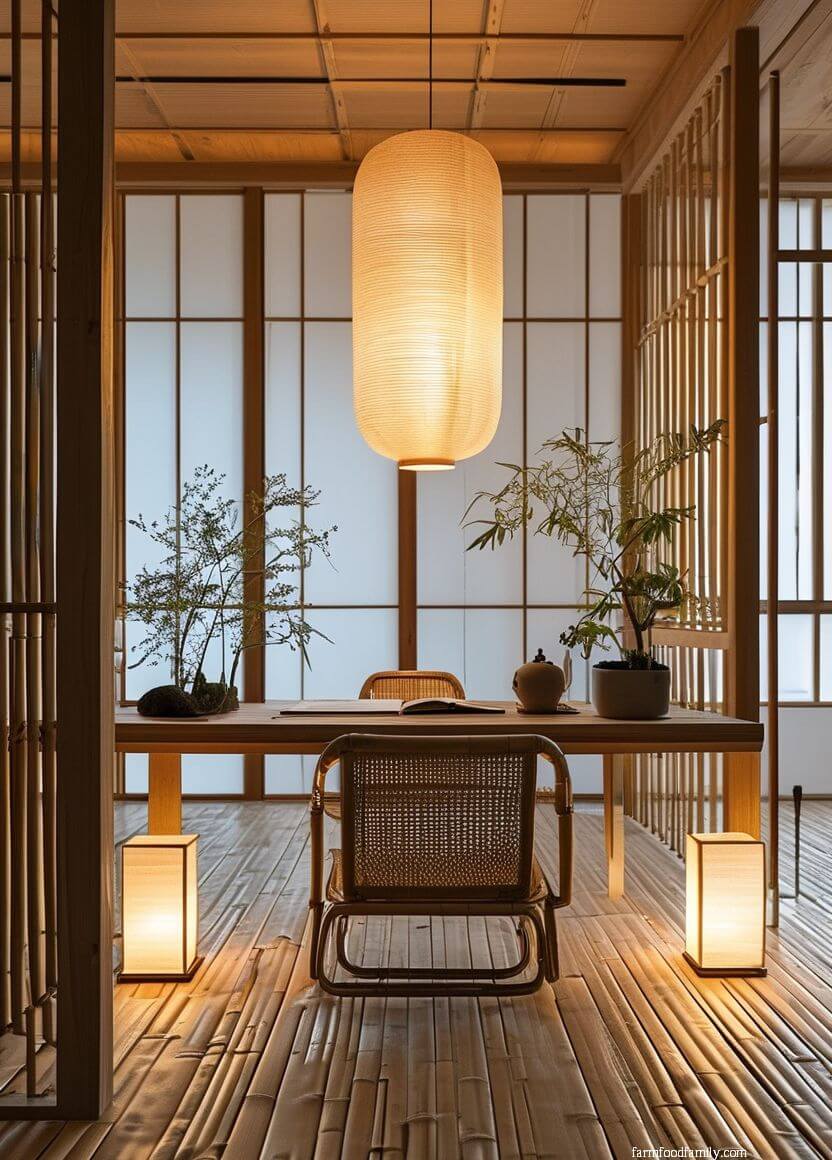
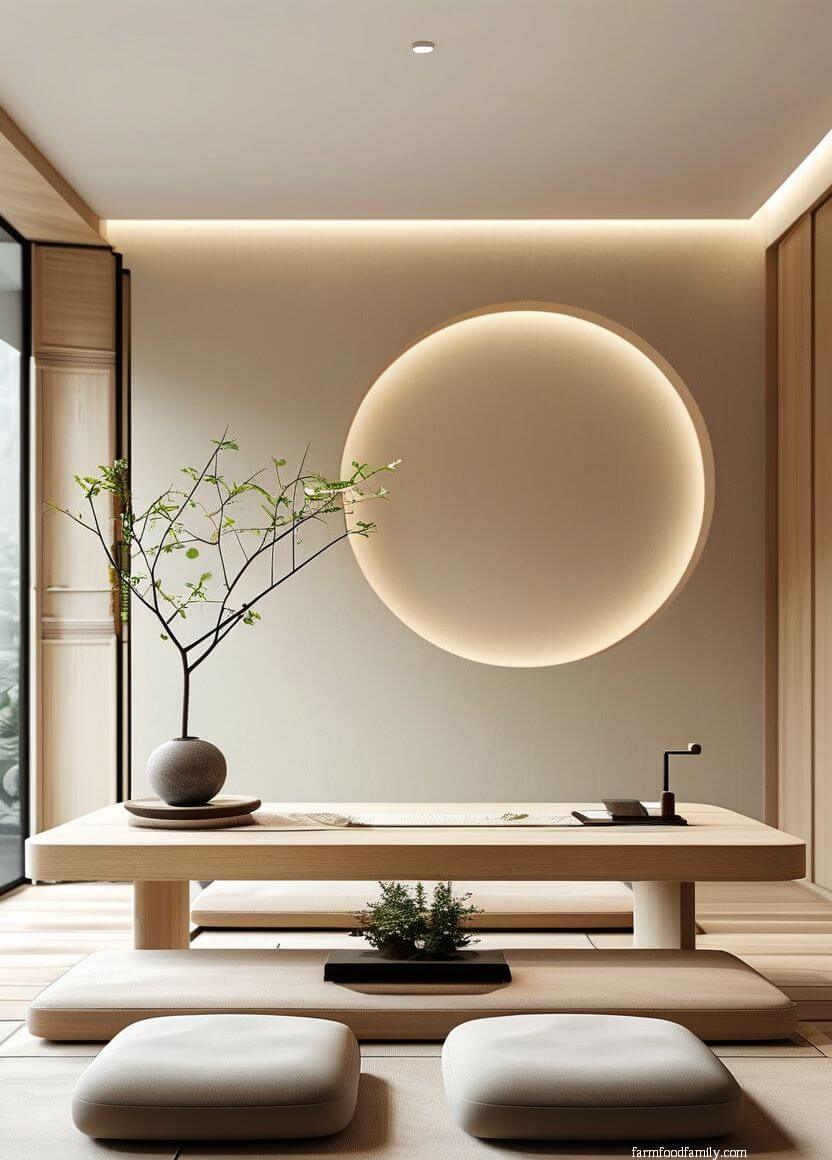
4. Soft Ambient Lighting with Simple Lamps
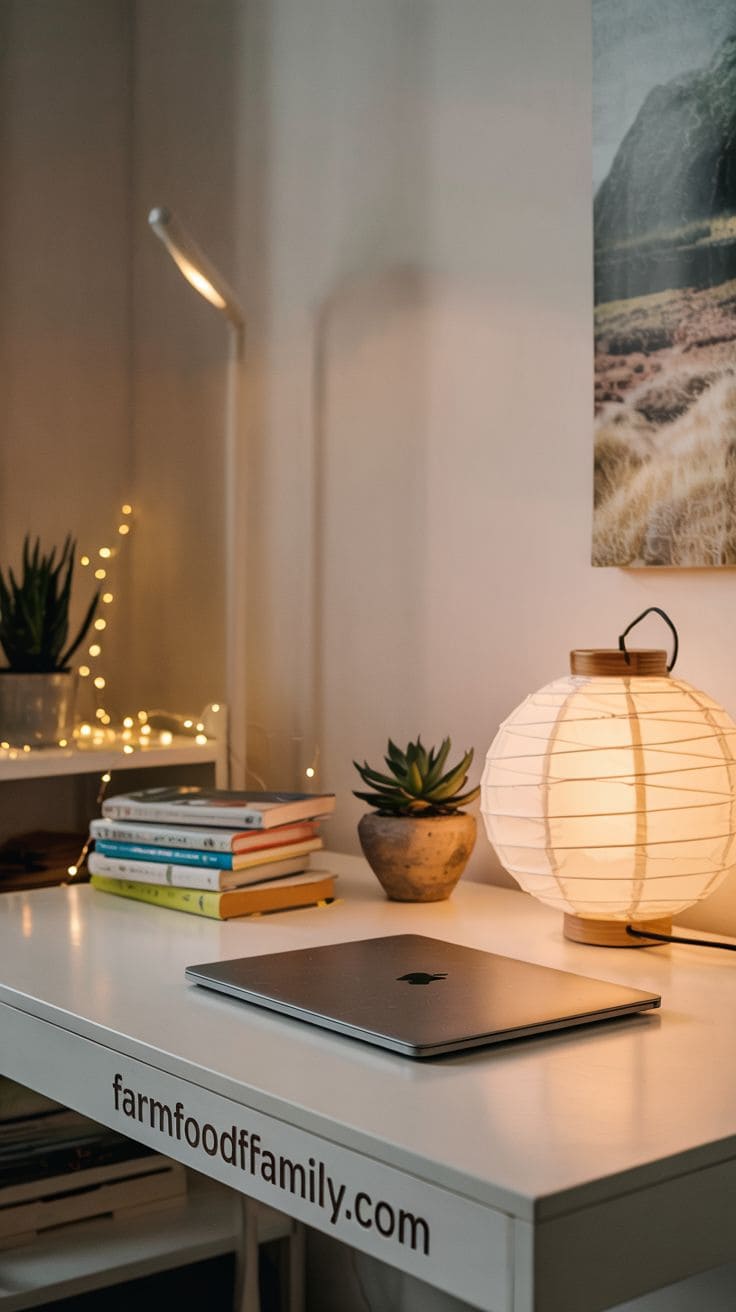
Avoid harsh overhead lighting in favor of diffused, soothing sources.
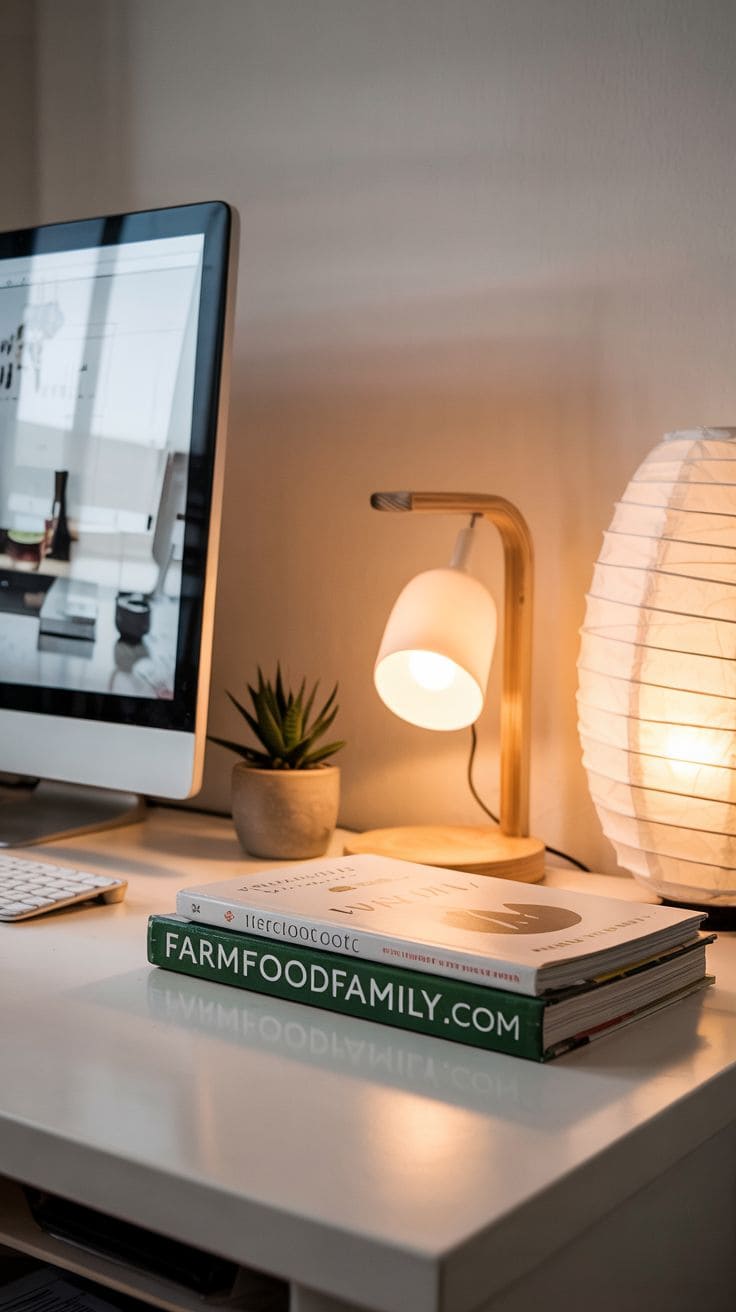
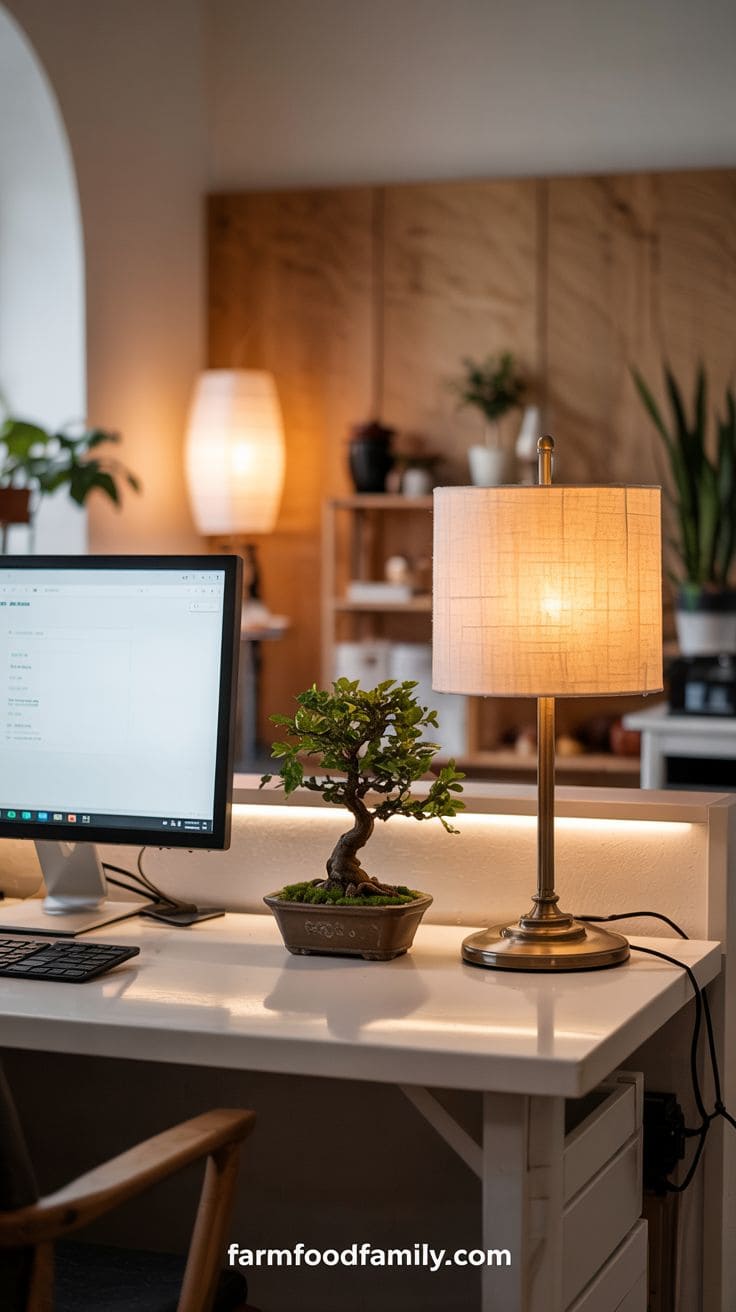
Consider lamps with wooden or paper shades, salt lamps, or lantern-style lights that give off a warm golden glow. A floor lamp with adjustable brightness can light up your workspace without causing glare.
Placing a tiny lamp behind your monitor might alleviate eye strain, particularly in the nights.
Wrap gentle fairy lights around a shelf or behind a room divider to create a more organic impression.
Lighting has a significant impact on mood.
Warm, indirect light promotes relaxation, which aids in attention and reduces symptoms of burnout during prolonged work sessions.
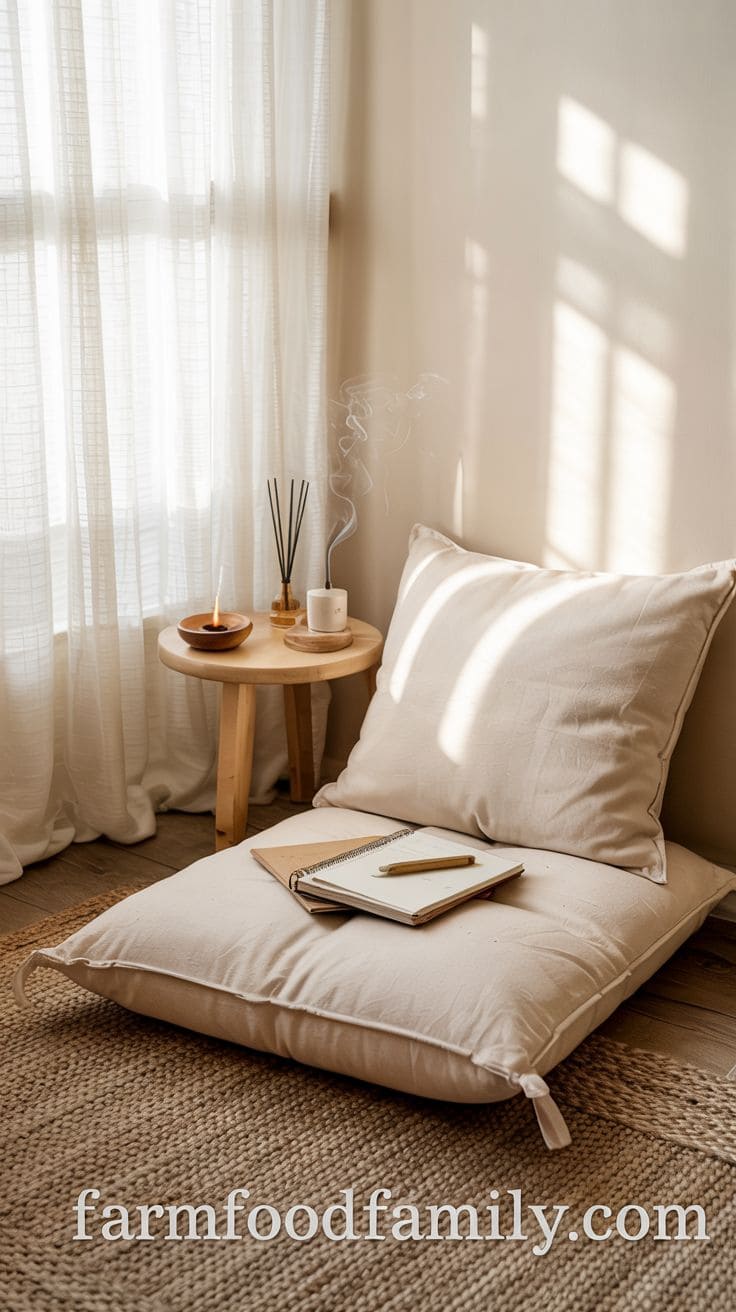
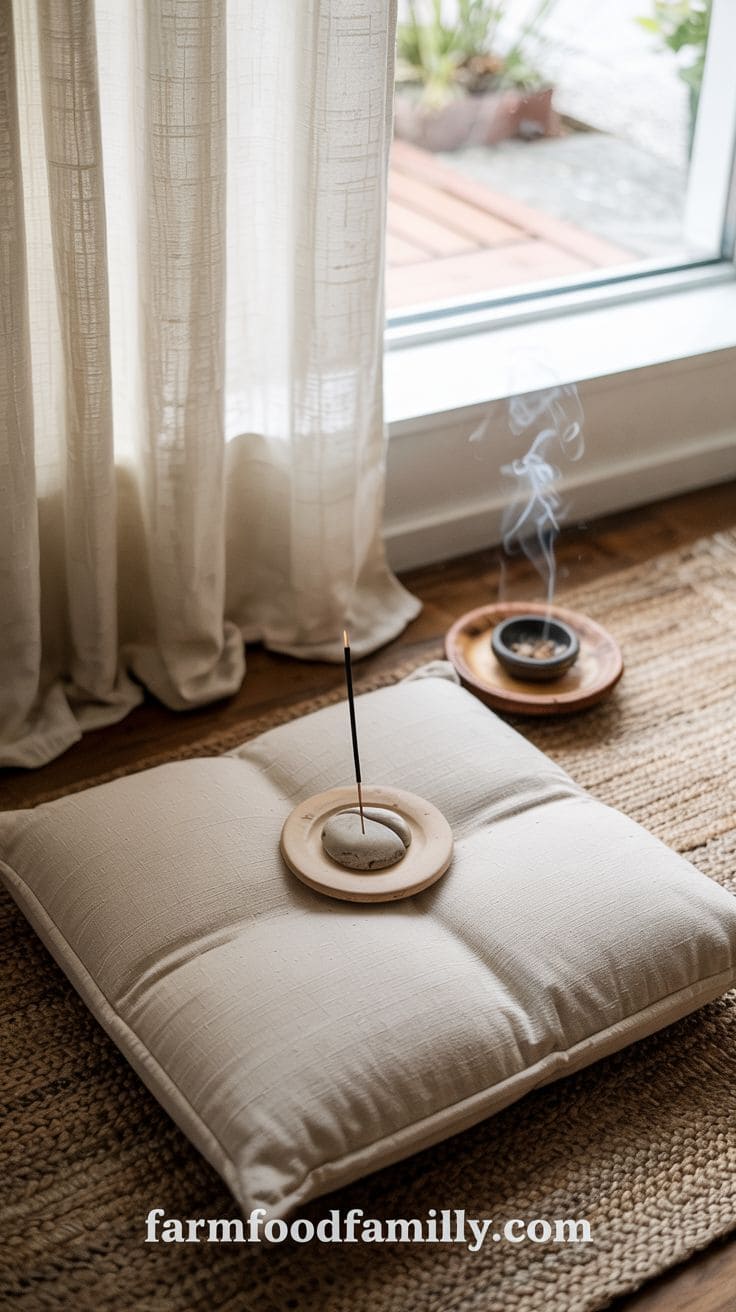
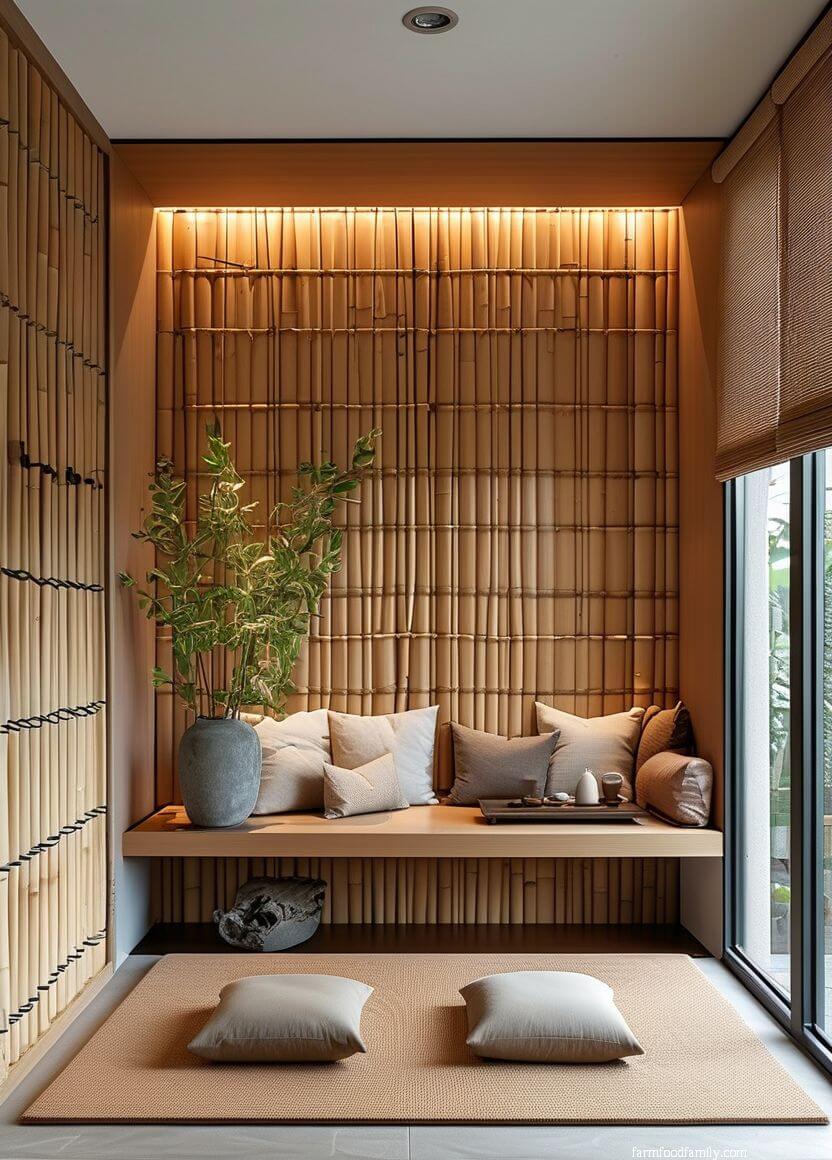
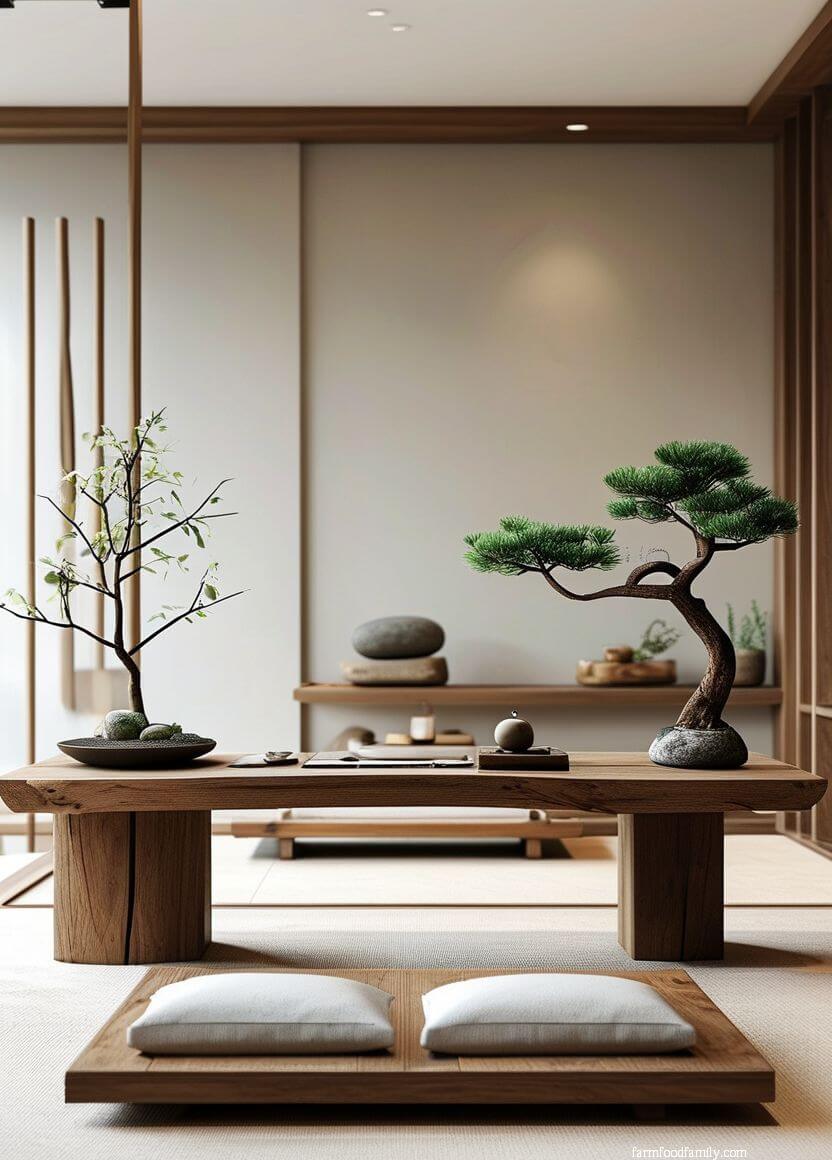
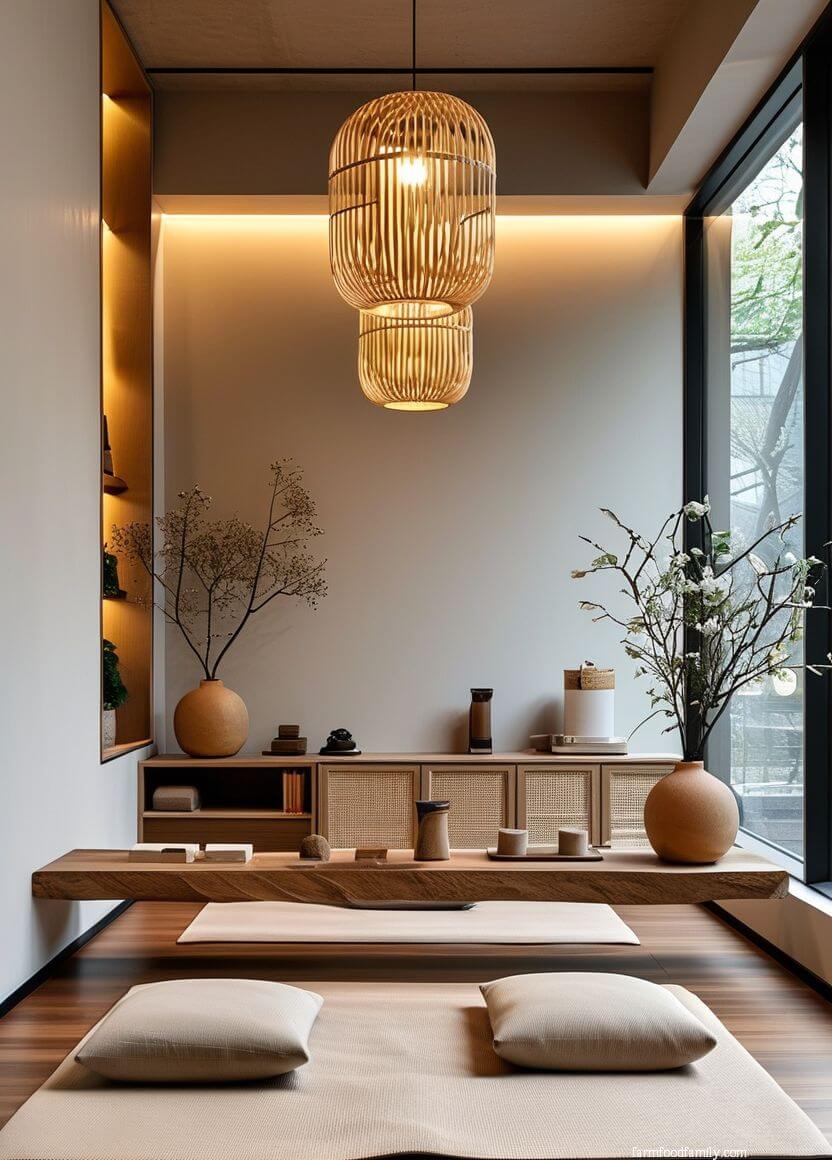
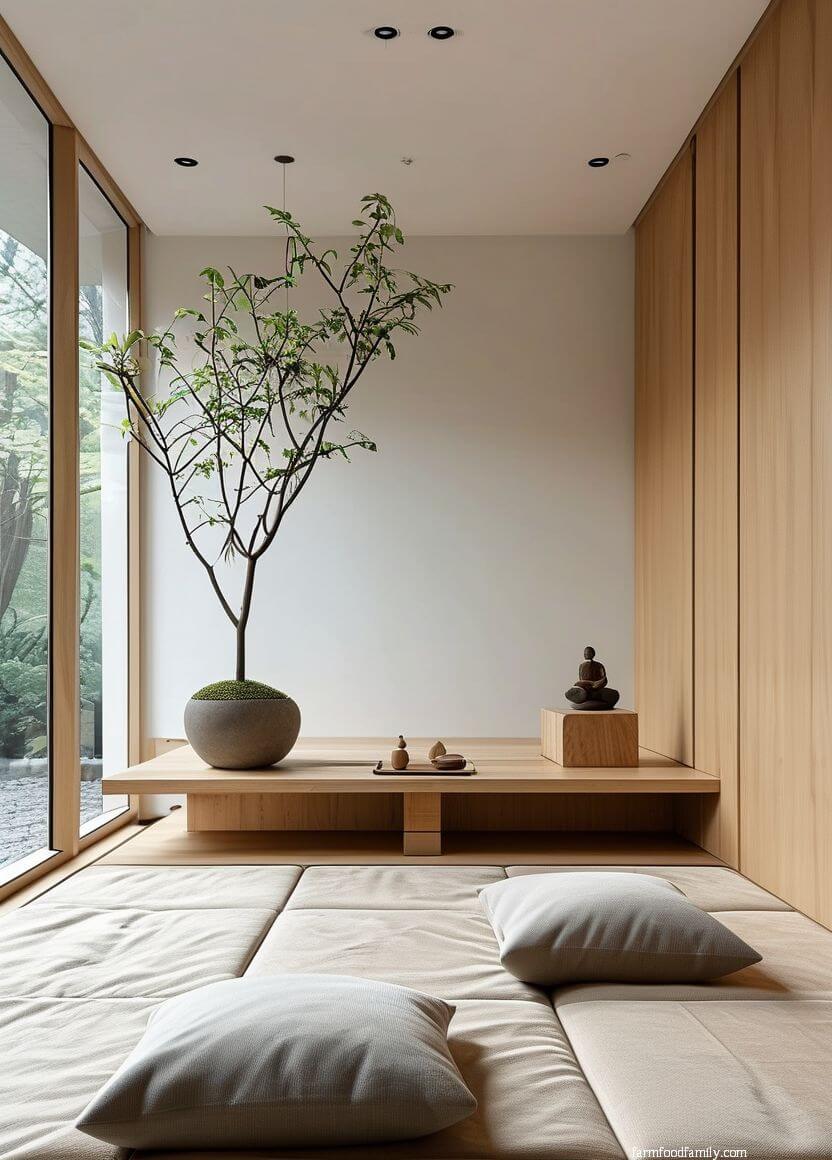
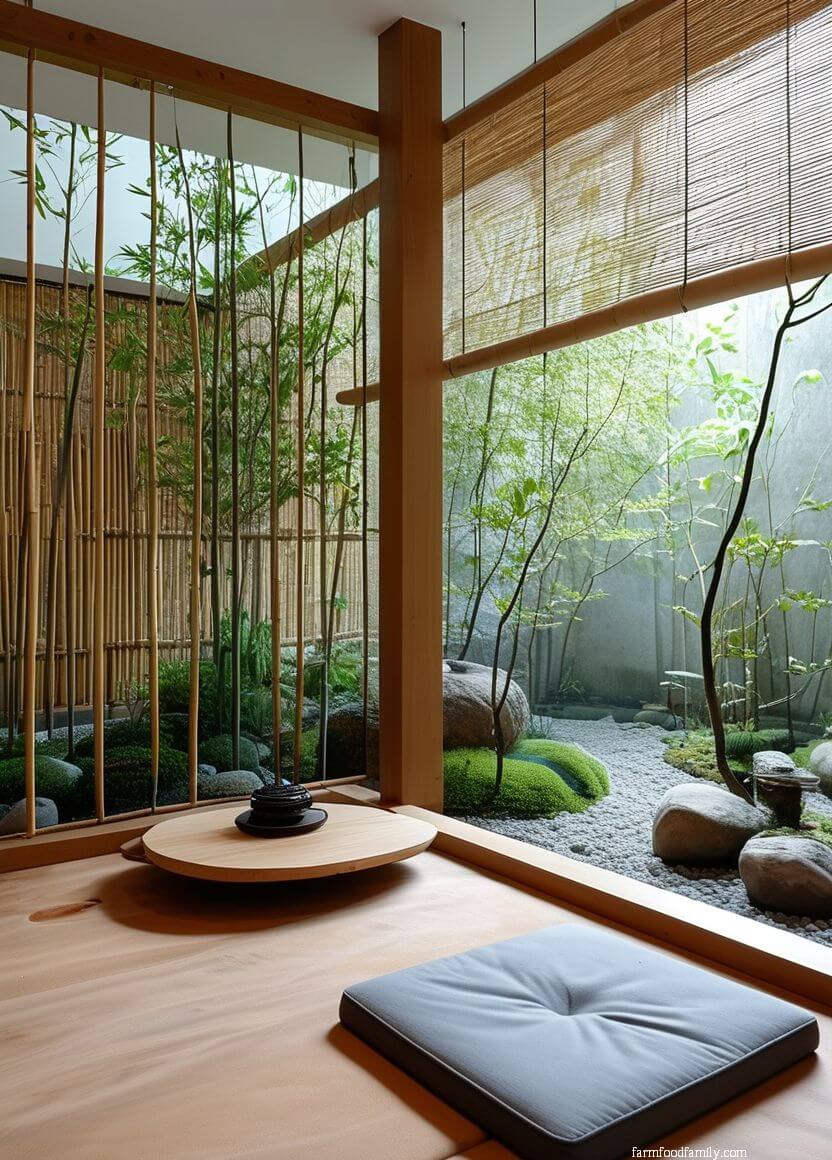
5. Simple Floor Cushion or Meditation Spot
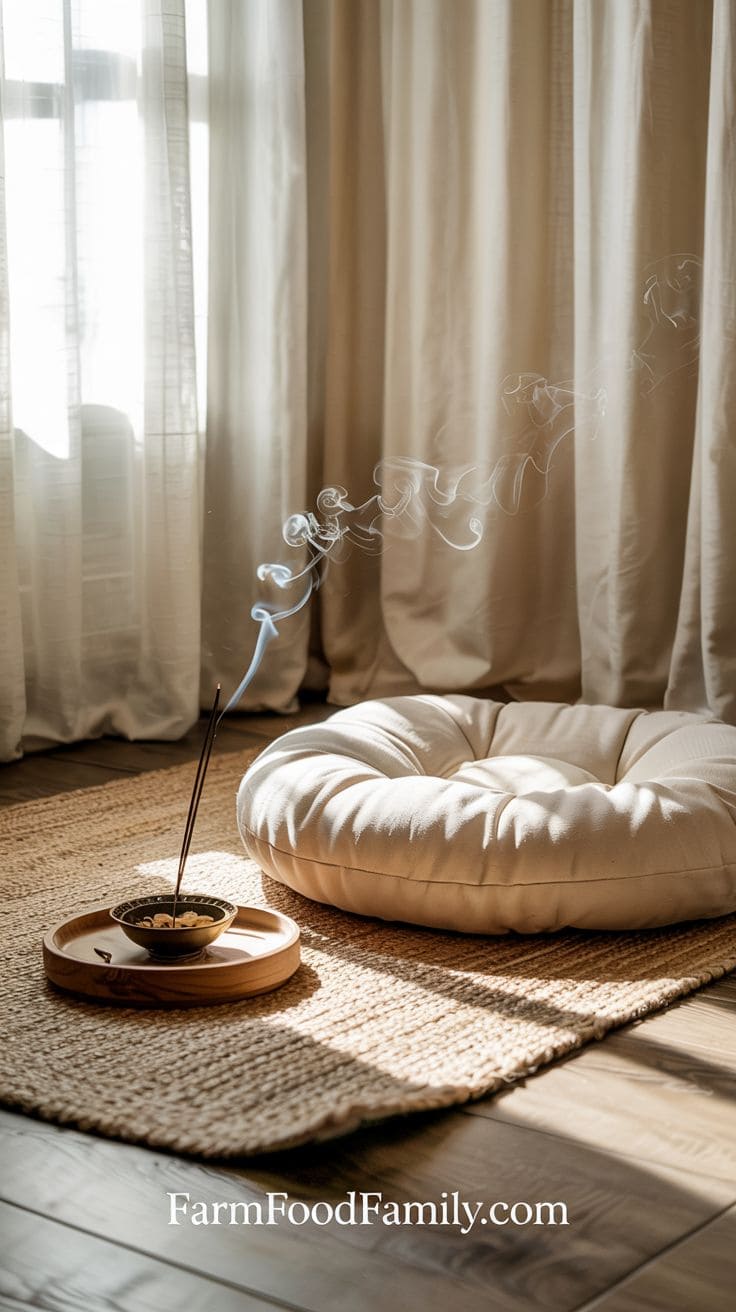
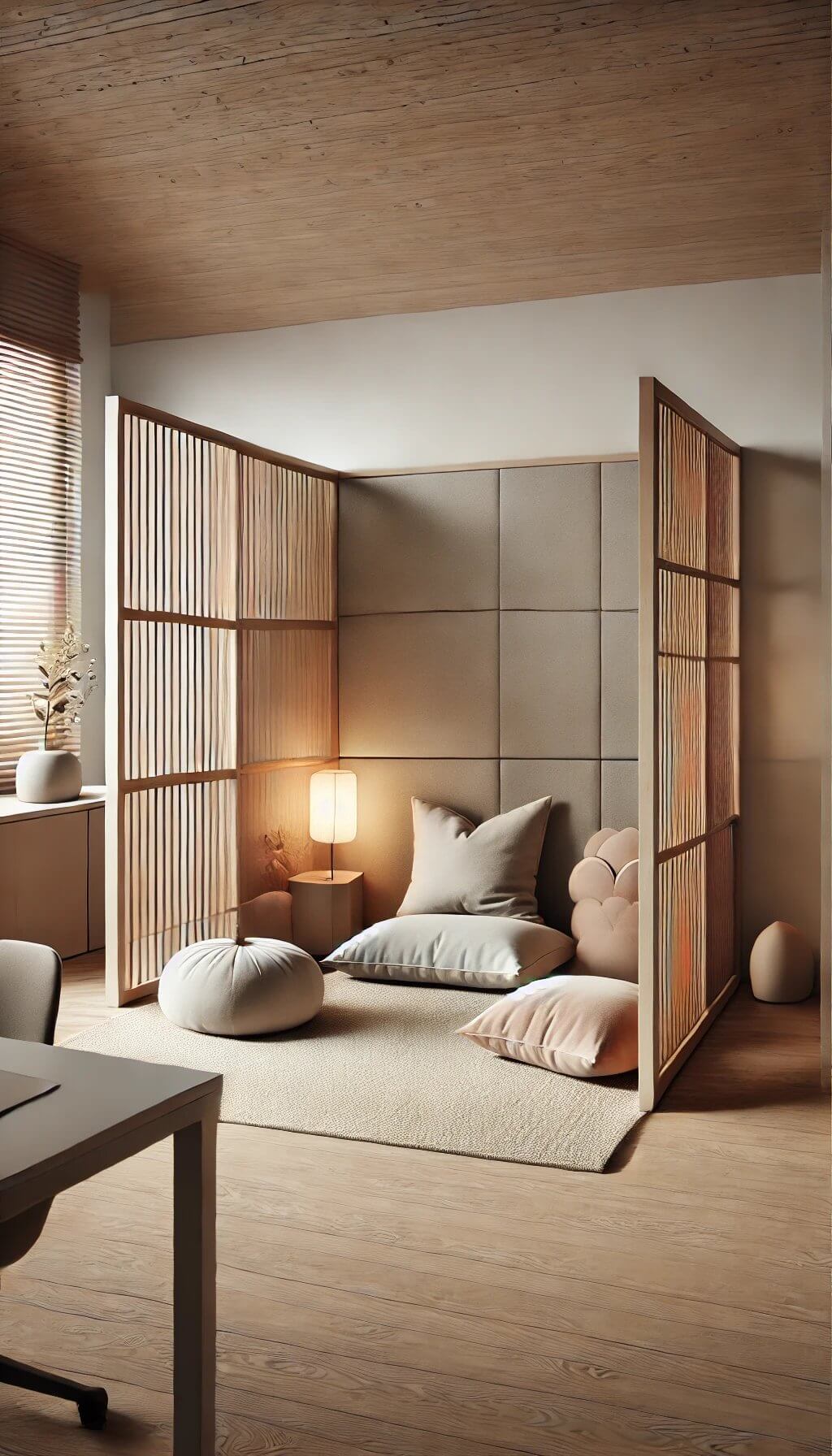
Create a designated pause place in your Zen office with a soft floor cushion, woven mat, or low stool.
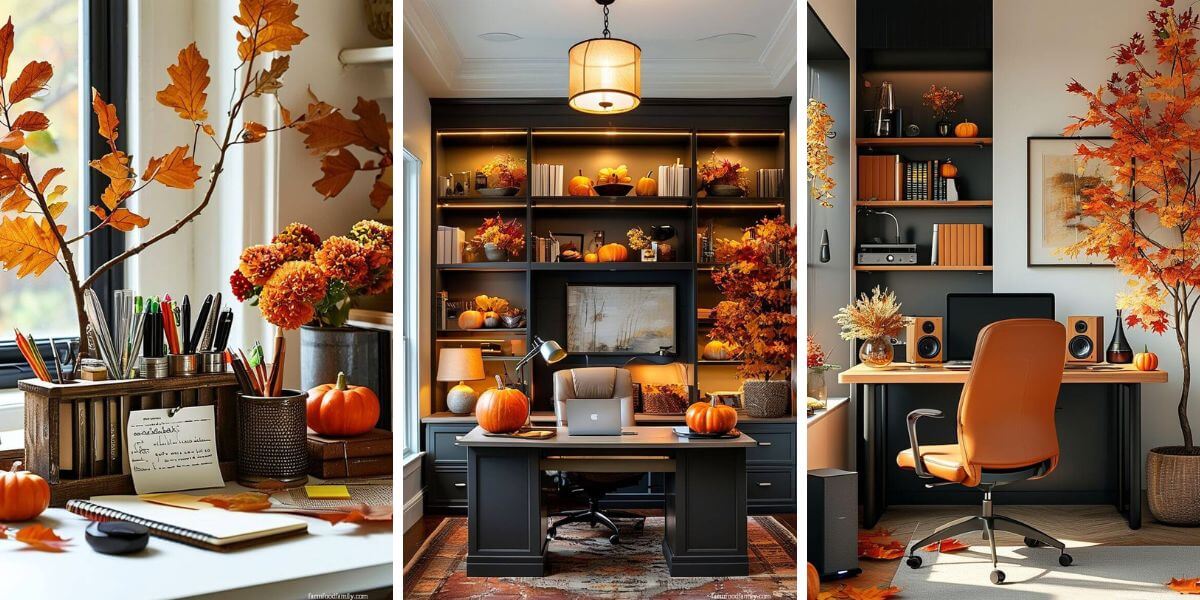
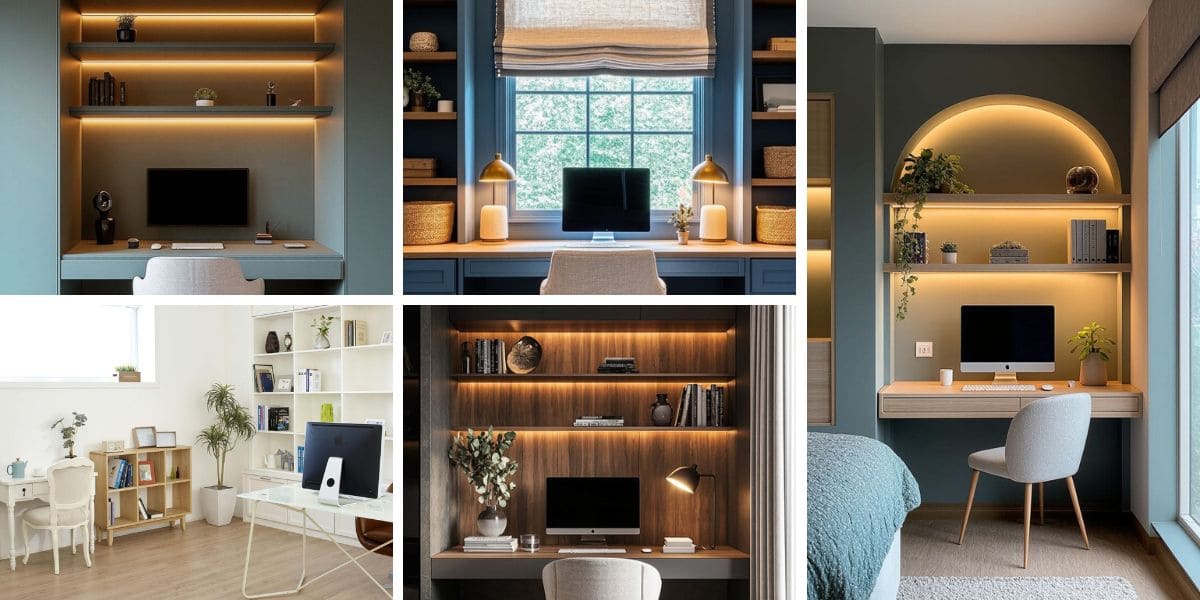

Select neutral colors such as charcoal, sand, or cream and place it in a calm location near a window or beneath a floating shelf with a soft design.
This place is not just for meditation; it can also be utilized for a peaceful stretch, a minute of journaling, or a quick phone break.
A tiny incense burner or essential oil diffuser nearby provides a multisensory experience that keeps the mind focused.
Including this type of mindful corner in your desk promotes a good work-life balance even on busy days.
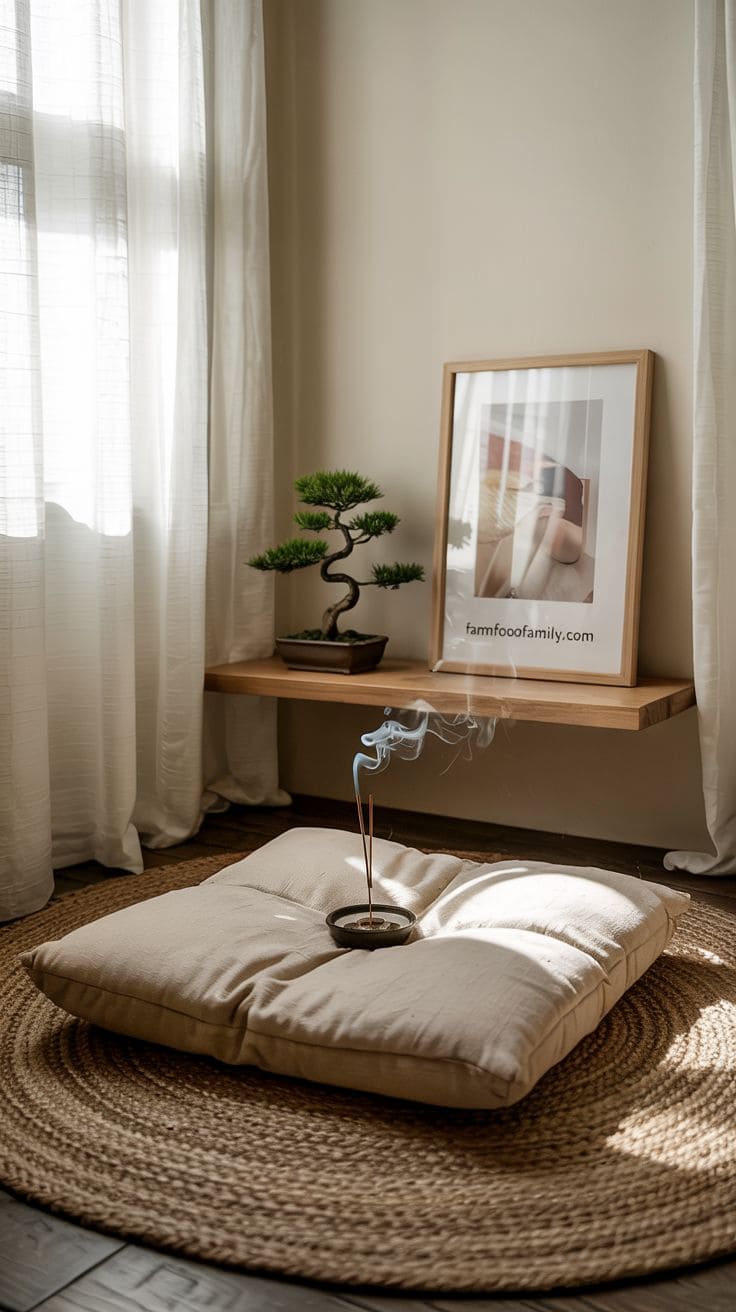
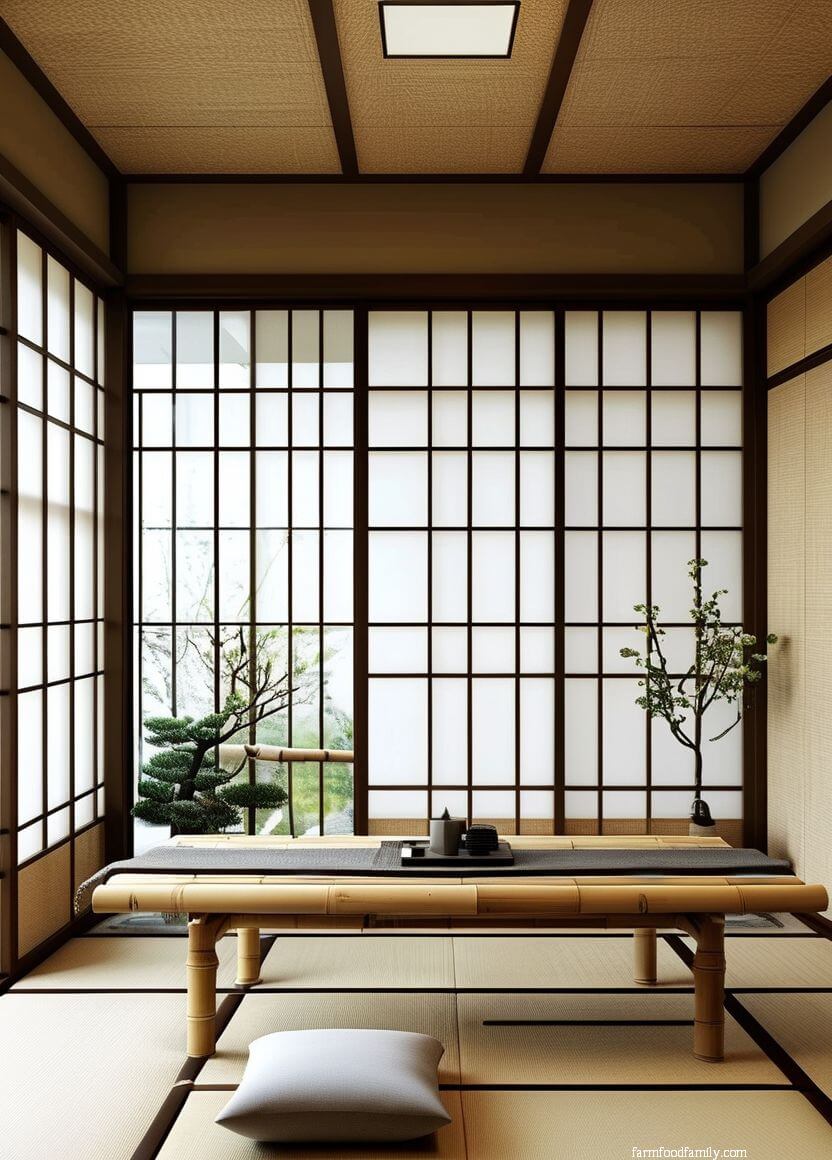
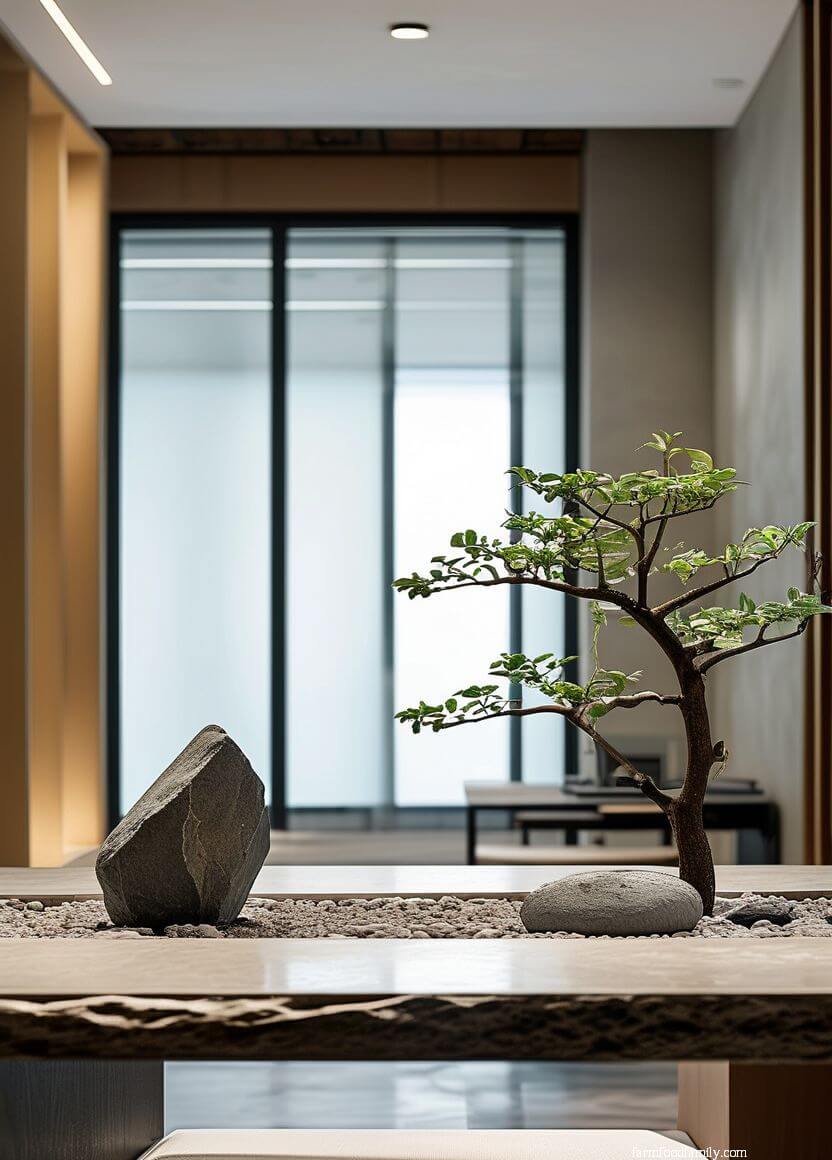
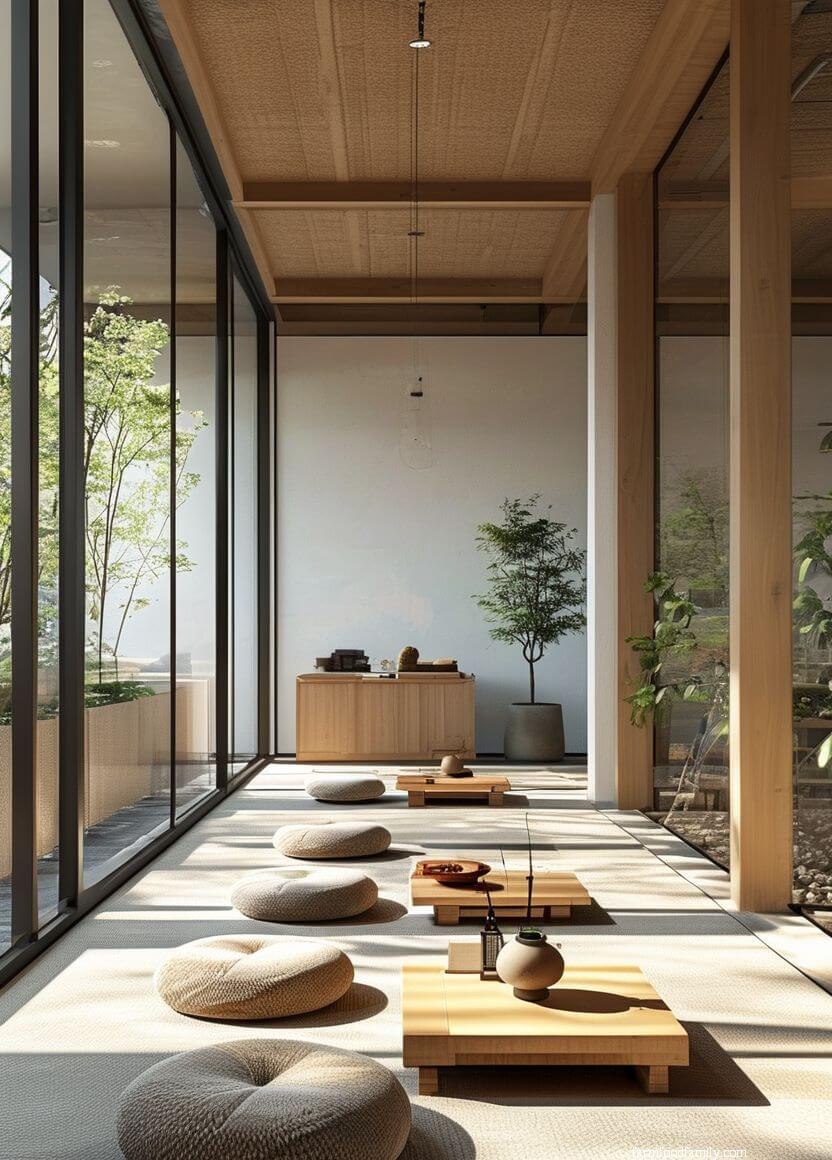
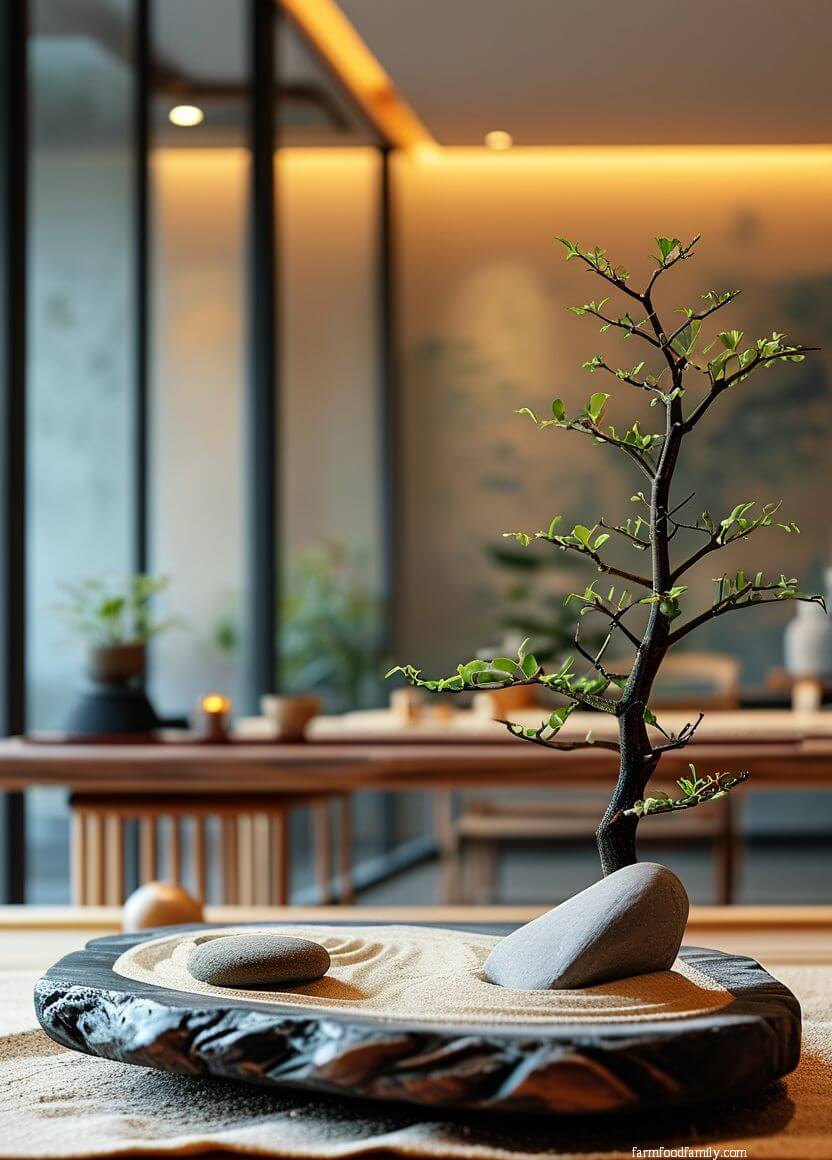
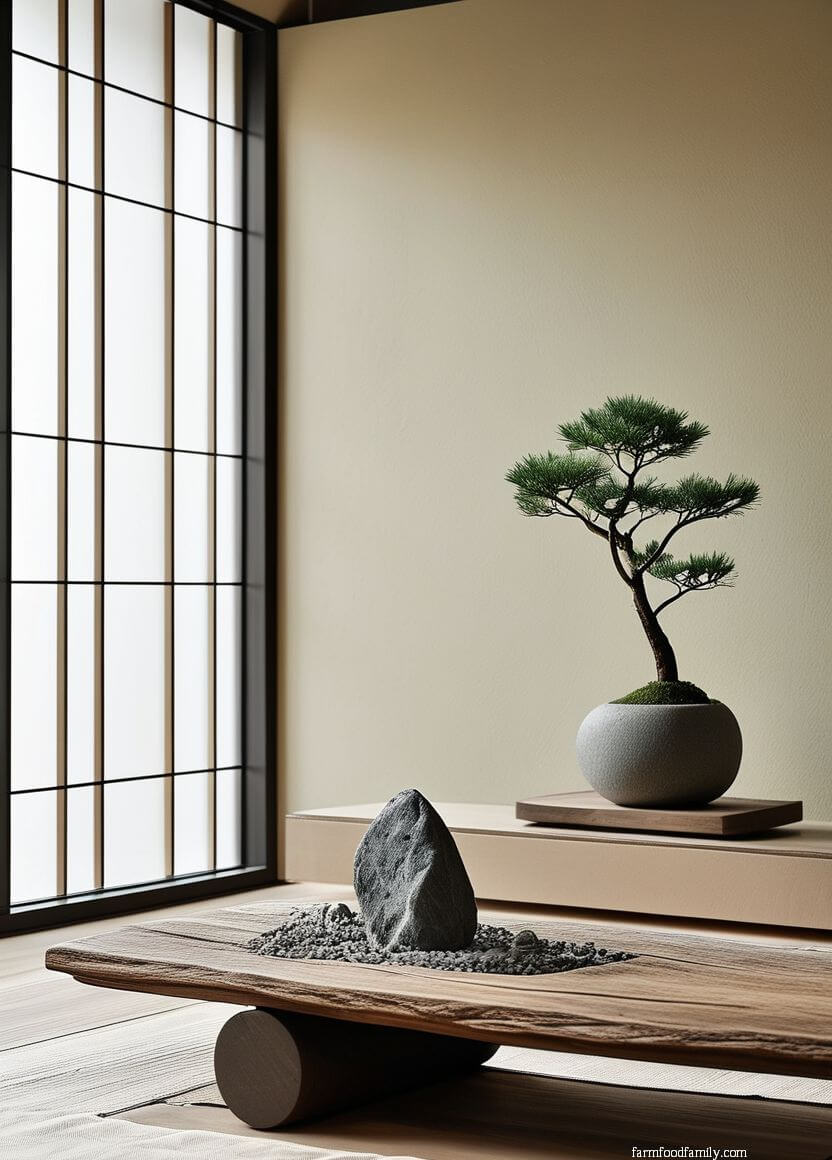
6. Minimalist Design
7. Zone Separation With Rugs or Dividers
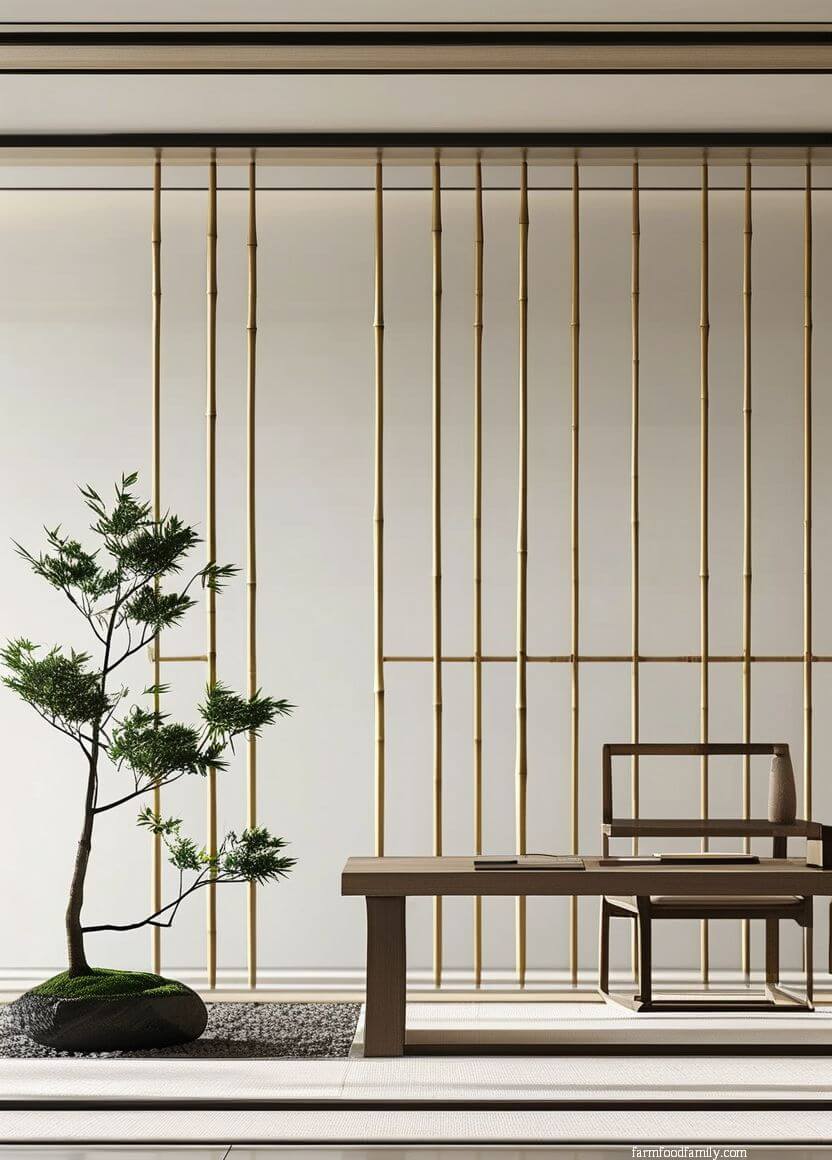
If your office shares a room with a seating area (a common setup in open-plan homes), define the boundary physically. Use one rug that covers only the desk and chair, and a separate rug or flooring treatment for any seating area in the same room. This creates a real mental “work zone” line your brain can register, something a single room-wide rug can’t do.
A lightweight acoustic baffle divider panel is a genuinely useful, low-cost option if you want to soften an open-plan space without fully walling it off; it won’t block a doorway’s worth of light or airflow the way a solid partition would.
This is the same zoning challenge covered in open concept living room ideas, worth a look if your office shares space with a living area rather than a bedroom.
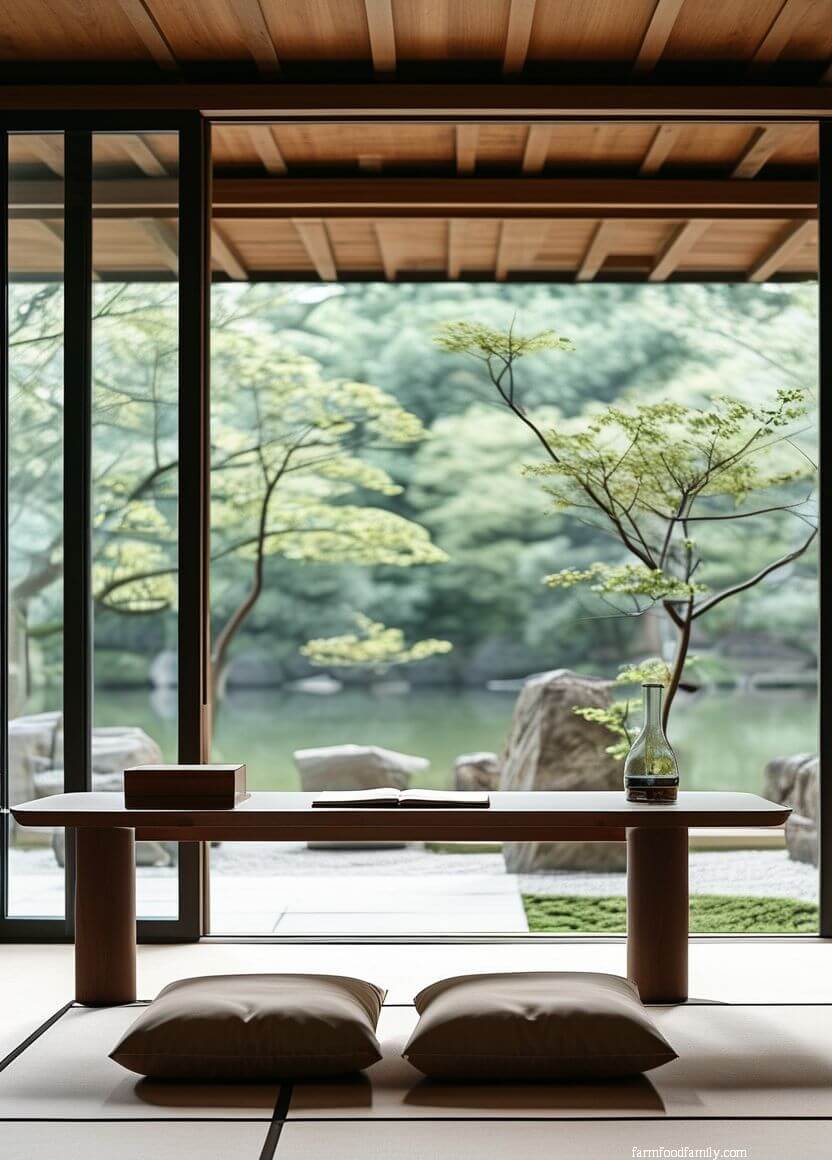
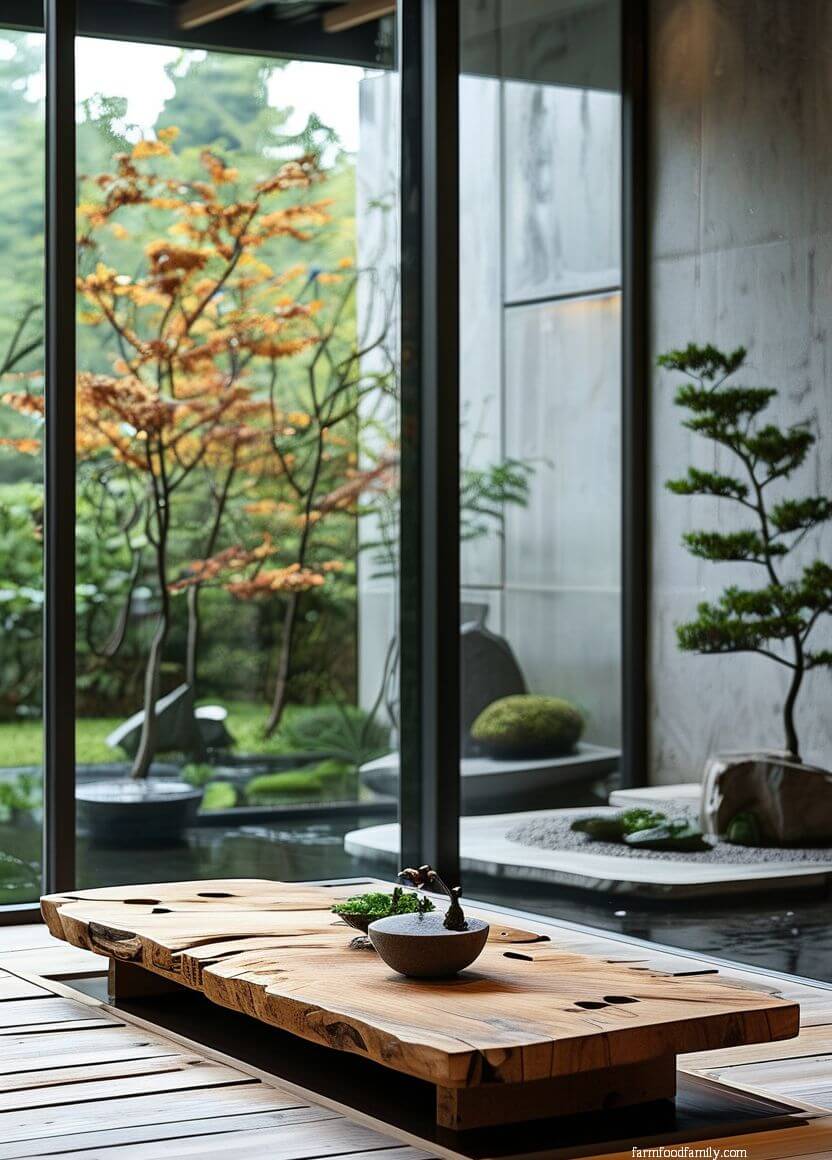
8. Natural Light
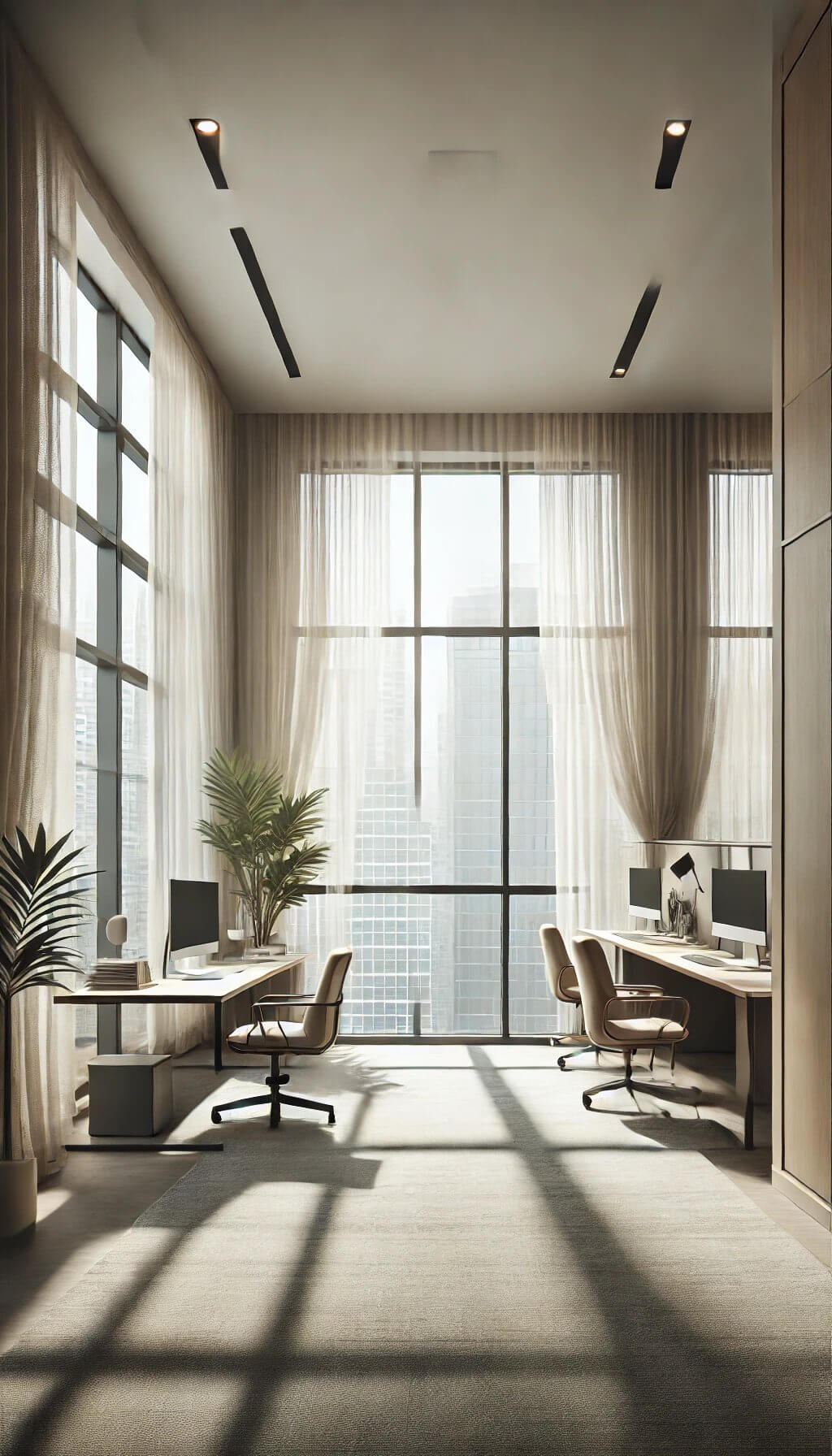
9. Indoor Plants
10. Neutral Color Palette
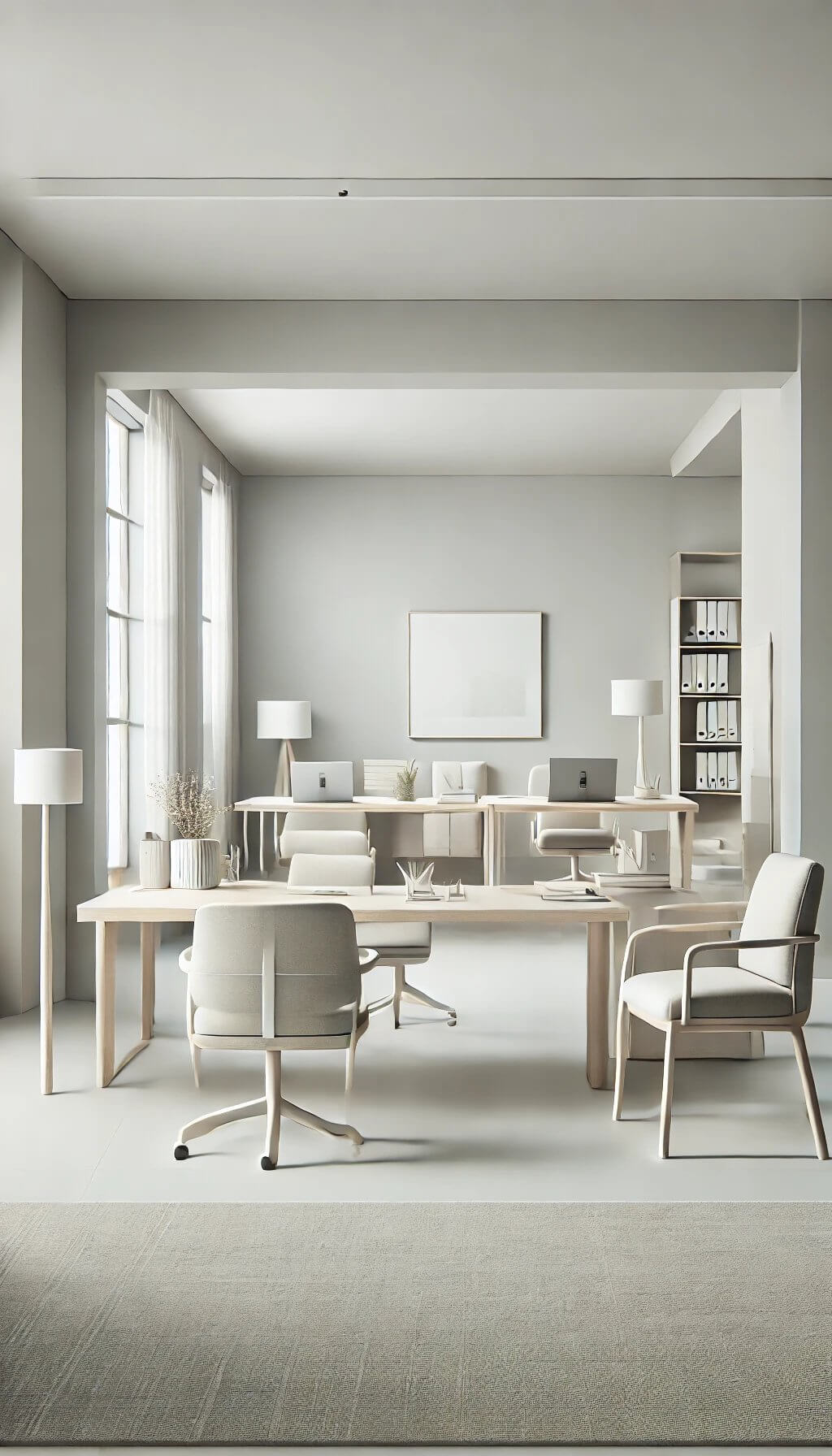
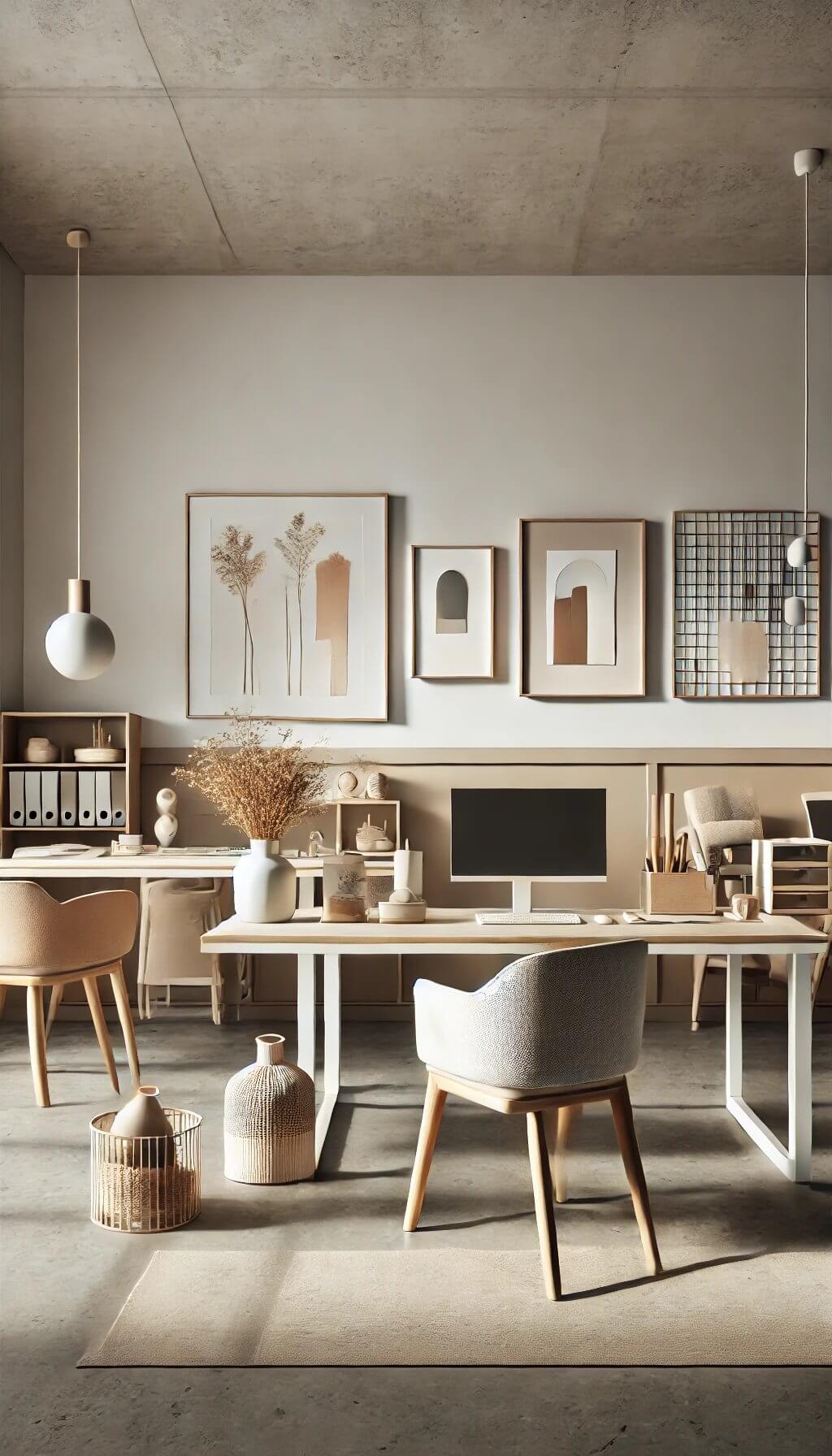
11. Comfortable Furniture
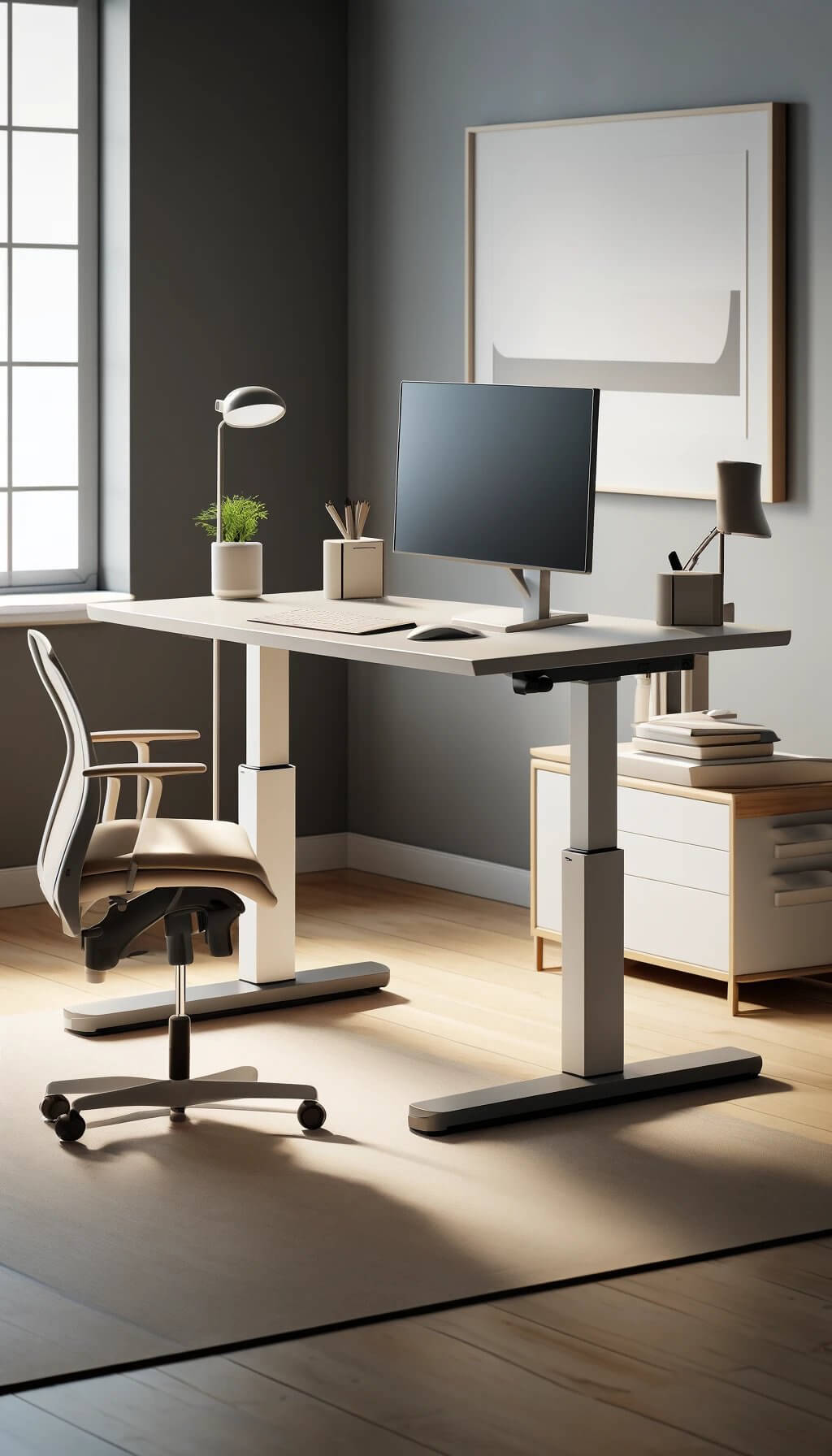
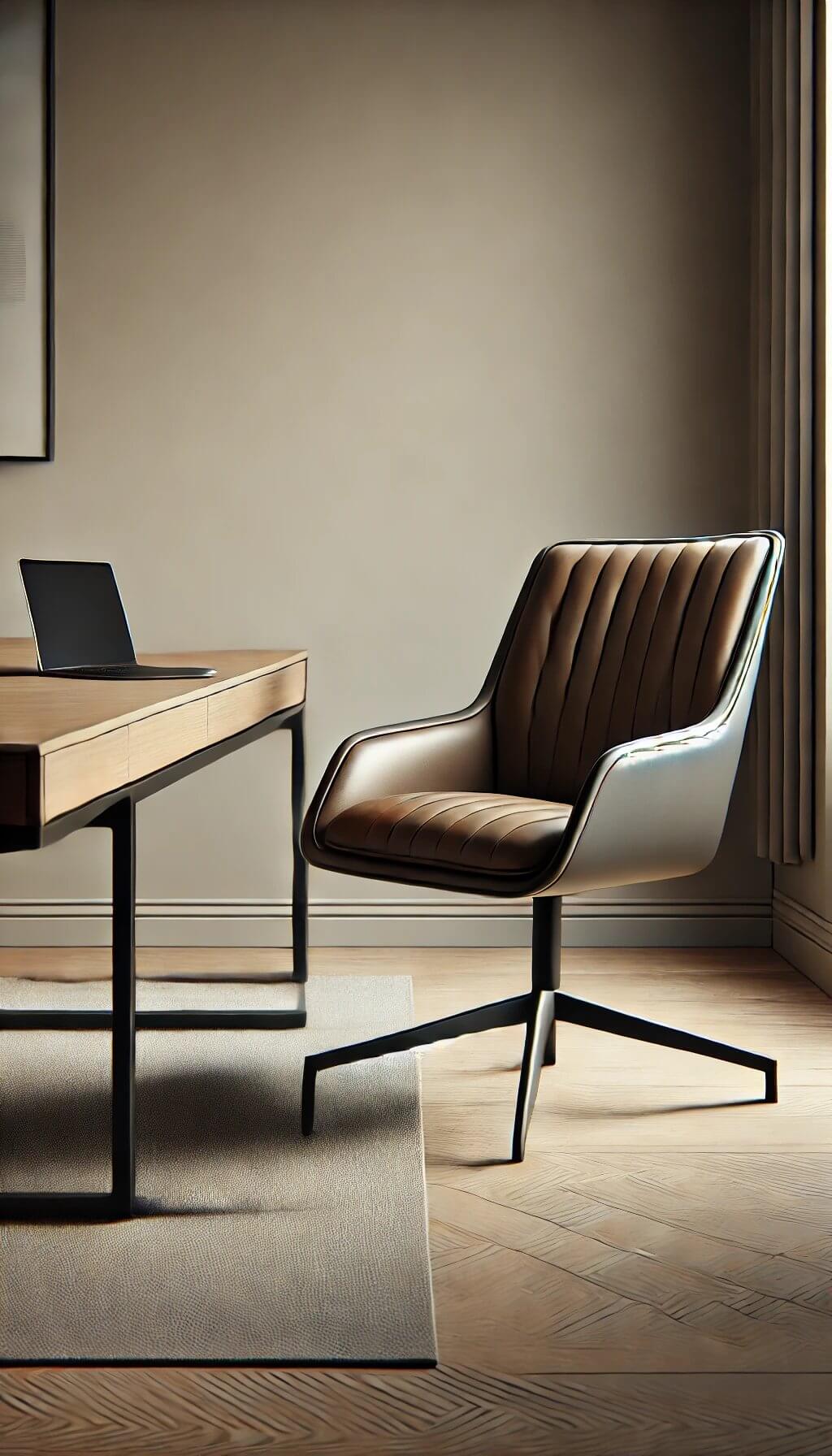
12. Ergonomic Furniture (Non-Negotiable, Not Optional)
Not really a “zen” choice so much as a prerequisite. A chair or desk height that causes physical discomfort is its own stress and distraction source, no amount of good lighting or a nice plant corner fixes a bad chair. Treat ergonomics as the base layer everything else sits on top of, not an optional upgrade.
13. Natural Materials
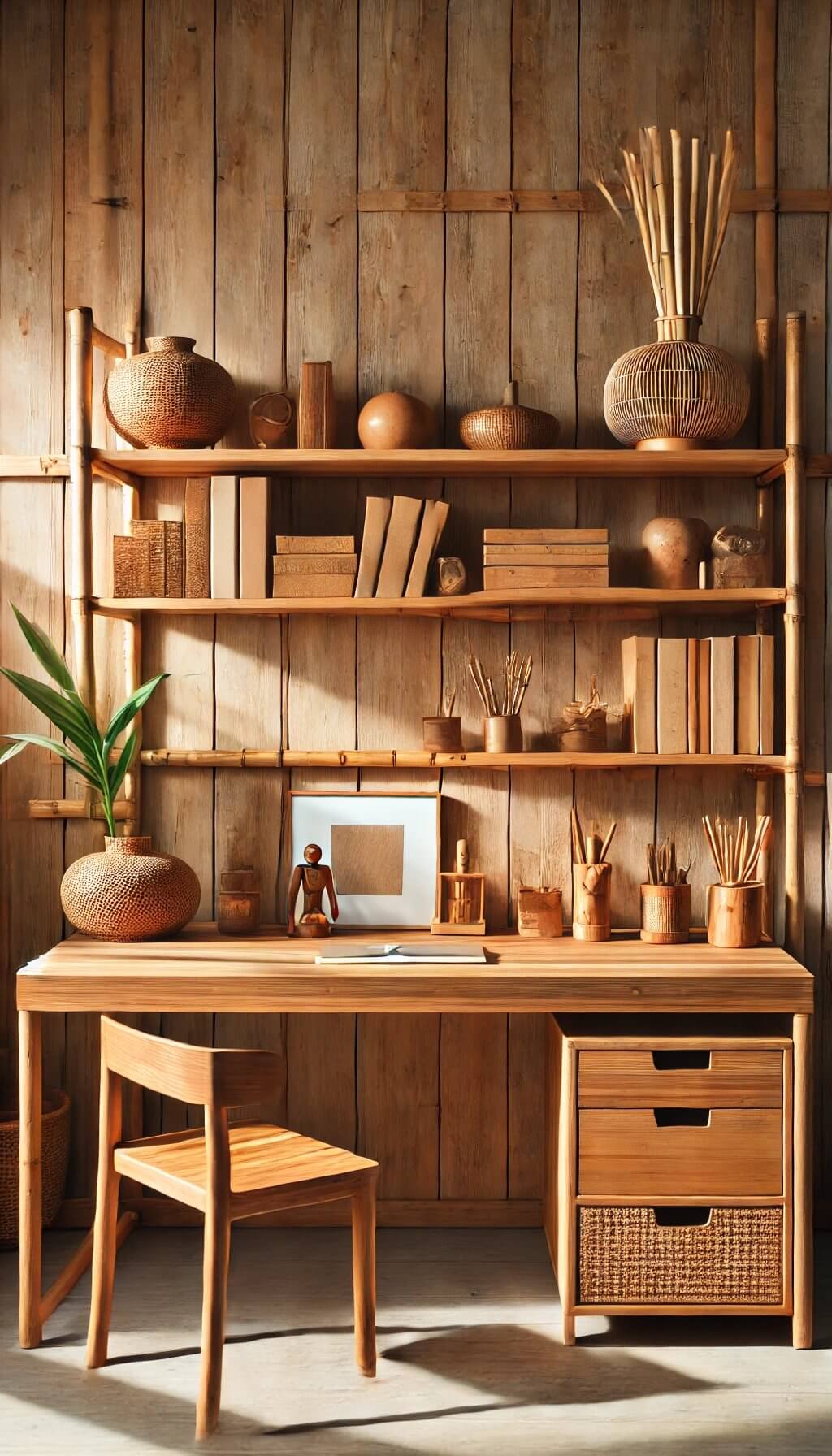
14. Aromatherapy, Done Safely
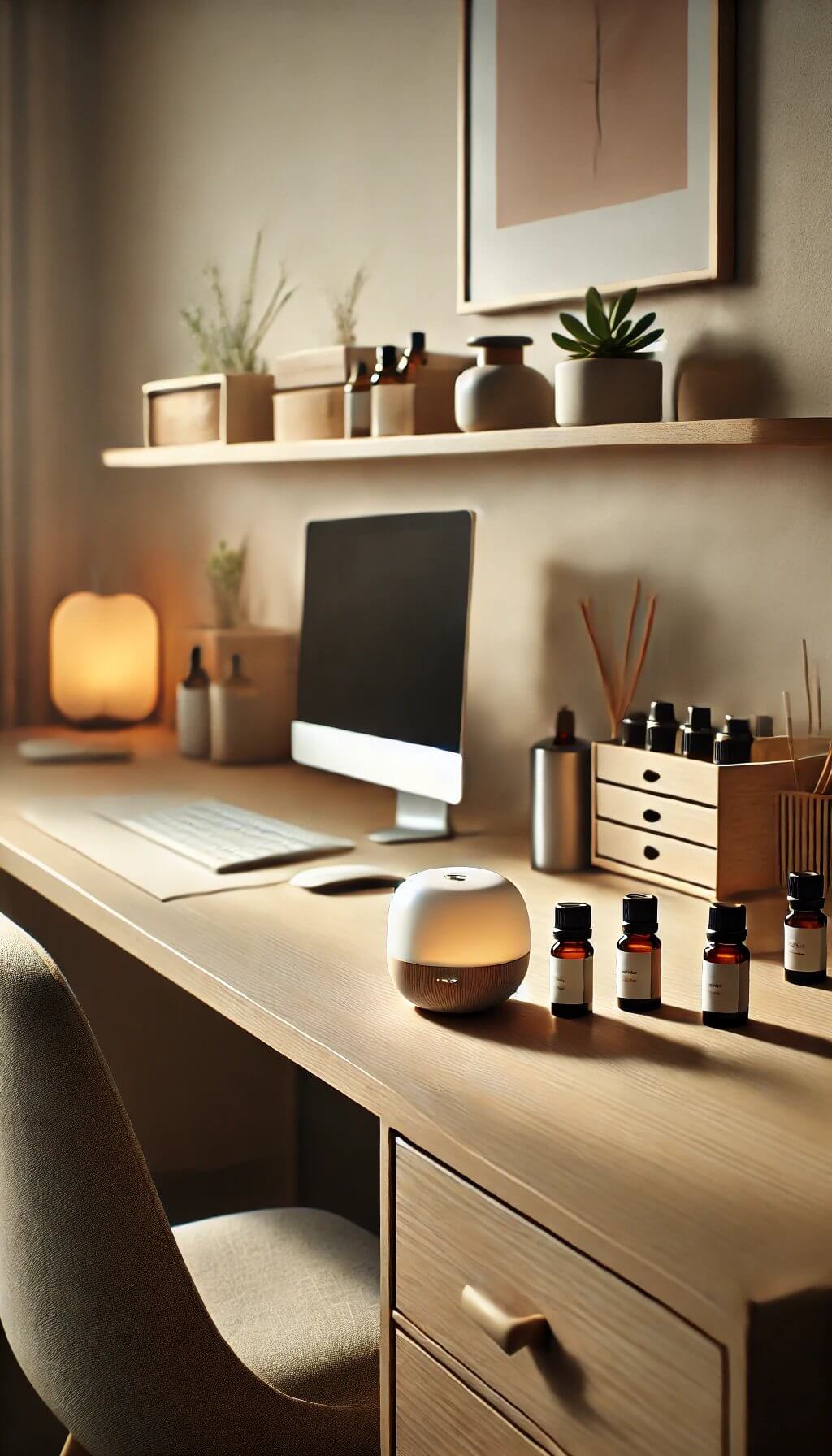
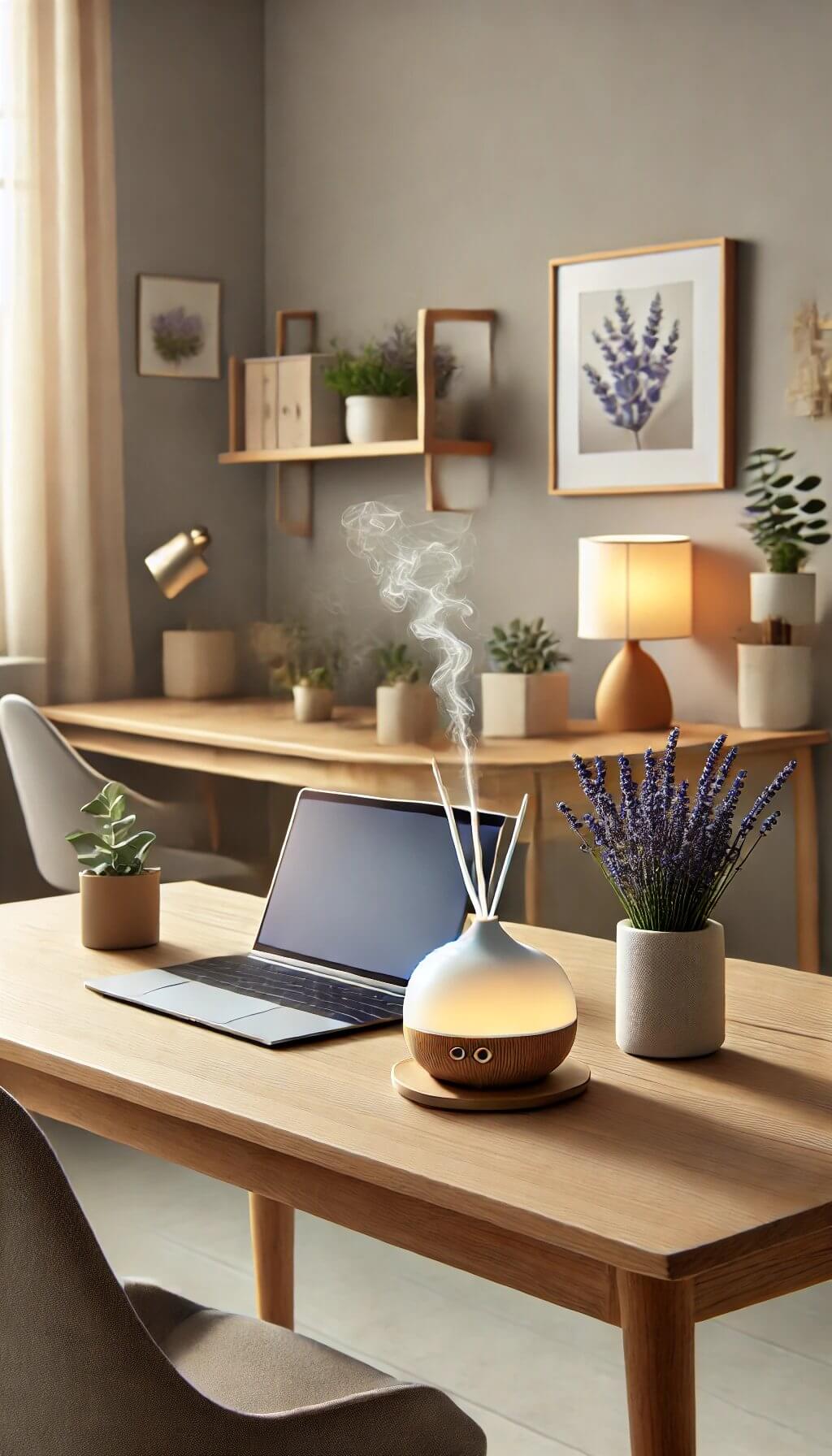
Diffusers genuinely help set the mood, but most lifestyle advice treats them as a costless add-on. They aren’t. Overuse, too many drops, running it constantly, poor ventilation, can cause headaches, coughing, or nausea rather than relaxation.
The commonly recommended safety guideline is the 30/30 rule: diffuse for 30 minutes, then let it rest for 30 minutes before running it again. If anyone in the house is sensitive to scent, skip it entirely rather than push through.
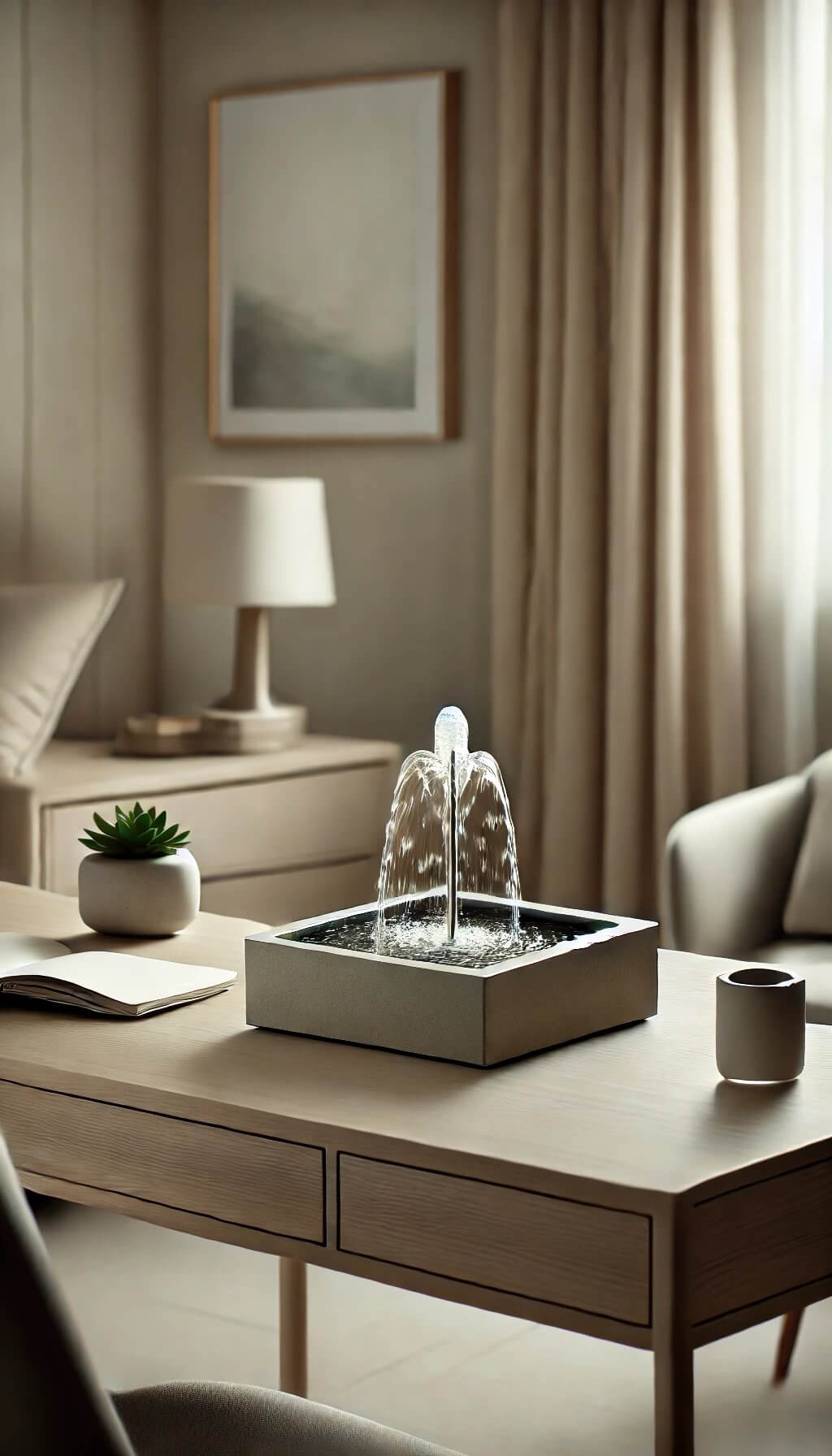
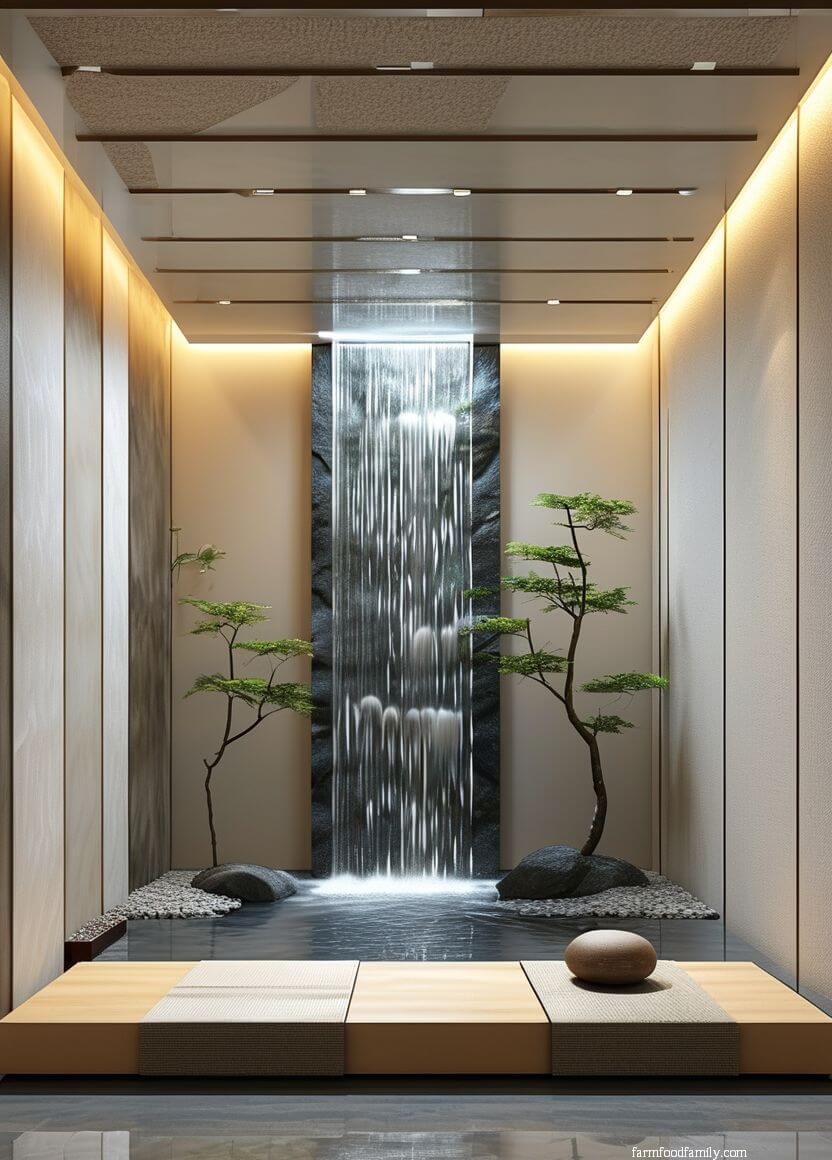
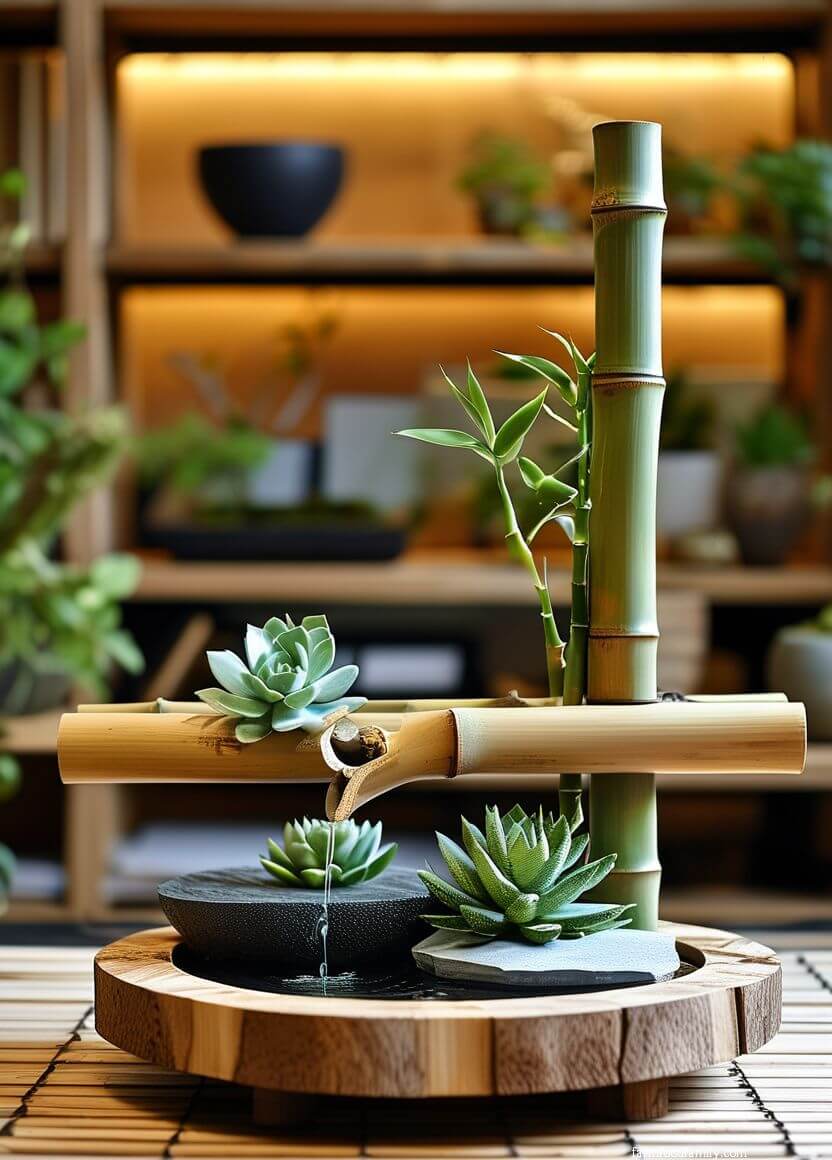
15. Water Features
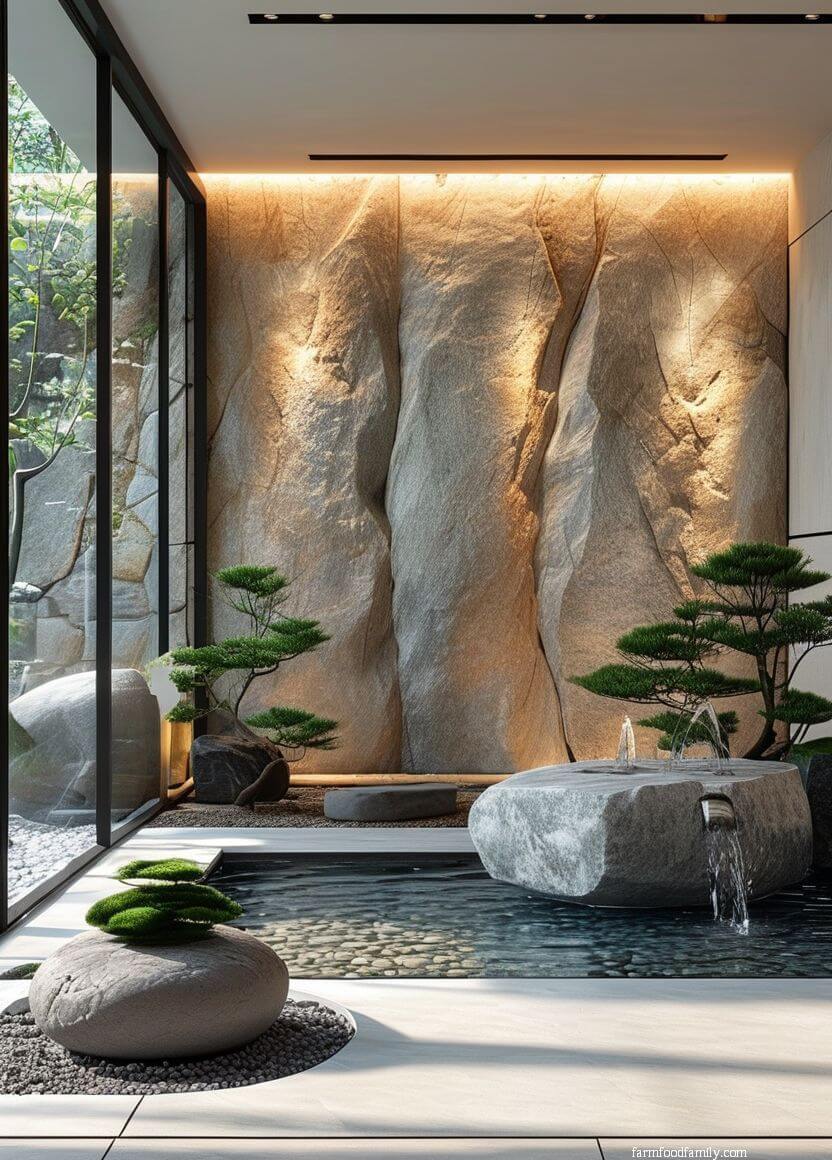
Sound matters as much as sight here, and most “zen office” advice skips it entirely in favor of visual choices.
A small tabletop fountain adds subtle, consistent ambient noise that helps mask distracting background sound, similar in function to white noise, but with a more natural texture. Not essential, but a genuinely low-cost way to cover that other half of a calm workspace.
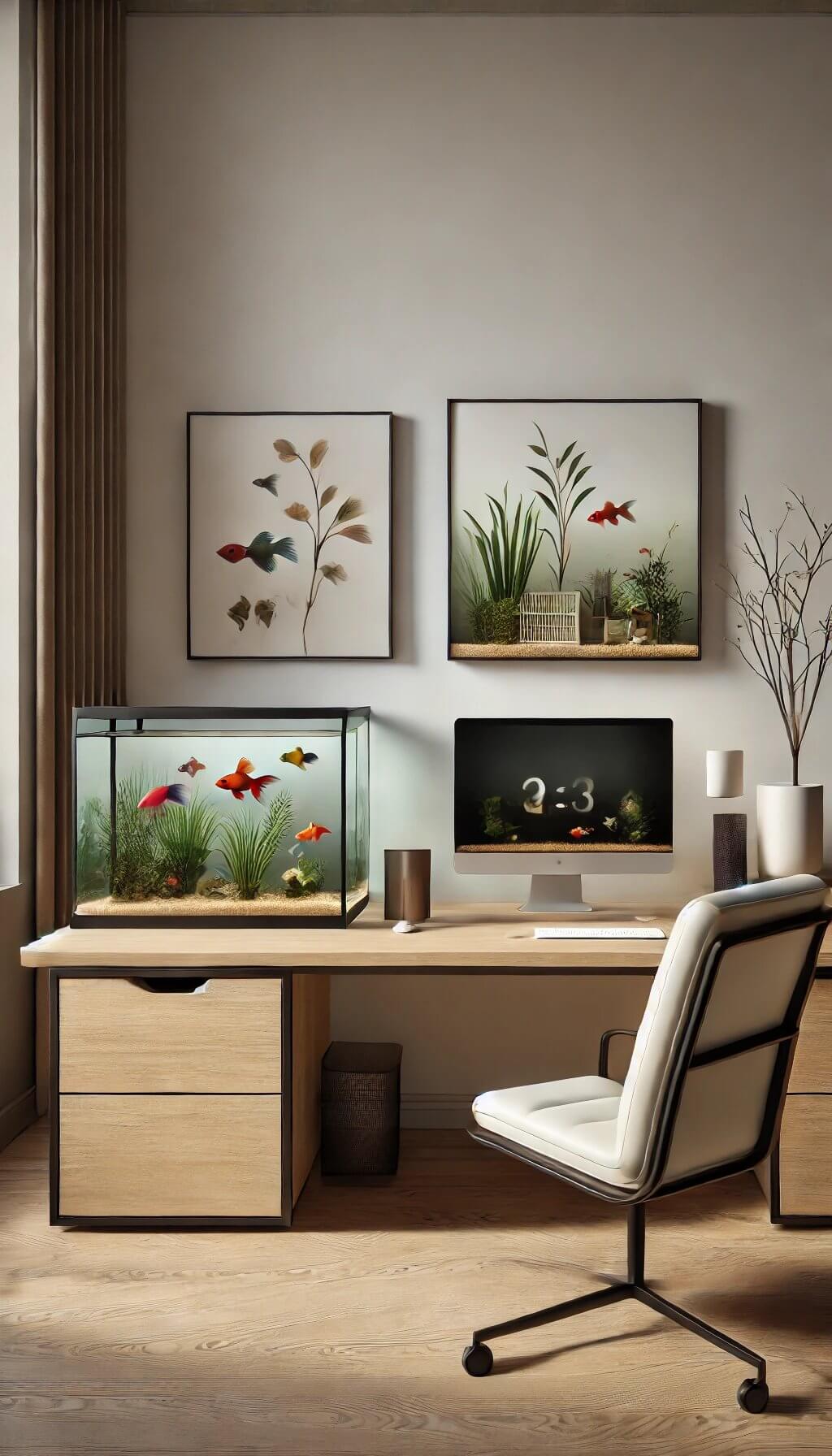
16. Art and Decor
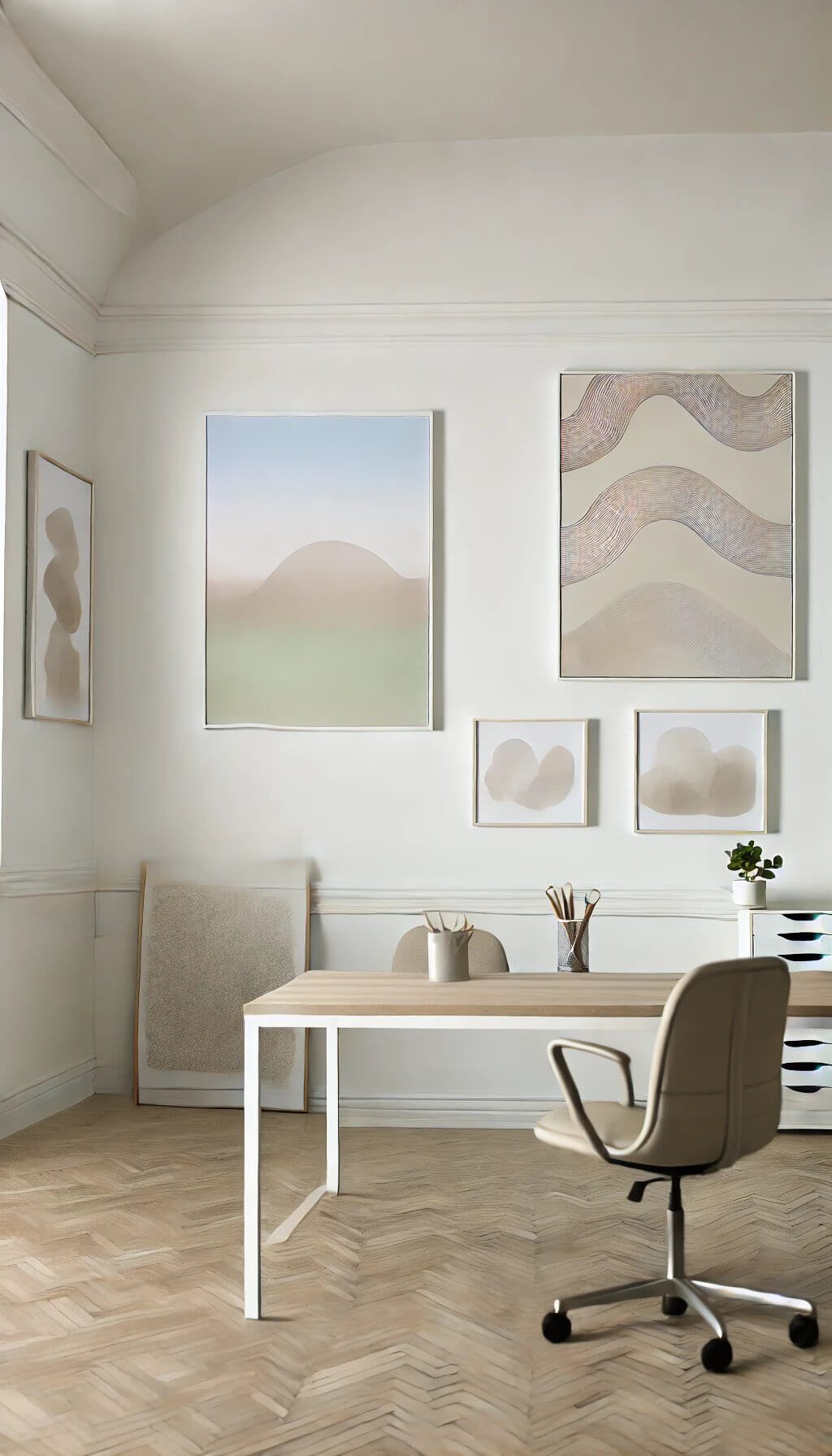
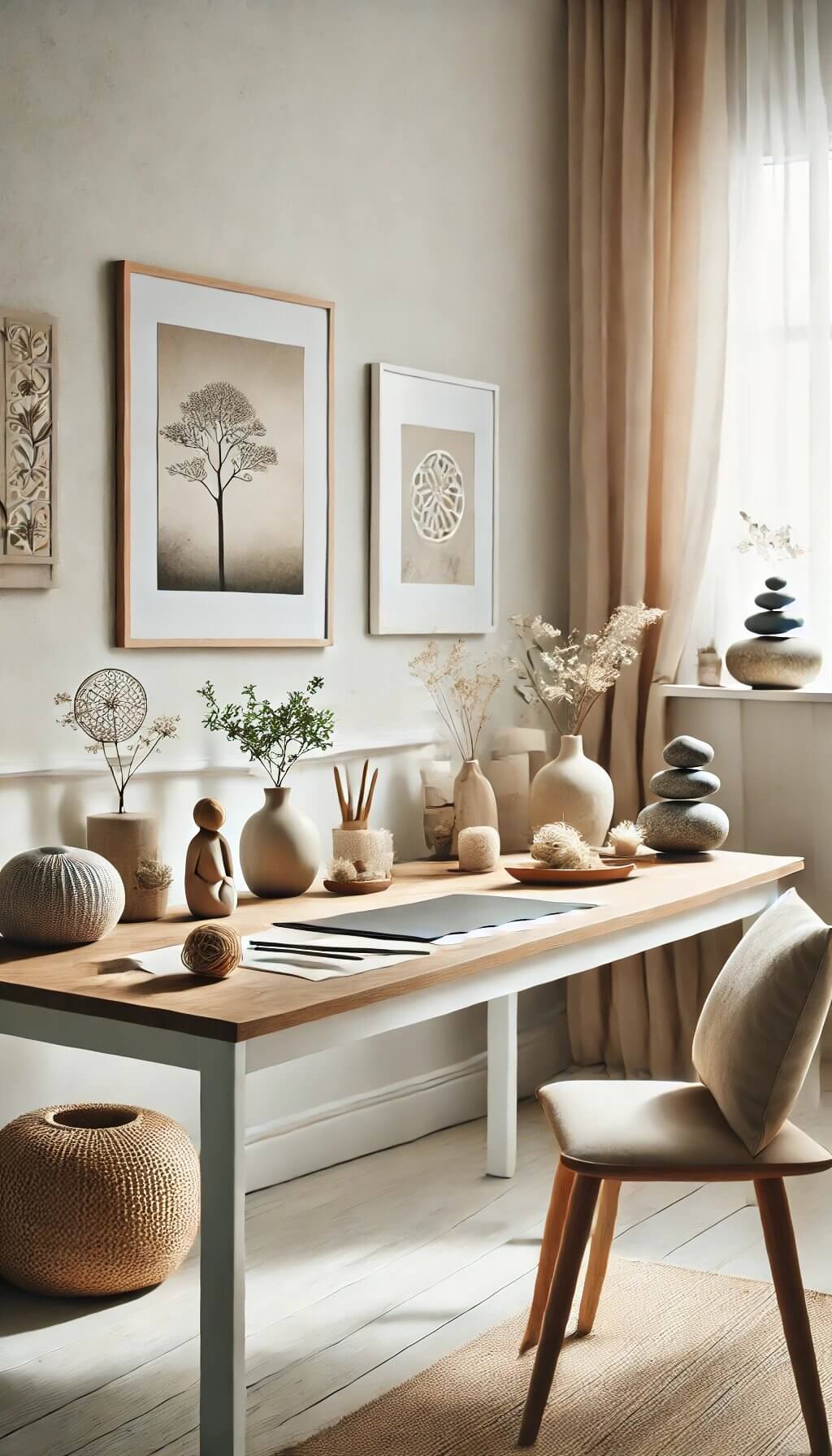
17. Quiet Space
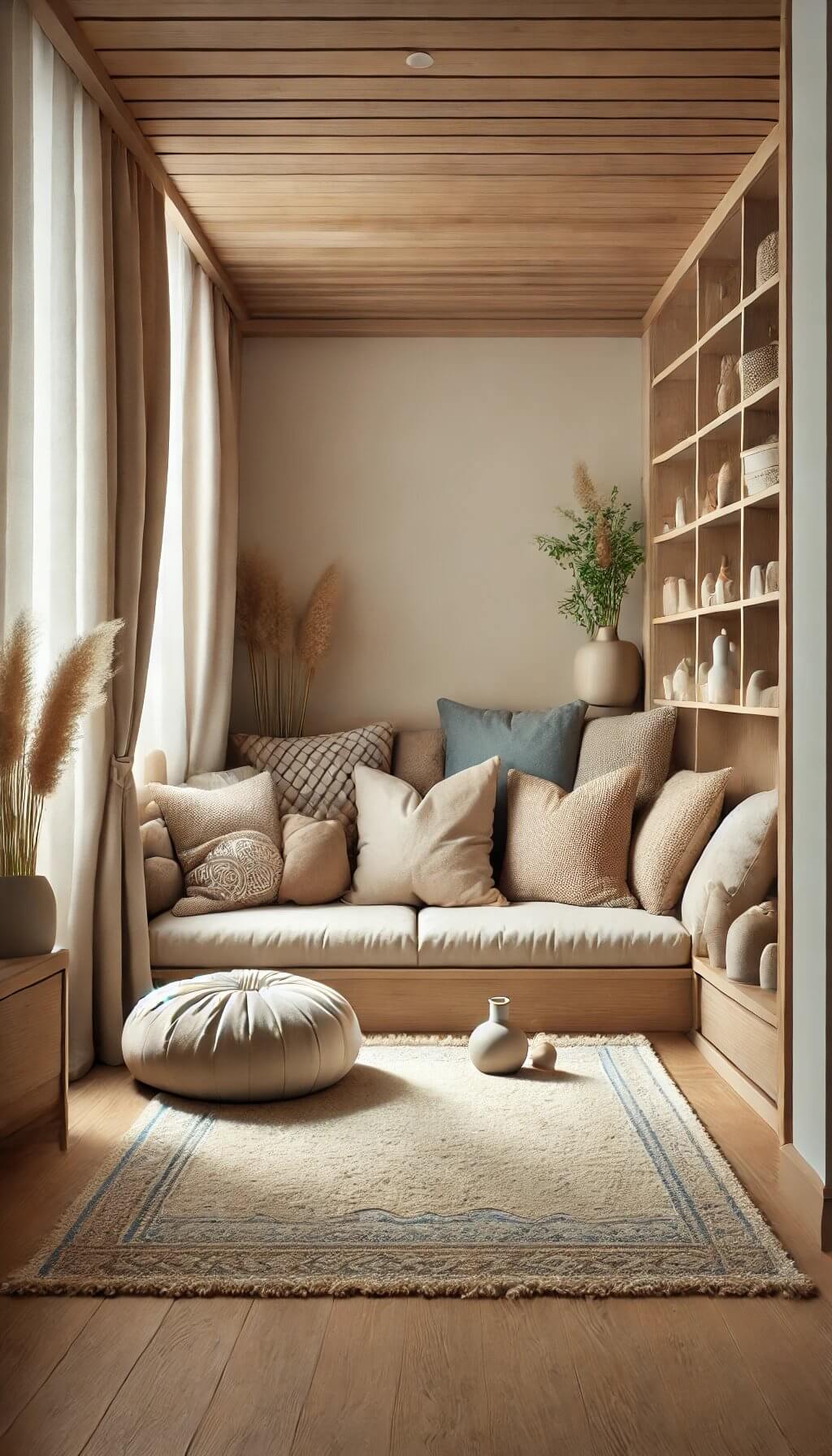
18. Personal Touches
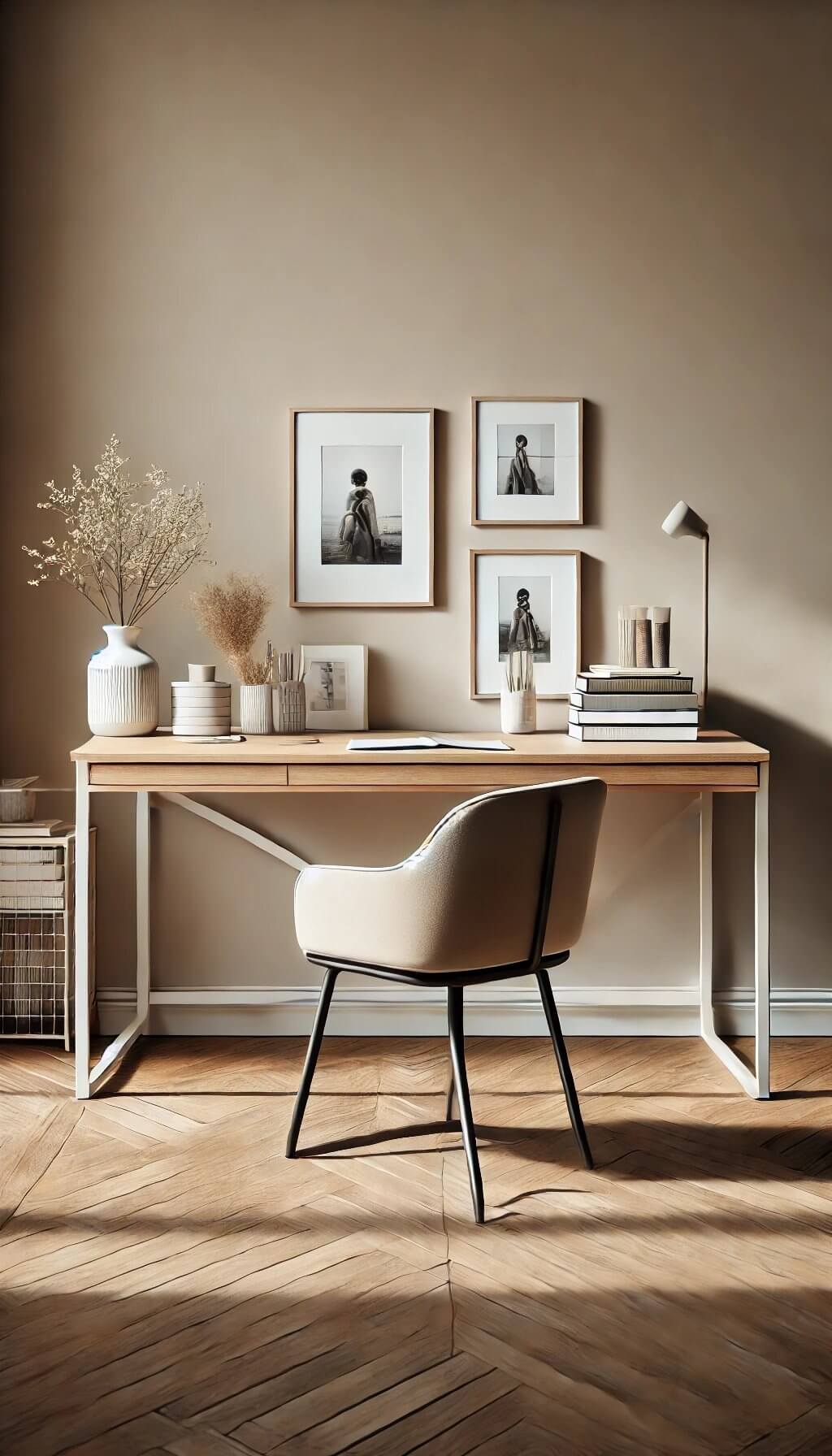
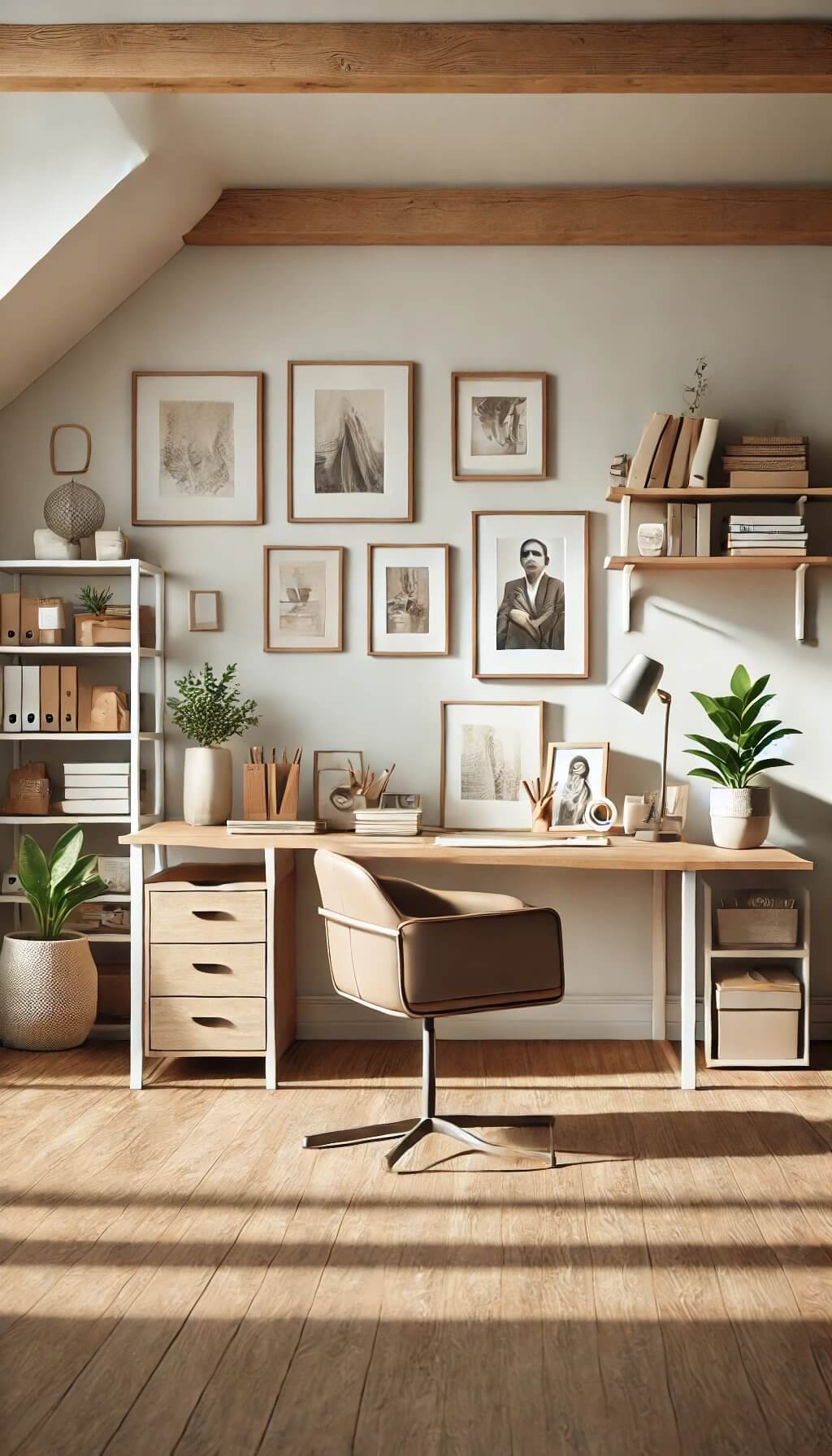
Keep it selective. A few genuinely meaningful objects, not a shelf full of knickknacks, help a workspace feel like yours rather than a showroom. The goal is personal signal, not more visual clutter to manage.
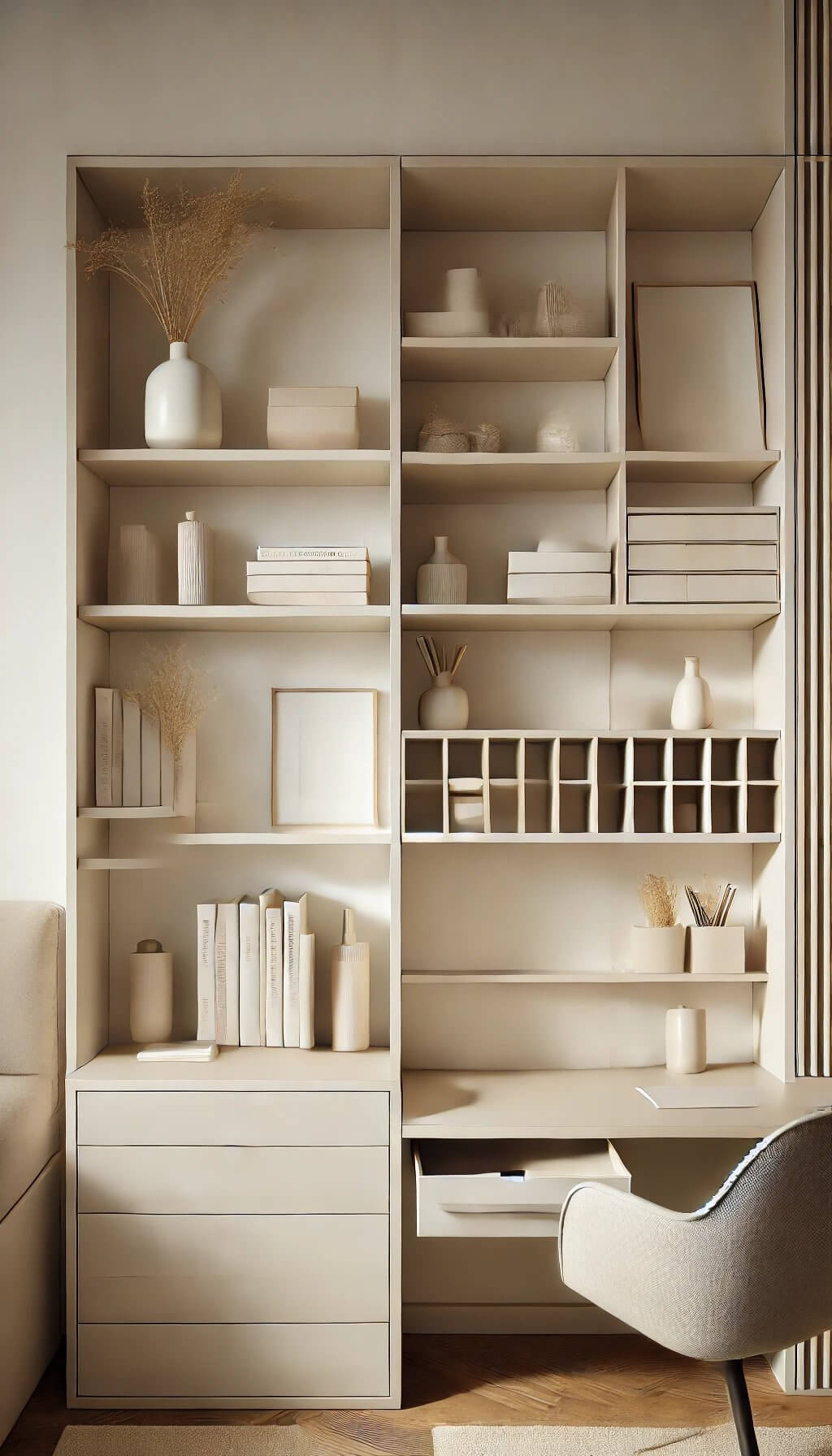
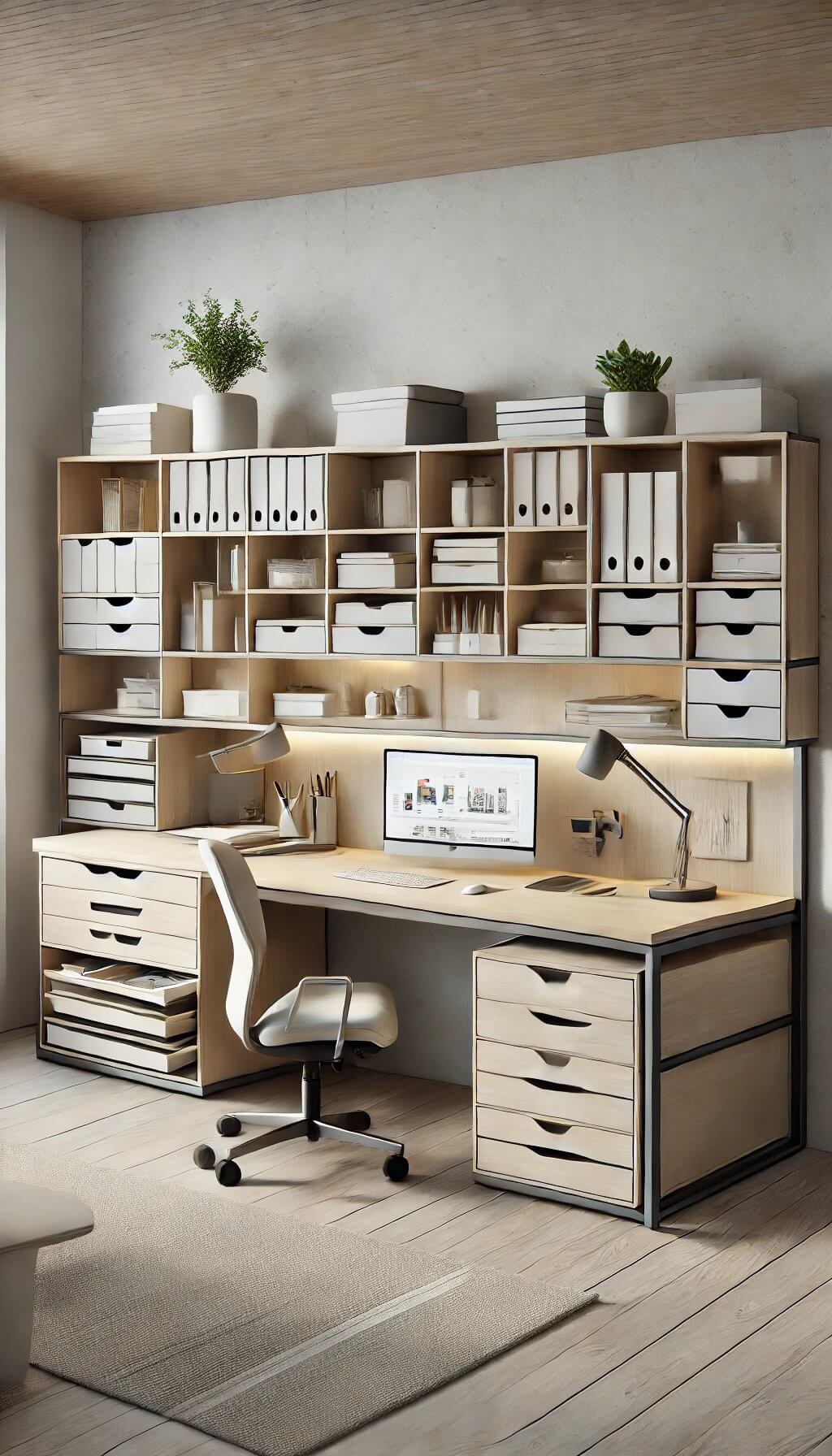
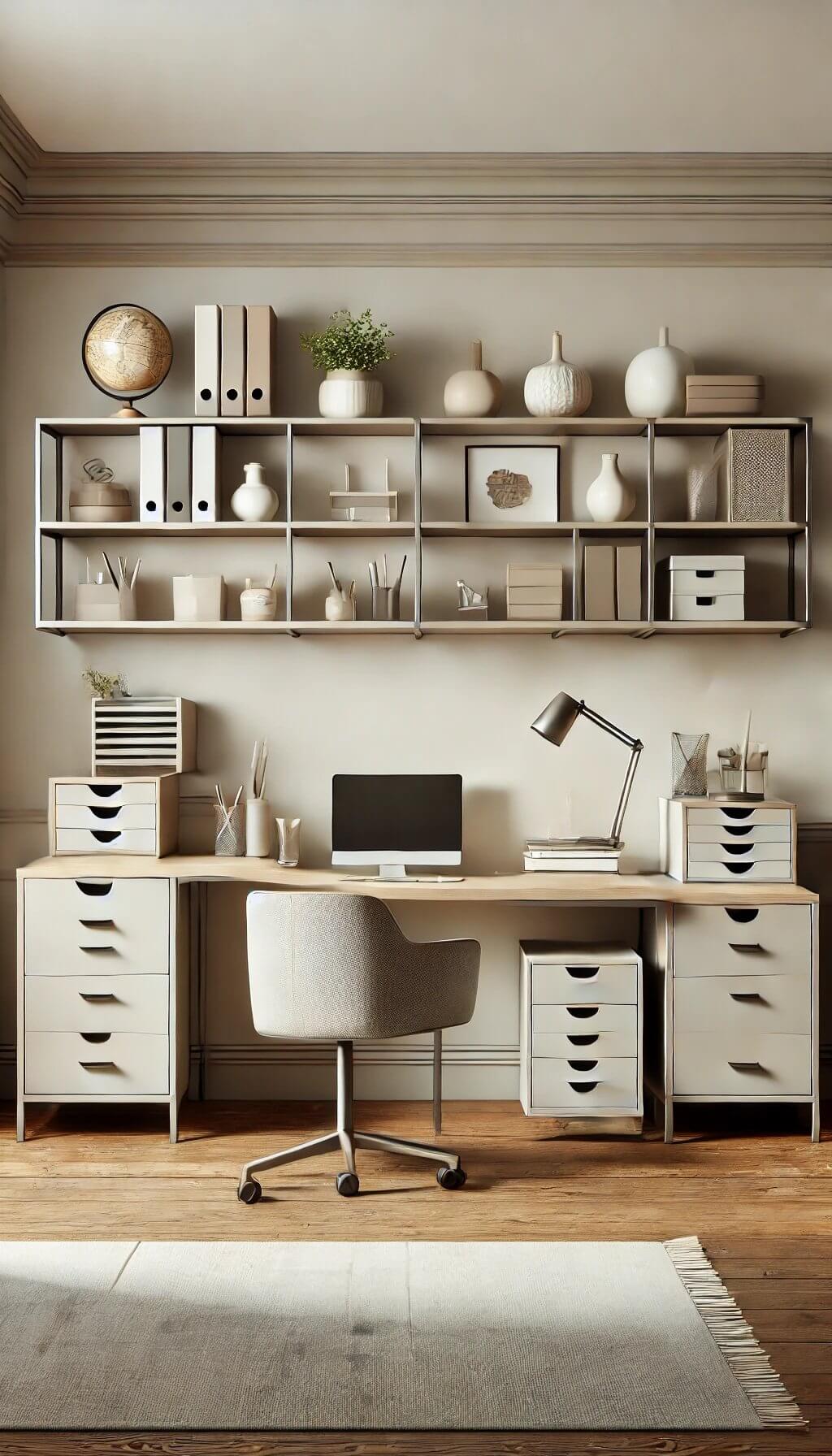
19. Closed, Functional Storage
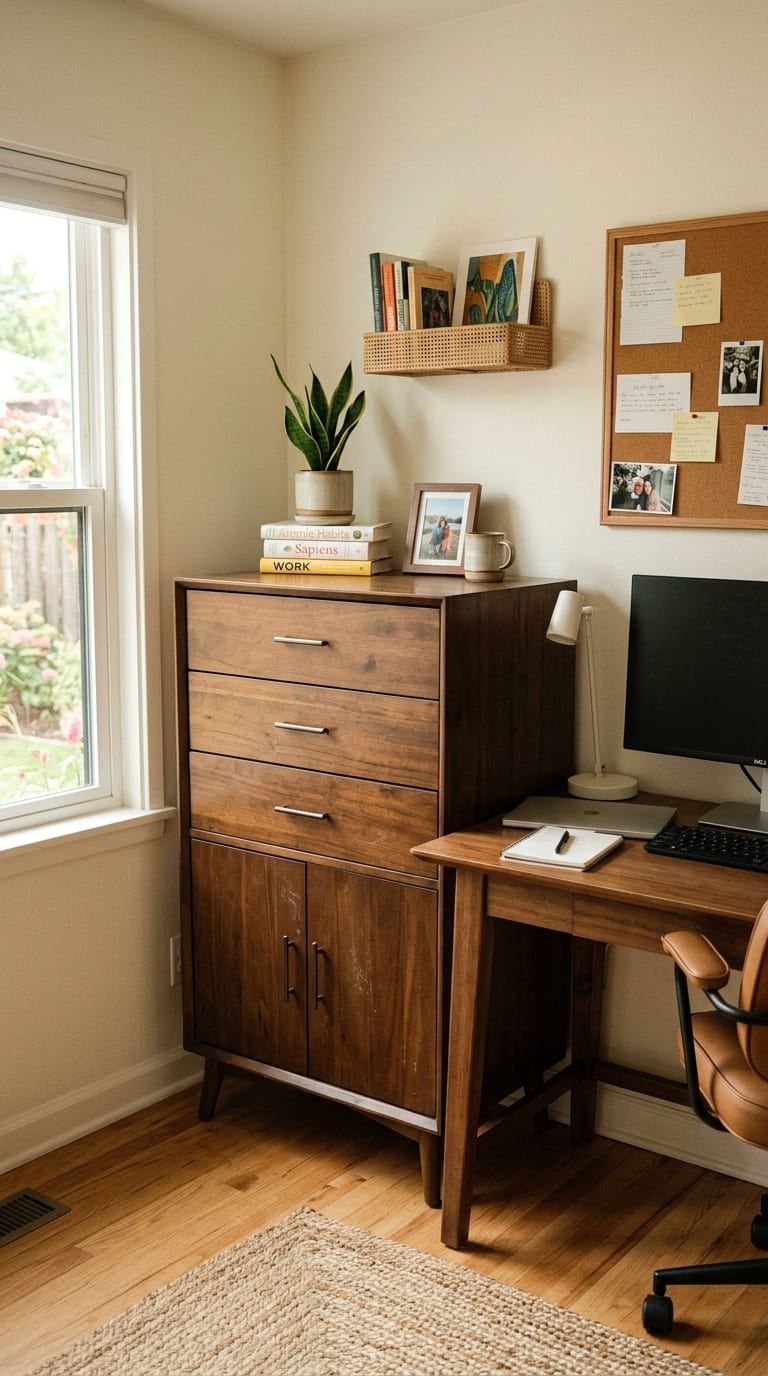
Visible clutter, loose cables, mismatched folders, isn’t just an eyesore, it’s a low-grade, ongoing distraction that your attention keeps quietly registering even when you’re not consciously looking at it.
Closed storage and basic cable management remove that background noise rather than just hiding it decoratively. This lines up with Attention Restoration Theory, developed by environmental psychologist Rachel Kaplan (Professor Emerita, University of Michigan) along with Stephen Kaplan: reducing demands on directed attention, whether from visual clutter or anything else competing for focus, is exactly the mechanism that lets depleted attention recover.
20. Mindful Technology Use
Turning off non-essential notifications and reducing visual screen clutter (fewer open tabs, a clean desktop) applies the same decluttering logic to your digital space that closed storage applies to your physical one. The mental cost of visual noise doesn’t care whether the noise is on your desk or on your screen.
21. Flexible Layout
22. Zen Rituals
A short, consistent start-of-work and end-of-work routine, even just two minutes of intentional breathing or tidying the desk, gives your brain a clear boundary between “work mode” and everything else.
This matters more in a home office than in a traditional office, since the physical commute that used to mark that transition is gone.
Frequently Asked Questions
Do plants actually reduce stress, or is that just a nice-sounding design claim?
There’s real research behind it, not just aesthetic opinion. A 2018 Harvard T.H. Chan School of Public Health study found a biophilic indoor environment lowered blood pressure and improved short-term memory by 14% compared to a non-biophilic space. That doesn’t mean every plant purchase is scientifically guaranteed to calm you, but the underlying mechanism, nature exposure activating the parasympathetic nervous system, is genuine, not marketing.
Is it safe to run an essential oil diffuser all day?
Not really, and most lifestyle advice glosses over this. Running a diffuser continuously, or using too many drops, can cause headaches, coughing, or nausea rather than relaxation. The commonly recommended safety approach is the 30/30 rule, 30 minutes on, 30 minutes off, and skipping it entirely if anyone in the household is scent-sensitive.
What’s the single highest-impact change for a calmer home office?
Desk placement, more than any color or decor choice. A desk positioned so you can see the room’s entry point without turning around (the “commanding position”) measurably reduces the low-grade “on alert” feeling that undermines focus, even for people working alone. If you can’t fully reposition the desk, an L-shaped angle, a small mirror, or a low divider behind your chair are real, practical workarounds.
Do I need to spend a lot to make my office feel calmer?
No. The highest-impact changes here, desk placement, closed storage, zone separation with a rug, are layout and organization fixes, not purchases. A single plant corner and layered lighting cost far less than a full redesign and address more of the real research-backed factors than an expensive decor overhaul would.
Conclusion
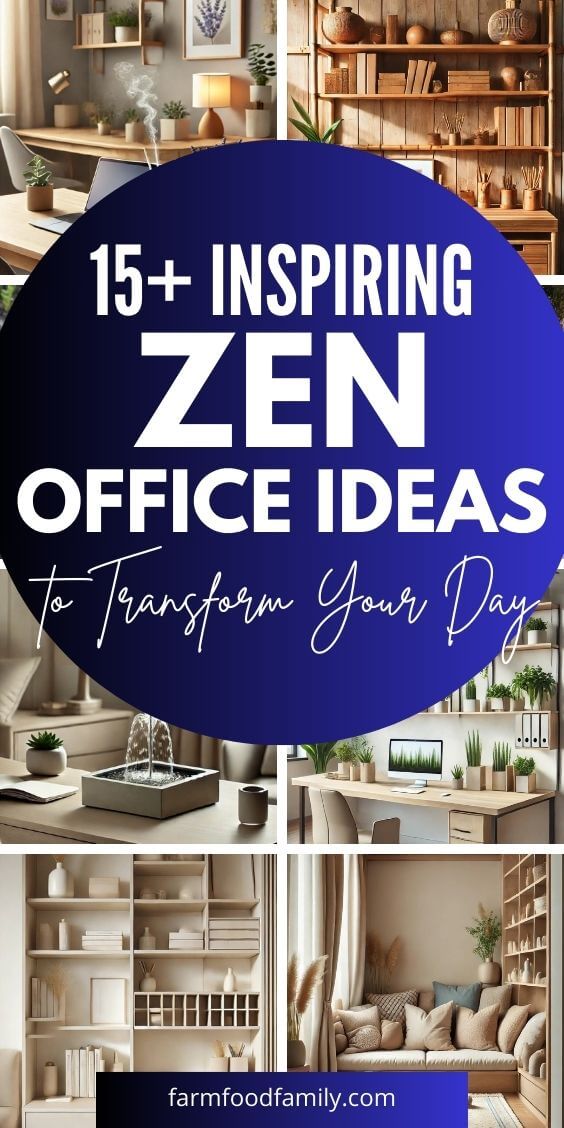
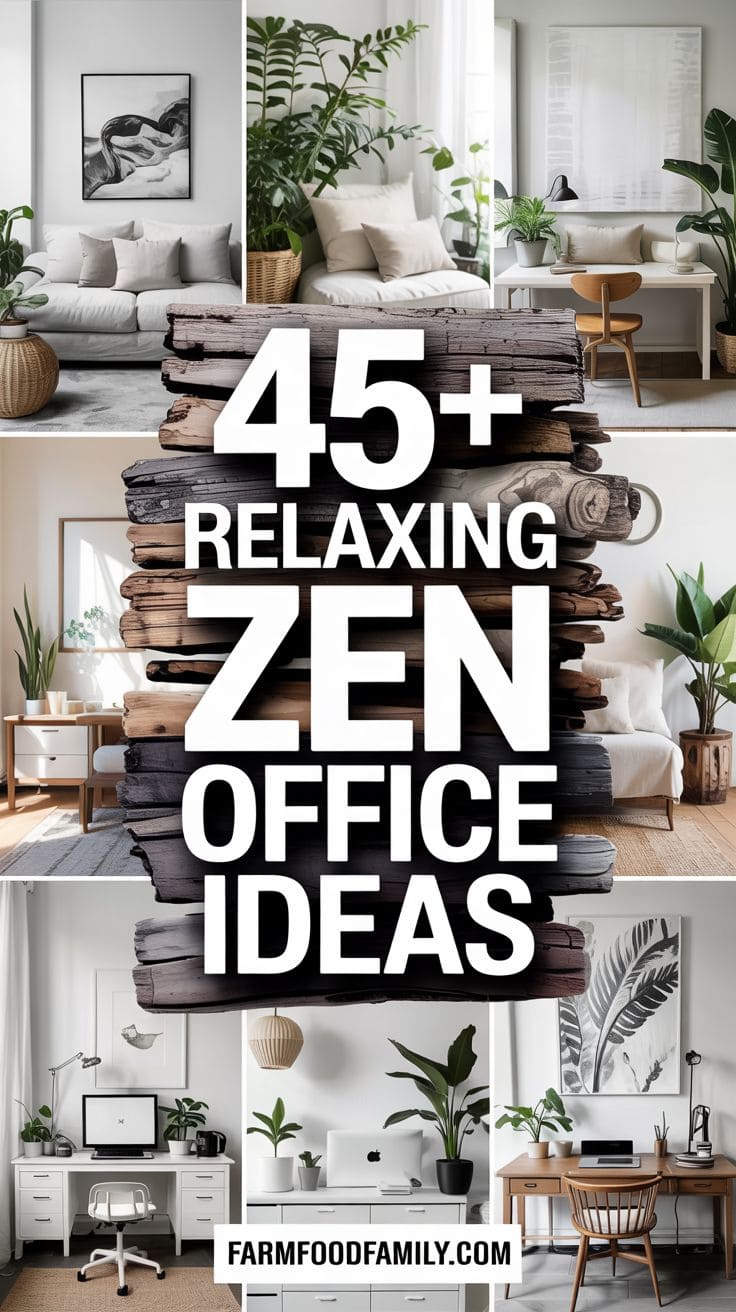
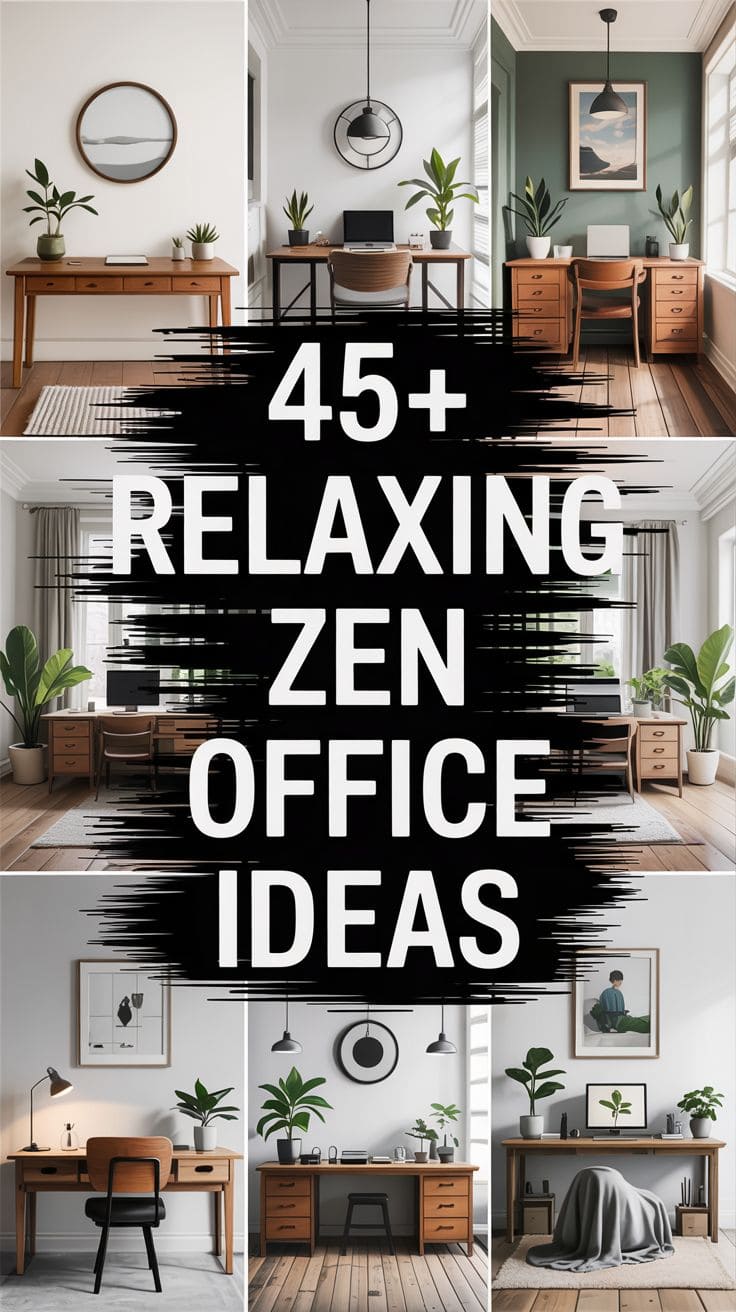
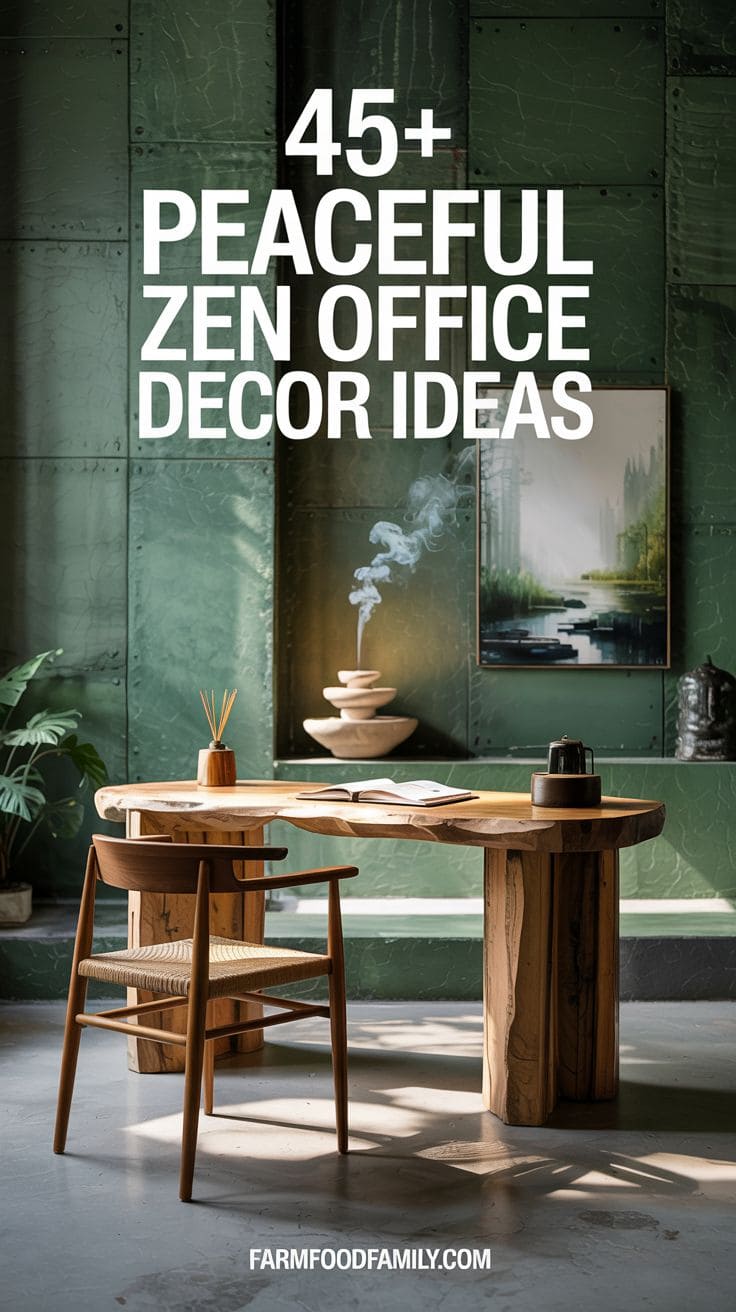
A genuinely calming home office isn’t built from a checklist of pretty things, it’s built from a few real, evidence-backed choices (biophilic elements, ergonomics, sound and visual decluttering) layered on top of the one structural decision most guides skip entirely: where your desk actually sits in the room.
Get that right first, and the aesthetic choices in this list become the finishing touch they’re supposed to be, not a substitute for it.
Never miss an update — choose FarmFoodFamily as your preferred source on Google.
How it works: Tap the button below to open Google's settings page, then check the box next to FarmFoodFamily.
Tap the checkbox to turn it blue — that's how you know it's set.