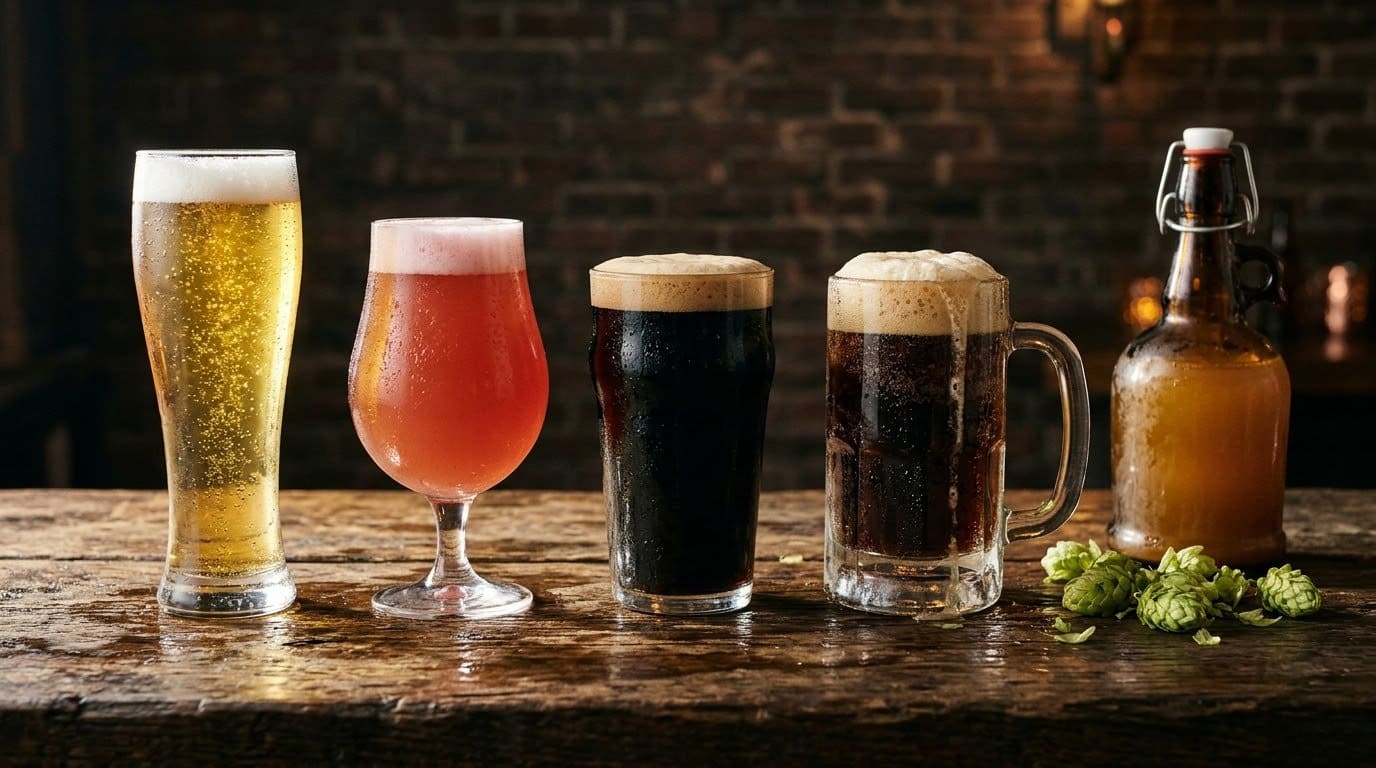
5 Homemade Beer Recipes And Tutorials For Beginners
Five easy ways to brew or mix your own beer-style drinks at home, from root beer to lager.

Never miss an update — choose FarmFoodFamily as your preferred source on Google.
How it works: Tap the button below to open Google's settings page, then check the box next to FarmFoodFamily.
Tap the checkbox to turn it blue — that's how you know it's set.
Five easy ways to brew or mix your own beer-style drinks at home, from root beer to lager.
Home brewing sounds like a hobby for experts. It is not. You can make a fizzy ginger beer in two days with a blender, or step up to a full lager once you have the basics down.
This guide picks five recipes and tutorials from brewing blogs and clubs. Each one gets a short intro, the key numbers, and a “Watch out” line with the catch. Click through to the original post for the full recipe.
New to brewing? Read our guide to getting started with brewing beer at home and our list of the easiest beers to homebrew for beginners.
Quick Answer: What Is the Easiest Homemade Beer to Start With?
The easiest drinks to start with are the ones that skip the brew kettle. Ginger beer and root beer need only a blender or a saucepan, and neither is meant to be alcoholic. Both take a day or less of hands-on time.
If you want real beer, start with an ale. Ales ferment at room temperature. A coffee beer adds one extra step after fermentation. A raspberry wheat shows how to brew with fresh fruit. A lager is the hardest, because it needs a cool, steady space and a few weeks of patience.
Answer 4 quick questions and get matched to the exact fix for your yard — drainage, budget, layout, or something else entirely.
Take the Free QuizThis post gives you five recipes and tutorials, plus the catch for each. Brew only if you are of legal drinking age, and check your local home brewing rules first.
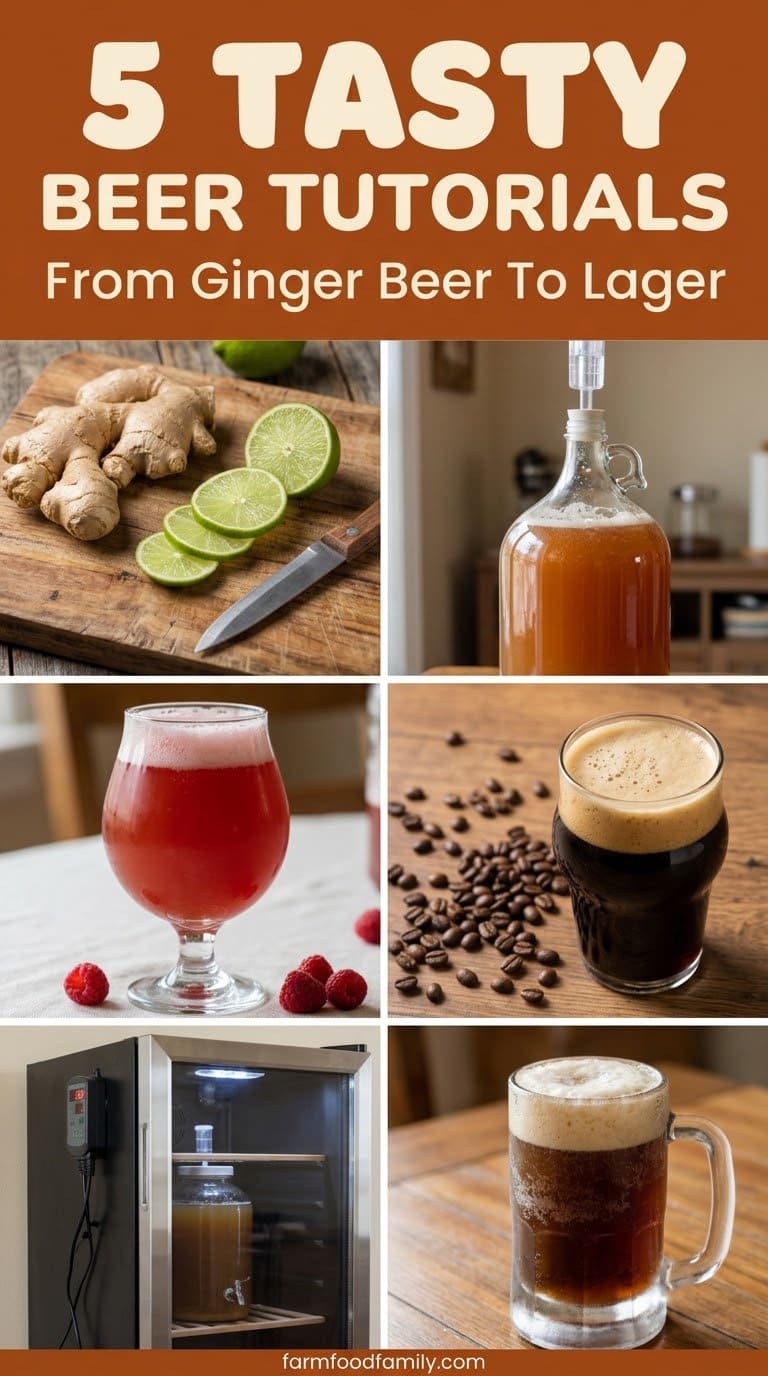
1. Homemade Carribean Ginger Beer

This is the easiest drink on the list. It is a spicy, fresh ginger drink that you serve cold, and the original author says it is not made as an alcoholic beverage.


The recipe at This Bag O’ Girl blends 1 pound of fresh, unpeeled ginger with 3 cups of water. You add the peel of one lime, a cinnamon stick, and 1 tablespoon of raw rice. Cover the jug and leave it at room temperature for 24 to 48 hours. Strain, add 5 more cups of water, then sweeten with sugar to taste. Stir in 1/2 teaspoon of vanilla and a little Angostura bitters, add 1 teaspoon of whole cloves to the bottle, and chill.
Yield: about 8 servings.
Watch out: do not rest it too long. The author says a longer rest can give an over-fermented taste. Homemade ginger beer can keep fermenting at room temperature, so refrigerate it once bottled. Taste a small piece of ginger first, since even fresh ginger can be bitter. Rum is optional, so leave it out for a non-alcoholic drink.
2. Raspberry Wheat Beer

A wheat beer is light, soft, and a good base for fruit. This post from Richard’s Homebrew tracks a real batch from brew day to the first glass.
Most yard problems trace back to one specific, fixable cause. Find yours in 4 quick questions.
Take the Free QuizThe brewer used US-05 yeast pitched at 71°F for a 5.25 gallon batch. Fermentation ran in a swamp cooler with ice bottles to keep it cool. After about a week, the brewer added 5.5 pounds of fresh raspberries to the primary fermenter. The beer moved to secondary at about 19 days, and went into a keg at about 25 days. It finished near 5.25% ABV with a slightly tart, fruity flavor.
Why add fruit to primary: the berries ferment along with the beer, so their sugar becomes part of the alcohol.
Watch out: the post does not list the grain or hop amounts. It links to an outside recipe, so you need a base wheat recipe of your own. The author also tasted it only a week after kegging and expected it to improve once cold and fully carbonated. Berry aroma came out faint at first, and the color was paler than hoped.
3. Coffee Beer

Coffee and dark beer are a natural pair. The roasted flavors in a stout or porter match the roasted flavor of coffee beans.
The Homebrewers Association guide says to add cold brew after fermentation, either in a secondary fermenter or just before bottling or kegging. To make the cold brew, steep 1 to 2 ounces of coarse, dark-roast grounds per cup of cold water for 12 to 24 hours, then strain. Pull a sample of your beer, add the cold brew a little at a time, and taste. Once the balance is right, scale that ratio up to the full batch.
Why cold brew: hot coffee can add burnt, astringent flavors. Cold brew avoids most of that.
Watch out: extra liquid can make the beer taste watery. A concentrated cold brew limits that. The article says coffee works especially well with robust styles, so match your beans to your beer.
11. Homemade Beer

12. All Grain Beer
The average homeowner spends $616/year on yard fixes that don't address the real problem. Find out what yours actually is — before you spend another dollar.
Take the Free Quiz


13. Pineapple Beer

14. Triple Lindy

15. Homemade Belgium Beer

16. Summer Ale

4. Fermented Lager Brew

Lagers are crisp and clean, and also the hardest style to get right. They ferment cold, so you need a way to hold a steady temperature.
The Meek Brewing guide says lagers ferment at 48 to 55°F, while ales run much warmer. A fridge or freezer with a temperature controller gives the best control. Use about twice as much yeast as for an ale. When fermentation is within 4 to 8 gravity points of the final reading, warm the beer above 60°F for a couple of days (a diacetyl rest). Then lower the temperature and lager it cold, down toward 32 to 38°F.
How long: the author’s rule of thumb is about one month of lagering per 4 gravity points above 1.050. Light lagers may need 3 to 4 weeks.
Watch out: clean beers show every flaw, so stale ingredients and poor sanitation are easy to taste. The author says the method rests on six lagers and is not the final word.
5. Homemade Root Beer

Root beer is the best pick for a family batch. The Garden Therapy recipe is a simmered syrup mixed with seltzer, with no fermentation and no alcohol.
Simmer 4 1/2 cups of water with sliced ginger, sarsaparilla, sassafras, licorice root, burdock root, dried mint, and a star anise pod for 30 minutes. Stir in 4 cups of dark brown sugar and 1 tablespoon of vanilla, then simmer another 30 minutes until thick. Strain and cool. Mix the chilled syrup with chilled seltzer and pour the syrup into the seltzer, not the other way around.
Yield: 8 servings in about 1 hour 10 minutes.
Storage: keep the syrup in the fridge for up to a week.
Watch out: the source notes that sassafras is no longer used in commercial root beer, so check current safety guidance before you use it. The page is also inconsistent on the syrup-to-seltzer ratio, so mix to taste. The drink is high in sugar.
Conclusion
Home brewing starts wherever you are comfortable. Ginger beer and root beer need a blender or a pot. Ales and fruit beers need a fermenter and some patience. Lagers need a cold, steady space.
Pick the easiest drink that fits your gear, and make a small batch first. Keep your equipment clean, write down what you change, and try one new recipe each time. Then read our brewing at home guide for the next step.
FAQ
Is homemade ginger beer alcoholic?
The recipe here is not made as an alcoholic drink. It rests for 24 to 48 hours, which can allow some natural fermentation, so refrigerate it and keep the rest short.
When should I add fruit to beer?
The raspberry wheat post added fruit to the primary fermenter about a week into fermentation. Coffee, by contrast, goes in after fermentation.
Why does lager take so long?
Lager ferments at 48 to 55°F, then needs weeks of cold conditioning. A common rule is about one month per 4 gravity points above 1.050.
Is homemade root beer fermented?
Not in this recipe. It is a simmered syrup mixed with seltzer and is presented as non-alcoholic.
Do I need a license to brew beer at home?
Rules differ by place. Check your local and national laws before you brew, and brew only if you are of legal drinking age.
Never miss an update — choose FarmFoodFamily as your preferred source on Google.
How it works: Tap the button below to open Google's settings page, then check the box next to FarmFoodFamily.
Tap the checkbox to turn it blue — that's how you know it's set.