8 Serene Backyard Aquarium Ideas That Stay Safe, Clear and Mosquito-Free
An outdoor fish pond turns a plain yard into a living feature, as long as you plan the depth, the power, the mosquitoes and the winter before you dig.

Never miss an update — choose FarmFoodFamily as your preferred source on Google.
How it works: Tap the button below to open Google's settings page, then check the box next to FarmFoodFamily.
Tap the checkbox to turn it blue — that's how you know it's set.
An outdoor fish pond turns a plain yard into a living feature, as long as you plan the depth, the power, the mosquitoes and the winter before you dig.
Products We Recommend
This post contains affiliate links. We may earn a commission on qualifying purchases at no extra cost to you.

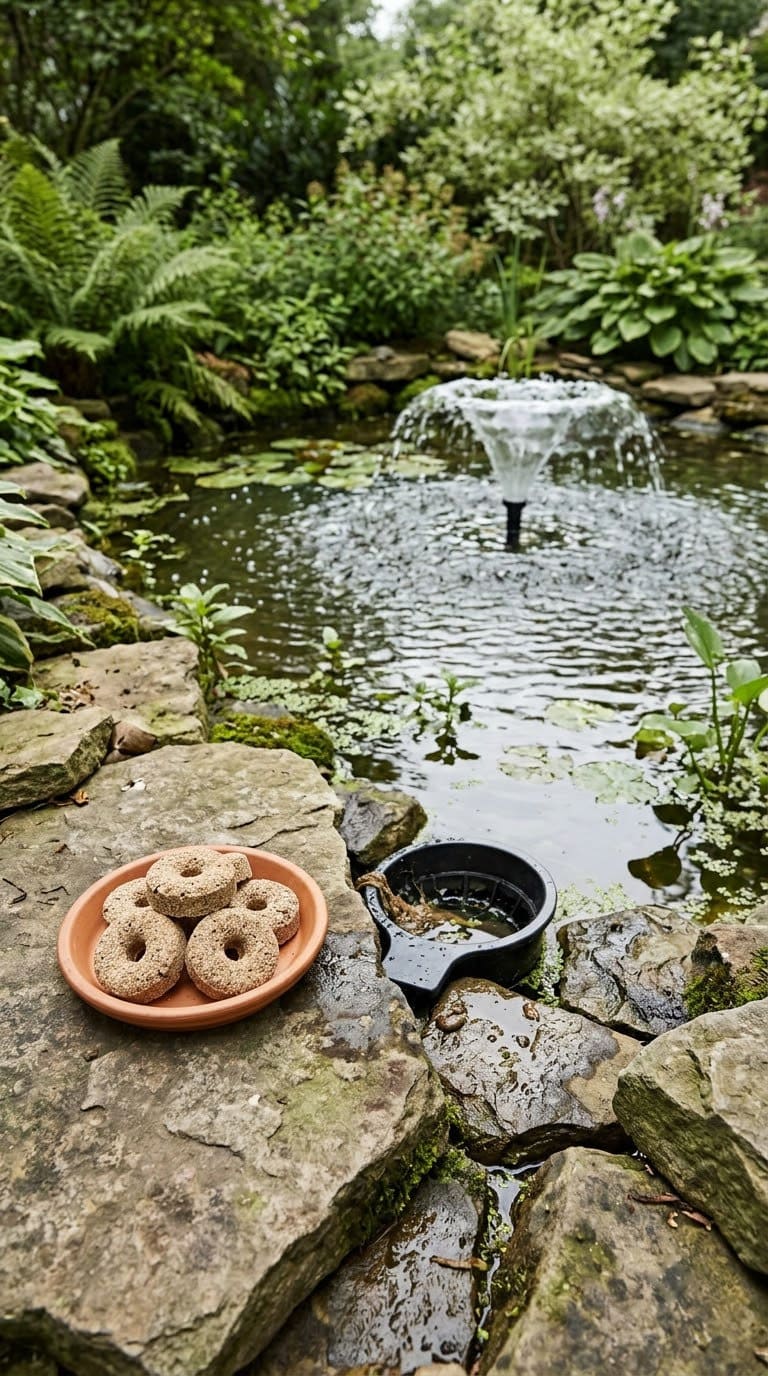
Outdoor Pond Air Pump With Air Stones, for Ponds up to 2,500 Gallons
A bubbler for small ponds that keeps oxygen moving and helps hold an opening in winter ice.
Shop Now
Farm Innovators 1250 Watt Floating Pond De-Icer
A floating thermostatic heater that keeps a hole open in the ice. Plug it into a GFCI outlet.
Shop Now
Floating Pool and Pond Thermometer, Battery-Free
Floats on the surface so you can track water temperature through the seasons.
Shop NowMost backyard aquarium lists show a gorgeous pond and stop there. They skip the part where the water turns green, mosquitoes breed or the fish freeze in January.
An outdoor aquarium is really a pond, a tub or a tank that lives through weather. That changes the rules about depth, electricity, circulation and safety.
Here are eight ideas, from a simple tub to a raised pond, with the numbers and checks that keep fish alive and neighbors happy.
Answer 4 quick questions and get matched to the exact fix for your yard — drainage, budget, layout, or something else entirely.
Take the Free QuizQuick Answer
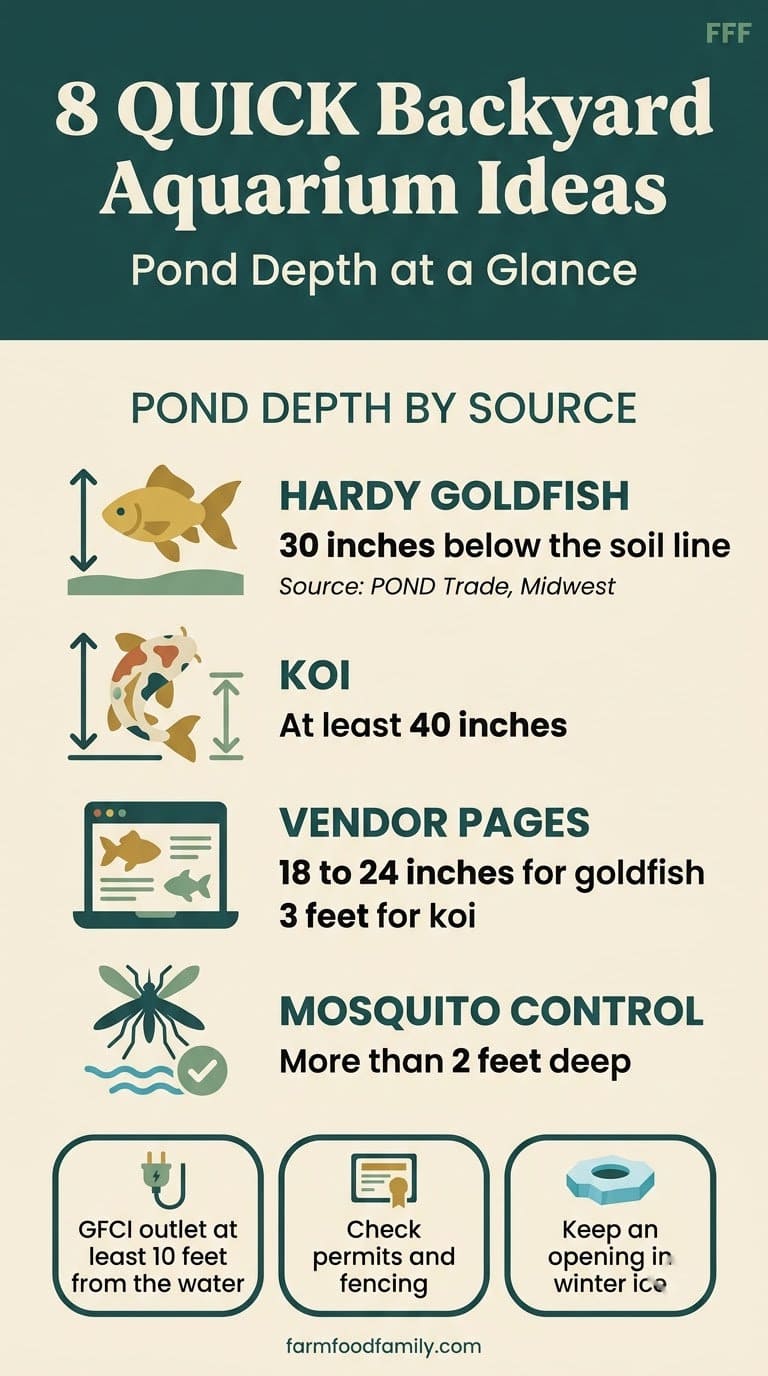
Build for winter first. POND Trade columnist Jamie Beyer says hardy goldfish can overwinter in a pond 30 inches below the soil line in the Midwest, and koi need at least 40 inches. Colder areas may need more.
Plan the electricity before the water. Use a GFCI-protected outlet at least 10 feet from the edge, and skip extension cords for the pump.
Keep water moving and deep. UC ANR’s Andrew Sutherland says mosquito larvae prefer shallow, still water, so features deeper than 2 feet with circulation work better.
Check local rules for permits and fencing. Many places treat water over about 18 inches as a safety issue, and children can drown in very little water. Call your building department before you dig.

Then pick a spot you can see from the house, so you notice problems early.
Most yard problems trace back to one specific, fixable cause. Find yours in 4 quick questions.
Take the Free QuizWhich Idea Fits Your Yard?
Pick by space, budget and how much work you want. This table sorts the eight builds below.
| Idea | Space | Skill | Budget tier | Fish OK year-round? |
|---|---|---|---|---|
| 1. Stock tank or barrel pond | Small | Beginner | Low to mid | Only in mild climates |
| 2. In-ground pond with ledge | Medium | Intermediate | Mid to high | Yes, with depth |
| 3. Raised pond with viewing window | Medium | Advanced, hire a pro | High | Depends on depth |
| 4. Canoe or trough water garden | Small | Beginner | Low | Summer only |
| 5. Tabletop patio water bowl | Tiny | None | Lowest | Plants, not fish |
| 6. Waterfall and aeration add-on | Any pond | Intermediate | Mid | Yes |
| 7. Mosquito-safe pond setup | Any | Beginner | Low | Yes |
| 8. Winter-ready pond | Any pond | Intermediate | Low to mid | Yes |
Before You Dig: Four Checks
These apply to every idea. They take an afternoon, but they prevent most disasters.
Check 1: Call 811 and your building department
Call 811 before any digging, even for a small pond. The call is free, and many states want two to three business days’ notice.
Then ask your city about ponds.
Rules vary widely. Some places require no permit for ornamental ponds, while others treat anything over a set depth like a pool.
One local code we saw treats water of 18 inches or more as needing a fence.
Check 2: Protect children and pets
Children can drown in very shallow water. If kids visit, fence the pond with a self-closing, self-latching gate or choose a design with a grate over the water.
A bubbler for small ponds that keeps oxygen moving and helps hold an opening in winter ice.
Shop NowThis post contains affiliate links. We may earn a commission on qualifying purchases at no extra cost to you.
Place the pond where you can see it from the house. A pond behind a hedge is easy to forget.
Check 3: Plan the power
The Pond Expert guide, a UK site, calls a 30 mA residual current device a must for any outdoor supply. It recommends GFCI protection for outlets near the pond and keeping outlets at least 10 feet from the water’s edge, though local rules may differ.
The average homeowner spends $616/year on yard fixes that don't address the real problem. Find out what yours actually is — before you spend another dollar.
Take the Free QuizPump makers say to use an outdoor-rated receptacle and not extension cords, per manuals seen in search results. Hire an electrician if you need a new outlet.
Check 4: Size the pump and filter
A common rule is to turn over the full pond volume through the filter about once an hour.
Heavily stocked ponds use more.
Pumps lose flow to height and pipe friction, so rated flow isn’t delivered flow. Don’t oversize the pump relative to the filter.
The 8 Best Backyard Aquarium Ideas
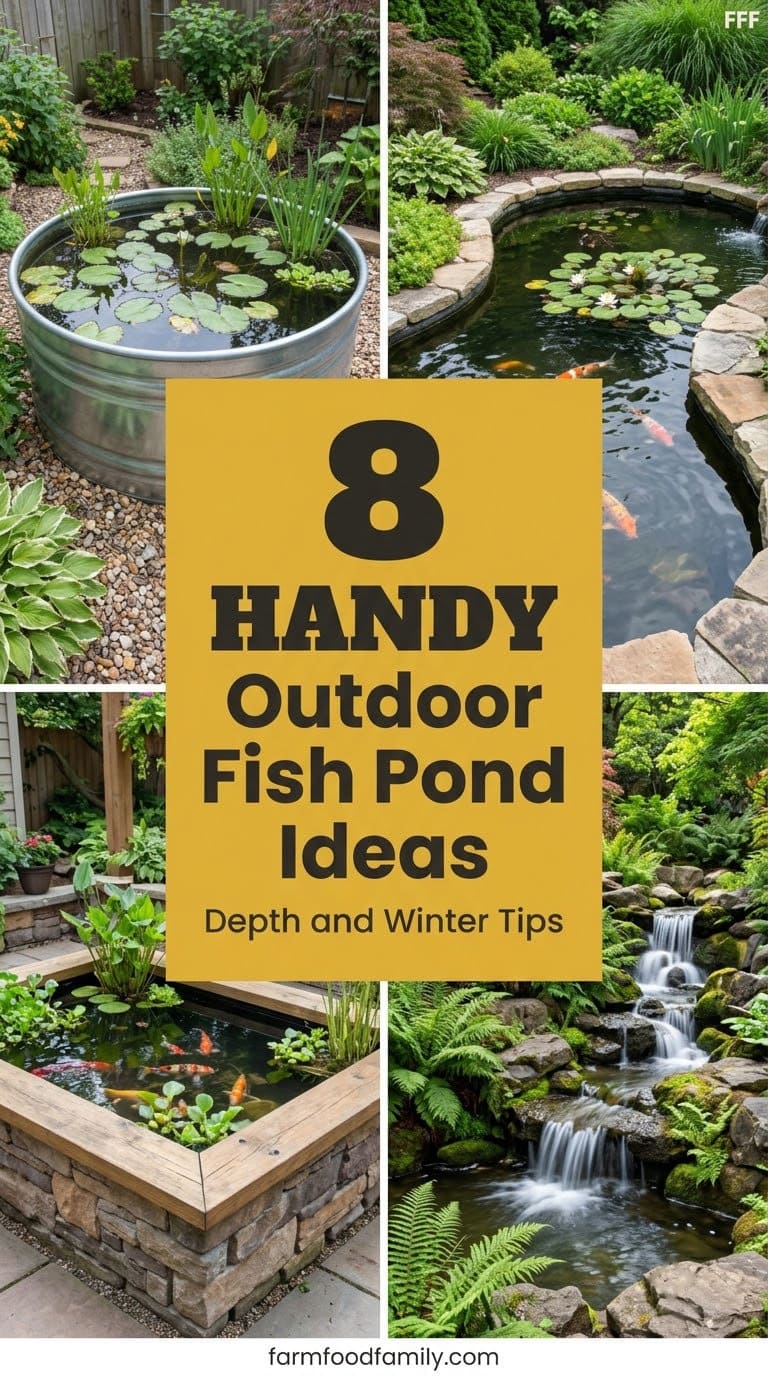
1. A Stock Tank or Barrel Pond
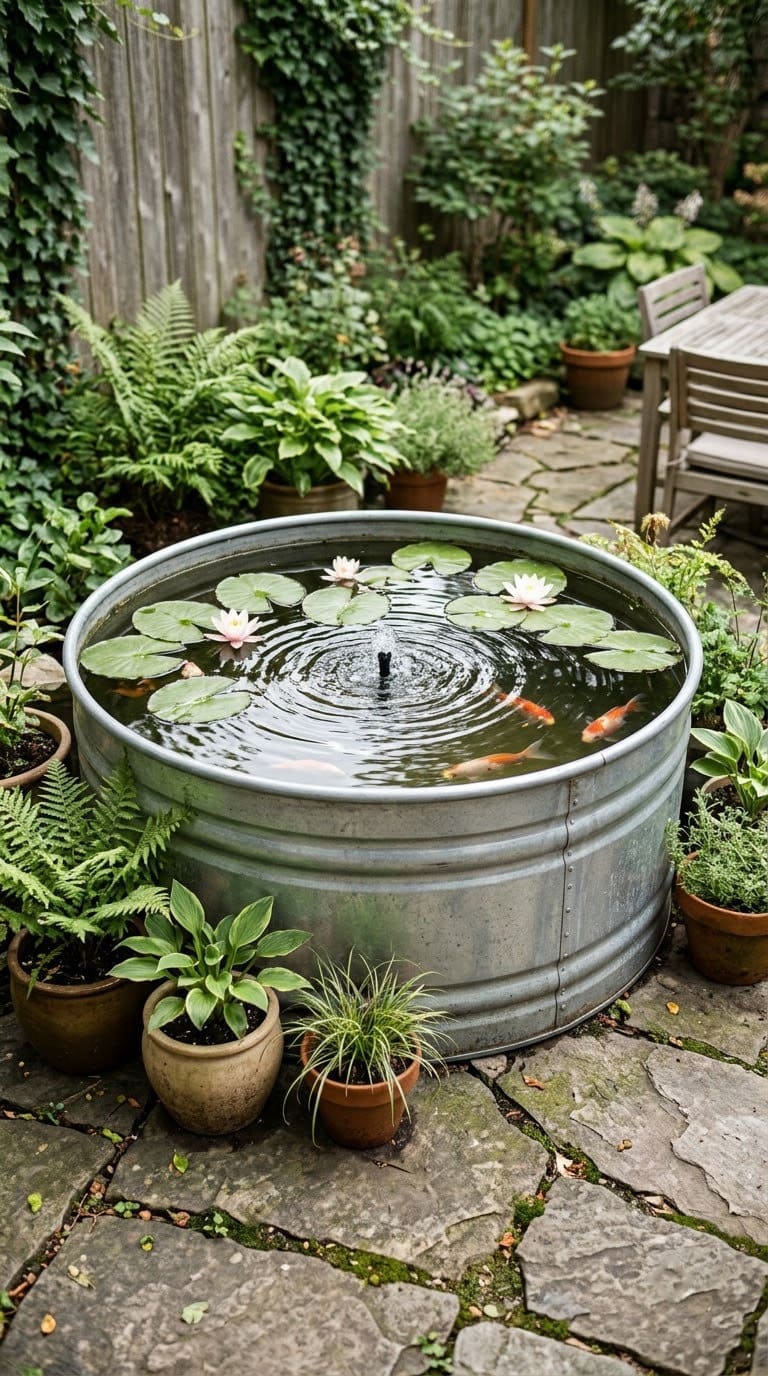
A galvanized stock tank or half barrel makes the easiest pond. It sits on the ground, and you can set it up in an afternoon.
Choose a spot with some shade, because small volumes of water heat up fast. Add a few potted water plants and a small pump for movement. A shallow container offers little protection from winter, so treat it as a summer feature in cold areas.



Fish suffer if the water freezes solid. In winter, empty it or move fish indoors. See the site’s guide to galvanized stock tank ideas for tank types and finishes.
Quick tip: set the tank on a level pad of packed gravel or pavers before you fill it. A filled tank is far too heavy to shift, and a tilt of even an inch shows as a slanted waterline.
2. An In-Ground Pond With a Ledge
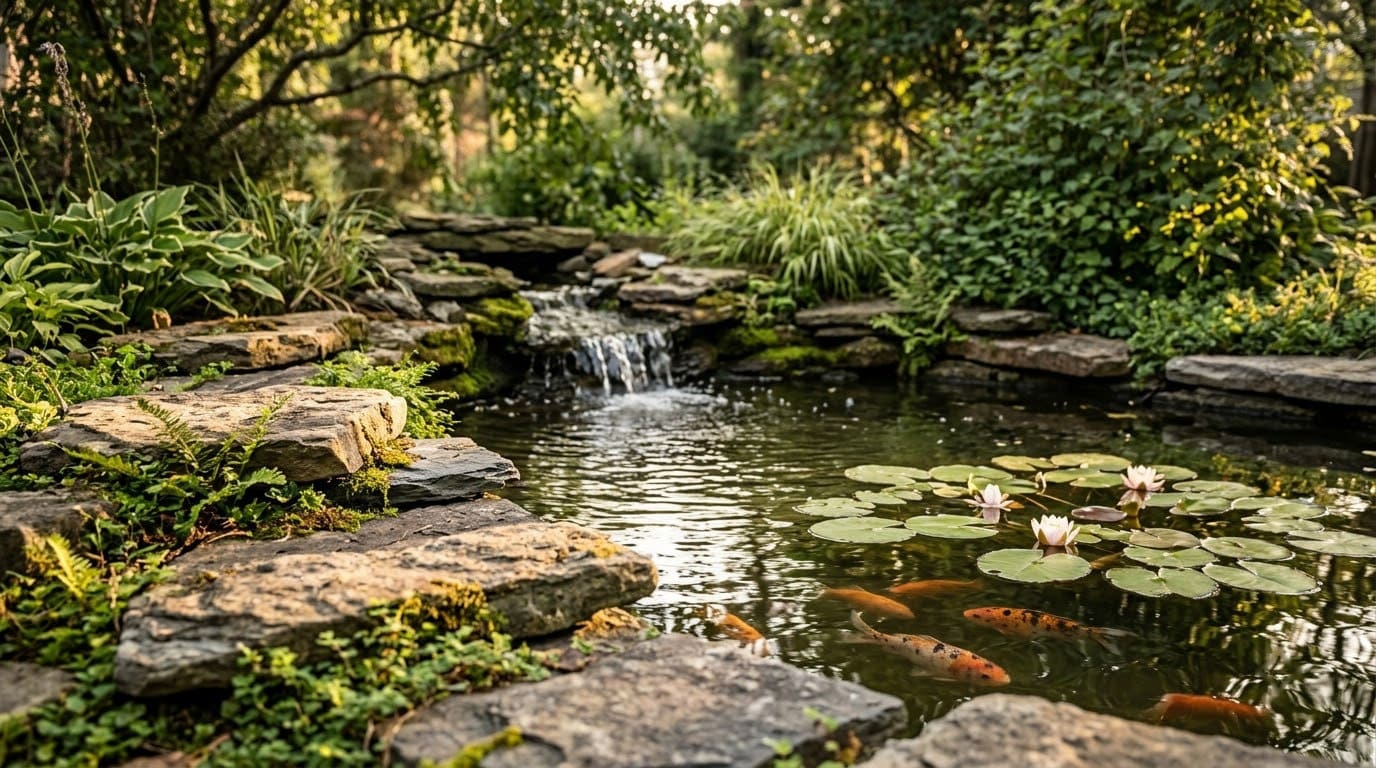
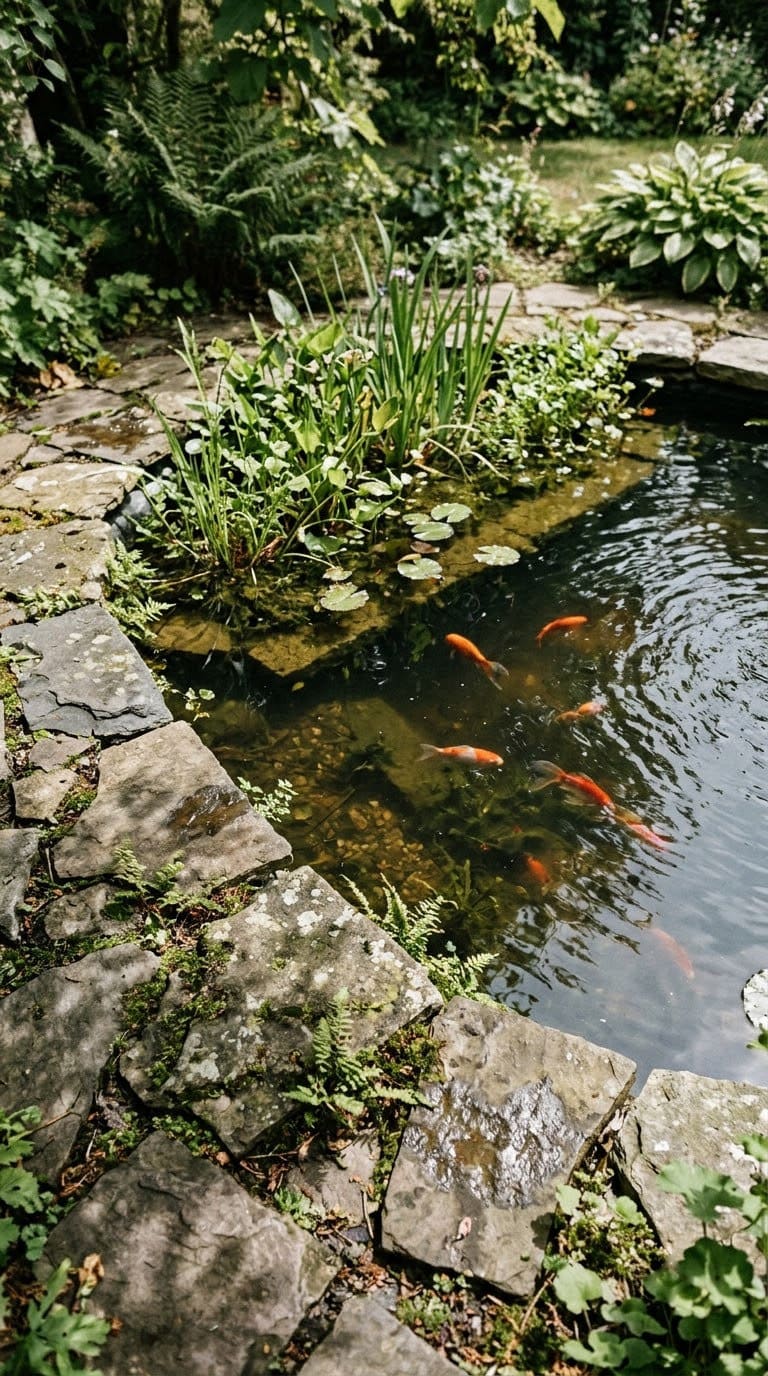
An in-ground pond holds temperature best. It’s also the most work.
Dig at least 30 inches deep for hardy goldfish, and 40 inches for koi, as Beyer advises. Cut a shallow ledge around the edge for potted plants, and line the pond with a flexible liner. Slope the sides so animals can climb out.
Quick tip: dig the shape first and lay a garden hose along the edge to preview it. Move the hose until the curve looks natural from the house, then dig along the line.
Call 811 first. Keep the pond away from large tree roots and falling leaves. For layout and edge ideas, see the guides to pond edging ideas and DIY water feature ideas.
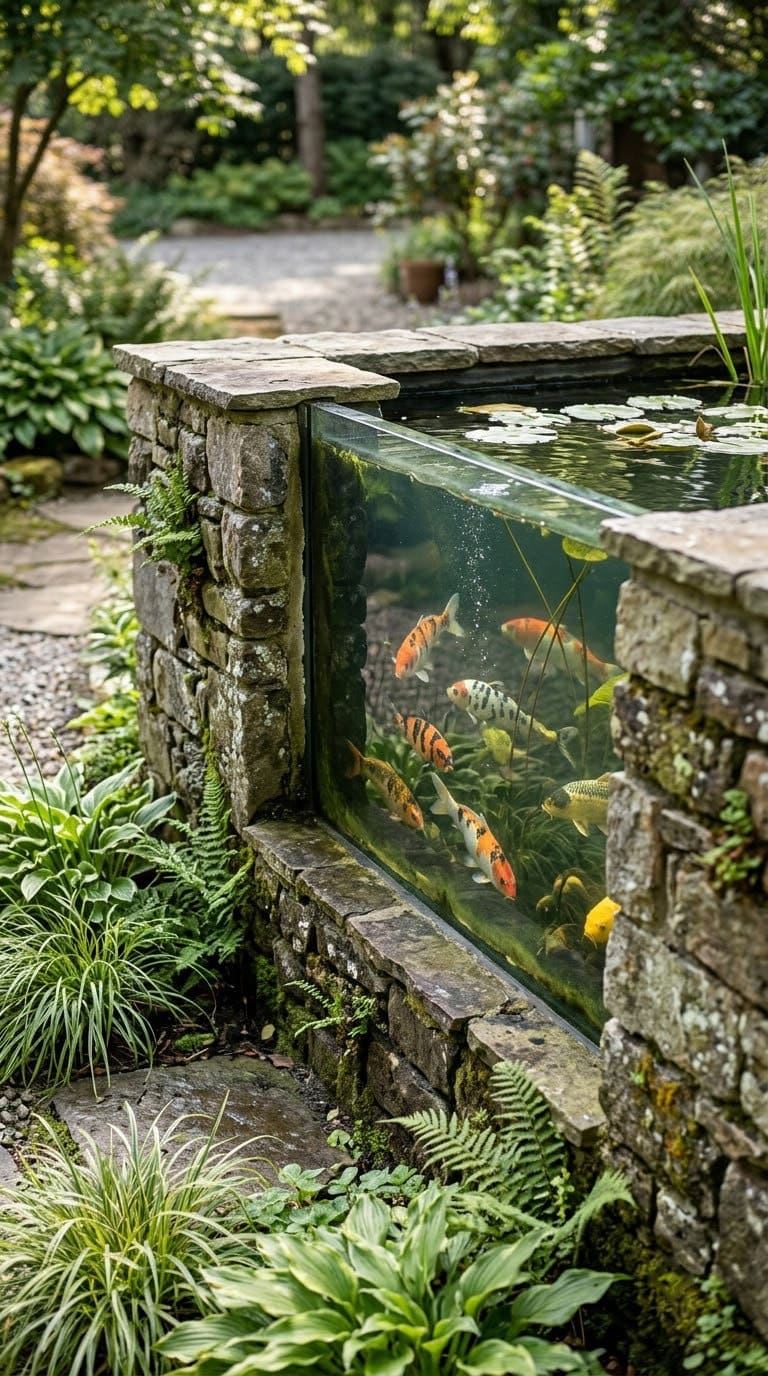
3. A Raised Pond With a Viewing Window
This is the closest thing to a true outdoor aquarium. You see fish from the side, like a tank.
Water is heavy, and a glass panel faces strong pressure.
The wall, the footing and the glass need to be designed to hold it.
That’s a job for a pro. It isn’t a weekend DIY. Ask a mason or an engineer to design the wall and the window.
Raised ponds also lose the ground’s insulation. Beyer says above-ground ponds need 2 to 3 feet of depth below ground to overwinter fish, so a fully raised pond is usually a summer-only setup in cold areas.
4. A Canoe or Trough Water Garden
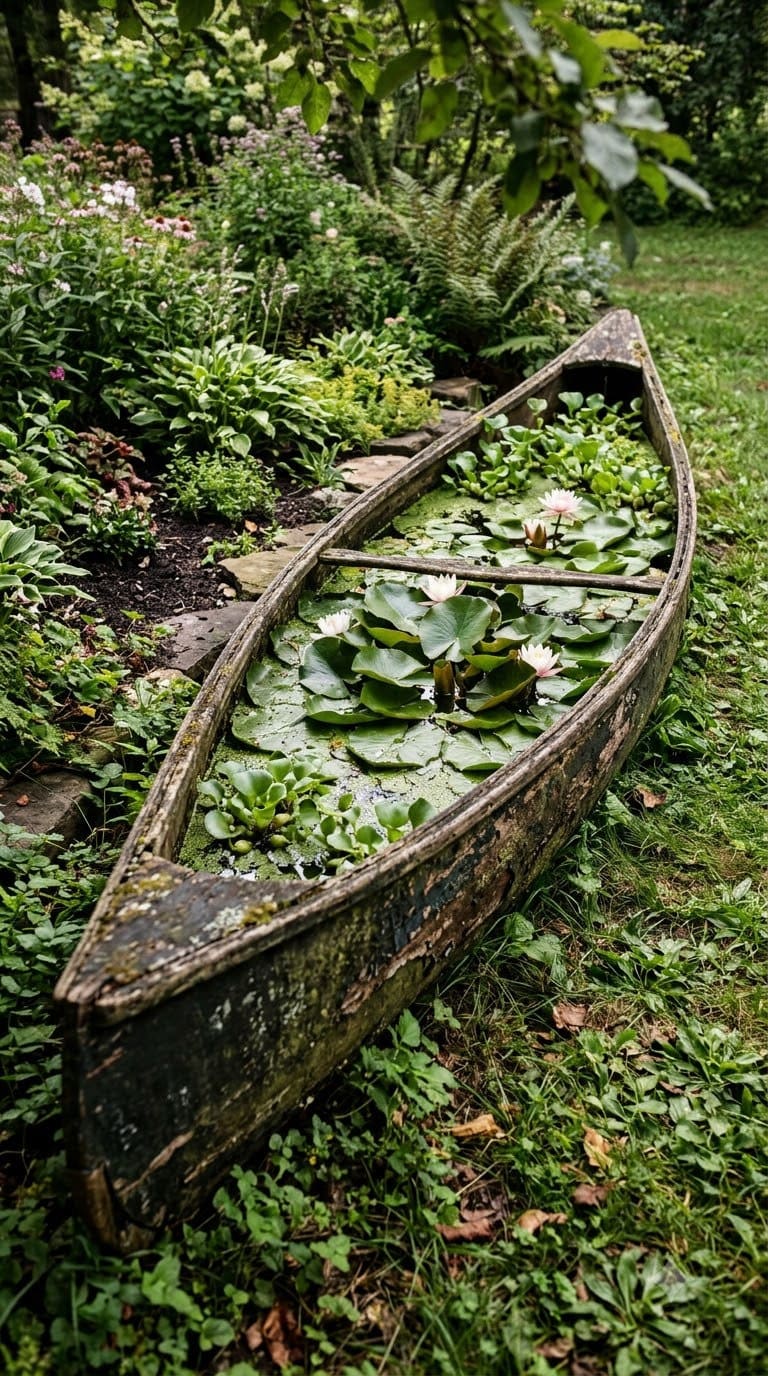
An old canoe or a wooden trough makes a charming planter pond. It’s quick to build and easy to replace.
Line it with a pond liner so it doesn’t leak. Add potted aquatic plants, such as water lilies. Don’t add fish to a shallow vessel in summer sun without shade, because the water heats up fast.
But check the container weekly for mosquito larvae. Empty or change the water if it stands too long.
5. A Tabletop Patio Water Bowl
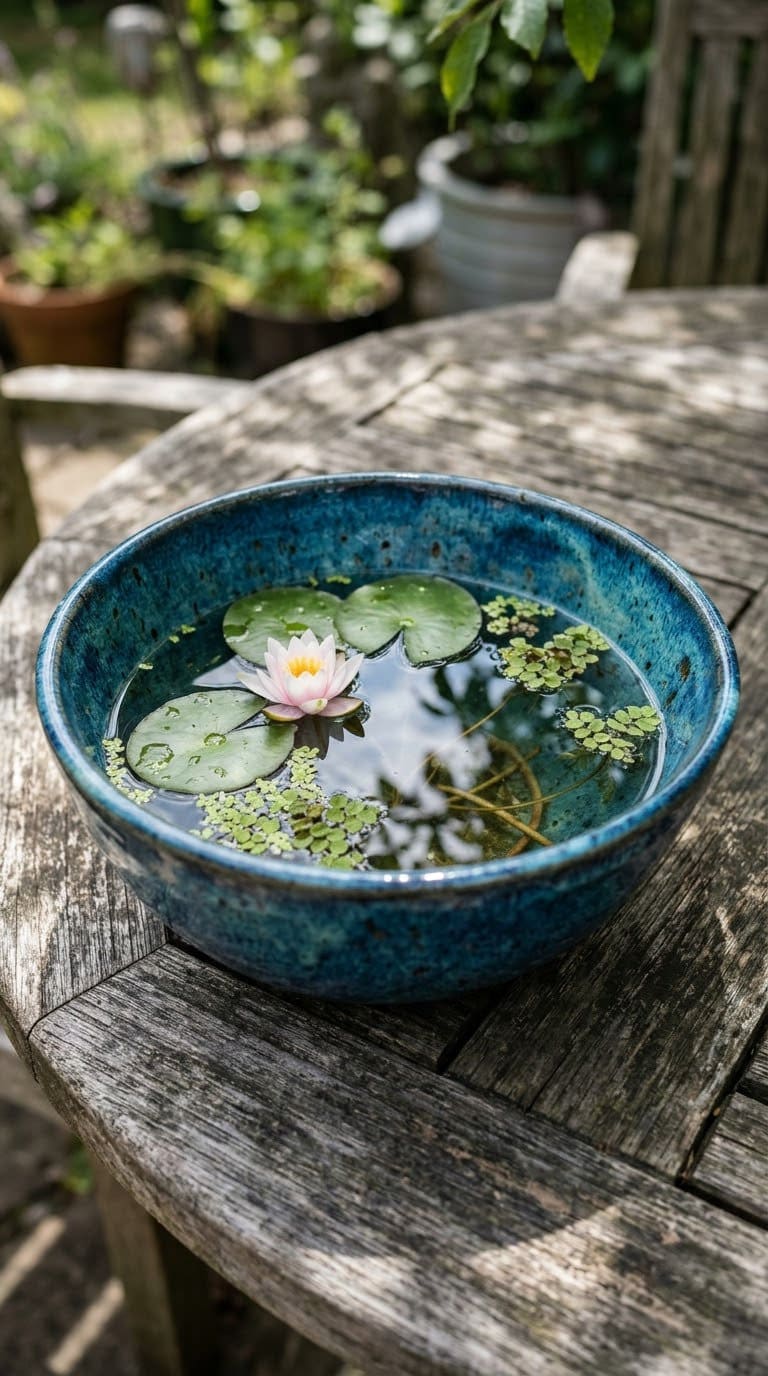
A large glazed bowl with a few aquatic plants is the smallest water feature. It needs almost no space.
Skip fish in a bowl this small. Use a plant such as a small water lily or floating plants, and set it where you can see it. Keep it shaded in the afternoon.
Dump and refill the bowl often. Even one ounce of standing water can support mosquito larvae, per UC ANR, so check weekly.
6. A Waterfall and Aeration Add-On
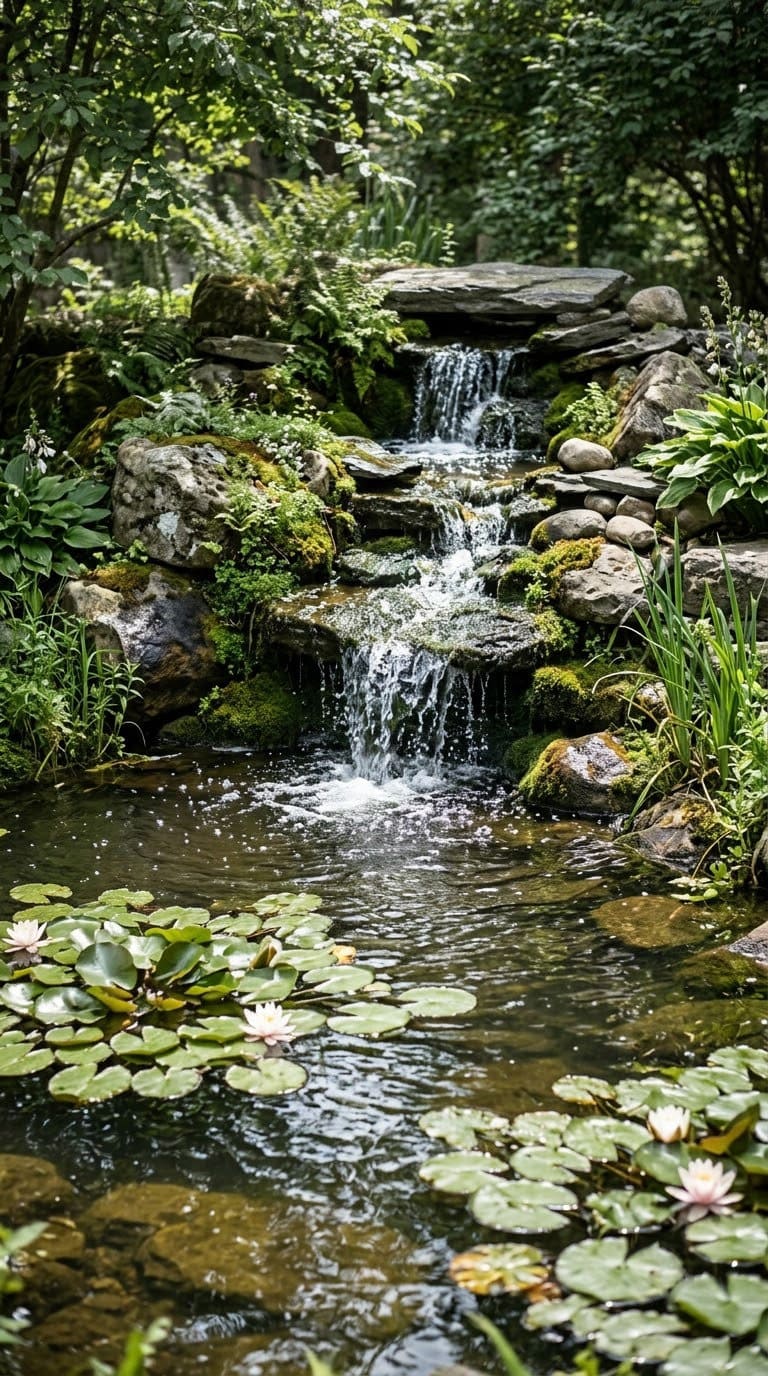
A small waterfall adds sound and oxygen. It also keeps the surface moving, which mosquitoes dislike.
Add a pump, a short tube and a pile of stones that lets water spill into the pond. Keep the waterfall low so water doesn’t splash out.
Quick tip: run the pump for a day before you add fish and check the water level every few hours. Splash and leaks both show up as a falling level, and it’s easier to fix them with an empty pond. An air pump with an air stone adds oxygen without much current.
Beyer says to use gentle circulation so fish don’t fight a current. The site’s guide on how water aeration helps a pond explains the benefits, and small ponds with waterfalls shows layouts.
7. A Mosquito-Safe Pond Setup
A good pond isn’t a mosquito problem. It just needs a few habits.
Sutherland recommends circulation, depth over 2 feet and steep sides, because larvae prefer shallow, still water. Remove excess plants and debris, which feed larvae and shelter them. Check regularly for wriggling larvae.
A bacterial larvicide called Bti targets fly larvae and won’t harm predatory insects, he writes.
It works within a few days and lasts about a month, so follow the label.
Never release mosquito fish into natural waters. Walk the pond edge once a week with a flashlight at dusk, because larvae show up as tiny wrigglers hanging at the surface. For plant ideas, see the site’s list of mosquito repellent plants.
8. A Winter-Ready Pond
Winter is where fish are lost. A few steps get them through.
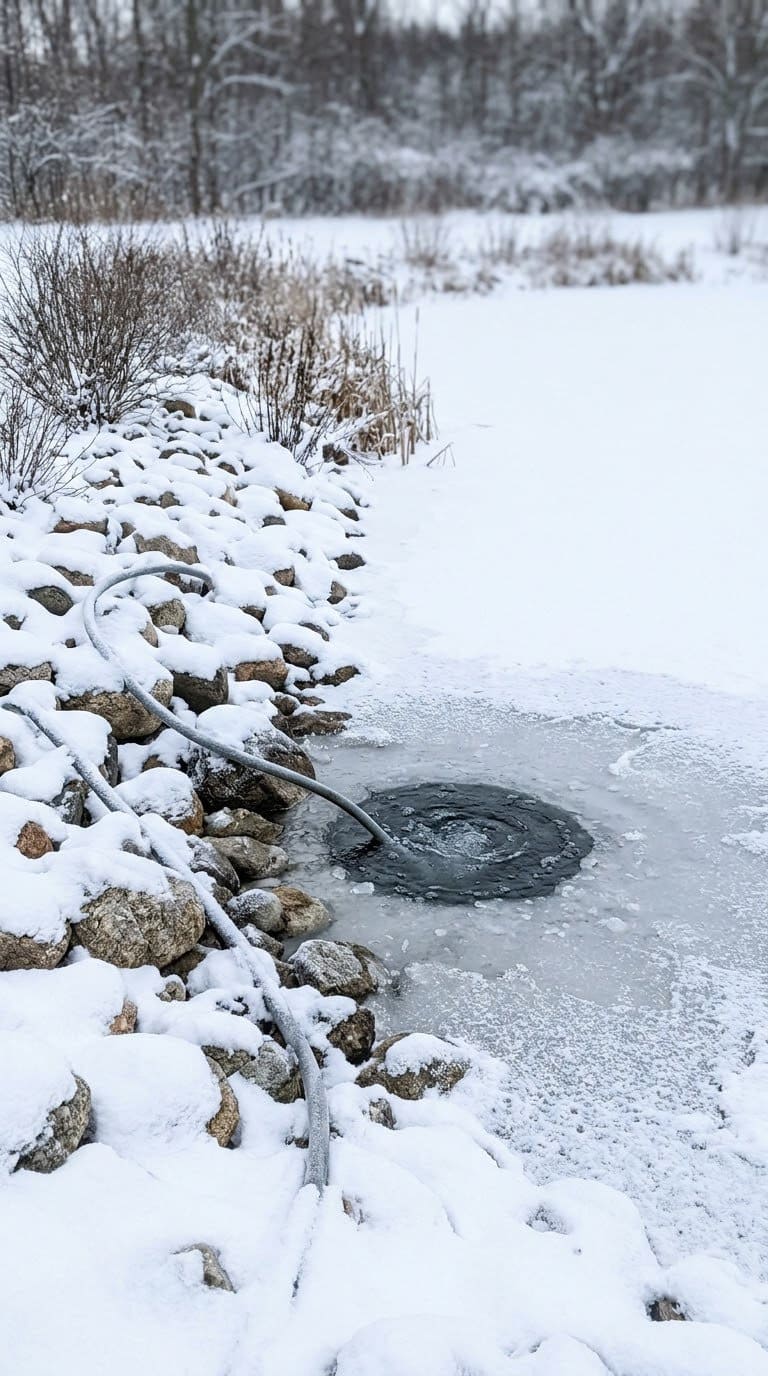
Keep an opening in the ice.
Beyer says an air pump with an aeration point in the center of a small pond works, and to check it daily. Leave ice and snow in place and don’t break it, because that stresses the fish. Remove leaves before ice forms, since decay uses up oxygen.
Make a 10 percent water change two or three times in mid-winter, he writes.
How Deep Should an Outdoor Fish Pond Be?
Depth is the biggest number in the whole project. This table lists what the sources say.
| Source | Goldfish | Koi |
|---|---|---|
| POND Trade (Beyer, Midwest) | 30 inches below the soil line | At least 40 inches |
| Vendor pages in search | 18 to 24 inches | 3 feet minimum |
| UC ANR (for mosquito control) | More than 2 feet recommended | Not stated |
These numbers differ because climates and sources differ. Use the deeper figure if winters are hard. Ask a local pond club or extension office for your area.
Choosing Fish
Pick hardy fish and don’t overstock. Add them slowly, a few at a time, so the filter can keep up with the waste.
Goldfish are the common beginner choice, and koi grow large and need much more water. The more fish you add, the more filtration you need.
Match the fish to the depth you can dig. A pond that fits goldfish isn’t deep enough for koi.
Also think about predators. Herons, raccoons and cats can empty a shallow pond fast, so a net or a deep ledge gives fish a place to hide.
Quarantine new fish before adding them, and feed lightly. Extra food becomes waste, and waste fouls the water and feeds algae. For general fish care, read the site’s guide on caring for pet fish.
Pond Plants That Do the Work
Plants shade the water, soak up nutrients and give fish cover. They also help keep green water in check.
Use a mix of floating plants, potted marginal plants on the ledge and a few submerged oxygenators. Cover roughly half the surface in summer with leaves and lilies, so sun doesn’t heat and green the water. That half-cover figure is our own guideline, not a sourced number.
Pot plants in baskets with heavy soil topped with gravel, so fish can’t dig them up. Trim dead leaves often. Sutherland notes that excess vegetation and debris feed larvae and shelter them from sun and predators, so thin plants before they choke the surface.
Spring Start-Up and Summer Care
A pond isn’t set-and-forget. A short routine each season keeps the water clear.
Spring: Remove netting and leaf debris, check the pump and clean the filter. Restart feeding slowly once water warms. Test the outlet and GFCI before you plug anything in.
Summer: Top off evaporated water and watch the water color. Check for mosquito larvae weekly. Trim plants and skim leaves.
Fall: Net the pond before leaves fall, as Beyer advises removing leaves before ice forms. Cut back dying plants, and move tender ones indoors.
Winter: Keep a hole open in the ice, check the aerator daily and avoid breaking the ice.
What Does a Backyard Pond Really Cost?
Costs vary by region and supplier, so use these as tiers instead of prices.
| Tier | What you get |
|---|---|
| Lowest | Tabletop bowl, canoe or trough water garden |
| Low to mid | Stock tank pond, mosquito-safe setup, winter aeration |
| Mid | Waterfall and aeration add-on, in-ground liner pond |
| High | Raised pond with a viewing window (hire a pro) |
The largest hidden cost is power. Budget for an electrician if you need a new GFCI outlet near the pond.
A Simple Weekend Plan
Plan the order so you don’t dig twice.
Week before: Call 811, check permits and choose a spot with partial shade and a clear view from the house.
Saturday: Dig, level the bottom and add the liner. Set the pump and filter.
Sunday: Fill, add plants and let the water settle before you add fish.
Common Mistakes to Avoid
Most pond problems are planning problems.
Digging too shallow. Fish need depth to survive winter.
Using extension cords. Pump makers advise outdoor-rated receptacles.
Placing the pond under trees. Falling leaves foul the water.
Skipping the circulation. Still water breeds mosquitoes.
Ignoring local rules. Permits and fencing vary by city.
FAQ
How deep should a backyard fish pond be?
Beyer recommends 30 inches below the soil line for hardy goldfish in the Midwest and at least 40 inches for koi. Colder areas may need more.
Do I need a permit for a backyard pond?
Often you do, or you need a fence. Rules differ by city, so call your building department.
How do I keep mosquitoes out of a pond?
Keep water moving, deeper than 2 feet and free of excess debris. Check for larvae weekly, and use a Bti larvicide as the label directs.
Can I run a pond pump on an extension cord?
Pump makers advise against it. Use an outdoor-rated, GFCI-protected receptacle.
Can fish stay outside all winter?
In a deep enough pond with a hole kept open in the ice, yes. Shallow tubs usually can’t.
Related Posts
Never miss an update — choose FarmFoodFamily as your preferred source on Google.
How it works: Tap the button below to open Google's settings page, then check the box next to FarmFoodFamily.
Tap the checkbox to turn it blue — that's how you know it's set.