
15 Savvy Rooftop Garden Ideas That Protect Your Roof
A rooftop garden gives you green space above the city, as long as an engineer checks the load, the membrane stays protected, and you plan for wind.

Never miss an update — choose FarmFoodFamily as your preferred source on Google.
How it works: Tap the button below to open Google's settings page, then check the box next to FarmFoodFamily.
Tap the checkbox to turn it blue — that's how you know it's set.
A rooftop garden gives you green space above the city, as long as an engineer checks the load, the membrane stays protected, and you plan for wind.
Products We Recommend
This post contains affiliate links. We may earn a commission on qualifying purchases at no extra cost to you.

Acacia Wood Interlocking Deck Tiles, 12 in, 9 PCS
Snap-together tiles for a walkable surface on a flat roof
Shop Now
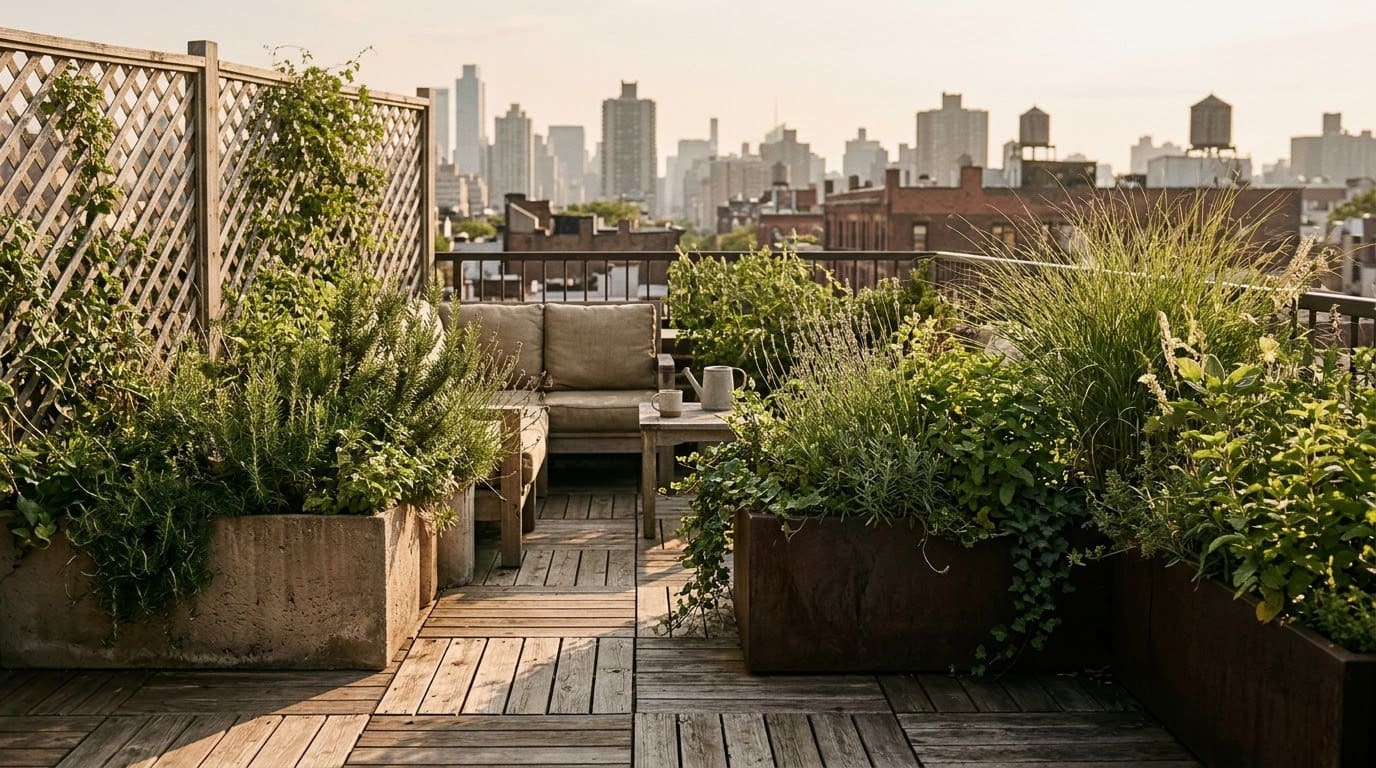
A rooftop garden sounds like the perfect city escape. But a roof isn’t a yard. It has weight limits, a waterproof layer that can’t leak, and wind that dries pots fast.
Most idea lists show pretty photos and skip those problems. This guide covers both.
You’ll get 15 rooftop garden ideas with sizes, materials, and plain notes on weight, wind, and safety. Where we couldn’t find a source, we say so.
Answer 4 quick questions and get matched to the exact fix for your yard — drainage, budget, layout, or something else entirely.
Take the Free QuizQuick Answer
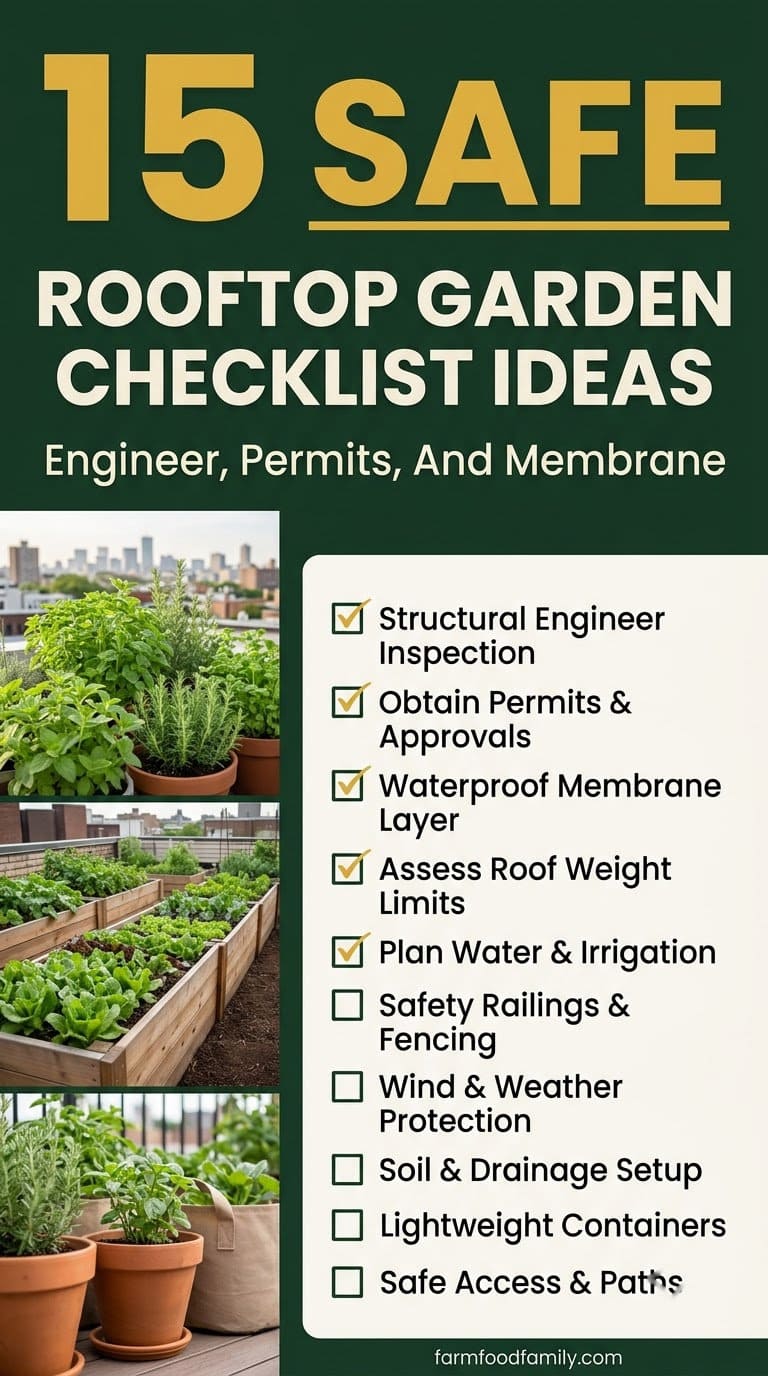
Before you buy a single pot, find out what your roof can carry. Ask a licensed structural engineer, and check your building rules, local permits, and landlord or HOA approval. Do this first, because it decides every other choice you make about pots, soil, and furniture.
Wet soil is heavy. The University of Delaware Cooperative Extension says deep green roofs need major engineering. Shallow, light setups are far safer.
Protect the roof’s waterproof layer. The EPDM Roofing Association advises a shield above it, a drainage layer, and a root barrier. Plan the whole stack before you plant.
Plan for wind with open lattice and tough plants. Keep furniture and tall planters away from the roof edge.
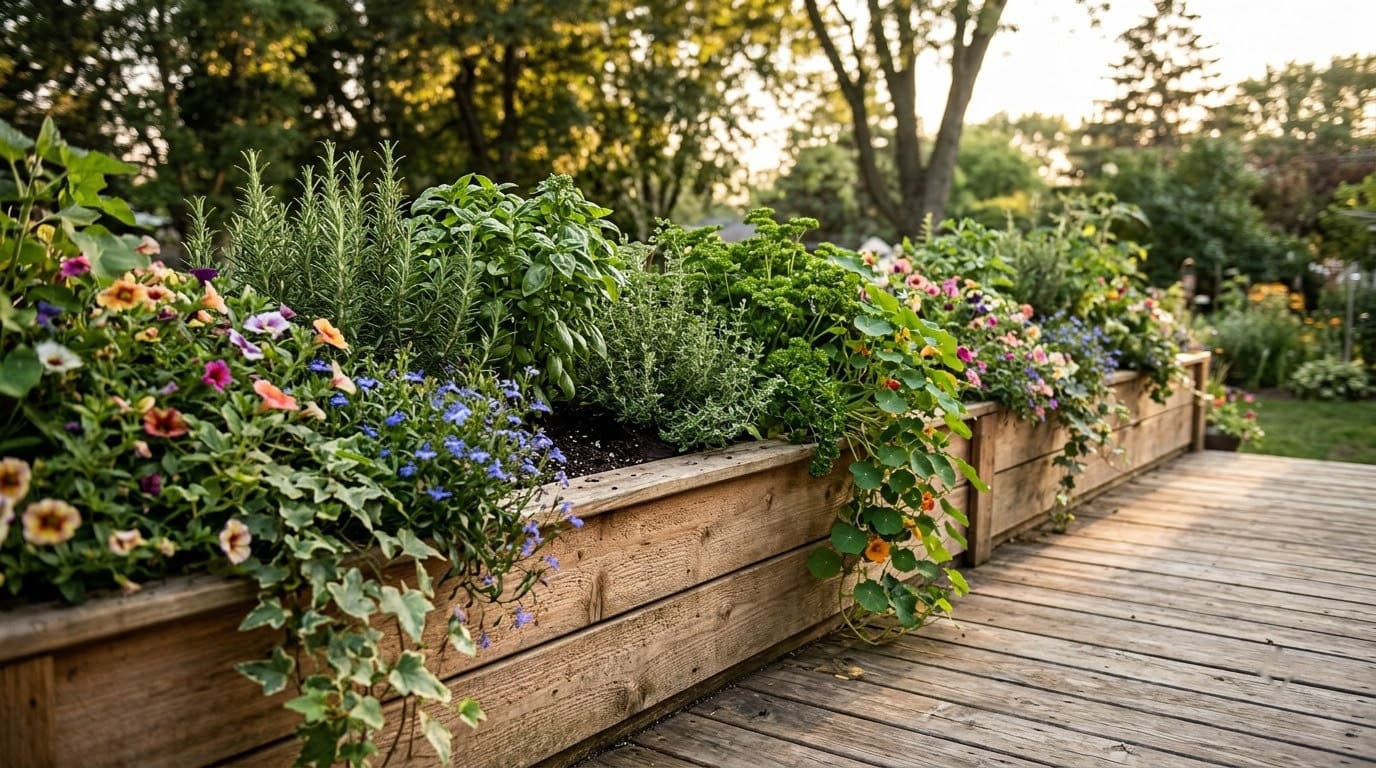
Use light soil, since water adds a lot of weight. Water often, because wind dries pots fast, and check drains each month.
Most yard problems trace back to one specific, fixable cause. Find yours in 4 quick questions.
Take the Free QuizWhich Rooftop Garden Type Fits Your Roof?
This table is our planning guide. The green roof notes come from the University of Delaware and the EPA. The rest is our own judgment.
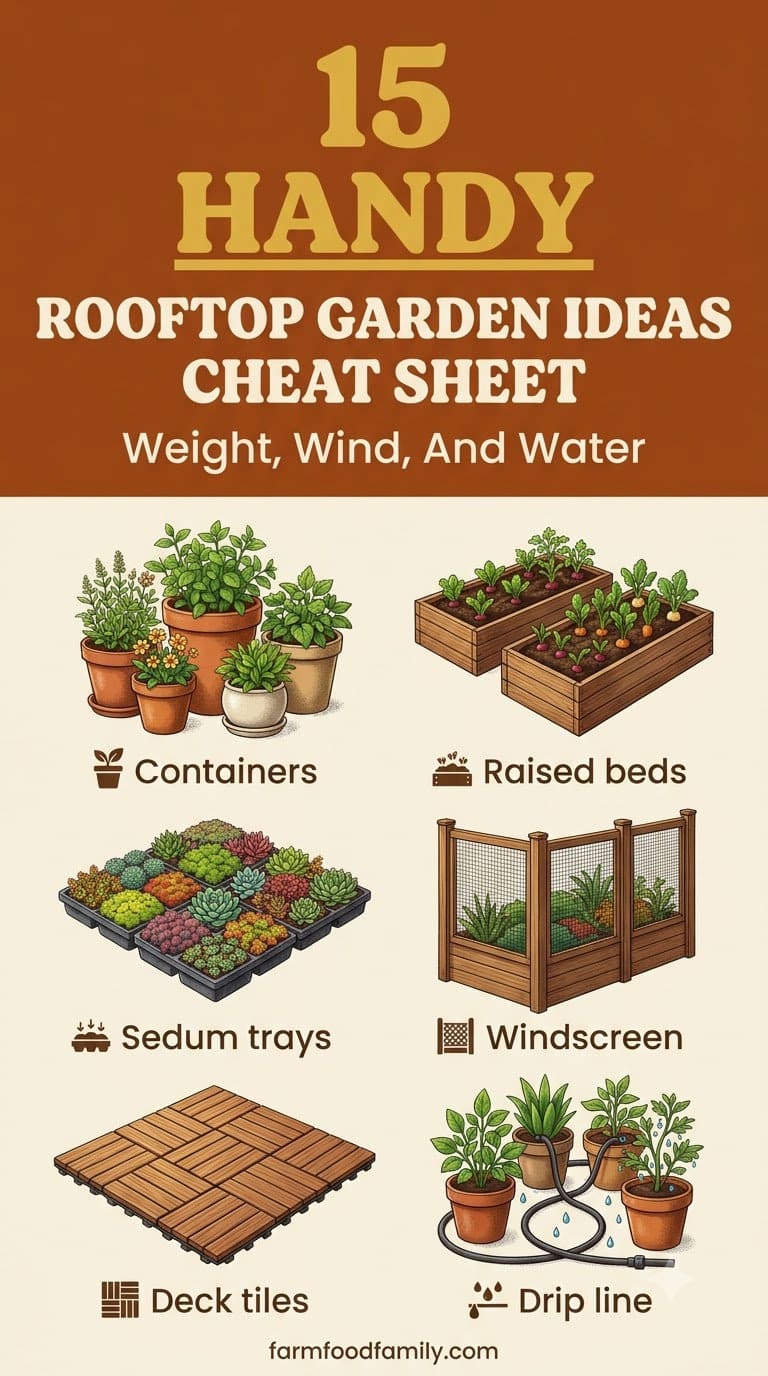
| Type | Weight | Roof protection needed | Best for | Skill level |
|---|---|---|---|---|
| Containers on a deck | Medium | Pedestals or mats | Herbs, flowers, tomatoes | Beginner |
| Raised boxes | High | Engineer check | Vegetables | Intermediate |
| Shallow green roof trays | Low to medium | Drainage layer | Sedum, thyme | Intermediate |
| Full green roof | High | Full system | Whole roofs | Pro |
| Vertical and wall plantings | Low | Light | Privacy, herbs | Beginner |
What Should You Check Before You Start?
Start with your rights. Ask your landlord, HOA, or building manager if roof access and gardens are allowed. Check local building, fire, and zoning rules too.
Next, get a structural check. Ask a licensed structural engineer how many pounds per square foot your roof can carry. Ask about concentrated loads, since a big planter puts weight on a small spot.
Then, look at the roof itself. The Delaware fact sheet says the waterproof layer must be in excellent shape. A leaky roof under a garden is a costly mistake.
Finally, ask your roofer about the warranty. Heavy pots on a roof can void some warranties. The roofing group’s page doesn’t cover this, so ask the maker.
How Much Weight Can a Rooftop Garden Add?
Water adds up fast. A gallon of water weighs about 8.3 pounds, and soil holds a lot of it. A big planter full of wet soil can weigh hundreds of pounds.
Snap-together tiles for a walkable surface on a flat roof
Shop NowThis post contains affiliate links. We may earn a commission on qualifying purchases at no extra cost to you.
The University of Delaware fact sheet lists weights for green roofs. It gives 12 to 50 for extensive green roofs, 10 to 12 for a conventional roof, and 80 to 150 for an intensive green roof. The sheet prints these as pounds per foot, so confirm the unit.
The EPA says extensive green roofs use a growing medium 2 to 4 inches deep and need the least added structural support. Intensive roofs are heavier and need more.
The average homeowner spends $616/year on yard fixes that don't address the real problem. Find out what yours actually is — before you spend another dollar.
Take the Free QuizUse light soil. The Delaware sheet describes a 2 to 6 inch layer of light, inert mix for green roofs. It holds no more than 5 to 6 percent organic matter.
Common parts include perlite, expanded shale, pumice, and crushed terracotta.
How Do You Handle Wind and Safety?
Wind dries pots fast and tips tall plants. Use open lattice or shade cloth, not a solid wall.
Solid walls make swirls of wind that can hurt plants. Tough grasses make a soft windbreak too.
Secure everything. Tie tall planters to a rail or frame. Don’t set pots on walls or ledges, where wind can push them over.
Stay back from the edge. Keep furniture, benches, and planters away from the edge so no one can climb on them. Check local code for guardrail height.


Know your exit and your fire rules. Avoid open flames on a roof unless your building allows them. Keep a clear path to the stairs.
15 Savvy Rooftop Garden Ideas
1. Container Herb and Vegetable Garden
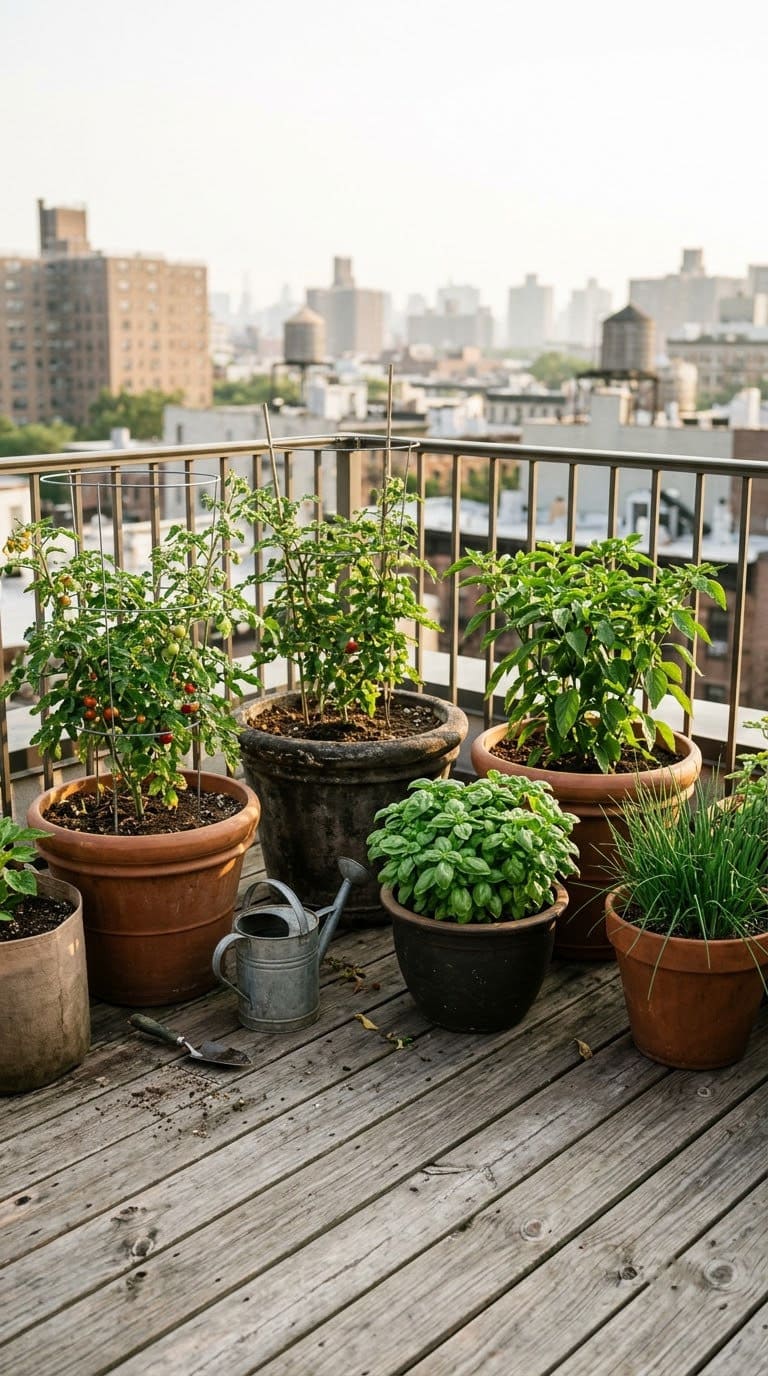
University of Illinois Extension horticulture educator Kelly Allsup lists minimum pot sizes. Tomatoes need at least 20 inches across, peppers more than 16 inches, and leafy greens and herbs about 10 inches.
A 10-inch pot holds about 3 gallons, a 16-inch pot about 10 gallons, and a 24-inch pot about 25 gallons. Use the volume to estimate weight before you carry anything up.
Pick compact varieties like ‘Micro Tom’ tomato or ‘Kitchen Minis’ peppers. Make sure every pot has drainage holes.
Cost tier: low to medium. See our vegetables you can grow in pots guide.
2. Pedestal Deck With Planters
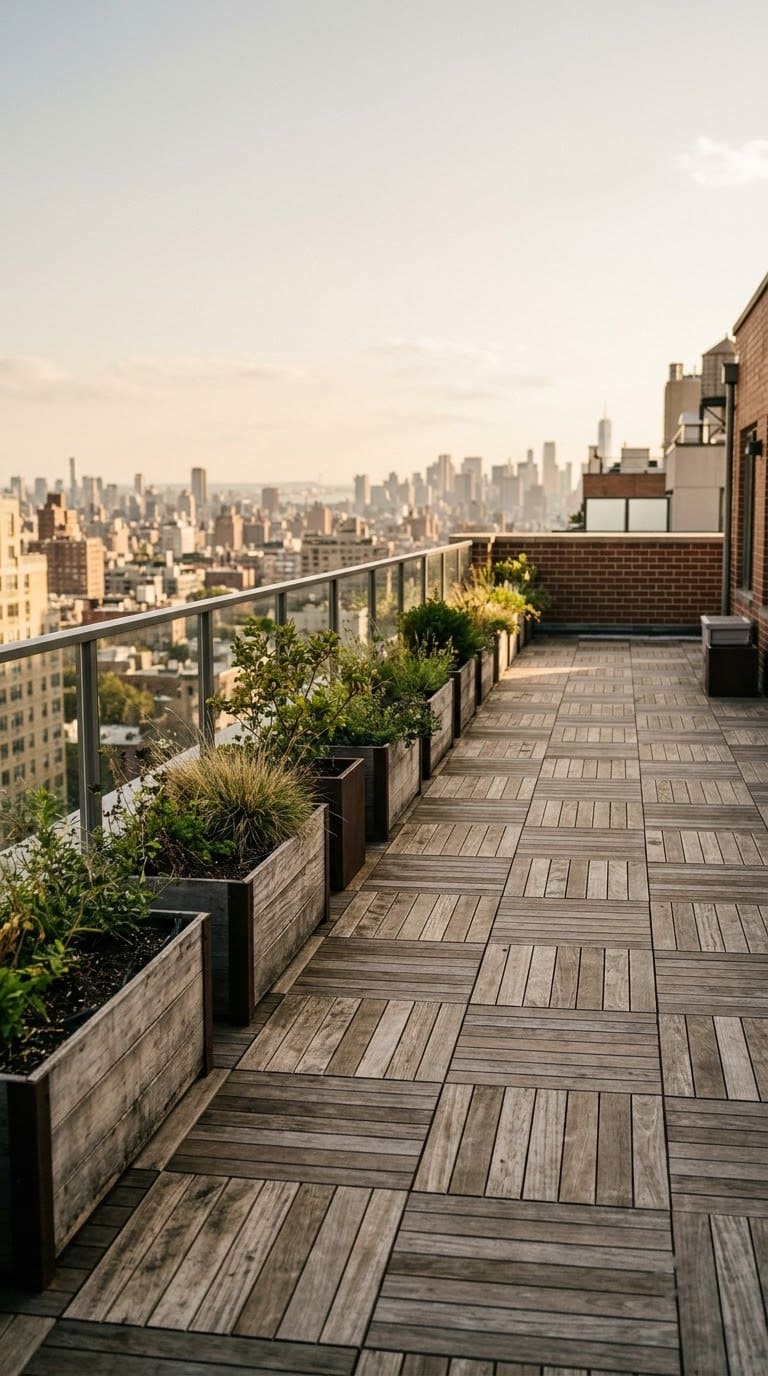
Deck tiles on pedestals lift the walking surface off the membrane. They protect the roof and let water drain underneath. Keep heavy planters on their own supports.
Space tiles evenly and check that water can still flow to the drains. Don’t block drains with planters.
Ask your roofer which pedestals suit your roof. The roofing group says to shield the membrane from punctures.
Cost tier: medium to high. Pairs with idea 12’s dining nook.
3. Shallow Sedum Tray Garden
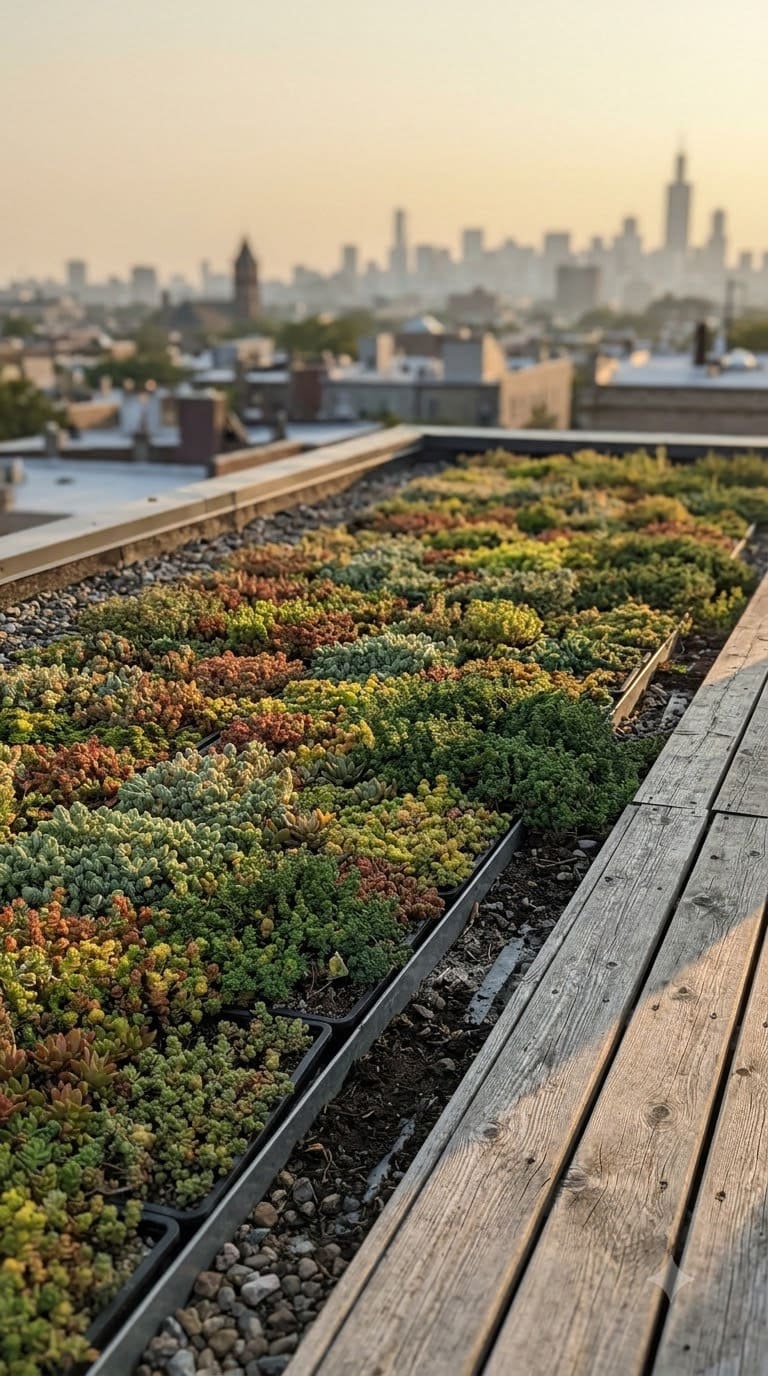
Sedum is a green roof favorite. Delaware’s fact sheet says succulents, especially sedum, do well on green roofs. They survive drought and need little care.
It also lists hens and chicks, creeping thyme, and chives.
Use small trays with a thin layer of light soil instead of a full green roof. Trays are easy to lift and keep the roof open for repairs.
Water during the first season to help roots settle. This is a light, low-effort garden.
Cost tier: medium. EPA says a simple extensive roof costs far less than an intensive one.
4. Raised Vegetable Beds Over a Wall
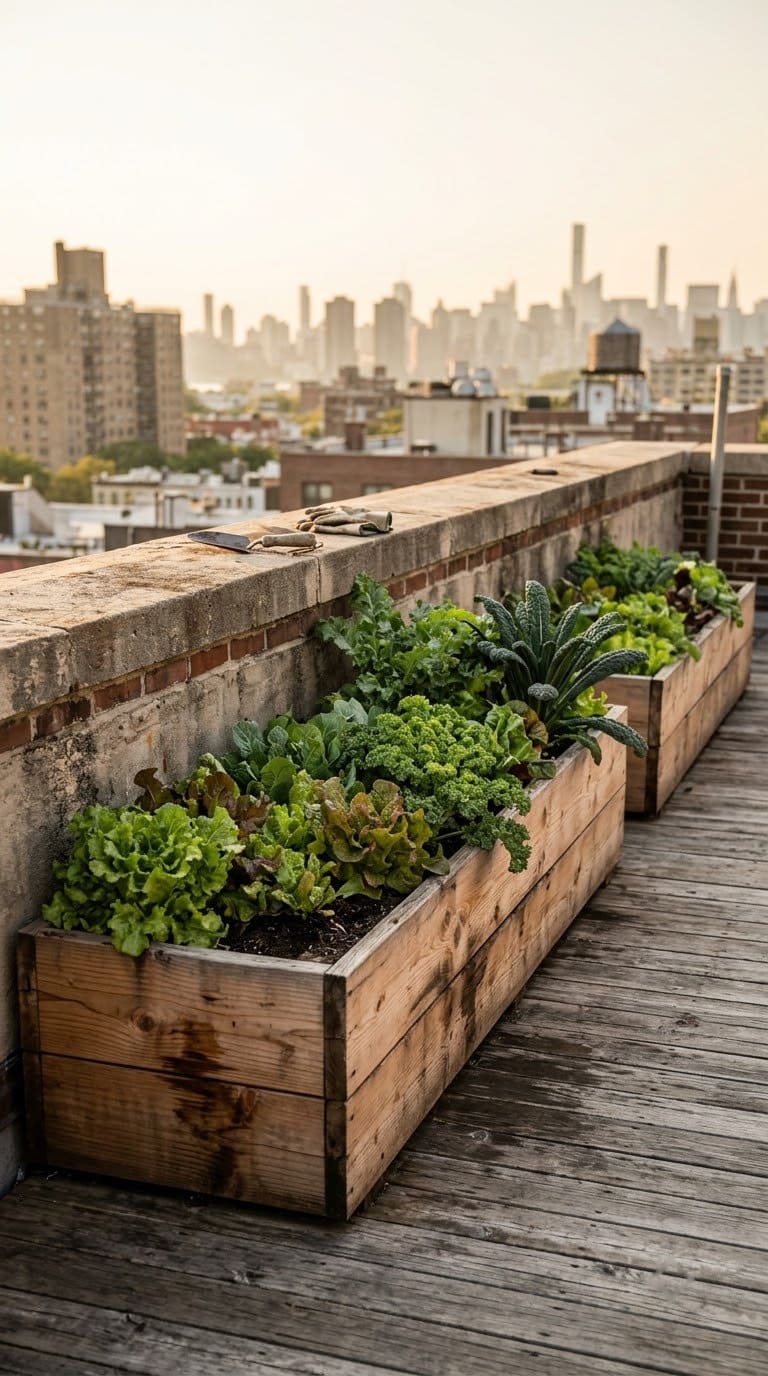
Raised beds hold more soil than pots, so they weigh more. Place them over load-bearing walls or beams, as an engineer advises.
Keep beds low and narrow, about 12 inches deep and 2 feet wide. Those sizes are our own suggestion. Line them to protect wood.
Fill with lightweight mix, not heavy topsoil. Let an engineer sign off before you build.
Cost tier: medium to high. See our raised vegetable garden bed guide for soil mixes.
5. Pergola Shade and Privacy
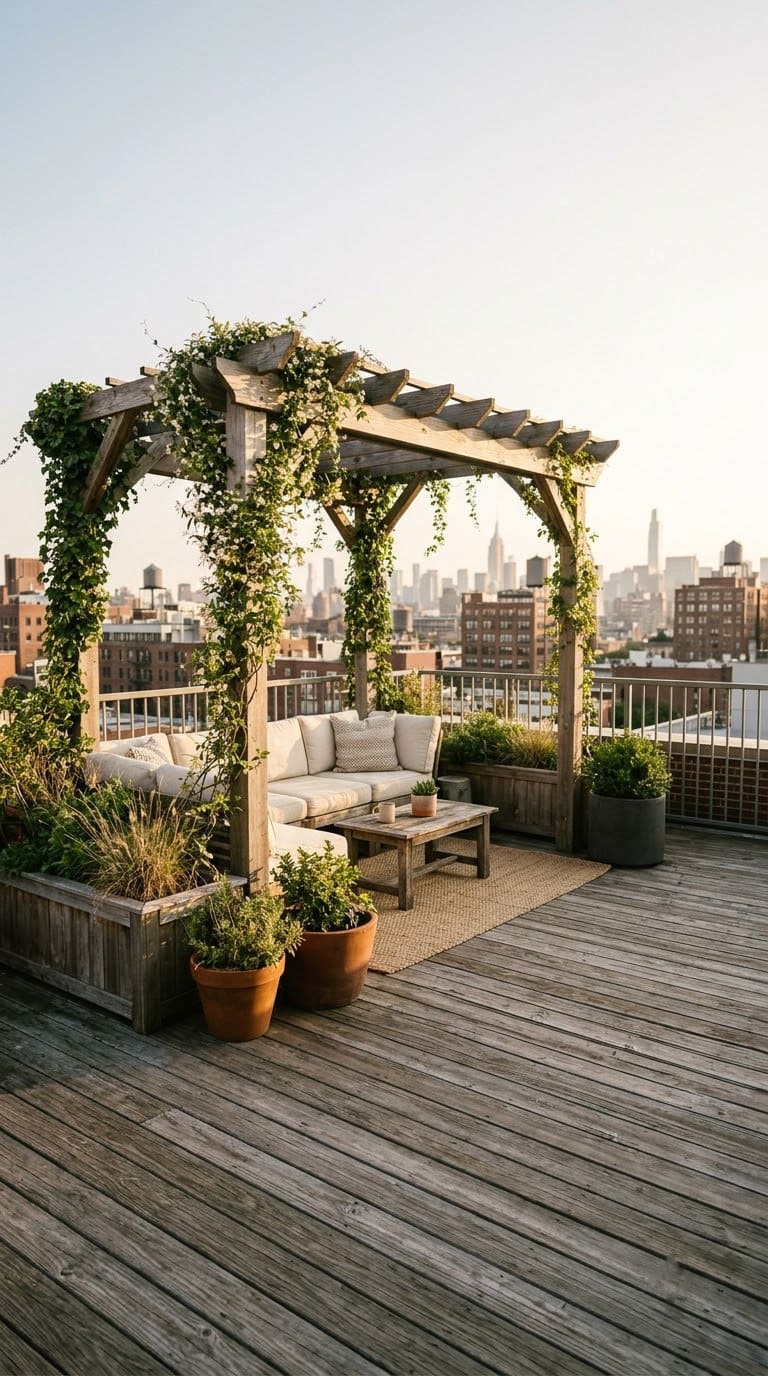
A pergola gives shade and privacy. On a roof, it also catches wind like a sail. Anchor it into the structure, not just the roofing.
Have an engineer check the anchor points and wind load. Choose lightweight materials and open slats.
Our pergola ideas cover styles. On a roof, ask your building manager first.
Cost tier: high.
6. Lattice Windscreen With Climbers
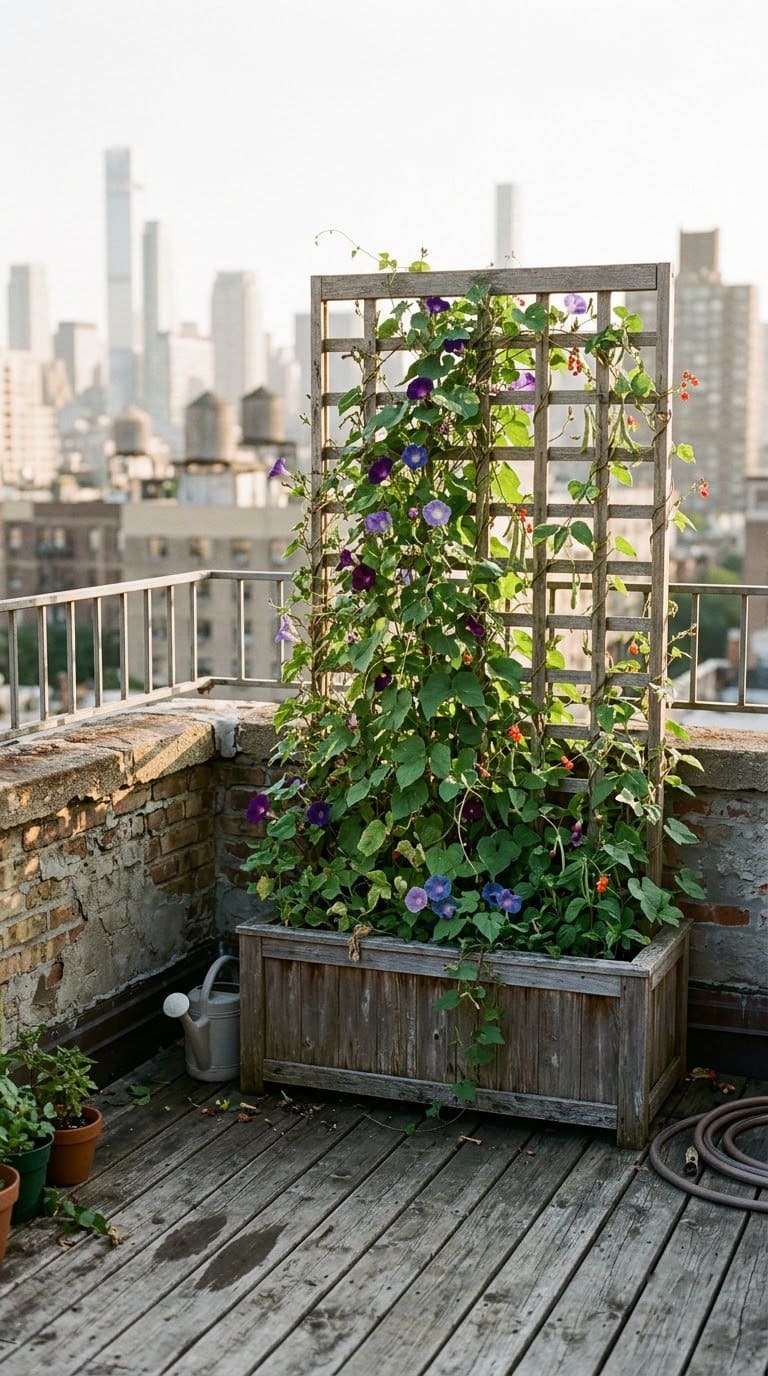
Lattice slows wind without fully blocking it. Use lattice panels about 4 to 6 feet tall, set in sturdy frames and weighted at the base. Those sizes are our own suggestion.
Plant climbers like beans or morning glory at the base. They fill the gaps and add privacy.
Anchor the frame to a rail or planter box. Never rely on weight alone.
Cost tier: low to medium. Check our shade cloth benefits for sun relief.
7. Ornamental Grass Troughs
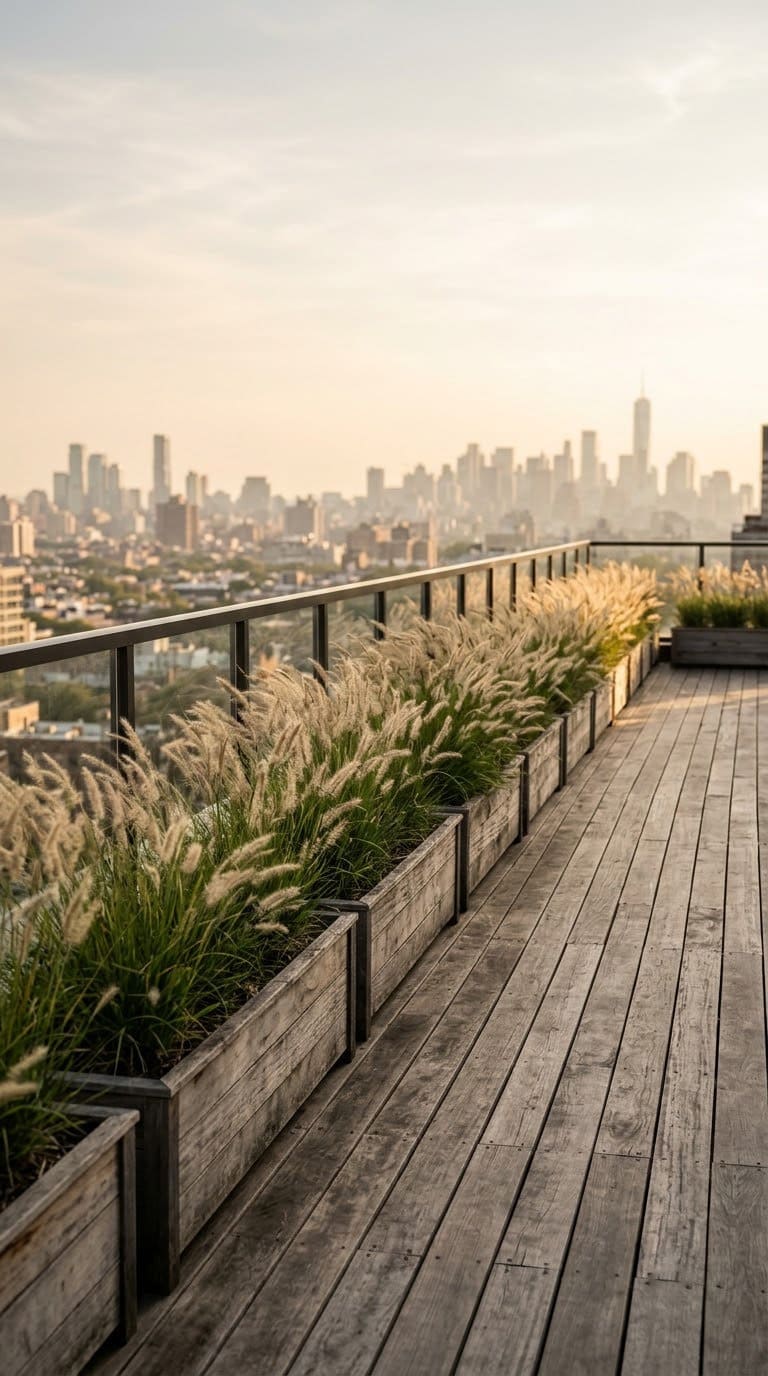
Grasses handle wind well and look soft. Plant them in long troughs placed away from the edge.
Choose clumping types for containers. Spreading bamboo can break a pot and escape. That’s general practice.
Cut them back in late winter. Use troughs with drainage holes and place them on risers.
Cost tier: low to medium. Great for privacy screens.
8. Built-In Bench With Planters
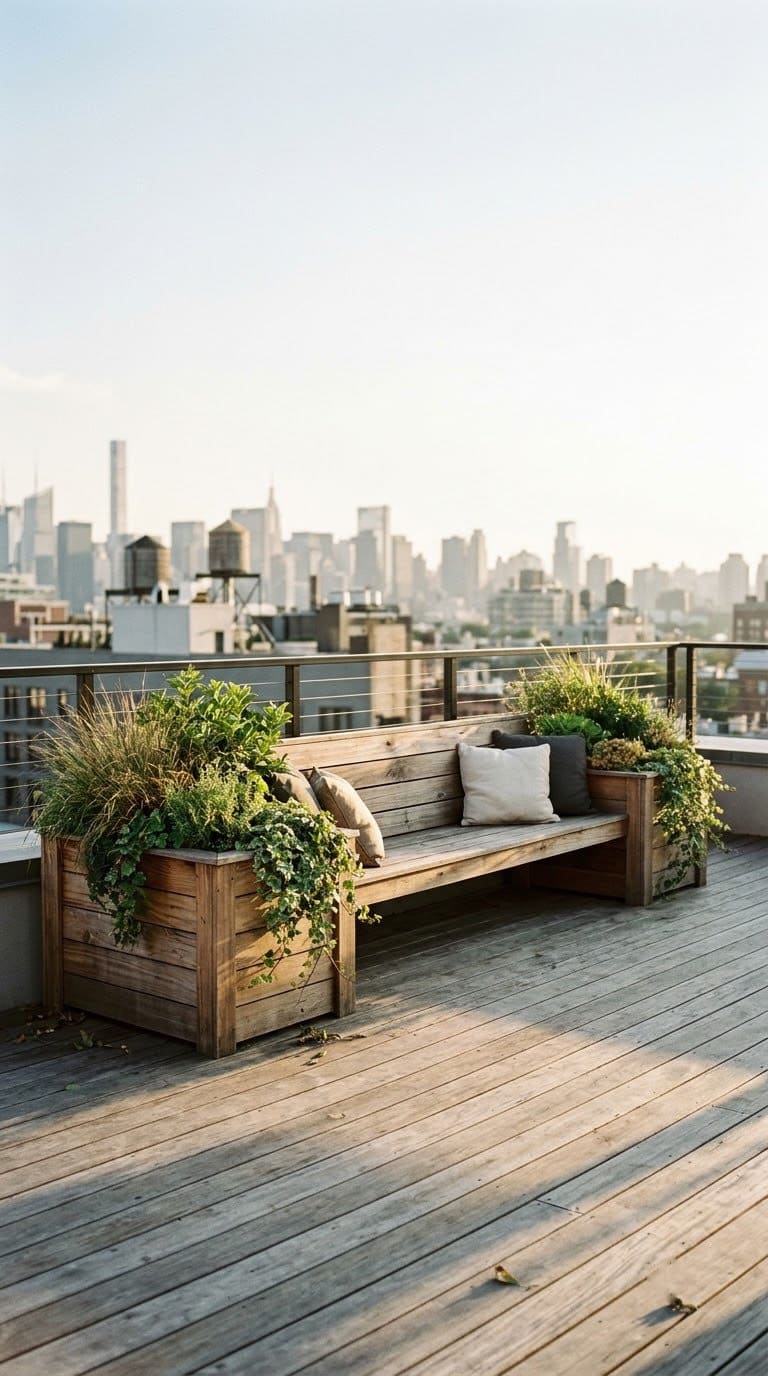
A bench with planter ends makes a corner seat. Keep the bench low and wide, with planters that sit on the roof deck, not on the bench.
Drill drainage holes in the planters. Line them to protect wood from soil.
Place it away from the roof edge. Anchor it so it can’t slide in wind.
Cost tier: medium. Sizes depend on your roof.
9. Shelf Herb Wall
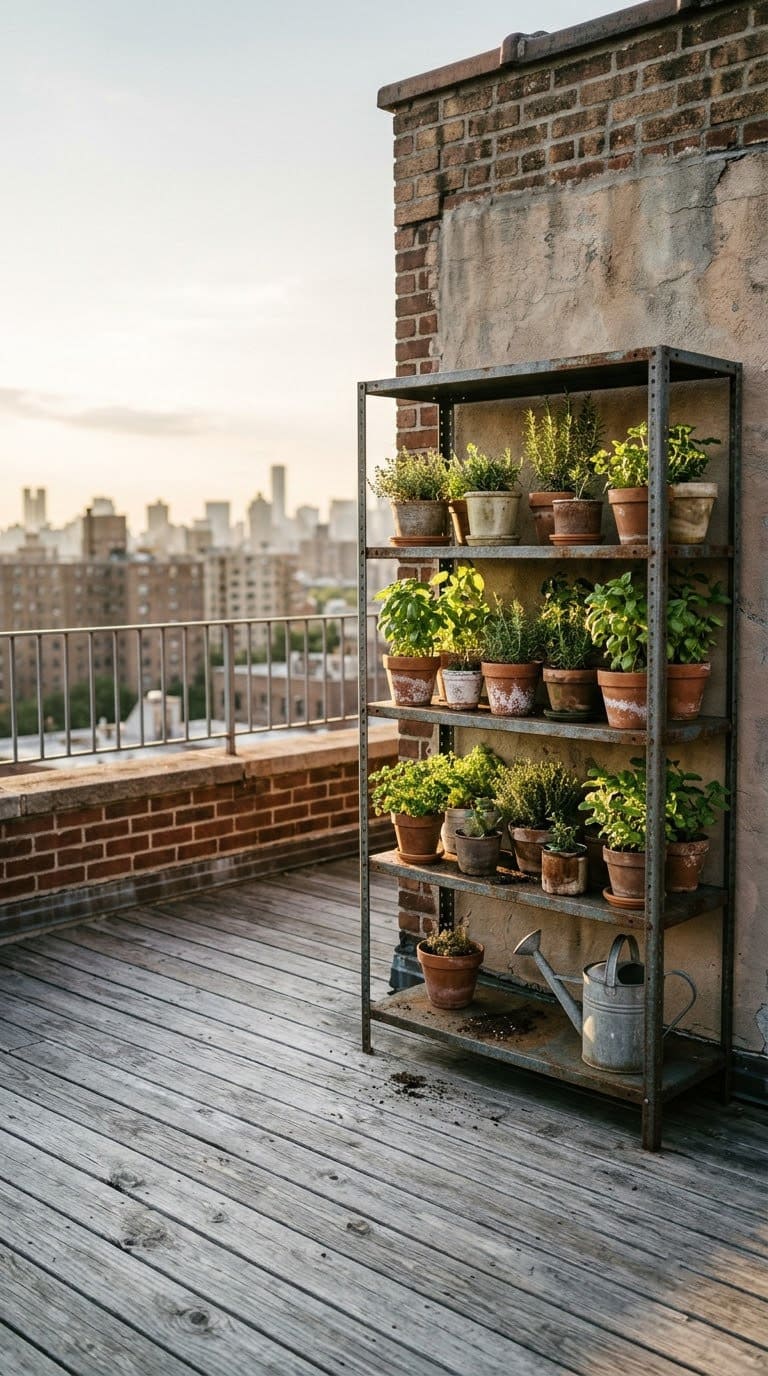
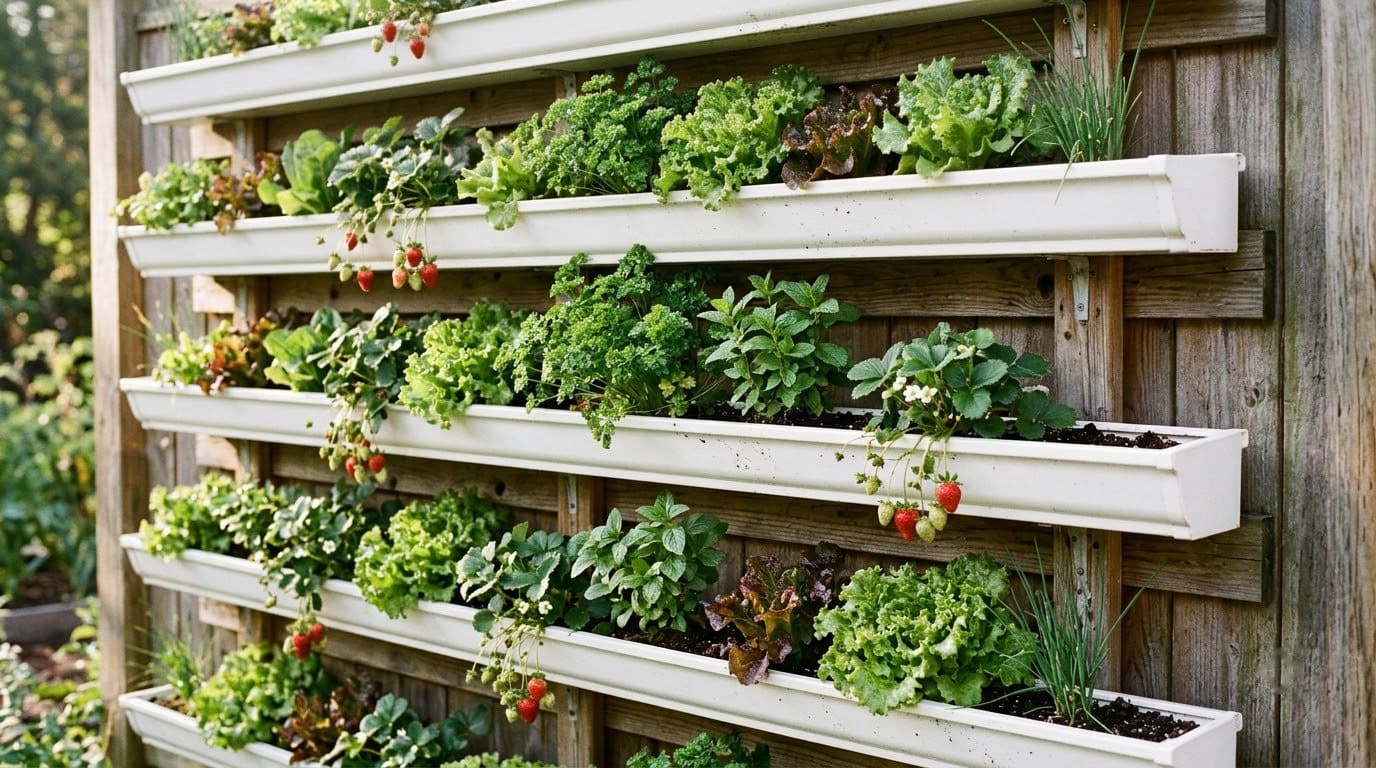
Use a shelf rack against a wall for herbs. Choose lightweight pots. Fasten the rack to the wall so wind can’t tip it.
Herbs like thyme and chives like sun and fast drainage. The University of Delaware lists both among green roof plants.
Keep the rack away from the edge. Water in the morning, since wind dries pots fast. Our container herb garden guide helps with plant choices.
Cost tier: low.
10. Small Bowl Fountain
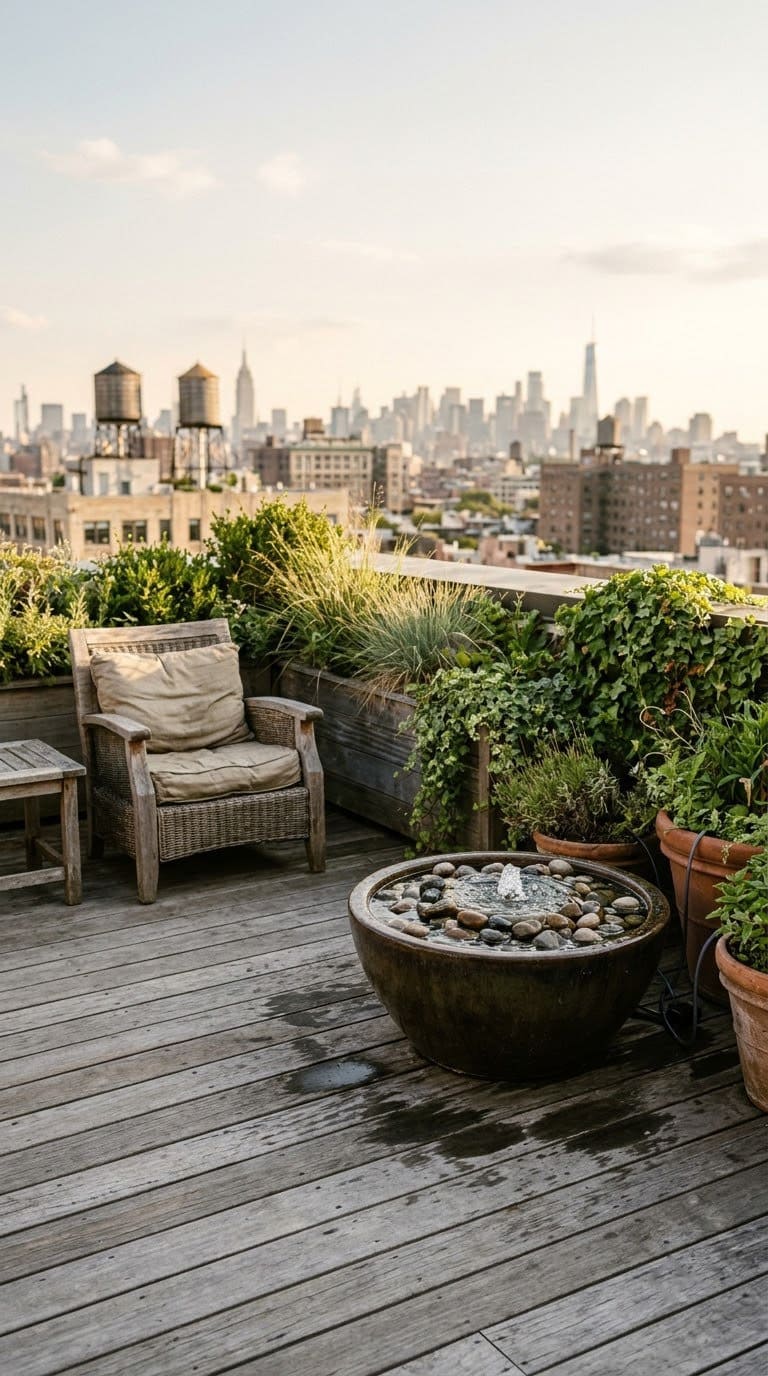
A small fountain adds sound that masks city noise. Use a bowl, not a large pond. Water is heavy at about 8.3 pounds per gallon.
Set it on a stable base over a load-bearing spot. Use a recirculating pump and keep the cord safe from water.
Empty it in freezing weather. Our garden fountain landscaping ideas show styles.
Cost tier: medium.
11. Pollinator Pocket
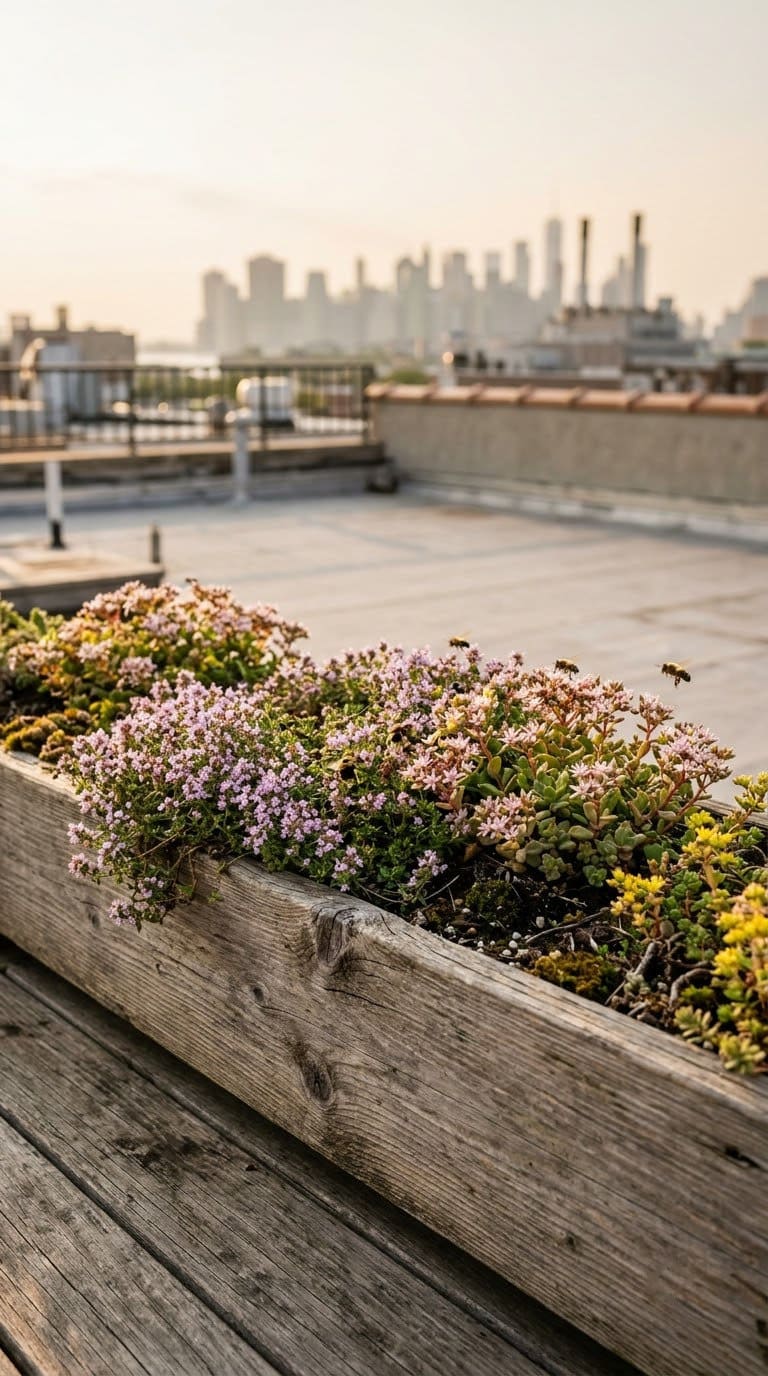
Delaware’s fact sheet notes that bees and other pollinators visit many green roof plants. Pack a trough with flowering sedum and thyme.
Choose drought-tolerant plants. Avoid pesticides. Keep the trough in full sun.
Even a single trough helps. Add a shallow water dish with stones for landing.
Cost tier: low.
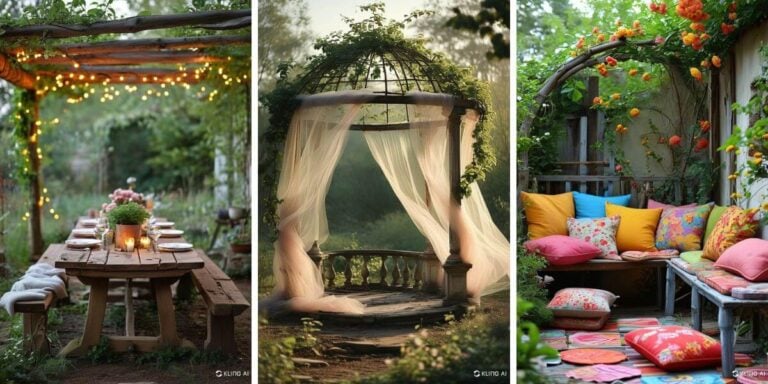
12. Dining Nook With String Lights
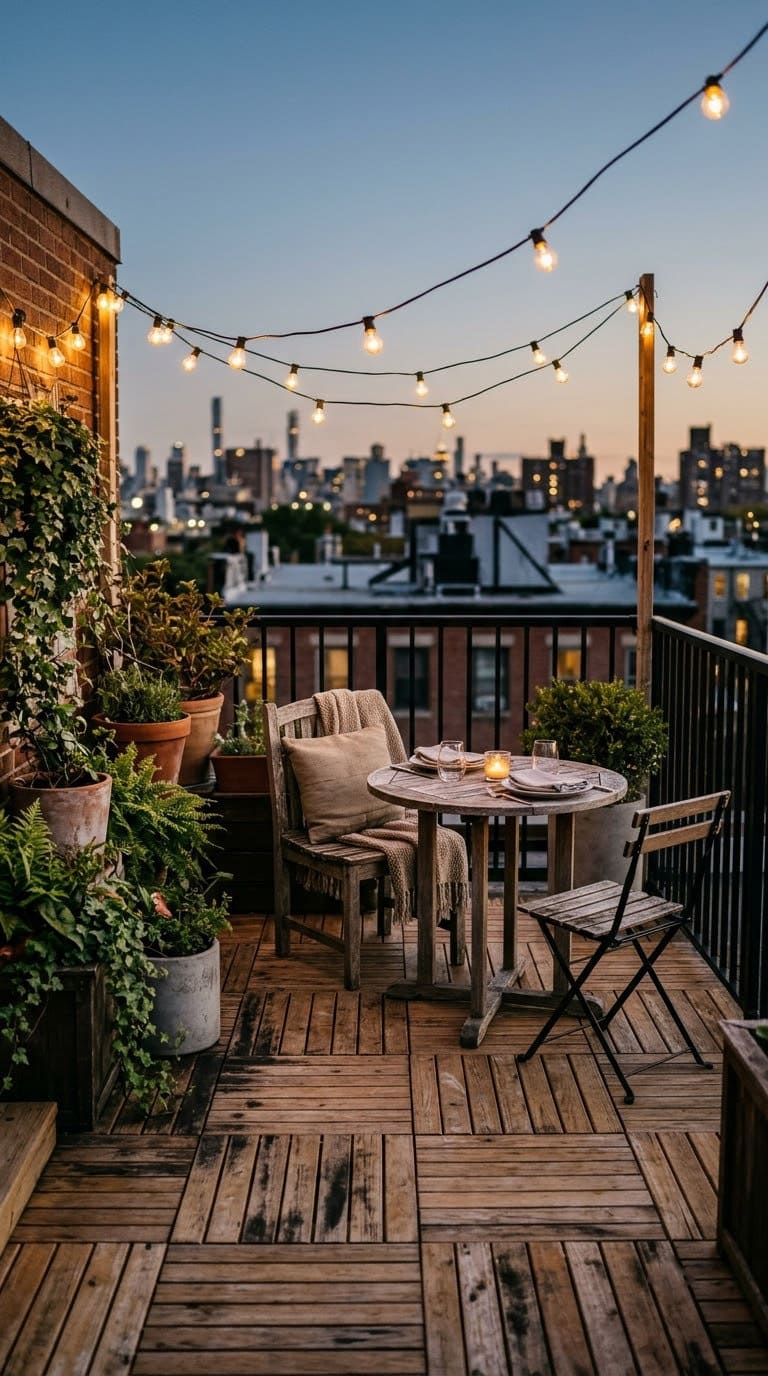
A nook turns the roof into a room. Use lightweight furniture and weight it or anchor it against wind. Keep chairs away from the edge.
Hang lights on posts that are anchored to the structure. Use outdoor-rated, low-voltage lights.
Add planters on one side as a screen. Our apartment patio decorating ideas have layout tips.
Cost tier: medium.
13. Rooftop Rain Barrel and Drip Line
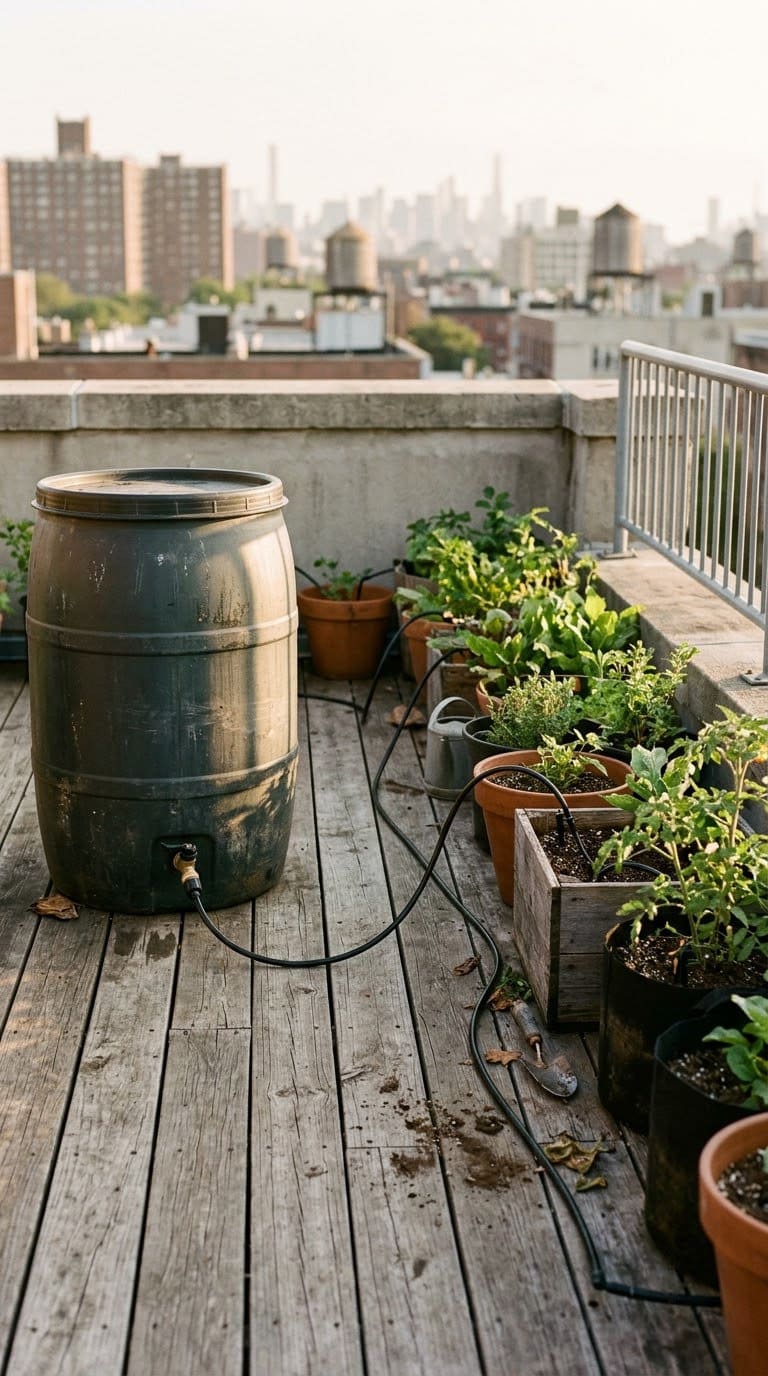
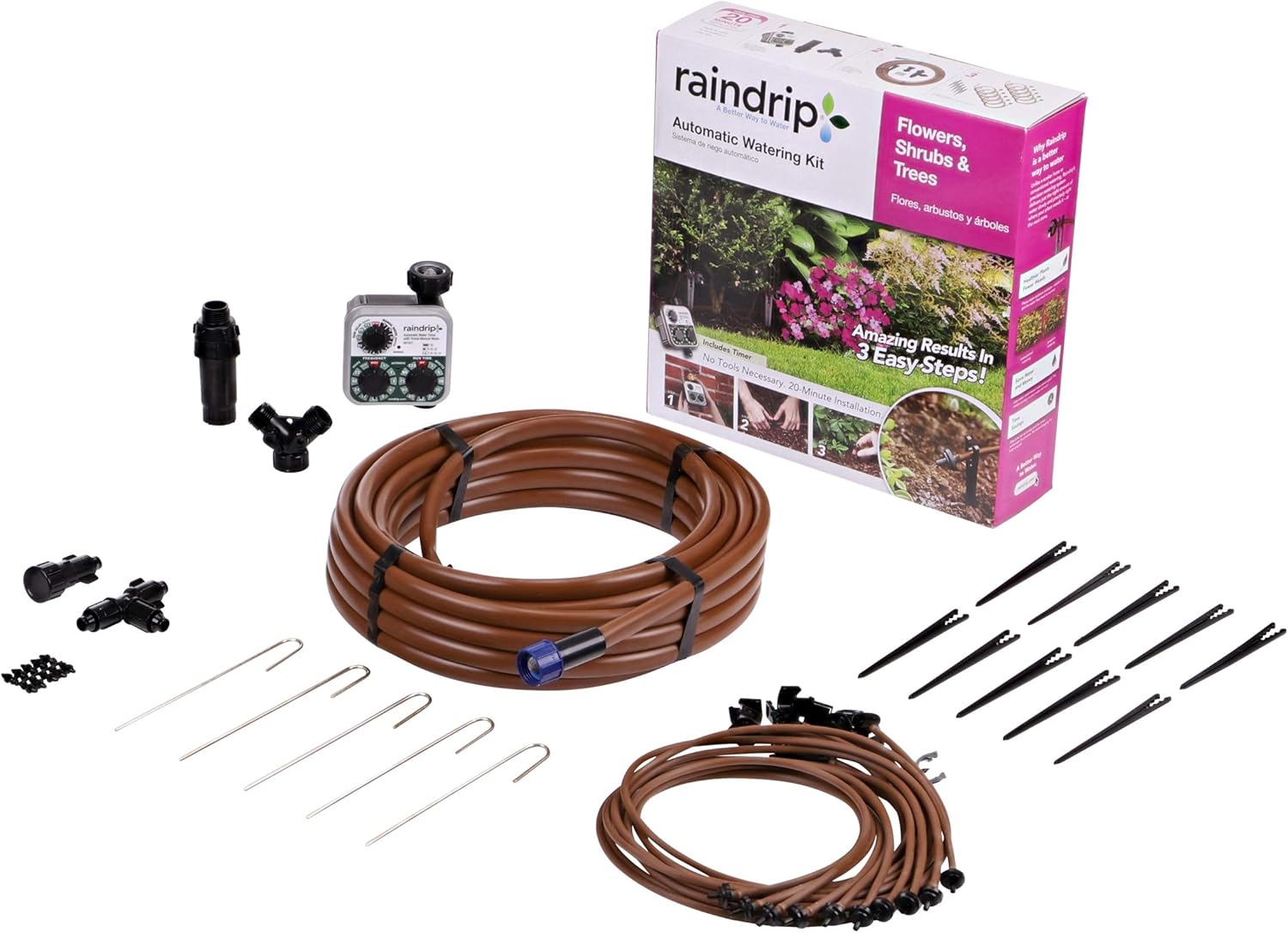
Hauling water is heavy work. Use a hose bib or a rain barrel with a drip line and timer. Check with the building before connecting.
Wind and sun dry pots quickly, so a timer saves plants. Water early in the day.
Keep tubing flat and secured so no one trips. Drain the system before freezing weather.
Cost tier: medium.
14. Minimalist Tokyo-Style Terrace
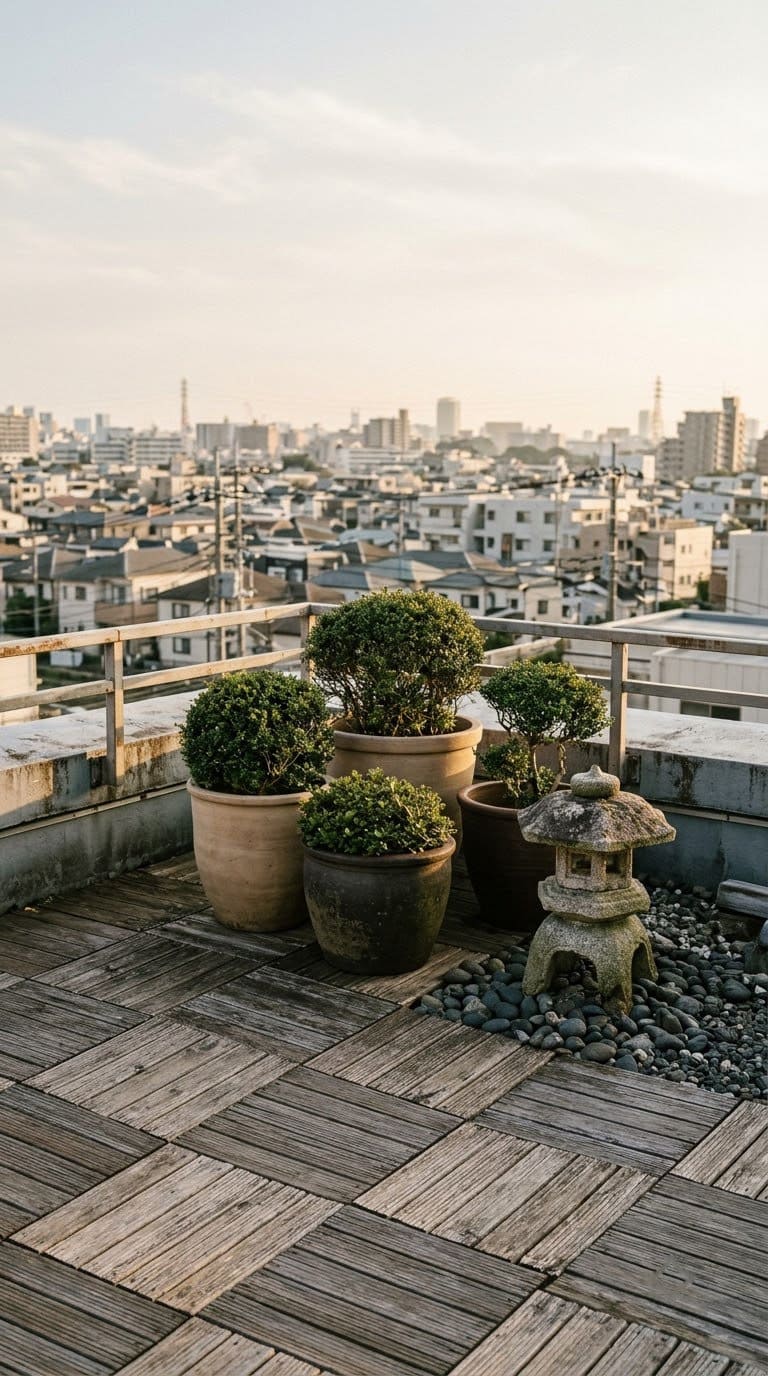
Less is more on a small roof. Use deck tiles, three or four large pots, and one focal piece. Leave open floor so the space feels calm.
Pick compact evergreens that handle wind. Keep pots on risers so water drains.
Skip heavy gravel and stone features. Weight is the enemy up here.
Cost tier: medium.
15. Vertical Trellis Wall Planting
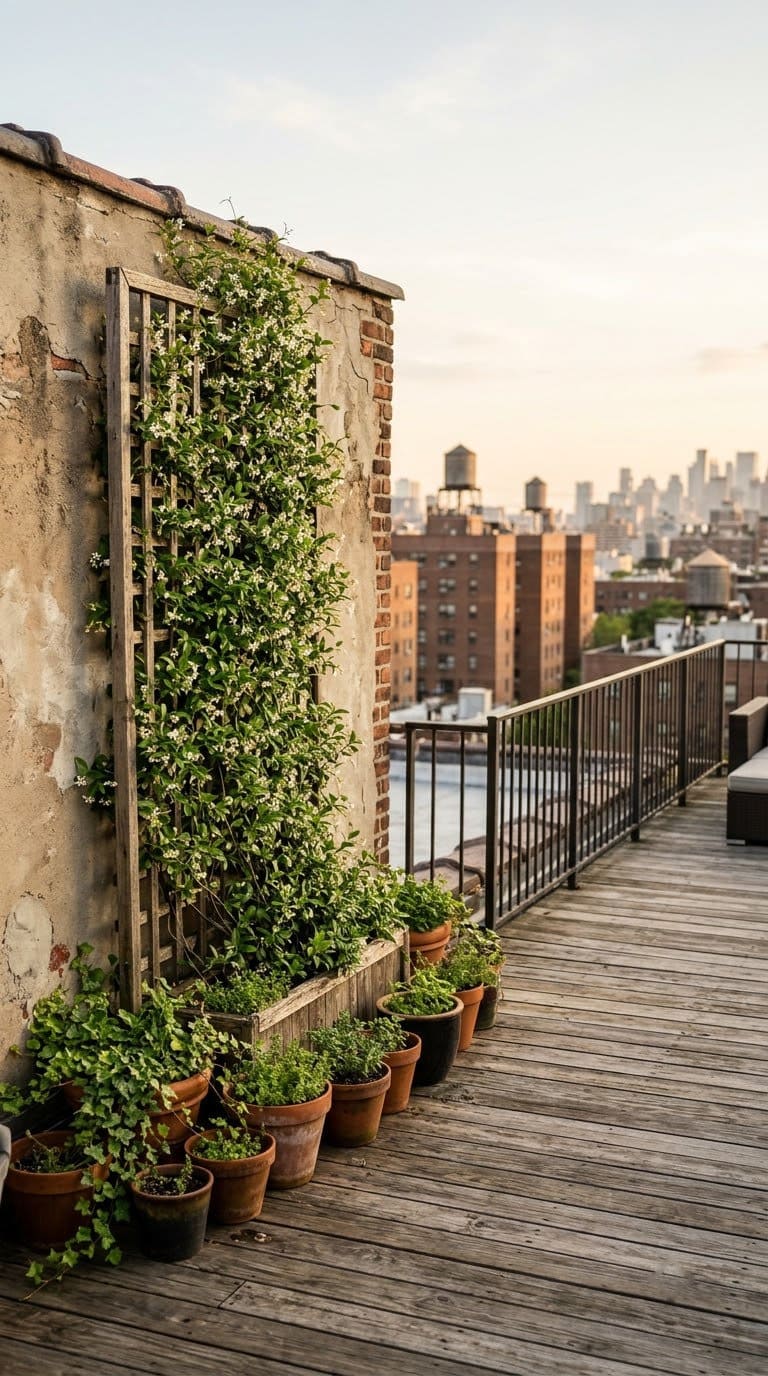
A trellis uses wall space instead of floor space. Fasten it into the wall studs or masonry, not just the roofing.
Use light pots and climbers like jasmine or clematis. Tie vines in as they grow.
Our vertical garden ideas have more options.
Cost tier: low.
What Plants Handle a Rooftop?
Roofs are hot, dry, and windy. Pick plants that shrug that off. Delaware’s fact sheet says green roof plants must be low, drought-tolerant, densely planted, and tough in heat, cold, and wind.
For pots, herbs like thyme, chives, and cilantro do well. Illinois Extension also lists basil, kale, chard, peppers, and radishes as good container crops.
For flowers and cover, try sedum, hens and chicks, and creeping thyme. Add a few tall grasses for movement.
Skip big, shallow-rooted plants with large leaves. Wind tears them up. Group plants with the same water needs, so one watering suits the whole pot cluster.
What Does a Weekend Setup Plan Look Like?
On Friday, check the rules and measure the roof. Mark the drains, the edges, and the load-bearing spots your engineer approved.
On Saturday morning, lay protection and place the deck tiles or risers. Keep every drain clear. Add the windscreen next, and anchor it.
On Saturday afternoon, bring up pots and soil in small loads. Fill the pots in place, since carrying full pots is hard and risky.
On Sunday, plant and set up water. Test the drip line, check for pooling, and watch the roof after the first watering.
How Do You Care for a Rooftop Garden?
Water more than you expect. Wind and sun dry pots fast. Check the soil each morning in hot weather.
Check drains often. Leaves and soil can clog roof drains and cause ponding. Clear them every month, and after every big storm, so water never pools.
Watch for leaks in the room below. A stain on the ceiling is your first clue. Tell your roofer right away.
Inspect the membrane. Lift a planter or tile each season and look for punctures, standing water, or stains. Report problems to your roofer.
Feed lightly. Use slow-release fertilizer. Heavy soil mixes stay wet, so choose light ones.
Trim dead stems each fall. Dry leaves blow around on a roof and block drains. Bag them and take them down.
Bring in light furniture before storms. Wind can toss a chair across a roof and over the edge. Tie down what you can’t move.
Common Mistakes to Avoid
Skipping the engineer is the first. Delaware’s fact sheet says deep green roofs need major engineering.
Putting heavy planters straight on the roof is the second. The roofing group advises a shield above the membrane against roots and punctures.
Using a solid wall for wind is the third. A solid barrier creates turbulence, so use open lattice.
Blocking drains is the fourth. Water must flow to the drains, so keep planters off them.
FAQ
Can my roof support a garden?
Only an engineer can answer that. Ask for the load in pounds per square foot and the limit for concentrated loads.
What is the lightest rooftop garden?
An extensive green roof is lightest. The EPA says extensive roofs use 2 to 4 inches of growing medium and need the least added structural support.
How big should pots be for vegetables?
University of Illinois Extension says tomatoes need at least 20 inches across, peppers more than 16 inches, and greens and herbs about 10 inches.
How do I protect the roof membrane?
The EPDM Roofing Association advises protection above the membrane, a drainage layer, and a root barrier.
Do I need a permit for a rooftop garden?
Possibly. Check building, fire, and zoning rules, plus landlord or HOA approval.
Never miss an update — choose FarmFoodFamily as your preferred source on Google.
How it works: Tap the button below to open Google's settings page, then check the box next to FarmFoodFamily.
Tap the checkbox to turn it blue — that's how you know it's set.



Very Beautiful and Informative Roof Garden Ideas, thanks for sharing such a interesting article.