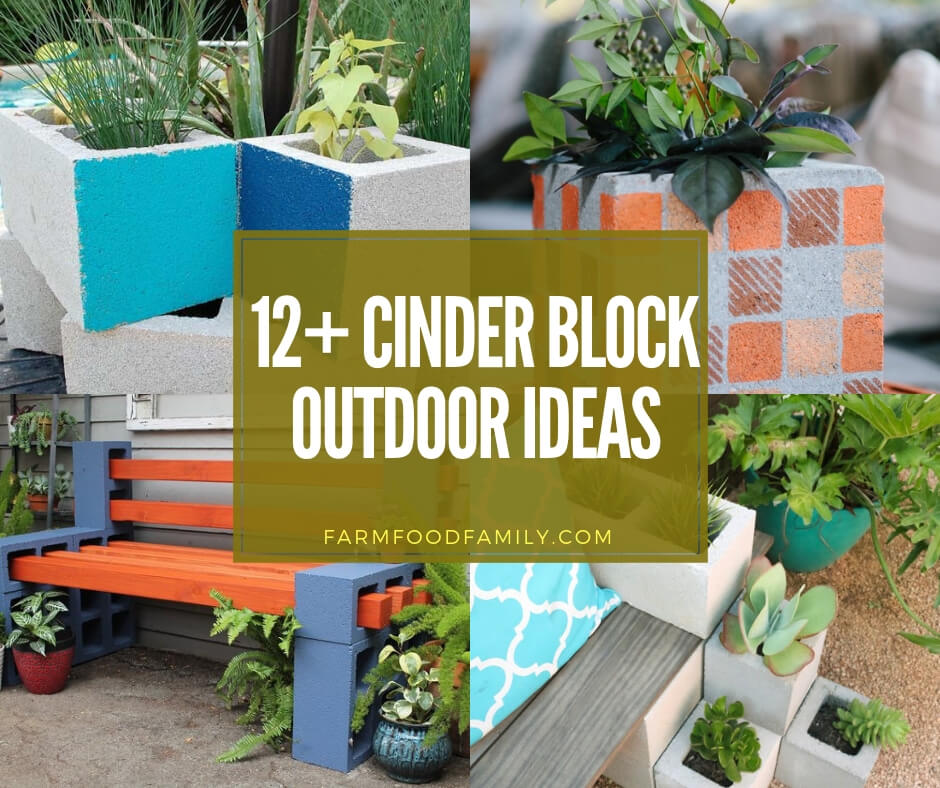
17+ Creative Cinder Block Outdoor Ideas
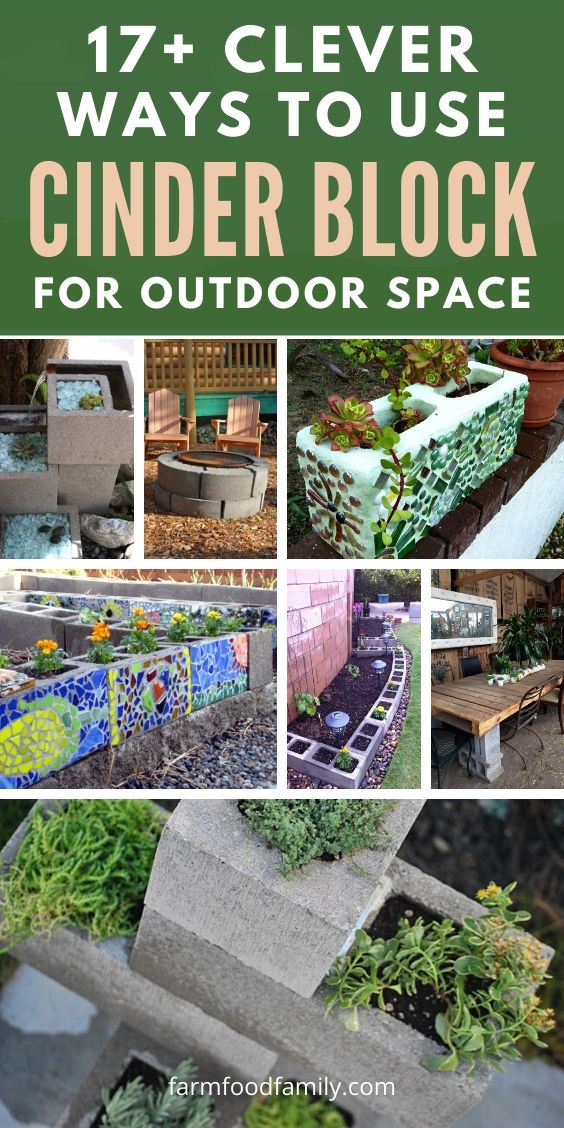
Cinder blocks are cheap, modular, and genuinely versatile outdoors, tables, planters, benches, garden beds, even a fire pit if you build it right. Below are 17 real ways to use them, plus an honest answer to the question most guides either dodge or overclaim: is it actually safe to grow vegetables in them? 1. Simple…

Never miss an update — choose FarmFoodFamily as your preferred source on Google.
How it works: Tap the button below to open Google’s settings page, then check the box next to FarmFoodFamily.
Tap the checkbox to turn it blue — that’s how you know it’s set.
Cinder blocks are cheap, modular, and genuinely versatile outdoors, tables, planters, benches, garden beds, even a fire pit if you build it right.
Below are 17 real ways to use them, plus an honest answer to the question most guides either dodge or overclaim: is it actually safe to grow vegetables in them?
1. Simple Cinder Block Potting Table


Cinder blocks make a sturdy, adjustable-height potting table: pass planks of wood through the holes and raise the surface to whatever height suits you.
Answer 4 quick questions and get matched to the exact fix for your yard — drainage, budget, layout, or something else entirely.
Take the Free QuizSix blocks in one arrangement, two on each end and two in the middle, gives you a firmer table and a larger potting surface than a two-block setup.
2. Raised Garden Bed Using Cinder Blocks
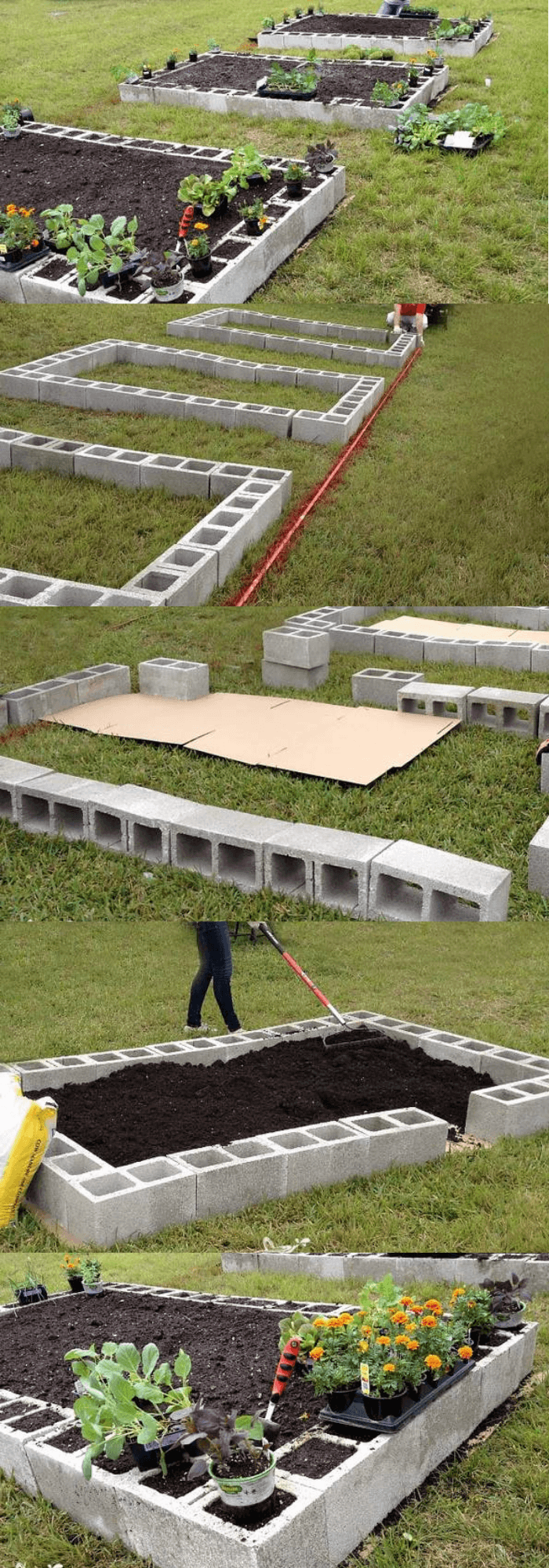
Cinder blocks raise a garden bed off the ground, useful if you don’t want the garden bleeding into your lawn, or if you’re growing something that needs different soil than what’s naturally in that spot.
Raising the bed also helps prevent cross-contamination between your garden soil and the surrounding ground, and the same approach works well on a porch or terrace for a small kitchen garden.
3. DIY Cinder Block Planter
Most yard problems trace back to one specific, fixable cause. Find yours in 4 quick questions.
Take the Free Quiz
Water-based, ultra-low VOC polymer sealer for concrete and masonry — the exact mitigation covered above if you want to grow food in cinder blocks with less uncertainty
Shop NowThis post contains affiliate links. We may earn a commission on qualifying purchases at no extra cost to you.
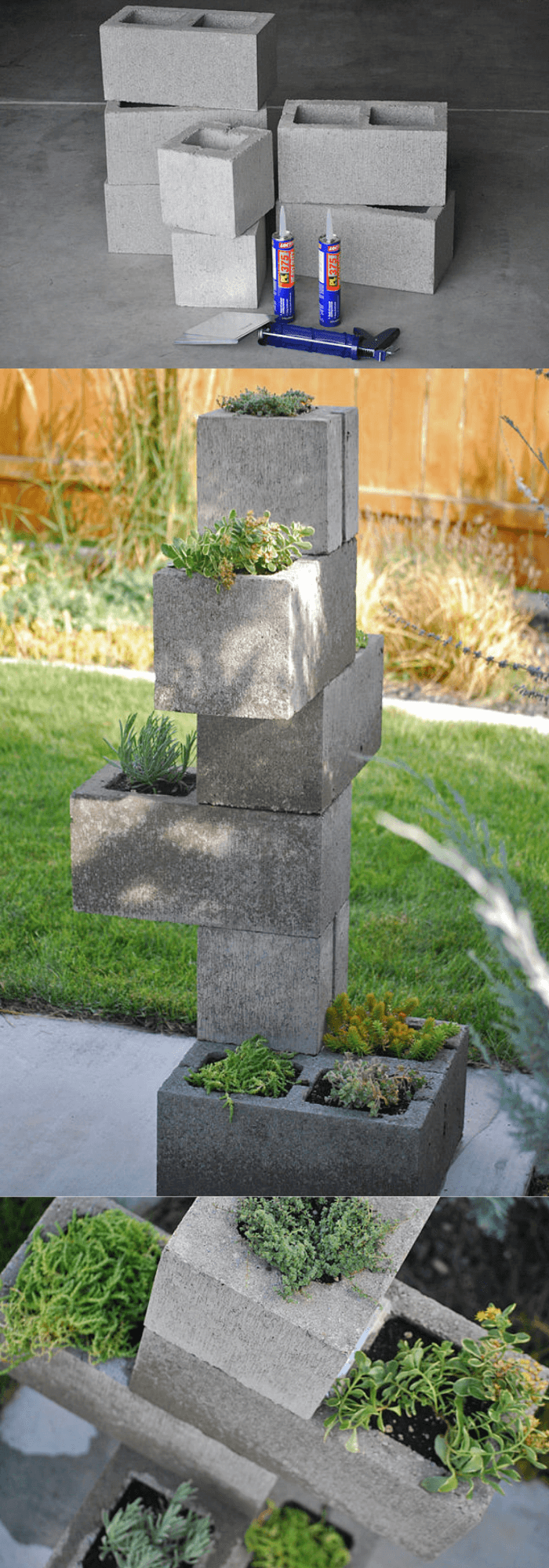
Beyond supporting a raised bed, cinder blocks make planters on their own. Line the interior of each block with plastic sheeting, fill it about three-quarters full with soil, transplant your seedlings, and water.
Arrange multiple blocks in whatever pattern suits your space to grow a real variety of plants side by side.
4. Building Concrete Block Raised Garden Bed
A full raised bed built from stacked concrete blocks, rather than a single row, gives you real depth for root vegetables and an easier working height so you’re not bending to ground level.
Stack blocks two or three courses high, staggering the joints like brickwork for stability, and consider adding rebar through the block cavities every third block if the ground has any slope, a real detail worth doing at build time rather than after the wall starts to lean.
5. DIY Concrete Vases

Concrete vases are a genuinely fun small DIY project: rapid-setting cement, plastic containers in two sizes (one nested inside the other), cooking spray, and a mixing bucket are all you need.
The average homeowner spends $616/year on yard fixes that don't address the real problem. Find out what yours actually is — before you spend another dollar.
Take the Free QuizMix the cement per the package instructions, spray the inside of the larger container, pour in a base layer, spray the outside of the smaller container, nest it into the cement, and fill around it to your desired height.
Let it fully set before separating the containers, and you’ve got a custom-shaped concrete vase ready for a plant.
6. Concrete block raised bed with eggplants and marigolds

Pairing a food crop with a companion flower in the same cinder block bed does double duty: marigolds planted alongside eggplants are a well-known companion-planting combination, since marigolds are believed to help deter some common garden pests, while their bright color makes an otherwise utilitarian block bed look intentional rather than purely functional.
Fill the block cavities themselves with marigolds as a border planting, and use the main bed space for the eggplants.
7. DIY Succulent Outdoor Bench
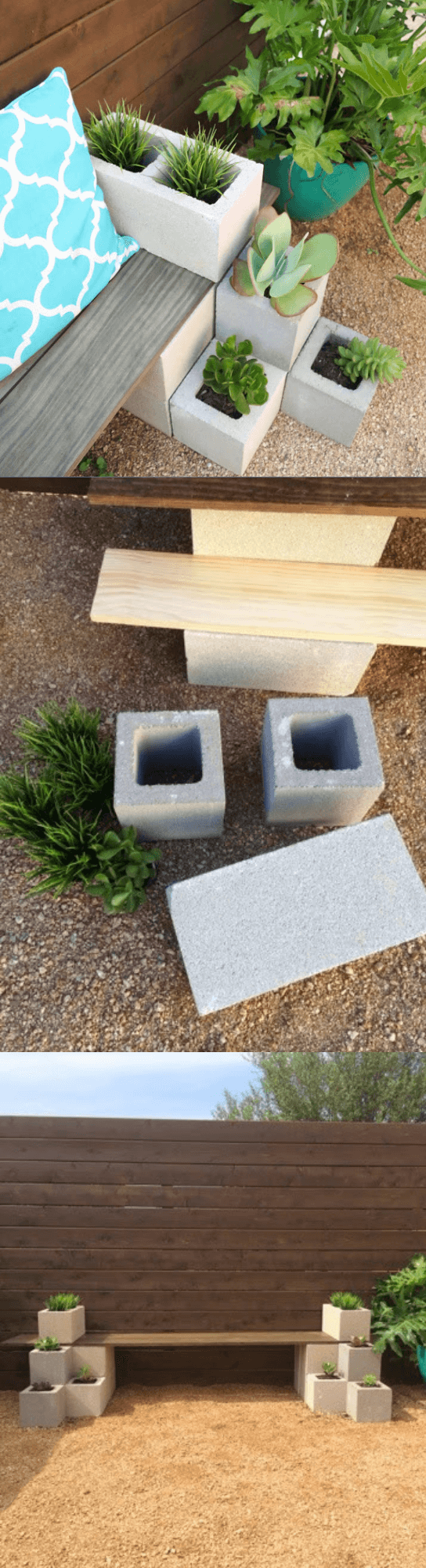
The same build method as the potting table works for a bench: place cinder blocks on the ground as a base, add a plank on top for the seat, and use additional cinder-block planters as armrests.
Aloe vera and cacti are a natural fit for the armrest planters, since they tolerate the reflected heat off concrete better than more delicate succulents would.
8. Simple Cinder Block Outdoor Bench

For a more minimal bench, two stacked pairs of blocks (one at each end) topped with a single long plank is all you need, no armrest planters required.
This is the cheapest bench option on this list, realistically two to four blocks and one board, and it holds up outdoors far better than most untreated wood furniture would on its own.
9. Cinder block raised beds for herb garden
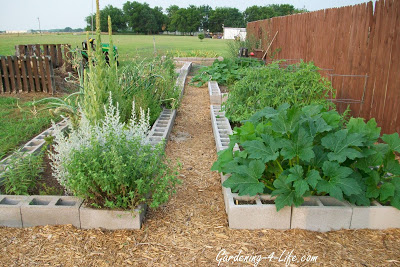
Herbs are one of the best-suited crops for a cinder-block bed layout, since most kitchen herbs (thyme, rosemary, oregano, sage) actually prefer the well-draining, slightly warmer soil conditions a raised concrete bed creates.
Plant the block cavities themselves with low, compact herbs like thyme or oregano as a living border, and use the main bed space for taller herbs like rosemary or basil.
If you want more herb-specific layout ideas beyond the block format, this herb garden roundup covers other indoor and outdoor approaches worth comparing.
10. How to make a cinder block bench for less than $30

A genuinely budget build: four to six standard cinder blocks (often $1.50-$3 each depending on your area) plus a single pressure-treated 2×8 or 2×10 board for the seat covers the whole project for well under $30 in most regions.
Stack two blocks at each end (three if you want extra height), lay the board across the top, and you have a stable, weatherproof bench in under an hour with no fasteners required, the board’s own weight holds it in place.
11. Stenciled Cinder block Pool Umbrella Weight and Planter

A cinder block filled with quick-set concrete makes a genuinely heavy, stable umbrella base for a pool deck or patio table, sturdier than most store-bought plastic weights, and stenciling a simple pattern or color onto the exposed block face turns a purely functional object into a small decorative accent instead of an eyesore next to your seating area.
Leave the top few inches of the block cavity unfilled and plant a small trailing succulent there for a planter that does double duty as ballast.
12. Gopher-proof raised garden bed
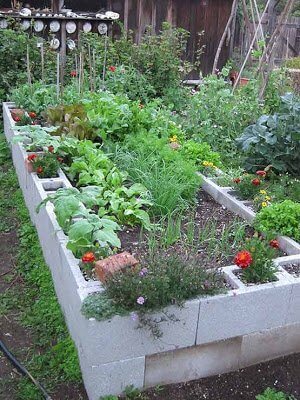
If gophers or other burrowing pests are a real problem in your area, line the bottom of a cinder-block bed with galvanized hardware cloth (a fine metal mesh) before adding soil, stapled or wired to the block edges so it can’t be pushed aside from below.
The solid block walls themselves already stop most burrowing entry from the sides; the mesh liner closes off the one path gophers actually use, digging up from underneath.
13. Using cinder blocks for planters and border

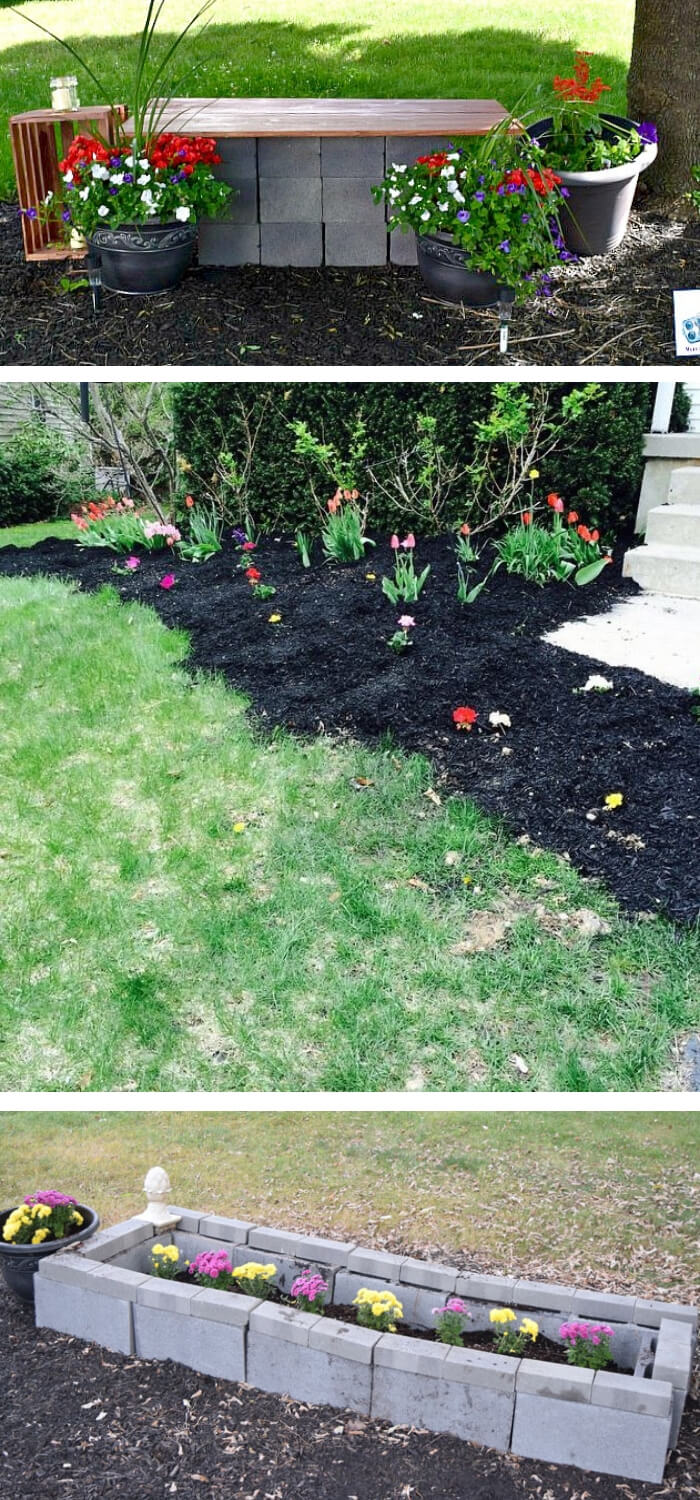
Cinder blocks laid end-to-end (not stacked) make a low, simple border that doubles as a narrow planter strip, useful for edging a walkway or defining the border between lawn and garden bed without the cost or labor of a full raised bed.
Fill the block cavities with a single trailing plant type (creeping thyme or a low sedum both work well) for a clean, repeating visual pattern along the whole border length.
14. Mosaic cinder block planters
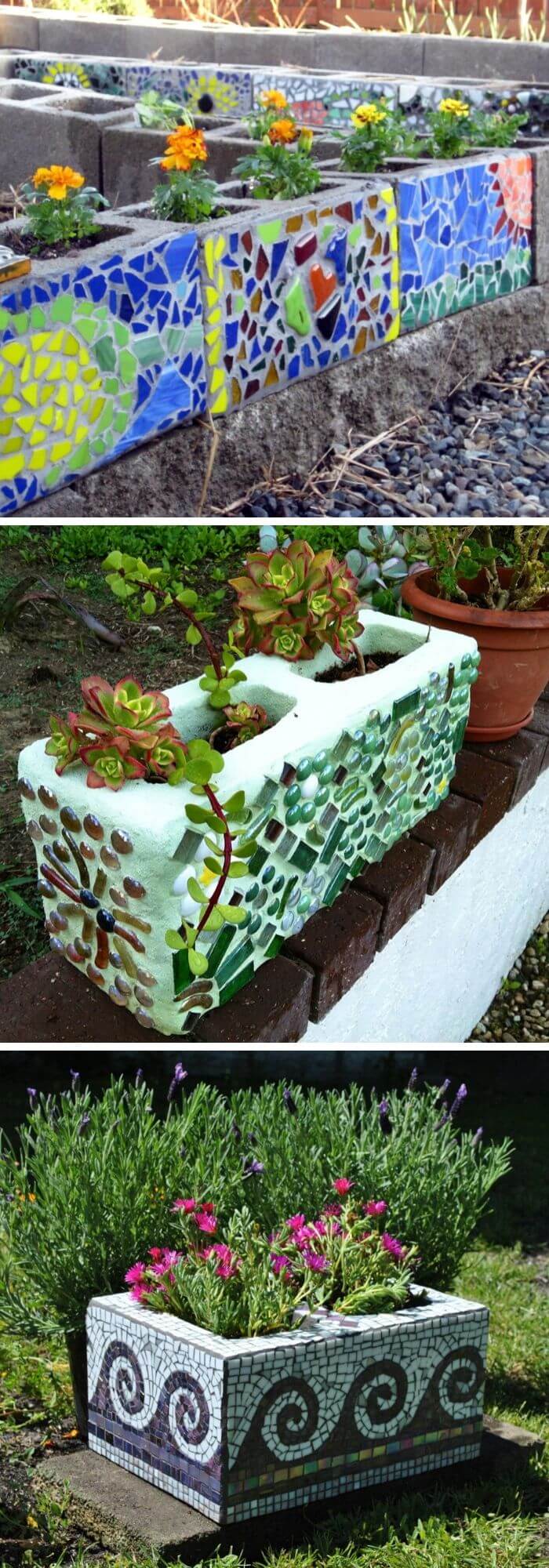
Covering the exposed face of a cinder block planter with broken tile, glass, or ceramic pieces set in thinset mortar turns a purely utilitarian object into a real garden art piece.
This works especially well on the larger flat faces of a block used as a standalone planter (rather than a full wall), since you get more visible surface area per block to decorate.
Seal the finished mosaic with a masonry sealer once the mortar cures to protect it from weather and keep grout lines from staining.
15. Cinder block dining table

A full outdoor dining table built on cinder-block legs, similar to the potting table in idea #1 but scaled up and finished with a proper tabletop (a stained or sealed wood slab, or a poured concrete top for a fully weatherproof surface), gives you genuine outdoor dining furniture for a fraction of a store-bought table’s cost.
Four to six blocks split between two end supports, spaced to match your tabletop’s length, is the same basic structure as the potting table idea, just built for a finished tabletop rather than bare planks.
16. Cinder block fire pit
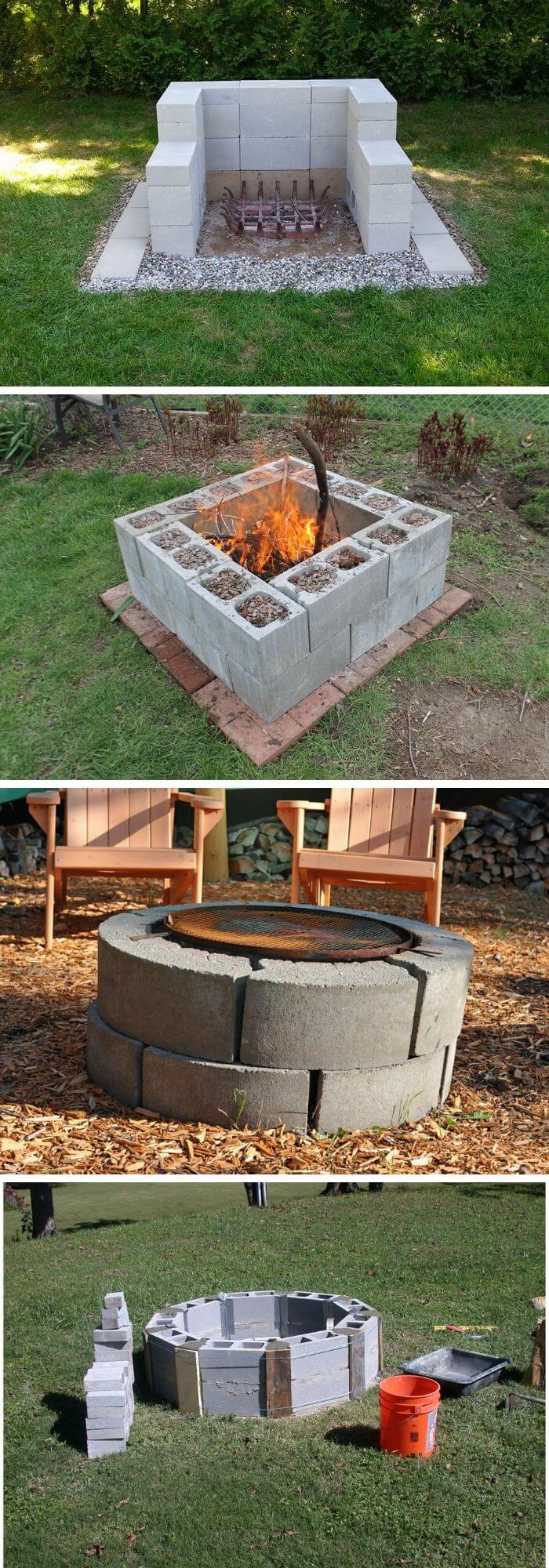
A ring of cinder or concrete blocks looks like an obvious, cheap fire pit, but this is the one idea on this list with a real, physical safety mechanism worth understanding before you light anything in it.
Concrete and cinder block are porous, and any moisture trapped in those pores turns to steam once the block heats up.
If the block can vent that steam fast enough, nothing happens beyond normal wear; if it can’t, pressure builds inside the block until it cracks, spalls (throws off small chunks), or in rare, well-documented cases fails more violently.
This isn’t a reason to avoid cinder block outdoors generally, it’s specific to direct, sustained flame contact. The safer approach: don’t build the actual fire-holding ring out of bare cinder block.
Use a metal fire ring or liner on the inside, with cinder or concrete block only as the outer, non-flame-contact decorative wall, or use real fire brick (rated for direct flame exposure) for the inner ring instead.
If you already have an existing bare cinder-block fire pit, avoid very large or prolonged fires in it and inspect the blocks periodically for cracking. For more design options built with this in mind, these brick fire pit ideas and stone fire pit ideas use materials rated for direct flame contact from the start.
17. Cinder block waterfall
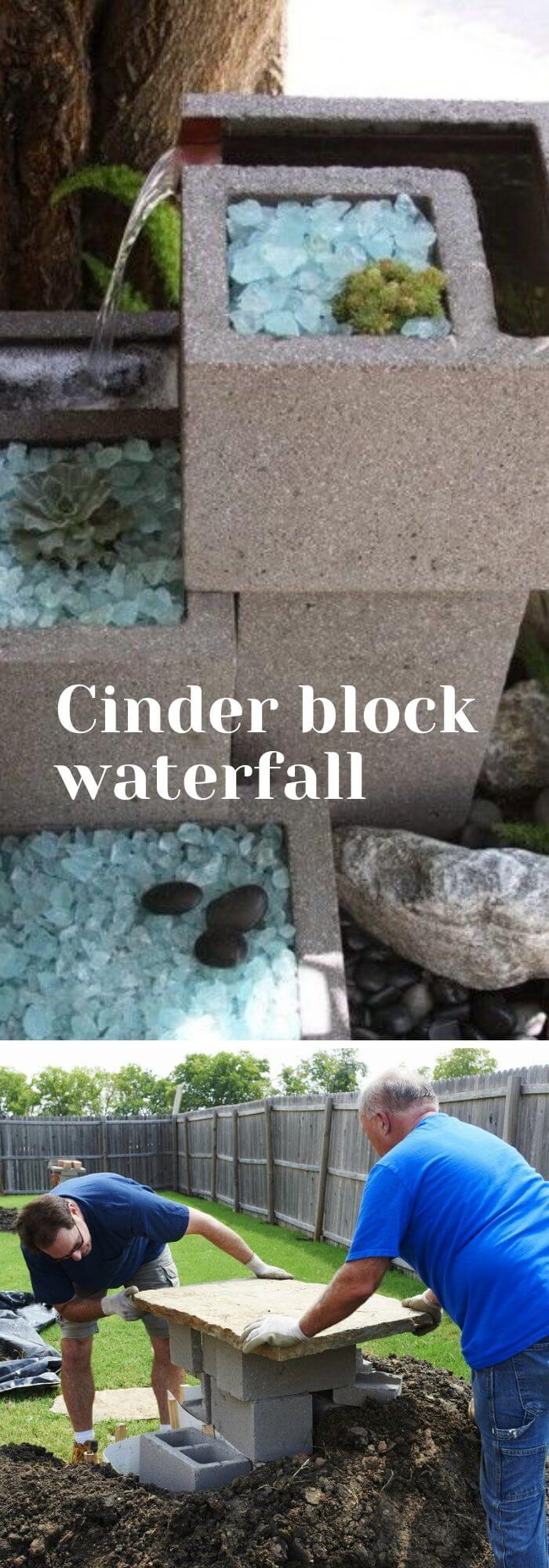
A tiered cinder-block structure, blocks stacked in a stepped pattern with a small recirculating pump pushing water up to the top tier, makes a genuinely inexpensive water feature compared to a manufactured waterfall kit.
Line the water-contact surfaces with pond liner or a waterproof sealant, since block itself isn’t watertight, and stagger the block placement so water cascades visibly from tier to tier rather than running straight down one face.
Is It Actually Safe to Grow Vegetables in Cinder Blocks?
This deserves a more honest answer than a flat yes or no, since it’s a real, ongoing debate, not a settled question.
What cinder block actually is. Cinder block, concrete block, and cement block are all made from cement and a fine aggregate like sand or crushed stone. Some block, particularly older or lower-cost product, also includes fly ash, a byproduct of burning coal that can contain heavy metals and other compounds you wouldn’t want leaching into food-growing soil.
The honest problem: nobody can tell you for certain which is which. According to University of Maryland Extension’s guidance on raised bed materials, manufacturers don’t label exactly what aggregate went into a given block, and there isn’t conclusive research proving real-world leaching danger to food crops either way. That’s genuinely different from saying it’s proven safe, it means the honest answer is “we don’t have the data to rule it out,” not “not only safe.”
What real gardeners actually do about it. Opinion in the gardening community is genuinely split, not uniformly alarmed and not uniformly comfortable. A widely-upvoted gardening forum thread put the cautious view plainly: heavy metals and fly ash are exactly why some gardeners restrict cinder block to ornamental plantings and skip it for anything they’ll eat. Other gardeners read the same warnings and built cinder-block vegetable beds anyway, deciding the unproven risk was acceptable for the cost and convenience. Both are reasonable positions given the actual state of the evidence.
A real, practical middle ground. If you want the structure and price of cinder block without the uncertainty, UMD Extension’s own suggestion is to seal the interior of the blocks with a polymer masonry paint or sealant before filling with soil, a real, inexpensive mitigation that creates a barrier between the block material and your growing soil without giving up the material entirely.
The bottom line: if you’re growing ornamentals, this likely isn’t worth worrying about. If you’re growing food you plan to eat and the uncertainty bothers you, either seal the blocks first or use a different material (wood, metal, or a lined bed) for that specific bed, and reserve cinder block for the ornamental plantings, benches, and hardscape ideas above where the question doesn’t apply.
FAQs
Can you grow tomatoes in cinder blocks? Yes, structurally, cinder blocks give tomatoes plenty of root room and genuinely good drainage thanks to the material’s porous nature, which reduces waterlogging risk. Whether to grow food crops specifically in cinder block at all is the separate, real question addressed above, worth reading before you commit a whole tomato bed to the material.
What are the downsides of cinder block raised beds, beyond the food-safety question? Long-term use can leave indentations in the ground underneath, and removing blocks after they’ve sat on a lawn for a while often leaves yellowed, unhealthy grass patches where they were. The material’s porous nature, the same property that helps drainage, also means it can allow some seepage of fertilizer or other chemicals you add to the surrounding soil, not just the block’s own composition.
How much does a cinder block cost? Individual blocks typically run $1.50 to $3 each depending on your region and the block’s size and finish, so a small bench (4-6 blocks) can cost under $30, while a full raised-bed wall gets more expensive fast: one real documented build used 120 blocks across 70 feet of wall perimeter for a total materials cost of $300-350, useful context if you’re planning something on that scale rather than a single small project.
Conclusion
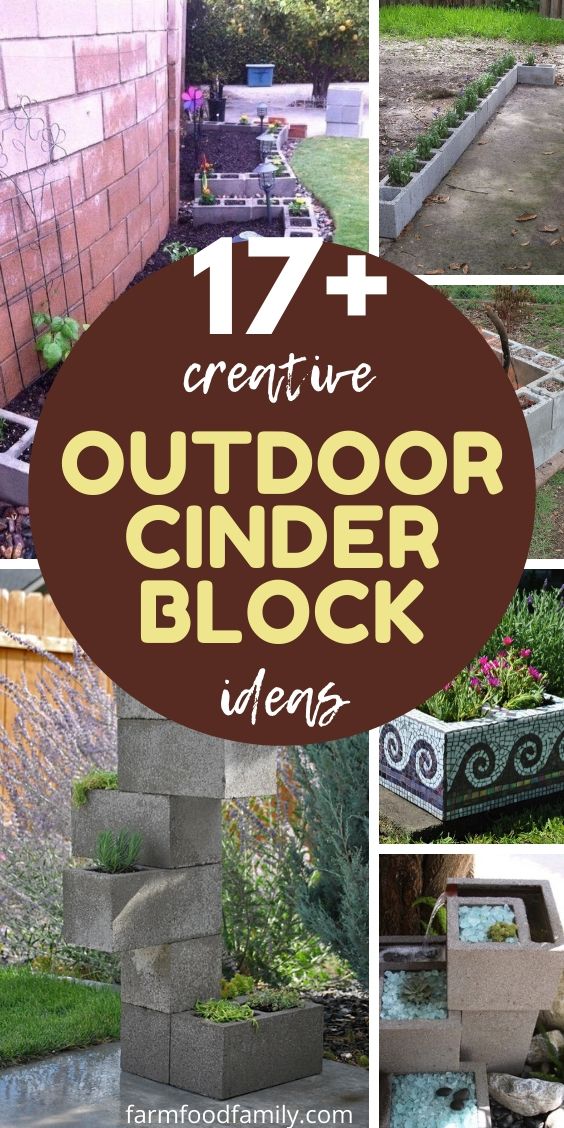
Cinder blocks are truly multi-use materials. Why not try the ideas mentioned above and spruce your home this coming season.
Products We Recommend
This post contains affiliate links. We may earn a commission on qualifying purchases at no extra cost to you.
Seal-Once Nano+Poly Concrete & Masonry Penetrating Sealer
Water-based, ultra-low VOC polymer sealer for concrete and masonry — the exact mitigation covered above if you want to grow food in cinder blocks with less uncertainty
Shop Now
Sunnydaze Steel Fire Pit Ring Insert, 30in Inner Diameter
Heavy-duty steel fire ring liner for above or in-ground use — the safer flame-contact solution idea #16's fire pit guidance recommends over bare cinder block
Shop Now
Amagabeli Galvanized Hardware Cloth, 1/2in Mesh
Hot-dipped galvanized welded wire mesh for lining raised bed bottoms — matches idea #12's gopher-proofing guidance
Shop NowNever miss an update — choose FarmFoodFamily as your preferred source on Google.
How it works: Tap the button below to open Google's settings page, then check the box next to FarmFoodFamily.
Tap the checkbox to turn it blue — that's how you know it's set.