20+ Creative & Funny Garden Sign Ideas (Plus How to Make One That Actually Survives Outside)
My neighbor made a beautiful hand-lettered garden sign a few summers ago, propped it up by her tomato bed, and by the following spring the whole thing had cupped and split down the middle. She’d sealed the front with a nice glossy coat and never touched the back, honestly an easy thing to miss if…

Never miss an update — choose FarmFoodFamily as your preferred source on Google.
How it works: Tap the button below to open Google’s settings page, then check the box next to FarmFoodFamily.
Tap the checkbox to turn it blue — that’s how you know it’s set.
My neighbor made a beautiful hand-lettered garden sign a few summers ago, propped it up by her tomato bed, and by the following spring the whole thing had cupped and split down the middle.
She’d sealed the front with a nice glossy coat and never touched the back, honestly an easy thing to miss if nobody tells you. Water got in from behind, and that was that.
Almost every garden sign tutorial online shows you the pretty finished photo and skips the one detail that actually determines whether the thing survives a single winter.
Making a sign that actually survives outside
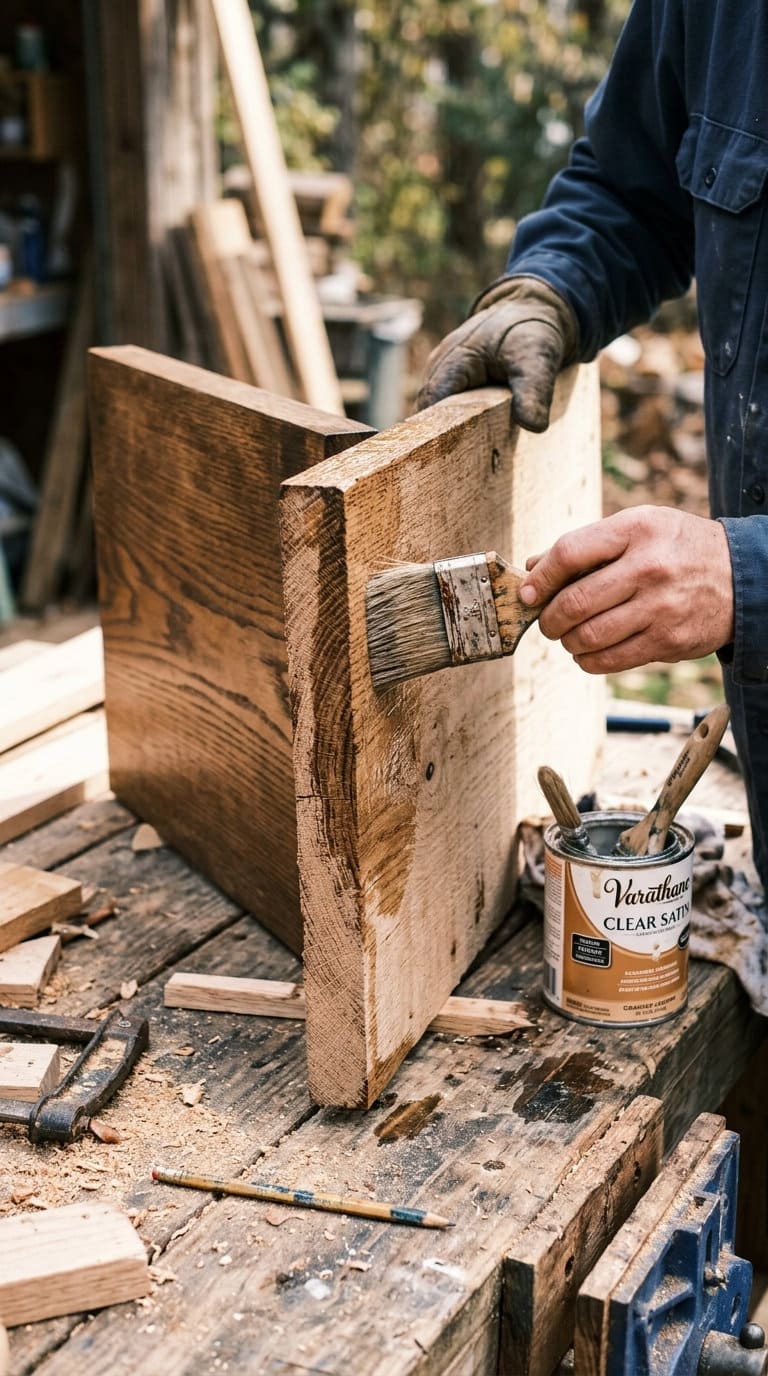
Seal every surface, not just the front. The face gets all the attention because it’s the part people photograph, but moisture gets into unsealed wood from the back and the edges just as easily as from the top, and once it’s in, the sign cups, splits, or rots from the inside while the painted face still looks fine for a while. But the fix is simple: two coats of an exterior-rated polyurethane sealant, applied to the front, back, and every edge.
Polyurethane holds up longest. Polycrylic yellows less over time if you’re working with light-colored or raw wood you want to stay light.

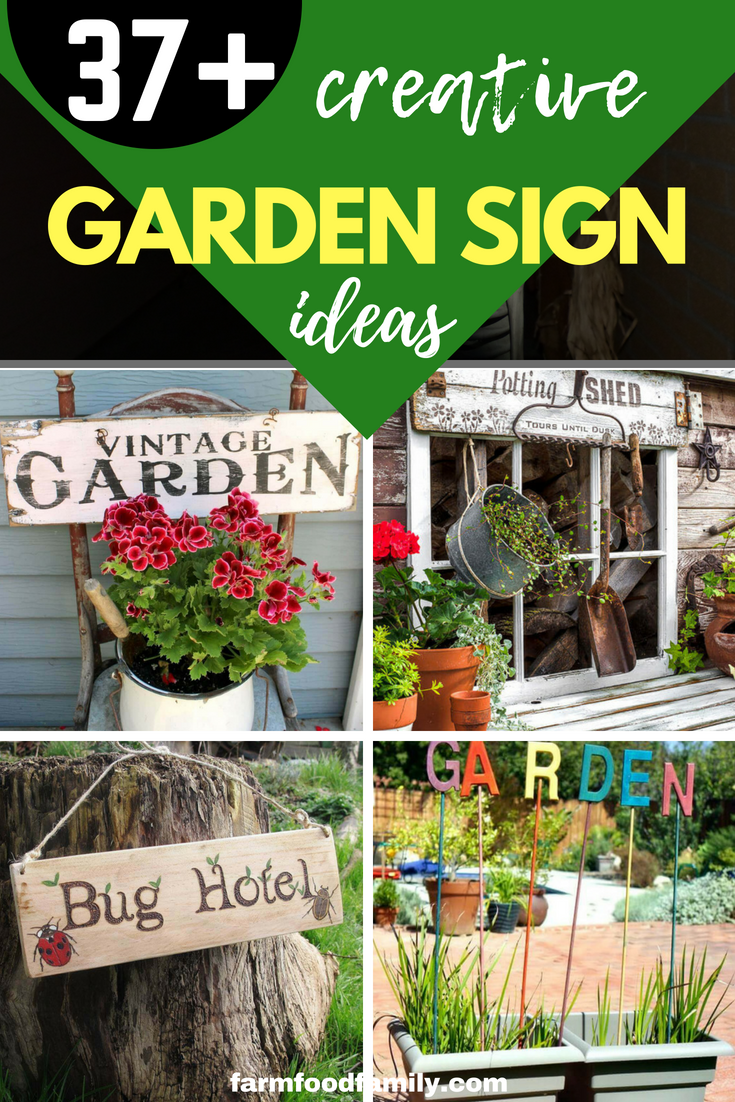
20 DIY garden sign ideas
Funny and pun garden signs
Humor signs are genuinely the most-requested style, and they cost nothing but paint and a little nerve.
Answer 4 quick questions and get matched to the exact fix for your yard — drainage, budget, layout, or something else entirely.
Take the Free Quiz1. “Weeds are just plants with a marketing problem”
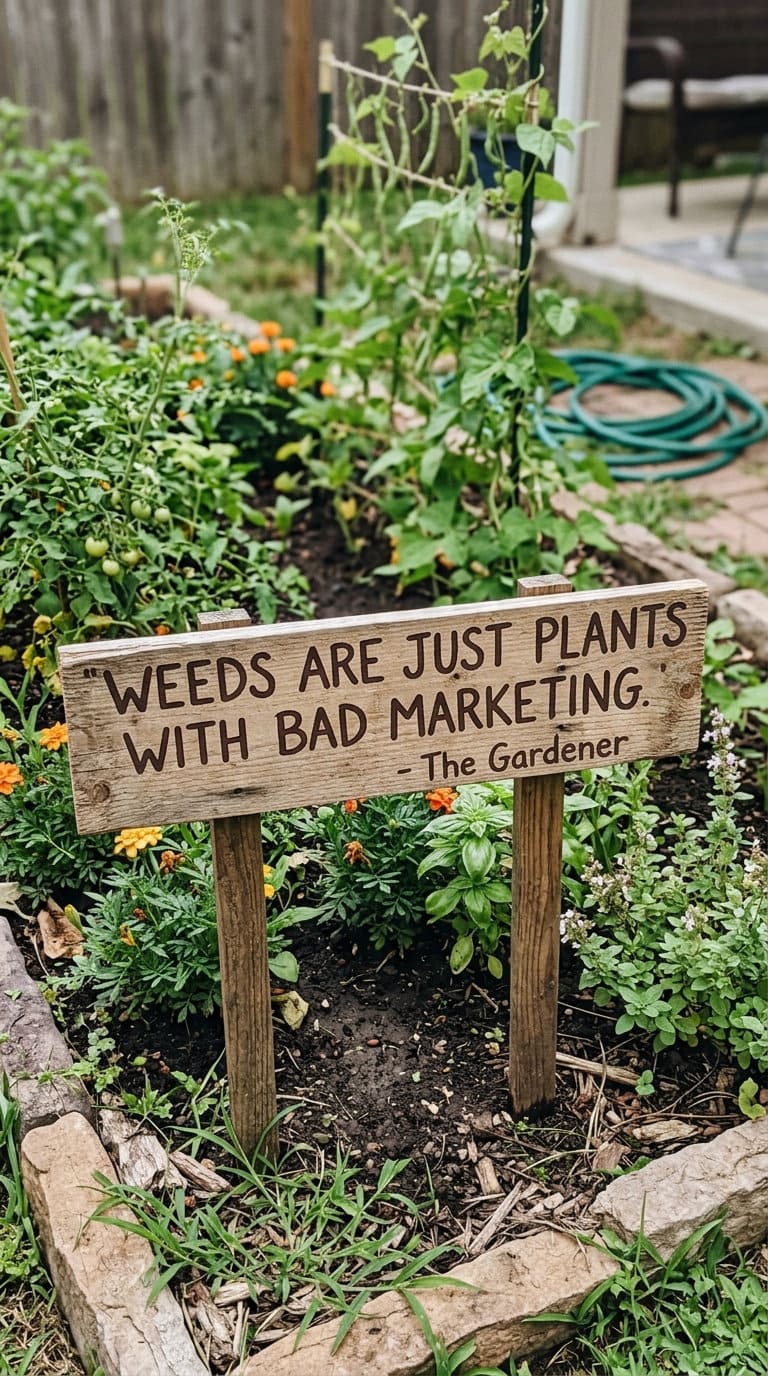
Paint this across a simple horizontal board in a relaxed hand-lettered font. It works especially well staked right next to an actual weed patch you’ve given up on, the joke lands harder with the visual evidence right there.
2. “This garden is protected by a very judgmental cat”
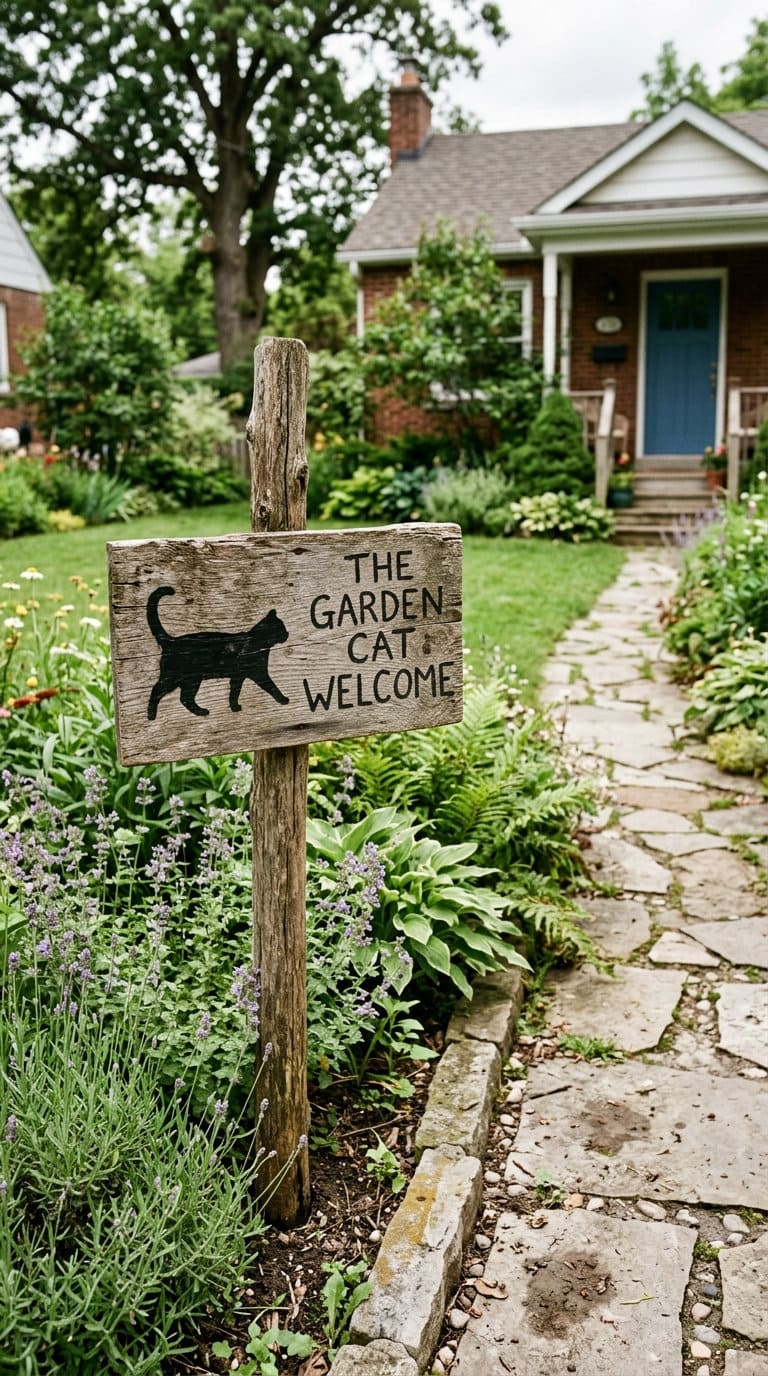
Pair the text with a simple silhouette cutout or stencil of a sitting cat.
This one works well near a front walkway where visitors will actually stop and read it, rather than tucked into a back bed nobody passes.
3. “Free compost advice, ask the guy talking to his tomatoes”
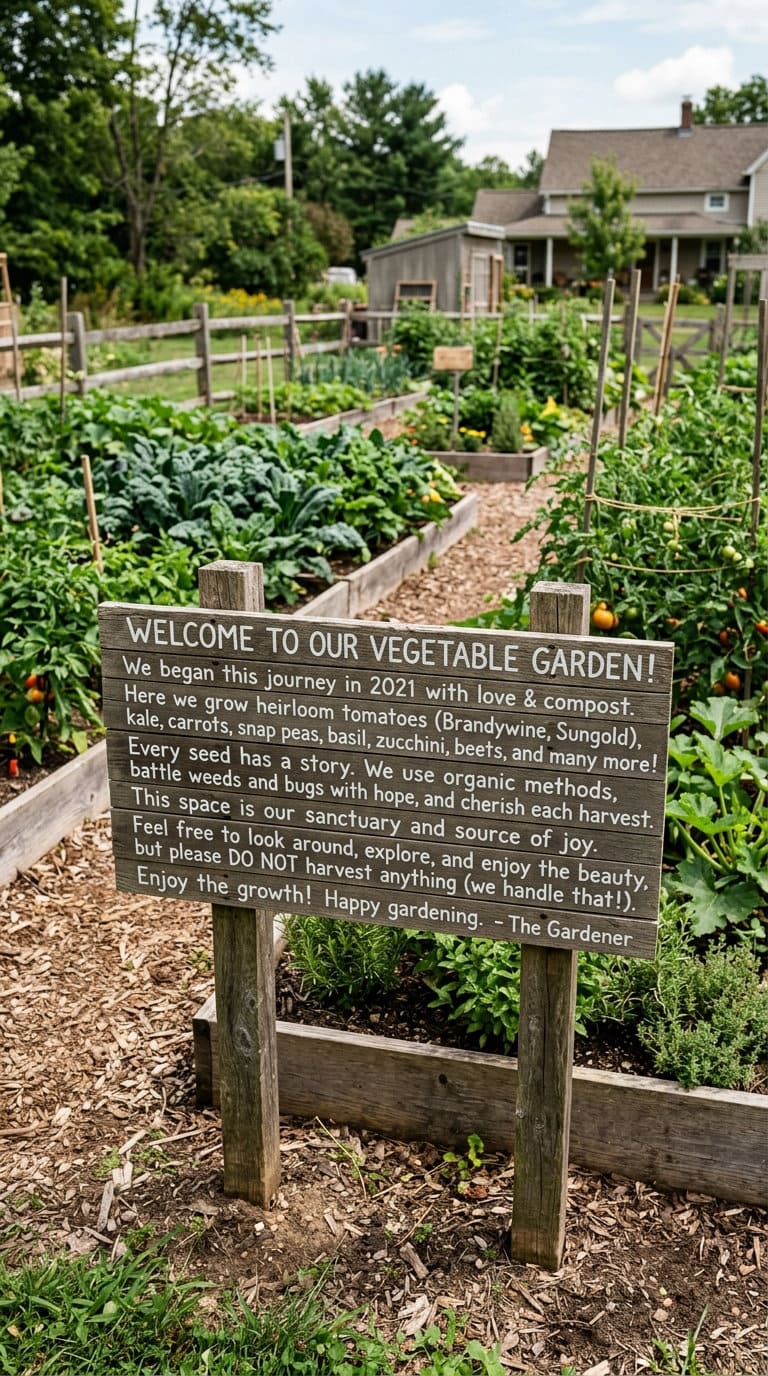
A longer, story-style sign like this reads best on a wider board with smaller lettering, since it’s meant to be read up close rather than glanced at from the street. Great for a vegetable garden specifically, where the joke is self-aware rather than generic.
4. “Slug crossing, proceed with caution”
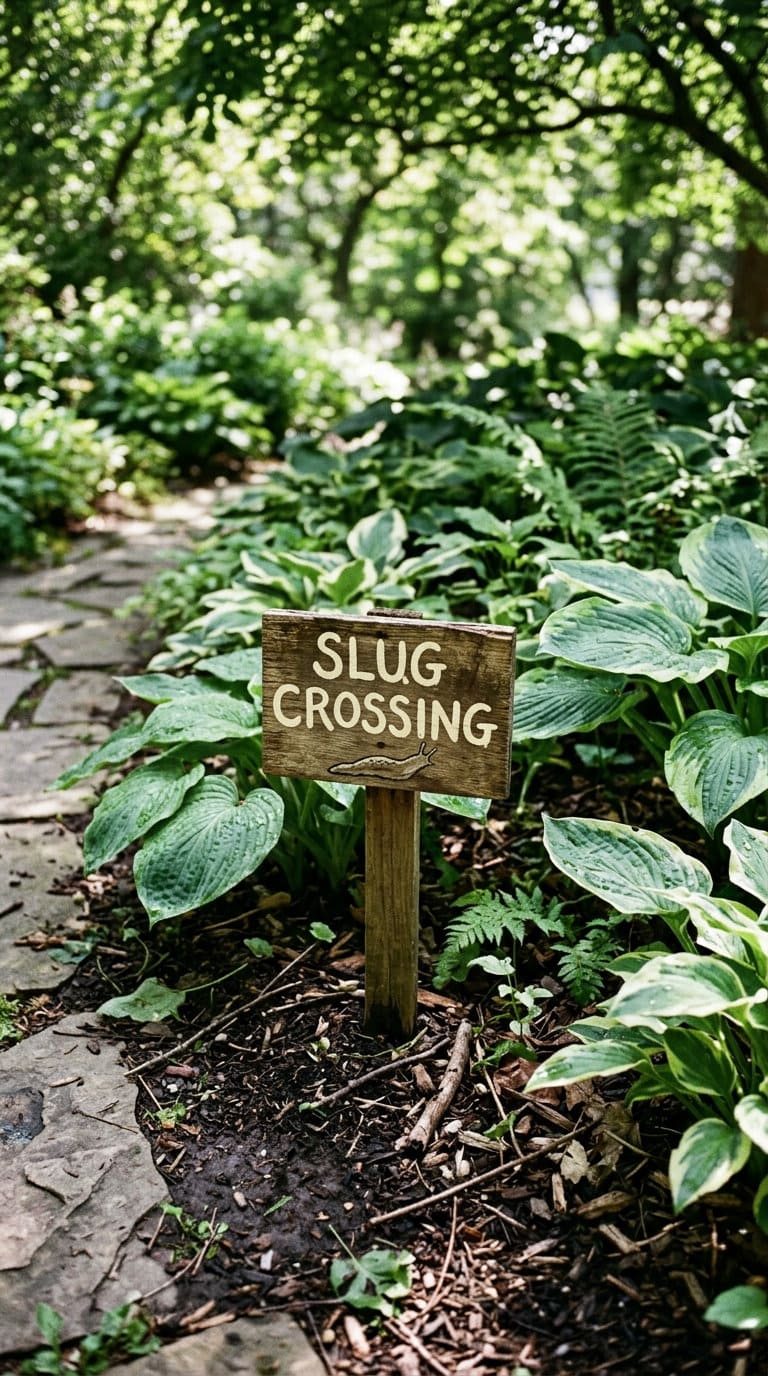
A small, low-mounted sign near a hosta bed or anywhere slugs are a known nuisance turns an actual gardening frustration into a joke instead of just complaining about it. Keep this one low to the ground, close to where the “crossing” would realistically happen.
5. “Warning: I will talk about my vegetables”
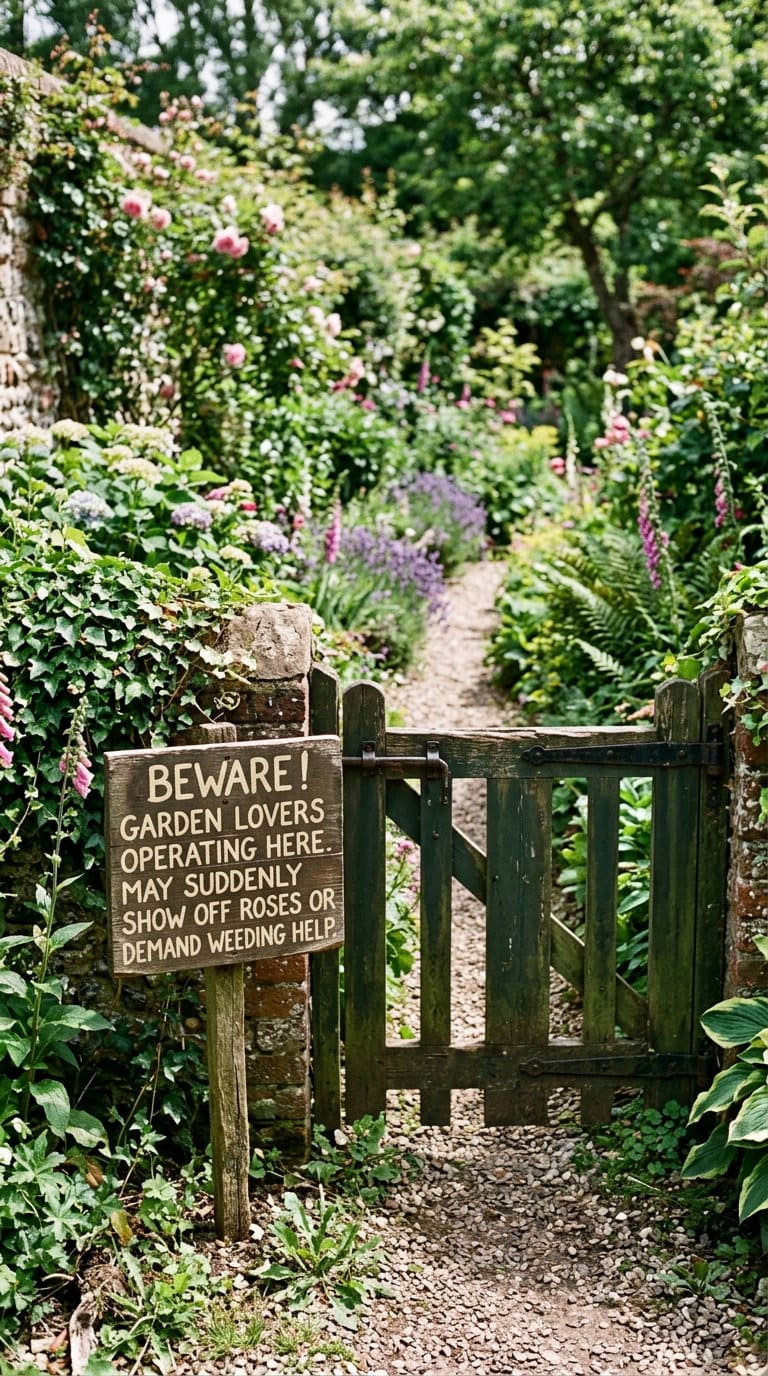
A tongue-in-cheek warning sign works especially well by a gate or entry point, since it’s setting expectations for anyone about to walk in and get an unsolicited garden tour.
Welcome and directional garden signs
These do real work beyond decoration, guiding visitors and marking specific areas.
Most yard problems trace back to one specific, fixable cause. Find yours in 4 quick questions.
Take the Free Quiz6. Carved welcome sign from reclaimed wood
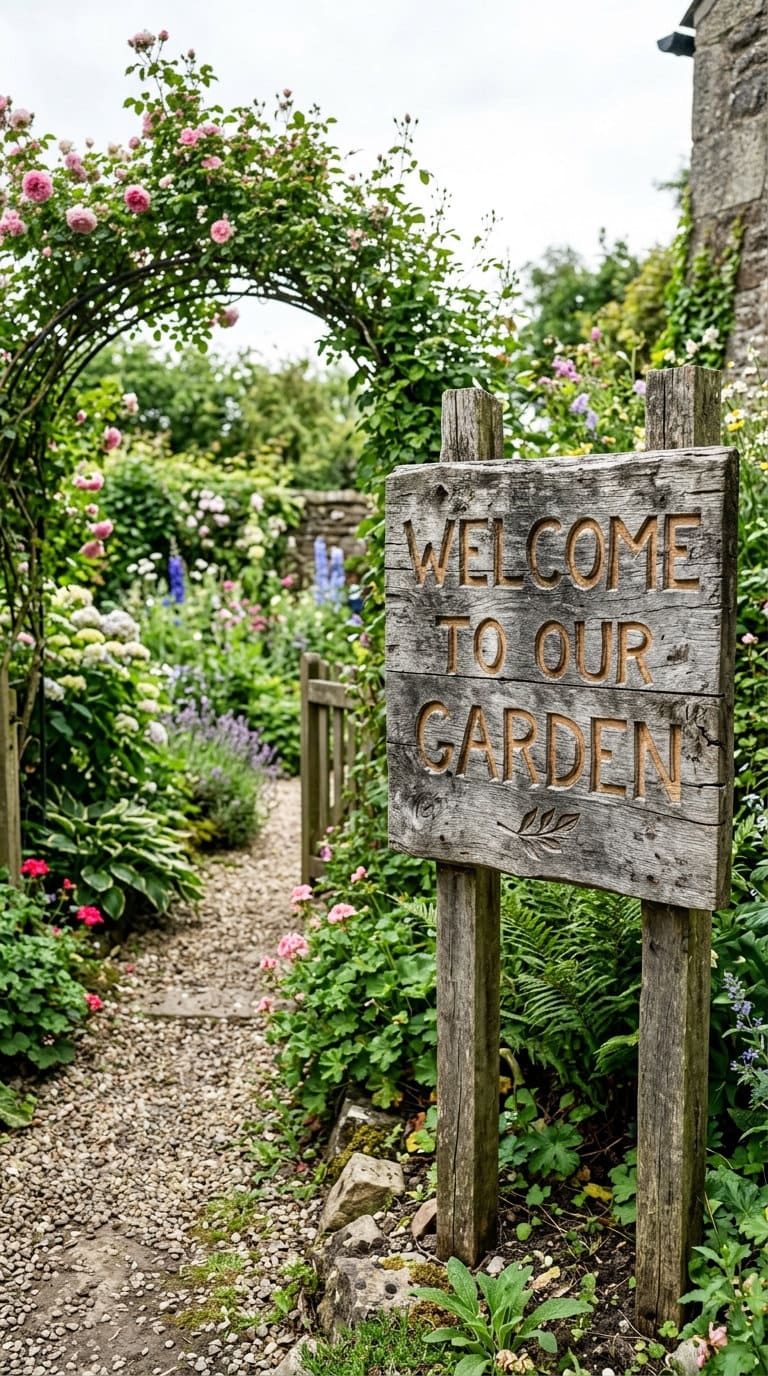
A simple “Welcome” carved (not just painted) into a piece of reclaimed barn wood or an old fence board holds up better over time than painted lettering alone, since the letter shape itself is part of the wood, not just a surface layer that can chip or fade.
7. DIY pallet-wood directional arrow
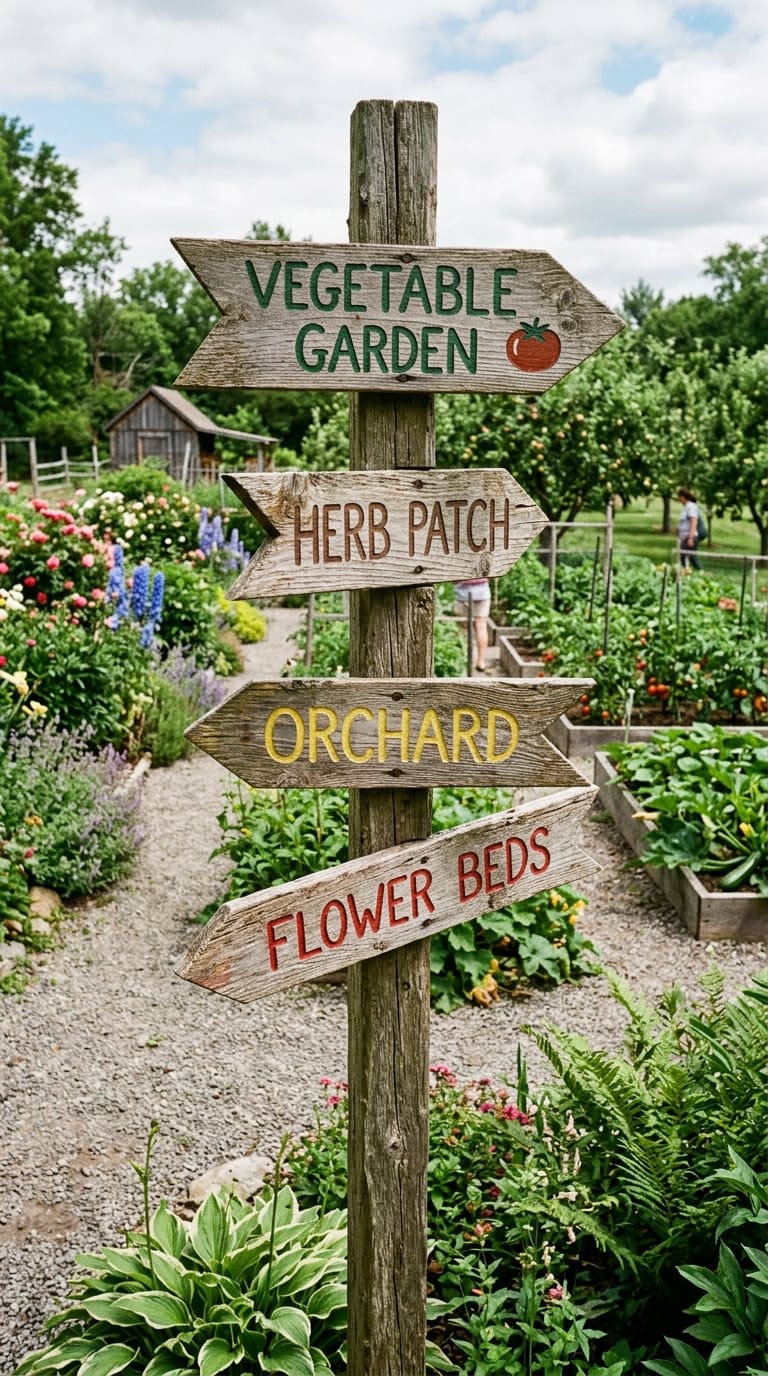
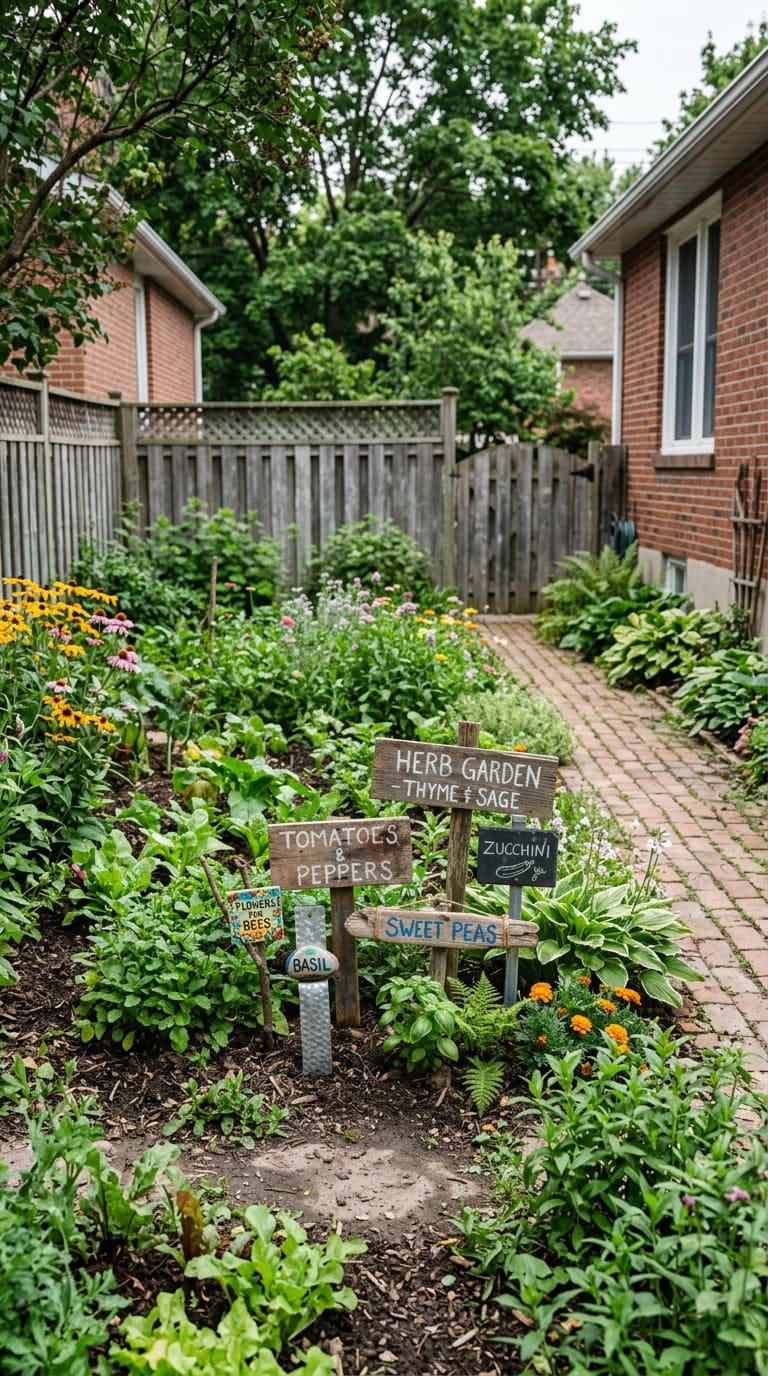
A simple arrow-shaped sign cut from pallet wood, painted with a destination (“Herb Garden,” “Compost,” “Greenhouse”), adds real function to a larger property where paths aren’t obvious. Multiple arrows mounted on one post, stacked at different angles, work well for a property with several distinct garden areas.
8. House number sign integrated with planting
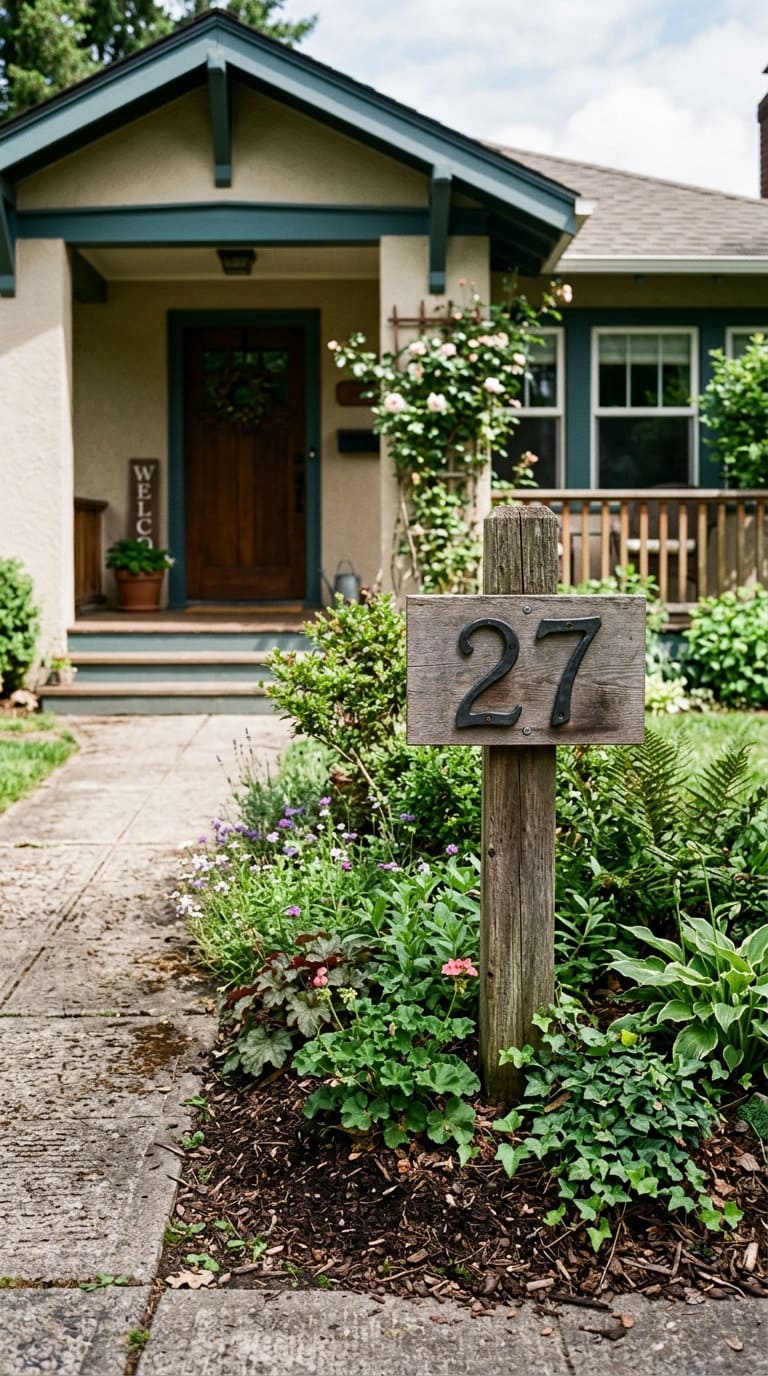
Mount your house number on a small sign set directly into a planted bed rather than on the house itself, giving it a dedicated moment instead of competing with siding, a downspout, or a porch light for visual space.
9. Garden-area marker signs
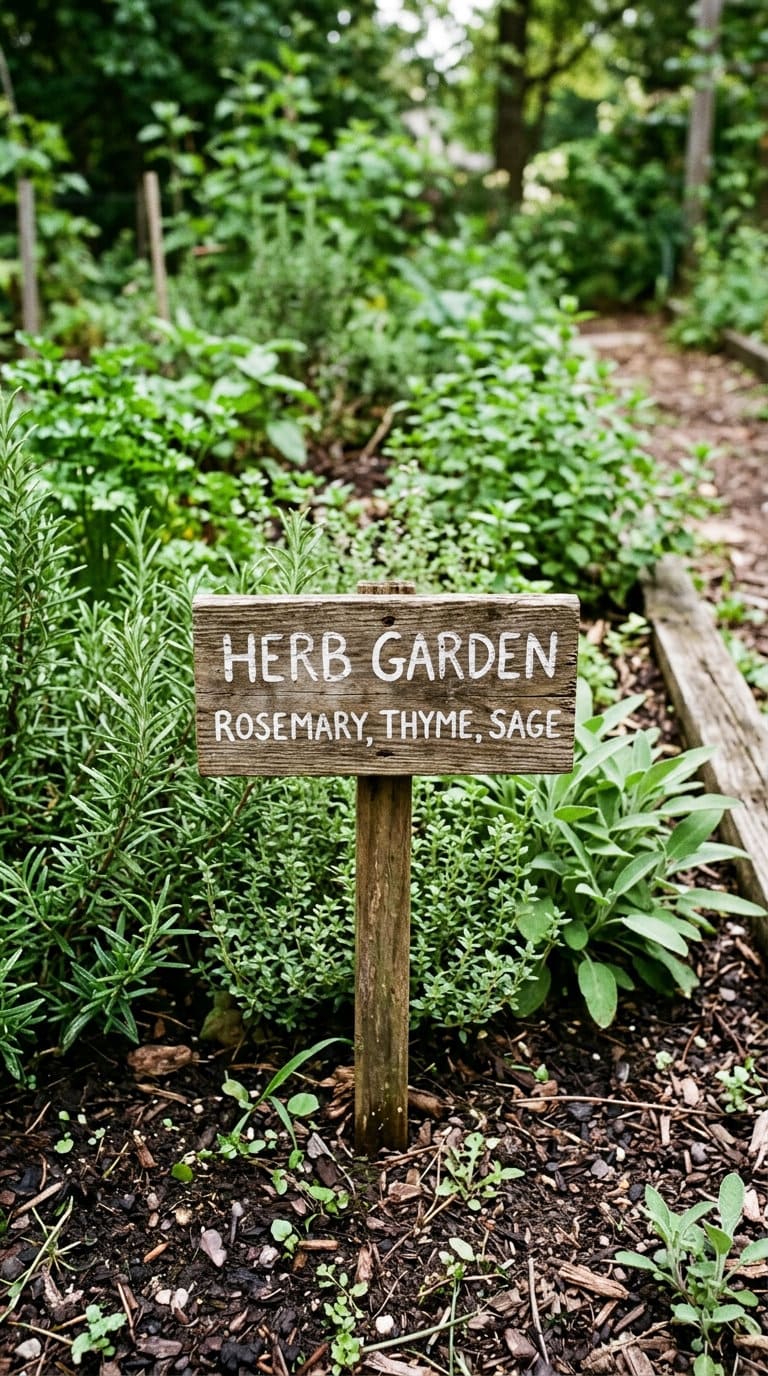
Small individual signs labeling specific areas, “Herb Garden,” “Cutting Garden,” “Kids’ Garden”, give an otherwise undifferentiated yard real structure and make it easier to explain your own layout to a visitor without a verbal tour.
10. Mini gable-roof welcome sign
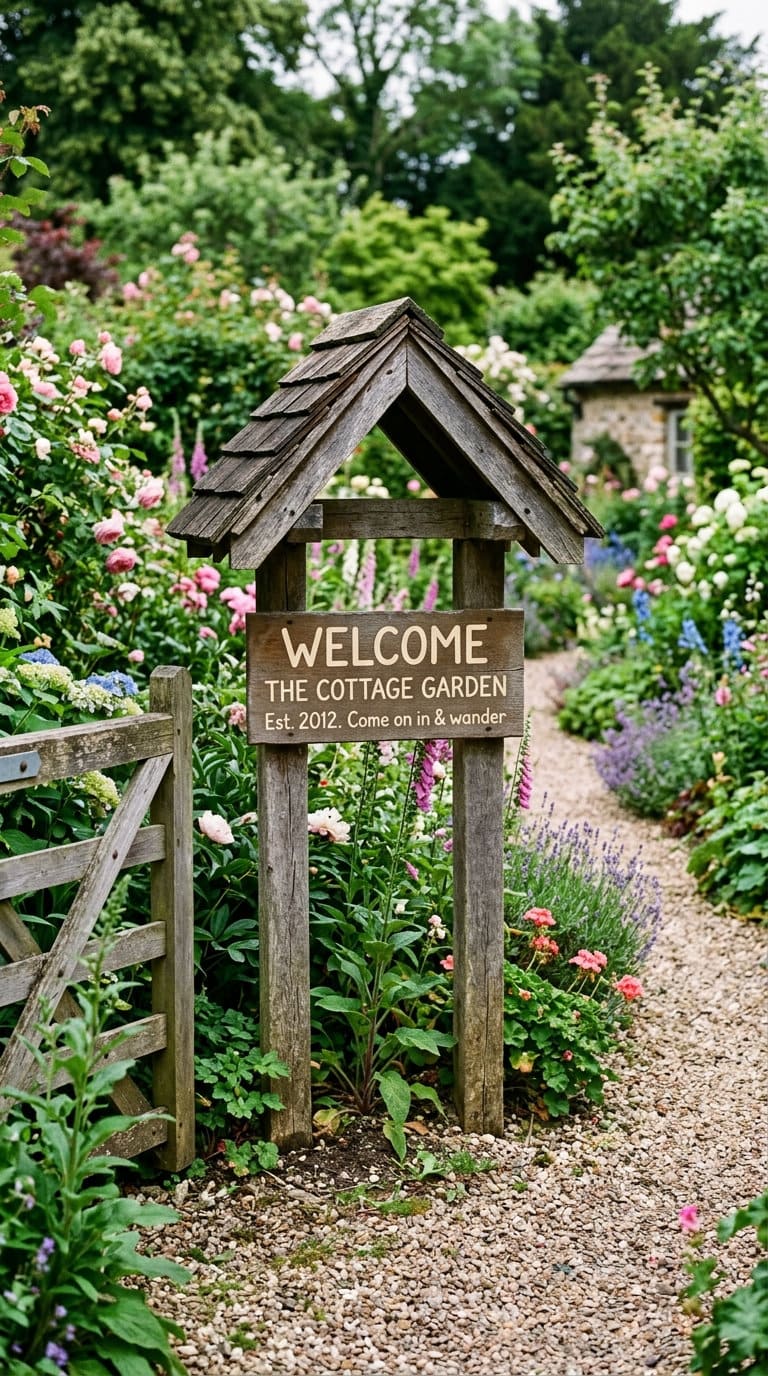
A small sign built with an actual peaked roof shape (like a tiny house gable) rather than a flat rectangle adds real dimension and reads as more crafted than a flat board, especially effective at an entry point where it’s the first thing visitors see.
Painted and repurposed material signs
Some of the best garden signs start as something else entirely.
11. Old shovel painted with lettering
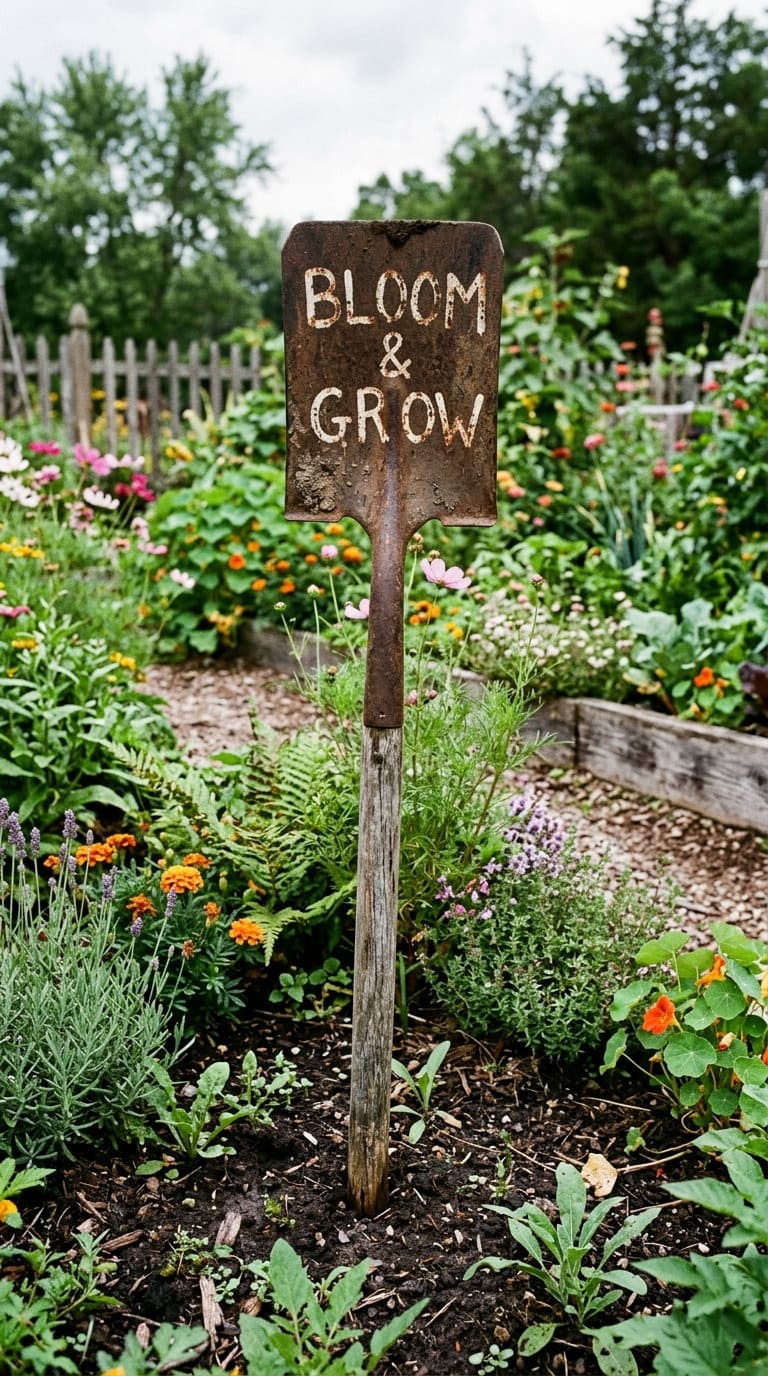
An old, retired garden shovel with a short phrase or your family name painted across the blade turns a genuinely used tool into decor rather than throwing it out. Sand any rust off first so the paint actually adheres instead of flaking within a season.
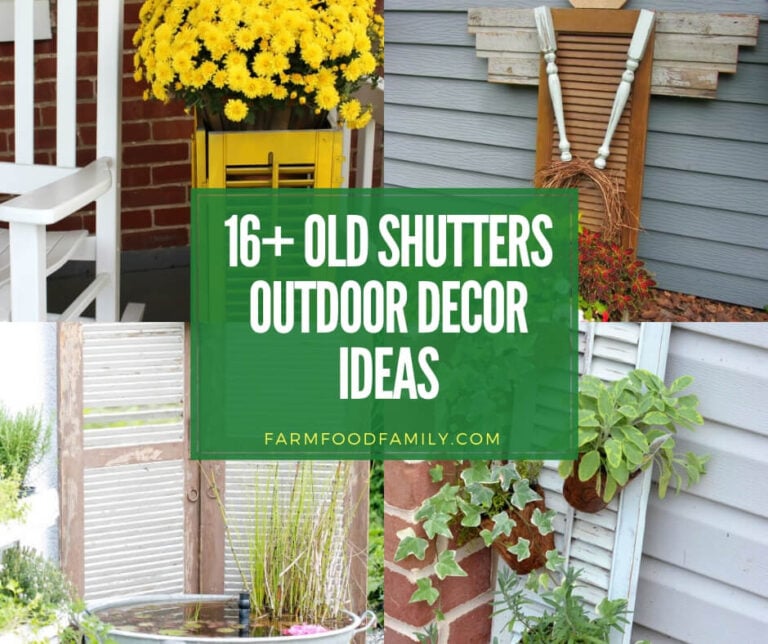
12. Repurposed shutter painted as a sign
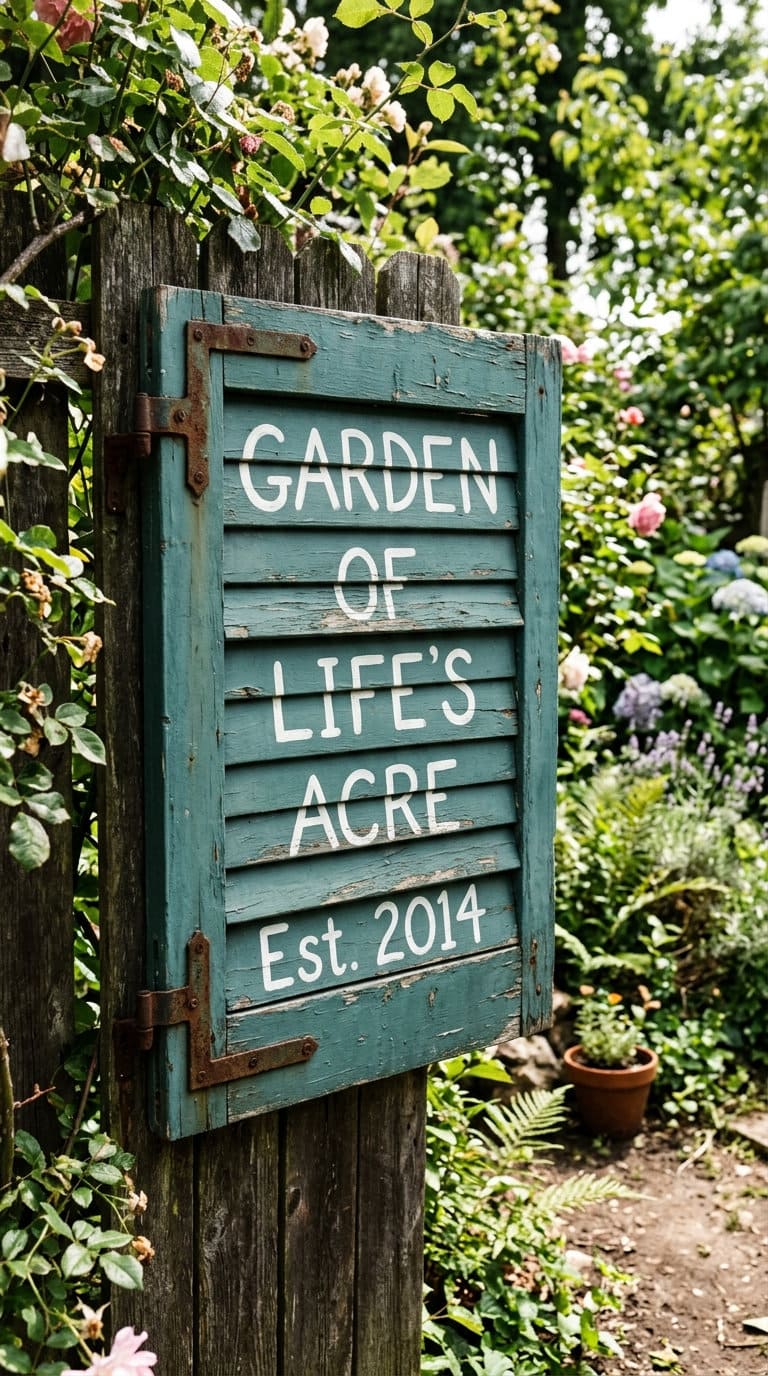
An old window shutter, painted a single solid color and lettered across the slats, gives you a sign with built-in texture no flat board can match, and it’s a genuinely sustainable reuse of something that would otherwise get tossed during a renovation.

13. Carved wood crate lid
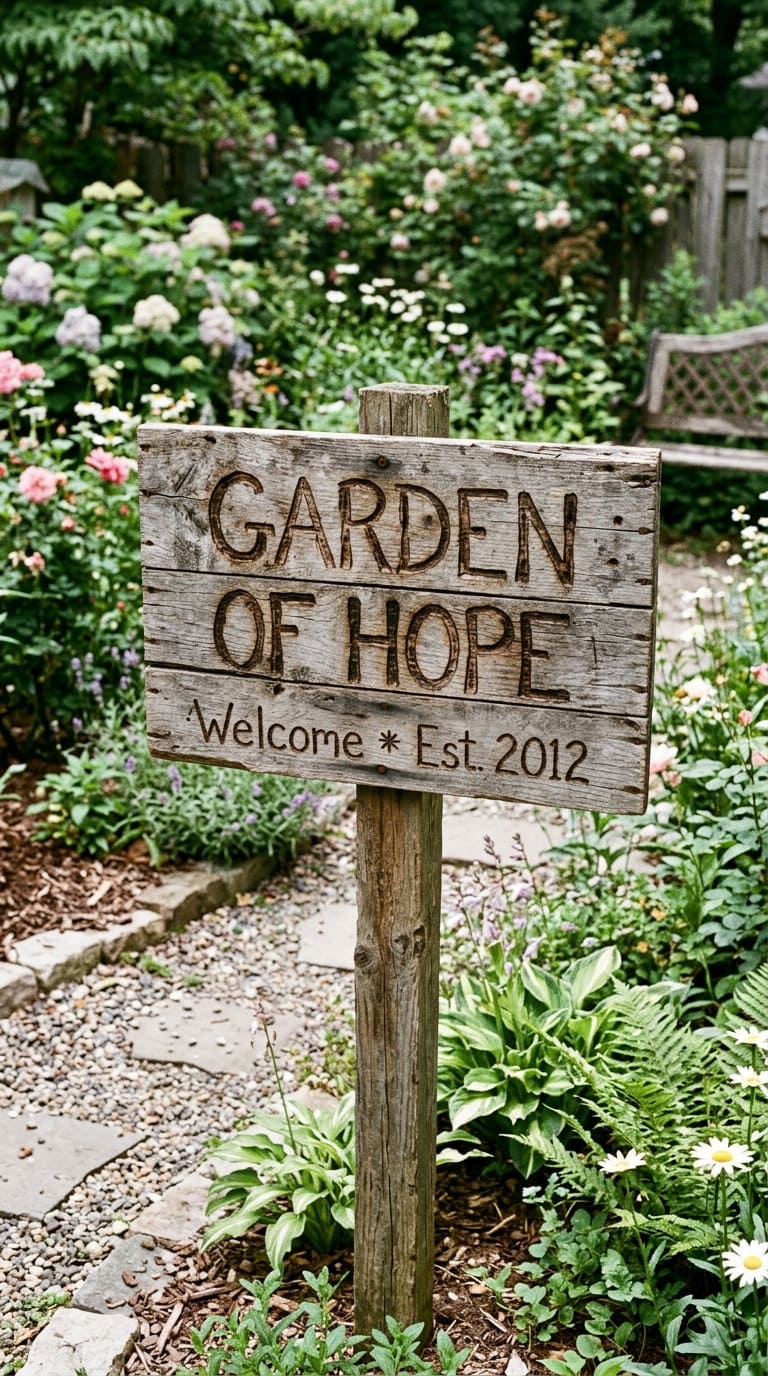
The lid from an old wooden shipping crate, carved or wood-burned with a short phrase, has real rustic texture built in from its original use, nail holes and stamped markings included, that a new board simply can’t replicate.
14. Old cartwheel as a sign backdrop
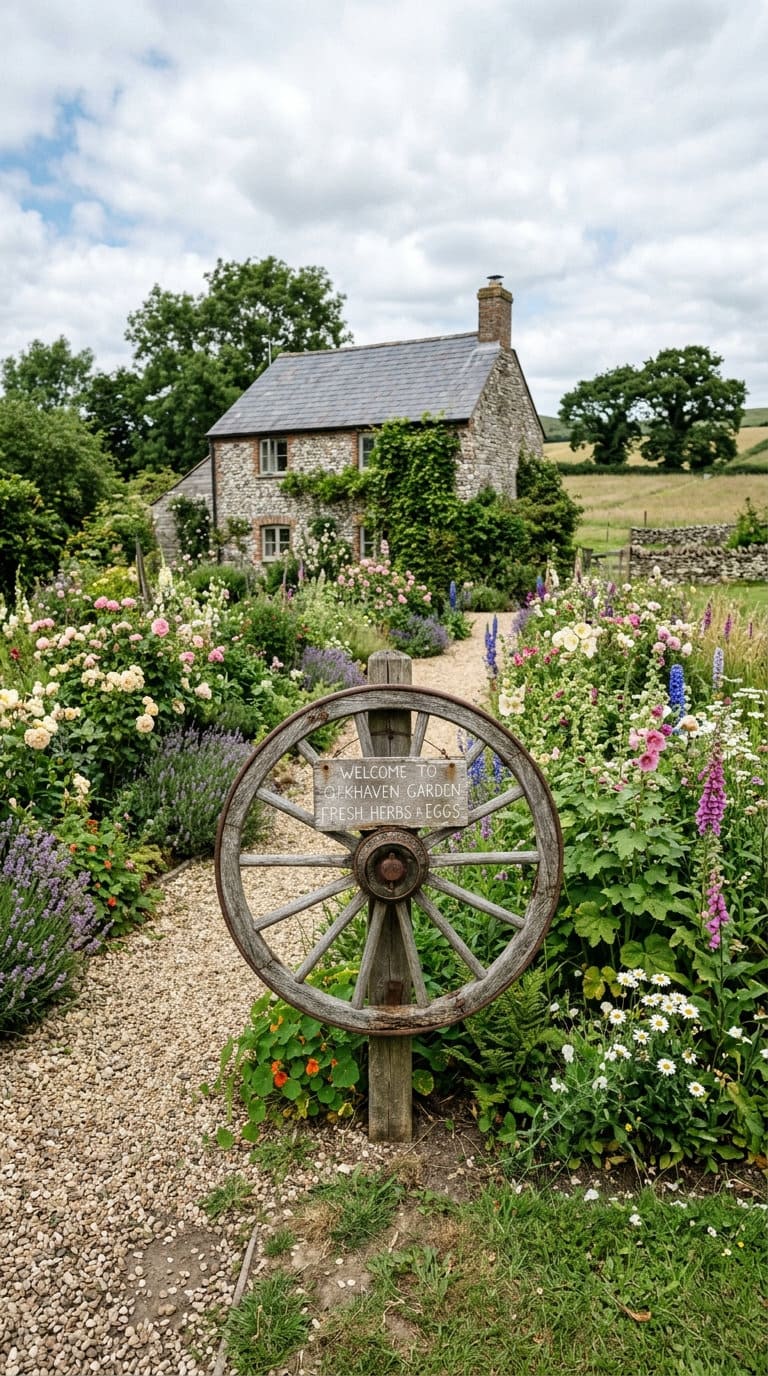
A weathered wooden or metal cartwheel mounted upright with a small sign attached at its center or hung from a spoke makes a genuinely striking focal point, especially in a farmhouse or country-style garden.
15. Glass bottles arranged to spell a word
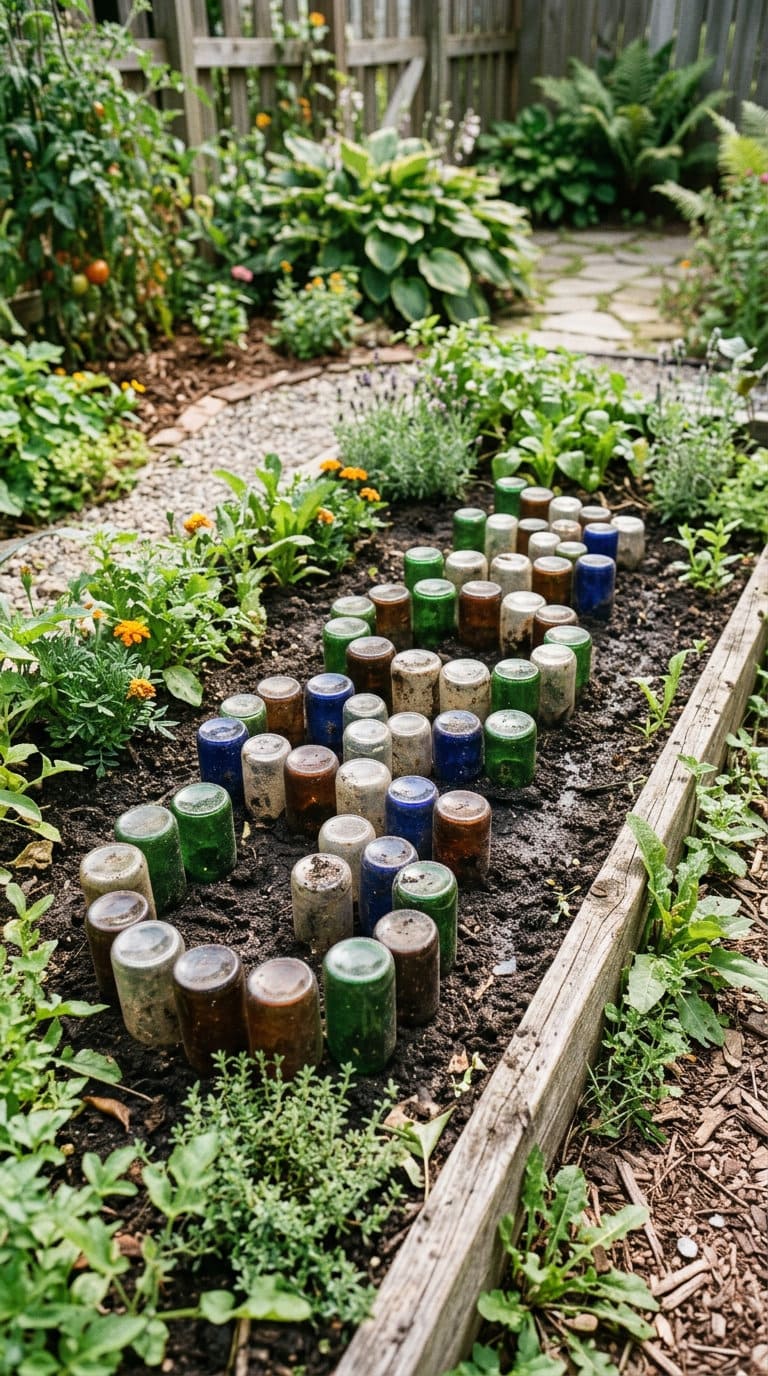
Colored glass bottles (upcycled wine or beer bottles work well) pushed neck-down into the soil in the shape of letters spell out a short word using nothing but glass and dirt, no wood or paint required at all. This works best for very short words, three or four letters, since longer words need real spacing precision to read clearly from a distance.
The average homeowner spends $616/year on yard fixes that don't address the real problem. Find out what yours actually is — before you spend another dollar.
Take the Free QuizSentimental and quote garden signs
These lean into the emotional side of gardening rather than humor or pure function.
16. “To plant a garden is to believe in tomorrow”
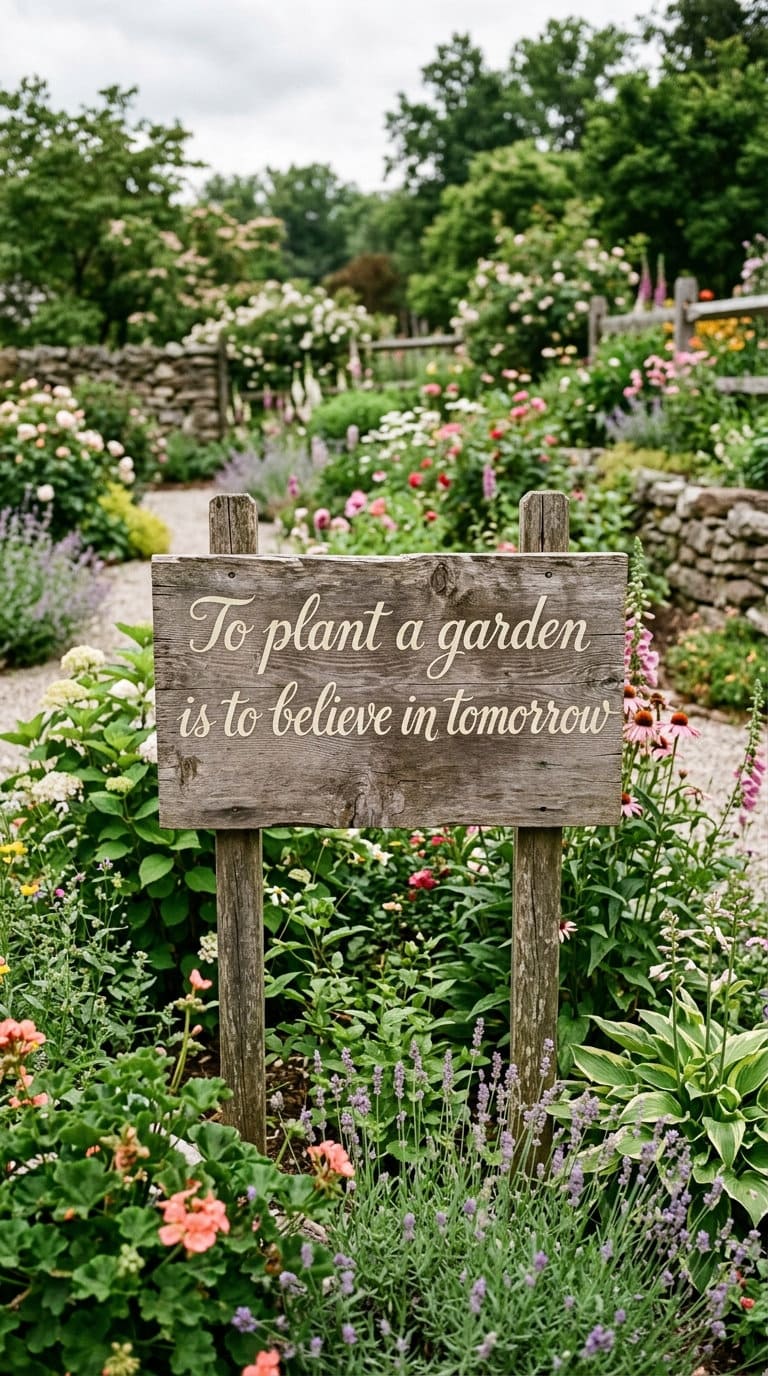
This line is widely attributed to Audrey Hepburn, though like a lot of frequently-shared quotes, that attribution isn’t independently verified back to a documented original source, worth knowing if accuracy matters to you before you paint it permanently onto wood. Either way, it’s become a genuinely well-loved garden phrase in its own right.
17. A memorial or dedication sign
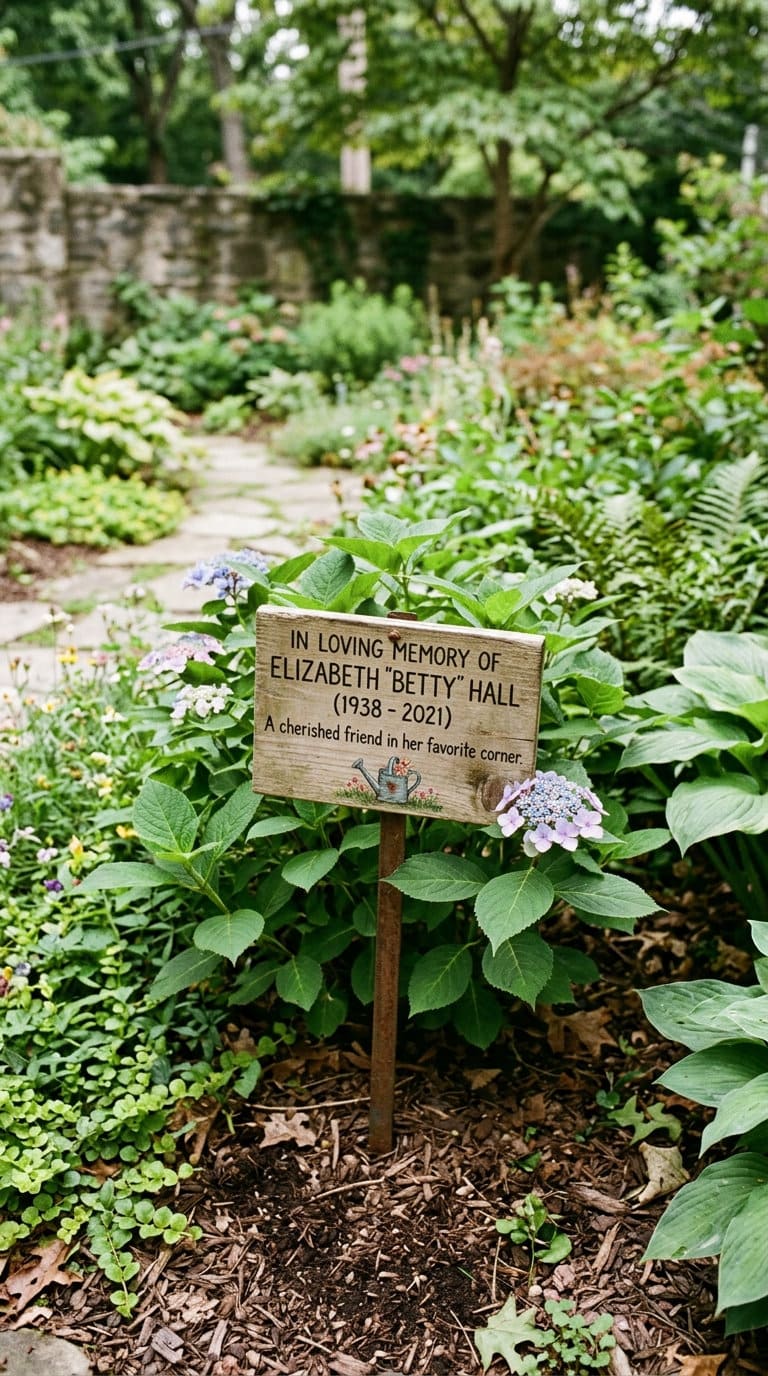
A small sign naming a family member who loved gardening, placed near a plant they gave you or a bed they helped start, turns an ordinary garden into a real, personal memory space rather than a general dedication.
18. “Bee friendly” pollinator sign
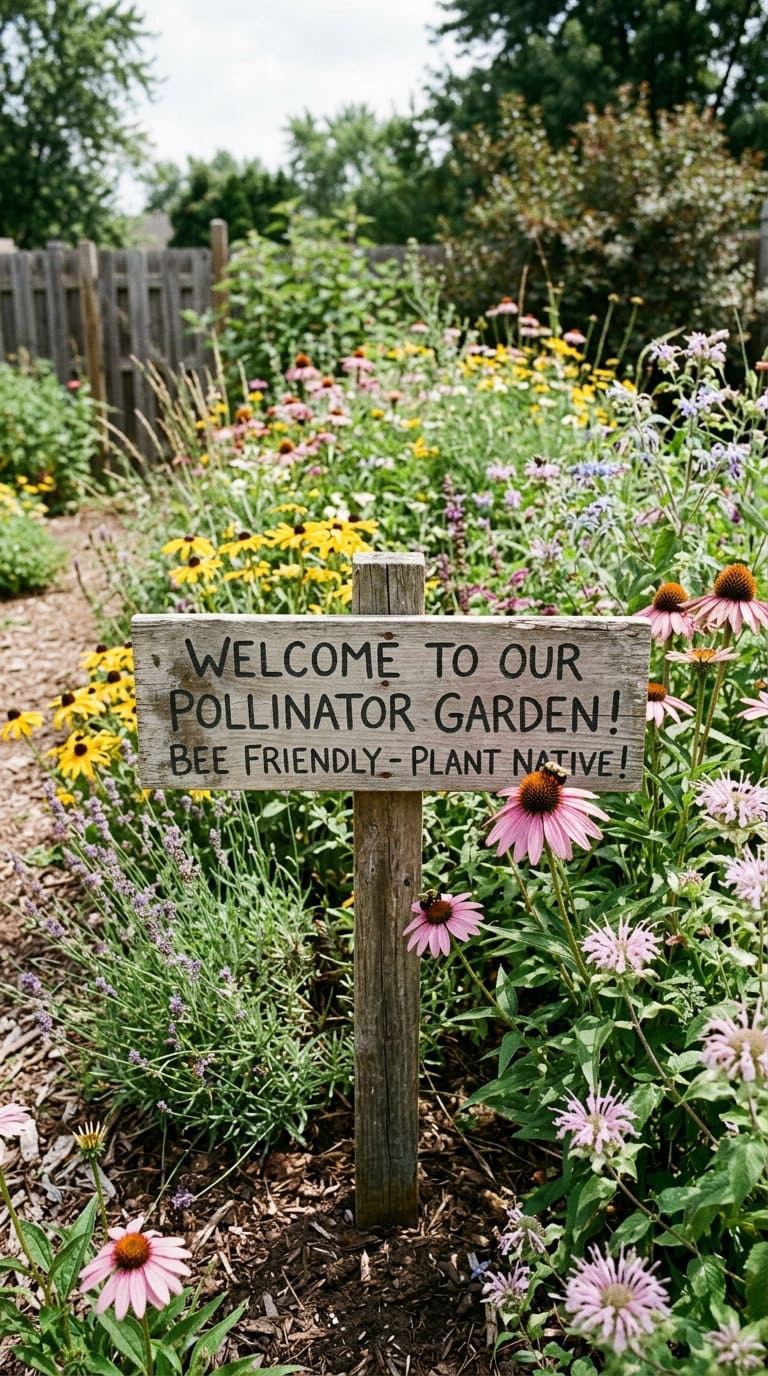
A sign specifically encouraging pollinator-friendly planting does real double duty: it’s a genuine statement about how you’re gardening, not just decor, and it signals to neighbors why a bed might look a little wilder or less manicured than a typical lawn-adjacent flower bed.
19. Quiet-corner marker sign
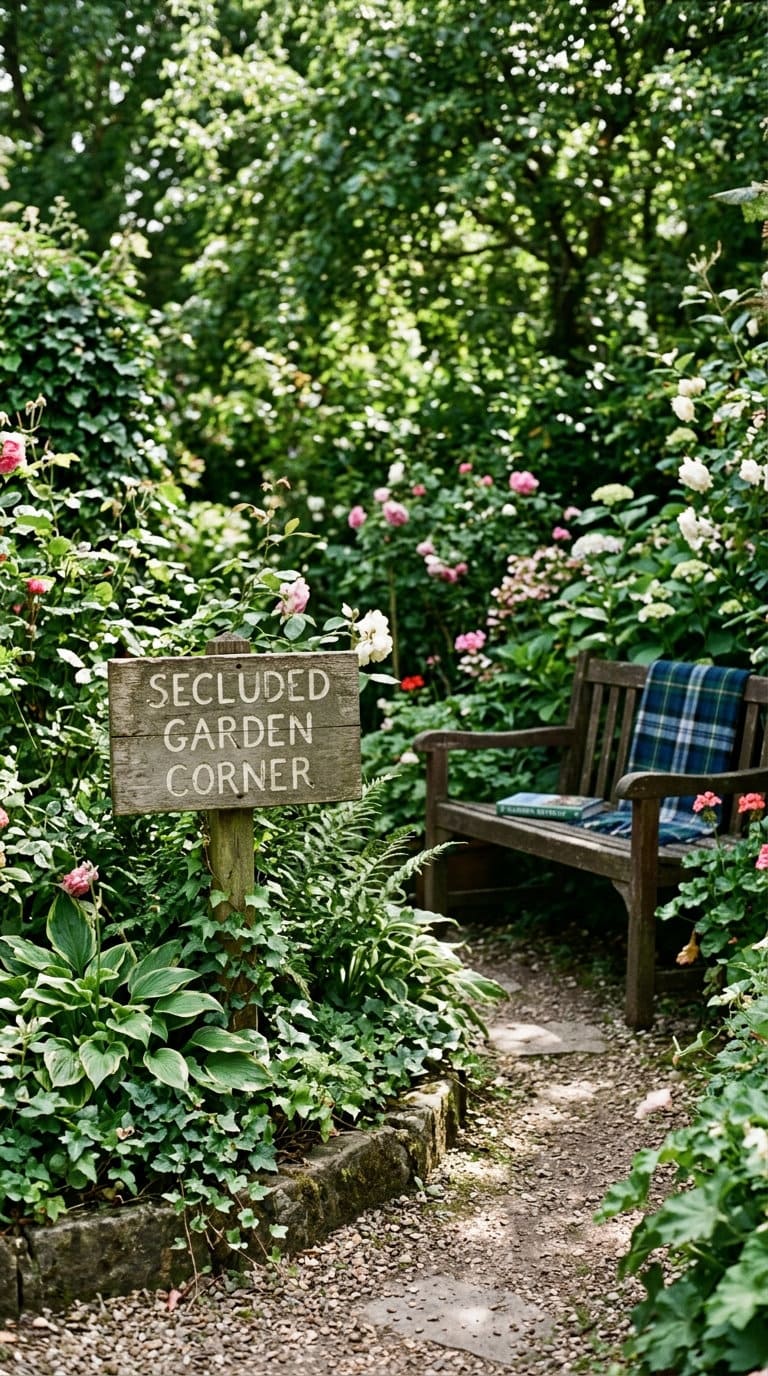
A small sign marking a specific bench, chair, or quiet corner as a dedicated spot for sitting turns an unremarkable patch of garden into an intentional destination, worth the two minutes it takes to make compared to how often you’ll actually notice it inviting you to sit down.
20. “Est. 2026” garden marker
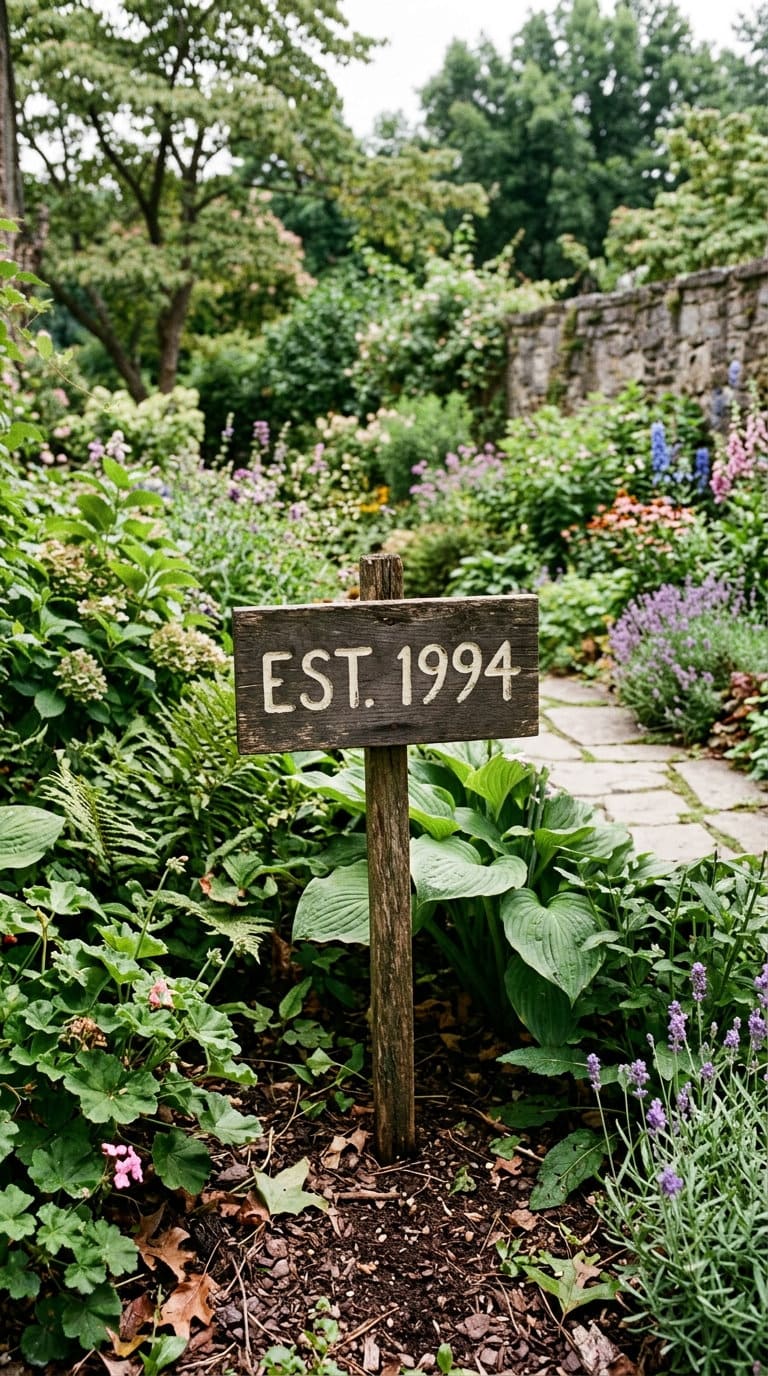
A simple sign noting the year you started the garden ages naturally alongside the plants themselves, and it’s a genuinely nice thing to look back on years later in a way a purely decorative sign never becomes.
Related reading: our rustic love wood signs article has more on sentimental sign styles if idea #17 or #20 appeals to you, and our repurposed spindle ideas piece covers more reclaimed-material projects in the same spirit as ideas #11-15.
FAQs on DIY garden signs
What sealant or paint should you use for an outdoor sign?
An exterior-rated acrylic paint holds color well outdoors, and a polyurethane sealant applied over it in at least two coats gives the most durable moisture protection. The detail that actually matters: seal the front, back, and every edge, not just the visible face. Water getting in through an unsealed back or edge is the most common reason a garden sign warps or rots within a season or two.
How long does an outdoor wood sign actually last?
A properly sealed sign (all sides, not just the front) in a reasonably sheltered spot can last several years before needing a fresh coat of sealant. A sign in full sun and direct rain exposure with no overhang or shelter will need more frequent resealing, checking it once a season for cracking or peeling catches problems before the wood itself is damaged underneath.
Can you reuse old materials to make a sign?
Yes, and it’s often the better option. Old shovels, shutters, crate lids, and cartwheels (ideas #11-14 above) already have real texture and character new lumber doesn’t, and reusing them keeps something out of the trash. Just sand off any rust or loose old paint first so your new finish actually adheres instead of flaking off within a season.

Never miss an update — choose FarmFoodFamily as your preferred source on Google.
How it works: Tap the button below to open Google's settings page, then check the box next to FarmFoodFamily.
Tap the checkbox to turn it blue — that's how you know it's set.