20 Stunning Gabion Ideas for Your Outdoor Space (With Costs and Base Tips)
Gabions turn stone into benches, planters, and fire surrounds, but the base, drainage, and fill decide whether they last.

Never miss an update — choose FarmFoodFamily as your preferred source on Google.
How it works: Tap the button below to open Google's settings page, then check the box next to FarmFoodFamily.
Tap the checkbox to turn it blue — that's how you know it's set.
Gabions turn stone into benches, planters, and fire surrounds, but the base, drainage, and fill decide whether they last.
Products We Recommend
This post contains affiliate links. We may earn a commission on qualifying purchases at no extra cost to you.

50 Pcs Galvanized Steel Gabion Basket Spiral Wires, 36 inch Cage Connectors
Spiral wires that join gabion cages together
Shop Now
Super Geotextile Woven Geotextile Fabric 12.5x30Ft, Heavy Duty
Fabric to separate soil from stone behind a gabion
Shop Now
WZQH Leather Work Gloves for Men or Women, Coffee-grey
Cowhide gloves for handling wire mesh and stone
Shop NowA gabion is a wire cage packed with stone. It looks simple, and it is, until the ground under it shifts or water collects behind it.
This guide gives you 20 ways to use gabions outdoors. It also covers cost, base prep, drainage, and the limits that most idea lists leave out.
What’s the Quick Answer for Gabion Projects?
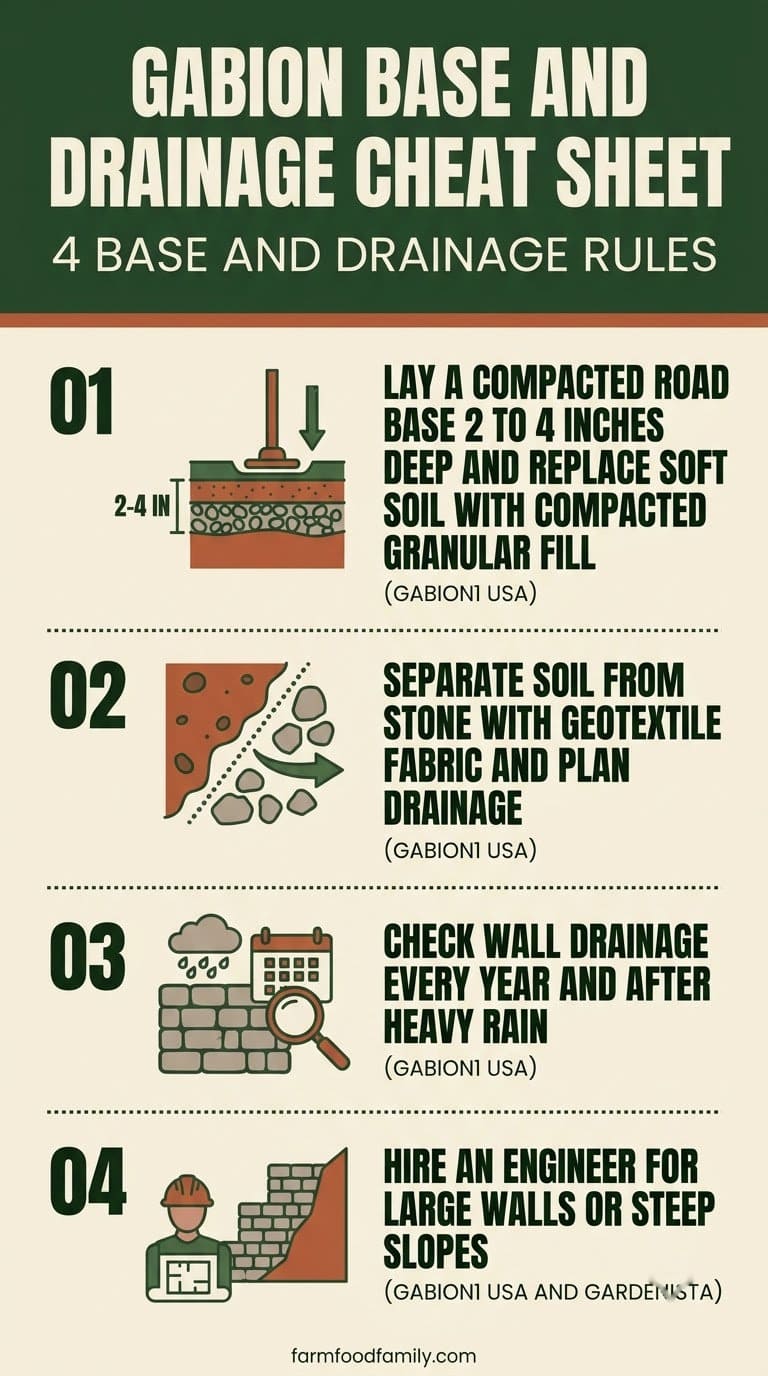
Build on a solid base. Gabion1 USA says most walls need a compacted layer of road base two to four inches deep. It also says to remove soft soil and replace it with compacted granular fill.
Answer 4 quick questions and get matched to the exact fix for your yard — drainage, budget, layout, or something else entirely.
Take the Free QuizPlan for drainage. Gabion1 calls drainage design just as important as the wall itself. It says to use geotextile fabric between soil and stone so fine silt does not clog the wall.
Budget for the fill. Gardenista says to figure on about $35 per cubic yard for standard galvanized mesh. It adds that fill is the main cost lever, since expensive slate costs far more than free recycled concrete.
Keep it small if you can. Gabion1 says large walls, step slopes, or buildings above a wall need an engineer. Check local code before you build anything tall, and keep your first project small.
How Much Does a Gabion Project Cost?
This table pulls the cost figures we found. Prices vary a lot by region and by stone.
| Item | Figure | Source |
|---|---|---|
| Standard galvanized mesh cages | About $35 per cubic yard | Gardenista |
| Installed stone wall, typical | $10 to $40 per square foot | HomeGuide |
| Fill | Free recycled concrete to costly slate | Gardenista |
The HomeGuide stone retaining wall cost guide puts typical installed stone walls at $10 to $40 per square foot. Labor and site prep push the total up.
Most yard problems trace back to one specific, fixable cause. Find yours in 4 quick questions.
Take the Free QuizWhat Do You Need Under and Behind a Gabion?
Gabion1 says most walls need only a thin base. Use two to four inches of compacted one-inch road base. Most gabion walls need soil that can bear at least 100 kPa.
Dig out soft or organic soil and replace it with compacted granular fill. On a slope, Gabion1 describes stepped foundations that follow the grade.
Drainage comes next. Gabion1 says to separate soil from stone with geotextile fabric. For taller walls, a drain pipe at the back is common, and the drain should be checked each year.
Acidic soil matters too. Gabion1 says that where soil pH is over 5.5, you should keep soil and groundwater away from the cage with fabric and drainage.
Which Fill Rock Works Best?
Pick angular stone about twice the size of the mesh opening. Angular pieces lock together, and round river stone can shift. Match the mesh gauge to the stone.
Fill is your biggest cost choice. Gardenista says recycled crushed concrete costs far less than slate. Kettelkamp, quoted there, used crushed concrete from nearby road work.
Order a little extra stone, since fill settles after the first rain. Local quarries and demolition yards often sell rock by the ton at a lower price than garden centers.
Spiral wires that join gabion cages together
Shop NowThis post contains affiliate links. We may earn a commission on qualifying purchases at no extra cost to you.
Think about color too. Dark basalt looks modern, and gray granite looks classic. Warm sandstone suits a rustic yard.
20 Stunning Gabion Ideas for Your Outdoor Space
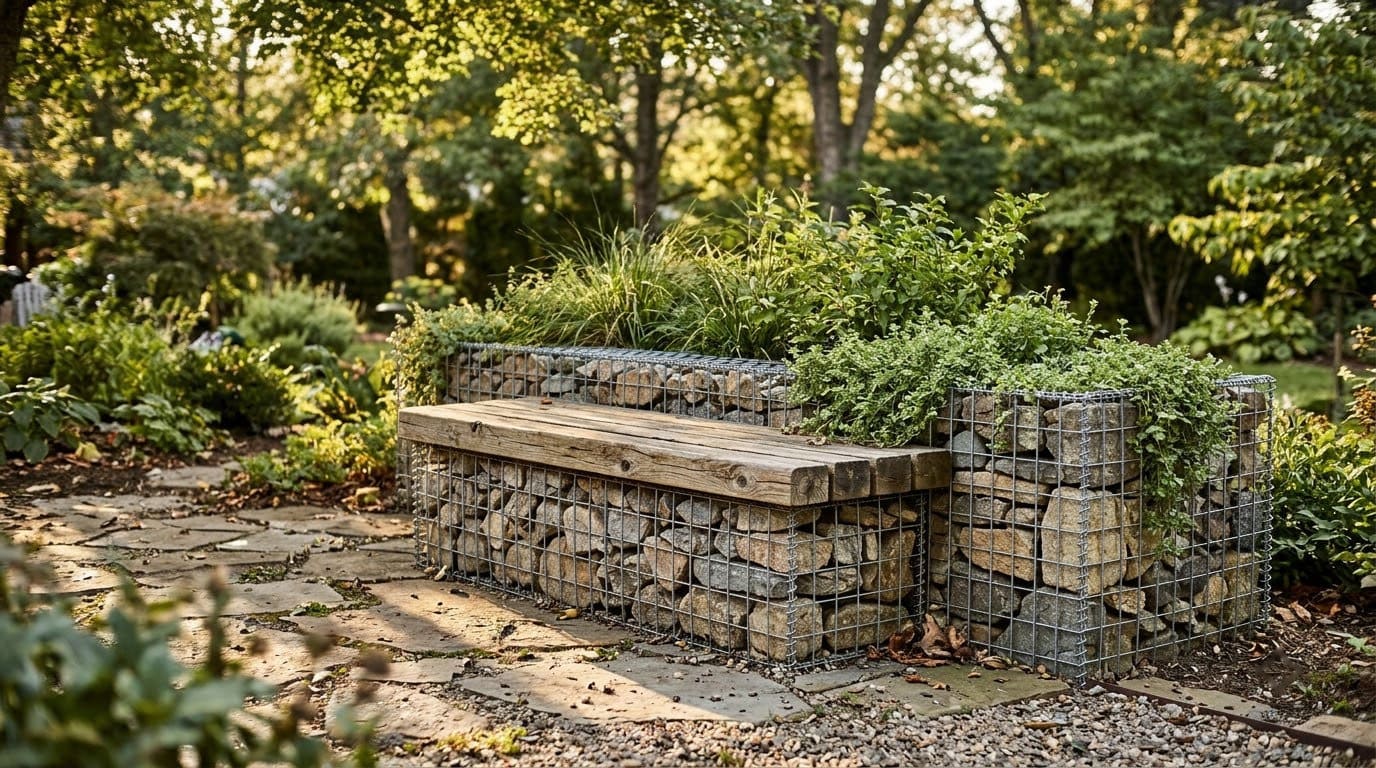
1. Gabion Bench With a Wood Seat
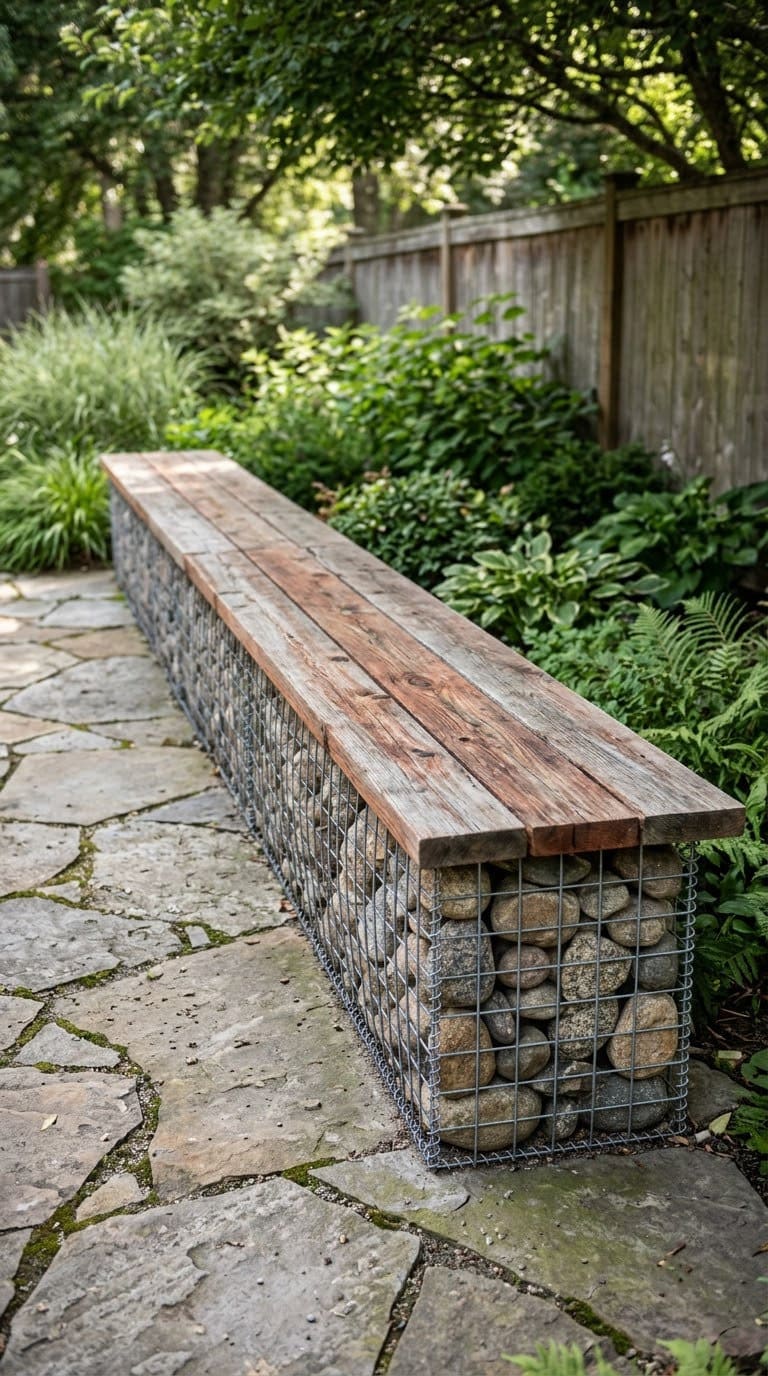
Stack two gabion boxes and lay a wood plank across the top. The stone forms the legs, and the wood gives you a warm seat. Gardenista lists benches as a classic gabion use.
The average homeowner spends $616/year on yard fixes that don't address the real problem. Find out what yours actually is — before you spend another dollar.
Take the Free QuizSeal the wood and add a cushion. Place the base on compacted gravel so the bench stays level.
Cost tier: medium.
2. Gabion Seating Wall
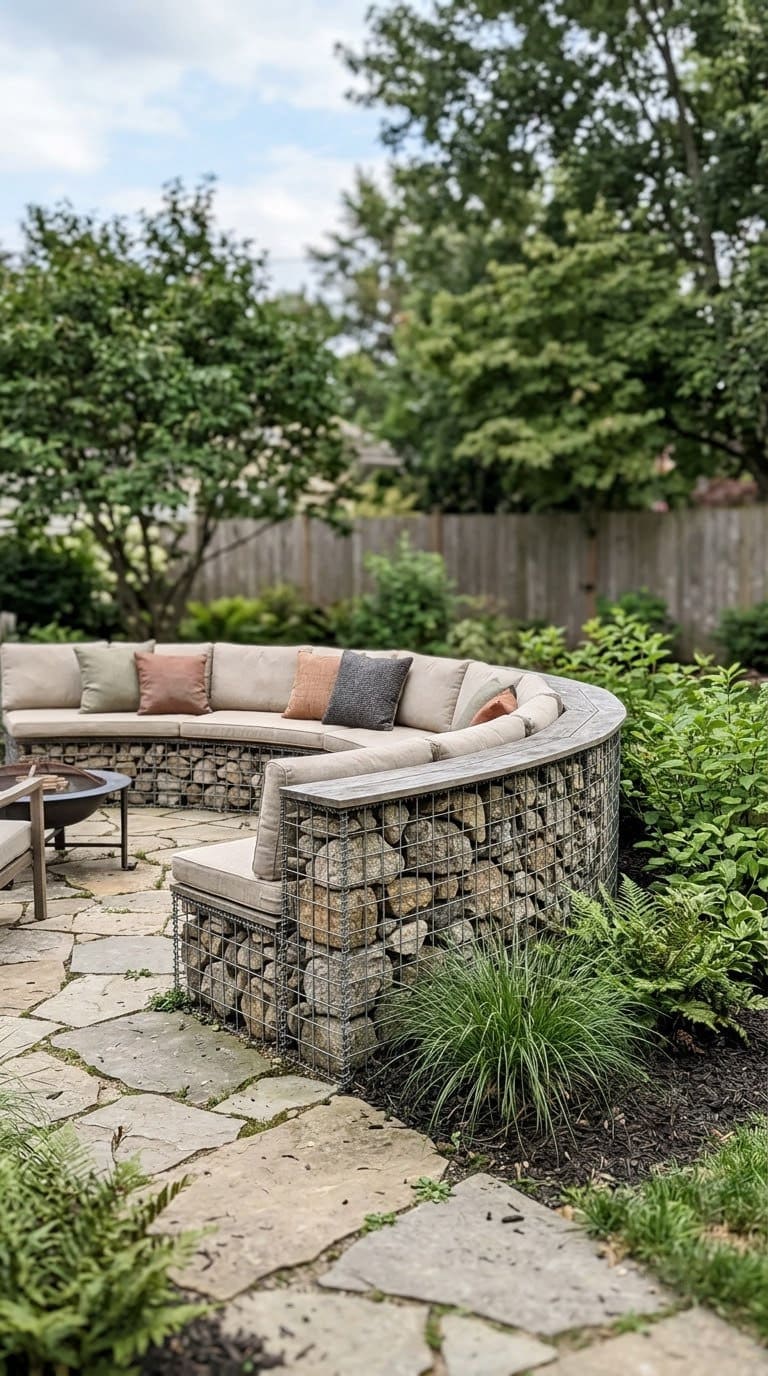
A low wall can do two jobs. It frames a patio and gives you extra seats. Keep it knee-high so it works as a bench.
Top it with a flat stone or wood cap for comfort. A cap also keeps small stones from falling out.
Cost tier: medium.
3. Gabion Entertaining Corner
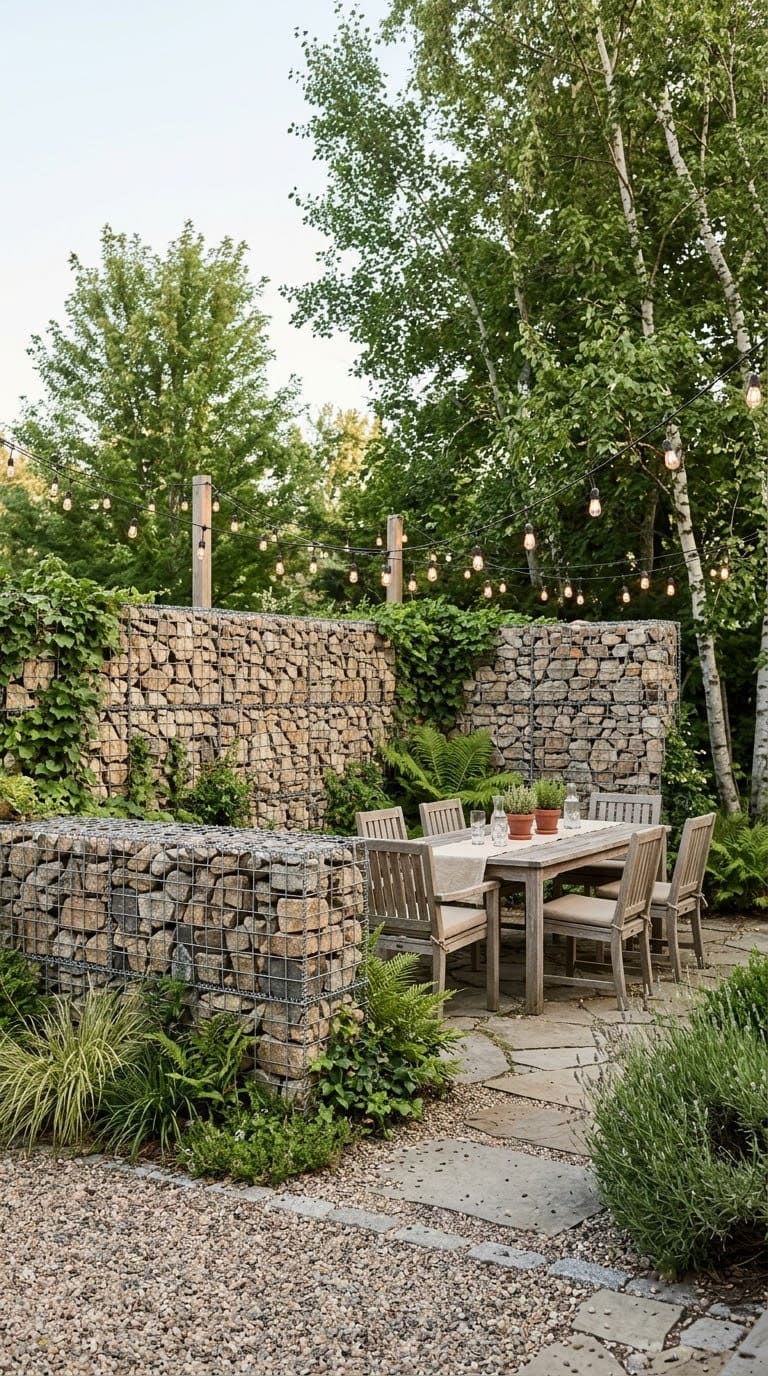
Gardenista shows gabions that define an entertaining space and provide seating. Build an L shape to cut wind and mark a dining zone.
Add lights in the top course for evening glow. Keep the wiring outdoor-rated and protected.
Cost tier: medium.
4. Freestanding Garden Wall
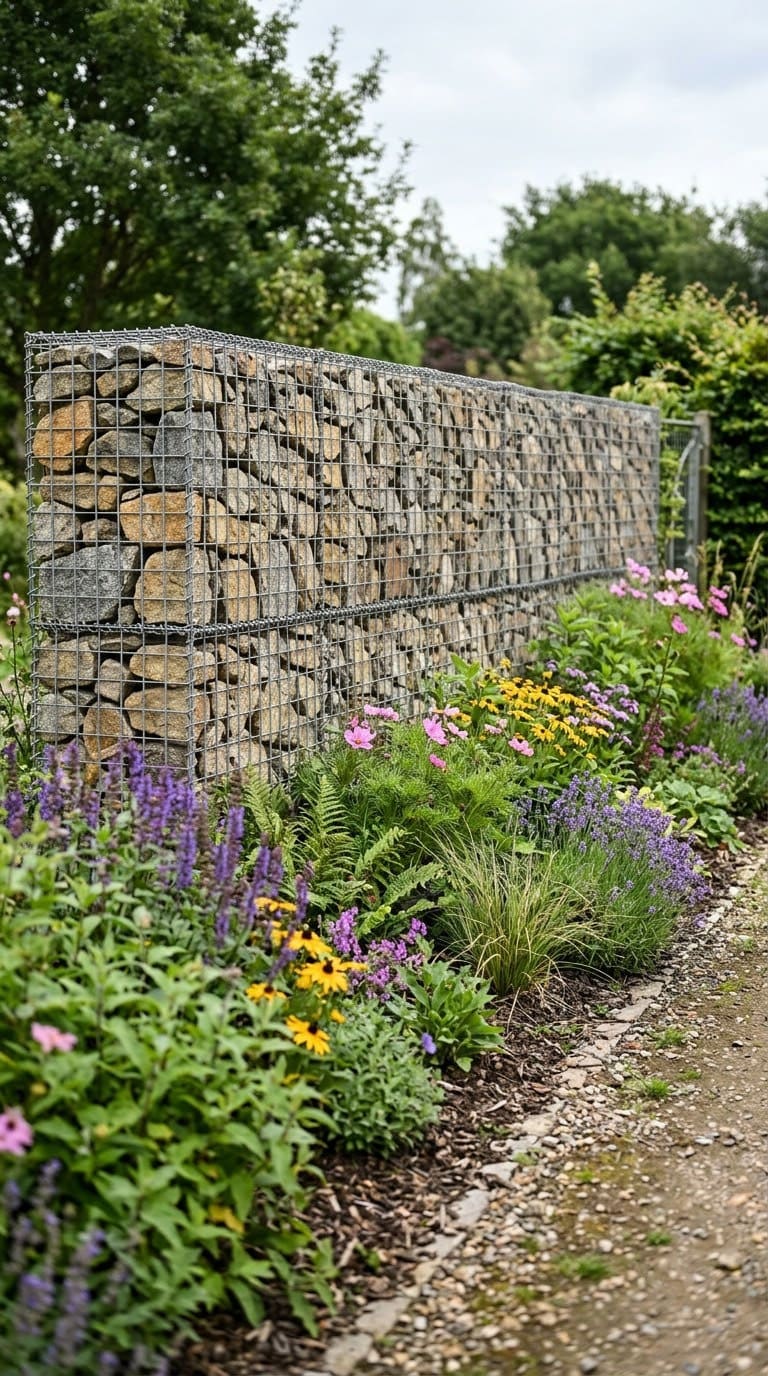
A short freestanding wall splits a yard into rooms. Gardenista says gabions let air pass through, so they work as shade screens that help cool a space.
Keep the wall low and wide for stability. Plant a flower border at the base.
Cost tier: medium.
5. Retaining Wall for a Small Slope
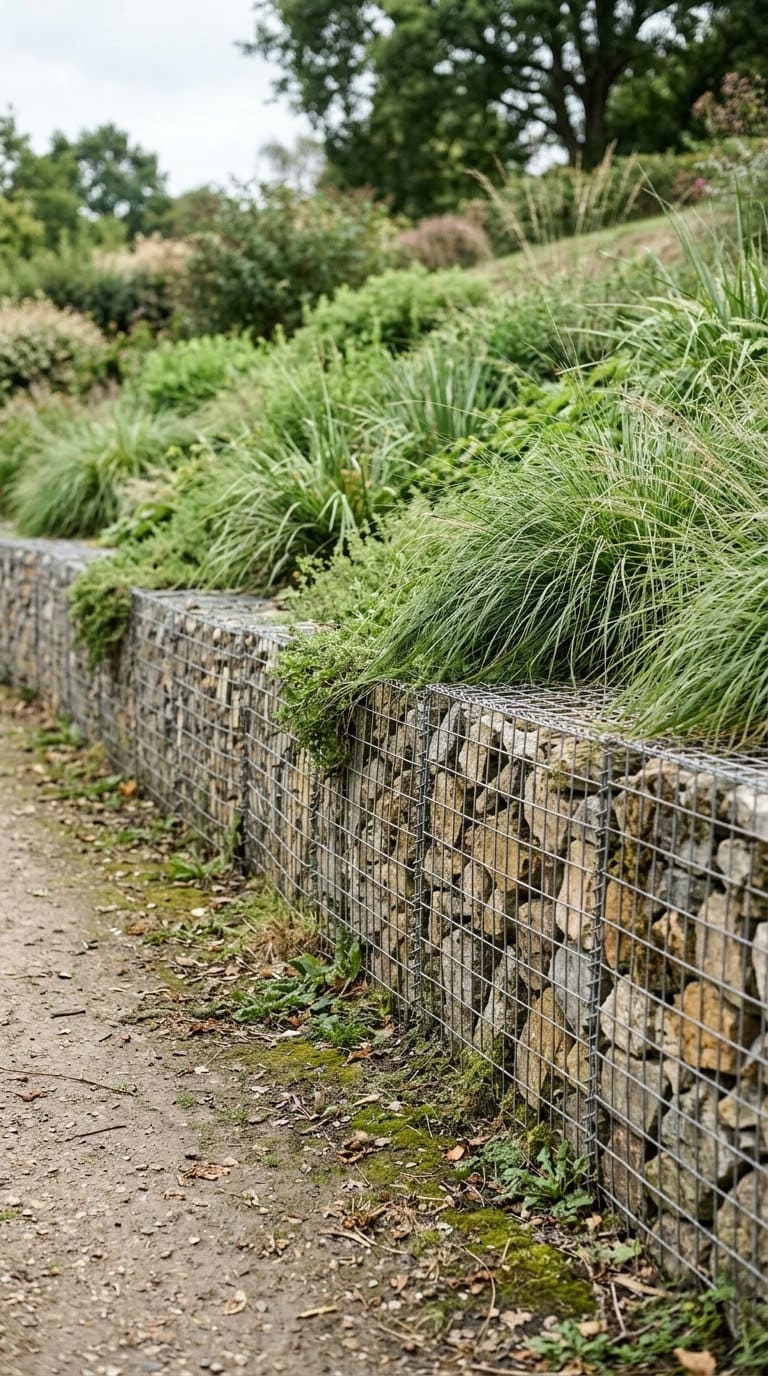
Gabion1 says smaller walls under five feet, built to its 2:1 stability ratio, can go vertical. Keep yours short and lined with fabric.
For tall walls or a slope with buildings above, hire an engineer. See our retaining wall ideas for more options.
Cost tier: high.
6. Curved Garden Wall
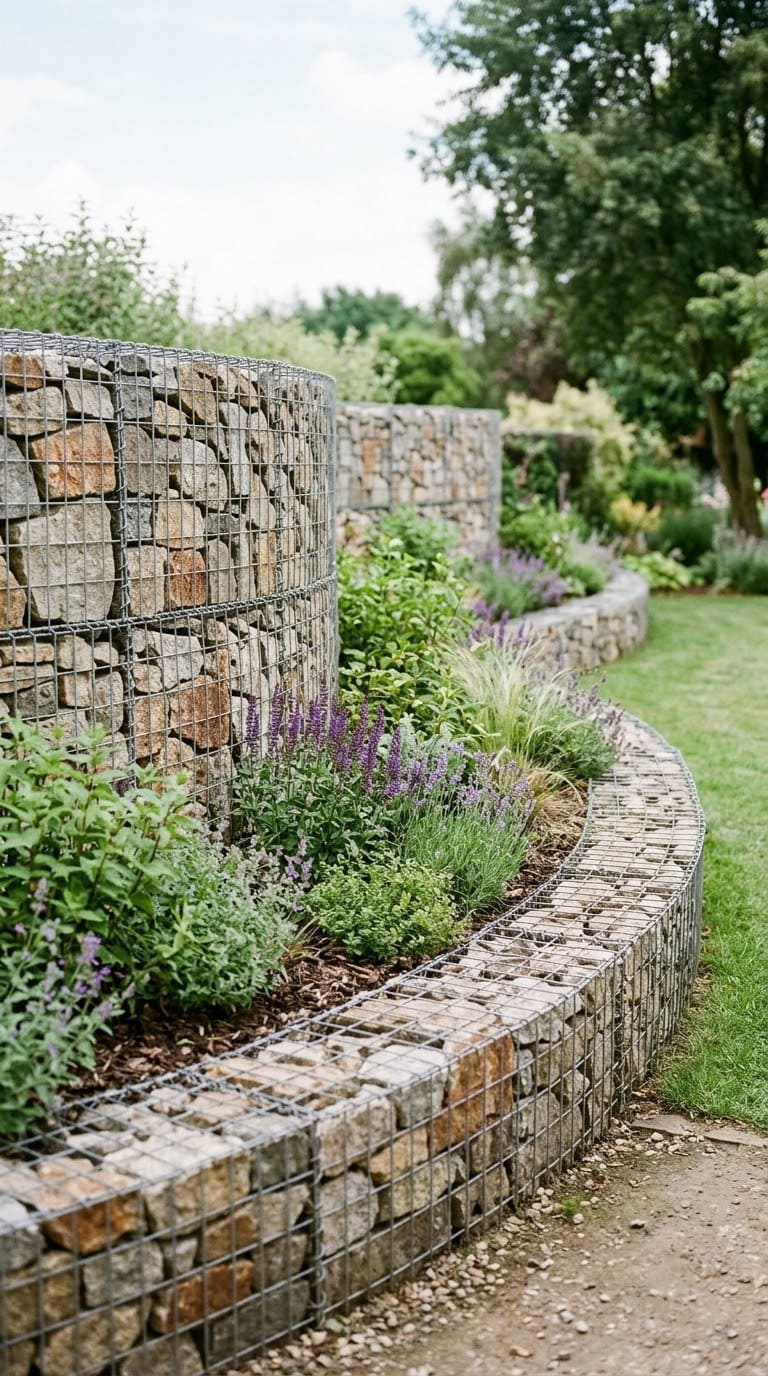
Curves are harder with rigid cages. Build the curve from short straight sections set at small angles. This gives a soft line without special baskets.
Pair it with our garden wall ideas for other shapes.
Cost tier: medium.
7. Stepped Wall Along a Path
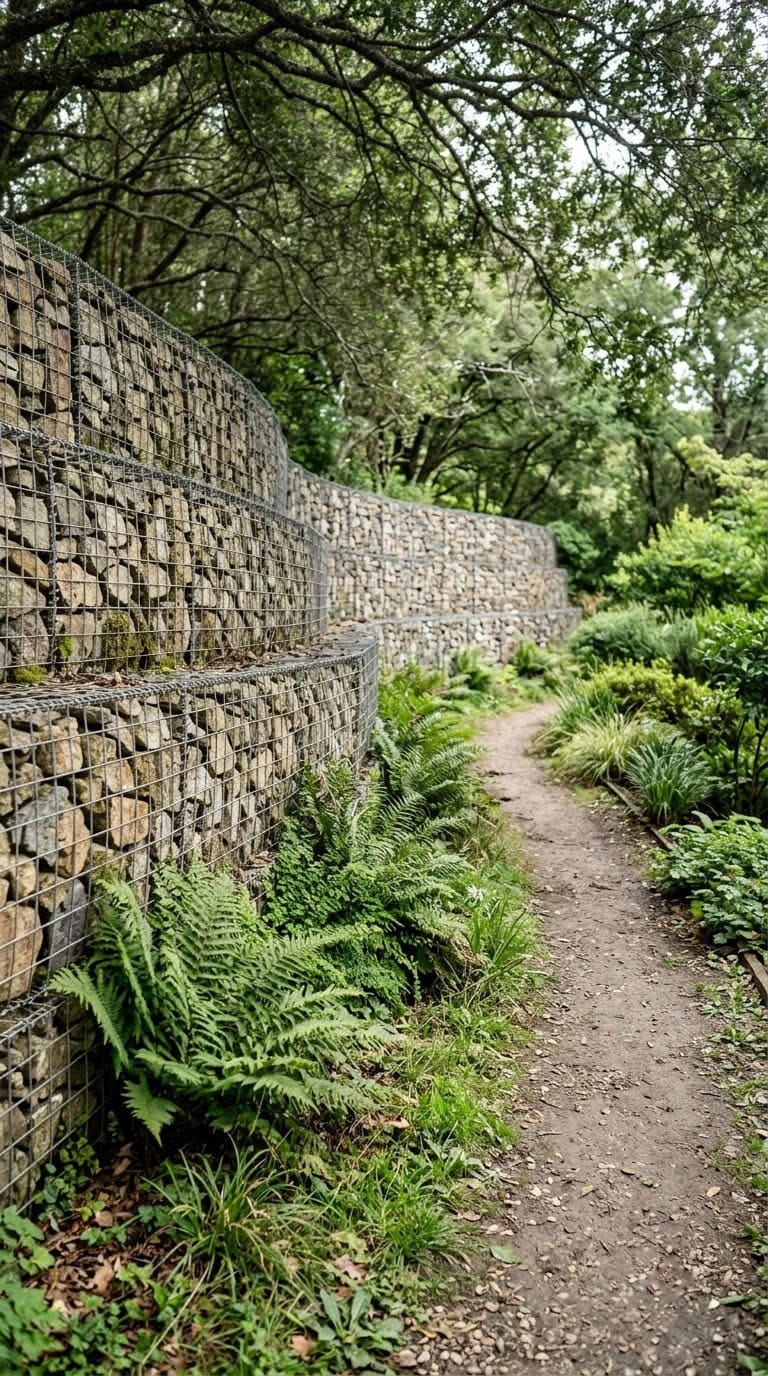
Gabion1 describes stepped foundations that follow a change in grade. Use steps along a path where the ground rises.
Keep each step the same height so the line looks tidy. Add a drain at the low end.
Cost tier: high.
8. Gabion Wall With Lighting
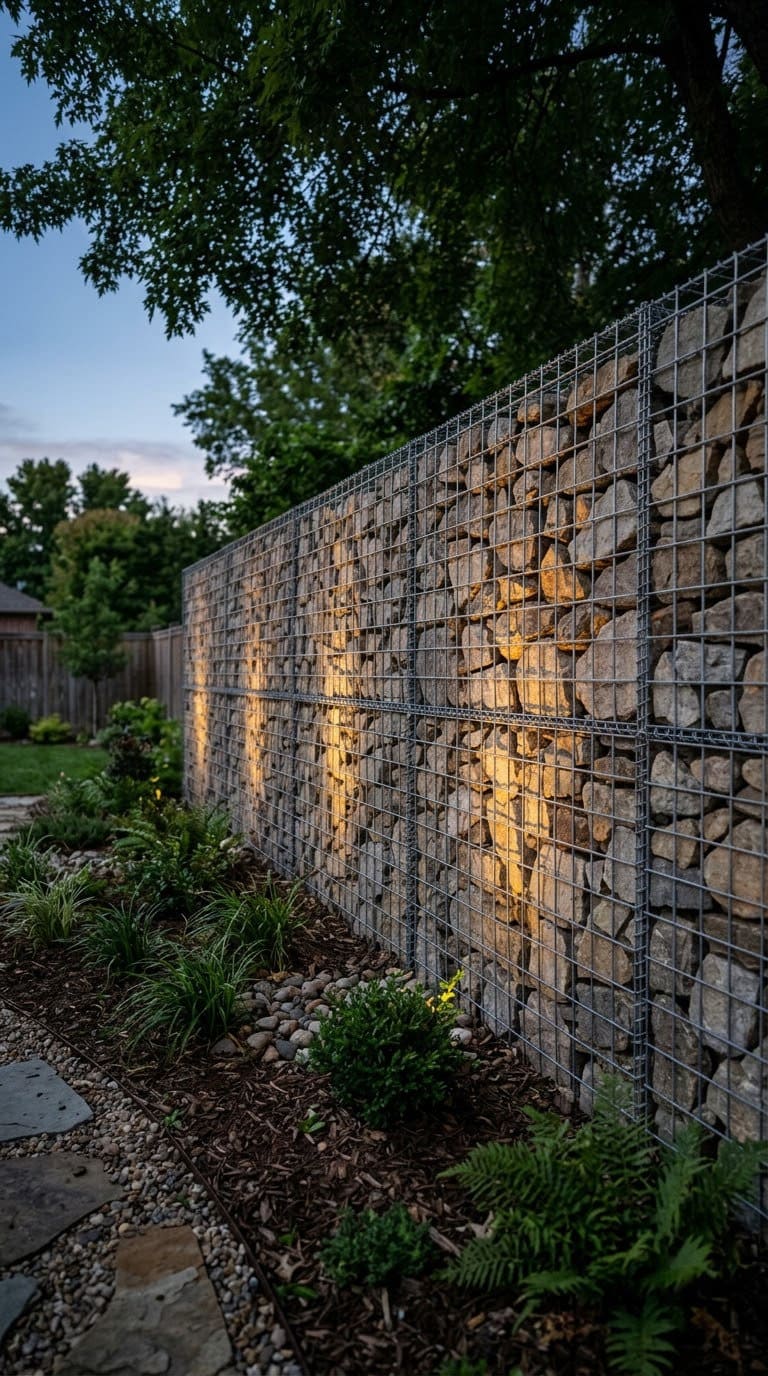
Run low-voltage LED strips behind the front mesh. The light grazes the stone and shows its texture.
Use outdoor-rated fixtures only. Hide the wire inside the cage before you add the fill.
Cost tier: medium.
9. Gabion Planter Box
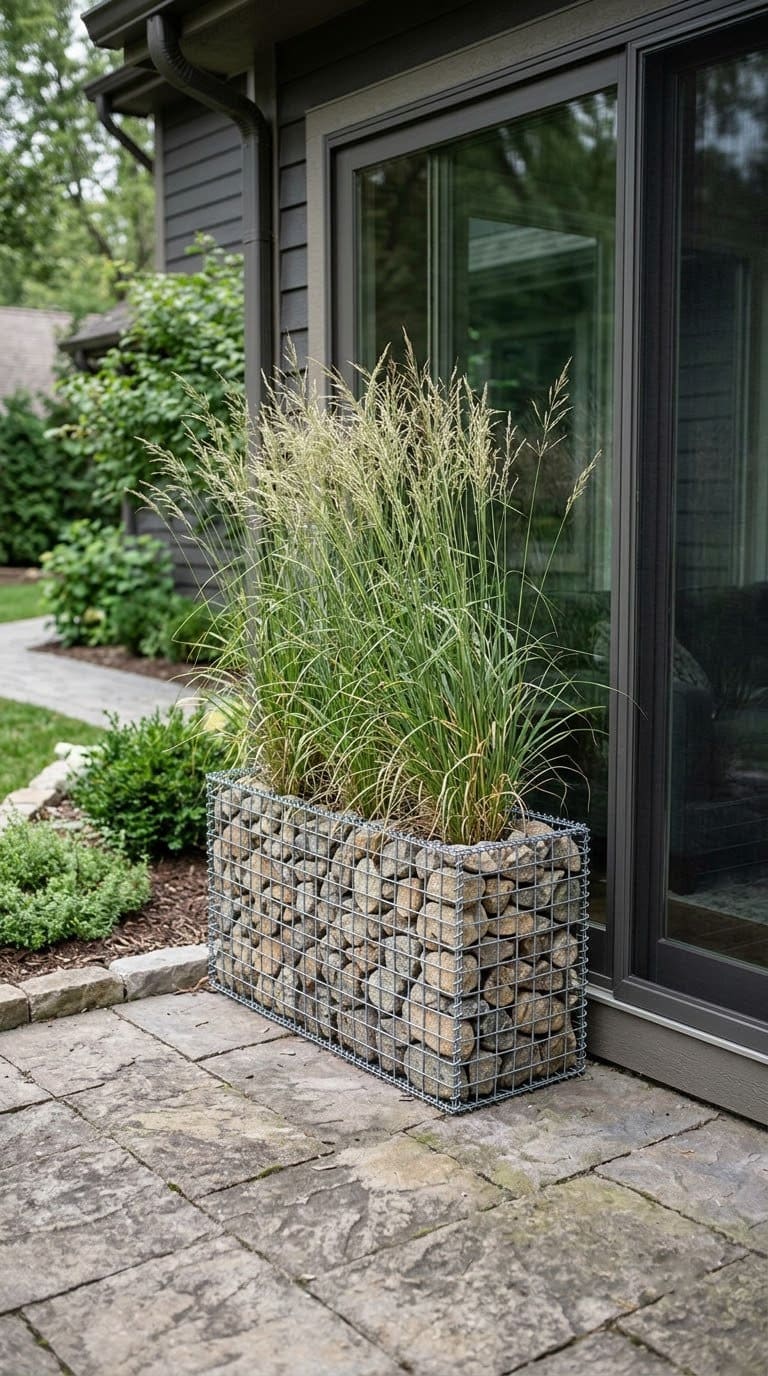
Line the inside of a short cage with fabric, then fill the middle with potting mix. Stone shows on the outside. Gardenista lists planters as a common gabion use.
Leave the bottom open so water drains. Choose plants that suit sun and wind.
Cost tier: low to medium.
10. Raised Bed Border
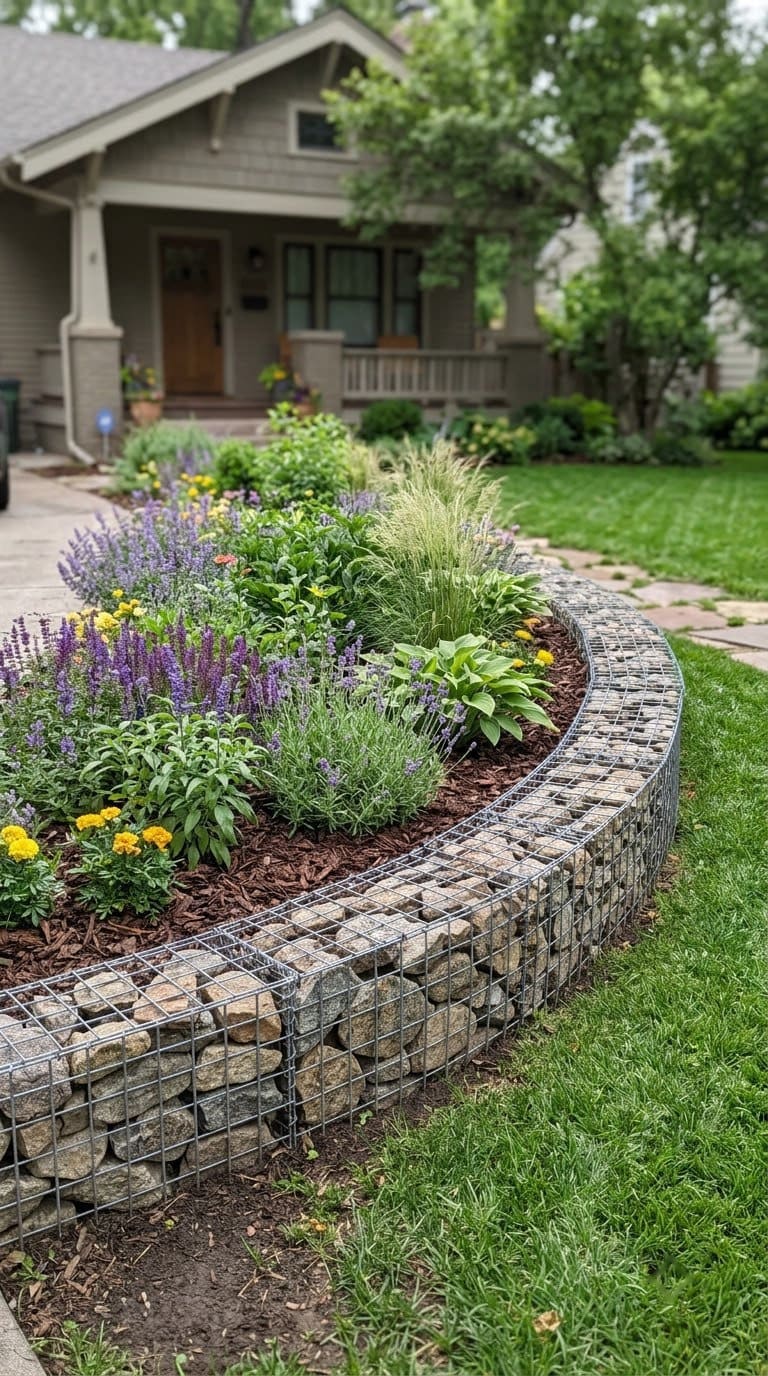
Use a low gabion as the edge of a raised bed. Line the inside with fabric to hold the soil.
We suggest flowers here. No source we found covers growing food next to galvanized mesh and fill rock.
Cost tier: medium.
11. Spiral Flower Bed
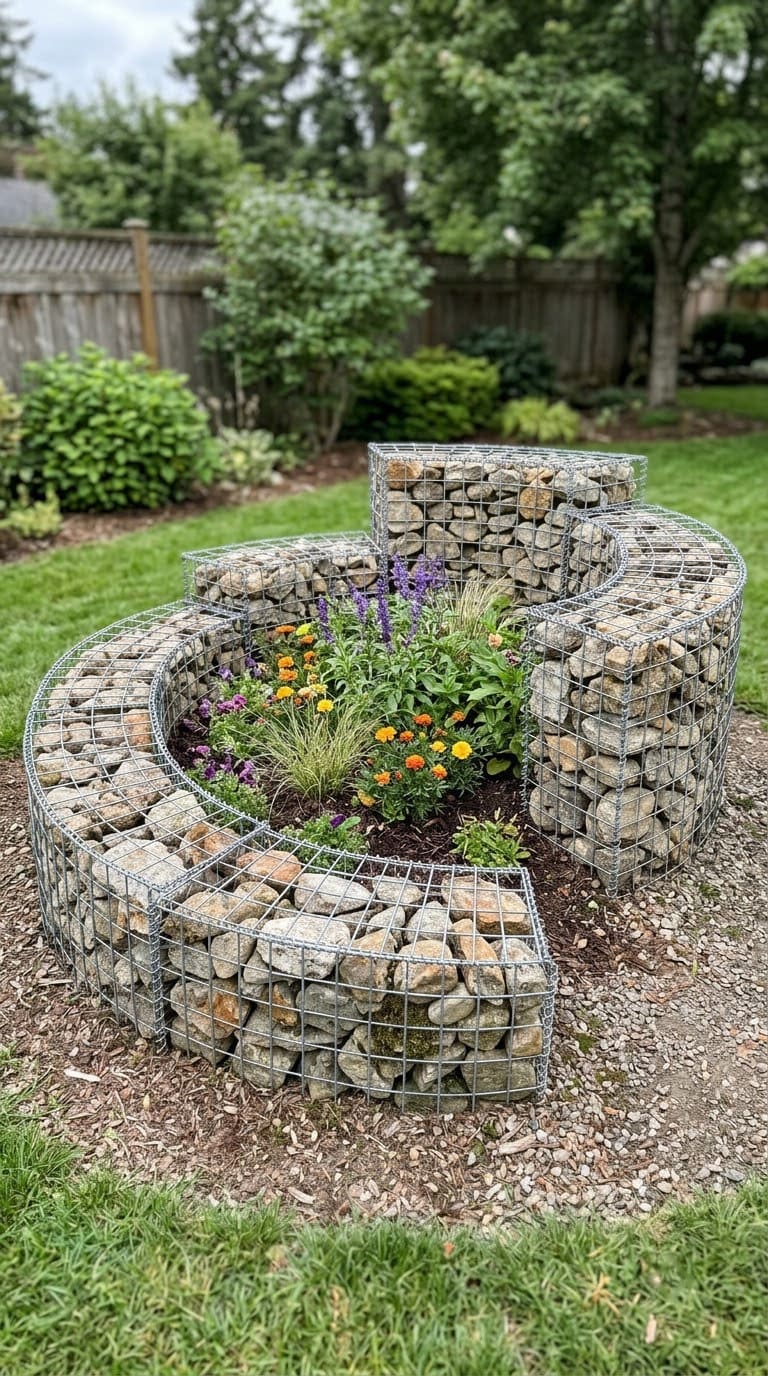
Build a spiral wall that rises toward the center. The tall center gets more drainage, and the low edge catches more water.
Plant drought-tolerant flowers at the top and moisture lovers at the base. Our rock garden ideas offer plant pairings.
Cost tier: medium.
12. Tall Column With Vertical Planting
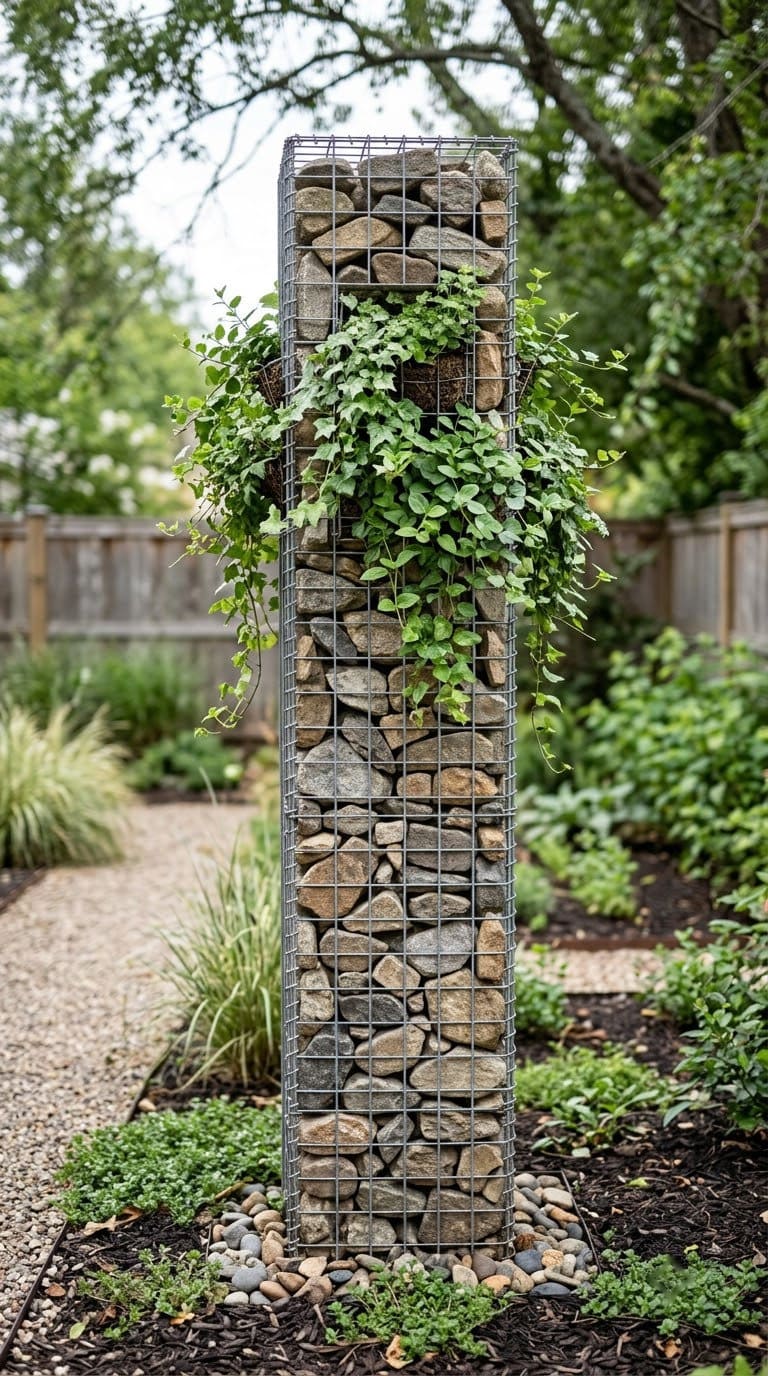
Make a tall, narrow column and leave pockets of soil at the top. Trailing plants then soften the stone.
Anchor tall columns well. A narrow tower can tip if the base is weak.
Cost tier: medium.
13. Water Feature Wall
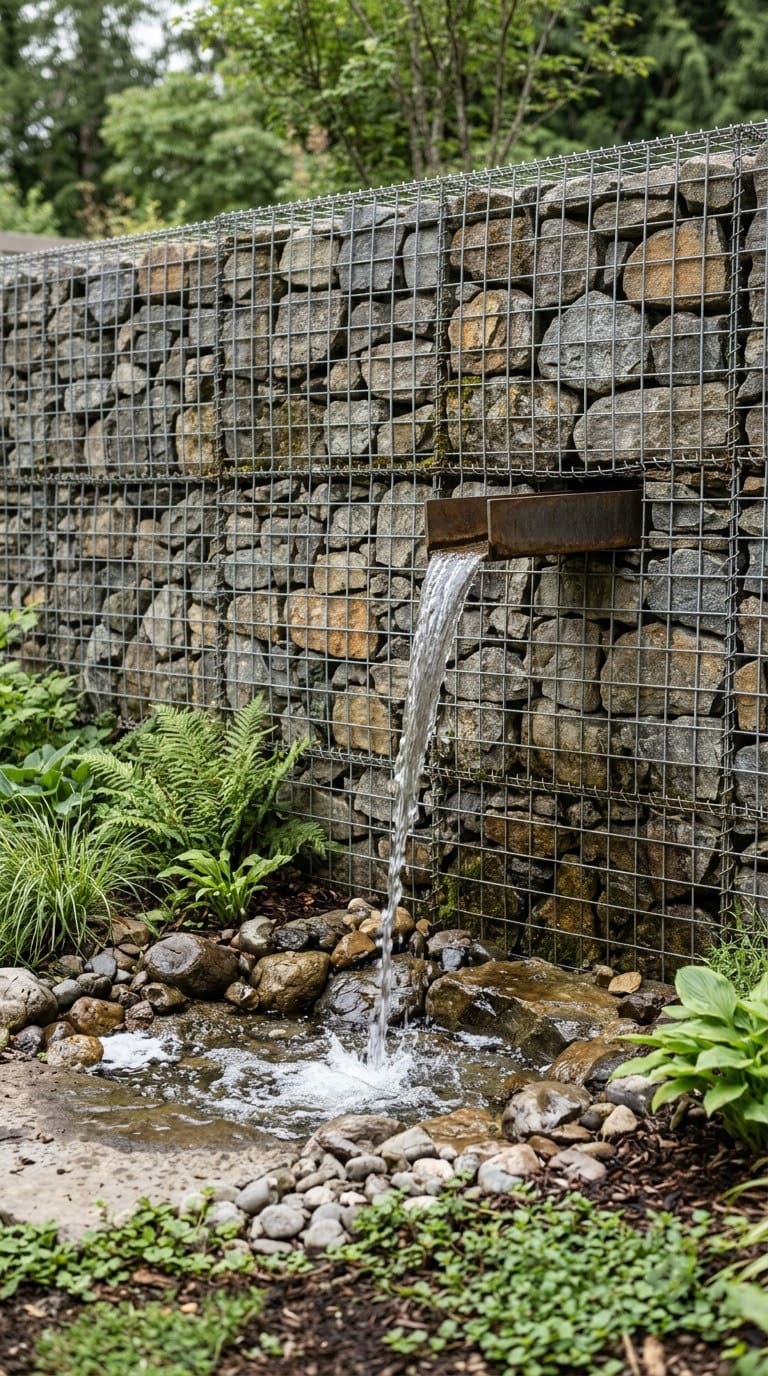
Water falls through the stone and into a basin. Gardenista says gabions drain freely and cannot be washed away by moving water.
Hide a pump in the basin. For more ideas, see our DIY water feature ideas.
Cost tier: high.
14. Pond Surround
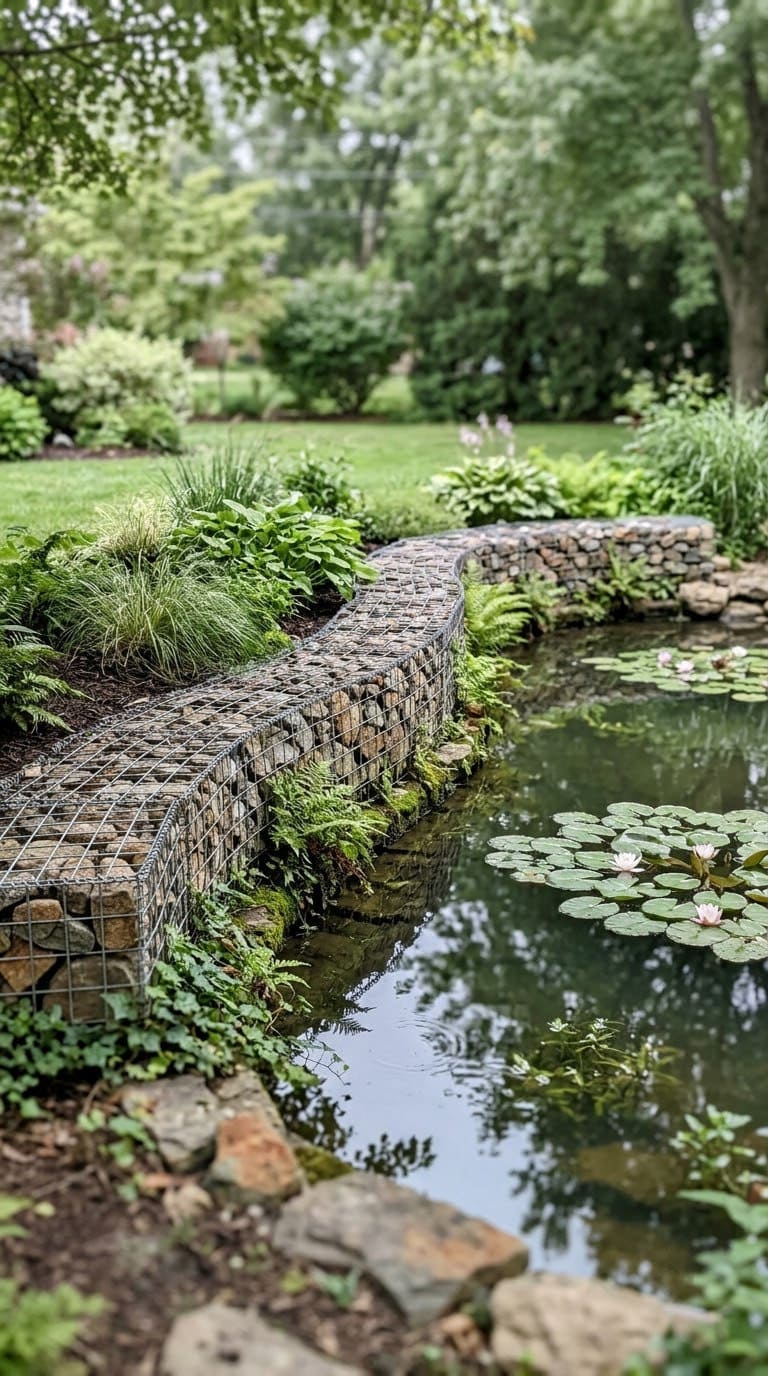
Use a low gabion to edge a pond. Gardenista lists pond surrounds as a gabion use. The stone hides the liner and gives frogs a place to rest.
Keep the cage above the water line. Our backyard pond ideas cover the pond itself.
Cost tier: medium.
15. Hose Tap Pillar
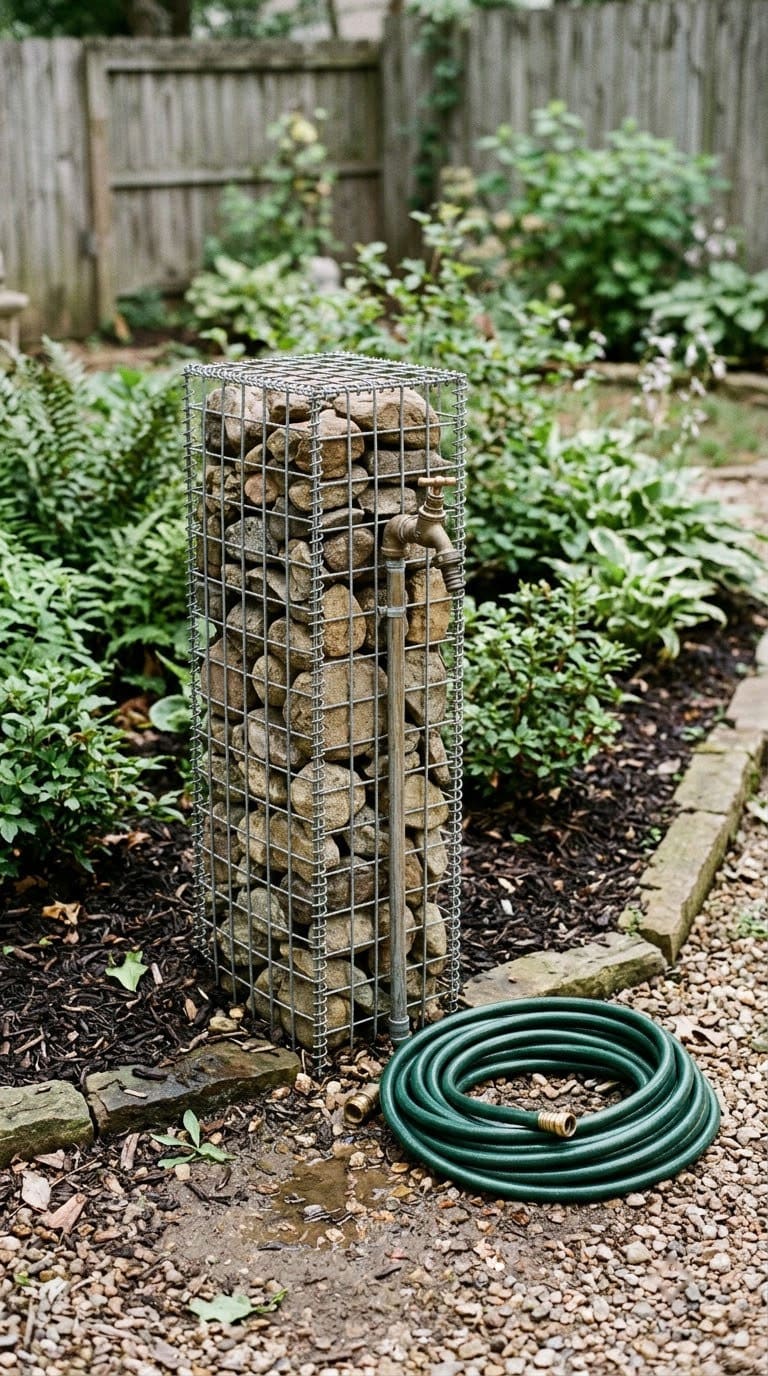
Gardenista lists pillars for water taps as a gabion use. A small pillar hides the pipe and holds the tap upright.
Plan the plumbing before you fill the cage. Let a plumber handle the line.
Cost tier: medium.
16. Fire Pit Surround
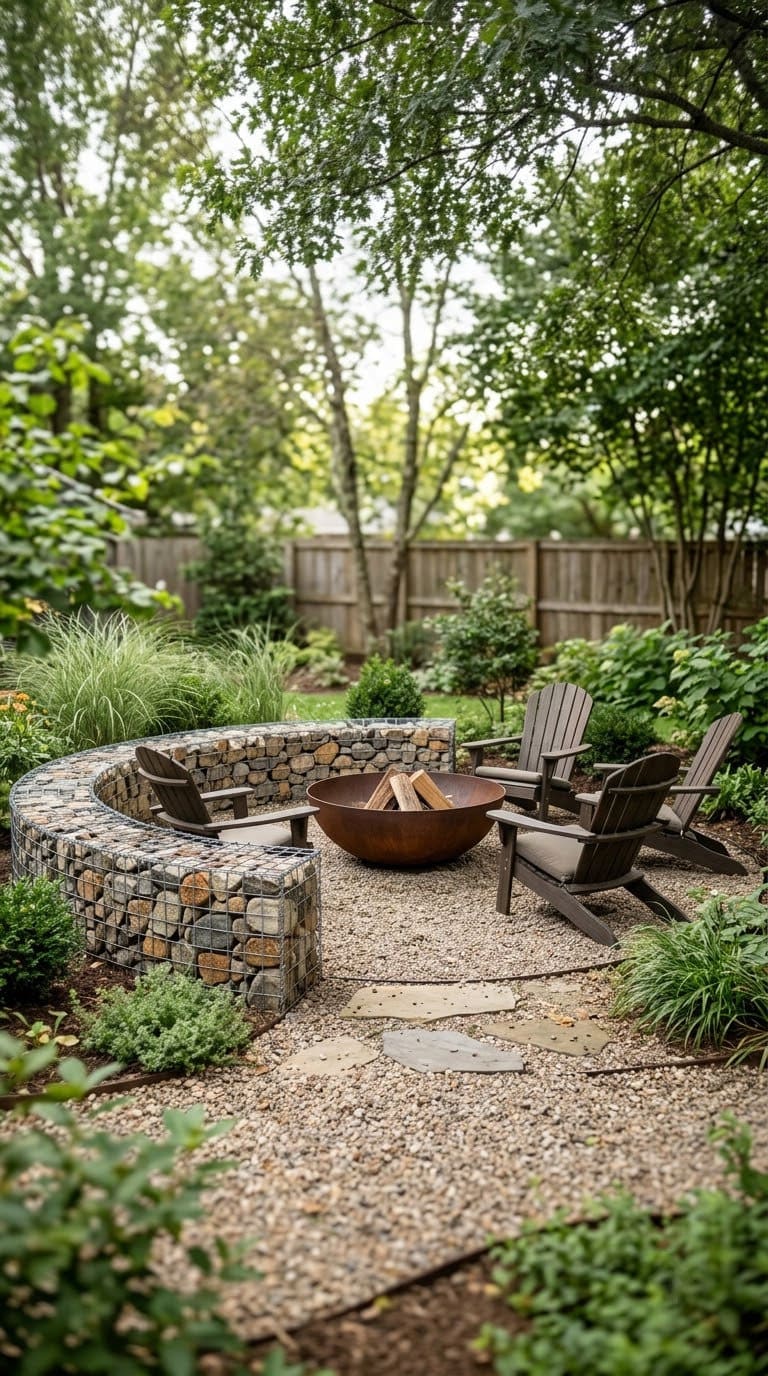
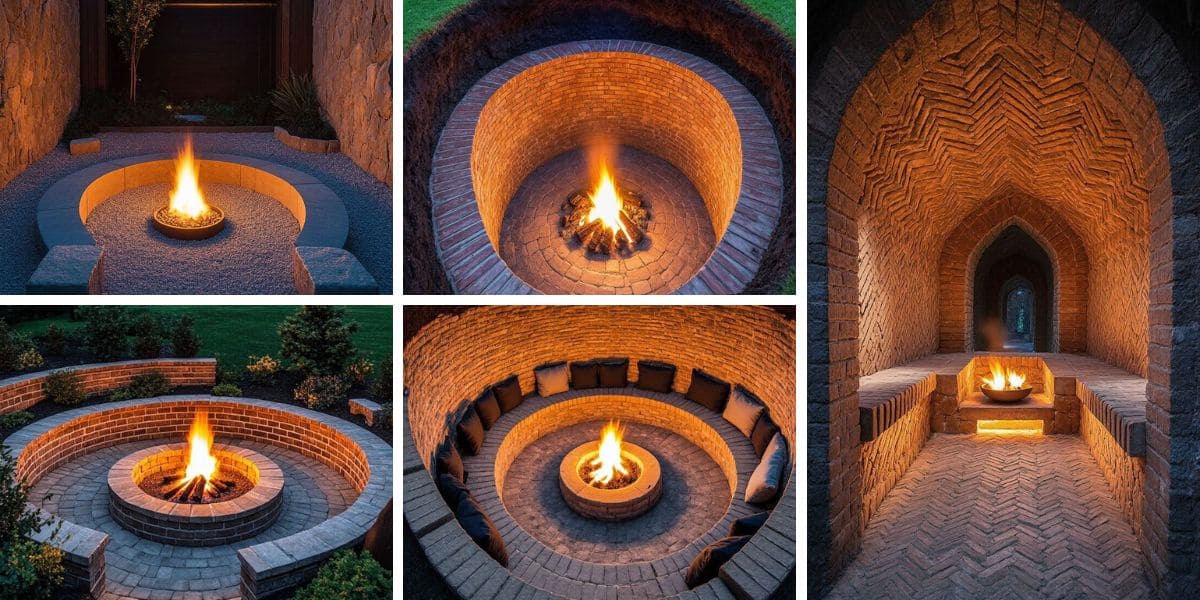
Gardenista lists fire surrounds as a gabion use. Keep the fire bowl set inside, not touching the cage, and keep the mesh away from direct flame.
Use heat-safe fill near the fire. Sources we found warn that river rock and limestone can crack when wet stone heats up. See our fire pit ideas.
Cost tier: high.
17. Outdoor Kitchen Base
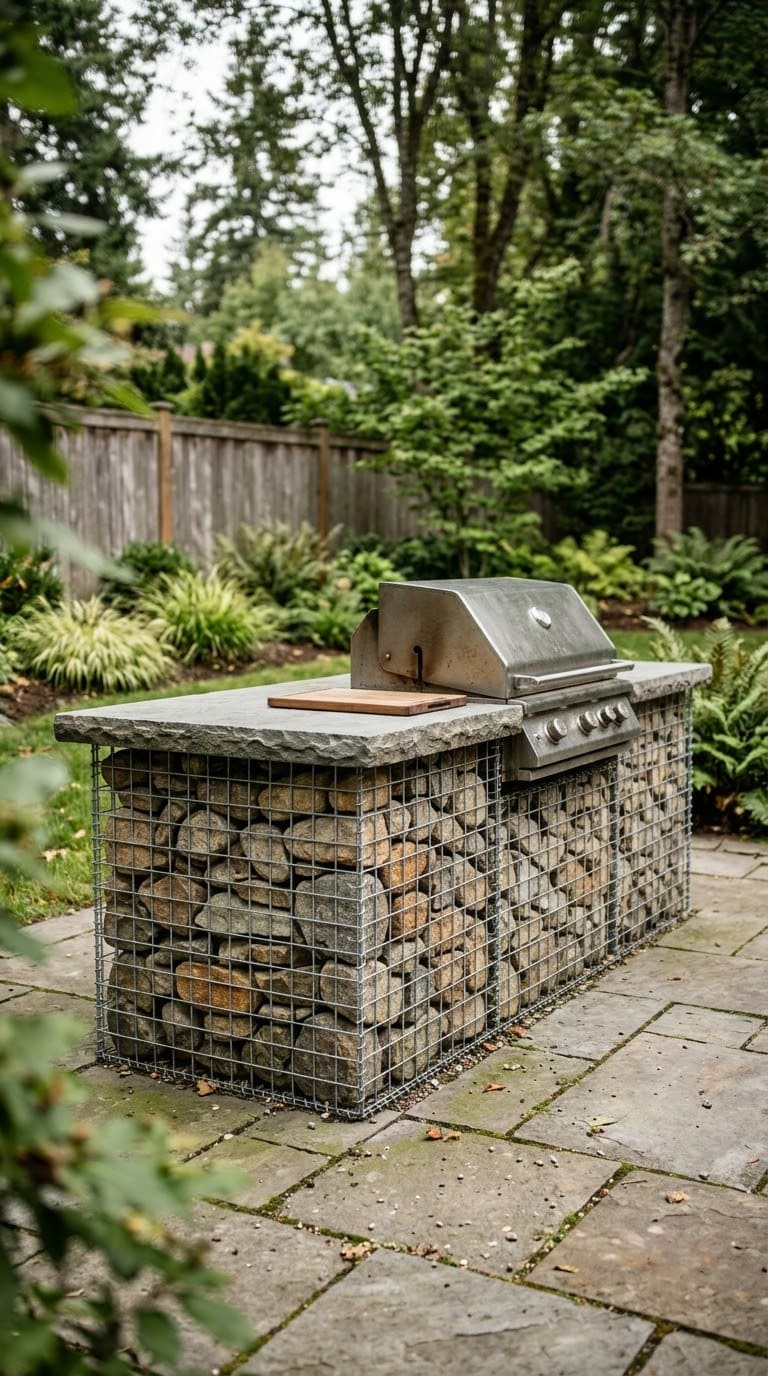
Use gabion boxes as the base of a counter. Cap them with a flat stone slab. The cages keep the counter airy and modern.
Keep a gas grill away from the mesh and the stone fill. Our best outdoor kitchen ideas cover layouts.
Cost tier: high.
18. Fence Panels With Posts
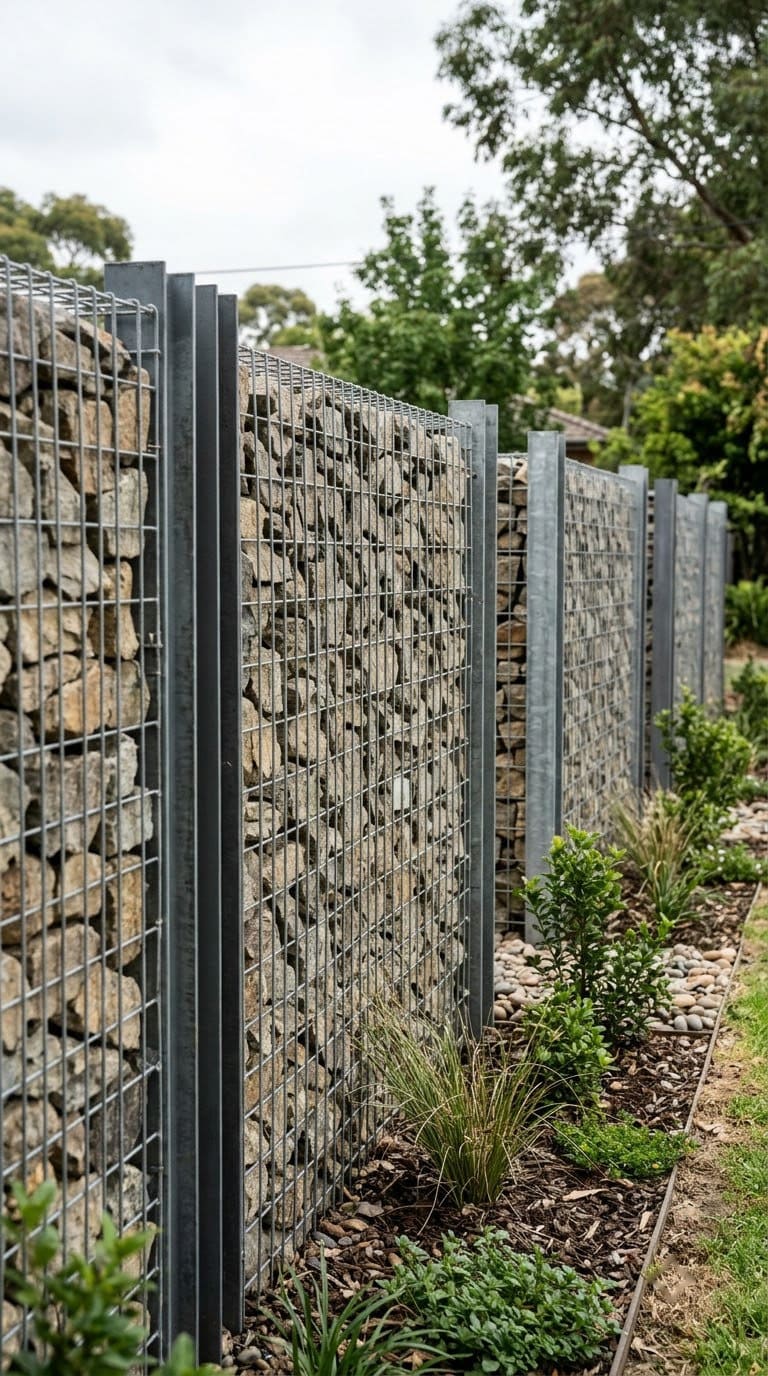
Fill narrow cages between steel or wood posts. Gardenista says fencing versions need a surrounding frame for rigidity.
Commenters in the Reddit thread below suggest building in short panels so one section can be fixed alone. See our gabion fence ideas and DIY fence ideas.
Cost tier: high.
19. Privacy Screen
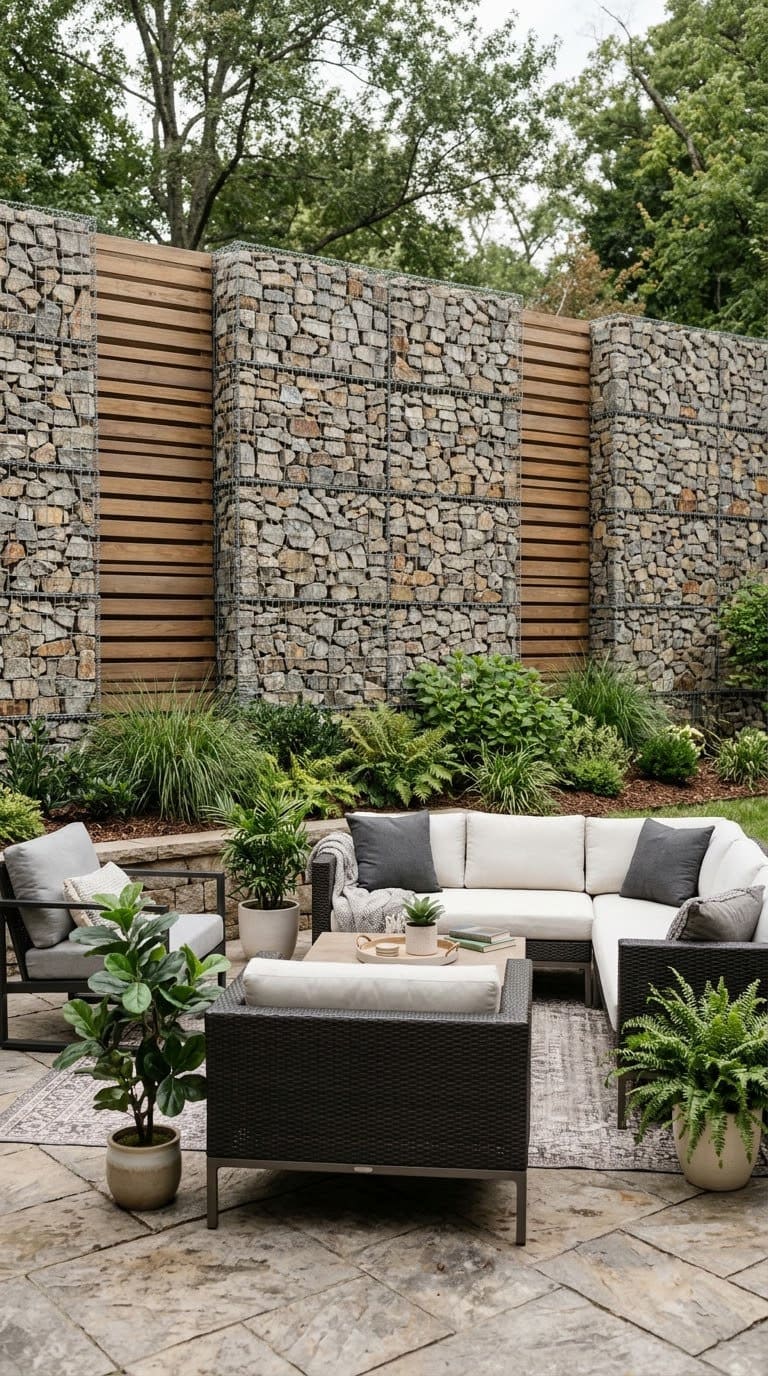
Make a tall, thin screen with gaps in the stone. It blocks sightlines but still lets air through.
Keep it inside height limits. Check local code for taller screens near a property line.
Cost tier: high.
20. Firewood Storage Wall
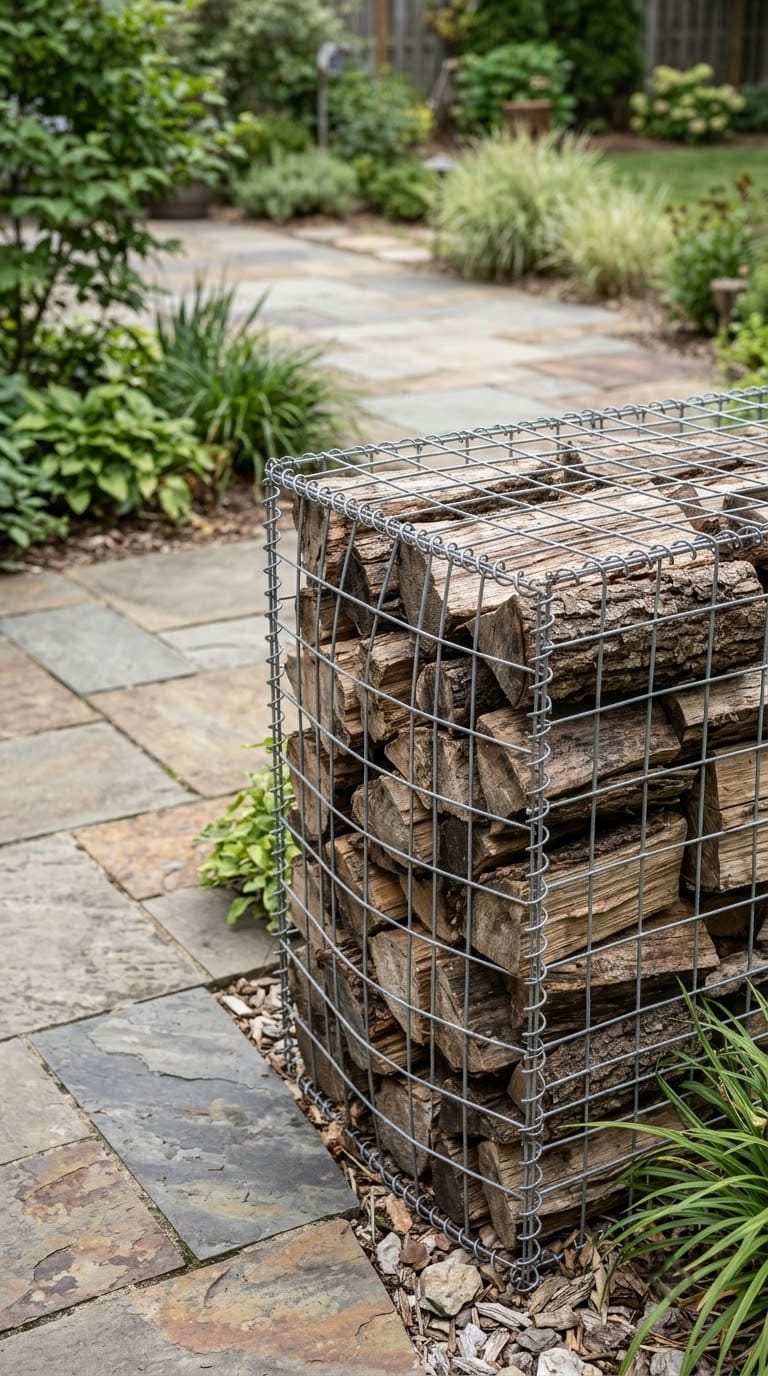
Fill a cage with split wood instead of stone. The mesh holds the logs, and air flows through to dry them.
Keep the wood off the ground on a gravel pad. See our outdoor firewood rack ideas.
Cost tier: low.
Which Gabion Project Fits Your Skill Level?
This table is our own planning guide. Heights and risks come from the sources above, and the skill ratings are general practice.
| Project | Typical height | Skill level | Main risk |
|---|---|---|---|
| Bench or seating wall | Knee-high | Beginner | Uneven base |
| Planter or bed edge | Under 2 ft | Beginner | Clogged drainage |
| Freestanding screen | Waist to head height | Intermediate | Tipping |
| Fire surround | Knee-high | Intermediate | Heat and fill choice |
| Retaining wall | Under 5 ft | Advanced | Water pressure |
| Tall wall with slope or building above | Over 5 ft | Hire an engineer | Failure |
How Do You Build a Simple Gabion Step by Step?
Start by marking the footprint with stakes and string. Dig out soft or organic soil. Gabion1 says to replace it with compacted granular fill.
Spread two to four inches of compacted road base and level it. Lay geotextile fabric where soil will touch the stone. Set the empty cages in place and tie them together with the wire the maker supplies.
Fill the cage in layers. Hand-place the stone on the front face so the gaps look tight. Add braces across the cage as you go, so the front does not bulge.
Close the lid, tie it down, and finish with a cap if you want a seat. Check that water can leave the back of the wall. A clogged drain is the most common way a wall fails.
How Do You Care for a Gabion Over Time?
Gabion1 says the wall drainage must be inspected and maintained every year, and again after heavy rain. Check the outlet and clear any silt or leaves.
Look at the mesh each season. Gabion1 notes that corrosive soil or groundwater should be kept away from the cage. Replace or repair any section where the wire is rusted through.
Trim vines that grow into the stone. Gardenista says silt and plants filling the gaps can strengthen a wall over time. That helps stability, but plants with deep roots can still push stones out of place.
Common Mistakes to Avoid
Skipping the base is the first mistake. Gabion1 says soft soil must be removed and replaced with compacted fill.
Forgetting drainage is the second. Gabion1 says drainage design is just as important as the wall design.
Building too high is the third. Gabion1 says large walls and step slopes need an engineer. Gardenista says retaining walls need an engineer or landscape architect.
Expecting a barrier is the fourth. In a Reddit thread on gabion front fences, a self-described building surveyor wrote that gabions will not stop a vehicle. The r/AusRenovation thread is anecdotal, but the point holds for a mesh and stone wall.
Ignoring wildlife is the fifth. Gardenista says gabions can shelter unwanted wildlife. Ive Haugeland, quoted there, says habitat is good if the people living there are fine with it.
FAQ
Do gabions need a concrete foundation?
Usually not. Gabion1 says most walls need only a compacted road base two to four inches deep. Soil must bear at least 100 kPa.
How much does a gabion wall cost?
HomeGuide puts installed stone walls at $10 to $40 per square foot. Gardenista says to figure about $35 per cubic yard for standard cages.
Do gabions need drainage?
Yes. Gabion1 says drainage is just as important as the wall design and that fabric should separate soil from stone.
When do I need an engineer?
Gabion1 says large walls, step slopes, or buildings above a wall need a geotechnical engineer. Check local code for permit height limits.
What is the cheapest fill?
Gardenista says free recycled concrete costs far less than slate, and Kettelkamp used crushed concrete from nearby road work.
Never miss an update — choose FarmFoodFamily as your preferred source on Google.
How it works: Tap the button below to open Google's settings page, then check the box next to FarmFoodFamily.
Tap the checkbox to turn it blue — that's how you know it's set.