
95+ Simple and Inexpensive DIY Fence Ideas For Your Backyard, or Privacy
Every yard needs a fence for a different reason, and that reason should drive the material choice more than the picture that looks nicest. What follows is organized in three parts: the questions people actually search before buying anything, a directory of real fence types worth knowing the tradeoffs on, and a handful of specific…

Never miss an update — choose FarmFoodFamily as your preferred source on Google.
How it works: Tap the button below to open Google’s settings page, then check the box next to FarmFoodFamily.
Tap the checkbox to turn it blue — that’s how you know it’s set.
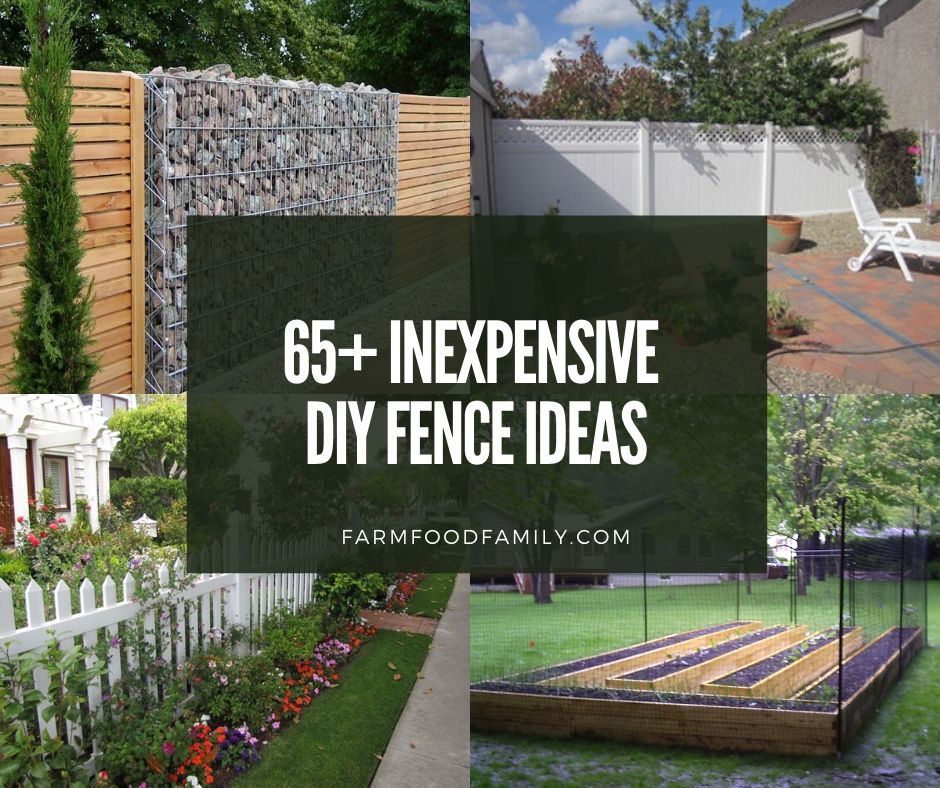
Every yard needs a fence for a different reason, and that reason should drive the material choice more than the picture that looks nicest. What follows is organized in three parts: the questions people actually search before buying anything, a directory of real fence types worth knowing the tradeoffs on, and a handful of specific DIY builds with real instructions behind them.
Fence Basics
What is a fence?
A fence marks a property boundary and controls what moves across it, people, pets, wildlife, in either direction. Unlike a wall, a fence doesn’t need a poured foundation, which is part of why it’s one of the more approachable DIY structures for a homeowner to take on.
What does a purple fence mean?
It’s a real legal signal, not decoration. Purple paint marks on a post, tree, or fence function as a legal “no trespassing” notice in roughly 22 U.S. states, a rule generally traced back to the late 1980s. The exact meaning varies by state: most treat it as a general no-trespassing marker, while a few (North Carolina among them) apply it specifically to hunting, fishing, and trapping rather than trespassing in general. If a property boundary shows purple paint marks, the safest assumption is to treat it exactly like a posted sign and check local law before assuming otherwise.
What are the different kinds of fences?
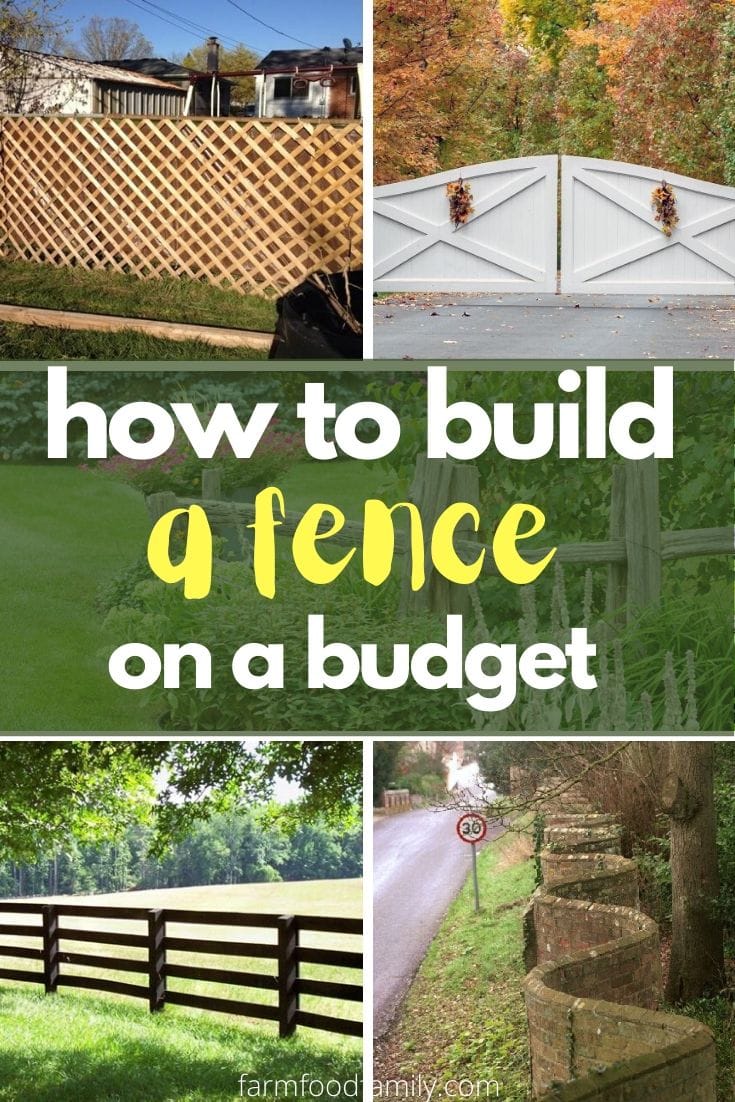
Fences fall into two broad categories. Live fences use plants, shrubs, hedges, or trees trained into a boundary line. Static fences use manufactured materials: wood, vinyl, metal, wire, or masonry.
Most yards end up mixing the two, a living hedge along one side and a built fence along another, more than committing entirely to one approach.

What is the strongest type of fence?
Wrought iron holds up under the widest range of conditions and resists both weather and pest damage better than most alternatives, which is part of why it remains a common choice for security-focused fencing. It’s also one of the pricier options, so “strongest” and “most practical for a typical backyard” aren’t always the same answer.
Answer 4 quick questions and get matched to the exact fix for your yard — drainage, budget, layout, or something else entirely.
Take the Free Quiz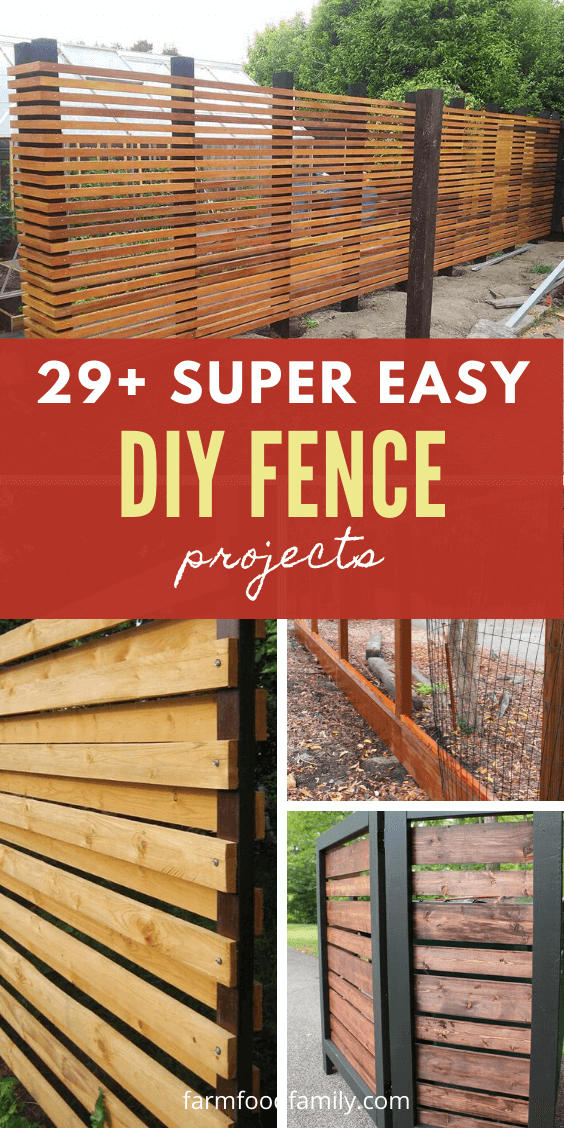
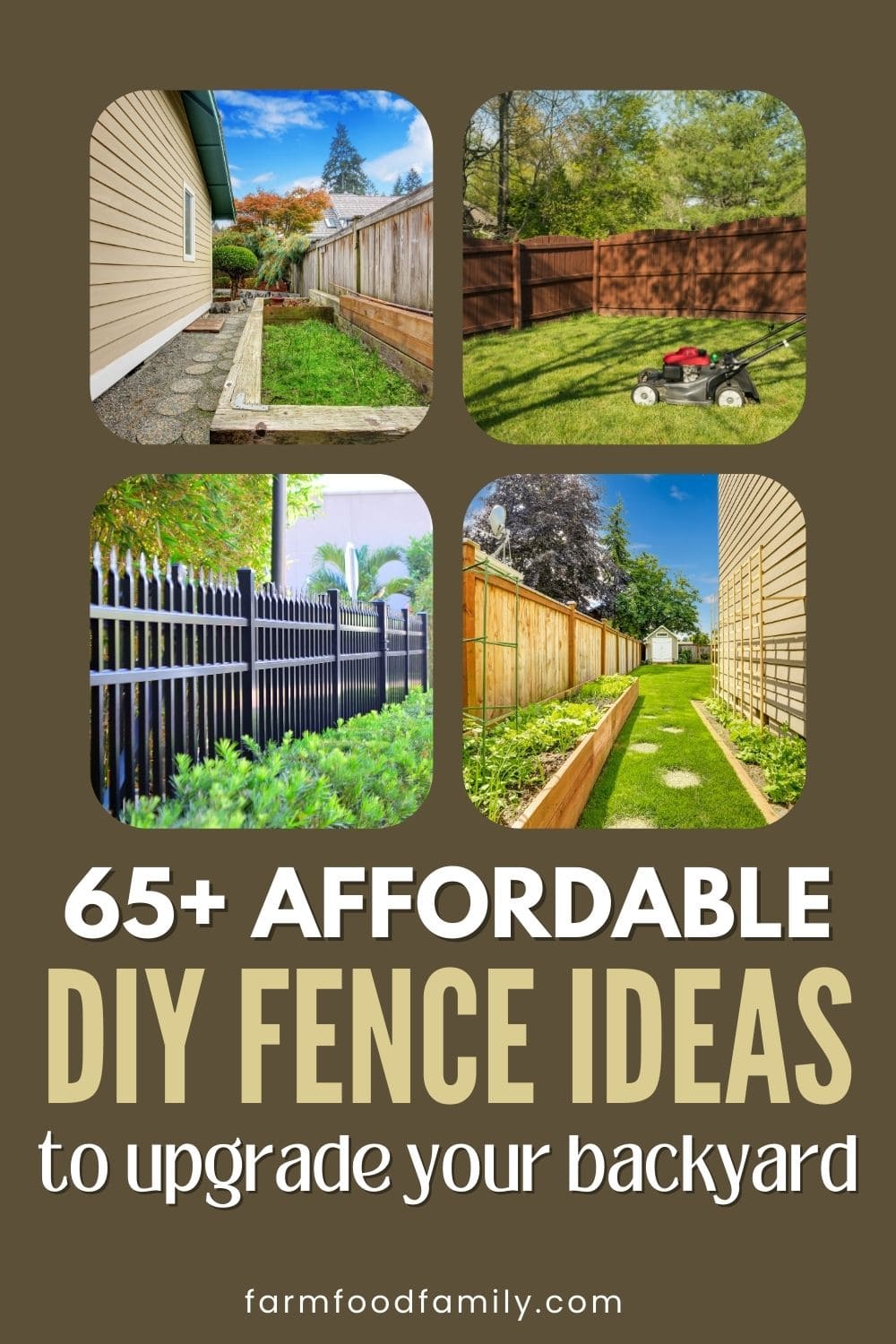
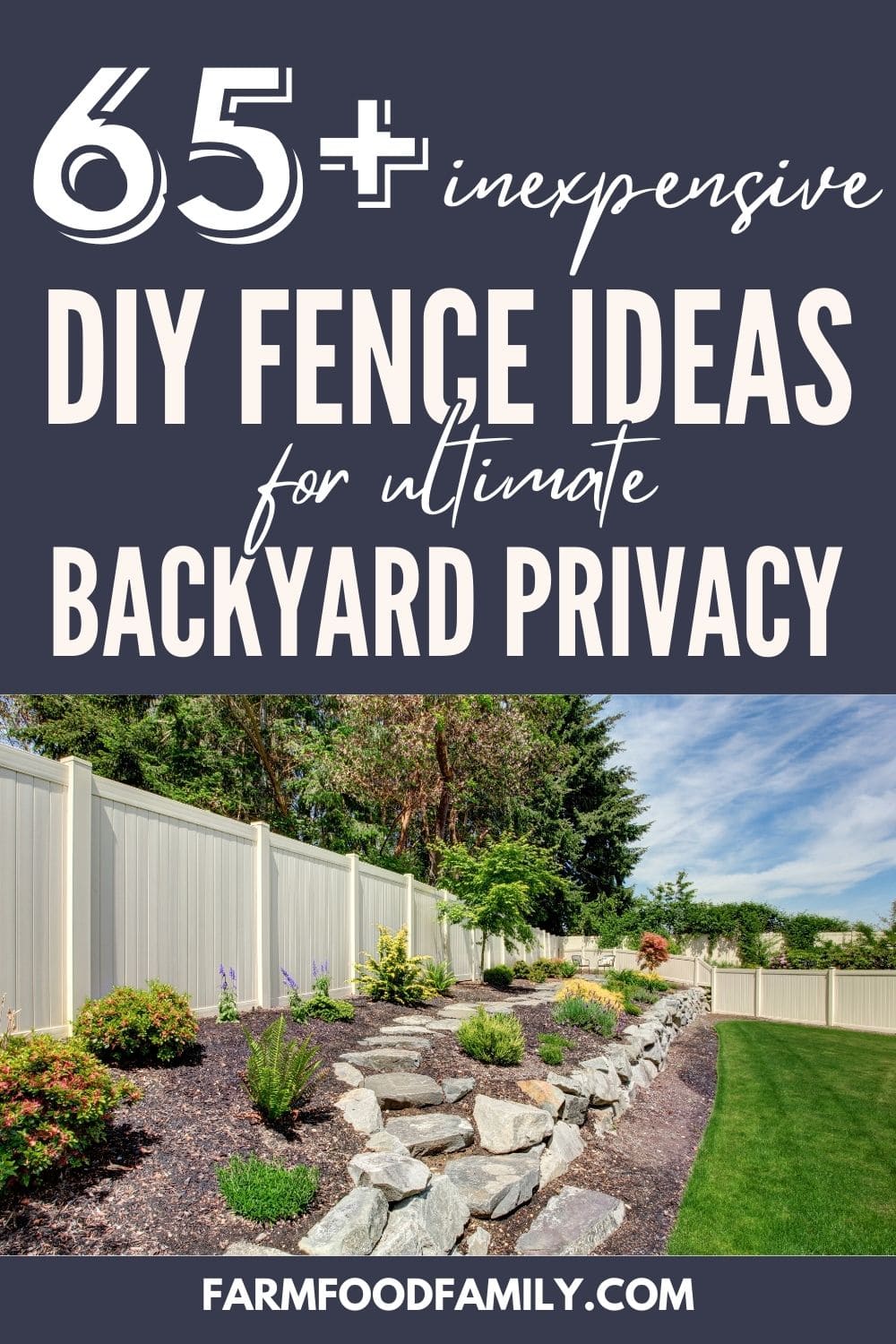
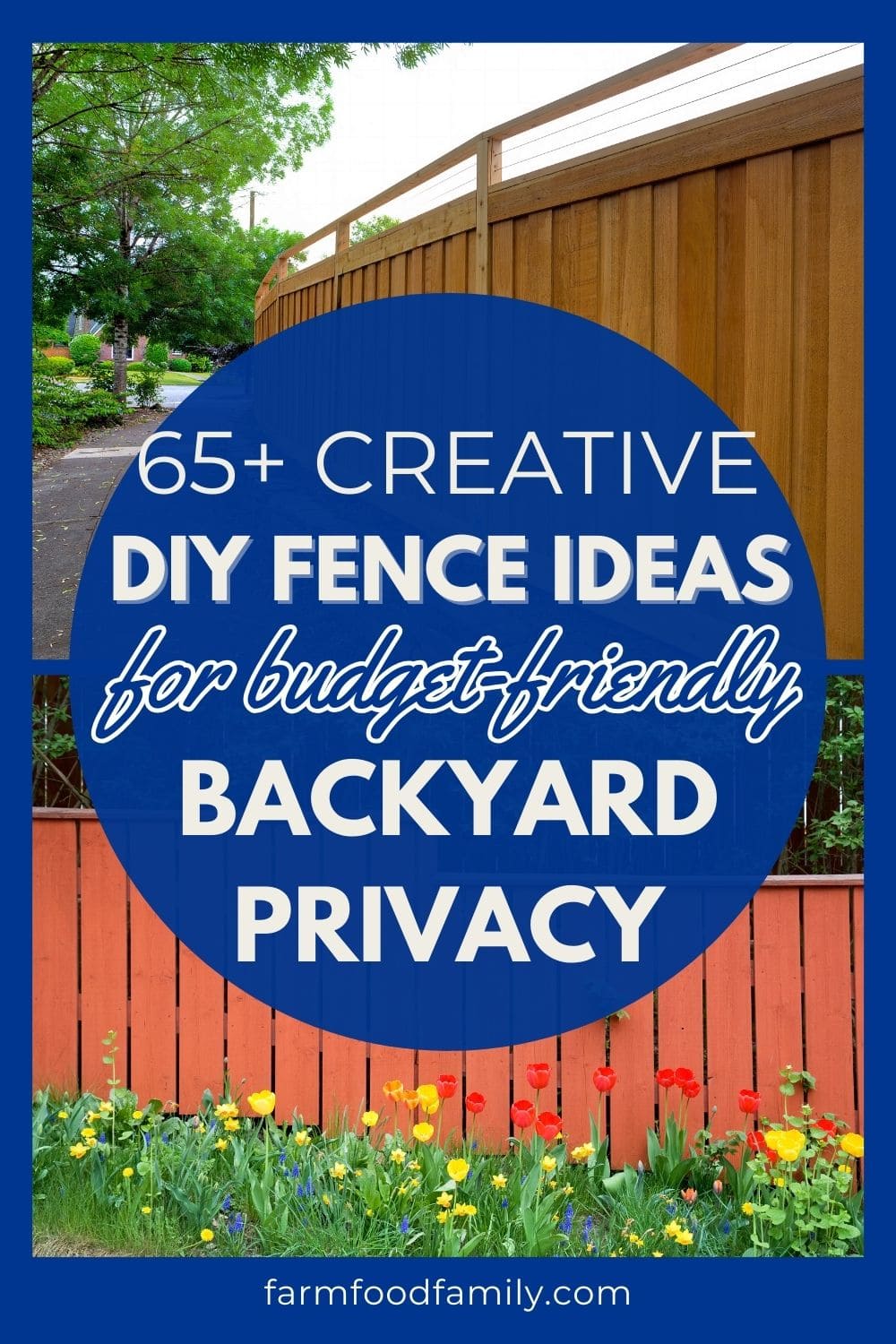
What is the easiest fence to install?
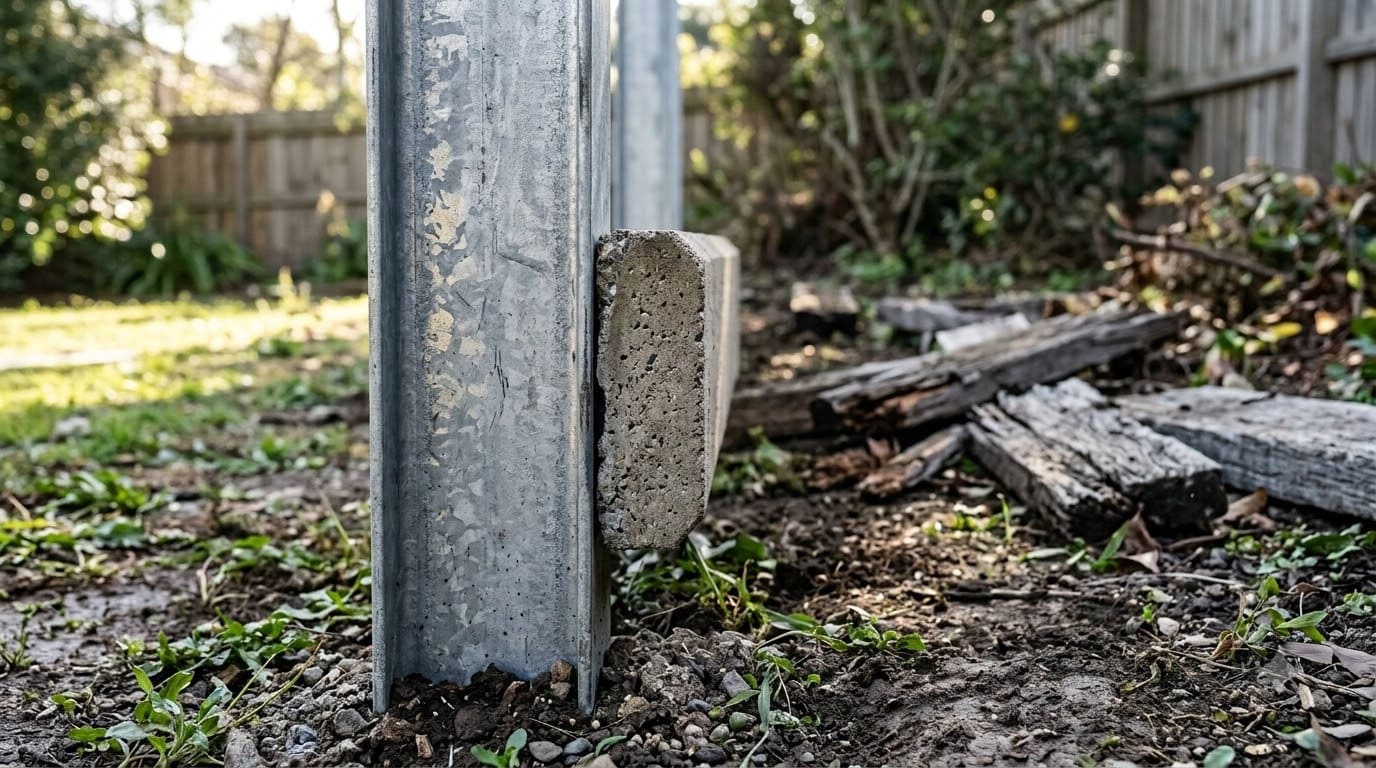
Aluminum panel systems and pre-made no-dig steel panels are both genuinely fast builds since they skip welding and, in the no-dig case, skip digging post holes entirely. One real DIY project on a 4-foot-high no-dig steel fence ran about $1,200 in materials, compared to $8,000 to $12,000 in contractor quotes for roughly 100 feet of comparable fence, real numbers worth knowing before assuming a no-dig system is a compromise rather than a genuine option.
What’s the best material for fencing, and what lasts the longest?
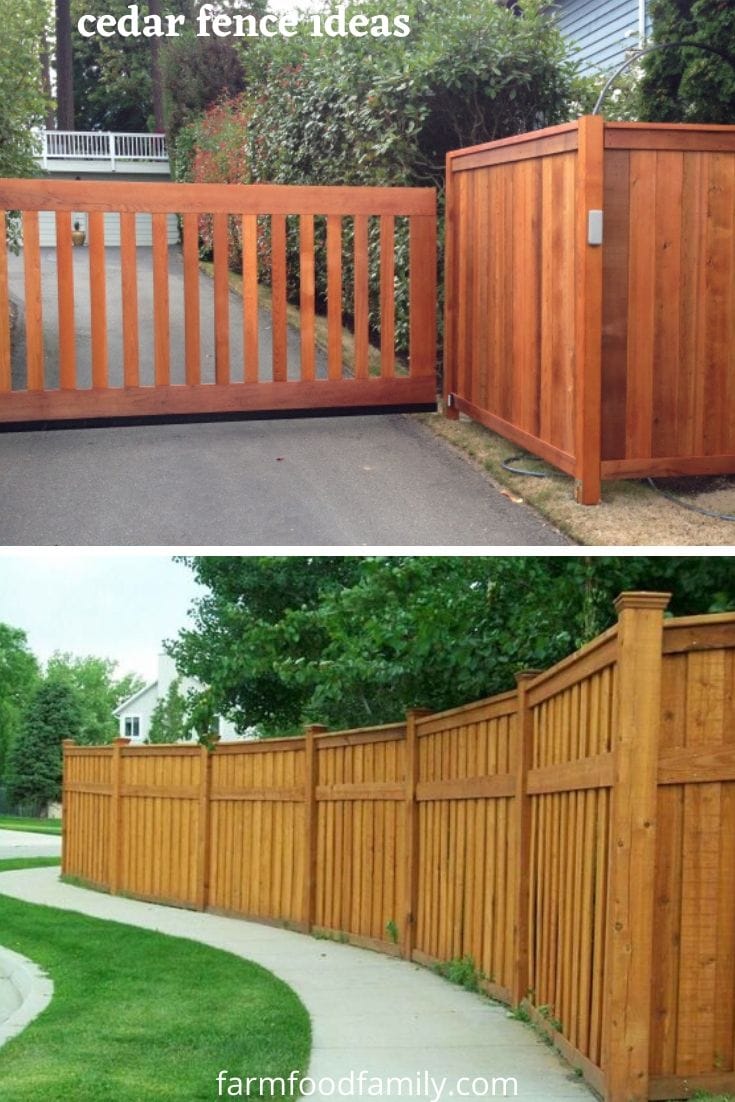
Vinyl, cedar, and wrought iron are the three materials most likely to still look good a decade or two in. Wrought iron and cedar both typically last 15 to 20 years with reasonable upkeep; vinyl can run closer to 30 years and needs the least maintenance of the three, which is a big part of why it’s become the default choice for a lot of homeowners who don’t want an ongoing project.
How much does a backyard fence actually cost?
Real 2026 pricing runs $20 to $60 per linear foot installed, and material choice moves that number a lot more than anything else: chain link runs $8 to $35 per foot, wood $10 to $45, vinyl $30 to $60, wrought iron $30 to $100 or more. Labor typically accounts for about half the total cost. A full residential project usually lands between $4,000 and $12,000, though a real DIY build can undercut that dramatically: the no-dig example above saved roughly $7,000 to $11,000 against contractor quotes for a comparable run.
How far apart should fence posts be?
For wood and vinyl fencing, 6 to 8 feet apart is the standard spacing, closer than that wastes material, farther apart weakens the structure. Other materials, chain link and wire systems especially, can generally go 8 to 10 feet between posts.
What is the best color to paint a fence?
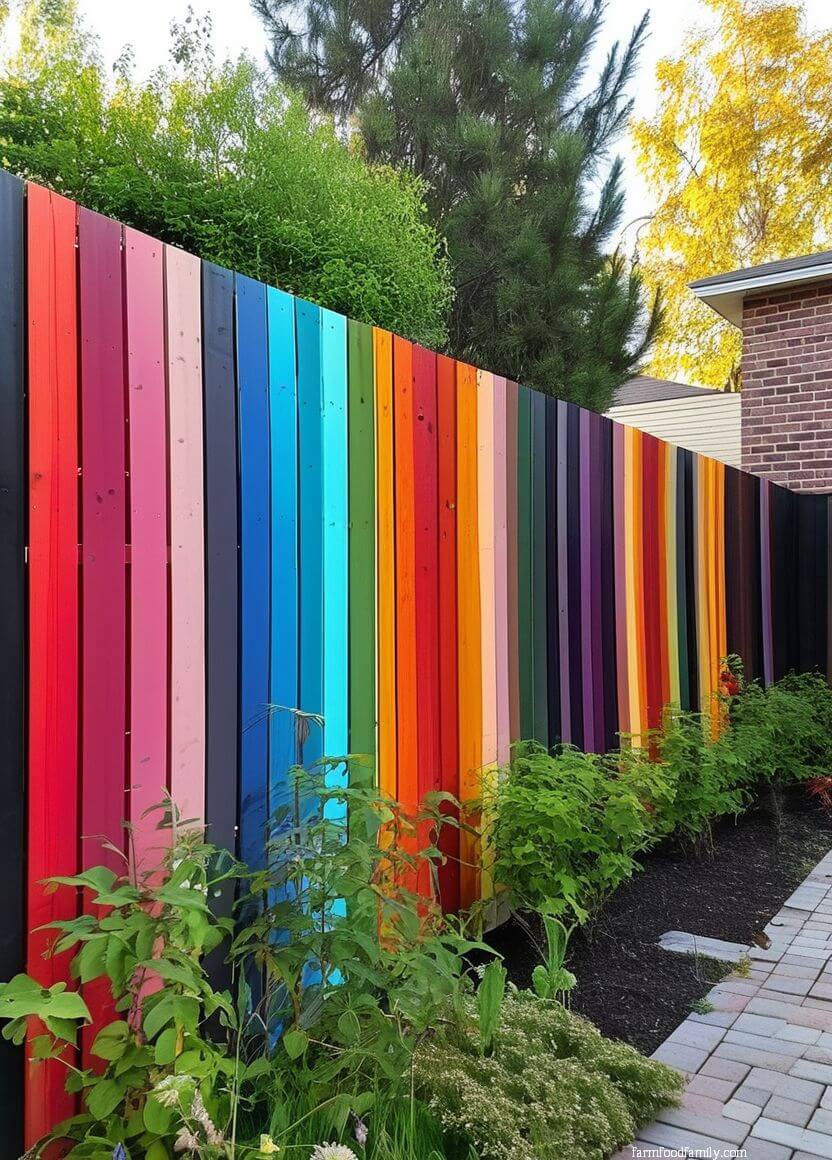
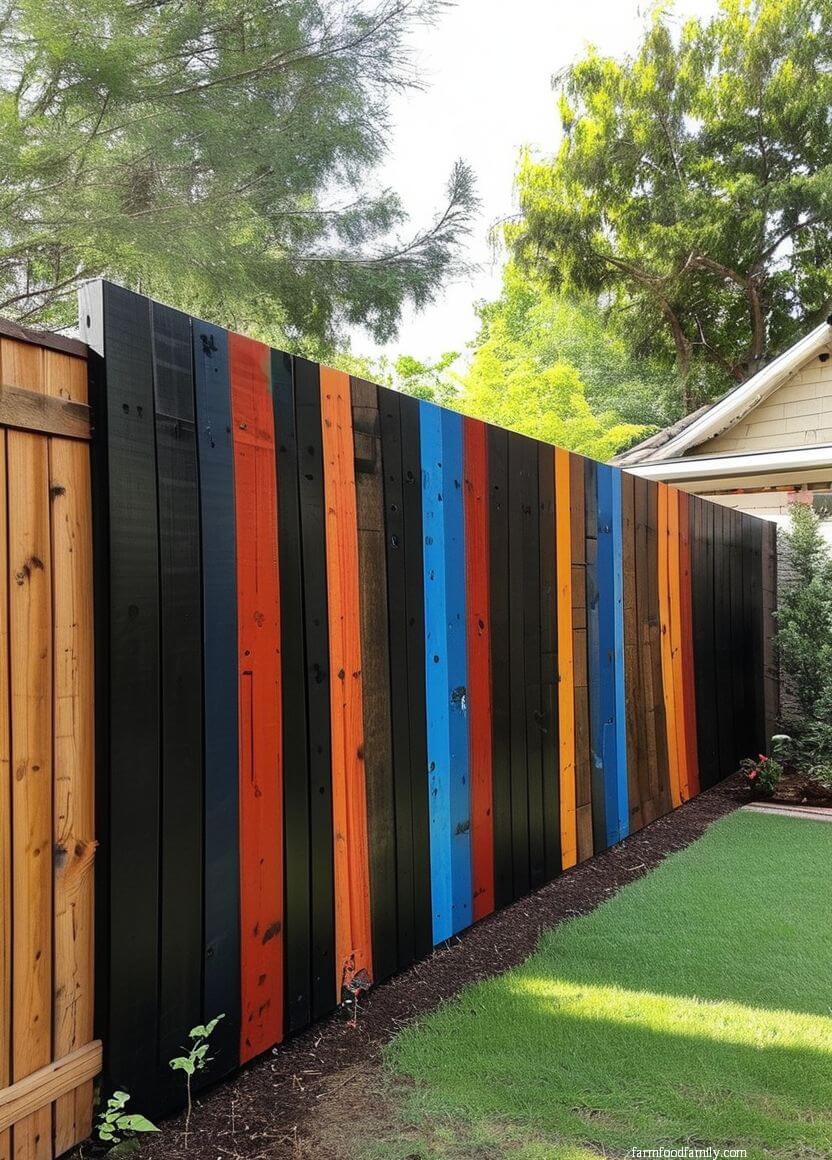
Neutral tones (white, gray, black, natural wood stain) hold resale value best and blend with the widest range of house colors. That said, a fence is also one of the lower-stakes places to take a real color risk, since repainting a section of fence is a much smaller project than repainting a house if the color doesn’t work out.
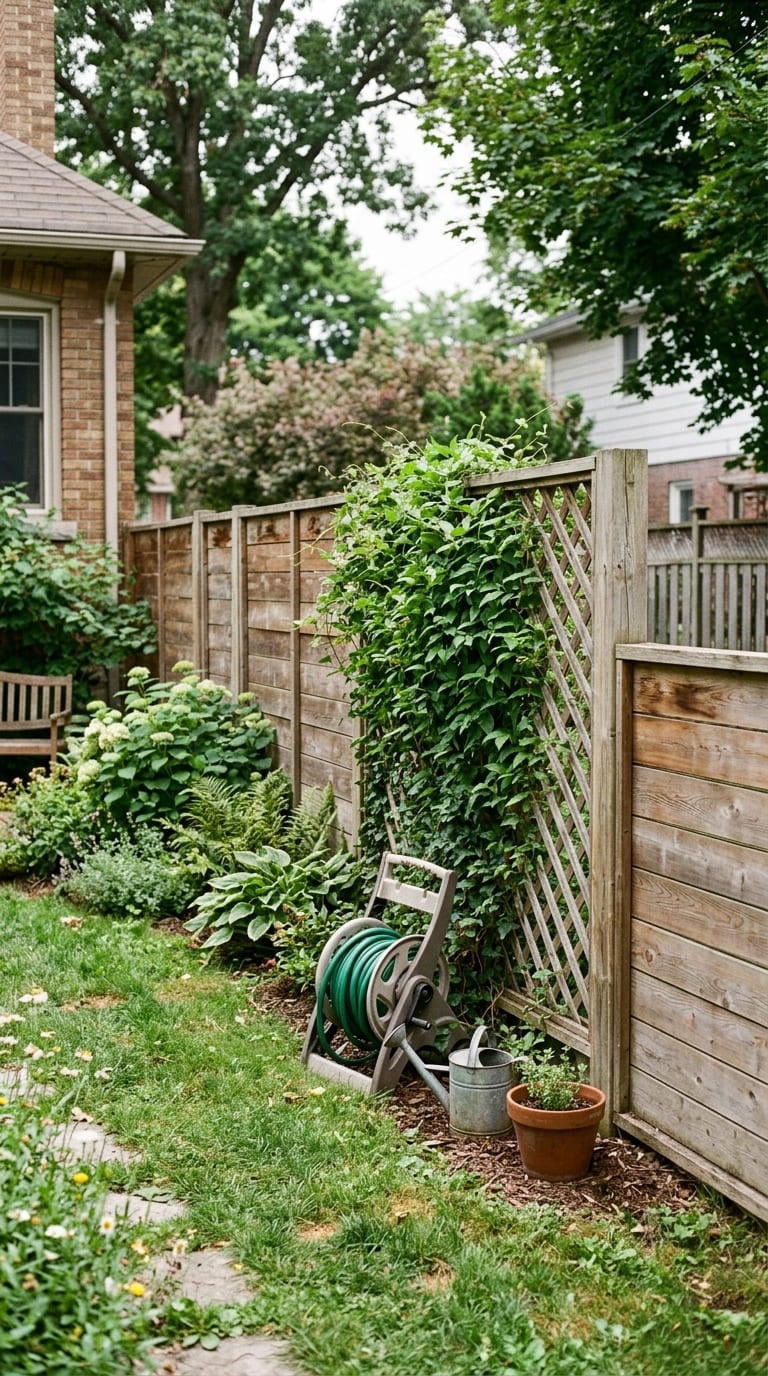
How do you get privacy on a fence, and what’s the best type of privacy fence?
Live fences (dense shrubs or trained hedges) are the cheapest real option and can be shaped into a specific look over time, but they take years to fill in completely. For an immediate, built solution, add height and coverage to an existing fence with lattice panels, angled slats, or a woven reed or bamboo screen, all of which block sightlines without requiring a full fence replacement.
Interior/landscape designer Katherine Aul Cervoni of Staghorn NYC makes the case for a built fence specifically in tight spaces: “Context is everything! In smaller gardens, I almost always opt for a fence when privacy is the main factor,” partly because, as she puts it, “it’s possible to be very precise with the height of your fence from day one” in a way a growing hedge can’t guarantee.
Most yard problems trace back to one specific, fixable cause. Find yours in 4 quick questions.
Take the Free QuizSkip anything marketed as a security deterrent, razor wire, broken glass set into the top of a wall, for a residential privacy fence. Those solve a different problem (deterring intruders) and are restricted or outright illegal in many jurisdictions specifically because of the injury risk to anyone who touches them, including a neighbor’s kid or a delivery driver reaching over the fence line.
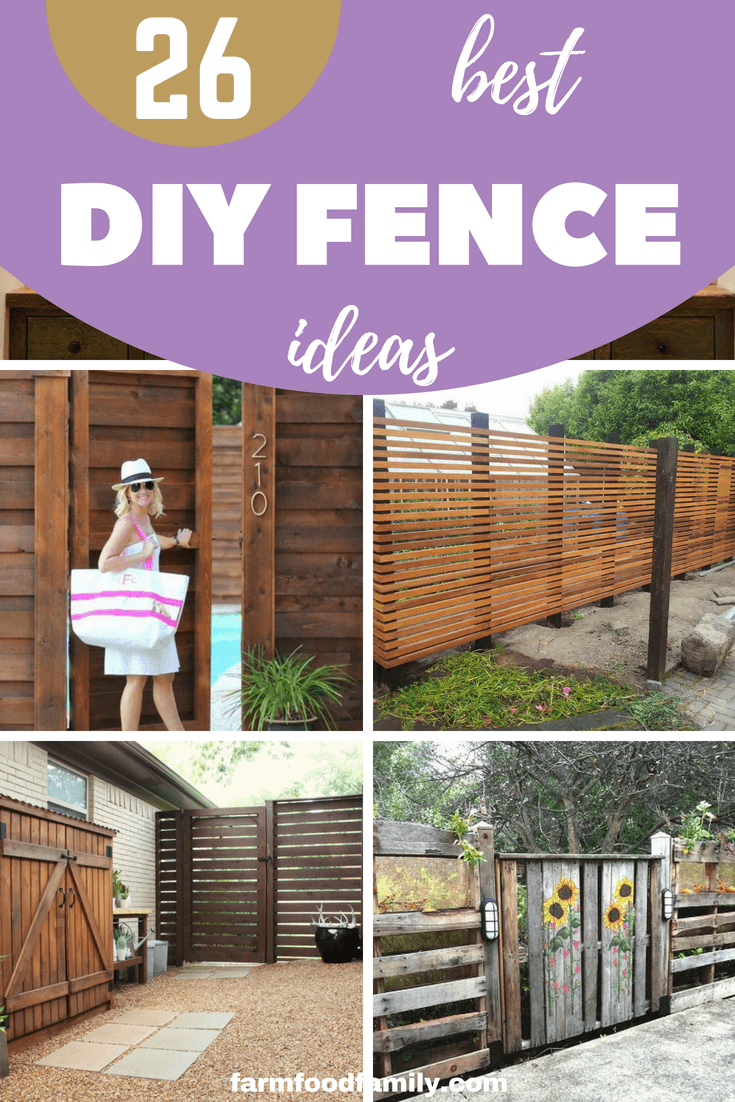
Fence Types Directory
Wood Fences

Wood remains the material most people picture first, and for good reason: it’s workable with basic tools, takes stain or paint well, and ages into real character rather than just wearing out.
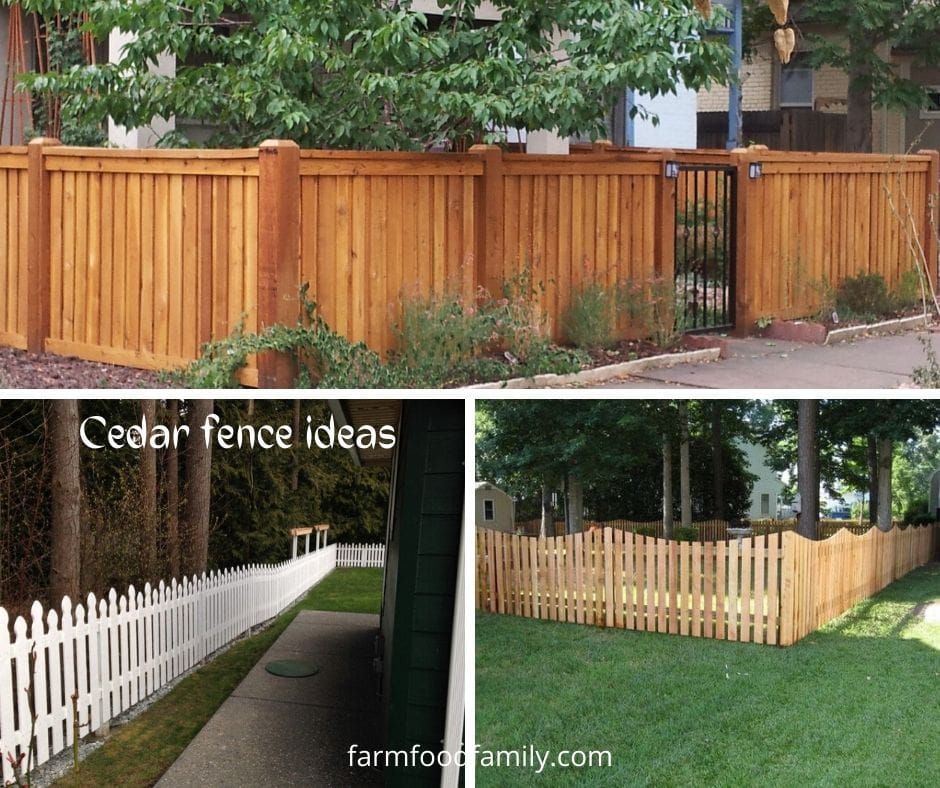
Cedar in particular resists rot naturally and holds up outdoors better than most other affordable wood species, which is why it shows up repeatedly across picket, rustic, and plain board styles alike.

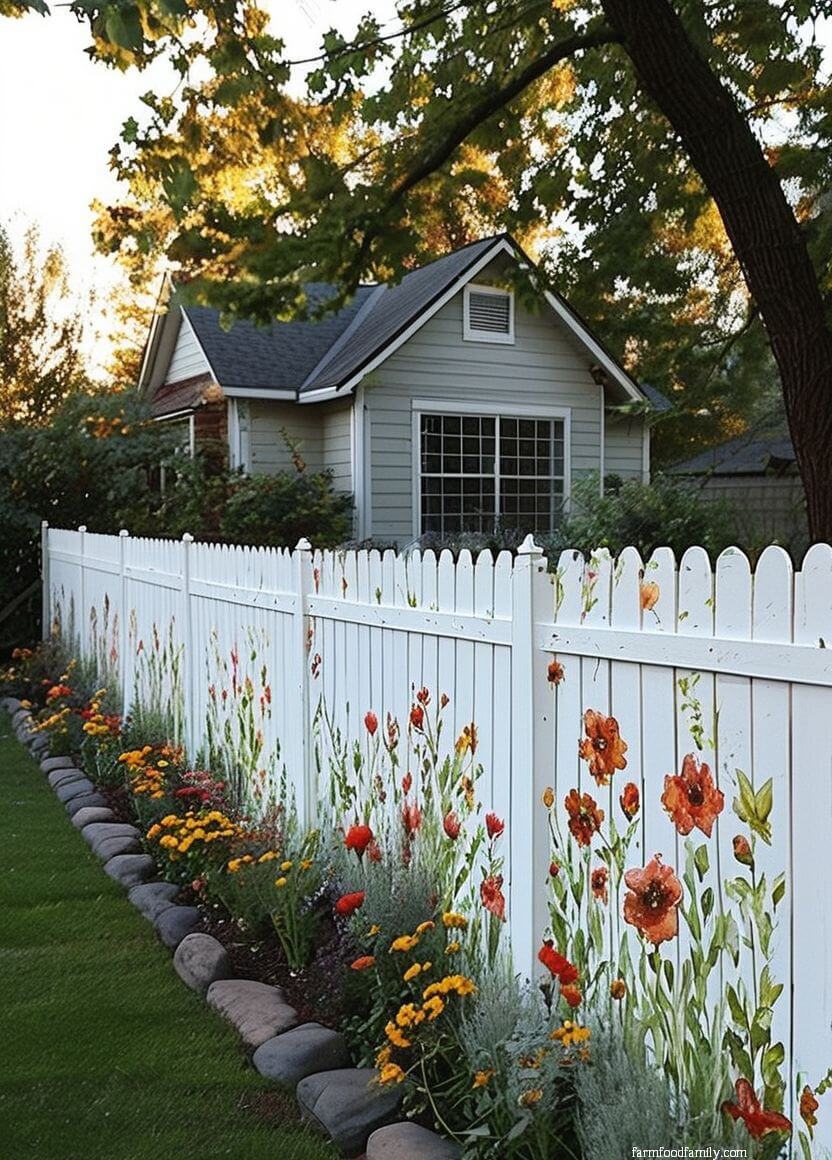
A classic picket fence (evenly spaced vertical boards with pointed or rounded tops) reads as the most traditional version of this material, well suited to a front yard where the goal is charm more than total privacy.

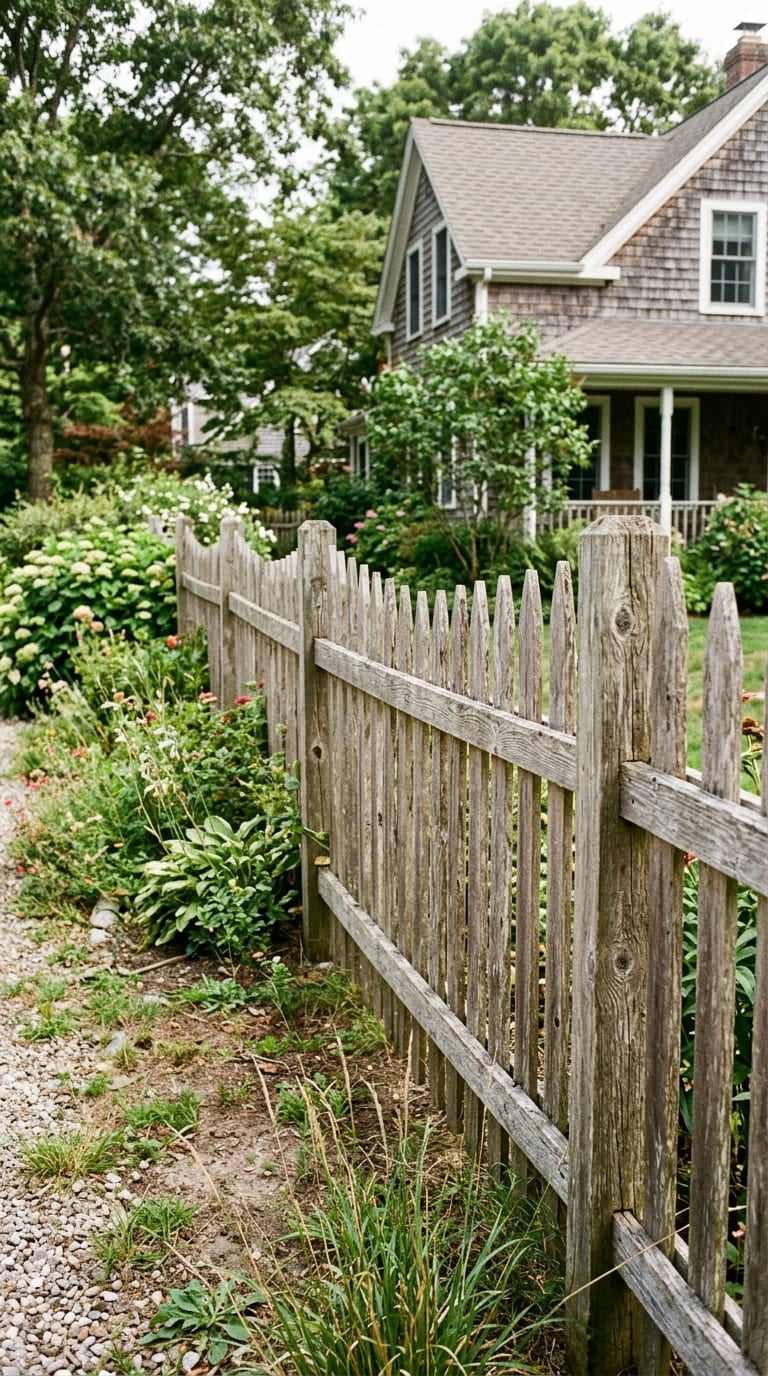
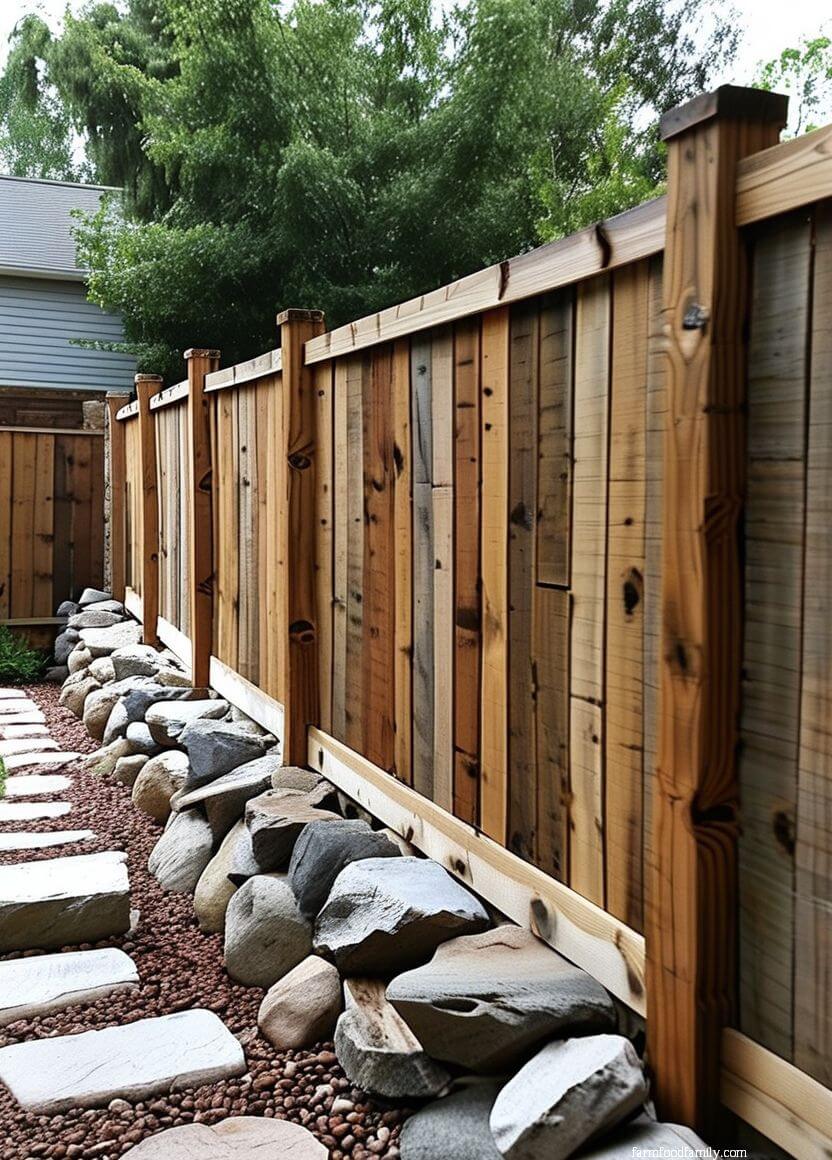
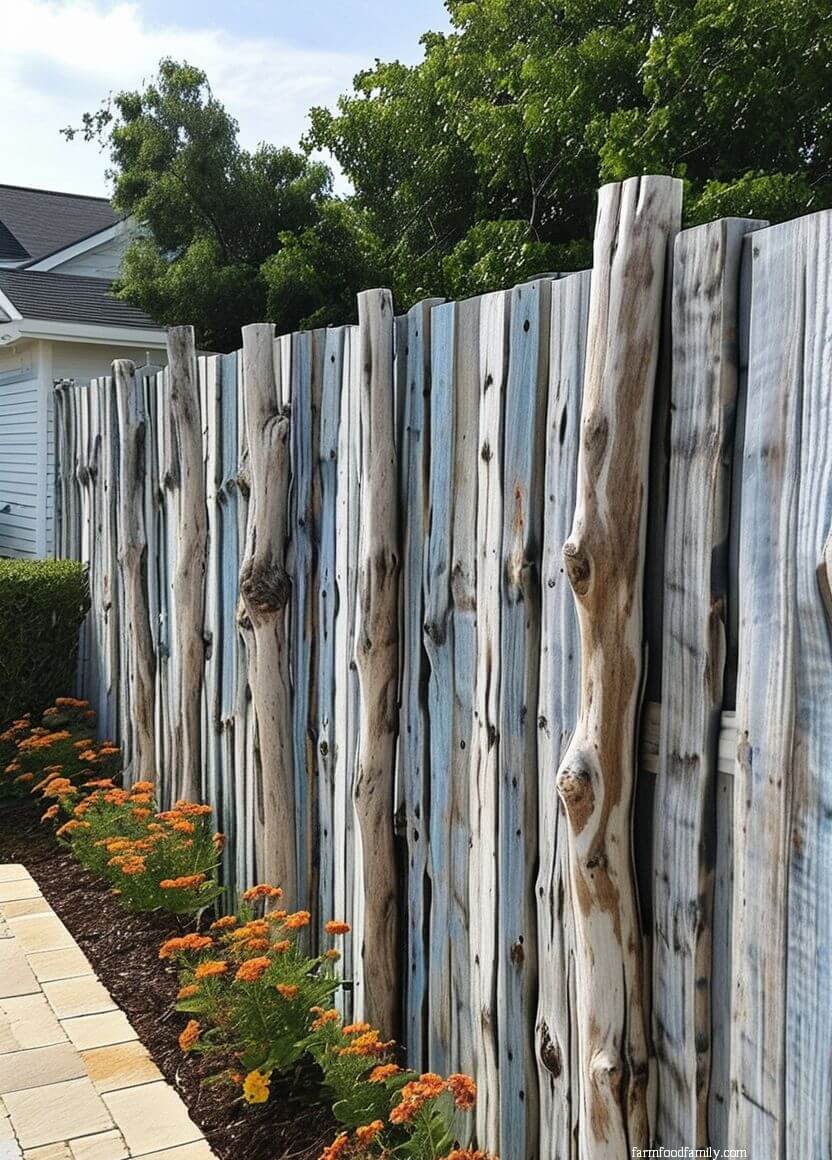
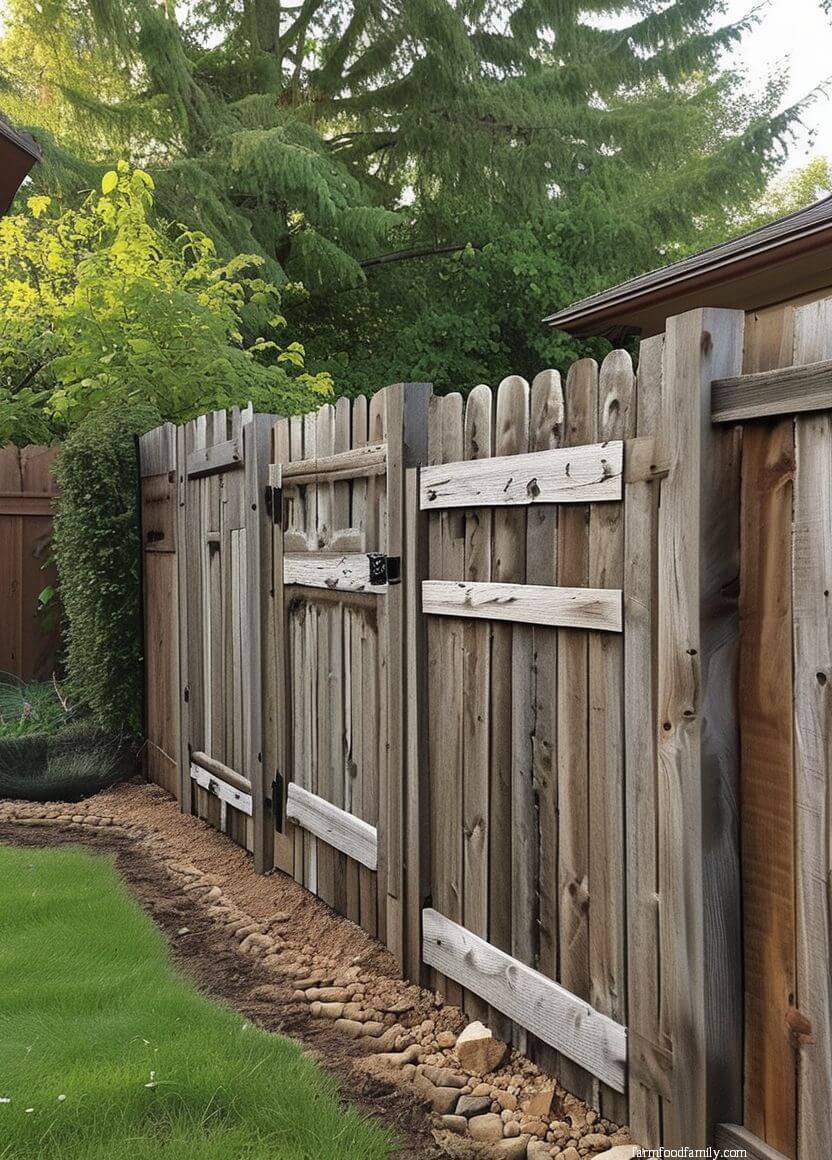
A rustic version, rougher-cut boards, visible grain, an unfinished or lightly stained surface, works better for a backyard or garden edge where the goal is character rather than polish. Either way, budget for maintenance: even cedar needs occasional resealing to keep moisture out over the long run.
Wire and Mesh Fences
Source: simplyorganized.me
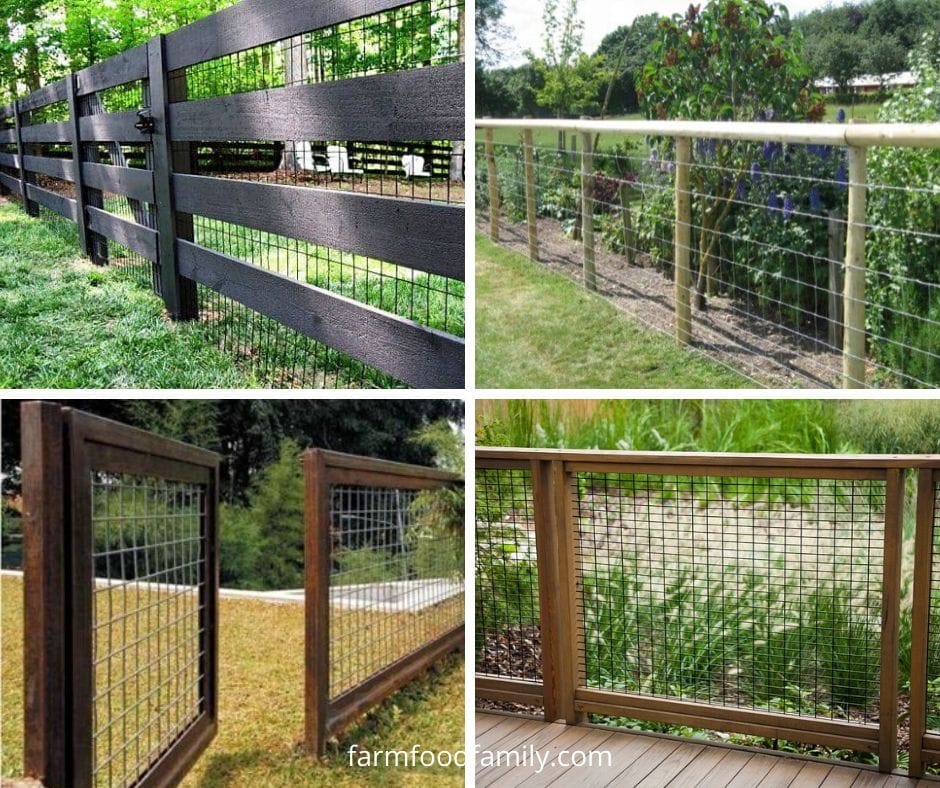
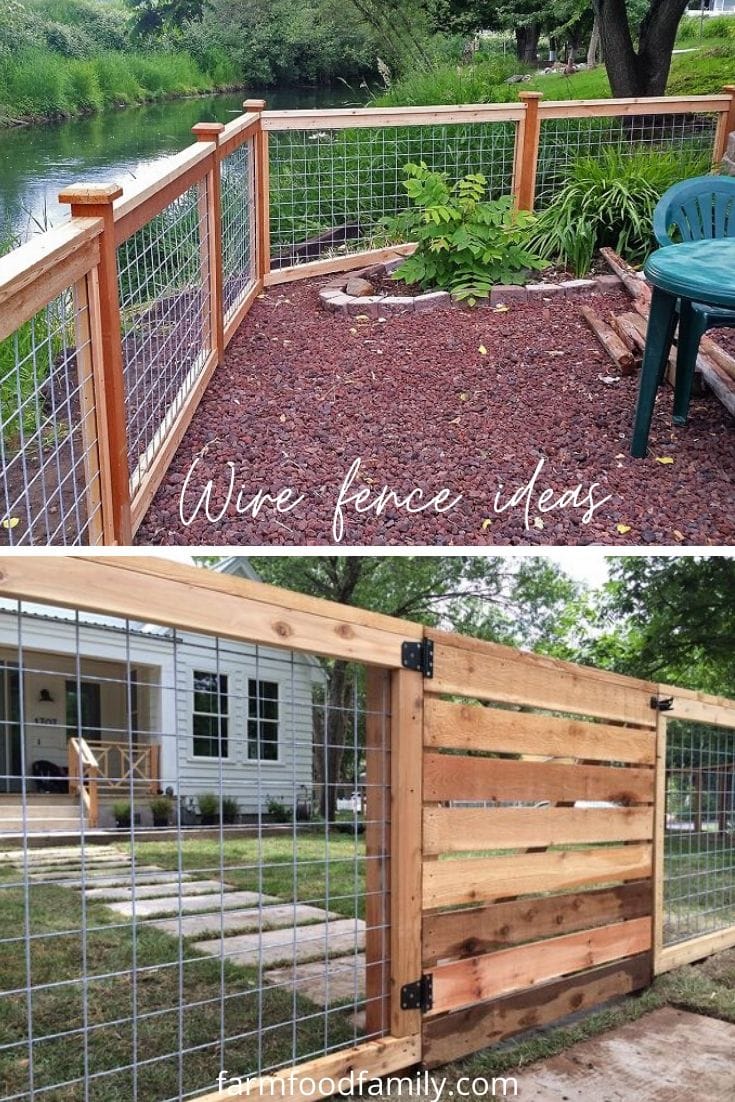
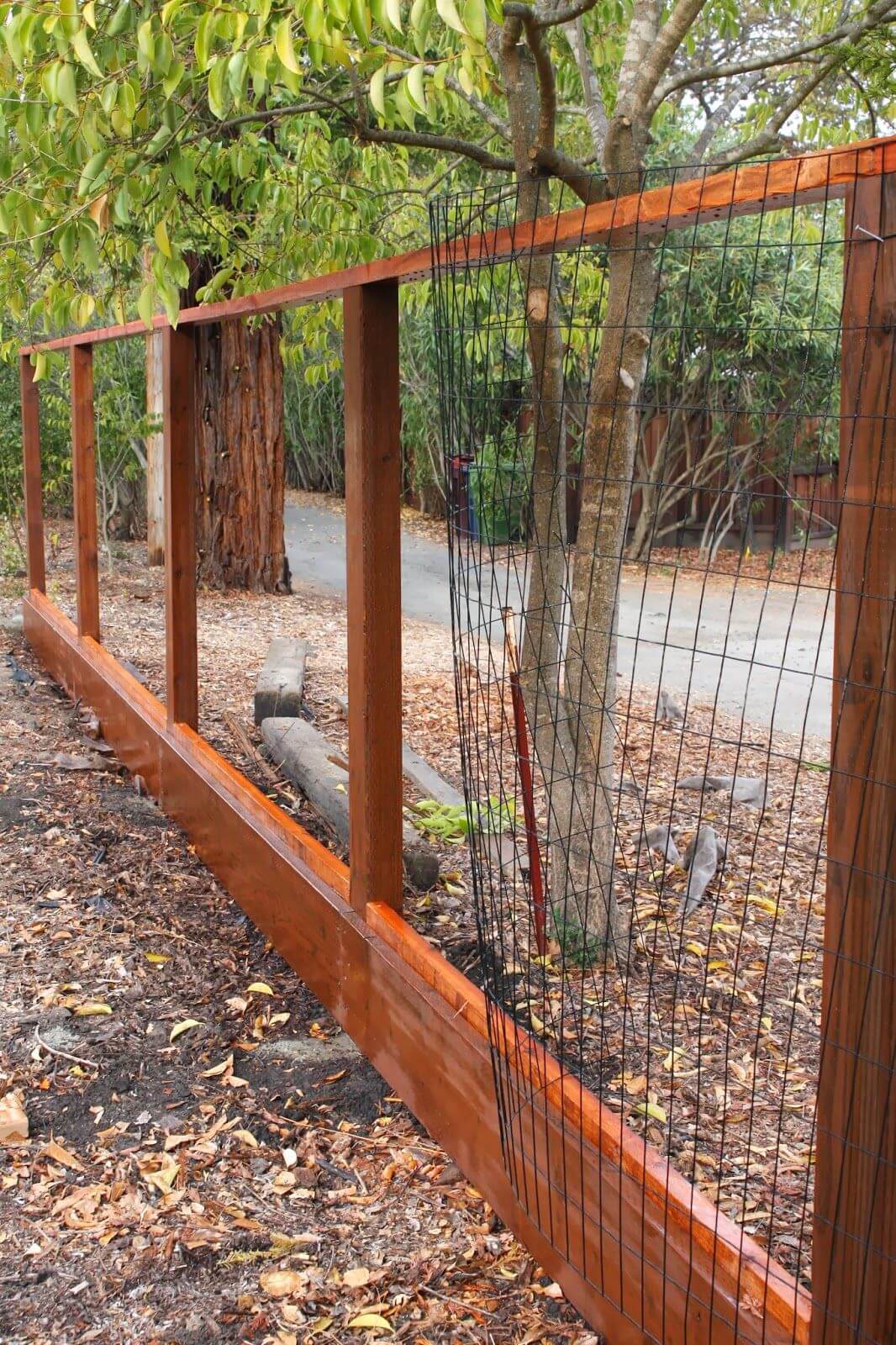
Wire fencing (chain link, chicken wire, hog wire, and woven wire more broadly) trades privacy for cost and speed. It’s the fastest category to install and the cheapest per foot, which makes it a common choice for containing pets or livestock rather than for a front-yard style statement.
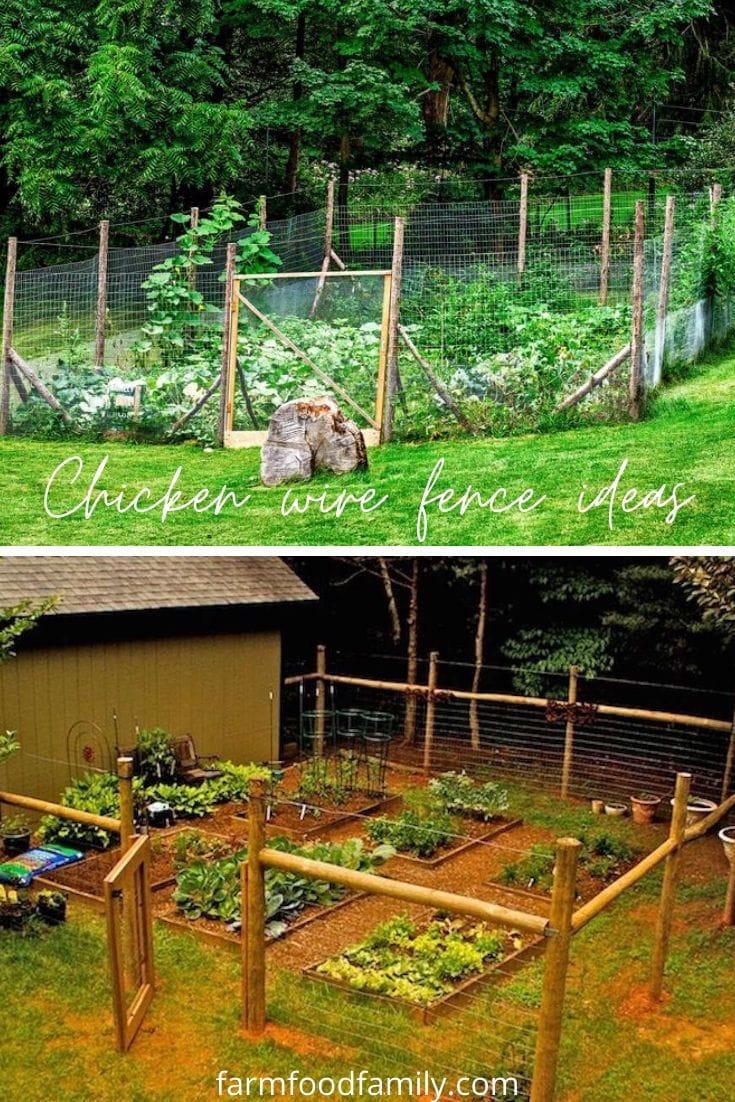
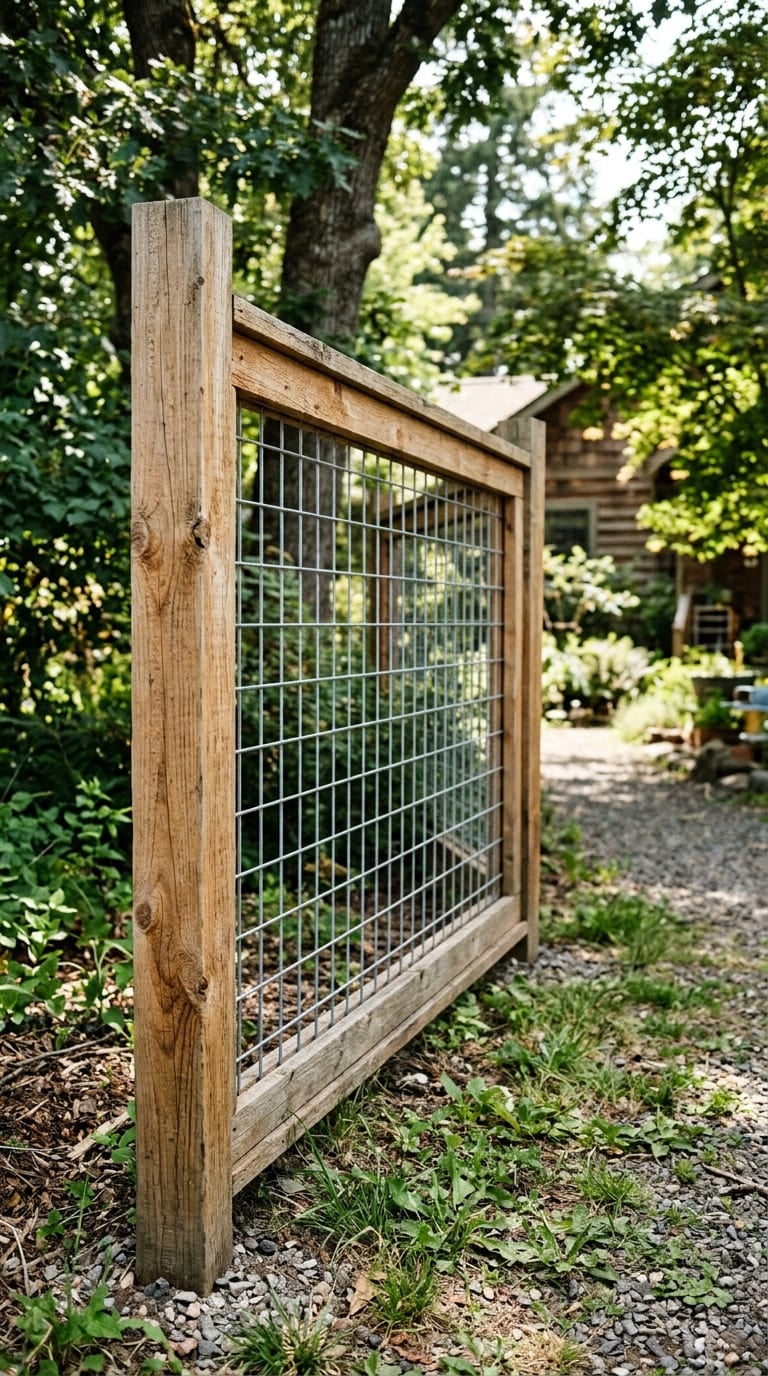
Chicken wire suits smaller enclosures, garden beds, chicken runs, rabbit pens. Hog wire, a heavier-gauge grid, holds up to larger animals and doubles as a modern-industrial design choice when framed in clean wood posts, a pairing that’s become genuinely popular well beyond actual farm use.

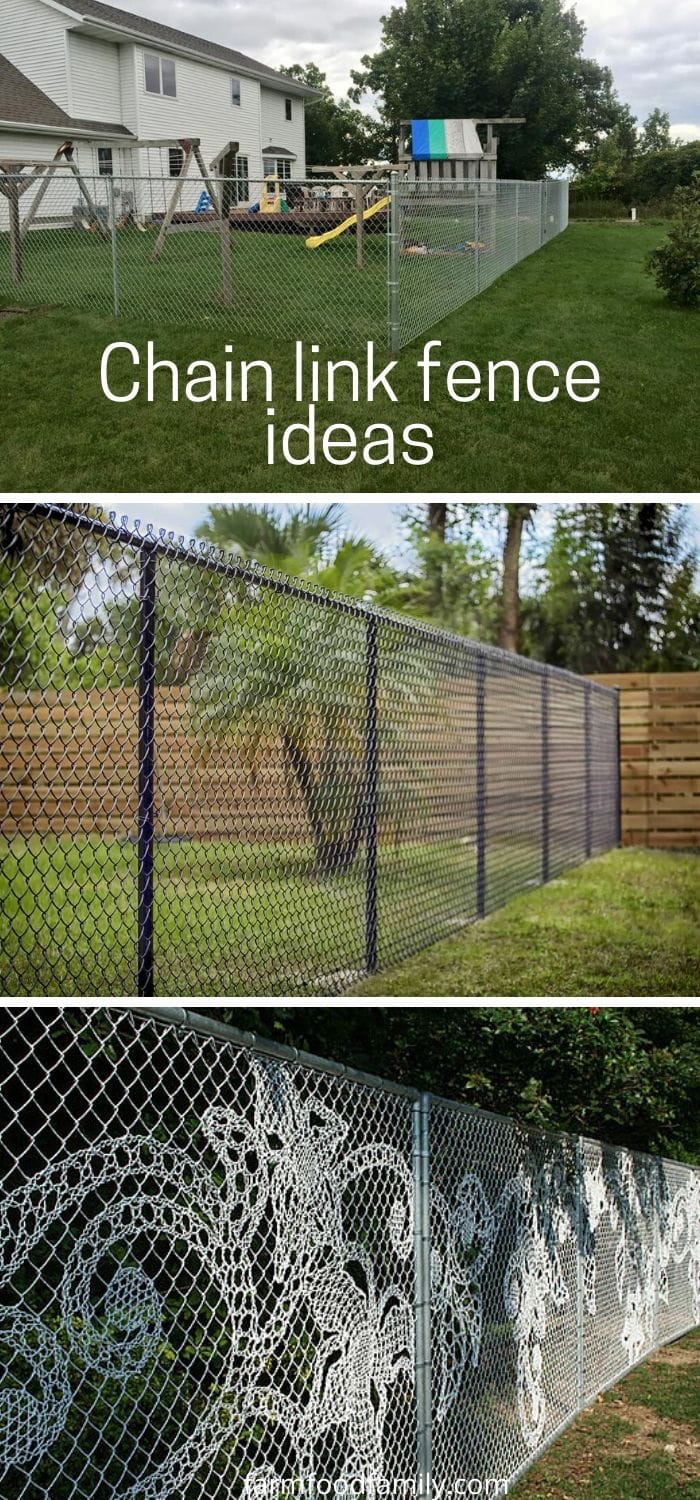
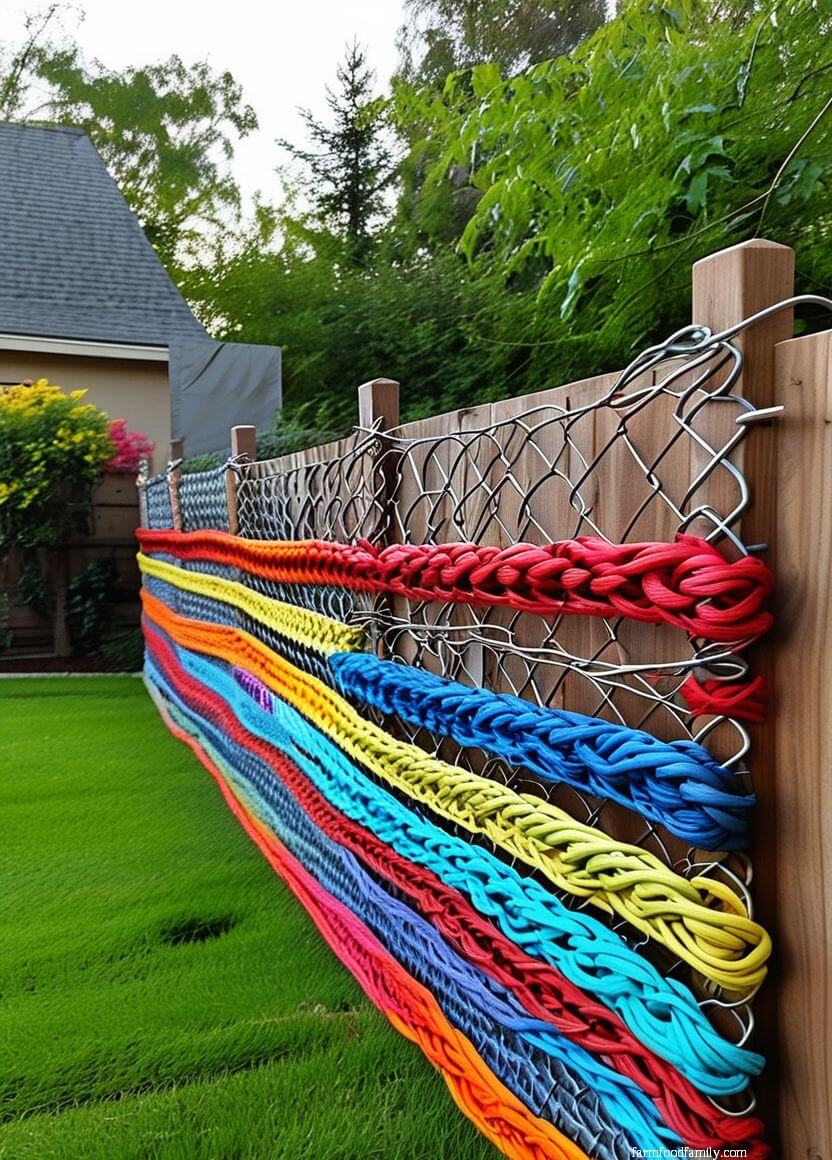
Chain link is the least visually interesting of the group but remains hard to beat for straightforward, low-cost containment, and it can be dressed up considerably with a woven privacy slat or a climbing vine if the bare-wire look isn’t the goal.
Metal Fences
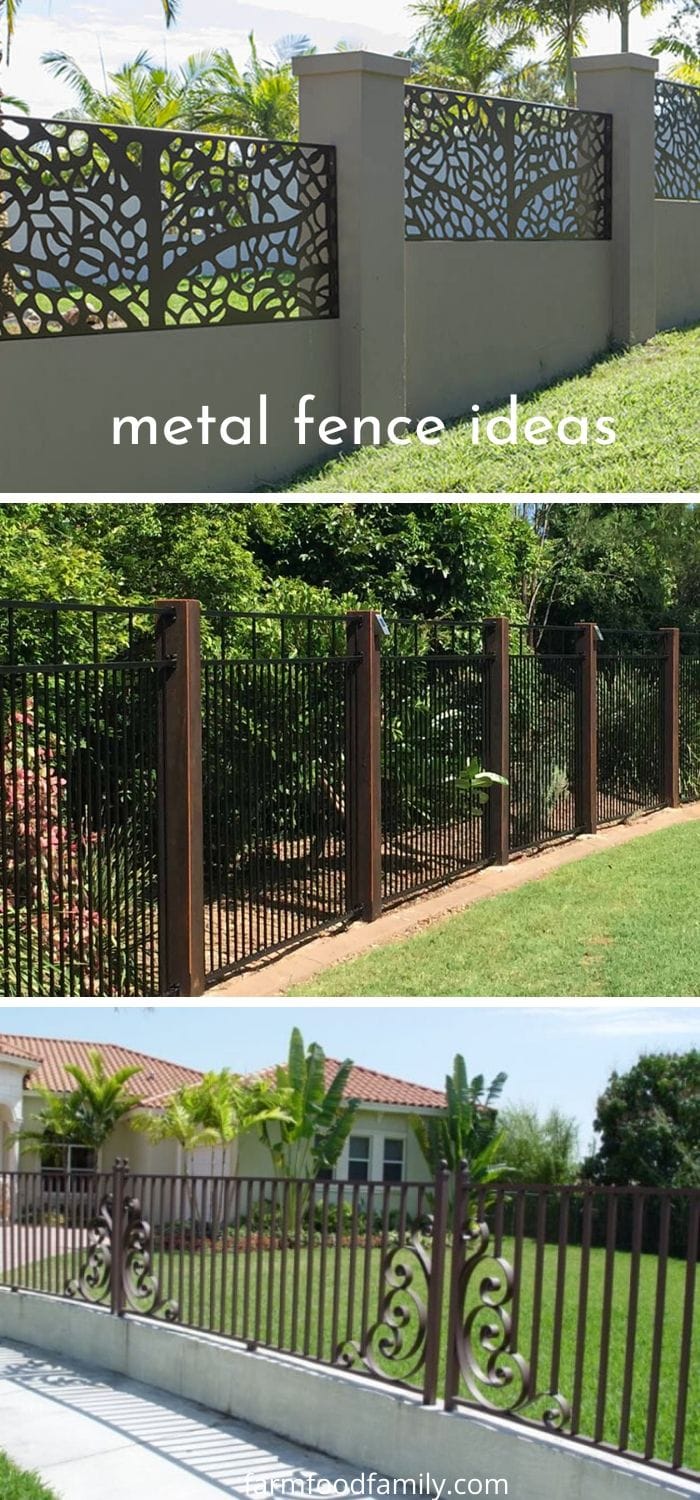
Beyond wire mesh, solid metal fencing spans a wide range, from utilitarian aluminum panels to ornamental wrought iron. Aluminum is the more budget-friendly and lower-maintenance of the two, powder-coated to resist rust without the periodic repainting wrought iron often needs.

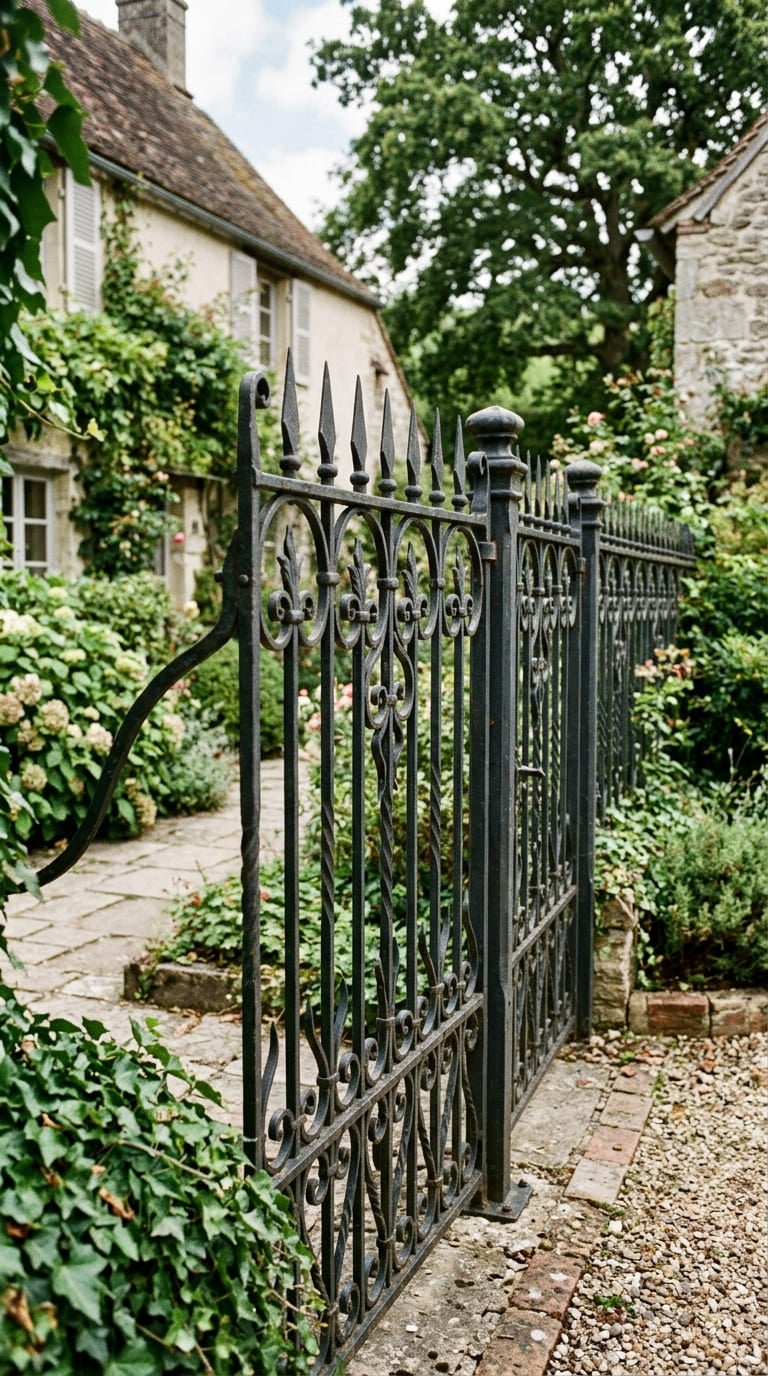
Wrought iron carries real security value along with its strength, sharp-pointed pickets are a genuine deterrent, and the material holds detailed, ornamental designs that aluminum can’t replicate as convincingly.
The average homeowner spends $616/year on yard fixes that don't address the real problem. Find out what yours actually is — before you spend another dollar.
Take the Free Quiz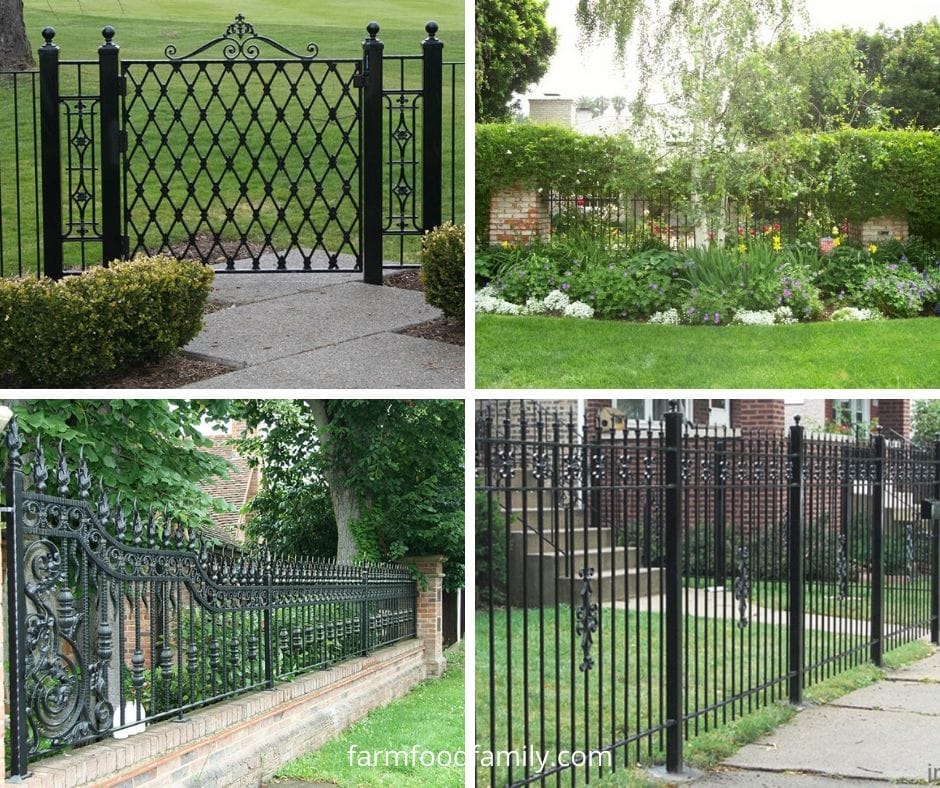
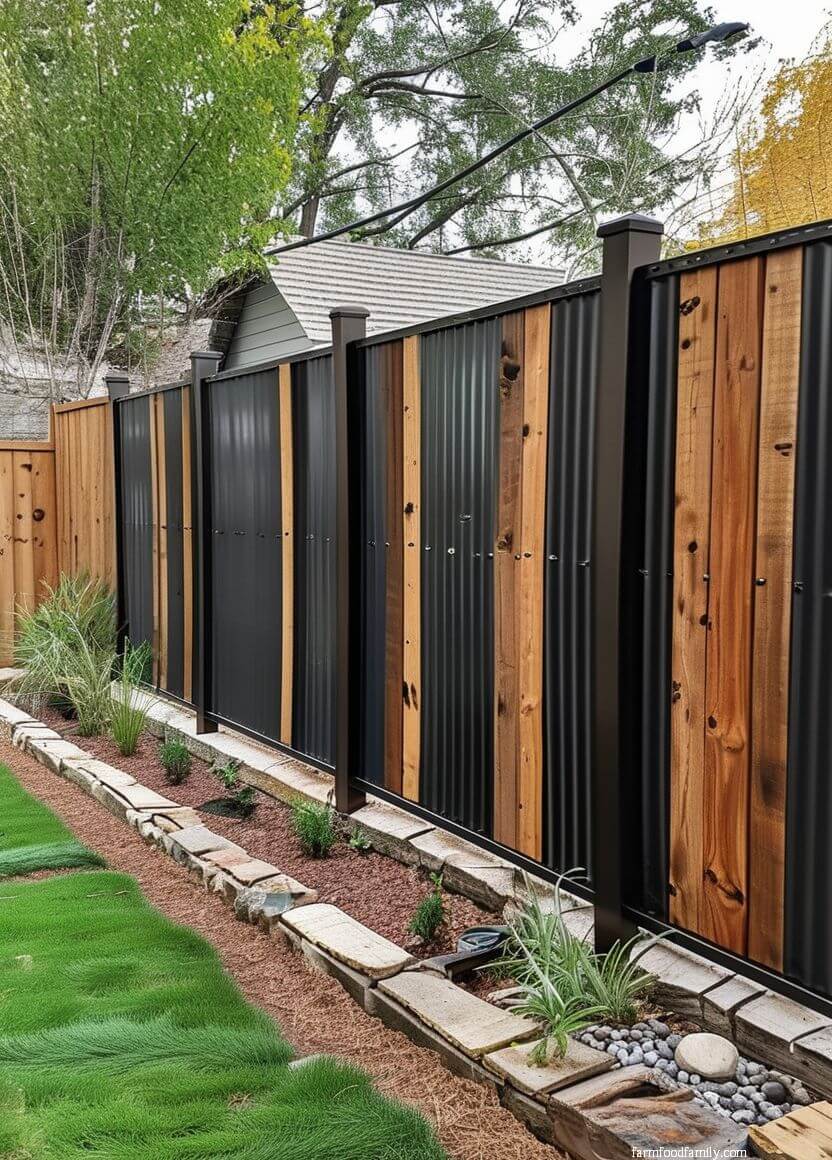
It’s also the pricier option of the two by a meaningful margin, worth factoring in before assuming style alone should decide the choice. Corrugated metal is a third real option worth weighing against both, see our corrugated metal fence pros and cons breakdown for the specifics.
Vinyl and PVC Fences
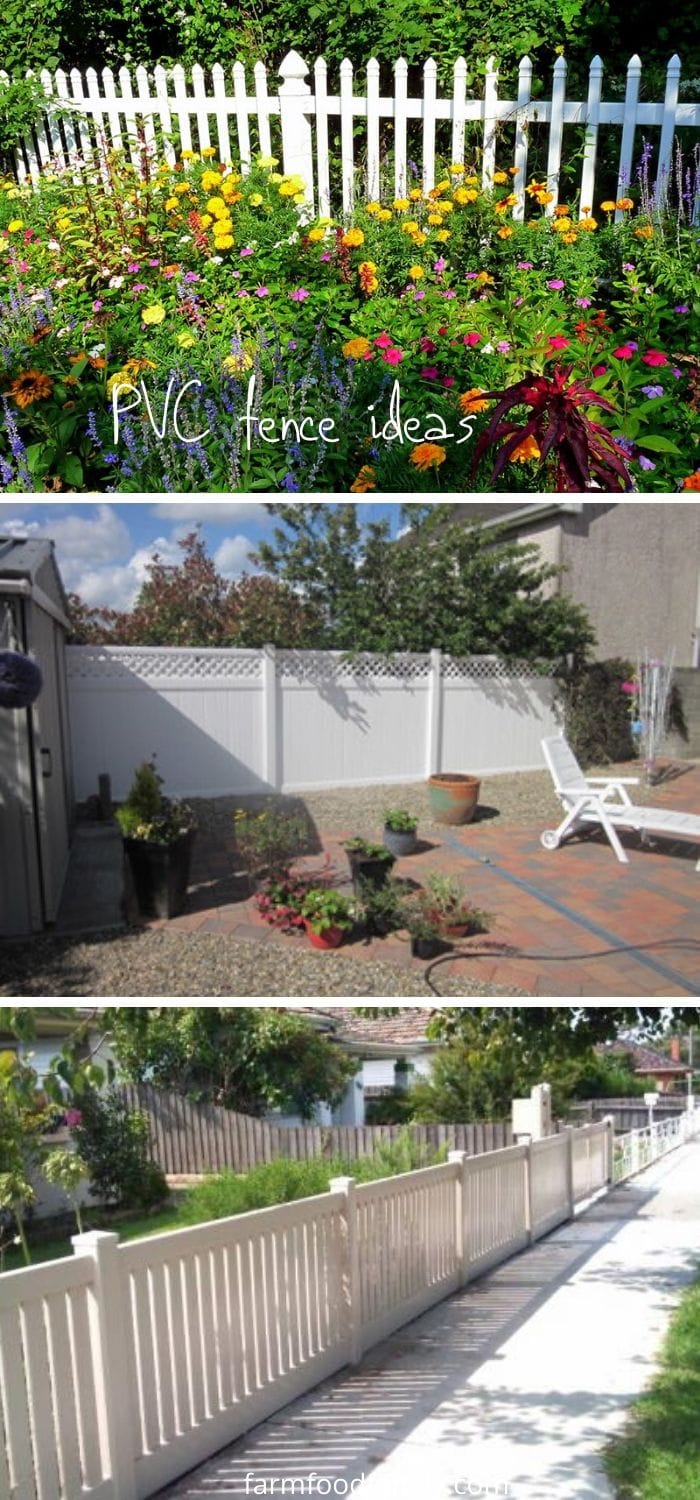
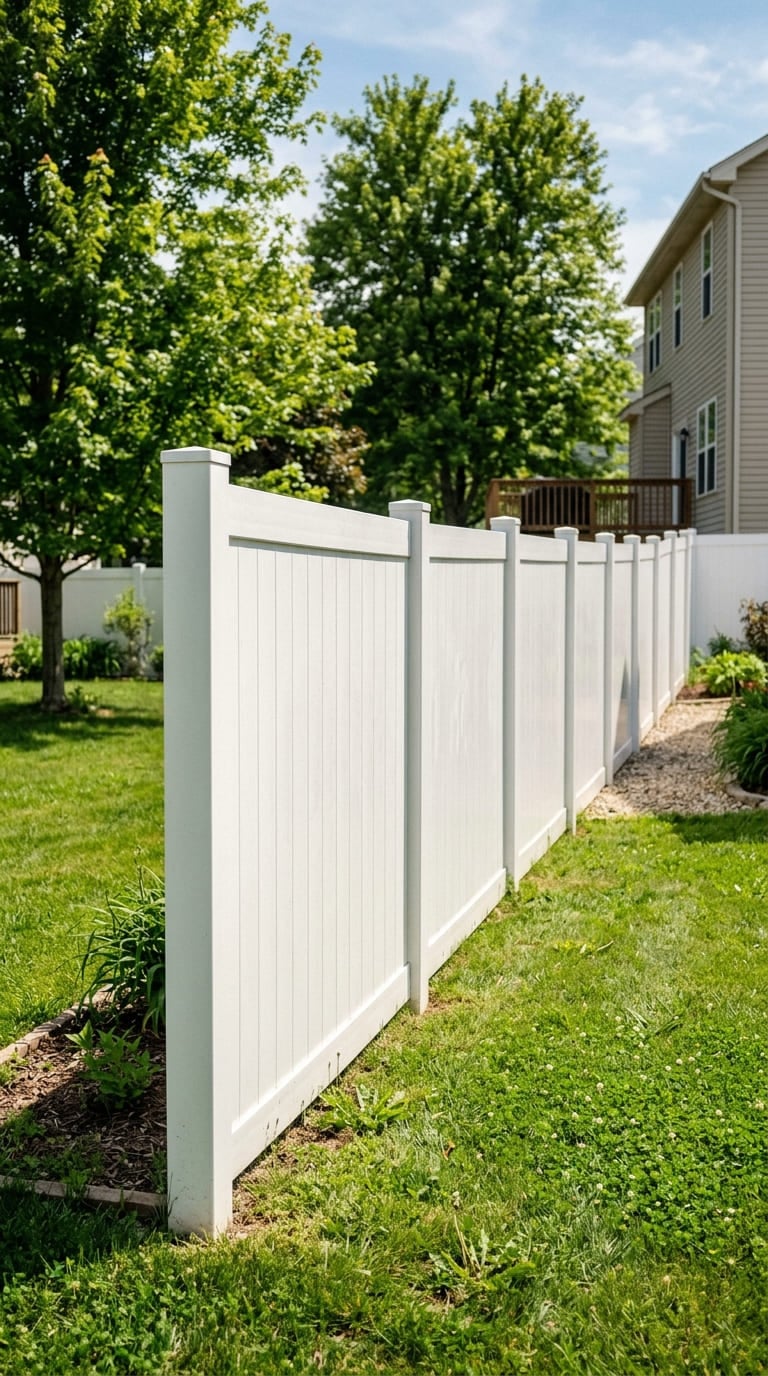
Vinyl and PVC are frequently treated as separate materials, but PVC is actually the core ingredient vinyl fence panels are made from, so this is really one category rather than two competing options. What varies is finish and panel style: solid privacy panels, picket-style vinyl that mimics wood, and lattice-topped versions all use the same underlying material.
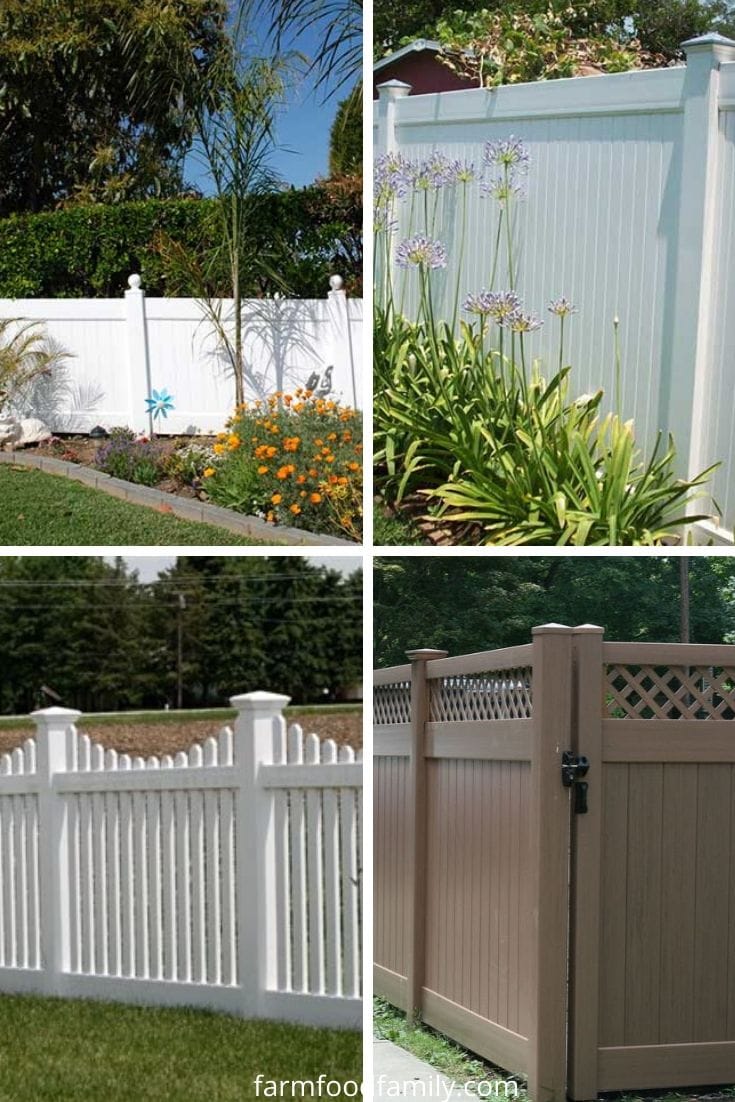
The appeal is low, low maintenance: no staining, no sealing, strong resistance to rot and pests, and a lifespan that can stretch to 30 years with basic cleaning. The tradeoff is cost per foot, vinyl runs meaningfully higher than wood or chain link, and a more limited color palette than paint-your-own wood allows.
Bamboo Fences

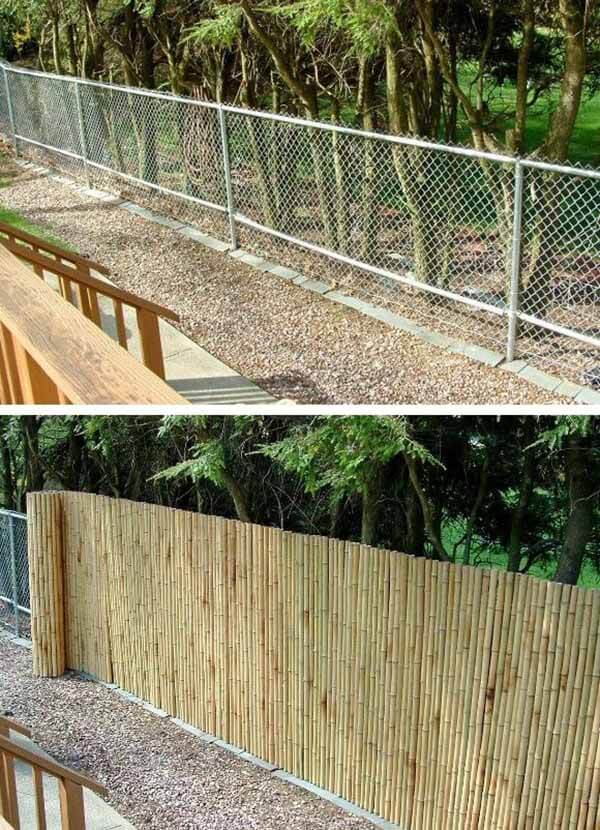
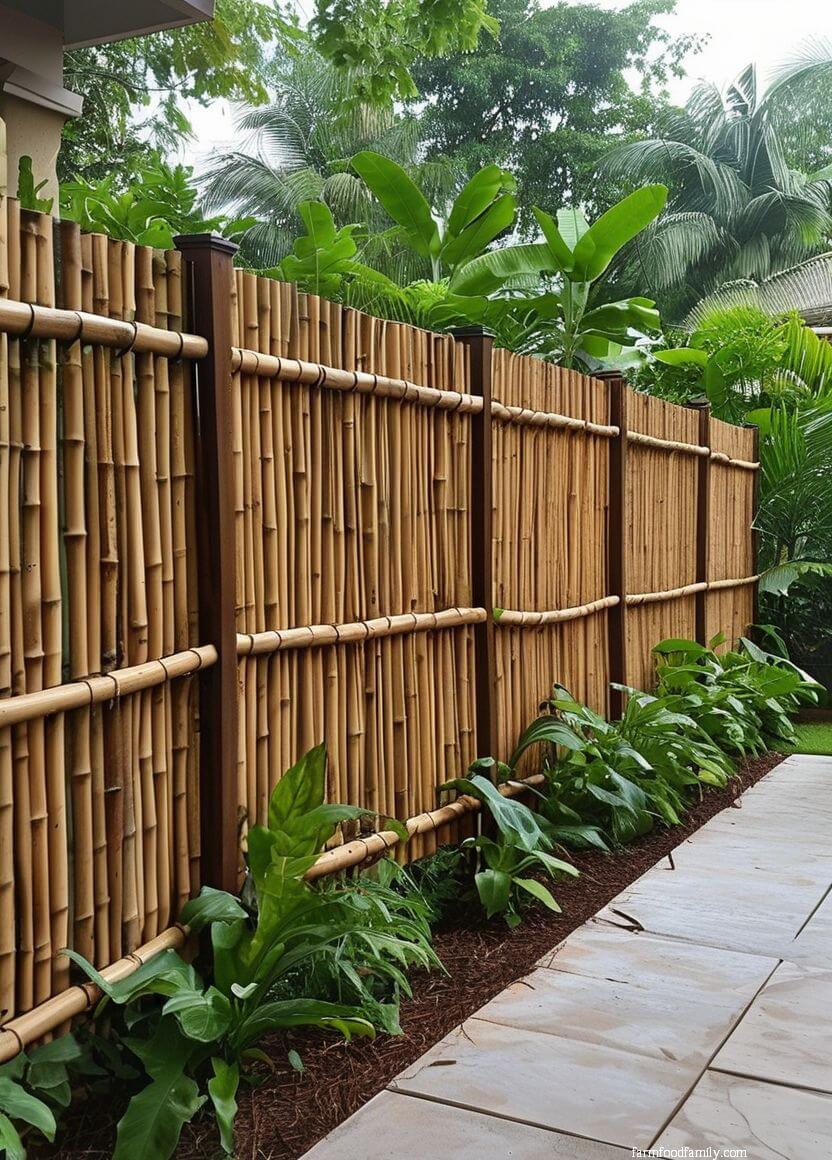
Bamboo brings a natural, organic texture that reads differently from anything in the wood category, genuinely fast to install, budget-friendly, and distinctly styled without needing much additional decoration.
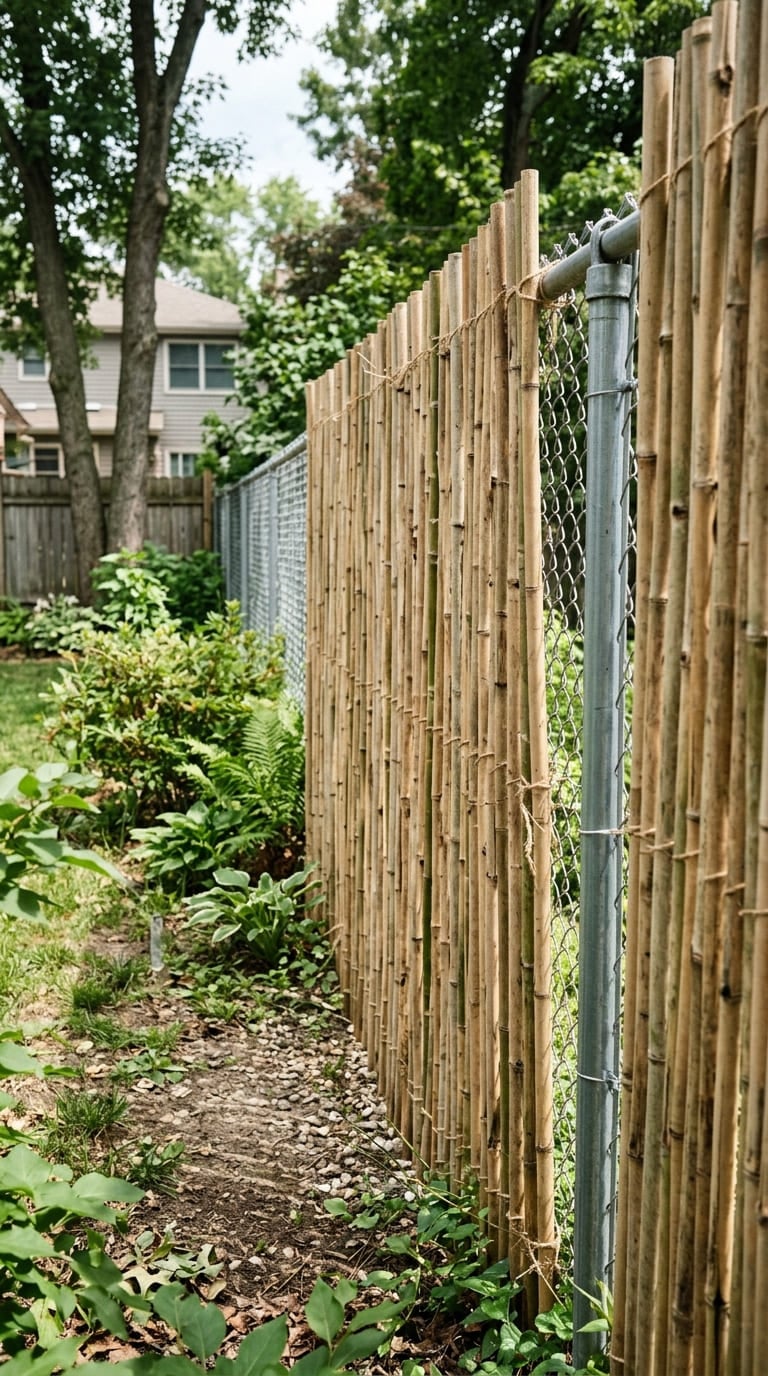
A common real-world use is wrapping bamboo rolls directly around an existing chain link fence, an inexpensive way to add privacy and hide the utilitarian look of chain link without replacing it outright.
The tradeoff, same as with any natural material, is maintenance: bamboo needs periodic attention to avoid fading and cracking under sun and weather exposure over time.
Brick Fences
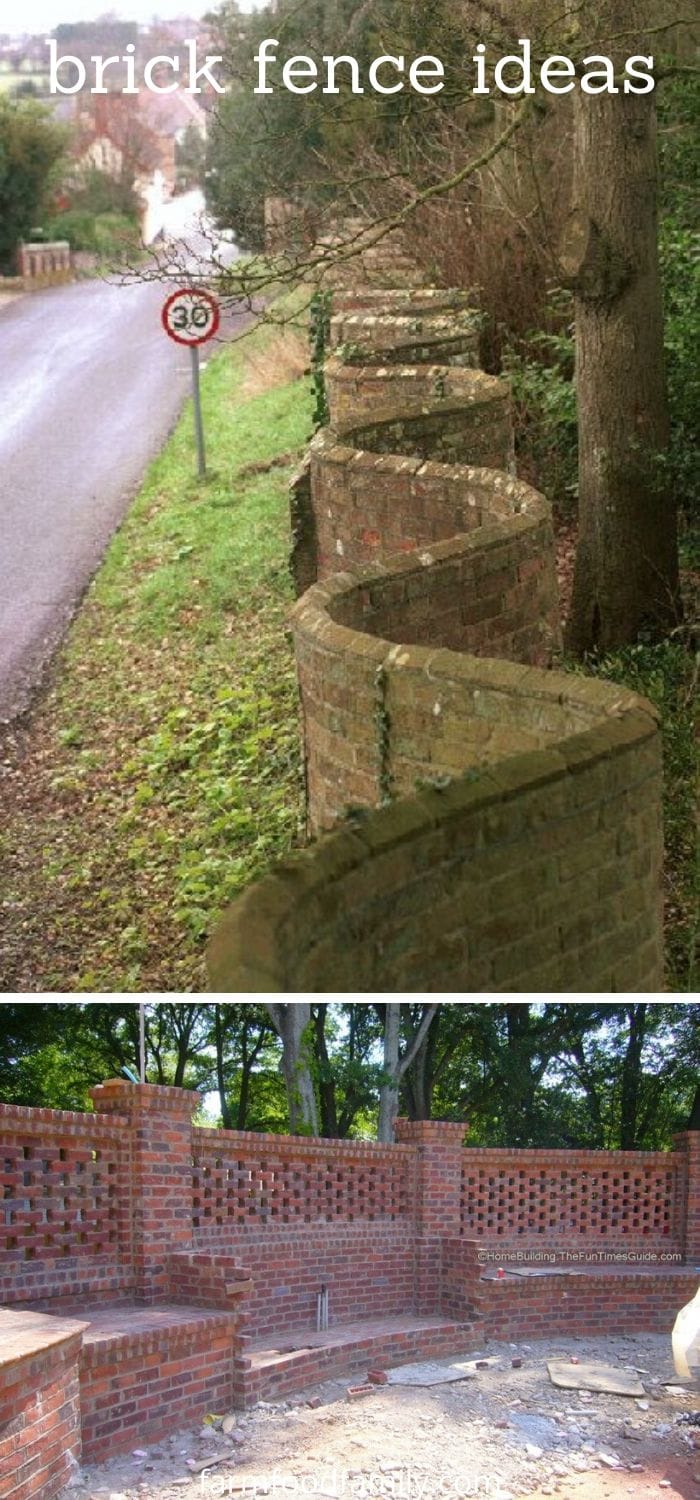
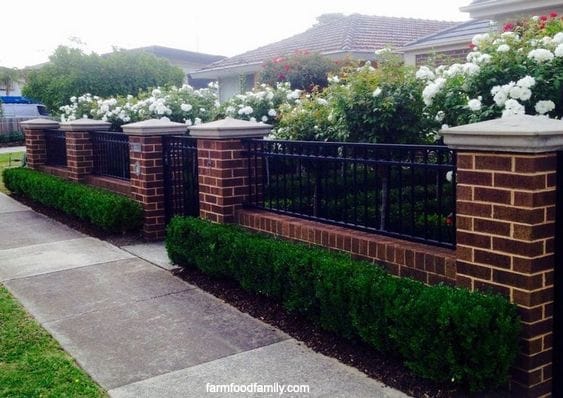
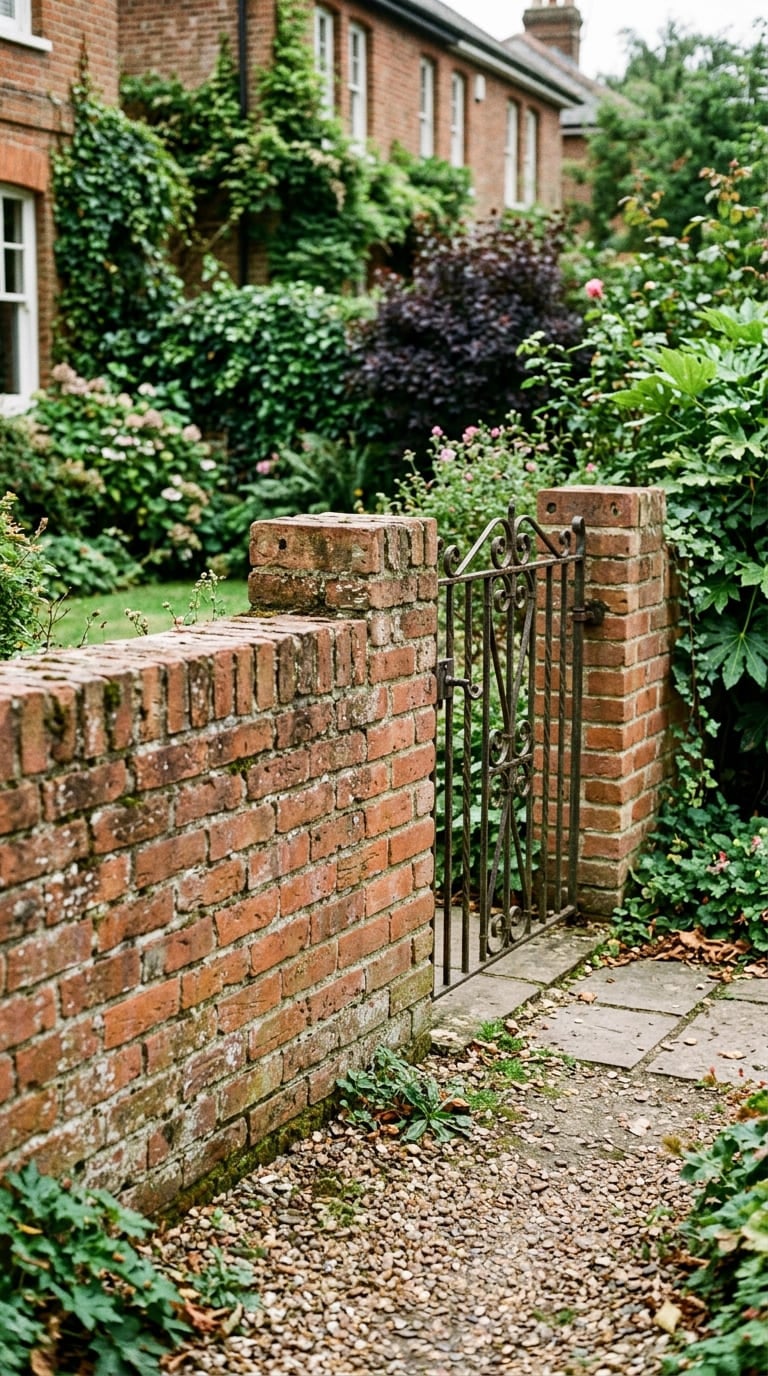
Brick is the heaviest commitment on this list, and the most permanent. It functions more like a low wall than a typical fence, which is exactly the point for anyone who wants real, unmovable security and doesn’t mind the higher upfront cost and lack of DIY feasibility, this is a project for a mason, not a weekend build.
The payoff is a fence that essentially never needs replacing and carries real curb-appeal weight, especially paired with an iron gate or cap detail.
Living and Plant Fences
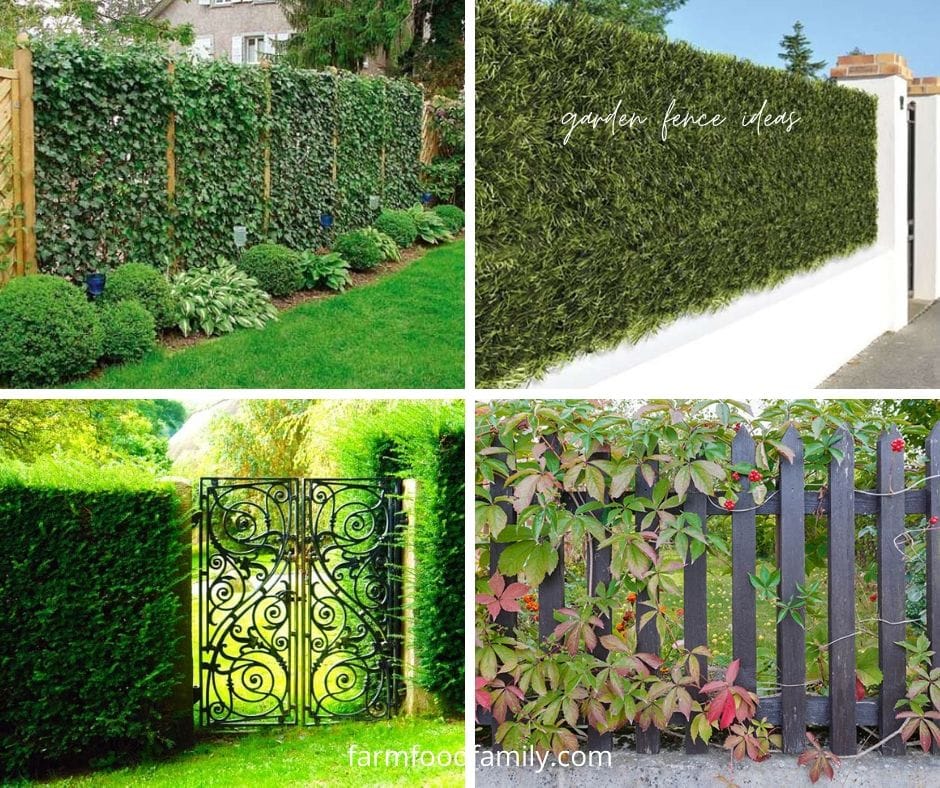
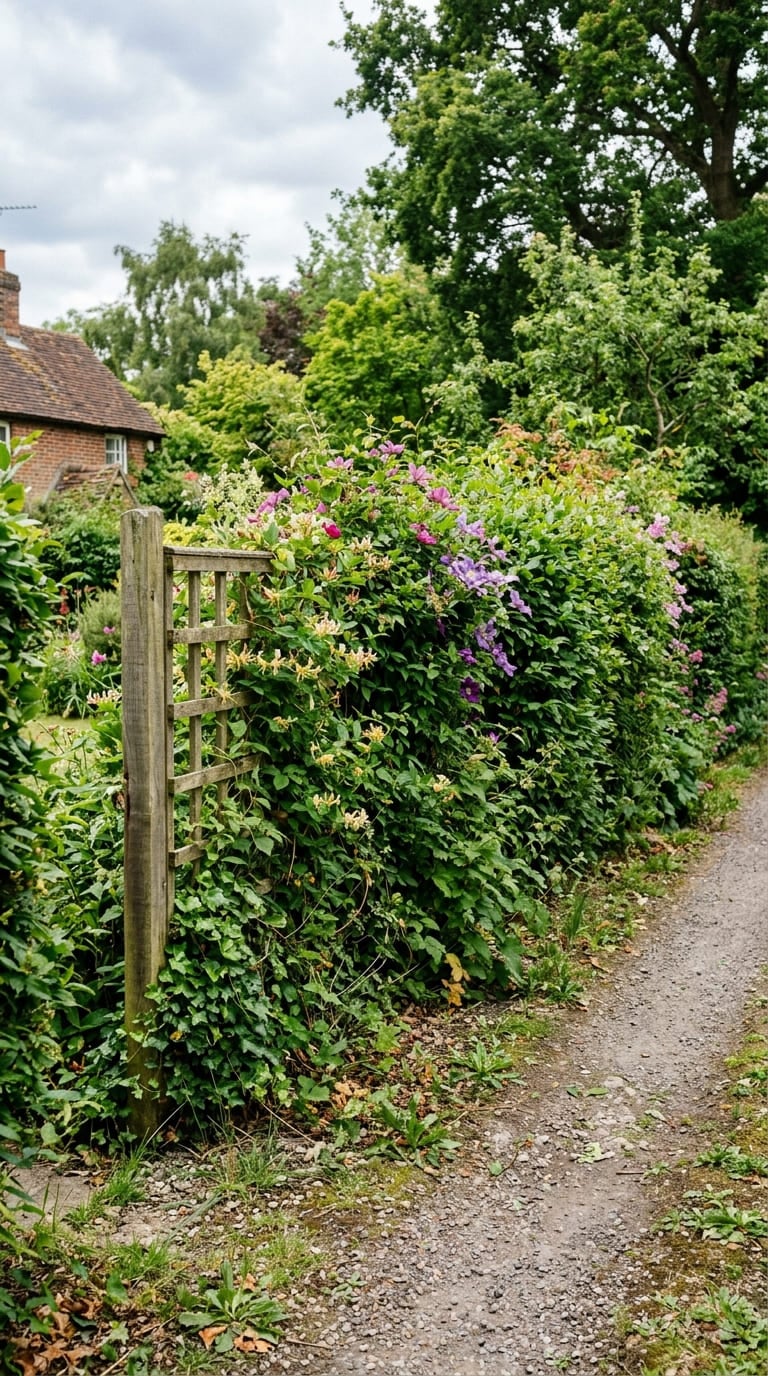
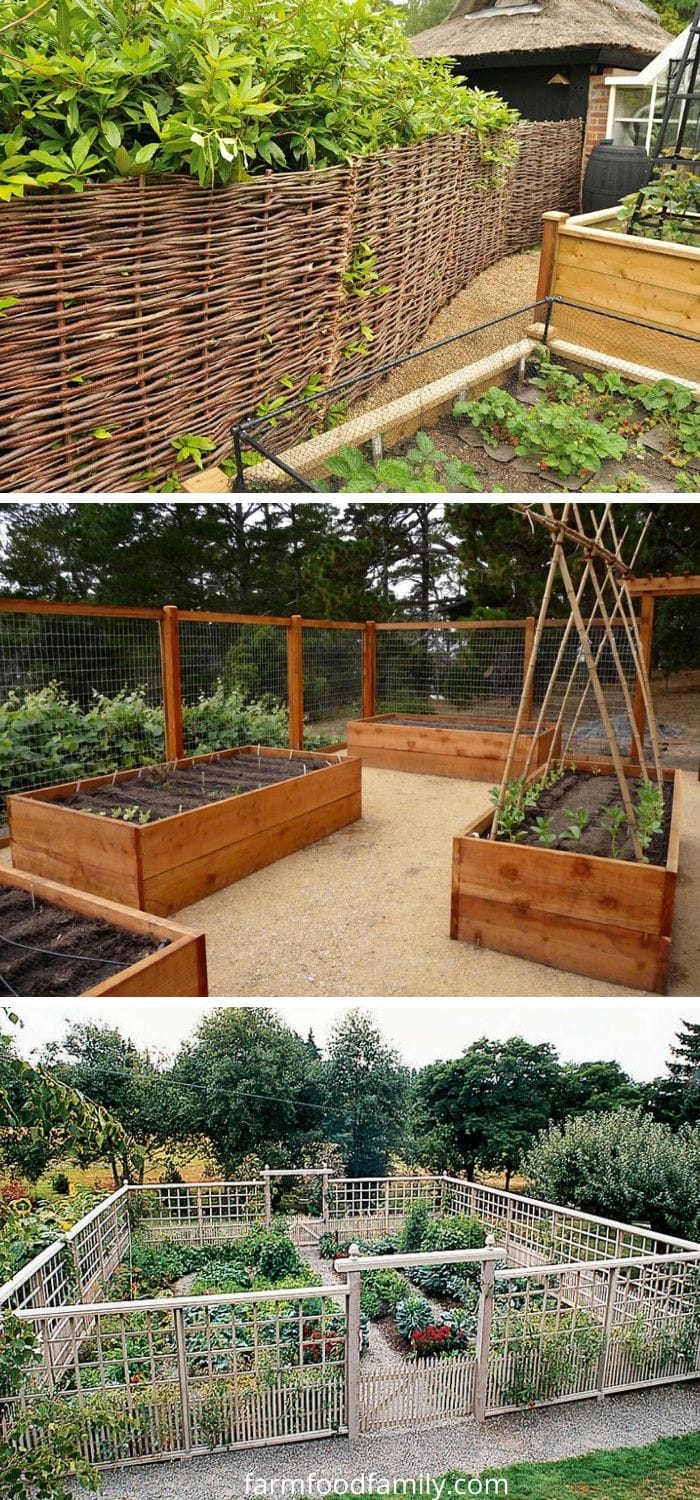
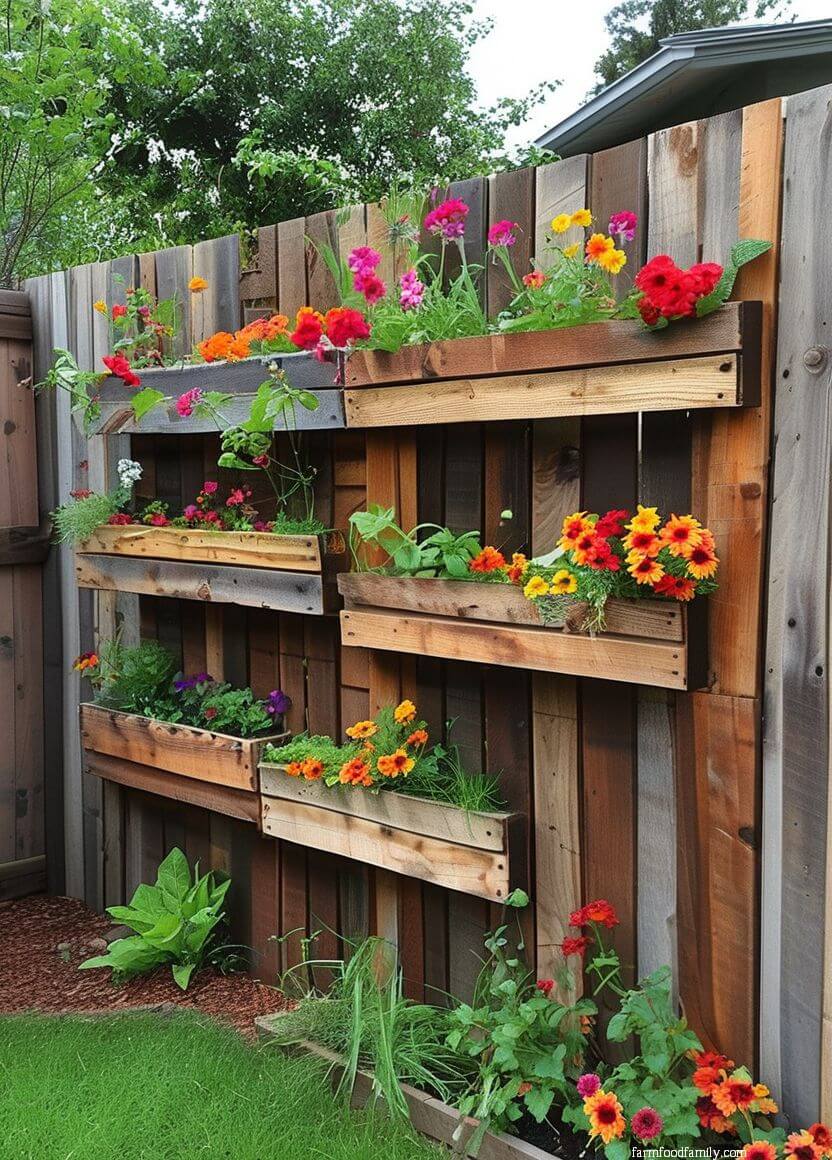
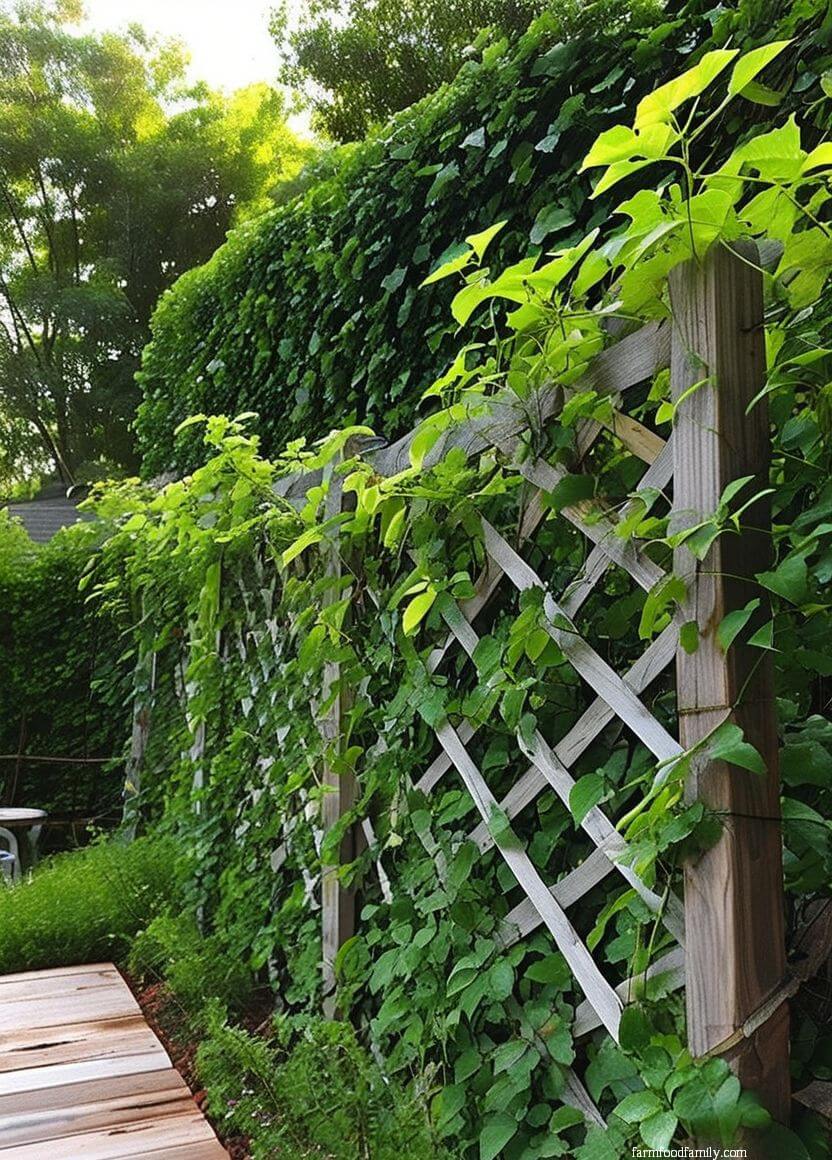
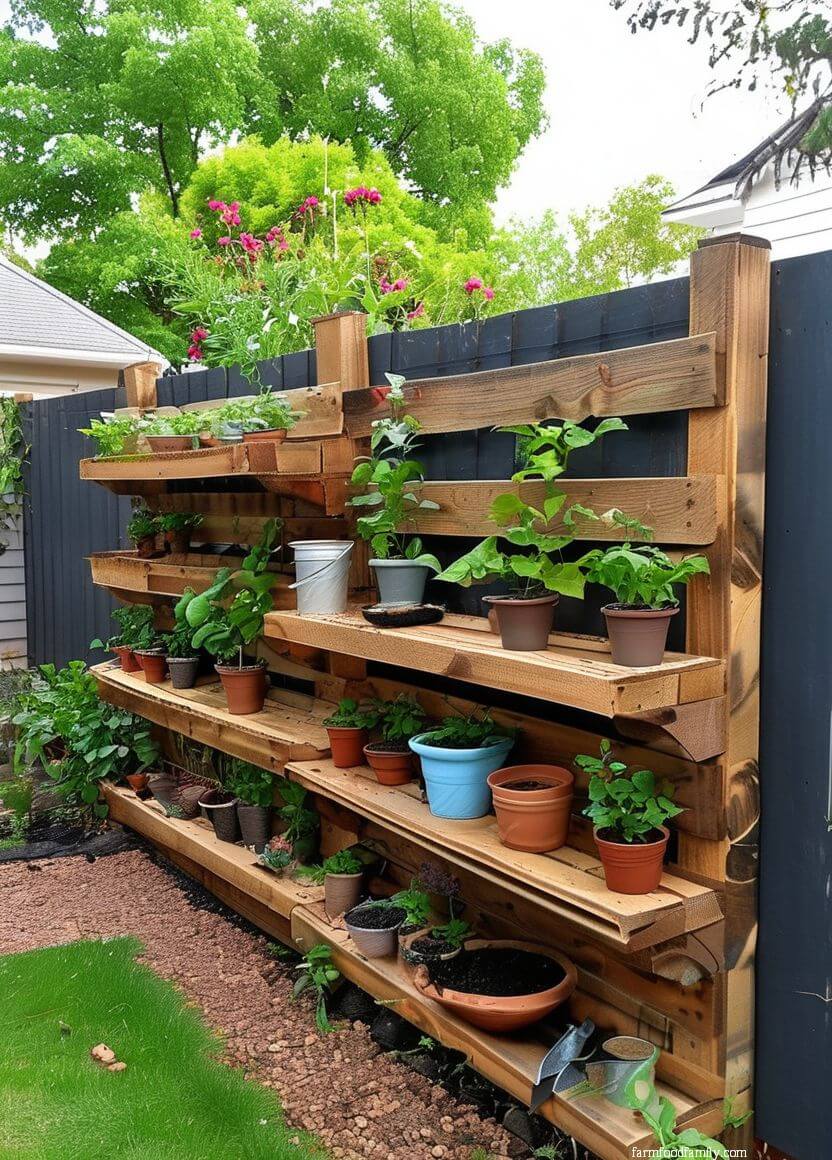
A living fence uses dense shrubs, a trained hedge, or climbing vines on a support structure instead of any built material at all. Garden and vegetable-bed fencing in particular benefits from this approach: a trellis planted with climbing beans or flowering vines does double duty as both a boundary and a growing surface.
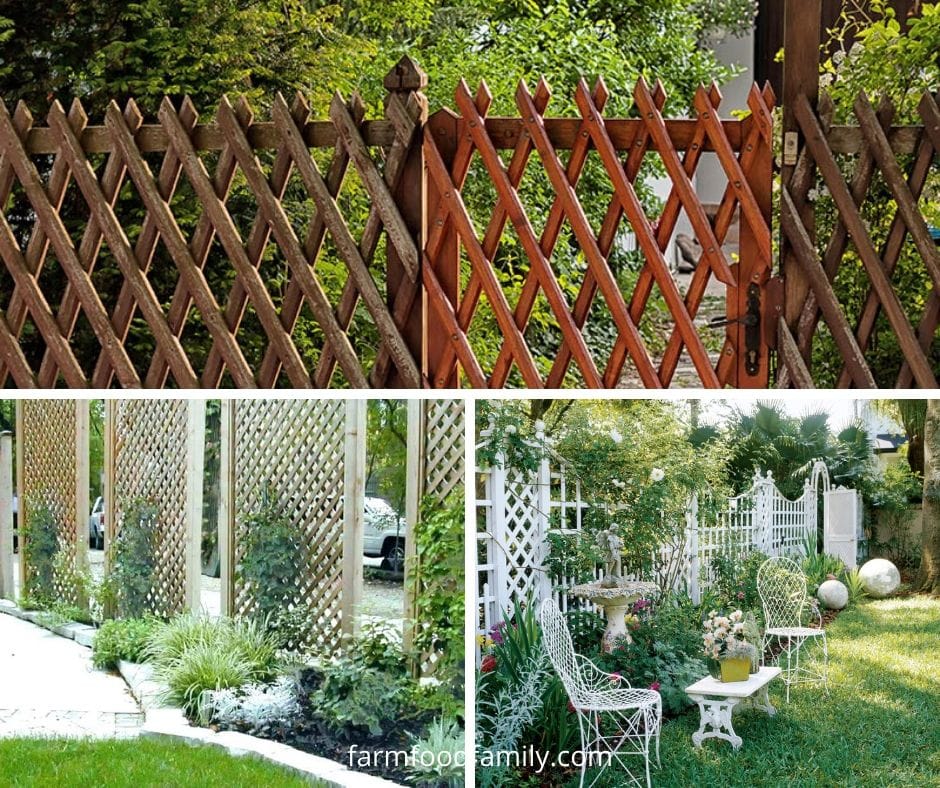
The honest tradeoff, repeated by more than one landscape designer, is time. Michael Clarke of Yardwork notes that hedges “add natural beauty and blend well with landscaping” and offer more flexibility than a fixed fence “in dealing with neighbor disputes over boundary lines,” since a hedge line can be adjusted more easily than a permanent structure.
What a living fence can’t offer is instant coverage: full privacy from a hedge typically takes one to five years depending on the plant, a real planning consideration for anyone who needs privacy now rather than eventually.
Pallet and Upcycled Fences
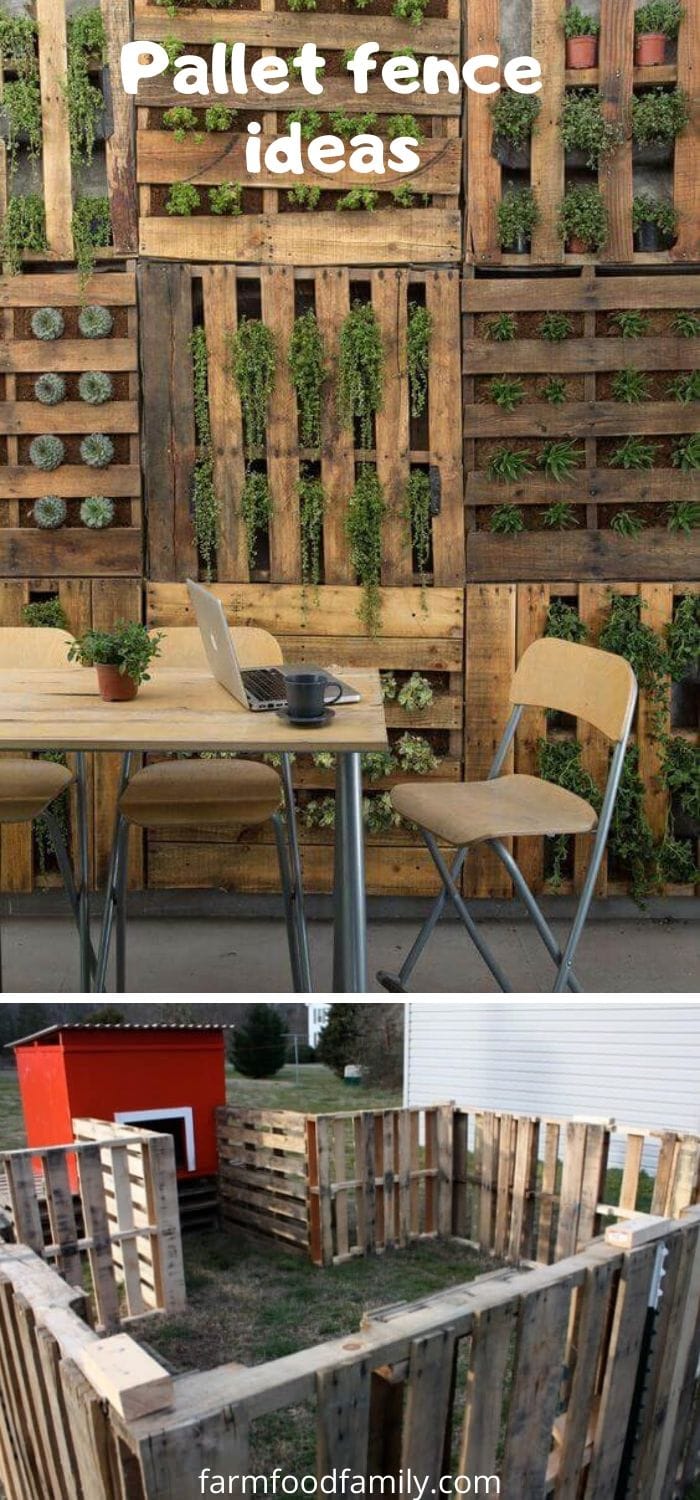
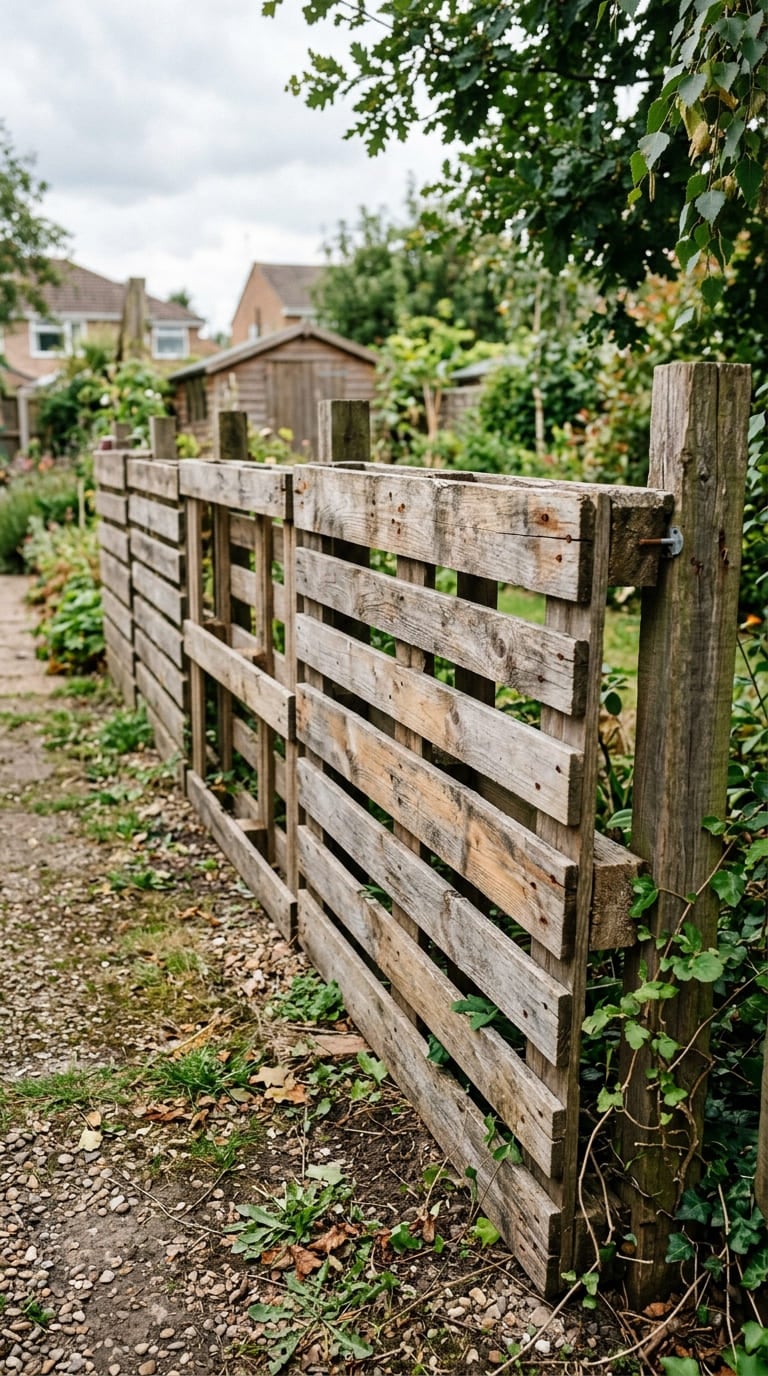
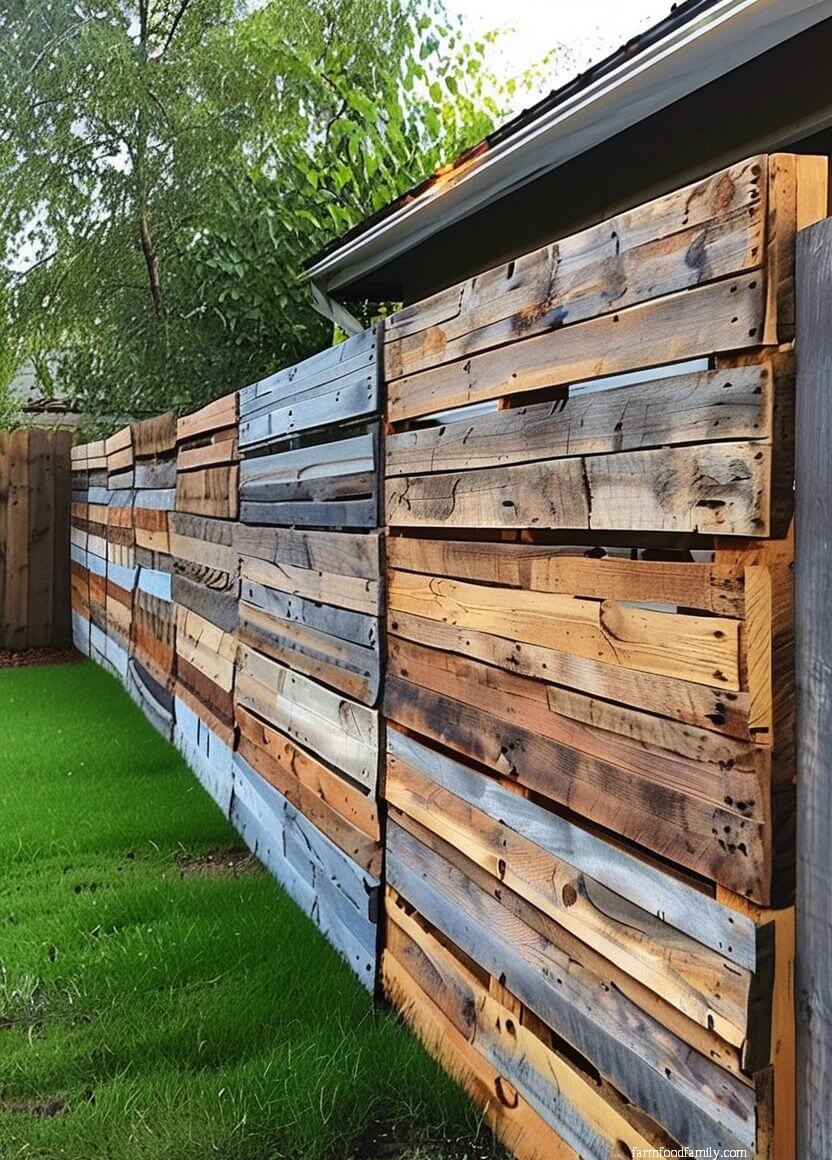
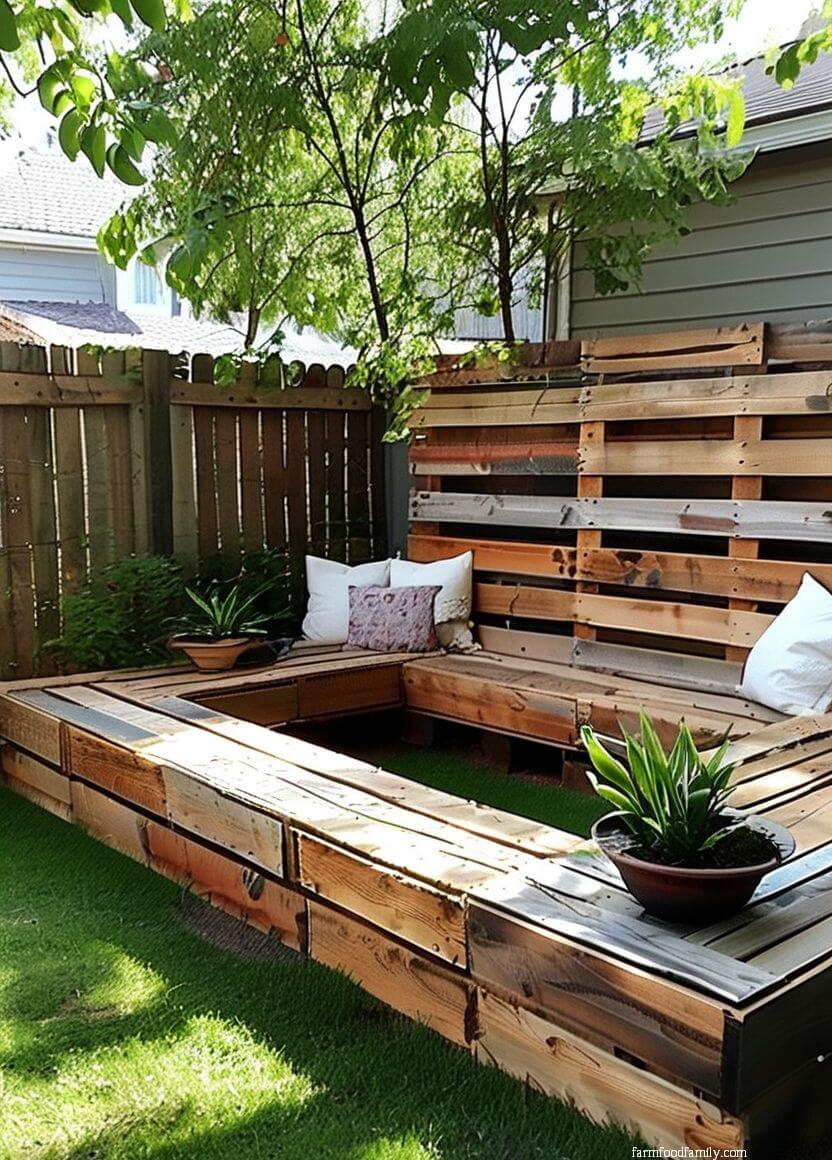
Reclaimed pallets are close to free if a source is nearby, and a fence built from them needs little more than fitting the pallets between posts, no cutting or shaping required since they already come in a usable panel size. It’s one of the fastest, cheapest real options on this list, though the tradeoff is a rougher, less uniform look than a purpose-built fence.
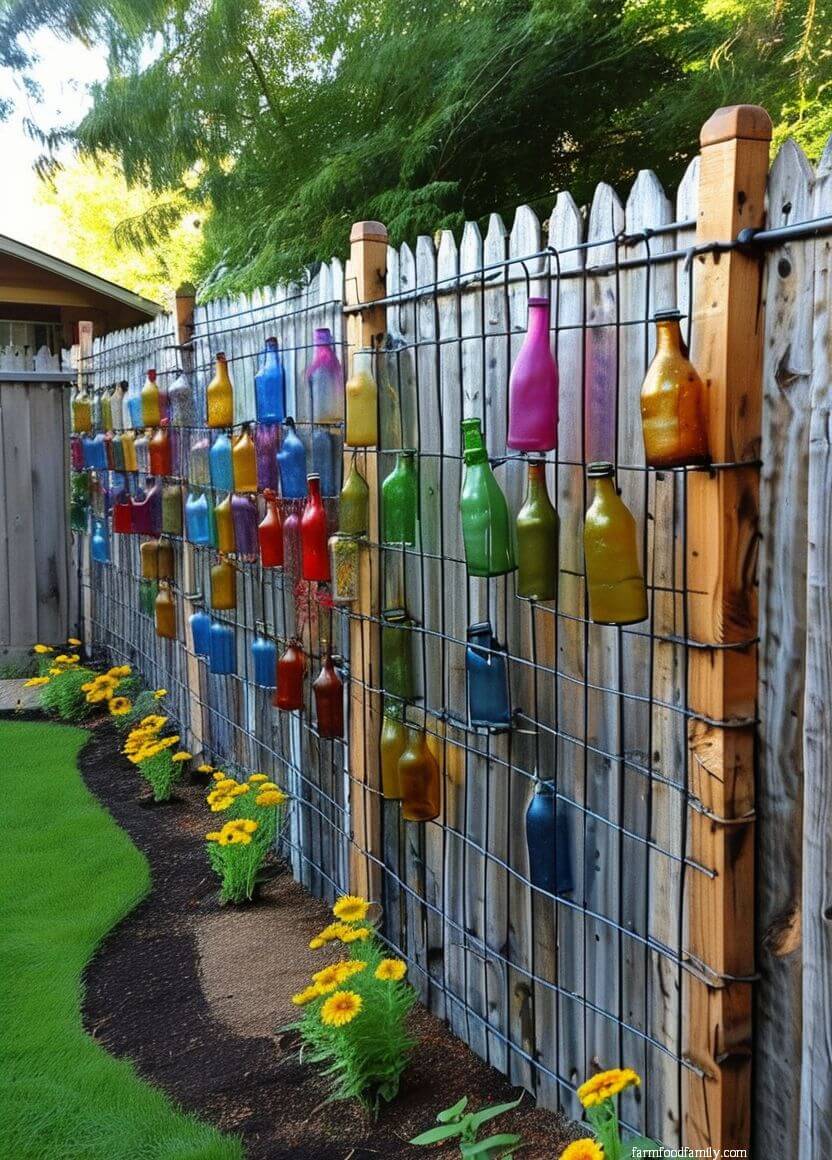
Other genuinely upcycled options exist too, old bicycle wheels mounted in a row as a decorative accent fence, for instance, more of a design statement than a full boundary solution, but a real way to use materials that would otherwise be scrapped.
Privacy Fences
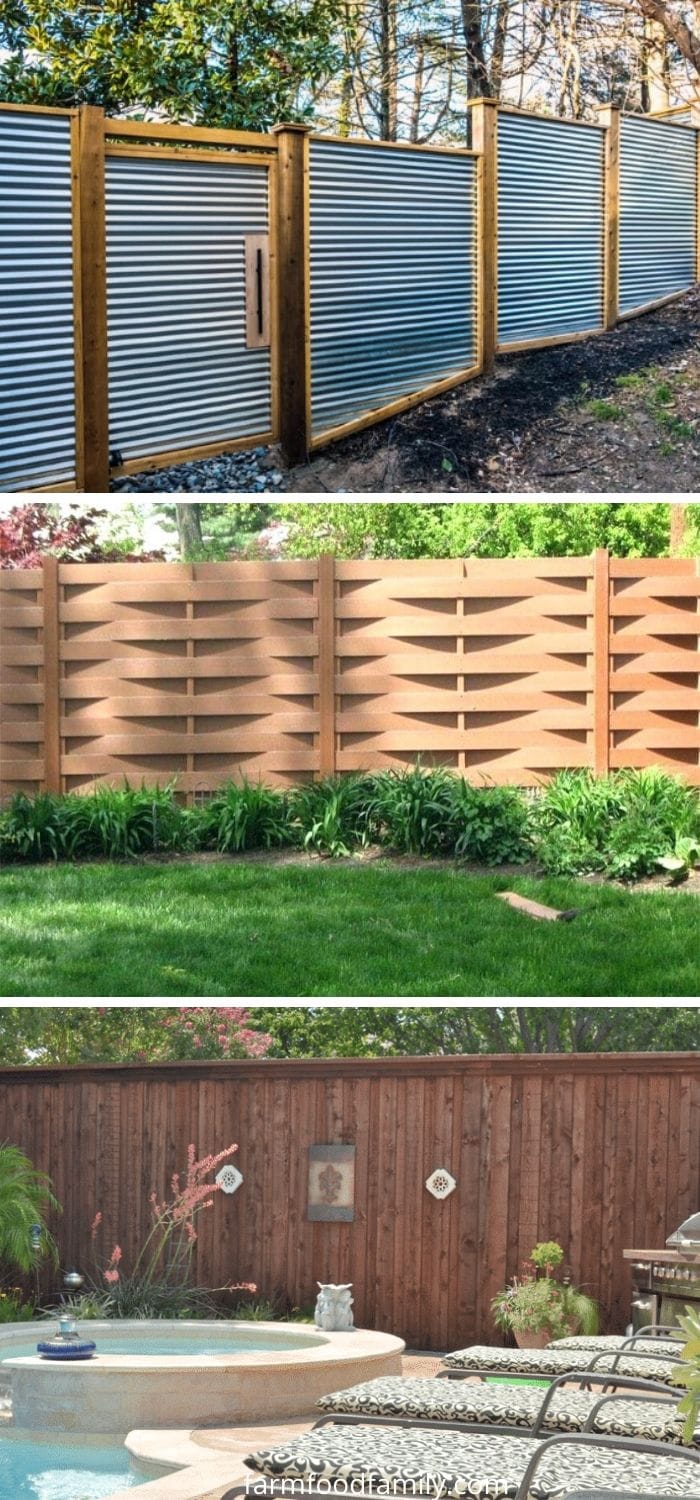
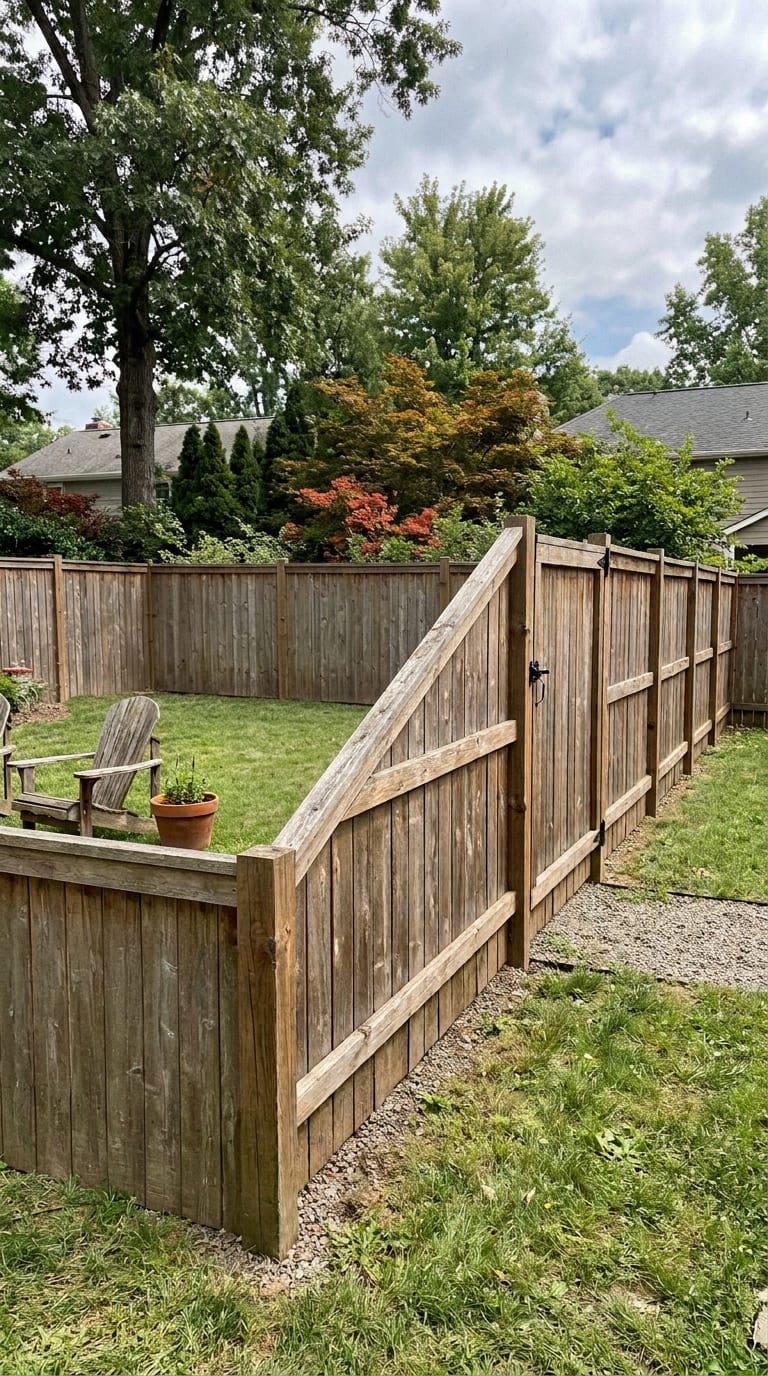
A dedicated privacy fence is built specifically to block sightlines completely rather than just mark a boundary, and it changes a few practical things about a yard: less noise from a barking dog reacting to passersby it can’t see, and a genuine sense of enclosure for anyone who wants the yard to feel like an extension of an indoor room. Solid wood, vinyl, or brick all achieve this; open styles like split rail or picket don’t.
Related: Landscaping Along a Fence Ideas
Animal and Pet Containment Fencing
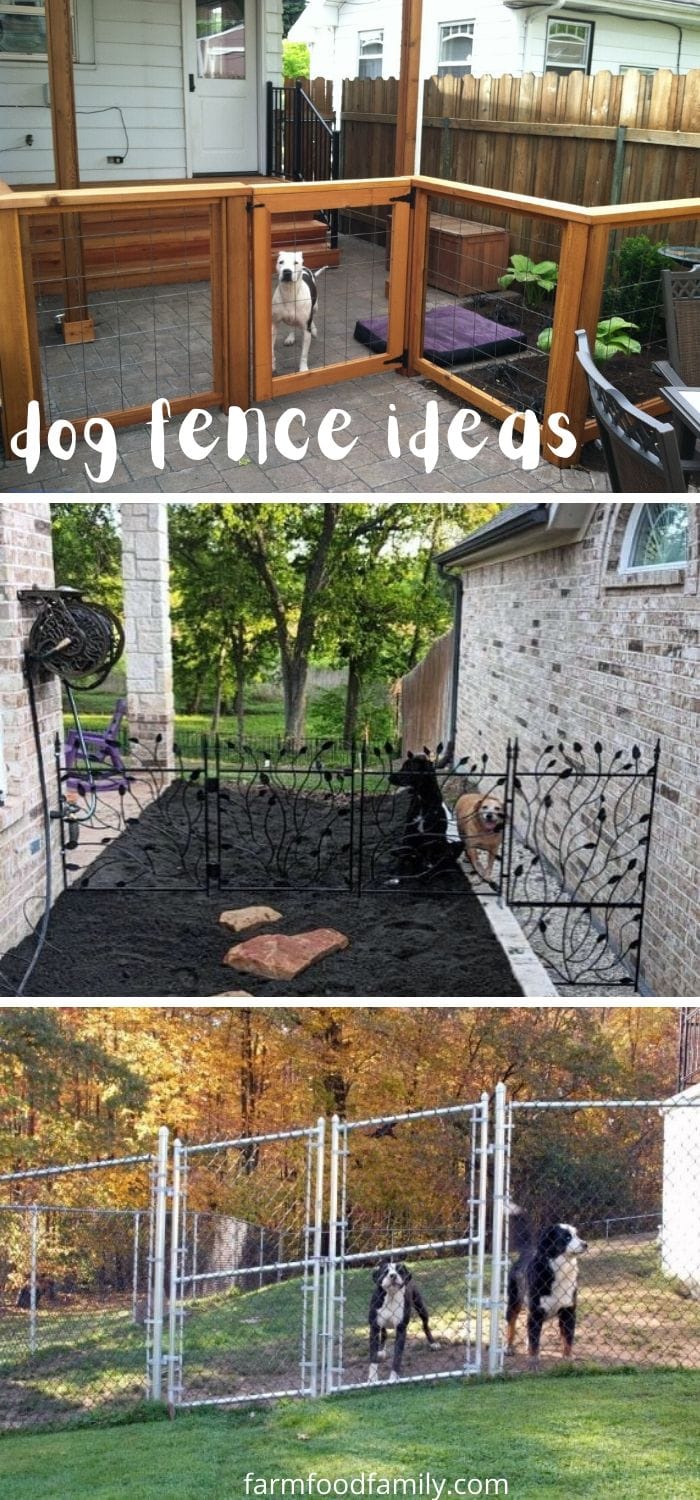
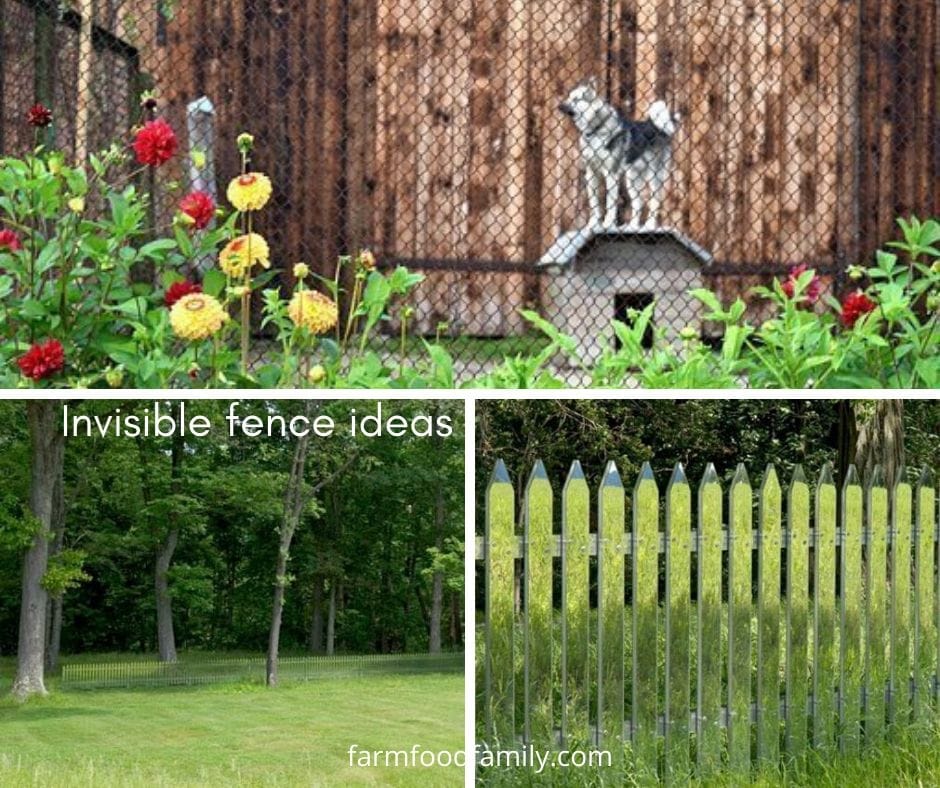
Different animals need genuinely different fence specs, not just a smaller or bigger version of the same design. Dogs vary by size and jumping ability: an invisible (electric collar-based) fence works well for many dogs and needs no visible structure at all, while larger or more determined dogs generally need a physical fence tall enough that jumping isn’t a realistic option.

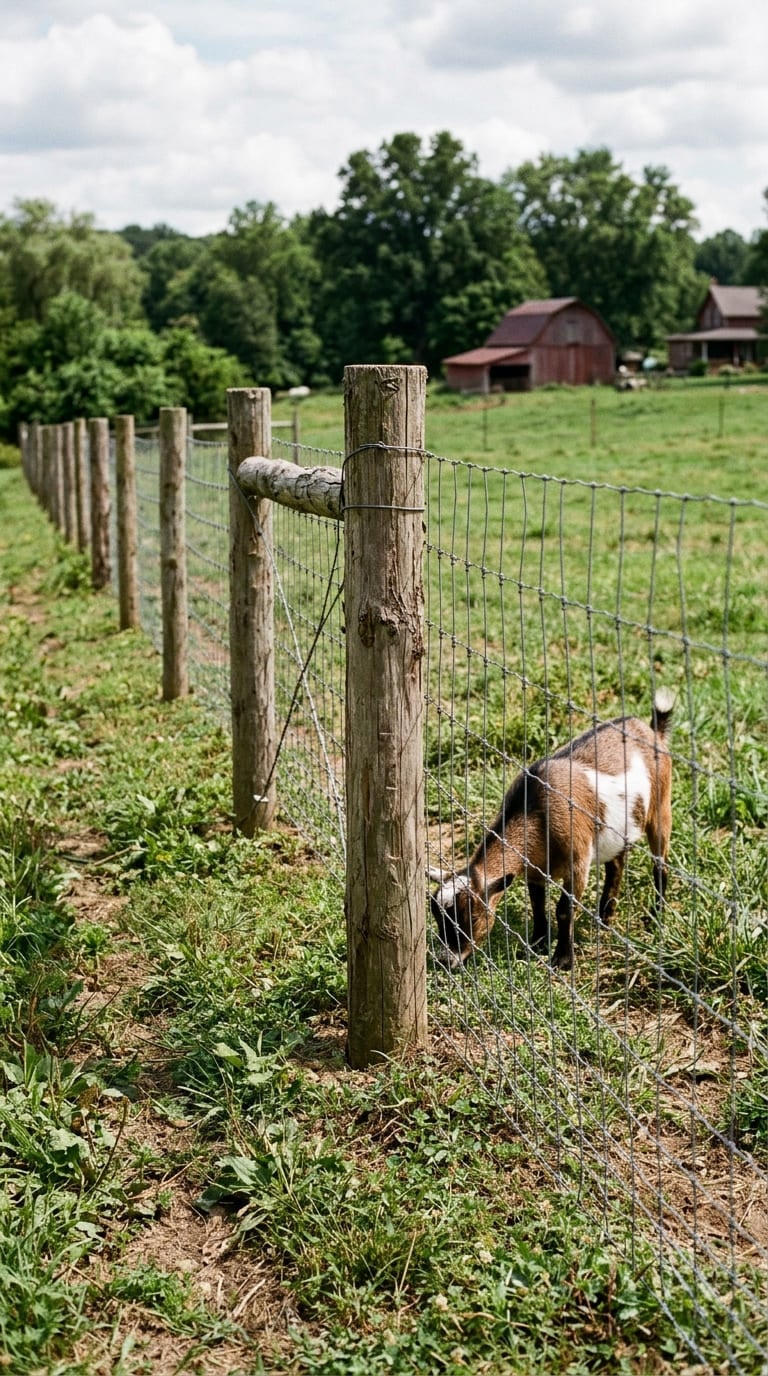
Goats are notorious for testing weak points and need fencing that’s genuinely sturdy at ground level, since they’ll push through or under a gap a dog wouldn’t bother with. Deer fencing has to solve a height problem specifically, deer can clear a fence under about 8 feet without much difficulty, which rules out most standard-height residential fencing as a deterrent on its own.
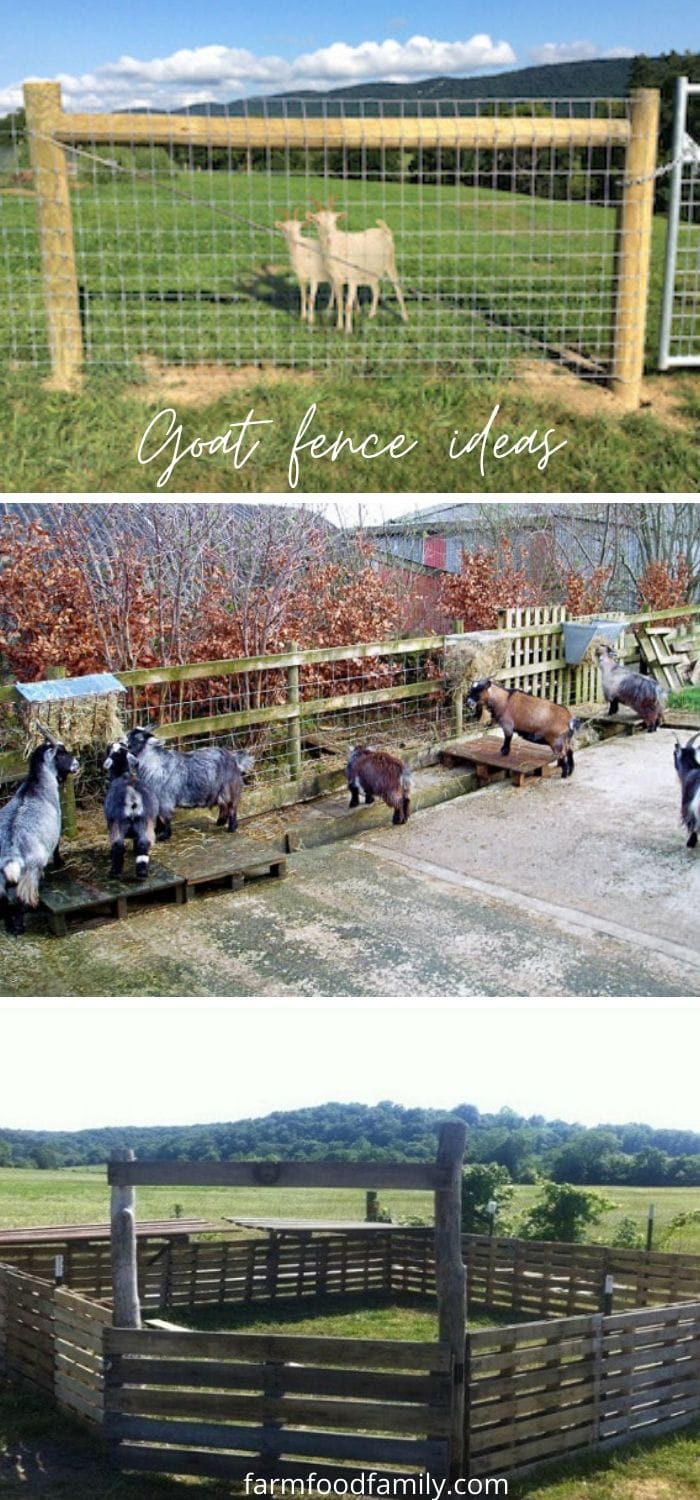

For farm-scale containment generally, electric fencing remains one of the more cost-effective options per foot of coverage, though it requires an actual power source and periodic line checks to stay effective. For dog-specific layouts specifically, our dog fence ideas guide covers more ground.
Pool Fences
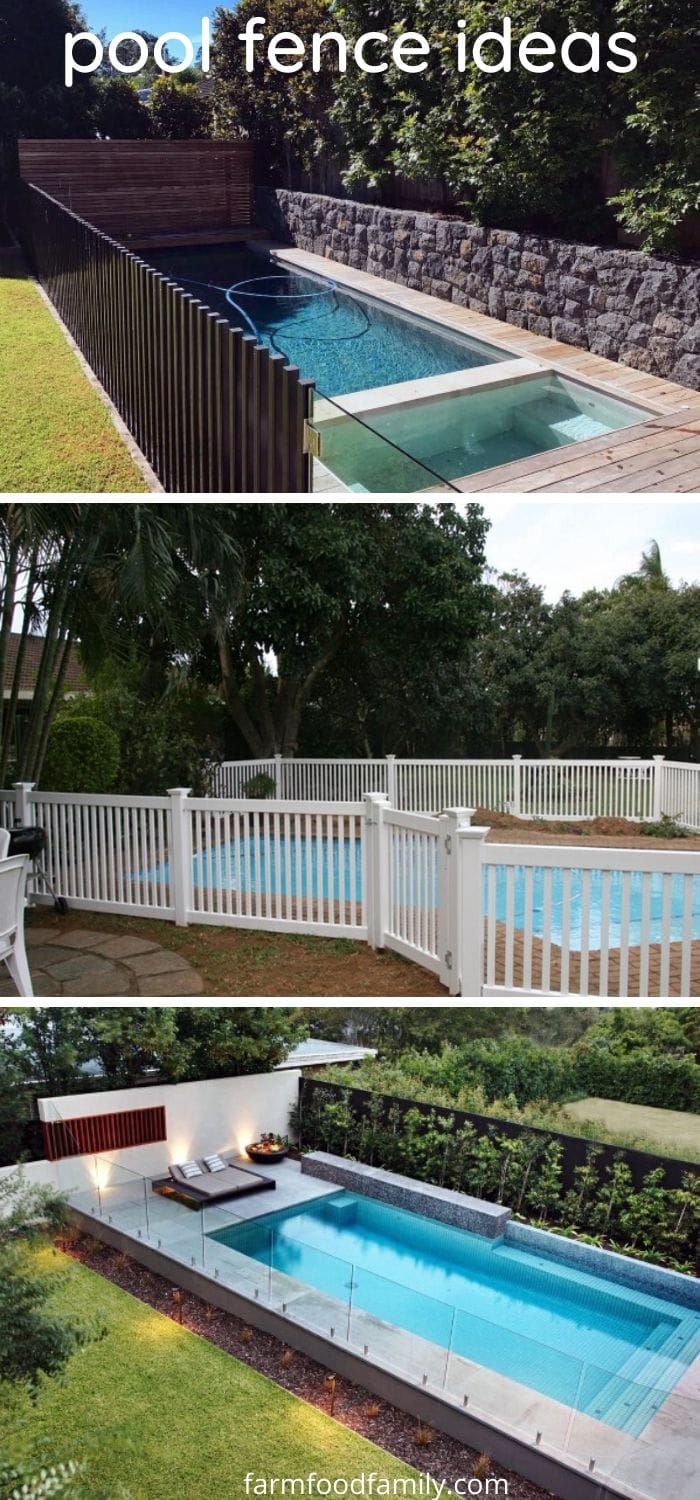
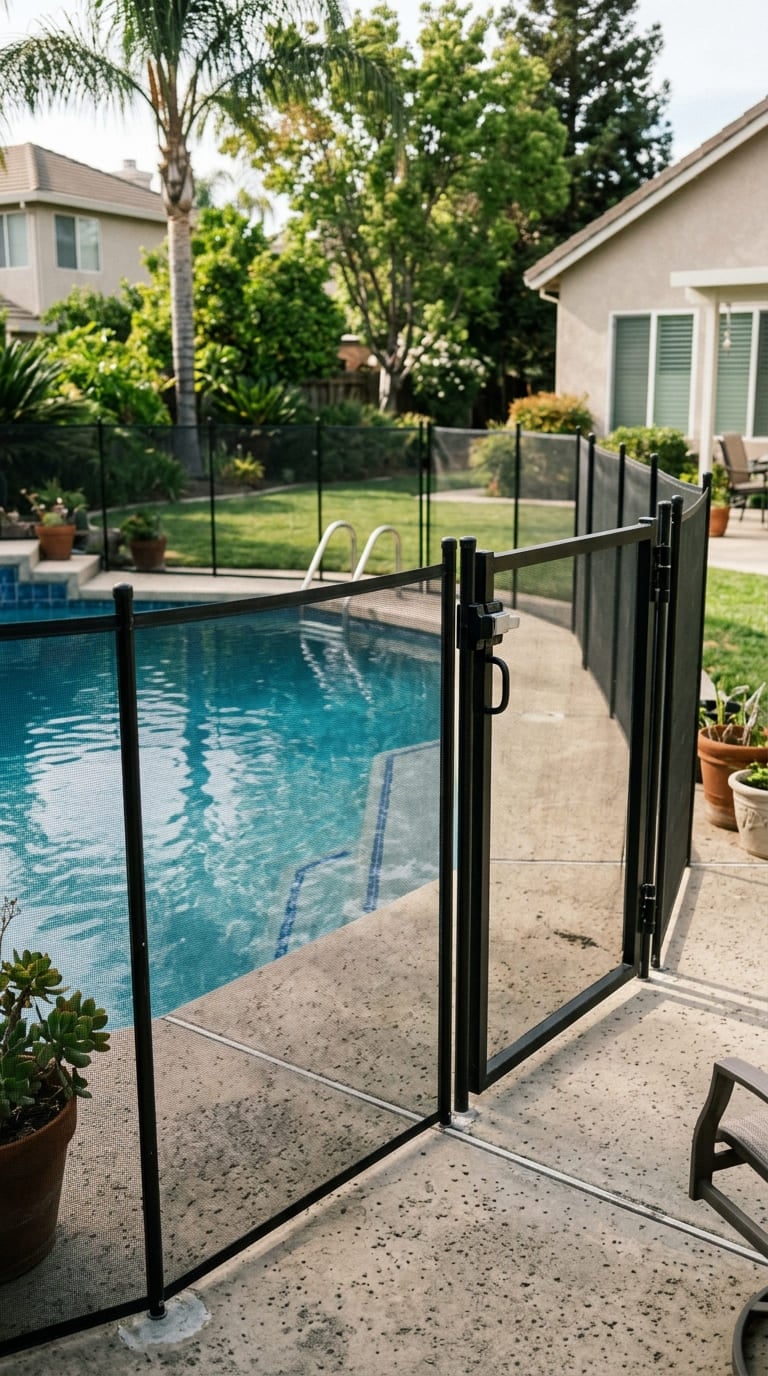
Pool fencing carries real safety weight beyond aesthetics, most jurisdictions have specific code requirements for pool enclosures (self-closing gates, minimum height, no easy foot- or hand-holds for climbing), so this is one fence type worth checking local code on before finalizing a design rather than after.
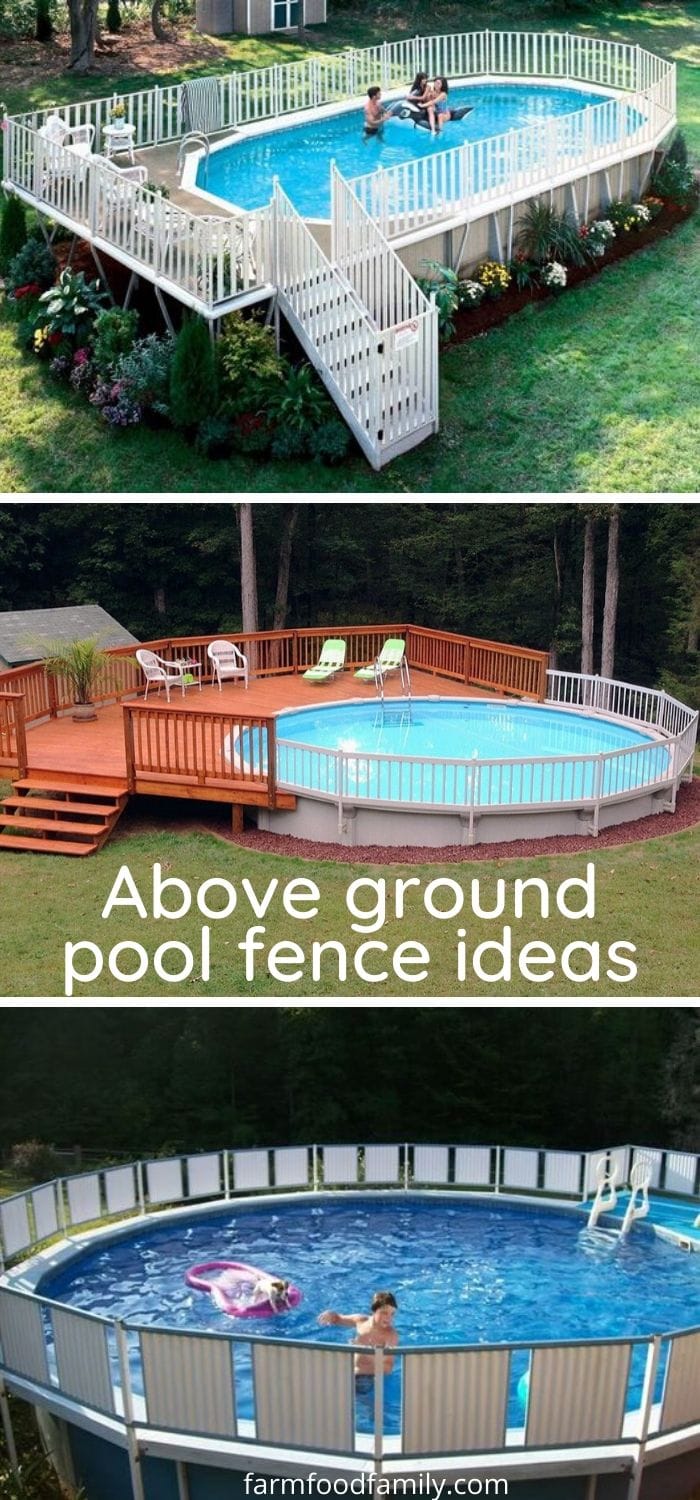
Above-ground pools complicate this further since the pool structure itself sometimes counts as part of the required barrier and sometimes doesn’t, depending on local rules.
Mesh and clear panel systems are popular specifically because they meet safety requirements without fully blocking the view of the pool from the house, a real practical tradeoff most solid privacy materials don’t offer.
Front Yard and Backyard Fences
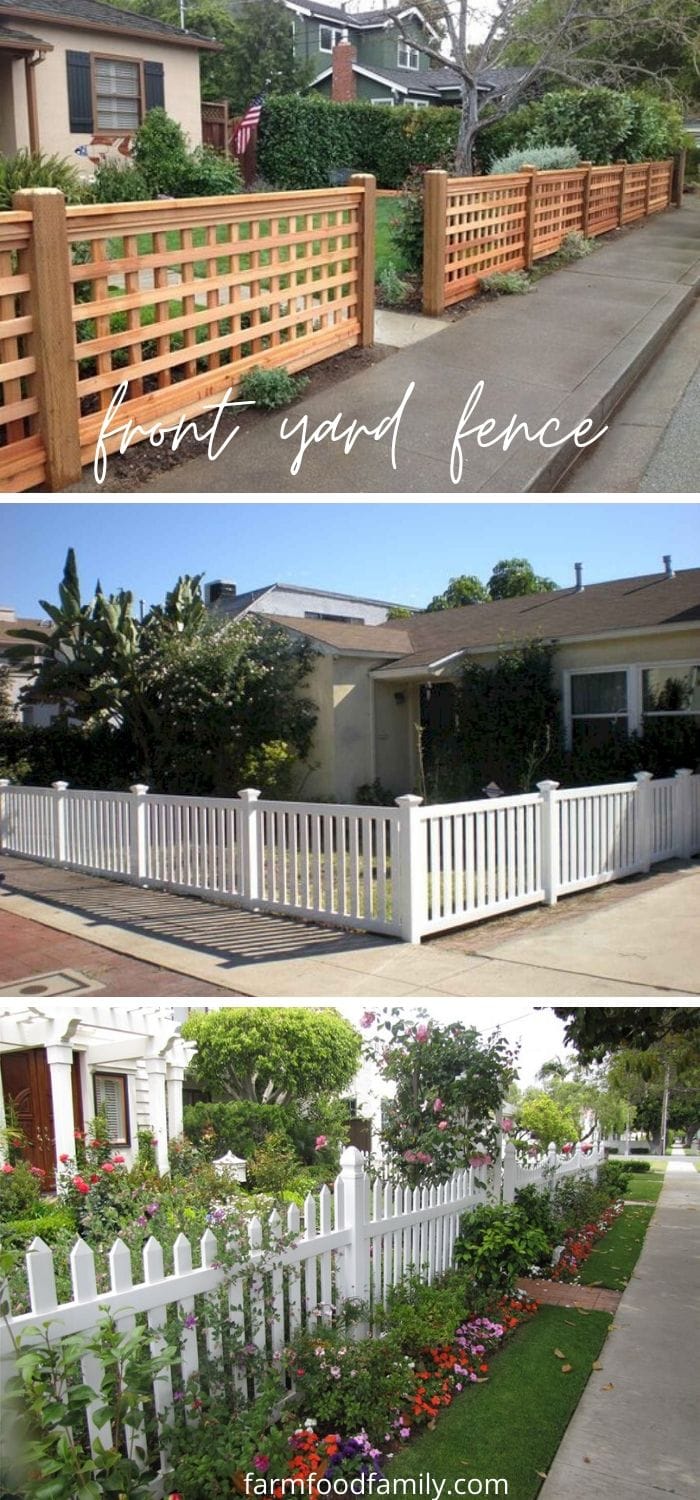
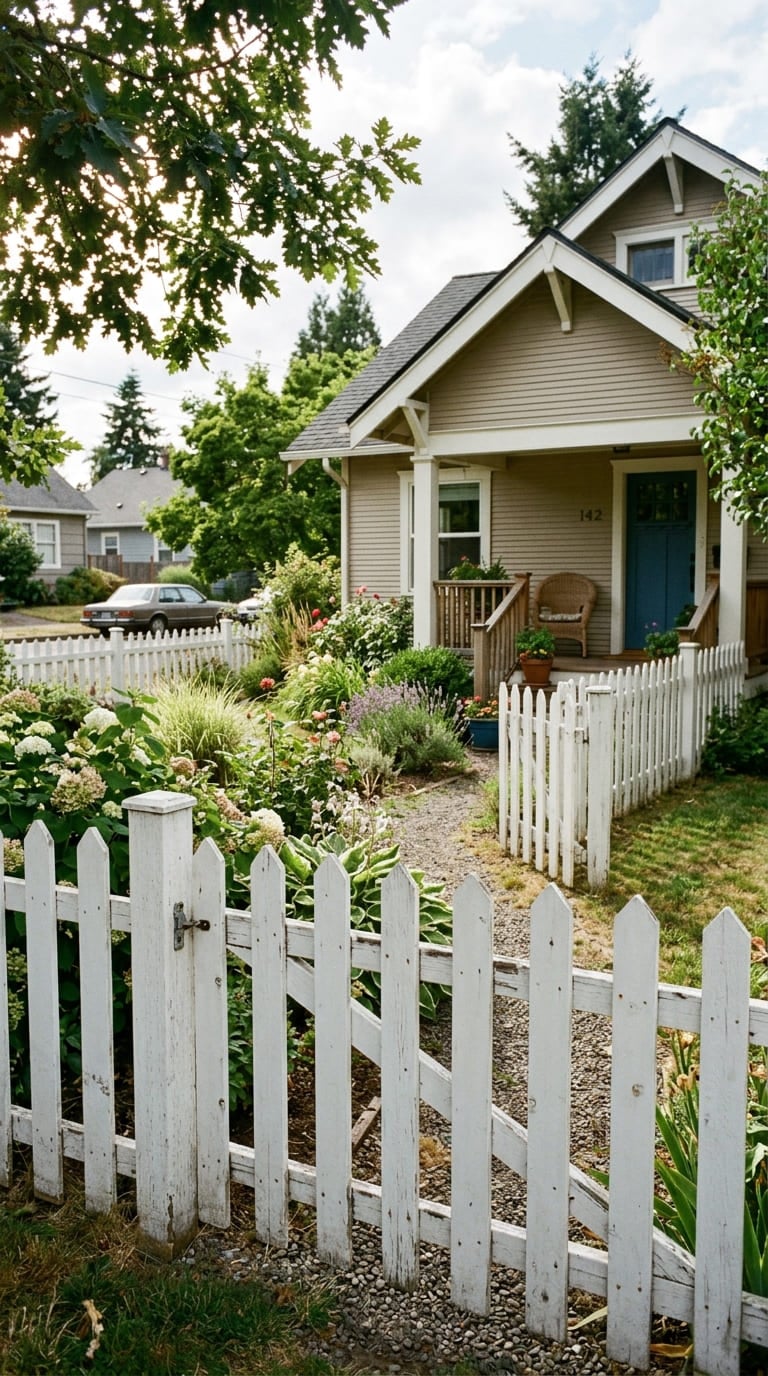
The same fence rarely works equally well in both locations, and that’s less about materials than about intent. A front yard fence is usually a style statement first, low picket, split rail, or an open metal design that doesn’t block the house from view, since most municipalities restrict how tall and how solid a front yard fence can legally be anyway.
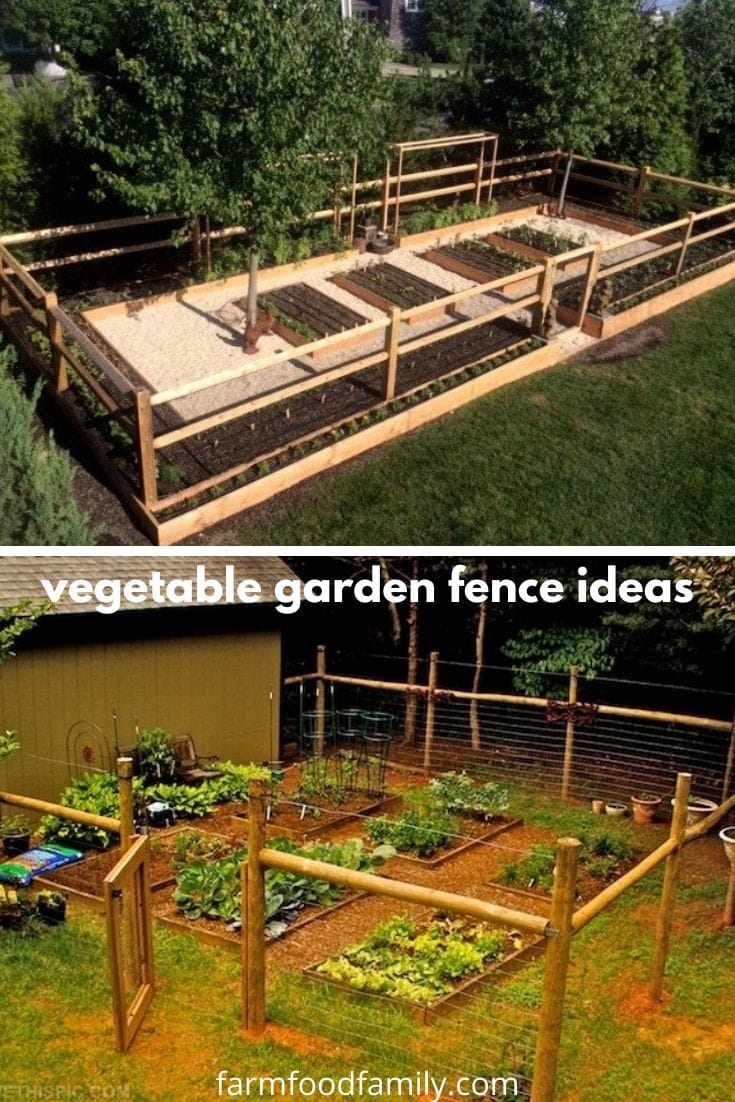
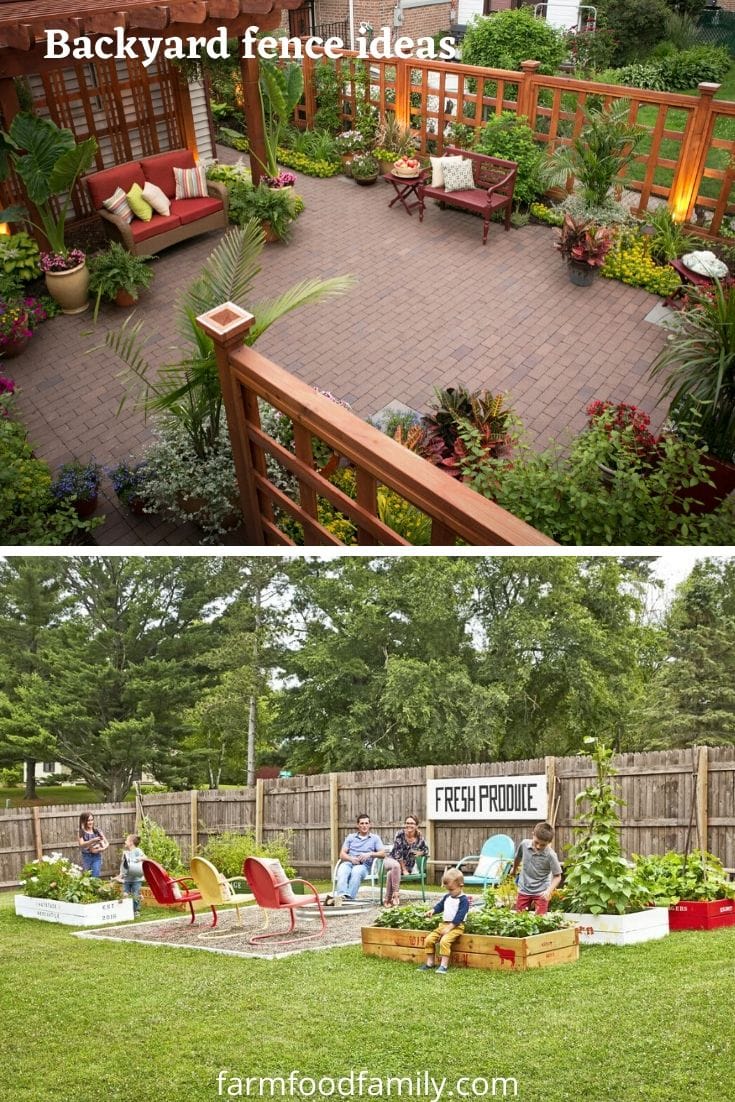
A backyard fence has more freedom to prioritize height and privacy over curb appeal, since it’s not facing the street.
Budget also tends to split differently between the two: a cheap backyard fence (pallet, basic wire, or a simple picket) can look intentional in a space meant for function, while the same budget choice at the front of a house reads differently to anyone walking by.
Driveway, Porch, and Slope Fences

A few situations call for solutions the standard “run posts every 6 to 8 feet” approach doesn’t handle cleanly. A driveway fence needs a functional gate, sliding or swinging, sized for a vehicle, not just a person, which changes the hardware and post-strength requirements at that specific section.

A porch fence (a low rail rather than a full-height fence) is more about defining the porch’s edge and keeping small kids or pets from wandering off it than about privacy or security.
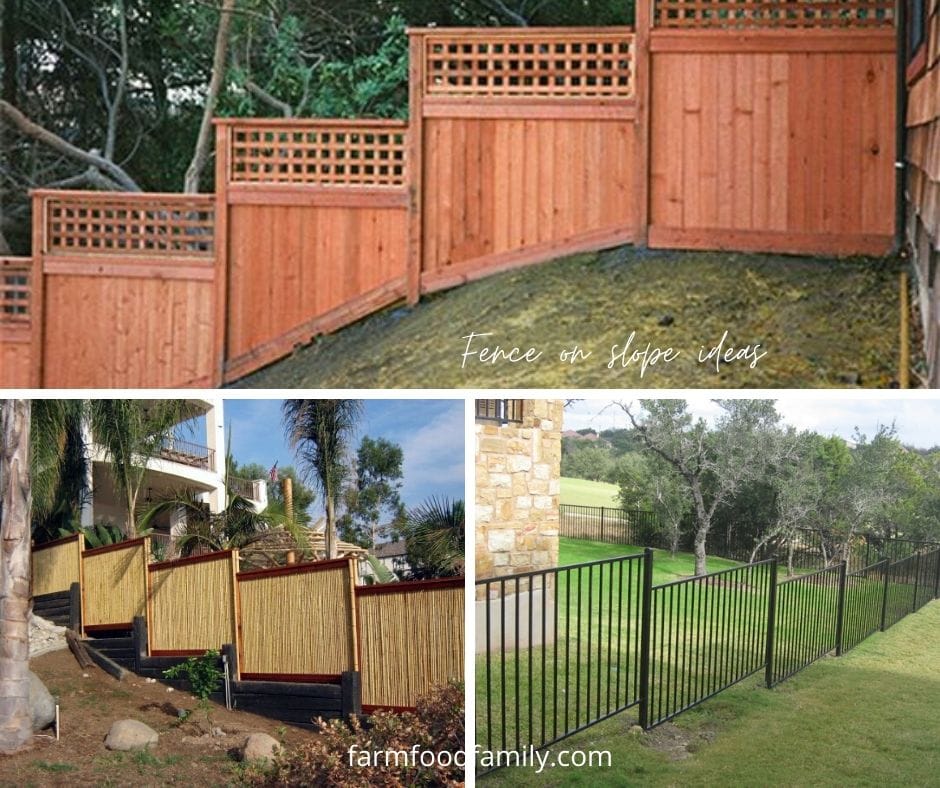
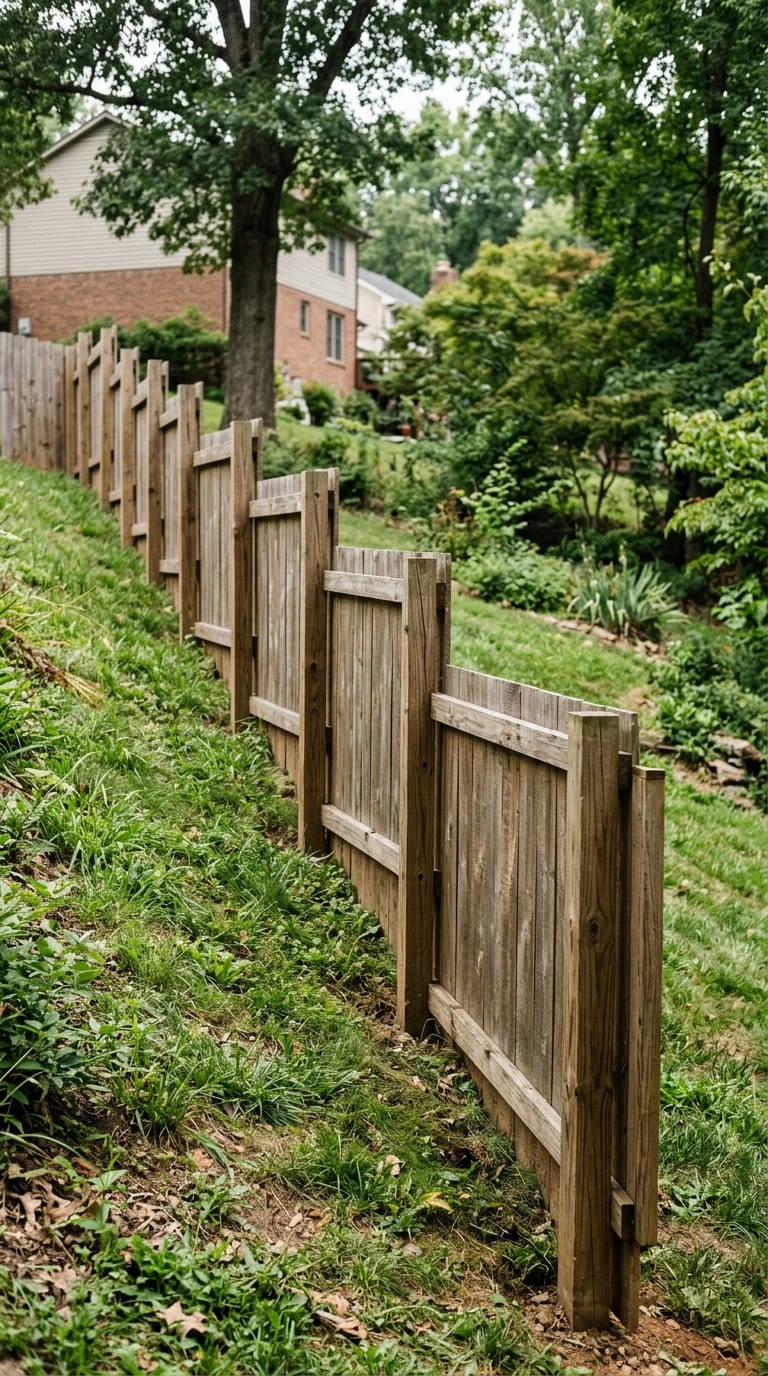
A sloped yard is the trickiest of the three: a fence built in a straight, level run across a slope leaves growing gaps underneath as the ground drops away.
The two real fixes are stepping the fence in level sections (a stair-step profile) or racking it, angling each panel to follow the slope continuously, and the choice usually comes down to which look fits the rest of the property better.
Decorative, Horizontal, and Lattice-Style Fences
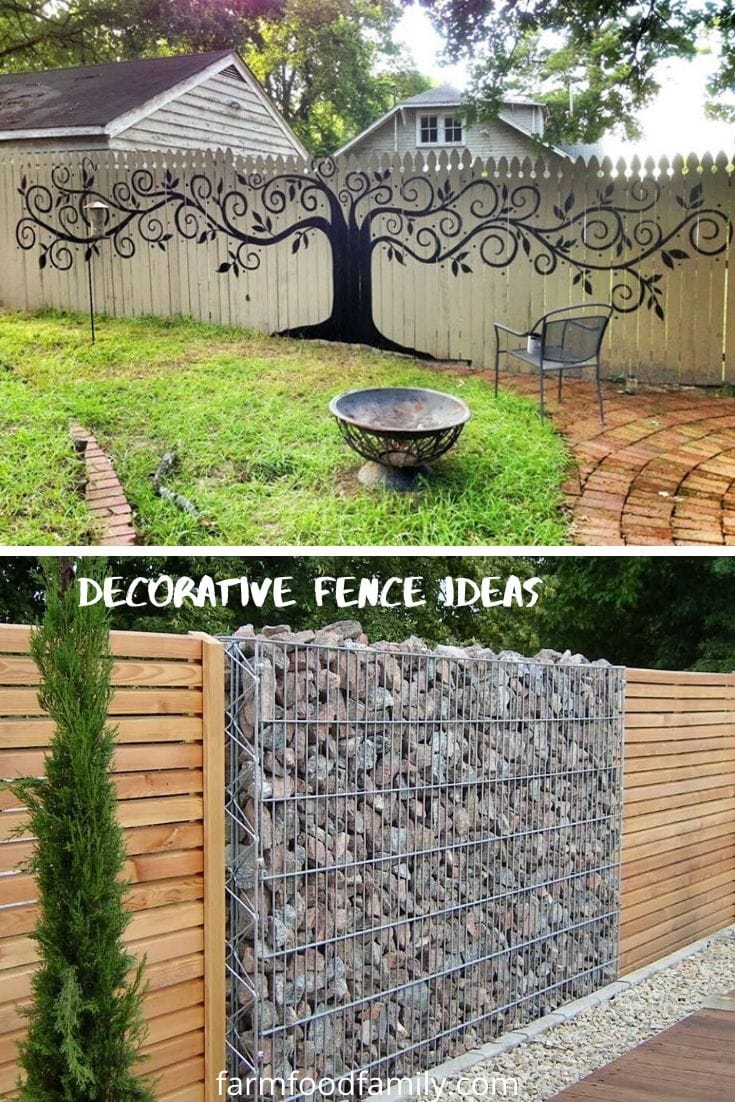
These three are really style choices layered on top of whatever base material gets used, not separate materials themselves.

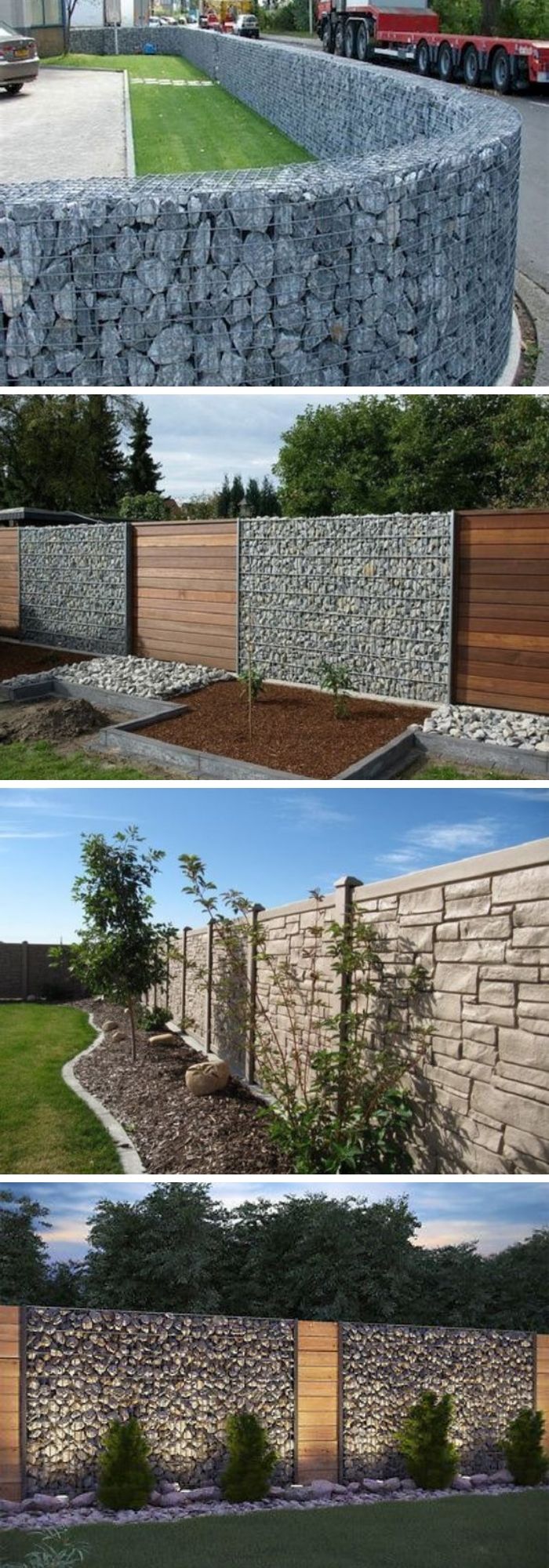
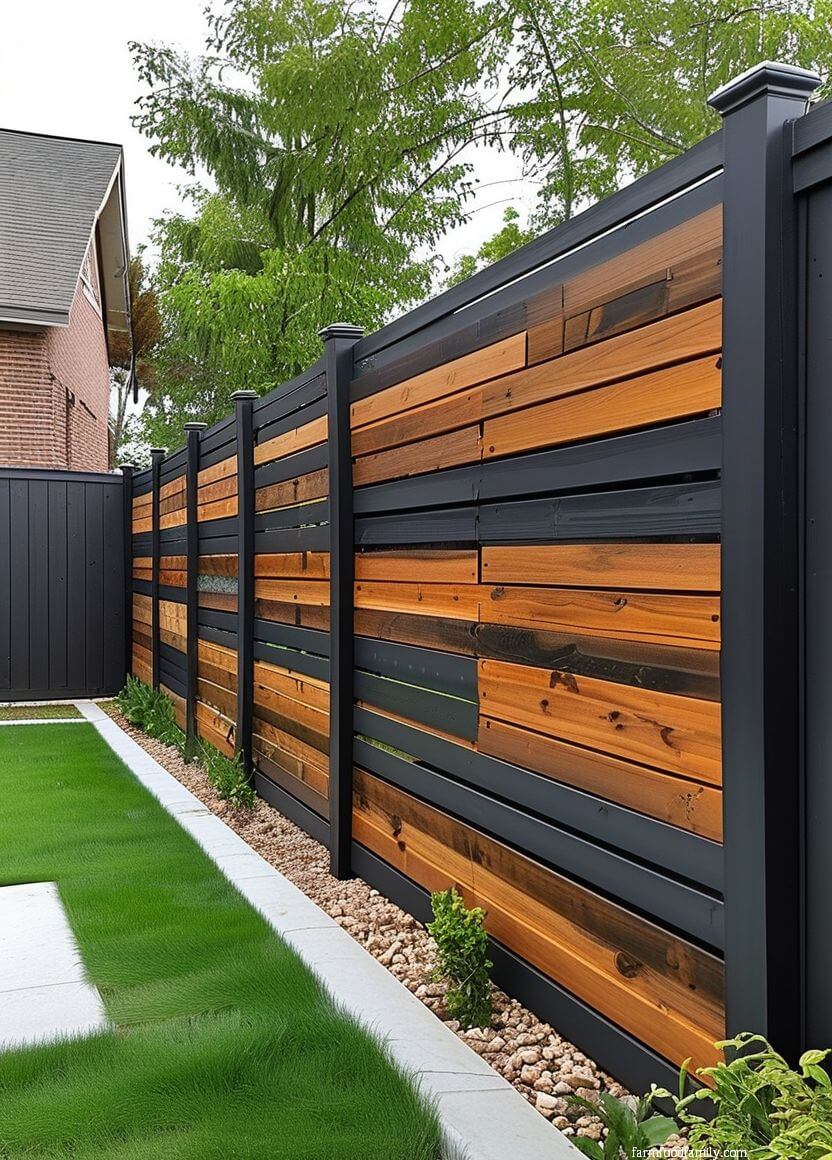
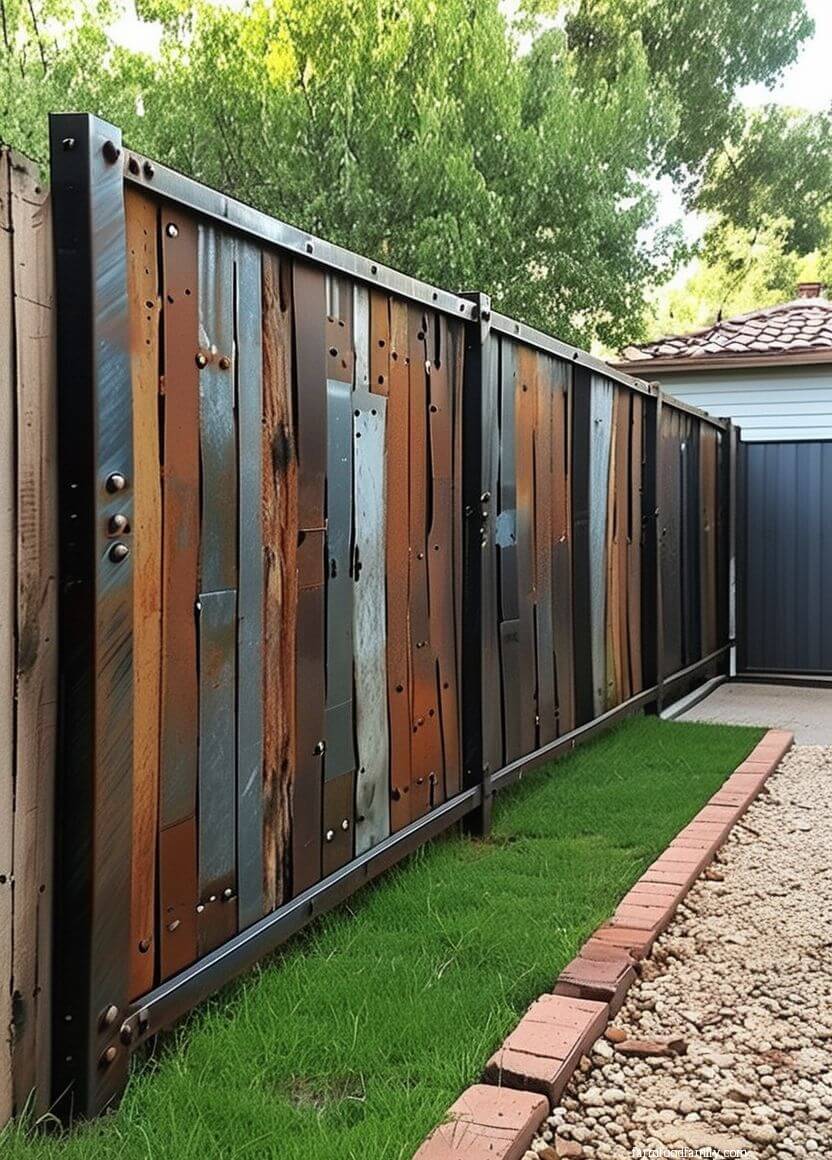
Usually, this fence type is made of wood or vinyl but recently, in the dawn of modern architecture, we are seeing horizontal fences with the combination of wood-metal and vinyl-steel. Here are some ideas.
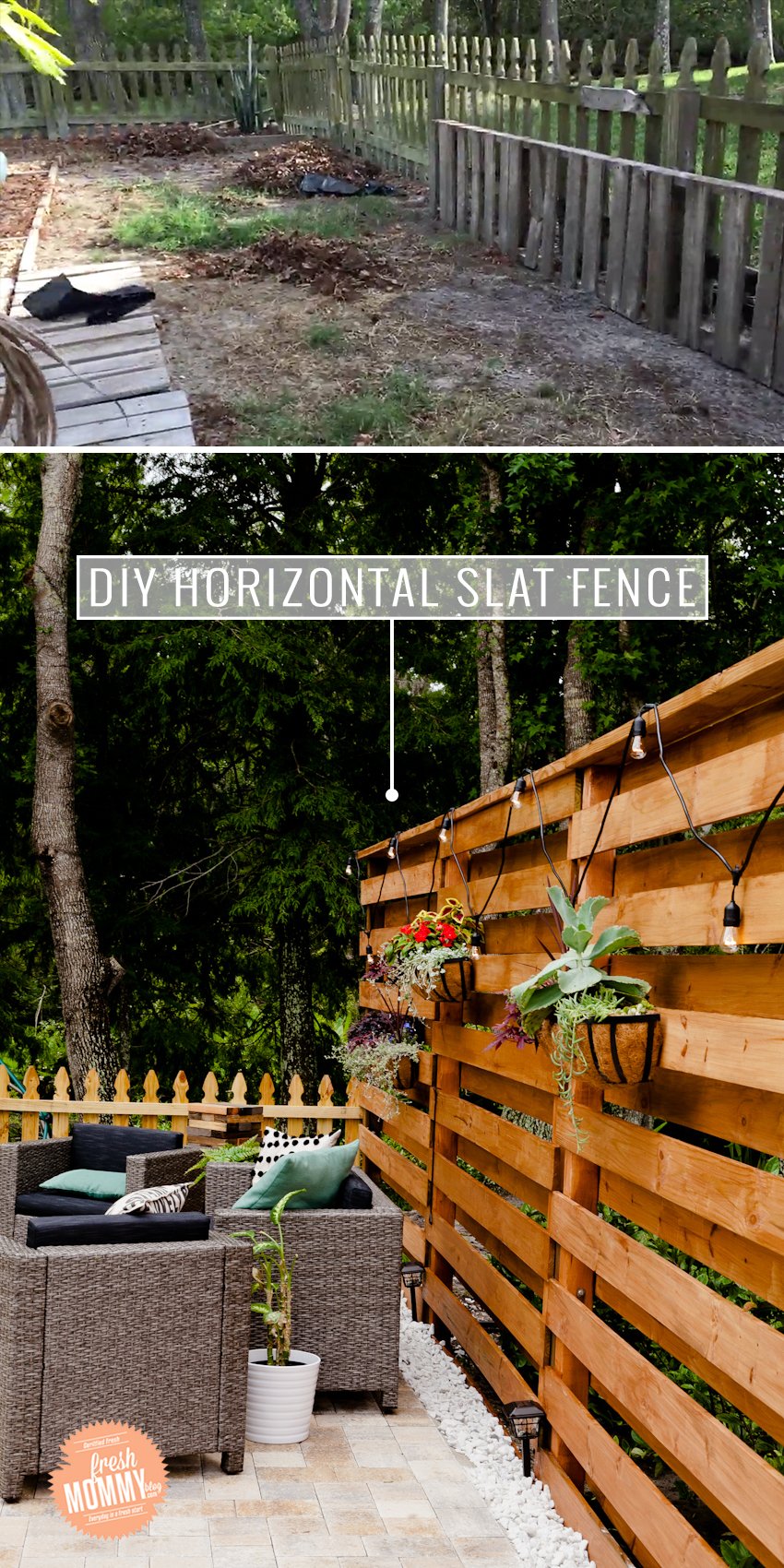
Source: freshmommyblog
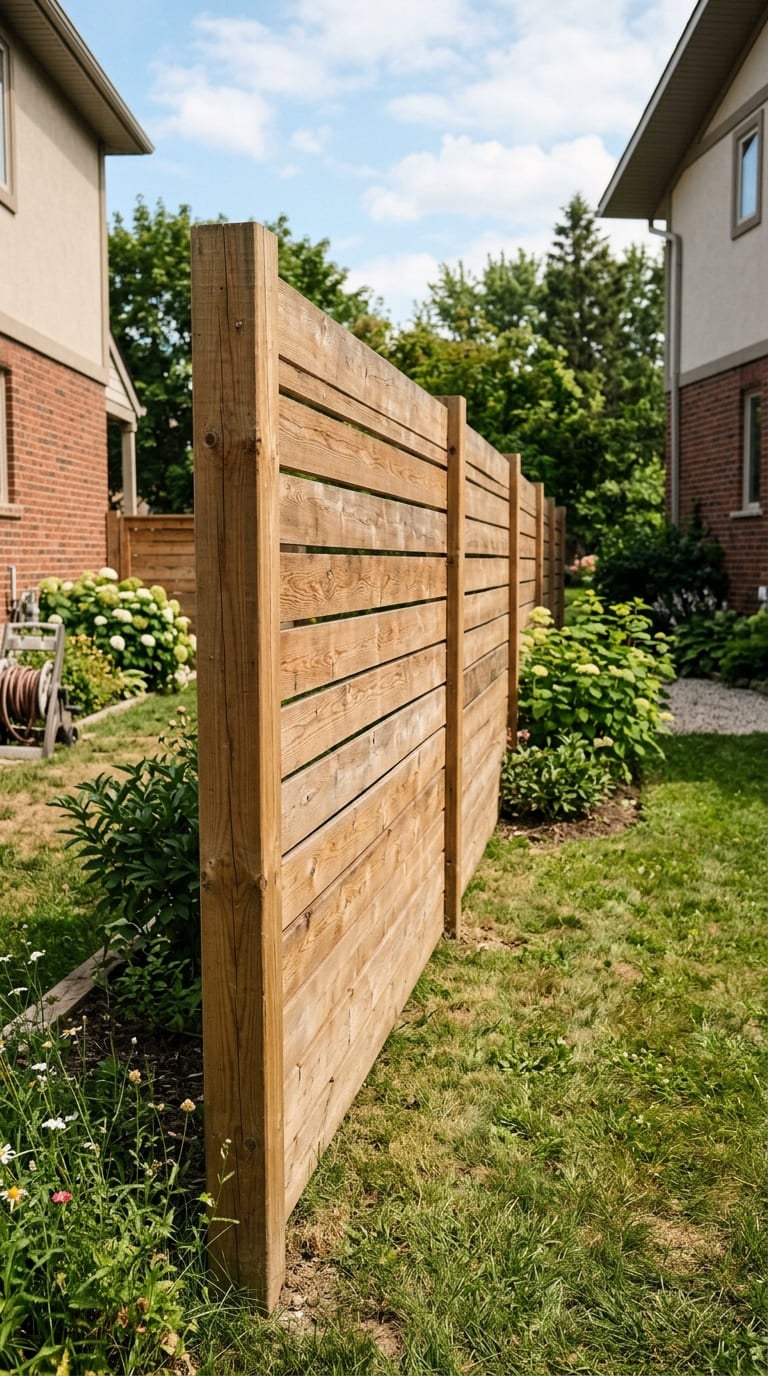
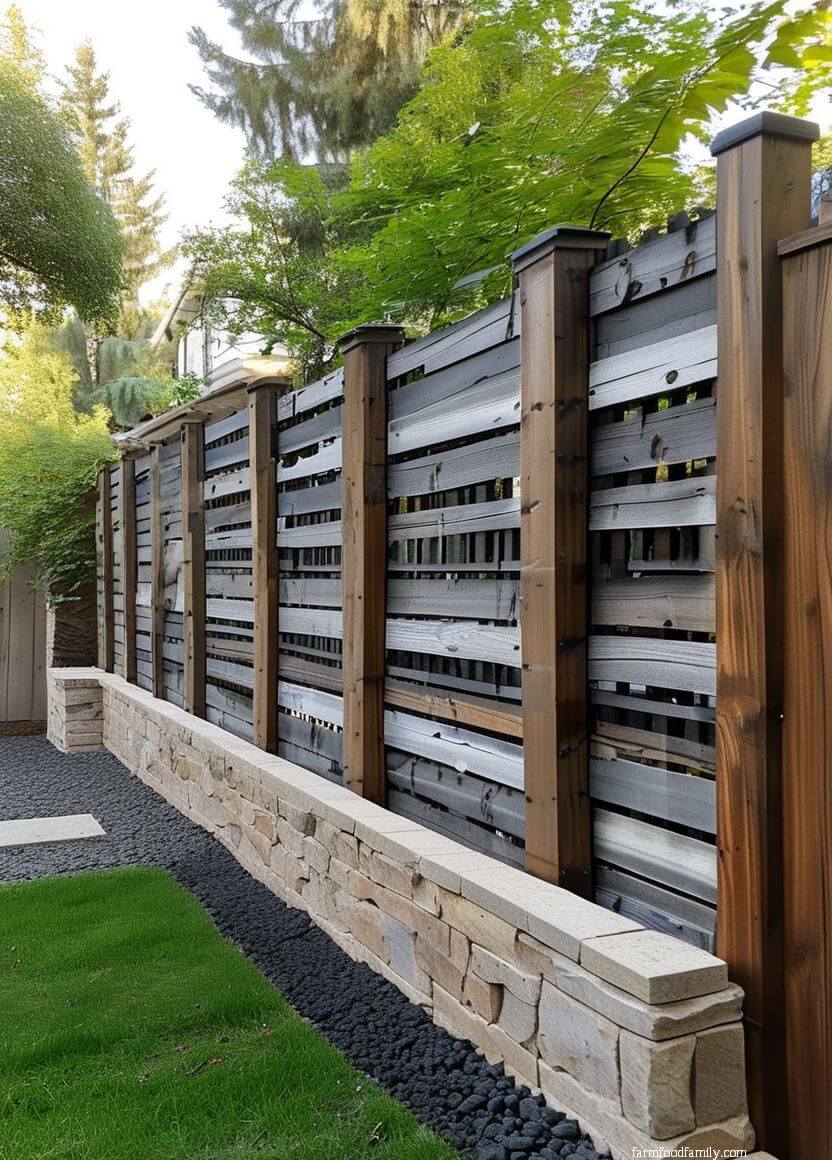
Horizontal board fencing (wide, flat boards run sideways instead of standard vertical pickets) reads as distinctly modern and has become one of the more requested styles in recent years for exactly that reason.
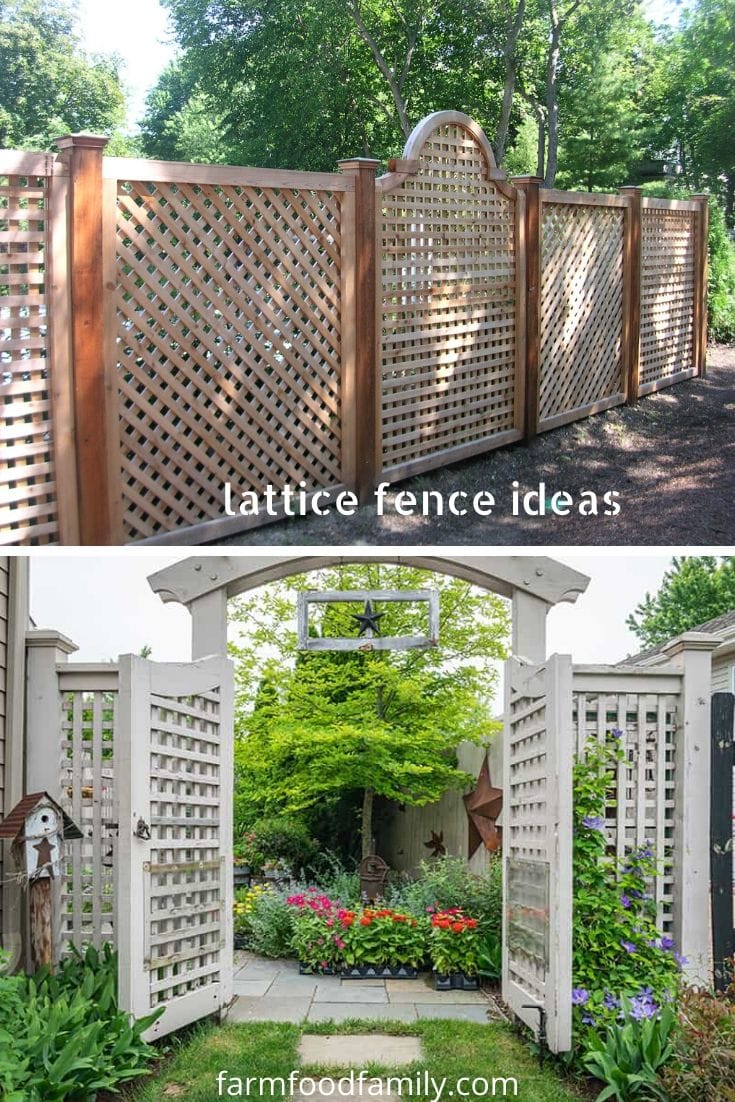
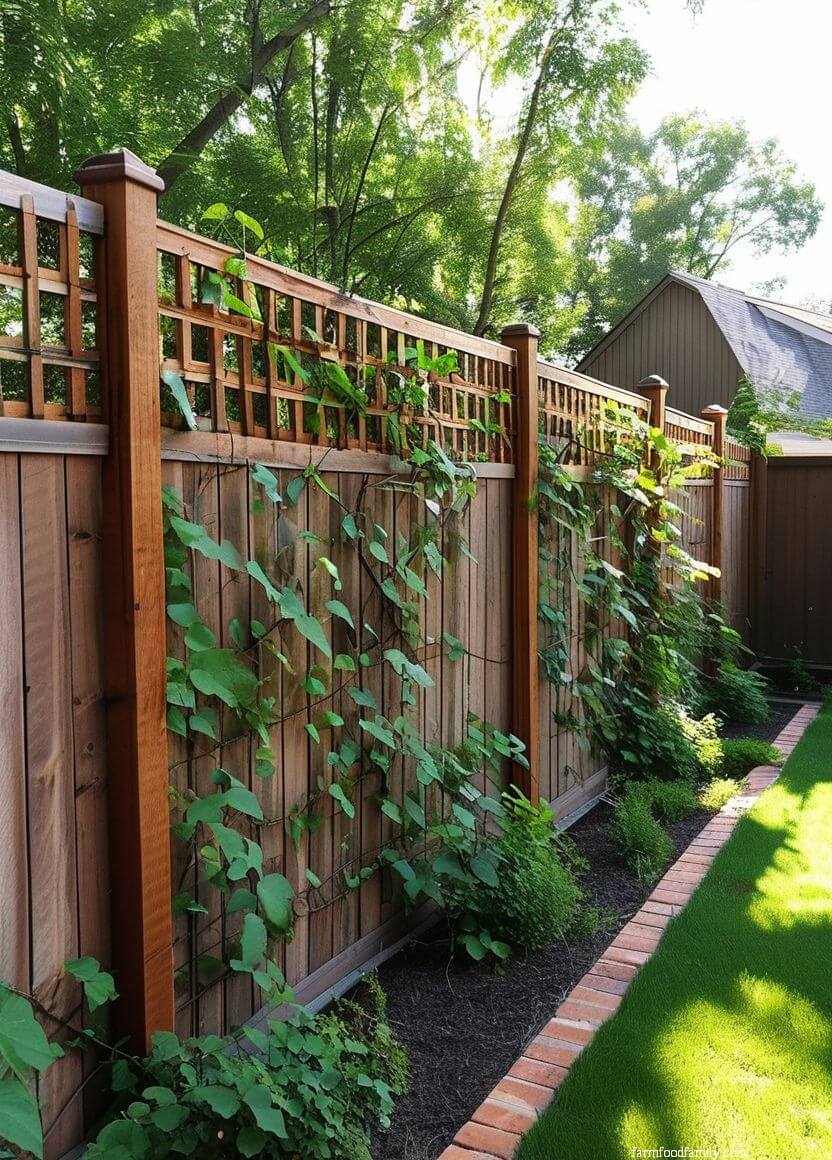
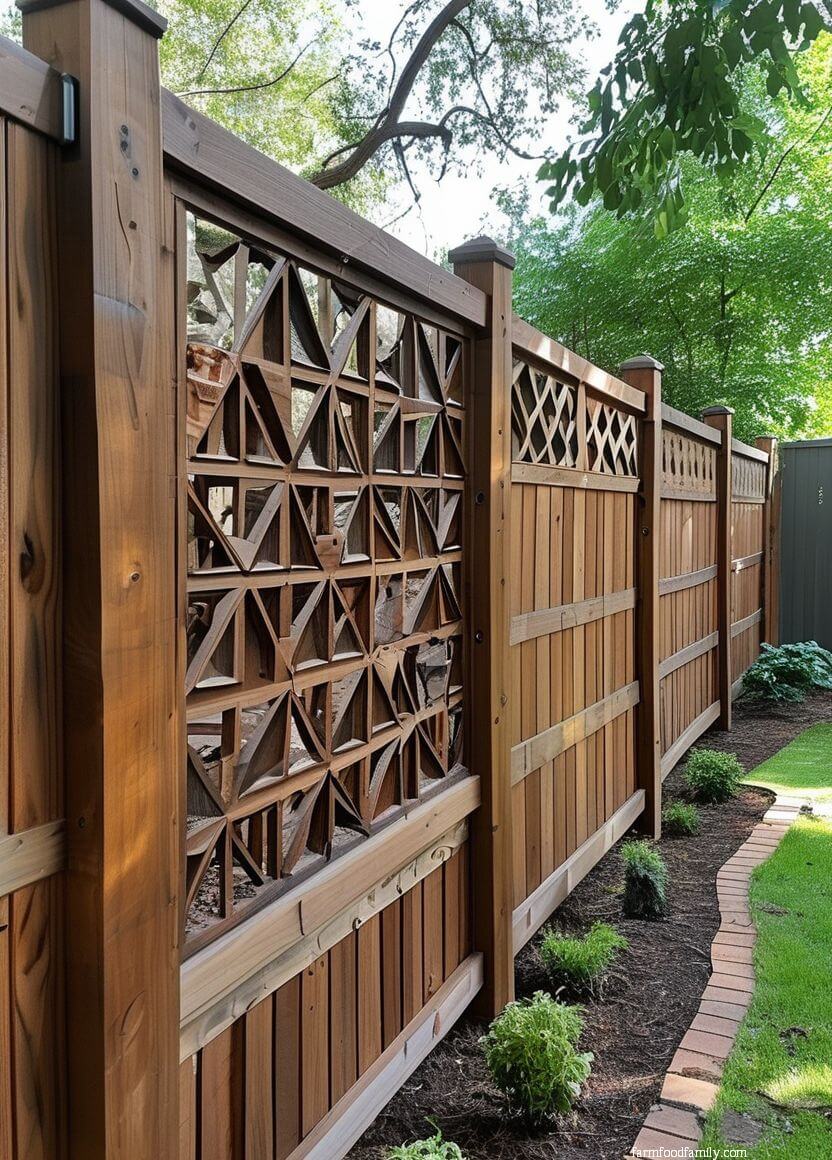
Lattice, the crossing diagonal pattern, works both as a standalone screen and as a topper added to an existing shorter fence to add height and privacy without a full rebuild.
Decorative styles more broadly cover anything that trades some function for visual interest, scalloped tops, alternating board heights, painted patterns.
Split Rail Fences
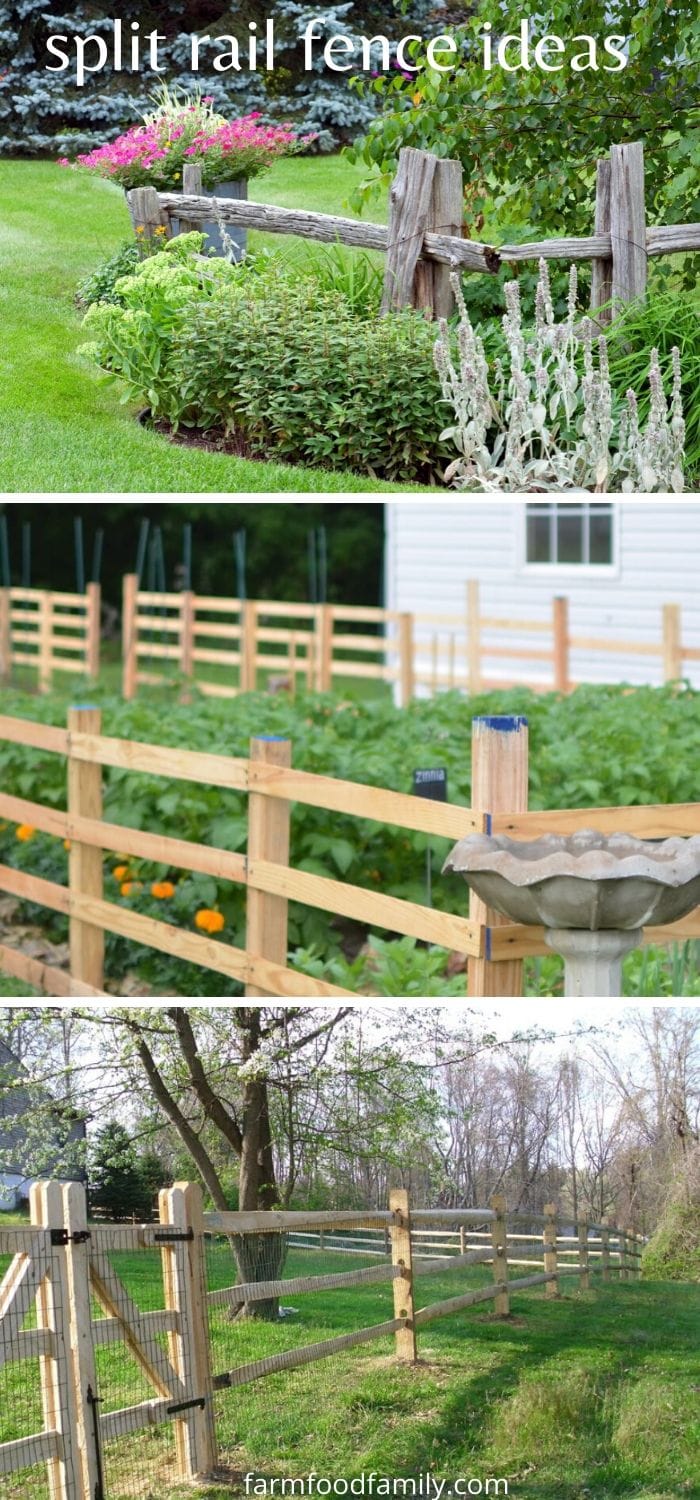
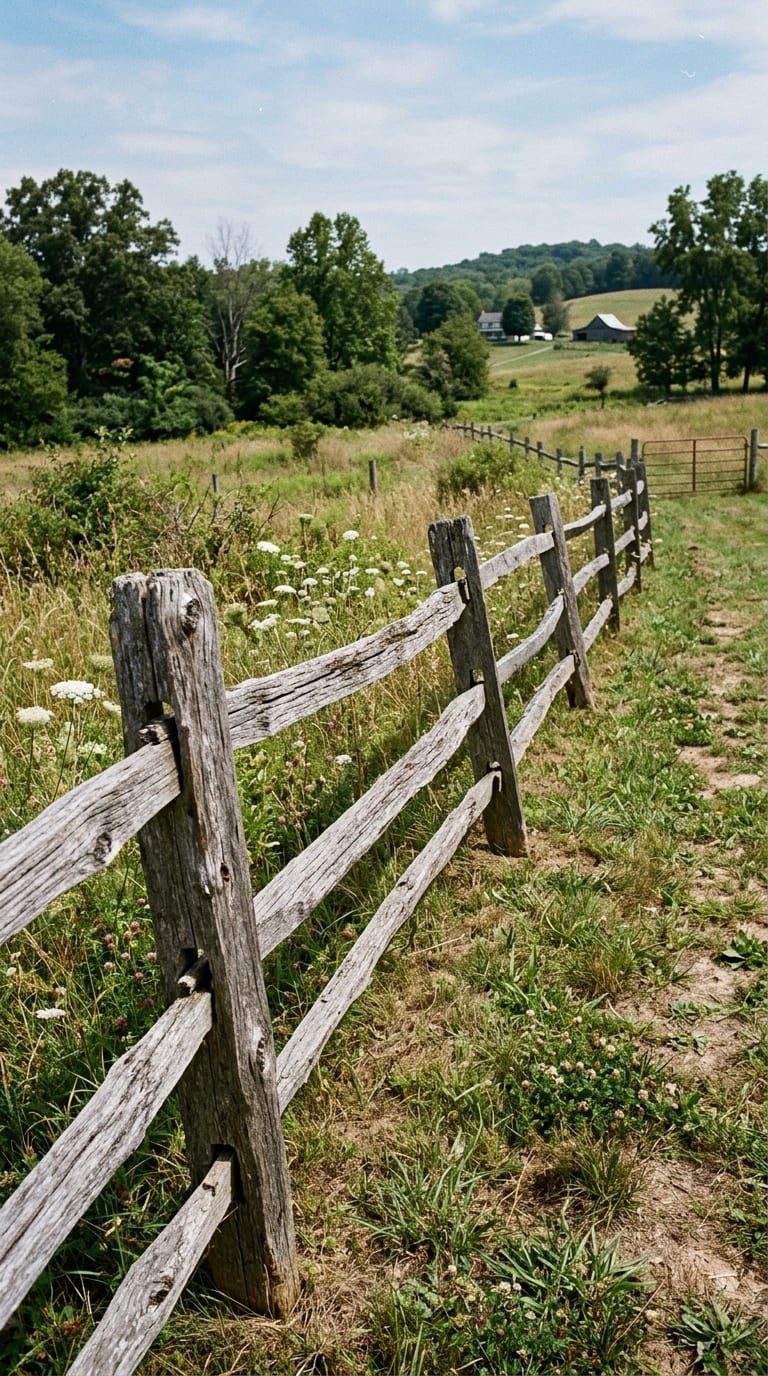
Split rail is the classic rural, ranch-style fence: rough-hewn horizontal rails slotted into angled posts, no boards or pickets at all.
It’s inexpensive, genuinely fast to install since there’s so little material per linear foot, and reads as open and welcoming rather than closed-off, which is exactly why it doesn’t work as a privacy or security solution. It marks a boundary clearly without blocking the view in either direction.
Temporary and No-Dig Fences
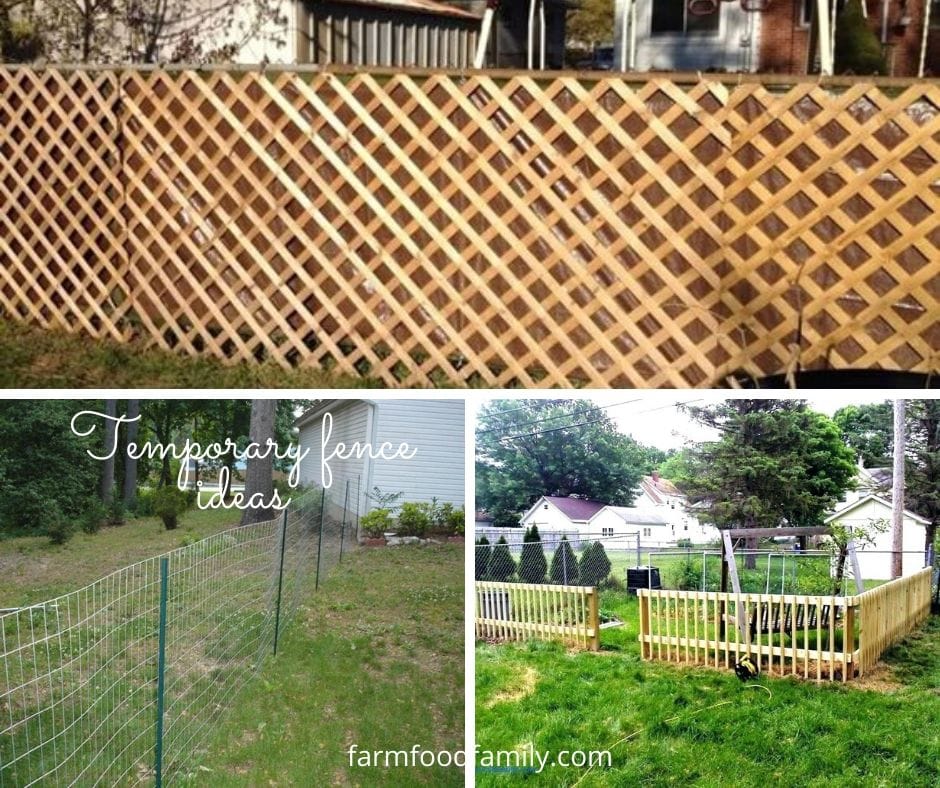
For a rental, a short-term project, or a yard where the fence layout might need to change, temporary and no-dig systems skip the permanent commitment entirely.
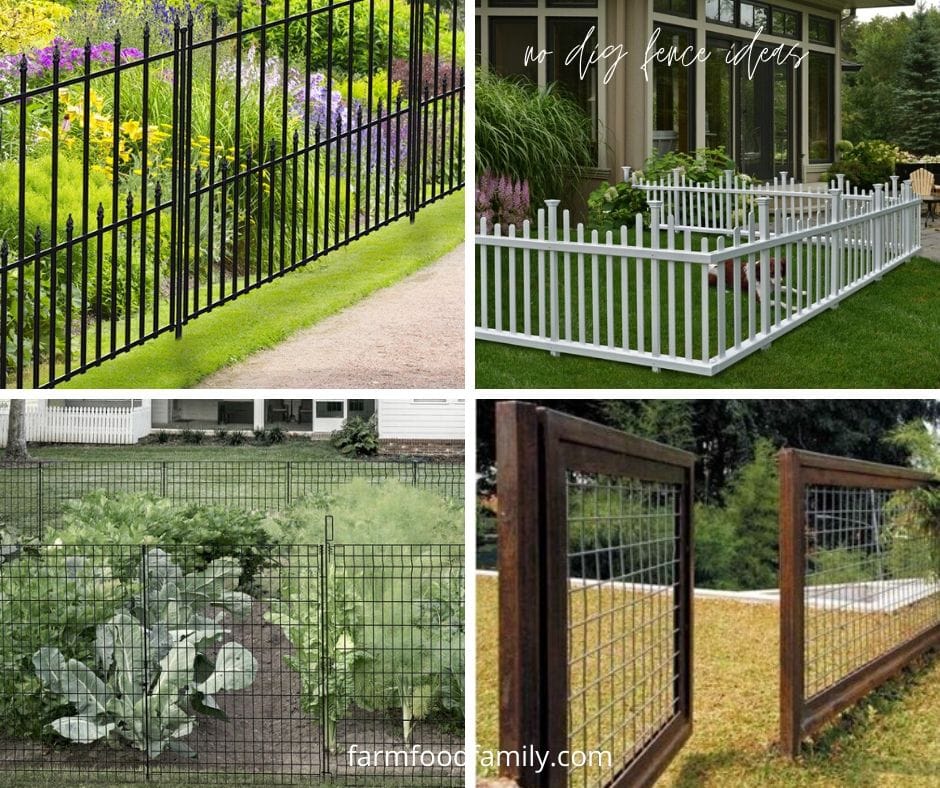
No-dig steel panel systems in particular have gotten genuinely good: the real DIY example from earlier in this guide, a 4-foot-high no-dig steel fence for about $1,200 in materials, shows this isn’t just a flimsy stopgap option anymore, it can be a legitimately durable choice that also happens to be reversible.
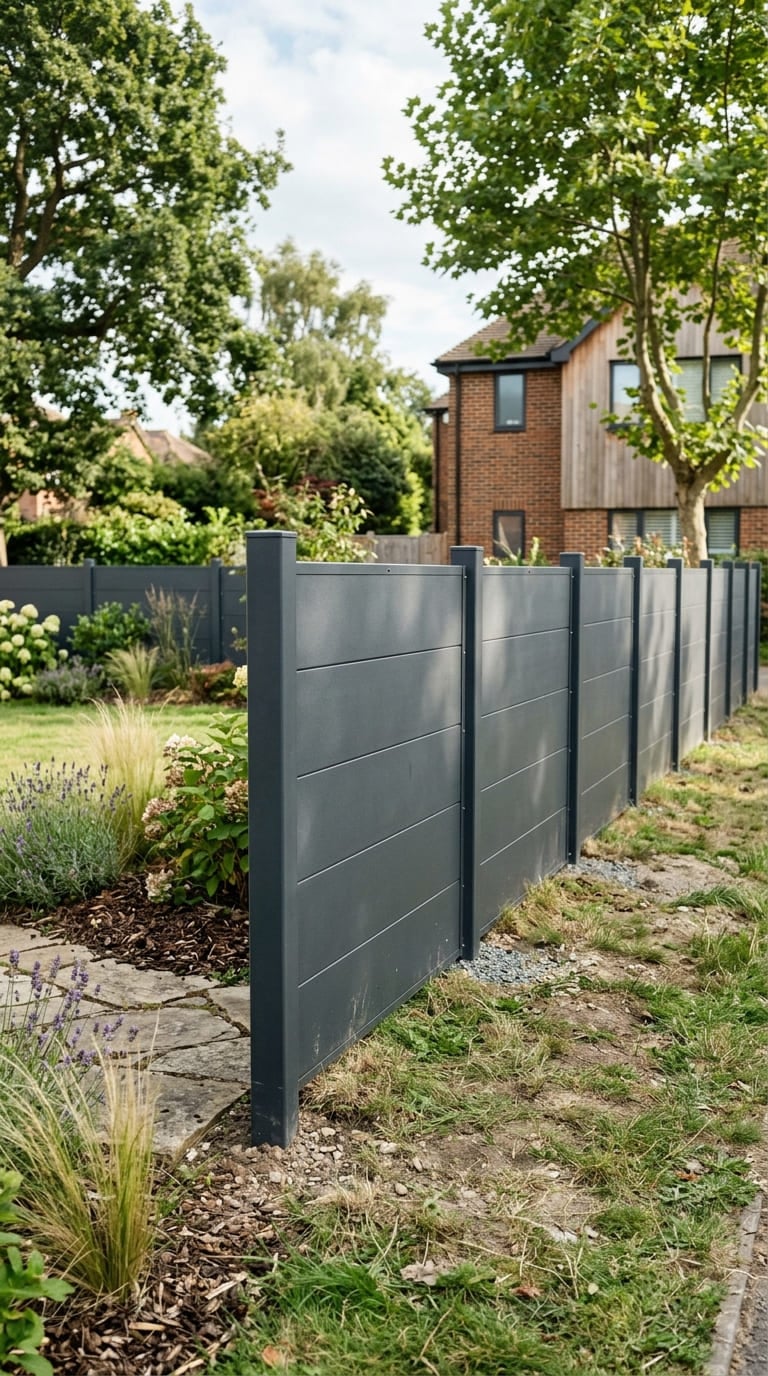
Fence Post Ideas

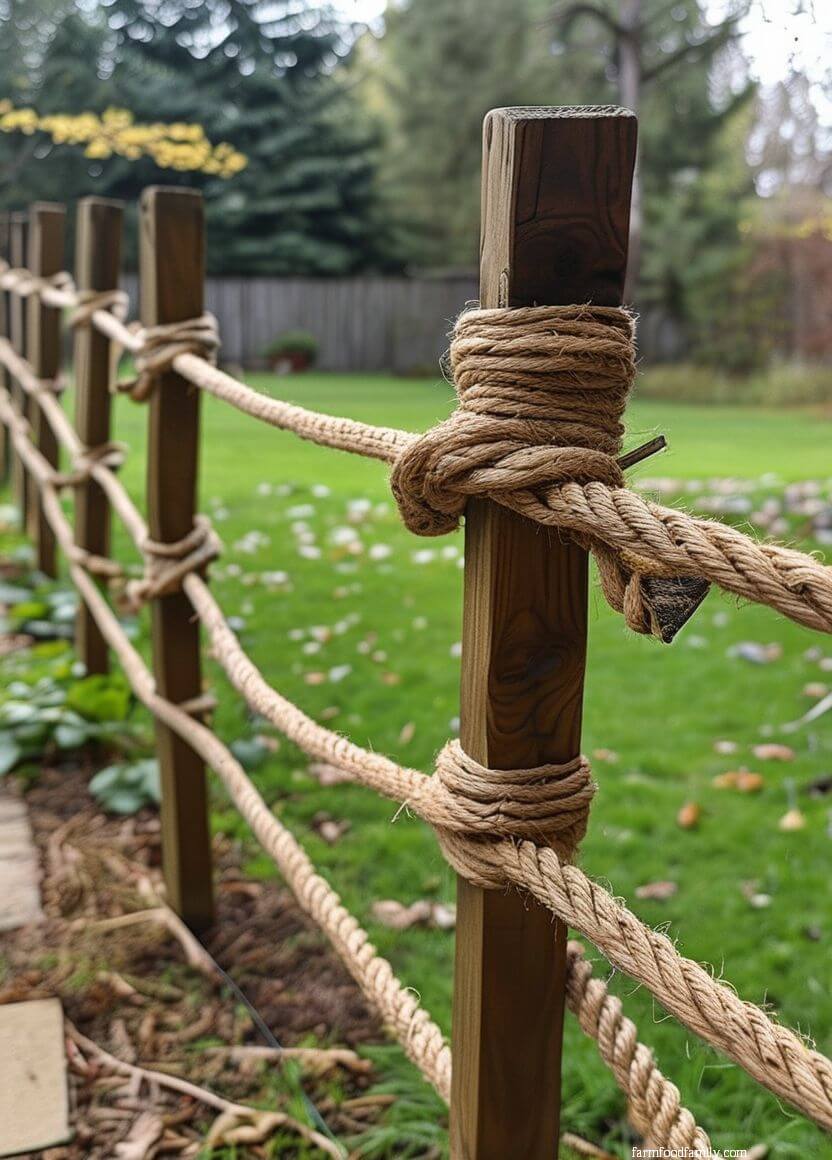
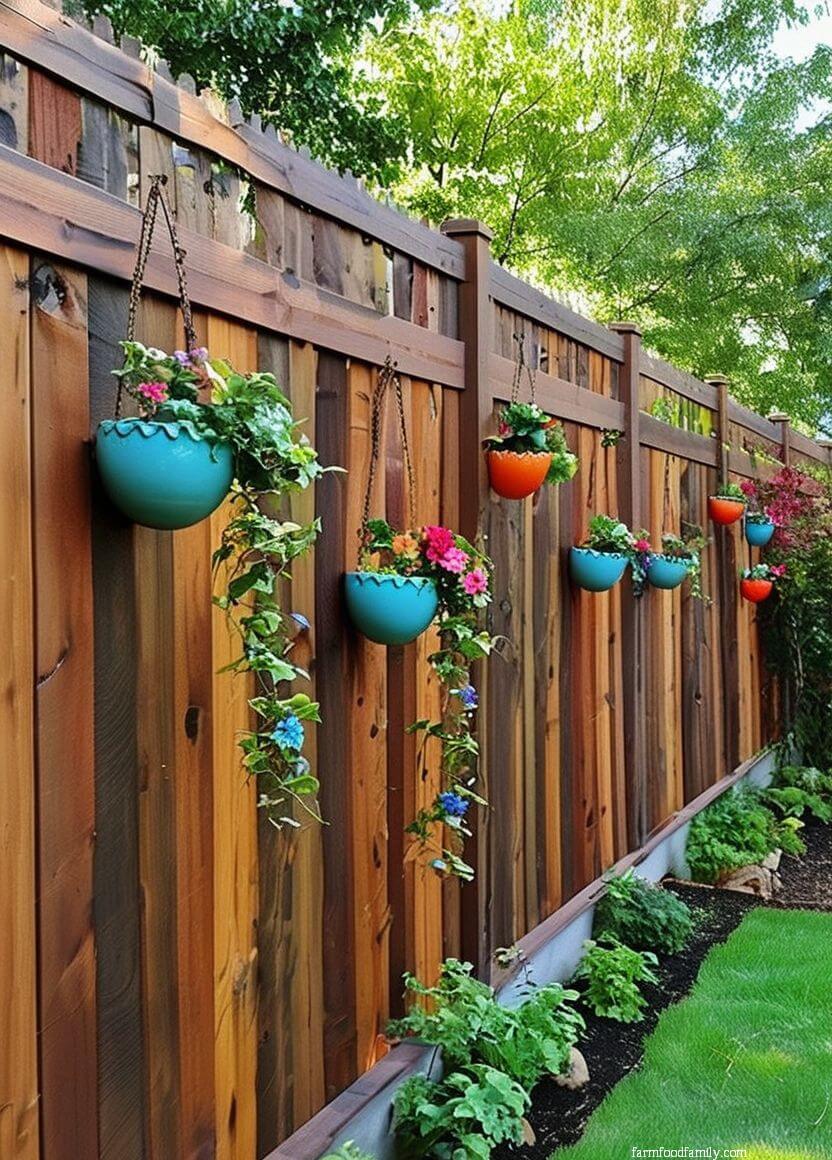
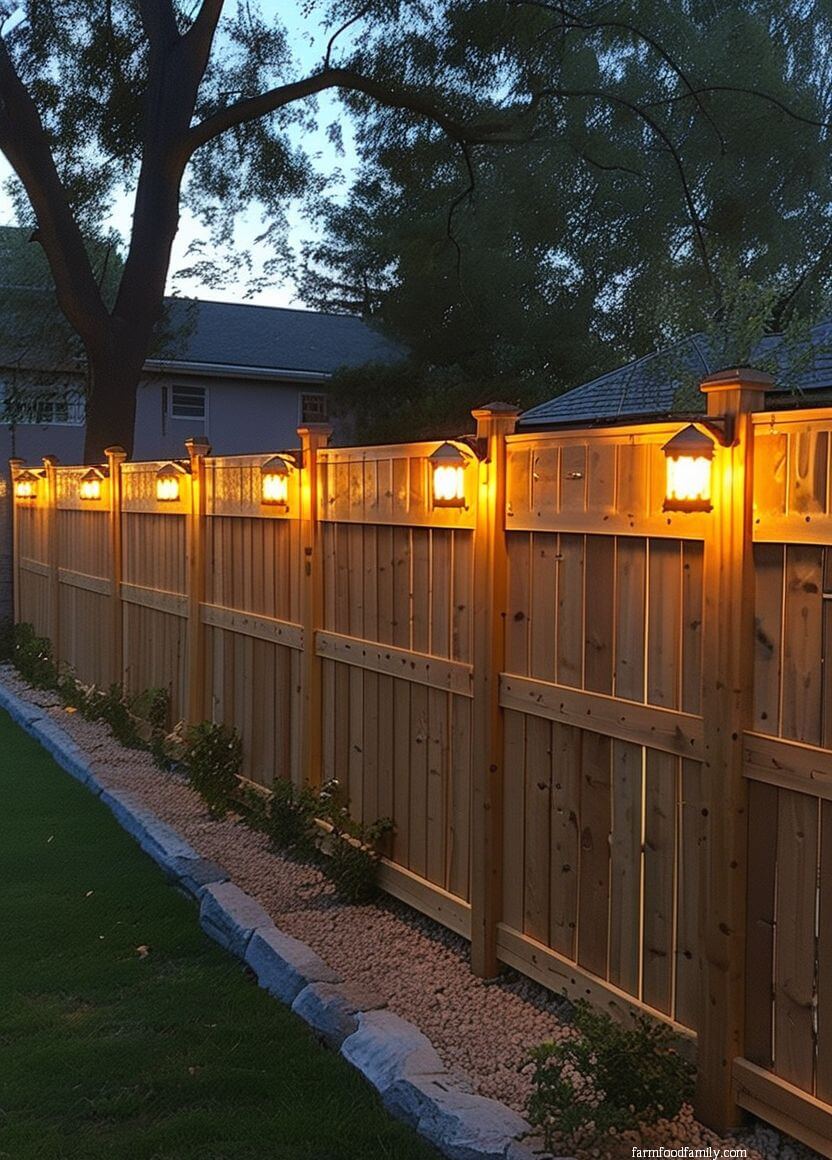
The posts do more structural work than any other single component, and a fence is only as good as its weakest post connection. Beyond standard square or round posts, real style options exist here too: capped posts with a decorative finial, posts wrapped in a contrasting material, or posts spaced to double as a plant-hanging or lighting feature along the fence line.
See the building steps below for how post spacing and depth actually get determined, not just how they look.
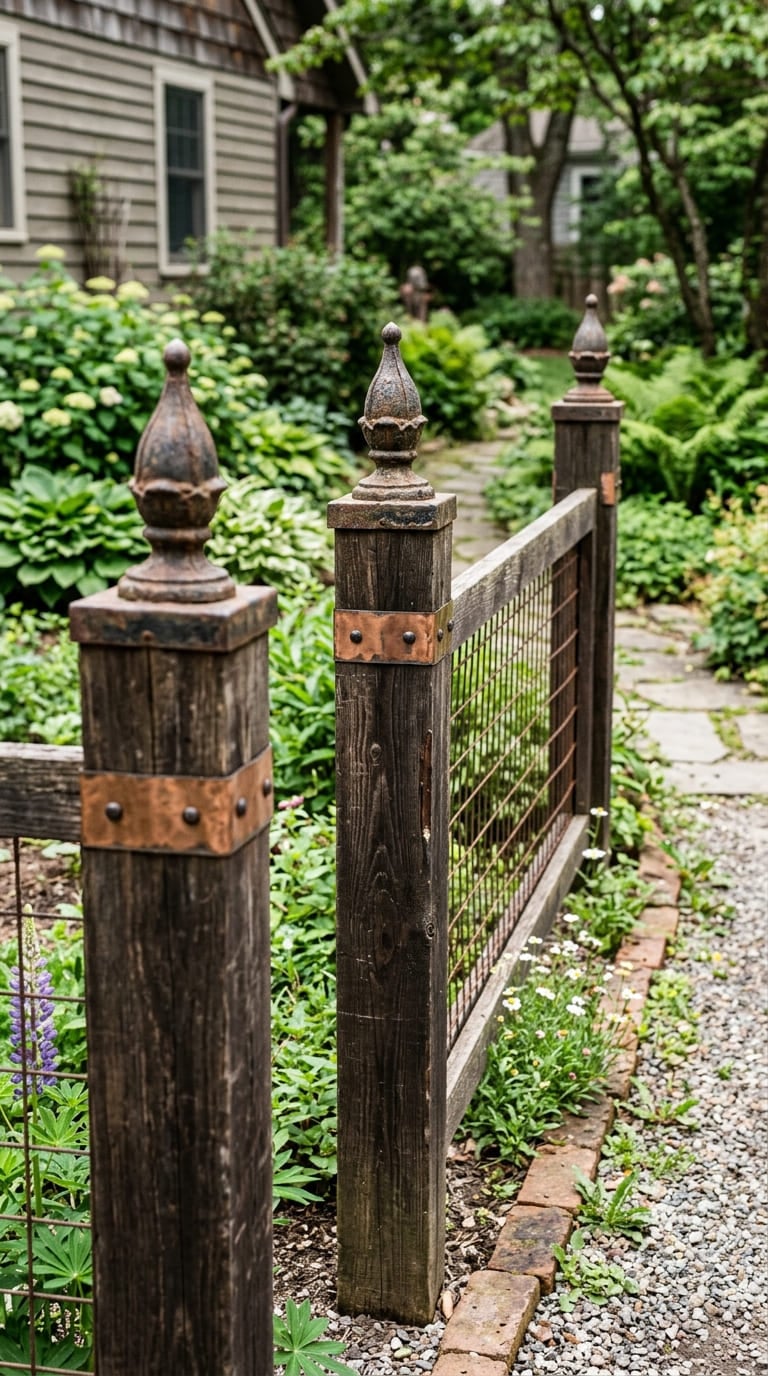
Real DIY Fence Projects
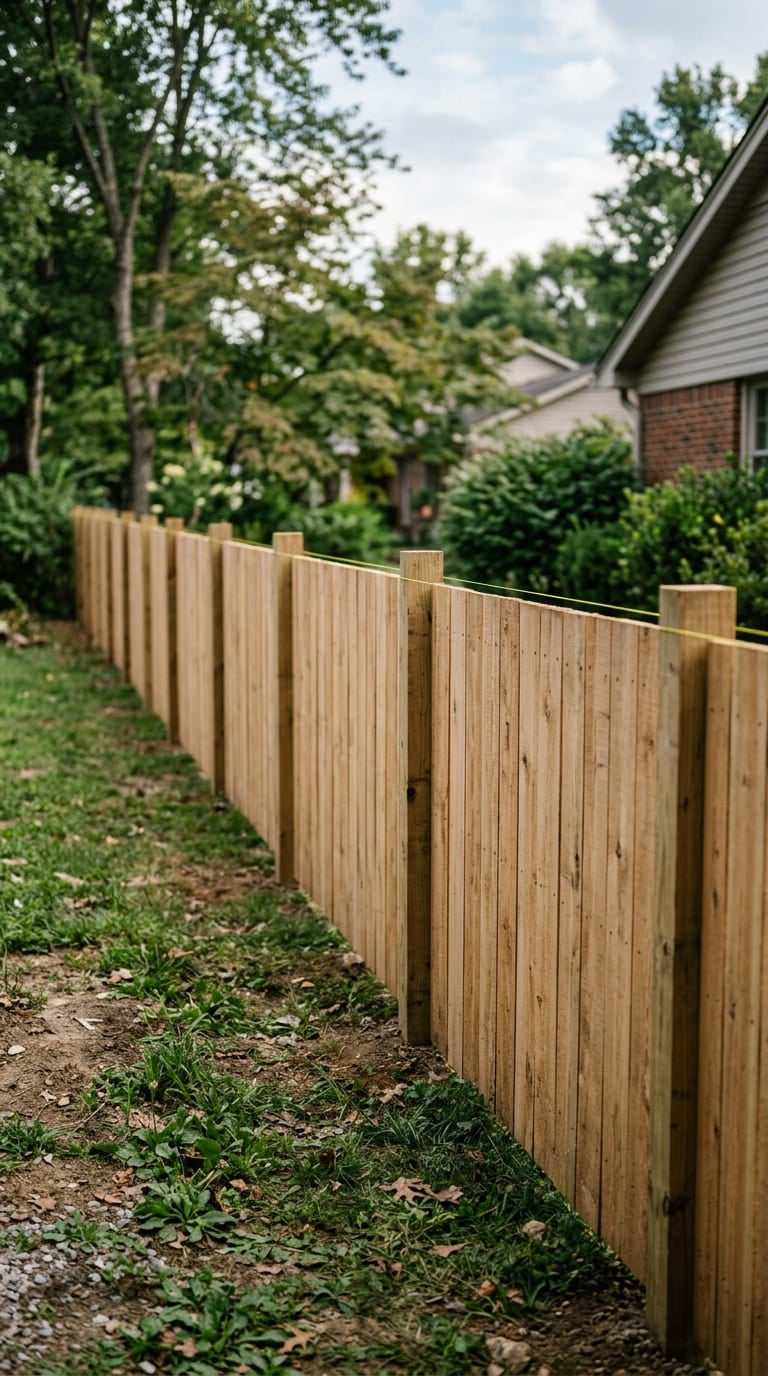
A Perfectly Straight Fence

Source: charmingimperfections.com
The single biggest visual difference between a fence that looks professionally built and one that looks obviously DIY isn’t the material, it’s whether the posts and boards actually line up.
The fix is a string line: run a taut construction line between the first and last post location before digging anything, then check every subsequent post and board against that line rather than against its neighbor. Small errors compound fast in a fence run of any real length, so catching a quarter-inch drift early is much easier than fixing a visibly crooked section after the concrete has set.
Decorative Embellished Fencing
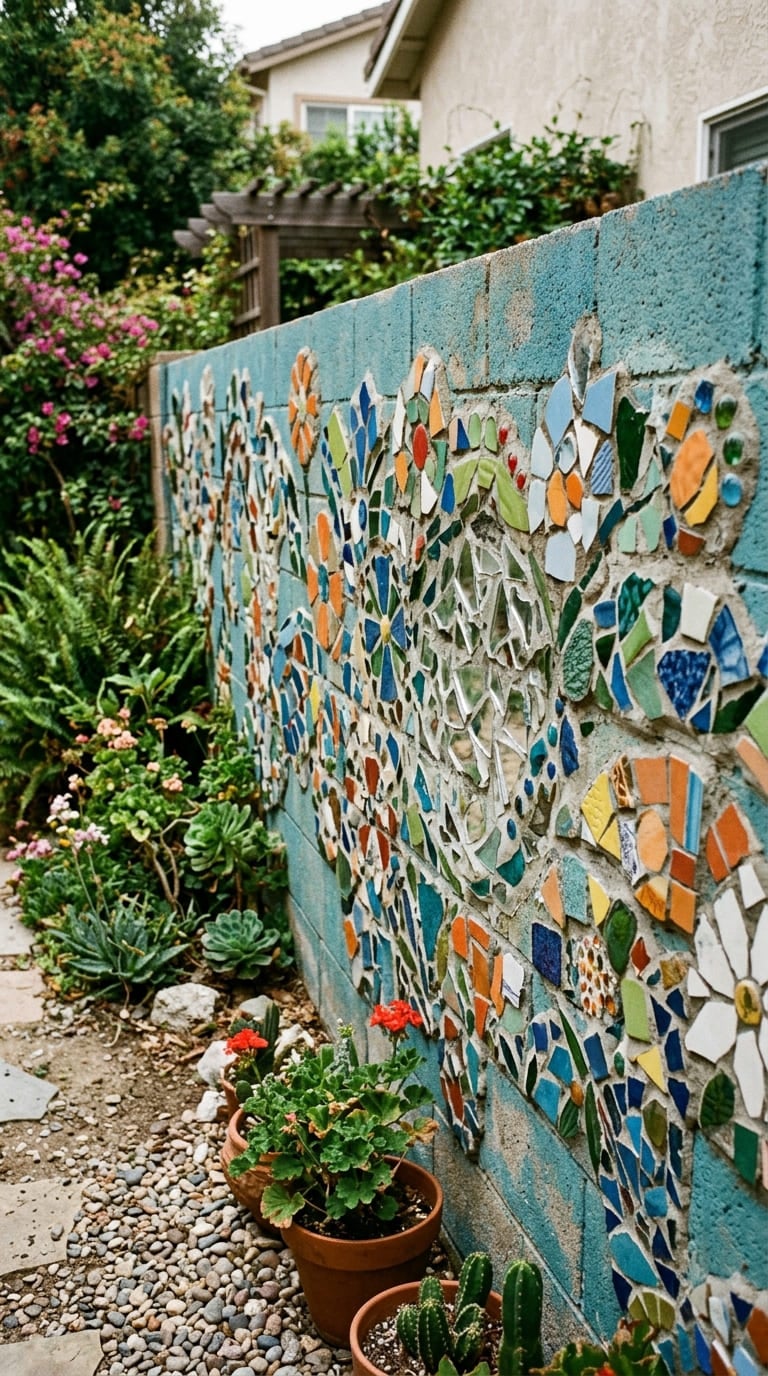
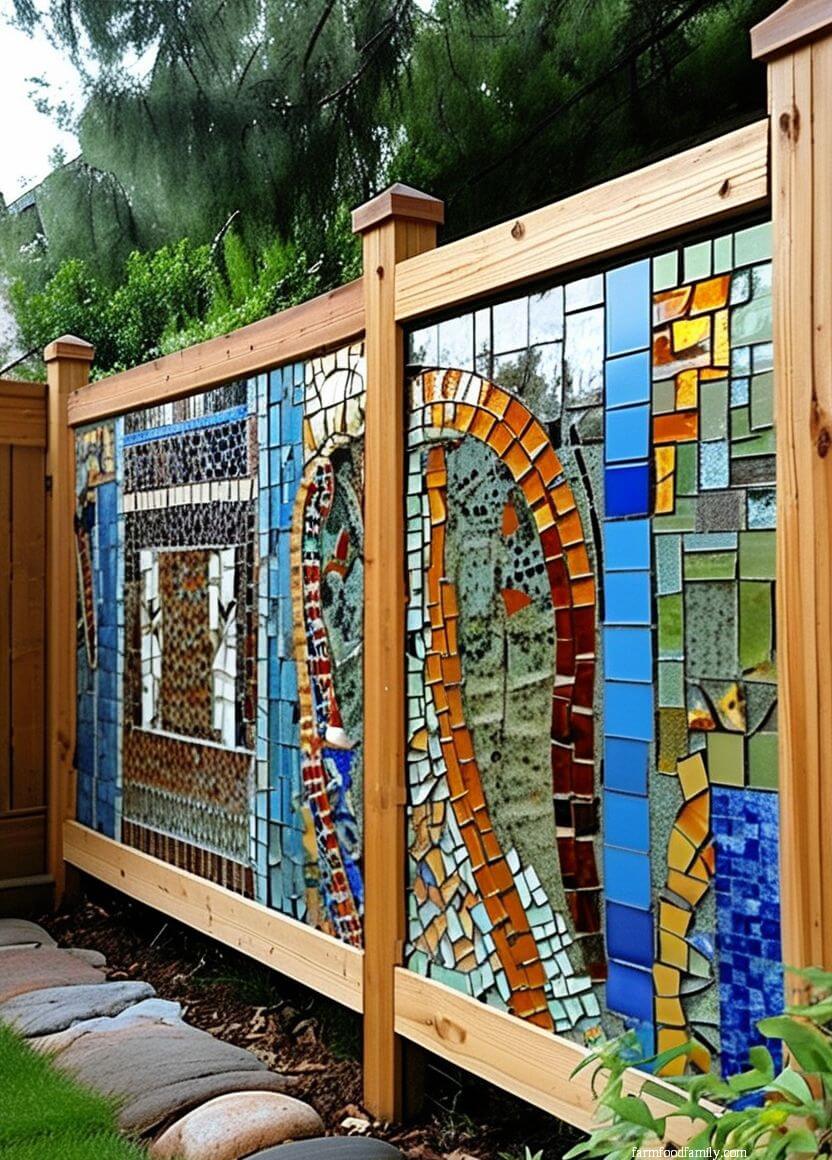
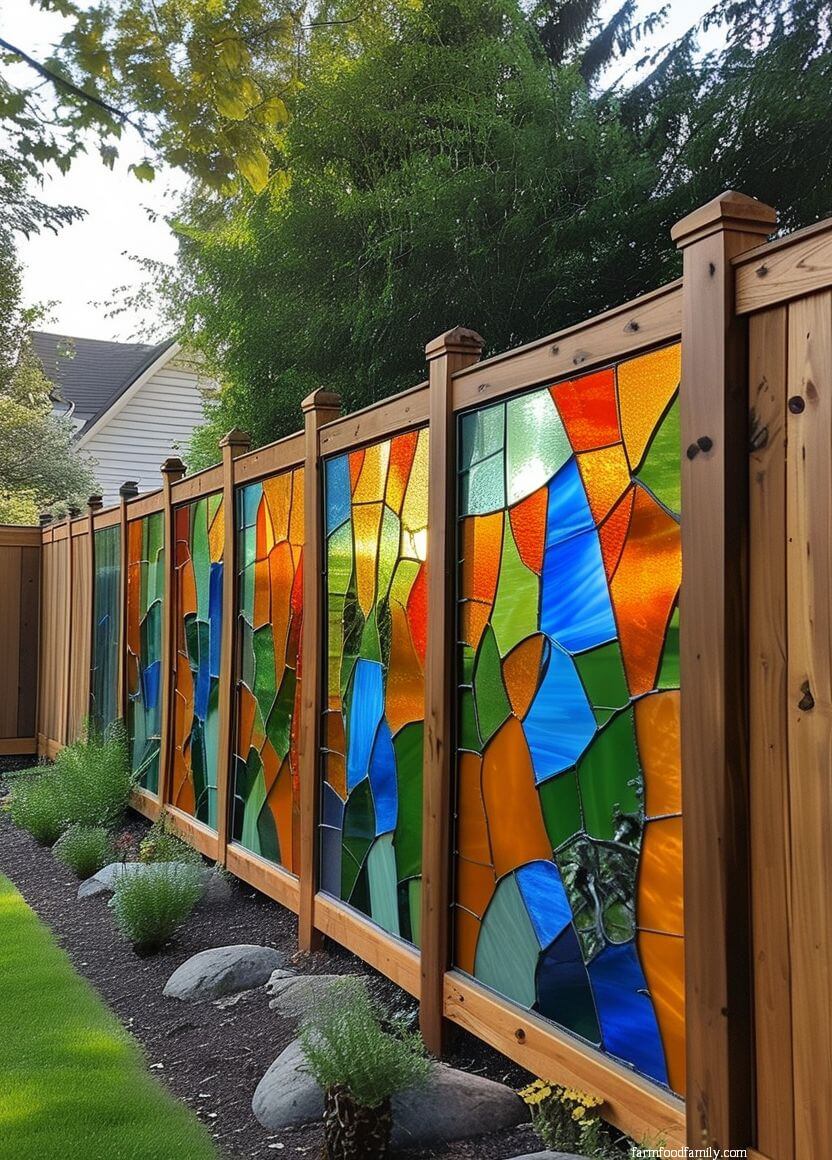
A plain fence or an unattractive existing wall (a bare cinder block wall is the most common real-world case) can be transformed with surface decoration rather than a full rebuild.
Options range from press-in glass marbles or tile fragments set into a fresh coat of exterior render, to simply painting a cinder block wall in a color and finish that reads as intentional rather than utilitarian. This is a genuinely low-cost way to fix the ugliest fence or wall on a property without touching the actual structure.
A Fence From Upcycled Bike Wheels
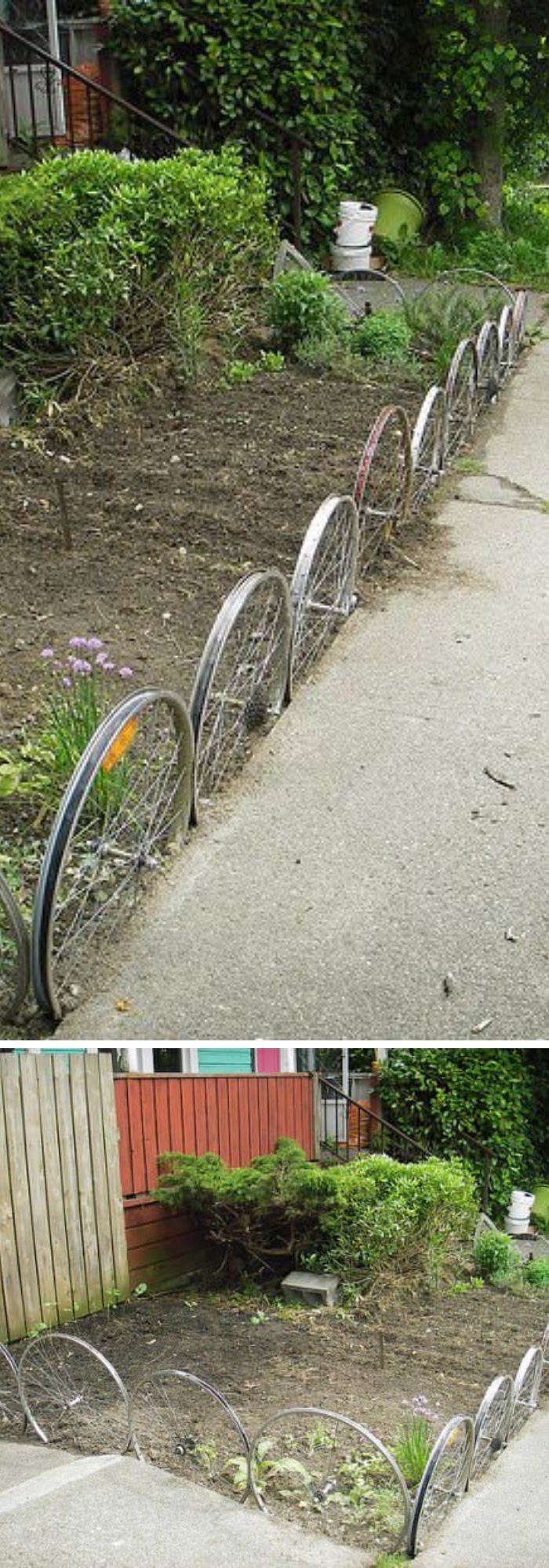
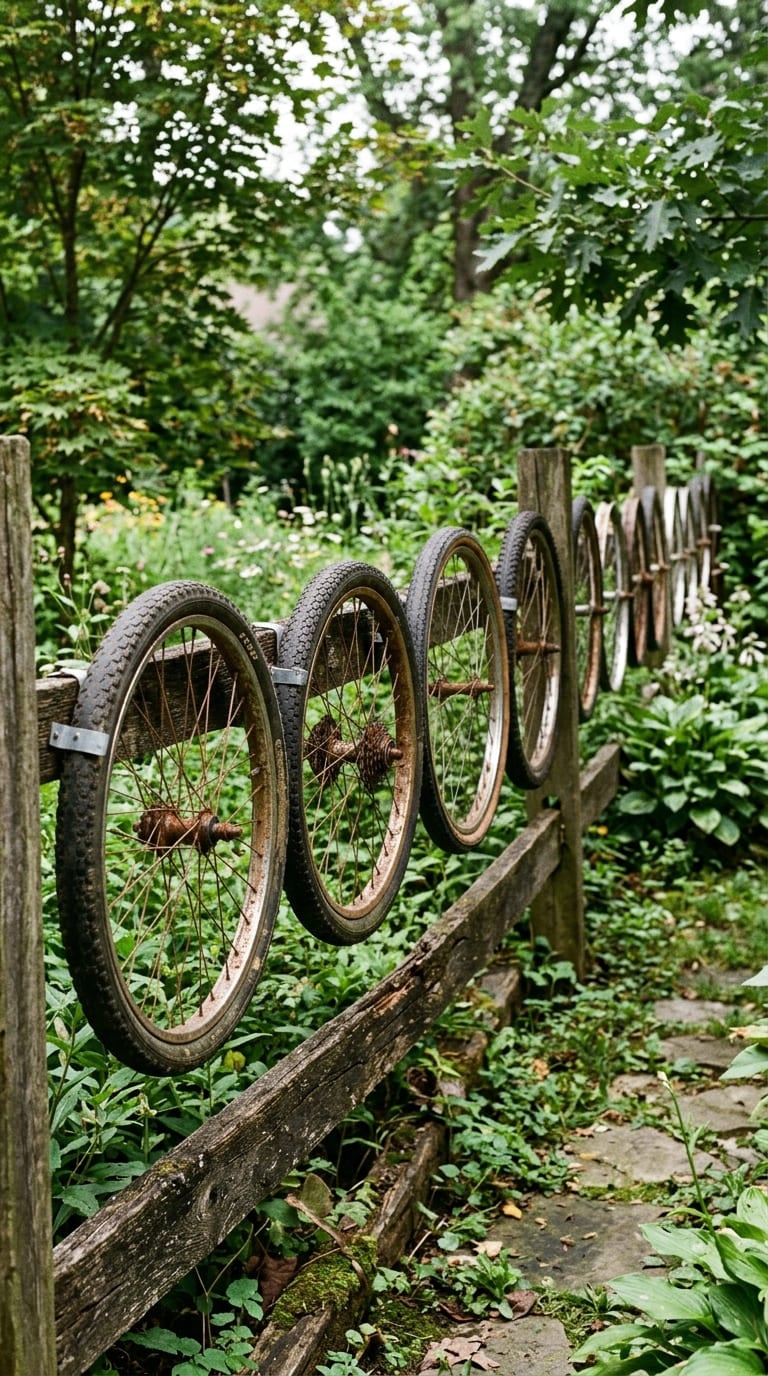
Old bicycle wheels, mounted in a horizontal row along the top of an existing fence or as a standalone accent panel, turn genuinely worthless scrap into a distinctive, conversation-starting detail.
The build itself is simple: clean rust and old tire rubber off each wheel, then bolt or wire them at even spacing to a supporting rail. It works best as an accent rather than a full privacy solution, since the open spoke pattern doesn’t block much of anything.
Wattle Fencing
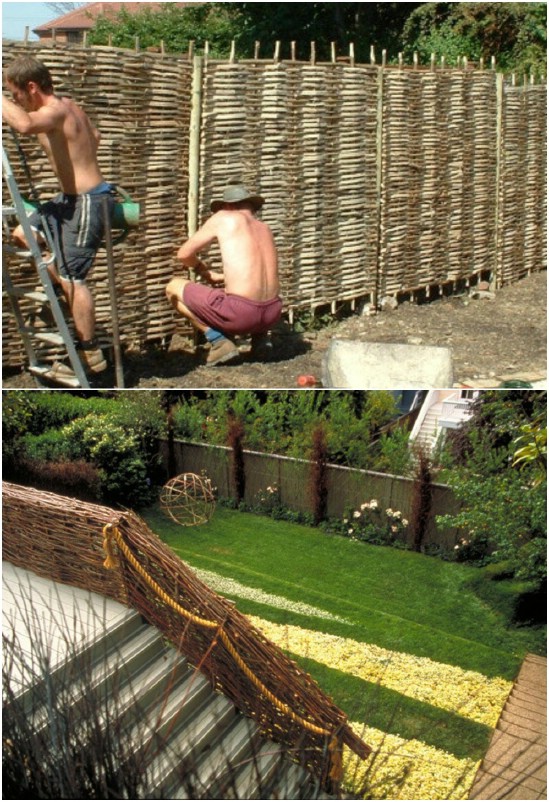
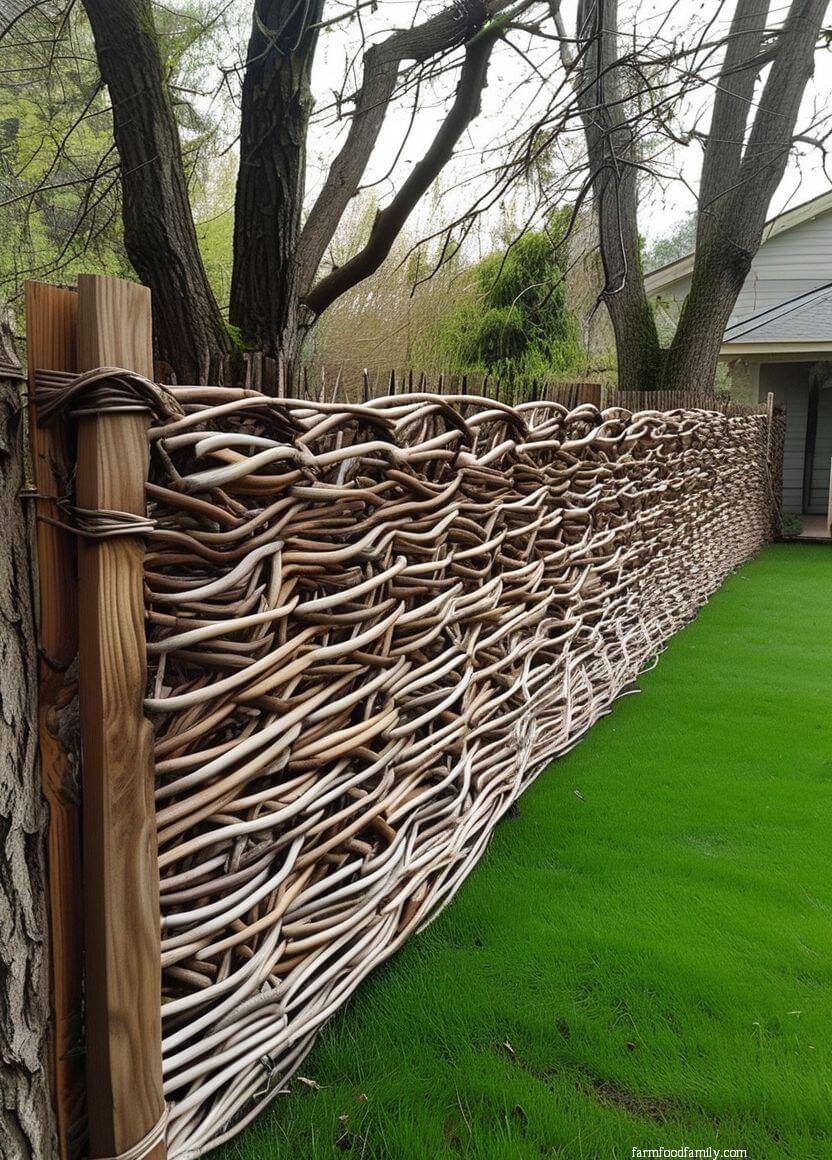
Wattle is one of the oldest fencing techniques still genuinely practical today: thin, flexible branches or saplings woven horizontally between upright stakes, no nails, screws, or hardware required at all. It suits a garden bed border or a low decorative boundary better than a full-height privacy fence, since the technique gets harder to keep sturdy at greater heights.
Willow and hazel are the traditional choices for the woven material because they stay flexible enough to bend around the stakes without snapping, but any reasonably pliable, thin branch works for a smaller garden-scale project.
Rustic Twig Fence
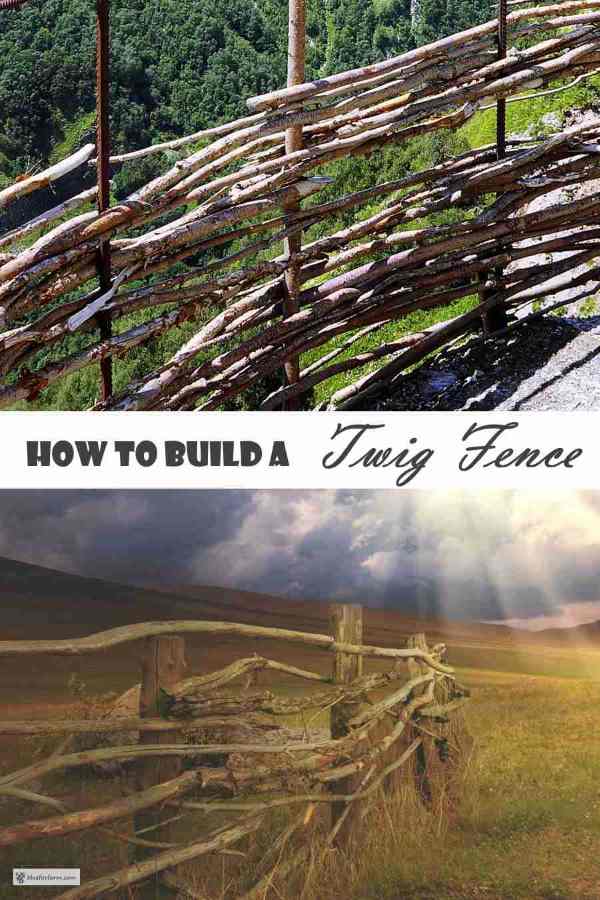
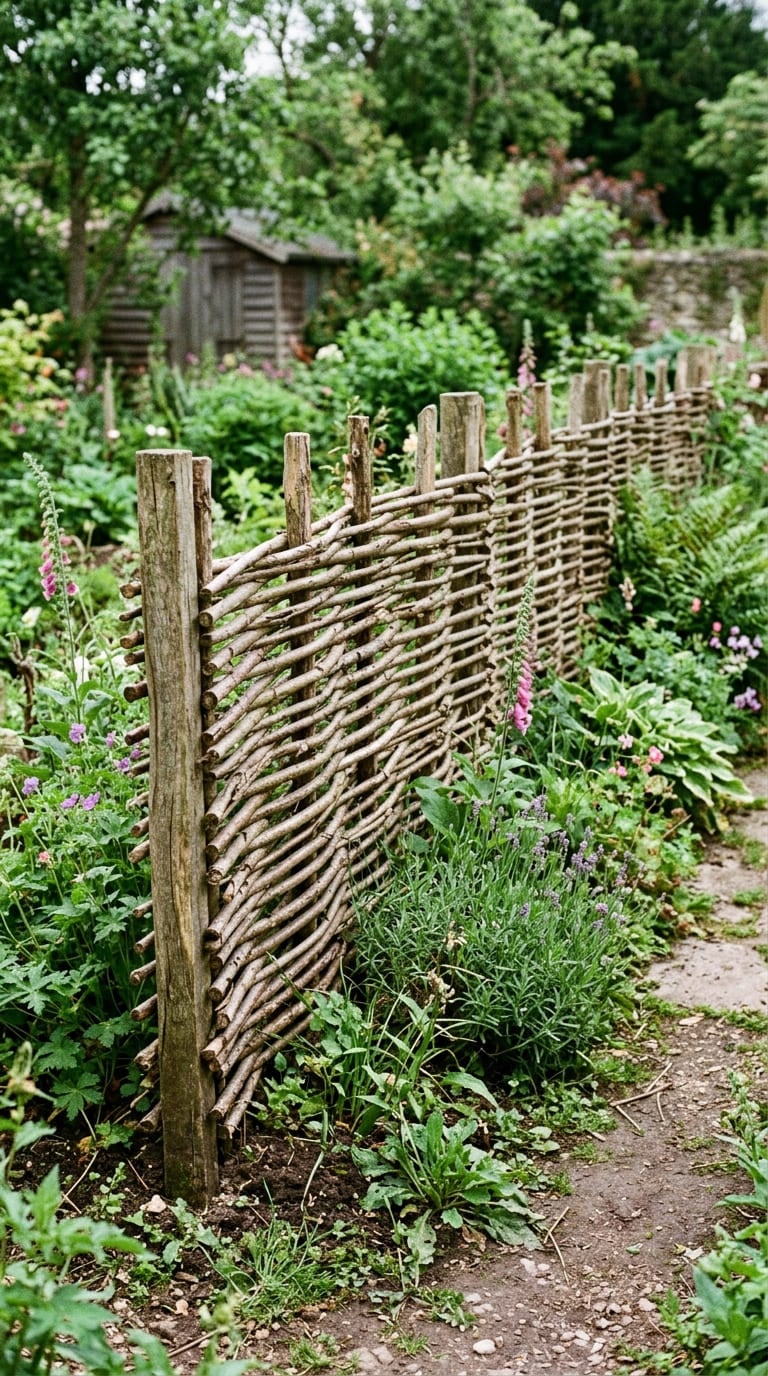
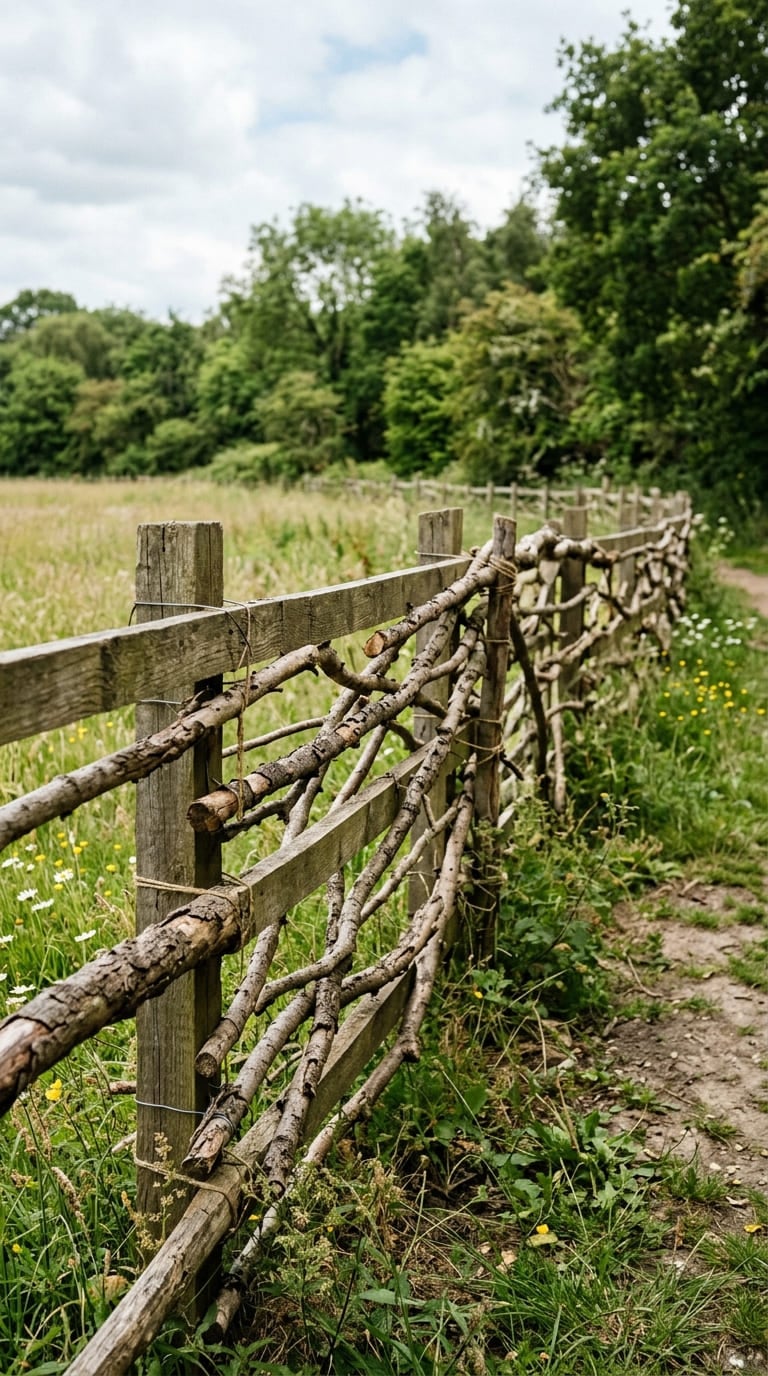
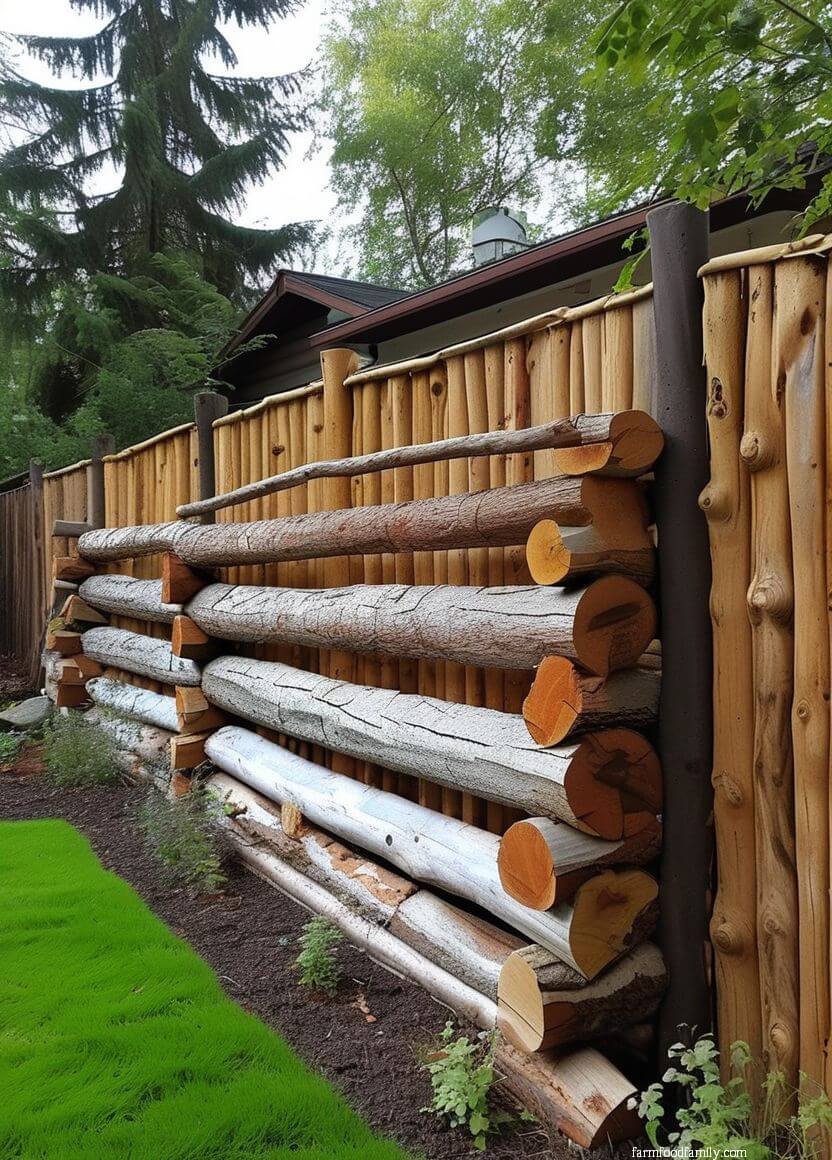
Similar in spirit to wattle but looser in construction, a twig fence uses gathered branches, often left with bark on, fastened to a simple post-and-rail frame rather than woven between stakes. It’s one of the most budget-friendly options on this entire list if there’s a wooded area or a pile of storm debris nearby to source from, essentially free beyond the time to gather and sort material.
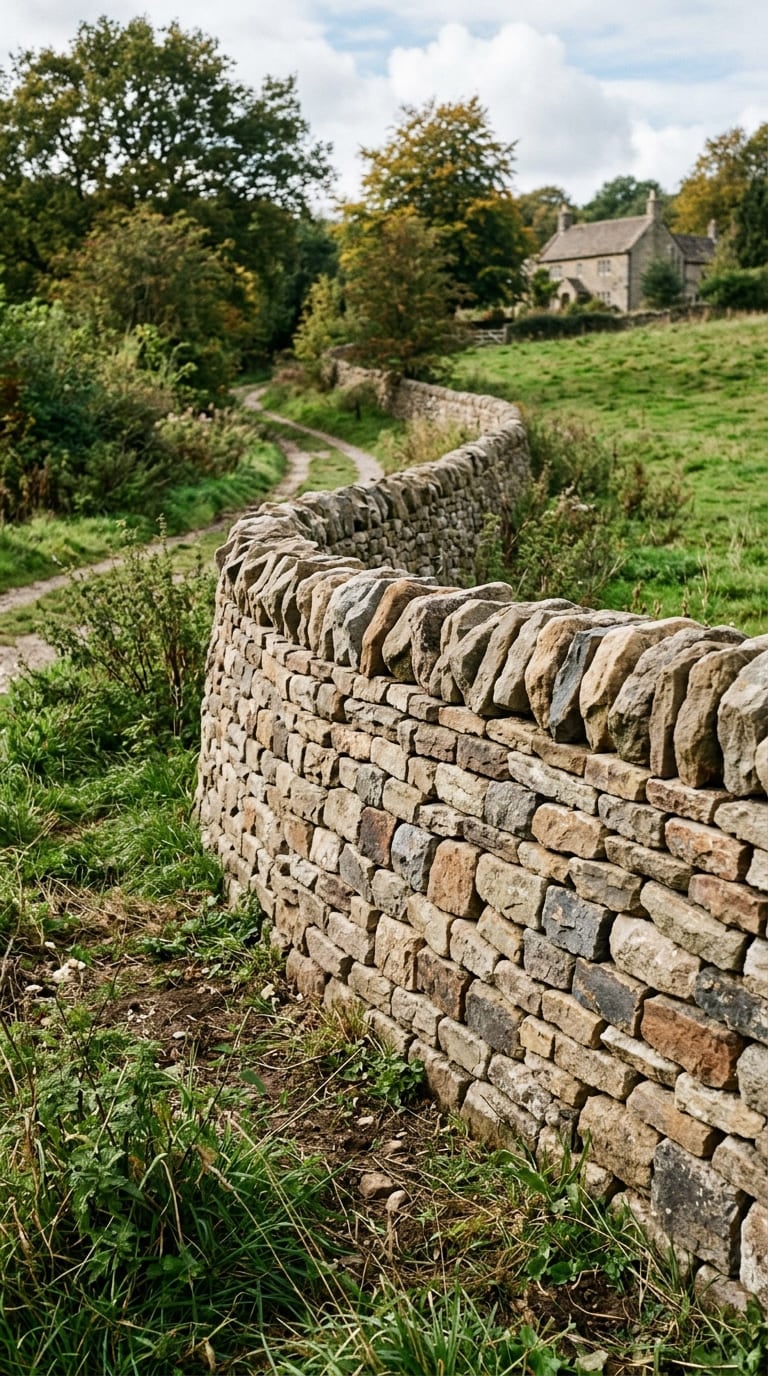
Stone Fence

A dry-stacked stone fence, no mortar at all, is a genuine multi-weekend project, but it can cost close to nothing if the stone is sourced rather than bought.
Collecting the stones. Stick to pieces manageable enough to actually move, generally under 12 to 14 inches across, and keep the shapes and colors reasonably consistent. Mixing round river stones with flat quarried pieces in the same fence tends to look accidental rather than intentional.
Where to find them. Farms are a reliable source: fields get worked every season, and stones that push up through the soil get pulled and piled somewhere on the property, often for free to anyone willing to haul them away.
Building it. Stack dry (no mortar), aiming for a finished thickness around 18 to 24 inches so each side of the wall has enough mass to lean against and stay put. A slight inward pitch from bottom to top helps the stones lock against each other as the stack rises. Expect the pace to be slow at first and to speed up considerably once the technique clicks.
Worth knowing before starting. Check local lot-line rules first, a stone fence counts as a real structure in most jurisdictions and isn’t easy to move once it’s built. If kids will be around it, gluing the top course down with a construction adhesive prevents stones from dislodging if someone climbs on it.
How to Build a Fence
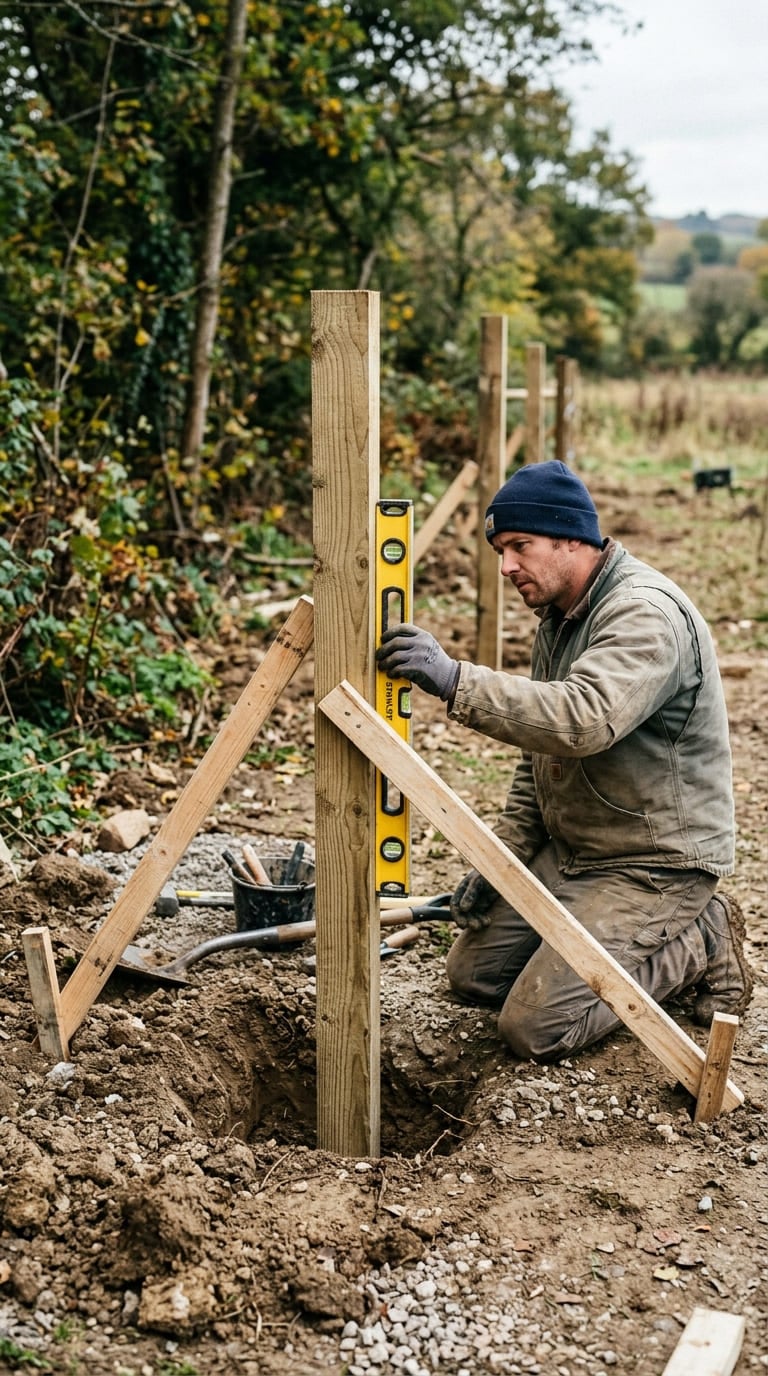
Once material and layout are decided, most fence builds follow the same five steps regardless of what’s going on top of the posts.
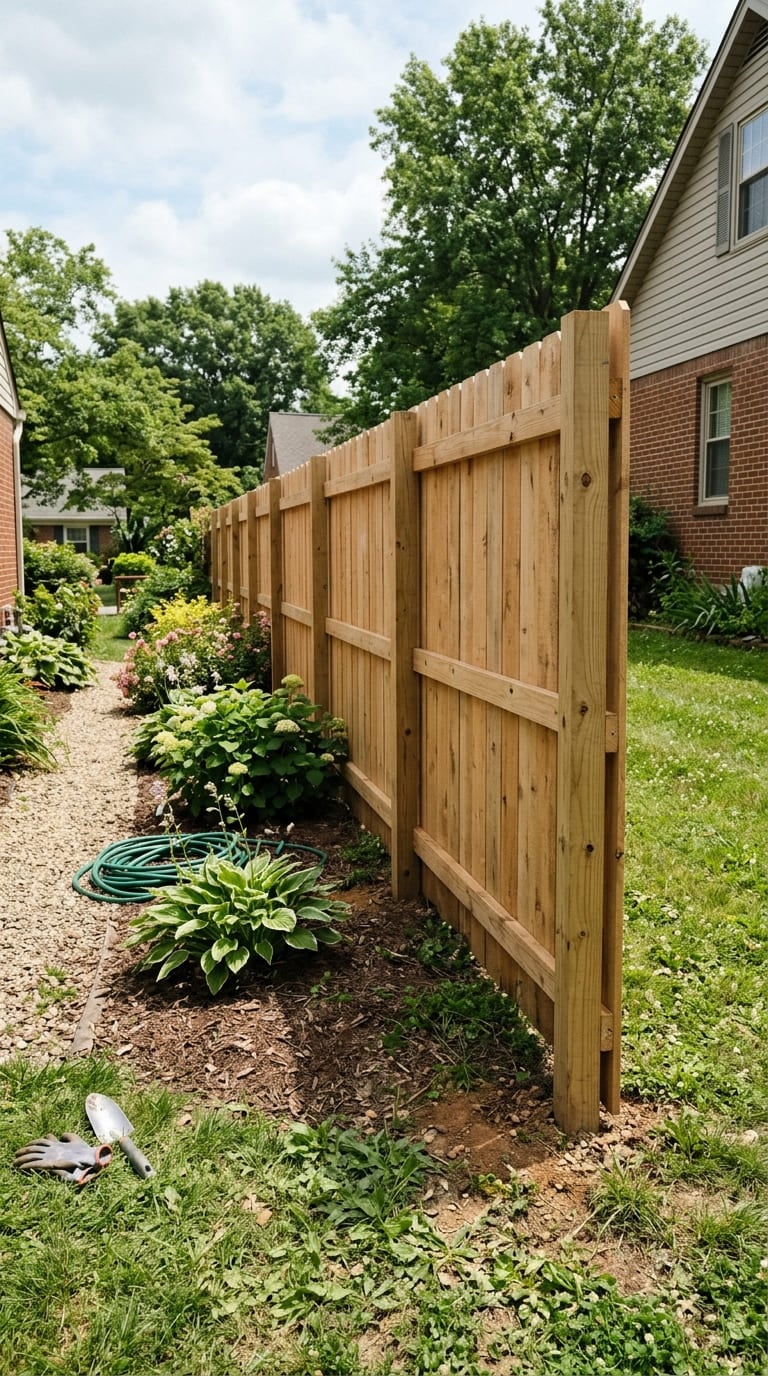
1. Mark the post holes. Account for the terrain (flat vs. sloped) and space posts 6 to 8 feet apart for wood or vinyl. Run a taut construction line between the end points first, this becomes the reference every post gets checked against, not just its immediate neighbor.
2. Prepare the holes and posts. Treat each post with a wood preservative before it goes in the ground, not after, and plan for roughly a third of the total post length to sit below grade.
3. Set the posts. Add a couple of scoops of loose dirt or gravel to the hole first, then position the post and check it against a level and the reference line from step one. Brace it with stakes before backfilling, and tamp the fill in slowly so the post doesn’t shift out of alignment while it’s being buried.
4. Attach the rails. Top and bottom rails connect the posts and give the fence boards something to fasten to. Recheck alignment as each section goes up rather than waiting until the whole run is framed.
5. Install the fence boards. For wood, keep checking level and spacing as boards go up, small errors compound over a long run. Metal and wrought-iron panel systems generally skip this step since the panels come pre-assembled to a fixed size.
One structural detail worth adding that a lot of guides skip: wind load on solid fencing. A solid privacy fence catches wind the way a sail does, and a real question that comes up often among first-time builders is how to anchor posts well enough to survive years of wind pressure rather than just the first season. The American Fence Association, which supports ASTM, UL, and International Code Council standards for the industry, is a useful reference point here: post depth and concrete footing size both need to scale with fence height and local wind exposure, not just follow a flat rule of thumb regardless of how tall or solid the fence actually is.
For anyone still gathering confidence before starting, DIY blogger Erin Longfellow’s own account of rebuilding a failing fence is a good reality check on where most projects actually start from: “Our backyard fence had a embarrassingly huge lean, failing posts, gates that wouldn’t stay closed, and pickets that weren’t even attached anymore.” A fence that looks that far gone is still a realistic weekend-project starting point, not a reason to call a contractor by default.
Conclusion
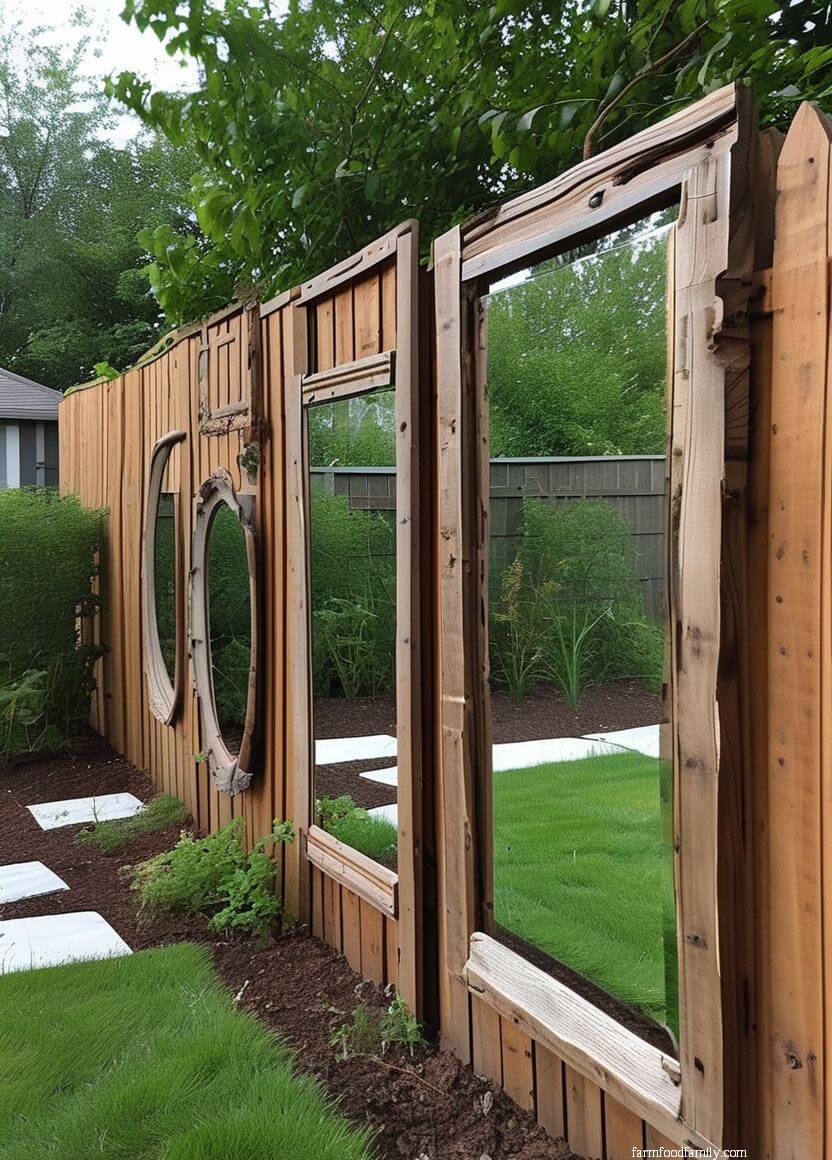
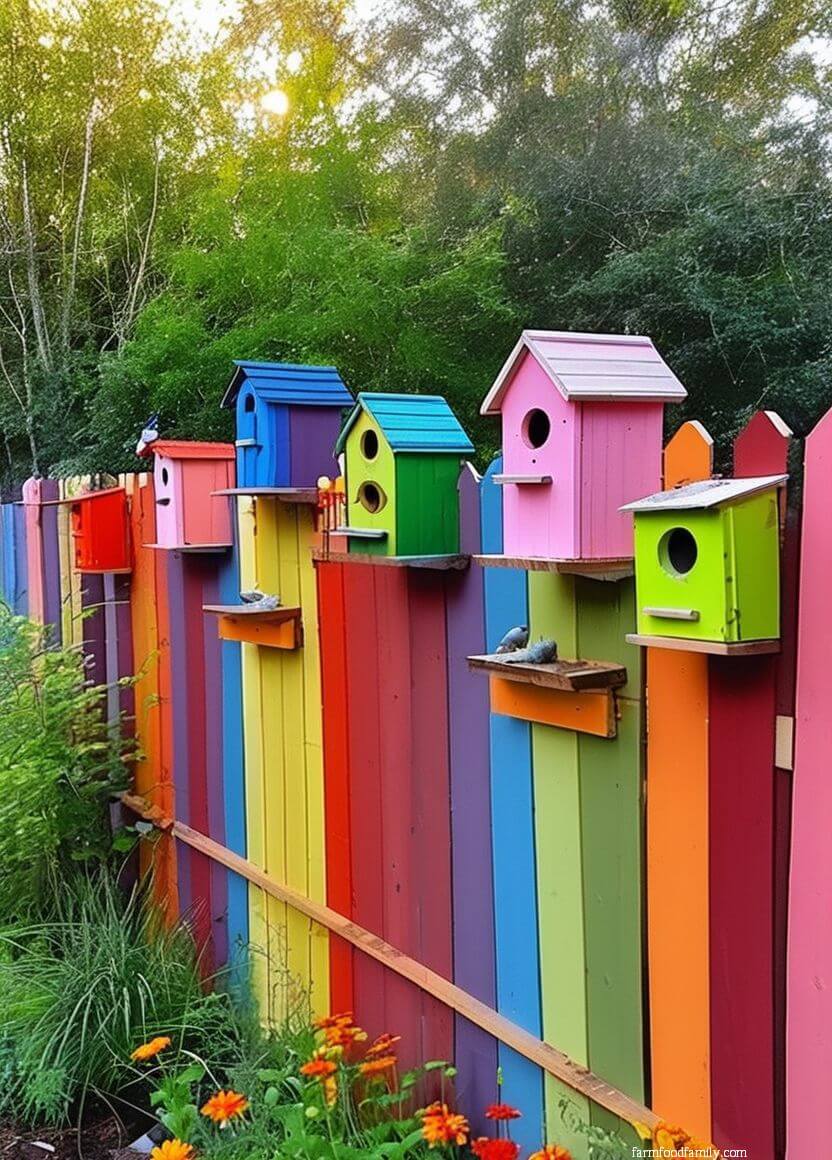
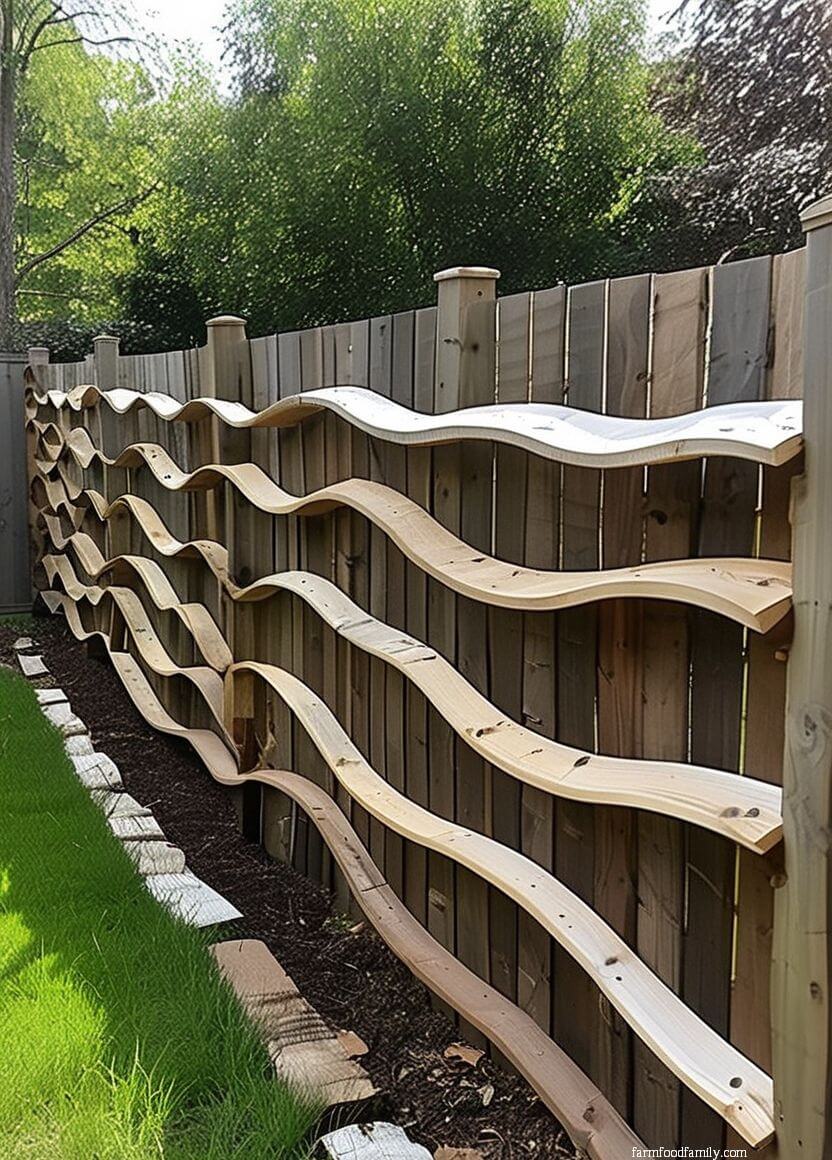
There’s no single right fence, only the right fence for what a specific yard actually needs to do: keep a dog in, keep deer out, mark a boundary, or just give a backyard some real privacy.
Start with that function, let it narrow down the material and cost range, and treat the style choice as the last decision rather than the first.
A fence built on a solid post connection and set to the right height will still be doing its job long after a prettier one with a weak foundation has started leaning.
Never miss an update — choose FarmFoodFamily as your preferred source on Google.
How it works: Tap the button below to open Google's settings page, then check the box next to FarmFoodFamily.
Tap the checkbox to turn it blue — that's how you know it's set.






Great ideas,I’m going to build a 30ft privacy fence soon. Thanks for your help.
such cool ideas. I love it. My kids are constantly hanging out in the garden and I was wondering I should start a project with my chicldren in the backyard. This look like the perfect DIY project with family. Thankyou for providing knowledge regarding fencing structures.