35+ Best Mailbox Landscaping Ideas
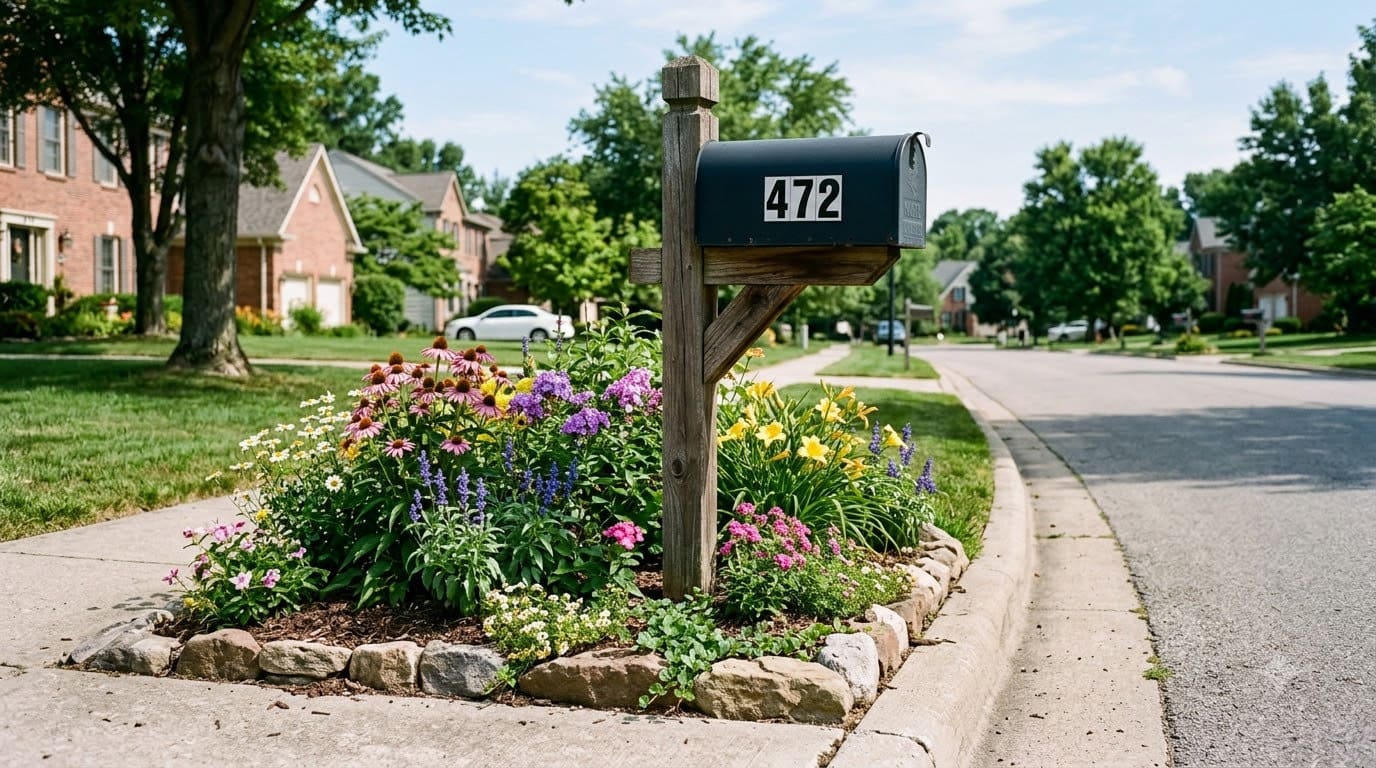
A well-planted mailbox bed turns a boring curbside post into real curb appeal, as long as you keep the plants low, thornless, and clear of the mail carrier’s reach.

Never miss an update — choose FarmFoodFamily as your preferred source on Google.
How it works: Tap the button below to open Google’s settings page, then check the box next to FarmFoodFamily.
Tap the checkbox to turn it blue — that’s how you know it’s set.
The mailbox sits closer to the road than almost anything else in your yard, which means it takes the most abuse, snowplow spray, road salt, and constant foot traffic from whoever delivers your mail, while also being the first thing anyone sees pulling into your driveway.
USPS requires 41 to 45 inches of clearance from the road surface to the mailbox door and a 6 to 8 inch setback from the curb, and the University of Florida’s Extension service specifically warns against thorny plants, bee-attracting flowers, and sticky-sap vines right at the mailbox for exactly this reason: your mail carrier reaches into that spot every single day.
Snowplow throw and road salt add a second, cold-climate layer to plan around on top of the daily-access issue. Get the placement and plant selection right first, and the 24 design directions below become the easy part instead of a redo next spring.
Before You Start: The Rules No One Mentions
Most mailbox landscaping roundups jump straight to pretty photos and skip the two things that actually determine whether your setup lasts: regulatory clearance and plant selection.
USPS clearance isn’t optional.
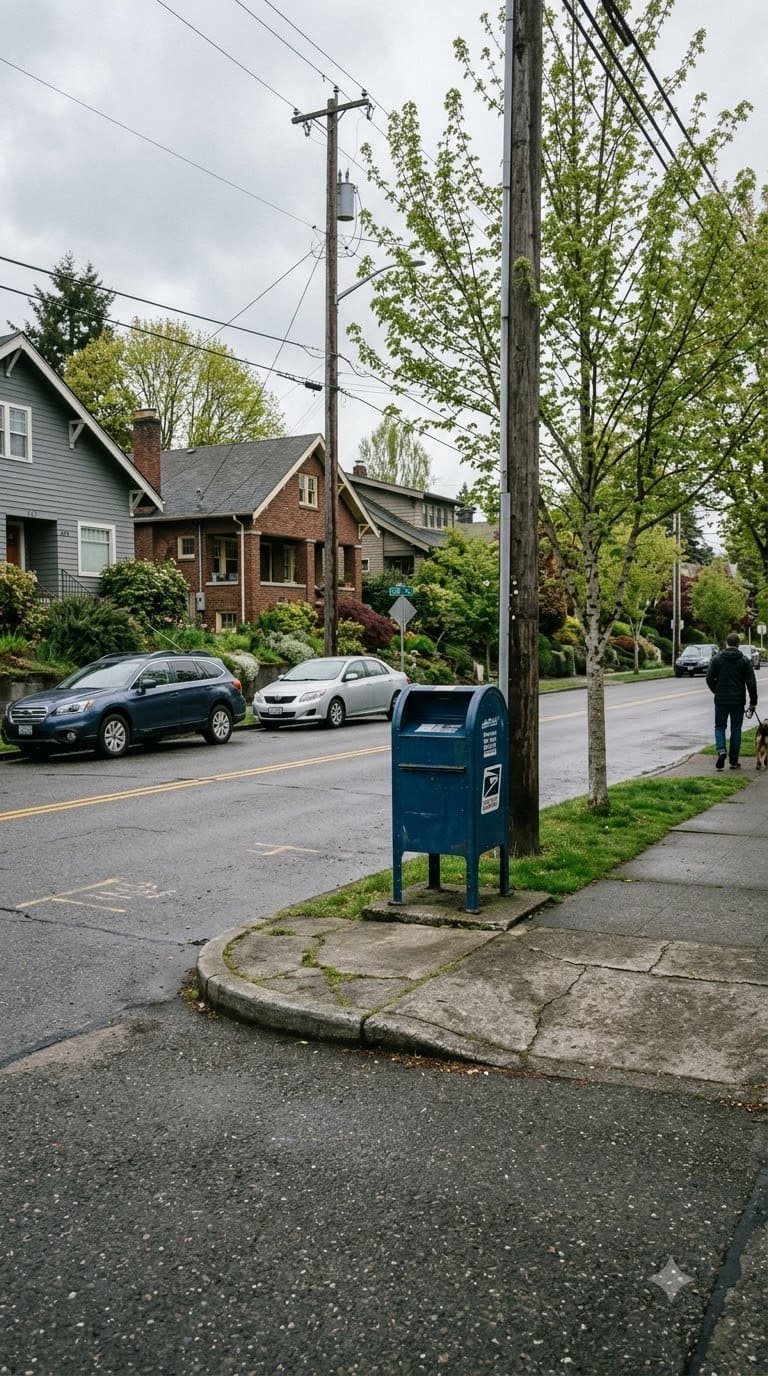
Curbside mailboxes need to sit roughly 41 to 45 inches above the road surface (measured to the bottom of the box) and 6 to 8 inches back from the curb face, with the approach path kept clear of obstructions, per USPS installation standards.
Some rural postmasters require 46-48 inches and a 3-foot setback for larger delivery vehicles, check with your local post office before finalizing your design if you’re not on a standard suburban street.
Answer 4 quick questions and get matched to the exact fix for your yard — drainage, budget, layout, or something else entirely.
Take the Free QuizPlant selection is a mail-carrier safety issue, not just an aesthetic one.
The University of Florida’s Extension service specifically recommends low-growing, drought-tolerant shrubs for mailbox beds and warns against three things: thorny plants, species that attract bees or stinging insects, and rambling vines with sticky sap (confederate jasmine named specifically), all of which turn a routine daily task into a hazard for whoever delivers your mail.
Real mail carriers on Reddit echo the same warning independently, plant something for the bees elsewhere in the yard, not at the one spot someone reaches into every day.
The snowplow zone is real if you’re in a cold climate.
Curbside beds catch the brunt of plowed snow, often piled directly on top of new plantings. If you’re planting in fall for next spring, choose salt-tolerant, sturdy perennials near the road-facing side and expect to lose anything delicate in its first winter.
Bed Size and Shape
Depending on your area, mailbox gardens vary from very small to super large. Make sure that it complements the available space in your area.
Material for Edging
Your edging material can be formal or informal, depending on your landscape theme. You can choose from timber, brick or rock and remember that the edging you use will set the tone of the bed.
Choosing your Plant
As already mentioned, use plants that do not have any thorns and plants must not attract stinging insects or bees. Furthermore, consider plants that will look great in any season. Most people use a mixture of annuals, perennials, and bulbs. You can also think of installing a trellis behind the mailbox for a flowering vine.
Now that we have tackled the basics of landscaping your mailbox, I will give you a list of 35 Amazing Mailbox Landscaping Ideas.
Most yard problems trace back to one specific, fixable cause. Find yours in 4 quick questions.
Take the Free Quiz
The snowplow/road-spray protection covered in the "Before You Start" section and idea 1
Shop NowThis post contains affiliate links. We may earn a commission on qualifying purchases at no extra cost to you.
1. Low-Profile Plastic or Composite Post
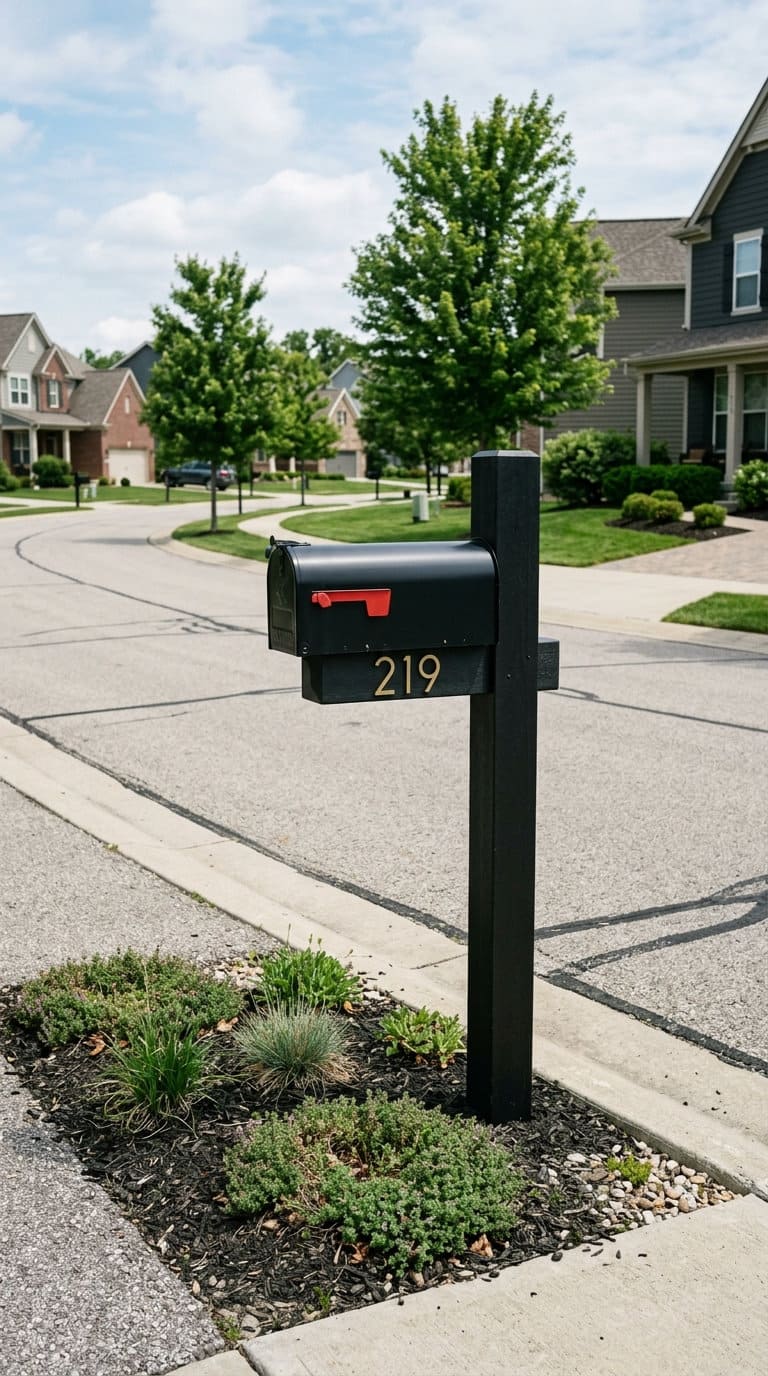
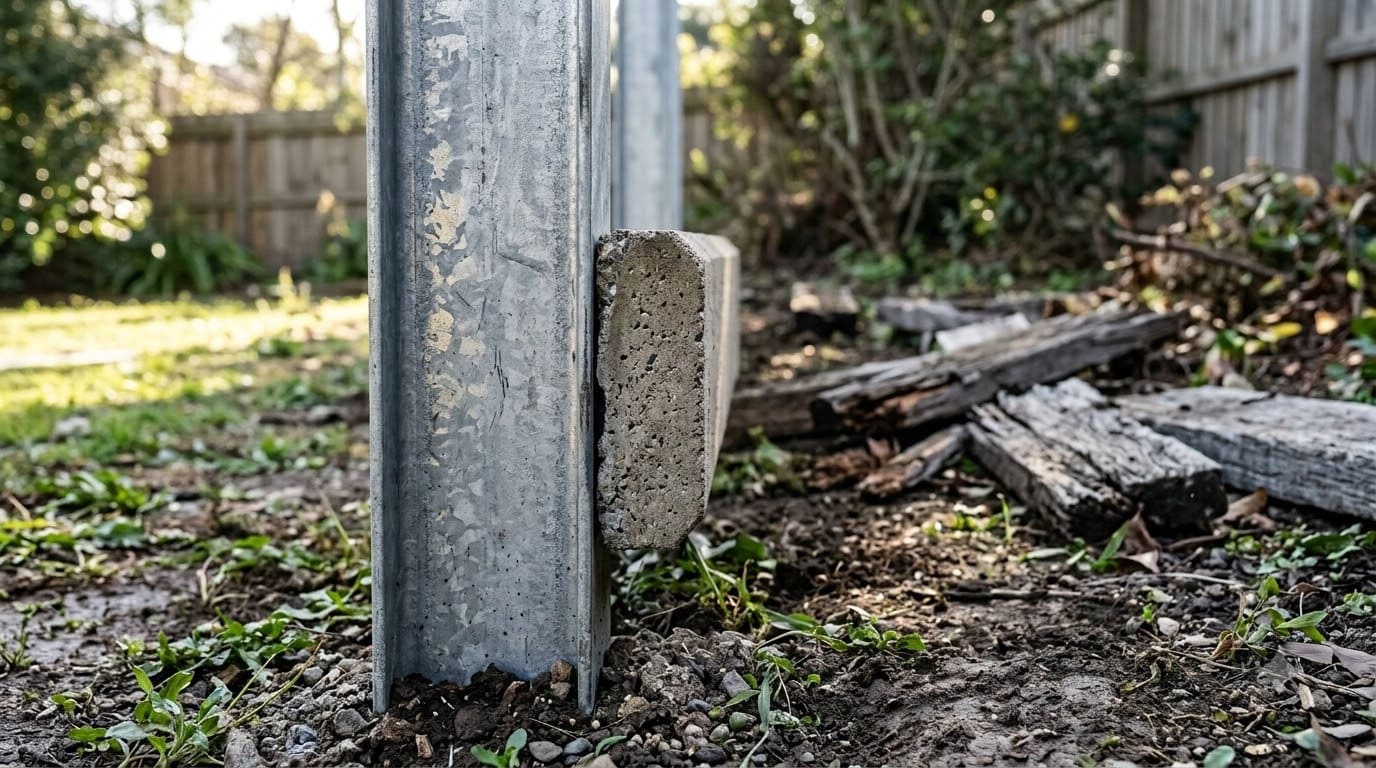
A lightweight plastic or composite mailbox post skips the maintenance a wood post needs (no rot, no annual staining) and is the easiest option to reset if a snowplow or a wide turn ever clips it, worth considering specifically in areas with harsh winters or narrow roads.
2. Cottage-Style Mixed Perennial Bed
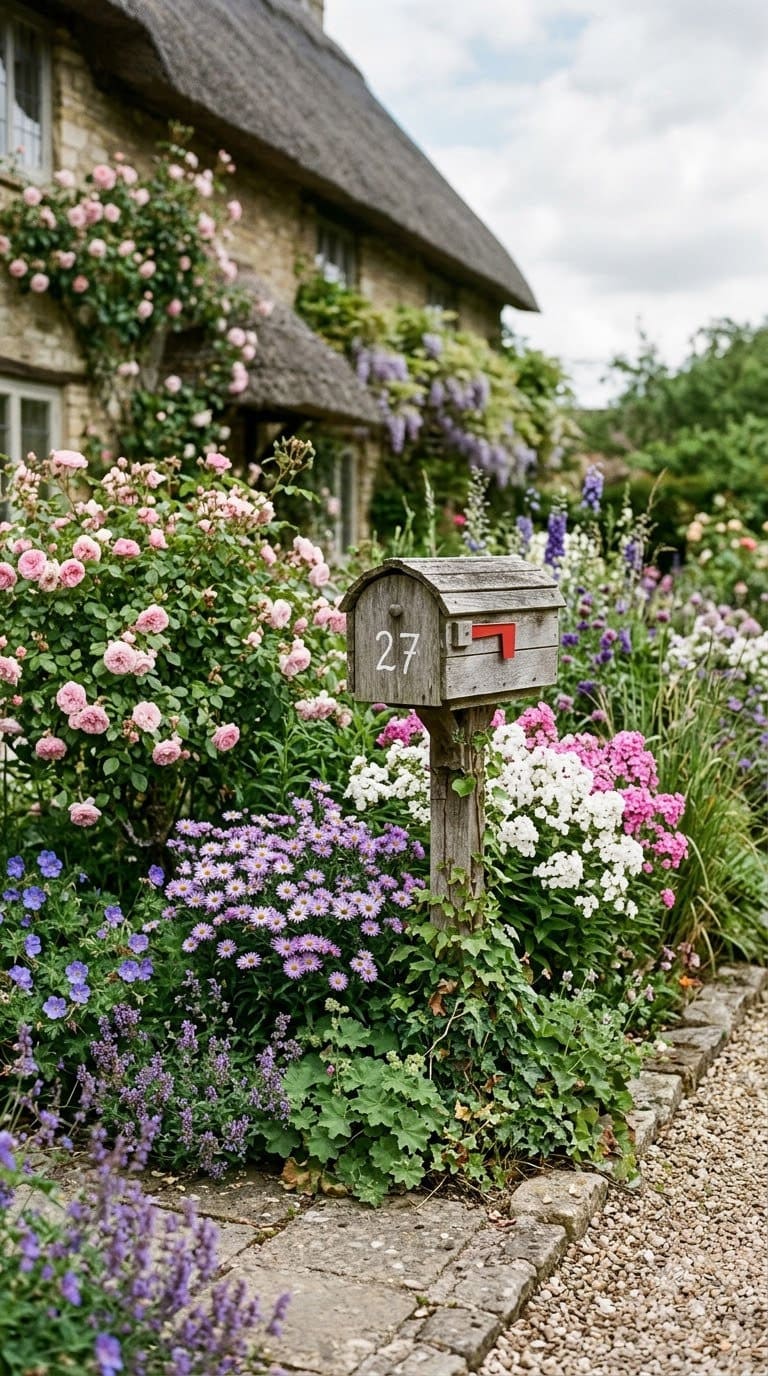
For a soft, approachable look, mix easy-growing perennials around the post rather than a single species: anise, sedum, hyssop, aster, shrub rose, and phlox all work well together and bloom in overlapping windows so the bed doesn’t go flat after one species finishes.
This is the classic “cottage mailbox” look, and it holds up because the plant list is genuinely low-fuss, not because of any special technique.
3. Structured Bed with Curved Edging
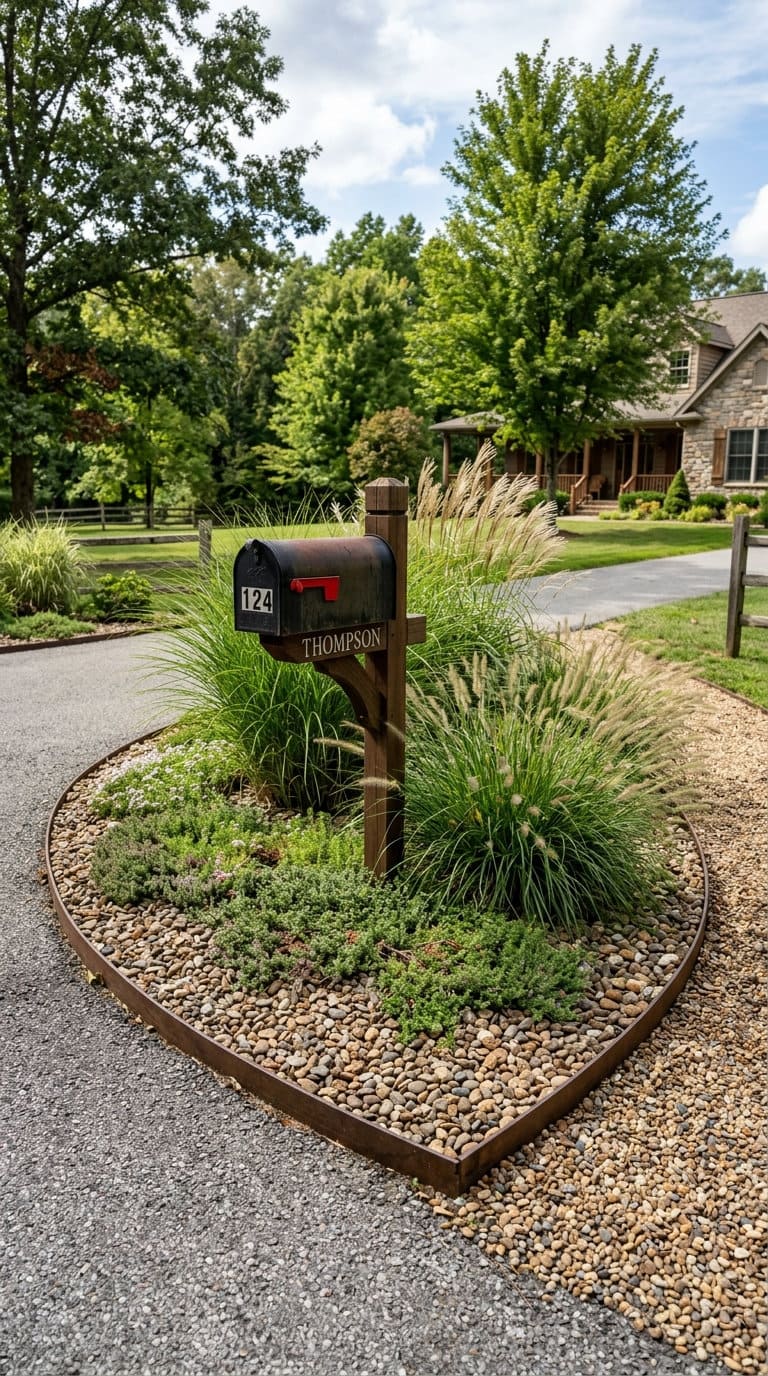
Skip the free-form flower bed and define the space with curved brick, stone, or timber edging instead, it reads as intentional rather than like flowers happened to grow near the post.
Layer a low groundcover or gravel base underneath taller perennials or ornamental grasses for the composed, “designed” look currently favored by landscape professionals, rather than a flat single-layer planting.
4. Creeping Phlox and Clematis Combo
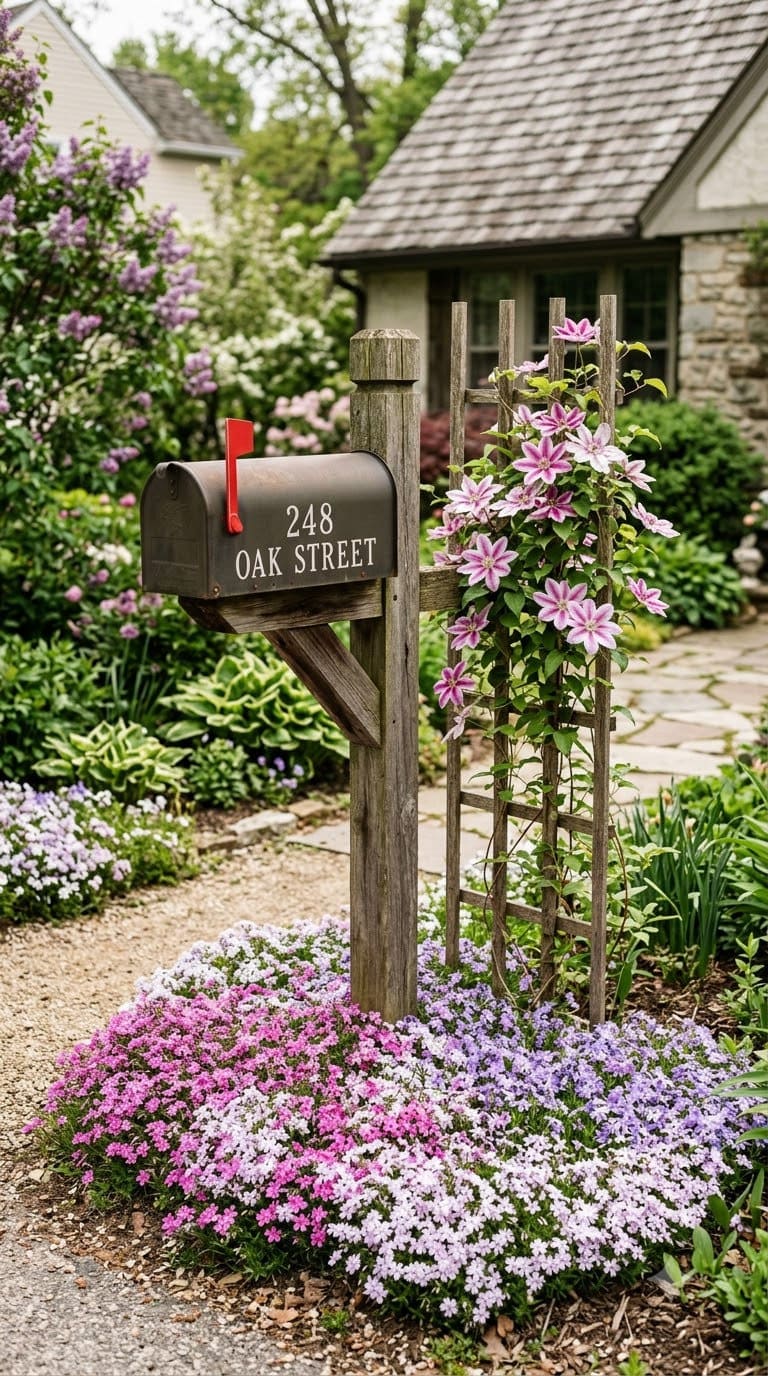
Creeping phlox spreads low and covers the ground with color in spring, while clematis climbs if you give it something to grab, a trellis stake, the post itself, or a small arbor behind the box.
The combination covers both the ground plane and vertical interest without competing for the same visual space.
5. Horseshoe-Reclaimed Post
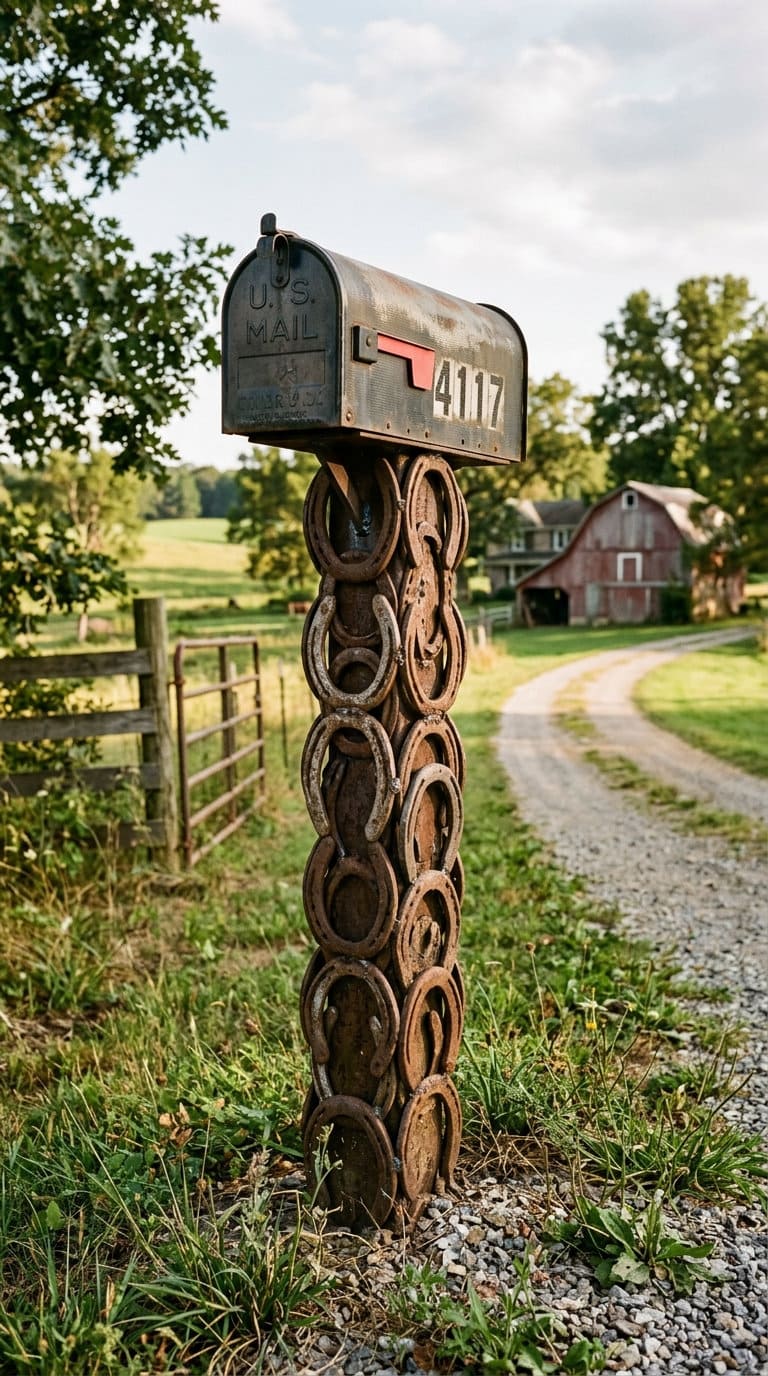
A post built or wrapped from old horseshoes gives a genuinely distinctive, rustic-farm look that’s hard to buy off the shelf, a real conversation piece if you have access to real horseshoes (a local farrier or feed store is the easiest source).


6. Large Planted Container as the Base
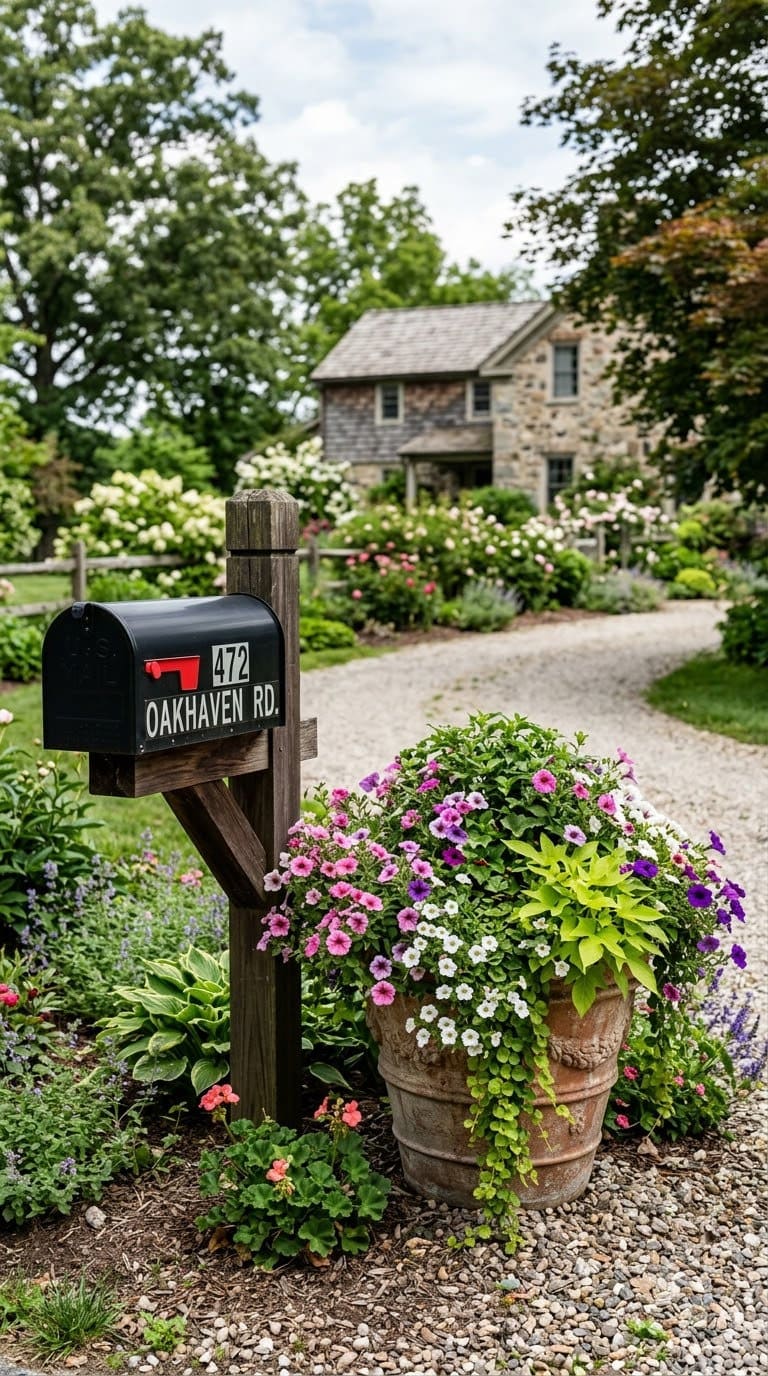
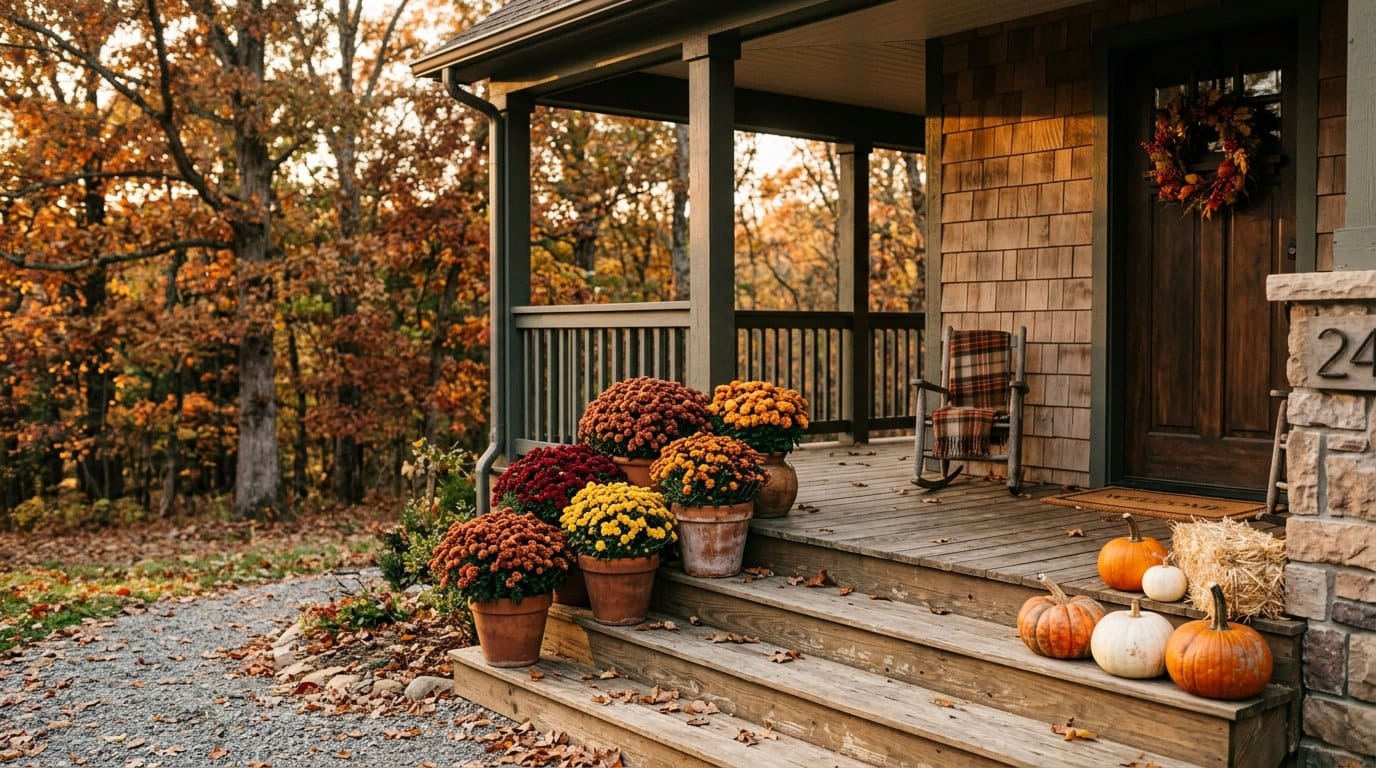
Instead of a bed, set the mailbox post into or beside a large weatherproof planter and let the planting spill over the container’s edge.
The average homeowner spends $616/year on yard fixes that don't address the real problem. Find out what yours actually is — before you spend another dollar.
Take the Free QuizThis is the easiest option to change seasonally since you’re swapping container plants rather than digging up an in-ground bed.
7. Seasonal Costume Mailbox (Reindeer, Pumpkin, etc.)
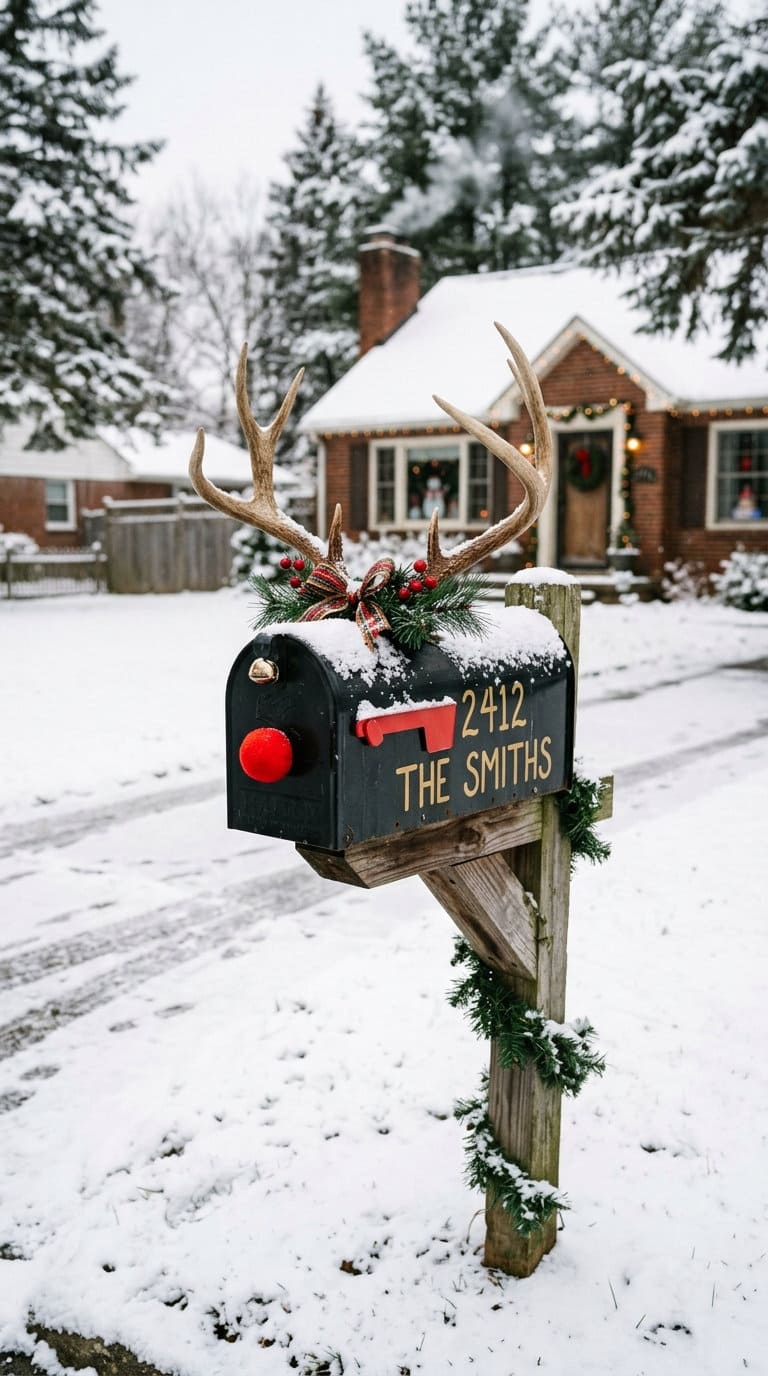
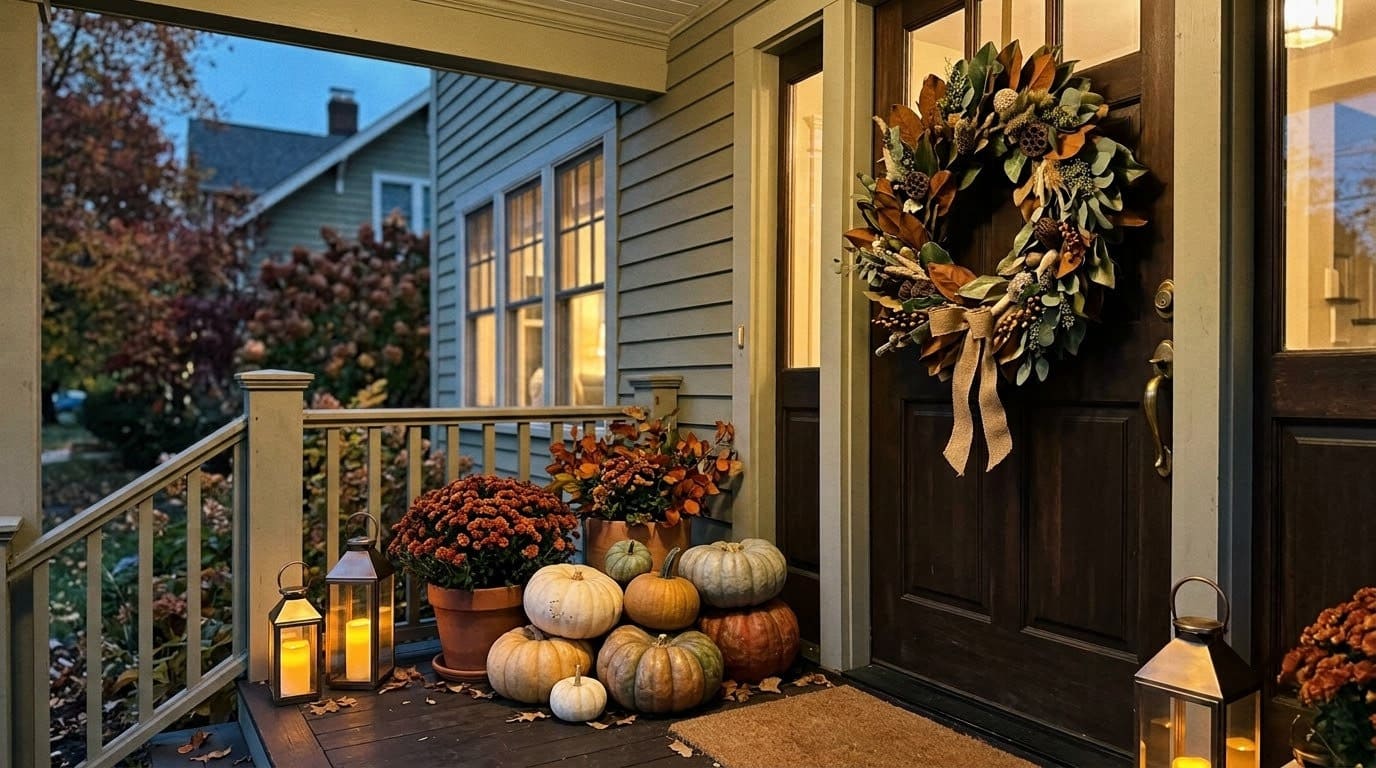
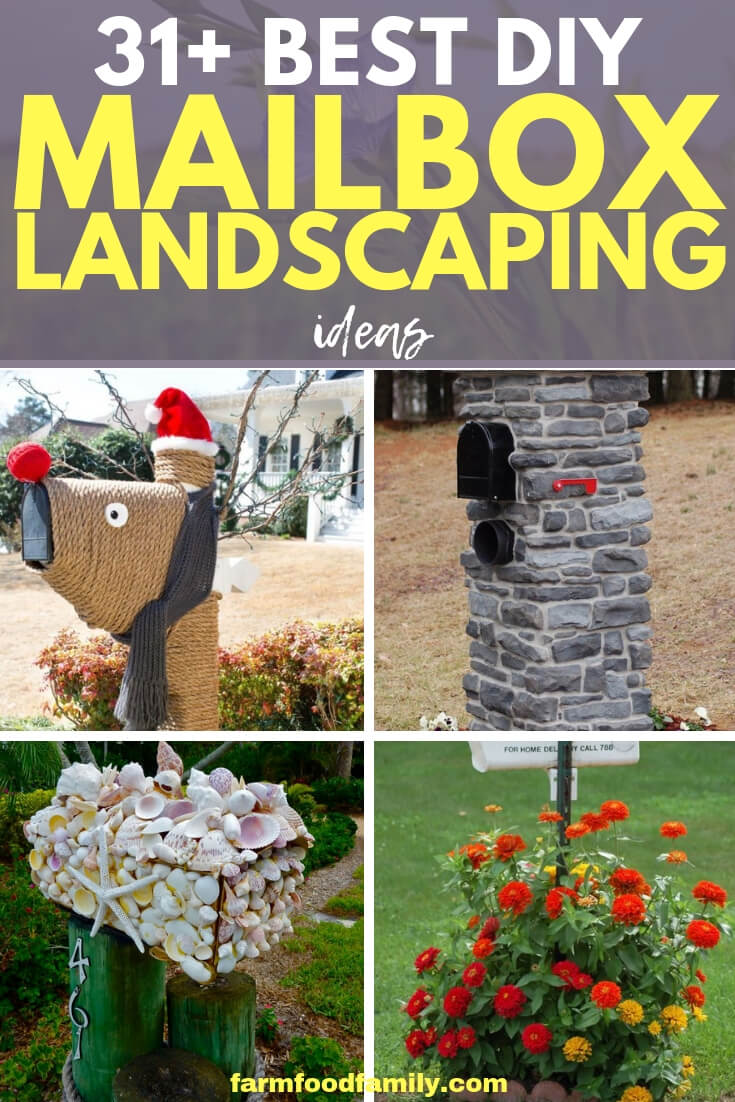
A removable seasonal cover, reindeer antlers and a red nose for Christmas, a pumpkin face for fall, turns the mailbox into a small neighborhood landmark without any permanent landscaping commitment. Christmas mailbox decor ideas goes deeper on the holiday-specific version if that’s the angle you want.
8. Bottle-Edged Raised Bed
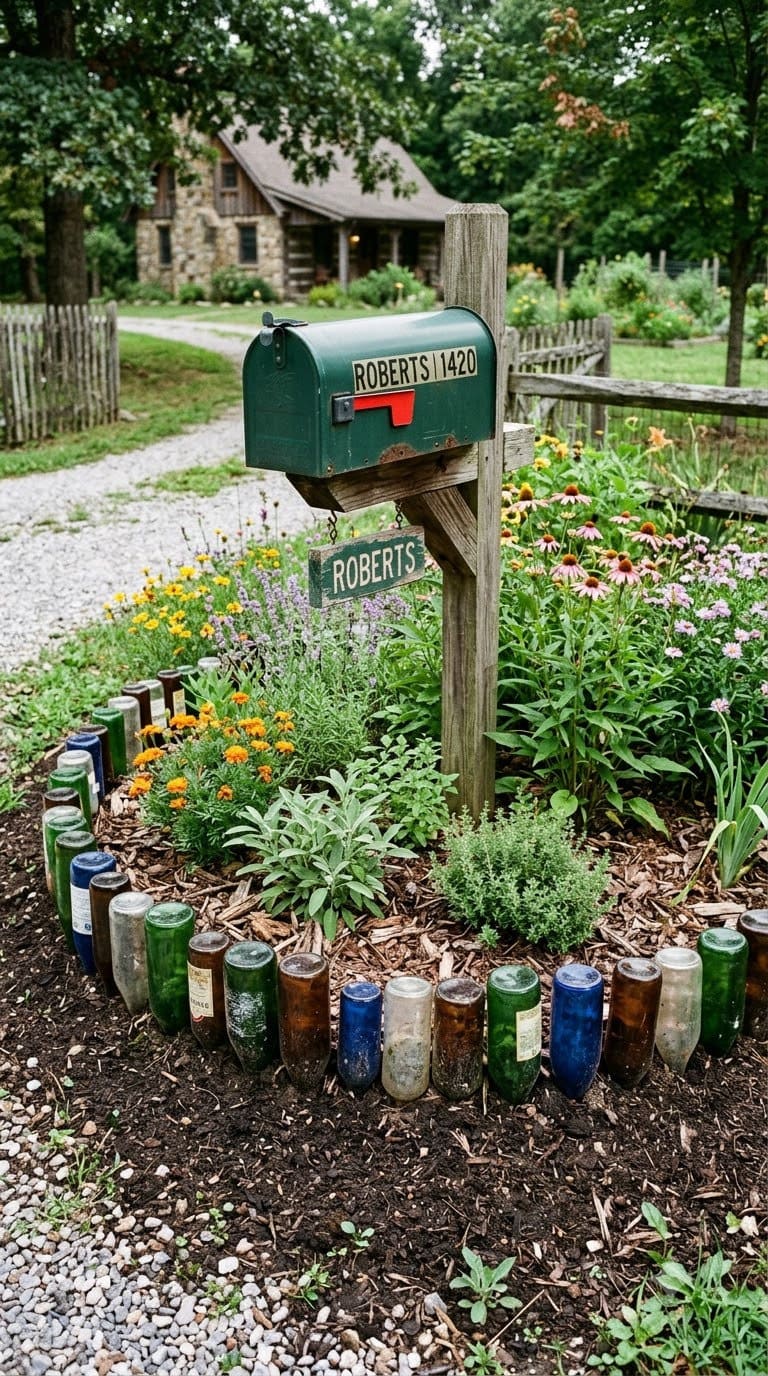
Glass bottles buried neck-down in a ring make a genuinely low-cost, distinctive raised-bed edge, a real upcycling project if you’ve got empty wine or beer bottles piling up, rather than buying edging material.
9. Trellis with a Climbing Vine
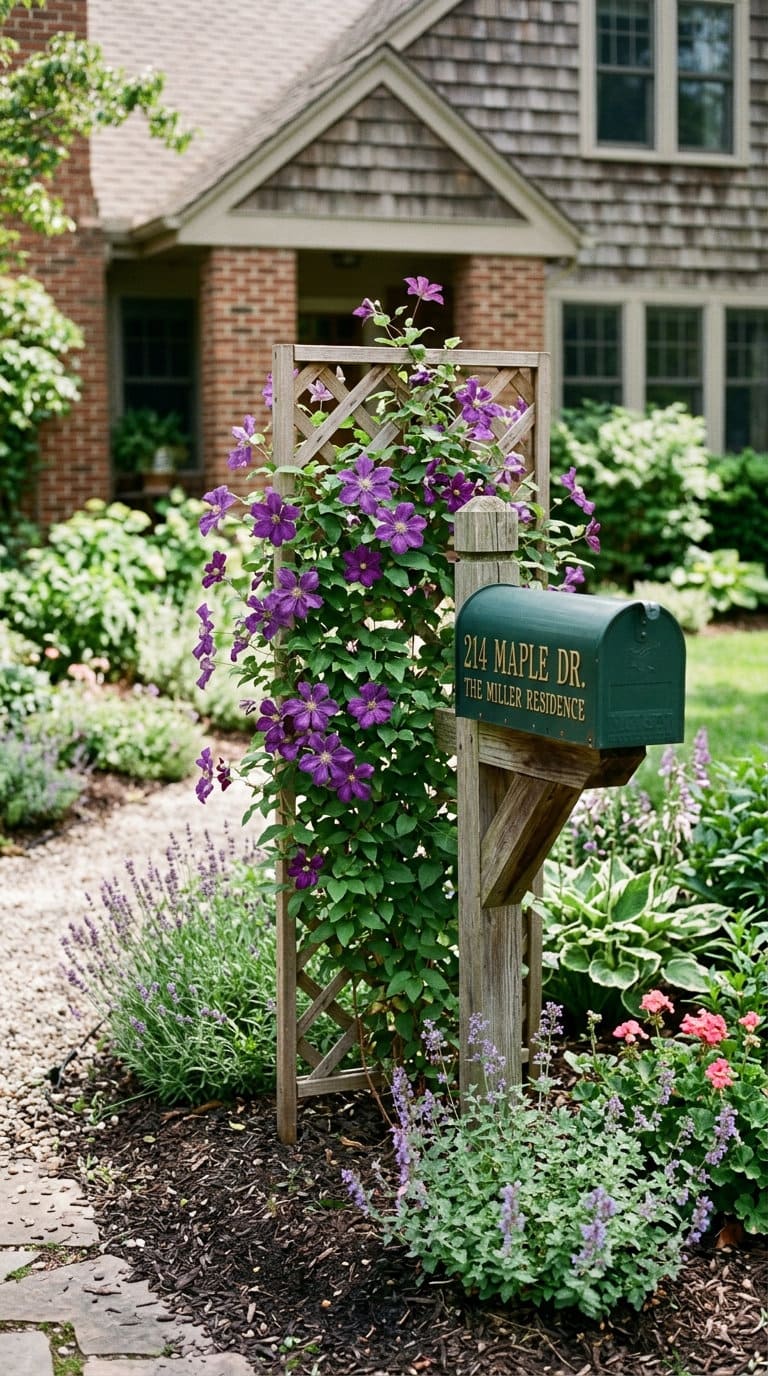
A small trellis or simple wire frame behind the mailbox gives a flowering vine, clematis, a hanging pot of trailing annuals, or a potted climbing plant something to grab onto, turning flat ground-level planting into real vertical interest.
Skip rambling, sticky-sap vines like confederate jasmine directly at the mailbox per the UF Extension guidance above, save those for a fence or arbor further from the daily-reach zone.
10. Rustic Mailbox with a Cedar Door
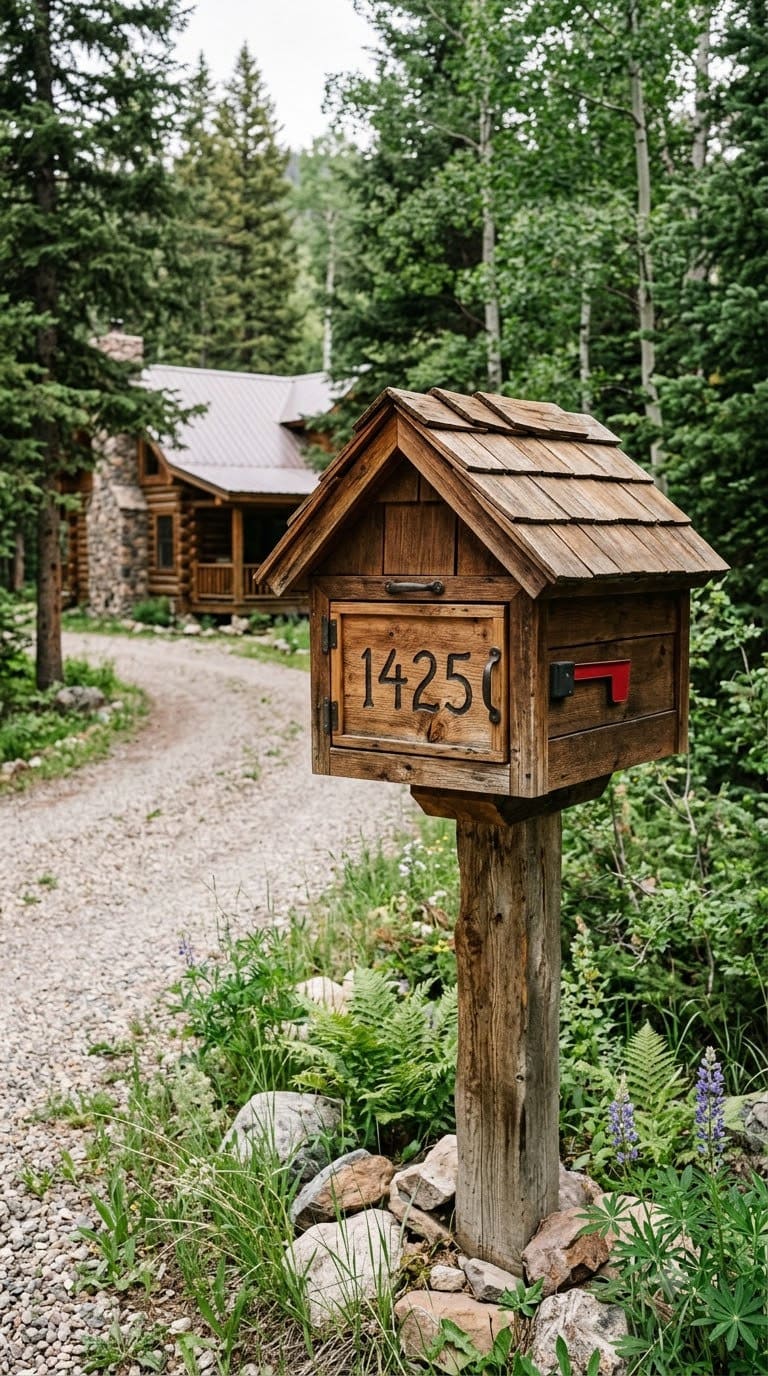
A small cedar “door” panel on the mailbox face, or a cedar-shingled roof over the box, brings real rustic-cabin texture without needing a full post rebuild, a good weekend project if you already have cedar offcuts from another project.
11. Stone-Clad Mailbox Post
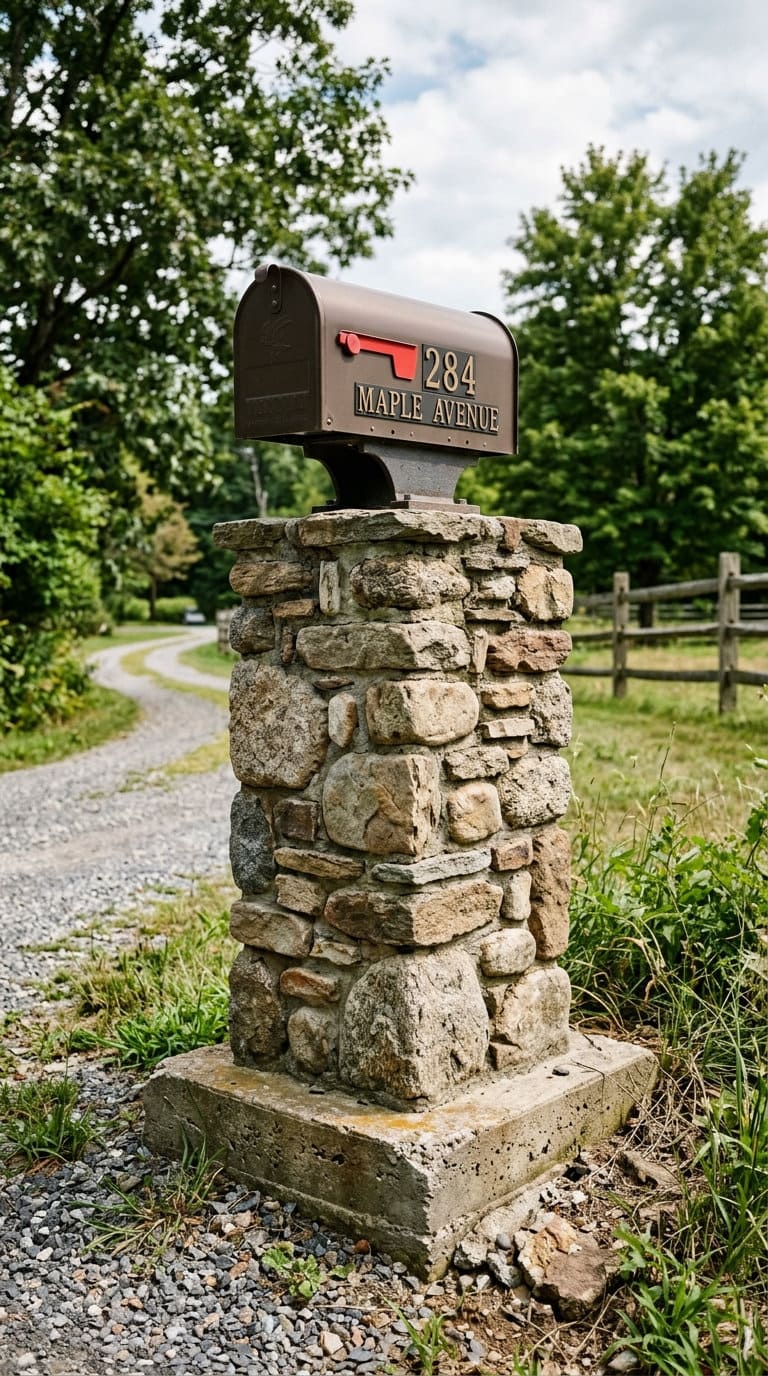
A stacked-stone or stone-veneer post reads as permanent and substantial in a way a wood or plastic post never will, and pairs naturally with a stone-edged house exterior or driveway if you already have that material elsewhere on the property.
Budget for a poured concrete footing under it, an unanchored stone post is genuinely heavy and can shift or lean over time without one.
12. Wrought Iron Mailbox Stand
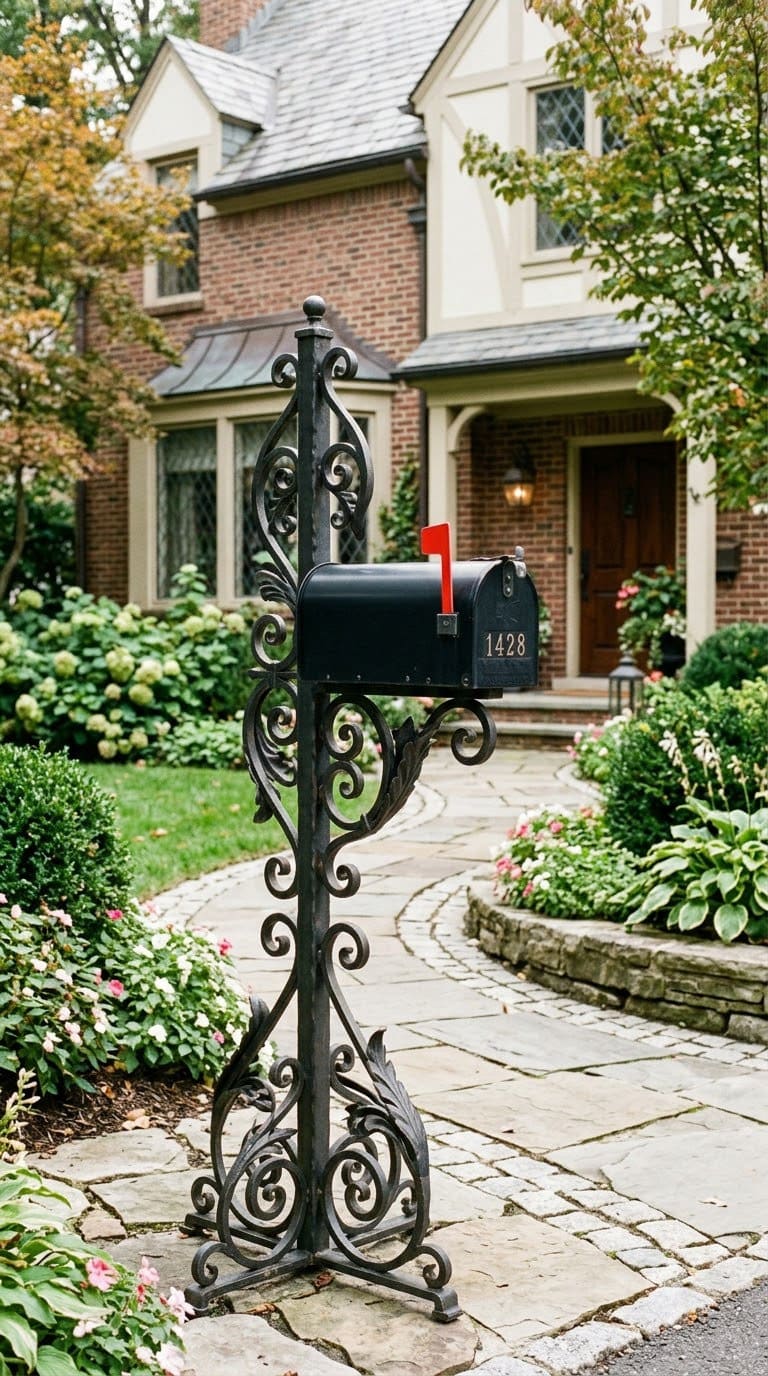
An iron scrollwork stand gives a formal, traditional look and, unlike wood, won’t rot at the ground line, worth the higher upfront cost if you want a set-it-and-forget-it post that doesn’t need refinishing.
13. Brick Mailbox Column
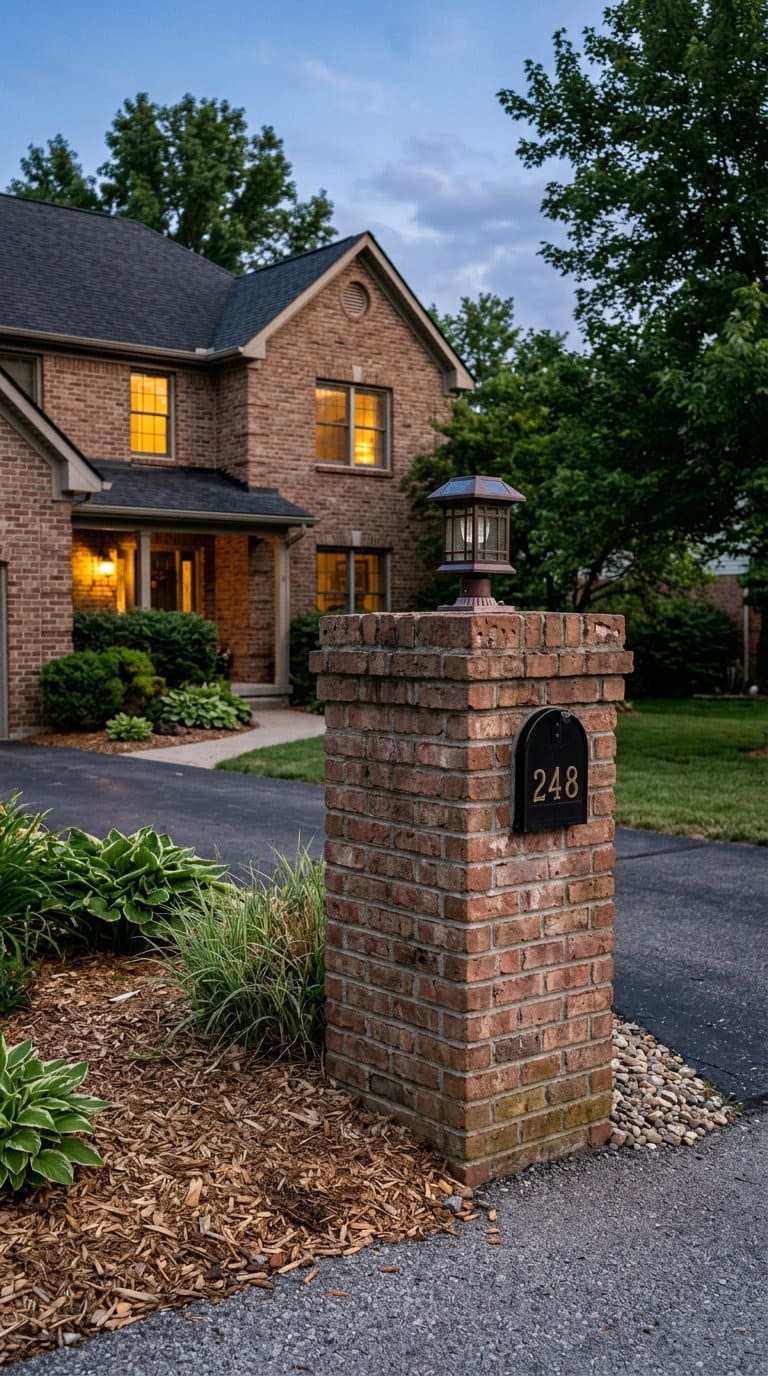
A brick column matching your home’s brick (or contrasting deliberately) is one of the more permanent, resale-friendly upgrades on this list. Add a small lantern or solar light mounted on the column for evening visibility, a real functional upgrade beyond the style statement.
14. Weathered or Vintage Mailbox Reclaim
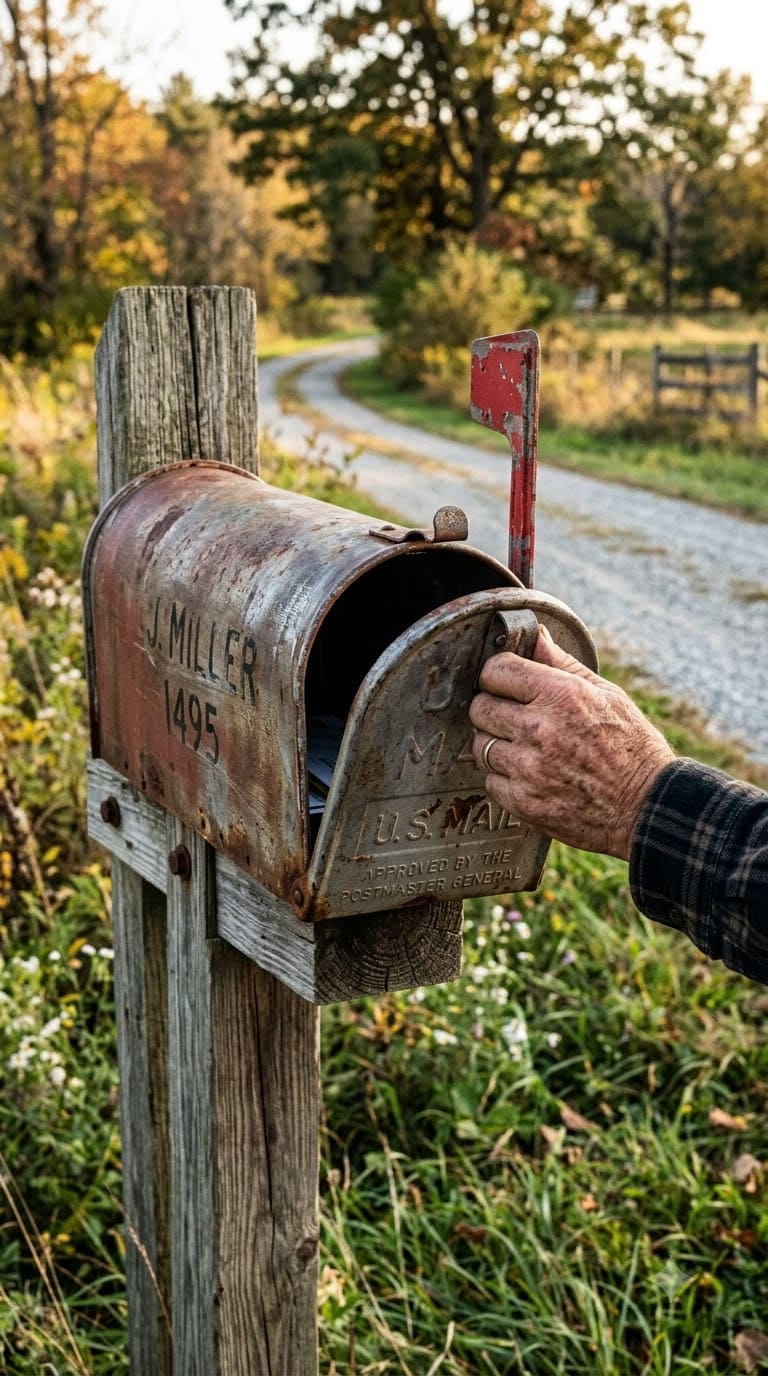
An actual vintage mailbox, sourced from a salvage yard, estate sale, or antique shop, brings real patina no new product can fake.
Check that the flag mechanism and door latch still work before committing to it as your working mailbox rather than a purely decorative piece.
15. Beach-Themed Mailbox
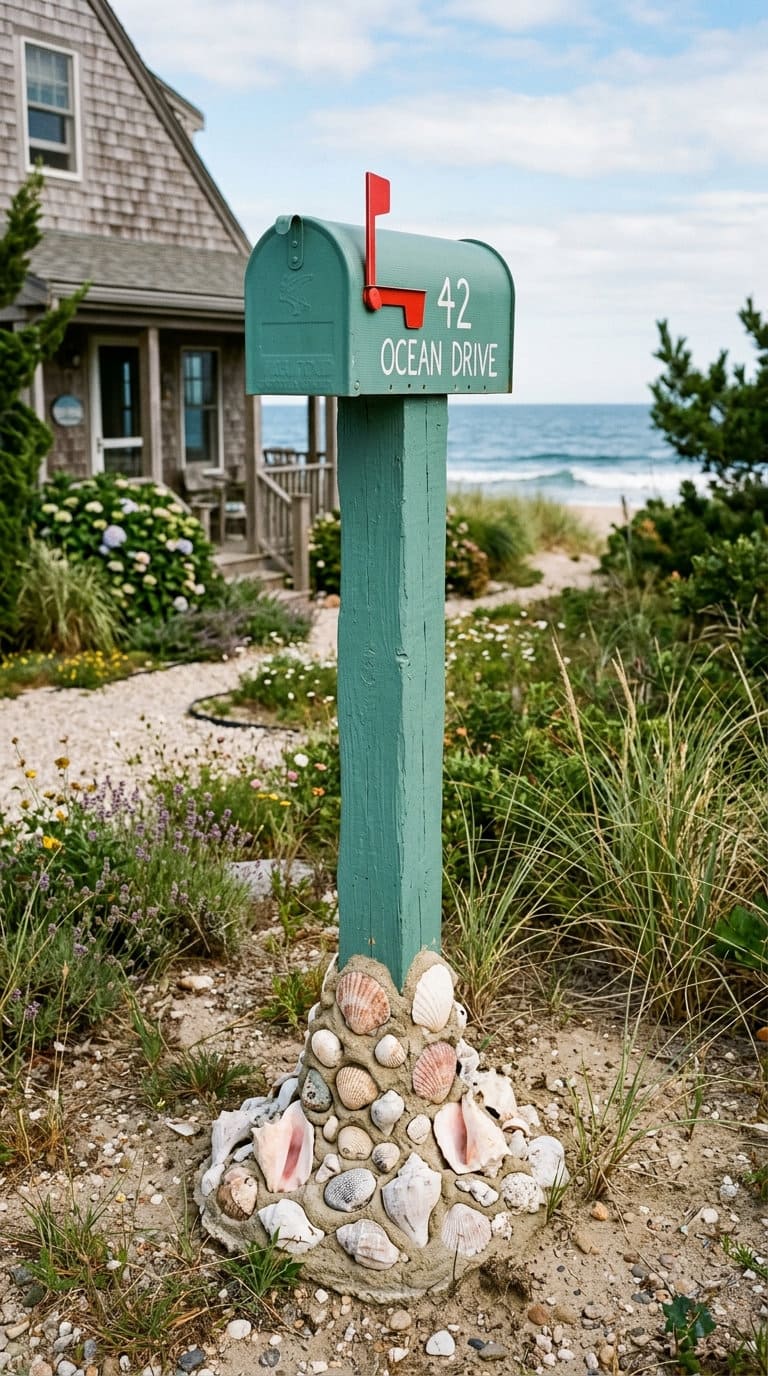
Shells glued or wired around the post and a coat of ocean-green paint turn a standard mailbox into a beach-house style statement, a fun, low-cost weekend project that reads clearly even from the street.
16. Industrial-Style Metal Mailbox
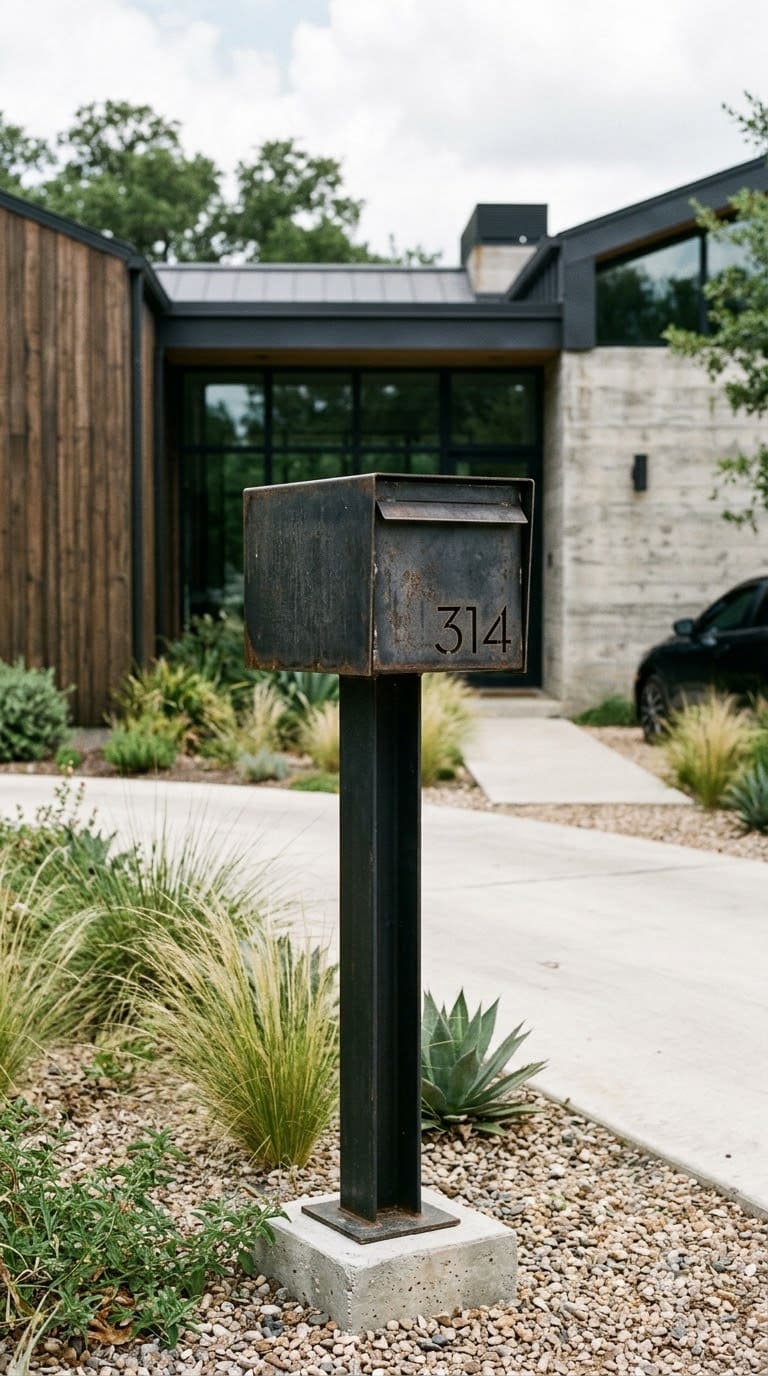
Raw or blackened steel, exposed rivets, and a minimal geometric post shape fit a modern-industrial home exterior far better than a traditional wood post would, worth considering if the rest of your home’s exterior already leans modern.
17. Pink Flamingo Novelty Mailbox
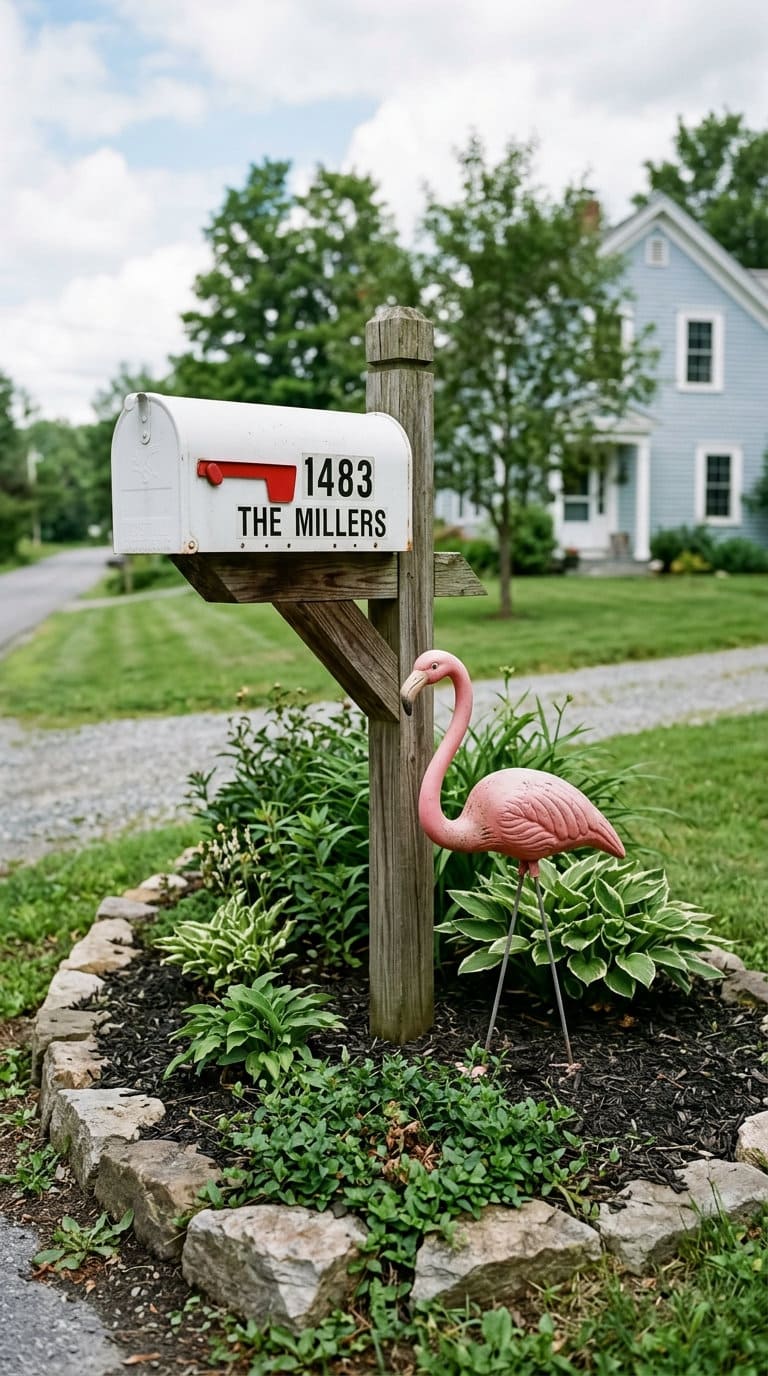
A single well-placed novelty piece, a pink flamingo, a garden gnome, a whimsical sculpture, gives the mailbox bed real personality without needing to be paired with anything else.
The trick is restraint: one strong novelty piece reads as intentional, three or four scattered around reads as clutter.
18. British-Style Post Box
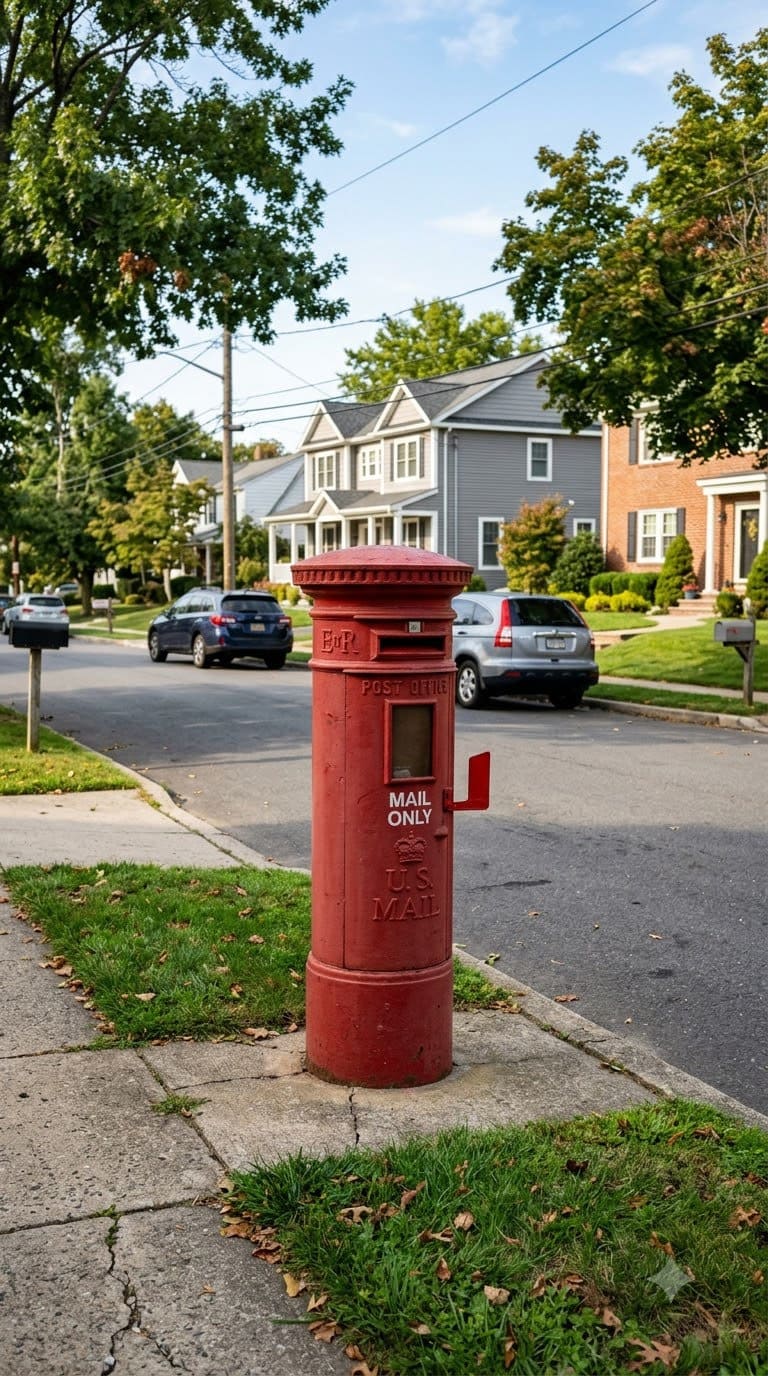
A red, freestanding British-style pillar post box shape is a genuinely distinctive architectural statement in a US neighborhood where every other mailbox is the standard rural-route shape, easy to spot from down the street.
19. Low-Maintenance Drought-Tolerant Garden
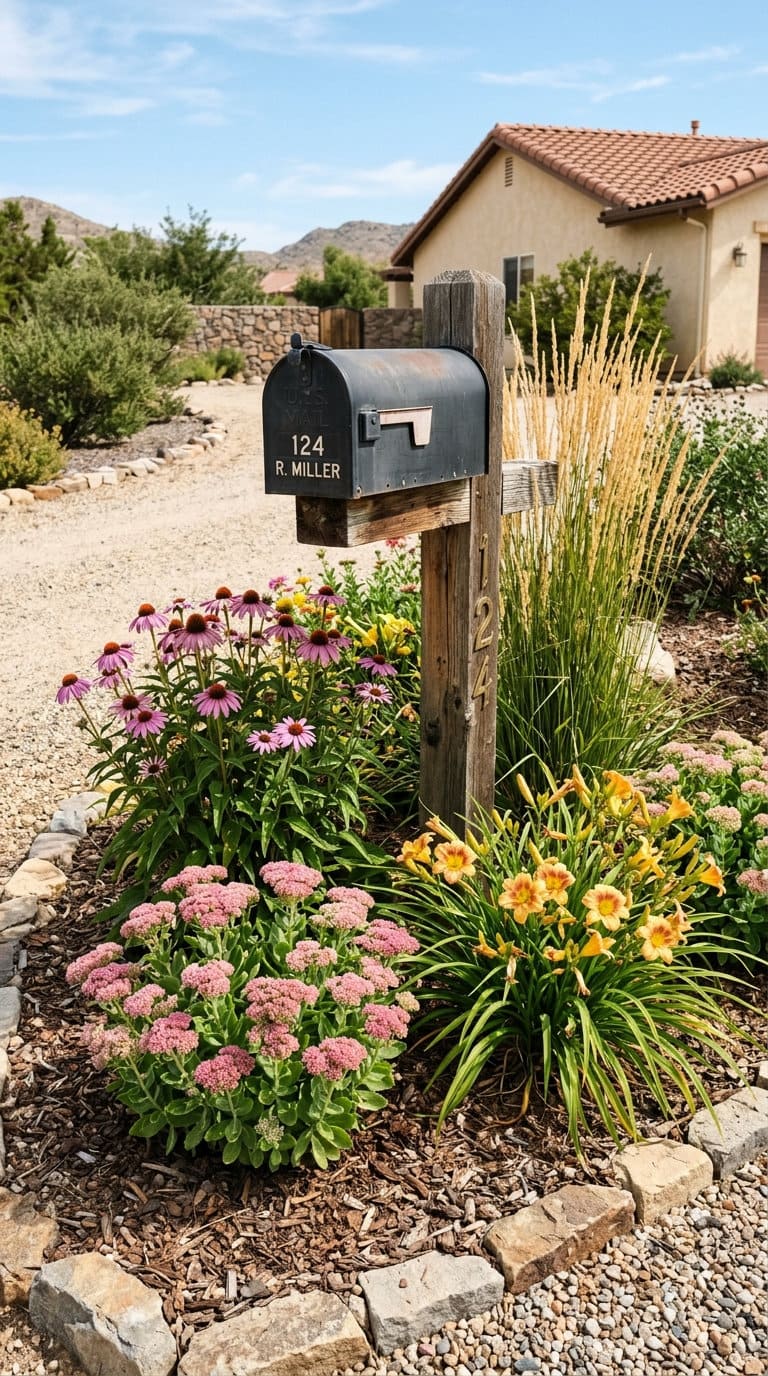
Built around the UF Extension guidance above: skip anything that needs regular watering or fertilizing and choose low, drought-tolerant shrubs and perennials instead, daylily, rosemary, coneflower, sedum, and ornamental grasses all hold up well roadside with minimal upkeep.
This is the version to choose if you don’t want to trek out to the curb for regular maintenance.
20. Recycled Bicycle Planter Display
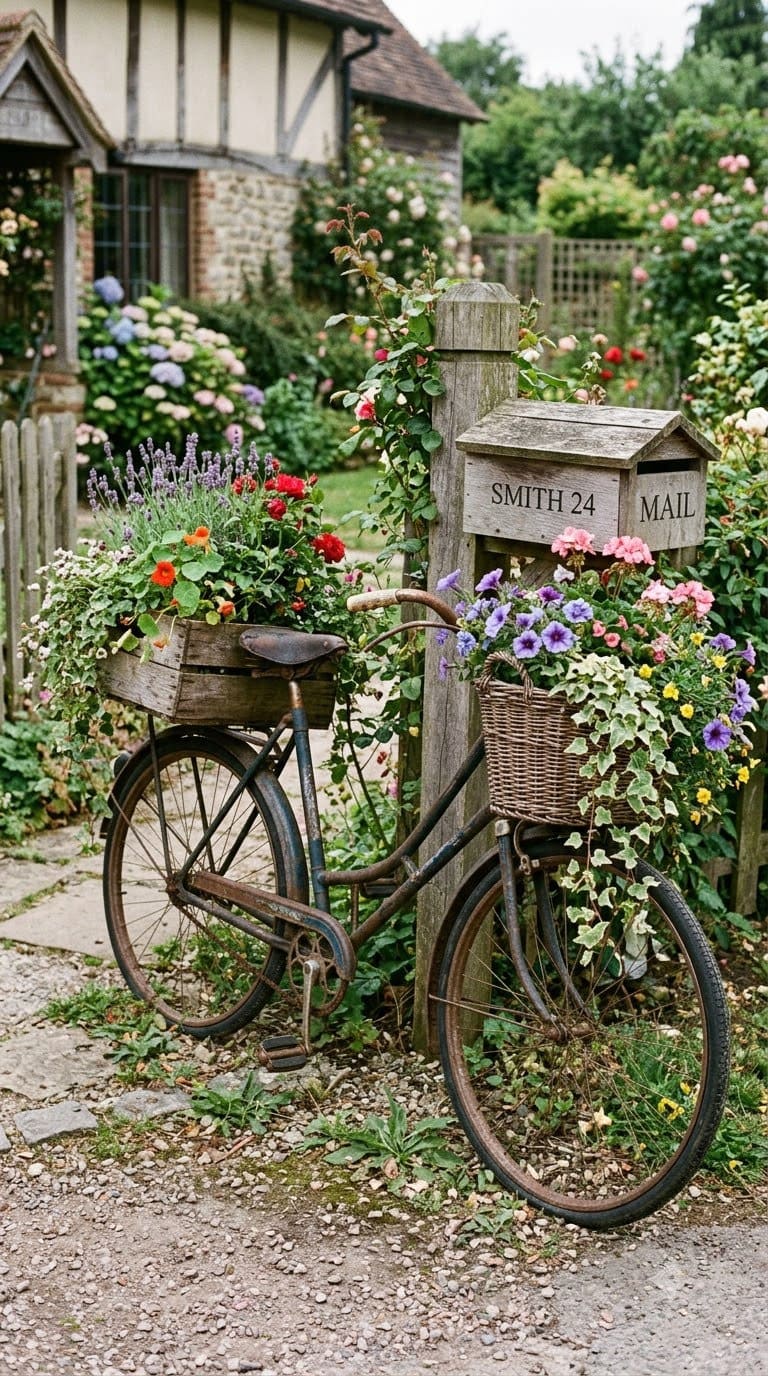
An old bicycle with baskets or a repurposed frame planted with trailing flowers makes a genuinely eye-catching, one-of-a-kind mailbox display, a real way to use a bike that would otherwise go to the scrap yard.
21. Color-Block or Ombre Painted Post
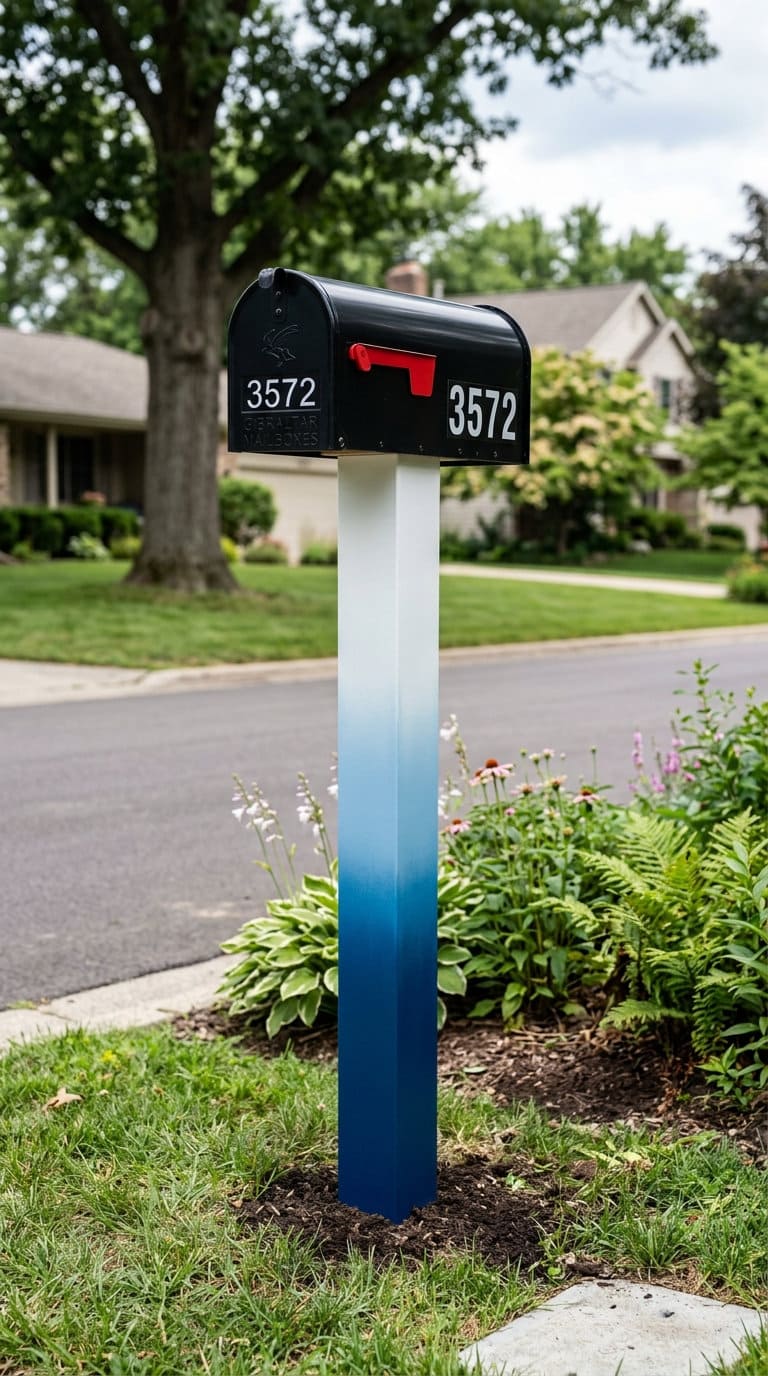
A gradient (ombre) paint job or a bold solid color block on the post itself is the fastest, cheapest way to make a plain mailbox stand out, no planting required at all.
A muted grey reads clean and modern; a bold ombre gradient reads playful. Either way, repaint every 2-3 years as exterior paint weathers faster at ground level near road spray.
22. Masonry Base with a Stone or Brick Skirt
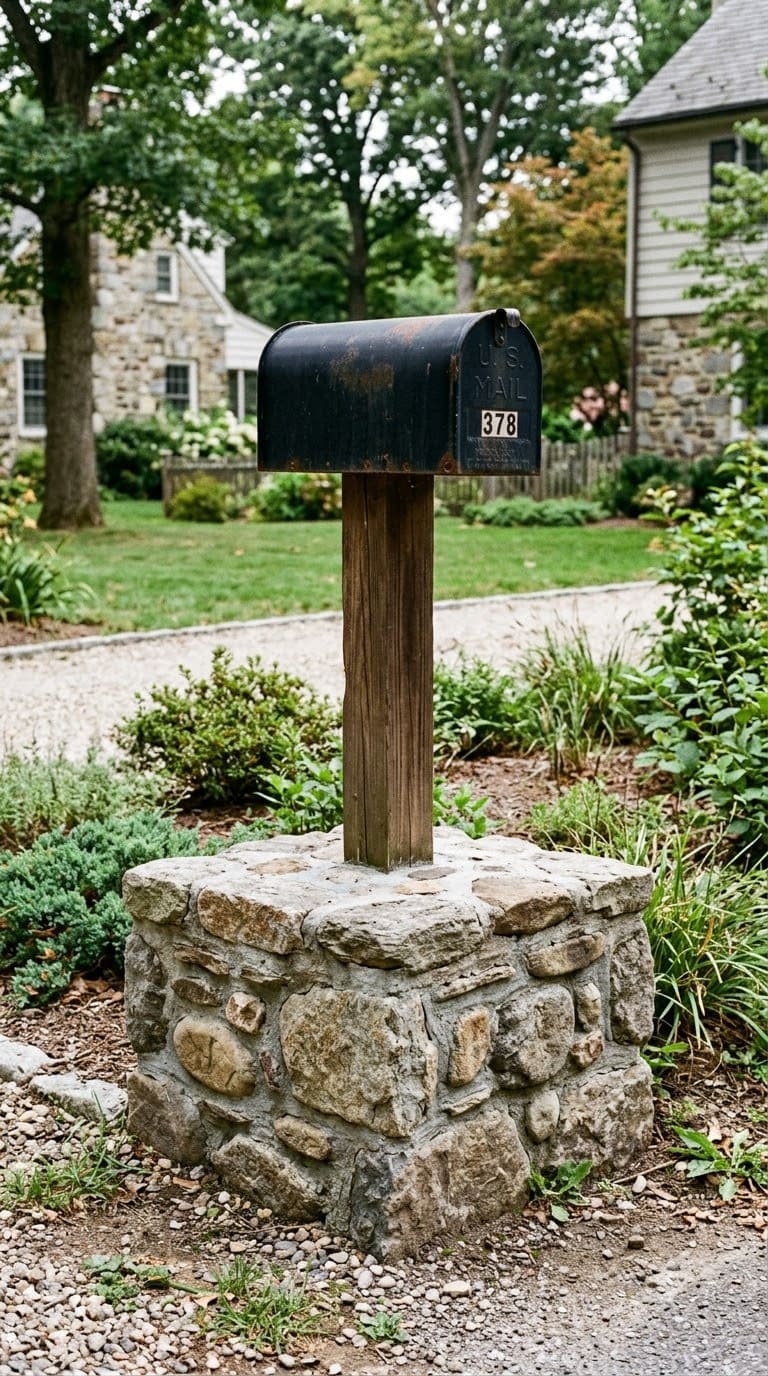
Rather than cladding the whole post, add a masonry “skirt” just at the base, a small stone or brick platform the post sits in, for a grounded, finished look without the cost of a full stone or brick column. This works well as a lower-cost middle ground between a plain post and idea 11 or 13 above.
23. Tropical Planting Style
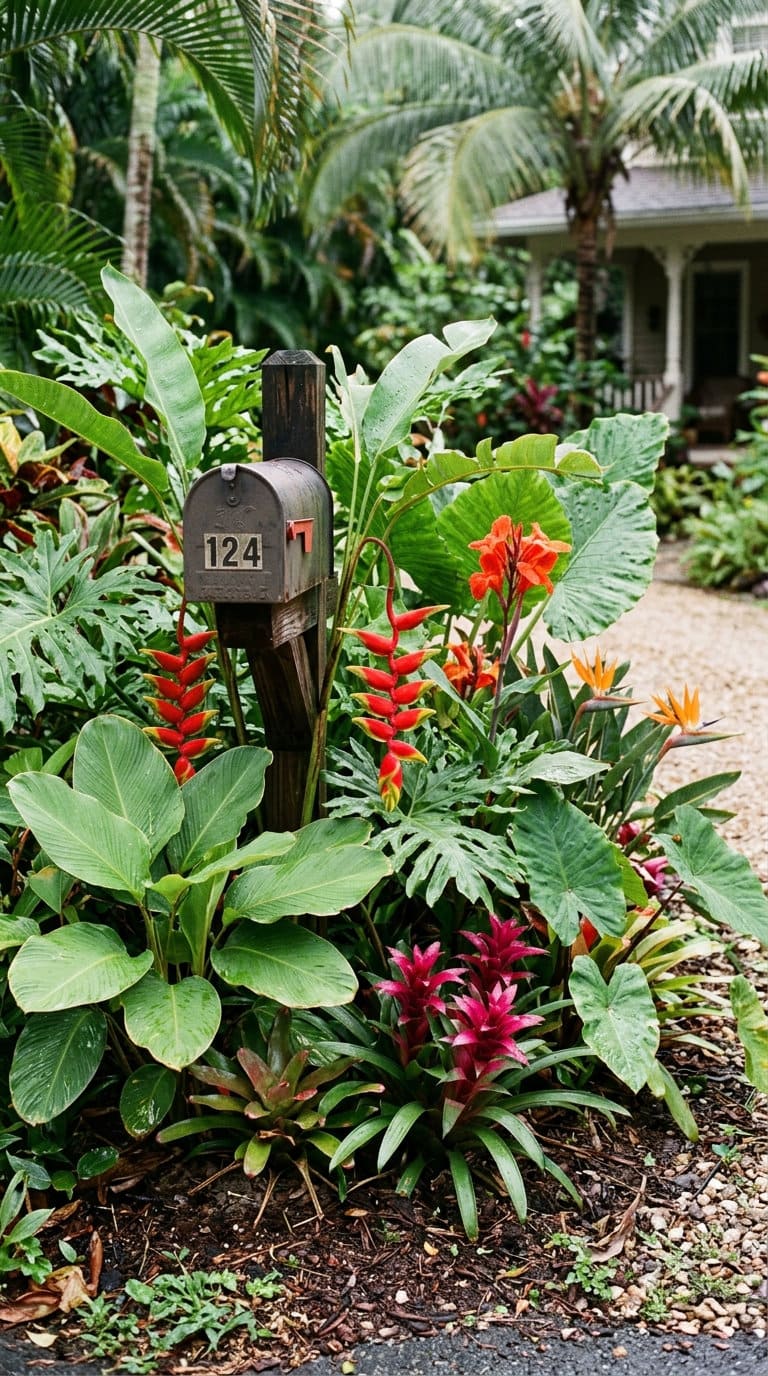
Broad-leafed plants, bold color, and a looser, layered planting style bring genuine tropical character to the mailbox bed, a strong choice if the rest of your landscaping already leans tropical rather than a standalone statement that clashes with a more traditional yard.
24. Native Pollinator-Friendly Garden (Away From the Box Itself)
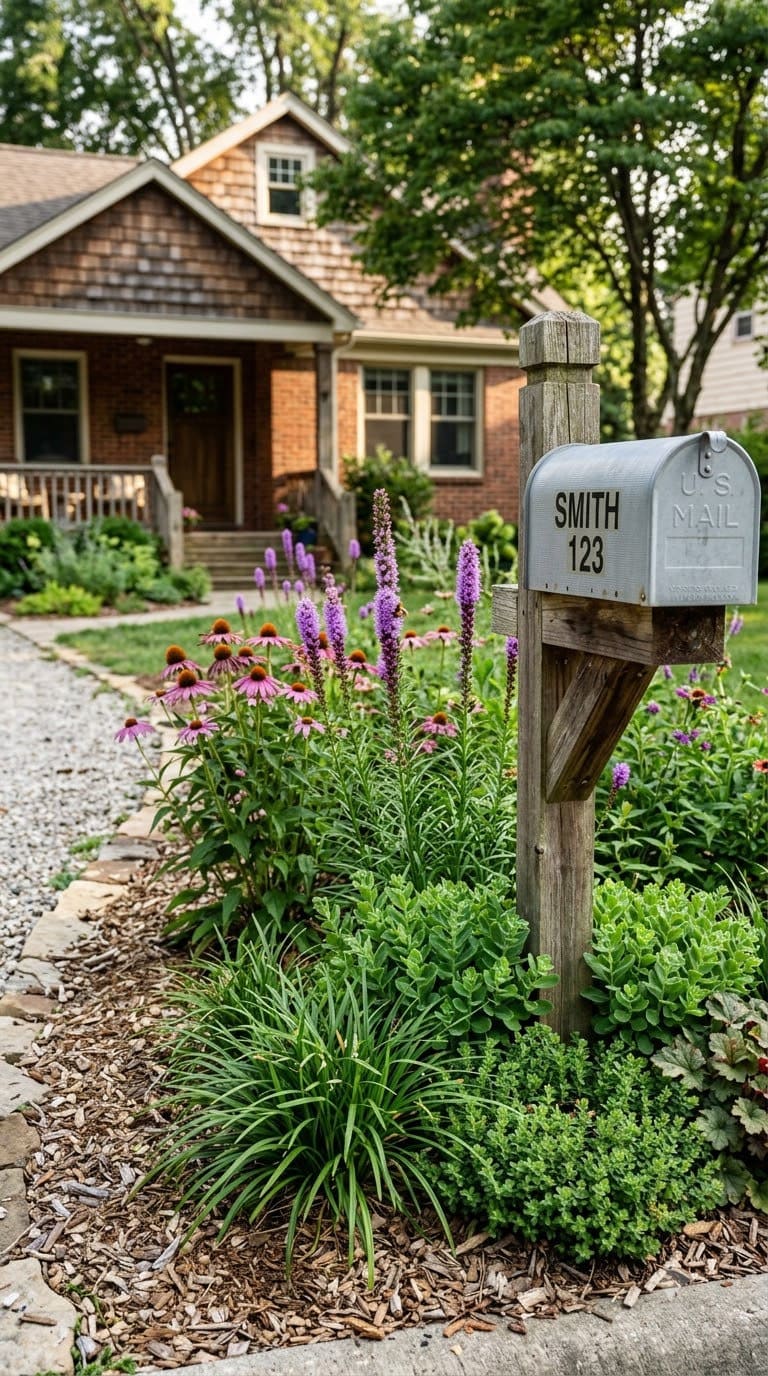
A genuine middle ground for anyone who wants to support pollinators without creating a mail-carrier hazard: plant the native, bee-friendly stuff (coneflower, blazing star, native asters) a few feet away from the box itself, in the surrounding bed rather than pressed right up against the door, and keep only the thornless, low-pollen plants in the immediate reach zone.
Drought-tolerant plants that still attract pollinators has a fuller list if this is the direction you want to take the whole bed.
What We Learned the Hard Way
The biggest mistake isn’t picking the wrong style, it’s picking plants for how they look in the nursery pot instead of how they behave two feet from a mail carrier’s hand and ten feet from a snowplow’s path.
A climbing rose or a rambling vine looks gorgeous in a photo and turns into a real hazard once it’s grabbing at whoever’s reaching for the mailbox door, and a bed planted right up against the curb in October is the first thing buried under a windrow of plowed snow in January.
The second mistake is treating the mailbox bed like an isolated project instead of matching it to what’s already happening in the rest of the yard.
A stone-clad post next to a plain vinyl-sided house with no other stone anywhere reads as random rather than intentional, same with tropical planting in an otherwise traditional colonial-style front yard.
Pick a direction that echoes something already true about your house or landscaping, not just whatever looked best in a photo.
What Should Your Mailbox Post Be Made Of?
| Material | Maintenance | Lifespan | Best For |
|---|---|---|---|
| Wood | High, needs periodic staining/sealing, rot risk at ground line | 5-10 years without upkeep, longer with care | Classic look, easiest to DIY or repair |
| Plastic/Composite | Very low | 15-20+ years | Harsh winters, snowplow-prone areas, easiest to reset if hit |
| Wrought Iron | Low, won’t rot | 20+ years | Formal/traditional homes, set-and-forget |
| Stone/Brick | Low once built, needs a proper footing | 25+ years | Permanent, resale-friendly, matches existing stone/brick exteriors |
FAQs
How far should my mailbox be from the curb? USPS requires a 6 to 8 inch setback from the front face of the curb to the mailbox door, with the box mounted 41 to 45 inches above the road surface. Some rural postmasters require more clearance for larger delivery vehicles, check locally before finalizing placement.
What plants should I avoid around my mailbox? Skip anything thorny, anything that attracts bees or stinging insects, and rambling sticky-sap vines like confederate jasmine, all specifically flagged by University of Florida Extension guidance as mail-carrier safety issues, not just maintenance headaches.
What are the best low-maintenance plants for a mailbox garden? Drought-tolerant perennials that don’t need regular watering or fertilizing hold up best in this isolated, roadside spot: daylily, rosemary, coneflower, sedum, and ornamental grasses are all common, reliable choices.
Will snow damage my mailbox plants? In cold climates, yes, plowed snow commonly gets piled directly on curbside beds. Choose sturdy, salt-tolerant plants for the road-facing side of the bed and expect to lose anything delicate in its first winter if you’re planting in fall.
Does mailbox landscaping actually add curb appeal? Yes, real estate and landscaping data consistently point to curb appeal as one of the highest-ROI, lowest-cost improvements a home can make, and the mailbox is one of the first things anyone sees pulling into the driveway, but a low-maintenance, well-placed bed reads better than an overplanted one that looks neglected by August.
Want the number-numbering angle instead of pure style? Mailbox and house numbers feng shui covers the placement and numerology side of the same spot. For the flower bed itself, front yard flower bed ideas and flower bed ideas go deeper on layout and plant pairing beyond just the mailbox.
If the driveway edge is part of the same view, driveway flower bed ideas covers that adjacent stretch. And for the bigger picture beyond just the mailbox, curb appeal ideas rounds out the rest of the front-yard first impression.
Related Posts

Products We Recommend
This post contains affiliate links. We may earn a commission on qualifying purchases at no extra cost to you.
Custom Design Products Mailbox Protector (pre-assembled, no-dig, made in USA)
The snowplow/road-spray protection covered in the "Before You Start" section and idea 1
Shop Now
Frame It All One-Inch Series Curved Landscape Border Kit
The structured, curved-edging bed look from idea 3
Shop Now
VOLISUN Solar Fence Post Cap Light, Edison LED
The evening-visibility upgrade mentioned in idea 13
Shop NowNever miss an update — choose FarmFoodFamily as your preferred source on Google.
How it works: Tap the button below to open Google's settings page, then check the box next to FarmFoodFamily.
Tap the checkbox to turn it blue — that's how you know it's set.