20+ Best Driveway Ideas on a Budget (With 2026 Cost Data)
20 budget driveway ideas with real 2026 cost-per-square-foot data, plus which materials actually save money long-term and which don’t.


Never miss an update — choose FarmFoodFamily as your preferred source on Google.
How it works: Tap the button below to open Google’s settings page, then check the box next to FarmFoodFamily.
Tap the checkbox to turn it blue — that’s how you know it’s set.
Driveways enhance the home aesthetics and the entire home’s real estate value given the right designs and materials. Like everything else, when given enough thought, beautiful driveways can be done on a budget.
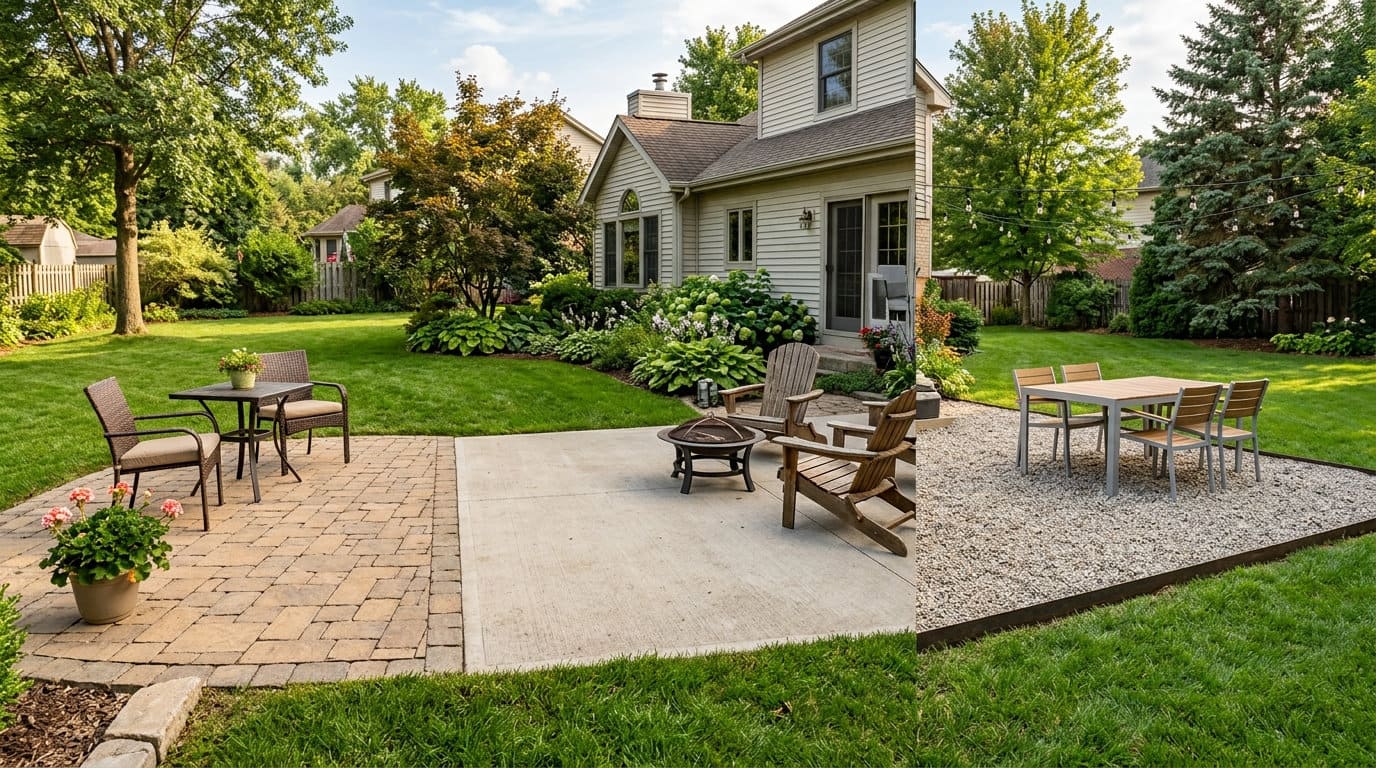
You can explore a lot of materials from very basic ones such as gravel and stone to more complex ones to work with like concrete and stone moldings.
If you are looking for viable options for budget driveways, here are some driveway ideas on a budget that you could explore.
Before you choose a material
Two things worth settling before you pick from the list below, neither of which has anything to do with the material itself.
Check permits and HOA rules first. Most projects that install a new driveway, or change its size, shape, or connection point to the street, require a permit from your local building or planning department, per Montgomery County, Maryland’s Department of Permitting Services, a representative example of how a typical local permitting process works.


If you’re in an HOA, that approval is separate from and required in addition to any city or county permit, get HOA sign-off first, since it can affect which materials and colors are even allowed before you spend money on quotes. Rules vary a lot by jurisdiction, so this is a call to your specific building department, not something a national roundup can answer for you.
Answer 4 quick questions and get matched to the exact fix for your yard — drainage, budget, layout, or something else entirely.
Take the Free QuizMatch the material to your actual constraints, not just your budget. The cheapest option on this list (gravel or wood chip) isn’t the cheapest choice if your driveway has real grade, loose material shifts and washes downhill on a slope.
Climate matters too, freeze-thaw cycles favor brick or cobblestone over plain concrete, and a longer rural driveway can justify tar-and-chip’s rustic look in a way a short suburban one usually can’t. The idea-by-idea notes below flag these limits as they come up.
Related: Garden path ideas
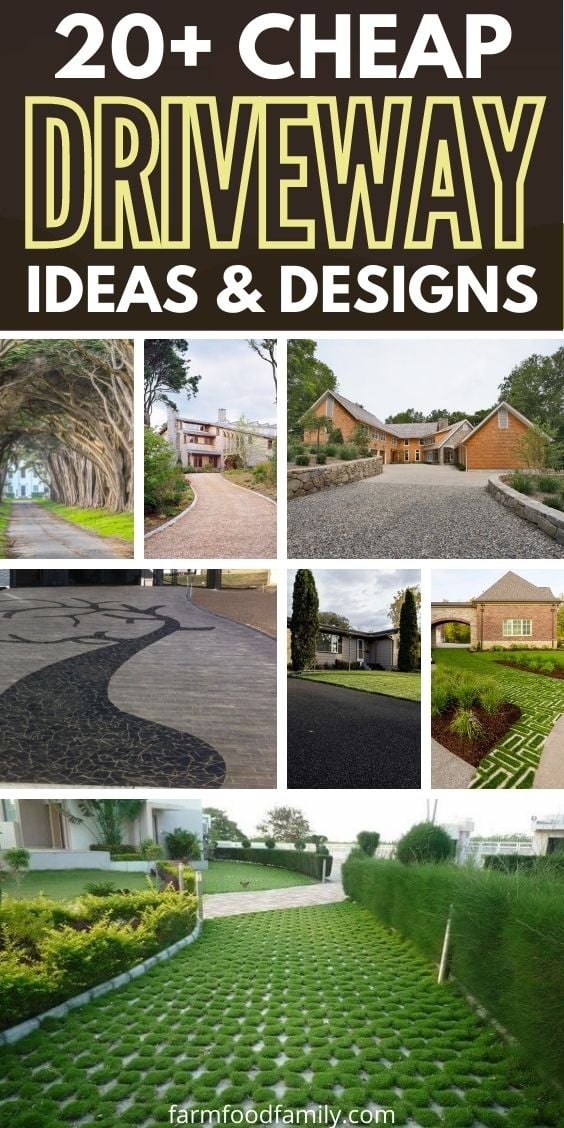
20 driveway ideas on a budget
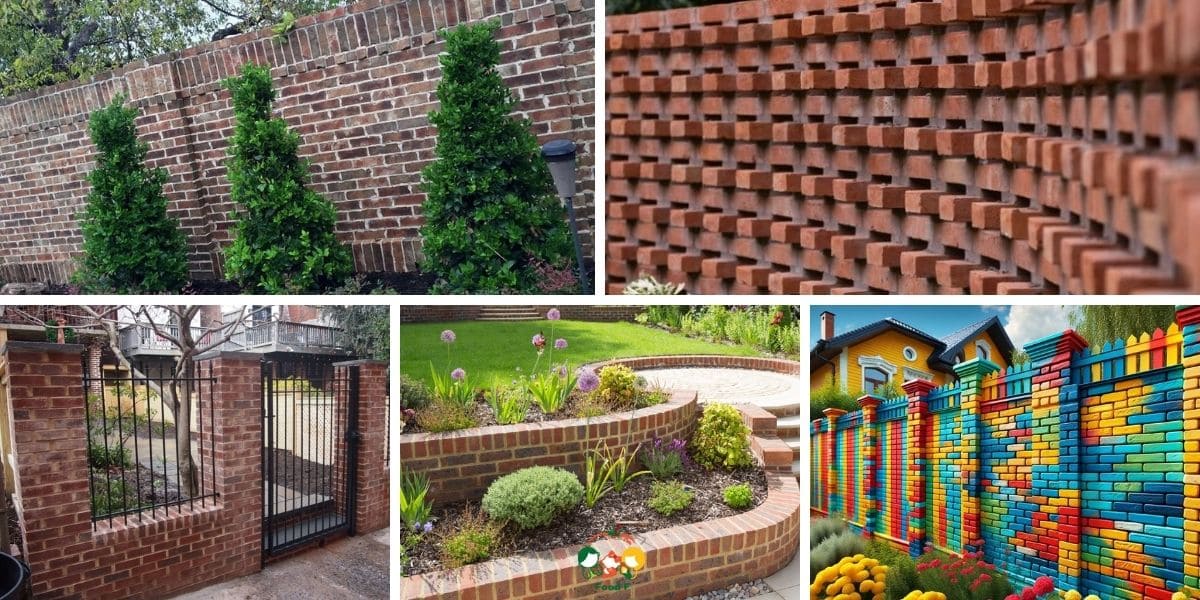
1. Brick
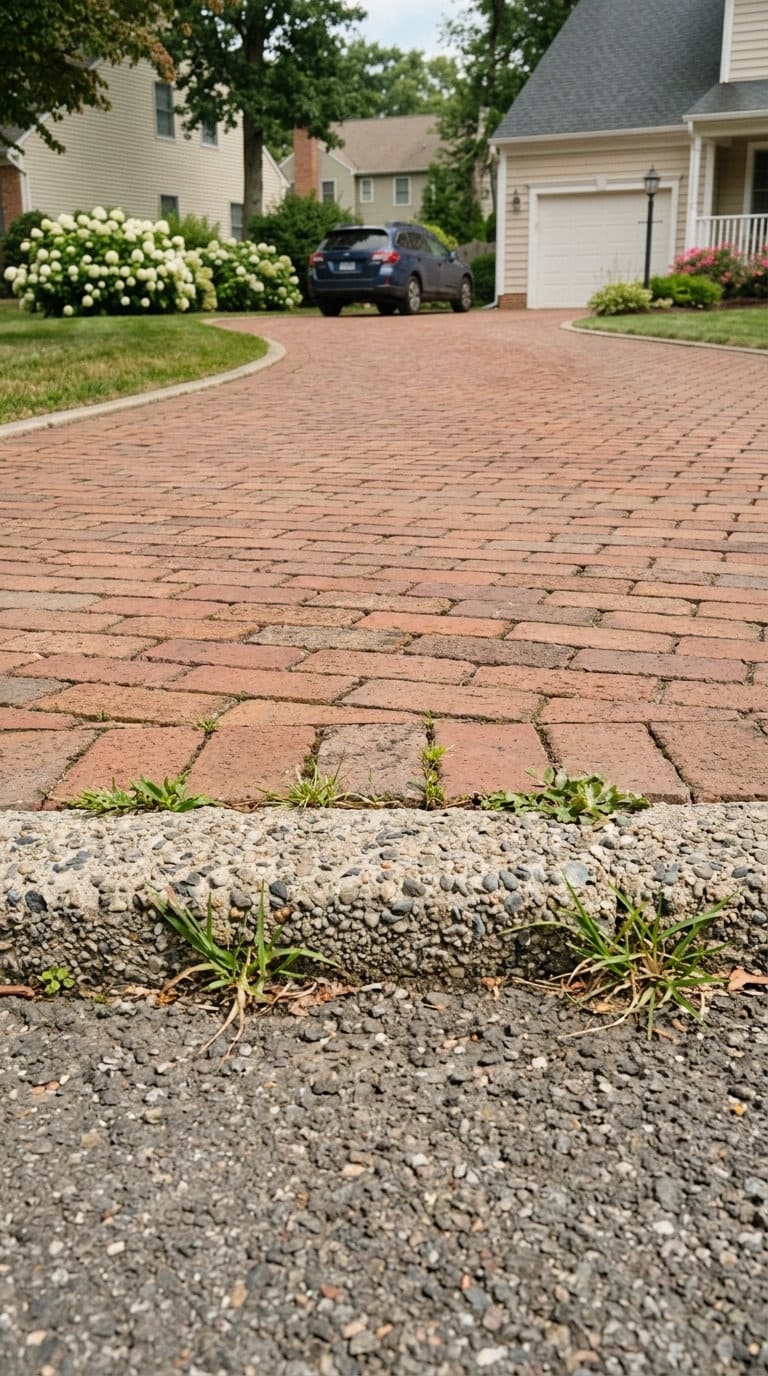
Brick driveways are finished-looking on their own, genuinely easy to install, and durable when maintained properly. Weeds are the main long-term issue, brick moldings set without gaps between them cut down on the problem significantly compared to loosely spaced brick.
Brick also handles wind, rain, and frost better than plain concrete, worth factoring in if you’re in a climate with real freeze-thaw cycles.
Read also: Yellow brick driveway ideas
Related: Brick Driveway: Cost, Installation, Pros and Cons
Most yard problems trace back to one specific, fixable cause. Find yours in 4 quick questions.
Take the Free Quiz
A gas-powered plate compactor suited to properly compacting a gravel or paver base before laying the driveway surface, directly relevant to the base-prep point raised in the Edged Stones and Gravel ideas above.
Shop NowThis post contains affiliate links. We may earn a commission on qualifying purchases at no extra cost to you.
2. Grated asphalt
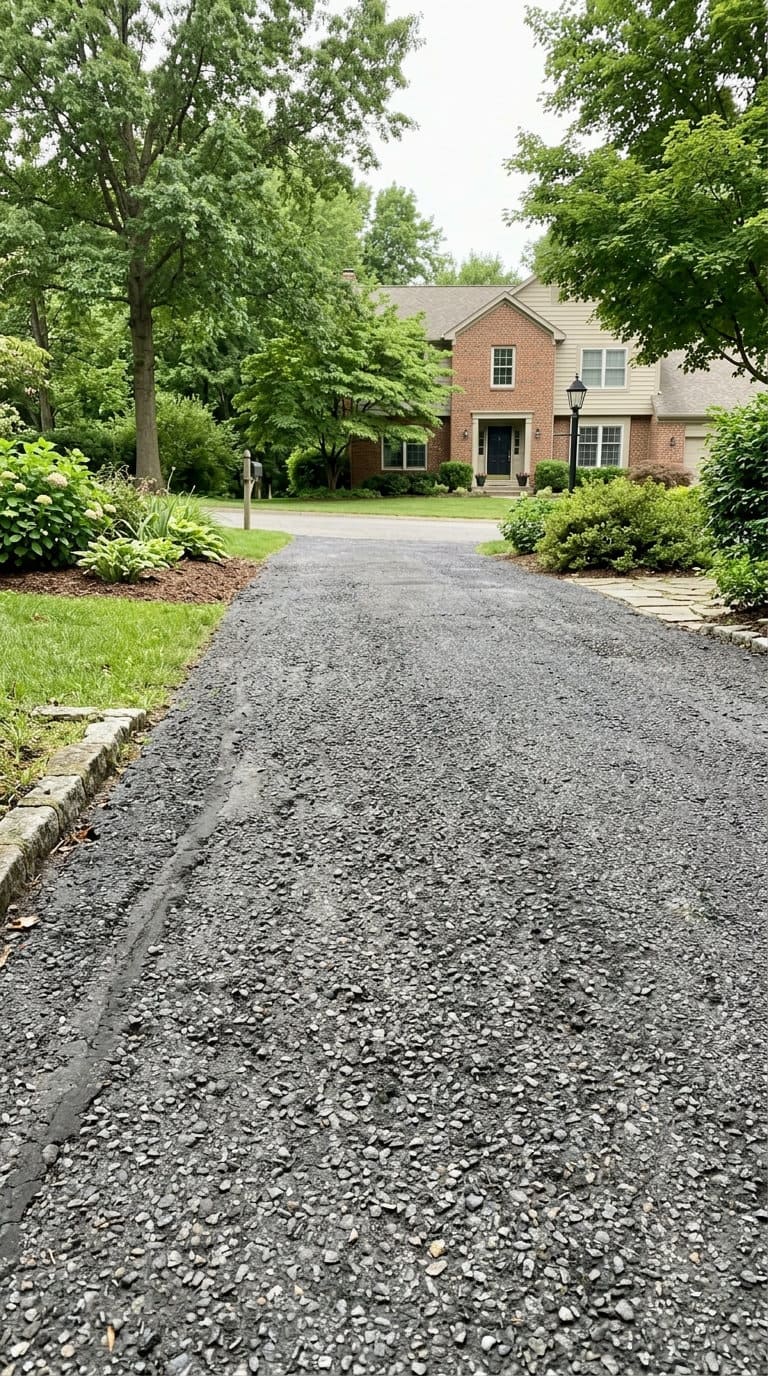
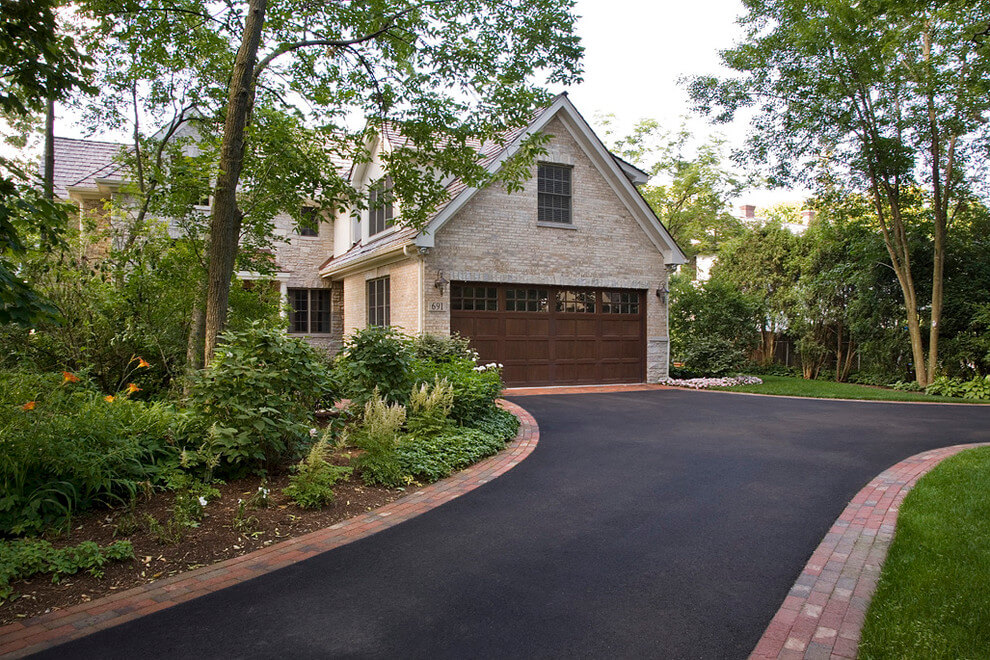
Asphalt remains one of the most cost-efficient driveway materials, which is exactly why it’s still the default for most public roads. It pours and levels easily, and its dark gray finish works either left plain or accented with a contrasting border.
Grated asphalt specifically gives a natural, gravel-like look without the loose stones a true gravel surface leaves behind, a reasonable middle ground if you want the rustic look with a firmer, more parkable surface.
Related: Sealing Asphalt Driveway Pros And Cons
3. Tar-and-chip
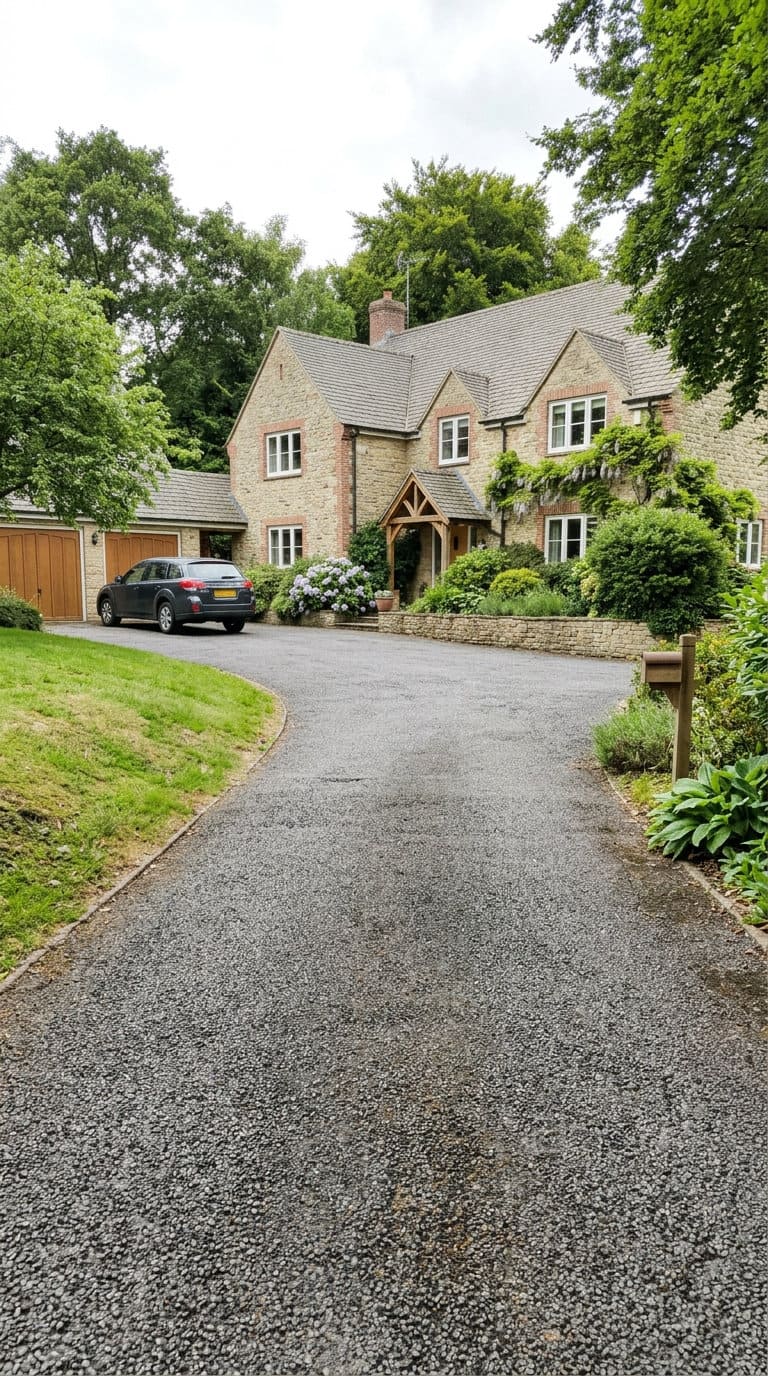
Tar-and-chip (sometimes called chip seal) is a finer, more compressed cousin of plain asphalt, built from layers of pressed gravel over liquid asphalt. It works especially well on longer driveways and in rural or larger-suburban settings, where the rustic texture reads as intentional rather than cheap.
It’s a genuinely low-maintenance, low-cost option. For a deeper cost and durability breakdown, this site’s tar-and-chip driveway guide covers installation specifics a general roundup doesn’t have room for.
Related: Tar And Chip Driveway: Cost, Pros and Cons
4. Edged stones
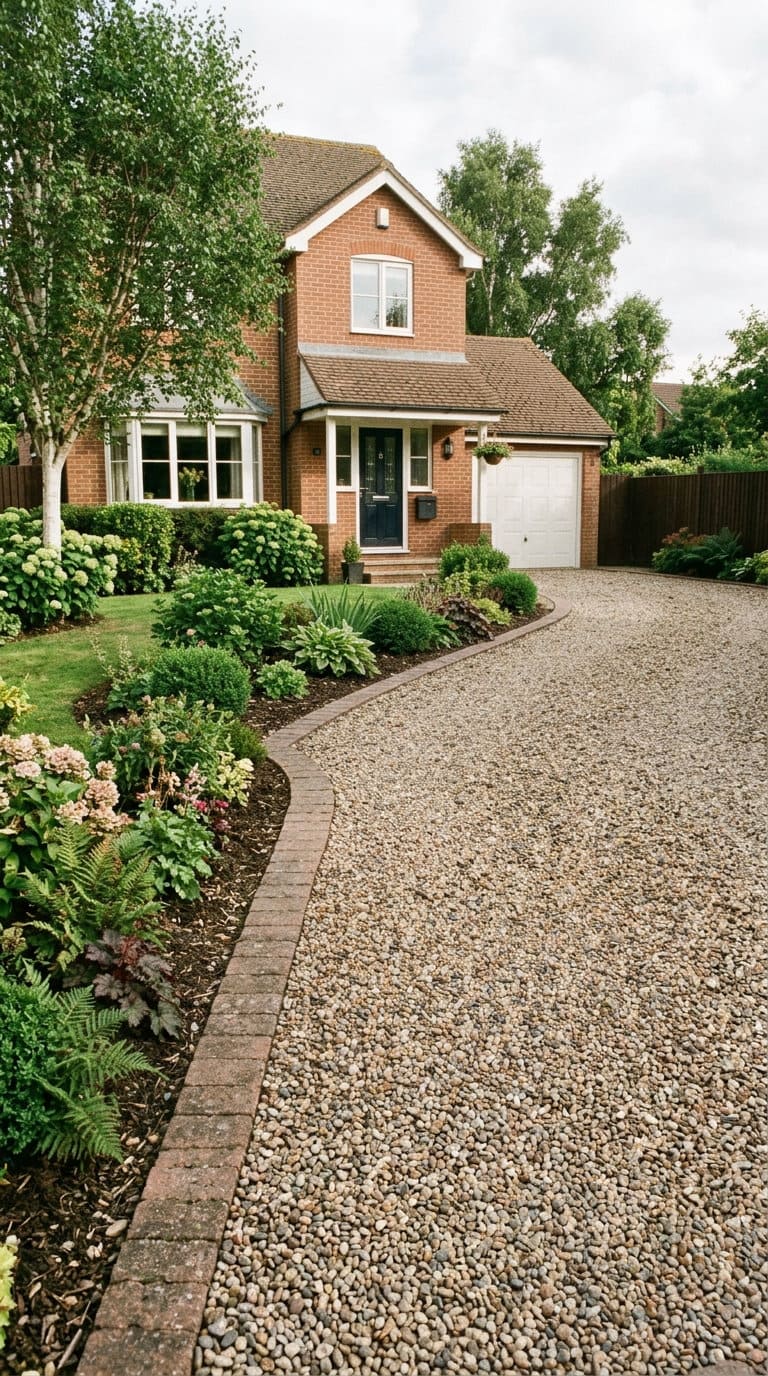
Loose stone edging is one of the most inexpensive driveway treatments available. Small, fine stones bordered with concrete, planters, or brick give a long driveway a clean, classy look without a major material investment.
The real installation detail that matters here, and that a lot of budget guides skip: loose stone needs a proper layered base underneath, larger stones first, smaller ones on top, not just poured directly onto bare dirt, the same base-prep principle that determines whether a stone walkway holds up or sinks within a few years applies just as directly to a driveway.


Related: 10 Best Driveway Edging Ideas On A Budget
The average homeowner spends $616/year on yard fixes that don't address the real problem. Find out what yours actually is — before you spend another dollar.
Take the Free Quiz5. Concrete
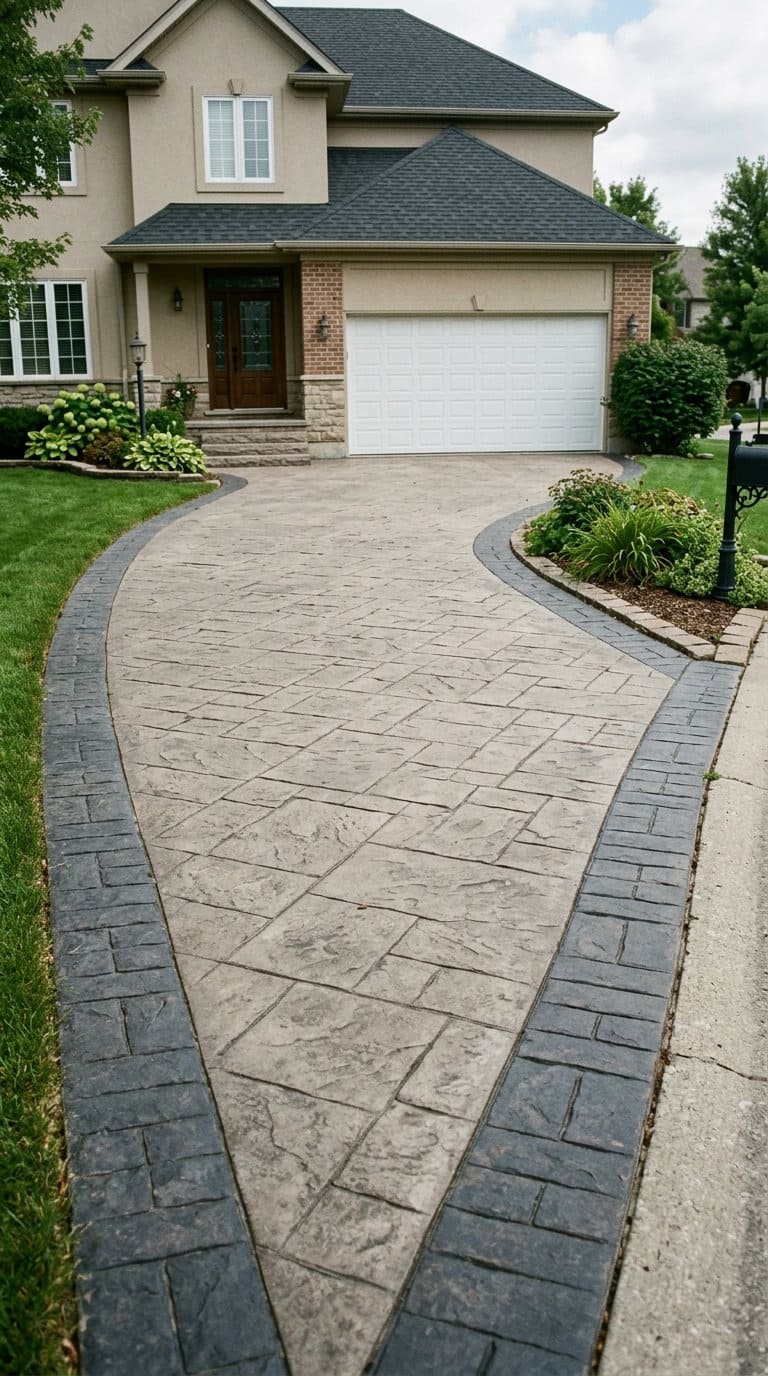
Concrete is a low-cost, sturdy, default choice for most suburban homes, and it comes in enough finishes and colors to avoid the plain-gray look if you want something more custom.
A stamped pattern or a contrasting accent color can dress up an otherwise standard concrete pour without switching materials entirely.
The real cost tradeoff worth knowing: concrete typically costs 2 to 4 times more than asphalt upfront, but done correctly, it can genuinely last decades longer with minimal maintenance beyond occasional pressure washing. If you’re planning to stay in the home long-term, that upfront gap often pays for itself.
Related: Best concrete slab ideas and designs
6. Pavers/Block paving
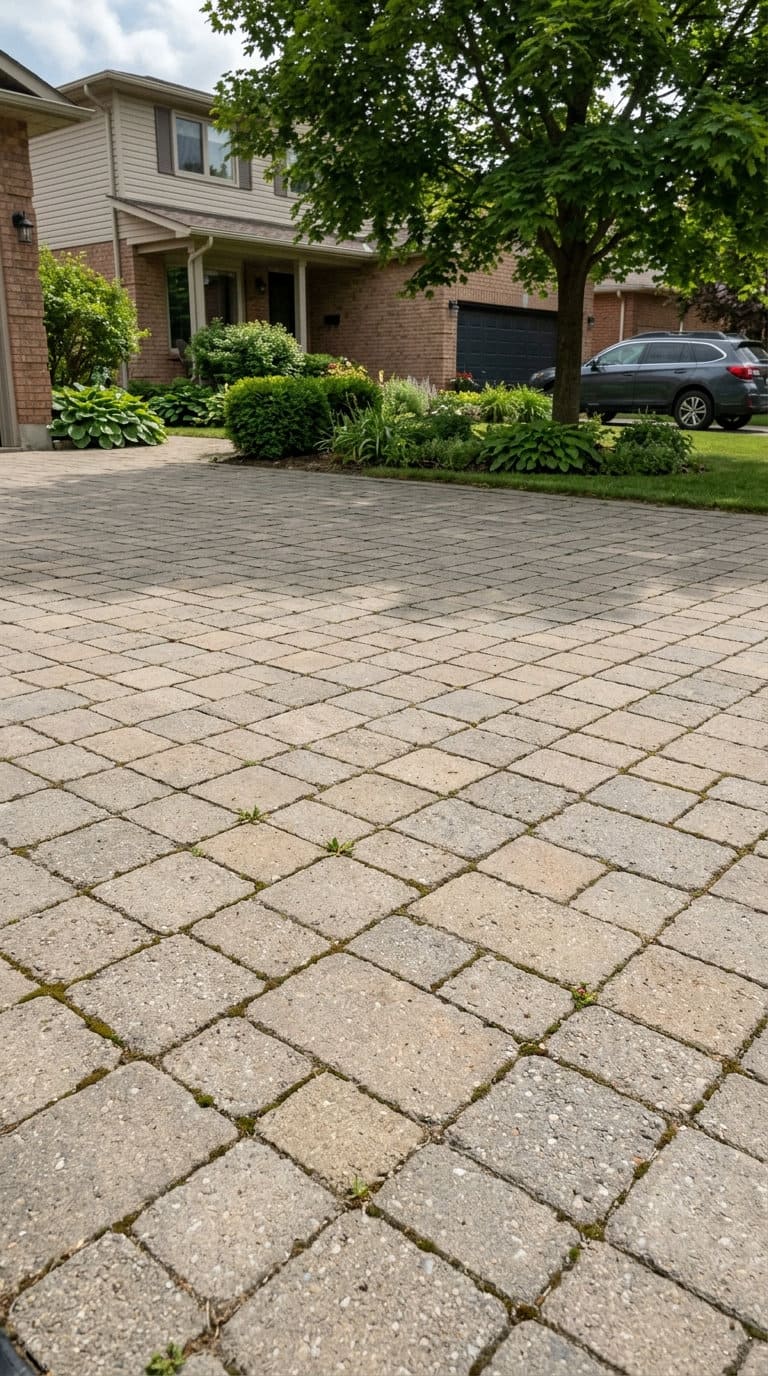
Pavers are among the most low-maintenance, durable driveway materials available, expensive to install initially, but the longevity and classic look make the added cost worthwhile for a lot of homeowners.
Weed growth is minimal compared to loose materials, and pavers can be installed DIY if you’re comfortable with the base-prep work.
Because pavers are individual units rather than one continuous pour, a cracked or stained section can be replaced piece by piece, a real long-term maintenance advantage poured concrete and asphalt don’t share.
7. Cobblestone
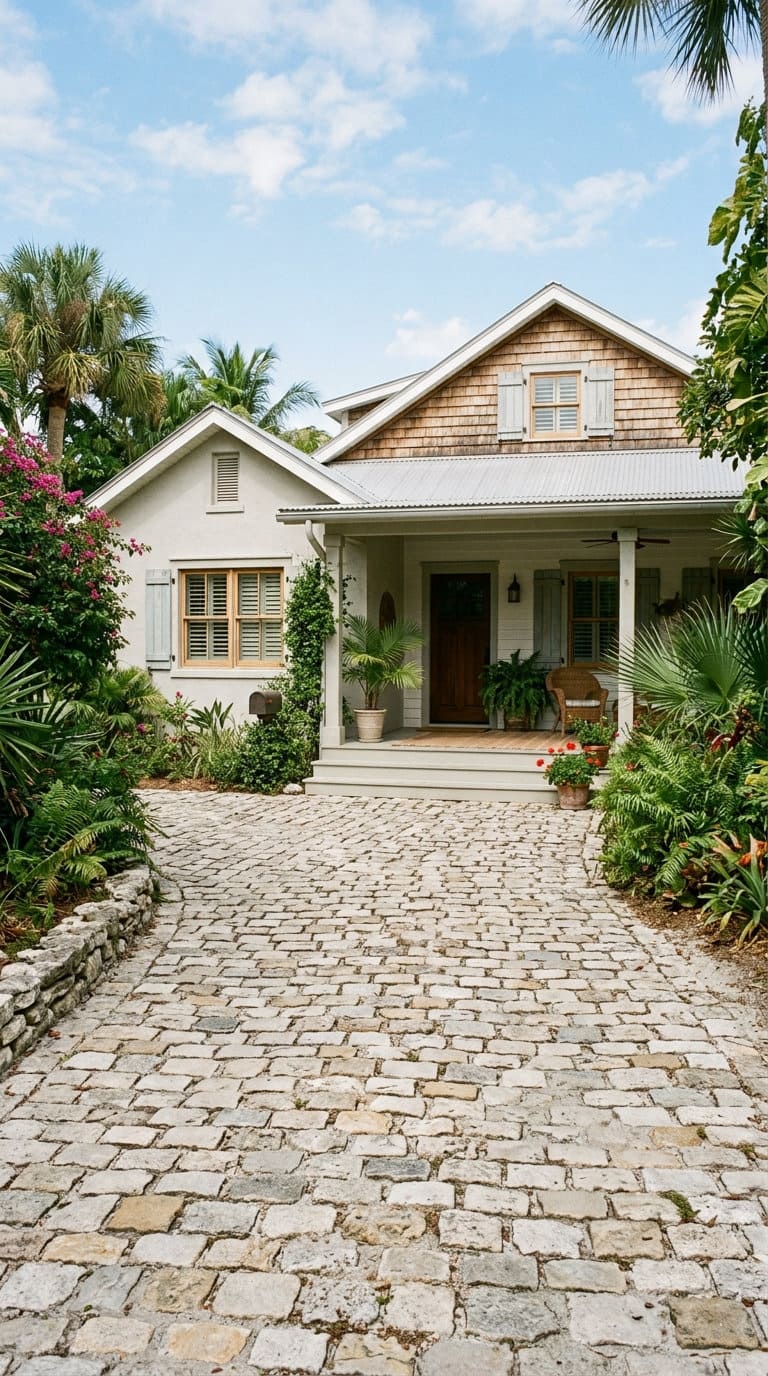
Cobblestone holds up especially well in tropical or high-heat, high-moisture climates, more durable against water and heat than either brick or plain concrete. Its natural, classic look suits both traditional and coastal-adjacent home styles.
For a full cost and installation breakdown, this site’s cobblestone driveway guide covers the material in more depth than a budget roundup can.
Related: Cobblestone Driveway: Cost, Installation, Pros and Cons
8. Permeable driveway
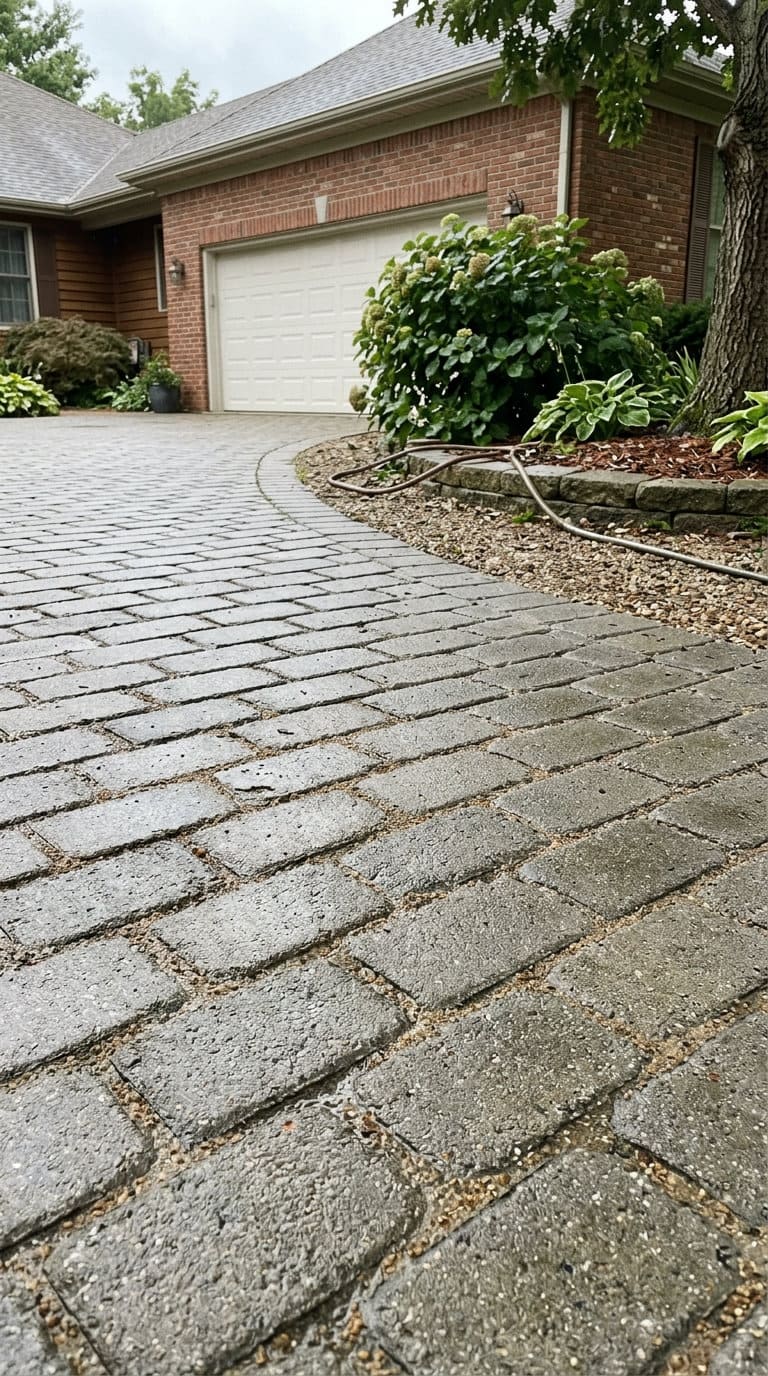
Permeable driveways (sometimes called PICP, permeable interlocking concrete pavers) solve a real practical problem: standing water pooling in a driveway after rain. Water passes through the surface instead of sitting on top, while the ground underneath stays solid enough to park on.
Brick, cobblestone, or concrete can all be converted into a permeable surface by leaving sand-filled gaps between units rather than sealing them solid, water gets absorbed, weeds are naturally resisted, and runoff pollutants get filtered before reaching groundwater.
9. Natural stone tile
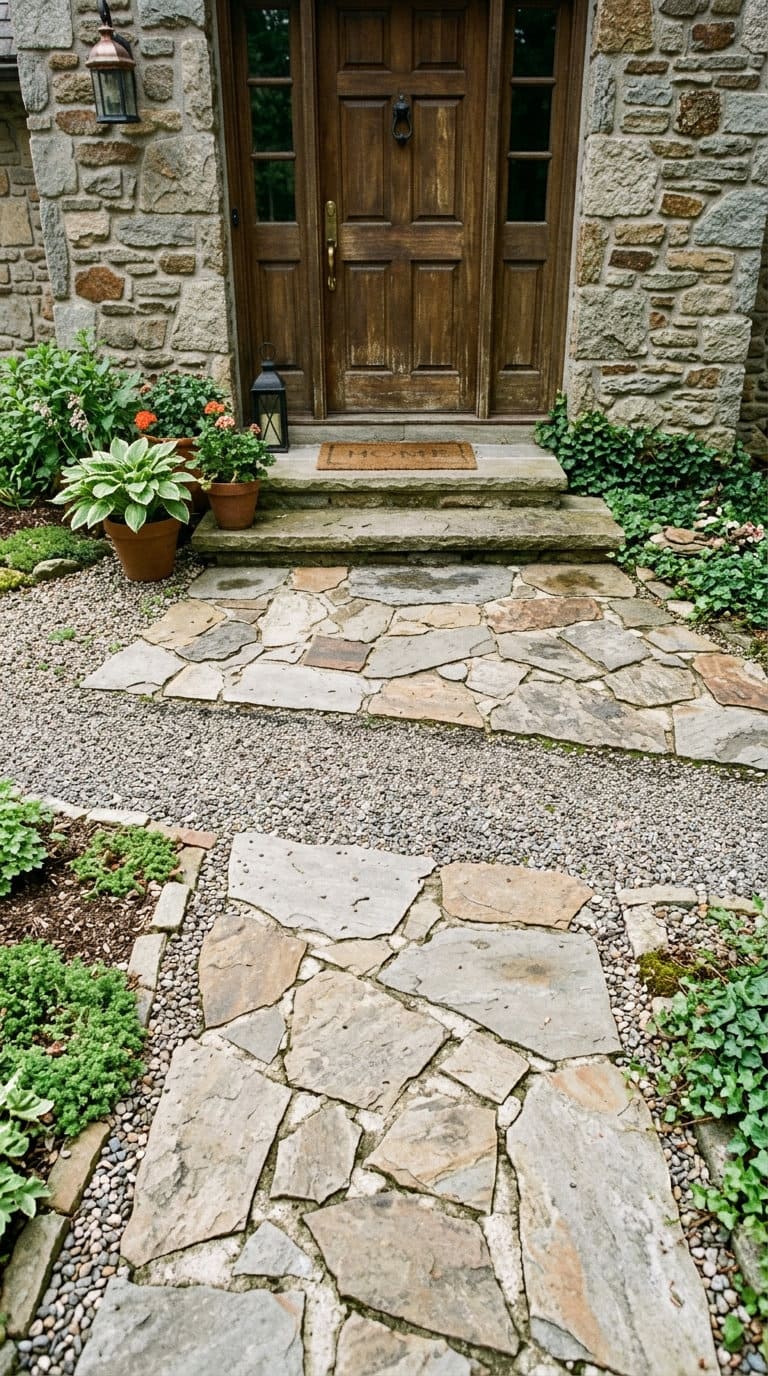
Natural stone tile gives a driveway a genuinely upscale, one-of-a-kind look, since no two stone pieces are perfectly identical. It’s pricier than poured materials, but for a shorter driveway or an entry-point accent area, the cost difference versus covering the whole surface in stone is manageable.
Sealing the stone periodically protects it from staining, oil, and general wear, factor that maintenance step into the “low-cost” framing, natural stone isn’t a set-it-and-forget-it surface.
Related: Stone Driveway: Cost, Installation, Pros and Cons
10. Wood chip
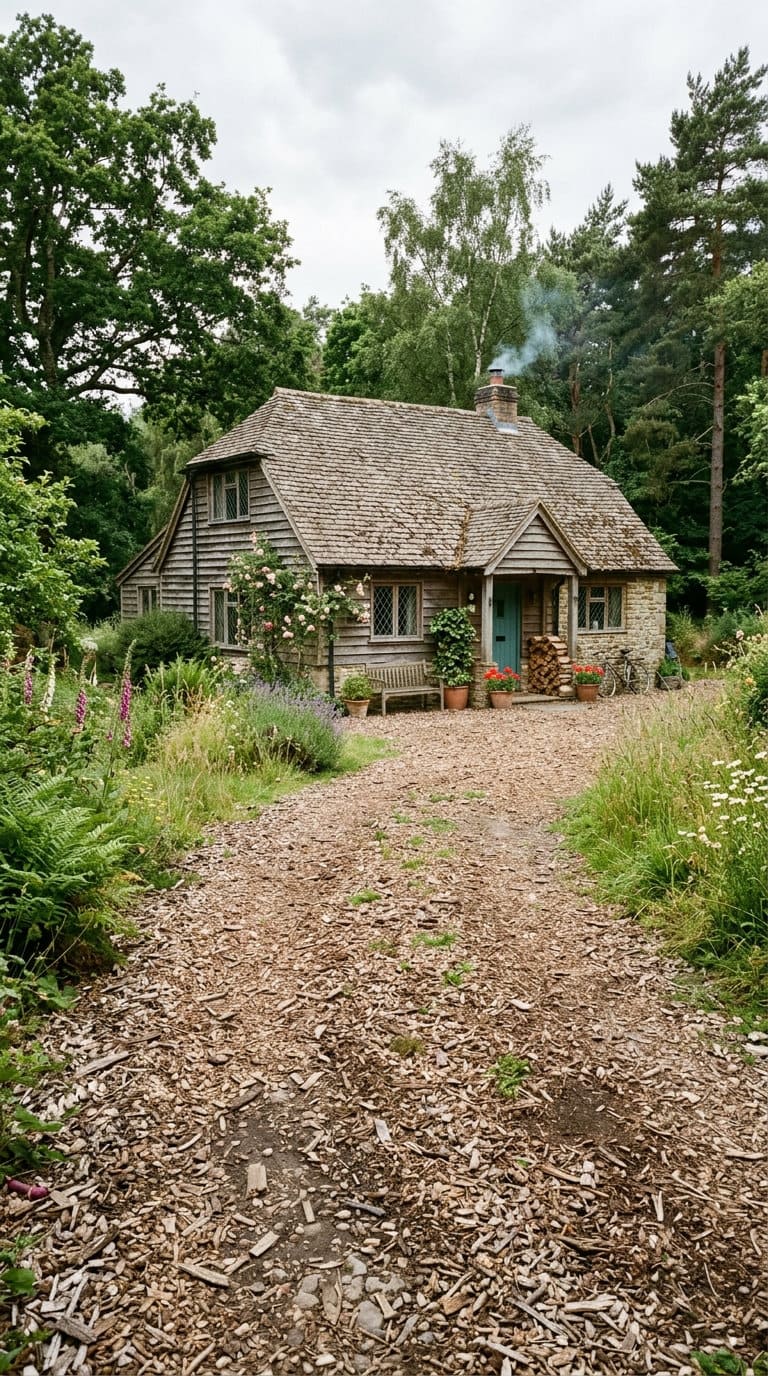
Wood chip is about as low-cost and low-commitment as driveway surfaces get, genuinely one of the cheapest options on this list. It suits a rural or cottage-style property well and can be laid in an afternoon without special equipment.
The tradeoff is durability: wood chip compacts and breaks down over a season or two and needs regular topping off, this is a surface you choose knowing it’s temporary or low-traffic, not a decades-long solution.
11. Rubber
Recycled rubber driveway surfaces (often made from repurposed tires) are a genuinely eco-conscious choice, and they offer real practical advantages: rubber flexes rather than cracks in freeze-thaw cycles, and it’s noticeably softer underfoot and quieter under tires than concrete or asphalt.
It’s a less common choice, so get quotes from a contractor with specific rubber-surface installation experience rather than a generalist, the installation technique differs meaningfully from a standard paved surface.

12. Gravel, and crushed stones
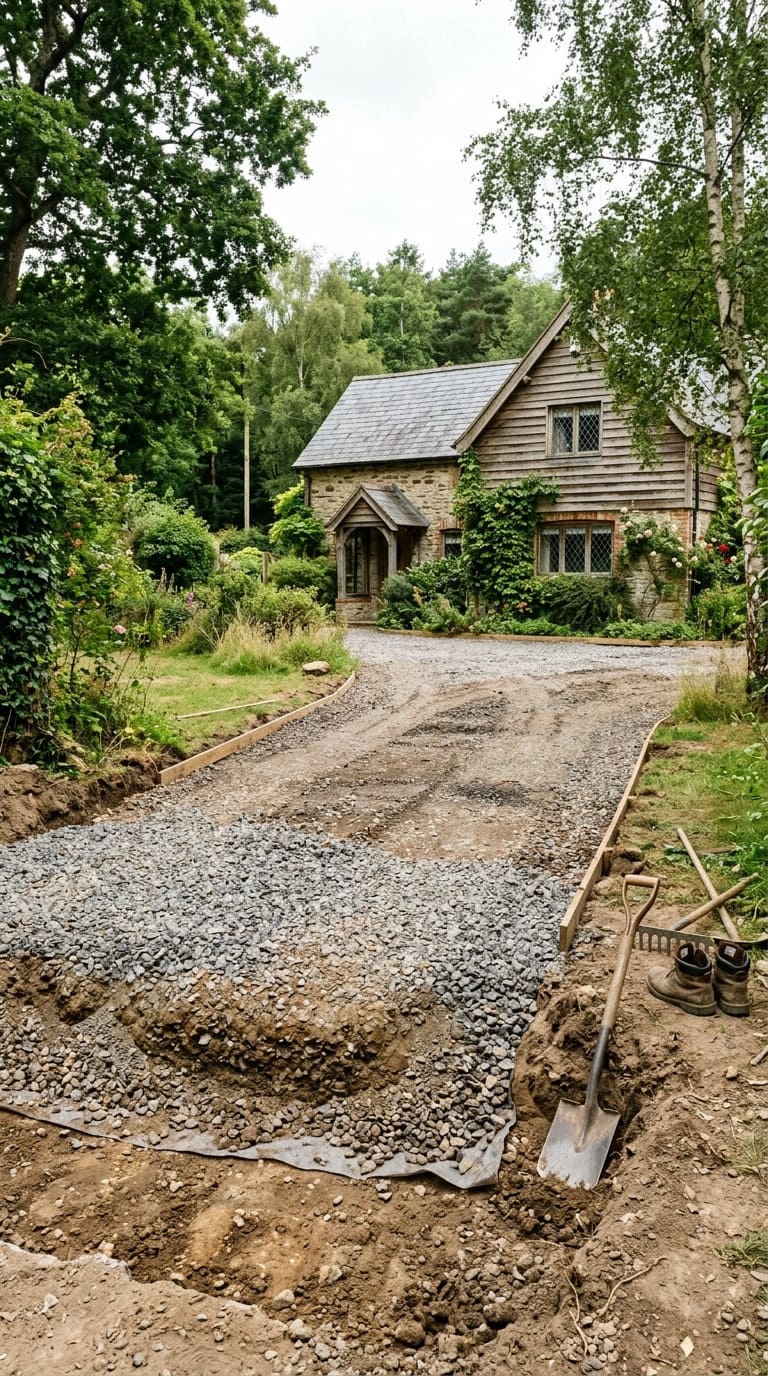
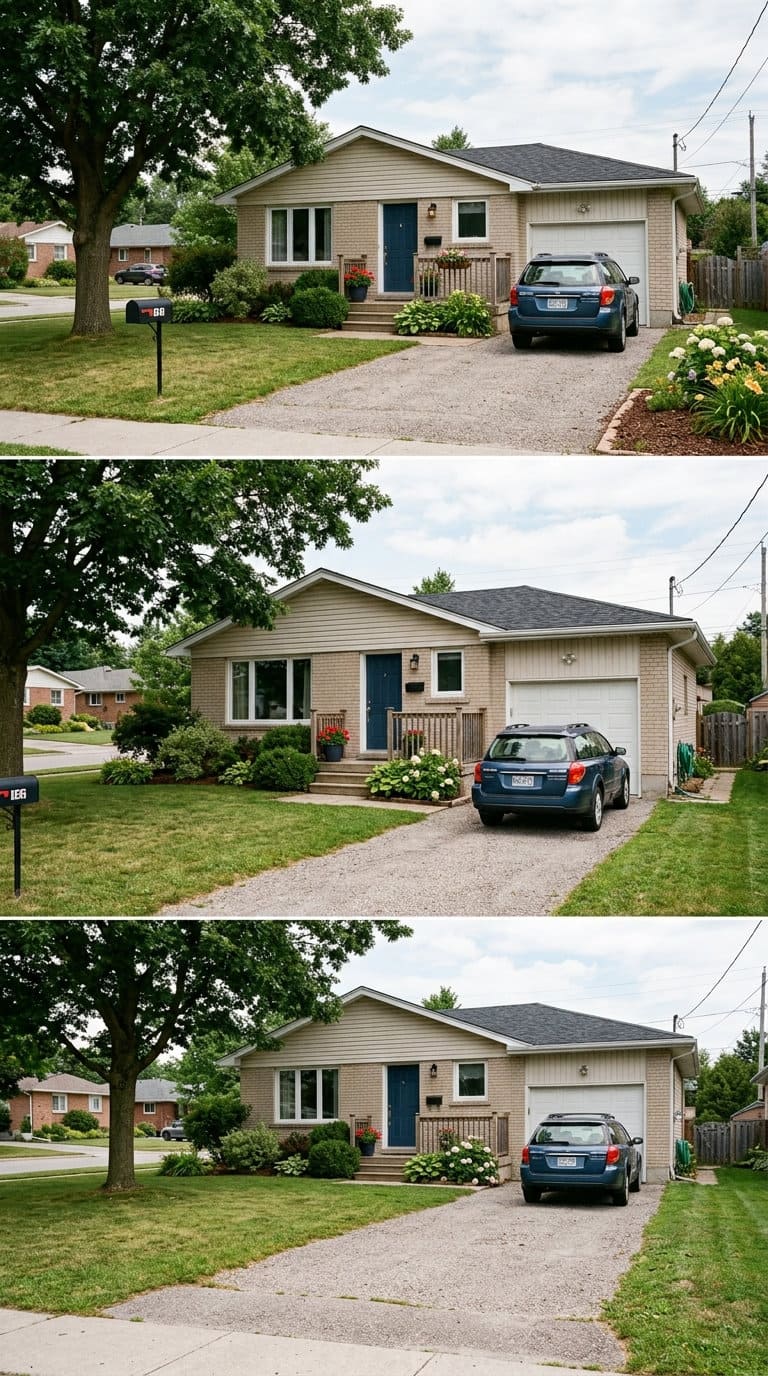
Gravel is the cheapest driveway material on this entire list, and it’s a genuinely good fit for rural or cottage-style properties.
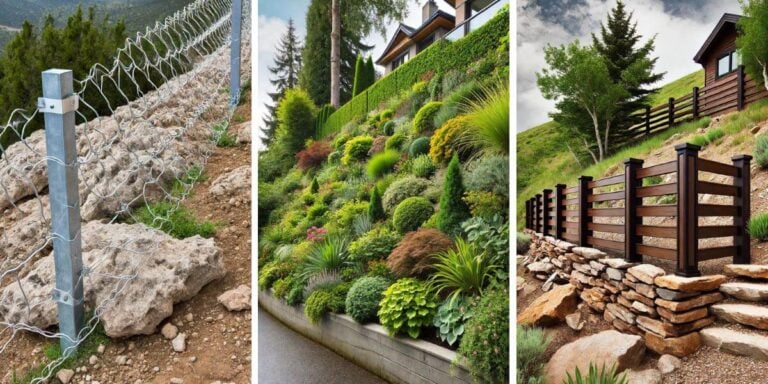
One real limitation worth knowing before you commit: gravel doesn’t perform well on a steep driveway, loose stone shifts and washes downhill under its own weight and under vehicle traffic, asphalt or a bound material is the safer choice if your driveway has real grade.
The installation detail that determines whether a gravel driveway holds up or turns into a rutted mess: a proper base matters just as much here as with any paved material. As one Reddit commenter put it describing a correctly built gravel driveway, the real technique is “start with larger rocks as a base and then put the smaller ones above it in layers,” not just dumping loose gravel directly onto dirt.
Related: How to Control Weeds in a Crushed Stone Pathway
13. Resin
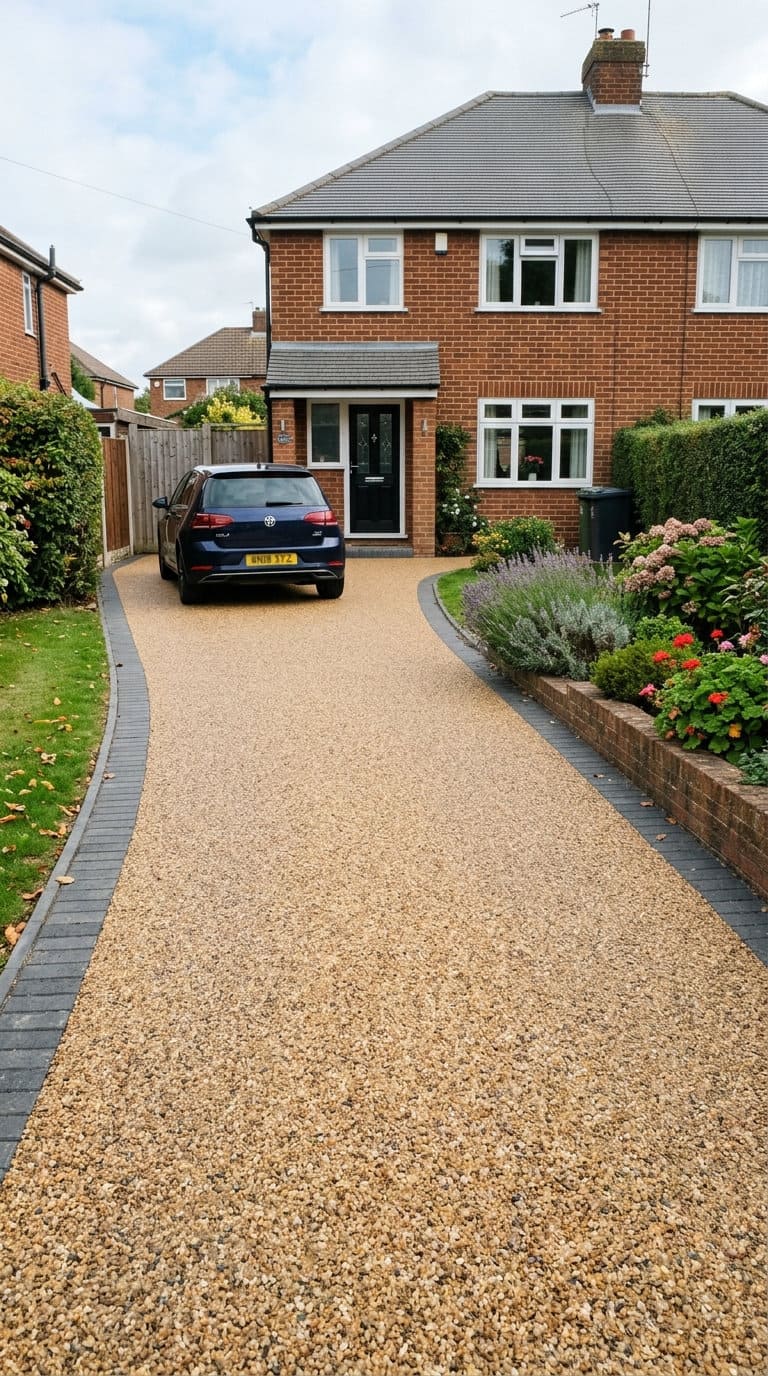
Resin-bound driveways use a bonded aggregate surface that resists weed growth better than most loose materials, since the surface itself is sealed rather than left with gaps.
Double-sealing during installation improves weed resistance further, though the sealant does wear with traffic over time and needs periodic reapplication to keep that resistance up.
It’s worth knowing that “resin-bound” doesn’t mean “maintenance-free forever,” wind-blown seeds can still take root in surface debris even on a well-sealed resin driveway, so occasional sweeping matters more than the marketing around this material usually admits.
14. Pavers and grass
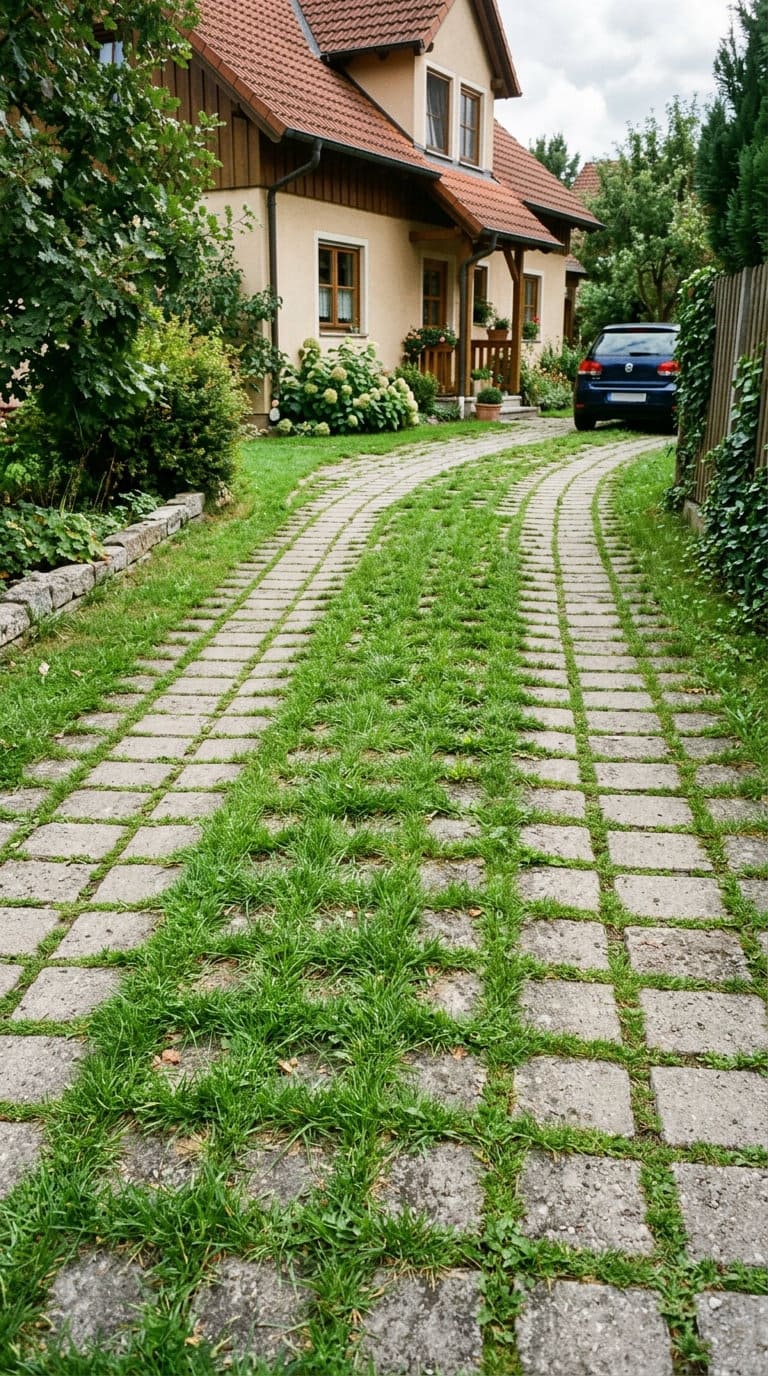
Combining pavers with grass growing in the gaps between them gives a driveway real permeability and a softer, greener look than a solid paved surface.
It works well for a secondary parking area or a driveway that only sees occasional heavy use, since the grass needs some recovery time between vehicle traffic.
Choose a grass variety genuinely suited to occasional compression (a dedicated “traffic-tolerant” turf blend) rather than standard lawn grass, which thins out fast under regular tire weight.
15. Grass and gravel
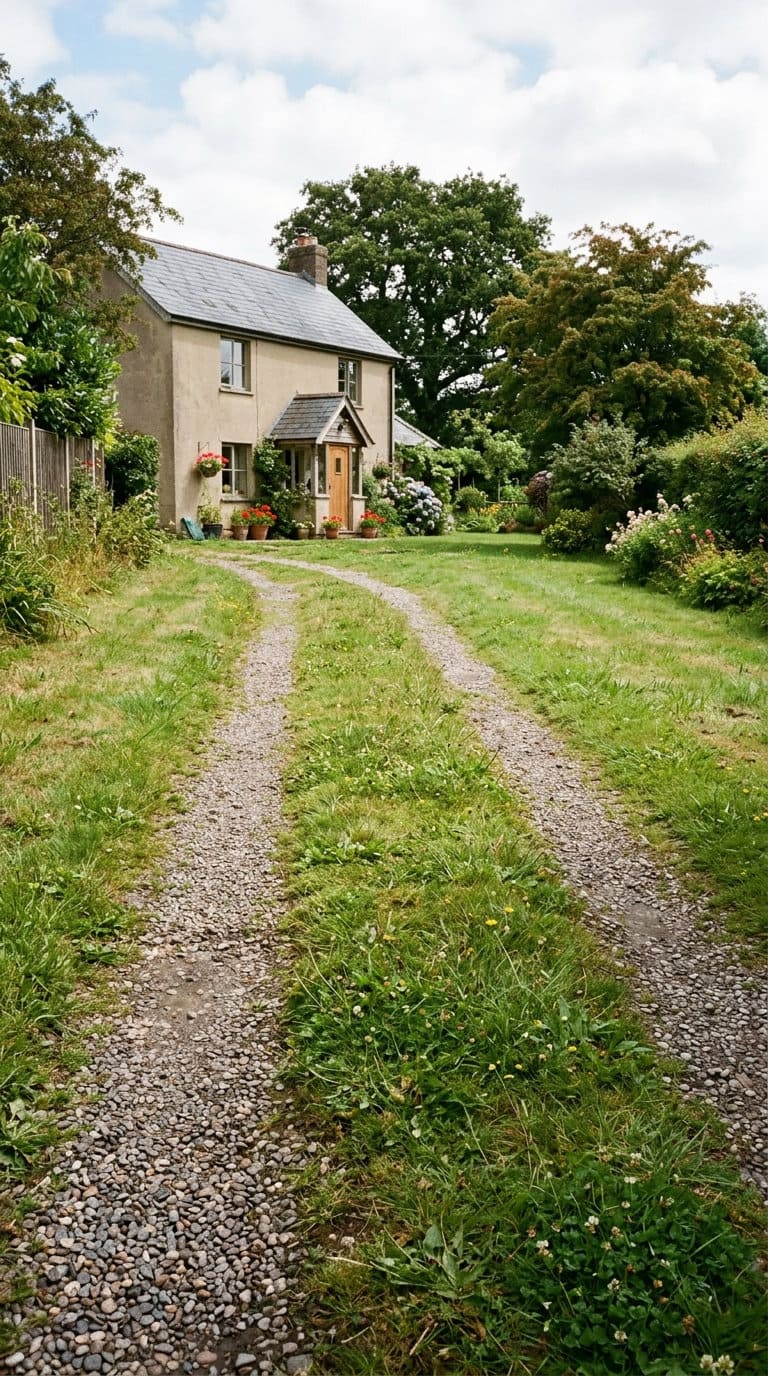
A grass-and-gravel combination splits the difference between a fully paved surface and a fully natural one, gravel defines the actual wheel tracks or parking area, grass fills the rest.
This keeps most of the lot looking like lawn rather than hardscape, a good option if you want a driveway that reads as barely there from the street.
Like the pure gravel idea above, this still needs a real base under the gravel sections specifically, the grass portions don’t need the same prep, but the gravel wheel-tracks do.
16. Decorative gateways
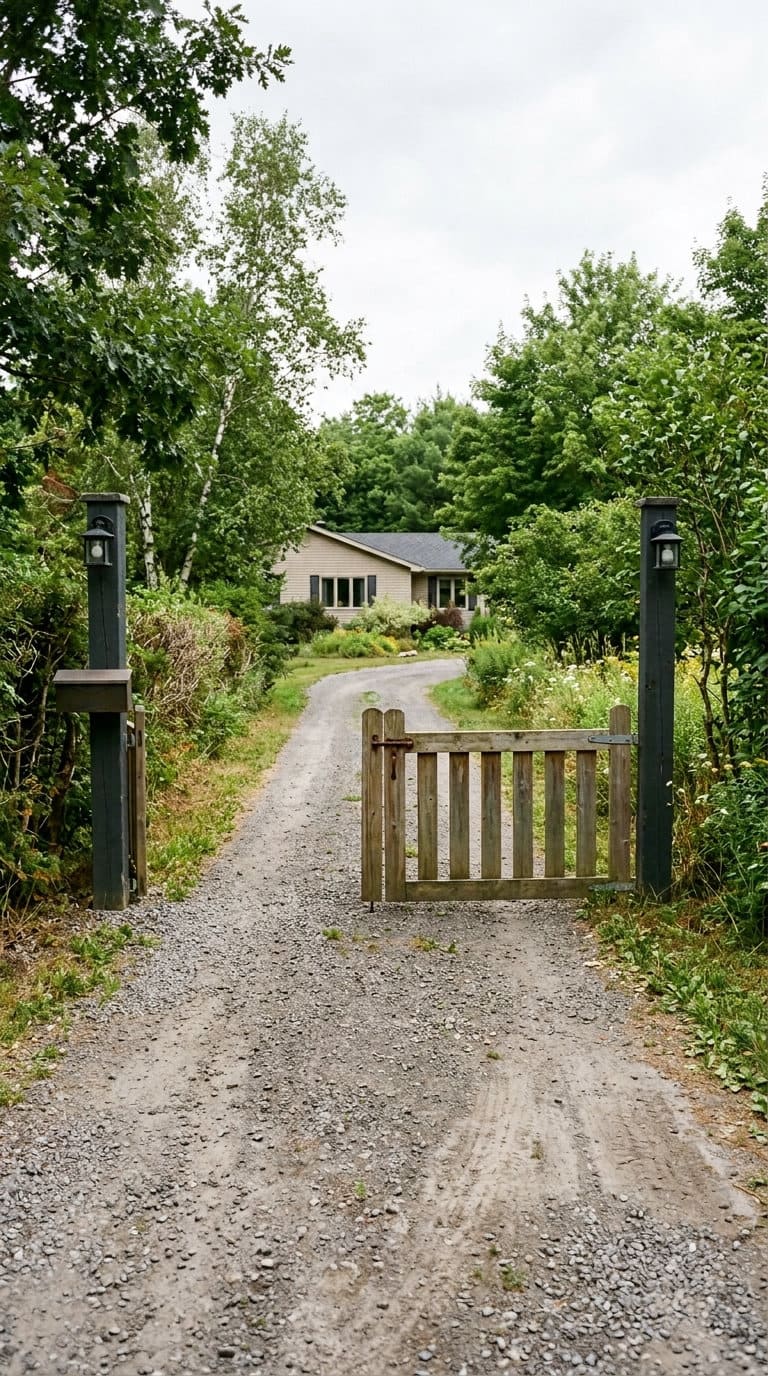
A well-designed entry gate or gateway feature doesn’t touch the driveway surface itself, but it changes how the whole approach reads, framing even a modest, budget material driveway as an intentional entrance rather than an afterthought. Simple posts, a low arch, or matched lighting fixtures can do this without a major structural project.
This is one of the better dollar-for-dollar upgrades on this list if your driveway material itself is already about as budget as it gets, the gateway adds the “designed” feeling the surface material alone can’t.
Related: 30 Best Driveway Gate Ideas and Designs
17. Natural landscaping
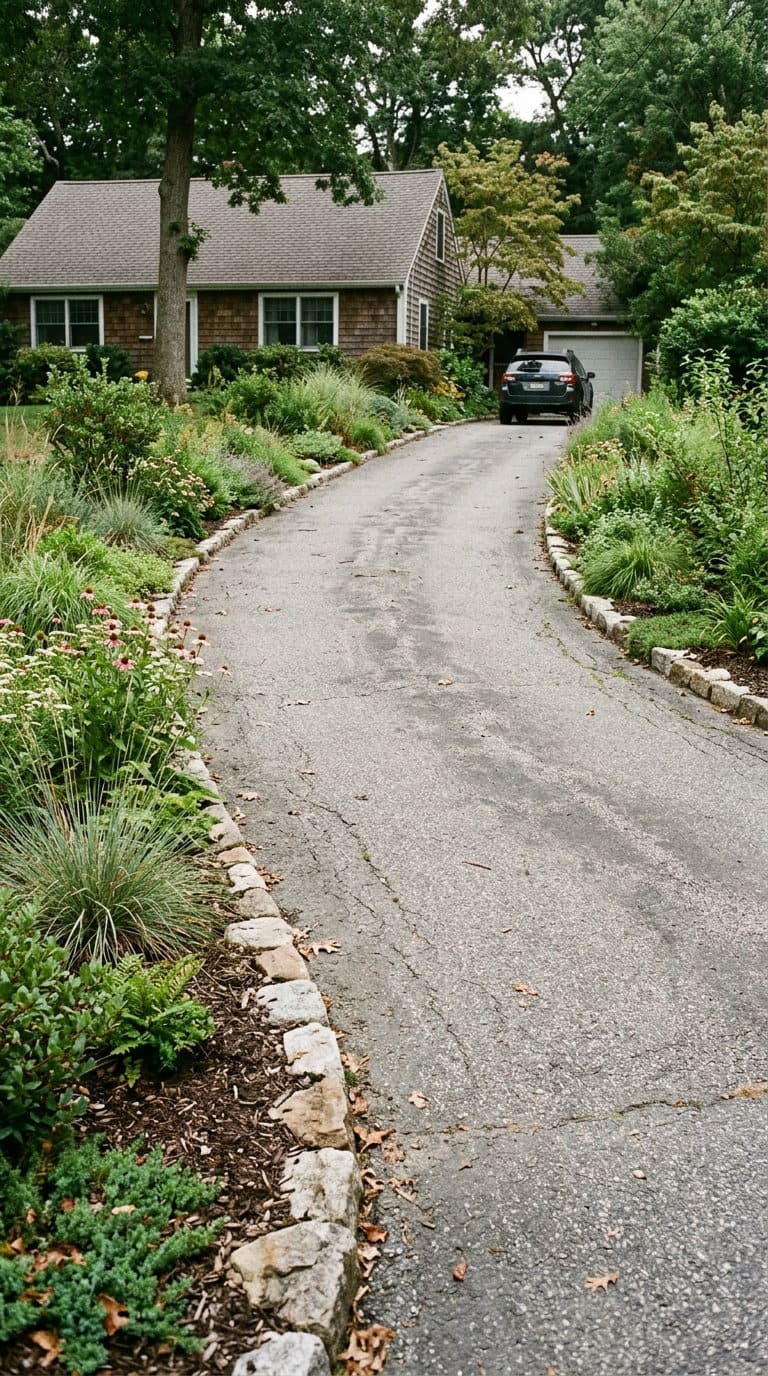
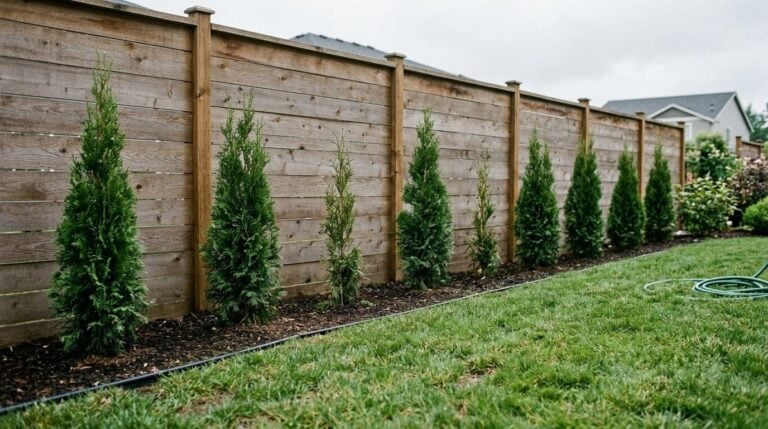
Framing a budget driveway surface with real landscaping, native plants, low borders, a mix of textures, does more to elevate a plain material’s look than switching to a more expensive surface would.
This is especially effective with materials like plain asphalt or basic concrete that read as utilitarian on their own.
Keep plantings set back from the actual driving surface, overhanging growth becomes a maintenance problem and, depending on placement, a visibility issue at the street.
18. Winding
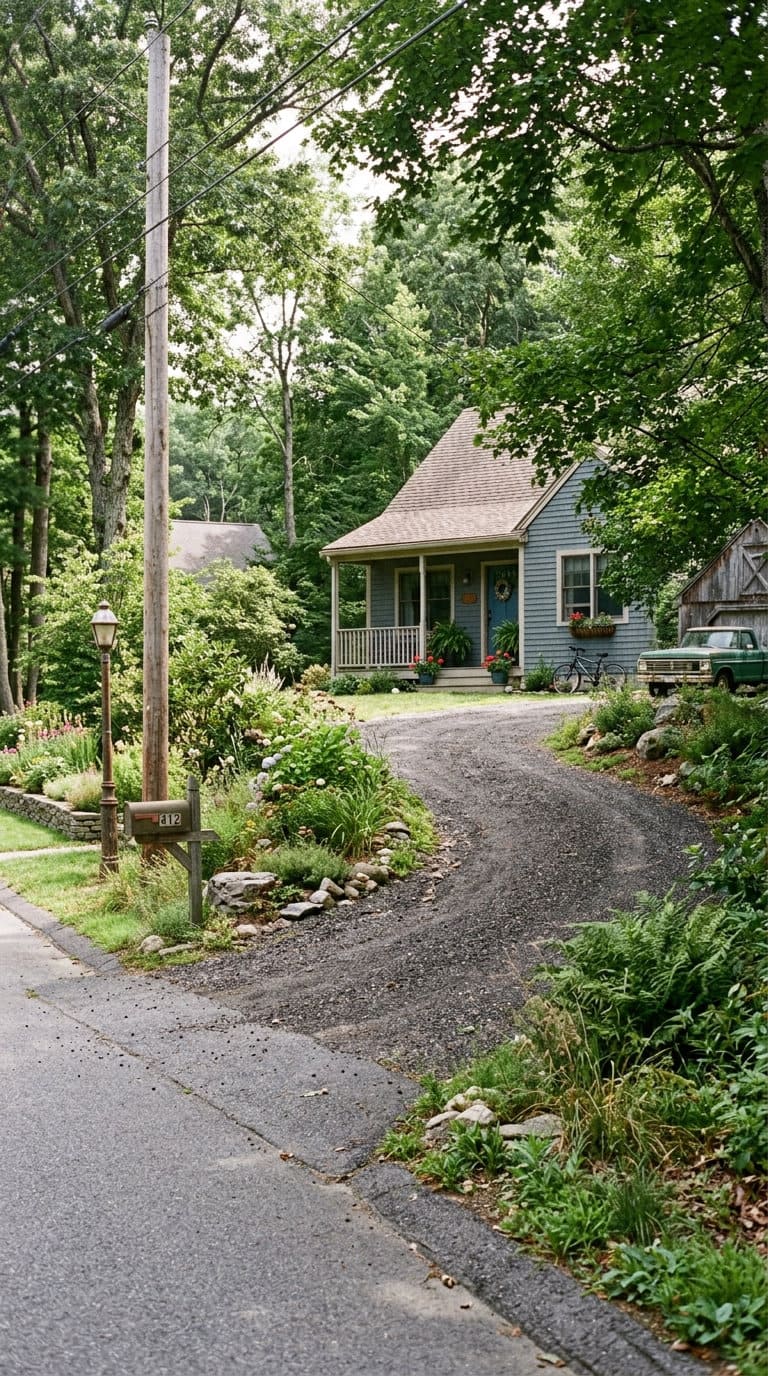
A curved or winding driveway path, rather than a straight shot from street to garage, makes a modest-sized lot feel more substantial and gives visitors a more considered arrival experience. This works with nearly any material on this list, it’s a layout decision more than a material choice.
Winding driveways typically need slightly more material than a straight equivalent distance, budget a bit extra for the added length, but the layout change itself doesn’t require an upgrade in material cost per square foot.
19. Mosaic
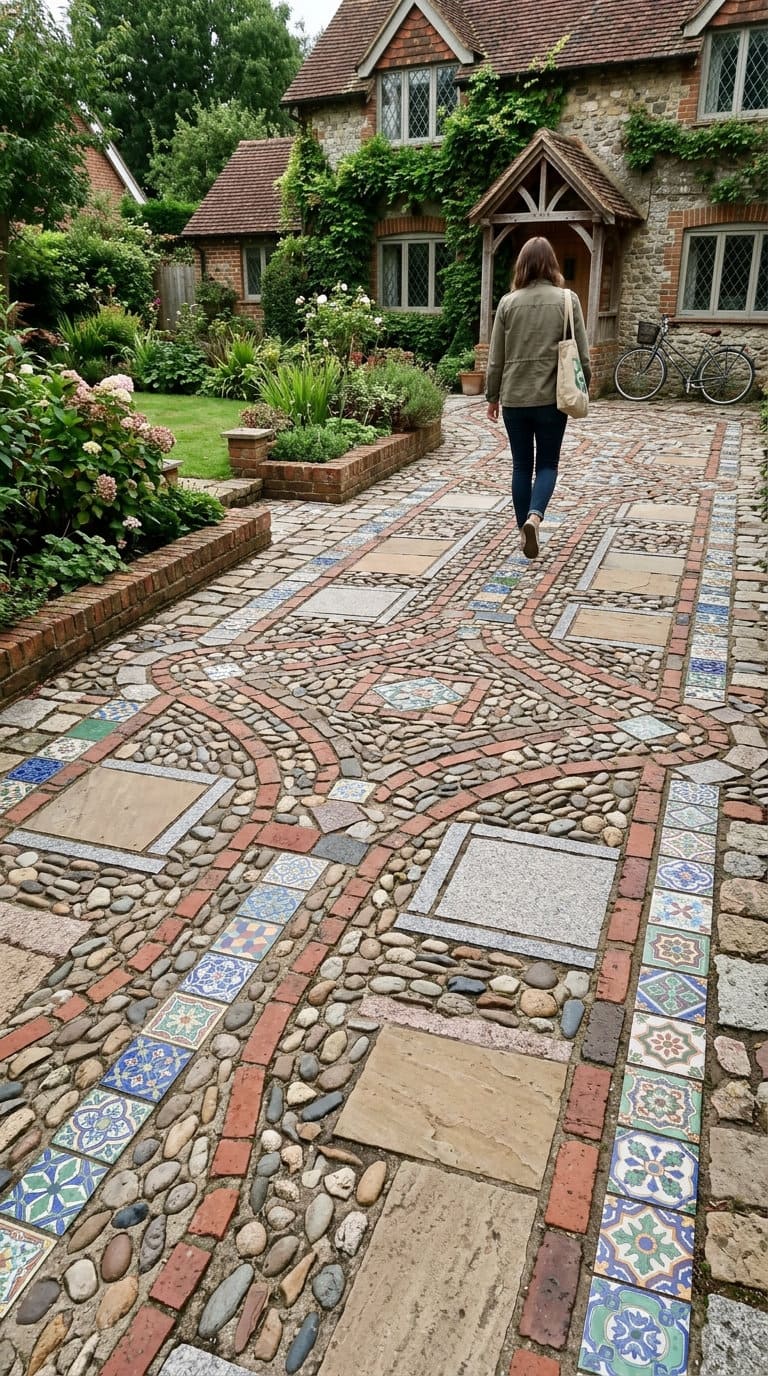
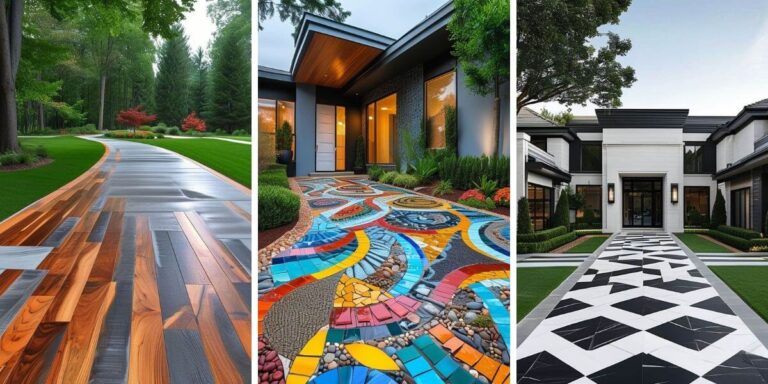
A mosaic driveway mixes materials, stone, brick, tile, in a deliberate pattern rather than using one uniform surface throughout. This is a good way to use leftover material from other projects, genuinely reducing cost if you already have partial stone or brick stock sitting around.
Plan the pattern before you start rather than improvising as you go, a deliberate mosaic reads as designed, a truly improvised mix of leftover materials tends to read as unfinished instead.
20. Minimalist
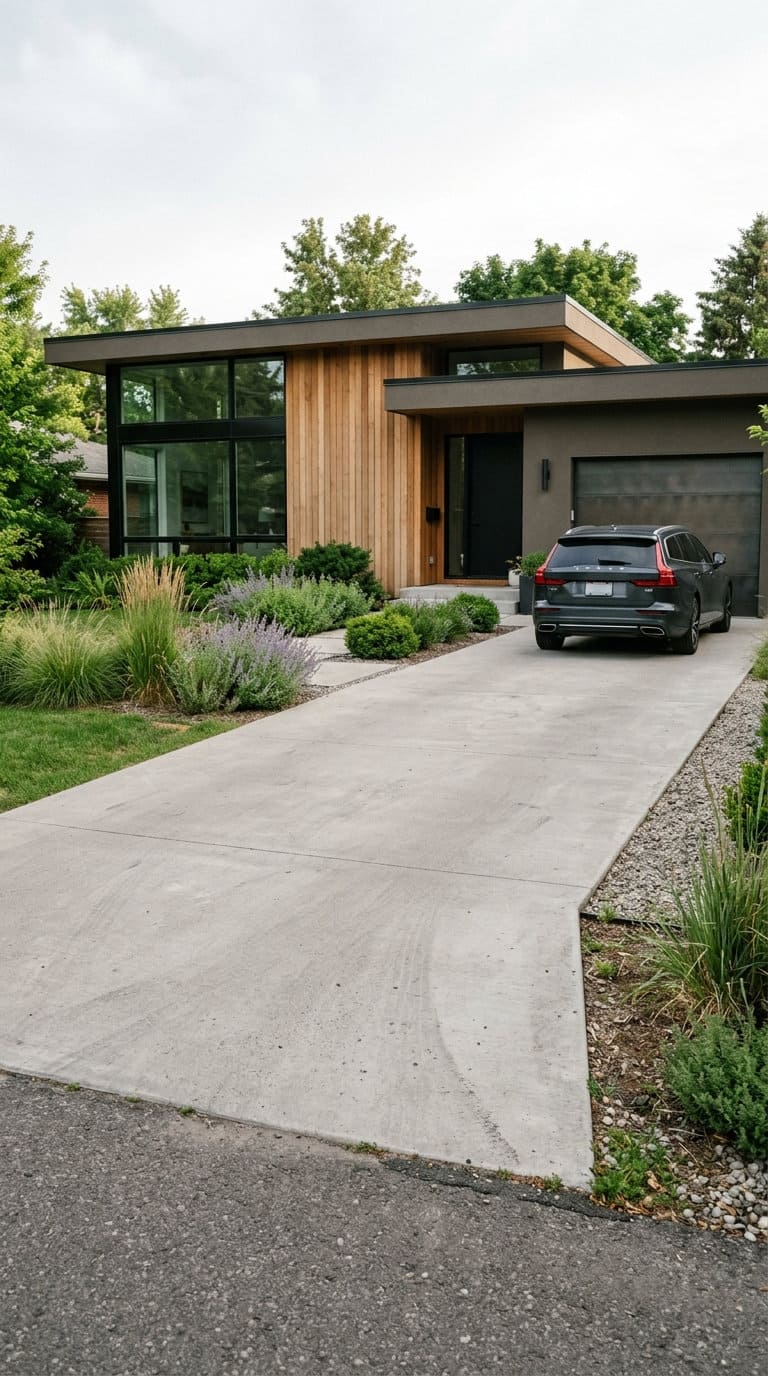
A minimalist driveway uses one clean material in a simple, unadorned layout, often just poured concrete or asphalt with crisp, straight edges and no applied pattern.
The “budget” version of minimalism is genuinely the cheapest approach on this entire list, since there’s no pattern work, no mixed materials, and no decorative border adding labor cost.
If you go this route, invest what you save into clean edging and well-maintained borders, a minimalist driveway with a ragged edge reads as neglected rather than intentional.
FAQs
What is the best material to use for driveways?
There’s no single best material, it depends on budget, climate, and how long you plan to stay in the home. The most common options are concrete, brick, wood or timber, pavers, asphalt, grass, and gravel or crushed stone, each with real tradeoffs in upfront cost, durability, and maintenance.
How much should a driveway cost?
Costs vary significantly by material. As of 2026, gravel runs about $1-3 per square foot, asphalt about $6-12 per square foot installed, concrete about $10-15 per square foot, and pavers $10-30 per square foot depending on the style. For a standard 400-square-foot, two-car driveway, that works out to roughly $1,200-2,800 for asphalt, $2,400-4,800 for concrete, or $4,800-10,000 for pavers. Labor typically accounts for 30-50% of the total cost, so get itemized quotes from a few contractors rather than relying on material price alone.
How can I make my driveway look nice?
A few maintenance habits do most of the work: pressure wash regularly, fill cracks and repair damaged sections as soon as they appear rather than letting them spread, add color or staining to concrete or natural stone surfaces, install a defined border or edging, and add landscaping or driveway lighting along the approach.
What is the longest-lasting driveway?
Concrete, done correctly, typically lasts the longest, decades with minimal maintenance beyond occasional pressure washing. It costs roughly 2 to 4 times more than asphalt upfront, but for homeowners planning to stay long-term, that gap is often worth it. Pavers and gravel are reasonable runner-ups since individual units or loose material can be repaired or replenished rather than replacing the whole surface.
What is the best low maintenance driveway?
Pavers, specifically permeable pavers, paving stones, or concrete grass pavers. The gaps between units allow water to drain even without dedicated drainage infrastructure, and the composite materials used resist the mudding and pooling that plague solid surfaces. Occasional pressure washing is typically all the upkeep they need.
Do weeds grow through resin driveways?
Rarely, since a properly installed resin driveway is a bonded, sealed surface rather than a gapped one. Double-sealing during installation improves weed resistance further, but the seal wears down under traffic over time and needs periodic reapplication, resin isn’t a permanently weed-proof surface, just a strongly weed-resistant one.
Is gravel a good choice for a steep driveway?
Not usually. Loose gravel shifts and washes downhill under its own weight and vehicle traffic on a real slope, it works best on flat or gently graded lots. If your driveway has meaningful grade, asphalt or another bound material is the safer, more stable choice.
Related: Sealing Asphalt Driveway Pros And Cons
Conclusion
Driveways are important groundworks, literally and figuratively. If you are going down the budget design route, you must invest a lot of time, effort and active searching not only for complementing designs but to know the best materials that will match your home and the estimated cost of the whole project. If you have all of these, you are ready to go.
When it comes to the most common materials used for driveways, at the top would still be the old school materials composed of concrete, stones, gravel, and asphalt. But in recent years, new trends such as rubber, mixed elements of complementing materials, and bolder, customized designs are now part of the whole driveway hype.
Products We Recommend
This post contains affiliate links. We may earn a commission on qualifying purchases at no extra cost to you.
VEVOR Plate Compactor, 6.5HP Gas Engine, 2,360 lbs Force
A gas-powered plate compactor suited to properly compacting a gravel or paver base before laying the driveway surface, directly relevant to the base-prep point raised in the Edged Stones and Gravel ideas above.
Shop Now
DeWitt Weed-Barrier Pro Landscape Fabric, 3 oz, 6' x 300'
A permeable, heavy-duty landscape fabric used beneath loose driveway materials like gravel or crushed stone to reduce weed growth and prevent the base layer from mixing into the soil.
Shop Now
Quikrete Self-Leveling Cement Crack Filler
A pour-and-go self-leveling crack filler suited to the maintenance advice in the FAQ above (filling cracks and repairing damage as soon as it appears), relevant to concrete, brick, and paver driveways alike.
Shop NowNever miss an update — choose FarmFoodFamily as your preferred source on Google.
How it works: Tap the button below to open Google's settings page, then check the box next to FarmFoodFamily.
Tap the checkbox to turn it blue — that's how you know it's set.