22 Reliable Perennials for Nonstop Color From Spring to Frost (Zone-by-Zone Bloom Chart)
Most “all season perennial” lists just hand you 30 plant names and leave you to figure out the July and October gaps yourself, this one doesn’t.

Never miss an update — choose FarmFoodFamily as your preferred source on Google.
How it works: Tap the button below to open Google’s settings page, then check the box next to FarmFoodFamily.
Tap the checkbox to turn it blue — that’s how you know it’s set.
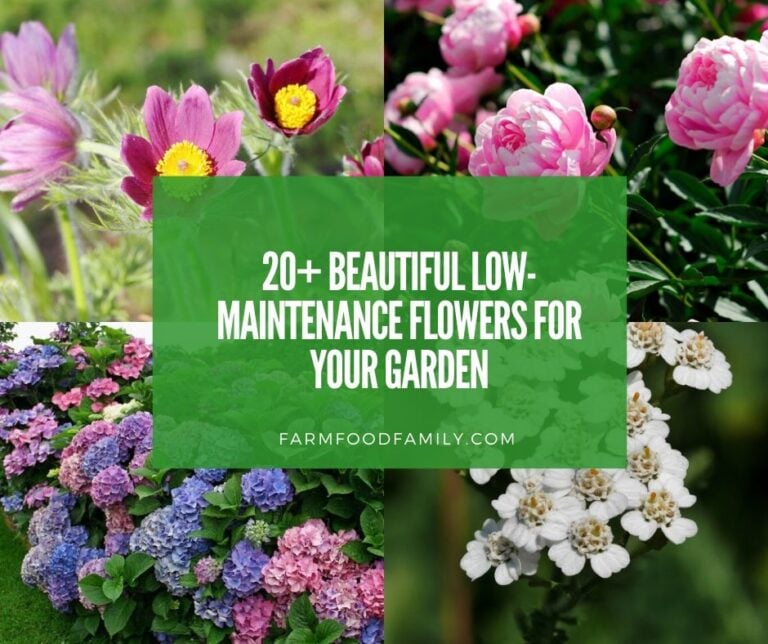
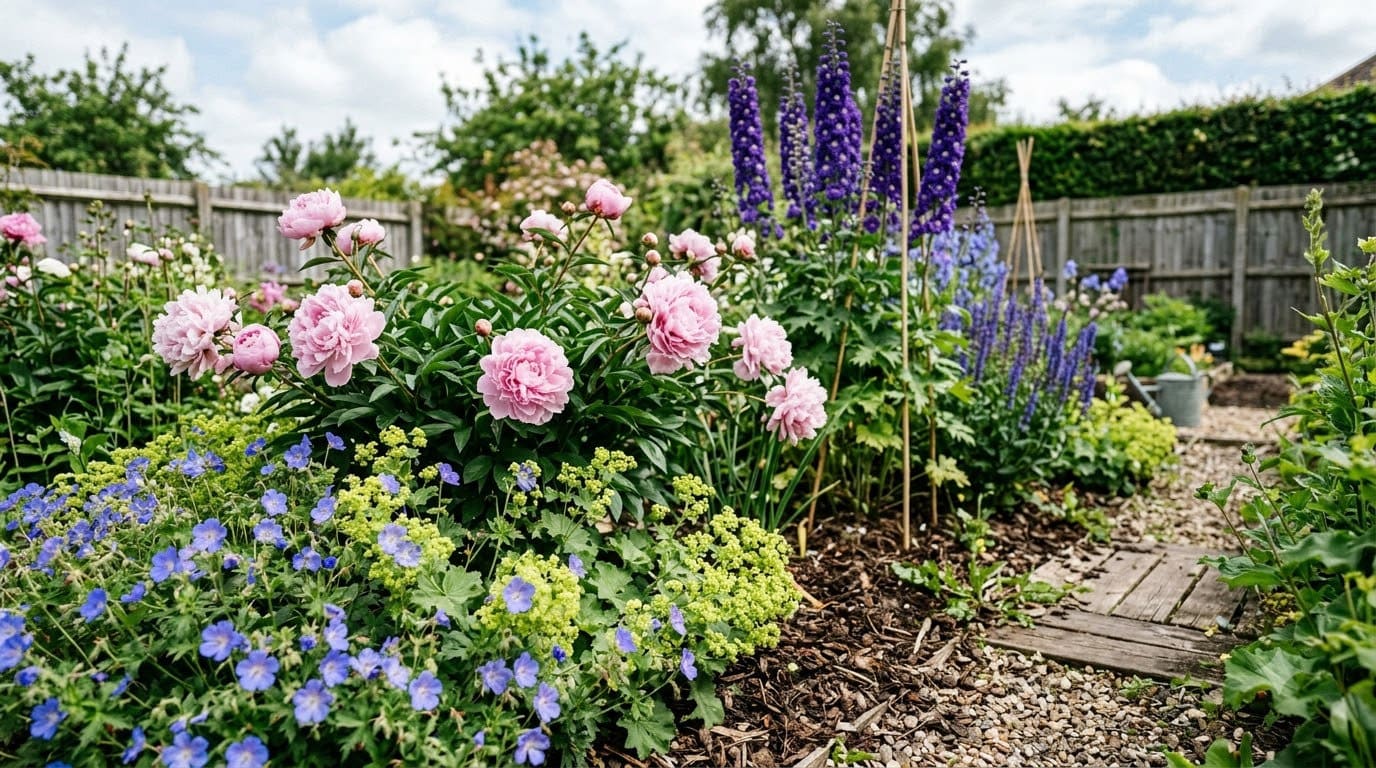
A perennial bed with color from spring through frost needs plants chosen for staggered, overlapping bloom windows, not just a long plant list. Start with early spring bloomers like pasque flower and creeping phlox, layer in late spring peonies and iris, carry summer with coneflower, black-eyed Susan, and daylily, then close with sedum, aster, and toad lily in fall.
Colorado State University Extension recommends grouping plants by height and water need (hydrozoning) while planning bloom overlap, and Clemson Cooperative Extension’s Home & Garden Information Center notes many perennials rebloom on their own in warm climates but need deadheading everywhere else. The real trick isn’t the plant list, it’s making sure at least two things are blooming in every 3-4 week window, especially the July lull between spring flush and late-summer color, and the October gap most beds never plan for at all.
Every “perennial flowers for all season color” article, including the version of this one that used to live at this URL, tends to hand you a pile of plant names organized loosely by season and calls it a plan. It isn’t one.
A plant list tells you what’s available. A plan tells you what’s blooming in your bed on July 14th, when the spring rush is over and the coneflowers haven’t opened yet.
I’ve killed enough of a summer border to bare dirt by June to know the gap is real. And it’s fixable, but only if you pick plants for their bloom window, not just their name recognition.
Here’s the honest version: 22 perennials, grouped by when they actually bloom, with the zone range, sun need, and whether each one is a true continuous bloomer or one that needs you to deadhead it to keep going. Then a region table, because “plant in spring” means something different in Minneapolis than it does in Charleston.
Answer 4 quick questions and get matched to the exact fix for your yard — drainage, budget, layout, or something else entirely.
Take the Free QuizBloom-Succession Chart: What’s Actually Blooming When
| Plant | Bloom window | USDA zones | Sun need | Bloom type |
|---|---|---|---|---|
| Pasque flower | Early spring, 2-3 weeks | 4-8 | Full sun | Single flush |
| Creeping phlox | Early-mid spring, 3-4 weeks | 3-9 | Full sun-part shade | Single flush |
| Virginia bluebells | Early spring, 2-3 weeks | 3-8 | Part-full shade | Single flush, then dormant |
| Lungwort | Early-mid spring, 3 weeks | 3-8 | Part-full shade | Single flush |
| Columbine | Late spring, 4-6 weeks | 3-9 | Part sun-shade | Single flush, self-seeds |
| Siberian iris | Late spring, 2-3 weeks | 3-8 | Full sun-part shade | Single flush |
| Bearded iris | Late spring, 2-3 weeks | 3-10 | Full sun | Single flush, some rebloomers |
| Cranesbill geranium | Late spring-fall, on and off | 4-8 | Full sun-part shade | Deadhead-dependent rebloomer |
| Peony | Late spring, 1-2 weeks | 3-8 | Full sun | Single flush |
| Baptisia | Late spring-early summer, 3 weeks | 3-9 | Full sun | Single flush |
| Coral bells | Early summer, foliage-first | 4-9 | Part shade-shade | Light rebloomer, grown for foliage |
| Yarrow | Summer-fall, continuous | 3-9 | Full sun | True continuous bloomer |
| Purple coneflower | Summer-fall, continuous | 3-9 | Full sun | True continuous bloomer |
| Black-eyed Susan | Summer-fall, continuous | 3-9 | Full sun | True continuous bloomer |
| Daylily | Summer, 4-6 weeks (longer if reblooming type) | 3-9 | Full sun-part shade | Single flush, some rebloomers |
| Bee balm | Summer, 4-6 weeks | 3-9 | Full sun-part shade | Deadhead-dependent rebloomer |
| Garden phlox | Summer-fall, 8+ weeks | 4-8 | Full sun-part shade | Deadhead-dependent rebloomer |
| Salvia | Summer-fall, continuous | 4-9 | Full sun | True continuous bloomer |
| Sedum ‘Autumn Joy’ | Late summer-fall, 6+ weeks | 3-9 | Full sun | Single flush, long-lasting |
| Aster | Fall, 4-6 weeks | 3-8 | Full sun-part shade | Single flush |
| Toad lily | Fall, 4-6 weeks | 4-9 | Part-full shade | Single flush |
| Boltonia | Fall, 4-6 weeks | 3-9 | Full sun | Single flush |
Check your USDA zone before you rely on this chart. A plant rated to zone 3 will survive a zone 6 winter fine; a plant rated to zone 8 will not survive a zone 5 one, no matter how the tag reads at the garden center.
Early Spring: What Wakes Up First
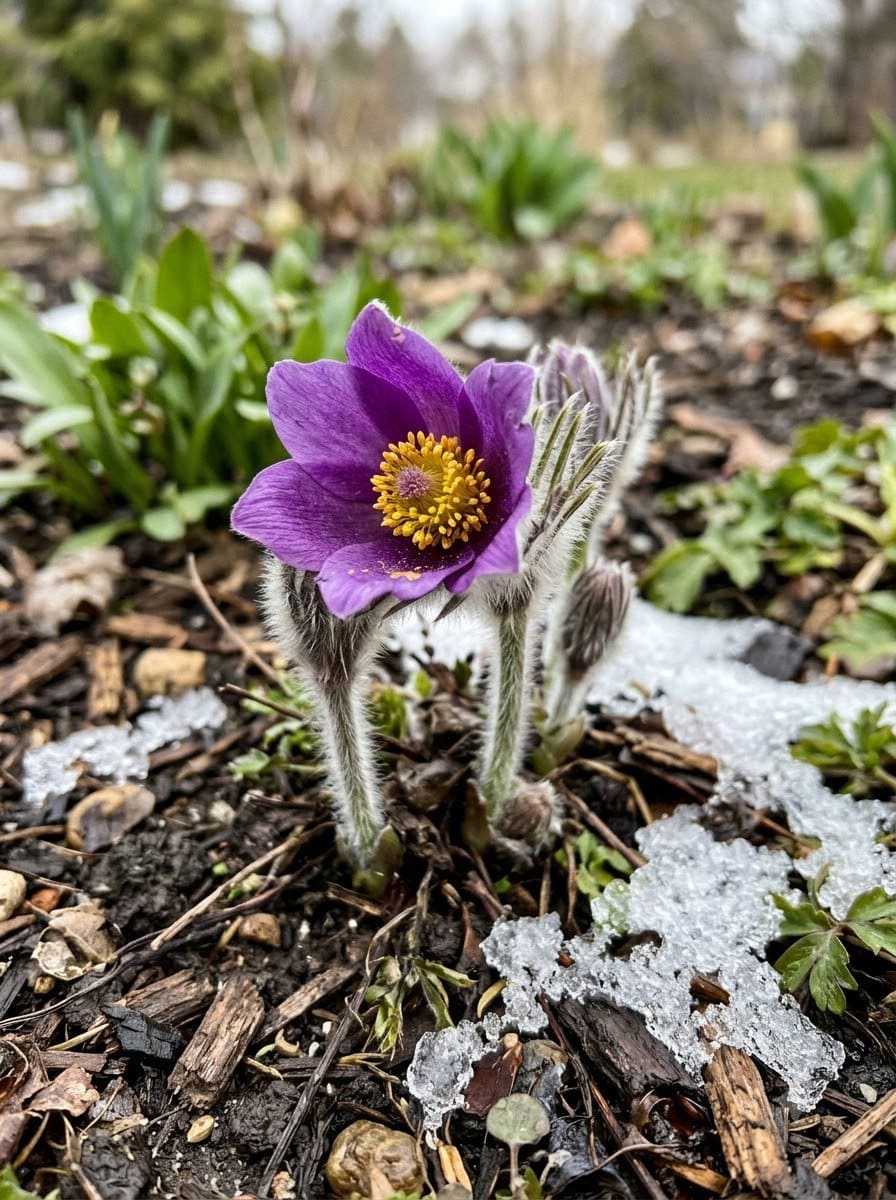
#1. Pasque flower (Anemone pulsatilla)
Related: Anemone flower meaning
Pasque flower is usually the first real bloom in the bed, sometimes pushing up through the last patches of snow. The flower itself lasts about 2-3 weeks, purple to lavender, followed by feathery seed heads that are honestly almost as good-looking as the bloom.
It wants full sun and sharp drainage, soggy soil in winter kills it faster than cold does. Zones 4-8.
Pair it with creeping phlox at the front of the bed so the two overlap right at the season’s opening act.
#2. Creeping phlox (Phlox subulata)
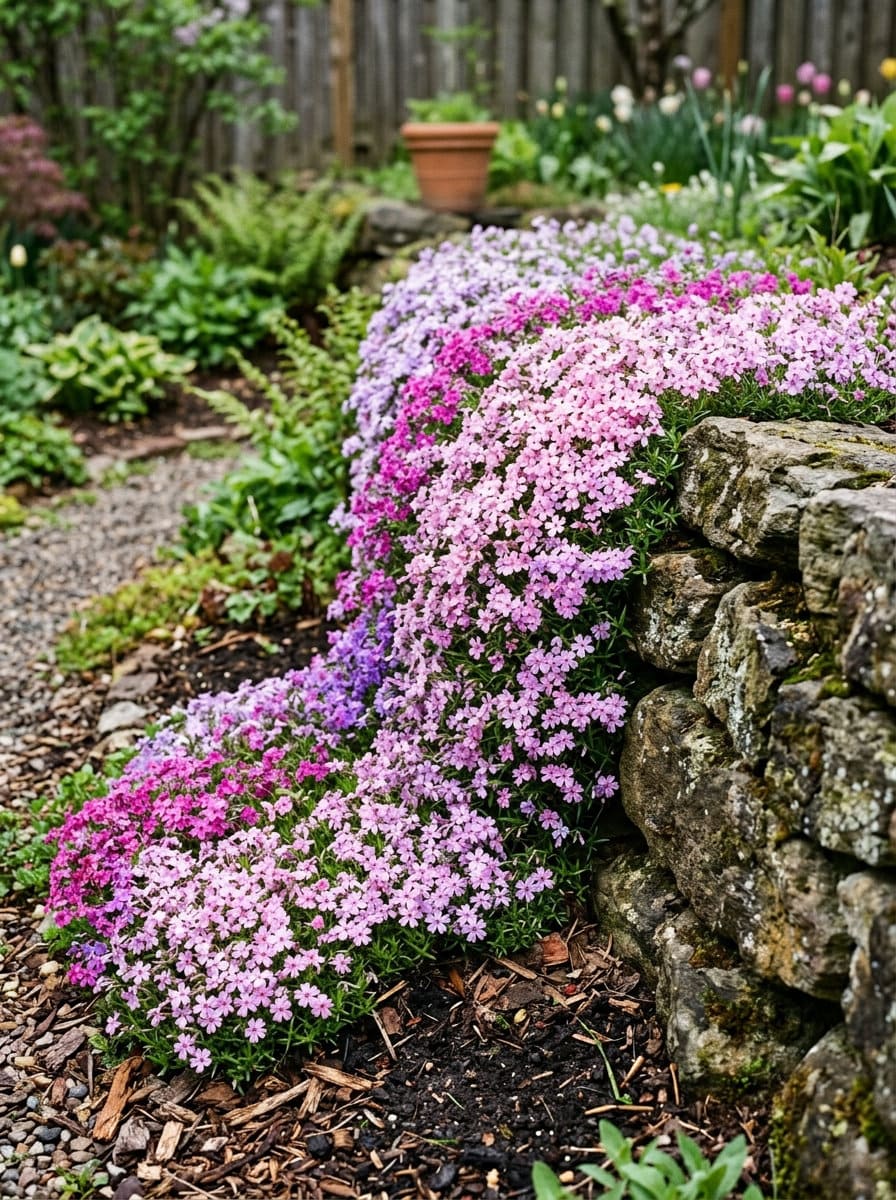
Creeping phlox carpets the ground in pink, purple, or white for 3-4 weeks in early-mid spring, and it’s genuinely one of the cheapest ways to cover a slope or edge a path, one plant spreads to 2 feet wide within a couple of seasons.
Most yard problems trace back to one specific, fixable cause. Find yours in 4 quick questions.
Take the Free Quiz
4.5 stars, 1.6K ratings; for the deadhead-dependent rebloomers (cranesbill, bee balm, garden phlox, salvia)
Shop NowThis post contains affiliate links. We may earn a commission on qualifying purchases at no extra cost to you.
Full sun to light shade, zones 3-9. Shear it back by about a third right after bloom, it keeps the mat tight instead of getting woody and bare in the center.
#3. Virginia bluebells (Mertensia virginica)
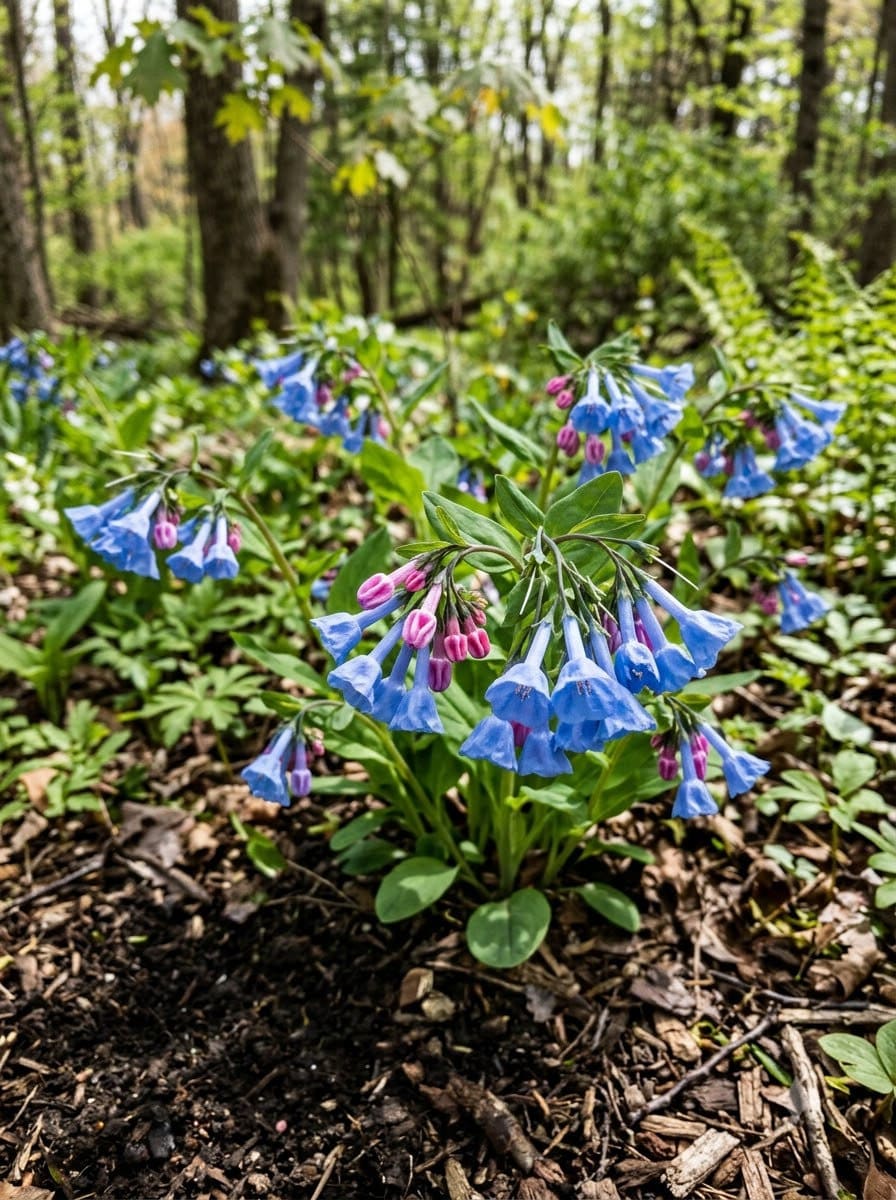
This one’s a spring ephemeral: it blooms for 2-3 weeks in pink-to-blue clusters, then the whole plant goes dormant and disappears by midsummer. That’s not a problem if you plan for it, plant hostas or ferns nearby to fill the space once the bluebells vanish.
Part to full shade, zones 3-8. Don’t cut the foliage back early thinking it looks messy, it’s feeding next year’s bloom.
#4. Lungwort (Pulmonaria)
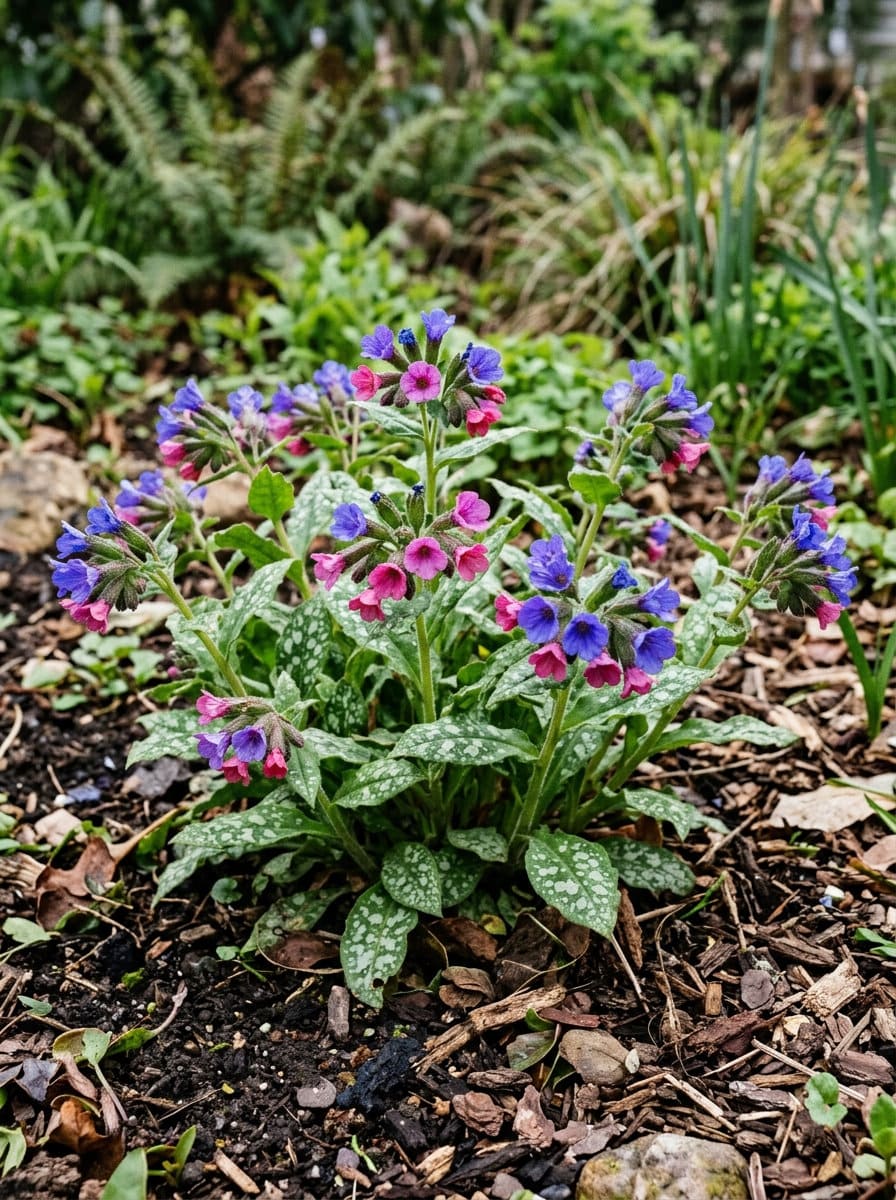
Lungwort blooms pink and blue on the same plant at the same time for about 3 weeks in early-mid spring, and the silver-spotted foliage stays attractive the rest of the growing season, unlike a lot of early bloomers that go ratty once flowering ends. Part to full shade, zones 3-8. It’s a genuinely good groundcover for the north side of a house where not much else wants to grow.
The many minor spring bulbs, Iris reticulata, chionodoxa, crocus, and daffodils, all bloom in this same early window and are worth tucking in around these four for extra coverage while the perennials are still establishing.
and the many minor bulbs such as Iris reticulata, Chionodoxa, crocus and of course daffodils (Narcissus).
Late Spring to Early Summer: The Bridge Everyone Underplants
This is the window most beds actually get right, since it’s when garden centers are fullest and most people shop. The mistake is stopping here.
#5. Columbine (Aquilegia)
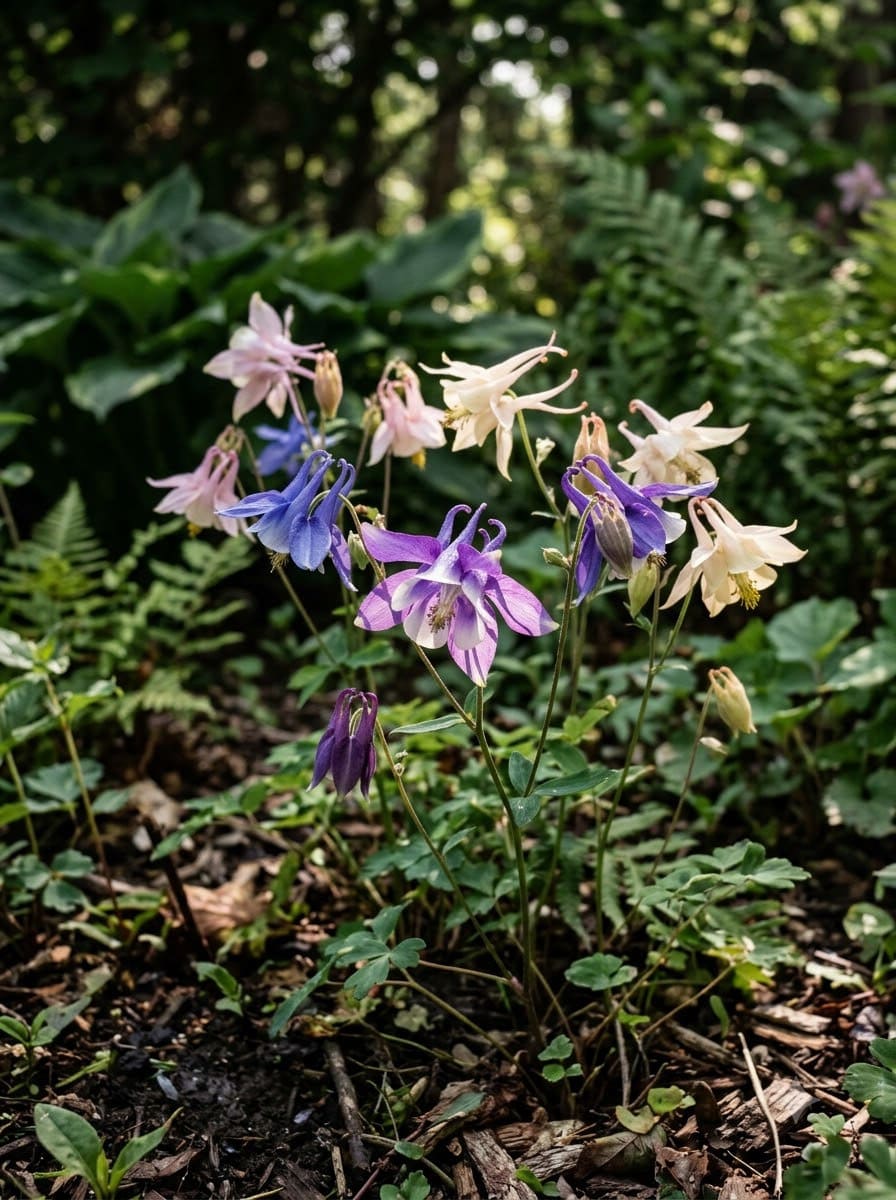
Columbine blooms for 4-6 weeks in late spring, spurred flowers in nearly every color, and it self-seeds enough that a single plant usually becomes a small colony within 2-3 years. Part sun to shade, zones 3-9. Leaf miners tunnel through the foliage by midsummer and it looks bad, just cut the whole plant back to the base once that happens, it regrows clean foliage for the rest of the season.
#6. Siberian iris (Iris sibirica)
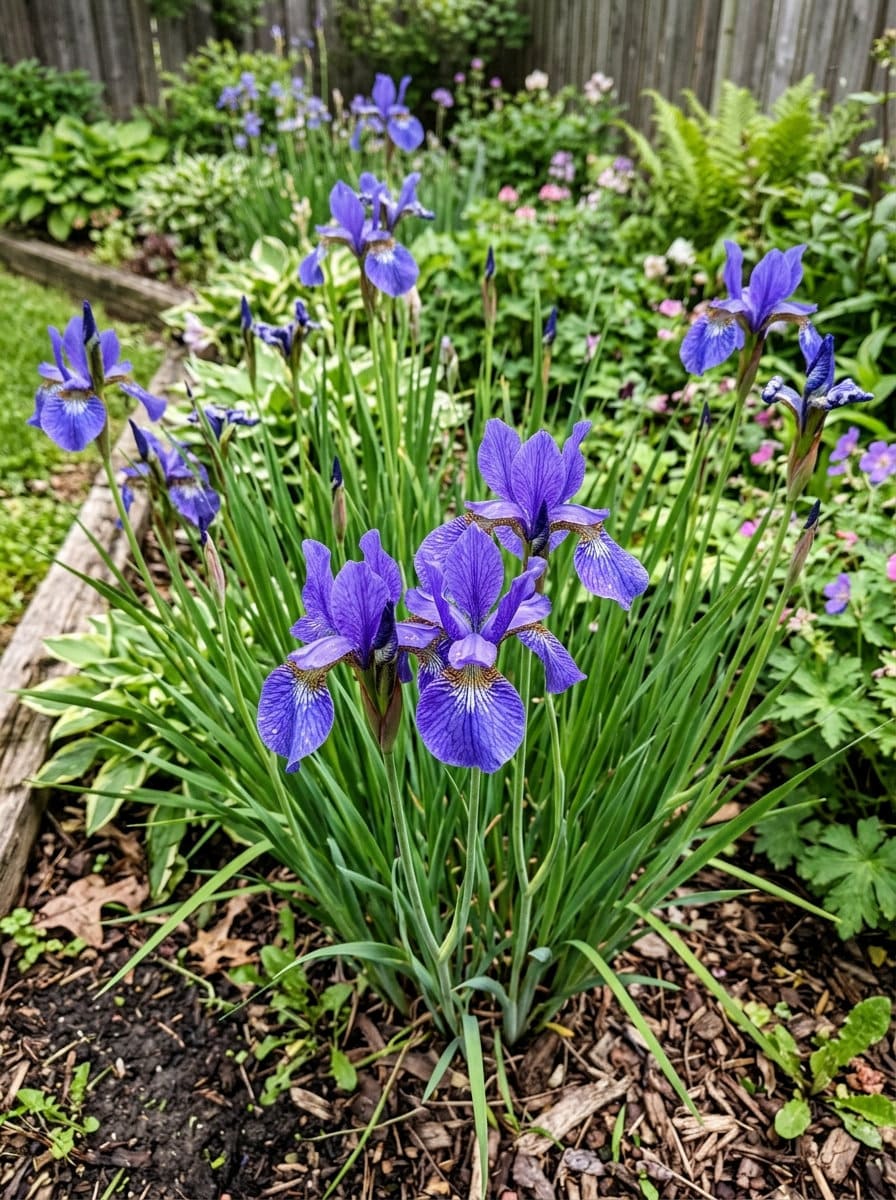
Siberian iris blooms for 2-3 weeks in late spring, tall grassy foliage that stays attractive all season after the flowers finish, which sets it apart from most iris. Full sun to part shade, zones 3-8, and it tolerates damp soil better than bearded iris does, a real option for a low spot that stays wet in spring.
The average homeowner spends $616/year on yard fixes that don't address the real problem. Find out what yours actually is — before you spend another dollar.
Take the Free Quiz#7. Tall bearded or German iris (Iris germanica)
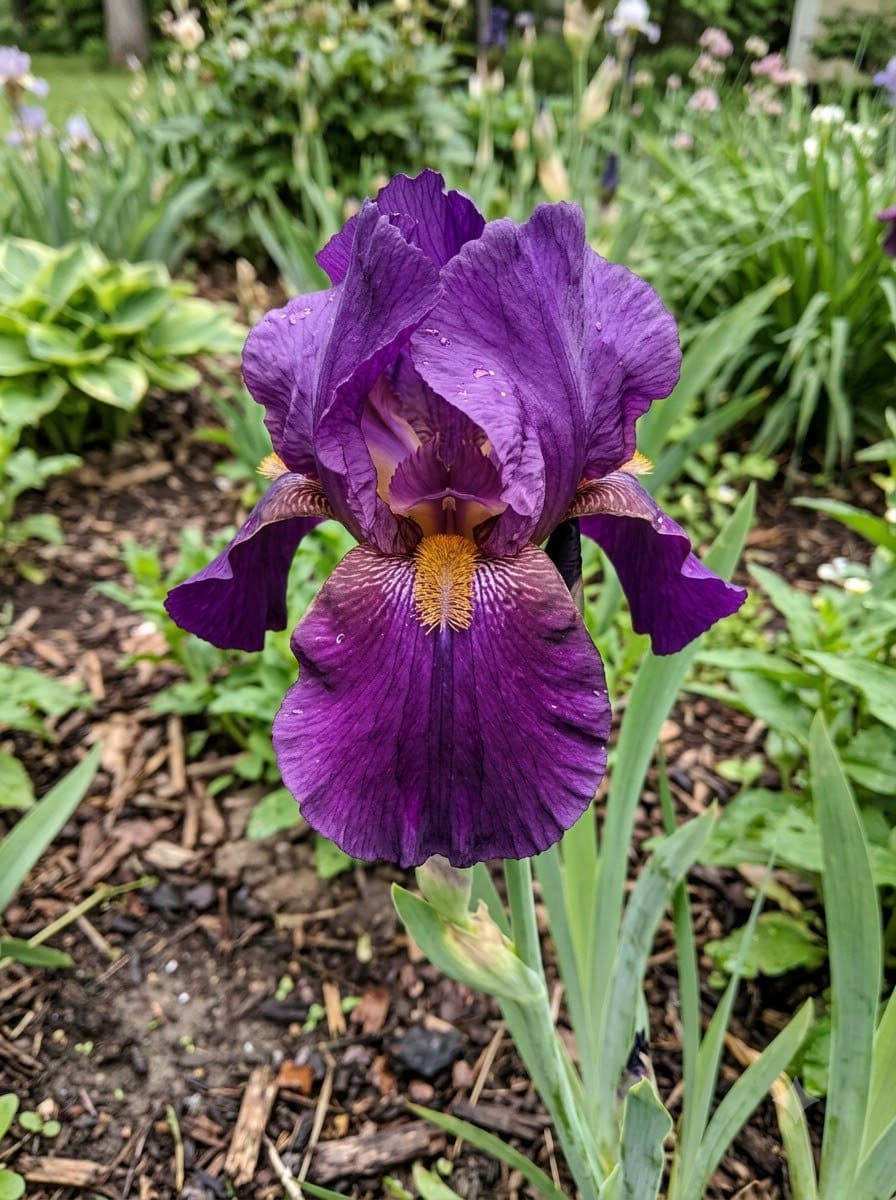
Bearded iris overlaps Siberian iris’s bloom by a week or two, same 2-3 week window, but it needs the rhizome sitting right at the soil surface, not buried, or it rots. Full sun, zones 3-10. Divide every 3-4 years when the clump gets crowded and bloom starts to drop off, per Colorado State Extension’s general division guidance for perennials that flower in spring.
#8. Cranesbill geranium (Geranium)
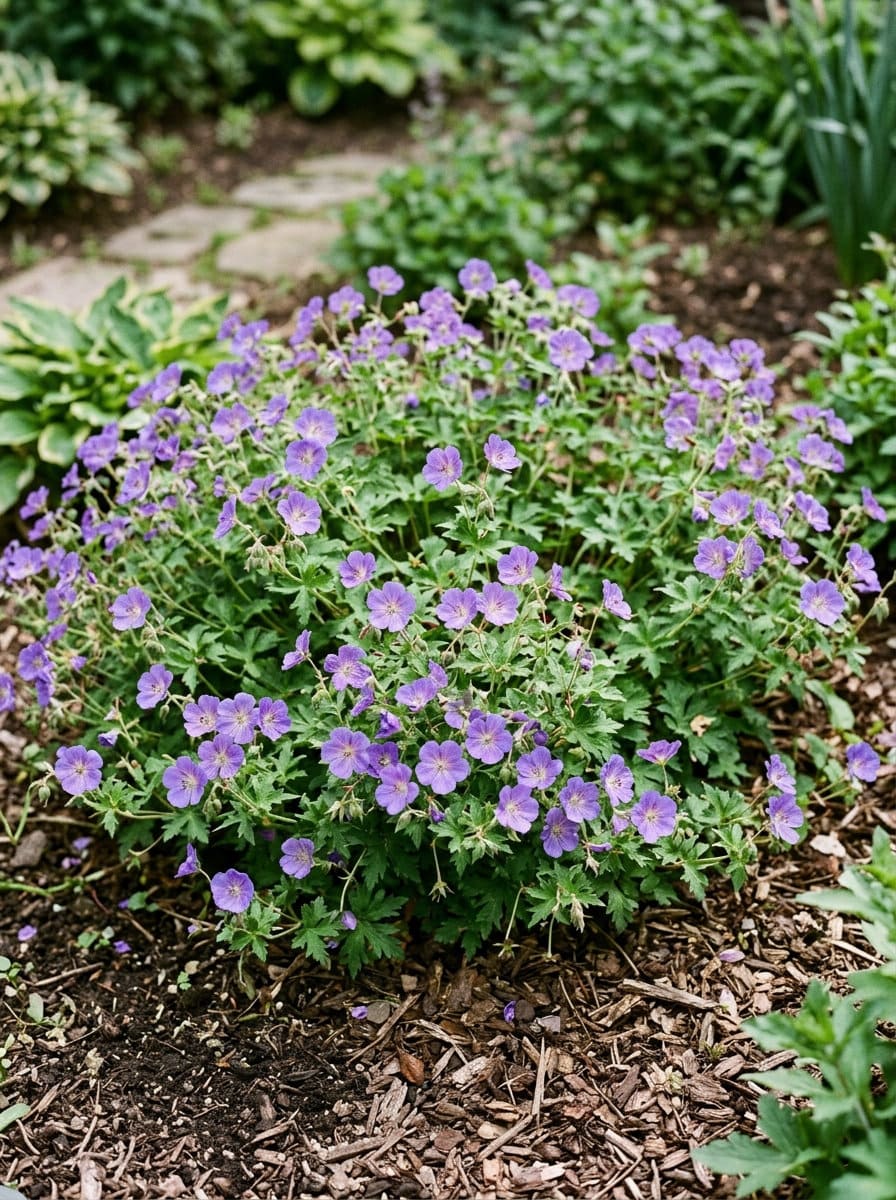
This is one of the true workhorses on this list: cranesbill blooms on and off from late spring into fall if you shear it back hard after the first flush, cutting the whole plant to about 4 inches. Skip the shearing and it stops blooming by midsummer, so this one only earns its “continuous” reputation with actual maintenance. Full sun to part shade, zones 4-8.
#9. Peony (Paeonia)
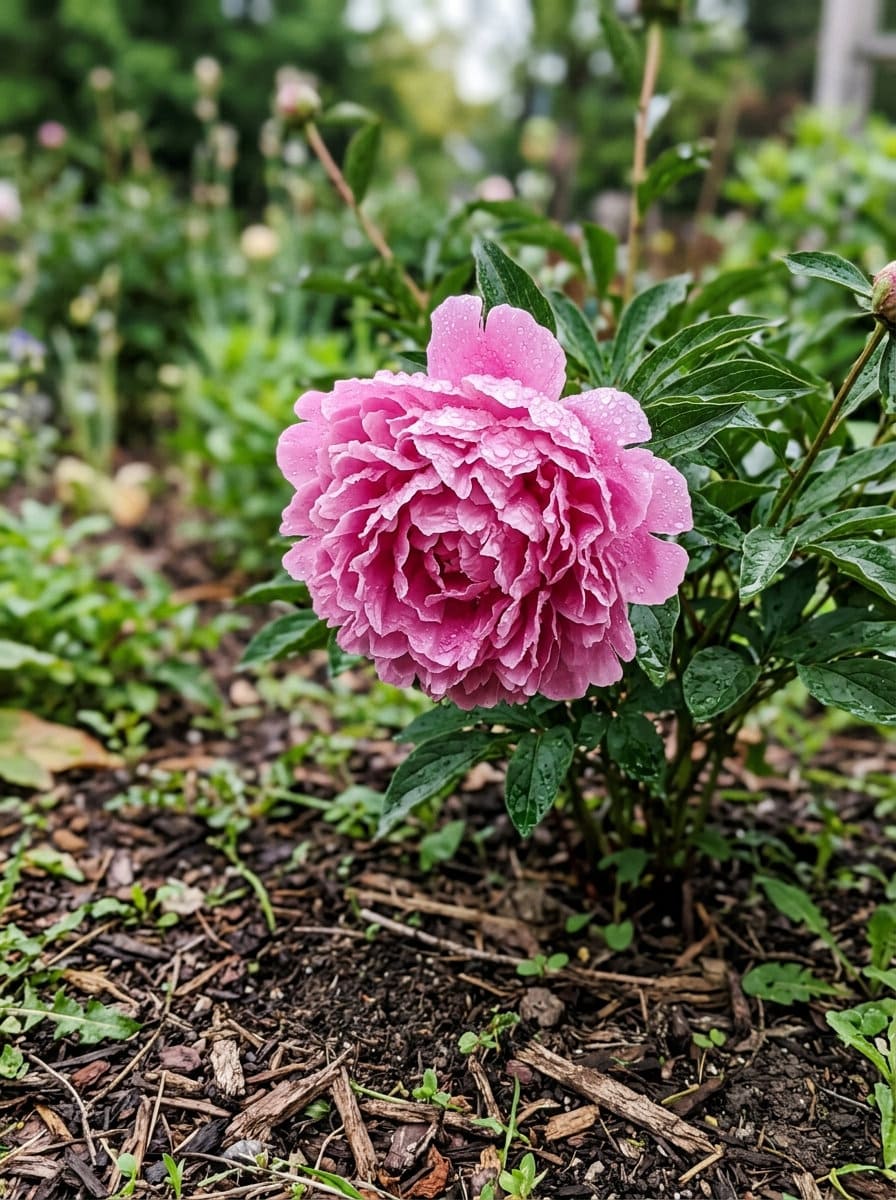
Peonies bloom for just 1-2 weeks in late spring, the shortest window on this list, but the foliage stays glossy and structural through fall, and a well-sited peony outlives the gardener who planted it, some bloom for 50+ years with minimal care. Full sun, zones 3-8. Plant the eyes (buds) no more than 2 inches below soil level, buried too deep is the single most common reason a peony never blooms.
#10. Baptisia (false indigo)
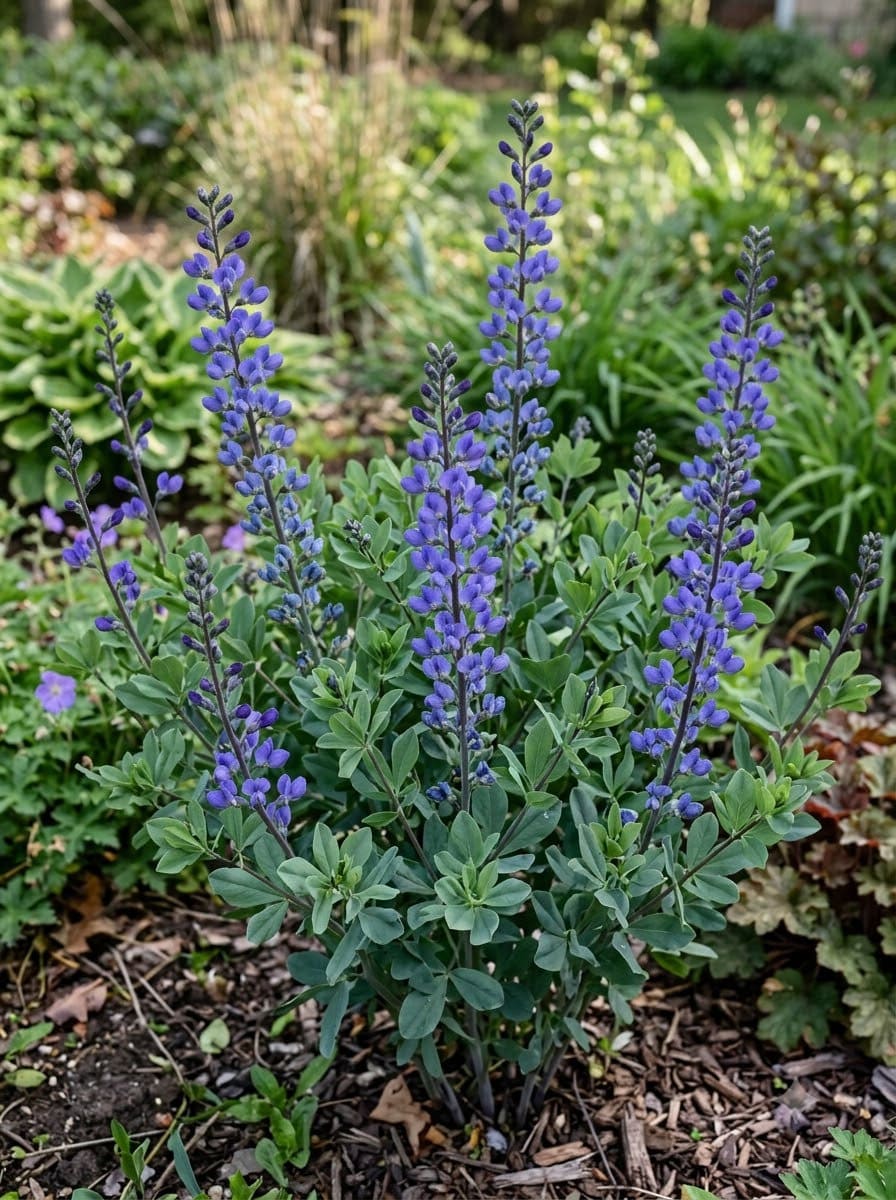
Baptisia blooms for about 3 weeks bridging late spring into early summer, spikes of blue, purple, or yellow depending on cultivar, then holds shrub-like structure and seed pods that look good into winter. Full sun, zones 3-9. It has a deep taproot and resents being moved once established, choose the spot carefully the first time.
#11. Coral bells (Heuchera)
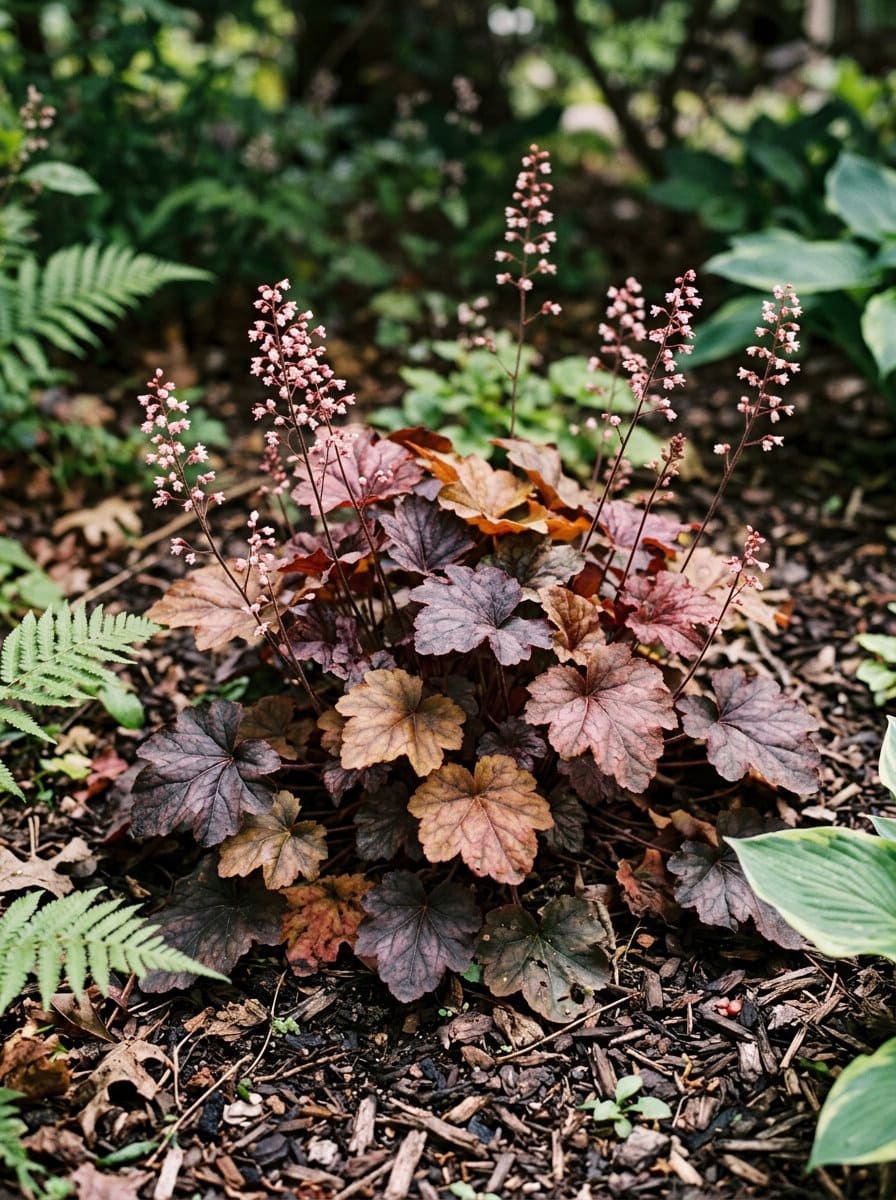
Coral bells is really grown for its foliage, burgundy, lime, amber, caramel depending on cultivar, and the light airy flower spikes in early summer are a bonus rather than the main event. Part shade to shade, zones 4-9. It pairs well with #4’s lungwort for a shade-bed foliage combo that carries color even when nothing nearby is actually flowering.
Summer: Where Most Beds Coast on Autopilot
#12. Yarrow (Achillea)
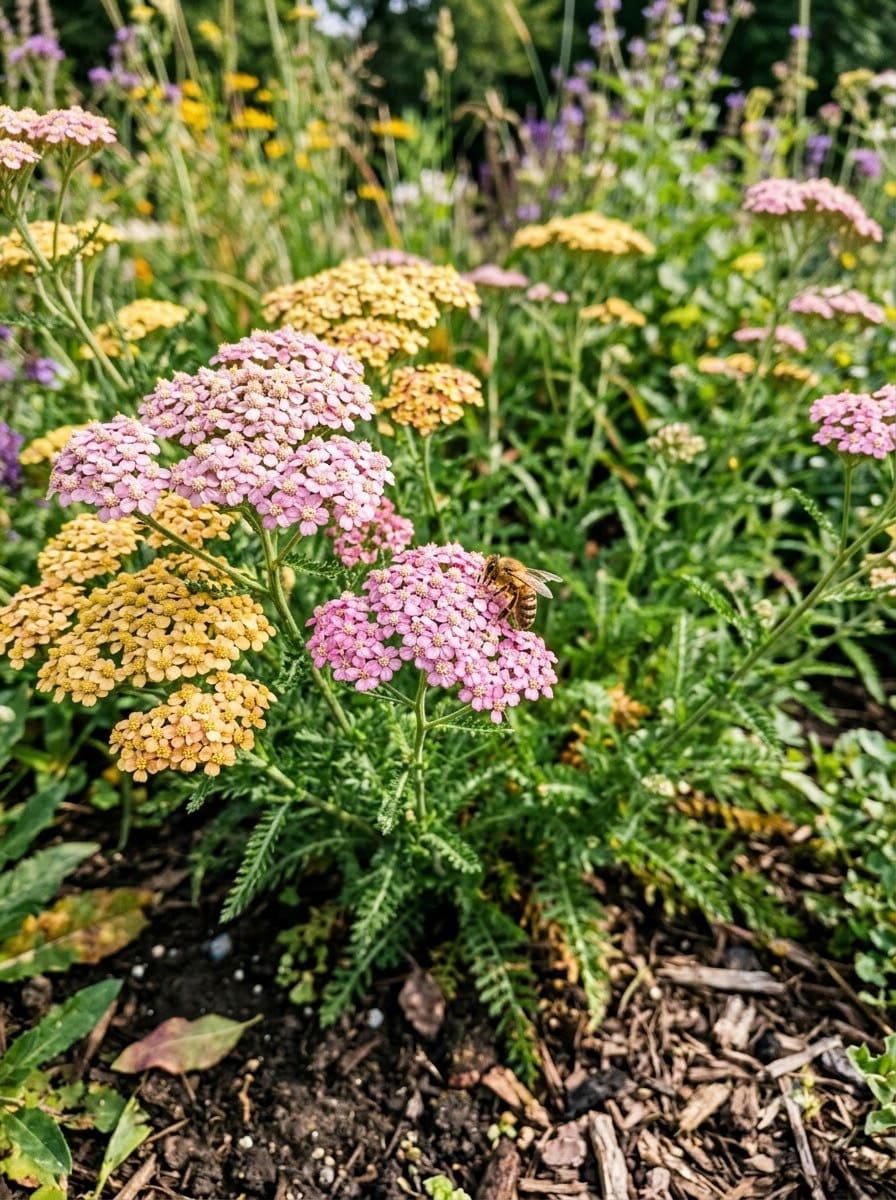
Yarrow is one of the true continuous bloomers on this list, flat flower clusters in yellow, pink, or white from early summer straight through fall if deadheaded, and it tolerates genuinely poor, dry soil better than almost anything else here. Full sun, zones 3-9.
#13. Purple coneflower (Echinacea purpurea)
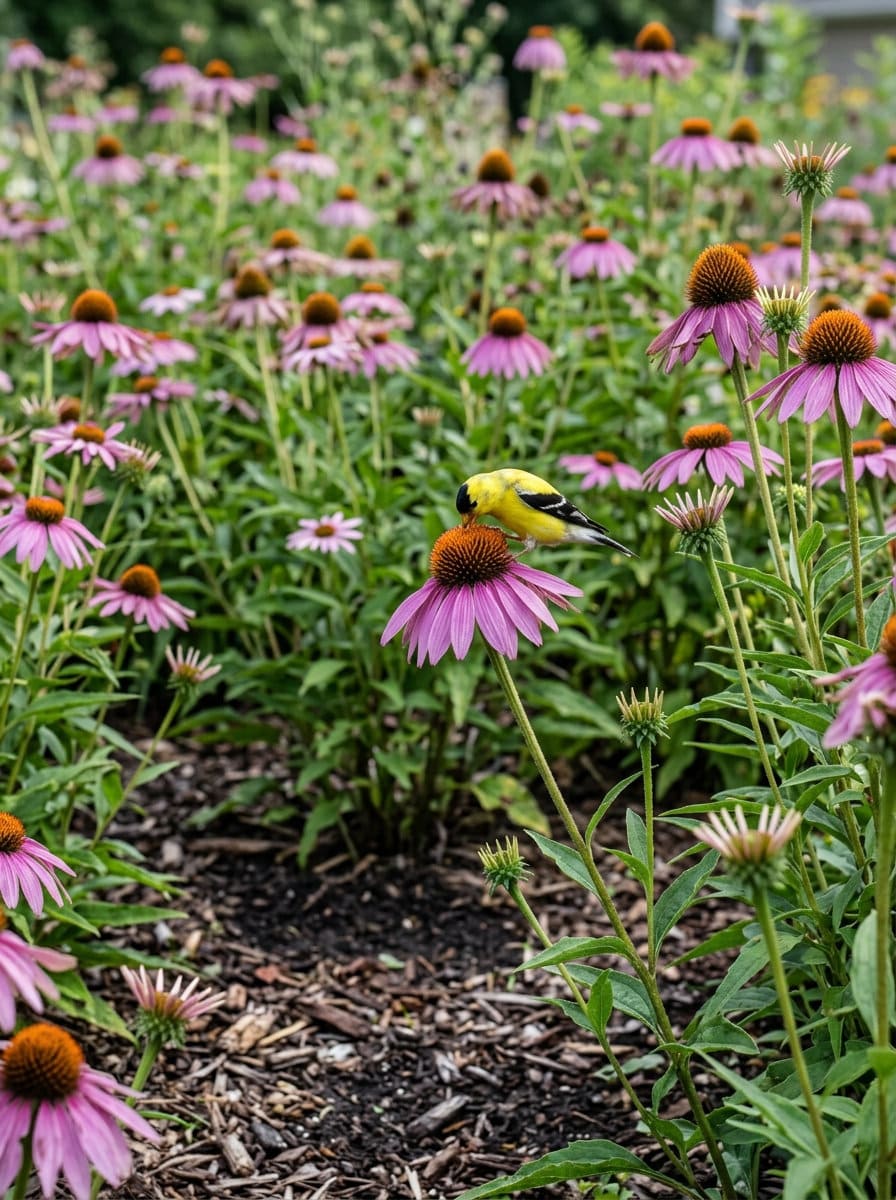
Coneflower blooms continuously from summer into fall, and its seed heads feed goldfinches all winter if you leave them standing instead of cutting back in fall, a real tradeoff between tidiness and wildlife value worth thinking about before you deadhead everything. Full sun, zones 3-9.
#14. Black-eyed Susan (Rudbeckia)
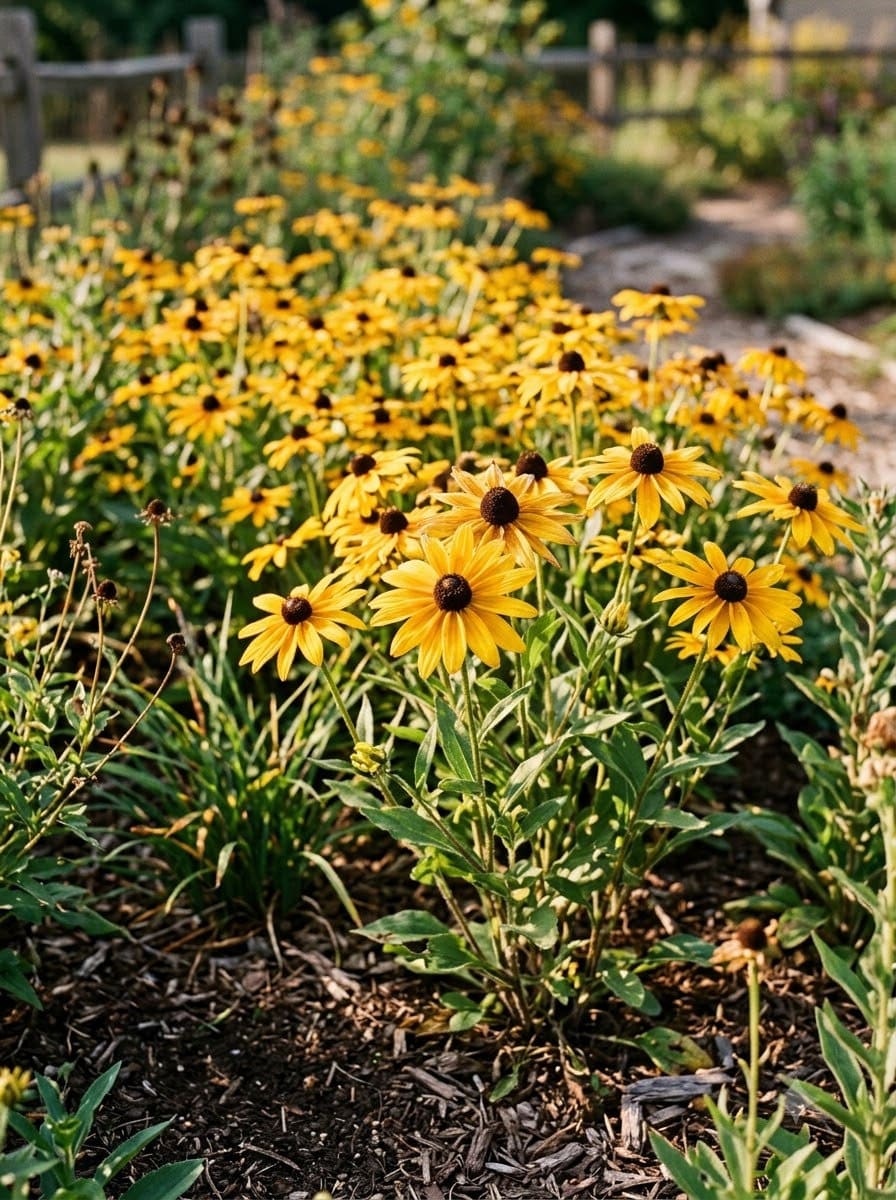
Black-eyed Susan blooms nonstop from summer through fall and is about as forgiving as a perennial gets, drought, poor soil, and casual neglect don’t slow it down much. Full sun, zones 3-9. It spreads by both seed and rhizome, so give it room or expect to edit it back every couple of years.
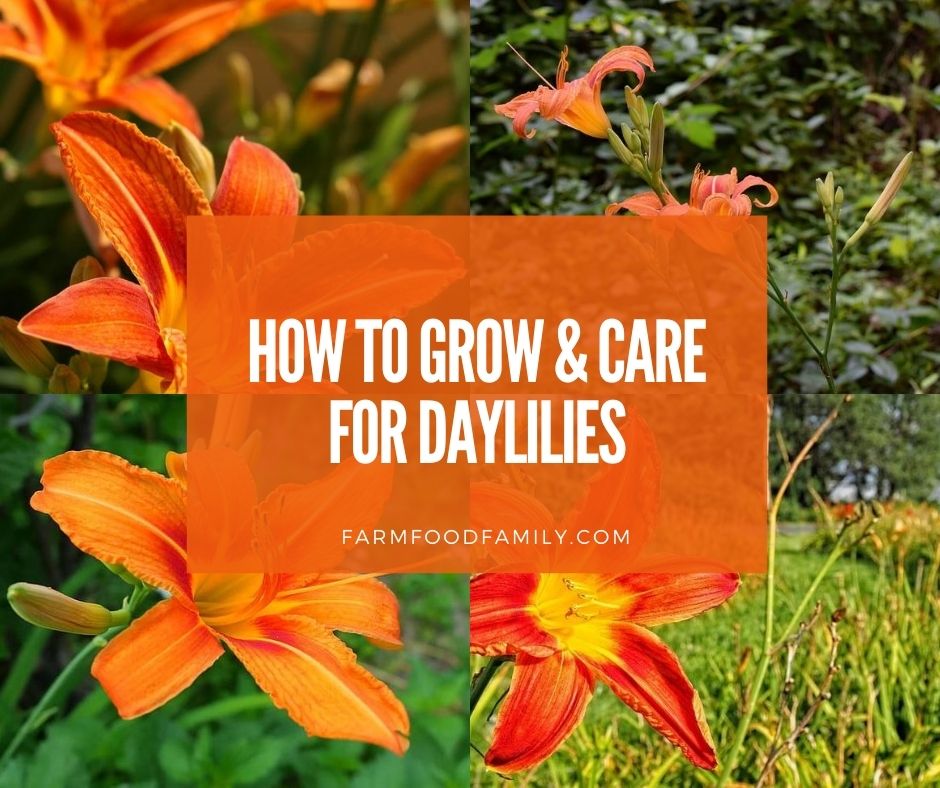
#15. Daylily (Hemerocallis)
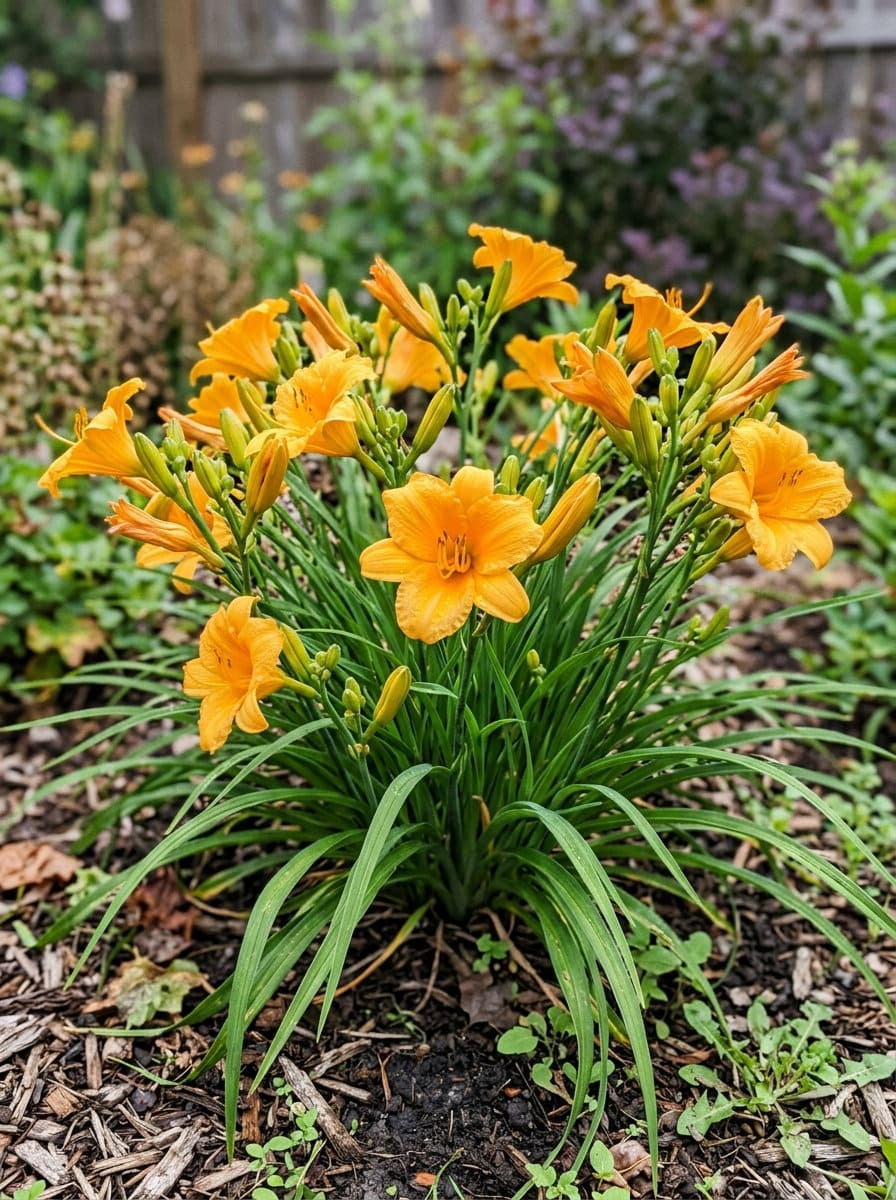
Each daylily flower lasts exactly one day, hence the name, but a mature clump produces enough buds to bloom for 4-6 weeks straight, and reblooming cultivars like Stella de Oro extend that window even further. Full sun to part shade, zones 3-9. Divide when the clump stops flowering as heavily in the center, usually every 3-4 years.
#16. Bee balm (Monarda didyma)
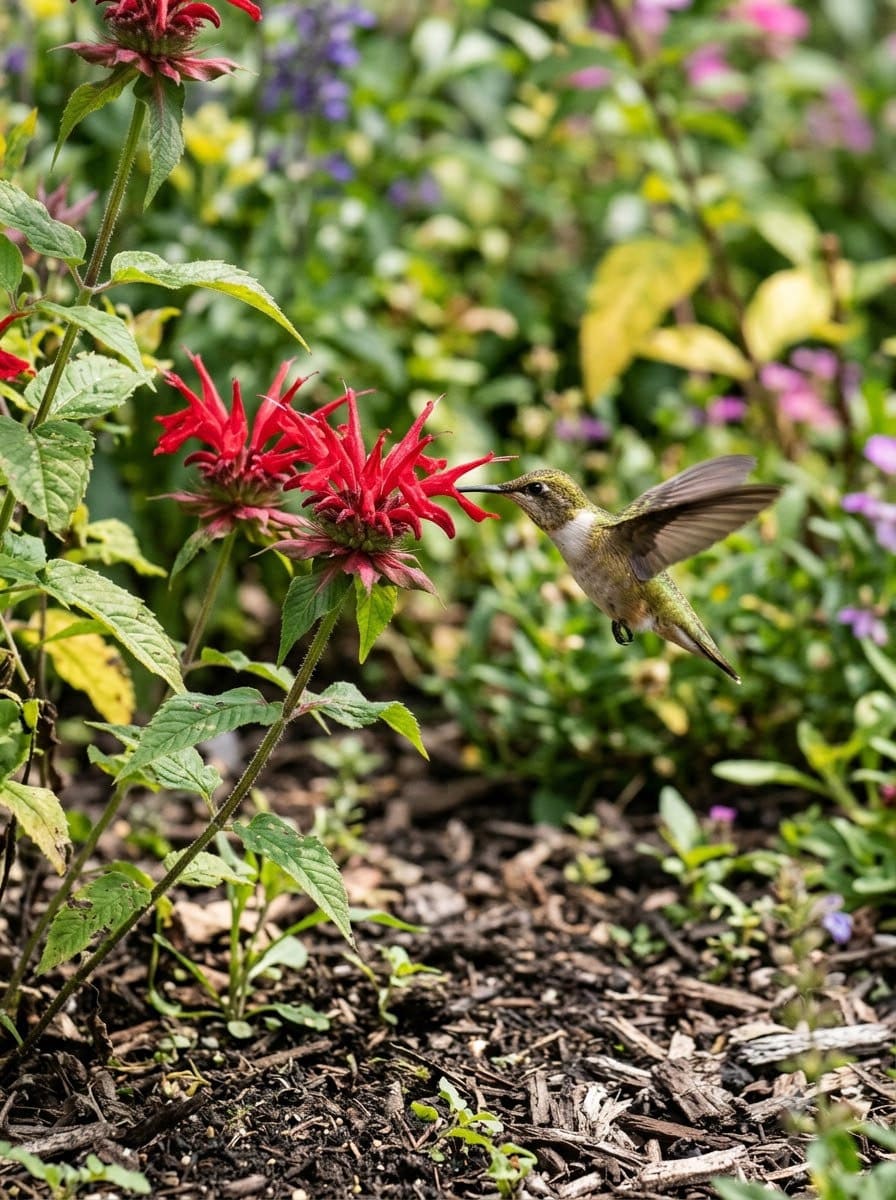
Bee balm blooms for 4-6 weeks in summer and pulls in hummingbirds and bumblebees more reliably than almost anything else on this list, but it’s prone to powdery mildew in humid climates, choose a mildew-resistant cultivar if you’re gardening in the Southeast. Full sun to part shade, zones 3-9. Deadhead to extend bloom, and give it room, it spreads by rhizome and can crowd neighbors within a couple of seasons.
#17. Garden phlox (Phlox paniculata)
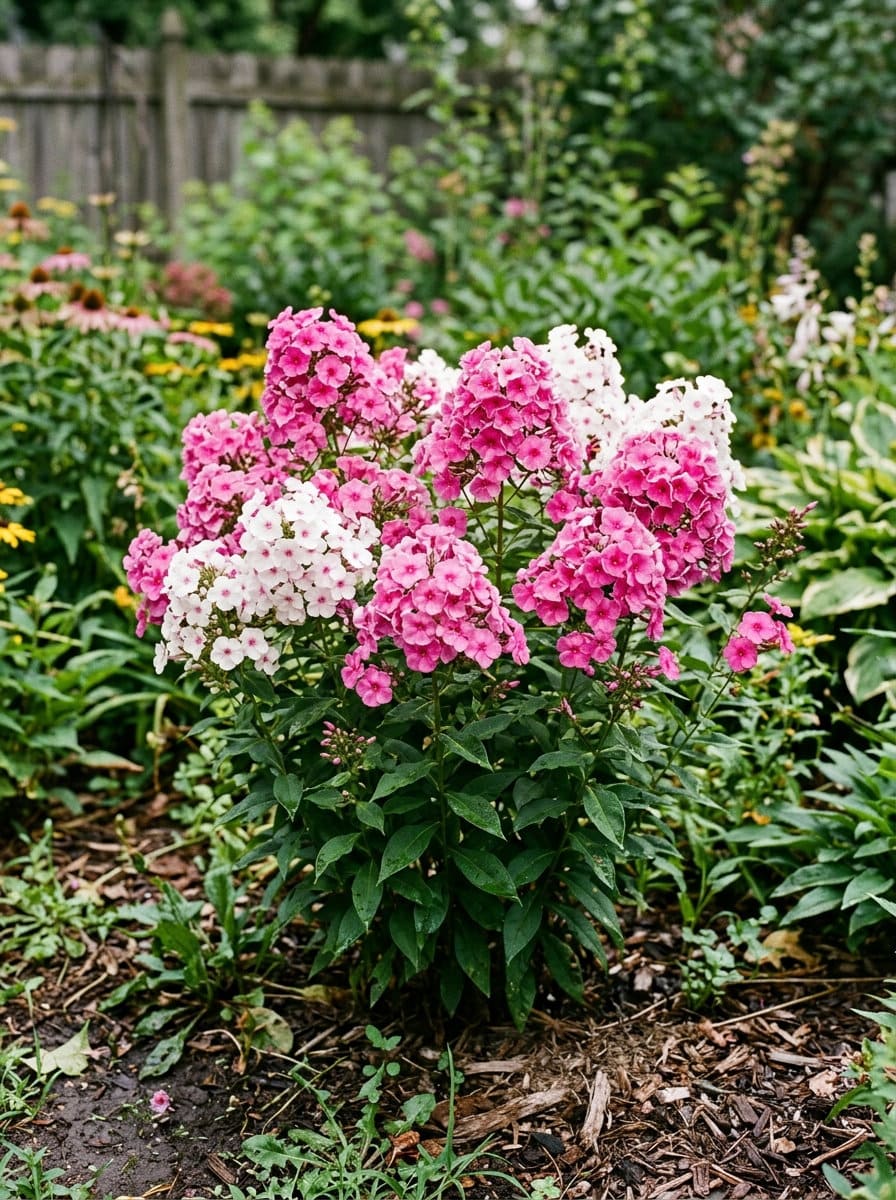
Garden phlox is the longest single bloomer on this list, 8+ weeks from summer into fall if you deadhead consistently, in white, pink, red, or purple. Full sun to part shade, zones 4-8. Powdery mildew is the main issue, plant with good air circulation between clumps rather than crowding them for an instant full look.
#18. Salvia (Salvia nemorosa)
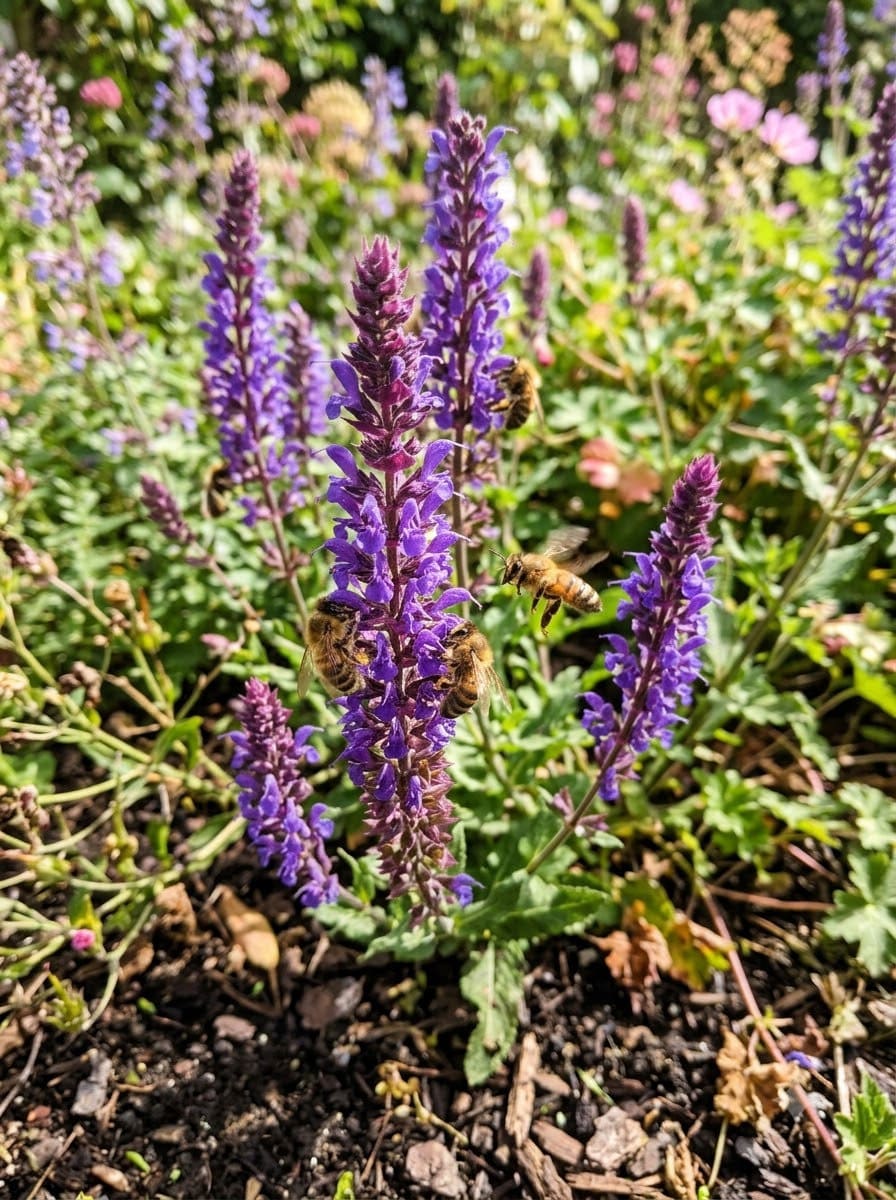
Salvia blooms continuously from early summer through fall, purple-blue spikes that bees genuinely prefer over most other plants in a mixed border. Full sun, zones 4-9. Shear the spent spikes back by half once the first flush fades and it reblooms within 2-3 weeks, one of the more reliable rebloom tricks on this list.
Fall: The Window Almost Nobody Plans For
This is the gap this project set out to fix, most versions of this list, including the original one on this page, list a handful of fall bloomers as an afterthought instead of planning around them from the start.
#19. Sedum ‘Autumn Joy’ (Hylotelephium)
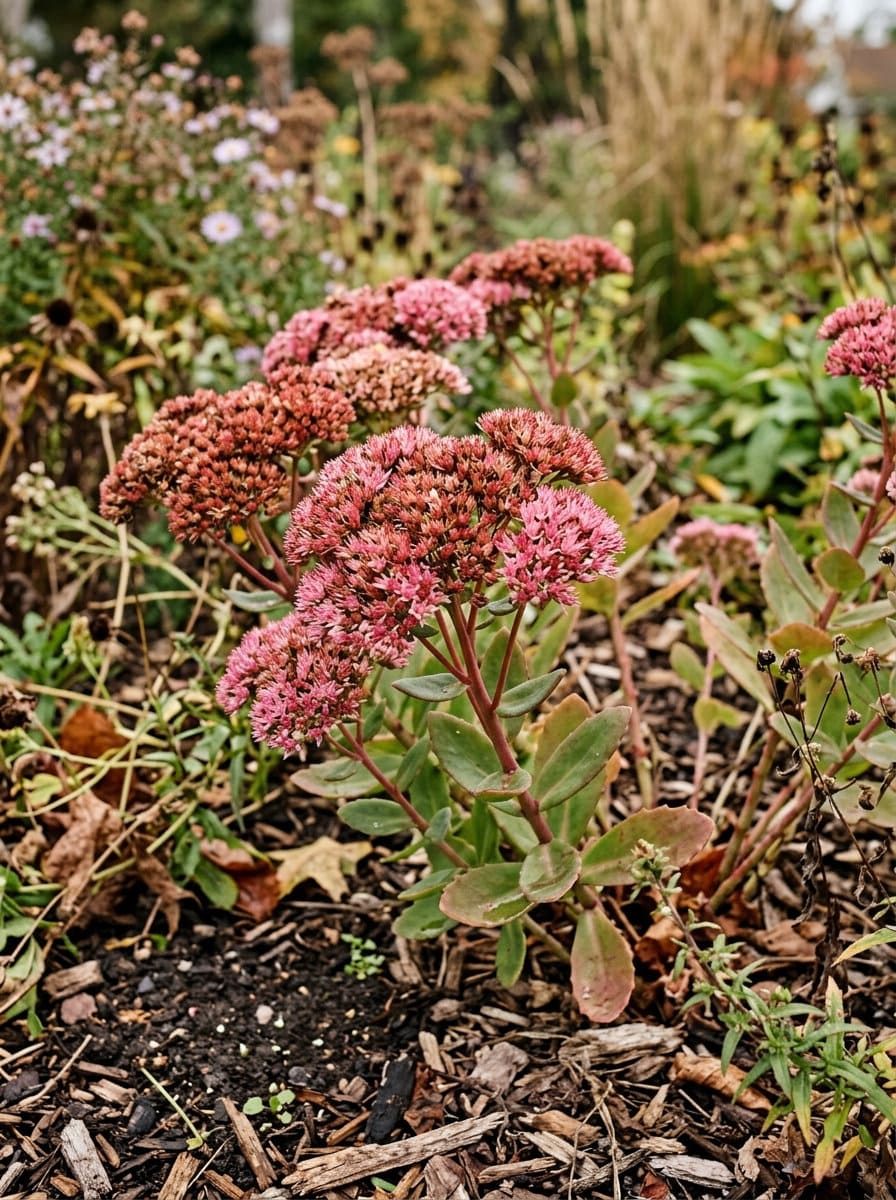
Sedum ‘Autumn Joy’ blooms for 6+ weeks from late summer into fall, flower heads shifting from pale pink to rust-red to deep bronze as they age, and the dried seed heads hold their shape through winter for real cold-season structure. Full sun, zones 3-9. It’s genuinely drought-tolerant once established, one of the few plants on this list that actively prefers being left alone.
#20. Aster (Symphyotrichum)
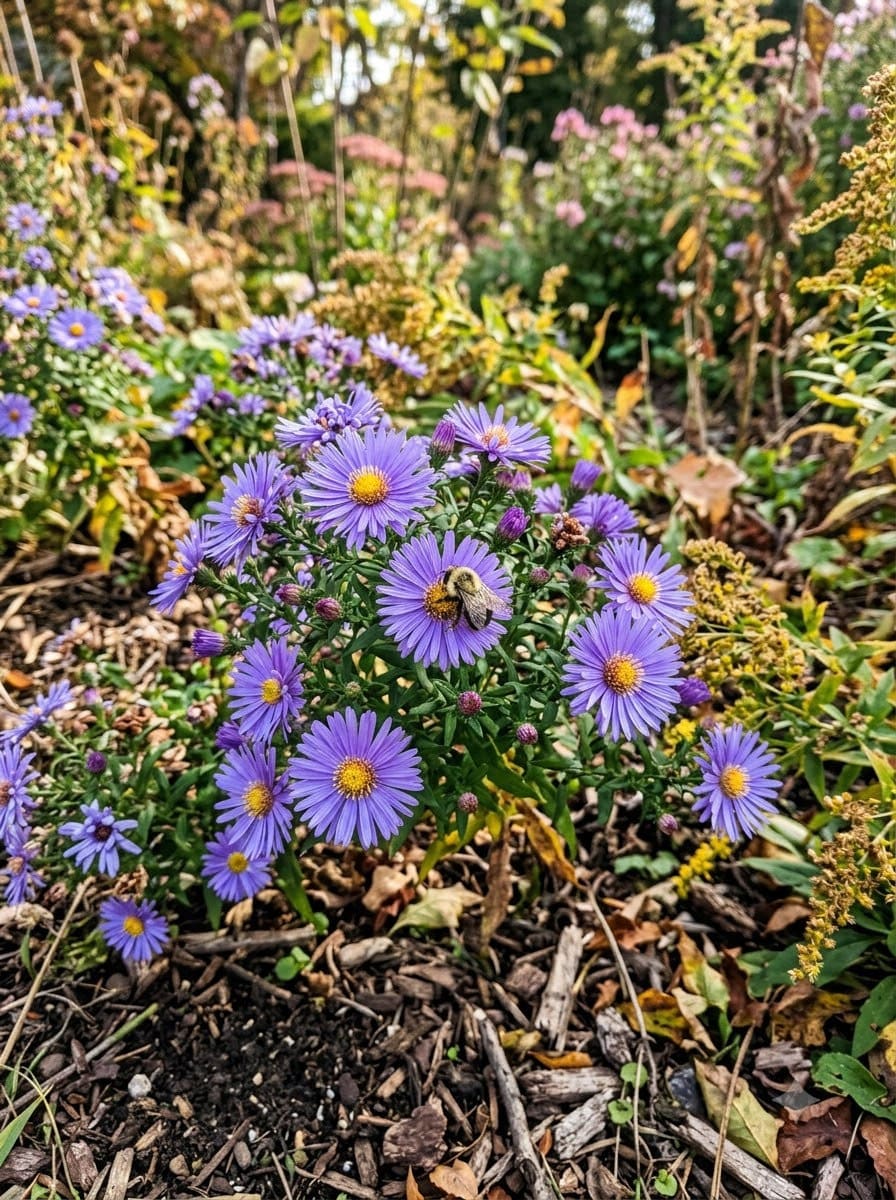
Aster is one of the last true flushes of color before frost, blooming for 4-6 weeks in purple, pink, or blue, and it’s a critical late-season nectar source for migrating monarchs and other pollinators stocking up before winter. Full sun to part shade, zones 3-8. Pinch it back by a third in early summer to keep it from getting leggy and flopping open right when it blooms.
#21. Toad lily (Tricyrtis)
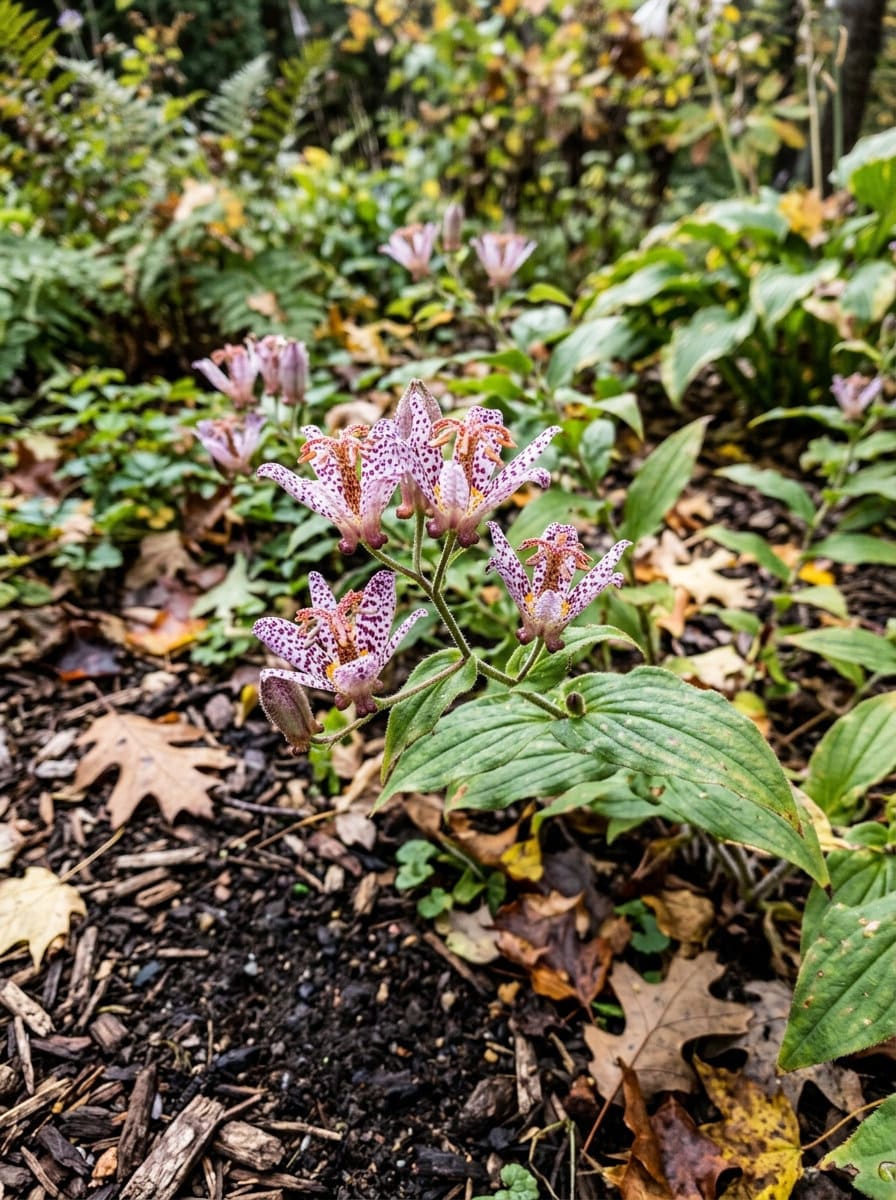
Toad lily is the shade-garden answer to the fall color gap, orchid-like spotted flowers for 4-6 weeks when almost nothing else in a shady bed is blooming. Part to full shade, zones 4-9. It’s slow to establish, don’t judge it by year one, it usually takes 2-3 seasons to hit its stride.
#22. Boltonia (false aster)
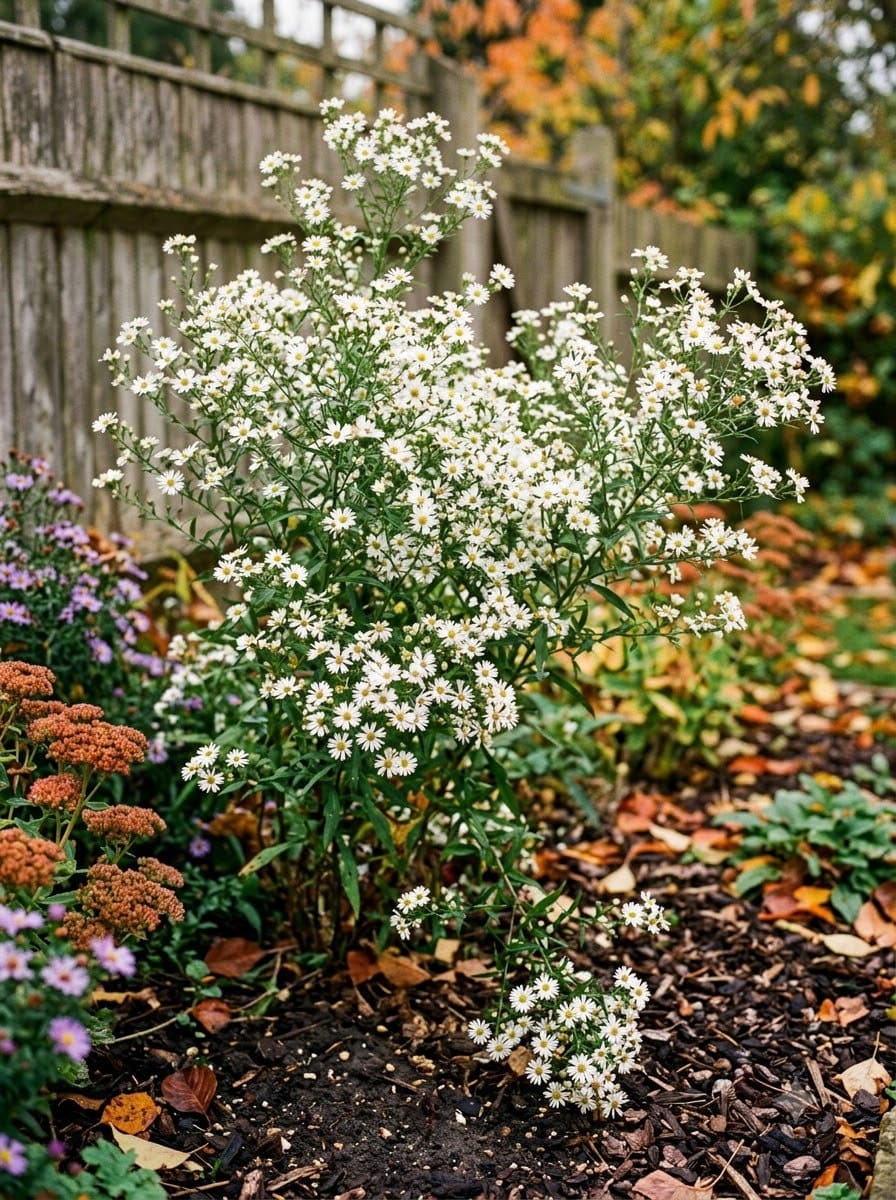
Boltonia closes out the season with clouds of small white or lavender daisy-like flowers for 4-6 weeks in fall, on a plant that can reach 4-5 feet tall, useful as a back-of-border anchor. Full sun, zones 3-9. It pairs well with #20’s asters for a fall combination that reads as a single drift rather than two separate plants.
Assorted late-season sedums beyond ‘Autumn Joy’ bloom in this same window and are worth adding once the core 22 above are established.
Where Most “All Season Bloom” Beds Actually Fail
I planted my first “continuous bloom” border almost entirely from a garden center’s spring end-cap, four kinds of iris, two peonies, one coreopsis. Gorgeous in May. By the second week of July it was a wall of green with nothing happening, and it stayed that way until the mums showed up at the grocery store in September.
That’s the July lull, and it’s the single most common gap in beds built from a plant list instead of a bloom chart. Spring and early summer bloomers finish together because garden centers stock them together, and nobody plans the handoff to the true summer bloomers, yarrow, coneflower, black-eyed Susan, salvia, because those aren’t what’s in stock when people are shopping in April.
The October gap is the quieter version of the same mistake. Most “fall color” advice means mums and pumpkins, not perennials, so beds go dormant-looking weeks before the actual first frost. Sedum, aster, toad lily, and boltonia genuinely fix this, but only if you plant them in spring alongside everything else instead of remembering in September that the bed looks tired.
And here’s the part almost nobody says out loud: about a third of this list only “reblooms” because you deadheaded it on a schedule. Cranesbill, bee balm, garden phlox, and salvia all need you to cut spent flowers back within a week or two of fading, skip that for a month during a busy stretch of summer and the bloom window just closes early. If you want genuinely low-maintenance continuous color, lean harder on yarrow, coneflower, and black-eyed Susan, the three true continuous bloomers on this list that don’t ask anything of you to keep going.
Bloom Coverage by Region
| Region | Spring window | Summer window | Fall window | Notes |
|---|---|---|---|---|
| Northeast / Upper Midwest (zones 3-5) | Mid-April to early June | Mid-June to early September | Mid-September to first hard frost, often early-mid October | Choose the low end of zone ranges; peony and bearded iris perform especially well here |
| Mid-Atlantic / Ohio Valley (zones 6-7) | Late March to late May | Late May to mid-September | Mid-September to late October | Widest usable plant range on this list, most of these 22 do well |
| Southeast, humid (zones 7-9) | Early March to mid-May | Mid-May to October, extended | Late October to December | Bee balm and phlox need mildew-resistant cultivars; per Clemson HGIC, many perennials rebloom on their own in South Carolina’s warm climate without deadheading |
| Southwest / Interior West, arid (zones 5-8) | Mid-March to mid-May | June to September, heat-stressed midsummer | September to November | Prioritize yarrow, salvia, and coneflower for drought tolerance; afternoon shade helps coral bells and toad lily survive |
| Pacific Northwest (zones 7-9) | Late February to May | June to September | October to December | Mild, extended bloom windows across the board; watch for slug damage on hosta-adjacent shade plants like lungwort |
Real Talk: What I’d Do Differently Starting Over
If I were rebuilding a bed from scratch tomorrow, I’d plant the three true continuous bloomers, yarrow, coneflower, black-eyed Susan, first and treat everything else as decoration around that backbone. They cover the widest window with the least upkeep, and honestly they’re the ones that still look fine even in a summer where I don’t get around to deadheading anything.
I’d also stop buying whatever’s blooming at the garden center that week. It’s a genuinely bad way to build a succession bed, you end up with six plants that all peak the same three weeks and nothing after. Buy from the chart, not the display table.
One more thing nobody tells you: a bed like this doesn’t look “finished” for about three years. Baptisia and peony especially take that long to fill out. That’s not a mistake, that’s just what perennials do, and it’s honestly worth the wait once the shrubby stuff finally fills in.
FAQs
How many perennials do I need for a bed that blooms all season?
Aim for at least 2-3 species blooming in every 3-4 week window across the growing season, not a specific plant count. For a typical 10×15-foot border, that usually works out to 10-15 different perennials once you account for mass plantings of 3-5 of each.
Which perennials bloom the longest without deadheading?
Yarrow, purple coneflower, black-eyed Susan, and salvia are the closest things to true continuous bloomers on this list, they’ll keep flowering with minimal intervention. Everything labeled “deadhead-dependent” in the chart above needs regular cutting back to rebloom.
What fills the gap after spring bulbs and before summer perennials?
Late spring/early summer perennials like Siberian iris, cranesbill geranium, and baptisia bridge that window. Columbine and peony also fall here, though their bloom is shorter.
Do perennials bloom the first year I plant them?
Most do, though often at a smaller scale than an established clump. Peony and baptisia are the two biggest exceptions on this list, both can take 2-3 years to bloom fully after planting.
What’s the difference between a rebloomer and a continuous bloomer?
A true continuous bloomer, like yarrow or coneflower, keeps producing new flower buds on its own through the season. A rebloomer, like cranesbill or garden phlox, flushes once and then needs deadheading to trigger a second (or third) round, it won’t rebloom on its own if the spent flowers stay on the plant.
Related Posts
- 6 Deadheading Mistakes Costing You a Second Bloom
- Fall Perennials for a Splendid Array of Color
- 8 Perennials You Should Divide in August (Free Plants)
Products We Recommend
This post contains affiliate links. We may earn a commission on qualifying purchases at no extra cost to you.
Fiskars SoftGrip Bypass Pruning Shears
4.5 stars, 1.6K ratings; for the deadhead-dependent rebloomers (cranesbill, bee balm, garden phlox, salvia)
Shop Now
Espoma Organic Chicken Manure, 25 lb
4.6 stars, 1.3K ratings; for the spring bed-prep top-dressing University of Maryland Extension recommends
Shop Now
Rapitest Soil Test Kit
4.1 stars, 2.3K ratings; useful before choosing plants for a new bed, especially relevant near the "acid-loving vs. alkaline" edge cases in this list
Shop NowNever miss an update — choose FarmFoodFamily as your preferred source on Google.
How it works: Tap the button below to open Google's settings page, then check the box next to FarmFoodFamily.
Tap the checkbox to turn it blue — that's how you know it's set.