21 Stunning Recycled Wood Garden Sculptures You Can Make This Weekend
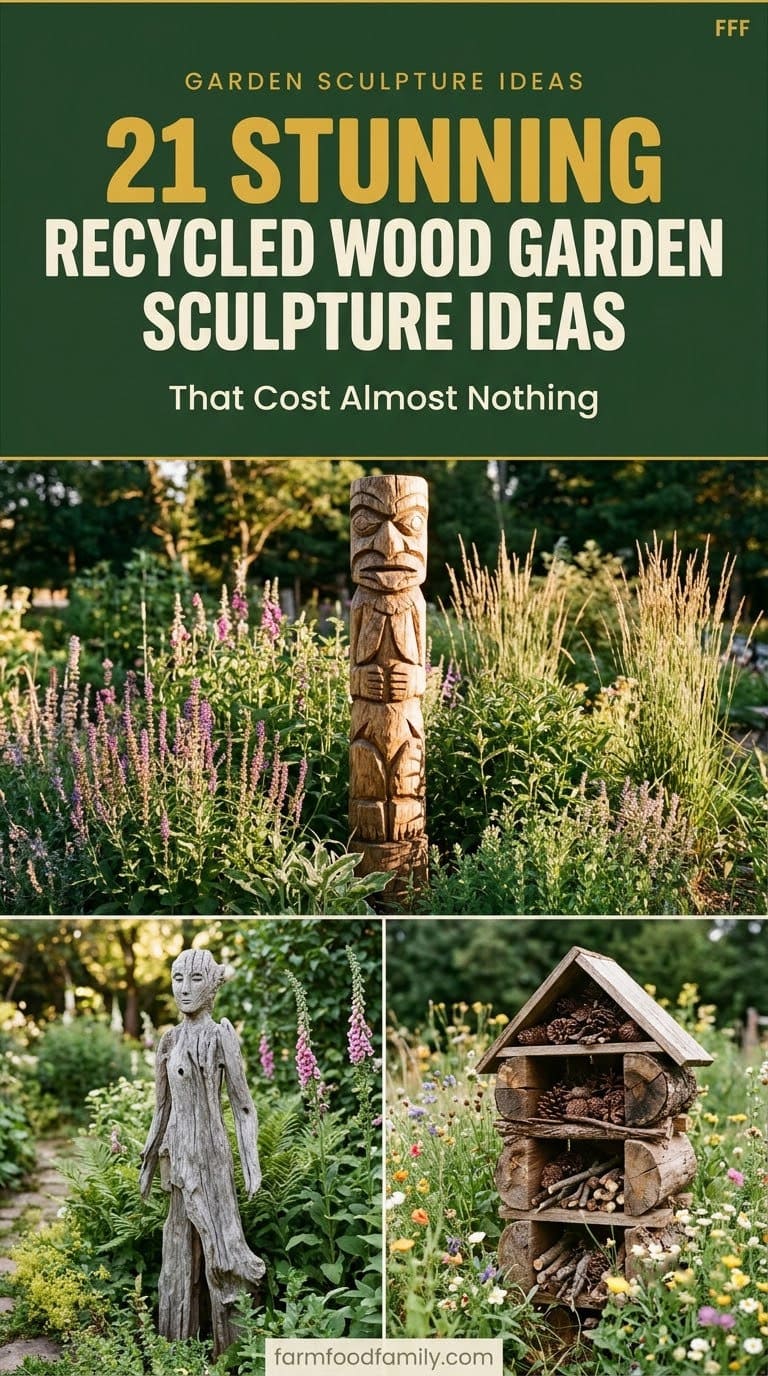
From pallet-wood sunflowers to driftwood spirits, these recycled wood garden sculptures add handcrafted personality to any yard, and most cost almost nothing to build.

Never miss an update — choose FarmFoodFamily as your preferred source on Google.
How it works: Tap the button below to open Google's settings page, then check the box next to FarmFoodFamily.
Tap the checkbox to turn it blue — that's how you know it's set.
From pallet-wood sunflowers to driftwood spirits, these recycled wood garden sculptures add handcrafted personality to any yard, and most cost almost nothing to build.
Recycled wood garden sculptures are outdoor art pieces built from salvaged or repurposed wood — old pallets, fence boards, driftwood, log slices, or fallen branches. They range from small painted stakes to large totem poles standing over six feet tall.
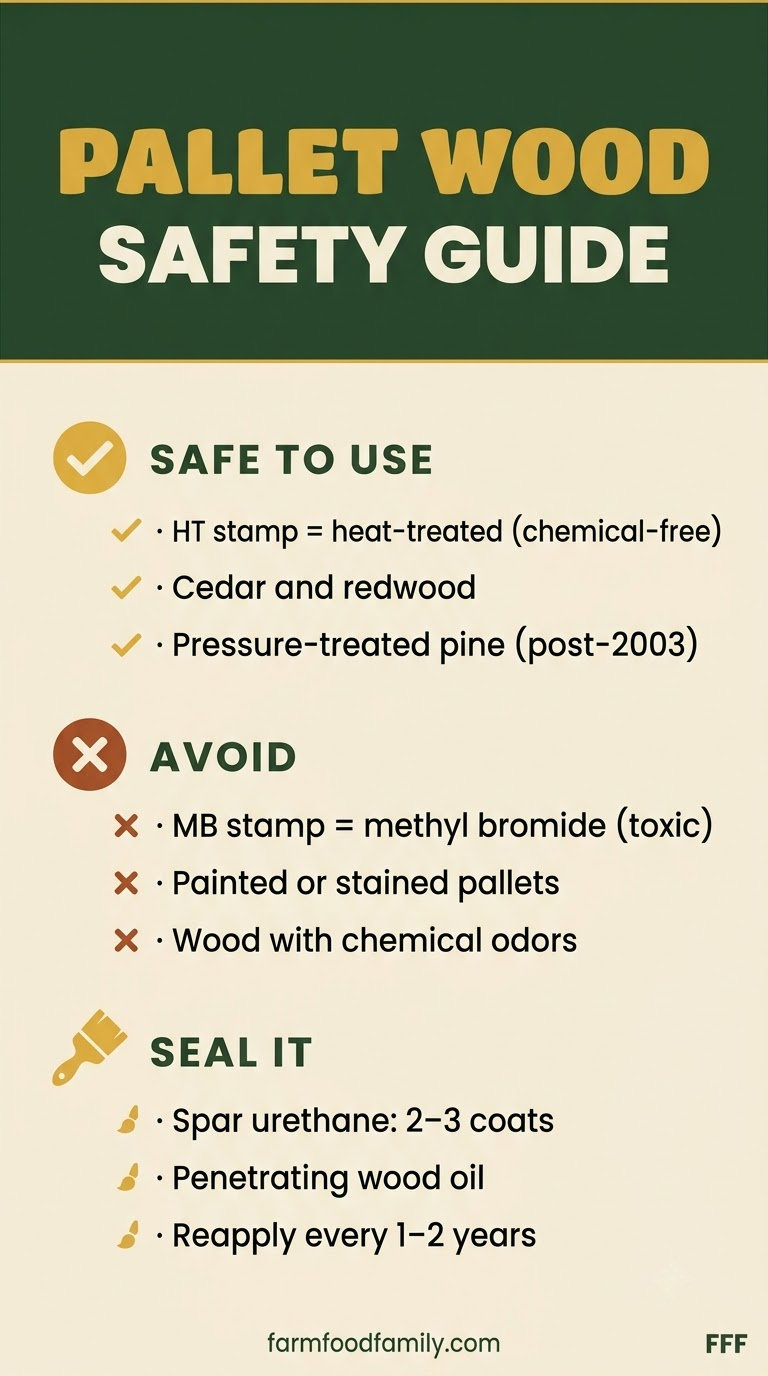
The best materials for outdoor wood art are cedar, redwood, and pressure-treated pine, which resist rot naturally. Penn State Extension warns to look for the HT (heat-treated) stamp on any pallet you use. Avoid pallets stamped MB: those were treated with methyl bromide, a toxic pesticide that can leach into soil and plants, according to UC ANR.
Most recycled wood sculpture projects cost between $0 and $30 in materials. Many take a single afternoon. You do not need carpentry skills for simpler ideas like driftwood mobiles or painted stake flowers.
Sealing every finished piece with outdoor spar urethane or a penetrating wood oil helps it survive rain, sun, and frost for several seasons.
Why Recycled Wood Makes the Best Garden Art
Store-bought garden statues can cost $50 to $300 or more. Recycled wood sculpture flips that equation entirely.
Answer 4 quick questions and get matched to the exact fix for your yard — drainage, budget, layout, or something else entirely.
Take the Free QuizOld fence boards, fallen branches, broken shed planks, and discarded pallets are often free or nearly free. Each piece you build is one of a kind. No neighbor has the same sculpture in their yard.
Danish artist Thomas Dambo has proven the concept at a grand scale. He has built over 100 recycled-wood giants across dozens of countries, all from salvaged materials and volunteer labor. His most famous project placed six massive trolls in forgotten corners of Copenhagen, each named and each pointing visitors toward the next.
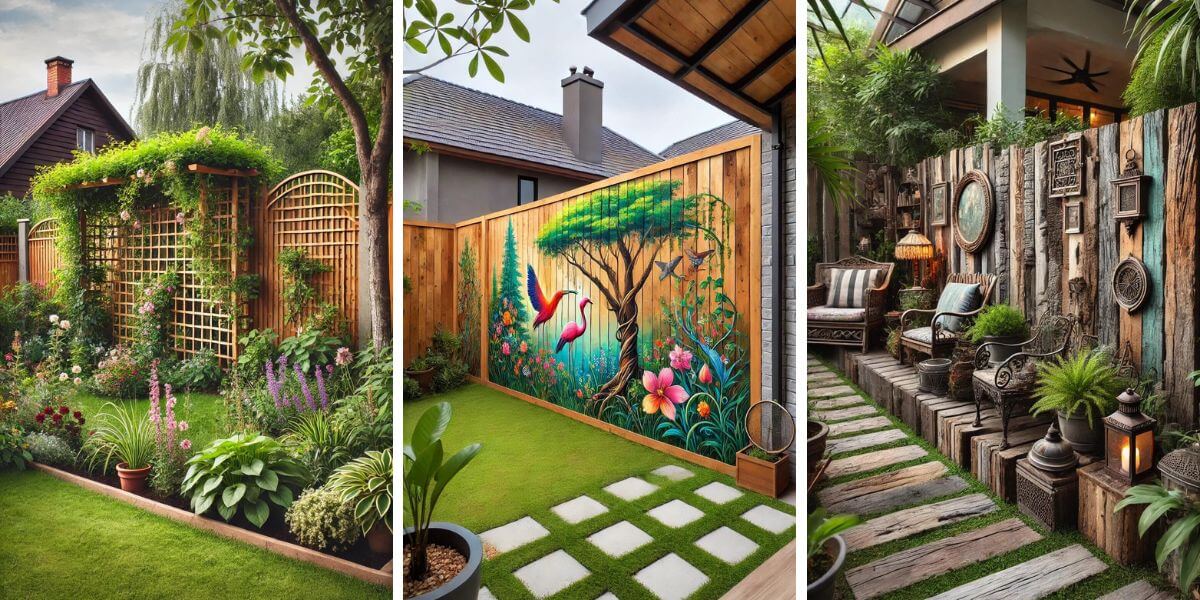

You do not need to build anything that large. Even a small pallet sunflower or a driftwood mobile adds the same spirit of handcrafted charm to a backyard corner.
Recycled wood is also sustainable. Using salvaged materials keeps them out of landfills and reduces demand for new lumber.
Which Wood Is Safe for Outdoor Garden Sculptures?
Not all salvaged wood is safe or long-lasting. Choose the right material before you start.
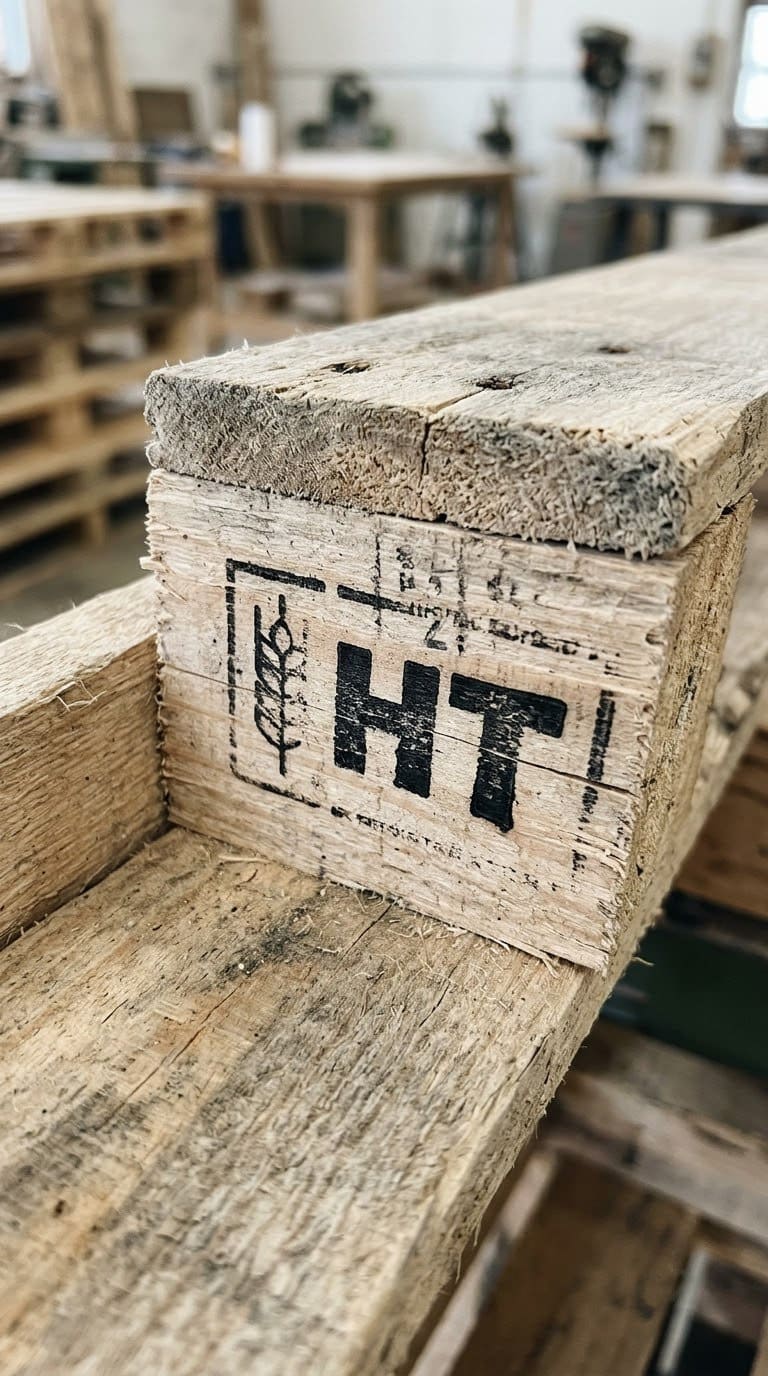
Cedar and redwood resist rot and insects naturally without any chemical treatment. Pressure-treated pine is also an option, but only use lumber sold after 2003. Before that year, pressure-treated wood often contained arsenic-based preservatives (CCA). Current pressure-treated pine uses safer formulas (ACQ or CA-B) and is fine for garden use.
Pallet wood is widely available, but you must check the stamp on the side. Look for the HT mark, which means heat-treated: a safe, chemical-free process. Pallets stamped MB were treated with methyl bromide, so avoid those entirely. Also skip any pallet that is painted or stained, since the treatment stamp may be hidden under the coating.
Most yard problems trace back to one specific, fixable cause. Find yours in 4 quick questions.
Take the Free QuizDriftwood and fallen branches are naturally weathered and often beautiful. Remove any loose bark before use to prevent insect infestations.
Log slices cut from fallen trees make striking stepping stones or base platforms. Seal them carefully: the exposed end grain absorbs water faster than the sides.
Avoid any wood with paint of unknown origin, strong chemical odors, or obvious staining from spills.
| Wood Type | Outdoor Durability | Cost | Notes |
|---|---|---|---|
| Cedar | Excellent (15–20 yrs sealed) | $$ | Best natural rot resistance |
| Redwood | Excellent (15–20 yrs sealed) | $$$ | Premium choice, naturally insect-resistant |
| Pressure-treated pine (post-2003) | Very good (10–15 yrs sealed) | $ | ACQ/CA-B formula — safe for garden use |
| HT-stamped pallet wood | Good (5–10 yrs sealed) | Free | Confirm HT stamp; avoid painted pallets |
| Driftwood / weathered branches | Good (variable) | Free | Already weathered; remove loose bark |
| Log slices | Moderate (3–7 yrs) | Free | Seal end grain with 3–4 coats |
| Avoid: MB pallet wood | N/A | Free | Methyl bromide residue — do not use |
21 Recycled Wood Garden Sculptures You Can Build
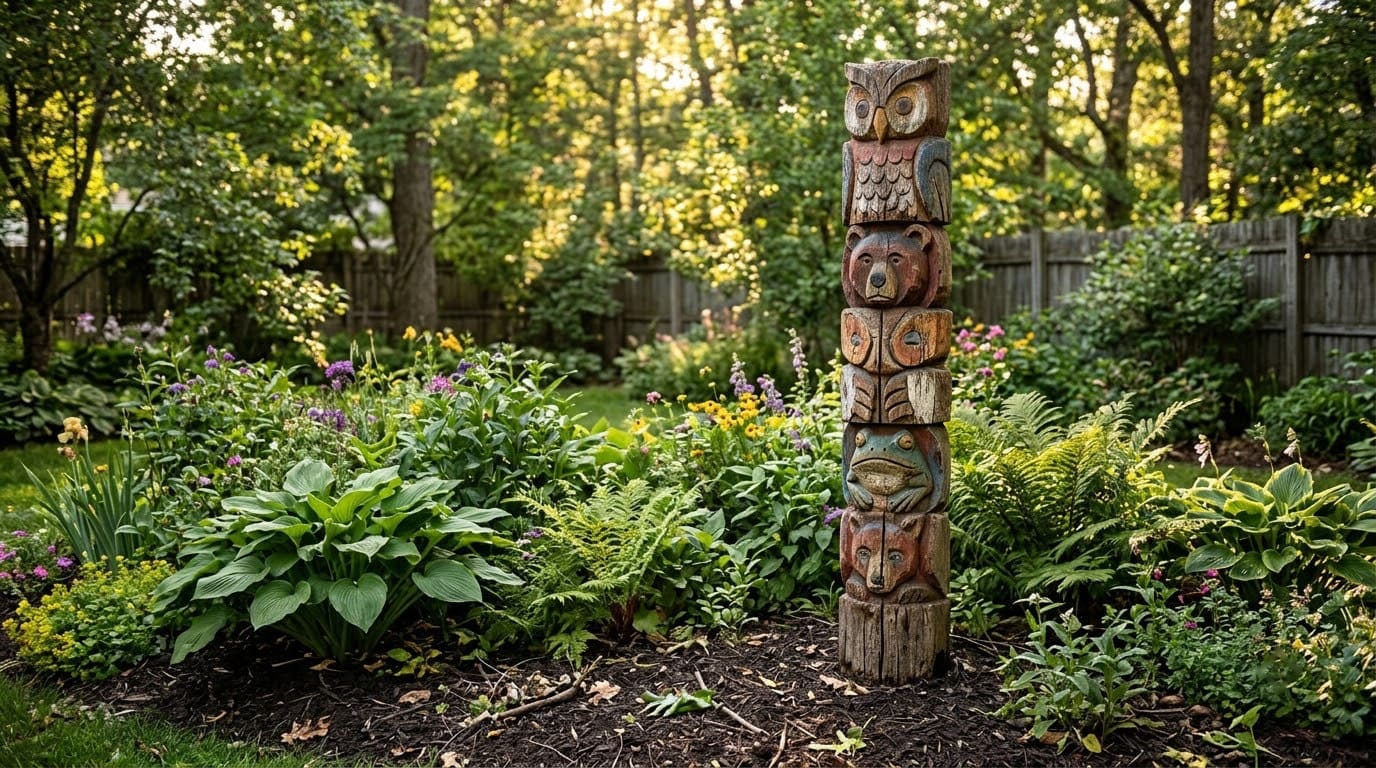
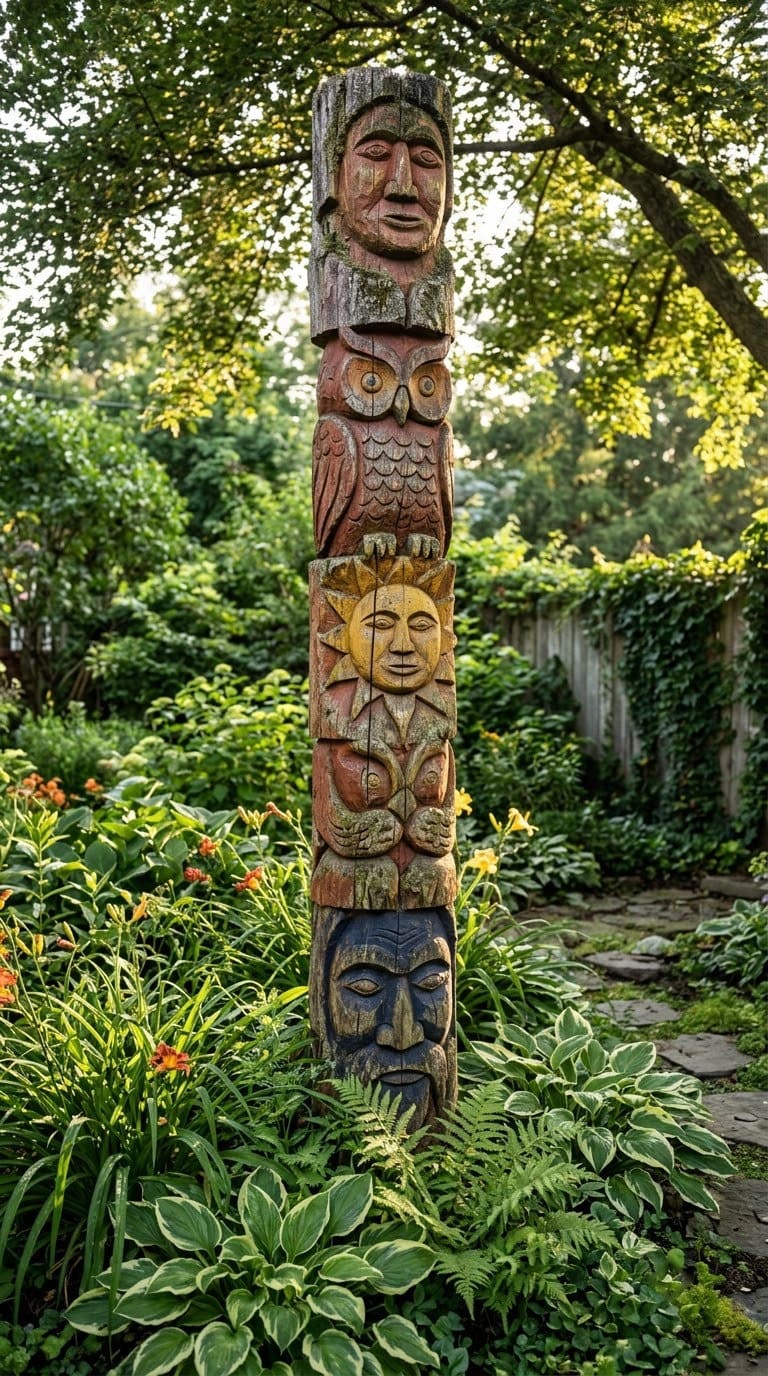
1. Giant Wood Totem Pole
Stack reclaimed post sections, large log chunks, or thick cut-offs into a vertical tower. Carve or paint faces, animals, or patterns at each level. Cedar or pressure-treated pine stacked on a gravel base will last years outdoors. Start with sections at least six inches in diameter for stability.
Skill level: Intermediate | Materials cost: Free–$15 (wood scraps)
2. Pallet Wood Sunflower Stakes
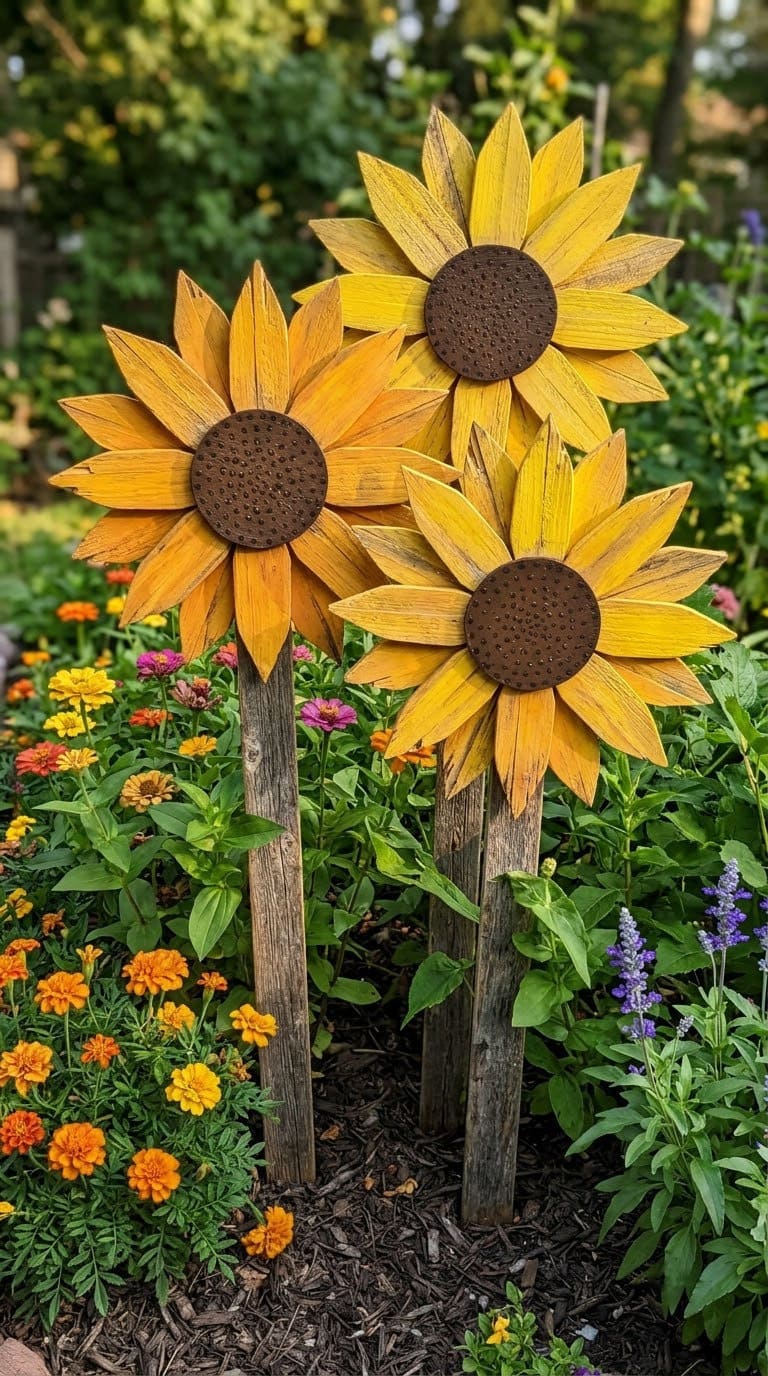
Cut petal shapes from HT-stamped pallet boards using a jigsaw. Paint them in graduated yellow shades. Mount them around a painted brown center disk. Drive a stake into the center back and press it into your garden bed alongside real plants for a year-round pop of color.
Skill level: Beginner | Materials cost: Free–$5 (paint only)
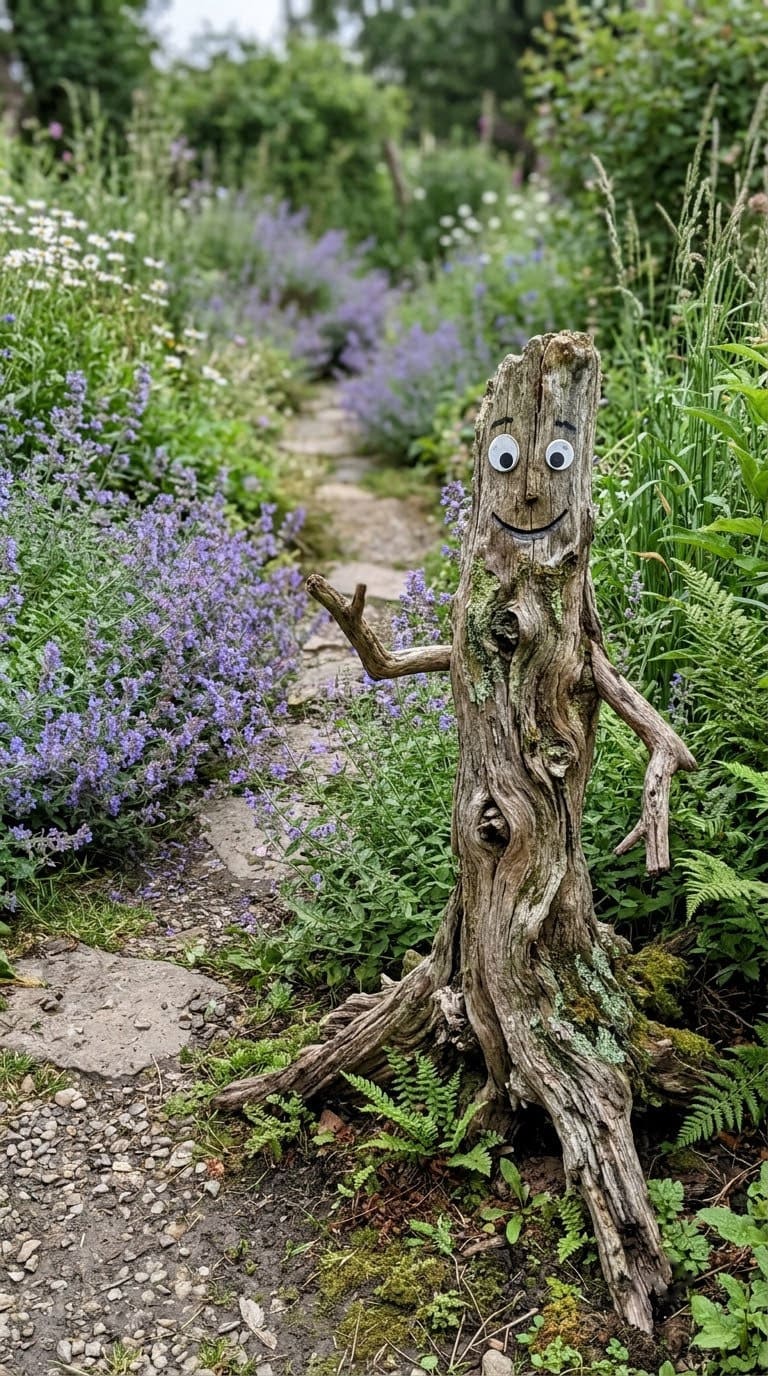
3. Driftwood Garden Spirits
Find a piece of driftwood with an interesting silhouette. Add googly eyes, a painted mouth, and a few branch arms. These folk-art figures work well at the entrance to a garden path or tucked into a corner. Driftwood is already weathered, so it needs no sealing.
Skill level: Beginner | Materials cost: Free
4. Reclaimed Wood Welcome Sign
Sand two or three salvaged fence boards smooth. Paint or wood-burn your message. Seal with exterior spar urethane. Hang on a fence gate or drive into the ground with a stake. A chunky, simple font reads best from a distance.
The average homeowner spends $616/year on yard fixes that don't address the real problem. Find out what yours actually is — before you spend another dollar.
Take the Free Quiz

Skill level: Beginner | Materials cost: $0–$10 (paint or wood-burning pen)
For more ideas along these lines, see our guide to DIY garden sign ideas.

5. Wood Slice Stepping Stones
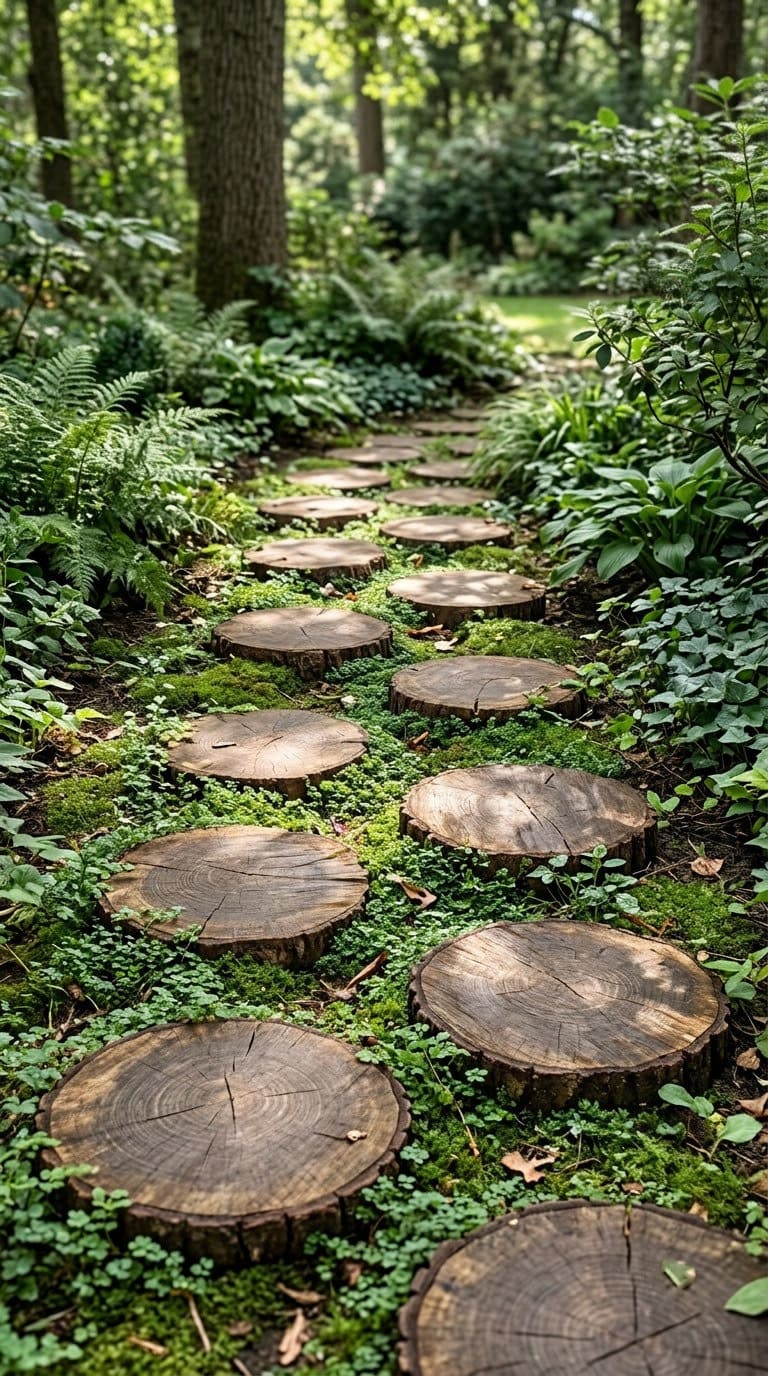
Cut rounds from a fallen log at three to four inches thick. Sand the top face smooth. Apply three to four coats of exterior spar urethane on the end grain (the cut face), which absorbs water much faster than the sides.
Two coats on the sides is sufficient. Press them into the ground along a garden path. Replace any that split after a hard winter by cutting fresh ones from the same log.
Skill level: Beginner | Materials cost: Free (fallen log)
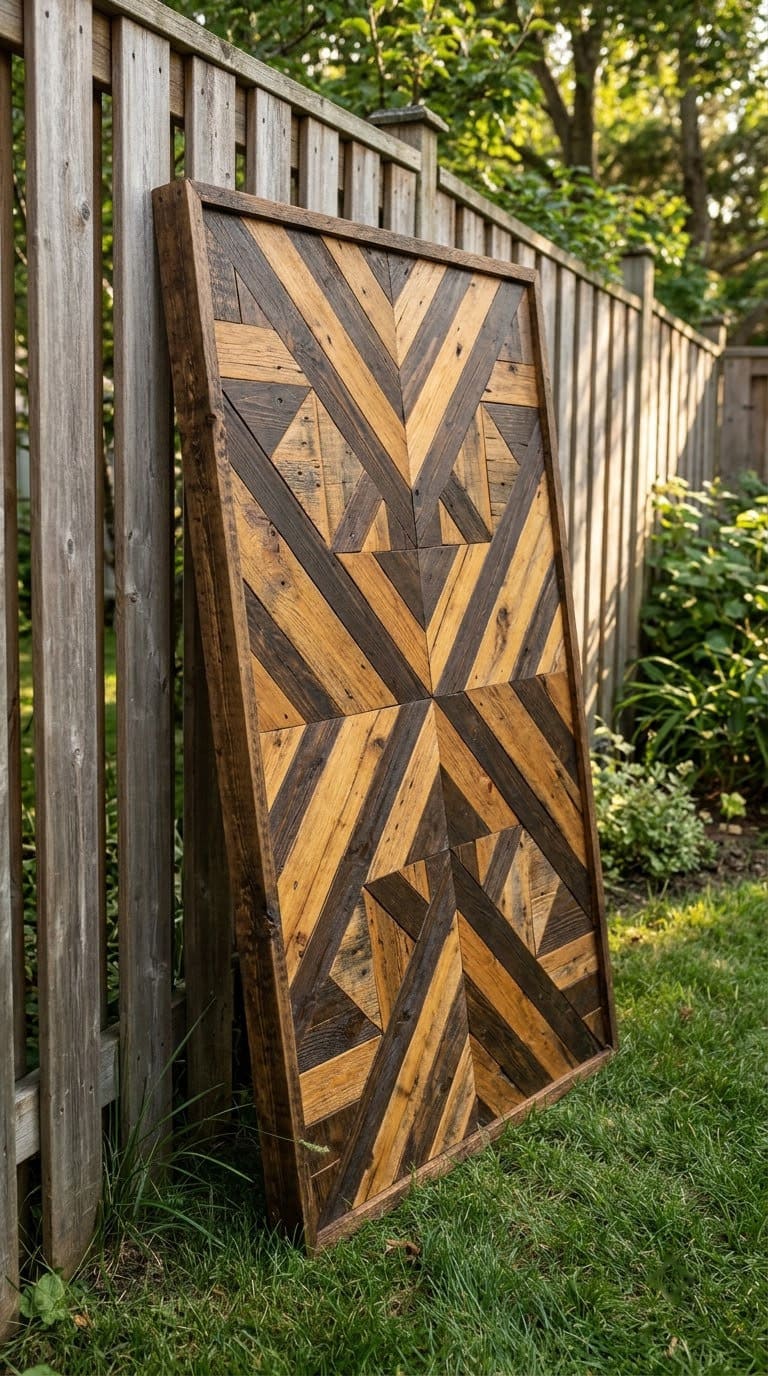
6. Geometric Fence Art Panel
Cut scrap boards into right triangles or rectangles. Stain them in two contrasting shades. Mount them in a geometric pattern on an old fence panel or sheet of exterior plywood. Lean it against an existing fence or wall as an outdoor art installation.
Skill level: Beginner | Materials cost: $5–$15 (stain)
This approach pairs well with the ideas in our wood fence ideas guide.
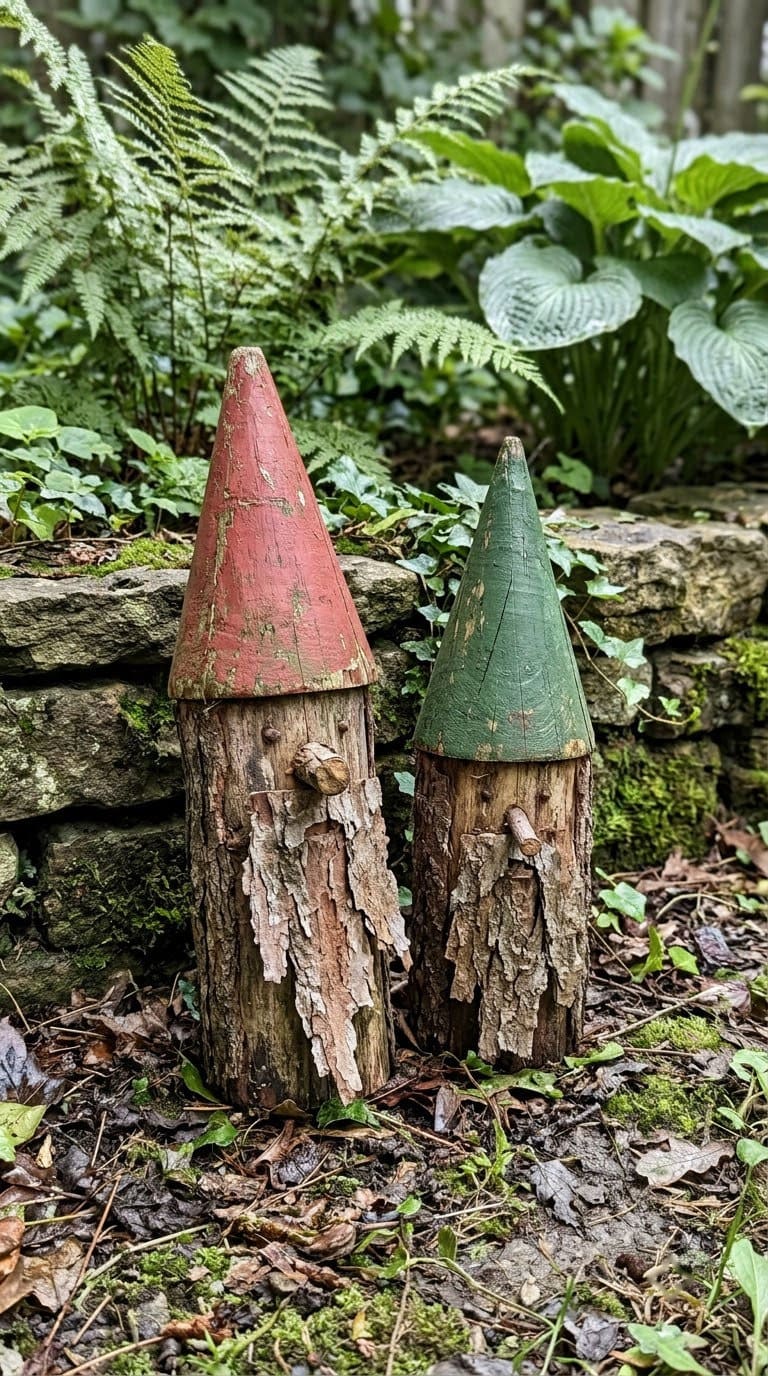
7. Wooden Garden Gnomes from Log Sections
Use a short log section for the body. Attach a branch nose. Glue on bark scraps for a beard. Add a painted wooden cone for the hat. Drill a pointed stake into the bottom. These folk sculptures look charming clustered near a garden wall.
Skill level: Beginner–Intermediate | Materials cost: Free
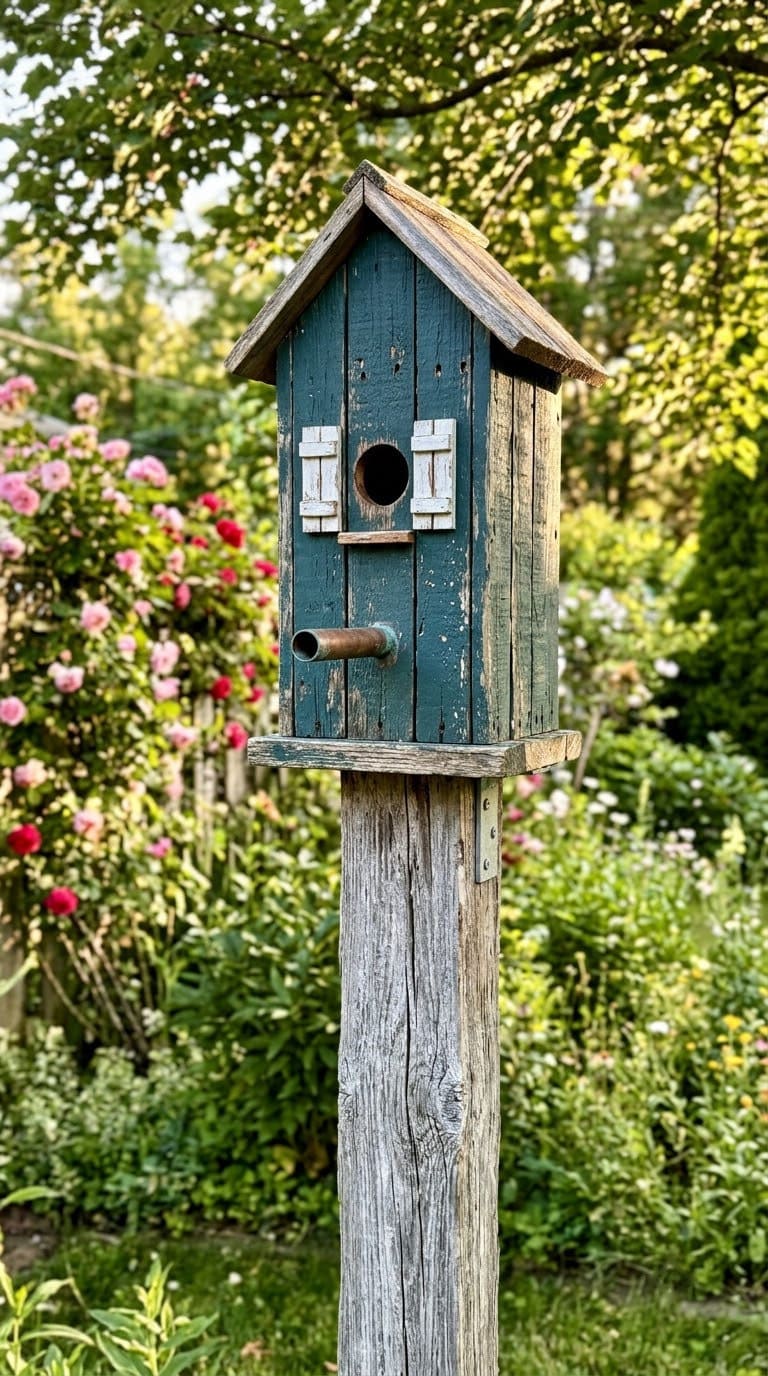
8. Pallet Wood Birdhouse Sculpture
Build a decorative birdhouse from pallet slats, but give it character: add a copper pipe perch, paint it in bold colors, or add faux shutters. Mount it on a tall post to serve as a garden focal point that also attracts local birds. Use only HT-stamped pallet wood here.
Skill level: Intermediate | Materials cost: $0–$20 (paint, hardware)
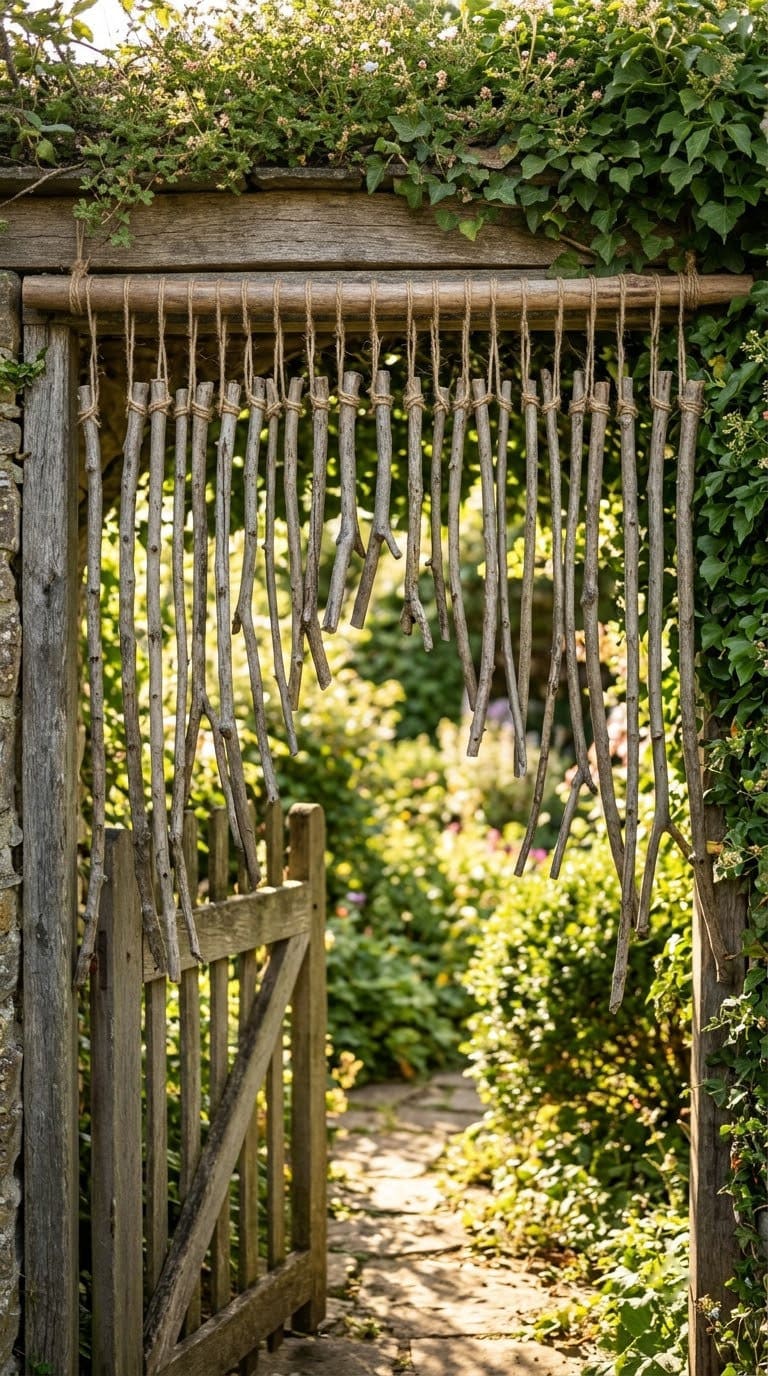
9. Branch Curtain Archway
Hang branches of similar thickness from a horizontal rod at varying lengths using natural jute twine. Install this above a garden gate or between two posts as a living-feel art divider. Choose dry, bark-free branches for a clean, lasting look.
Skill level: Beginner | Materials cost: Free
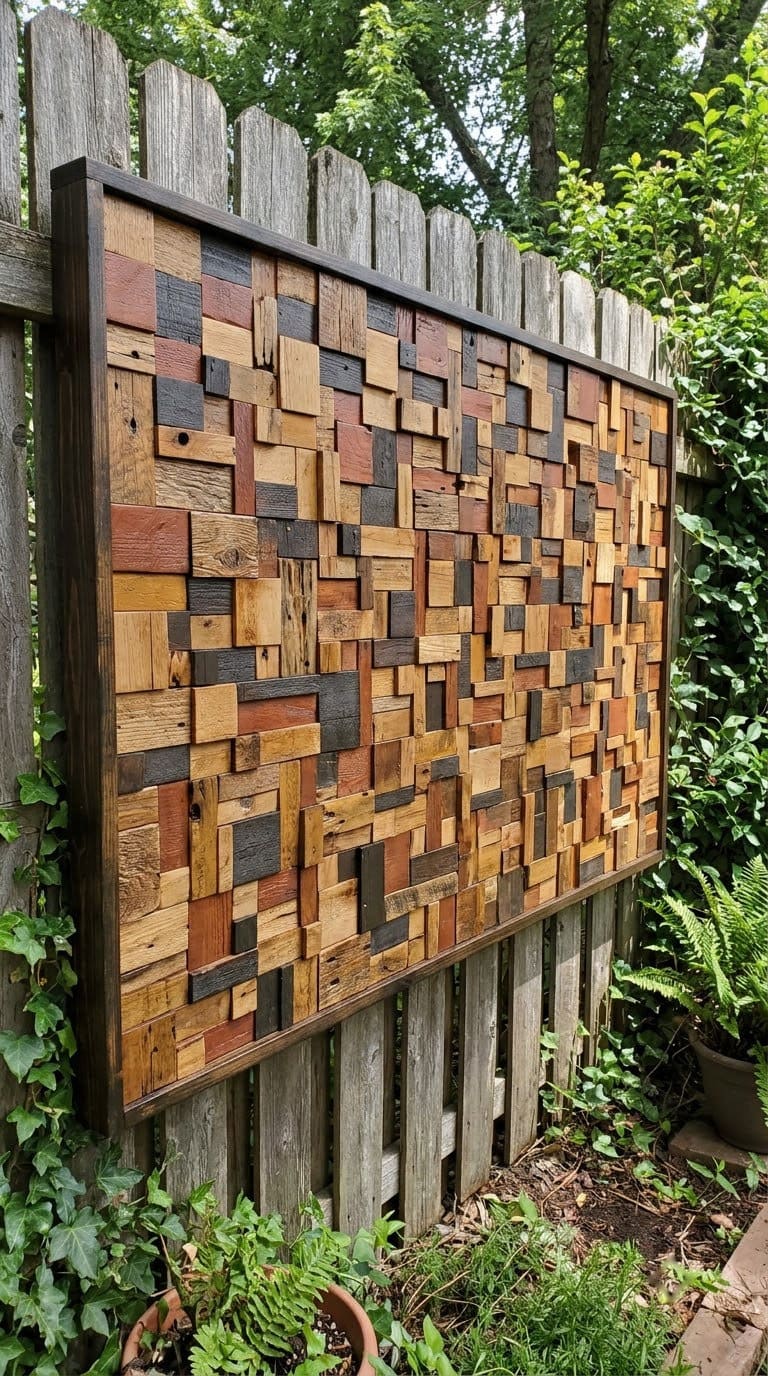
10. Scrap Wood Mosaic Panel
Cut scrap pieces into small squares and rectangles. Stain them in several complementary shades. Glue them onto a backing board in a mosaic pattern. Seal the whole panel with exterior polyurethane. Mount it on an outdoor wall or fence.
Skill level: Beginner | Materials cost: $5–$10 (stain, glue)
This style works well as part of a larger garden wall art display.
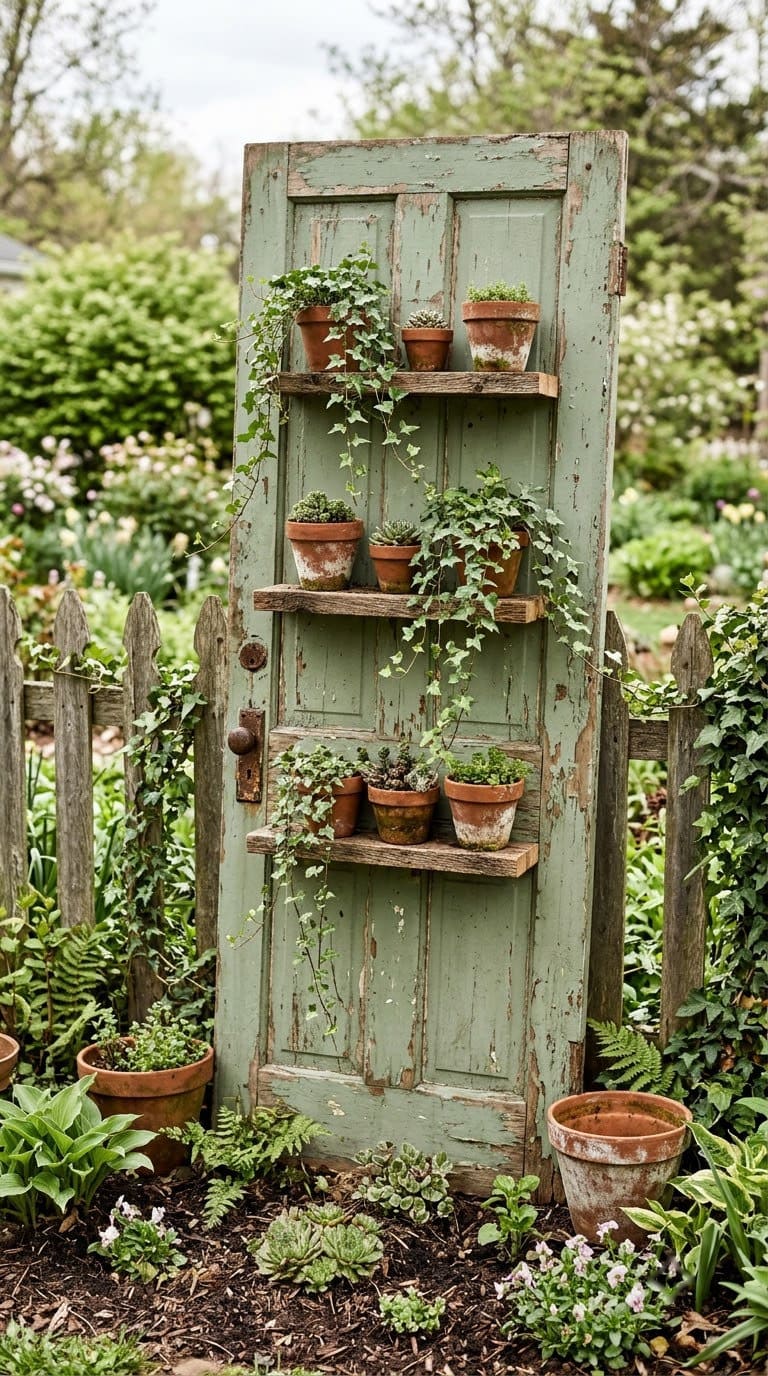
11. Reclaimed Door Garden Feature
Salvage an old door from a Habitat ReStore or curbside pickup. Paint it in a bright or earthy color. Add small shelves to the panels using scrap boards. Use the shelves for potted plants or lanterns. Anchor it into the ground with ground stakes.
Skill level: Beginner–Intermediate | Materials cost: $0–$30 (paint, shelves)
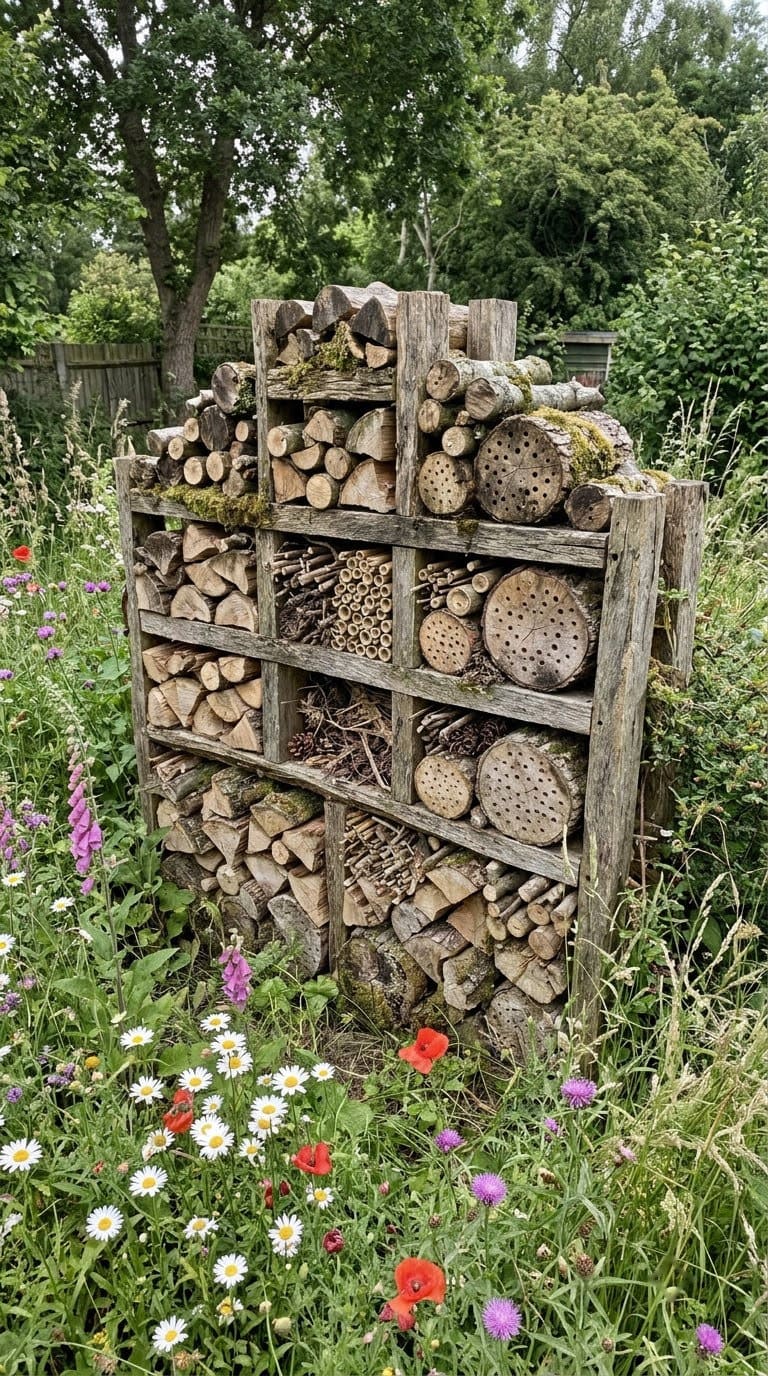
12. Log Wildlife Hotel
Stack log sections and off-cuts inside a simple frame built from larger lumber. Drill holes of varied sizes into the logs: some for solitary bees, some for beetles, some for lacewings. This project serves double duty as a sculptural garden feature and a beneficial insect habitat.
Skill level: Beginner | Materials cost: $0–$10 (drill bits)
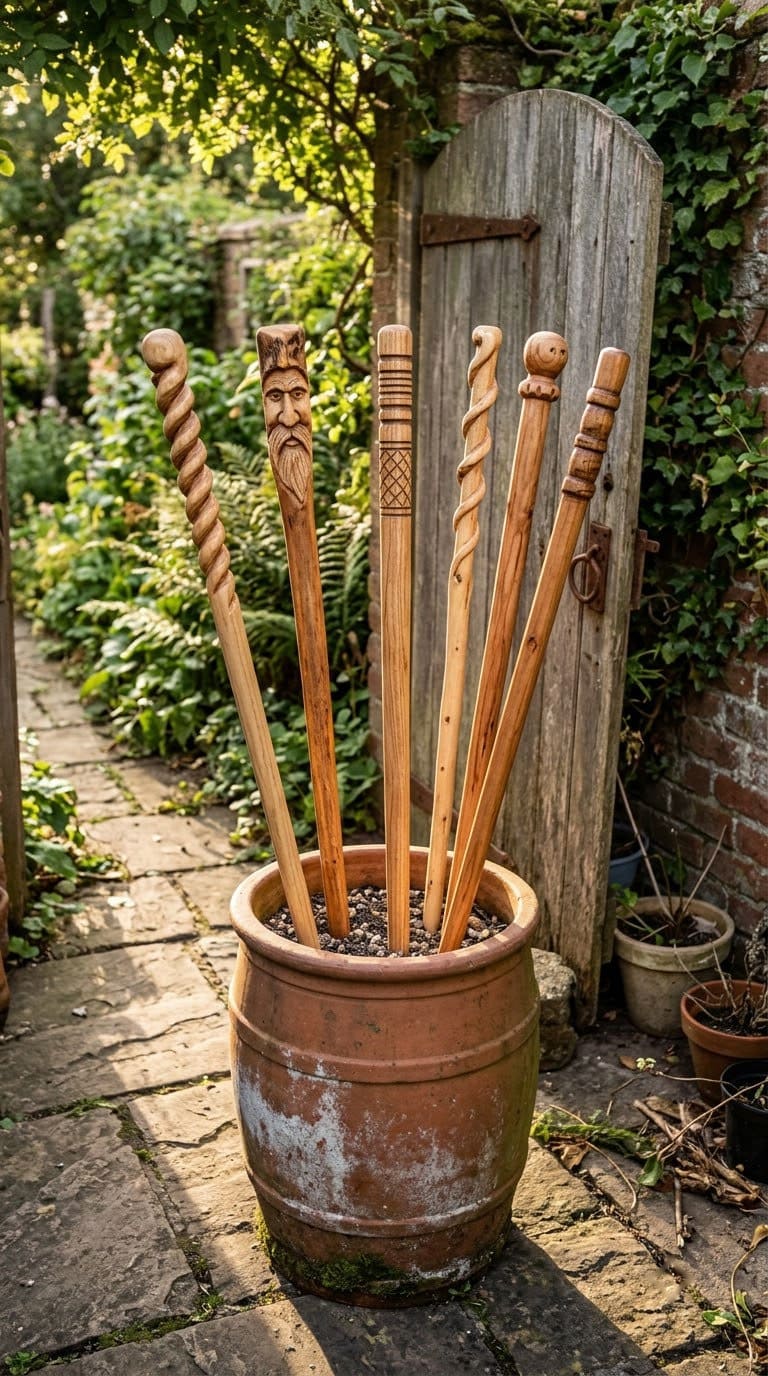
13. Carved Walking Stick Display
Collect straight branches or saplings. Remove the bark with rough sandpaper or a draw knife. Carve simple faces, spirals, or animals into the top sections. Finish with linseed oil. Display them grouped in a large pot or barrel near the back door or garden entrance.
Skill level: Intermediate | Materials cost: Free–$5 (oil finish)
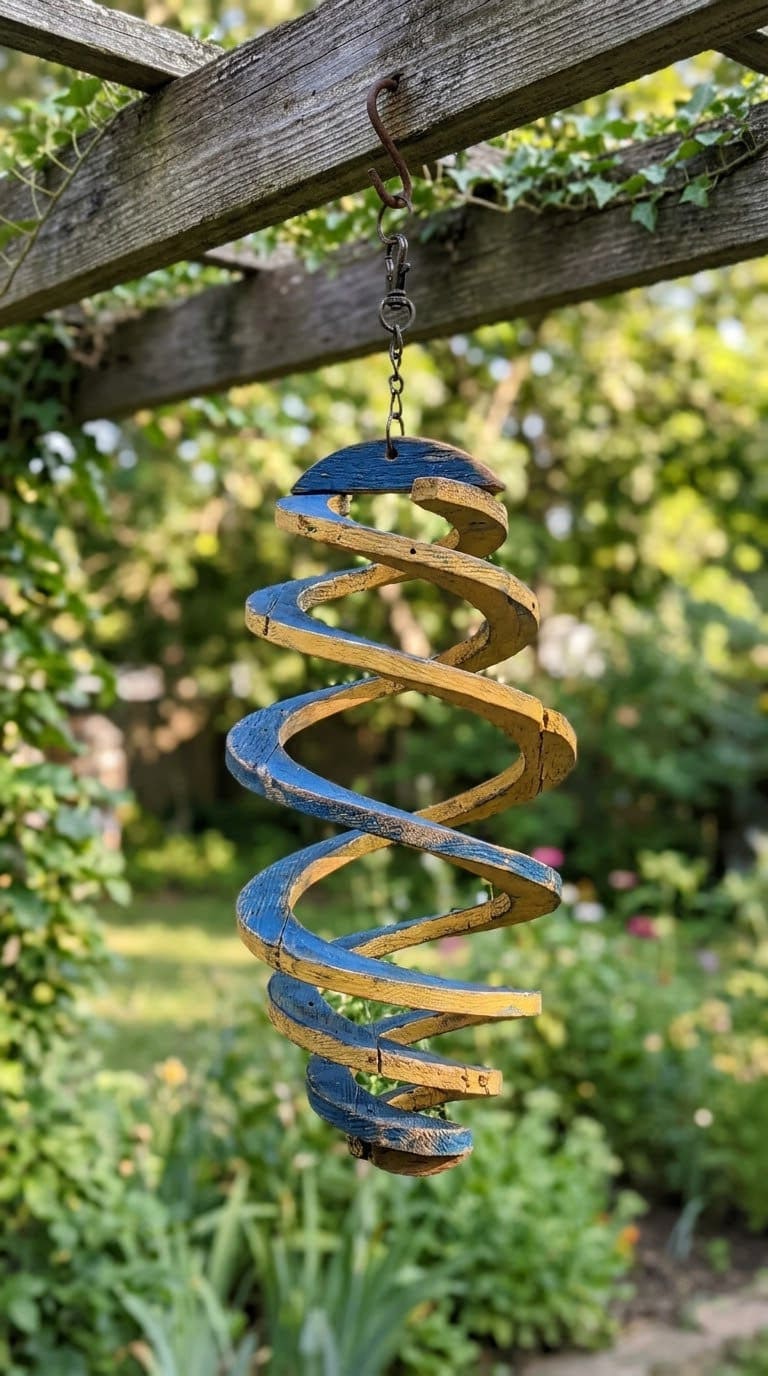
14. Wind Spinner from a Scrap Circle
Cut a circle from a flat scrap board. Draw a spiral from the edge inward toward the center. Cut along the spiral line. Hang from a garden hook with a swivel clip and it will spin in the breeze. Paint in weather-resistant colors and seal before hanging.
Skill level: Beginner | Materials cost: Free–$5 (paint)
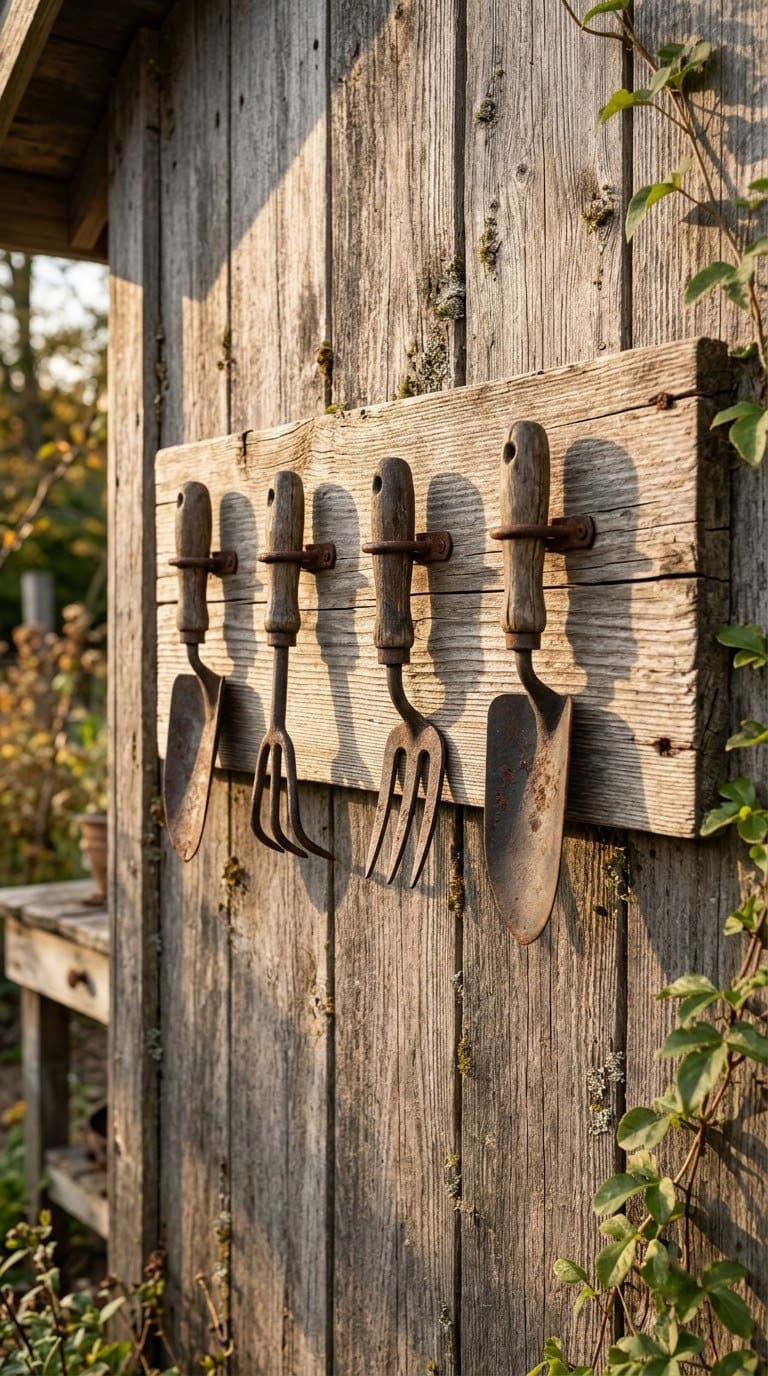
15. Garden Tool Art Display Board
Mount old garden tools (trowels, cultivators, a small rake) onto a weathered plank. Space them evenly and bolt them through the handles. Hang the board on a fence or shed wall. It reads as art from a distance and keeps tools accessible up close.
Skill level: Beginner | Materials cost: Free (old tools)
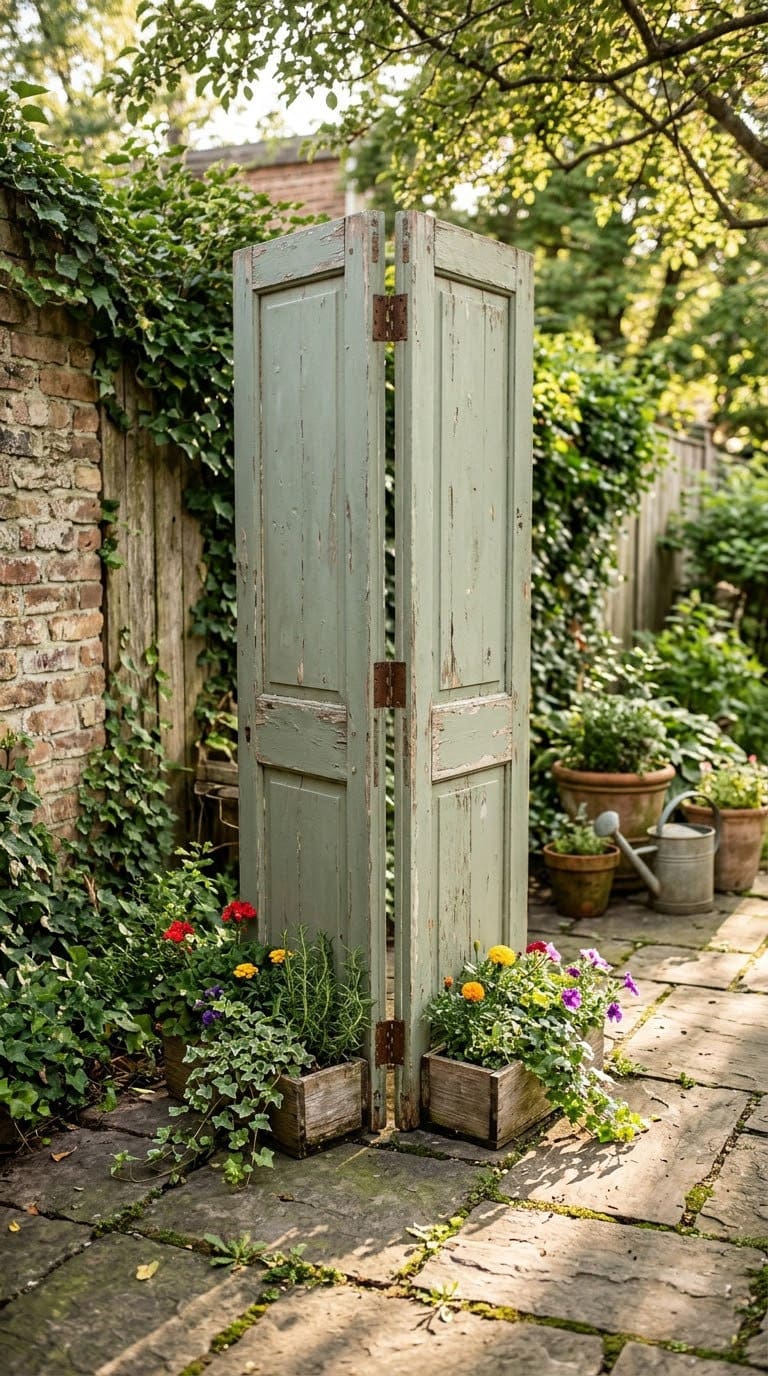
16. Vintage Shutter Planter Feature
Salvage a pair of old shutters. Hinge them together in a V shape for stability. Mount small planter boxes at the base. Paint the shutters in a farmhouse color: sage green, cream, or barn red. Position in a corner of the patio or garden bed.
Skill level: Beginner–Intermediate | Materials cost: $0–$25 (paint, planter boxes)
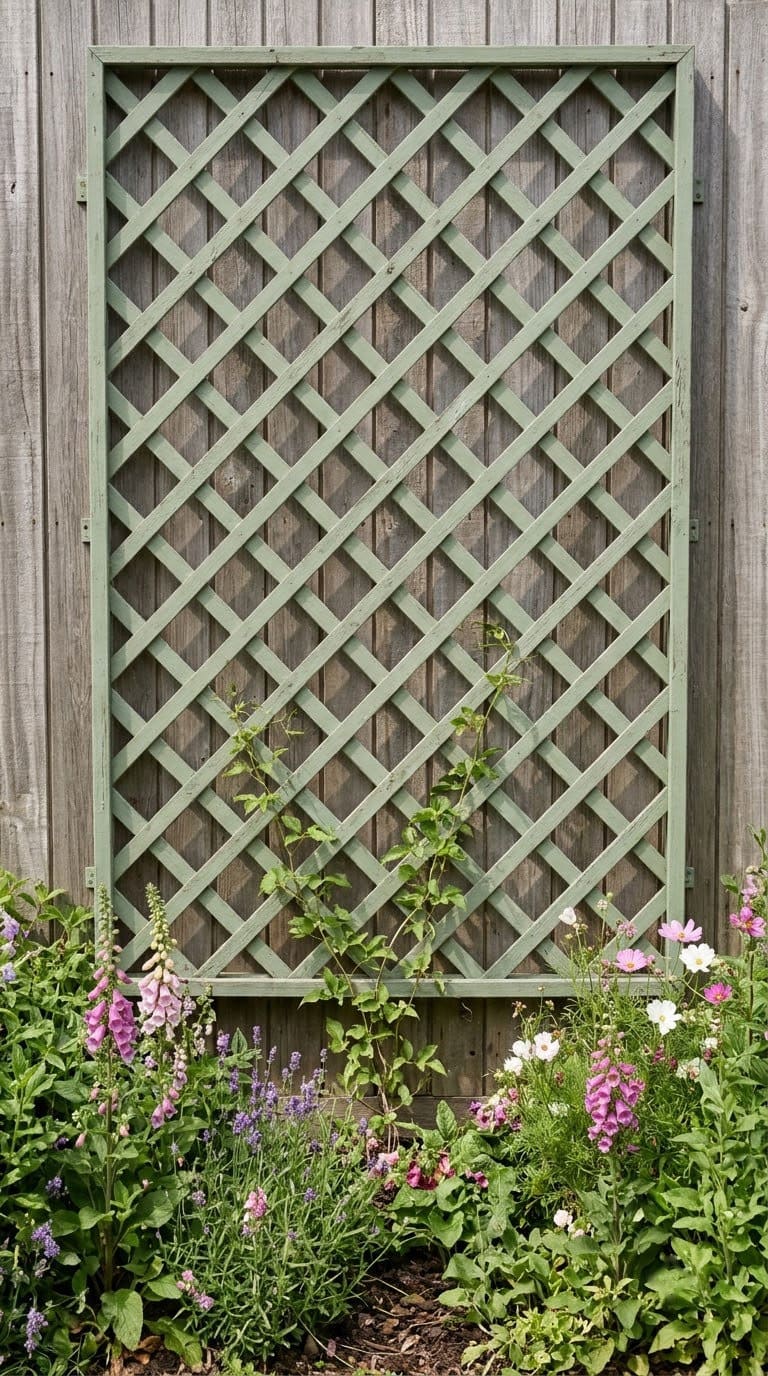
17. Trellis Wall Art
Cut thin strips from salvaged slats. Nail them into a large diamond, heart, or starburst pattern on a backing board. Paint in one solid color. Mount it on an exterior wall or fence panel. Train a climbing vine onto it over time, and it becomes a living sculpture.
Skill level: Beginner | Materials cost: Free–$5 (paint)
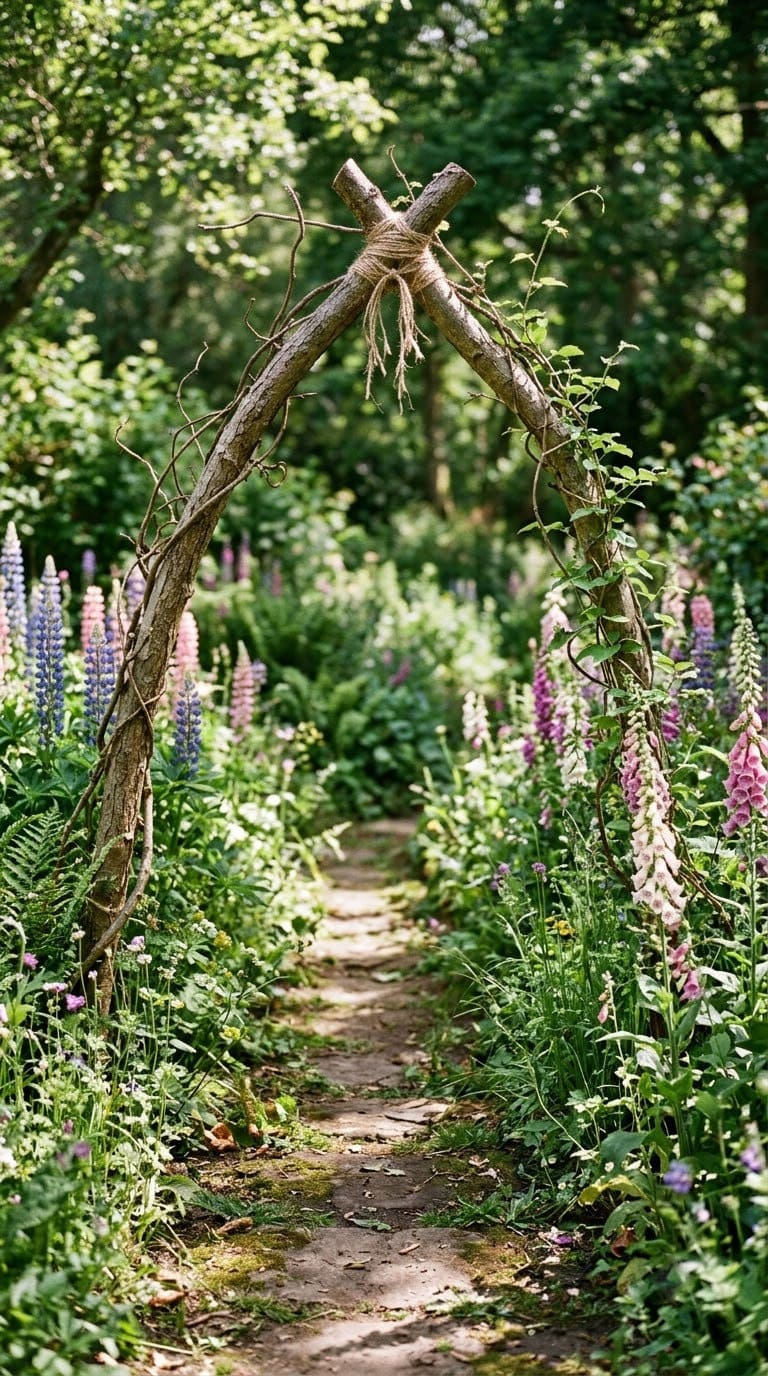
18. Tree Branch Archway
Bend two long, flexible branches into an arch shape. Lash the tops together with thick jute twine. Drive the ends into the ground at the sides of a garden path. Over time, weave smaller branches or climbing plants through the structure. This creates a living gateway that improves each season.
Skill level: Intermediate | Materials cost: Free
For more ideas on transforming your outdoor space, see our whimsical garden ideas.
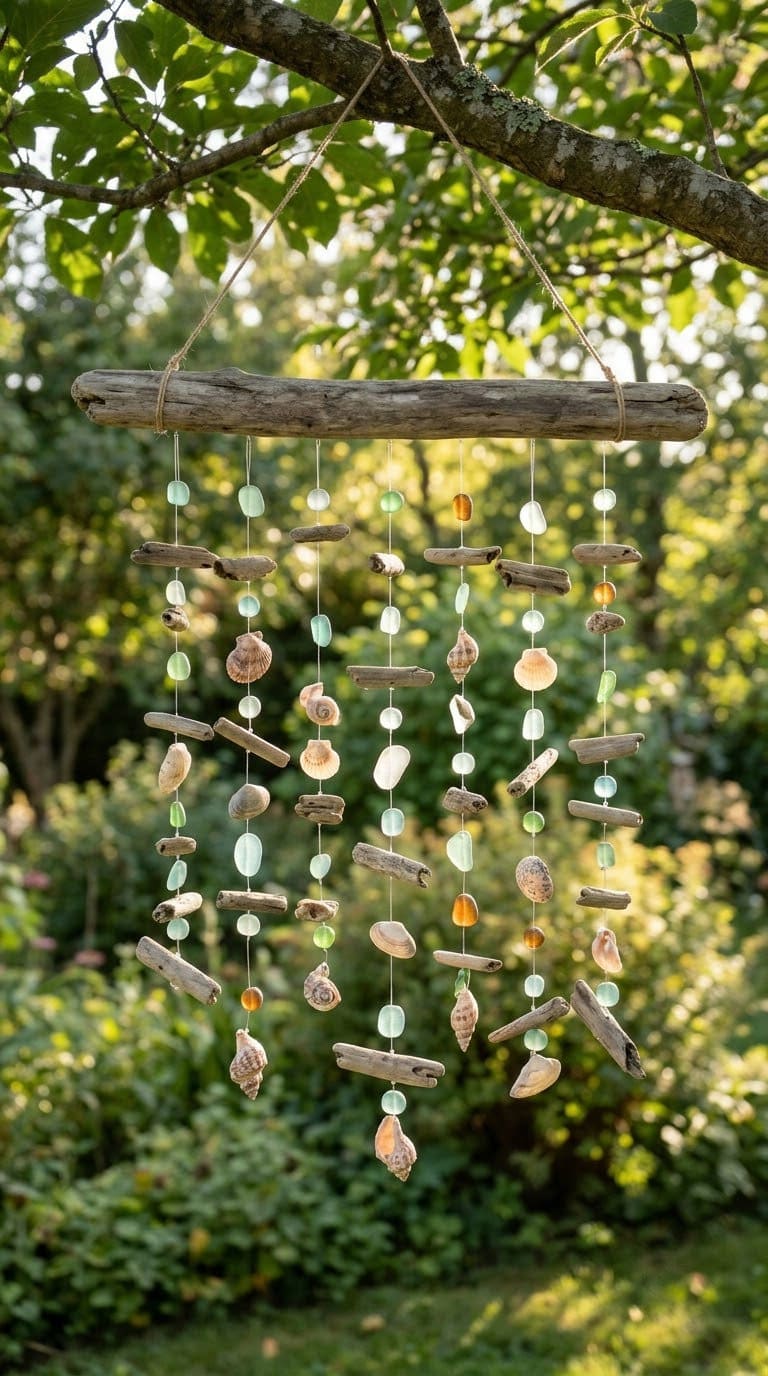
19. Driftwood Mobile
Find a horizontal driftwood piece at least 18 inches long. Hang additional smaller pieces, shells, or glass beads below it at varied lengths using fishing line. Hang from a tree branch or pergola beam. This moves gently in the wind and catches the light beautifully.
Skill level: Beginner | Materials cost: Free
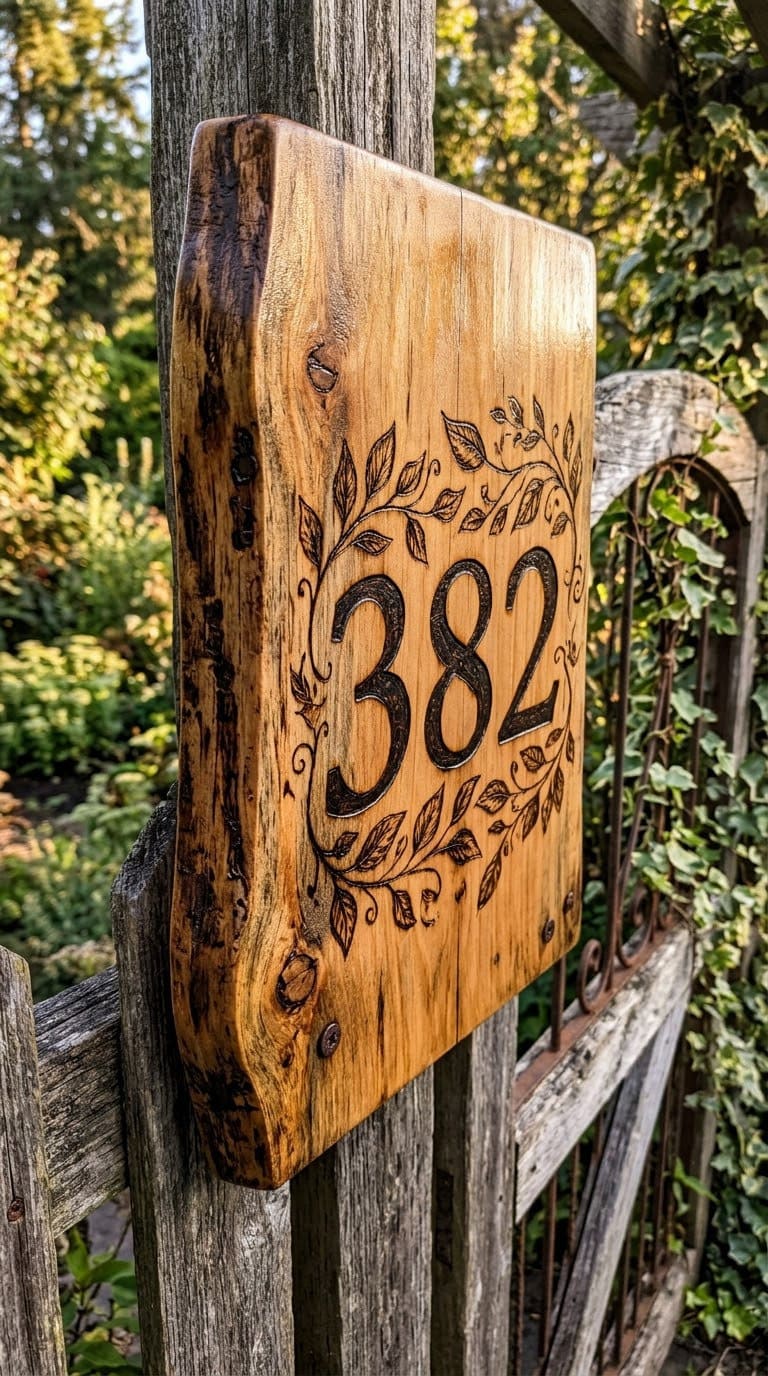
20. Wood Burned Address Sign
Use a thick, flat slab of salvaged wood. Sand it smooth. Burn your house numbers with a wood-burning pen. Add decorative motifs around the numbers: leaves, flowers, or geometric borders. Seal with spar urethane. Mount near the driveway or front gate.
Skill level: Beginner–Intermediate | Materials cost: $10–$25 (wood-burning pen)
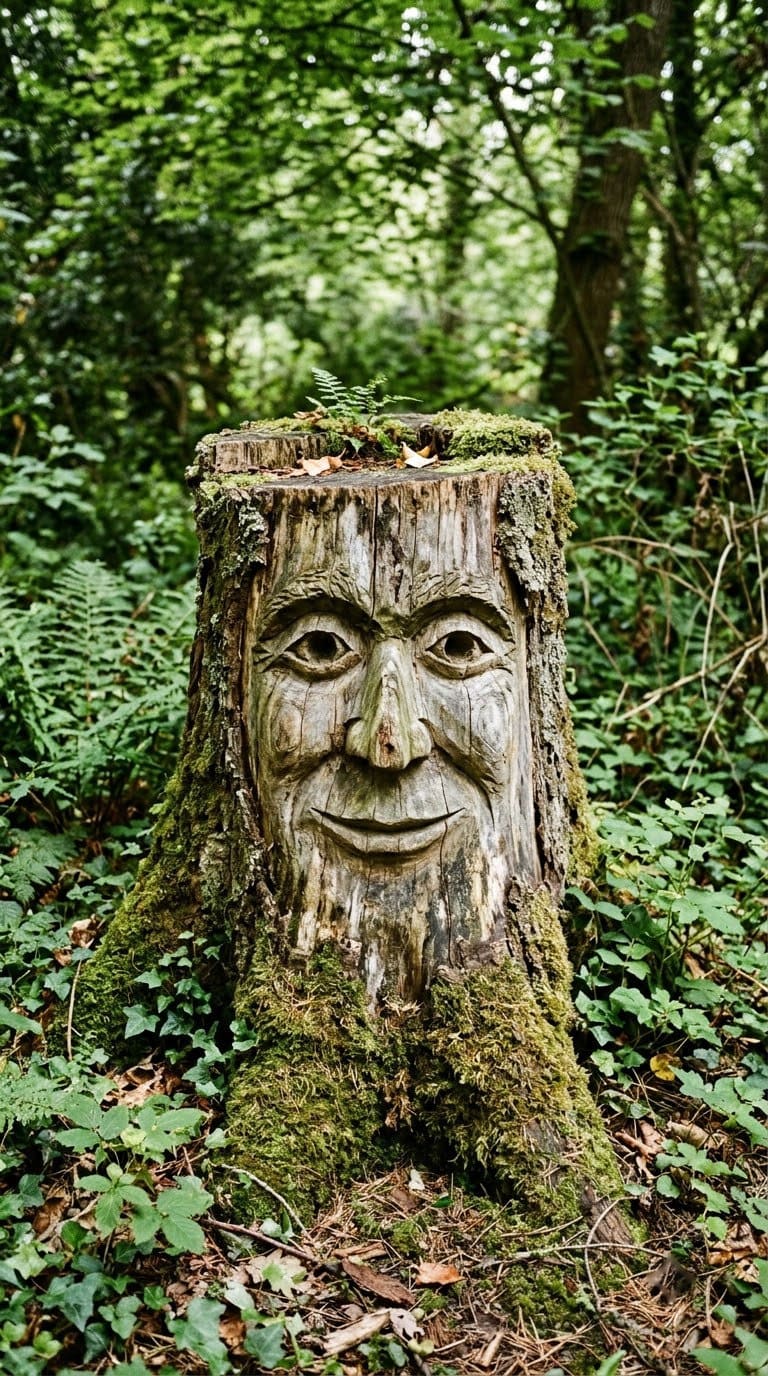
21. Stump Face Sculpture
If you have a tree stump in your yard, do not grind it right away. Carve a face into the exposed top and front using a chisel and mallet: eye sockets, a nose ridge, and a mouth line. Stain and seal. The stump becomes a permanent landmark in the garden.
Skill level: Intermediate | Materials cost: Free
For more creative uses of stumps and logs, see our guide to wood log and tree stump decorating ideas.
How to Seal and Protect Your Recycled Wood Sculptures
Unsealed wood outdoors will crack, warp, and rot within one season in most climates. A small amount of prep work extends the life of your sculptures by years.
Spar urethane is the most durable finish for outdoor wood. It stays flexible as the wood expands and contracts with temperature. Apply two to three coats, sanding lightly between coats with 220-grit sandpaper.
Penetrating wood oils (teak oil, linseed oil, Danish oil) soak into the wood rather than sitting on the surface. They give a more natural look but need reapplication once or twice per year.
Borate wood preservative, applied to raw wood before the finish coat, prevents rot-causing fungi from taking hold. This is especially useful for pieces that sit close to or on soil.
Always elevate sculptures off bare dirt with gravel, flat stones, or a small wooden base. Direct soil contact is the fastest path to rot.
Reapply your sealer every one to two years, or whenever the wood looks dry or gray.
Common Mistakes to Avoid
Using MB-stamped pallets. Always check the stamp on the side of any pallet before building. MB residue cannot be sanded or painted away.
Skipping the sealer. Many first-time makers finish a sculpture and skip the sealer, only to find it cracked or moldy by spring. Sealing is not optional for outdoor pieces.
Placing sculptures in standing water. Even sealed wood will rot if the base sits in a puddle all season. Choose a spot with good drainage, or raise the sculpture on a gravel bed.
Using construction adhesive as a structural joint. Glue alone will not hold outdoor wood joints through seasons of expansion and contraction. Use screws or bolts and treat adhesive as a secondary fastener only.
Frequently Asked Questions
What is the best wood for outdoor garden sculptures?
Cedar, redwood, and pressure-treated pine are the most rot-resistant choices. For recycled materials, look for HT-stamped pallets, naturally weathered driftwood, and fallen hardwood logs. Avoid wood with unknown paint or chemical odors.
How long do recycled wood garden sculptures last outdoors?
A sealed piece made from cedar or pressure-treated pine can last 5 to 10 years or more. Unsealed pieces in wet climates may only survive one to two seasons. Reapplying spar urethane or wood oil annually extends the life significantly.
Can I use old fence boards to make garden sculptures?
Yes. Old fence boards are a classic starting material. Sand off any peeling paint, check for soft spots or dark staining that signal rot, and cut away any compromised sections before building. Seal the finished piece before putting it outside.
How do I make recycled wood weather-resistant?
Use two to three coats of spar urethane or a penetrating wood oil. Elevate the piece off bare soil. Re-seal every one to two years. For pieces close to the ground, apply a borate preservative before the finish coat.
Do I need woodworking tools to make garden sculptures?
Many ideas on this list need only twine, basic hand tools, and paint. A jigsaw opens up more options for cut shapes like sunflowers and wind spinners. A wood-burning pen adds detail to signs and address plaques.
Conclusion
Recycled wood garden sculptures are one of the most personal and affordable ways to add character to a backyard. You are not buying a mass-produced ornament. You are building something that tells a story about the materials and the hands that shaped them.
Start with one beginner piece: a driftwood spirit, a stack of log slices, or a painted fence-board sunflower. Get a feel for how the wood behaves outdoors, then scale up to something bigger.
The Thomas Dambo trolls of Copenhagen started with old pallets and a broken shed. Your totem pole, your archway, your stump face: they start the same way.
Never miss an update — choose FarmFoodFamily as your preferred source on Google.
How it works: Tap the button below to open Google's settings page, then check the box next to FarmFoodFamily.
Tap the checkbox to turn it blue — that's how you know it's set.