14 Smart Sloping Garden Ideas With Ground Covers, Sorted by Sun and Steepness
The right ground cover can hold a slope and cut mowing for good, as long as you match the plant to the sun and the slope to the method.

Never miss an update — choose FarmFoodFamily as your preferred source on Google.
How it works: Tap the button below to open Google's settings page, then check the box next to FarmFoodFamily.
Tap the checkbox to turn it blue — that's how you know it's set.
The right ground cover can hold a slope and cut mowing for good, as long as you match the plant to the sun and the slope to the method.
Products We Recommend
This post contains affiliate links. We may earn a commission on qualifying purchases at no extra cost to you.

200FT Quick-Connect Drip Irrigation System
A drip kit for slope beds. Lay the line along the contour and water deeply at the roots instead of spraying the surface.
Shop Now
HongWay 120 Pack Landscape Staples, 6 Inch Garden Stakes, Galvanized Steel
Six-inch staples to secure sod strips, netting or drip line on a slope while plants root in.
Shop Now
LURKA Mason Line String, #18 540 Feet, 5 Built-in Levels, Fluorescent Orange
A bright string with built-in levels for measuring the rise and run of your slope and laying out contour rows.
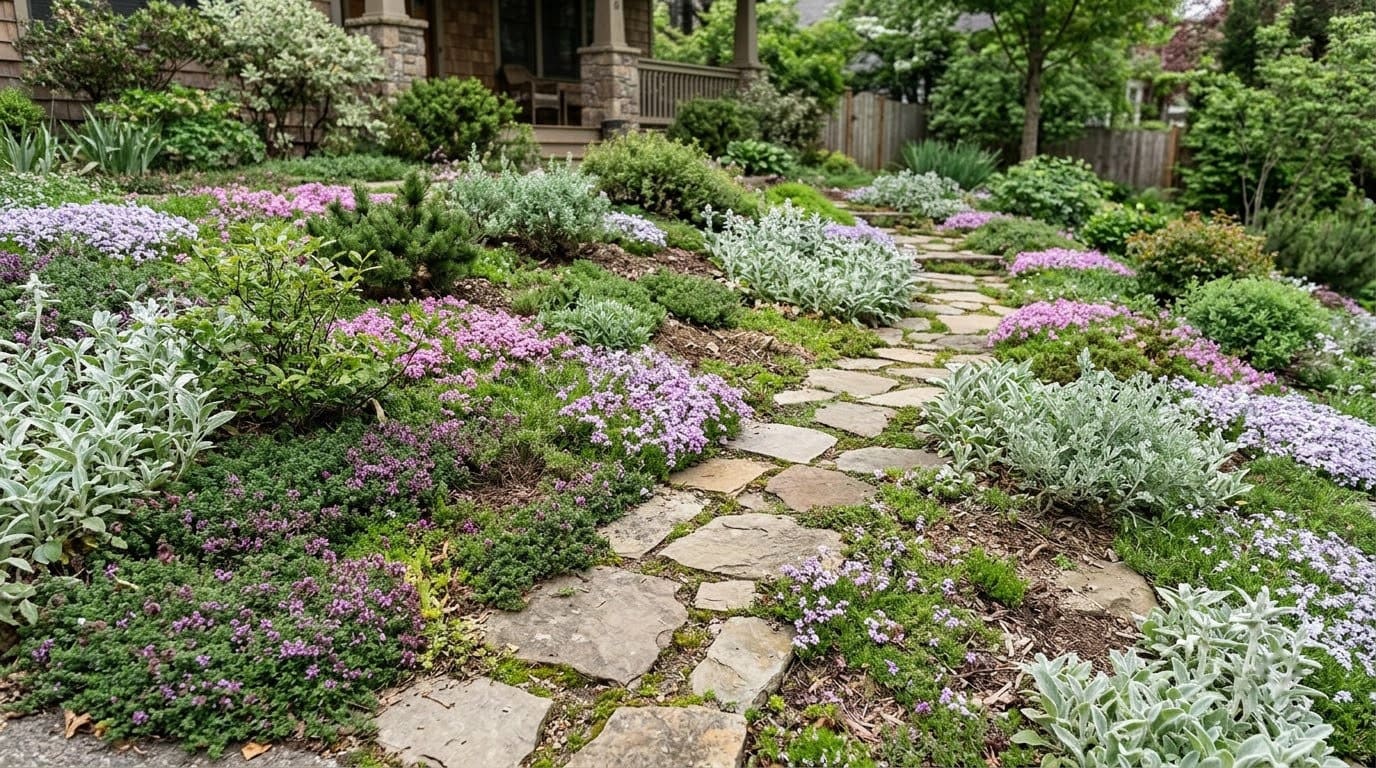
Shop NowThe best ground covers for a sloping garden depend on how steep the slope is and how much sun it gets. In full sun, creeping juniper, creeping thyme, creeping phlox and yarrow hold soil well. In shade, bugleweed and wild ginger do the job well.
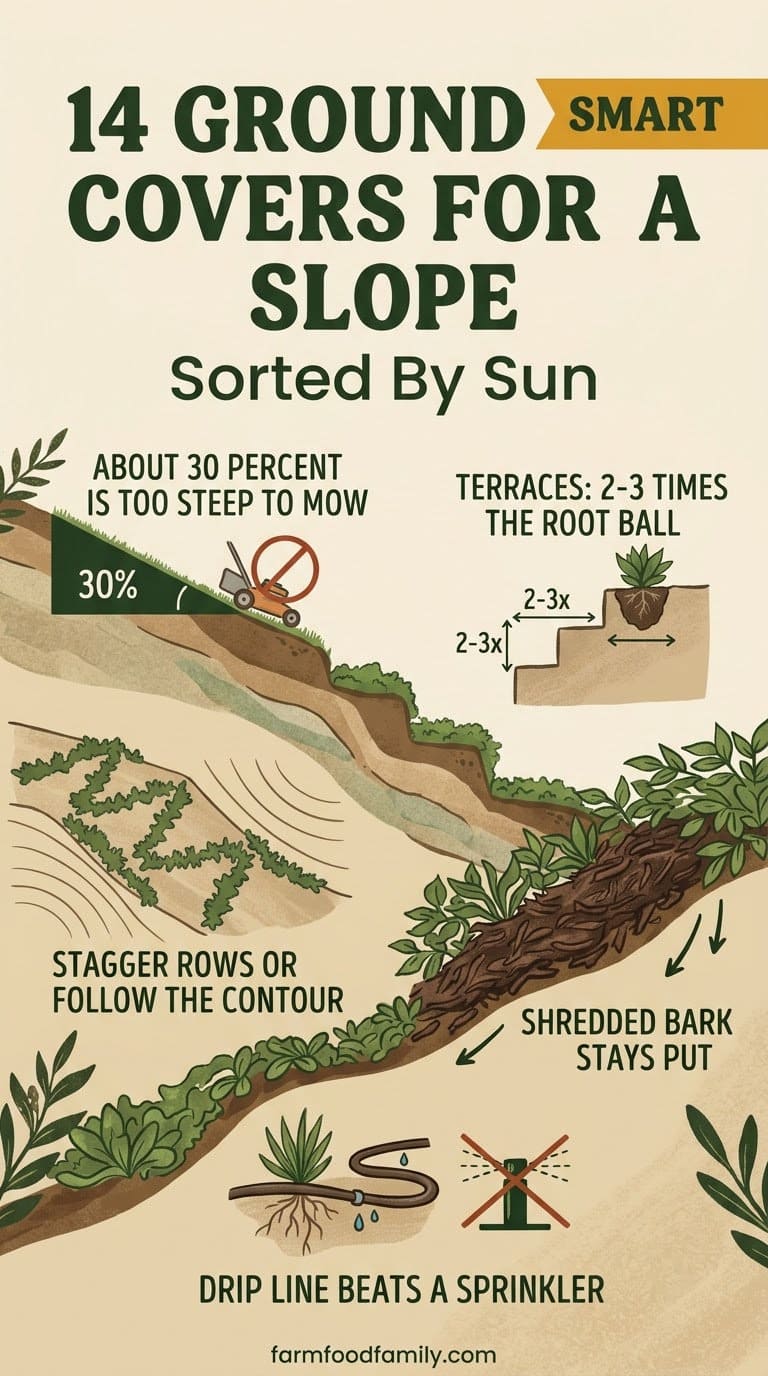
Steepness decides your plan. Iowa State Extension says slopes of about 30 percent are too steep to mow, and 50 percent is often the steepest that can support plants. Terraces help at the steep end.
Plant in staggered rows, mulch with shredded bark and use drip irrigation. This guide gives 14 ideas by sun and technique, with a pairing, a watch-out and our verdict on each.
Answer 4 quick questions and get matched to the exact fix for your yard — drainage, budget, layout, or something else entirely.
Take the Free QuizStart with the slope test below, then pick the plants that match your sun. A little planning now saves you a lot of weeding later.
Why Sort Ground Covers by Sun and Steepness?
Most slope lists show pretty plants and skip the hard part. They don’t say how steep is too steep, or how to plant so the soil stays put. We sorted the ideas by sun first, then added the methods that make a planting last.
Freeway daisy, poppy mallow and yarrow stay in the list. We added the covers and techniques that were missing.
How Steep Is Your Slope?
Measure first, then choose. Slope is rise divided by run, as a percent.


| Slope | Ratio | What it means |
|---|---|---|
| 20 percent | 1 foot of drop in 5 feet | Counts as steep |
| About 30 percent | 1 foot of drop in 3 feet | Too steep to mow |
| 50 percent | 1 foot of drop in 2 feet | Often the steepest that can support plants |
Drive a stake at the top and the bottom. Run a string between them and level it with a line level. Measure the drop and the distance, then divide.
Most yard problems trace back to one specific, fixable cause. Find yours in 4 quick questions.
Take the Free QuizOur rule: under 30 percent, plant a ground cover. Between 30 and 50 percent, plant ground covers and add terraces. Above 50 percent, call a pro for structure.
Which Ground Cover Fits Your Slope?
Use this table as a short list. Zones and sizes come from NC State’s plant database and other university pages, and the poppy mallow range is the one where sources disagree.
| Plant | Sun | Zones | Height | Spread | Watch out |
|---|---|---|---|---|---|
| Creeping juniper | Full sun | 3 to 9 | 6 to 18 in | 4 to 10 ft | Rust and blight |
| Creeping thyme | Full sun | 4 to 9 | 2 to 3 in | 3 to 12 in | Rot in wet soil |
| Creeping phlox | Full sun | 3 to 9 | 4 to 6 in | 2 to 3 ft | Blooms only in spring |
| Yarrow | Full sun | 3 to 9 | 1 to 3 ft | 1 to 3 ft | Spreads aggressively |
| Poppy mallow | Full sun | 4 to 8 | 4 to 12 in | Up to 3 ft or more | Crown rot in wet soil |
| Freeway daisy | Full to part sun | 9 to 11 perennial | Low mound | Spreads | Dies in extreme heat |
| Bugleweed | Sun to deep shade | 3 to 10 | 6 to 12 in | 6 to 12 in | Spreads fast |
| Creeping lily-turf | Sun to part shade | Varies | Low | Slow clumps | Needs time to fill |
| Wild ginger | Shade | Varies | Low | Slow carpet | Needs moist soil |
This table is our own summary, and we flag ranges that differ.
Full Sun and Dry
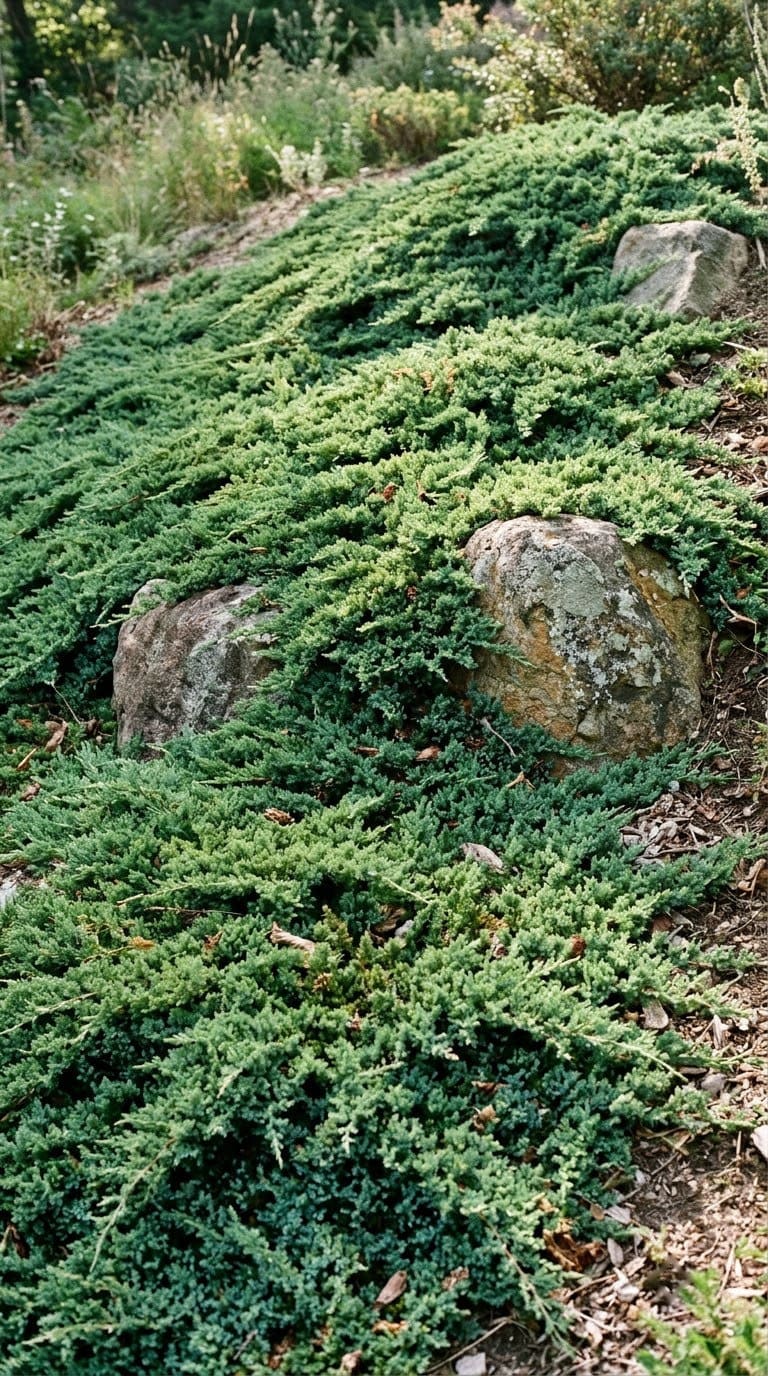
1. Creeping Juniper
Creeping juniper is the classic hillside cover. It stays 6 to 18 inches tall and spreads 4 to 10 feet wide, so one plant covers a lot. It tolerates heat, drought and deer, and helps control erosion on slopes.
Space plants 6 to 12 feet apart. That sounds wide, but they fill in.
Pair with: ornamental grasses and boulders.
But watch out: junipers need well-drained soil and full sun. They can get aphids, bagworms and blights, and they share cedar-apple rust with apple trees.
A drip kit for slope beds. Lay the line along the contour and water deeply at the roots instead of spraying the surface.
Shop NowThis post contains affiliate links. We may earn a commission on qualifying purchases at no extra cost to you.
Our take: the best low-work cover for a big, sunny, dry slope. Skip it if you grow apples nearby.
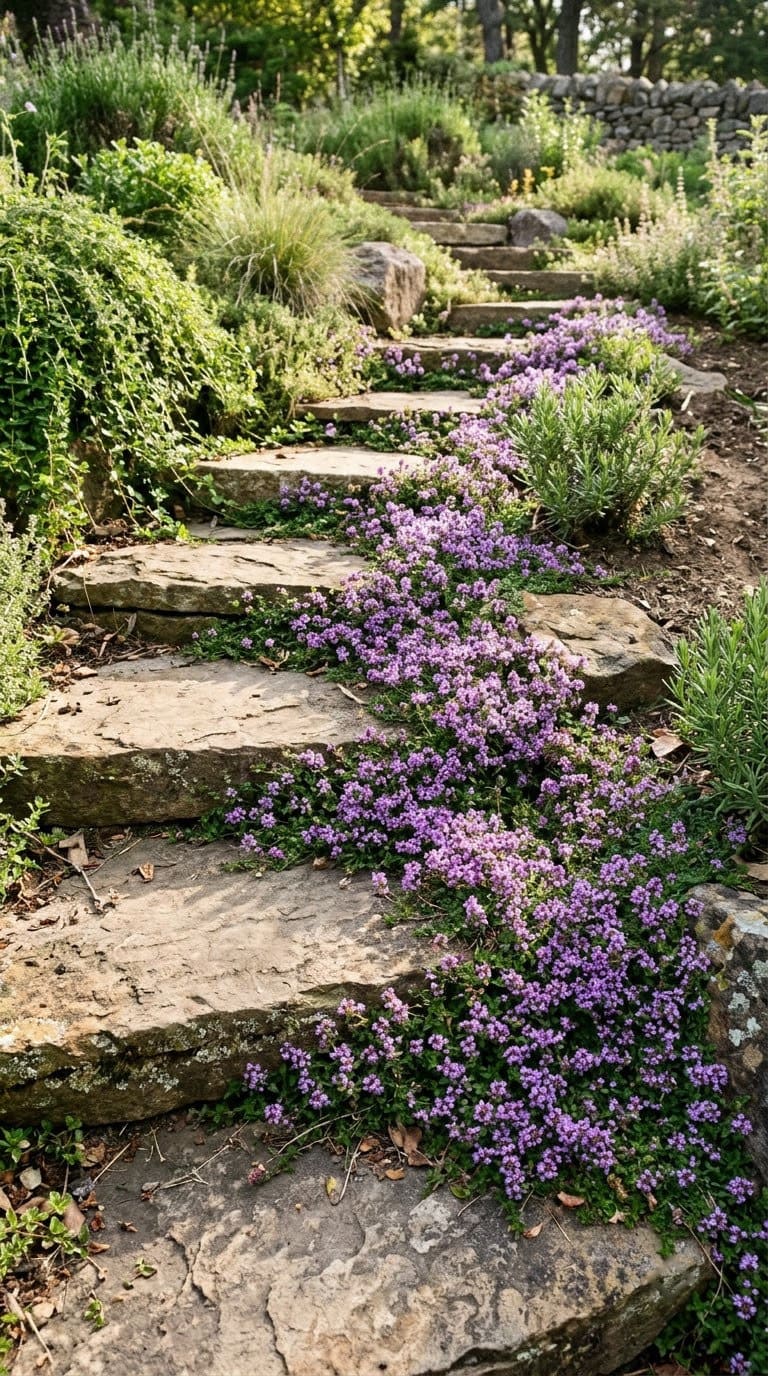
2. Creeping Thyme
Creeping thyme grows only 2 to 3 inches tall. It forms a tight, fragrant mat and fills gaps between stones. It does well in poor, rocky soil and tolerates drought.
The average homeowner spends $616/year on yard fixes that don't address the real problem. Find out what yours actually is — before you spend another dollar.
Take the Free QuizPair with: flagstone steps and gravel paths.
Watch out: it rots in wet or poorly drained soil. Don’t overwater it.
Our take: a lovely choice for a sunny rock-garden slope. Great for the edge of a path, but it needs time to fill in.
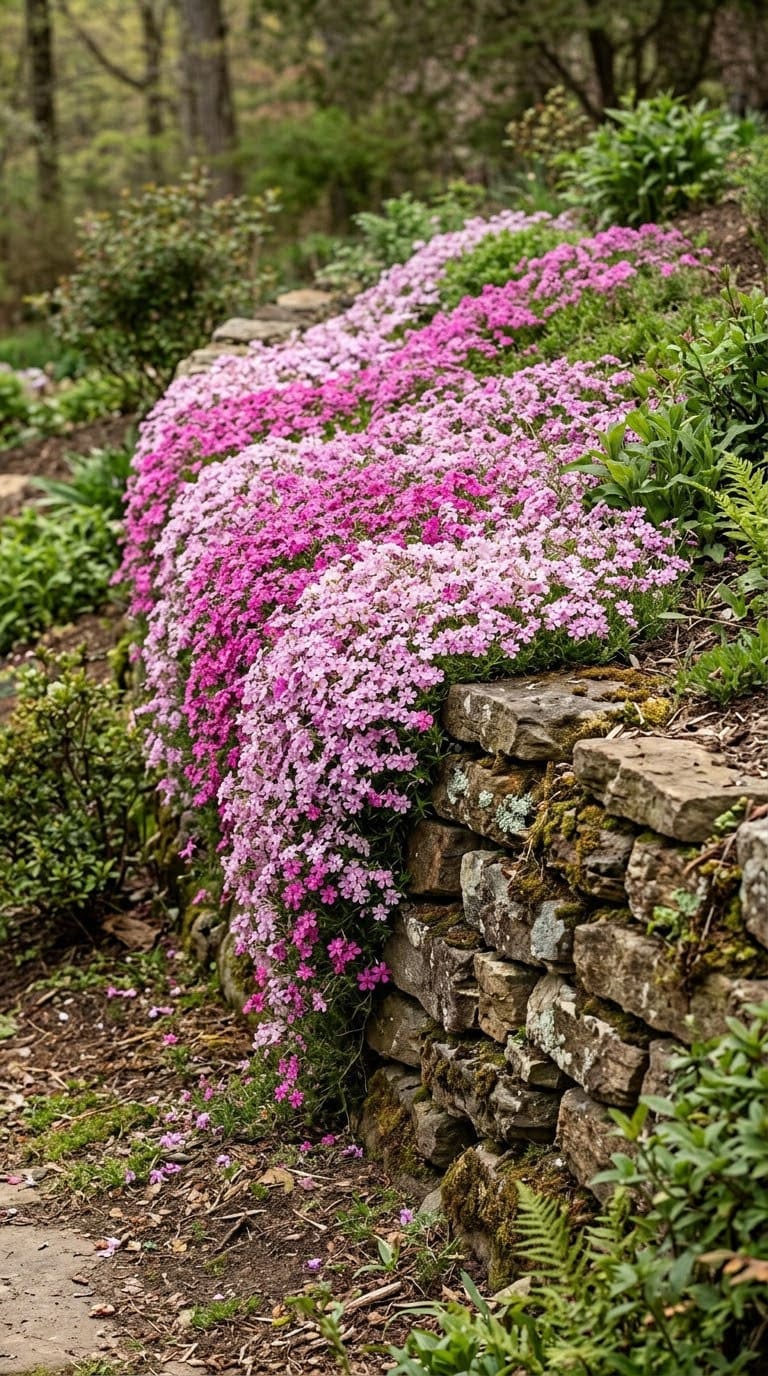
3. Creeping Phlox
Creeping phlox is a spring show-stopper. It grows 4 to 6 inches tall and spreads 2 to 3 feet. It tolerates erosion-prone banks and drapes over low walls.
Pair with: evergreen shrubs for year-round color.
Watch out: it blooms in spring, then it’s just green. Pair it with a summer bloomer.

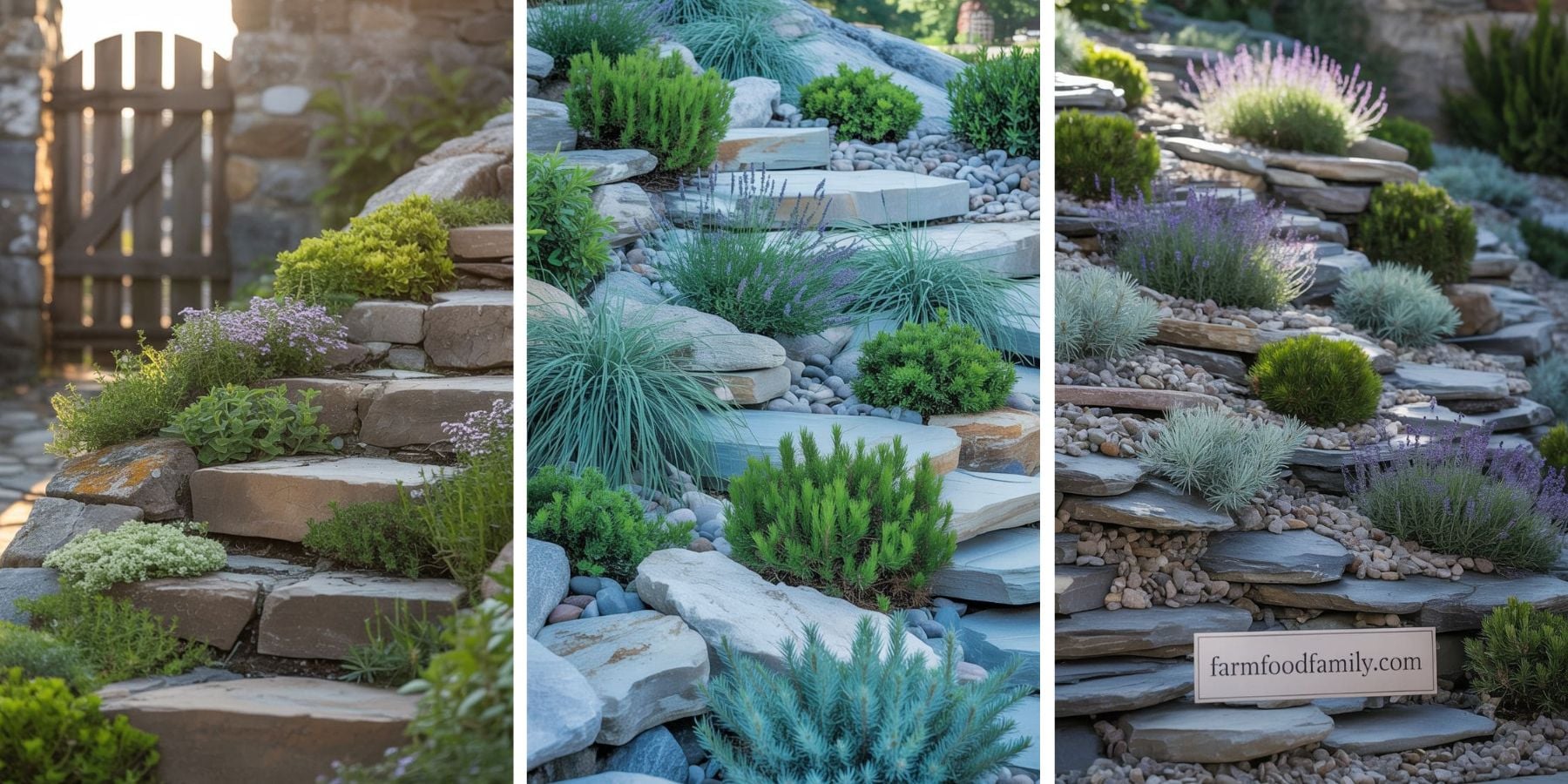
Our take: the prettiest spring cover. Use it at the top of a slope, where it can spill over a wall.
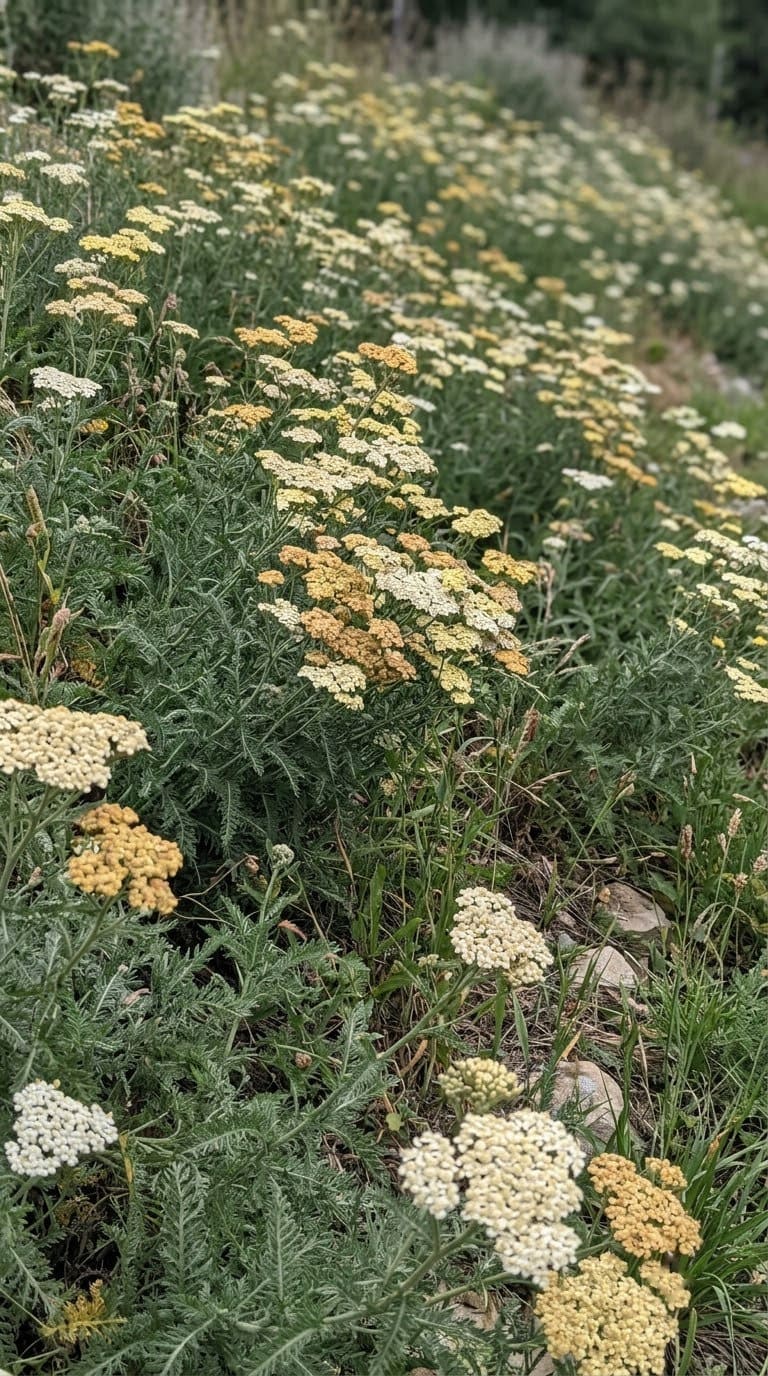
4. Yarrow
Yarrow holds soil, blooms from early summer into fall and tolerates drought. It grows 1 to 3 feet tall, so it is taller than other covers here. It handles poor soil and occasional dryness.
Pair with: ornamental grasses and coneflowers.
Watch out: it spreads aggressively by rhizomes and seeds. Deadhead it to limit seed spread.
Our take: great for a wild, meadow slope. Choose a tame cultivar for a tidy garden.
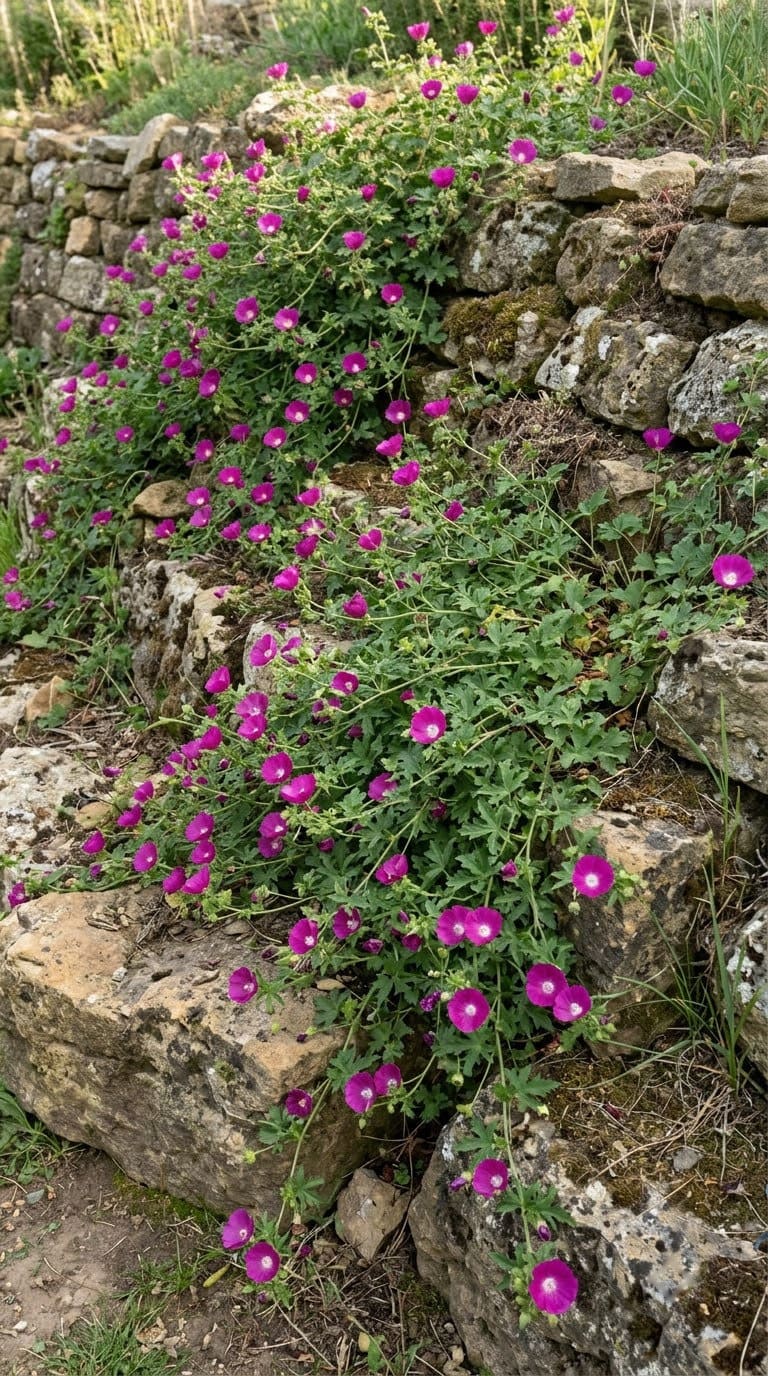
5. Poppy Mallow
Poppy mallow is a trailing wildflower with wine-colored cups. It stays 4 to 12 inches tall but stems can run 3 feet or more. It blooms all summer and tolerates drought once established.
Pair with: rocks and short grasses.
Watch out: sources differ on its hardiness. University of Wisconsin Extension lists zones 4 to 8, while some pages say 3 to 9. Stick with 4 to 8.
Poorly drained soil causes crown rot, and rabbits love the leaves.
Our take: a beautiful tumbler for a sunny bank or a rock wall. Skip it if rabbits are a problem.
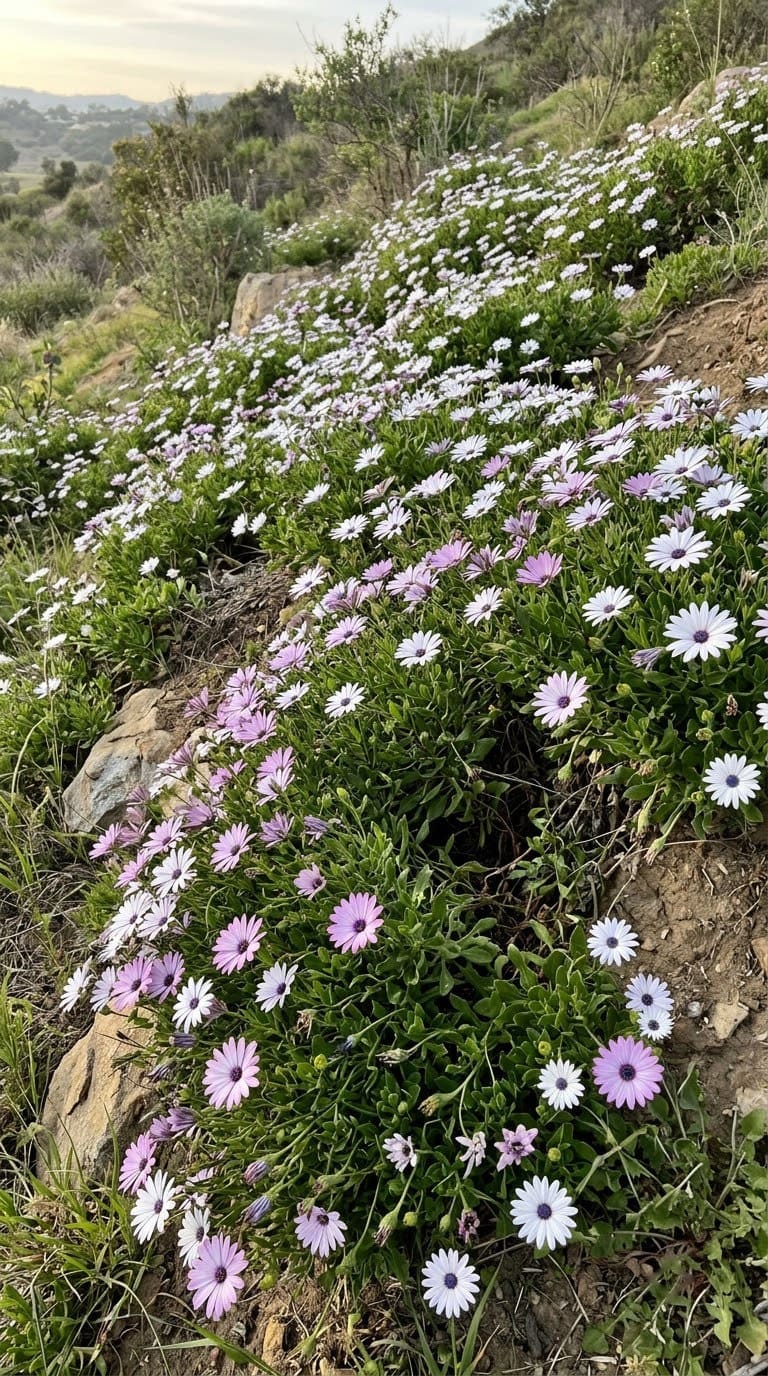
6. Freeway Daisy
Freeway daisy, or trailing African daisy, thrives around California freeways. It blooms in white, yellow, rose and lavender. Arizona State University’s plant profile lists it as a perennial in zones 9 to 11 and an annual elsewhere.
Pair with: succulents and lavender.
Watch out: it won’t survive summer temperatures above 105°F. It was once overused as a ground cover in California.
Our take: lovely in mild climates. In a cold zone, treat it as a one-season color patch.
Part Sun and Shade
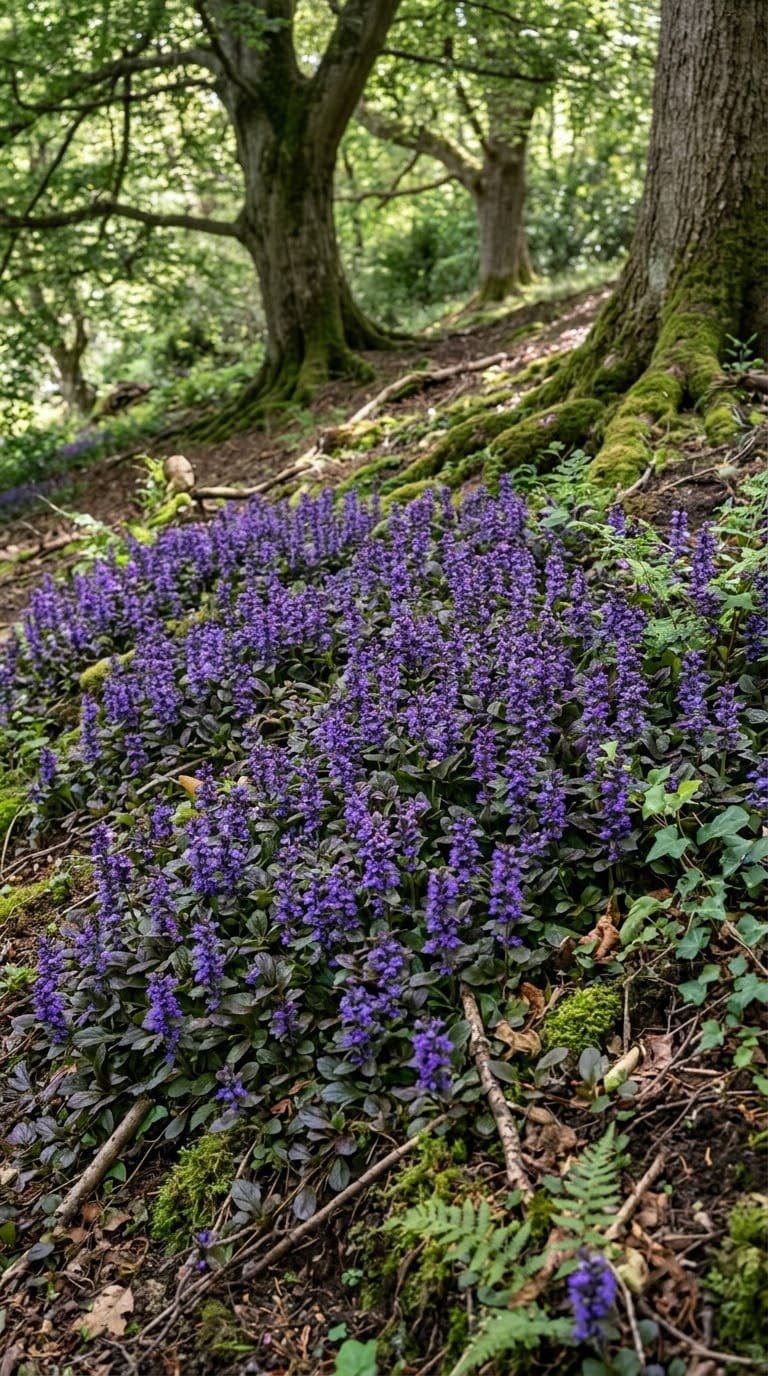
7. Bugleweed
Bugleweed forms a dense carpet 6 to 12 inches tall. It grows in sun, part shade and deep shade. It suits cool, shady spots where grass won’t grow.
Pair with: hostas and ferns.
Watch out: it spreads fast and can invade lawns and beds. Plant it away from them.
Our take: our go-to for a shady slope. Edge it with a mowing strip so it stays put.
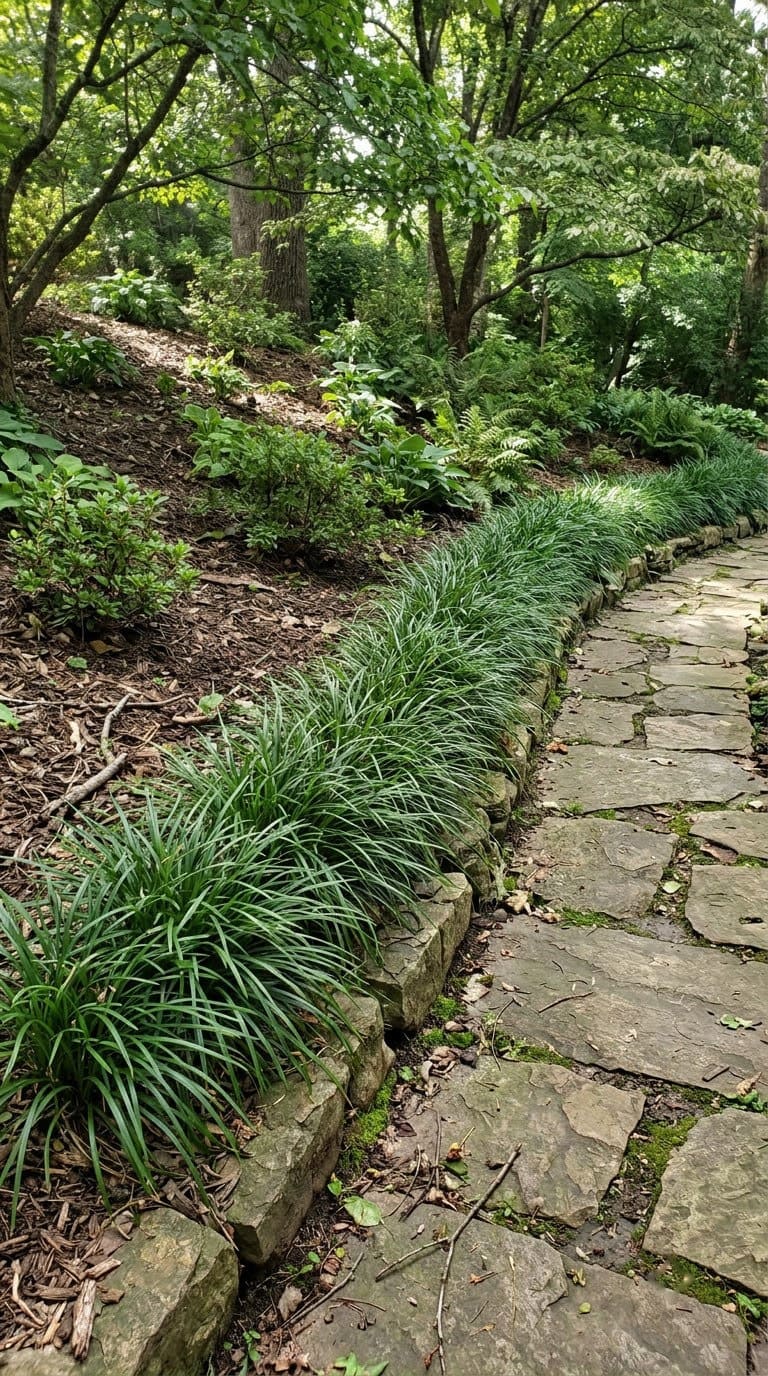
8. Creeping Lily-Turf
Creeping lily-turf, or liriope, has grass-like evergreen leaves. Virginia Cooperative Extension says it adapts to a wide range of conditions. It stays tidy once it fills in.
Pair with: shrubs and stepping stones.
Watch out: it takes time to fill in. Plant small plugs close together.
Our take: a neat, low-fuss option for part sun. Be patient.
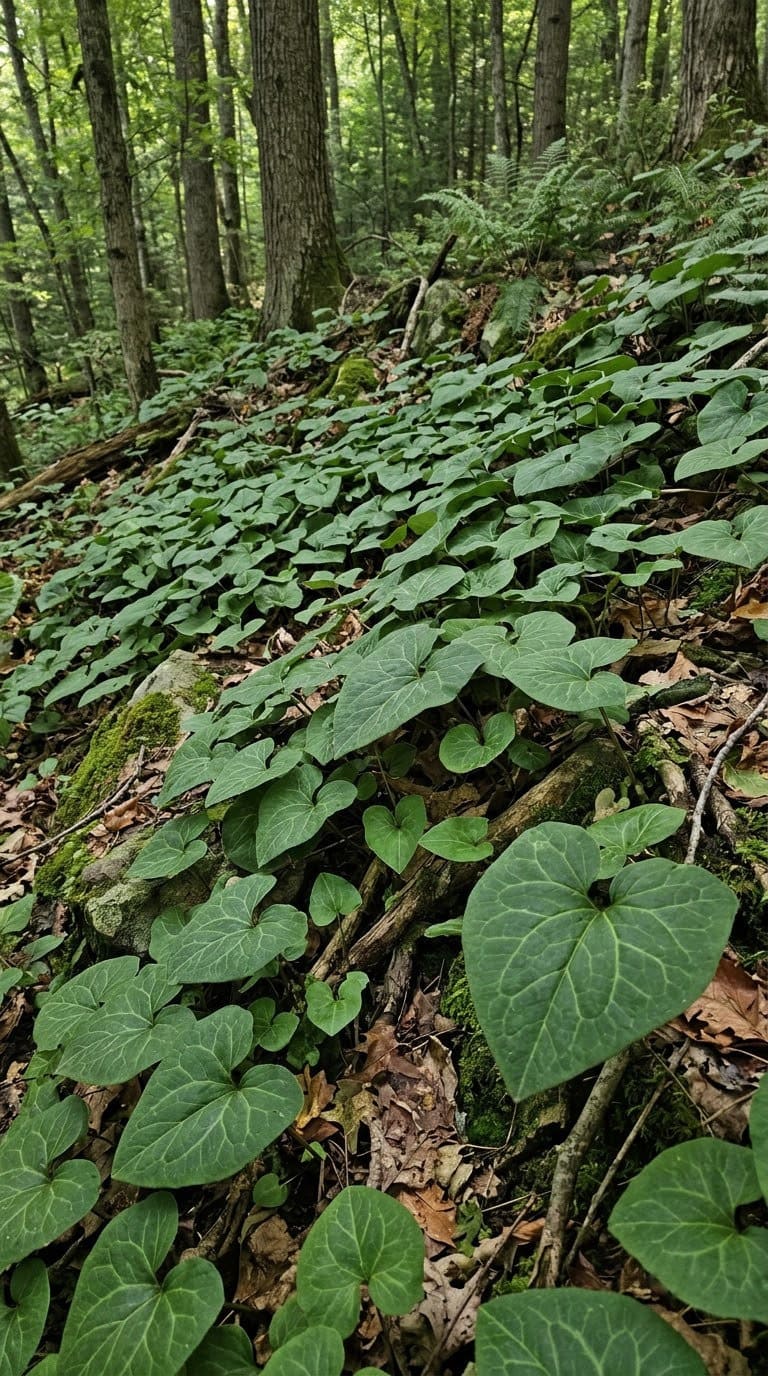
9. Wild Ginger
Wild ginger carpets a shady slope with heart-shaped leaves. It is a woodland plant that suits shade, where few covers will grow.
Pair with: ferns and spring bulbs.
Watch out: check the moisture needs of the species you buy. A dry, sunny bank is the wrong place for it.
Our take: a good fit under trees on a north-facing slope. We’d plant it in clumps and let it spread.
Techniques That Make Slopes Work
10. Terraced Planting Pockets
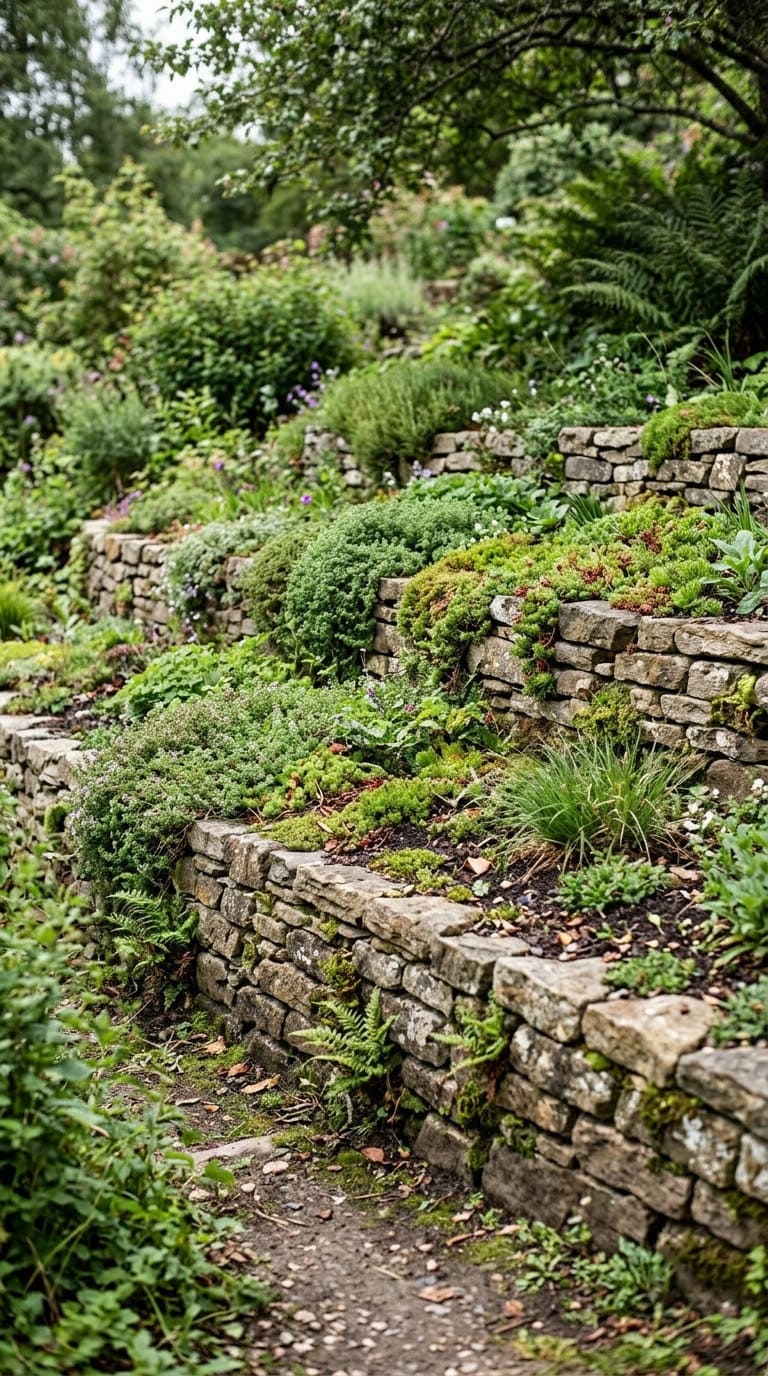
A terrace is a flat step in the slope. Retaining walls, boulders, field stones, bricks or timbers create it. Each step slows runoff and gives plants a flat spot.
Make each terrace 2 to 3 times wider than the root ball. That gives roots room.
Pair with: creeping thyme or phlox on the face of the wall.
Watch out: tall retaining walls often need a permit and an engineer. Check your local rules.
Our take: the best fix for a slope between 30 and 50 percent. It’s more work, but it lasts.
11. Staggered Planting Along the Contour
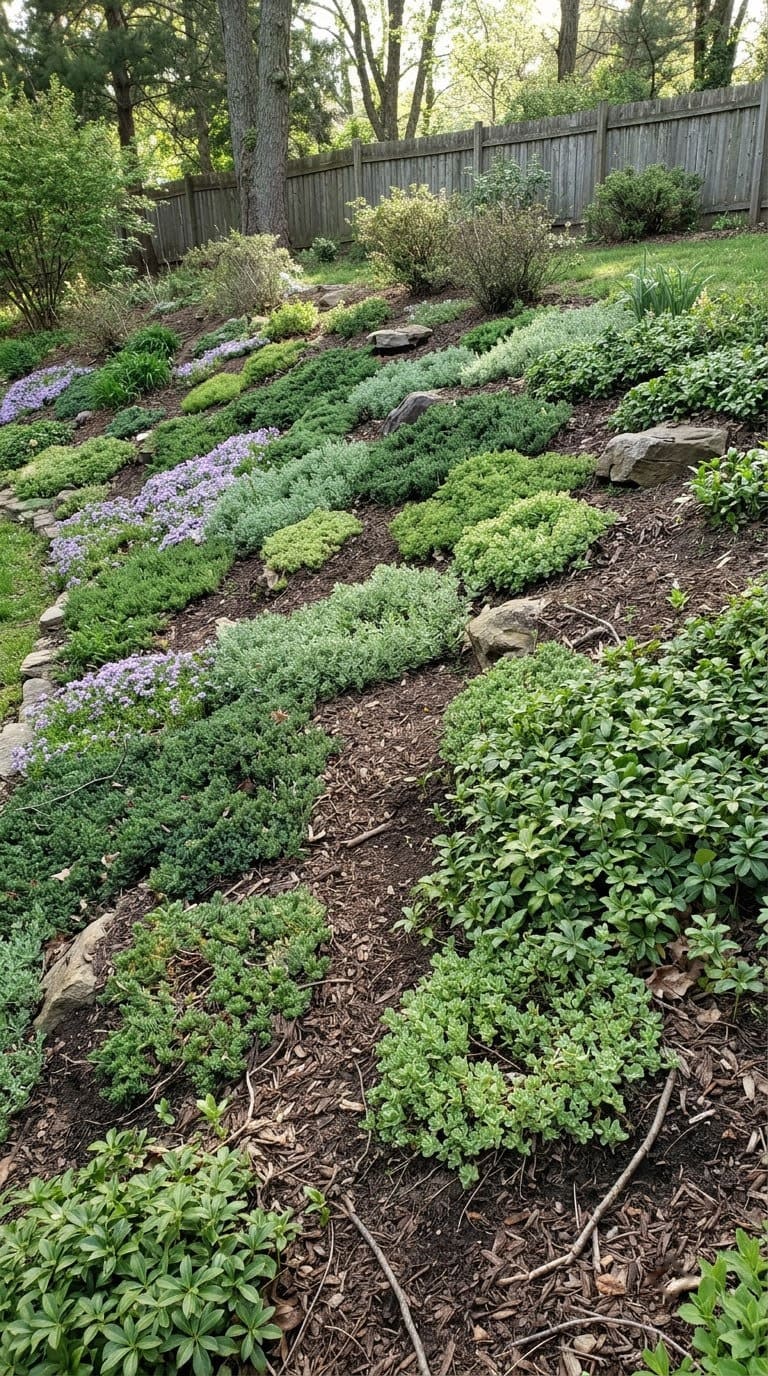
Water runs down the shortest path. Rows that run straight downhill become channels. Stagger plants, or run rows across the slope.
Set each root ball level with the upper side of the slope and mound soil on the lower side. Don’t bury the crown.
Pair with: a thick mulch layer.
Watch out: straight rows downhill invite gullies. Offset every row.
Our take: free and easy, and it matters more than the plant. Do it the first day.
12. The Right Mulch
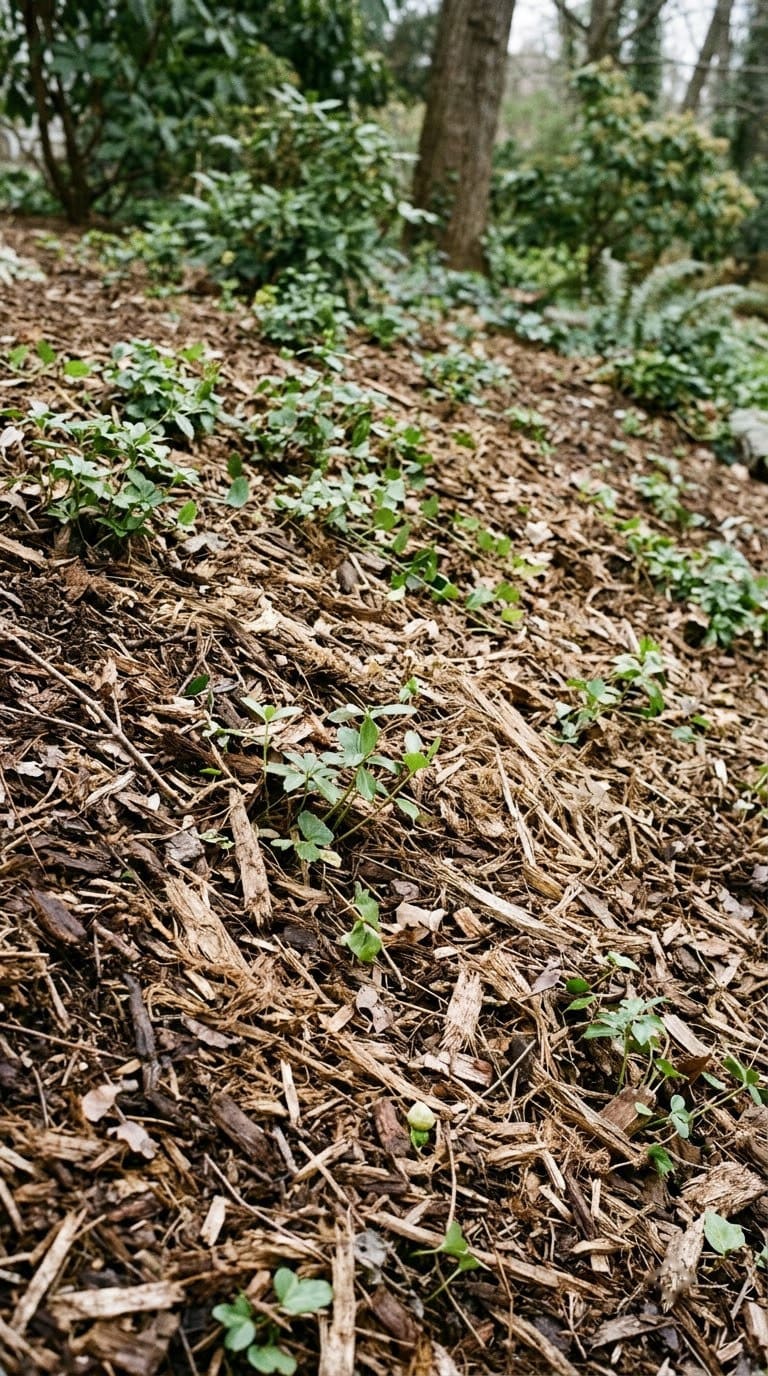
Mulch holds moisture, blocks weeds and protects soil. Use a thick layer around each plant. Not all mulch stays put on a slope.
Coarse, natural mulch with angular edges holds well. Shredded bark and leaf mold are less likely to wash downhill than bark chips or river rock.
Pair with: staggered planting.
Watch out: smooth round stones roll. Skip them on a slope.
Our take: shredded bark is our default. It looks natural and grips the soil.
13. A Temporary Cover Crop
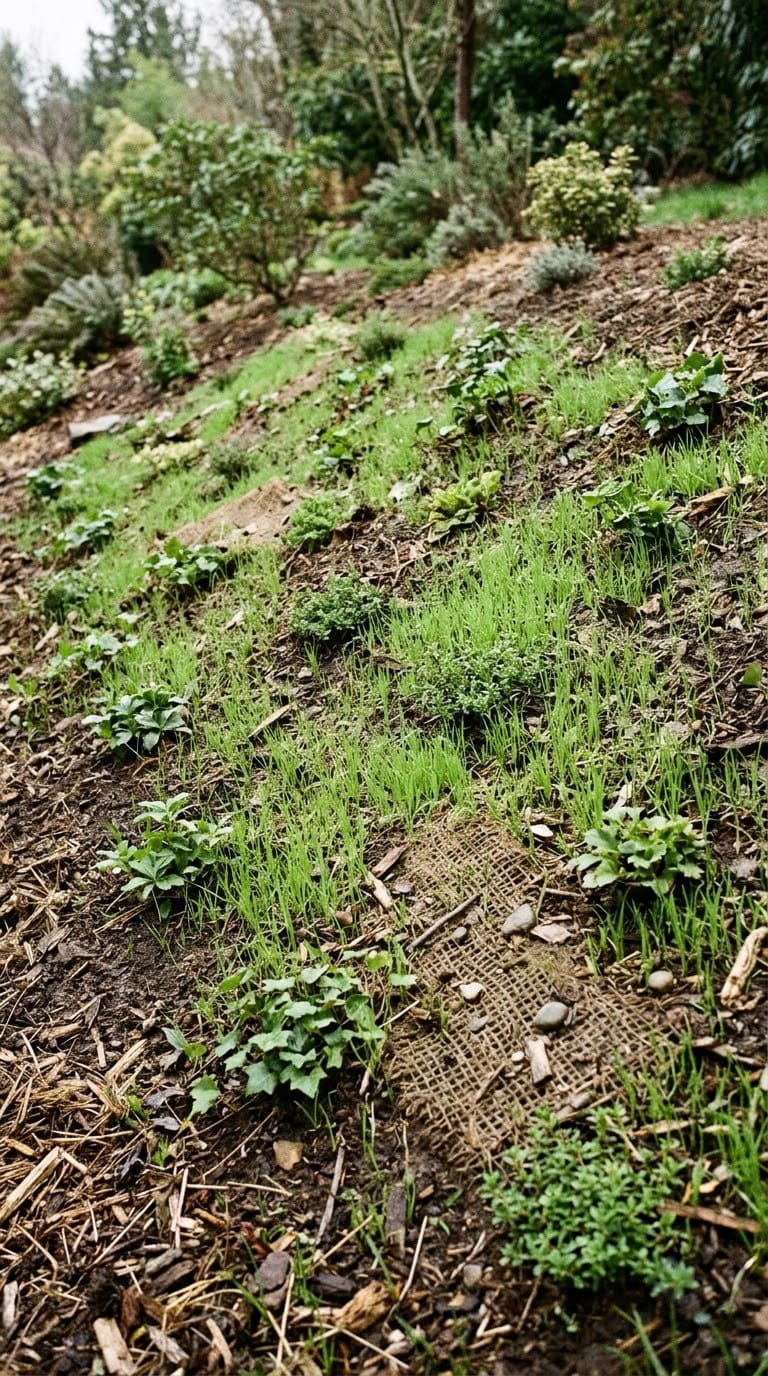
New plants take time to fill in. A fast-germinating cover holds the soil meanwhile. Annual ryegrass is one option.
Sow it between the plants and let the perennials take over. It disappears on its own.
Pair with: mulch and plugs.
Watch out: don’t let it set seed in a wildflower bed. Cut it back.
Our take: a smart trick for a bare, steep bank. It costs little and works fast.
14. Drip Irrigation or Soaker Hoses
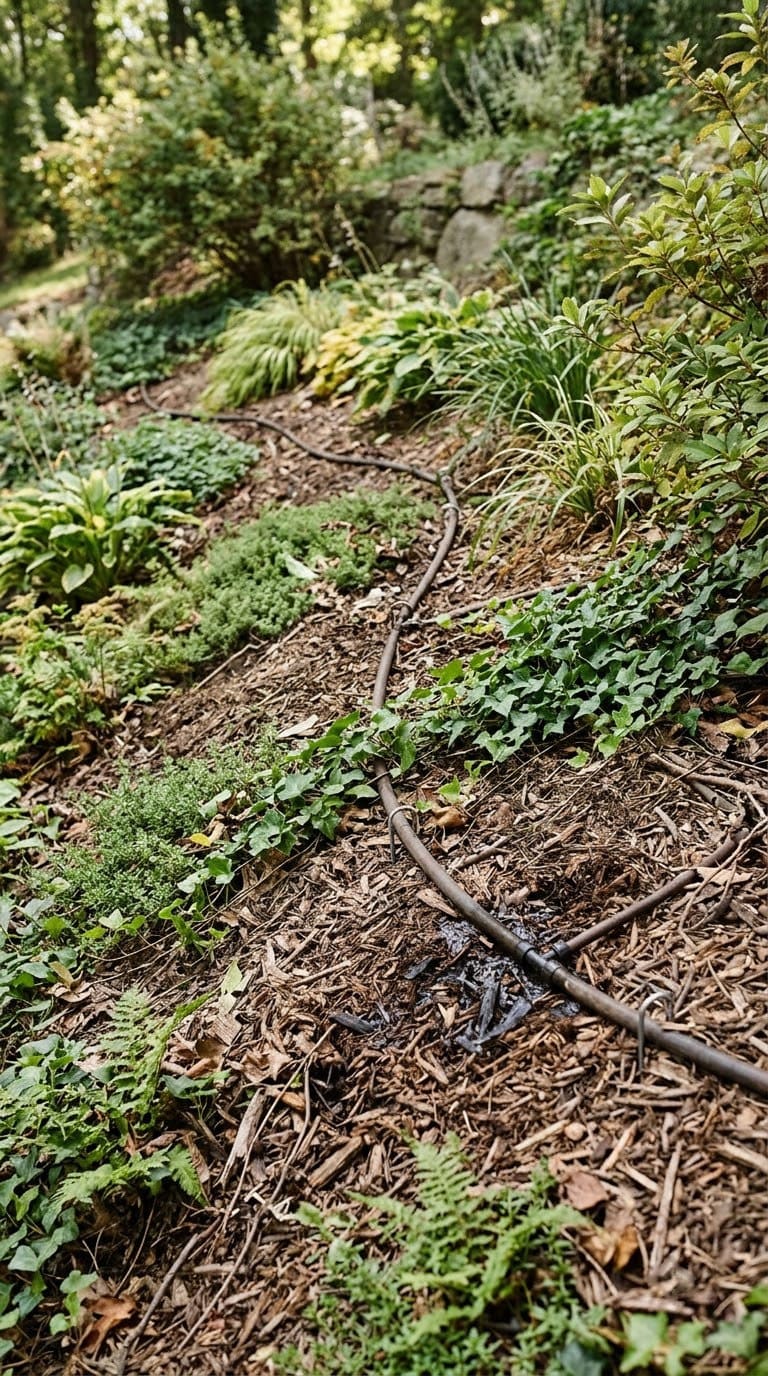
Sprinklers waste water on a slope. Drip lines and soaker hoses put water at the roots. They are the best watering option on slopes.
Run the line along the contour and water deeply, not often. Deep roots hold soil better than shallow ones.
Pair with: mulch to keep water in.
Watch out: a hose that runs downhill will channel water. Lay it along the contour.
Our take: the easiest upgrade for plant survival. Set it on a timer.
How Do You Plant Ground Cover on a Slope?
A little method goes a long way. Follow these steps.
Steps:
- Clear weeds and loosen the soil in each planting spot.
- Set the plant level with the upper slope, and mound soil below it.
- Stagger the rows, or run them across the slope.
- Mulch thickly and keep it off the plant crowns.
- Water deeply with a drip line for the first season.
On slopes steeper than 10 percent, secure sod strips with 2 or 3 stakes or staples 6 to 8 inches long. Keep weeds out early. A weed-free bed helps ground covers fill in faster.
What Will It Cost, and How Long Will It Take?
Prices vary by region, so use these tiers.
| Tier | What it covers | Typical time |
|---|---|---|
| Free to cheap | Cuttings, divisions, mulch, a rye cover | A weekend |
| One season | Plugs, drip line, edging | A few weekends |
| Bigger project | Terraces and retaining walls | Weeks, plus a pro |
Start with the cheap tier. If the plants take, you may not need walls.
Common Mistakes to Avoid
Planting straight rows downhill. They turn into channels. Stagger them or follow the contour.
Using round river rock on a slope. It rolls. Pick shredded bark.
Skipping the first-year watering. New roots need deep, regular water. A drip line fixes that.
Planting invasive covers next to a lawn. Yarrow and bugleweed spread. Edge them.
Ignoring a steep slope. Above 50 percent, call a pro for structure.
FAQ
What is the best ground cover for a sloping garden? Creeping juniper, creeping thyme, creeping phlox and yarrow suit full sun. Bugleweed and wild ginger suit shade.
How steep is too steep to mow? About 30 percent, or 1 foot of drop in 3 feet. Use ground covers instead of grass.
Can ground cover stop erosion on a slope? Yes, with the right plant and method. Deep roots, mulch and staggered planting all help.
What mulch is best on a slope? Shredded bark and leaf mold stay in place better than bark chips or river rock.
When should I build terraces? When the slope is about 30 to 50 percent. Terraces slow water and give plants flat planting spots.
Related Posts
Never miss an update — choose FarmFoodFamily as your preferred source on Google.
How it works: Tap the button below to open Google's settings page, then check the box next to FarmFoodFamily.
Tap the checkbox to turn it blue — that's how you know it's set.