8 Serene Beach Bathroom Ideas That Beat Salt Air and Steam
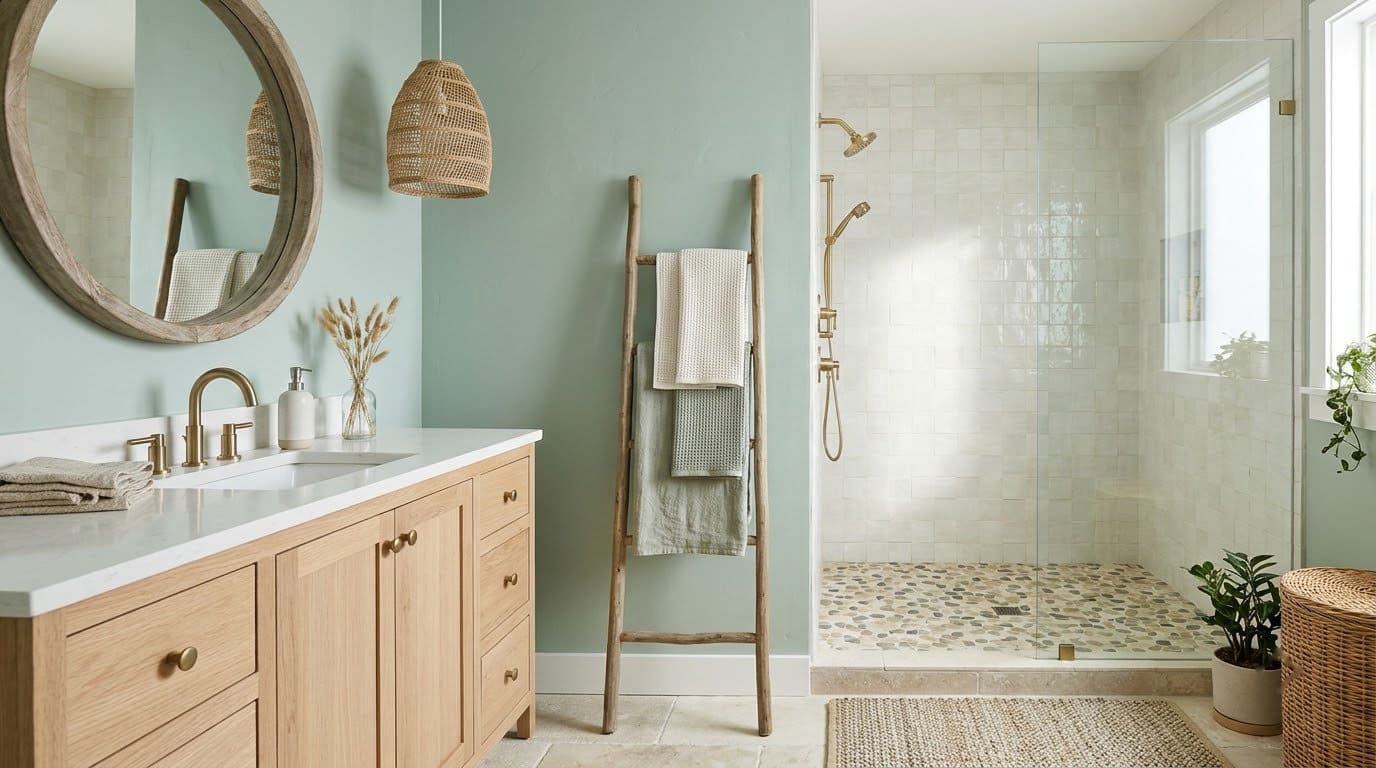
A beach bathroom feels calm when you borrow sand and sea tones, as long as the floor grips, the fan clears the steam and the metal can take salt air.

Never miss an update — choose FarmFoodFamily as your preferred source on Google.
How it works: Tap the button below to open Google's settings page, then check the box next to FarmFoodFamily.
Tap the checkbox to turn it blue — that's how you know it's set.
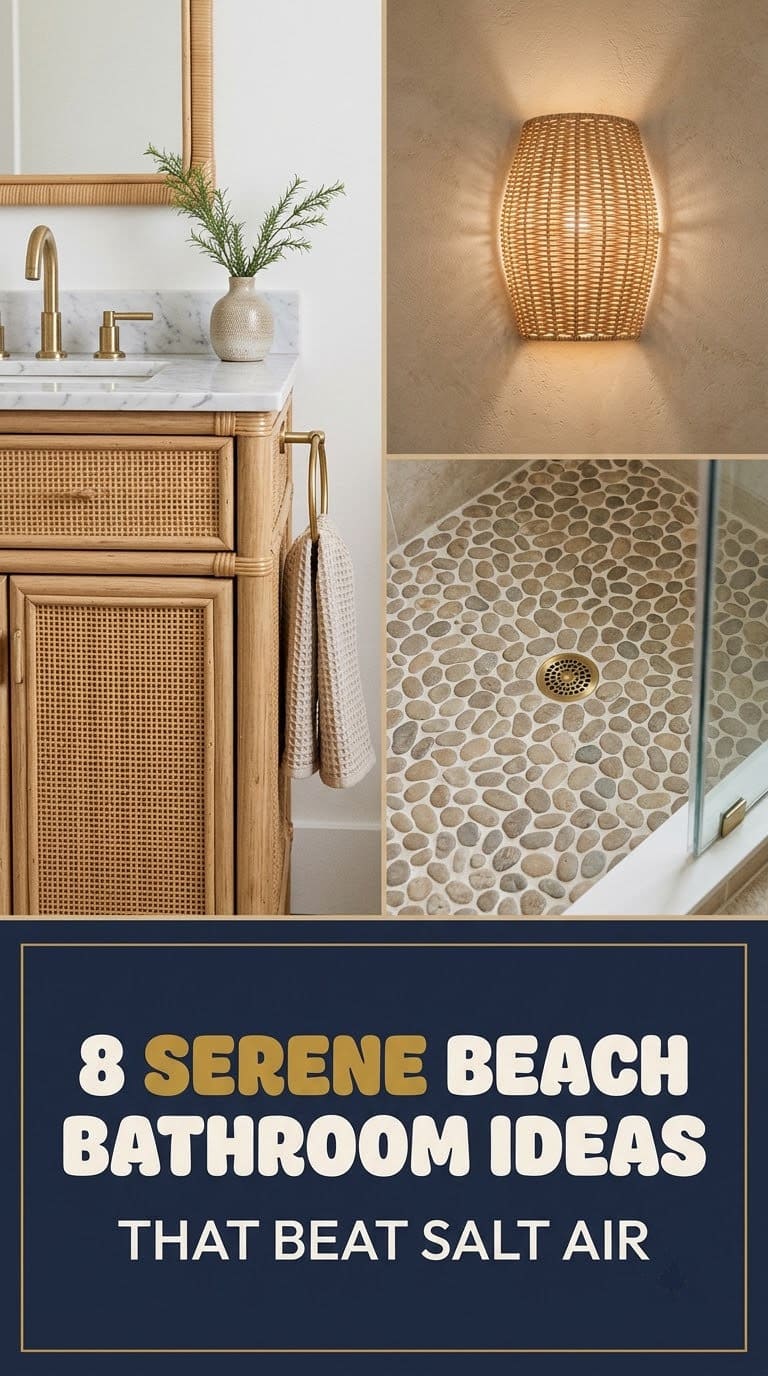
A beach bathroom feels calm when you borrow sand and sea tones, as long as the floor grips, the fan clears the steam and the metal can take salt air.
Products We Recommend
This post contains affiliate links. We may earn a commission on qualifying purchases at no extra cost to you.

TempPro TP50 Digital Hygrometer Thermometer
Small room gauge that shows humidity so you can keep the bath under the 60 percent EPA limit.
Shop Now
OULEME 5-inch 316 Stainless Steel Boat Cleat, 4-Pack
Marine-grade open-base cleats with screws, for the cleat towel hooks in idea 7.
Shop Now
Vantimo 5-Tier Wooden Blanket Ladder With 4 Removable Hooks
Leaning wood ladder that holds towels and robes for the open storage in idea 7.
Shop NowMost beach bathroom ideas stop at starfish and wooden signs. They look cute in a photo. But they don’t fix the wet floor, the foggy mirror or the rusty towel hook.
A good beach bathroom starts with color, texture and materials that can take steam and salt. The shells come last.
These eight ideas give you that. Each one lists the checks, the care and the budget, so you can build the look and keep it.
Quick Answer
Build a beach bathroom from color and texture first, then add a few shell touches. Start with sea glass greens, sandy neutrals and soft blues. Layer in light wood, rattan and rope.
Protect the room from moisture. The EPA says to keep indoor humidity below 60 percent, ideally 30 to 50 percent.
Run the fan or open a window during showers. Dry any water-damaged area within 24 to 48 hours.
Check the floor. The Construction Specifier reports that ANSI A137.1 sets a wet DCOF of 0.42 or more for tile walked on wet. Read the product sheet before you buy, since pebble and mosaic floors vary.


Choose salt-ready hardware, such as solid brass or stainless steel, and seal anything natural. Buy your shells instead of pocketing them from a protected beach. Rules vary by beach, so check first.
Which Idea Fits You?
Pick by budget, skill and how much steam your room sees. This table sorts the eight ideas below.
| Idea | Best for | Budget tier | Skill | Main risk |
|---|---|---|---|---|
| 1. Sea glass and sand palette | Any bath | Low | Beginner | Colors that clash in real light |
| 2. Seafoam or fish-scale wall tile | Showers and tub walls | Mid | Pro | Wasted tile on diagonal cuts |
| 3. Textured or pebble floor | Showers and full baths | Mid to high | Pro | Slippery or hard underfoot |
| 4. Sealed beadboard walls | Half baths and powder rooms | Low to mid | Intermediate | Swelling wood |
| 5. Light wood and rattan vanity | Primary and guest baths | Mid to high | Intermediate | Water at the edges |
| 6. Woven sconces and salt-ready hardware | Any bath | Low to mid | Beginner to electrician | Wrong light rating |
| 7. Open towel storage | Small baths and rentals | Low | Beginner | Damp towels that never dry |
| 8. Shell and driftwood display | Any bath | Low | Beginner | Mildew and collecting rules |
Before You Start: Checks That Save the Look
A beach look fails when moisture wins. Run through these four checks before you buy anything.
What humidity should a beach bathroom stay under?
Keep it under 60 percent. The EPA says the ideal range is 30 to 50 percent relative humidity. It also advises you to run the bathroom fan or open the window when showering.
Coastal homes often start with damp air, so the fan matters even more. A cheap humidity gauge costs little and tells you if your room stays too high after a shower.
How big should the fan be?
A common rule of thumb is 1 CFM of airflow per square foot of floor, with 50 CFM as a floor for any bathroom. A 5 by 8 foot bath is 40 square feet, so 50 CFM covers it on paper.
Ducts, bends and long runs cut real airflow, so go higher if the duct is long. Run the fan during the shower and for about 20 minutes after. That’s our habit rule, so adjust it by how fast your mirror clears.
What does salt air do to fixtures?
Salt speeds up corrosion. Plated finishes tend to pit first, and the damage shows near seams and screws.
Small room gauge that shows humidity so you can keep the bath under the 60 percent EPA limit.
Shop NowThis post contains affiliate links. We may earn a commission on qualifying purchases at no extra cost to you.
Look for solid brass or stainless steel instead of plated zinc or plastic. Wipe metal with a damp cloth every few weeks to remove salt film. A homes-by-the-sea bathroom pays off most when the hardware survives the second summer.
Which colors read as “beach”?
Pull from the shore, not from a gift shop. Use this table to give each color a job.
| Role | Beach color | Where to use it |
|---|---|---|
| Walls | Warm white, sand greige | Largest area, about 60 percent |
| Second color | Sea glass green, soft blue-gray | Vanity, tile or one wall, about 30 percent |
| Accent | Coral, driftwood gray, deep navy | Towels, art, a stool, about 10 percent |
| Metal | Brass, matte black | Faucet, lights, hooks |
That 60-30-10 split is a common design rule, and it keeps a pale room from feeling flat. For more shades that work with sand and sea, see our guide on colors that go with a beach theme.
1. A Sea Glass and Sand Color Palette
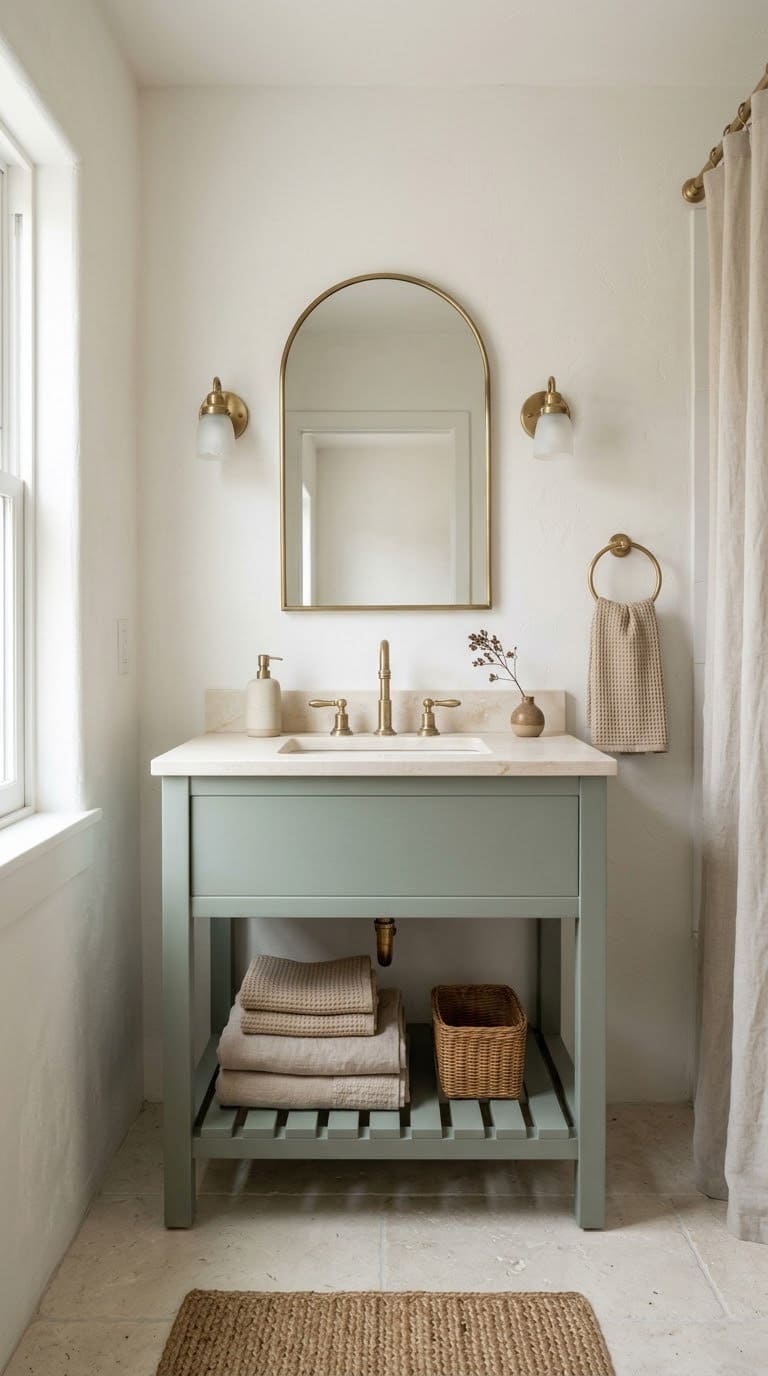
Paint is the cheapest way to change a bathroom, and the safest first move. It sets the mood before you spend a cent on tile.
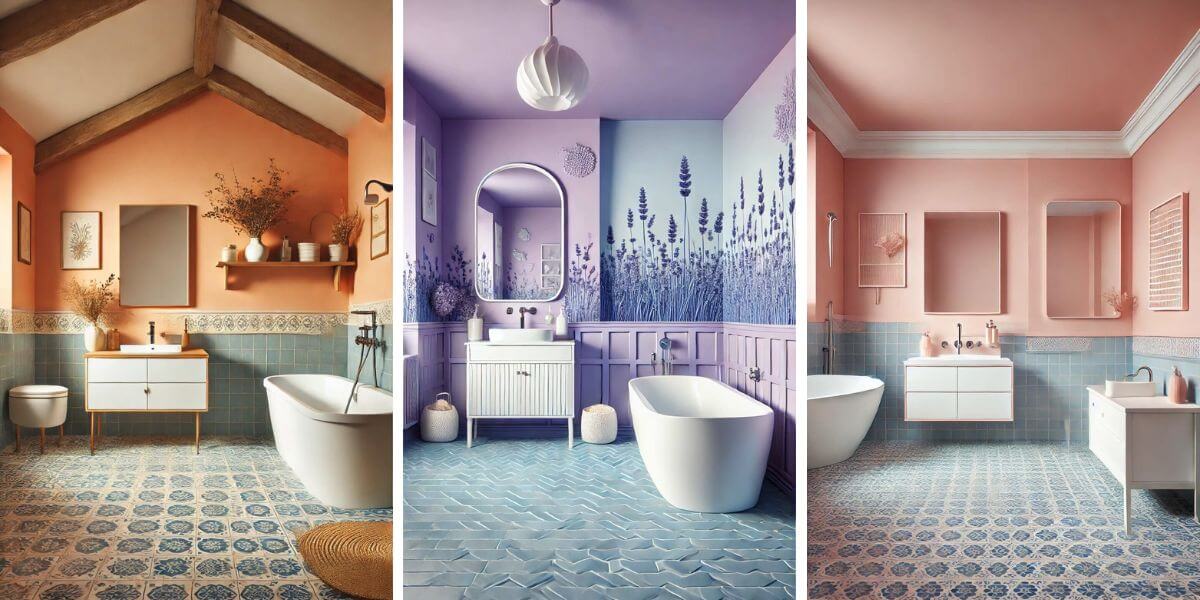
Hunker lists a muted or light blue vanity as a subtle coastal move. It also suggests limewashed walls for a sandy texture, or bright turquoise in a small room.
Test before you commit. Paint a two-foot square on the wall and look at it at morning, noon and evening. Blue-greens shift more than most colors, and a seafoam can turn gray under a warm bulb.
Choose a finish that cleans. Use satin or semi-gloss near the tub, sink and shower. A flat finish soaks up splashes and shows every drip.
Prime for steam. Use a mildew-resistant bathroom primer on bare drywall, and let each coat dry fully. Rushed coats peel first in a steamy room.


Paper only half the wall. Hunker suggests a patterned wallpaper on the upper half of the wall so it doesn’t feel busy. Keep it away from the shower spray, and pick vinyl over paper.
Make the ceiling work. A pale blue ceiling feels like open sky in a small bath. It’s an easy weekend job and costs one can of paint.
Carry the same colors into the bedroom with our coastal bedroom ideas. Budget: low. Skill: beginner.
2. Seafoam or Fish-Scale Wall Tile
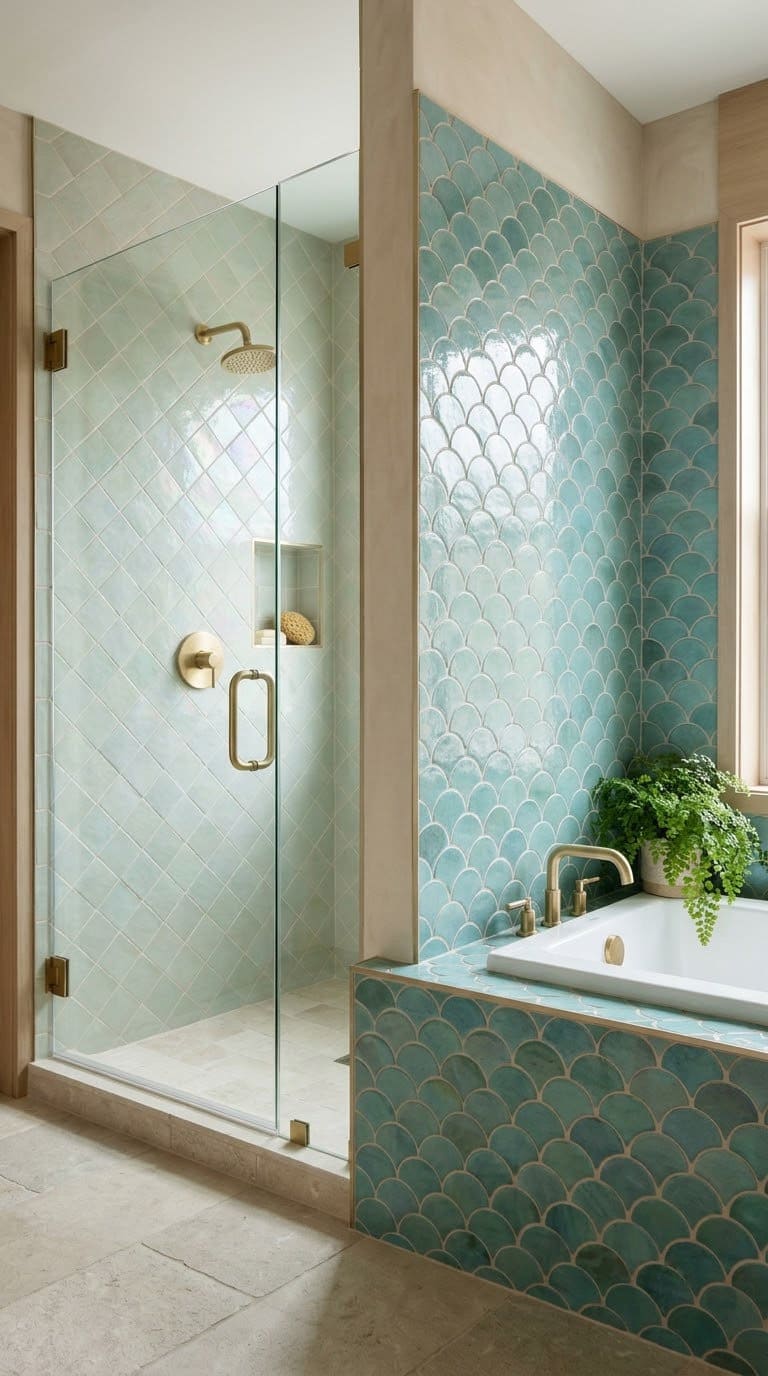
Tile is where a beach bathroom gets its shimmer. Pearlescent glaze looks like the inside of a shell, and it catches the light in a small room.
Hunker points to seafoam tile laid diagonally with a pearlescent finish. It also points to fish-scale tile in a blue-green shade for a tub surround or backsplash.
Plan for waste. A diagonal layout needs more cuts at every edge, so you buy more tile. Ask your installer how much extra to order, and keep a box for future repairs.
Pick a grout that hides soap film. A grout close to the tile color keeps the wall calm. White grout against green tile shows every line, and every stain.
Check the substrate. Wall tile in a wet zone needs waterproofing behind it. Our guide on the best material for shower walls compares your options.
Keep the pattern in one place. Use fish-scale on one wall or one band, and plain tile for the rest. A whole room of scales feels like a swimming pool.
Frame it with glass. Hunker suggests a frameless glass door or screen to keep sight lines open. A clear panel lets the tile show from the doorway.
Quick tip: Hold a single tile in the shower at night and in the morning. A pearlescent glaze can look cold under white LEDs and warm under 2700K bulbs.
Budget: mid. Skill: pro.
3. A Textured or Pebble Floor With a Wet Rating
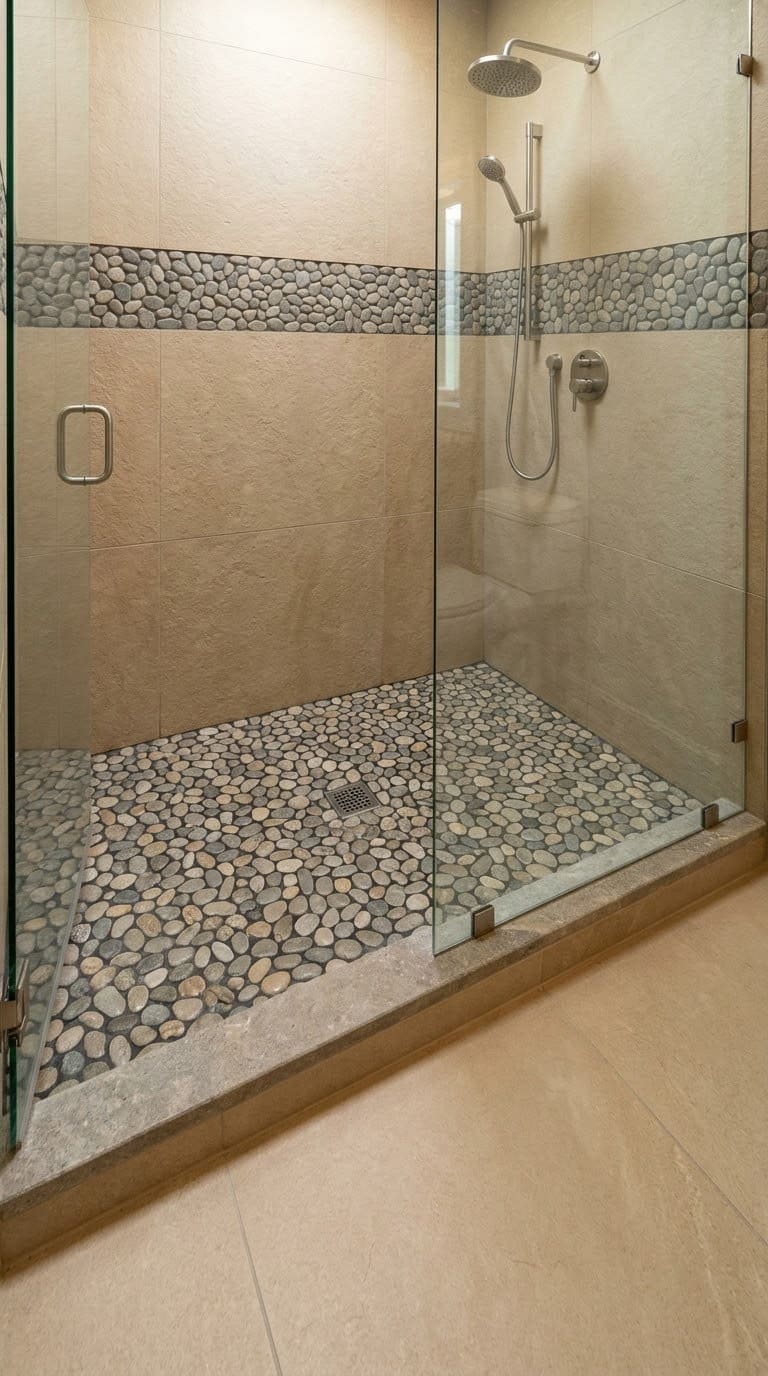
Floors need grip first and beauty second. Sand-textured porcelain and river-rock mosaics both give a beach feel underfoot.
The Construction Specifier reports that ANSI A137.1 sets a wet DCOF of 0.42 or more for tile in level interior spaces walked on wet. It adds that meeting that number doesn’t make a tile right for every project, and the person who specifies the tile carries the responsibility.
Read the product sheet. Look for the wet DCOF value on the box or the spec page. If it isn’t listed, ask the seller before you order.
Know the pebble tradeoff. Pebble mosaics add grip because of the many grout lines, but they feel hard on bare feet. They also trap soap and hair, so they take more cleaning. Stand on a sample in bare feet before you choose.
Mix the floors. Run pebbles only inside the shower and a large-format sandy porcelain outside it. That keeps cleaning easy and cost lower.
Slope for drainage. Water has to run to the drain. Ask your installer to confirm the slope before the tile goes on, since a flat shower floor holds a puddle.
Add a border. An old trick is a band of the same stones at eye level on the wall, which ties the floor to the wall. It works best with a calm, large-format tile.
Don’t haul in your own stones. Rock collecting is prohibited at many national park beaches. Buy bagged river stones or mosaic sheets instead. See idea 8 for the rules.
For more floor choices, our bathroom floor tile ideas cover sizes and layouts. Budget: mid to high. Skill: pro.
4. Sealed Beadboard or Shiplap Walls
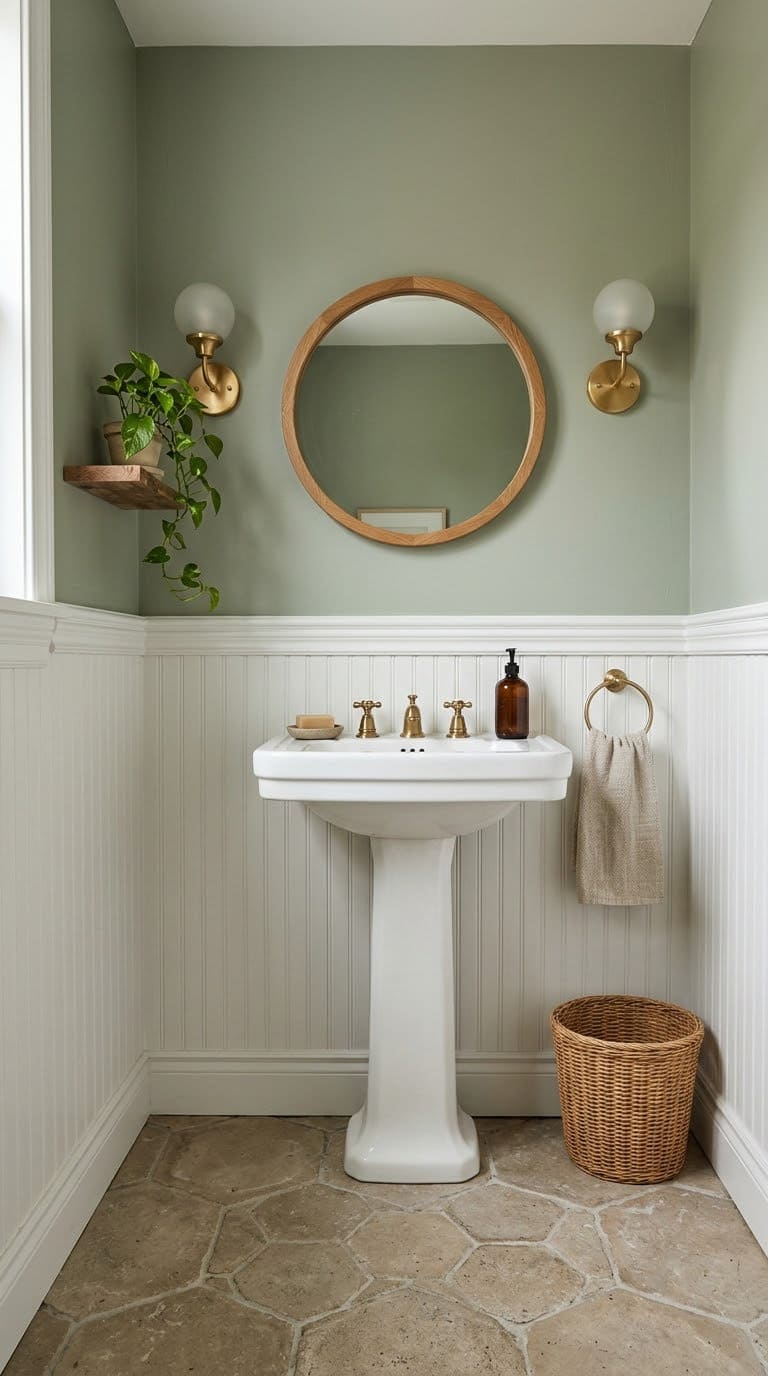
White beadboard and shiplap are the classic beach cottage look. They also soak up water if you skip the prep.
Wood is the weak spot in a humid room. So seal it fully, and keep it out of the shower spray.
Pick the right material. Moisture-resistant boards or PVC beadboard take steam better than raw pine. Real wood can work in a half bath with a good fan.
Seal every edge. Paint the back, the cut ends and the bottom edge before you install. Water usually gets in where the paint stopped.
Caulk the joints. Run a bead of paintable caulk at the top rail, the corners and around the sink. Gaps catch water and grow mildew.
Choose the height. Wainscoting that covers about a third to half of the wall looks right and protects the splash zone. Our guide to bathroom wainscoting shows heights and styles.
Use semi-gloss paint. It wipes clean and sheds water better than flat. Repaint when you see chips.
Watch the 24-to-48-hour window. The EPA says water-damaged areas need drying within 24 to 48 hours to prevent mold. Wipe any spill on wood, and don’t let a wet towel sit against it.
Quick tip: Tap the lowest board near the toilet every spring. A dull sound or soft spot means water has crept in.
Budget: low to mid. Skill: intermediate.
5. A Light Wood and Rattan Vanity
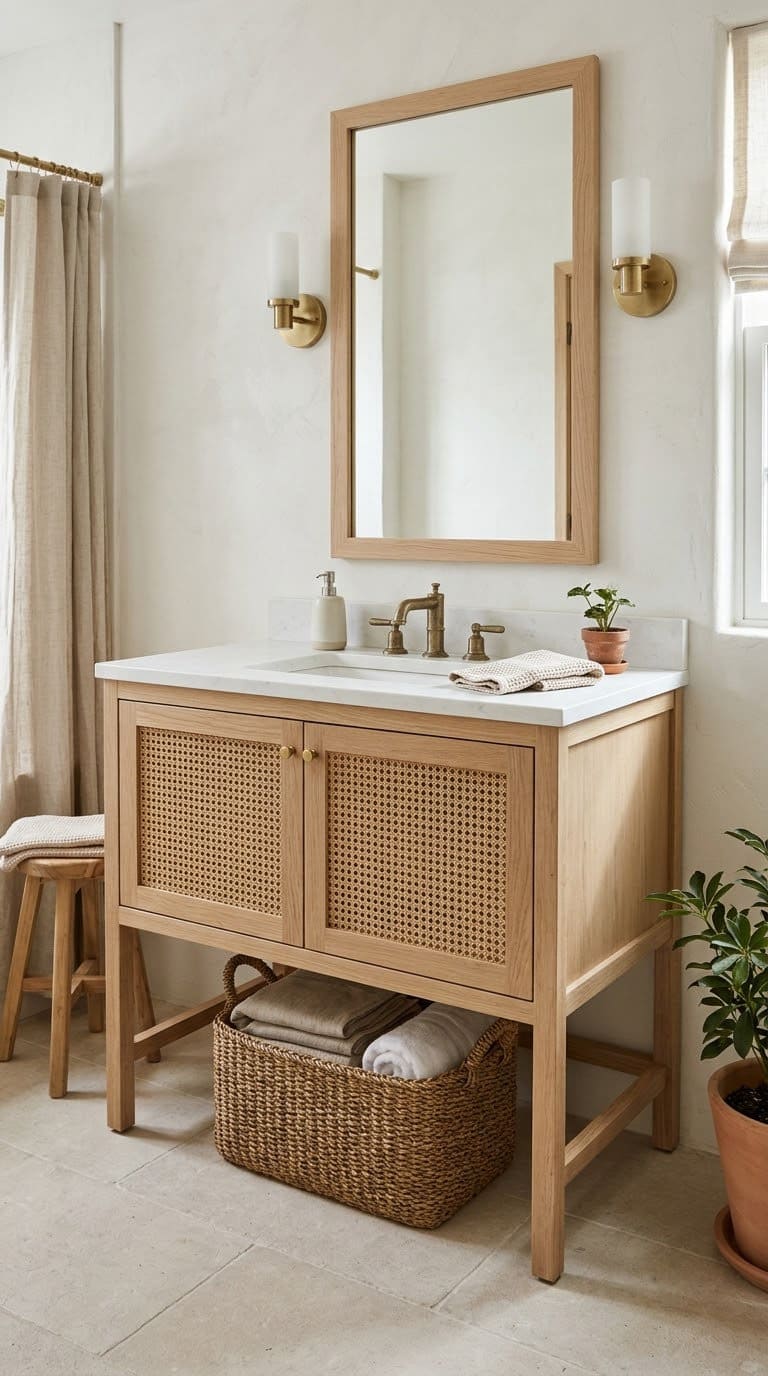
A pale wood vanity brings warmth that tile can’t. Caned or woven doors add the airy texture of a beach house.
Hunker mentions a light wood vanity with caned door fronts, and a wood-framed mirror to match. Livingetc quotes ATX Interior Design on the same idea. The firm says “Woven elements, soft lines, and layered textures are key to coastal decor.”
Seal the top and the edges. Water pools at the sink cutout and the faucet base. A sealed stone or quartz top protects the wood below.
Check the cane. Natural cane can swell and sag in steam. Look for sealed cane or woven doors with a protective finish, and keep it away from the shower.
Add a basket drawer. A woven basket on an open shelf holds rolled towels. It gives the same texture without the cost of caned doors.
Mind the plumbing cutouts. Raw cut edges inside the cabinet drink up leaks. Brush sealer on every cut edge before the plumber hooks up the drain.
Frame the mirror in wood. A rounded or rectangular wood frame softens white tile. Use a sealed frame, and keep the lower edge away from the sink splash.
Our bathroom mirror ideas show more frames that suit a coastal vanity. Budget: mid to high. Skill: intermediate.
6. Woven Sconces and Salt-Ready Hardware
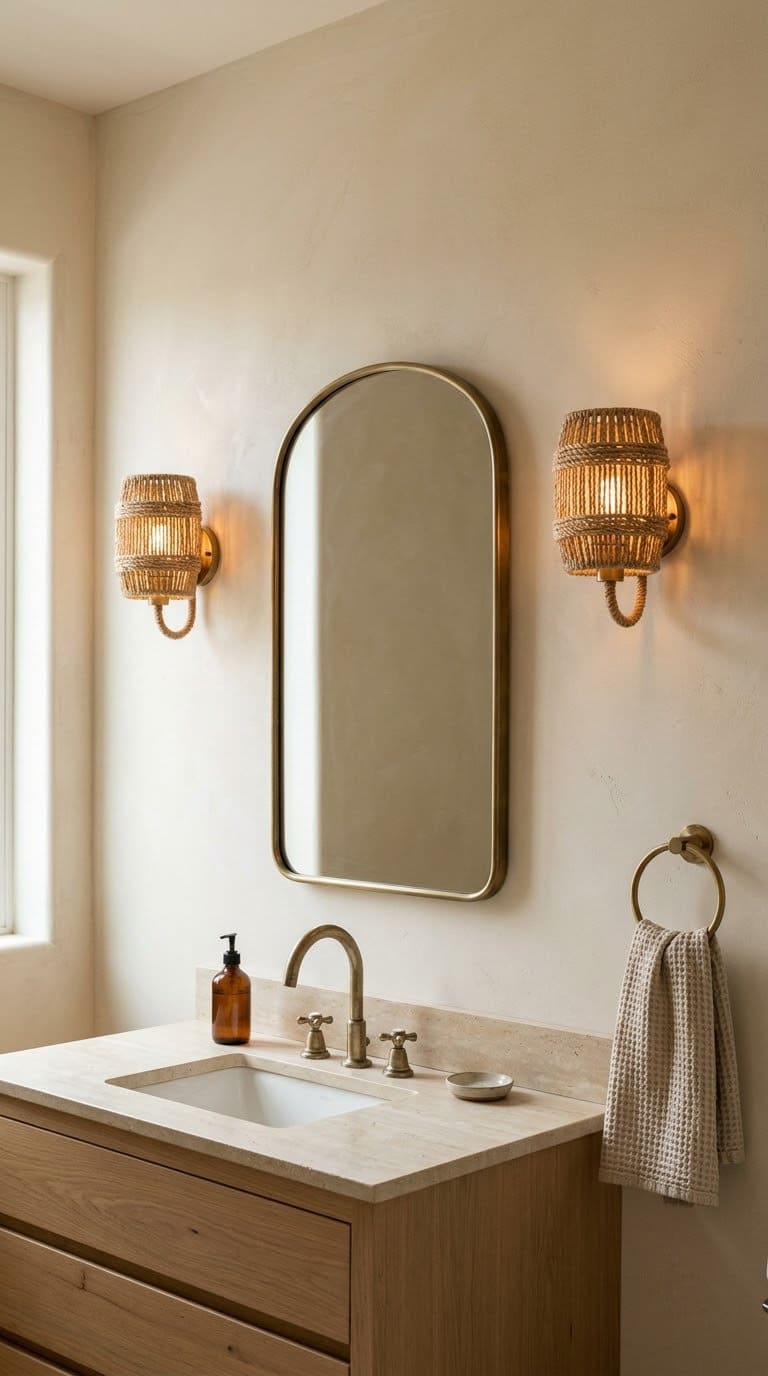
Light and metal tie a beach bathroom together. They’re also the pieces that suffer most from steam and salt.
Rope or wicker shades add soft texture. But a woven shade near a shower needs the right rating, or it can fail early.
Check the rating. A fixture over a tub, inside a shower or near the spray needs a damp or wet listing on its label. Ask your electrician which rating each spot needs, and check with your building department, since codes vary.
Light both sides of the mirror. Sconces at face height on each side avoid the shadows a single ceiling light casts. Check how far each sconce sticks out, so it clears towel bars and the door swing.
Choose warm bulbs. Bulbs in the 2700K range make sand and wood glow. Cool white makes seafoam look gray.
Match your metals. Hunker names brass for warmth and black for a modern contrast. Pick one and repeat it on the faucet, hooks and lights.
Buy for salt. Choose solid brass or stainless steel over plated zinc. Check screws too, since a rusty screw stains tile and grout.
Wipe monthly. A damp cloth removes salt film before it etches the finish. Dry the metal afterward.
Our bathroom lighting ideas explain light zones near water in more detail. Budget: low to mid. Skill: beginner for hardware, electrician for hard-wired lights.
7. Open Towel Storage: Ladder, Cleats and Baskets
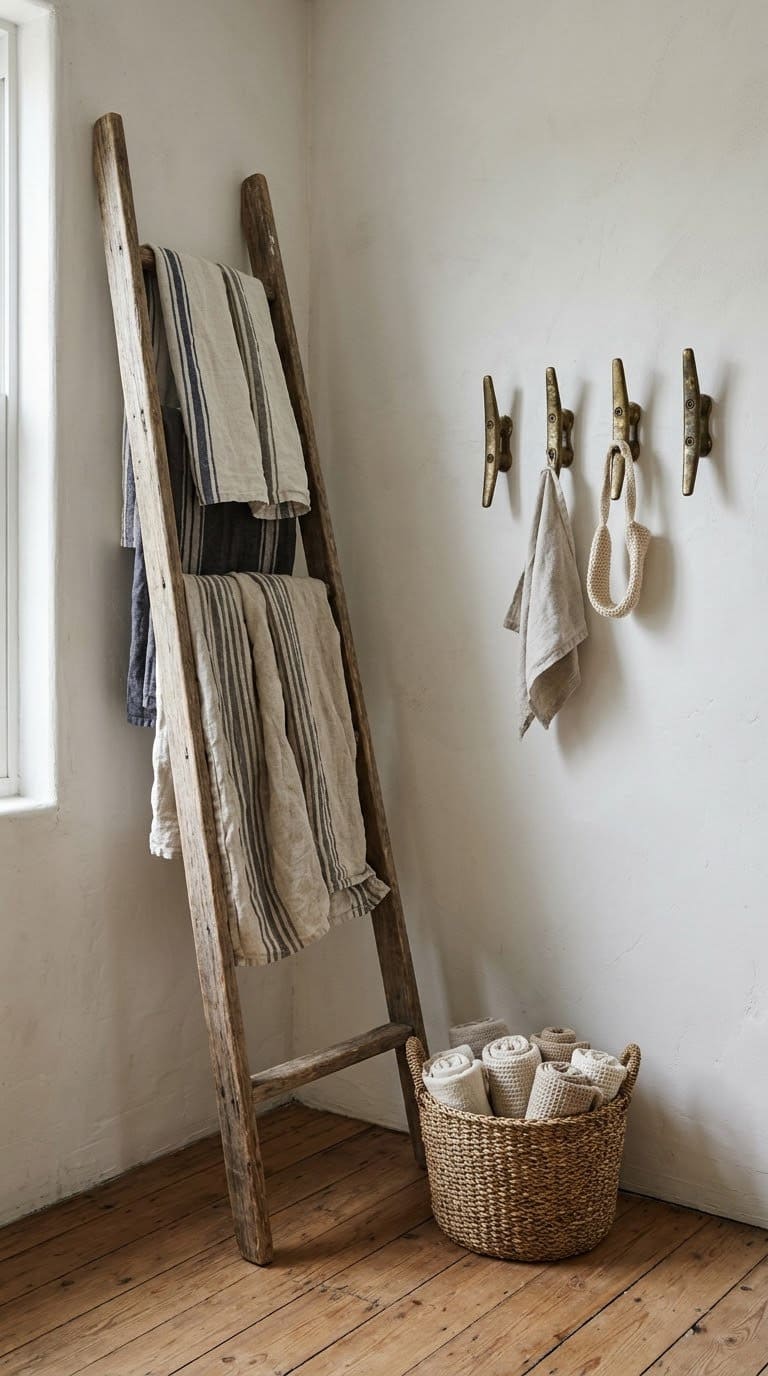
Open storage is how beach houses stay airy. It also helps towels dry between uses, which cuts the damp smell.
Hunker suggests hanging linens on a wooden ladder instead of a standard towel bar. A leaning ladder also costs little and needs no drilling.
Give towels room to dry. Towels that overlap stay wet and sour. Hang one per hook or rung, and spread them out.
Try boat cleats as hooks. A solid brass or stainless cleat holds a robe or a beach bag. Screw it into a stud or use a rated anchor, since a wet robe is heavy.
Use baskets for the rest. Rolled towels in a basket look neat, but wet towels shouldn’t live there. Keep the dry spares in the basket.
Keep wood off the floor. A ladder on a wet floor wicks water up its feet. Seal the feet, or set it on a mat or a small tile.
Plan the traffic. Don’t block the door swing or the path to the toilet. Tape the ladder footprint on the floor for a day before you commit.
For more rack styles, browse our bathroom towel rack ideas. If storage is the problem, our bathroom storage ideas go deeper.
Budget: low. Skill: beginner.
8. A Small Shell and Driftwood Display, Sealed and Legally Sourced
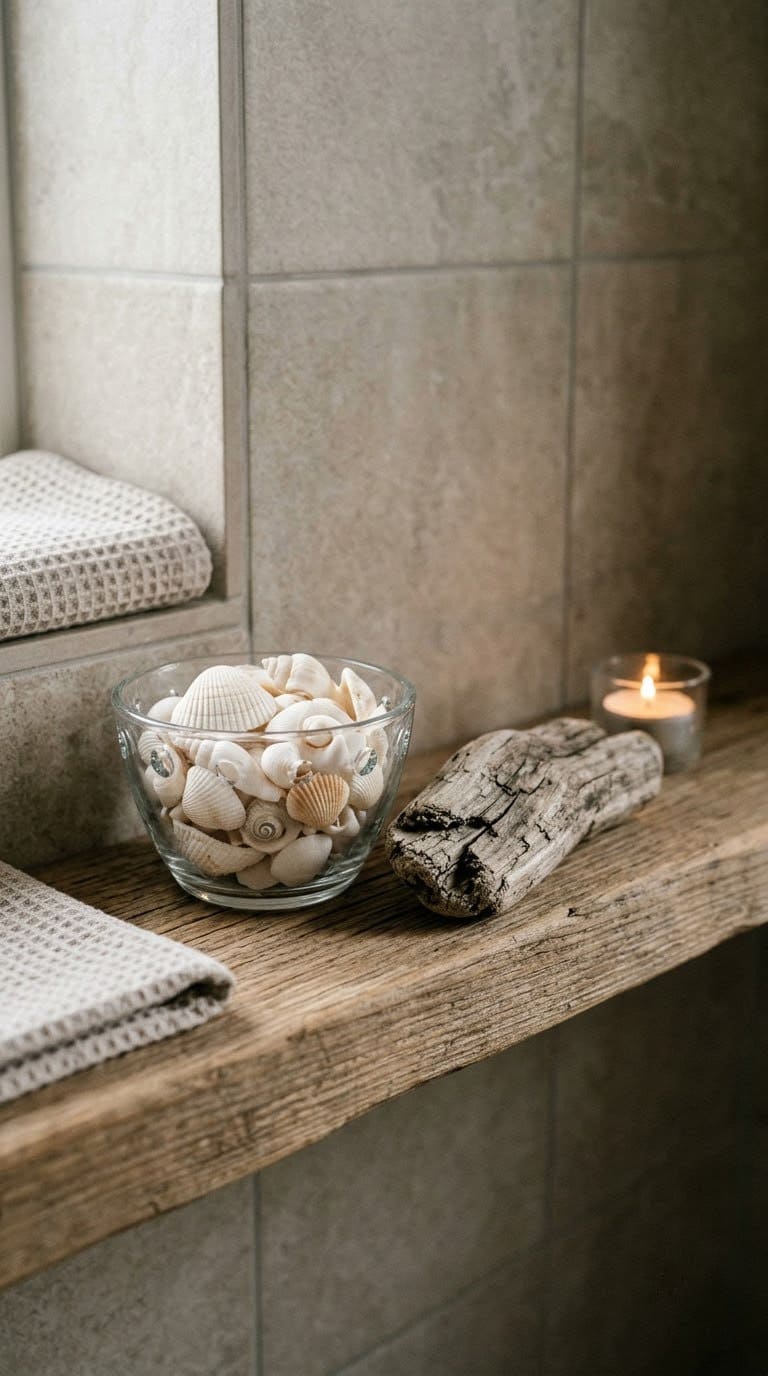
Shells make the room feel like the shore. They also grow mildew if you don’t clean and seal them.
Treat them as decor, not as a collection. A few clean pieces look better than a crowded shelf.
Know the rules. The National Park Service says at Indiana Dunes you may gather a small amount of unoccupied seashells for personal use. Occupied shells and rocks are prohibited, and violations can bring fines. Rules vary by park, state and beach, so check before you pocket anything.
Buy craft shells instead. They’re cleaned and ready, and they cost little. Craft stores sell bags in many sizes.
Clean found shells. Wash them with mild soap and water. Dry them fully for several days, since leftover moisture causes odor and mildew.
Seal them. A light coat of clear matte spray sealer keeps moisture out and stops chalking. Let each coat cure before you display them.
Keep them dry. Set shells on a shelf away from the shower spray. A closed glass jar traps humidity, so use an open bowl or a vented jar.
Follow the three-piece rule. Start with three small pieces or one bigger statement piece. If the shelf looks full, remove one.
For craft projects that use shells, see our DIY shell ideas. Budget: low. Skill: beginner.
Rental-Friendly Ways to Get a Beach Bathroom
You don’t need to renovate to get the look. These swaps travel with you.
Swap the shower curtain for a soft striped or sea-toned one, and add a quick-dry mat. Our shower curtain ideas and bathroom rug ideas list more.
Lean a ladder against the wall for towels, and hang a woven basket on a rated hook. Replace bulbs with warm ones. Add a small framed print on a dry wall.
Use peel-and-stick vinyl only on walls that stay dry, and test a corner first. Take everything with you when you move.
How Do You Keep the Look From Feeling Kitschy?
Restraint is what separates a beach bathroom from a theme park. Use this simple filter.
Pick one literal coastal item per shelf, like a shell or a rope loop. Let color and texture do the rest. Skip anchors on every wall, signs with beach puns and rope on every surface.
Use natural, matte materials instead of shiny plastic ones. And leave some empty space. A calm wall reads as sea air.
How Should You Spend the Budget?
Spend where water hits and save where it doesn’t. This table shows where each dollar earns its keep.
| Spend more on | Save on |
|---|---|
| Waterproofing behind tile | Wall art |
| Wet-rated floor tile | Shells and decor |
| A fan that clears the steam | Baskets and trays |
| Solid brass or stainless hardware | Paint and towels |
| Damp or wet-rated lights | Rope and woven accents |
A fresh coat of paint and new towels cost far less than tile. If cash is tight, start with color, hardware and lighting, then save for tile.
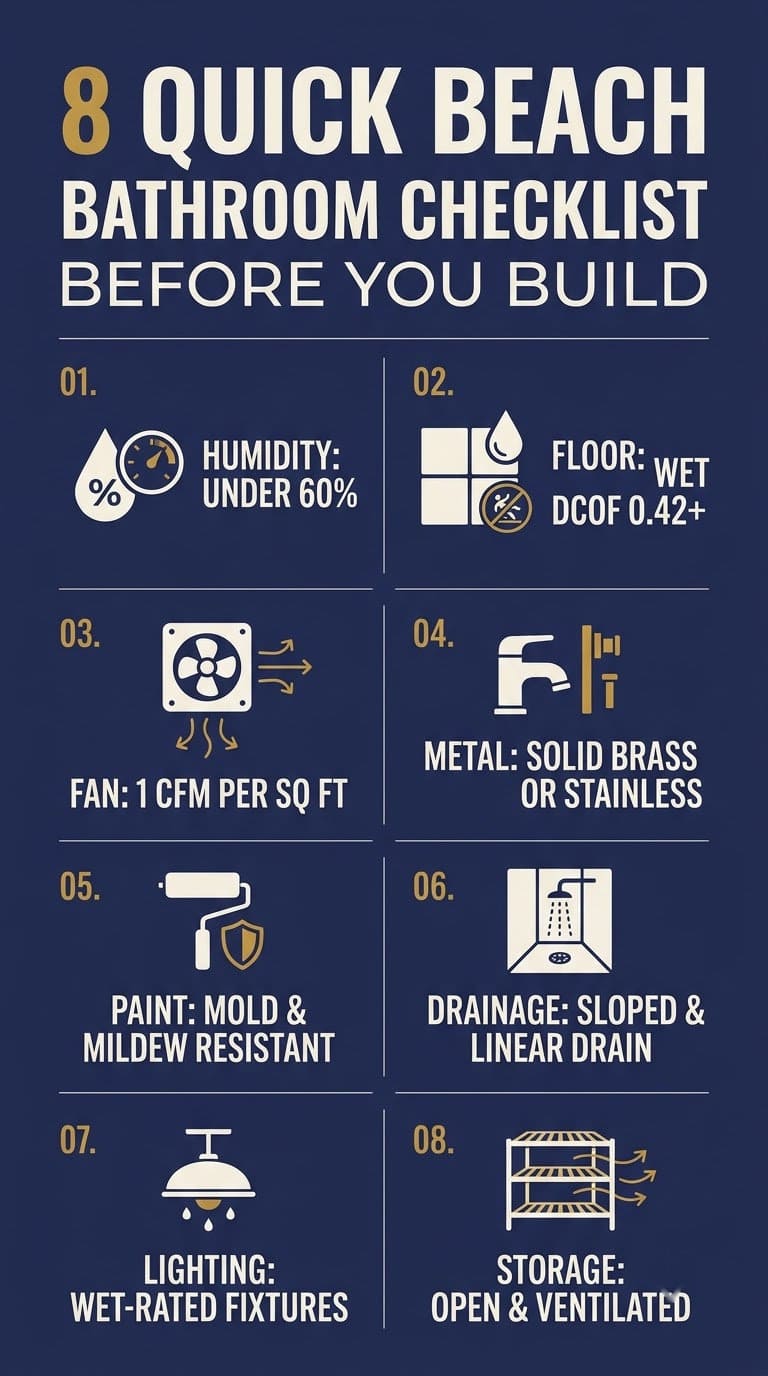
What to Do First
Start with the checks, then build the look. This order saves you from redoing work.
First, test the fan and fix any damp spots. Second, choose the color palette with a sample on the wall. Third, pick the floor and wall tile, and confirm the wet rating.
Then add the vanity, lights and hardware. Last, add towels, baskets and a few shells. A few hours of planning now saves a costly redo later.
Common Mistakes to Avoid
Most beach bathrooms fail in the same few ways.
Skipping the fan. The EPA says to keep humidity under 60 percent and to run the fan during showers. A pretty room still molds without airflow.
Ignoring the slip rating. The Construction Specifier says 0.42 is the wet DCOF minimum for tile walked on wet, and that meeting it doesn’t fit every job. Check the sheet for the floor you plan to buy.
Using unsealed wood. Raw wood swells and grows mildew near water. Seal every edge, and keep it out of the spray.
Buying plated hardware. Salt pits plated finishes first. Choose solid brass or stainless.
Overdoing the theme. Hunker’s ideas lean on color and texture, not props. Edit your shelf down to a few pieces.
Collecting from protected beaches. The Indiana Dunes rules show that rocks and occupied shells are off limits. Check the local rules or buy shells.
FAQ
What colors work in a beach bathroom?
Use warm white or sand on the walls. Add sea glass green or soft blue on the vanity or tile, and a small pop of coral or navy. Keep the metals to brass or matte black.
What humidity should a bathroom stay under?
The EPA says to keep indoor humidity below 60 percent, ideally 30 to 50 percent. Run the fan or open a window during showers.
What slip rating should bathroom floor tile have?
The Construction Specifier reports a wet DCOF of 0.42 or greater under ANSI A137.1. It says that doesn’t make a tile suitable for every project, so check the product sheet.
Can you use real shells in a bathroom?
Yes, if you clean, dry and seal them and keep them out of the spray. Gather them only where the rules allow, or buy craft shells.
Is shiplap okay in a bathroom?
It can work in a half bath with a good fan, if you seal every edge and use semi-gloss paint. In a full bath, moisture-resistant boards or PVC are safer.
How do I make a small bathroom feel like the beach?
Pick one color family, add one texture like rattan or rope, and keep the walls light. A glass shower screen and a clear window keep the room open.
Related Posts
Never miss an update — choose FarmFoodFamily as your preferred source on Google.
How it works: Tap the button below to open Google's settings page, then check the box next to FarmFoodFamily.
Tap the checkbox to turn it blue — that's how you know it's set.