20+ Creative Cinder Block Bench Ideas (Plus the Structural Rules)
Cinder block benches show up everywhere in DIY roundups, cheap, fast, no real carpentry skill required. What almost none of those roundups mention is that a cinder block is engineered for a specific job, stacked in a continuous wall under compression, and a garden bench is a different job entirely. That doesn’t mean don’t build…

Never miss an update — choose FarmFoodFamily as your preferred source on Google.
How it works: Tap the button below to open Google’s settings page, then check the box next to FarmFoodFamily.
Tap the checkbox to turn it blue — that’s how you know it’s set.
Cinder block benches show up everywhere in DIY roundups, cheap, fast, no real carpentry skill required.
What almost none of those roundups mention is that a cinder block is engineered for a specific job, stacked in a continuous wall under compression, and a garden bench is a different job entirely.
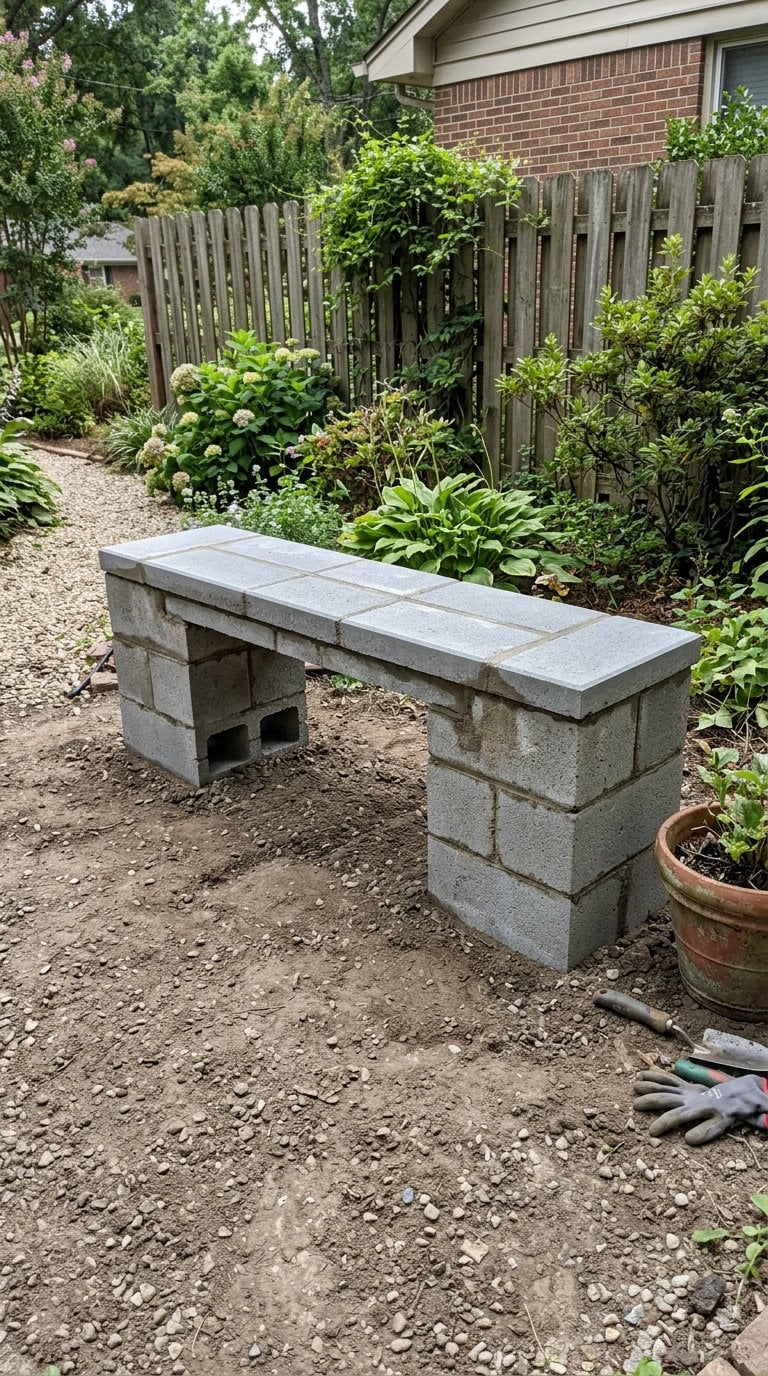
That doesn’t mean don’t build one, thousands of these hold up fine. It means a few things are worth getting right before you stack anything.
1. Get the structural basics right before you stack anything
A standard concrete masonry unit is rated under ASTM C90 for around 1,900 psi of compressive strength, and the Concrete Masonry & Hardscapes Association’s guidance around that standard is written for continuous wall assemblies carrying load straight down, not for a short, freestanding stack holding up a seated adult from the side. That’s not a reason to avoid the project, it’s the reason a few DIY-level precautions actually matter.
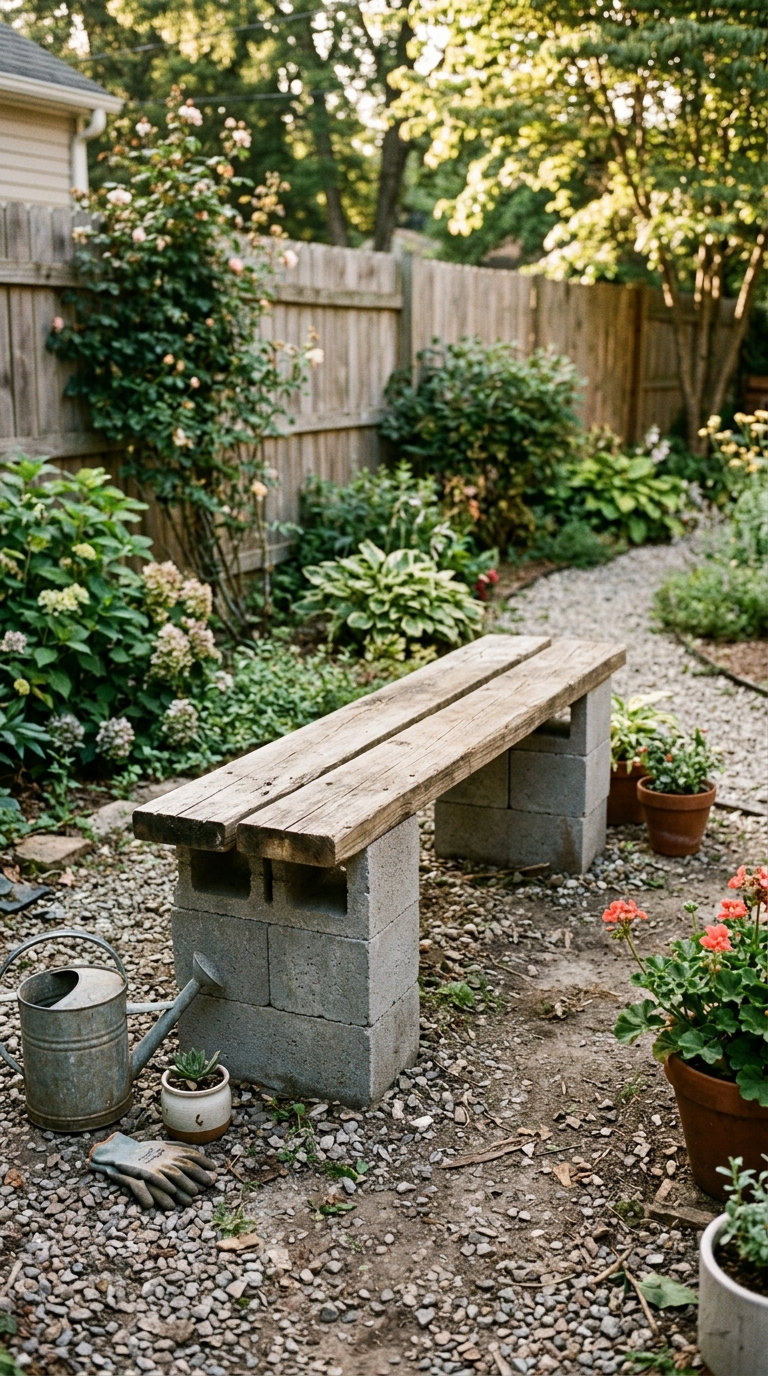
Level, compacted ground comes first. Several real builders specifically call out that the most time-consuming part of their build was leveling the site, not stacking the blocks, since an uneven base is what actually causes a bench to wobble or shift over the following seasons.
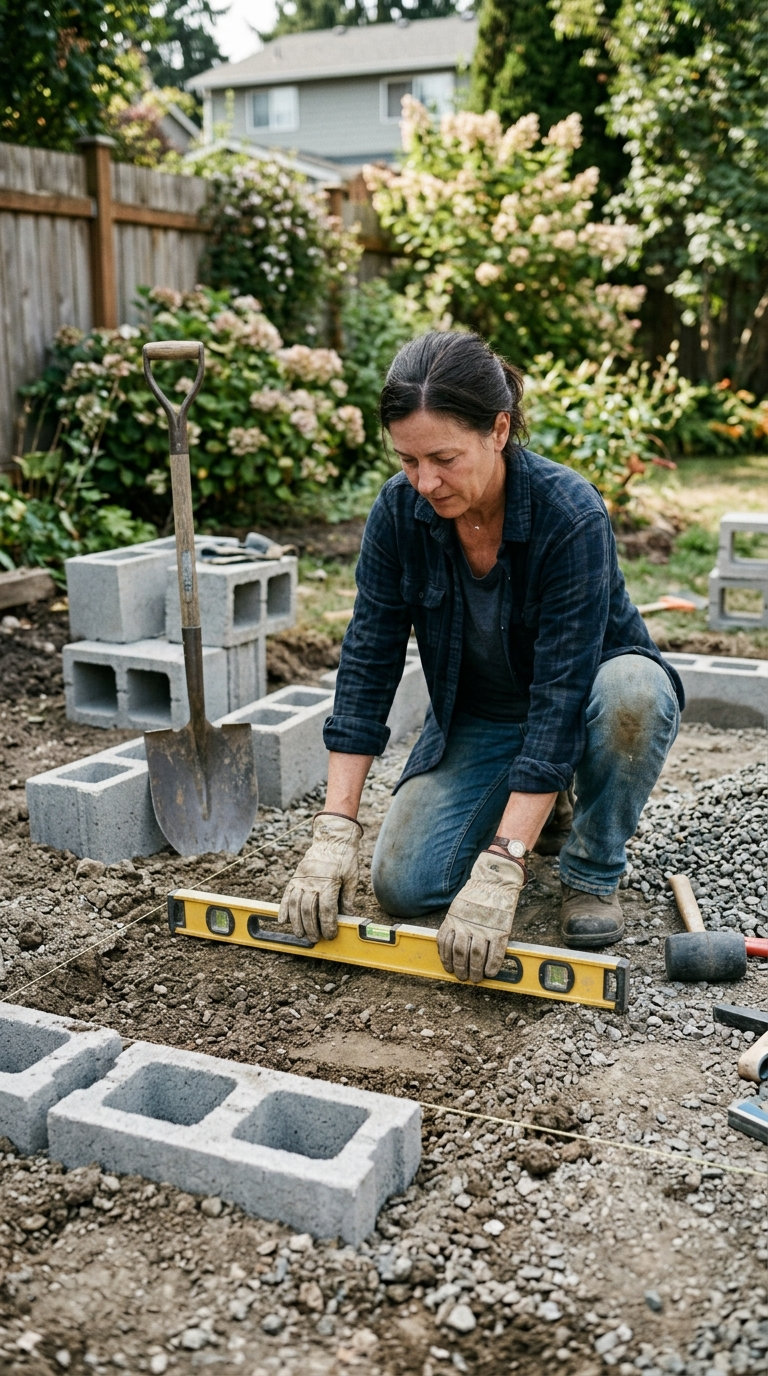
Let adhesive cure the full time before use, typically 24 hours, and if the design has a backrest, make sure that section is secured against leaning force specifically, not just stacked to resist vertical weight. A quick, practical check some builders use before regular use: press down on each corner with something close to body weight and confirm nothing shifts.
Answer 4 quick questions and get matched to the exact fix for your yard — drainage, budget, layout, or something else entirely.
Take the Free QuizFreeze-thaw is a real, specific risk for hollow blocks left open on top. Water that collects in an uncapped cavity expands when it freezes and can crack the block over repeated winters, capping the top course or filling exposed cavities closes that gap.
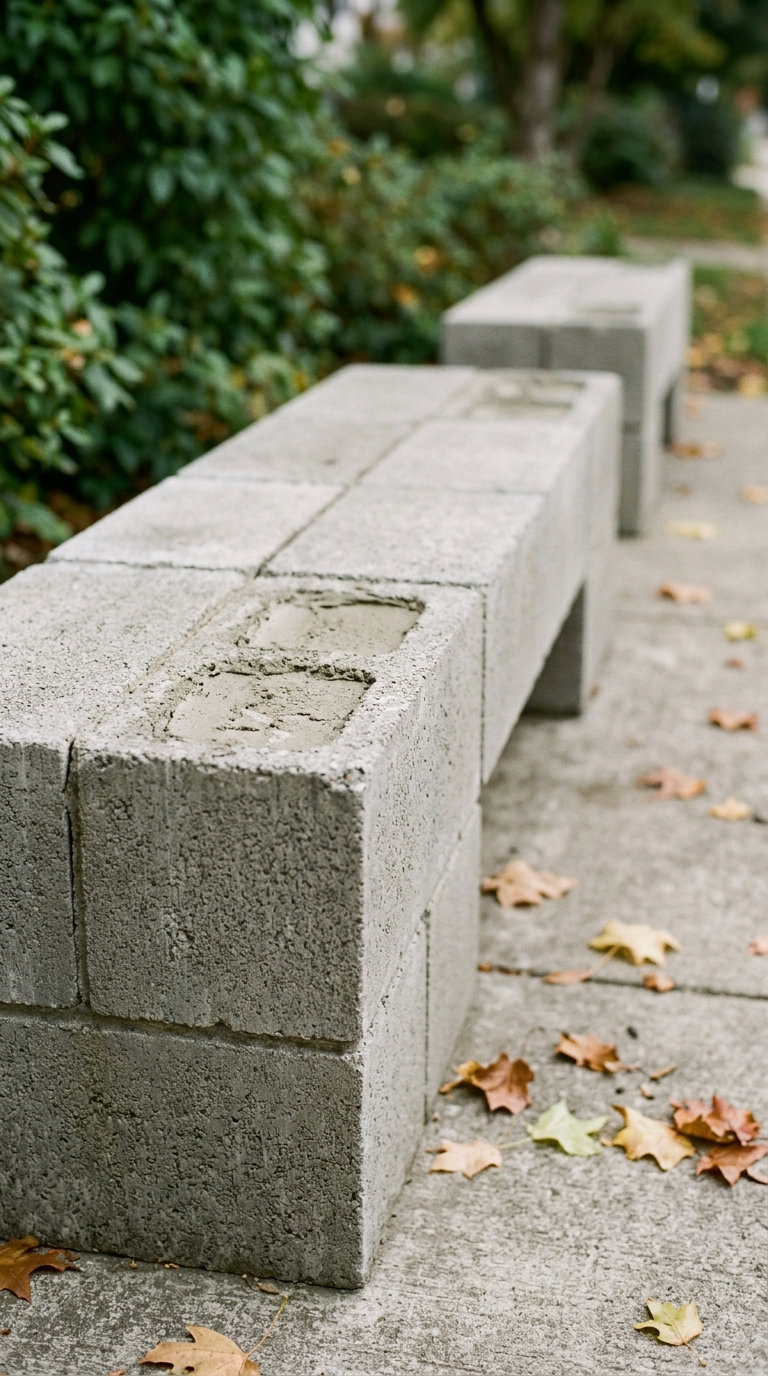
And to be honest about what’s not known here: there’s no published building code or CPSC safety standard specifically for cinder block garden benches, this kind of project falls below the threshold professional codes address. That’s not proof it’s risk-free, it just means the judgment calls above are the actual safety net, not a shortcut around a real standard that doesn’t exist.
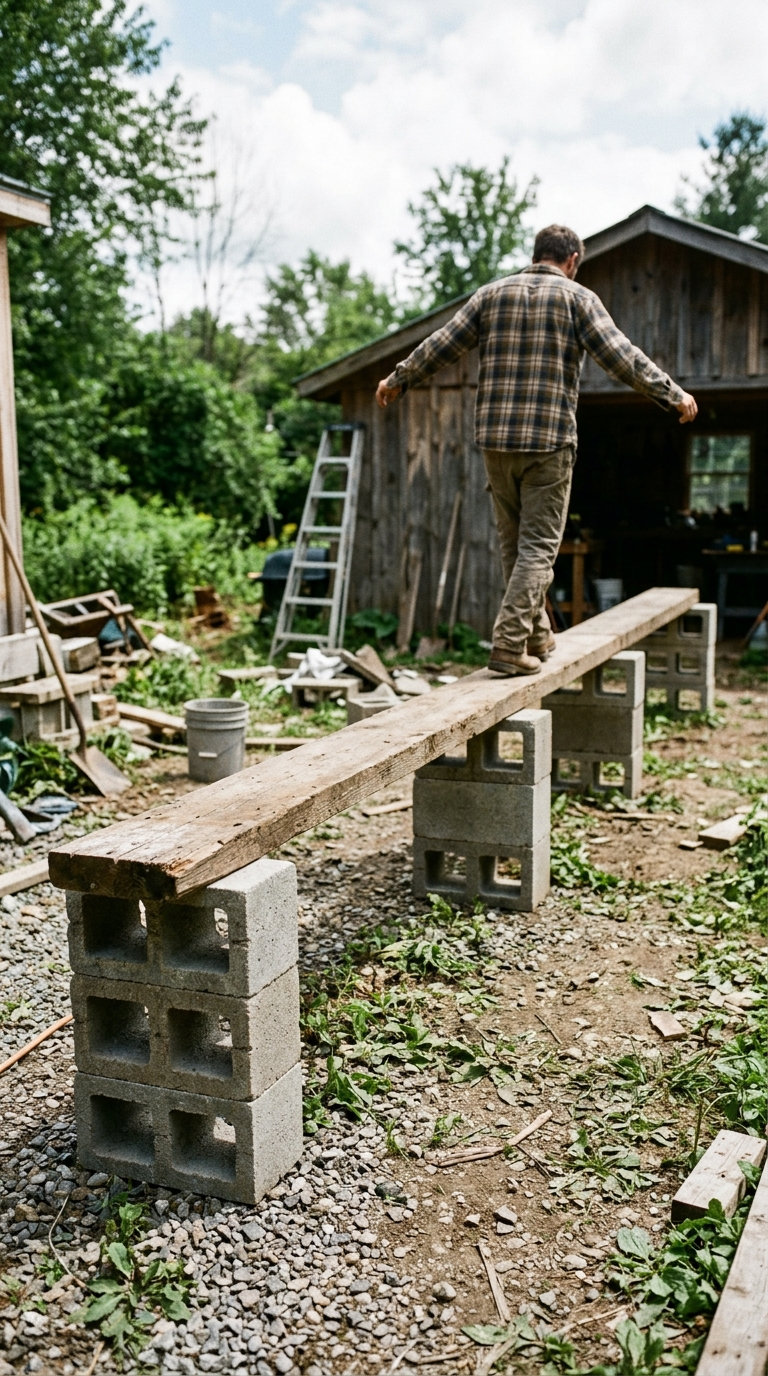
Two more things worth knowing before you build near a fire pit or with loose wood planks specifically. Standard, uncoated cinder block can crack from repeated direct heat exposure faster than people expect, one builder reported visible cracking within a single season of placing untreated block right at a fire pit’s edge. And if your design rests wood planks loosely in the block cavities rather than securing them, confirm the span between supports isn’t too long, planks spanning much more than 4 to 5 feet unsupported will visibly bend under sitting weight, the same mechanical issue that causes horizontal fence boards to sag between posts.
One more practical note: plain paint doesn’t waterproof cinder block by itself. If you want real weather protection, use a dedicated masonry sealer or an elastomeric acrylic paint applied in multiple coats, not a single coat of whatever exterior paint is on hand.
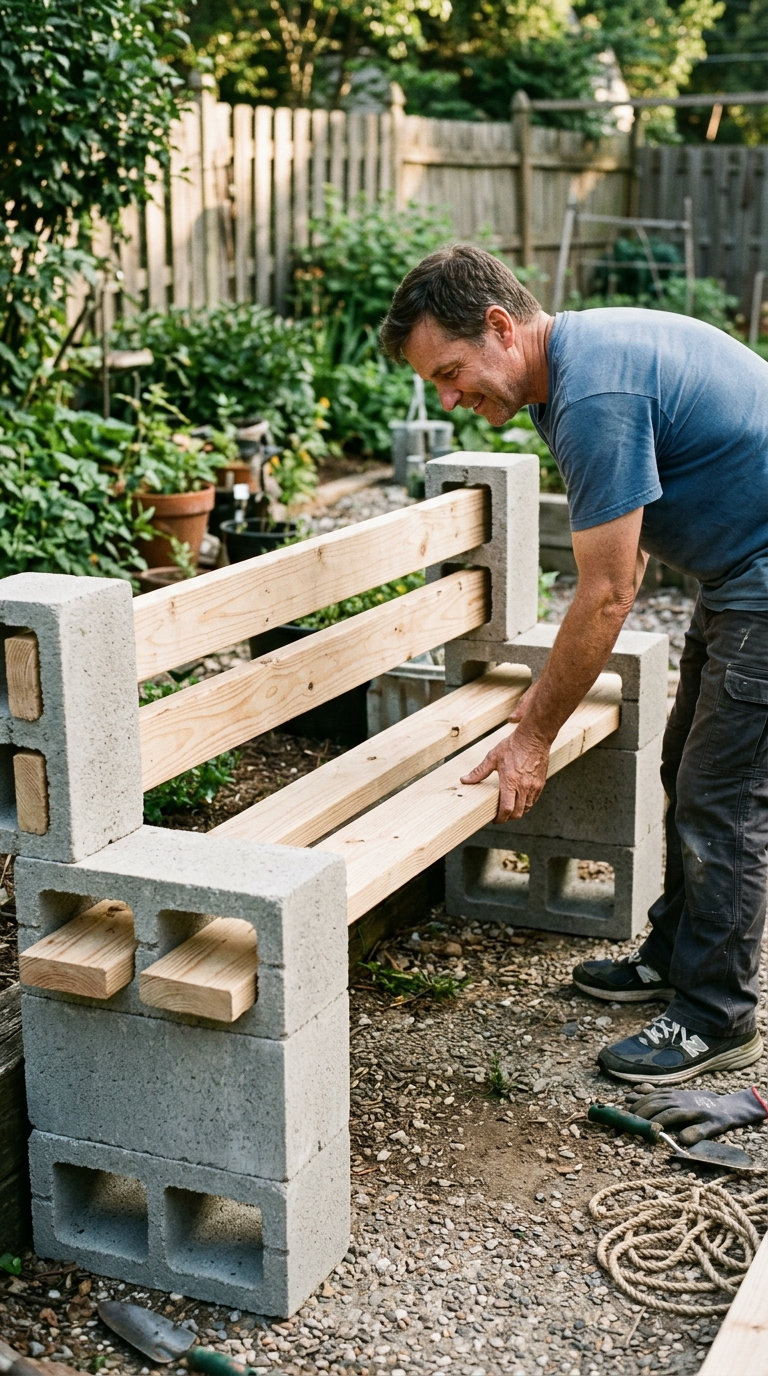
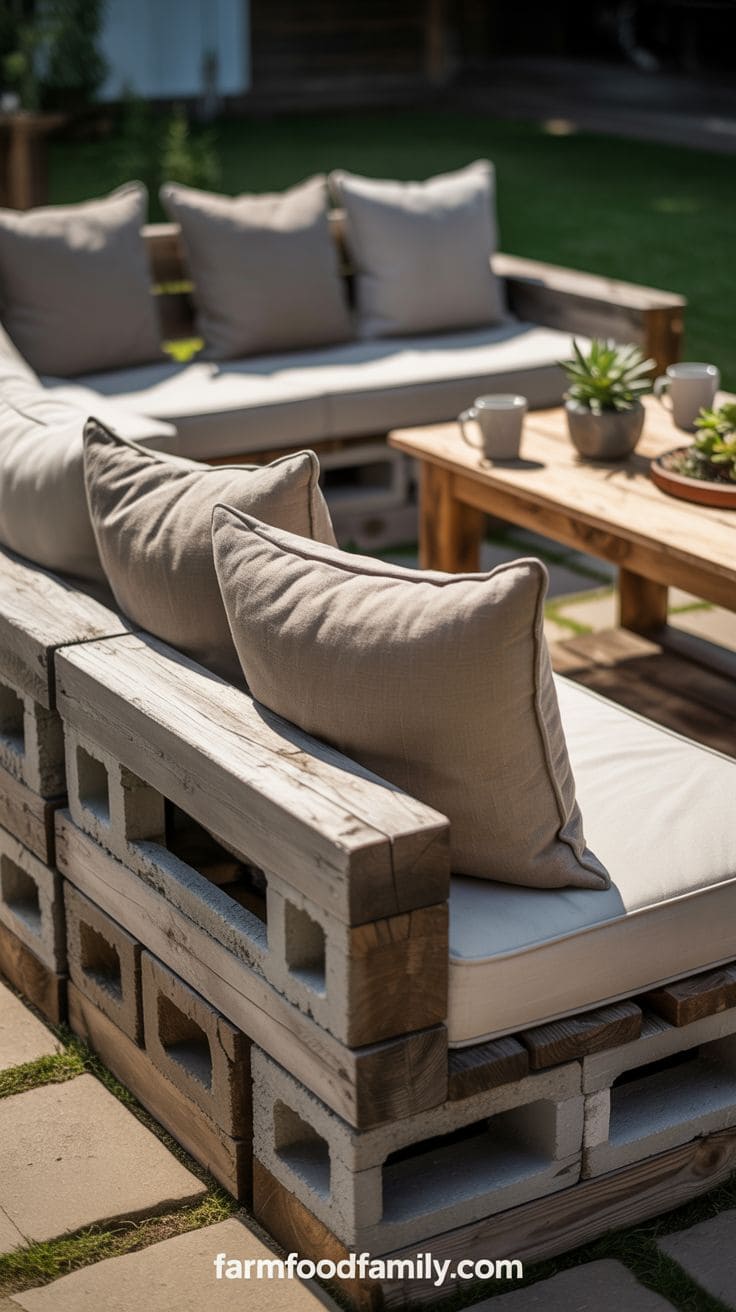
2. DIY cinder block bench with a backrest
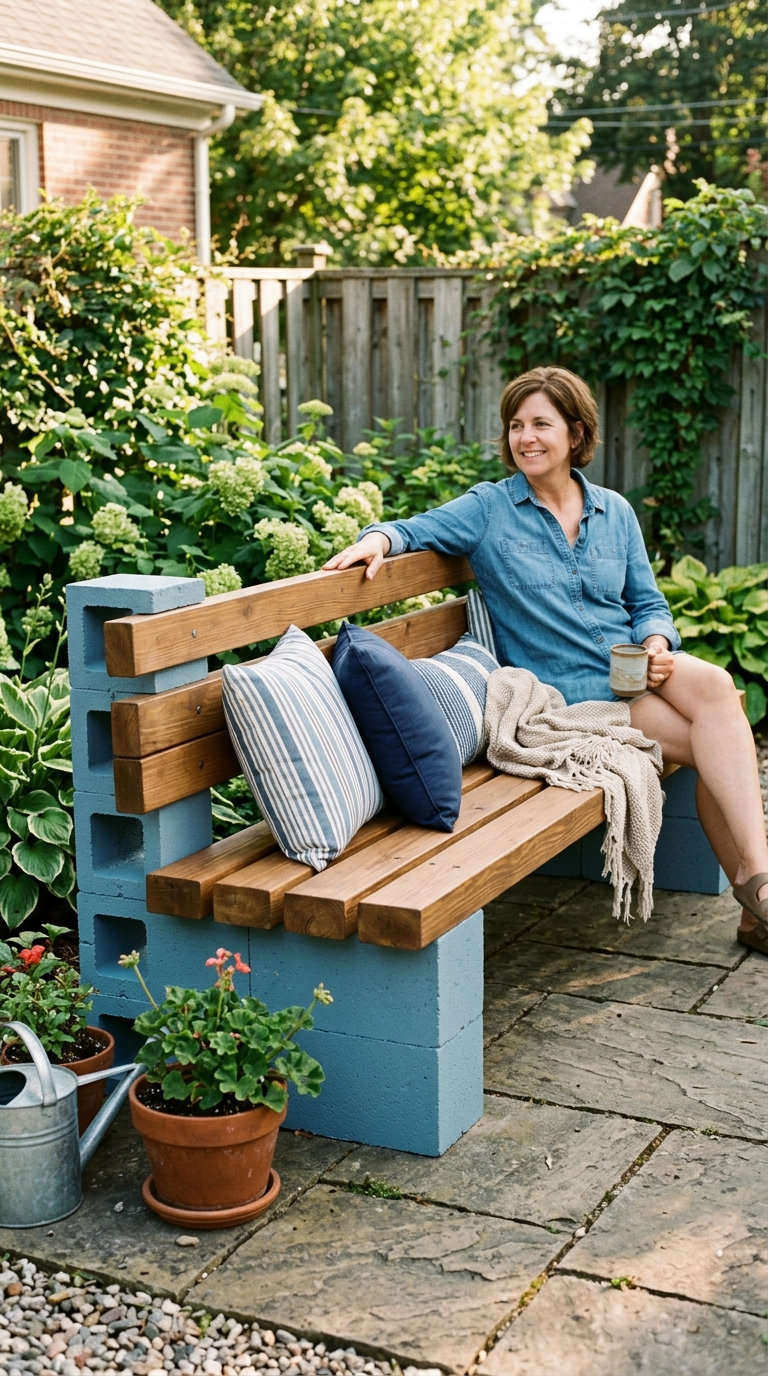
For a bench with an actual backrest instead of just a flat seat, you’ll need eight double cinder blocks (roughly 20x20x14 cm) and two more double blocks (20x20x20 cm), five wood planks at least 10 feet long, construction adhesive, primer and paint, wood varnish, and cushions if you want them.
Glue the blocks together in pairs to form the two ends of the bench, arranged like the arms of a living room sofa, and let the adhesive set for about an hour before moving on.
Prime and paint the blocks once set. Then space the two end assemblies about 4 to 5 feet apart rather than a full 6 feet, per section 1’s plank-span guidance, unsupported wood spanning much further than that will visibly sag under regular sitting weight.
Most yard problems trace back to one specific, fixable cause. Find yours in 4 quick questions.
Take the Free QuizSlide the wood planks through the gaps to form the seat and backrest, varnish all wood surfaces for water and insect resistance, and finish with cushions.
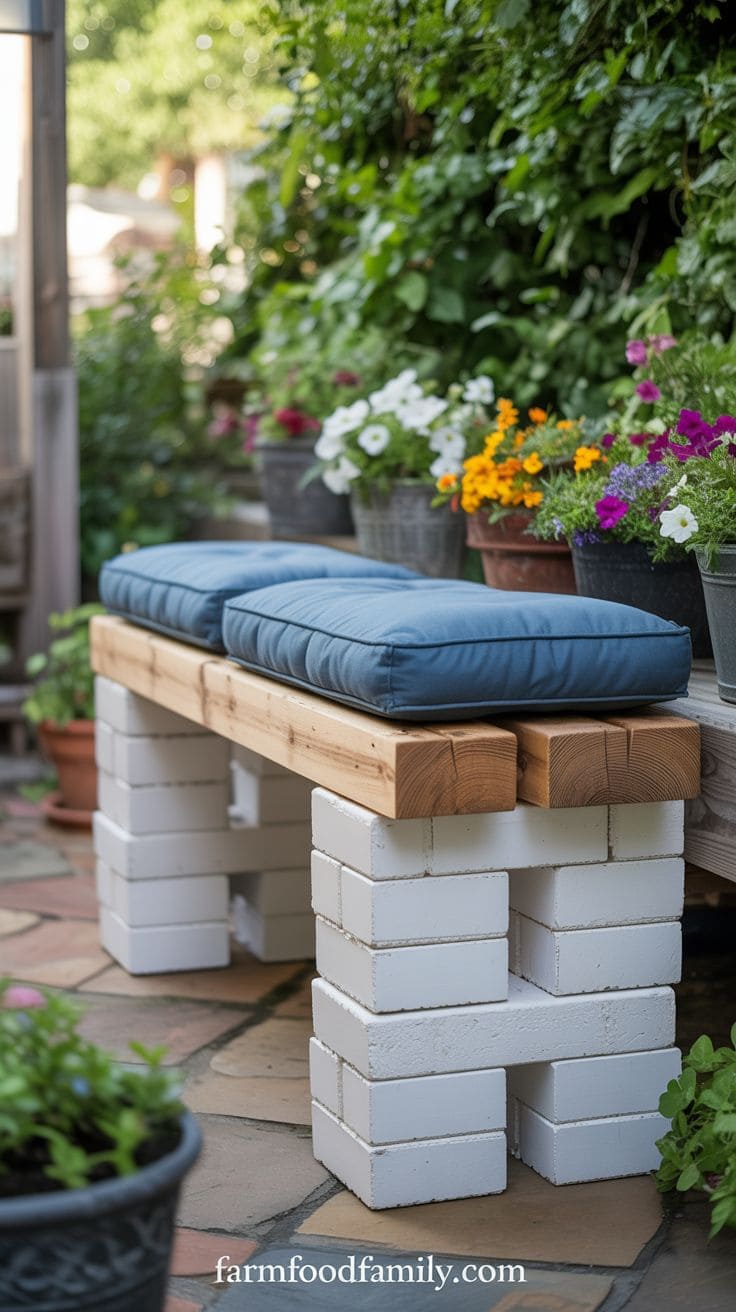
3. DIY cinder block bench with cedar planks
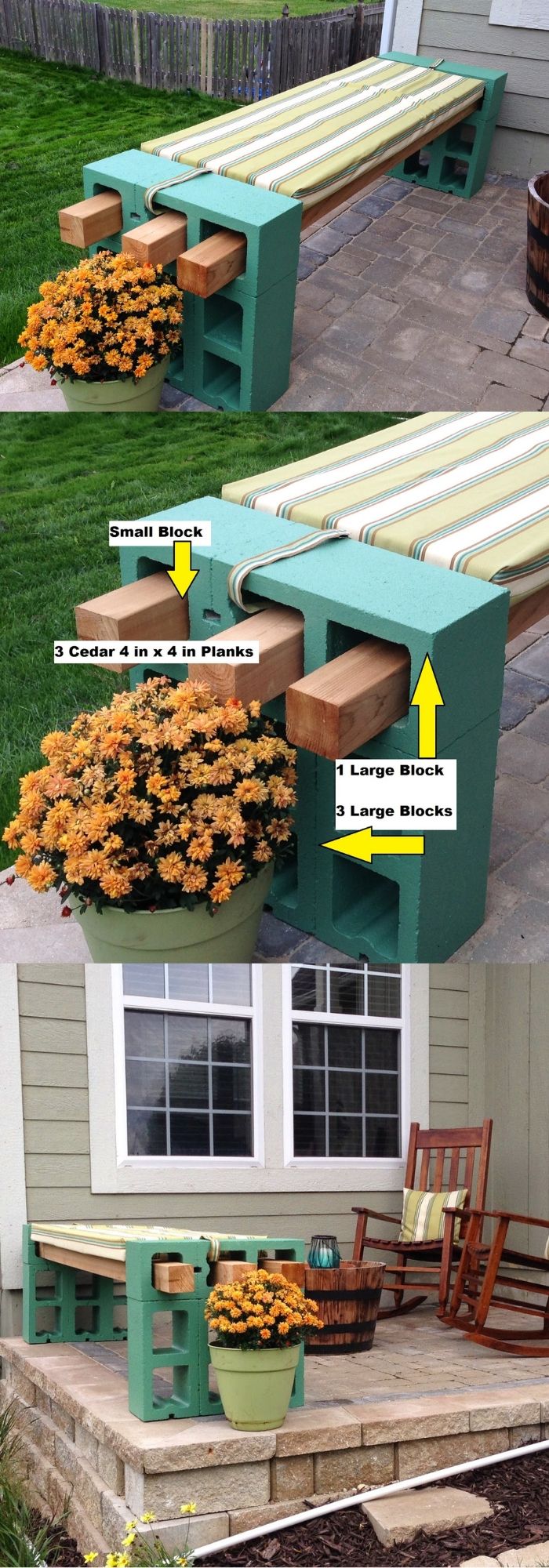
If you have extra cedar planks sitting in the garage, this is a straightforward way to use them.
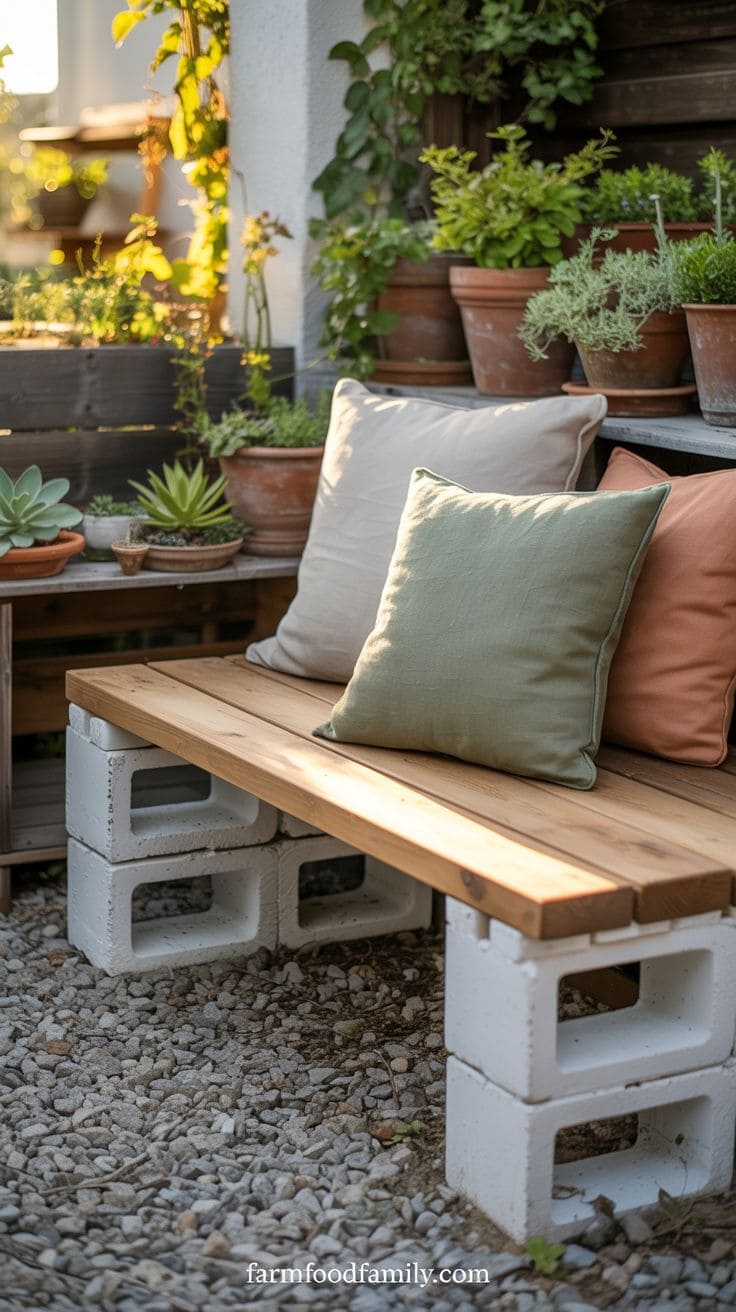
The cinder blocks act purely as the resting structure for the wood planks and cushion, works well for small decks or patios, and can double as informal railing if there are toddlers around.
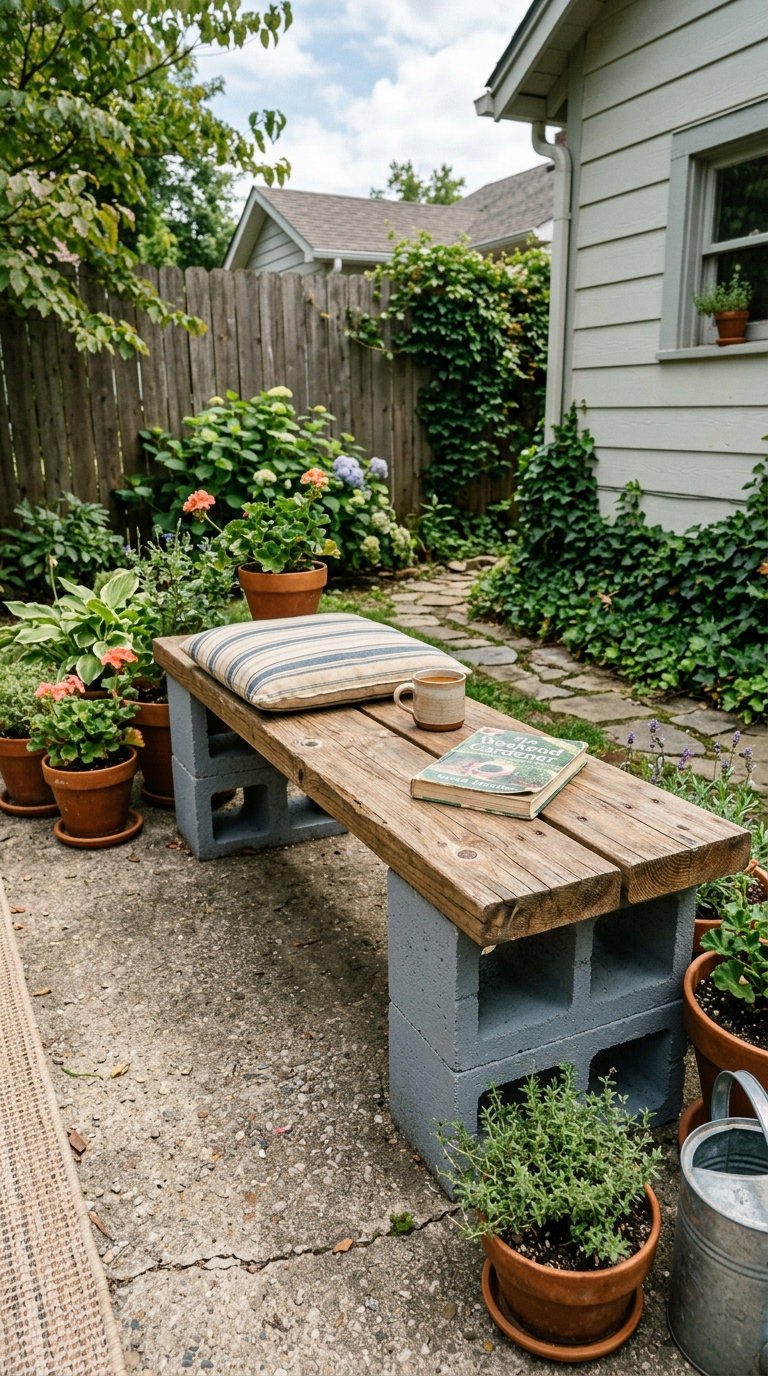
The original build painted the blocks specifically to protect them from outdoor weather exposure.
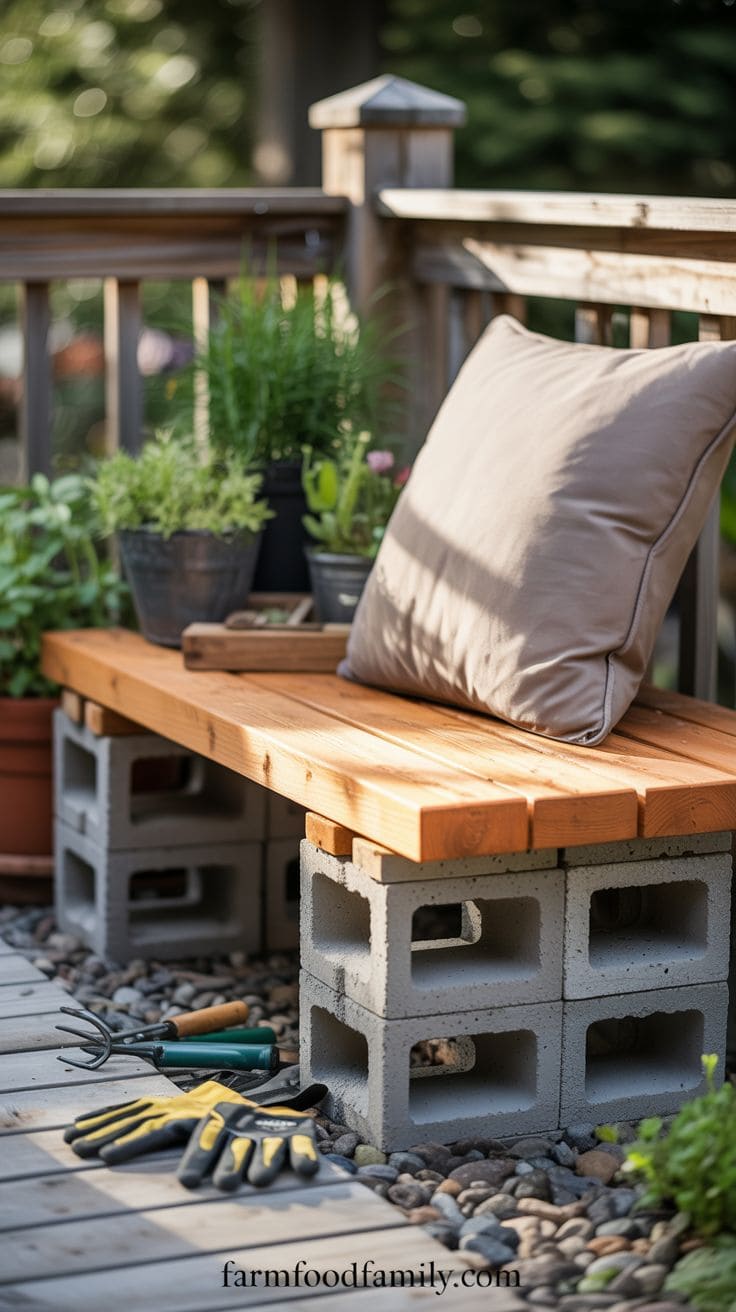
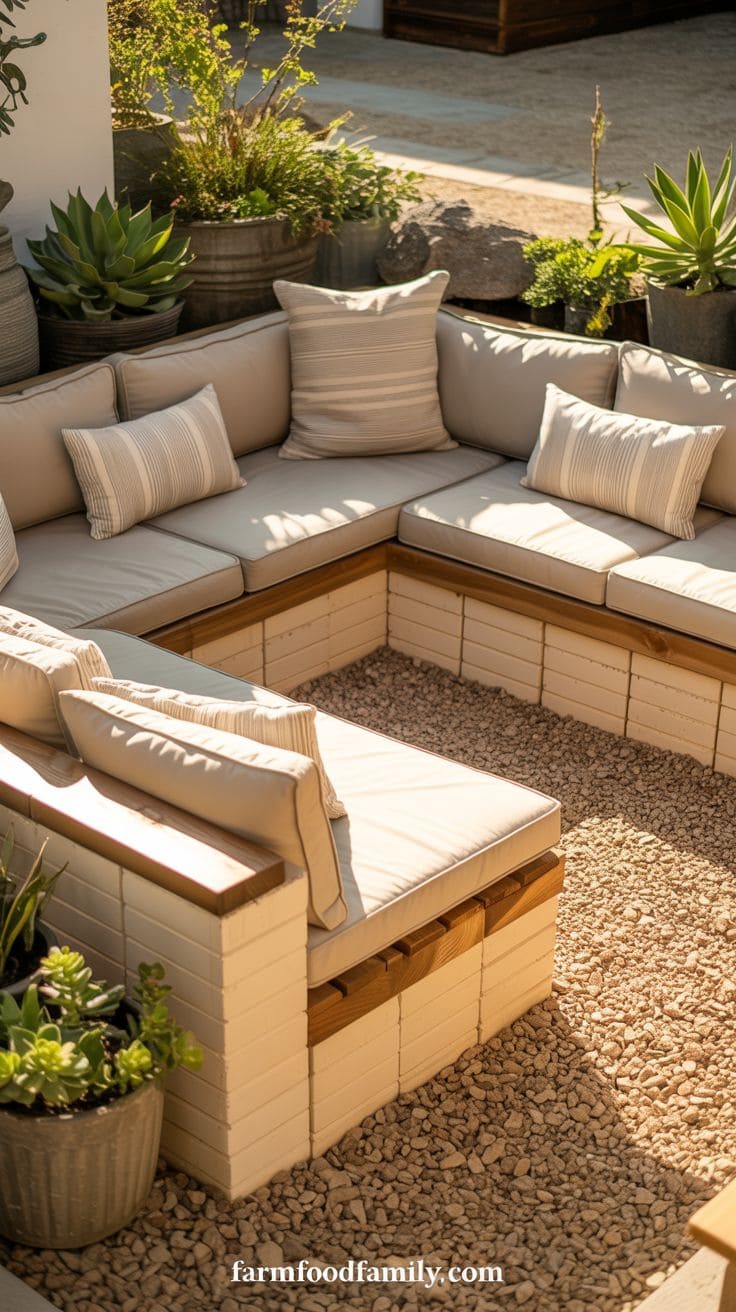
4. L-shaped cream cinder block bench
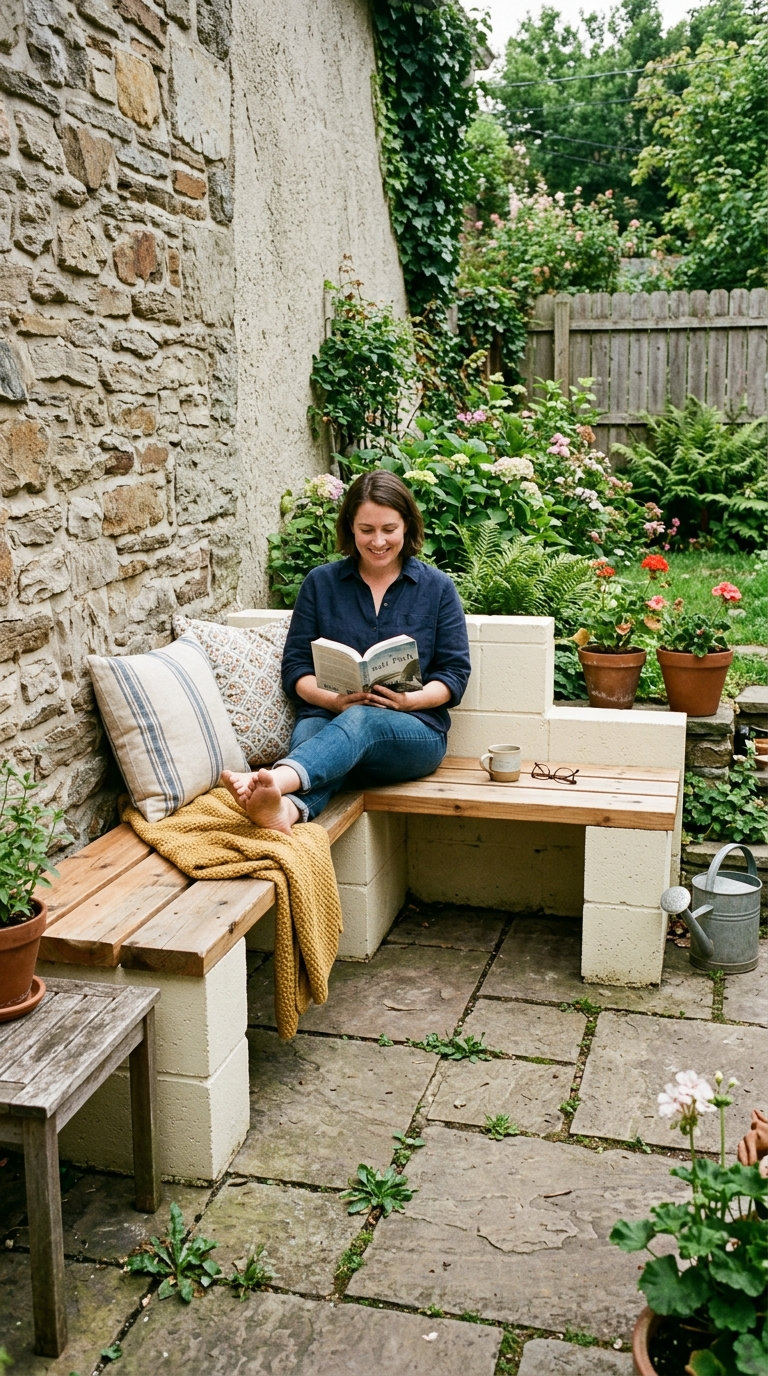
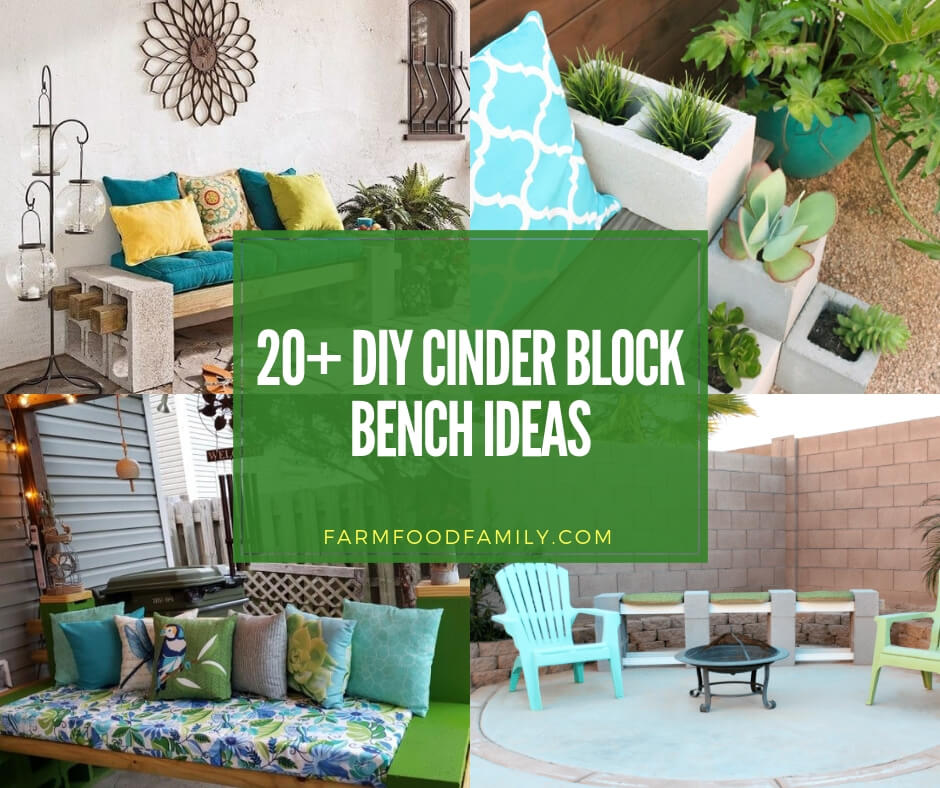
An L-shaped layout turns a straight bench into a corner seating nook, useful for tucking seating into an actual corner of a patio or yard rather than running a single straight line.
A cream or off-white paint on the blocks reads softer and less industrial than raw gray concrete, closer to a finished piece of furniture than a construction material repurposed as one.
The same section 1 leveling advice matters even more on an L-shaped layout, two intersecting runs both need to sit level relative to each other, not just individually.

5. Park-bench-style cinder block bench tutorial
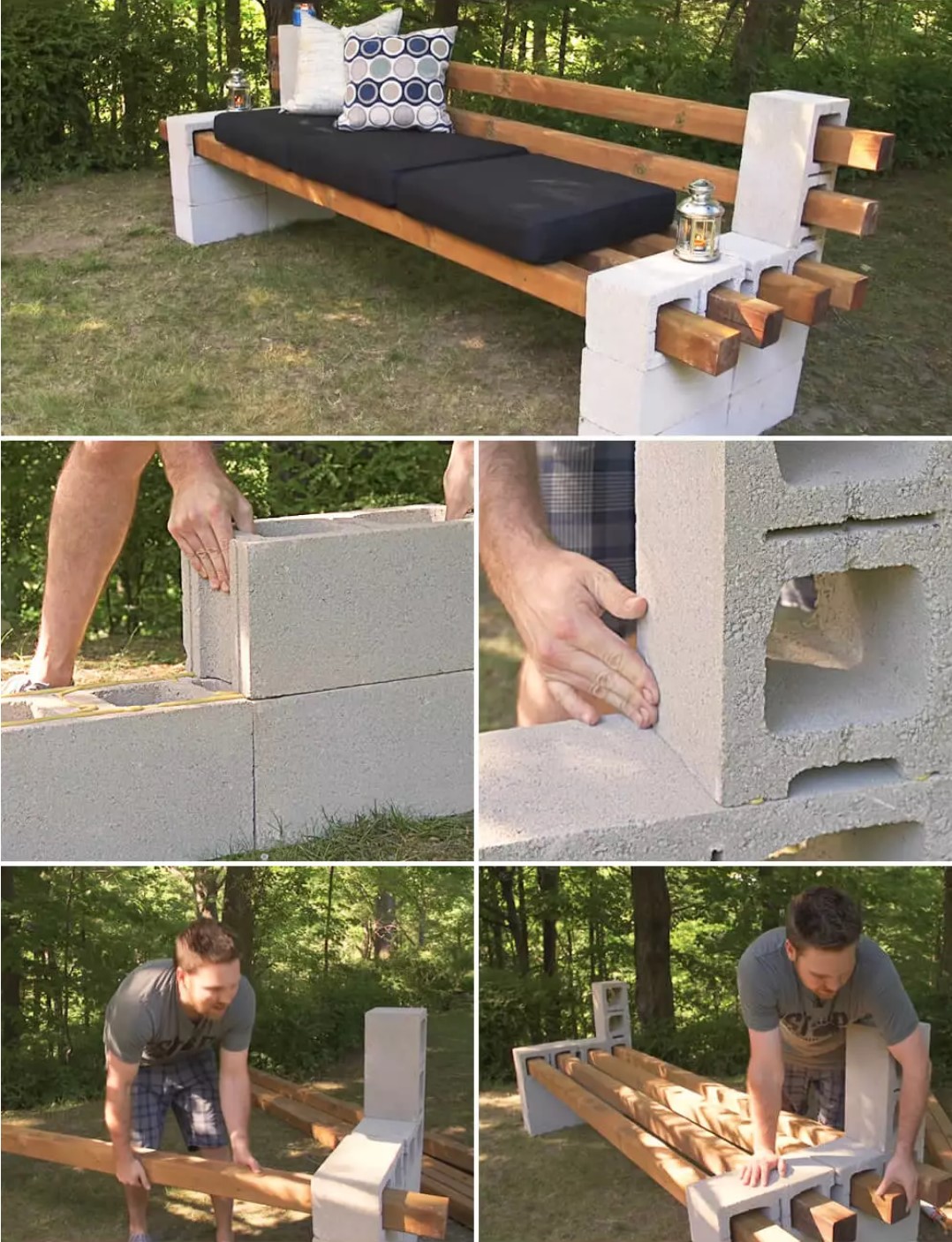
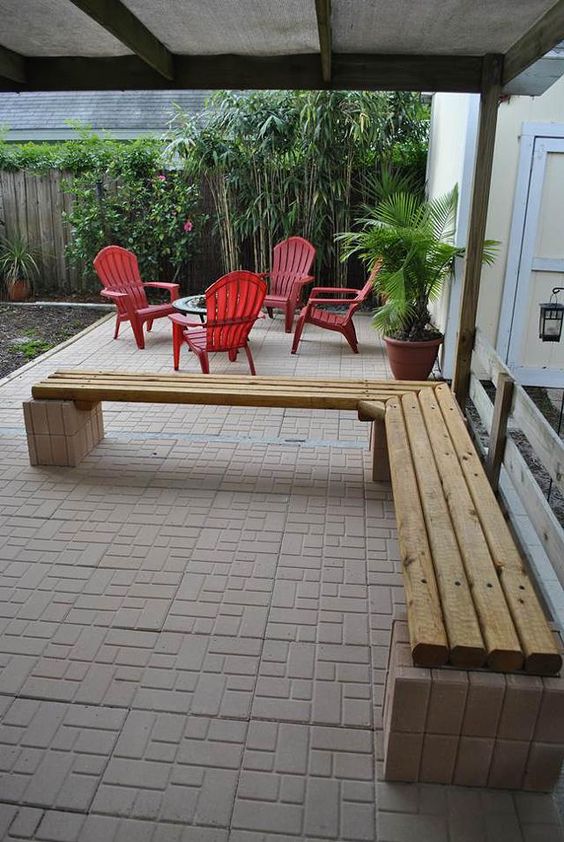
This design uses 14 cinder blocks and six 4×4 posts, stacked in alternating orientations, two side by side with holes up, a second layer glued on top, a third layer rotated so the holes face sideways, and a final single upright block on each end. The 4x4s slide through the sideways holes to form the seat.
This shape reads as a genuine park bench rather than a simple stacked platform, a good fit for a larger patio or a fire pit area with room for a proper bench silhouette.
The average homeowner spends $616/year on yard fixes that don't address the real problem. Find out what yours actually is — before you spend another dollar.
Take the Free Quiz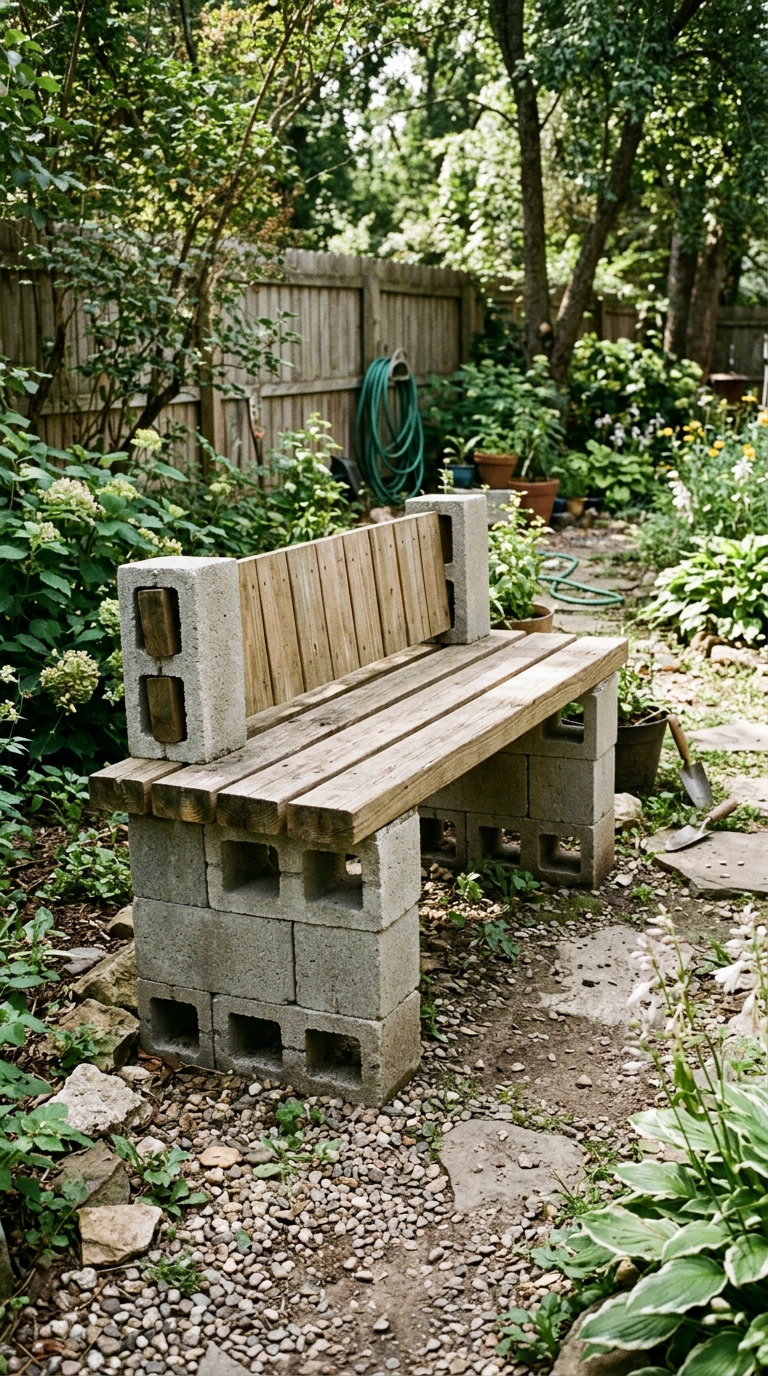
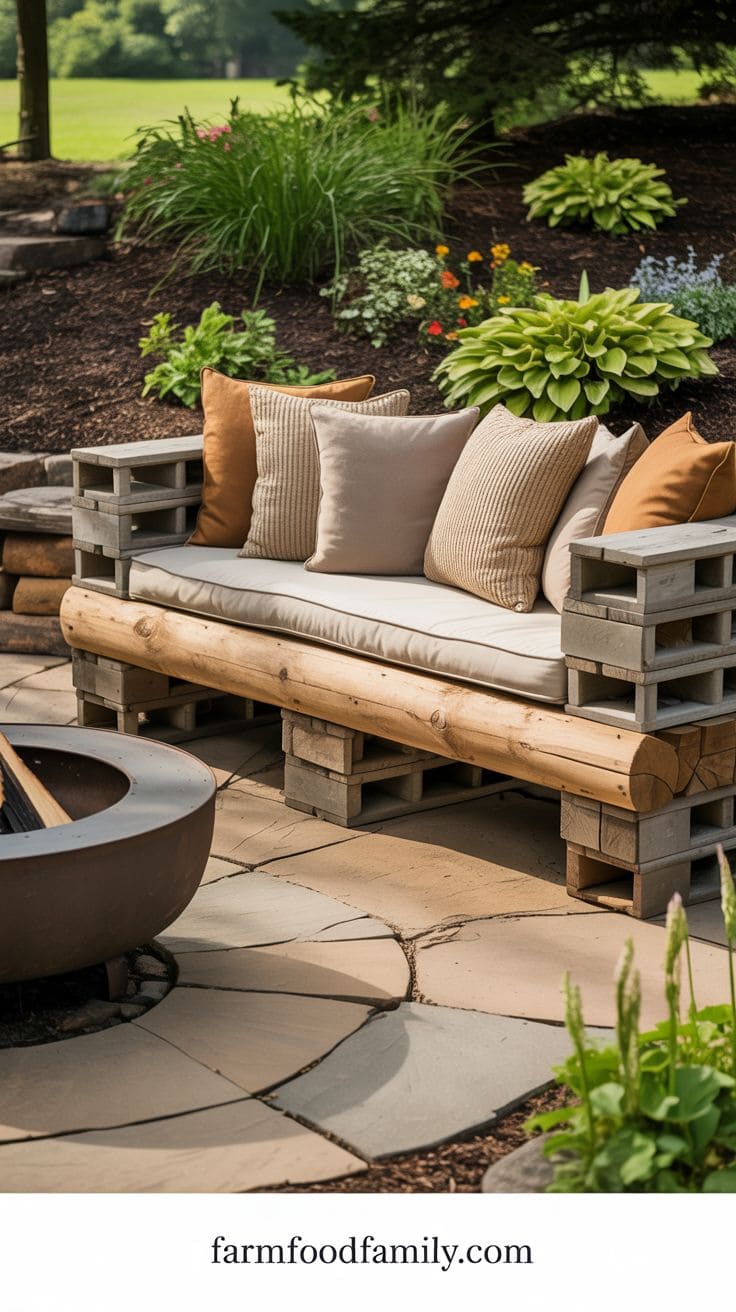
6. Cinder block bench with sofa cushions
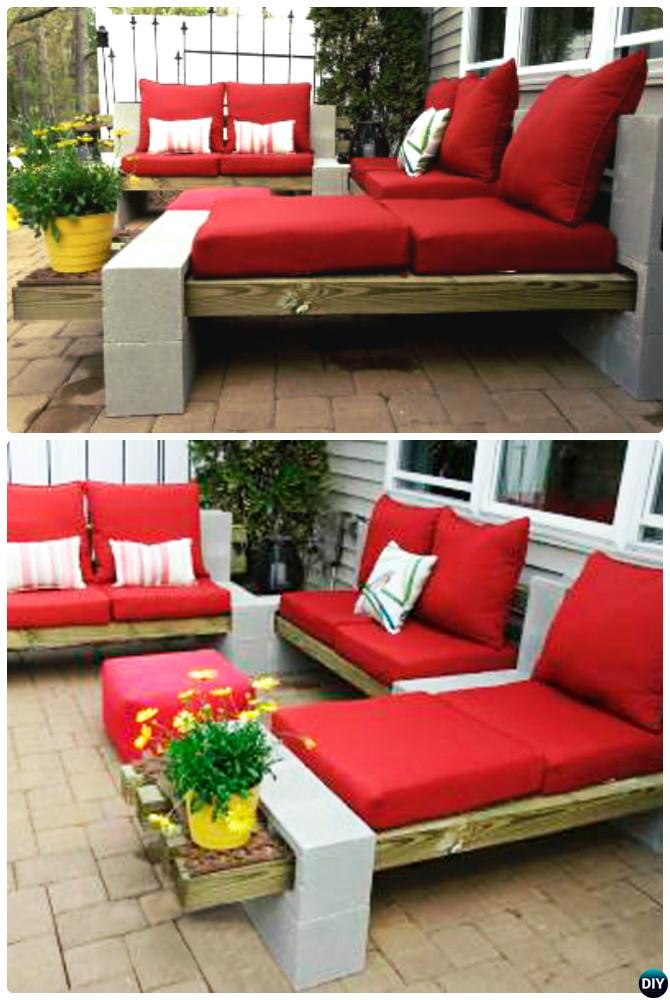
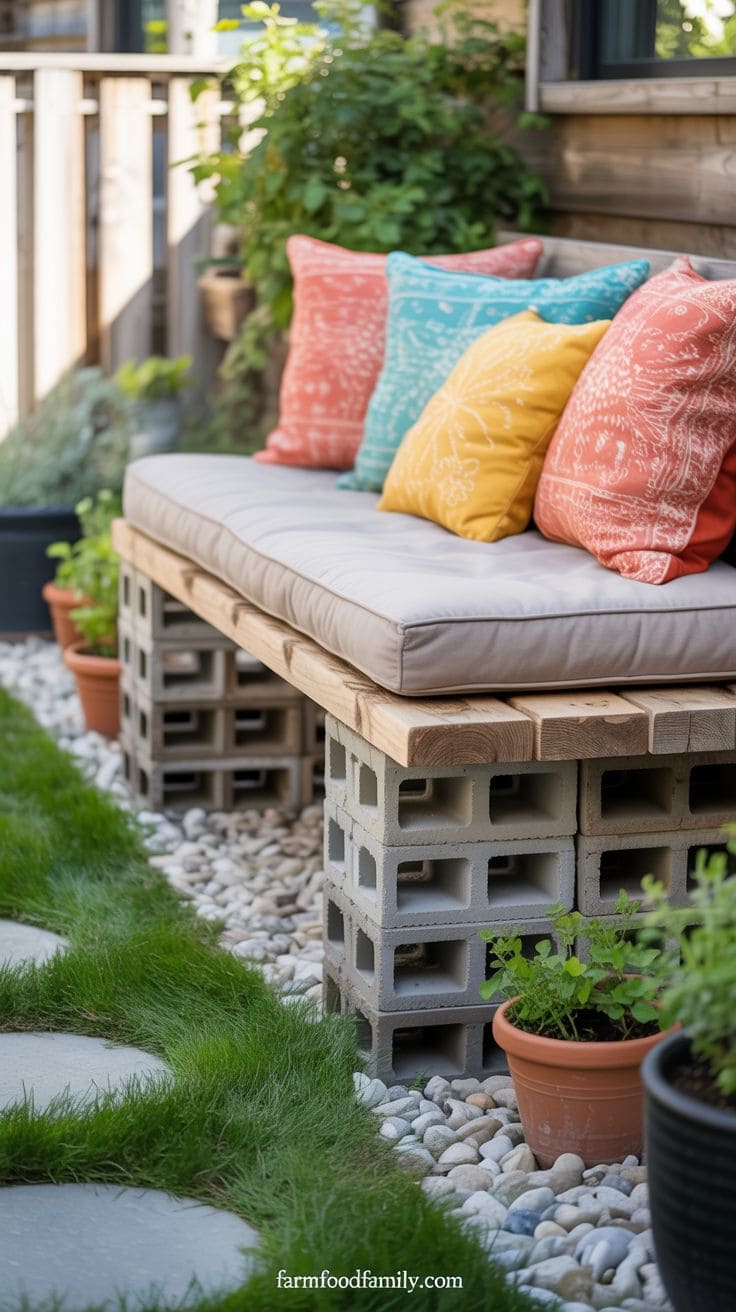
Standard living room cushions work fine on a cinder block bench if you’re not committed to outdoor-specific cushions, the key is using water-resistant covers so they can handle weather exposure without soaking through and holding moisture against the wood or blocks underneath.
Pillows and a folded blanket add comfort without much added cost.
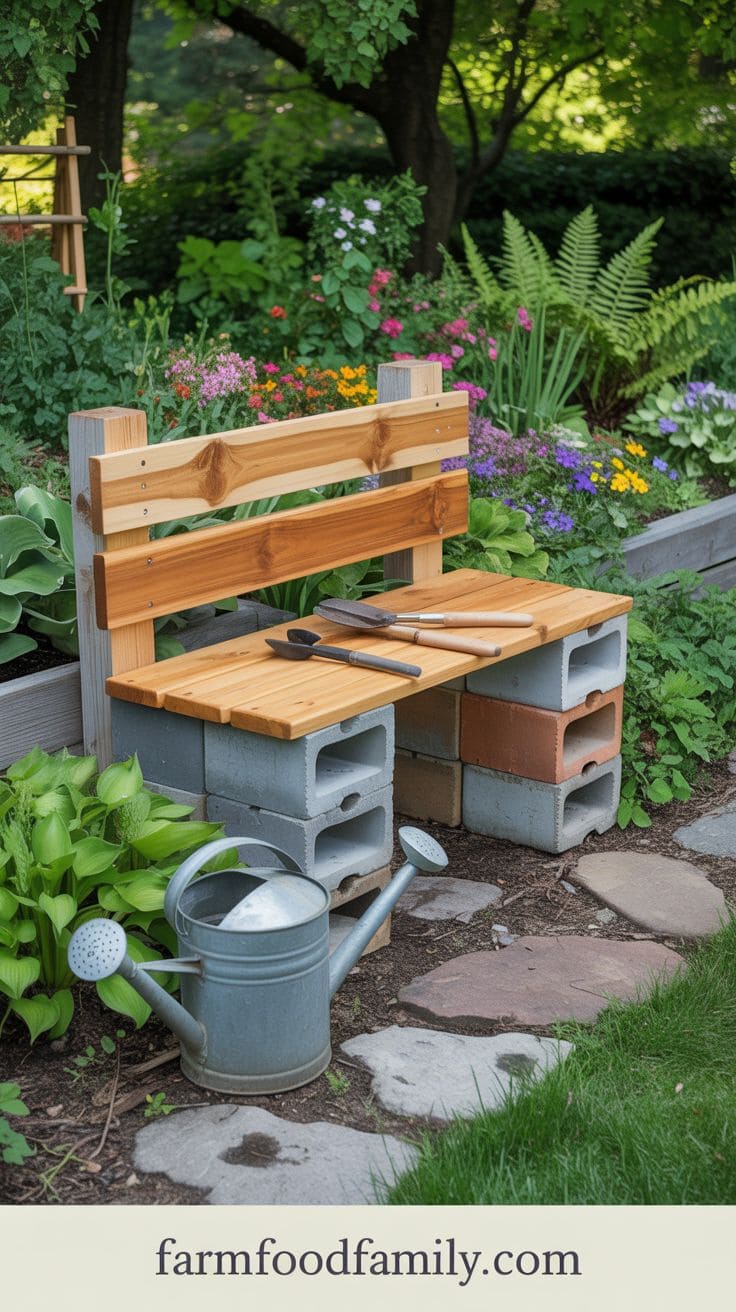
7. DIY cinder block garden bench

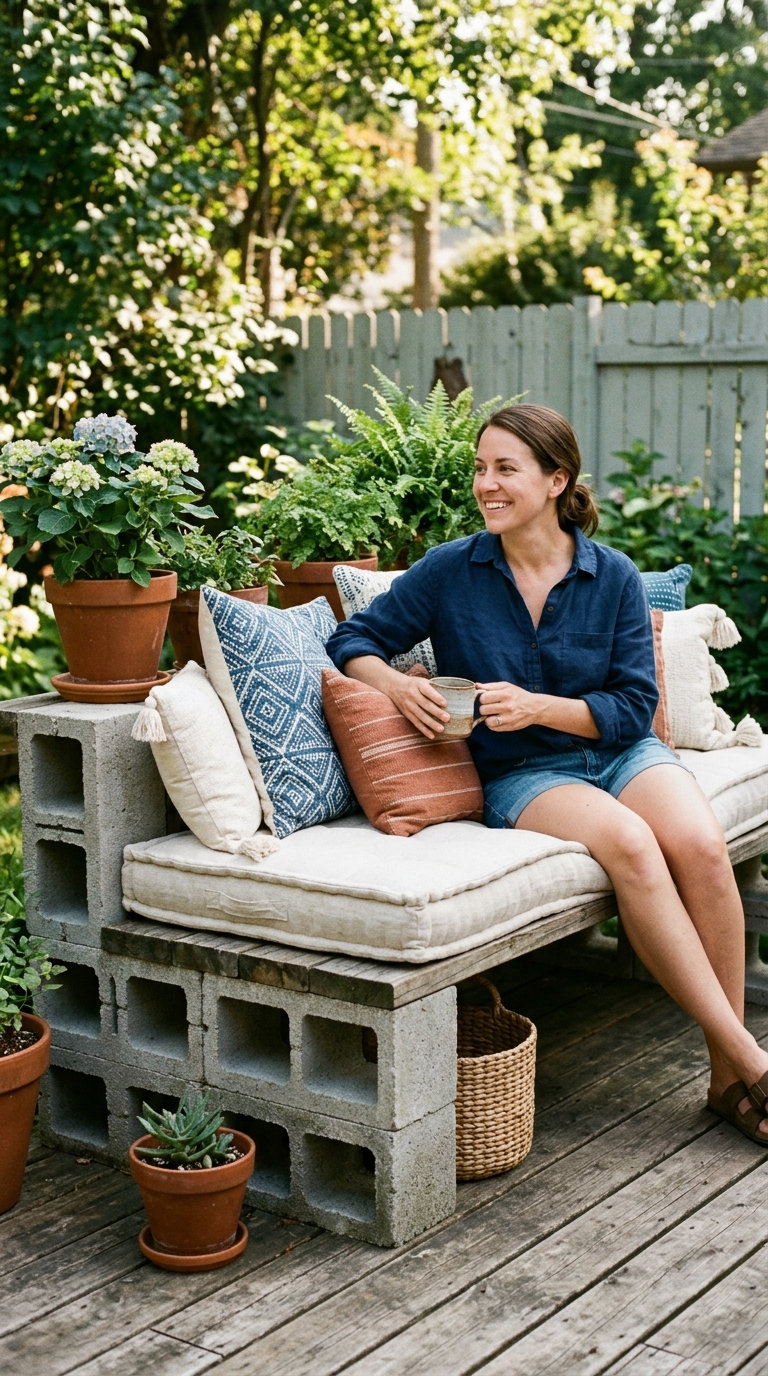
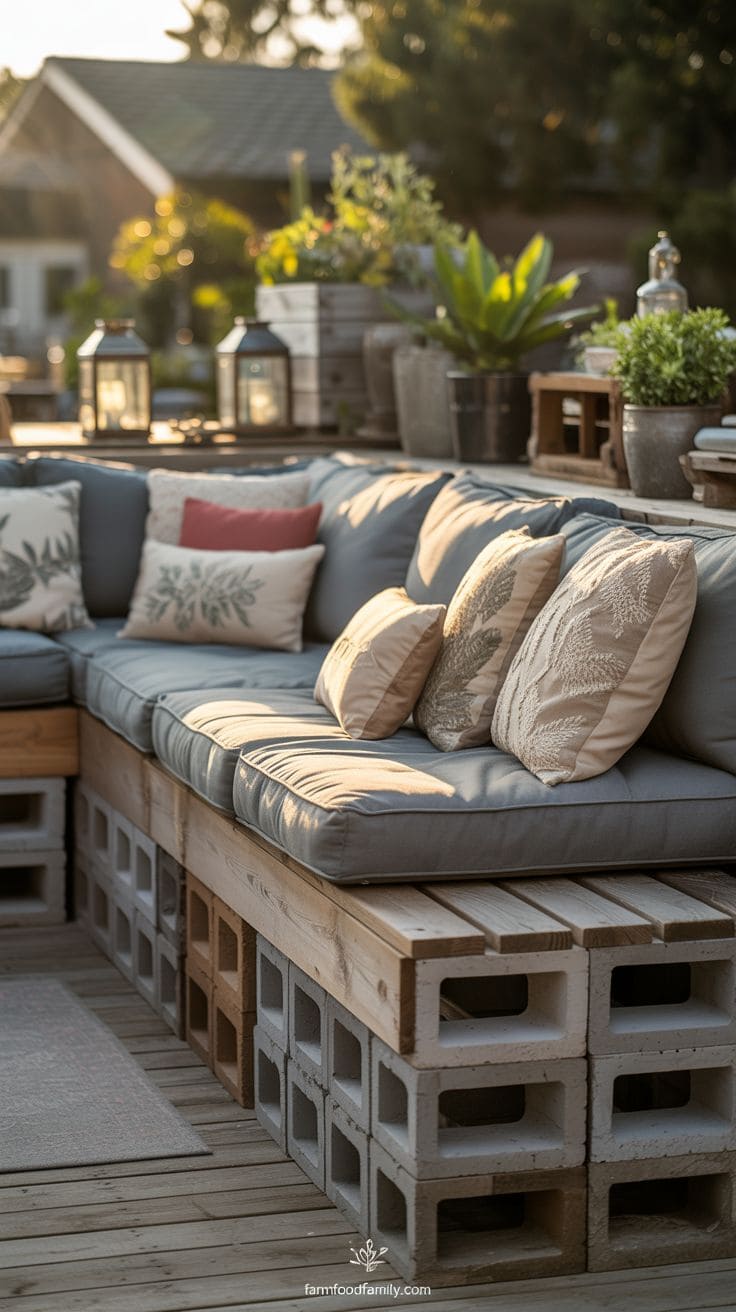
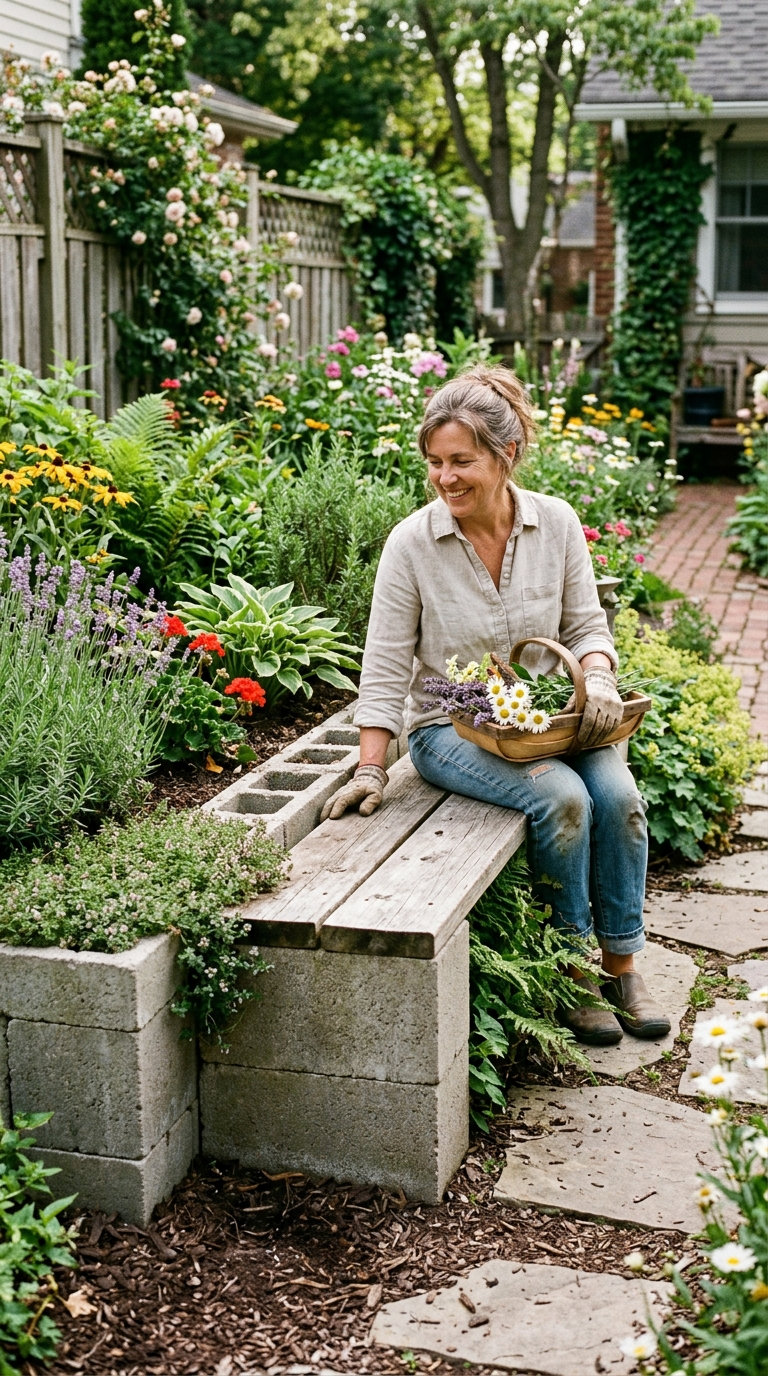
Placed at the edge of a garden bed, a cinder block bench doubles as a low retaining edge for the bed itself while giving you a spot to sit while gardening.
This build used 12 blocks arranged with 4 standing upright and 2 stacked horizontally on each side, cut the 4x4s to a 7-foot length rather than the full 8-foot lumber length, and coated the wood with a waterseal product rather than paint for a more natural finished look.
The builder also specifically noted that leveling the site, on a slope with two mature oak trees nearby, was the most time-consuming part of the whole project.
8. Easy outdoor cinder block bench, long-run design

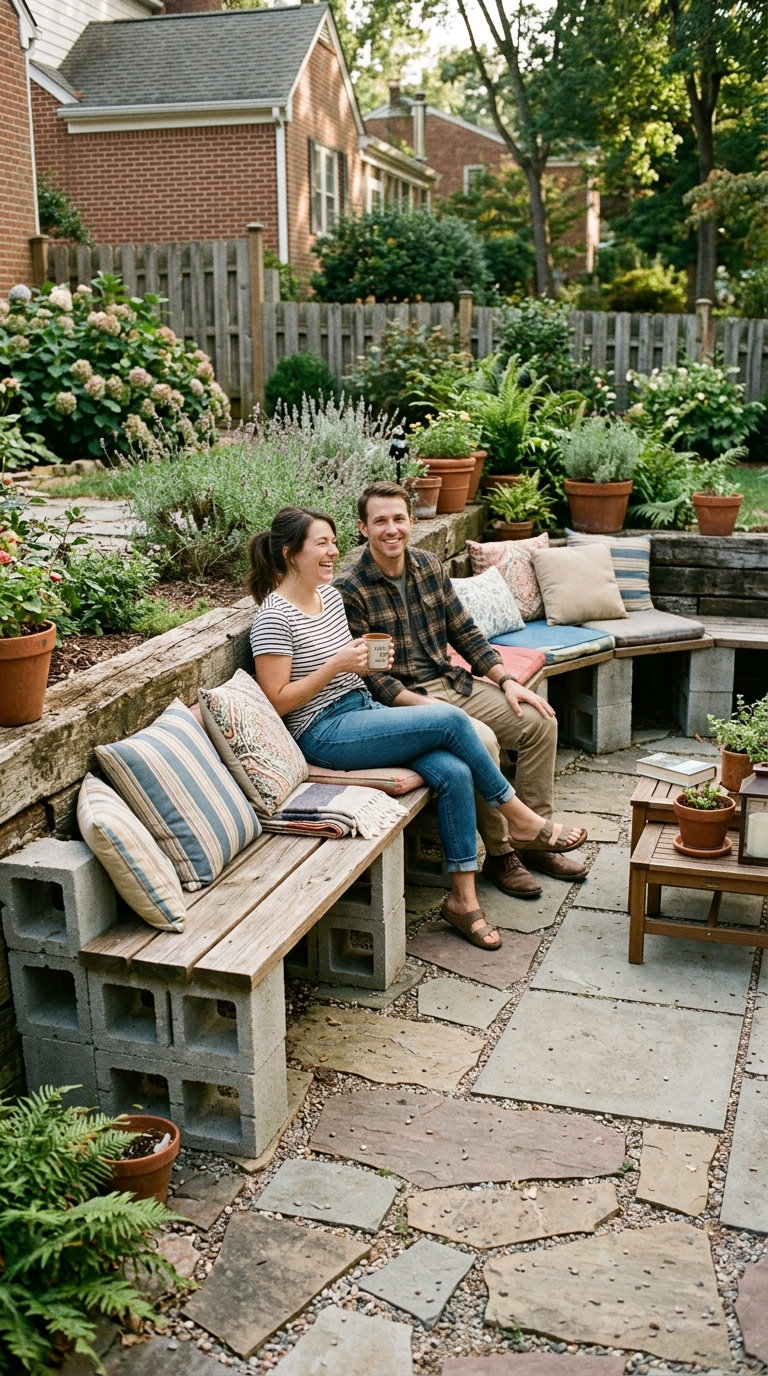
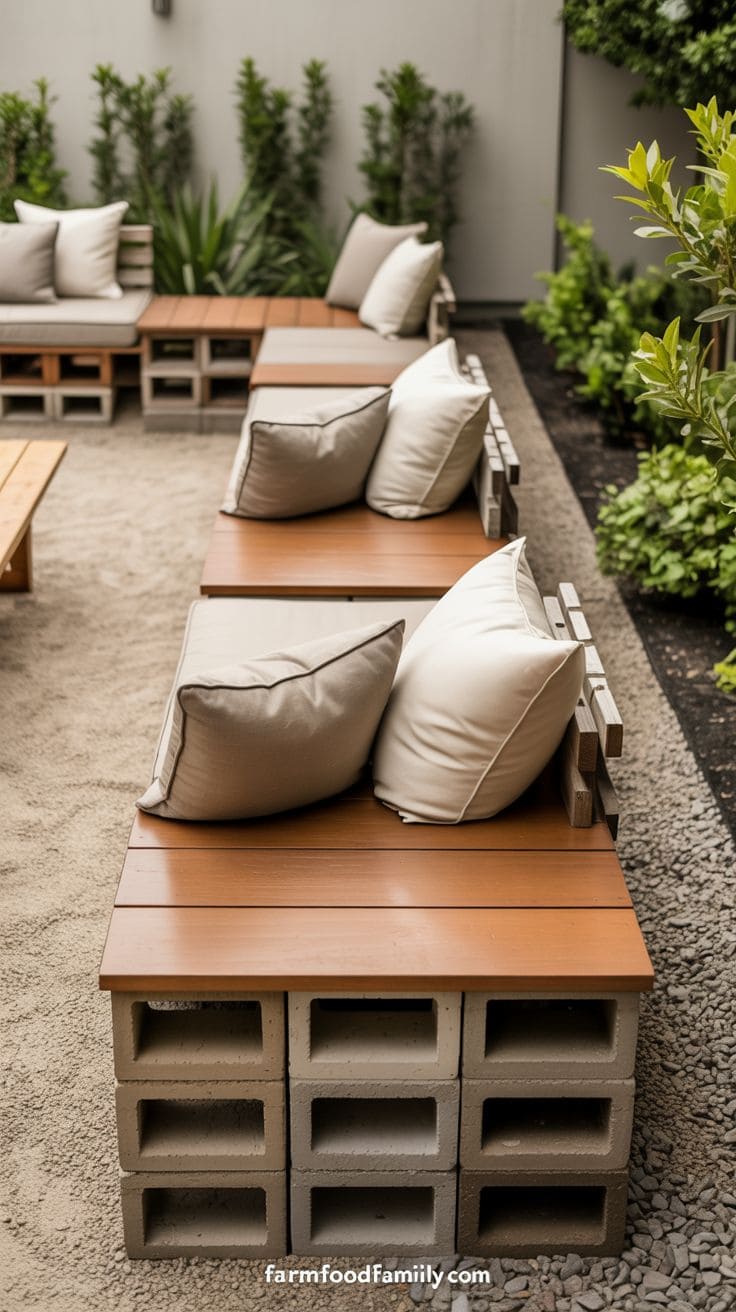
For a longer run custom-fitted to a specific patio shape, this design connects three benches at roughly 4 feet each around the angles of a patio, using 16 double cinder blocks and 4 single blocks per bench section for support.
Since standard lumber tops out around 12 feet, the build used carriage bolts, nuts, and washers to join shorter lengths into a full 17-foot run.
9. Low-budget cinder block bench
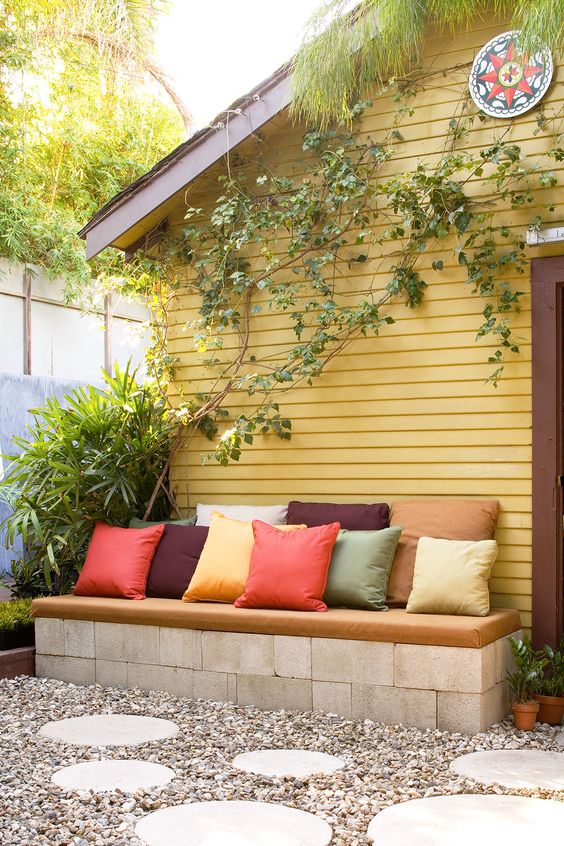
The simplest version uses old-school solid (no-hole) cinder blocks stacked and connected with construction adhesive, no need for planks to slide through cavities at all.
Length and width are entirely up to you, cover the wood top with fabric or a portable cushion you can bring in during bad weather, and add throw pillows for color. One builder documented this exact approach for around $30-50 total.
10. Creative cinder block bench
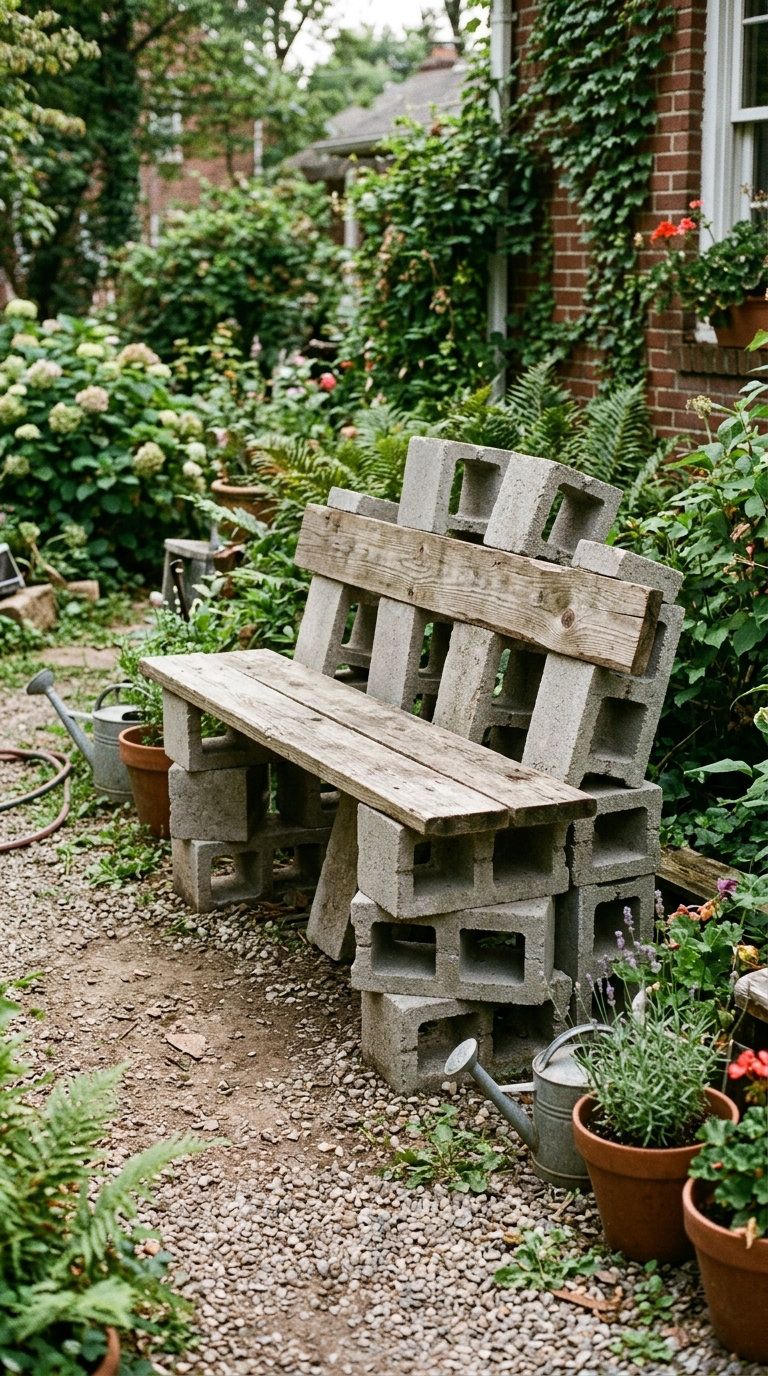
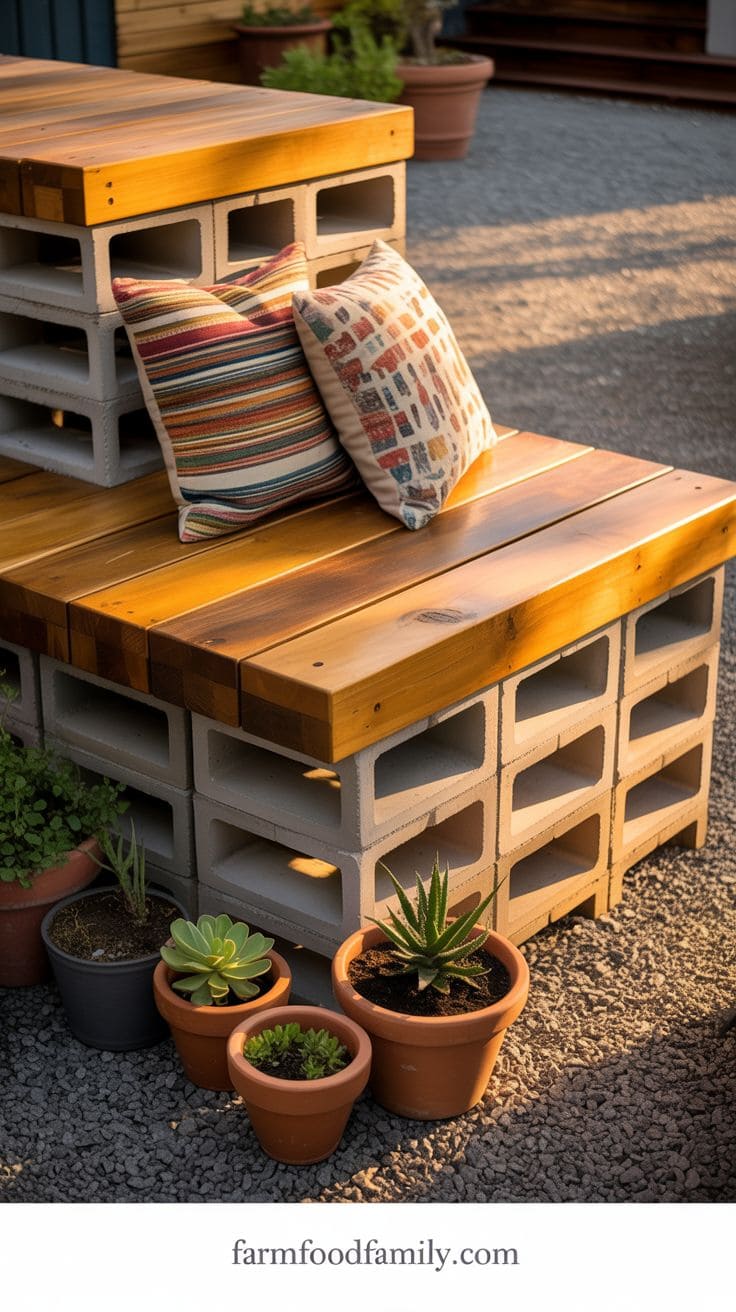
Beyond the standard rectangular layout, cinder blocks stack into genuinely varied shapes, staggered heights for a stepped look, alternating block colors, or an asymmetric arrangement that reads more like a sculpture than a straight bench.
The material’s modularity is the actual appeal here, the same basic block works whether you’re building something formal or something deliberately irregular.

11. Easy and cheap cinder block bench
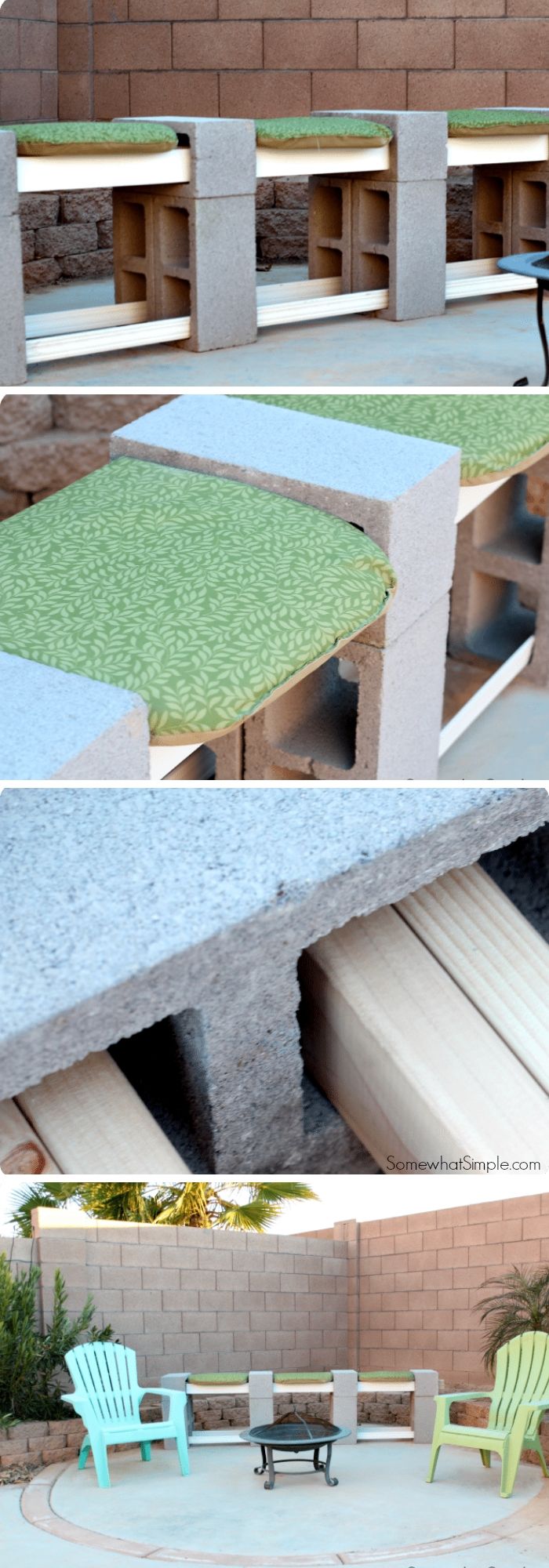
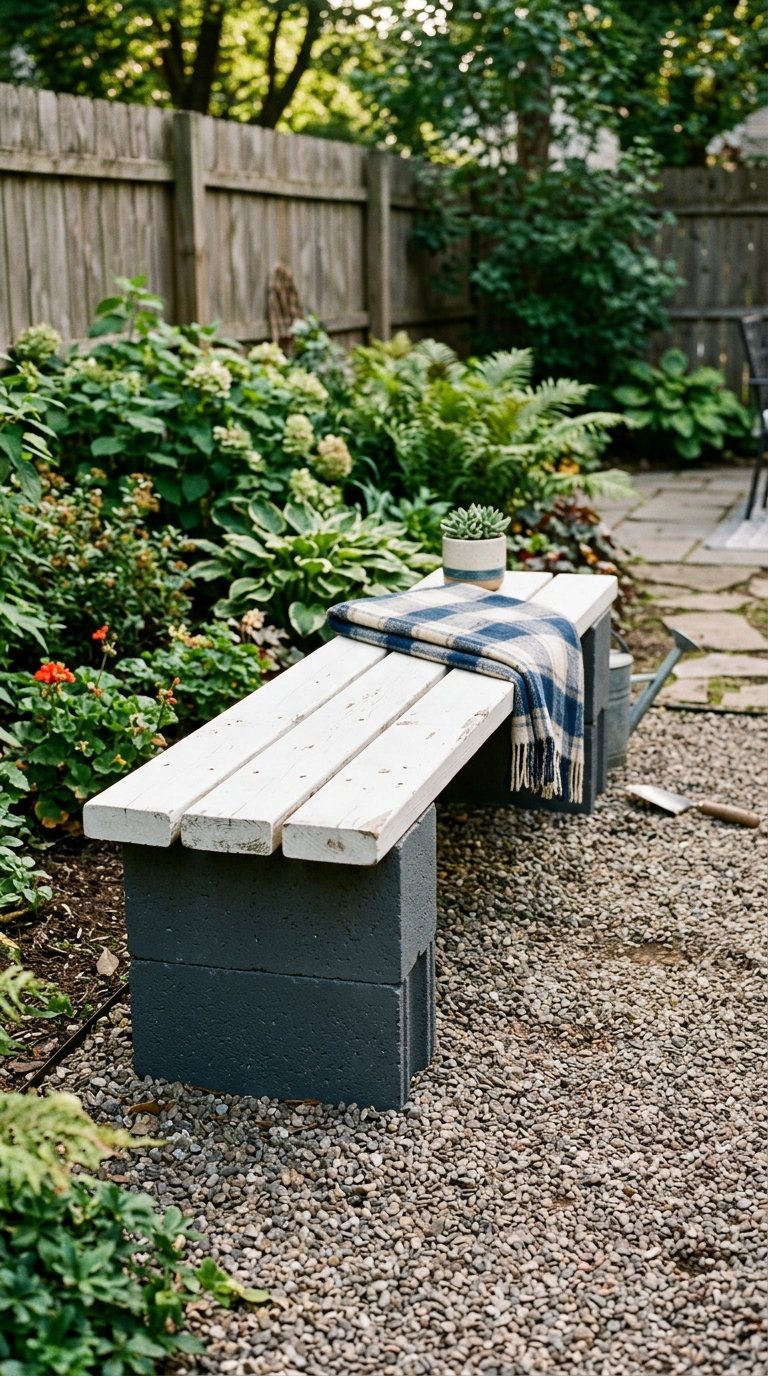
For extended seating during a backyard gathering, this design used 12 double cinder blocks connected with liquid nails and 4 pieces of 2x4x8 lumber for the seating area, all for under $30.
Instead of wood stain, the build used white paint for the wood and dark gray paint for the blocks specifically to protect both from weather exposure.
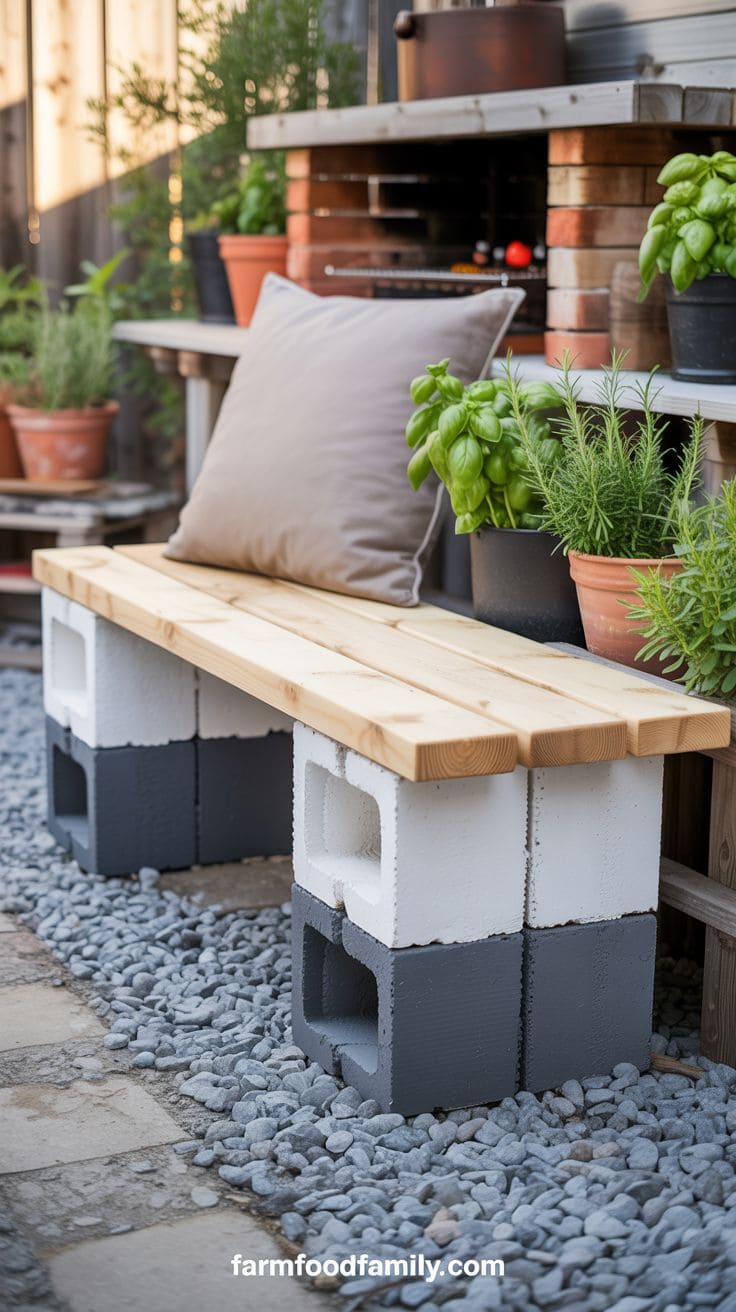
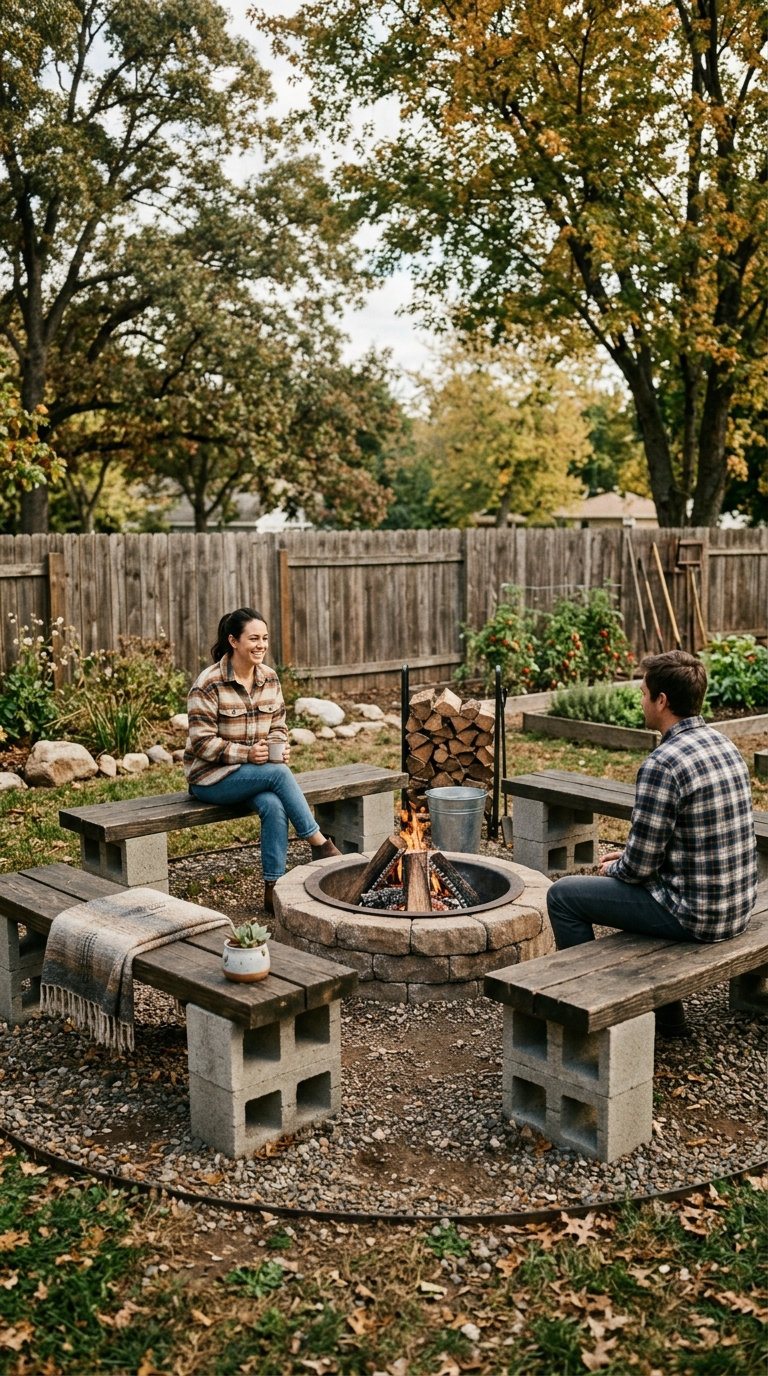
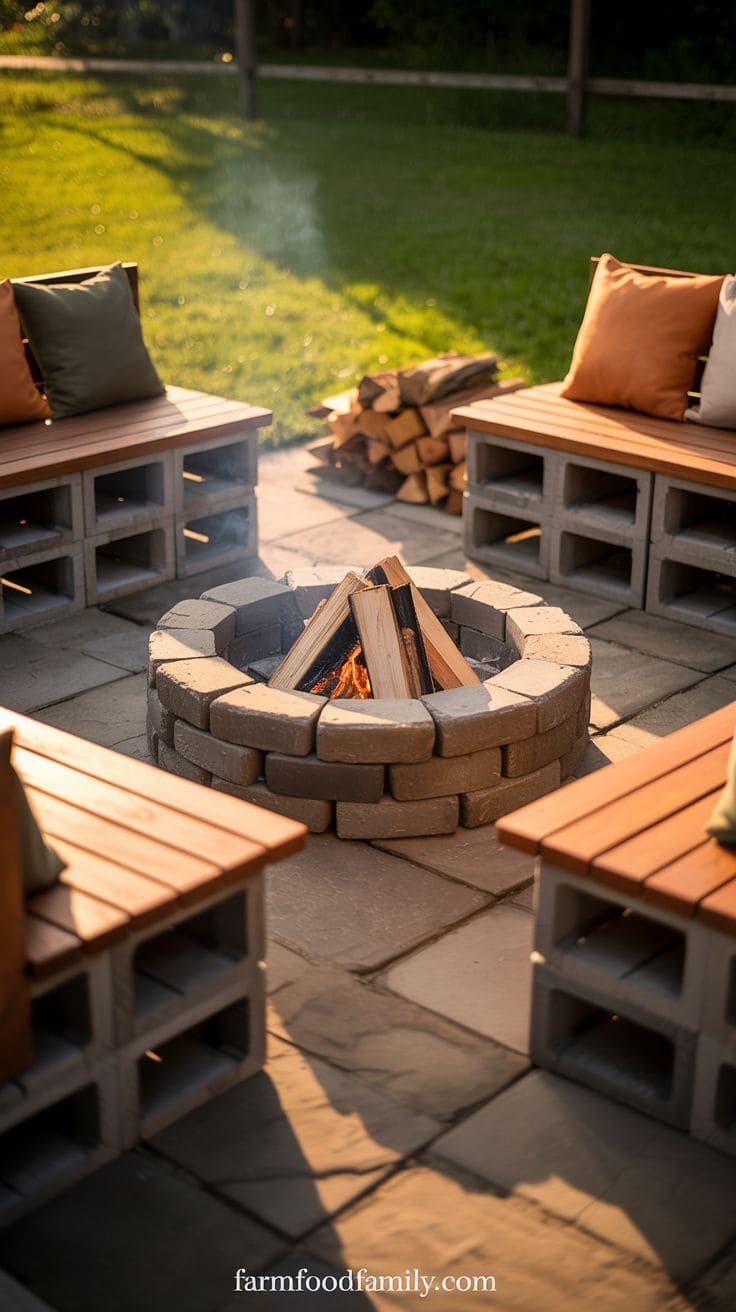
12. Cinder block bench with a fire pit
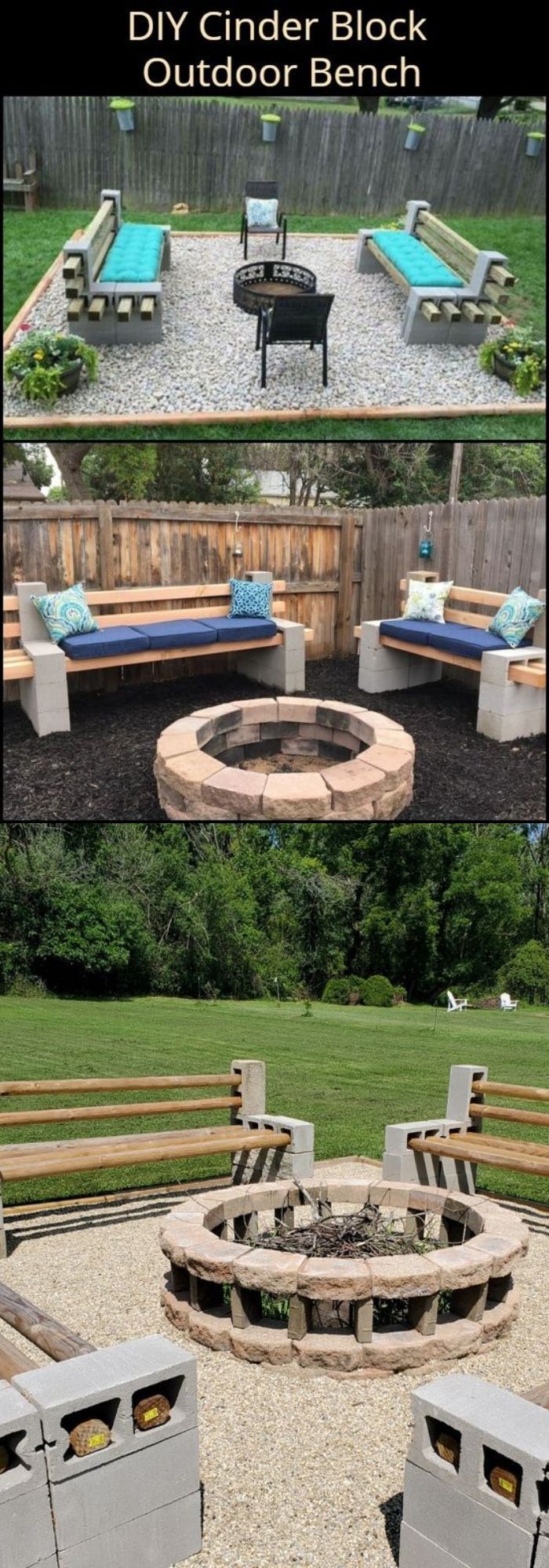
Building benches around a fire pit gives you a real gathering spot for a backyard, and this approach works well for exactly that.
But this is the one idea on this list where section 1’s heat-cracking caution applies directly: standard cinder block isn’t rated for repeated direct heat exposure the way a purpose-built fire-pit ring is, keep enough distance between the blocks and the actual fire, or use fire-rated block specifically at the pit’s edge if you want the bench close in.
13. Colorful cinder block bench
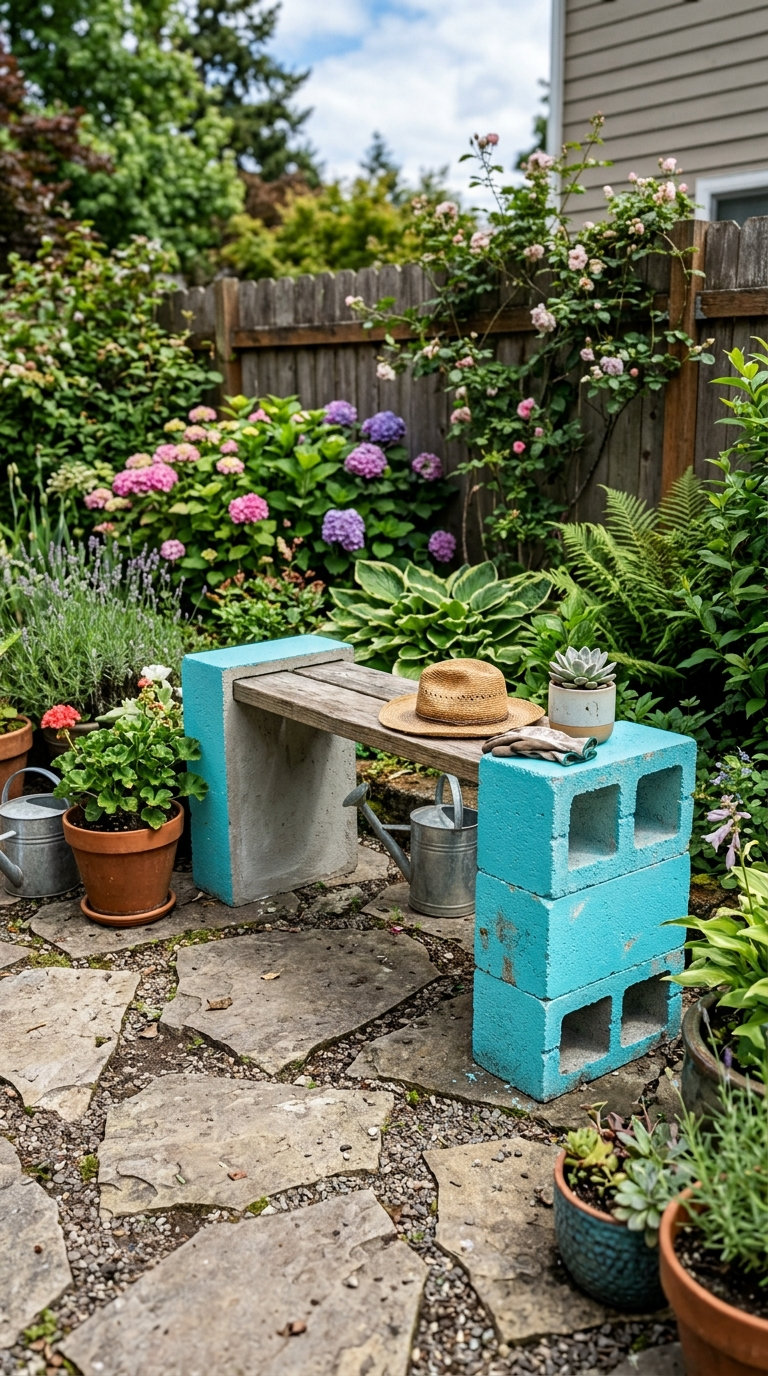
A coat of bright, saturated paint turns plain gray block into a genuine design statement rather than a purely functional afterthought. This works especially well for a kids’ outdoor space or a casual backyard corner where a more muted material palette would read as too formal.
Whatever color you choose, the same section 1 advice applies, plain craft or exterior paint alone won’t waterproof the block long-term, look for a masonry-specific product if you want the color to actually hold up outdoors.

14. DIY succulent planter-end bench
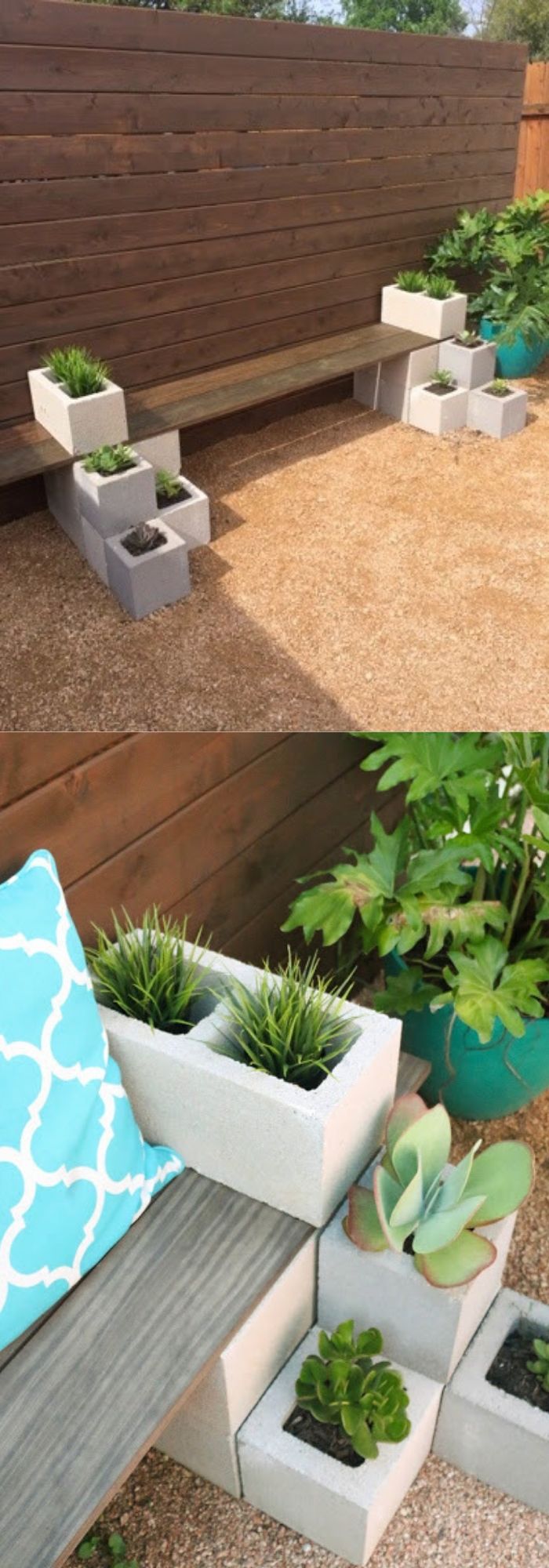
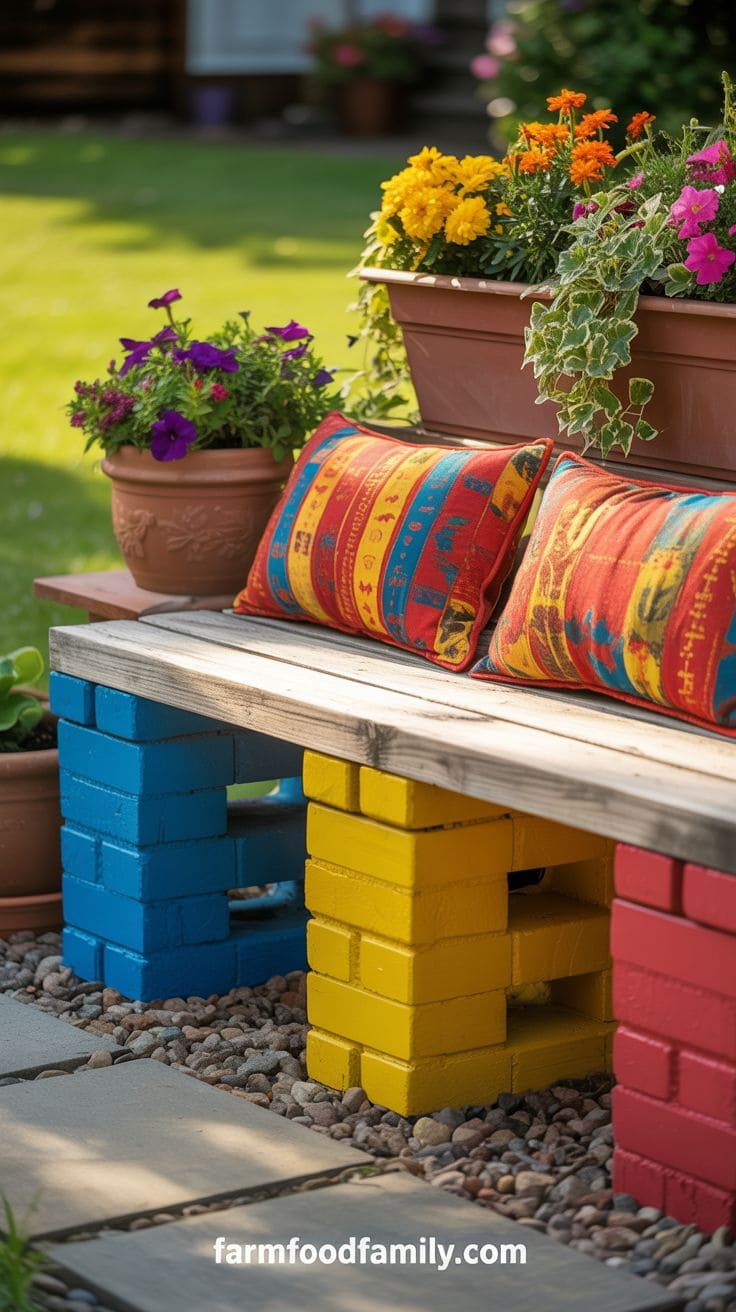
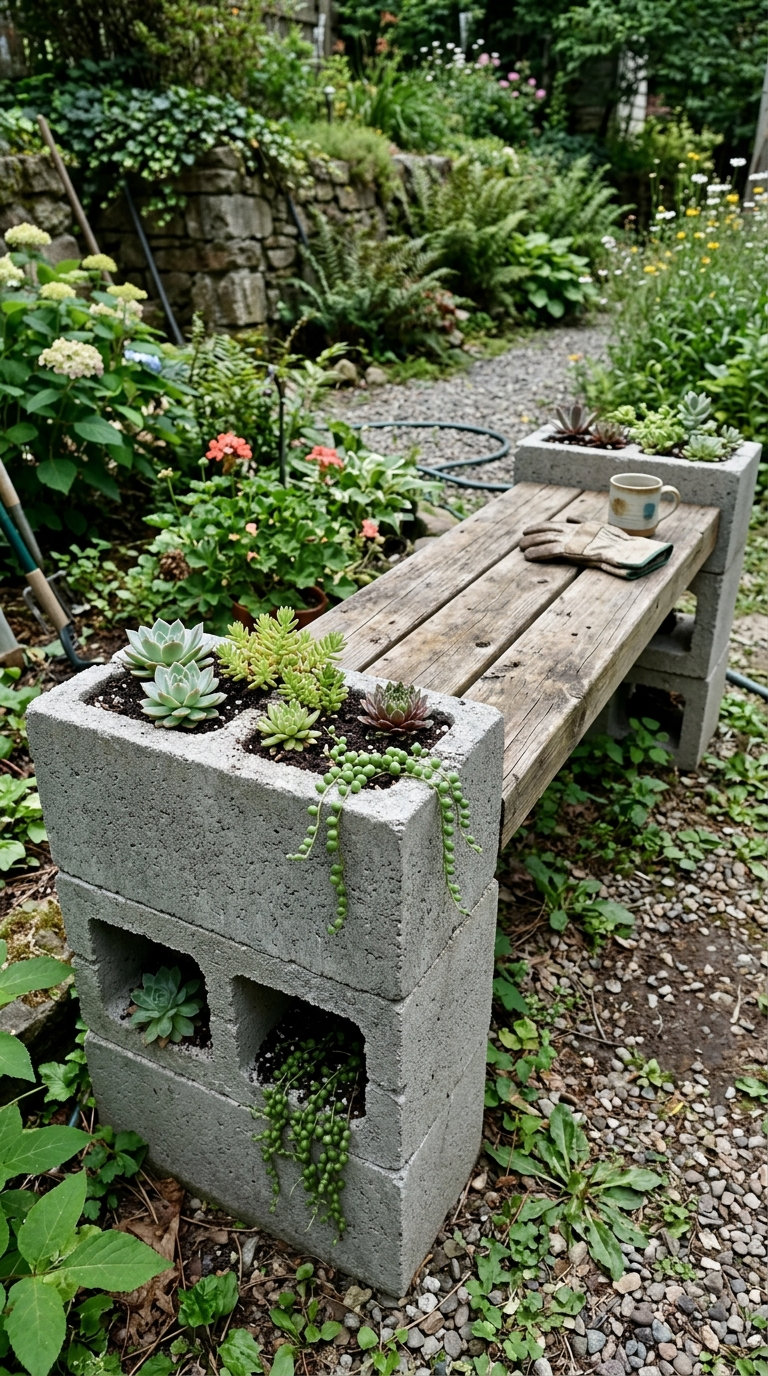
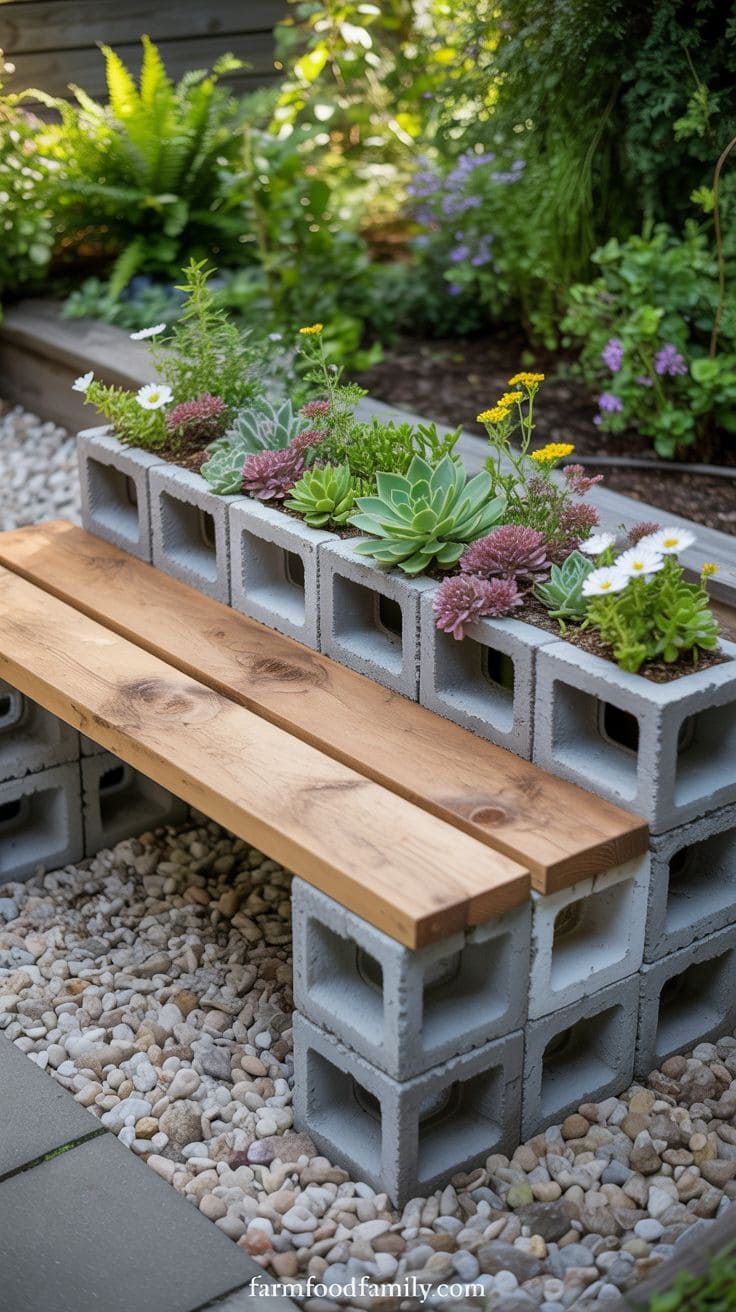
Using cinder block planters as the end supports of a bench, rather than plain stacked blocks, adds a genuinely natural touch, succulents tolerate the dry, well-draining conditions inside a block cavity better than most flowering plants would.
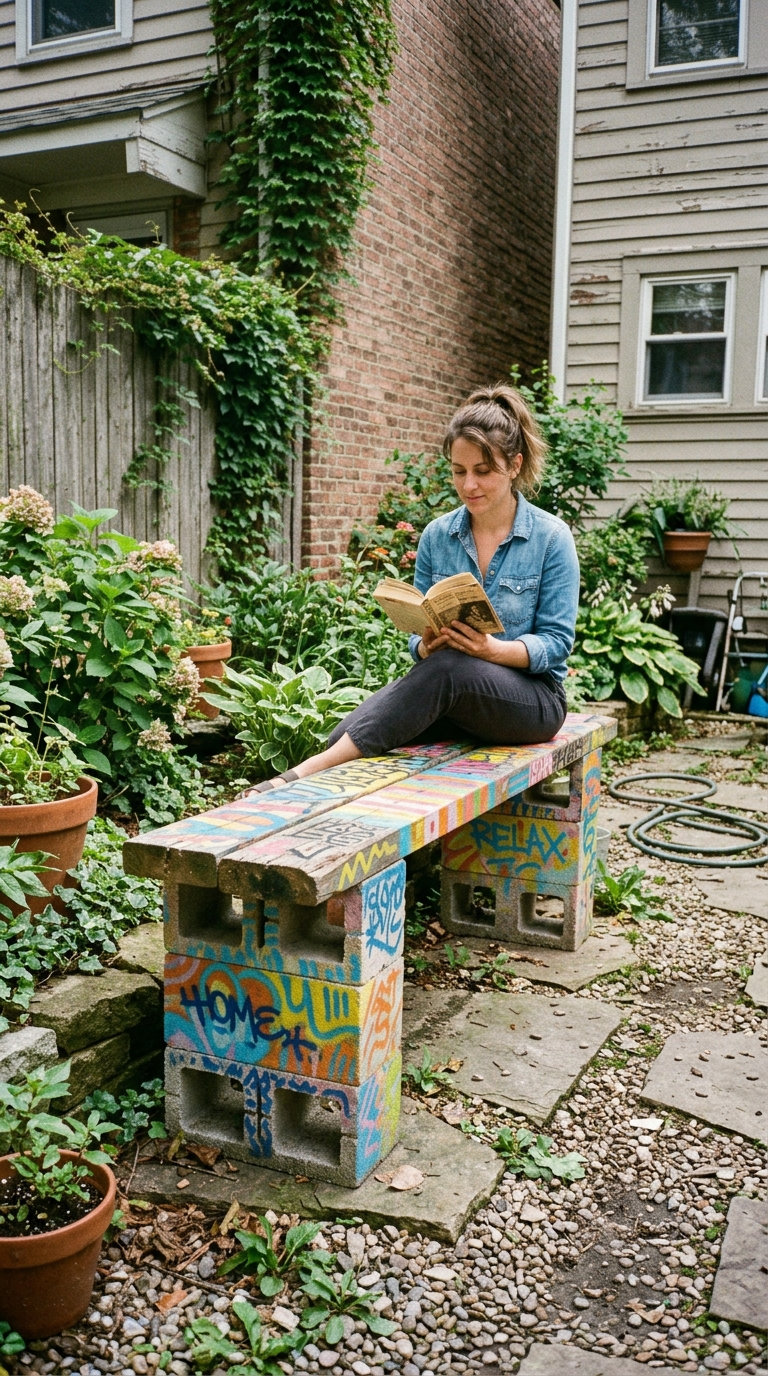
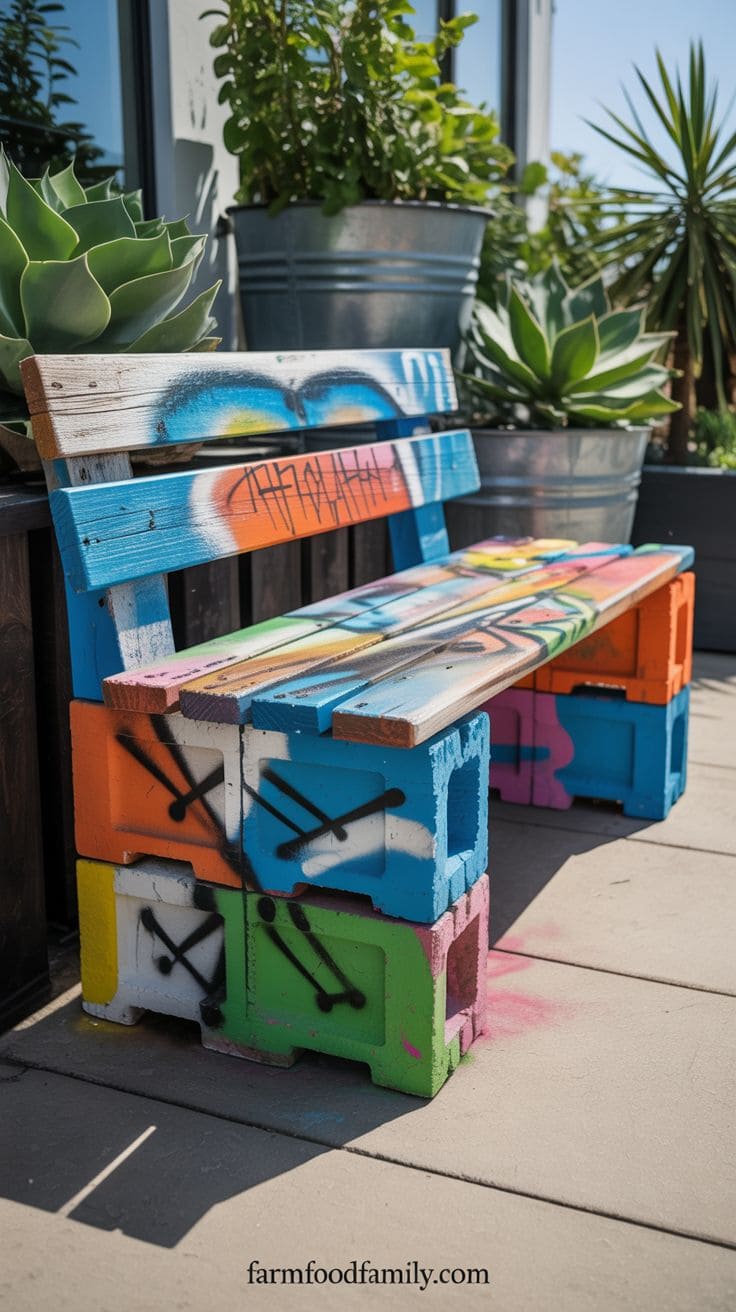
15. Graffiti cinder block bench
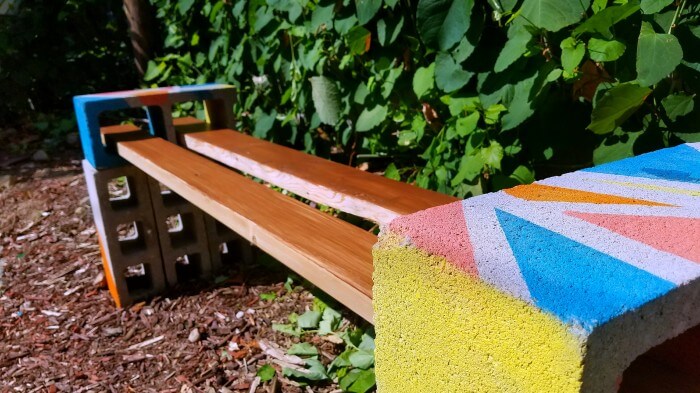
For a more urban, art-forward look, two two-holed cinder blocks support wood planks with six three-holed blocks acting as feet, all connected with concrete adhesive.
Latex paint and painter’s tape create a graffiti-style pattern across the blocks and wood, turning a purely functional bench into a piece with real visual character.
16. Cinder block sofa bench for coffee
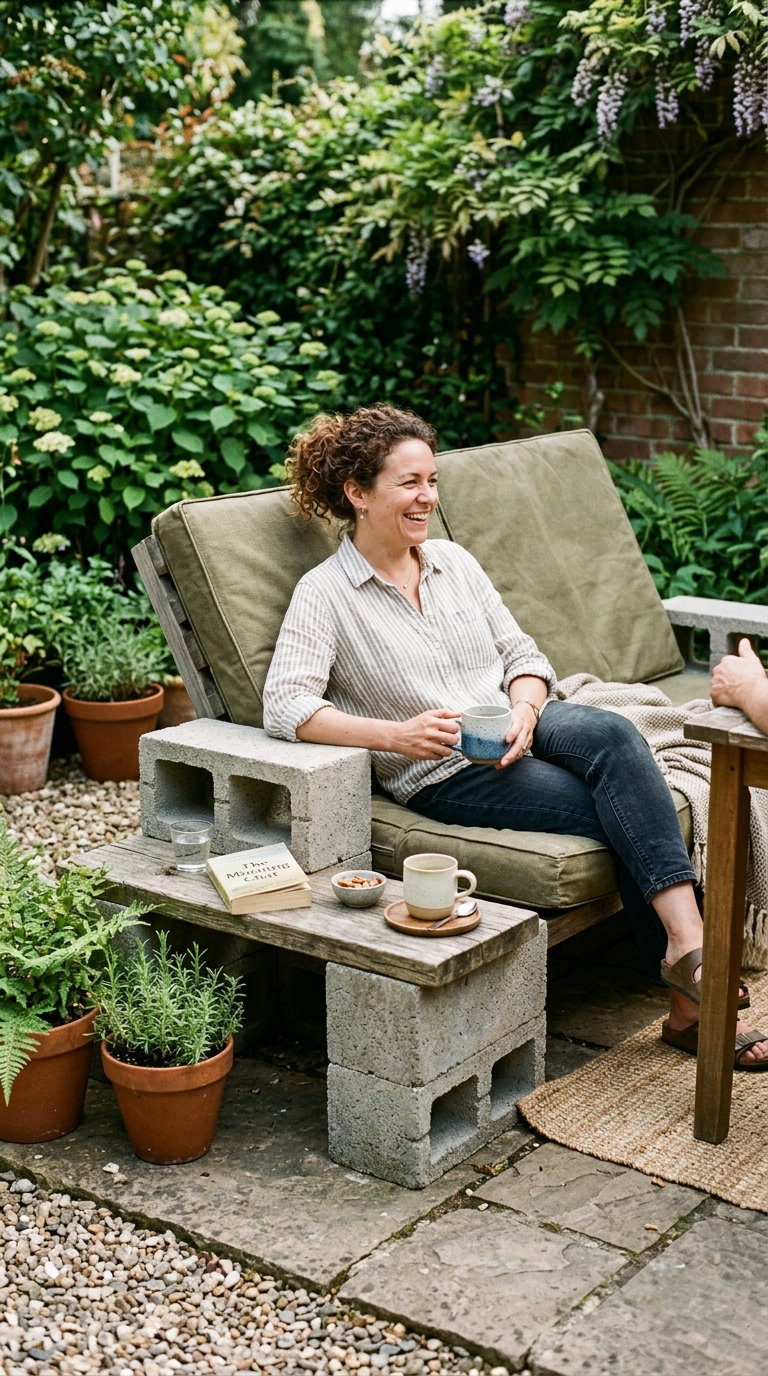
A reclining design with an adjustable cushion works as a casual sofa bench for coffee and conversation, or reclines further for comfortable reading. This version uses 12 cinder blocks (6 on each side) connected with construction adhesive and painted for longevity, with 4 pieces of 4×4 lumber at roughly 10 feet stained and trimmed to length.
17. Cinder block bench for a sunroom
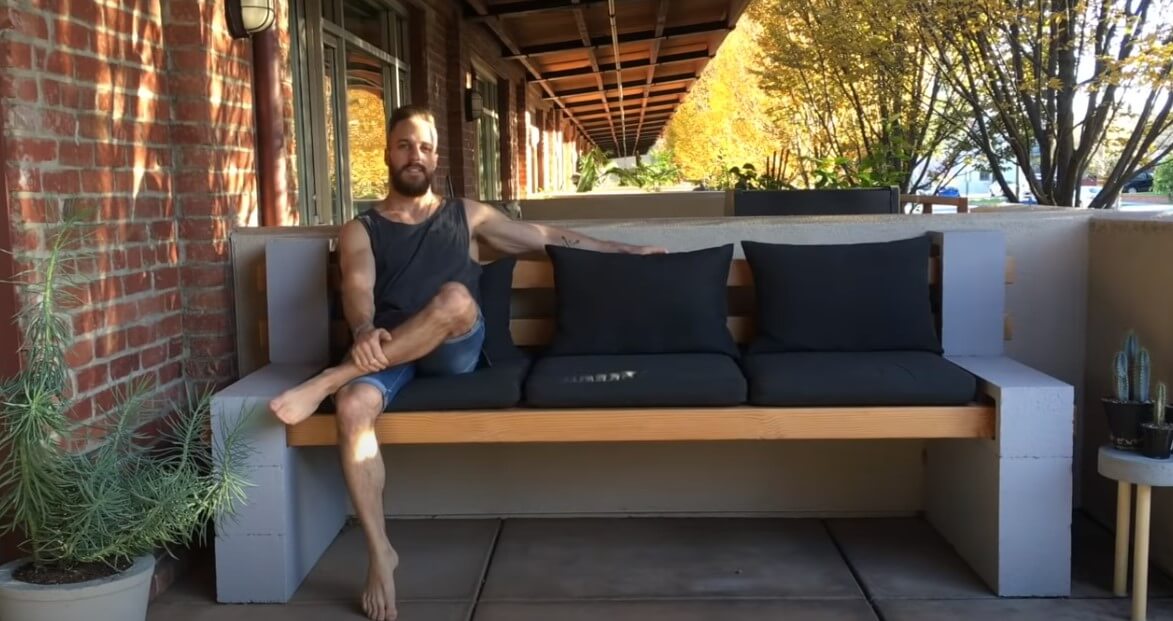
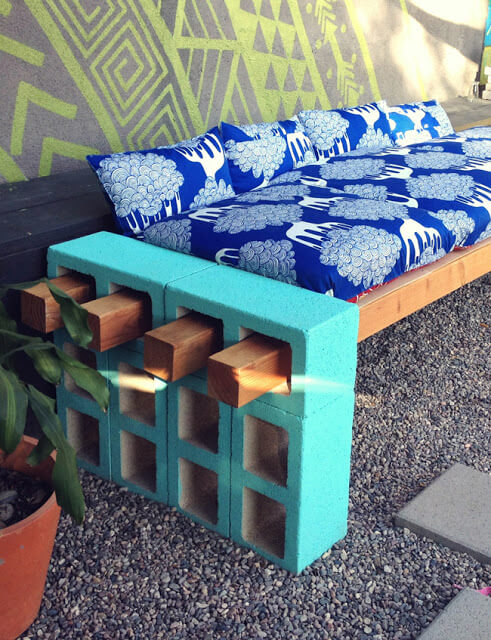
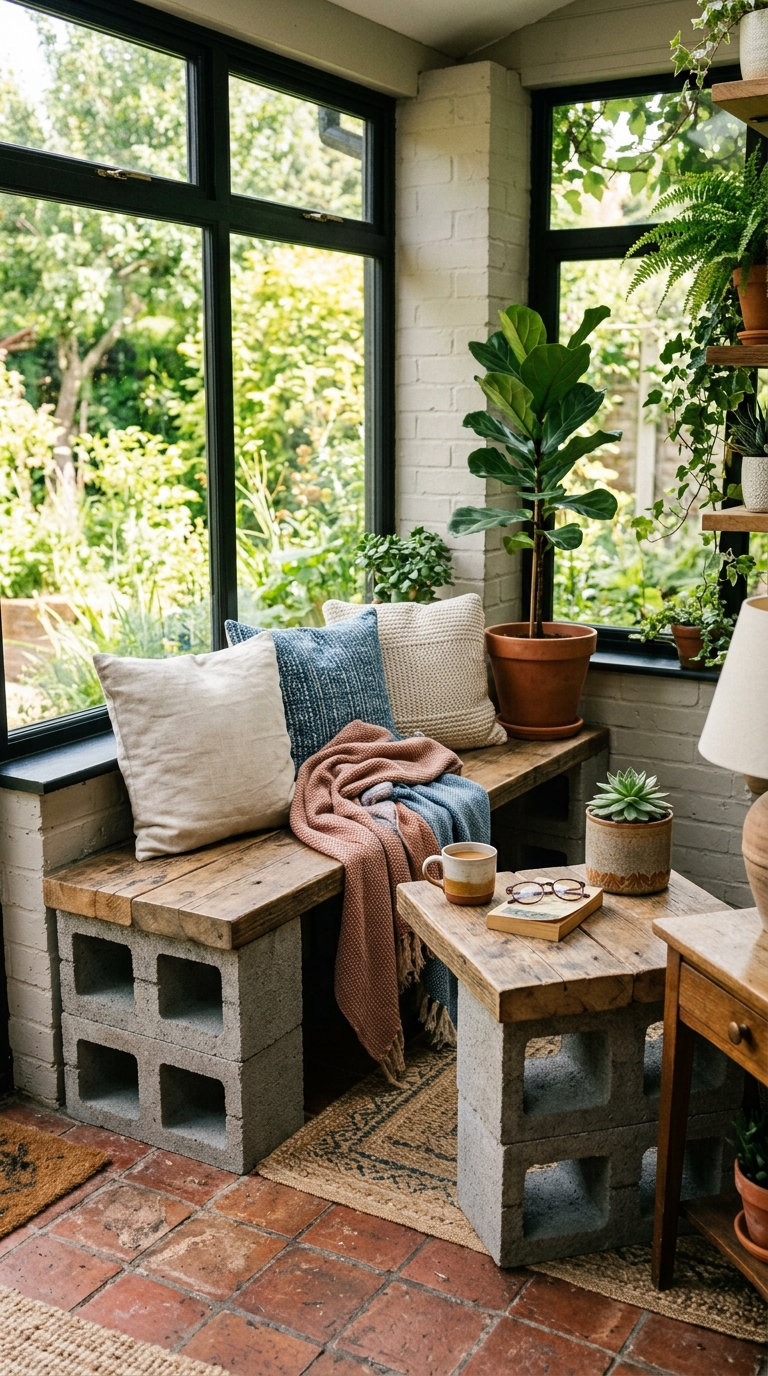
For an indoor-adjacent space like a sunroom that still reads as connected to the patio outside, 14 cinder blocks stacked in a traditional L-shape with silicone adhesive gives a stable base.
Prime the blocks before assembling 6 pieces of 4×4 wood at 8 feet each on top, then finish with cushions and pillows to complete the look.
18. Bohemian concrete patio bench
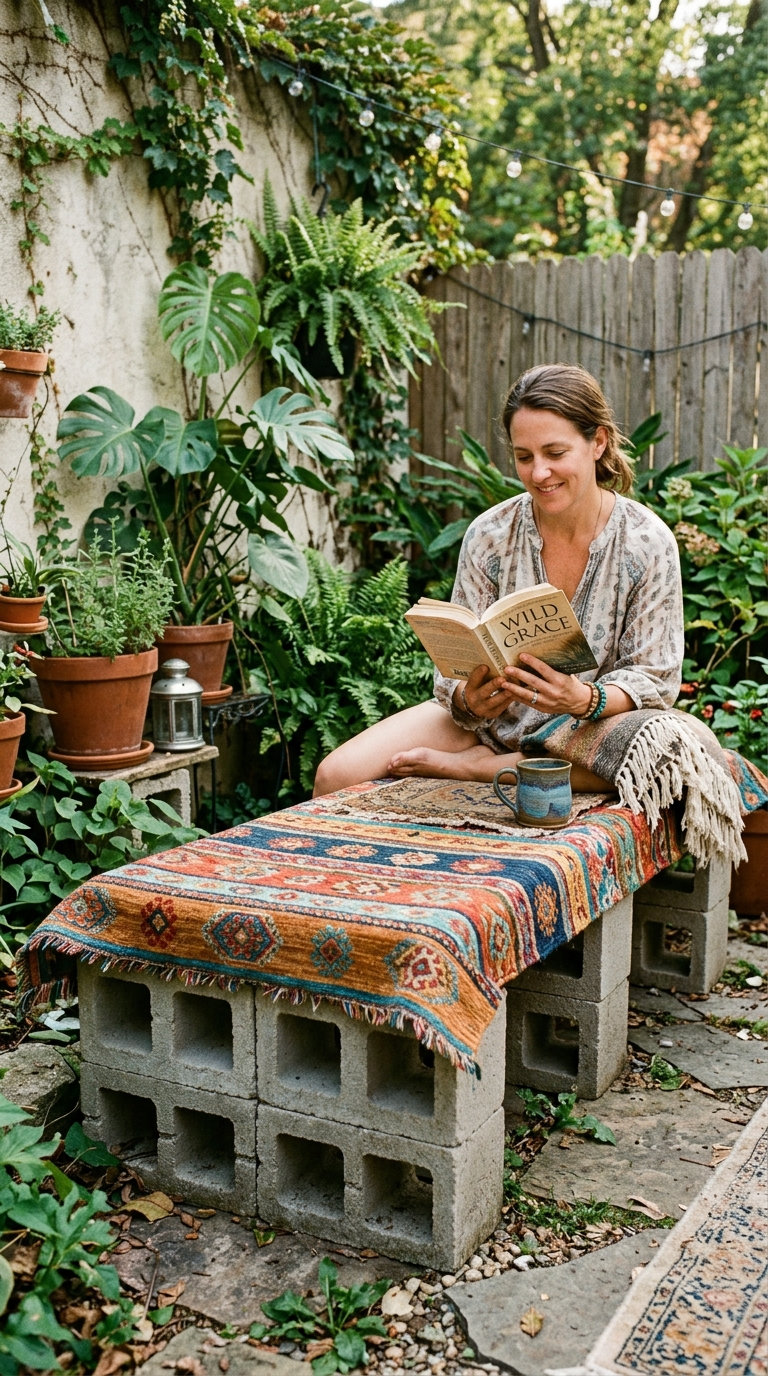
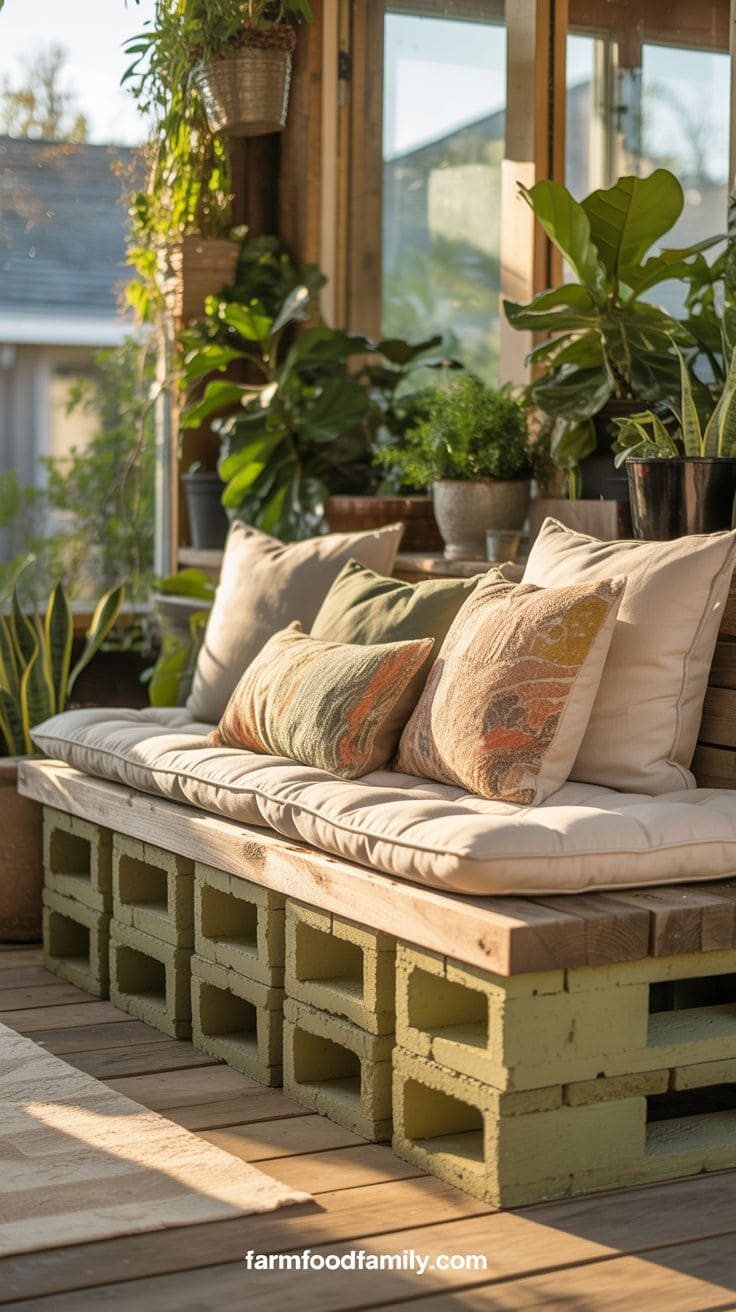
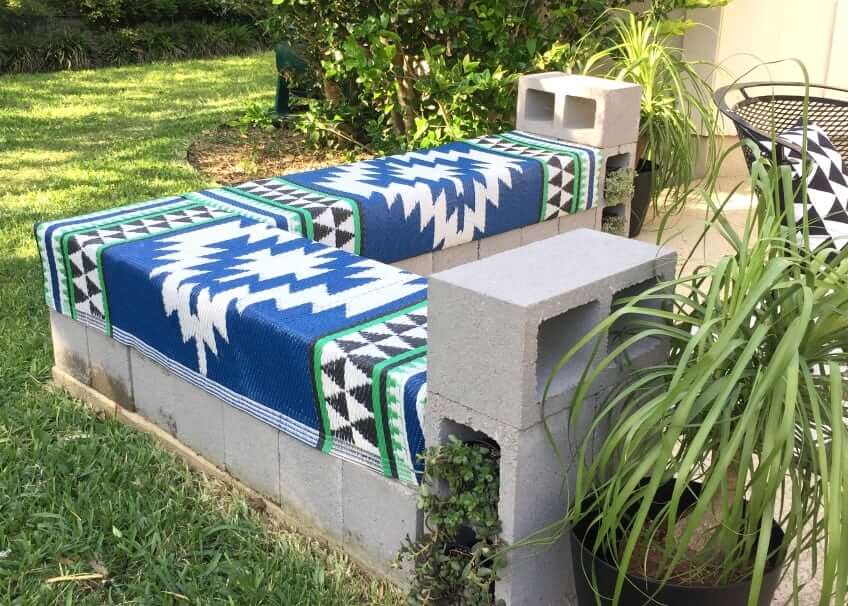
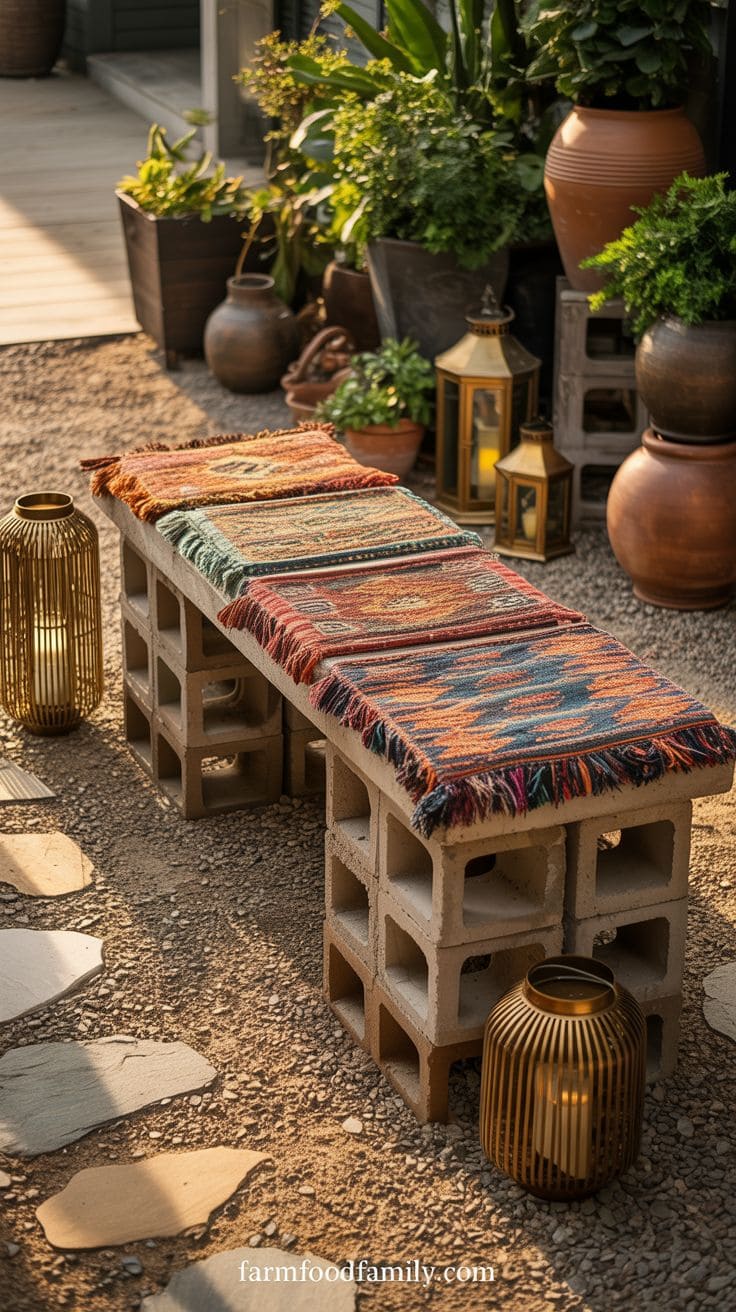
An artsy, bohemian-styled bench doesn’t need a big budget, one build came in under $30 using 24 blocks for the seating span and two additional stacked blocks at each end acting as posts. Instead of wood planks or standard cushions, this version used a detachable, boho-patterned soft mat across the top.
19. Simple cinder block bench with deep seating
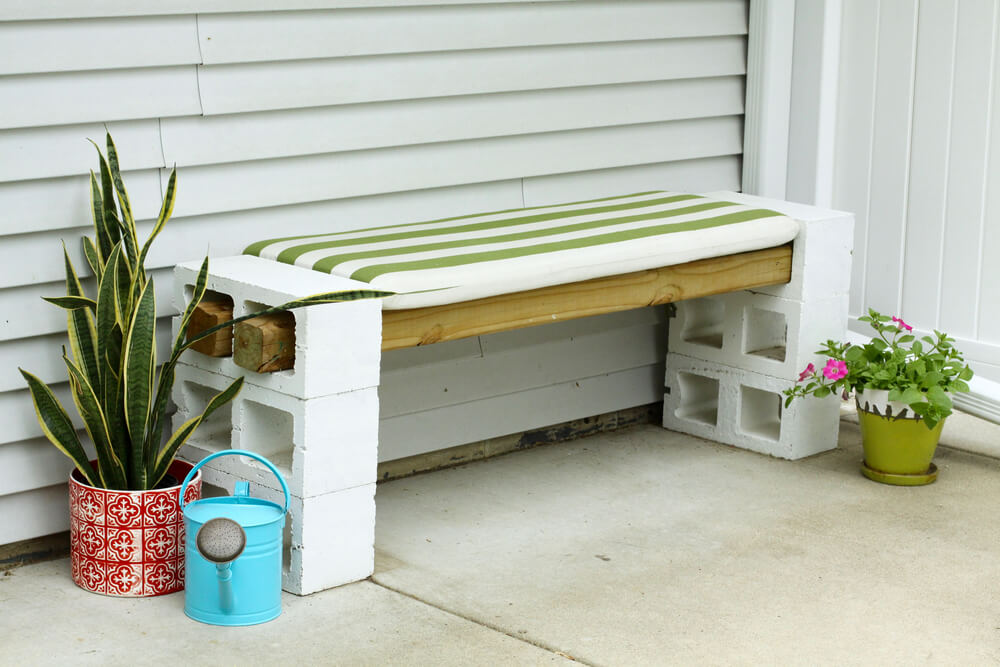
For deeper, more lounge-like seating rather than a narrow bench profile, six double cinder blocks stacked and connected with construction adhesive support two 4×4 wood pieces, topped with an outdoor cushion.
Adding more space between the wood planks creates a deeper seat, and surrounding the finished bench with plants softens the look of the exposed block.
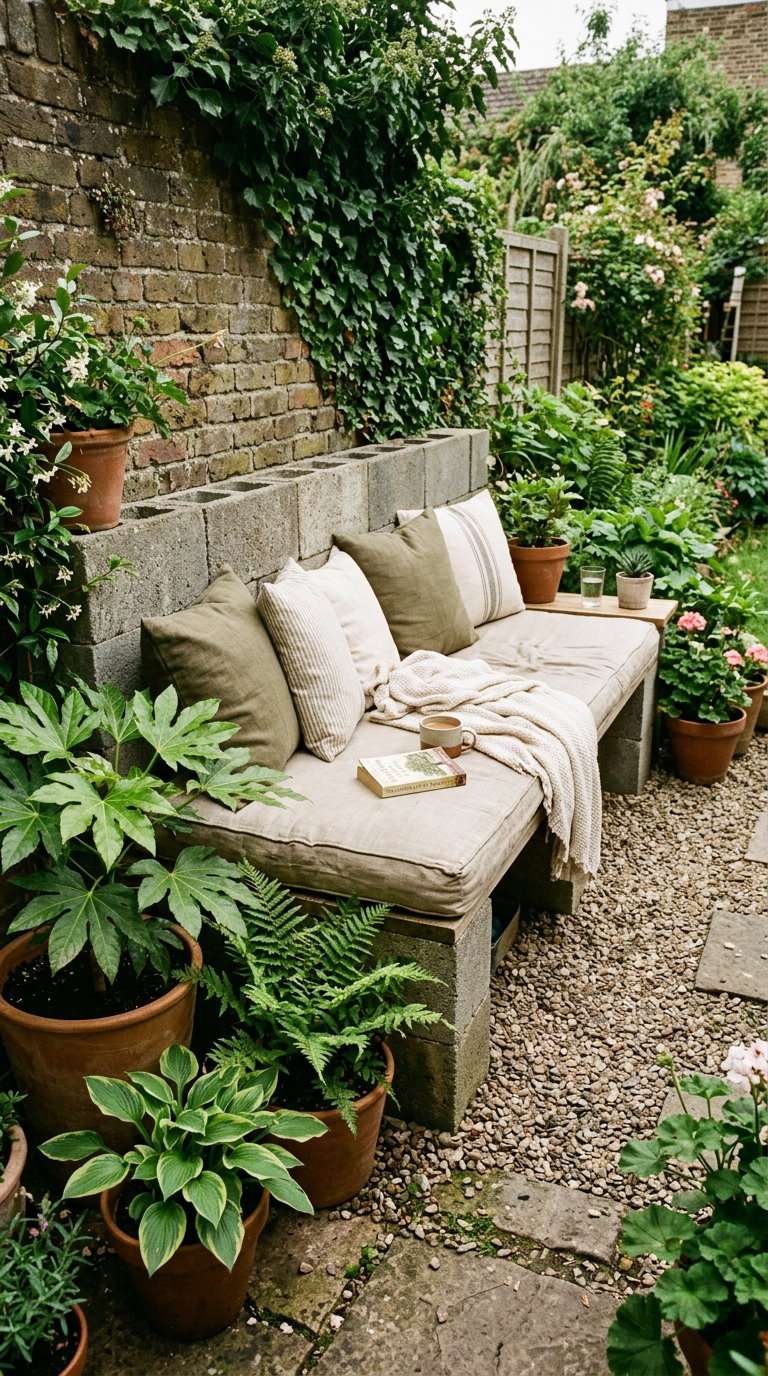
20. Cinder block bench for a hillside patio
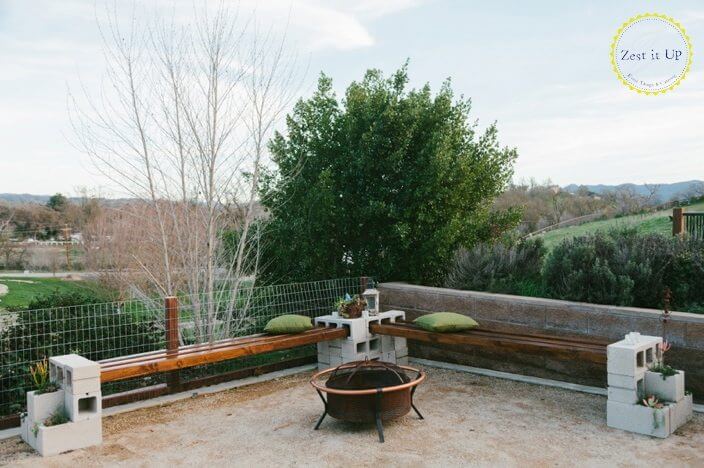
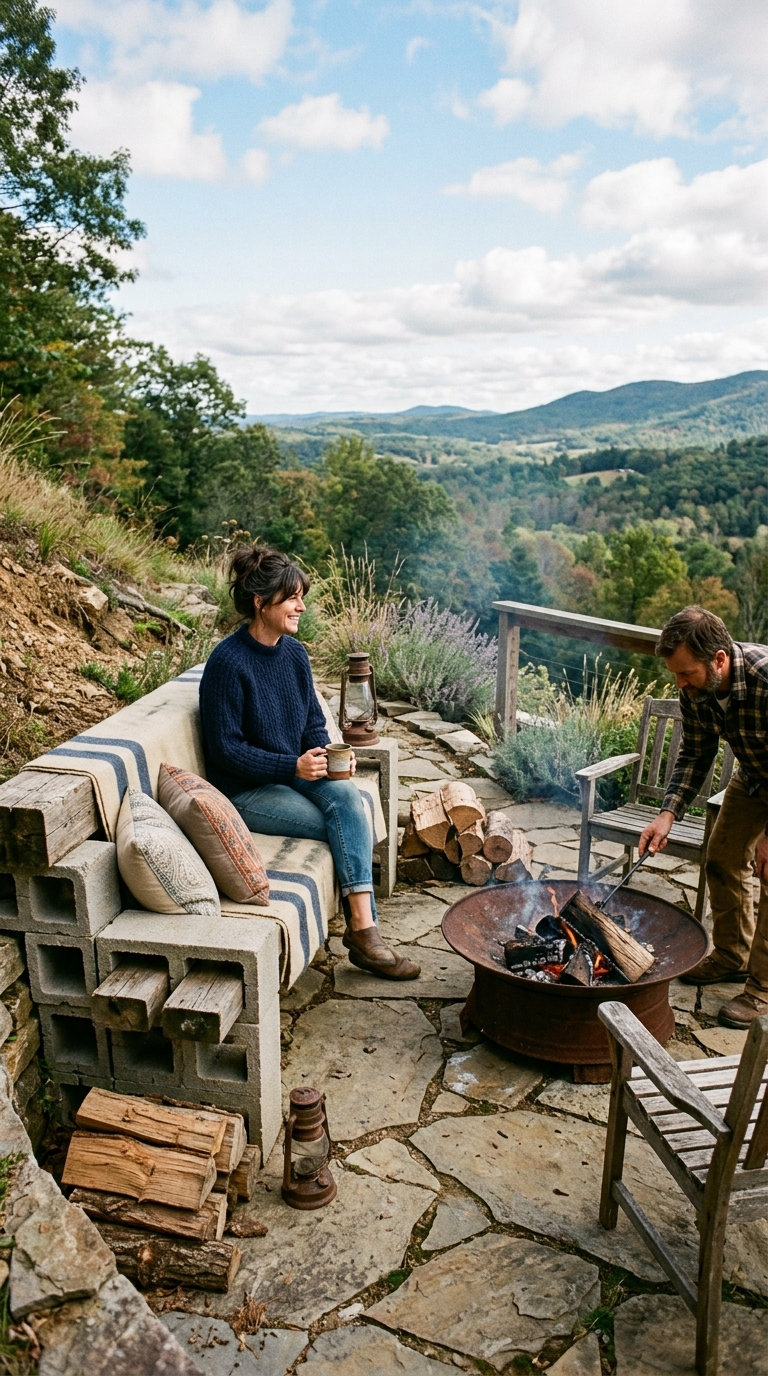
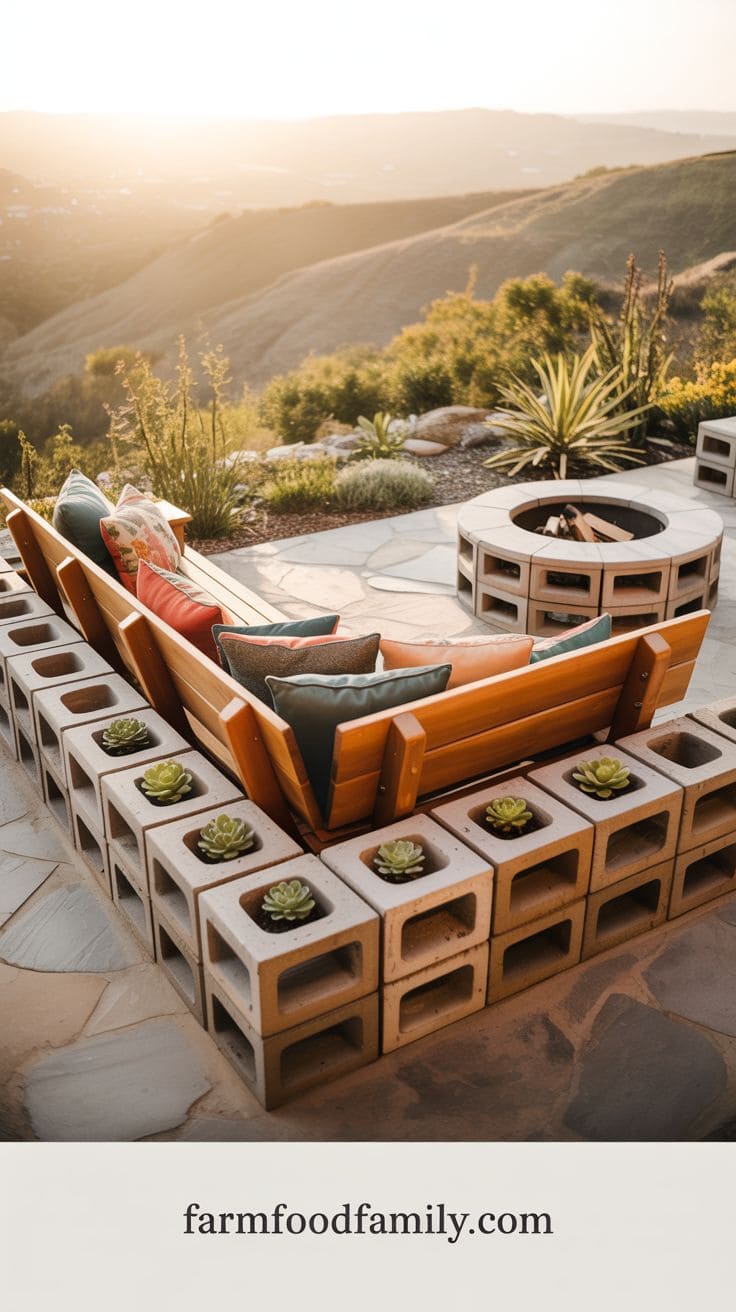
An elevated hillside patio calls for furniture that doesn’t need to be expensive to look intentional. One version built for exactly this setting used 22 double blocks and 8 single blocks, arranged in a simple L-shaped layout with a square block intersection support in the middle for stability.
Six wood-stained 4x4s complete the seat, with small plants added to open cinder posts, throw pillows, and a fire pit in the middle of the layout.
A few more things worth planning around
If a fire pit is part of your plan, fire pit ideas covers more design options beyond the bench itself, worth reading alongside section 1’s heat-exposure caution if you’re building the two together. For more ways to use the same material elsewhere in the yard, cinder block outdoor ideas and cinder block fence ideas cover applications beyond seating. And if you’d rather see bench styles that don’t rely on cinder block at all, handcrafted outdoor bench ideas is worth a look.
FAQ
Are cinder blocks strong enough for outdoor seating?
Generally yes for typical DIY use, but it’s worth understanding the gap: cinder blocks are rated under ASTM C90 for compressive strength around 1,900 psi as part of continuous wall assemblies, not explicitly for freestanding, unmortared bench seating. In practice, thousands of DIY builds hold up fine when the ground is level and compacted, the adhesive is given full cure time, and any backrest section is secured against leaning force, not just vertical weight.
What kind of wood is used for cinder block benches?
Cedar or pine are the most common choices. Both age reasonably well outdoors even without sealing or staining, though pine has become more common simply because it costs noticeably less than cedar.
How much does it cost to make a cinder block bench?
Most DIY builds documented here come in under $50 total. A double cinder block typically costs around a dollar, construction adhesive runs about five dollars a tube, and wood planks add roughly ten dollars or more depending on the dimensions you need. Paint and cushions are optional add-ons on top of that.
Do cinder block benches crack over time?
They can, and it’s almost always tied to one of two causes: water trapped in an uncapped block cavity that expands when it freezes, or ground movement underneath the bench from settling or poor initial leveling. Capping exposed cavities and taking the time to level and compact the ground before building addresses both of the most common causes.
Conclusion
Planters, fire pits, benches are just some of the things you can make from cinder blocks. All it takes is a little imagination, and you can create a great yard item for your home.
Never miss an update — choose FarmFoodFamily as your preferred source on Google.
How it works: Tap the button below to open Google's settings page, then check the box next to FarmFoodFamily.
Tap the checkbox to turn it blue — that's how you know it's set.