15 Elegant DIY Container Topiary Ideas for Pots, Indoors and Out
A topiary in a pot gives your porch or table a sculpted focal point, as long as you pick the right plant, size the pot well, and trim on a steady schedule.

Never miss an update — choose FarmFoodFamily as your preferred source on Google.
How it works: Tap the button below to open Google's settings page, then check the box next to FarmFoodFamily.
Tap the checkbox to turn it blue — that's how you know it's set.
A topiary in a pot gives your porch or table a sculpted focal point, as long as you pick the right plant, size the pot well, and trim on a steady schedule.
Products We Recommend
This post contains affiliate links. We may earn a commission on qualifying purchases at no extra cost to you.

Metal Circle Trellis, Garden Globe Topiary Frame
Round black metal frame to train ivy, rosemary, or vines in a pot
Shop Now
6Pcs Green Wet and Dry Floral Foam Blocks
Foam bricks for building a faux olive or boxwood topiary base
Shop Now
Fiskars SoftGrip Bypass Pruning Shears, 5/8" Cut
Sharp bypass pruners for shaping and trimming topiary
Shop NowA neat green ball on a stem looks like it needs a pro. It doesn’t. You can build one from a boxwood, a rosemary plant, a wire frame, or even faux stems in about 20 minutes.
The hard part isn’t the shape. It’s keeping the shape. Topiaries go shaggy, lose leaves, or die in a cold snap.
This guide gives you 15 ideas, from live boxwood standards to no-water faux trees. For each one, you’ll see what to buy, how to shape it, and what to watch for.
Answer 4 quick questions and get matched to the exact fix for your yard — drainage, budget, layout, or something else entirely.
Take the Free QuizQuick Answer
For a first live topiary, start with boxwood or rosemary in a pot with drainage holes. Pick a plant with a strong, straight center stem and high branching. Stake it, strip the lower branches, then shape the top a little at a time.
Garden Gate author Linda Vater says to remove about a third of the growth at a time. Step back, turn the pot, and check the shape often.
Trim often in the growing season, because new growth fills out fast. Dwarf myrtle needs new shoots cut back by up to half every one to two weeks, per the same article. Slower plants need less, so match the plant to the time you have.
Want zero upkeep? Skip the plant, and build a faux tree on floral foam. It takes about 20 minutes and never needs a trim.


Which Plant Should You Pick for Your Topiary?
Here’s a quick planning table. The zones and notes come from the Garden Gate article. The skill column is our own judgment.
Most yard problems trace back to one specific, fixable cause. Find yours in 4 quick questions.
Take the Free Quiz| Plant | Zones | Best for | Trim demand | Skill level |
|---|---|---|---|---|
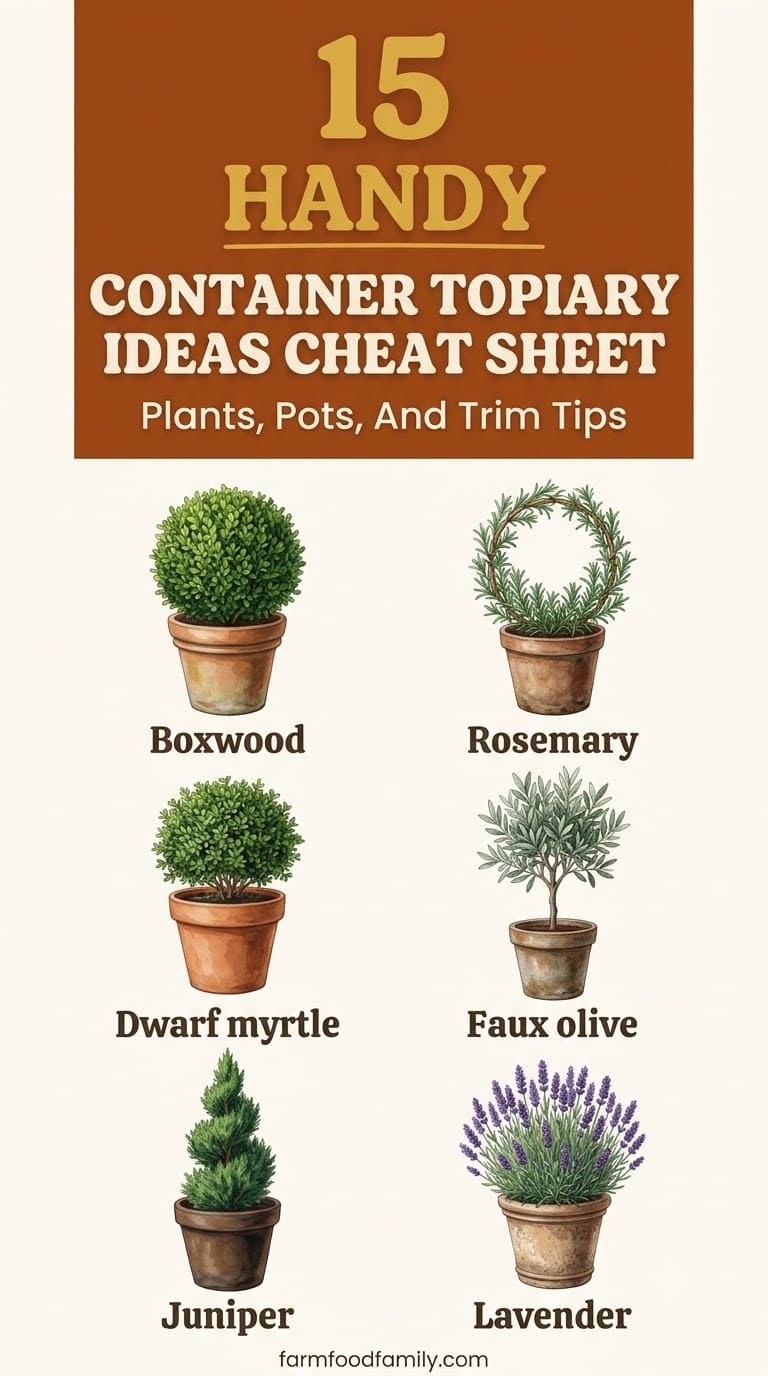
| Boxwood | 5-9 | Classic ball or cone | Moderate | Beginner |
| Dwarf myrtle ‘Compacta’ | 8-10 | Tabletop topiary | High, every 1-2 weeks | Intermediate |
| Juniper | 4-9 | Large outdoor pieces | Low to moderate | Beginner |
| ‘Sunshine’ Chinese privet | 6-10 | Fast gold topiary | High | Intermediate |
| Spanish lavender | 8-11 | Buy it already shaped | Low | Beginner (buy shaped) |
| Rosemary | Varies | Wire frame shapes | Moderate | Beginner |
What Do You Need Before You Start?
Pick the pot first. Monrovia advises a pot at least as wide as the plant is tall. It should have thick, frost-proof walls and good drainage.
A tall topiary in a small pot will tip over. It will also dry out fast. Go wider than you think.
For tools, you’ll want sharp snips or pruners, thin bamboo stakes, and twine or small clips. Garden Gate also suggests a top dressing, like pea gravel, black stones, mini pinecones, or moss.
Sanitize your blades. Monrovia advises wiping tools with 70% isopropyl alcohol. It takes ten seconds and helps stop disease from traveling between plants.
And choose a plant hardy for your zone. Monrovia suggests a variety rated at least two zones colder than yours if it stays outside in a pot.
15 Elegant DIY Container Topiary Ideas
1. Boxwood Ball-on-Stem (Lollipop Standard)
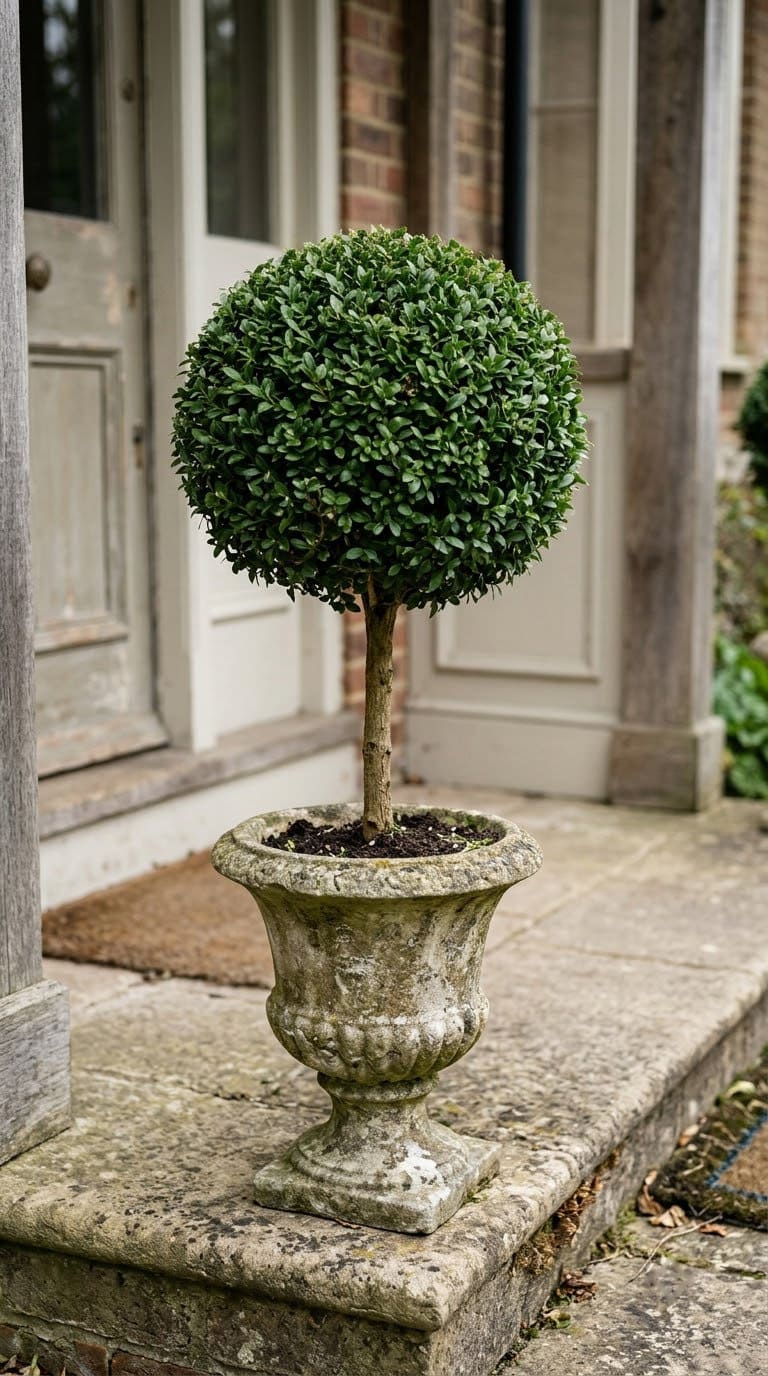
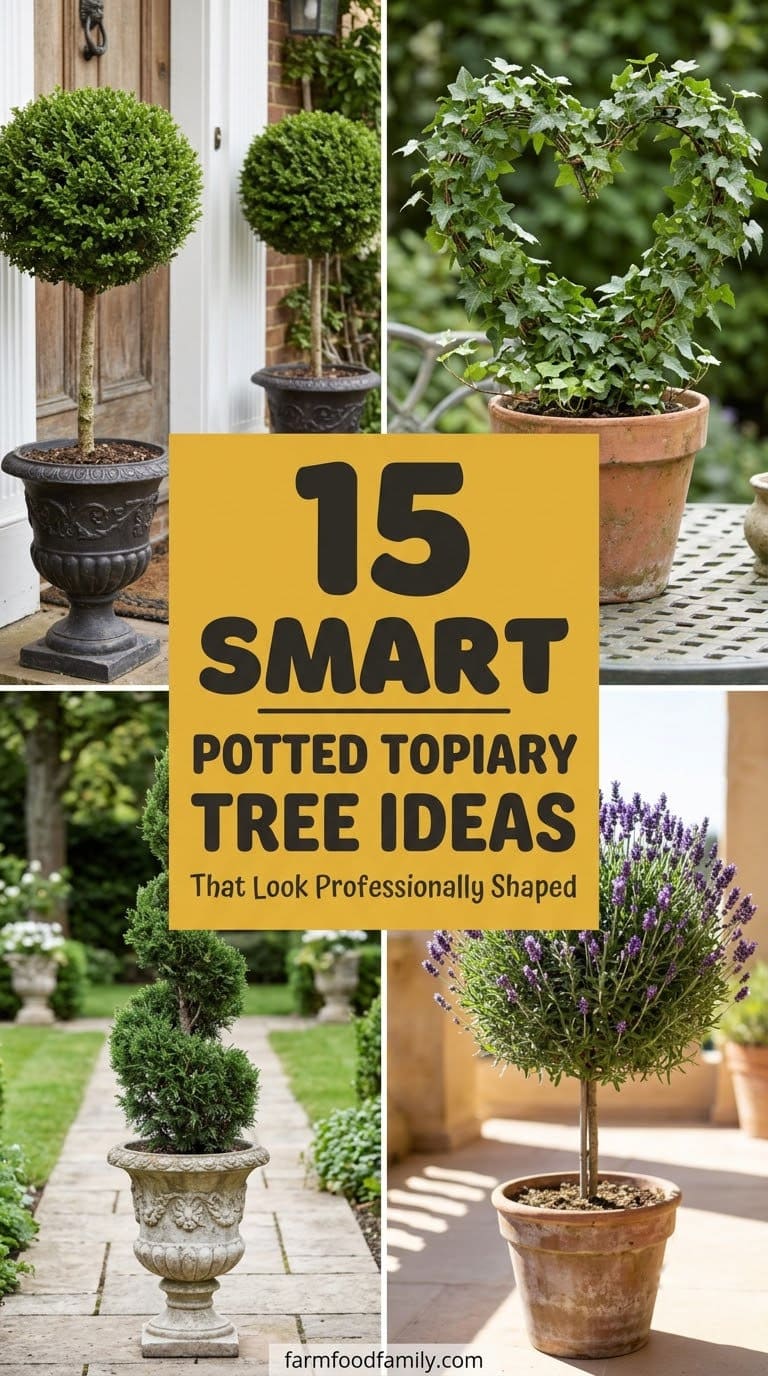
This is the classic. Choose a healthy plant with a strong, straight center stem and high branching. Moisten the soil first.
Round black metal frame to train ivy, rosemary, or vines in a pot
Shop NowThis post contains affiliate links. We may earn a commission on qualifying purchases at no extra cost to you.
Push a thin bamboo stake in as close to the trunk as you can. It should be slightly taller than the plant. Tie the stem loosely at several spots.
Working from the base up, cut off the lower branches close to the stem. Stop where foliage thickens, then shape the ball. All of those steps come from Garden Gate.
The average homeowner spends $616/year on yard fixes that don't address the real problem. Find out what yours actually is — before you spend another dollar.
Take the Free QuizCost tier: low to medium. Pairs well with idea 2’s matched pair.
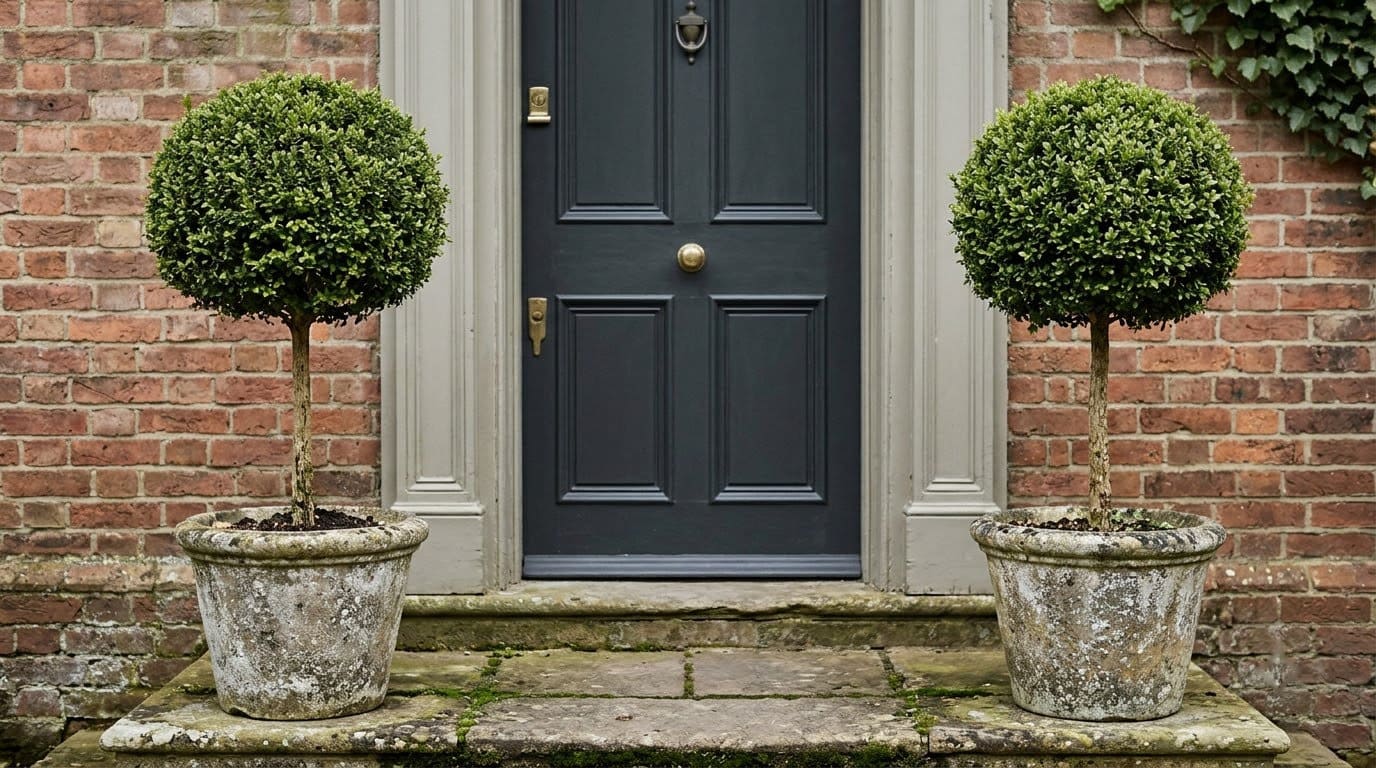
2. Matched Boxwood Pair at the Front Door
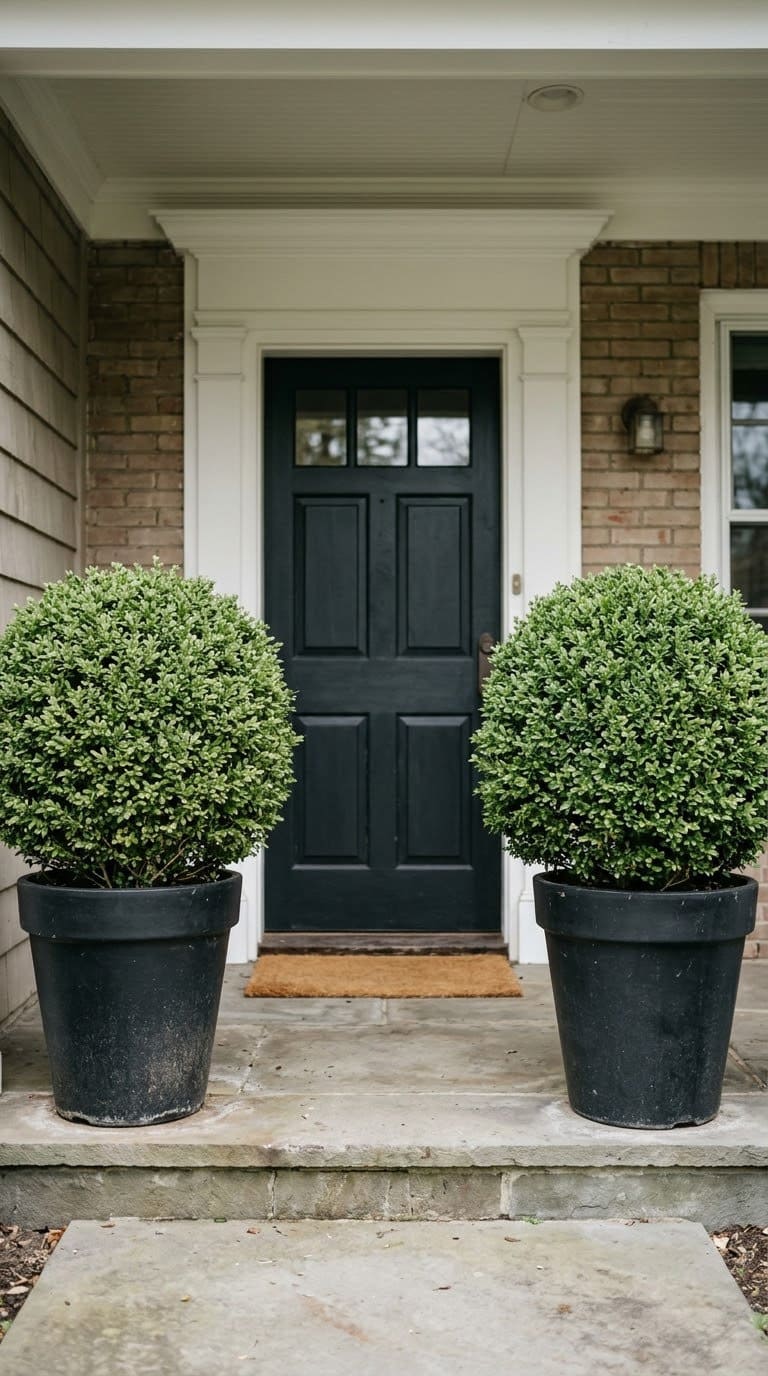
Two matching pots make an entry look planned. Buy two plants of the same size, or train two from the same nursery batch. Match the pots exactly.
Set them about a shoulder width apart on each side of the door. Keep the pots at least as wide as the plants are tall, per Monrovia. That keeps the pair steady in wind.
Trim both on the same day. Even a small difference in height shows up in a pair.
Cost tier: medium. See our potted shrubs guide for other shrubs that suit pots.
3. Rosemary Wire-Frame Topiary
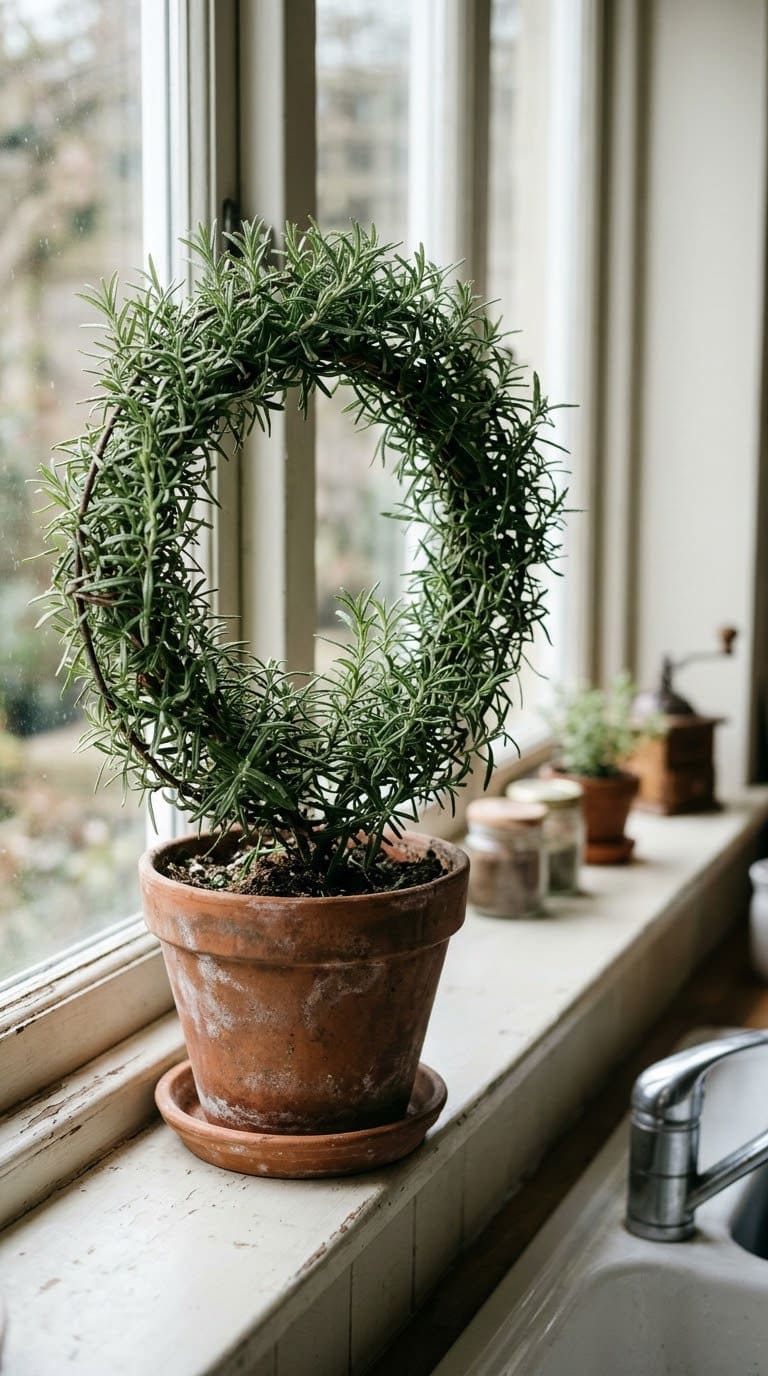
This is the easiest live topiary for a beginner. Fine Gardening author Jodi Torpey suggests an upright rosemary like ‘Tuscan Blue’. Bend a metal coat hanger into a round frame.


Stop watering for a few days so the branches turn flexible. Split the plant into two main branches and tie each bundle to the frame with twine, twisty ties, or florist tape. As it grows, train new stems up and around the frame.
Put it in bright light, away from direct sun indoors. Let 1 to 2 inches of soil dry between waterings. Snip the trimmings into your cooking.
Cost tier: low. Pairs with our container herb garden guide.
4. Rosemary and Boxwood Combo Planter
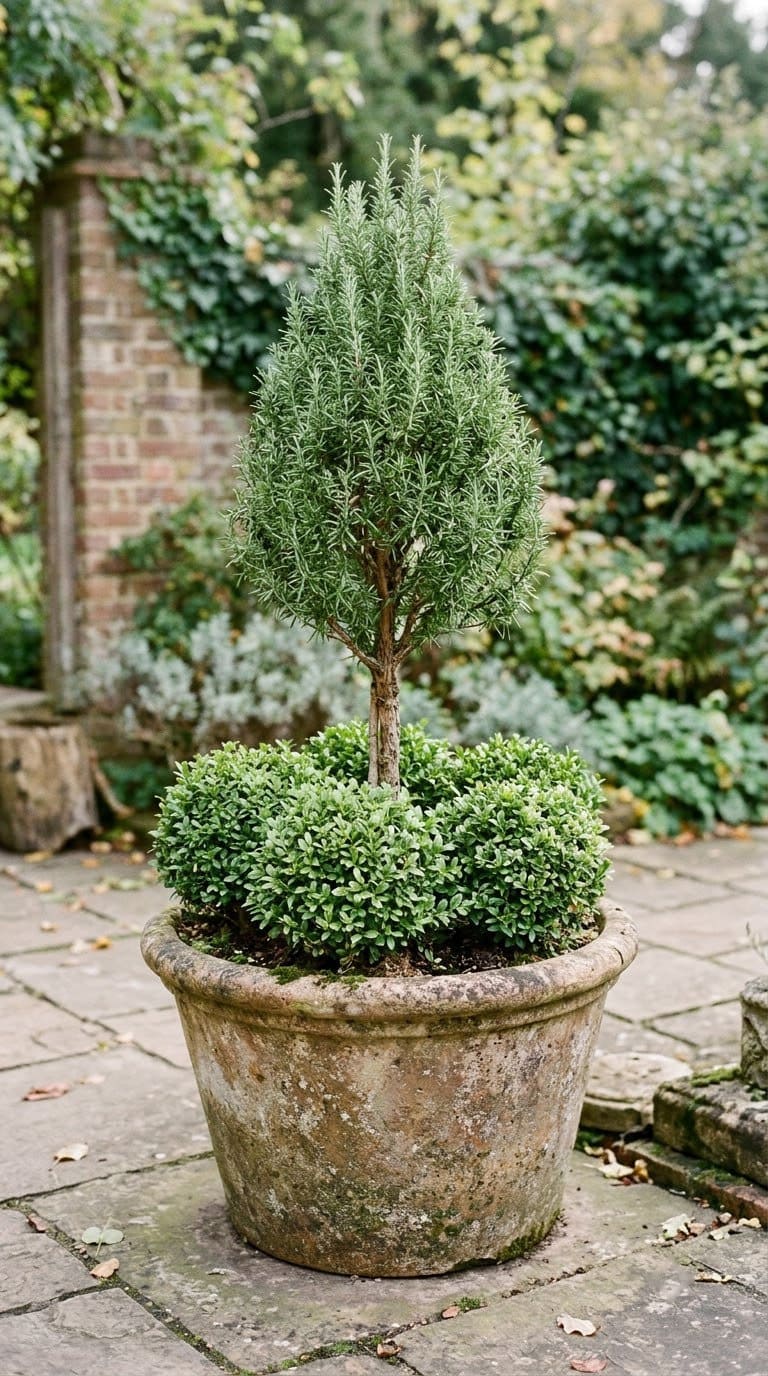
Put one tall, frame-trained rosemary in the middle of a wide pot. Plant three small boxwood around it. The leaf textures contrast nicely.
Match the water needs before you plant. Rosemary likes the soil to dry between waterings, per Fine Gardening. Boxwood in a pot also hates soggy roots, so use fast-draining mix for both.
Use a pot at least 18 inches wide for this arrangement. That size is our own suggestion, so adjust to your plants.
Cost tier: medium. Best on a sunny patio.
5. Dwarf Myrtle Tabletop Topiary
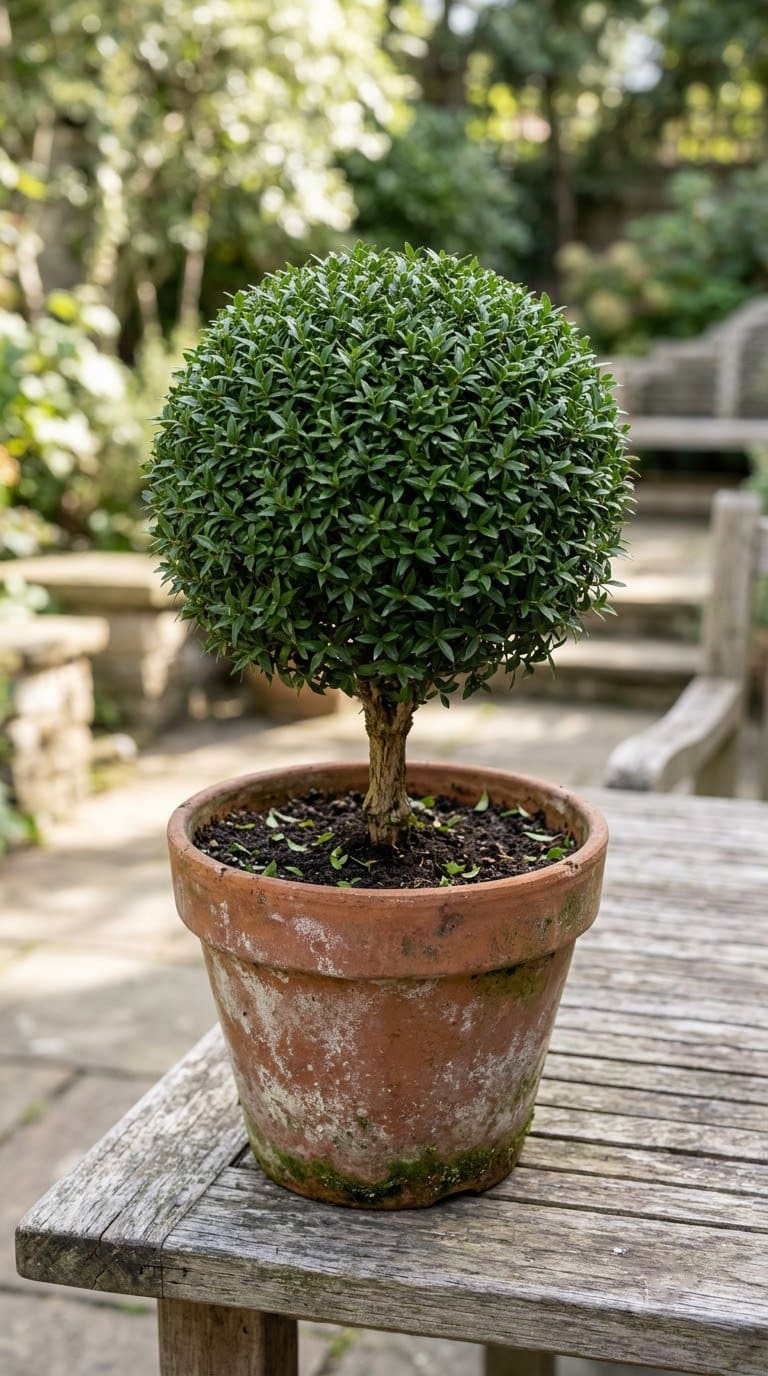
Garden Gate calls ‘Compacta’ dwarf myrtle good for tabletop topiary. It grows in zones 8 to 10. It likes consistent moisture and handles frequent pruning.
That frequent pruning is the catch. During the growing season, the article says to cut new shoots back by up to half, roughly every one to two weeks for dwarf myrtle.
Keep small snips by the pot. A quick 60-second trim each week keeps the ball tight.
Cost tier: medium. Great on a covered patio table.
6. Ivy Wire-Frame Topiary
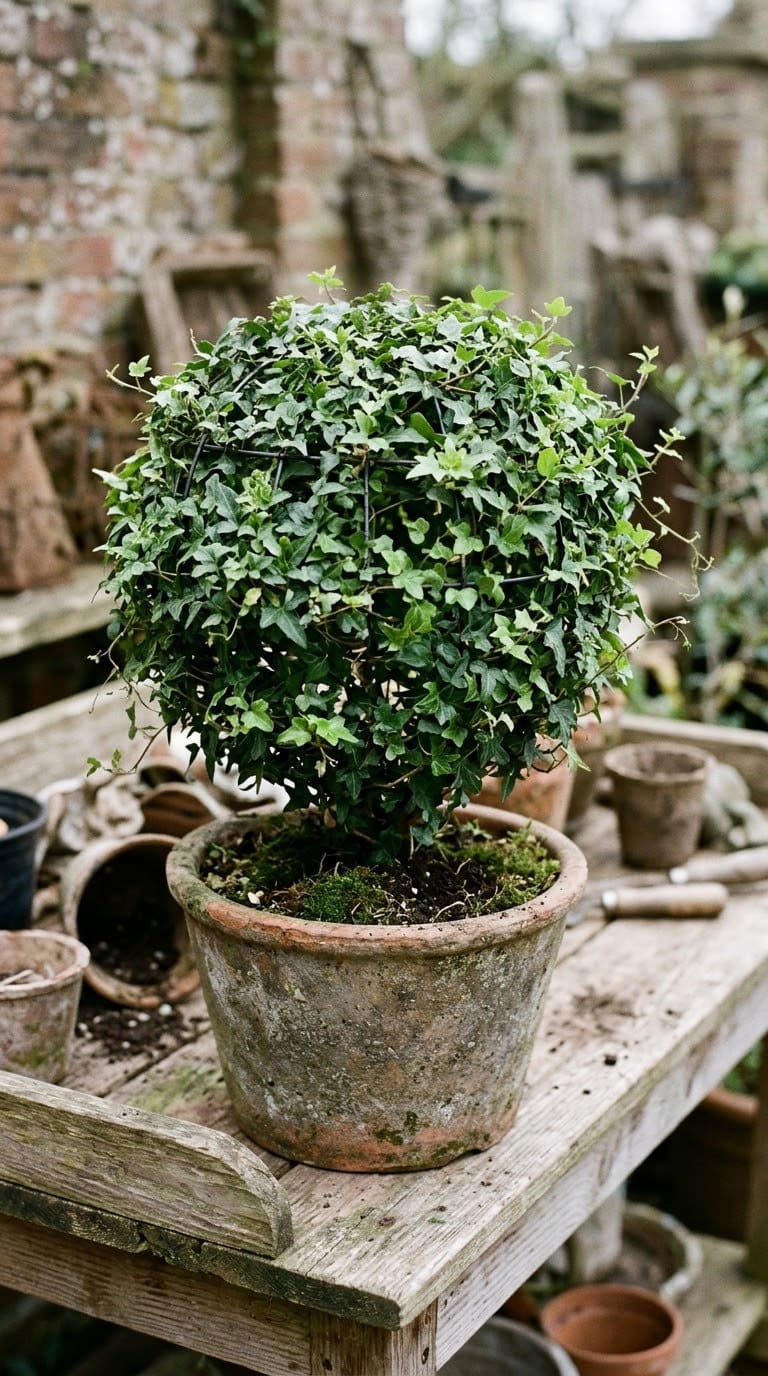
Garden Gate notes you can wrap a wire frame with long stems of rosemary, thyme, ivy, or wire vine for an instant form. Ivy is the fastest filler.
Set the frame in the pot, then weave the stems in and out. Tie them loosely so the stems can thicken.
Pick small-leaved ivy for small frames. Big leaves look out of scale. Trim any runners that stray past the frame.
Cost tier: low. Works indoors in bright, indirect light.
7. Moss-Stuffed Ball or Cone Topiary
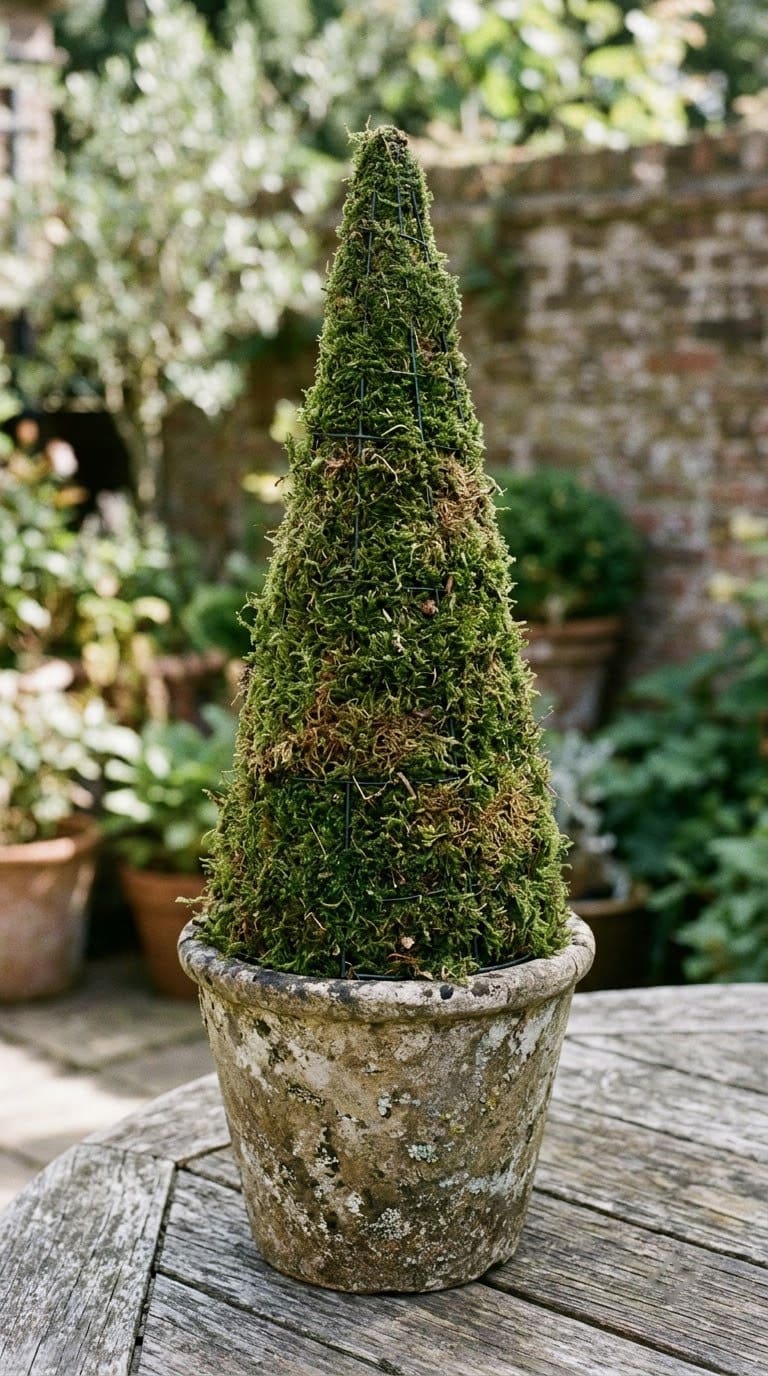
A moss form needs no pruning. Stuff damp sphagnum moss into a wire frame, packing it firmly. Wrap fishing line around the frame to keep the moss in.
Plant small ivy or creeping fig stems through the moss, then let them climb. Mist or dunk the form when it dries.
Expect to refresh the moss over time as it breaks down.
Cost tier: low to medium. Idea 6 is the plant-forward version of this.
8. Faux Olive Tree in a Pot
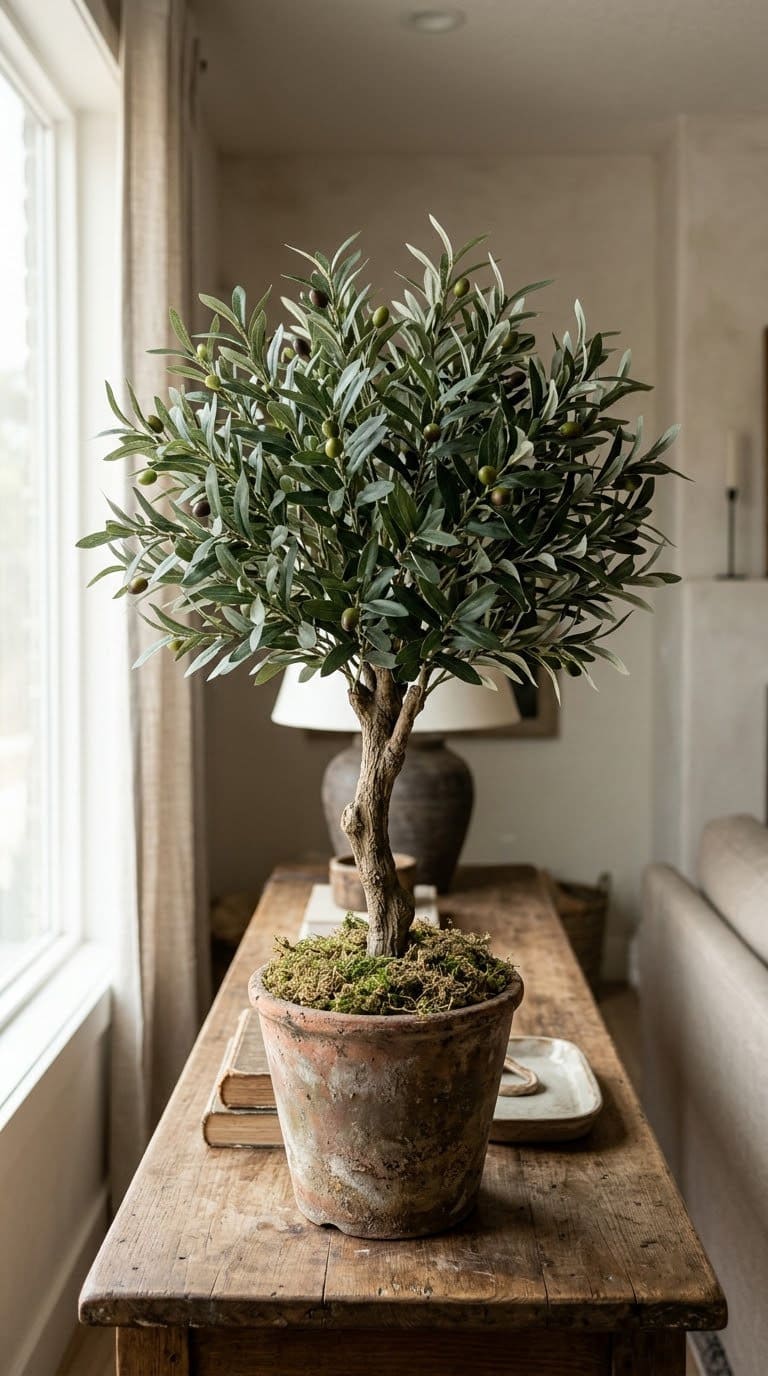
DIY Beautify built a tree about 32 inches tall for around $30. You need 3 faux olive stems, one roll of floral tape, a floral foam brick, a 7-inch pot, moss, and floral pins.
Trim the foam to fit the pot with a serrated knife. Tape the stems into one trunk, then push the trunk into a pencil-sized hole in the foam. Cover the foam with moss and pin it down.
The author says it takes about 20 minutes. If the trunk wobbles, add a dab of hot glue in the hole.
Cost tier: low. Zero watering and zero trimming.
9. Faux Boxwood Ball on a Dowel

Use the idea 8 method with a faux boxwood ball. Push a dowel into the foam block, then press the ball onto the top. Add moss to hide the foam.
A dowel about 12 inches tall suits a tabletop pot. That height is our own suggestion.
Faux topiaries fade in strong sun over time. Keep them on a covered porch or inside.
Cost tier: low. A good gift for anyone who forgets to water.
10. Lavender in a Pot (Buy It Shaped)
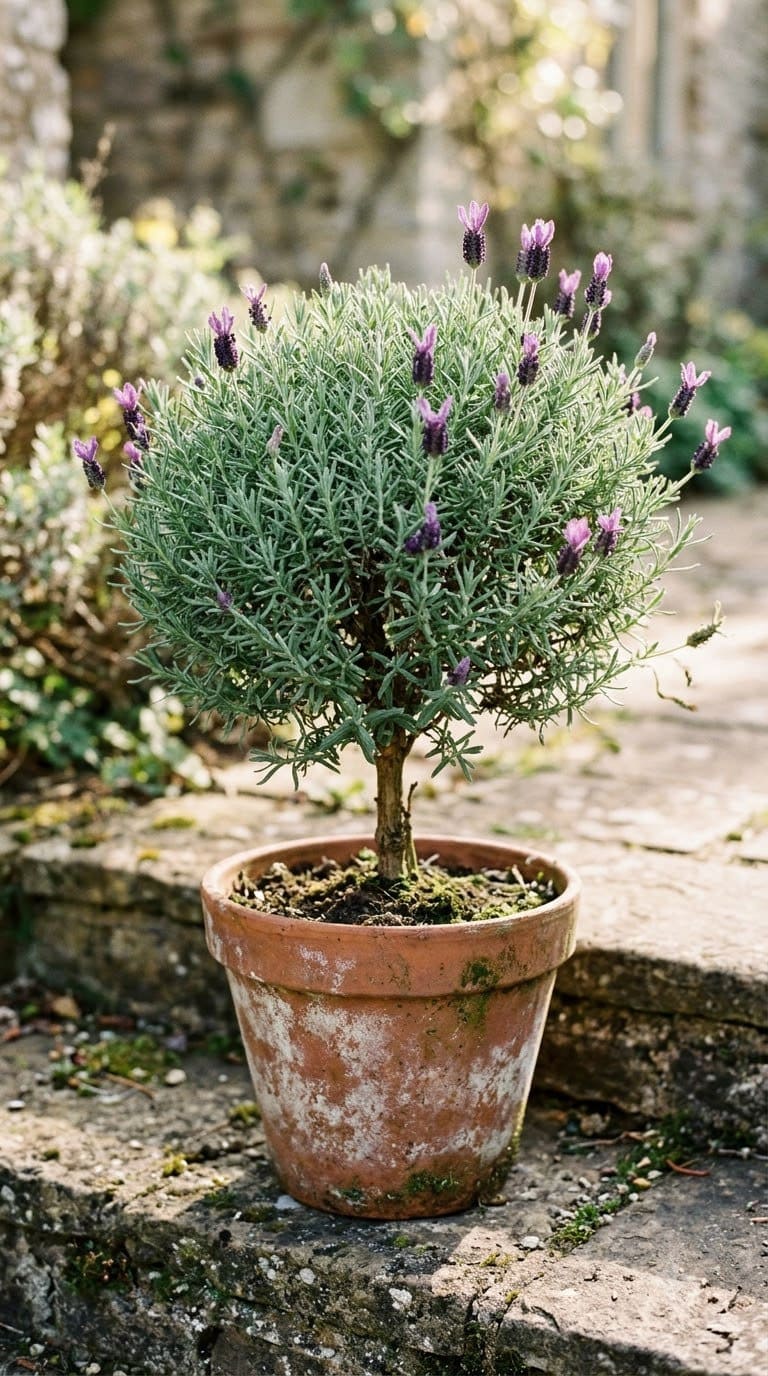
Garden Gate says Spanish lavender is hard to start from scratch, so buy it already shaped. It’s fragrant but not always long-lived. The zone range is 8 to 11.
Treat it as a seasonal splurge. Give it full sun and fast-draining mix. Skip rich soil.
Don’t get discouraged if it doesn’t last forever. That’s what the article describes as normal.
Cost tier: medium. Pairs with idea 5 on a sunny table.
11. Juniper for a Large Outdoor Pot
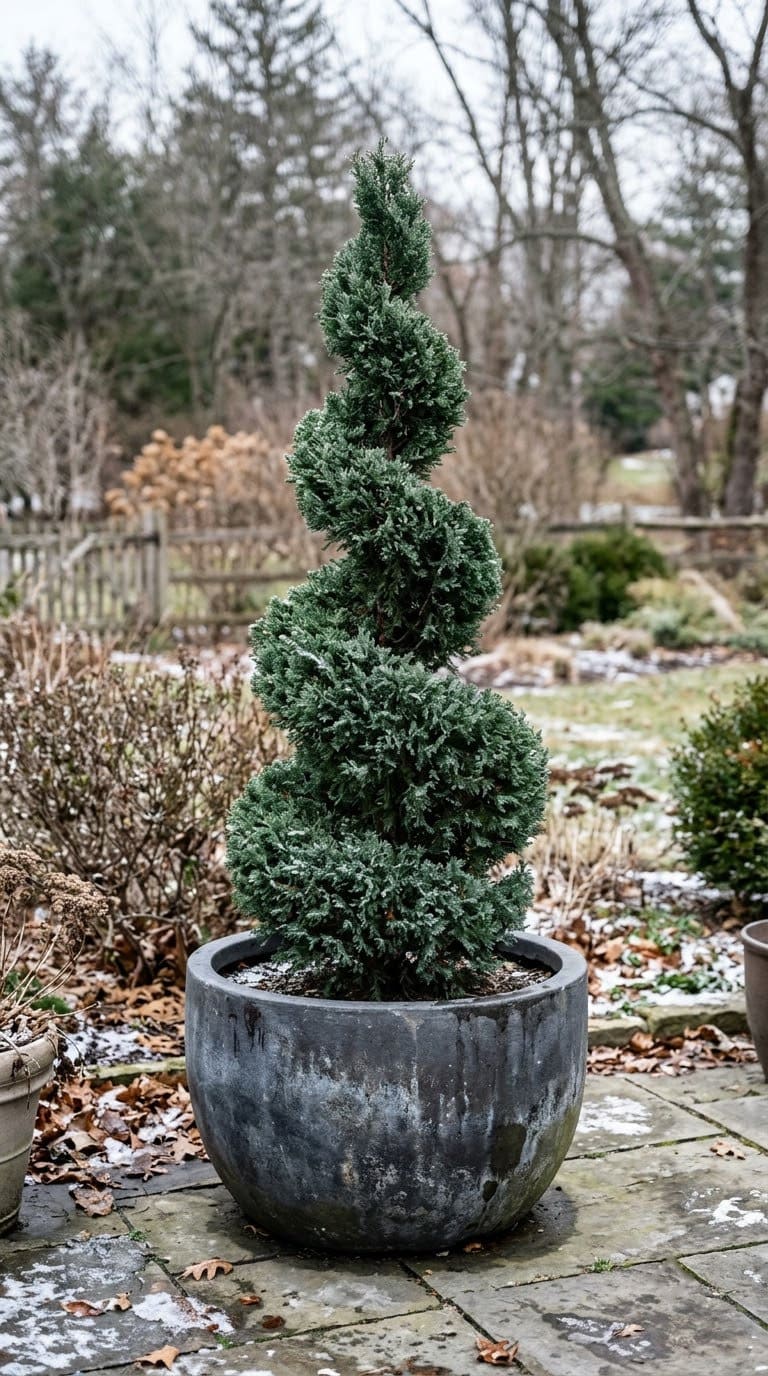
Garden Gate suggests juniper for large outdoor specimens. It’s very cold hardy and drought tolerant, in zones 4 to 9. That makes it a strong pick for cold climates.
A big plant needs a big pot. Follow Monrovia’s rule for width, and choose a frost-proof pot.
Juniper keeps its color through winter. For more evergreen shapes, see our dwarf evergreen shrubs list.
Cost tier: medium to high.
12. Golden Privet Quick Topiary
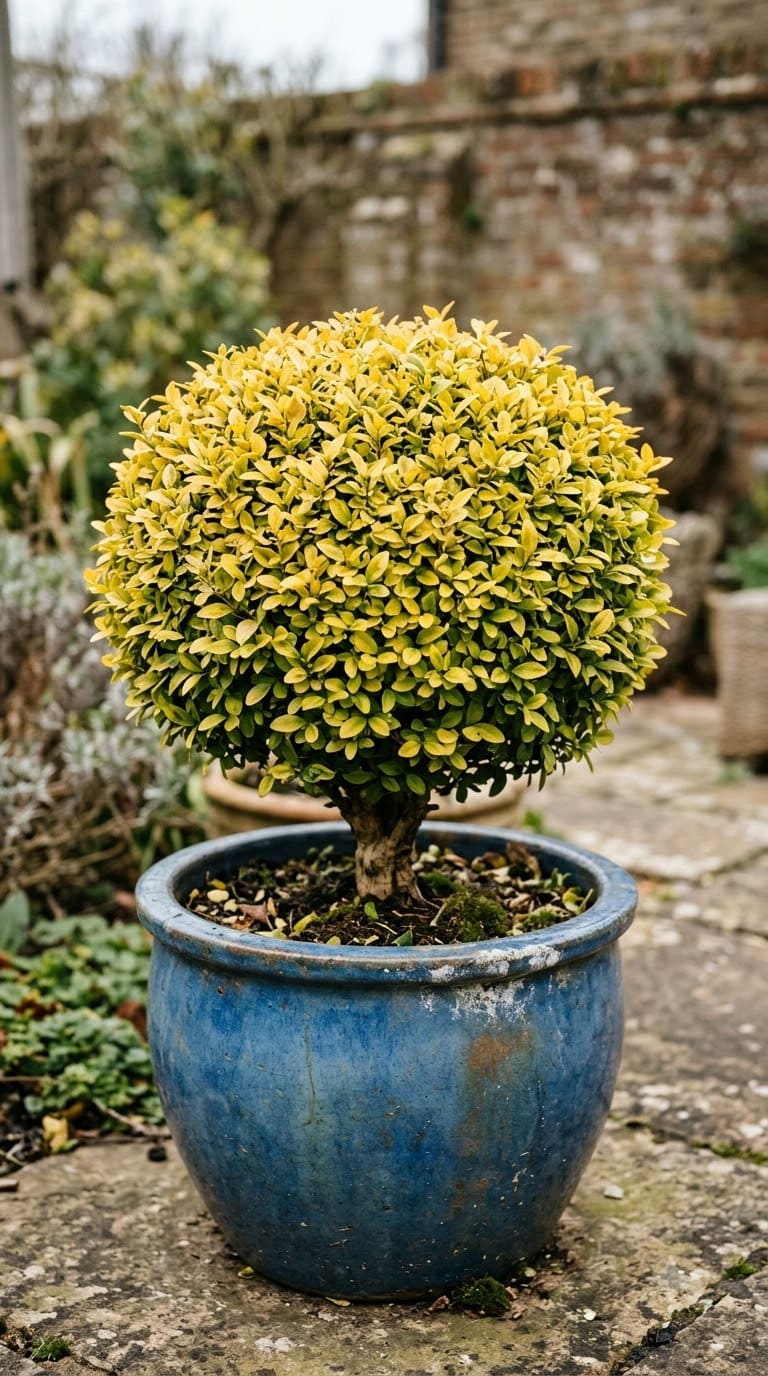
Garden Gate says ‘Sunshine’ Chinese privet makes a topiary quickly with gold foliage. It’s hardy in zones 6 to 10.
The cost is time. It needs frequent pruning. If you can’t trim every week or two in summer, pick a slower plant.
It’s perfect for a gardener who wants a fast result and enjoys the trimming.
Cost tier: low to medium. See also when to prune shrubs for timing basics.
13. Herb and Flower Standards
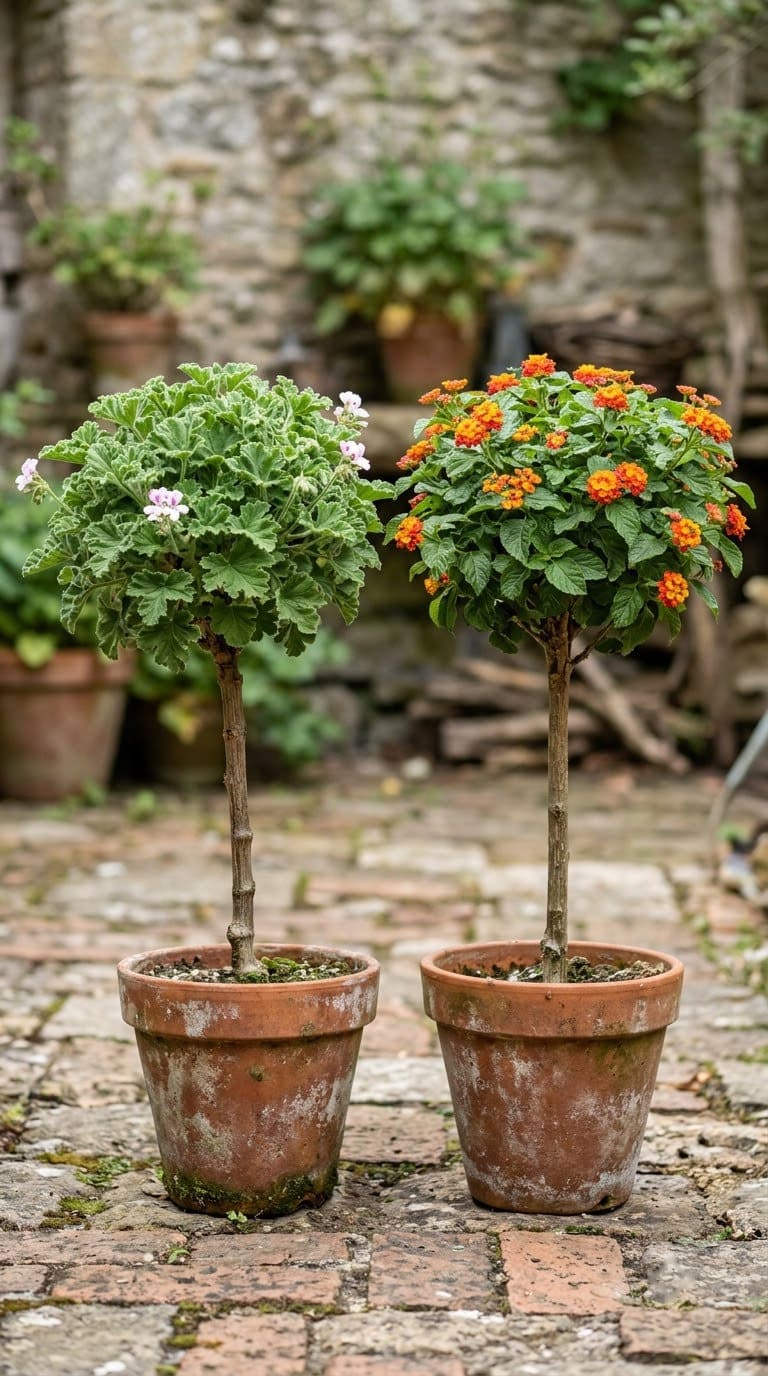
Garden Gate lists rosemary, scented geranium, lantana, and roses as topiary options. It also says basil and coleus need pinching for bushiness.
Pick one and train it like idea 1. Stake the main stem and remove the lower side shoots. Pinch the top often so the head fills out.
These bloom or smell nice, so put them near a seat. They’re less formal than boxwood.
Cost tier: low. Many herbs sell for a few dollars at garden centers.
14. Heart-Shaped Valentine Topiary
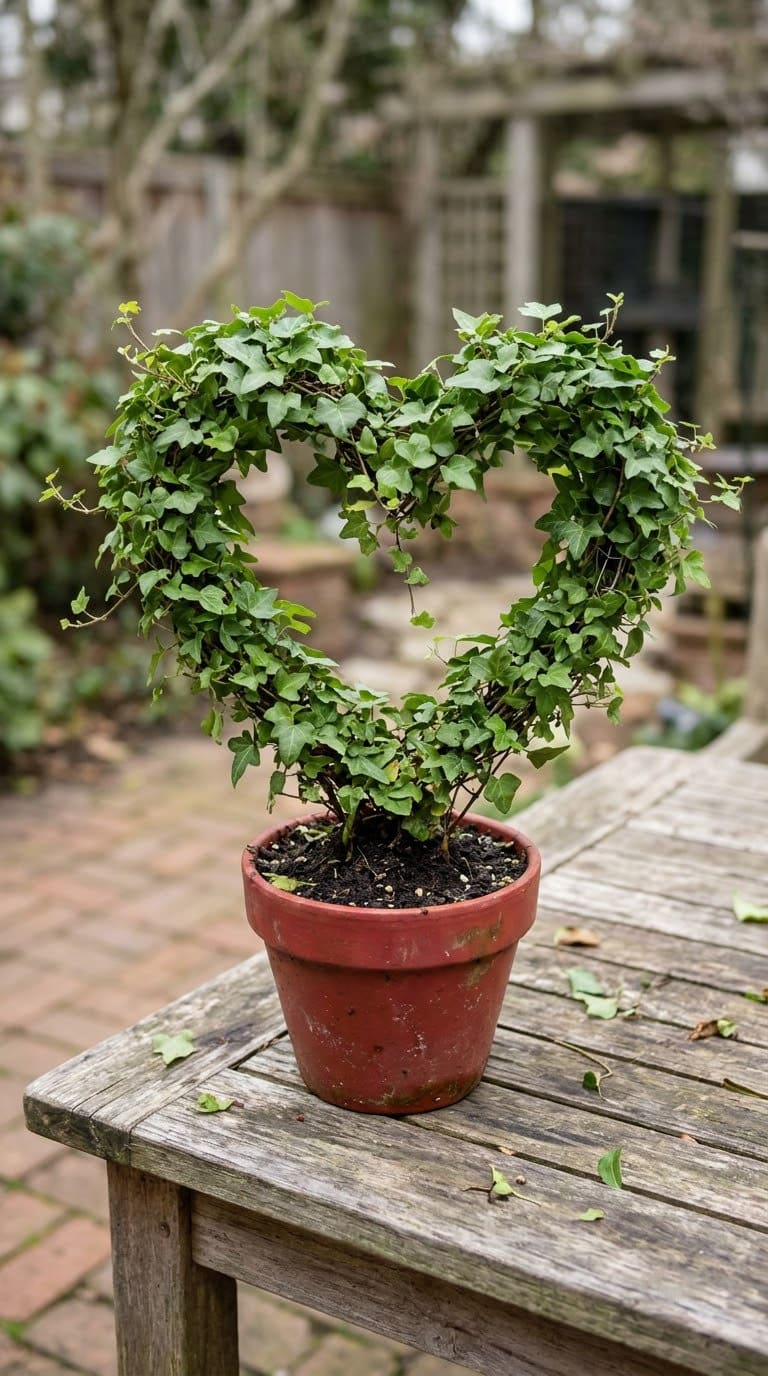
A heart frame is just a wire form with a different outline. Wrap or weave small-leaved ivy through it as in idea 6. Garden Gate notes wire frames take rosemary, thyme, or ivy.
Make it in January so the ivy has time to fill the shape. Keep it in bright, indirect light.
For spooky and holiday shapes, our Halloween topiary ideas have more.
Cost tier: low. Gives a gift in a pot.
15. Top-Dressed, Grouped Display
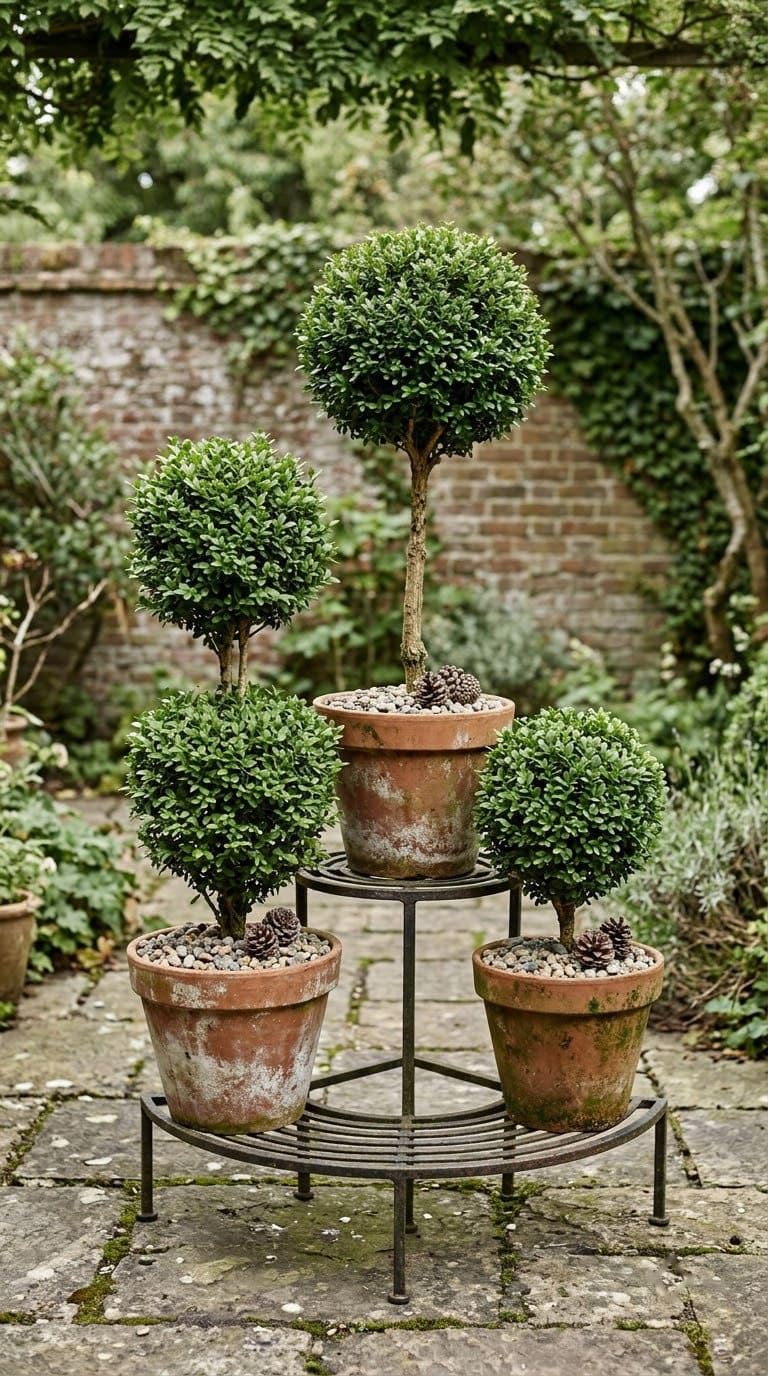
Group three topiaries of different heights for a stronger look. Garden Gate suggests staging topiaries on outdoor living areas, plant stands, or tables.
Finish each pot with a top dressing. The article lists pea gravel, black stones, mini pinecones, moss, and sphagnum moss. Swap them with the seasons.
Odd numbers read better than pairs in a group. That’s a general design habit, not a sourced rule.
Cost tier: low if you already own the plants.
How Do You Protect a Container Boxwood in Winter?
Winter wind dries out potted boxwood fast. Monrovia says to apply an anti-desiccant before temperatures are reliably below 40 degrees. It also advises a 2-inch layer of organic mulch on potted plants.
Water before a freeze. For containers in zones 4 to 6, Monrovia suggests checking weekly so they don’t dry out.
After the first hard frost, wrap the plant in burlap, kept loose for airflow. When very low temperatures are forecast, wrap the pot in bubble wrap or heavy cloth.
Raise pots on feet and skip saucers that collect water and freeze. Group planters together to insulate them. Brush off heavy snow so branches don’t snap.
Should You Choose a Live or Faux Topiary?
It comes down to time, light, and how much you enjoy trimming. This table is our planning guide, drawn from the sources linked in this article.
| Question | Live topiary | Faux topiary |
|---|---|---|
| Upkeep | Trim, water, winter care | Dust only |
| Setup time | Weeks to train | About 20 minutes (DIY Beautify) |
| Cost | Plant plus pot | Around $30 for a 32-inch tree (DIY Beautify) |
| Lifespan | Years, if cared for | Fades in strong sun |
| Best spot | Porch, patio, sunny window | Shaded porch, shelf, entry table |
If you travel a lot, go faux. If you like a weekend project that keeps growing, go live.
What Does a Simple Trim Calendar Look Like?
Use this loose rhythm to stay ahead of shaggy growth. It’s our own plan built on the Garden Gate trimming cadence, so adjust it for your plant.
In spring, shape the form once new growth shows. Remove about a third at a time, then step back and turn the pot.
Through summer, check weekly. Fast growers like dwarf myrtle and privet need a quick trim every one to two weeks.
In early fall, do a last light trim. Late-season growth is tender, so Monrovia advises removing it and weak stems before winter.
In winter, wrap or move the pots, and leave the scissors alone.
What Pests and Problems Hit Topiary Boxwood?
Look for whitish spots and blistered, twisted leaves. That’s boxwood leafminer, per the Connecticut Agricultural Experiment Station’s plant pest handbook. Adults lay eggs in June.
The handbook also describes a twig and leaf dieback in late summer. Pink spore masses can show on infected twigs. It advises pruning well back from the diseased area and removing dead leaves and twigs regularly.
Avoid heavy fertilizing late in the season, so growth can harden off. Check the handbook or your local extension office for treatment timing in your state.
Common Mistakes to Avoid
Choosing a pot that’s too small is the first one. Monrovia says the pot should be at least as wide as the plant is tall.
Tying wires or twine too tight is the second. Stems need room to thicken.
Overwatering rosemary is the third. Fine Gardening says to let 1 to 2 inches of soil dry between waterings.
Skipping winter wrap on boxwood is the fourth. Monrovia advises anti-desiccant, mulch, and loose burlap in cold zones.
Planting a fast grower you can’t keep up with is the fifth. Pick a slower plant like boxwood if your schedule is tight, and save privet or myrtle for weeks when you can trim often.
FAQ
What is the easiest plant for a container topiary?
Boxwood and rosemary are easy starting points. Boxwood suits a classic ball, and rosemary trains well on a wire frame.
How often should I trim a container topiary?
It depends on the plant. Garden Gate says to cut new shoots back by up to half, roughly every one to two weeks for dwarf myrtle in the growing season.
Can I keep a rosemary topiary indoors?
Yes. Fine Gardening suggests bright light, away from direct sun indoors, and letting 1 to 2 inches of soil dry between waterings.
How do I make a topiary without live plants?
Build a faux tree on floral foam. DIY Beautify’s version uses 3 faux stems, floral tape, foam, a 7-inch pot, and moss, and takes about 20 minutes.
How do I protect a potted boxwood from winter?
Apply anti-desiccant before temperatures fall below 40 degrees, mulch the pot, and wrap loosely in burlap after the first hard frost, per Monrovia.
Never miss an update — choose FarmFoodFamily as your preferred source on Google.
How it works: Tap the button below to open Google's settings page, then check the box next to FarmFoodFamily.
Tap the checkbox to turn it blue — that's how you know it's set.