8 Thrifty DIY Vertical Gutter Garden Ideas That Drain, Hold Weight and Grow Food
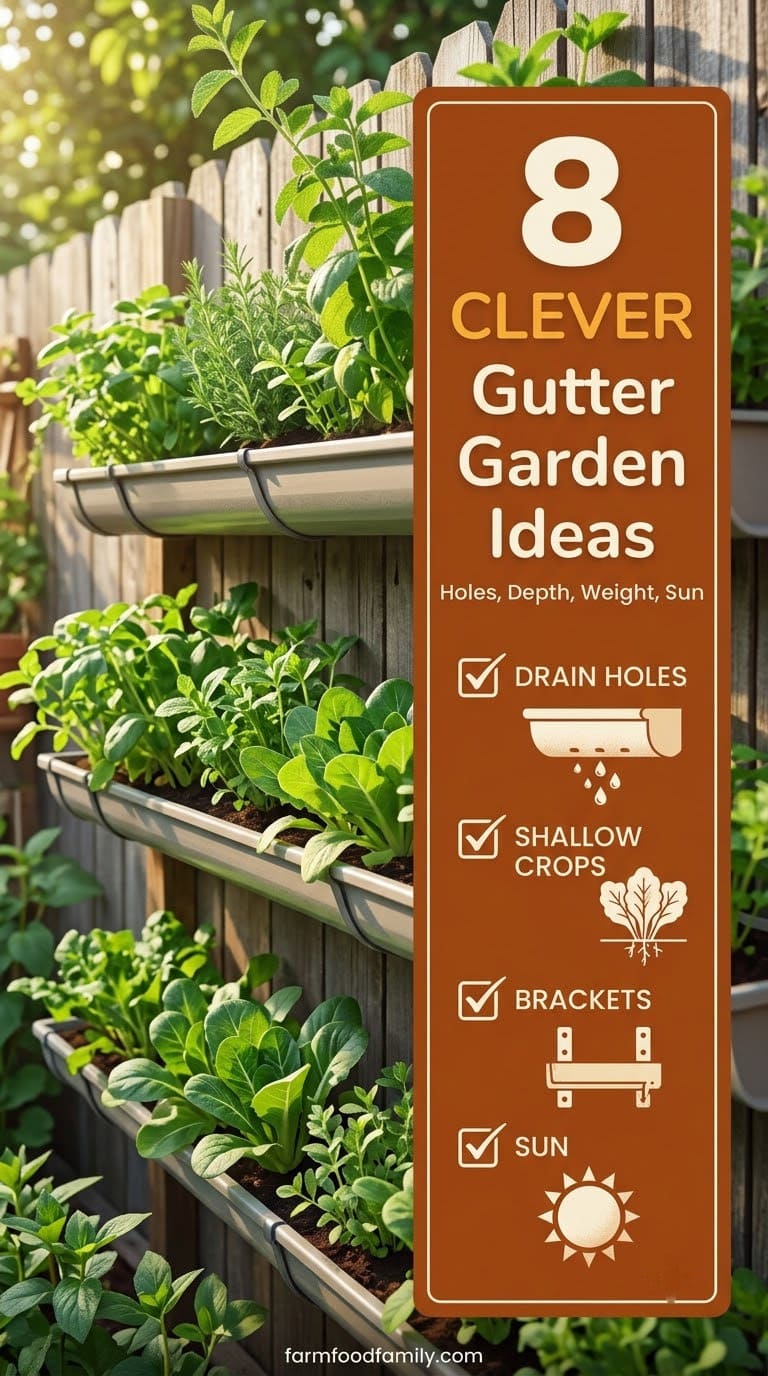
A gutter garden fits a wall, rail or fence for very little money, as long as you drill drain holes, plant shallow crops and mount it to carry the wet soil.

Never miss an update — choose FarmFoodFamily as your preferred source on Google.
How it works: Tap the button below to open Google's settings page, then check the box next to FarmFoodFamily.
Tap the checkbox to turn it blue — that's how you know it's set.
A gutter garden fits a wall, rail or fence for very little money, as long as you drill drain holes, plant shallow crops and mount it to carry the wet soil.
Products We Recommend
This post contains affiliate links. We may earn a commission on qualifying purchases at no extra cost to you.

Amerimax Vinyl Gutter End Cap, White, 5 Inch
Vinyl end cap to close the ends of a cut gutter length before sealing with cement.
Shop Now
8-Piece Metric HSS Drill Bit Set, 3mm to 10mm
Metric bits that cover the 5 mm and 8 mm drain holes used in the sources, for wood and plastic.
Shop NowA rain gutter is the cheapest planter you can buy. It’s long, narrow and already shaped to hold water.
That last part is the problem. A gutter with no holes drowns its plants, and a gutter full of wet soil is heavy.
These eight ideas cover frames, rails, fences and windows. Each one lists the materials, the sizes and the mistakes to dodge.
In this article
Answer 4 quick questions and get matched to the exact fix for your yard — drainage, budget, layout, or something else entirely.
Take the Free QuizQuick Answer
Drill drain holes in every length. The Bosch DIY guide drills five 8 mm holes (about 5/16 inch) in each 1 meter length. Julie Legg of Rediscover drills 5 mm holes about 10 cm (4 inches) apart.
Keep the holes clear. Bosch warns not to let stones or pottery pieces block them.
Plant shallow crops. Rita Dias of Tiny Garden Habit lists strawberries, lettuce, spinach, radishes, scallions and herbs.
Support the weight. Bosch spaces its boards about 30 cm (12 inches) apart and sets brackets about 25 cm (10 inches) from each board’s edge. Test your wall type before you drill.


Both builds also use short 1 meter (about 3 foot) lengths, which are easier to support.
Water often, because small amounts of soil dry fast. Dias says lettuce needs frequent watering. And if you’re unsure about metal, pick plastic for food crops.
Most yard problems trace back to one specific, fixable cause. Find yours in 4 quick questions.
Take the Free QuizWhich Idea Fits You?
Pick by space, skill and crop. This table sorts the eight builds below.
| Idea | Where | Skill | Budget tier | Best crops |
|---|---|---|---|---|
| 1. Wall-board gutter ladder | Sunny wall | Intermediate | Low to mid | Herbs, lettuce |
| 2. Freestanding gutter frame | Patio or yard | Intermediate | Mid | Greens, strawberries |
| 3. Porch rail salad gutter | Railing | Beginner | Lowest | Mesclun lettuce |
| 4. Strawberry gutter | Sunny fence or rail | Beginner | Low | Strawberries |
| 5. Kitchen-door herb gutter | Wall by door | Beginner | Low | Basil, cilantro, thyme |
| 6. Hanging fence gutter | Fence | Beginner | Low | Trailing herbs |
| 7. Window-ledge herb gutter | Window ledge | Intermediate | Low | Chives, parsley |
| 8. Quick-crop rotation gutter | Any bright spot | Beginner | Low | Radishes, scallions, spinach |
Before You Start: Gutter, Depth and Drainage
These three choices shape every build. Settle them first.
Which gutter material should you use?
Plastic gutter is the easiest to cut and drill. Legg’s version uses plastic spouting cut into three 1 meter (about 3 foot) lengths, with end caps and gutter cement.
Bosch says to use a metal bit on metal gutters and an 8 mm wood or metal bit on plastic ones. Metal gutters are common too, and one 2012 salad gutter post by Michelle Marine at Simplify Live Love used salvaged metal.
For galvanized steel, university extension answers in search results disagree. Some call the zinc risk low, and a Maine writer recommends keeping metal planters for ornamentals.
Our simple rule is to use plastic or a liner for food crops.
Vinyl end cap to close the ends of a cut gutter length before sealing with cement.
Shop NowThis post contains affiliate links. We may earn a commission on qualifying purchases at no extra cost to you.
How deep should the soil be?
Gutters are shallow. Bosch says to pick horizontally growing plants for that reason.
Search results cite a North Carolina extension document that suggests 8 inches of soil depth for shallow-rooted crops like lettuce and herbs. A typical gutter is shallower than that, so expect to water often.
How do you drain it?
Bosch drills five 8 mm holes in each length. Legg drills 5 mm holes about 4 inches apart along the underside. Pick one and keep the holes clear, as Bosch warns.
The average homeowner spends $616/year on yard fixes that don't address the real problem. Find out what yours actually is — before you spend another dollar.
Take the Free QuizThen cap the ends. Legg applies gutter cement inside each end cap, wipes off the excess and lets it dry for 10 minutes. Bosch says some gutters are already watertight, so check first.
1. A Wall-Board Gutter Ladder
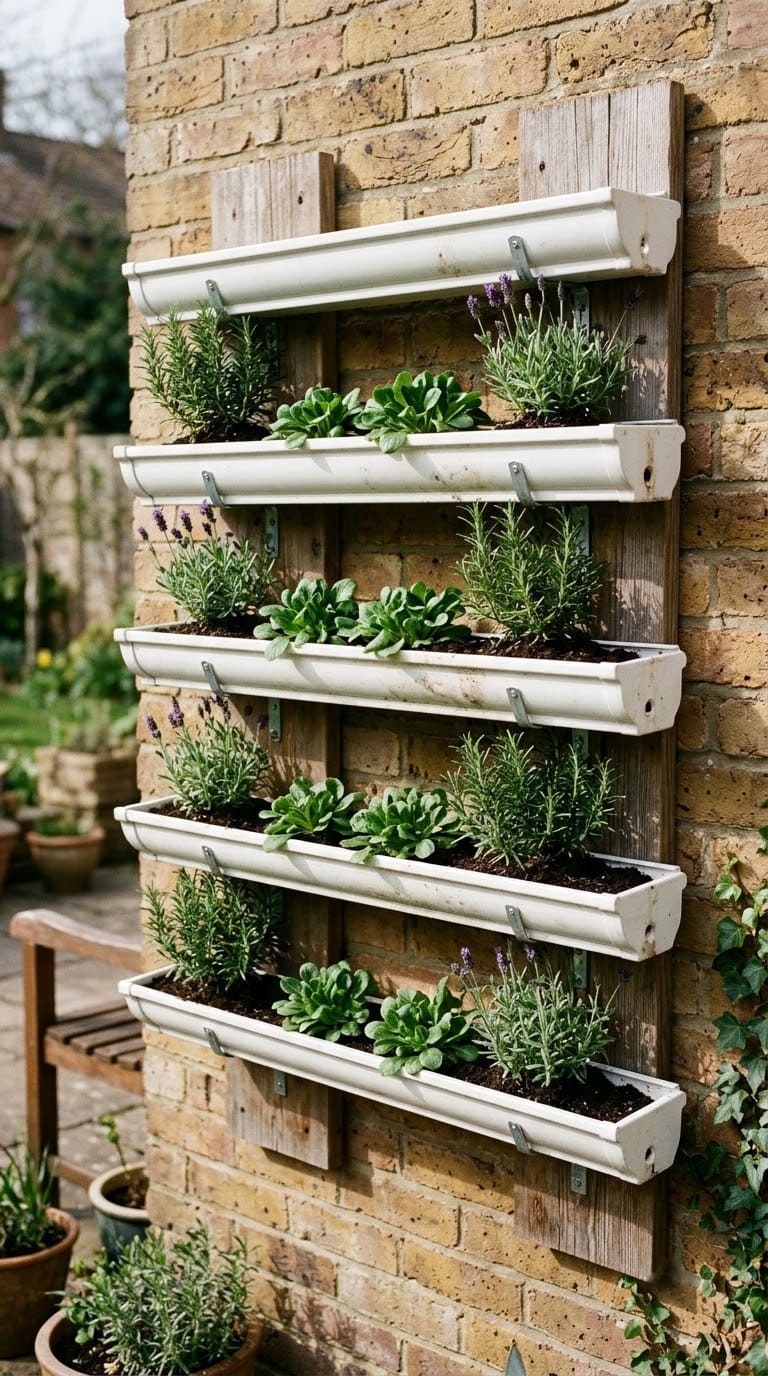
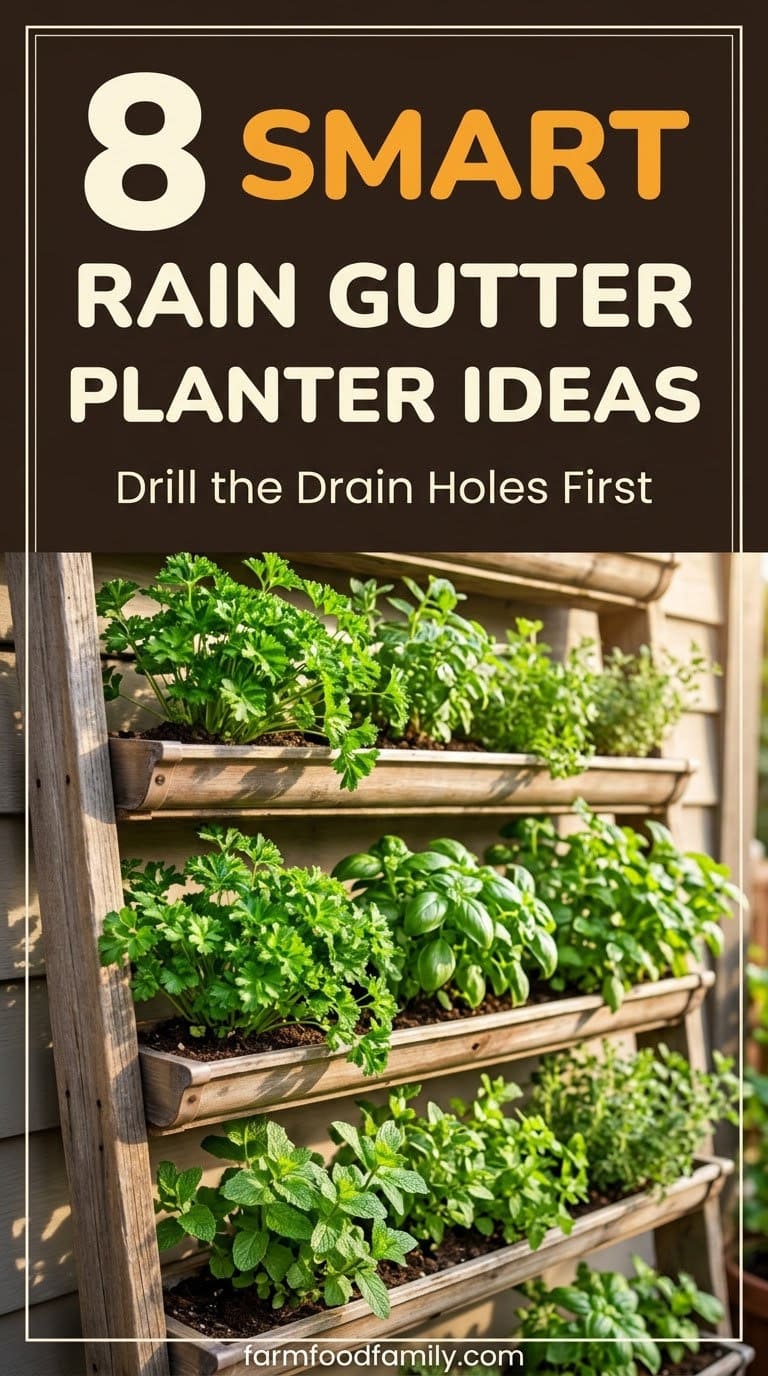
This is Bosch’s design, and it’s the tidiest. Five 1 meter gutter lengths sit on five boards fixed to a wall.
Prep the wall. Knock on it to find out what’s behind. A hollow sound suggests plasterboard, aerated concrete or wood. A dull sound suggests solid stone or concrete. If you’re unsure, test a thin bit in a hidden spot.
Hang the boards. Space the boards about 30 cm (12 inches) apart, with the lowest about 35 cm (14 inches) above the ground. Fix brackets about 25 cm (10 inches) from each board’s edge.
Plant it. Bosch suggests rosemary, lamb’s lettuce and lavender in nutrient-rich potting soil, with space between plants and a light watering. Budget: low to mid. For more small-space layouts, see our vertical pocket planter ideas.


2. A Freestanding Gutter Frame
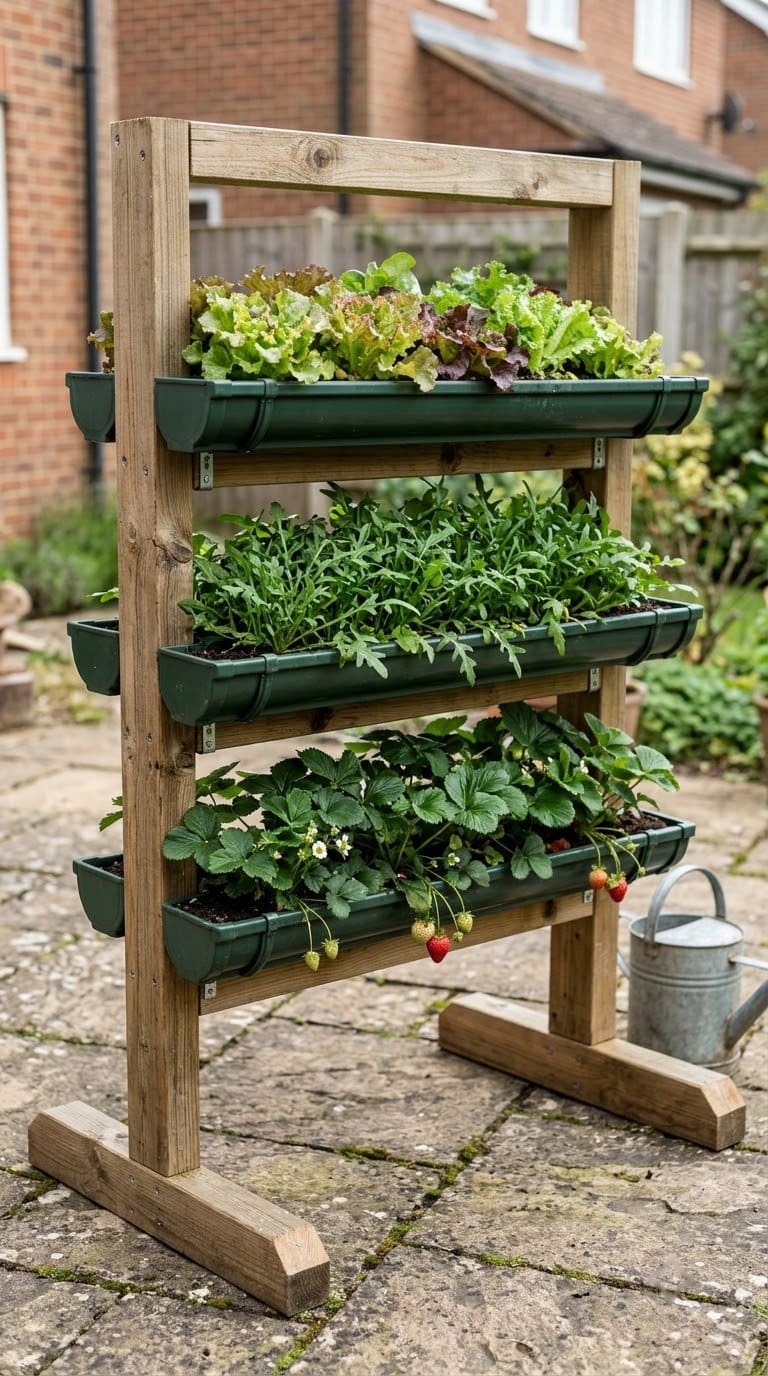
No wall? Legg builds a frame with feet. She cuts 3 meters of plastic spouting into three 1 meter lengths, then drills 5 mm drain holes about 10 cm apart.
Build the frame. Two 1.2 meter (4 foot) uprights stand about 1.2 meters apart, joined by three horizontal boards. The first sits 90 mm below the top, and the rest sit 250 mm (10 inches) apart.
Add feet. Two 40 cm feet sit set back 13 cm from the rear. Two 20 cm front pieces counterbalance the load, so the frame won’t tip when the soil is wet.
Clip it on. Three gutter supports sit on top of each board, and the gutters clip on. Legg lists lettuce, rocket, spinach, radishes, coriander, thyme and strawberries as good fits.
Budget: mid.
3. A Porch Rail Salad Gutter
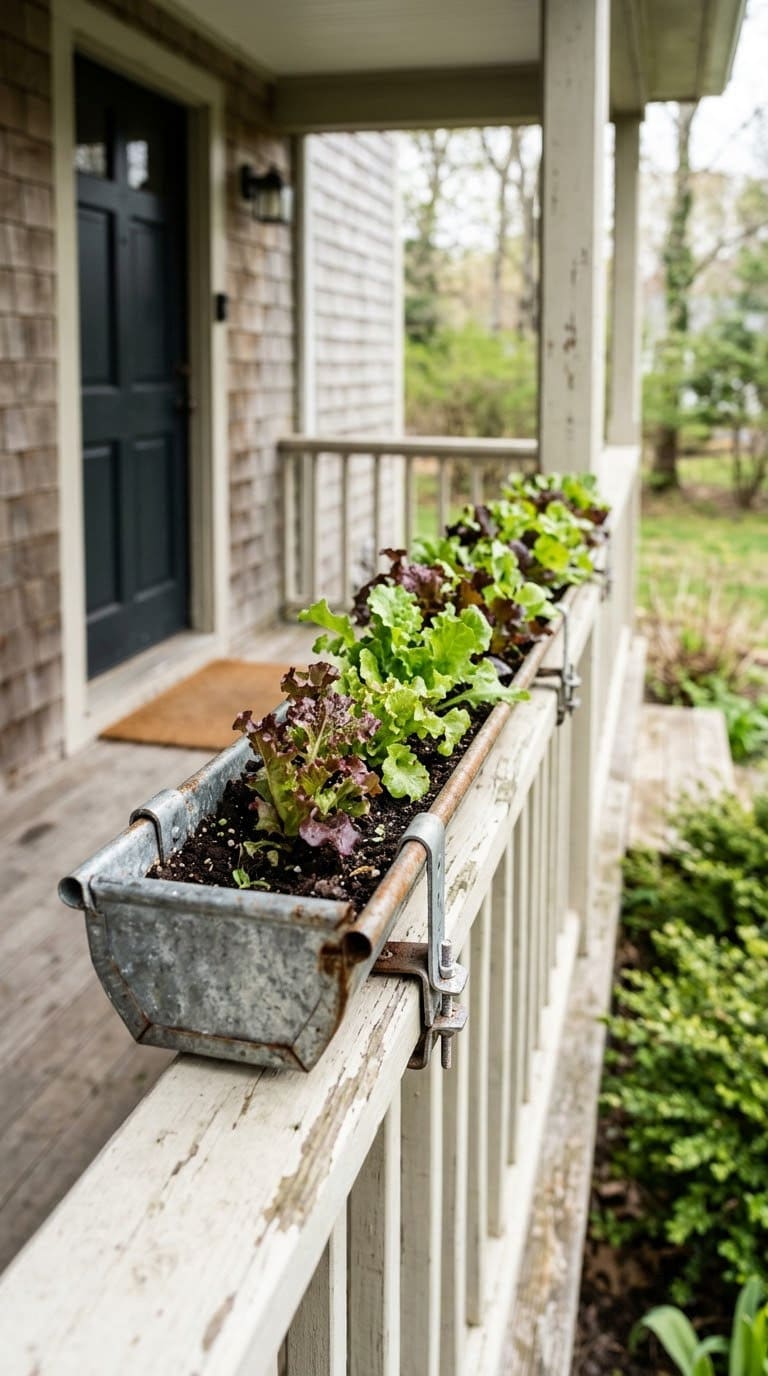
This is the easiest start. Marine mounted a single gutter on her porch rail with gutter hardware screwed to the side.
She drilled holes in the bottom and added a few rocks. Then she filled the gutter with reclaimed dirt and planted about a third of it with mesclun-type lettuce.
Baby lettuce showed up soon after planting. She started herbs indoors in the basement and planned to move them out after the frost danger passed.
Bosch warns against stones that block the drain holes, so spread any bottom layer thin and keep the holes clear. Budget: lowest.
4. A Strawberry Gutter
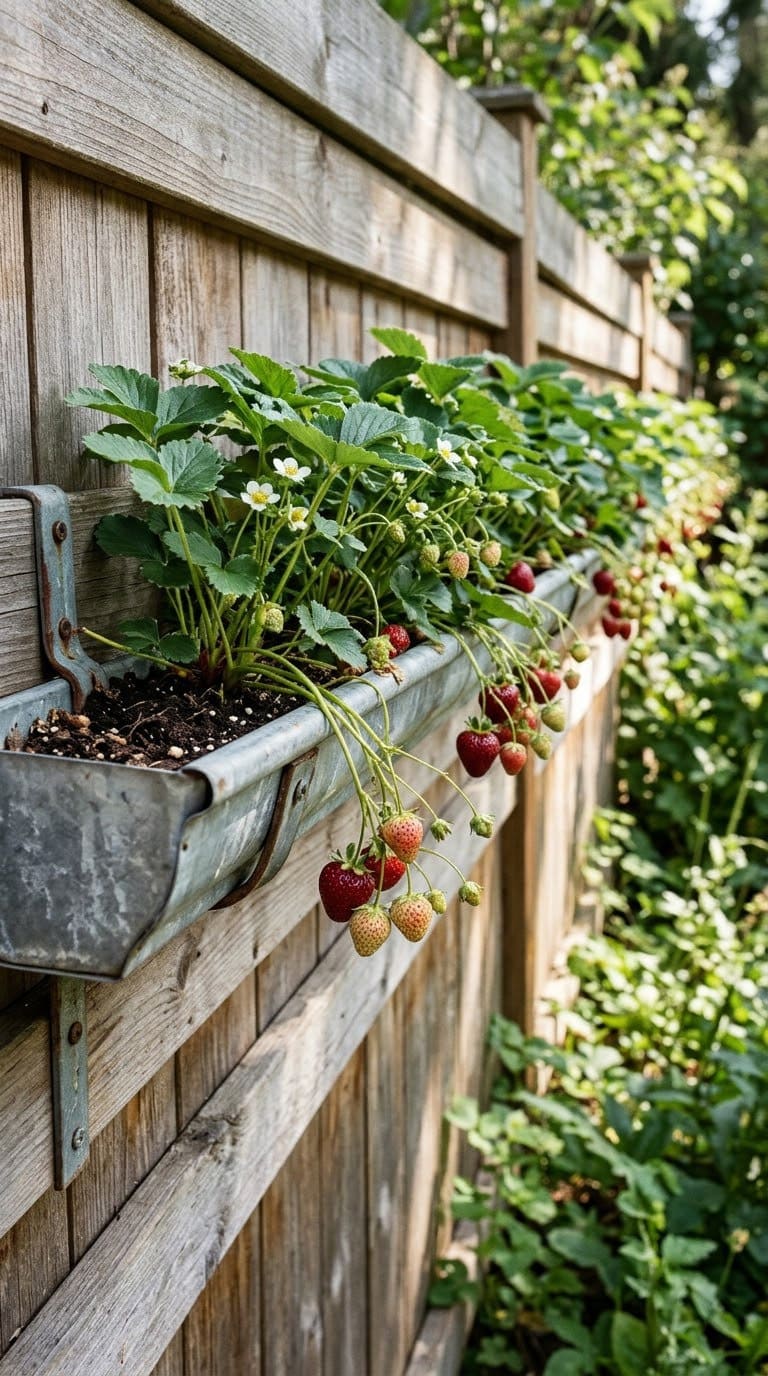
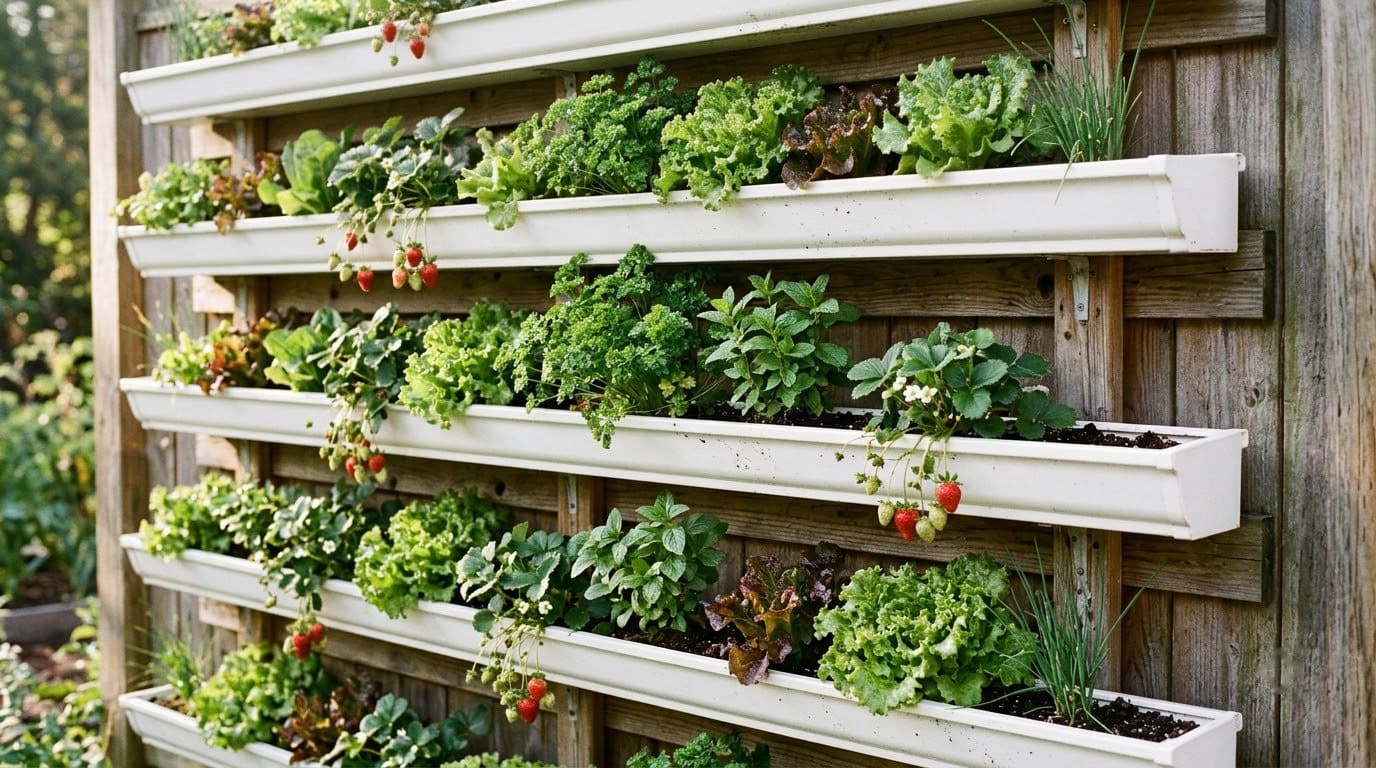
Strawberries love a shallow trough. Dias says they’re suited to shallow gutters and produce sweet berries in minimal space. Her plants are slightly smaller but still yield well.
Keep the sun. Search results say to give strawberries at least six hours of full sun a day.
Water often. But shallow soil dries quickly. Check it often in hot weather.
Our guide to a vertical strawberry garden and our strawberries in a small garden page cover varieties and winter care. Budget: low.
5. A Kitchen-Door Herb Gutter
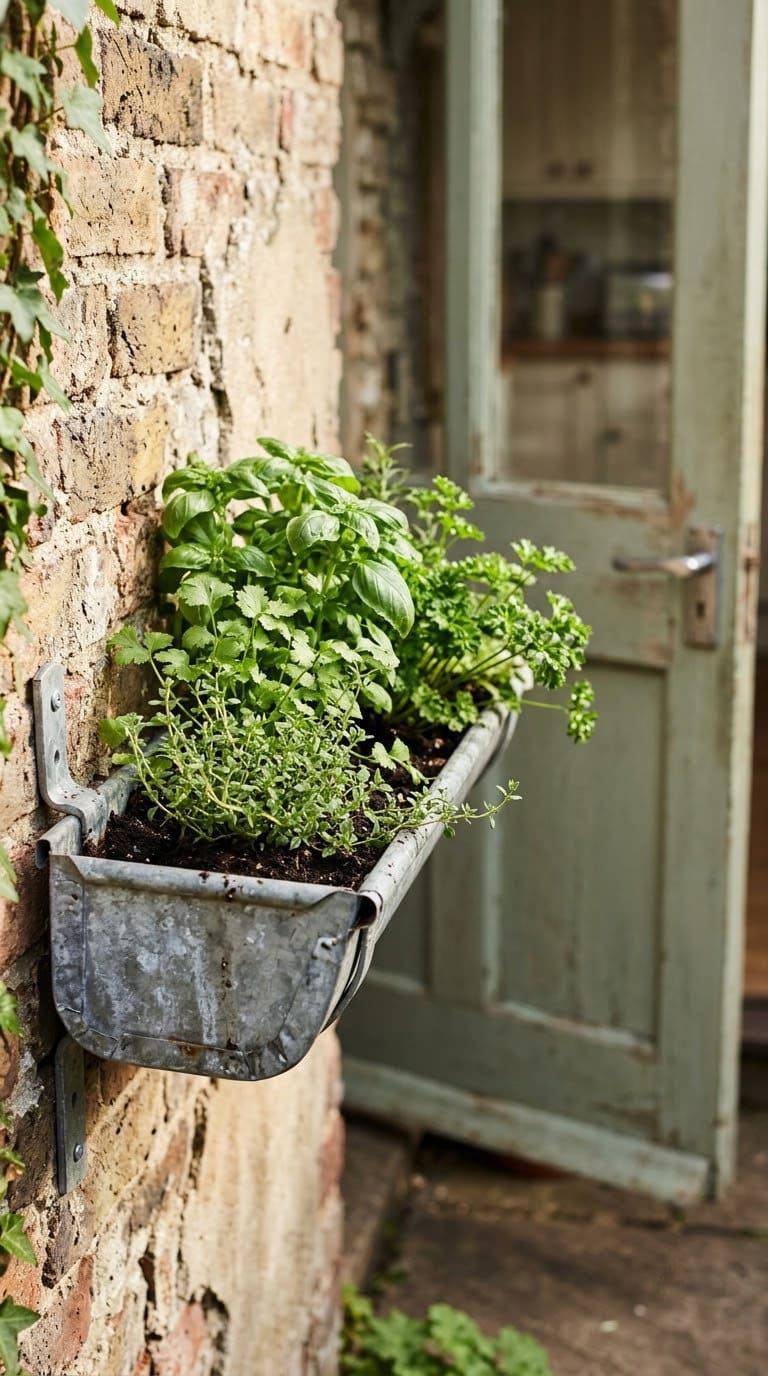
A gutter by the door keeps herbs within reach. Dias lists basil, cilantro, parsley, mint and oregano as suited to the limited soil depth.
She says they need plenty of sun and good drainage to avoid waterlogging. Legg suggests coriander and thyme, and Bosch suggests rosemary and lavender.
Mix by water need. Keep thirsty herbs, such as basil, together at one end. Put thyme and rosemary at the other.
For more herb layouts, see our hanging herb garden ideas. Budget: low.
6. A Hanging Fence Gutter
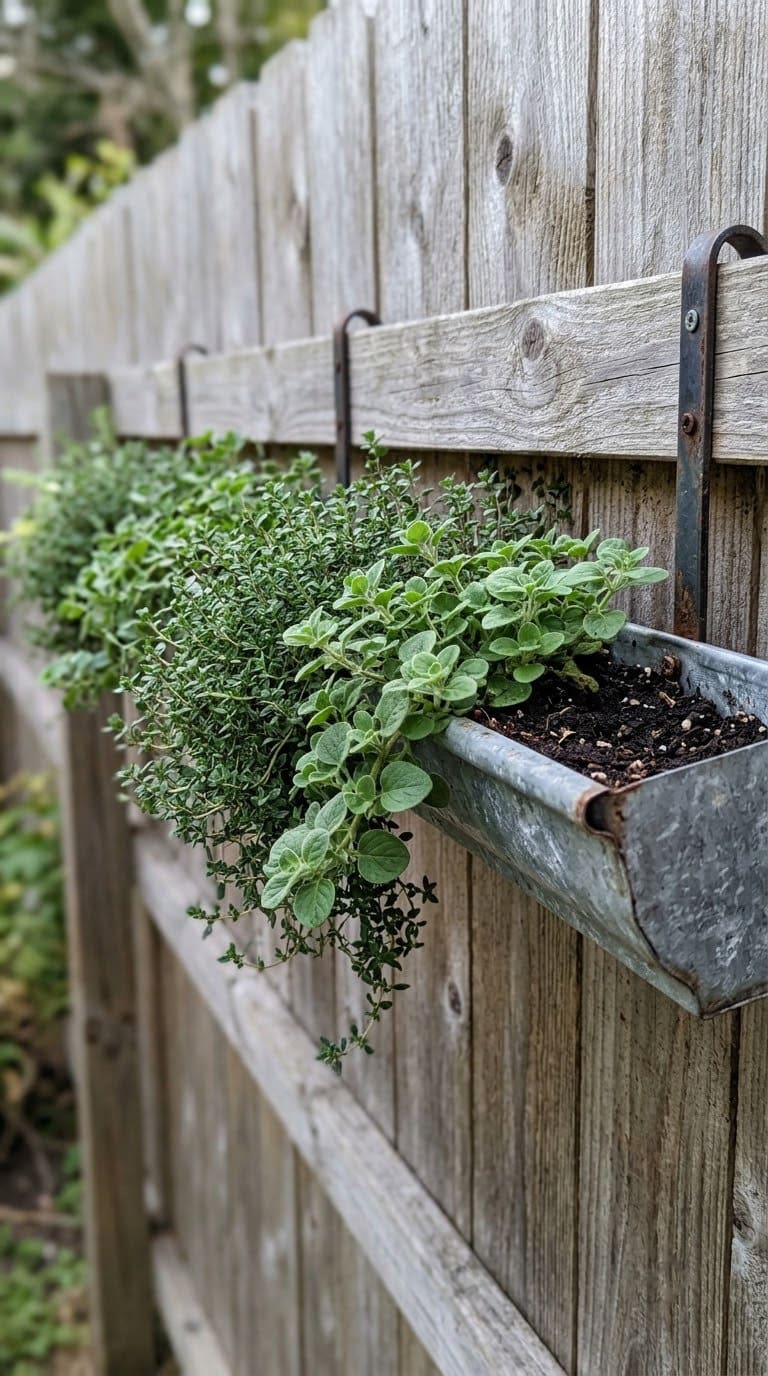
A fence gives you free wall space. Hang a short gutter on fence brackets, with the same drainage holes as the others.
Keep it short. Wet soil is heavy. A 1 meter length, like Bosch and Legg use, is easier to support than a long run.
Plant trailing herbs. Thyme and oregano both appear in the sources’ gutter plant lists. See our fence trellis ideas for sturdy fence supports. Budget: low.
7. A Window-Ledge Herb Gutter
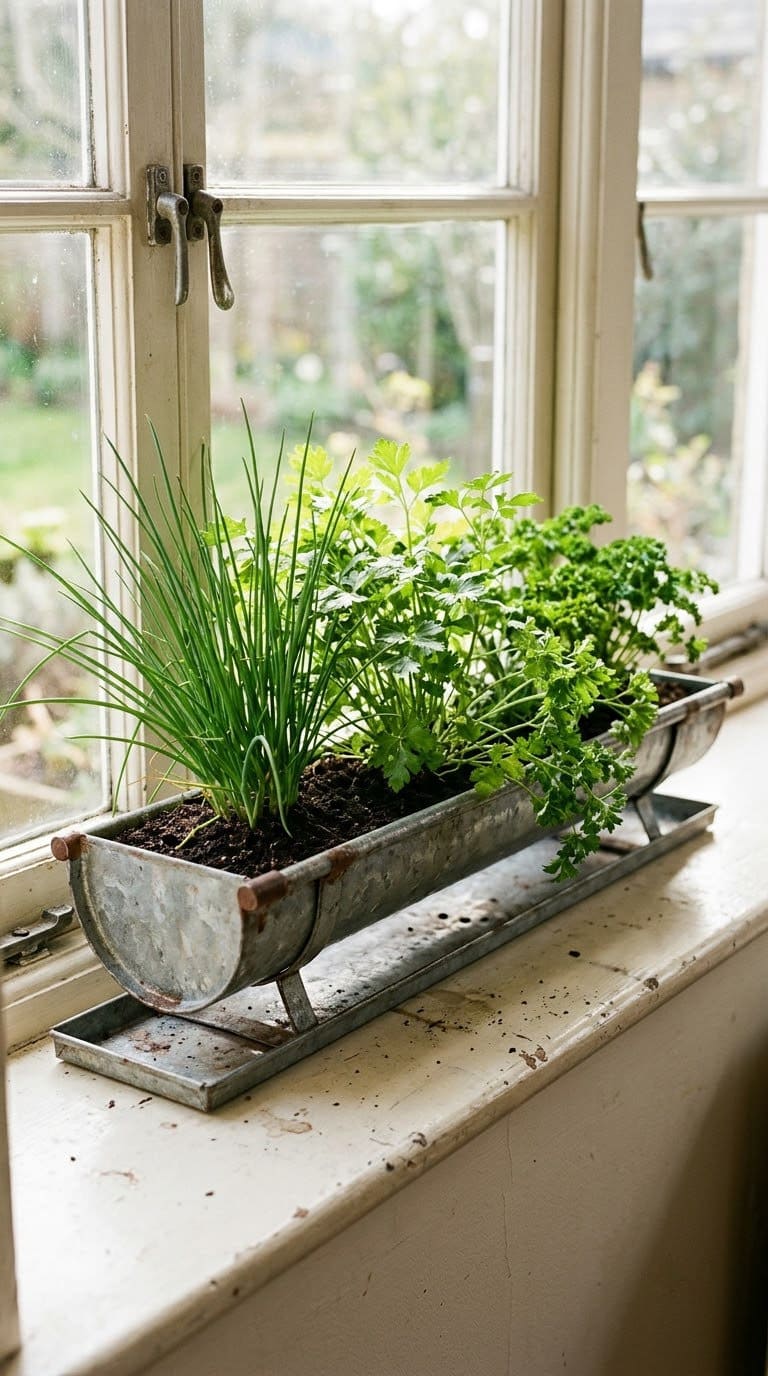
A gutter under a sunny window works as a narrow herb box. Short chives and parsley fit best.
Catch the drips. Set a tray under the gutter so water doesn’t run down the wall. Drain holes mean water will escape.
Check the ledge. Make sure the ledge or brackets can carry wet soil. Our outdoor hanging planter ideas page has sturdy hanger styles. Budget: low.
8. A Quick-Crop Rotation Gutter
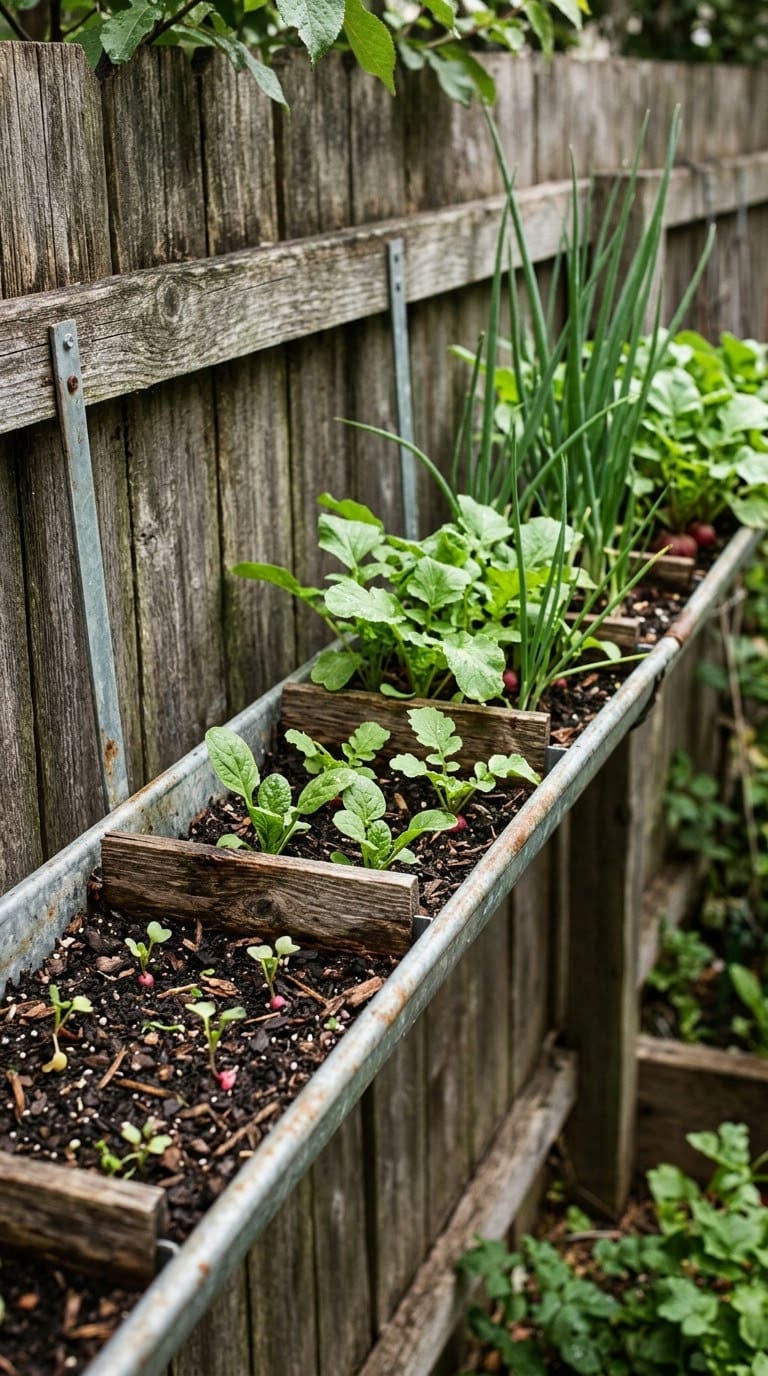
Fast crops suit a shallow gutter. Dias says radishes grow well in shallow soil and mature in a short time.
She also says spinach grows quickly and can give repeated harvests, and scallions regrow quickly for continuous harvests.
Sow in sections. Plant a third of the gutter at a time, as Marine did with her lettuce. Then replant as you harvest.
This keeps the gutter busy through the season. Dias adds that lettuce needs frequent watering. Budget: low.
Which Crops Should You Start With?
Dias gives the clearest crop list, so we sorted it by what each plant needs.
| Crop | Why it suits a gutter | Watch out for |
|---|---|---|
| Strawberries | Sweet berries in minimal space | Slightly smaller plants |
| Lettuce | Works if the gutter drains well | Needs frequent watering |
| Spinach | Grows fast, repeated harvests | Sow in sections |
| Radishes | Mature in a short time | Sow in sections |
| Scallions | Regrow quickly | None noted |
| Herbs | Suit the limited soil depth | Need sun and drainage |
| Peas and cherry tomatoes | Possible in shallow soil | Need sturdy support |
Skip carrots, big tomatoes and squash in a plain gutter.
Which Gutter Material Is Best?
Here is how the options compare, based on the sources.
| Gutter | Used by | Good for | Watch out for |
|---|---|---|---|
| Plastic or vinyl | Bosch, Legg | Easy cutting and drilling | Use end caps and cement |
| Salvaged metal | Marine | Free if you find it | Use a metal bit, check for rust |
| Galvanized steel | None of the sources | Sturdy | Extension answers disagree on food crops |
Pick plastic if you’re unsure.
What Does a Gutter Garden Cost?
Costs vary by gutter, boards and brackets. None of the sources gave a total, so use these tiers.
| Tier | Builds |
|---|---|
| Lowest | Porch rail salad gutter |
| Low | Strawberry, herb, fence, window and rotation gutters |
| Low to mid | Wall-board ladder |
| Mid | Freestanding frame |
Common Mistakes to Avoid
Most failures trace back to a few habits.
Skipping drain holes. Bosch and Legg both drill them.
Blocking the holes. Bosch warns against stones or pottery pieces.
Planting deep roots. Bosch says to pick horizontally growing plants.
Mounting without checking the wall. Bosch says to knock on it first.
Forgetting the weight. Legg adds feet and braces so a full frame won’t tip.
FAQ
How many drainage holes does a gutter planter need?
Bosch drills five 8 mm holes per 1 meter length. Legg drills 5 mm holes about 10 cm apart.
What can you grow in a rain gutter?
Strawberries, lettuce, spinach, radishes, scallions and herbs, according to Tiny Garden Habit. Marine grew mesclun lettuce.
Is a galvanized gutter safe for vegetables?
Extension answers in search results disagree. Some call the risk low, and others suggest other materials for food. Plastic is the simpler choice.
How far apart should gutter rows be?
Bosch spaces its boards about 30 cm (12 inches) apart. Legg spaces hers 250 mm (10 inches) apart.
How do you stop a gutter garden from tipping?
On a wall, use brackets and a board. For a freestanding frame, Legg adds feet and front braces.
Related Posts
Never miss an update — choose FarmFoodFamily as your preferred source on Google.
How it works: Tap the button below to open Google's settings page, then check the box next to FarmFoodFamily.
Tap the checkbox to turn it blue — that's how you know it's set.