28+ Patio and Garden Floor Pattern Ideas (Plus the Concrete and Drainage Rules Most Guides Skip)
A patterned patio floor looks great in the photo. Two years later, the real question is whether it’s still flat, still draining away from the house, and still holding its color. So before the 28 ideas below, here’s the part most pattern roundups skip entirely: what actually keeps a patio floor from cracking, flooding, or…

Never miss an update — choose FarmFoodFamily as your preferred source on Google.
How it works: Tap the button below to open Google’s settings page, then check the box next to FarmFoodFamily.
Tap the checkbox to turn it blue — that’s how you know it’s set.
A patterned patio floor looks great in the photo. Two years later, the real question is whether it’s still flat, still draining away from the house, and still holding its color.
So before the 28 ideas below, here’s the part most pattern roundups skip entirely: what actually keeps a patio floor from cracking, flooding, or fading.
1. The concrete and drainage rules that keep a patio from cracking, flooding, or fading
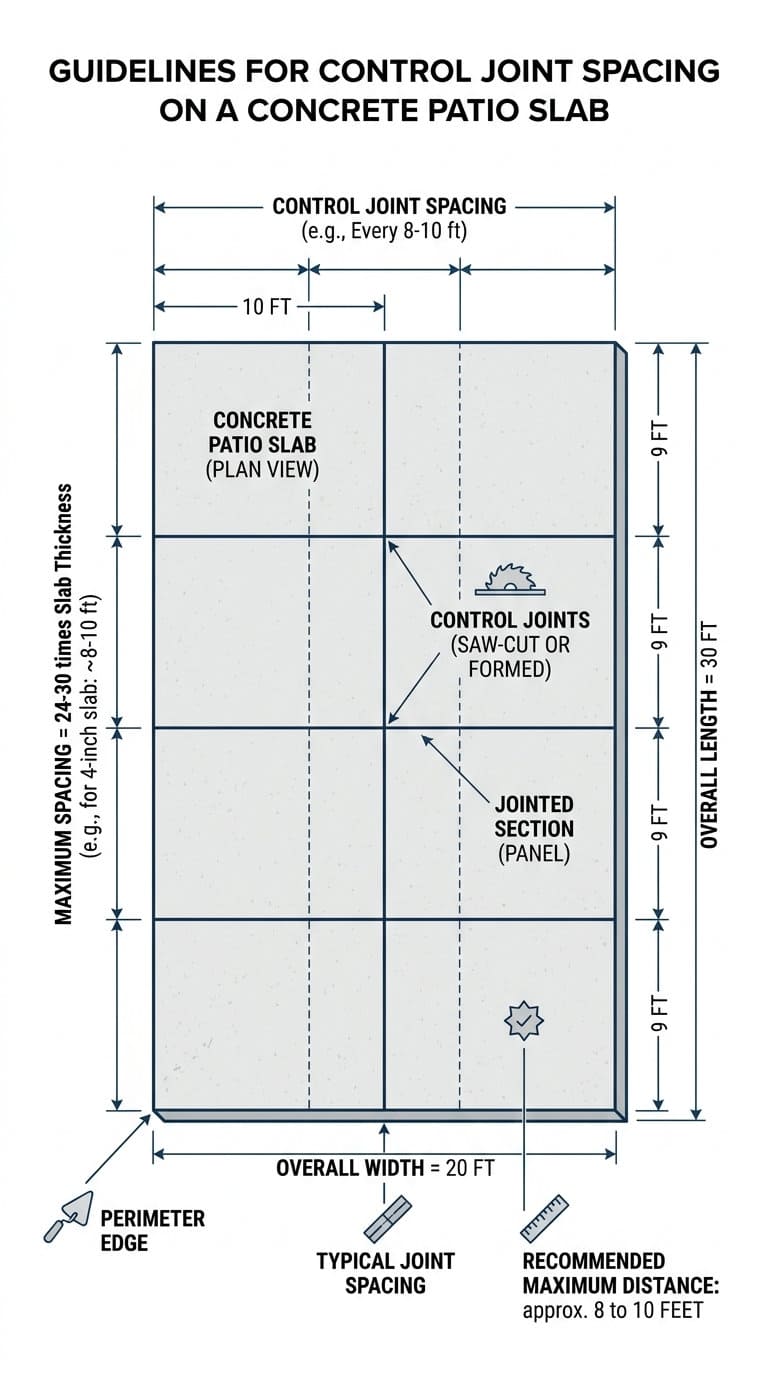
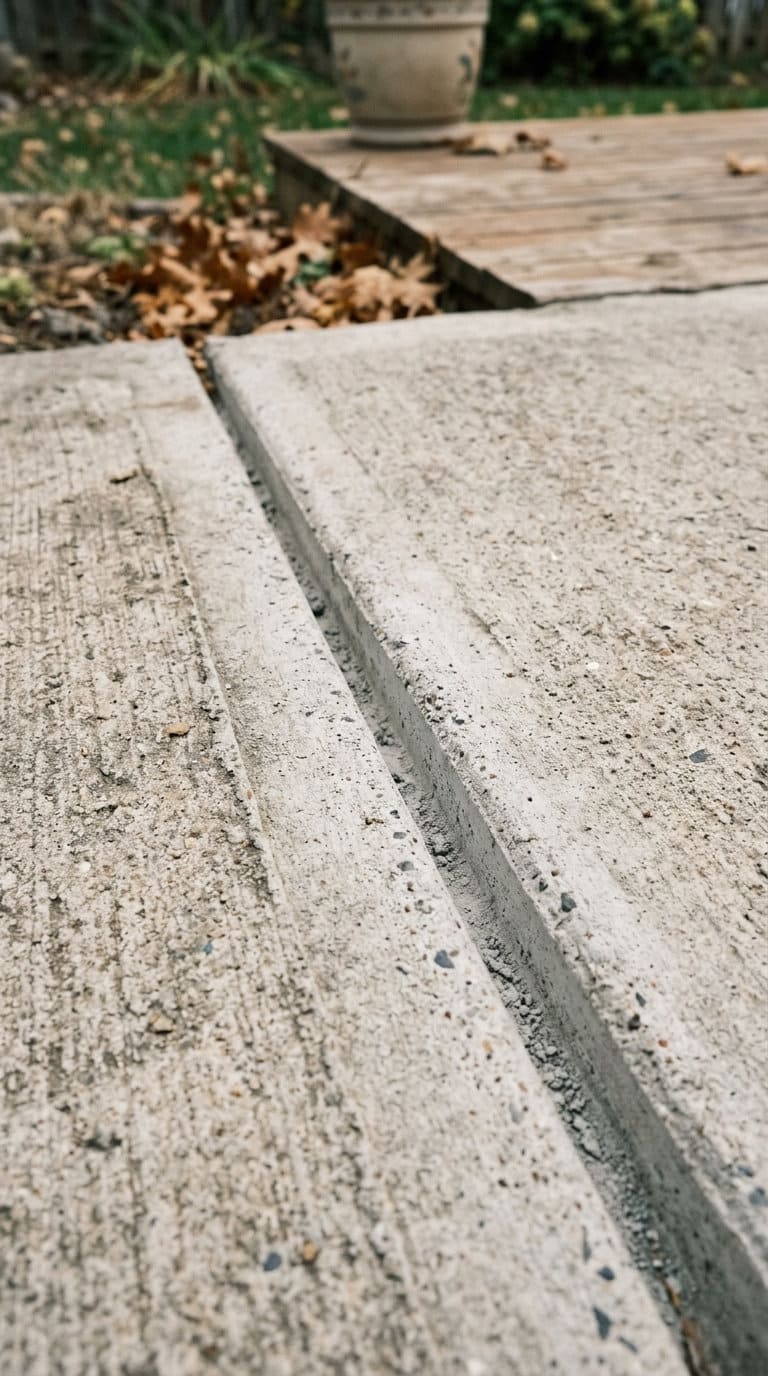
Start with control joints, since skipping them is the single most common reason a poured patio cracks badly. For a standard 4-inch slab, joints typically run every 8 to 12 feet, cut to about a quarter of the slab’s depth, within 24 hours of the pour. This doesn’t stop concrete from cracking, nothing does, concrete shrinks as it cures no matter what.
What a joint does is give that crack a planned place to happen instead of a random one. Worth knowing before you panic over a hairline crack: a real structural engineer on a homeowner forum put it plainly when someone found a crack exactly at a joint, “that is exactly what is suppose to happen,” and even complimented the contractor for it.
Contractor Bar Zakheim of Better Place Design & Build puts concrete’s real appeal simply: “Concrete patios are one of our most popular exterior features, especially on ADU builds,” partly because “they’re flat and level, they make for more accessible designs, and you can make them of any size or shape you need.” If you’re having concrete delivered rather than mixing it yourself, Rafi Friedman of Coastal Luxury Outdoors notes the real labor tradeoff: “Getting your concrete delivered eliminates one of the trickiest steps, especially for beginners. It also saves a lot of labor.”

For reinforcement, welded wire mesh or ½-inch rebar on a 12×16 inch grid is the real standard for a patio-scale pour, held at mid-depth on chairs rather than left resting on the bare dirt, reinforcement lying on the ground does almost nothing.
Answer 4 quick questions and get matched to the exact fix for your yard — drainage, budget, layout, or something else entirely.
Take the Free Quiz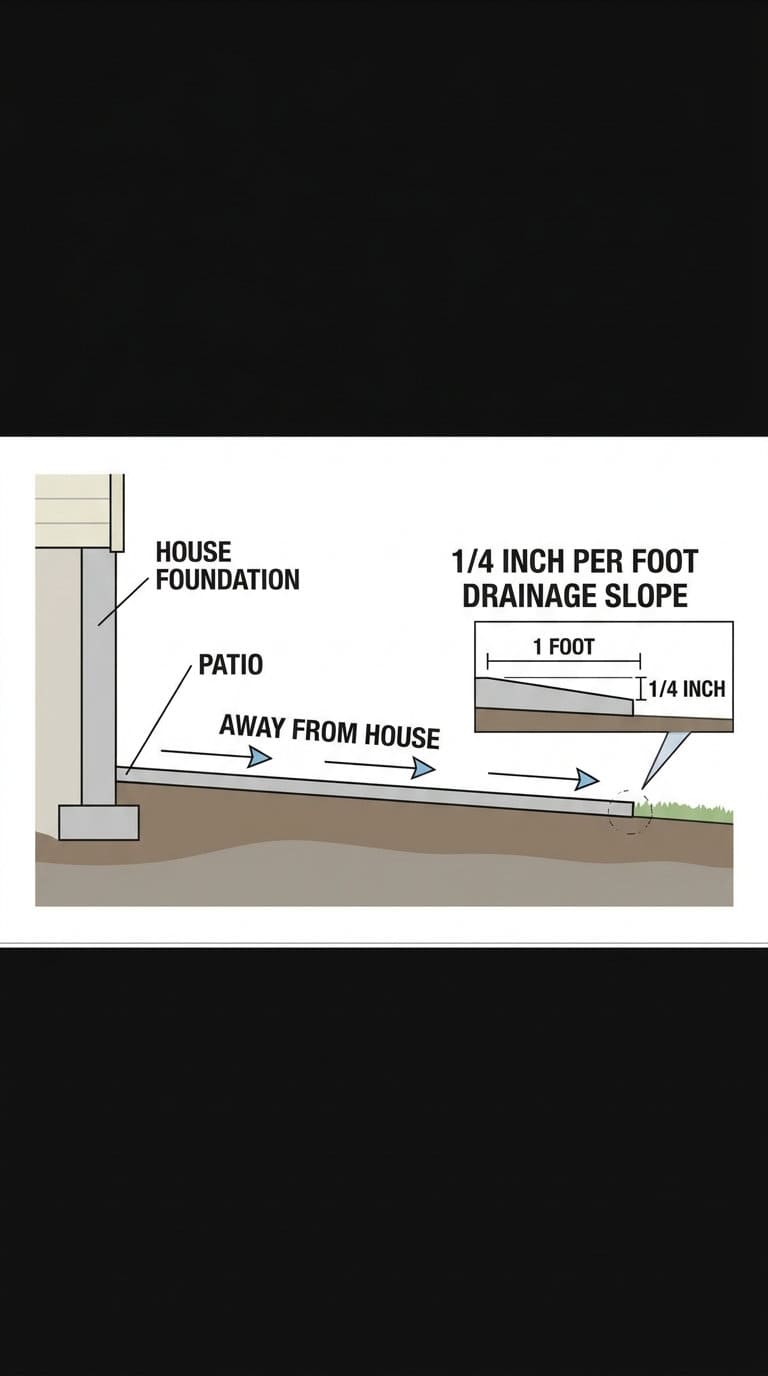
Drainage slope is the next real rule, and it’s easy to get wrong on a DIY pour. The standard minimum is ¼ inch of fall per foot, sloping away from the house for the first several feet. Skip this and water pools right against the foundation, a real, well-documented cause of basement water damage and soil erosion under the slab itself.
If you’re leaning toward stamped concrete for any of the patterns below, know the maintenance schedule going in. Most sources agree on resealing roughly every 2 to 3 years, and a real signal beats a fixed calendar: if the color looks dull or water stops beading and just soaks in, it’s time. Skipping resealing is why stamped concrete fades and eventually flakes, UV exposure fades the color, and once water gets in, freeze-thaw cycling does the rest.
If pebble or mosaic patterns appeal to you instead, grout is the real water barrier holding the whole surface together, without it, water gets into the gaps, freezes, expands, and pushes stones loose. Polymer-modified grout absorbs less water in a cold climate, and a weather-resistant sealer needs periodic reapplication.
One correction worth making up front: pea gravel is a poor structural base material since its round shape doesn’t lock together under compaction. For any paver or stone patio, 4 to 6 inches of compacted #57 crushed stone is the real base, pea gravel is fine as a decorative joint fill on top, not the foundation underneath.
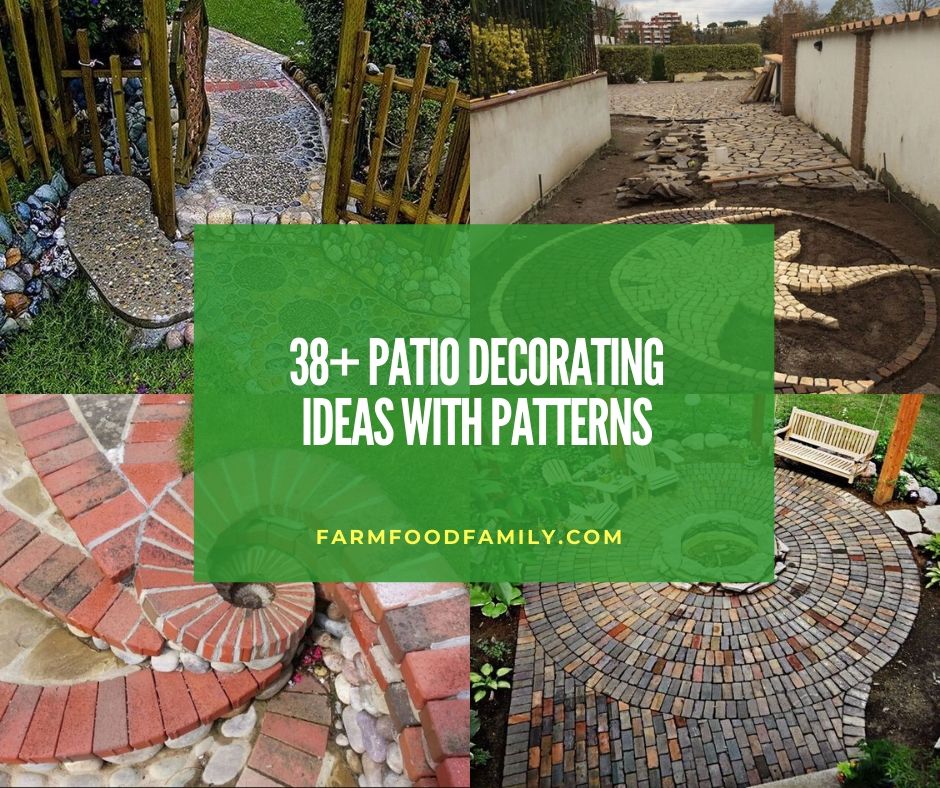
With the real rules covered, here are 28 patio and garden floor patterns worth considering.
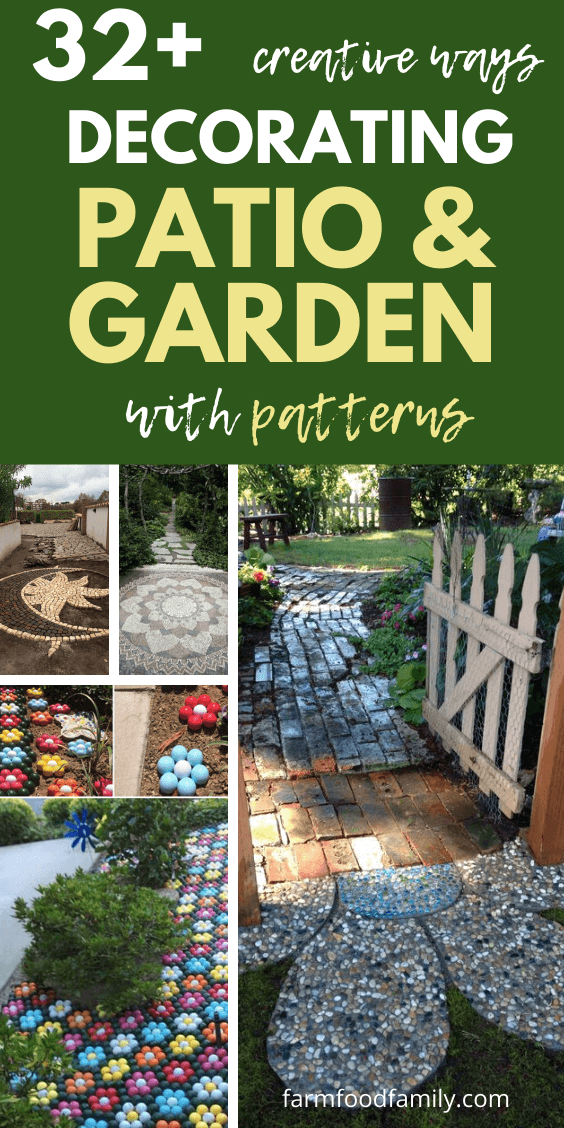
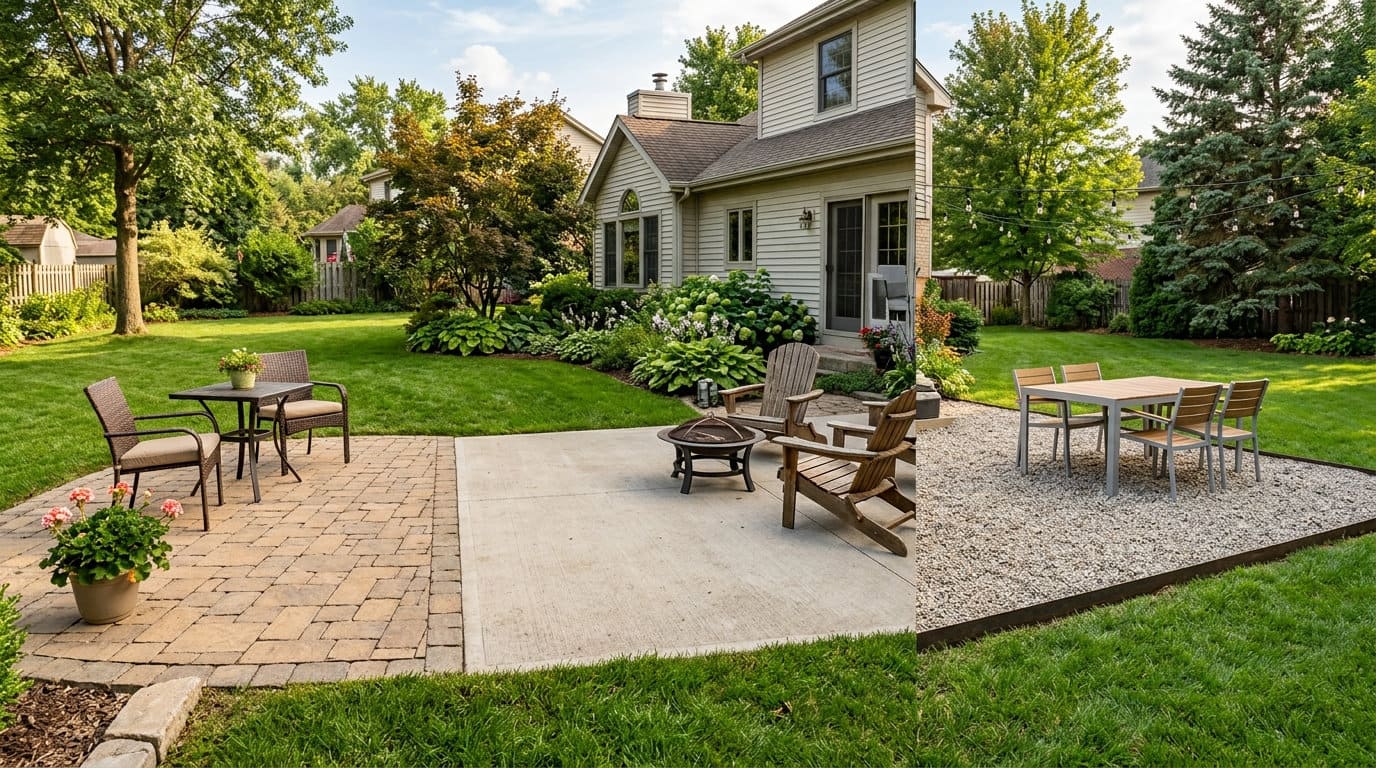
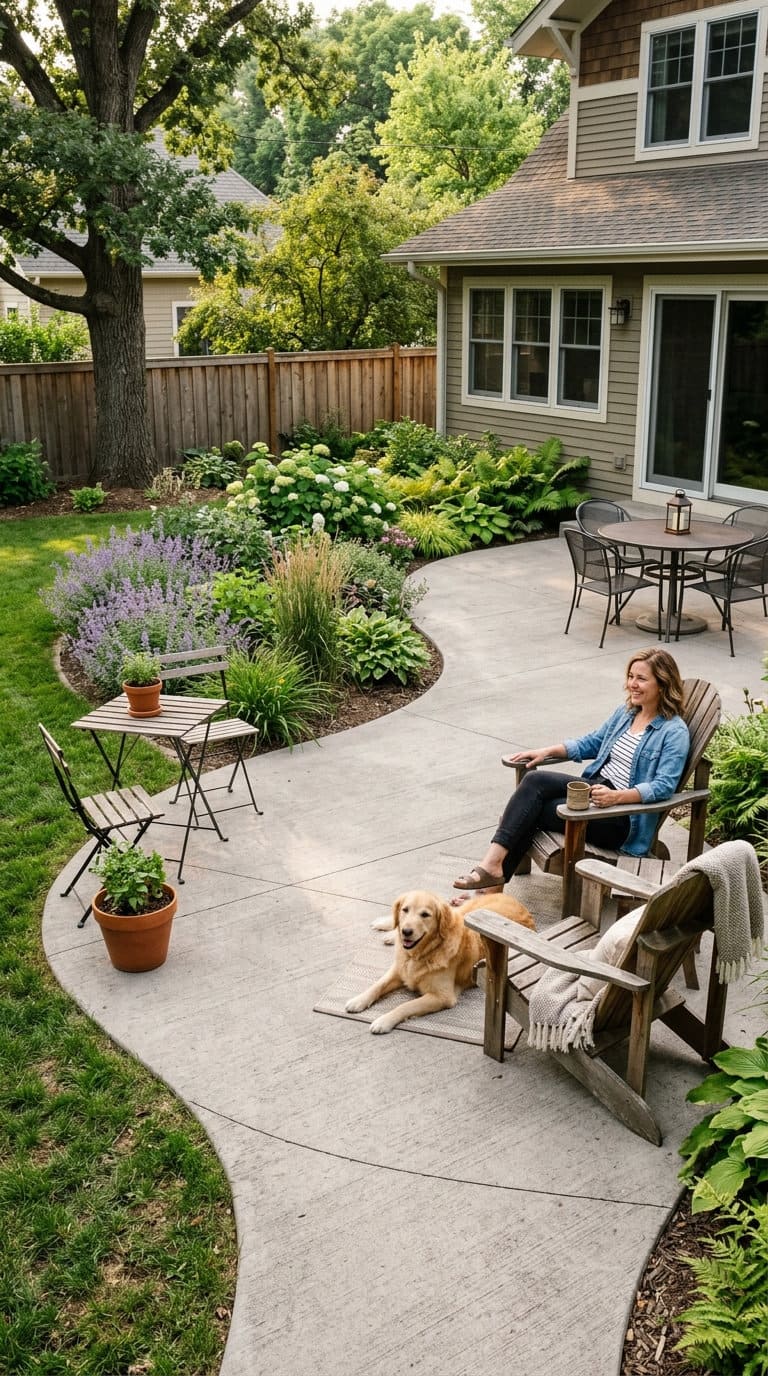
1. The Versatility of Concrete
Most yard problems trace back to one specific, fixable cause. Find yours in 4 quick questions.
Take the Free QuizPoured concrete adapts to any shape or footprint your yard actually has, unlike pavers or brick, which are constrained by fixed unit sizes.
Follow the control joint and reinforcement guidance from section 1 regardless of which finish or color you choose on top, that structural work happens before any pattern gets applied.
2. Painted Patio Floor
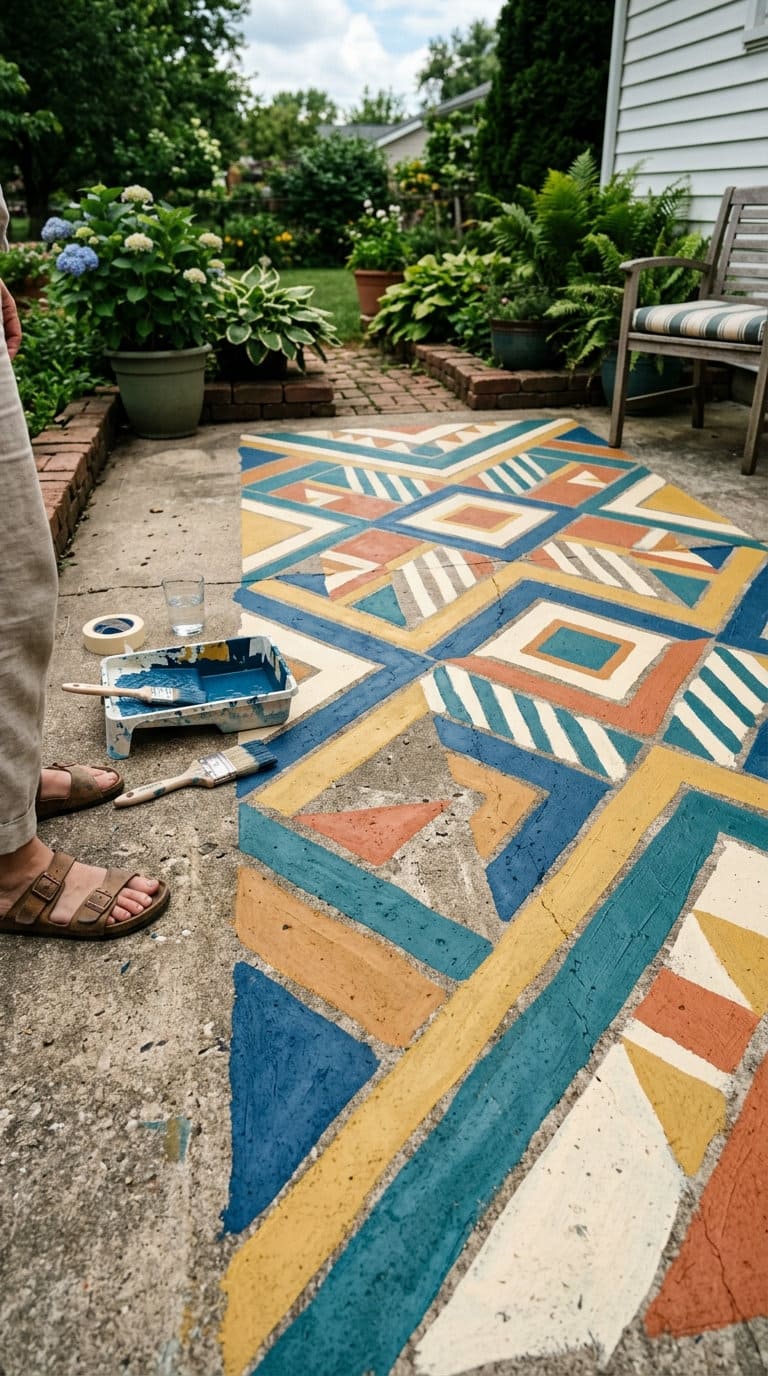
A painted or stained pattern over existing concrete is one of the cheapest ways to transform a plain slab without demolition.
Use a concrete-specific exterior paint or stain rather than standard floor paint, and seal it afterward, an unsealed painted patio wears through in high-traffic spots within a season or two.
3. Multi-Level Patio with Water Feature
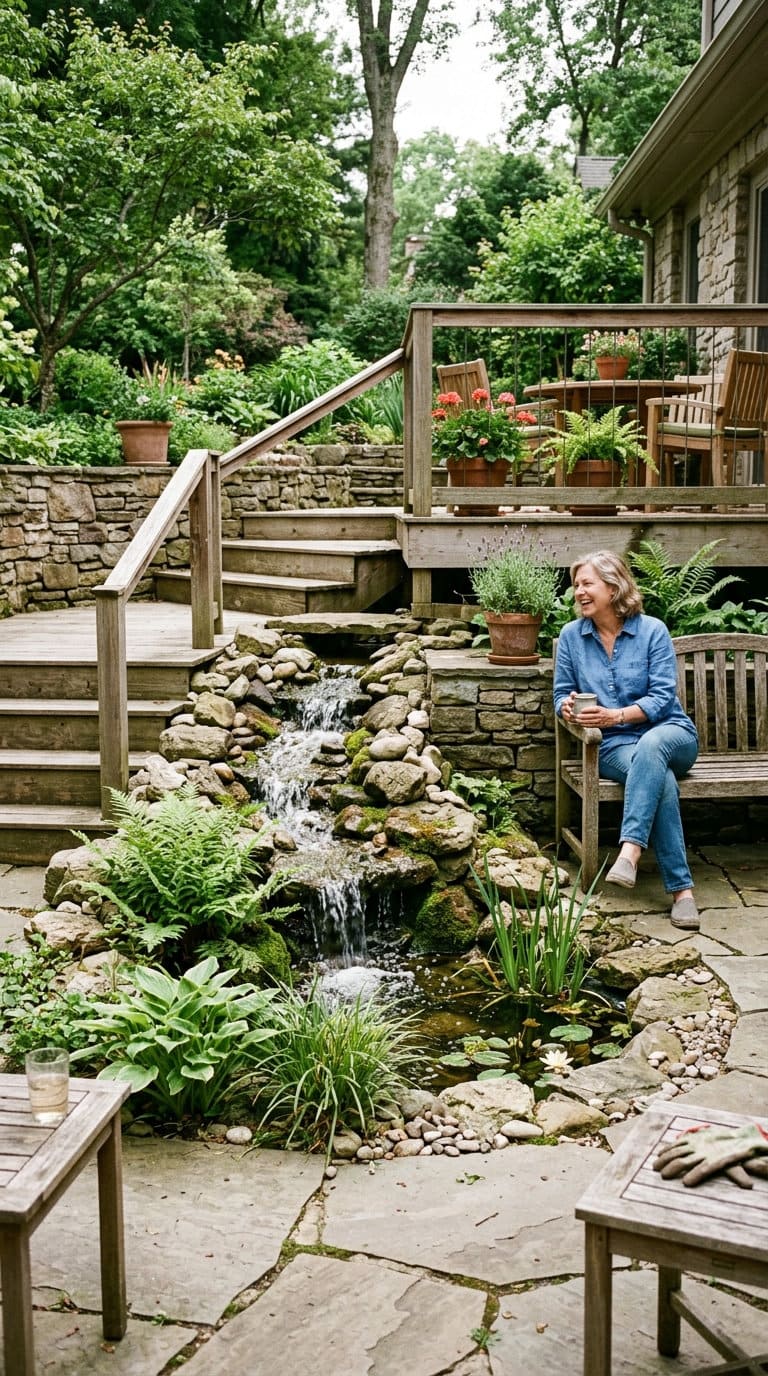
Stepping the patio down in tiers around a water feature creates real visual depth and lets you separate a dining zone from a lounging zone without walls.
Each level needs its own drainage slope per section 1, not just the patio as a whole, water needs somewhere to go off every tier, not just the bottom one.

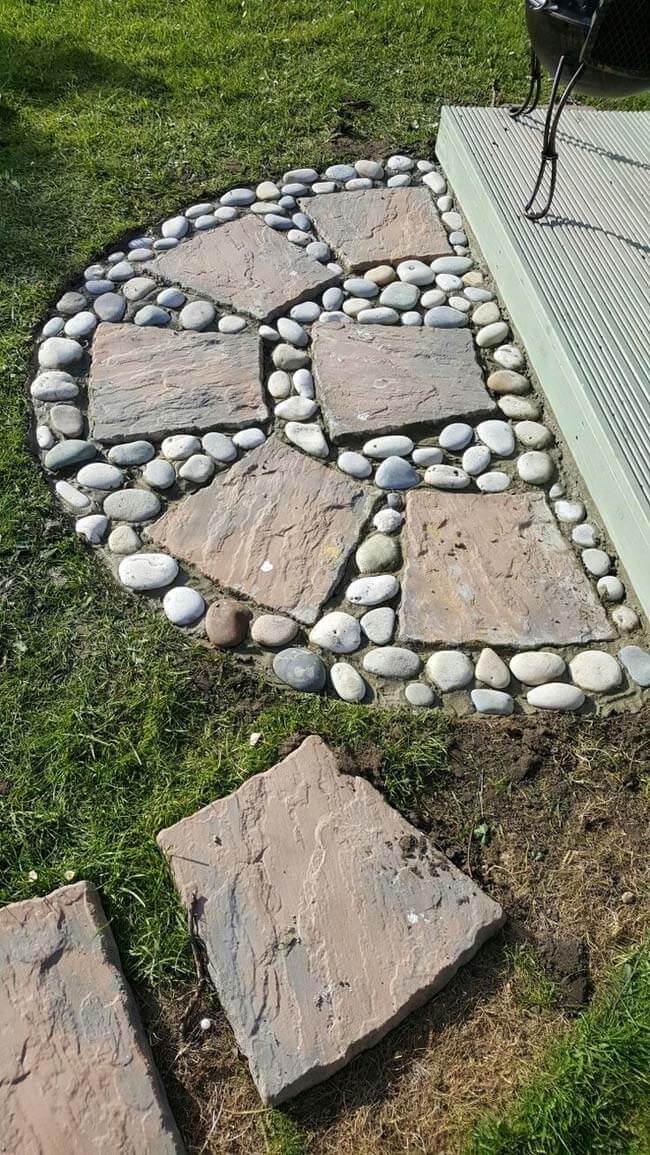
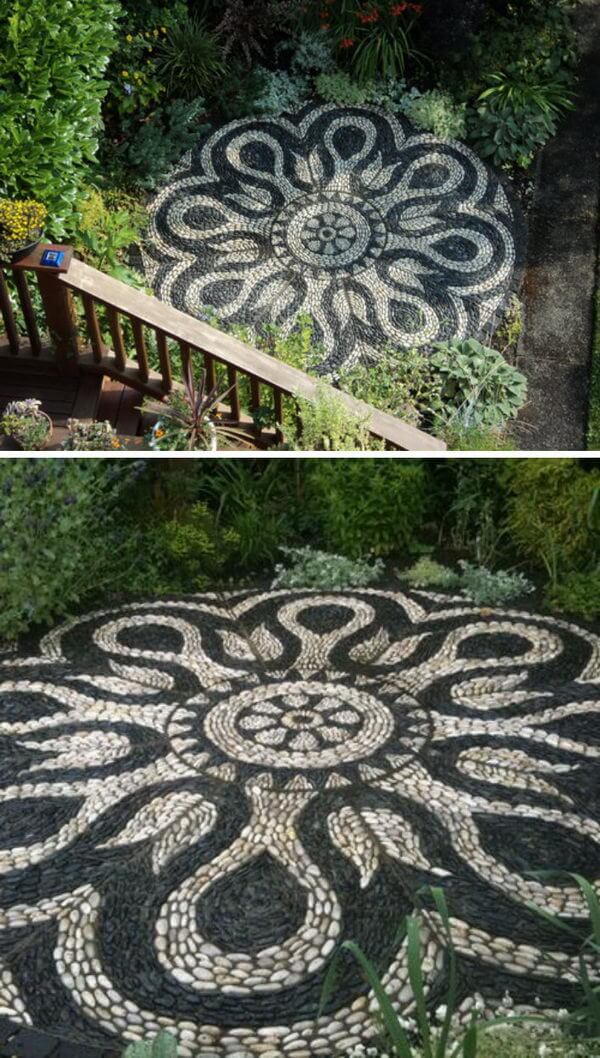
4. Pebble Mosaic Patio
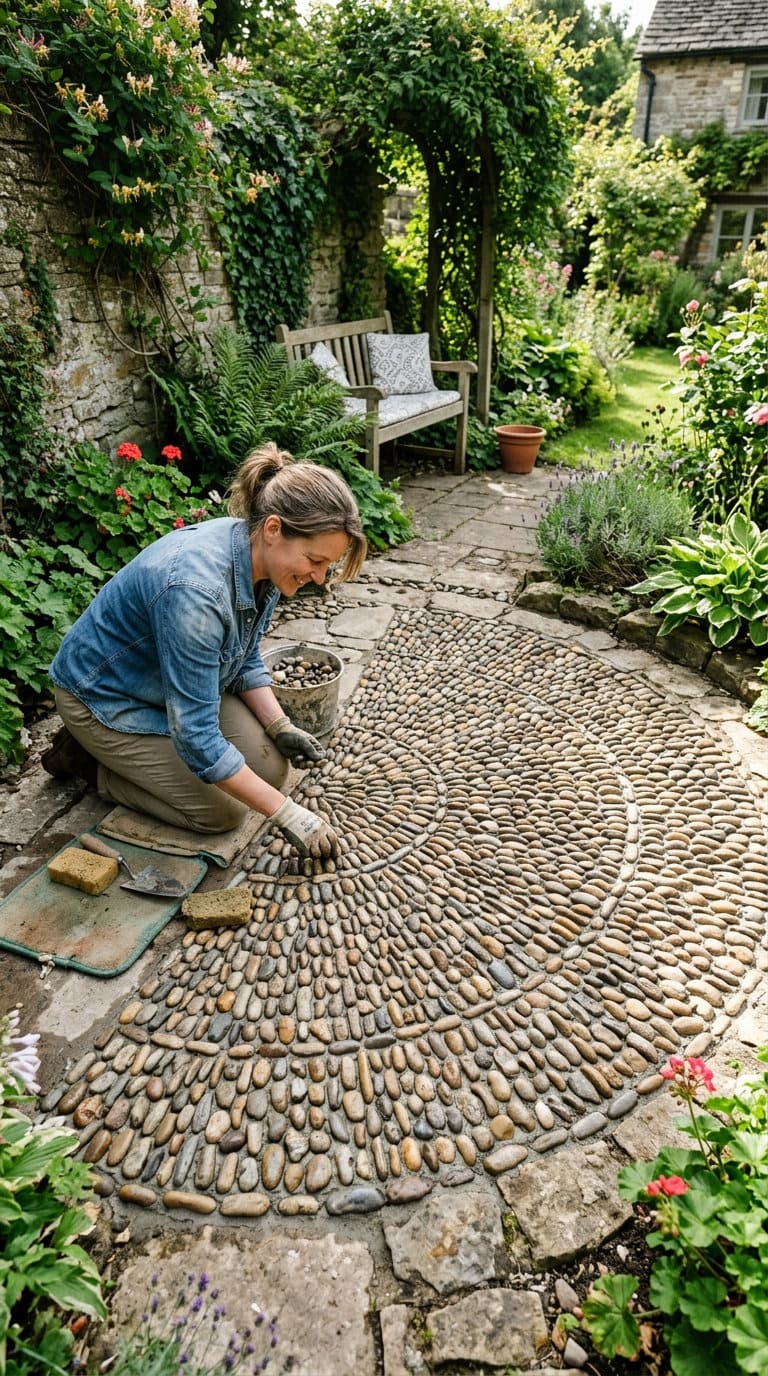
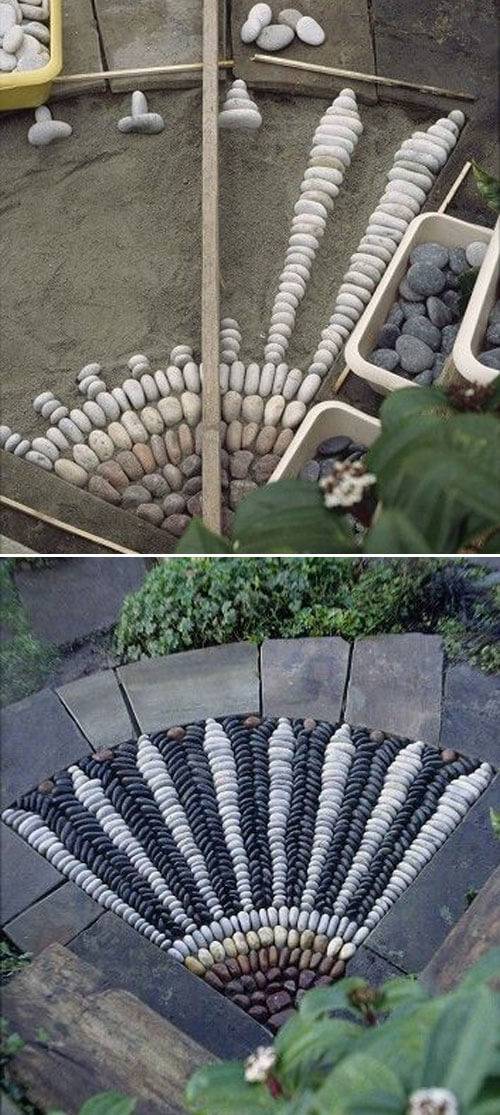
Small river pebbles set in mortar in a deliberate pattern (a fan shape, a sunburst, a geometric grid) create genuine texture underfoot and a real handmade look.
Apply the grout guidance from section 1 directly here, this is the idea most exposed to freeze-thaw damage on the whole list since it’s entirely small-unit joints.
The average homeowner spends $616/year on yard fixes that don't address the real problem. Find out what yours actually is — before you spend another dollar.
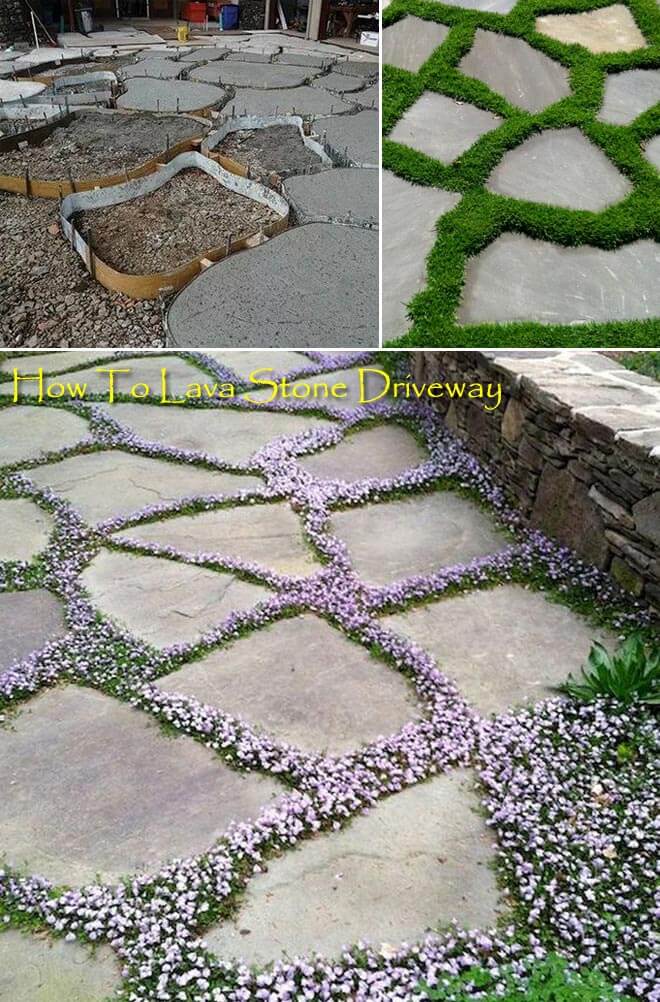
Take the Free Quiz5. Indian Canyons
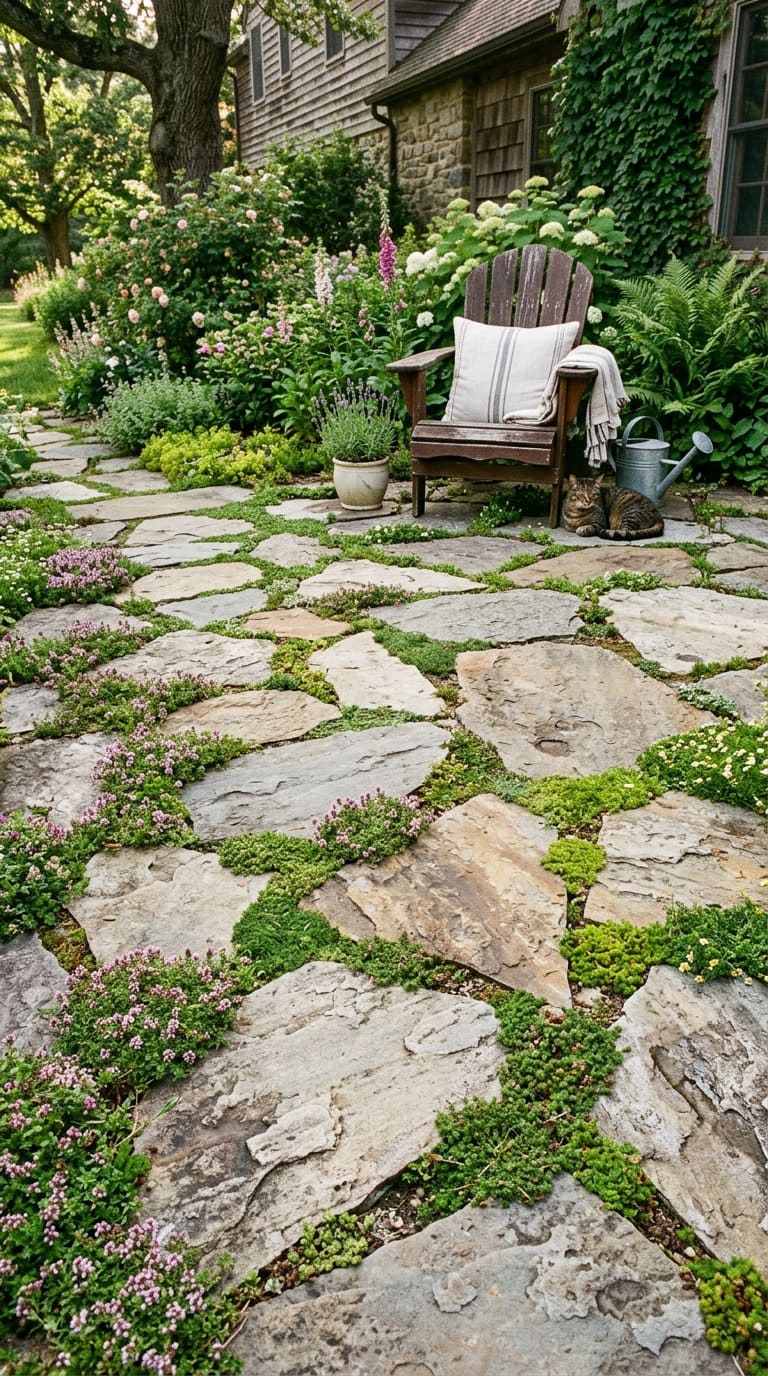
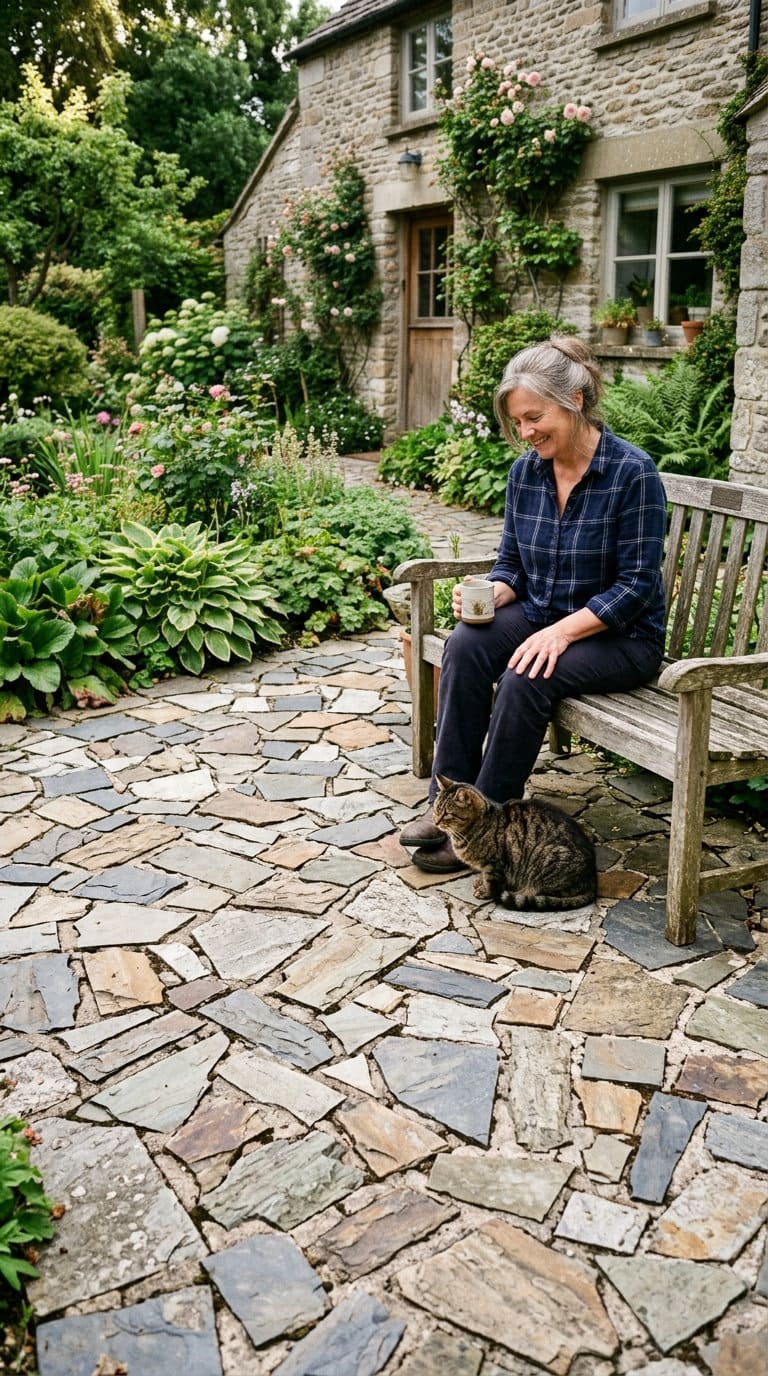
Layer flagstone in irregular, canyon-inspired shapes with wide, planted joints between the stones for a naturalistic look that reads as if it grew there rather than being installed.
Wide joints planted with creeping thyme or moss handle drainage better than tight mortared joints, worth factoring in if section 1’s drainage point matters for your site.
6. DIY Stone Paver Patio
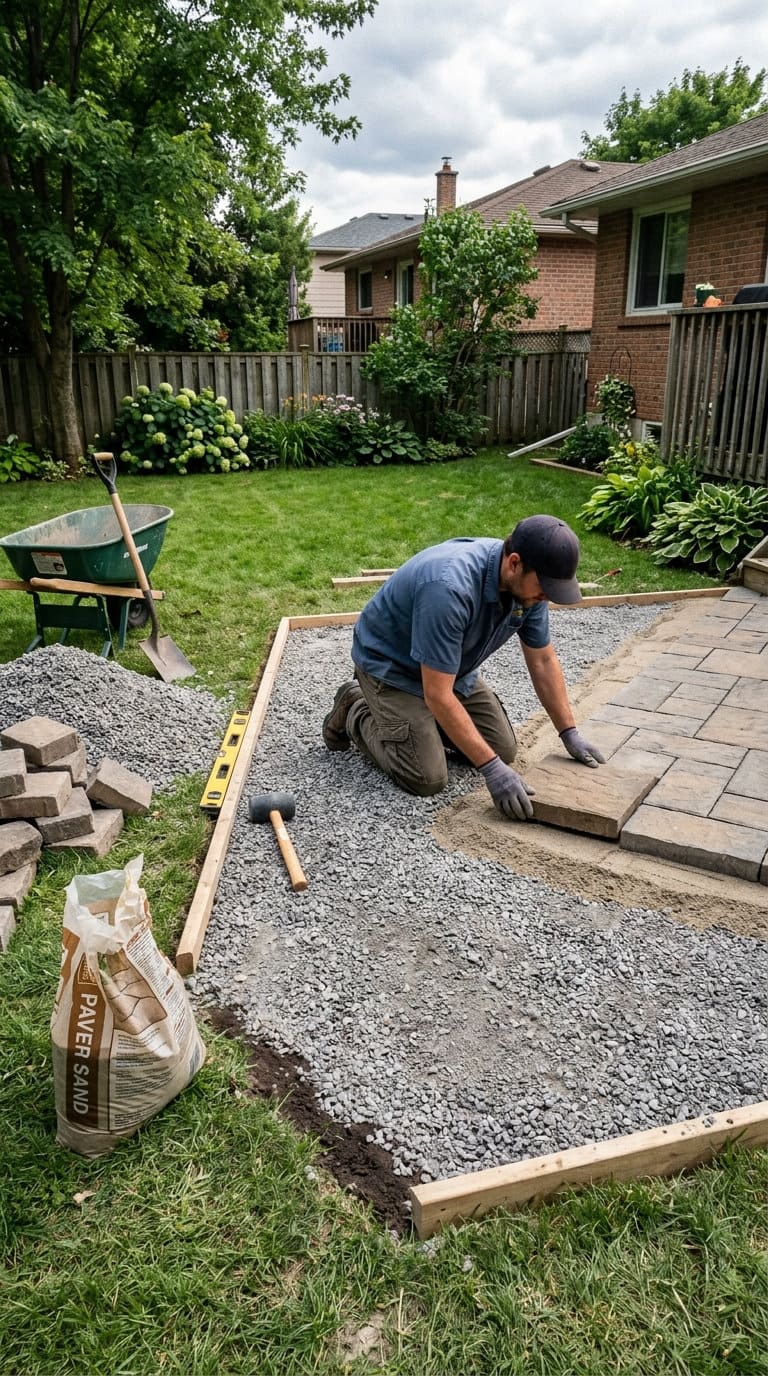
Stone pavers are genuinely approachable for a first-time DIY patio project, both in cost and in the forgiveness of the install if a stone sits slightly uneven.
Apply the base depth guidance from section 1 in full here, 4 to 6 inches of compacted crushed stone, skipping this is why a DIY paver patio settles unevenly within a year or two.
7. Stone Pavers with Pea Gravel
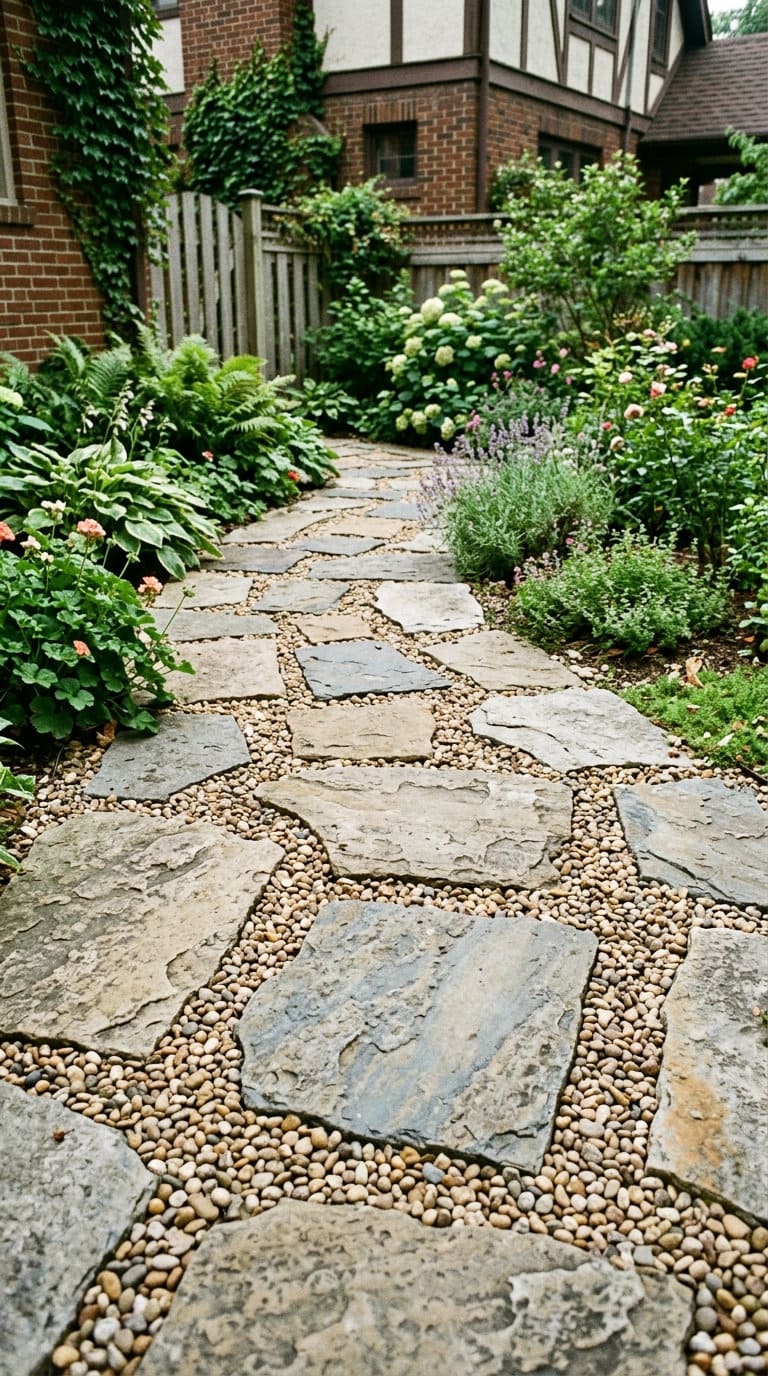
Pea gravel filling the joints between larger stone pavers gives a soft, permeable look and lets water drain straight through rather than sheeting off.
Keep pea gravel to the joints and decorative surface only, per section 1, the structural base underneath still needs proper compacted crushed stone, not pea gravel.
8. Poolside Patio with Pergola
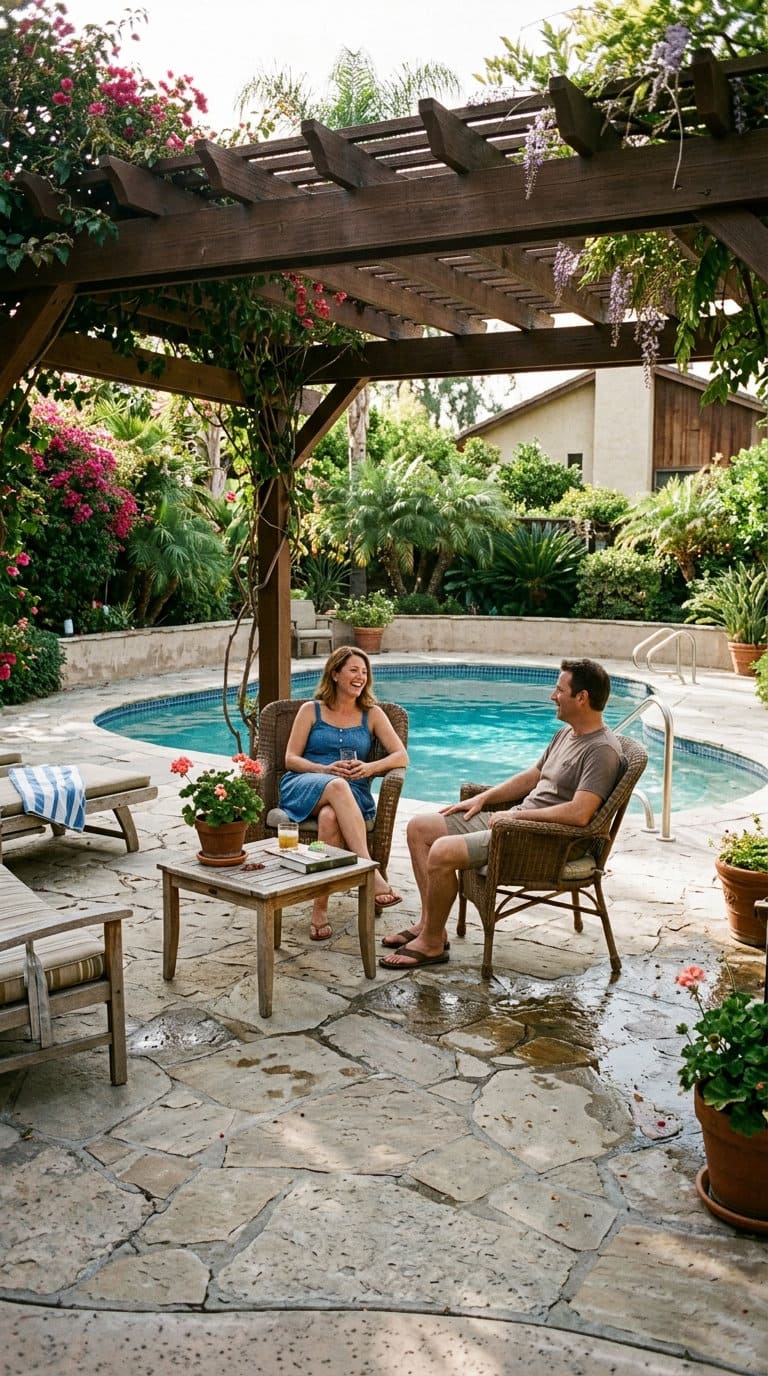
A pergola over a poolside patio gives real shade relief without blocking the view of the water, and the patio surface itself should prioritize slip resistance over anything else, wet feet on a smooth, polished surface is a genuine hazard right at the pool’s edge.
Textured or brushed-finish concrete, or pavers with a rough face, are the safer choices here specifically.
9. Water-Wise Design
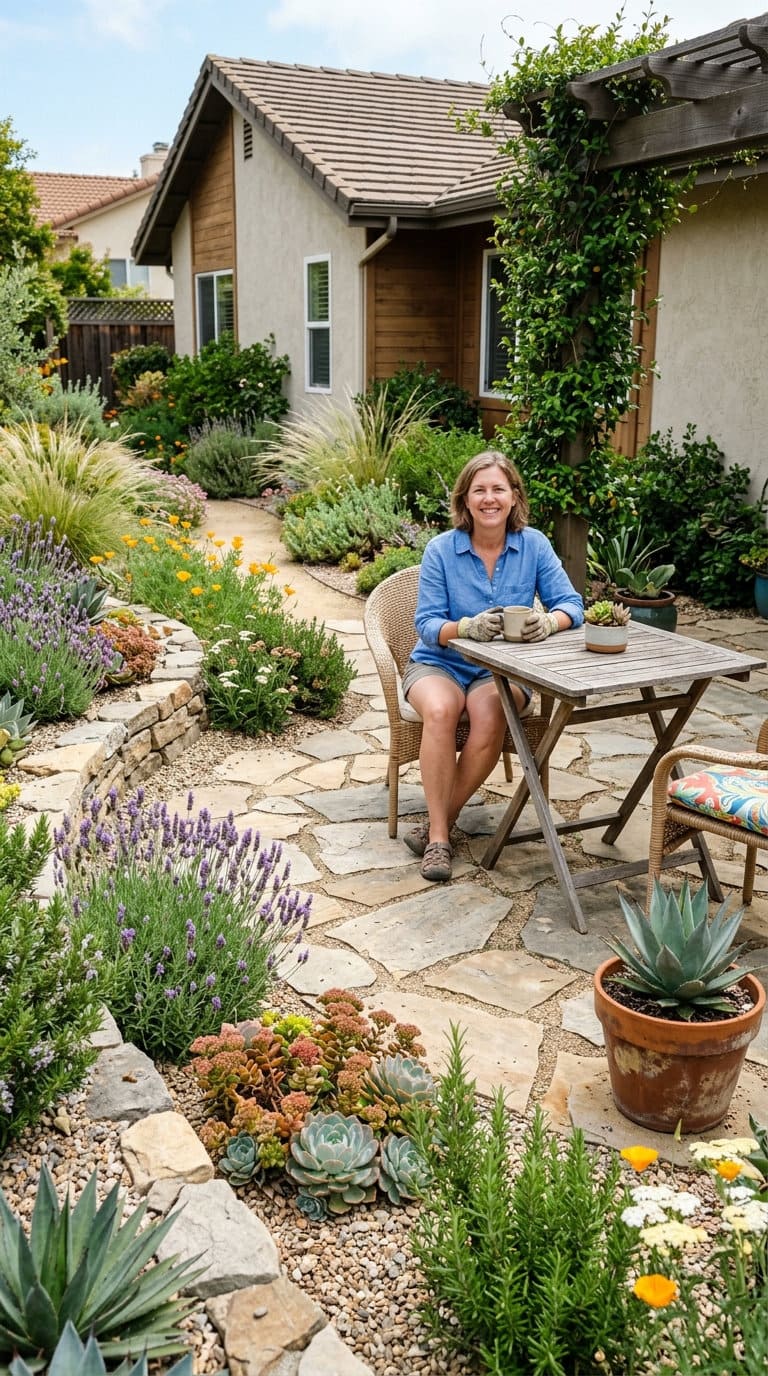
Pairing a concrete or paver patio with drought-tolerant planting beds around the edges cuts the irrigated footprint of the yard without sacrificing a real outdoor living space.
The hard surface itself doesn’t need water at all, so the water savings come entirely from what you plant around it.
10. Patio Kitchen with Pergola

An outdoor kitchen needs a genuinely stable, level surface to support heavy appliances, a grill, a countertop, a mini fridge, so the reinforcement guidance from section 1 matters more here than on a purely decorative patio section.
Run any gas or electrical lines during the initial pour or paver install, retrofitting them under a finished patio is a much bigger job later.
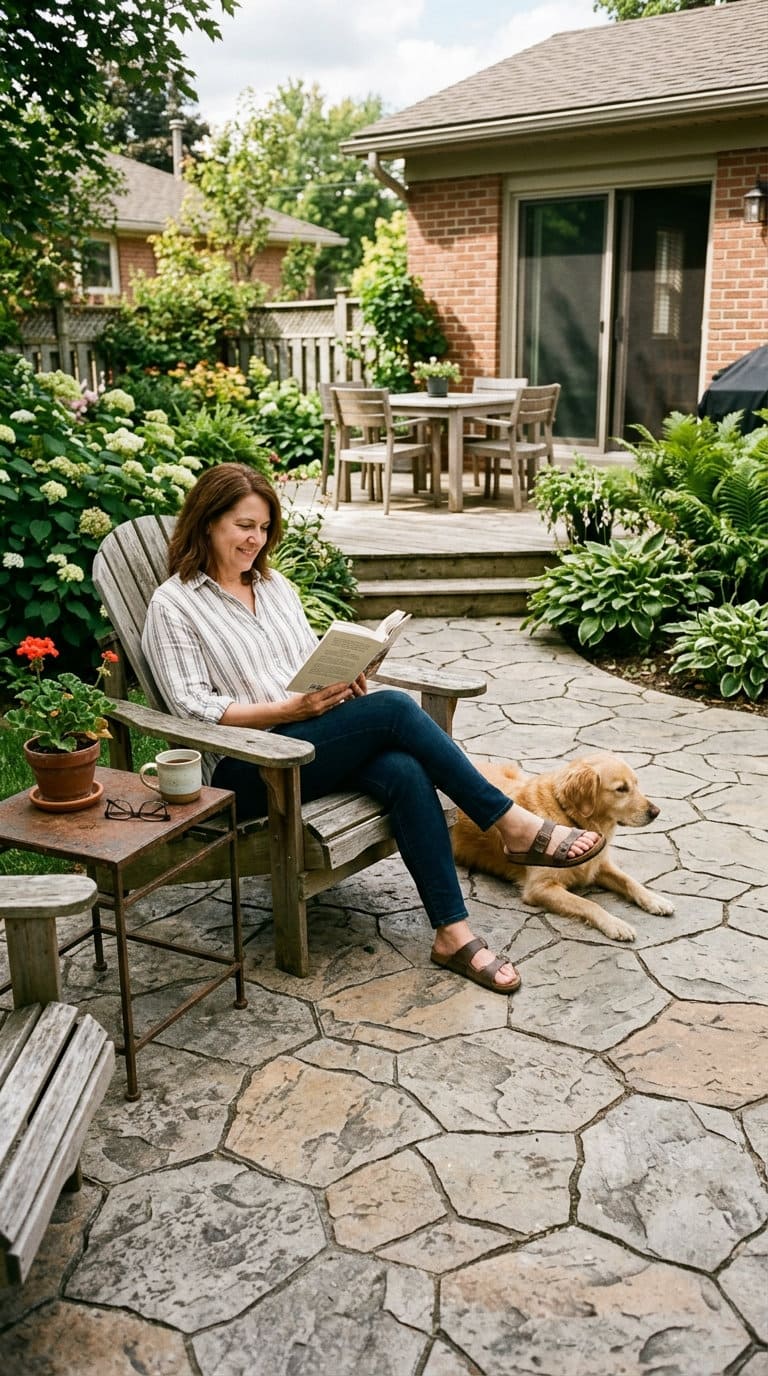
11. Stamps Concrete Pattern Floor
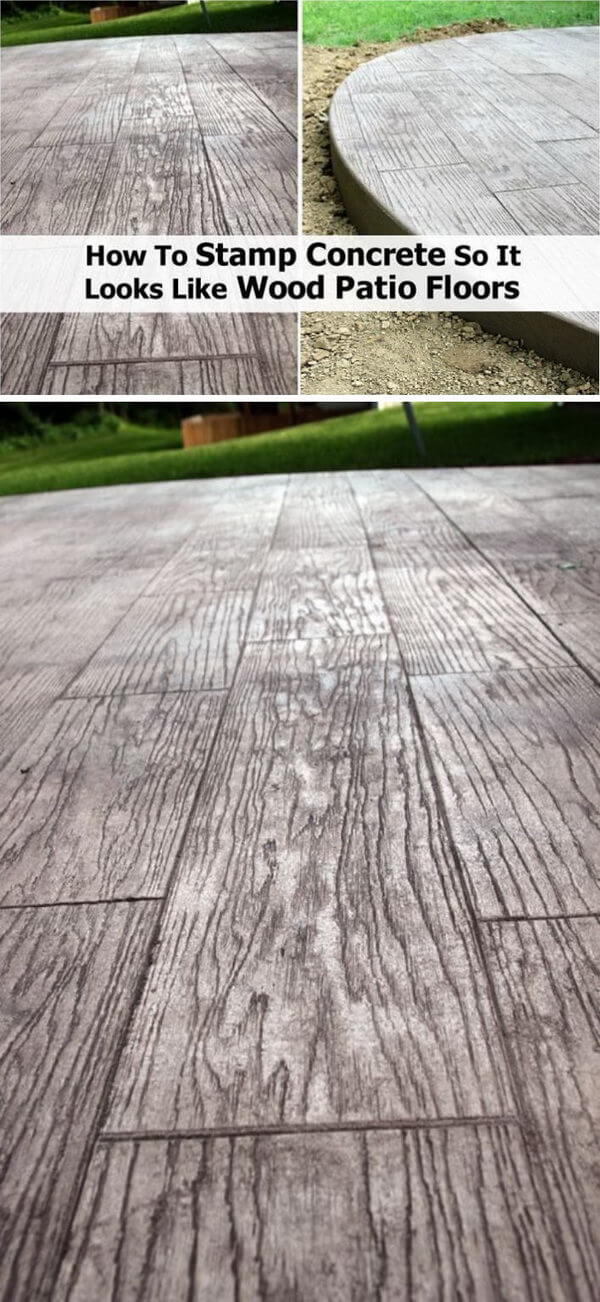
Stamped concrete can convincingly mimic stone, brick, or slate at a lower material cost than the real thing, but the sealing schedule from section 1 isn’t optional here, an unsealed stamped pattern fades and can flake within a couple of years.
Budget for resealing every 2 to 3 years as part of the real ongoing cost of this option, not a one-time expense.
12. Close up a concrete stamp
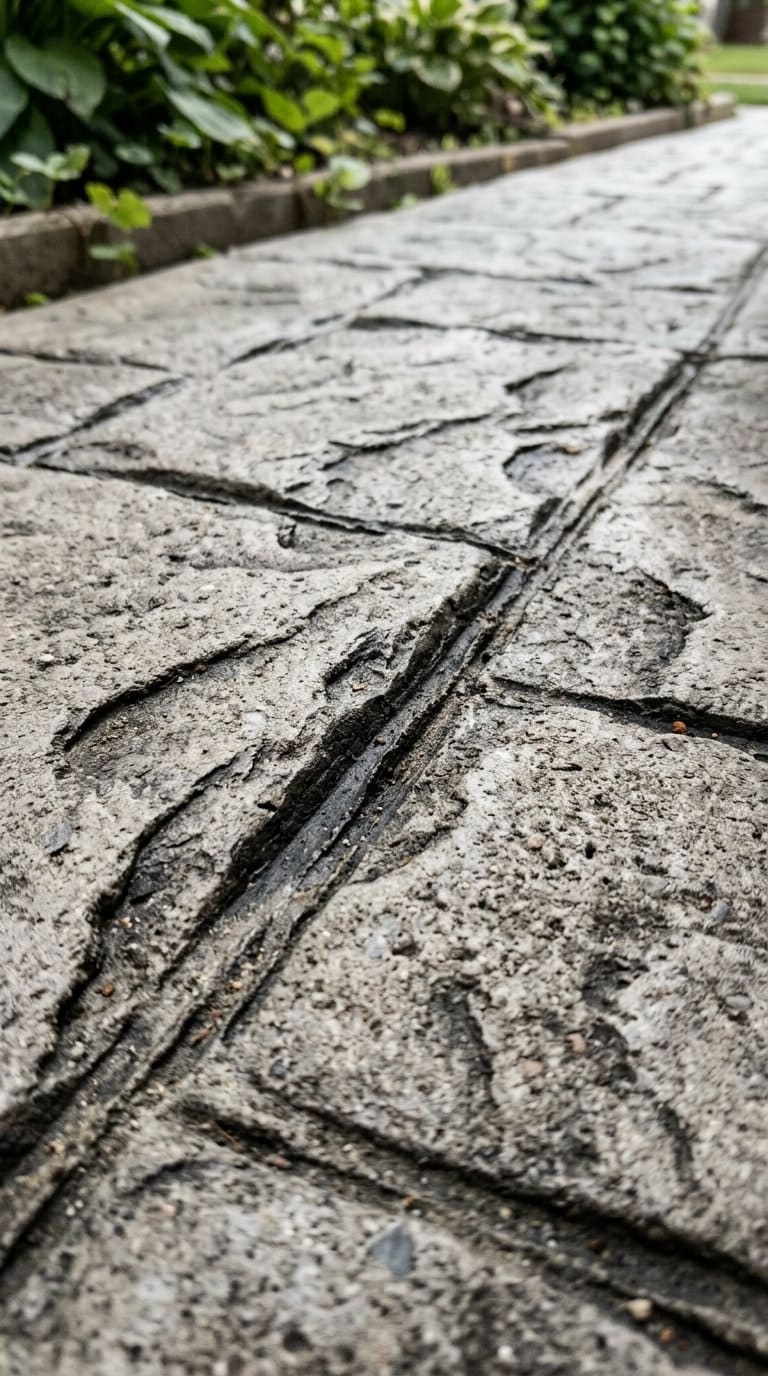
The texture depth of a concrete stamp, how deep the pattern actually presses into the wet concrete, determines how convincing the final look reads from a few feet away versus up close.
A shallow stamp job looks fine in photos but reads as obviously fake in person, worth asking a contractor specifically about stamp depth before hiring.
13. Asian Inspired Patio
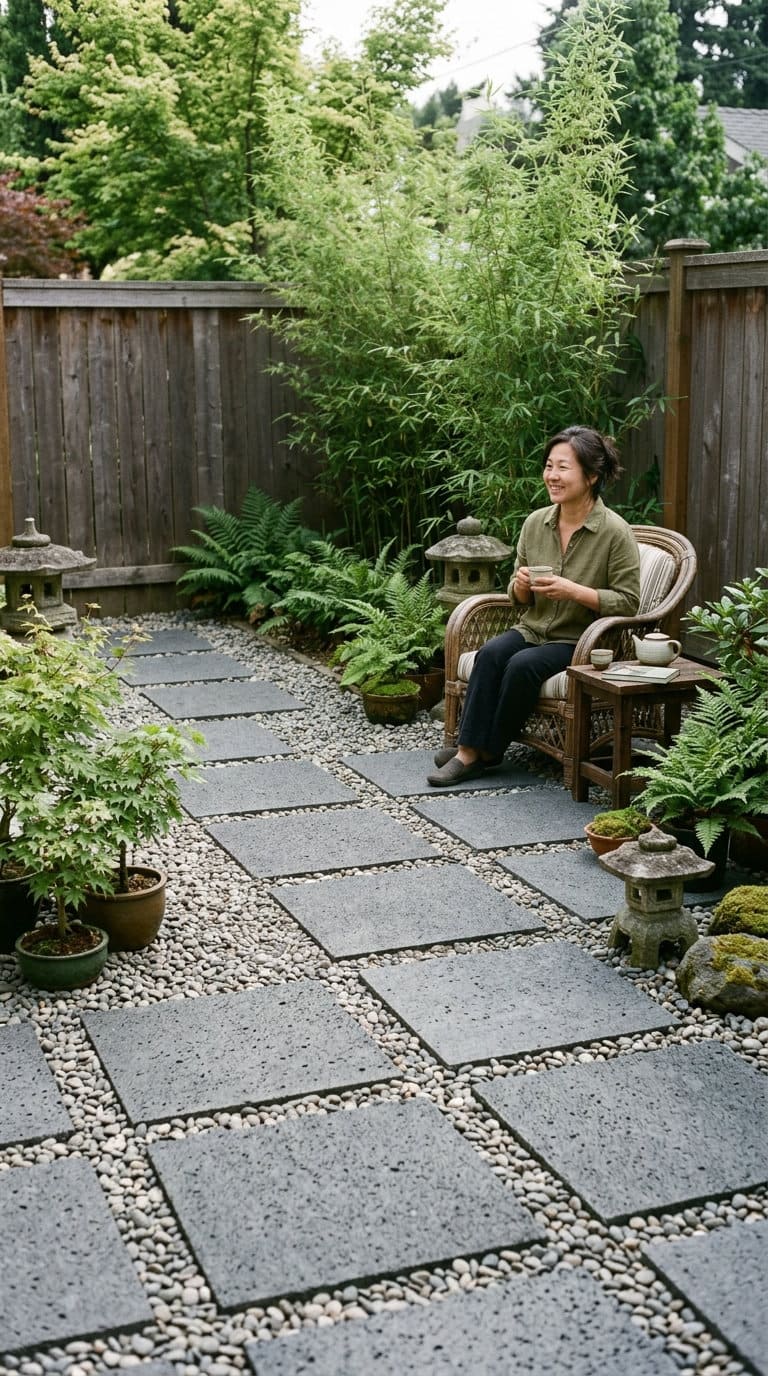
Clean geometric paving, often a grid of large square pavers set in gravel or moss, paired with restrained planting (bamboo, Japanese maple, moss) creates a genuinely calm, minimalist patio style.
Keep the paving pattern itself simple, the calm comes from restraint, not from adding more pattern complexity.
14. Brick Pavers and large Stepping Stones
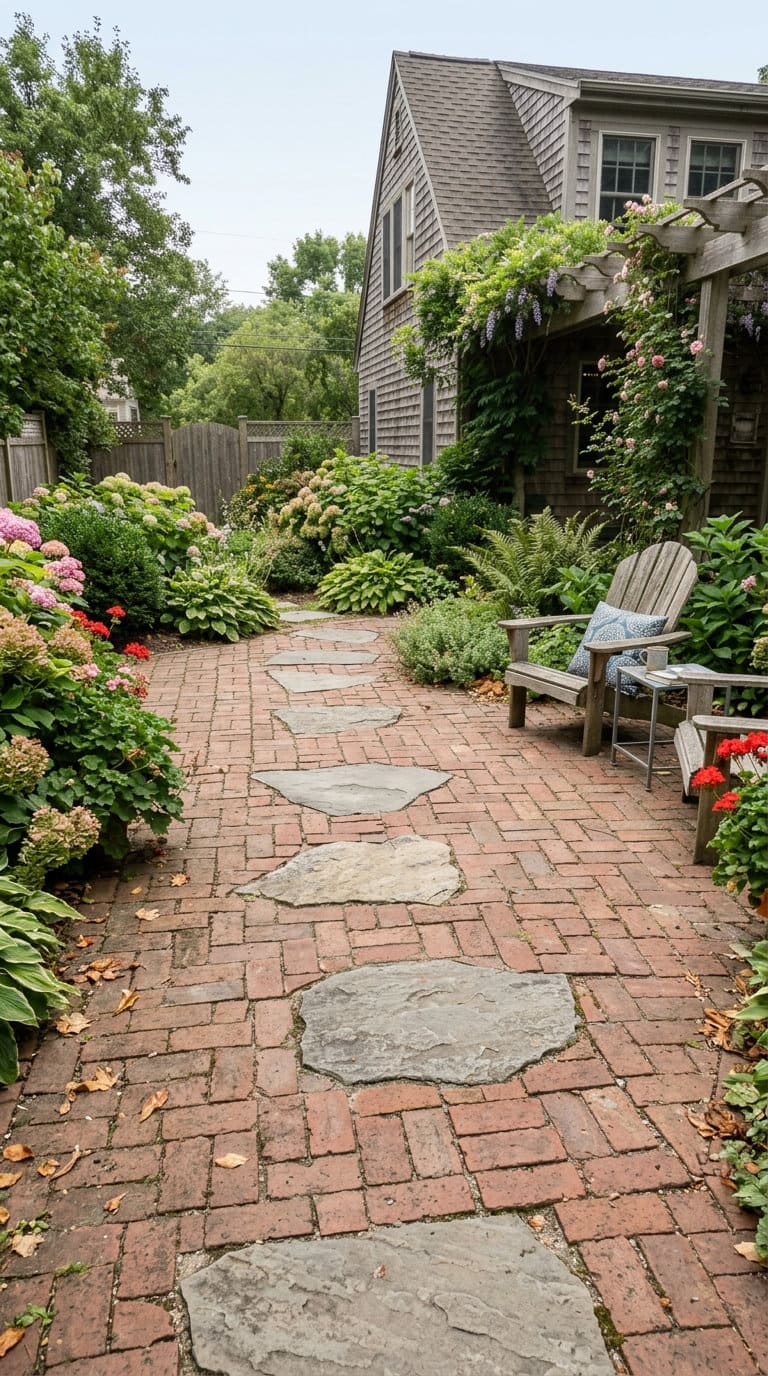
Mixing standard brick pavers with occasional oversized stepping stones breaks up what would otherwise be a uniform, repetitive brick field, giving the eye a real resting point.
Keep the stepping stones flush with the surrounding brick height, a height mismatch here is a genuine trip hazard, not just an aesthetic miss.
15. Classics Look Brick Patio
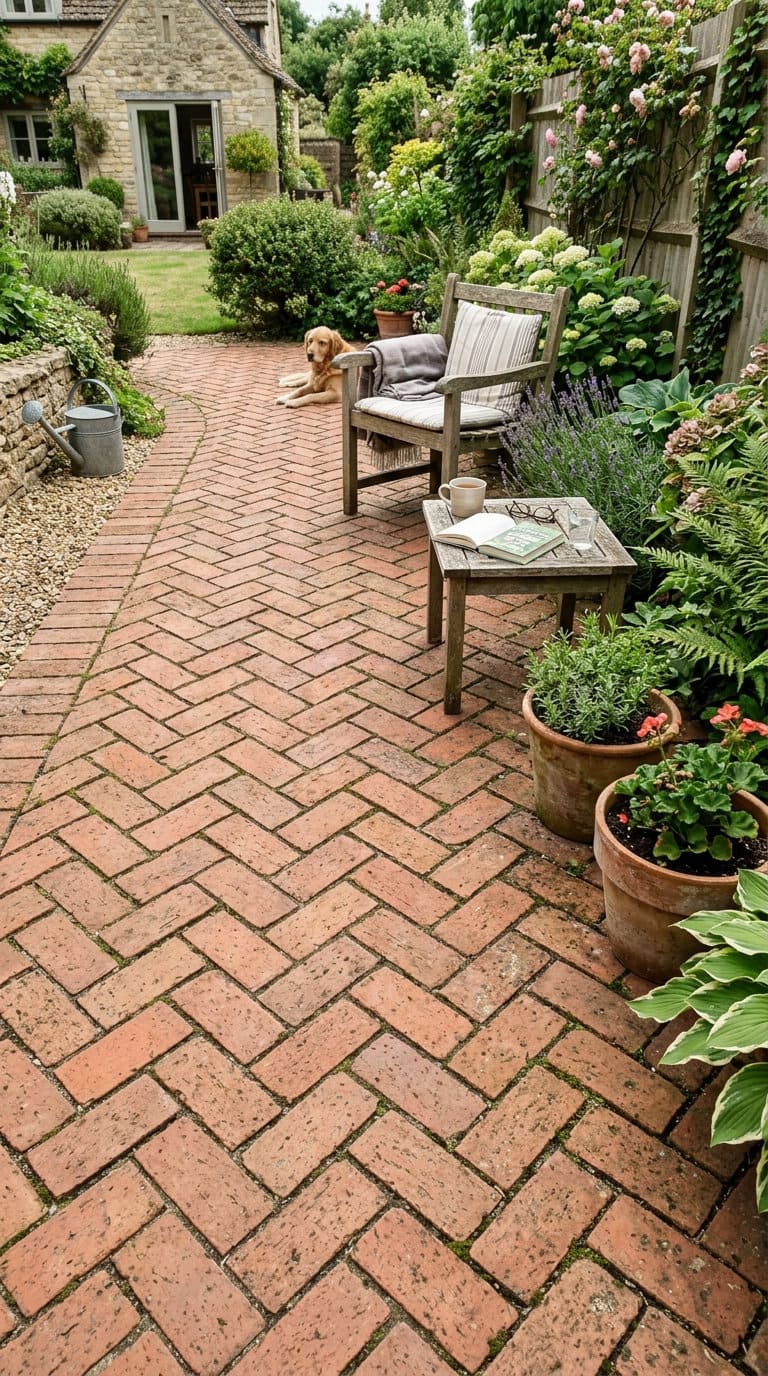
A traditional running-bond or herringbone brick pattern gives real, enduring curb appeal that doesn’t read as trendy the way some newer patterns do.
Brick’s main real maintenance concern is joint sand washing out over time, plan to top off polymeric sand every few years rather than treating the initial install as a one-time job.
16. Mid Century Roots
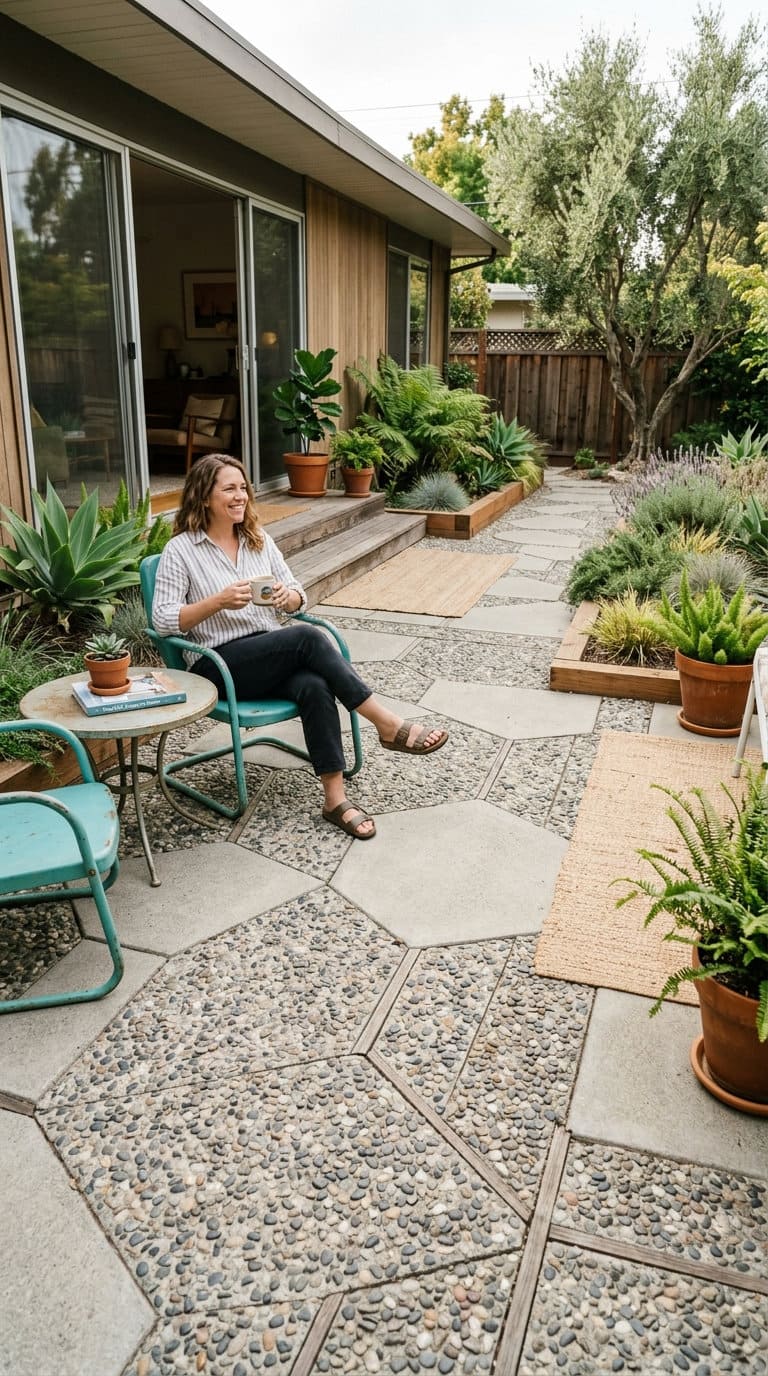
Simple geometric concrete pavers in a repeating grid, often paired with exposed aggregate or a single accent color, echo genuine mid-century landscape design rather than a generic modern look. This style leans on precise, consistent joint spacing to read as intentional, uneven spacing undercuts the whole effect.
17. Poured in Place
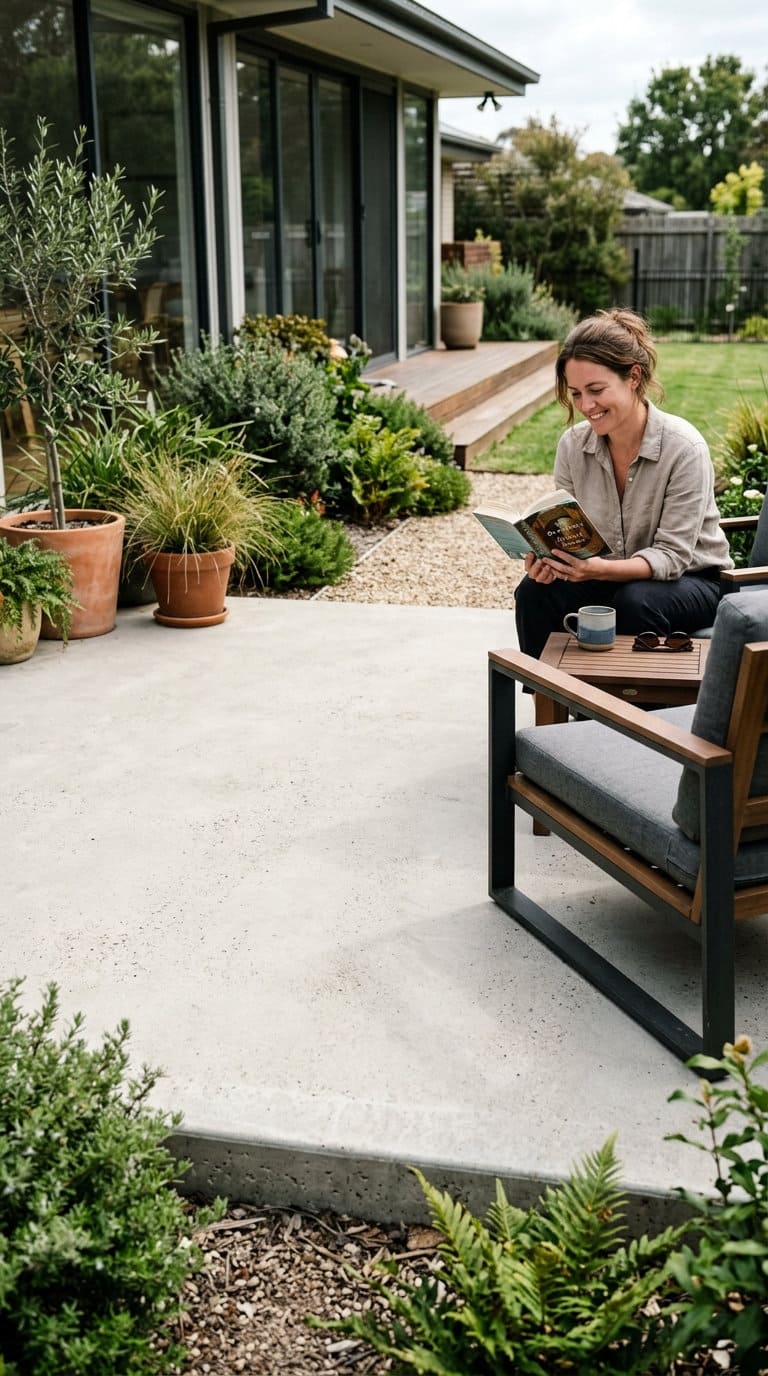
A single, seamless poured concrete slab, no joints beyond the required control cuts, gives the cleanest possible surface for a modern patio look. This is the idea where section 1’s control joint and reinforcement guidance matters most directly, since there’s no paver or brick unit to hide a structural shortcut behind, the whole surface is one continuous test of the pour.
18. Multi-level Patio Designs with Bricks Fire Pit
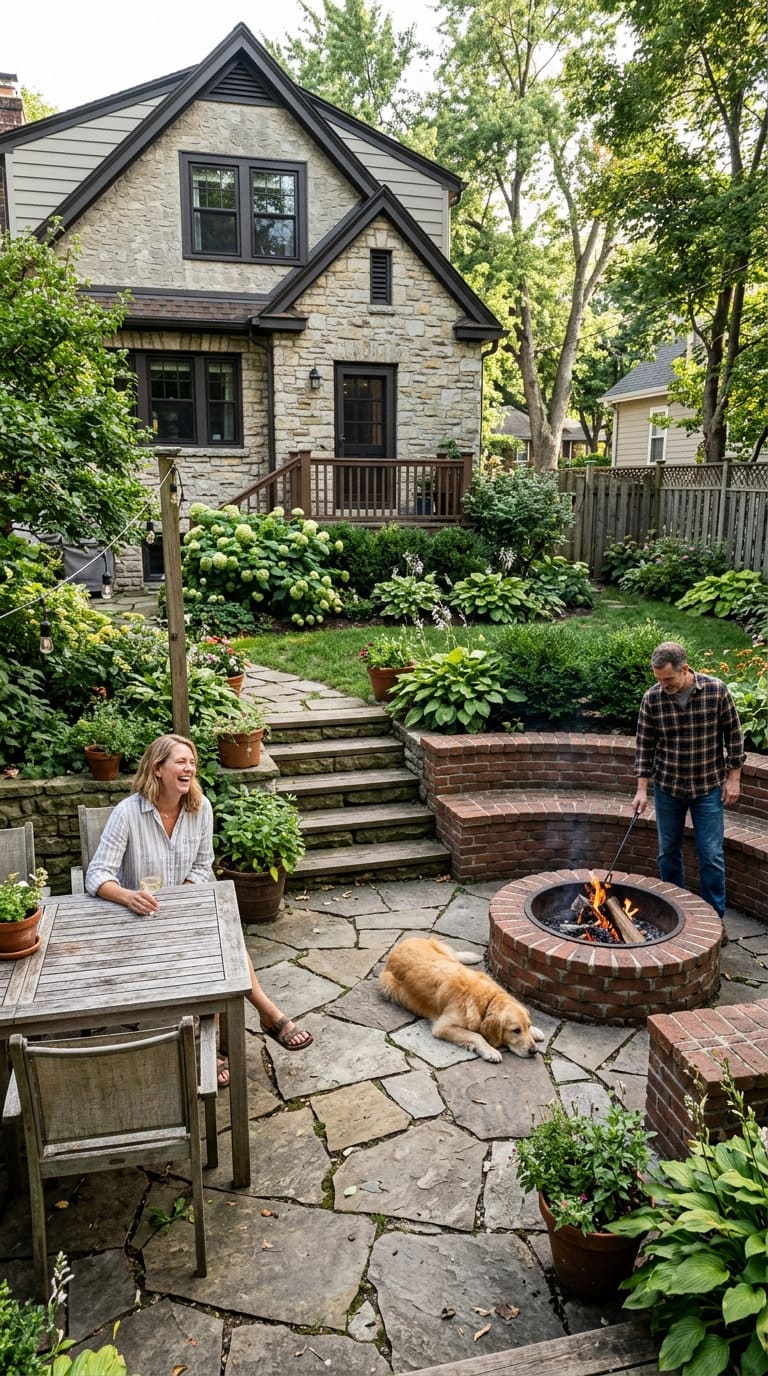
A stepped-down patio level built specifically around a brick fire pit needs real clearance from the house and any overhanging structure, most guidance runs 10 feet minimum from anything combustible. Factor that distance in before finalizing the tier layout, not after the concrete’s already poured.
19. Patio with Modern Landscaping

Large-format pavers (24×24 inch or bigger) paired with minimalist, structural planting, ornamental grasses, a single specimen tree, ground cover instead of a flower bed, gives a patio a genuinely contemporary feel.
Fewer, larger units also mean fewer joints overall, a real practical maintenance advantage over a small-unit pattern.
20. Bricks
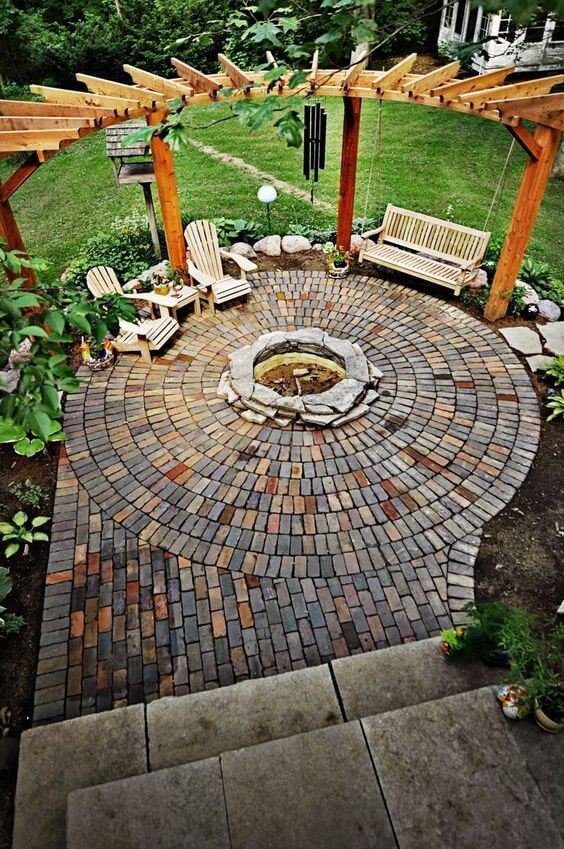
People think that the use of bricks is old-fashioned and out of style but here is an idea that outs rightly disproves that. This idea is stylish, inexpensive and elegant; the bricks are of the same size and of the same shapes.
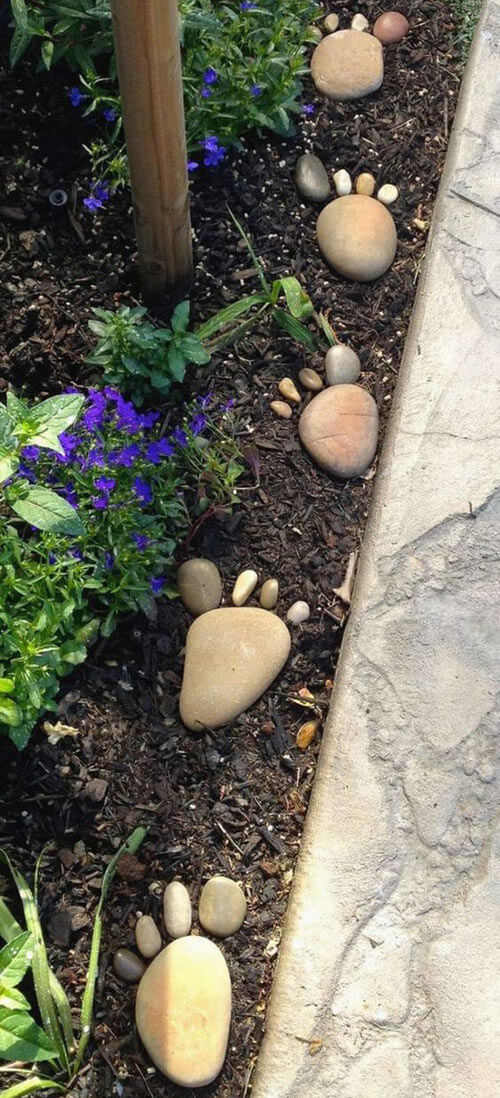
21. Flower beds with golf balls
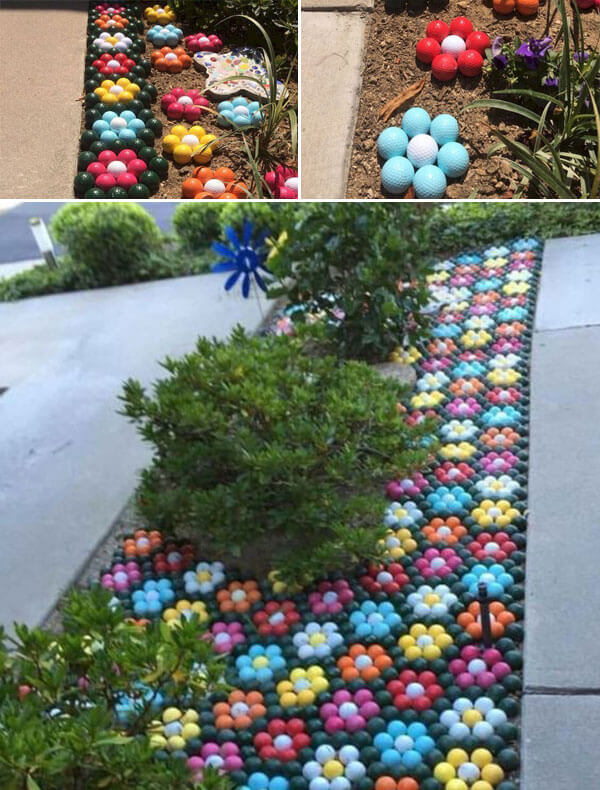
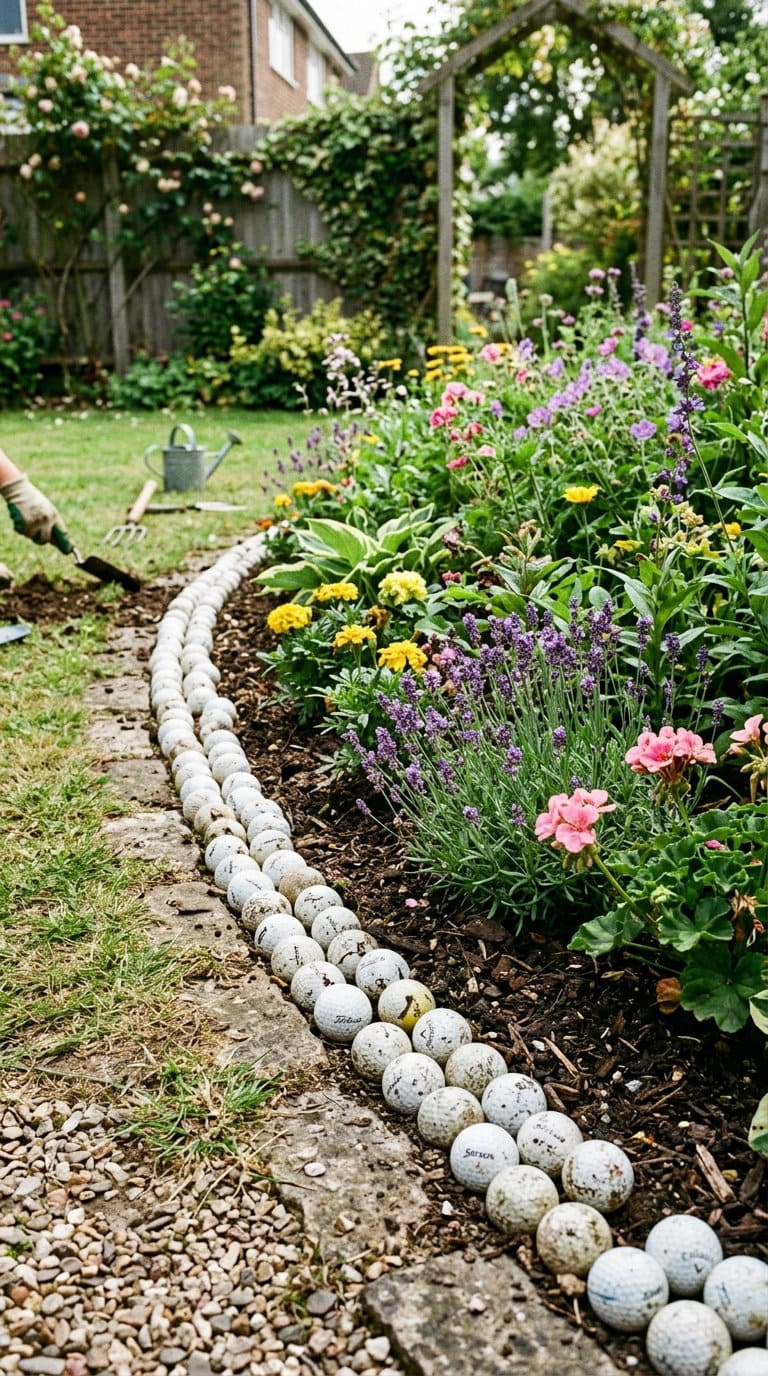
Used golf balls set into a flower bed border or pathway edge is a genuinely quirky, low-cost way to add texture and color using a material most people already have lying around or can get free from a local course. Seal or leave them as-is, real golf balls hold up fine outdoors since they’re already built to survive impact and weather.
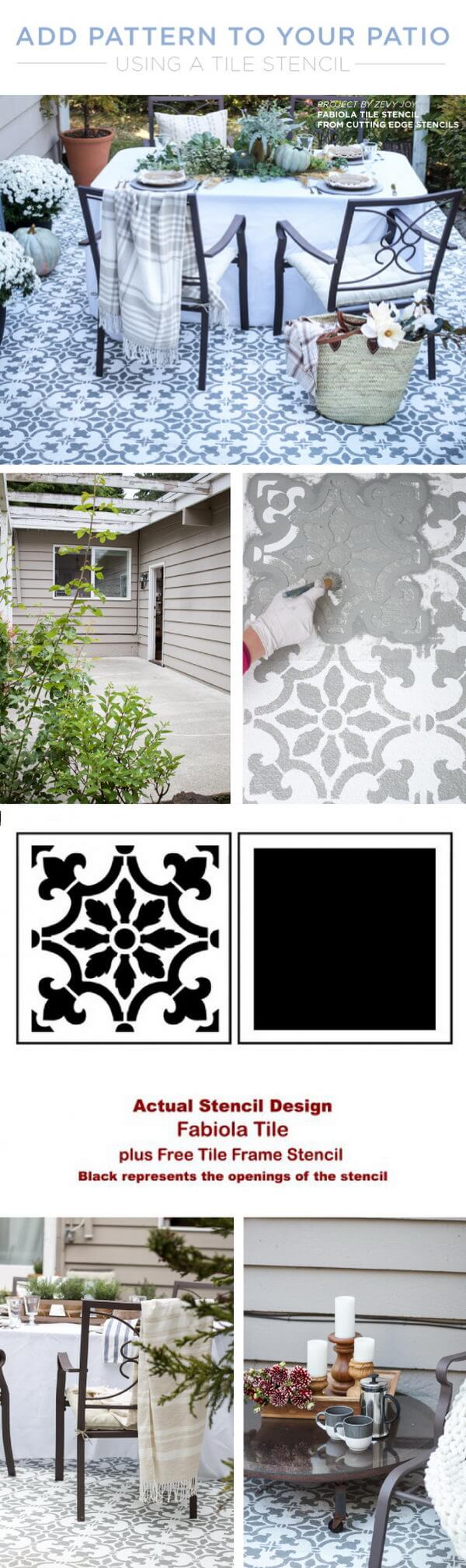
22. Painted patio tile
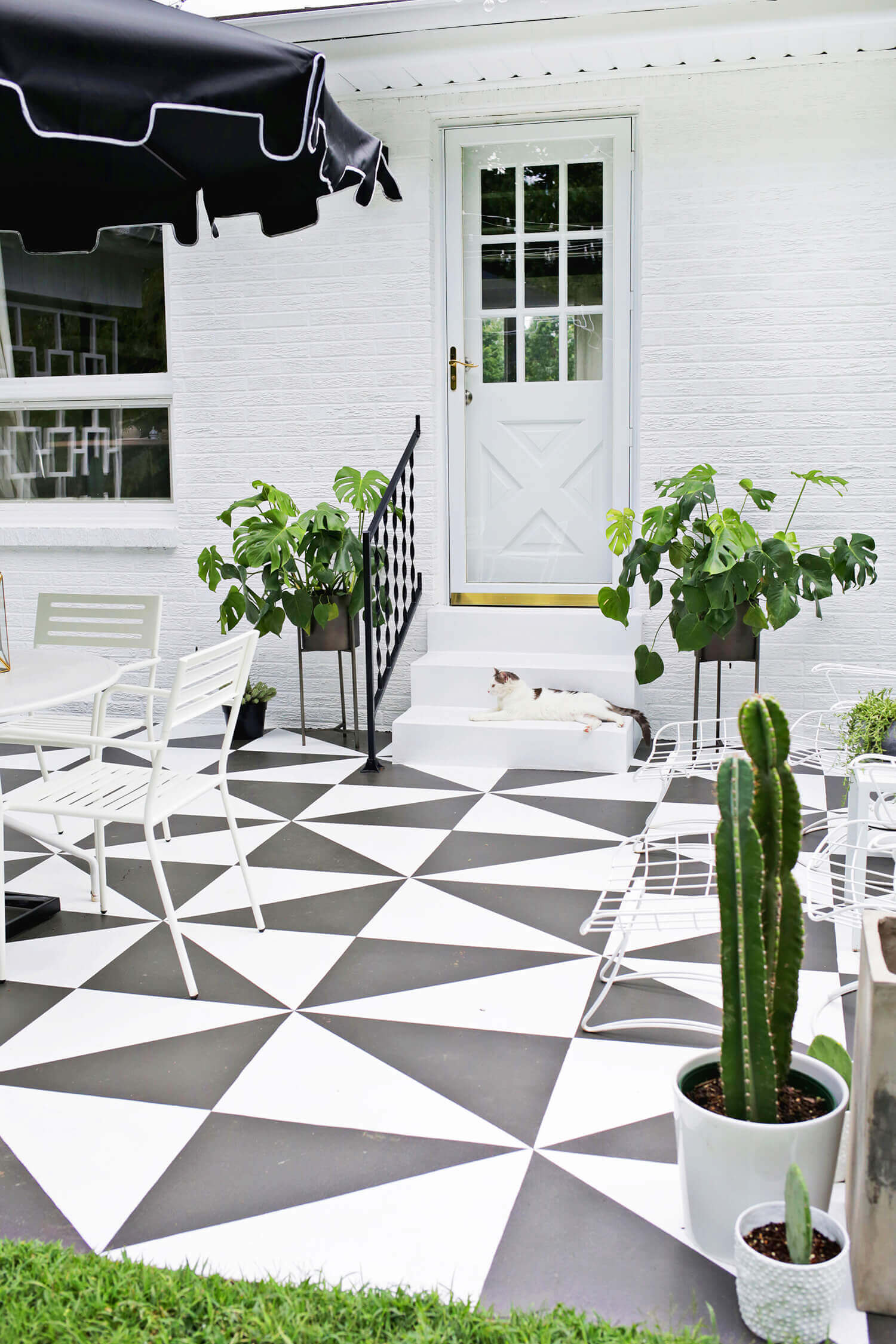
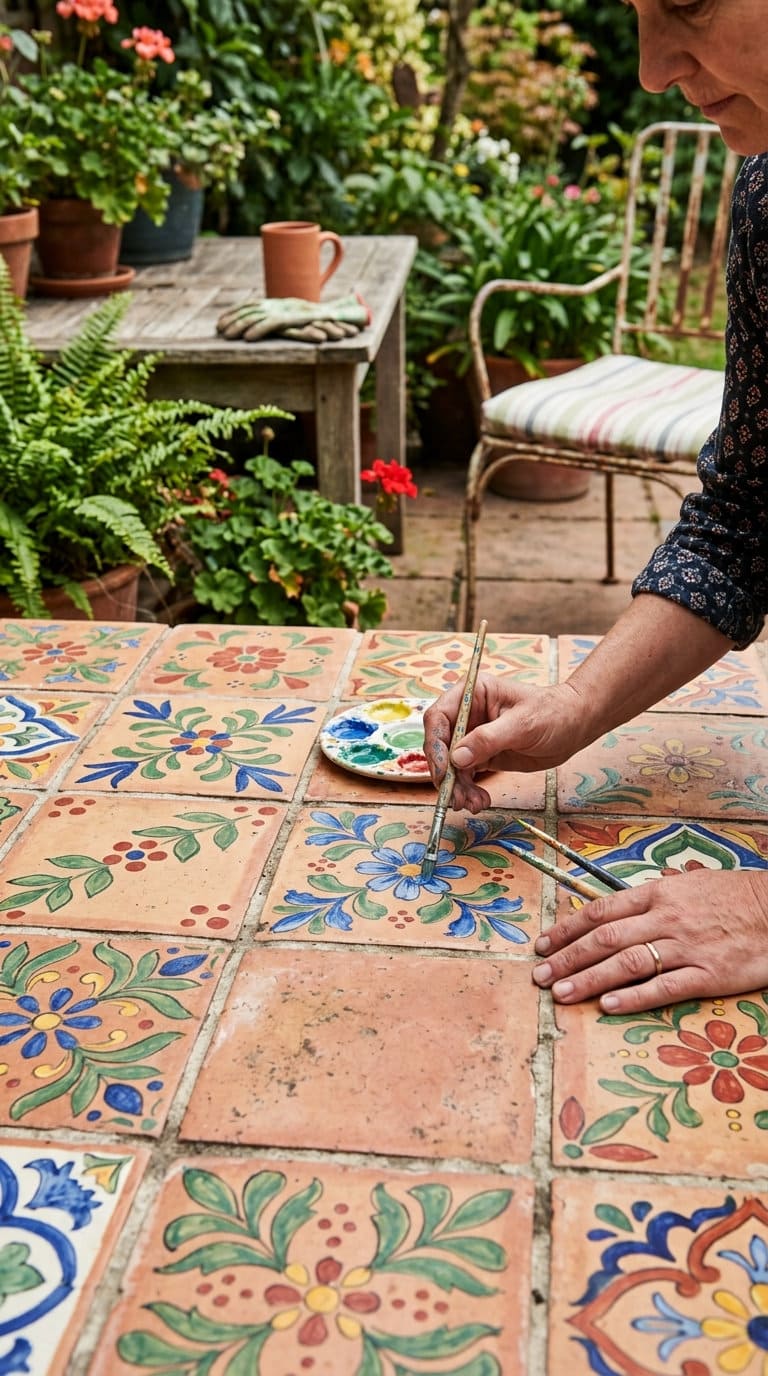
Hand-painted or stenciled patterns on individual patio tiles give a genuinely custom, artisanal look, and the technique works whether you’re painting new tile before installation or refreshing existing tile in place. Use an exterior-rated tile paint and a clear sealer coat over it specifically, indoor tile paint won’t hold up to sun and rain.
23. Pebble Mosaic
24. Mosaic stone patio

Small stone fragments (as opposed to river pebbles) set in mortar in a deliberate pattern give a more angular, structured mosaic look than the rounded pebble version. The same grout and freeze-thaw guidance from section 1 applies here directly, angular stone joints still need real water protection.
25. Zen pattern

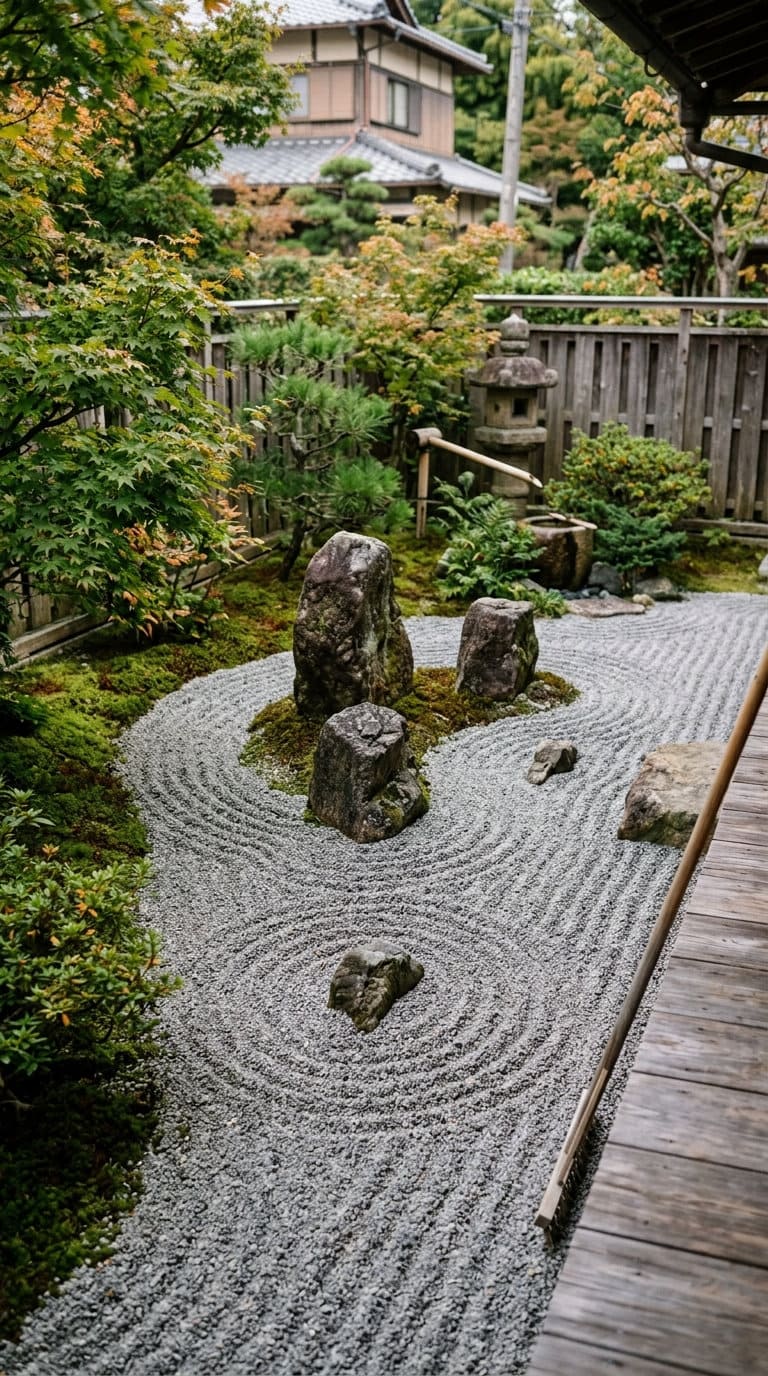
Raked gravel in concentric circles or wave patterns around a few placed stones creates a genuine meditation-garden focal point, distinct from a functional walking surface. This pattern needs regular re-raking to stay crisp, factor that into the maintenance expectation rather than treating it as a one-time install.
26. DIY stone concrete
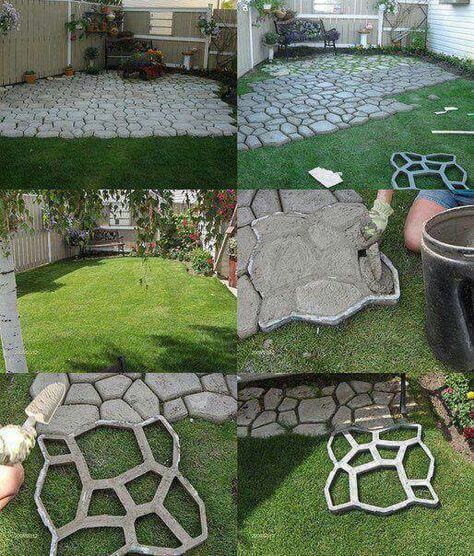
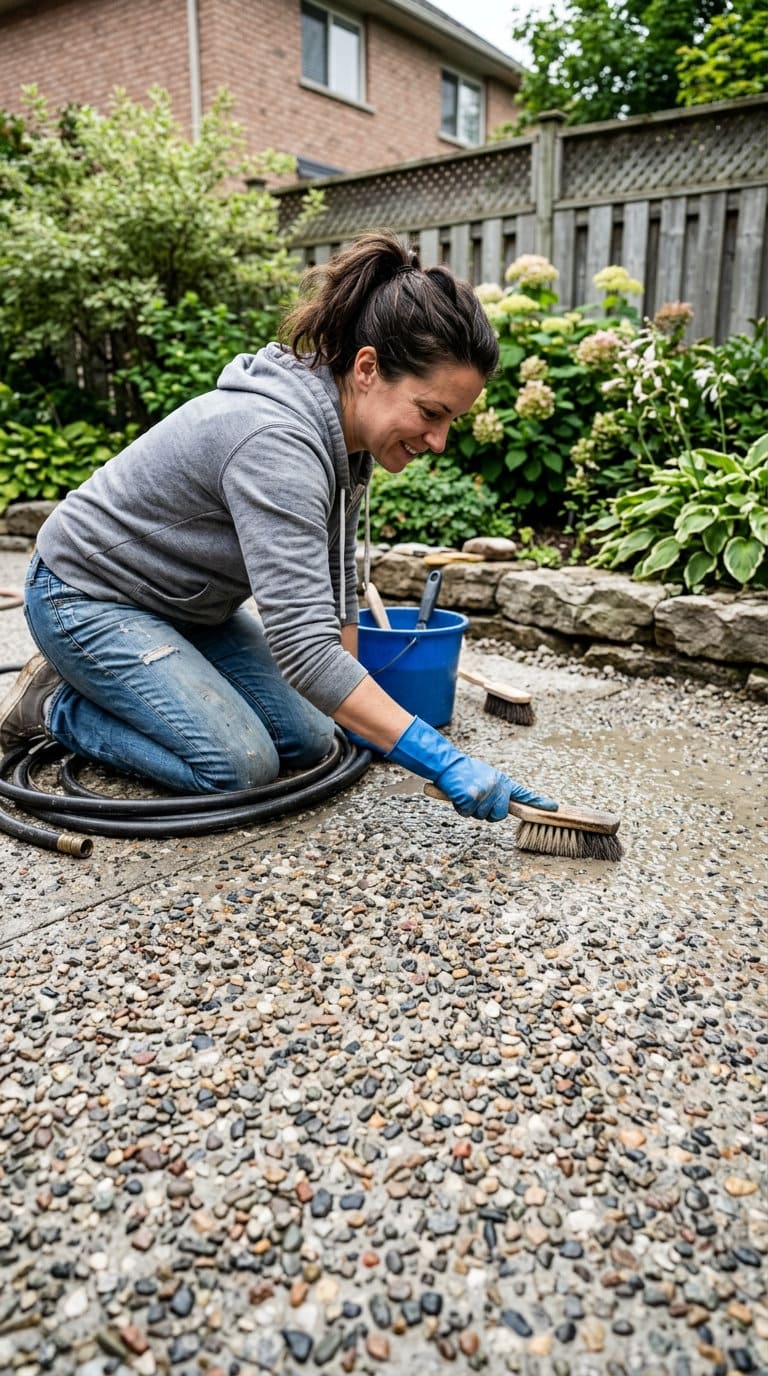
A DIY-poured concrete surface with real stone aggregate exposed at the top (an exposed aggregate finish) gives genuine slip resistance and texture without needing a stamp or overlay. This still needs the full control joint treatment from section 1, exposed aggregate doesn’t make the slab crack-resistant on its own.
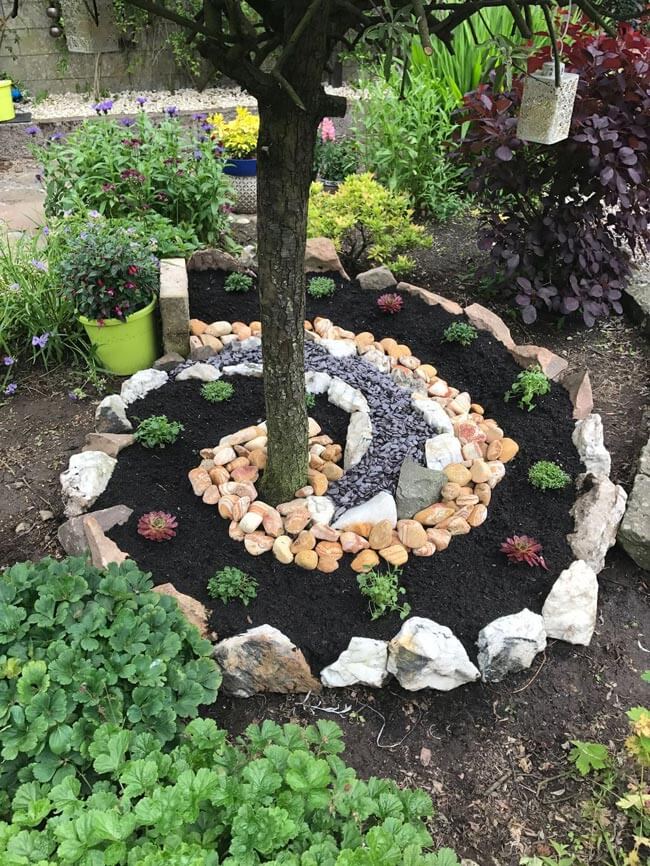
27. Stone or brick spiral border
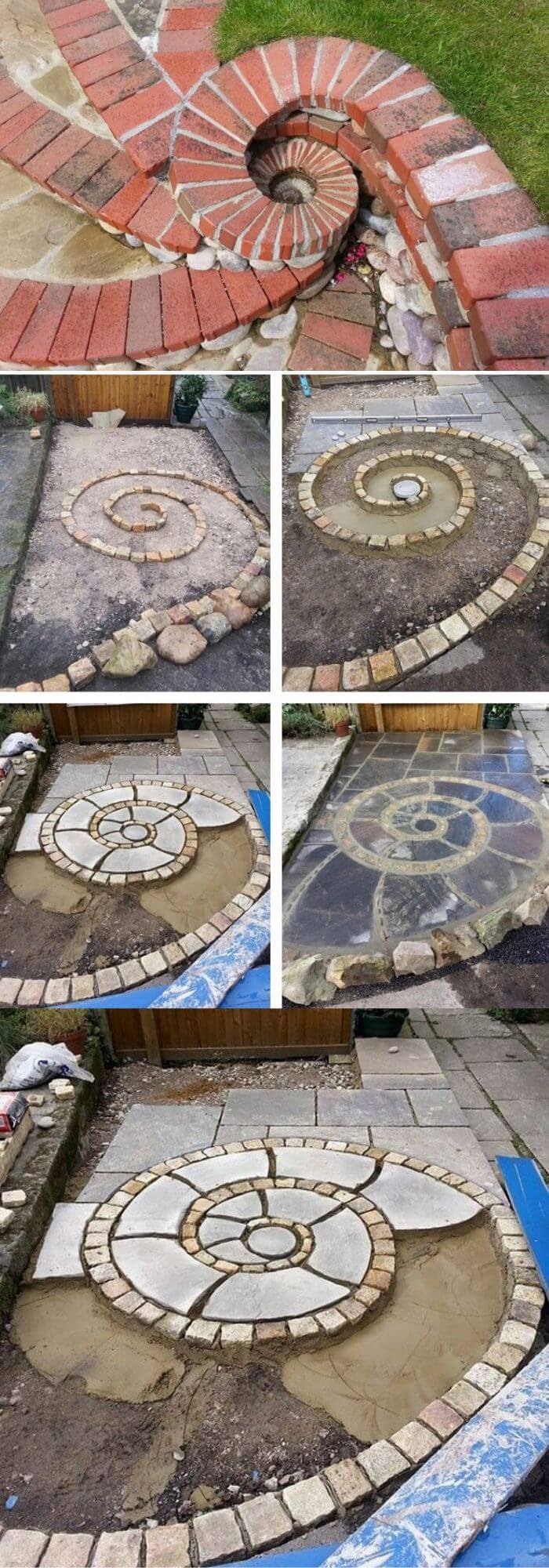
A spiral pattern worked into a border or accent area, rather than the whole patio surface, is a genuinely achievable way to add real visual interest without committing to a complex pattern across a large footprint. This works especially well as a focal point around a single tree or planting bed.
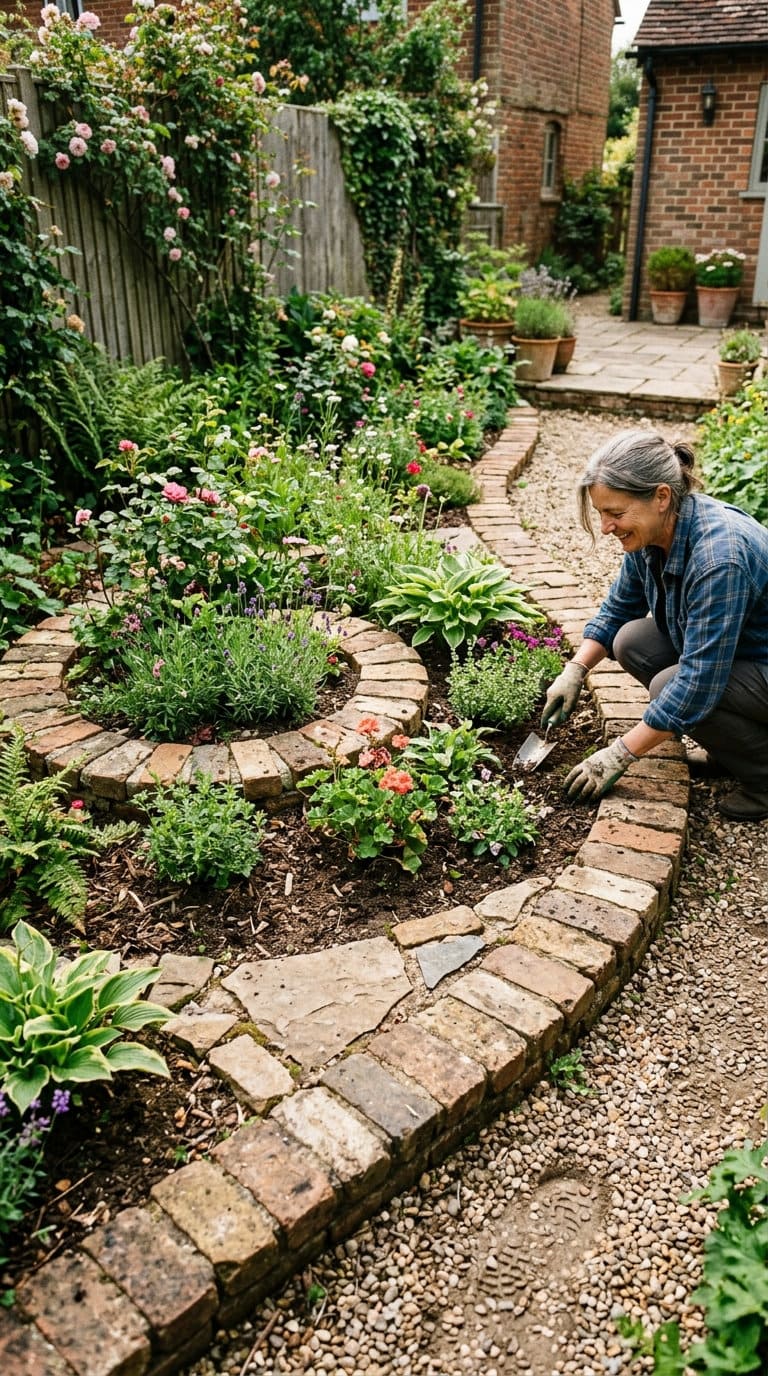
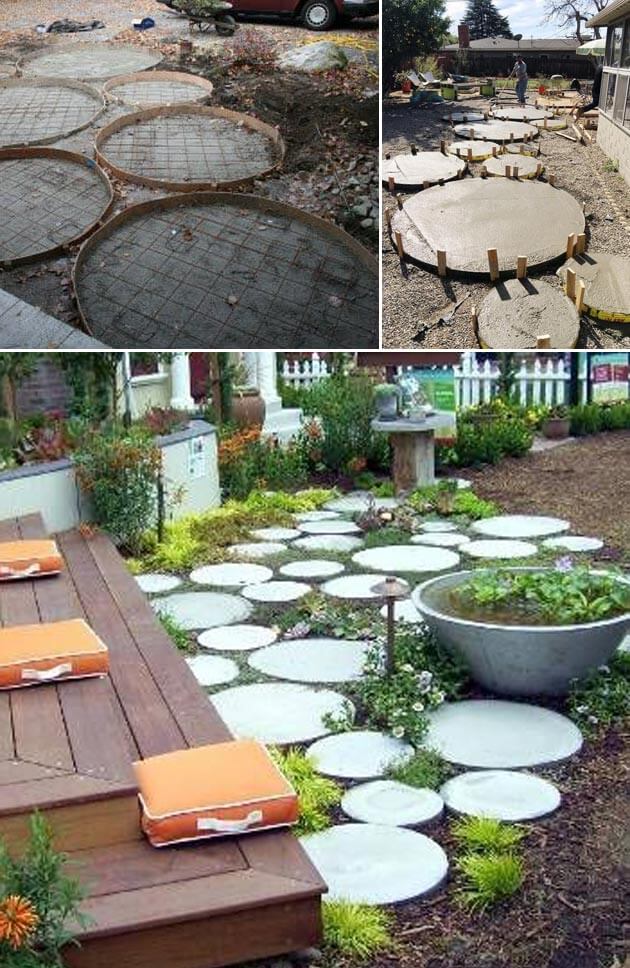
28. Circle Pavers
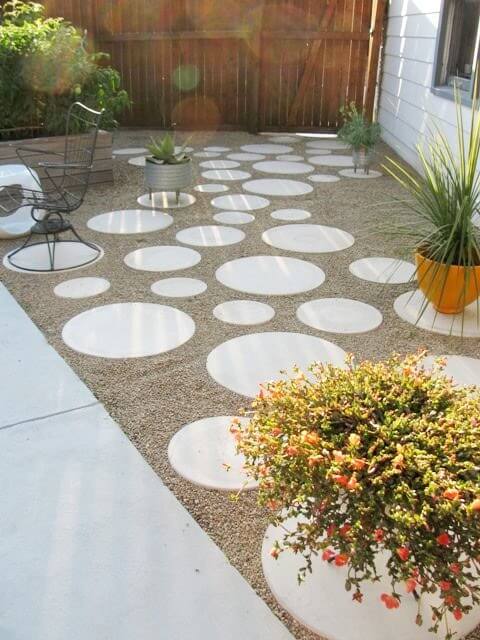
Round paver units or a circular cutting pattern in standard pavers create a genuinely different visual rhythm than the grid patterns most patios default to. Circular layouts generate more cut pieces at the edges than a straight grid does, budget for extra material waste on this pattern specifically.
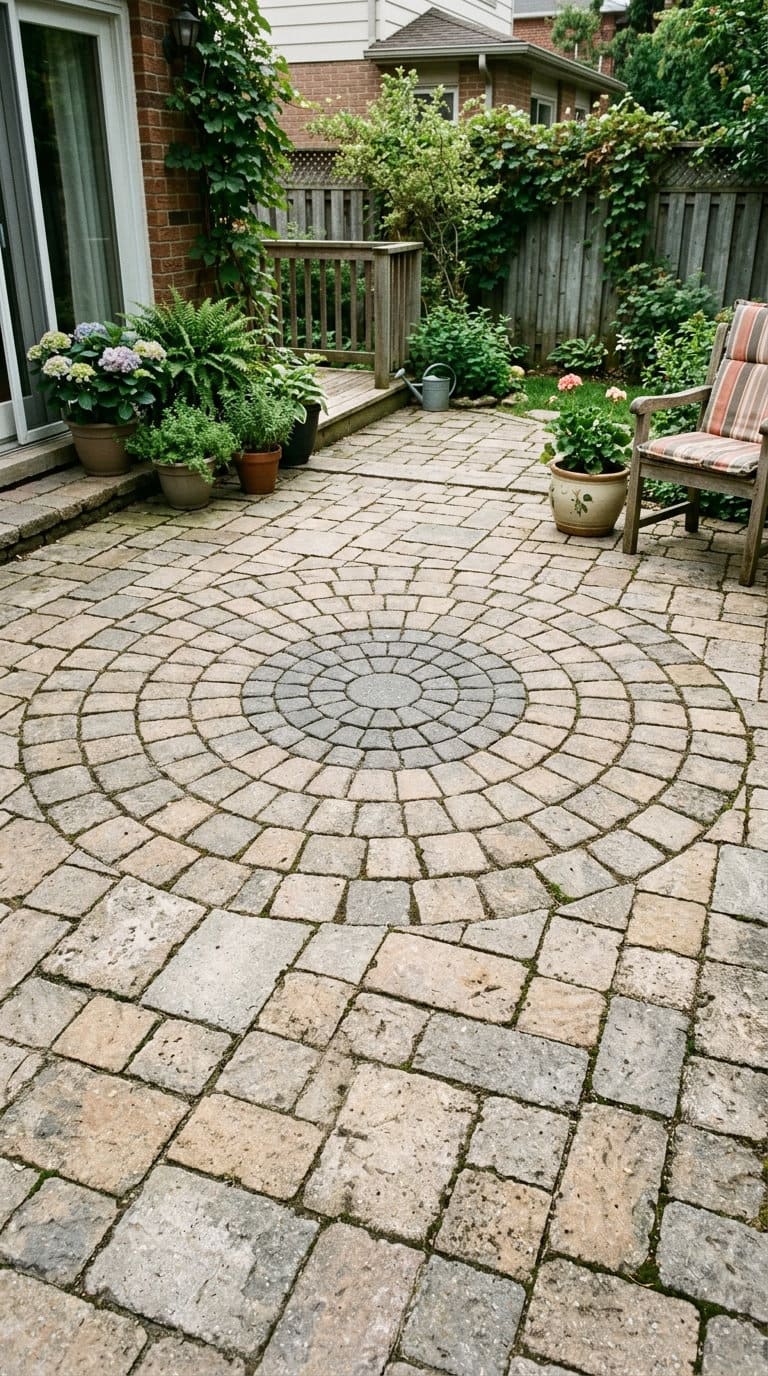
29. Stone and glass gateway
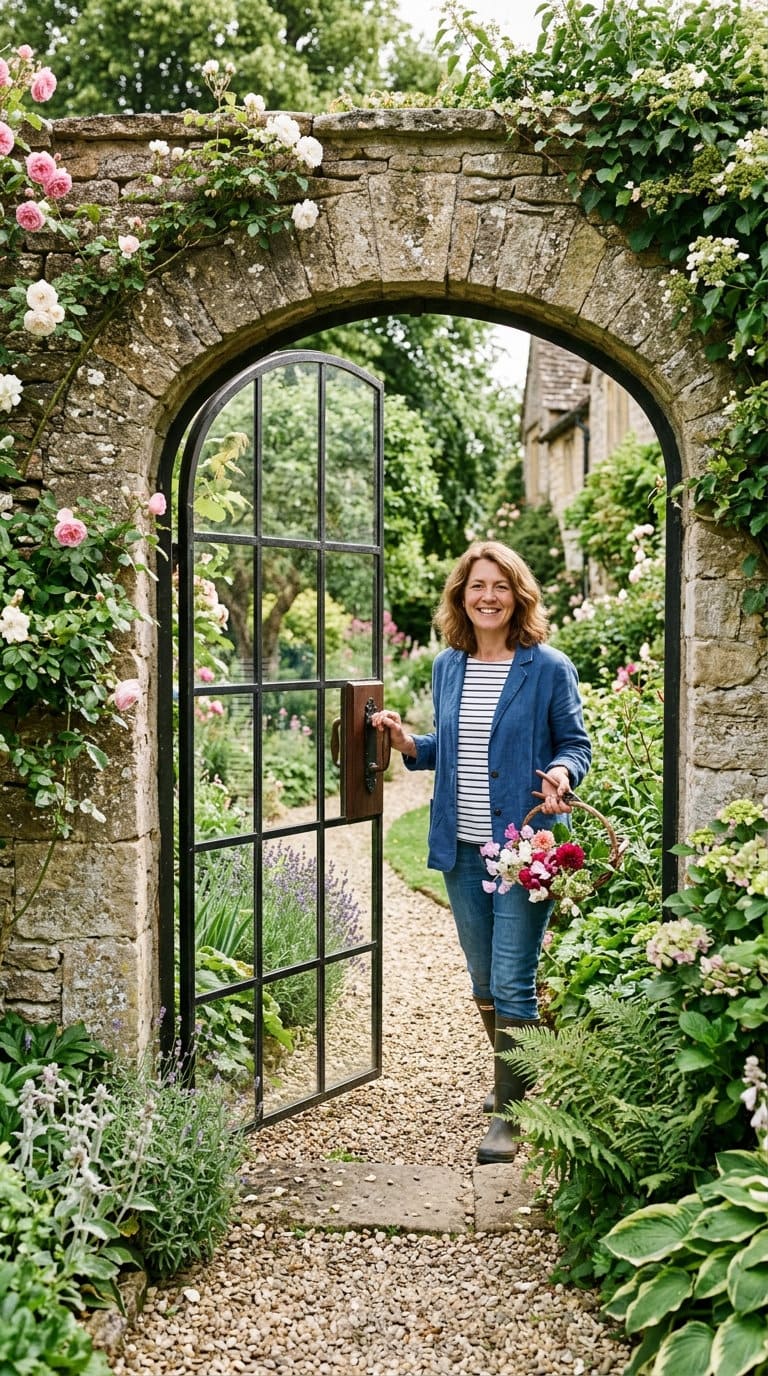
Combining natural stone with recycled glass aggregate or glass block accents at a garden entry point gives a genuinely striking transition moment between spaces. Keep glass elements out of direct high-traffic foot paths, tempered glass aggregate is durable but still worth treating as an accent rather than the primary walking surface.
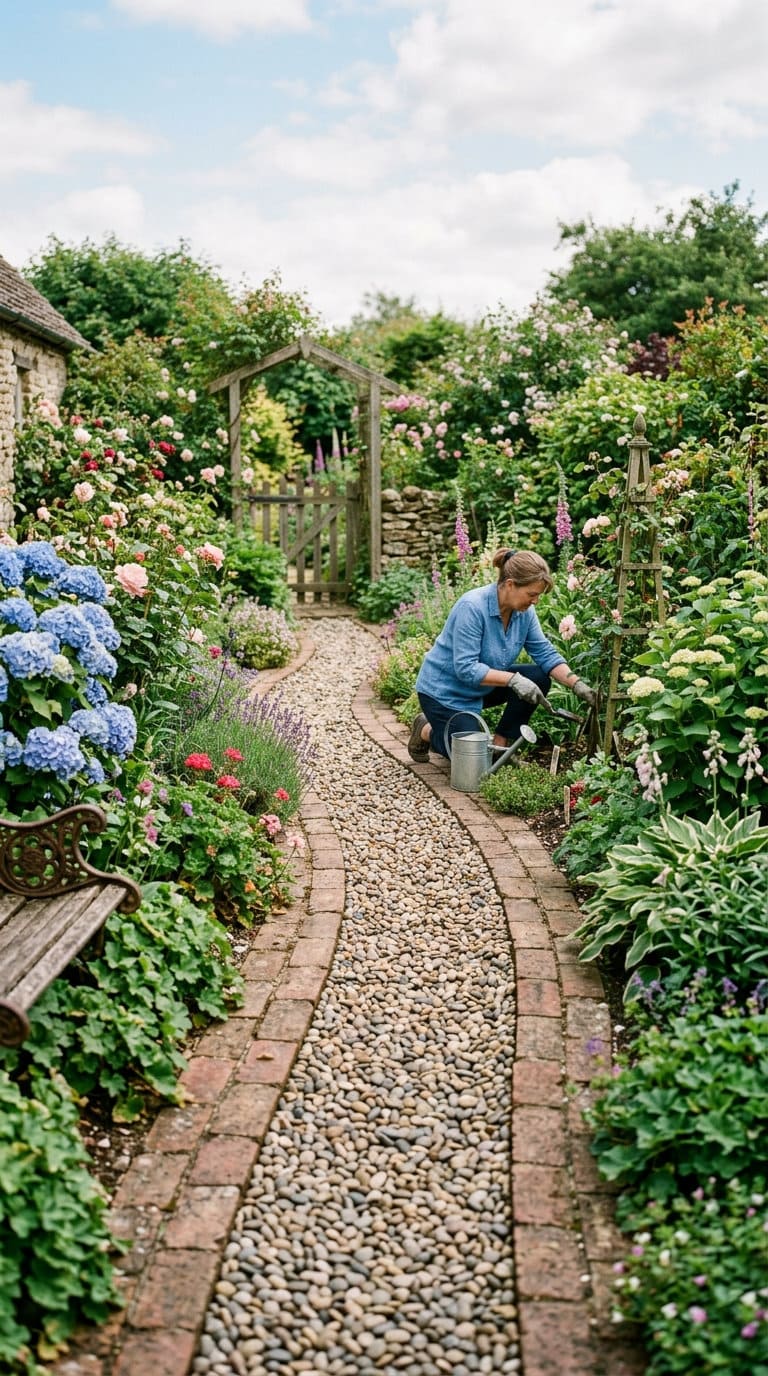
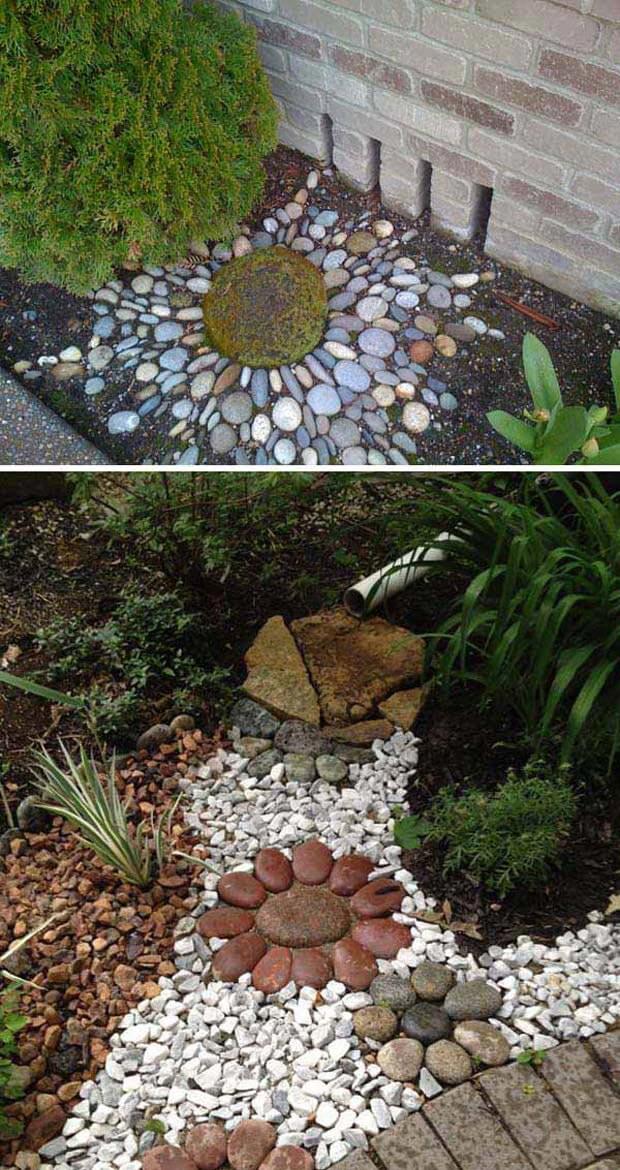
30. Bricks and pebbles for pathway
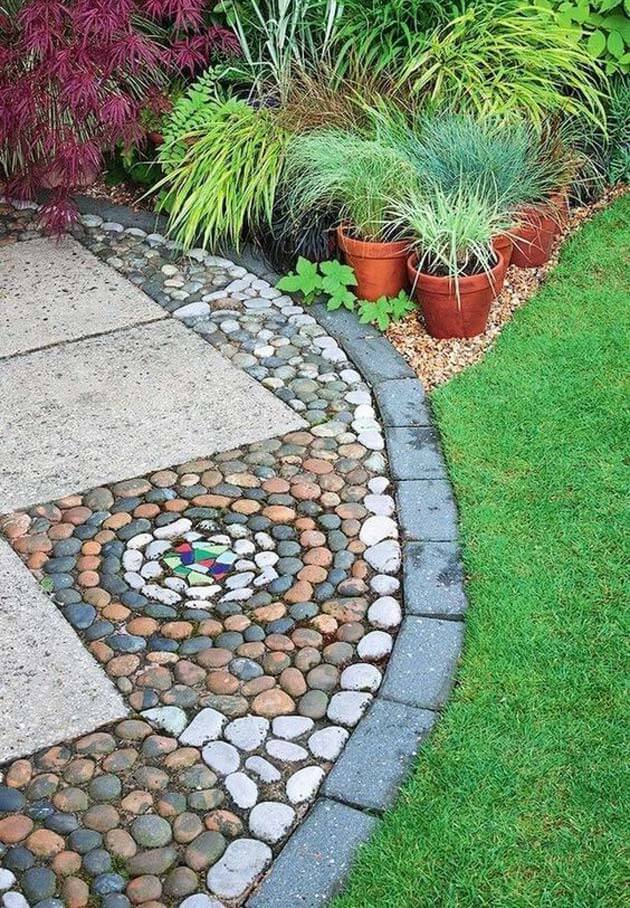
Combining brick edging with a pebble-filled center creates a genuinely low-cost pathway that still reads as intentional and finished rather than a bare gravel strip. Apply the same base-depth logic from section 1 under the brick edging specifically, an unstable edge is what lets a pebble pathway spread and lose its shape over time.
31-37. More patio decorating ideas with patterns
A few more things worth planning around
For more stamped concrete-specific patterns, stamped concrete patio ideas goes deeper.
If poured concrete in idea 2 or 18 appealed to you, concrete patio ideas has more variations. For the painted and stained ideas, stained concrete patio colors is worth a look. If a fire pit is part of your plan per idea 19, paver fire pit ideas covers that pairing in more depth.
For paver-specific installation approaches, paver patio ideas on a budget is a good next stop. For the brick-focused ideas, brick patio ideas has more pattern options, and flagstone patio ideas covers more natural stone patterns. For the pea gravel and pebble ideas, gravel patio ideas goes further, and for the pathway idea, garden path ideas has more.
FAQs
How far apart should control joints be in a concrete patio?
For a standard 4-inch slab, joints typically run every 8 to 12 feet, cut to about a quarter of the slab’s depth within 24 hours of the pour. A crack that appears exactly at a control joint is normal, that’s the joint doing its job, not a sign of a bad pour.
How much should a patio slope for drainage?
The standard minimum is ¼ inch of fall per foot, sloping away from the house for the first several feet. Skipping this lets water pool against the foundation, a real cause of basement water damage and soil erosion under the slab.
How often does stamped concrete need to be resealed?
Most sources agree on roughly every 2 to 3 years for general use. A practical signal beats a fixed calendar, if the color looks dull or water stops beading and soaks into the surface instead, it’s time to reseal.
References
- https://www.thespruce.com/beautiful-concrete-patio-ideas-and-designs-4049293
- https://somuchbetterwithage.com/painted-concrete-patio-floor-ideas/
- https://www.familyhandyman.com/patio/15-perfect-patio-designs/
- https://ideastand.com/patio-floor-ideas/
- https://thelilhousethatcould.com/2011/03/03/spring-fever/
- https://abeautifulmess.com/2016/08/painted-patio-tile-diy.html
- https://www.finegardening.com/article/create-a-pebble-mosaic
- https://stoneartblog.blogspot.com/2011/07/making-mosaic.html?m=1
- https://mymodernmet.com/johnny-clasper-rock-formations/
- https://modfrugal.com/2011/03/patio/housepet-patio-garage-side-aug15/
- https://www.pinterest.com/pin/720083427897174067/?lp=true
- https://diy-enthusiasts.com/diy-garden/garden-natural-pebble-mosaic-stepping-stones/
- https://www.cuttingedgestencils.com/blog/add-pattern-to-your-patio-using-a-tile-stencil.html
- https://valeaston.typepad.com/.a/6a011168642488970c01156edfeb38970c-pi
- https://www.houzz.com/hznb/projects/mandala-patio-project-pj-vj~112009
- https://rockmolds.com/lava_stone_driveway/
Never miss an update — choose FarmFoodFamily as your preferred source on Google.
How it works: Tap the button below to open Google's settings page, then check the box next to FarmFoodFamily.
Tap the checkbox to turn it blue — that's how you know it's set.