20+ Shrubbery Landscaping Ideas That’ll Instantly Elevate Your Yard

Type “shrubbery landscaping ideas” into Google and you’ll mostly get plant catalogs wearing a listicle costume: 25 shrubs, 46 shrubs, take your pick, plant it, good luck. That’s not design, that’s a nursery inventory with a headline slapped on top.
This piece is about the other half of the problem nobody covers: how you actually arrange, space, and combine shrubs so the yard reads as designed instead of just planted.
I pulled in a couple of real landscape professionals for the parts where “just wing it” gets expensive, and I cut the list down from what you’ll usually see. Fifteen ideas, no padding, no repeats.
15 Stunning Shrubbery Landscaping Designs to Boost Curb Appeal
1. Layered Shrub Borders for Depth and Texture
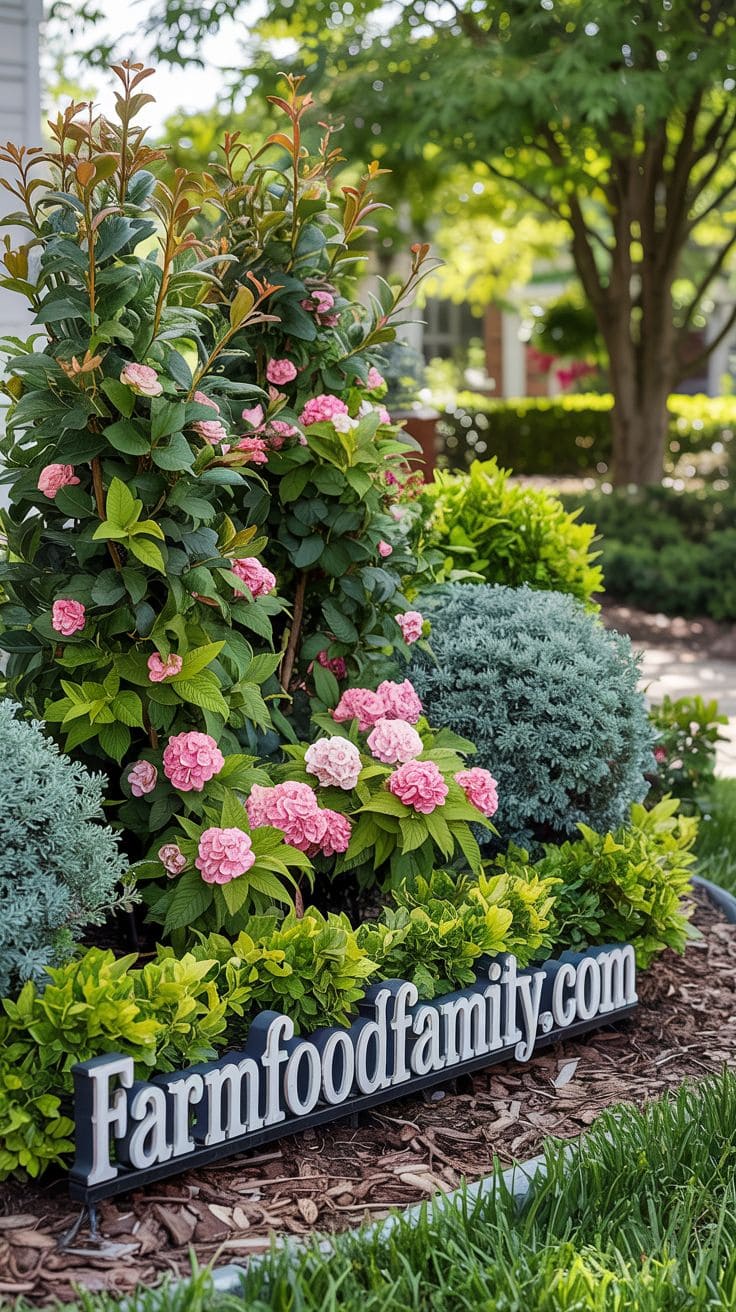
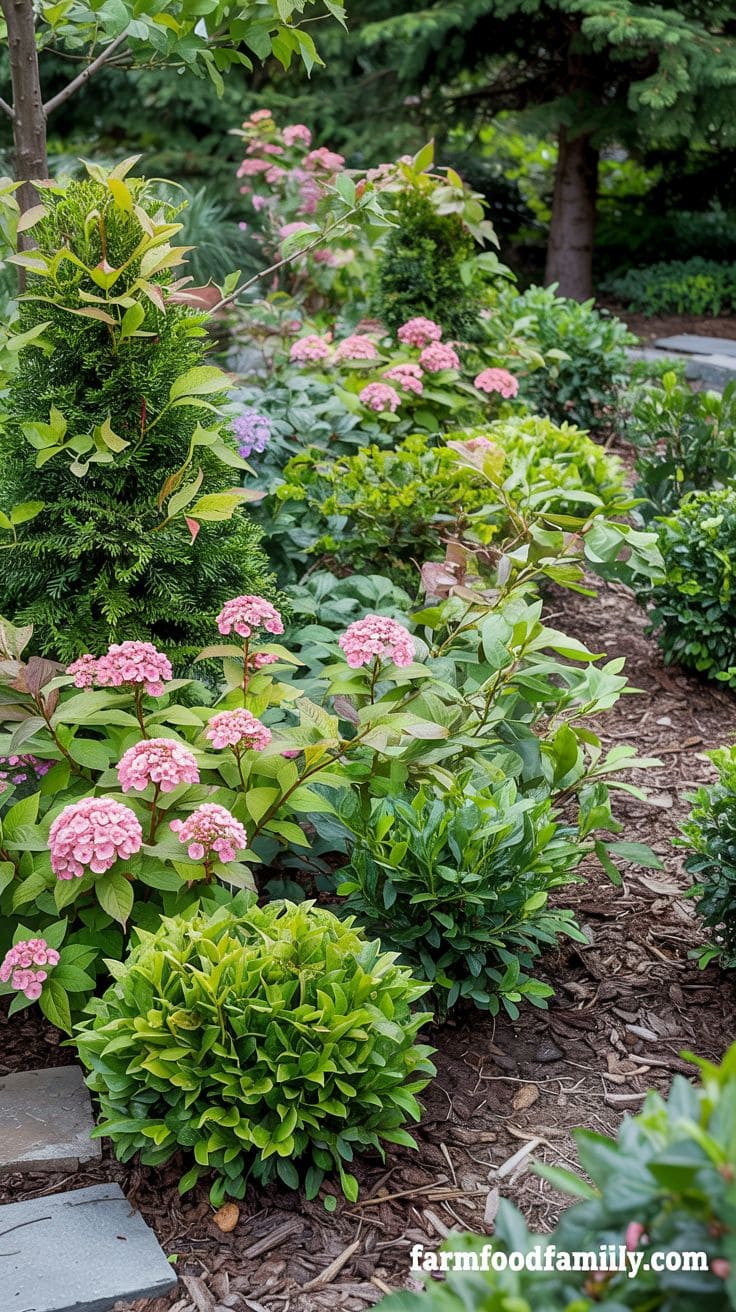
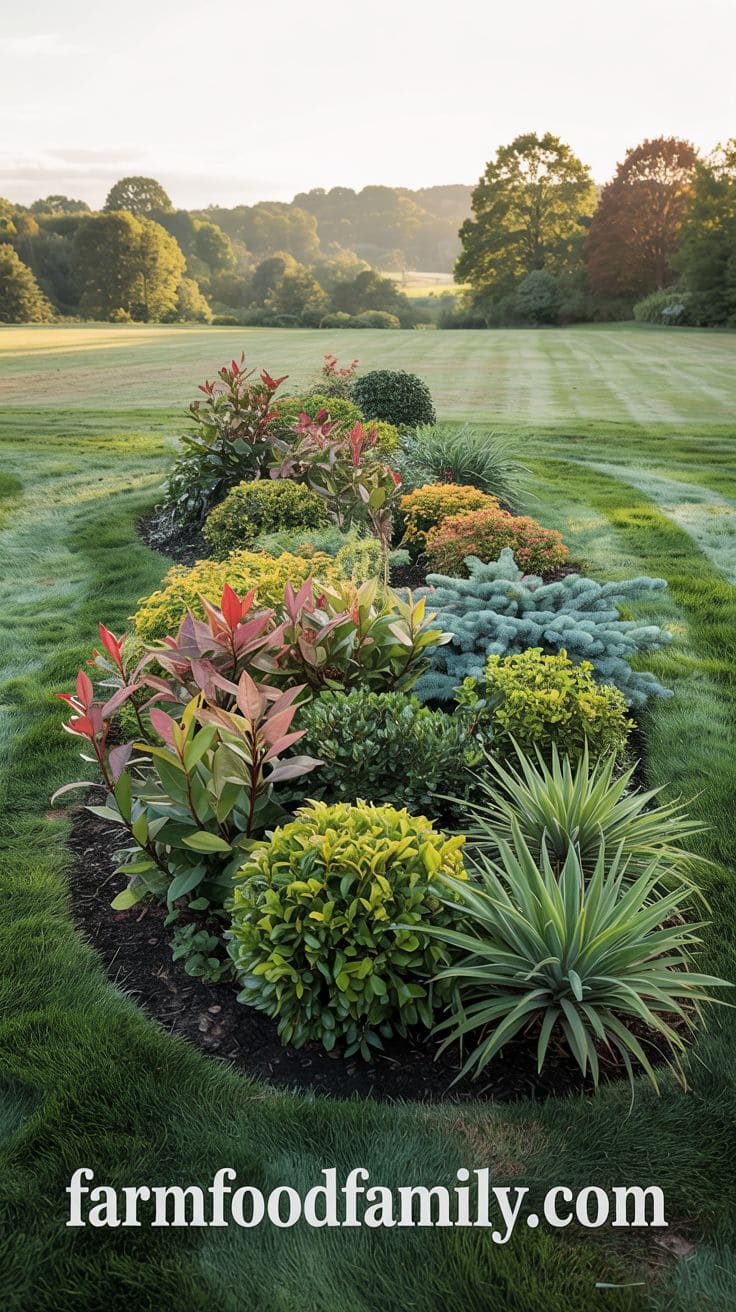
Layering shrubs of varied heights around the perimeter of your yard or garden beds will add dimension.
Begin with taller, bushier shrubs like viburnum or mock orange in the back, then progress to mid-height varieties before finishing with low-growing alternatives in the front.
This approach gives the environment a lush, full appearance and adds visual interest throughout the seasons.
You can combine evergreen and deciduous shrubs for year-round appeal, providing structure in the winter and pops of color in the spring and summer.
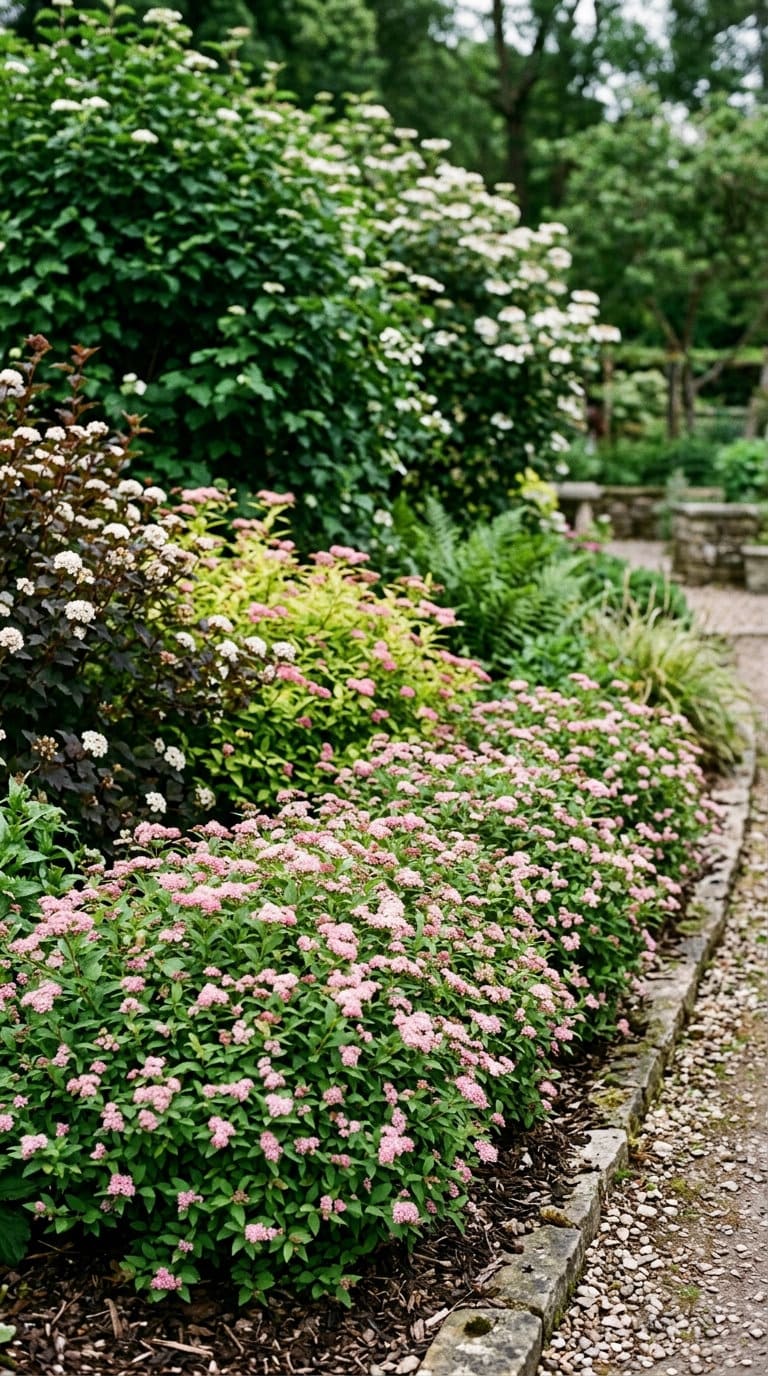
Mulch beneath improves contrast while retaining moisture and suppressing weeds.
This method works especially well near fences, along home foundations, or in large planting beds, where you want to break up the space without overwhelming it.
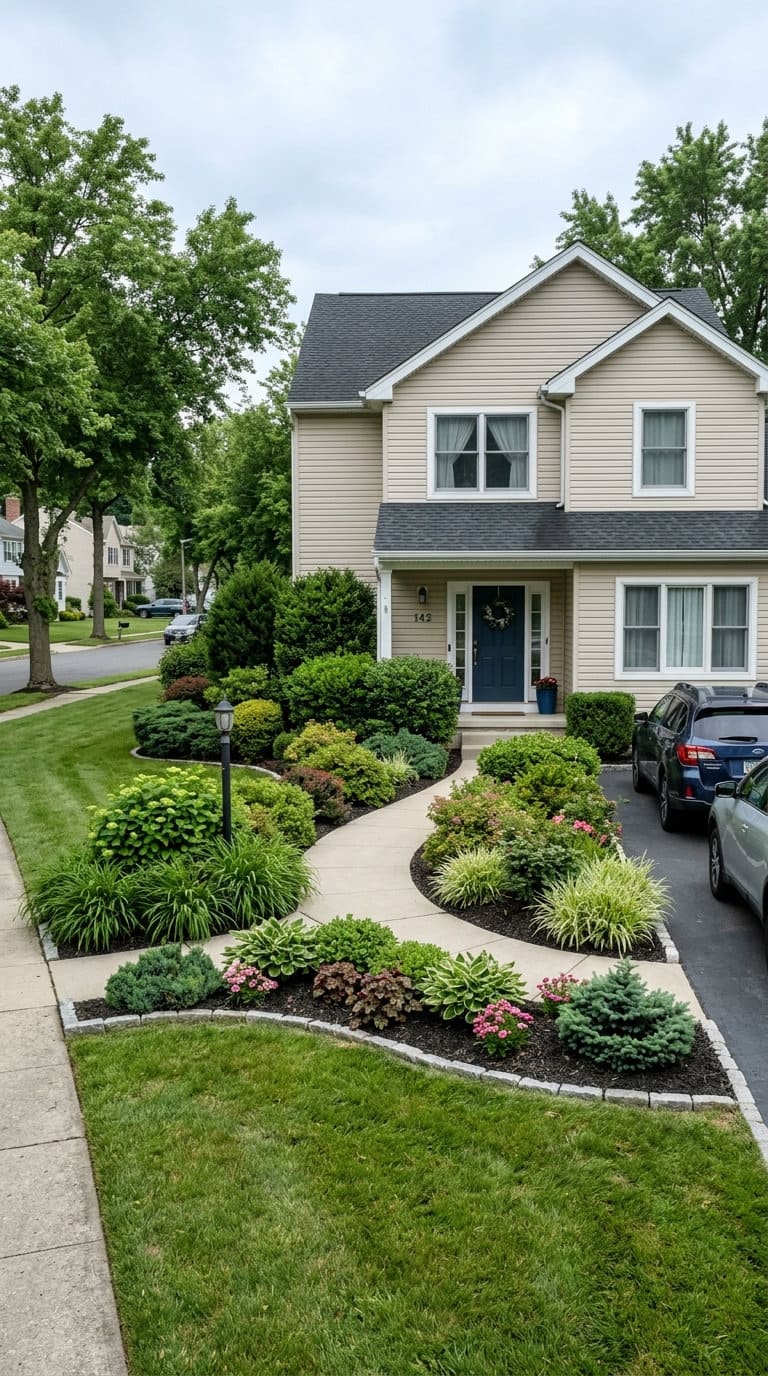
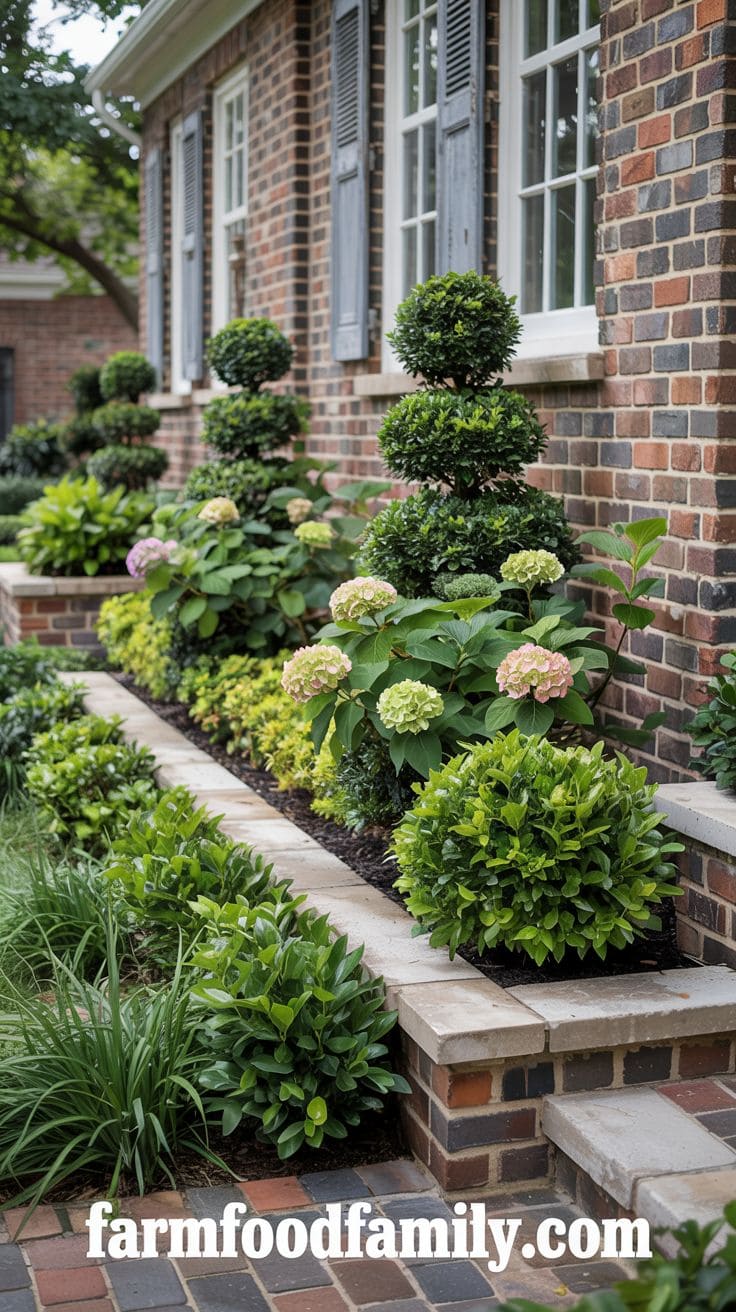
2. Foundation Planting using Shrubs
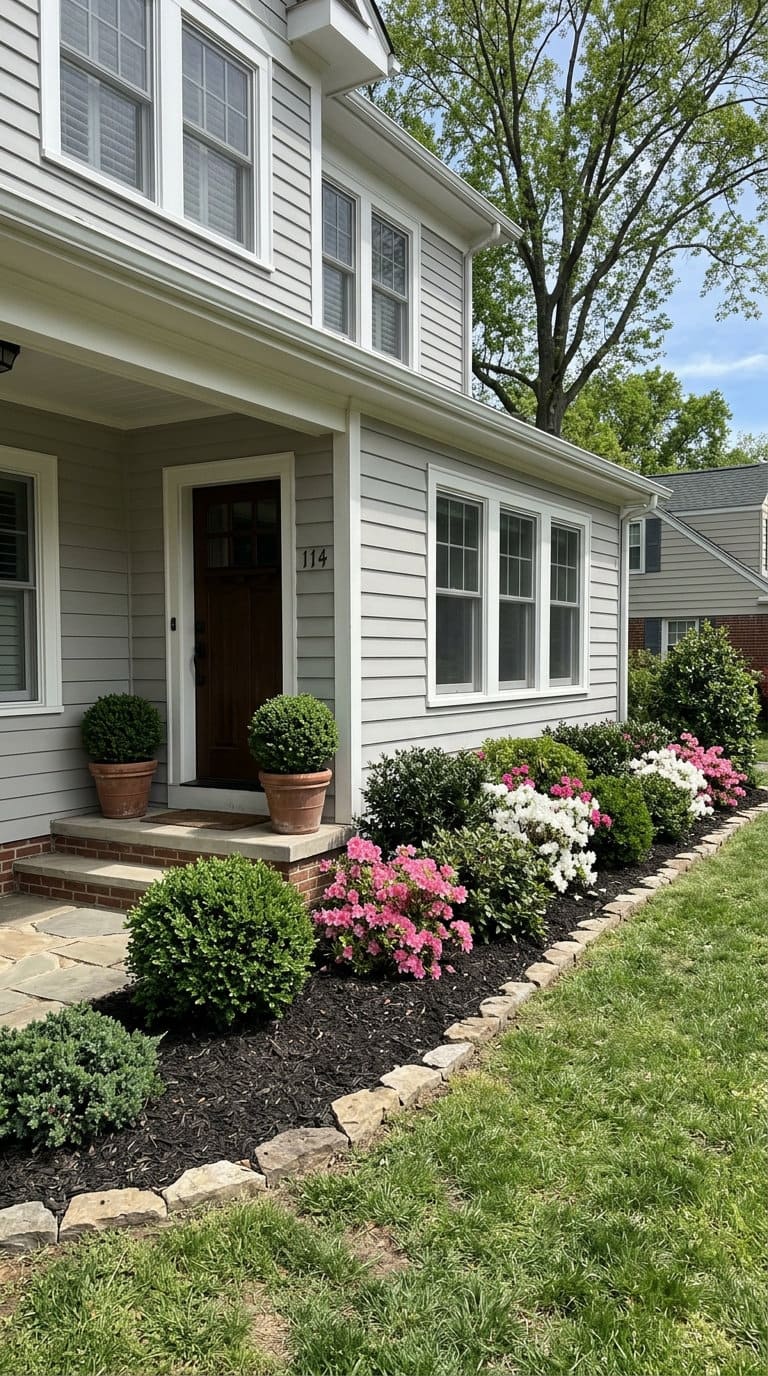
This is the one people mess up more than any other, and it’s not close. Christopher J. Cohan, a landscape architect and principal at Christopher J. Cohan Landscape Architects, told This Old House that not accounting for a plant’s size at maturity is probably the single most common homeowner mistake in foundation planting.
You buy a 2-foot boxwood, it looks perfect and proportional, and five years later it’s eating your window.
Rule of thumb: check the tag’s mature spread, then plant that shrub at least half that distance from the wall, more if it’s a fast grower. And to be clear, the actual foundation risk isn’t roots cracking concrete, most shrub root systems are too shallow for that, it’s moisture getting trapped against siding and soffits that never dries out, plus pest access along an overgrown wall line.
For the mix itself, Jeremy Christianson, a landscape designer with Michigan Landscape Design Services, recommends roughly 50% evergreens, 25% deciduous flowering shrubs, and 25% perennials for a foundation bed that holds structure year-round instead of going bare from November to March.
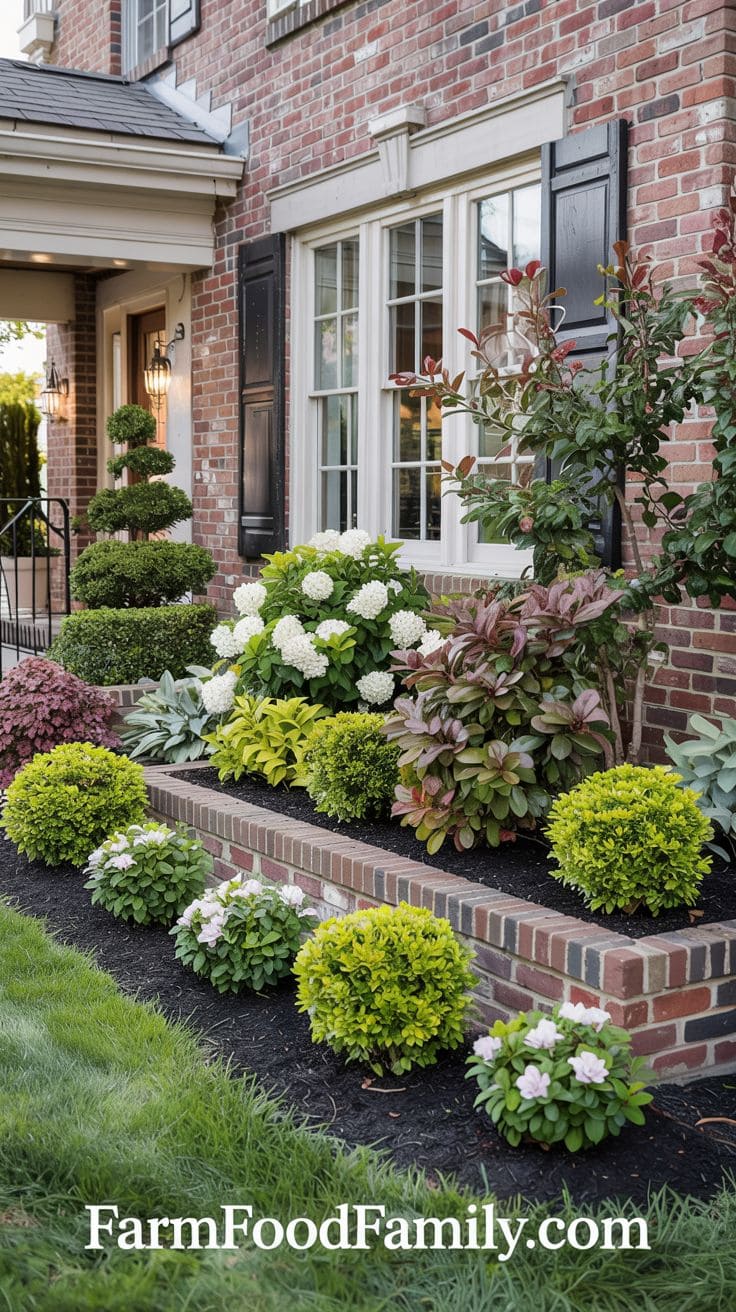
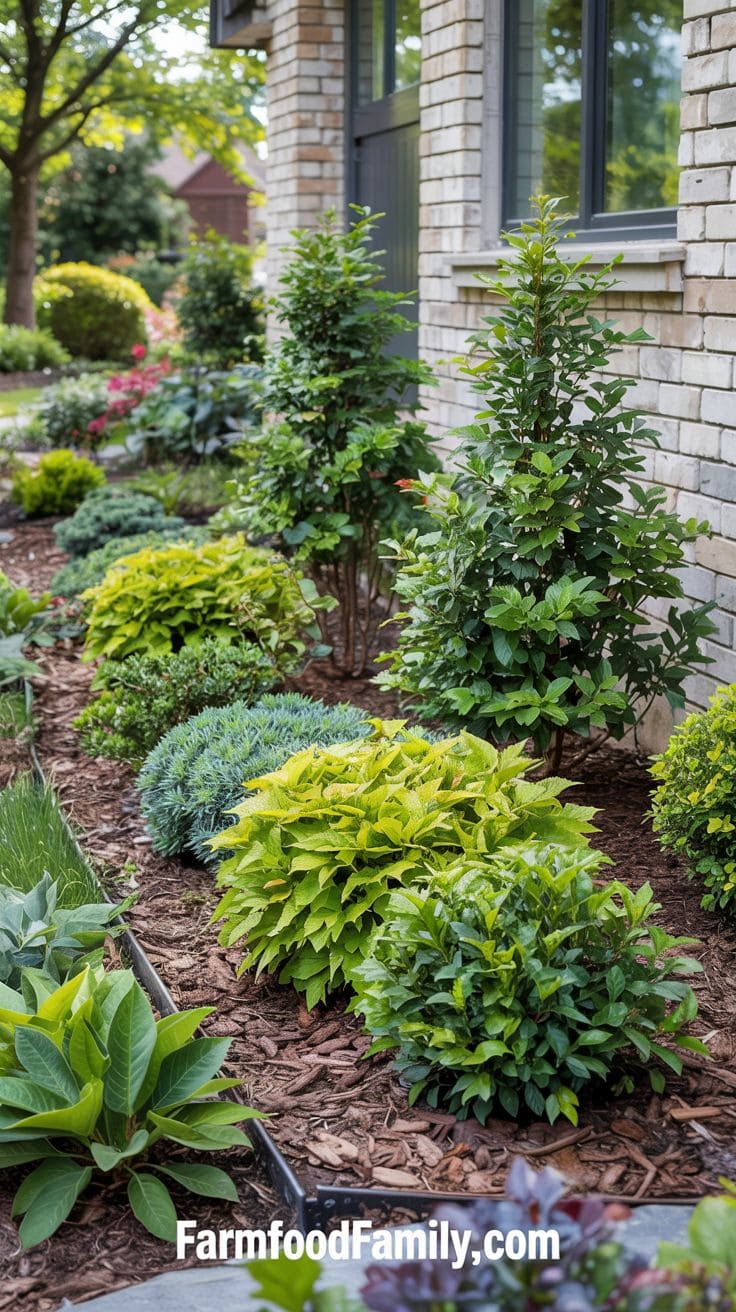
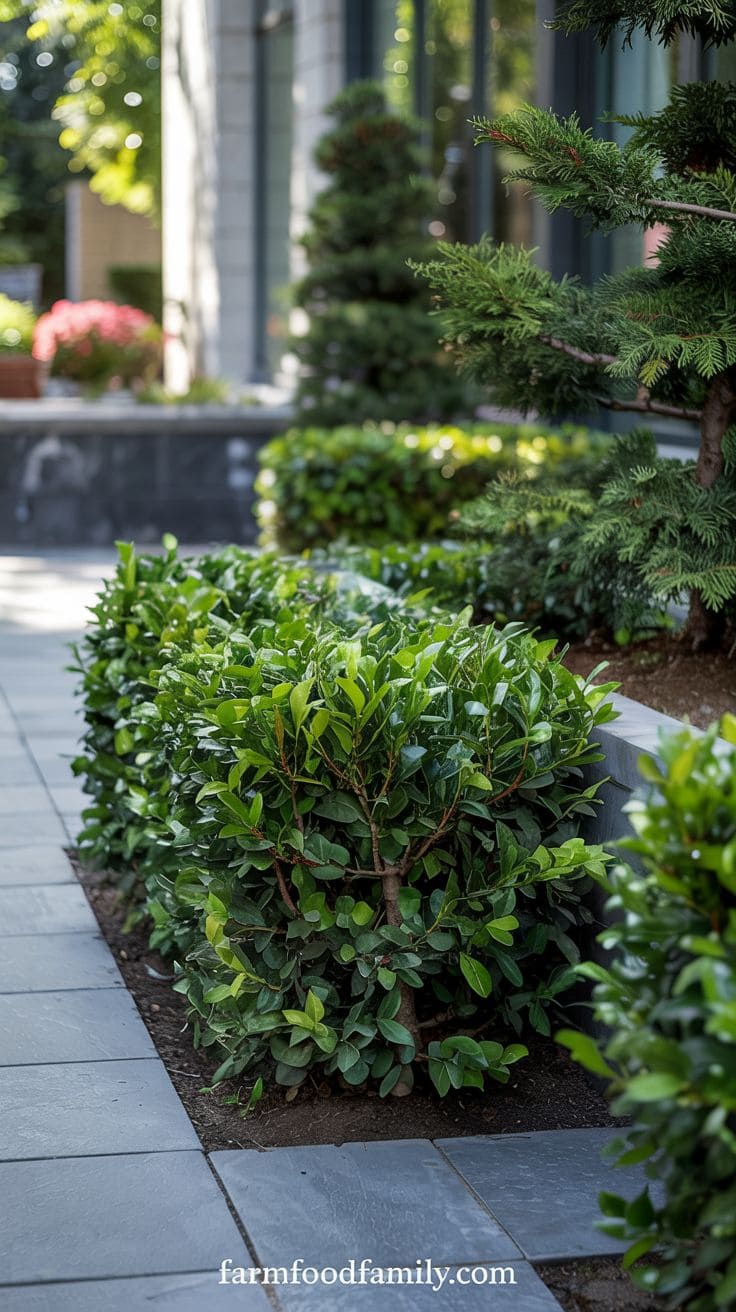
Using bushes to soften the base of your home results in a polished, coherent appearance.
To frame entryways, use symmetrical arrangements of boxwood, holly, or dwarf yews, with blooming plants like azalea or dwarf hydrangea in between for seasonal flare.
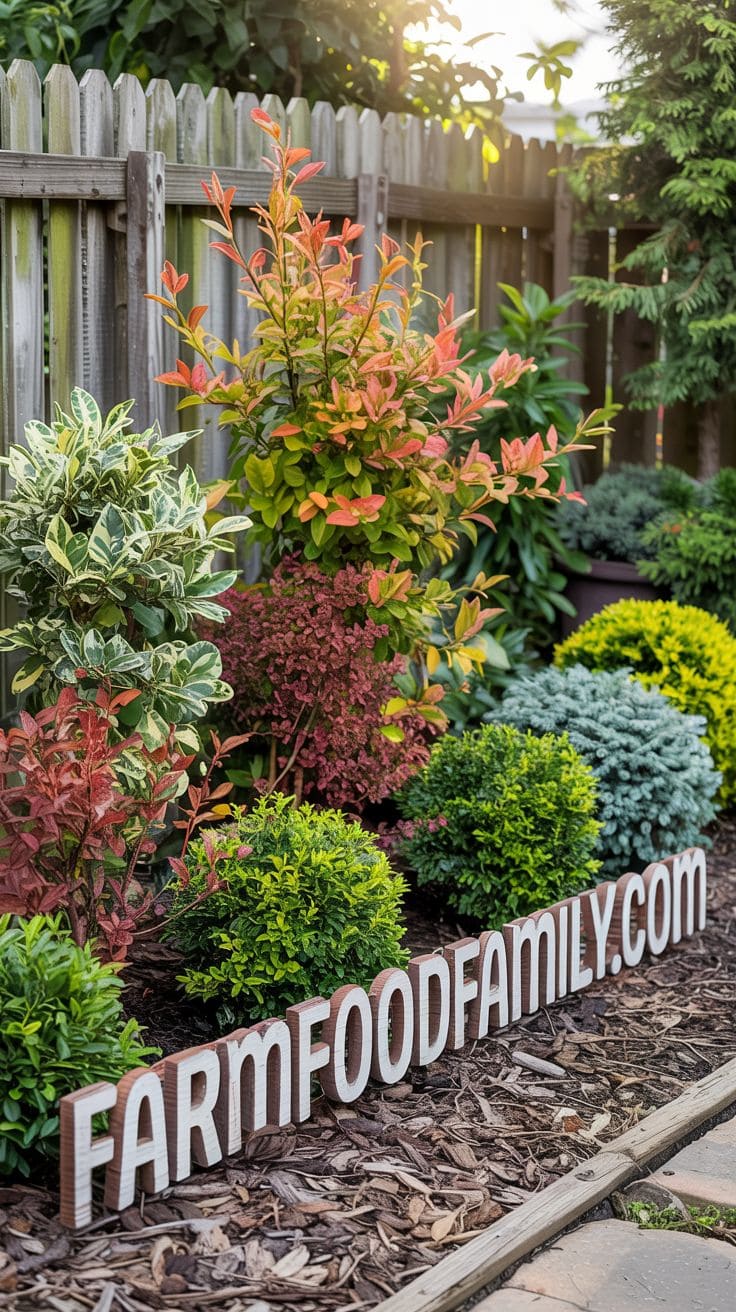
Consider pairing deep green evergreens with lighter green or even burgundy-leaved species.
This subtly draws the focus to the structure’s base. Avoid planting too close to the foundation to ensure airflow and future growth.
Mulch generously and edge the bed to get a tidy finish.
This traditional landscaping plan is not only visually pleasing, but it also provides insulation and curb appeal, making it an excellent choice for both aesthetic and practical purposes.
3. Shrub Islands on Open Lawns
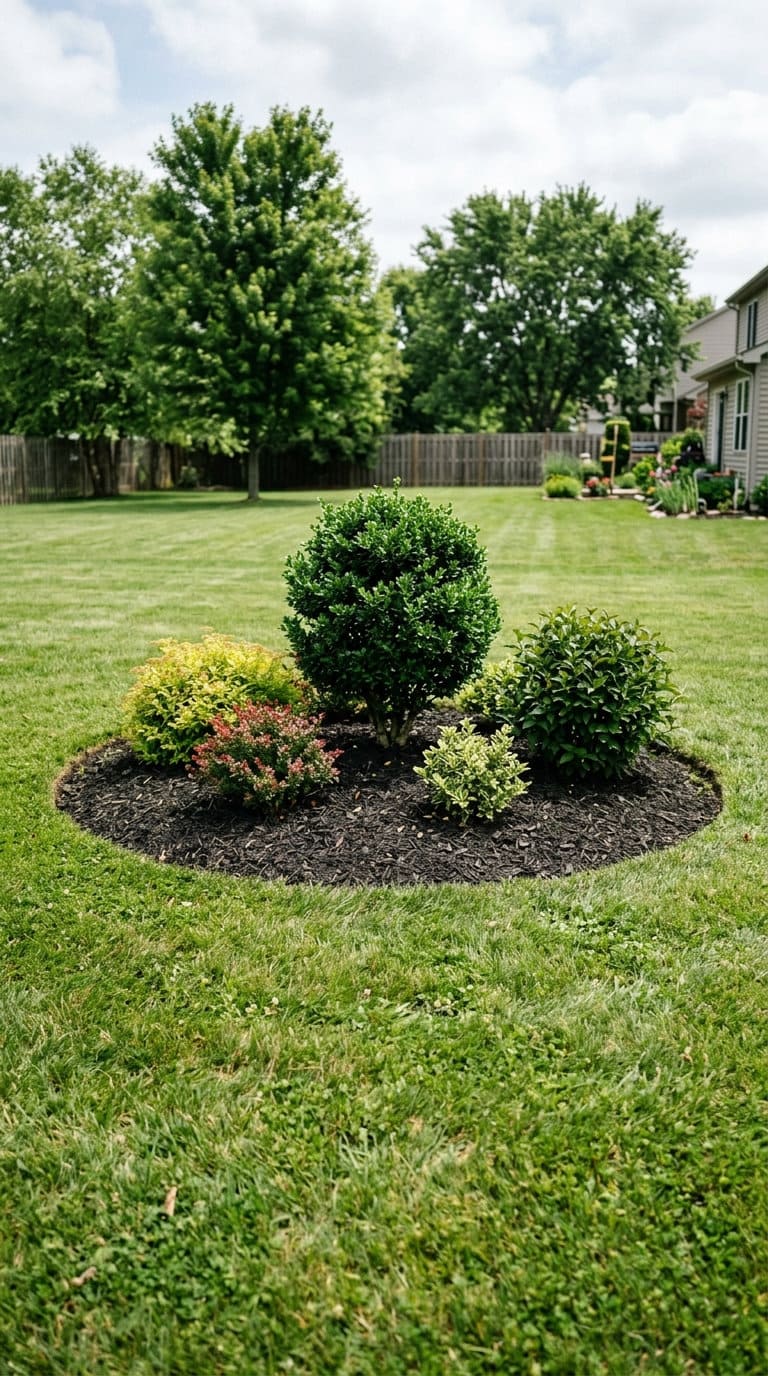
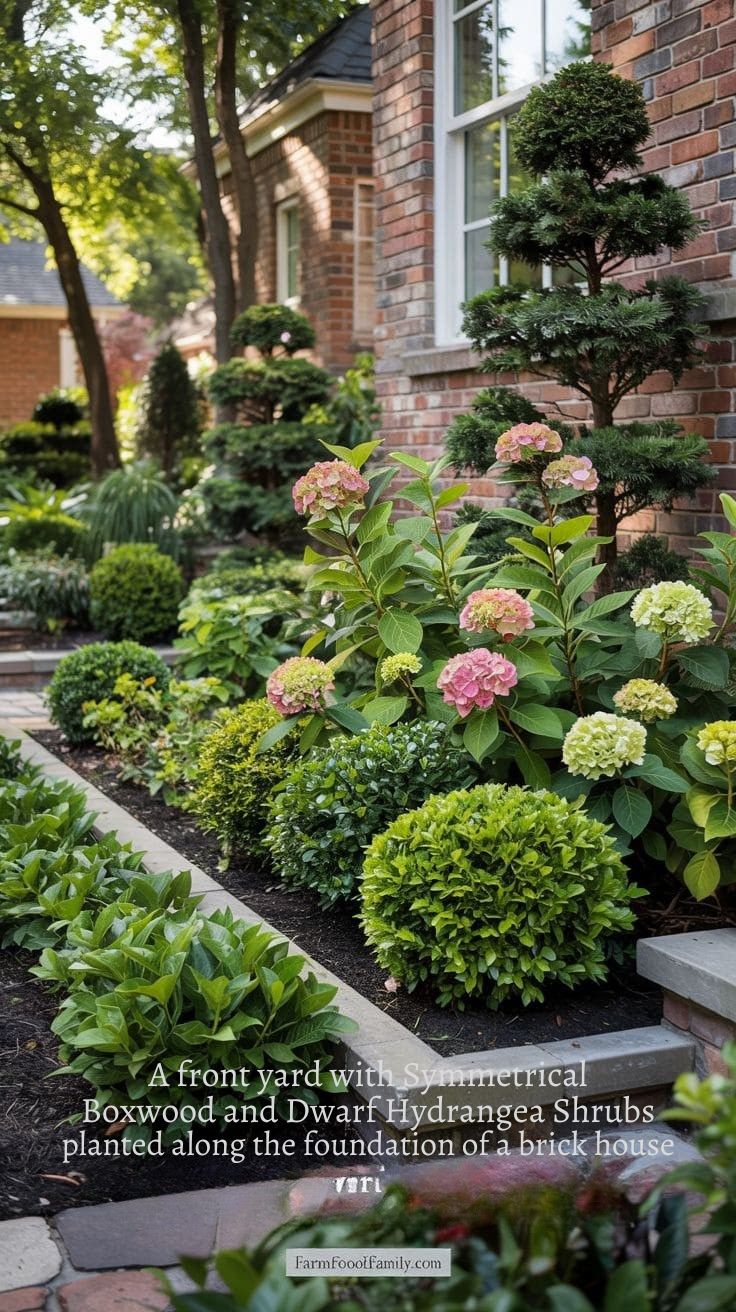
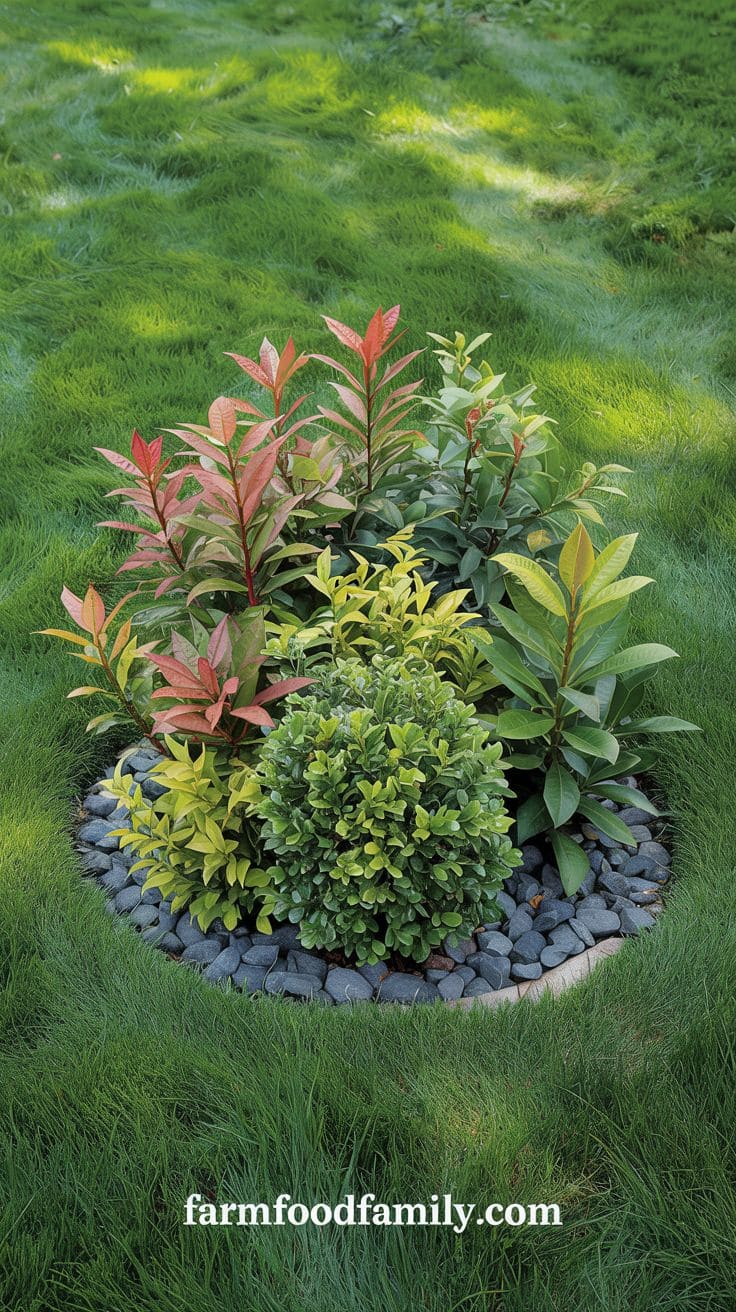
Not every shrub has to hug a wall. A freestanding island bed, an oval or kidney shape cut into open lawn, gives you a focal point without carving the whole yard into planting beds.
Three to five shrubs of varying height, anchored by one larger specimen in the center or off to one side (dead center reads a little stiff), works better than scattering single shrubs across the grass.
Mulch the whole bed edge to prevent grass creep, and keep the island’s longest axis pointed toward wherever people actually look at the yard from, the front window, the driveway approach, whatever that is for your house.
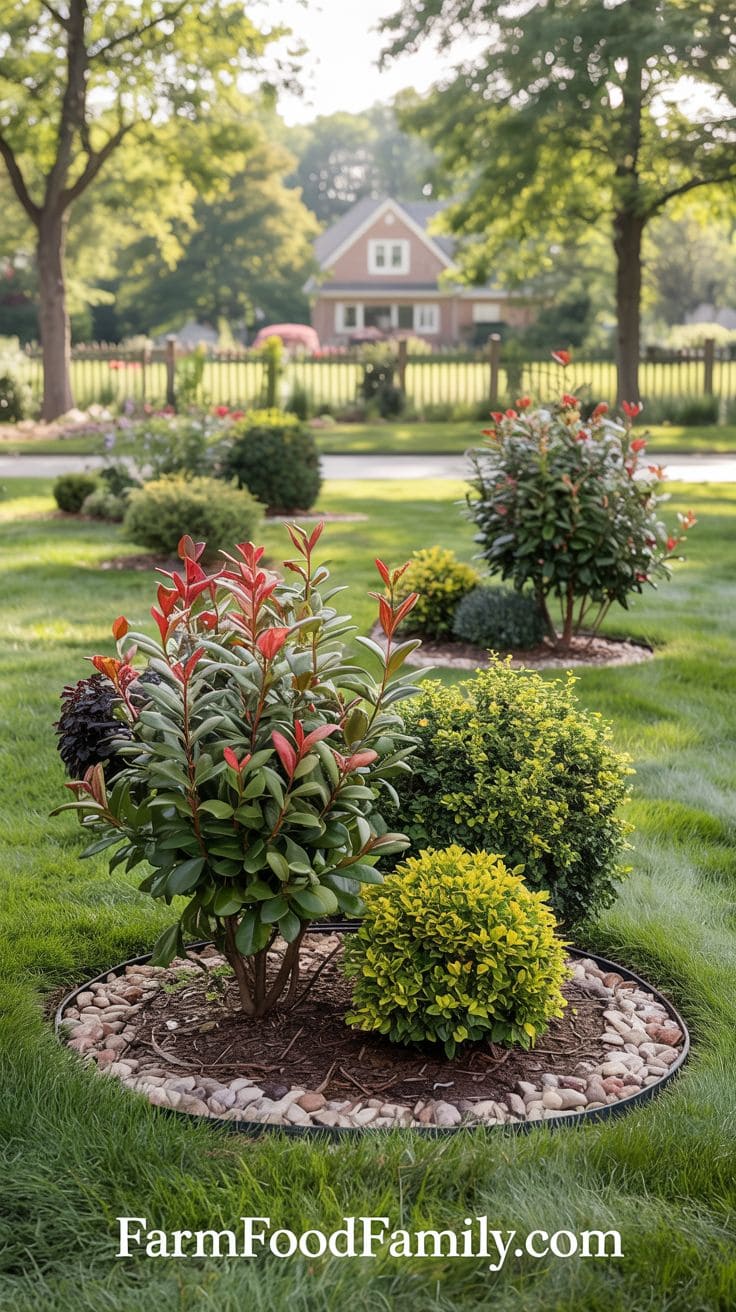
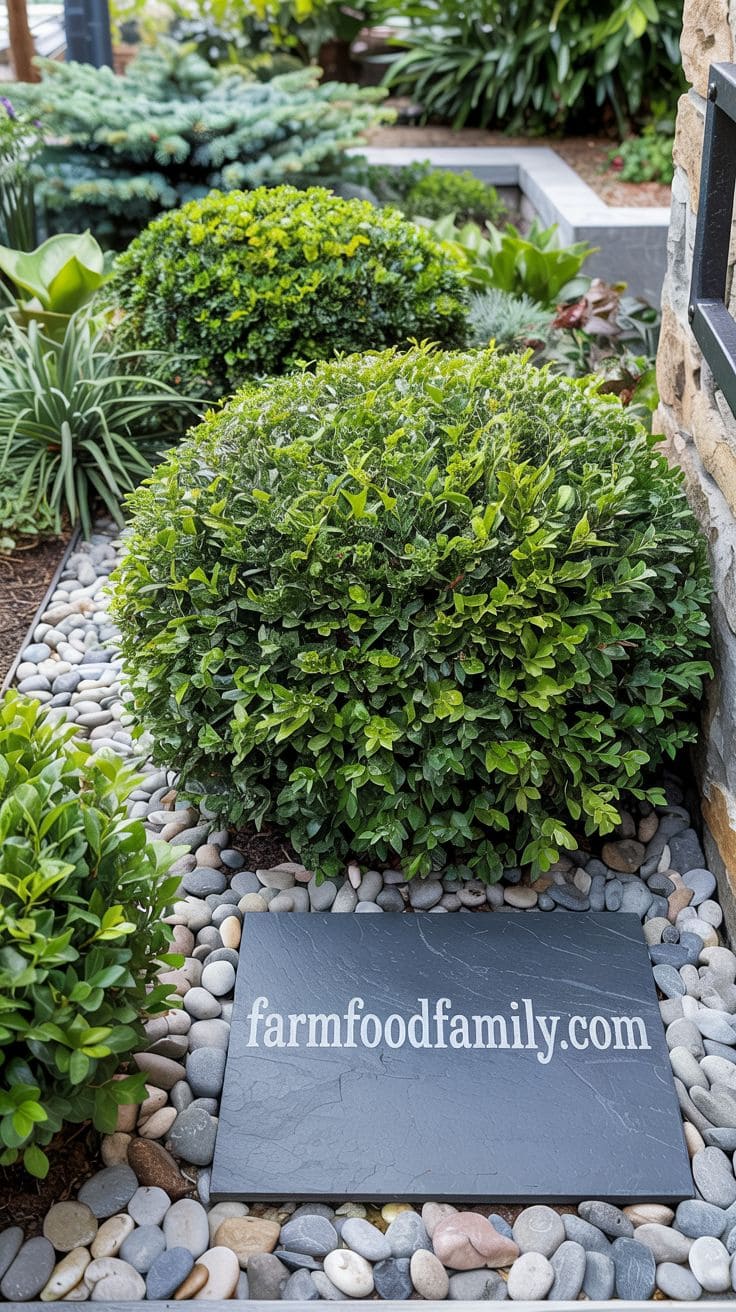
Instead of a sea of grass, divide your lawn into one or more circular or oval shrub islands.
Choose bushes with a wide range of leaf forms, sizes, and colors, such as red-tipped photinia, golden euonymus, and deep green inkberry holly.
Create a natural, balanced mound by placing taller bushes in the center and lesser ones around the outside.
To define the island and keep grass from encroaching, use decorative gravel or mulch.
These shrub clusters perform well in front yards or big side yards, reducing mowing and providing visual anchoring.
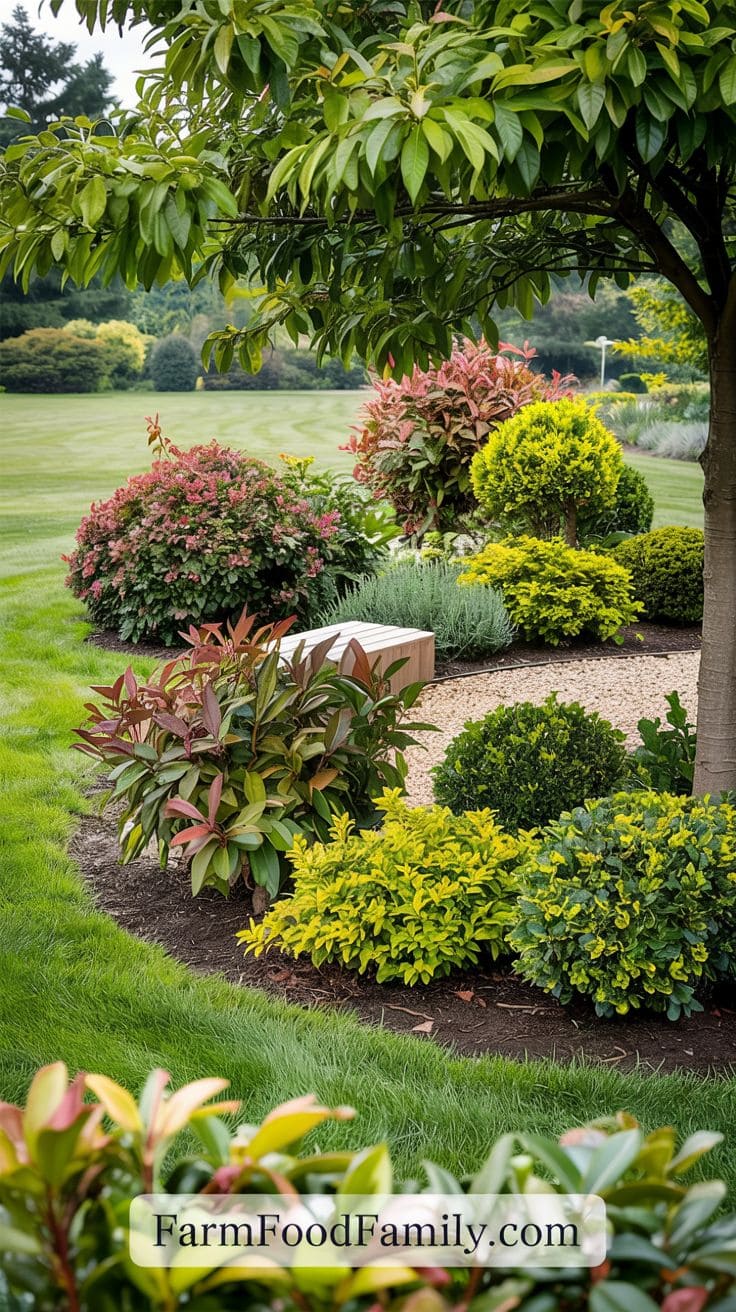
A properly placed bench or garden statuary in the center can make one of these islands into a mini-retreat area or an attractive focal point.
4. Evergreen Privacy Screens
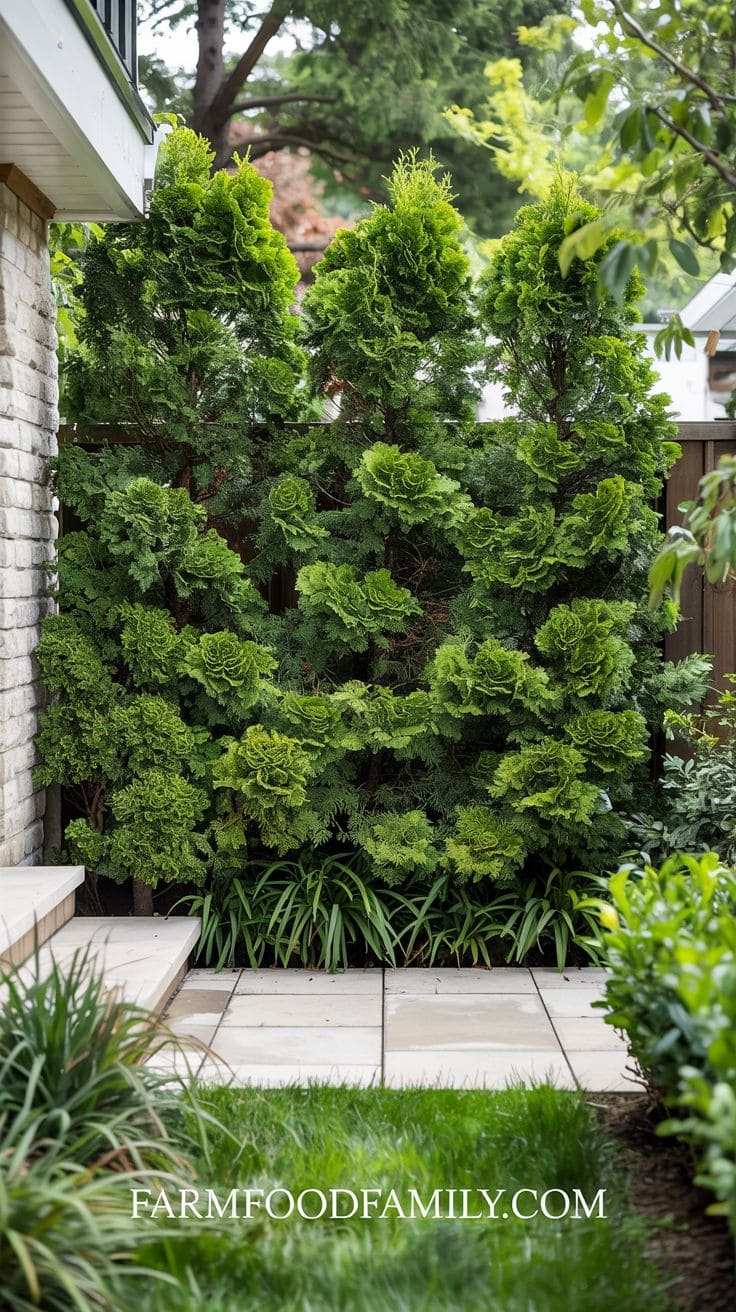
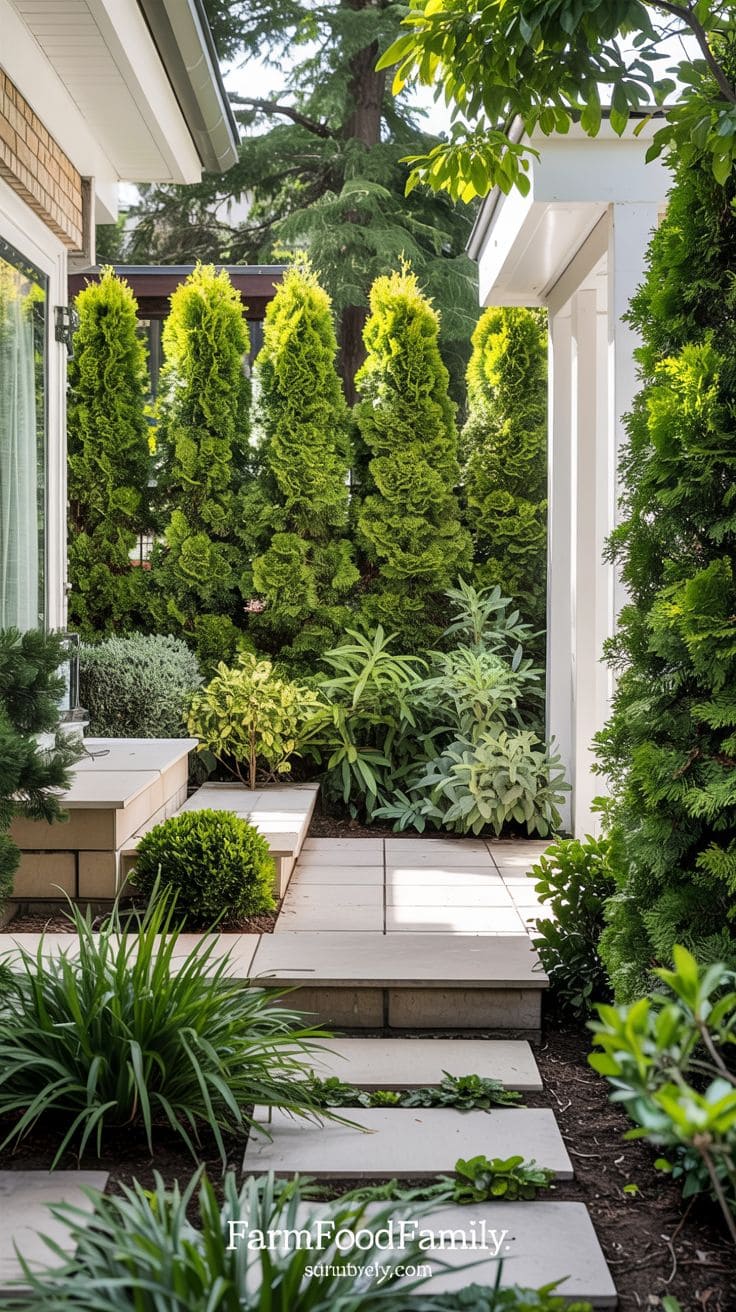
Tall, dense bushes such as arborvitae, privet, and laurel provide excellent natural privacy screens.
Plant them in staggered or straight rows along property lines, patios, or pools to screen undesired views and reduce noise.
If you want speedy results, choose fast-growing types, but be sure they are appropriate for your region’s climate and soil type.
Evergreen shrubs provide year-round coverage and are an excellent alternative to fencing when you want a more natural look.
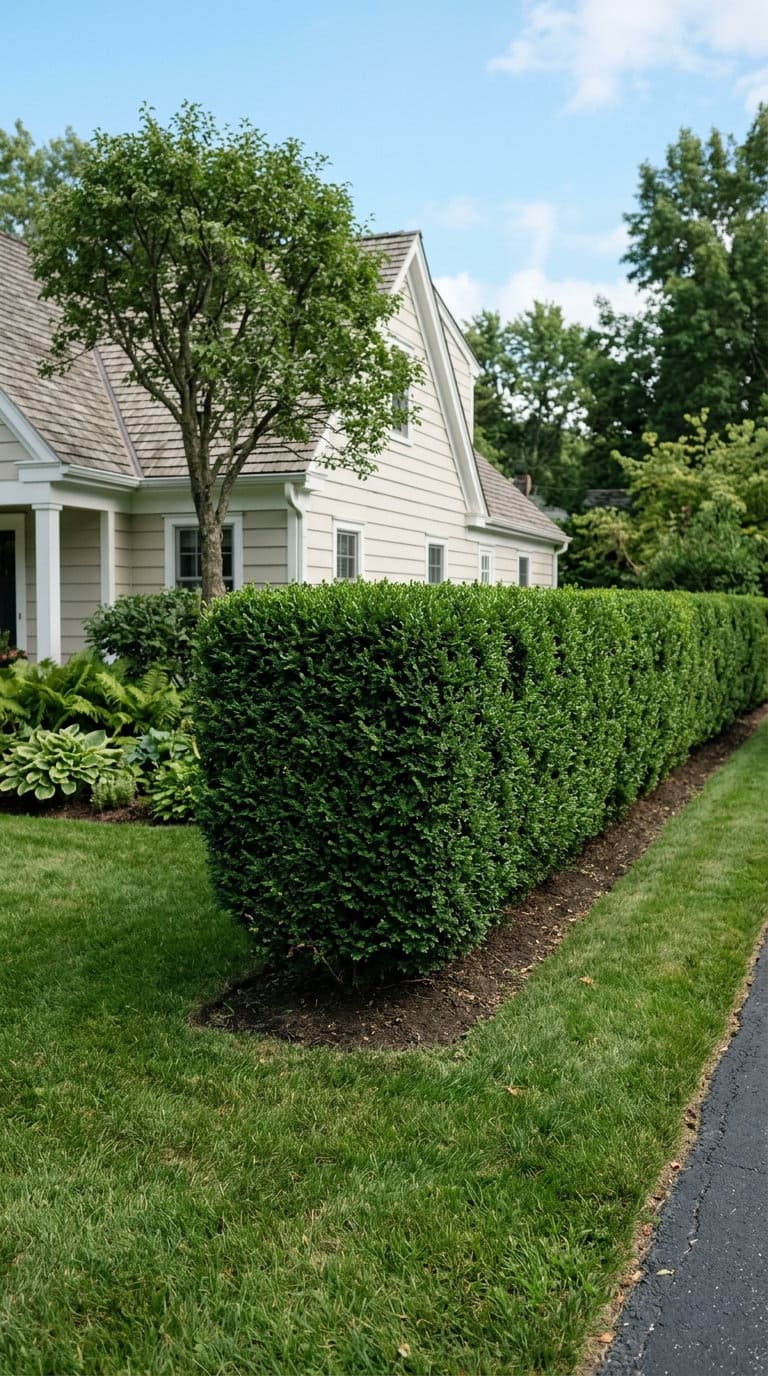
To maintain a clean appearance, prune them once a year, or allow them to grow organically for a softer, forest edge.
Layer decorative grasses or flowers in front to provide depth and color contrast.
5. Flowering shrubs for cottage-style seasonal color
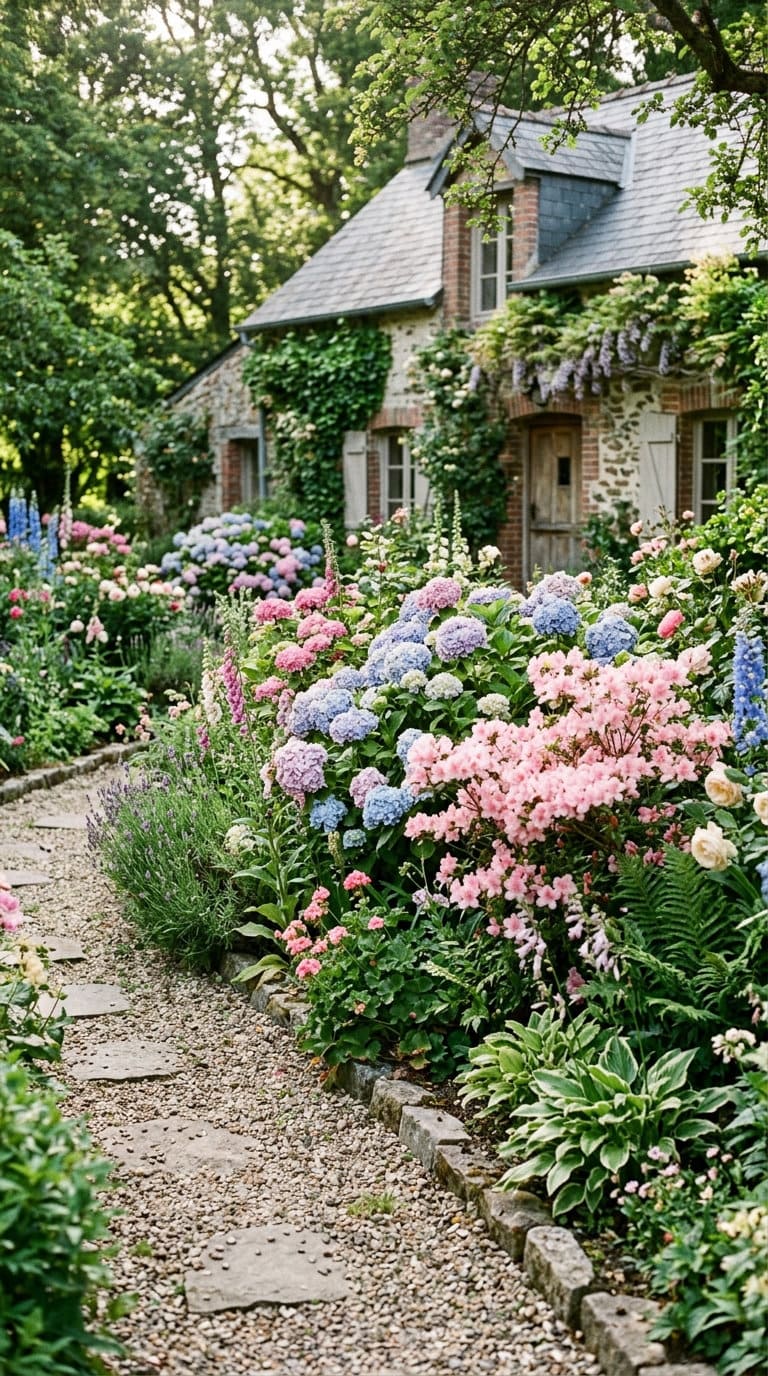
If you want that loose, layered cottage-garden feel instead of a manicured formal bed, lean into flowering shrubs that bloom at different points across the season, spring azaleas, early-summer hydrangeas, late-summer butterfly bush. Stagger the bloom times and you get color from April through September instead of one big burst and then nothing.
Let the shapes stay a little loose and irregular here, over-pruning defeats the whole point of the cottage look. This is one of the few spots on this list where “less structured” is actually the right call.
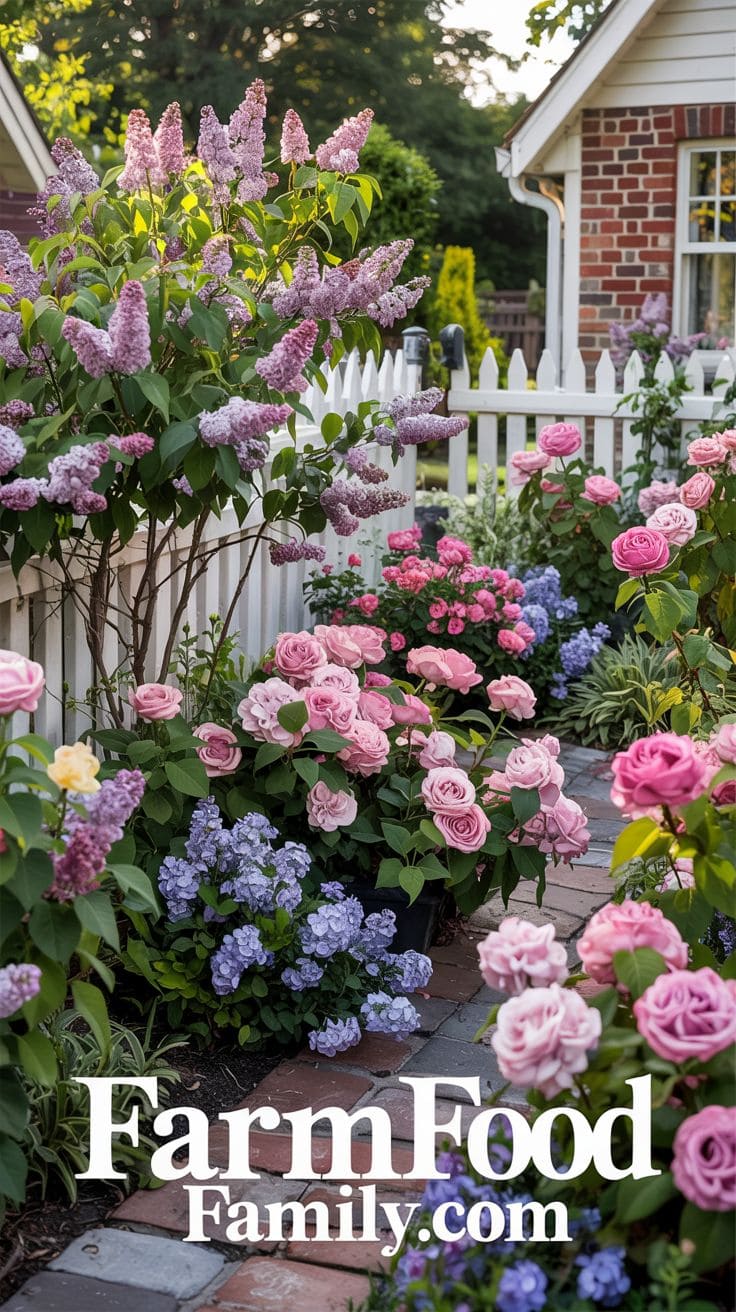
A combination of flowering plants creates a charming, cottage-like atmosphere in the garden.
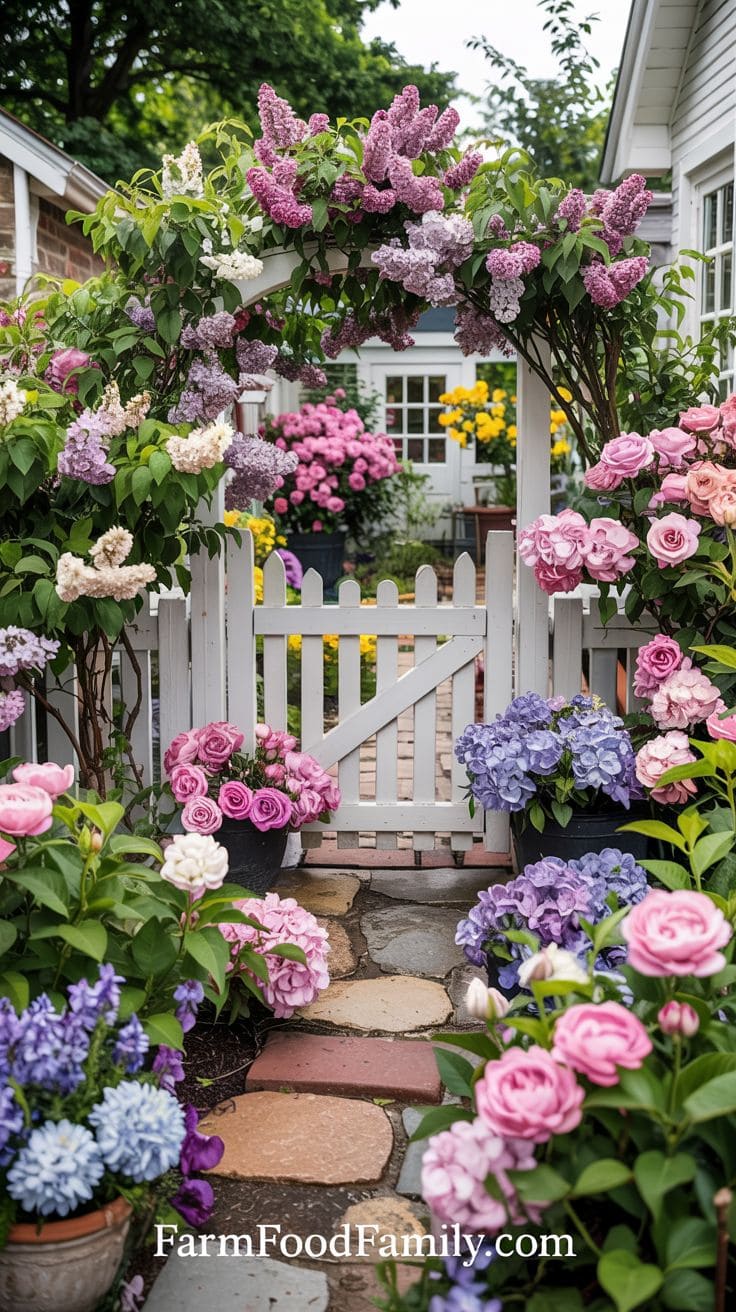
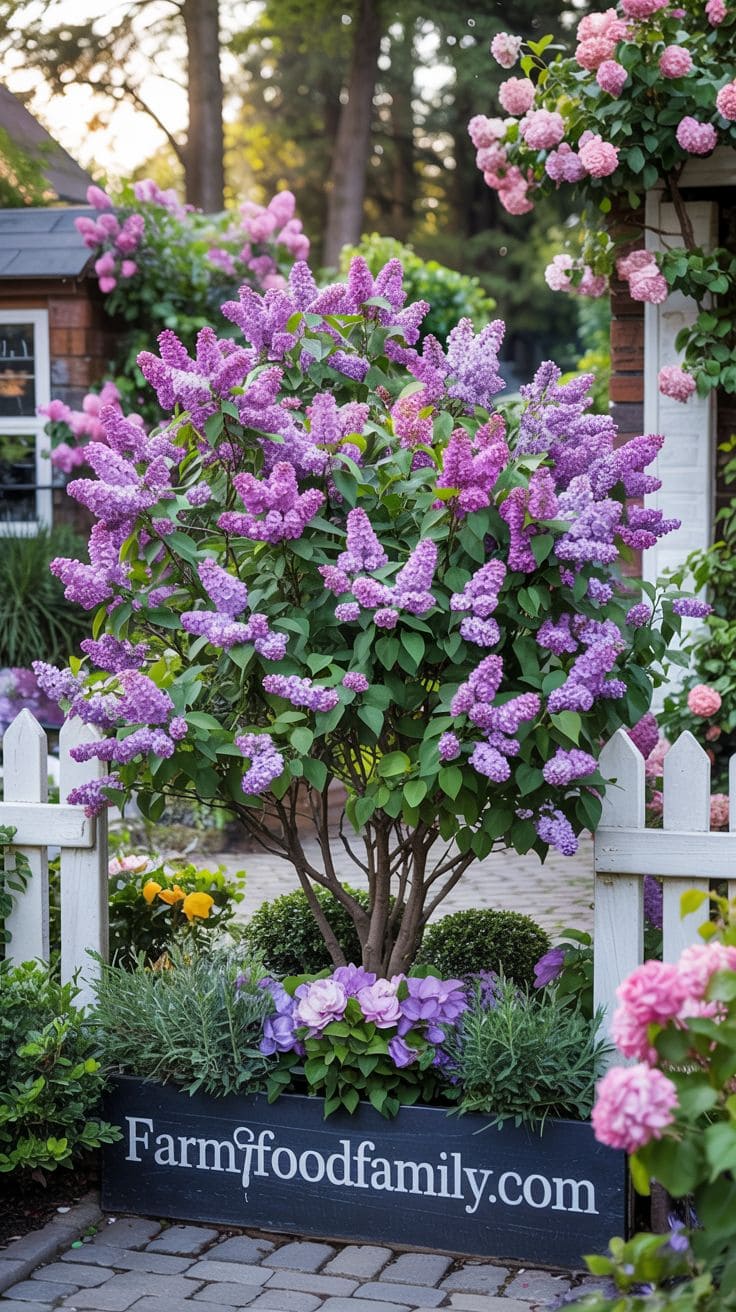
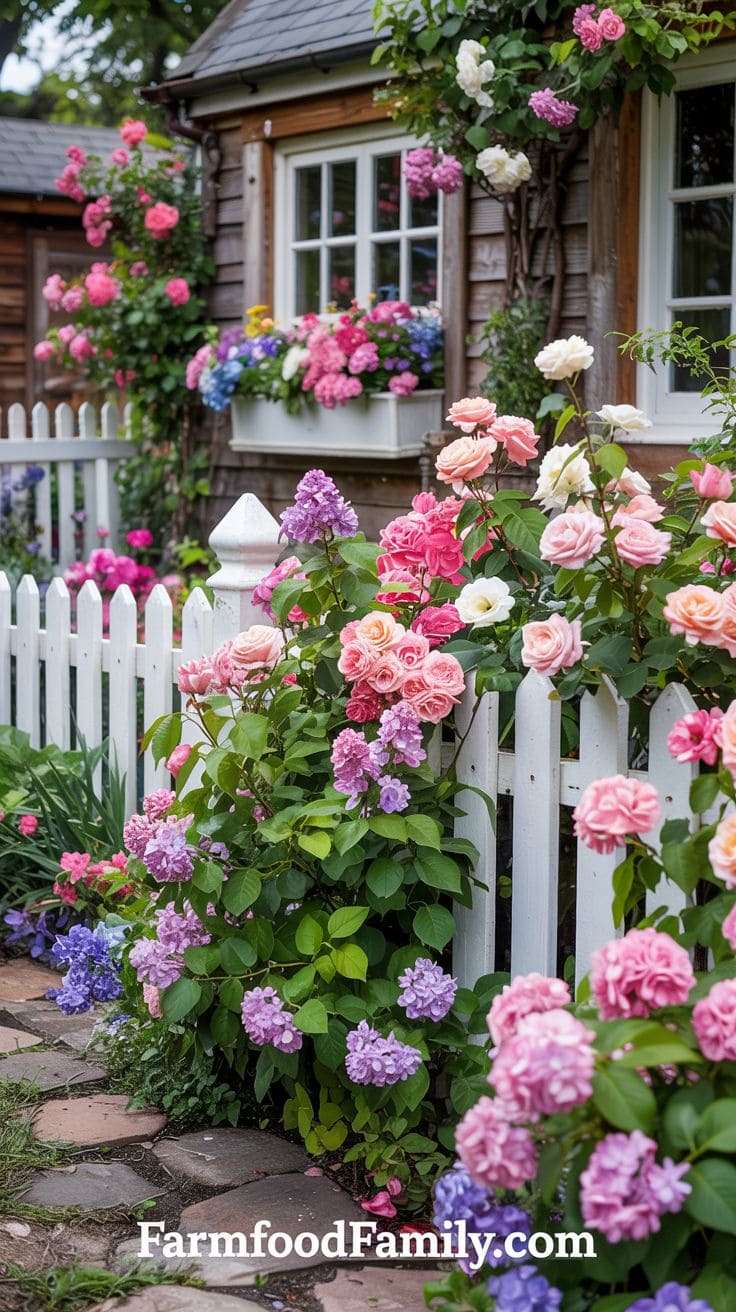
Imagine lilacs and hydrangeas intermingled with climbing roses or clematis. These shrubs bloom in succession, resulting in months of flowers and aroma.
Allow them to spill over boundaries or become a little untidy for a pleasant, casual look.
For greatest impact, plant them behind white picket fences, curving walkways, or under front windows.
You may combine them with perennials like daisies or phlox to create a layered, colorful effect that changes with the seasons.
The end product is a nostalgic, storybook garden that seems to be continually in bloom.
6. Truly low-maintenance shrub choices
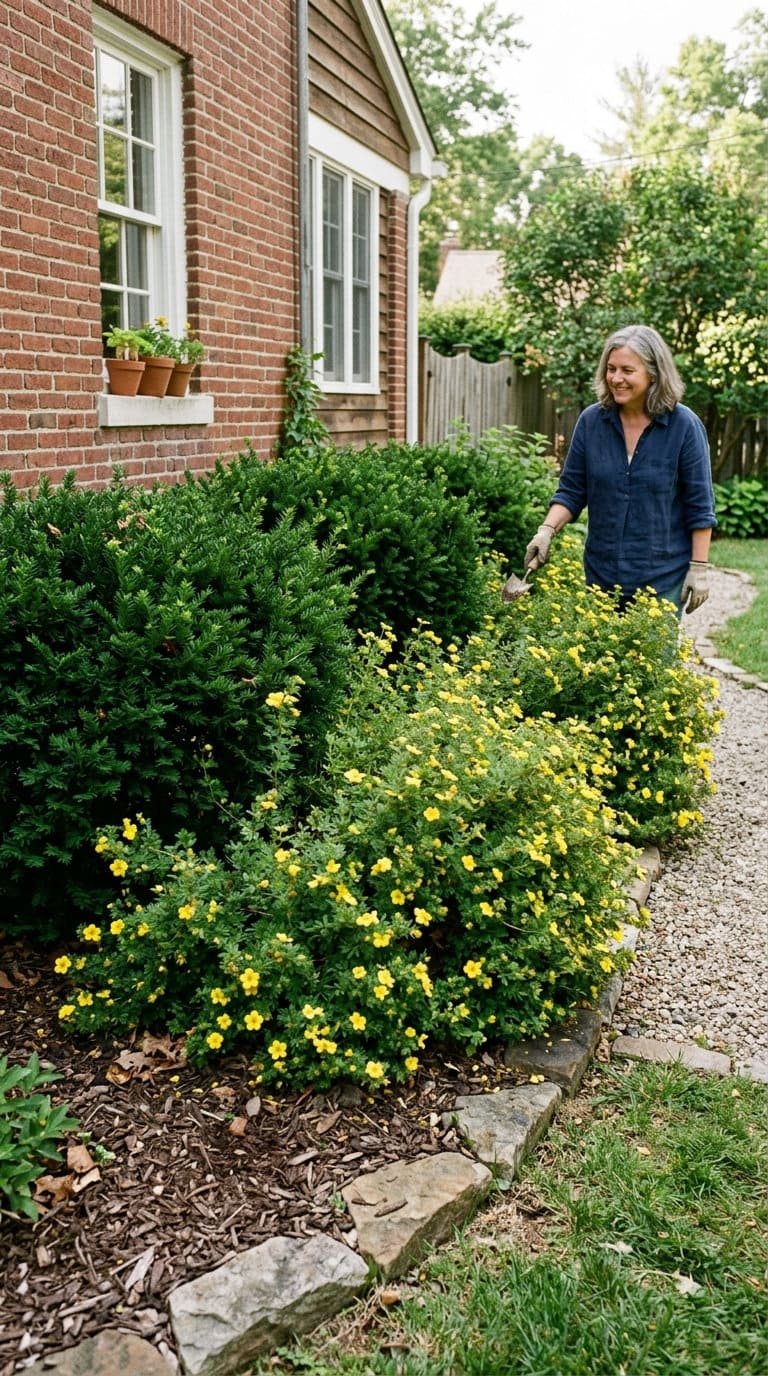
“Low-maintenance” gets slapped on every plant tag at the garden center, but the actual work happens before you plant, not after. Oklahoma State University Extension’s guide to selecting shrubs walks through matching a shrub to your actual site conditions, drainage, sun exposure, soil type, before you fall in love with how it looks in a photo.
There’s a pattern in gardening forums where people skip that step entirely and then wonder why a shrub that’s supposedly bulletproof is struggling. Test your drainage (dig a hole, fill it with water, see how long it takes to disappear) and get an honest read on your sun exposure before choosing. Once the site match is right, dwarf yews, potentilla, and most native shrubs genuinely don’t ask for much.
7. Deer-resistant shrub choices
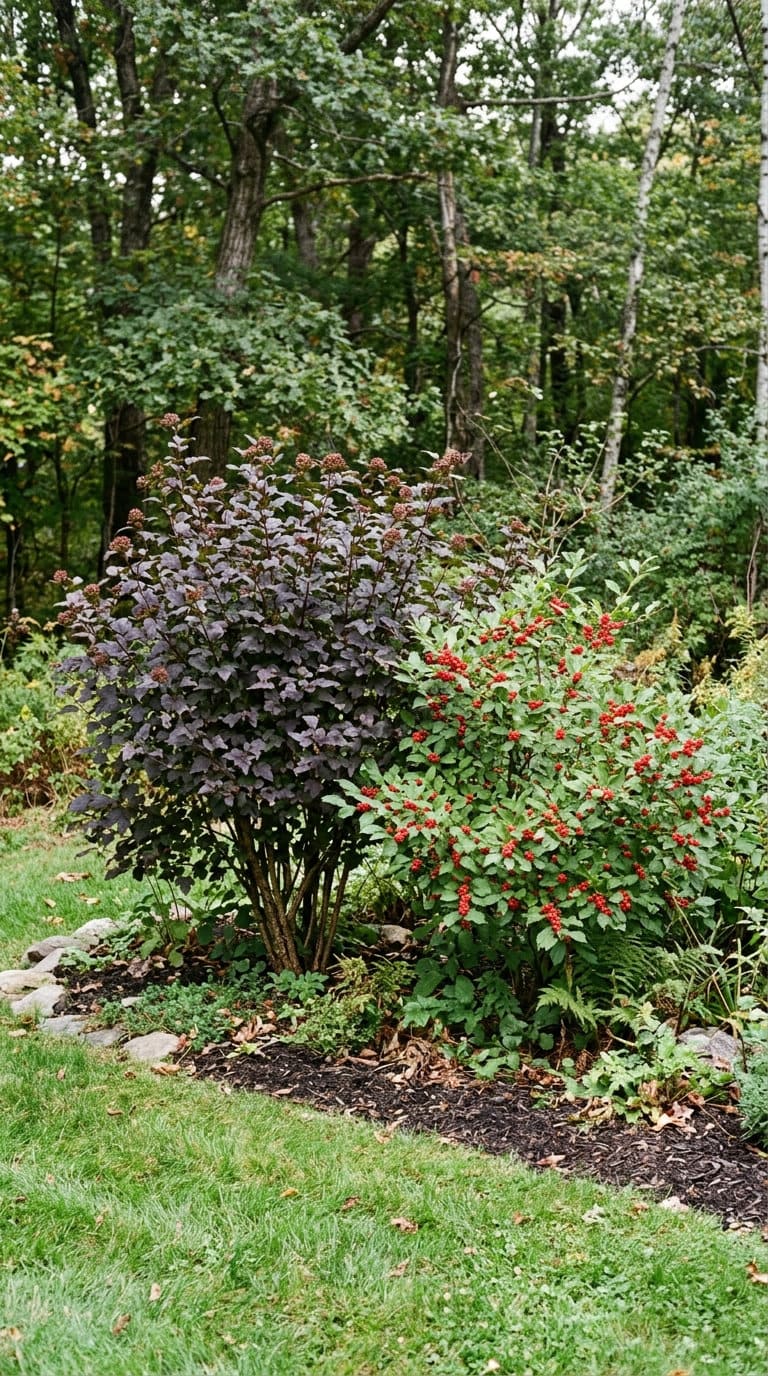
This one didn’t even make the original version of this article, which is a little wild given how often it comes up. Rutgers Cooperative Extension maintains a rated list of landscape plants by deer resistance, and it’s worth checking against before you plant anything expensive in deer country.
But here’s the honest caveat nobody puts on the plant tag: “deer-resistant” is not “deer-proof.” Ask anyone who gardens where deer pressure is heavy and they’ll tell you a hungry deer in a hard winter will browse almost anything, including plants rated as resistant.
Winterberry, ninebark, and rosa virginiana tend to hold up better than most in real-world reports, but nothing is guaranteed if the deer population outnumbers the food supply that year.
8. Shrubs for small or narrow gardens
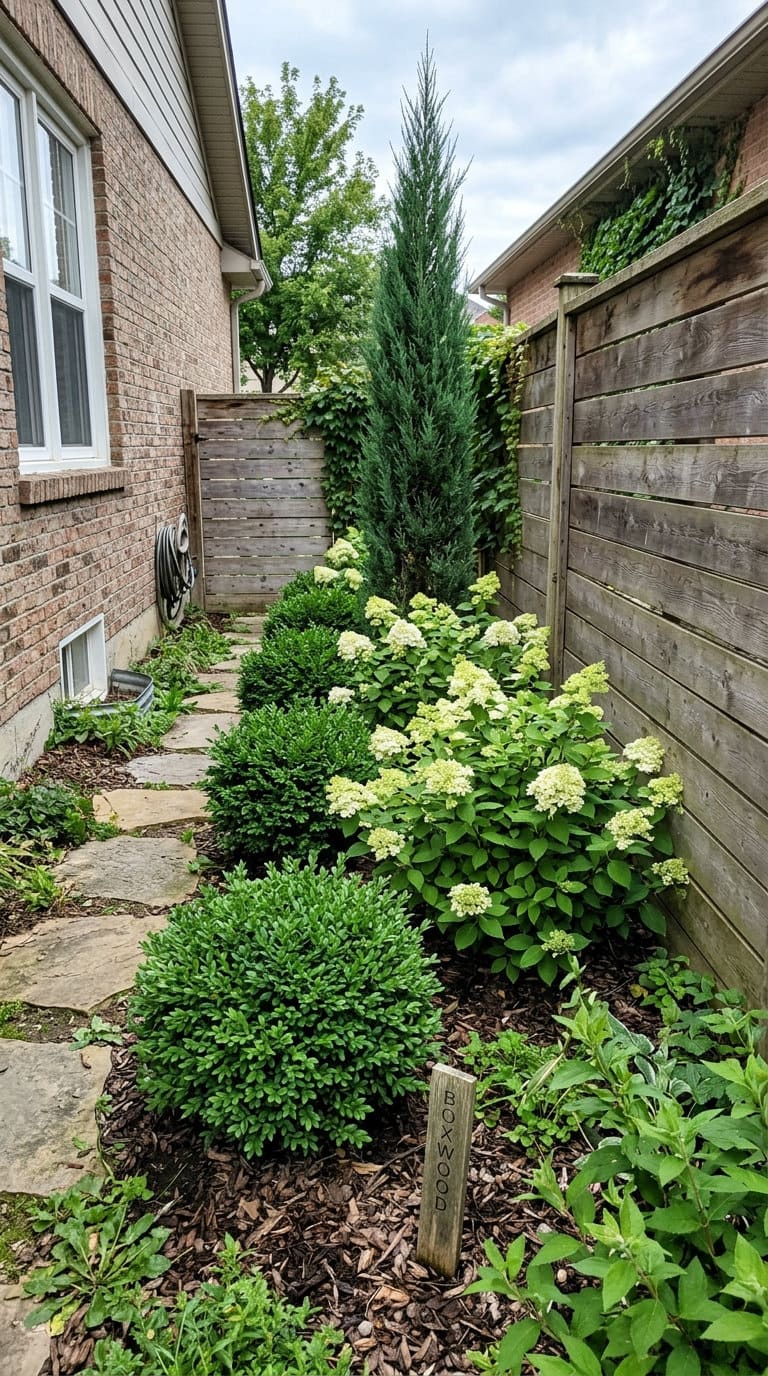
Small space doesn’t mean skip the layering, it means scale it down. Dwarf cultivars of your favorite shrubs, dwarf boxwood, compact hydrangea, dwarf spirea, let you keep the tiered-height look in a bed that’s 3 feet deep instead of 8.
Vertical growers (columnar junipers, upright yews) also help here since they add height without eating up ground footprint, which matters a lot more in a narrow side yard than it does out front.
9. Shrubs with standout foliage
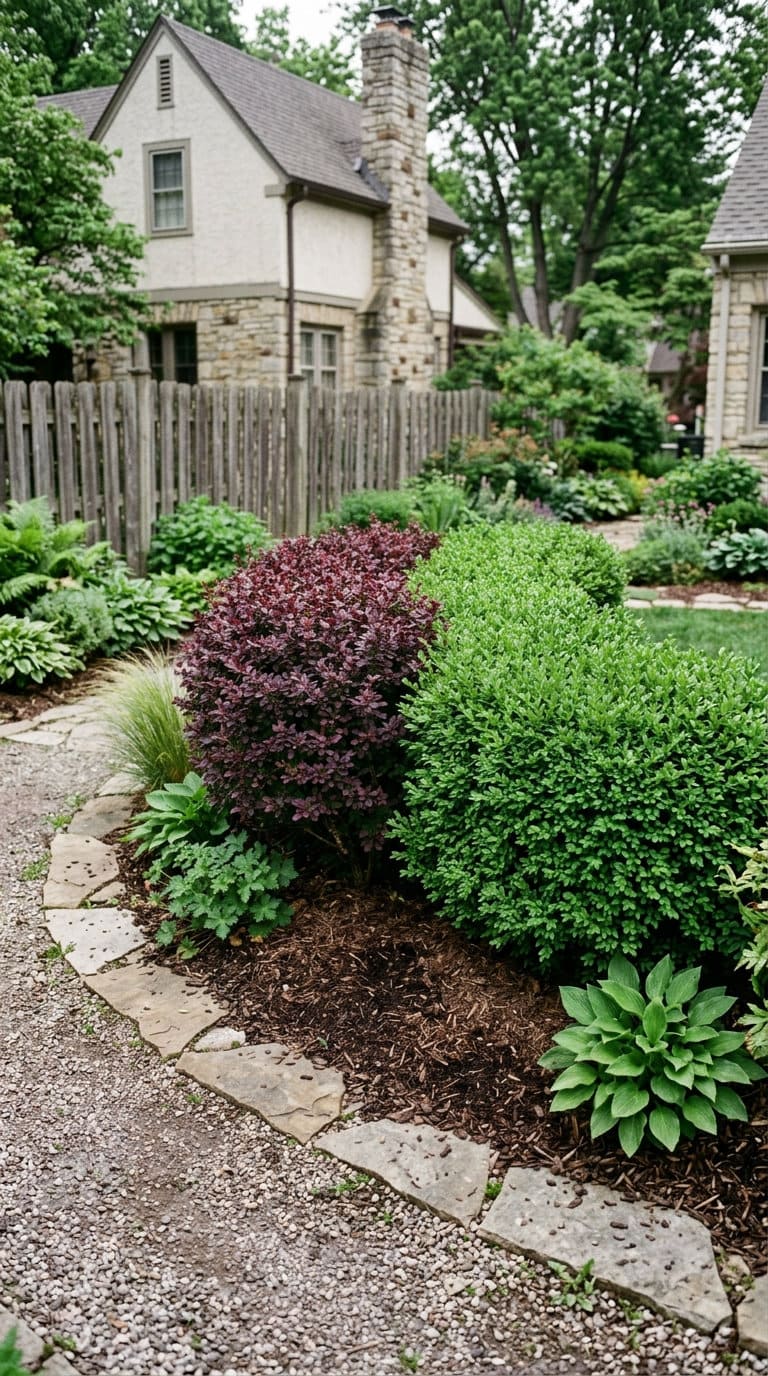
Not every shrub needs to flower to earn its spot. Japanese barberry, smoke bush, and ninebark all come in burgundy or gold-leaf cultivars that read as color even when nothing’s blooming. Working one or two of these into an otherwise all-green bed breaks up the monotony without adding a single flower.
Pair a dark-leafed shrub against a light-green or silvery one and the contrast does most of the visual work by itself.
10. Wildlife-friendly shrub planting
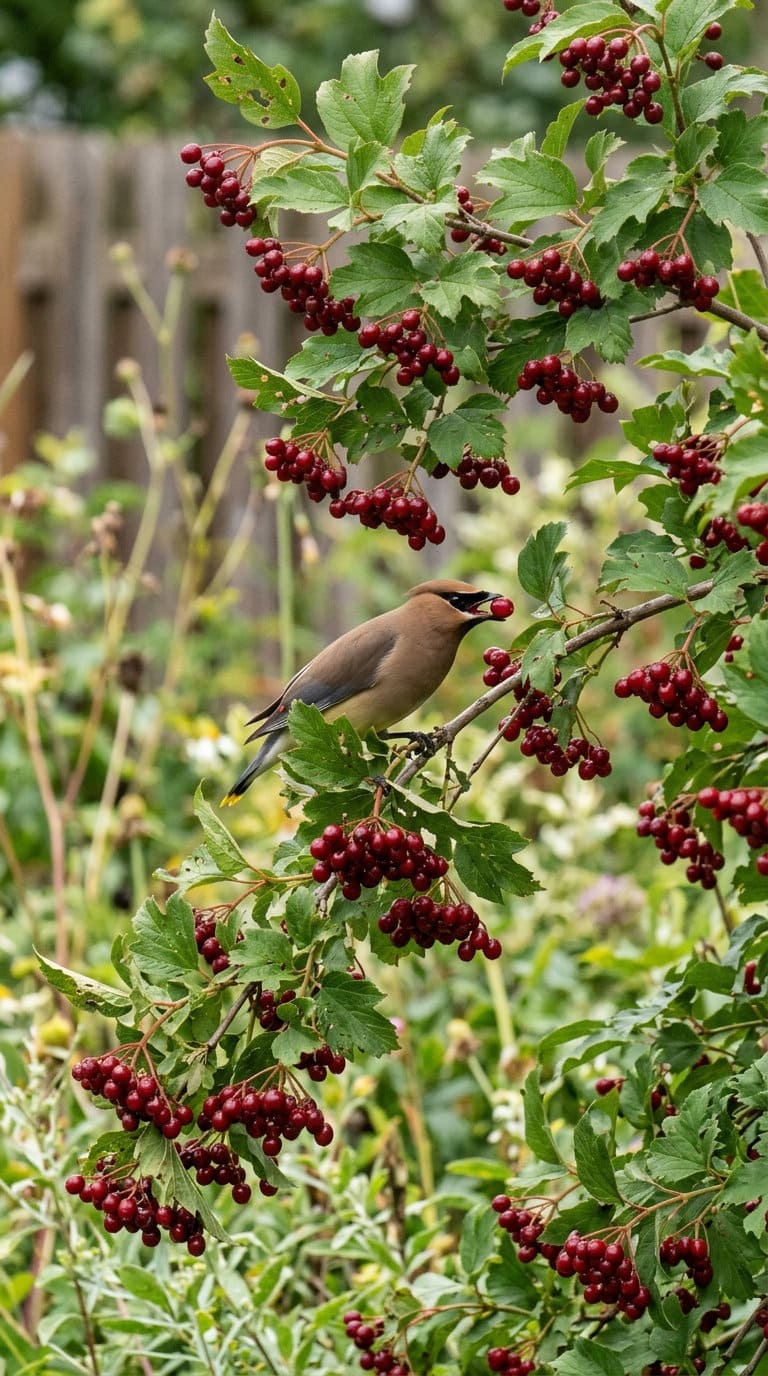
Native flowering shrubs like elderberry, viburnum, and serviceberry pull in pollinators during bloom and birds later for the berries. It’s a different goal than the deer-resistance section above, this is about attracting wildlife, not deterring it, and the plant choices genuinely don’t overlap much.
Leave a little leaf litter under these instead of stripping the bed bare every fall. A lot of beneficial insects overwinter in exactly that layer, and clearing it out removes the thing you were trying to attract in the first place.
11. Shrubs for slopes and erosion control
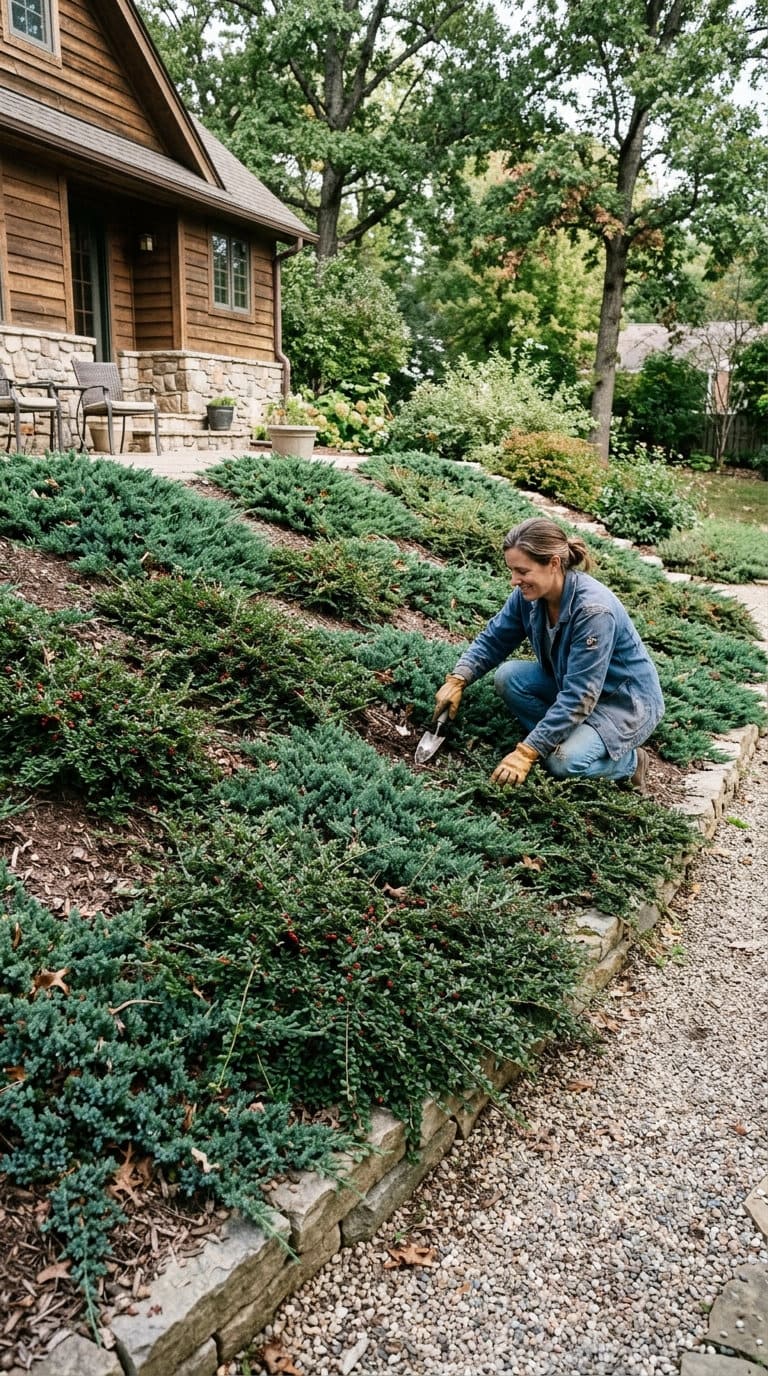
On a slope, root spread matters more than looks. Spreading junipers, cotoneaster, and creeping varieties knit the soil together and cut down on runoff a lot better than anything upright and single-stemmed.
Plant across the slope in a staggered grid rather than straight rows, it slows water down more effectively, and mulch heavily the first year while the roots are still establishing.
12. Drought-tolerant shrub choices
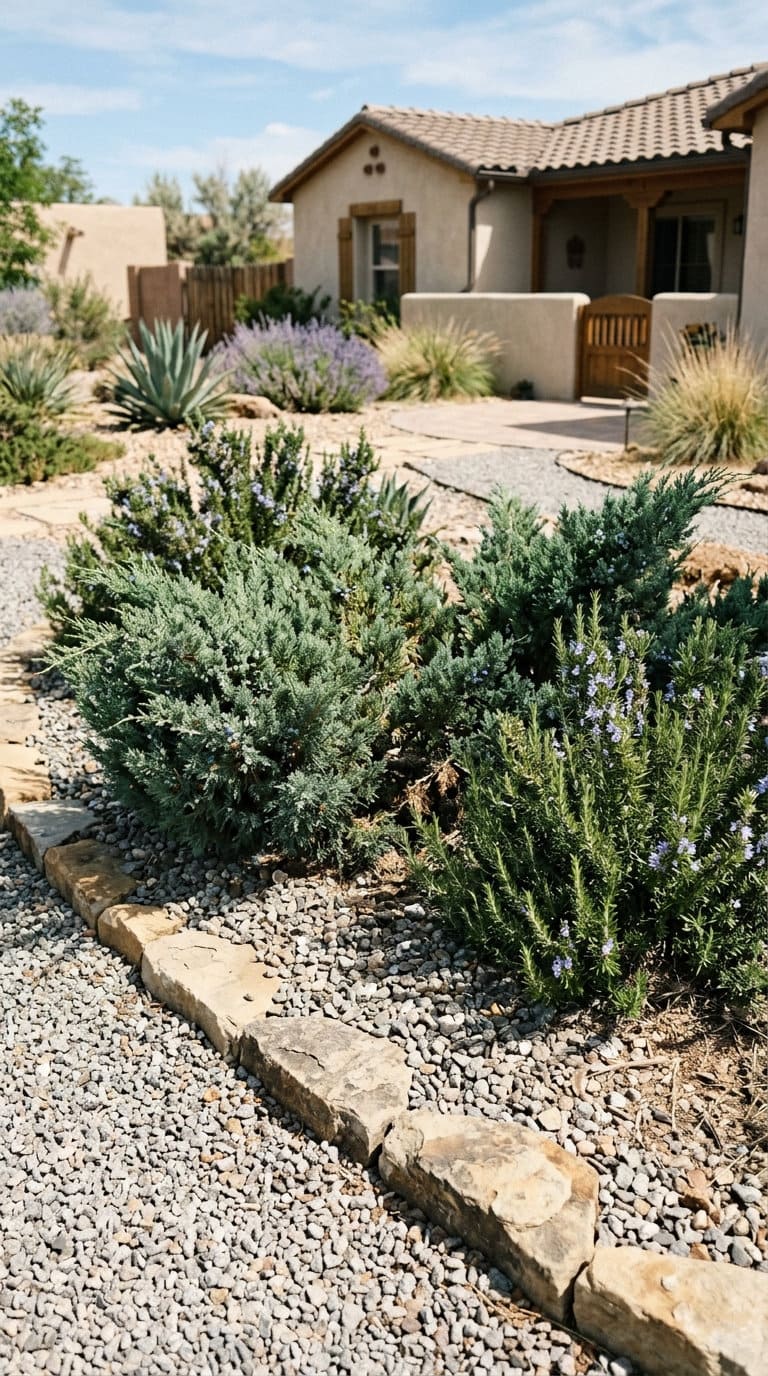
Once established (usually after the first full growing season), a lot of drought-tolerant shrubs need almost no supplemental water: junipers, rosemary where the climate allows, and most native prairie shrubs.
The catch is that first year. Even a genuinely drought-tolerant shrub needs regular water while its root system is still developing, skip that and you’ll lose plants that would’ve been fine a year later.
13. Shrubs for shady spots
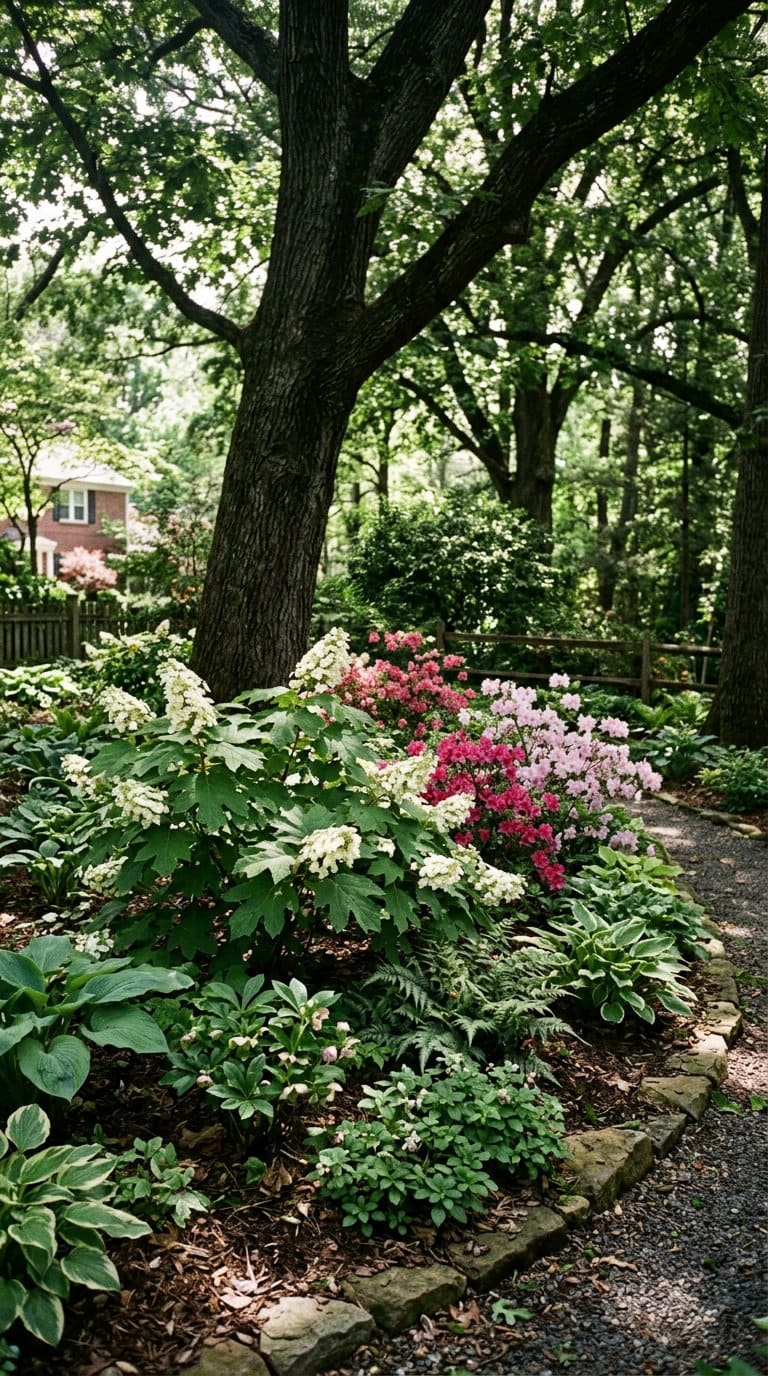
Shade doesn’t mean your options are just hosta and hope. Hydrangea (especially oakleaf varieties), azalea, and boxwood all handle partial to full shade without sulking.
The mistake is expecting the same bloom volume you’d get in full sun, shade-tolerant flowering shrubs generally bloom a little lighter, and that’s normal, not a sign something’s wrong.
14. Balancing evergreen and deciduous for year-round interest
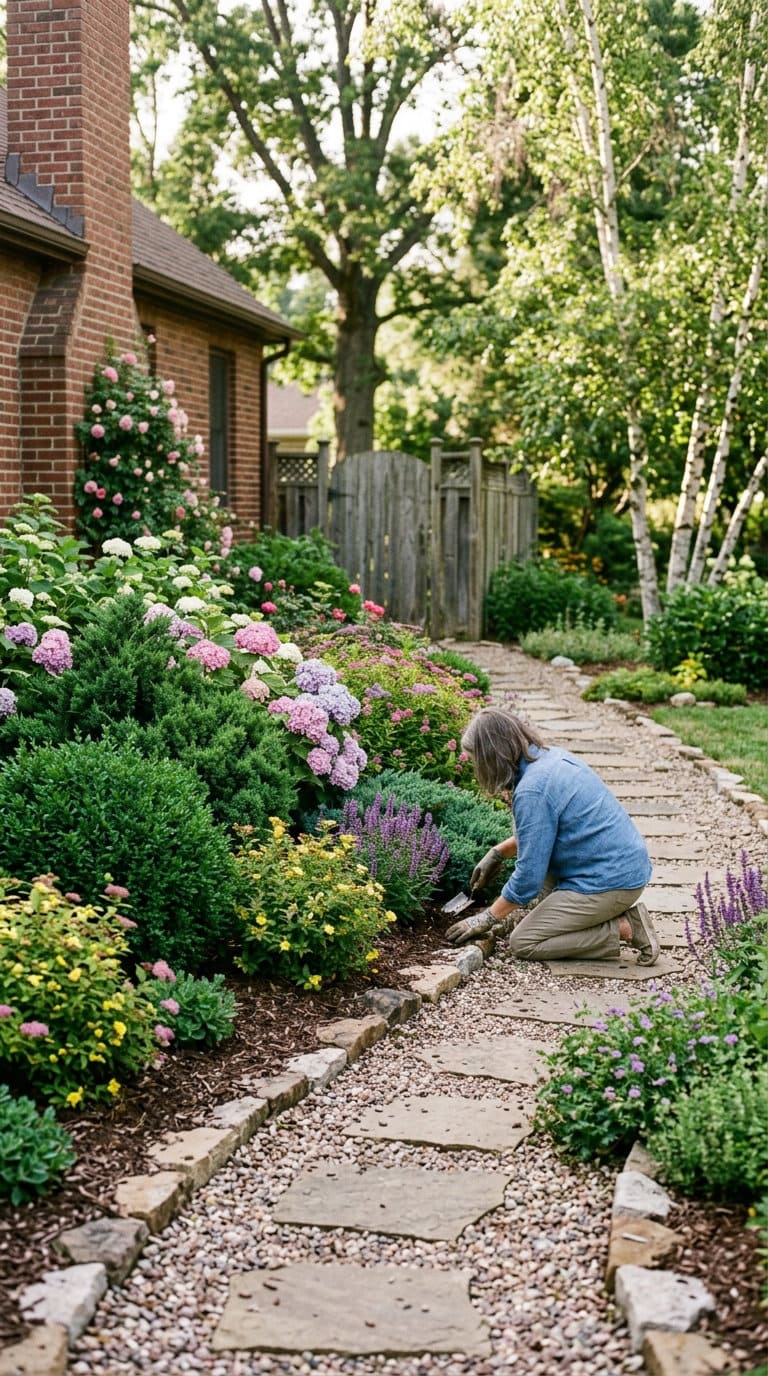
This ties back to Christianson’s 50/25/25 ratio from the foundation-planting guidance above, but it applies to any bed, not just the ones against the house. An all-evergreen bed looks the same in July and January, which gets monotonous. An all-deciduous, all-flowering bed looks great for six weeks and bare for the other ten months.
Roughly half evergreen for winter structure, the rest split between flowering shrubs and something with fall color or berries, gives you a bed that’s doing something in every season instead of one big spring moment.
15. Formal vs. informal shrub design styles
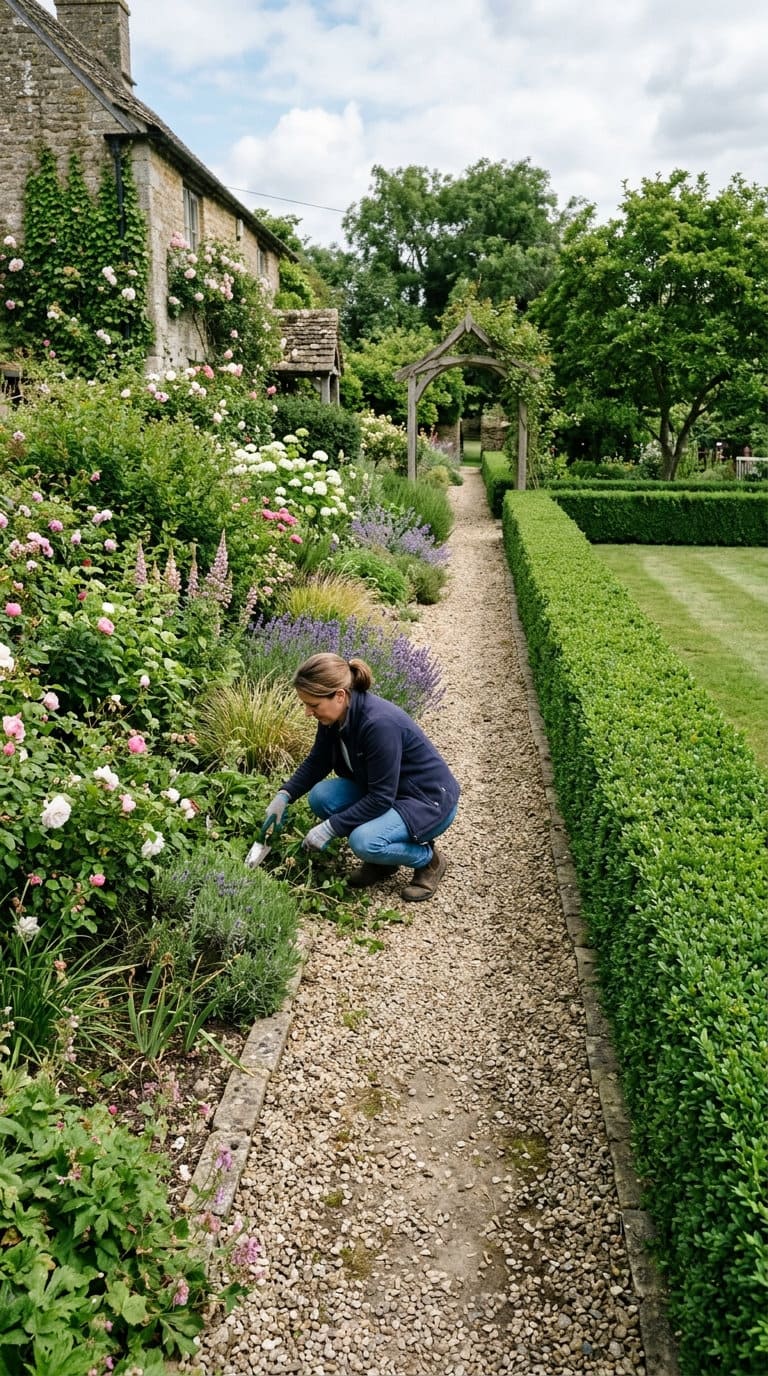
Formal means straight lines, symmetry, and shrubs sheared into clean geometric shapes, think boxwood parterres. Informal means irregular groupings, natural unsheared forms, and looser spacing. Neither is objectively better, it’s really about matching the house.
A symmetrical colonial with a straight front walk usually calls for formal. A cottage or craftsman-style home generally looks better with informal groupings that don’t fight the house’s own asymmetry.
Mixing the two styles in the same sightline is the thing to avoid, a sheared formal hedge right next to a loose cottage bed tends to make both look like they don’t belong there.
A few more things worth planning around
If you’re working with a slope and drainage issues at the same time, look at how these ideas pair with a dry creek bed running through the lower part of the yard, it solves runoff and gives you another planting edge. And if budget’s the constraint more than space, some of what makes a shrub bed look expensive has nothing to do with plant cost, worth a look at cheap landscaping ideas that look expensive before you assume the pricier option is the only one that’ll read well.
For specific plant picks that pair with several ideas above: dwarf evergreen shrubs work well in the foundation and small-garden sections, drought-tolerant shrub options expand on idea #12, holly varieties are a solid privacy-hedge choice for idea #4, and if you’re tight on space, potted shrubs sidestep the small-garden spacing problem in idea #8 entirely.
FAQ
How far should shrubs be planted from a house foundation?
At minimum, half the shrub’s mature spread, more for fast growers. As Christopher J. Cohan of Christopher J. Cohan Landscape Architects points out, the real risk isn’t root damage to the foundation itself, it’s moisture trapped against the siding and reduced airflow once the shrub matures past the space it was given.
When is the right time to prune flowering shrubs?
Depends on when the shrub blooms. Clemson Cooperative Extension’s pruning guide recommends pruning spring-flowering shrubs right after they finish blooming, since they set next year’s buds on old wood, prune too late and you cut off next spring’s flowers. Summer-flowering shrubs, which bloom on new growth, can be pruned in late winter or early spring instead.
Are deer-resistant shrubs actually deer-proof?
No, and any list, including Rutgers’ own deer-resistance ratings, will tell you the same thing. “Resistant” means deer generally prefer other food sources when they’re available. In a hard winter or an area with heavy deer pressure, a hungry deer will eat plants it would normally ignore.
Conclusion
Shrubs are the unsung heroes of the landscape since they are steady, versatile, and quietly impactful.
Whether you’re designing a foundation planting, filling out a border, or framing a view, the right shrub can provide the structure and beauty your yard needs.
Their durability, seasonal interest, and low-maintenance nature make them a reliable choice for both beginner and experienced gardeners.
If these ideas helped you out, leave a comment below and make sure to share the list with your family and friends!