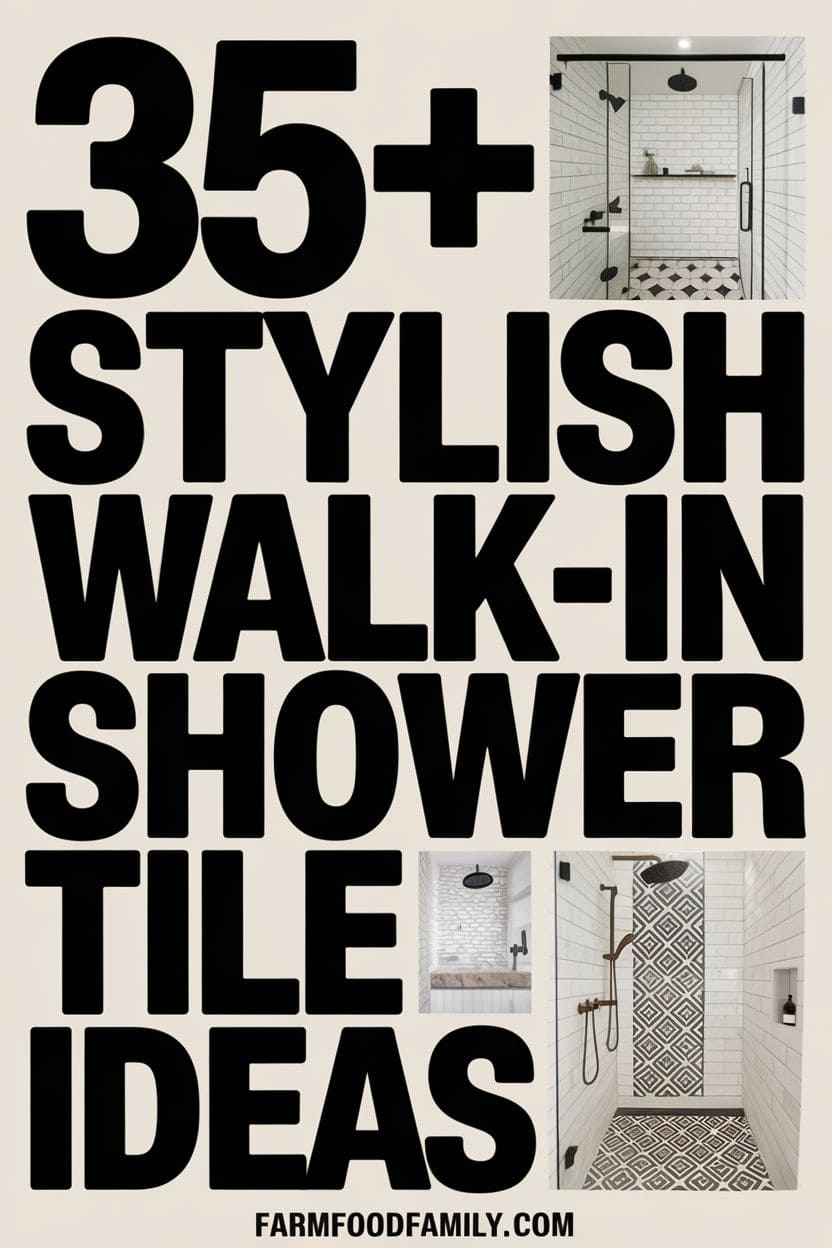
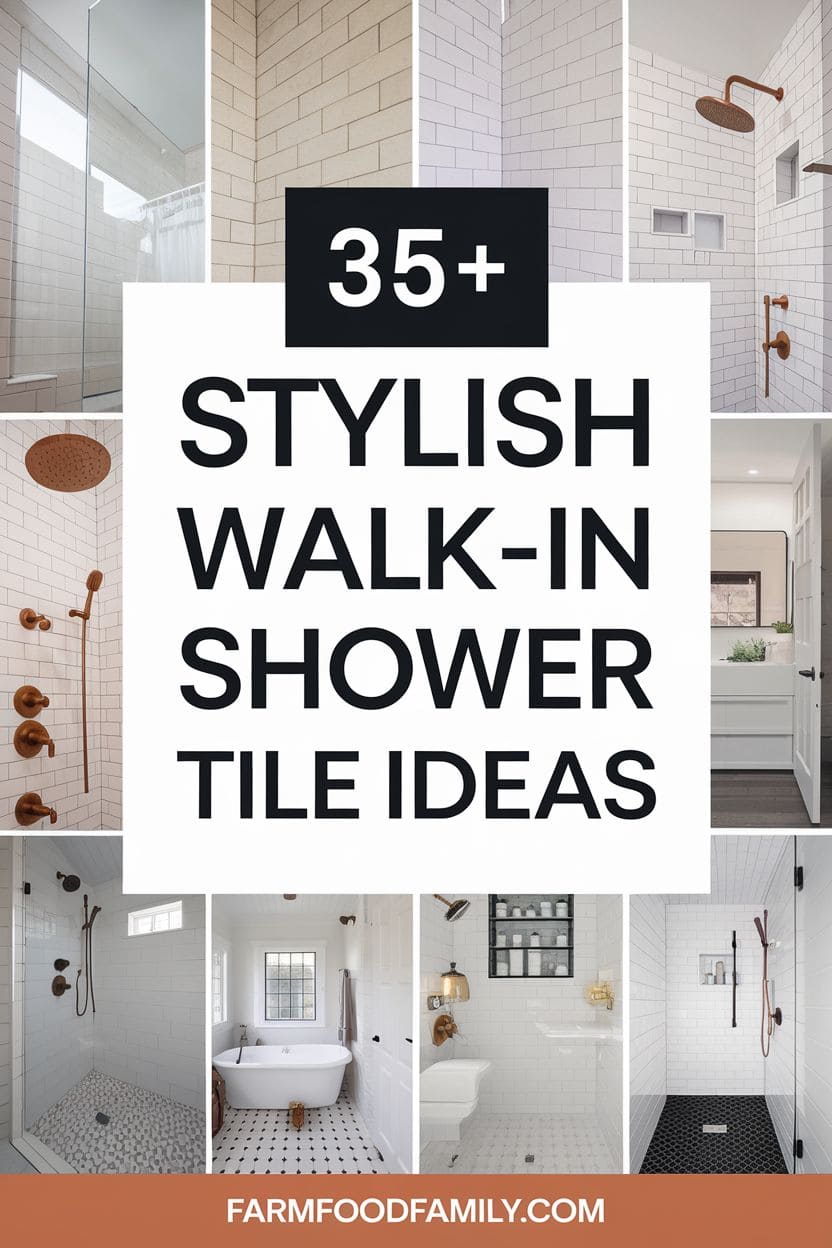
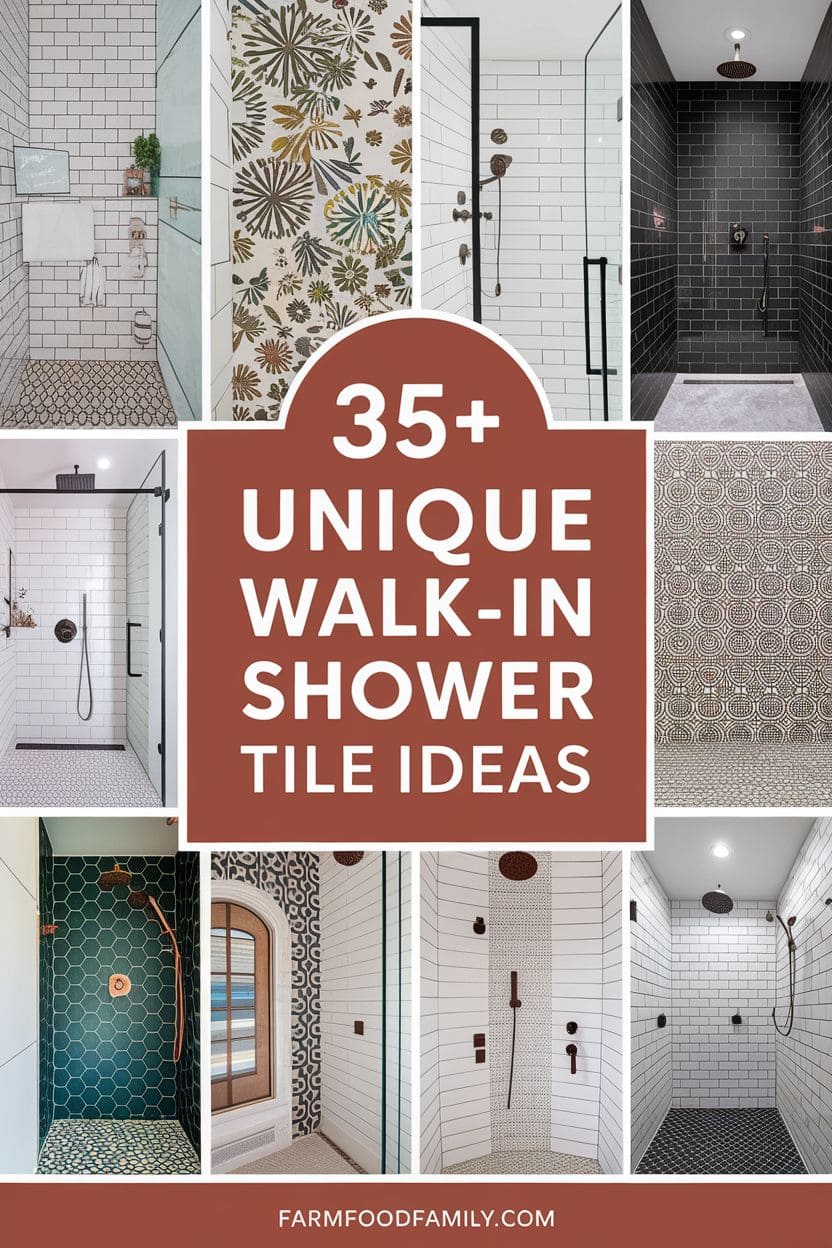
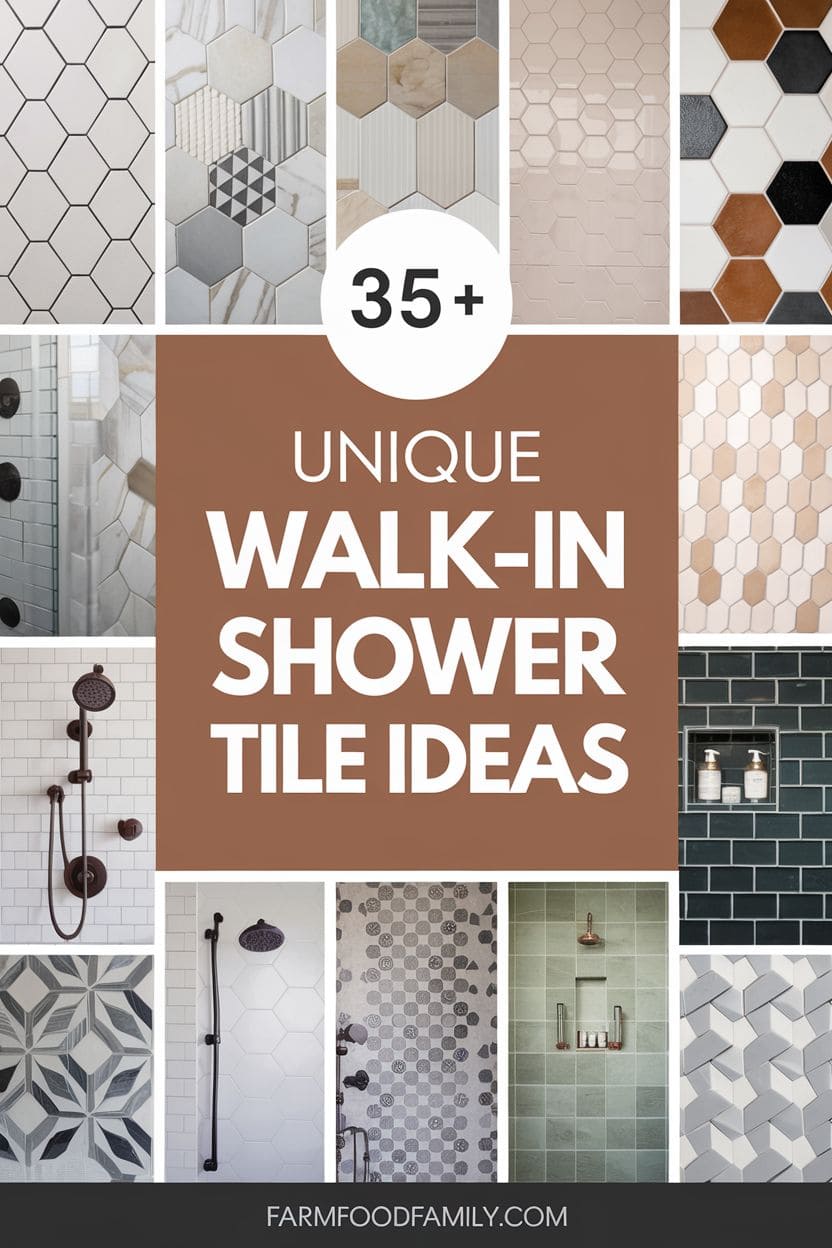
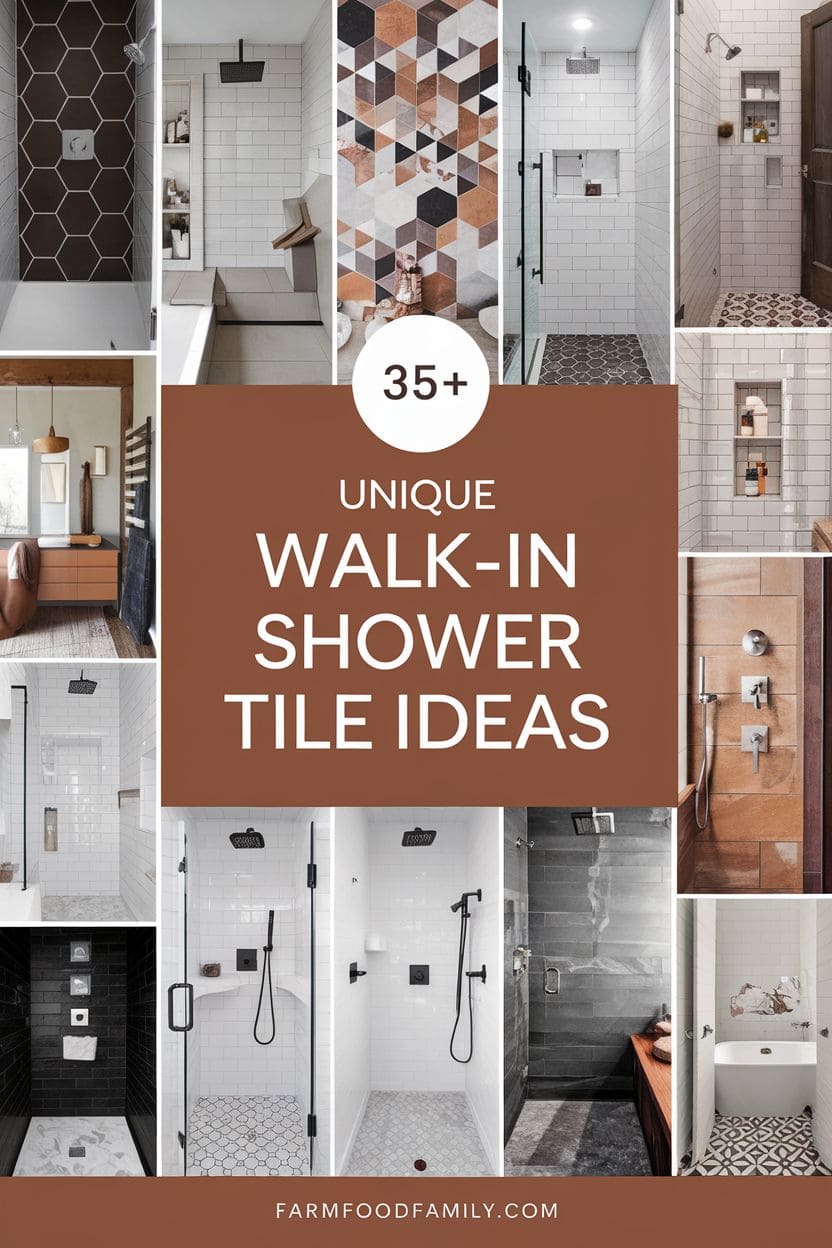
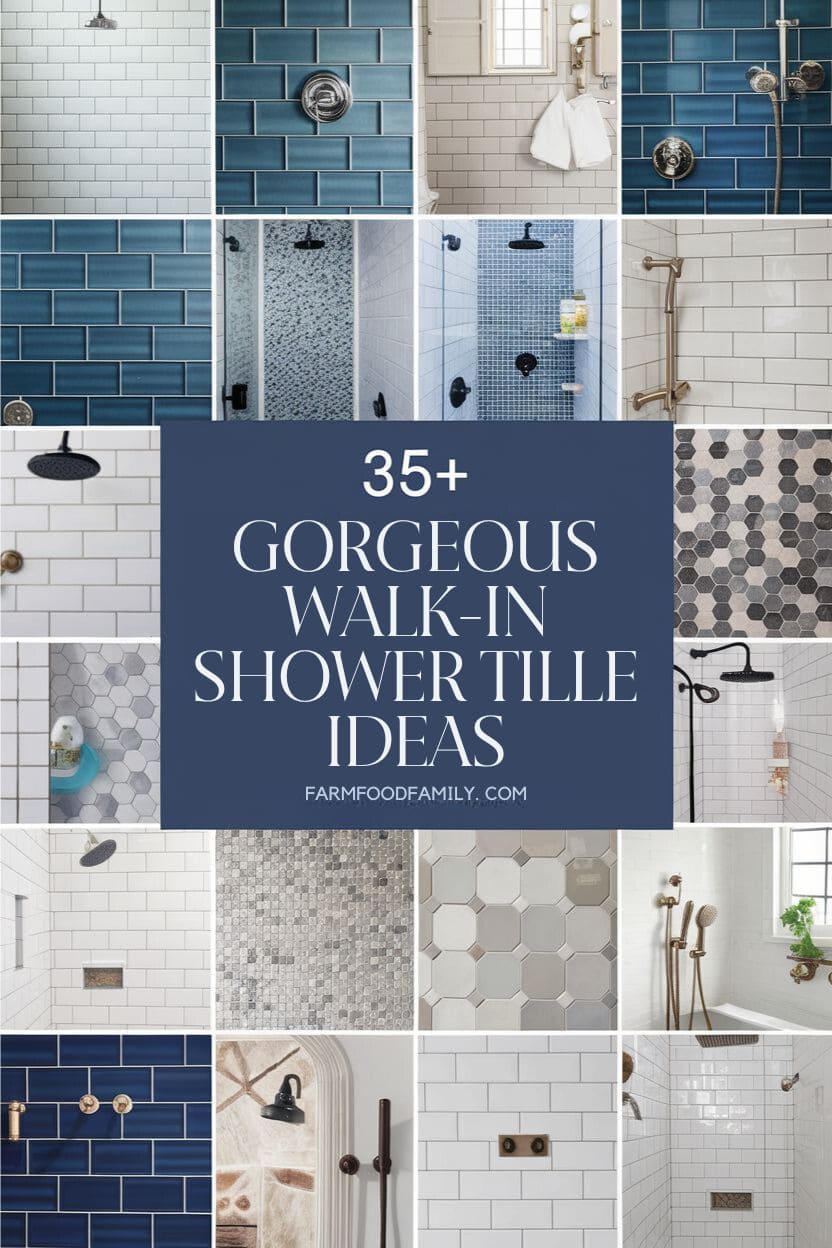
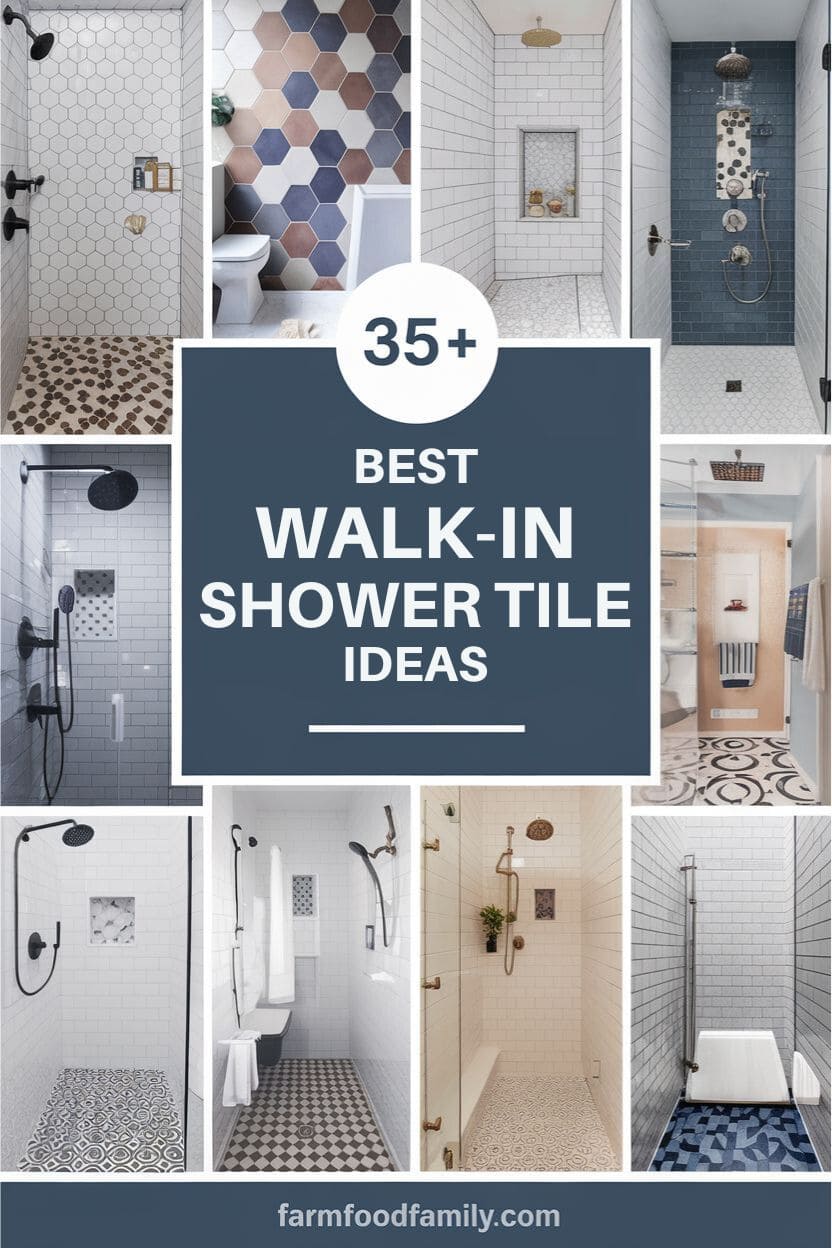
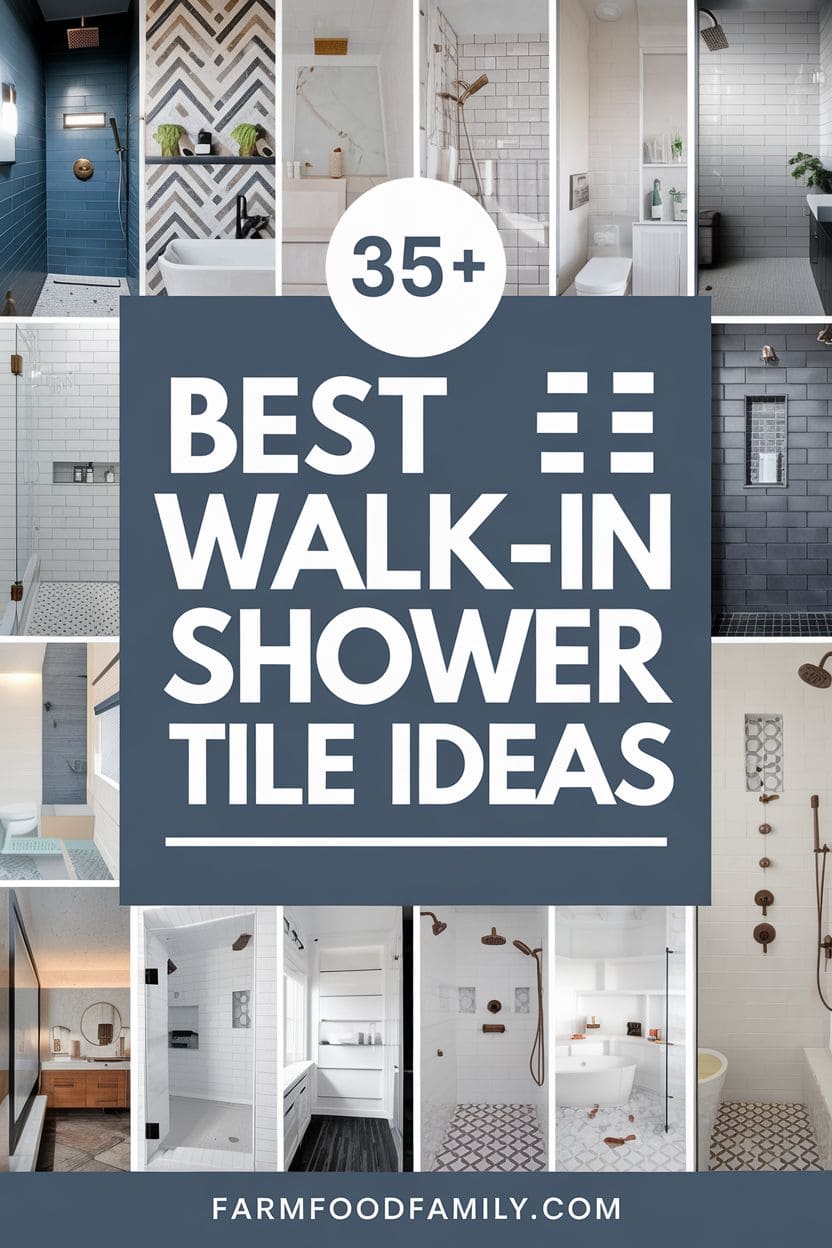
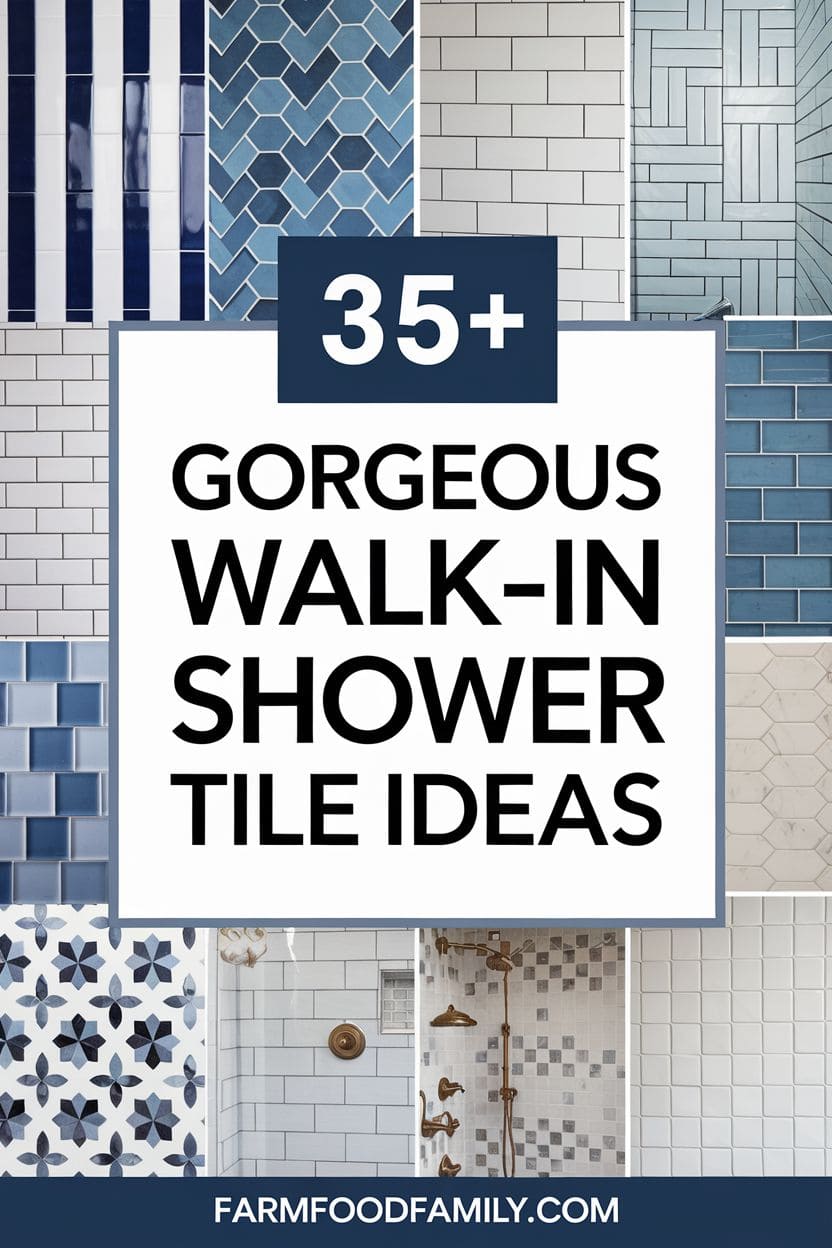
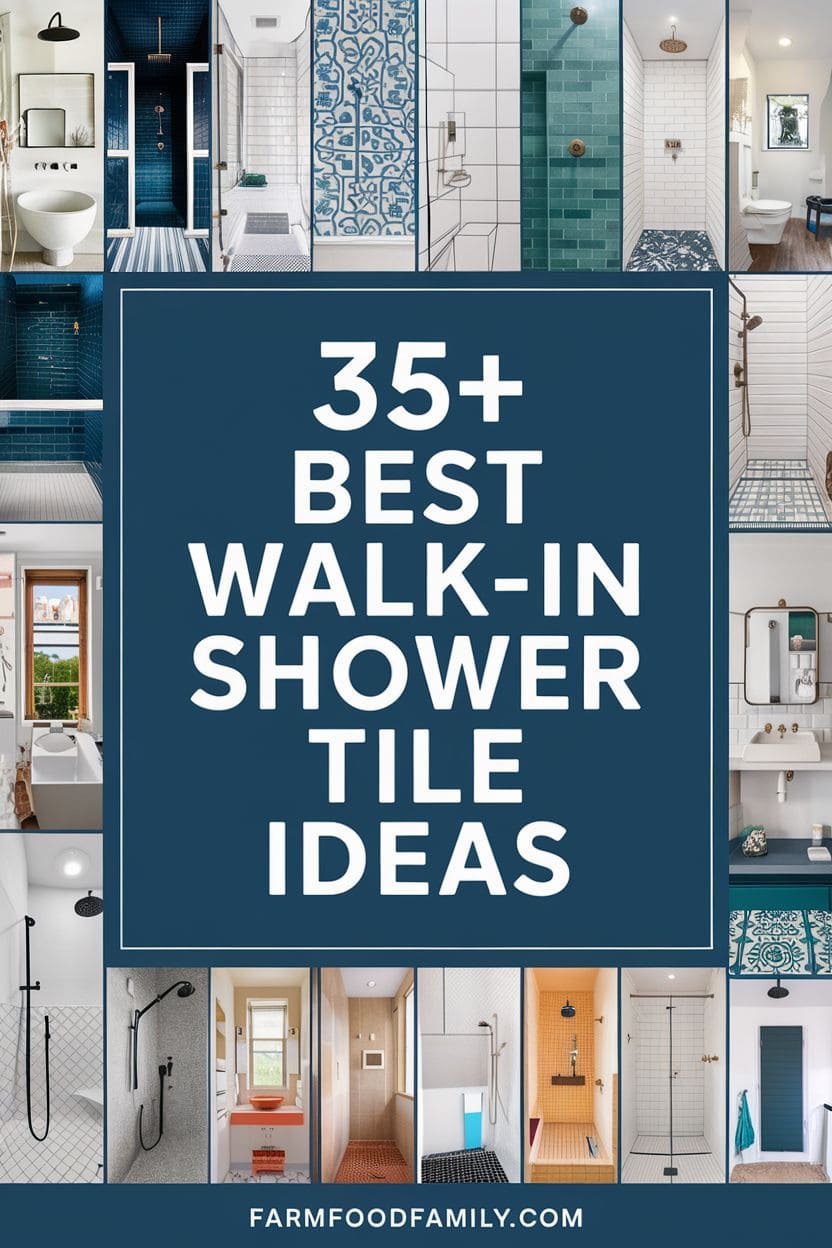
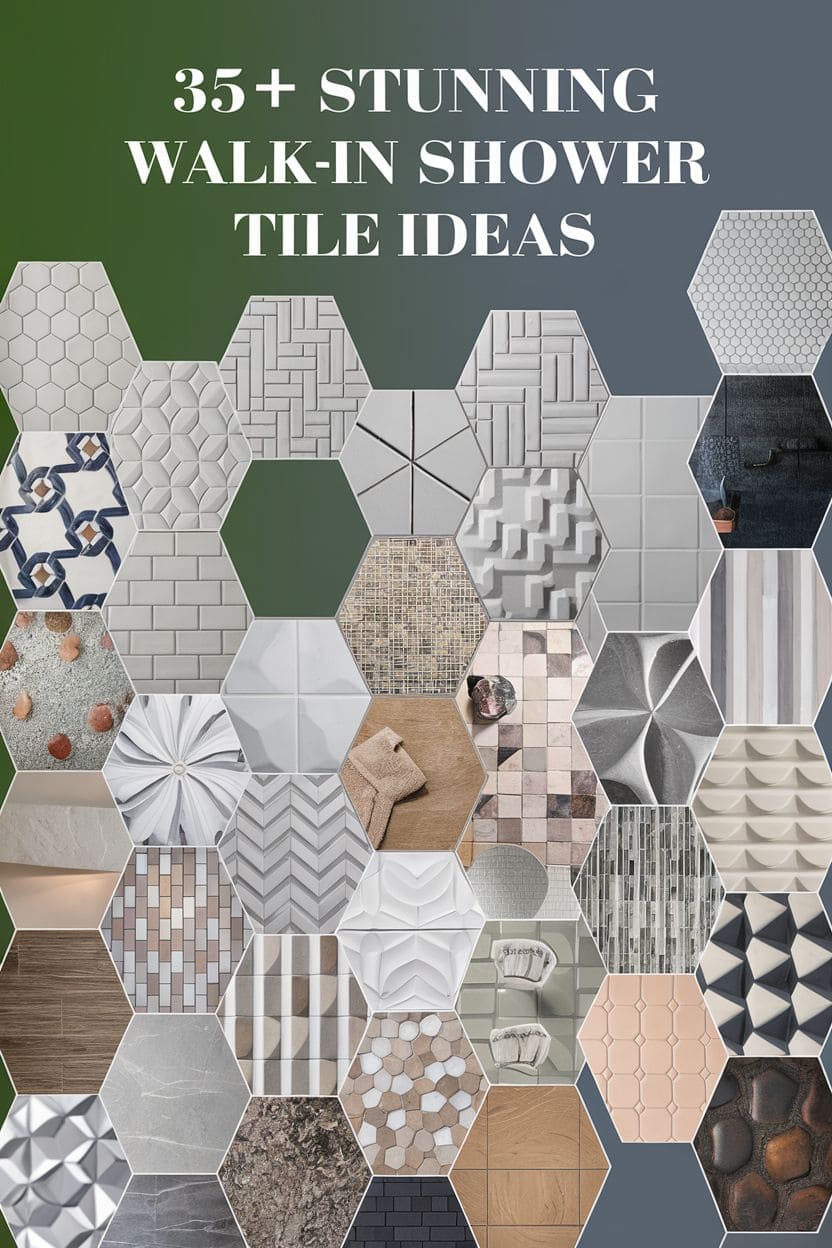
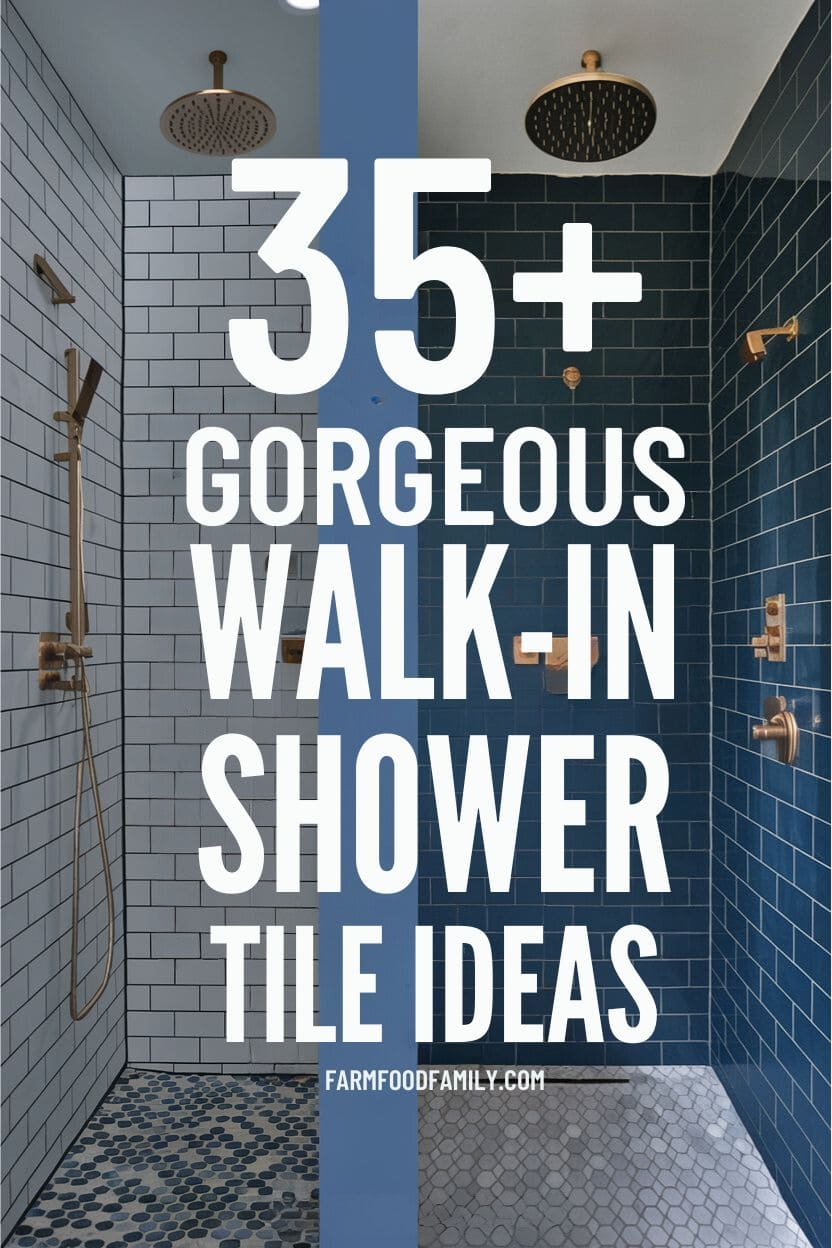
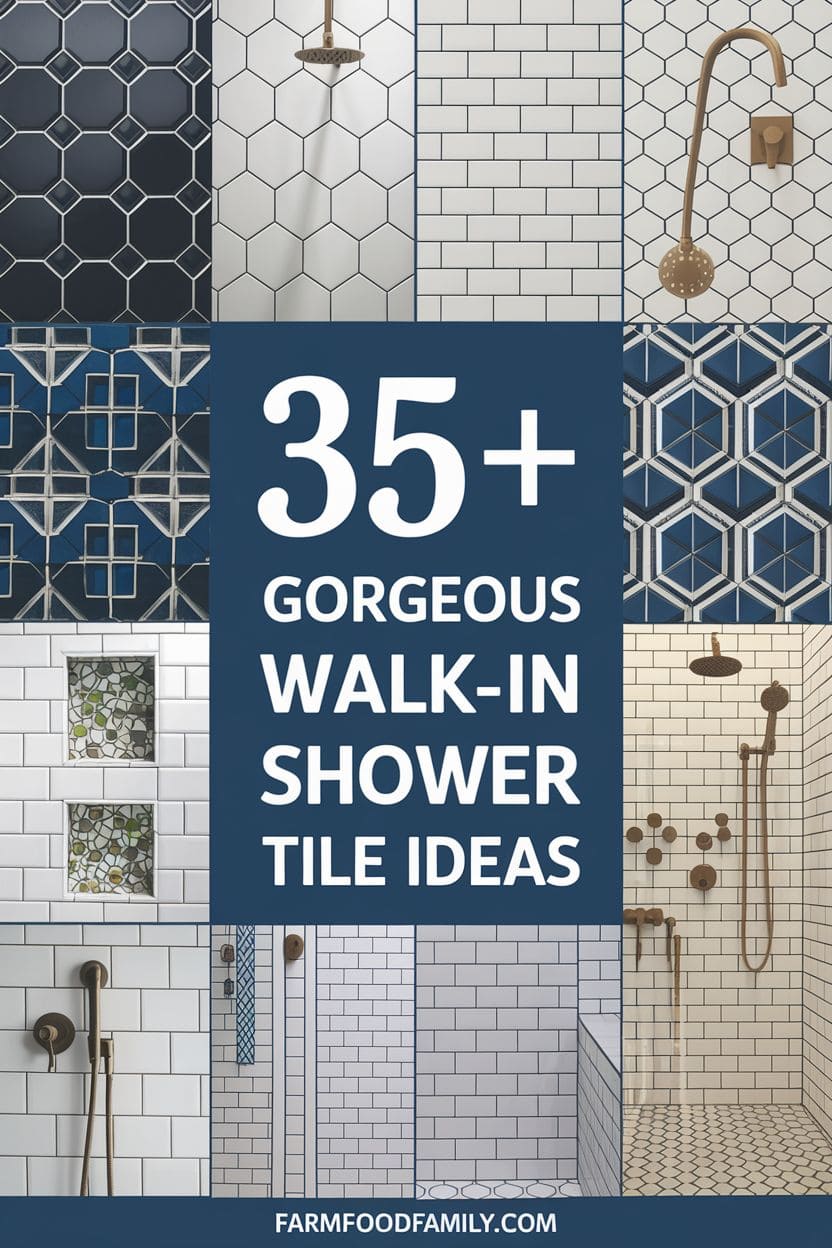
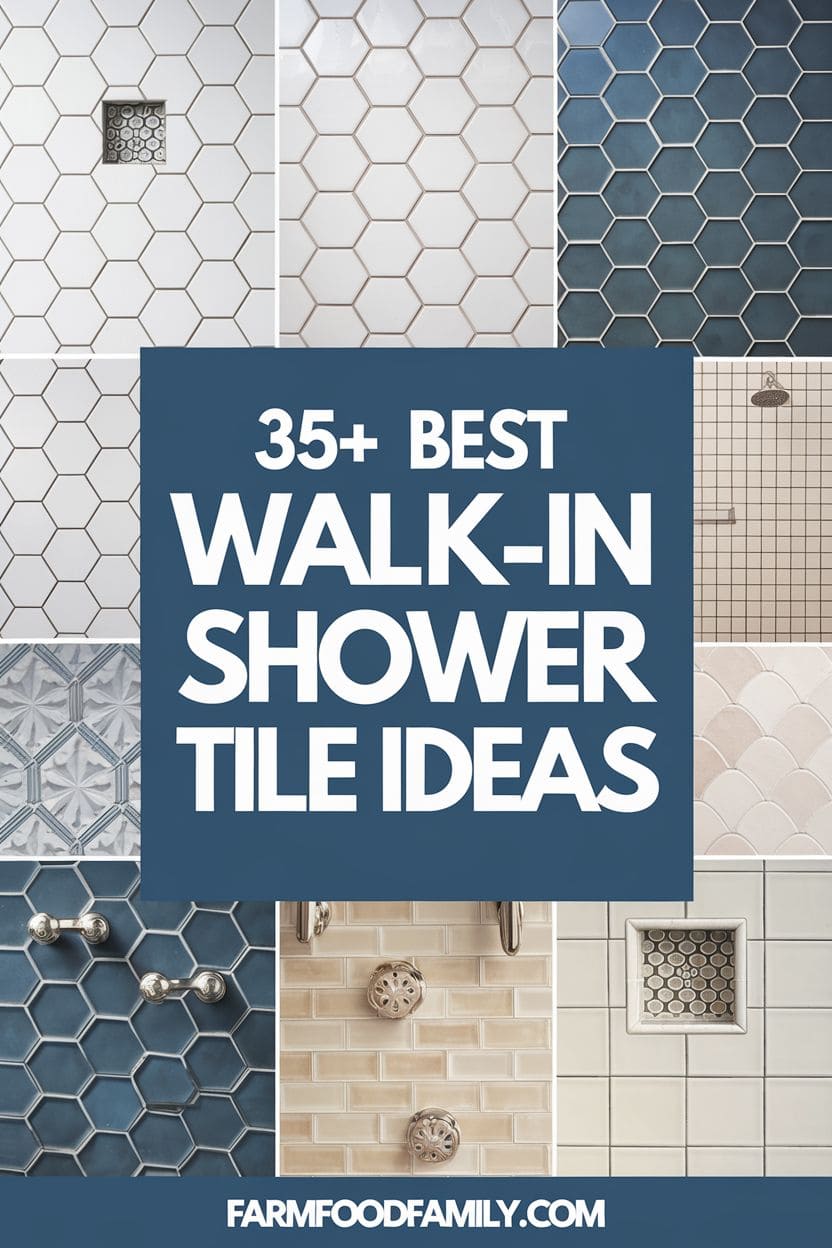
35+ Best Walk-in Shower Tile Ideas and Designs (With Pictures)
Thirty-five real tile directions worth copying, plus the $7,000-and-up installation reality most roundups skip entirely.

Never miss an update — choose FarmFoodFamily as your preferred source on Google.
How it works: Tap the button below to open Google’s settings page, then check the box next to FarmFoodFamily.
Tap the checkbox to turn it blue — that’s how you know it’s set.
Most shower tile roundups only talk about how a tile looks. They skip the part that actually determines whether the shower still looks good in five years: the labor behind it.
A properly built tiled shower runs $7,000 and up, and the real cost isn’t the tile, it’s the skilled work of keeping water where it belongs. Keep that in mind while browsing, then see the installation notes near the end before picking a favorite.
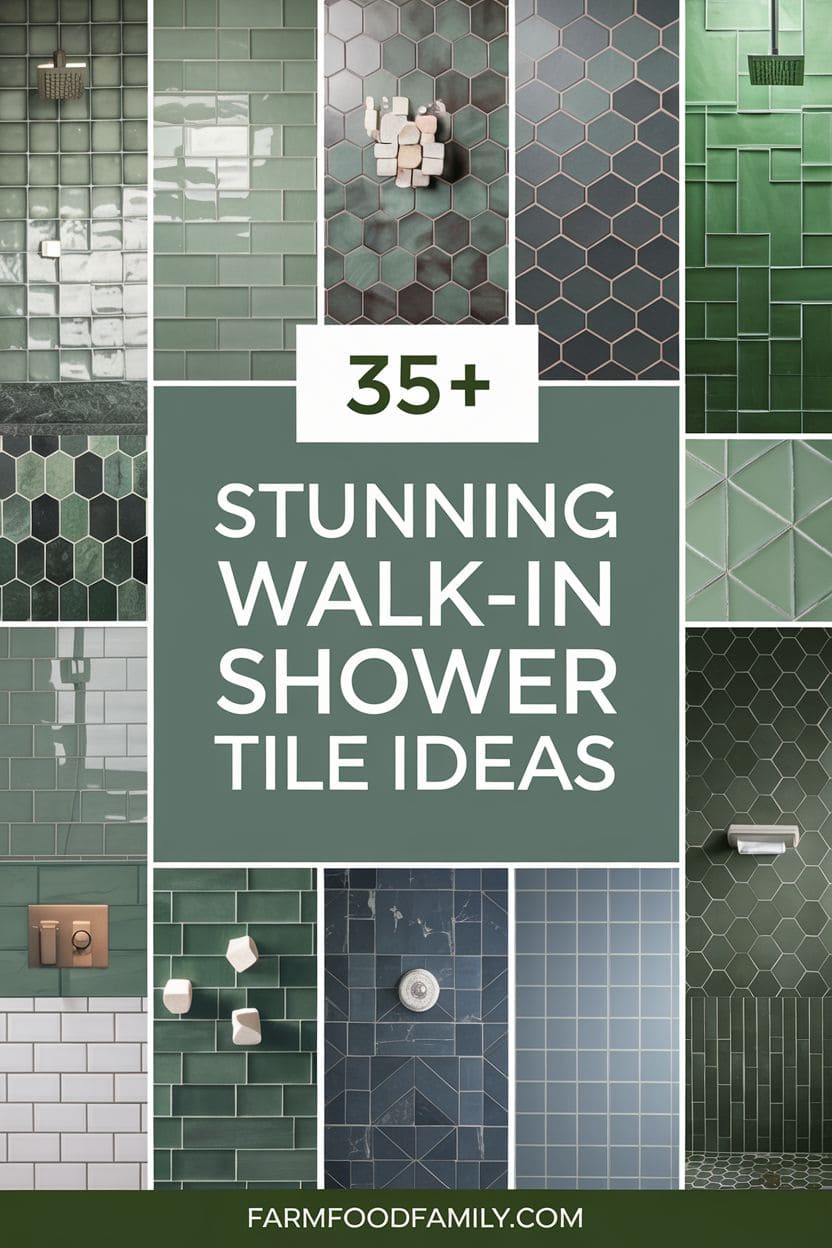
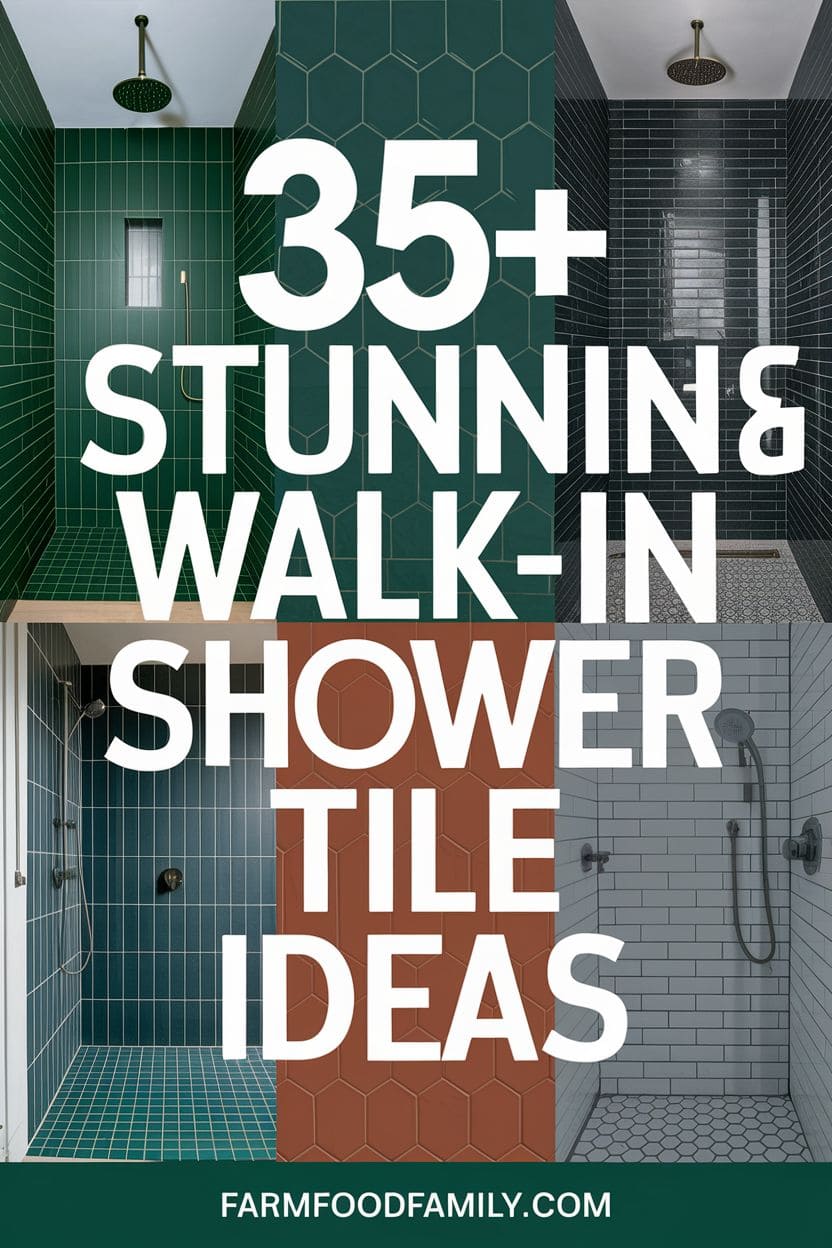
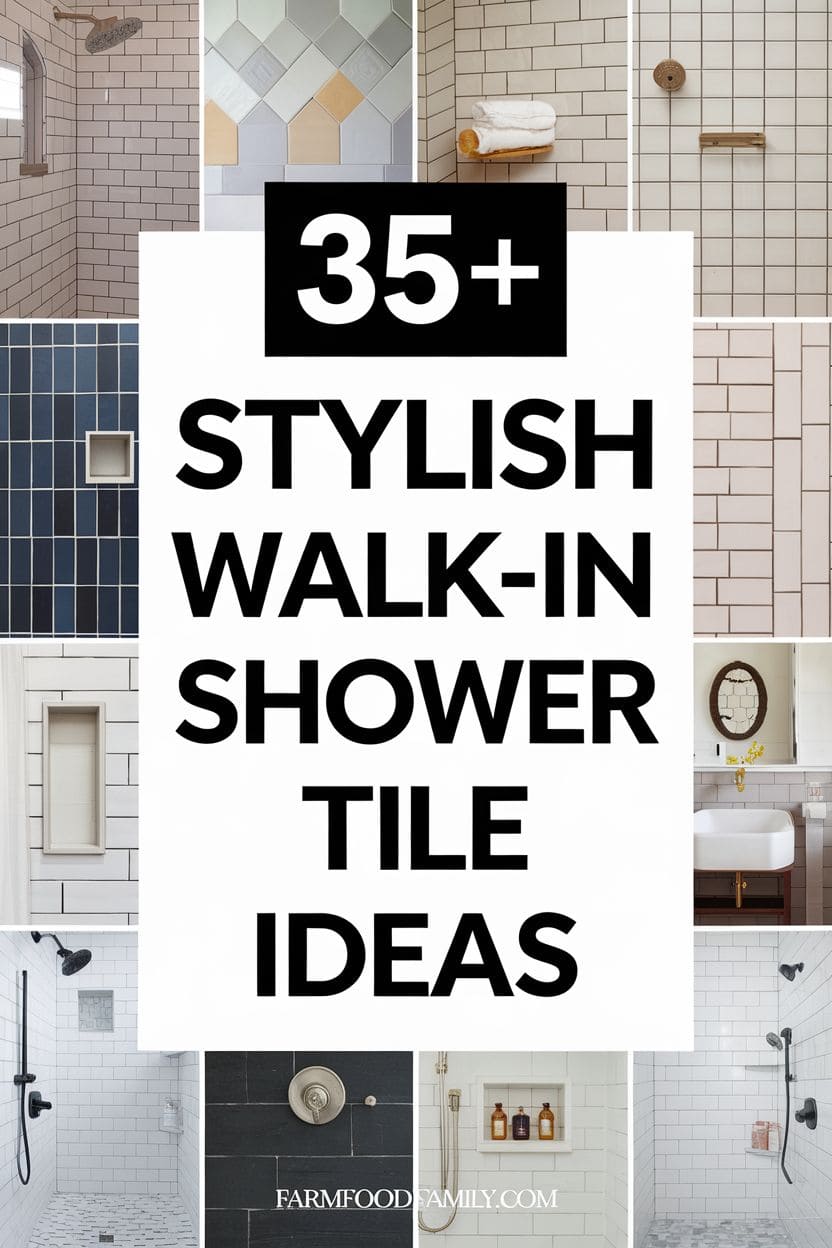
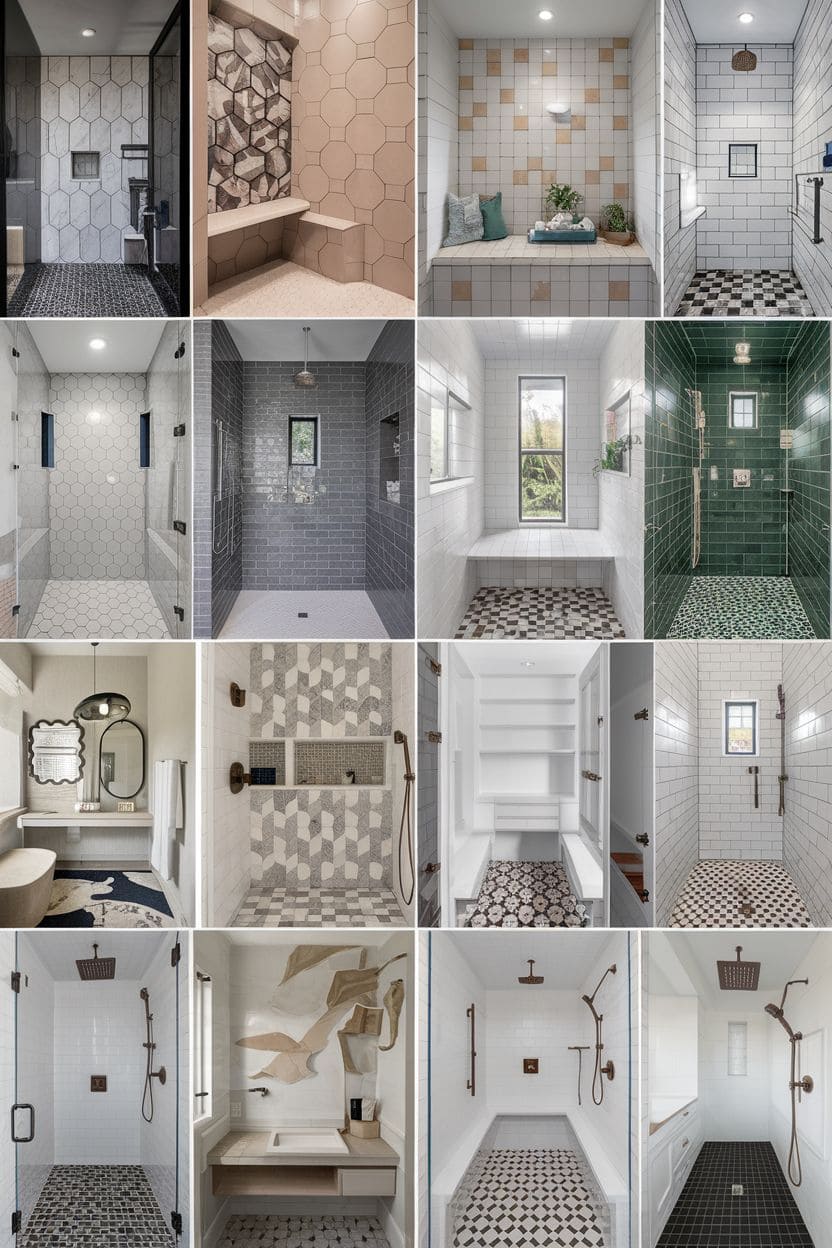
Thirty-five ideas below, organized loosely by color and material, followed by what actually matters once the tile gets picked.
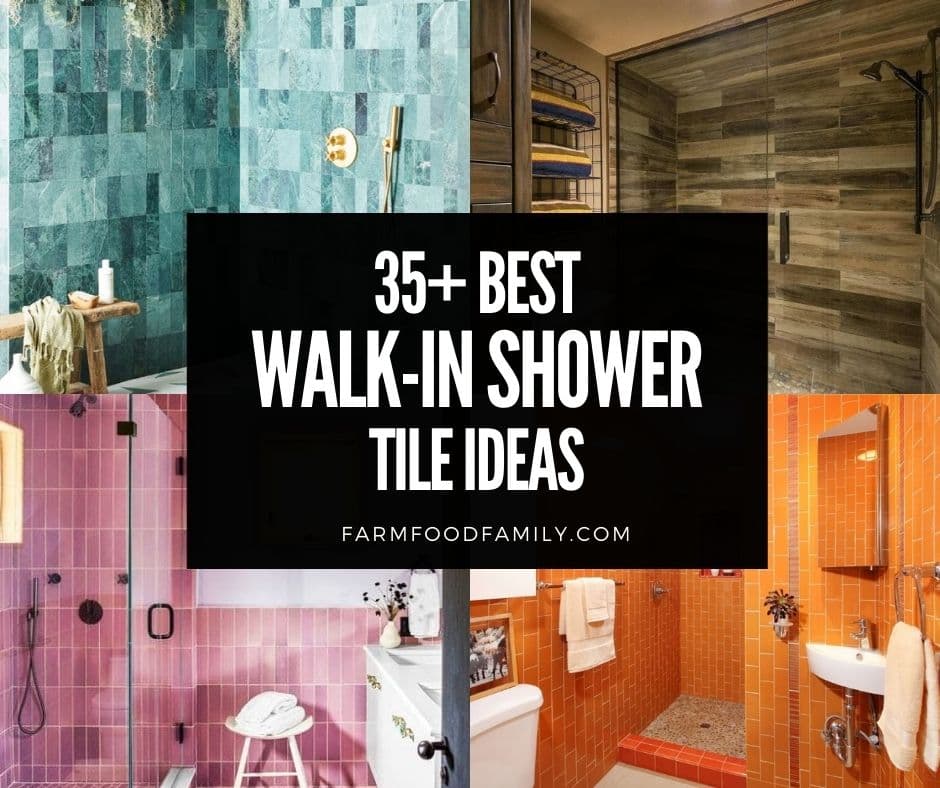
Walk-in Shower Tile Ideas
1. Color-Blocked Walls for a Small, Dark Bathroom
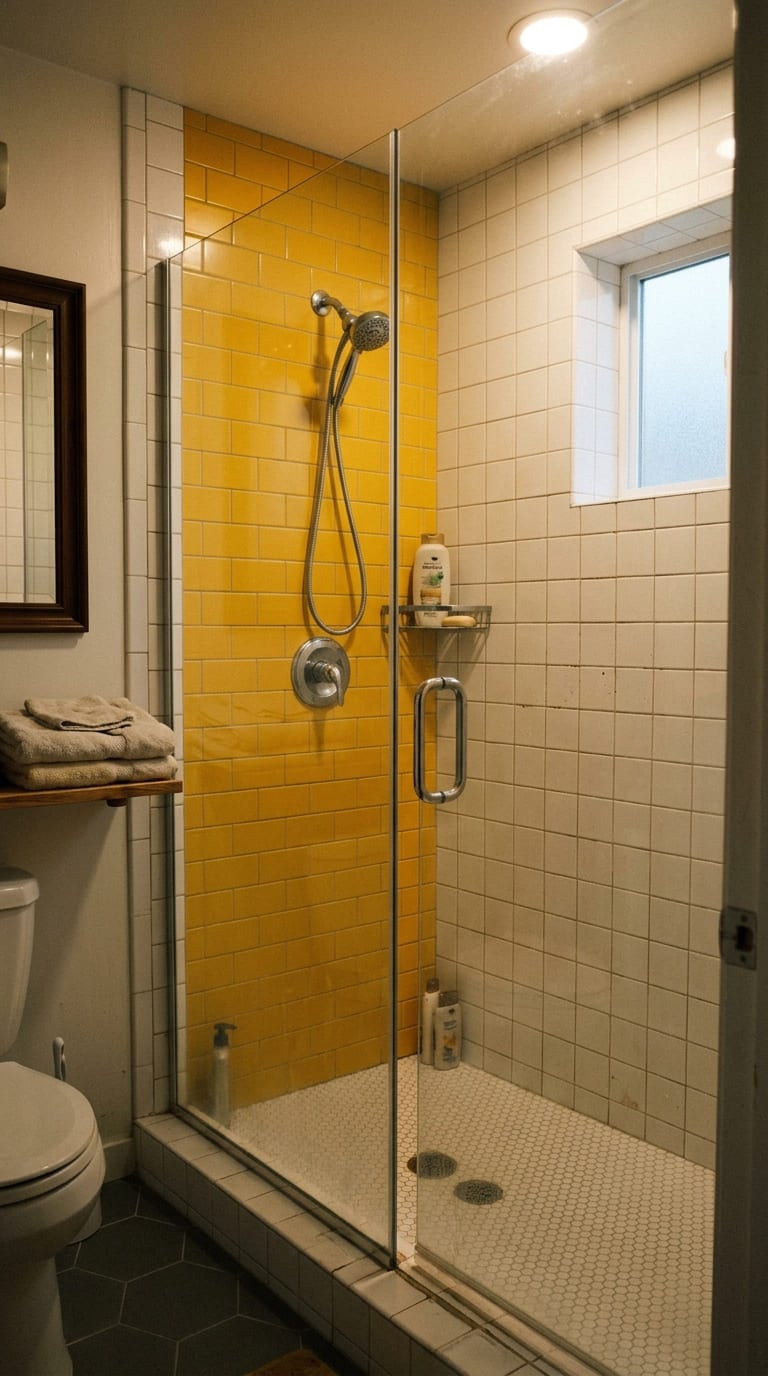
A north-facing bathroom or one with a small window can feel dim no matter what’s on the walls.
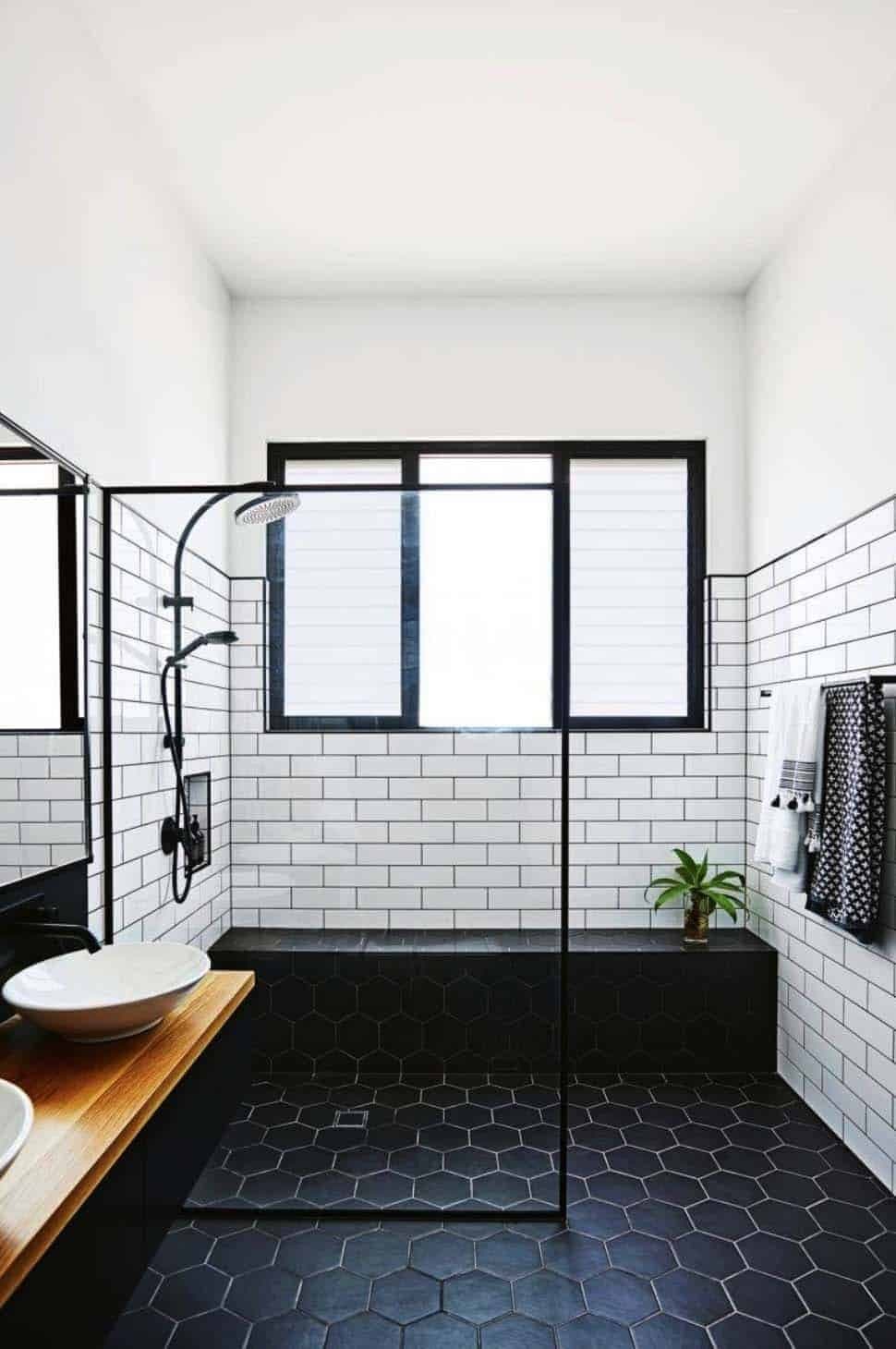
Pairing a white base tile, for light and a sense of scale, with a cheerful accent shade on just one wall or the floor keeps the room bright without going all-white and flat. Yellow works especially well here, warming up a room that otherwise gets very little natural light.


The key is contrast between walls and floor, not just a single accent tile dropped in randomly. Get the color match tight if going bold, a slightly-off pairing reads as a mistake rather than a choice.
2. A Built-In Bench Seat
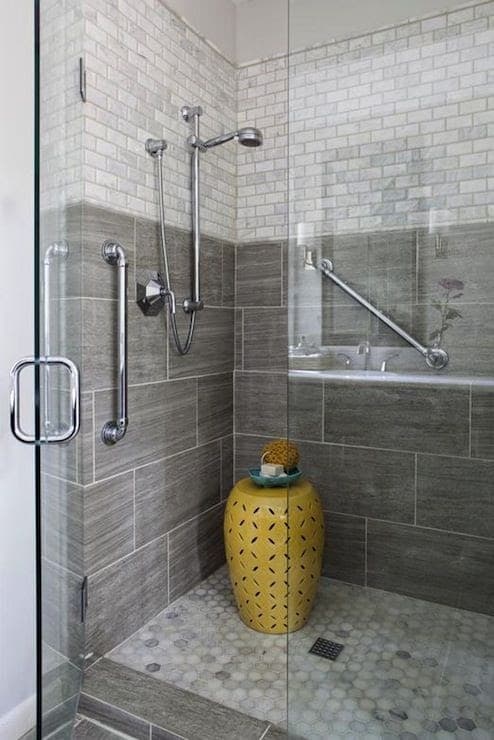
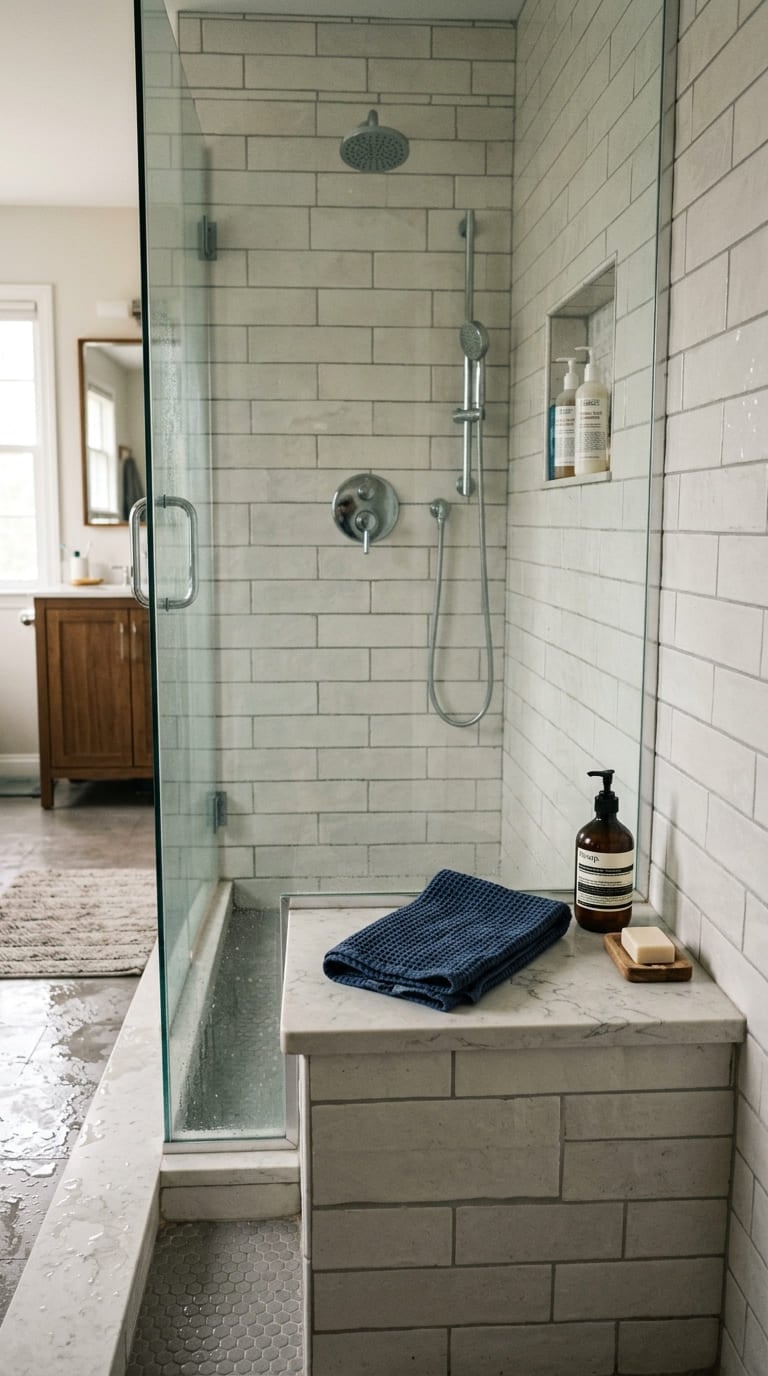
A bench earns its space in any walk-in shower big enough to fit one, especially in a larger primary bathroom. Beyond sitting, it doubles as a leg rest, which turns out to be the more common daily use.
Quartz or marble-look manufactured stone both work for the bench top, and quartz holds up to daily wear noticeably better than natural marble in this specific application.
The high-end version of this idea uses real stone, but a manufactured equivalent gets most of the same look for a fraction of the material cost.
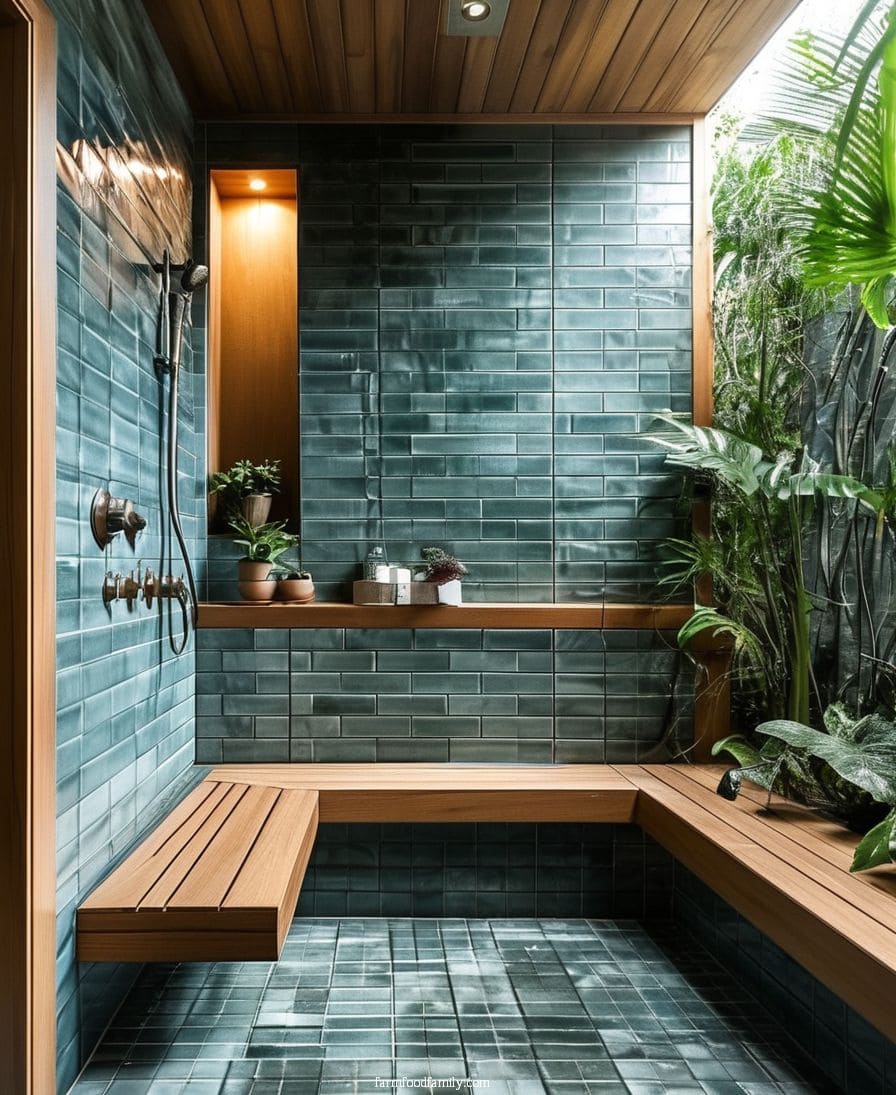
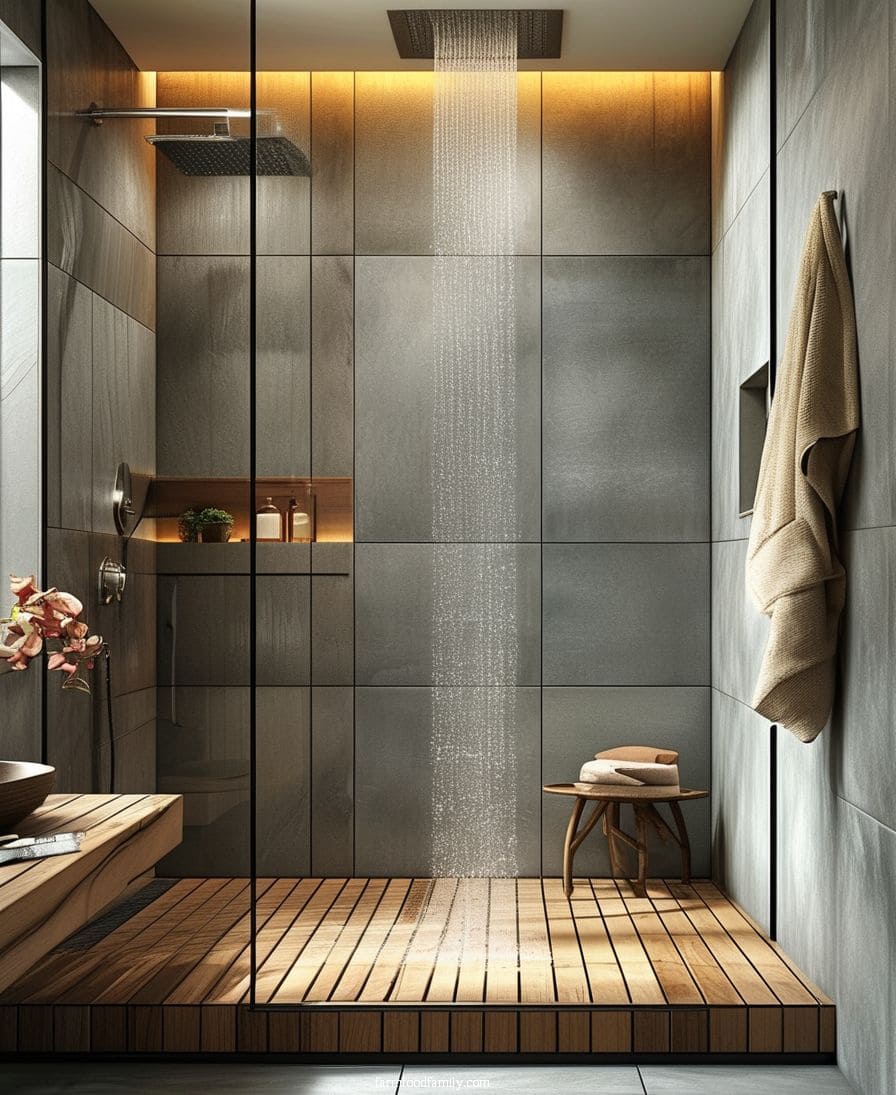
3. A Touch of Teak Wood Flooring

Teak flooring inside a shower is an unusual choice, and that’s exactly the appeal for anyone tired of an all-tile look.
The wood grain is tight and naturally water-resistant, which is why it holds up in a wet environment better than most other wood species would.
The tradeoff is maintenance: the floor needs to come out periodically for resealing with fresh wood conditioner. The good news is that teak shower floors are typically built to be removable for exactly that reason.
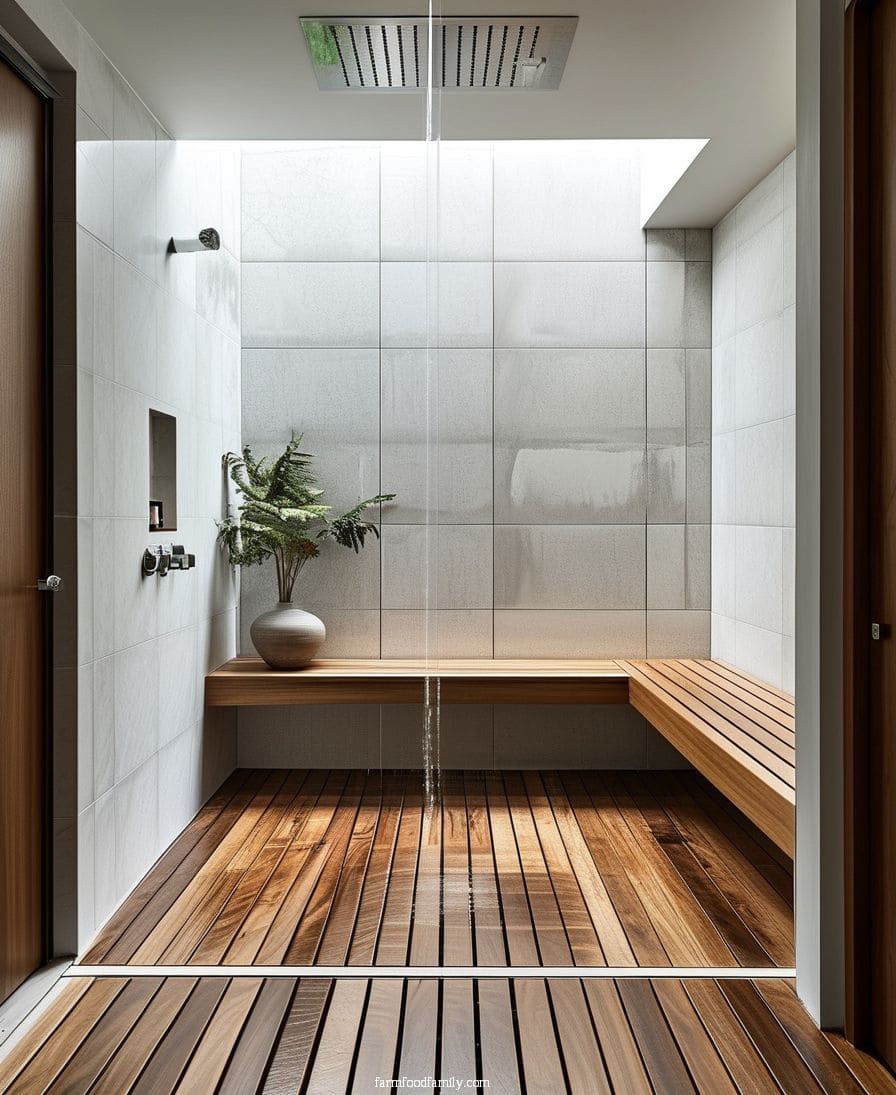
4. Doorless Shower With a Fixed Glass Panel
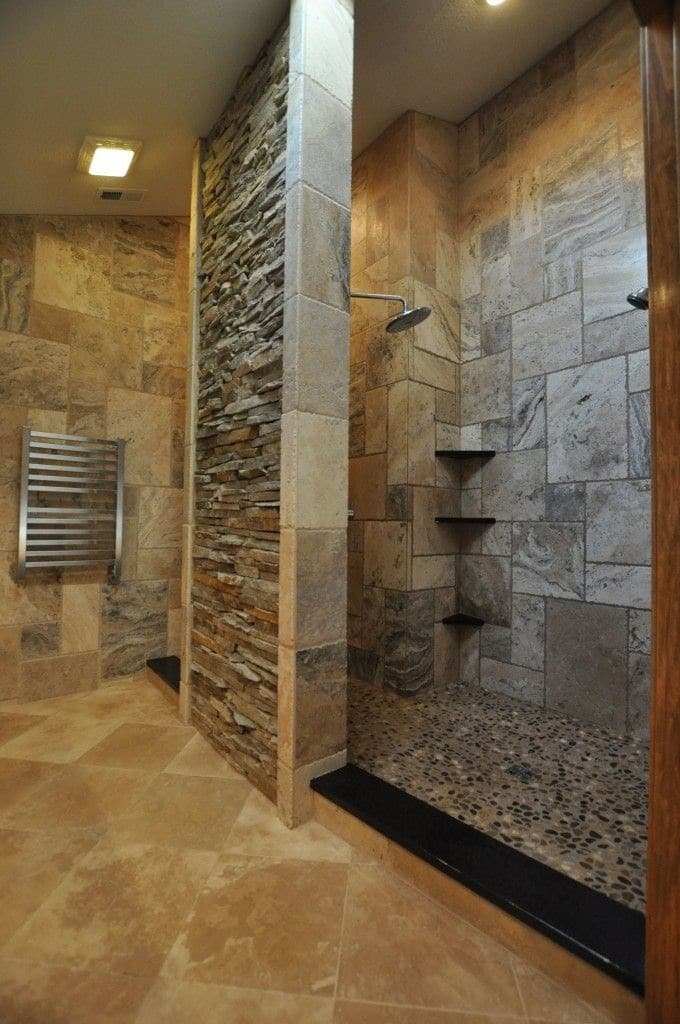
A doorless shower design works in both tight and generous bathrooms, and a single fixed glass panel is usually all it takes to keep water contained without a swinging or sliding door. For more on this specific direction, our curbless shower ideas guide covers the layout side in more depth.

Keeps large-format tile flat and lippage-free while the mortar sets, exactly the installation detail the "Before You Tile" section above flags as the real skill gap on big tiles. 4.4 stars, over 5,000 ratings.
Shop NowThis post contains affiliate links. We may earn a commission on qualifying purchases at no extra cost to you.
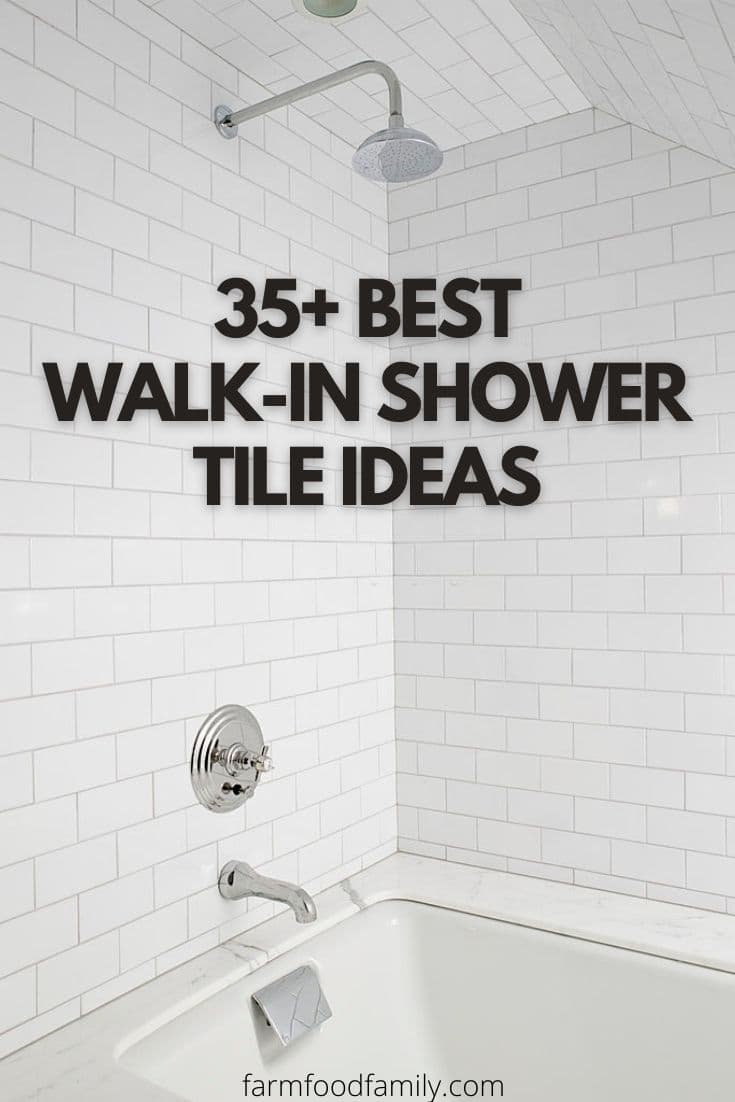
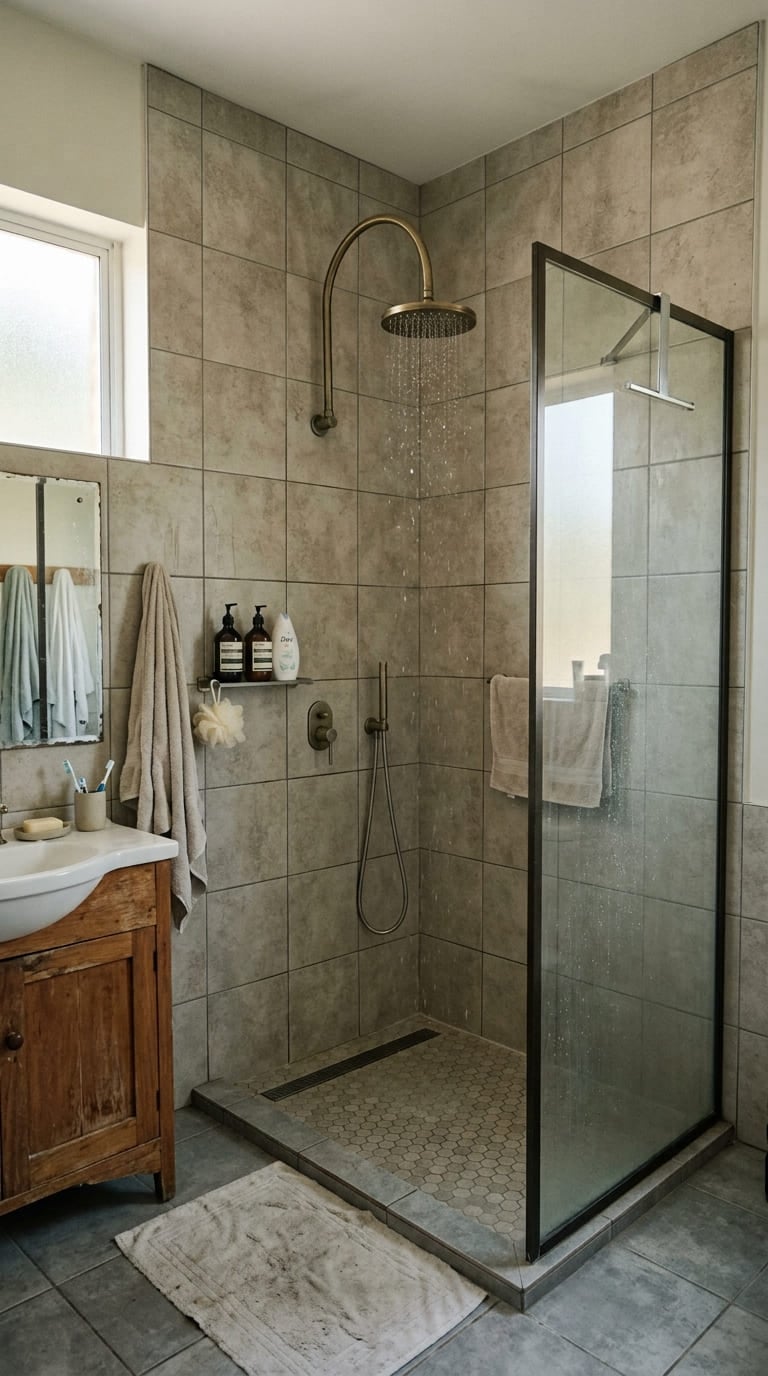
In one real remodel that replaced a home’s original 1948 pink tub, ceiling-to-floor ceramic tile over concrete wrapped the window alcove to fully protect the smaller footprint, and a curved-arm, rain-style showerhead kept spray off the surrounding walls.
Going doorless does have a real downside worth naming honestly. One homeowner working through a real doorless shower design put it plainly: “the lack of a door will make you cold.” It’s a worthwhile tradeoff for most people, but not a purely aesthetic decision.
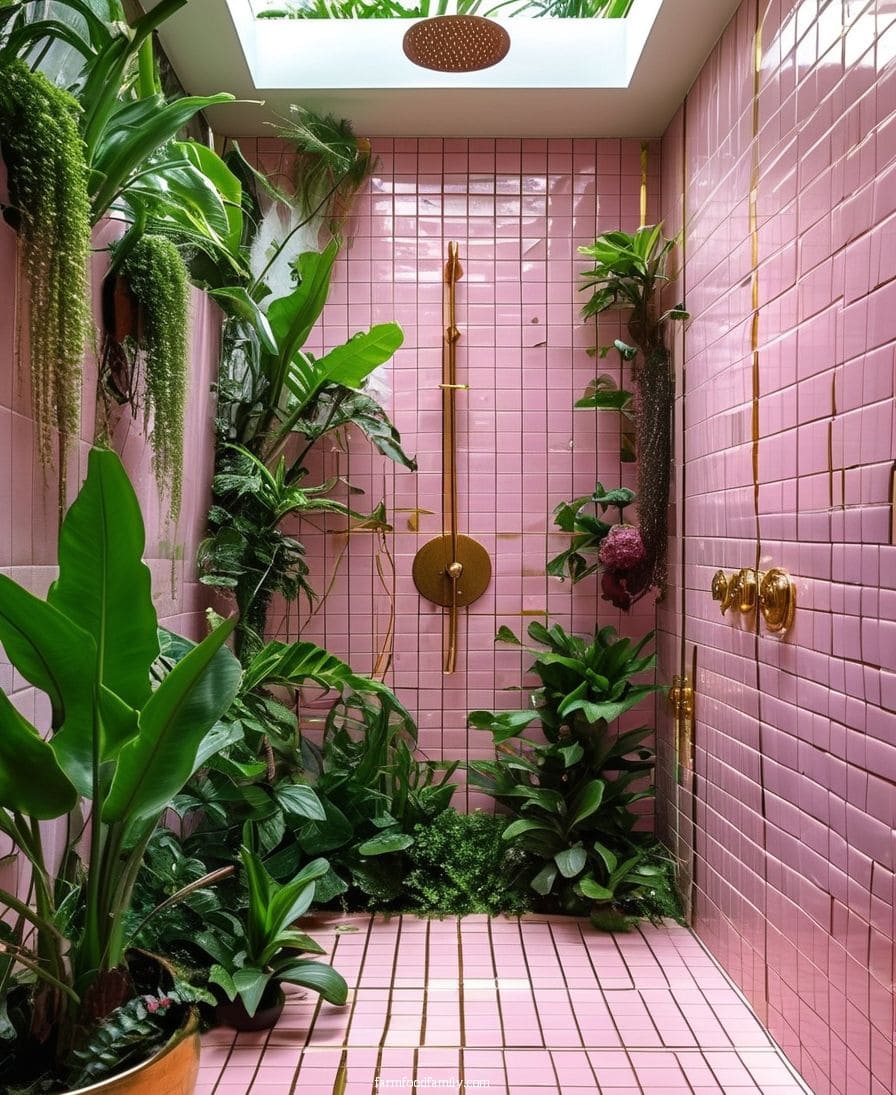
5. Pink Tile With Gold or Botanical Accents

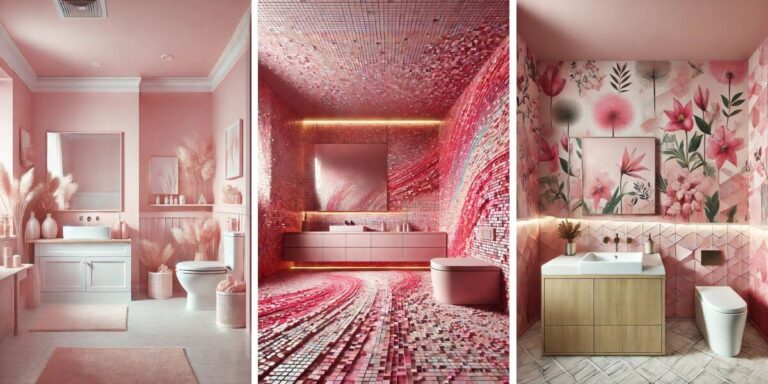
Pink reads as more flexible than most people expect for a bathroom, especially paired thoughtfully.
A gold accent pushes it toward Art Deco. Tropical plants and a green accent color push the same pink tile toward a biophilic, modern-jungle look instead.
Wood-look tile mixed with pastel pink fixtures and a natural stone-look tap creates a softer version of the same idea, useful for anyone who wants the color without the drama.
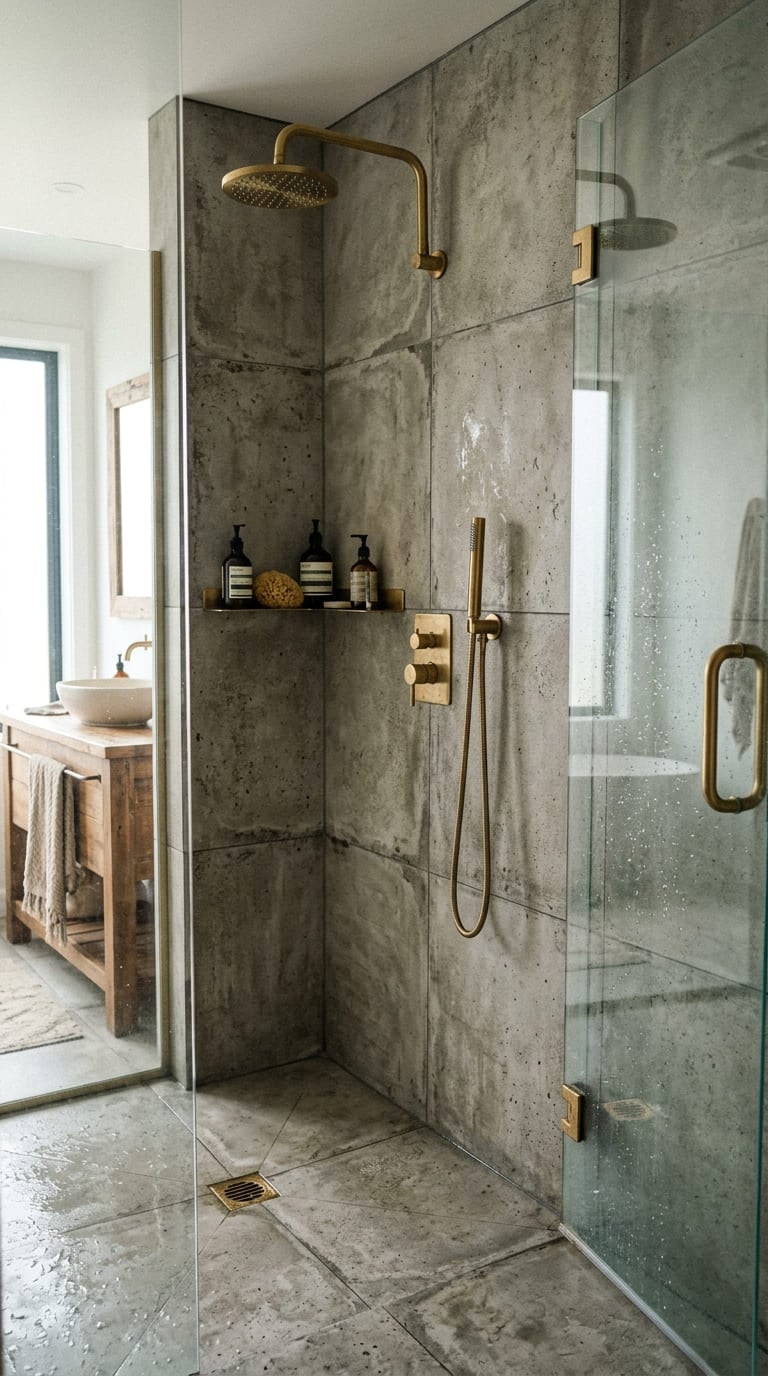
6. Polished Concrete-Look Tile
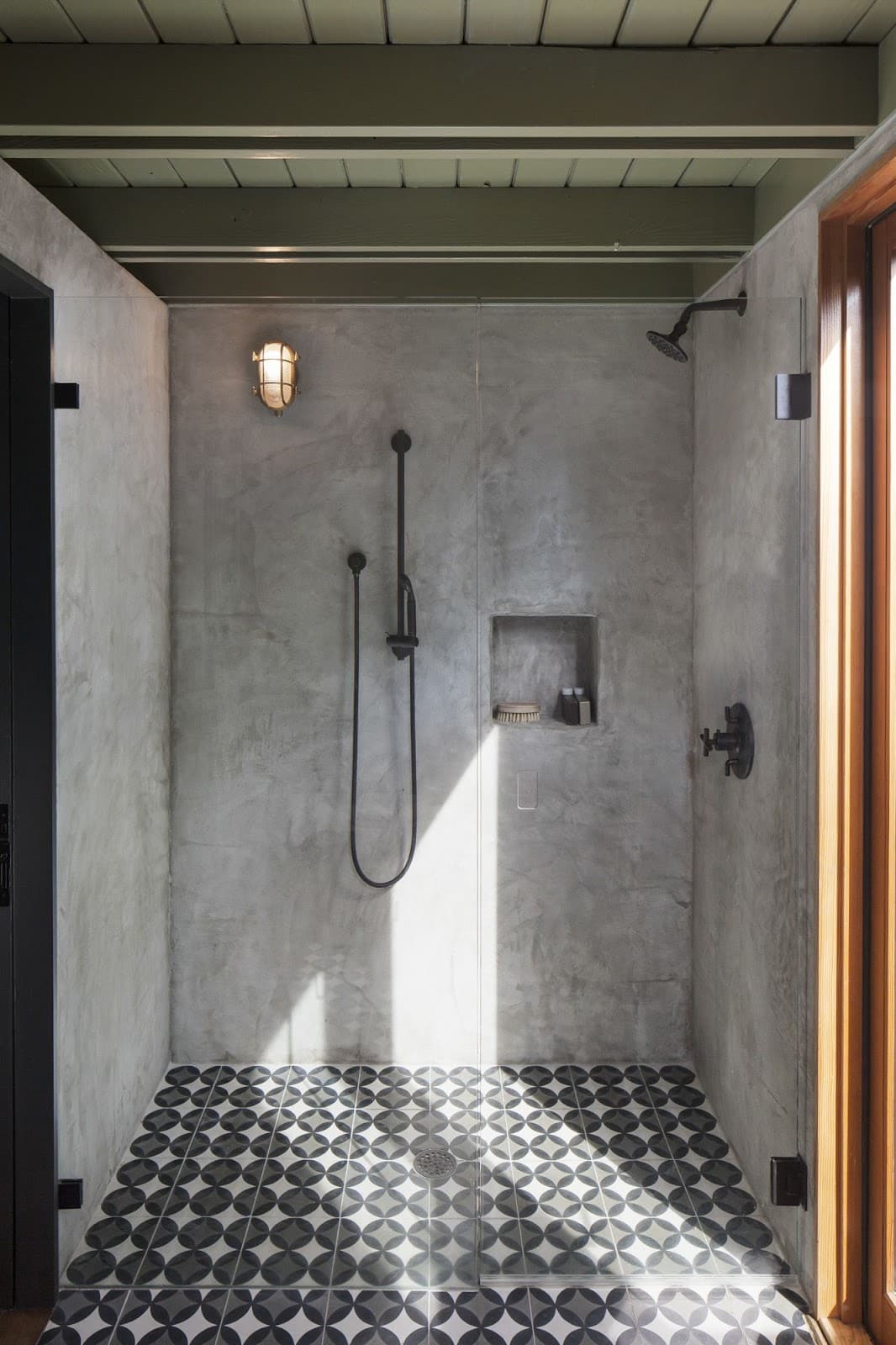
Concrete-look tile brings an industrial, unfussy texture into a shower without any of the sealing headaches real poured concrete would require.
It reads as intentional rather than unfinished when paired with warmer tones elsewhere in the bathroom.
This is a good fit for anyone building a minimalist or Scandinavian-leaning bathroom who wants texture without pattern.


7. Jungle-Pattern Tile for a Tropical Feel
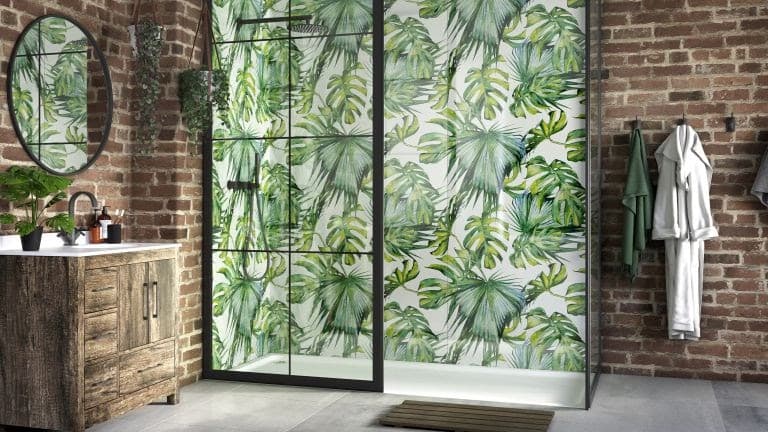
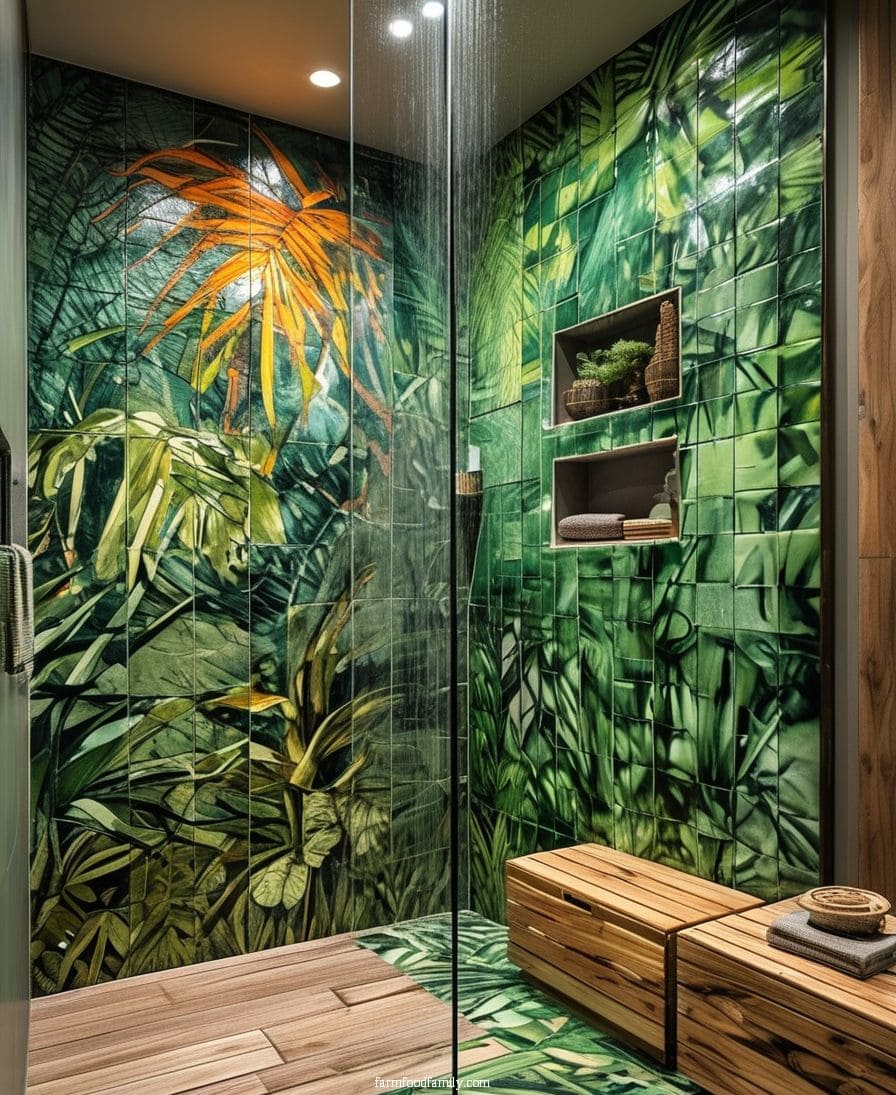
A bold botanical or palm-leaf pattern tile turns a shower into the visual anchor of the whole bathroom.
It works best contained to one wall or a niche rather than covering every surface, where the pattern can start to feel busy instead of tropical.
Pair it with simple fixtures and let the tile do the visual work.
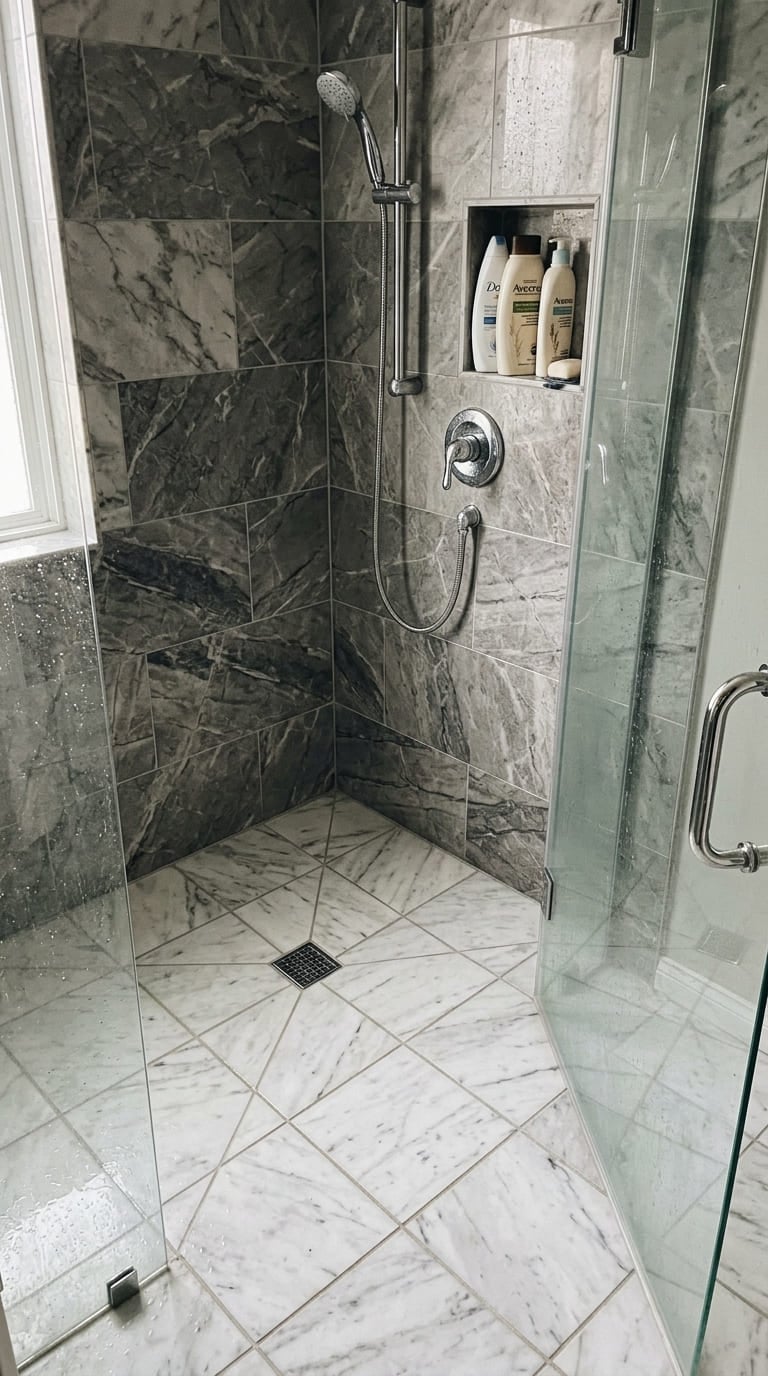
8. Budget Marble-Look Tile Laid on the Diagonal
Real marble prices a lot of people out of the look they actually want.
Marble-look porcelain laid on the diagonal, especially on the floor, gets close to the same visual effect for a fraction of the material cost.
One trick that reads as more expensive than it costs: using a darker tone on the back wall of the shower specifically, since it hides soap residue and stray hair better than a lighter tile would in that exact spot.
9. Mixed Textures Within a White Palette
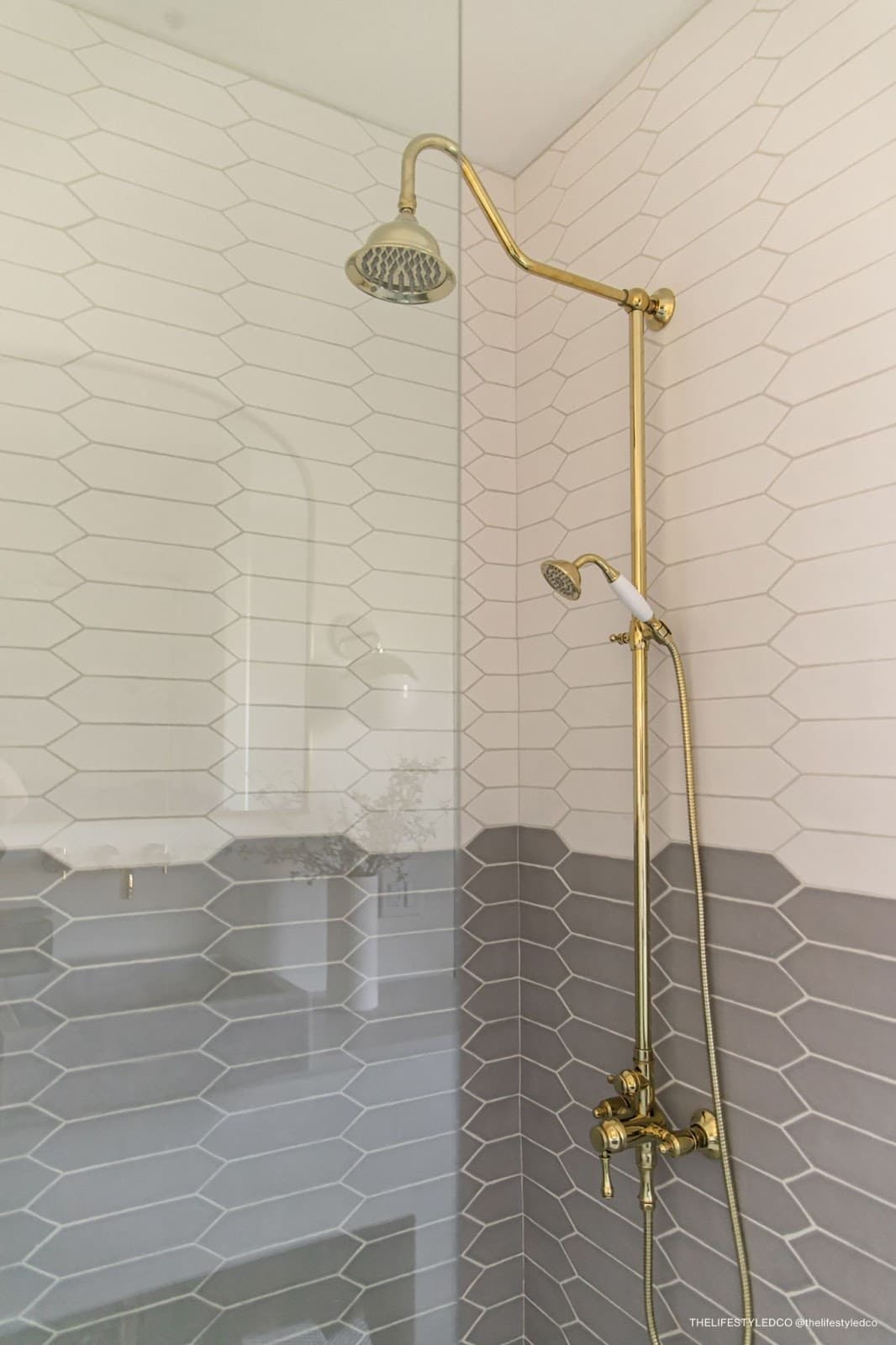
An all-white bathroom doesn’t have to mean flat white ceramic everywhere.
Vertically-set ivory subway tile on the walls, paired with wood-look floor tile for warmth, keeps a monochrome scheme from feeling sterile.
A black-and-white pattern tile on a bench or seating nook adds just enough contrast to zone the space visually without breaking the overall palette.
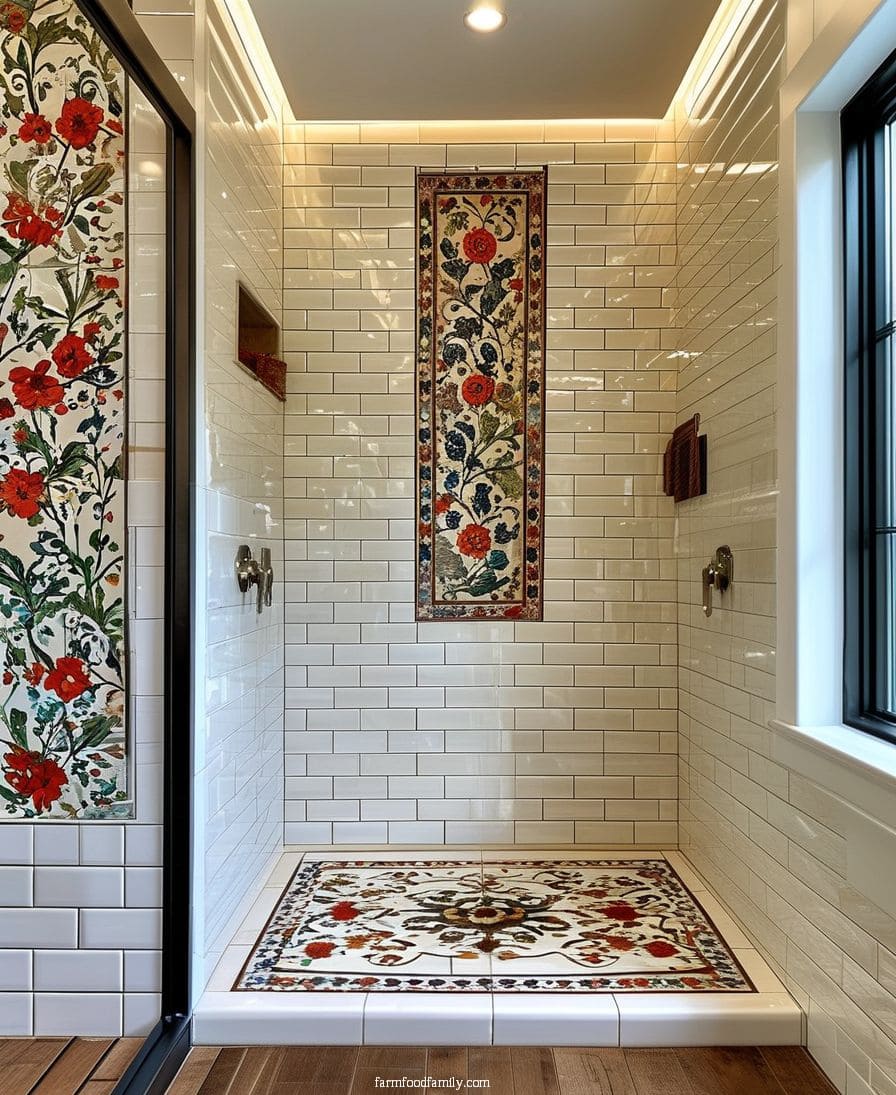
10. Fennel-Green Marble Carried Throughout
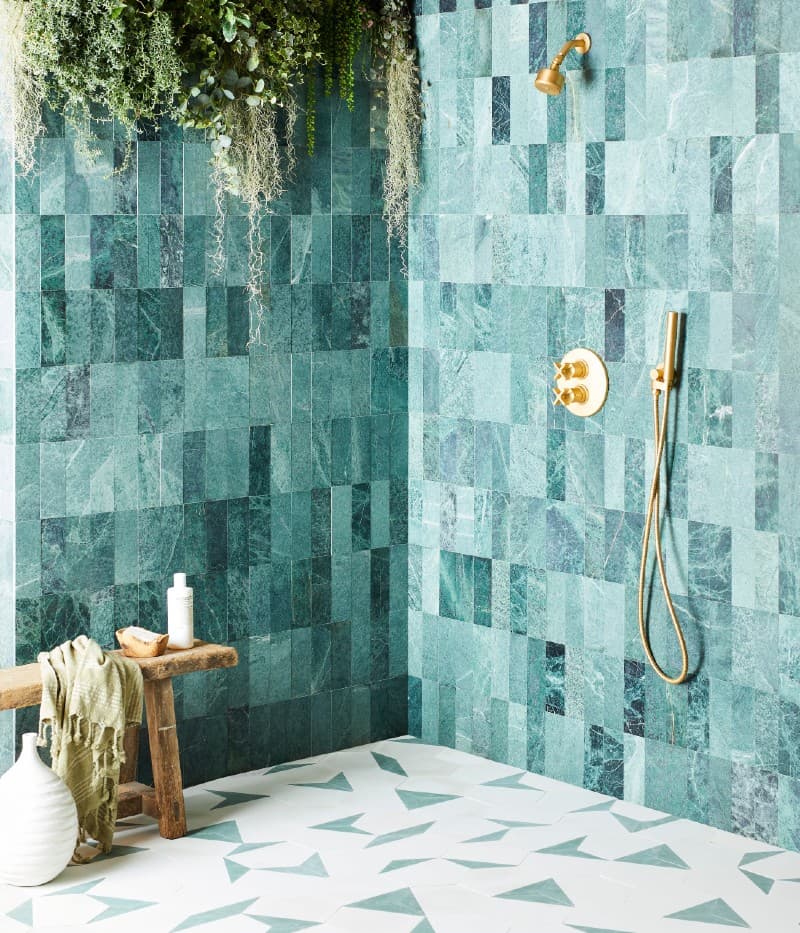
A fennel-green marble, used floor to ceiling rather than as a single accent, turns a shower into a genuinely calming space instead of just a functional one.
The color sits close to naturally occurring plant tones, pistachio and teal included, which is part of why green schemes tend to read as relaxing rather than trendy.
Pair it with sandy stone tones elsewhere in the room to let the green stand out without competing.
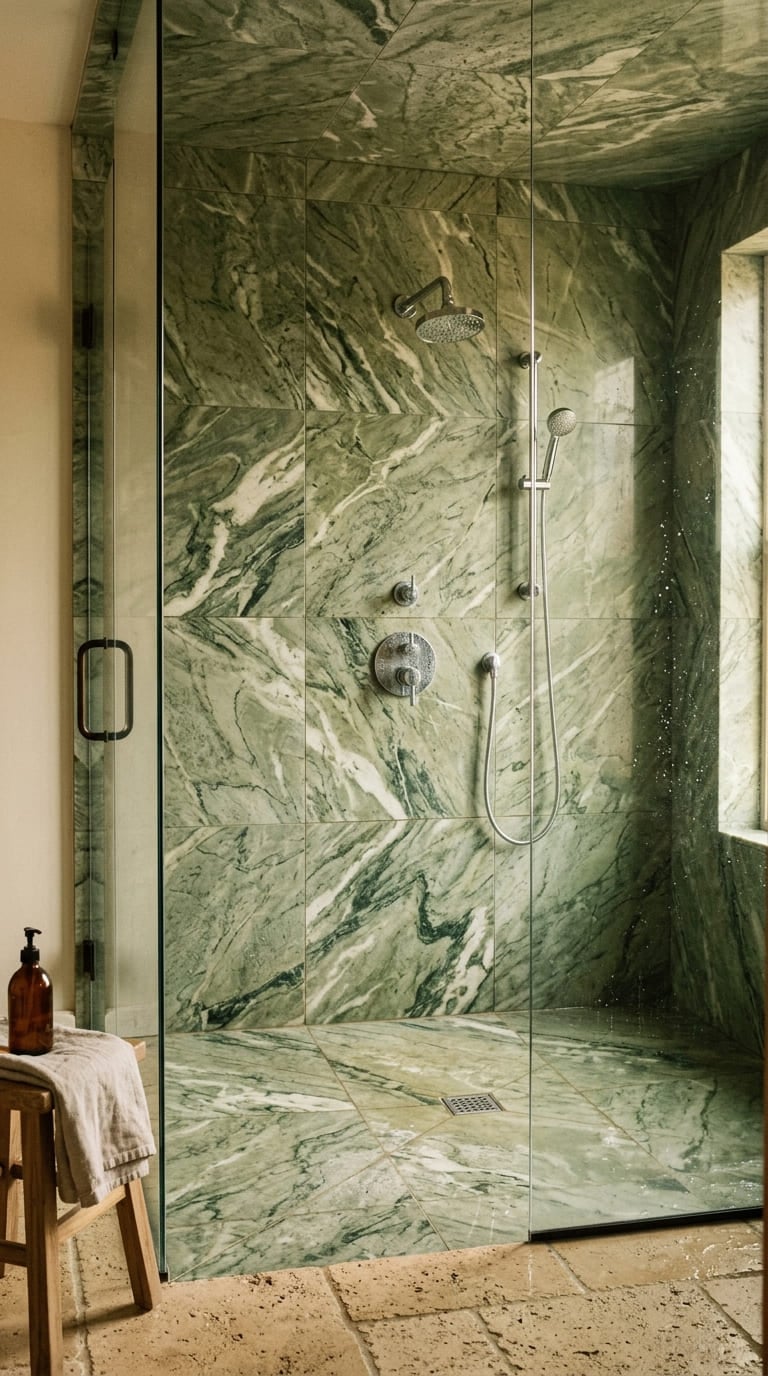
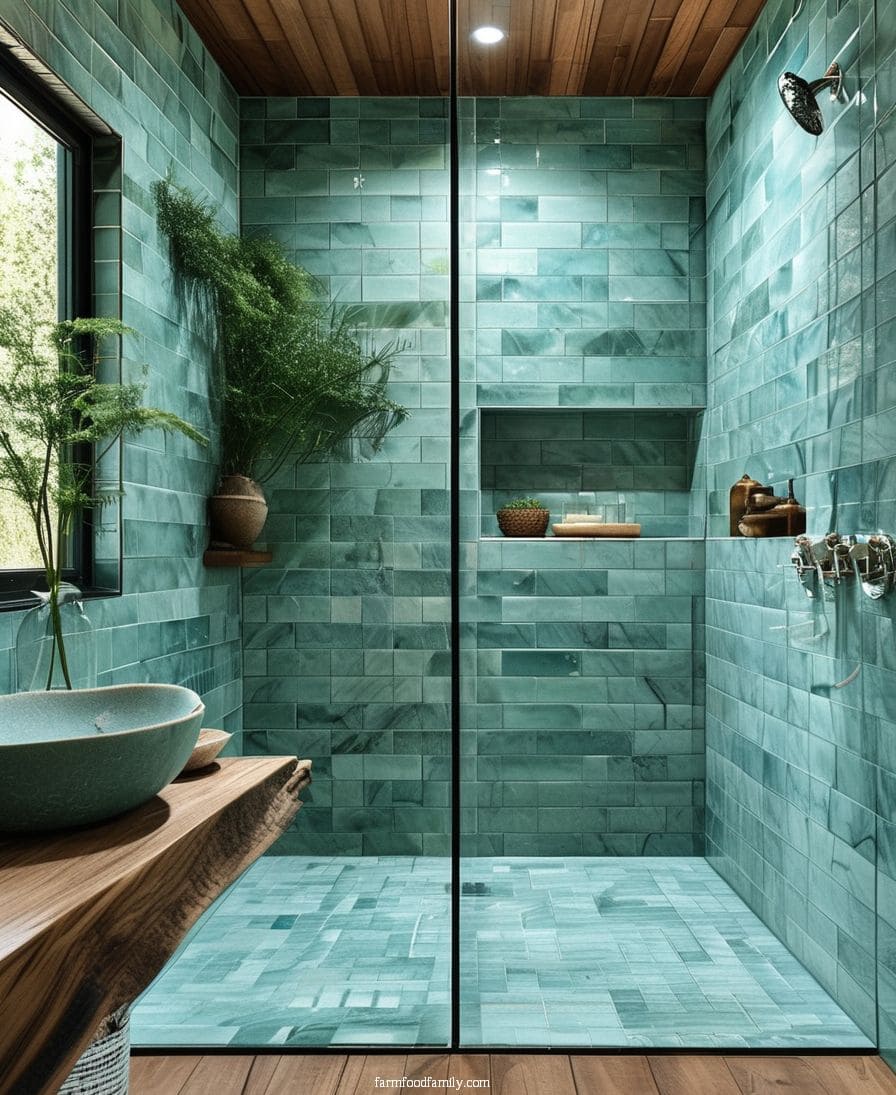
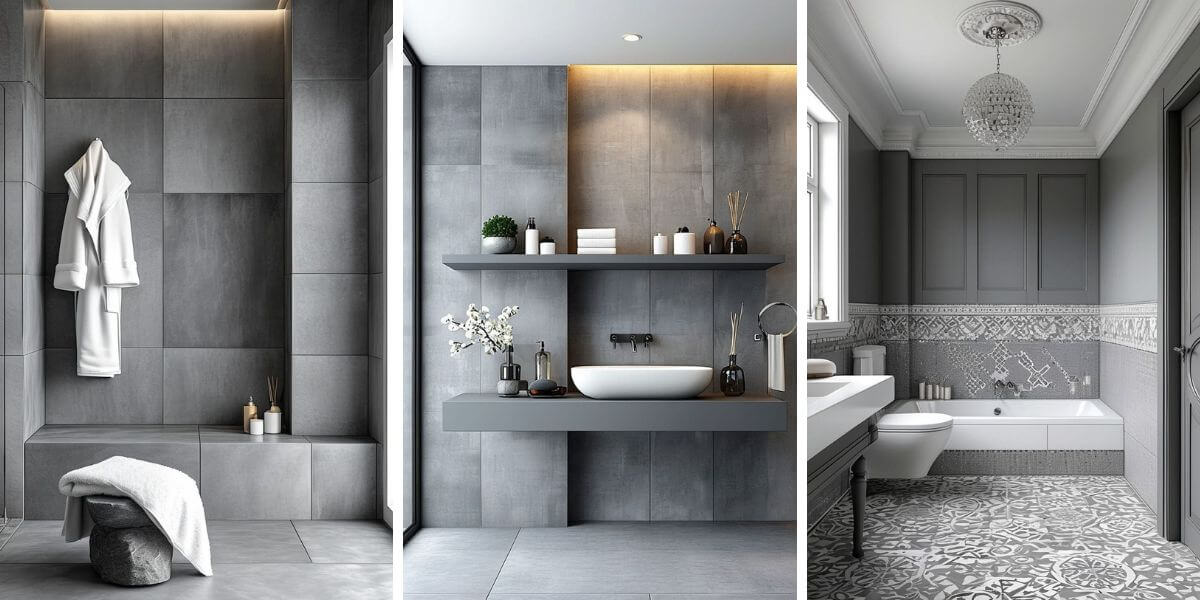
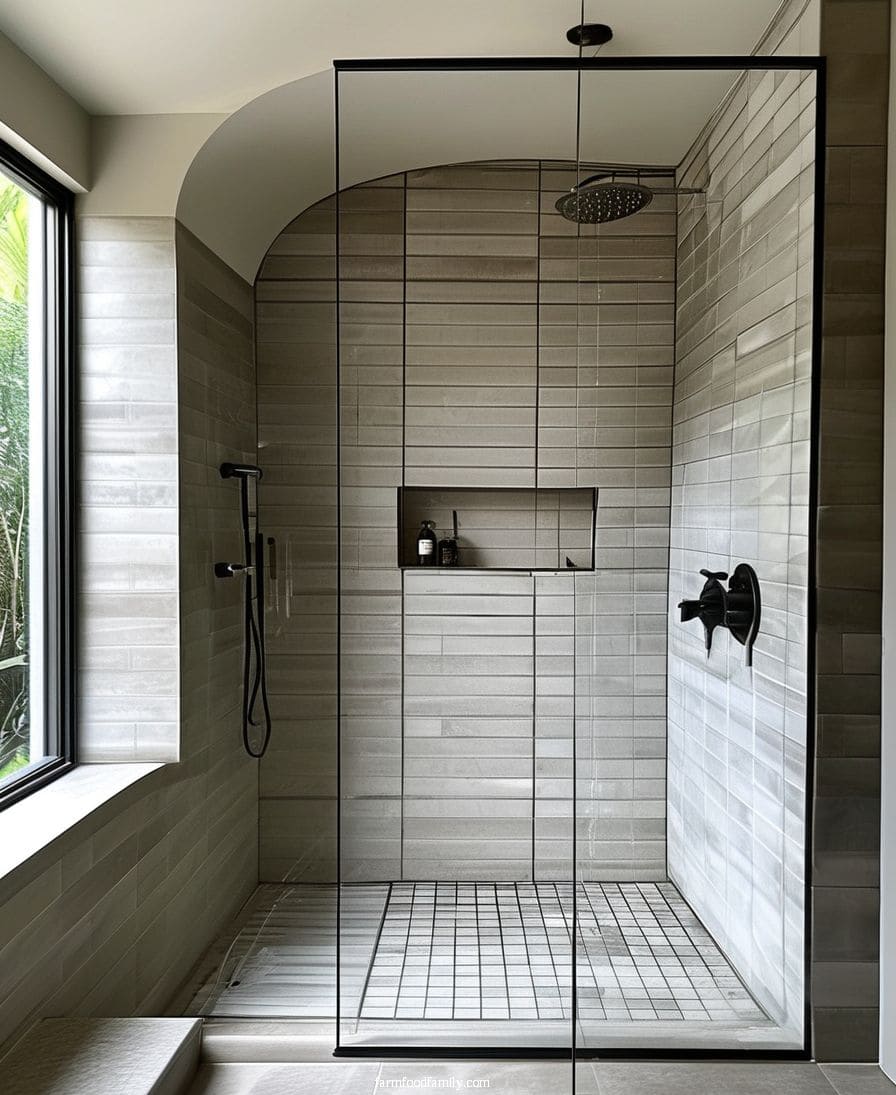
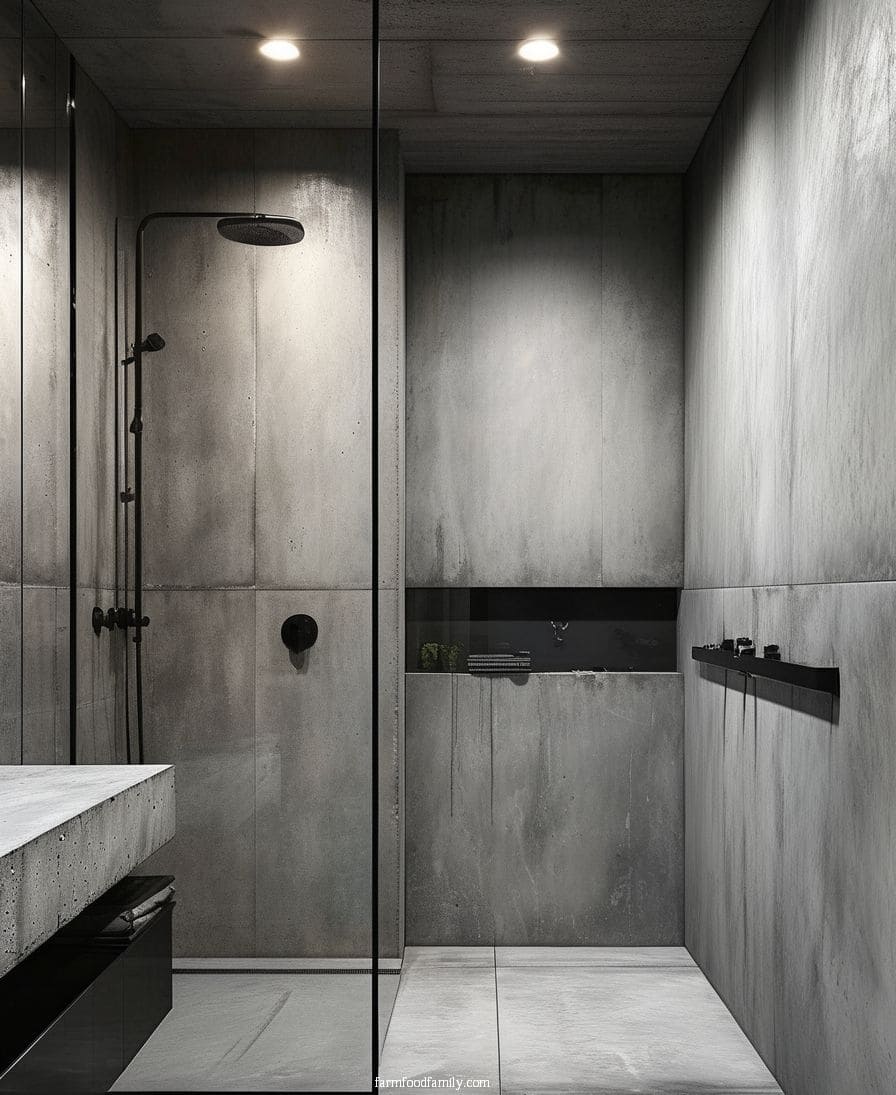
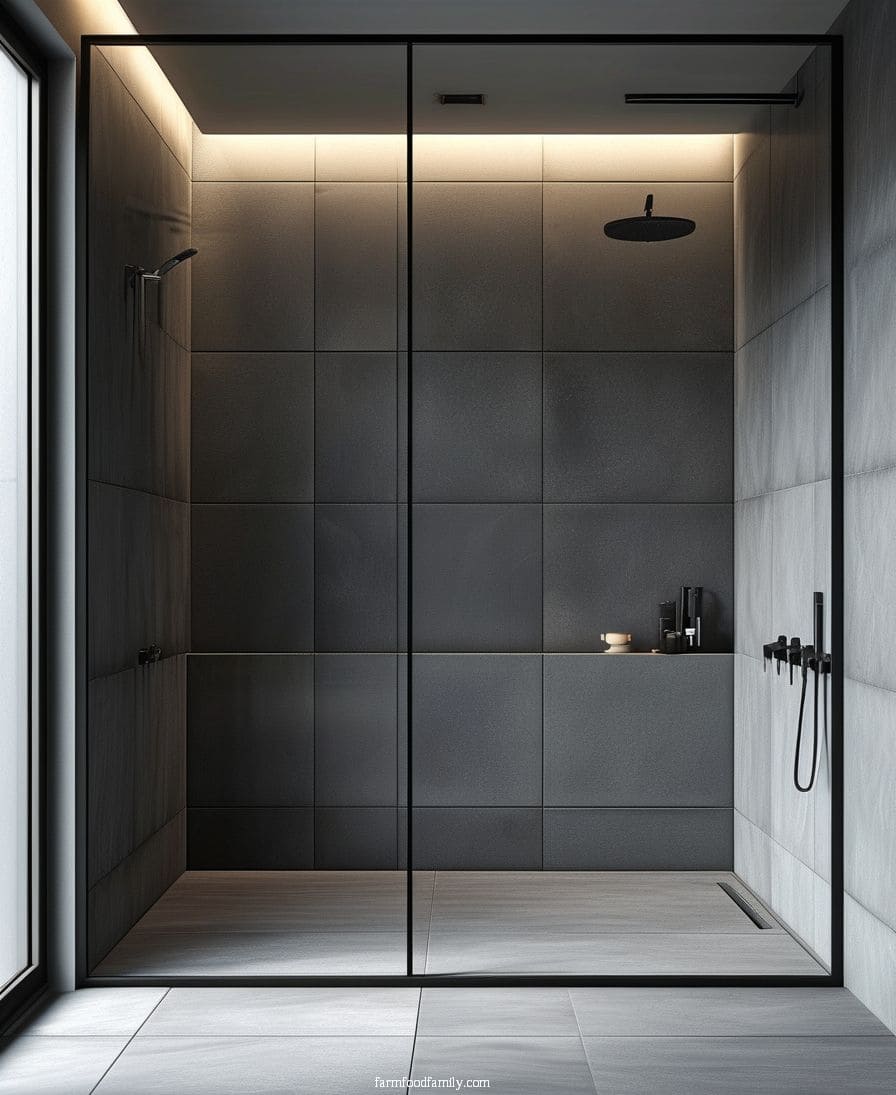
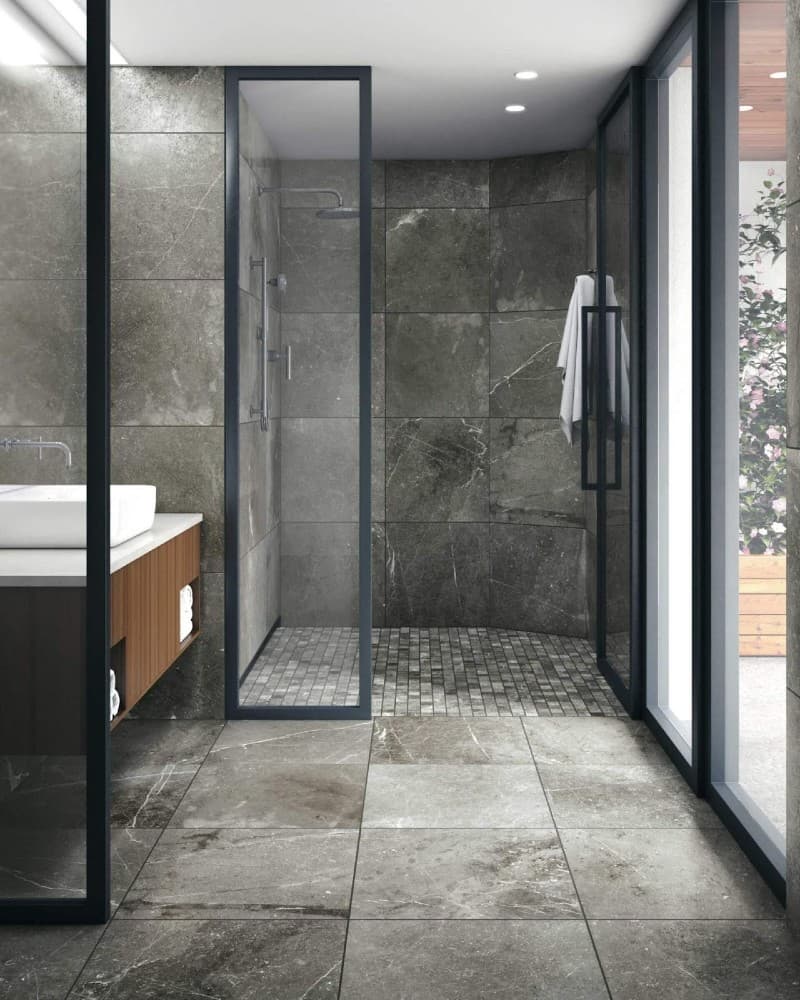
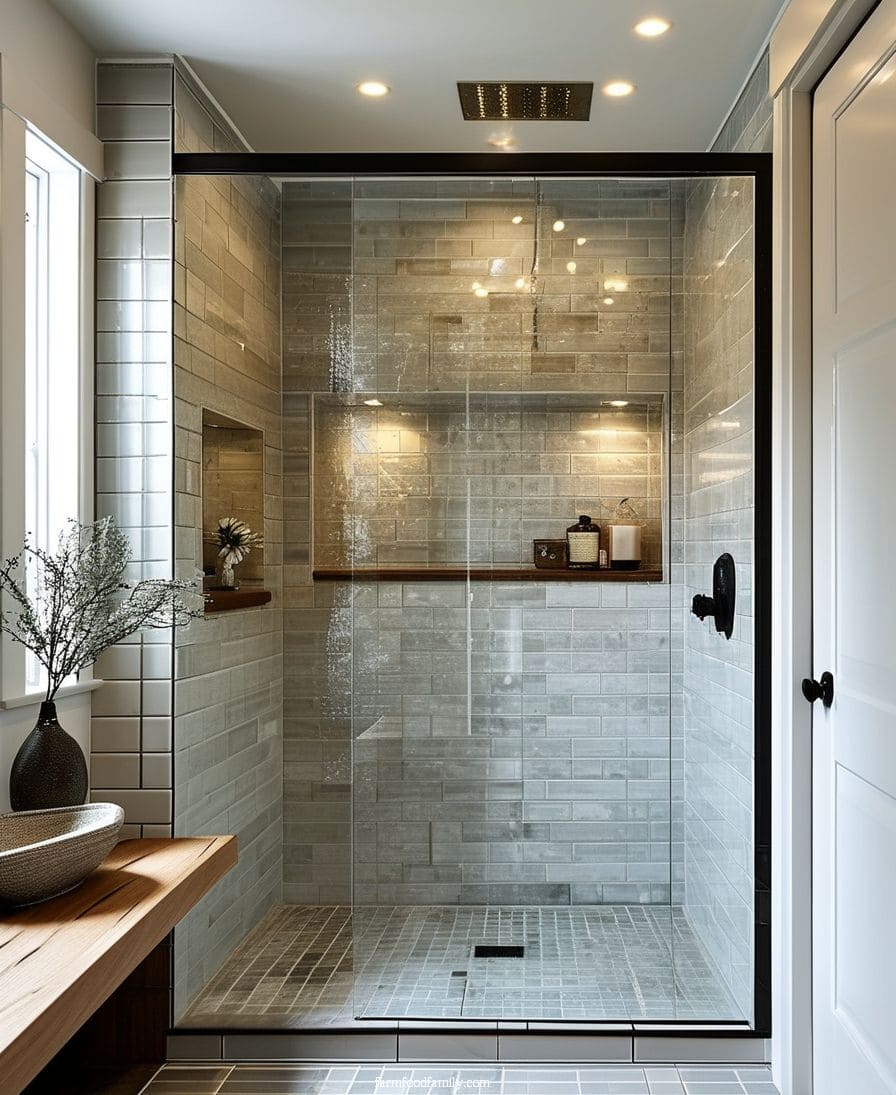
11. A Grayscale, Minimalist Shower
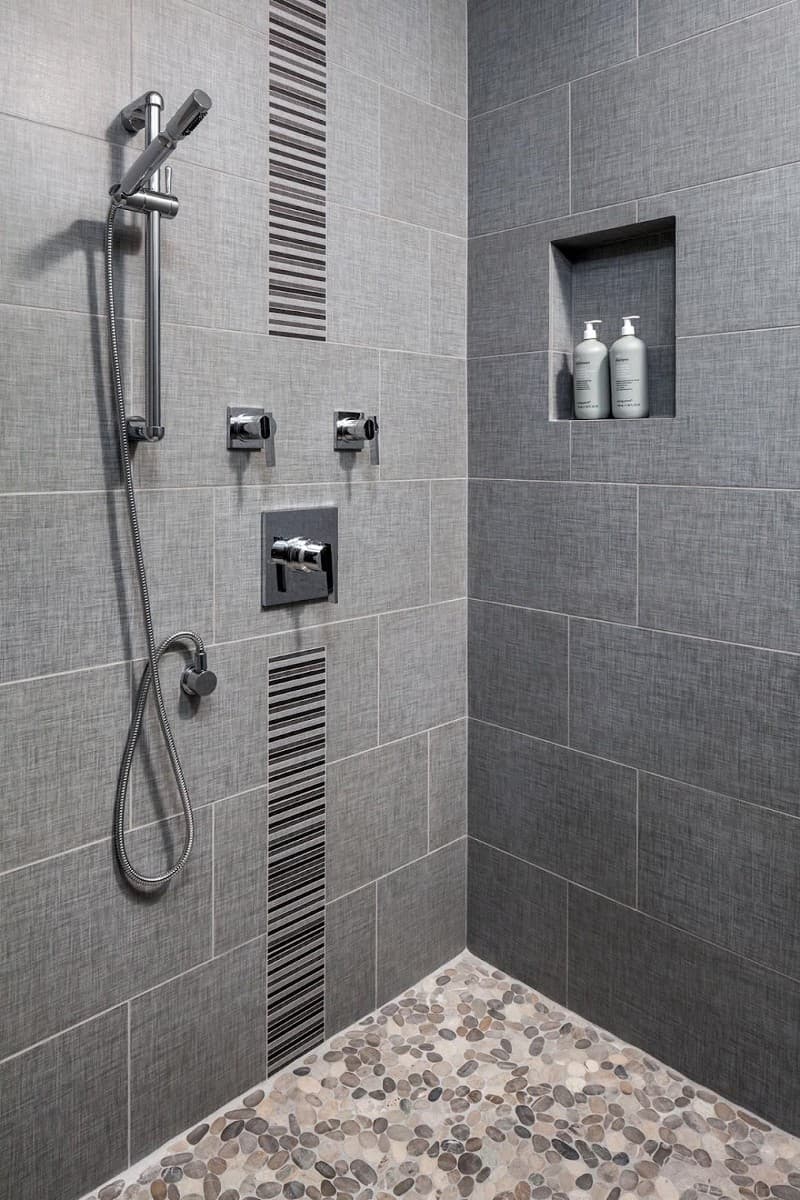
Gray remains a dependable choice precisely because it works across so many styles, from Scandinavian to traditional.
Most people default to a lighter gray, but a darker, near-black shower is worth considering for anyone who wants something less expected.
A black-framed glass screen and a simple, modern showerhead complete the look. The hard part of this idea isn’t picking the tile, it’s resisting the urge to add more once the base is in.
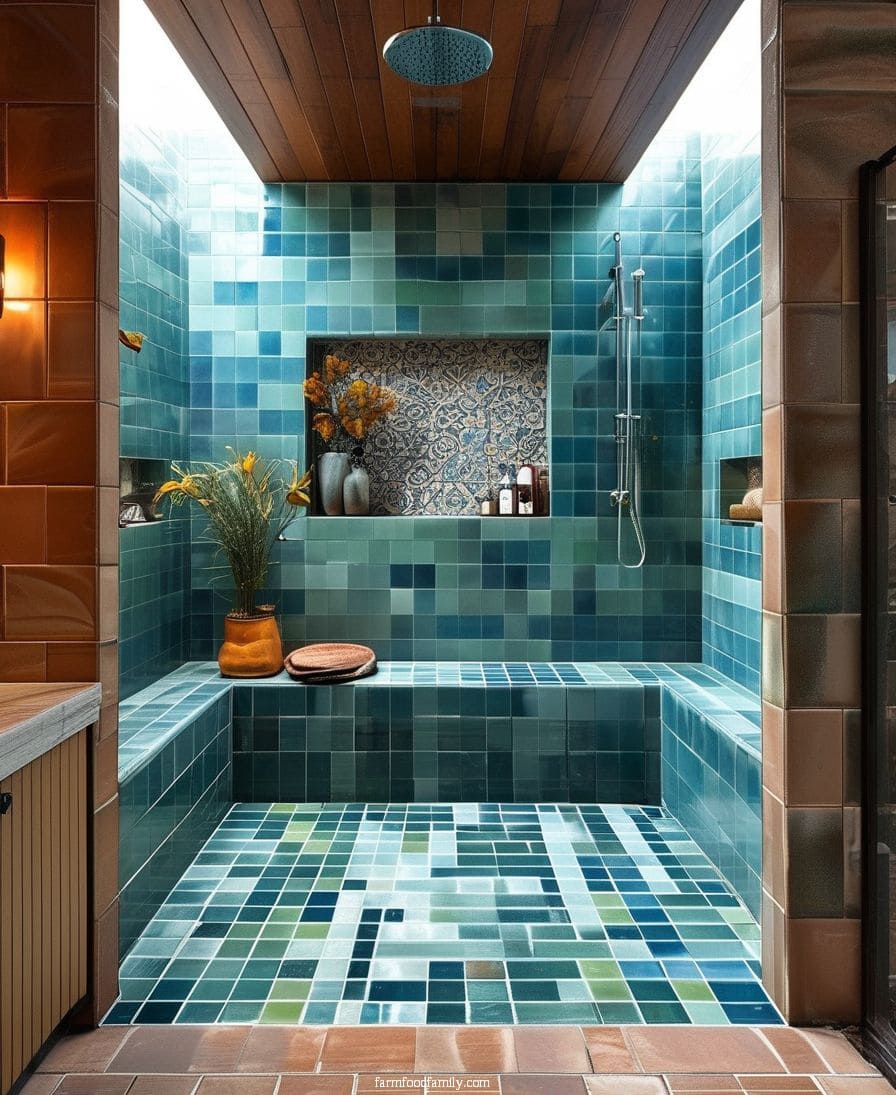
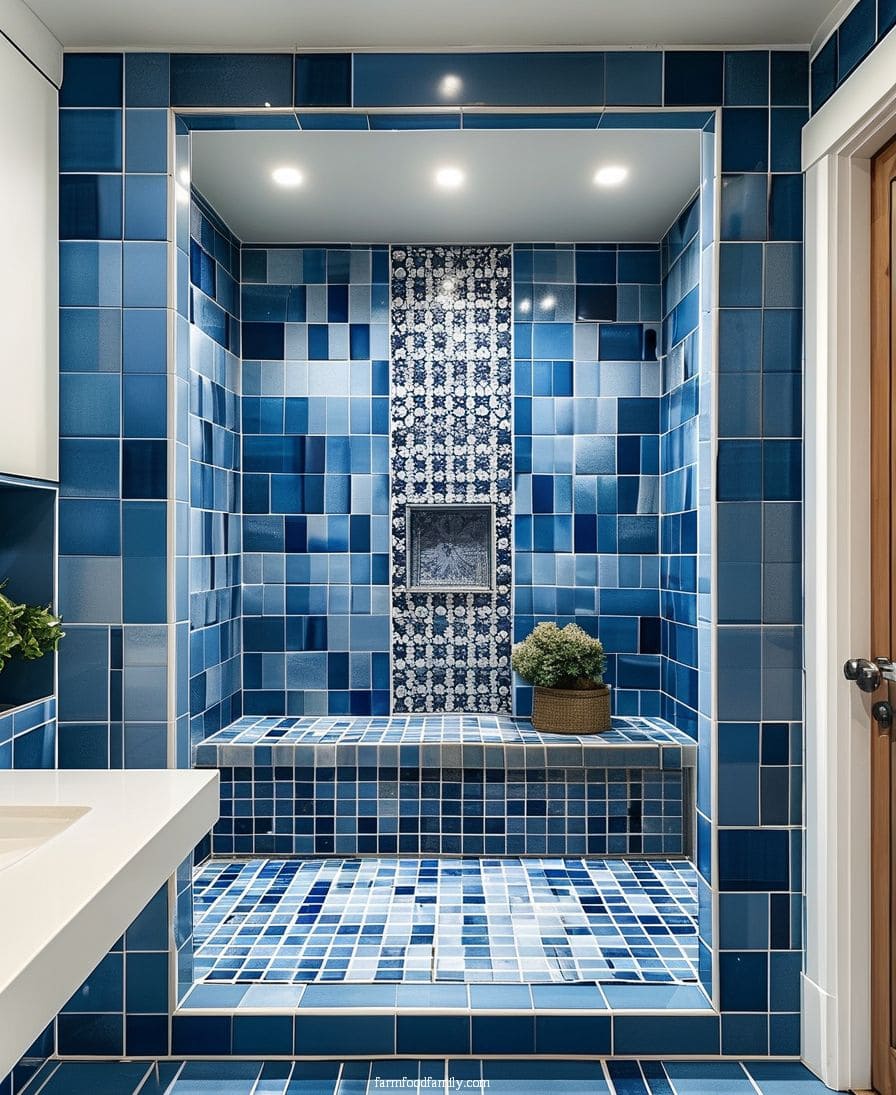
12. Tonal Blues Inspired by the Mediterranean
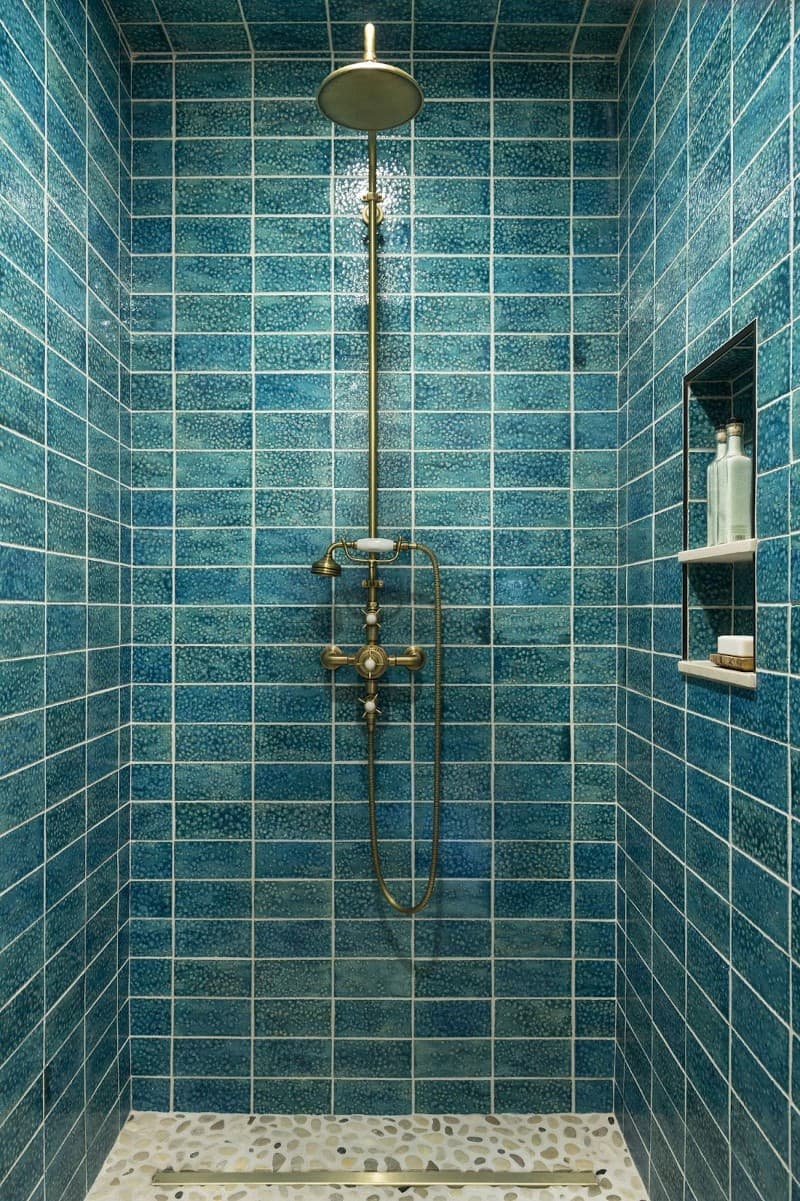
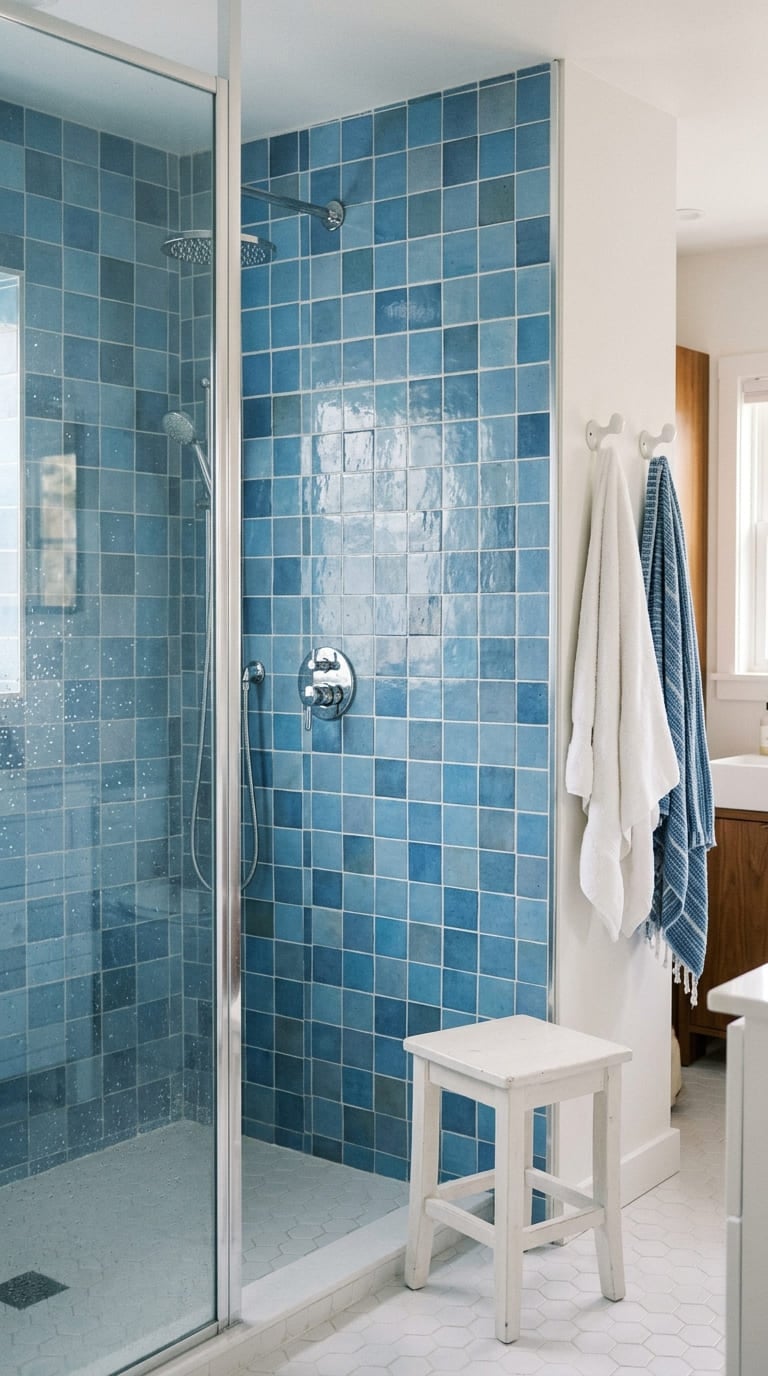
Blue is a classic, low-risk shower color, but sticking to a single traditional navy misses an opportunity.
Layering several related shades of blue, rather than one flat tone, reads more like a Mediterranean coastline than a standard nautical bathroom.
Keep accessories simple, white towel pegs and a matching stool, so the tile stays the focal point.
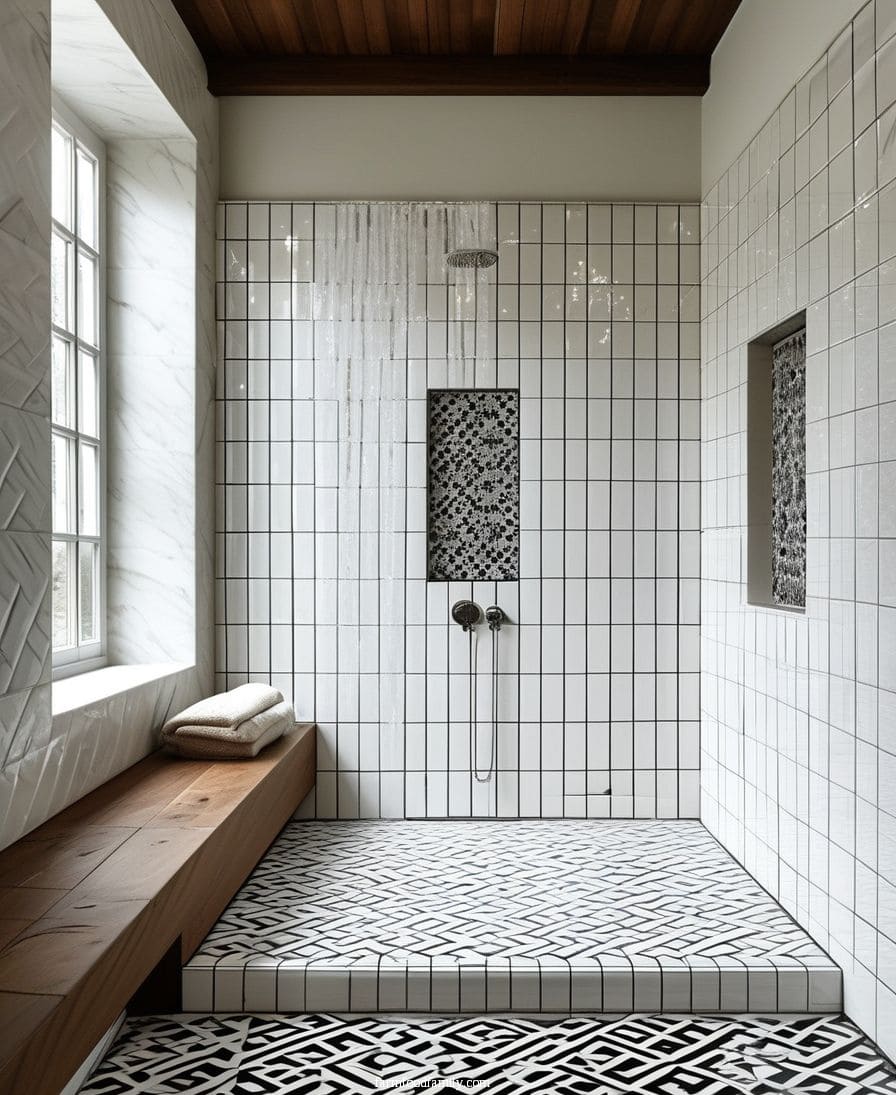
13. A Wicker-Weave Pattern With a Bold Floor Accent
Pattern is one of the fastest ways to break up an all-white bathroom.
A wicker-weave textured tile on the walls paired with a striking monochrome pattern on the floor keeps the room from reading as sterile without adding actual color.
Keep fixtures minimal here specifically so the tile pattern in the shower niche stays the visual center of the room.
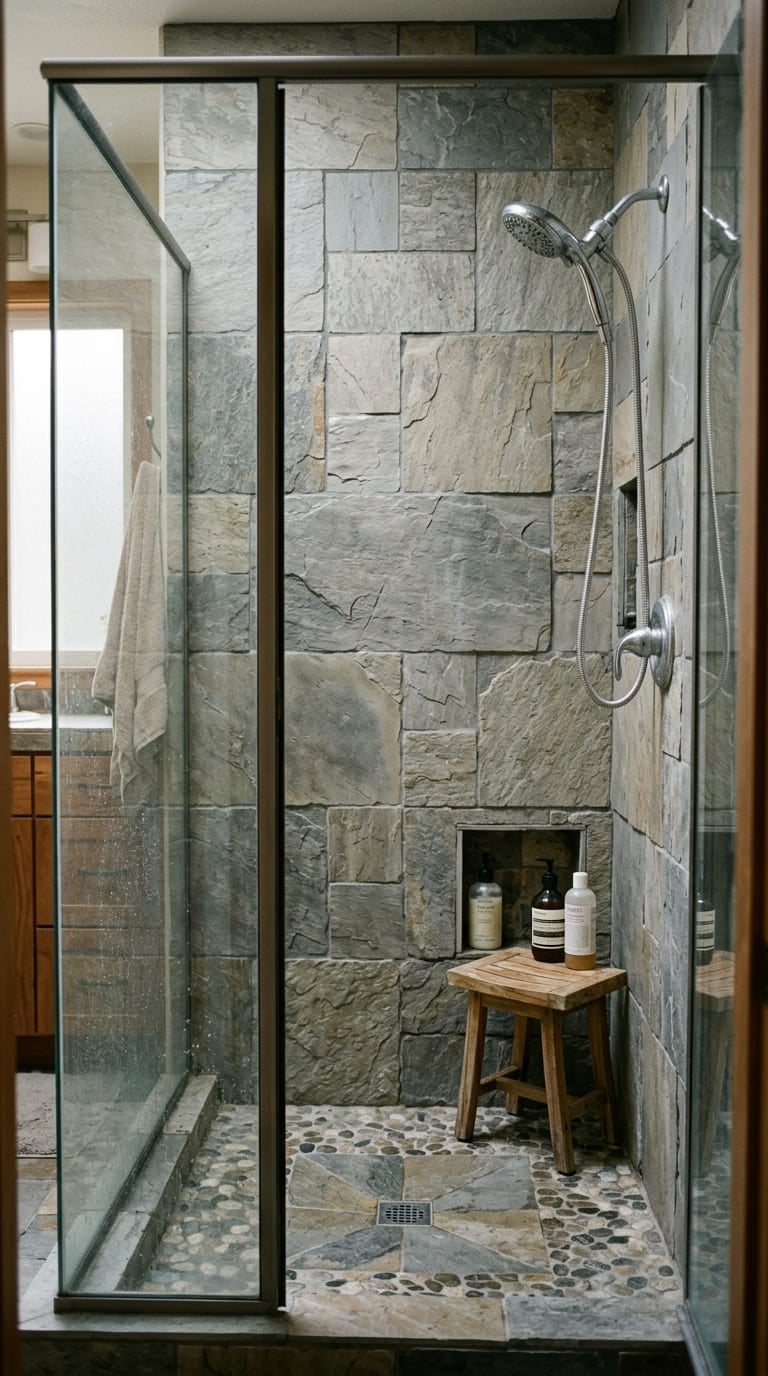
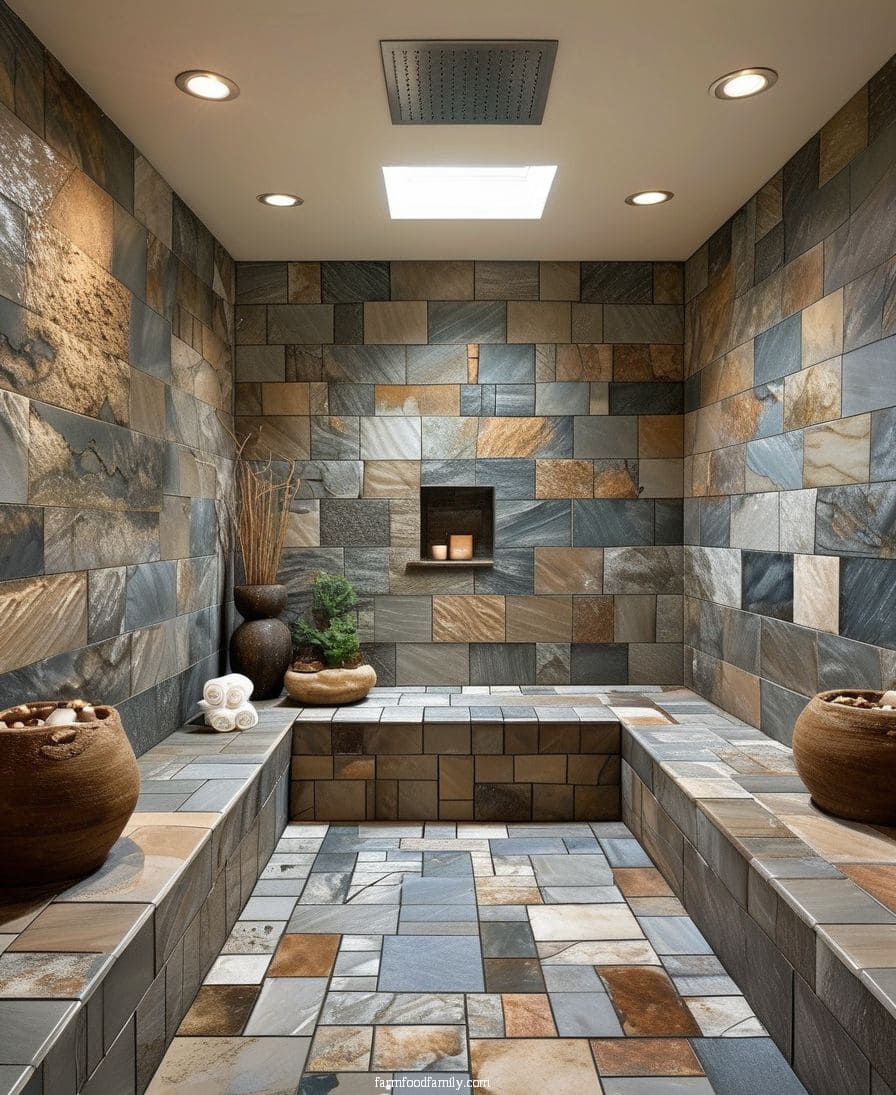
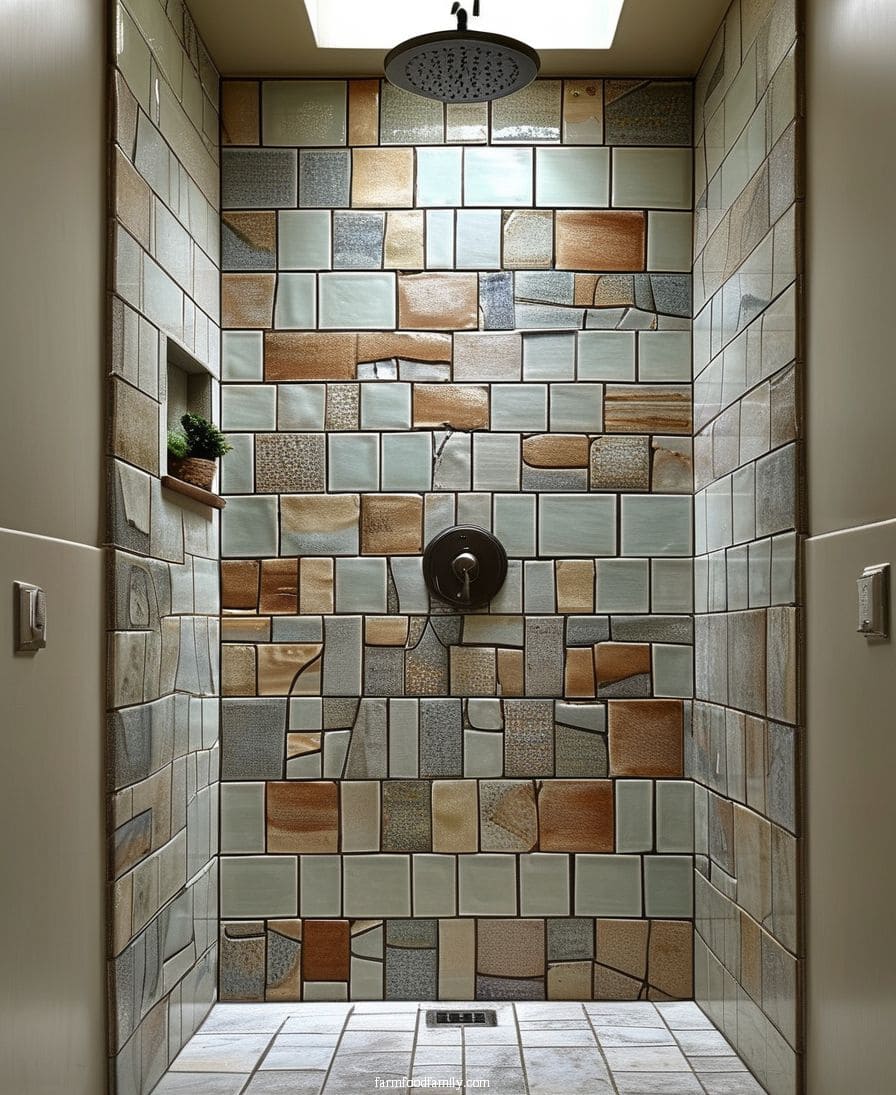
14. Neutral Slate-Look Tile for an Organic Spa Feel
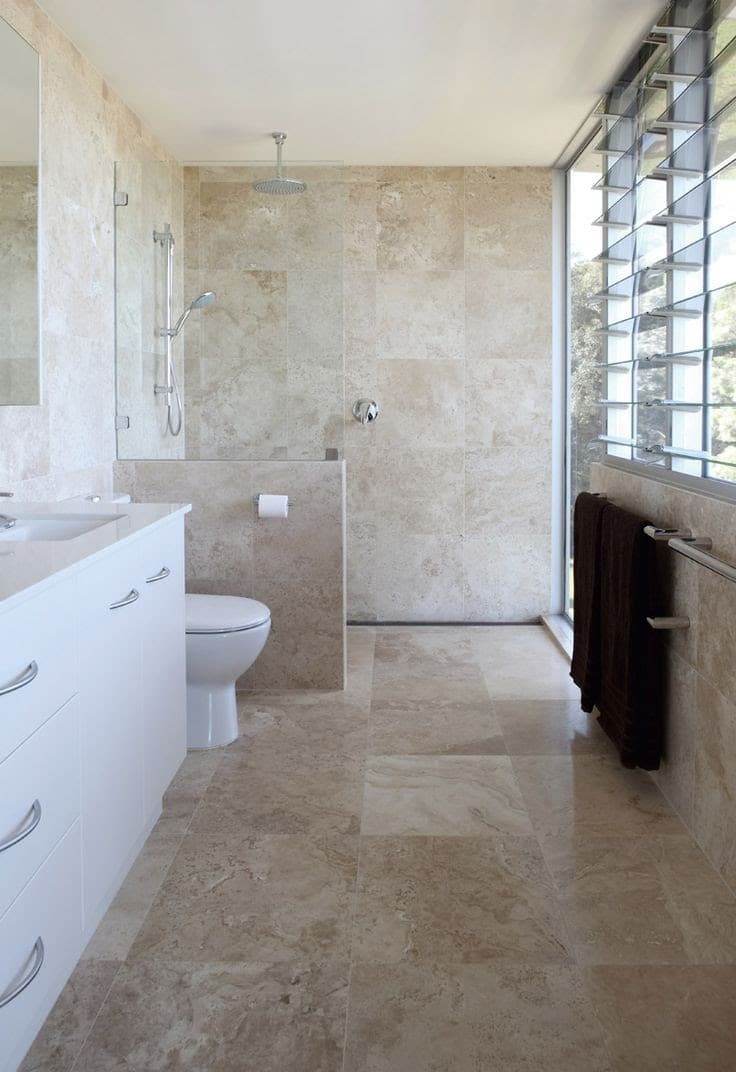
Slate-look tile in varied, irregularly patterned pieces creates the texture of natural stone without the maintenance real slate demands.
Using the same tile in a few different sizes throughout the shower keeps the organic, slightly imperfect look intentional rather than accidental.
This is a durable, low-maintenance choice for anyone who wants a spa feel that doesn’t require special sealing.
15. A Statement Shower Floor
Most tile roundups focus entirely on walls. The floor deserves equal consideration, especially in a shower with enough space to make a pattern or color choice actually visible.
Match the floor tile’s tone to the walls for a seamless, larger-feeling shower, or go the opposite direction with a bold, contrasting floor for real visual impact.
Heated flooring is worth considering here too if the budget allows, it turns a striking floor into a genuinely luxurious daily habit.
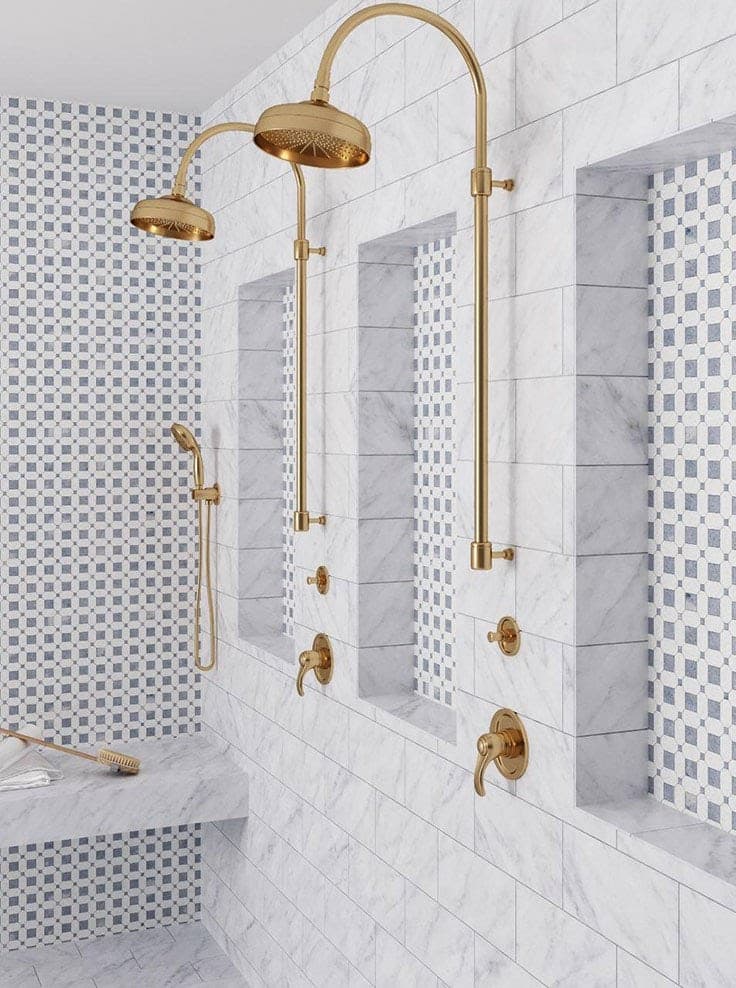
16. A Honeycomb Hexagon Tile Cubby
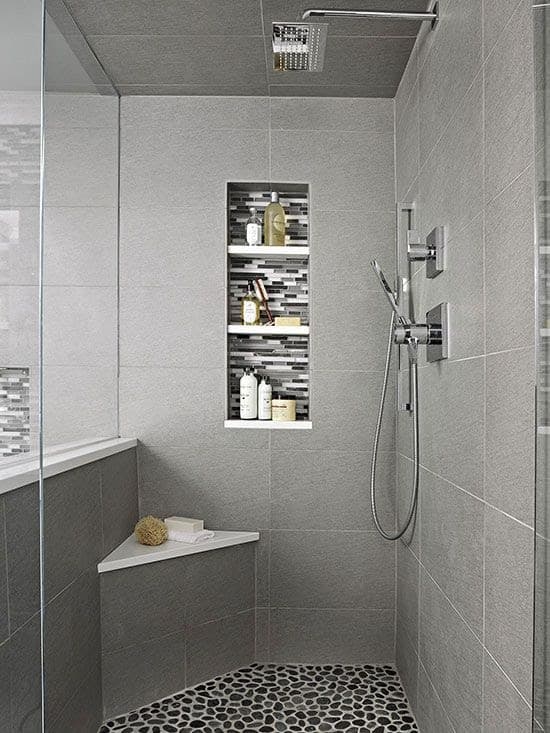
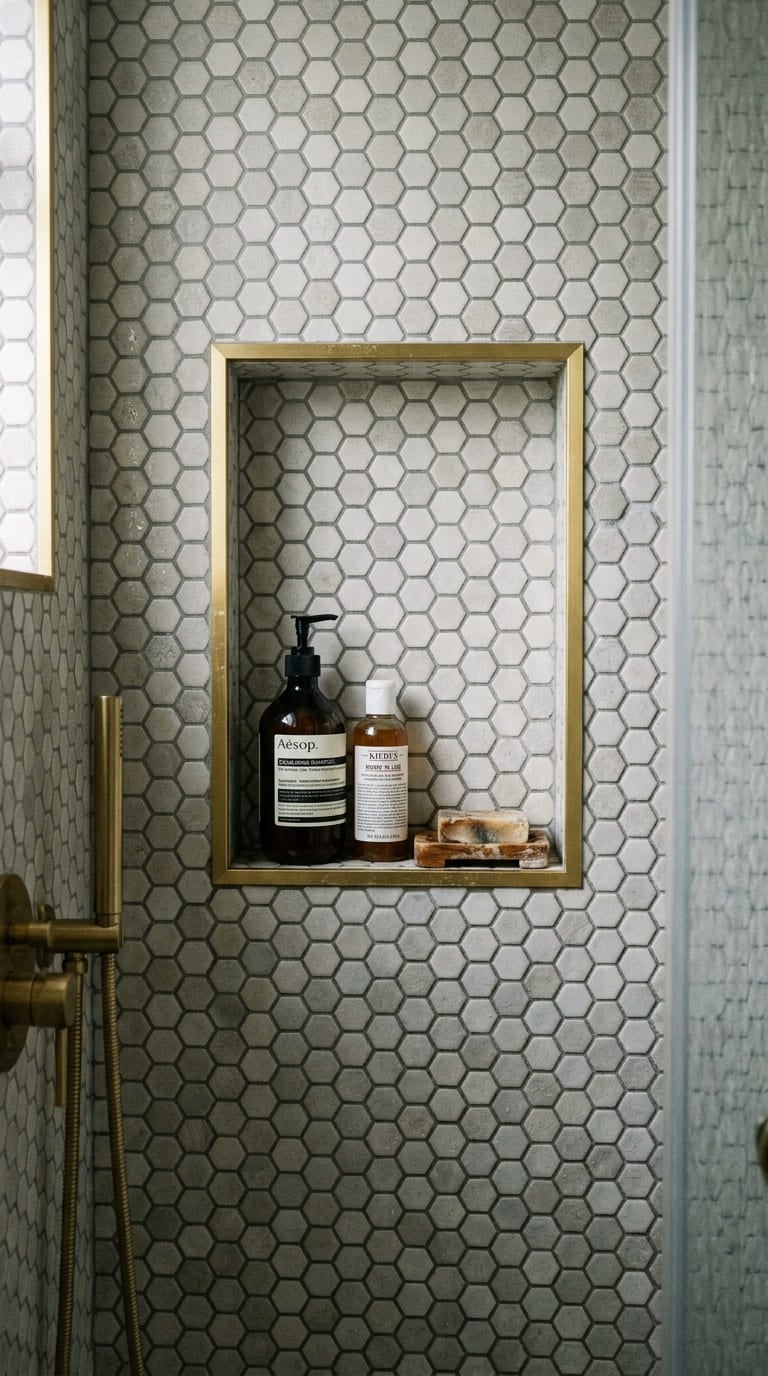
A shower niche doesn’t need to break from the surrounding tile to feel special.
Using the same tile family in a hexagonal honeycomb layout inside the cubby creates a subtle design moment without adding cost or complexity. Our shower niche ideas roundup has more layout options if a cubby like this one is the direction worth exploring further.
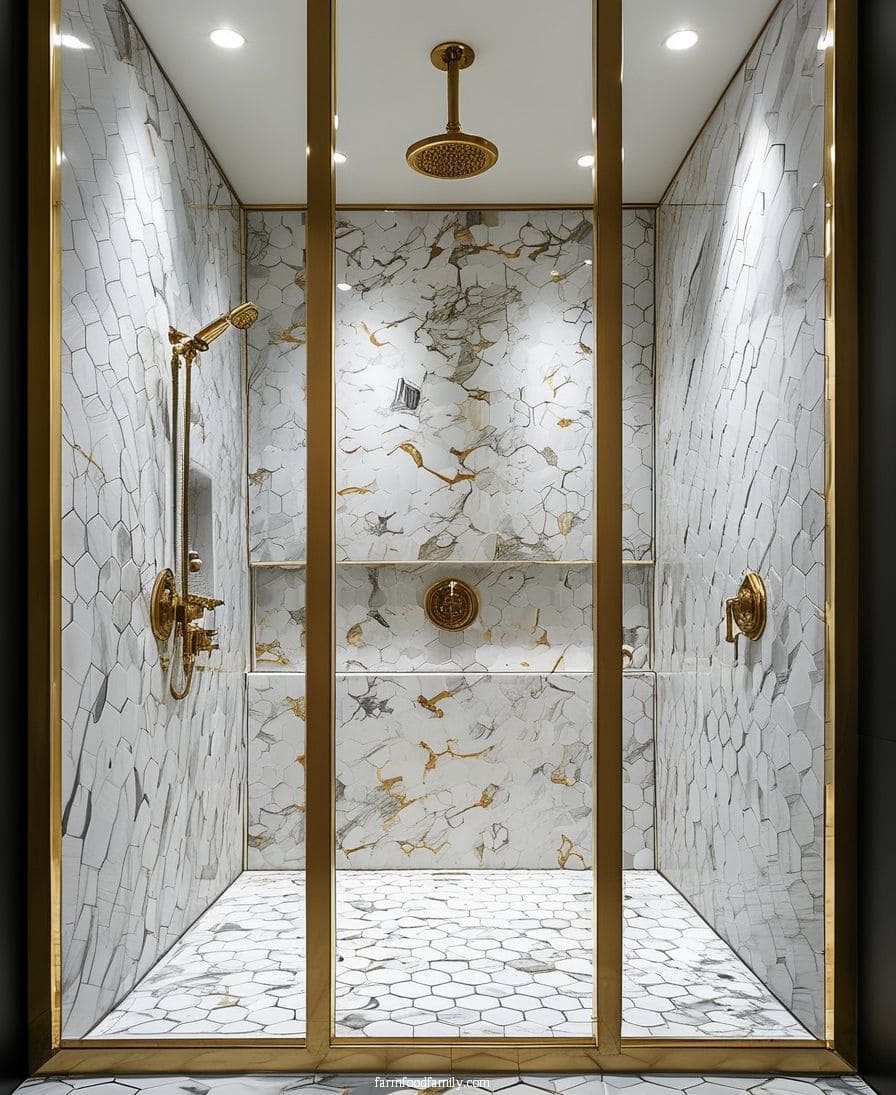
A gold-framed niche edge ties the whole look together if the rest of the fixtures lean warm-toned.
17. Colorful Glass Mosaic Tile
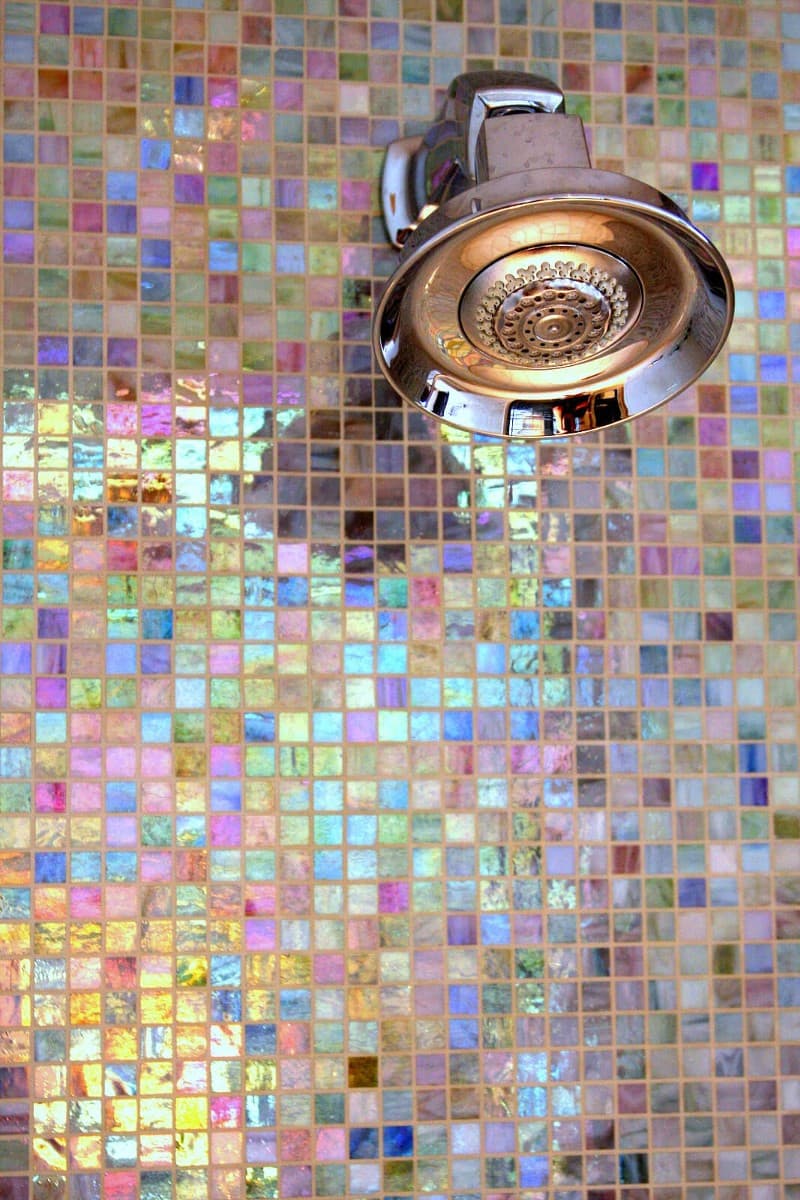
A mix of bright glass mosaic tile isn’t limited to kids’ bathrooms.
Combining gray and colorful triangular glass tiles creates genuine visual interest for an adult primary bathroom too, especially paired with a floating bench for a more luxurious overall feel.
This is one of the higher-maintenance options on this list purely because of grout volume, worth factoring into the decision.
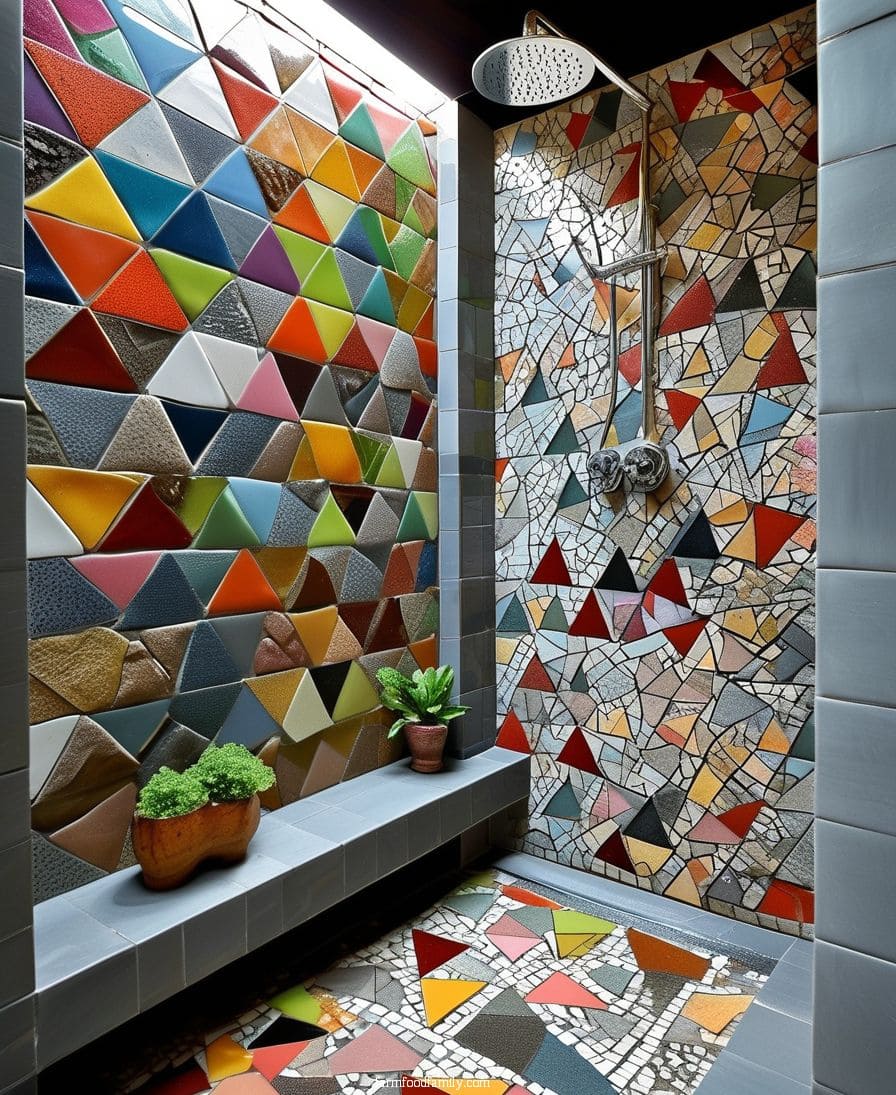
18. Handcrafted Hexagon Tile Sheets for a Vintage Look
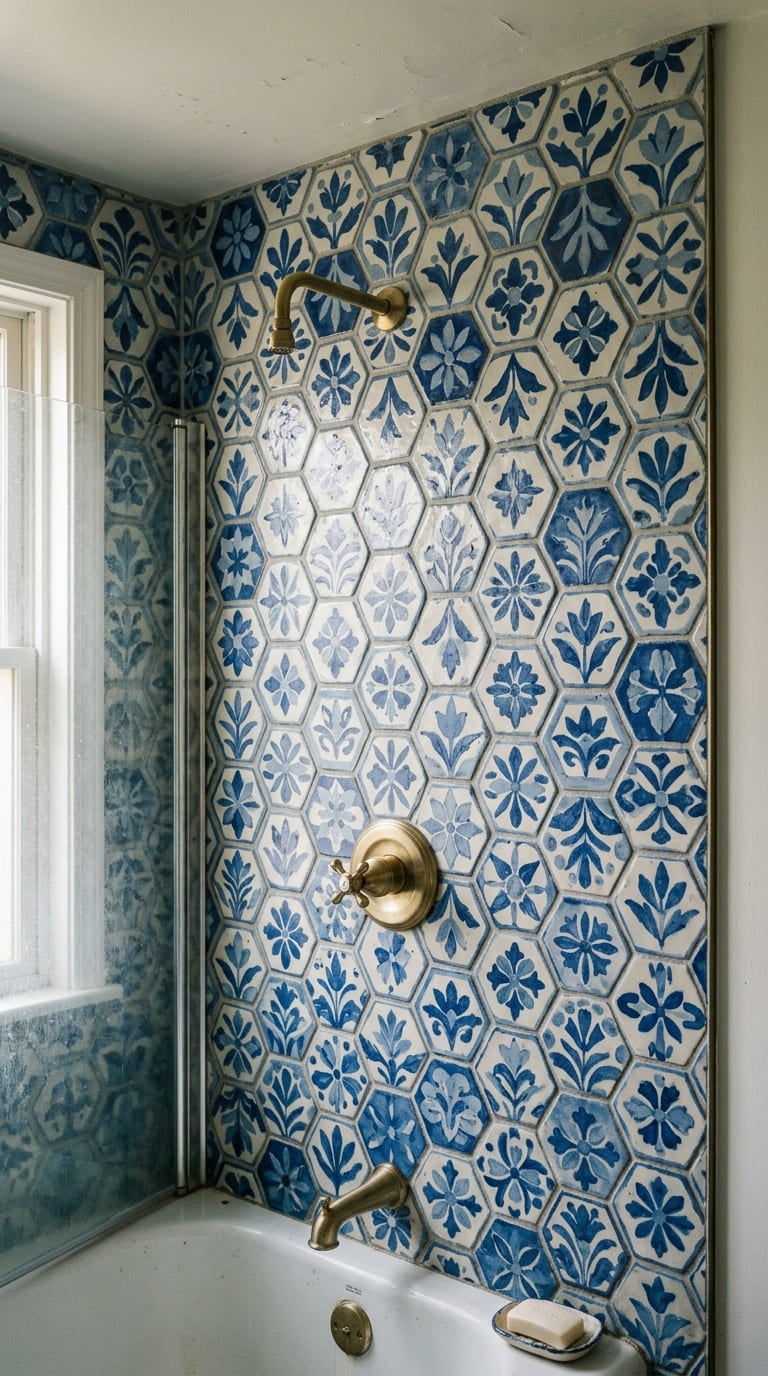
Hand-crafted ceramic hexagon sheets, laid in a geometric floral pattern, bring a vintage or Victorian feel that flat large-format tile can’t replicate.
Unlike big panel tile, sheet-set hexagons can be arranged in several different configurations depending on the space.
A blue colorway works especially well here for anyone leaning toward an antique-inspired bathroom that still needs to feel at home in a modern house.
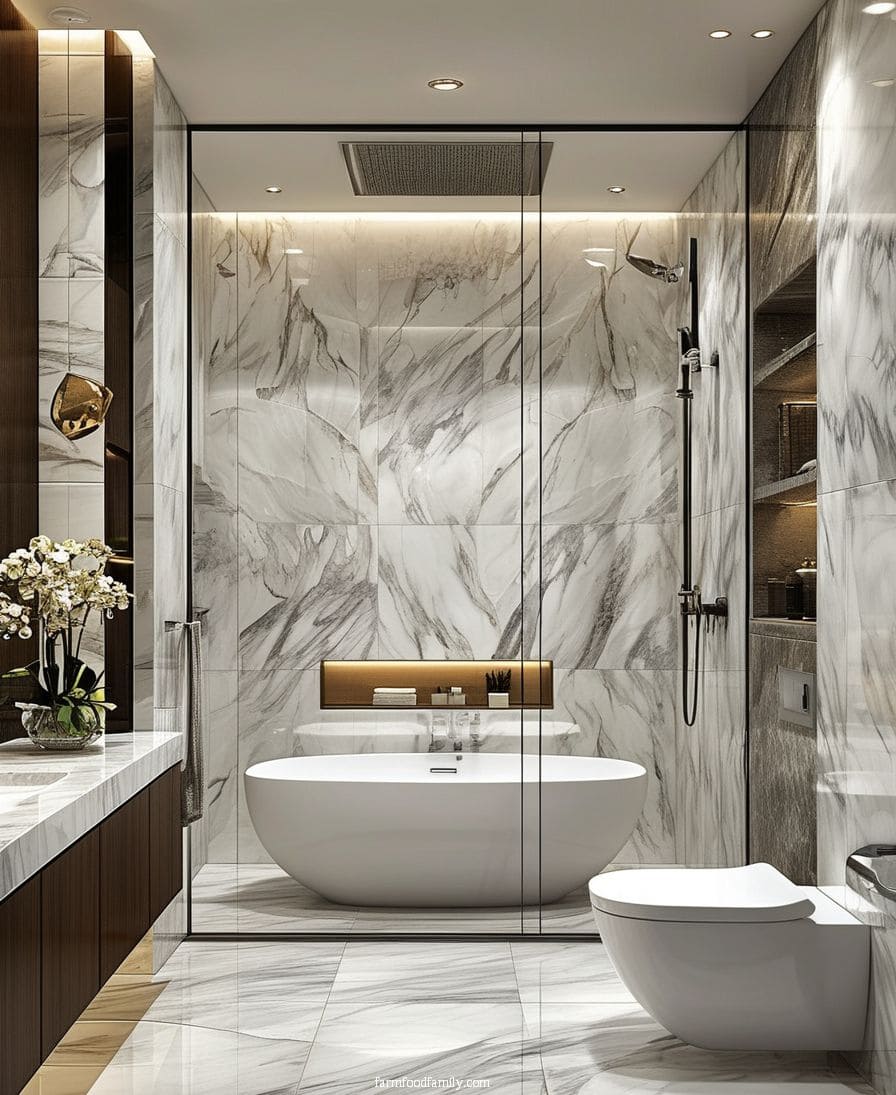
19. Marble-Look Tile for an Affordable Luxury Scheme

Real marble carries a real price, often running into the thousands once quarrying, availability, and retail markup are factored in.
Marble-look tile has closed most of the visual gap in recent years, at a fraction of the cost.
Redirecting the money saved toward a standalone tub or a striking vanity is a common, sensible trade for anyone chasing a luxury look on a real budget.
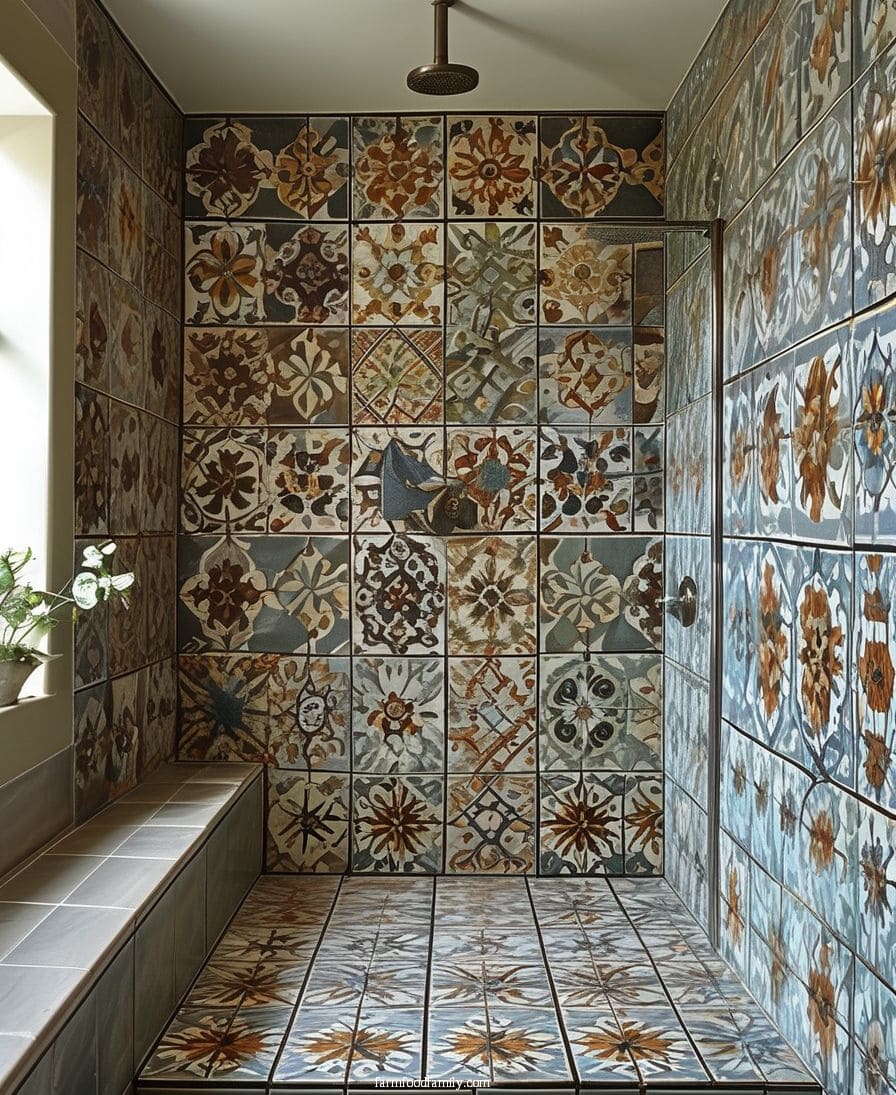
20. Hand-Painted Orange Tile for an Exotic Feel
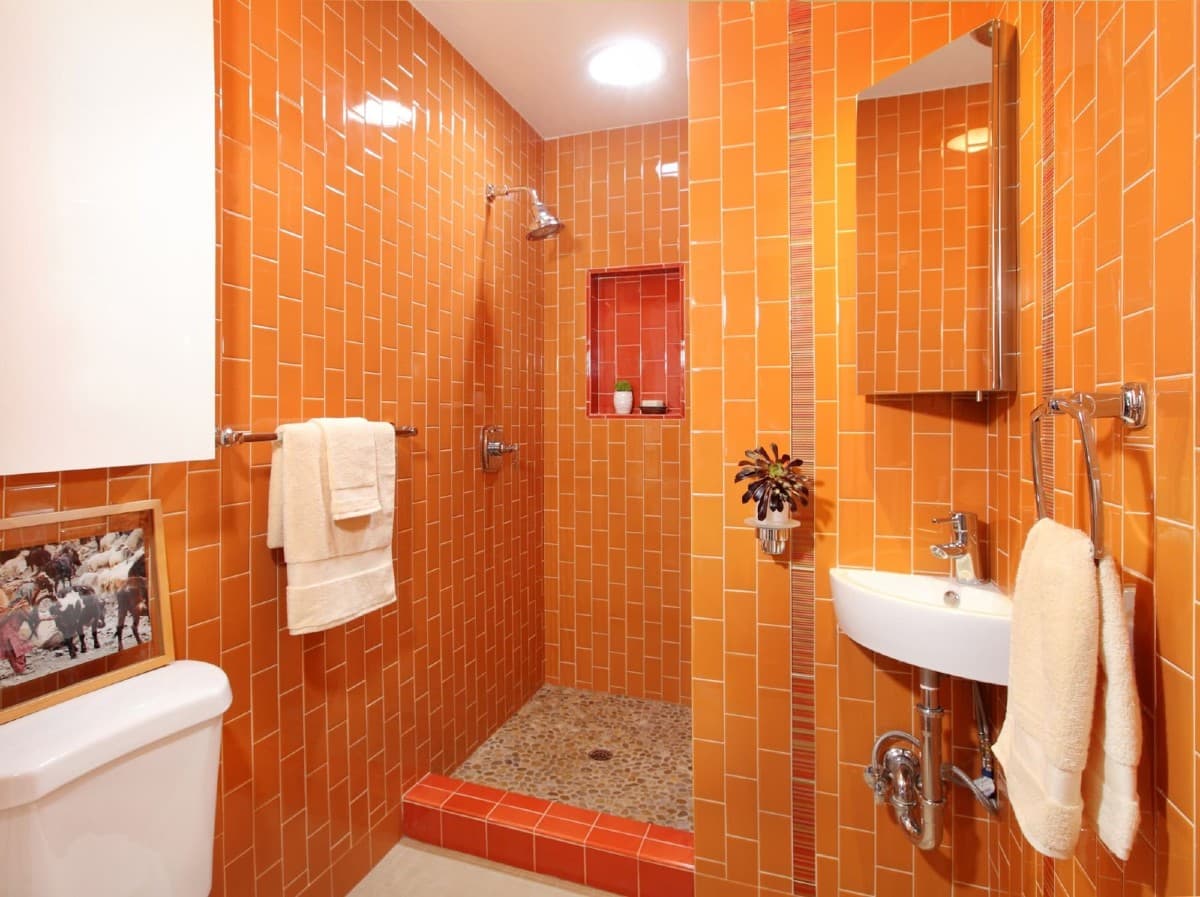
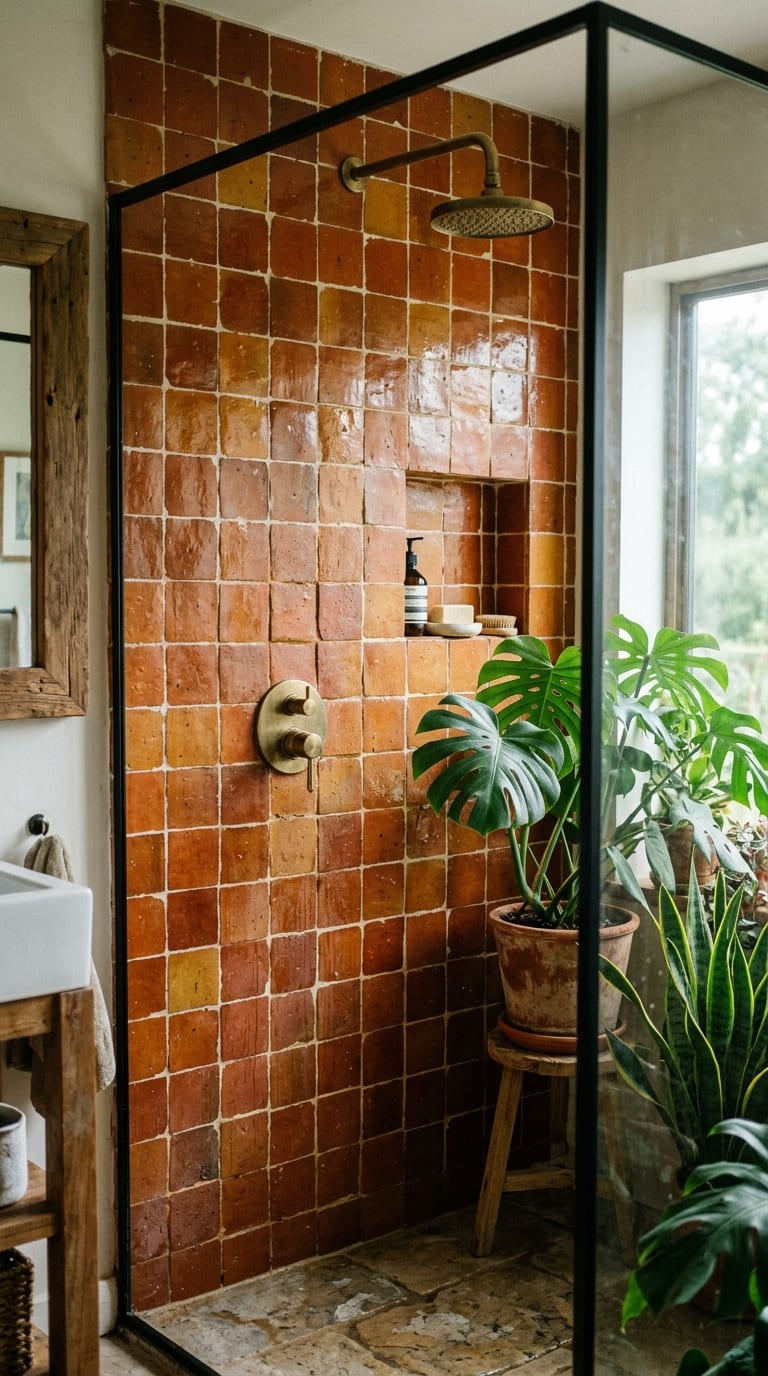
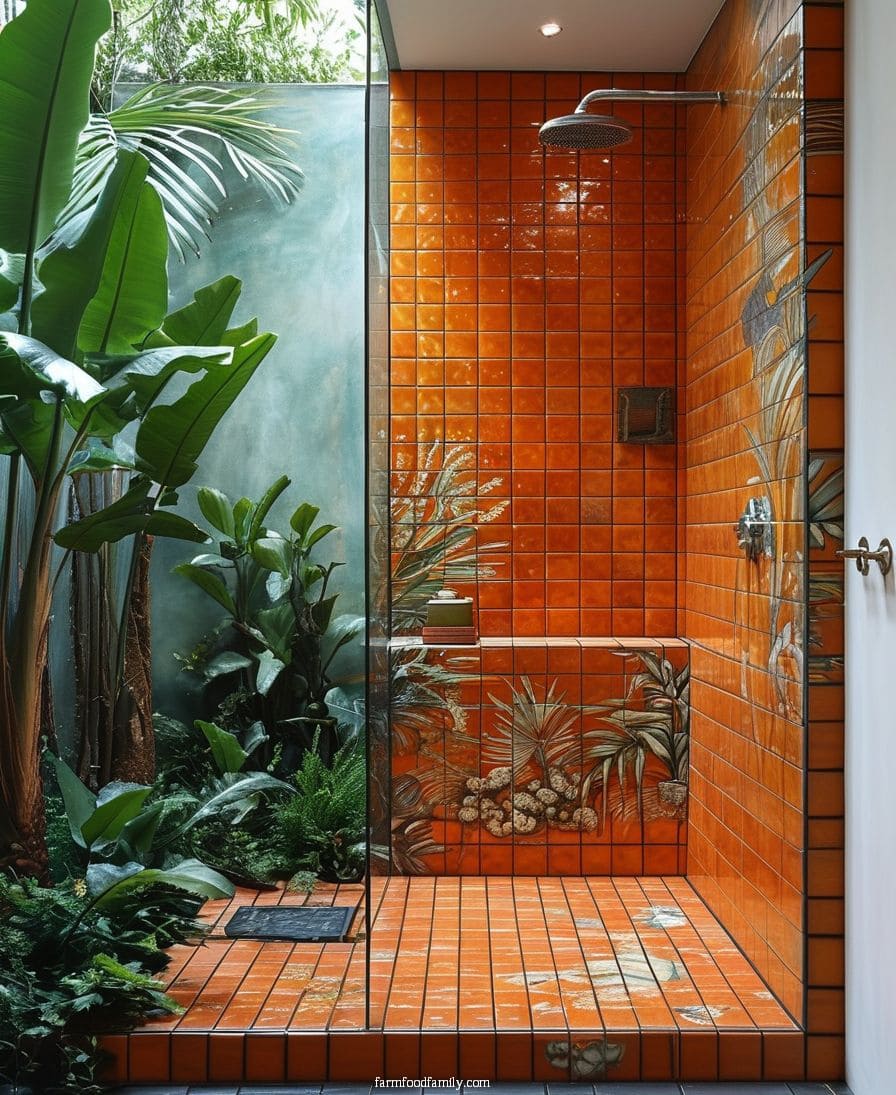
A rich, rustic orange tile adds real warmth to a bathroom that wants to feel like an escape rather than a utility room.
Hand-painted, hand-drawn tile in particular carries natural variation from piece to piece, so no two tiles read exactly the same.
Pair it with tropical plants and the effect leans genuinely exotic rather than just colorful.
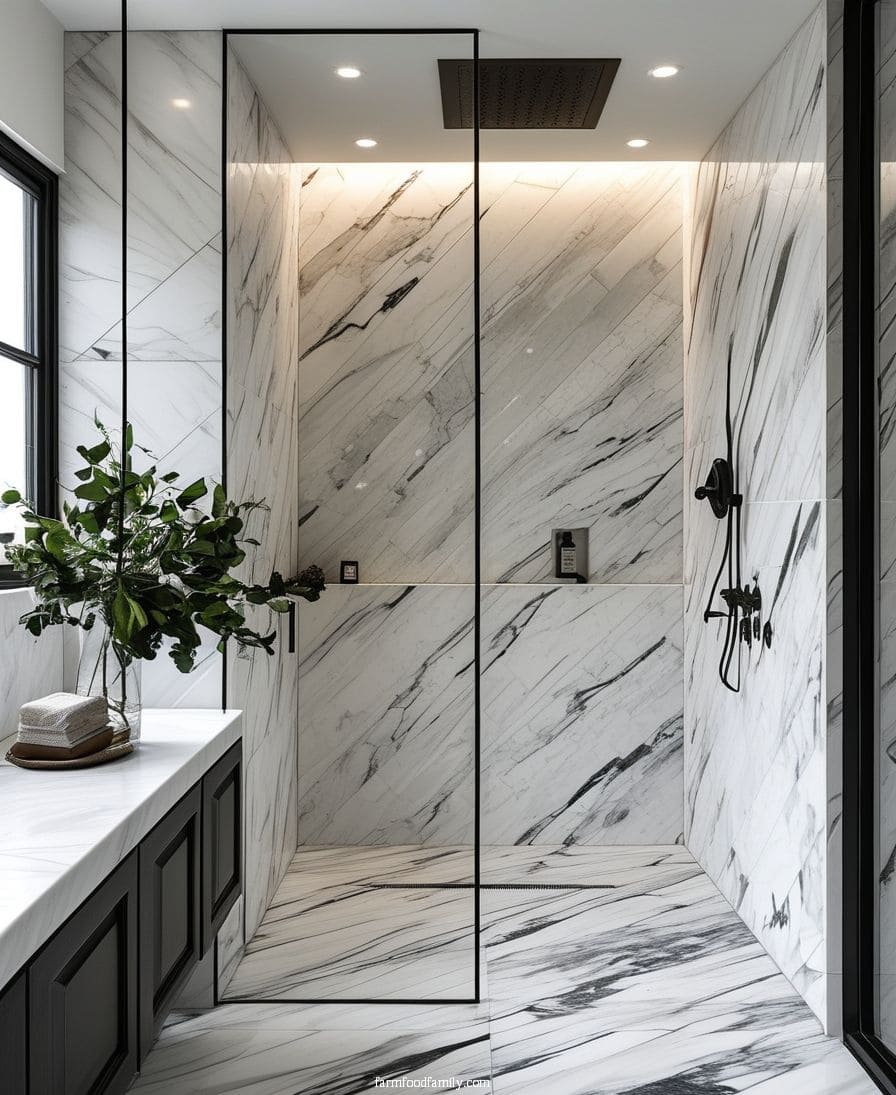
21. Book-Matched Marble
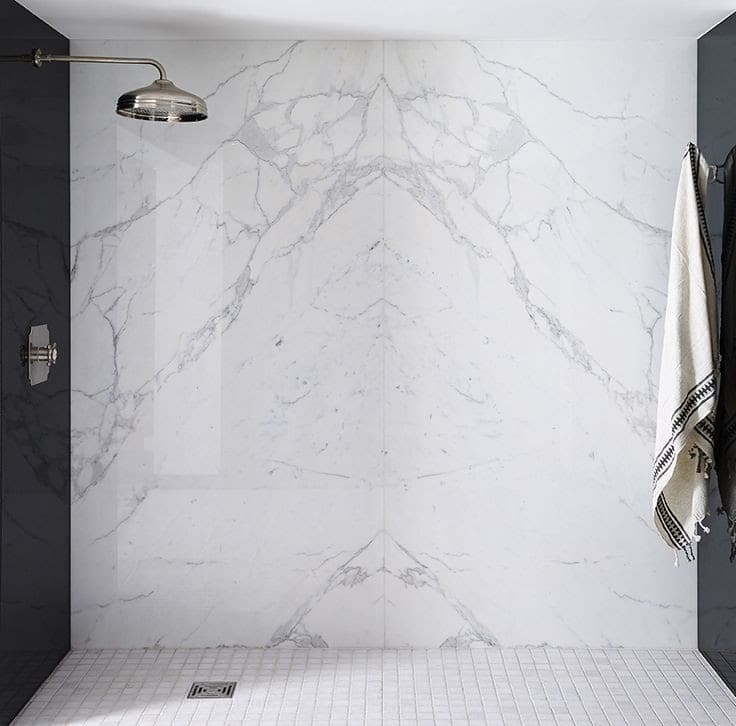
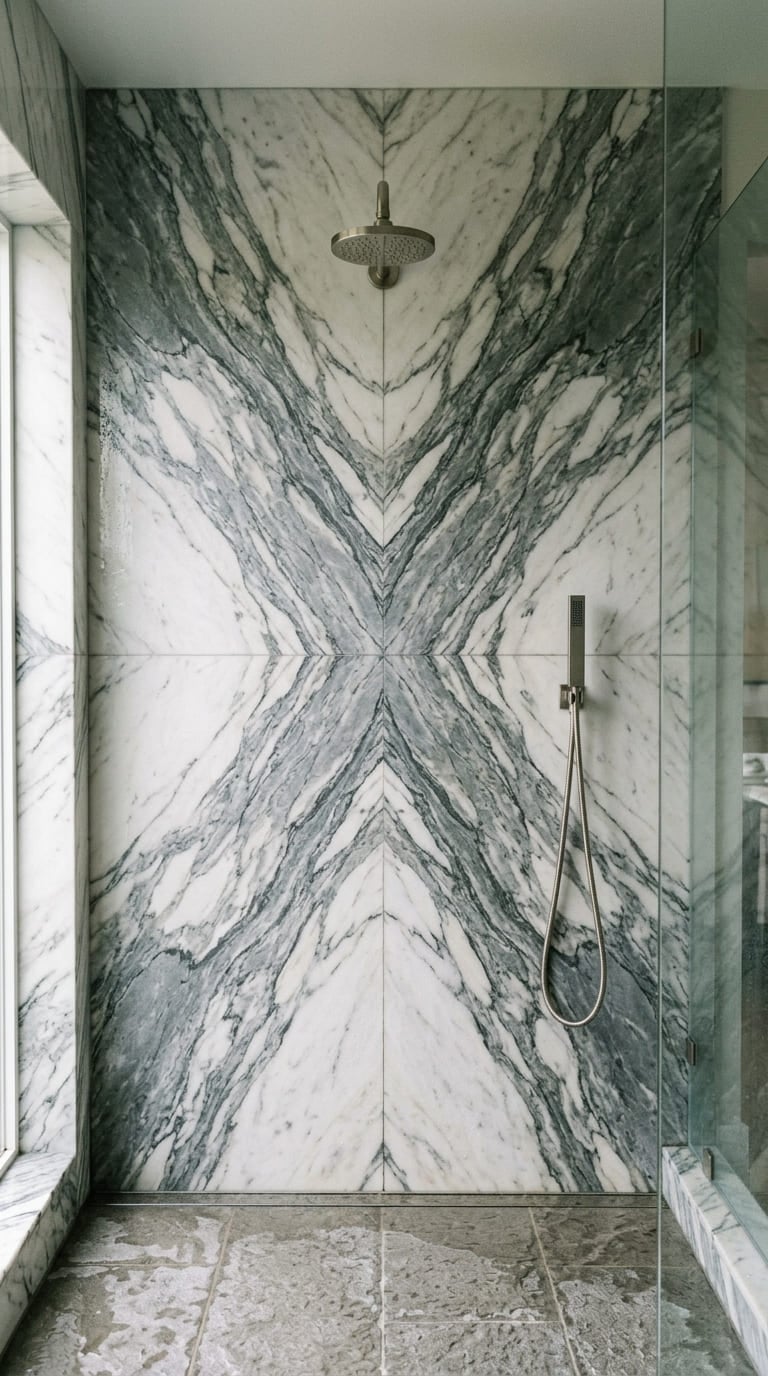
Bookmatching, mirroring the veining pattern between two adjacent marble slabs the way facing pages of a book mirror each other, is one of the most striking things a shower can do with a single material.
It adds real visual balance in addition to drama, which matters more in a small space than most people expect.
Interior designer Greg Natale puts it simply: “Marble is so timeless, and with all the new coloured options from Brazil you can really have fun with it.” Real marble and marble-look ceramic both carry the same sense of permanence when bookmatched well.
22. Porcelain Tile for Everyday Practicality
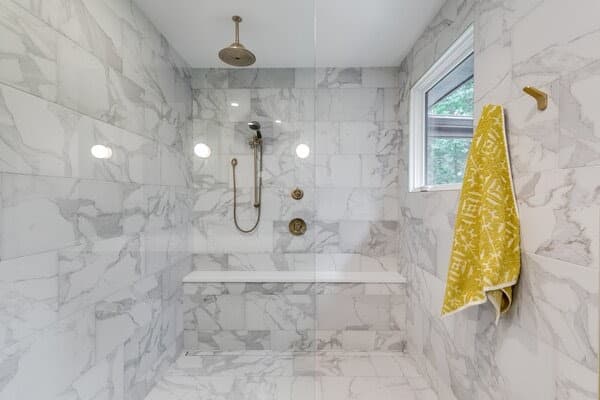
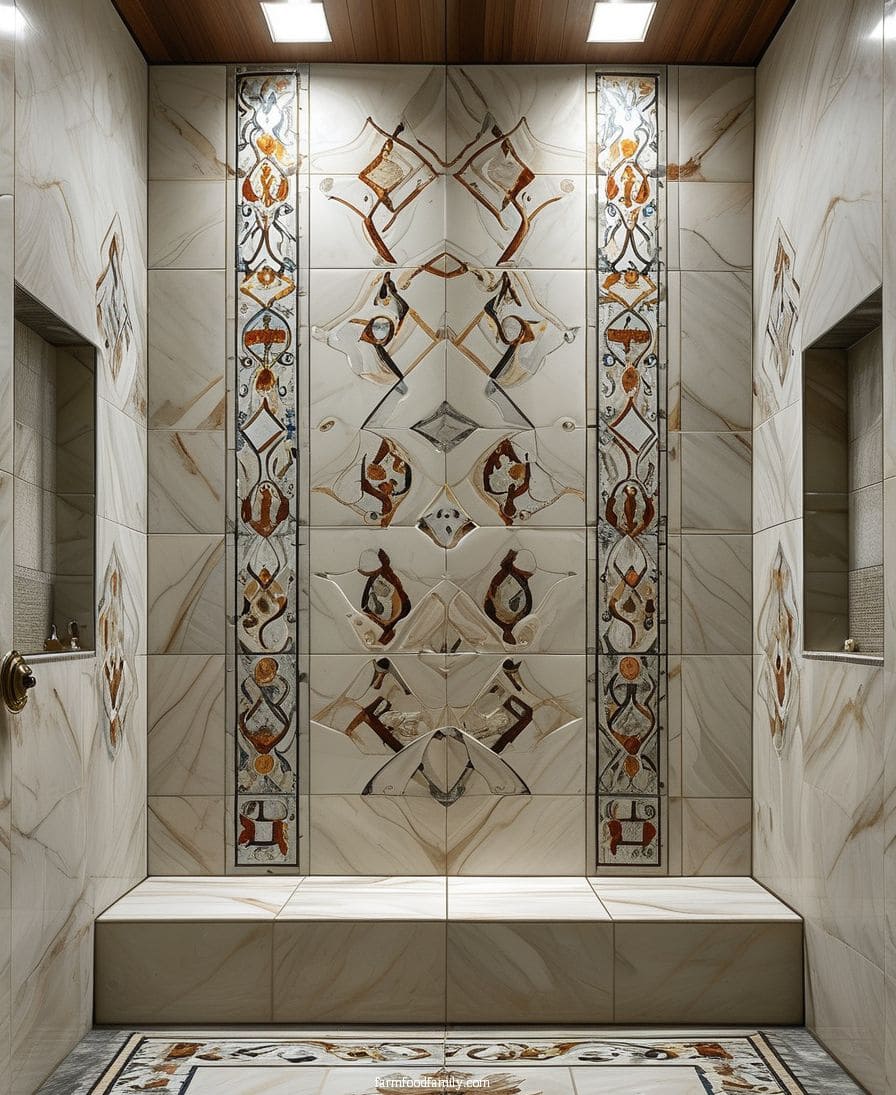
Porcelain tile can be manufactured to mimic almost anything, from a subtle marble impression to a bold wood look, without the sealing that natural materials require. It’s a genuinely versatile way to get a striking result without the cost of the material it’s imitating.
Slip resistance matters as much as looks when choosing any shower floor tile, porcelain included. Balance the two rather than picking on appearance alone.
23. Deep Tonal Blue Squares
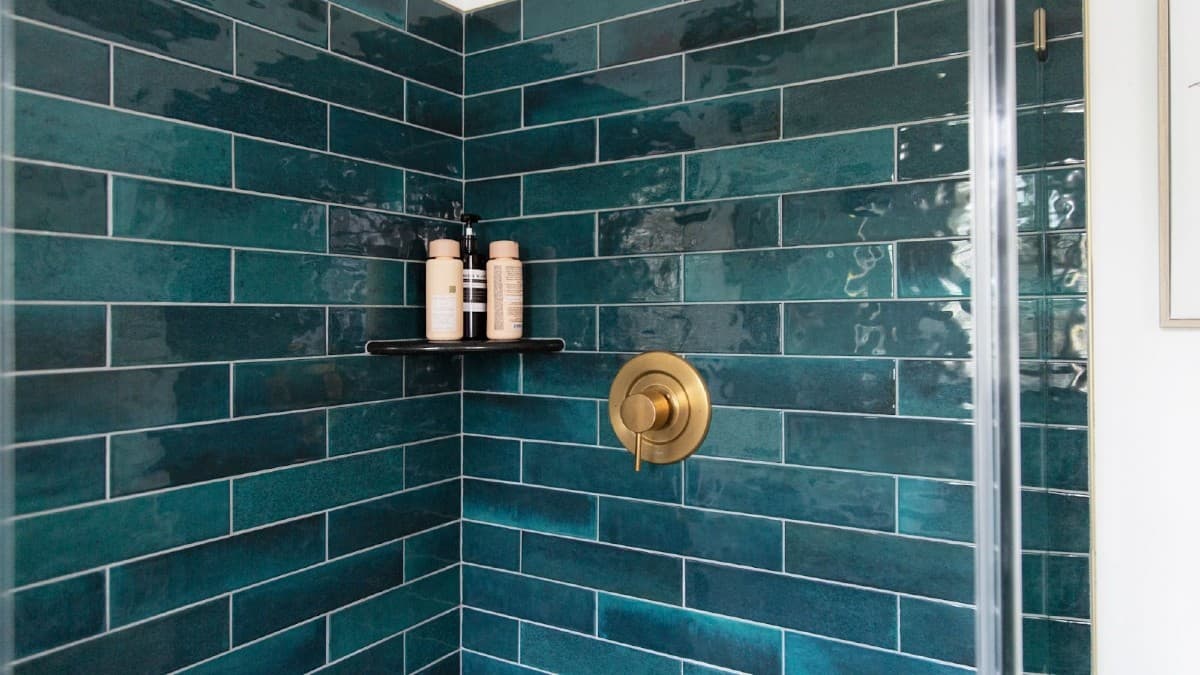
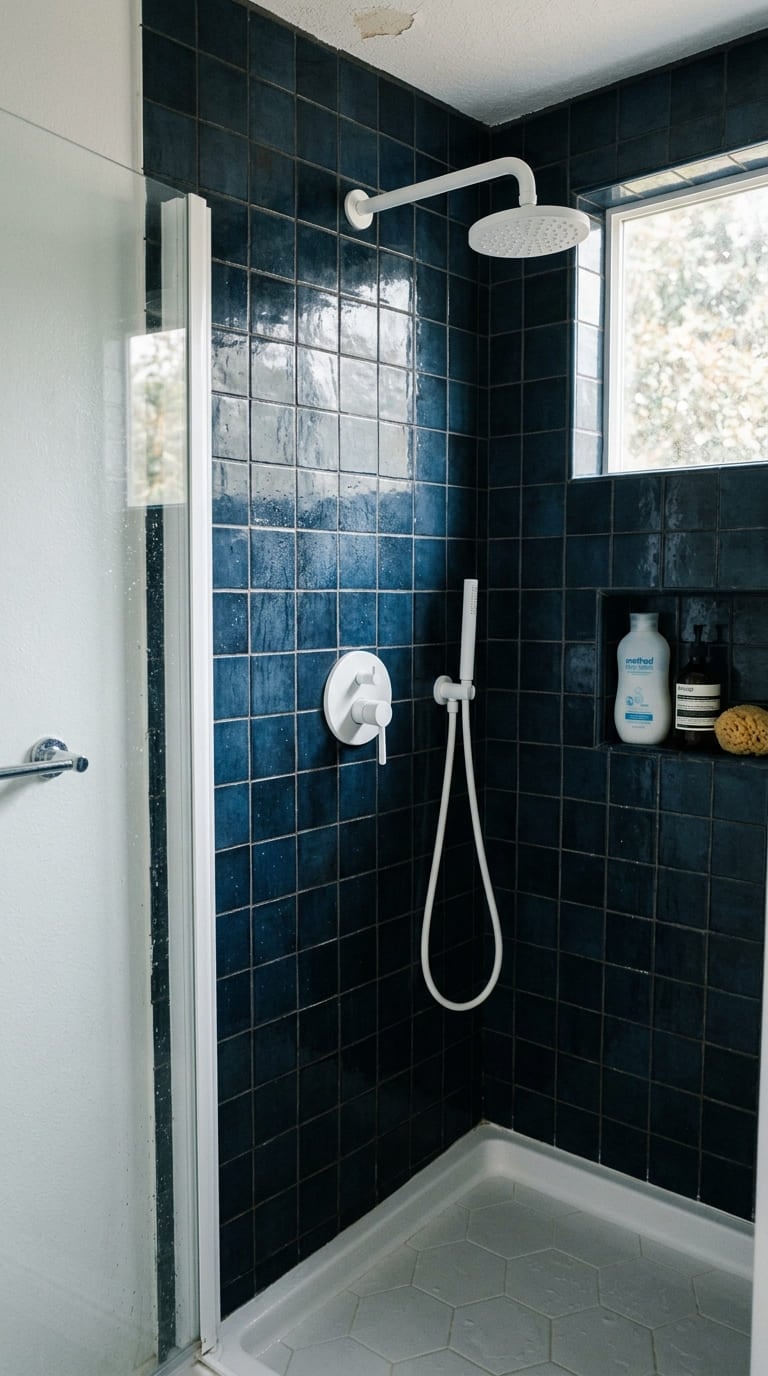
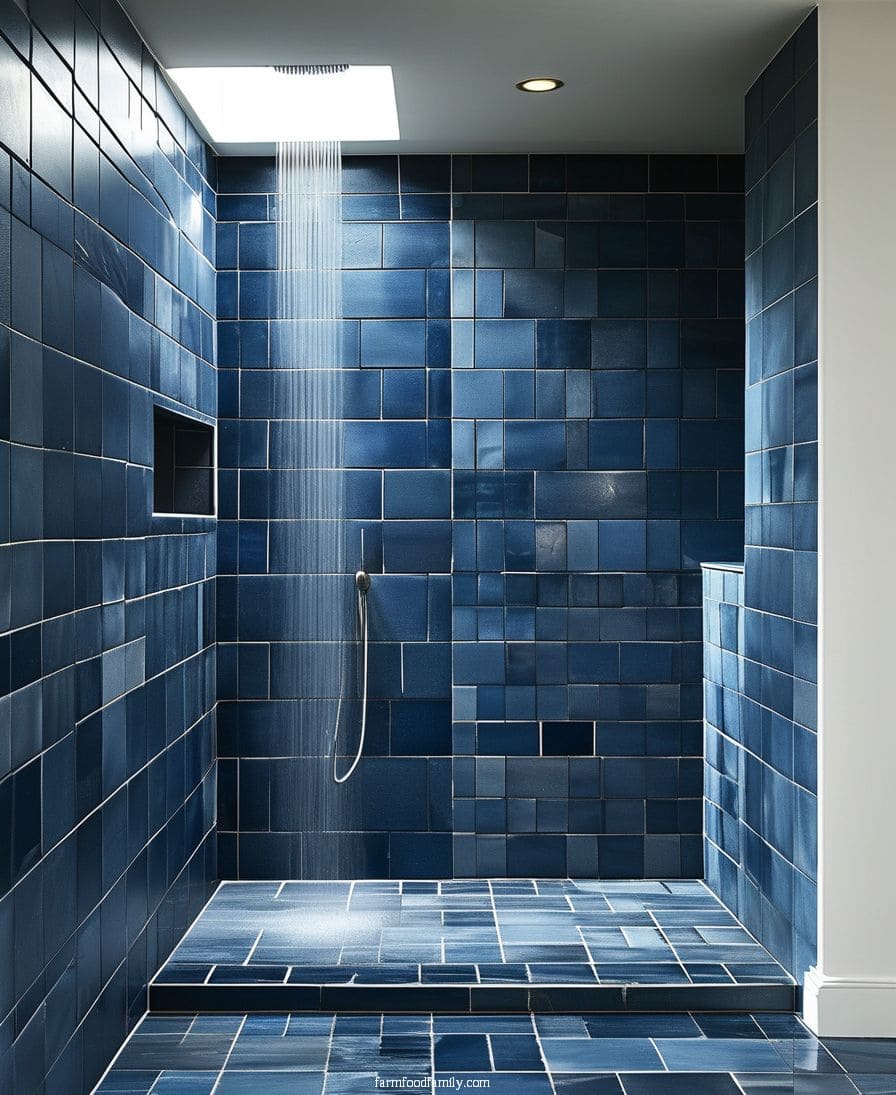
Blue works in a shower partly because of its association with water, but a single flat shade of blue can feel like a cliché.
Going deeper and darker, then adding a small amount of tonal variation across the tile, avoids that trap.
Square tile in a few closely related deep blue tones gives a wall real movement, almost like gentle ripples. Pairing it with all-white fixtures keeps the overall room from feeling too dark.
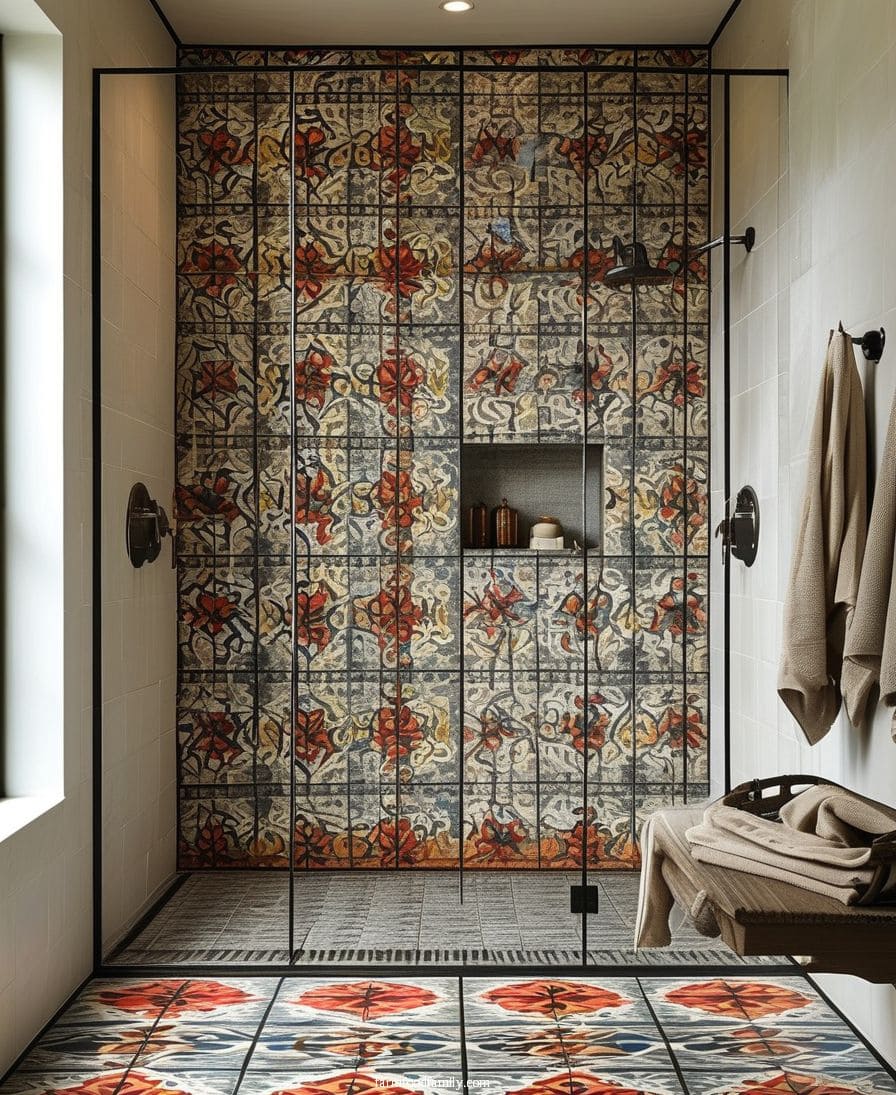
24. A Bold Repeating Pattern
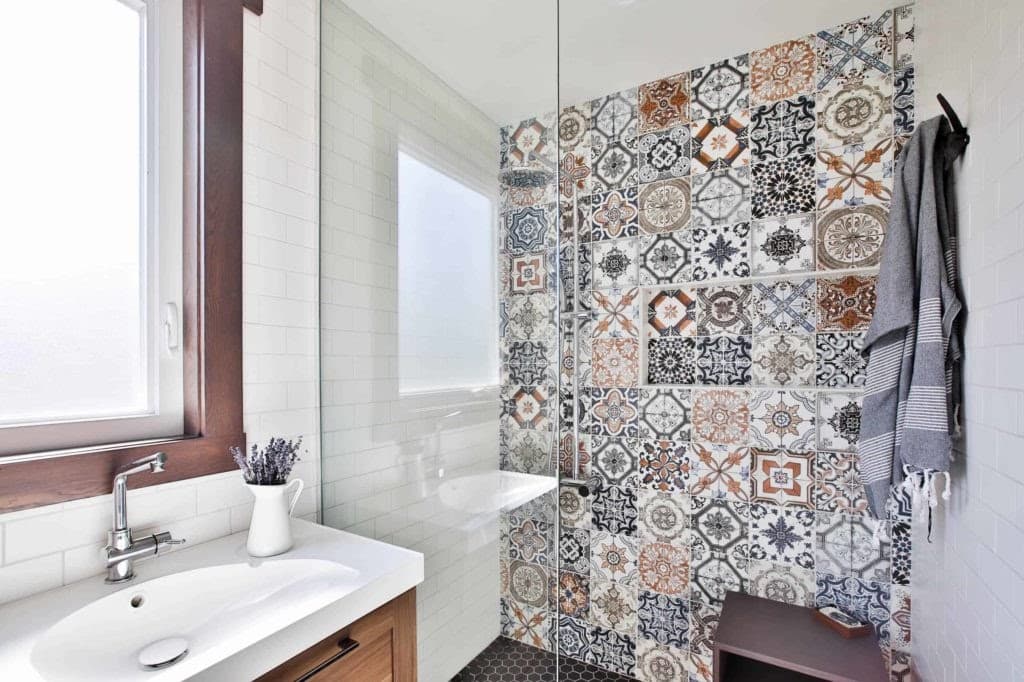
Pattern in a shower doesn’t need to be subtle to work. A repeating vintage-style pattern tile, used generously rather than as a small accent, gives a shower real personality and a Mediterranean feel.
Designers have leaned harder into pattern and color in showers recently, moving away from the pared-back spa look that dominated for years.
A shower is now treated as a real opportunity for character, not just a wet utility box.
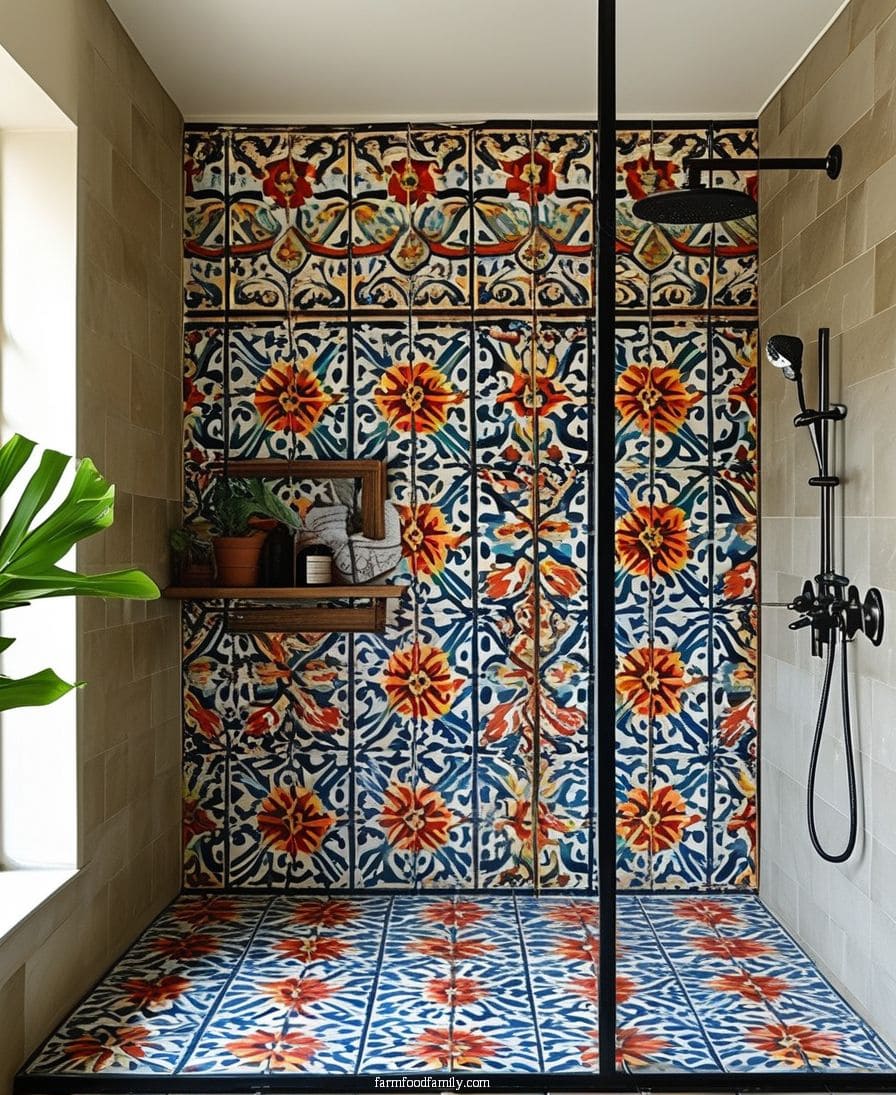
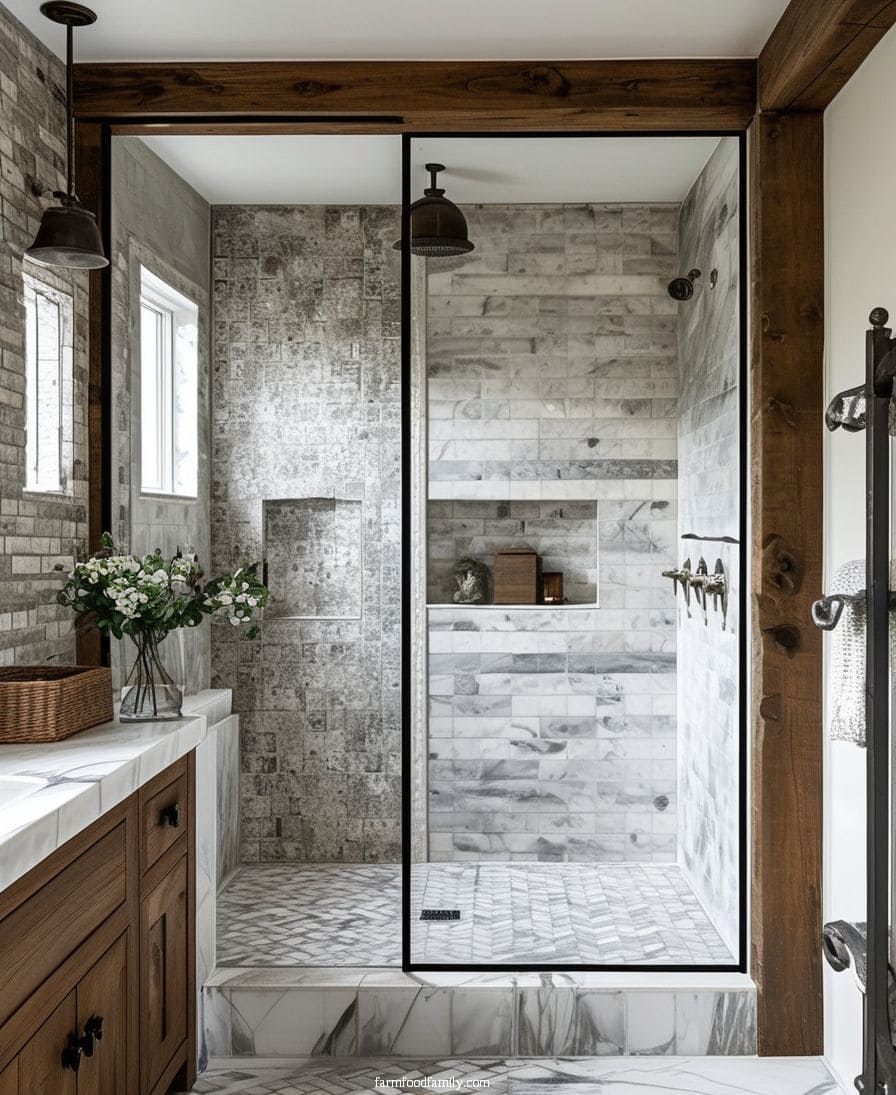
25. A Glamorous Corner Inside a Rustic Shower
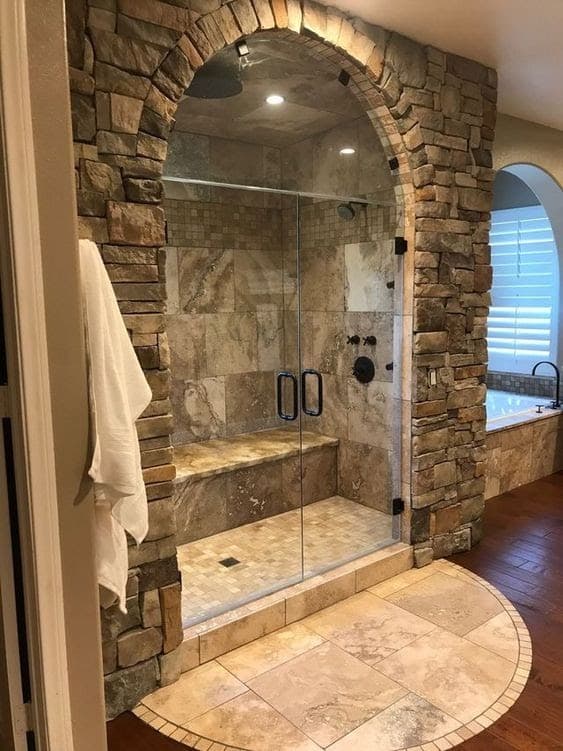
Tile’s natural shine gives it a way of turning even a small shower alcove into something that feels genuinely upscale.
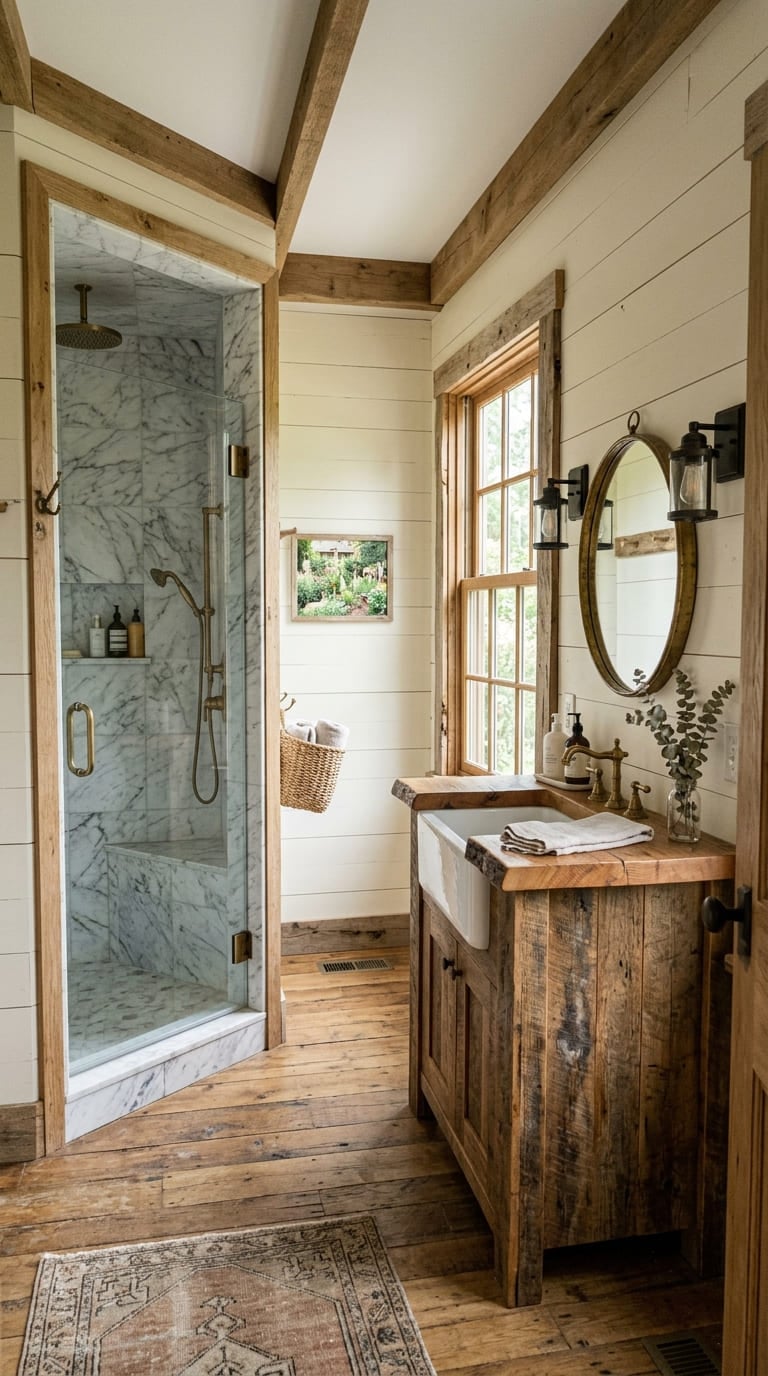
A farmhouse-style bathroom built mostly from organic textures and wood trim can still carry a partially concealed shower area finished in white-gray marble for real contrast.
Porcelain marble-look tile gets close to the same effect for anyone priced out of real stone panels, and the mix of rustic and refined ends up more interesting than either style alone.
26. Green Marble (Verde Guatemala)
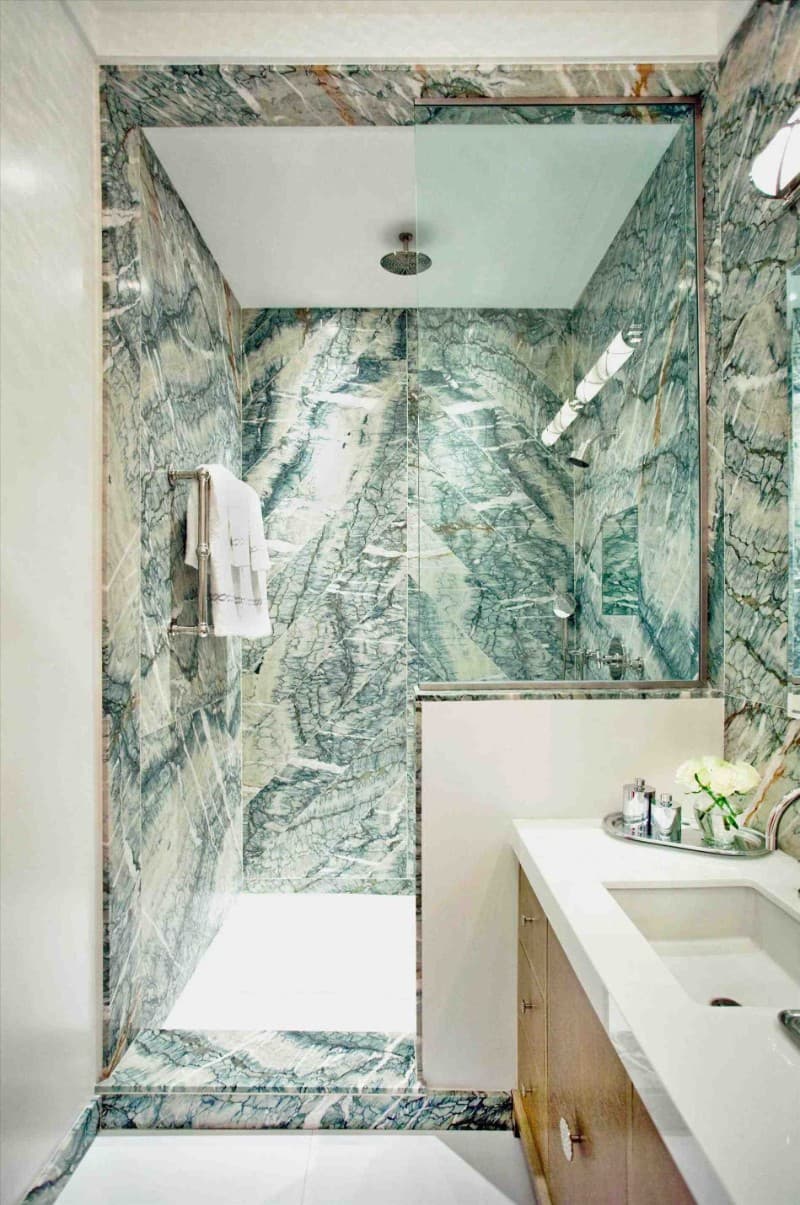
Calacatta-style ivory marble isn’t the only stone worth considering for a bathroom.
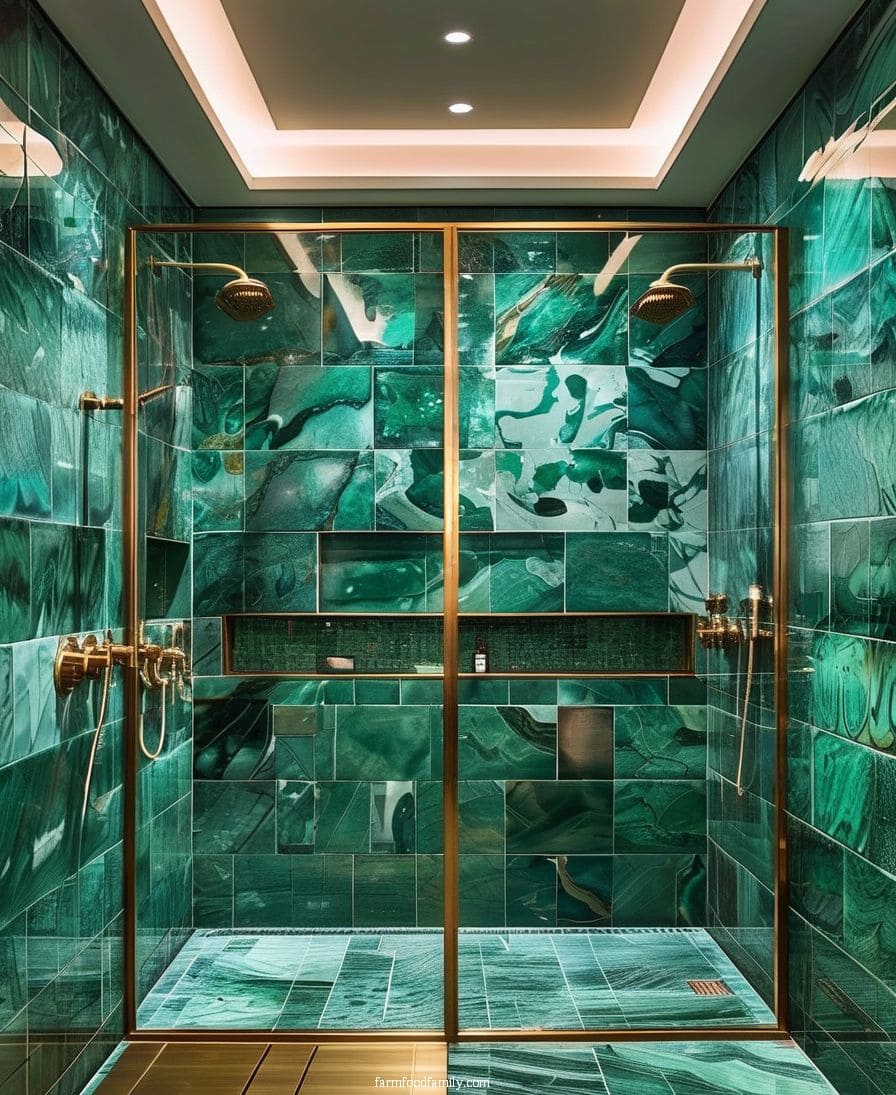
Deep emerald and sea-green marbles are having a real moment, and darker varieties like Verde Guatemala are becoming more available as designers request them more often.
Green marble pairs especially well with warm copper or antique brass fixtures, which round out the look into something genuinely polished rather than just colorful.
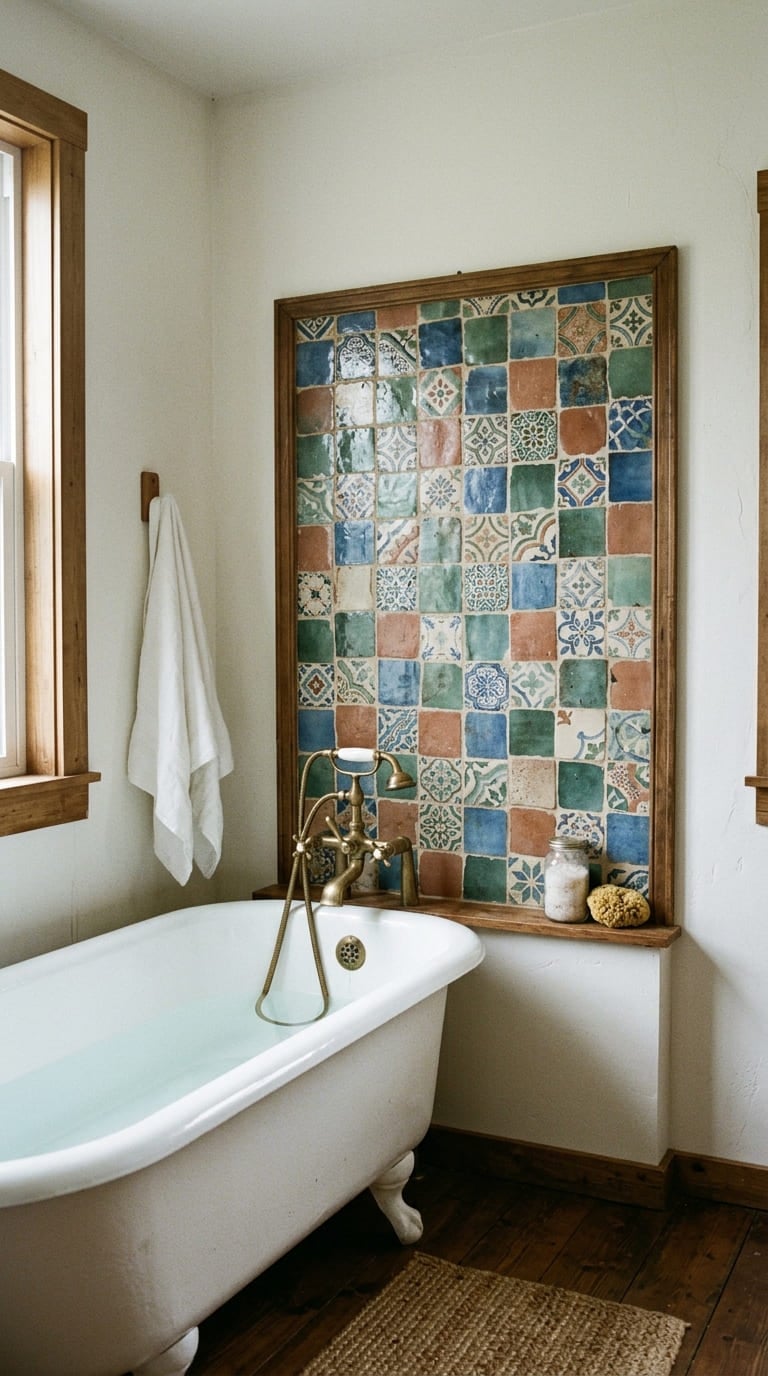
27. A Freestanding Tiled Accent Wall
Tile doesn’t have to stay confined to the shower stall itself.
An awkward wall near a freestanding tub or shower fixture can become a real design feature with the right tile treatment, functioning almost like a piece of framed art on the wall.
Covering just a defined portion of the wall, rather than the whole surface, makes it practical to use a more expensive tile without blowing the budget.
28. An Accent Wall Inside the Shower
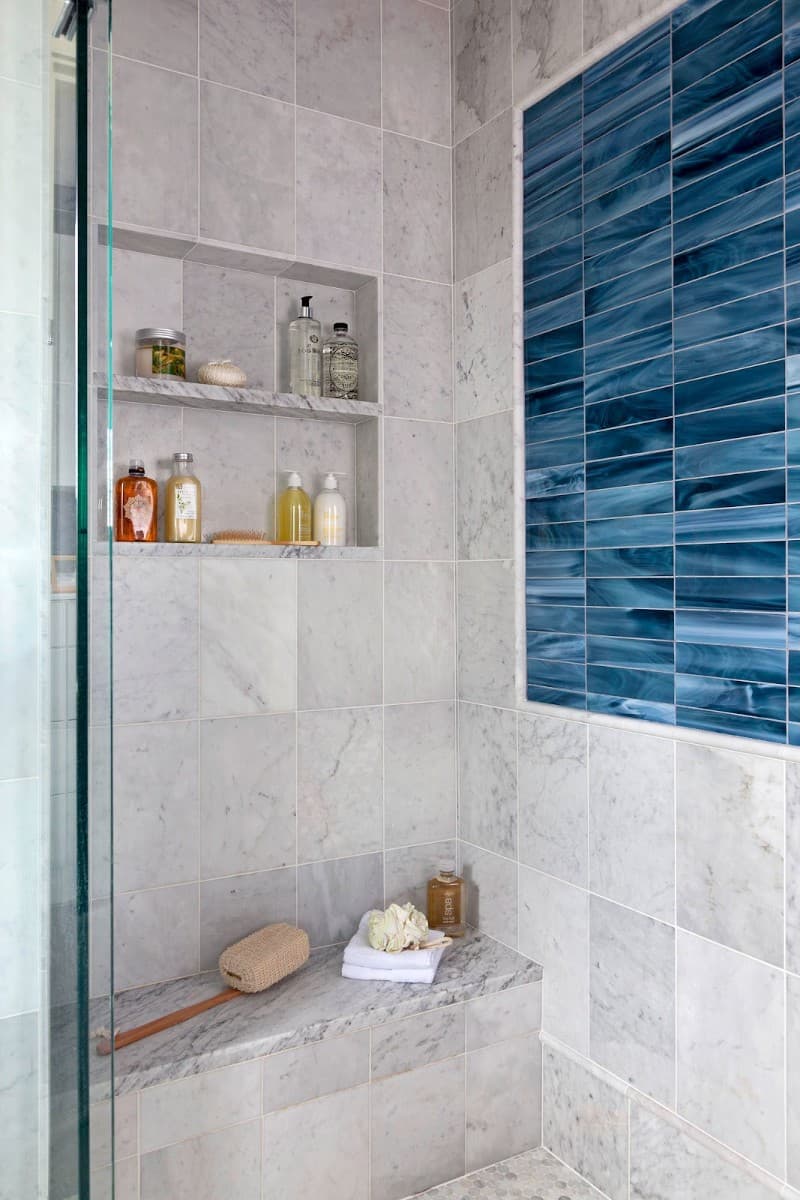
The same idea that works in kitchens, an eye-catching mosaic strip under a range hood, translates directly to a shower.
Keeping the surrounding walls in a neutral tone lets a single accent wall stand out without making the room feel cluttered.
A subtler version of the same idea: keep the tile family the same everywhere but change the laying pattern on one wall, a diagonal set instead of a straight one.
29. Color-Filled Niches and Seats
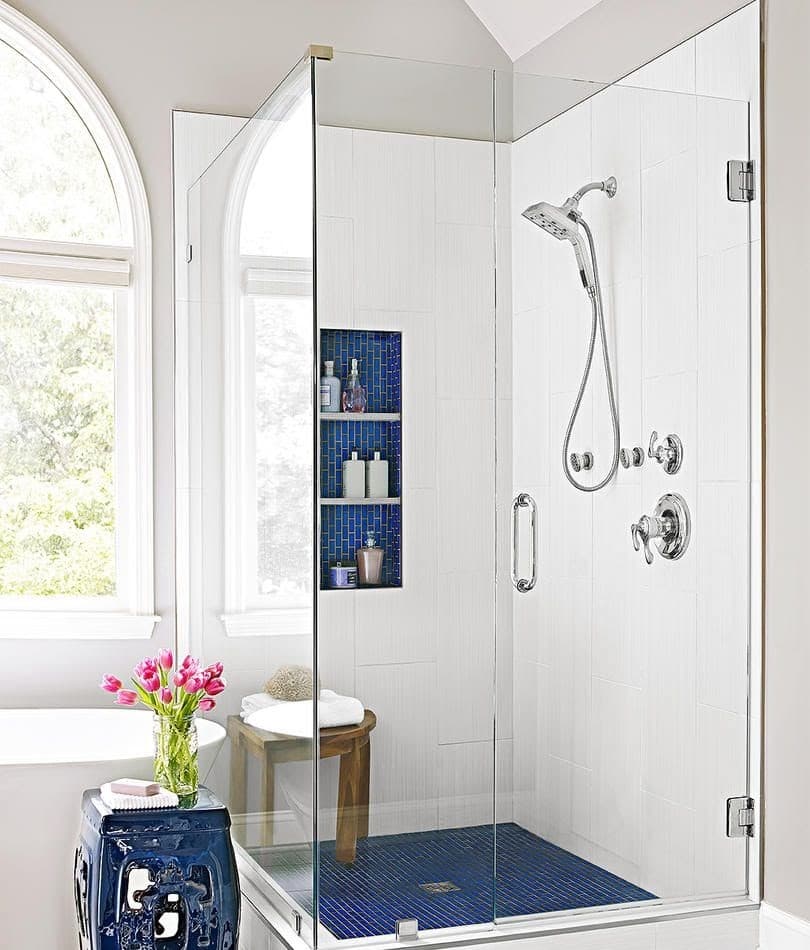
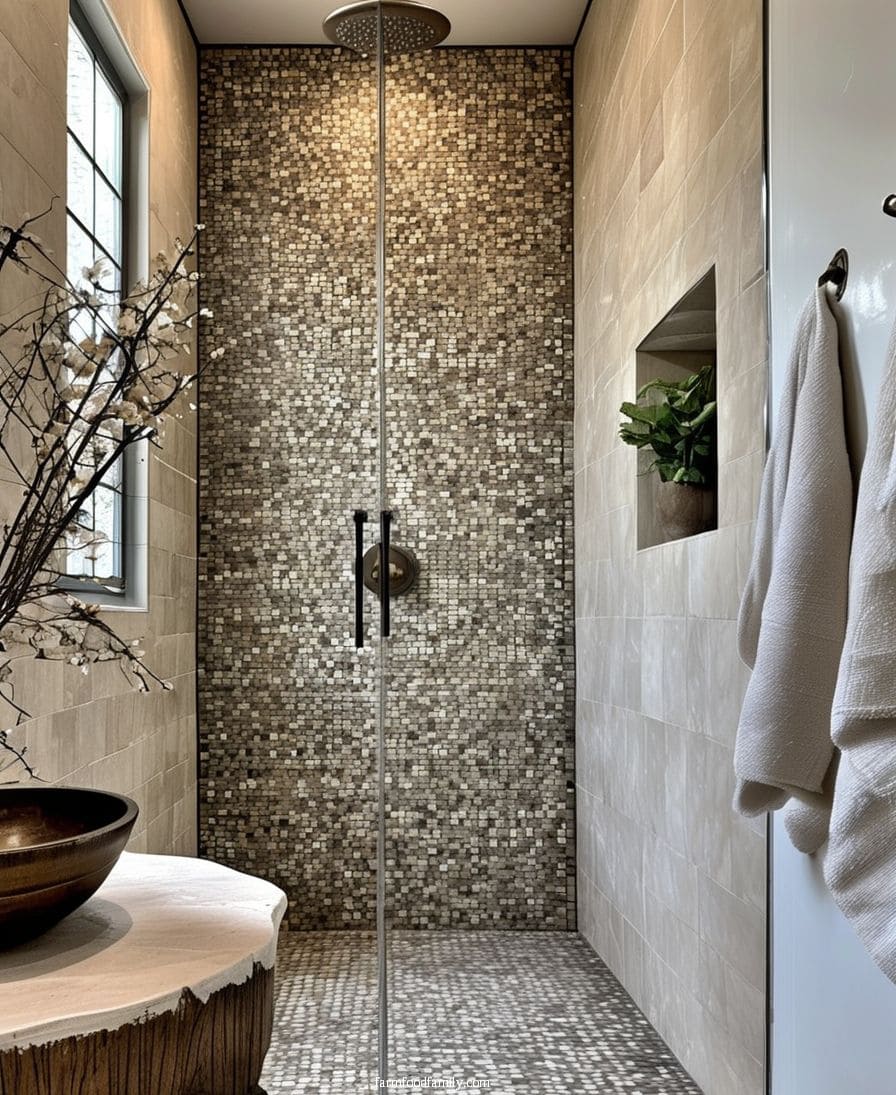
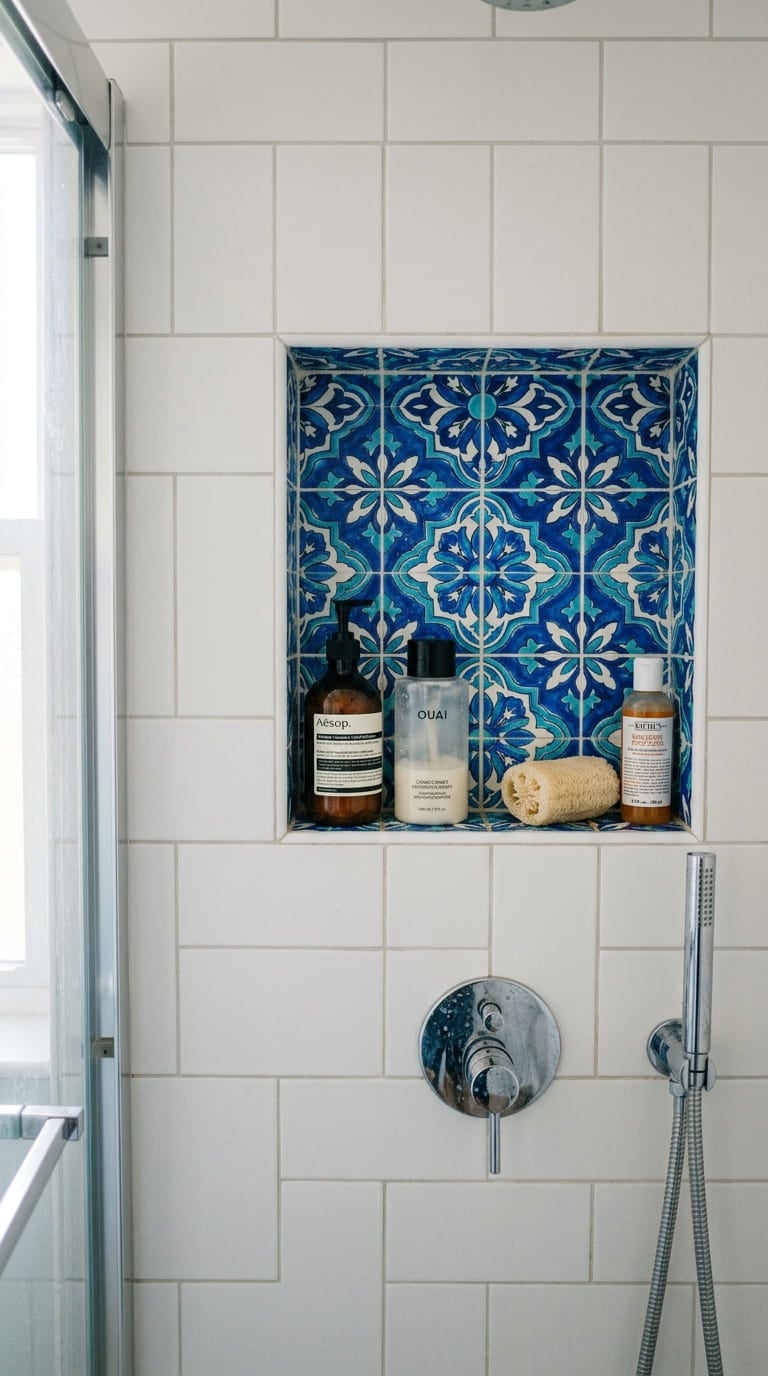
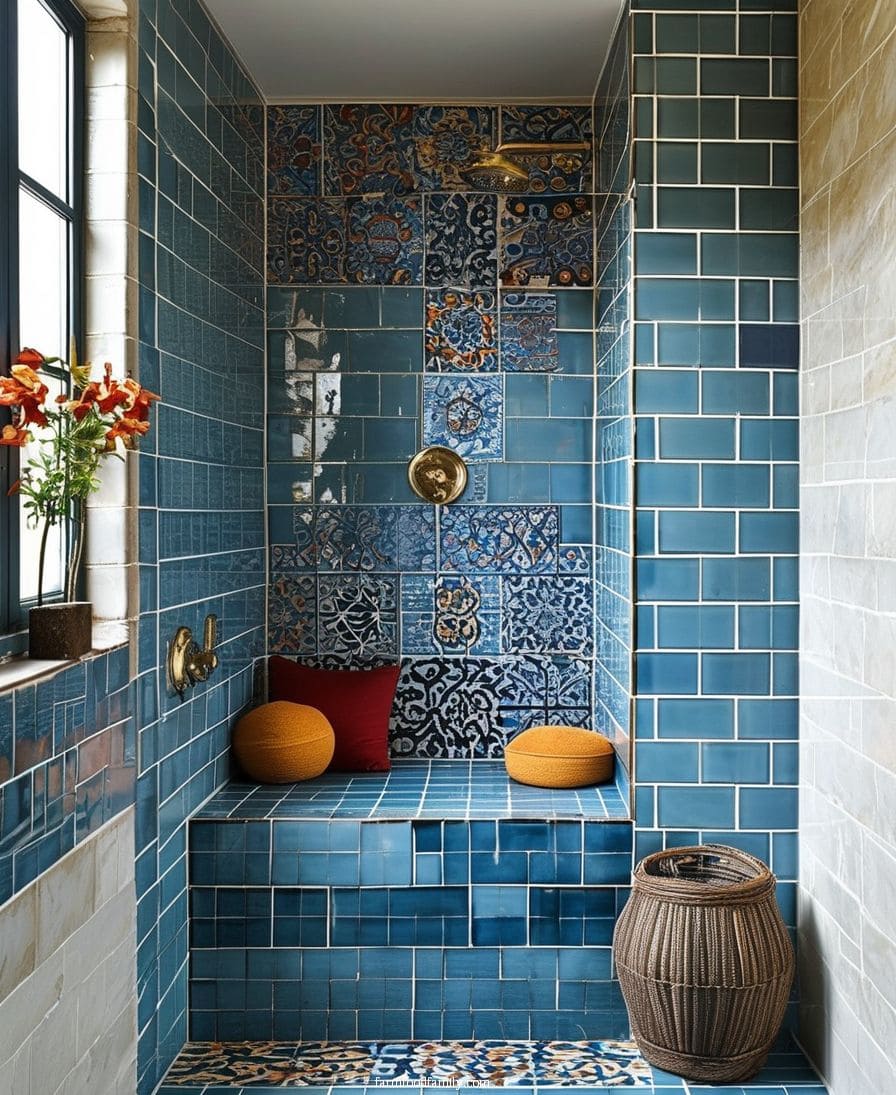
A small shower niche is a low-risk place to experiment with a bolder tile than would work across an entire wall.
A bright blue or patterned tile inside a recessed shelf adds a real pop of color against an otherwise white or neutral shower.
For a subtler effect, match the niche tile exactly to the surrounding wall instead. Either way, plan the niche around existing plumbing and piping before committing to a layout.
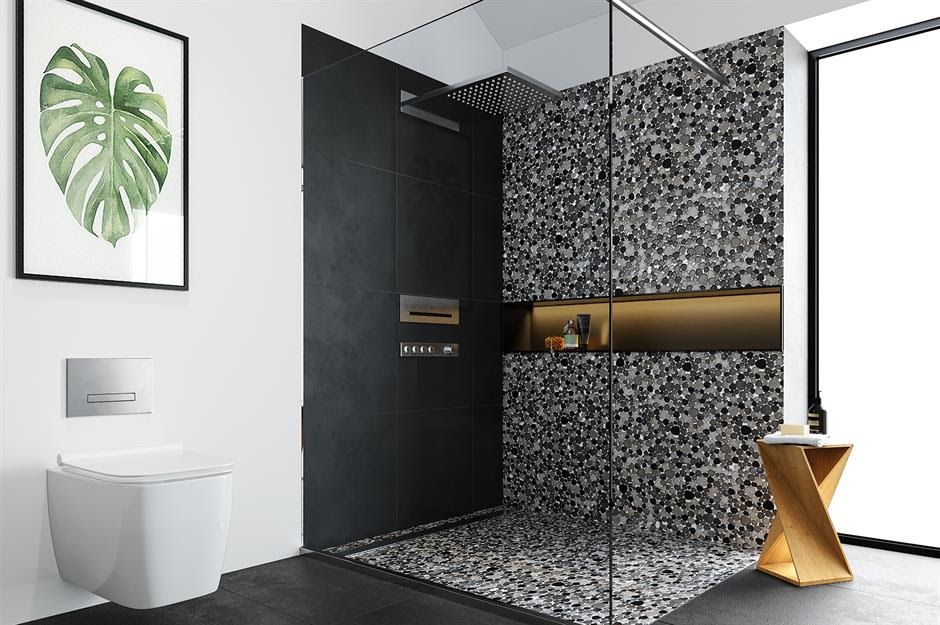
30. Sauna-Style Stone Flooring
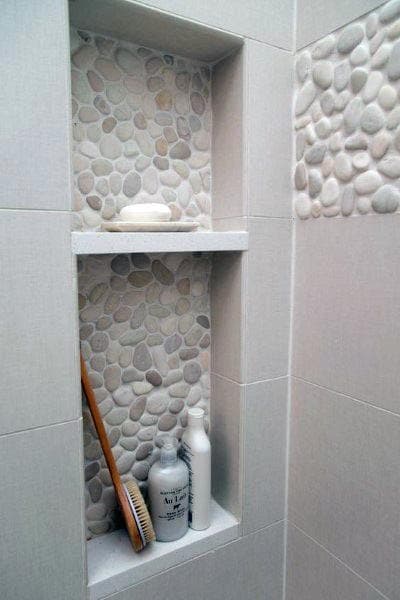
A doorless shower puts more of the room on display, which makes the floor a bigger design decision than usual.
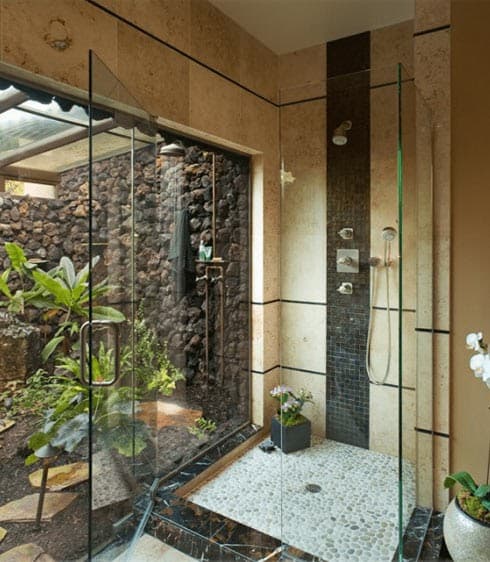
Massaging river-stone flooring brings a genuine sauna feel into an everyday bathroom.
A rustic wall tile paired with a strong line of pebble trim finishes the look and pushes the whole space toward something closer to a spa than a standard shower.
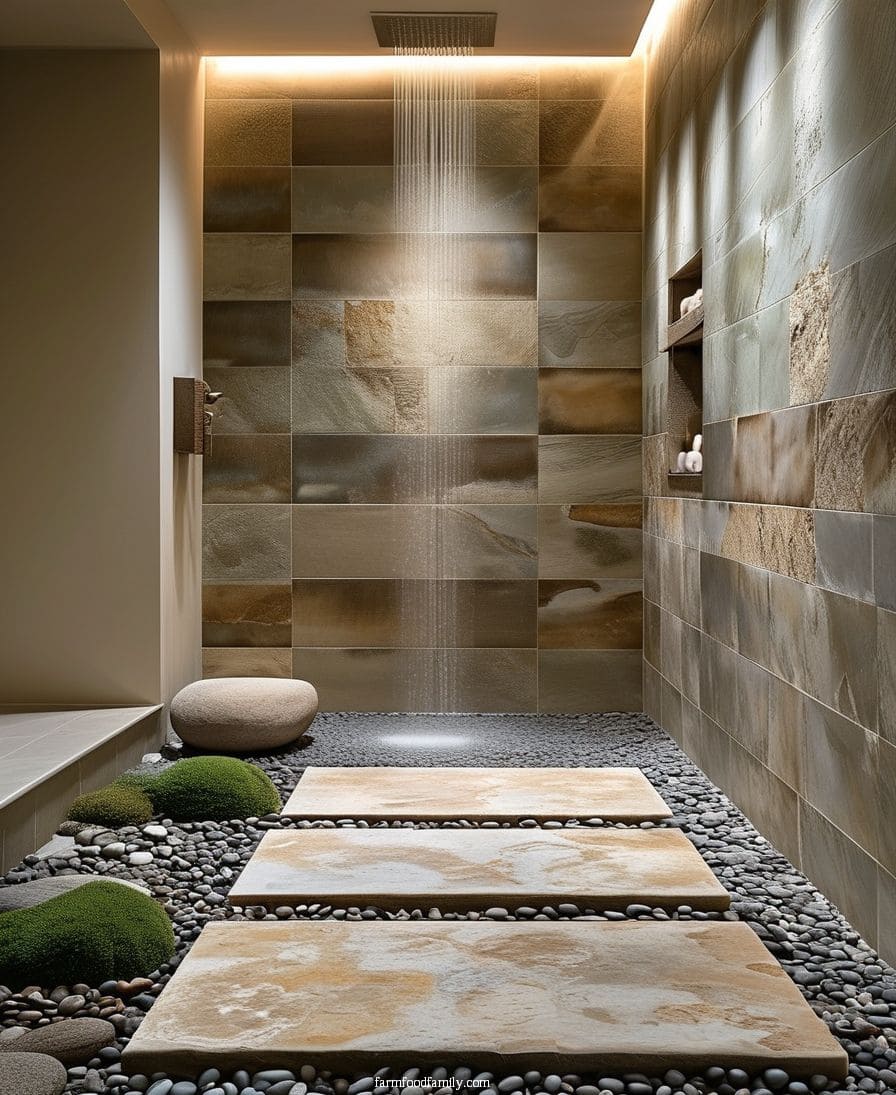
31. A Wood-Tiled, Cabin-Inspired Shower
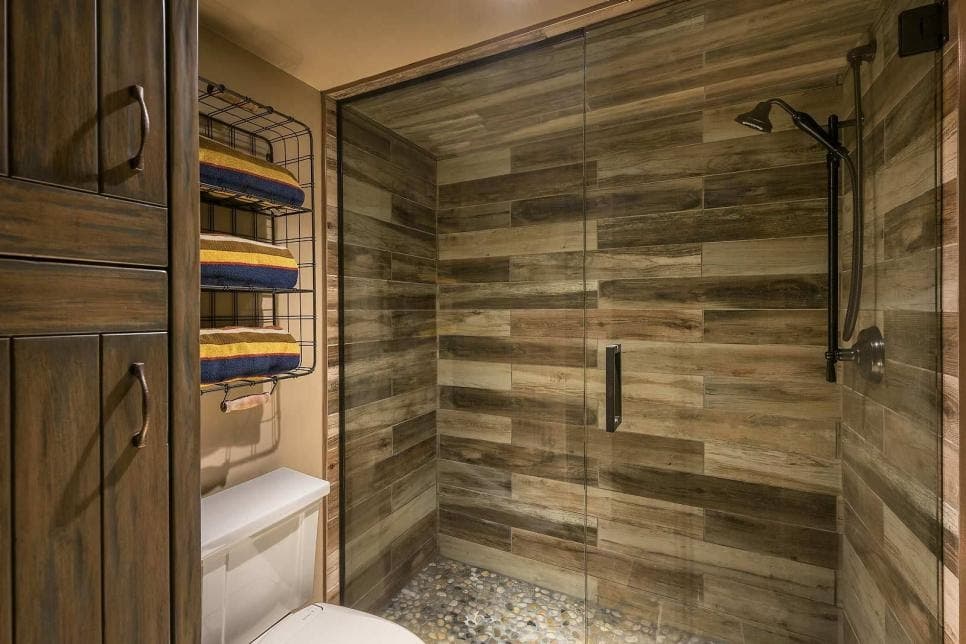
Wood-look tile, used as a border or full accent inside the shower zone, brings a cabin-like calm into an otherwise modern bathroom.
Keeping the toilet area in plain white tile while reserving the wood-look tile for the shower zone specifically creates a clear visual boundary between the two.
The combination reads as tidy and nature-inspired rather than rustic-to-the-point-of-dated, which is the usual risk with wood-look tile overused.
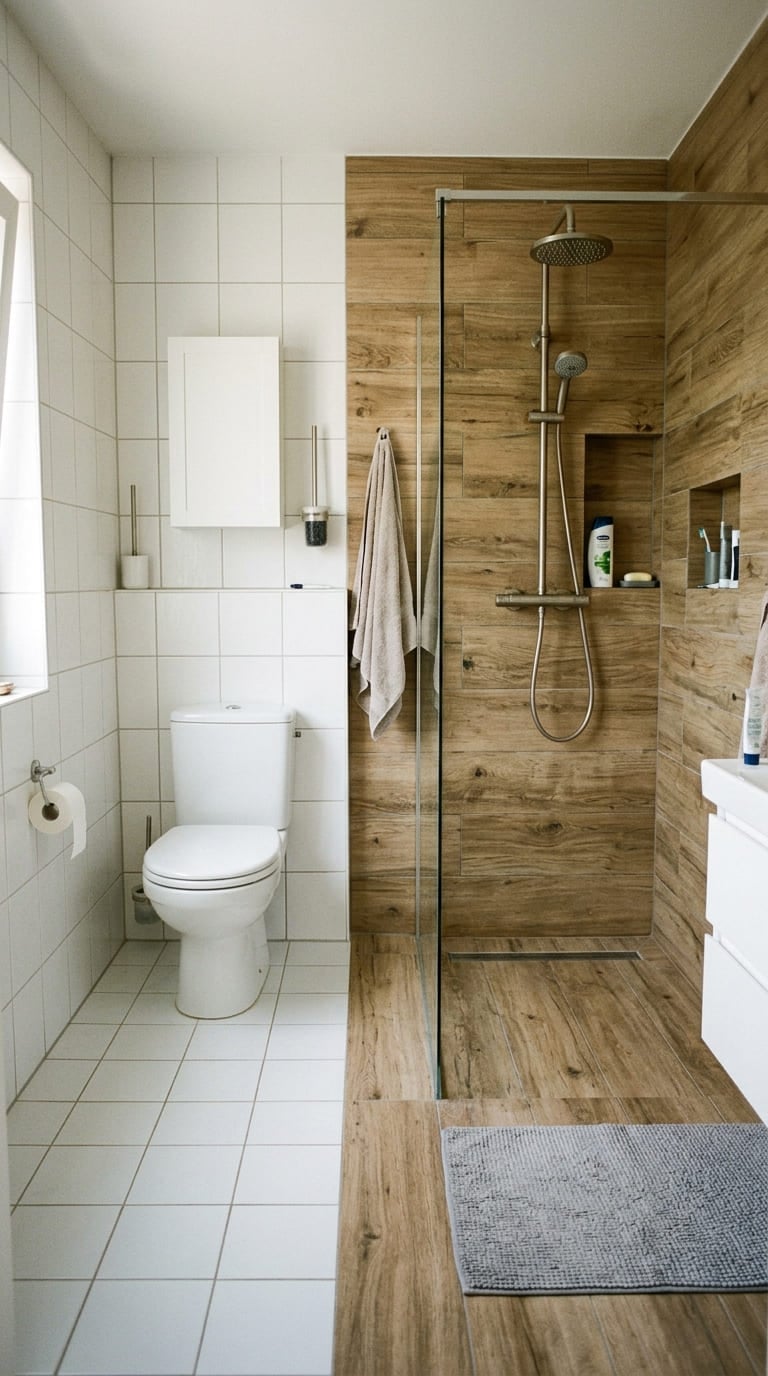
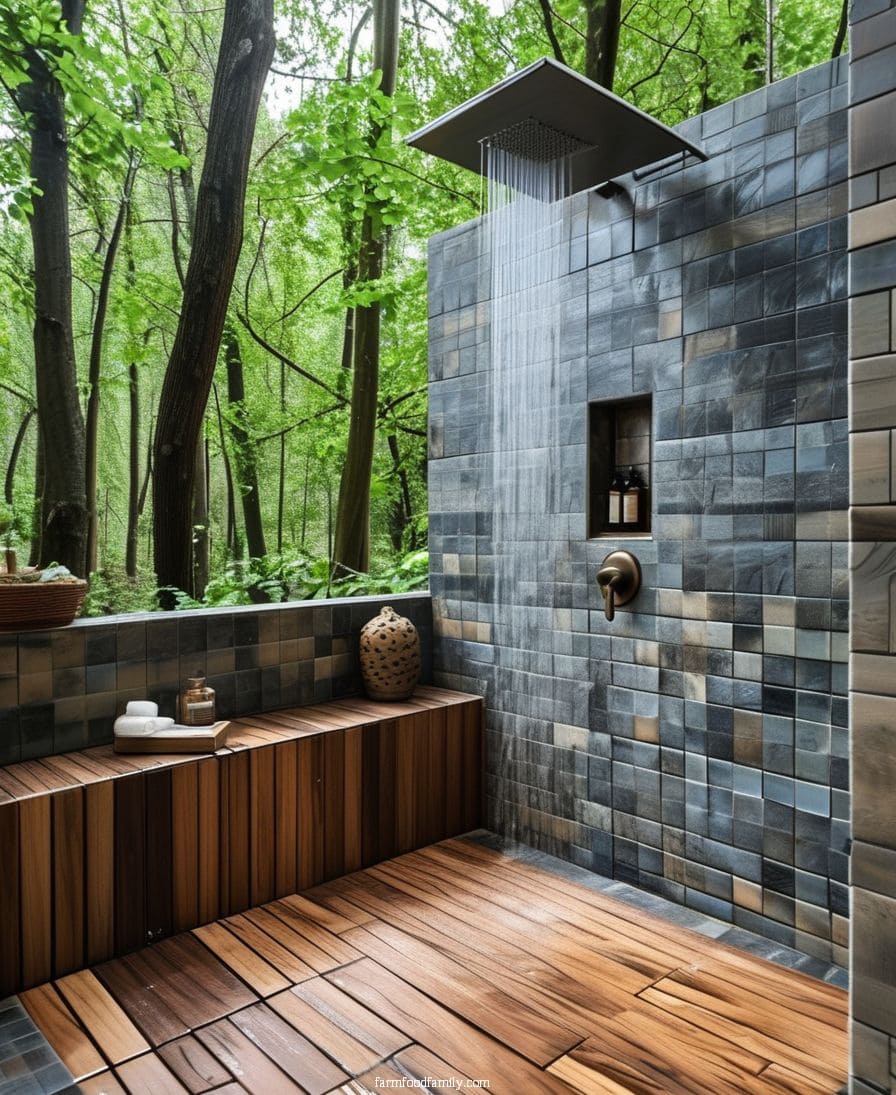
32. An All-White, Icelandic Spa-Inspired Scheme Spas
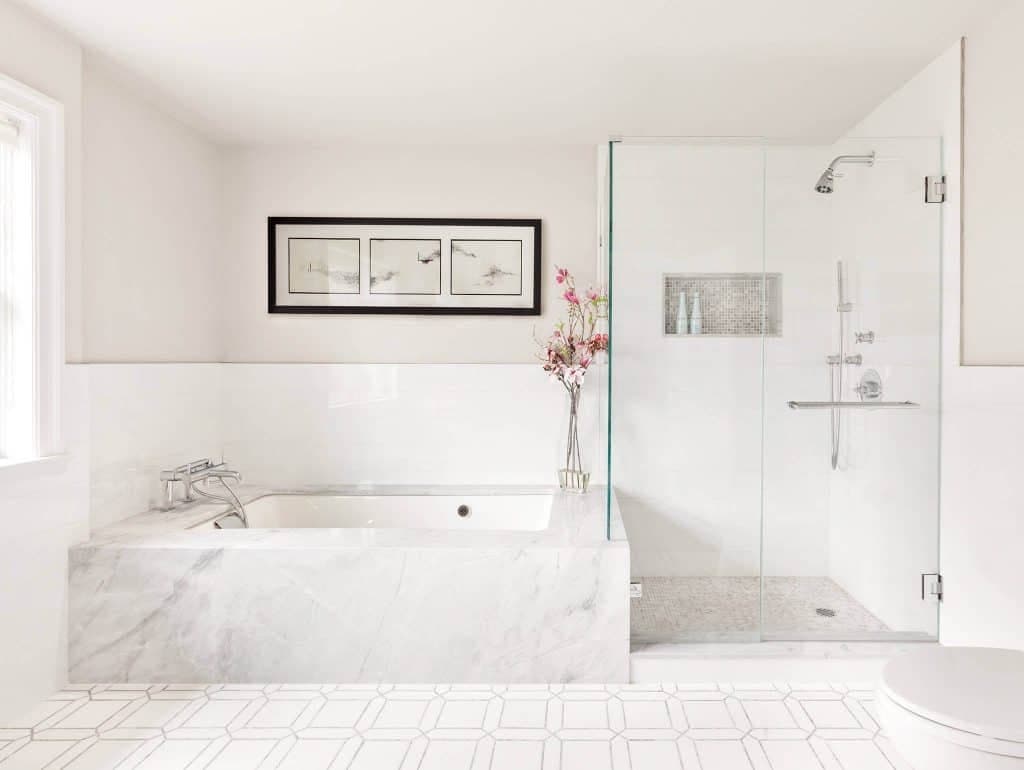
White tile is a safe choice precisely because it never really goes out of style, and it makes a small bathroom read larger than it is.
Ivory tile across the walls of a larger bathroom, paired with a patterned floor for visual interest, keeps an all-white scheme from feeling flat.
This is the easiest idea on this list to execute in a resale-focused remodel, since white reads as timeless to the widest range of future buyers.
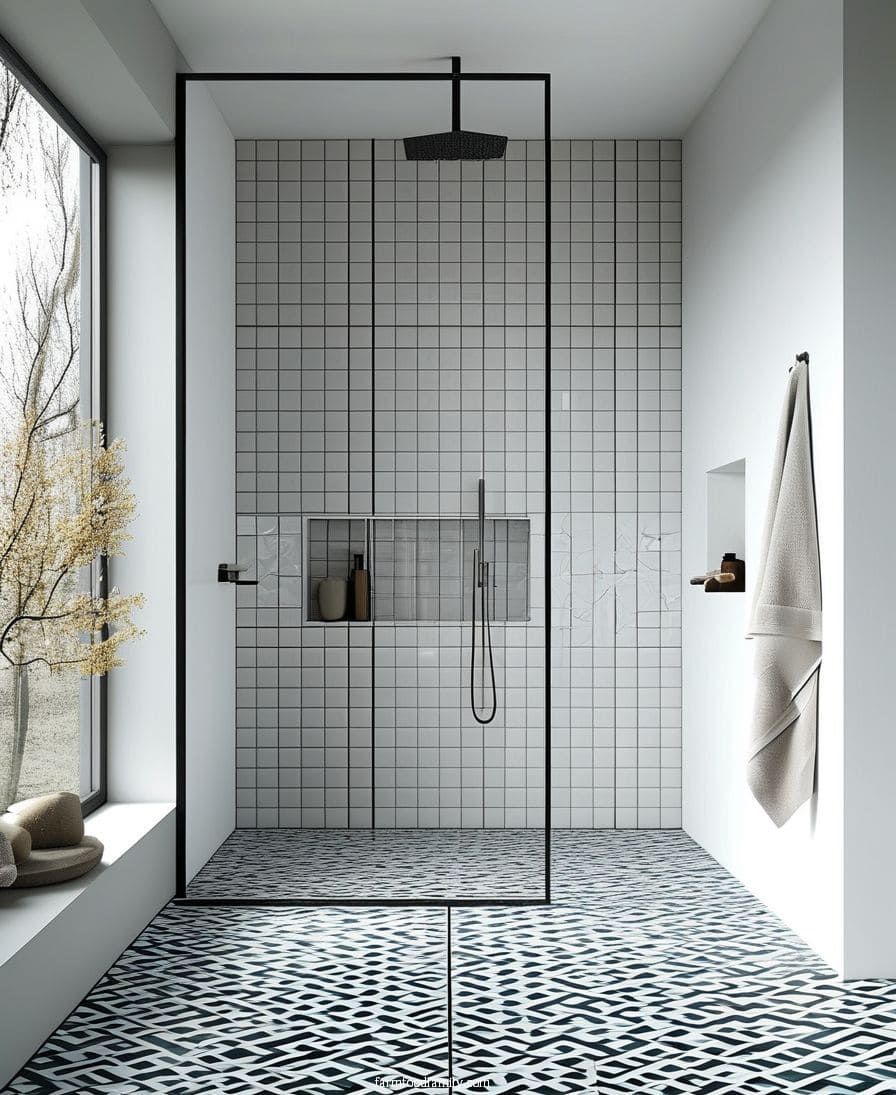
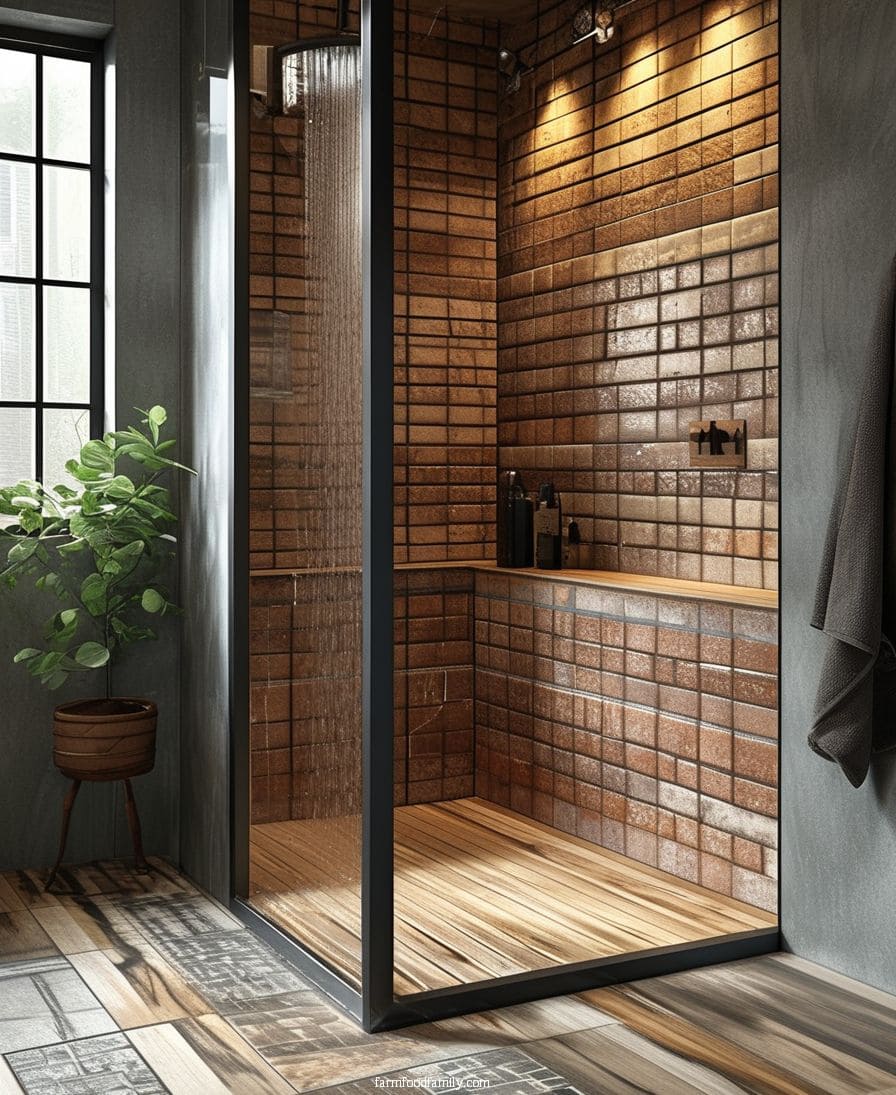
33. Brick-Look Tile for an Industrial Touch
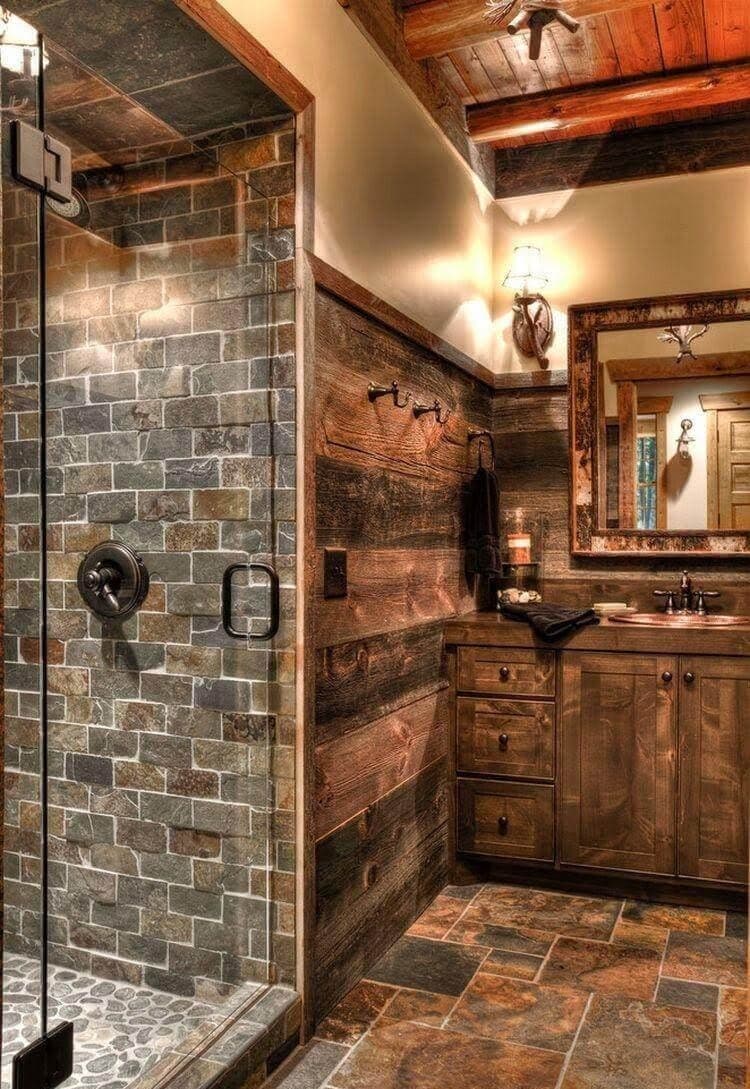
Brick-shaped tile with a subtle texture brings genuine warmth into a shower without looking like an actual construction site. The texture catches light in a way flat tile doesn’t, giving the space a bit more depth.
Match the floor tile to the same material or a closely related neutral tone, since a busy floor under a textured wall tends to make the whole room feel smaller rather than larger. Wood-slat-look floor tile is a common pairing here to tie in an outdoor, industrial-adjacent feel.
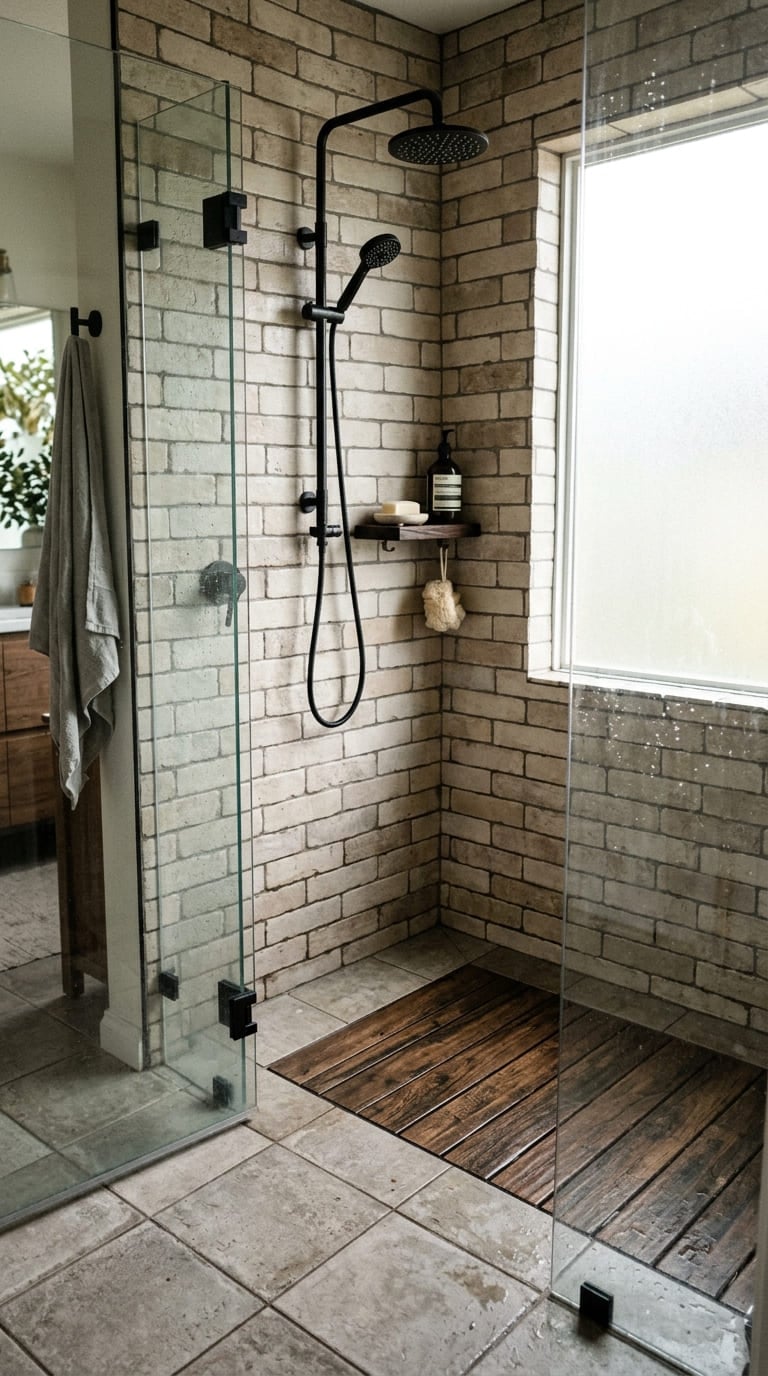
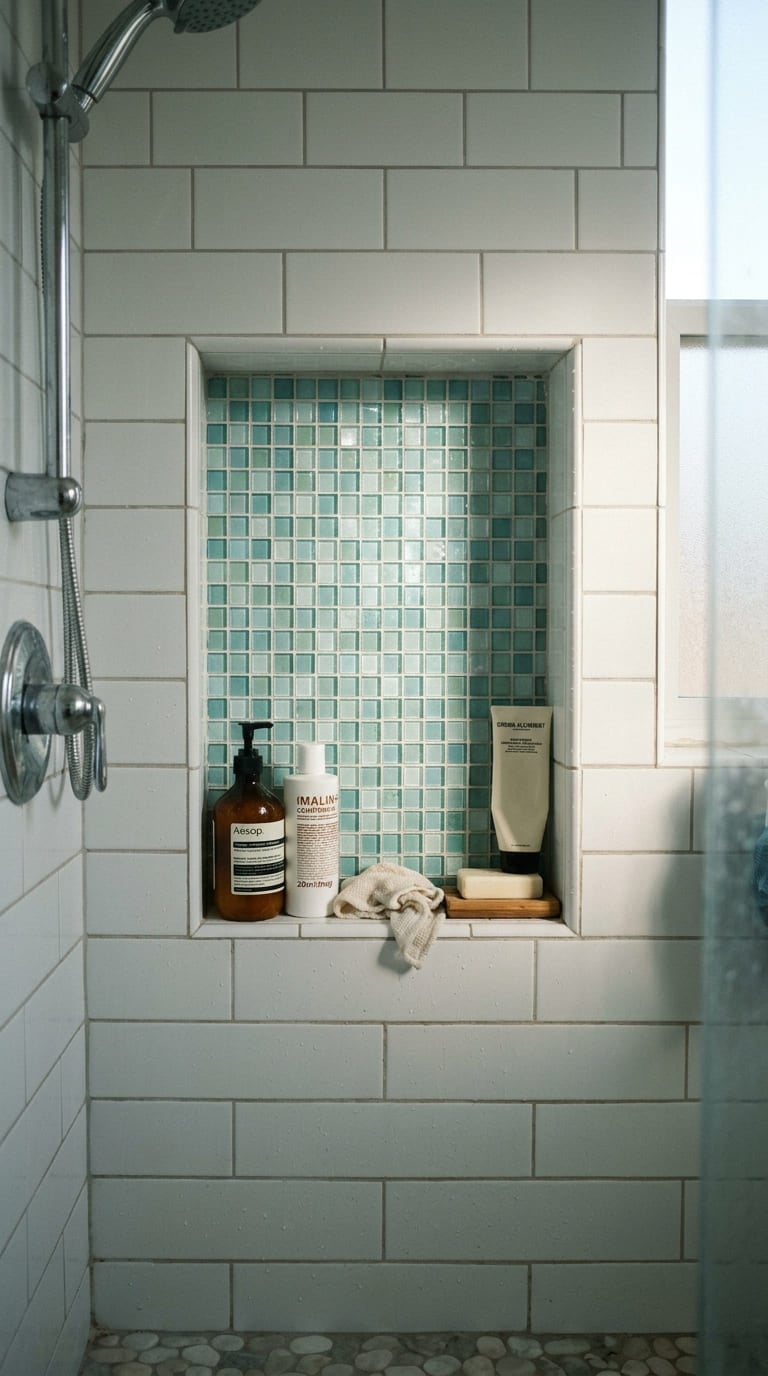
34. Glass-Tiled Niche Shelves

Glass tile inside a built-in niche or shelf area adds real depth and shine that ceramic can’t quite match.
Pairing it with a wall of white tile keeps a small bathroom feeling optically larger, since glass panels also work in place of a standard curtain divider for the same visual-expansion effect.
This is a genuinely low-maintenance choice for a distinctive detail, glass tile wipes clean easily and doesn’t stain the way some natural stone does.
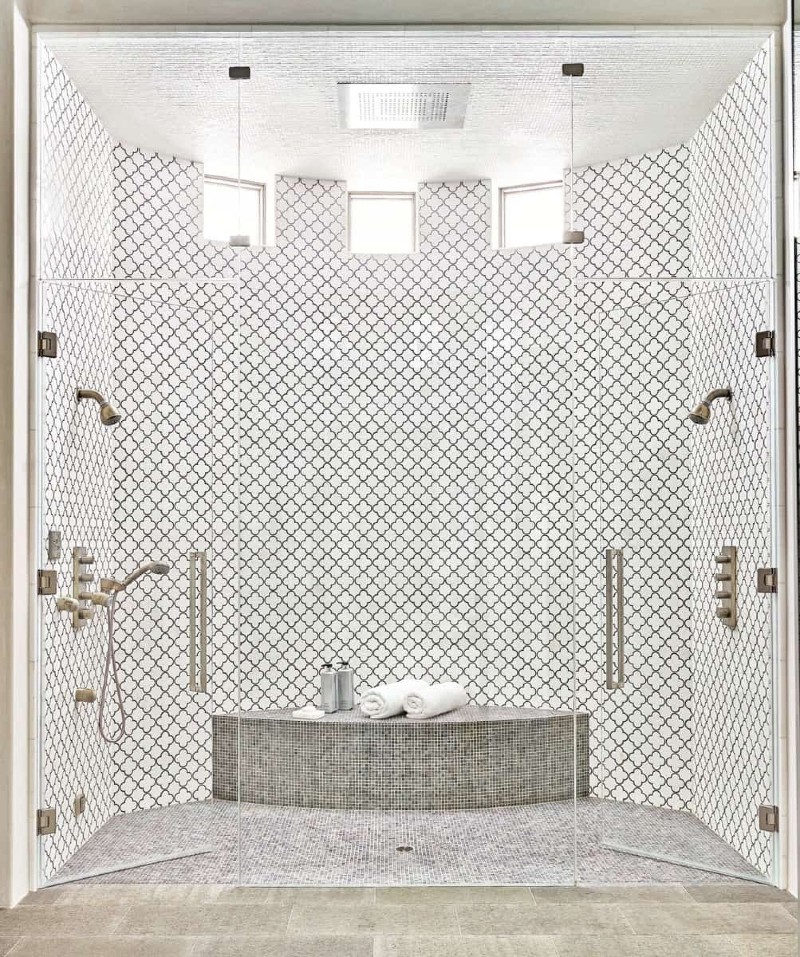
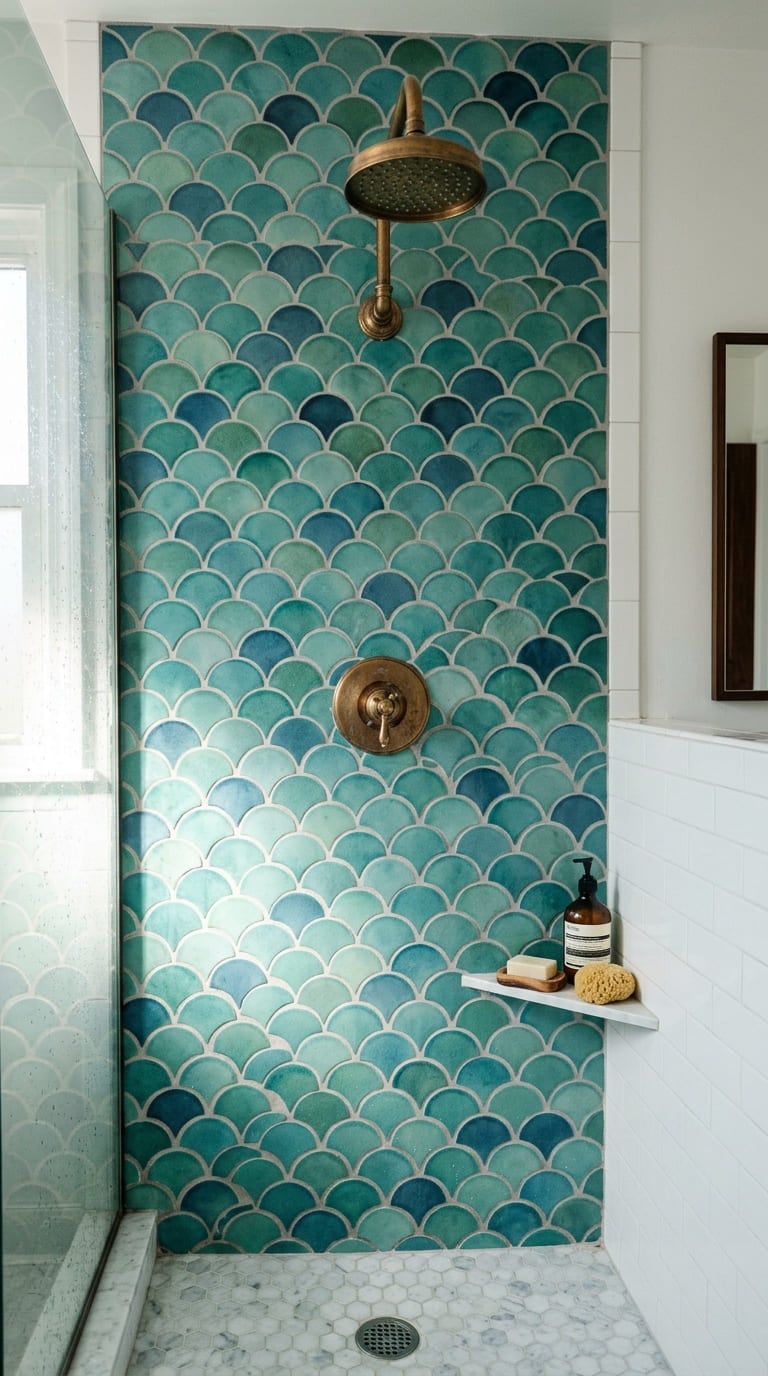
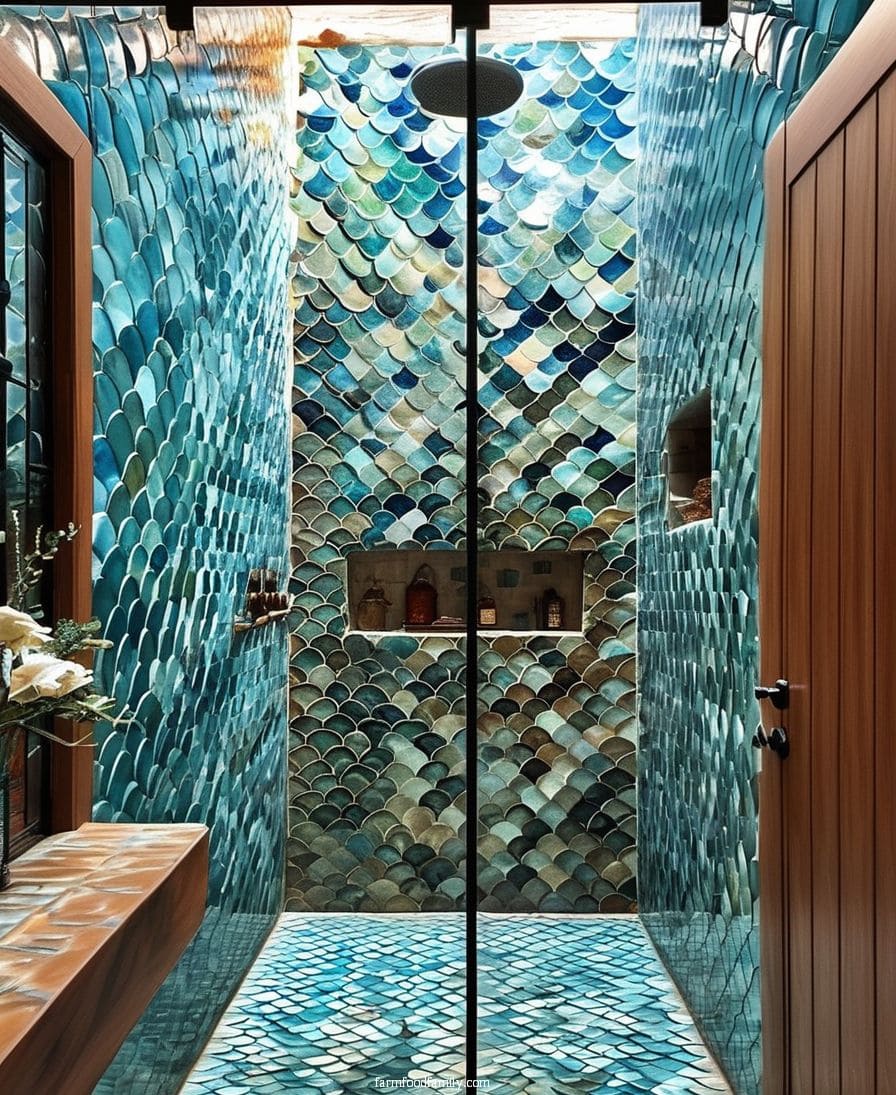
35. Moroccan Fish-Scale Tile
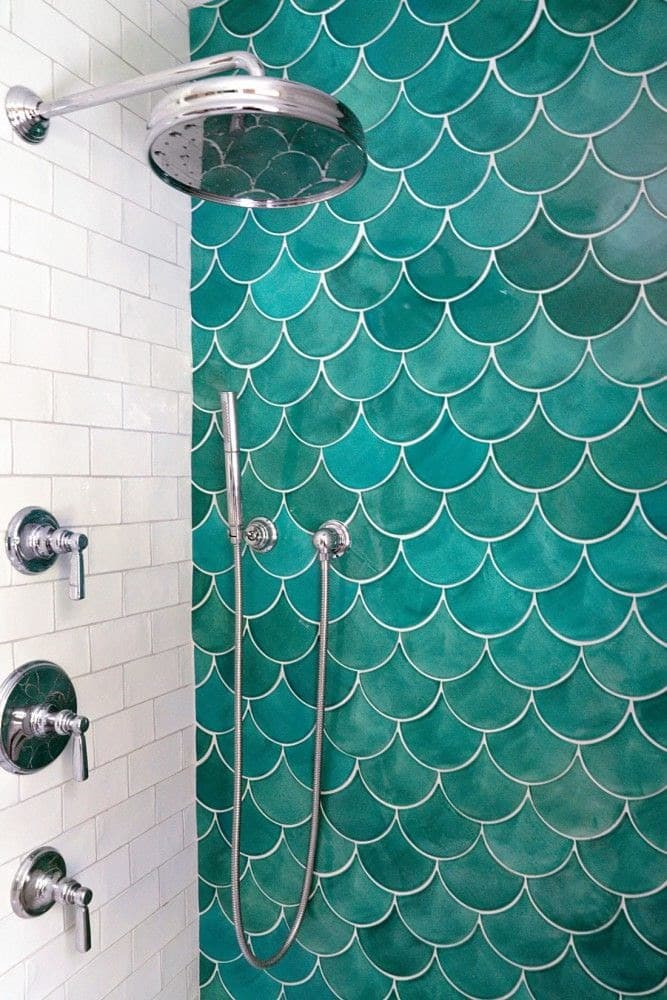
Fish-scale, or mermaid-scale, tile brings genuine movement and texture to a shower wall in a way flat square tile can’t.
Originating from traditional Moroccan tile design, it works especially well as a full accent wall rather than scattered in small sections.
It pairs naturally with warm metal fixtures, brass or aged bronze, for a finished look that leans global rather than purely trend-driven.
Before You Tile: What Actually Matters
Every idea above is a starting point for what a tile could look like. None of it holds up without getting a few unglamorous things right first.
The real cost is labor, not tile
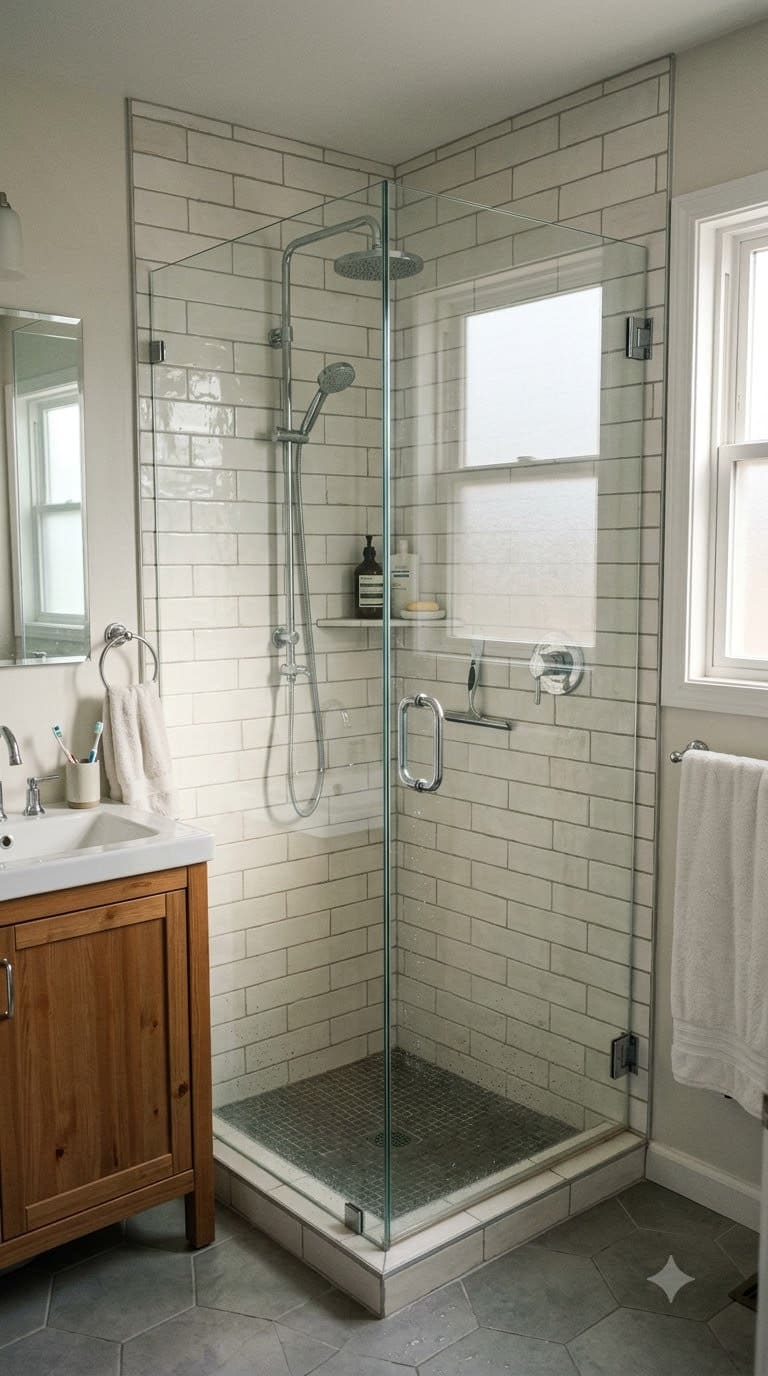
A properly built tiled shower runs $7,000 and up in real remodels, and the tile itself usually isn’t what drives that number. Skilled installation is. Budget accordingly rather than assuming a cheaper tile automatically means a cheaper project.
Waterproofing matters more than the tile choice
Tile and grout are not waterproof on their own, water gets behind both over time no matter how well the surface is sealed. One tile professional, reviewing a poorly built shower in a real online discussion, put the underlying principle bluntly: “A properly prepped shower will be waterproof behind the tile, because water will ALWAYS get behind the tile, either in liquid or vapor form.” The Tile Council of North America publishes ANSI A108.13 specifically to standardize waterproof membrane installation for exactly this reason.
Curbless and doorless designs solve a real problem, not just a style preference
One homeowner considering a curbless shower gave the actual reason plainly: “Client wants a curbless shower because they plan to age in place.” A zero-threshold entry removes a fall risk years before it becomes a problem. The tradeoff is real too, see the doorless idea above: a door-free shower runs noticeably cooler than one with a door, worth weighing honestly rather than choosing purely for the look.
Large-format tile cuts both ways
Fewer grout lines mean less regular cleaning and a more seamless look, but the tradeoff shows up during installation. One contractor working a large-format tile job summed it up to the homeowner directly: “you’re damned if you do, damned if you don’t regarding big tiles, less to put up, but the cuts have to be more specialized around the openings.” It’s a genuine tradeoff, not a strictly better option.
Who installs it matters as much as what gets installed
Scott Carothers, Academic Director at the Ceramic Tile Education Foundation, put it plainly: “How good the finished installation looks, how well it performs, and how long it lasts are in their hands.” A certified installer costs more upfront and saves real money and stress over the life of the shower.
Conclusion
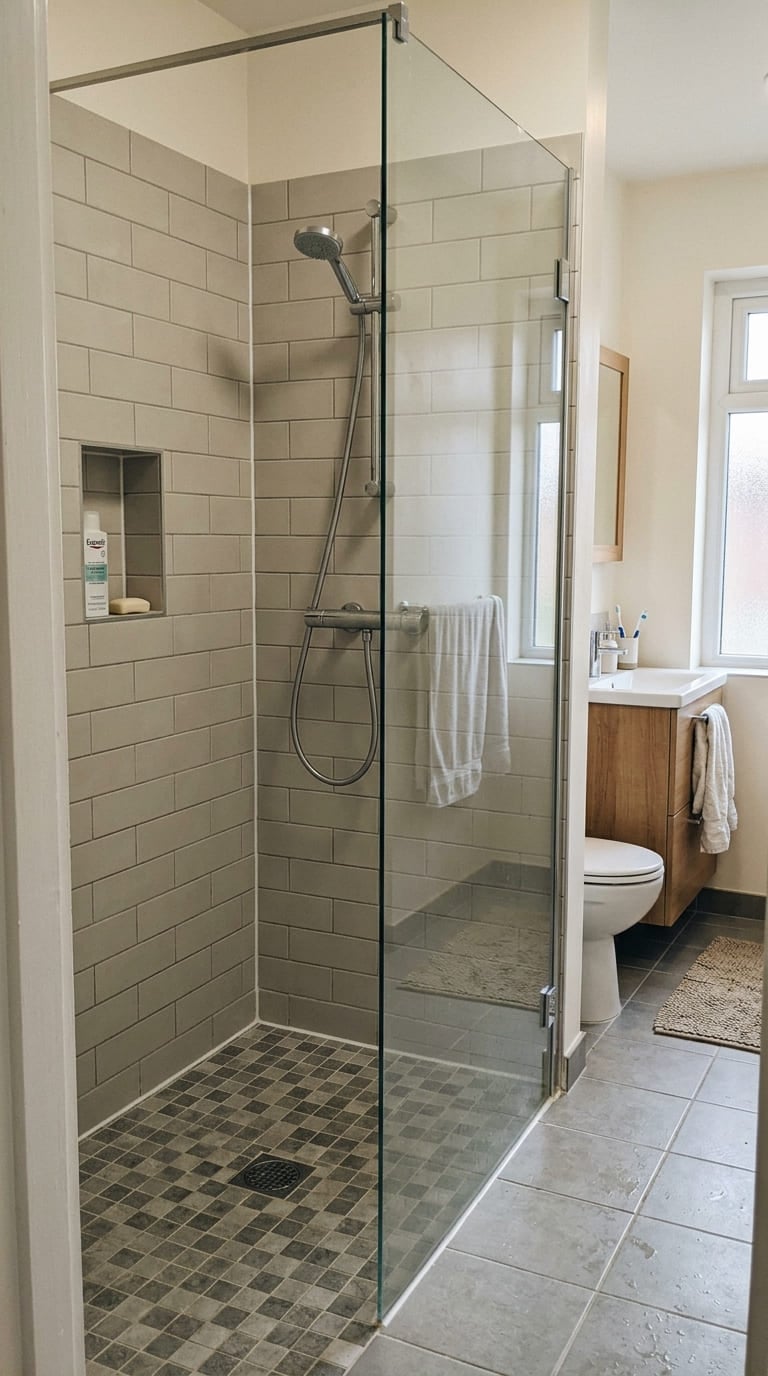
The right tile makes a shower feel like a room worth spending time in instead of a wet box to get through quickly. But every idea on this list depends on the installation underneath it holding up, so treat the waterproofing and labor decisions with the same seriousness as the tile itself.
Pick a design that fits the room’s light, size, and budget, then find an installer whose work will let it actually last.
Frequently Asked Questions
How much does a properly tiled walk-in shower actually cost? Real remodels run $7,000 and up for a properly built tiled shower, and the tile itself is rarely the biggest line item. Skilled labor, especially waterproofing, is what drives the real cost.
Do curbless showers have any real downside besides cost? The most commonly reported one is temperature: without a door, more cool air reaches the shower than with a traditional enclosure. It’s a worthwhile tradeoff for most people, particularly anyone planning ahead for aging in place, but it’s a real one.
Is large-format tile actually easier to install than smaller tile? Not necessarily. It requires fewer grout lines and less regular cleaning, but cutting large tiles around shower openings, corners, and fixtures takes more specialized skill than working with smaller format tile.
What actually prevents a tiled shower from leaking over time? A correctly installed waterproof membrane behind the tile, not the tile or grout itself. Industry standards like ANSI A108.13 exist specifically because water reliably gets behind tile and grout over time, and the membrane is what actually stops it from causing damage.
Products We Recommend
This post contains affiliate links. We may earn a commission on qualifying purchases at no extra cost to you.
DGSL Tile Leveling System with Plier, 300 Spacers and 100 Wedges
Keeps large-format tile flat and lippage-free while the mortar sets, exactly the installation detail the "Before You Tile" section above flags as the real skill gap on big tiles. 4.4 stars, over 5,000 ratings.
Shop Now
Schluter Kerdi Bonded Waterproofing Membrane, 54 sq ft
A sheet-applied waterproofing membrane that goes behind the tile, the same category of product the ANSI A108.13 standard cited above governs. Pricier than a paint-on membrane, but it's the industry-standard system professional installers reach for. 4.7 stars, 390 ratings.
Shop Now
Neodrain 24" x 12" Stainless Steel Shower Niche, tile-ready
A pre-finished recessed niche insert for anyone building one of the niche ideas above (honeycomb cubby, color-filled niche, glass-tiled shelf) without tiling the inside of the box by hand. 4.8 stars, 257 ratings.
Shop NowNever miss an update — choose FarmFoodFamily as your preferred source on Google.
How it works: Tap the button below to open Google's settings page, then check the box next to FarmFoodFamily.
Tap the checkbox to turn it blue — that's how you know it's set.