70+ Cozy Zen Bathroom Ideas to Create a Relaxing Oasis
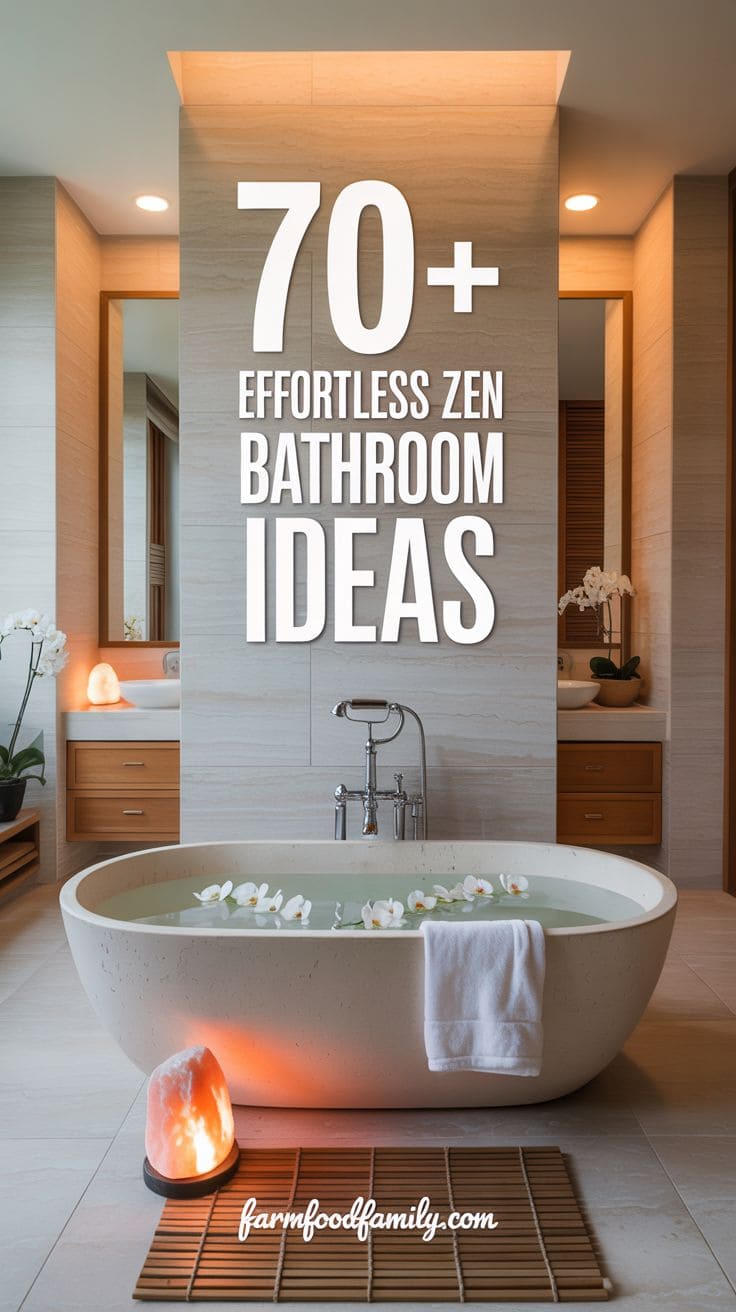
Creating a Zen bathroom is all about nurturing calm, balance, and simplicity. It’s not just a design trend as it’s a lifestyle shift that turns your bathroom into a restorative retreat. Soft natural textures and soothing colors allow you to craft a space where every element feels purposeful. Think about peaceful mornings with sunlight gently…

Never miss an update — choose FarmFoodFamily as your preferred source on Google.
How it works: Tap the button below to open Google’s settings page, then check the box next to FarmFoodFamily.
Tap the checkbox to turn it blue — that’s how you know it’s set.
Creating a Zen bathroom is all about nurturing calm, balance, and simplicity. It’s not just a design trend as it’s a lifestyle shift that turns your bathroom into a restorative retreat.
Soft natural textures and soothing colors allow you to craft a space where every element feels purposeful.
Think about peaceful mornings with sunlight gently filtering in, or long evening baths surrounded by warm wood and stone textures.
These zen bathroom ideas will help you embrace a serene, minimal design that soothes both your mind and senses.
Before You Start: 3 Real Things a Zen Bathroom Needs That Photos Don’t Show You
Ventilation matters more here than in almost any other room.
Natural stone, unsealed wood, and lush plants all look calming in photos, but a bathroom is also the most humid room in the house, and humidity is what actually causes the mold and mildew that ruin that look within a year.

The Home Ventilating Institute, the industry body that certifies bathroom exhaust fans, recommends a minimum of 1 CFM (cubic feet per minute) of ventilation per square foot of bathroom, so a standard 5×8-foot bathroom needs at least 50 CFM.
Add another 50 CFM if you’re installing a soaking tub or anything that produces extra steam, and another 100 CFM if there’s a separate enclosed toilet area. The EPA recommends keeping indoor humidity below 60%, ideally between 30-50%, and a bathroom fan sized to the room is the single biggest factor in actually hitting that number.
Slip safety is a real design decision, not an afterthought.
Curbless showers and natural stone floors are two of the most popular zen-bathroom features, and both are genuinely more dangerous on a wet, bare foot than glossy marketing photos suggest.
The U.S. Access Board, which develops the accessibility guidelines the ADA references, requires floor surfaces to be slip-resistant, and the tile industry’s own ANSI A137.1 standard sets a wet Dynamic Coefficient of Friction (DCOF) of 0.42 as the minimum for level wet areas, with 0.60 or higher recommended for barefoot-wet environments like a shower floor.
When you’re choosing tile or stone, ask specifically for its DCOF rating, not just whether it’s labeled “textured,” since that word alone isn’t a tested safety claim.
Natural materials need a maintenance plan, not just a sealant coat once.
According to biophilic design specialist Oliver Heath, founder of Oliver Heath Design, natural materials like wood and stone create the subconscious sense of calm that makes a zen bathroom actually feel different from a plain white one, but that only holds up if the materials are chosen and maintained correctly.
Untreated softwood swells and stains in a humid bathroom, choose a naturally moisture-resistant species like teak or cedar, or a sealed engineered wood instead.
Natural stone needs a penetrating sealer reapplied roughly once a year (more in a high-use shower), or you’ll end up exactly where a lot of natural-stone-shower owners do, scrubbing stubborn mold out of the grout lines every few weeks.

A properly sized exhaust fan for a standard bathroom, the single biggest factor in the mold-prevention guidance covered in "Before You Start" and the FAQ
Shop NowThis post contains affiliate links. We may earn a commission on qualifying purchases at no extra cost to you.
70 Zen Bathroom Ideas That Will Instantly Calm Your Mind
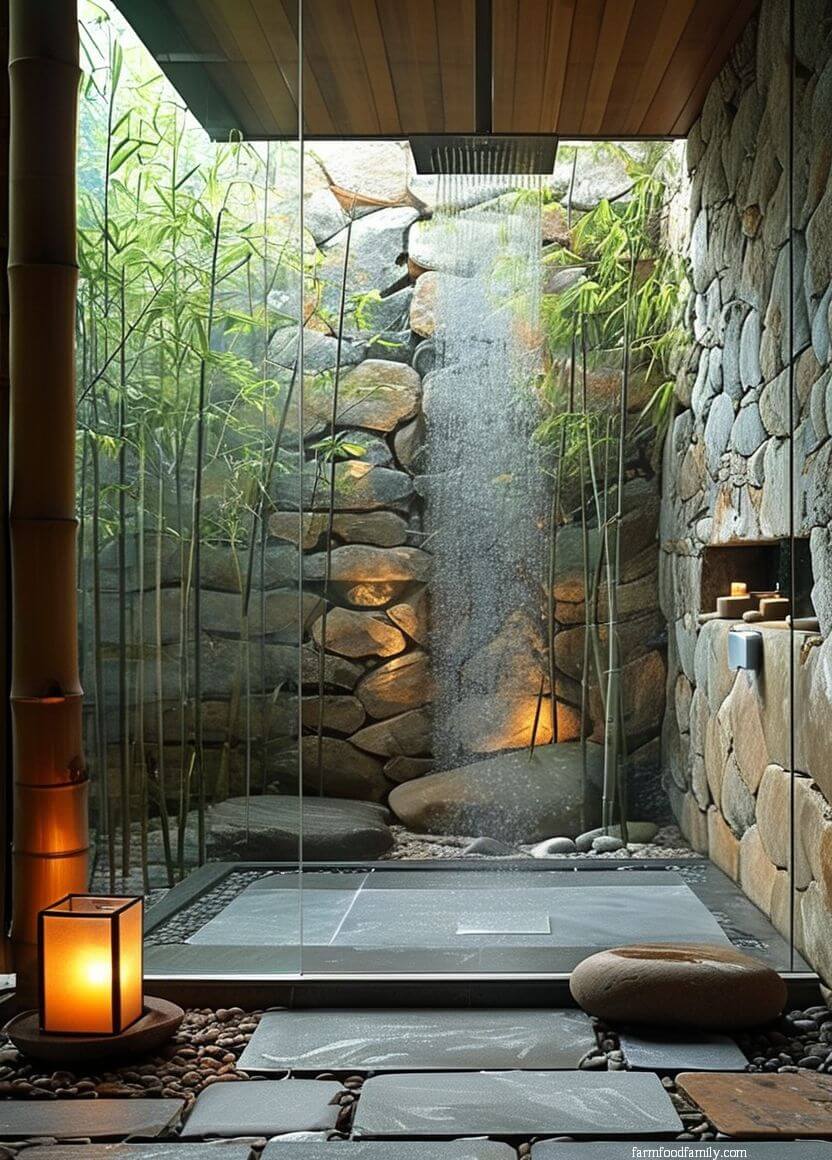
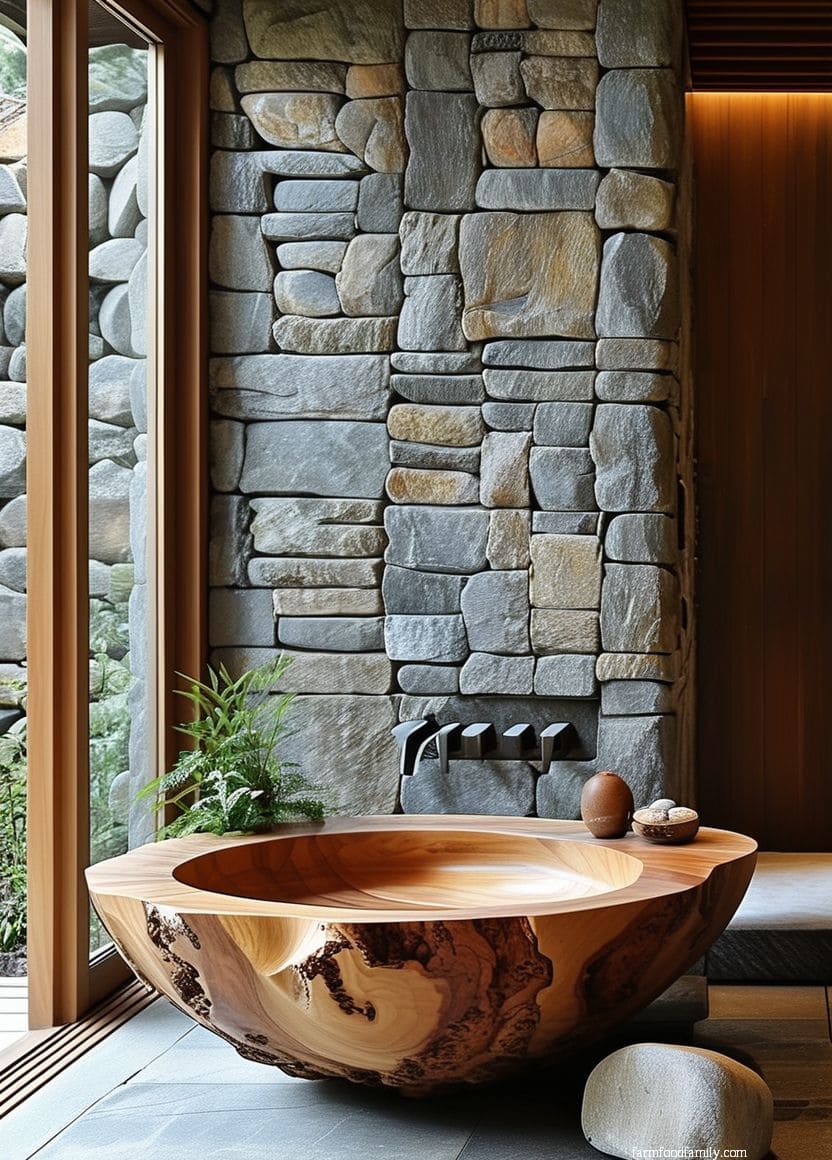
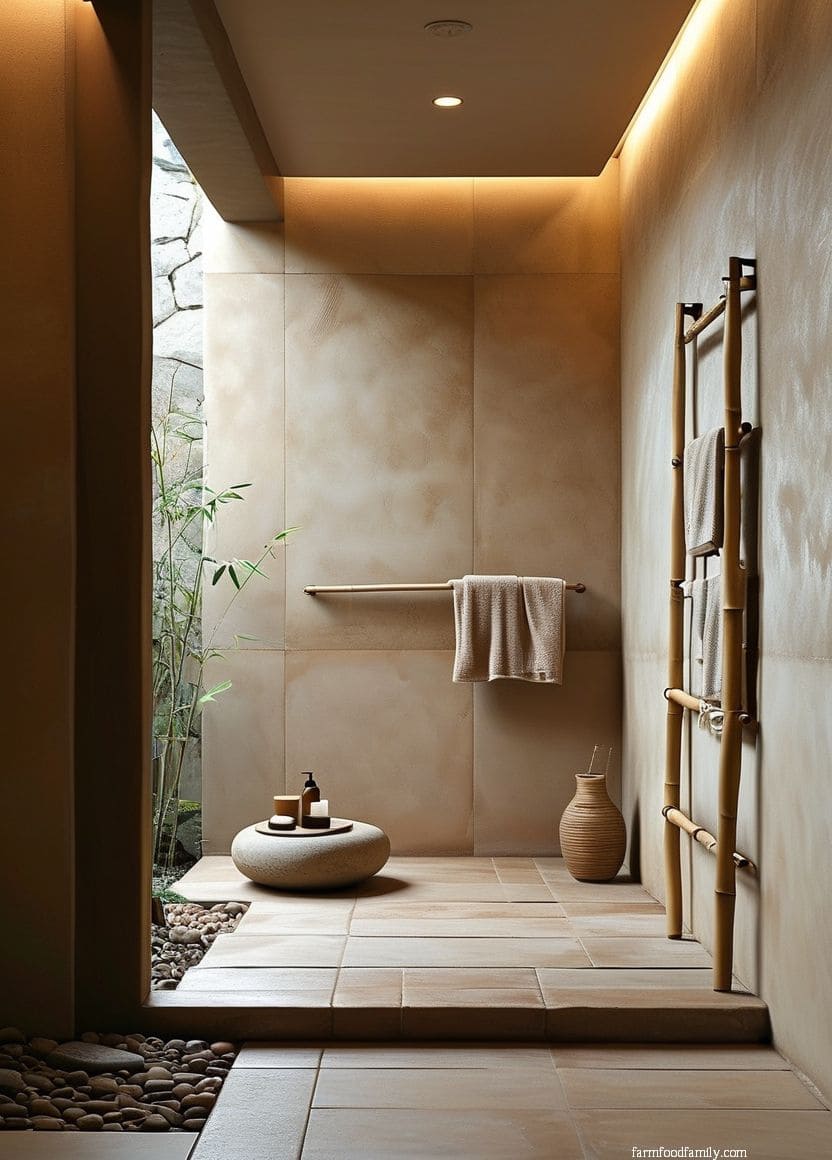
1. Natural Stone Accents
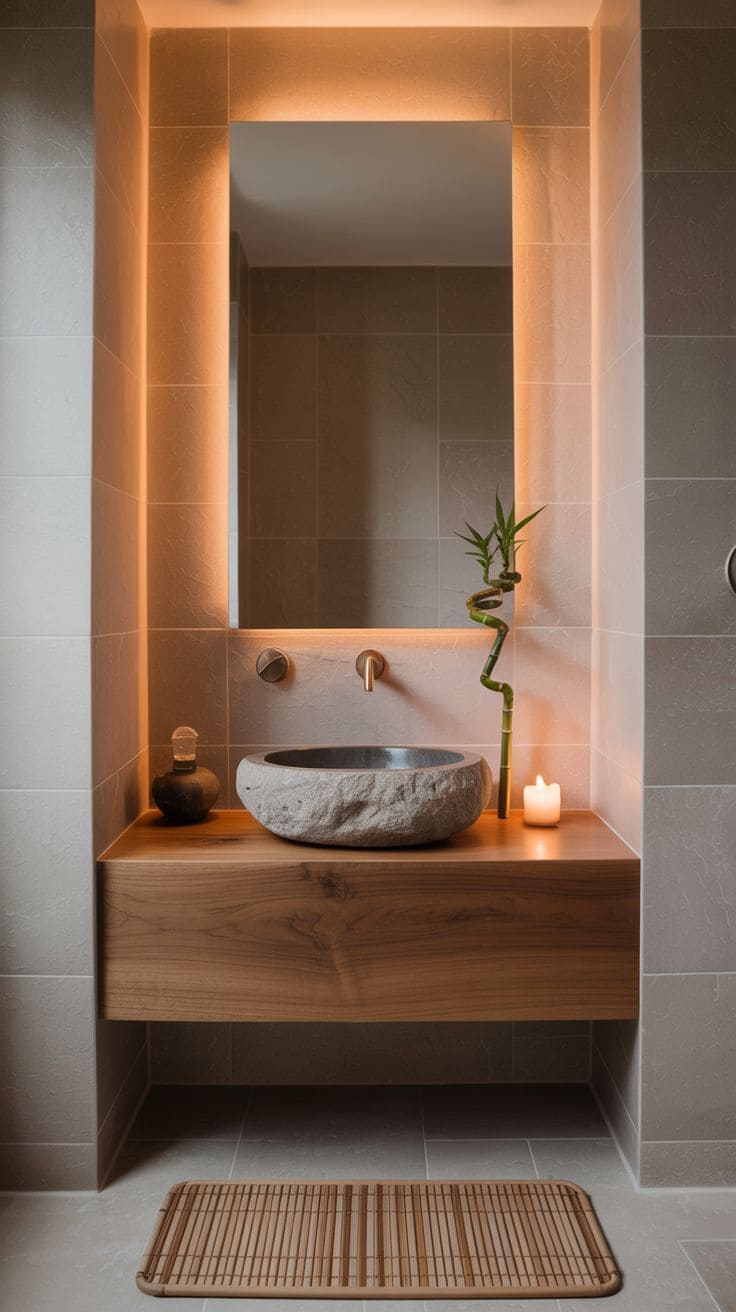
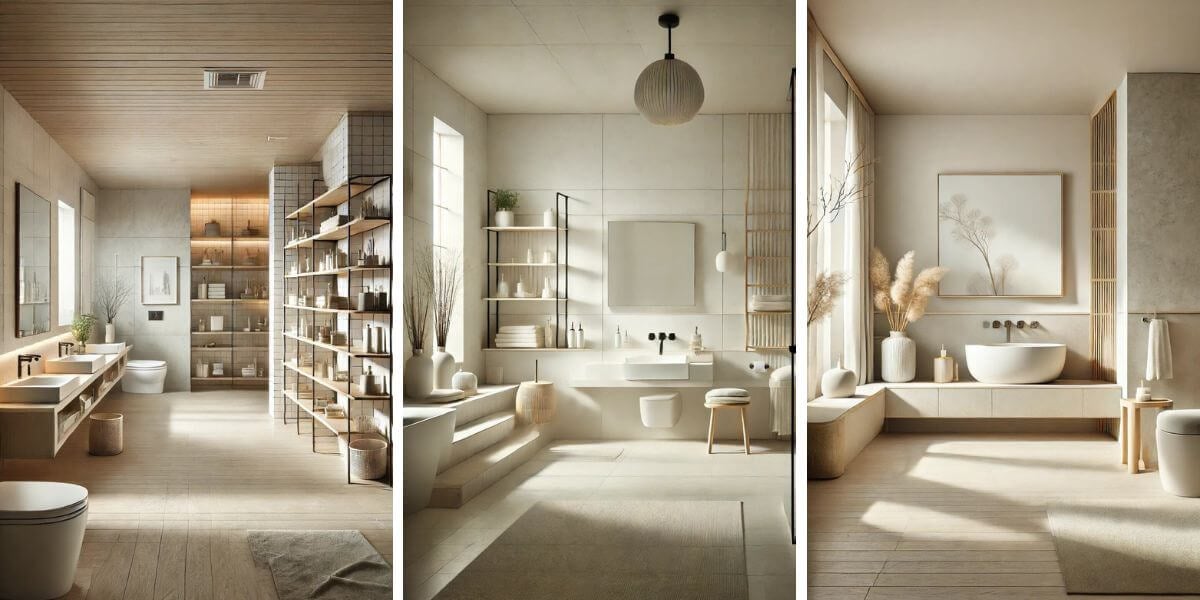
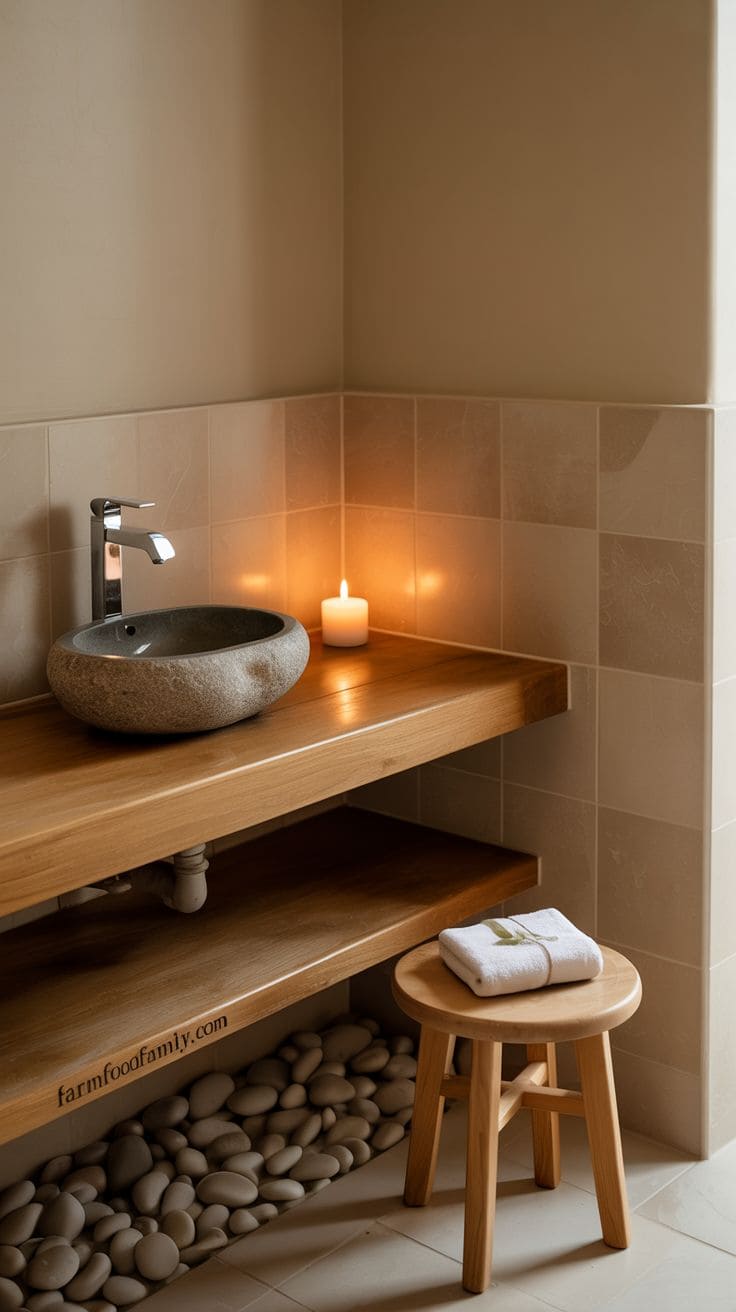
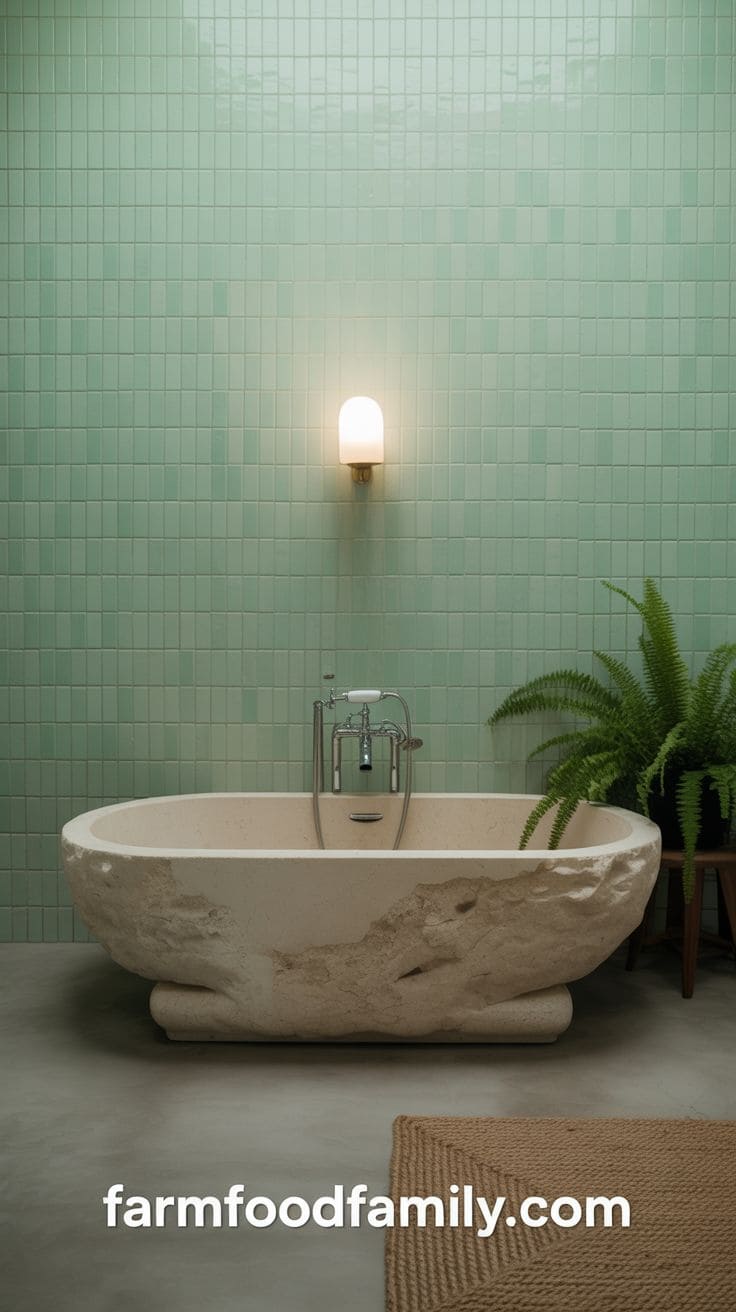
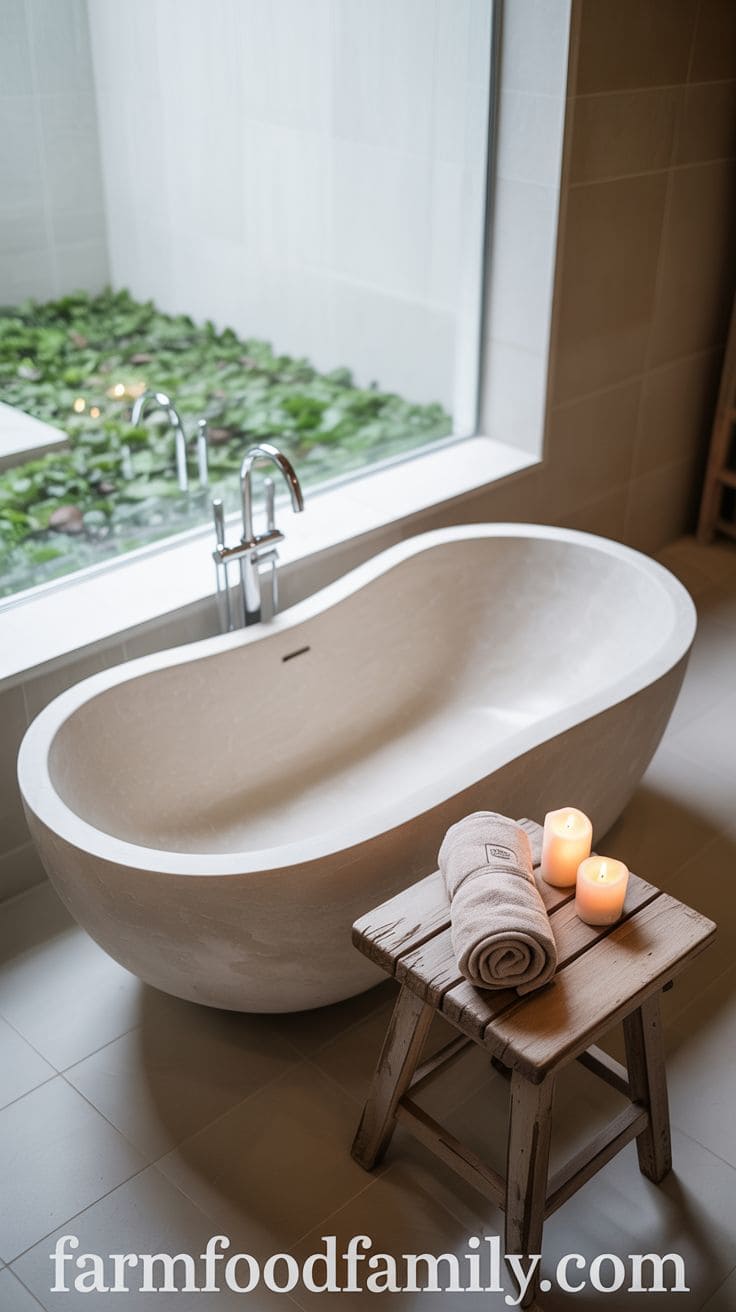
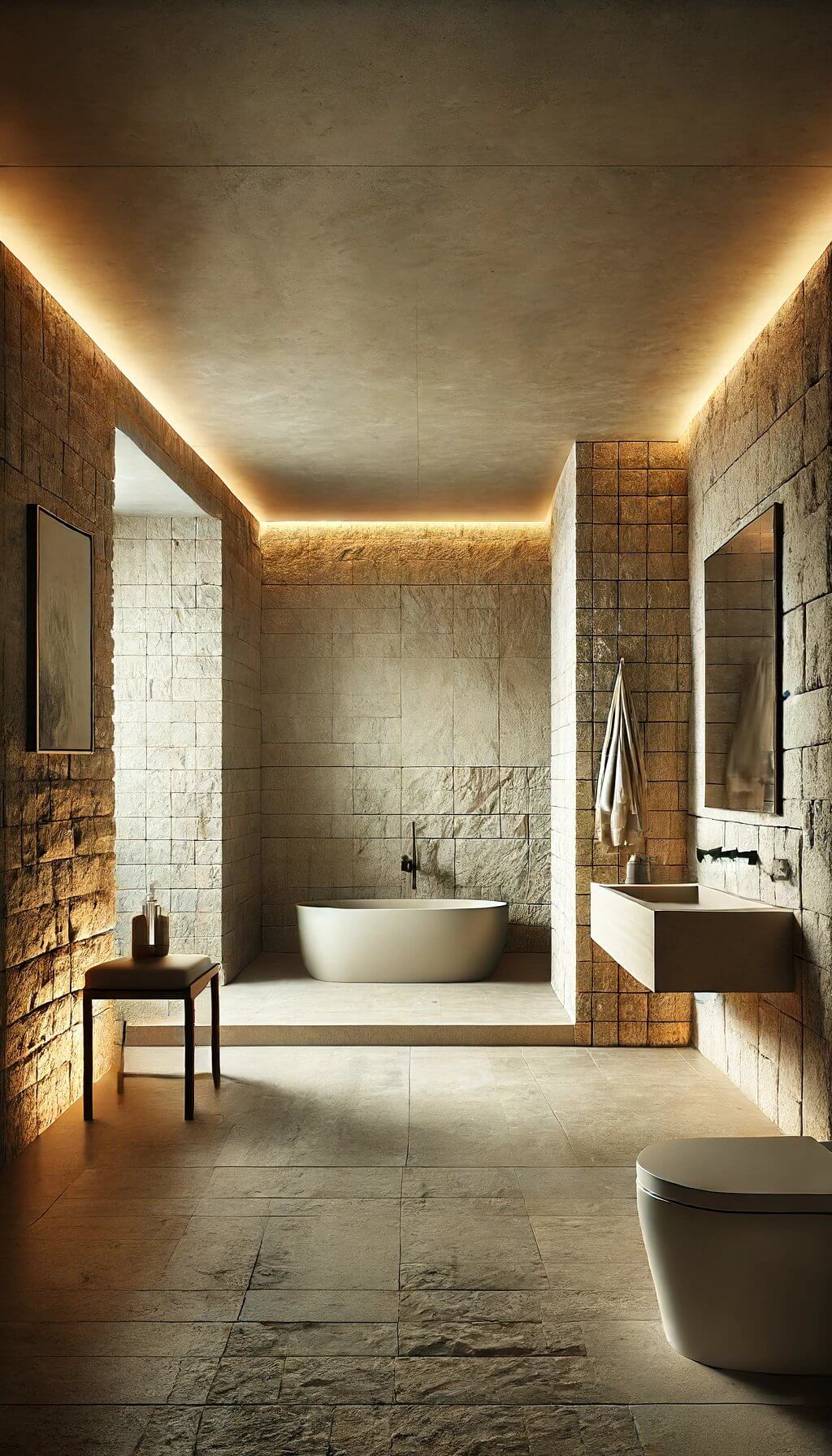
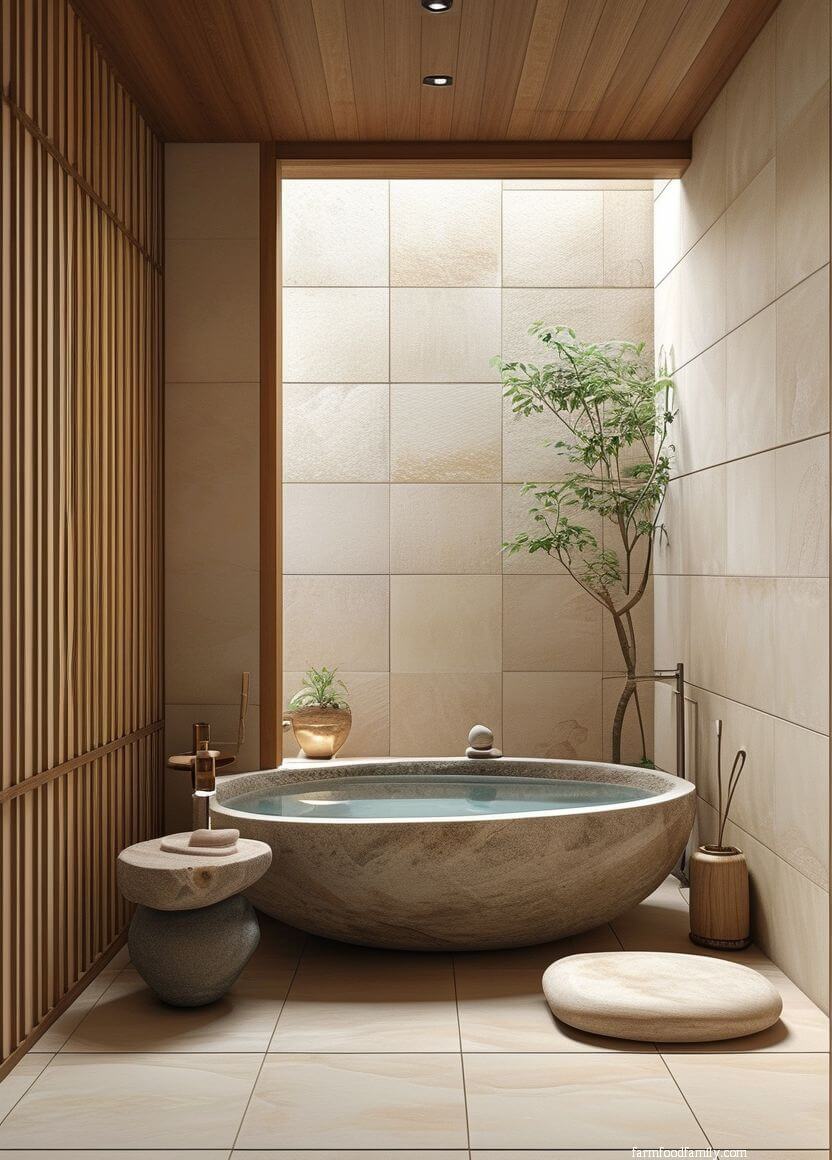
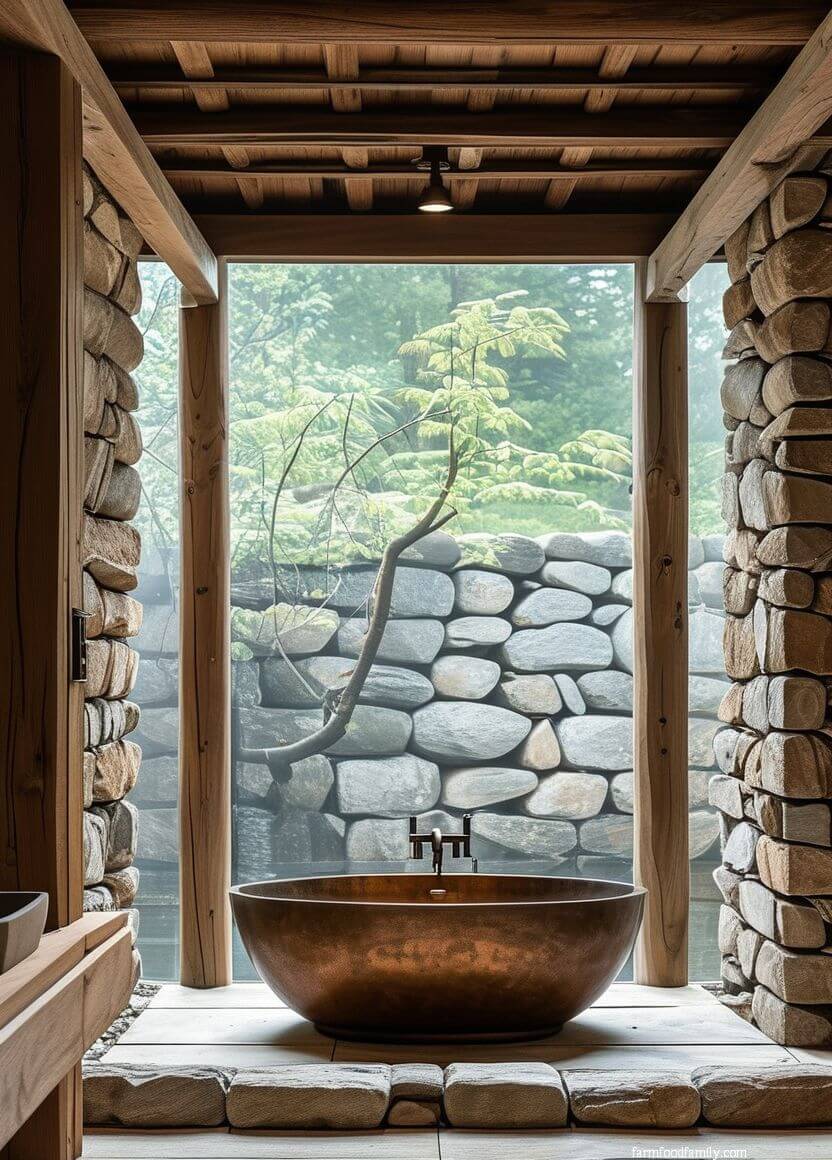
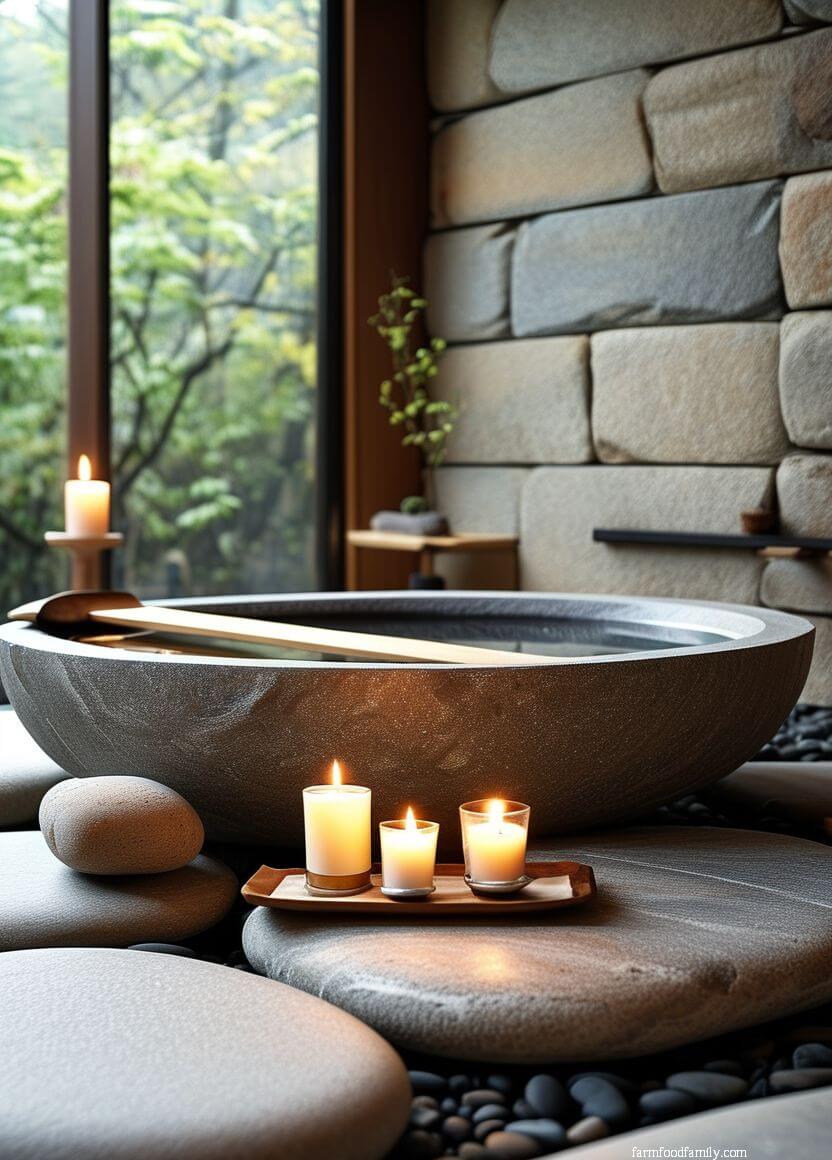
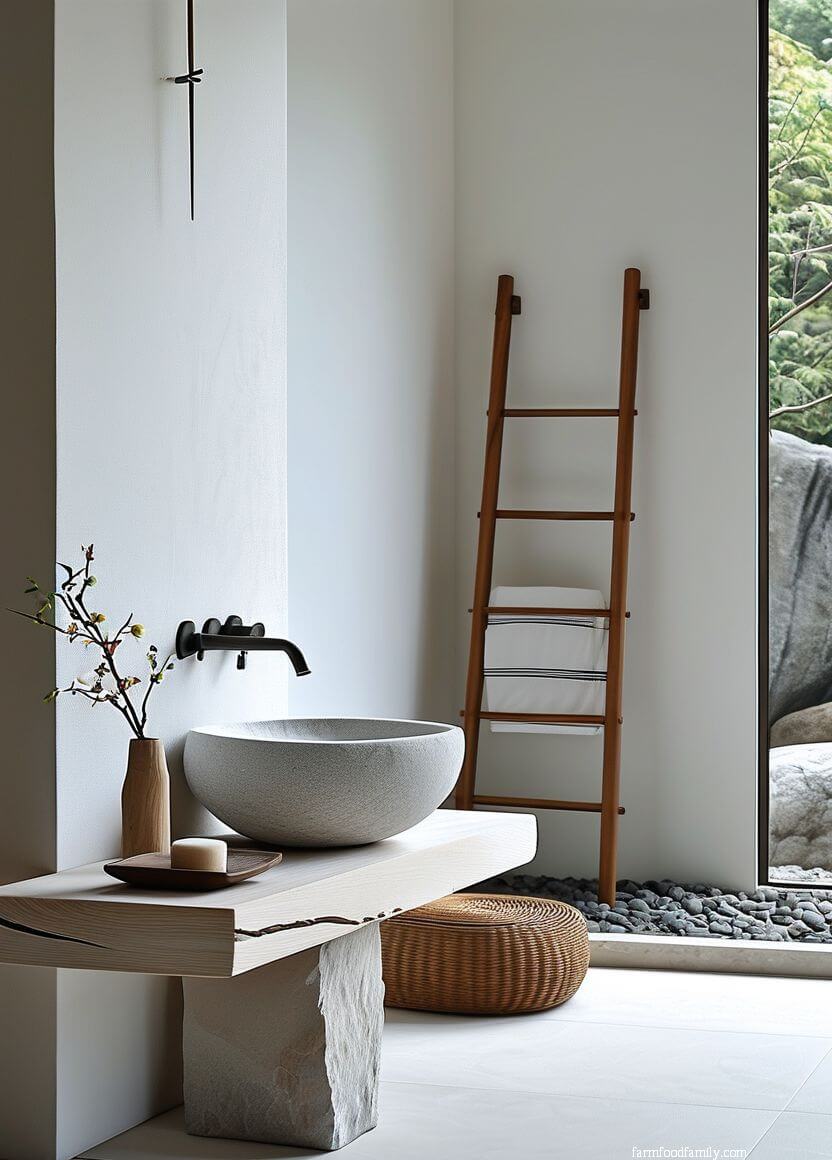
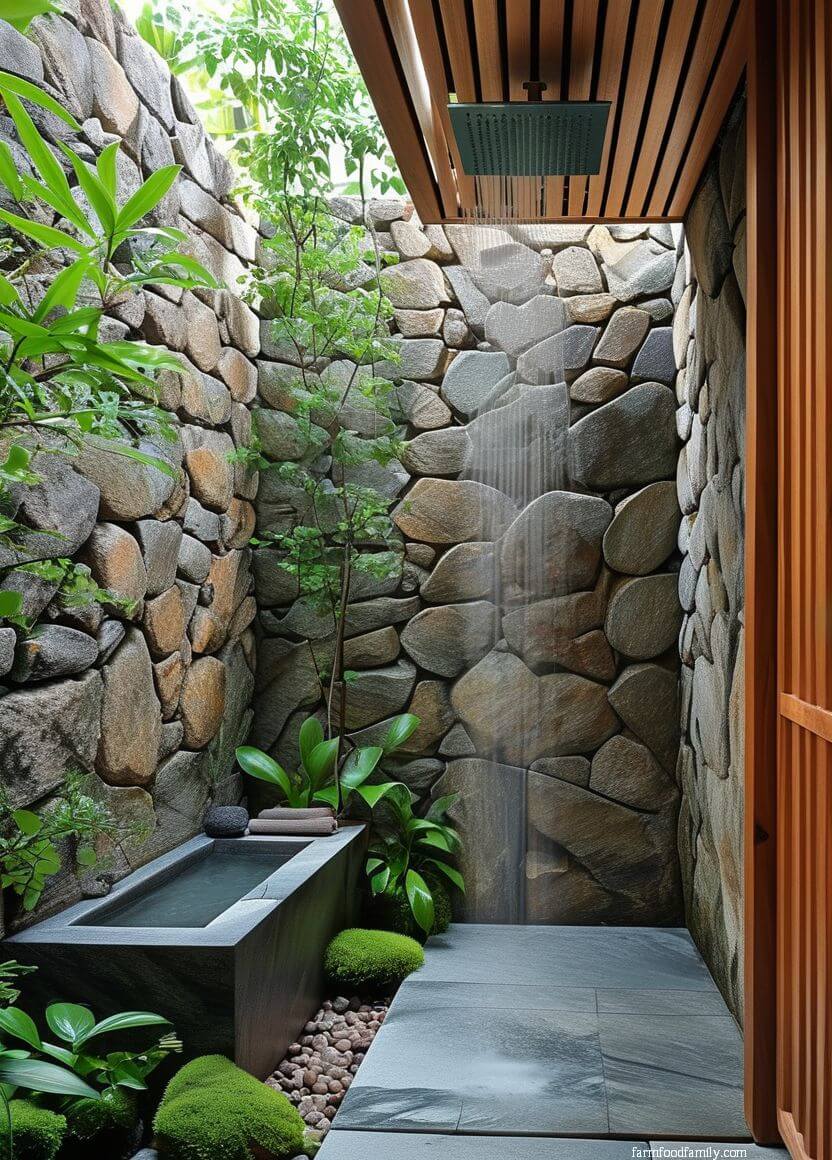
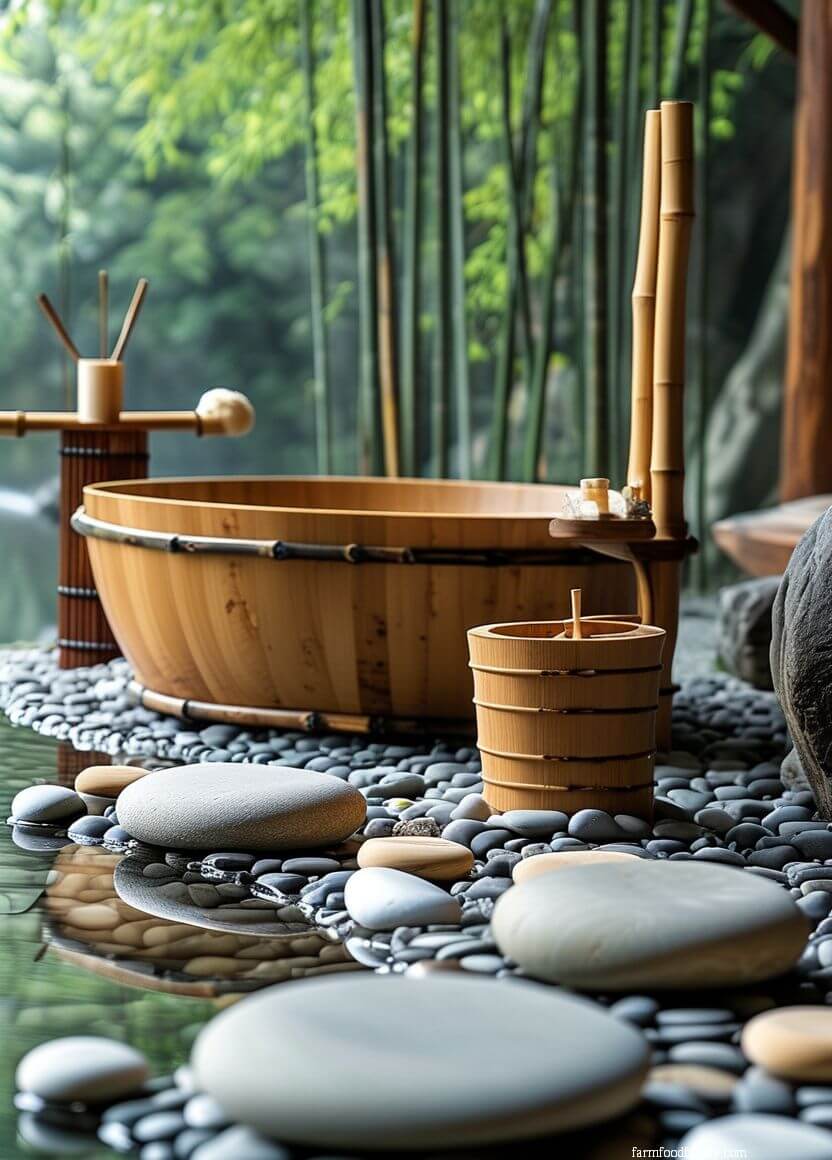
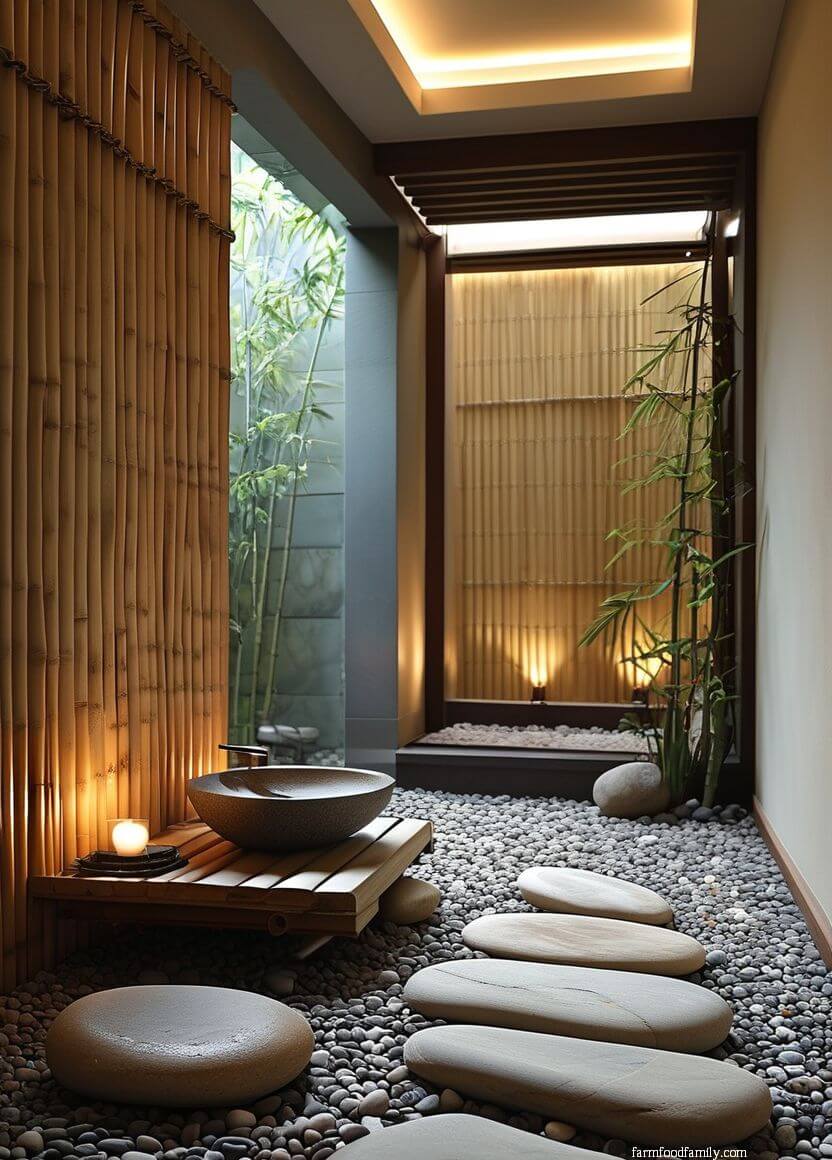
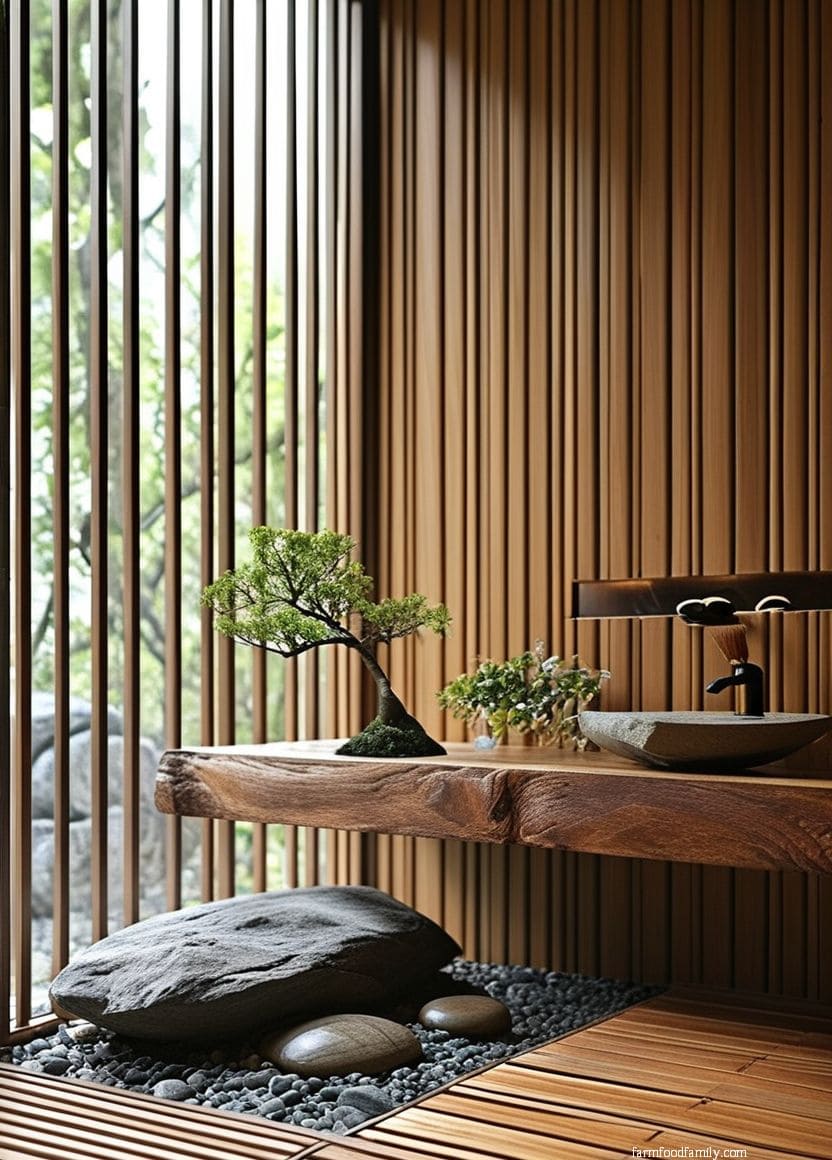
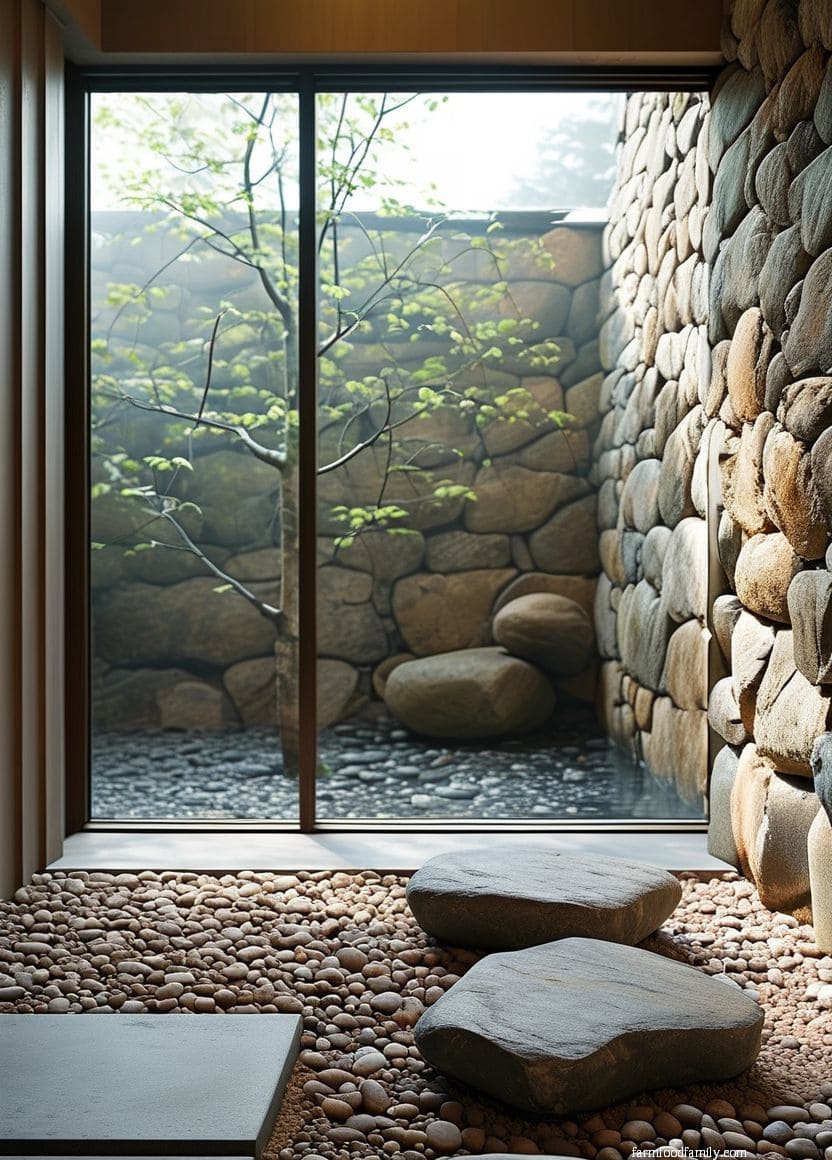
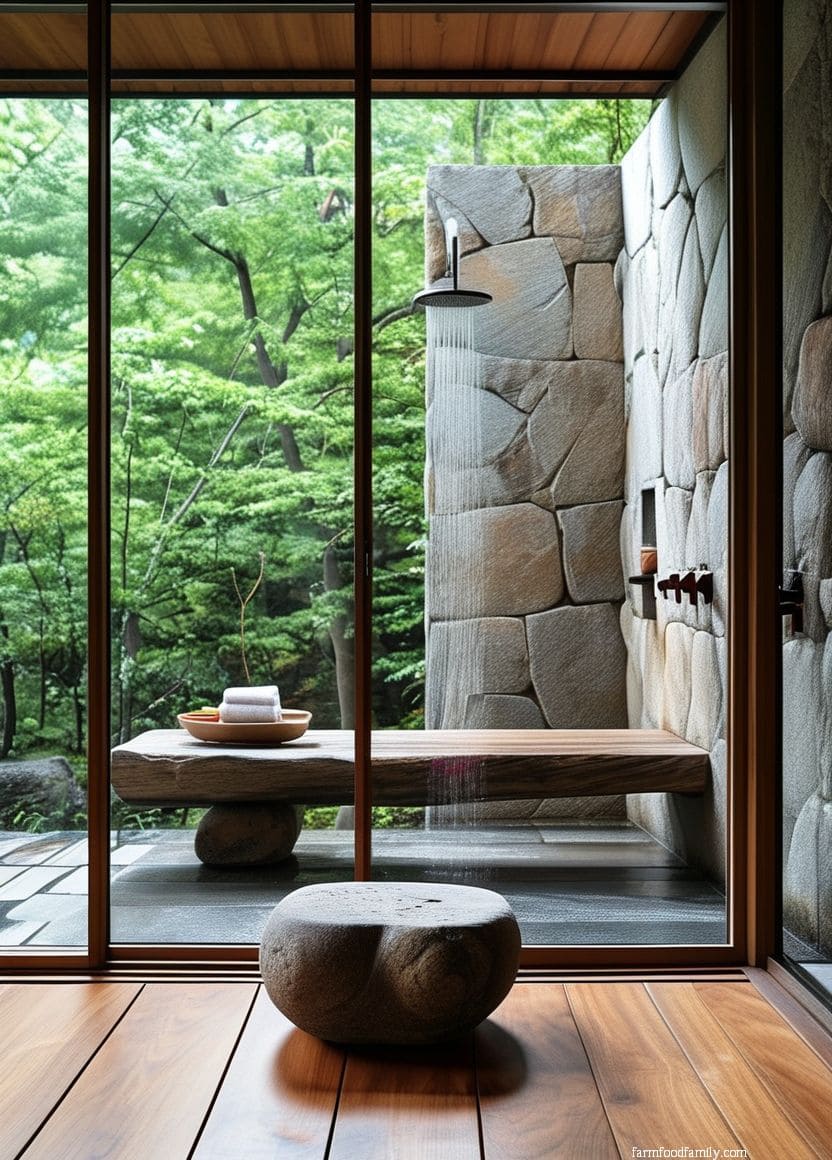
Adding natural stone to your Zen bathroom immediately connects it to the earth. These materials are incredibly grounding and tactile underfoot, and they can quickly make the space feel more peaceful.
Keep the color palette moderate, such as gentle grays, beiges, and sandy tones, which would look great in a spa setting.
Add bamboo bath mats or wooden stool embellishments to heighten the organic sensation even more.
Natural stone not only provides eternal beauty, but it also represents power and harmony in Zen philosophy.
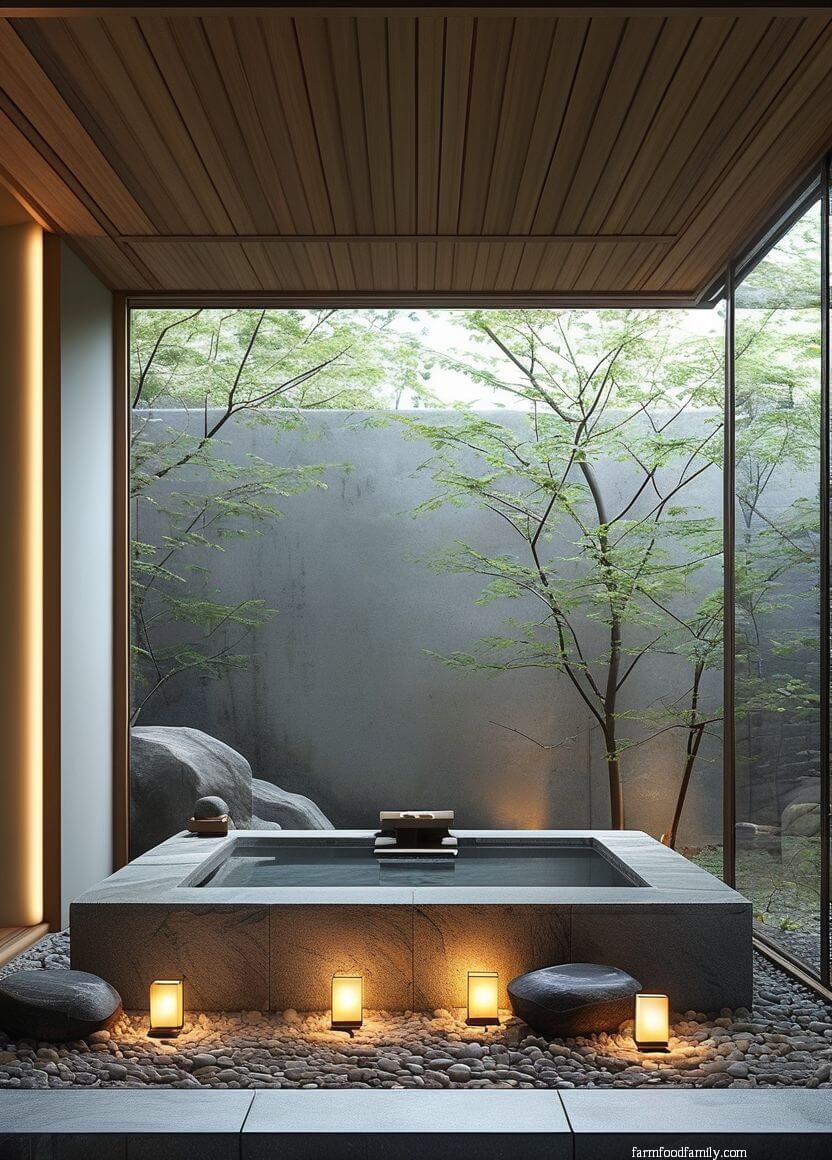
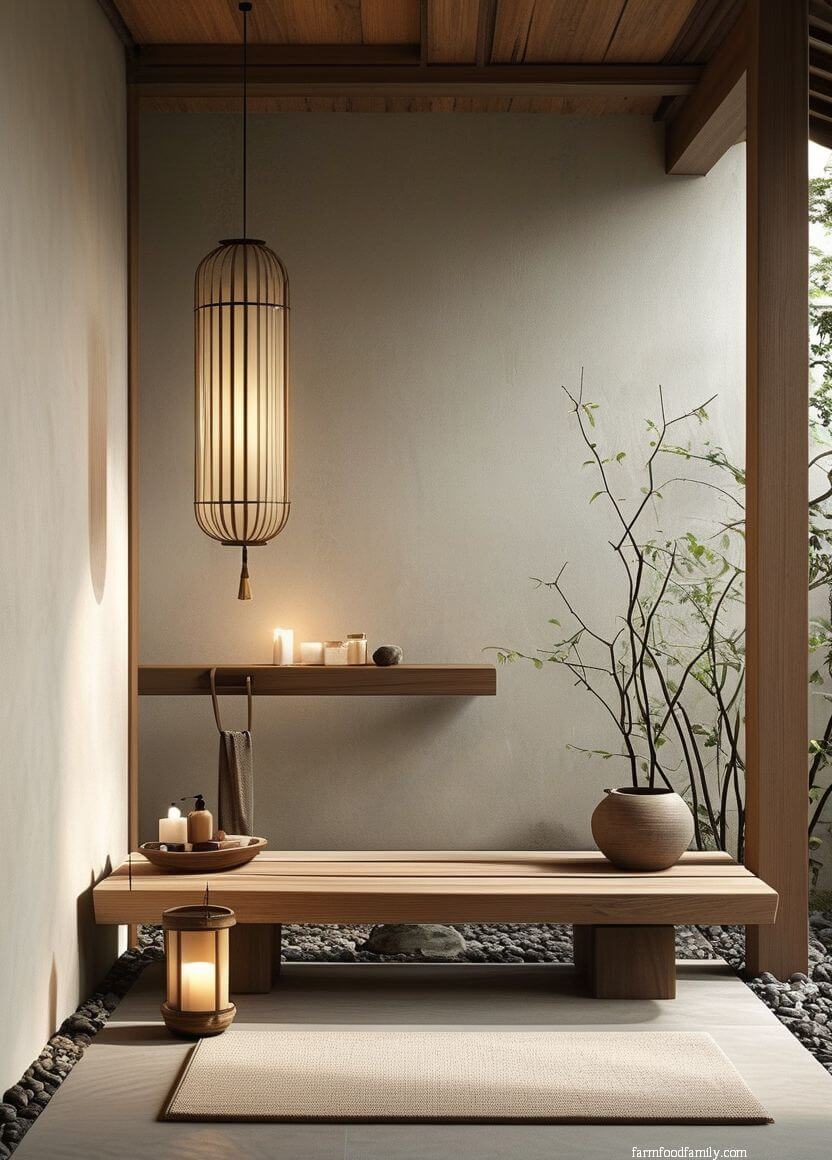
Add a few soft candles or minimalistic lanterns to compliment the stone’s cool, relaxing aura without making it appear cluttered.
2. Peaceful Earthy Color Scheme
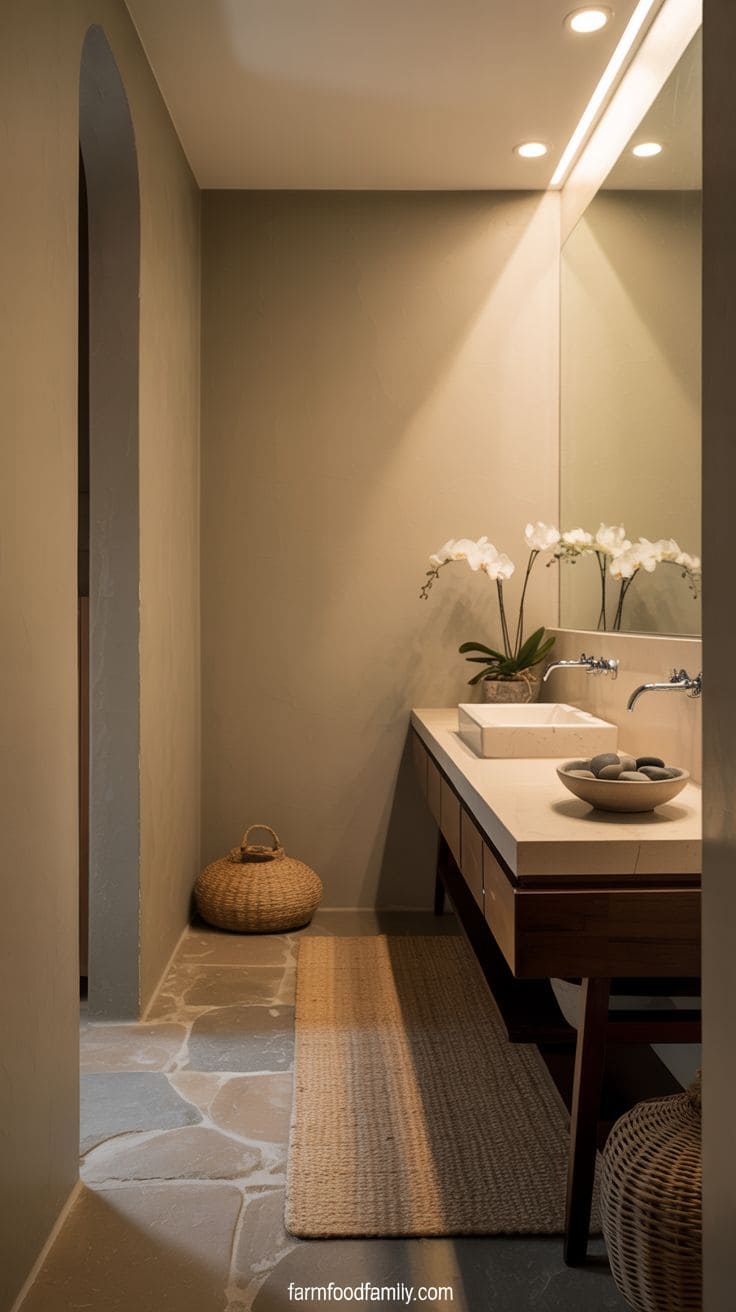
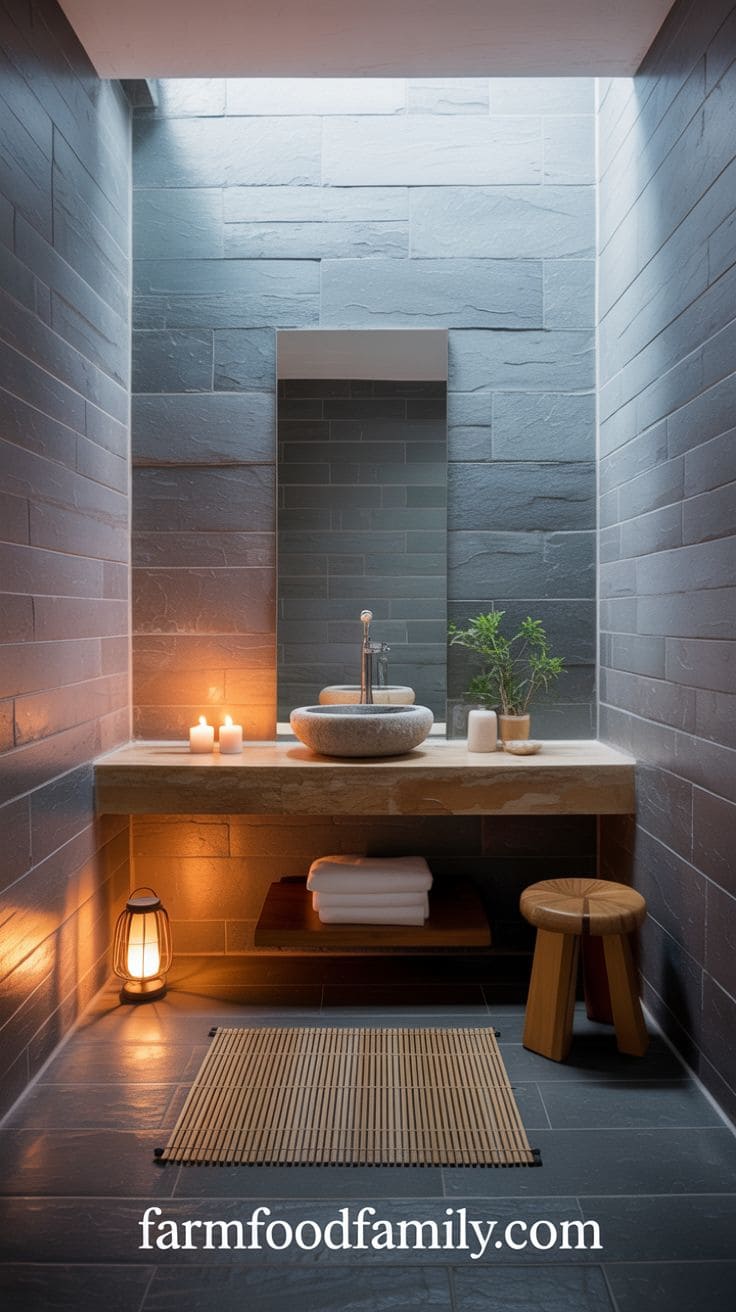
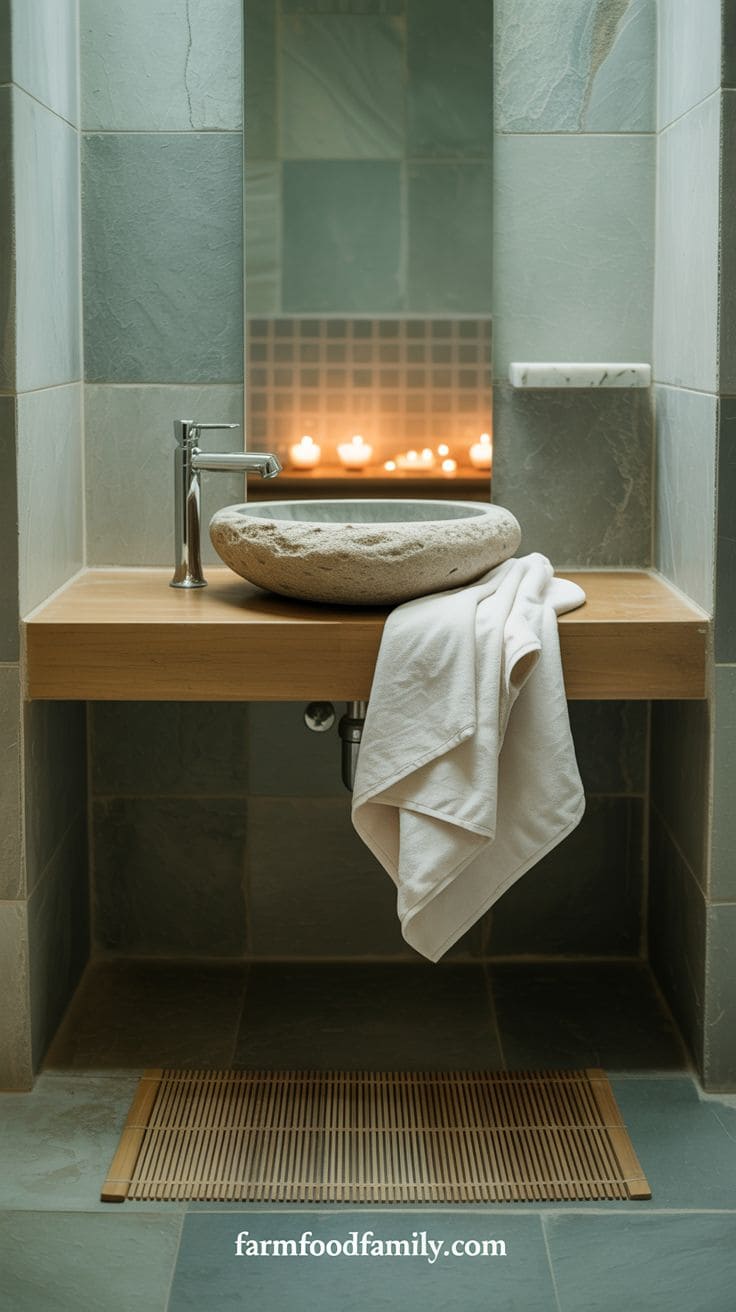
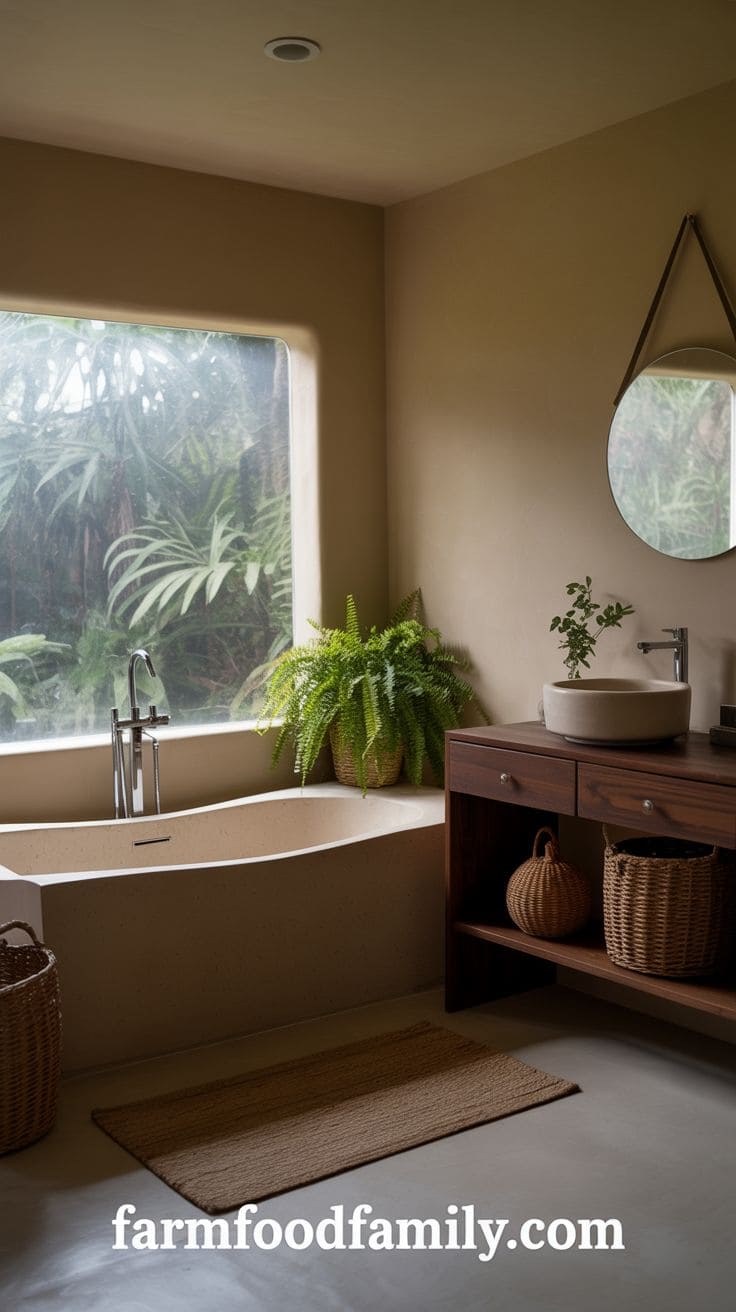
Choosing an earthy color scheme is essential for creating a Zen atmosphere. Consider mild greens, soft taupes, muted creams, and natural stone greys.
These colors create a soothing atmosphere that encourages mindfulness and a sense of stability.
Painting the walls in a mild sage or oatmeal color quickly creates a relaxing atmosphere, while dark wood accents ground the palette.

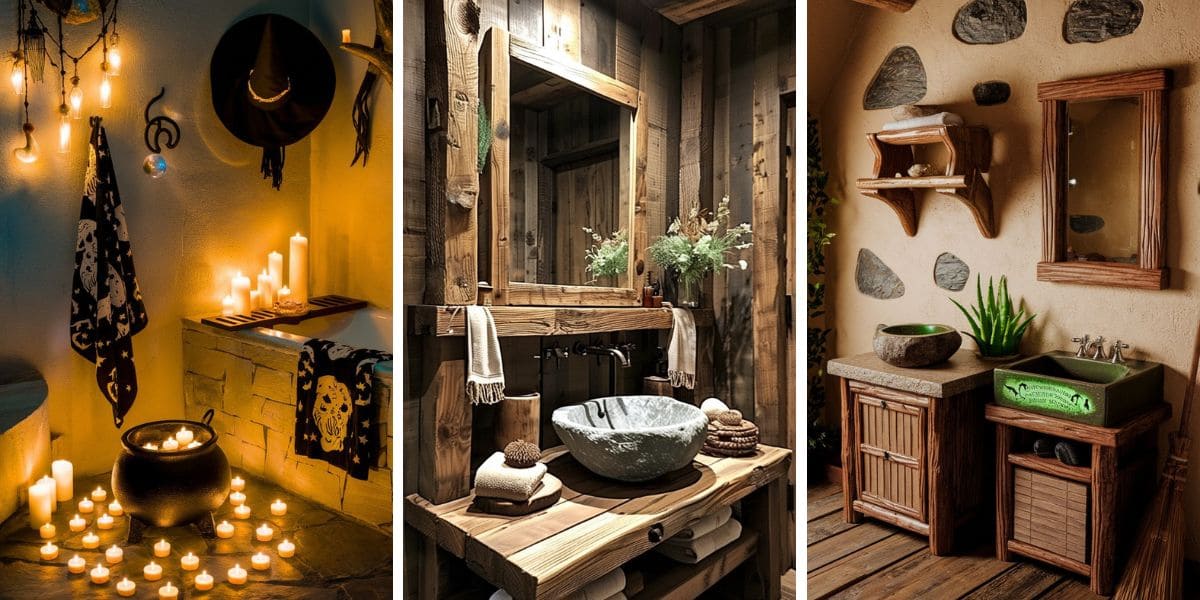
Textured elements such as linen drapes, jute rugs, and woven baskets provide complexity without taking over the area.
To strengthen the link to nature, add a few plants such as pothos or ferns, allowing the organic hues to flow freely around the room.
Keeping tones mild and consistent provides the bathroom a dreamy, spa-like atmosphere in which relaxing feels like a natural condition of being.
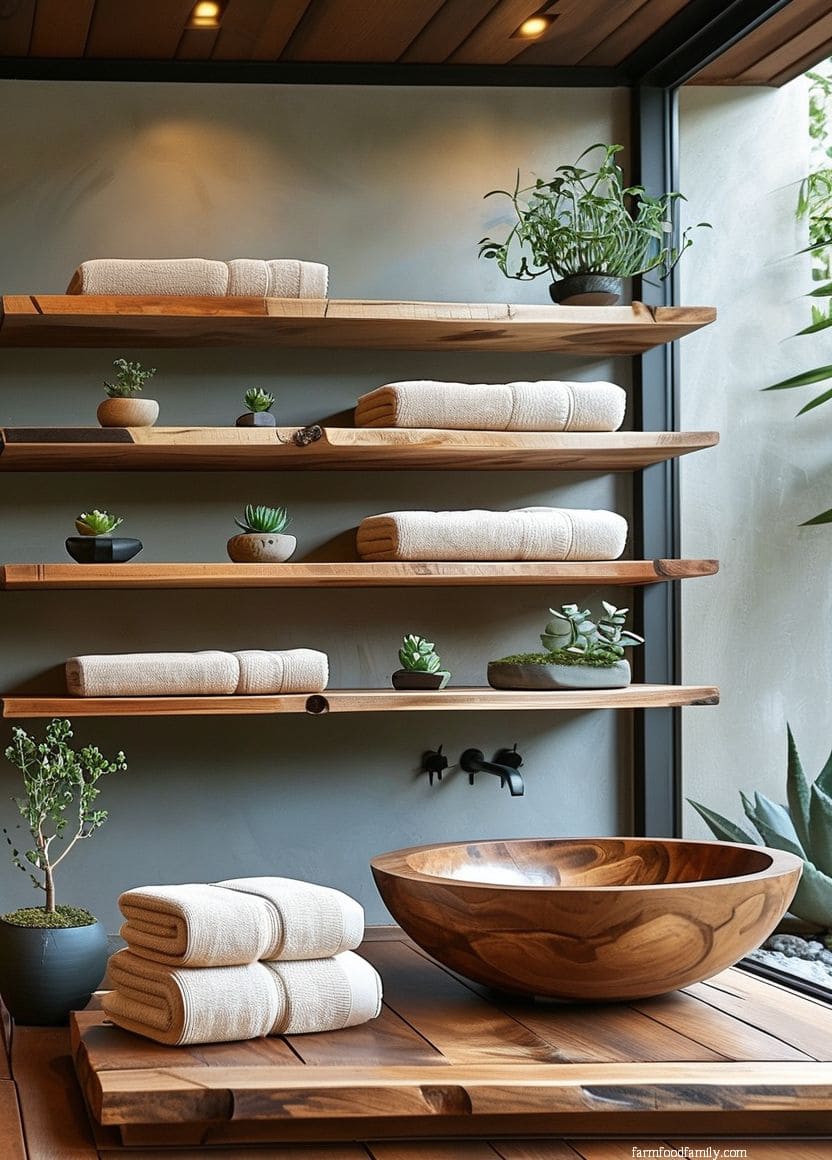
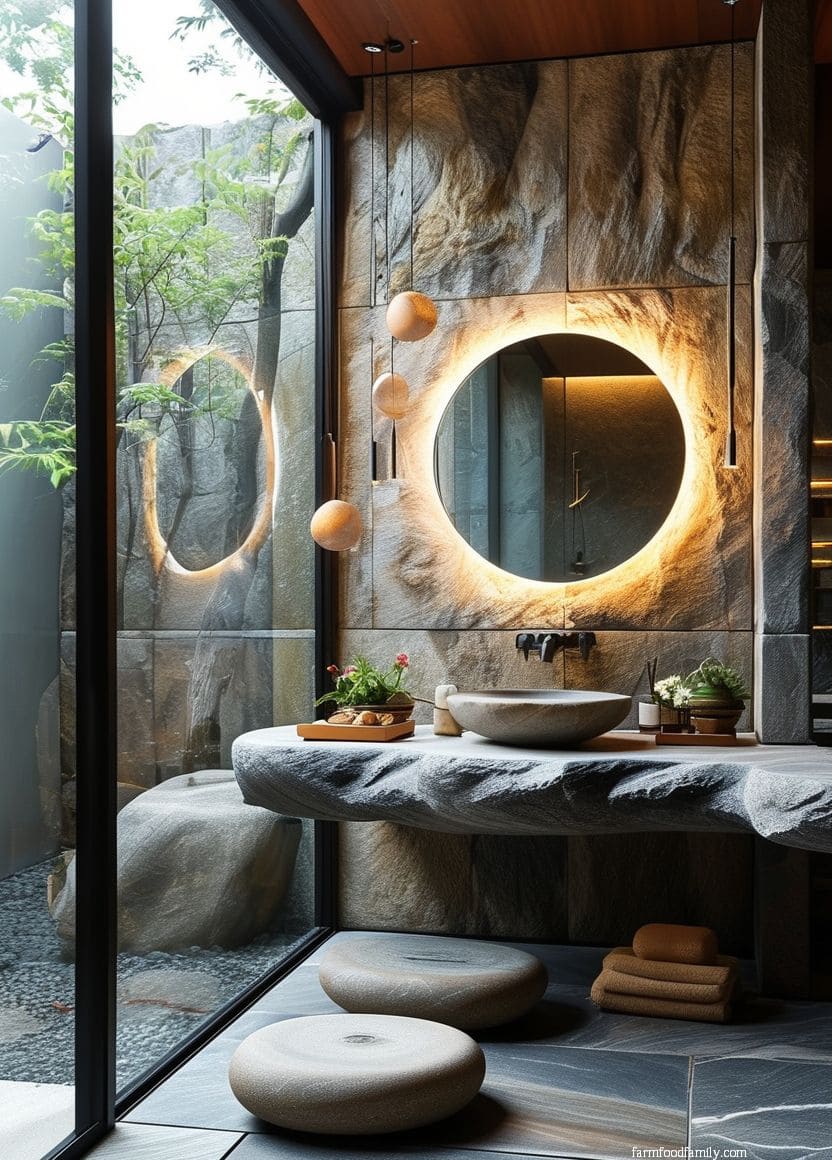
3. Minimalist Wooden Vanities
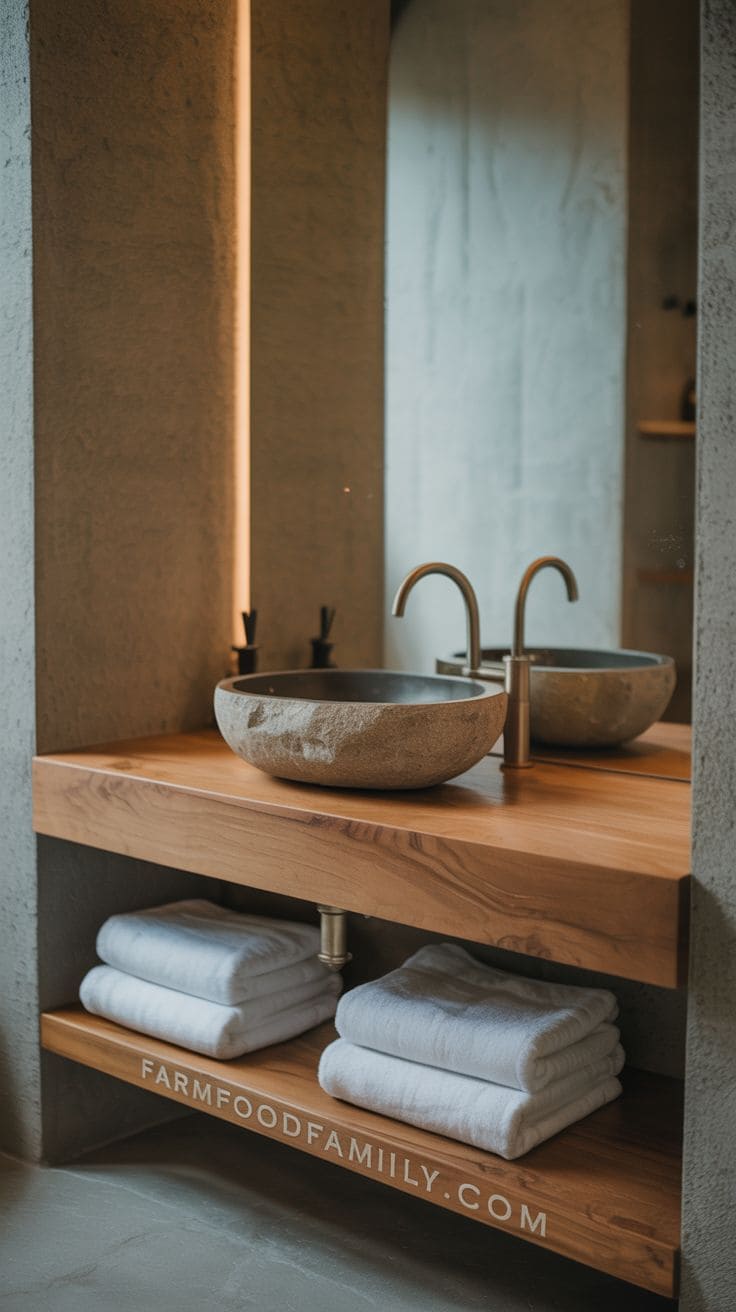
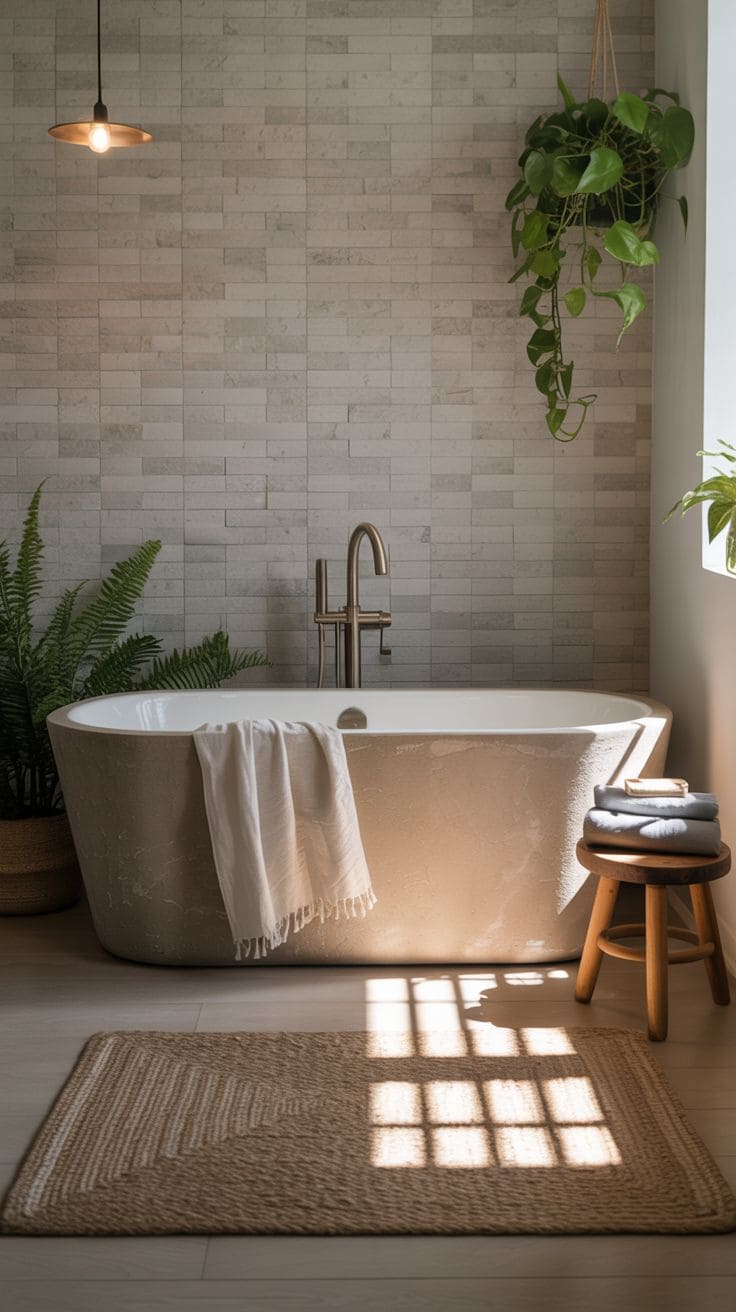
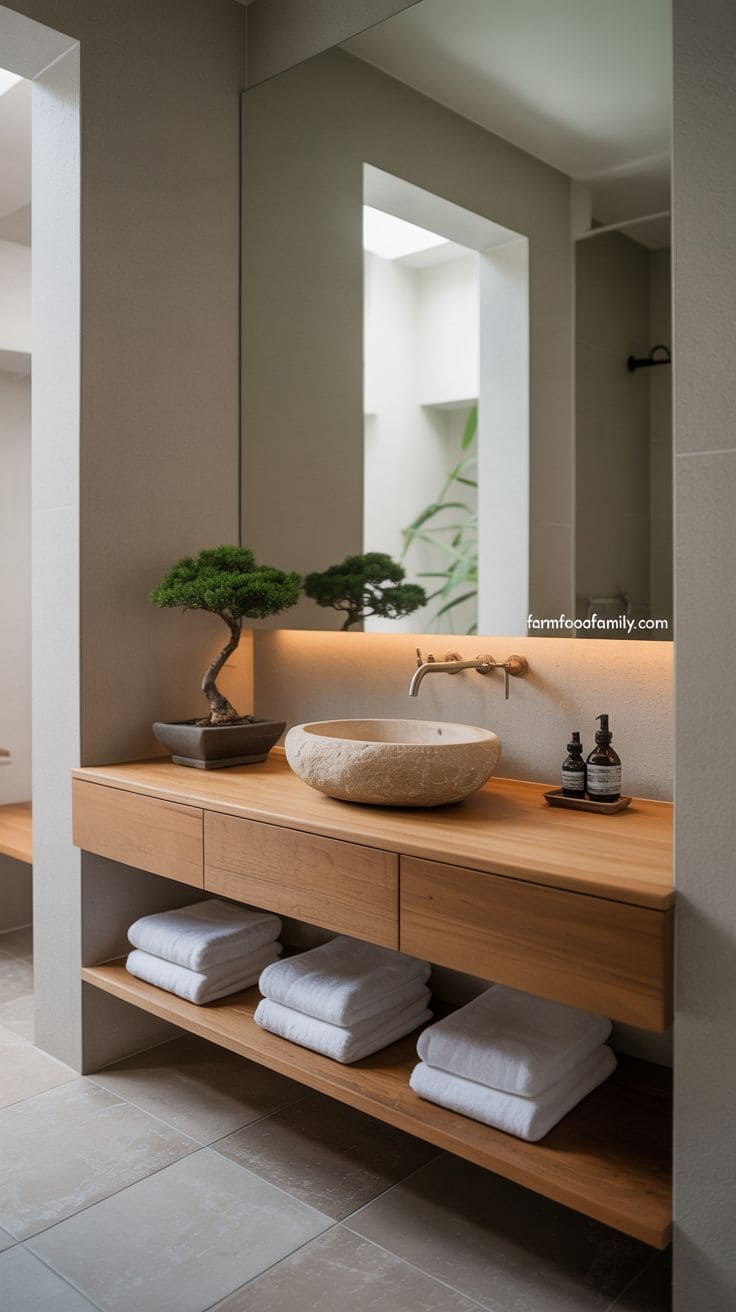
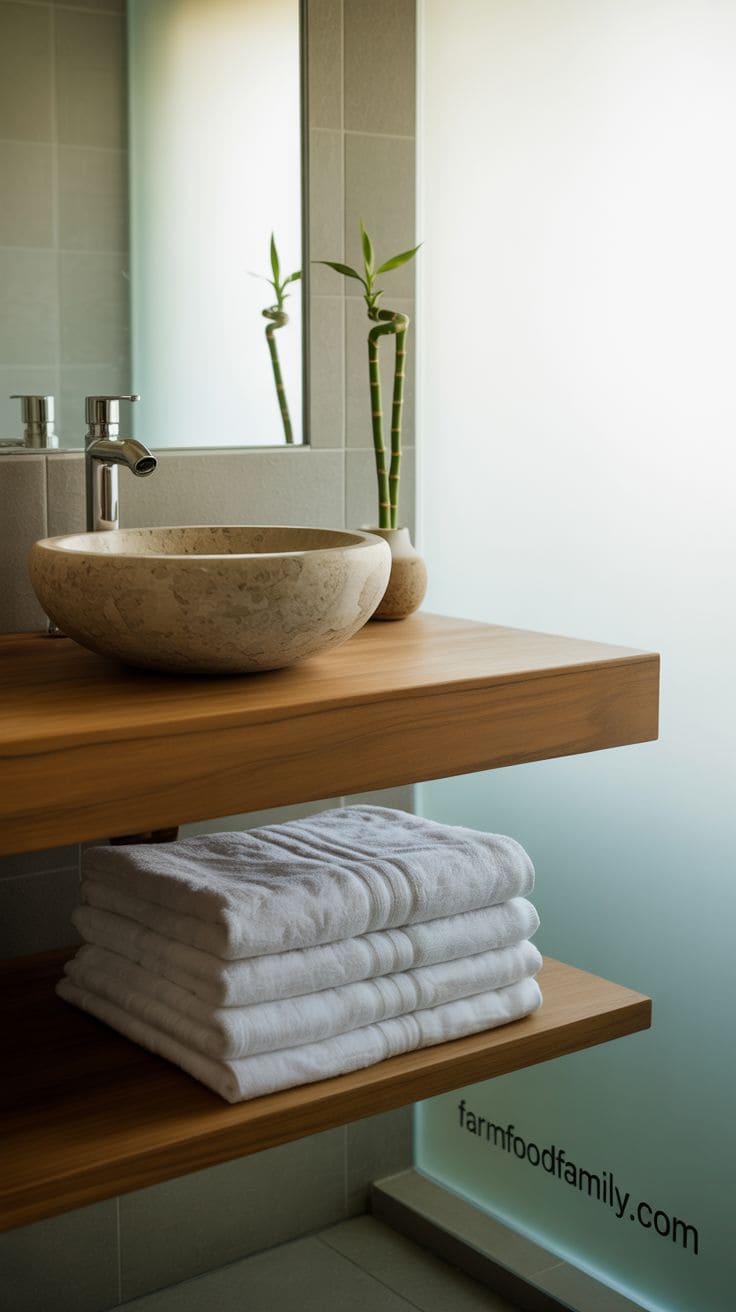
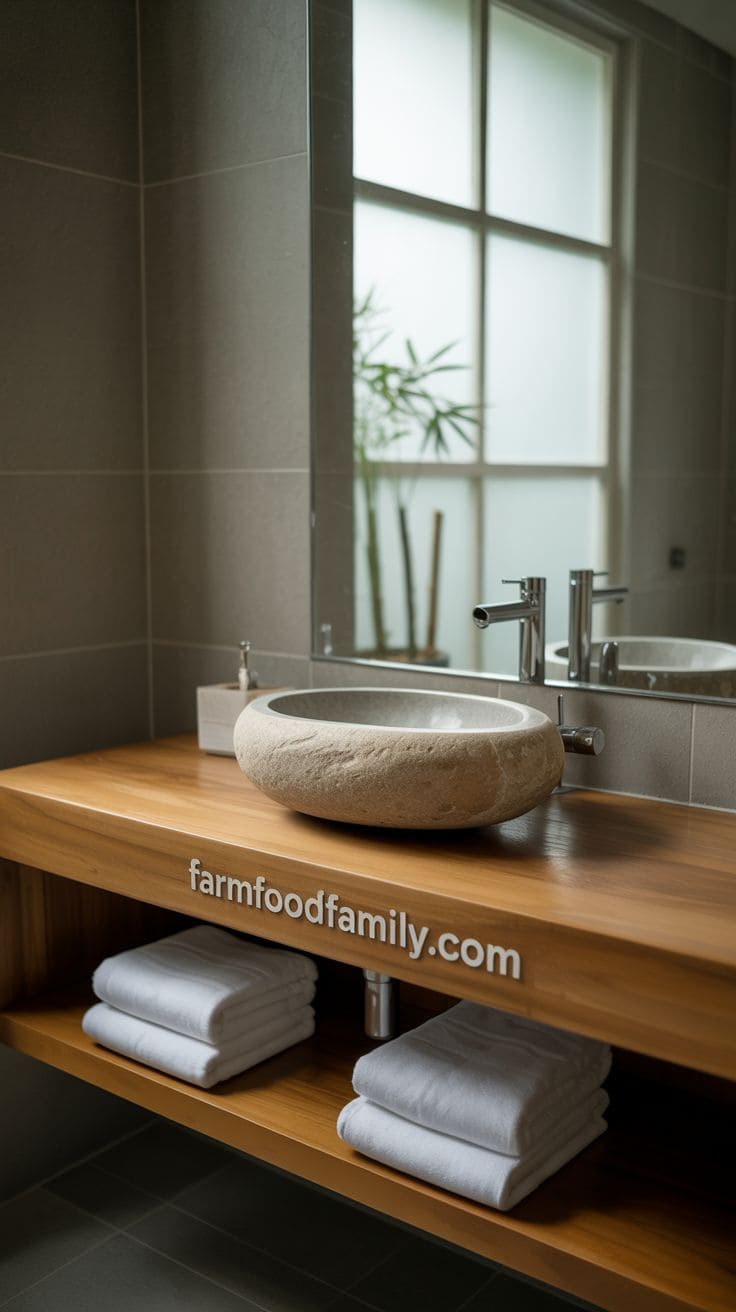
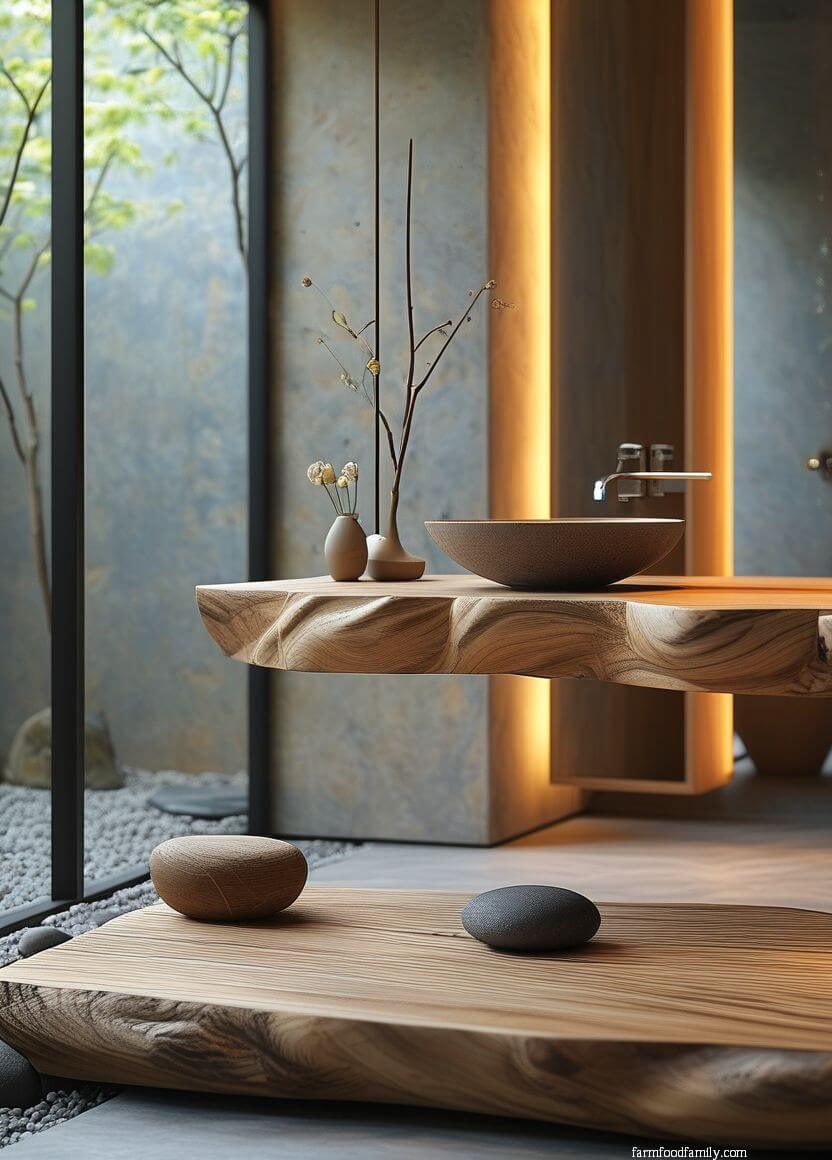
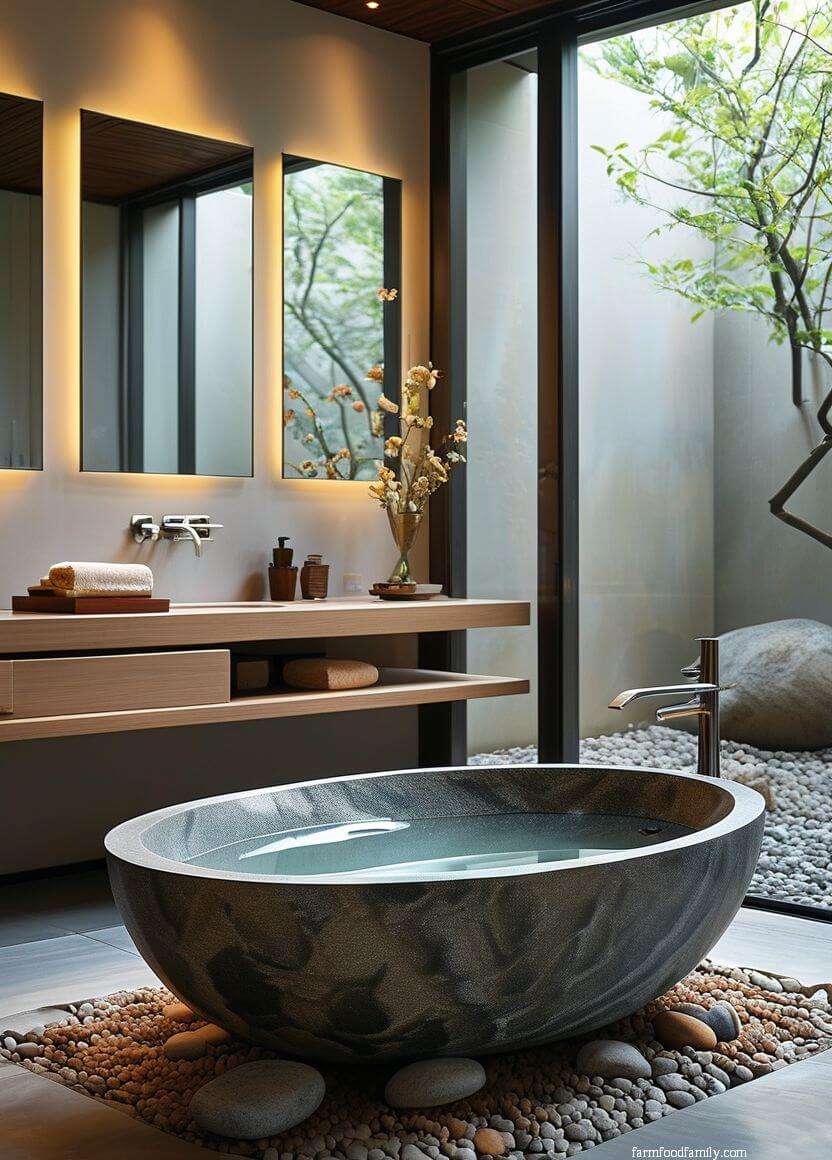
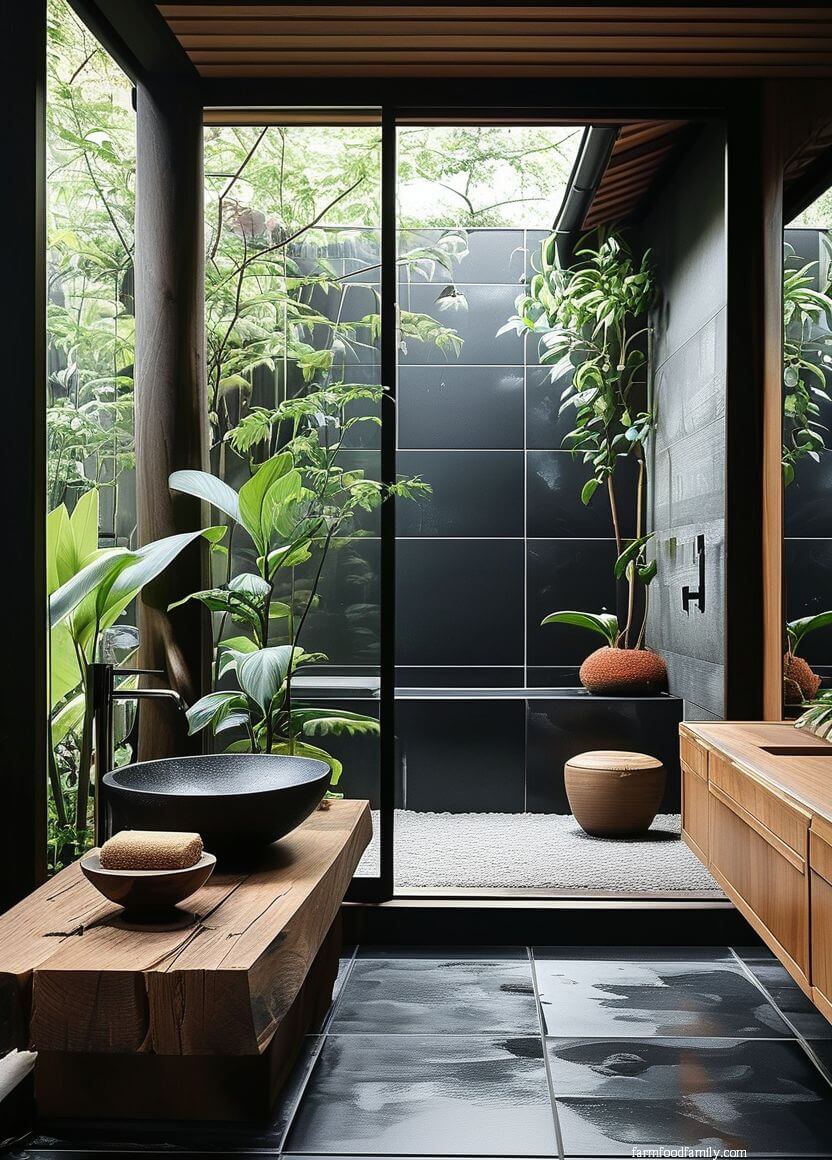
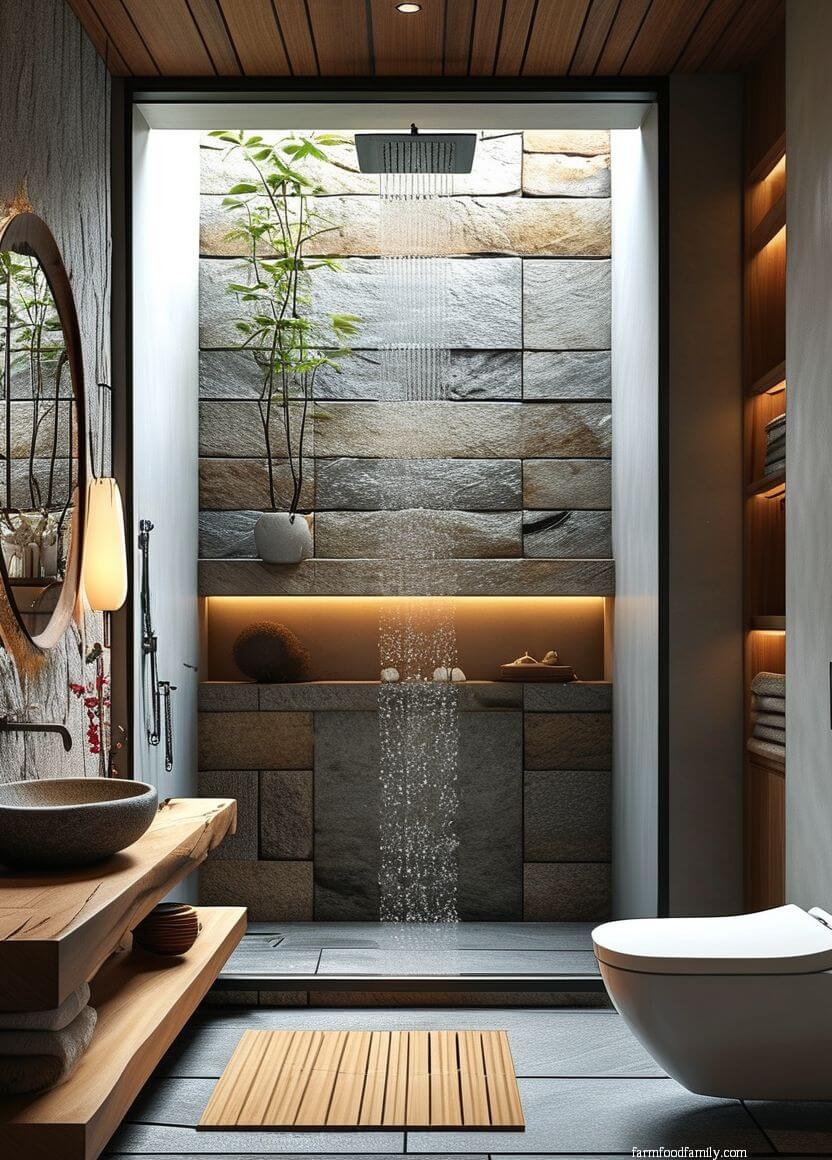
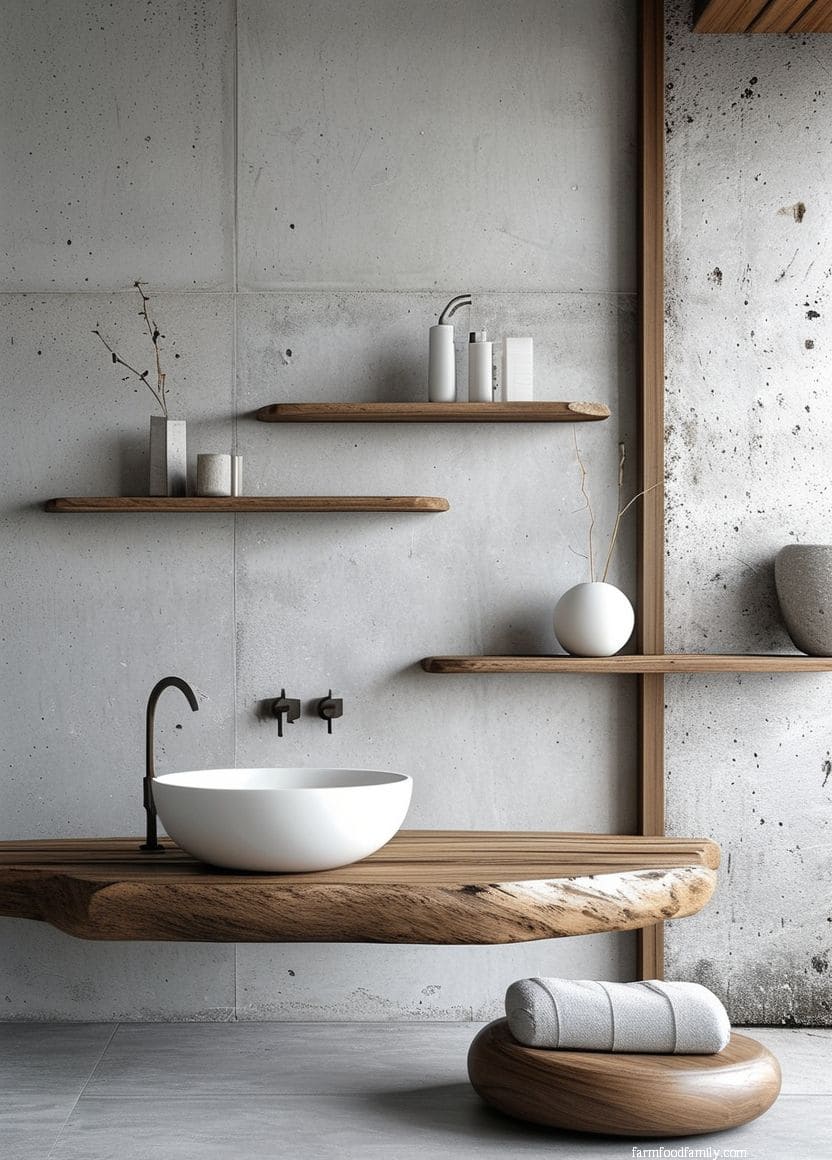
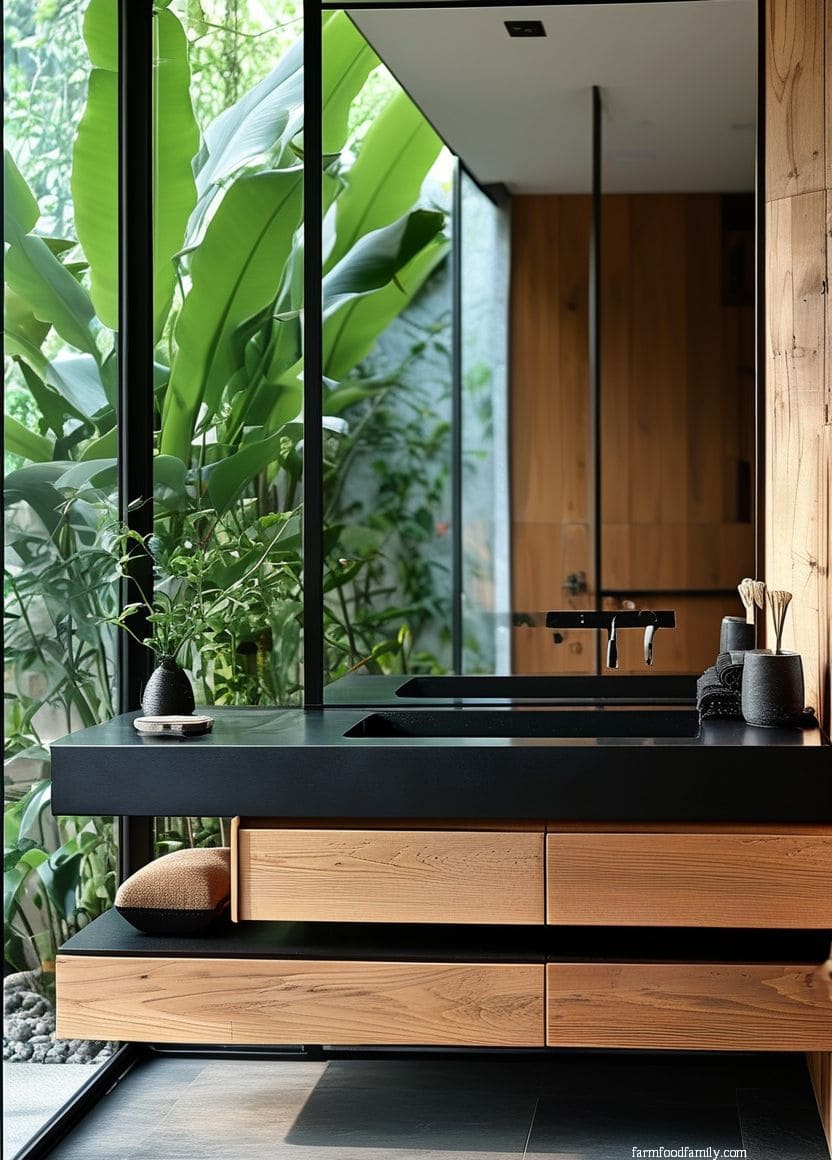
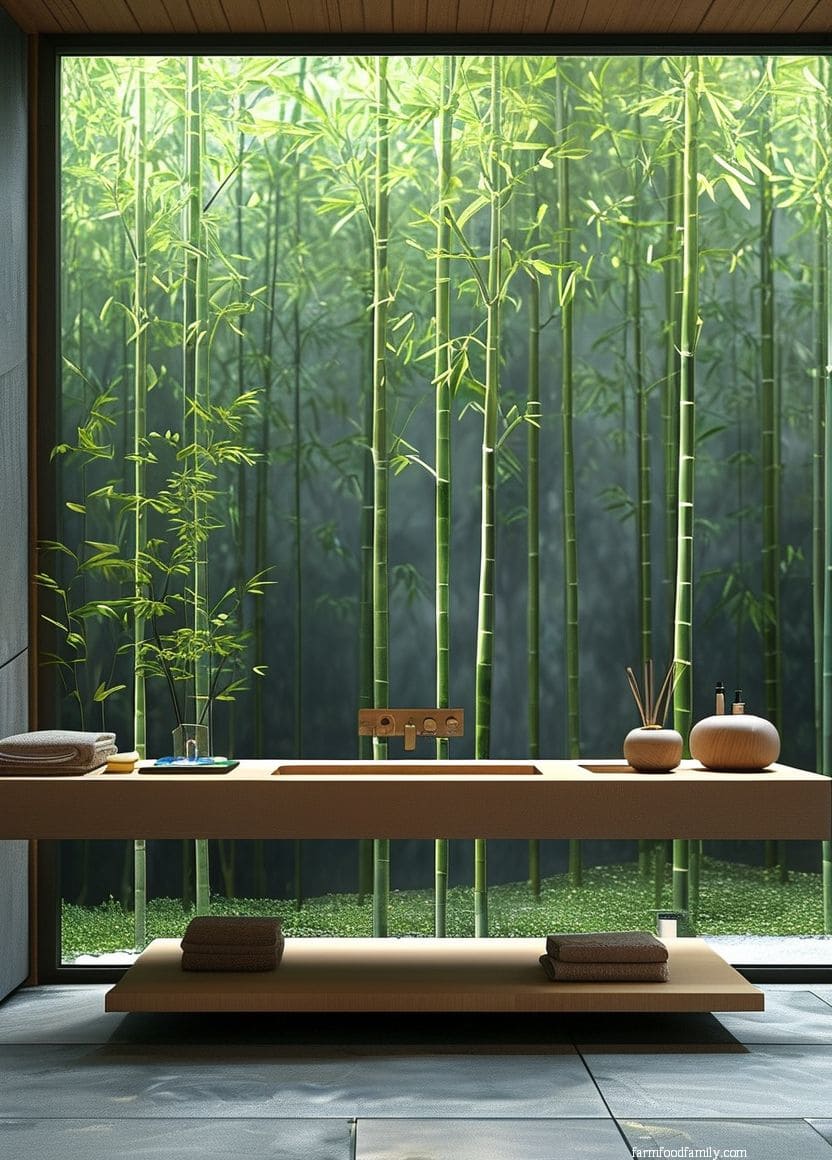
A sleek, basic wooden vanity makes an excellent centerpiece in a Zen bathroom.
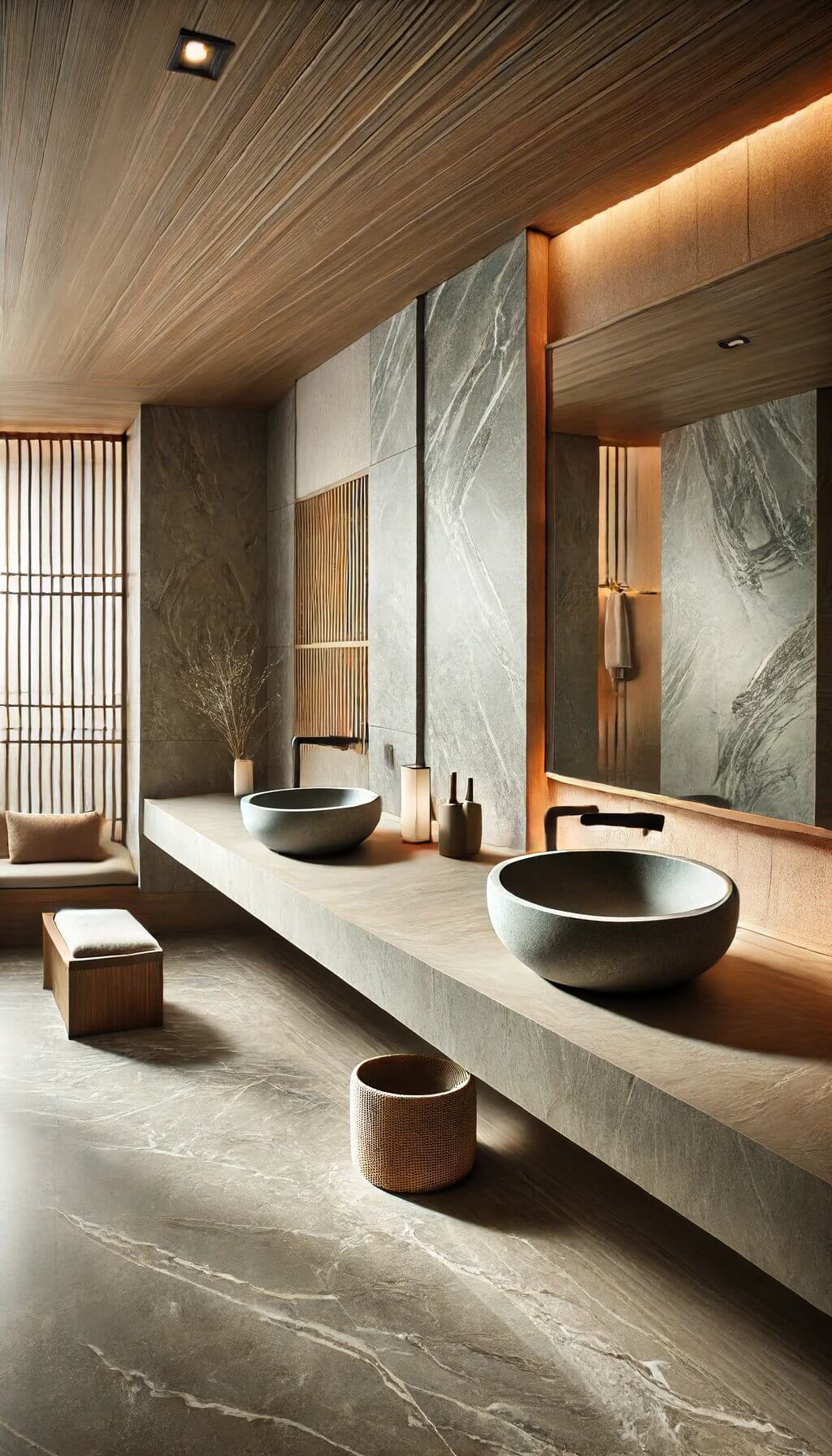
Choose natural woods such as bamboo, teak, or walnut for their soothing and pleasant appeal. Look for simple lines and floating designs that maintain the visual flow free and airy.
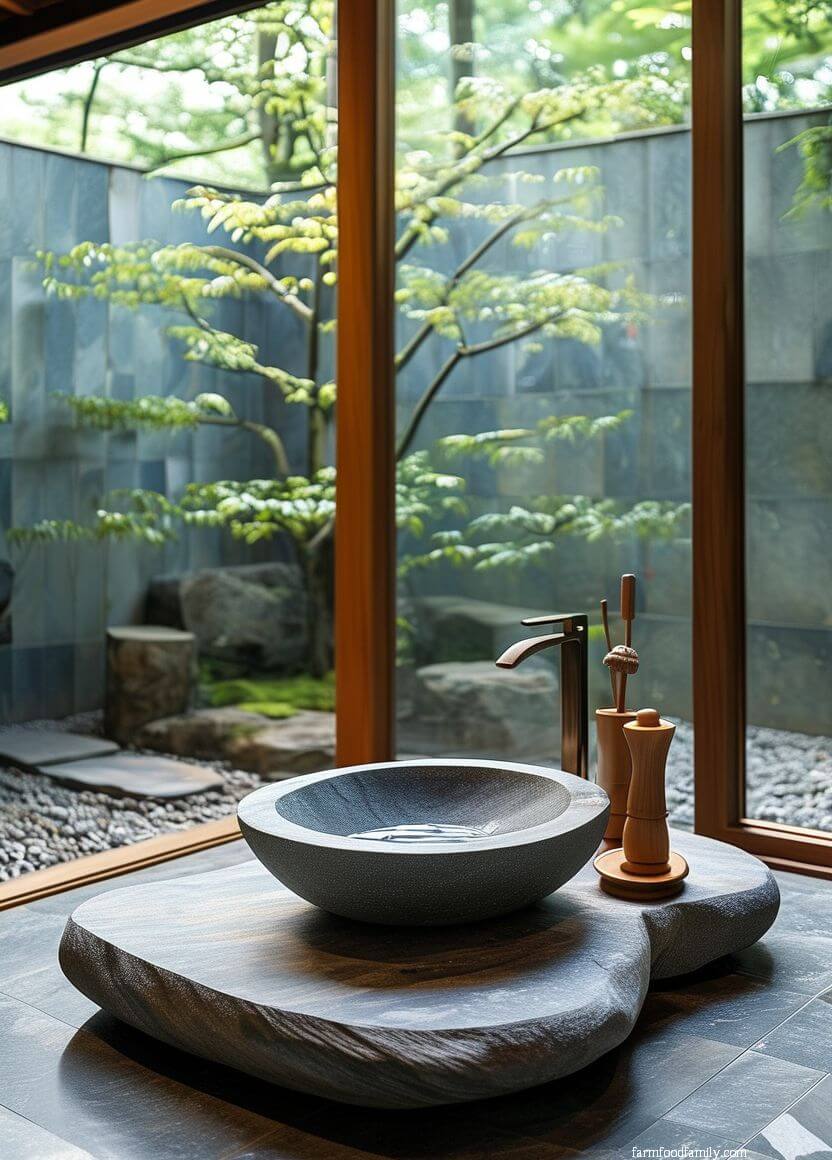
A well-crafted wood vanity’s simplicity creates an immediate sense of grounding, especially when combined with a stone or concrete sink basin.
Open shelving beneath can store neatly folded towels or a few carefully chosen items, keeping clutter at bay.
Choosing minimalism for your vanity means that each piece has a purpose without creating visual clutter.
Finishing the look with a natural oil treatment highlights the wood’s innate beauty while keeping the design’s simplicity.
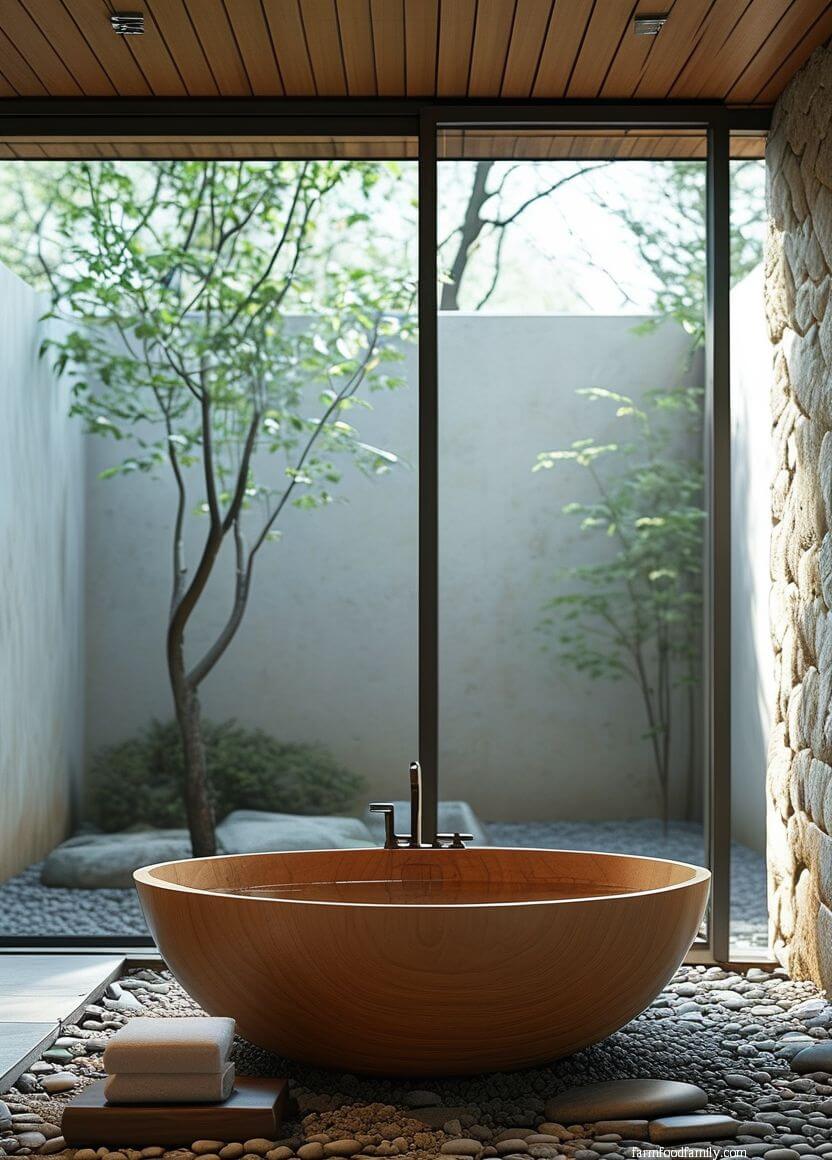
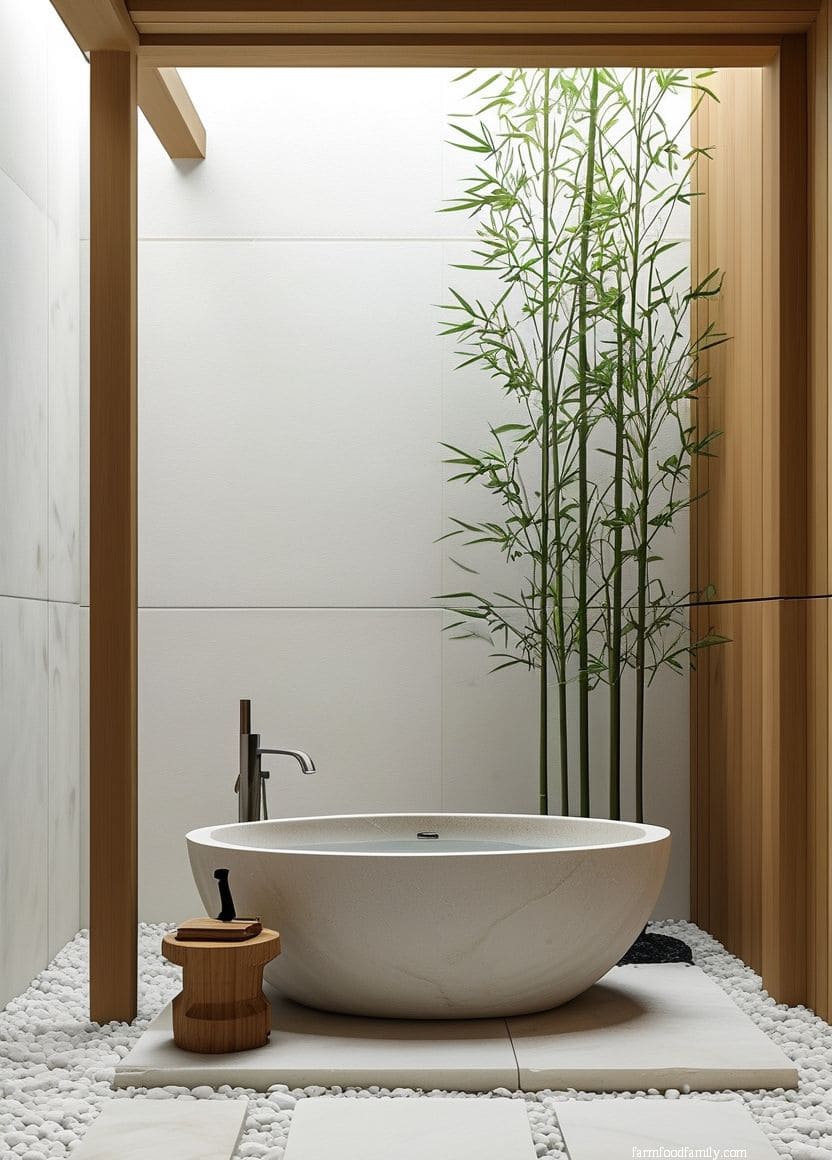
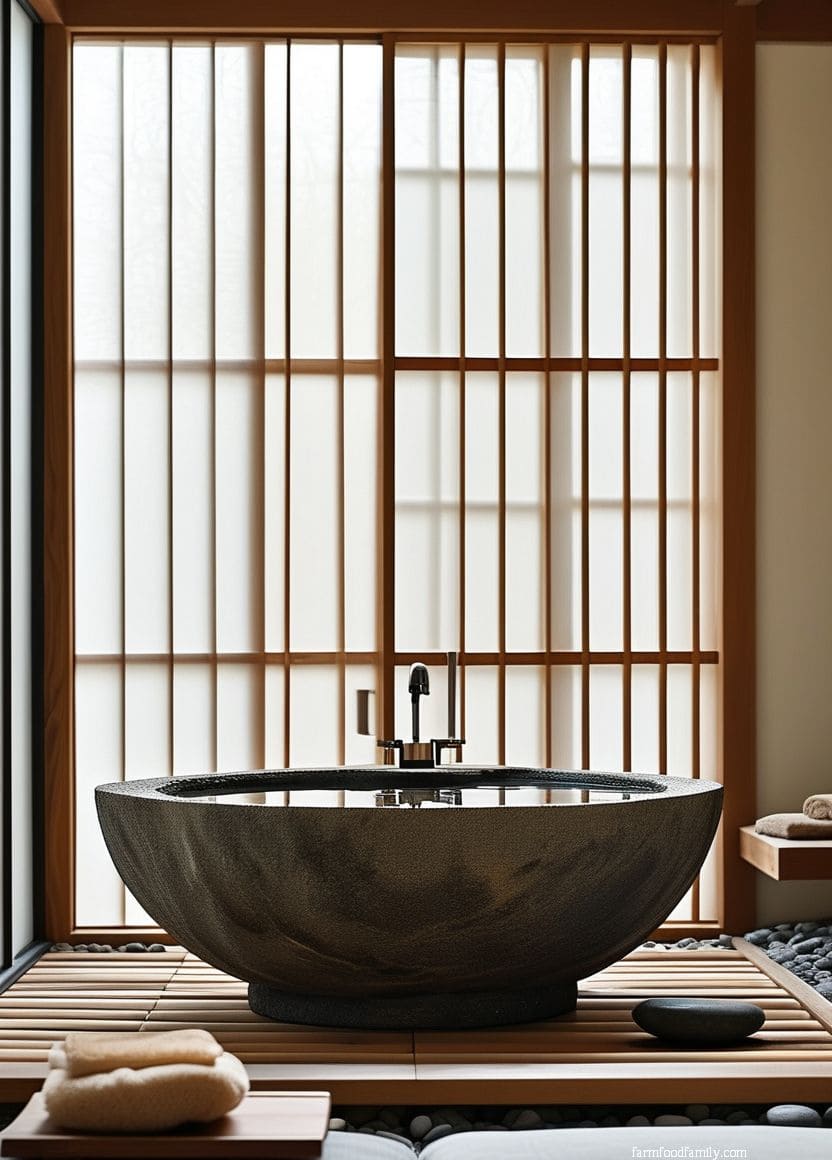
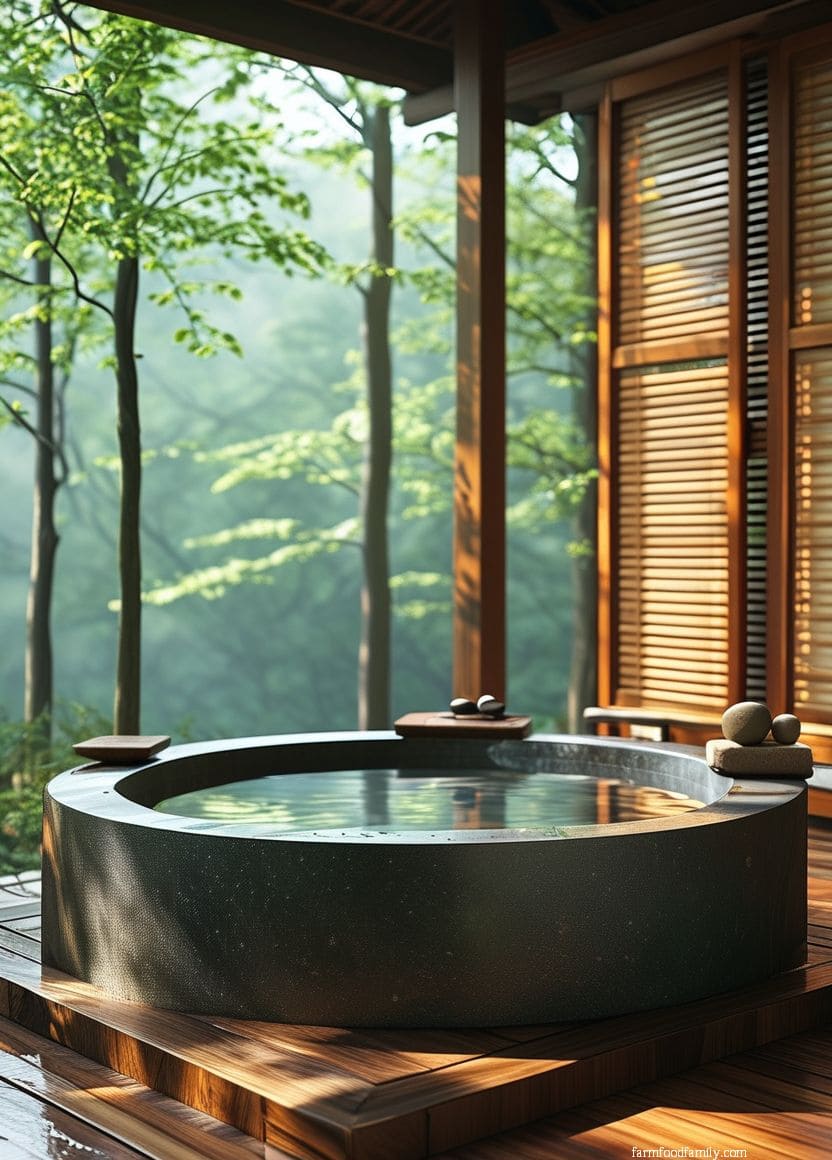
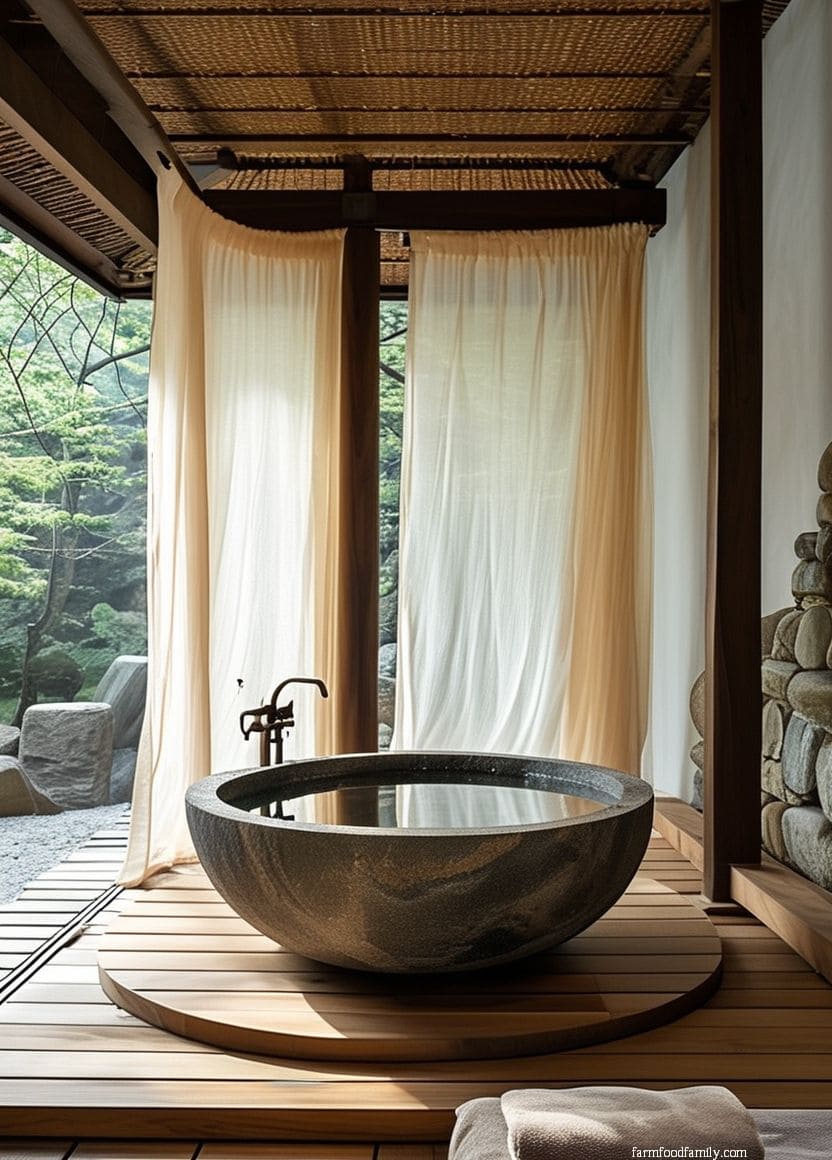
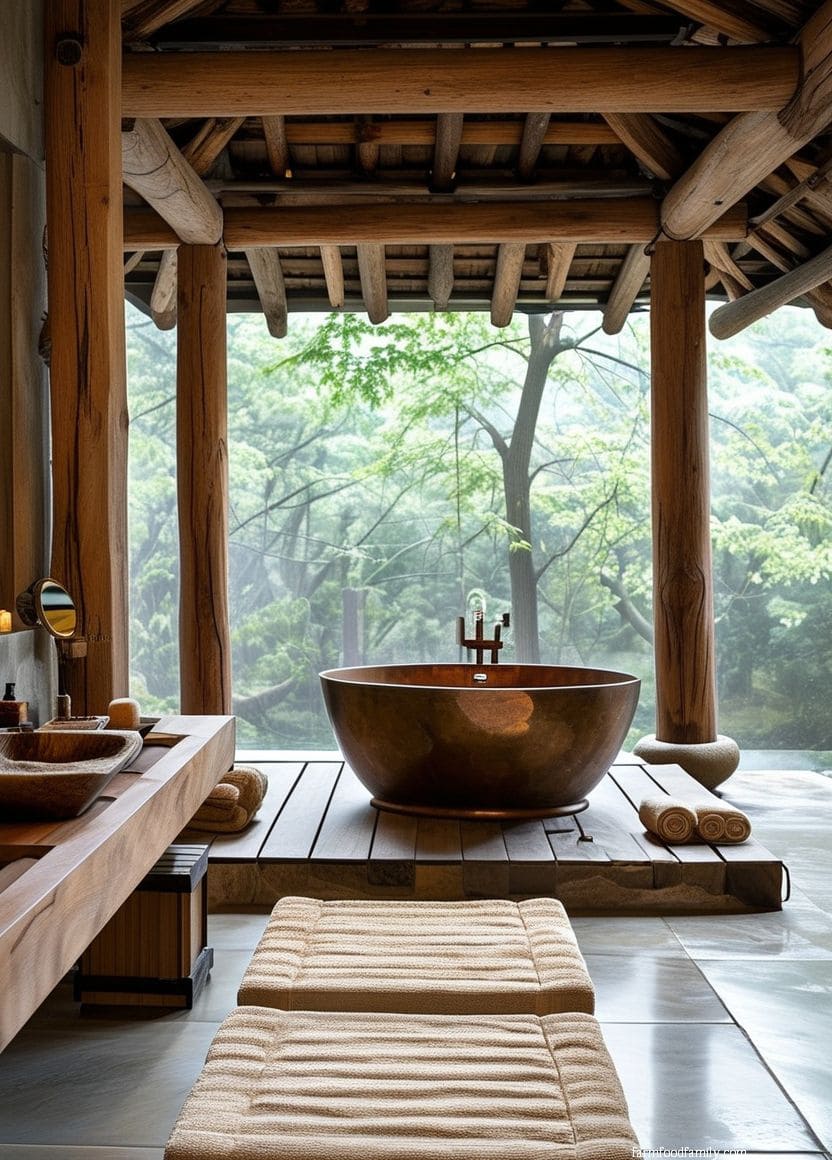
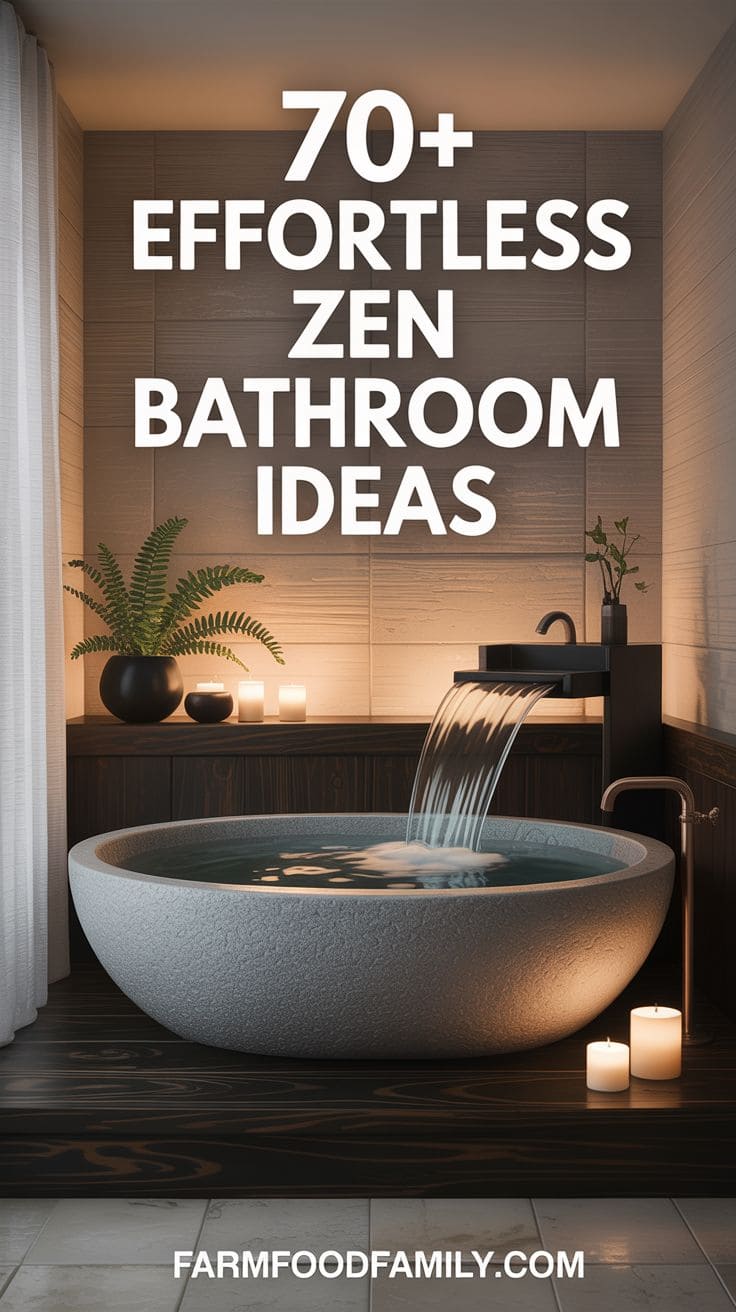
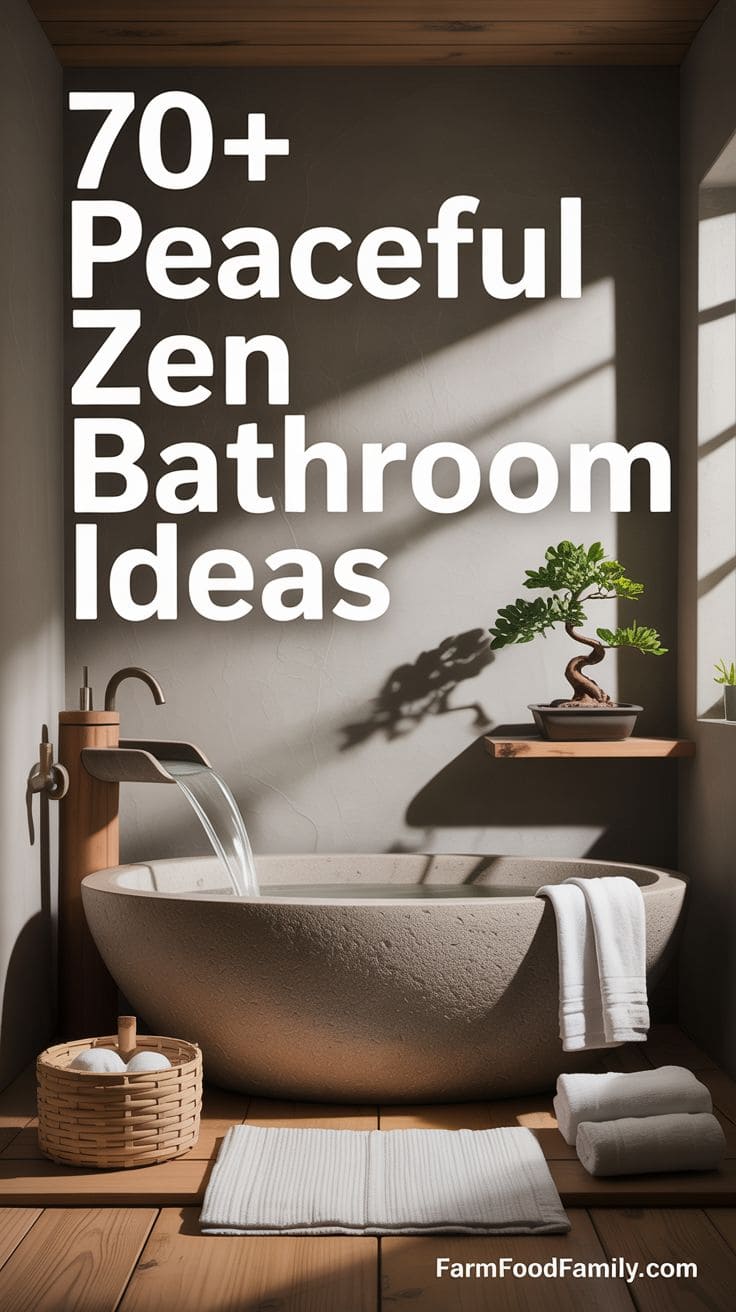
4. Freestanding Soaking Tubs
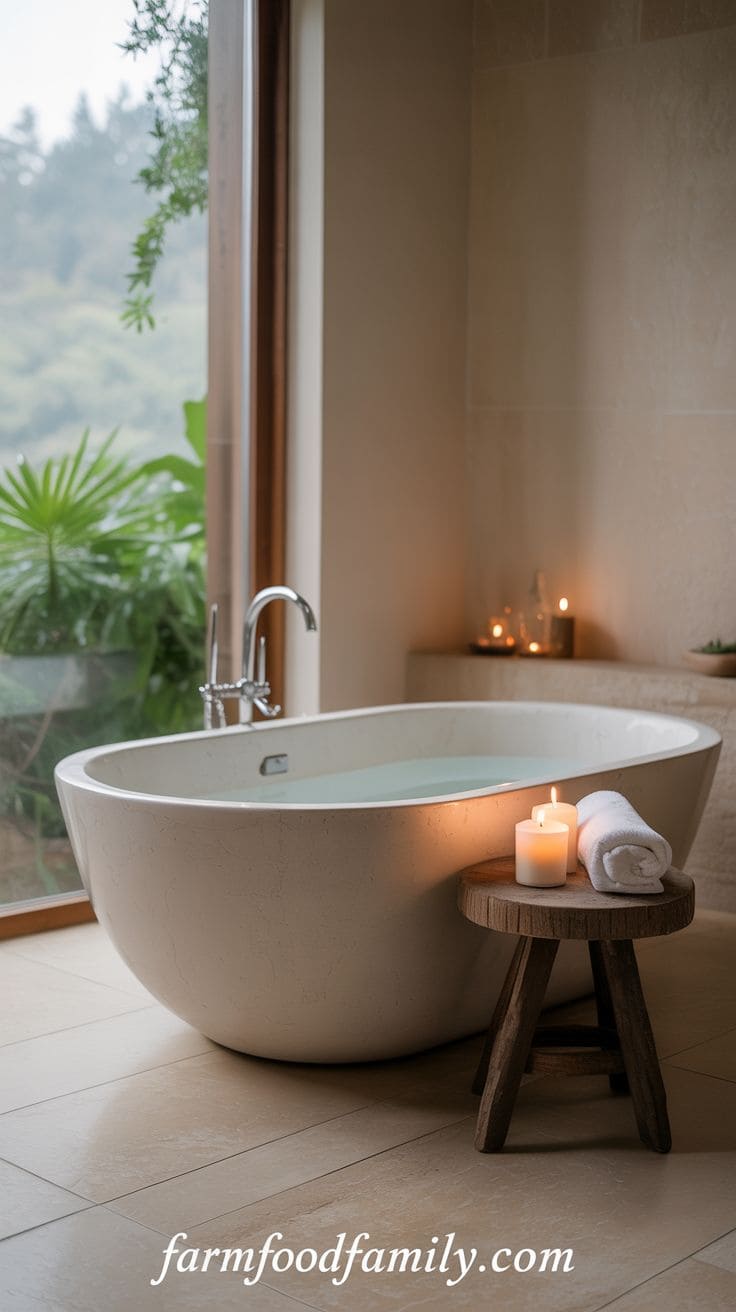
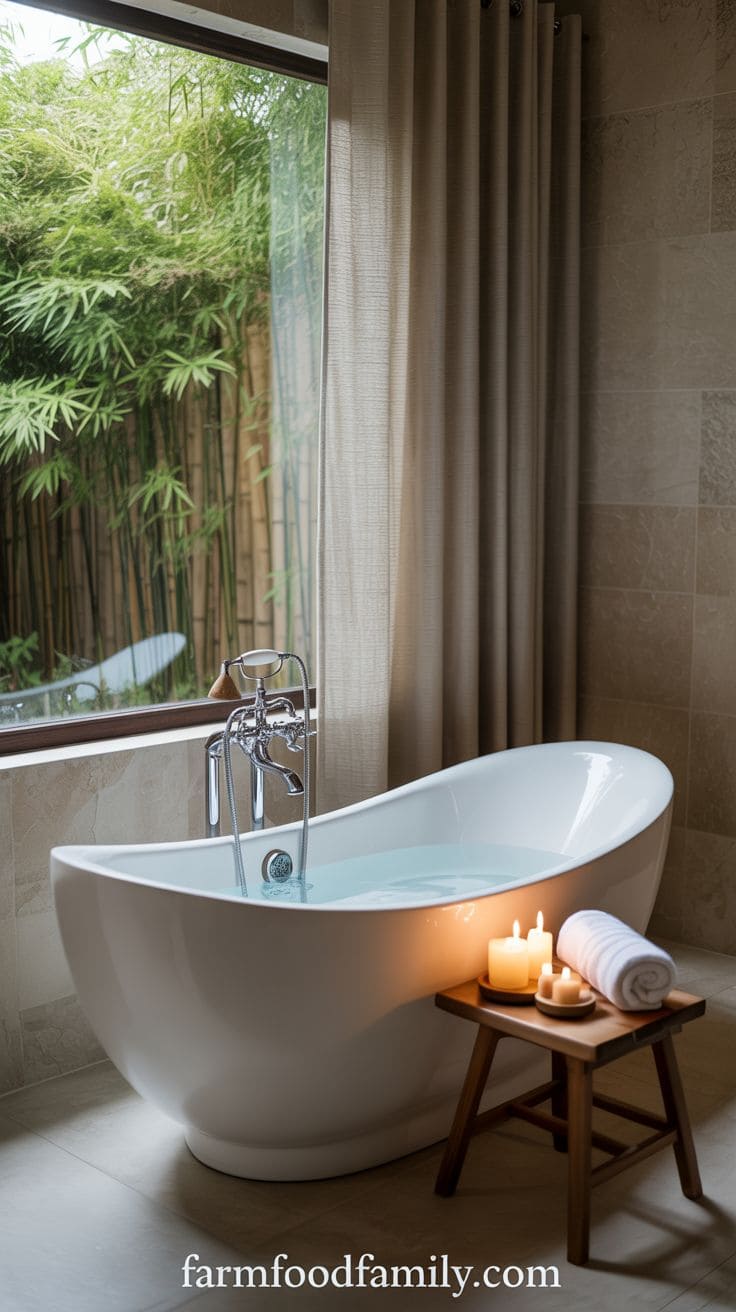
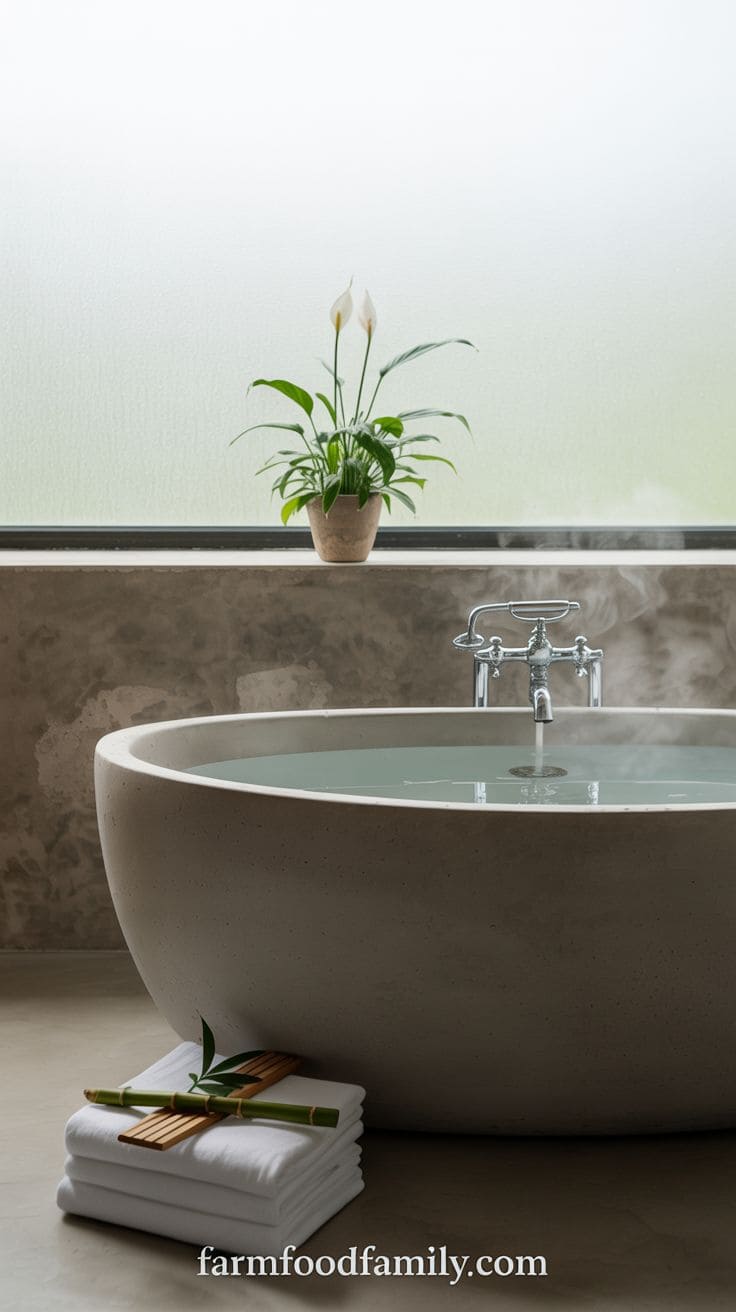
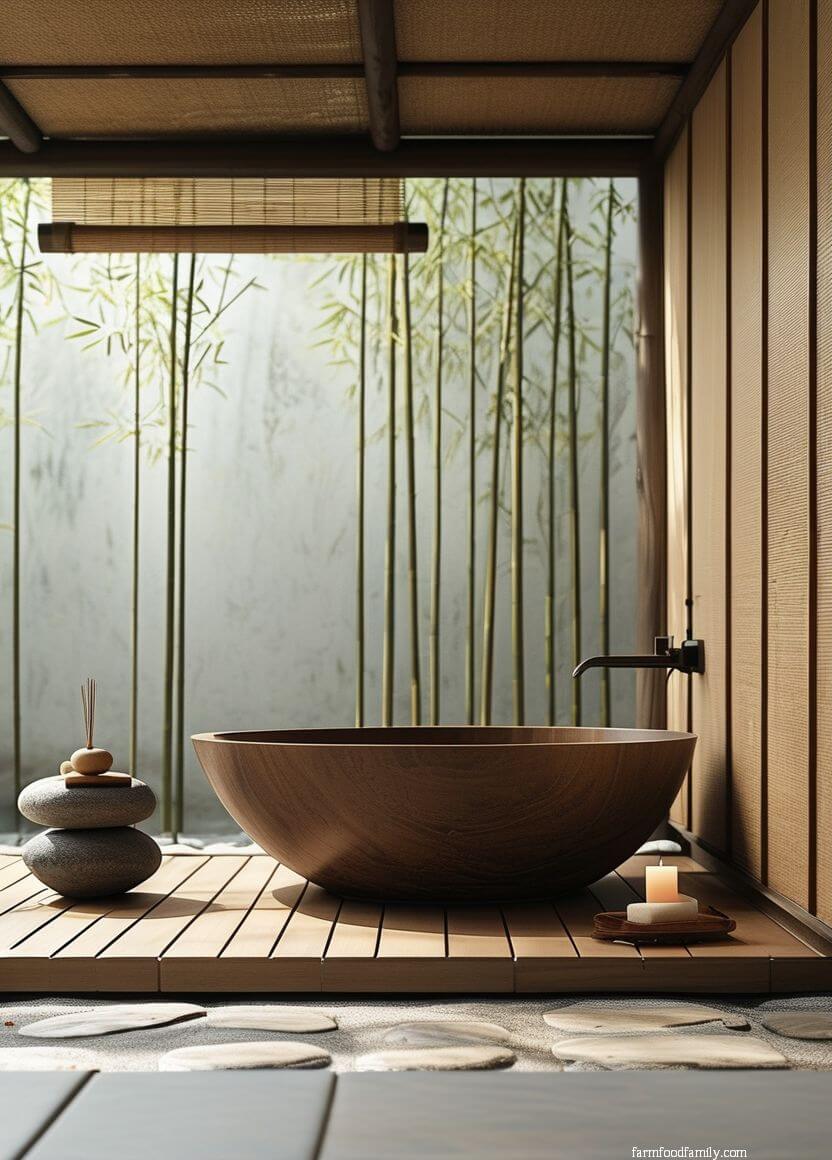
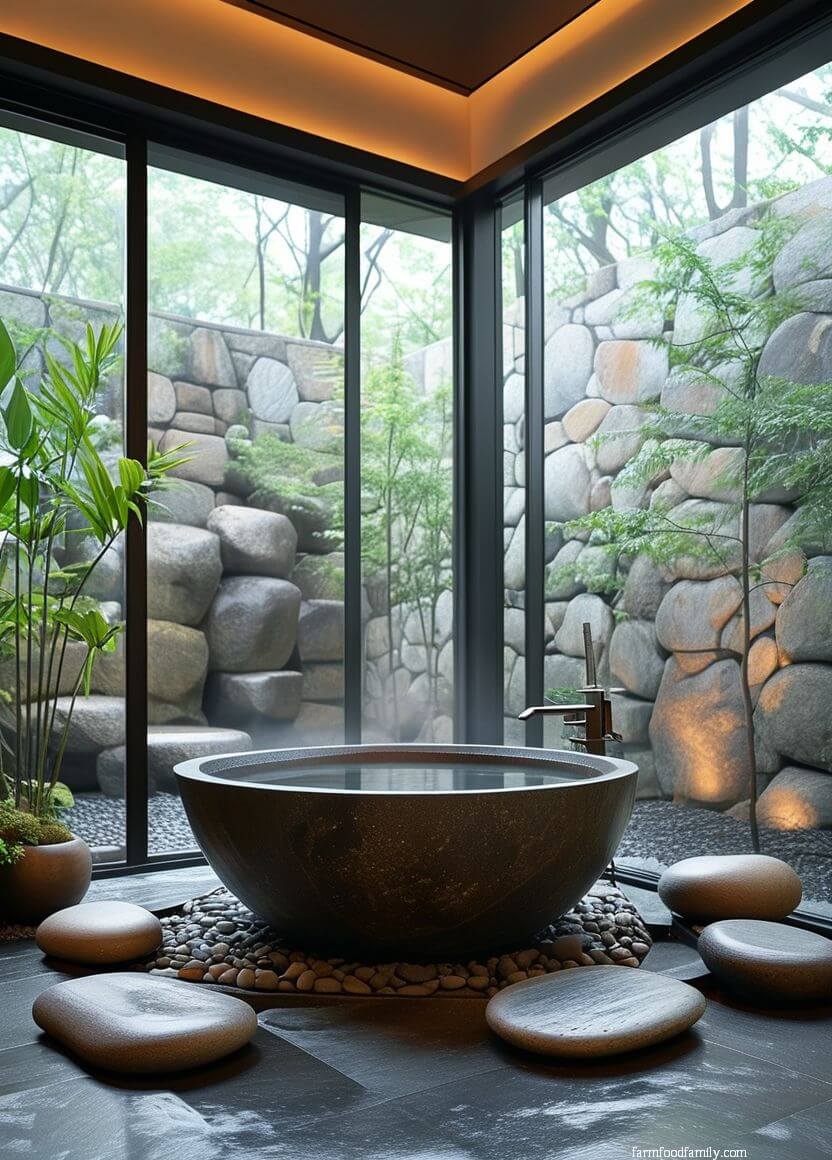
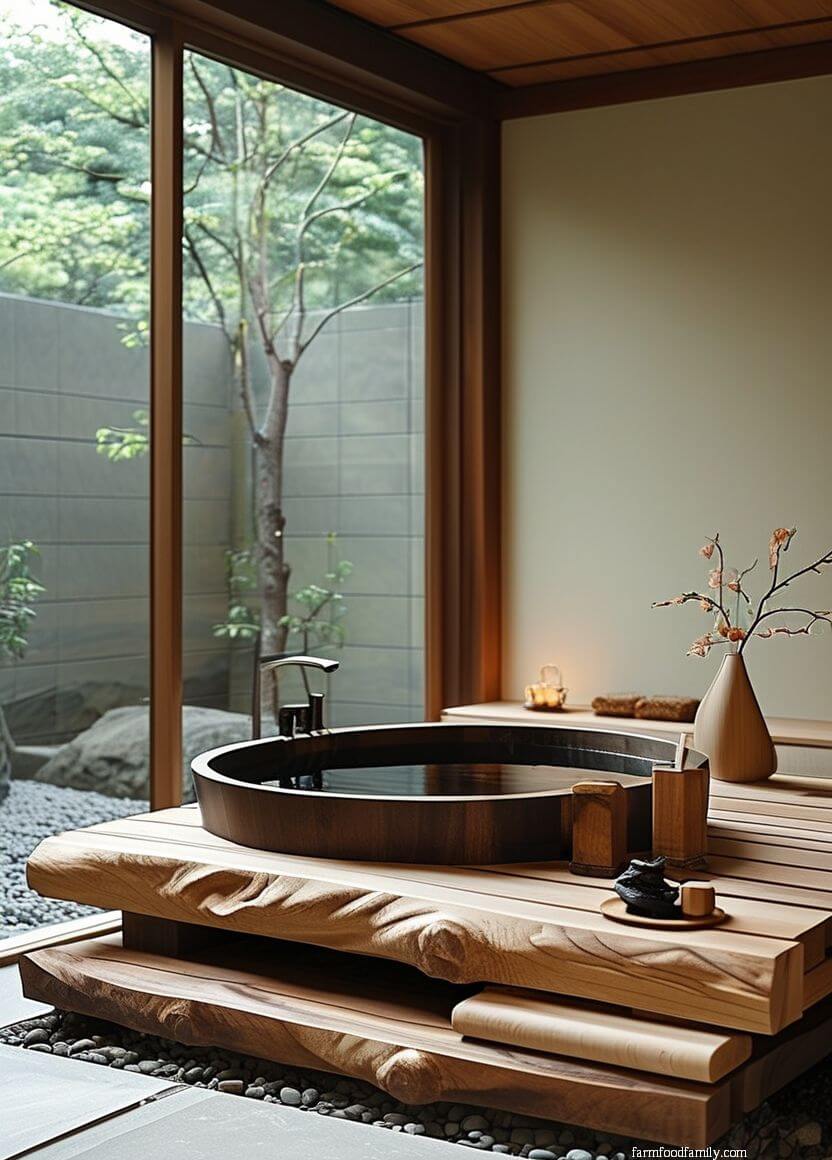
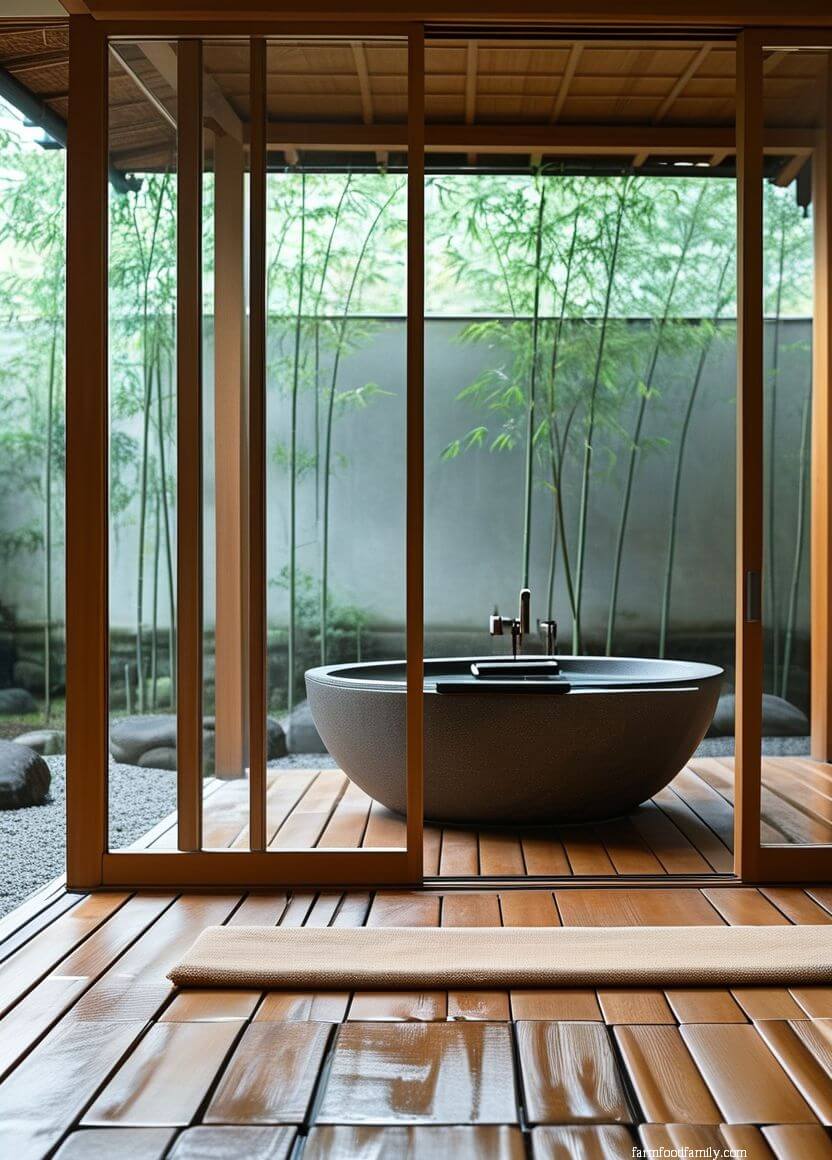
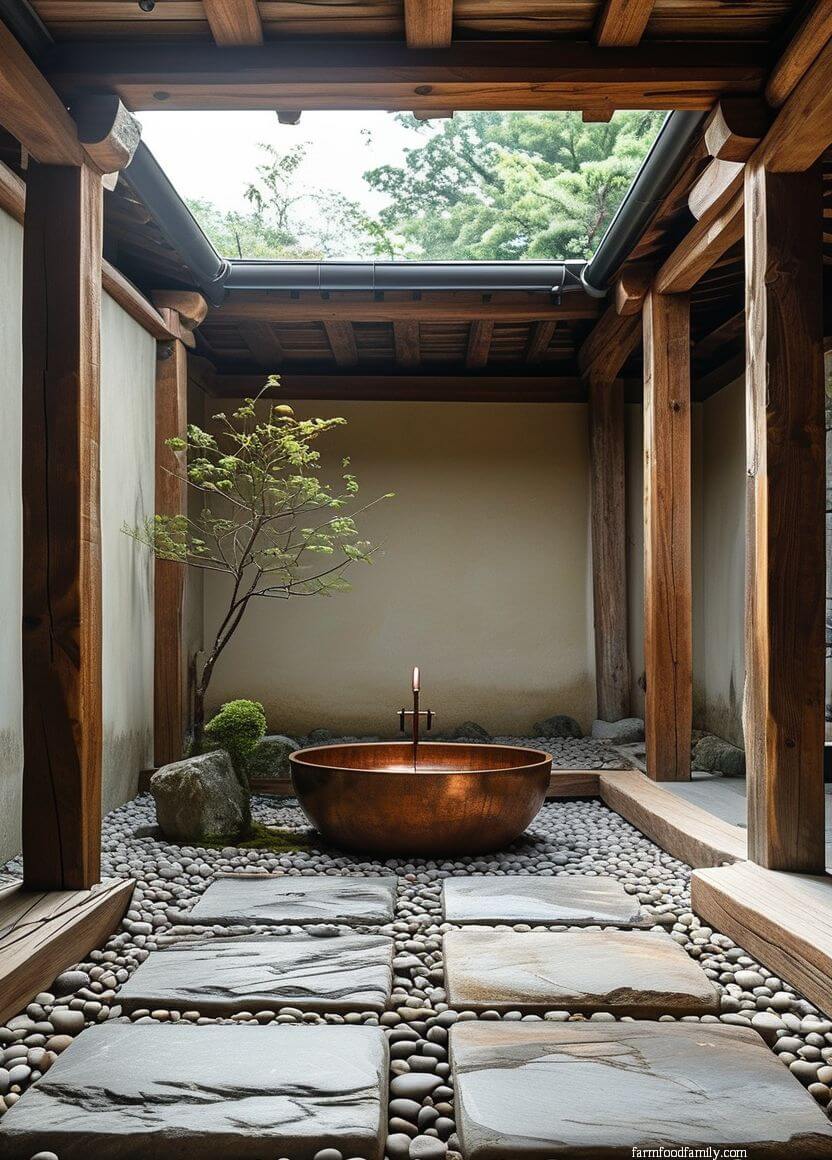
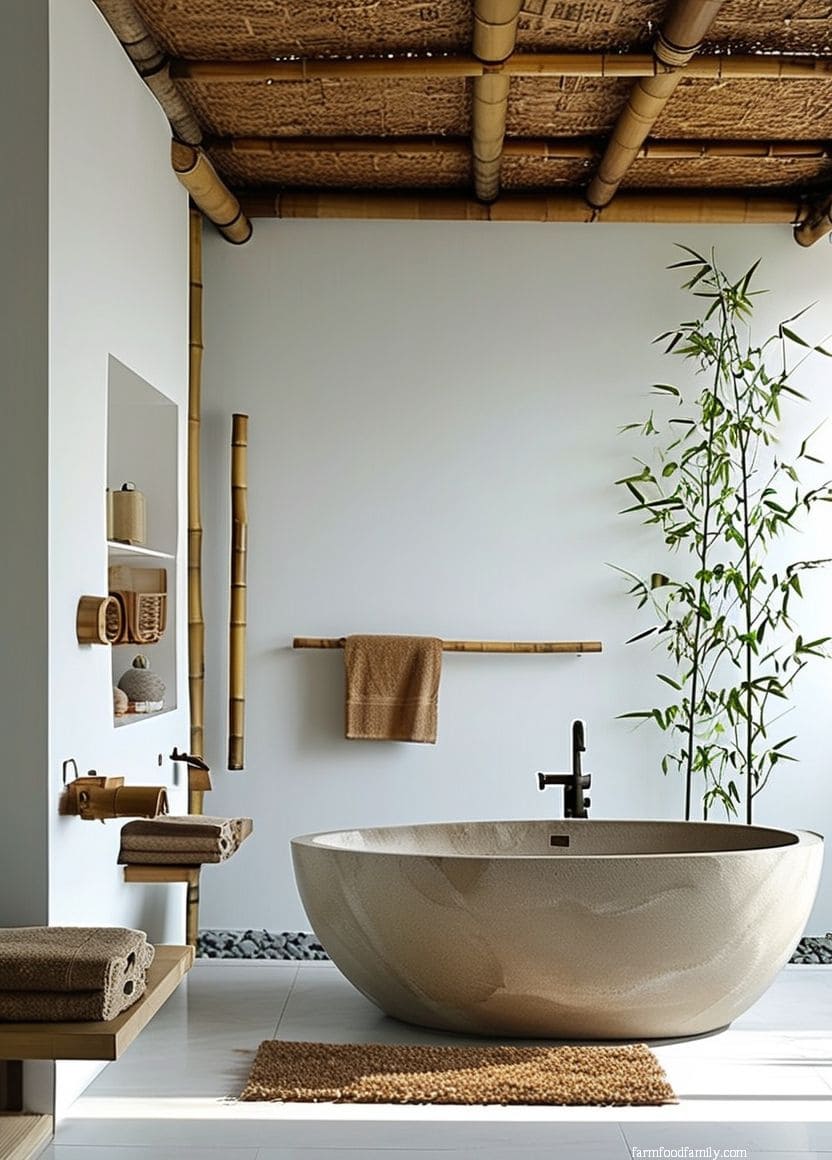
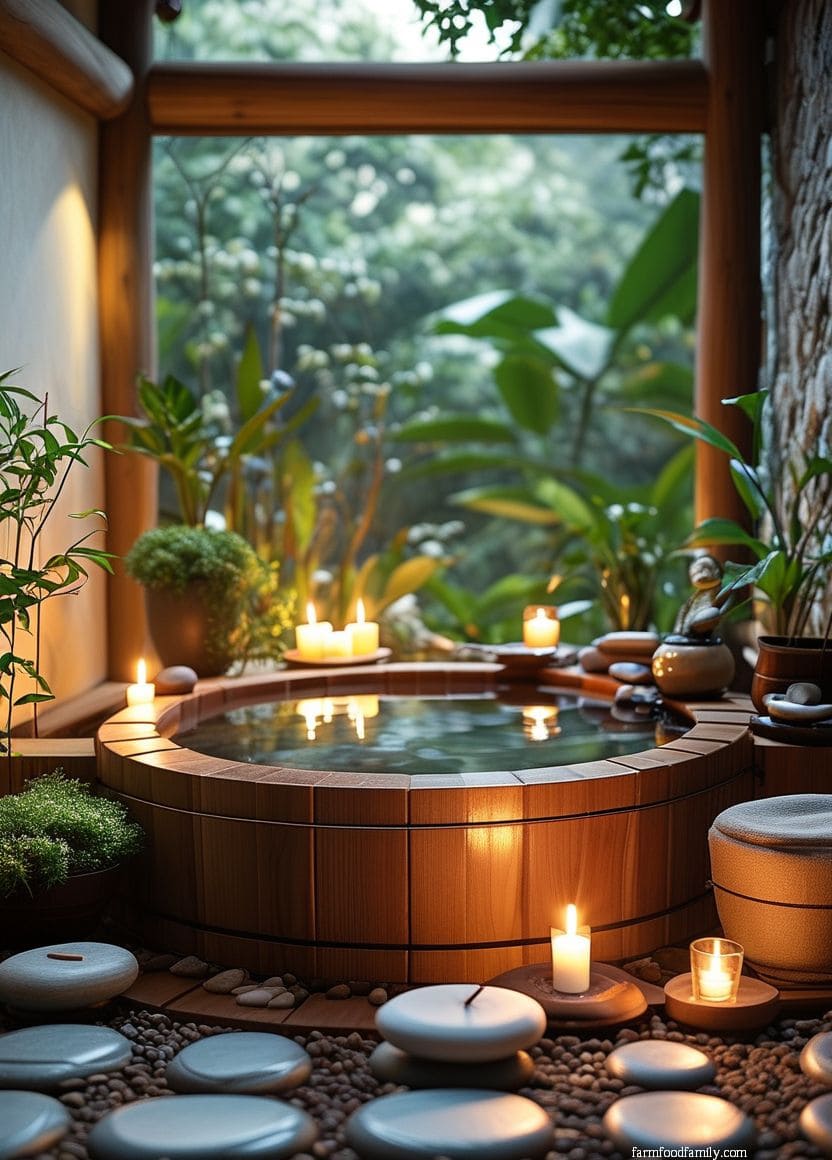
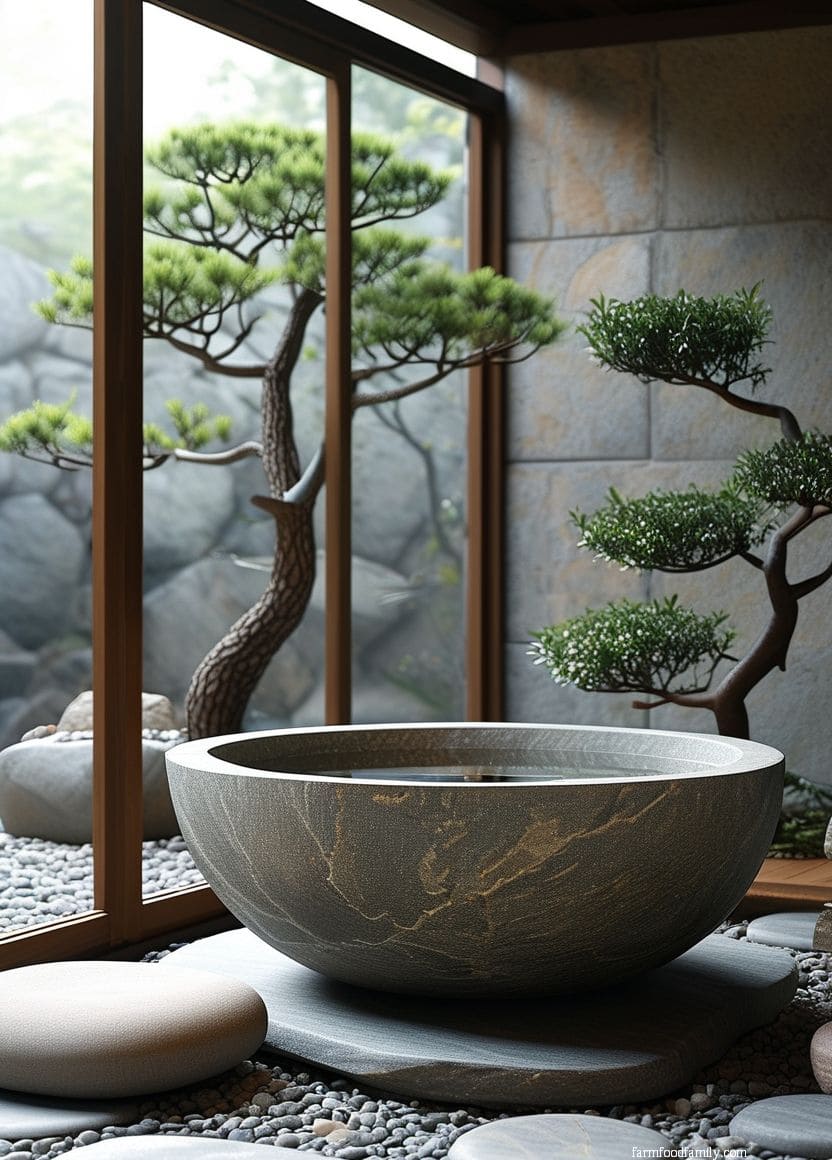
Nothing says “zen retreat” like a deep, standalone soaking tub.
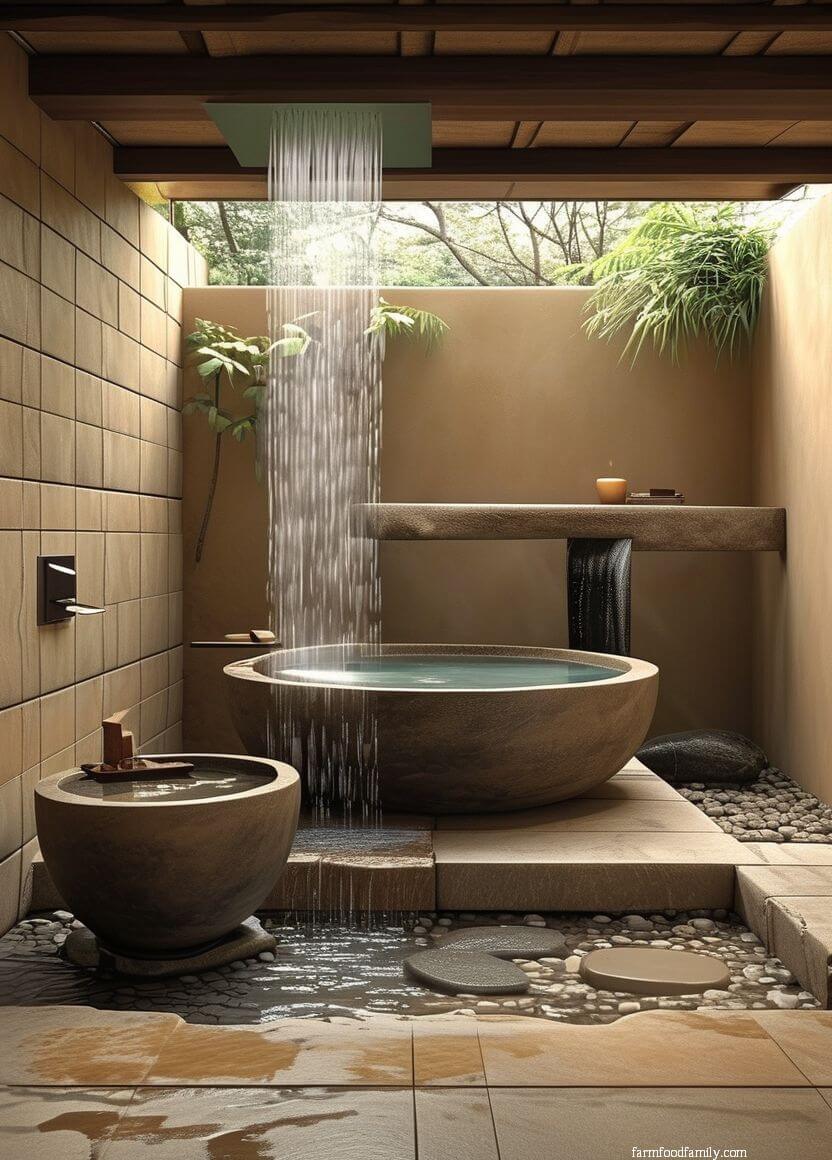
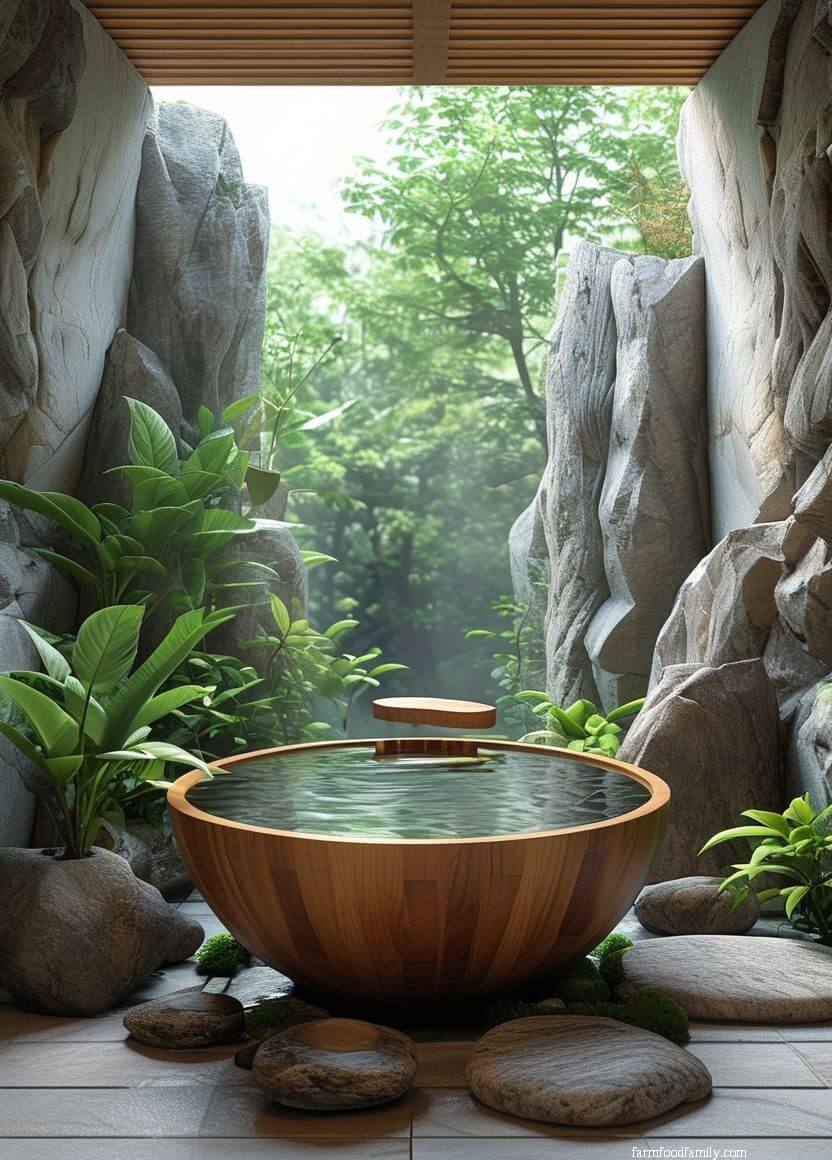
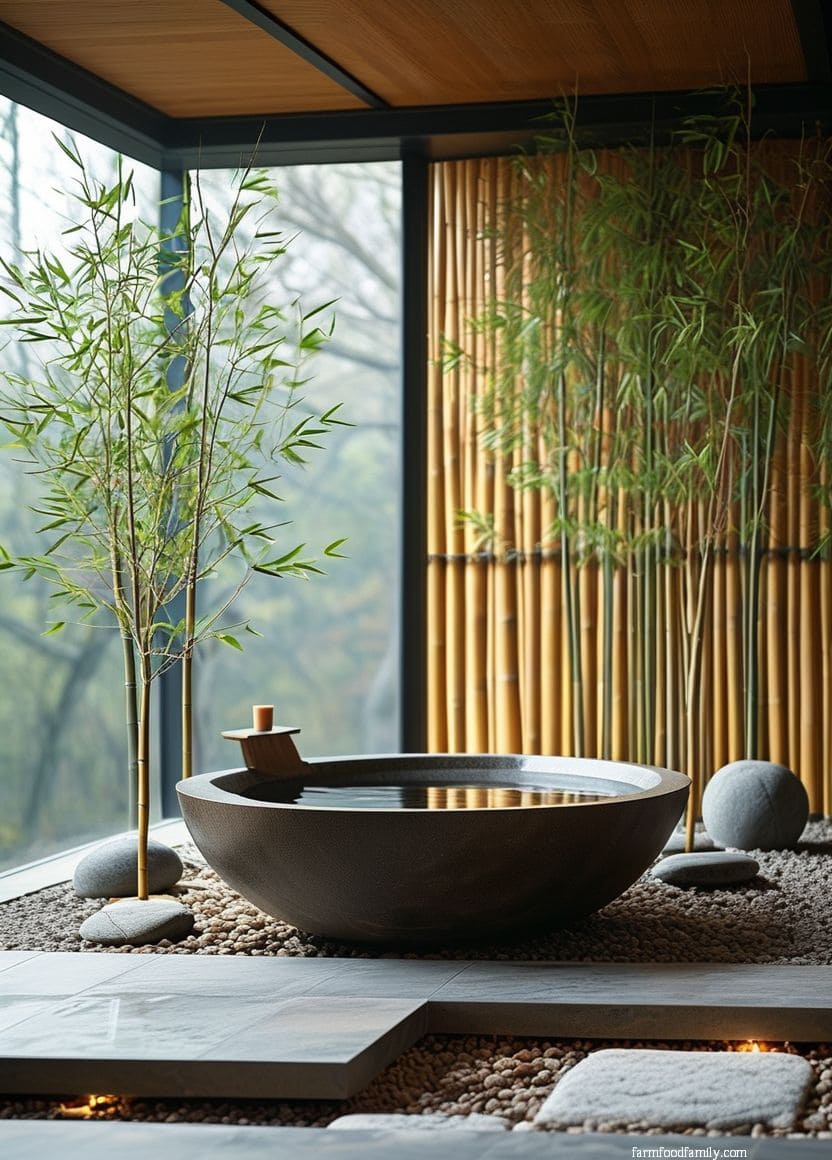
These tubs promote calm, deliberate bathing rituals while also providing a powerful focus point for the bathroom. Choose a tub with a delicate, organic shape that is particularly relaxing and harmonious.
If possible, place the tub near a large window to provide for natural light and access to the outdoors.
Natural materials such as stone resin and smooth matte finishes contribute to a grounded aesthetic.
Keep the surrounding decor simple; maybe a single wooden stool with a folded towel and a piece of driftwood for balance.
The soaking tub asks you to calm down, take deep breaths, and embrace the simplicity of being in the moment.
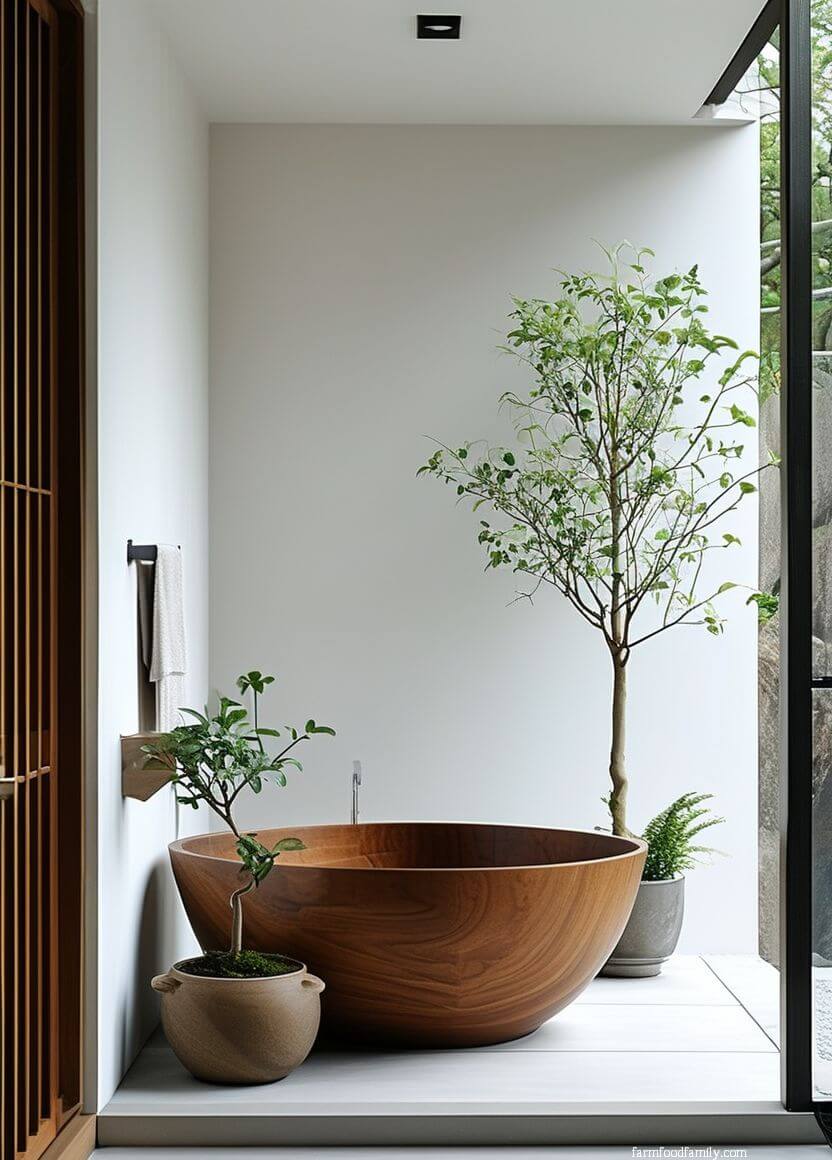
5. Indoor Plants for a Burst of Life
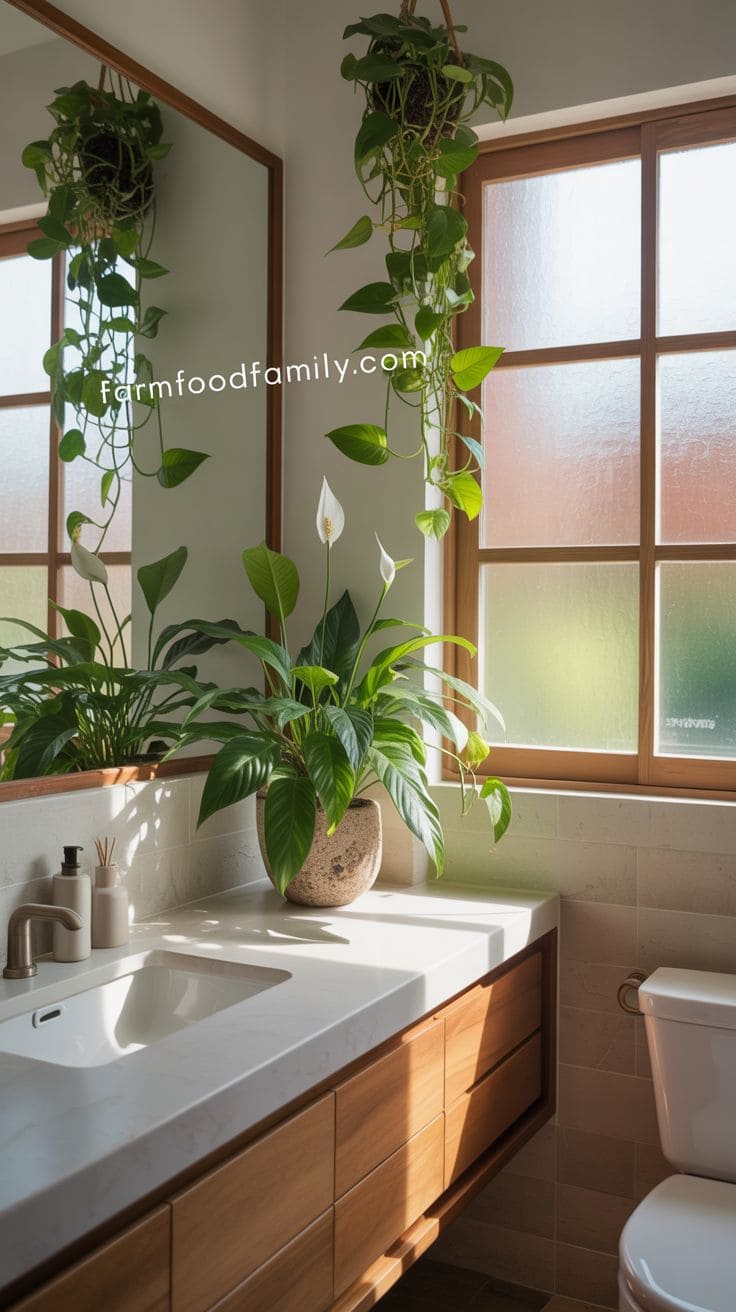
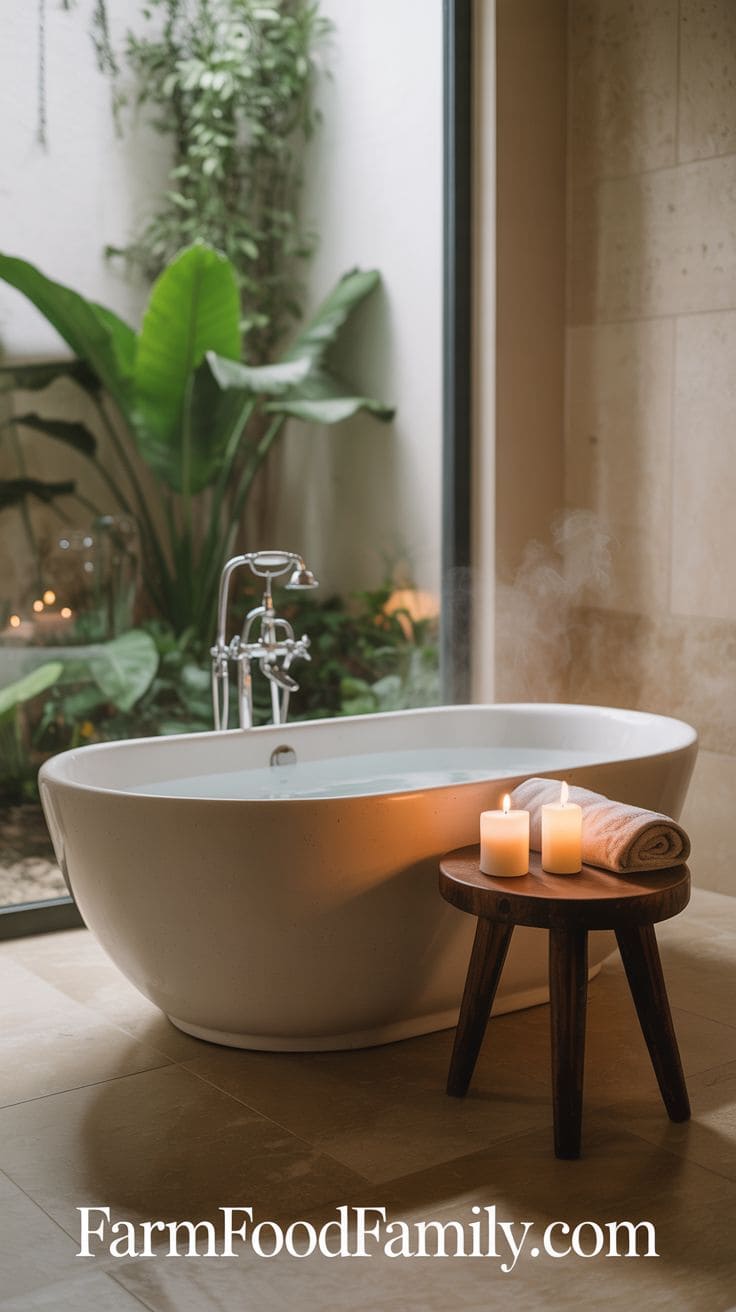
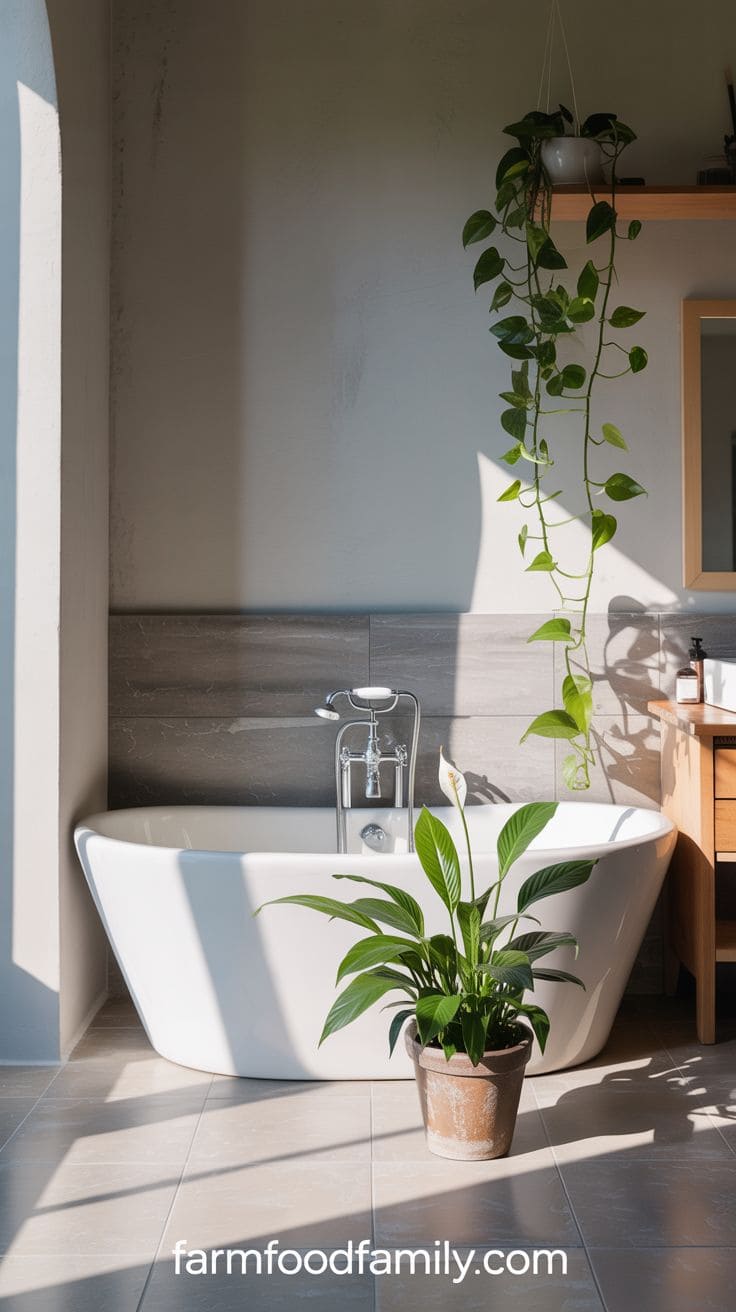
Indoor plants are the perfect way to bring the energy of a Zen bathroom to life.
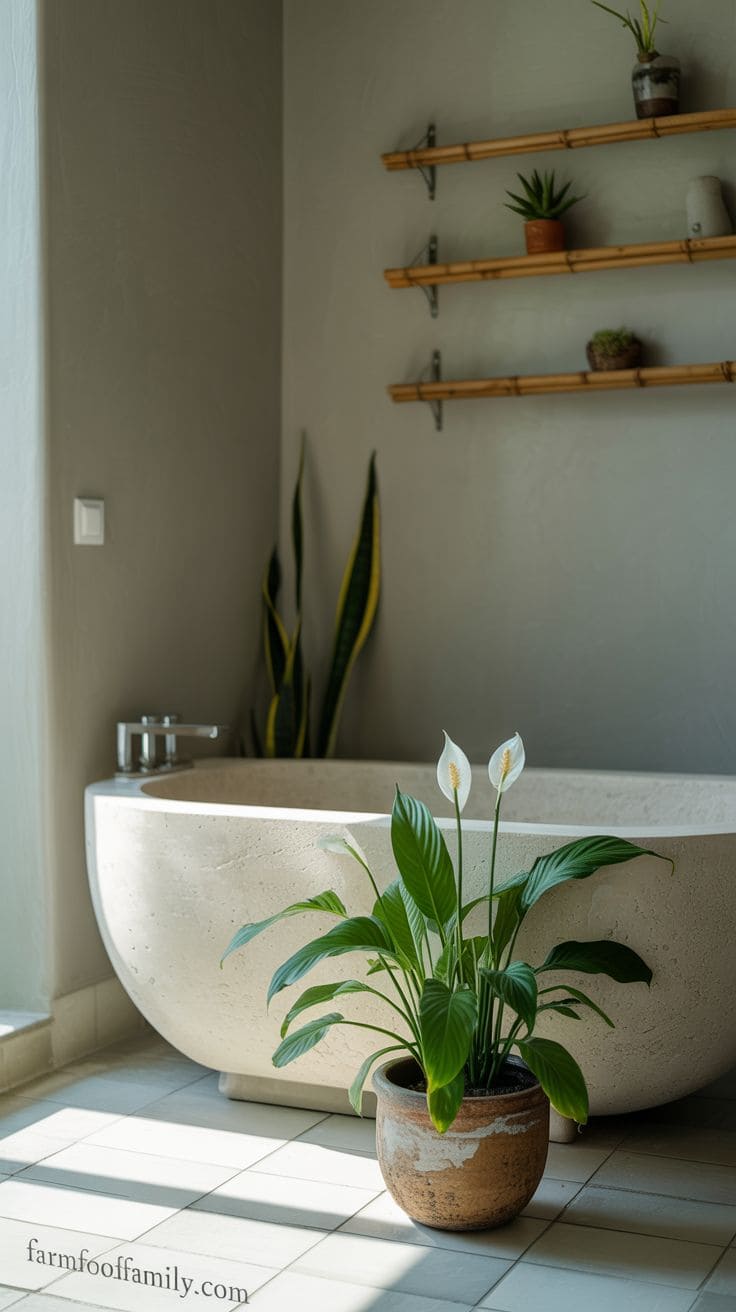
Choose low-maintenance, humidity-loving types such as pothos, peace lilies, and snake plants.
A little potted plant on the vanity, a tall leafy companion by the tub, or even a hanging arrangement offers a burst of fresh energy.
Living greenery connects you to nature’s cycle, which is profoundly rooted in Zen teachings.
To keep the design harmonious, use simple clay or stone pots in neutral colors.
Plants give the bathroom a sense of vitality, freshness, and connection to nature.
6. Uncluttered Countertops and Hidden Storage
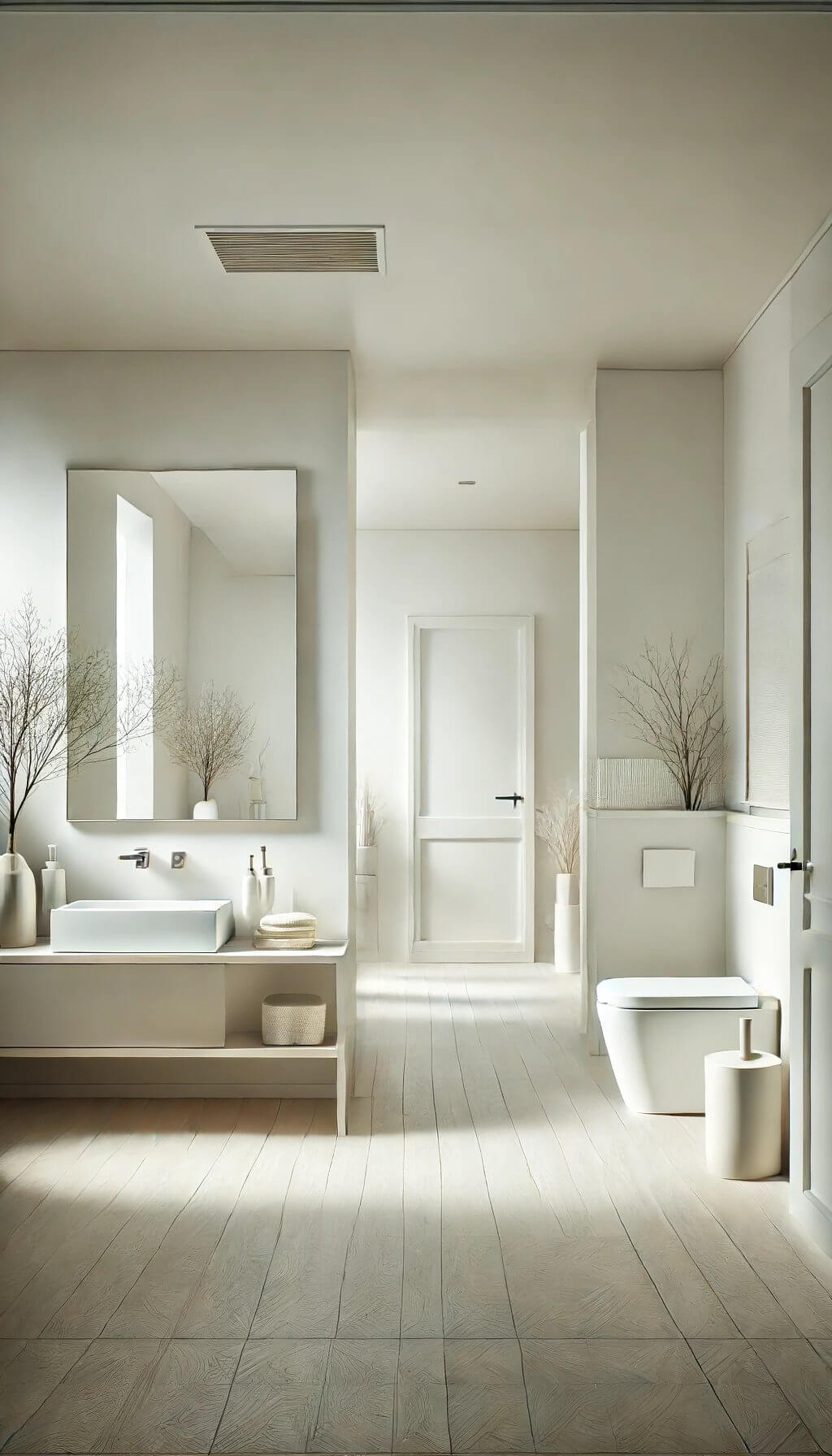
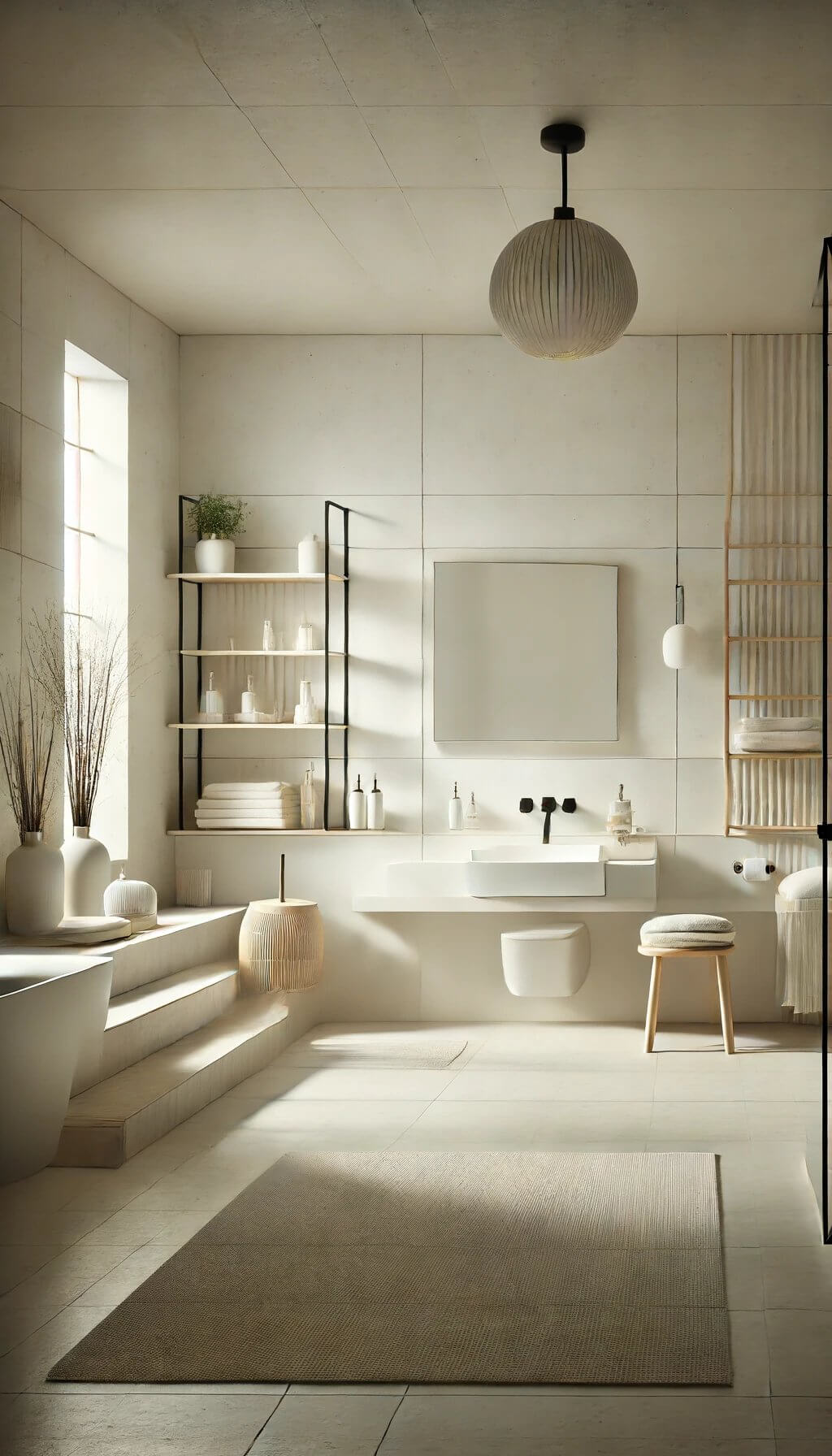
Minimalism in a zen bathroom isn’t about owning fewer things, it’s about not seeing most of what you own.
A single closed cabinet or a few matching baskets under the sink for daily-use items, with only one or two objects left visible on the counter, does more for the calm factor than any single design choice on this list.
If storage is tight, a shallow recessed medicine cabinet keeps things hidden without eating into floor space.
7. Layering Bamboo, Teak, and Stone Together
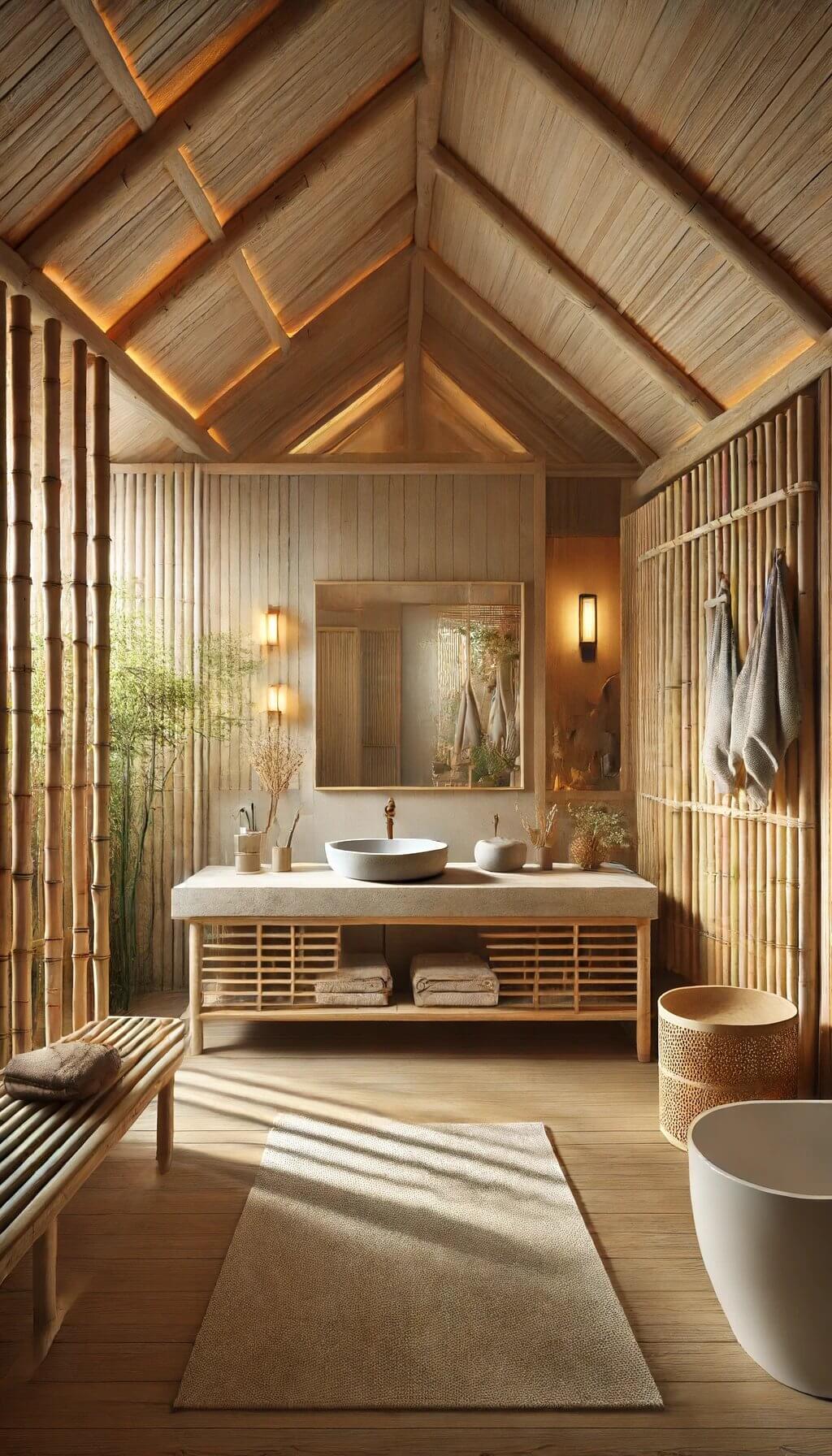
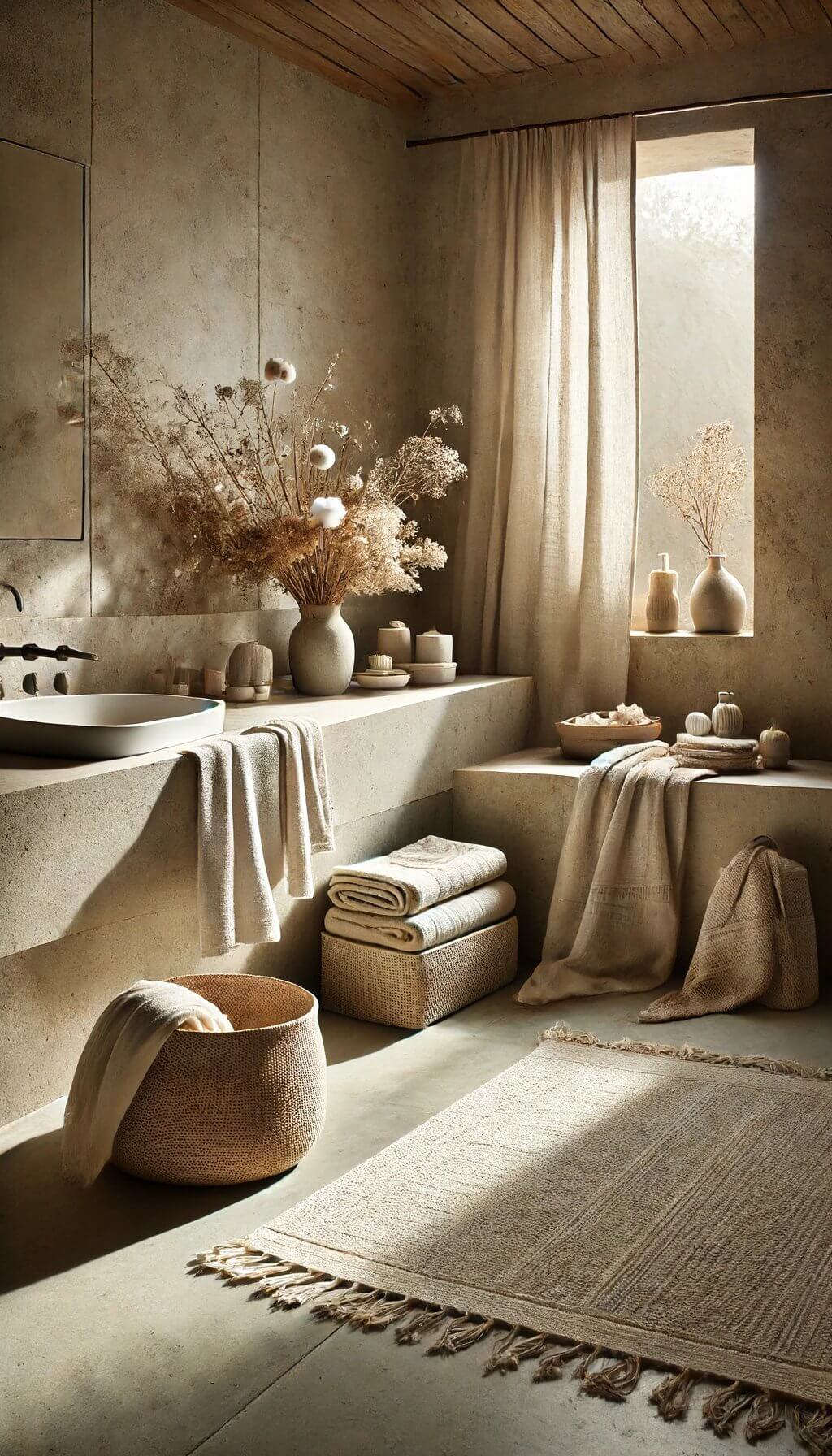
Rather than picking one natural material, the most convincing zen bathrooms mix two or three: a teak bath mat or stool, a bamboo storage ladder, and a stone-topped vanity, for example.
The trick is keeping the tones in the same warm family (light bamboo doesn’t always pair well with dark slate) and limiting yourself to three materials max, more than that starts to read as busy rather than layered.
8. Warm Neutrals That Avoid the “Cold” Trap
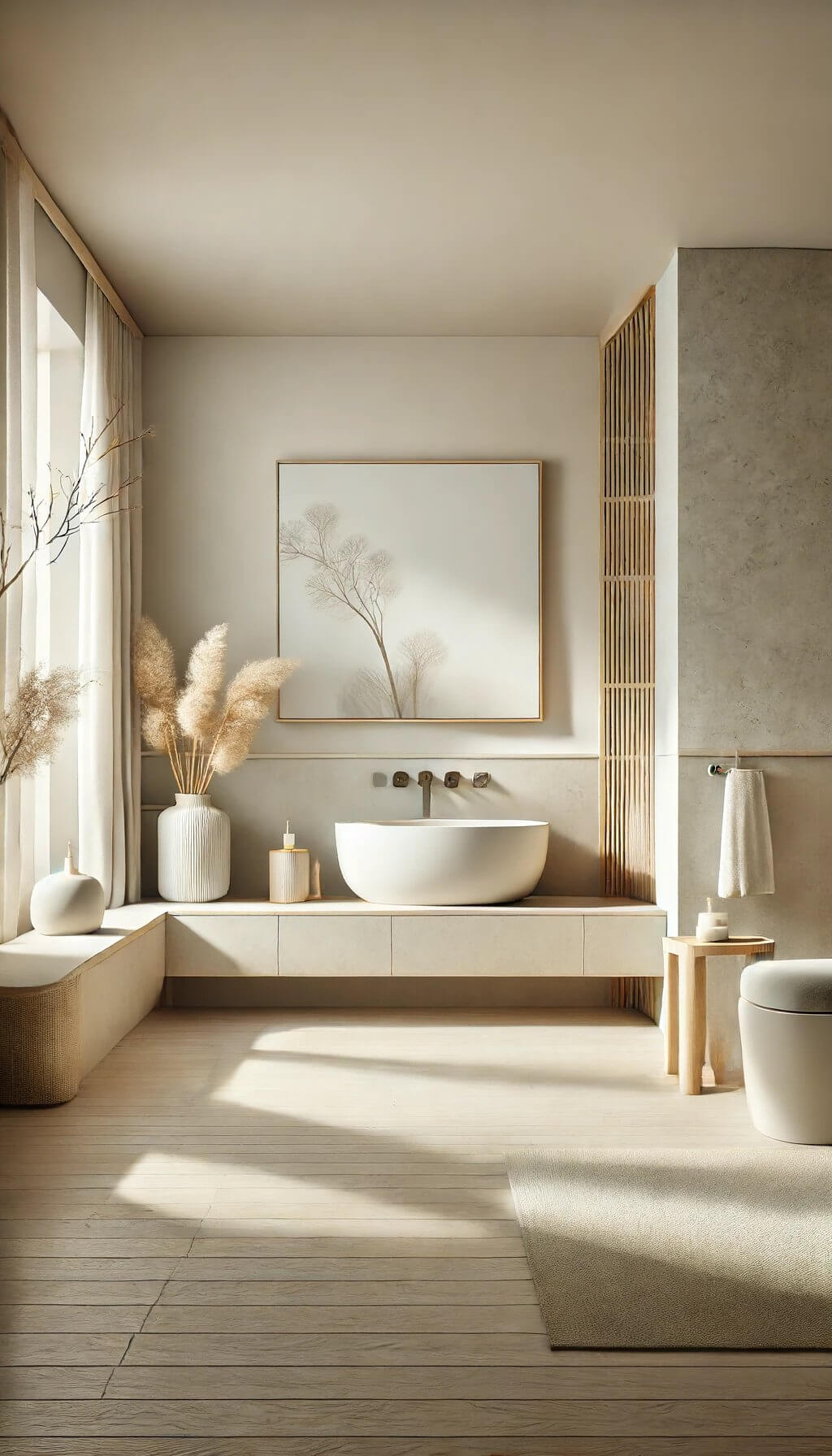
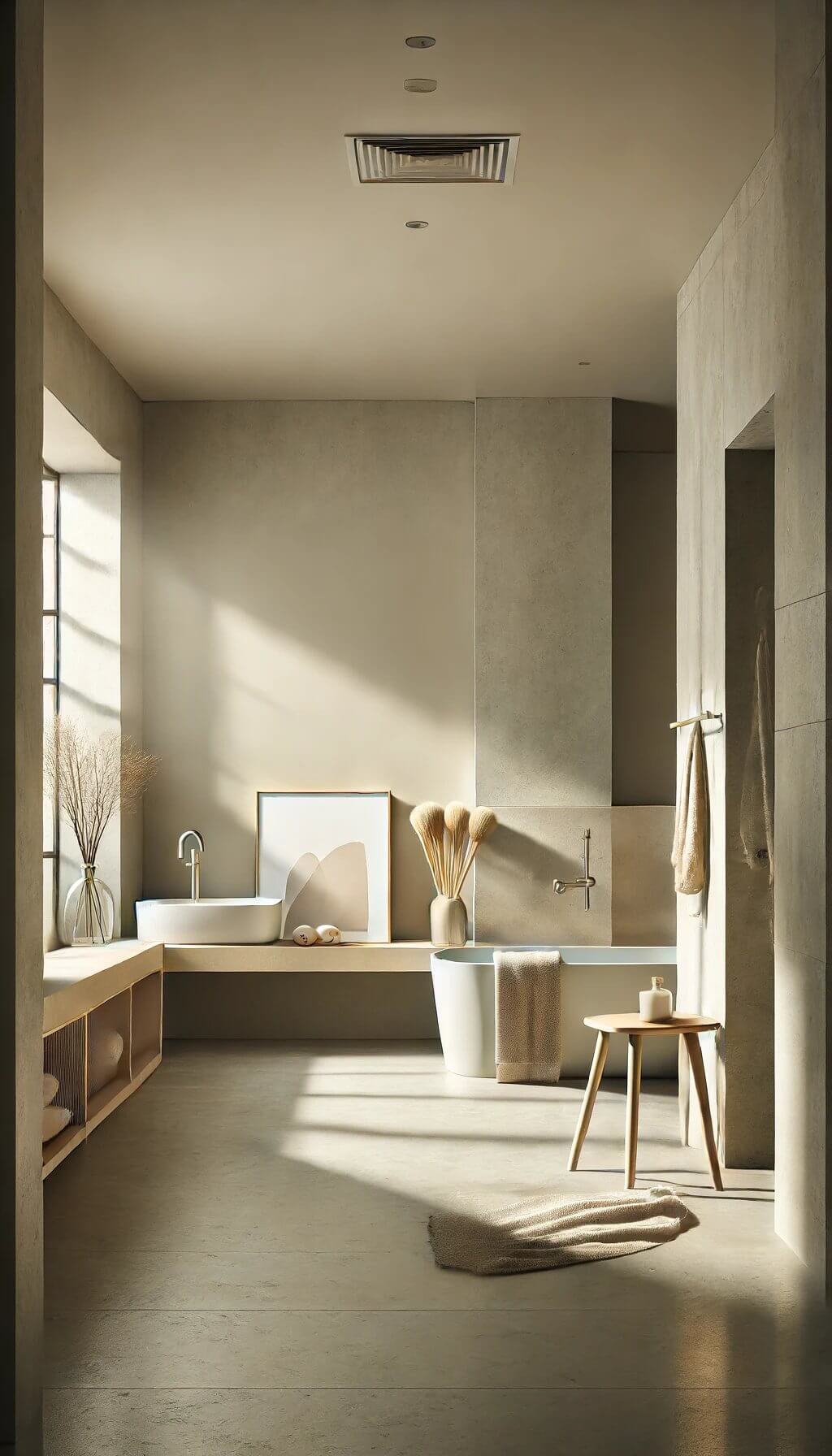
An all-white or all-gray minimalist bathroom is one of the most common design regrets people report, it photographs beautifully but can feel sterile and impersonal to actually live with day to day.
The fix isn’t abandoning a neutral palette, it’s warming it: swap stark white for a warm off-white or ivory, add a wood or rattan texture somewhere in the room, and use a single round mirror or curved fixture to soften the straight lines that make minimalist bathrooms feel clinical in the first place.
9. A Living Wall or Grouped Plant Corner
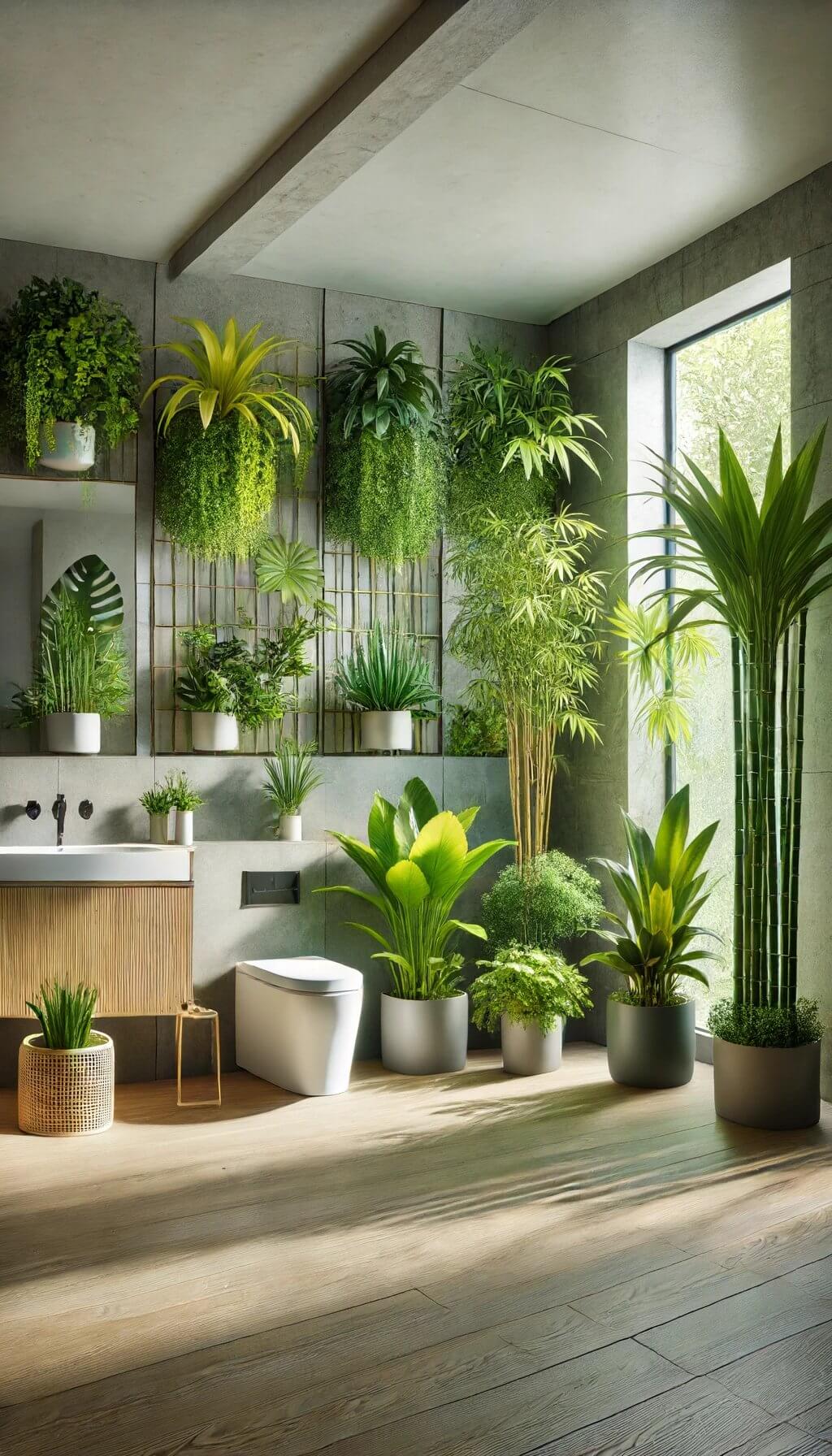
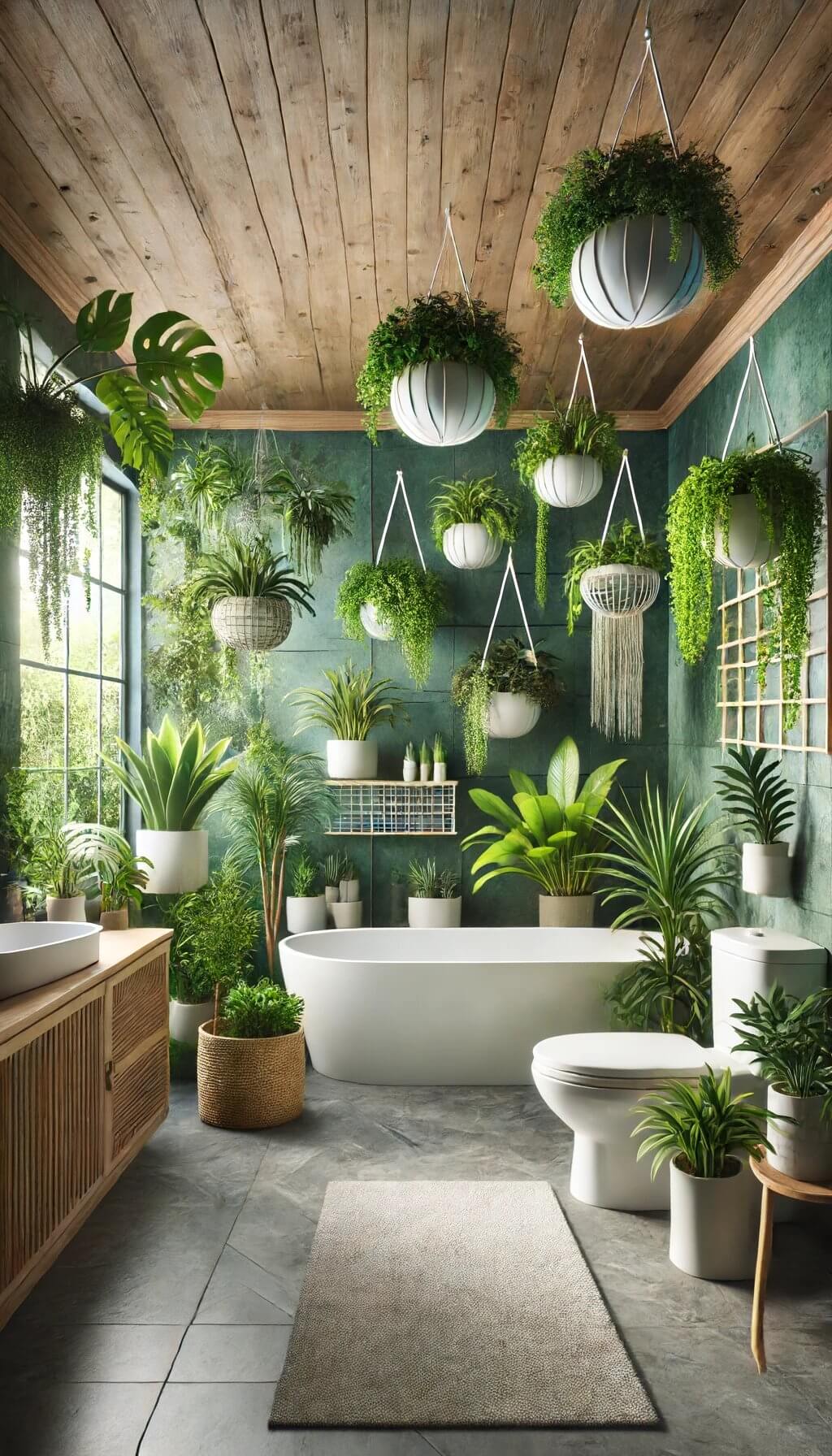
Instead of scattering single plants around the room, group three or four pots of varying heights in one corner for a small “living wall” effect, or install a genuine vertical planter if the bathroom gets enough indirect light.
This concentrates the greenery’s visual impact in one spot rather than spreading it thin, and it’s easier to actually water and maintain a cluster than plants scattered across multiple surfaces.
10. Soft, Layered Lighting
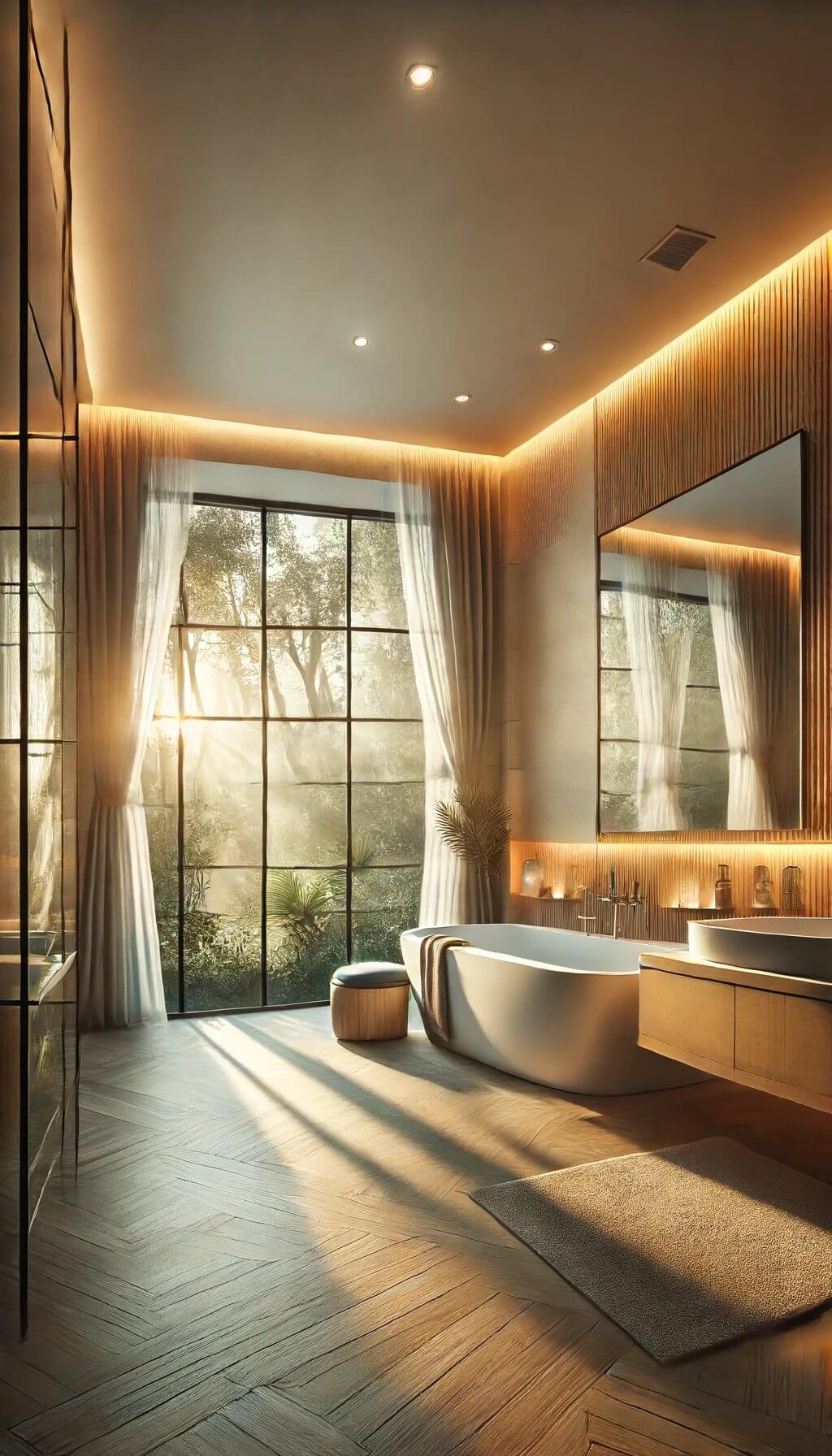
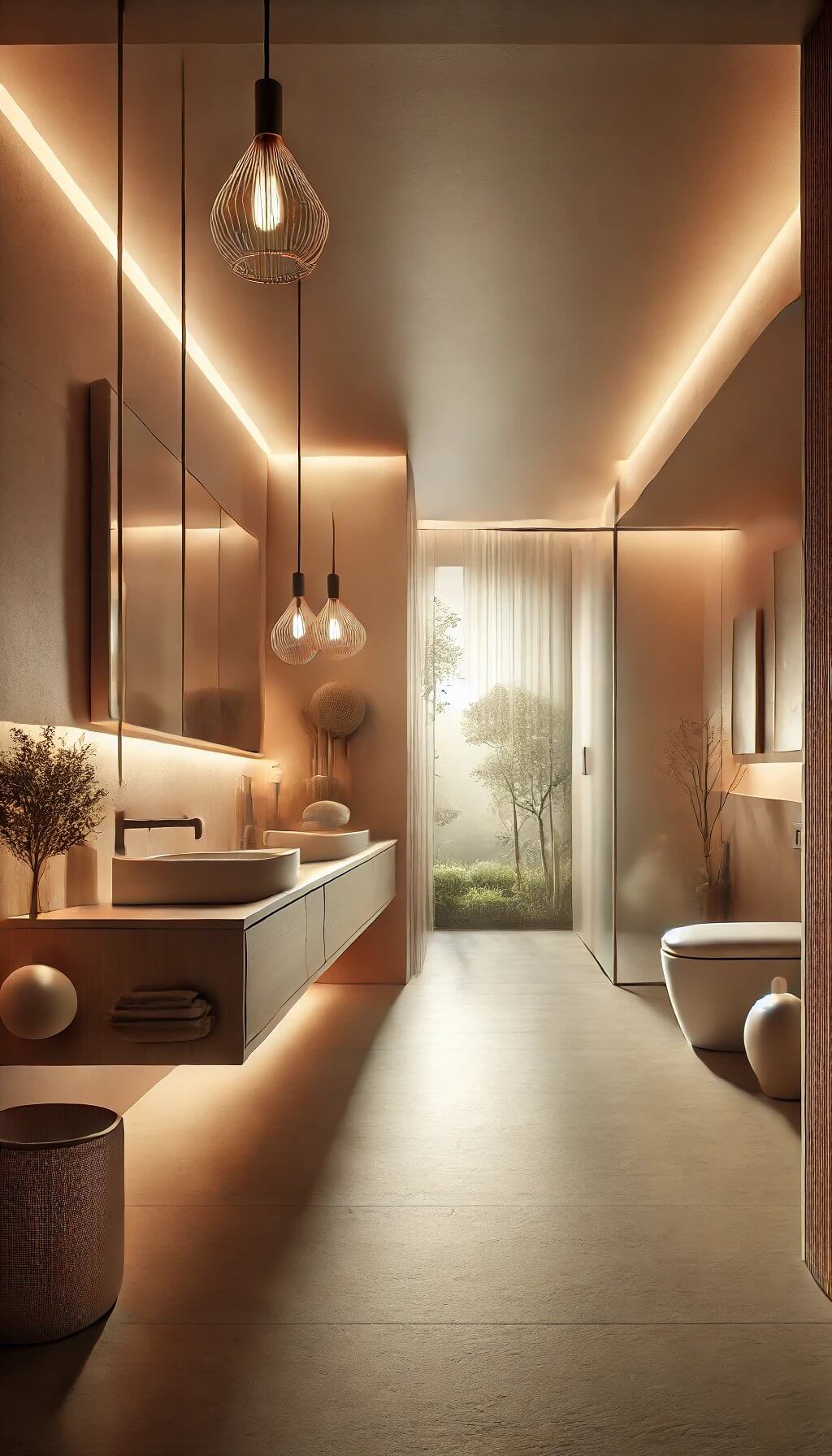
Skip the single harsh overhead light. Layer a dimmable main fixture with a smaller accent light, a sconce beside the mirror or a warm LED strip under the vanity, and use warm white bulbs (around 2700-3000K) rather than cool white, which reads as clinical rather than calming.
Any fixture within reach of the tub or shower spray zone needs to be rated for damp or wet locations specifically, not just any indoor fixture, since a standard fixture isn’t built to handle bathroom moisture safely. These small bathroom lighting ideas go deeper on layout if your bathroom is on the smaller side.
11. Open Space Layout
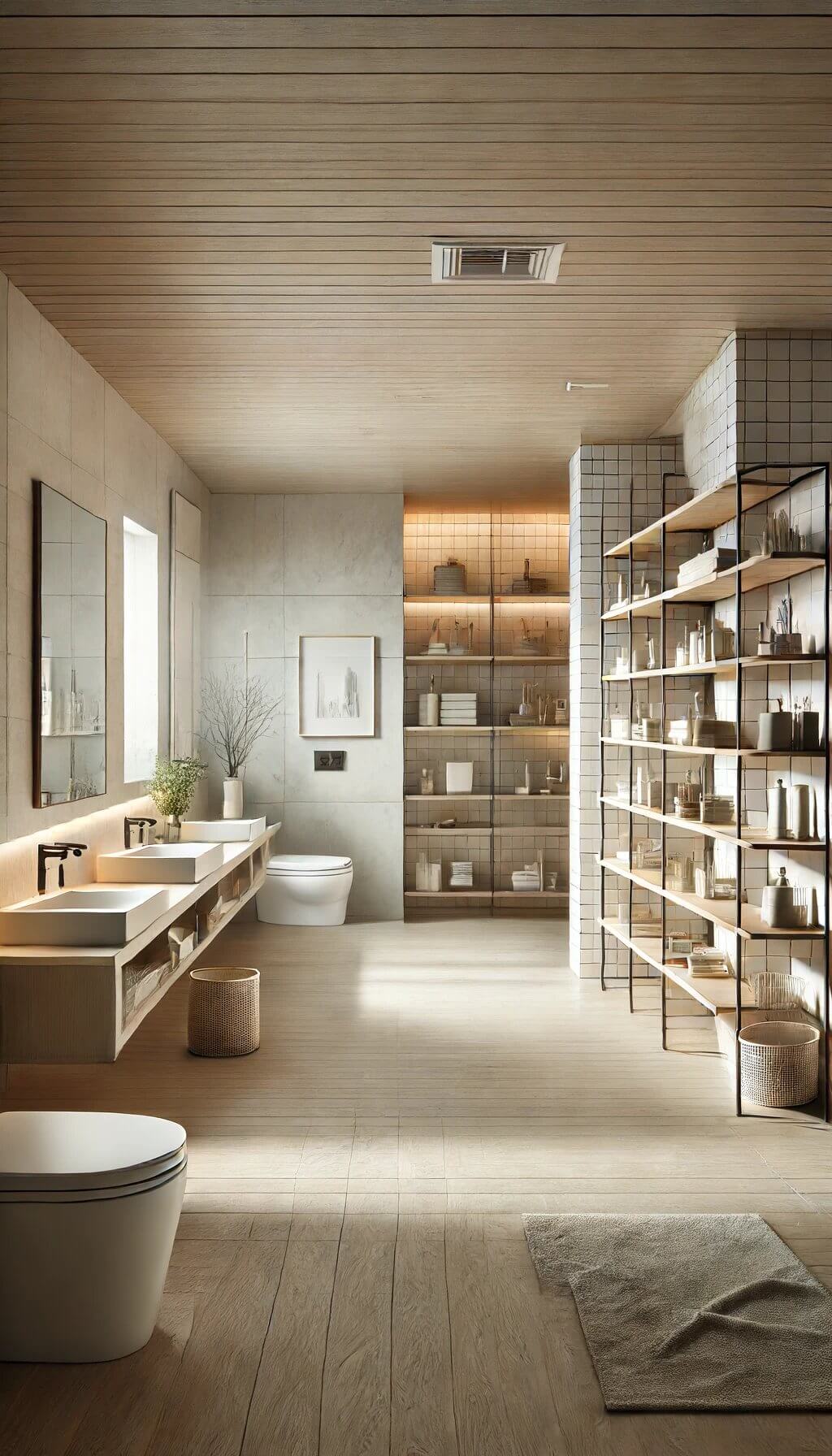
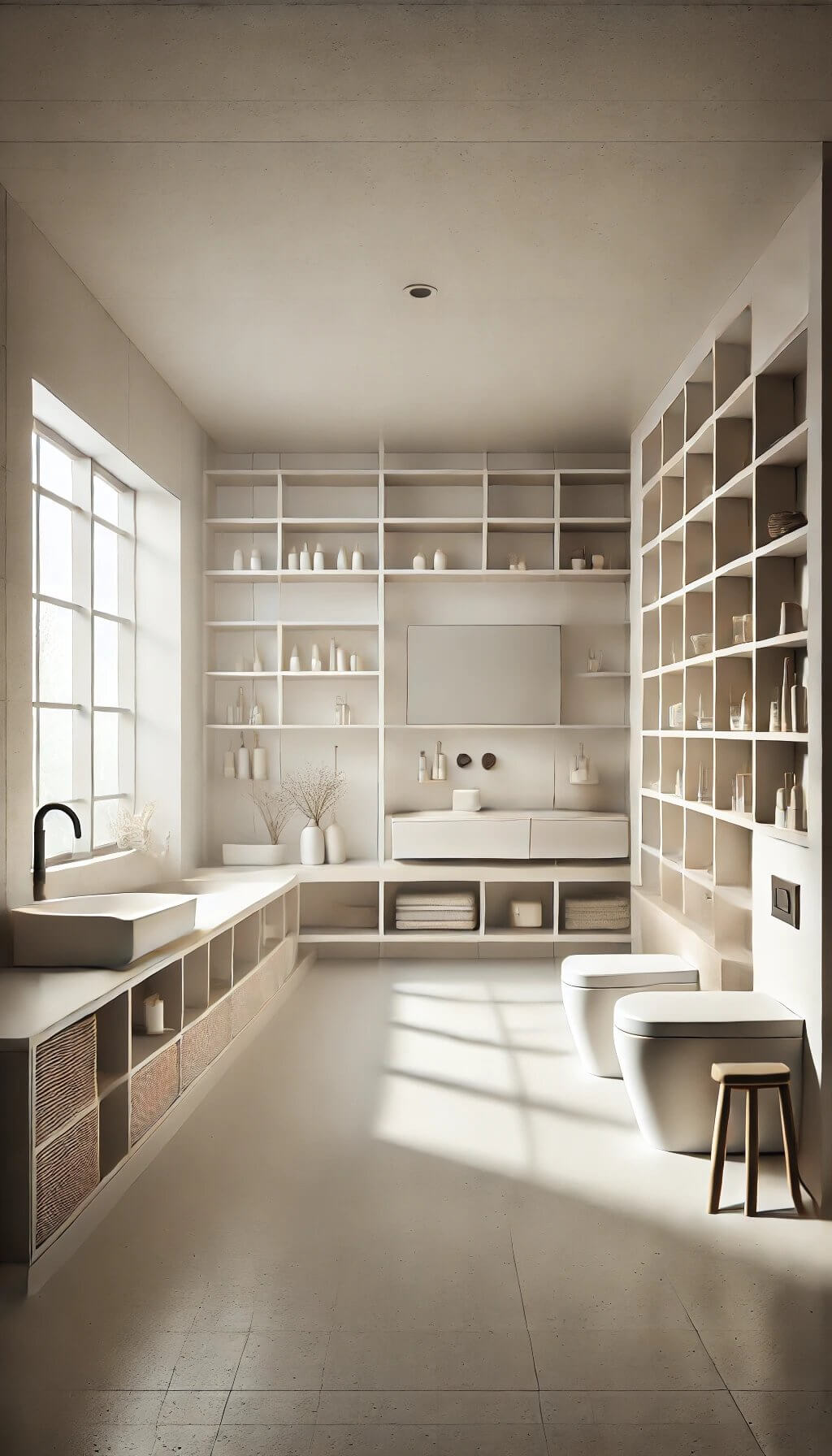
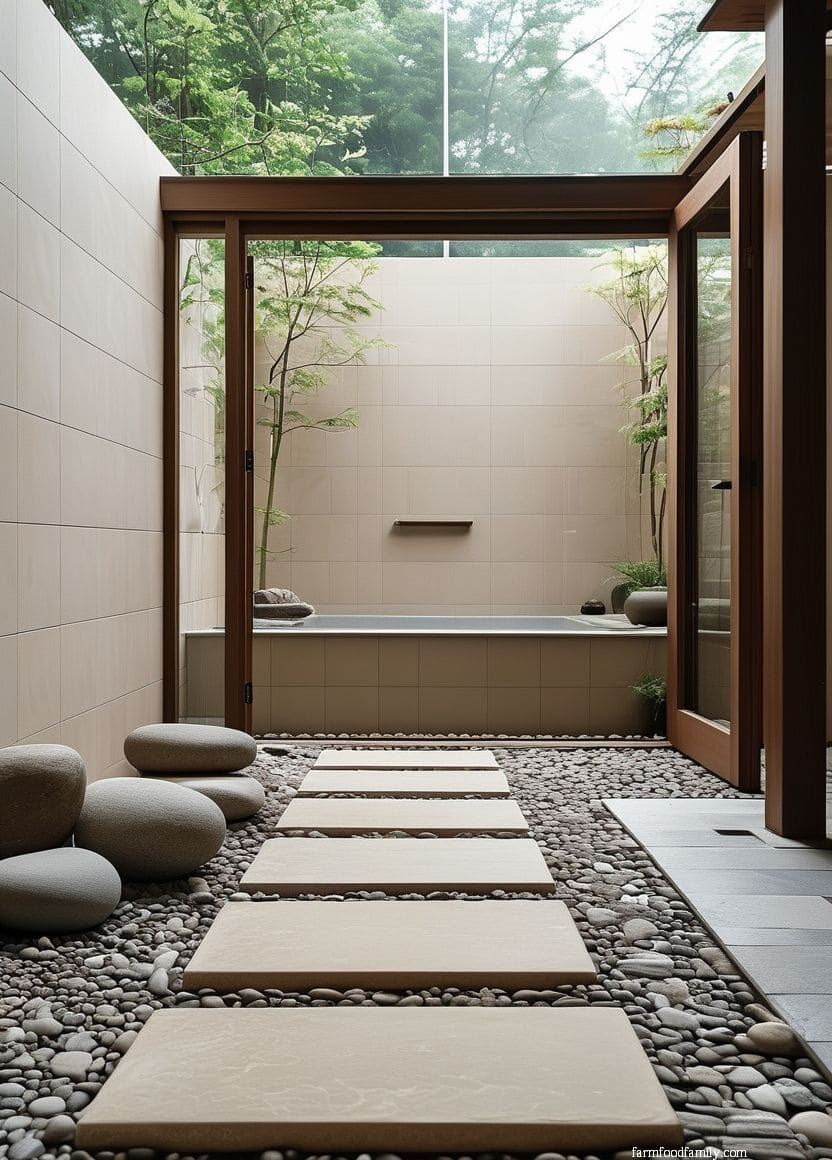
An open, uncluttered floor plan, minimal visible plumbing, a wall-mounted toilet, a vanity that doesn’t crowd the walkway, makes even a genuinely small bathroom feel more spacious and calm.
If a full layout change isn’t realistic, the same effect comes from simply removing anything freestanding that isn’t essential (a spare hamper, an extra stool) rather than any structural work.
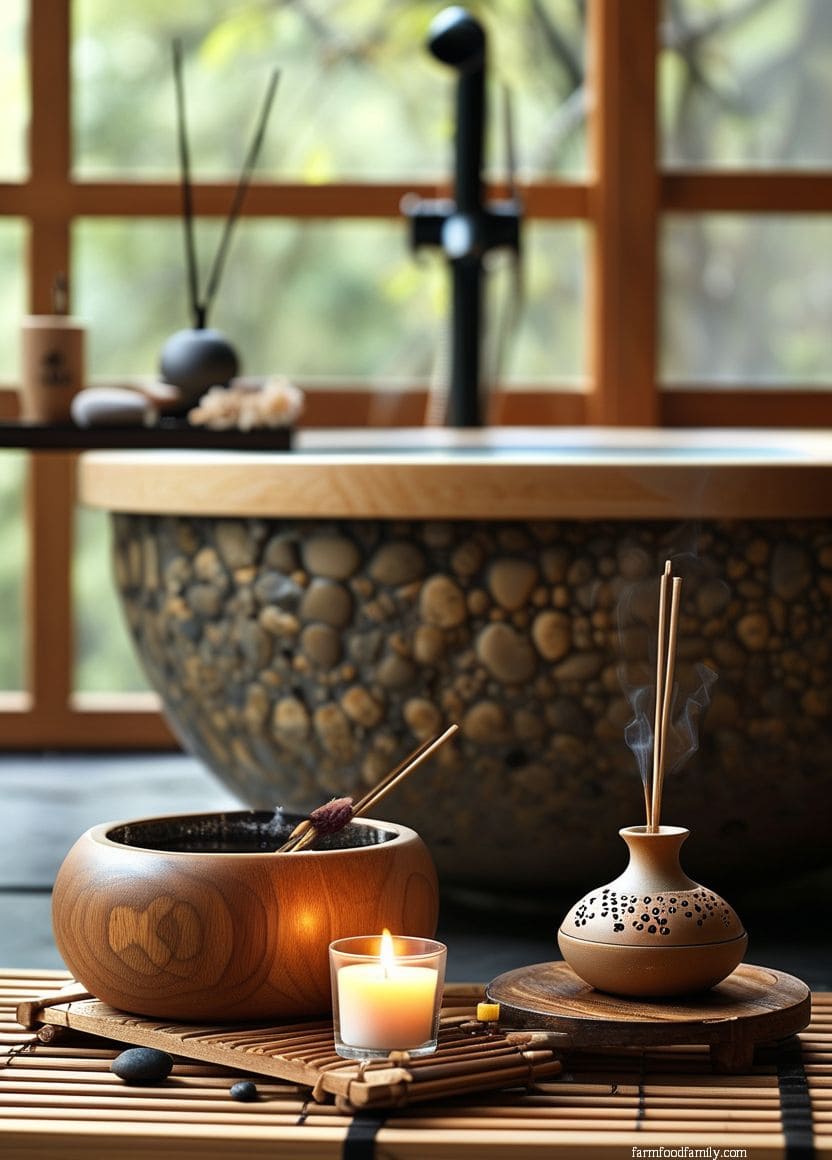
12. Natural Scents
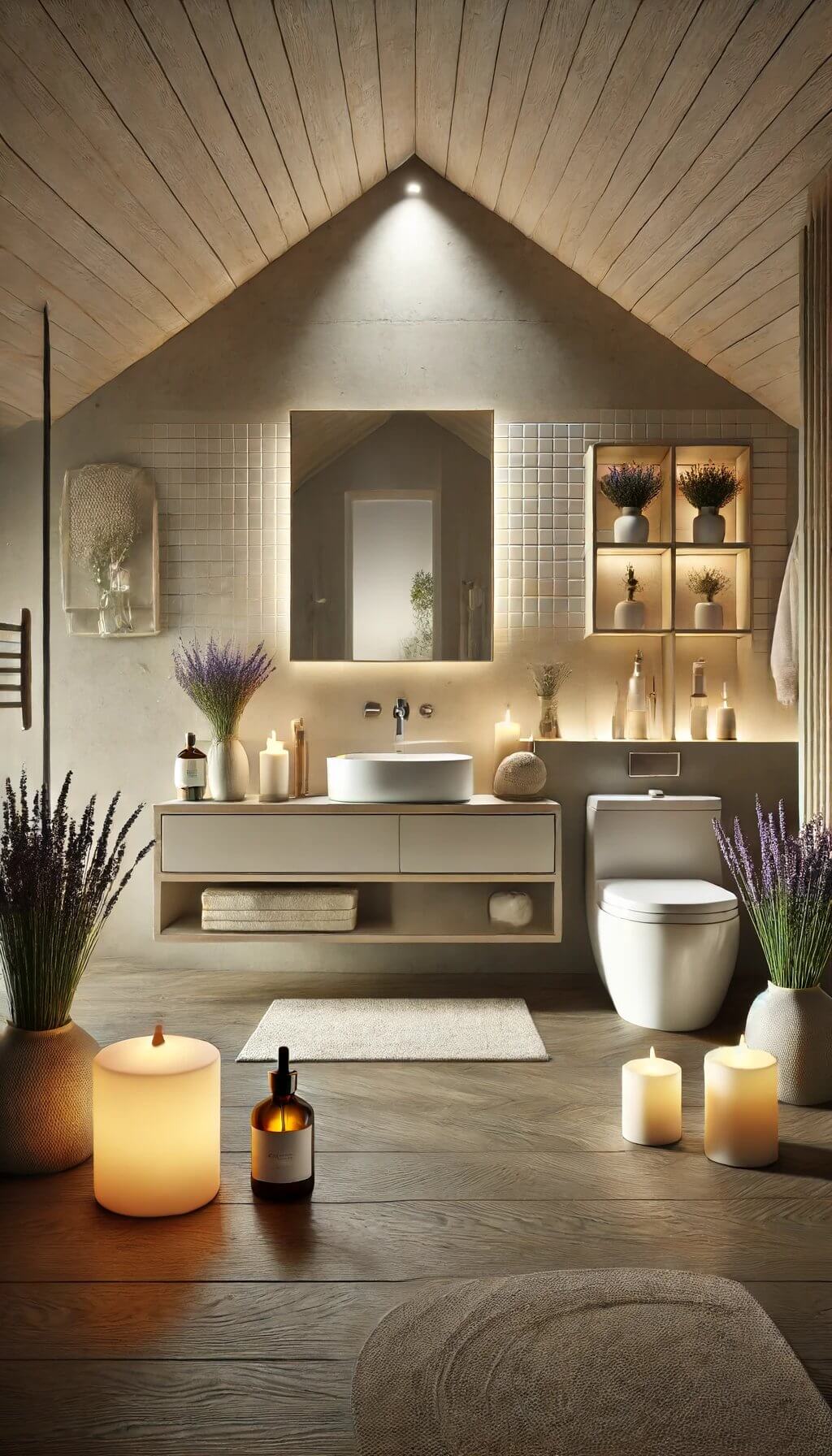
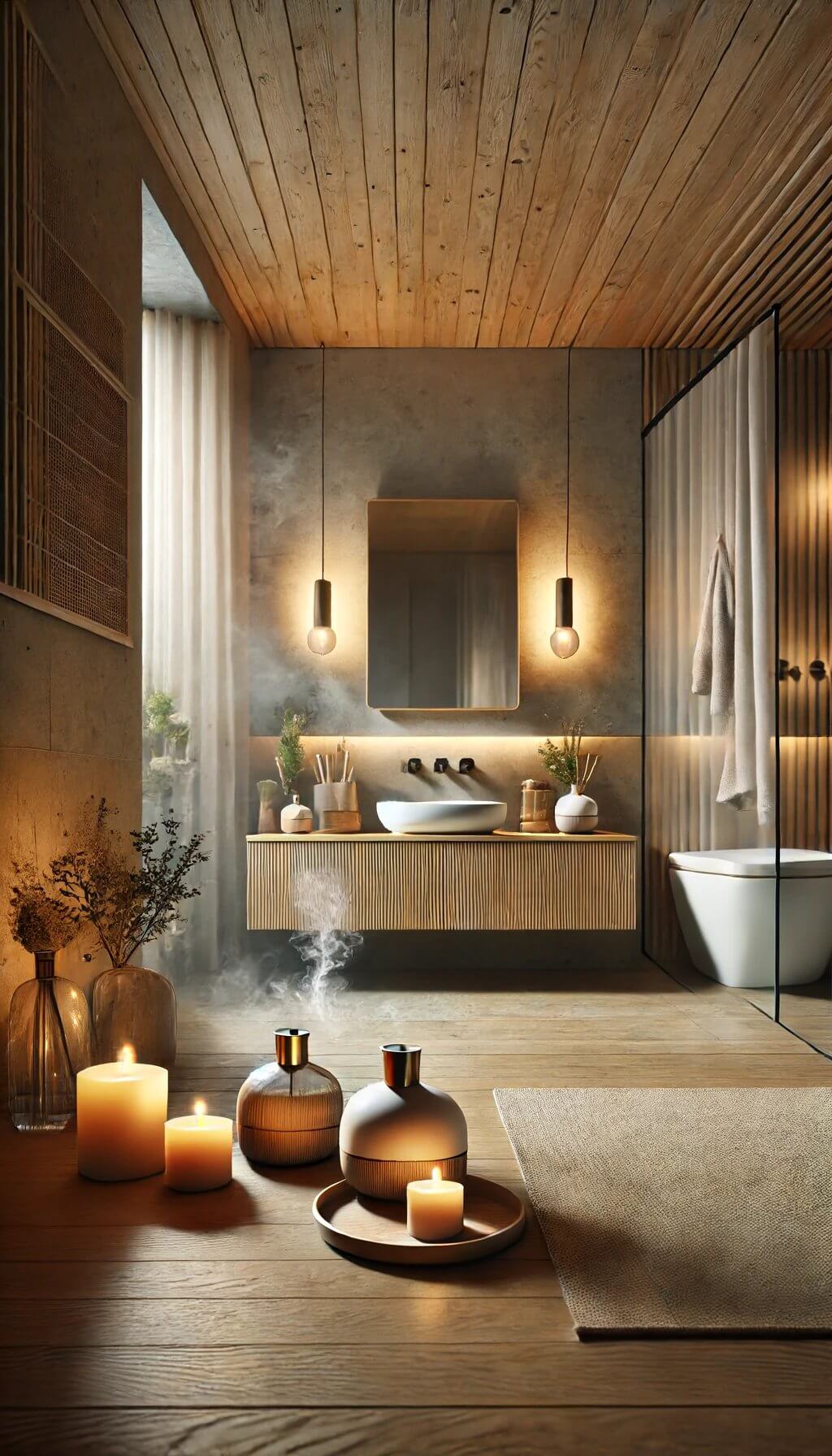
A subtle, consistent scent does a lot of the “spa” work that visuals alone can’t. A reed diffuser or an unlit bundle of eucalyptus in the shower (the steam releases its scent naturally) both work well.
If you use candles, stick to soy or beeswax over paraffin for a cleaner burn, and never leave one burning unattended in a small, enclosed room.
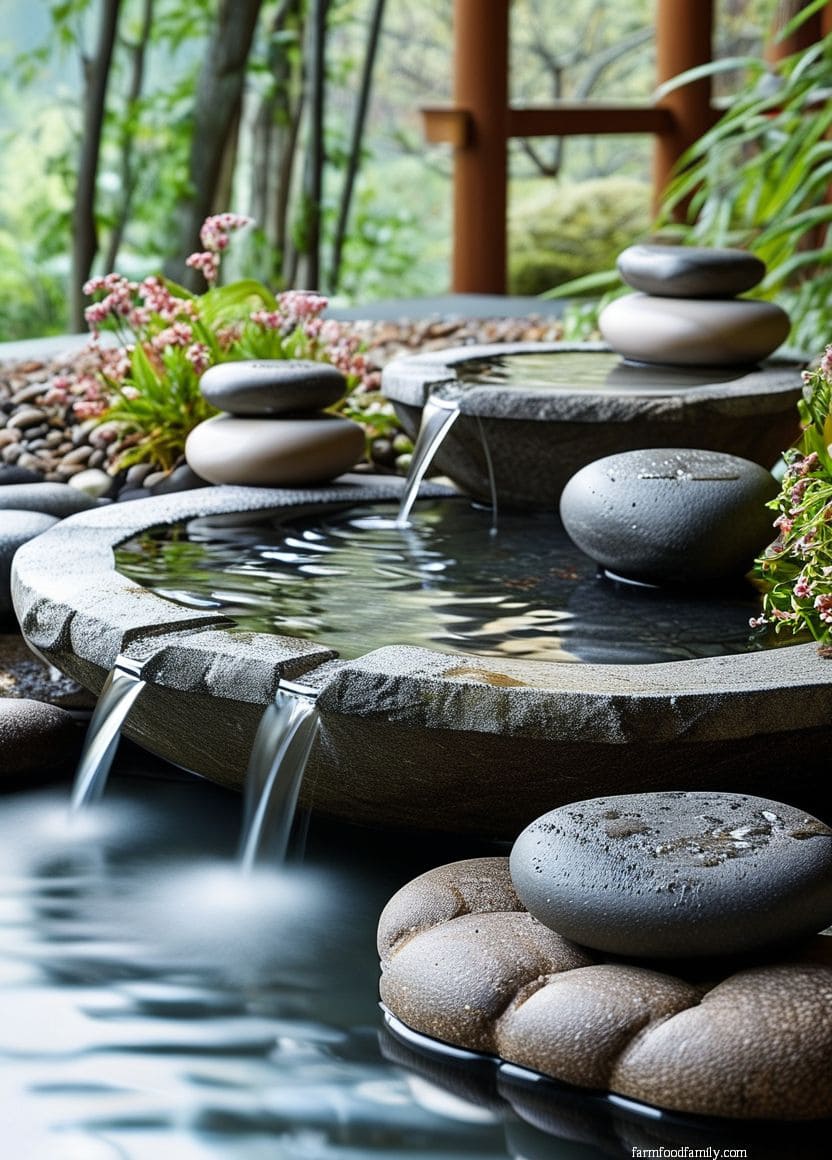
13. Water Features
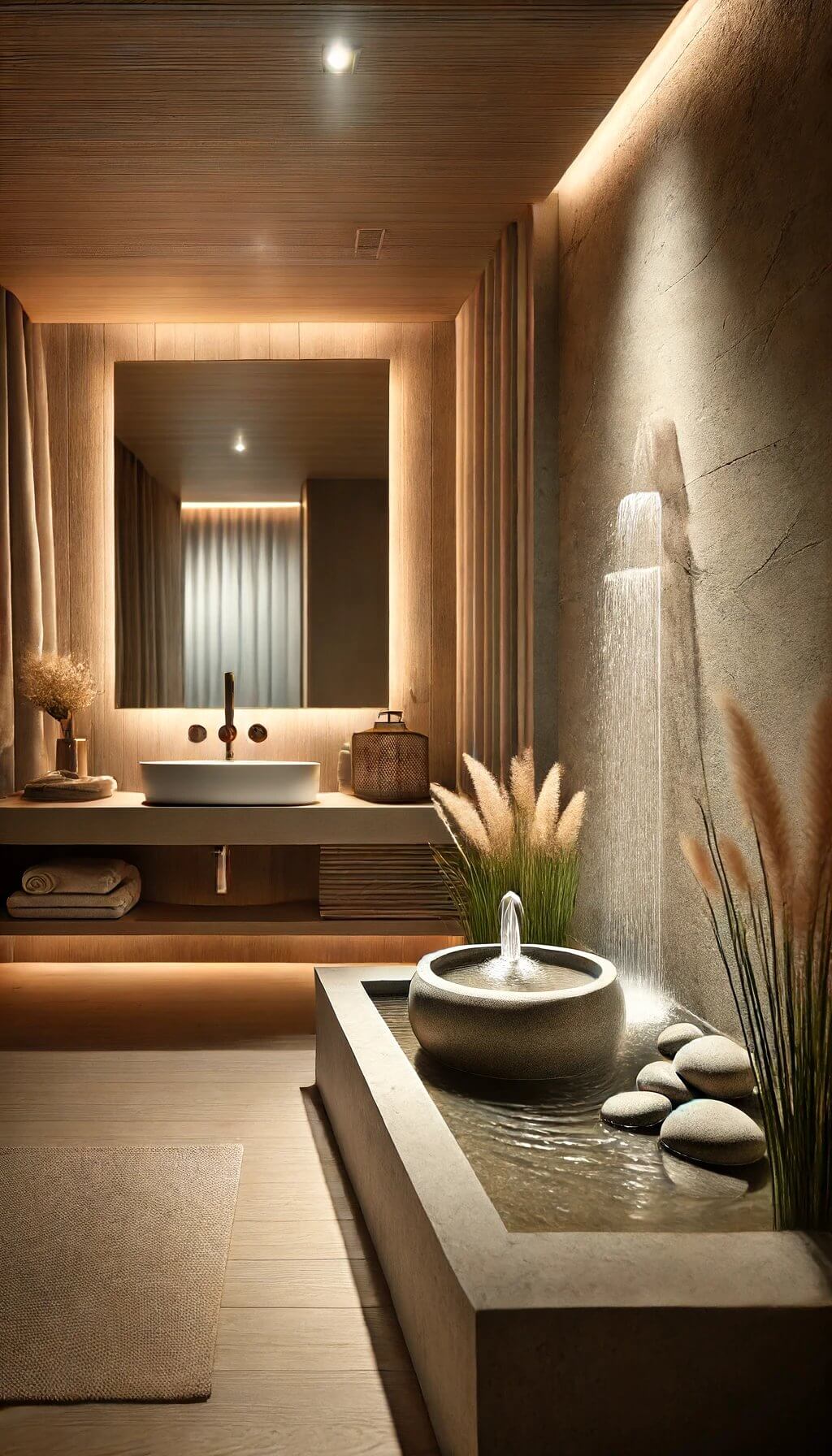
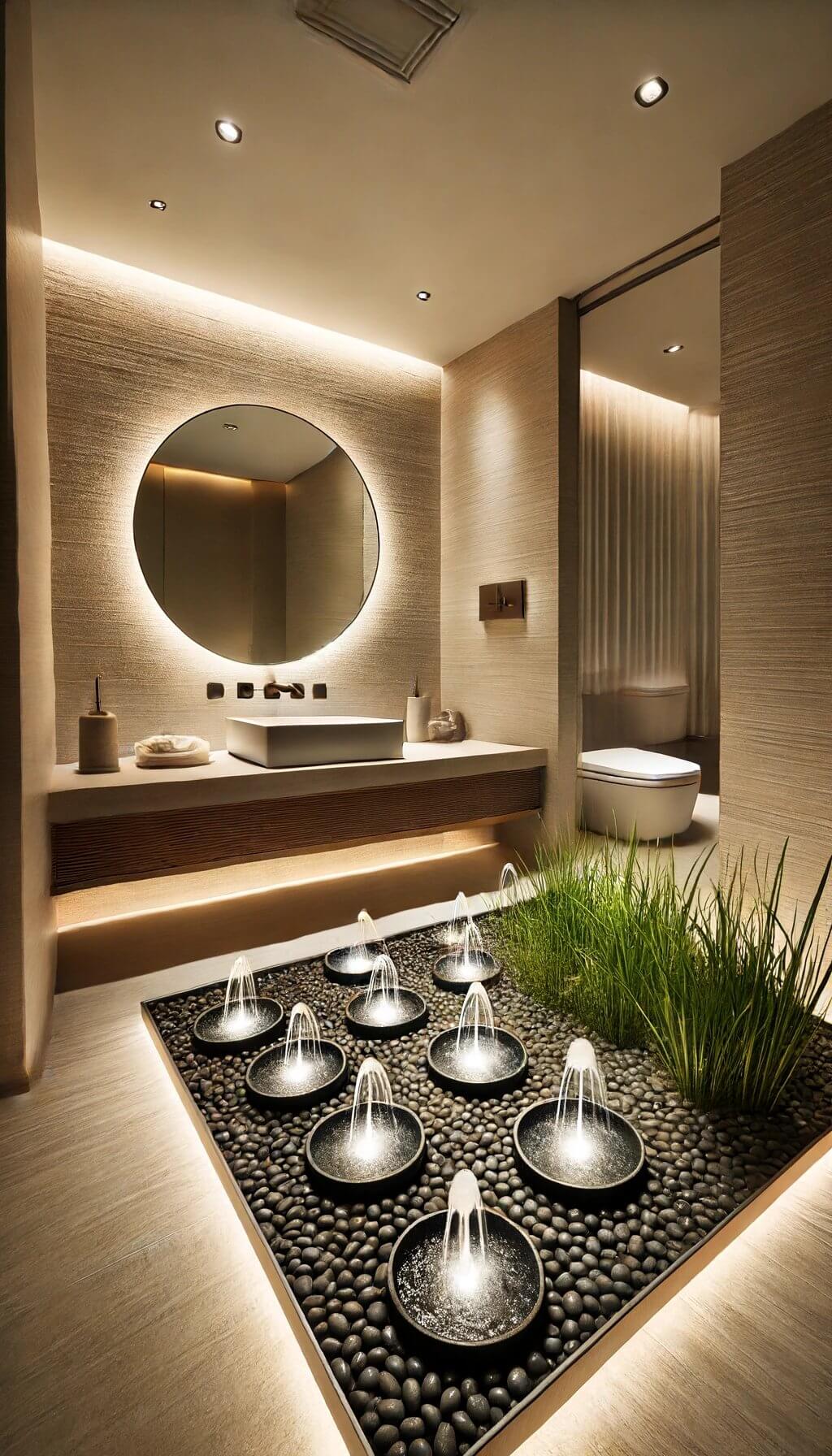
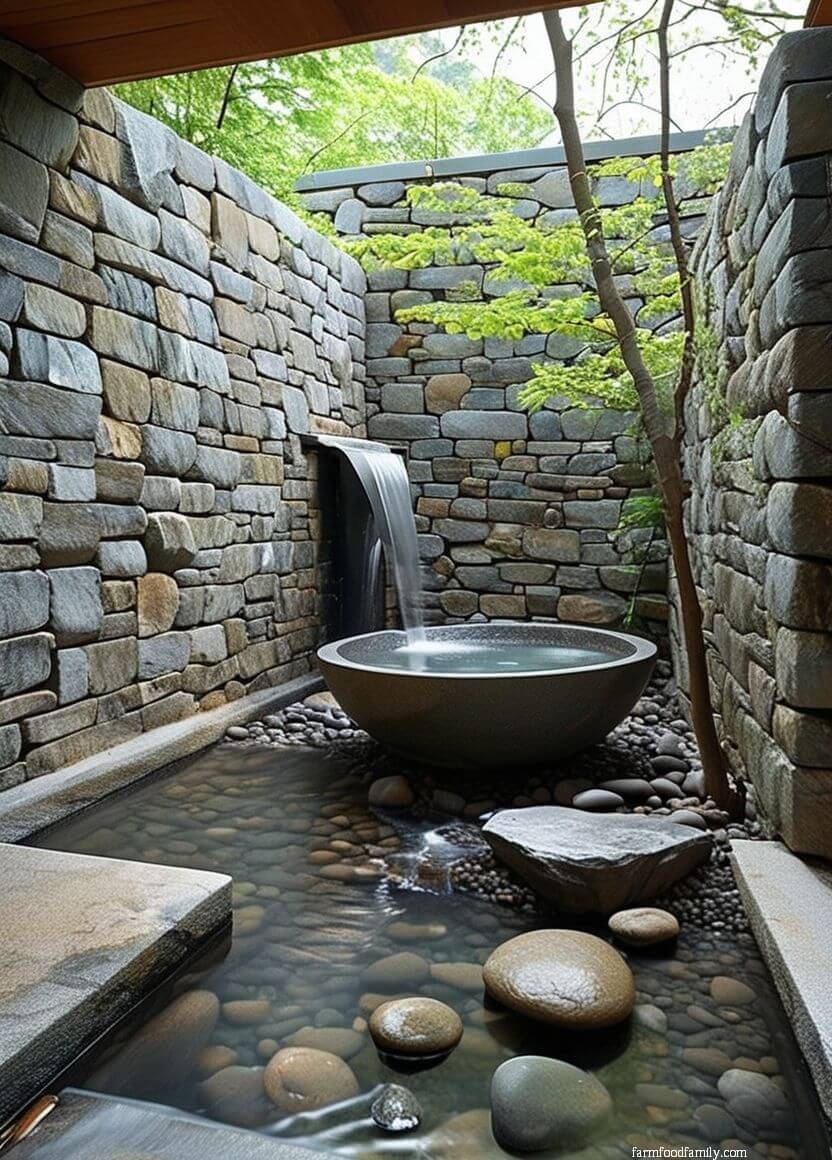
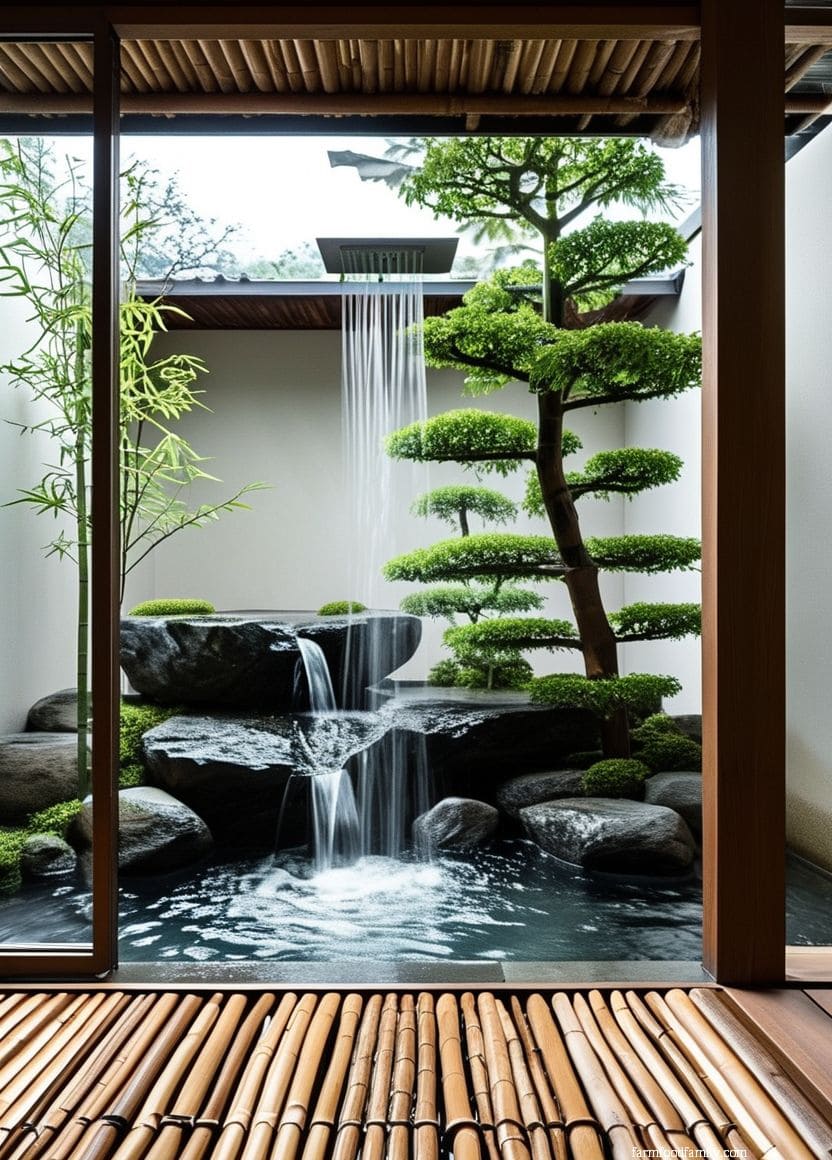
A small tabletop fountain or a wall-mounted water feature adds genuine ambient sound that masks outside noise and reads as instantly calming.
The real caveat: any water feature near an outlet needs to be on a GFCI-protected circuit (bathrooms are required to have GFCI outlets for exactly this reason) and should use a pump rated for wet or damp locations, not a generic indoor appliance, since water and standard electrical components are a real safety risk together.
14. Wooden Stools and Benches
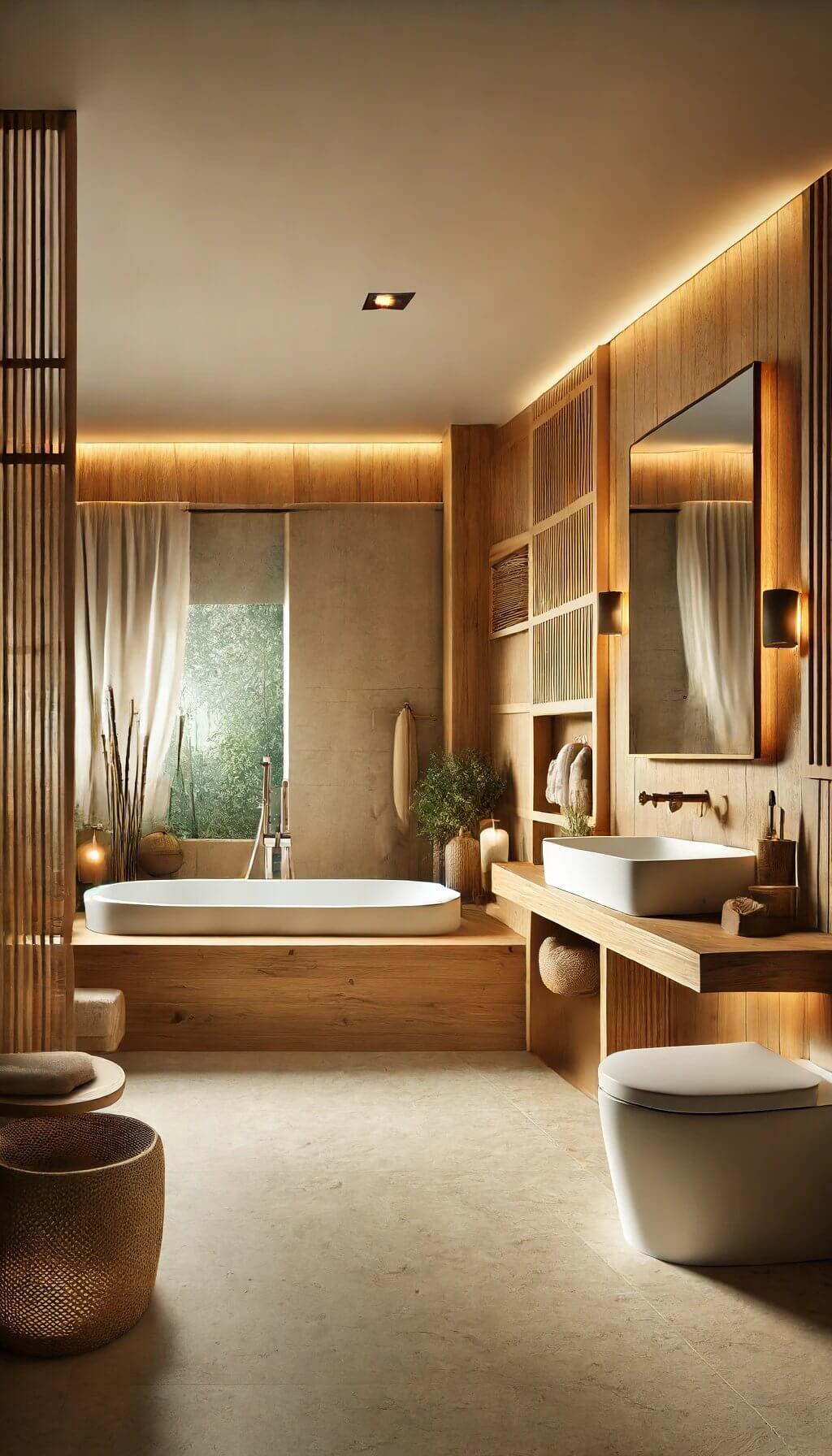
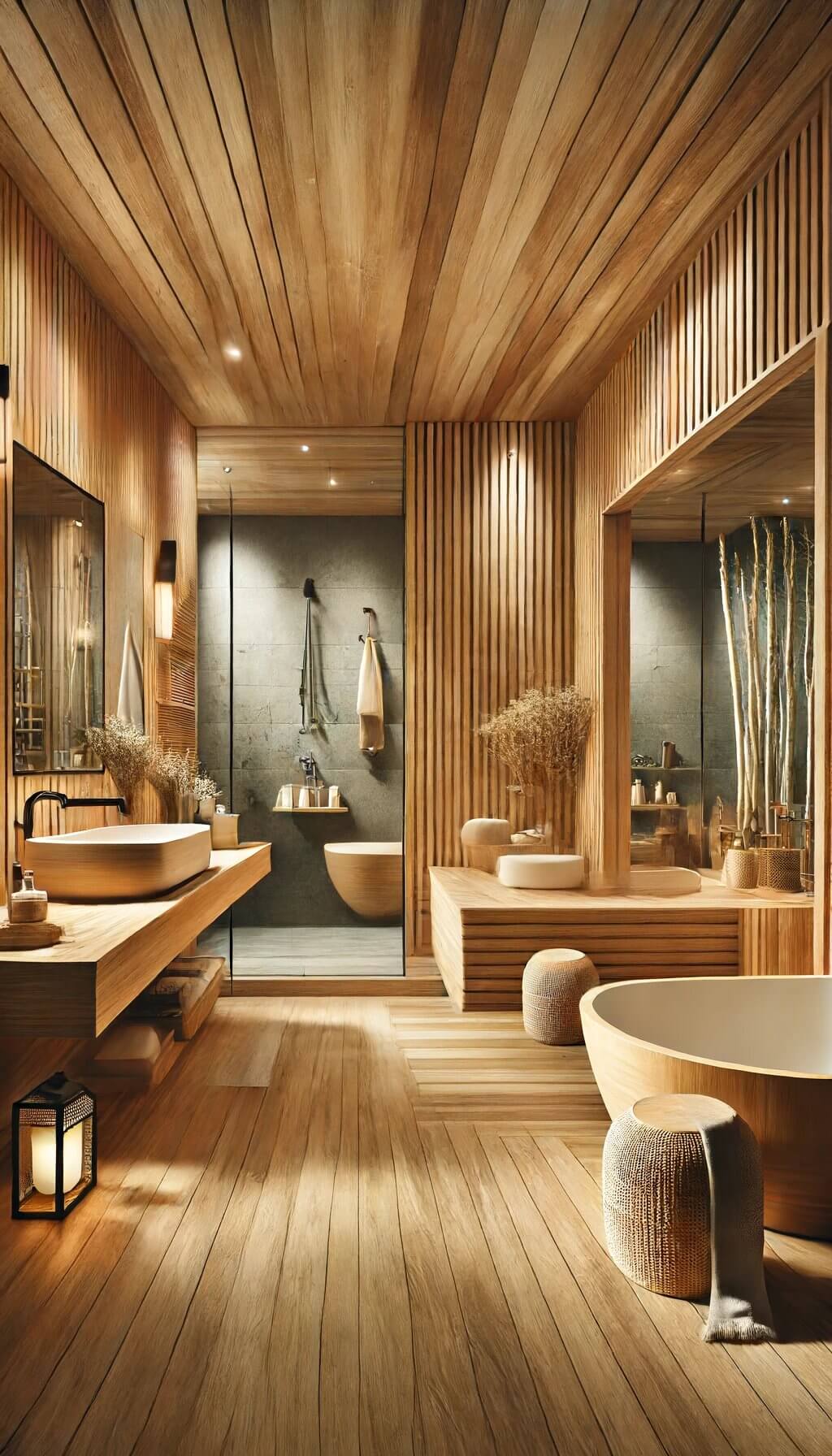
Beyond vanity and cabinetry, a simple teak shower stool or a low wooden bench by the tub adds function and warmth at the same time, somewhere to sit while drying off, set a towel, or just slow down.
Choose the same moisture-resistant wood species as your vanity (teak or cedar) so it holds up to direct water contact rather than a decorative-only wood that will warp.
15. Soft, Fast-Drying Textiles
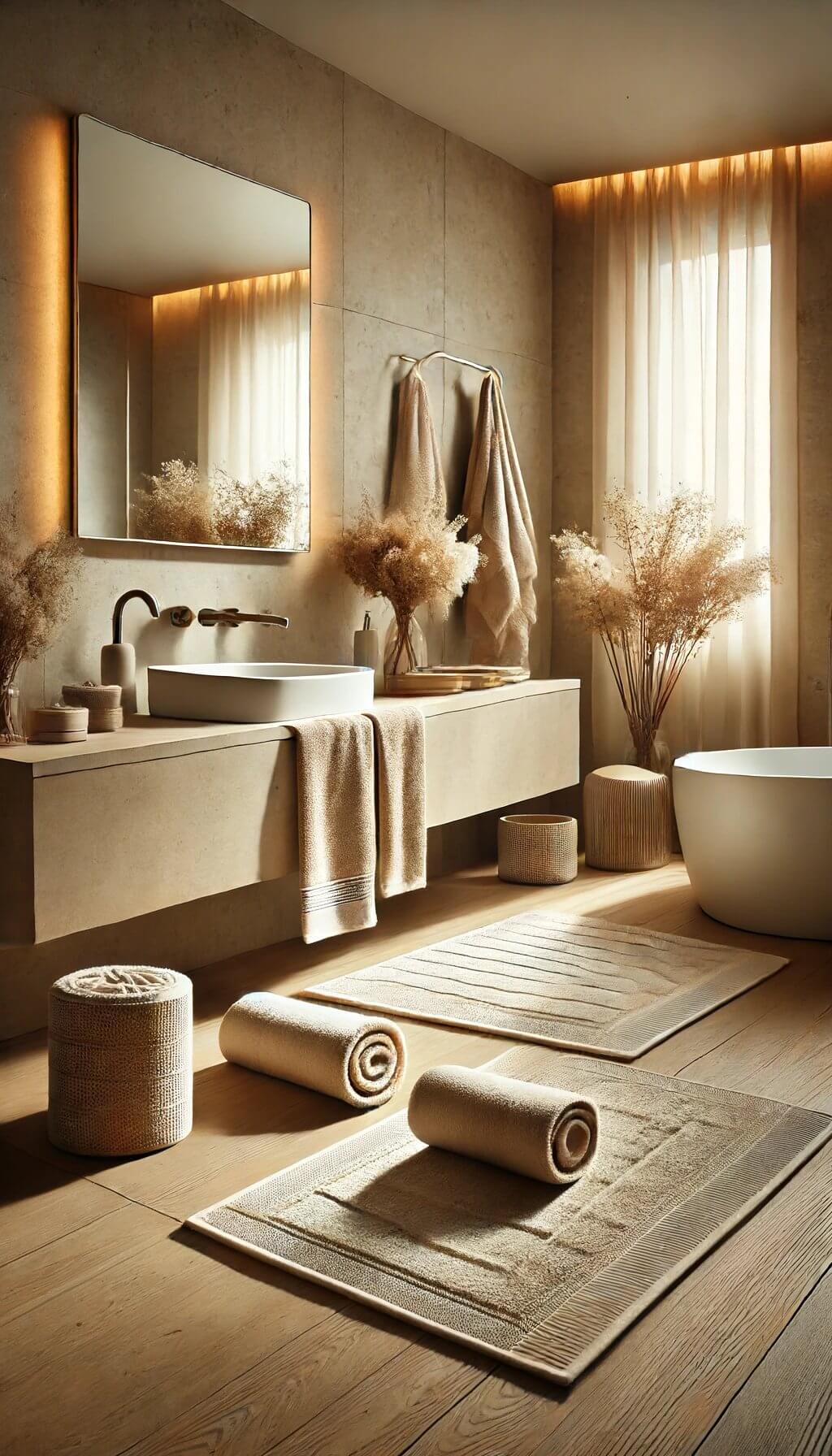
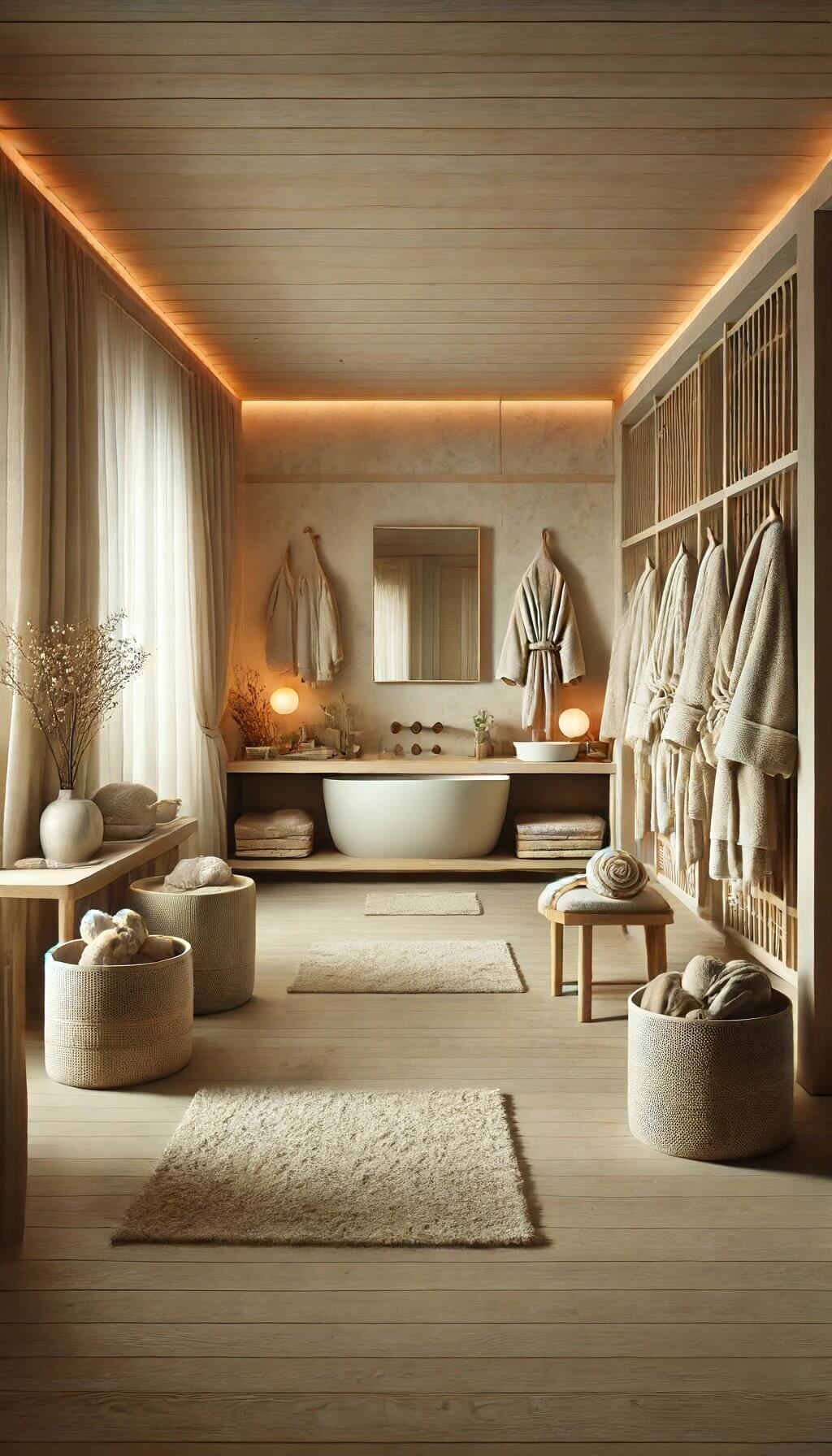
Plush towels and bath mats feel luxurious, but in a humid bathroom, anything that stays damp too long becomes a mold risk.
Look for a bath mat labeled quick-dry or made from a naturally antibacterial material like bamboo, and hang towels on a bar (not a hook, which traps them in a folded, damp bundle) so they actually dry between uses.
16. Simplified Storage Solutions
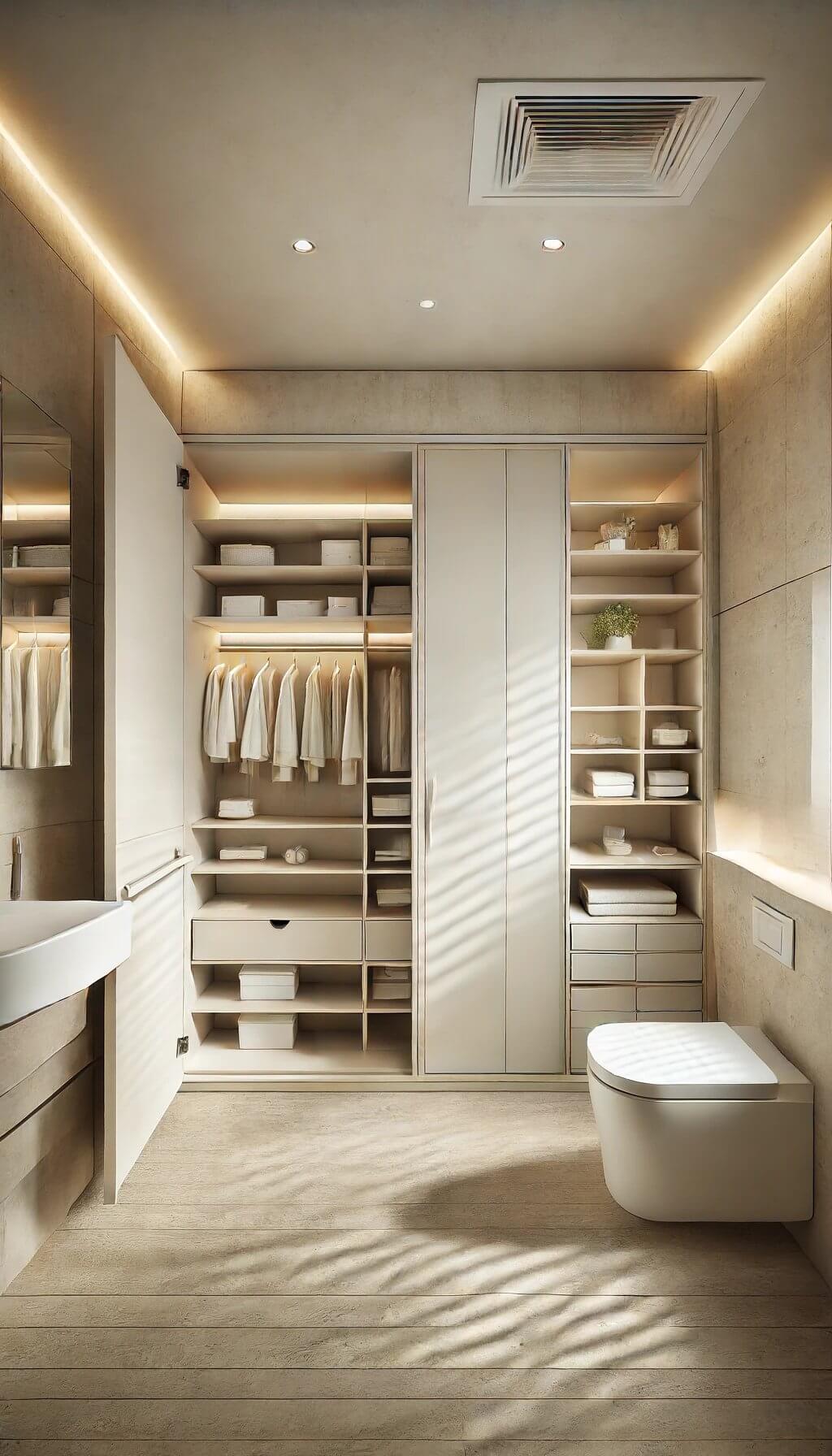
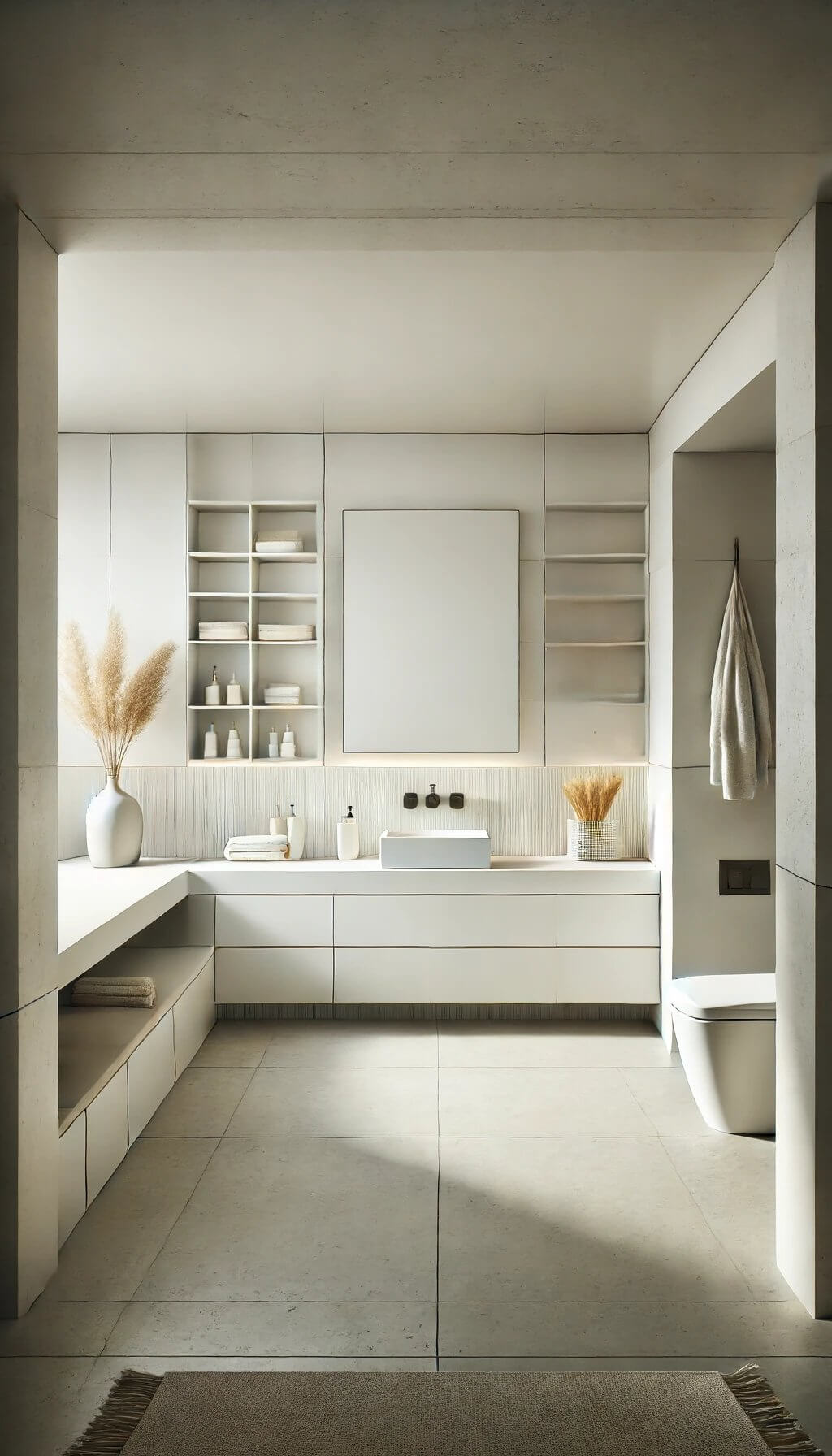
One open shelf for a curated few items (a single plant, a stack of folded towels, one piece of art) reads far calmer than a shelf packed with every bottle you own.
Move overflow, backup shampoo, cleaning supplies, extra toilet paper, into a closed cabinet entirely, visible clutter is one of the fastest ways to undo an otherwise calm room.
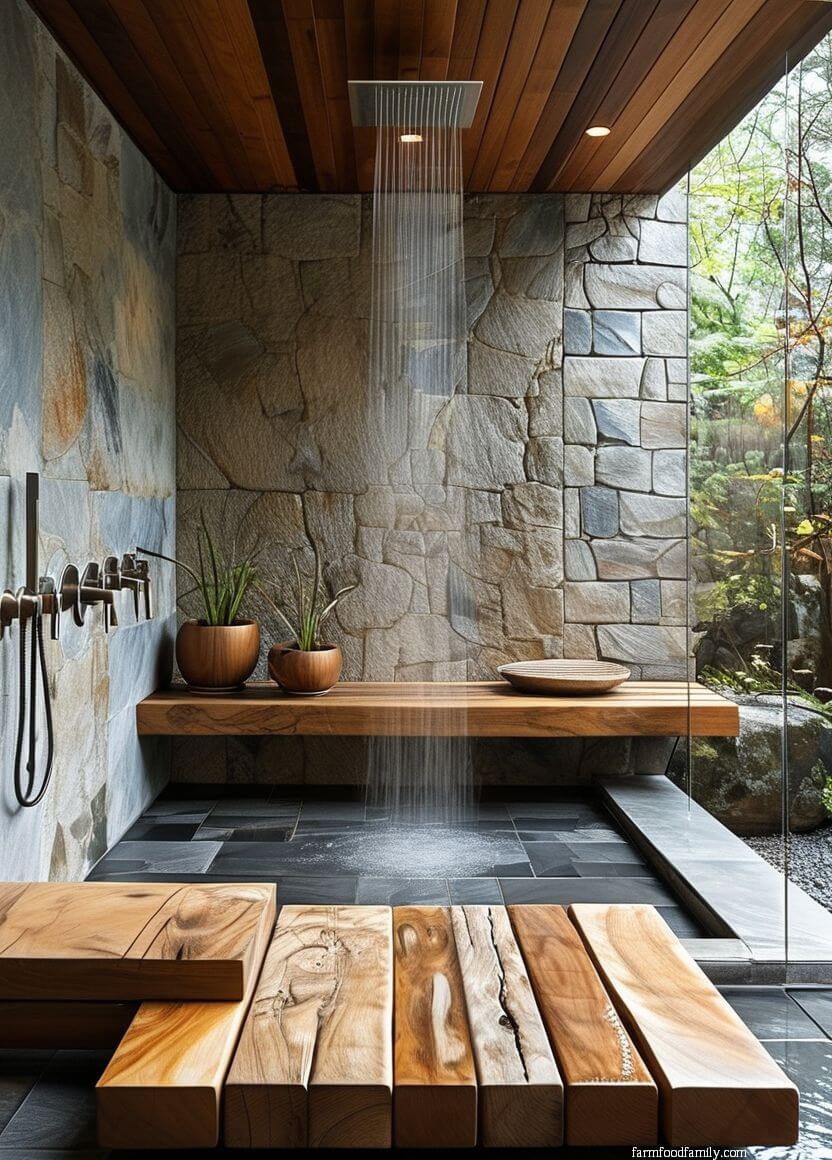
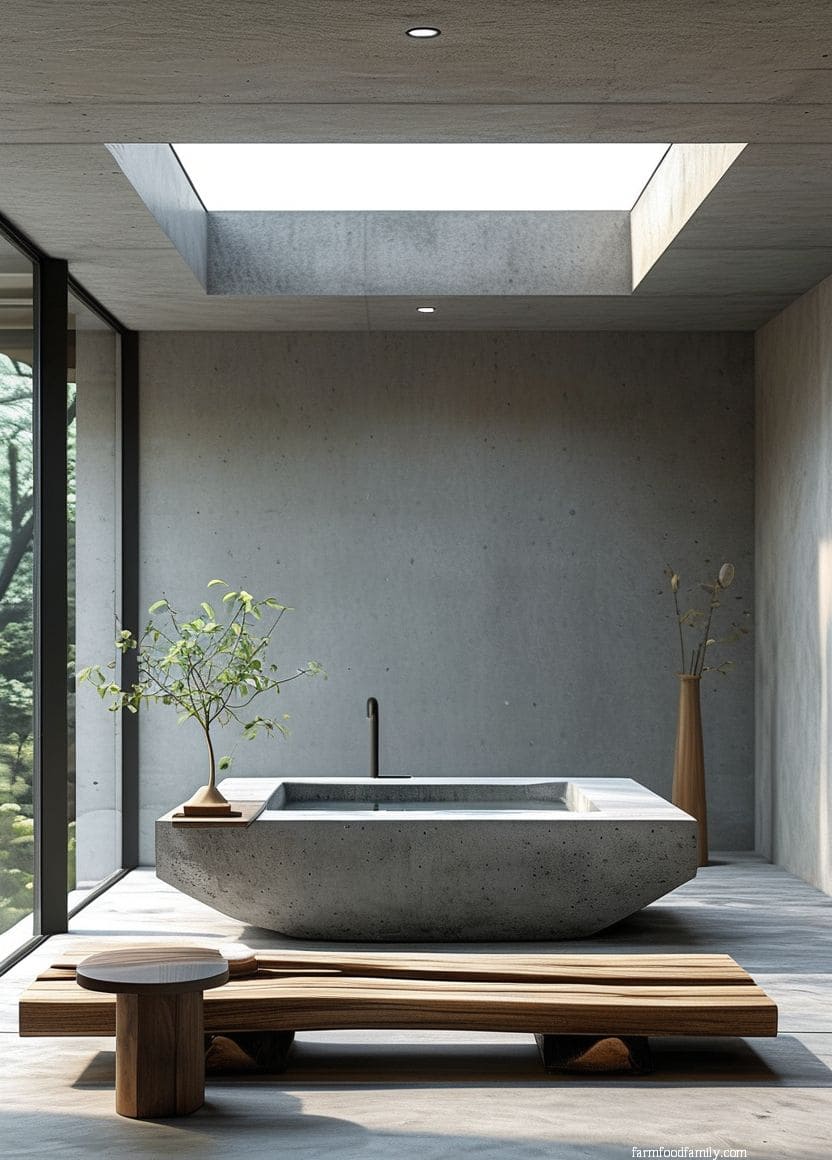
17. A Stone or Concrete Shower Bench
A built-in bench, in the same natural stone or a warm-toned concrete, gives a shower genuine function (a place to rest a foot while shaving, sit while the steam works) while extending the room’s material palette. Like any wet-area stone or concrete surface, this needs the same sealing and slip-rated finish as the shower floor itself.
18. Zen-inspired Accessories
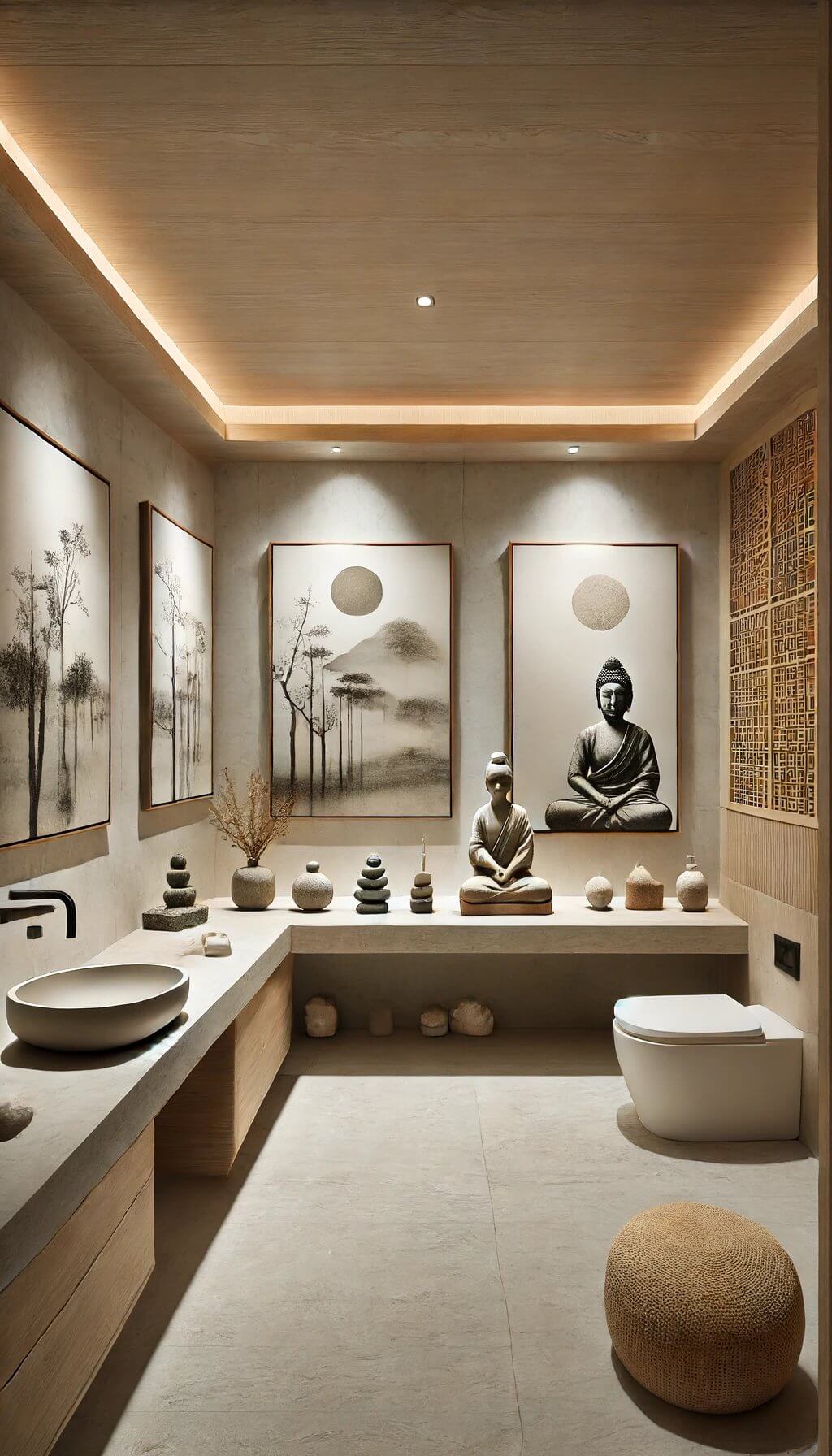
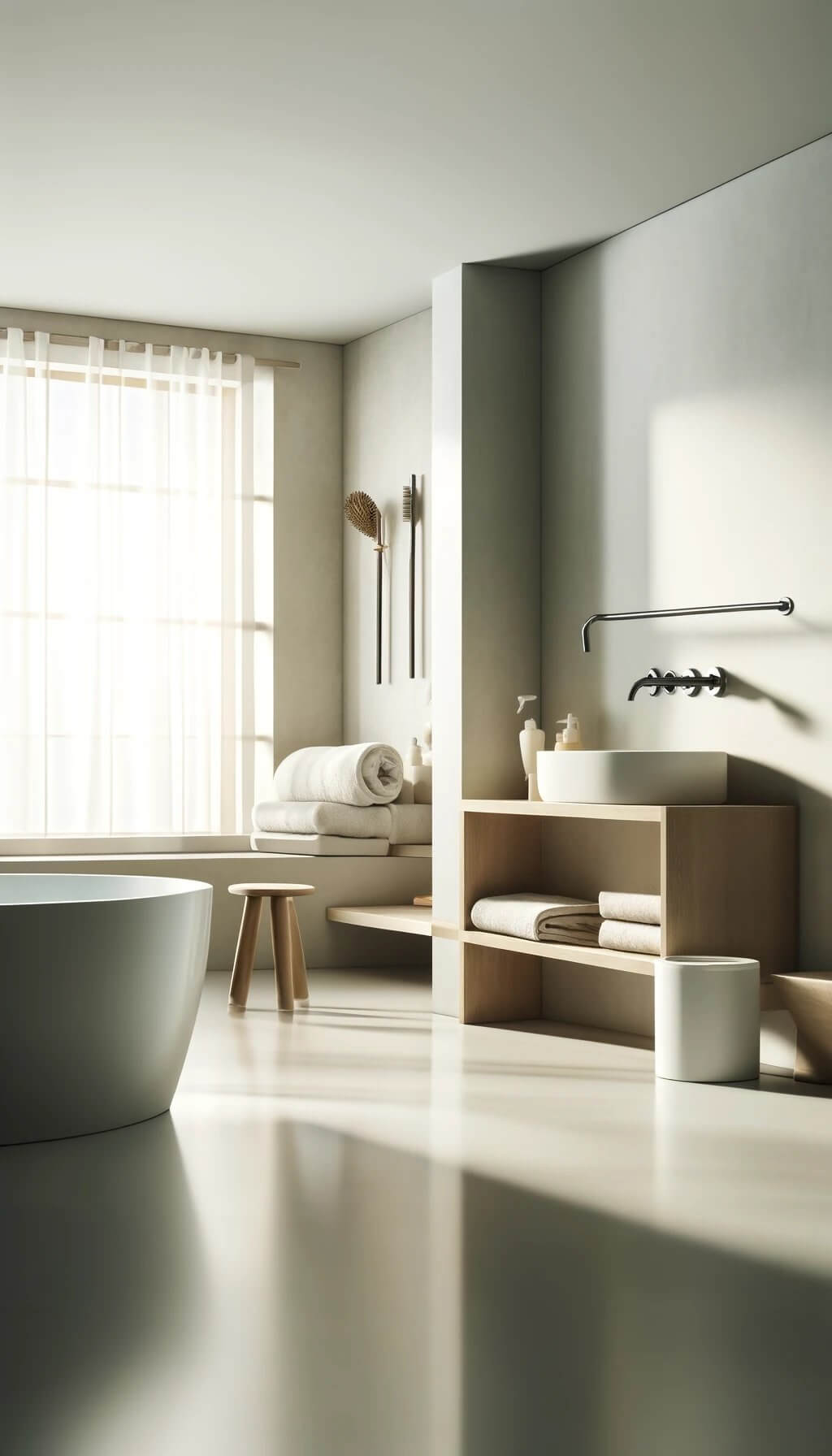
A few intentional objects, a small bamboo tray, a simple ceramic dish, a single stone or shell from a real trip, do more than a shelf of generic “spa” decor. The goal is objects that feel personally meaningful or genuinely well-made, not a themed collection bought all at once, which tends to read as staged rather than lived-in.
19. Bathing Rituals
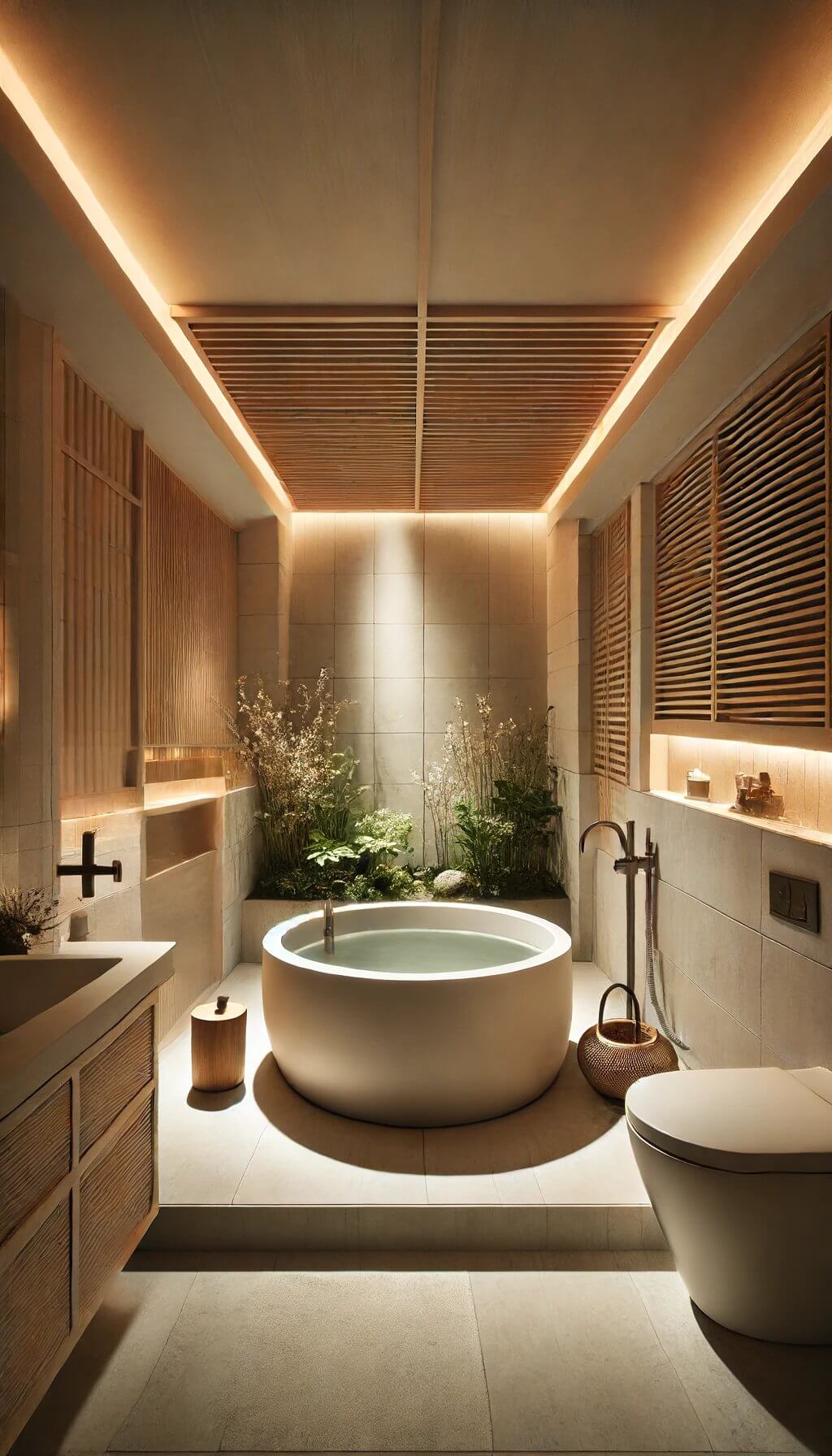
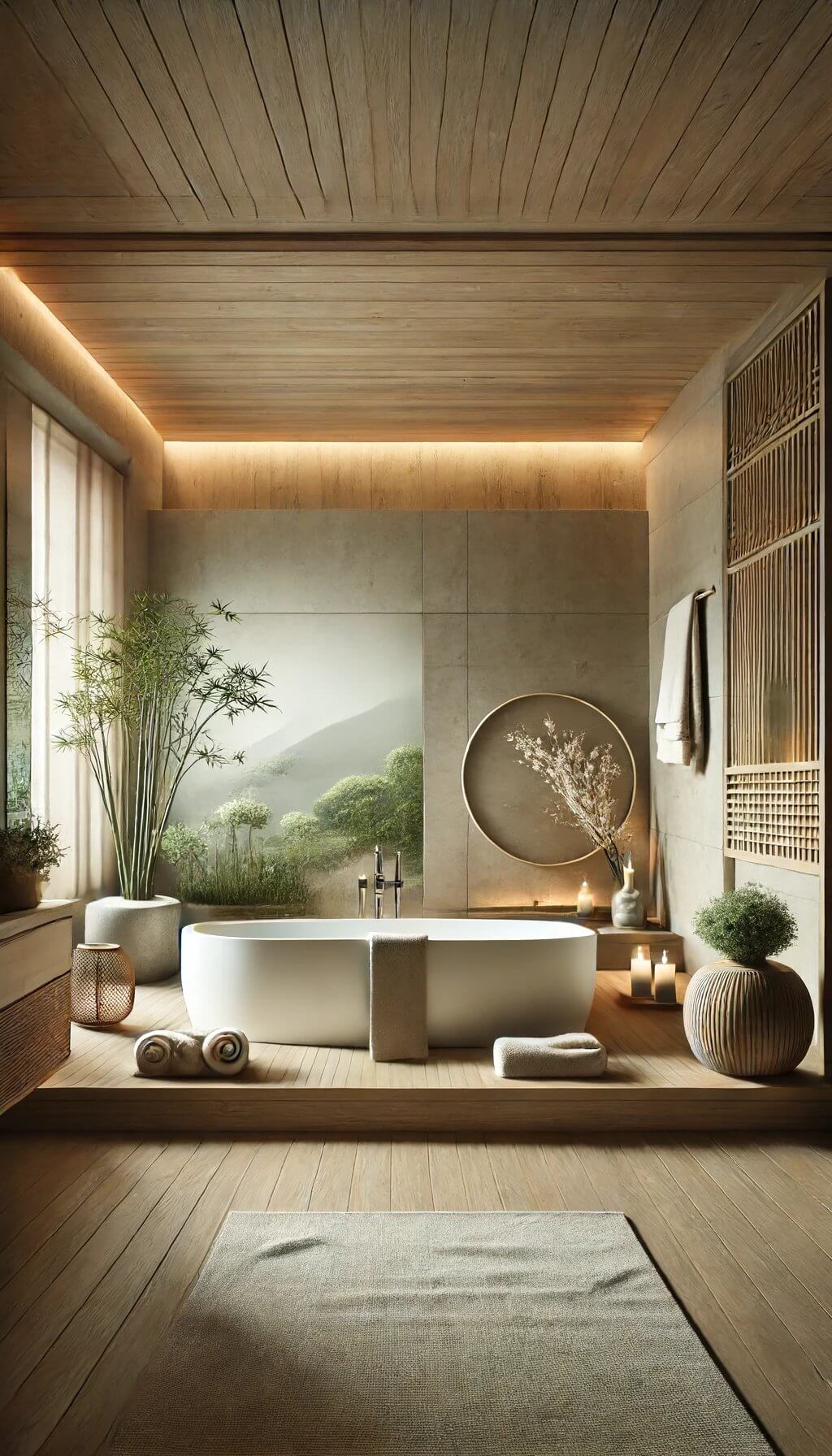
A zen bathroom earns its name through use, not just looks: a slower, more intentional bath or shower routine, warm water, a few minutes without a phone, a consistent scent or sound, does more for the “spa” feeling day to day than any single object on this list. Even a five-minute version of this, a warm towel and dim lighting after a shower, is worth building as a habit rather than saving for rare occasions.
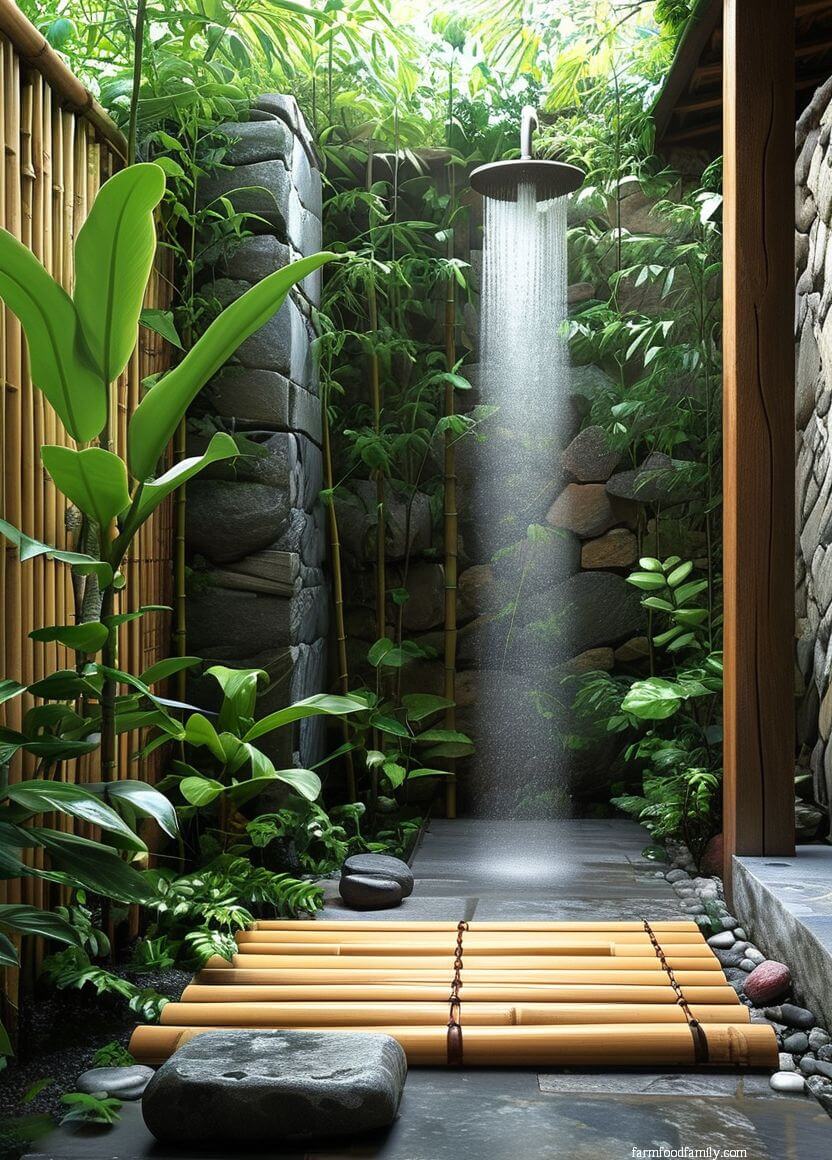
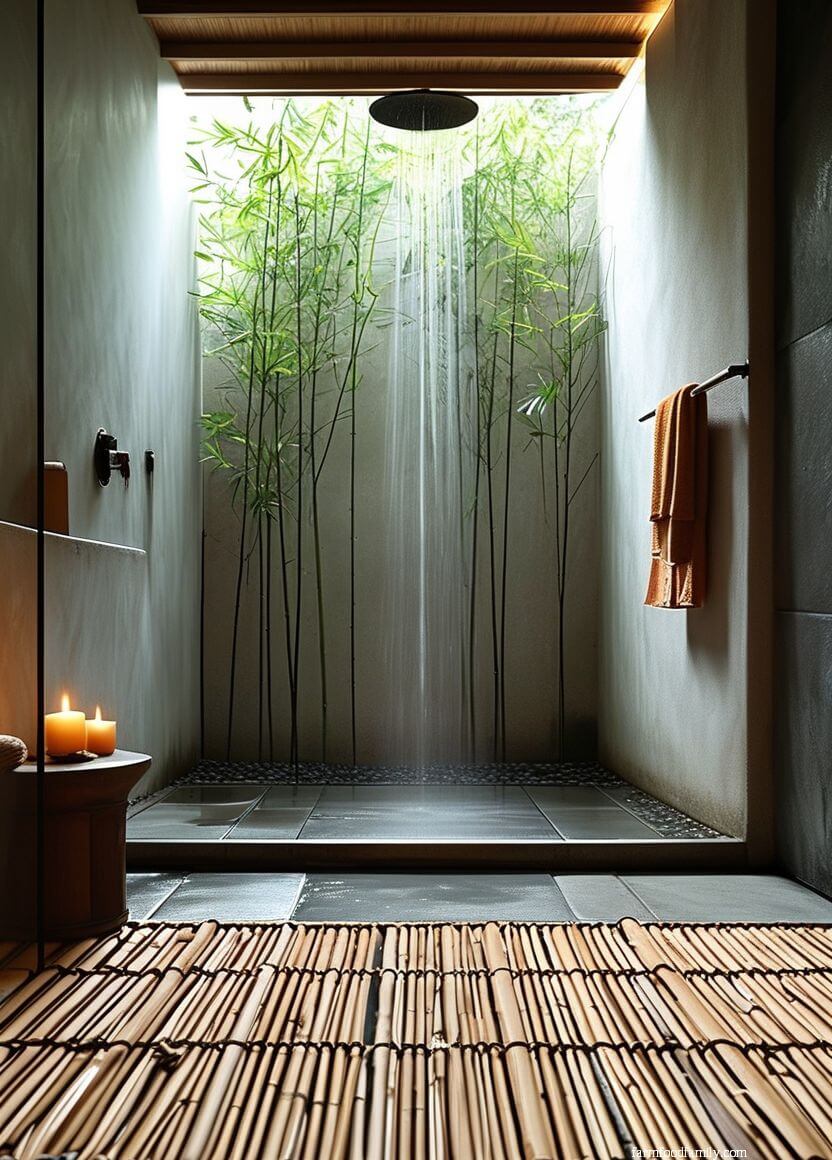
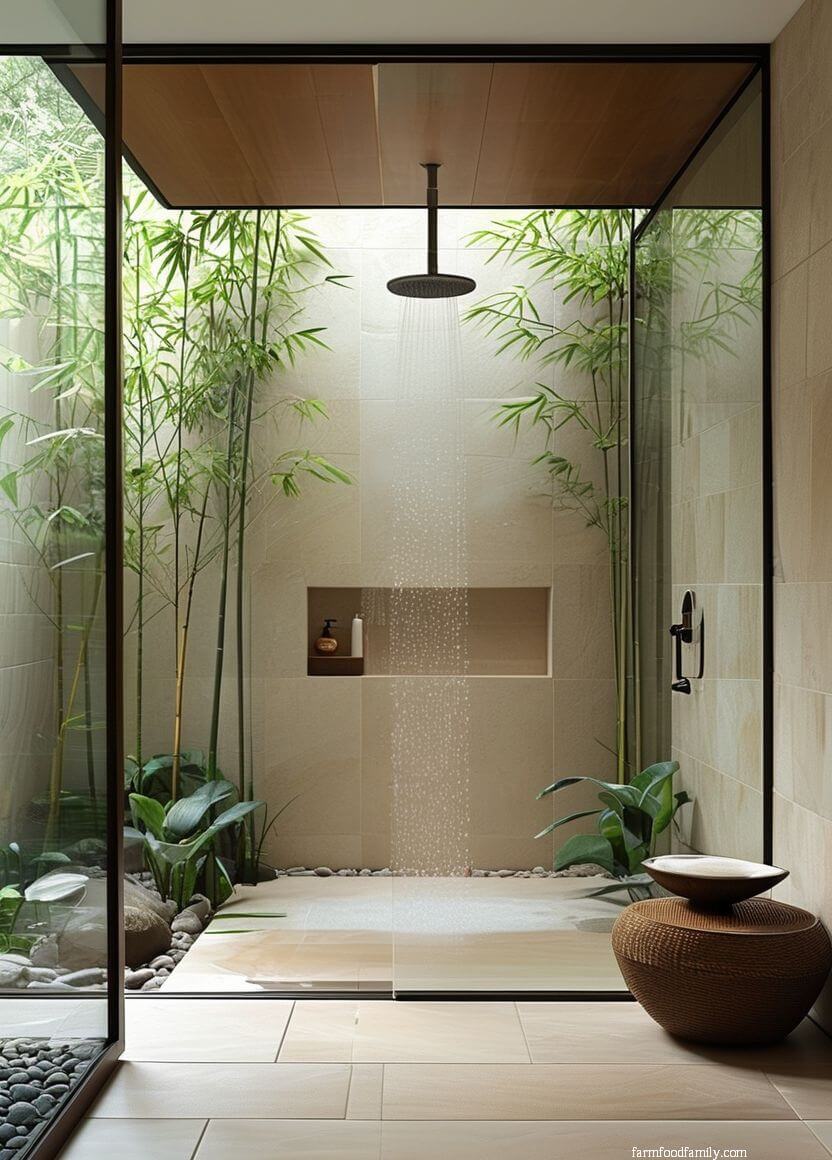
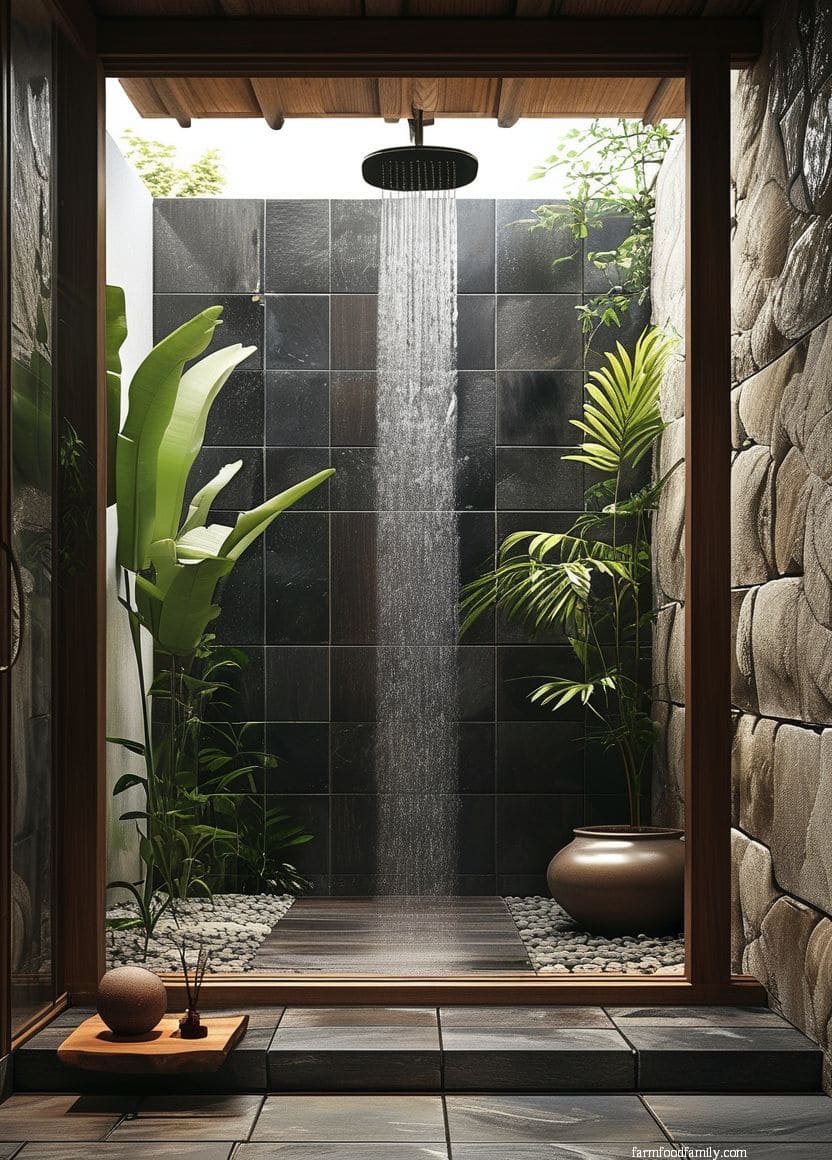
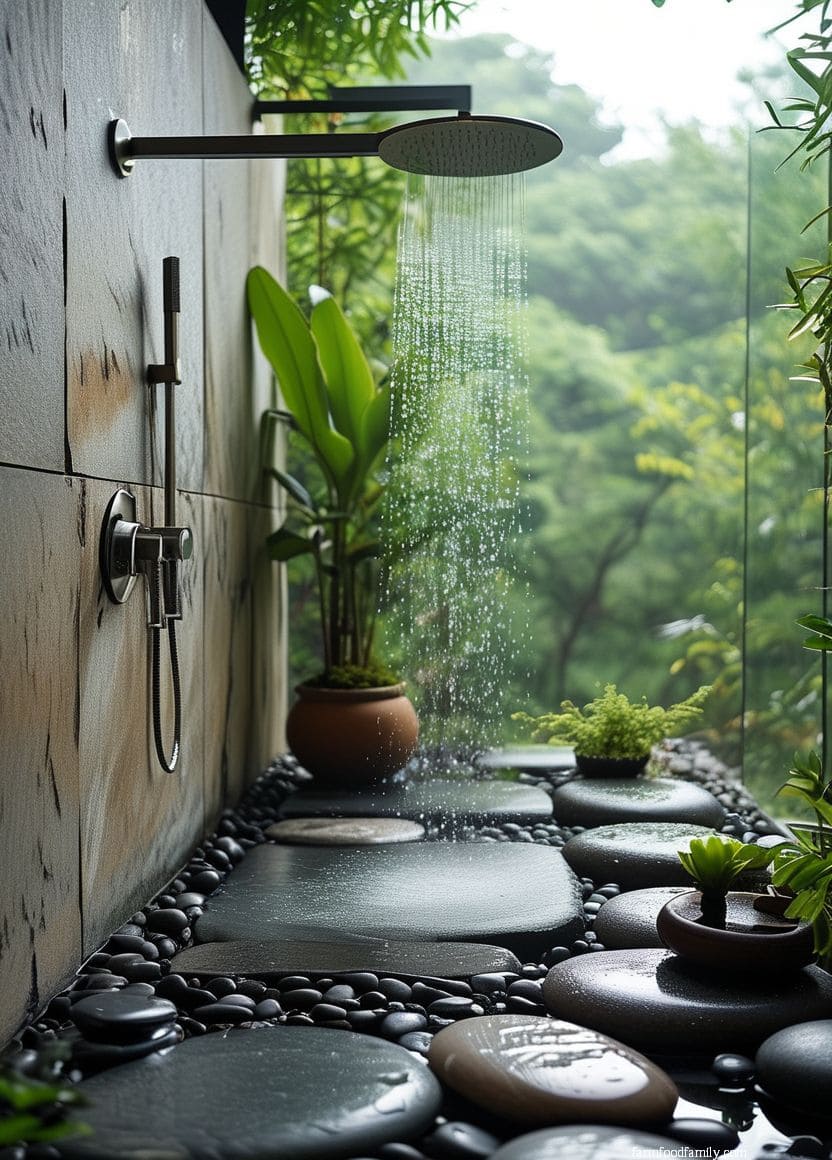
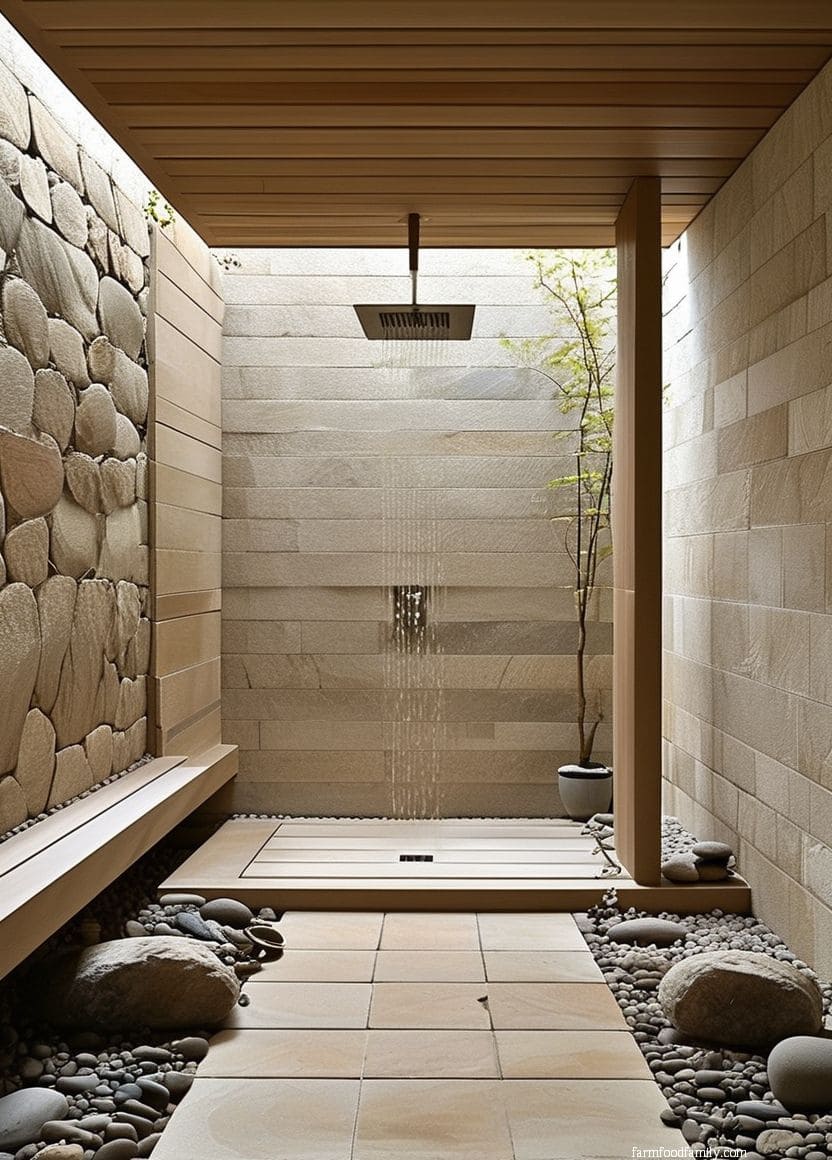
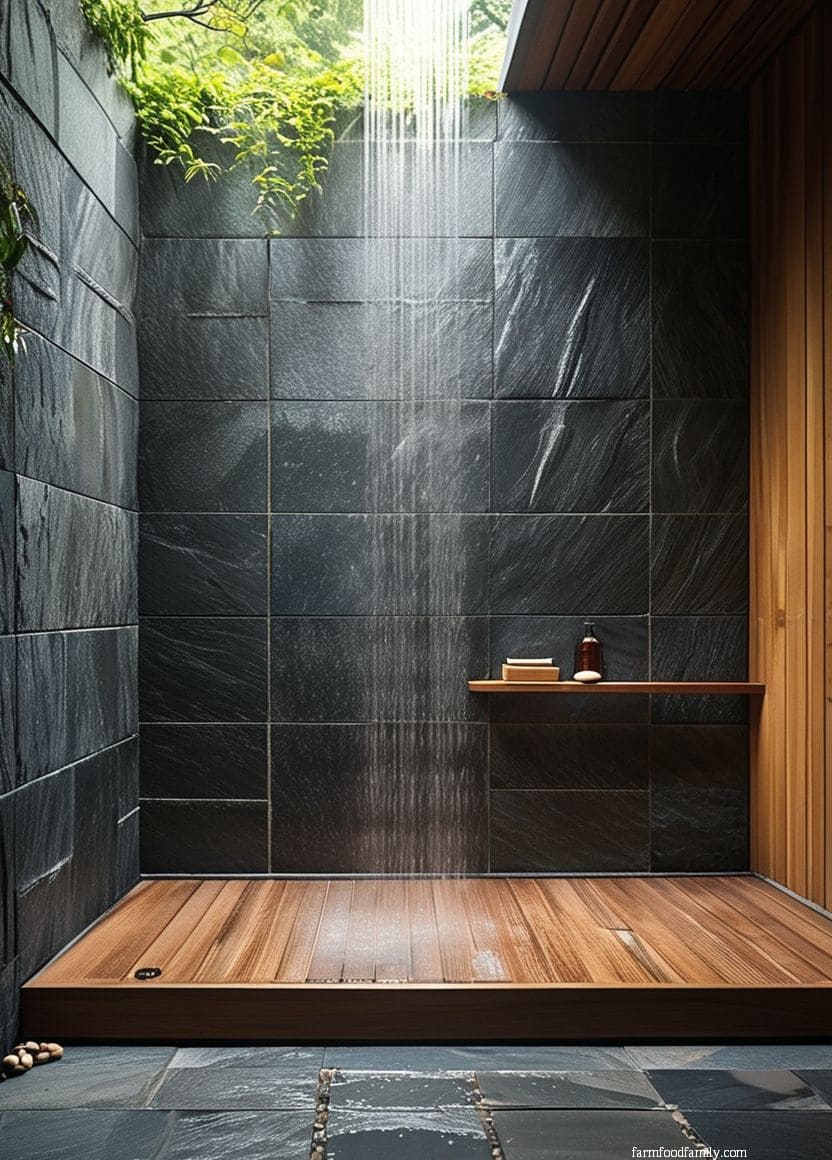
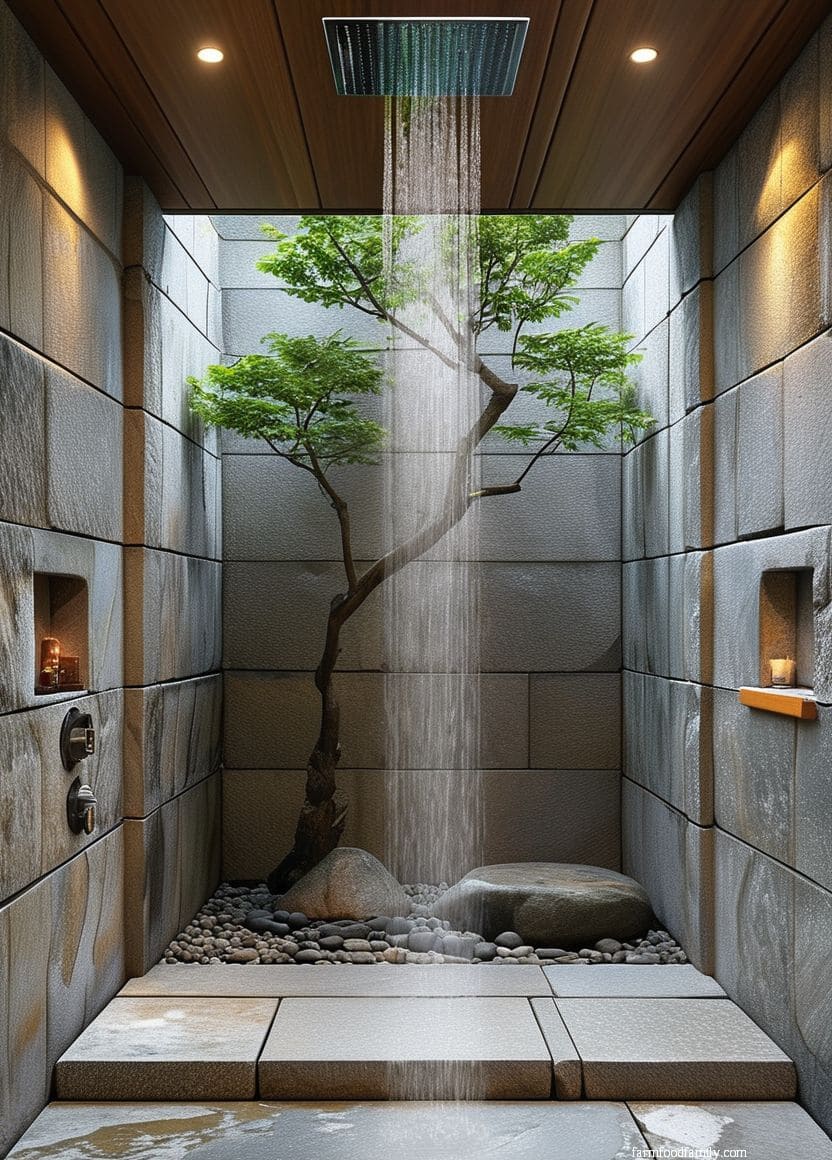
20. Curbless Open Showers
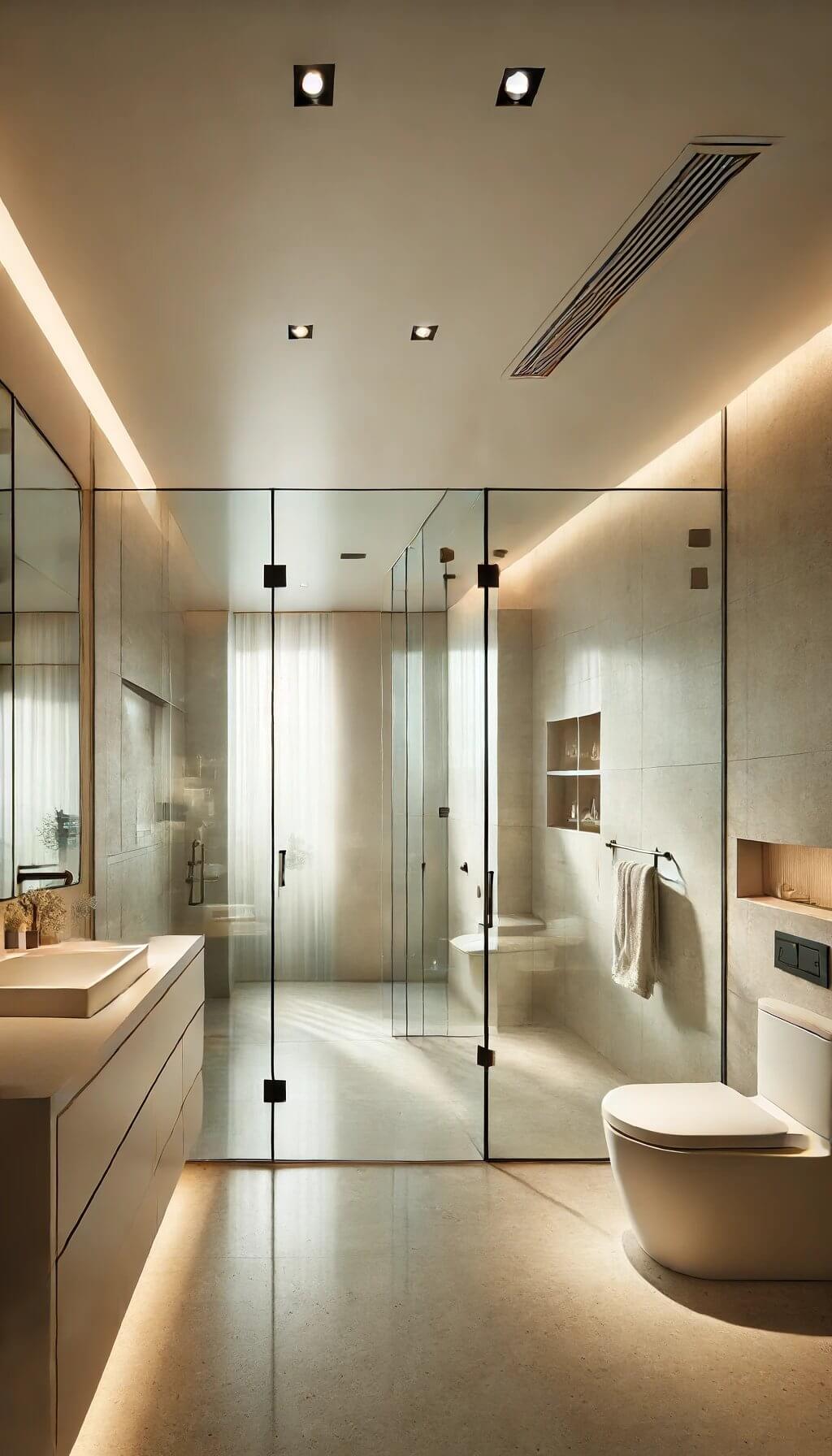
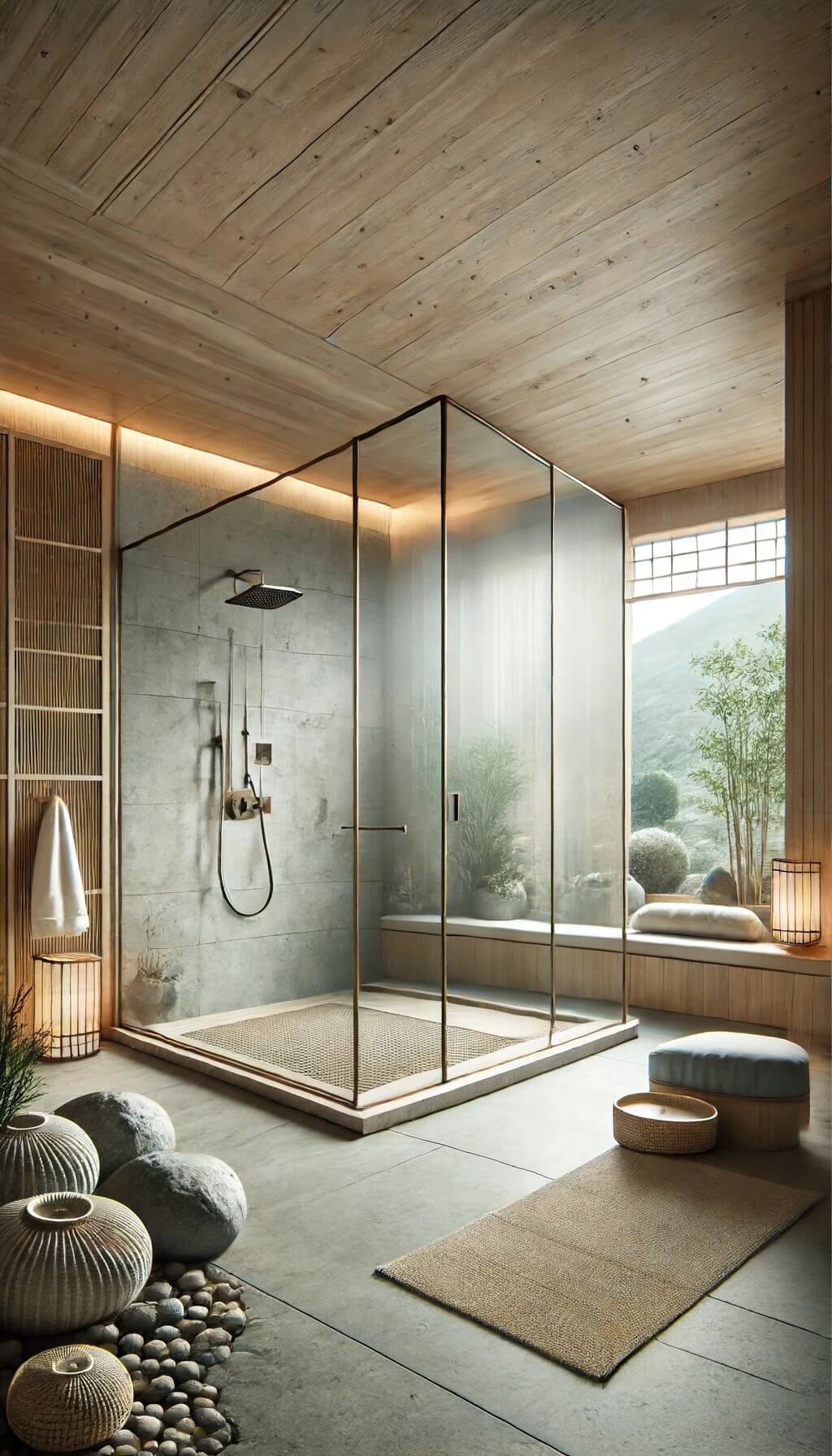
A curbless, walk-in shower is one of the most requested modern zen-bathroom features, and it’s also the one where slip safety matters most: without a curb to contain water, the whole shower and often the surrounding floor needs slip-rated material (wet DCOF of 0.42 minimum, 0.60+ recommended) and a slight slope toward a linear drain to keep water from pooling outside the shower zone.
This is a genuine plumbing and waterproofing project, budget for a professional installer rather than a DIY attempt, since a poorly sloped curbless shower is a real water-damage risk to the floor below.
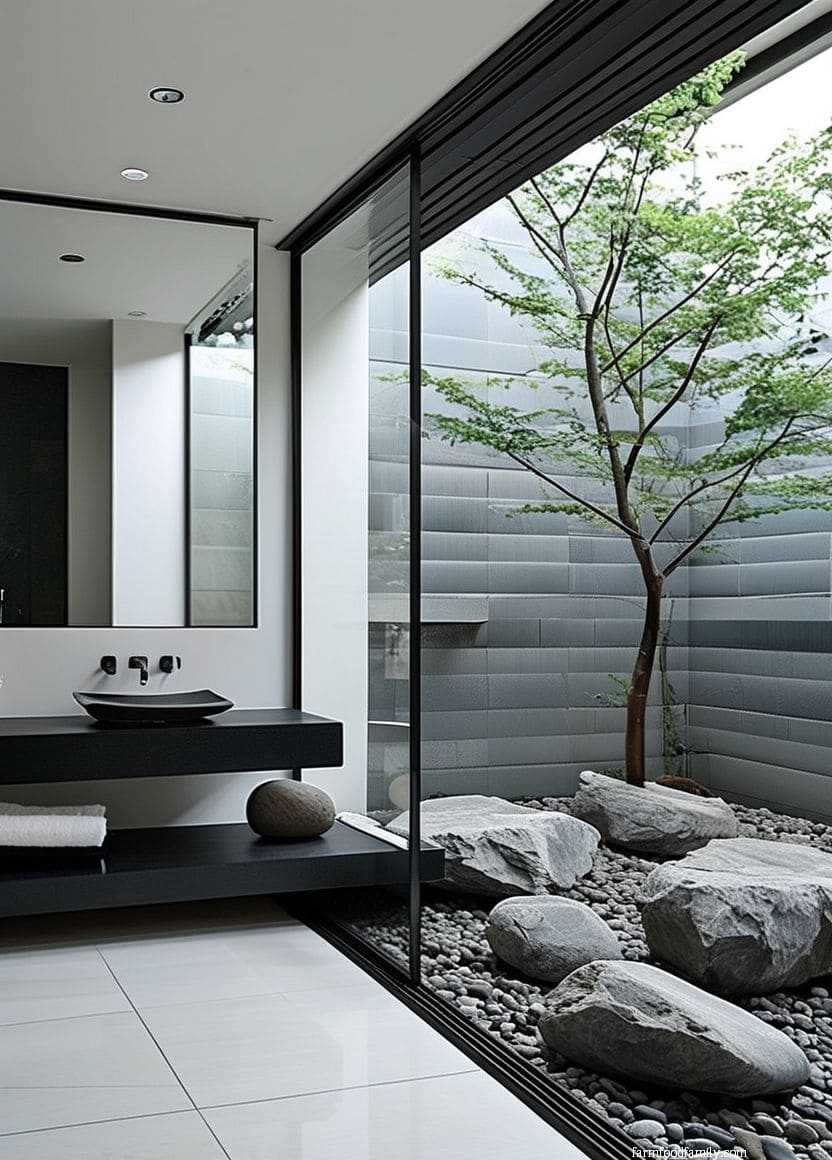
21. Nature Views
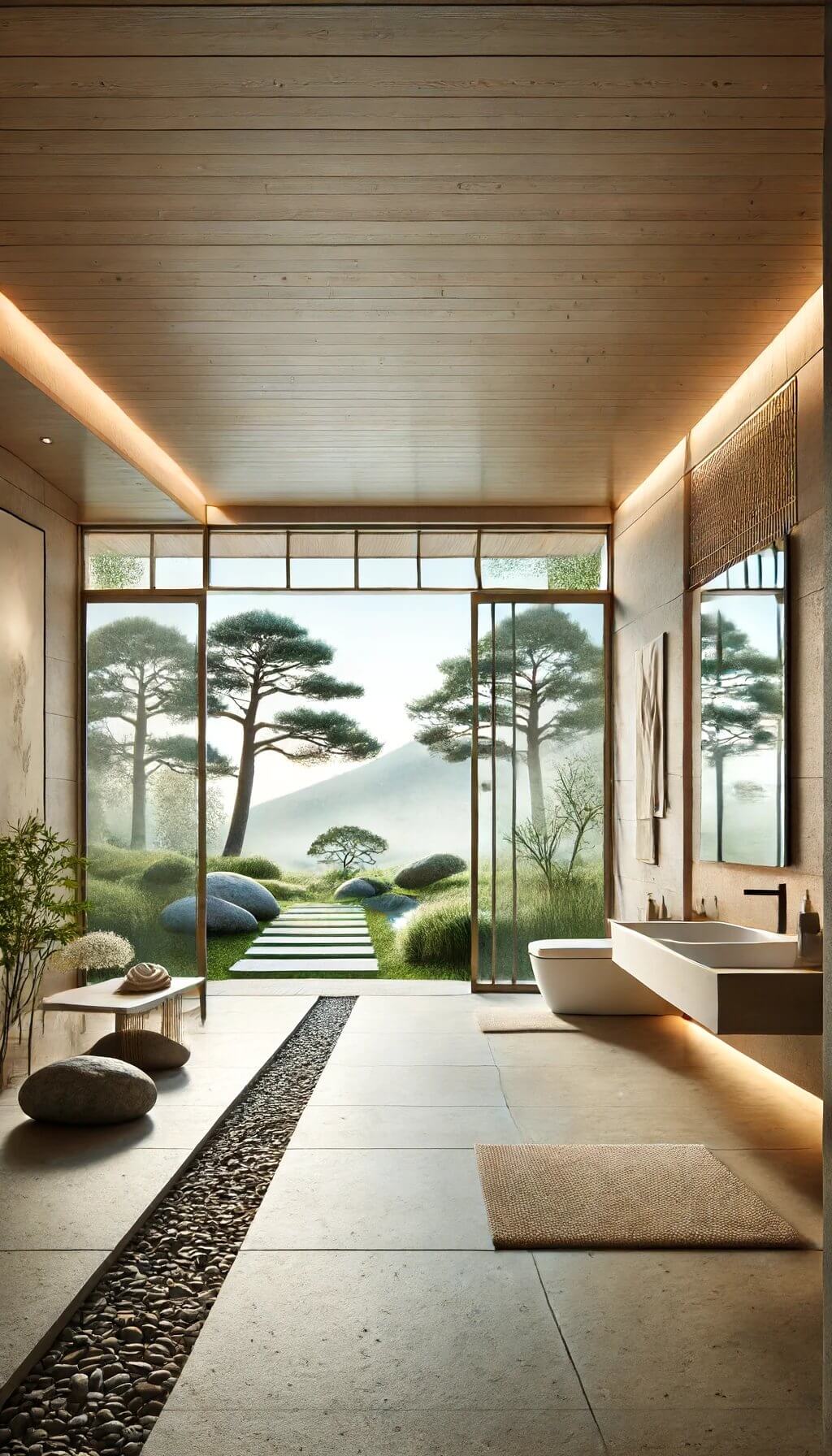
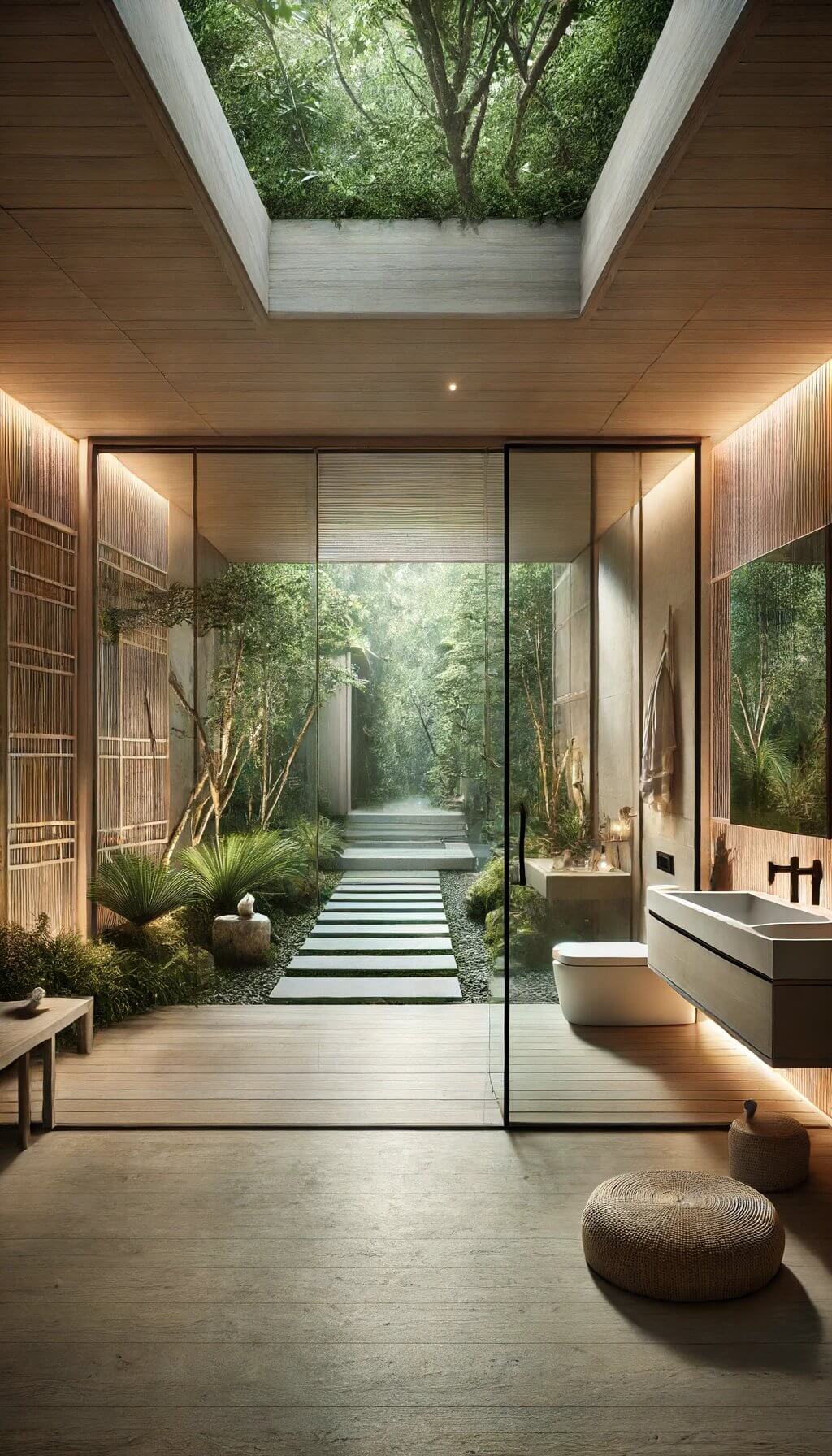
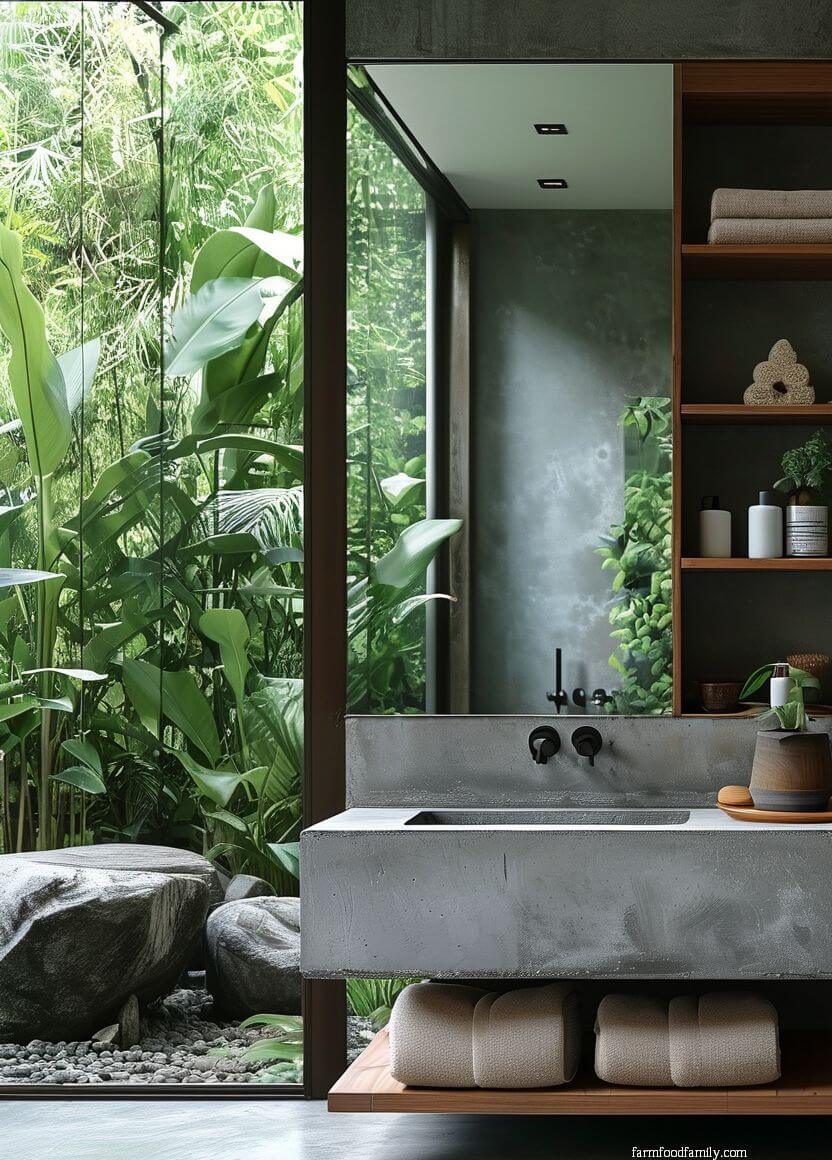
If your bathroom has a window, treat the view as part of the design rather than something to cover entirely.
Frosted or textured privacy film keeps the room private while still letting in real daylight and a soft outline of greenery outside, which does more for a genuine sense of calm than any framed nature photo could.
Where privacy isn’t possible, even a single potted plant positioned in the window’s sightline does some of the same work.
22. Quiet Zones
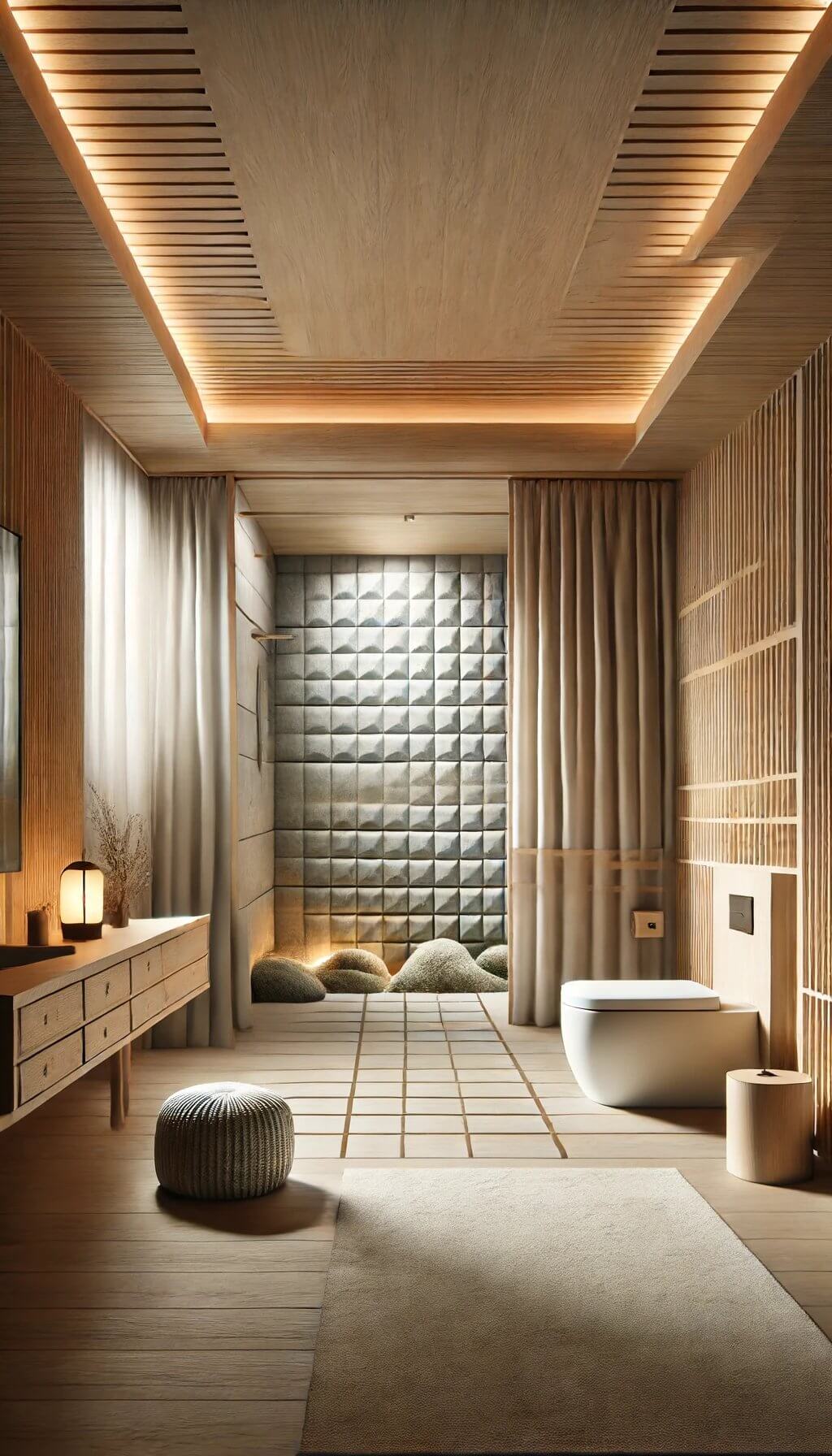
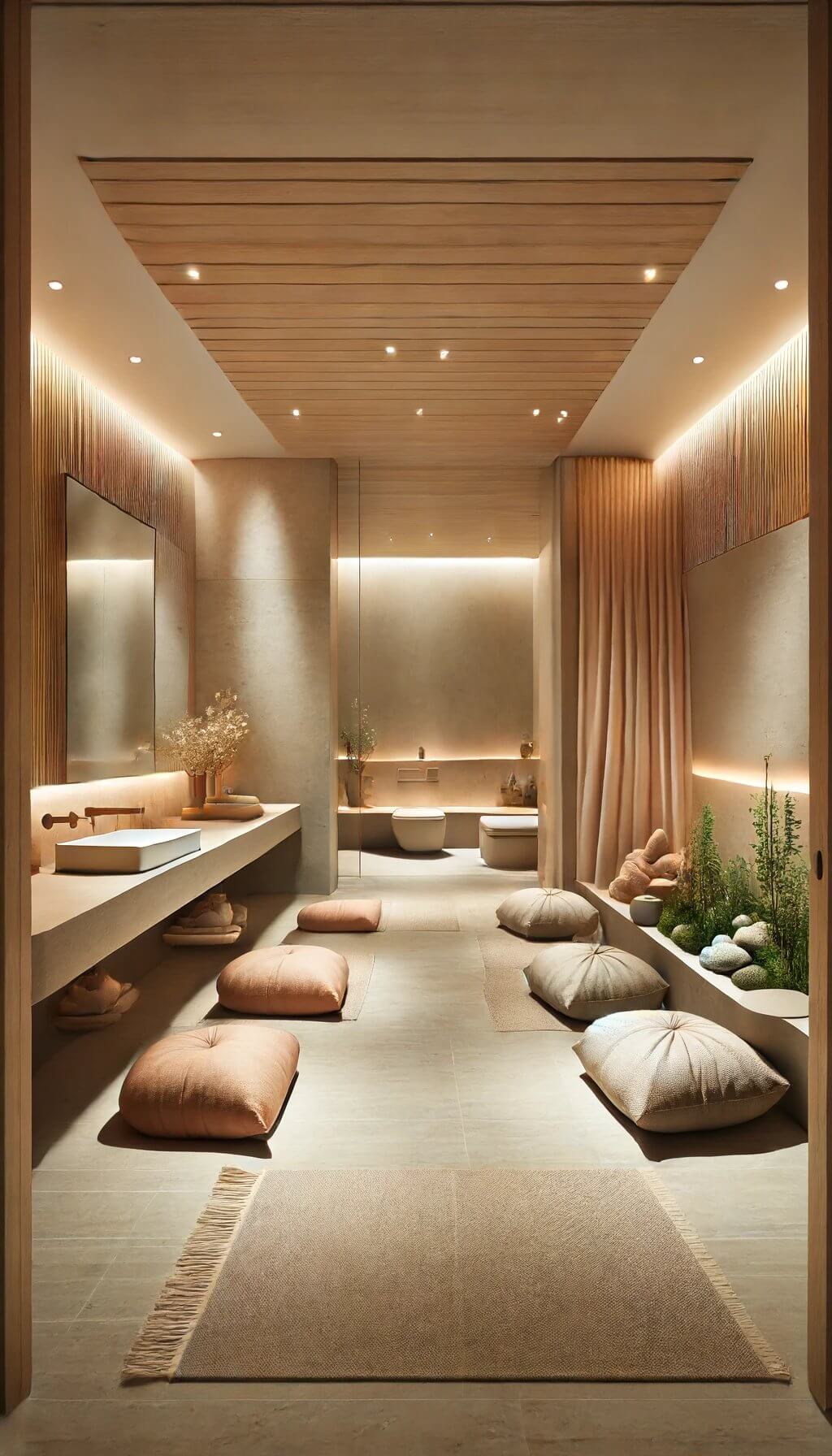
Basic sound dampening, a bath mat instead of hard tile underfoot near the sink, a soft-close toilet lid, weatherstripping around a door that currently slams, cuts down on the sharp, echoing sounds that make a bathroom feel more clinical than calm. None of these require a renovation, they’re small swaps that add up.
23. Eco-friendly Fixtures
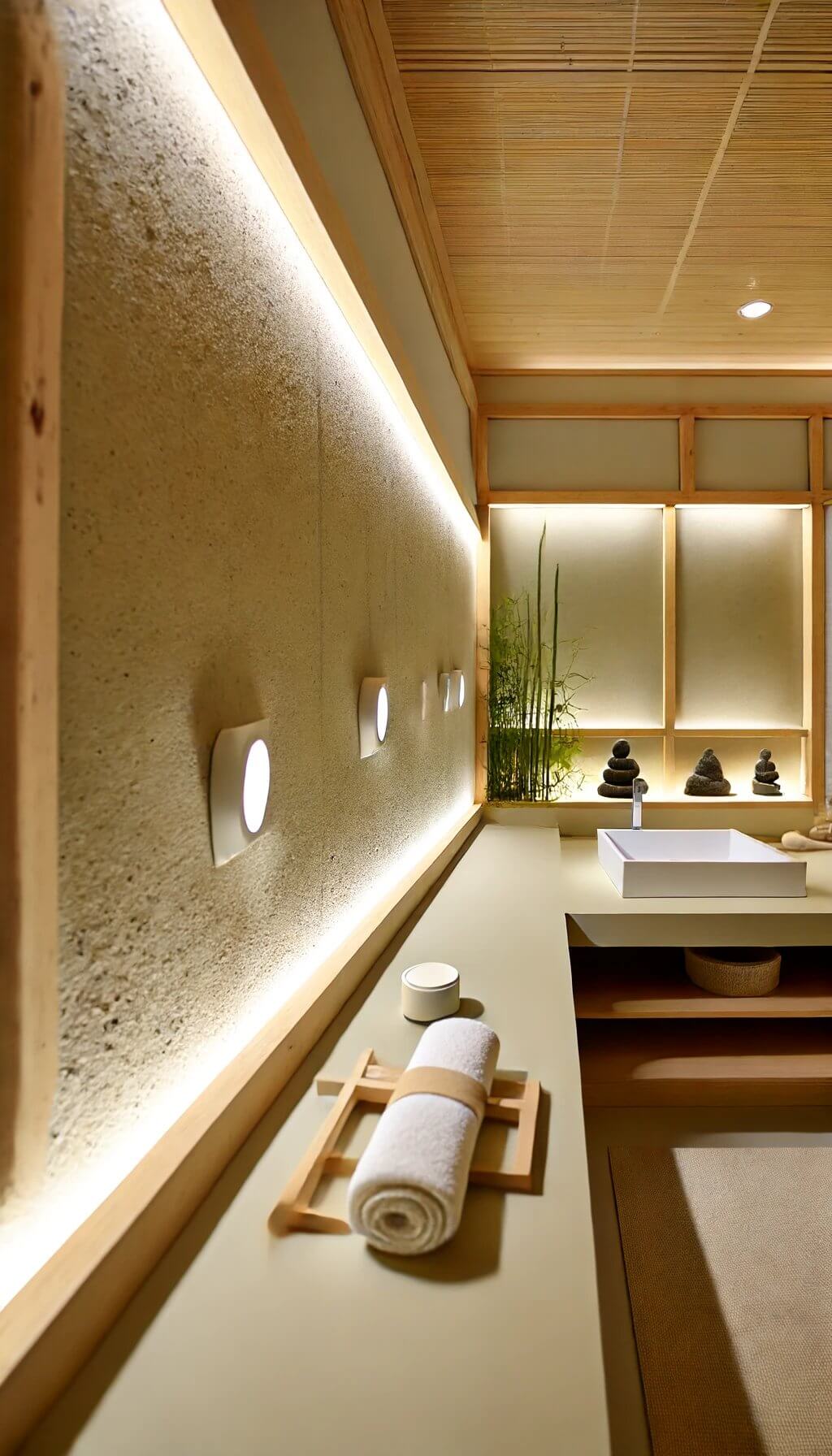
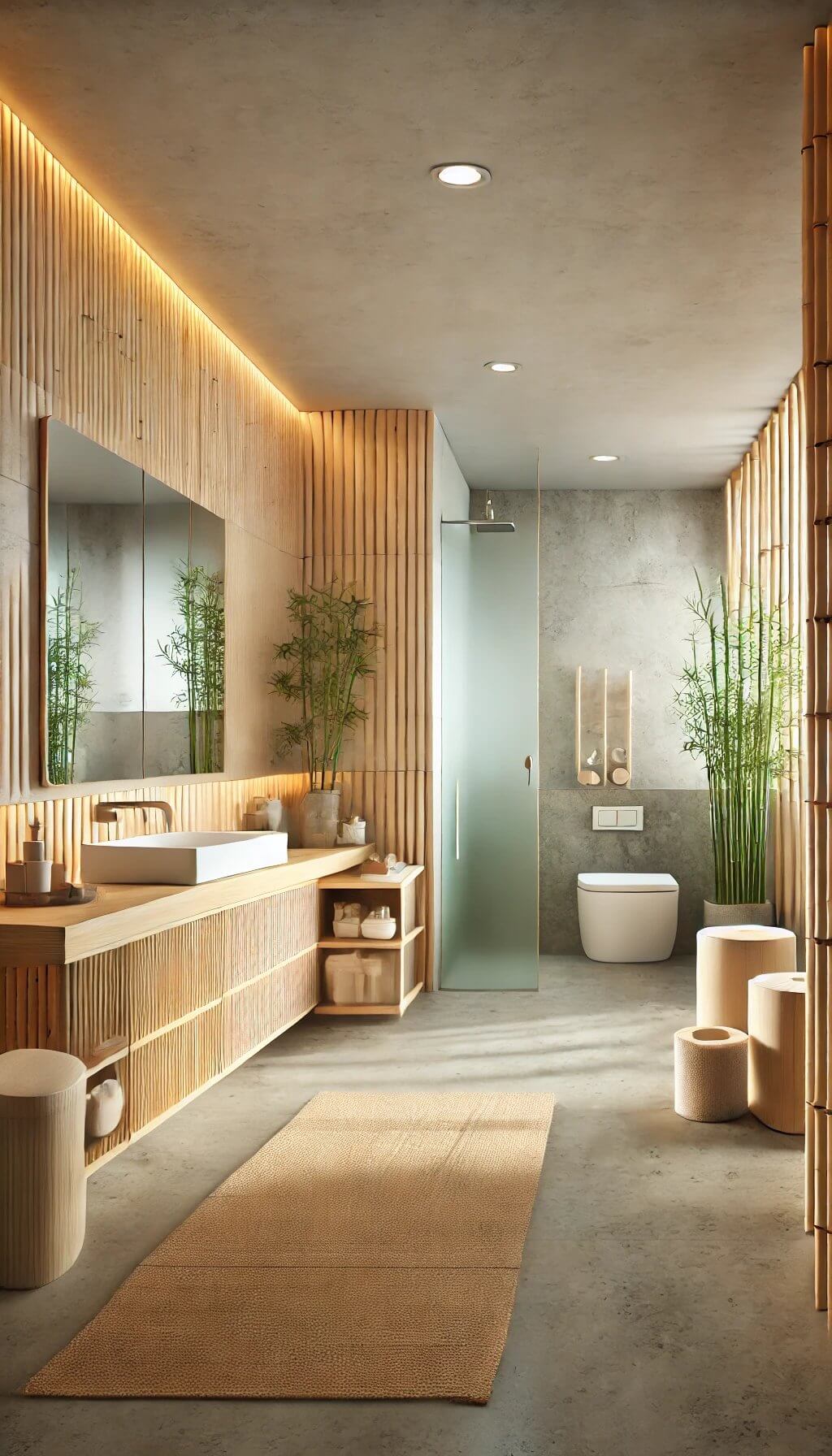
Low-flow showerheads and faucets (look for the WaterSense label) cut water use without a noticeable drop in pressure on most models, and they pair naturally with a zen bathroom’s overall ethos of intentional, non-wasteful design. This is also one of the cheaper upgrades on this list, most low-flow fixtures cost far less than the tile or tub changes elsewhere here.
24. Reflective Surfaces
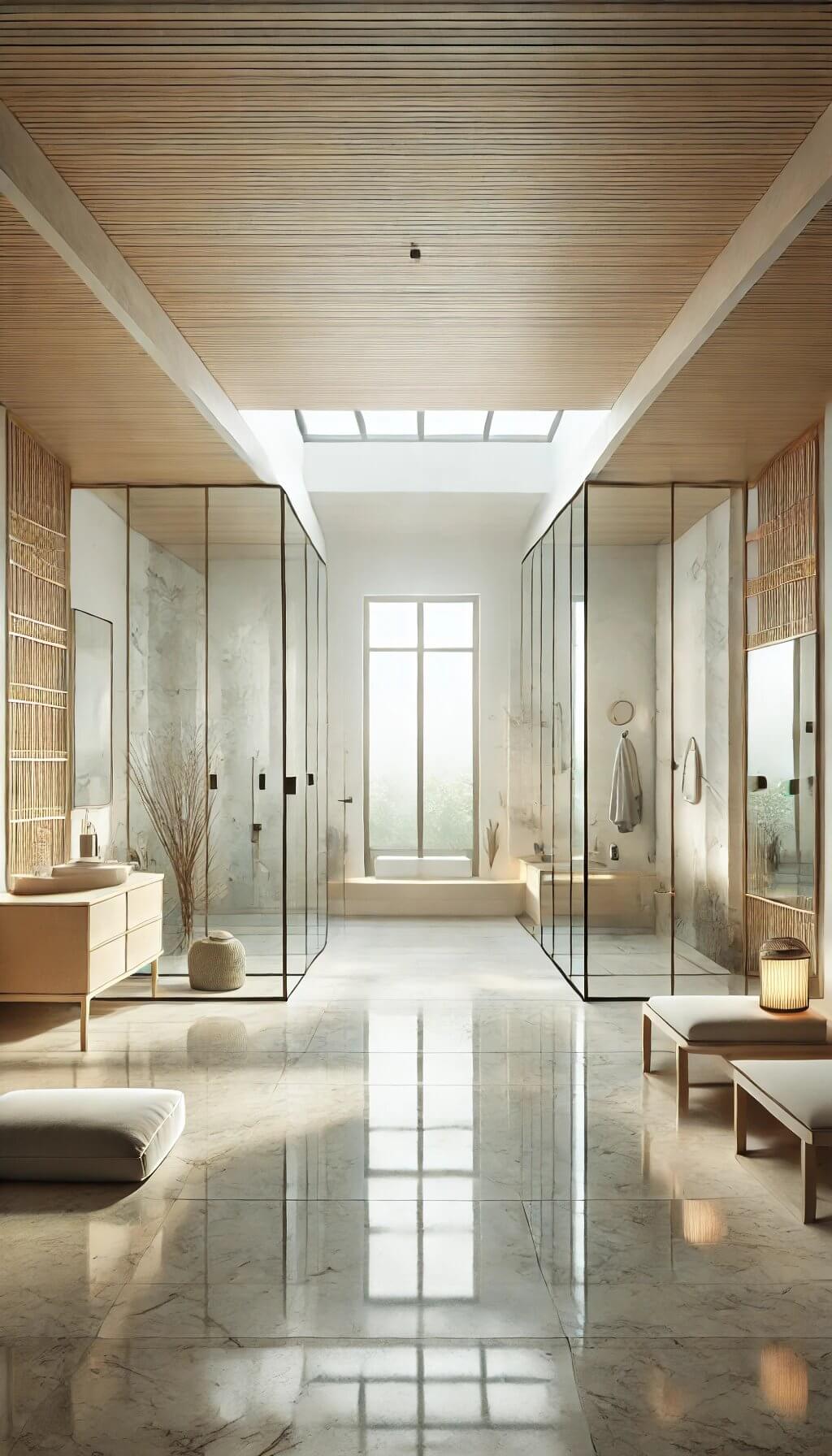
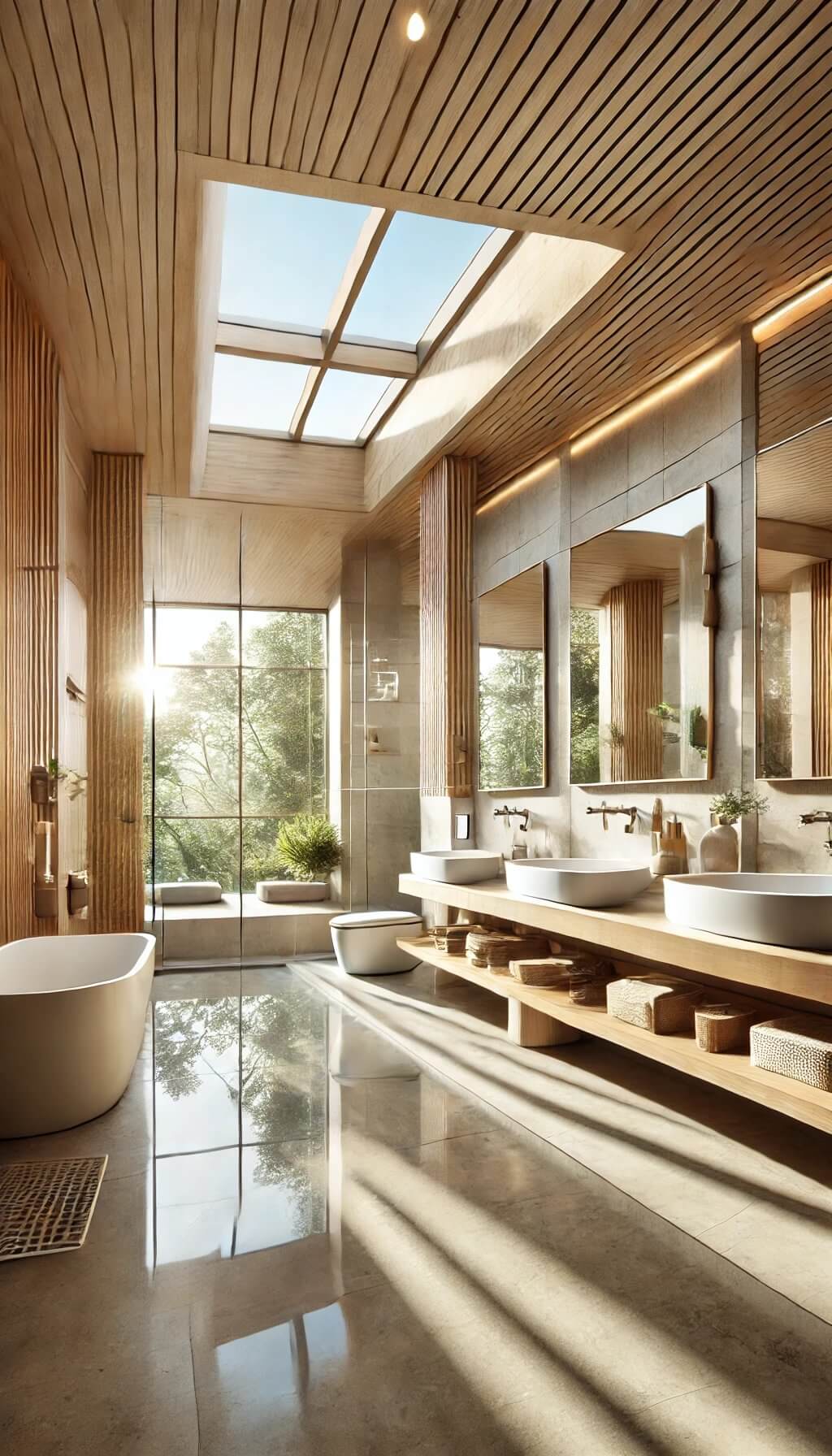
A single large mirror, or a few smaller ones grouped together, bounces both natural and artificial light around the room, which matters especially in a small or window-less bathroom that might otherwise feel dim rather than calm.
Avoid over-mirroring, though, one strong reflective surface reads as intentional, mirrored surfaces on every wall starts to feel more like a gym than a retreat.
25. Personal Touches
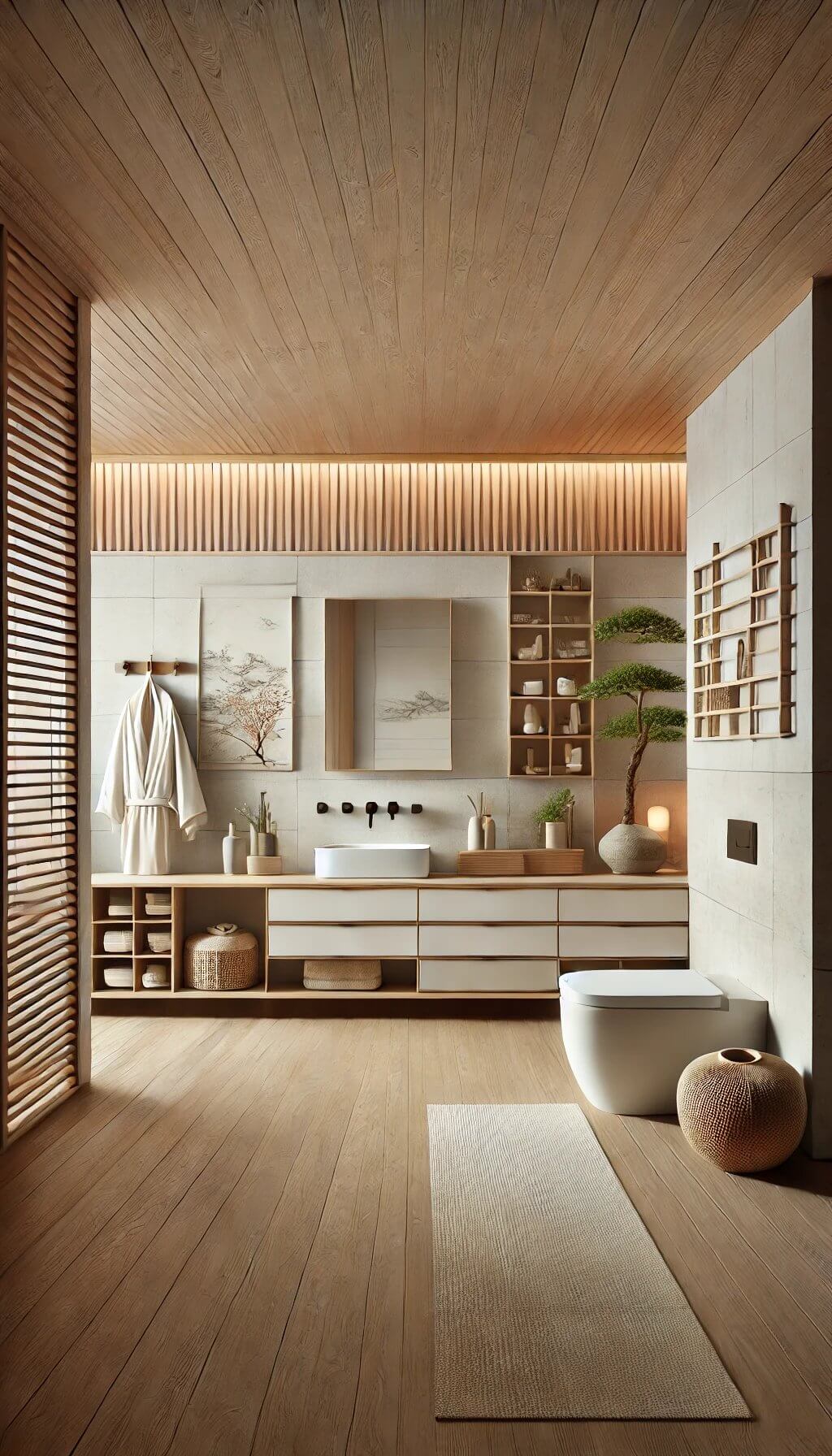
The most convincing zen bathrooms still feel like someone’s actual bathroom, not a hotel showroom: a single meaningful object, a plant you’ve kept alive for years, a scent that’s specifically yours. Resist the urge to fill every surface, one or two genuine personal touches will do more for the room’s warmth than a dozen generic “spa” purchases ever will.
FAQs
How do I stop mold from growing on natural stone in my bathroom? Seal the stone with a penetrating sealer (not a surface coating) when it’s installed, and reapply roughly once a year, more often in a high-use shower. Beyond sealing, the Home Ventilating Institute’s CFM guidance and the EPA’s recommendation to keep humidity under 60% both matter just as much as the sealer itself, mold needs sustained moisture to establish, and a properly sized exhaust fan run during and after every shower is what actually starves it.
Are curbless showers and natural stone floors actually safe? They can be, but only with the right material. Ask for a wet DCOF (Dynamic Coefficient of Friction) rating of at least 0.42, and ideally 0.60 or higher for a shower floor specifically, this is the real, tested standard building codes and the ADA use, not just a “textured” label on the box. Combined with a proper slope toward the drain in a curbless design, a correctly specified stone or tile floor is genuinely safe, an unrated, glossy-finish tile is where the real risk comes in.
Will a minimalist zen bathroom feel cold and empty? It can, if the palette stays purely white or gray with no texture, this is one of the most common regrets people report after a minimalist bathroom remodel. The fix is warming the palette (an off-white or clay tone instead of stark white), adding at least one natural material (wood, rattan, or stone), and keeping a small number of genuinely personal objects visible rather than none at all.
Conclusion

Creating a Zen bathroom isn’t about rigid rules or perfect minimalism; it’s about cultivating a space that feels light, grounded, and effortlessly soothing. Every detail has the opportunity to nourish your senses.
A Zen bathroom is an ongoing gift you give yourself, encouraging stillness and presence within your home.
If this article helped you come up with a layout for your zen bathroom, leave a comment below and make sure to share it with your family and friends!
Products We Recommend
This post contains affiliate links. We may earn a commission on qualifying purchases at no extra cost to you.
Broan-NuTone 671 Ventilation Fan, 70 CFM
A properly sized exhaust fan for a standard bathroom, the single biggest factor in the mold-prevention guidance covered in "Before You Start" and the FAQ
Shop Now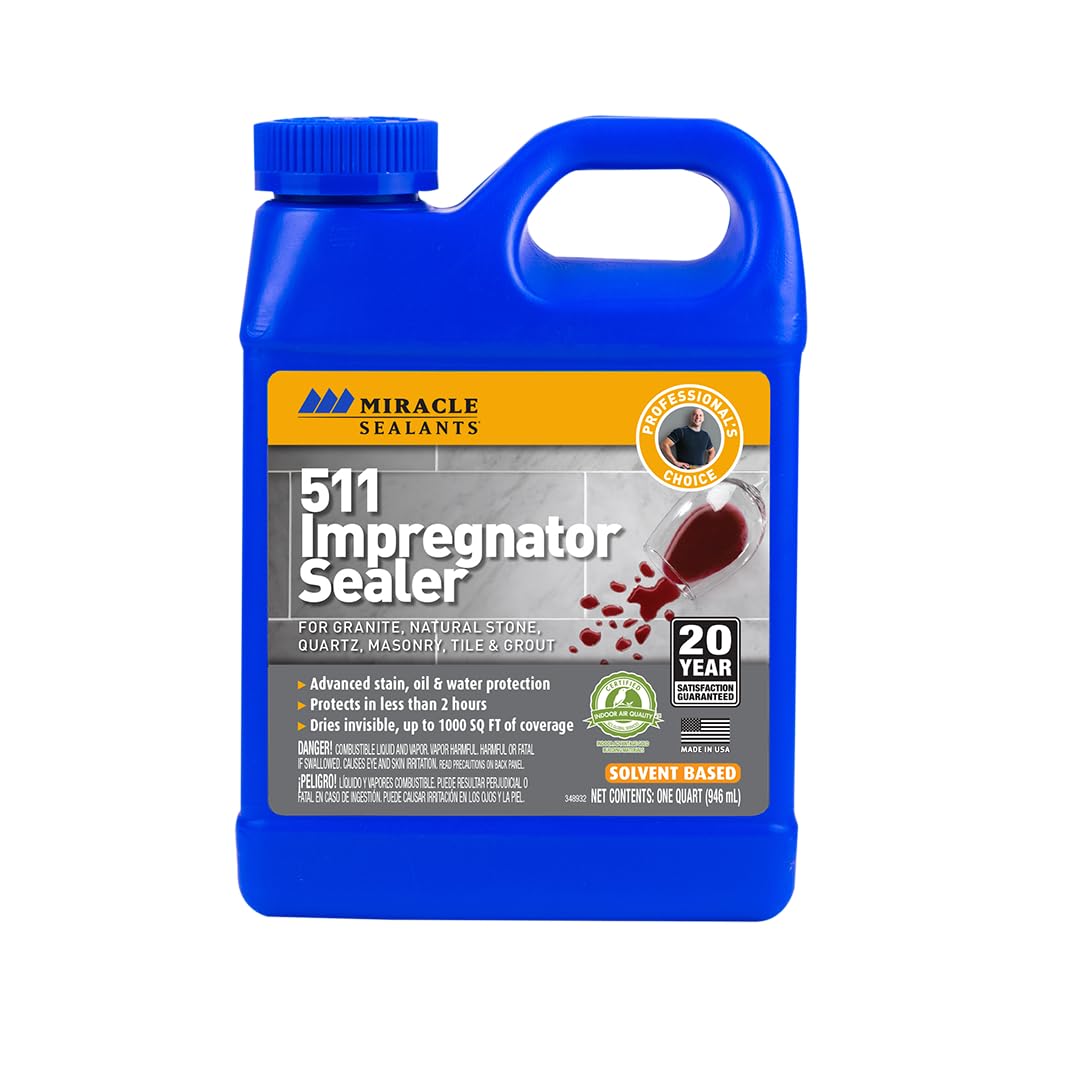
Miracle Sealants 511 Impregnator Penetrating Sealer, Quart
A real penetrating stone sealer, the exact product type referenced for the natural stone accents idea and the mold FAQ
Shop Now
GOBAM Natural Bamboo Bath Mat, Slatted, Non-Slip
A naturally fast-drying slatted bamboo mat that avoids the trapped-moisture mold risk covered in the Soft, Fast-Drying Textiles idea
Shop NowNever miss an update — choose FarmFoodFamily as your preferred source on Google.
How it works: Tap the button below to open Google's settings page, then check the box next to FarmFoodFamily.
Tap the checkbox to turn it blue — that's how you know it's set.