12 Cheap DIY Outdoor Firewood Rack Ideas That Keep Wood Dry and Safe
A good firewood rack lifts wood off the ground, lets air through the stack and covers only the top, and the safe version never burns treated pallet wood.

Never miss an update — choose FarmFoodFamily as your preferred source on Google.
How it works: Tap the button below to open Google's settings page, then check the box next to FarmFoodFamily.
Tap the checkbox to turn it blue — that's how you know it's set.
A good firewood rack lifts wood off the ground, lets air through the stack and covers only the top, and the safe version never burns treated pallet wood.
Products We Recommend
This post contains affiliate links. We may earn a commission on qualifying purchases at no extra cost to you.

TopTes TS-630 Wood Moisture Meter, Digital Handheld
A handheld meter to check split wood against the EPA's under 20 percent target. Test a freshly split face, not the outside.
Shop Now
KKOYING Leather Work Gloves, Reinforced Cowhide, Puncture and Cut Resistant
Thick gloves for stacking logs and pulling rusty nails from pallet boards. Pick your size from the listing.
Shop Now
MYFIREPLACEDIRECT Firewood Carrier, Waxed Canvas, Green
A sturdy canvas carrier to move a few days of wood from the rack to the door in one trip.
Shop NowWet firewood is a pain. It hisses, smokes and barely burns. Most of the fix is the rack, not the wood.
A good rack does three things. It lifts the wood off the soil, it lets air move through the stack and it keeps rain off the top. That’s all, and you can build one in a weekend with simple materials.
This guide gives you 12 DIY outdoor firewood rack ideas, from a pallet frame to a hoop basket. Each lists the build, the cost level and the mistake that ruins it.
Answer 4 quick questions and get matched to the exact fix for your yard — drainage, budget, layout, or something else entirely.
Take the Free QuizWe also cover seasoning, pests and one pallet rule that matters for safety. If you’re building a fire pit too, see our DIY fire pit ideas.
Quick Answer
Build your rack to do three jobs. Keep the wood off the ground, let air flow through the stack and cover only the top.
The EPA’s Burn Wise guidance says to store firewood outdoors, off the ground, with only the top covered. It says covering the sides traps moisture. It also says wood burns best below 20 percent moisture and should season for at least six months.
Be careful with pallets. Penn State Extension says never to use or burn pallets stamped MB.


But keep it simple. A flat base and a roof beat a fancy design every time.
Most yard problems trace back to one specific, fixable cause. Find yours in 4 quick questions.
Take the Free QuizPick a level spot with a short walk to the door. Stack split logs with gaps for air, and test the wood with a meter before you light it. Buy local wood, since moving firewood can spread tree pests.
How Do You Season and Store Firewood?
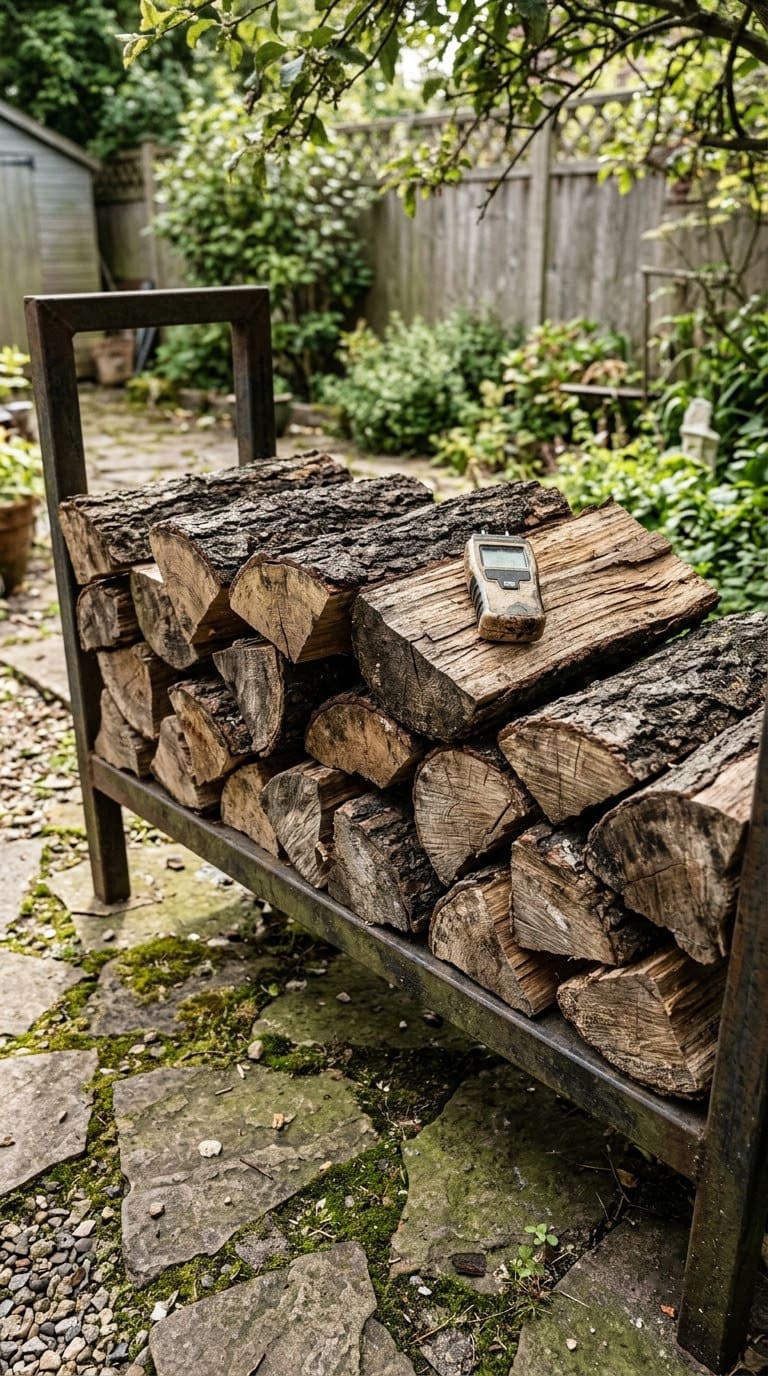
Seasoning means drying wood until it burns clean. The EPA says to season wood for at least six months and test it with a moisture meter before you burn. It says wood burns best at under 20 percent moisture.
You can also tell by eye and ear. The EPA says well-seasoned wood is darker, weighs less and sounds hollow when you knock two pieces together.
Here is the setup that works.
- Split the logs, because split wood dries faster.
- Stack them off the ground on a rack, blocks or pallets.
- Leave gaps so air moves through.
- Cover only the top, so the sides can breathe.
- Test with a meter before burning.
Our take: if you only fix one thing, fix airflow. A tight, wrapped stack stays damp for months.
Where Should You Put the Rack?
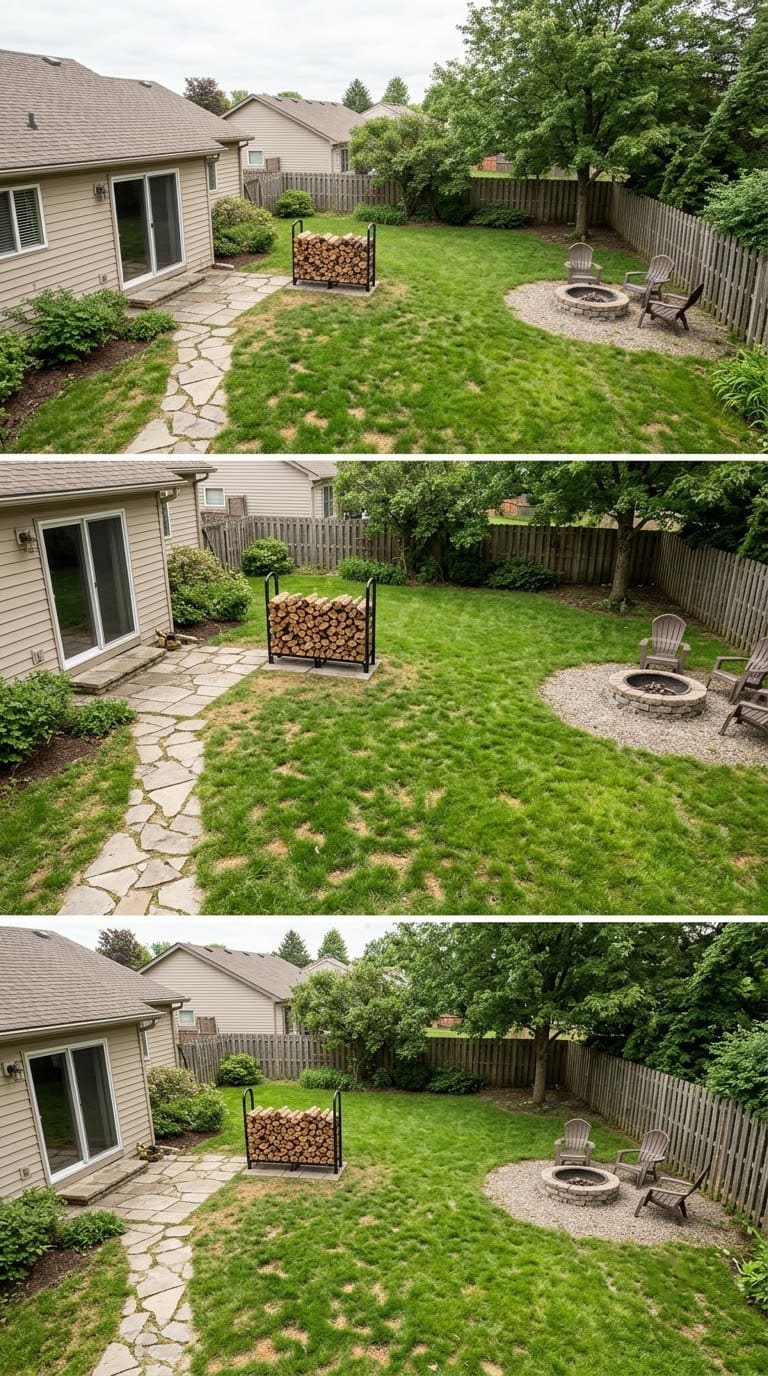
Place it on firm, level ground with a clear path to the door. Keep it away from the house wall so air and pests don’t gather there. Termite risk varies by region, so ask your local extension office for the distance they recommend.
Keep it clear of sparks, too. A woodpile near a fire pit or grill can catch an ember.
A handheld meter to check split wood against the EPA's under 20 percent target. Test a freshly split face, not the outside.
Shop NowThis post contains affiliate links. We may earn a commission on qualifying purchases at no extra cost to you.
Our take: choose the spot first, then size the rack. A rack in the wrong place is a rack you won’t use. For fire pit layouts, see our backyard fire pit lounge ideas.
What Is the Pallet Rule?
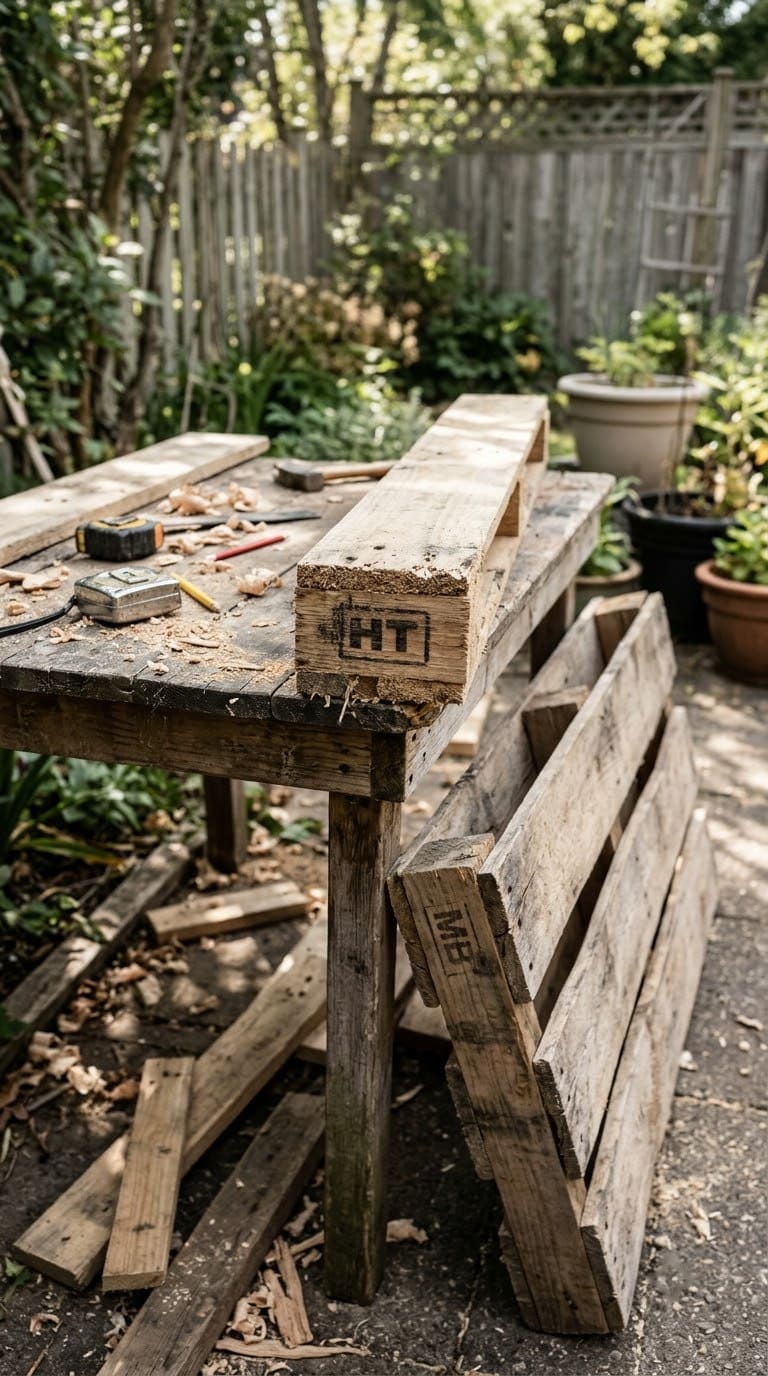
Pallets make great cheap racks, but not every pallet is safe. Penn State Extension says you should never use pallets with an MB stamp for any home project, nor burn them. It also says never to burn any treated wood, including pallet parts.
The average homeowner spends $616/year on yard fixes that don't address the real problem. Find out what yours actually is — before you spend another dollar.
Take the Free QuizThe UC ANR guide says heat-treated pallets (HT) are generally safe because no chemicals are used. It says to avoid MB and to be careful with unmarked pallets.
So here is the rule we’d follow.
- Build with pallets stamped HT.
- Skip MB and unmarked pallets.
- Never put pallet scraps in your fire. Take them to a recycler.
- Wear thick gloves and pull rusty nails.
- Never take pallets from a business without permission.
Our take: when in doubt, buy a few 2x4s. They cost little and save worry.
12 DIY Outdoor Firewood Rack Ideas
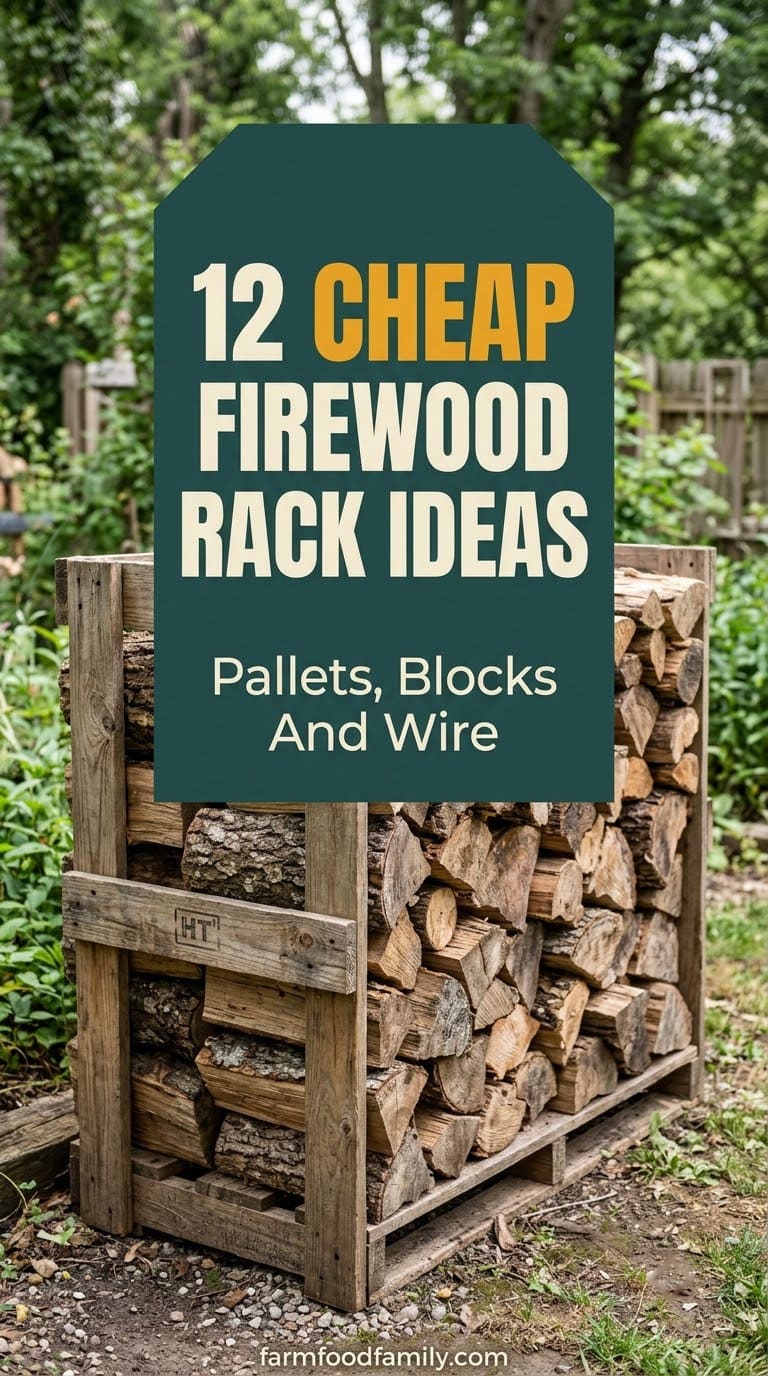
1. Pallet Rack
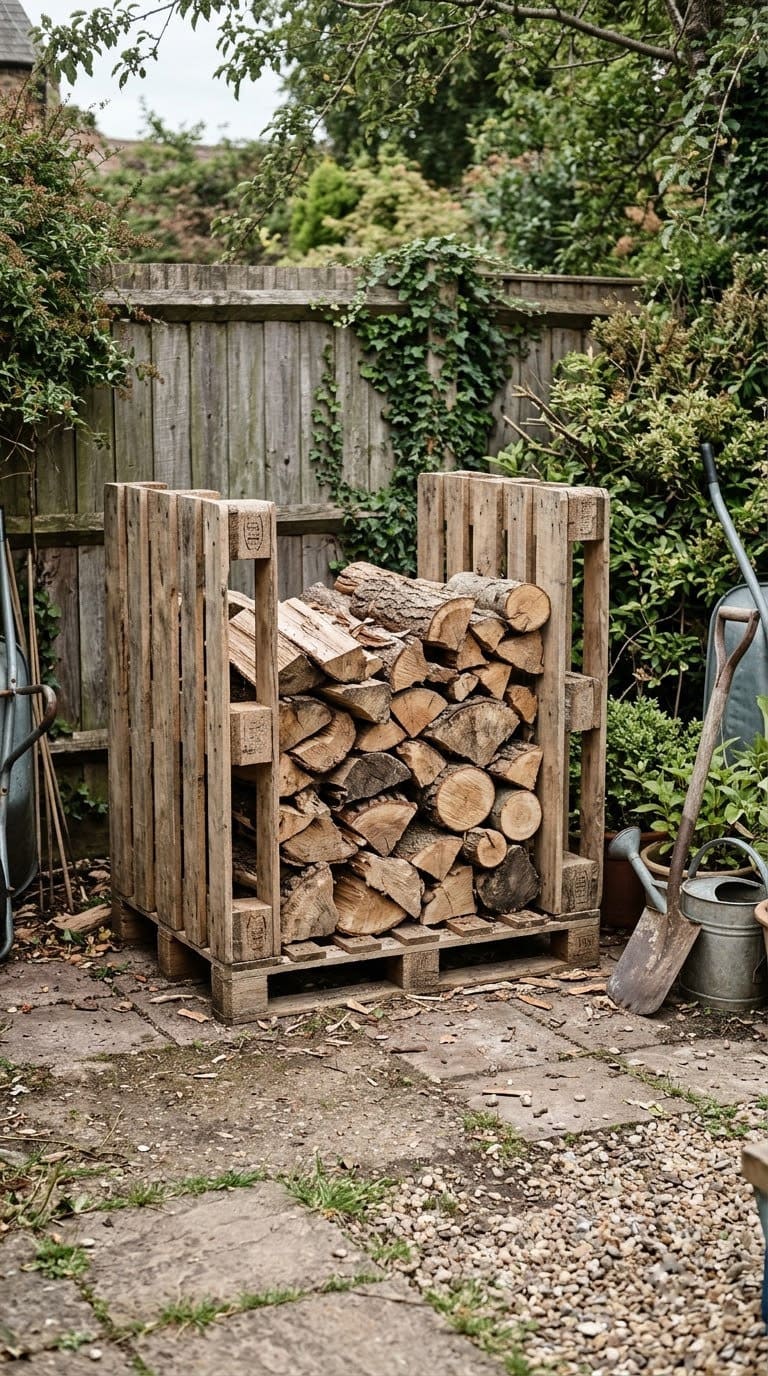
The classic cheap rack.
- Cost level: Very low.
- Skill: Easy.
- Build: Lay one pallet flat as the floor. Stand two others upright and screw them to the floor and to each other. Fill the middle with logs.
- Mistake: Using MB or unmarked pallets, or leaving rusty nails.
Our take: add a sloped board on top as a roof. It makes a small woodshed for almost nothing.
2. Cinder Block and 2×4 Rack
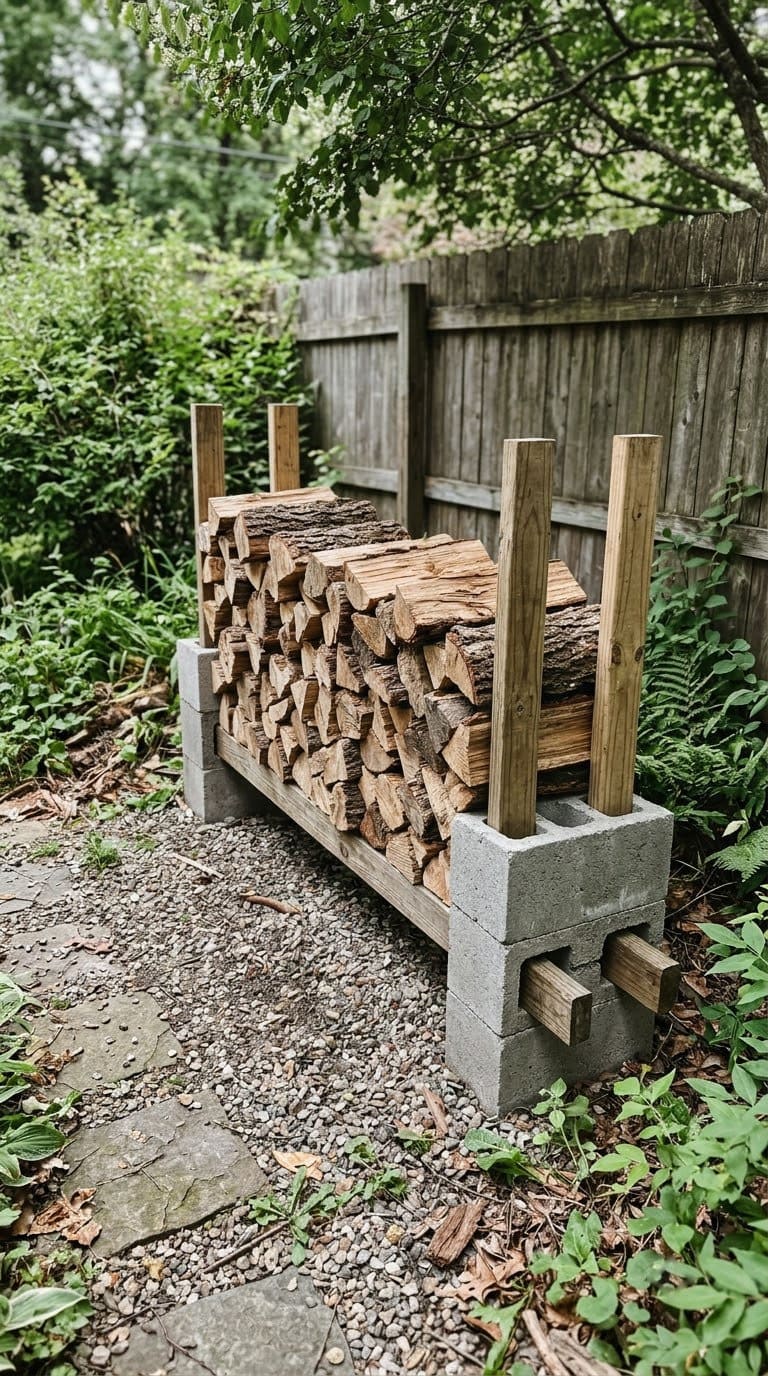
No cutting needed.


- Cost level: Low.
- Skill: Easy.
- Build: Set cinder blocks in two rows. Slide 2x4s through the holes upright at each end as stops. Lay planks across as a floor.
- Mistake: Setting blocks on soft soil. Level the ground first.
Our take: the blocks lift the wood off the ground, and you can take it apart in minutes.
3. Lean-To Woodshed
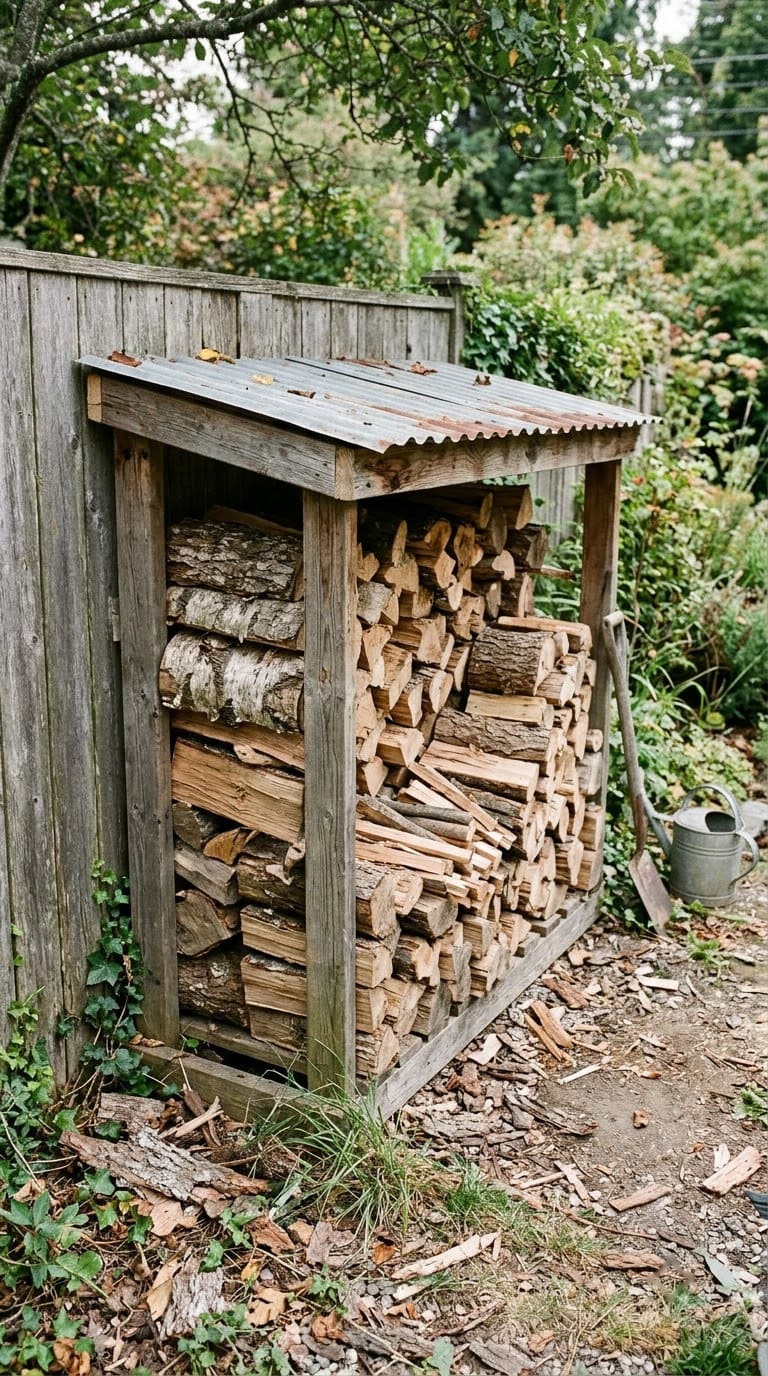
A roof makes the biggest difference.
- Cost level: Medium.
- Skill: Medium.
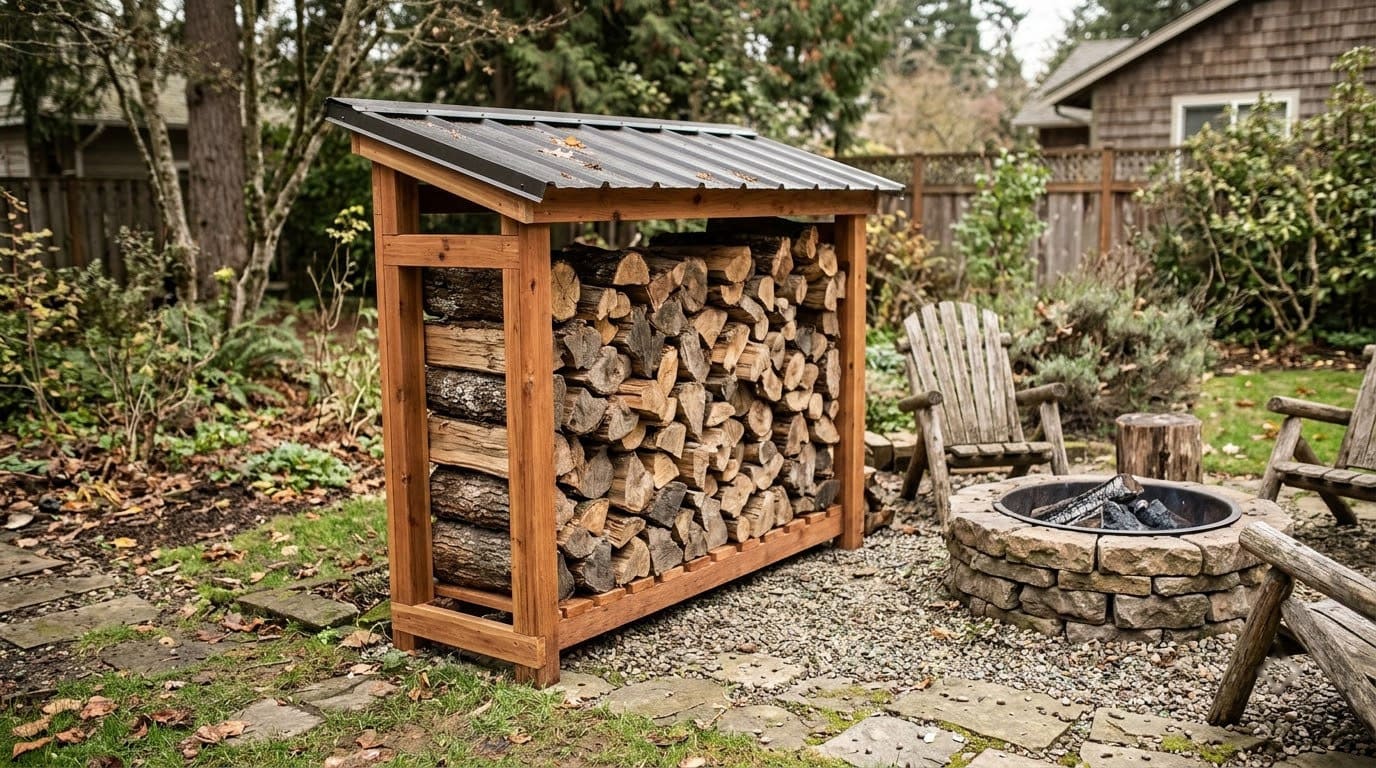
- Build: Build a simple 4-post frame, tilt a metal roof panel and leave the sides open.
- Mistake: Closing in the sides. Covered sides trap moisture, according to the EPA.
Our take: let the back and sides stay open. Air is the point.
4. Fence-Side Rack
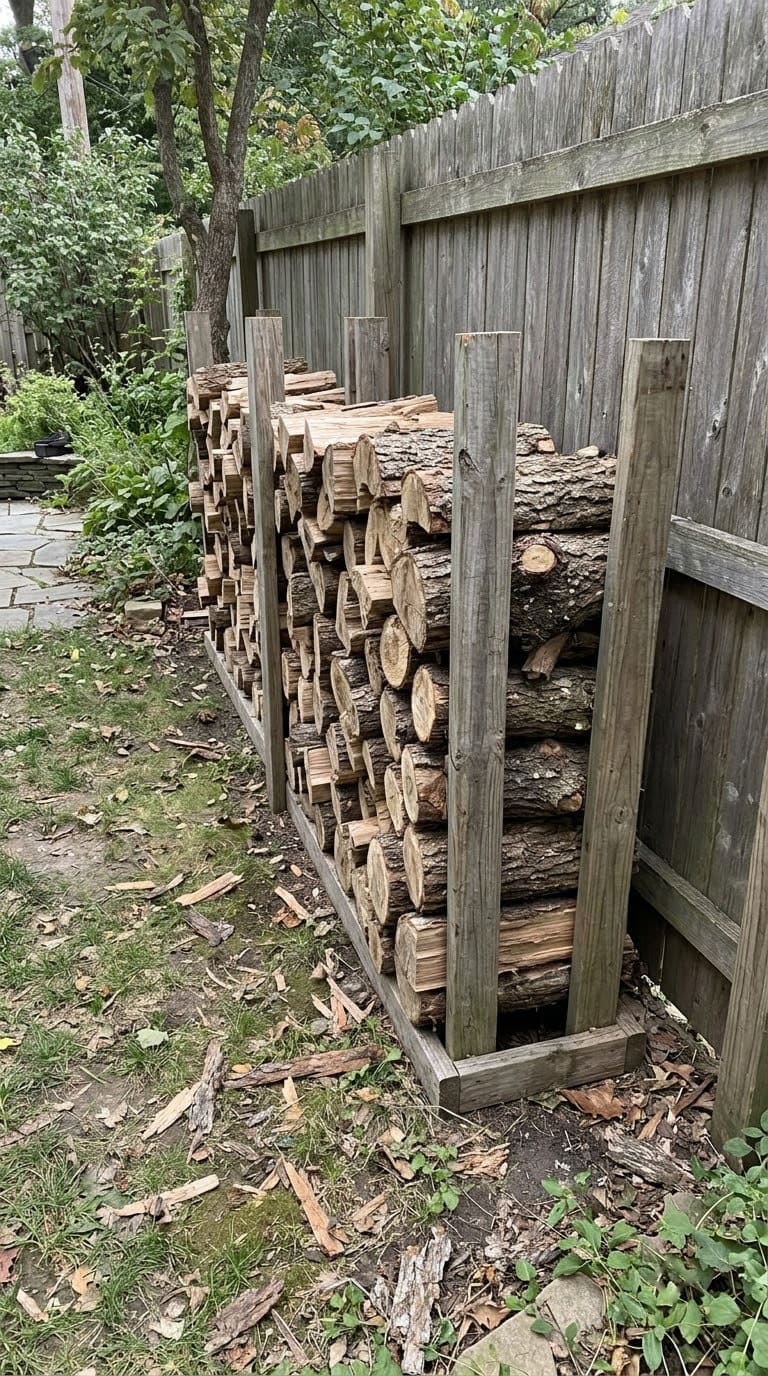
Use a fence as the back.
- Cost level: Low.
- Skill: Easy.
- Build: Set two upright frames along the fence and run cross boards between them.
- Mistake: Pushing wood tight against the fence. Leave a gap so air moves.
Our take: for more backyard projects, see our DIY outdoor project ideas.
5. Wire Cylinder Rack
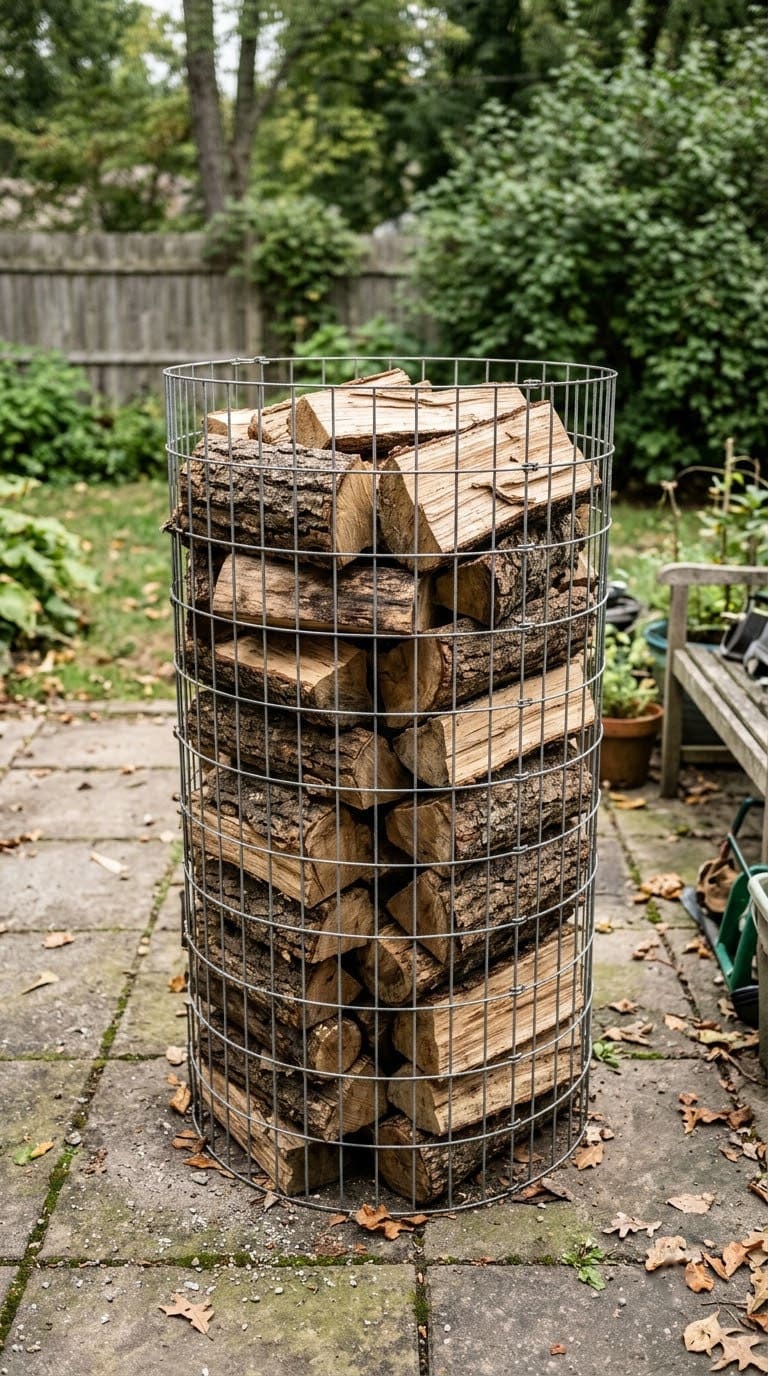
A cheap wire ring holds a round stack.
- Cost level: Low.
- Skill: Easy.
- Build: Bend hog wire or welded wire into a ring and tie it. Stand it on pavers and fill it.
- Mistake: Sharp wire ends. Fold them over and wear gloves.
Our take: pavers underneath keep it off the soil and make it easy to move.
6. Metal Pipe or Rebar Rack
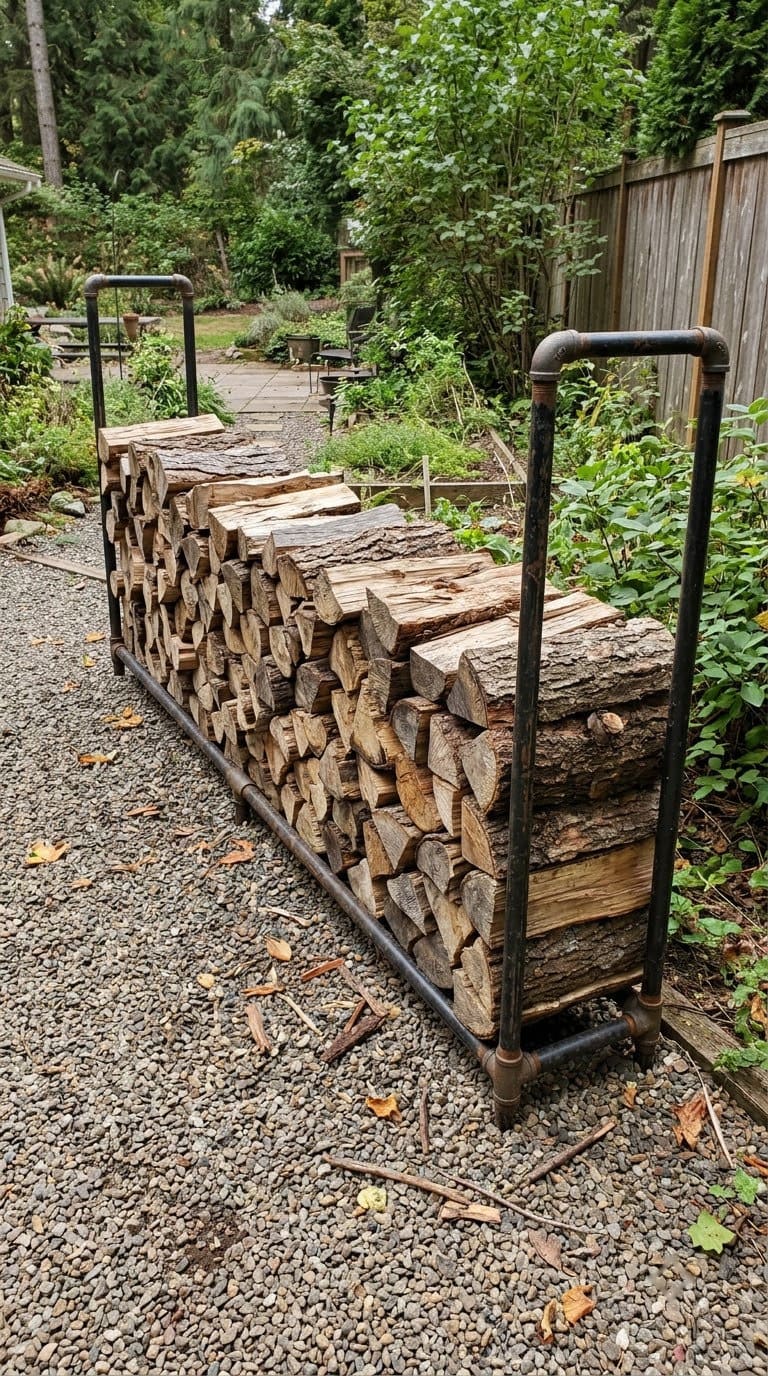
A metal frame lasts a long time.
- Cost level: Medium.
- Skill: Medium.
- Build: Make a base frame with end stakes and cross rails. Weld or bolt it together.
- Mistake: Sharp ends and rust. Cap the ends and paint the frame.
Our take: rust on the rack is fine, but rust flakes on your stove aren’t. Brush logs before carrying them in.
7. Round Stack (Holz Hausen)
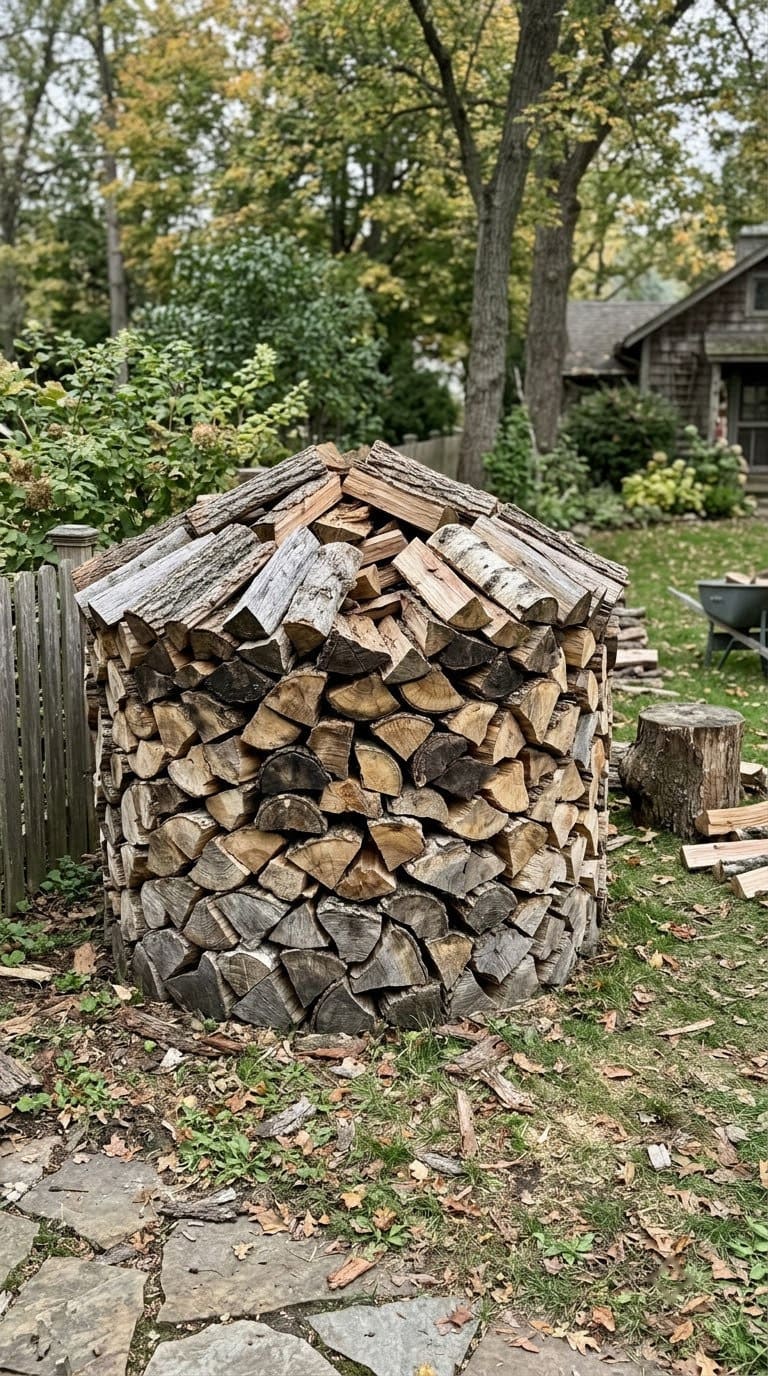
This is a stack, not a rack, but it works.
- Cost level: Free.
- Skill: Medium.
- Build: Place a ring of logs on a flat, raised base, and stack tightly in a circle with a slight inward lean. Fill the center loosely and cap the top.
- Mistake: Building it too tall or on soft ground. A leaning stack can fall.
Our take: this is a fun weekend stack, but skip it if you have small kids who might climb.
8. Rolling Log Cart
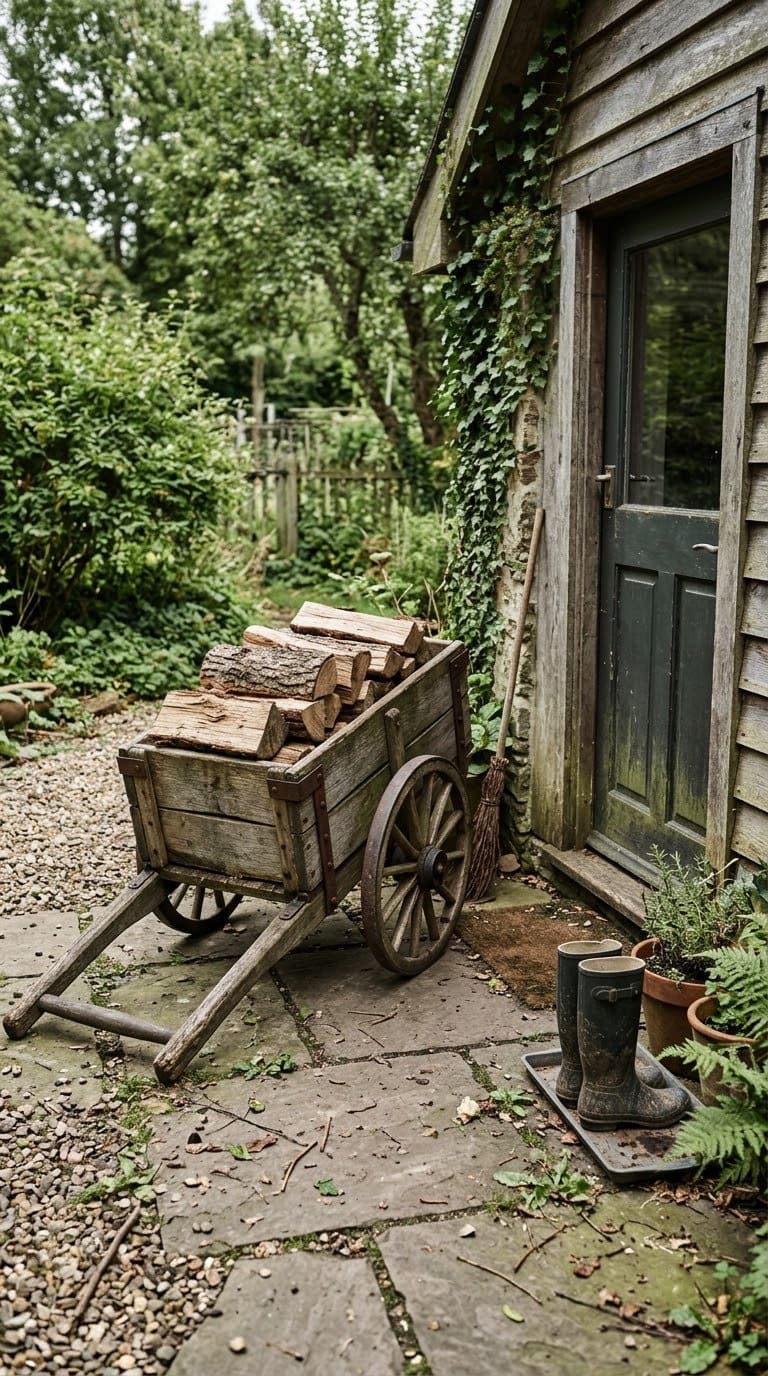
A cart makes carrying easy.
- Cost level: Medium.
- Skill: Medium.
- Build: Build a box on a wheel base with a front opening.
- Mistake: Overloading it. Logs are heavy and can tip.
Our take: keep this near the door for daily use and refill it from the main stack.
9. Pallet-Back Log Store
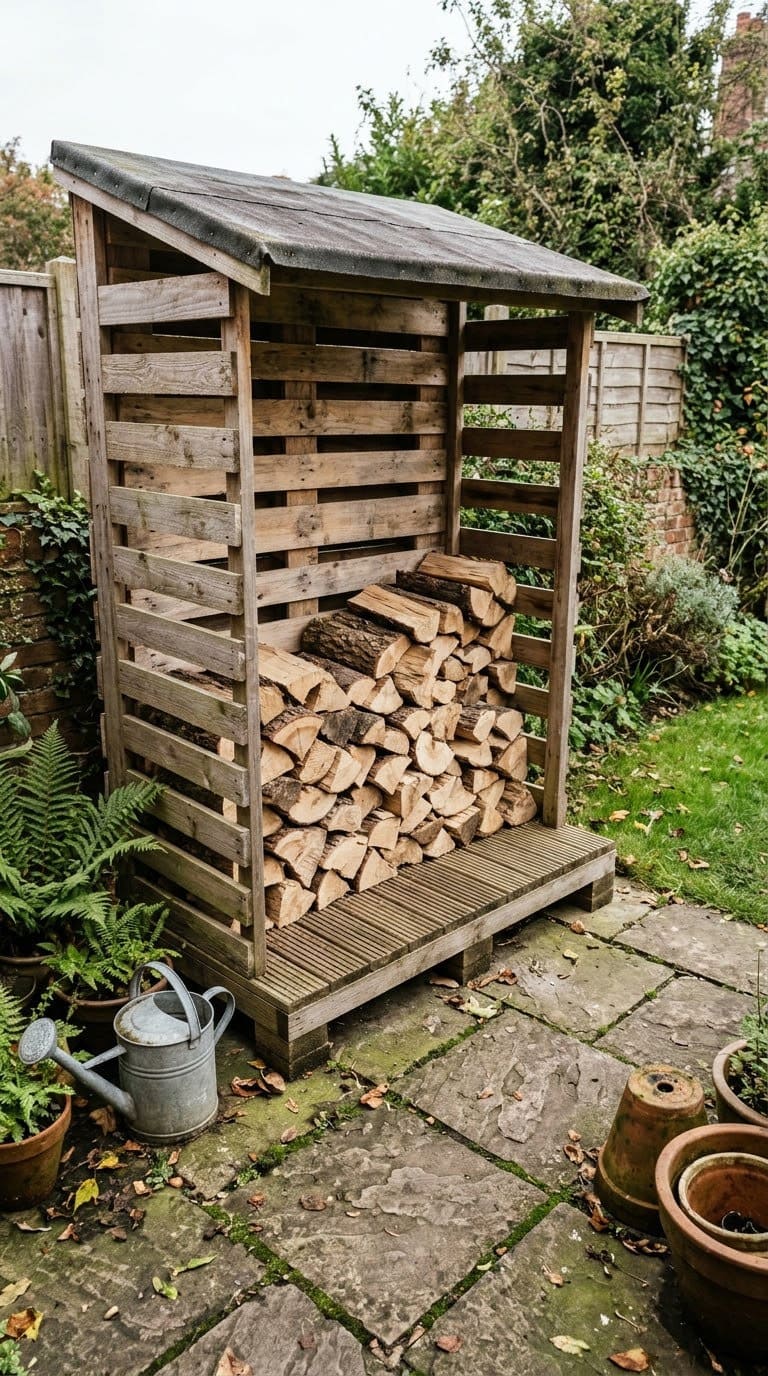
A covered store with a back wall.
- Cost level: Low to medium.
- Skill: Medium.
- Build: Set a pallet as the back, add side posts and a slatted floor. Top with a sloped roof.
- Mistake: A flat roof. Water pools and leaks into the stack.
Our take: slope the roof away from the house.
10. Kindling Box by the Door
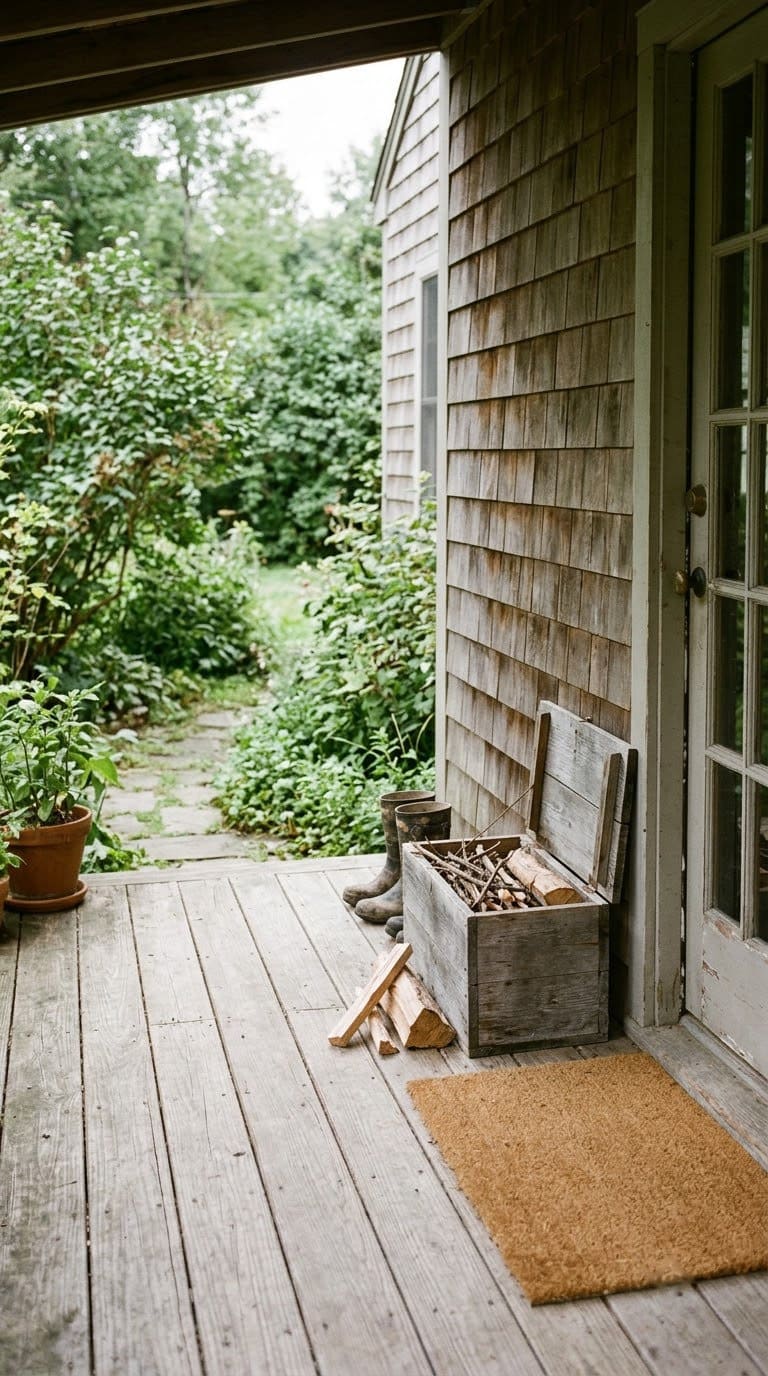
A small box keeps kindling dry.
- Cost level: Low.
- Skill: Easy.
- Build: Build a box with a hinged lid and a raised floor.
- Mistake: Storing it right at the door where sparks can reach. Keep it away from flames.
Our take: refill it from the main rack each week.
11. Hoop Log Basket
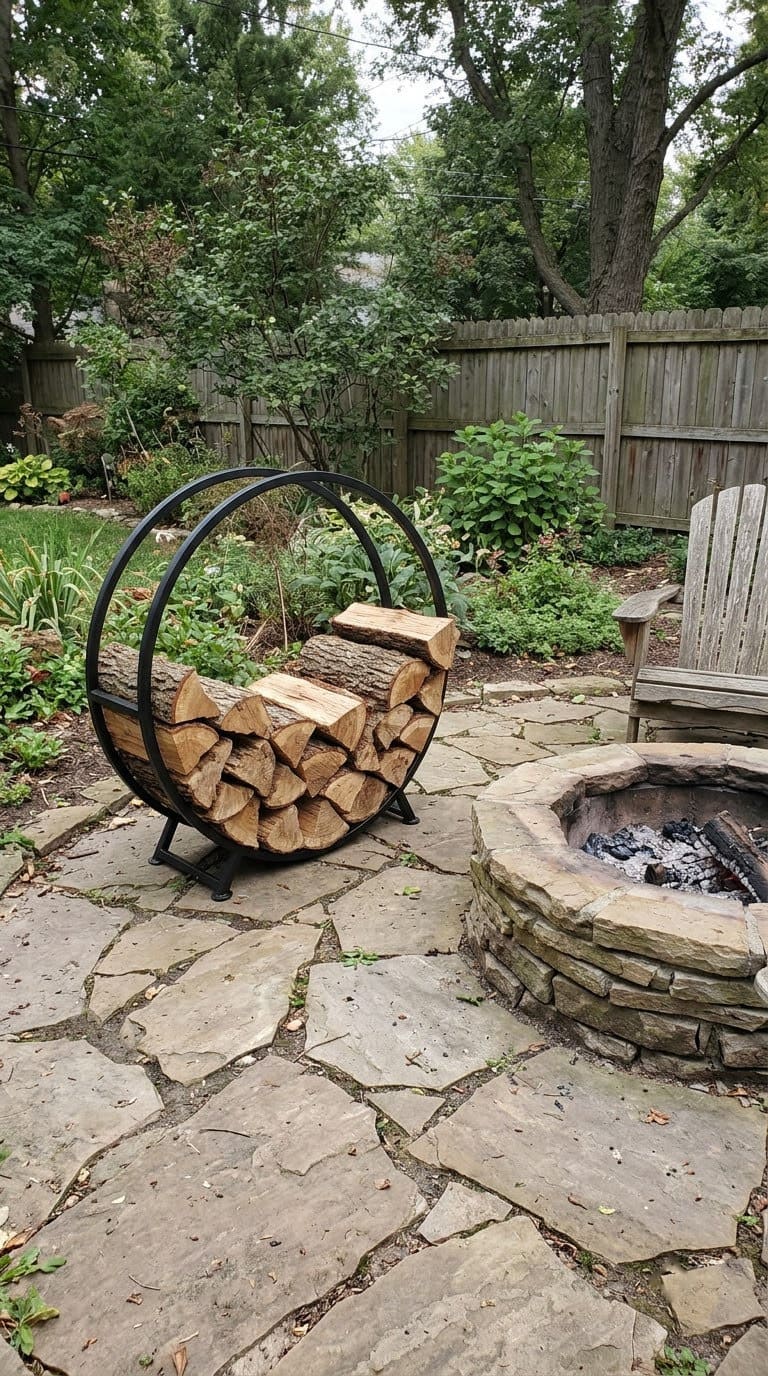
A hoop holds a small amount neatly.
- Cost level: Medium.
- Skill: Medium.
- Build: Bend or buy a steel hoop and stand it on a base.
- Mistake: Putting it too close to the flame. Keep it a safe distance.
Our take: use this for one evening’s wood, not the whole supply. See our rustic fire pit ideas for a matching setting.
12. Raised Platform Pile
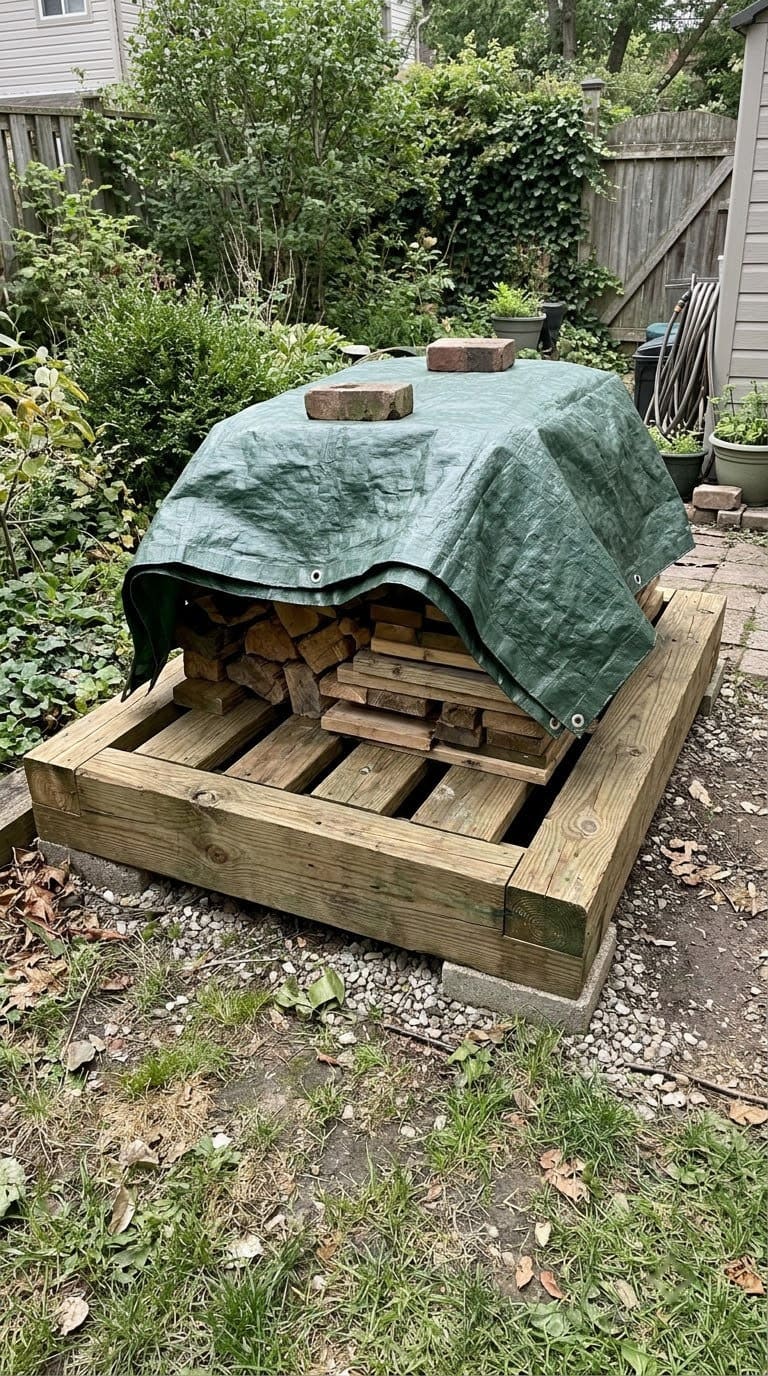
Sometimes a platform is all you need.
- Cost level: Low.
- Skill: Easy.
- Build: Build a slatted platform from beams and boards. Stack logs on top.
- Mistake: Wrapping the whole pile in a tarp. Cover only the top.
Our take: this is the easiest rack to build. Add a roof later if you want.
How Should You Choose Your Wood?
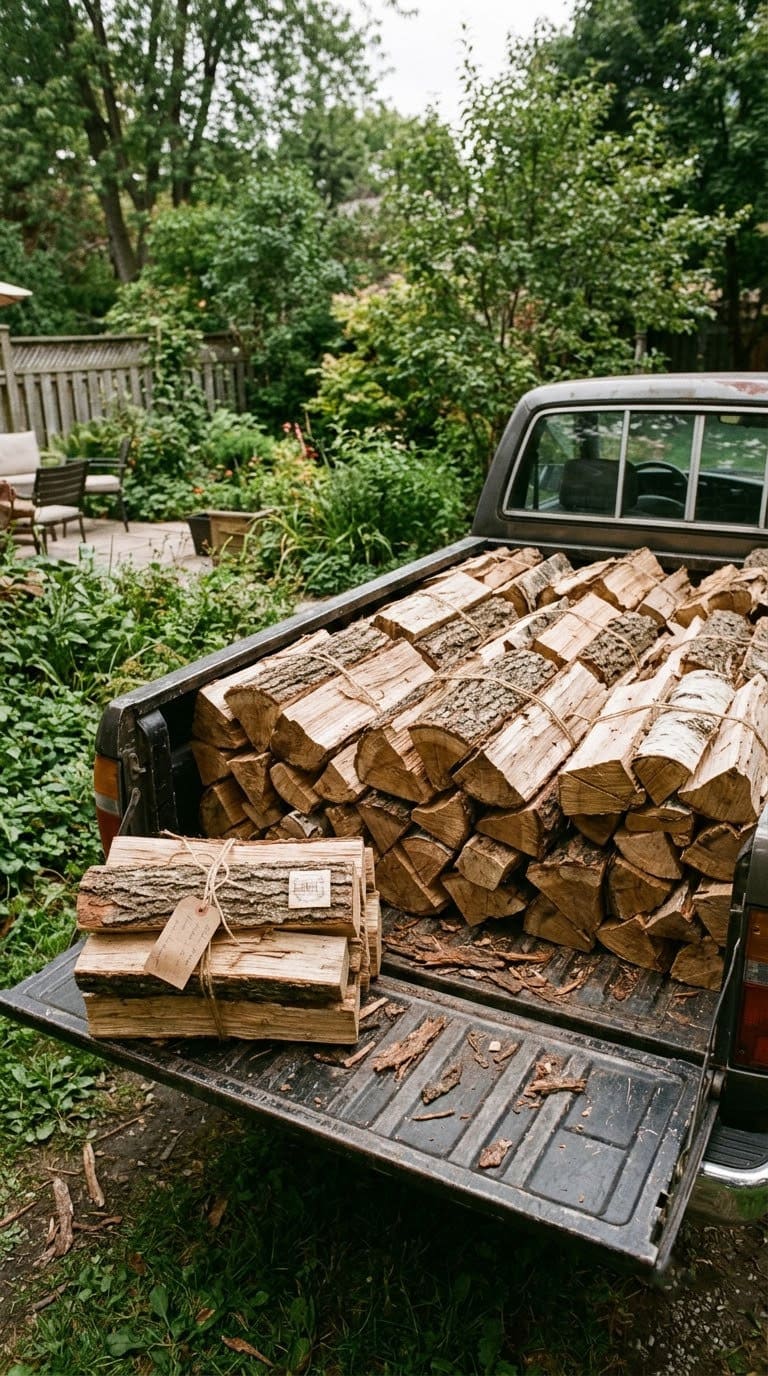
Where your wood comes from matters. The USDA’s APHIS says moving firewood even a short distance can carry pests like emerald ash borer, spongy moth and Asian longhorned beetle. Its advice is to buy near where you burn it.
APHIS also says to choose certified heat-treated firewood with a state or federal mark. And it says to burn leftovers where you got them, not move them to another place.
Our take: buy local and keep your receipt. It supports a nearby seller and protects nearby trees.
How Do You Keep Pests Away?
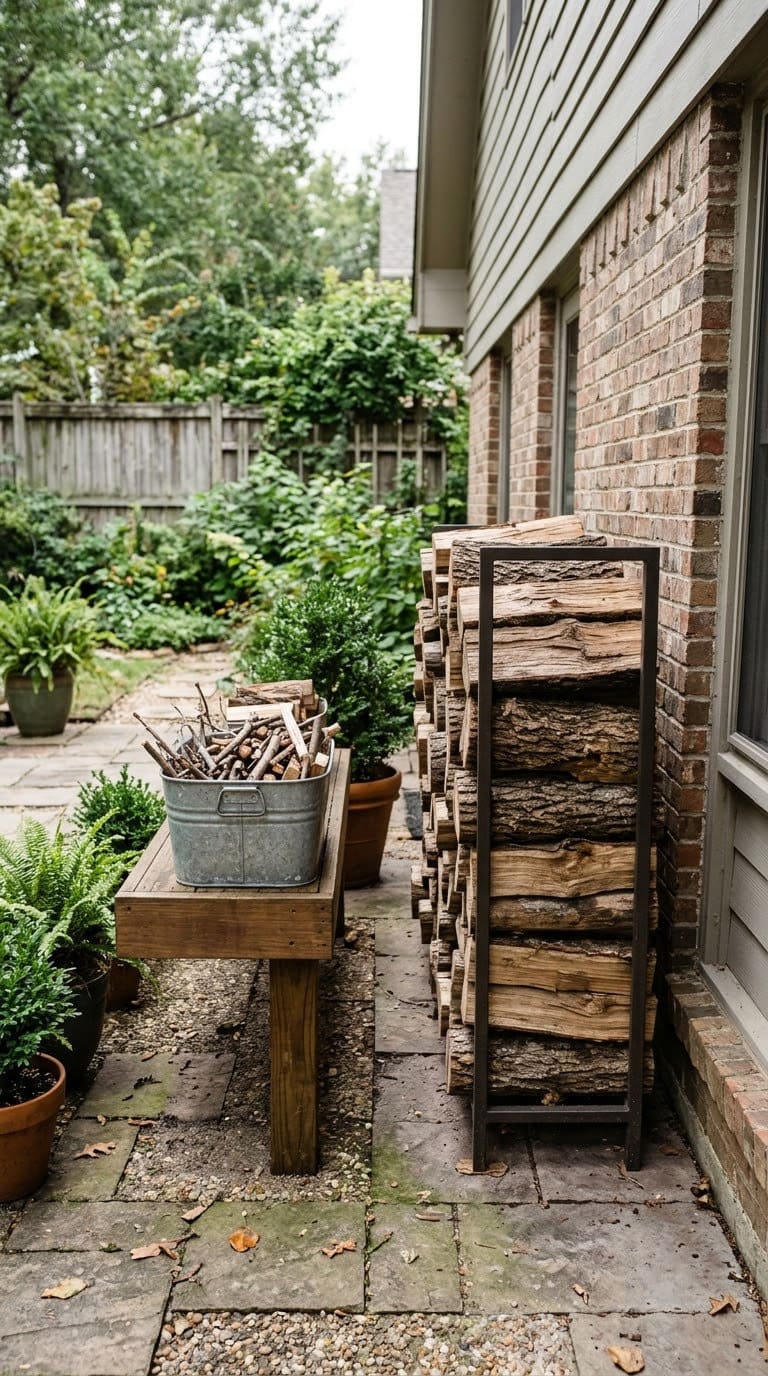
Wood piles attract bugs, mice and spiders. A few habits help.
- Keep the pile away from the house wall.
- Raise it off the ground.
- Bring in only a few days of wood at a time.
- Knock logs together outdoors before carrying them in.
- Ask your local extension office about termite advice for your area.
Our take: wear gloves when you stack. Spiders like the gaps.
What Mistakes Should You Avoid?
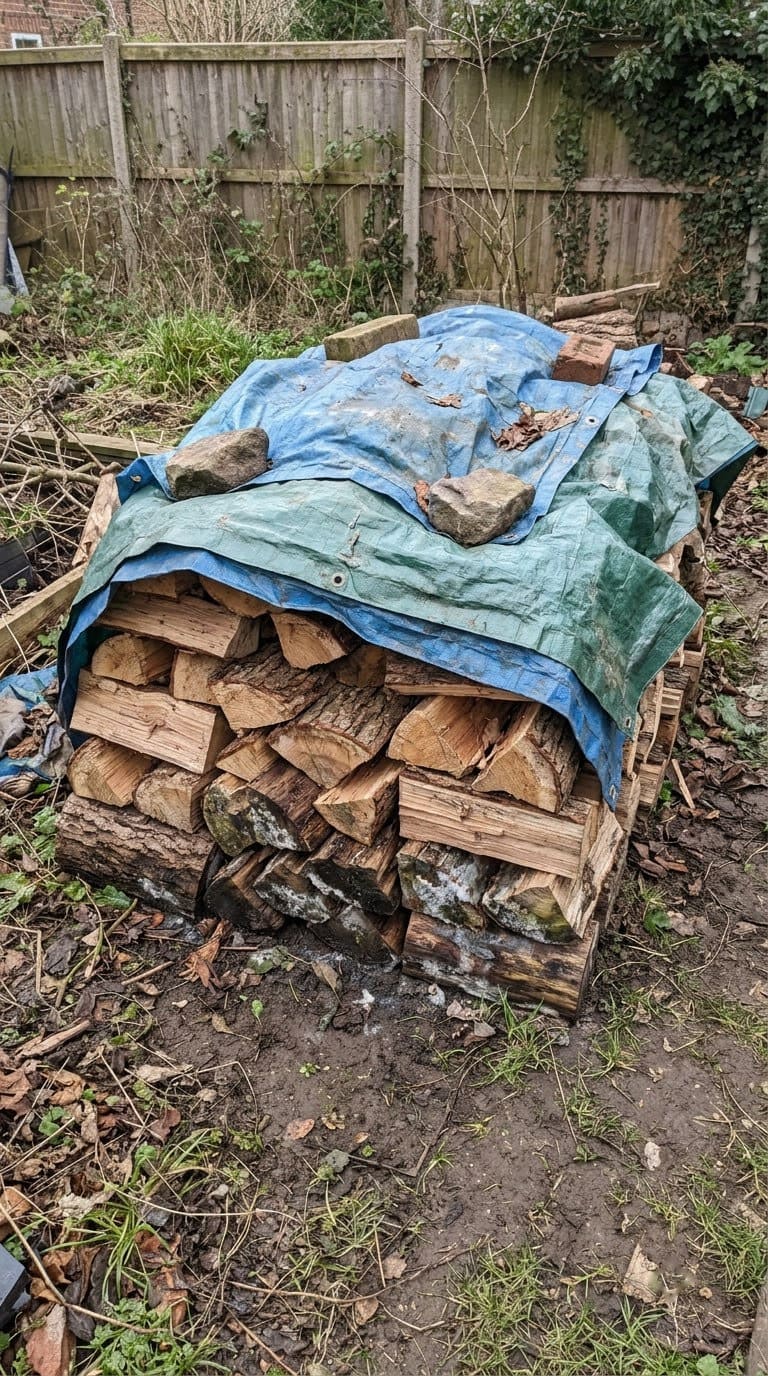
Most problems come from moisture and the wrong pallet.
- Wood on the ground. It soaks up water.
- A full tarp wrap. Sides trap moisture.
- MB or unmarked pallets. Avoid them and never burn them.
- Tall, unstable stacks. Keep them low and braced.
- Rack by the house wall. It invites pests.
- Burning unseasoned wood. Check with a meter.
Frequently Asked Questions
What is the best way to store firewood outside?
Off the ground, with air flowing through the stack and only the top covered. The EPA says covering the sides traps moisture. Test with a meter before you burn.
How long should firewood dry?
At least six months, according to the EPA. Wood burns best below 20 percent moisture, so test it with a meter instead of guessing.
Can I use pallets for a firewood rack?
Yes, if they are stamped HT. UC ANR says heat-treated pallets are generally safe, and Penn State Extension says never to use MB pallets or burn them.
Should I cover my firewood?
Yes, but only the top. A roof or a tarp tucked over the top keeps rain off. See our metal fire pit ideas for a safe burning setup.
Your Firewood Rack Plan
- Day 1: Pick a level, dry spot away from the house wall.
- Day 2: Gather HT pallets or lumber, and build the base.
- Day 3: Add the roof or top cover, leaving the sides open.
- Day 4: Stack split logs with air gaps.
- Every month: Check moisture with a meter and restack if needed.
Build a flat base, add a roof and keep the sides open. That is how you get dry wood all winter.
Never miss an update — choose FarmFoodFamily as your preferred source on Google.
How it works: Tap the button below to open Google's settings page, then check the box next to FarmFoodFamily.
Tap the checkbox to turn it blue — that's how you know it's set.