20+ Best Entryway Bench Decor Ideas (Plus the Proportion Rules That Actually Make Them Work)
Most entryway bench roundups are just a scroll of pretty photos with a caption like “cozy and inviting.” What actually makes a bench nook look pulled-together isn’t the bench itself, it’s whether the mirror, the hooks, and the seat height all sit in the right proportion to each other. Get that wrong and even a…


Never miss an update — choose FarmFoodFamily as your preferred source on Google.
How it works: Tap the button below to open Google’s settings page, then check the box next to FarmFoodFamily.
Tap the checkbox to turn it blue — that’s how you know it’s set.
Most entryway bench roundups are just a scroll of pretty photos with a caption like “cozy and inviting.”
What actually makes a bench nook look pulled-together isn’t the bench itself, it’s whether the mirror, the hooks, and the seat height all sit in the right proportion to each other.
Get that wrong and even a gorgeous bench looks a little off. So before the 20 ideas below, here’s the part most guides skip.
1. The proportion rules that make a bench vignette actually work
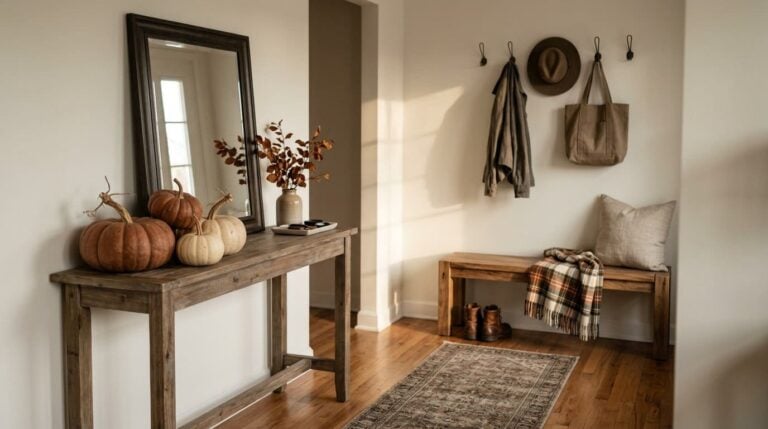
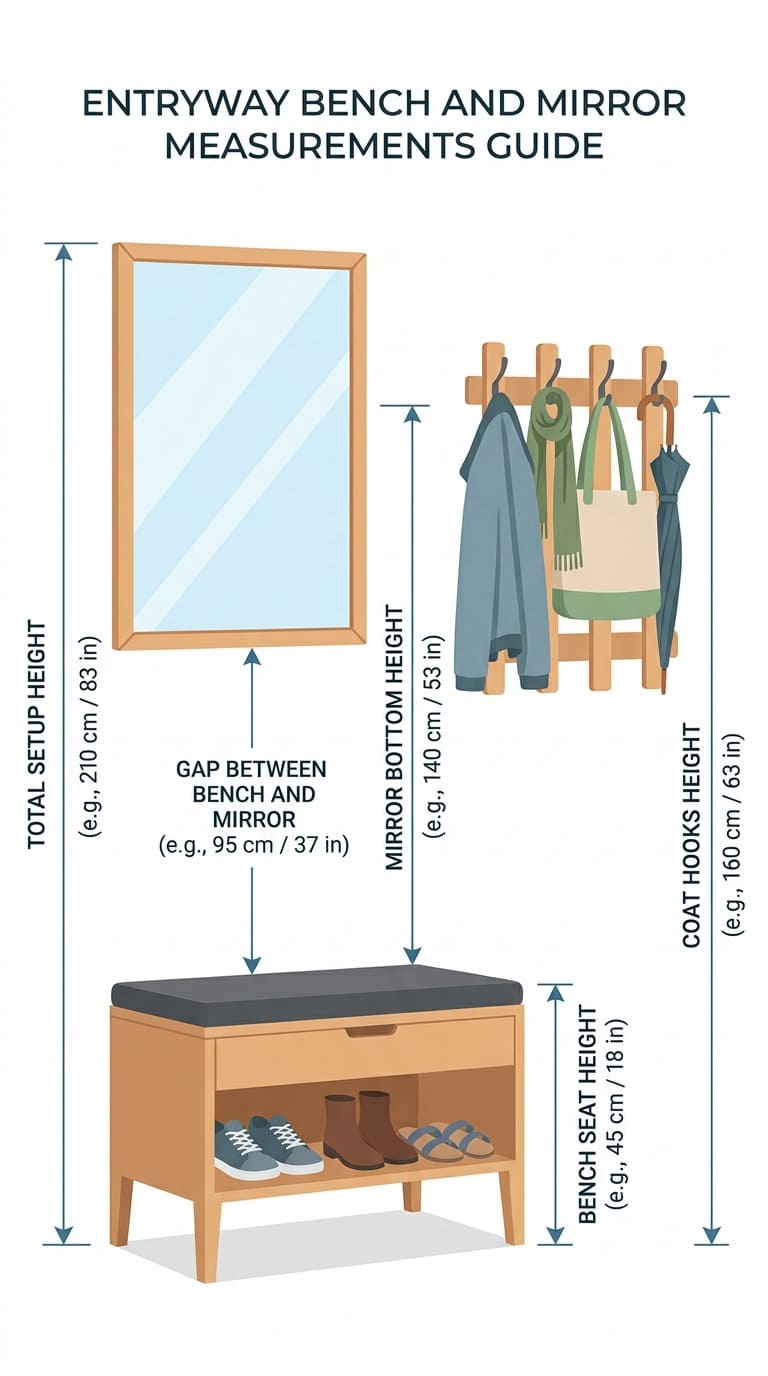
If you’re hanging a mirror over the bench, keep its center roughly 57 to 60 inches off the floor, average eye level, and leave 6 to 12 inches of clearance between the top of the bench and the bottom of the mirror so the two pieces read as one grouping instead of two unrelated things stacked on a wall.
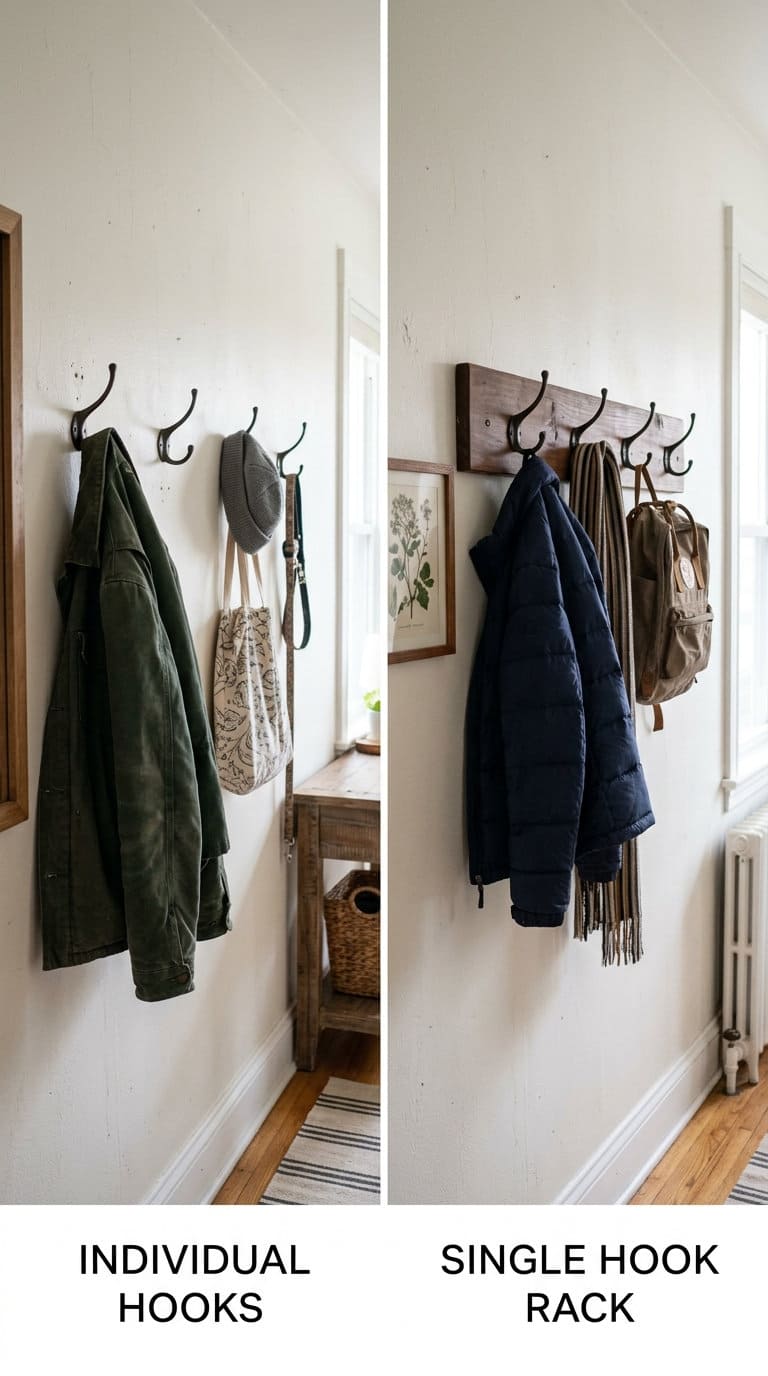
Hooks are where most people guess wrong. Adult coat hooks work best around 60 to 66 inches, kids’ hooks lower at 36 to 48 inches, with 12 to 18 inches of clearance between the top of the bench and the bottom of the hooks so coats and bags hang free without dragging on the seat. One real, specific detail worth stealing from a home decorating forum: individual hooks generally beat a single hook rack mounted on one backplate, because backplate hooks end up too close together for anything bulkier than a scarf. A hook spread of around 30 inches reads more proportional to a standard bench and keeps hanging items from sticking out too far from the wall.

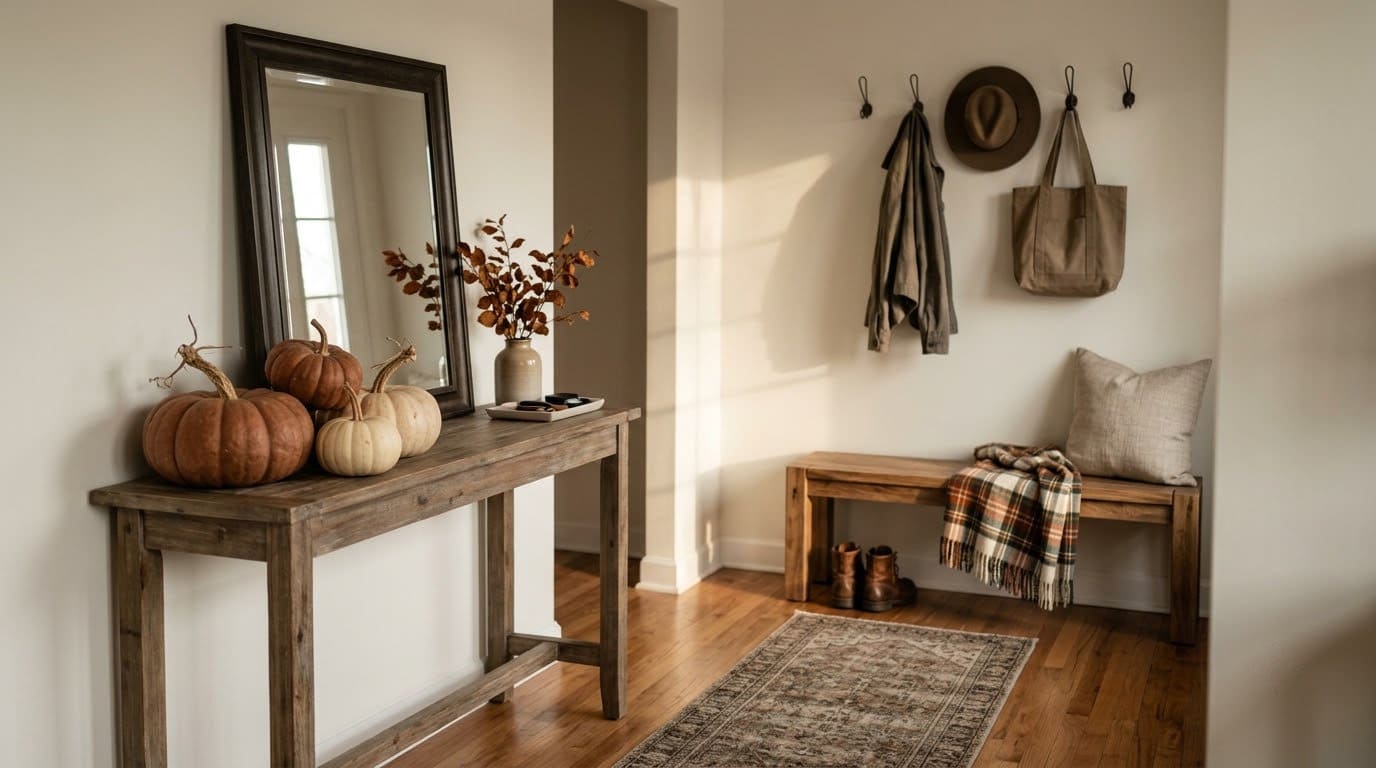
Whatever you put on a shelf or console above the bench, less is more. One tray for keys plus one small object, a candle or a small vase, is enough. Add a mirror to that same wall and you’ve already doubled the visual weight, so resist the urge to also add a second decorative object.
On the bench itself, the industry-standard “35 x 11 x 17 inch” bench you’ll see everywhere is a starting point, not a rule. Seat height around 18 to 20 inches matches a standard chair height and feels natural for most adults, but if the bench’s main job is swapping shoes, 17 to 19 inches is the more comfortable range, and if it’s for older adults, 19 to 21 inches is easier on the knees getting up and down. Seat depth of 14 to 18 inches is the standard comfortable range without eating into the walkway.
If you’re choosing an upholstered bench, ask about the fabric’s Martindale rub count before you buy. It’s the standard abrasion-resistance test for upholstery, and a high-traffic piece like an entryway bench, wet shoes, bags, kids, dogs, should be rated 30,000 rubs or higher, well above the general residential minimum of 20,000. Worth knowing honestly: rub count only measures abrasion, not stain resistance or how the fabric handles moisture, both of which matter more at a front door than almost anywhere else in the house.
If you’re going with a storage or lift-top bench, check the hinges before the finish. Real storage benches on the market list stated weight capacities (one common model rates 300 lbs) and use safety or soft-close hinges specifically so the lid doesn’t slam on fingers. If you’re repurposing a basic cabinet into a bench yourself, a real weight-limit workaround from a home DIY forum: cheaper cabinet lines are often rated for only around 55 lbs, a sturdier cabinet line holds up noticeably better, and adding an internal support frame from ordinary 2×4 lumber underneath the benchtop is a common, effective fix if you’re worried about long-term sag.
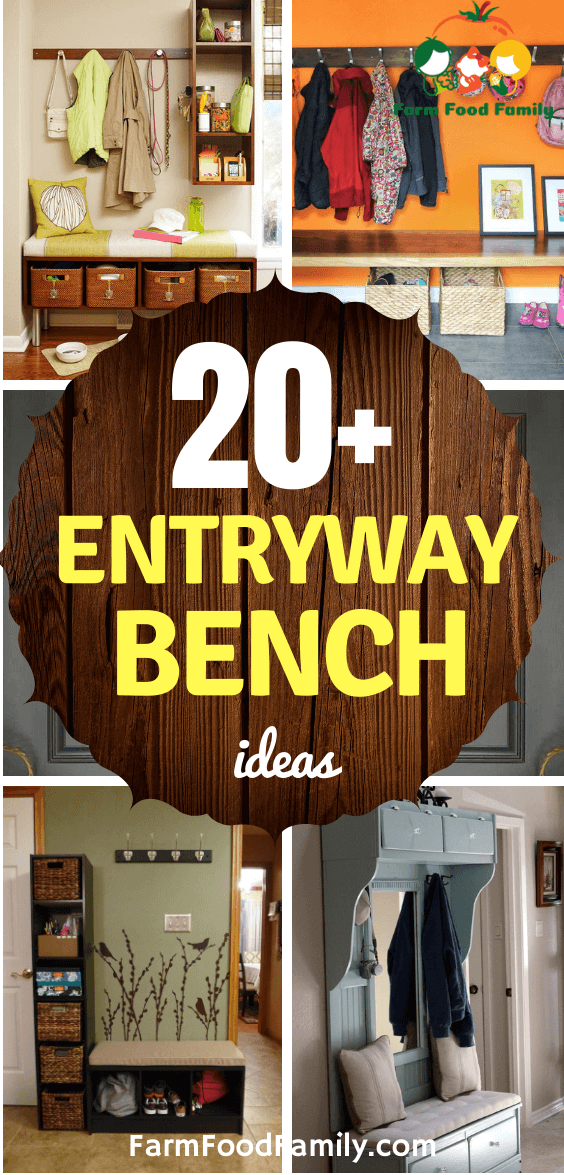
Here are 20 entryway benches, each with the actual details that make them work, not just what they look like.
2. The simple bench
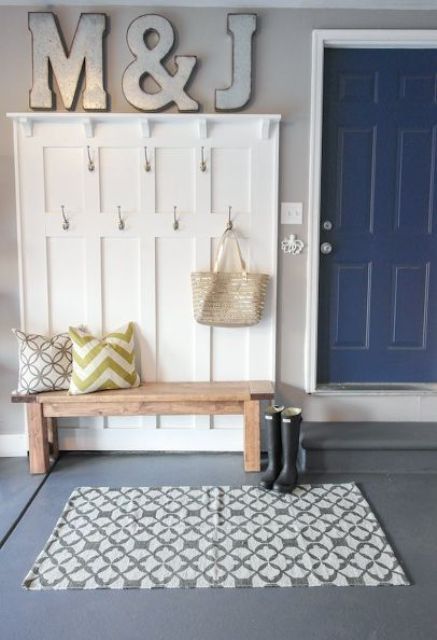
A plain bench, no ornamentation, works because it doesn’t compete with anything else in the entry.
Stick to a straight-grain wood like poplar or a simple painted MDF top, and keep the leg style thin and unfussy so the piece reads as background furniture rather than a focal point. This is the easiest style to build yourself with basic tools, a solid seat board and four turned or straight legs is genuinely a weekend project.
3. The rustic bench (reclaimed wood)
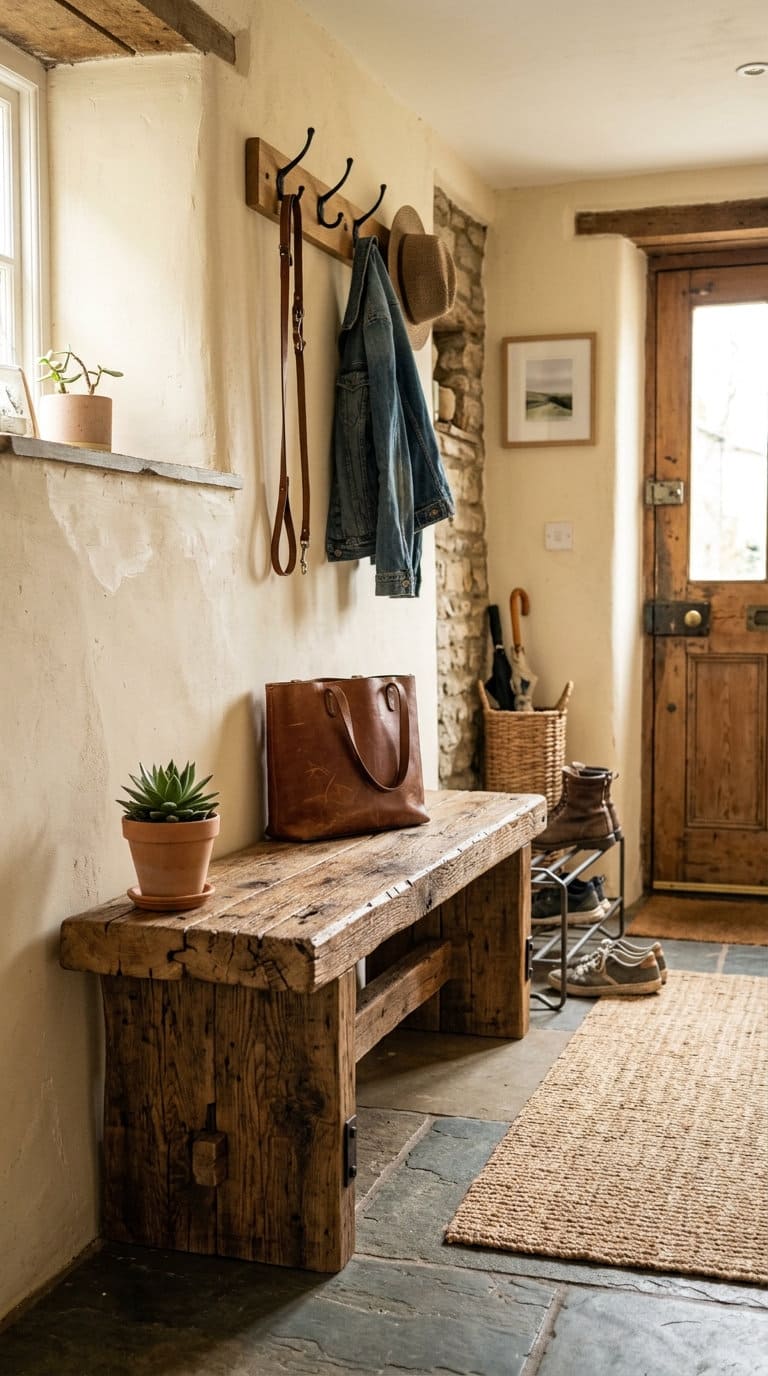
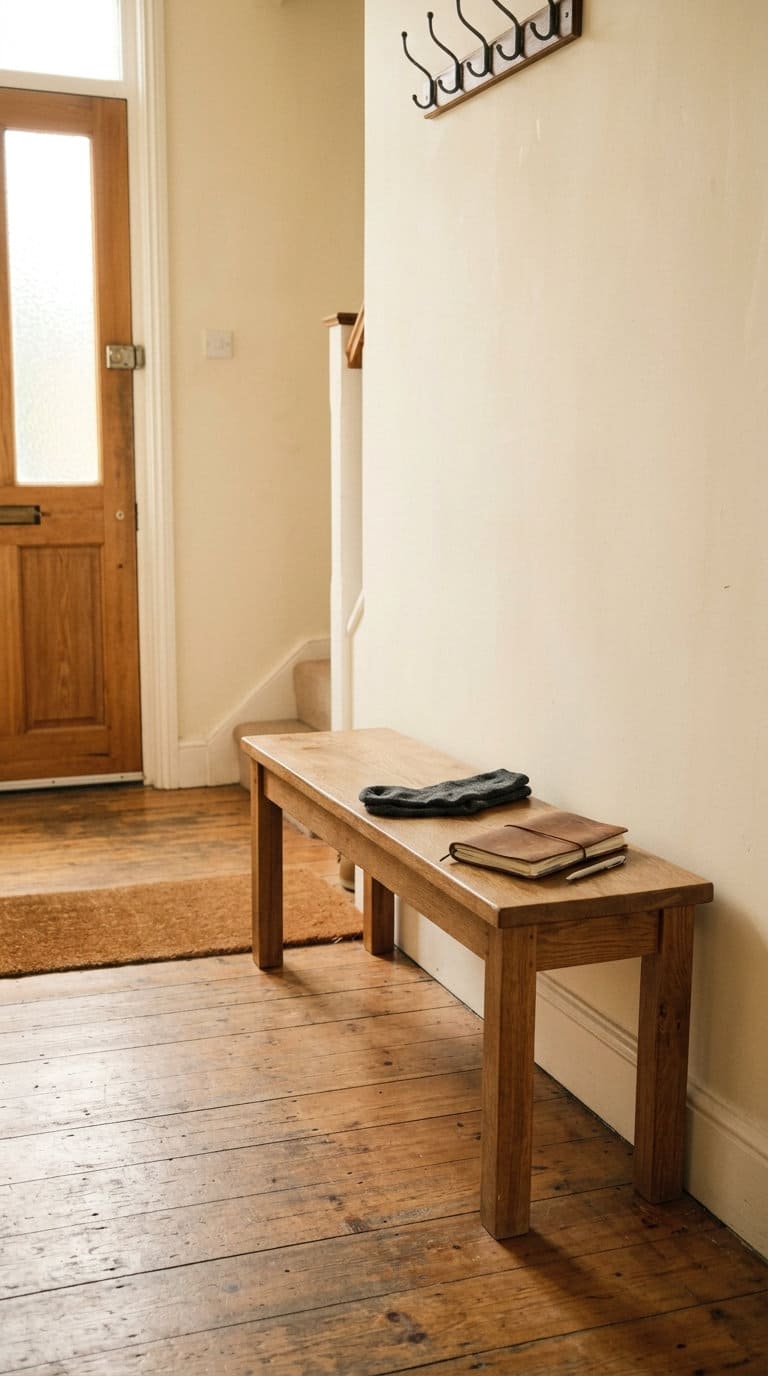
A bench built from reclaimed barn wood or pallet boards brings real texture and history that a new-wood piece can’t fake.
Look for boards with visible saw marks, nail holes, or weathering left intact rather than sanded smooth, that’s the detail that reads as authentically rustic instead of “distressed” in a factory.
Seal it with a matte or satin finish rather than gloss, since gloss tends to fight the rough-grain look.
4. The complex bench (with mirror and storage)
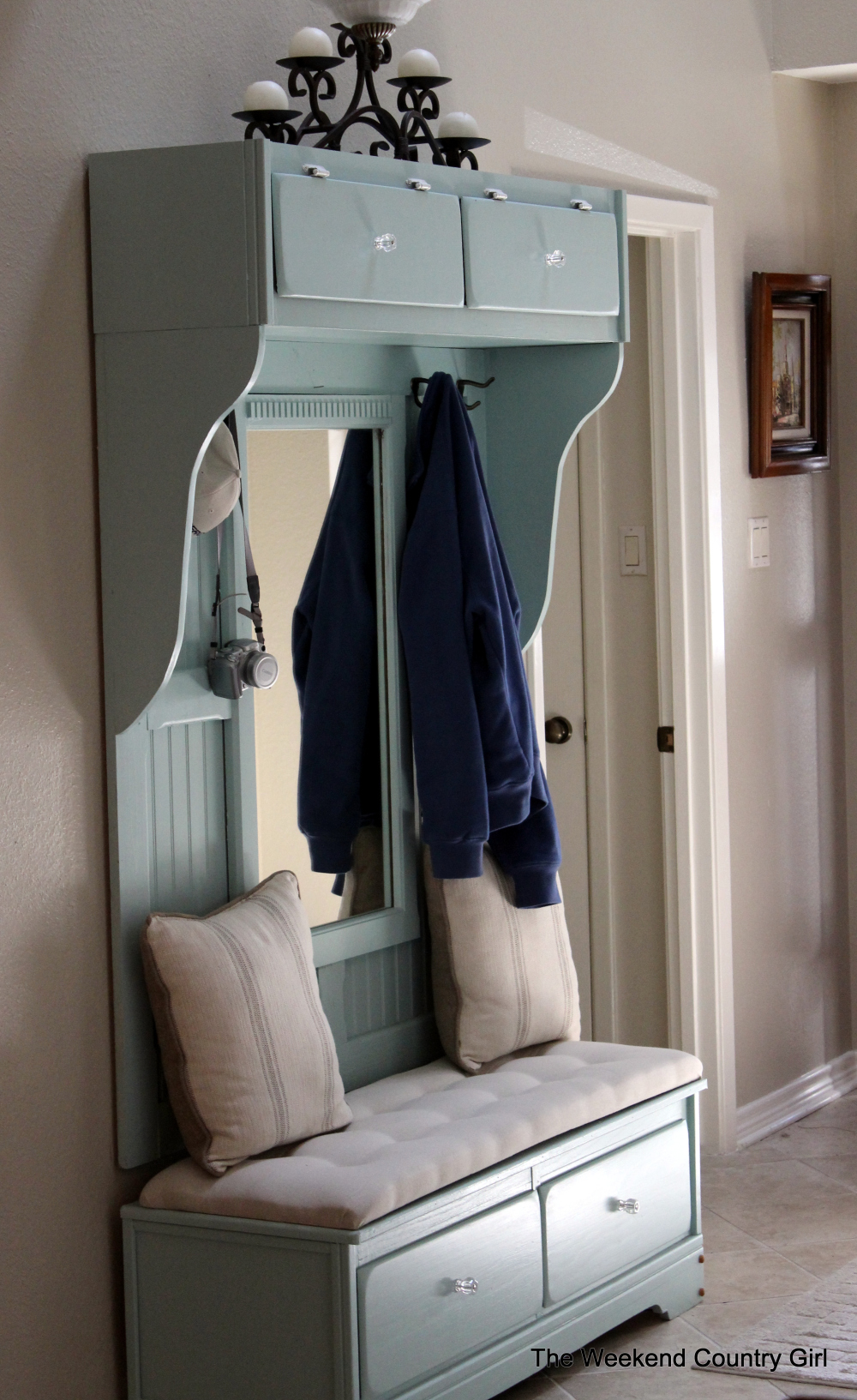
This is a full built-in setup, bench plus attached mirror plus storage cubbies in one piece, and it’s the most expensive option on this list because it’s really three pieces of furniture engineered into one.
If you’re commissioning something like this, follow the mirror-clearance rule from section 1 rather than letting the mirror get mounted flush against the bench back.

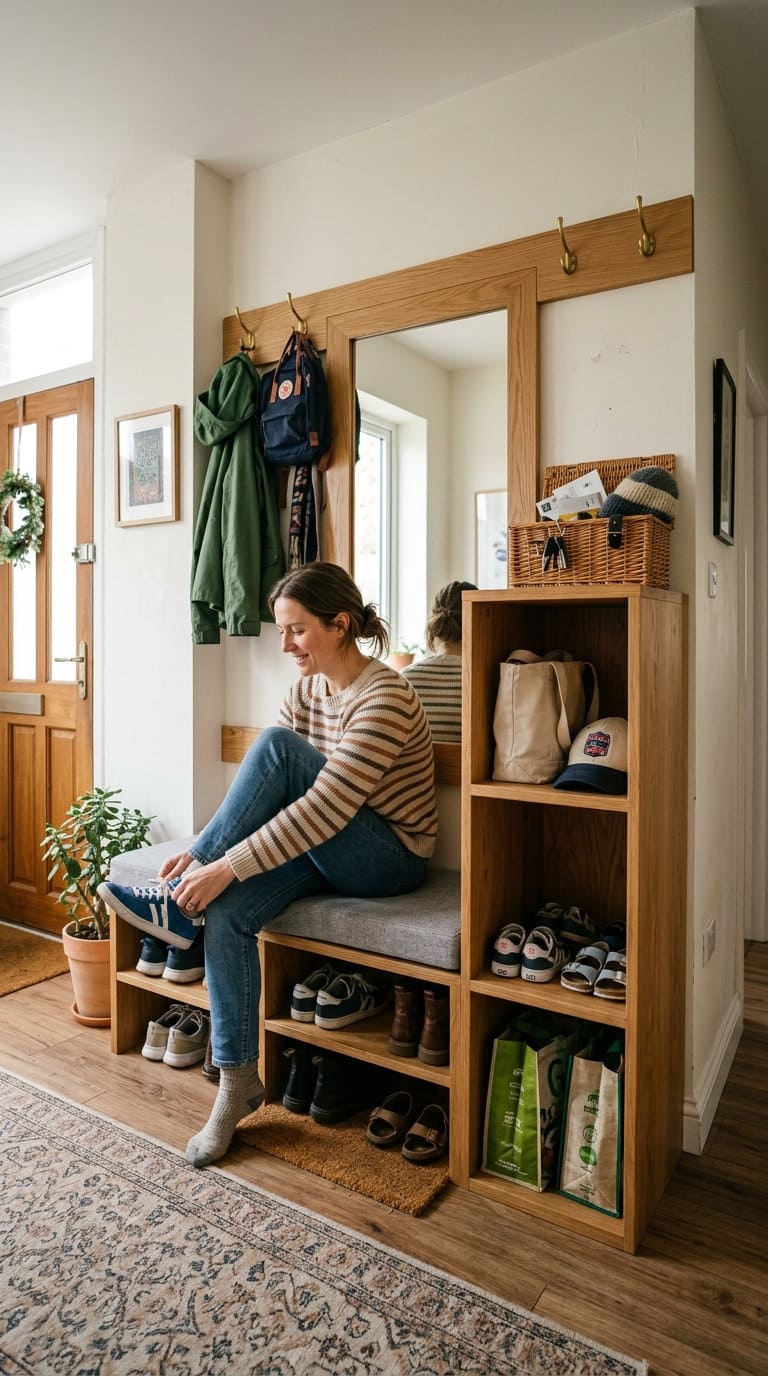
5. The multi-purpose bench
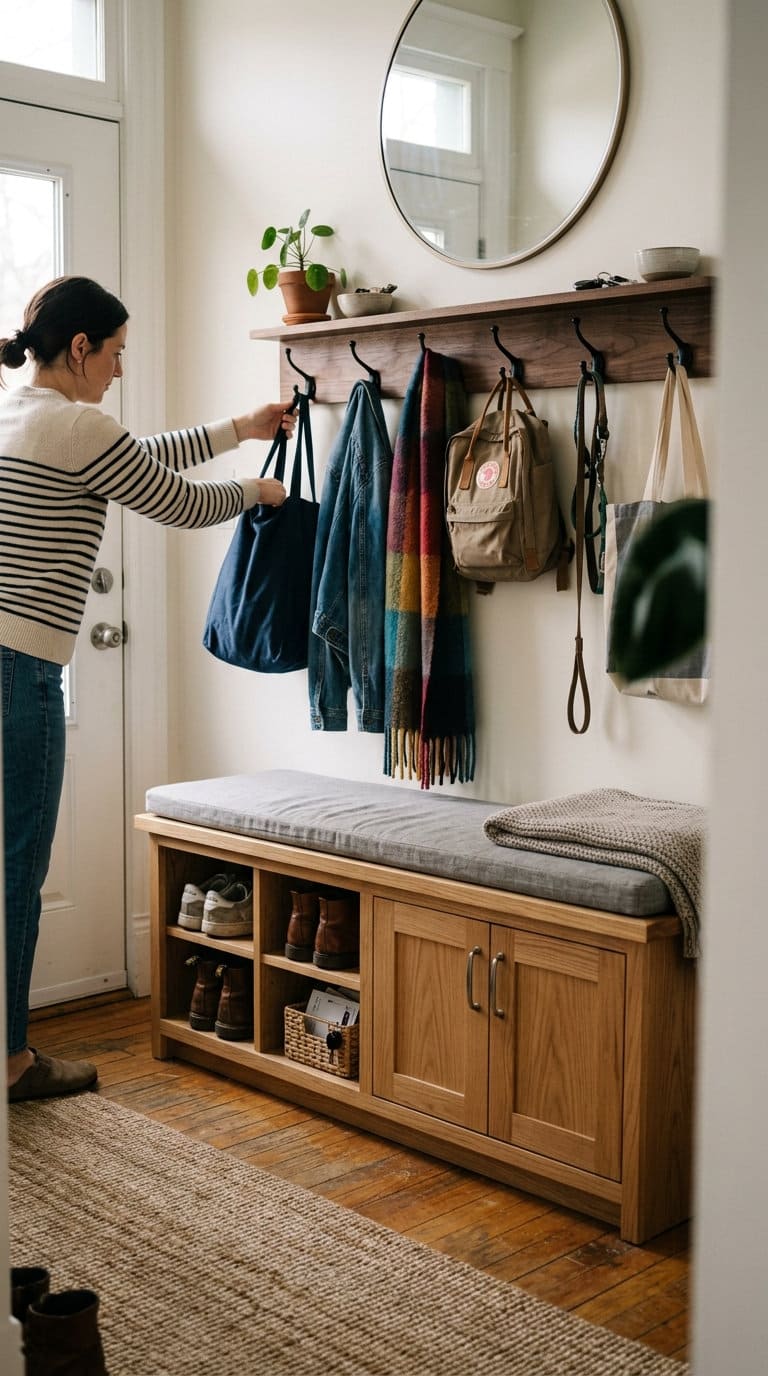
A bench with a mix of open cubbies, closed cabinet doors, and a hook rail above it covers shoes, bags, and coats in one footprint, which matters most in a smaller entryway where you can’t afford three separate pieces.
Layer in a shoe tray inside the lowest cubby to catch drips and grit before it stains the floor.
6. The storage bench
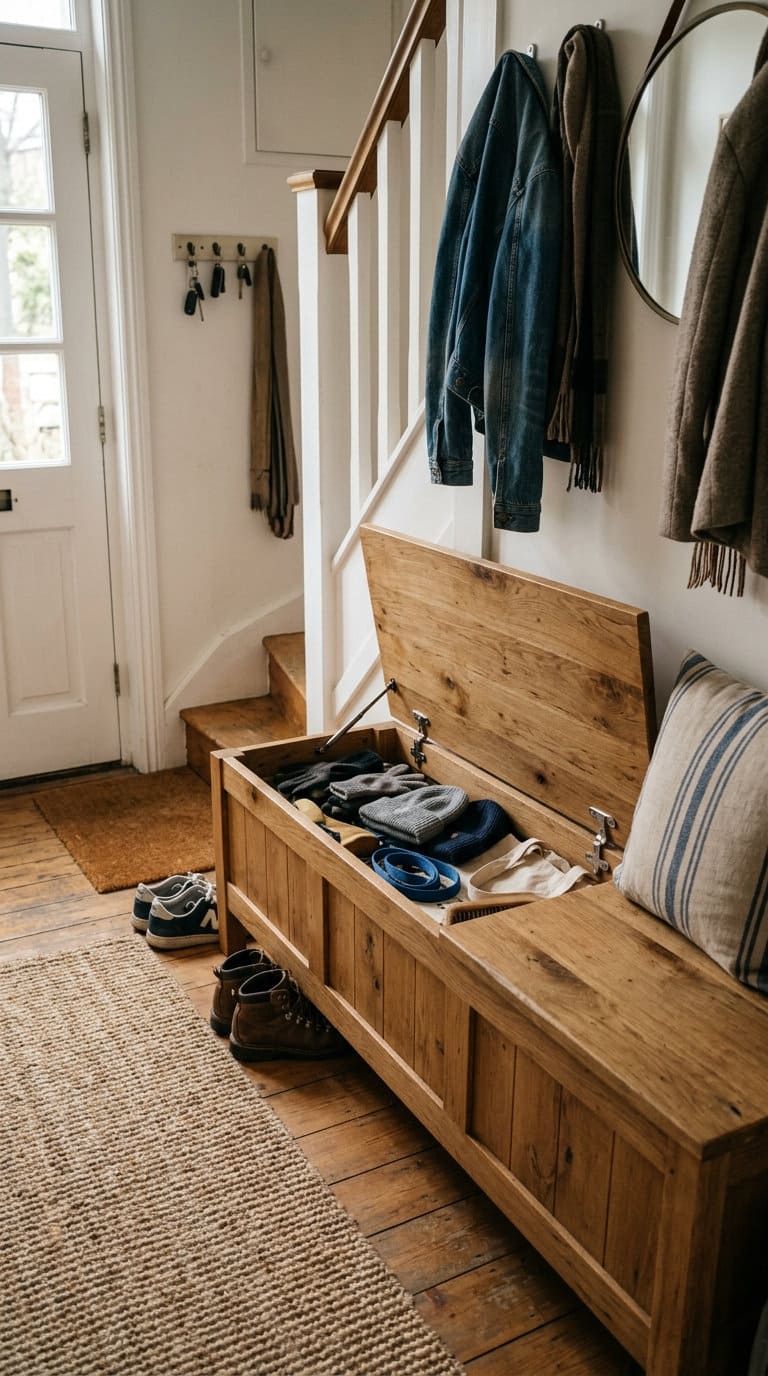
A lift-top storage bench is the highest-utility option here, and it’s worth applying the hardware checklist from section 1 directly: confirm the stated weight capacity, check that the hinges are rated safety or soft-close rather than a plain pivot hinge, and lift the lid yourself in the store if you can, a hinge that’s stiff or clunky new will only get worse.
Line the inside with a washable liner if you’re storing wet boots or muddy gear.
7. The bling bench
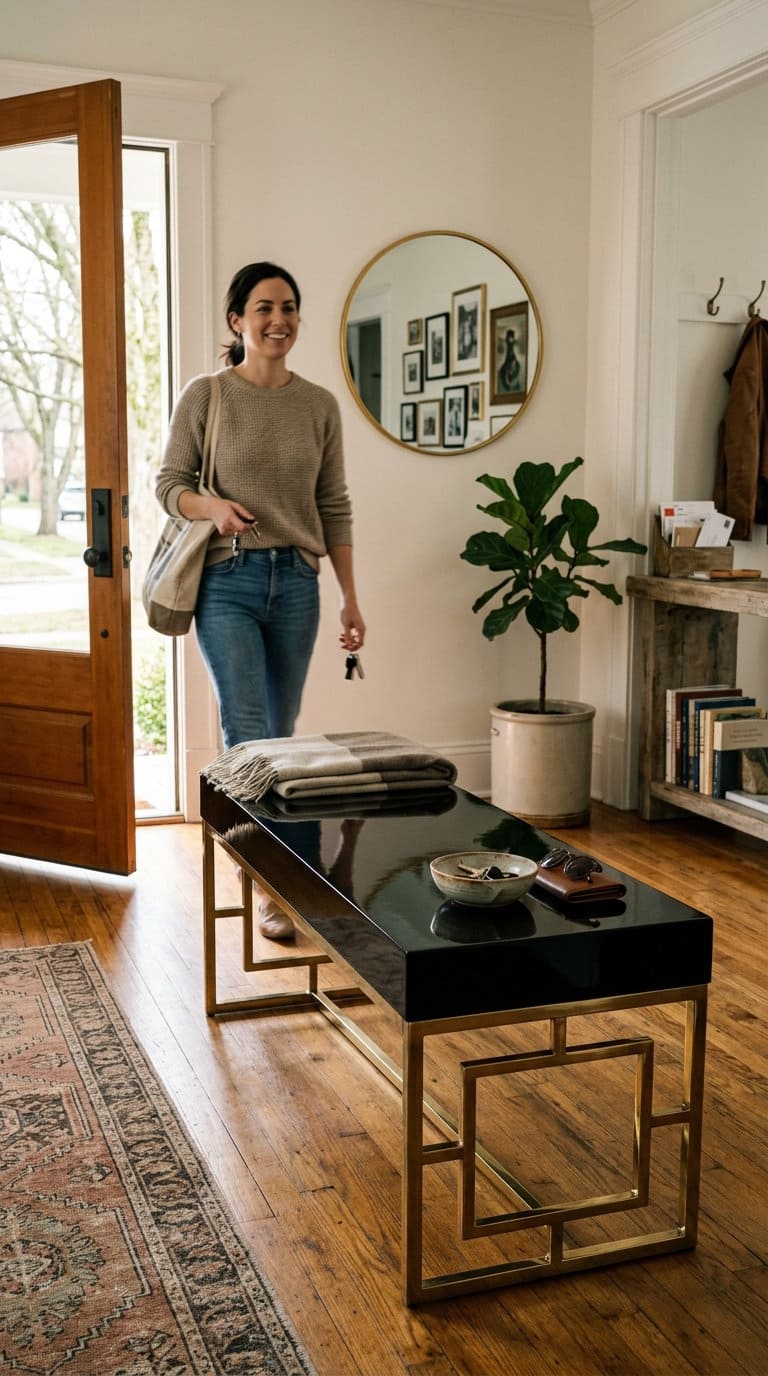
Metallic legs, a mirrored or lacquered surface, or a glam upholstery fabric turns a bench into the entryway’s statement piece rather than background furniture.
Keep everything else in the vignette plain, per the restraint rule in section 1, a glam bench next to a busy patterned rug and an ornate mirror fights itself.
8. The aesthetic one

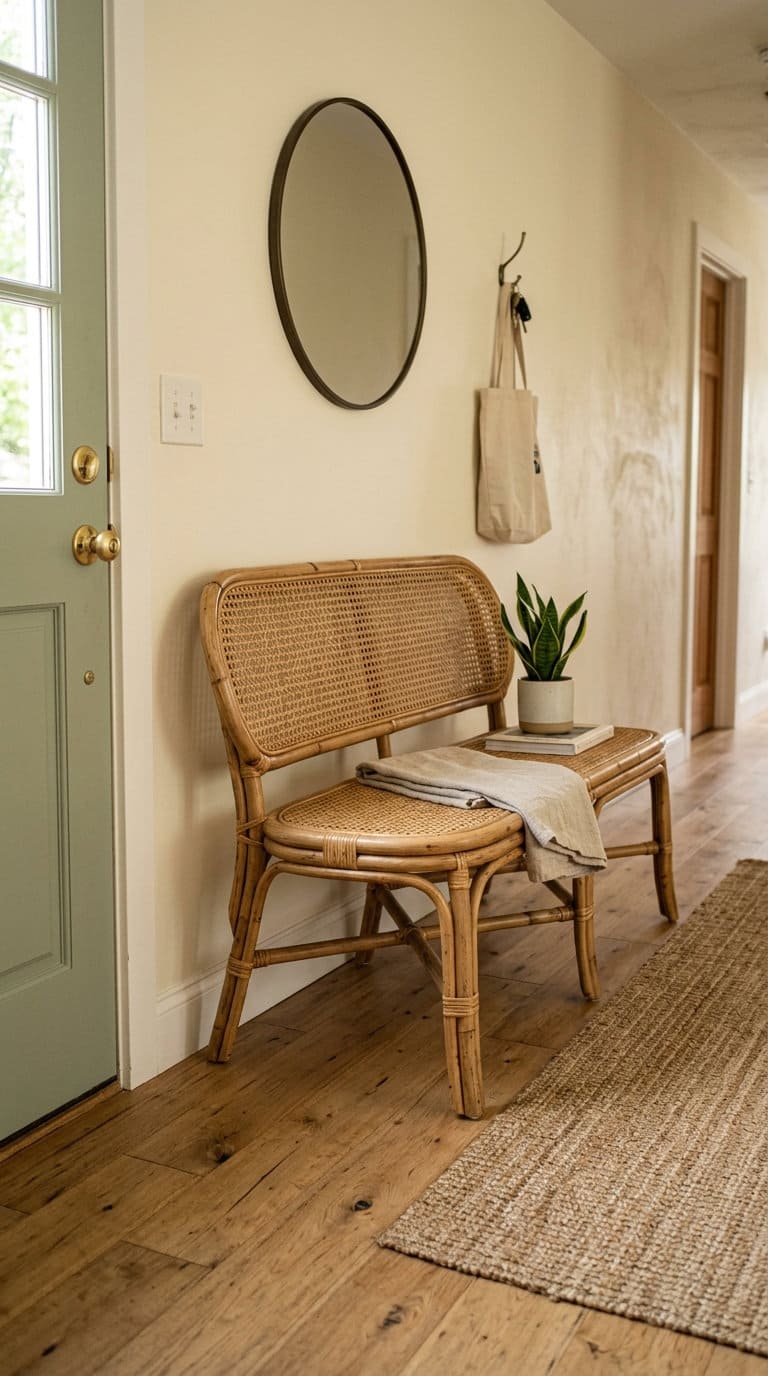
This is a bench chosen purely for how it photographs, think a specific color, a distinctive leg shape, or an unusual material like woven rattan or cane.
It works best as a single striking element in an otherwise simple entry, not layered with equally bold hooks, art, or rug.
9. The posh bench
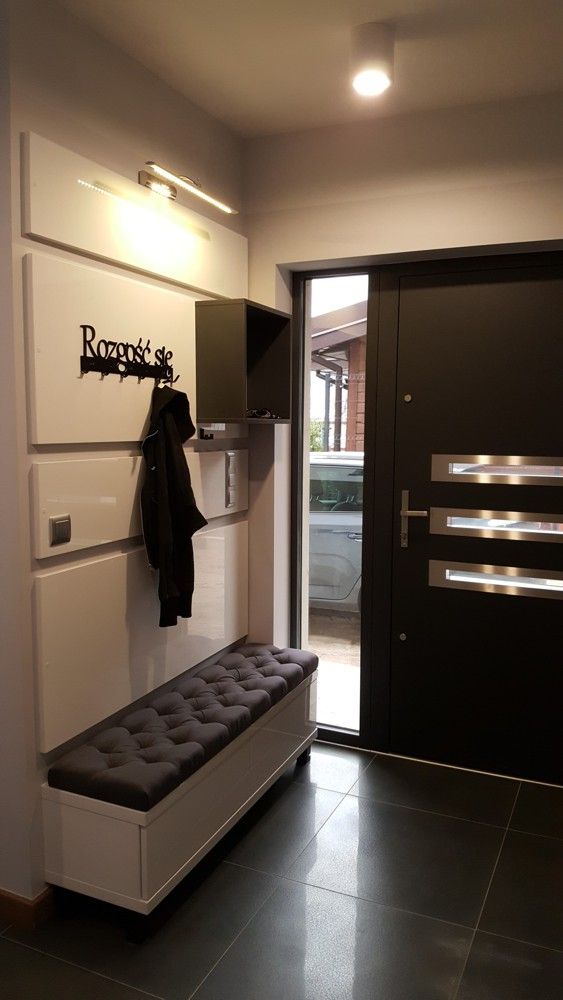
A tufted or channel-stitched upholstered bench with slim tapered or brass legs reads formal and dapper without being fussy, a good fit for a foyer that’s meant to feel a little more dressed-up than a casual mudroom.
A real example from a personal design blog paired a similar upholstered bench with a repainted IKEA shoe cabinet and Benjamin Moore’s Chantilly Lace on the walls for a clean, brightened entry, proof that a posh-feeling bench doesn’t require a full renovation around it.
10. The fashionista
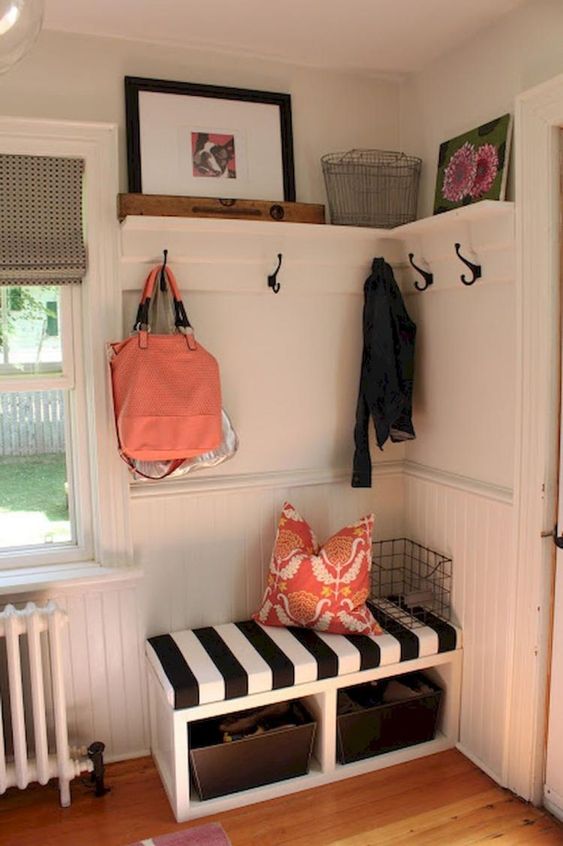
This style leans into pattern, a bold floral, a graphic stripe, or a bright solid on the seat cushion, paired with clean-lined hardware so the fabric stays the star.
If you go bold on pattern here, apply the rub-count check from section 1, a statement fabric you’ll want to keep for years needs to actually survive daily use, not just look good in the first month.
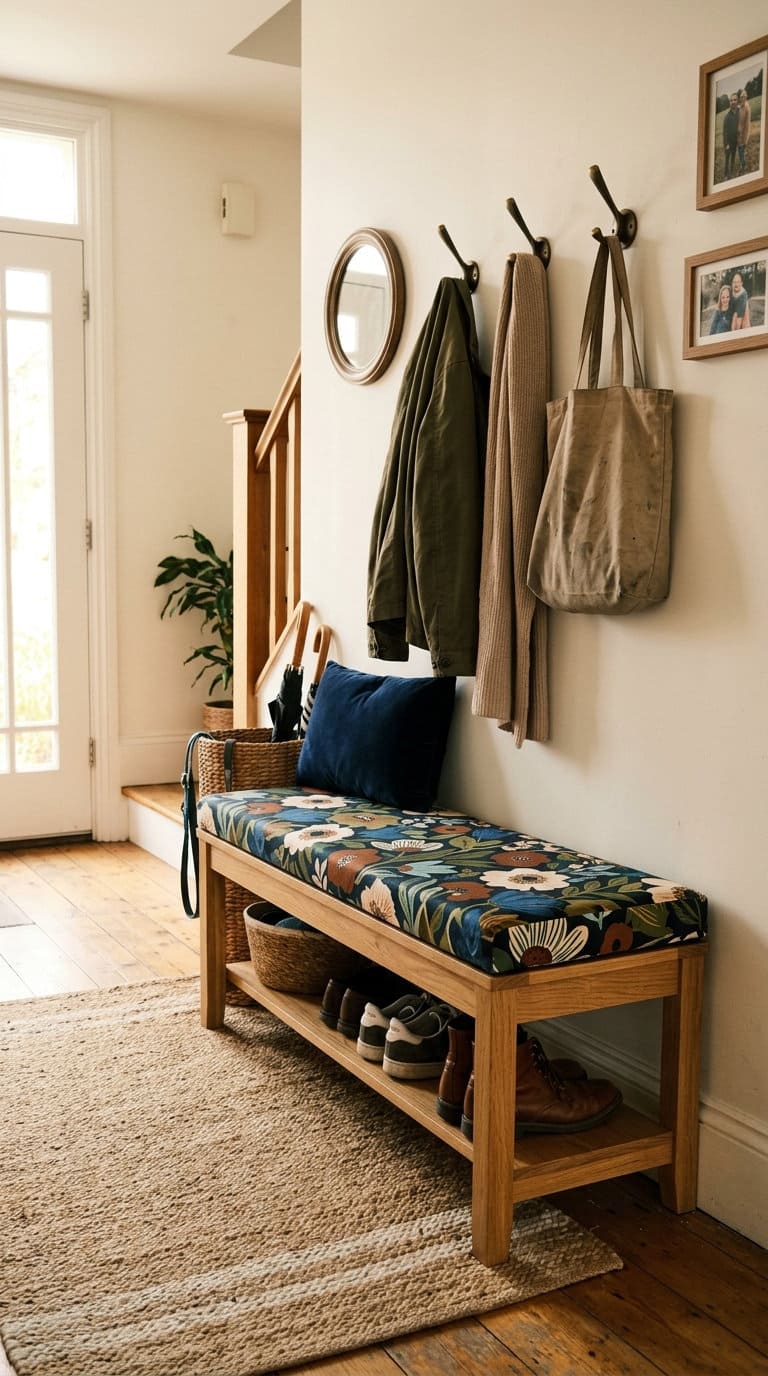
11. The comfy bench
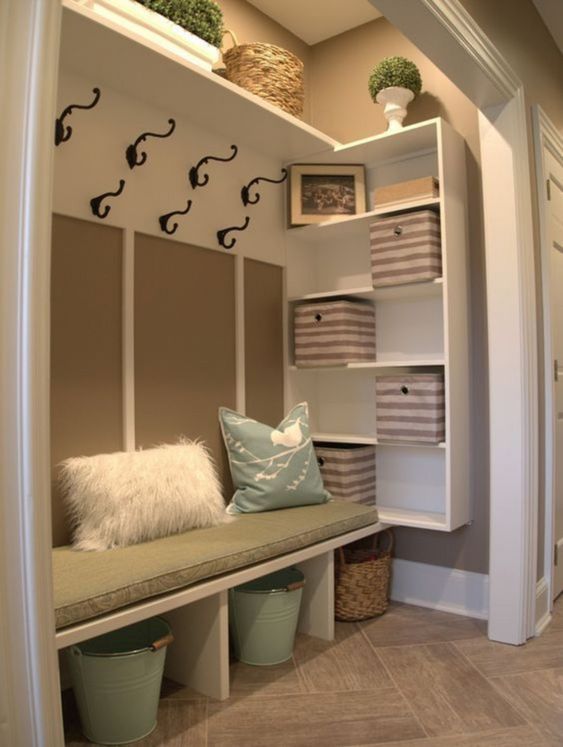
A deeper, more cushioned bench meant for actually sitting and lingering, not just perching to swap shoes, needs a genuinely durable fabric given how much contact it gets.
This is the idea where the Martindale rub-count guidance from section 1 matters most, aim for 30,000+ rubs if you want the cushion to still look good in five years rather than three.
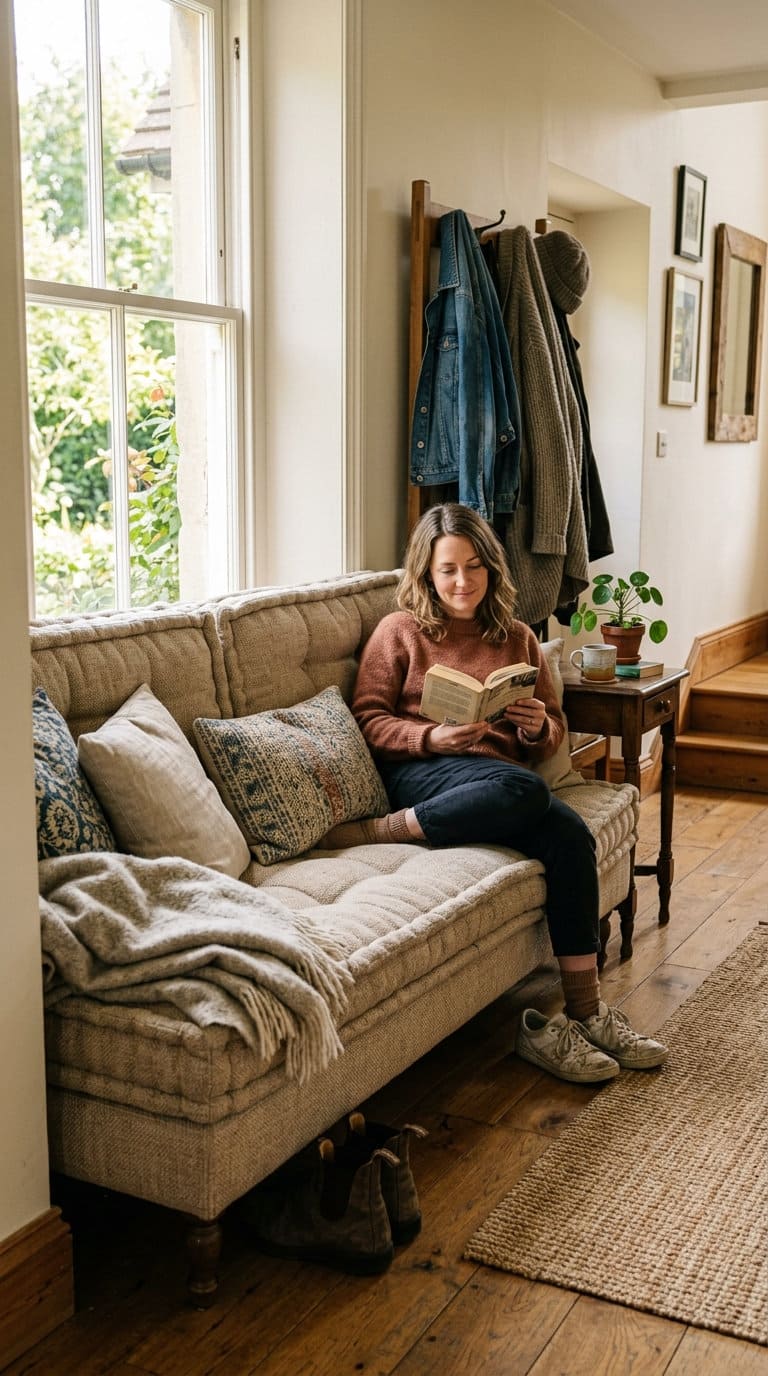
12. The bright one
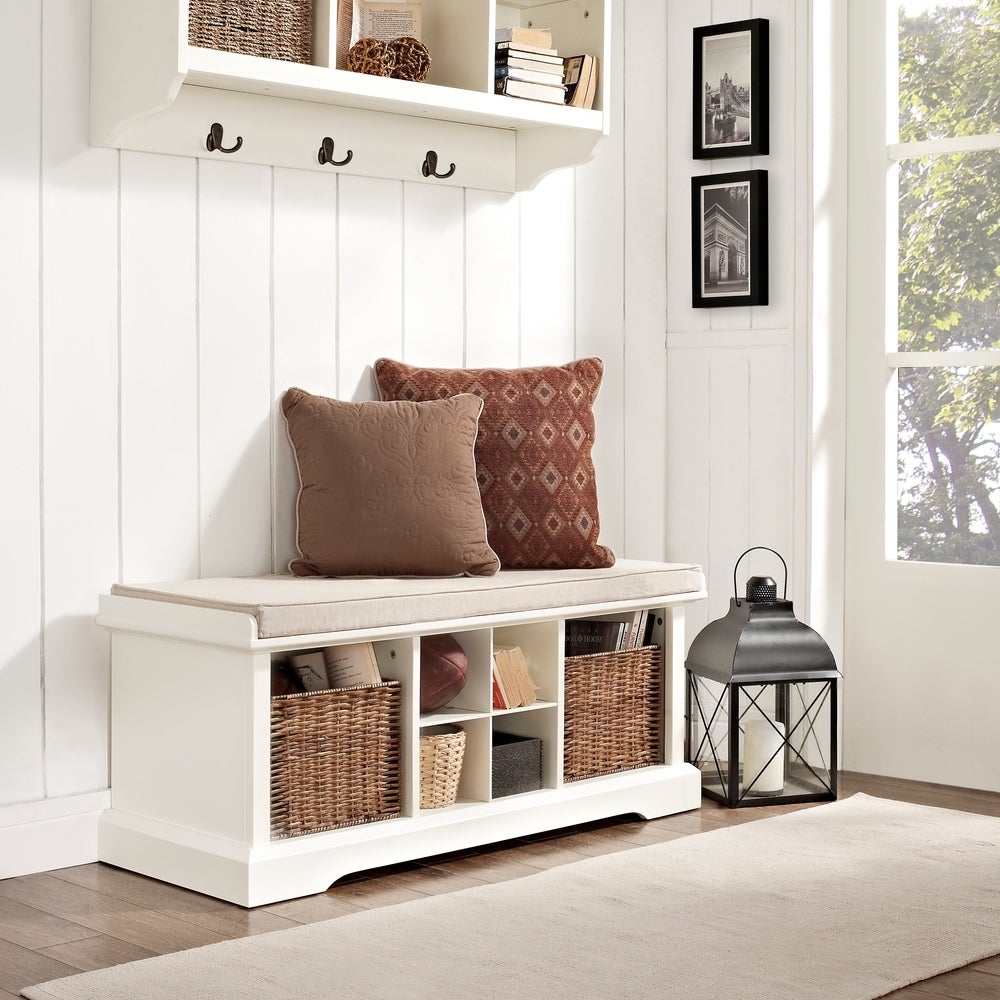
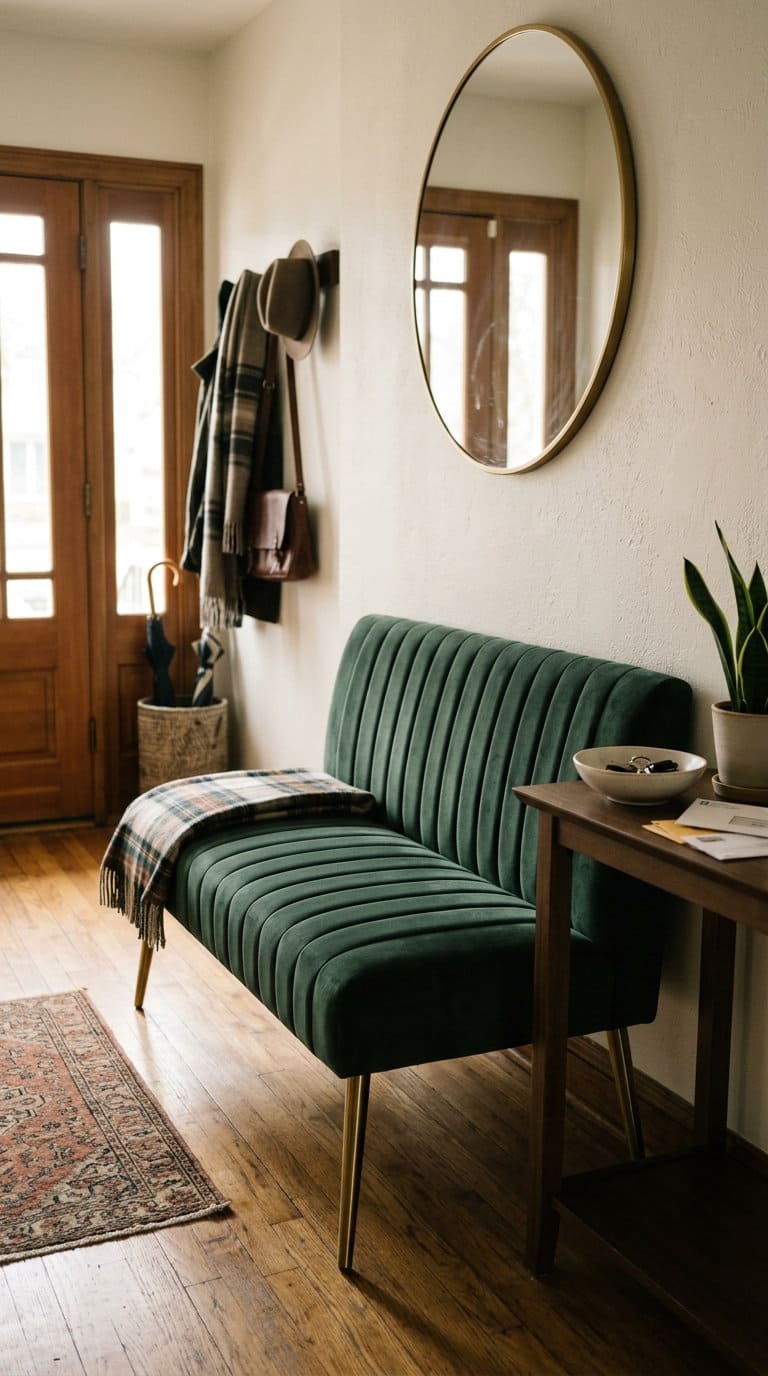
A bench in a saturated color, a deep emerald, a warm ochre, a punchy coral, works as a color anchor for the whole entryway rather than a neutral backdrop piece.
Pair it with white or light-toned walls so the color has room to stand out instead of competing with a busy palette.
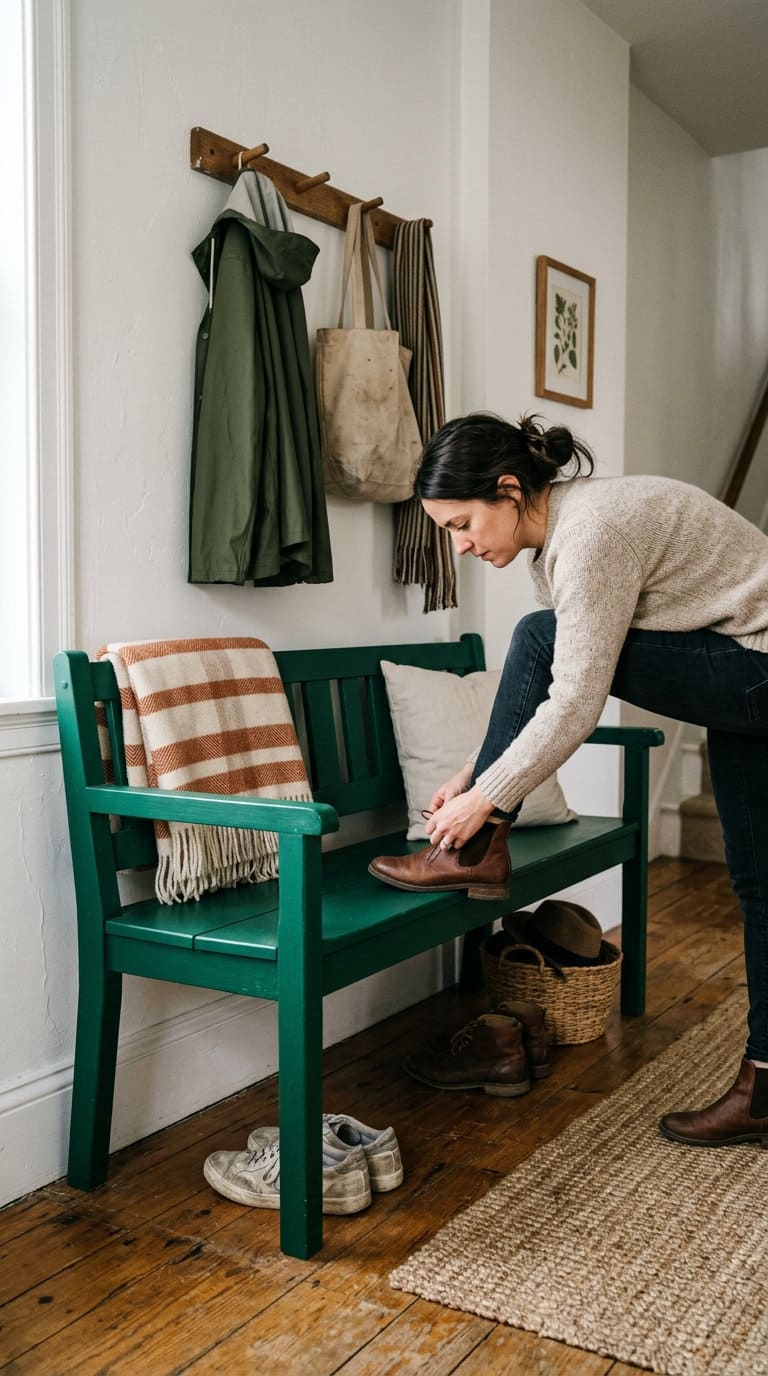
13. The one with a backrest
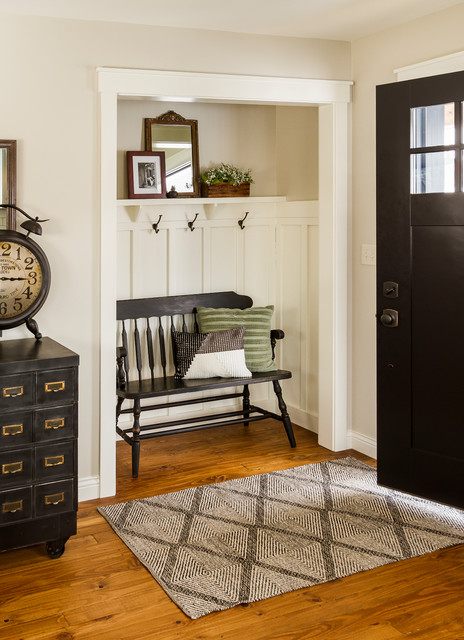
Adding a backrest turns a bench into genuine seating rather than a perch, useful if anyone in the house actually sits to put shoes on rather than standing and balancing.
A backrest height around 12 to 16 inches above the seat is enough to lean into without making the piece feel like a full settee.
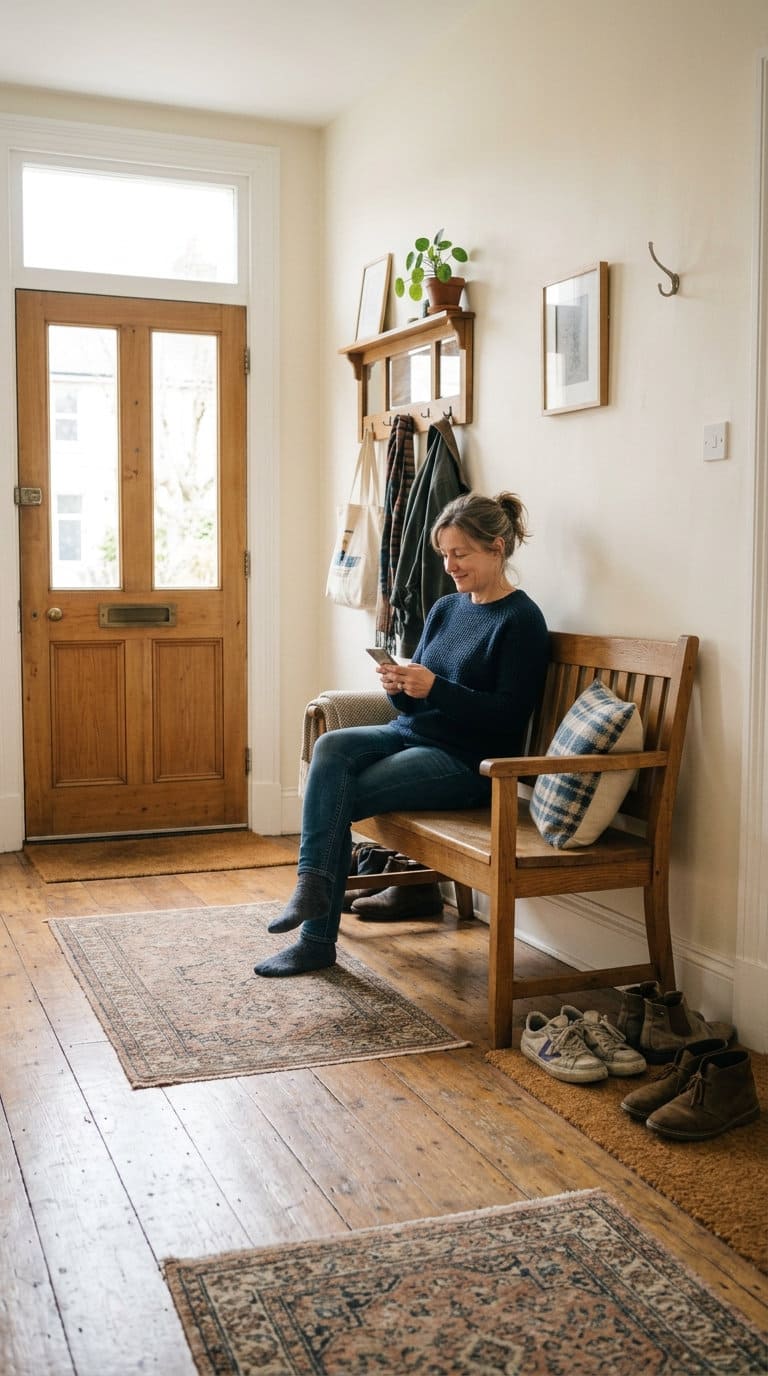
14. The girly one
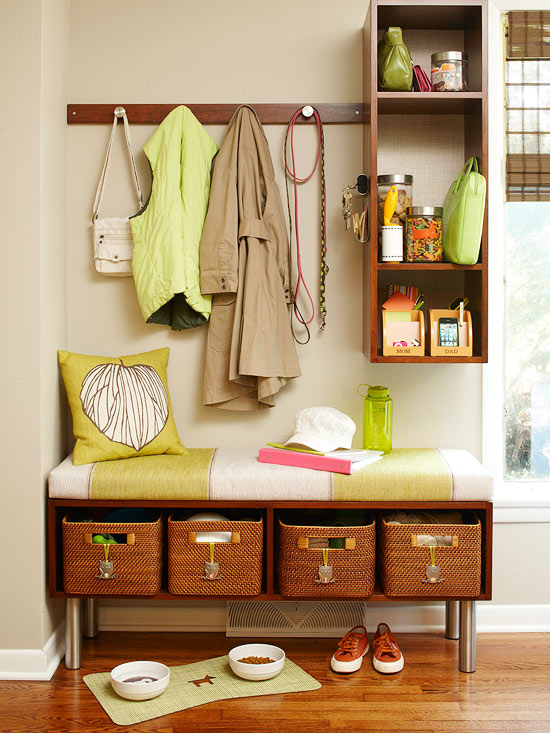
Soft pastel upholstery, curved or scalloped legs, and delicate hardware like brass drawer pulls give a bench a deliberately feminine feel without tipping into fussy. This pairs well with a rounded mirror rather than a rectangular one, since the curves echo each other.
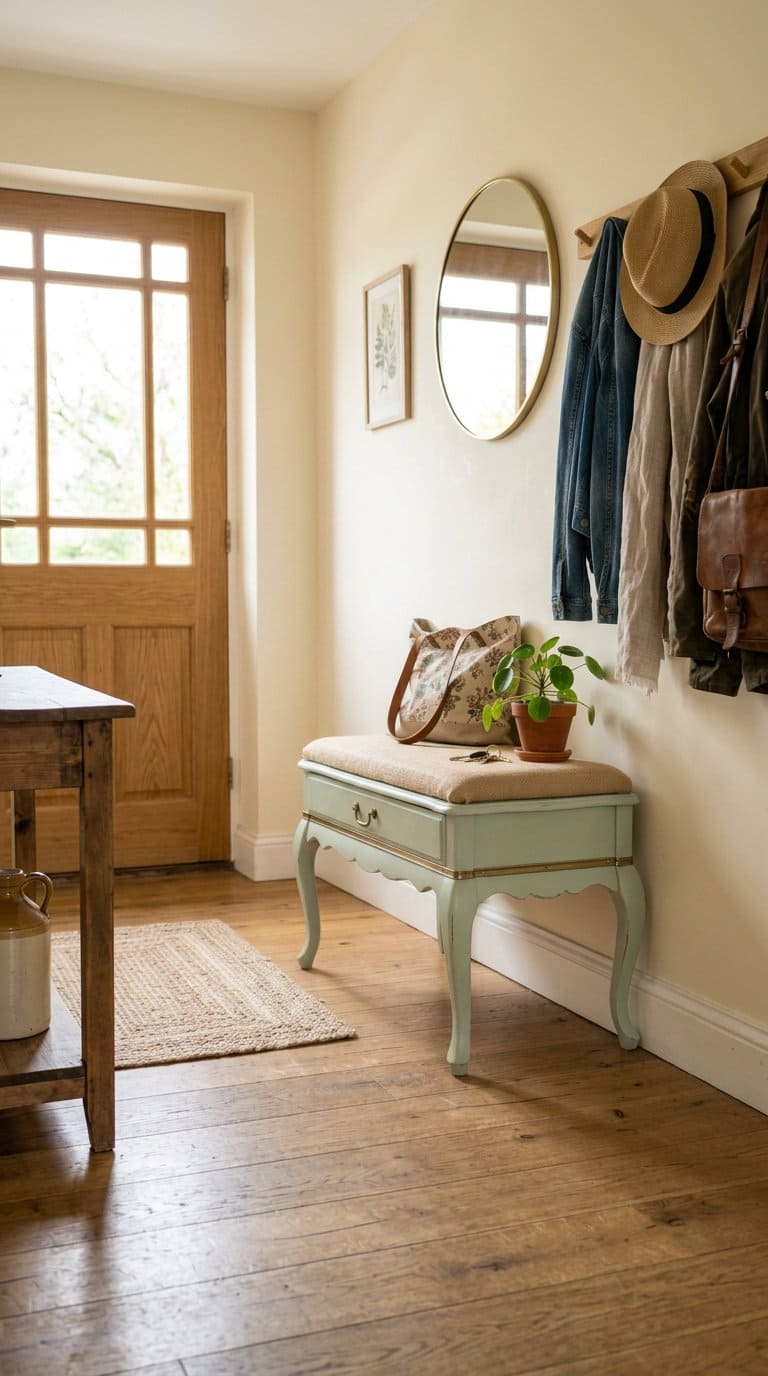
15. The cupboard bench
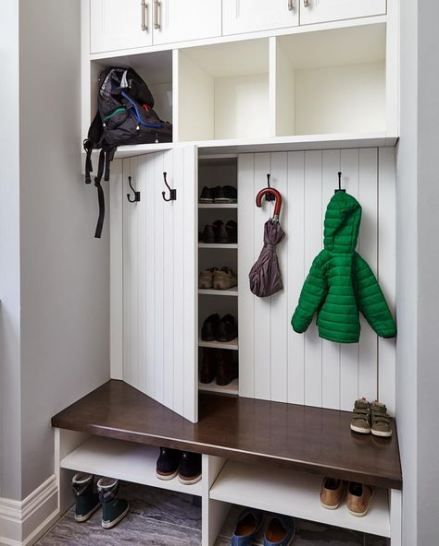
A bench built on top of a full cupboard base, doors and all, hides everything behind closed panels rather than open cubbies, the better choice if you’d rather not see the clutter even when it’s neatly organized.
Add interior shelving or a hanging rod inside if you want the cupboard doing double duty as coat storage too.
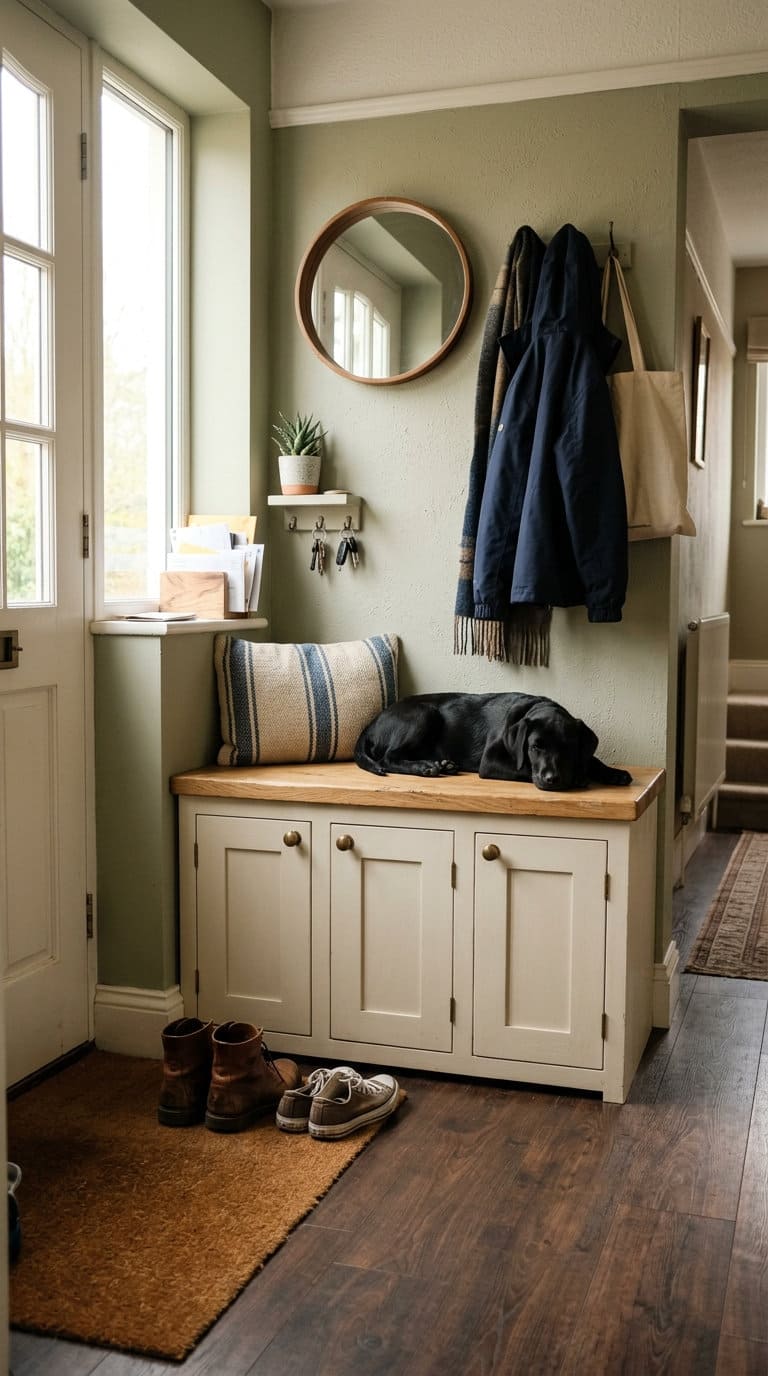
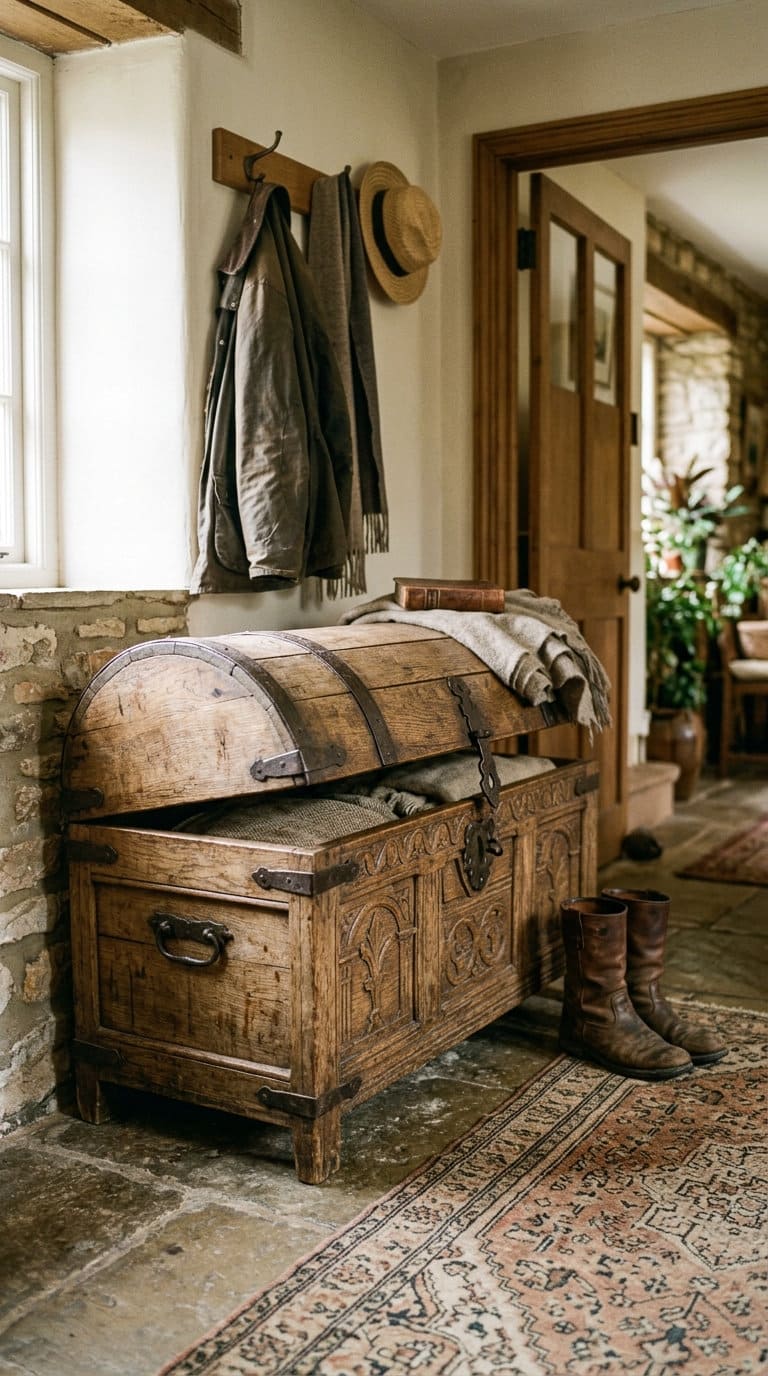
16. The treasure chest
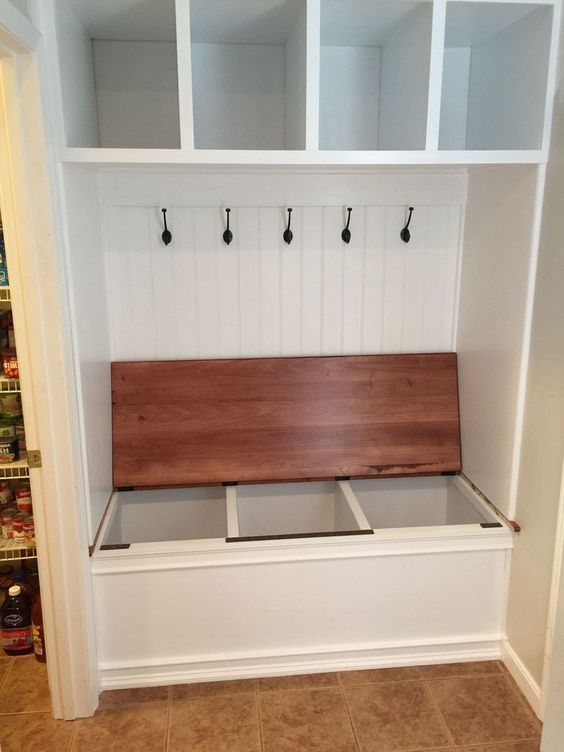
A domed or trunk-style lift-top bench brings a more antique, storybook look than a flat-lid storage bench, and the same hardware rules from section 1 apply here just as much, check the hinge type and weight capacity before buying, since a domed lid puts more leverage on the hinge than a flat one does.
17. The ‘L’ shaped bench
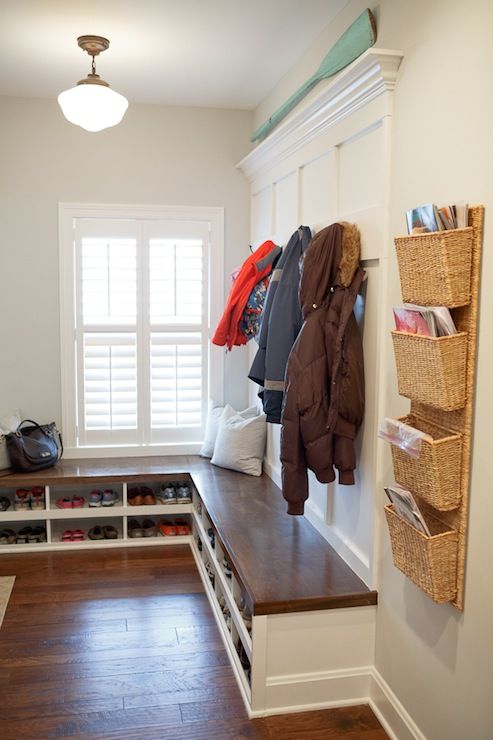
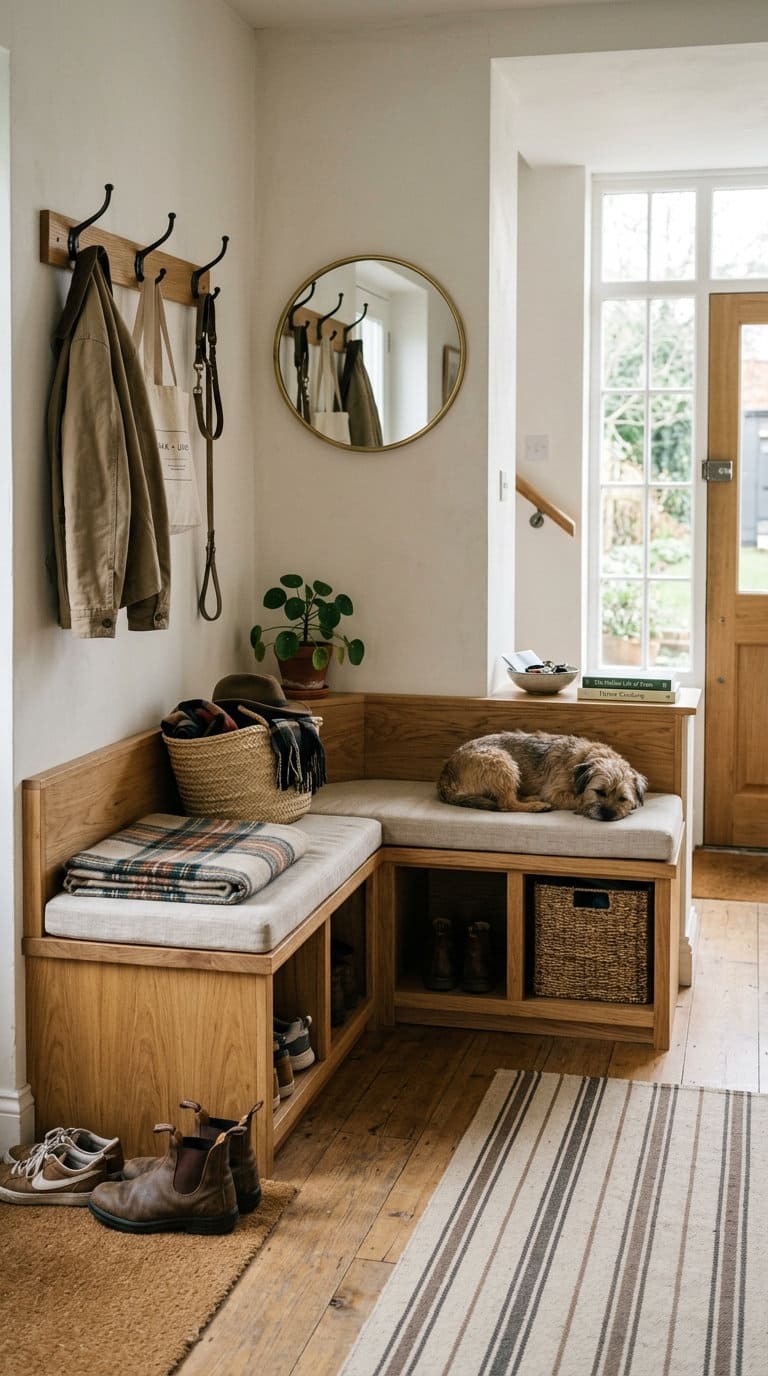
An L-shaped bench wraps around a corner, which genuinely maximizes seating and storage length in an entry that’s tight on wall space but has an unused corner to spare.
Measure the full run of both legs of the L before committing, this style eats up more floor space than the seat length alone suggests once you account for the corner turn.
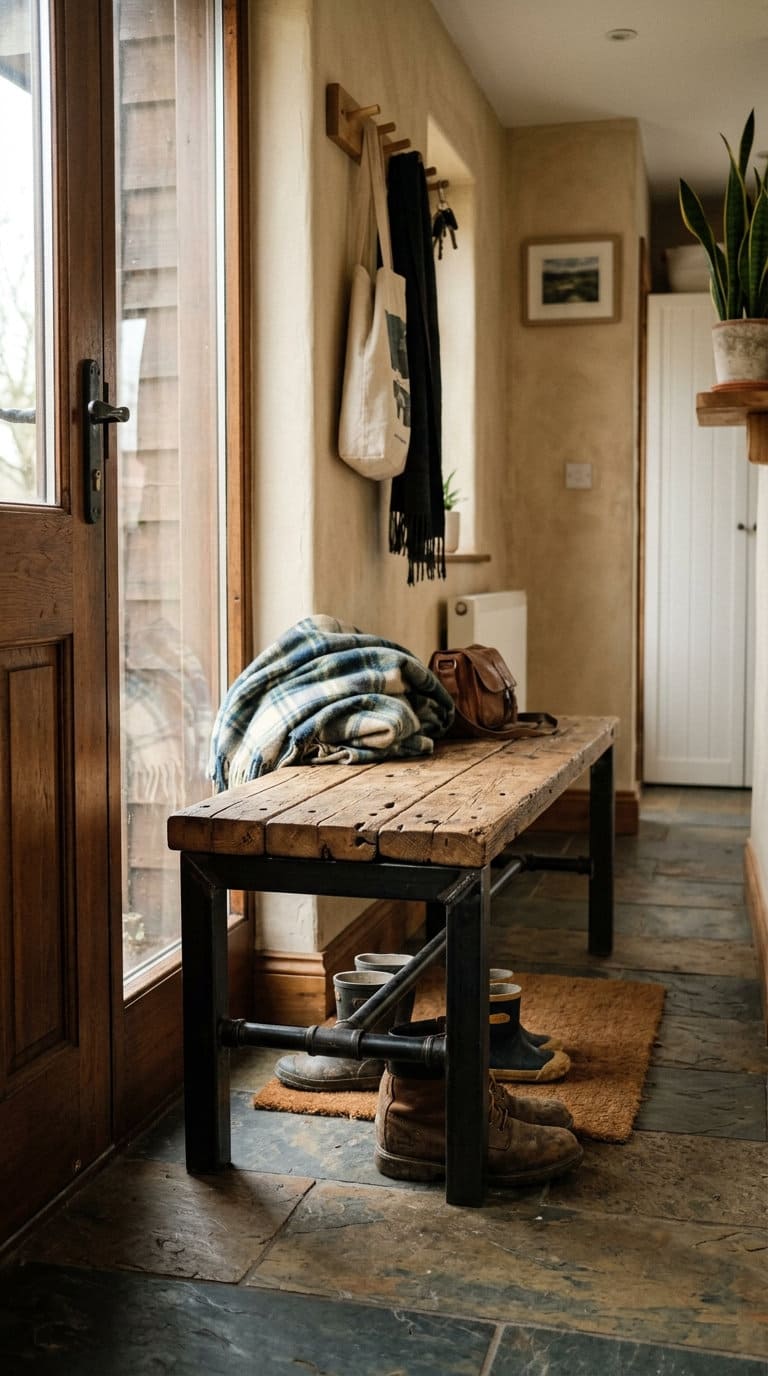
18. The reclaimed-wood rustic bench
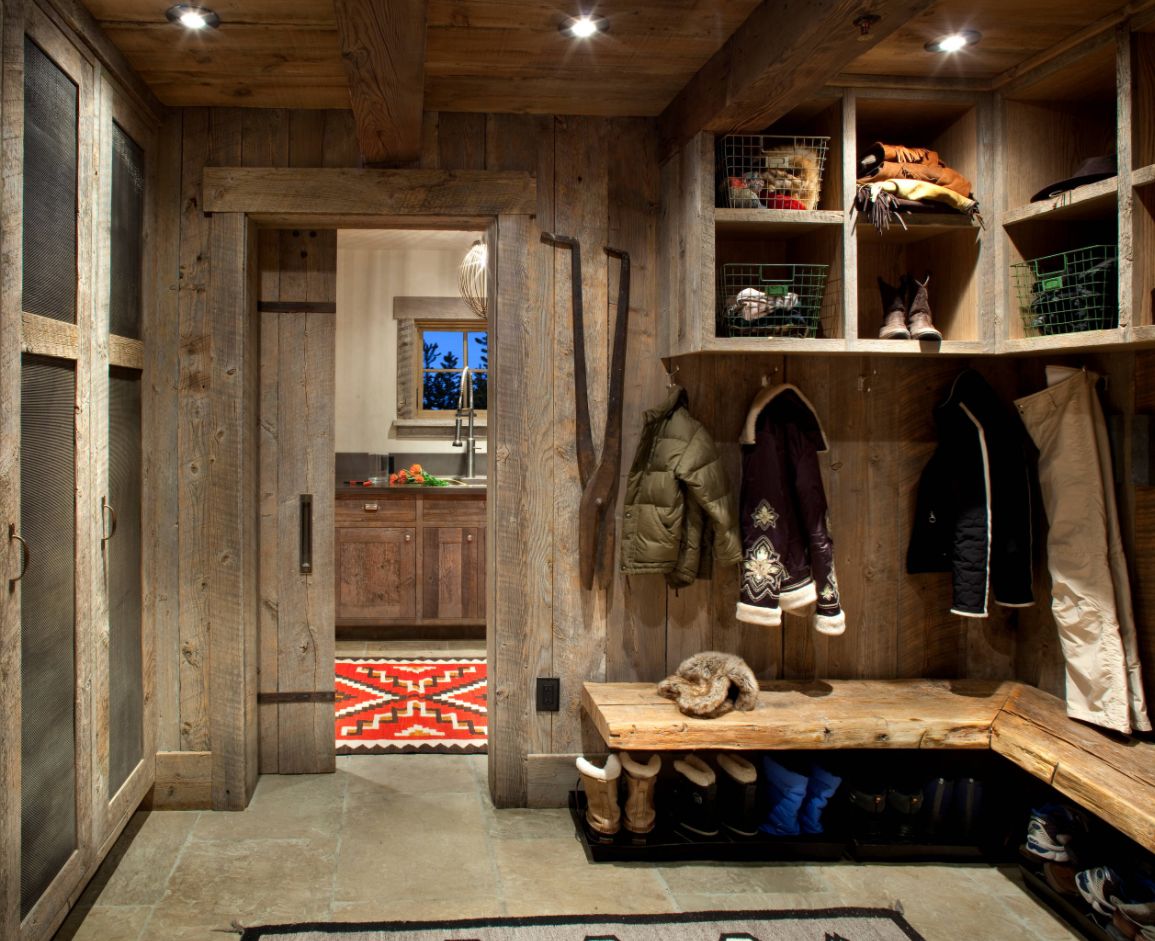
A second take on rustic, this one leaning into visibly reclaimed barn wood or old fence boards rather than new wood cut to look weathered, distinct from the natural-finish rustic bench in section 2.
Mixing in a metal pipe or angle-iron frame under a reclaimed wood top is a real, sturdy combination that reads as intentional rather than mismatched.
19. The DIY bench
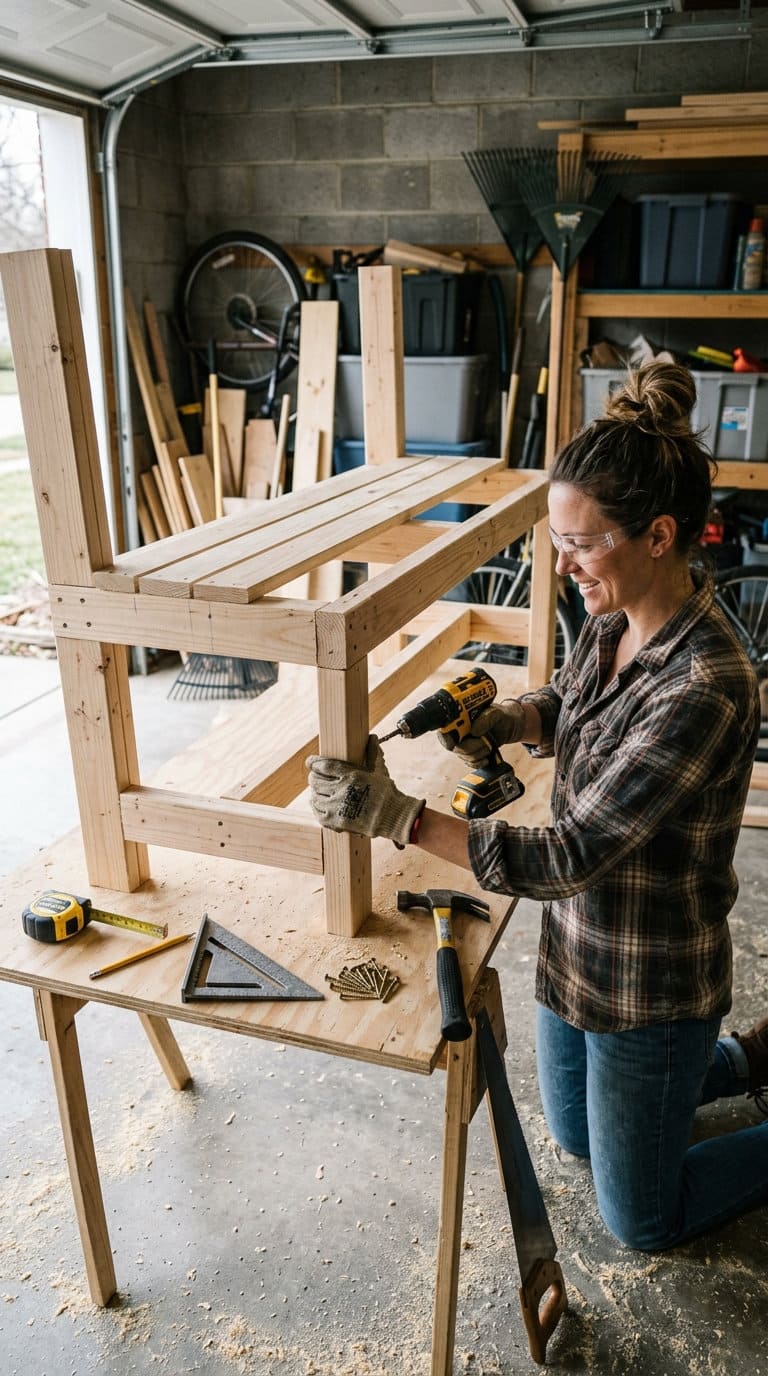
A basic build from dimensional lumber, a plywood or solid-board seat on a simple leg frame, is genuinely achievable in a weekend with a saw, a drill, and wood glue.
Round over the seat edges with sandpaper or a router bit before finishing, sharp edges are the most common complaint on beginner bench builds.
20. The IKEA-hack DIY bench
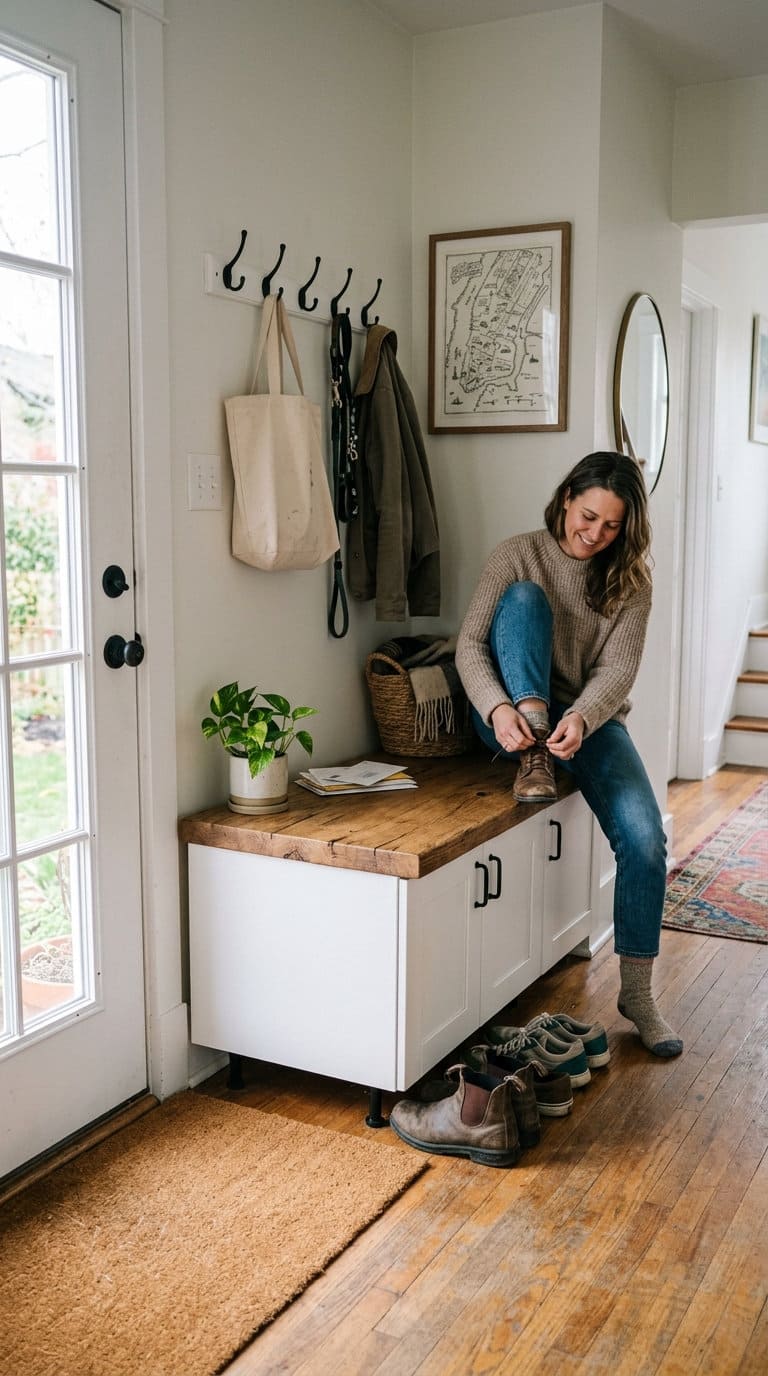
Converting IKEA cabinets into a bench is a genuinely popular DIY route, but it comes with a real weight-limit catch worth knowing before you start. A cabinet line like Besta is commonly rated for only around 55 lbs of top-load weight, while a sturdier line like Sektion/Metod holds up noticeably better for daily bench-and-storage duty, and multiple people who’ve built this exact project recommend adding an internal support frame from basic 2×4 lumber underneath the benchtop if you’re using a lighter-duty cabinet line or want the extra long-term stability.
A few more things worth planning around
If you’re building the mirror-and-hooks vignette described in section 1, best entryway mirror ideas goes deeper on mirror shapes and styles to pair with a bench. A rug underneath ties the whole grouping together visually, entryway rug ideas covers sizing and placement. If your entry needs more than just a bench, modern entryway ideas covers the fuller shoe-and-coat storage picture. And for the two rustic-style benches above, rustic entryway decorating ideas has more on the broader style.
FAQ
How high should I hang a mirror above an entryway bench?
Keep the mirror’s center around 57 to 60 inches from the floor, average eye level, and leave 6 to 12 inches of clearance between the top of the bench and the bottom of the mirror so the two read as one cohesive grouping instead of two separate pieces stacked on the wall.
How high should coat hooks be above an entryway bench?
Adult hooks generally work best around 60 to 66 inches, kids’ hooks lower at 36 to 48 inches, with 12 to 18 inches of clearance between the bench top and the bottom of the hooks so coats and bags hang clear of the seat. Individual hooks generally beat a single backplate rack, which tends to crowd hooks too close together for anything bulkier than a scarf.
What’s the best seat height for an entryway bench?
18 to 20 inches matches standard chair height and works for most adults, 17 to 19 inches is more comfortable specifically for changing shoes, and 19 to 21 inches is easier on the knees for older adults. Seat depth of 14 to 18 inches is the standard comfortable range without crowding the walkway.
Will a storage bench actually hold up to daily use?
It depends on the hardware more than the wood. Look for a stated weight capacity and safety or soft-close hinges rather than a plain pivot hinge. If you’re converting a basic cabinet into a bench yourself, cheaper cabinet lines are commonly rated for only around 55 lbs, so a sturdier cabinet line or an added internal 2×4 support frame under the benchtop is worth the extra effort for anything getting daily use.
Conclusion
Entryway benches are always appreciated by the ones visiting you. This can be a great way to engage your visitors, family, friends etc. al. Entryway benches also make for a good ice breaker. So what are you waiting for? Go pick up that favourite bench of yours or just get those wooden planks out and DIY!
Never miss an update — choose FarmFoodFamily as your preferred source on Google.
How it works: Tap the button below to open Google's settings page, then check the box next to FarmFoodFamily.
Tap the checkbox to turn it blue — that's how you know it's set.