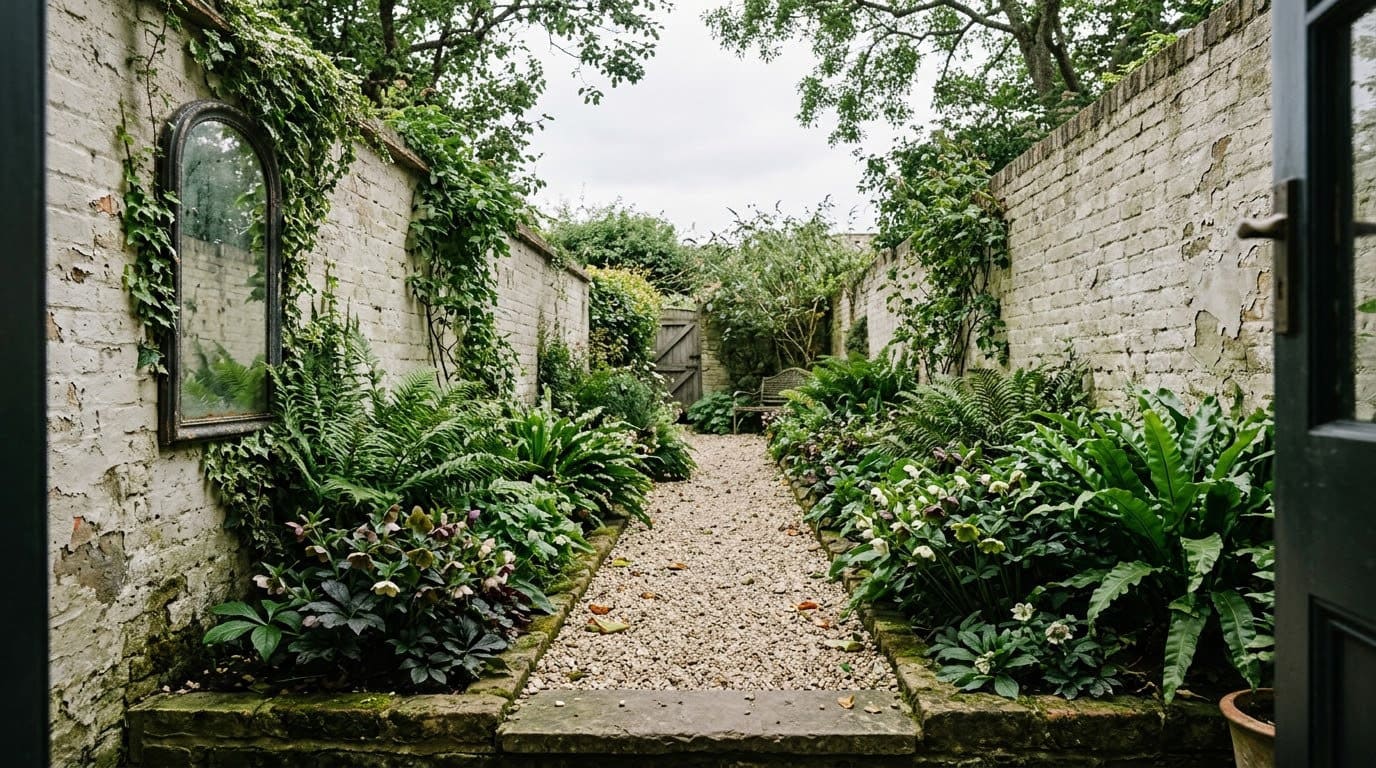
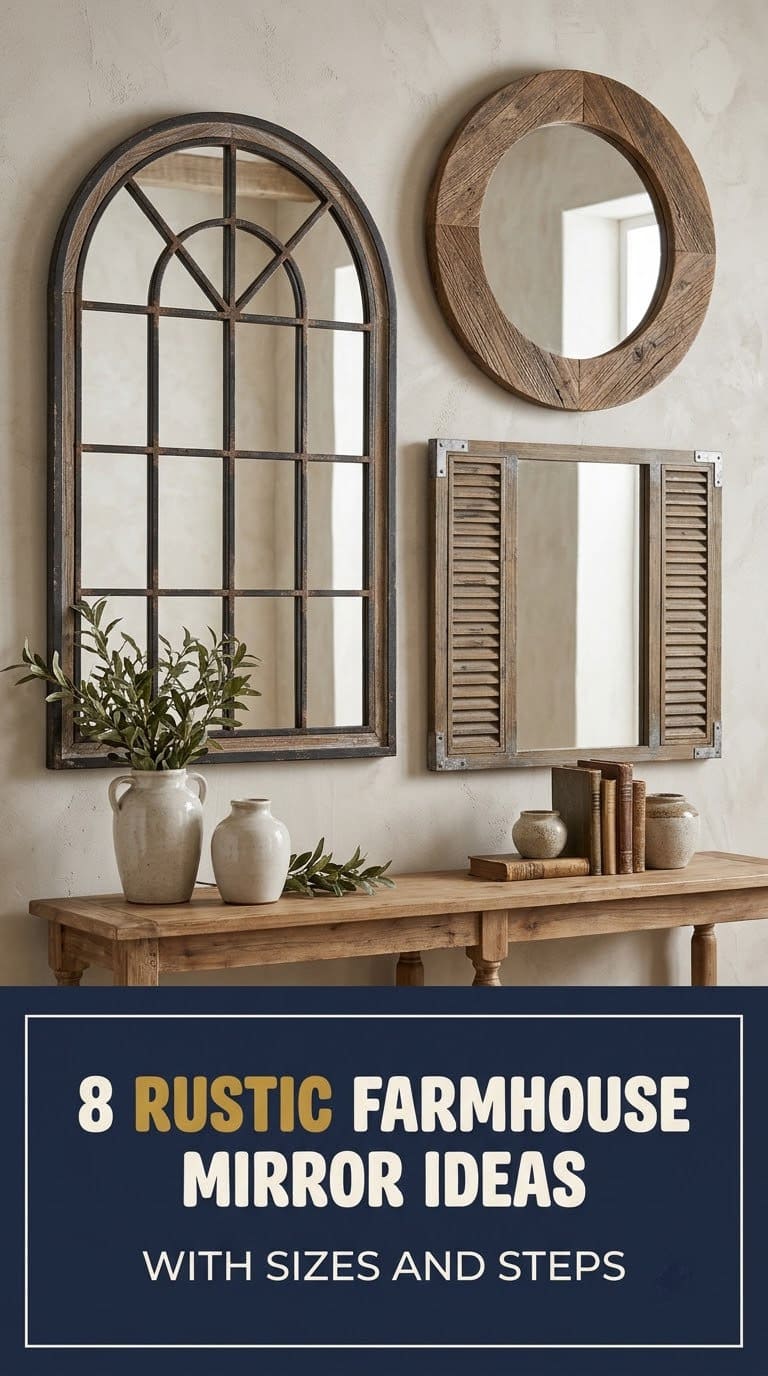
8 Rustic Farmhouse Mirror Ideas With Sizes, Frames and Hanging Steps
A farmhouse mirror adds light and warmth to any room, as long as you pick the right size, hang it into something solid and check old frames for lead paint.

Never miss an update — choose FarmFoodFamily as your preferred source on Google.
How it works: Tap the button below to open Google's settings page, then check the box next to FarmFoodFamily.
Tap the checkbox to turn it blue — that's how you know it's set.
A farmhouse mirror adds light and warmth to any room, as long as you pick the right size, hang it into something solid and check old frames for lead paint.
Products We Recommend
This post contains affiliate links. We may earn a commission on qualifying purchases at no extra cost to you.

French Cleat Picture and Mirror Hanger, 12 inch, 2 pack
Aluminum cleat hanger with hardware for heavy mirrors, for ideas 4 and 7.
Shop Now
KURUI Hollow Wall Anchors Assorted Kit, 44 pieces
Toggle bolts and butterfly anchors for drywall, for ideas 1, 2 and 8.
Shop Now
Furniture Anchors 10 Pack, Anti-Tip Straps
Metal wall straps that secure a leaning full-length mirror, for idea 5.
Shop NowA mirror does a lot of work in a farmhouse room. It bounces light around, adds depth and gives a plain wall a focal point.
But a mirror can also be heavy, easy to hang crooked and tricky in a damp room. Old salvaged frames can carry lead paint too.
These eight ideas give you the style and the details. Each one lists the sizes, the hardware and the steps, so the mirror stays put and looks right.
Quick Answer
Size the mirror to the space. Phoebe Luc at Ash Deco suggests an entryway mirror 24 to 48 inches wide and about 50 to 70 percent of the width of the console below it.
Hang it into something solid. Jim Gorman at This Old House says items over 25 pounds need heavy-duty anchors and screws, and anchors should hold four times the object’s weight.
Anchor a leaning mirror. The CPSC advises anchoring furniture to the wall with low-cost devices.
Hang it at the right height, and use two hooks for a heavy frame. Luc says about 60 inches from the floor for an entryway mirror, roughly eye level.



And test old frames. The EPA says about three-quarters of pre-1978 homes in the United States still contain some lead paint. Test any old window or frame before you sand it.
Which Idea Fits You?
Pick by your room, your wall and your skill. This table sorts the eight ideas below.
| Idea | Best for | Budget tier | Skill | Main risk |
|---|---|---|---|---|
| 1. Round wood mirror over a console | Entryways | Low to mid | Beginner | Too small a mirror |
| 2. Barn-door black-frame mirror | Bathrooms, mudrooms | Mid | Beginner | Hanging crooked |
| 3. Reclaimed window mirror | Living rooms | Low | Intermediate | Lead paint |
| 4. DIY pine frame | Any room | Low | Intermediate | Frame gaps |
| 5. Leaning full-length mirror | Bedrooms | Mid | Beginner | Tipping |
| 6. Wood-framed bathroom mirror | Bathrooms | Mid | Intermediate | Moisture |
| 7. Antique or gold-framed mirror | Dining rooms | Mid to high | Beginner | Weight |
| 8. Mirror on a shiplap wall | Entryways, halls | Low to mid | Intermediate | Missing the studs |
Before You Start: Size, Weight and Hardware
Good mirrors come from numbers. Check these before you buy or build.
How big should the mirror be?
Luc’s guide gives these ranges. It’s a retailer guide, so use the numbers as a starting point and test the size with paper.
| Room | Mirror size |
|---|---|
| Entryway | 24 to 48 inches wide, about 50 to 70 percent of the console |
| Hallway | 18 to 36 inches wide |
| Living room | 30 to 60 inches wide |
| Bathroom vanity | 20 to 36 inches wide, a few inches past the vanity edges |
| Full-length | 48 to 72 inches tall |
She says to hang an entryway mirror at about 60 inches from the floor, roughly eye level. For a full-length mirror, she says to center it at 40 to 42 inches.
What hardware holds the mirror?
Gorman’s guide gives a clear weight rule. Pick hardware based on how heavy the mirror is.
| Mirror weight | What to use |
|---|---|
| Light | A nail or a picture hook, which drywall holds at about 5 to 10 pounds |
| Over 25 pounds | Heavy-duty anchors and screws, or a stud |
| Heavy frames | Picture hangers rated for at least twice the weight |
| Any anchor | One that holds four times the object’s weight |
He says toggle bolts hold the heaviest loads but leave a bigger hole. Tom Silva recommends two hooks for a heavy mirror, so you can slide it a little left or right.
How do you find the studs?
Move a stud finder slowly across the wall and mark both edges of each stud. The center is halfway between them.
Aluminum cleat hanger with hardware for heavy mirrors, for ideas 4 and 7.
Shop NowThis post contains affiliate links. We may earn a commission on qualifying purchases at no extra cost to you.
Gorman says studs are usually 16 inches apart in older houses and sometimes 24 inches in newer ones. Baseboards are nailed to studs, and outlet boxes attach to the side of a stud, so both are clues.
What about the frame?
Wood frames suit farmhouse rooms. Luc lists reclaimed pine as a fit for farmhouse and cottage styles, but notes it’s a softwood.
She says to re-oil a wood frame every 6 to 12 months with a food-safe mineral oil or beeswax. Light woods can yellow in direct sun.
1. A Round Wood Mirror Over a Console
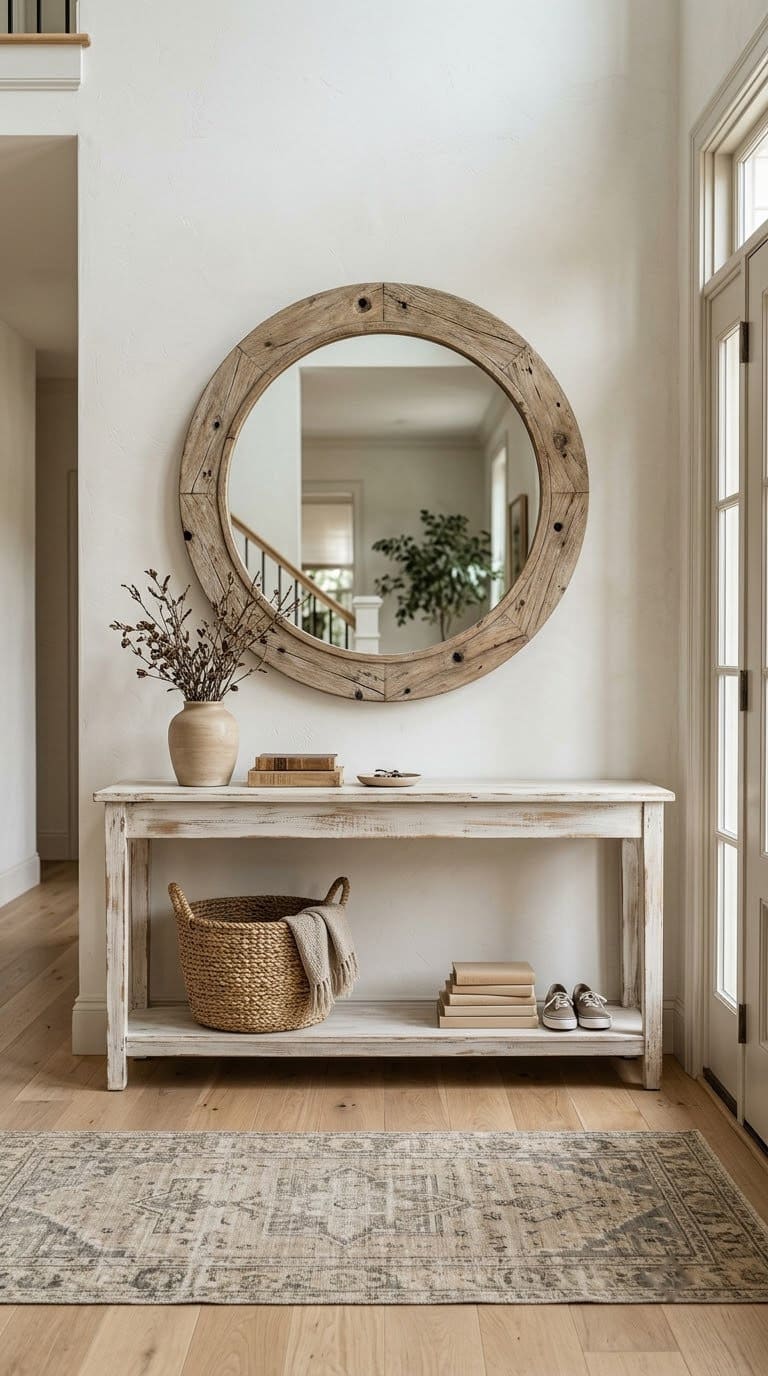
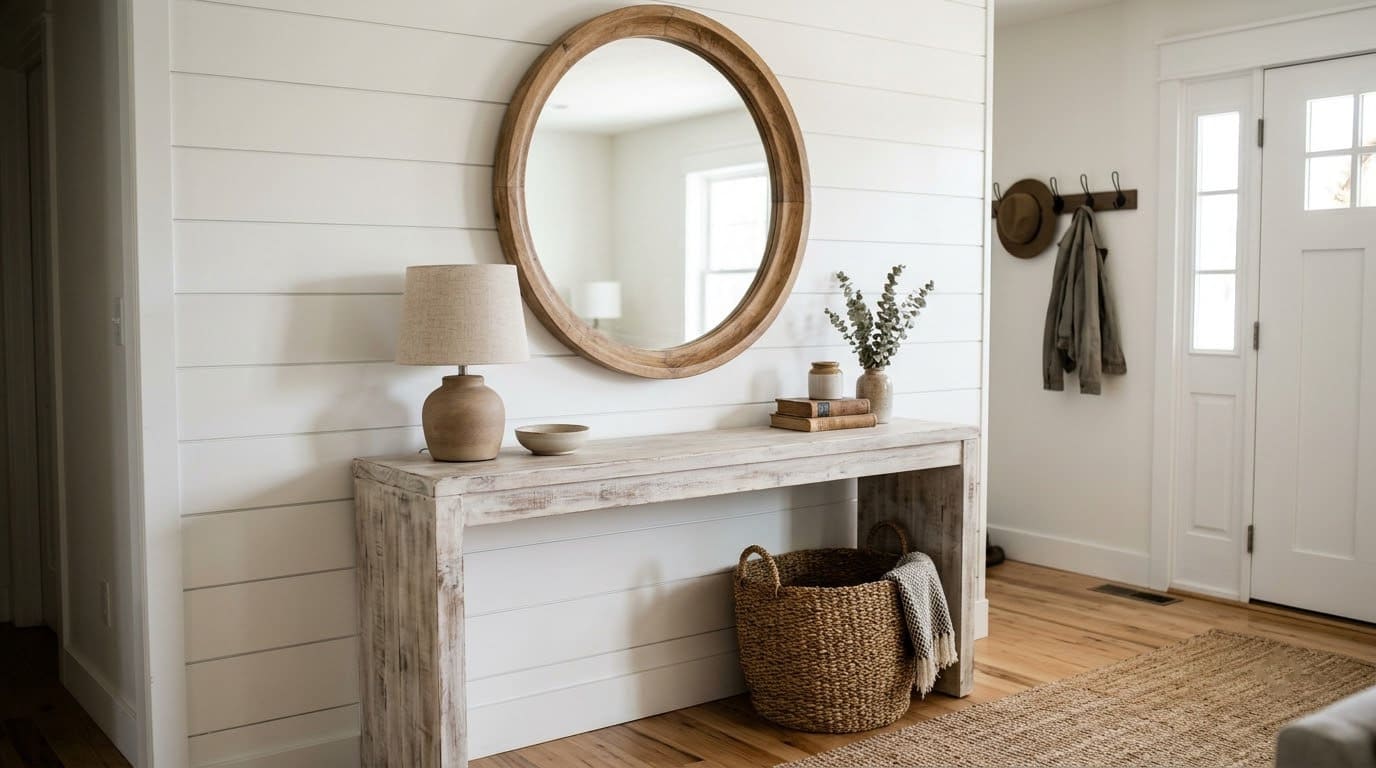
A round mirror softens the straight lines of shiplap and door frames. Over a console, it greets you at the door.
Use Luc’s sizing. Pick a mirror that’s about 50 to 70 percent of the console’s width, and between 24 and 48 inches across. A mirror that’s too small looks lost.
Hang it in four steps. Mark the center of the mirror on the wall at about 60 inches from the floor. Measure down to the hanging hardware on the back and mark that spot.
Set two hooks or screws, ideally into a stud. Lift the mirror on, then check that it’s level.
Plan the console. Keep the top simple, with a small lamp, a tray and a basket. A tall vase can block the bottom of the mirror.



Test the size with paper. Tape sheets of newspaper to the wall in the shape of the mirror. Step back and check that it feels right over the console, then adjust the size before you buy.
Balance the console. Put a lamp on one side and a basket or a bowl on the other. The mirror then frames the whole group and the console looks full without clutter.
Check the reflection. Stand at the door and look at what the mirror shows. A mirror that reflects a pretty window or a lamp adds more than one that reflects a blank wall.
Choose the frame finish. A weathered or whitewashed frame suits a bright entry. A dark stain works against pale walls.
For more entryway styles, see our entryway mirror ideas. Budget: low to mid. Skill: beginner.
2. A Barn-Door Style Black Frame
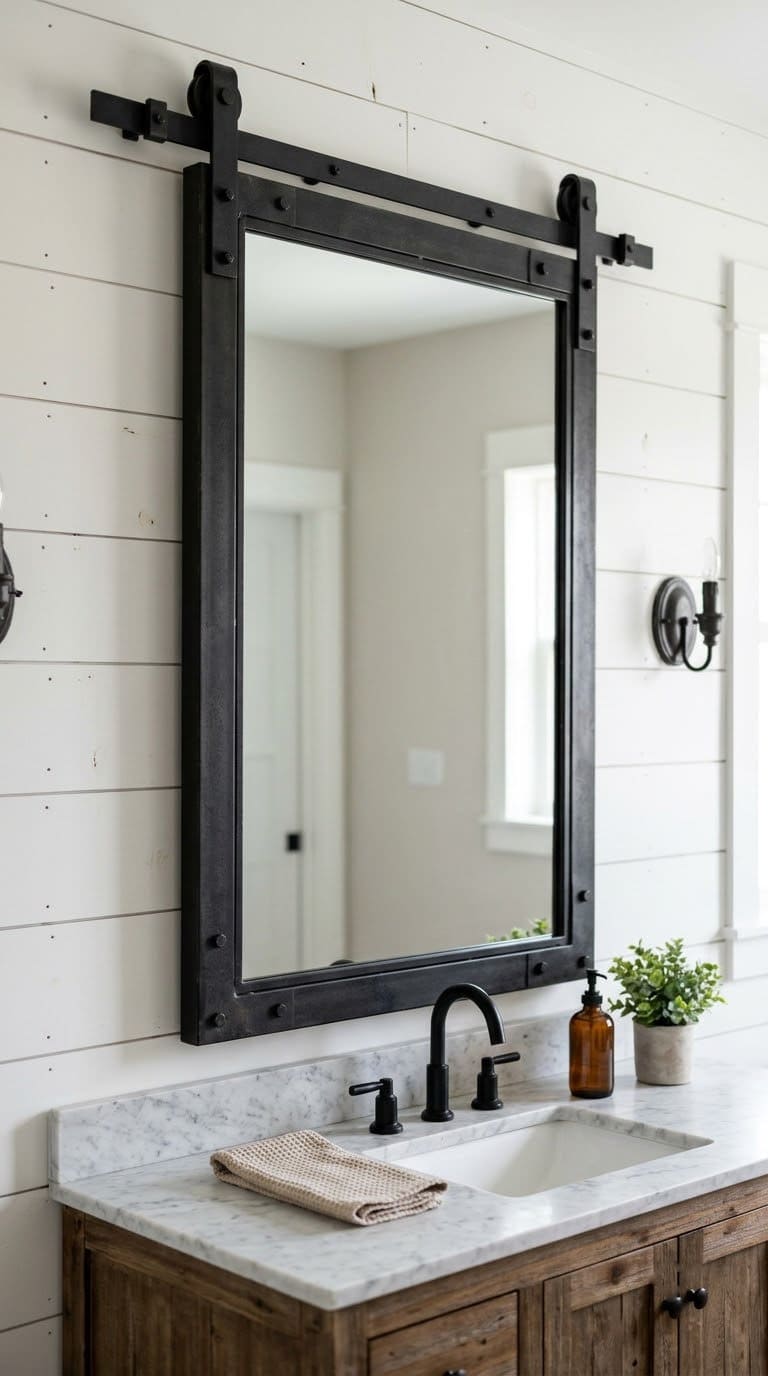
A black frame with an X or a grid gives a mirror a barn-door look. It stands out against white shiplap or subway tile.
Pick a frame finish to match your hardware. Matte black pairs well with black faucets and lights. Oil-rubbed bronze suits warmer tones.
Mind the weight. A metal-framed mirror can weigh more than it looks. Check the weight on the box, then use Gorman’s rules for the hardware.
Use two hooks. Silva recommends two hooks for a heavy mirror, so you can adjust it left and right. Set them level and the same distance from the center.
Check the hang. Step back from the wall and look along it. Luc says even a one or two degree tilt is noticeable.
Protect the wall. A heavy mirror can leave marks if it slips. Stick small felt pads on the bottom corners of the frame so it doesn’t scratch the paint.
Match the grid. A frame with an X or a grid looks sharp beside black sconces and a black faucet. Echo the finish in a hook or a towel bar nearby.
Think about the room. In a bathroom, check that the frame finish is rated for damp rooms. A finish that flakes in steam looks tired fast.
Hang it level. Use a level on top of the frame after it’s on the hooks, not just on the wall. A frame can sit at a slight angle even when the hooks are level.
For more bath ideas, see our farmhouse bathroom design ideas. Budget: mid. Skill: beginner.
3. A Reclaimed Window Mirror
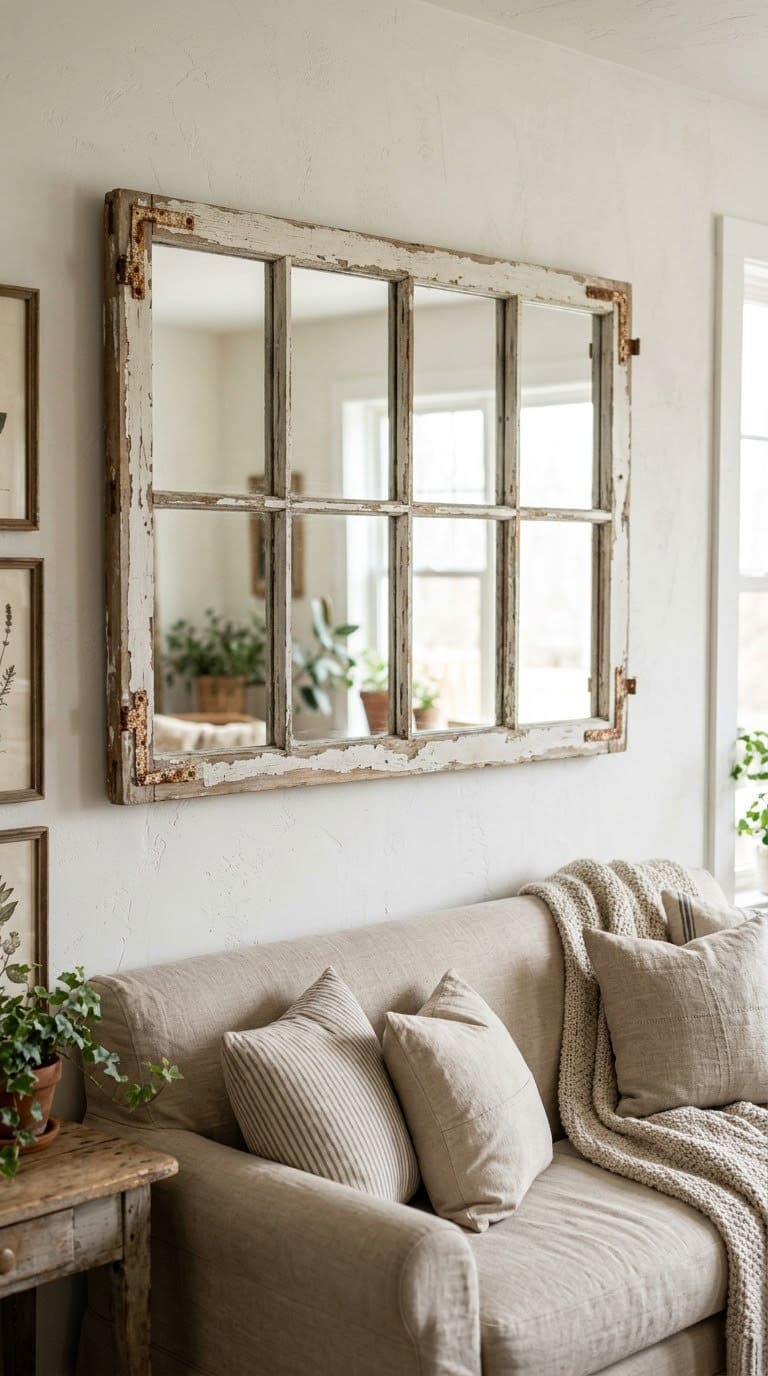
A salvaged window gives you a mirror with real character. Each pane reflects a slice of the room.
The key step is the lead check. The EPA says lead paint was banned for homes in 1978, and about three-quarters of older homes in the United States still contain some. It says that painting and renovation can create lead dust.
Test before you touch. If the window came from a pre-1978 building, use a lead test kit before you sand or scrape. The EPA recommends a lead-safe certified contractor for work on older homes.
Seal the old paint. If the test is positive, don’t sand. Seal the paint under a new coat or choose another frame. Call the National Lead Information Center at 1-800-424-5323 for advice.
Fit the mirror. Measure each opening and have the glass cut to size. Set the mirror in from the back and hold it with glazing points or small wood strips.
Strip loose paint safely. If your test is negative, scrape only the loose flakes and wipe with a damp cloth. Don’t dry-sand or use a heat gun on old paint.
Clean the glass. Take out the old panes if they’re cracked, and fit new mirror panes cut to size. A glass shop can cut mirror to fit each opening.
Add a backing. Fit a thin plywood backing and fasten it with screws so the panes don’t rattle. Add D-rings to the back of the frame.
Check the weight. A window frame with several panes of mirror can be heavy. Weigh it and use the hardware table above.
Pick the paint. Keep the old chippy finish for a rustic look, but seal it with a clear coat so flakes don’t fall.
For more window-style ideas, see our mirrors that look like windows. Budget: low. Skill: intermediate.
4. A DIY Pine Frame Around a Plain Mirror
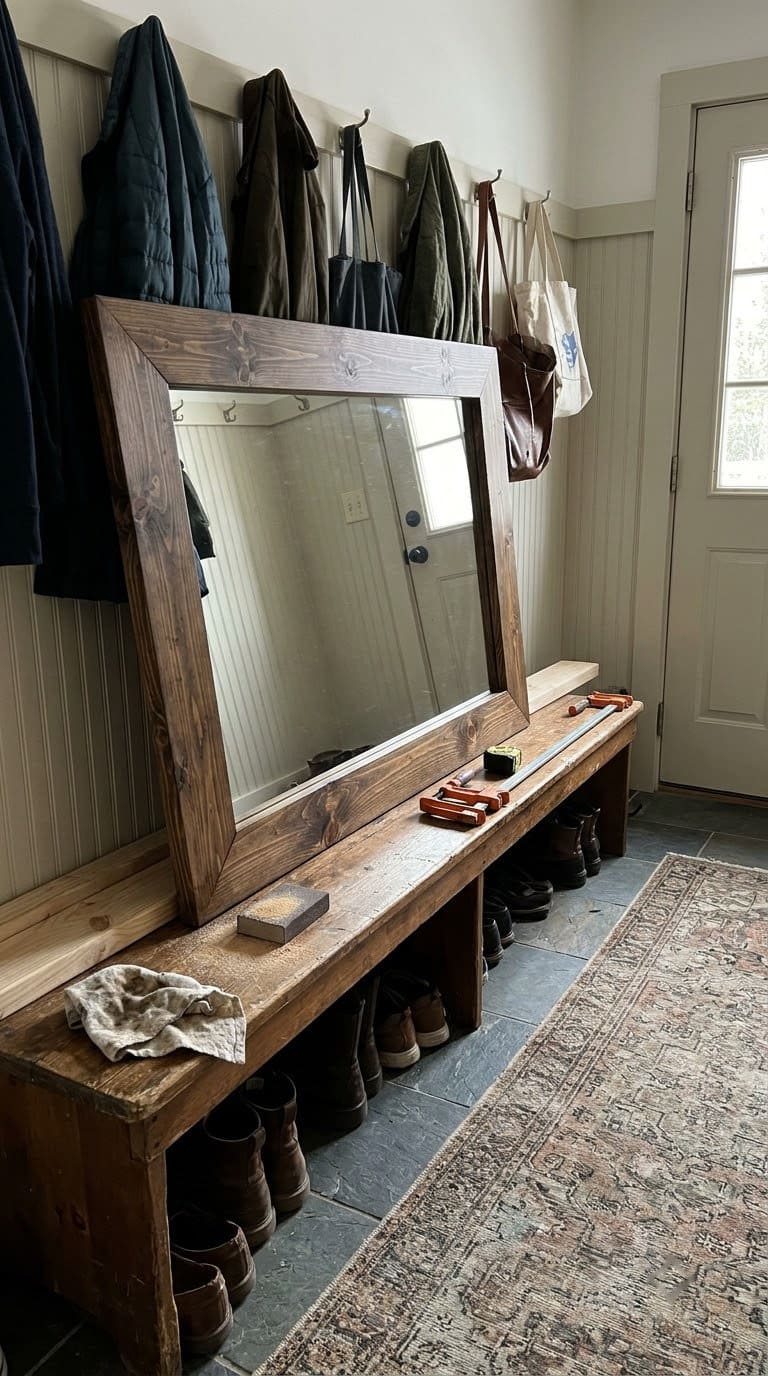
A plain mirror becomes a farmhouse piece with a wood frame. Brittany Goldwyn at Pretty Handy Girl shows how.
Gather the materials. She uses 1 by 6 inch pine, quarter-inch plywood for the backing, 1-1/4 inch pocket hole screws, clear silicone and heavy-duty D-rings. She also uses stain, polyurethane and a construction adhesive.
Follow the steps. Cut the pine to fit the mirror and drill pocket holes. Assemble the frame, then sand and finish it. Cut the plywood backing about a half inch smaller than the frame on each side.
Use silicone on the mirror. Goldwyn attaches the mirror to the backing with clear silicone, not construction adhesive. She says construction adhesive can damage the mirror’s reflective side.
Finish and hang. Attach the frame to the backing, add the D-rings and hang it into studs, or use drywall anchors rated for its weight.
Measure twice. Lay the boards over the mirror and mark each side before you cut. Add a small allowance for the width of the saw blade. Dry fit all four pieces before you drill.
Sand and stain. Sand the boards smooth, wipe off the dust and apply the stain with a clean cloth. Add two coats of clear finish and let each one dry, as Goldwyn does.
Spacers fix gaps. Goldwyn’s frame sat on top of the mirror’s bevel, leaving a gap, and she filled it with spacers cut from quarter-inch plywood. Fitting the frame snugly around the mirror avoids this.
Weight it while it dries. Rest a few books on the frame while the adhesive cures, so it sits flat.
For more frame styles, see our DIY mirror frame ideas. Budget: low. Skill: intermediate.
5. A Leaning Full-Length Mirror
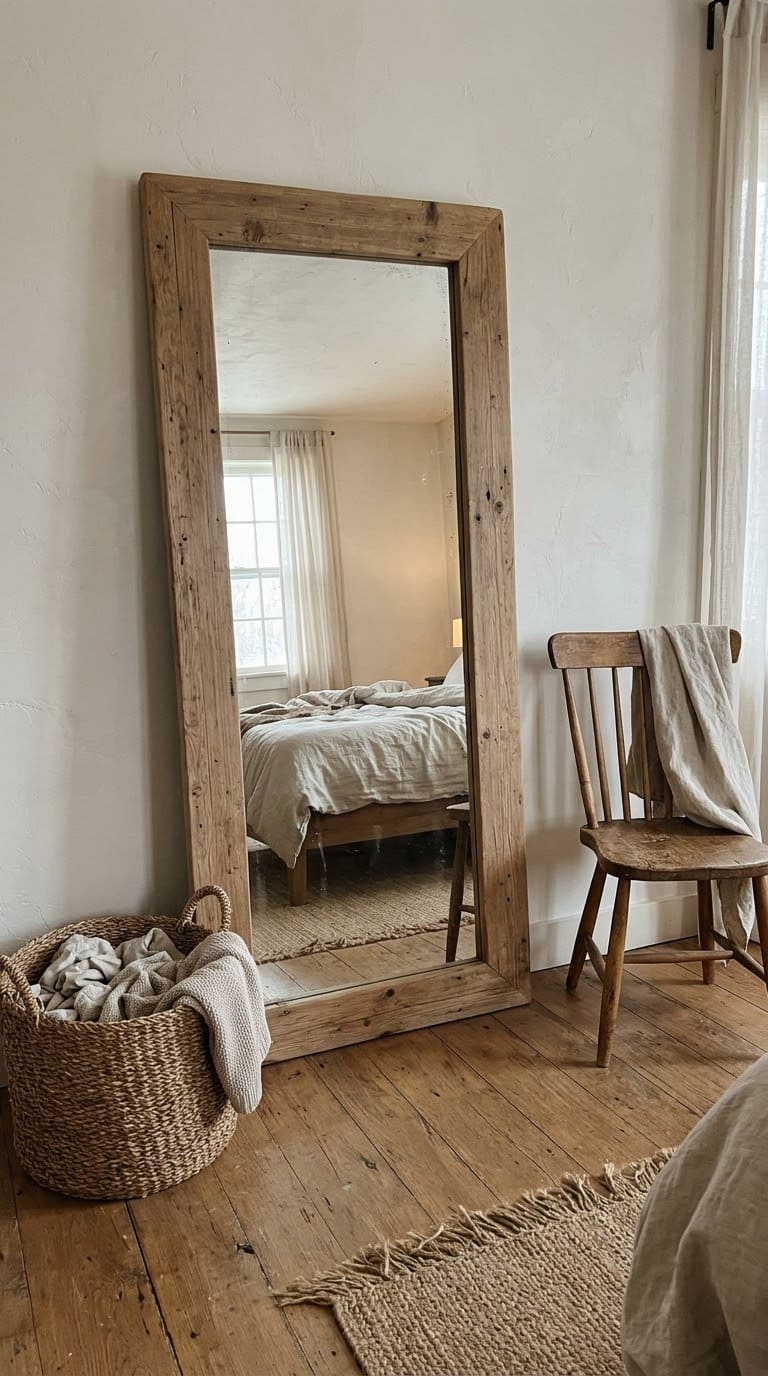
A leaning mirror feels relaxed and costs less to hang. It also adds height to a bedroom.
Luc says full-length mirrors run 48 to 72 inches tall, and a bedroom mirror should be at least 60 inches. For a wall-hung one, center it at 40 to 42 inches.
Anchor it. A tall mirror can tip. The CPSC counts 459 tip-over deaths of children 17 and under from 2000 to 2018, and advises anchoring furniture to the wall. Use a small bracket or strap behind the frame.
Prevent a slide. Put a non-slip pad under the base so the bottom doesn’t creep out on a smooth floor.
Place it well. Put the mirror where you can see yourself fully, with the light in front of you. Luc advises against placing a mirror directly facing the bed if it disrupts sleep.
Pick the angle. Lean the mirror so it tilts back a little. A slight lean keeps the mirror steady and still shows your full height.
Use a bracket. Fix a small L-bracket or a strap to the wall and the back of the frame. Tighten it so the mirror can’t tilt forward if someone bumps it.
Add a rug under the base. A rug under the mirror’s bottom edge can make it slip. Place the mirror on the bare floor or use a pad made for the job.
Style around it. A basket of throws, a chair or a plant beside the mirror makes it feel part of the room.
Budget: mid. Skill: beginner.
6. A Wood-Framed Bathroom Mirror
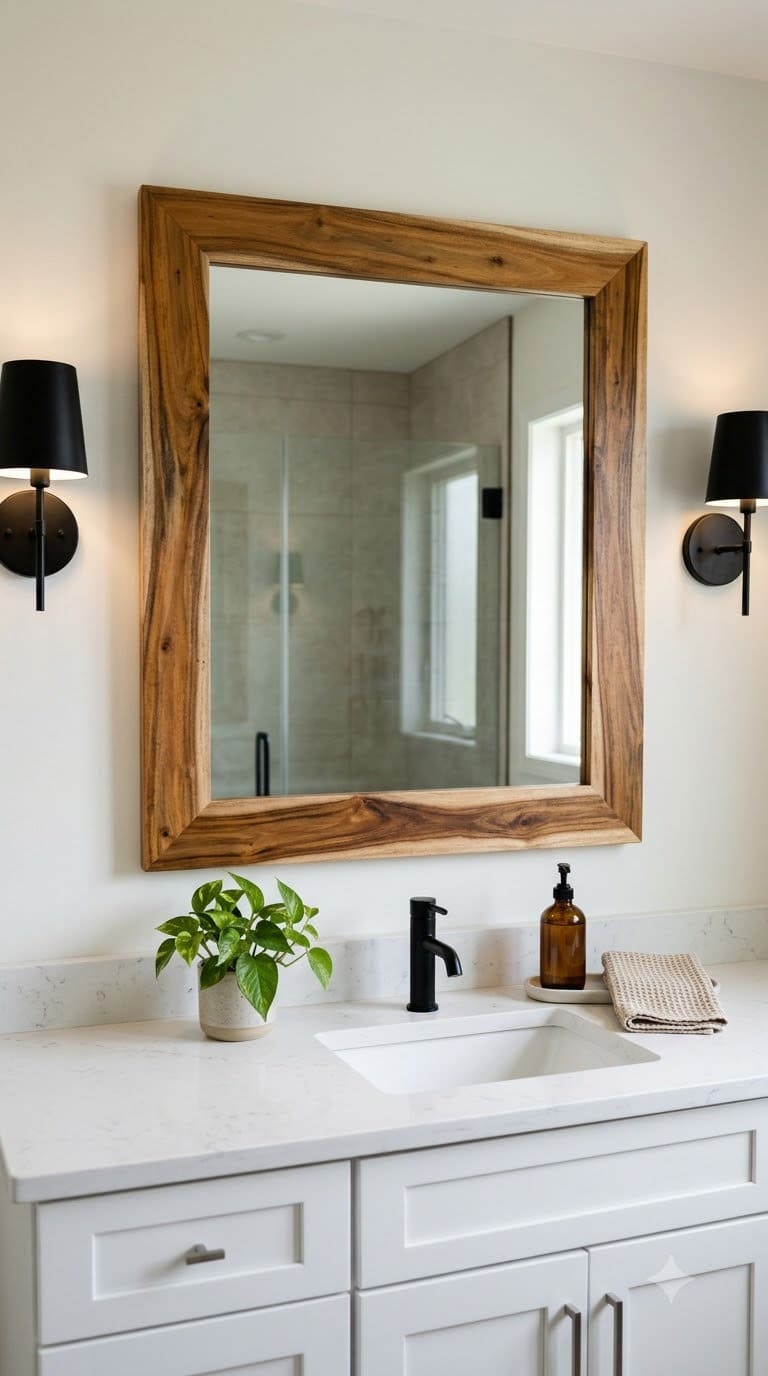
A wood frame gives a bathroom warmth. But it has to handle steam and splashes.
Luc says bathrooms face humidity, condensation and splashing water. She says acacia resists water naturally, while oak or walnut should be properly sealed. She advises simple rectangles or ovals and no detailed live-edge carving that trap moisture.
Size it to the vanity. Pick a mirror 20 to 36 inches wide, extending a few inches past the vanity edges, per Luc.
Seal the edges. Use moisture-resistant adhesive and a silicone sealant around the frame edges. Wipe the frame after showers.
Light it well. Joe Provey at Bob Vila suggests lights above and on both sides of the mirror, which he calls cross lighting. It reduces shadows on your face.
Choose the wood. Acacia handles moisture best, per Luc. If you like oak or walnut, make sure the frame is sealed on every side, including the back.
Check the back. Look at the back of the frame and the mirror edge. If you see bare wood, add a coat of sealer before you hang it.
Run the fan. A fan that clears steam protects the frame. Run it during every shower and for a while after.
Wipe it down. Wipe the frame with a dry cloth after steamy showers. That small habit keeps the finish looking new.
For light placement, see our bathroom lighting ideas over the mirror and bathroom mirror ideas. Budget: mid. Skill: intermediate.
7. An Antique or Gold-Framed Mirror
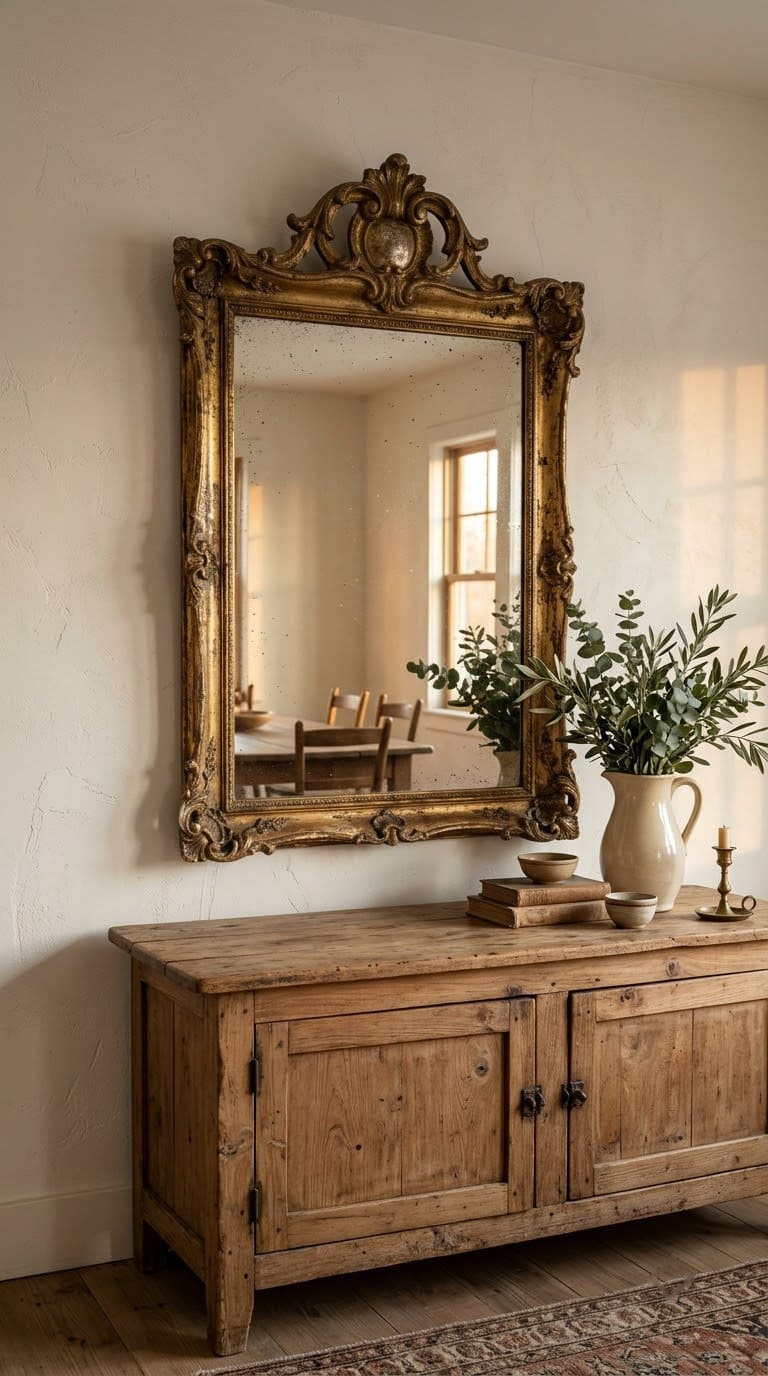
An antique frame adds a touch of age to a clean farmhouse room. A gold or aged brass frame pairs well with white walls and wood.
Heavy frames need strong hardware. Gorman says picture hangers for heavy frames should be rated for at least twice the item’s weight, and anchors should hold four times the weight.
Hang it in a few steps. Weigh the mirror. Find the studs and mark them.
If the mirror is heavy, use a French cleat, which Gorman describes as a bevel-cut pair of strips. One half screws to the studs and the other half to the mirror, and the two lock together.
Pair it with a sideboard. Hang the mirror a hand’s width above the sideboard so the two read as one group.
Clean it gently. Dust the frame with a soft brush. For the glass, spray cleaner on a cloth, not on the mirror, so the liquid doesn’t seep under the frame.
Hang with a pair of hooks. Gorman’s tip about two hooks works well here. Set them on the same line and slide the mirror until it’s centered.
Use a cleat for the heaviest frames. Cut a 3/4 inch plywood board or a 1 by 6 at a 45 degree bevel, then split it into two strips. Screw one strip to the studs with the lip up and away from the wall.
Screw the other to the frame with the lip down. Lift the mirror so the two bevels lock together.
Group it. Put a small framed print or a candle on the sideboard in front of the mirror. The reflection doubles the glow.
For dining ideas, see our dining room mirror ideas. Budget: mid to high. Skill: beginner.
8. A Mirror on a Shiplap Wall
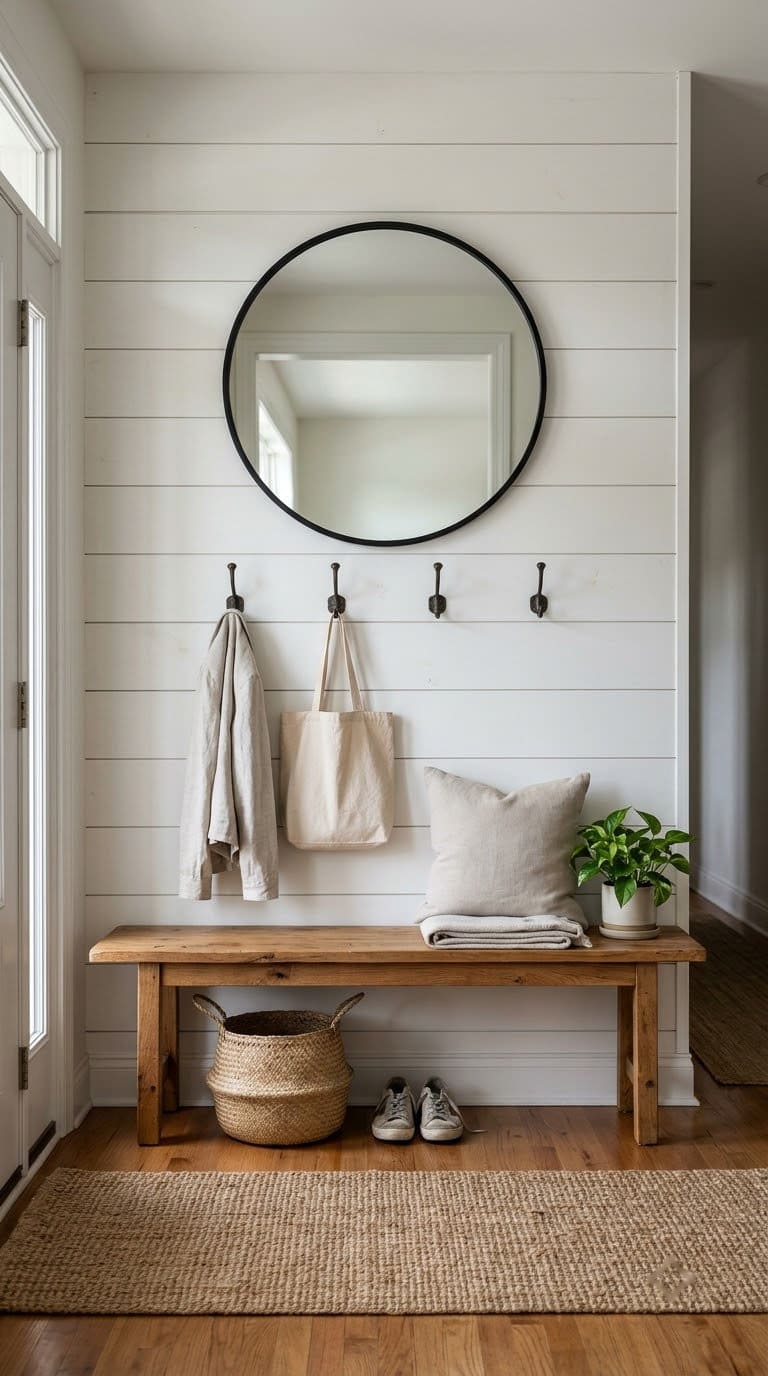
Shiplap and mirrors go together. The mirror breaks up the lines, and the boards make a calm backdrop.
The trick is to hang into the studs behind the boards. Use a stud finder and mark the studs on the shiplap. Gorman says to drill pilot holes into the wood and avoid wiring.
Use the lines. Shiplap boards give you a built-in level. Check the mirror against a board line, then confirm with a level.
Don’t skip the anchor. If a stud doesn’t line up, use a toggle bolt or a heavy-duty anchor rated for the weight. Match it to Gorman’s four-times rule.
Mix the shapes. Pair a round mirror with straight shiplap lines for a softer look. Keep other wall decor simple.
Mark the studs on the boards. Use painter’s tape to mark each stud on the shiplap. The tape stays visible while you work and pulls off cleanly.
Pick the hooks. Use two screws or hooks into studs if you can. If you can’t, use anchors rated for four times the weight.
Keep the line. Hang the mirror so its top or center lines up with a board seam. The eye reads it as part of the wall.
Add layers. A bench, a few hooks and a basket below the mirror turn the wall into a landing spot.
For more wall ideas, see our farmhouse wall decor ideas. Budget: low to mid. Skill: intermediate.
Which Frame Style Fits Your Room?
Match the frame to the feel you want. This table gives a quick guide.
| Frame | Feel | Pairs well with |
|---|---|---|
| Weathered wood | Relaxed, cozy | White shiplap, woven baskets |
| Black metal grid | Crisp, modern | Black fixtures, subway tile |
| Reclaimed window | Charming, aged | A sofa wall or a dining wall |
| Pine, stained dark | Warm, classic | Pale walls, a bench |
| Antique gold | Elegant | Wood sideboards, greenery |
| Whitewashed wood | Airy | Light linen, soft color |
How Do You Care for a Farmhouse Mirror?
A little care keeps a mirror and frame looking good. Use this routine.
Dust the frame weekly with a soft brush. Wipe the glass with a cleaner sprayed onto a cloth. Re-oil a wood frame every 6 to 12 months with food-safe mineral oil or beeswax, as Luc advises.
Move a light wood frame out of strong sun, since it can yellow. Check the hooks and anchors once a year, and tighten any screw that has worked loose.
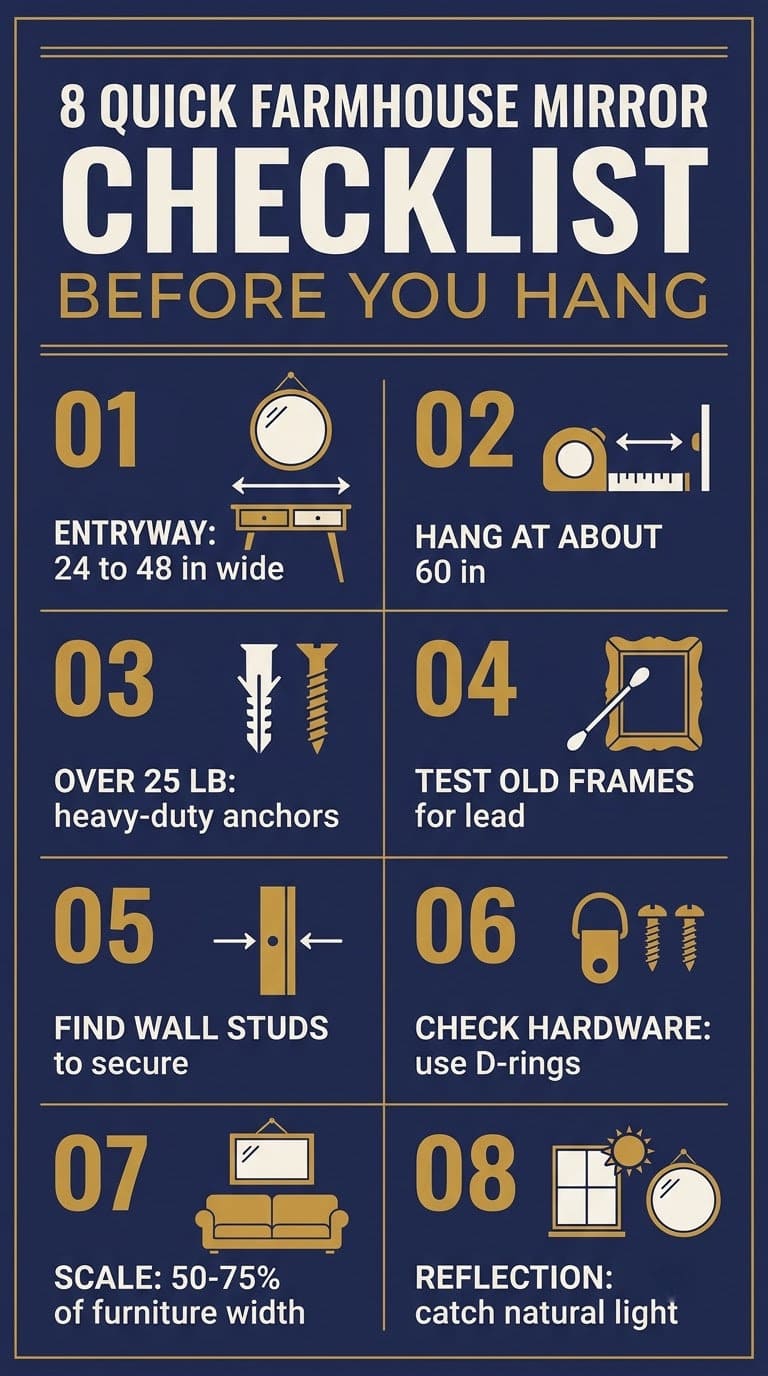
A Weekend Mirror Plan
You can finish most of these projects in a weekend. This plan keeps it simple.
On Friday, measure the wall and tape out the mirror size with newspaper. Choose the mirror and the hardware. On Saturday morning, find the studs and mark the height.
On Saturday afternoon, build or finish the frame if it’s a DIY one. On Sunday, hang the mirror, check it for level and style the area around it.
What to Do First
Start with the wall and the weight. Style comes second.
First, weigh the mirror and find the studs. Second, pick the hardware from the table above. Third, mark the height with tape and step back.
Then hang the mirror and check that it’s level. Finish with the decor around it.
Common Mistakes to Avoid
Most mirror mistakes come from a short list of oversights. Here’s what to watch for.
Using a nail for a heavy mirror. Gorman says drywall holds only 5 to 10 pounds on a nail. Use anchors or a stud for anything over 25 pounds.
Skipping the lead test. The EPA says old paint can create lead dust when disturbed. Test any pre-1978 window or frame before you sand.
Gluing the mirror with the wrong adhesive. Goldwyn says construction adhesive can damage the reflective side of a mirror. Use clear silicone.
Forgetting the anchor. The CPSC advises anchoring tall furniture. A leaning mirror is no exception.
FAQ
How high should I hang a farmhouse mirror?
Luc says about 60 inches from the floor for an entryway mirror, roughly eye level. For a full-length mirror, she says to center it at 40 to 42 inches.
What size mirror goes over a console?
Pick a mirror about 50 to 70 percent of the console’s width, and 24 to 48 inches wide for an entryway, per Luc.
What hardware do I need for a heavy mirror?
Gorman says to use heavy-duty anchors and screws for anything over 25 pounds, or screw into a stud. Anchors should hold four times the weight.
Is it safe to use an old window as a mirror frame?
Test it for lead first if it’s from a pre-1978 building. The EPA says about three-quarters of older homes still contain some lead paint.
How do I hang a mirror on shiplap?
Mark the studs on the boards with tape, drill pilot holes and hang the mirror on two hooks or screws into the studs. If a stud doesn’t line up, use heavy-duty anchors rated for four times the weight.
Can I put a wood mirror in a bathroom?
Yes, if the frame is sealed well. Luc says acacia resists water naturally and that oak or walnut should be properly sealed. Wipe it dry after showers.
How do I stop a leaning mirror from sliding?
Use a non-slip pad under the base, and anchor the top to the wall with a small bracket or strap.
Which room needs a mirror most?
Rooms with little light, such as a narrow entry or a dark hall, gain the most. Hang the mirror opposite or beside a window so it bounces daylight deeper into the room. Our living room mirror decorating ideas and mirror buying guide have more tips.
Related Posts
Never miss an update — choose FarmFoodFamily as your preferred source on Google.
How it works: Tap the button below to open Google's settings page, then check the box next to FarmFoodFamily.
Tap the checkbox to turn it blue — that's how you know it's set.