15 Bold Giant Garden Globe Ideas That Stay Put
A big garden globe gives a bed a strong focal point, as long as you plan the weight, the base, and the winter before you build or buy.

Never miss an update — choose FarmFoodFamily as your preferred source on Google.
How it works: Tap the button below to open Google's settings page, then check the box next to FarmFoodFamily.
Tap the checkbox to turn it blue — that's how you know it's set.
A big garden globe gives a bed a strong focal point, as long as you plan the weight, the base, and the winter before you build or buy.
Products We Recommend
This post contains affiliate links. We may earn a commission on qualifying purchases at no extra cost to you.


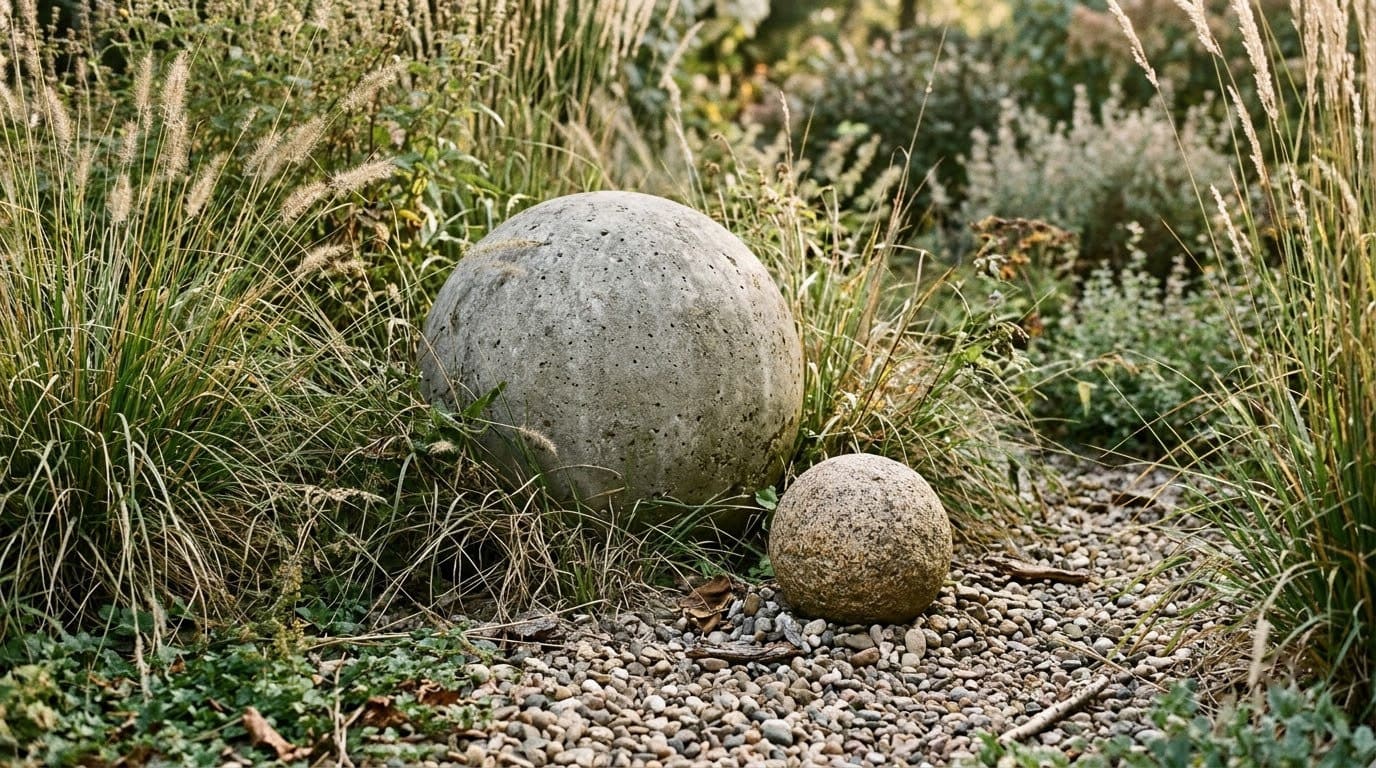
A small gazing ball can get lost in a border. A big globe can’t. It anchors the whole bed.
But big means heavy. A solid sphere can weigh as much as a person, and frost can crack a poor one in a single winter.
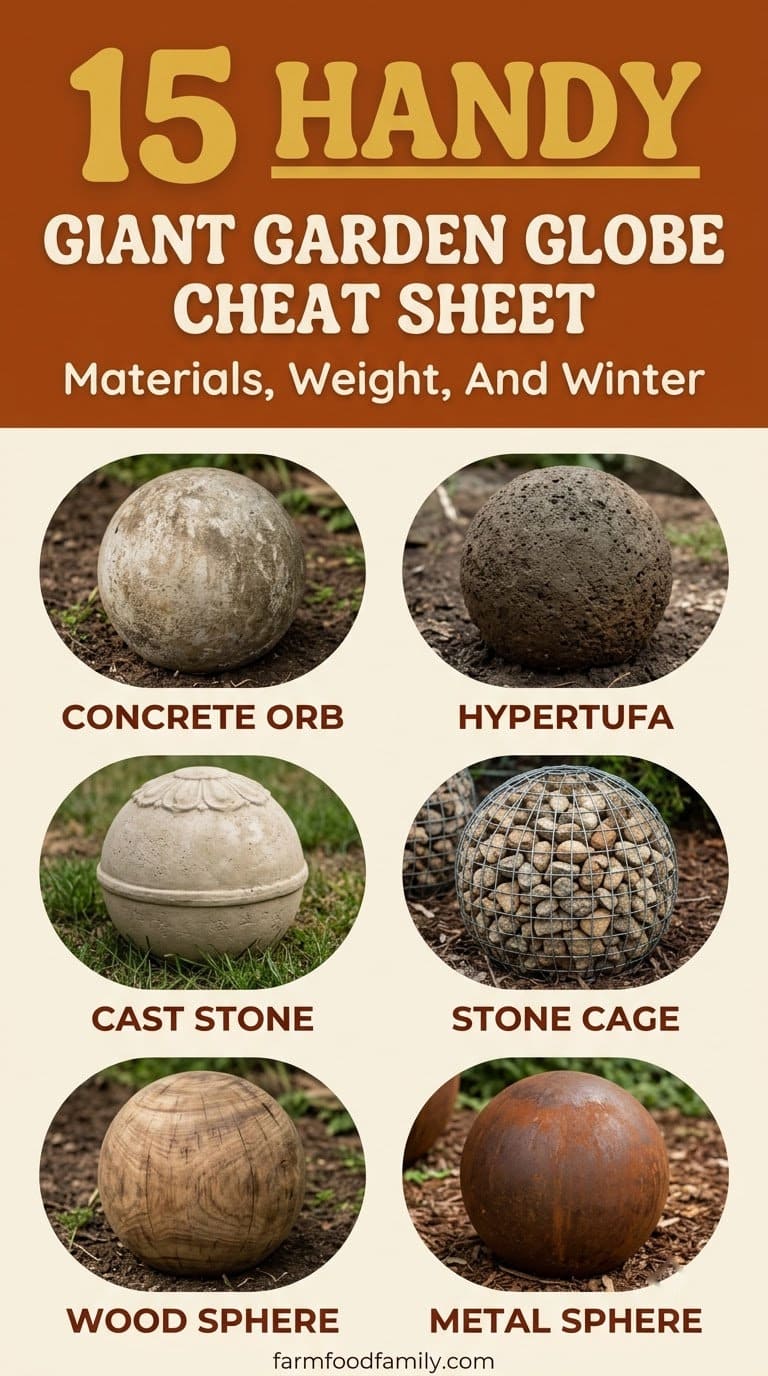
This guide covers 15 giant globe ideas in concrete, stone, wire, wood, and metal. For each one, you’ll see sizes, steps, and a plain note on weight and winter. For small decorative balls, see our guide to DIY garden balls.
Answer 4 quick questions and get matched to the exact fix for your yard — drainage, budget, layout, or something else entirely.
Take the Free QuizQuick Answer
Choose a hollow build for DIY, and a solid one only if you can move it with help. A hollow concrete shell can weigh a fraction of a solid sphere of the same size.
Barb of Made by Barb builds giant orbs over a 20-inch inflatable beach ball. She layers a concrete patcher rated for a half-inch topping over mesh tape, then removes the ball.
Wear rubber gloves and a dust mask when you mix. Set the globe on a level, compacted base so it can’t roll or tip. Make it hollow if you can, because a lighter globe is easier to move, place, and fix.
Wet the piece as it cures, and keep it out of hot sun. Slow curing makes a stronger globe. Plan your base and your winter before you pour, and size the globe to the bed.
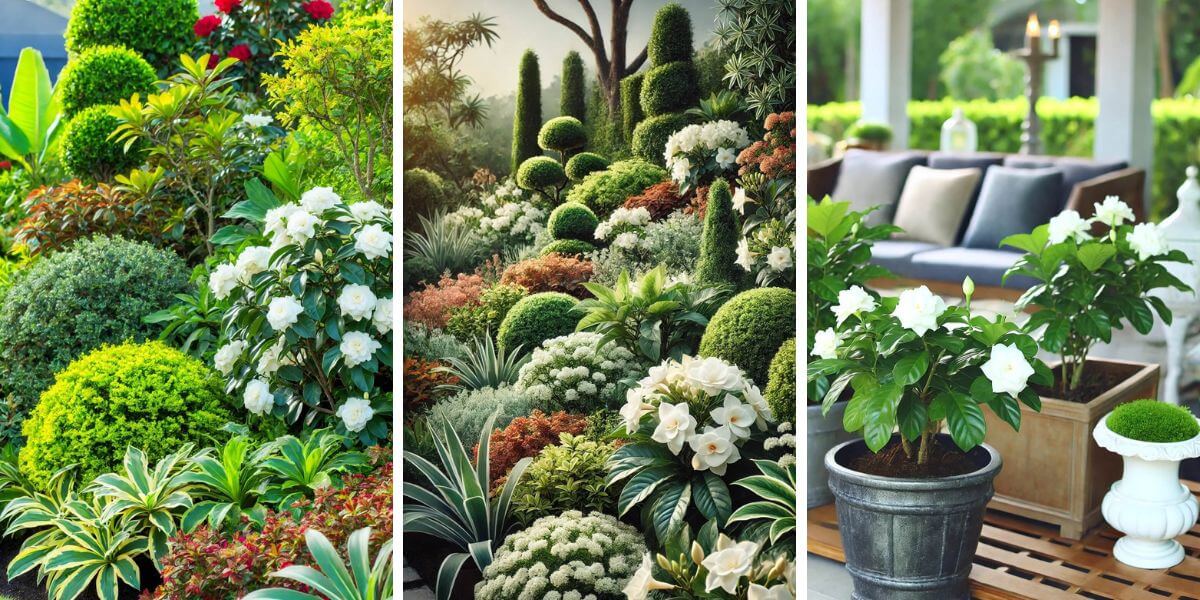

Which Giant Globe Should You Make or Buy?
This table is our planning guide. The concrete, hypertufa, and cast stone notes come from the sources linked in this article. The rest is our own judgment.
Most yard problems trace back to one specific, fixable cause. Find yours in 4 quick questions.
Take the Free Quiz| Type | DIY or buy | Weight | Winter call | Skill level |
|---|---|---|---|---|
| Hollow concrete shell | DIY | Light to medium | Good if sealed and drained | Intermediate |
| Hypertufa orb | DIY | Medium | Good, cures slowly | Intermediate |
| Cast stone sphere | Buy | Heavy | Sold for outdoor use | Beginner |
| Polished stone sphere | Buy | Very heavy | Ask for a frost test | Beginner |
| Wire and stone cage | DIY | Heavy | Very good | Intermediate |
| Wood sphere | DIY | Medium | Rots over time | Intermediate |
| Metal sphere | DIY or buy | Light to medium | Rusts unless sealed | Intermediate |
How Heavy Is a Giant Garden Globe?
Do the math before you build. A sphere’s volume is four-thirds times pi times the radius cubed. Concrete weighs roughly 150 pounds per cubic foot.
Take a 16-inch globe. Solid, it holds about 1.24 cubic feet and weighs close to 186 pounds. Hollow, with a half-inch shell, it holds about 0.23 cubic feet and weighs about 35 pounds.
That’s the case for the hollow build. You still get the look and lose most of the load.
Buying? Check the weight.
The cast stone sphere at statue.com lists 22 pounds at 12 inches and 300 pounds at 48 inches. Ask any stone seller for the exact weight and a frost test.
20-inch inflatable forms for hollow concrete orbs
Shop NowThis post contains affiliate links. We may earn a commission on qualifying purchases at no extra cost to you.
What Safety and Base Rules Apply?
Cement irritates skin. Helen Dawson of Fine Gardening says to wear rubber gloves while you mix and handle Portland cement. She also suggests a small dust mask for perlite dust.
Mix slowly to cut dust, as Barb advises. Work outdoors in shade, and wear eye protection.
The average homeowner spends $616/year on yard fixes that don't address the real problem. Find out what yours actually is — before you spend another dollar.
Take the Free QuizBuild a base before you place a heavy globe. Dig out 4 inches of soil, add compacted gravel, and set the globe on a flat paver. That pad stops it from sinking or rolling.
Never lift a heavy globe alone. Use a hand truck, two helpers, or a plank ramp. Keep kids away from the base, and don’t let anyone climb on it.
15 Bold Giant Garden Globe Ideas
1. Hollow Concrete Orb From a Beach Ball
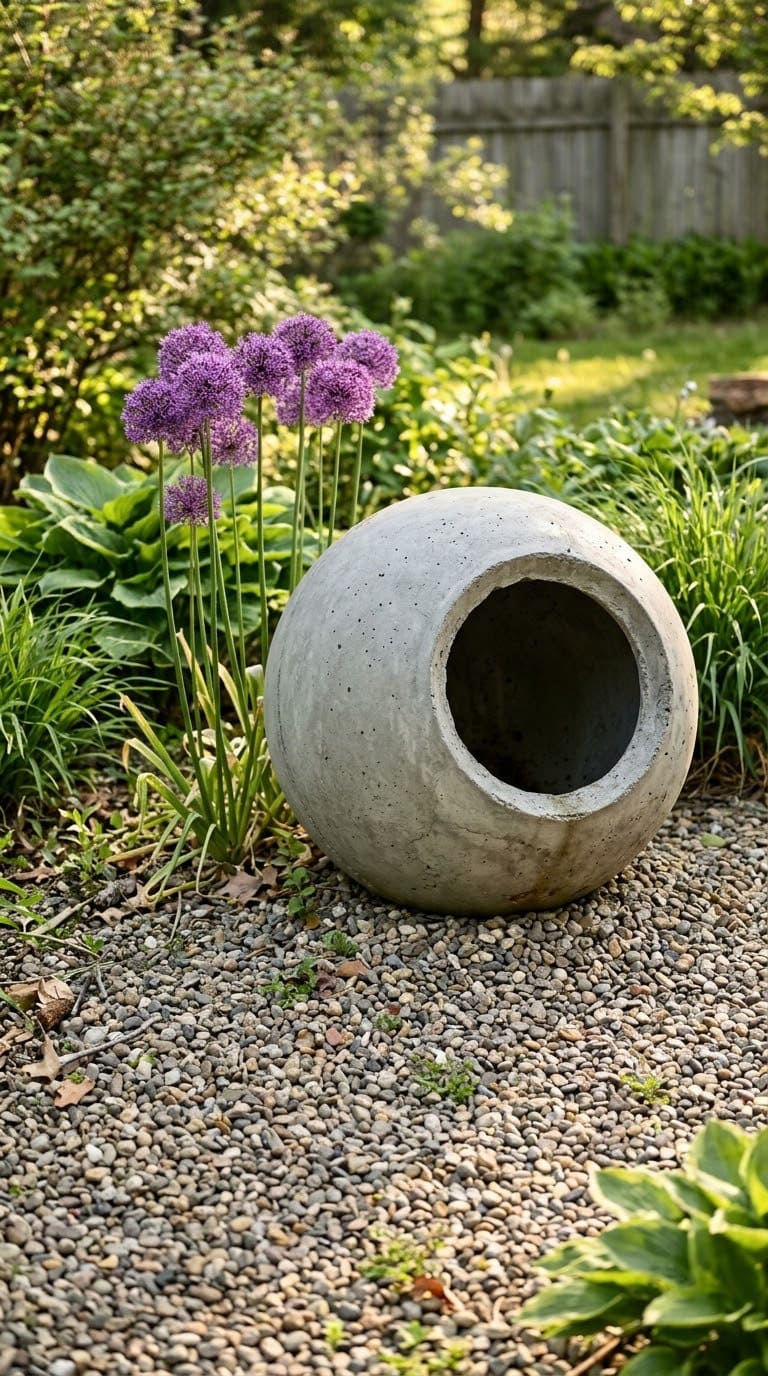
This is the best DIY giant. Inflate a 20-inch beach ball very hard. Support it in a bucket or pot, and weight the base with rocks so it can’t tip.
Mix concrete patcher to a thick paste. Barb uses Sakrete Top N Bond Concrete Patcher, rated for a half-inch topping. Press it on from the top down in small sections, flattening each one.
Place drywall mesh tape between two layers for strength. Let each section set about 4 hours. Wet the piece as it sets, then deflate the ball.


Cost tier: low to medium. Use a beach ball, not a balloon, because balloons pop.
2. Squeeze-Test Mix Check for Orbs
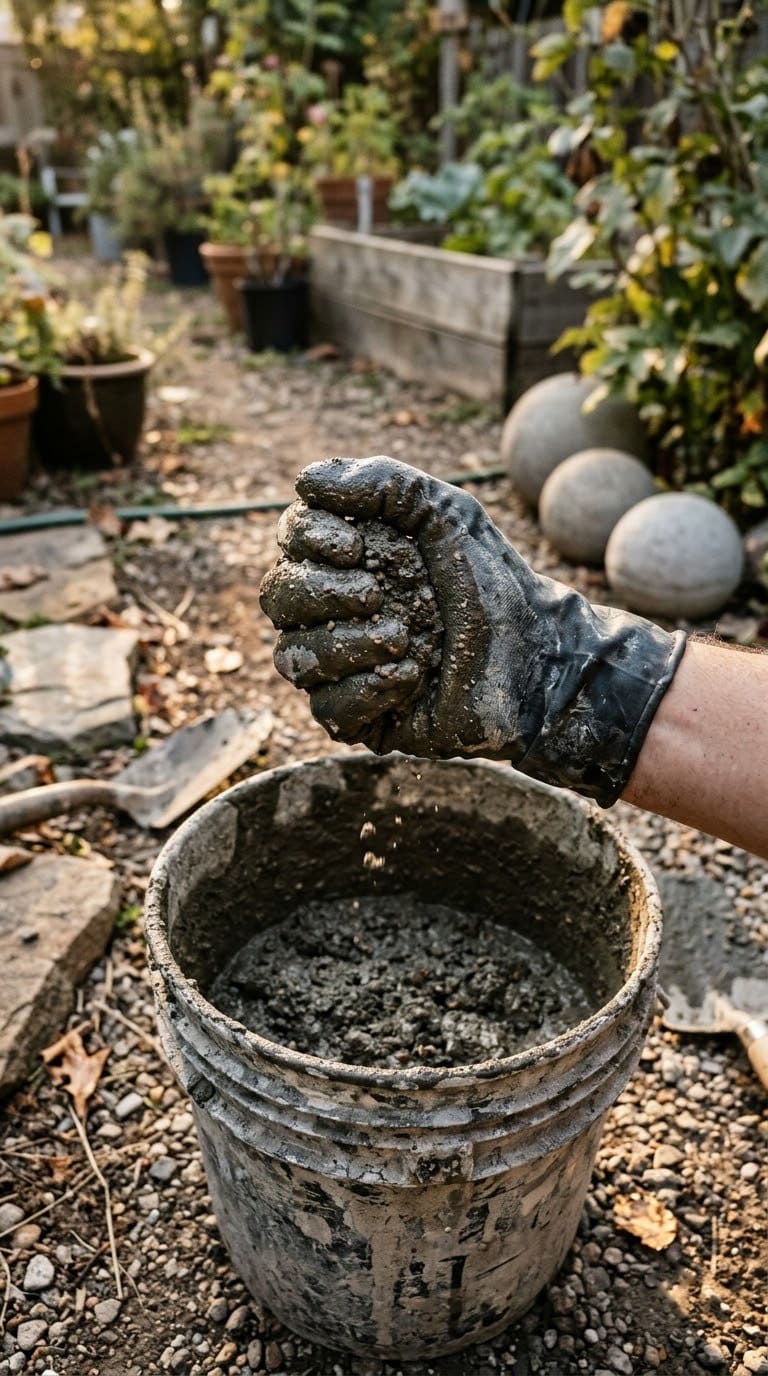
A mix that’s too wet slumps, and one that’s too dry crumbles. Barb suggests a squeeze test.
If it crumbles, add water. If it runs, add dry mix.
Make a small test patch first. Let it set and see how it feels. Fix the mix before you cover the whole ball.
This step saves a lot of rework. It also makes a stronger shell.
Cost tier: free. Pairs with idea 1.
3. Hypertufa Moss Orb
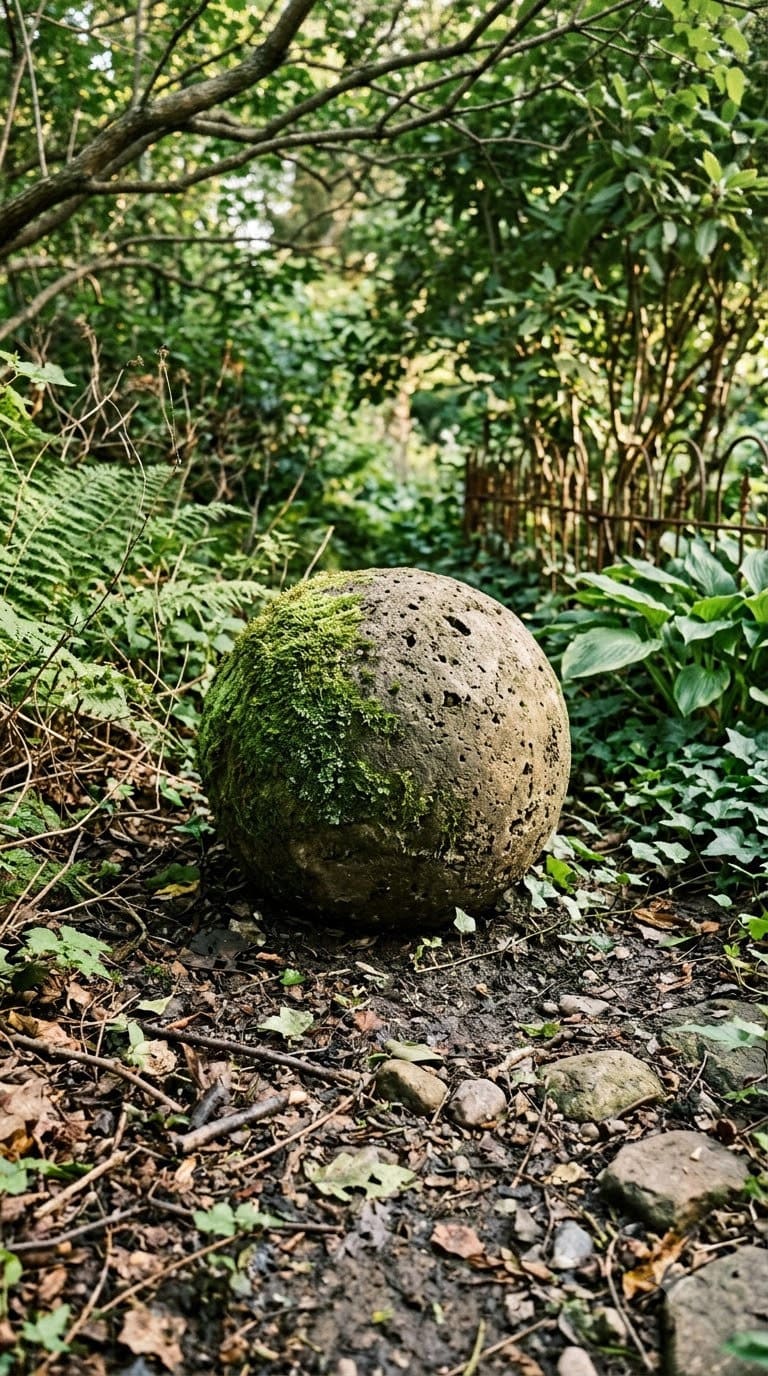
Hypertufa is lighter than plain concrete. Fine Gardening gives a mix of 2 parts Portland cement, 3 parts sifted peat moss, 3 parts perlite, and a small handful of reinforcing fibers.
Add water slowly until the mix feels like cottage cheese. Squeeze a handful. You should get only a couple of drops out.
Cure it covered in plastic for the first 36 hours. After you remove the mold, leave the piece in shade for about three weeks. Hot sun can cause uneven curing and cracking.
Cost tier: low. Moss grows best on the shaded side.
4. Solid Cast Concrete Sphere (Small)
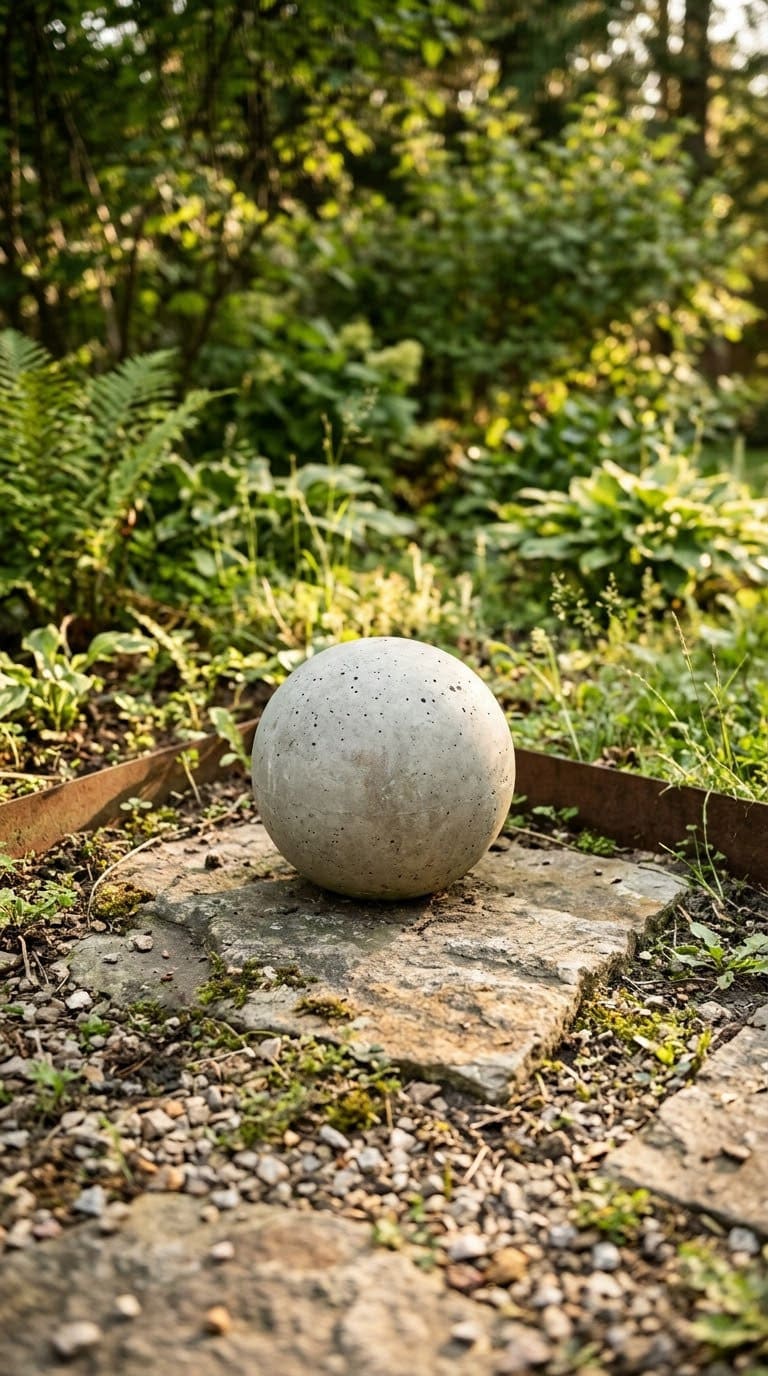
Pour a cement and sand mix into a round mold, such as a light-fixture cover. A common mix is 2 parts cement to 1 part sand. Allow about 48 hours before you demold.
Stay small. A solid cast sphere gets heavy fast, so keep it to about 8 to 10 inches. That size is our own suggestion.
Drill-mix in a pail to trap less air. Polish the surface with wet sandpaper after curing.
Cost tier: low. Compare with idea 1 for bigger globes.
5. Cast Stone Sphere (Buy)
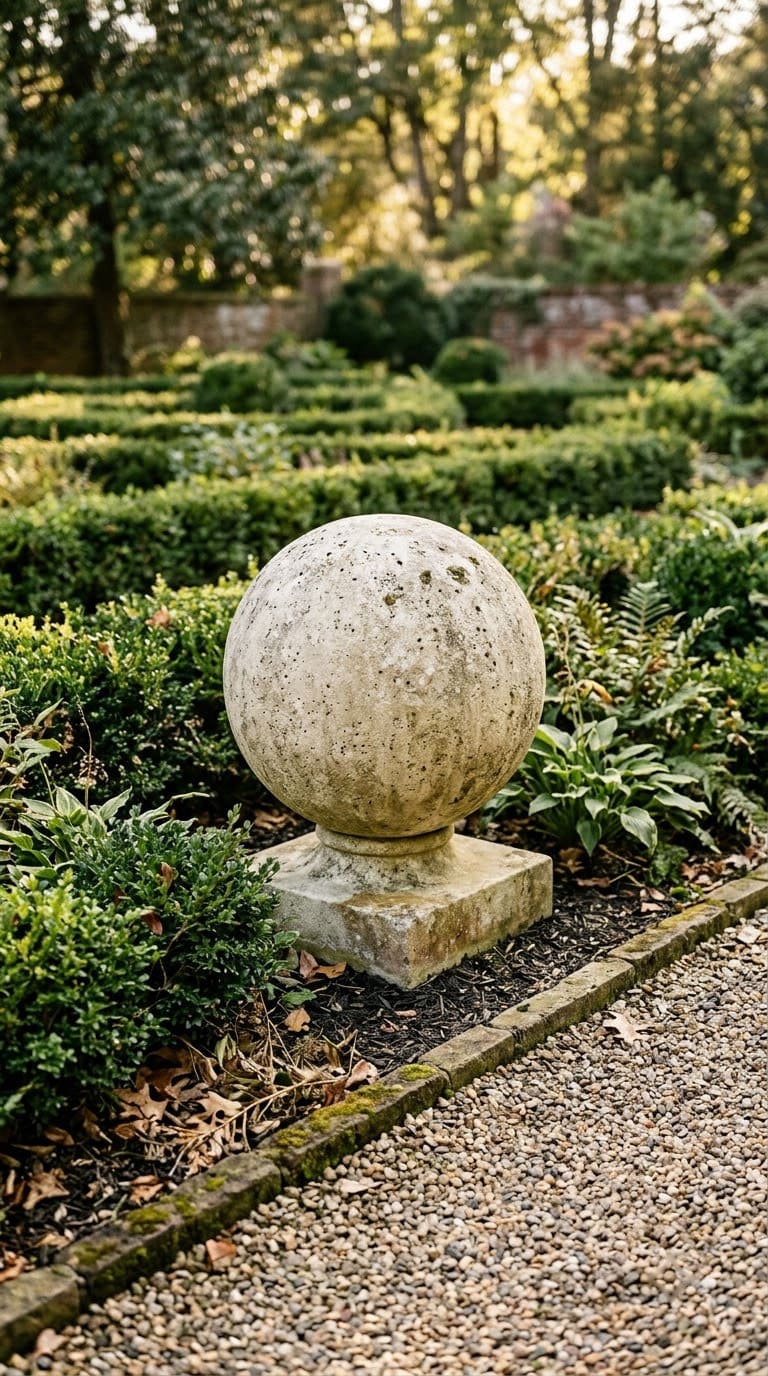
If you want a clean, even look, buy one. The statue.com listing offers cast stone spheres in six sizes from 12 to 48 inches. The 12-inch weighs 22 pounds, and the 48-inch weighs 300 pounds.
The page says it’s safe for outdoor use. It doesn’t mention freeze-thaw. Ask the seller about frost before you buy.
Expect long lead times. The listing shows made-to-order with 12 to 14 weeks of shipping lead time.
Cost tier: high. Plan the base pad before it arrives.
6. Polished Black Stone Sphere (Buy)
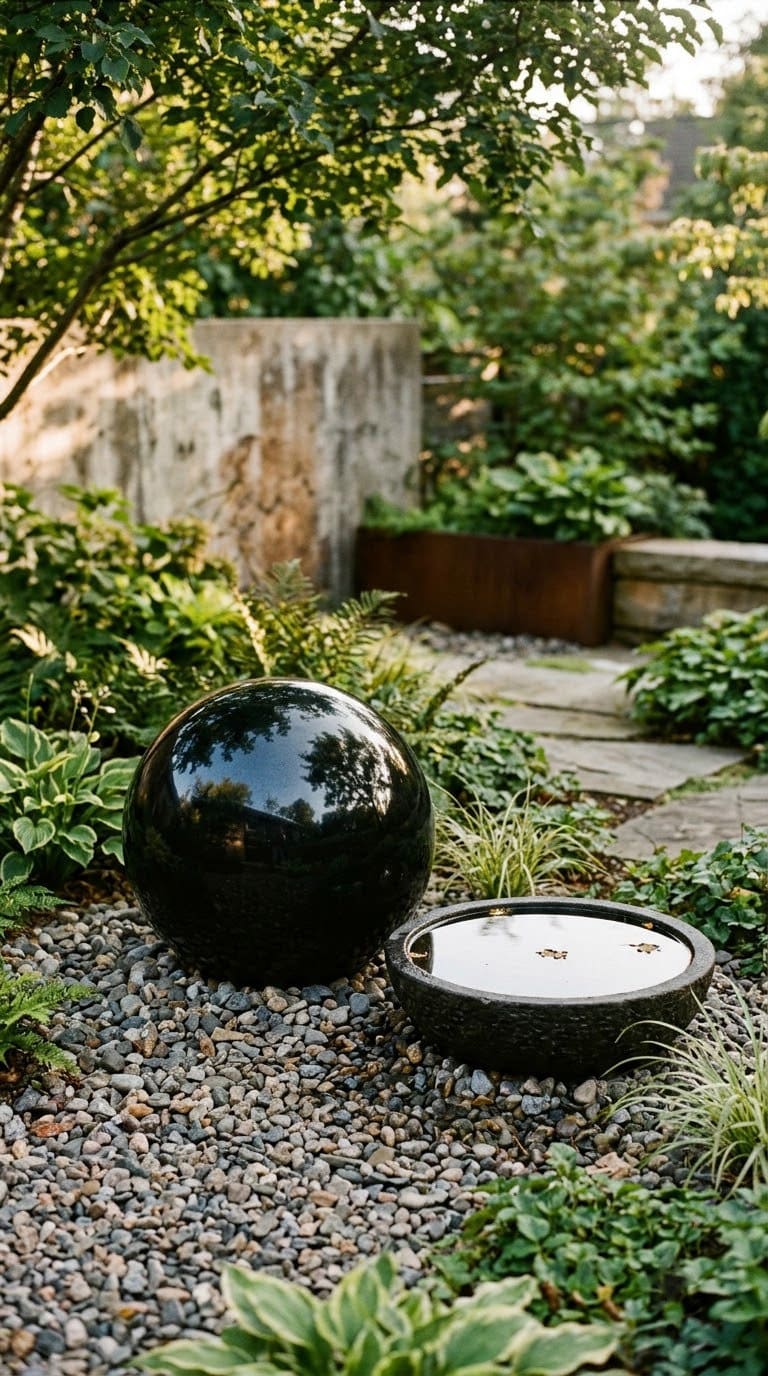
A polished granite sphere looks sleek in a modern bed. It’s very heavy. Sellers list wildly different weights for similar sizes, so ask for the exact figure.
Ask for a freeze and thaw certificate. Not all black stone handles frost equally. We found no source that states it for a polished sphere.
Place it on a solid footing and plan delivery help. Don’t try to move it by hand.
Cost tier: high. Rental of a hand truck can help.
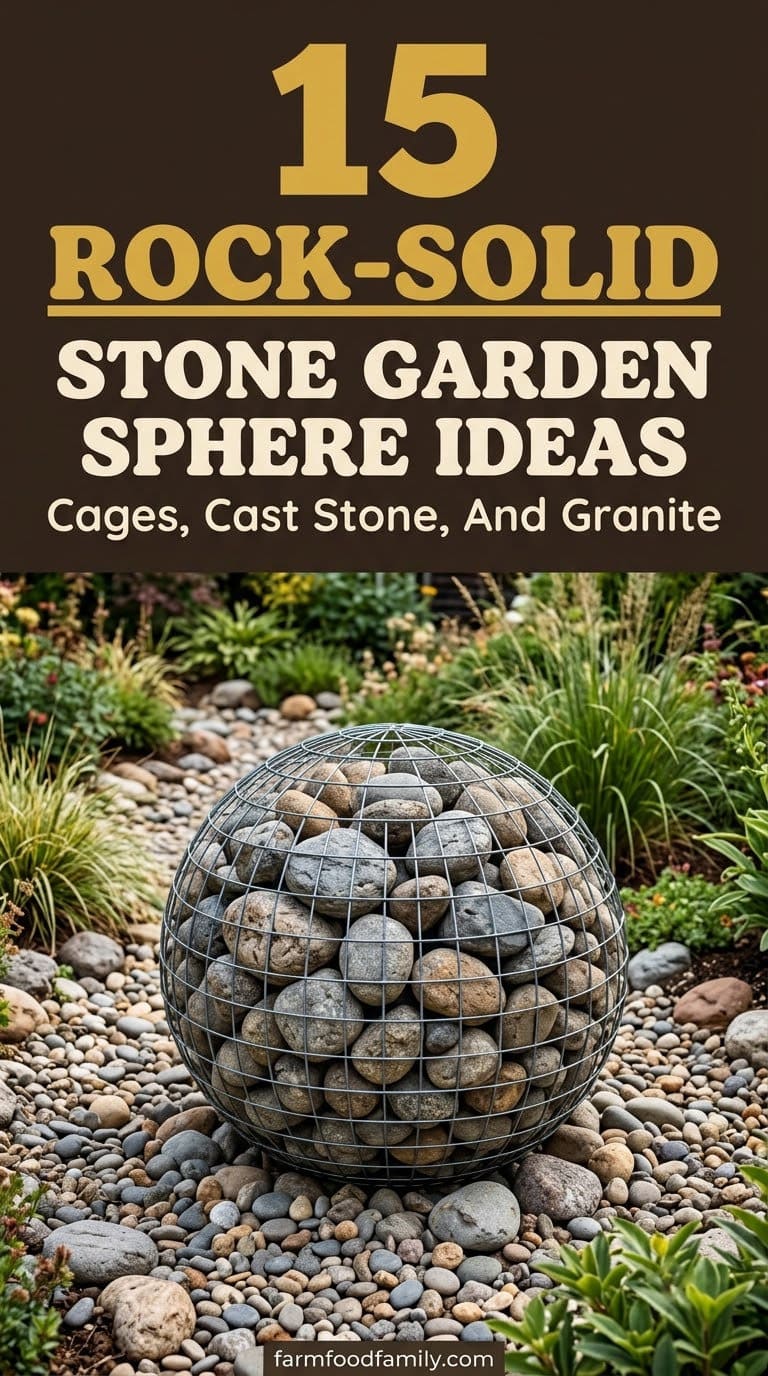
7. Spherical Stone Cage
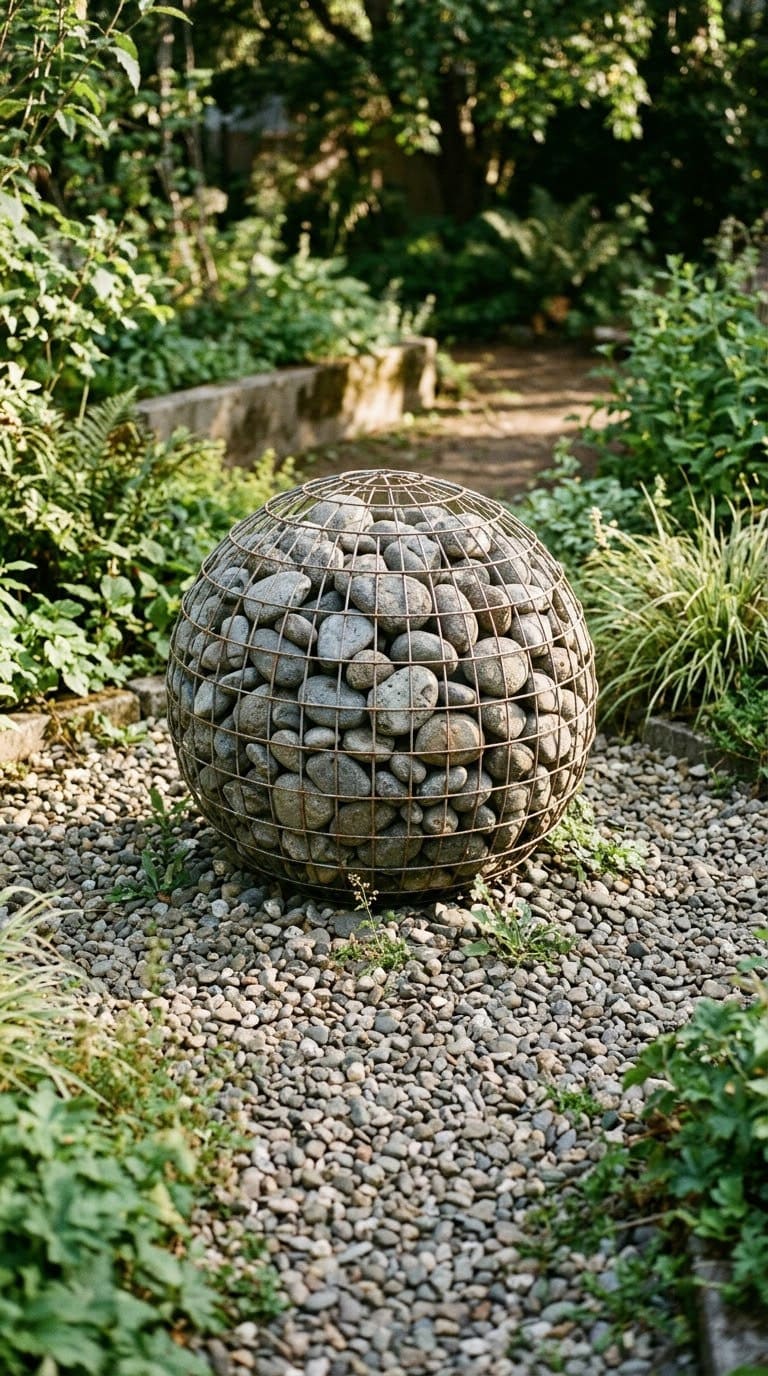
A wire cage filled with stones is a gabion globe. Weld or wire two mesh halves into a ball. Fill the cage with stones larger than the mesh openings.
Suppliers match stone size to mesh. For example, one supplier lists 45 to 125 millimeter stones for 5 by 10 centimeter mesh. Fill by hand and close the cage.
Set it on compacted gravel. It’s heavy, so size it at about 18 to 24 inches. That size is our own suggestion.
Cost tier: medium. Pairs with idea 12’s pad.
8. River Stone Cluster Ball
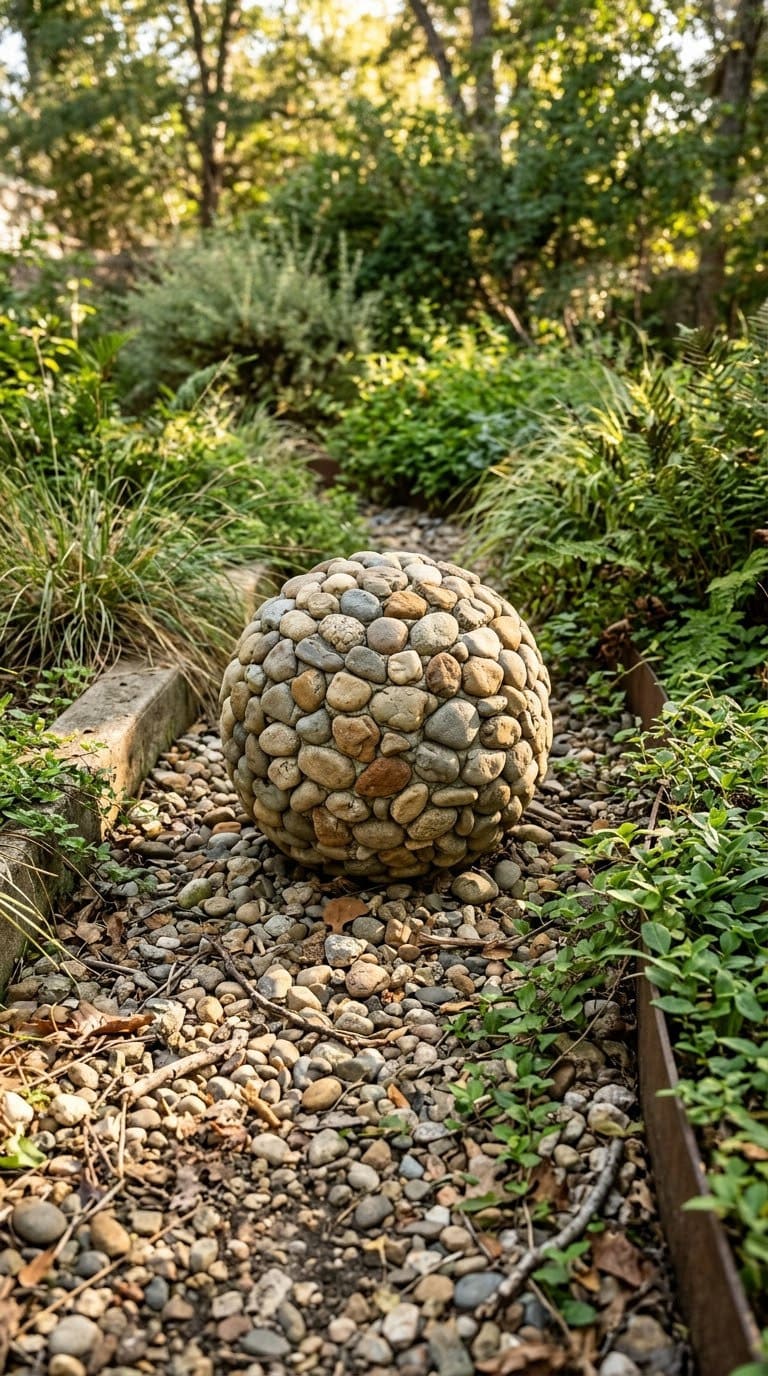
Glue smooth stones onto a hard foam or concrete core with outdoor adhesive. Start at the bottom and work around.
This gives a stone-ball look without a cage. Use flat stones that sit well together.
Keep it under about 14 inches. Beyond that, the glue joints may not hold. That size is our own suggestion.
Cost tier: low to medium. See our river rock stone garden ideas.
9. Giant Wooden Sphere
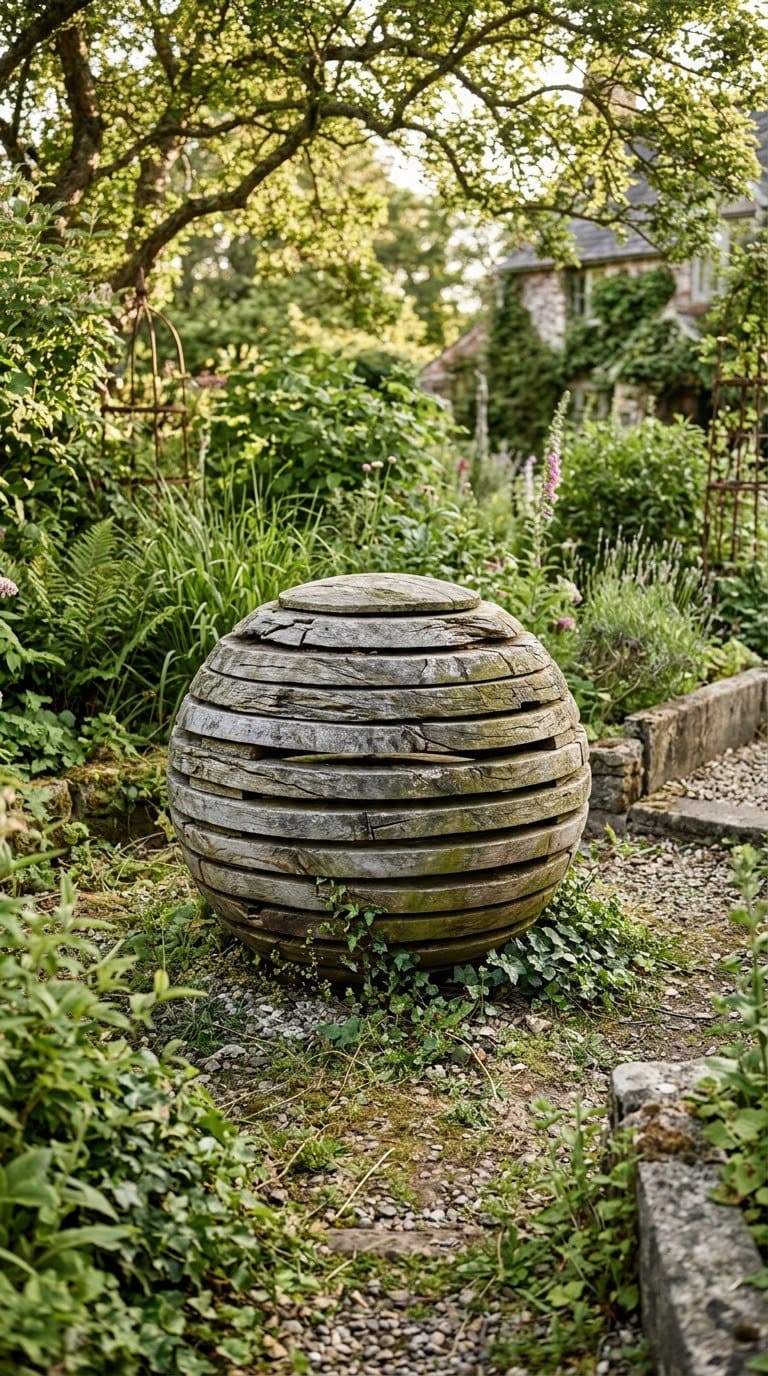
Cut rings from a log or thick plywood and stack them in graduated sizes. Fasten with exterior screws and glue. Round them with a rasp.
Wood rots where it touches the ground. Set the sphere on a stone or paver. Seal the surface and re-seal each year.
Expect it to weather to gray. Replace it when it softens.
Cost tier: medium. Our own design, no source.
10. Welded Metal Garden Sphere
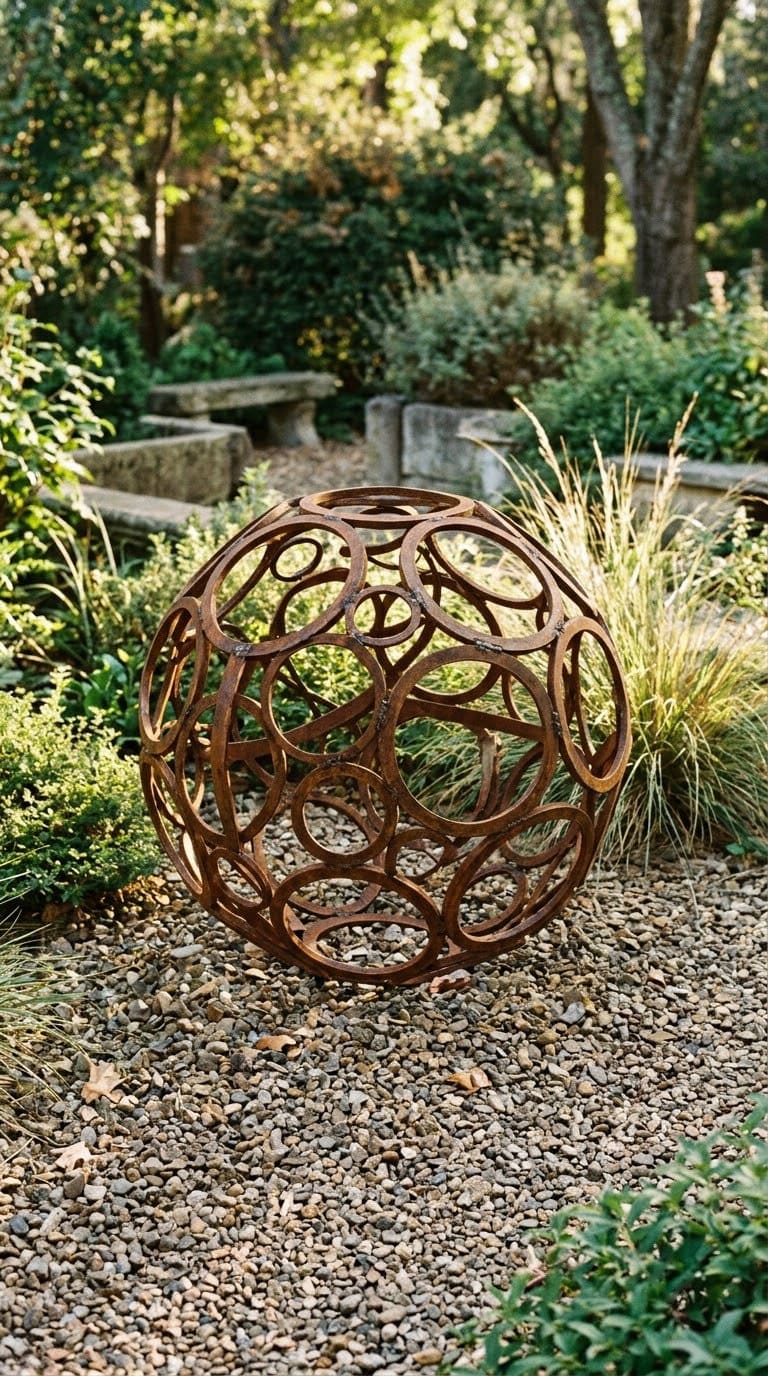
Weld steel rings into a sphere, or buy one. Rust gives it a warm look in a natural garden.
For a clean look, prime and paint it with rust-proof spray. Repaint when the finish wears.
Check welds before you set it out. Anchor it with a stake if wind is strong.
Cost tier: medium to high. Welding needs skill, so hire it out if needed.
11. Giant Nail Allium
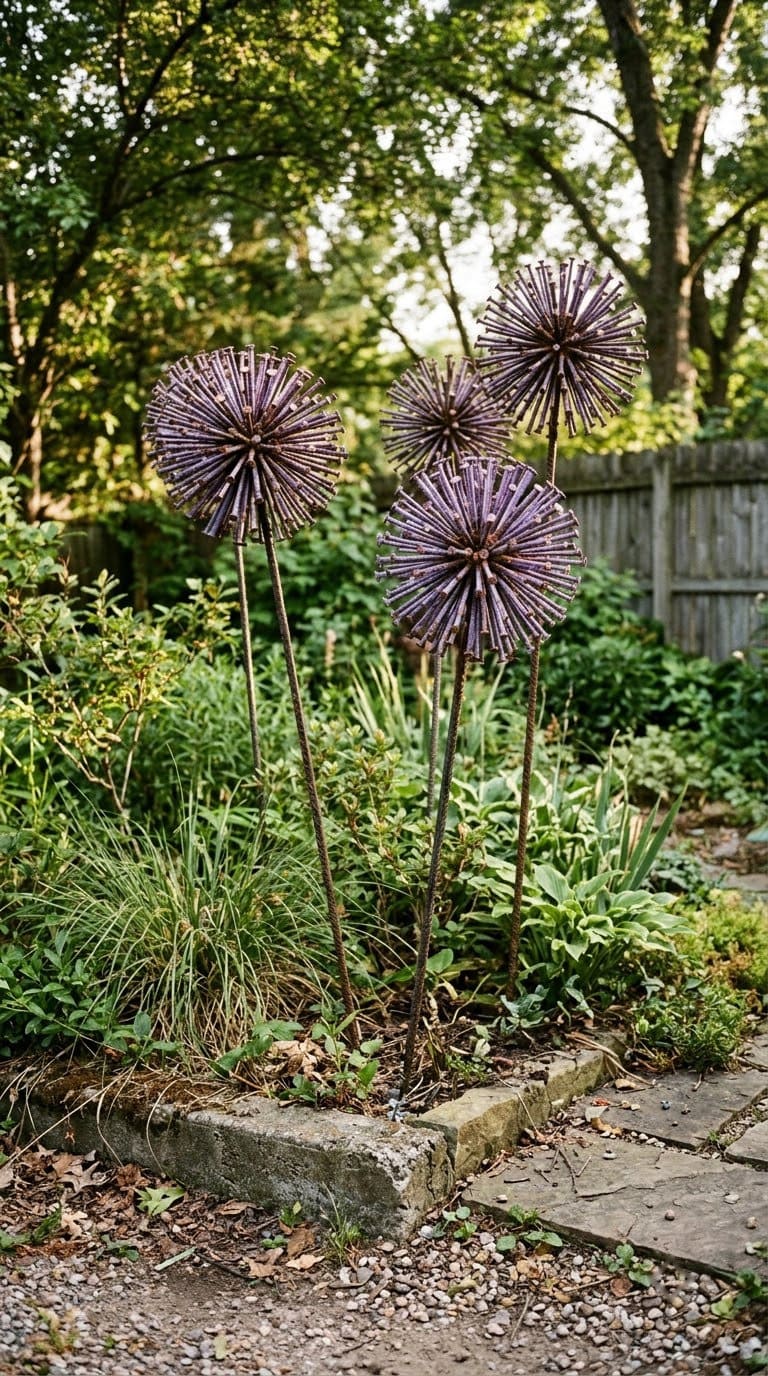
Empress of Dirt writer Melissa J. Will uses a softball, 120 flat-head nails 3 to 4 inches long, and a 3-foot threaded rod. She drills holes at 90 degrees and presses the nails in.
Spray paint it in a cardboard box. She used rust-proof paint and says to repaint about once a year for year-round display. The recipe card lists $20.
A reader asked if the nail weight could bend a thin rod. Use thicker rebar for a taller, heavier flower.
Cost tier: low. Plant a group for impact.
12. Grapevine Globe With Lights
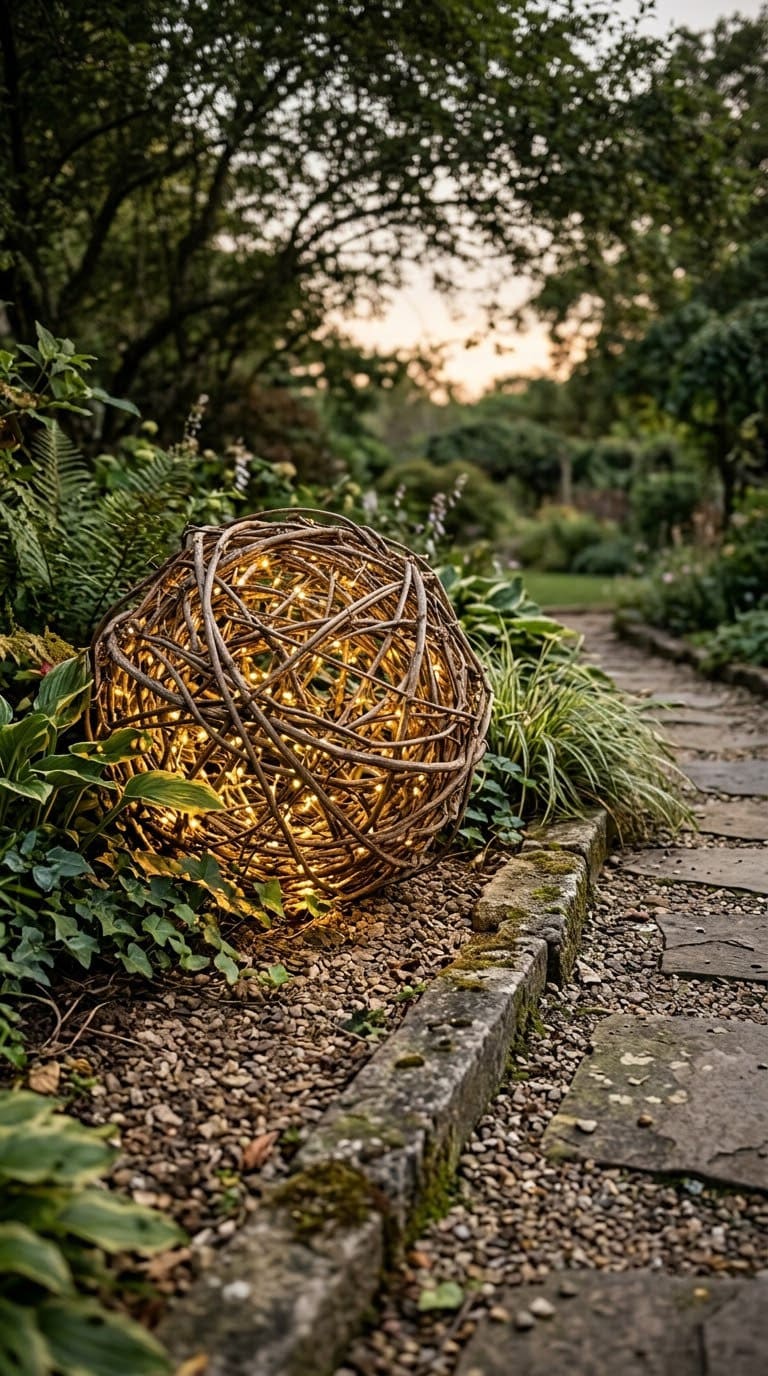
Grapevine balls are light and easy to find. Weave vines or buy a ready-made ball. Thread a battery or solar string through the center.
Use outdoor-rated lights. Don’t use real flame near dry vine.
Grapevine weathers fast. Bring it inside in heavy rain and snow.
Cost tier: low to medium.
13. Live Topiary Sphere
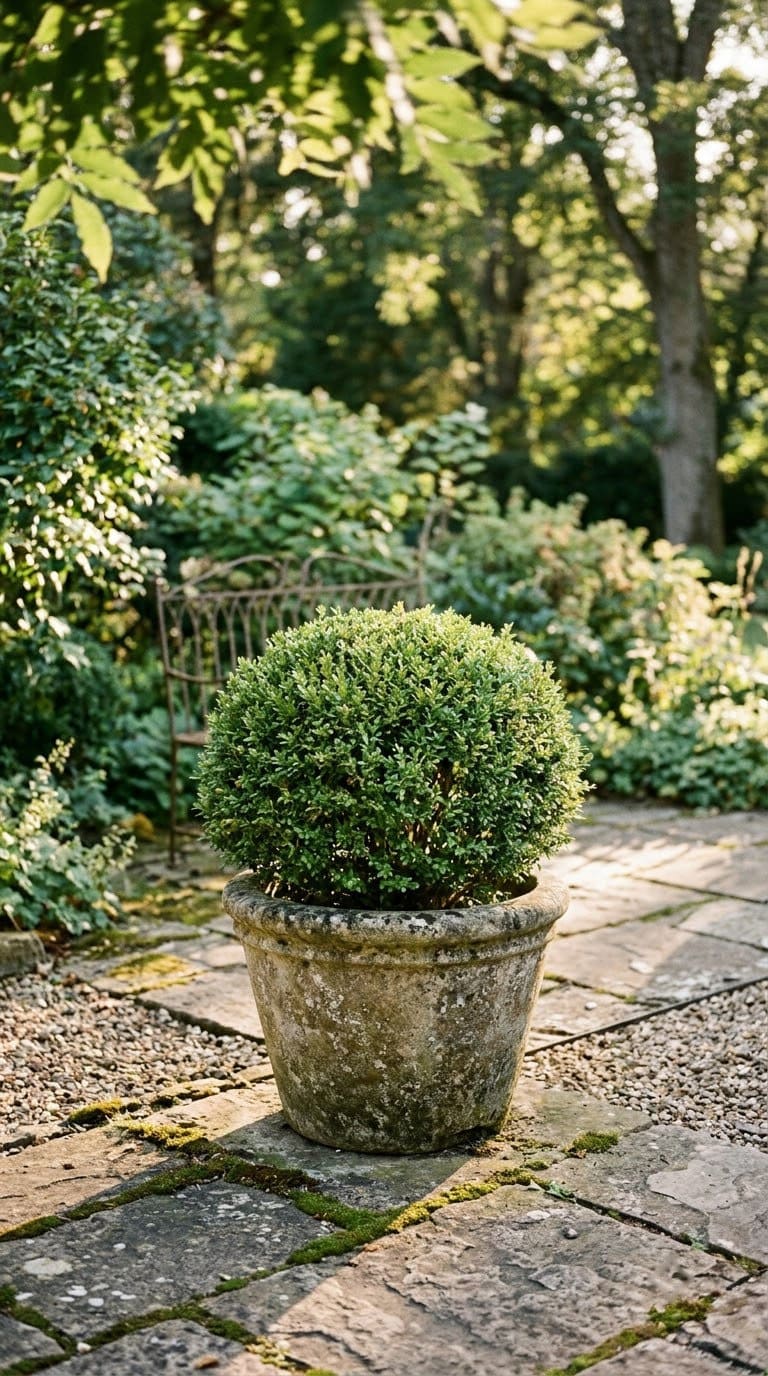
A living sphere is a globe you grow. Clip boxwood into a ball and place it in a large pot.
Our container topiary ideas show how to shape and winter one. Keep the pot wide so it can’t tip.
Trim often in the growing season.
Cost tier: medium.
14. Terracotta Bowl Sphere
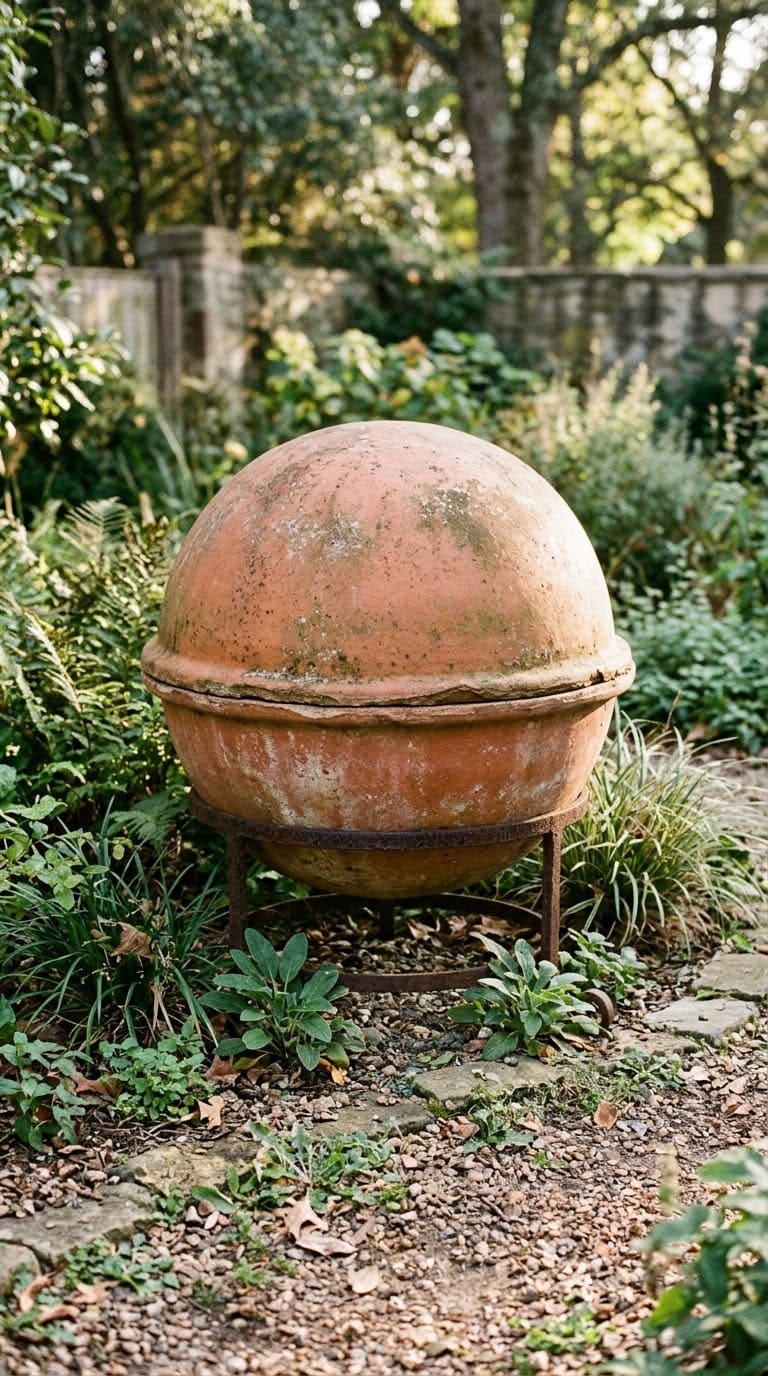
Glue two large terracotta bowls rim to rim with outdoor adhesive. Fill the seam with sealant and paint.
Terracotta cracks in freezing weather, so bring it in for winter. This is general practice.
Use bowls about 14 to 18 inches wide. That size is our own suggestion. Drill a small drain hole at the base.
Cost tier: low.
15. Planted Concrete Orb
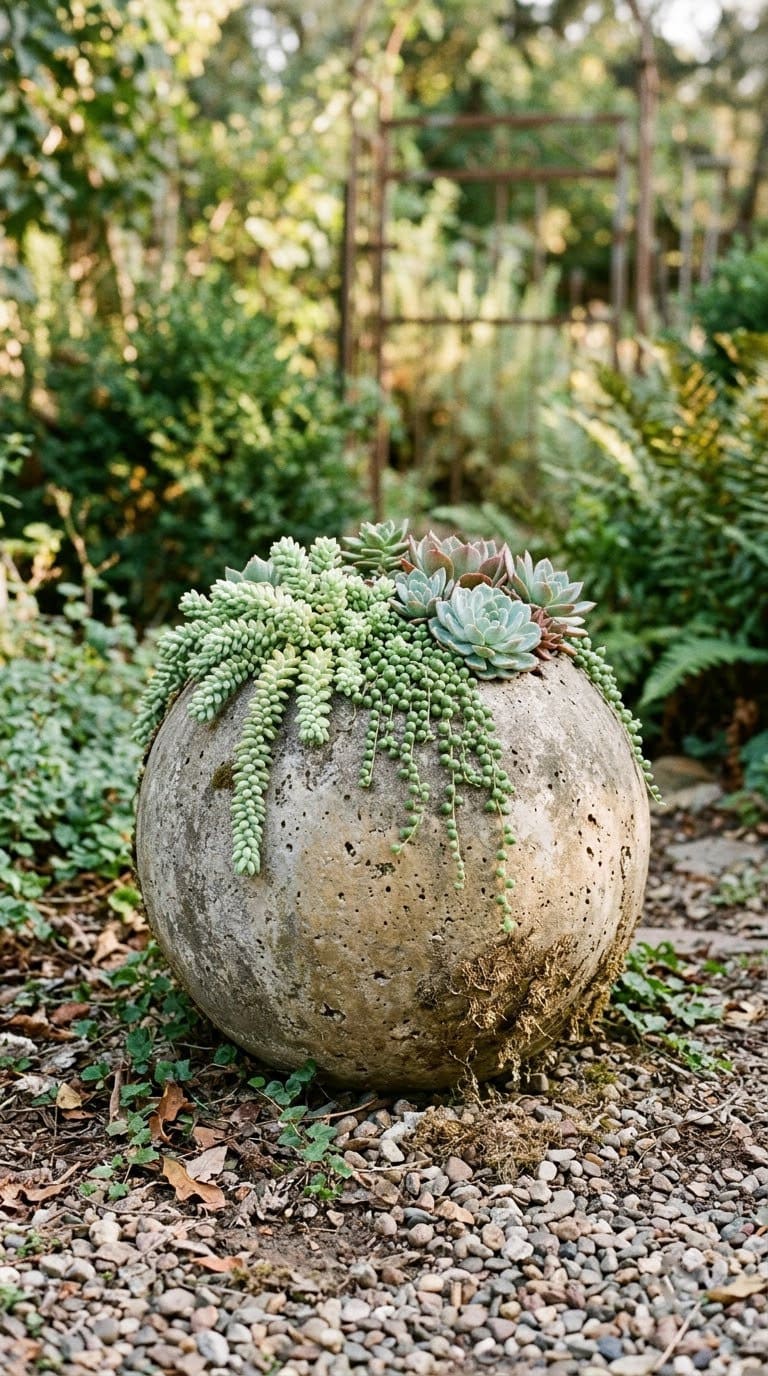
Make a hollow orb like idea 1 and leave a hole at the top. Fill it with gritty soil and plant succulents.
A reader comment on Made by Barb advises leaching the alkalinity out of concrete before planting. Rinse the shell and let it sit through rain first.
Drill a drain hole at the bottom. Keep the hole small so water can leave.
Cost tier: low to medium.
How Do You Place a Giant Garden Globe?
Use scale. A globe under 12 inches can look lost in a big bed. Aim for a size that reads from the street or patio.
Place it where the eye needs a stop. That could be the end of a path or the center of a bed. Keep it clear of walkways so no one trips.
Odd numbers read best in groups. Try three globes of different sizes. That is a general design habit, not a sourced rule.
Plant soft grasses and low flowers around it. Our boulder landscaping ideas show how to blend hard shapes into a bed.
What Does a Weekend Globe Build Plan Look Like?
On Friday, pick the spot and build the base. Dig out soil, add compacted gravel, and set a level paver. Do this first so you only move the globe once.
On Saturday morning, set up the mold. Inflate the beach ball very hard, prop it in a bucket, and weight the base. Mix a small test batch of concrete patcher.
On Saturday afternoon, apply the first layer. Work from the top down in small sections, press in the mesh tape, and add the second layer. Wet the piece as it sets.
On Sunday, check the shell and finish it. Cut or burn away stray mesh, then wet the piece again.
Let it cure in shade. Plan to move it only after it has set up.
Where Should You Look for More Garden Art Ideas?
Giant globes pair well with other garden art. Our garden art DIY projects show small pieces that fill the gaps between big ones.
If you love mosaic work, see our guide to mosaic decorations for the garden. It covers tile, glass, and grout in more detail than we do here.
Mix scales on purpose. One giant globe, two mid-size pieces, and a few small ones make a layered display. Keep the same color family so the group feels planned.
How Do You Care for a Giant Garden Globe?
Check for cracks each spring. Small hairline cracks can grow in freeze-thaw. Fill them with sealant.
Reseal paint on wood and metal each year. Empress of Dirt suggests repainting a nail allium about once a year for year-round outdoor display.
Wipe off moss if you want a clean look. Leave it if you like the aged look.
Lift small globes out of cold ground in hard freezes. A heavy one should sit on a pad that drains.
Common Mistakes to Avoid
Building solid when hollow will do is the first mistake. A 16-inch solid sphere can weigh close to 186 pounds, based on our math.
Skipping the cure care is the second. Fine Gardening says slower curing makes a stronger piece, and hot sun can cause cracking.
Using balloons is the third. Made by Barb says to use beach balls, since balloons can pop.
Skipping the base is the fourth. A heavy globe on soft soil will sink and tilt.
FAQ
How do I make a giant concrete garden sphere?
Cover a 20-inch beach ball with concrete patcher in layers over mesh tape, then deflate the ball. Made by Barb sets sections in about 4 hours.
How long does concrete need to cure?
Fine Gardening says keep a hypertufa piece covered in plastic for the first 36 hours, then leave it in shade for about three weeks.
How heavy is a cast stone sphere?
statue.com lists 22 pounds at 12 inches and 300 pounds at 48 inches.
Do I need safety gear to mix cement?
Yes. Fine Gardening says Portland cement irritates skin, so wear rubber gloves. Barb also advises a dust mask.
How do I keep a giant globe from tipping?
Set it on a level, compacted base, such as gravel under a flat paver. Make sure it’s balanced before you leave it.
Never miss an update — choose FarmFoodFamily as your preferred source on Google.
How it works: Tap the button below to open Google's settings page, then check the box next to FarmFoodFamily.
Tap the checkbox to turn it blue — that's how you know it's set.