20 Delightful Whimsical Garden Ideas From Things You Already Own
Teapots, flowerpots, and old wagons can turn a plain yard into a storybook garden, as long as the water, lights, and plants are safe.

Never miss an update — choose FarmFoodFamily as your preferred source on Google.
How it works: Tap the button below to open Google's settings page, then check the box next to FarmFoodFamily.
Tap the checkbox to turn it blue — that's how you know it's set.
Teapots, flowerpots, and old wagons can turn a plain yard into a storybook garden, as long as the water, lights, and plants are safe.
A whimsical garden is a yard with a sense of humor. A teapot spills flowers, a pot wears a toadstool cap, and a path winds toward a tiny door. Most of it comes from things you already own, so the cost stays low.
The cute projects also carry the most risk. Bird baths breed mosquitoes, string lights meet rain, and some pretty plants harm pets. This guide gives you 20 ideas with the safety checks built in.
What’s the Quick Answer for a Safe Whimsical Garden?
Pick two or three focal points and repeat one color. That keeps the garden charming instead of cluttered. Most of these ideas use things you already own, so the main work is picking safe plants, safe water, and safe lights.
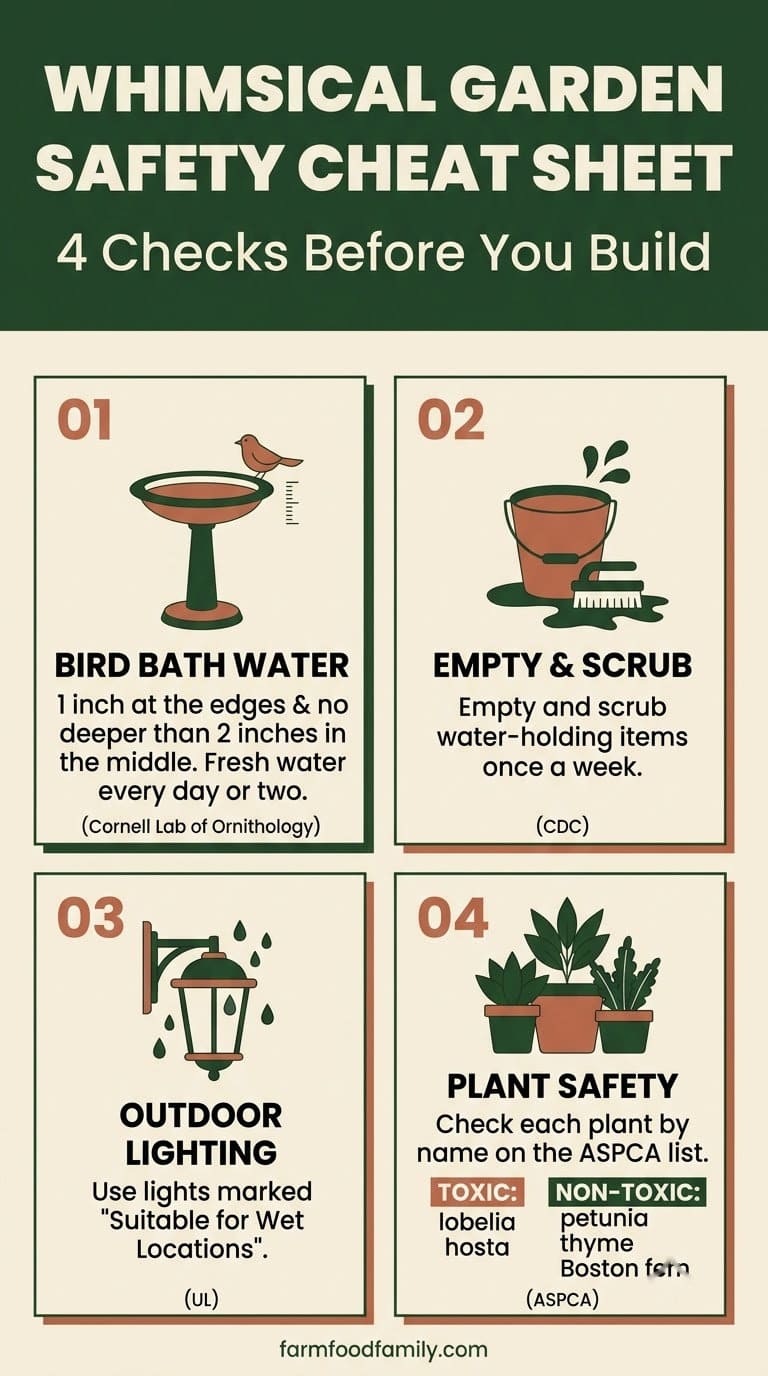
Keep water fresh. The CDC says to empty and scrub items that hold water, such as bird baths and flowerpot saucers, once a week. The Cornell Lab of Ornithology adds that a bird bath should be no deeper than 1 inch at the edges.
Use lights made for wet places, and check every plant by name before you plant it. The ASPCA plant list shows that popular choices such as lobelia and hosta are toxic to dogs and cats.
Answer 4 quick questions and get matched to the exact fix for your yard — drainage, budget, layout, or something else entirely.
Take the Free QuizAdd drainage holes to every metal or plastic container, and choose paint made for outdoor use. Then build one idea at a time.
Which Whimsical Projects Need a Safety Check?
Some of the cutest projects carry the most risk. This table shows what to check before you build.


| Project type | What to check | Why it matters |
|---|---|---|
| Bird baths and water bowls | Depth, weekly scrub, fresh water | Mosquitoes lay eggs in standing water |
| String lights and lanterns | Wet-location rating, outdoor cords | Rain and sprinklers reach them |
| Plants in pots and beds | Check each plant on a toxicity list | Pets and kids chew on things |
| Painted and mosaic pieces | Exterior paint, sealed grout | Weather peels cheap finishes |
| Old furniture and tools | Rust, rot, and loose parts | Sharp edges and collapse |
How Do You Keep a Bird Bath Safe?
Birds love a bath, and mosquitoes love it too.
The Cornell Lab of Ornithology says water should be no deeper than 1 inch at the edges. It should slope to a maximum of 2 inches in the middle. Cornell also says to change the water every day or two. Frequent changes stop mosquito eggs from hatching.
Cornell adds that you can make your own bath from a trashcan lid, a shallow pan, or an old frying pan. Birds prefer a bath at ground level, with shade in hot months and stones to stand on.
| Task | How often | Source |
|---|---|---|
| Change the water | Every day or two | Cornell Lab of Ornithology |
| Empty and scrub the bath | Once a week | CDC |
| Keep depth shallow | 1 inch at edges, 2 inches in middle | Cornell Lab of Ornithology |
These do not conflict. Cornell’s advice is about bird health. The CDC’s advice is about stopping mosquitoes in any water-holding item.
Are Outdoor Lights Safe in a Whimsical Garden?
Fairy lights and lanterns add the magic, but the garden is a wet place.
Most yard problems trace back to one specific, fixable cause. Find yours in 4 quick questions.
Take the Free QuizThe UL Luminaires Marking Guide defines a wet location as one where water may drip, splash, or flow on or against electrical equipment. Only fixtures marked “Suitable for Wet Locations” belong there.
Look for that label on string lights, and use outdoor-rated extension cords. Our garden lantern guide covers safer LED options.
Which Whimsical Garden Plants Are Safe for Pets?
We checked a short list of popular whimsical plants on the ASPCA pages. The table shows what each entry said.
| Plant | Dogs and cats | Notes |
|---|---|---|
| Petunia | Non-toxic | Also non-toxic to horses |
| Thyme | Non-toxic | Also non-toxic to horses |
| Boston fern | Non-toxic | Dogs and cats only listed |
| Sweet pea | Non-toxic | Listed as toxic to horses |
| Lobelia | Toxic | Toxic to dogs, cats, and horses |
| Hosta | Toxic | Toxic to dogs, cats, and horses |
We could not confirm sweet alyssum, snapdragon, echeveria, impatiens, or hens and chicks, because the ASPCA pages we pulled did not show an entry. Look them up by name before you plant them. The ASPCA also notes that eating any plant material may cause vomiting and stomach upset for dogs and cats.
20 Whimsical Garden Ideas
1. Teapot Planter
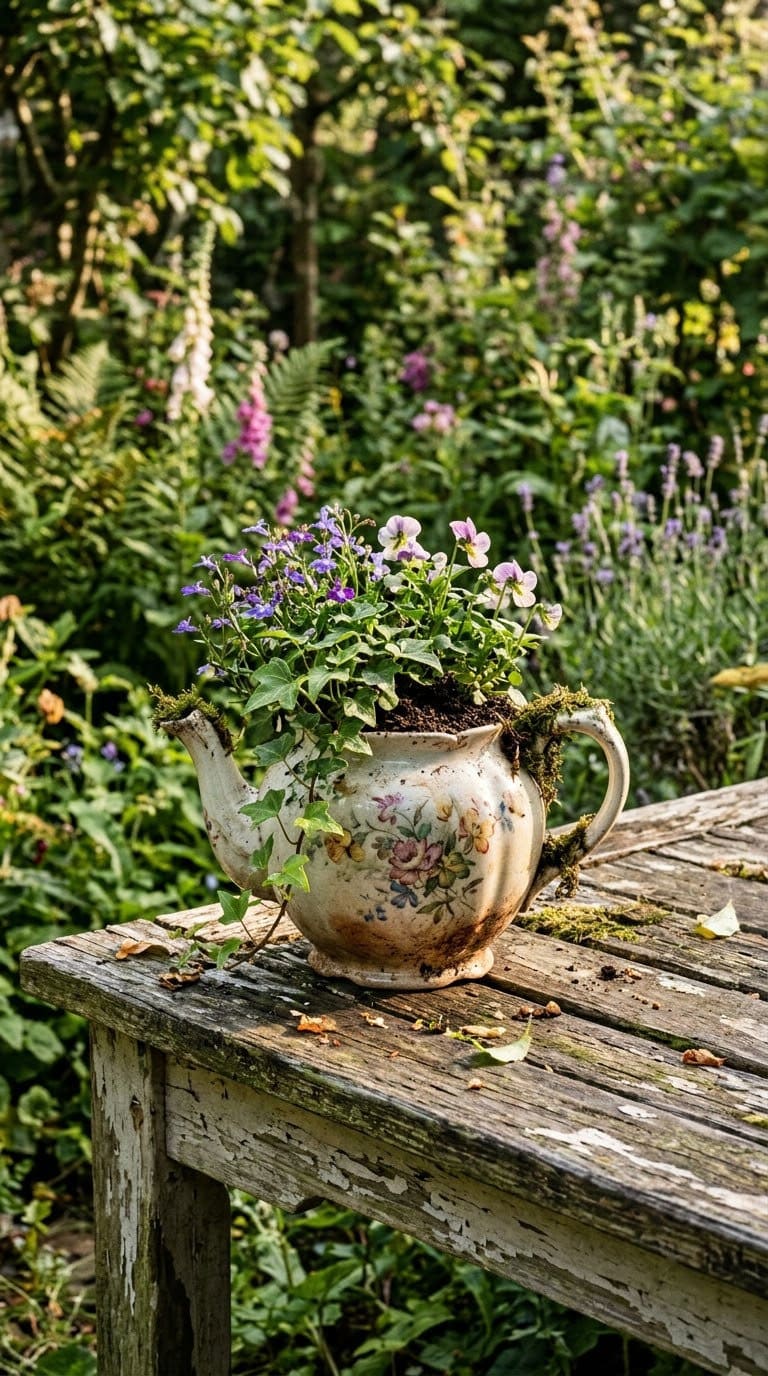
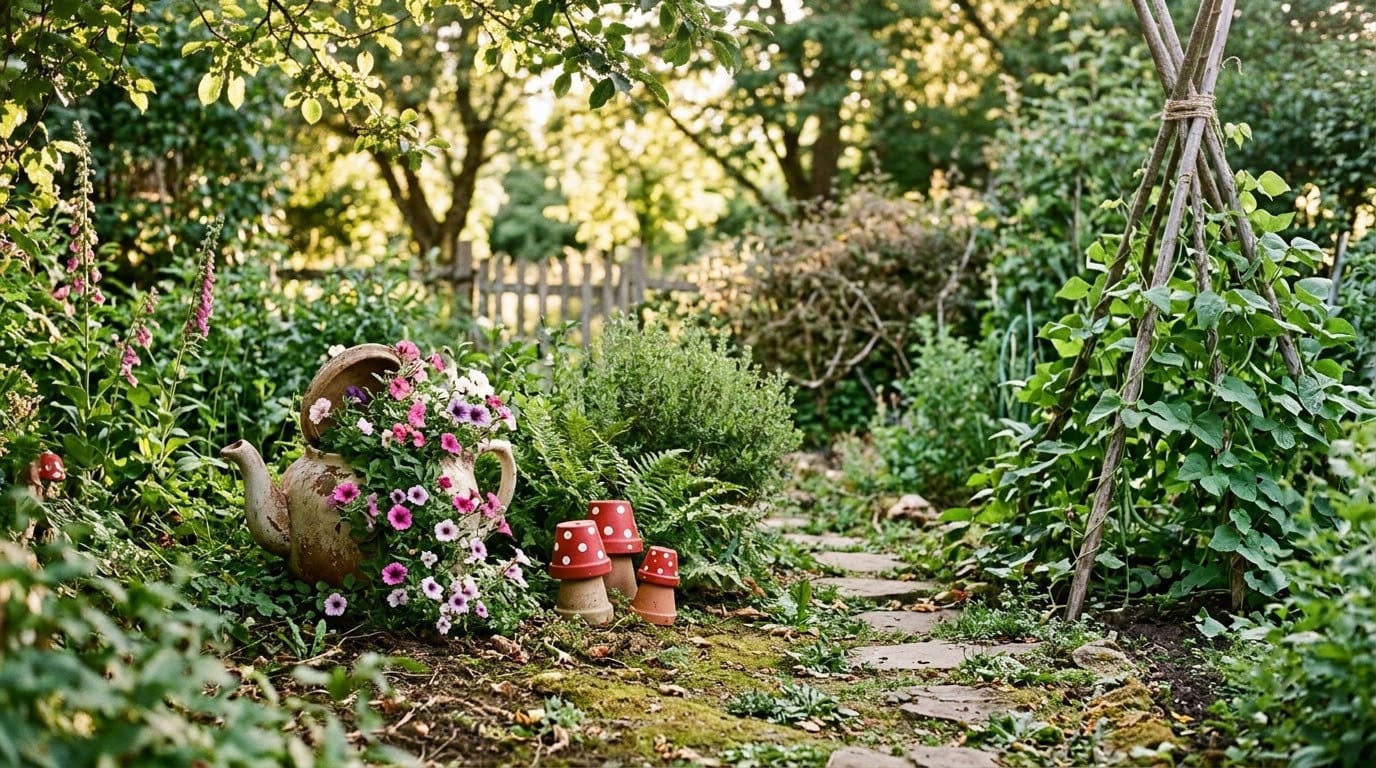
Lay a chipped teapot on its side in a bed so the spout points down the slope. Fill it with potting mix and pack in petunias and creeping thyme, which are both non-toxic per the ASPCA entries above. Skip lobelia, which the ASPCA lists as toxic.
Water lightly, because a teapot has no drainage and you should not drill ceramic. Skip any antique piece for food crops, since old glazes can contain lead.
Cost tier: very low.
2. Rolling Garden Cart
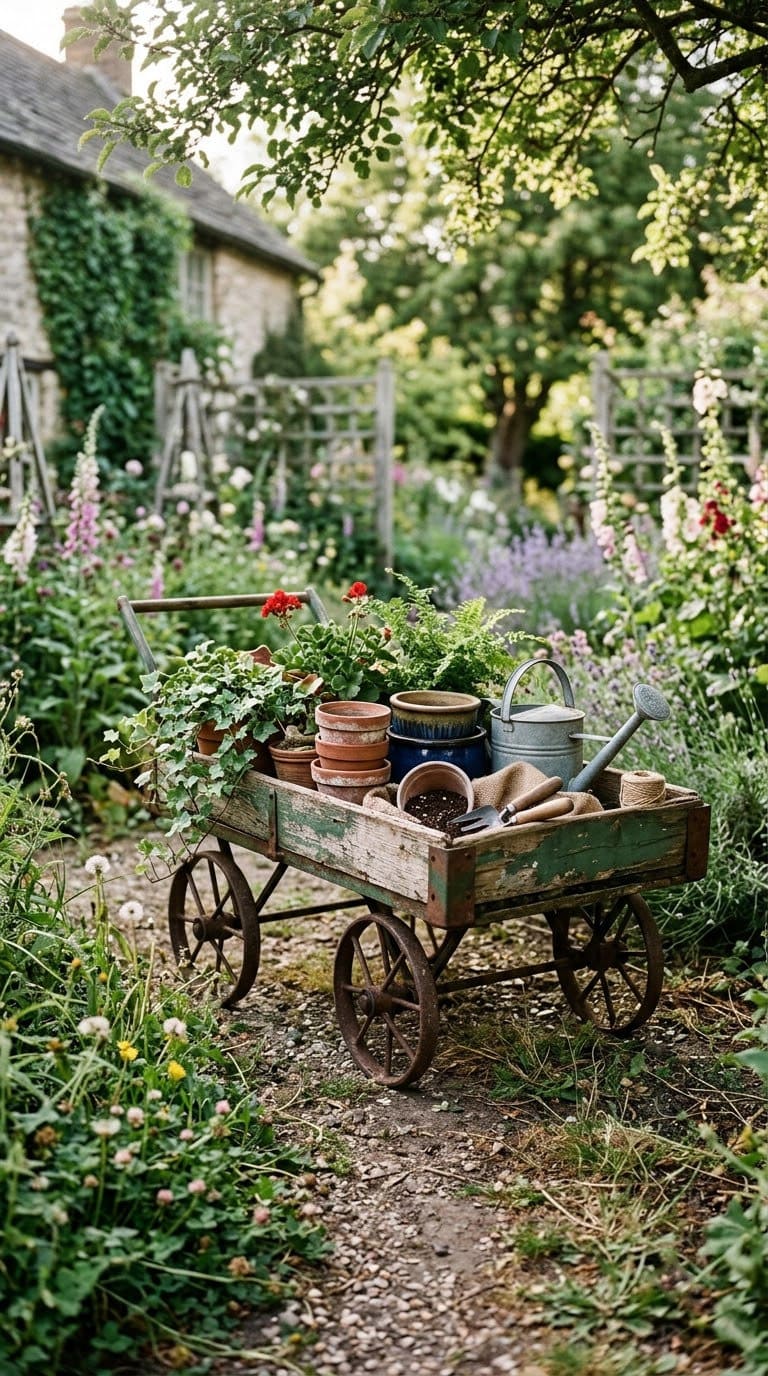
An old wheelbarrow becomes a moving flower bed. Scrub it, brush off loose rust, and paint it with exterior paint. Drill drainage holes in the tub, or set pots inside it.
Park it where you can see it from a window. For more builds, see our wheelbarrow garden projects.
Cost tier: low.
3. Upcycled Wagon Planter
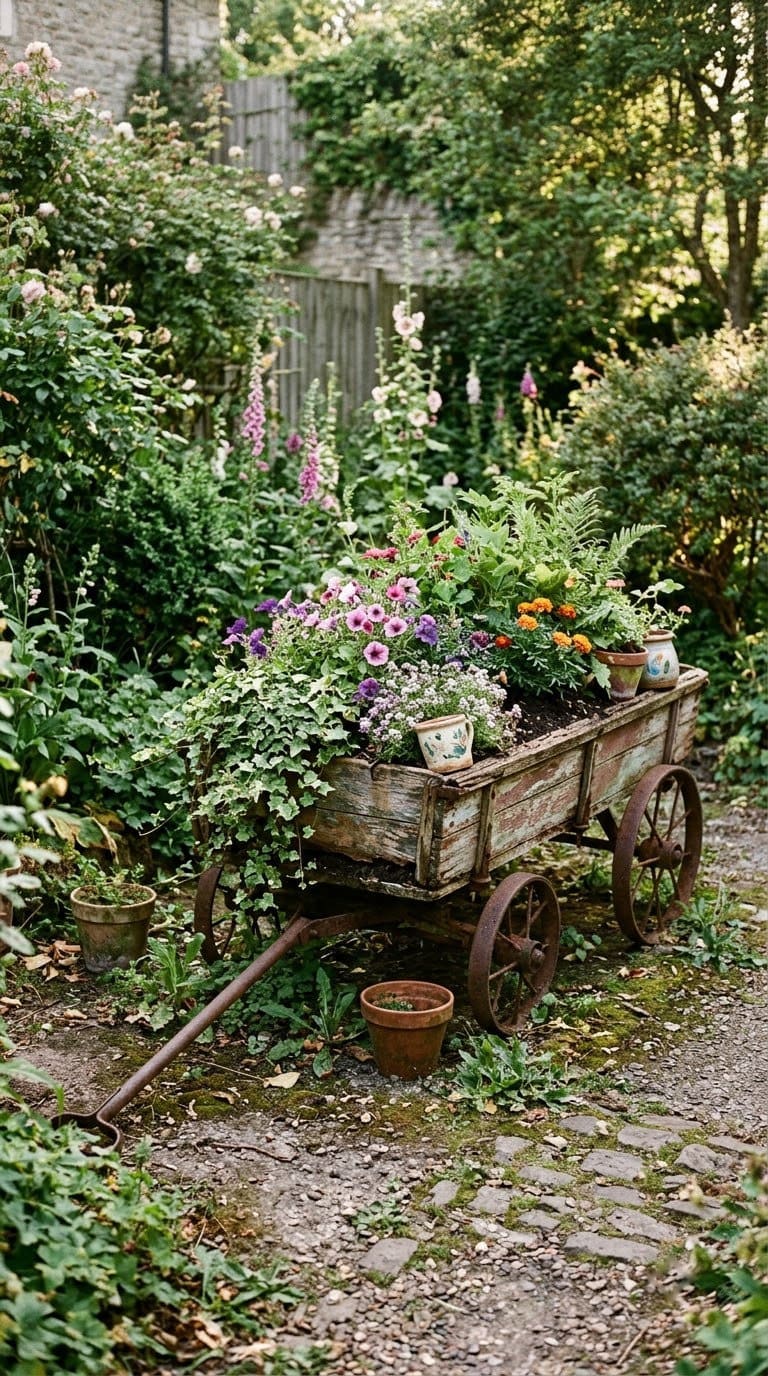
A child’s wagon holds three or four pots in a row. Line the bed with plastic that has holes poked in it to protect the metal. Add a few pots of trailing flowers on the edges.
The average homeowner spends $616/year on yard fixes that don't address the real problem. Find out what yours actually is — before you spend another dollar.
Take the Free Quiz

The wagon can roll to follow the sun. Chock the wheels on a slope so it does not run away.
Cost tier: low.
4. Flowerpot Toadstools
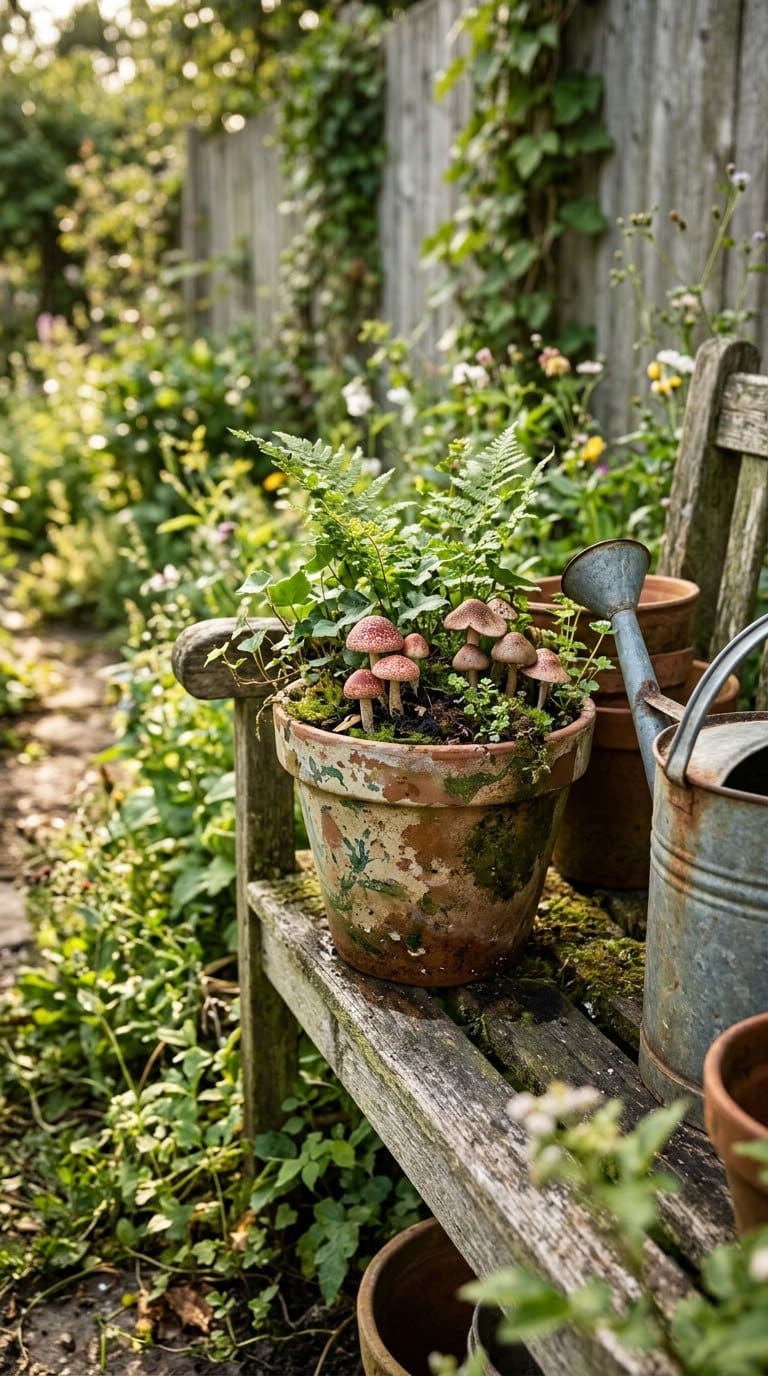
Turn a clay pot upside down for a cap and stack it on a smaller inverted pot for a stem. Paint the cap red with white dots, using exterior paint. Glue the cap to the stem with outdoor adhesive.
Set them in groups of three in part shade. For a deeper fairy scene, see our fairy garden ideas.
Cost tier: very low.
5. Flowerpot Fairy Garden
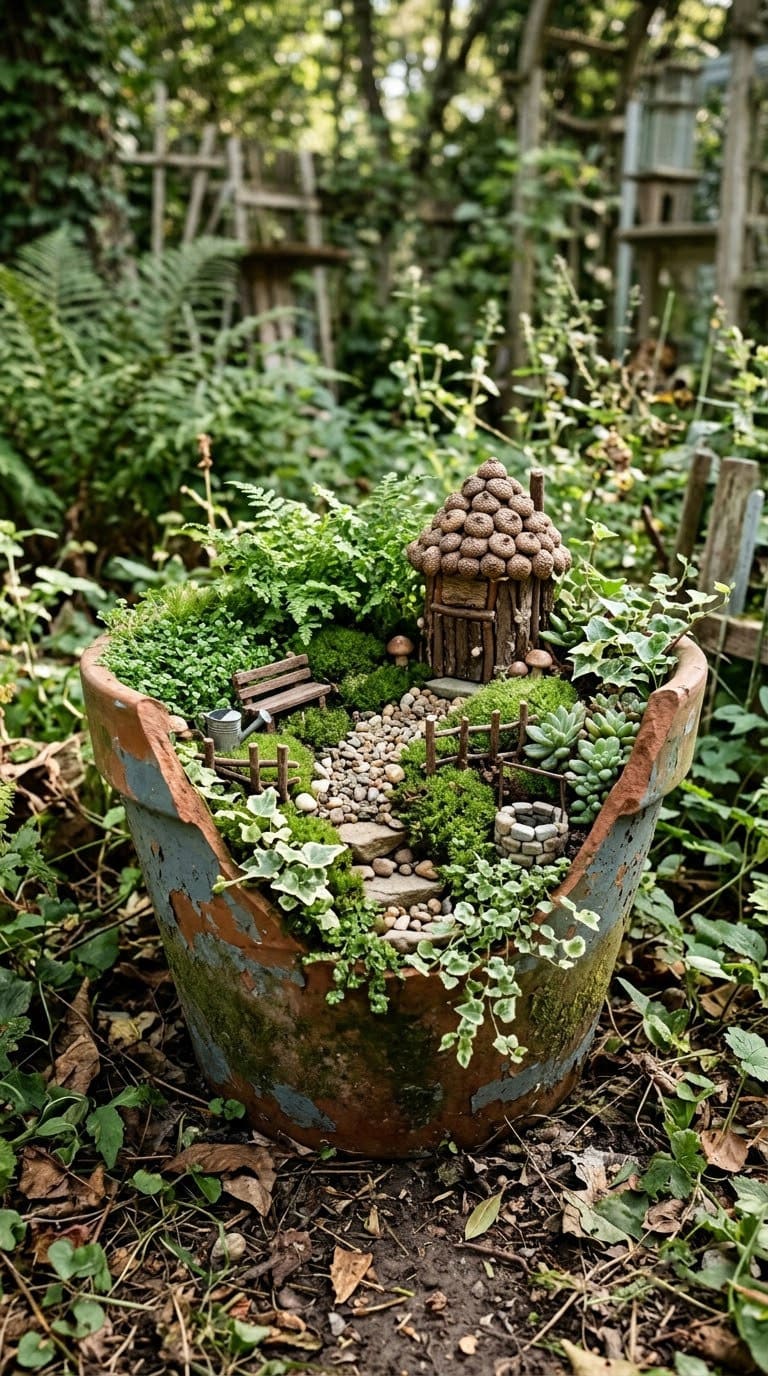
Tip a cracked clay pot on its side and fill the inside with soil. Plant thyme or moss, add a pebble path, and place a tiny door or house in the mouth.
Keep it in part shade so the moss stays damp. A cracked pot is fine here, since the plants root in the soil inside.
Cost tier: very low.
6. Mosaic Stepping Stones
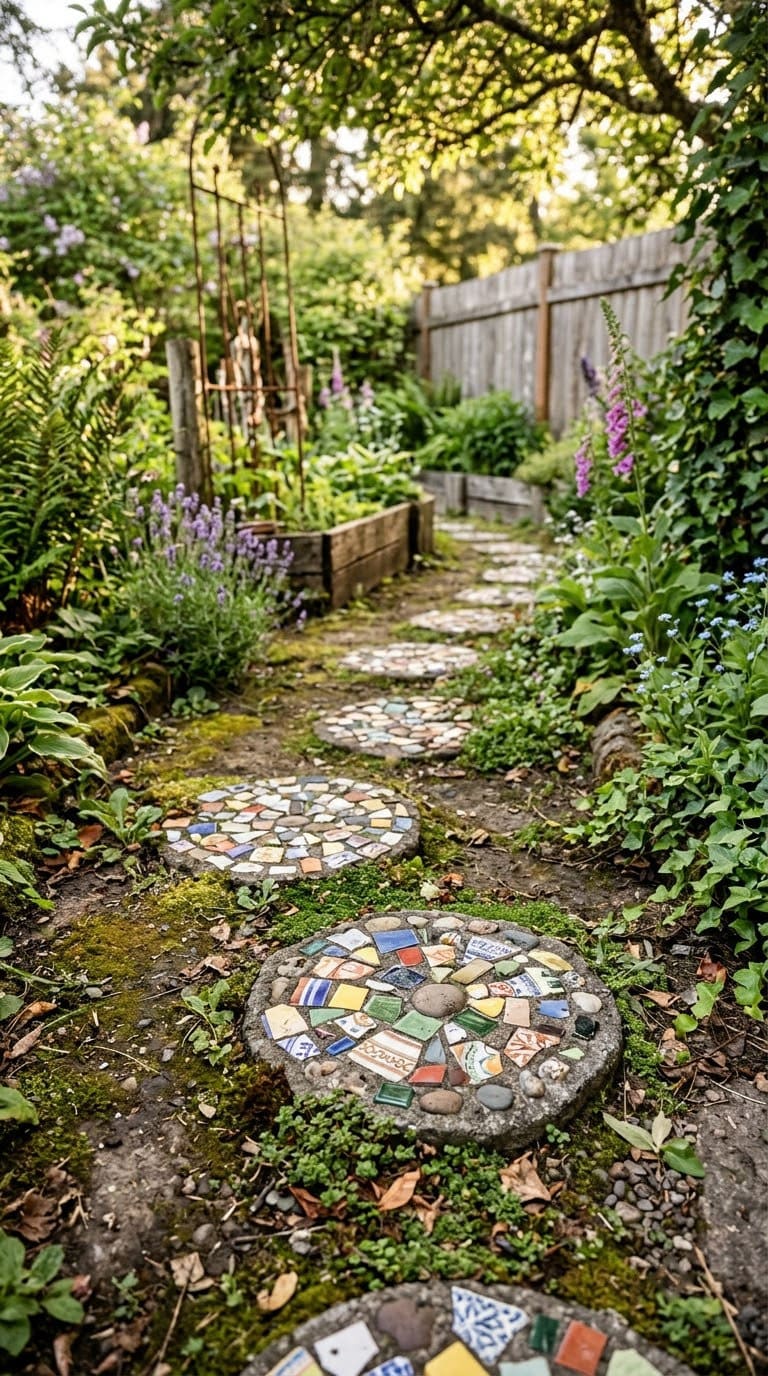
Set tile pieces and glass gems into a concrete paver with thinset mortar. Grout the gaps, let it cure, and seal it. Wear safety glasses when you cut tile.
See our full mosaic garden guide for adhesive and sealer details.
Cost tier: low to medium.
7. Tin Can Lanterns
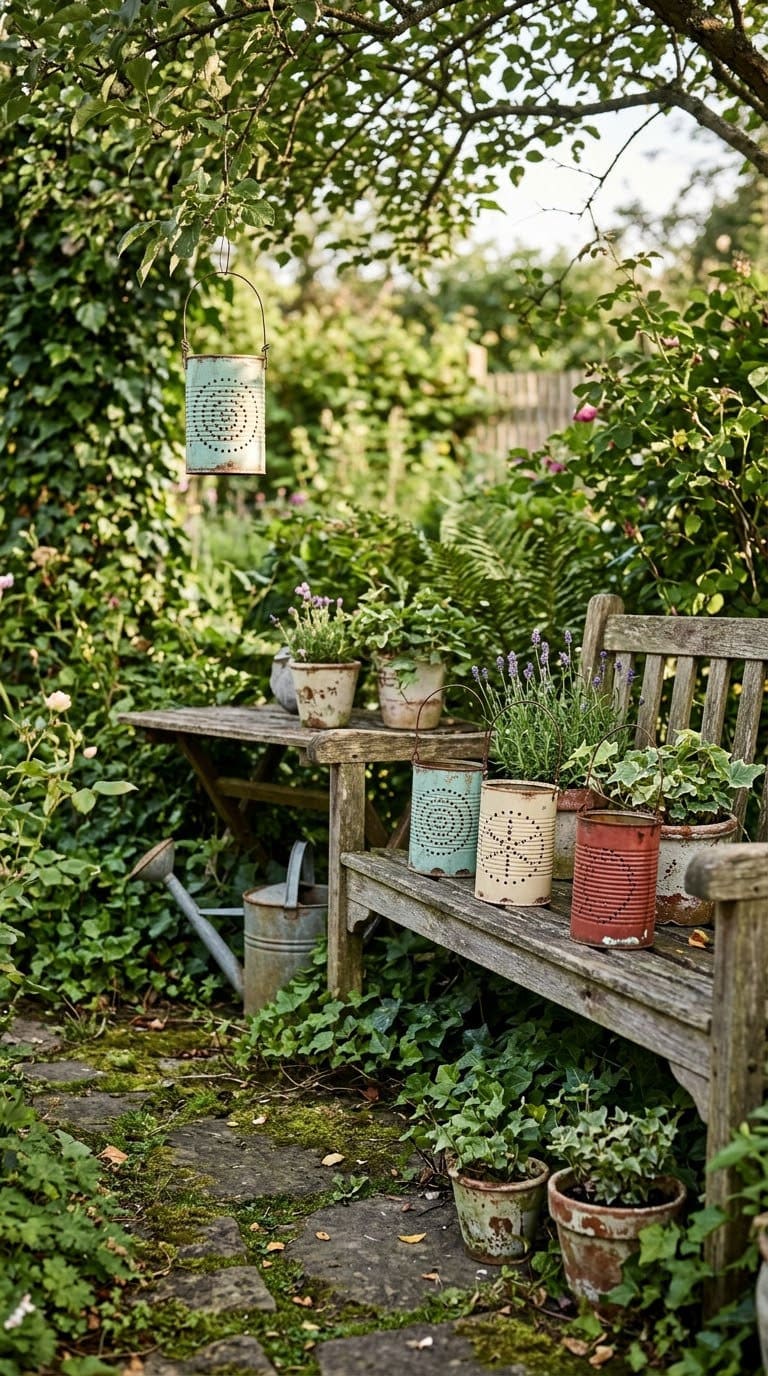
Fill a clean can with water and freeze it, then punch holes in a pattern with a nail and hammer. The ice holds the can steady and stops it from crushing. Sand the cut edge so it is smooth.
Paint the outside, and hang the can with wire. Use a battery or LED light, never an open flame in a dry garden.
Cost tier: very low.
8. Watering Can That Pours Crystals
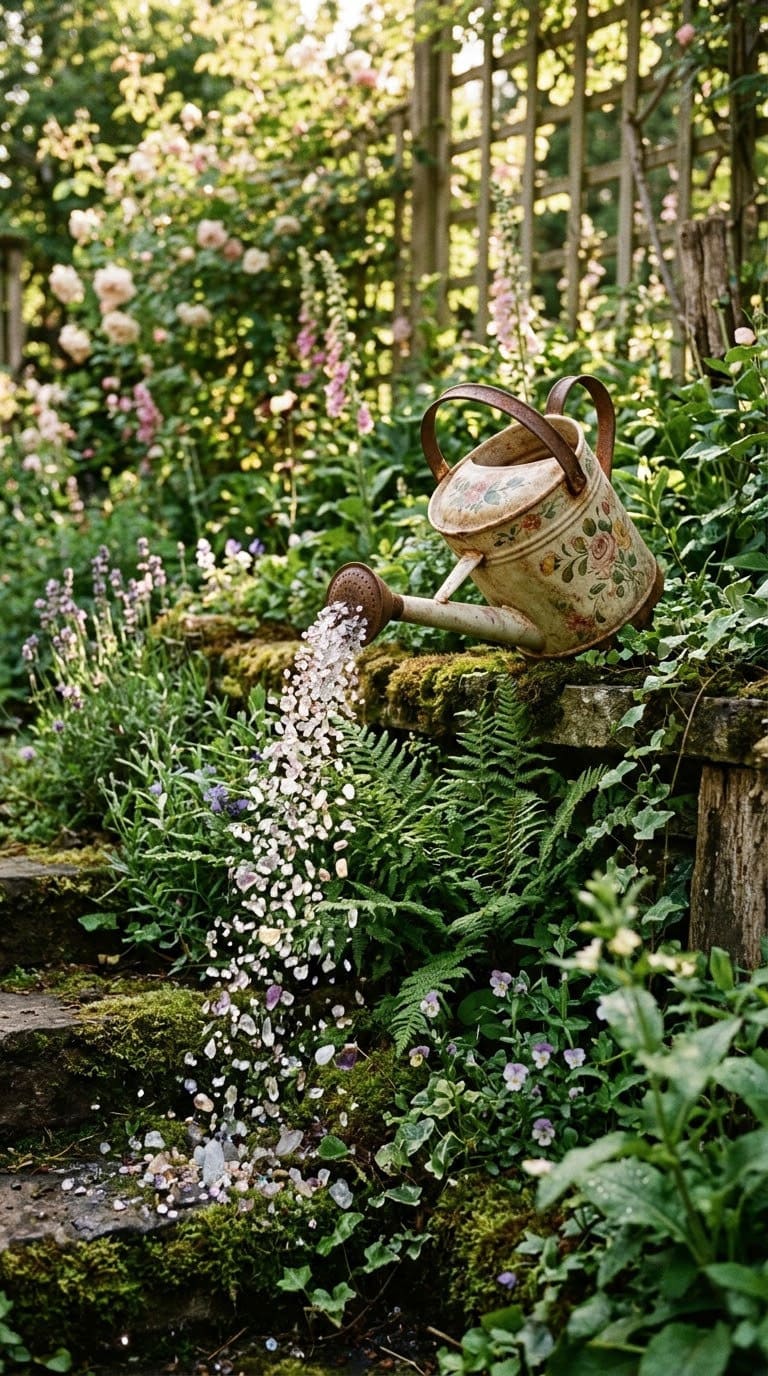
Tip an old watering can on its side so a stream of clear glass gems spills from the spout. Glue the gems in place in a loose pour, and anchor the can with a stake. The gems catch the sun like water.
Use flat-bottom gems so they sit in place. Keep the can dry, so it does not rust.
Cost tier: low.
9. Birdcage Planter
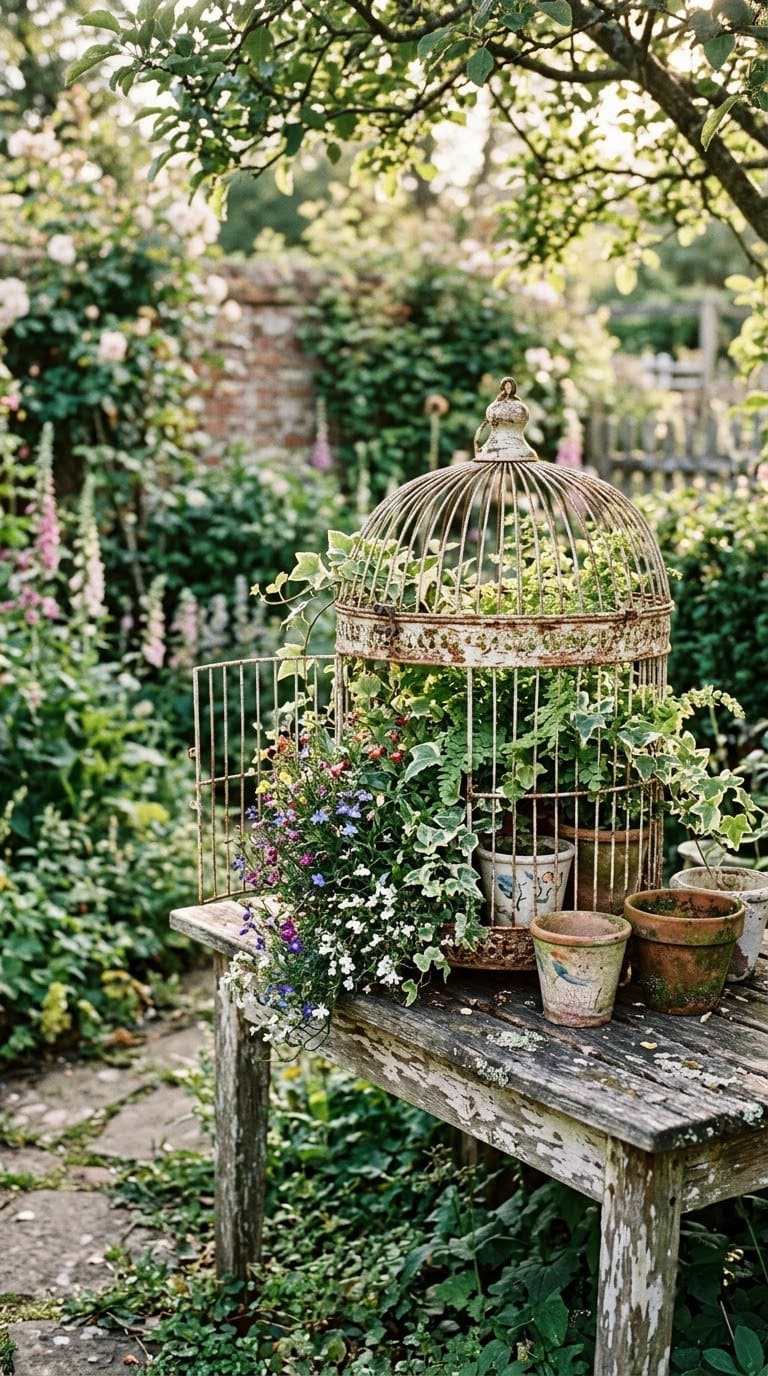
Hang a decorative cage from a sturdy hook. Set a small pot inside, or line the cage with moss and plant it directly. Check the weight of the pot against the hook before you hang it.
Hang it in part shade, since metal heats in full sun. Take it down in a storm, because wind can swing it.
Cost tier: low.
10. Lid Bird Bath
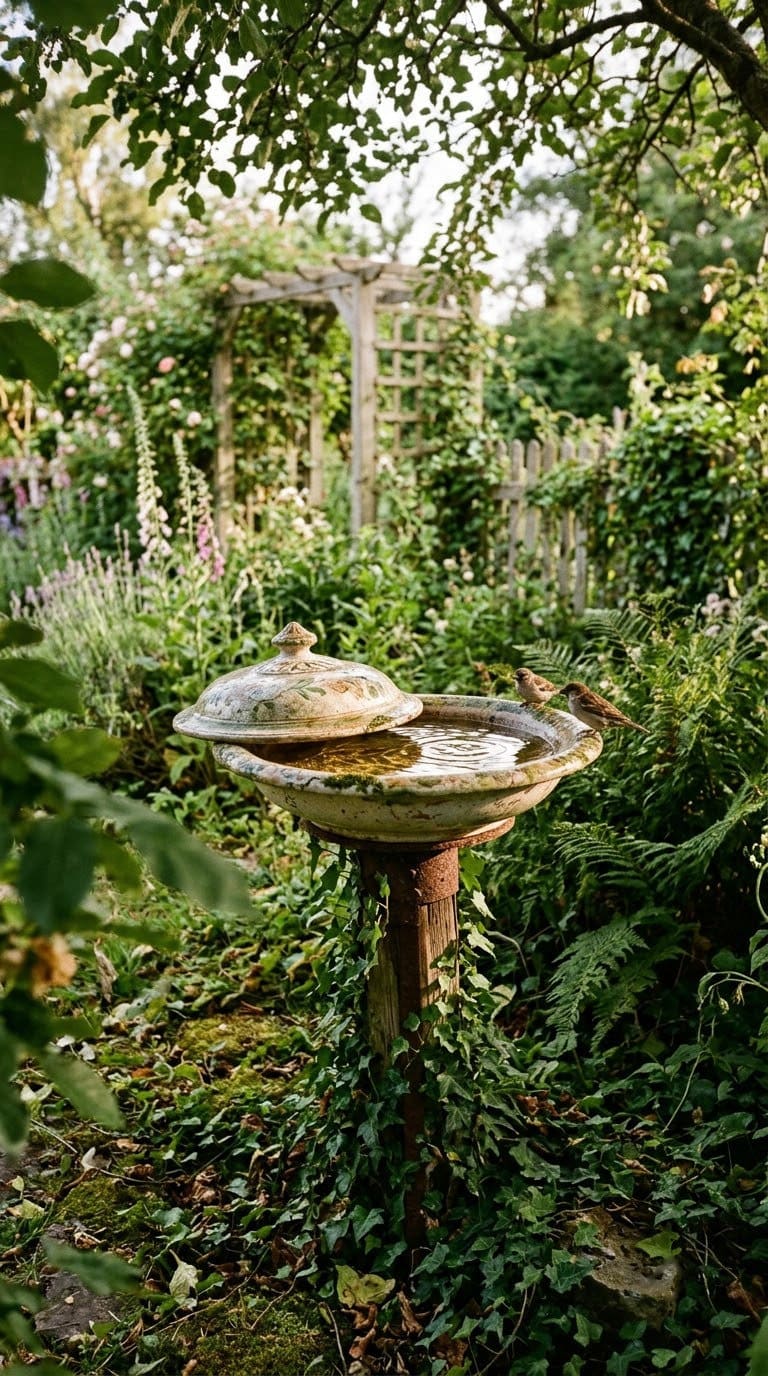
Turn a trash can lid upside down on the ground. Add stones so the water slopes from 1 inch at the edge to a maximum of 2 inches in the middle, as Cornell advises. Place it in light shade.
Change the water every day or two, and scrub it weekly. Birds like a bath they can reach from the ground.
Cost tier: very low.
11. Succulent Bird Bath Planter
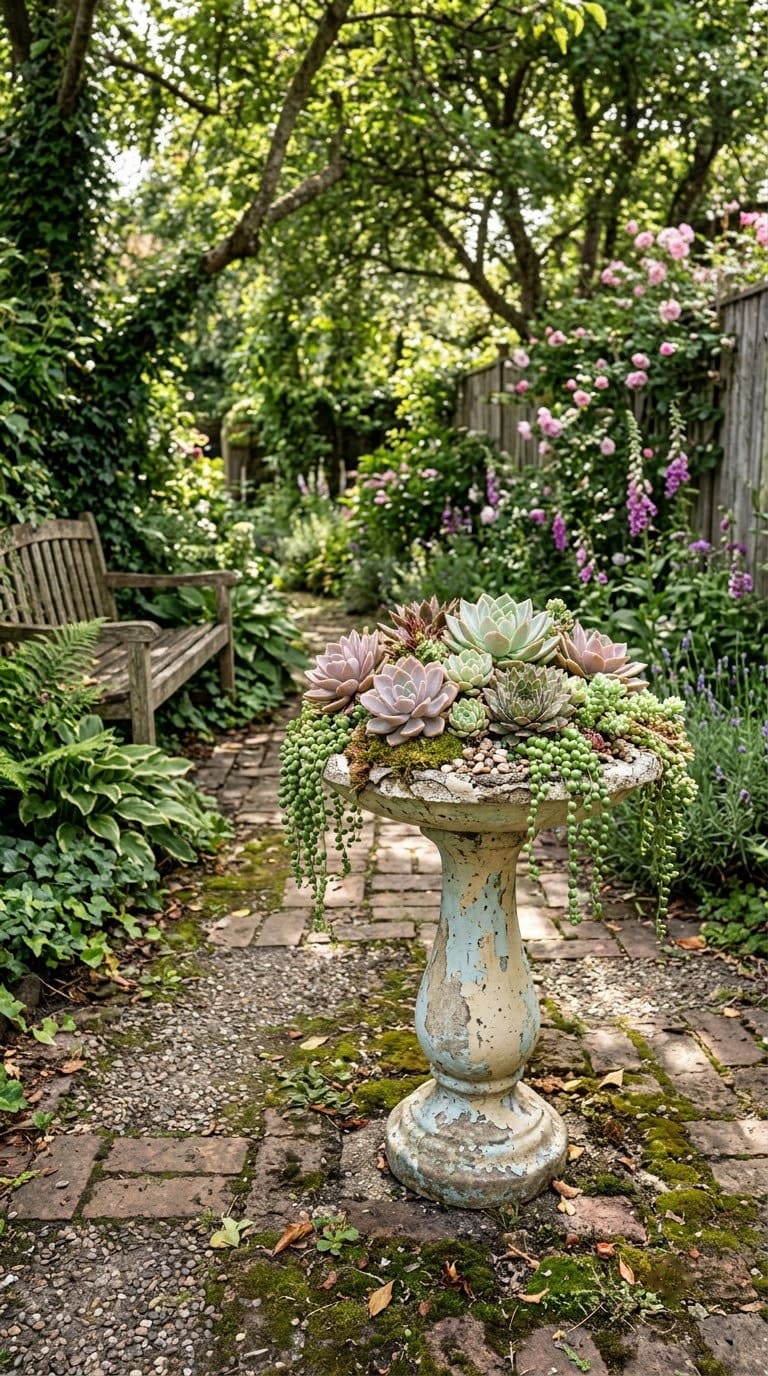
Fill a shallow bowl with gritty cactus mix and plant sedums or other succulents. Use it as a planter, not a bath, so no standing water collects.
Drill drainage holes in the bowl, or use a bowl that already has them. Check each succulent on the ASPCA list before you plant.
Cost tier: low.
12. Bean Teepee
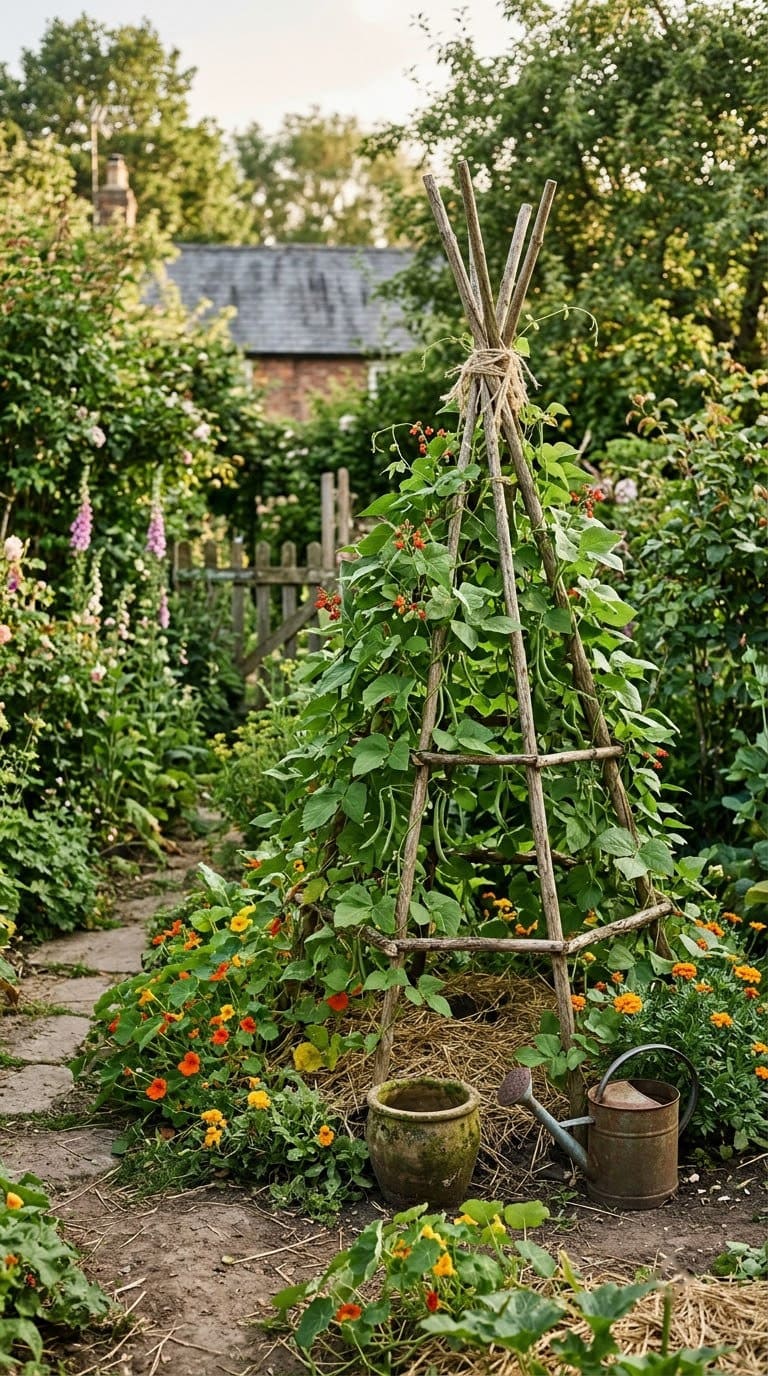
Tie six or more bamboo poles at the top and spread the base. Plant pole beans around each pole in spring. Leave one gap as a doorway.
Check that the poles are firm, since they carry the weight of the vines. Beans make a green room that kids love.
Cost tier: very low.
13. Pergola Curtains
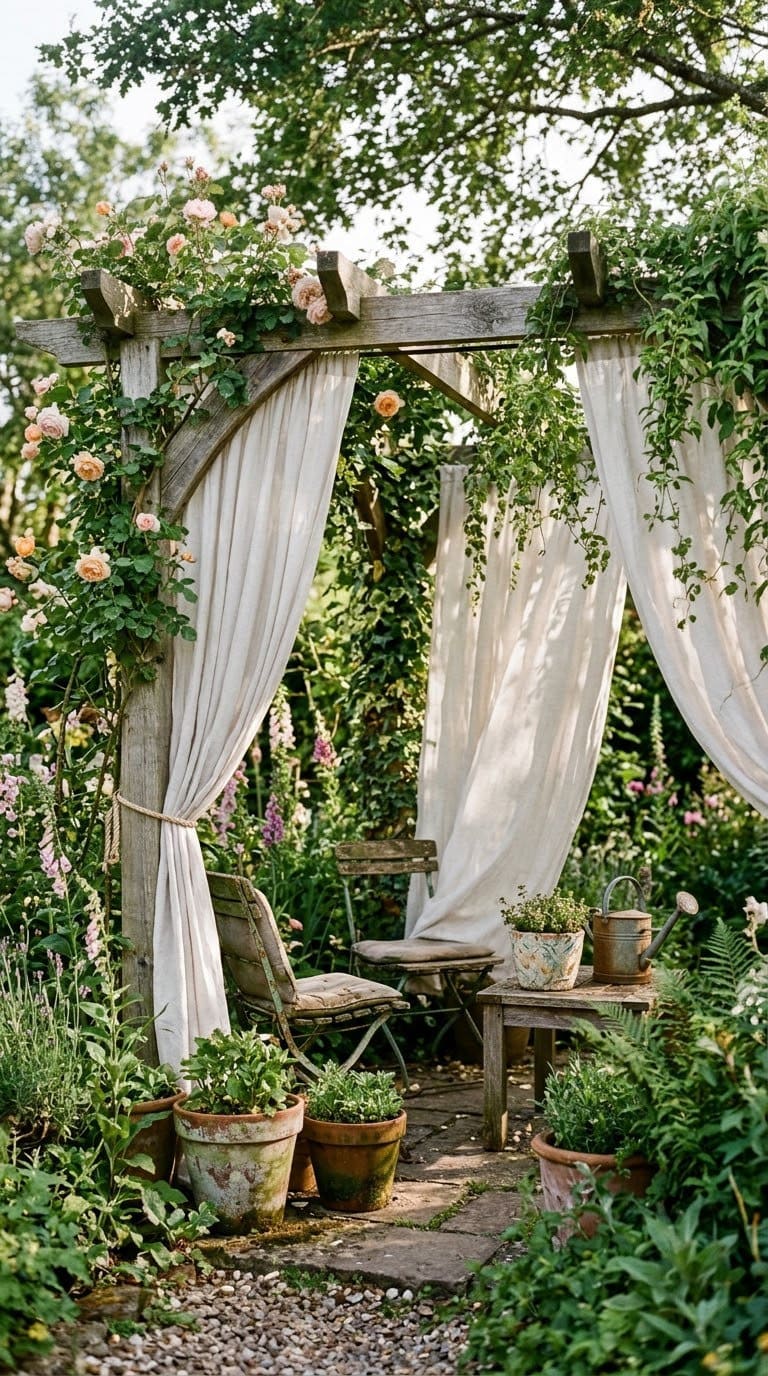
Hang outdoor fabric from a pergola using rings and cord. Tie the curtains back in daytime to keep them dry. Choose fabric made for outdoor use.
Wash the fabric each season. Take it down in storms.
Cost tier: medium.
14. Moss Chair
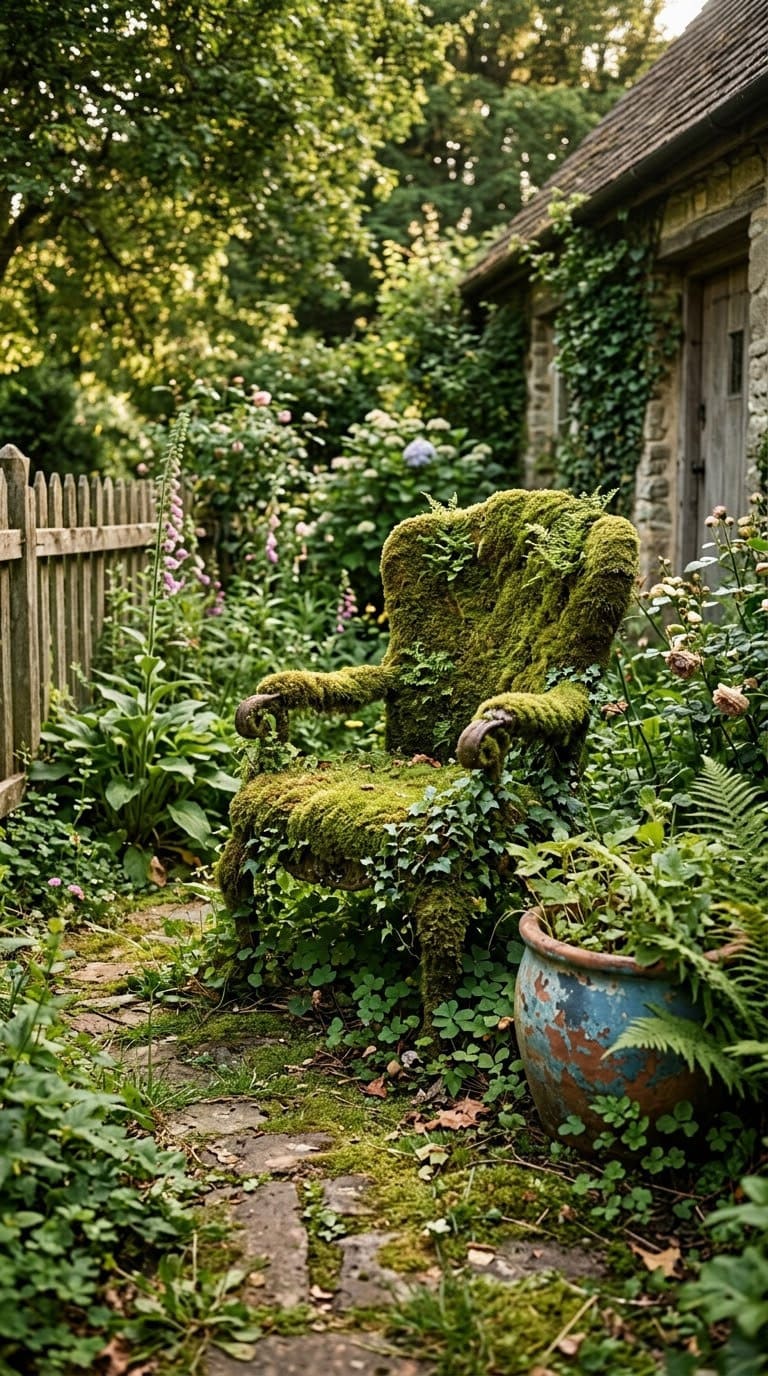
The Chicago Botanic Garden says moss thrives in a shady, moist environment. Its recipe mixes moss from your yard with buttermilk, wine vinegar, and corn oil. Brush it on and keep the piece in a cool, shady spot for about a month. Reapply until moss begins to grow.
Chicago Botanic Garden describes the method for urns, not chairs. Wood is less stable than stone, so expect slower results. Keep the chair in shade, and mist it often.
Cost tier: very low.
15. Log Planter
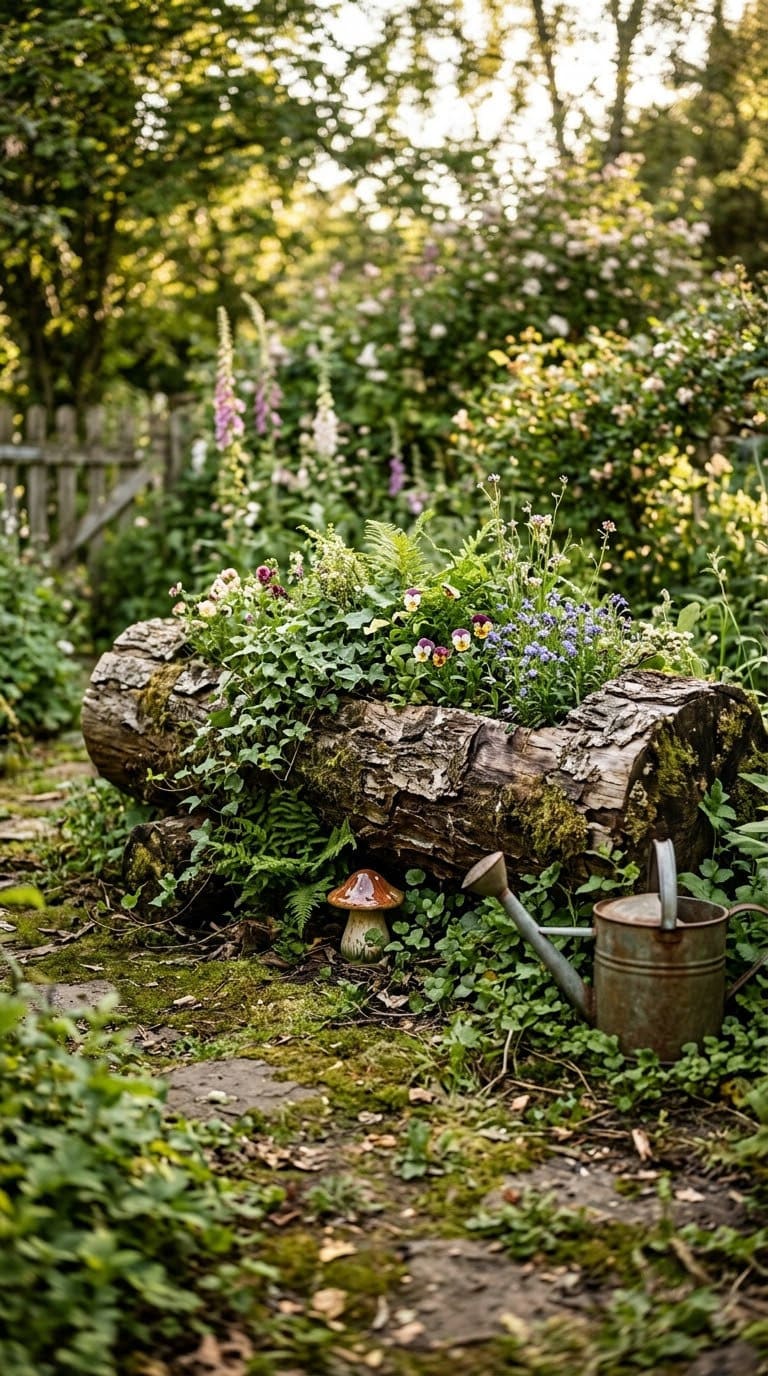
Hollow the top of a log with a chisel or a drill. Fill it with potting mix and plant Boston ferns, which the ASPCA lists as non-toxic to dogs and cats. Drill a drainage hole at the base.
A log will rot over time, so treat it as a season or two of charm. Place it on a flat stone to slow the rot.
Cost tier: very low.
16. Garden Tool Trellis
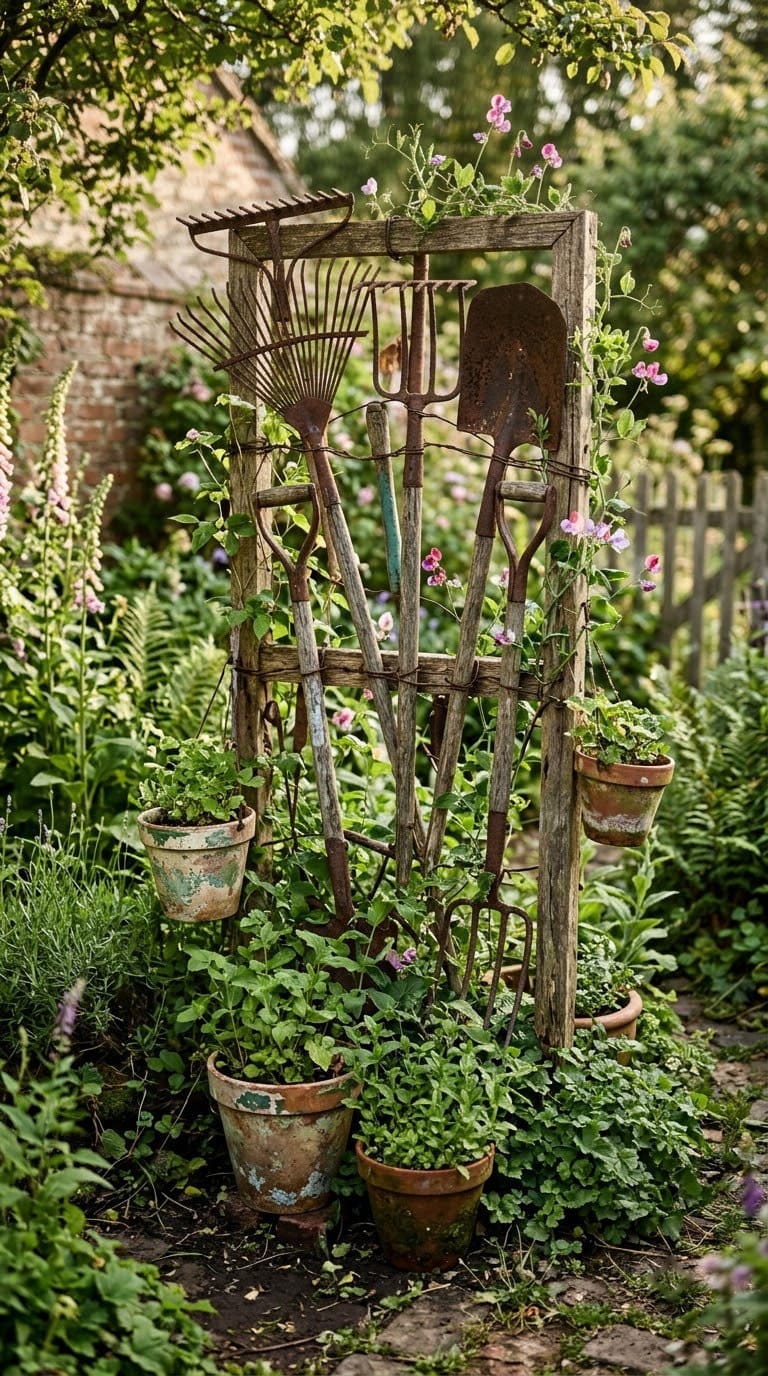
Lean an old rake or hoe against a wall, and let a vine climb the handle. Wire the tool to the wall for safety. Sweet peas are listed as non-toxic to dogs and cats by the ASPCA, but toxic to horses.
Use a tool that is sound and sturdy. Sand off any rust or splinters first.
Cost tier: very low.
17. Dripping Water Feature
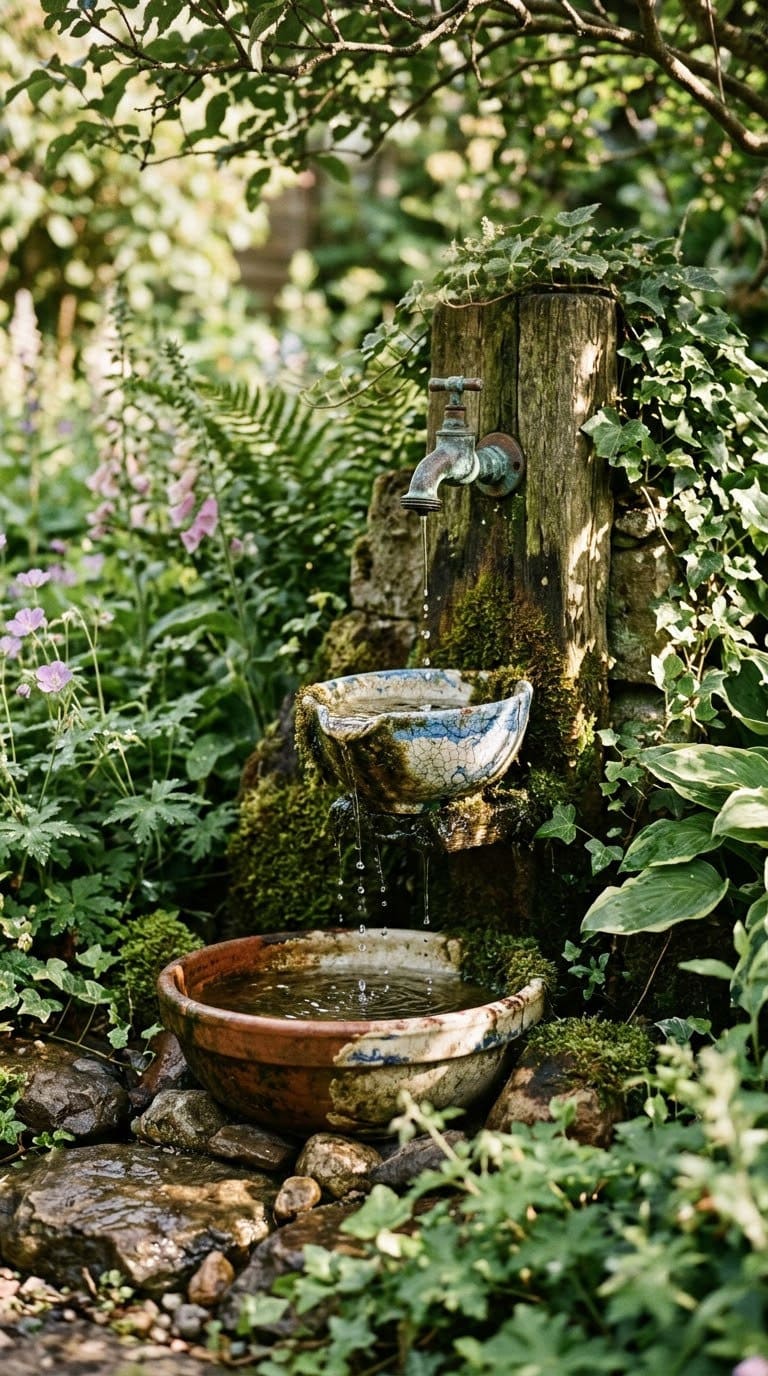
Cornell suggests a dripper made from a bucket with a tiny hole, which birds love. Hang the bucket above a shallow basin and fill it with water. Keep the basin shallow, as with the bird bath.
Moving water helps, but empty and scrub the basin weekly to follow the CDC advice. Refill the bucket often.
Cost tier: low.
18. Winding Pebble Path
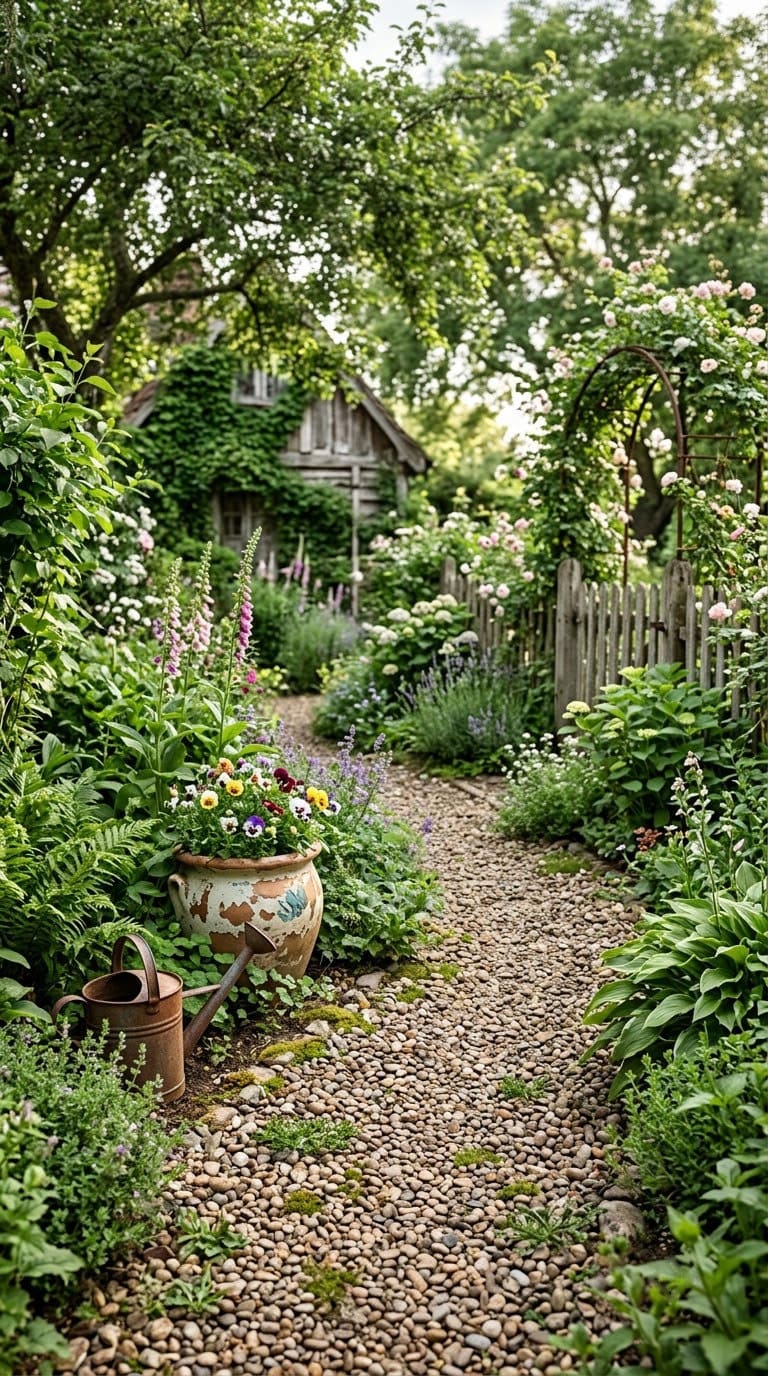
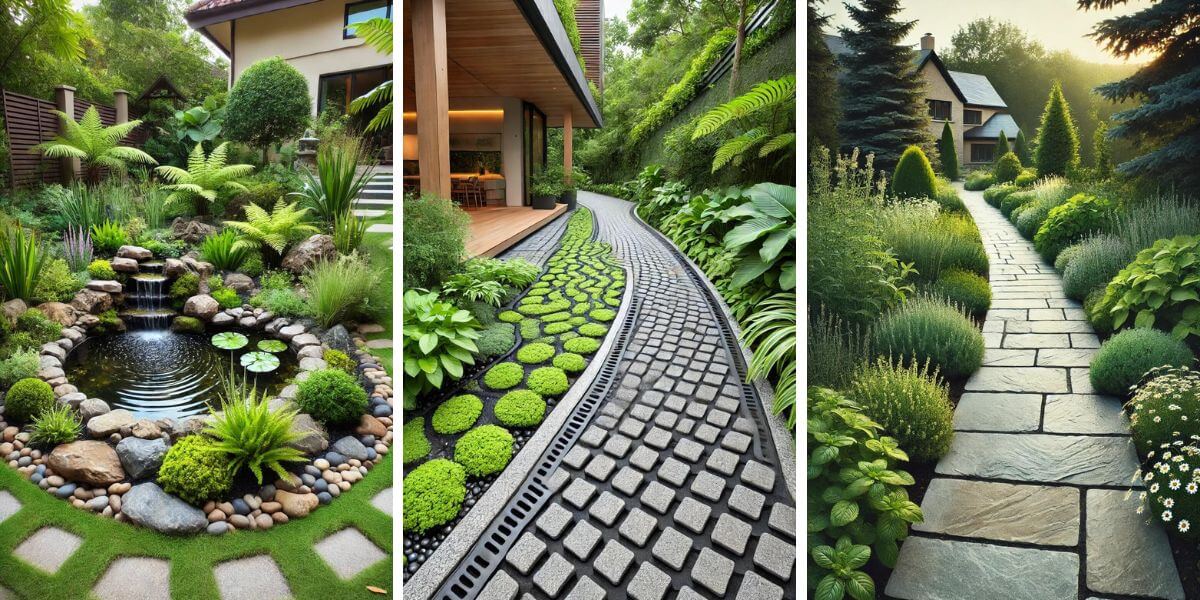
Mark a gentle curve with a hose, and dig out the soil. Add a compacted base and landscape fabric to hold back weeds. Fill with pebbles and plant creeping thyme at the edges.
For layouts, see our whimsical pathway ideas.
Cost tier: medium.
19. Painted Color Palette

Pick two or three colors, and repeat them across the bench, a door, and a few pots. Use exterior paint on each surface, and seal the pots. Repeating colors makes mixed pieces feel planned.
Paint all pieces on the same weekend, so the colors match. For more painting ideas, see our vintage decor guide.
Cost tier: low.
20. Tree Fairy Lights
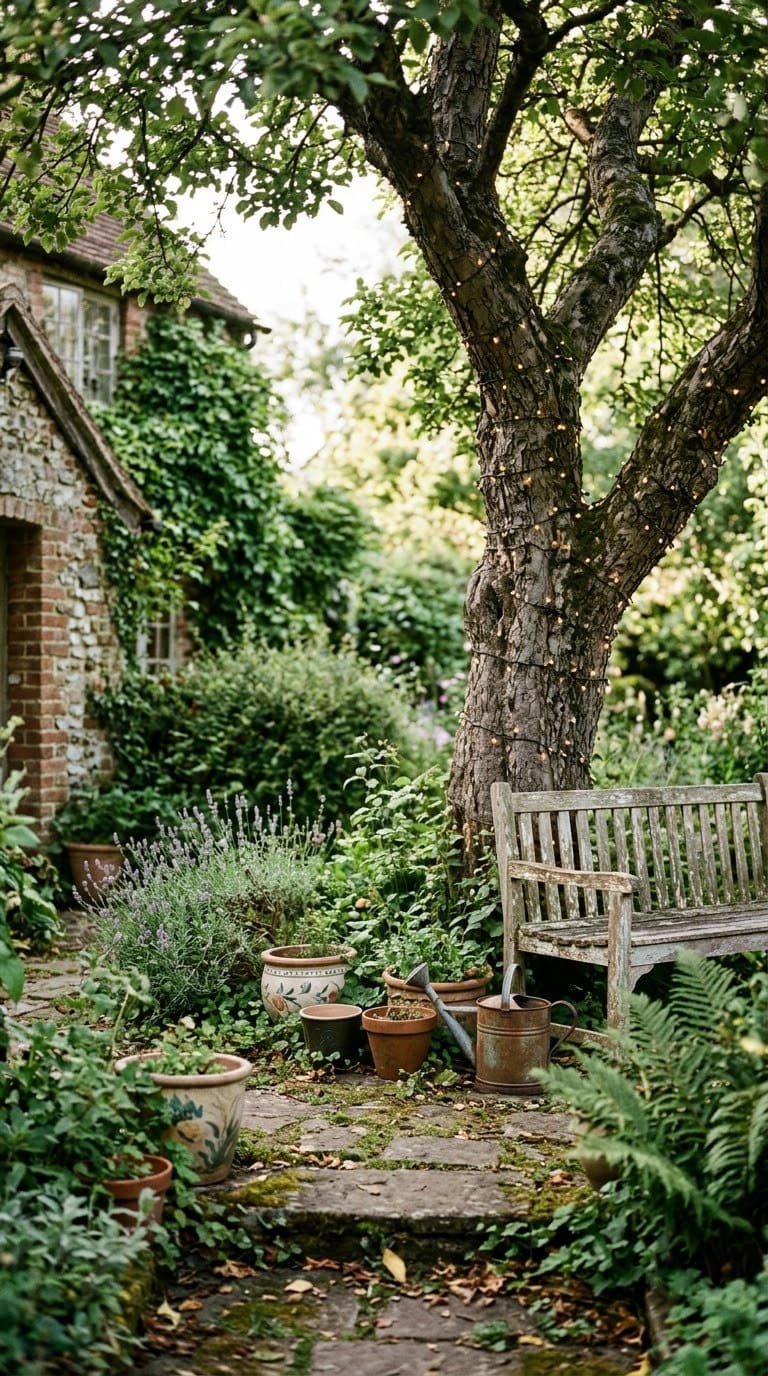
Wrap string lights loosely around a trunk and a few lower branches. Choose lights marked for wet locations, per UL. Plug them into an outdoor outlet with a cover.
Take the lights down when a tree grows, so they do not cut into the bark. Warm white is the classic choice.
Cost tier: low.
Common Mistakes to Avoid
The biggest mistake is a bird bath that is too deep. The Cornell Lab of Ornithology says water should be no deeper than 1 inch at the edges and 2 inches in the middle.
The second is forgetting the water. Cornell says to change it every day or two, and the CDC lists bird baths among the items to empty and scrub once a week.
The third is planting without checking. Lobelia and hosta look sweet, but the ASPCA lists both as toxic to dogs and cats.
Frequently Asked Questions
What makes a garden whimsical?
Whimsy comes from color, surprise, and humor. Use one focal point per corner and repeat a color.
How deep should a homemade bird bath be?
Cornell Lab of Ornithology says no deeper than 1 inch at the edges, sloping to 2 inches in the middle. Change the water every day or two.
How do I stop mosquitoes in a bird bath?
Change the water often and scrub it weekly. The CDC lists bird baths among the items to empty and scrub once a week.
Are string lights safe outdoors?
Use lights marked for wet locations. UL says only fixtures with that mark belong where water may splash.
Are garden plants safe for pets and kids?
It depends on the plant. The ASPCA lists lobelia and hosta as toxic and petunia, thyme, and Boston fern as non-toxic. Check every plant by name.
Never miss an update — choose FarmFoodFamily as your preferred source on Google.
How it works: Tap the button below to open Google's settings page, then check the box next to FarmFoodFamily.
Tap the checkbox to turn it blue — that's how you know it's set.