8 Restful Guest Bedroom Retreat Ideas That Help Overnight Guests Sleep Well and Stay Safe
A guest bedroom feels like a retreat when guests can unpack, sleep in a cool, dim, quiet room and trust the smoke alarms, as long as you test the room before they arrive.

Never miss an update — choose FarmFoodFamily as your preferred source on Google.
How it works: Tap the button below to open Google's settings page, then check the box next to FarmFoodFamily.
Tap the checkbox to turn it blue — that's how you know it's set.
A guest bedroom feels like a retreat when guests can unpack, sleep in a cool, dim, quiet room and trust the smoke alarms, as long as you test the room before they arrive.
Products We Recommend
This post contains affiliate links. We may earn a commission on qualifying purchases at no extra cost to you.

PlushDeluxe Bamboo Waterproof Mattress Protector, Queen
Soft waterproof protector that keeps the guest mattress fresh, for idea 2.
Shop Now
Color Noise Sound Machine with Night Light and 25 Sounds
White noise machine with volume levels and a timer to mask outside noise, for idea 4.
Shop Now
Emotionlite Plug-in Night Light, Dusk to Dawn, Warm White, 4 pack
Warm night lights for the hall and the bathroom, for idea 3.
Shop NowA guest bedroom has one job. It has to help someone sleep well in a house that isn’t theirs.
Most guest rooms get pillows and a candle. But a retreat comes from the basics: a good bed, soft light, a cool and quiet room and working alarms.
These eight ideas cover those basics. Each one gives you the steps, the numbers and the checks, so your guests wake up rested.
Quick Answer
Start with the sleep basics. The Sleep Foundation says the ideal sleeping temperature is 65°F, and that you should keep light and noise as low as possible.
Keep the light low at night. The Sleep Foundation says to avoid screens in the bedroom, and that red, orange and yellow hues help you get ready for sleep.
Make the room safe. The LAFD says to put smoke alarms inside every bedroom, outside each sleeping area and on every level, and to test them monthly.
Add a carbon monoxide alarm. The CPSC says to install CO alarms on every level of the home and outside sleeping areas.


Wash the sheets at least every two weeks, per the Sleep Foundation, and press the alarm test button.
And give guests space. Professionals quoted by Redfin suggest a luggage bench, closet and drawer space, and a night spent in the room to find the gaps.
Which Idea Fits You?
Pick by what your guests need most. This table sorts the eight ideas below.
| Idea | Best for | Budget tier | Skill | Main risk |
|---|---|---|---|---|
| 1. A clear room with space to unpack | Longer stays | Low | Beginner | Clutter |
| 2. The right bed and bedding | Every guest | Mid | Beginner | A worn mattress |
| 3. Soft light and a reading lamp | Night readers | Low | Beginner | Bright bulbs |
| 4. A cool, quiet room | Light sleepers | Low to mid | Beginner | Street noise |
| 5. A safe room with alarms | Every guest | Low | Beginner | Dead batteries |
| 6. A charging station and welcome card | Travelers | Low | Beginner | Messy cords |
| 7. A welcome basket | Every guest | Low | Beginner | Stale supplies |
| 8. A calm palette and natural textures | Every guest | Low to mid | Beginner | Too many extras |
Before You Start: The Sleep and Safety Basics
These numbers shape every idea below. Check them first, then add the style.
What makes a room good for sleep?
The Sleep Foundation, with medical review by Anis Rehman, MD, lists the basics. Cool air, low light and low noise matter most.
| Factor | What the Sleep Foundation says |
|---|---|
| Temperature | The ideal is 65°F. Add a bedding layer if it’s too cold, or remove one if it’s warm |
| Light | Keep it as low as possible, and avoid screens in the bedroom |
| Noise | Block outside sounds, or mask them with a fan, white noise or noise-blocking curtains |
| Bedding | Wash sheets at least every two weeks, or weekly with heavy sweating or a pet |
What makes the room safe?
Alarms matter more in a guest room, because guests don’t know your house. The LAFD says to put smoke alarms inside every bedroom, outside each sleeping area and on every level.
It says to test them monthly and to replace one that is more than 10 years old. The CPSC adds that CO alarms belong on every level and outside sleeping areas, and that interconnected alarms are best.
What do the professionals say guests need?
Redfin’s roundup lists the same few things again and again. Guests need space to unpack, a comfortable bed, bedside light, towels and a few small comforts.
Soft waterproof protector that keeps the guest mattress fresh, for idea 2.
Shop NowThis post contains affiliate links. We may earn a commission on qualifying purchases at no extra cost to you.
One organizer suggests spending a night in the room with an overnight bag to find gaps. It’s a free test, and it works.
1. A Clear Room With Space to Unpack
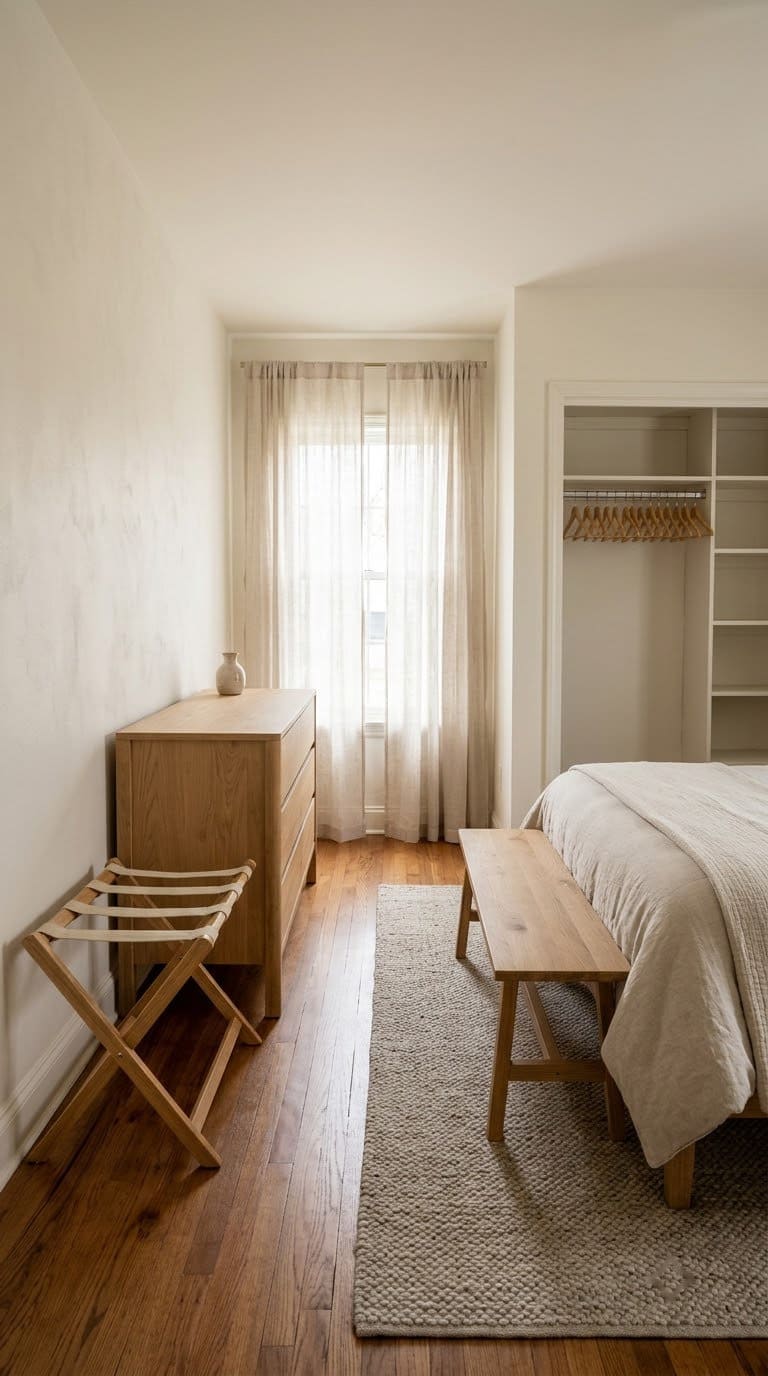
A guest who can’t unpack lives out of a suitcase. A clear room fixes that fast.
Professionals in Redfin’s roundup suggest clearing extra knick-knacks and furniture and adding a bench for suitcases. Others suggest clearing part of the closet, emptying some drawers and adding extra hangers.
Clear it in steps. Take everything off the dresser and the bedside table. Empty the top two drawers.
Clear half the closet rod and put in a row of empty hangers. Move boxes out of reach.
Add a luggage spot. Put a folding luggage rack or a bench at the foot of the bed. It keeps a suitcase off the bed and off the floor.
Plan for no closet. If the room has no closet, add a rolling clothes rack or a row of wall hooks. One organizer in the roundup suggests both.
Make a landing spot. Put a small tray on the dresser for keys, a watch and a phone. Guests often set these down the moment they walk in, and a tray keeps them from getting lost.



Check the floor space. Walk around the room as if you carried a suitcase. If you bump into furniture, move a chair or a small table out.
Leave one spot empty. Clear a shelf or a corner of the closet floor for shoes and a bag.
Offer a hanger or two. A guest in a suit or a dress will want to hang it. Put in a few non-slip hangers and a hook for a coat.
For a longer checklist, see our guide on what things you should put in a guest room. Budget: low. Skill: beginner.
2. The Right Bed and Bedding
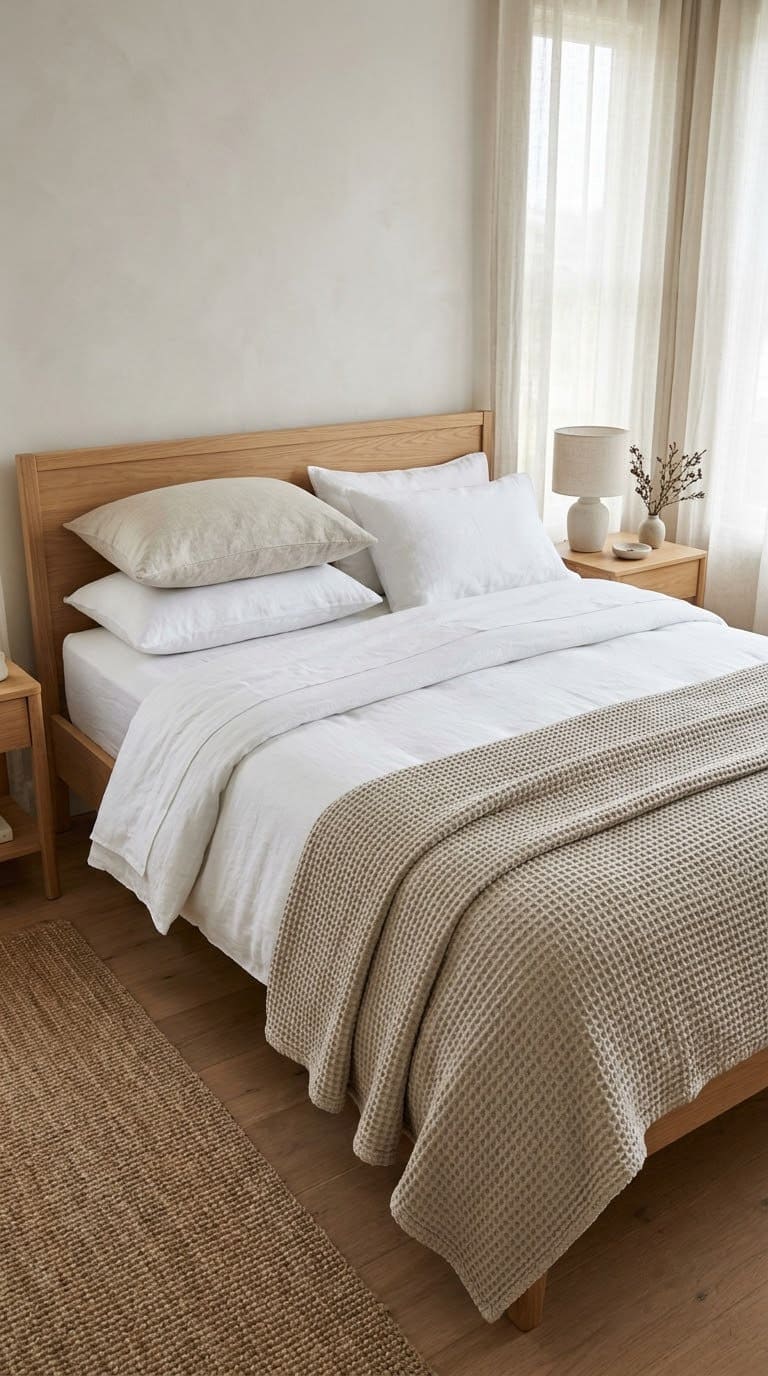
The bed decides how well a guest sleeps. A good mattress and fresh bedding do most of the work.
The Sleep Foundation says a newer mattress may improve sleep quality and reduce back pain more than an older one. It gives no age cutoff, so use a simple test: lie on it for ten minutes. If it sags, replace it.
Pick the size. A designer in Redfin’s roundup says a full to queen mattress fits two guests, and a queen adds 5 inches in length for taller guests. For small rooms, see our guide on using a double mattress in a guest room.
Offer pillow choices. The Sleep Foundation says to choose pillows by firmness, loft and durability. Put a firm and a soft pillow on each side so guests can choose.
Pick sheets that feel good. The same roundup suggests sheets in the 300 to 600 thread count range. Wash them at least every two weeks, as the Sleep Foundation advises, and wash a set the day before guests arrive.
Add a layer. Put an extra blanket at the foot of the bed, so a guest can adjust the warmth without asking.
Test the mattress. Lie on each side of the bed for a few minutes. Feel for dips, a sagging middle or a rough edge. If the bed fails, replace the mattress or add a quality topper.
Protect it. Put a fitted mattress protector under the sheet. It keeps the mattress fresh between visits and washes easily.
Make the bed in layers. Put on a fitted sheet, a flat sheet, a blanket and a duvet. A guest can then add or peel off a layer through the night, in line with the Sleep Foundation’s advice.
Fold a spare set. Put clean spare sheets and a blanket in a basket or on the closet shelf, in case of a spill or a hot night.
Budget: mid. Skill: beginner.
3. Soft Light and a Reading Lamp
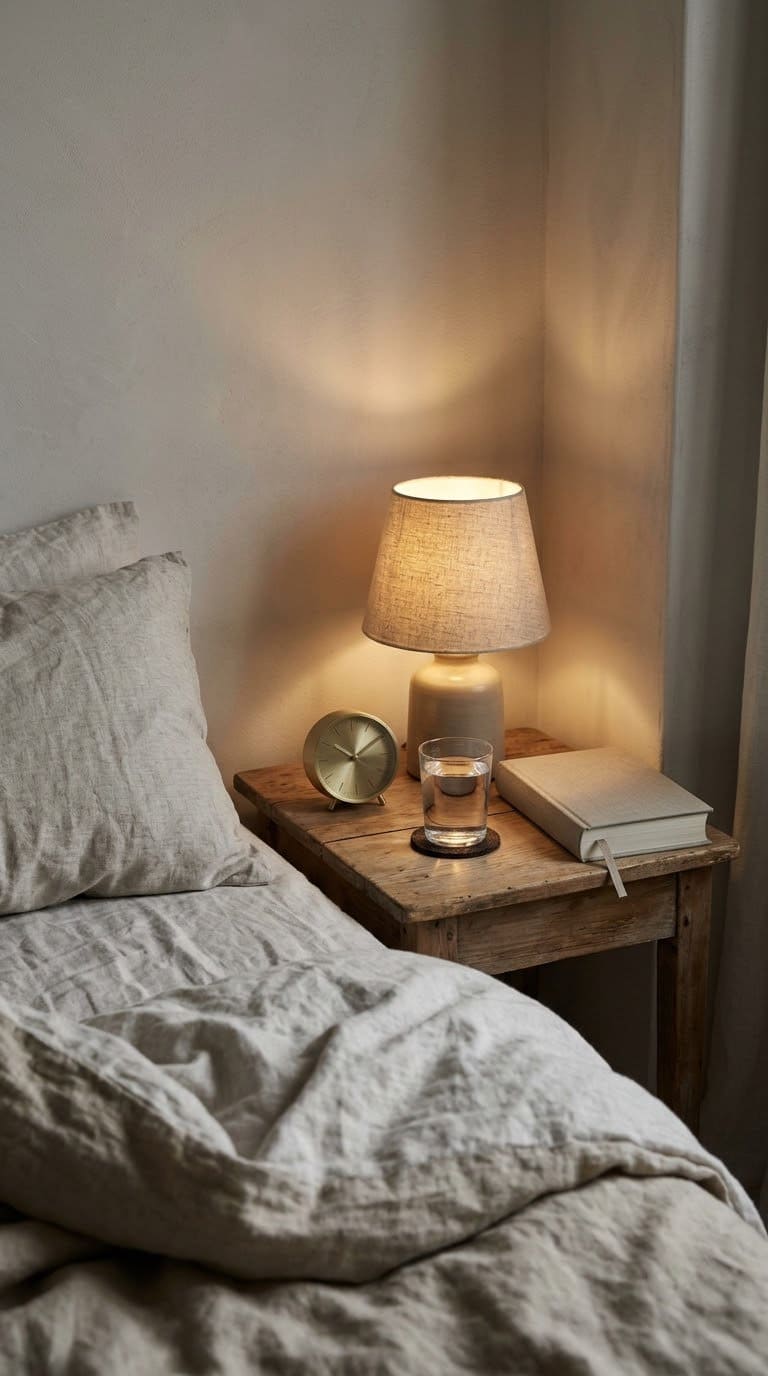
Light controls sleep. A guest needs bright light to read and soft light to fall asleep.
The Sleep Foundation says to keep bedroom light as low as possible, especially if you read in bed. It says light of 10 lux or higher later in the day is linked with more nighttime awakenings, and that red, orange and yellow hues are better for getting ready for sleep.
Set up the lamp. Put a lamp on each side of the bed, with warm bulbs. Pick lamps with a switch that is easy to find in the dark. Redfin’s roundup lists bedside lighting among the basics.
Add a dimmer. A dimmer on the ceiling light lets a guest set the level. Use dimmable bulbs so the light doesn’t buzz.
Skip the TV. The Sleep Foundation advises avoiding screens, including TVs, in the bedroom. Leave the TV out of the guest room, or hide it in a cabinet.
Check the bulbs. Choose warm bulbs, since the Sleep Foundation says red, orange and yellow hues are better for getting ready for sleep. Avoid bright, cool bulbs in a bedside lamp.
Place the switch within reach. A guest in a strange room shouldn’t have to get out of bed to turn off a light. Pick a lamp with an easy switch, or add a small remote.
Add a night light. A soft plug-in night light in the hall or the bathroom lets guests find their way. Keep it low and warm.
Test the glare. Sit in the bed and look around. If a bulb shines in your eyes, move the lamp or add a shade.
For more ideas, see our bedroom lighting ideas. Budget: low. Skill: beginner.
4. A Cool, Quiet Room
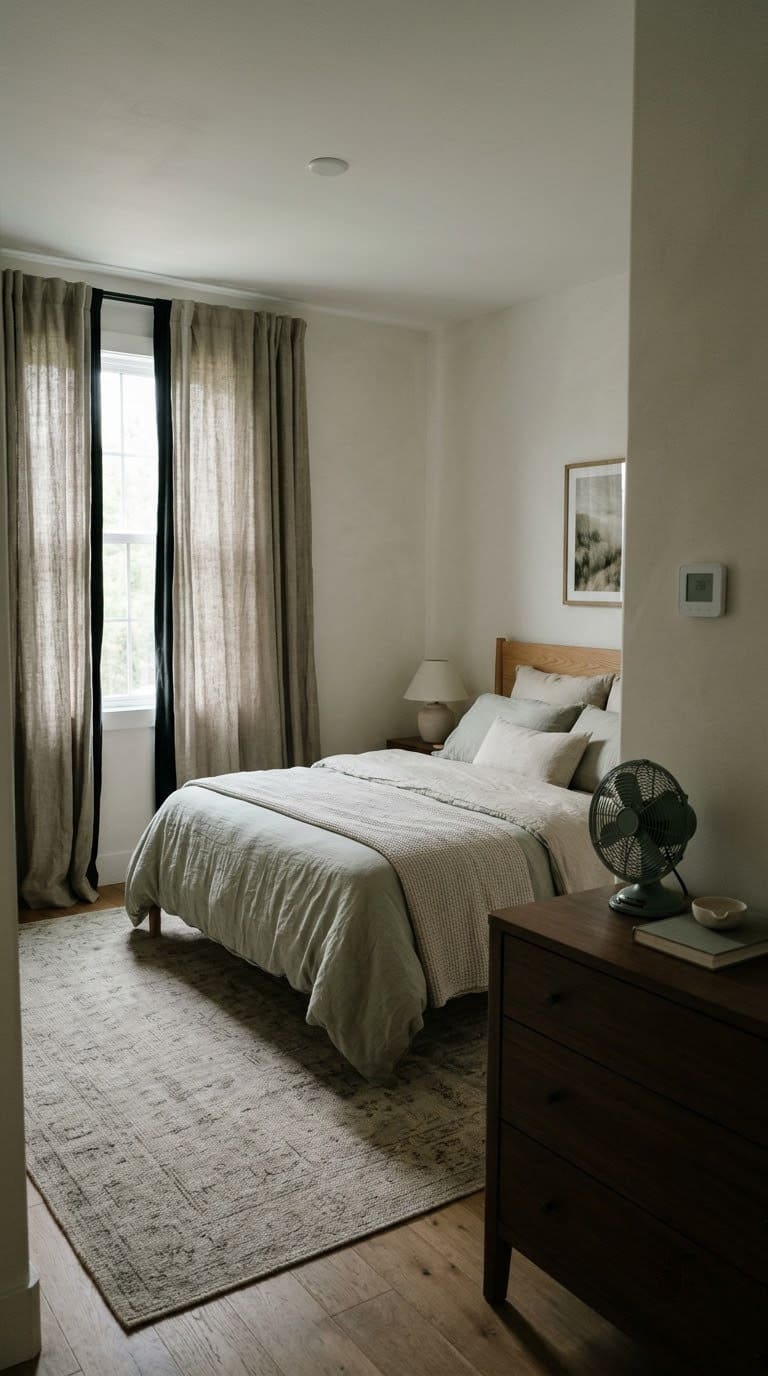
Heat and noise wake people up. A cool, quiet room lets them sleep on.
The Sleep Foundation says the ideal sleeping temperature is 65°F. If it feels too cold, add a bedding layer. If you run hot, remove a layer or wear lighter sleepwear.
Set the temperature early. Turn the thermostat toward 65°F in the afternoon, so the room is cool when guests arrive. Leave the door open so air moves.
Block the noise. The Sleep Foundation says a fan or white noise machine can mask noise, and noise-blocking curtains are another option. Place a small fan or a white noise machine in the room.
Block the light. Hang blackout-lined curtains or sun-blocking blinds. A designer in Redfin’s roundup suggests sun-blocking blinds for privacy, and hanging curtains high to make a small room look taller.
Leave controls clear. Show guests how to use the fan, the thermostat and the lamp. A small card on the dresser saves them from asking.
Check for drafts. Hold your hand near the window frame and the door on a windy day. Fix a draft with weatherstripping or a door sweep.
Soften the floor. A rug muffles footsteps and echo. A thick pad under it adds more quiet.
Pick a fan carefully. Choose a quiet fan and set it low. A steady hum can mask outside noise, as the Sleep Foundation says, but a rattling fan keeps people awake.
Close the gaps. Add a door sweep if hall noise carries. Leave a small stack of earplugs and an eye mask on the nightstand.
For zen-style rooms, see our zen bedroom ideas. Budget: low to mid. Skill: beginner.
5. A Safe Room With Alarms
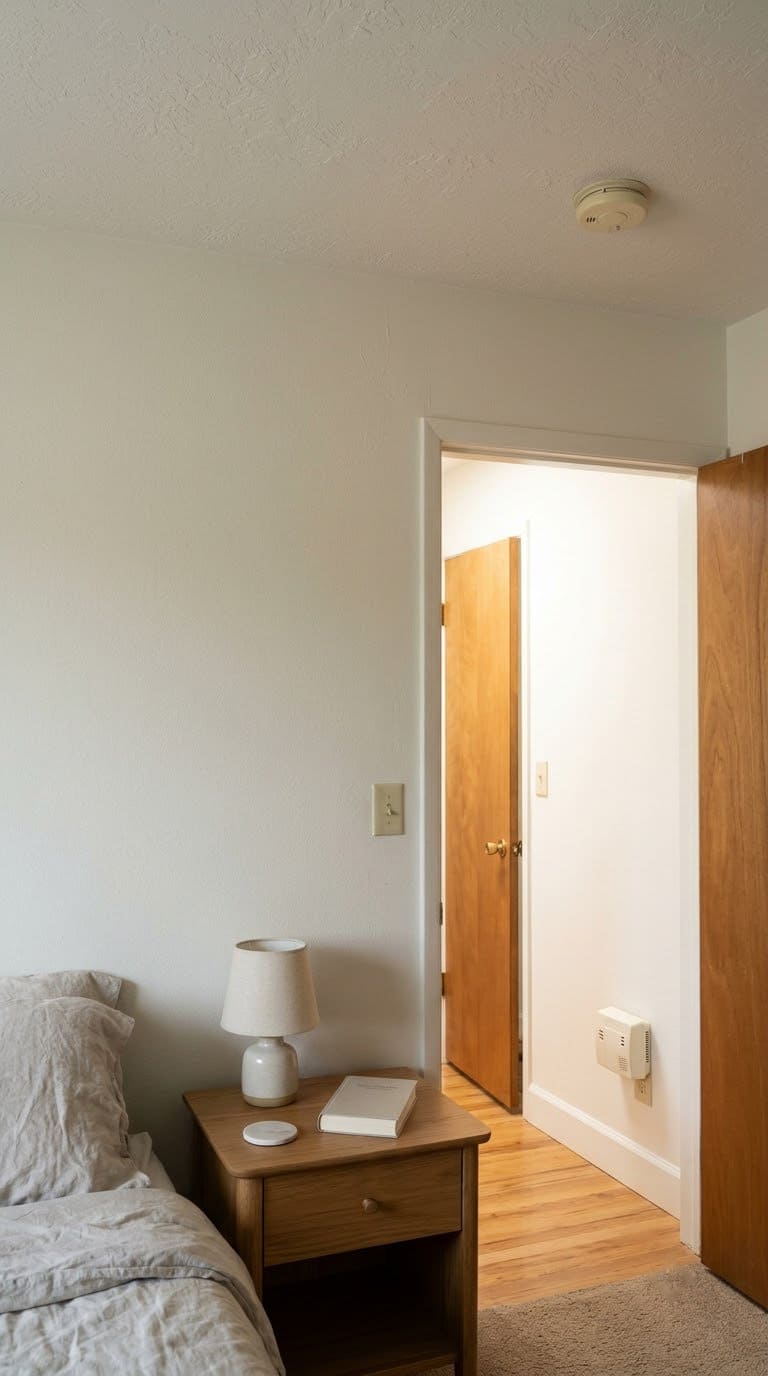
A guest room needs working alarms. Guests don’t know your exits, so alarms have to do the work.
The LAFD says to put smoke alarms inside every bedroom, outside each sleeping area and on every level of the home, including basements. It says to test them monthly.
Test and replace. Press the test button on every alarm. The LAFD says to replace an alarm that doesn’t respond, chirps after a battery change or is more than 10 years old. Check the date printed on the back.
Add CO alarms. The CPSC says to put battery-operated CO alarms, or alarms with battery backup, on every level of the home and outside sleeping areas. It says interconnected alarms are best, since they all sound when one does.
Share the plan. The LAFD says to review your home fire escape plan each time you test the alarms. Tell guests which way out is nearest, and leave a flashlight in the room.
Keep the way clear. Don’t block the door or the window with furniture or luggage.
Make a testing day. Pick the first day of each month to press every test button in the house. Put a reminder on your phone.
Check the date. Turn each alarm over and look at the manufacture date. Replace any that are more than 10 years old, as the LAFD advises.
Place the CO alarm. Put it in the hall outside the guest room, as the CPSC advises. Check its batteries regularly.
Leave a flashlight. Put a small flashlight in the nightstand drawer and tell guests where it is. Mention which door leads out in an emergency.
The LAFD says about three out of five fire deaths happen in homes with no working smoke alarms. Budget: low. Skill: beginner.
6. A Charging Station and Welcome Card
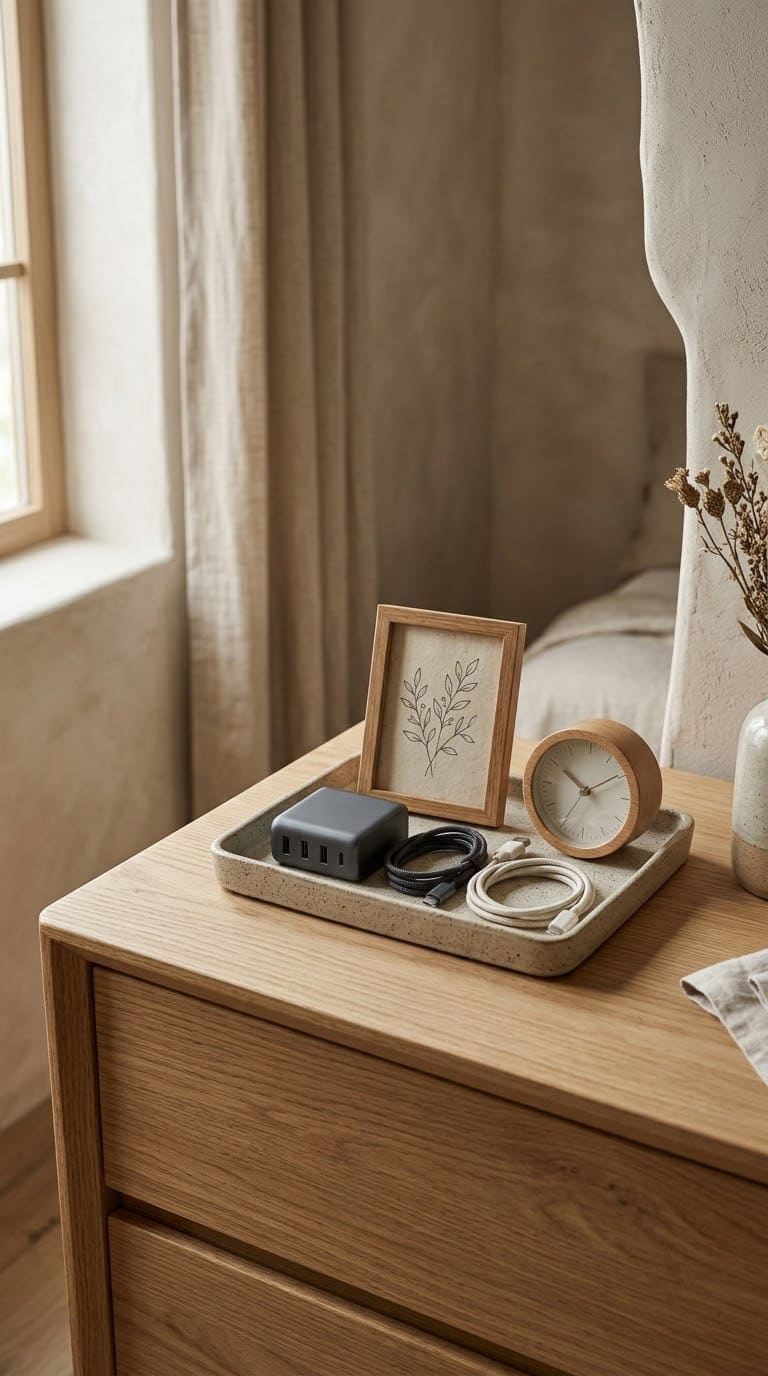
Guests need power and Wi-Fi. A small station saves them from asking.
A professional organizer in Redfin’s roundup suggests a charging station with Wi-Fi info and a clock. Another says to create a charging area just for guests, since many stay more than one night.
Set it up. Put a multi-port charger and two or three cables on a tray near an outlet. Add a power strip if the outlets are far from the bed.
Write the card. A small card holds the Wi-Fi name and password, the thermostat note and the bathroom location. Put it in a frame on the dresser.
Tidy the cords. Tie cords with hook-and-loop straps and run them behind furniture. Keep them off the walkway.
Add a clock. Place a small clock where a guest can see it from bed.
Choose the right cables. Leave a mix of cables for common phones and tablets. Label the tray so guests know the cables are theirs to use.
Place the outlet well. A charger beside the bed lets guests plug in a phone at night. Use a power strip with a long cord if the outlet is far.
Add a note about quiet hours. If your household has quiet hours or a morning routine, mention it kindly on the card.
Update the card. Change the Wi-Fi details whenever you change the password.
Budget: low. Skill: beginner.
7. A Welcome Basket
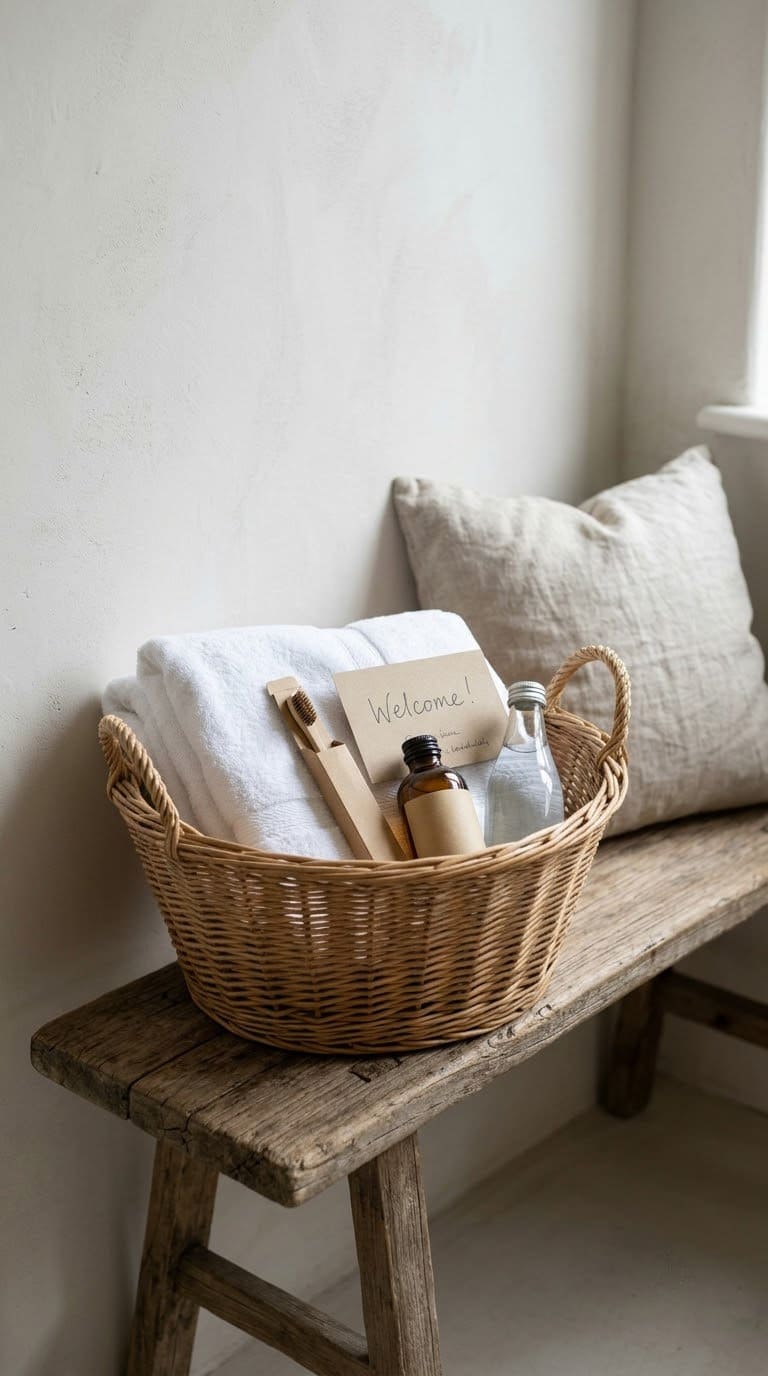
A welcome basket shows you thought ahead. It also saves guests from asking for small things.
An organizer in Redfin’s roundup suggests filling a decorative bin with travel-sized shampoo, conditioner, body wash and lotion, and adding a personal message. Another suggests a basket or tray with towels and toiletries.
Fill it well. Add a toothbrush, toothpaste, a comb, tissues, a hair tie and a small bottle of water. Put in a snack and a small treat.
Write a note. A short note such as “make yourself at home” adds warmth.
Stock a bath kit. Put the basket near the bed or in the bathroom, with fresh towels folded beside it.
Restock each visit. Check the basket before and after each stay and replace anything used.
Choose pleasant scents. An organizer in the roundup suggests natural, pleasant scents for the toiletries. Pick a mild one, since some guests are sensitive to strong smells.
Add a first-night kit. Include a small sewing kit, a spare toothbrush, a razor and a phone charger. These are the things guests forget.
Stock the water. Leave a carafe and a glass on the nightstand, or bottled water on the dresser. Refill it each day.
Think of the morning. Leave out a coffee mug and a note about breakfast times so guests aren’t guessing.
Budget: low. Skill: beginner.
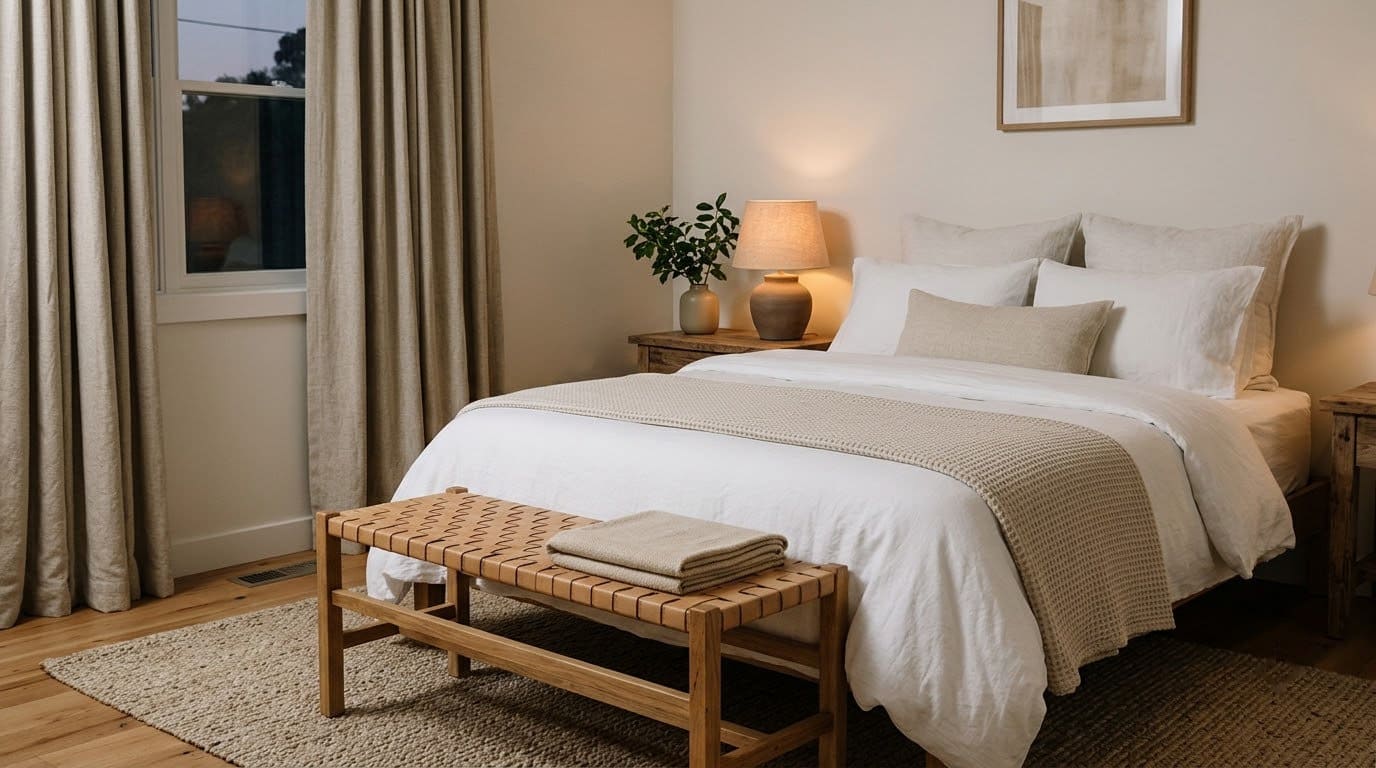
8. A Calm Palette and Natural Textures
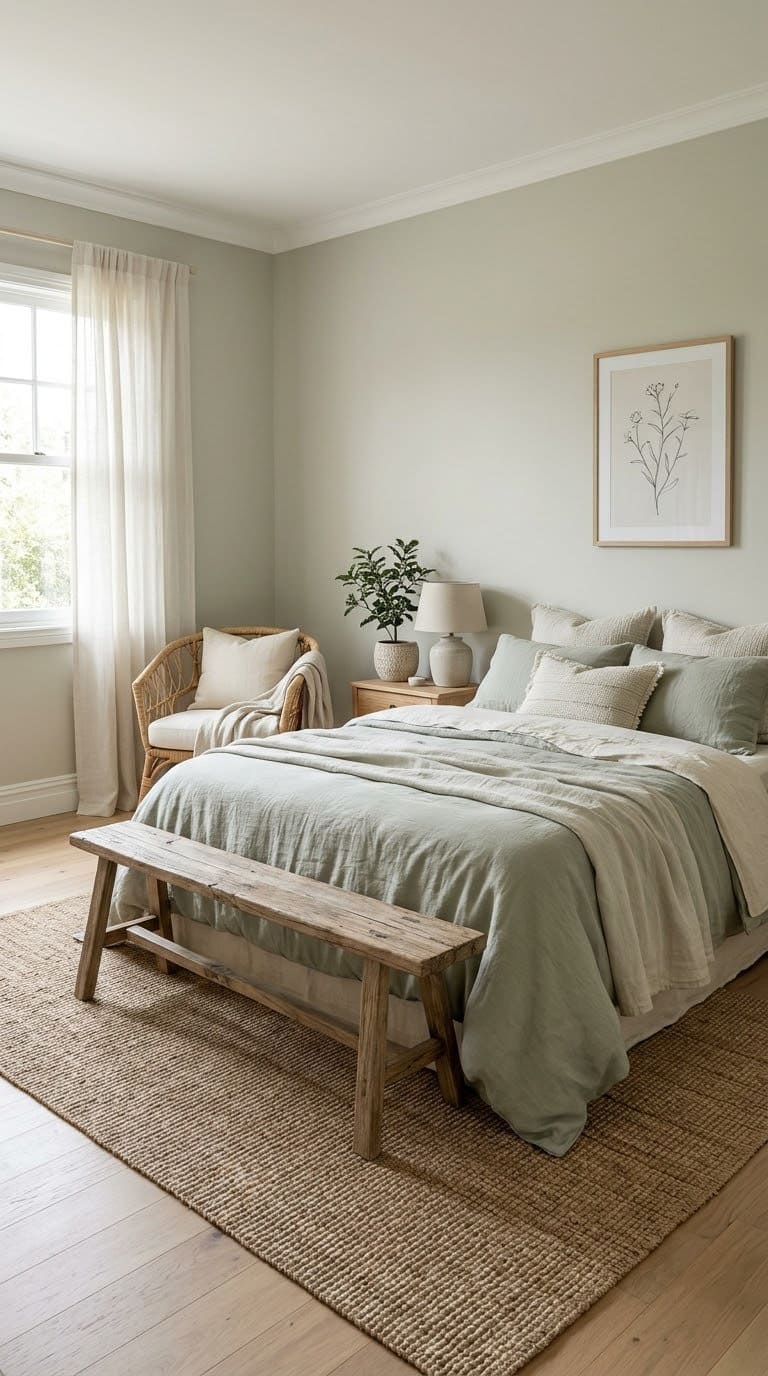
A calm room helps guests unwind. Soft colors and natural textures do that best.
Professionals in Redfin’s roundup suggest calm, minimal palettes with blues, purples or nudes, natural materials like cotton, wool, rattan and wood, and local art that suits the room.
Pick a palette. Choose two soft colors and one accent. Use them on the walls, the bedding and the curtains. Keep family photos out and use one or two pieces of art.
Add natural textures. Use a linen bedspread, a wool throw and a rattan chair. Add a small plant for life.
Keep it simple. Too many extras make a room feel crowded. Aim for a few things done well.
Paint a soft wall. A light, calm color makes a room feel quiet. Test a sample for a few days before you paint the whole room.
Pick one focal point. Choose a headboard, a piece of art or a pair of lamps as the star. Keep the rest simple.
Choose natural fabrics. Cotton, linen and wool breathe, so guests stay comfortable. Wash new fabrics before use.
Use local art. A designer in Redfin’s roundup suggests art from local artists. A print of a nearby landmark gives guests a sense of place.
For color ideas, see our neutral bedroom ideas, earthy bedroom ideas and white and sage green bedroom ideas. Budget: low to mid. Skill: beginner.
Run the Overnight Test
One organizer in Redfin’s roundup suggests spending a night in the room with an overnight bag. It’s the best way to find the gaps.
Use this checklist while you test. Sleep in the room if you can, or lie on the bed and walk through each step.
| Check | What to look for |
|---|---|
| Bed | Comfortable, no sag, fresh sheets |
| Light | Warm bedside lamp, easy switch, no glare |
| Temperature | Around 65°F at bedtime |
| Noise | Fan or white noise masks outside sounds |
| Alarms | Smoke alarm in the room, CO alarm in the hall |
| Power | Charger within reach, Wi-Fi card visible |
| Storage | An empty drawer, hangers and a luggage spot |
| Water | A carafe and a glass within reach |
Which Guest Are You Hosting?
Different guests need different things. Match the room to who is coming.
A couple. Use a full or queen bed, a lamp on each side and plenty of closet space. Add a second set of towels.
A solo traveler. Focus on the basics: a good bed, a reading lamp and a luggage spot. Keep the room calm and quiet.
An older guest. Add a night light, a clear path to the bathroom and a chair to sit on while dressing. Keep the bed height comfortable.
A long stay. Add an empty drawer, a few hangers, a small desk or a table and a place to charge a laptop.
For a roomy option for longer stays, see our backyard guest house ideas. For small rooms, see our bedroom storage solutions for small spaces.
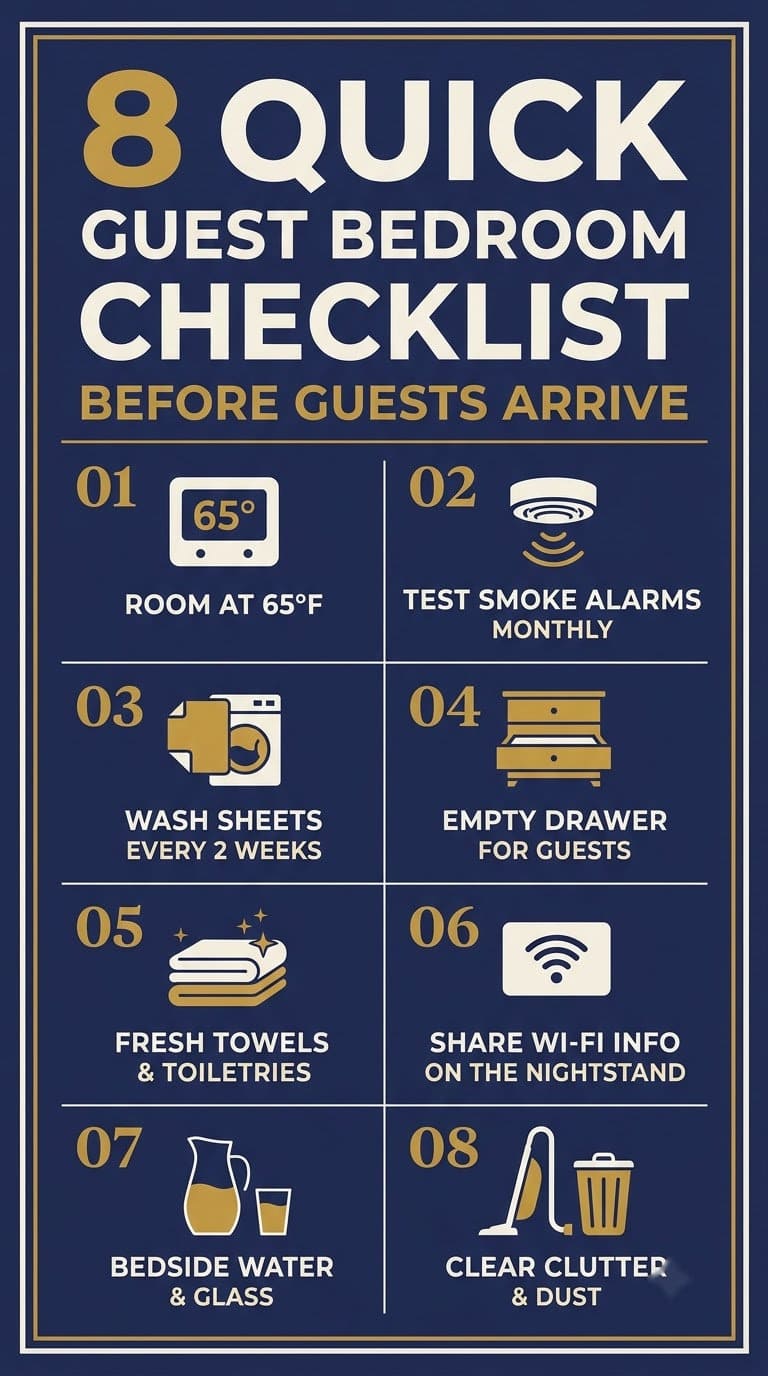
A Weekend Setup Plan
You can set up most of this in a weekend. Here’s a simple plan.
On Friday evening, test the alarms and clear the room. Wash the sheets and the towels. On Saturday morning, set up the lamps, the charging tray and the fan.
On Saturday afternoon, make the bed, fill the welcome basket and write the card. On Sunday, spend a short time in the room and fix any gaps.
How Do You Keep the Room Ready?
A guest room sits unused for weeks. A short routine keeps it ready.
Once a month, press the alarm test buttons and open the windows for fresh air. Run the water in the bathroom and wash the sheets if they’ve sat a while.
Before each visit, vacuum, dust and make the bed. After each visit, strip the bed, wash the linens and restock the basket.
What to Do First
Start with the basics, then add the style. This order saves time.
First, test the alarms and check the mattress. Second, clear space and set up the lamps. Third, set the temperature and add the welcome basket.
Then spend a night in the room, as one organizer in the roundup suggests. Fix what bothers you.
Common Mistakes to Avoid
Most guest room problems come from a short list of oversights. Here’s what to watch for.
Skipping the alarms. The LAFD says to put smoke alarms inside every bedroom and test them monthly.
Letting the room run warm. The Sleep Foundation says the ideal sleeping temperature is 65°F. Set the thermostat early.
Using a worn mattress. The Sleep Foundation says a newer mattress may improve sleep and reduce back pain.
Cluttering the room. Professionals in Redfin’s roundup advise clearing the room and leaving space to unpack.
FAQ
What temperature should a guest bedroom be?
The Sleep Foundation says the ideal sleeping temperature is 65°F. Add or remove a bedding layer to adjust.
Do guest rooms need smoke alarms?
Yes. The LAFD says to put smoke alarms inside every bedroom, outside each sleeping area and on every level, and to test them monthly.
How often should I wash guest sheets?
The Sleep Foundation says at least every two weeks, or weekly if you sweat heavily or share your bed with a pet. Wash a fresh set before guests arrive.
What size bed fits two guests?
A designer in Redfin’s roundup says a full to queen mattress fits two, and a queen adds 5 inches in length for taller guests.
How do I make a guest room feel like a retreat?
Focus on sleep: a comfortable bed, soft light, a cool and quiet room and a place to unpack. Add a welcome basket and a calm palette last.
Should guests have their own charger?
Yes. A small tray with a charger and a few cables saves them from asking, as organizers in Redfin’s roundup suggest.
What should I check before guests arrive?
Test the alarms, wash the sheets, set the room temperature and restock the basket. Then spend a few minutes in the room to find the gaps.
Can a small room work as a guest room?
Yes. Clear the dresser, use wall hooks and a luggage bench, and keep the furniture to a minimum. A small, tidy room feels calmer than a crowded one.
Related Posts

Never miss an update — choose FarmFoodFamily as your preferred source on Google.
How it works: Tap the button below to open Google's settings page, then check the box next to FarmFoodFamily.
Tap the checkbox to turn it blue — that's how you know it's set.