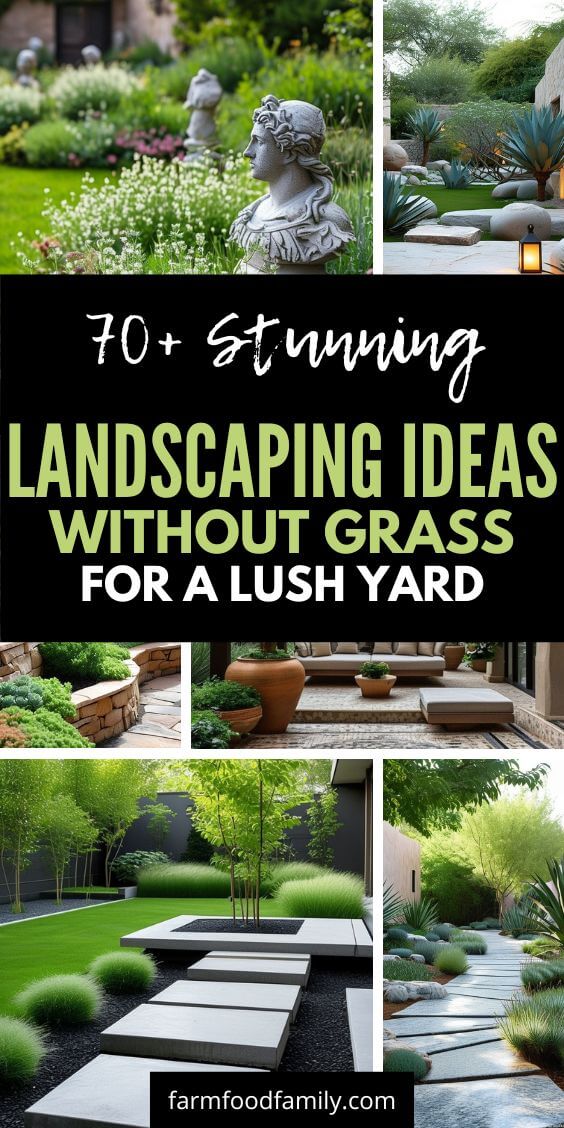
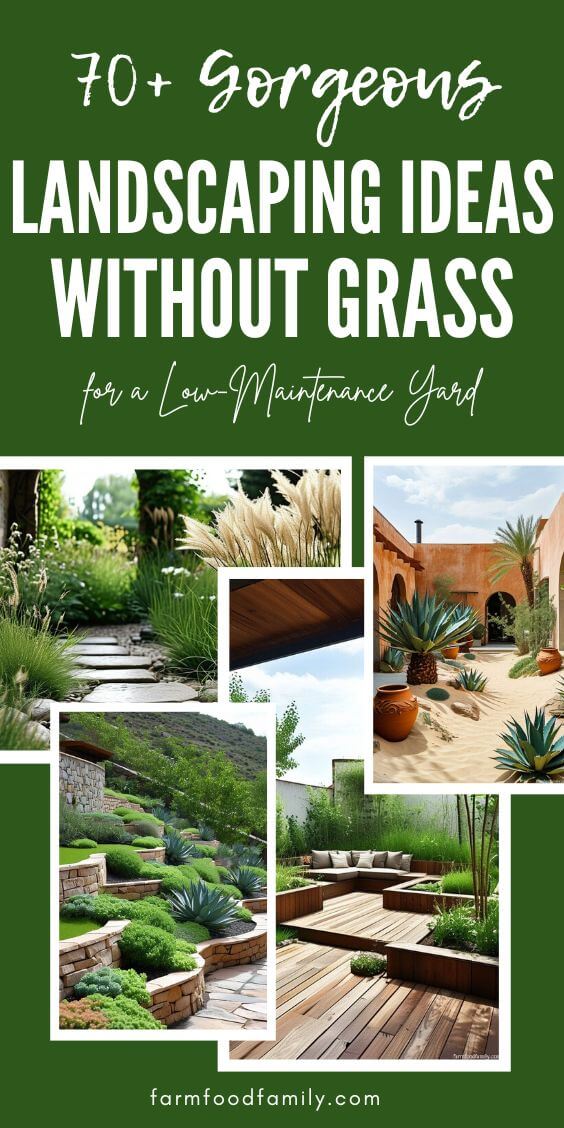
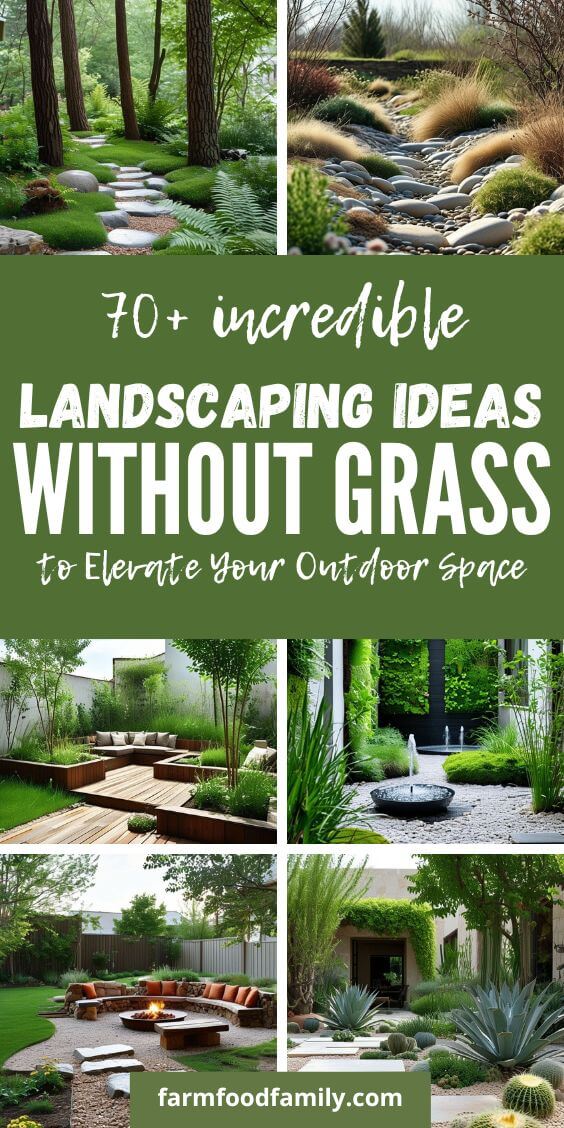
70+ Stunning Landscaping Ideas Without Grass for a Lush Yard
If you’ve searched “landscaping without grass” before, you’ve probably hit a wall of articles promising 40, 50, even 70+ ideas. Most of that is padding. Strip out the duplicate photo dumps and stock filler, and the real playbook for replacing a lawn comes down to a handful of genuinely different approaches, plus a few things…

Never miss an update — choose FarmFoodFamily as your preferred source on Google.
How it works: Tap the button below to open Google’s settings page, then check the box next to FarmFoodFamily.
Tap the checkbox to turn it blue — that’s how you know it’s set.
If you’ve searched “landscaping without grass” before, you’ve probably hit a wall of articles promising 40, 50, even 70+ ideas. Most of that is padding. Strip out the duplicate photo dumps and stock filler, and the real playbook for replacing a lawn comes down to a handful of genuinely different approaches, plus a few things almost nobody tells you before you start.
This guide skips the filler. Nine real options, what they actually cost in 2026, and the parts of “going lawn-free” that don’t make it into the glossy before-and-after photos.
Why People Actually Rip Out Their Lawn
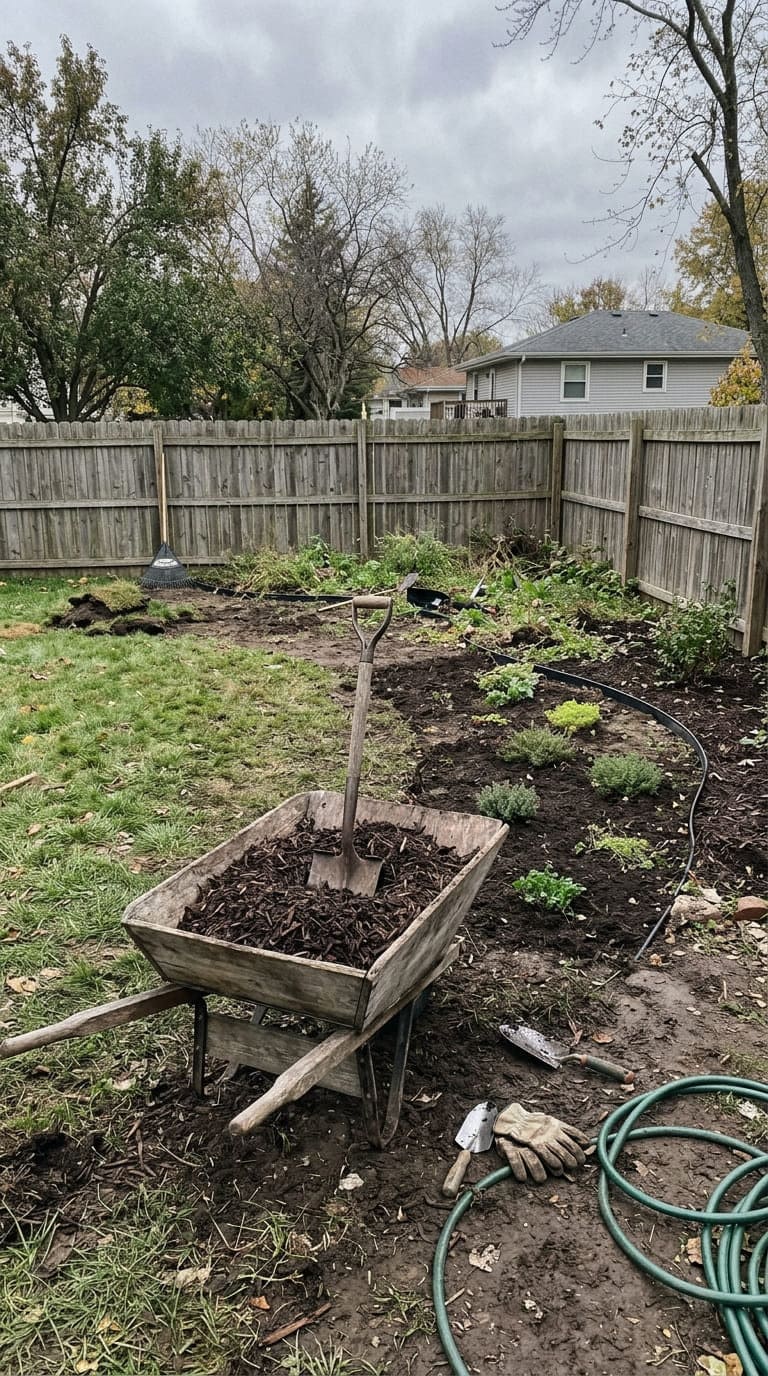
Water and fertilizer costs are the obvious reason, but they’re not the whole story. In high-cost regions, keeping up a modest 1,000-square-foot lawn can run $3,000 to $4,500 a year once you count fuel, equipment, fertilizer, and irrigation (EverTurf, 2026 lawn alternatives guide). That adds up fast for something most people don’t even enjoy maintaining.
Benjamin Vogt, author of A New Garden Ethic and principal of the native-plant design firm Monarch Gardens, says most of his clients aren’t chasing a Pinterest look. They’re trying to get rid of “problem areas they are tired of fighting: overly shady spaces, places prone to erosion, spots in full sun that fry in midsummer regardless of watering.” That’s a more honest starting point than “I want a nicer yard.” Grass is often just the wrong plant for the specific patch of dirt you have.
One thing worth knowing before you start: some homeowners’ associations do push back, even on legitimate xeriscaping. A widely reported case involved a homeowner fined by their HOA over “weeds” on a gravel-and-native-plant conversion that barely had any visible plants at all (The Cool Down). If you’re under an HOA, check the actual language on plantings and “maintained appearance” before you tear anything out. Cheap insurance against a fight later.
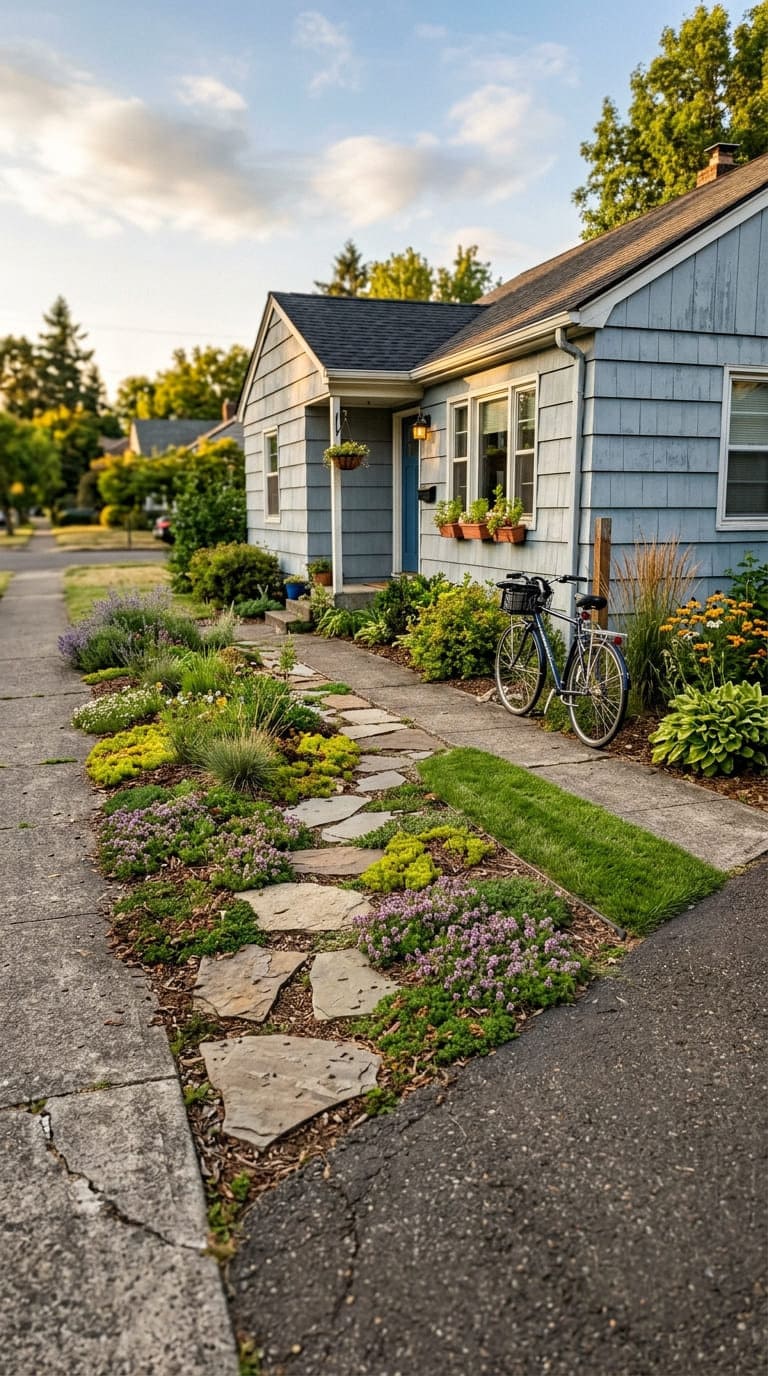
Plan Before You Touch the Lawn
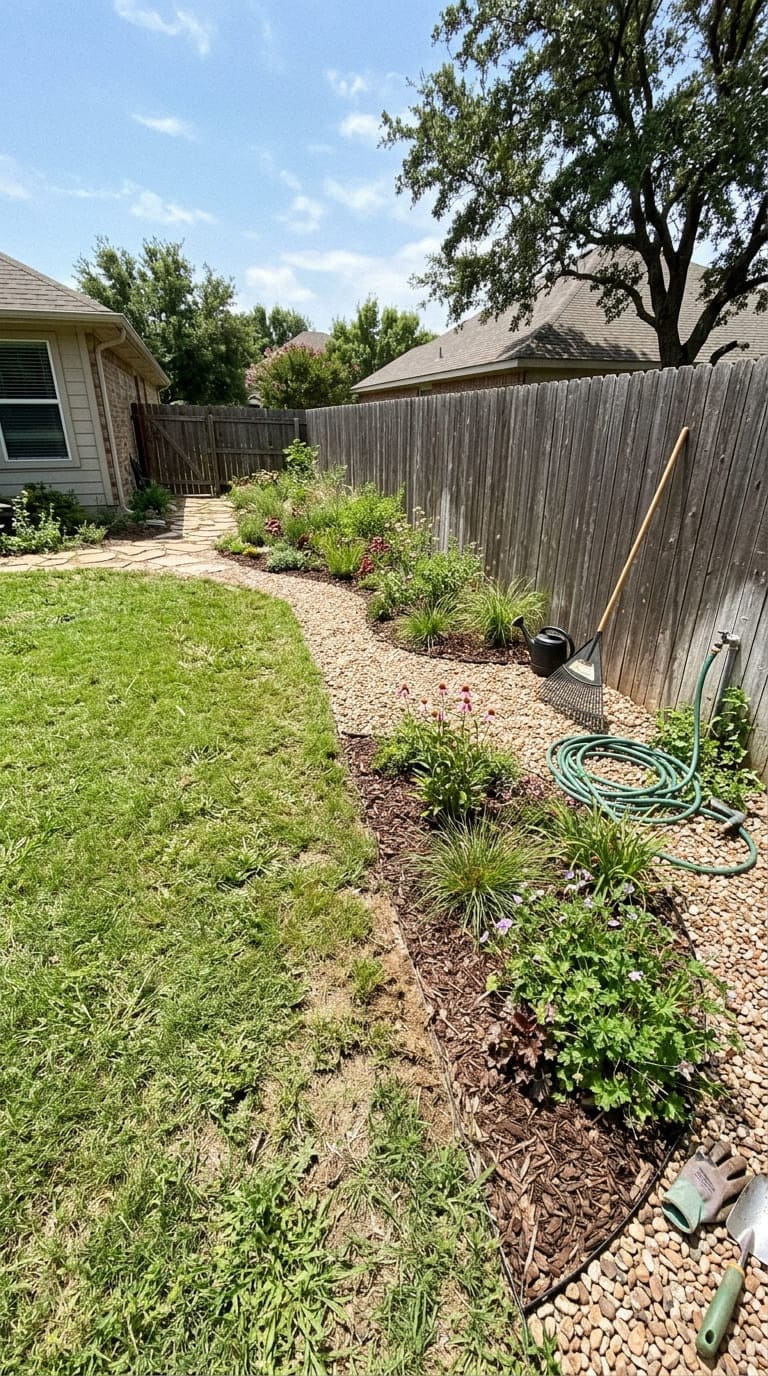
Don’t start by picking plants. Start by figuring out what the space needs to do. Vogt’s advice here is blunt and useful: identify what you already have first, because you might find plants worth keeping and building around rather than starting from bare dirt.
Answer 4 quick questions and get matched to the exact fix for your yard — drainage, budget, layout, or something else entirely.
Take the Free QuizWhatever you plant, plant it in connected masses, not scattered single specimens. A Reddit commenter in a 163-comment thread on low-effort landscaping put it well: “Plant them in big connected masses so they flow together into one solid texture. Do not scatter individual plants around like polka dots” (r/landscaping). One coneflower here, one ornamental grass there, reads as sparse and unfinished no matter how healthy the plants are.
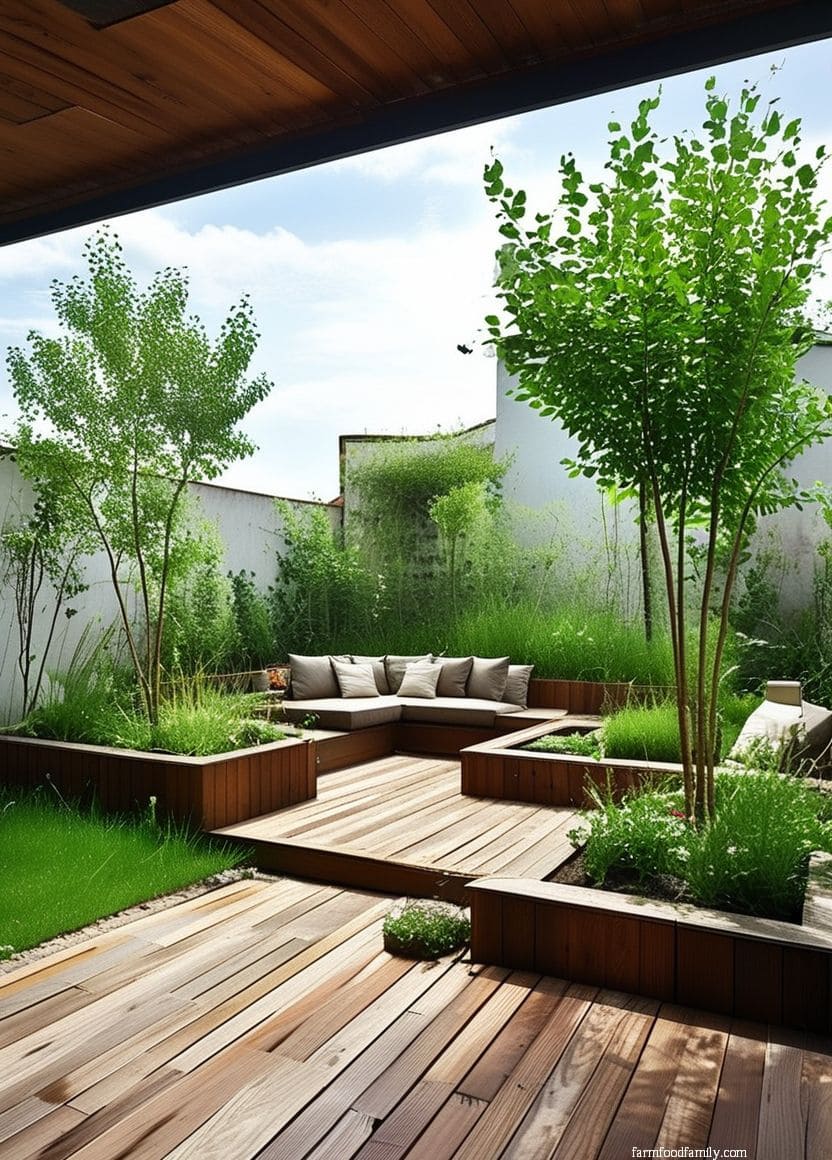
Patios and Decks
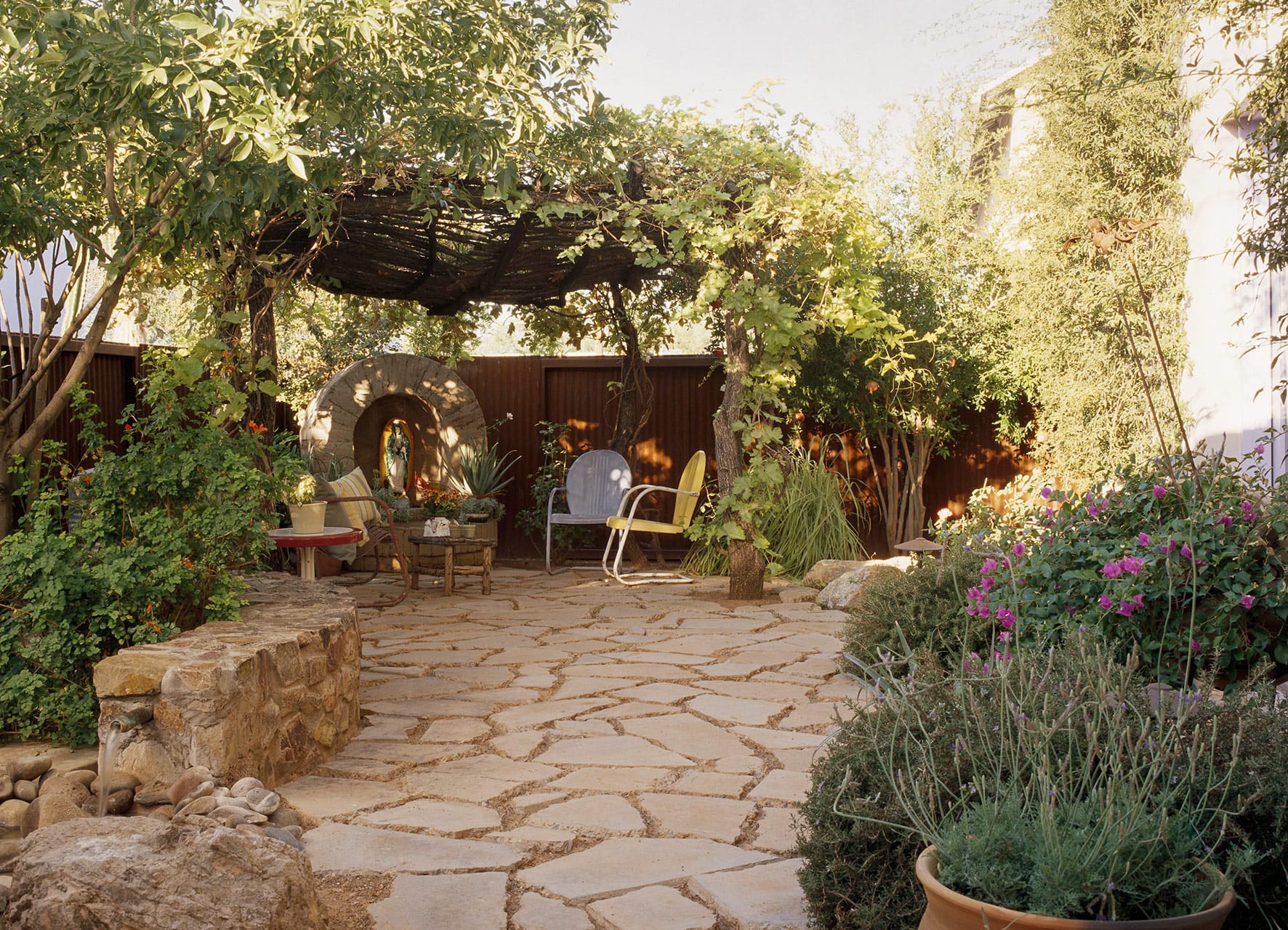
Adding a patio or deck of wood, brick, pavers, or natural stone, completes your home while filling in yard area. A deck can be raised or ground level, attached to the house or free standing.
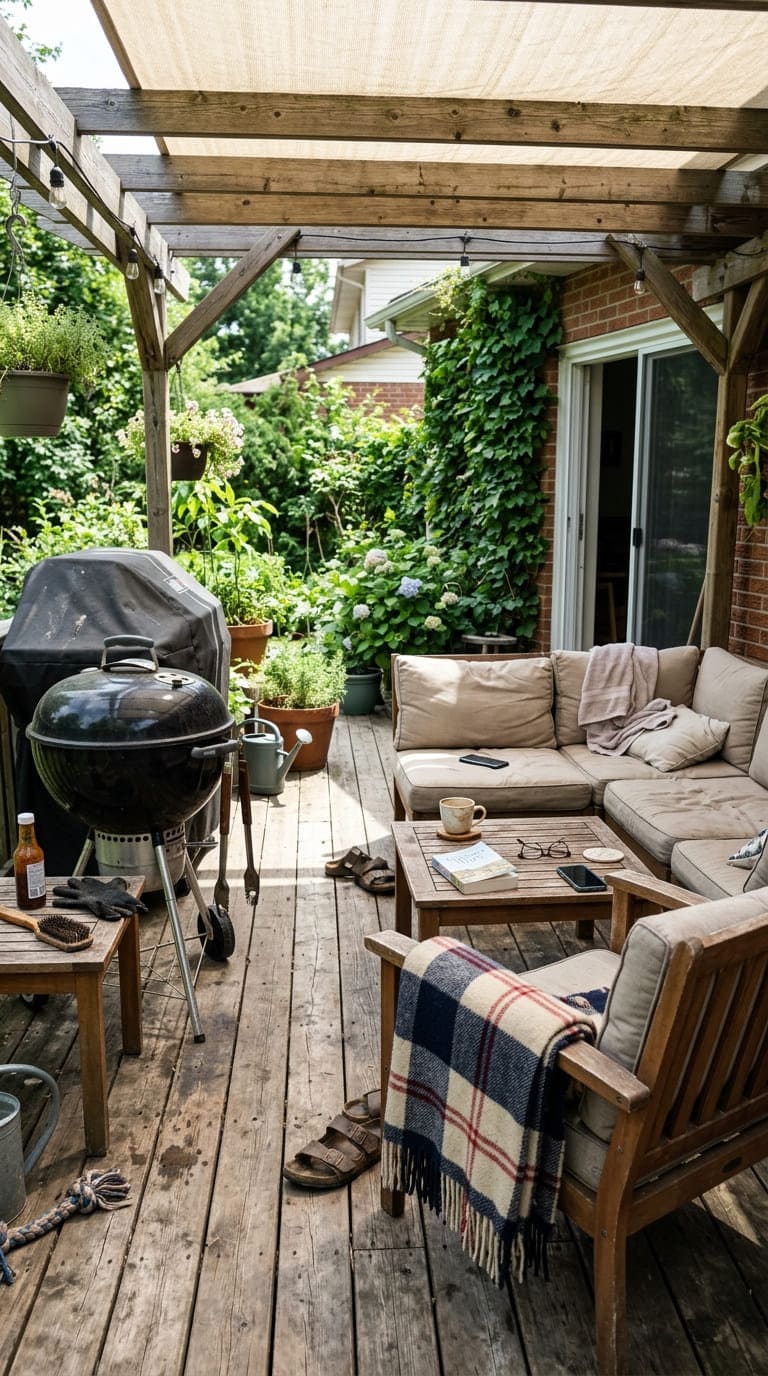
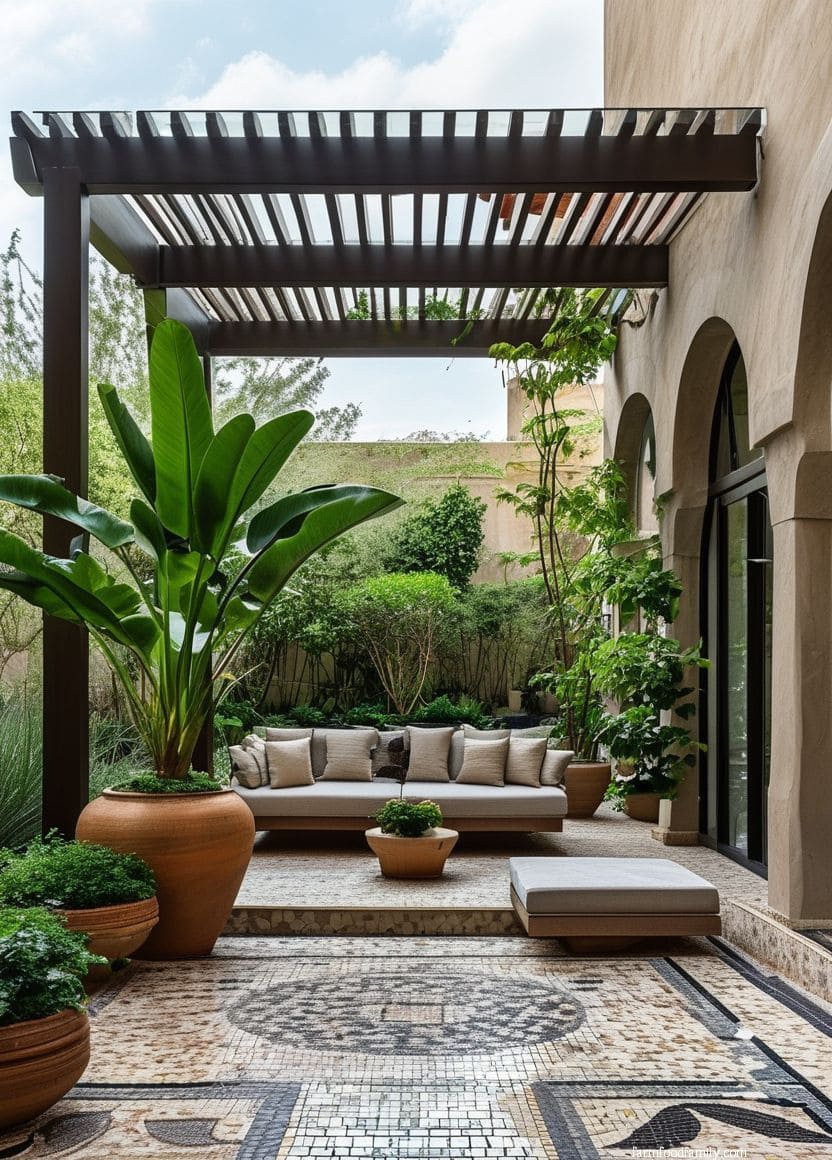
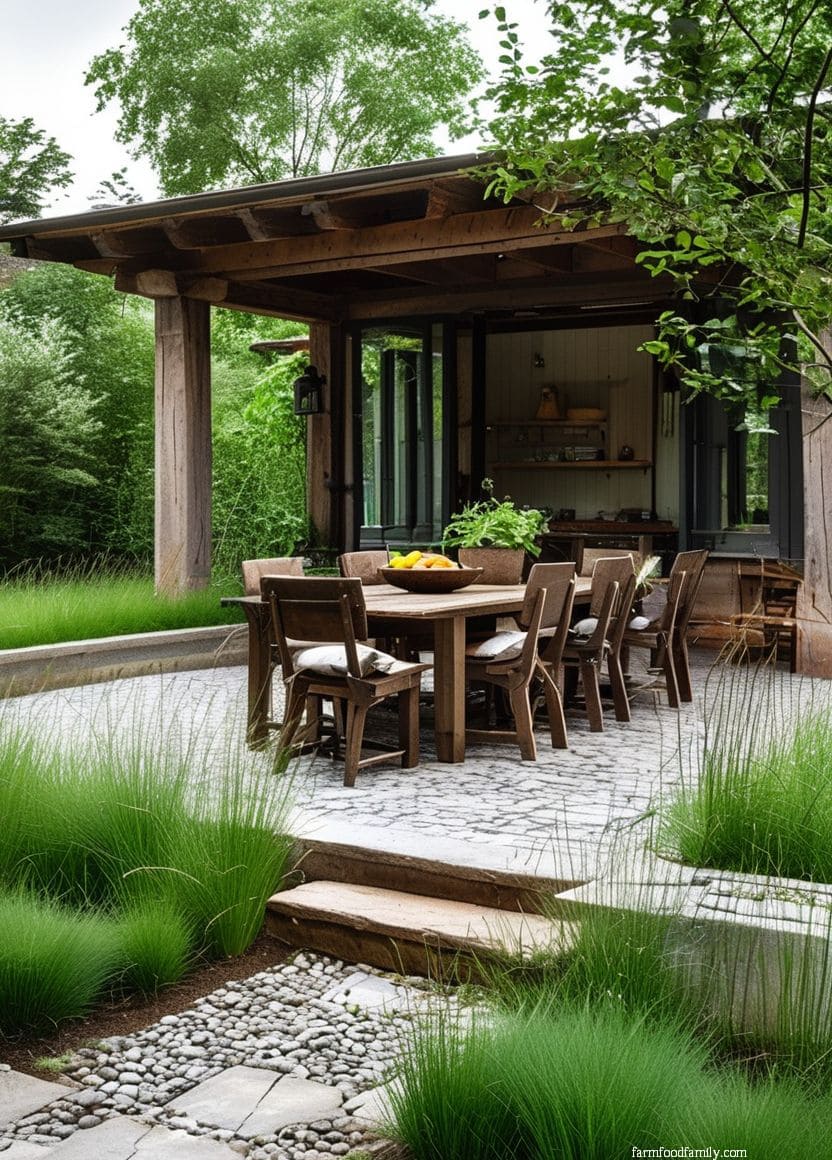
Patios and decks can be open or covered or completely enclosed. Both areas become an outdoor room ready for decorating and enjoying. Lighting, an outdoor grill, and potted plants add to the ambience.
Ground Cover
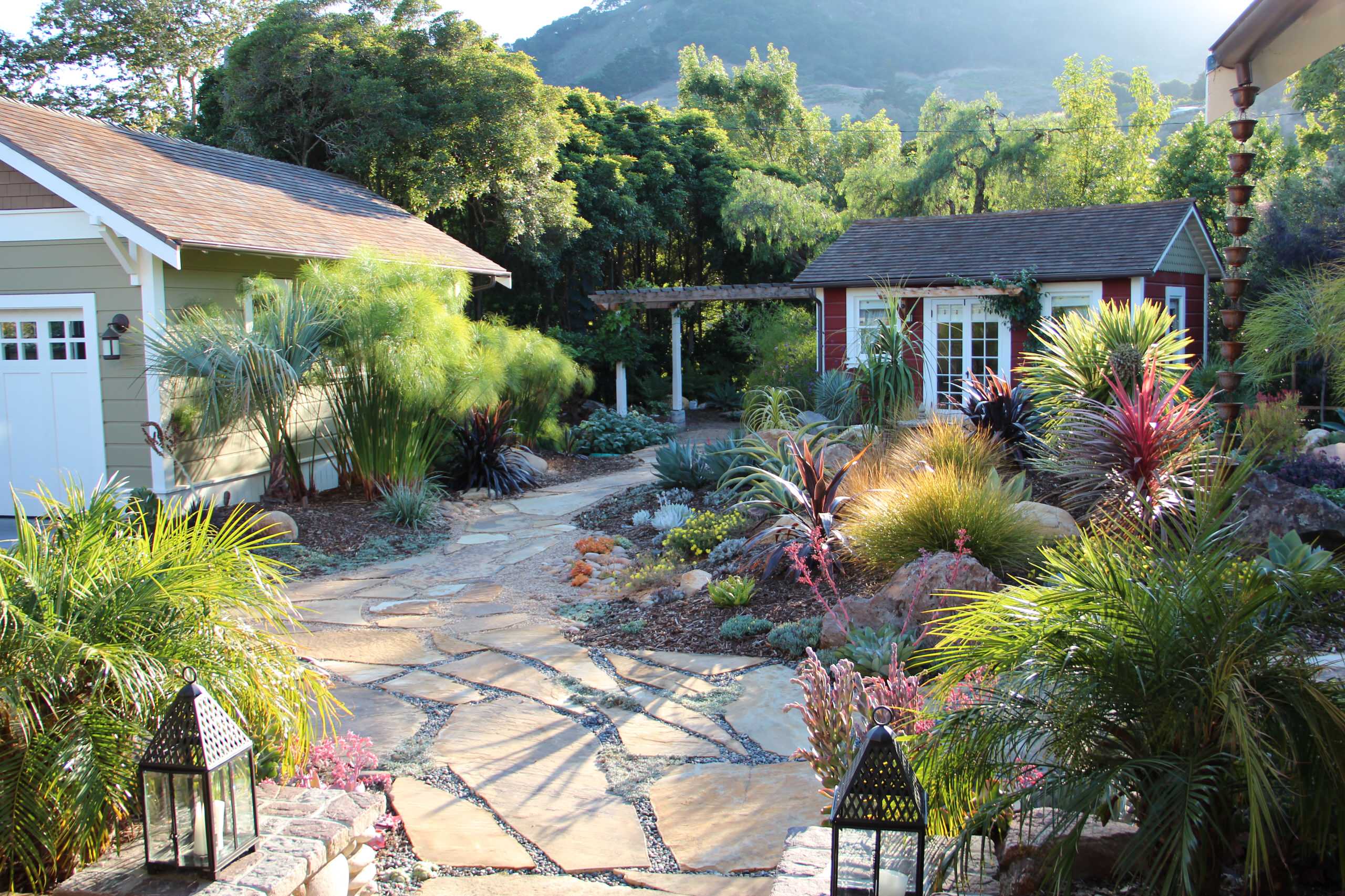
Choosing ground cover takes into consideration of climate, amount of light-sun, but the soil and slope of the yard as well.
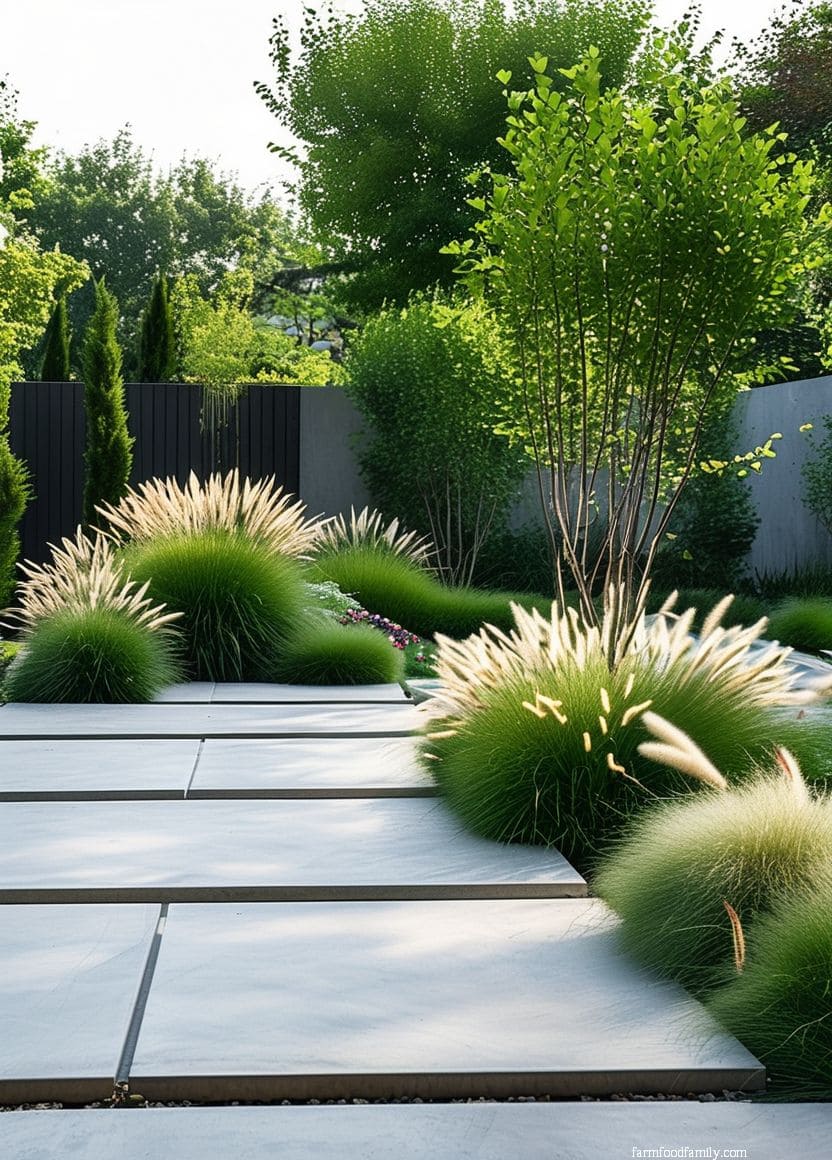
Determining whether it is mountainous or boggy, highly trafficked or a dog run help influence choices. Popular ground covers such as chamomile, clover, and thyme, have been utilized. There are various ornamental grasses best used for zones 6-9.
Epcot® International Flower & Garden Festival displays multiple flowering ground coverings emphasizing not only the above but scent, color, and design as well. Drought tolerant Bulbine ground cover is featured there. Native wildflowers can be seen as well as planted professionally maintained gardens.
Ground Covering Ideas
- Silver sedge for shaded areas in zones 4-8.
- Silk tassel or morrous sedge in zones 6-9
- Beach daisy requires full sun in zone 8-10
- Prairie dropseed, full sun, zones 3-9
- Ferns
- Ivy, which is sun or shade and drought tolerant,
- Mimosa- wet or dry, sun or shade but primarily zones 8-9
- Rose bushes scattered through the area.
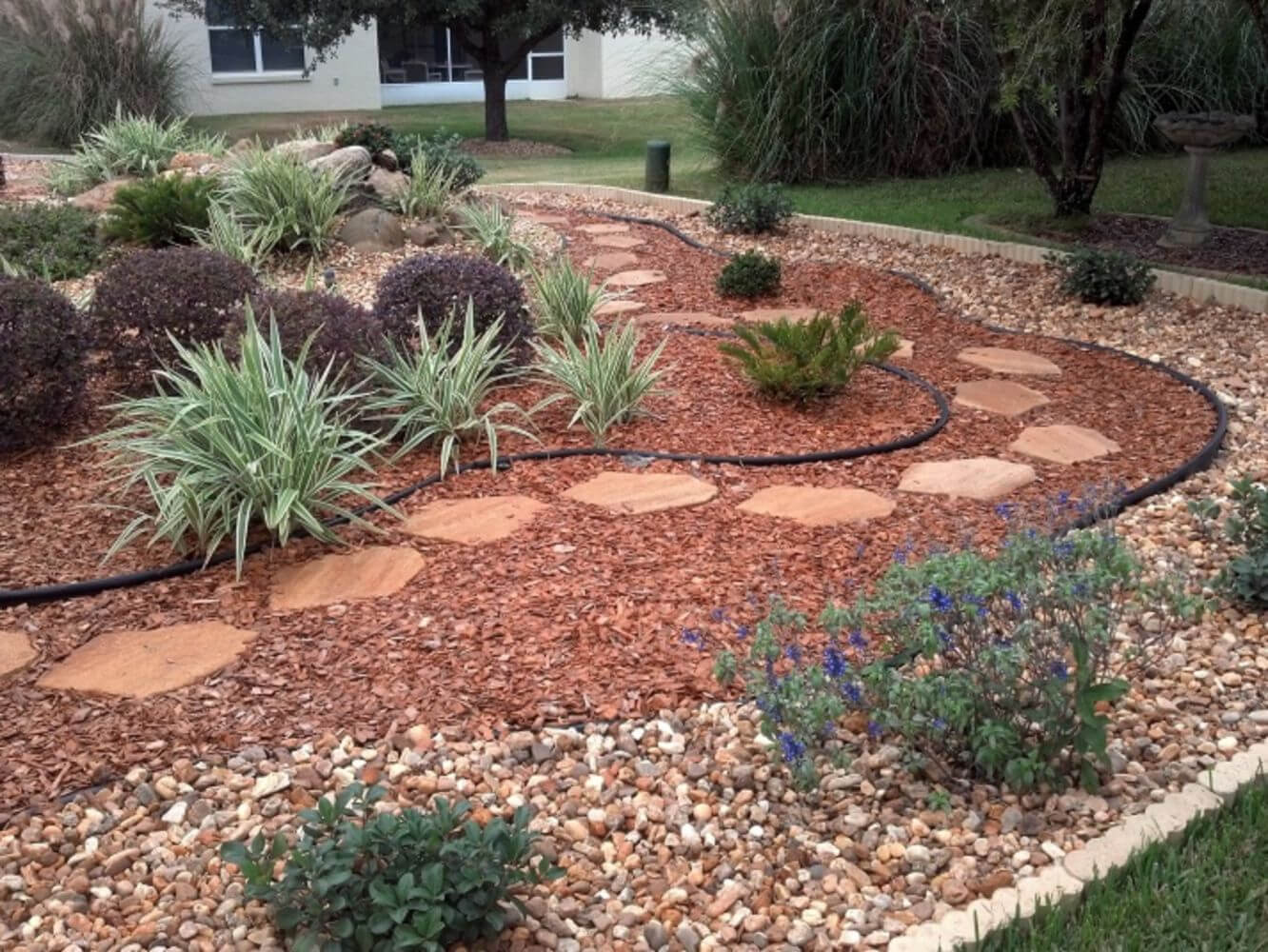
- Red mulch or cedar chips
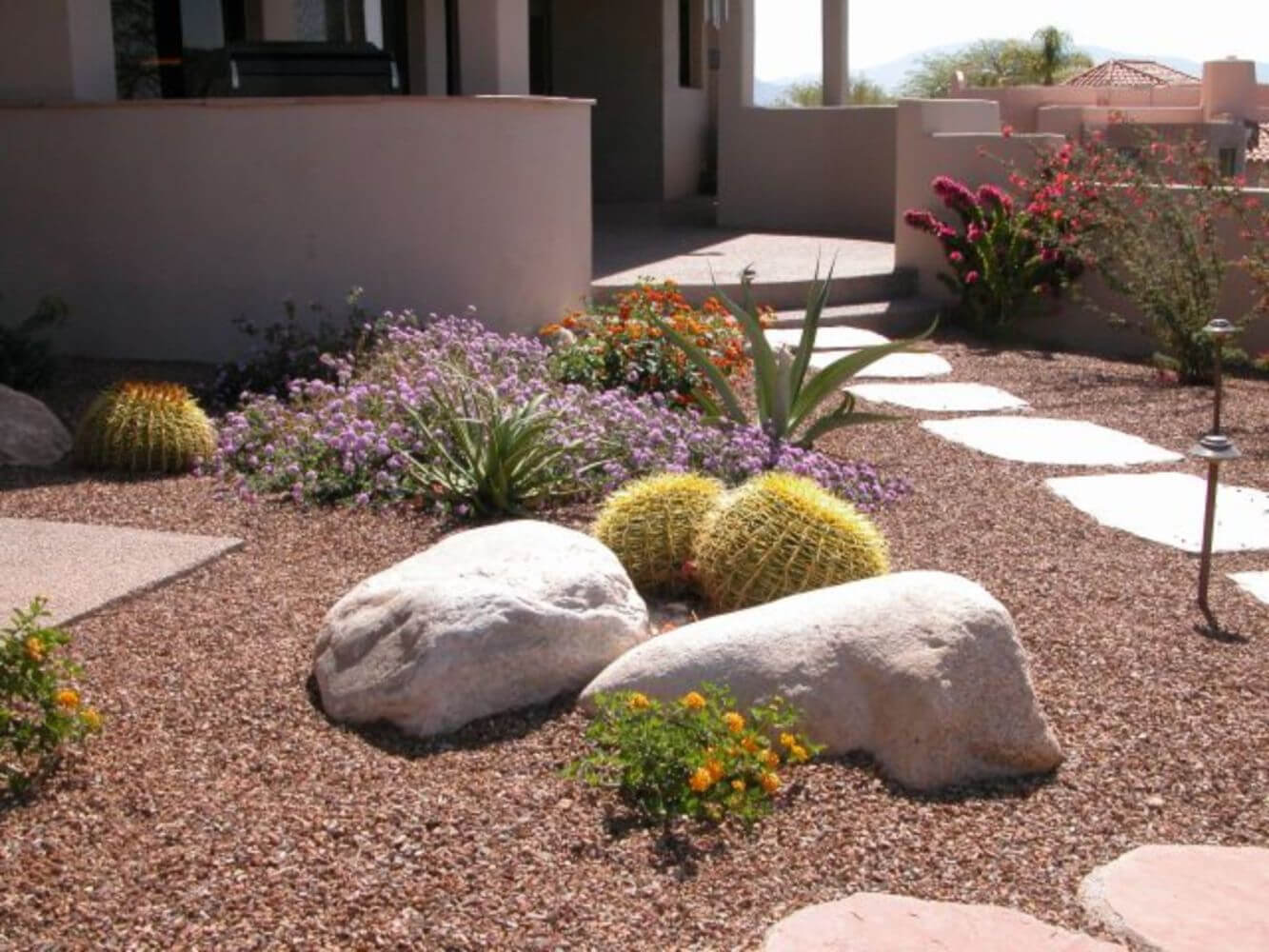
- Colored stones, pebbles,
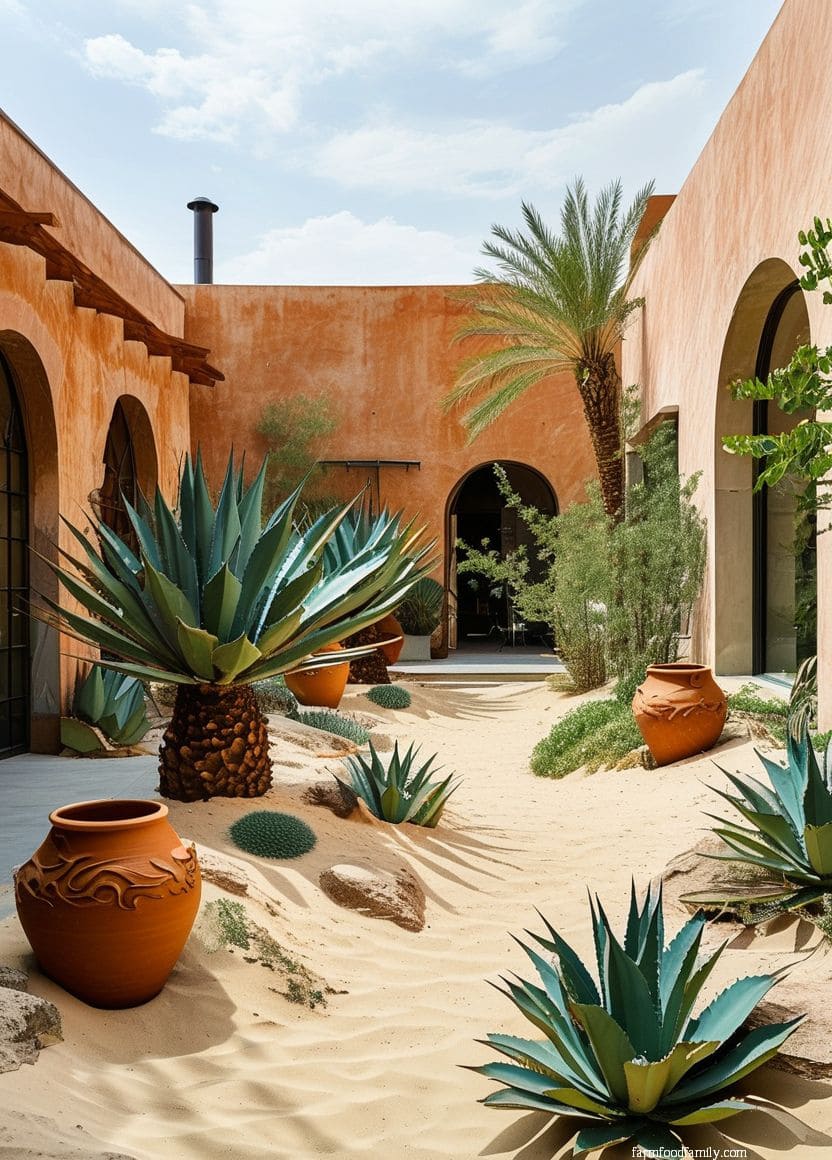
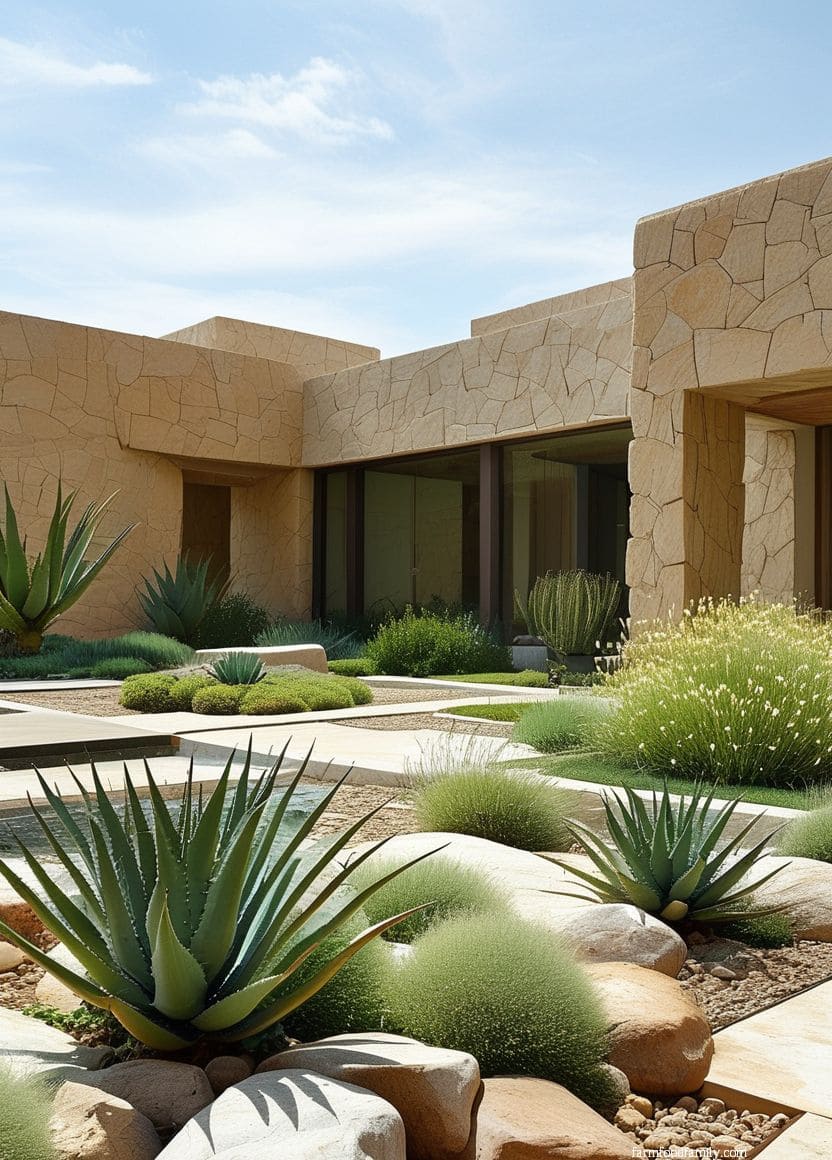
- Rock gardens
- Pools, ponds, or artificial streams and footbridges.
Artificial Turf
Fake lawns aren’t a new idea but the concept is regaining popularity or at least consideration with areas of the sun scorched, water deprived south and southwest.
Most yard problems trace back to one specific, fixable cause. Find yours in 4 quick questions.
Take the Free QuizSports fields, for example the Rays Tropicana field, are composed of synthetic grass. Golf course or putting greens have used artificial turf, as have playgrounds and hotels.
Synthetic lawns can be created for a dog run or as small clusters of green throughout the lawn area. The product is created so as to be nontoxic and forever green difficult to differentiate from the real thing though obviously drought friendly.
Creating Paths Within the Yard
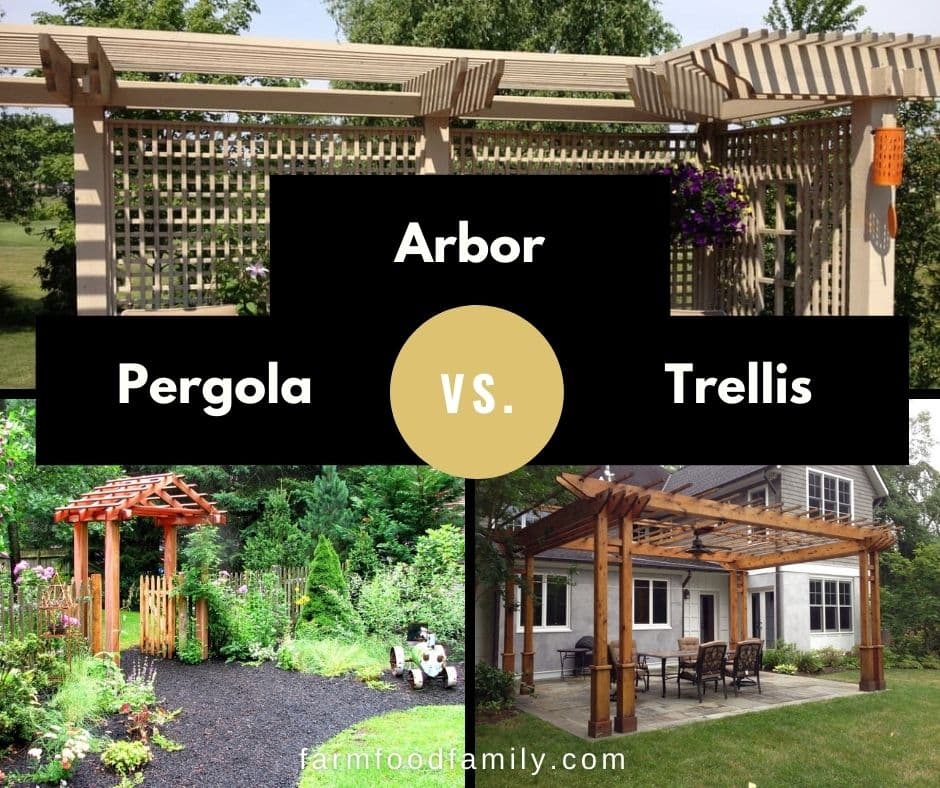
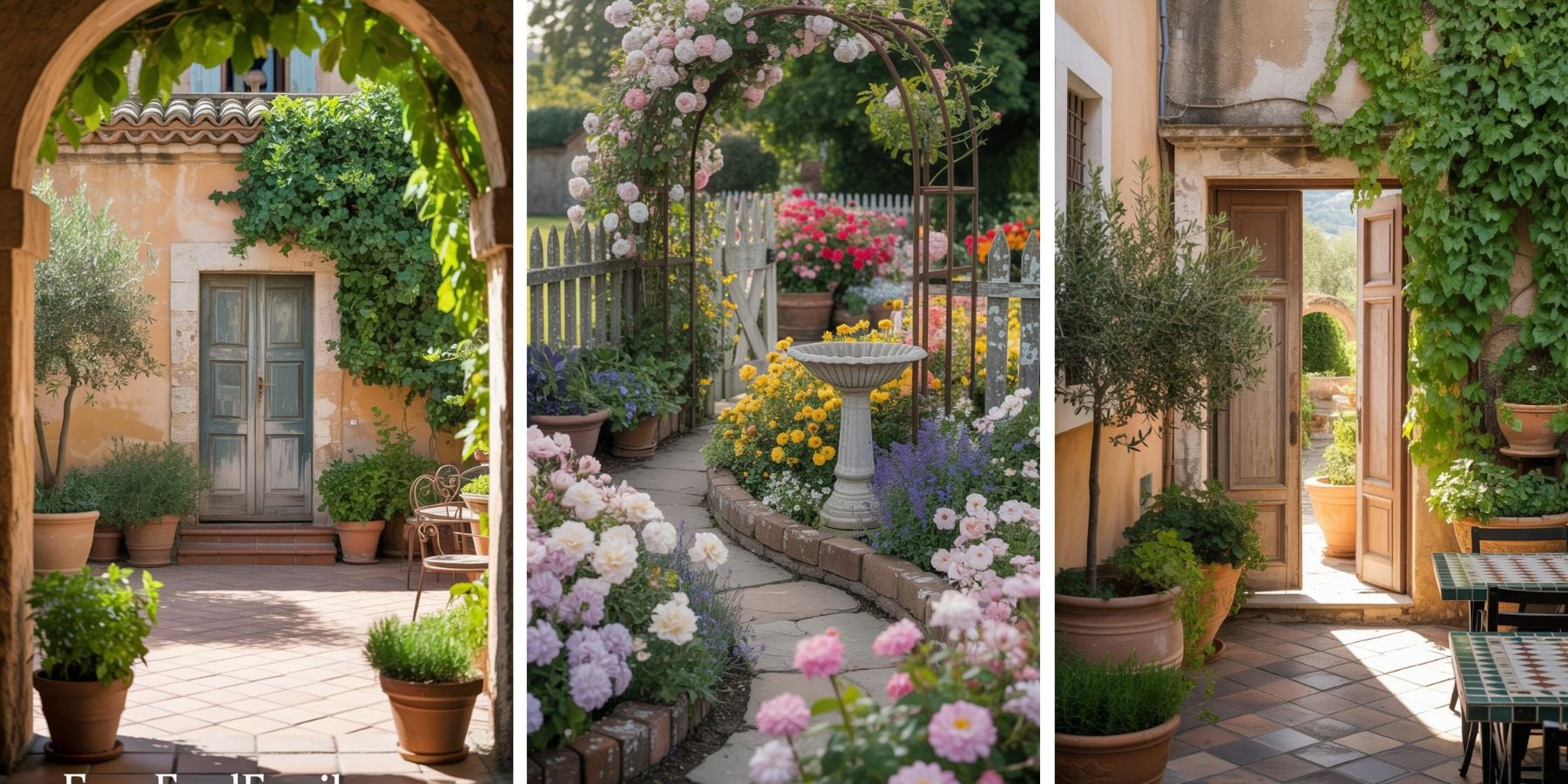
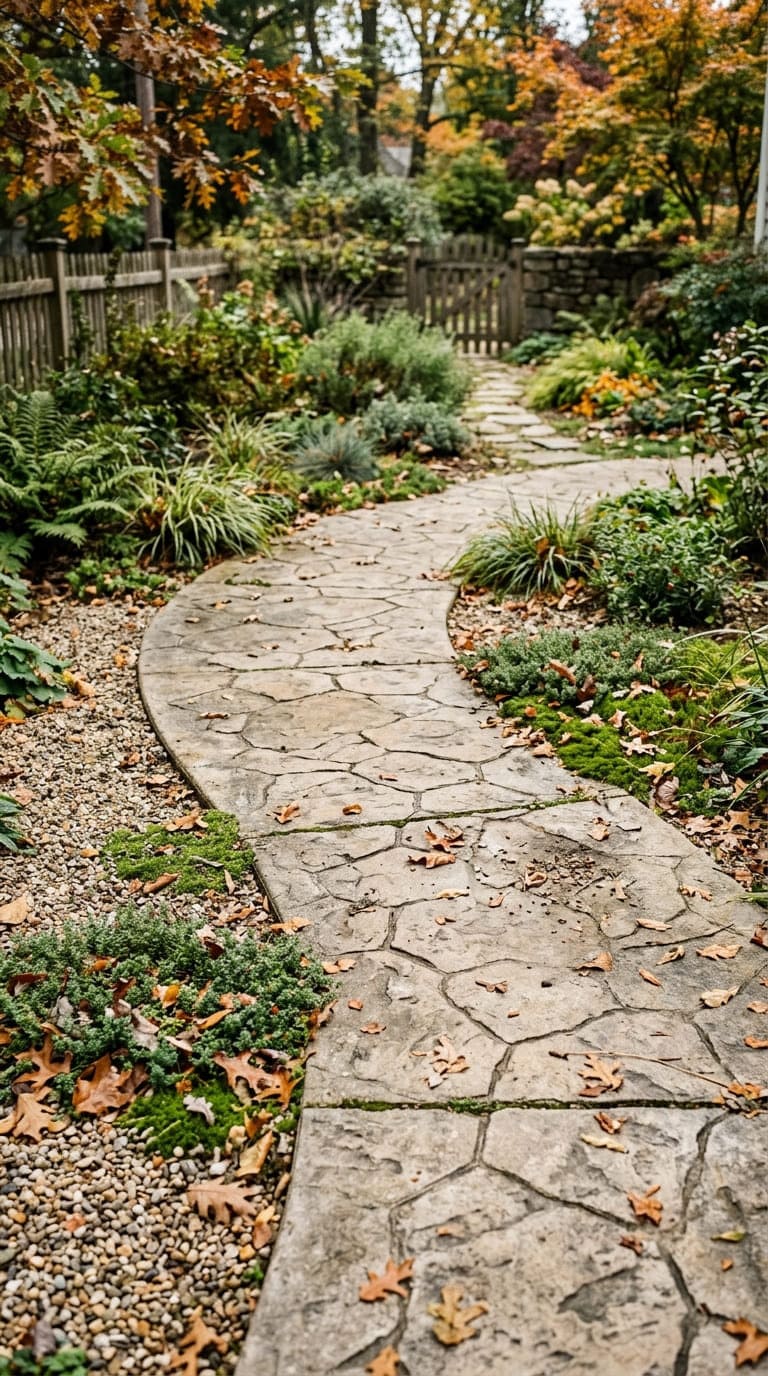
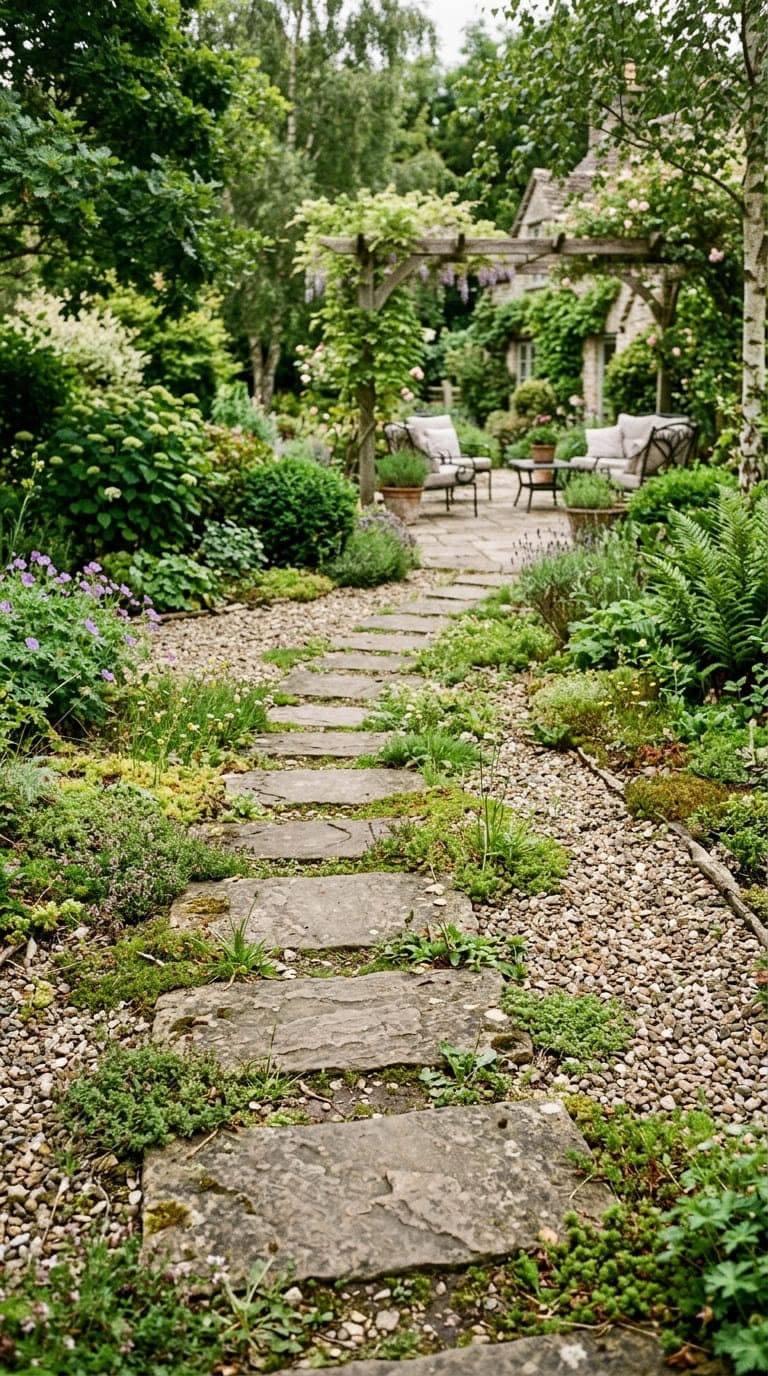
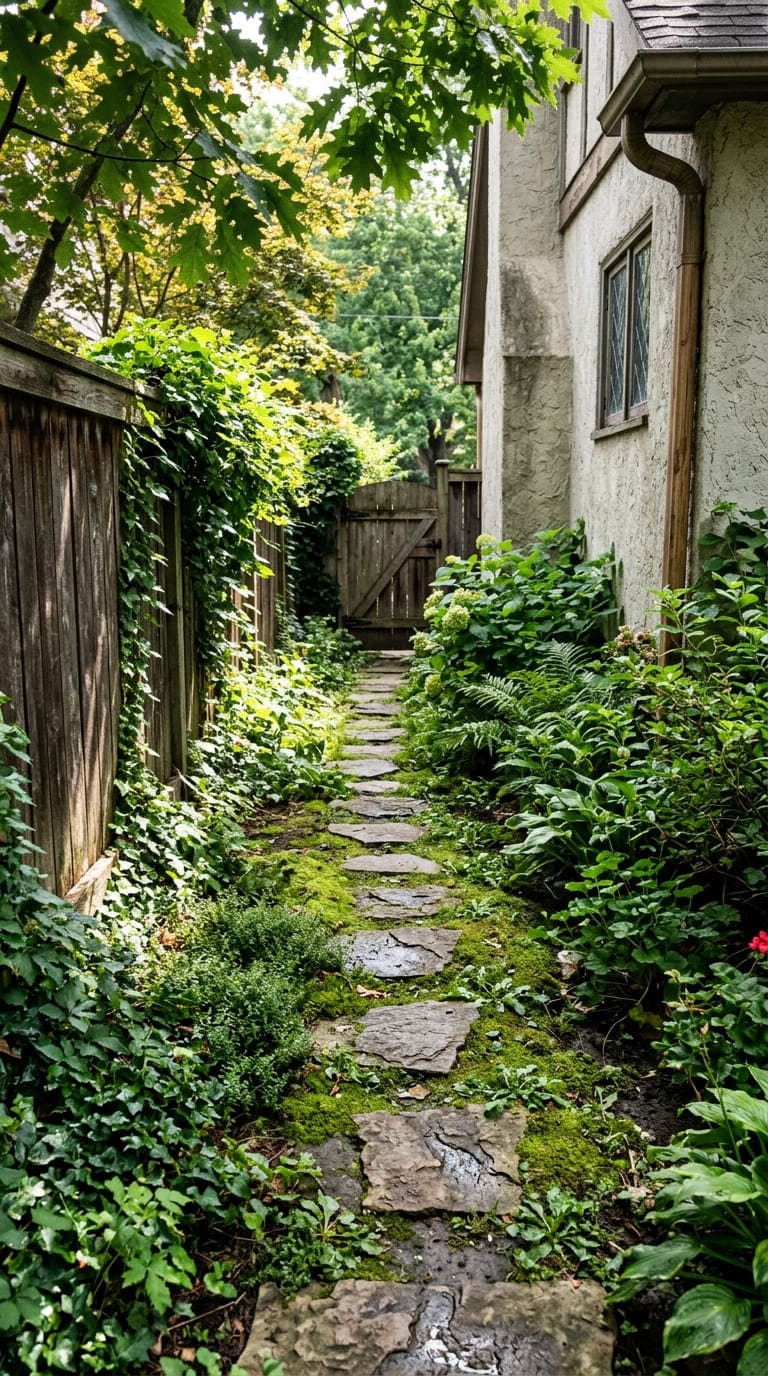
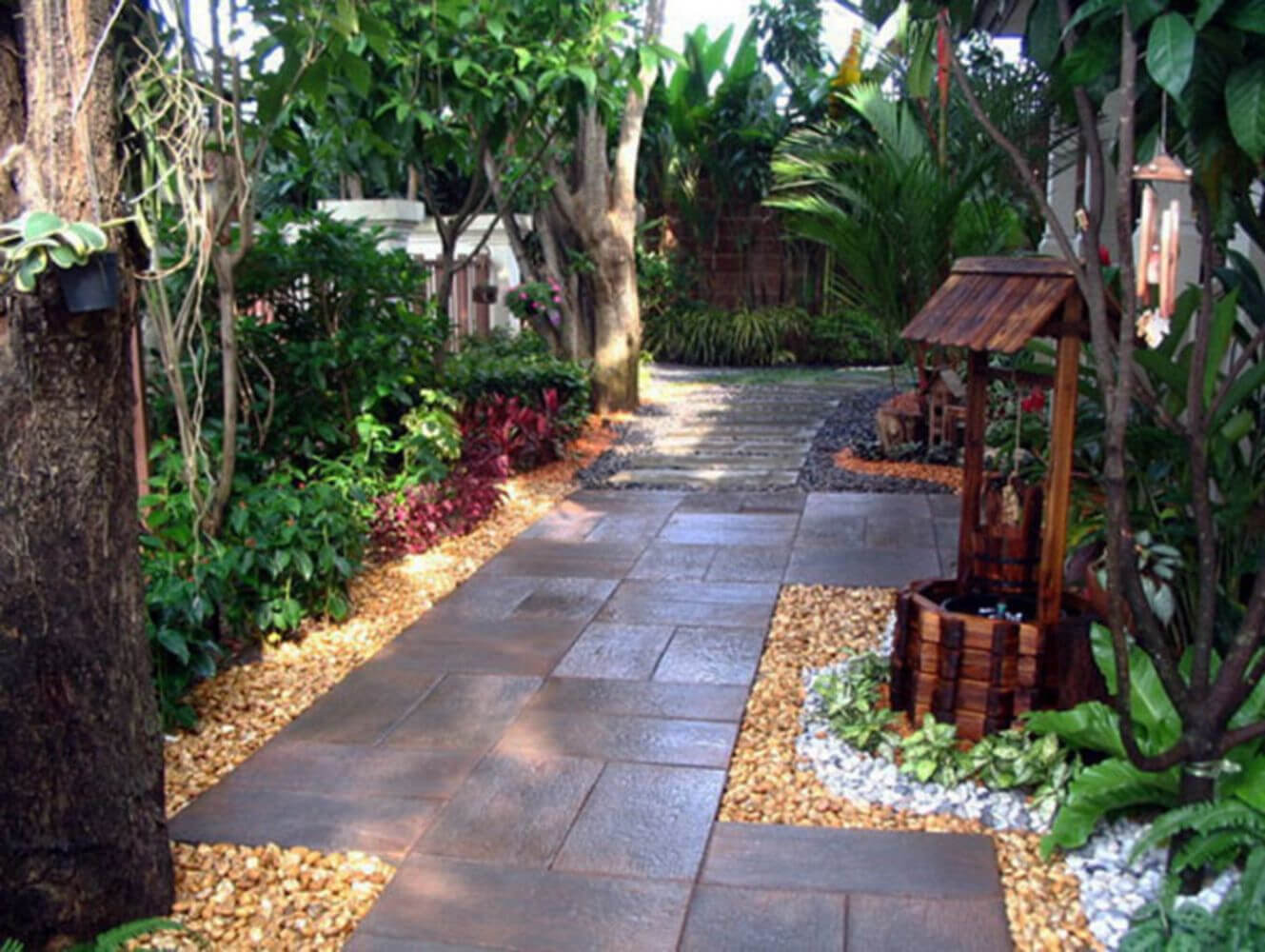
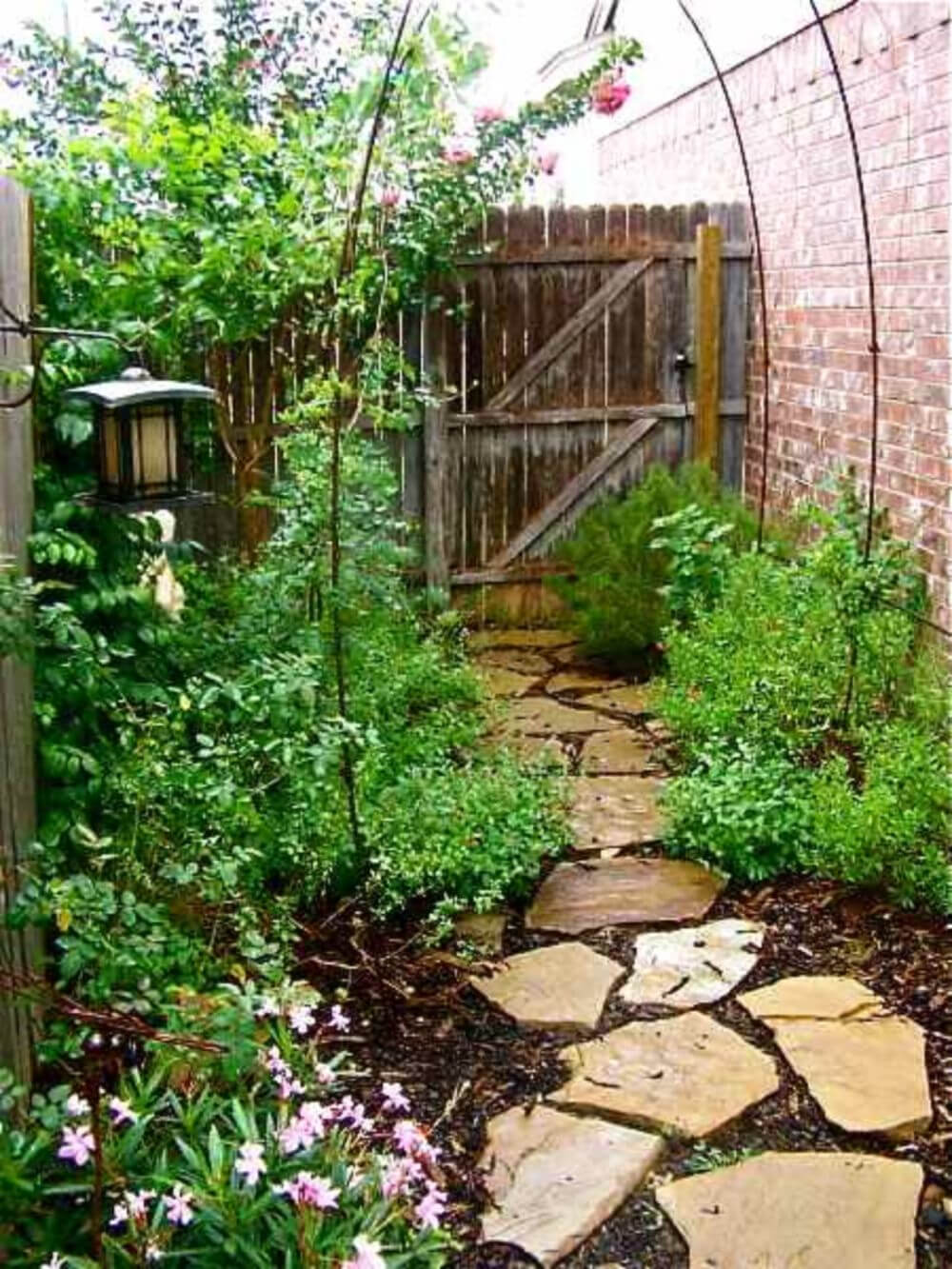
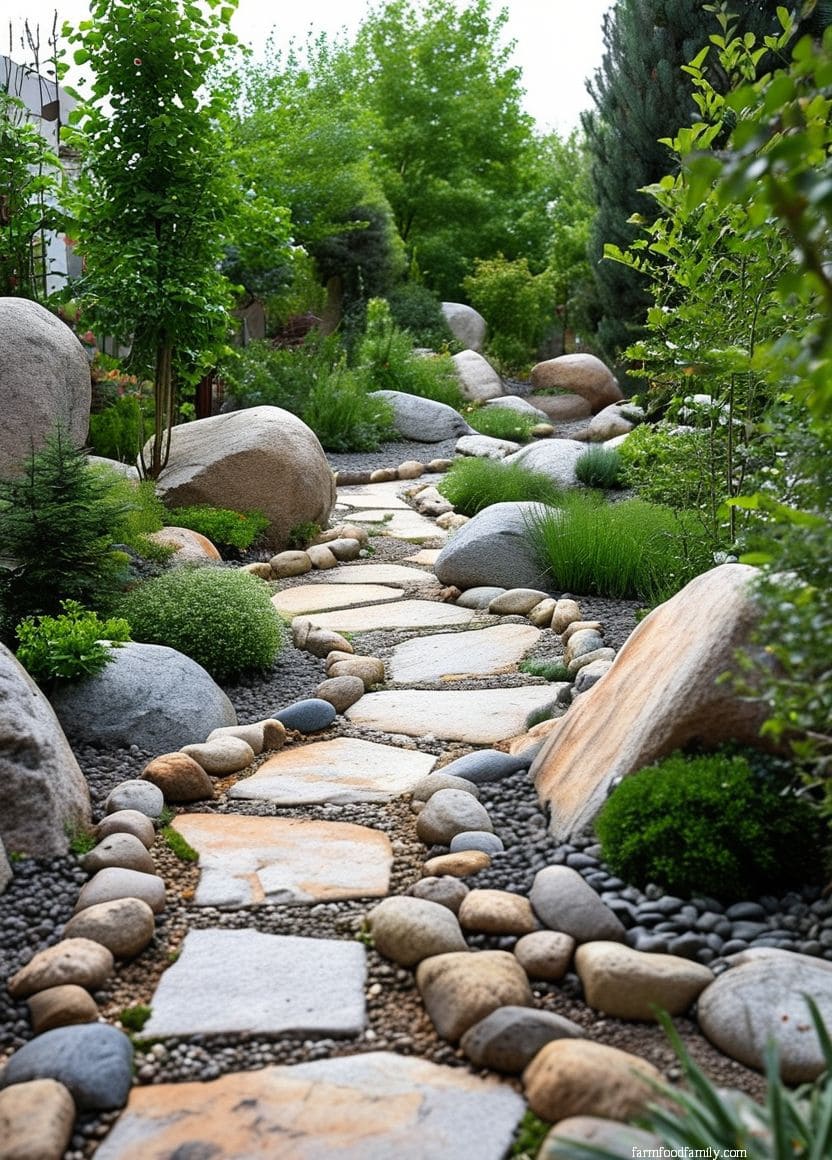
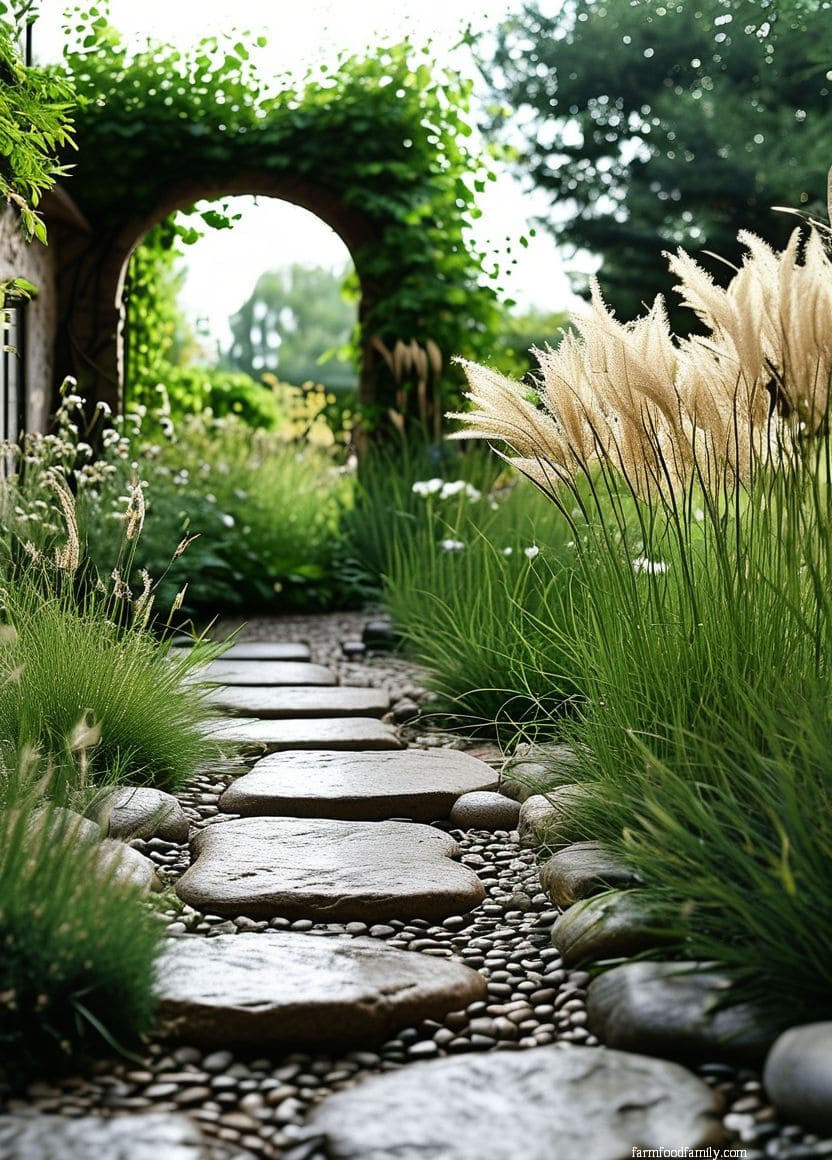
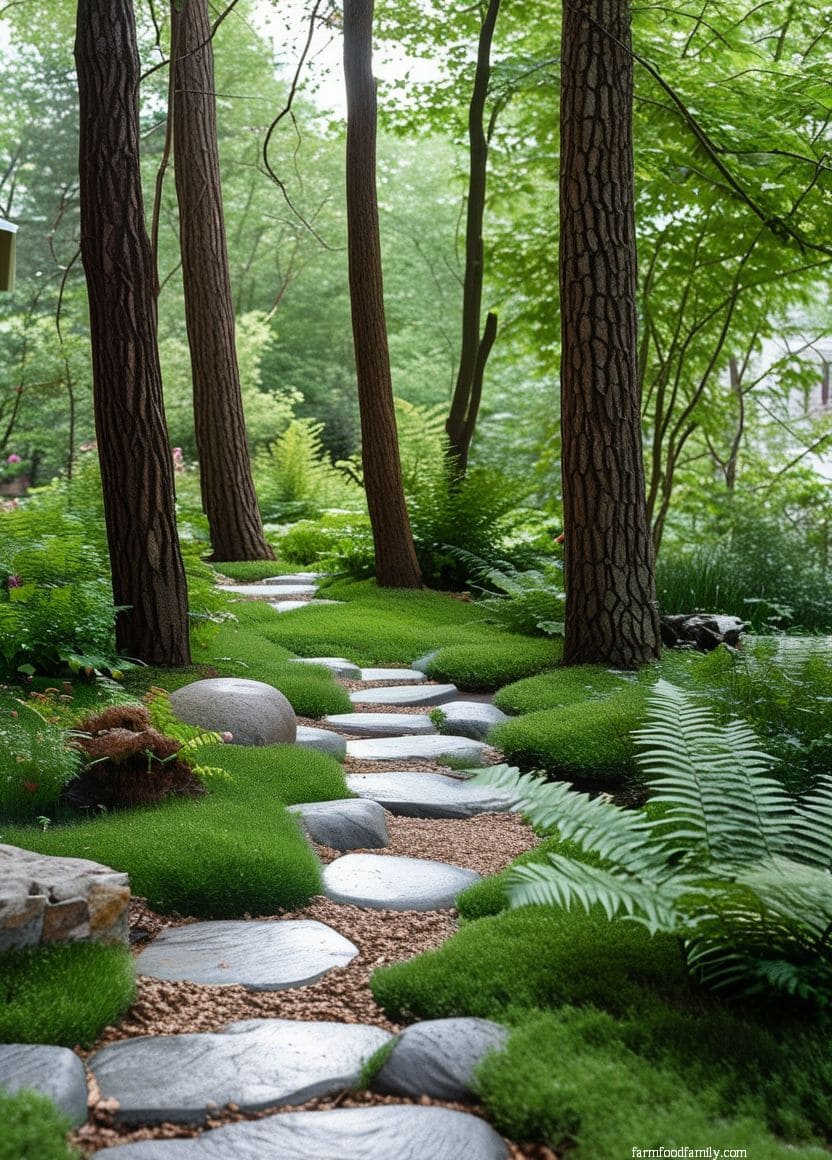
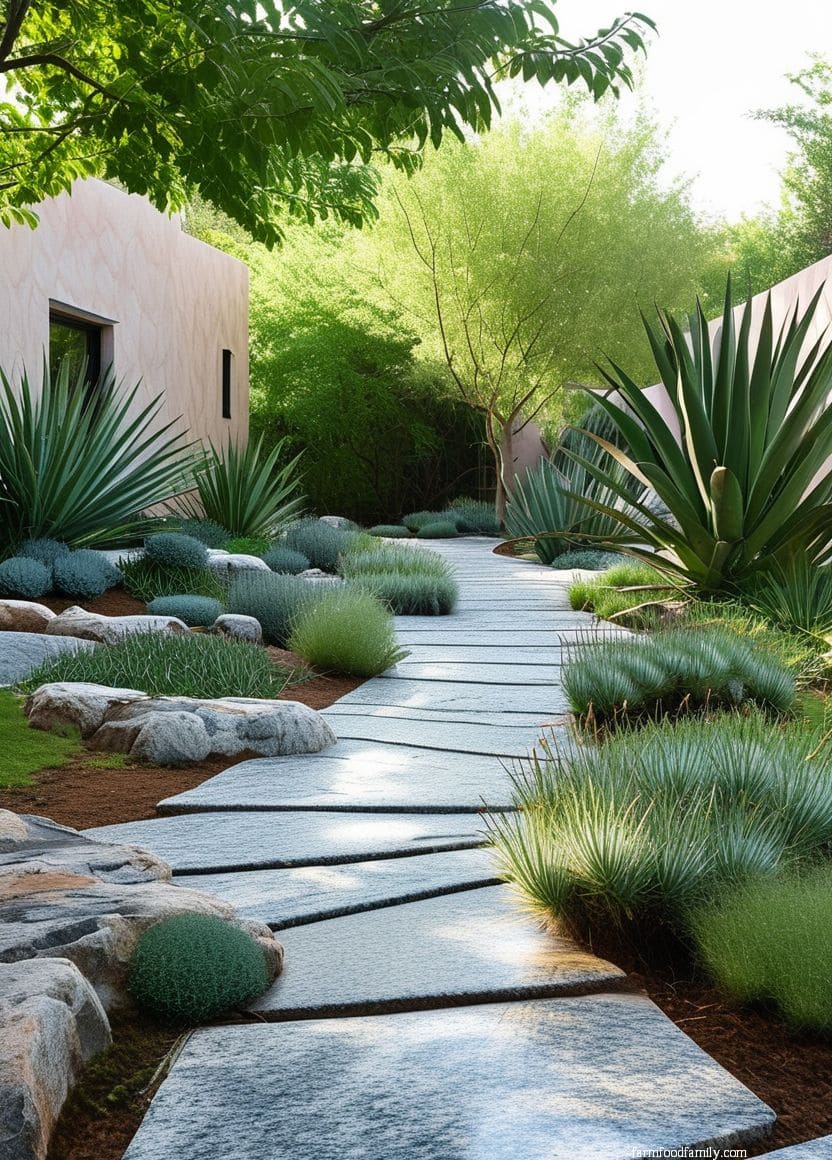
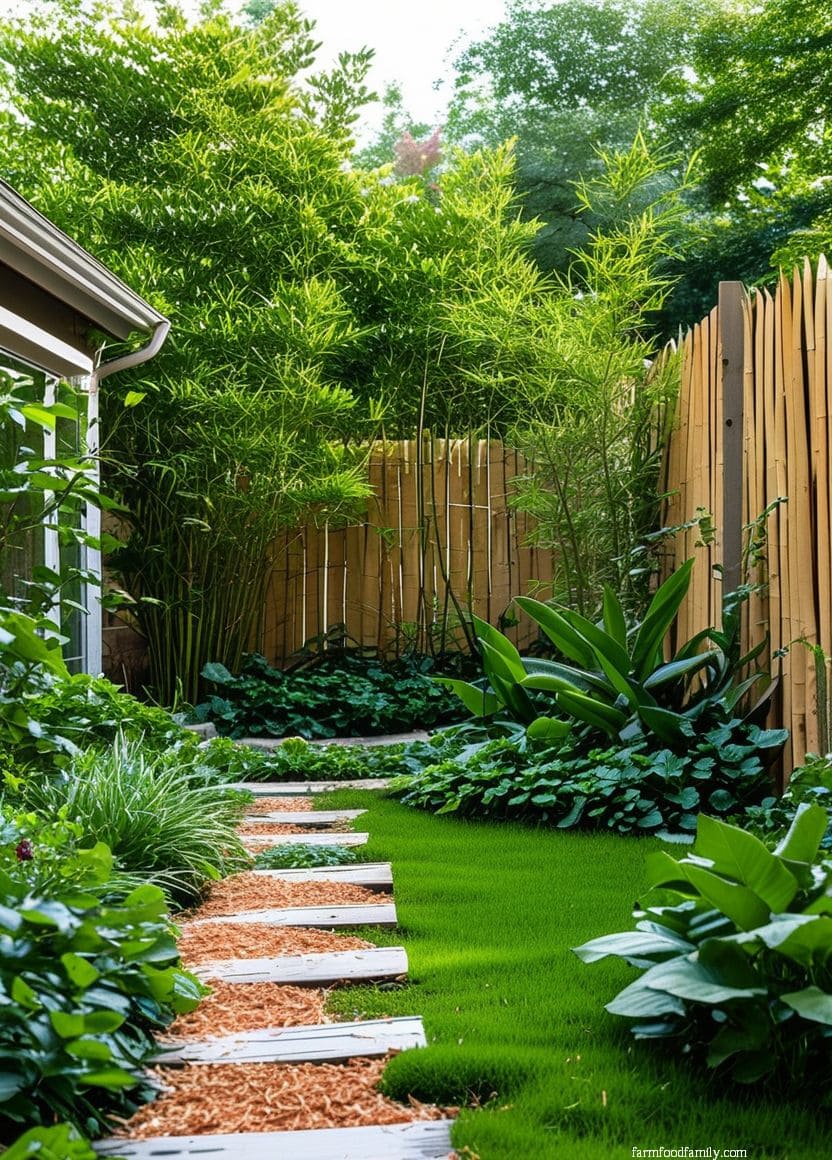
Pathways of open cobbles or closed brick and stamped concrete break up yard areas yet can give the illusion of more space. One meanders along a path with bushes or plants defining it or directing the walker to a specific site such as a birdbath on a pedestal or Interesting Trees on the lot.
Combining pathways and ground covers or patios covers a no grass space in interesting patterns. A path can also lead to a yard alternative such as a pool or pond.
Check your community by-laws before undergoing drastic and expensive lawn changes. There are many options to “going green”. The irony is, not all are natural.
23 no grass backyard ideas

It might be hard to imagine a backyard without grass but let me tell you, it is utterly possible. As a matter of fact, it is a growing trend for modern architecture and landscaping right now and labeled these designs as the no-mow garden and backyard.
This is a valid alternative in building your dream backyard because we have to admit, maintaining the turf requires more than just money but also a considerable amount of effort. And if you have been dying of what you can transform your backyard into, here are no grass backyard ideas you can count on.
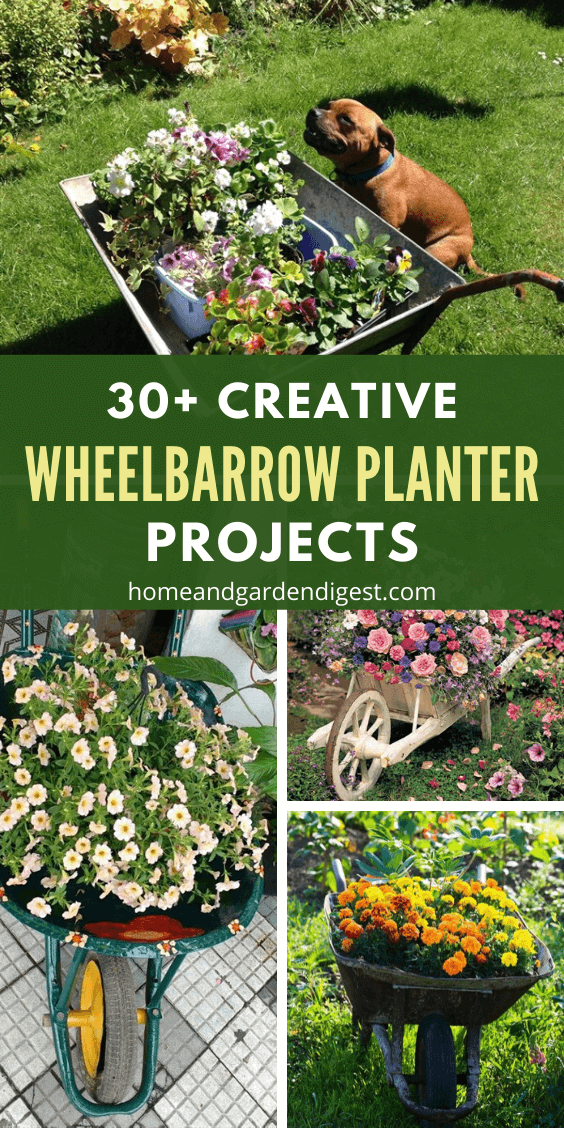
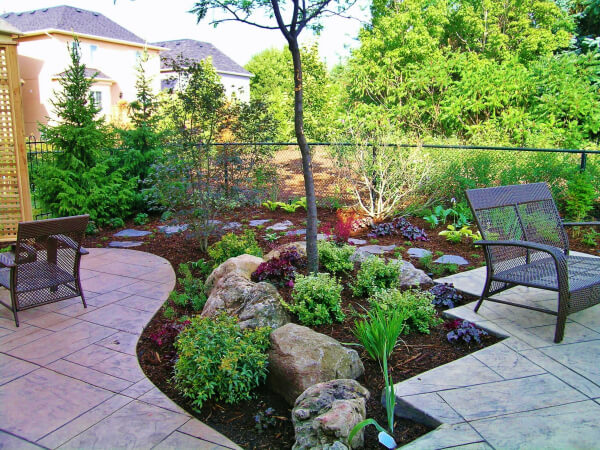
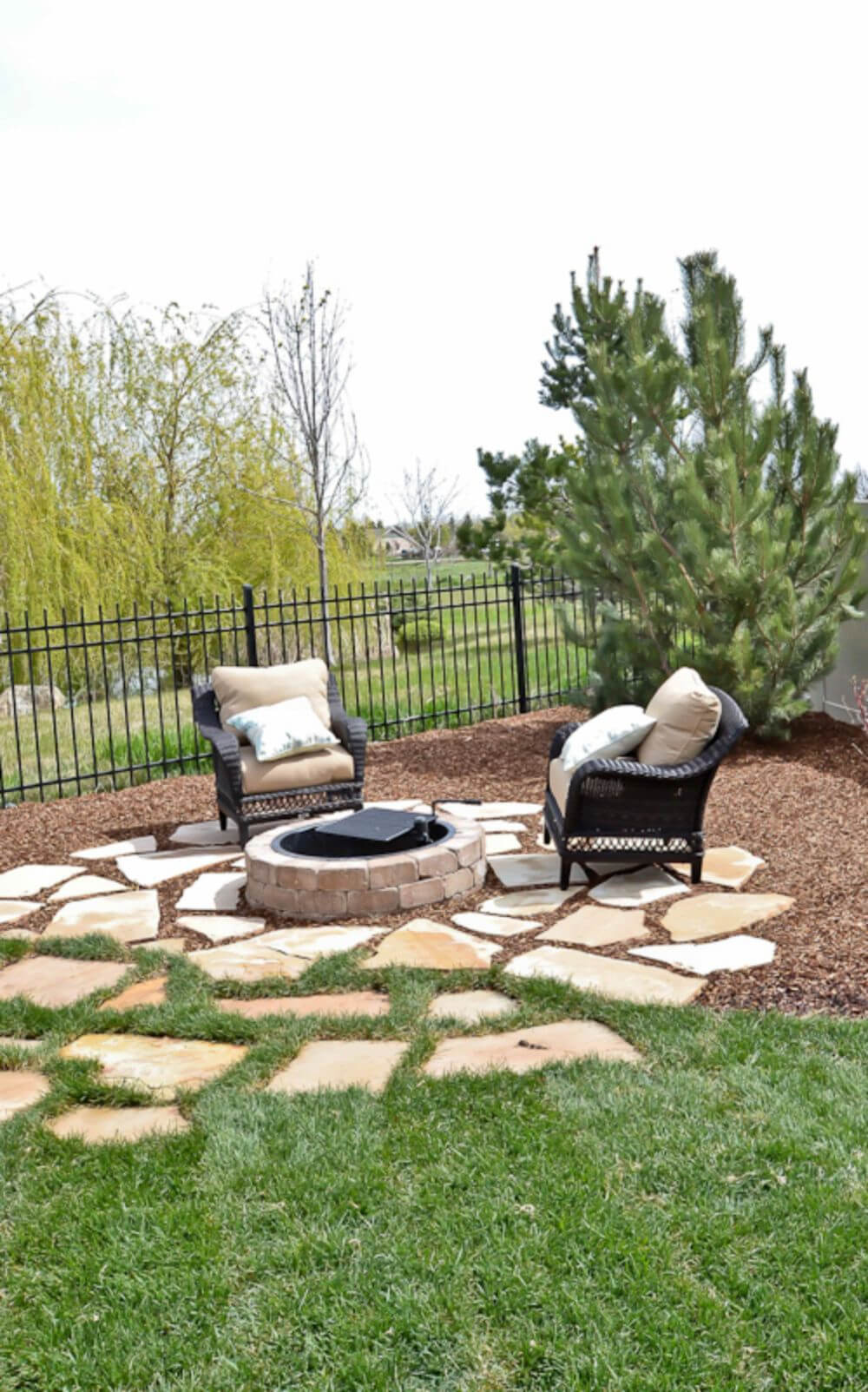
1. Flagstone and Hardscape Patios
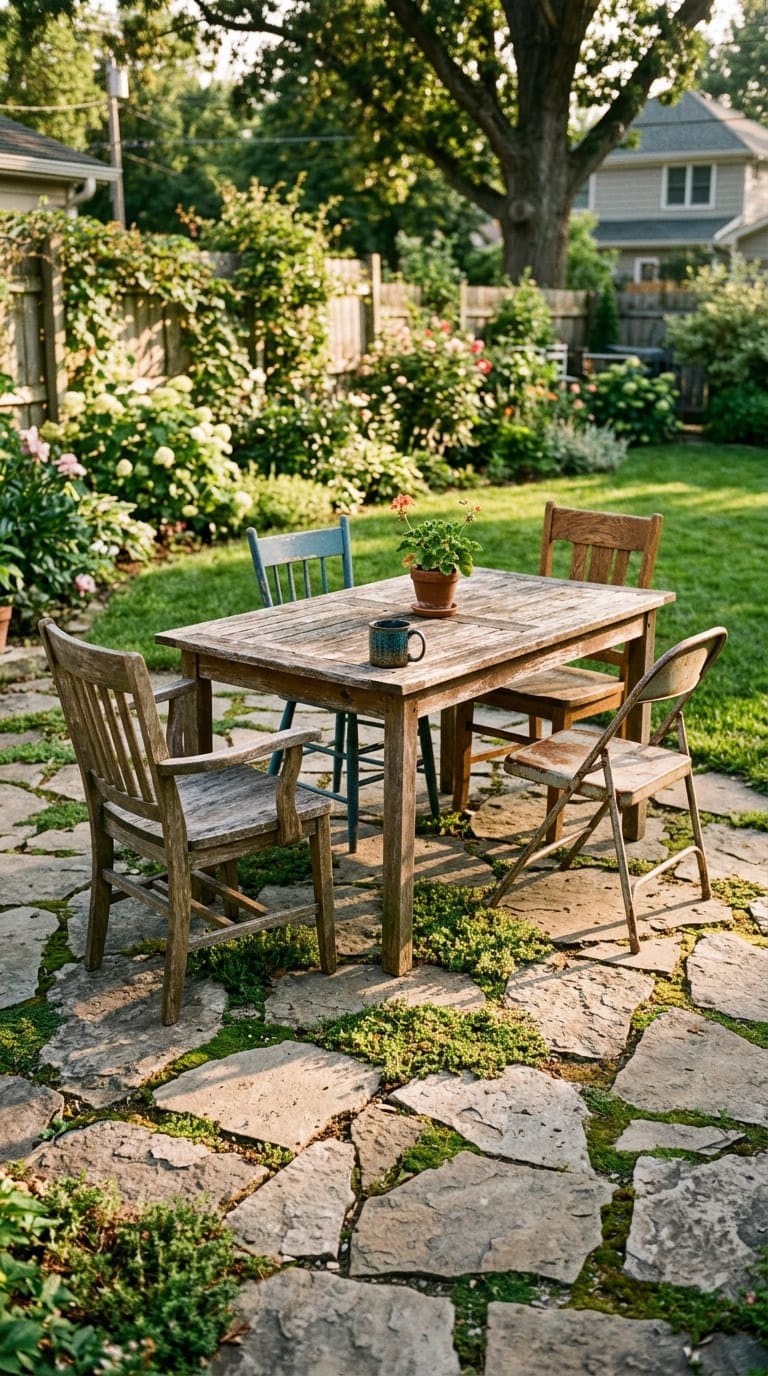
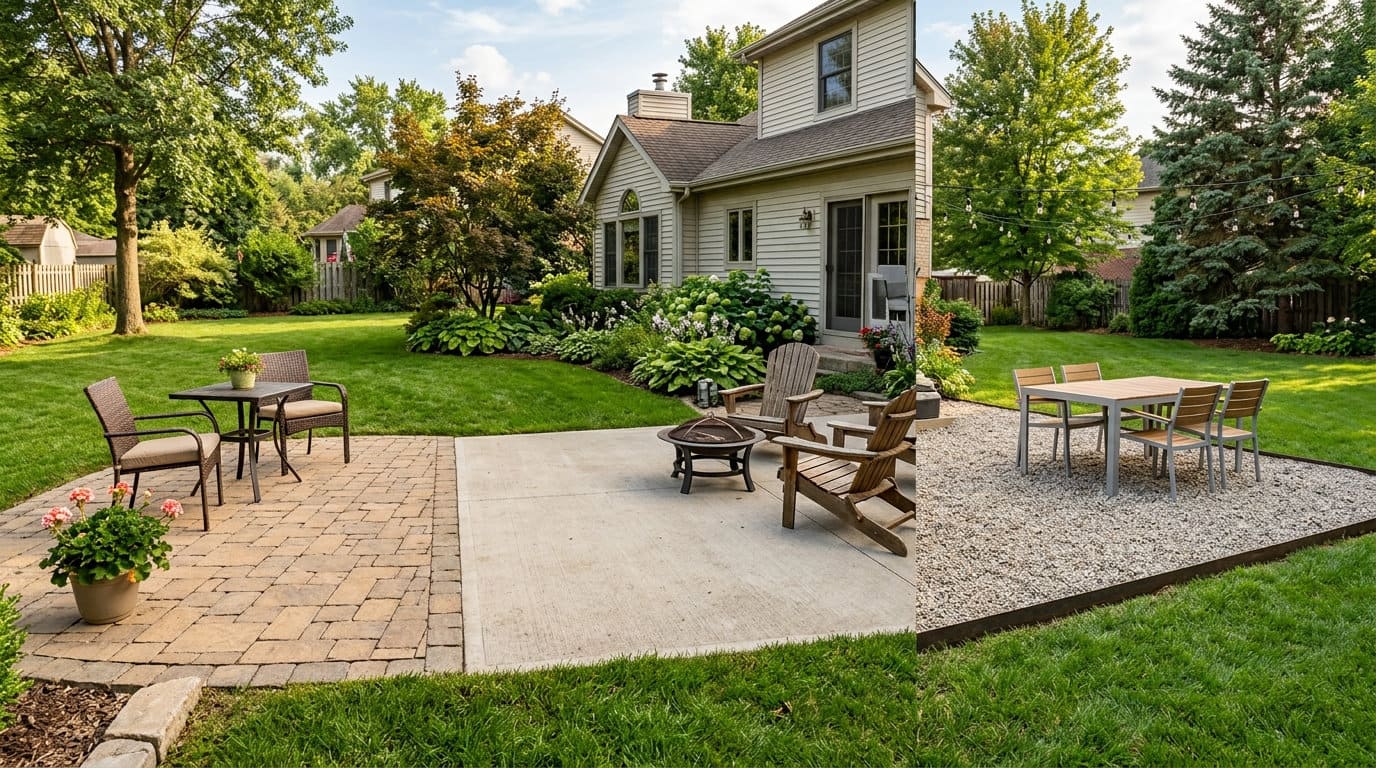
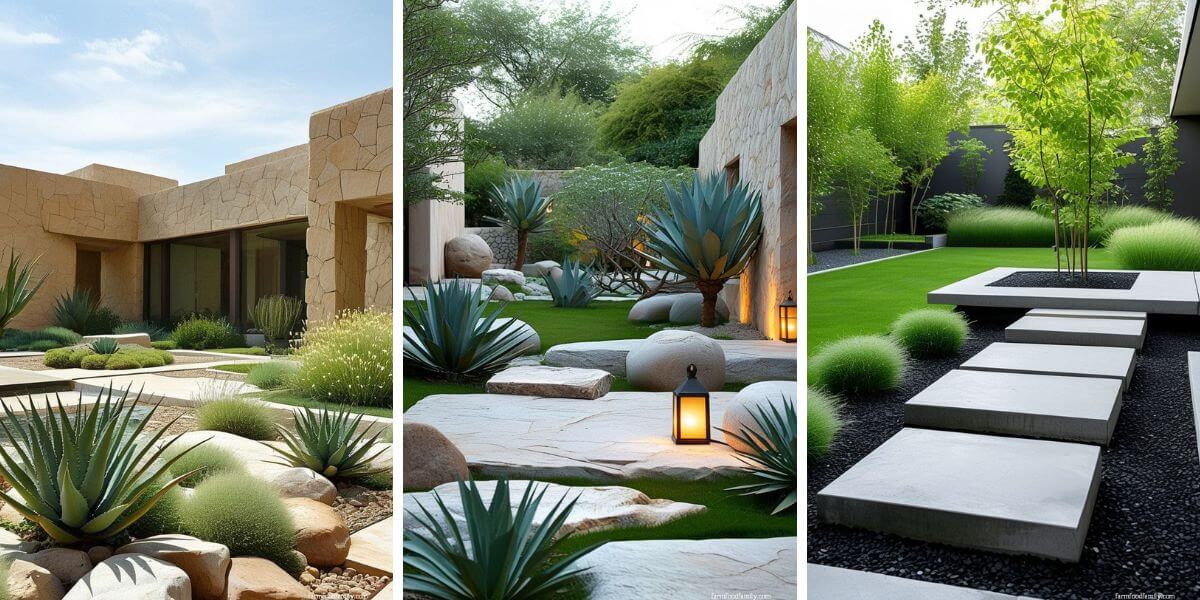
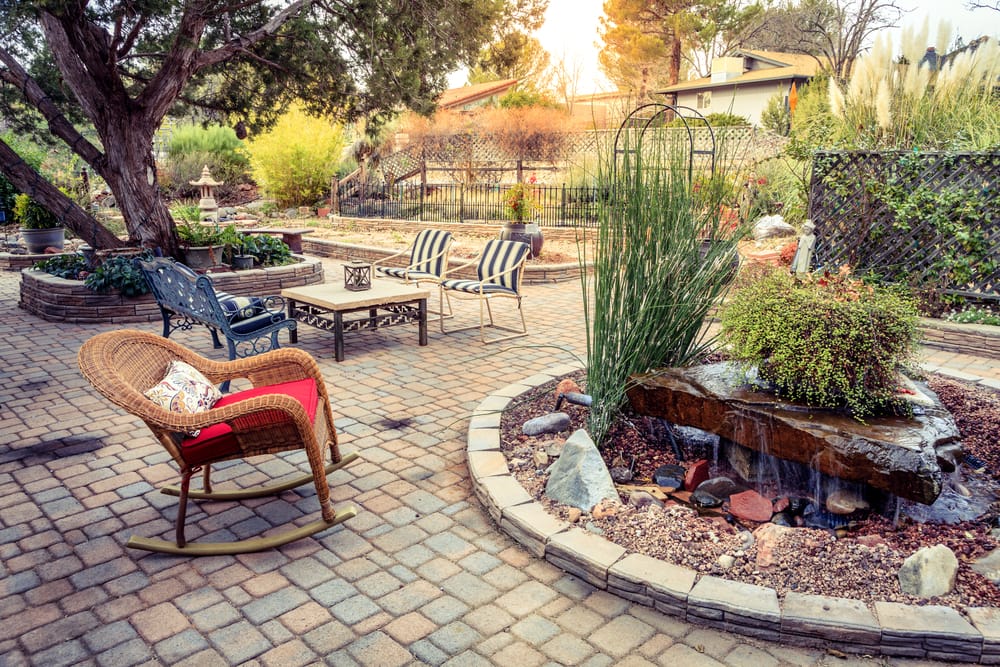
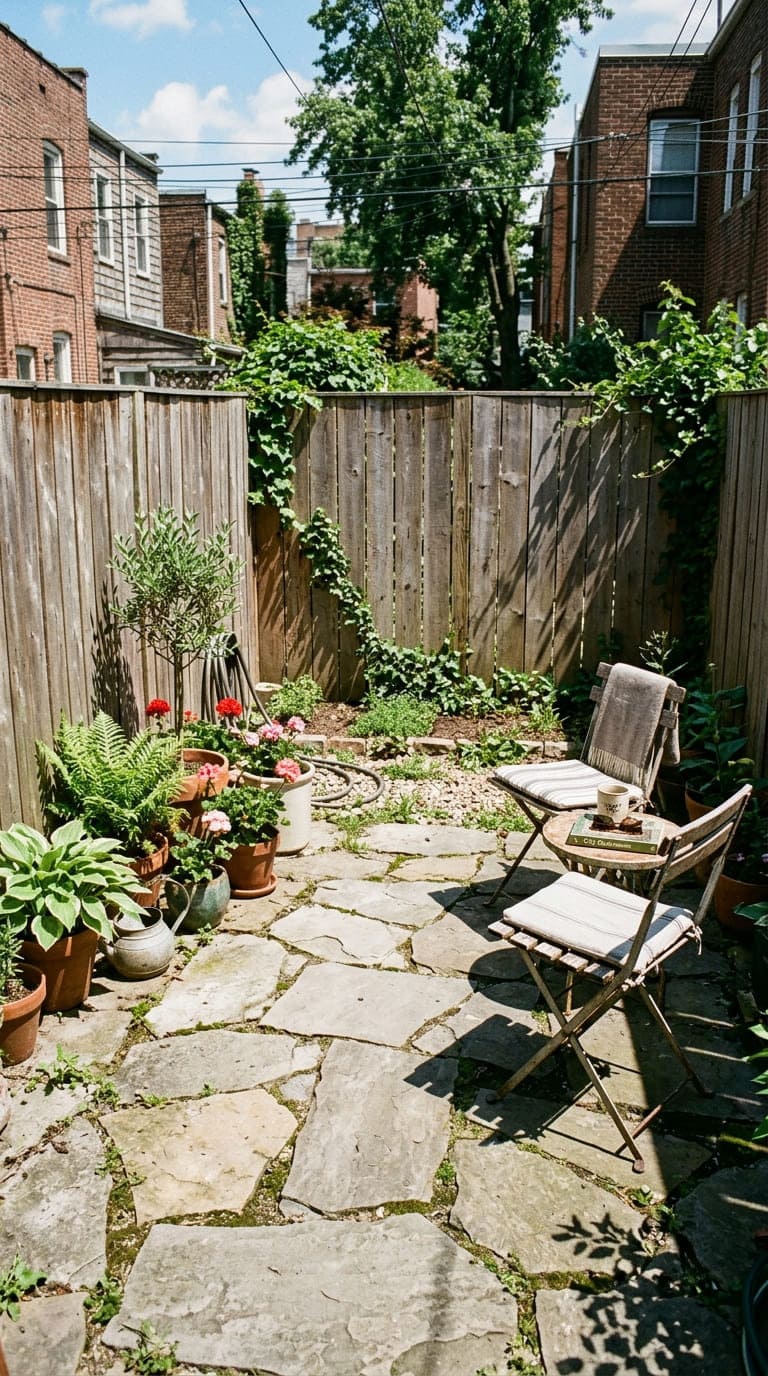
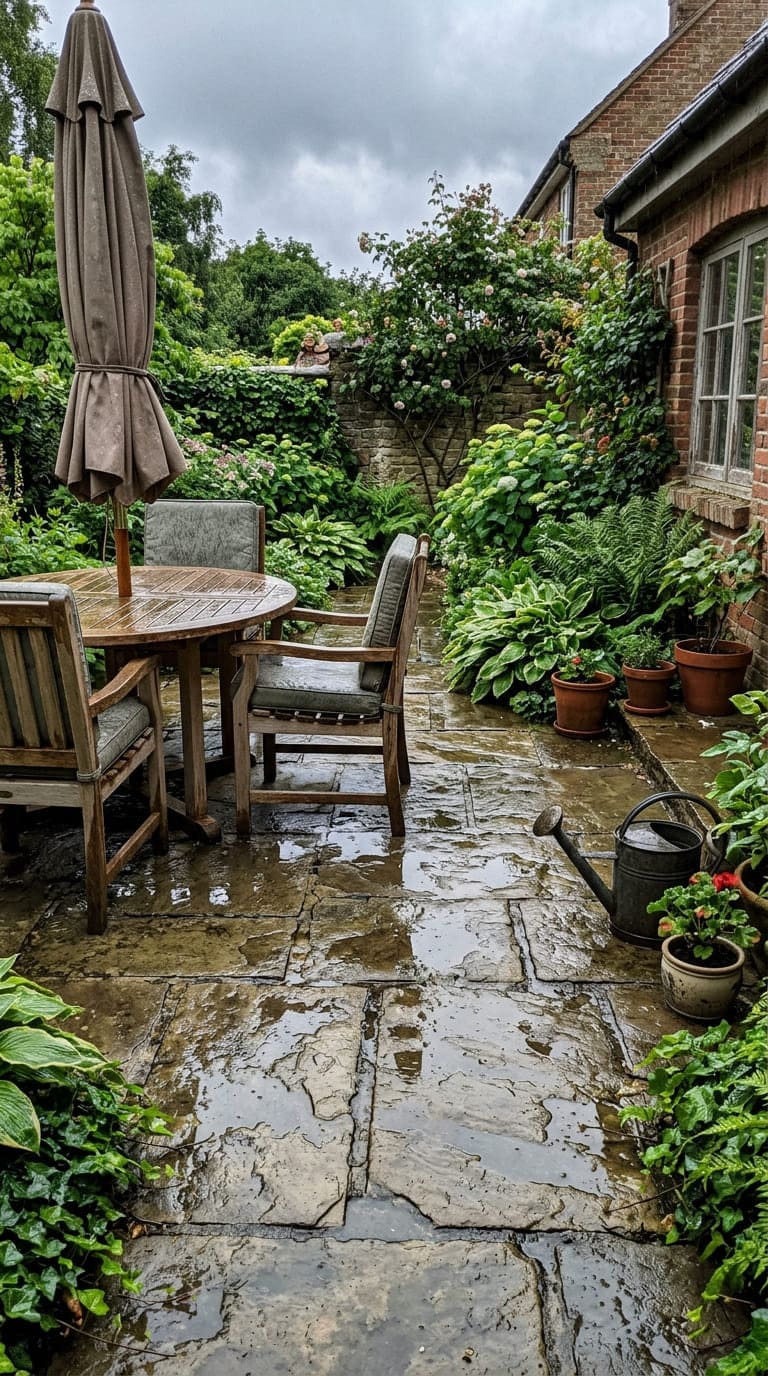
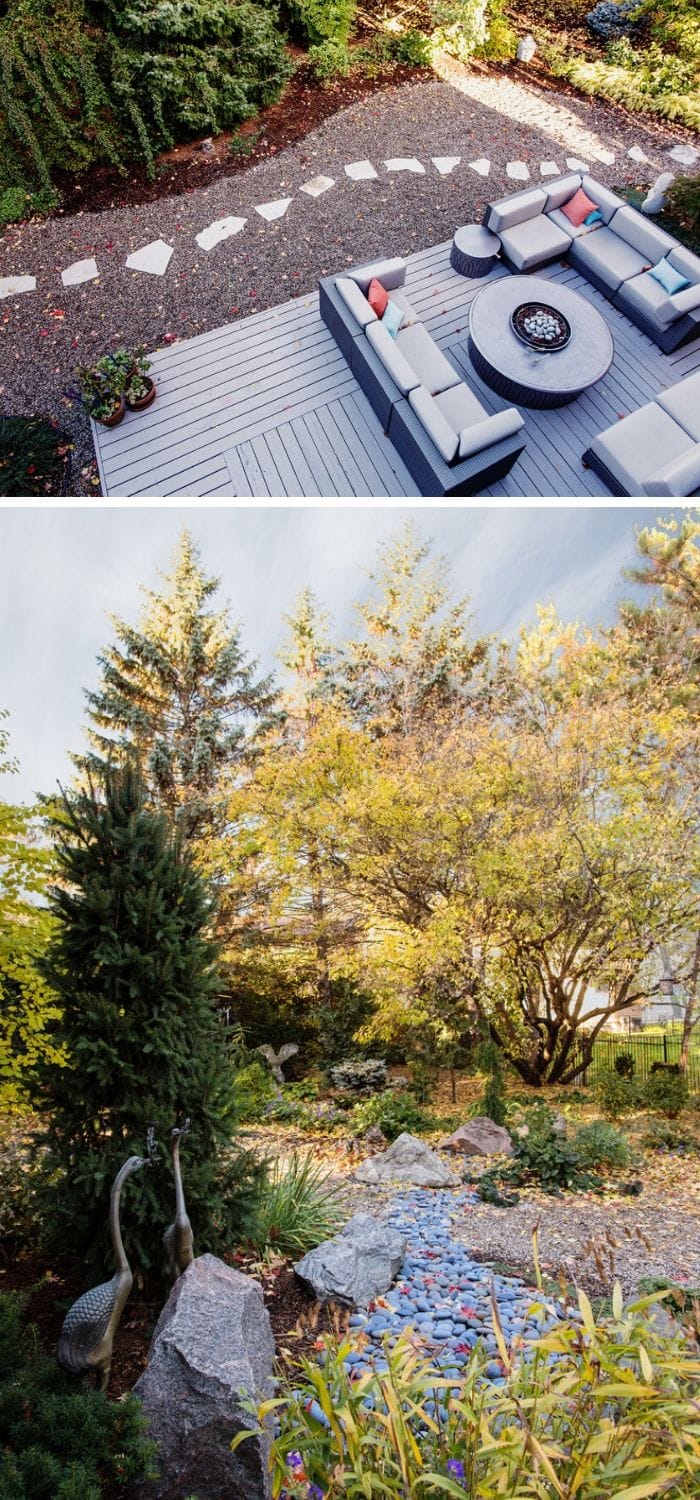
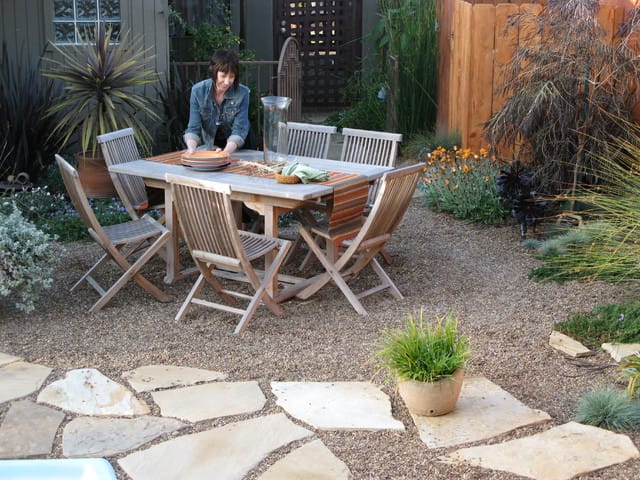
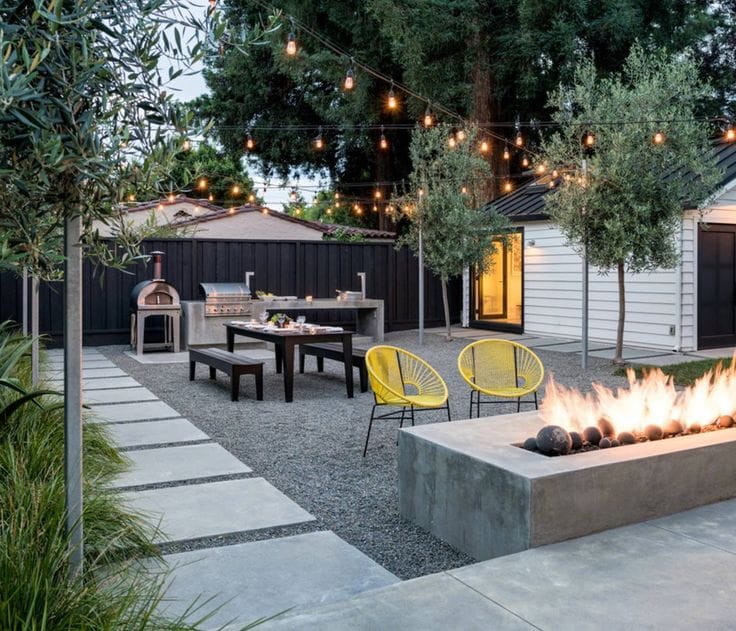
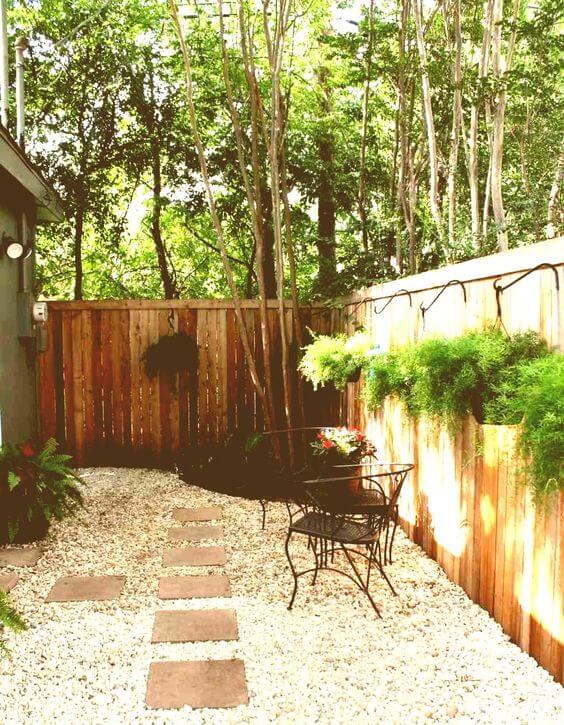
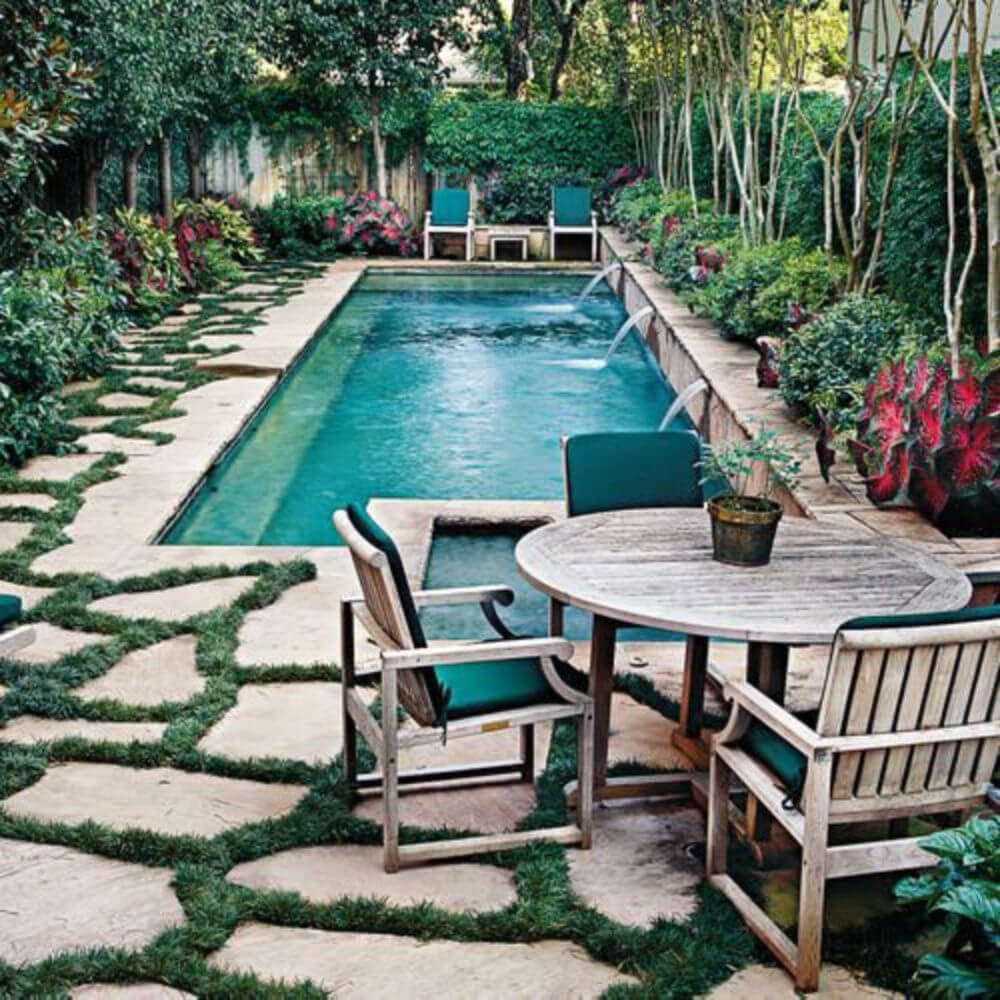
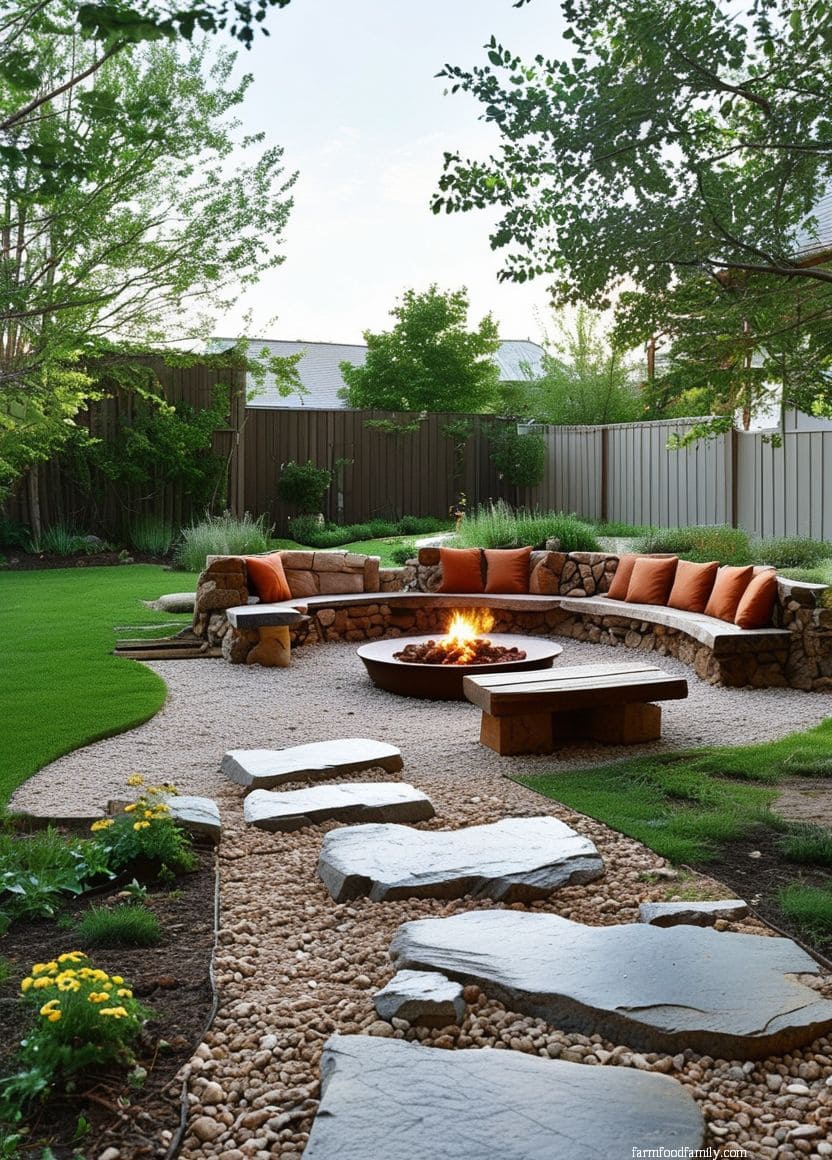
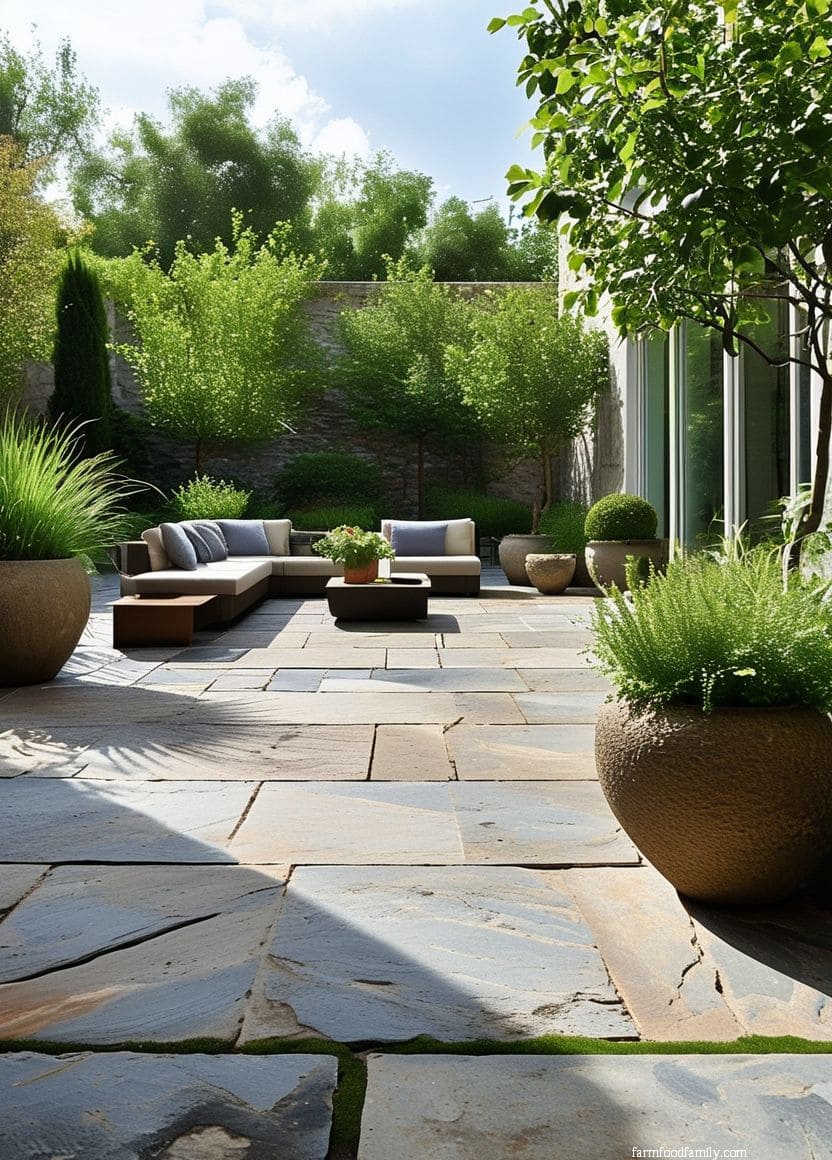
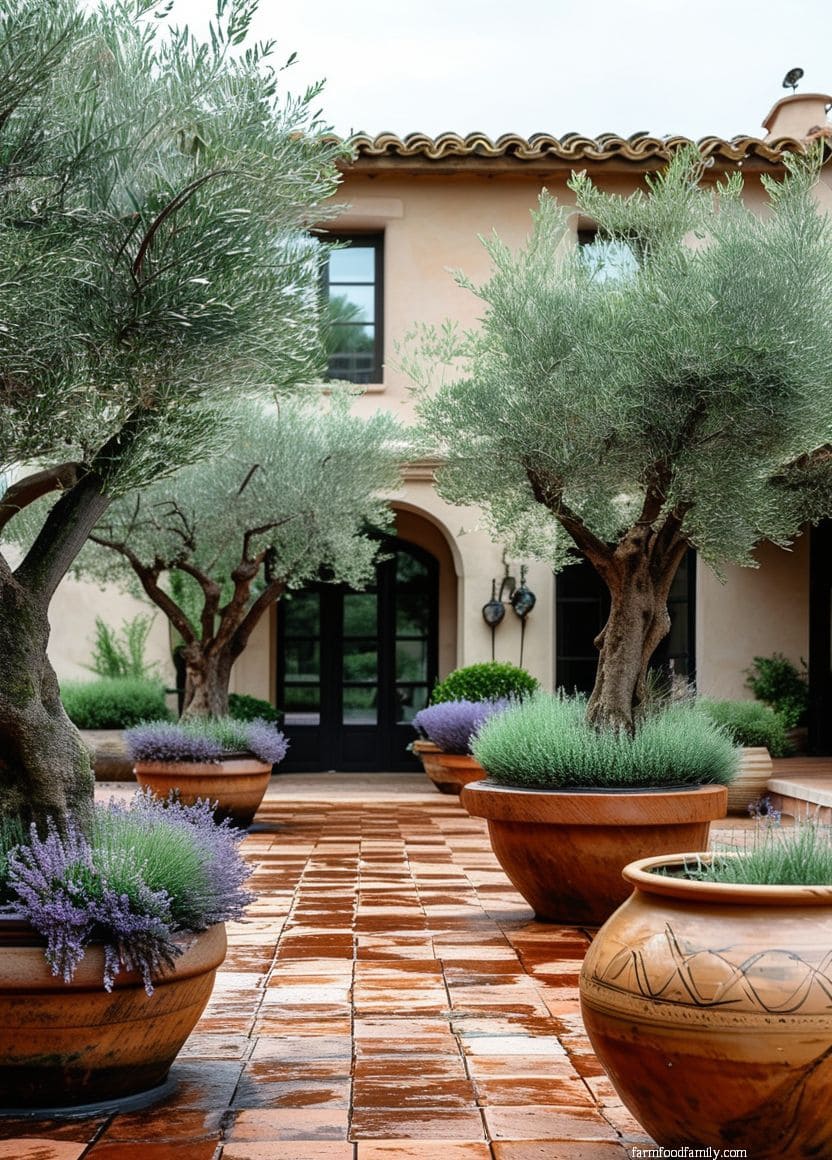
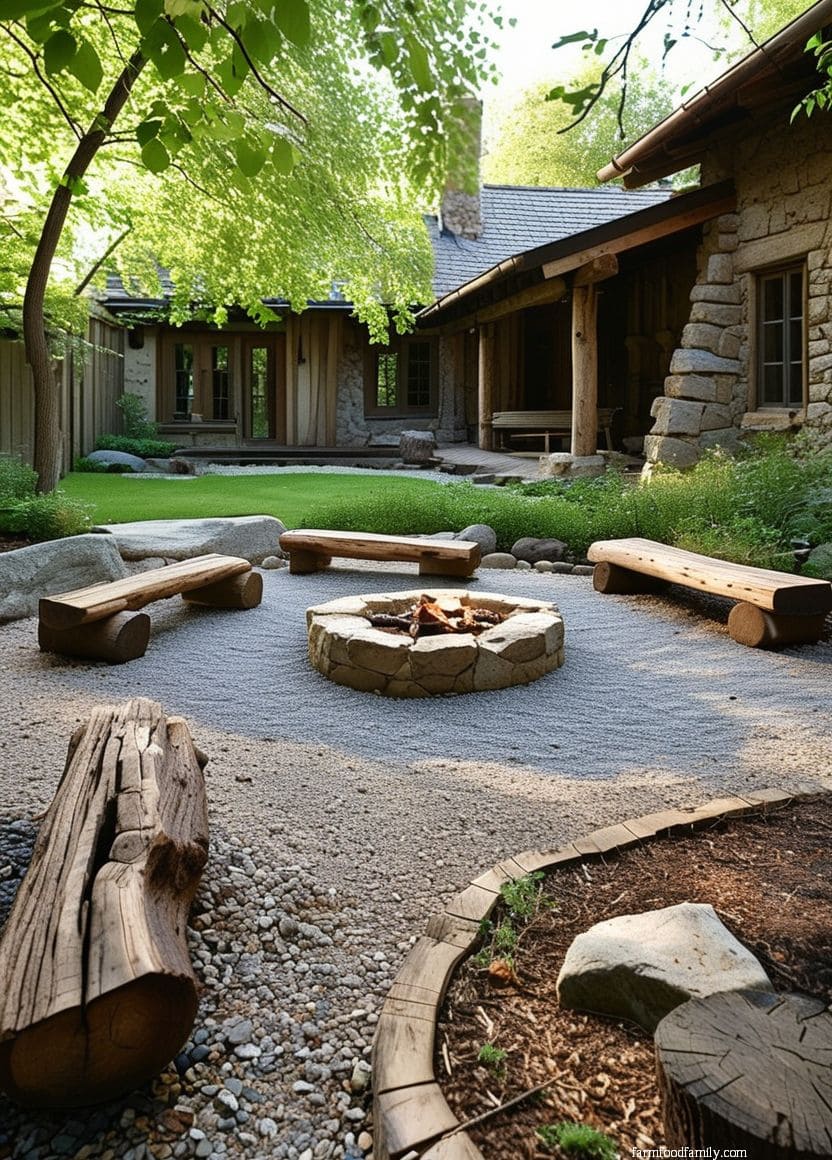
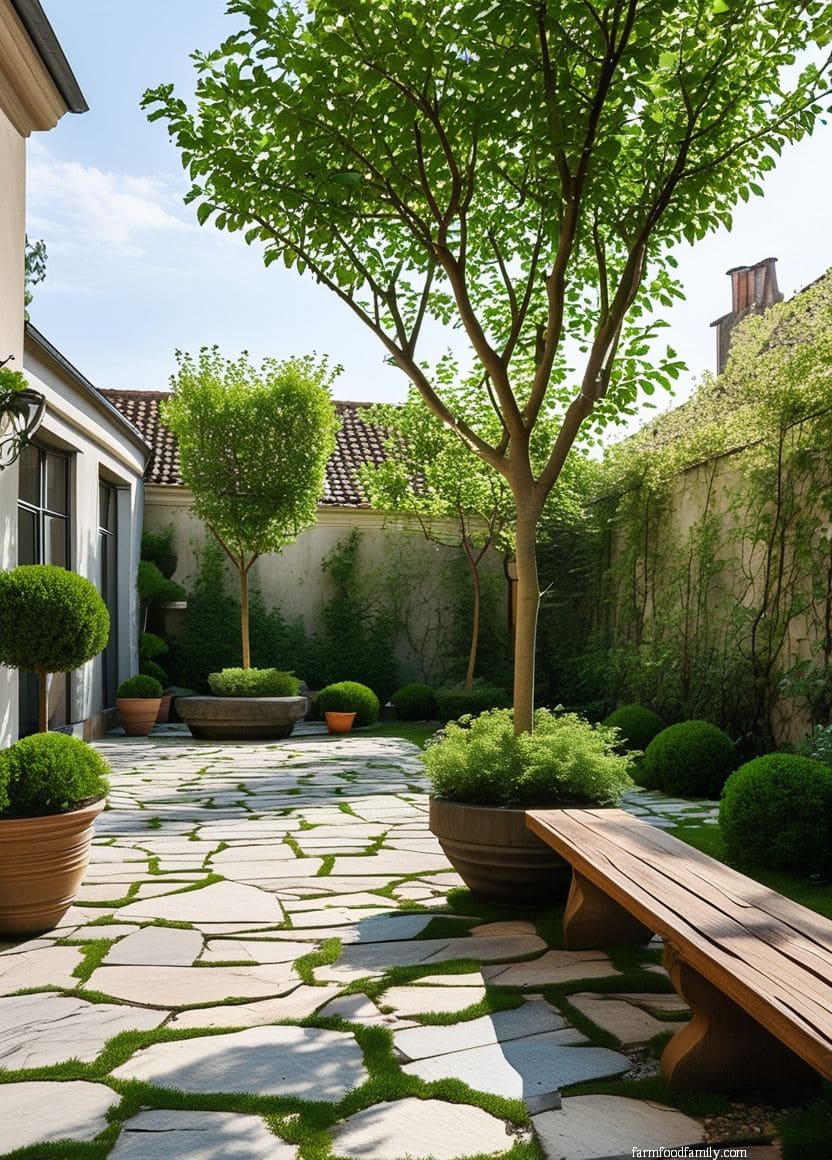
Trade the grass for a surface instead of another kind of plant. Flagstone, cobblestone, brick, or poured pavers turn a maintenance chore into usable square footage: a dining set, a fire pit, a spot for a grill. Zero mowing, and it doubles as outdoor living space.
The tradeoff is upfront cost and permanence. Once it’s in, it’s in. Budget for proper base prep (compacted gravel underneath, not stone laid straight on dirt) or you’ll be dealing with heaving and uneven joints within a couple of years.
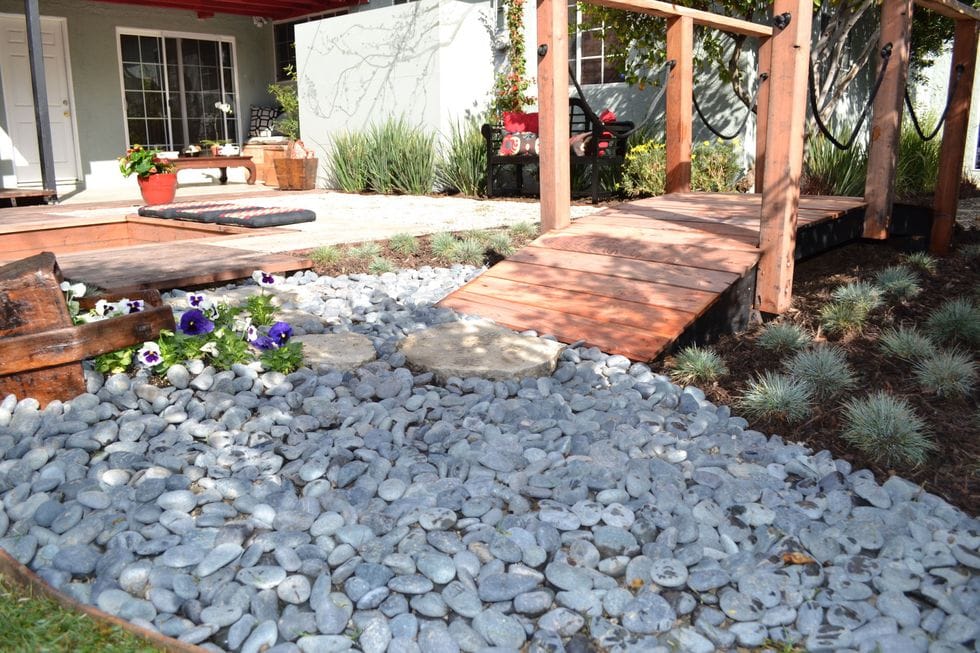
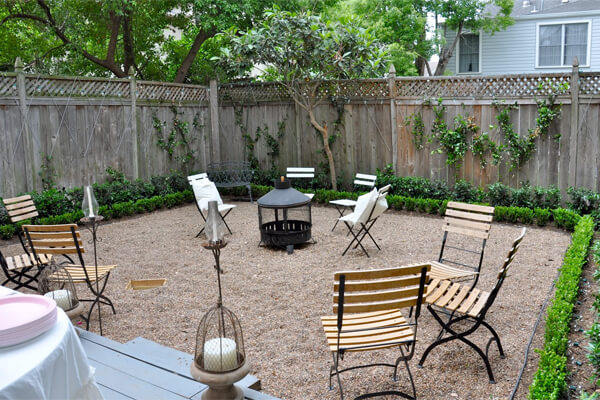
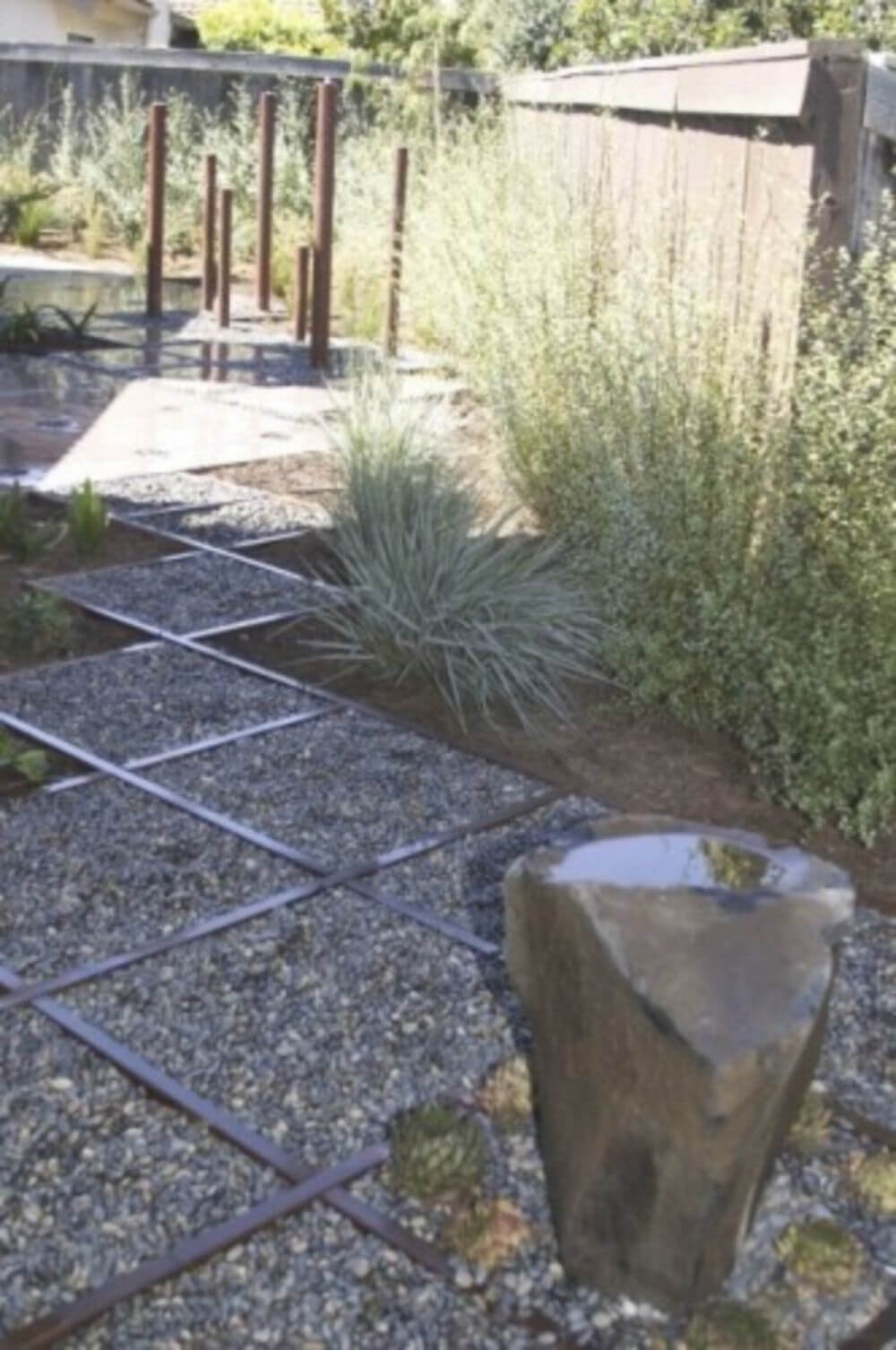
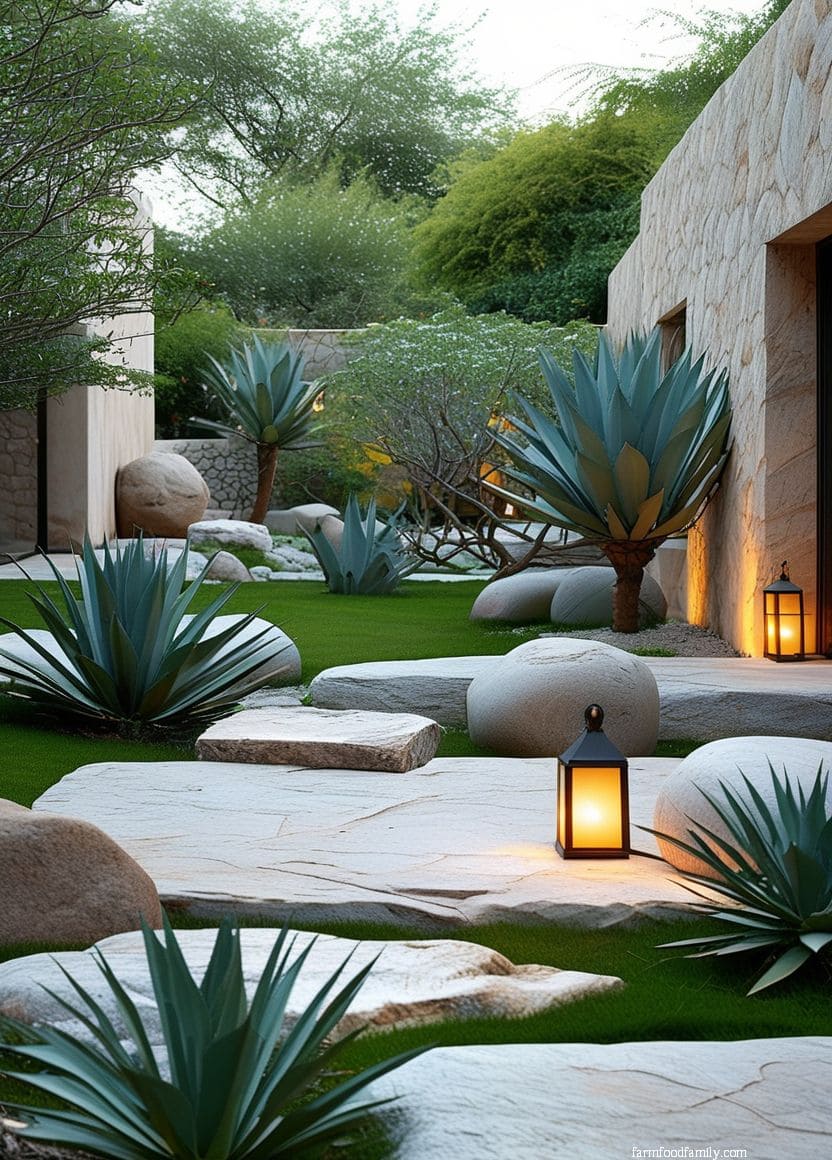
2. Gravel and Pebble Beds
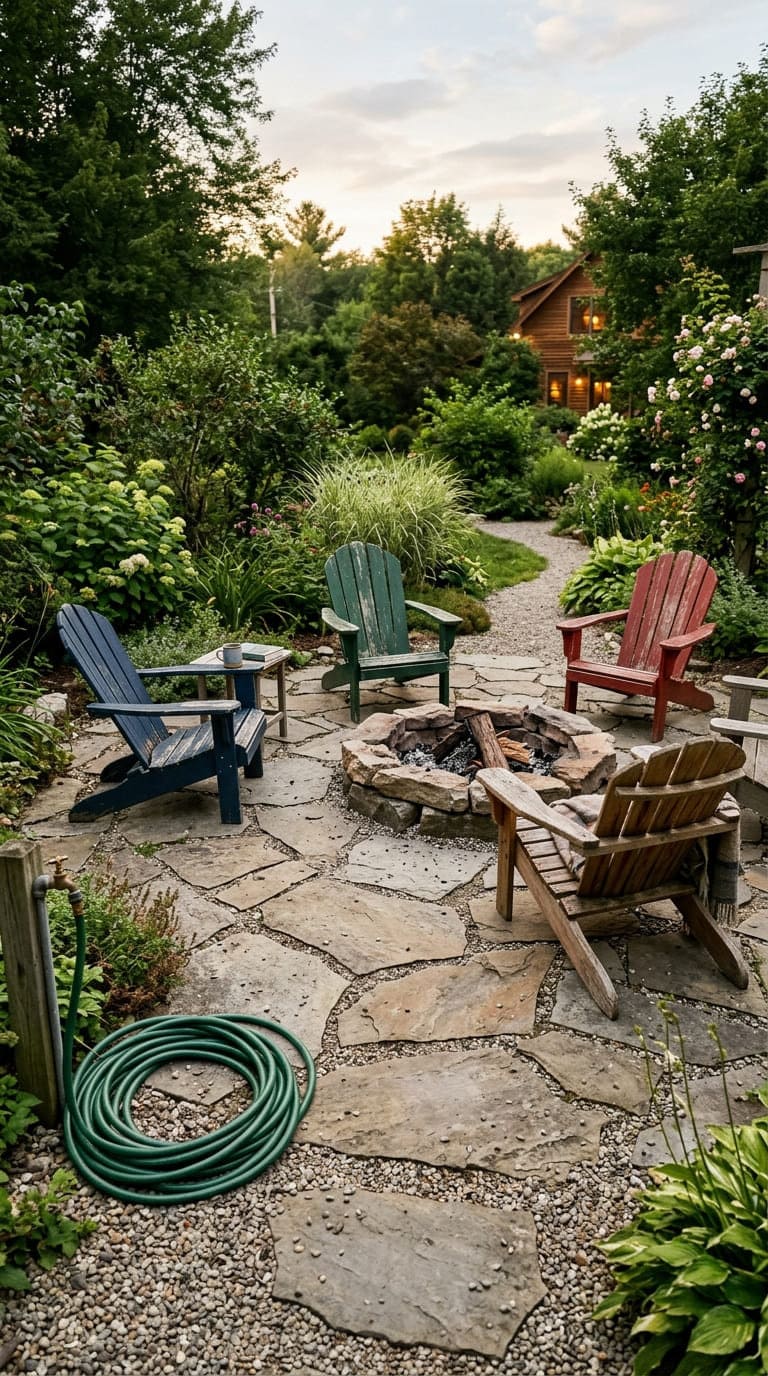
Gravel is the go-to “easy” answer, and it can be, but it comes with a real catch that most articles skip. A Reddit thread specifically about decomposed granite under a large shade tree with dogs in the yard laid it out clearly: “The dogs will track that grit straight into your house and ruin your floors, and you will never be able to rake the constant leaf drop from that tree without raking up half your granite” (r/landscaping).
The average homeowner spends $616/year on yard fixes that don't address the real problem. Find out what yours actually is — before you spend another dollar.
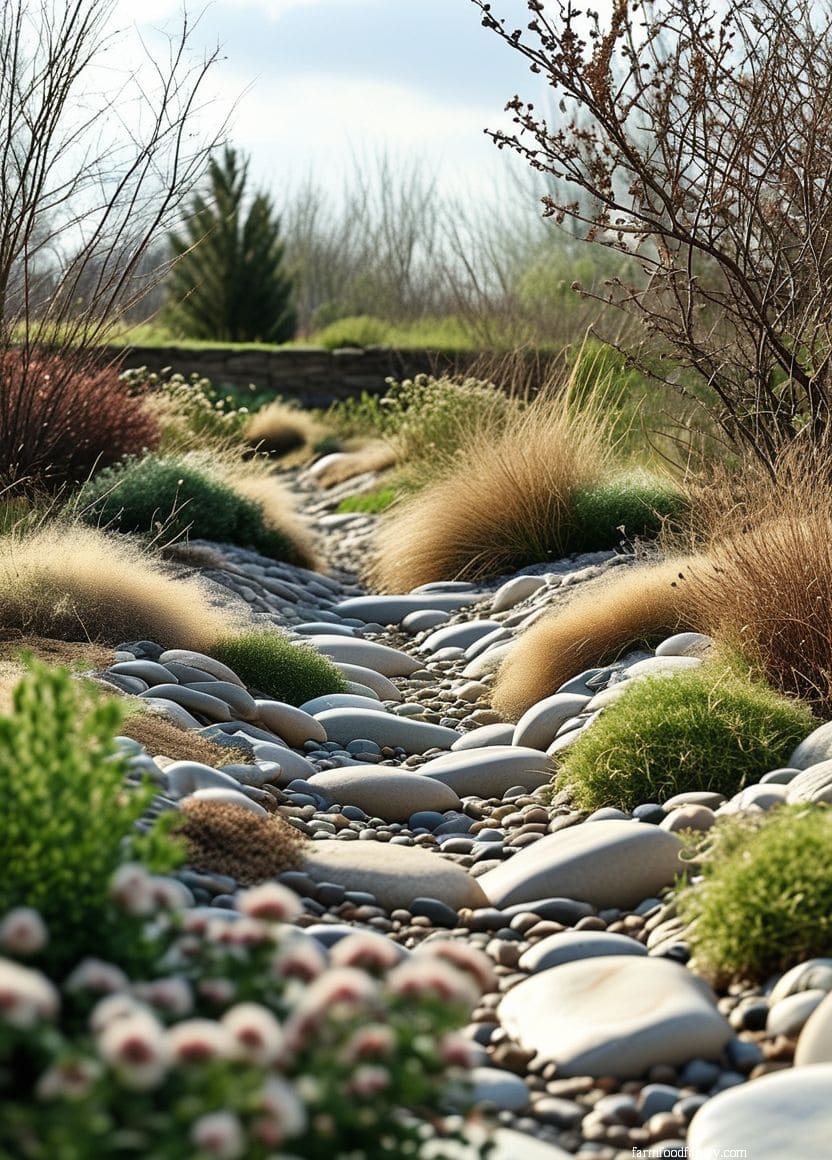
Take the Free QuizSo gravel works well in open sun with minimal leaf drop and light foot traffic. It’s a worse fit under deciduous trees or anywhere dogs track in and out constantly. Match the material to the actual conditions of that specific patch, not just the aesthetic.
Cost in 2026: basic gravel install runs $0.86 to $1.83 per square foot, pea gravel installed runs $1.85 to $3.39 per square foot, and pricier options like lava rock can run $3.50 to $11 per square foot (Homewyse; Angi).

3. Native Groundcover Planting
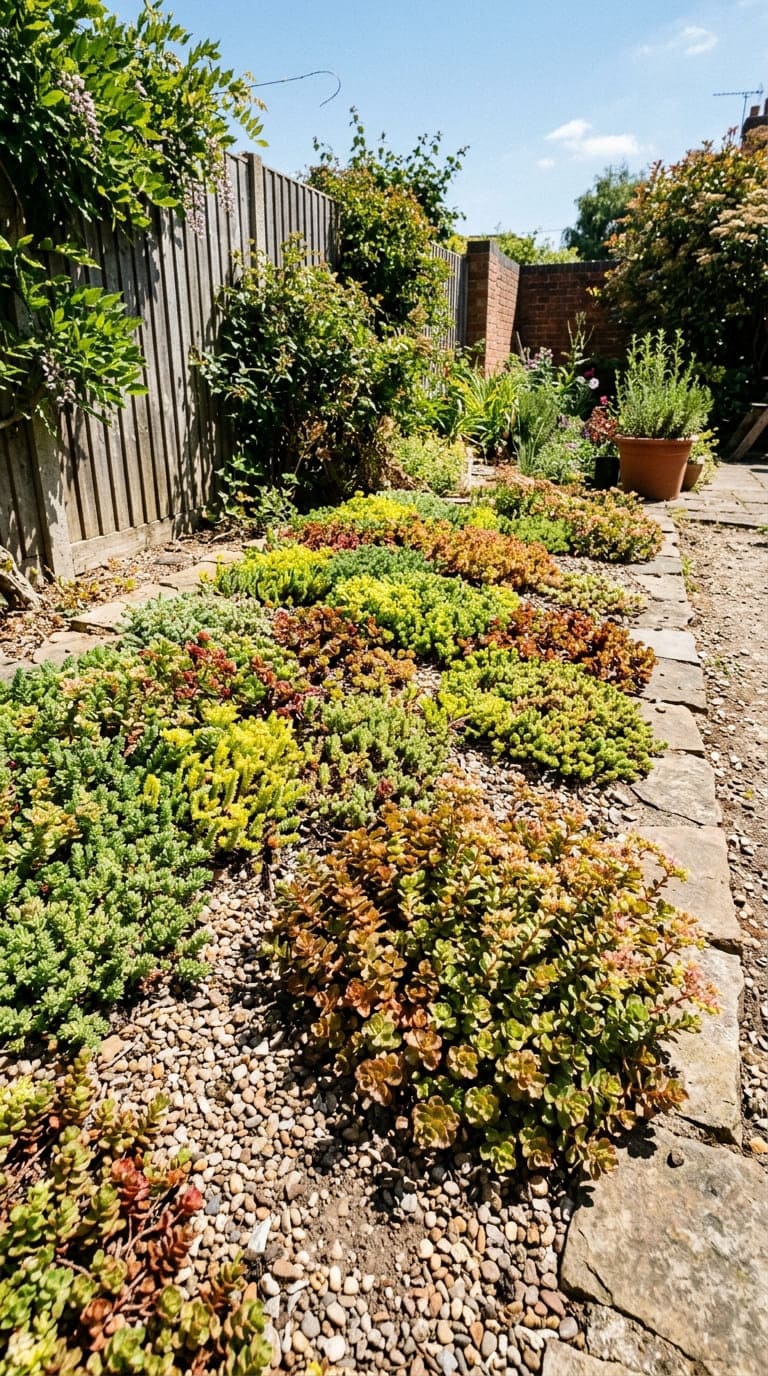
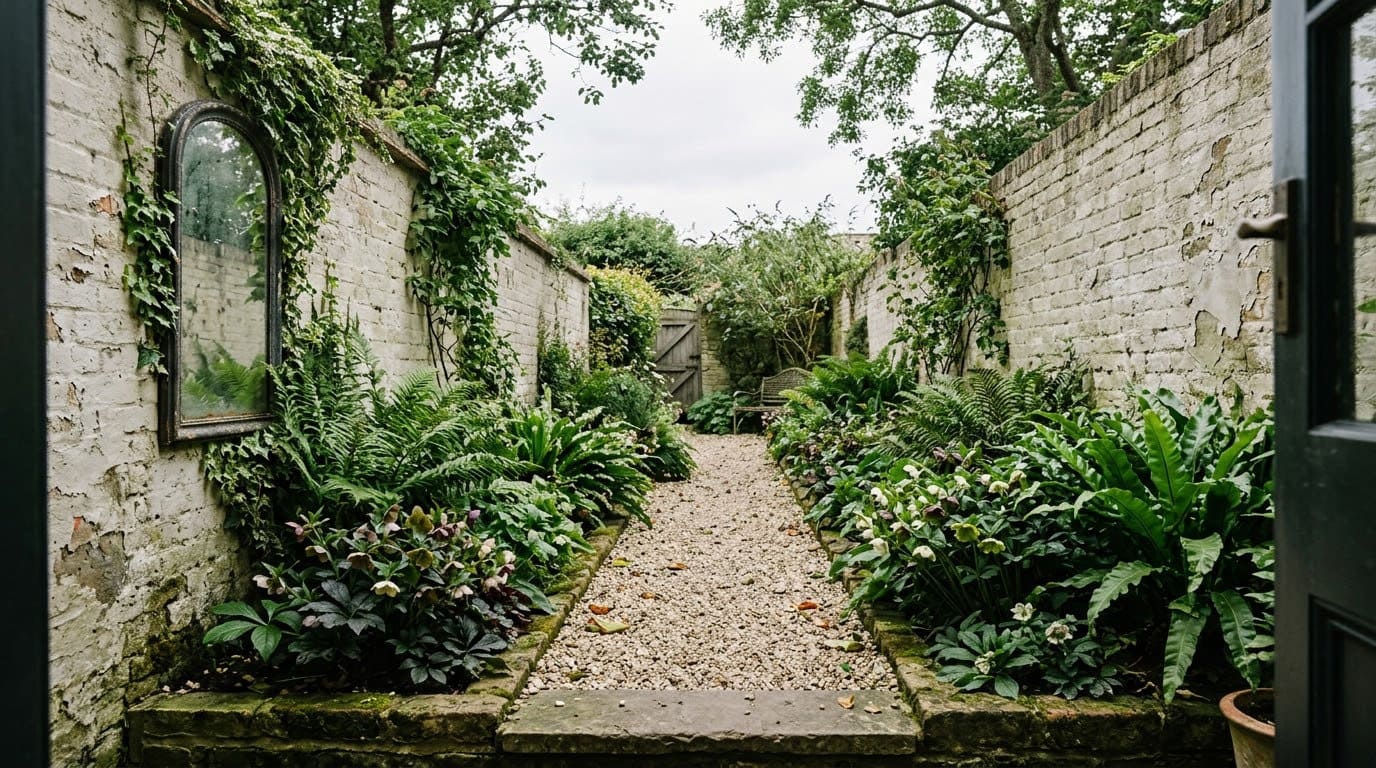
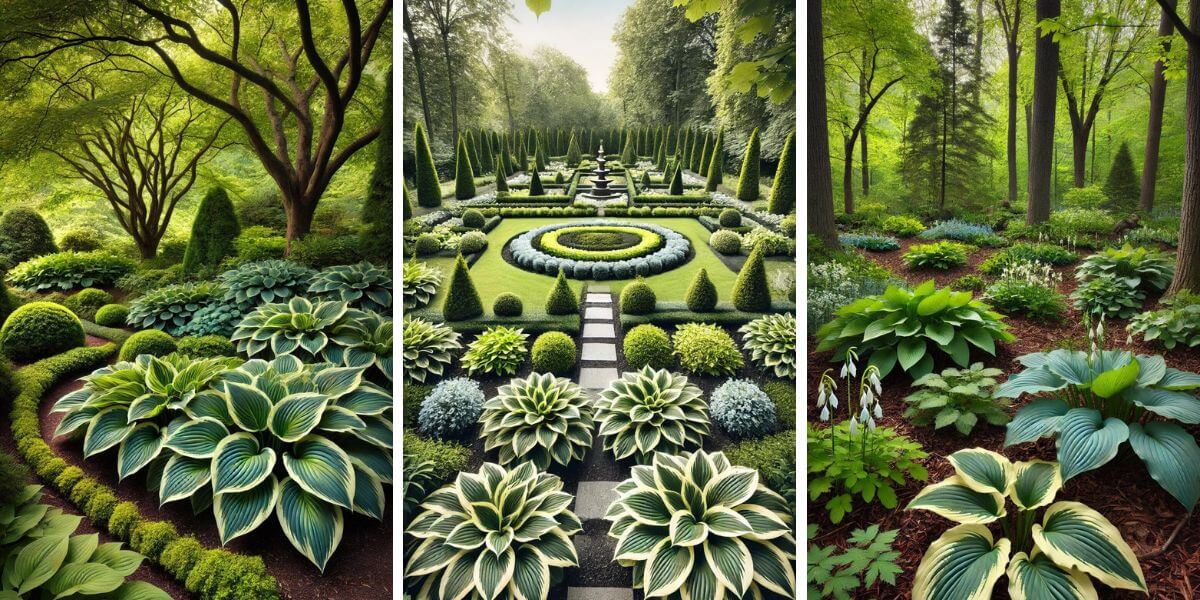
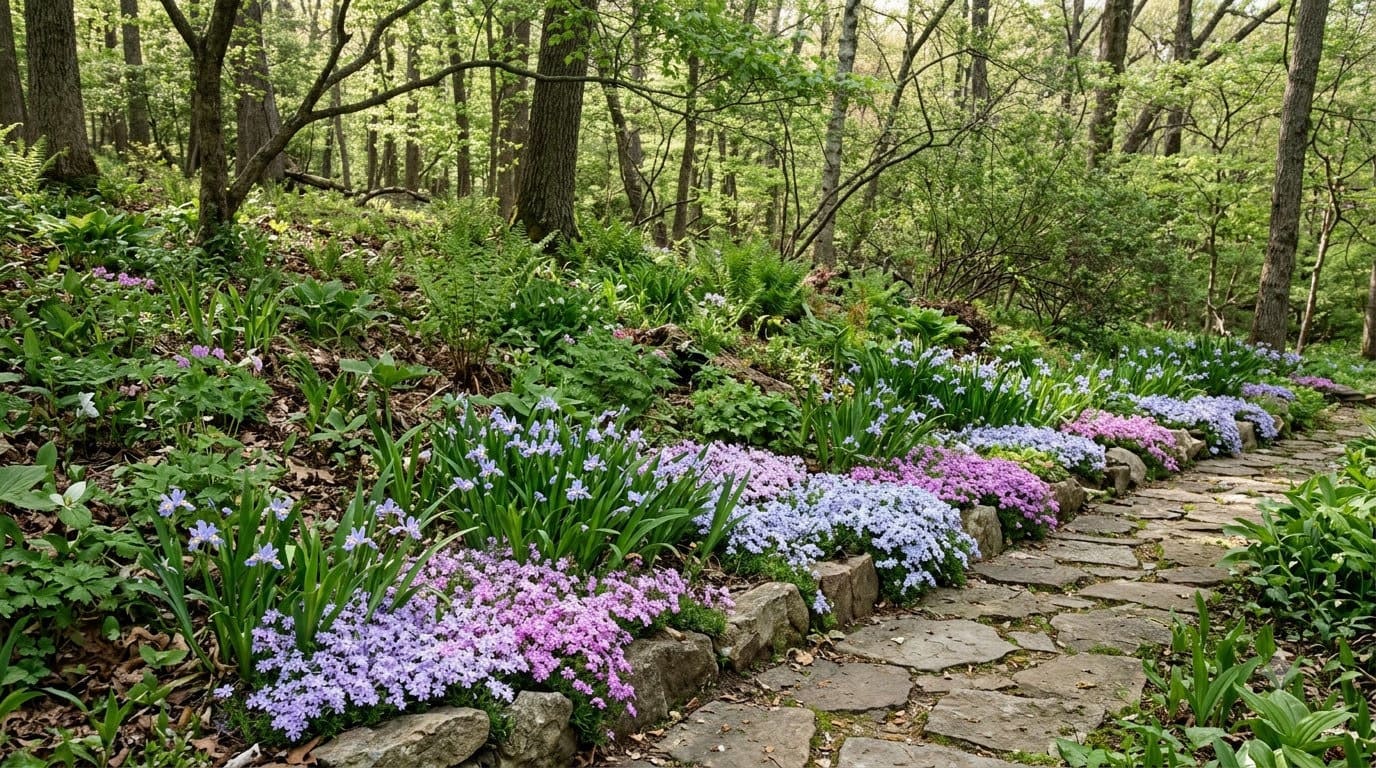
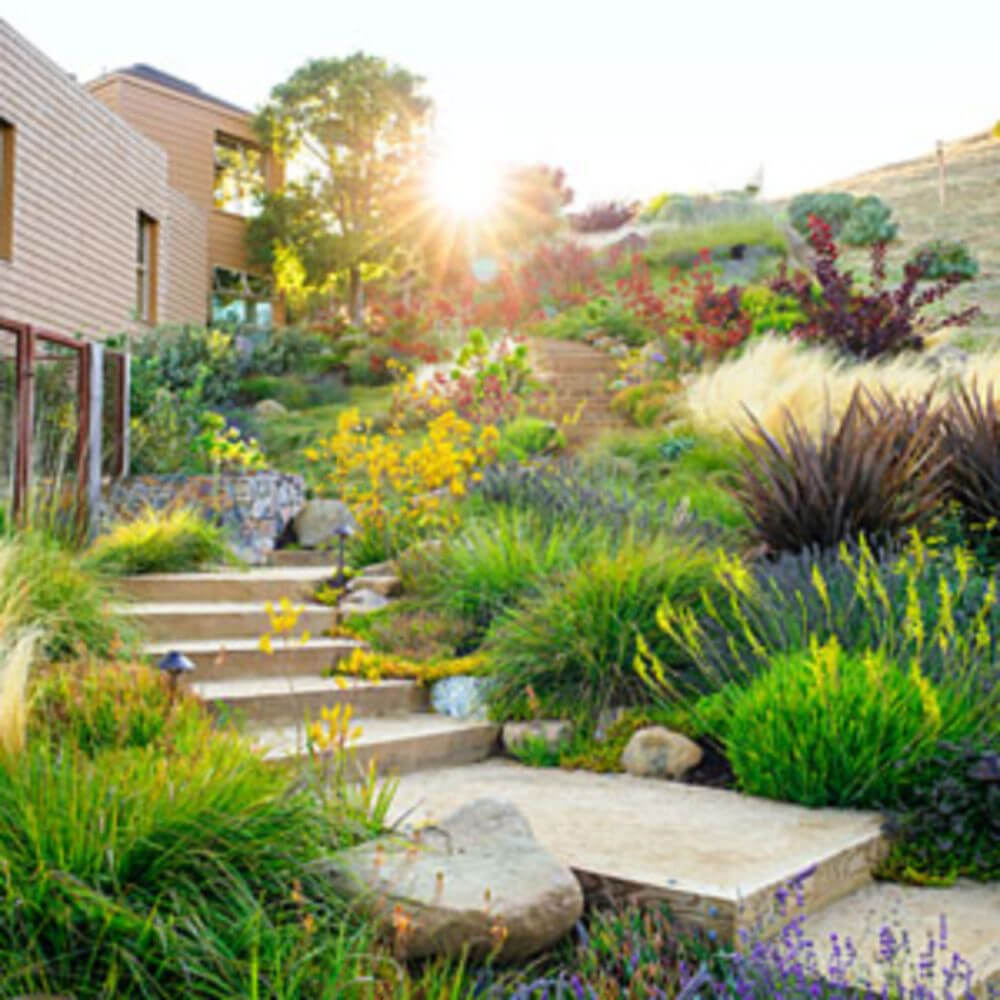
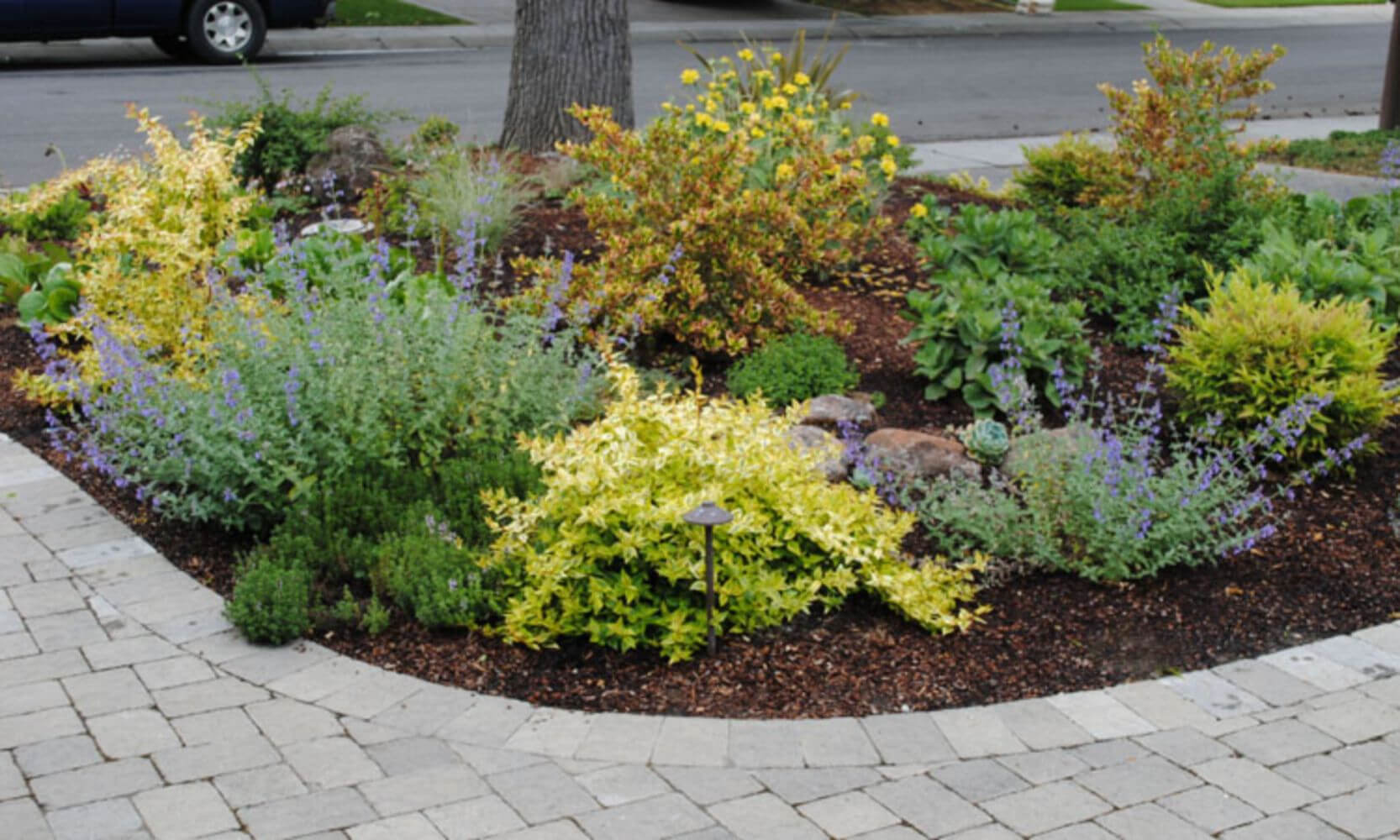
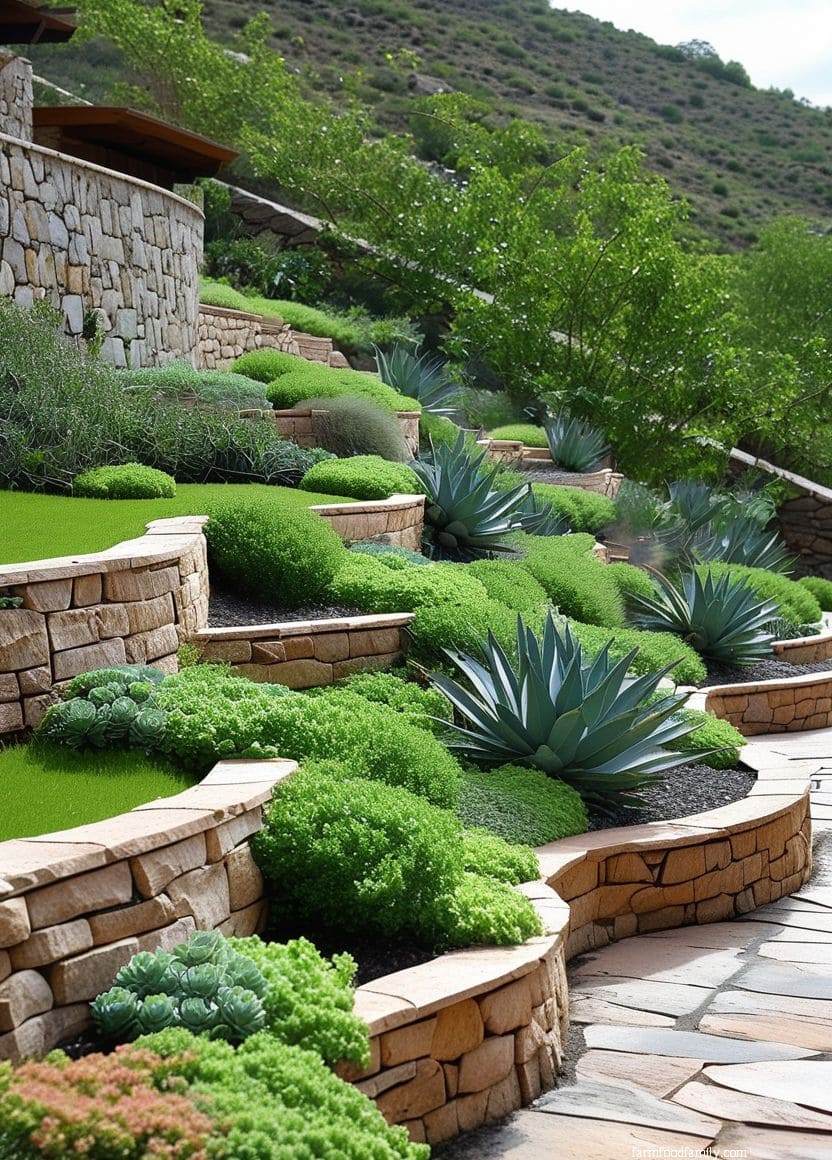
This is the option with the best long-term payoff and the most upfront patience required. Groundcovers like creeping thyme, clover, chamomile, or region-appropriate native sedges spread to fill space, need far less water once established, and actually support pollinators instead of just sitting there.
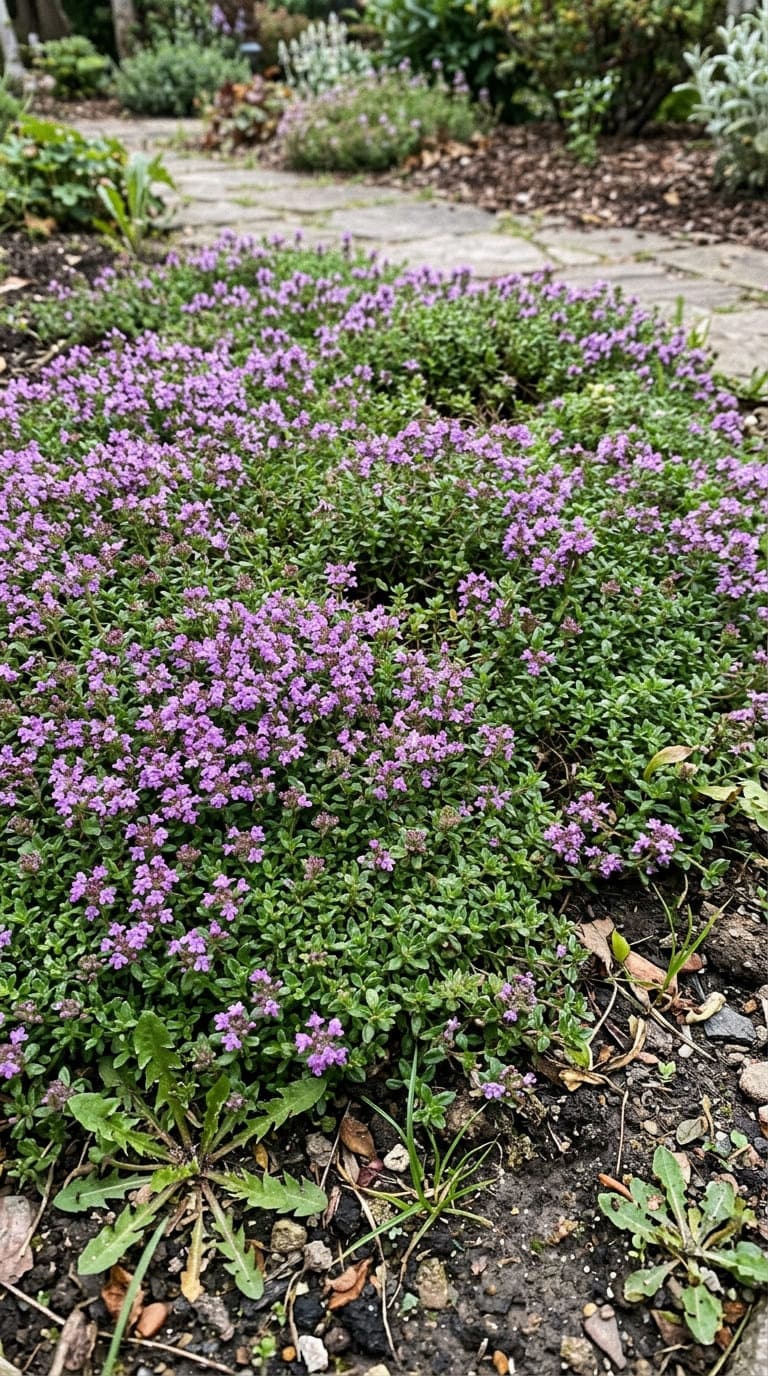
Match the species to your actual zone and light conditions rather than picking whatever looks good in a photo. The right groundcover for a shaded, humid Southeast yard is not the right groundcover for a dry, sunny Southwest one. Both the University of Maryland Extension and Iowa State University Extension publish free, region-specific groundcover recommendations by zone and light condition, worth checking before you buy anything.
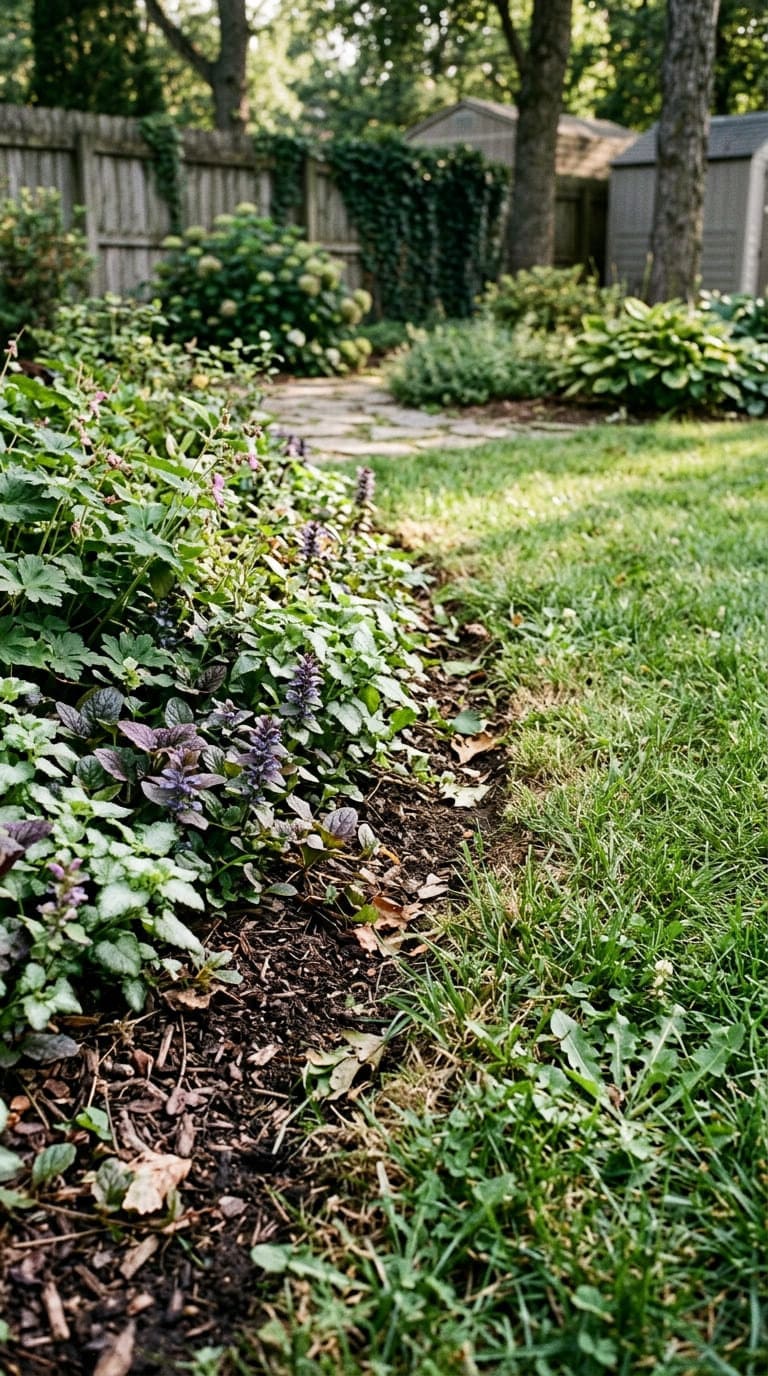
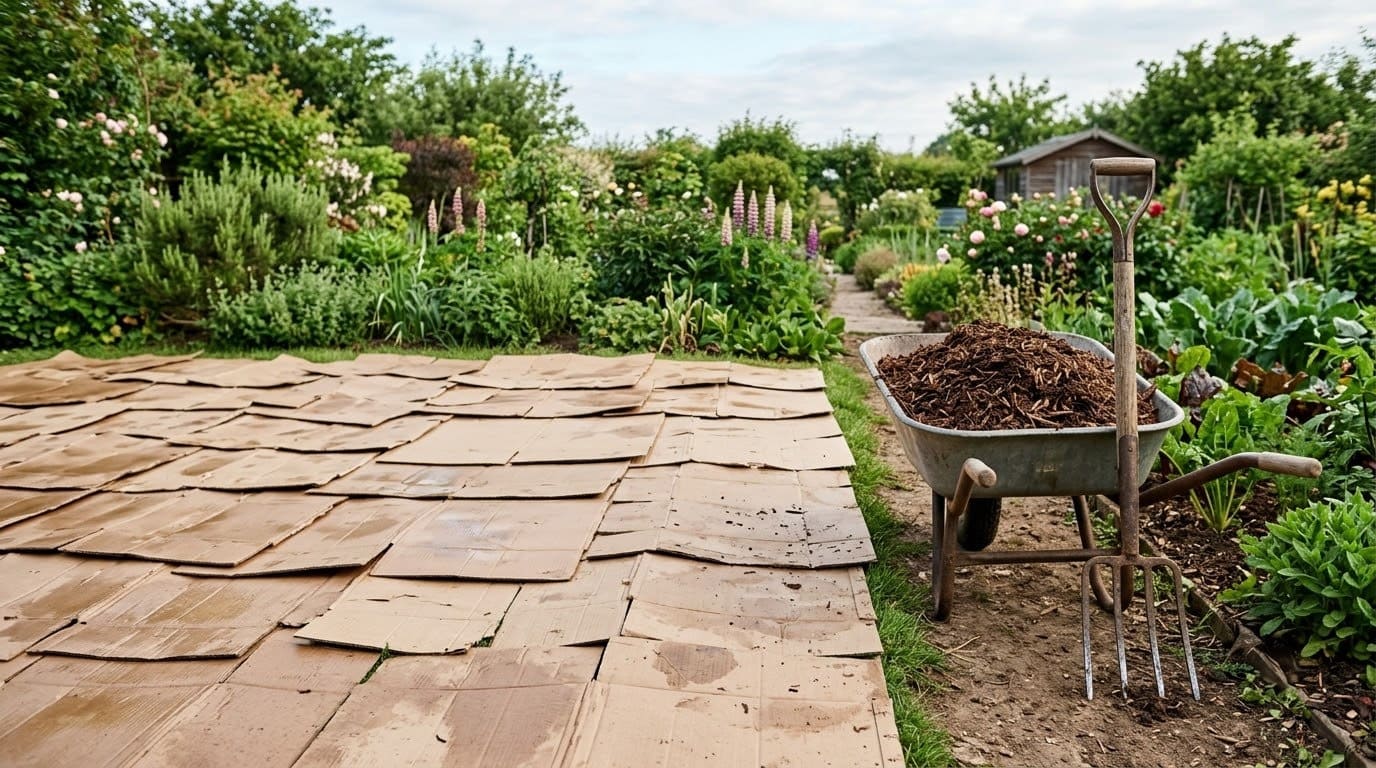
Skip landscape fabric under the planting bed. It has a bad reputation in gardening communities for a reason: it degrades over time, doesn’t actually stop weeds long-term, and smothers the soil life your plants need. A recent Reddit thread on the topic pulled over 2,200 upvotes just from people venting about it (r/NativePlantGardening). Cardboard and a thick mulch layer does the same weed-suppression job without the long-term problems.
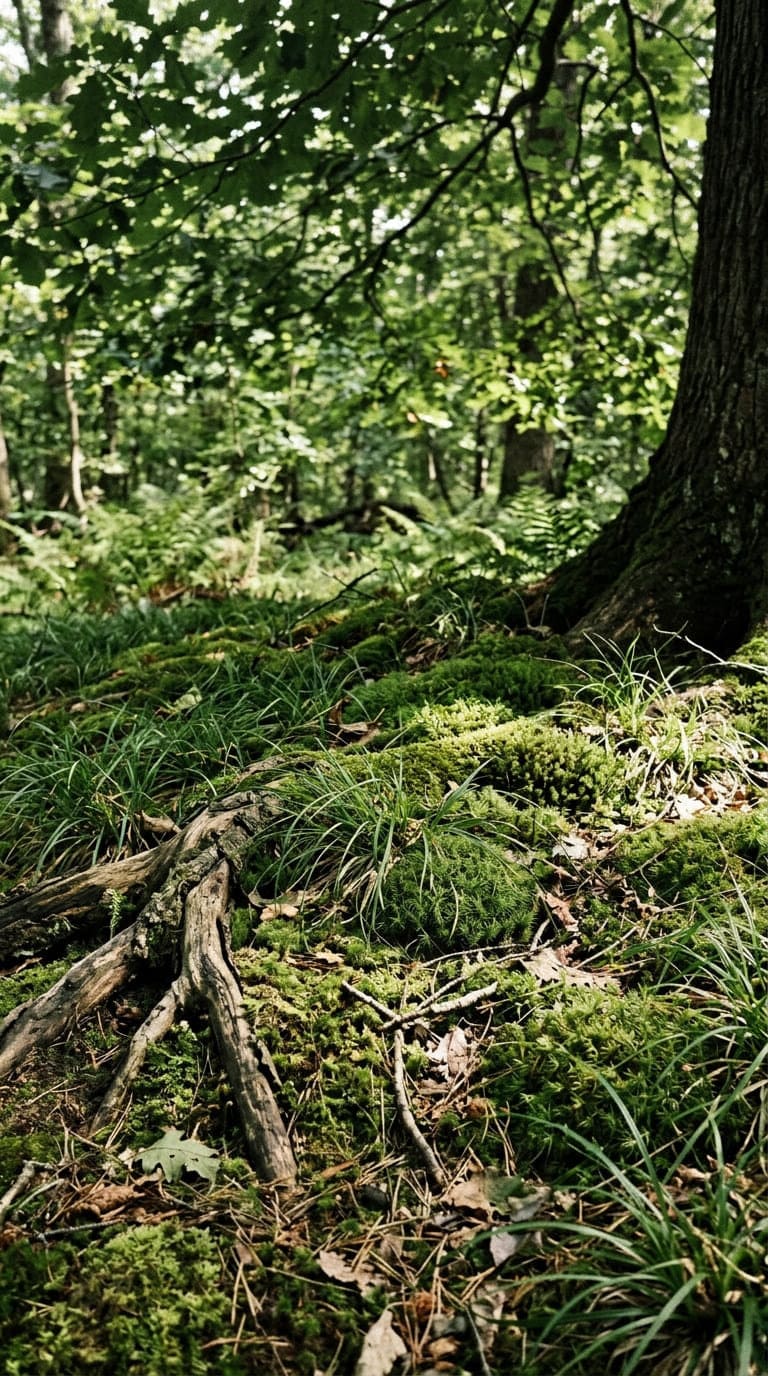
Vogt’s soil advice matters here too. Don’t till or amend the soil to try to force a plant to thrive somewhere it wouldn’t naturally. “I’ve had really bad experiences with infill soil and tilling,” he says. “Never amend. Always match plants to the site conditions.” Pick the plant for the dirt you actually have.
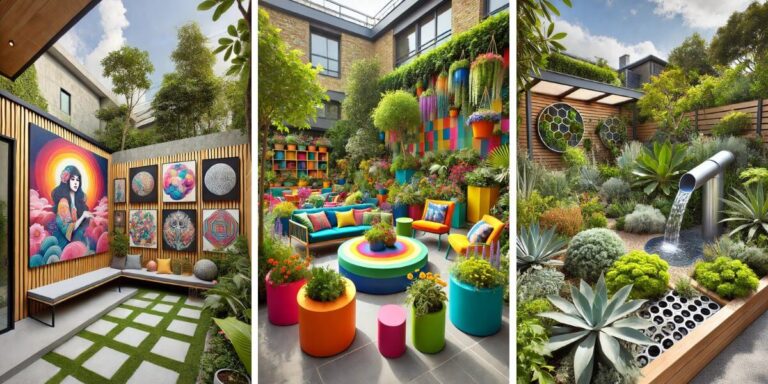
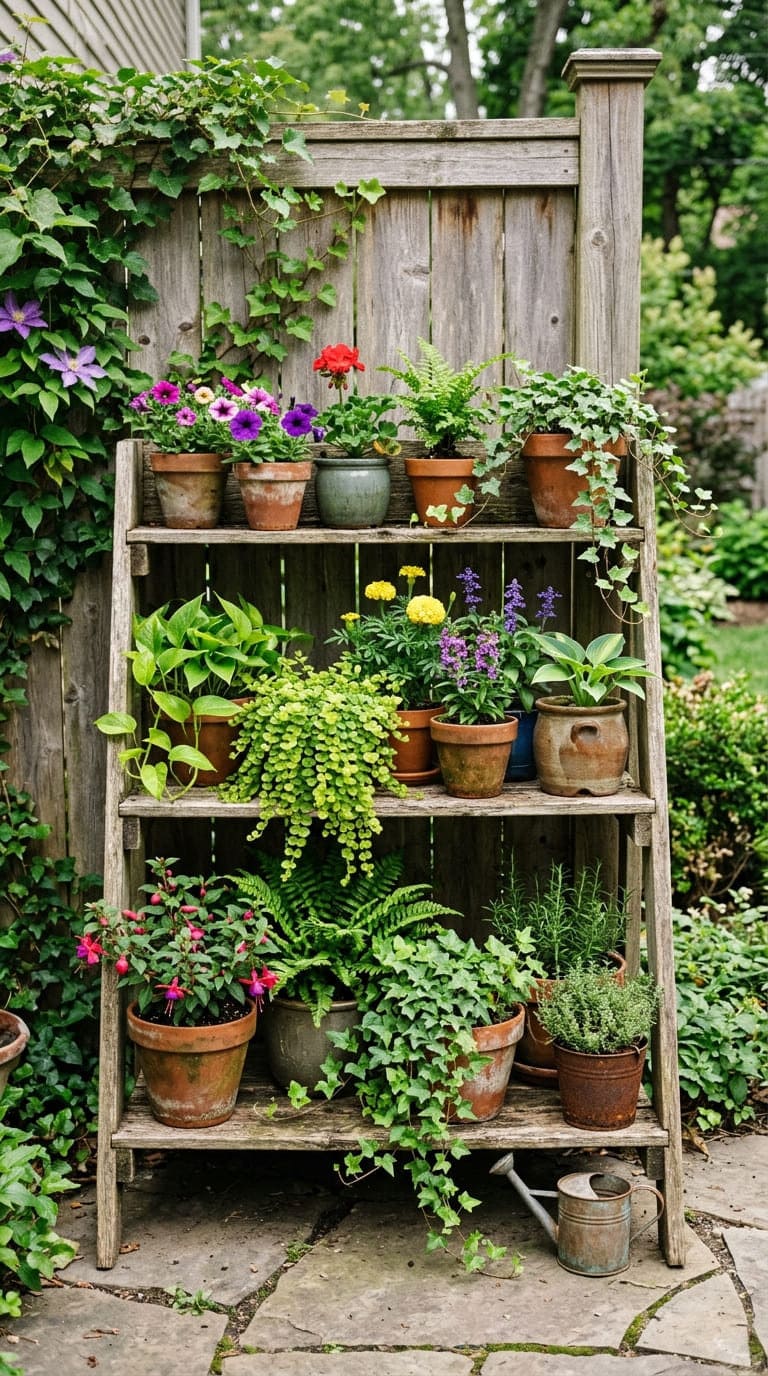
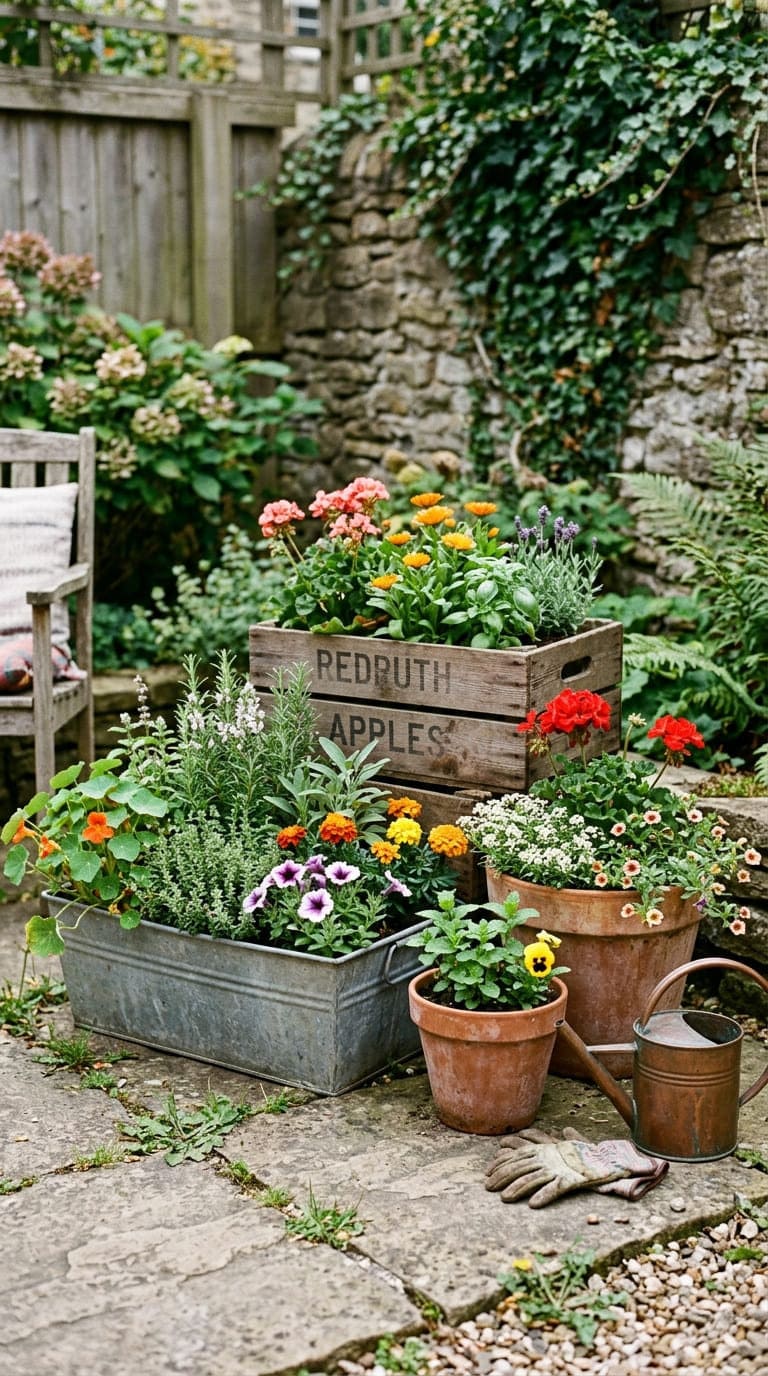
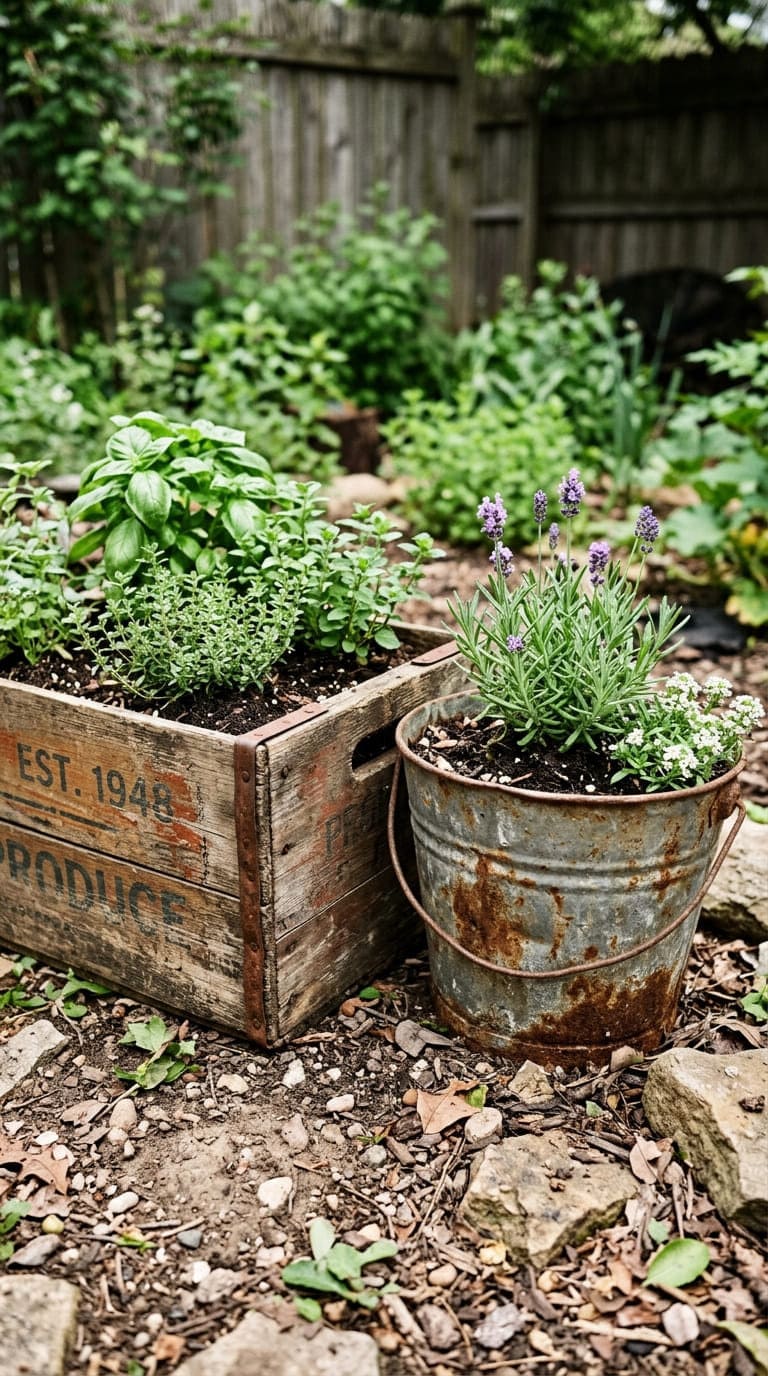
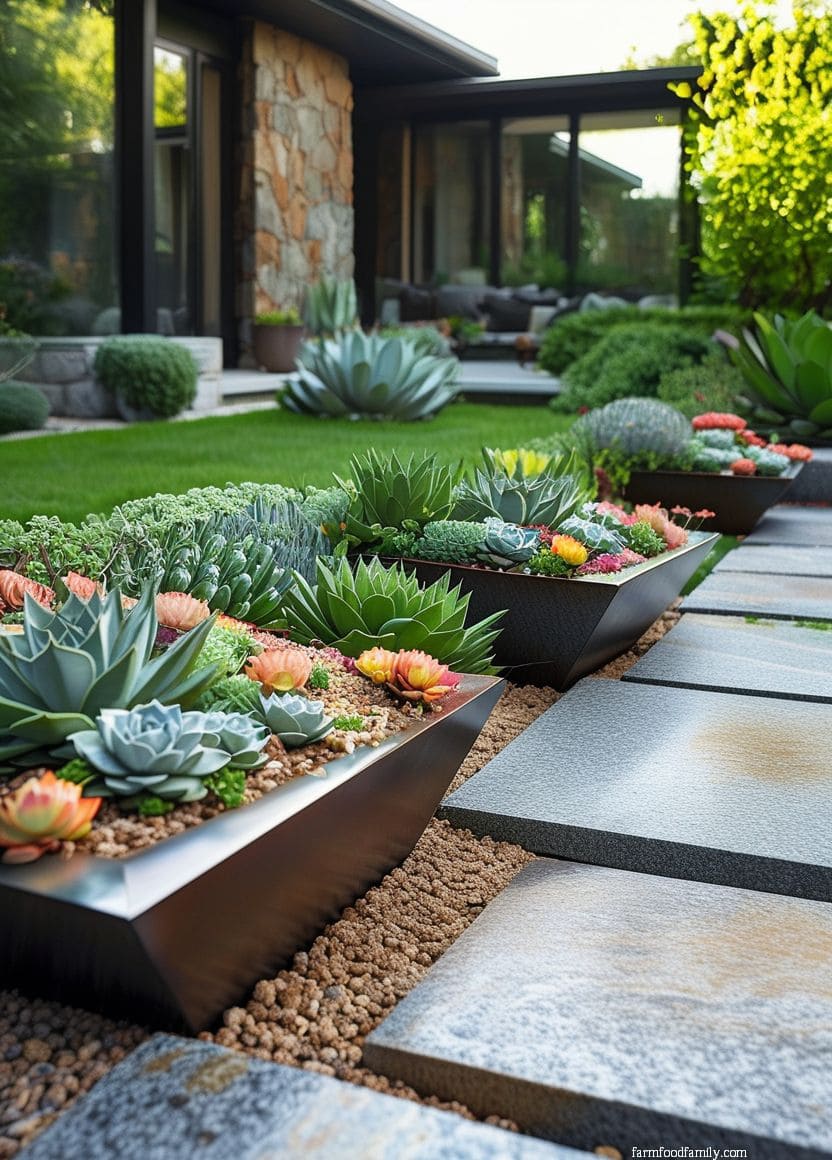
4. Potted Plants and Raised Beds
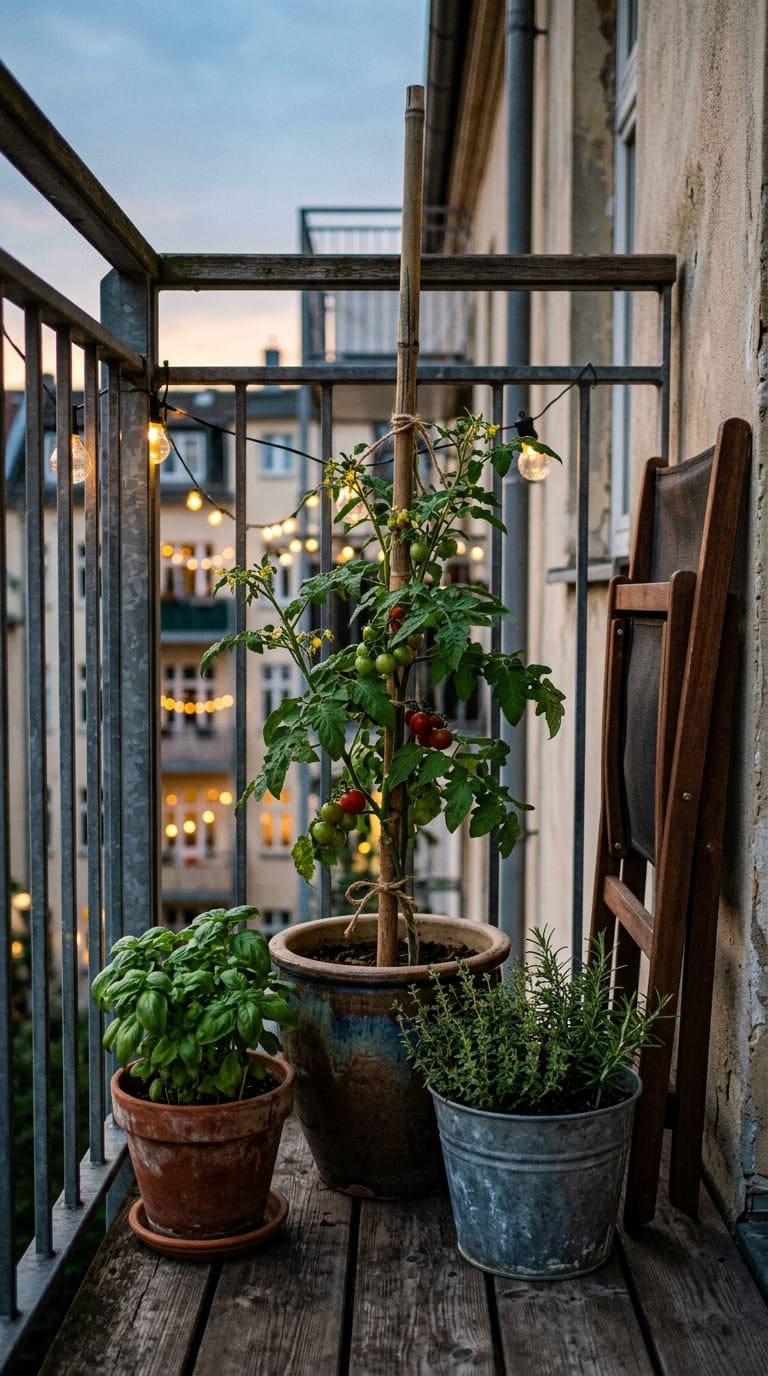
Not every no-grass yard needs to commit to permanent in-ground beds. Container gardens and raised beds give you flexibility, especially if you rent, garden in poor native soil, or want to rearrange the layout without redoing hardscape.
Mix materials for a lived-in look instead of matching planters: a few galvanized troughs, a couple of terracotta pots, a repurposed wooden crate. It reads as intentional rather than store-bought all at once.
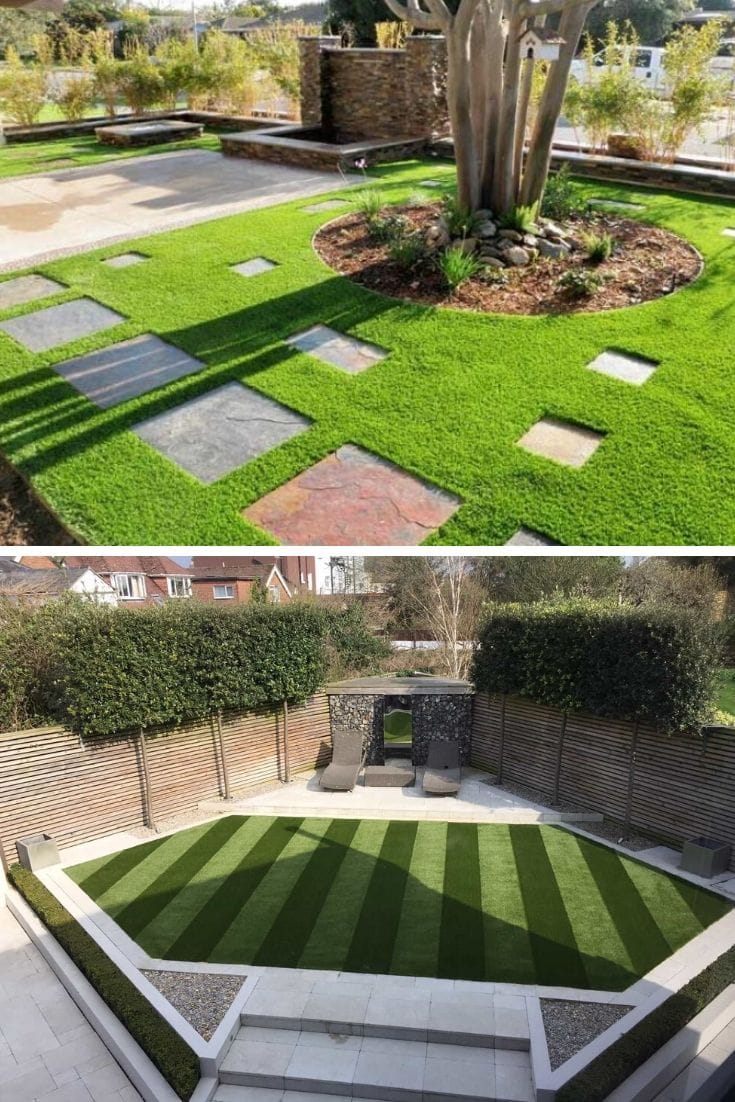
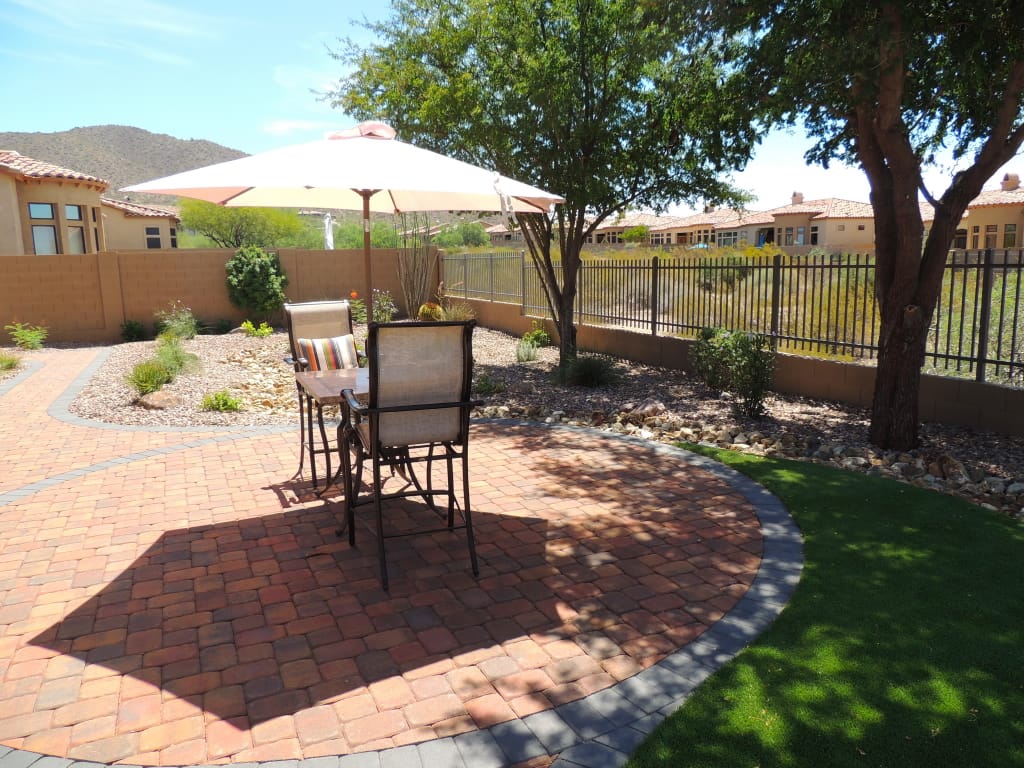
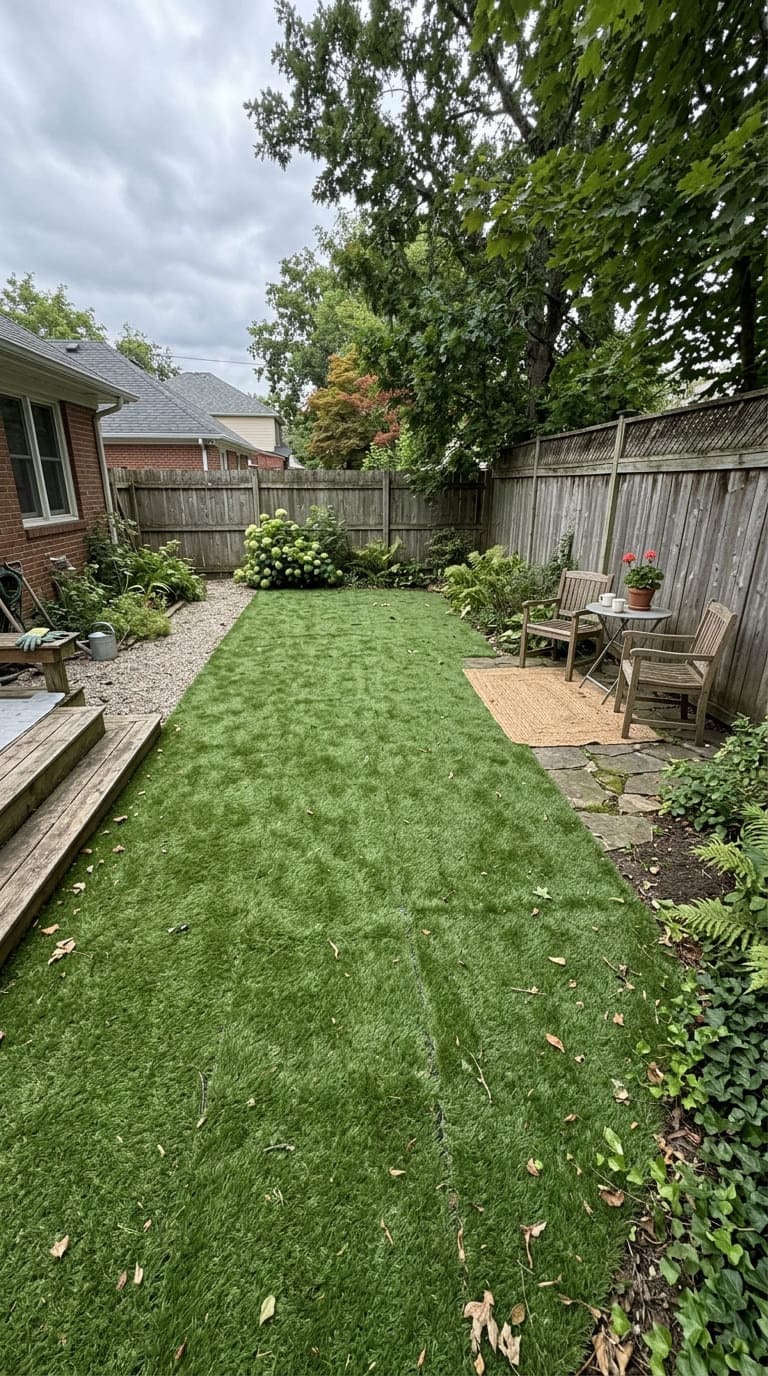
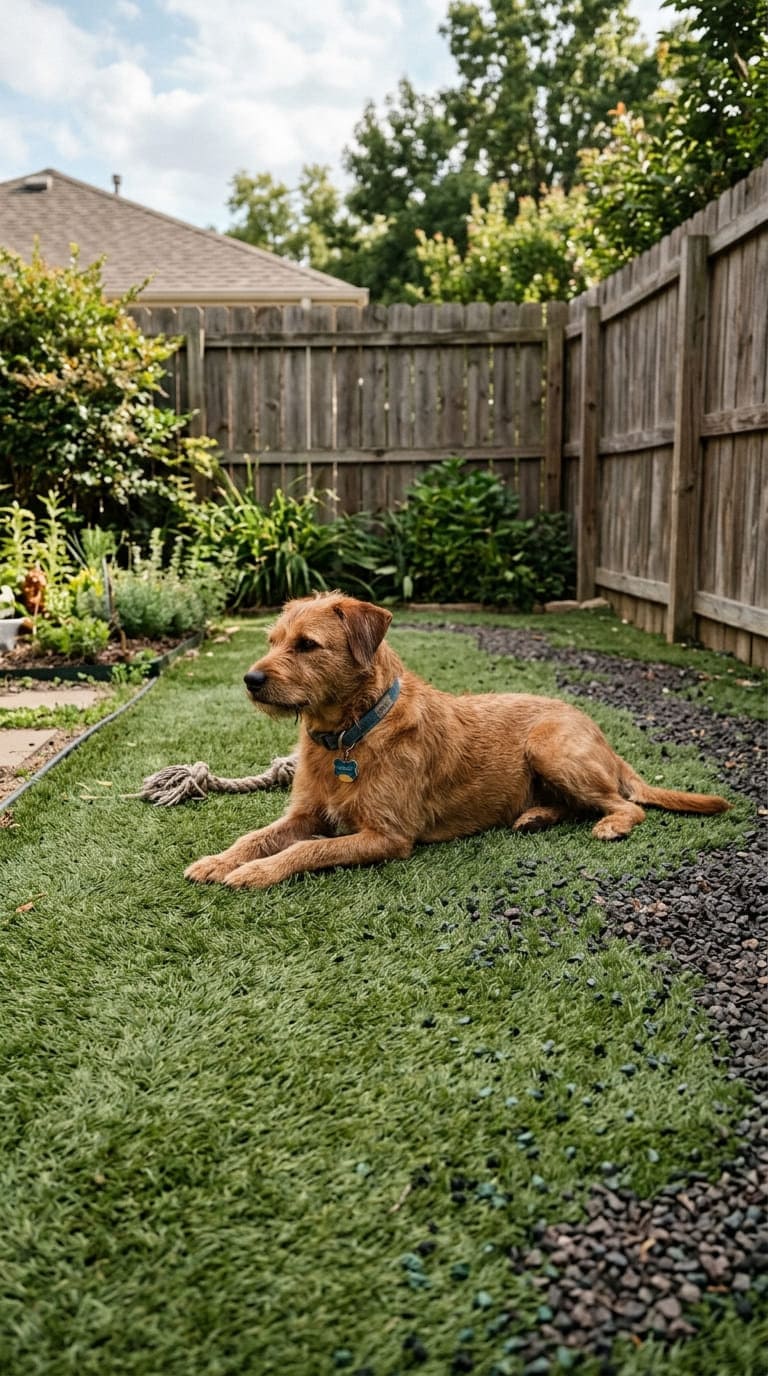
5. Artificial Turf
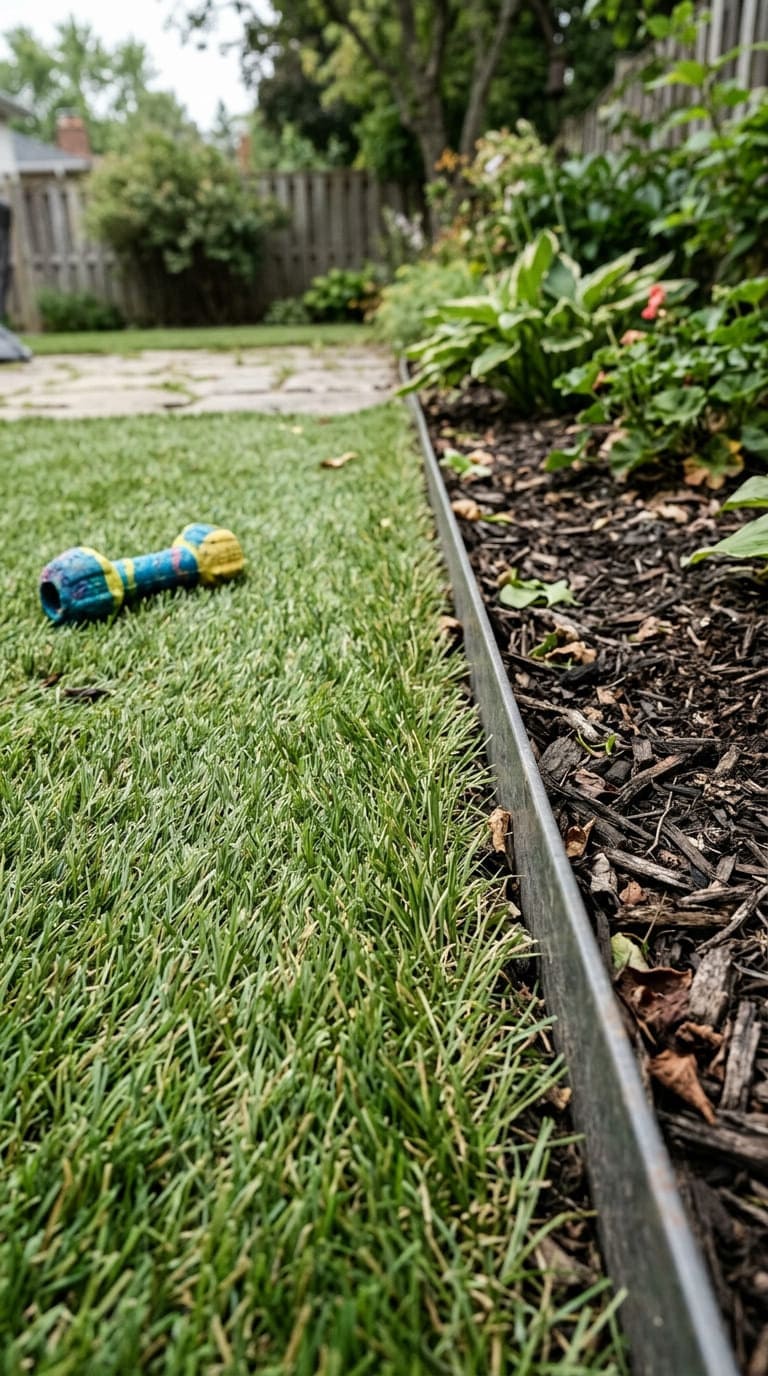
Worth considering if you want the look of grass without the water bill, but go in with real numbers. Materials alone run $2 to $8 per square foot; add labor and a full installed project can land anywhere from $3,244 to $8,715, and some fully installed jobs run $10 to $25 per square foot depending on the market and prep work (Angi; HomeGuide).
And it’s not the zero-effort option some sellers make it sound like. A Reddit commenter pushed back directly on that idea: “No landscaping is set it and forget it, not even a gravel bed” (r/landscaping). Turf still needs periodic rinsing, brushing to keep the fibers upright, and occasional infill top-ups. Less work than mowing, not no work.
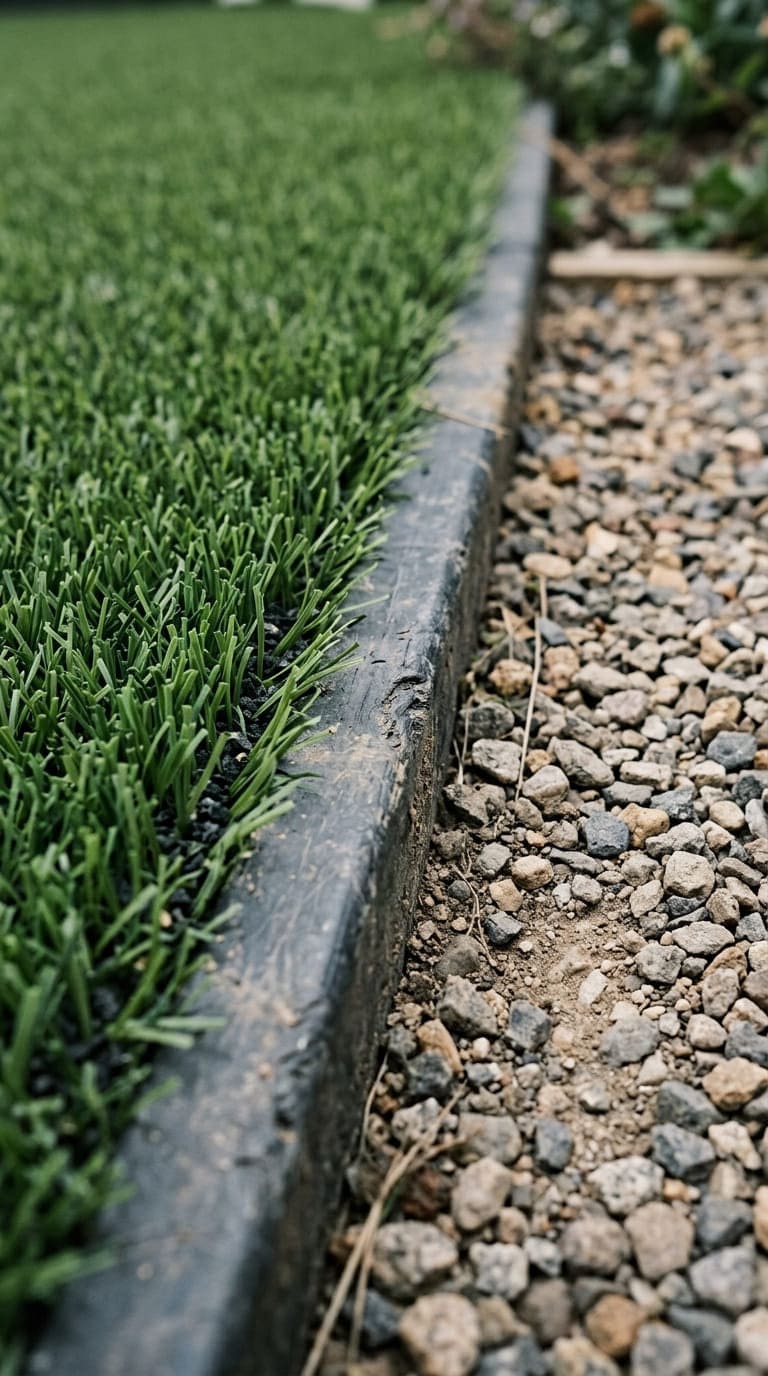
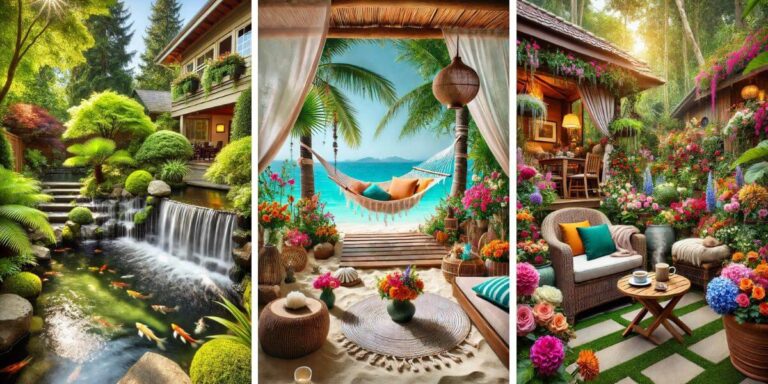
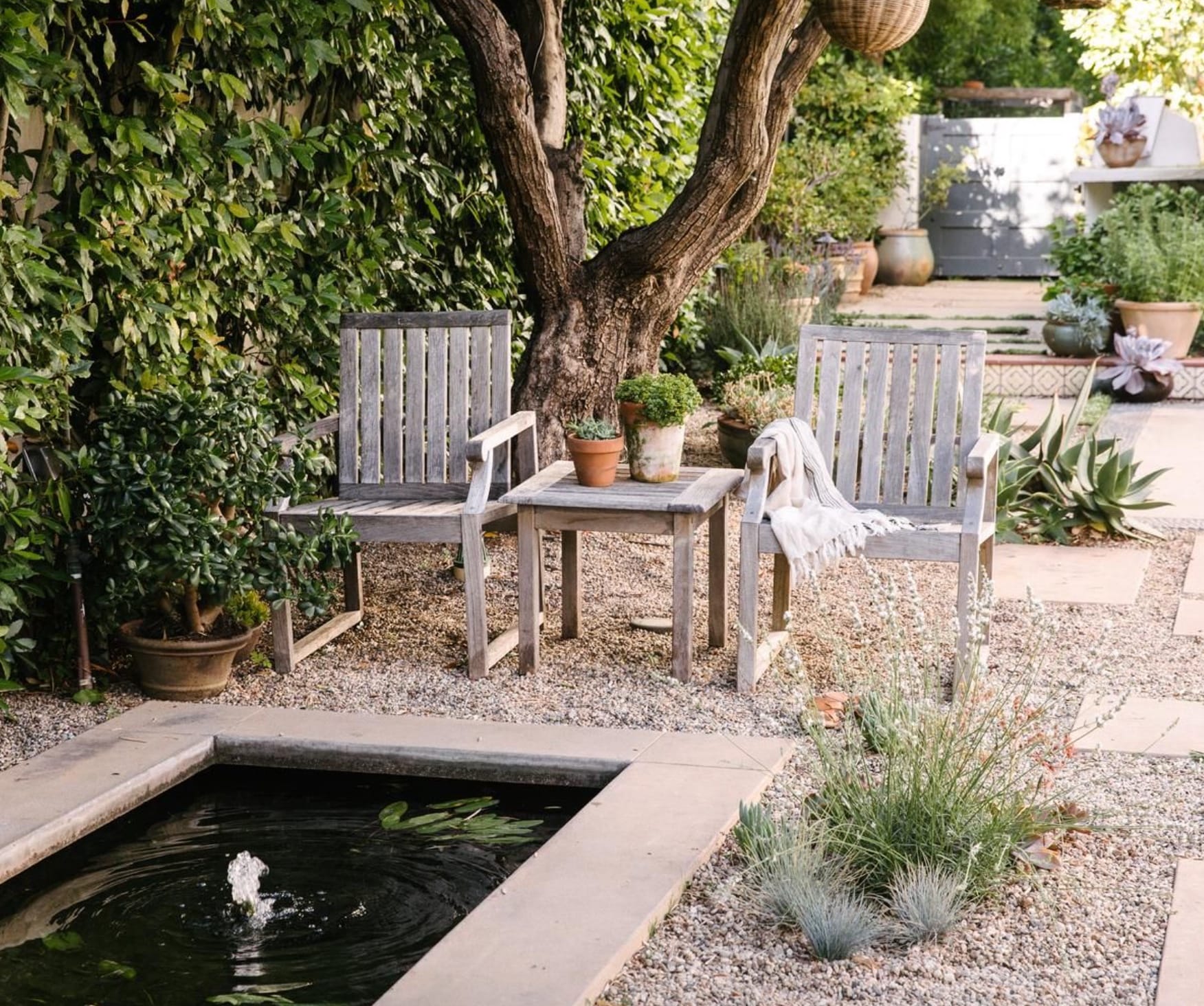
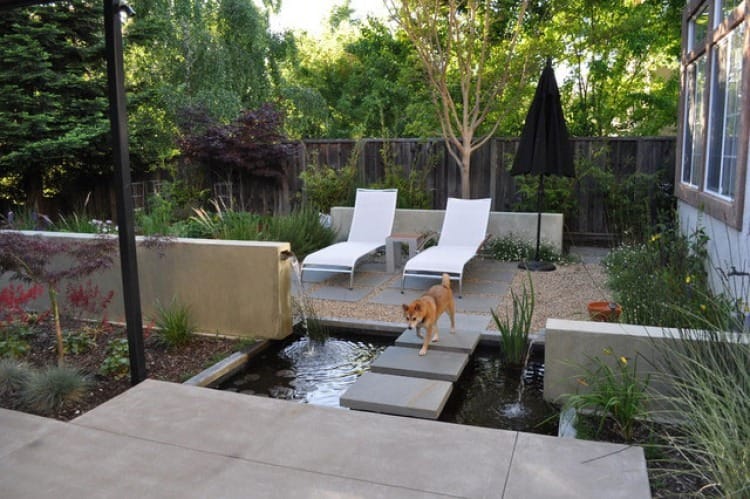
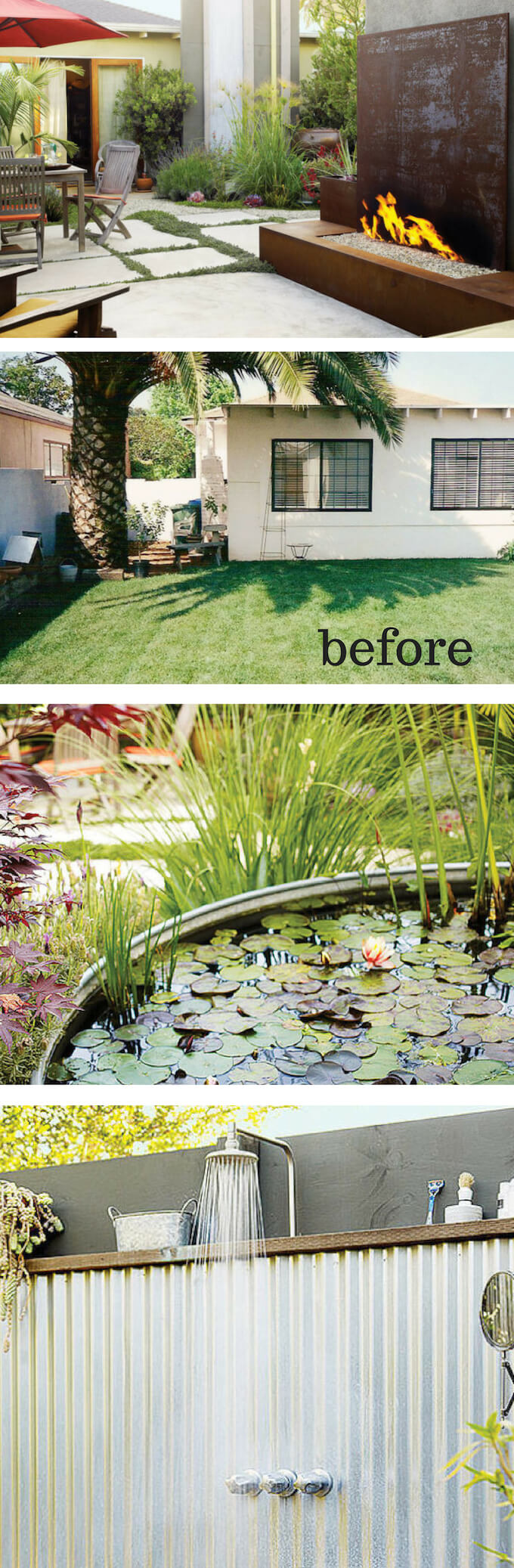
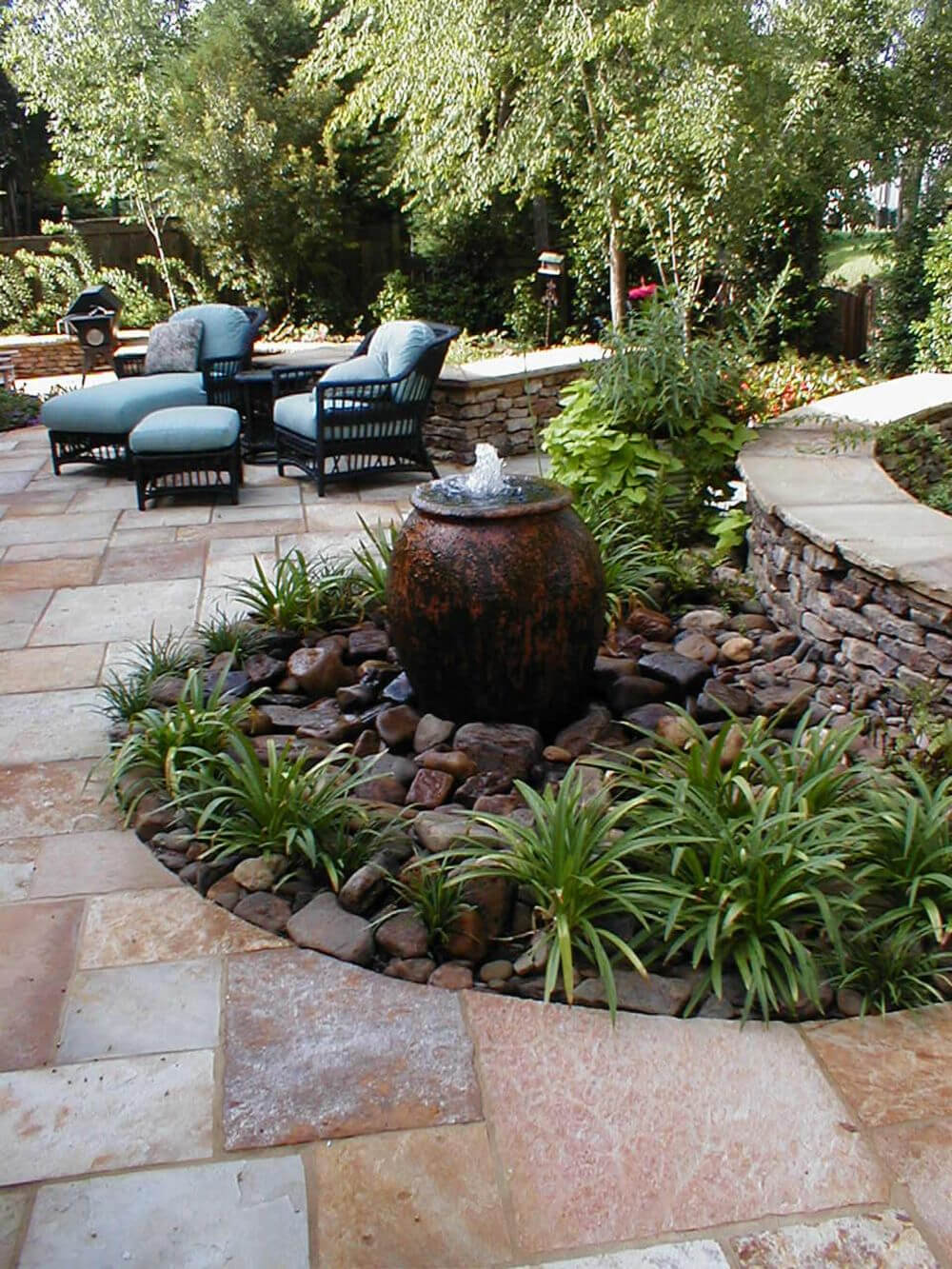
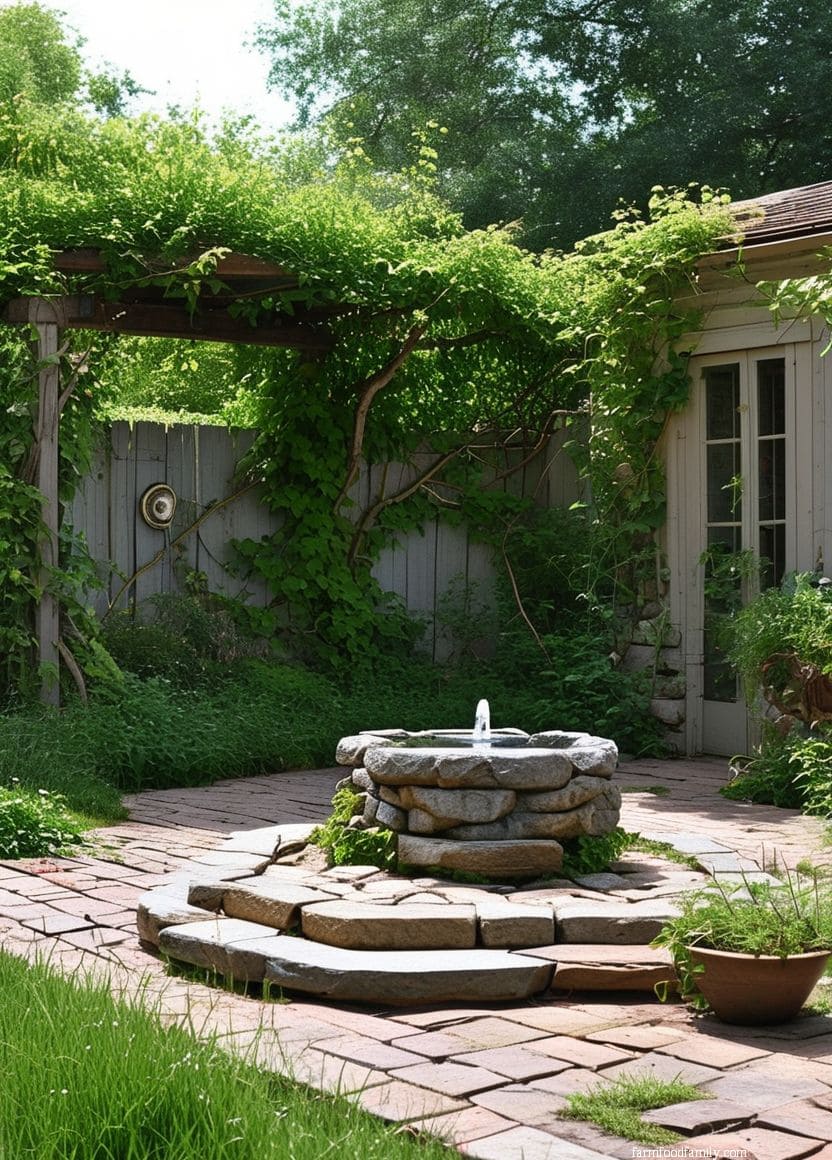
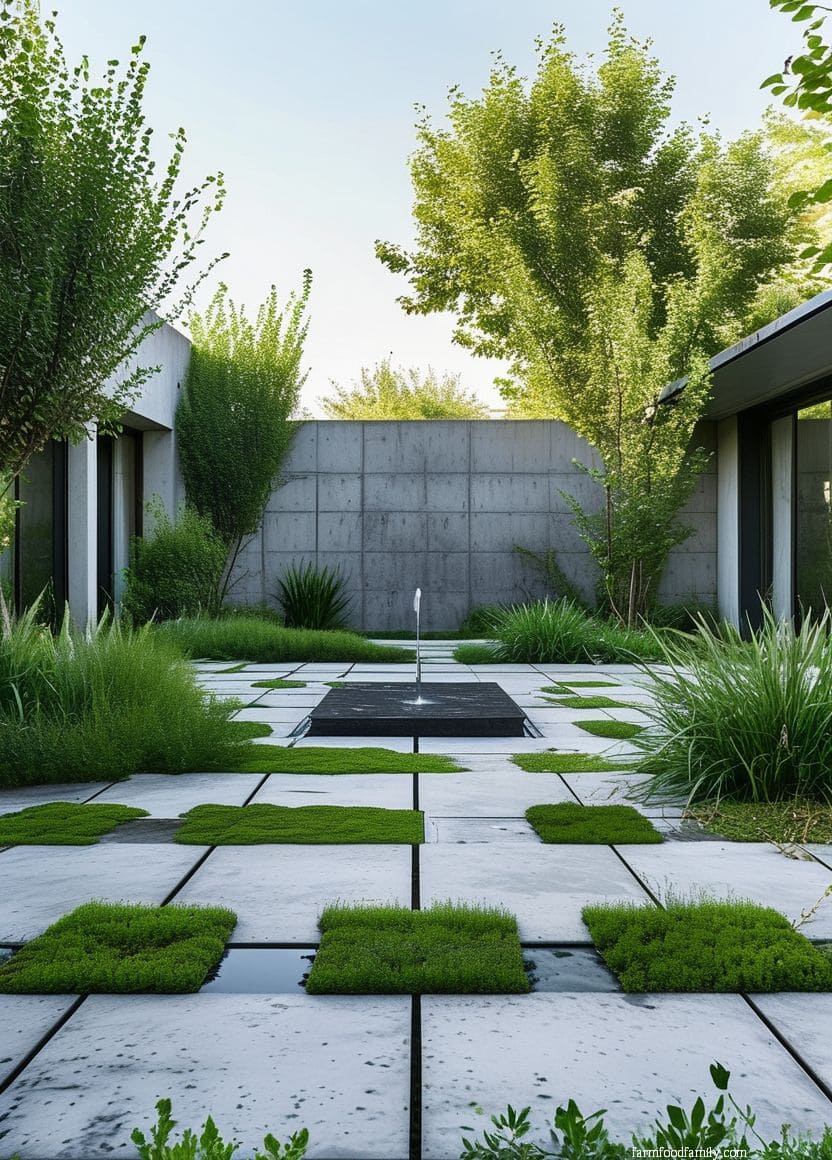
6. Water Features
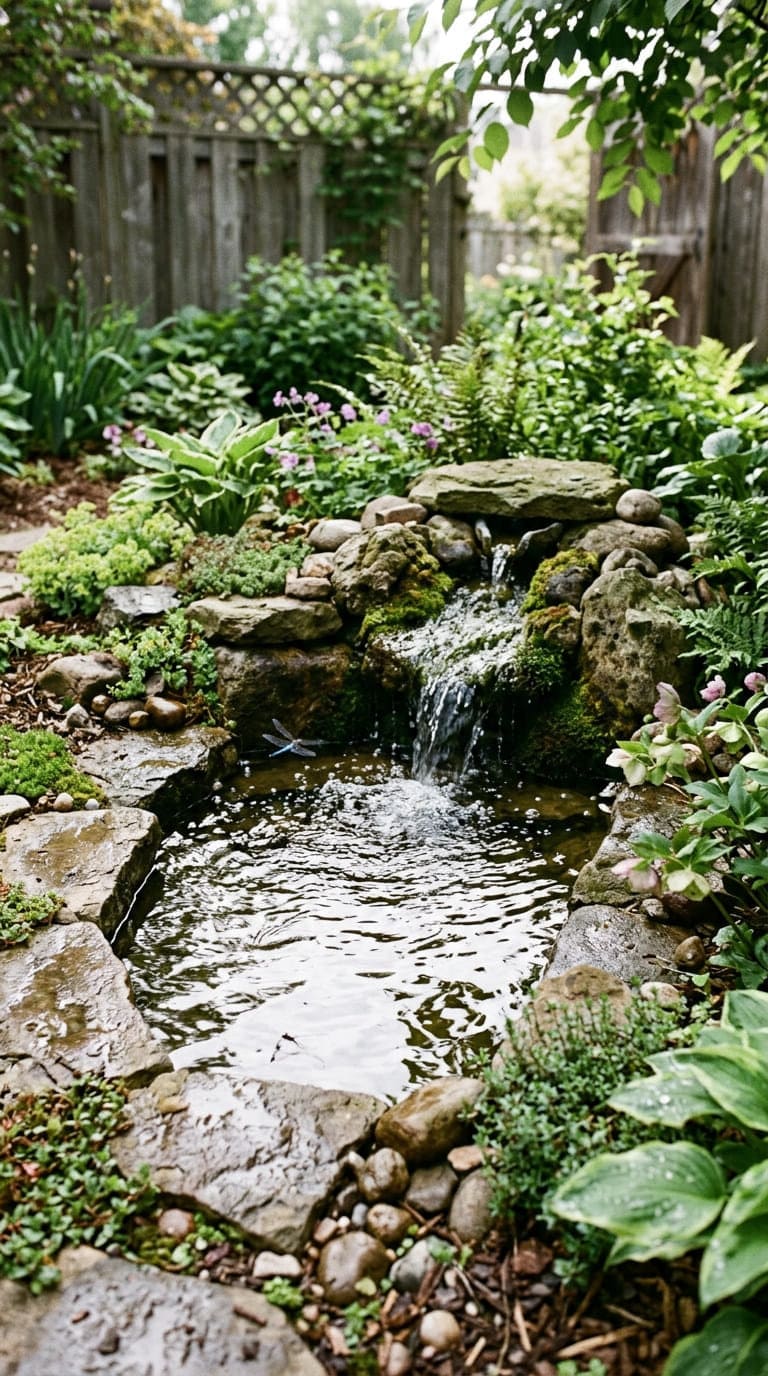
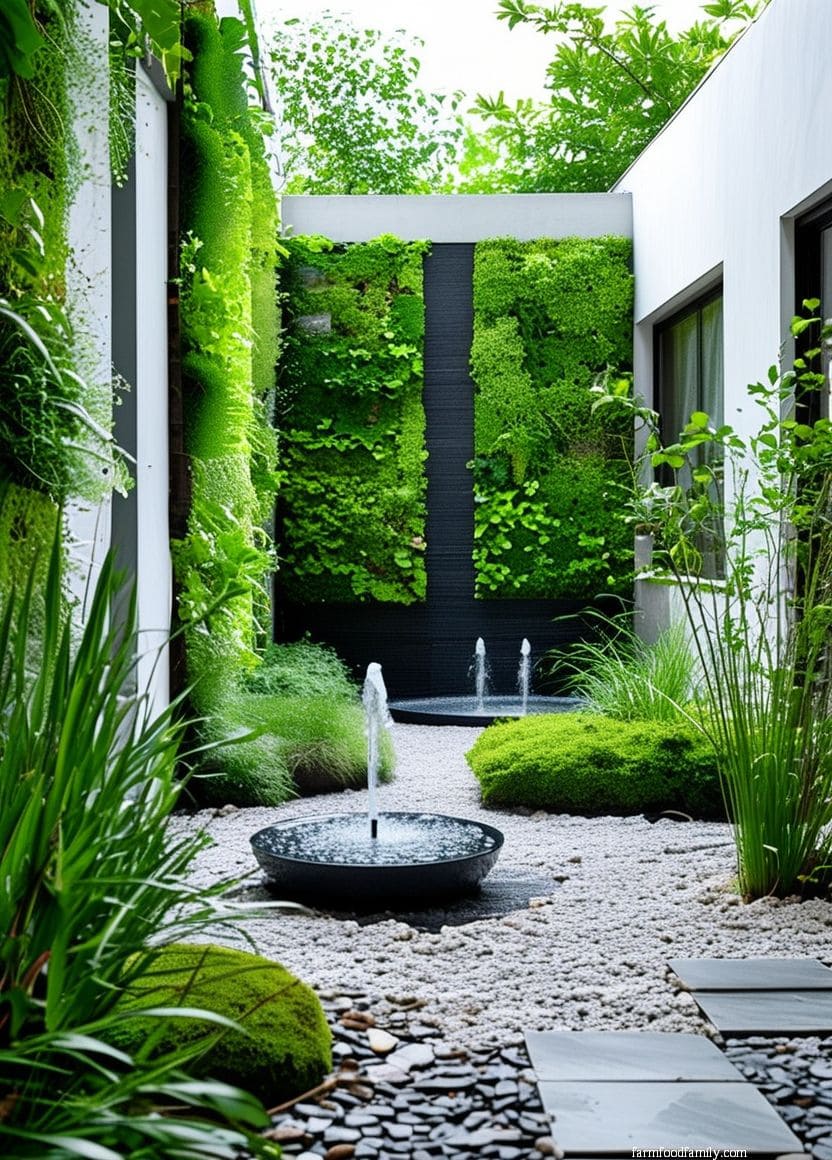
A small pond, fountain, or recirculating stream adds sound and movement that flat hardscape and planting beds can’t. It’s also one of the more effective ways to draw birds and beneficial insects into a yard that no longer has the ecosystem a lawn (barely) supported.
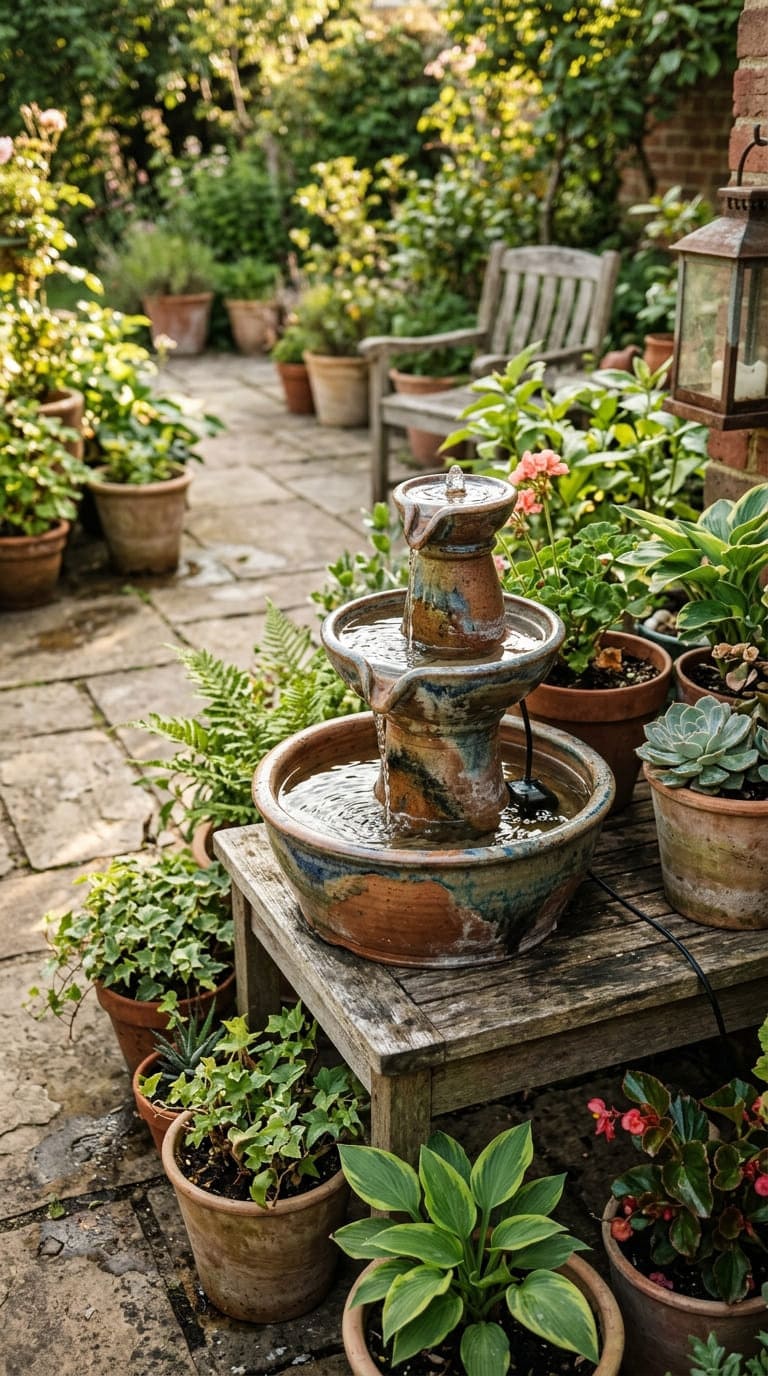
Scale it to the space. A five-gallon tabletop fountain and a built-in koi pond solve completely different problems, and the pond needs a real maintenance plan for algae and mosquito control that the fountain doesn’t.
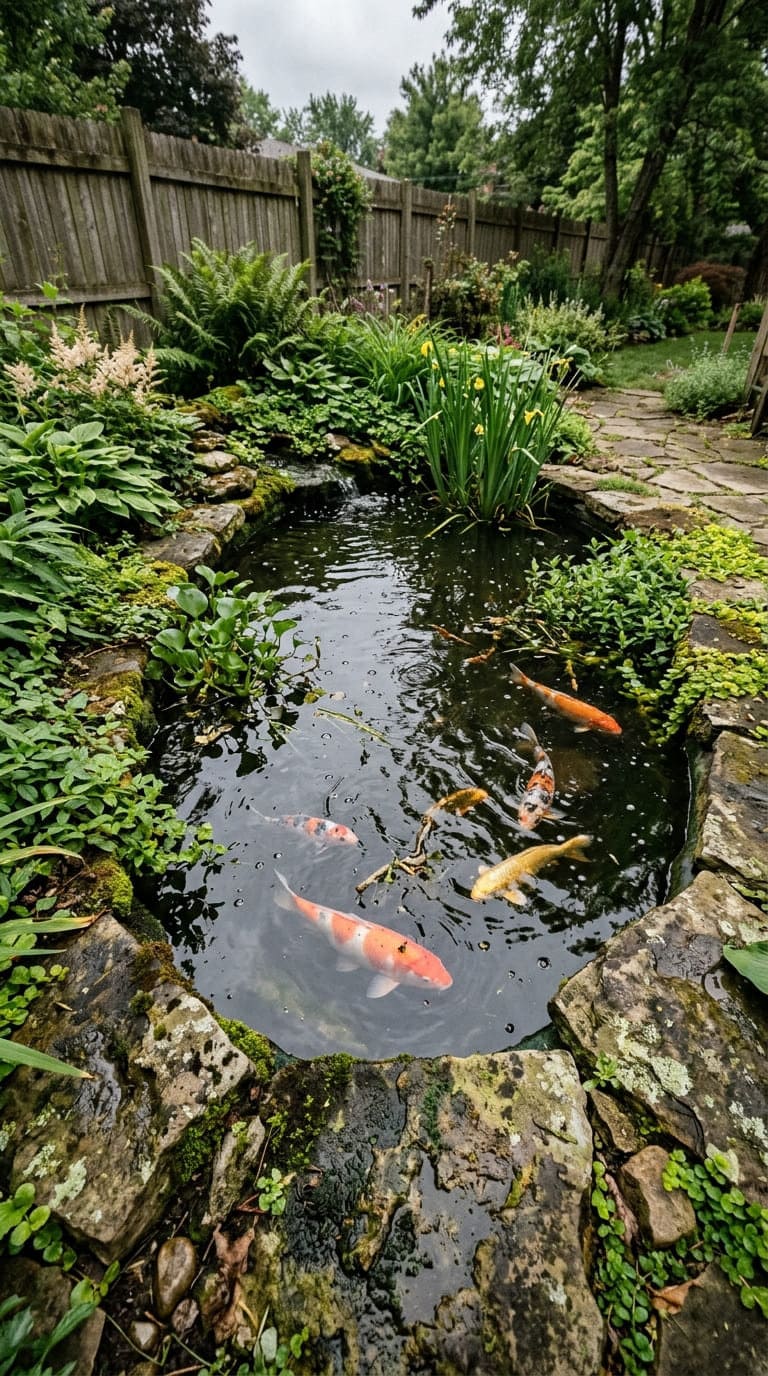
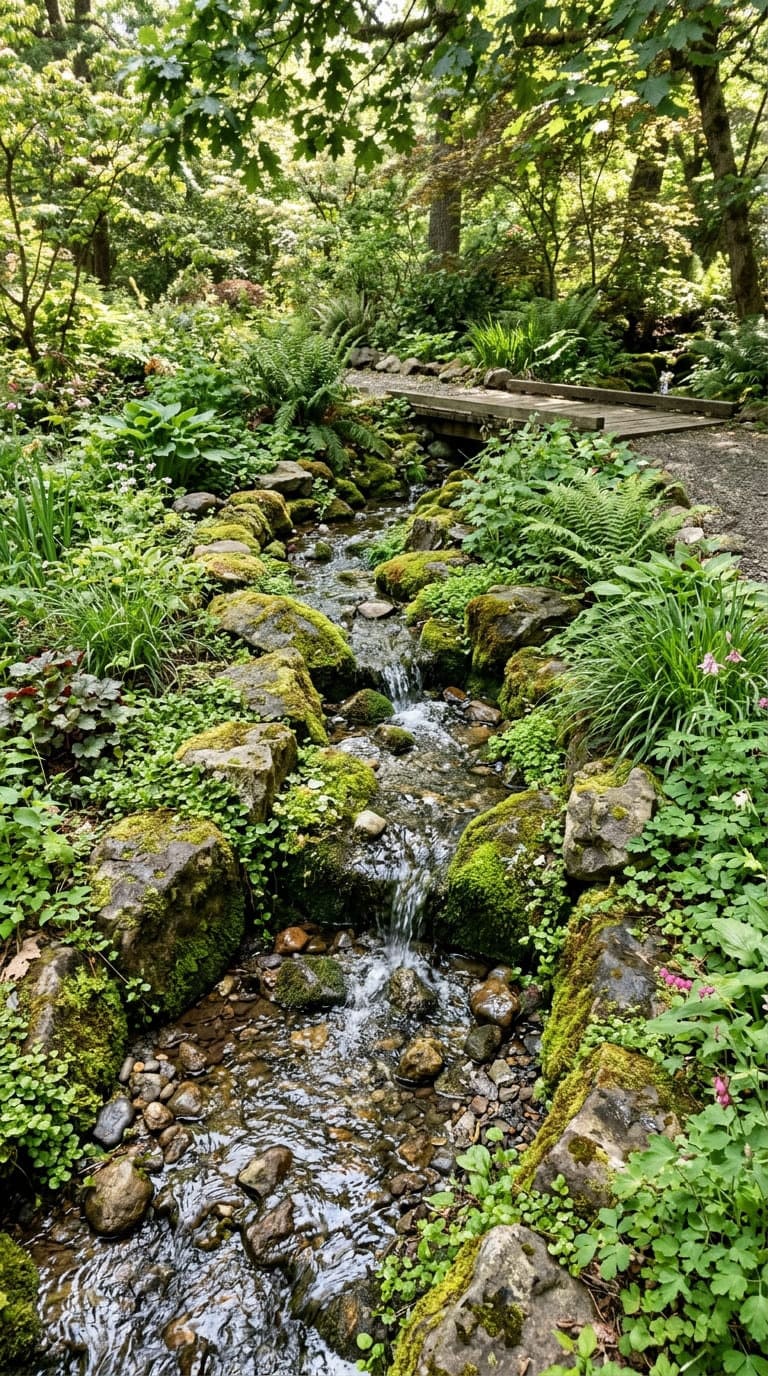
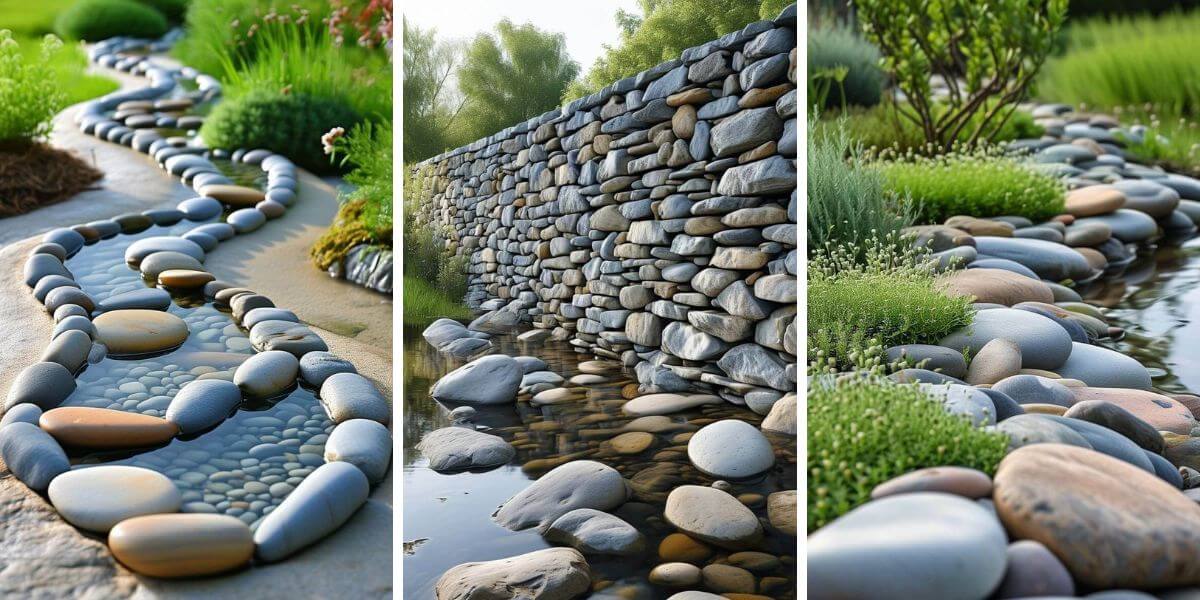
You can add jagged stones to give off a zen feel, a pebbled pond, tiled fountain or a swimming pool, there’s no limit to what water feature you can add truth be told. These ideas from WSJ, The Bark and Pinterest will definitely prove the point.

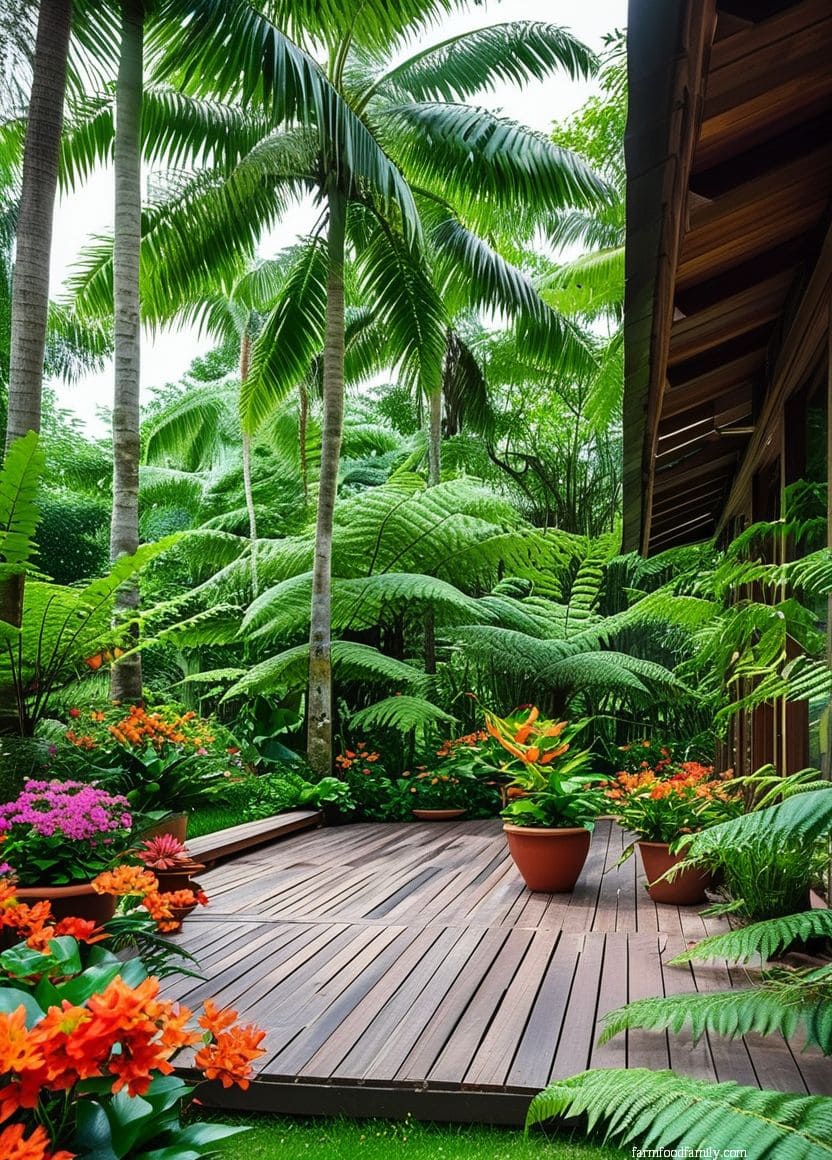
7. Tropical Canopy and Tree Groupings
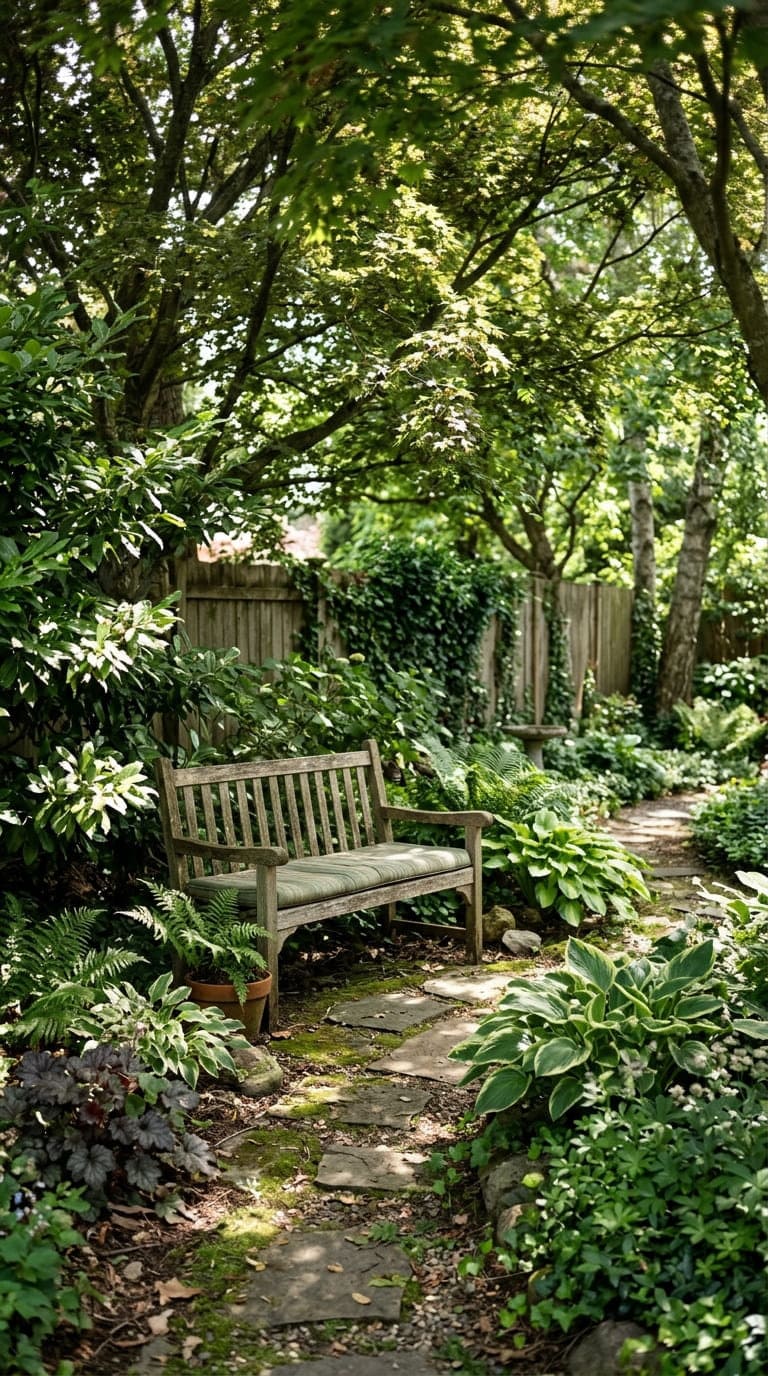
If you have the patience for it, a grouping of trees and large shrubs eventually does more for a yard than almost anything else on this list: shade, privacy, seasonal color, and a canopy effect that gravel or turf can’t fake.
The catch is time. This is a multi-year investment, not a weekend project, and it’s the one idea here where “before” photos genuinely look better than year-one “after” photos.
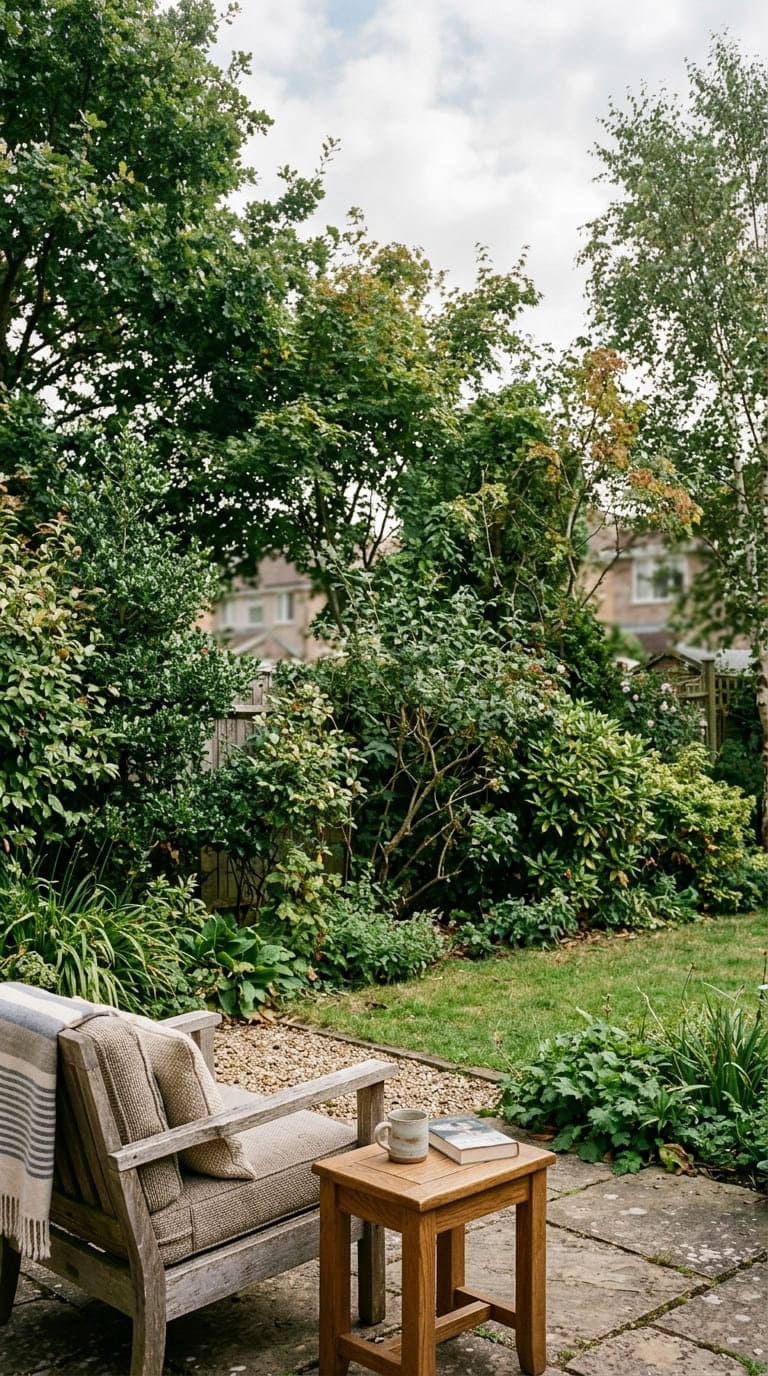
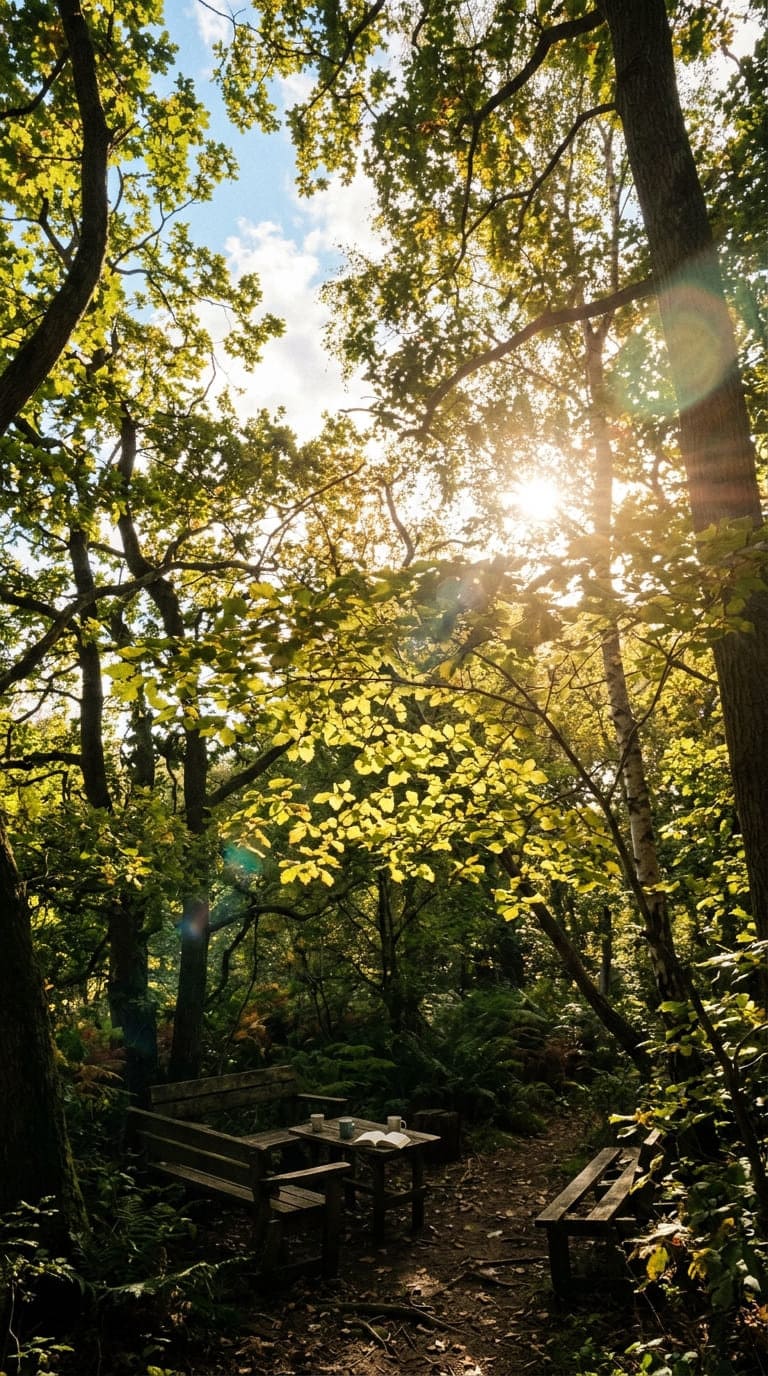
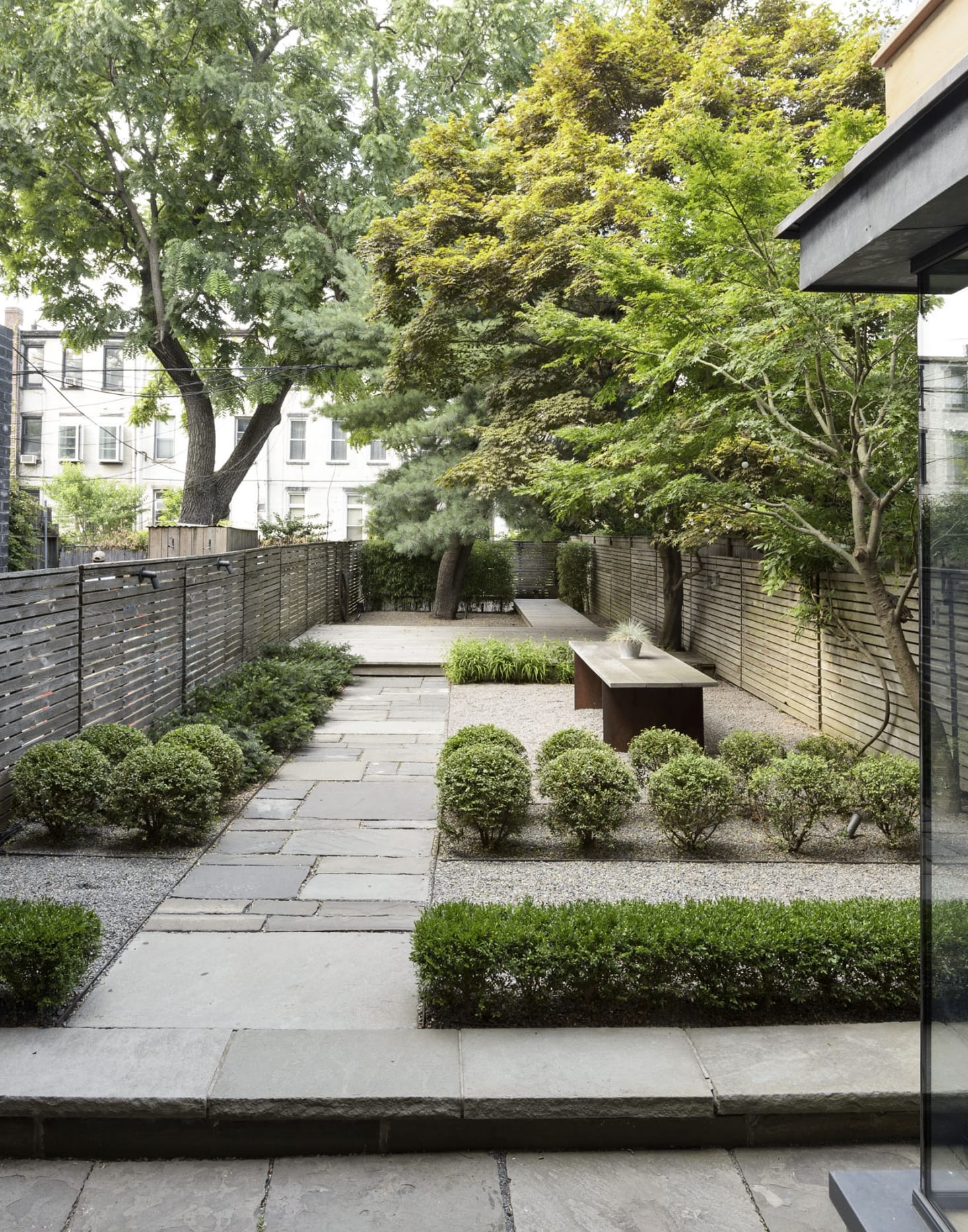
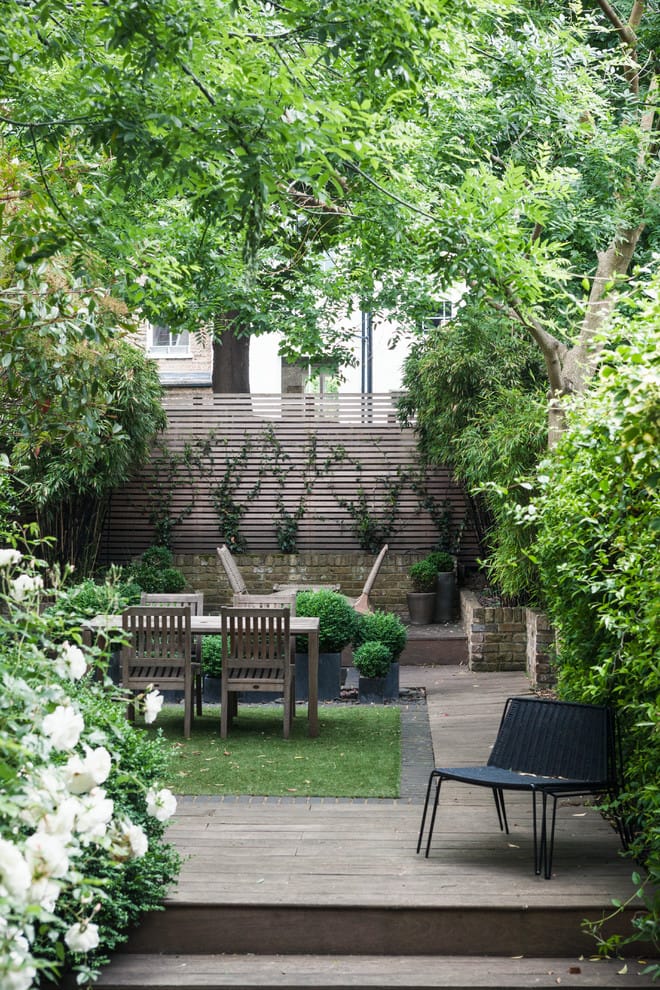
Making a canopy out of it towering over a table set, other ornamentals, a deck and some light work to glow at night will make a dreamy no grass backyard any day like these ones from Gardenista, Forbes and House Beautiful.

8. Outdoor Living Space
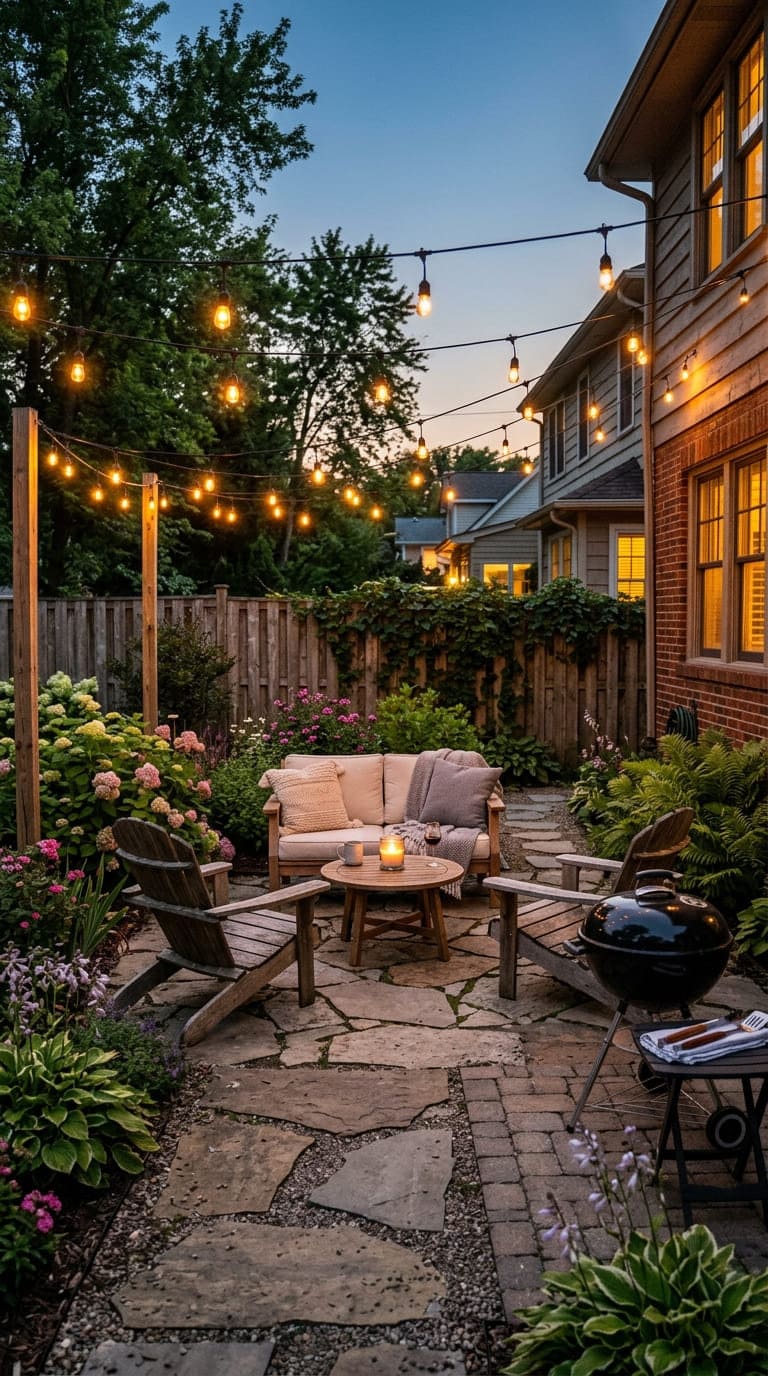
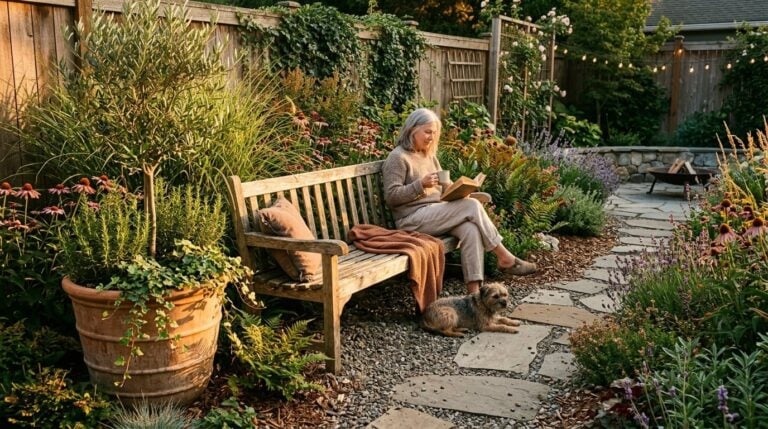
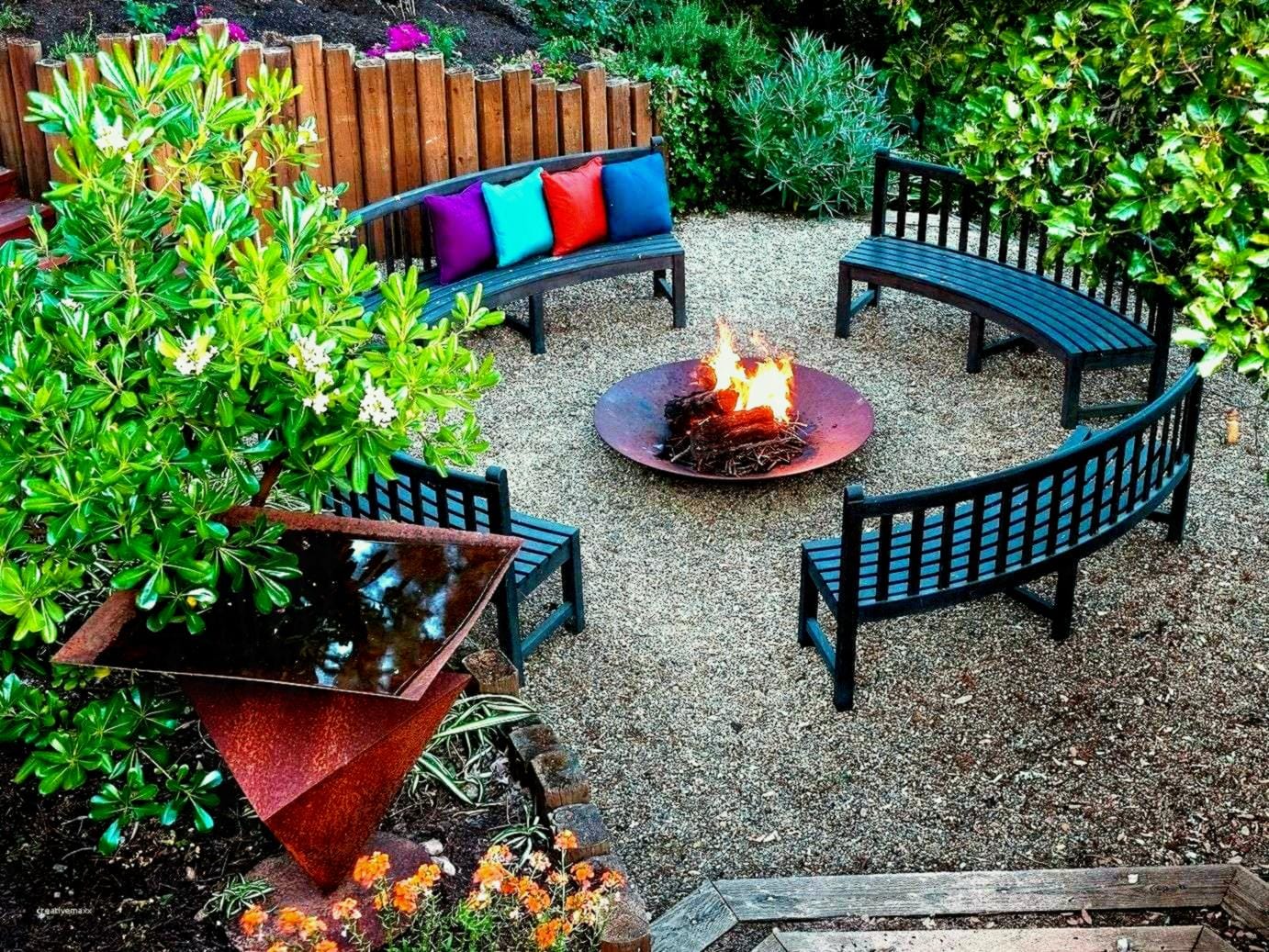
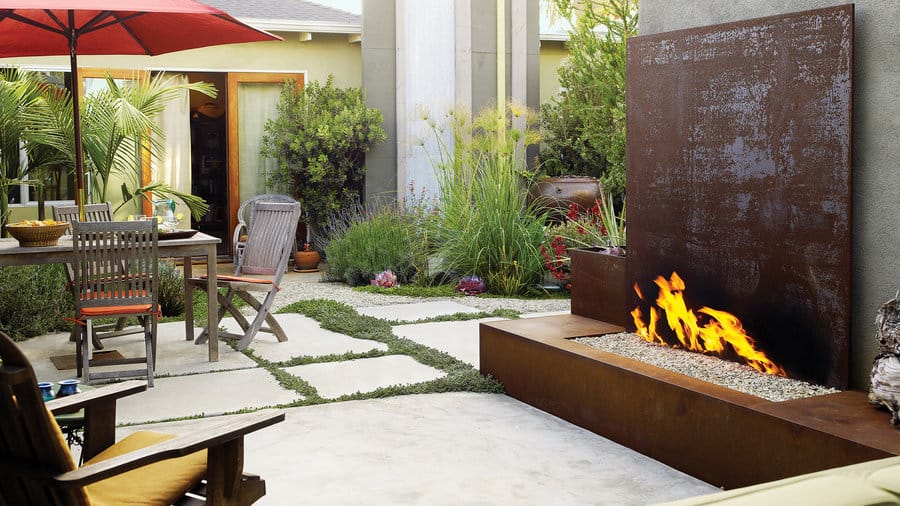
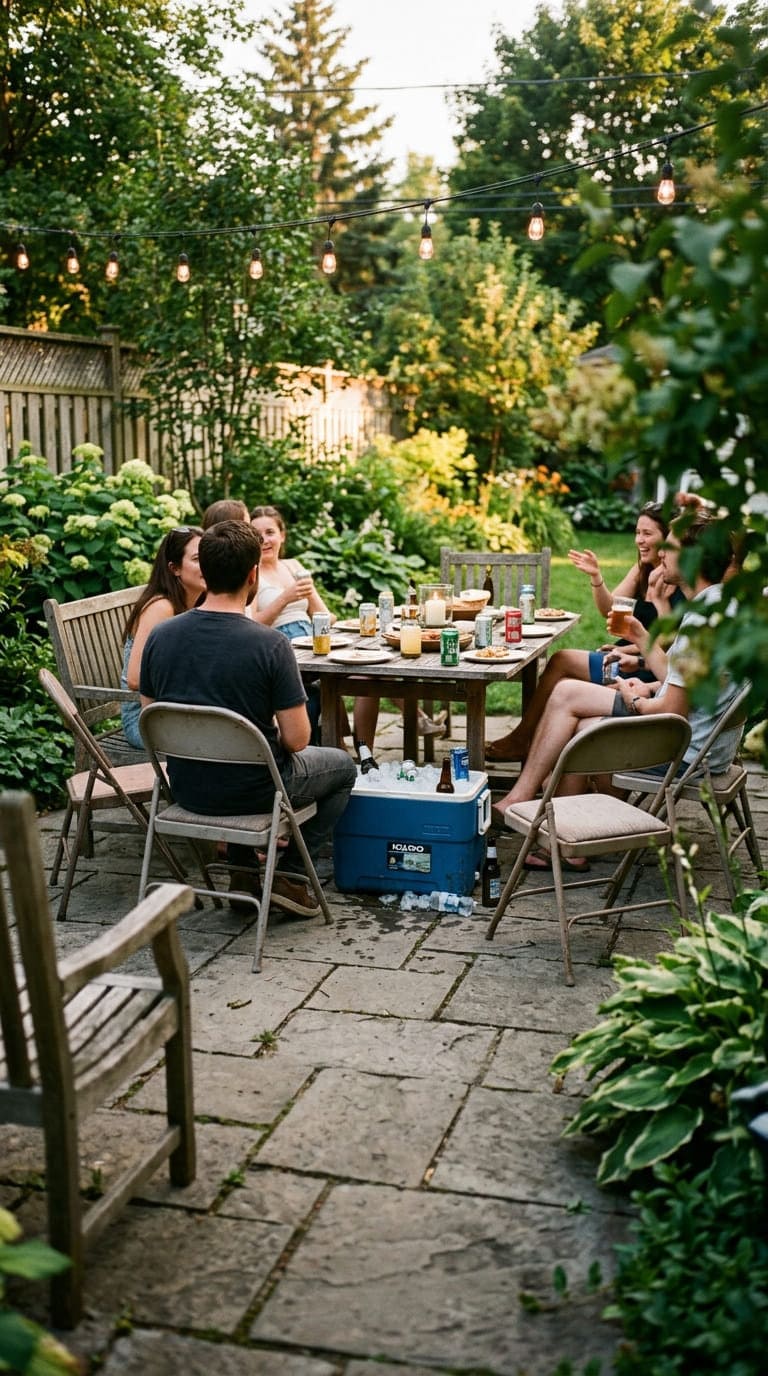
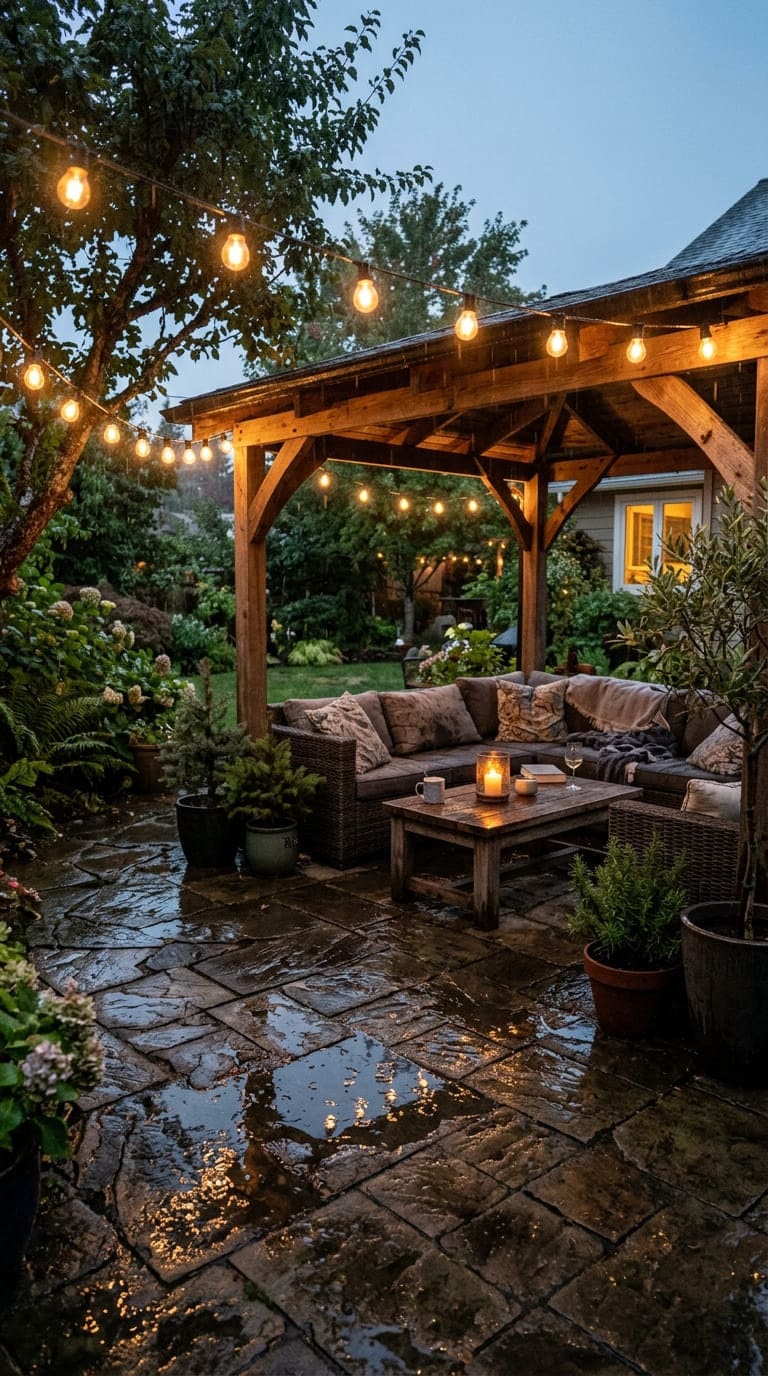
Combine two or three of the above (a hardscape patio, some potted plants, a water feature) into one deliberate “outdoor room” instead of treating them as separate projects scattered around the yard. Lighting, a grill, and comfortable seating turn a functional lawn-replacement into a space people actually want to use.
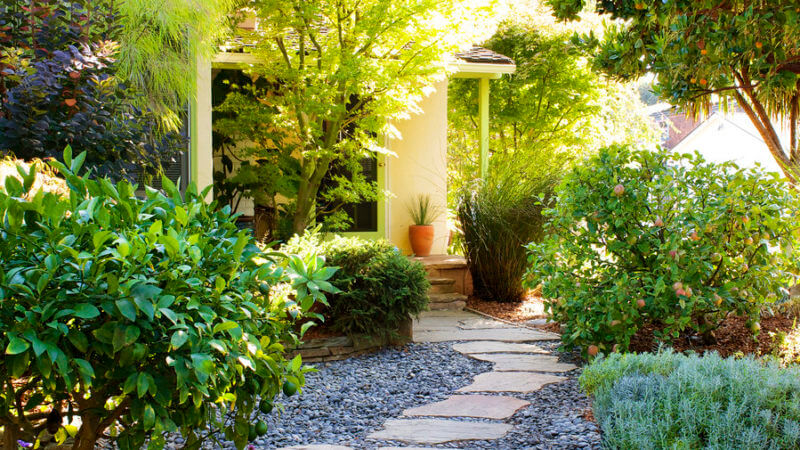
9. Pathways and Walkways
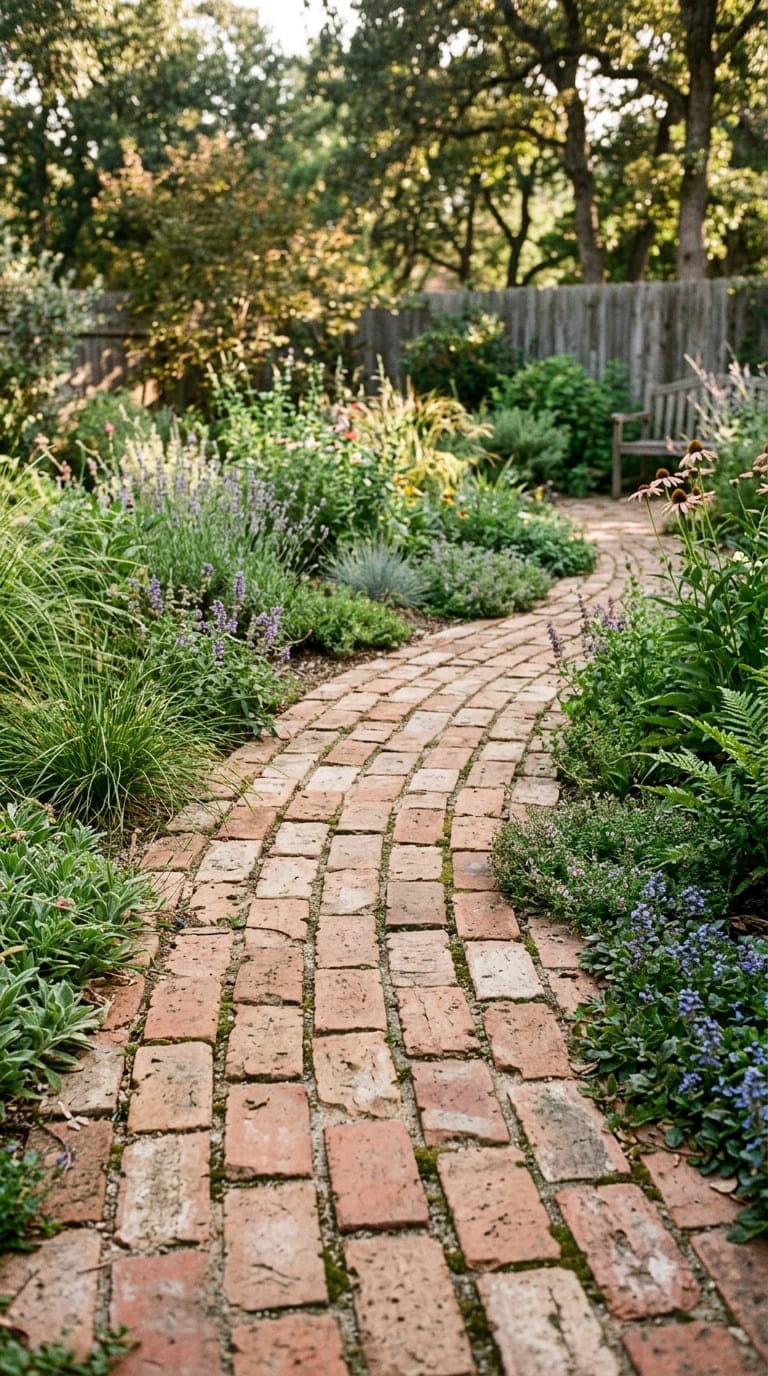
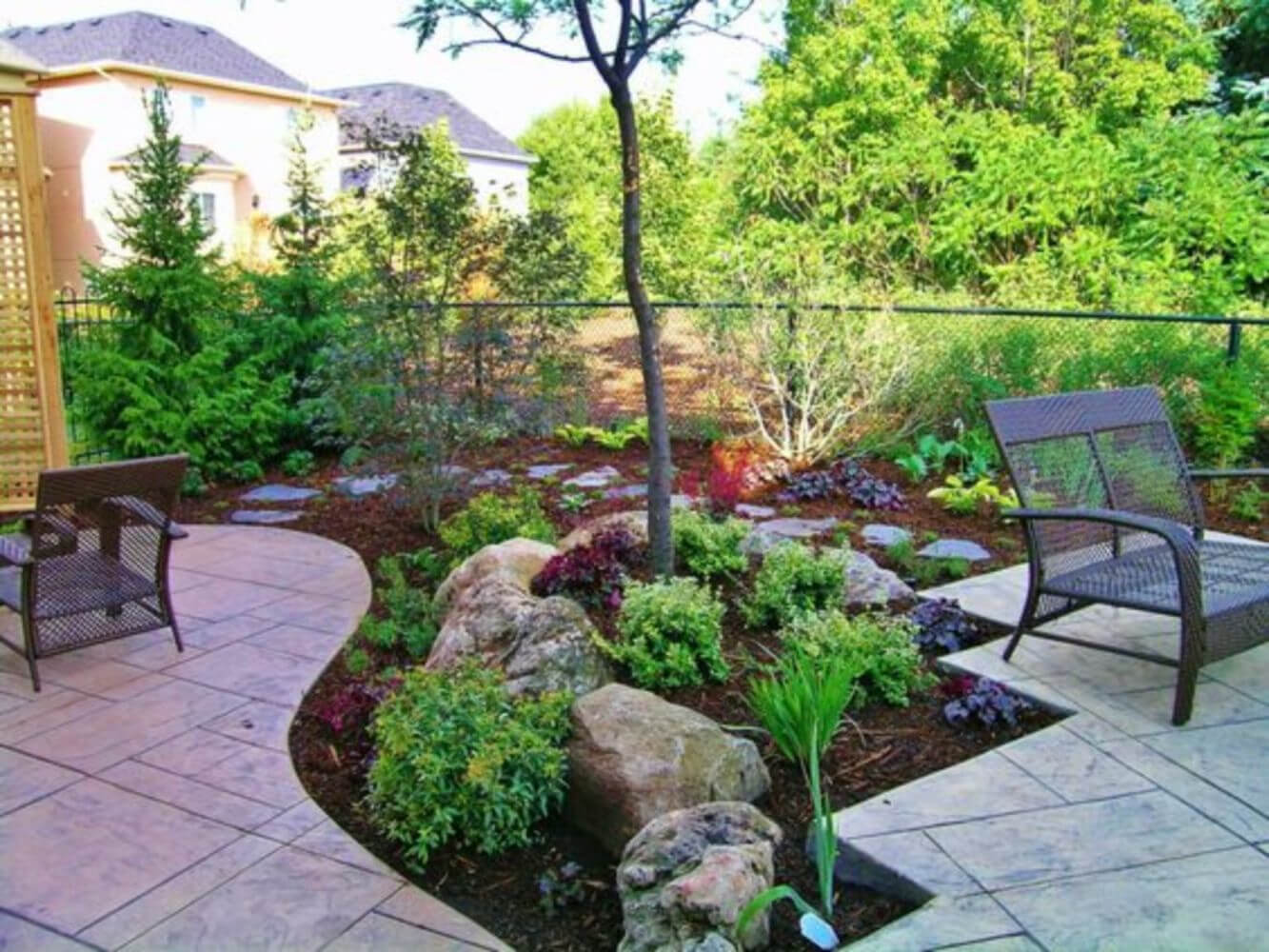
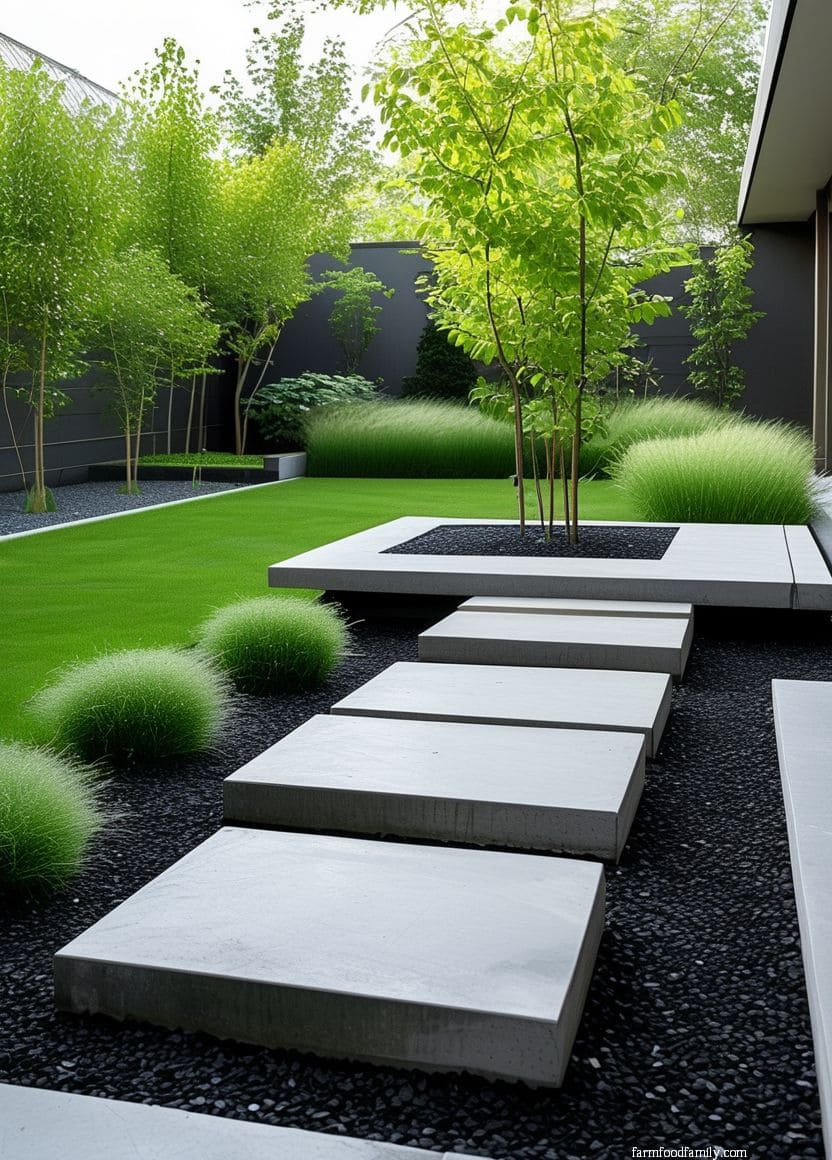
Even a small yard benefits from a defined path instead of a straight, exposed line across it. Curved brick, stepping stones, or stamped concrete break up the space and make it feel bigger than it is, while giving you a clean, weed-free route through planting beds.
How Much Does It Actually Cost?
| Option | 2026 Cost Range | Notes |
|---|---|---|
| Landscape gravel (basic) | $0.86–$1.83/sq ft | Cheapest hardscape option; watch tree/pet fit |
| Pea gravel, installed | $1.85–$3.39/sq ft | Good for seating areas and paths |
| Premium gravel (lava rock, etc.) | $3.50–$11/sq ft | Decorative, higher-end look |
| Artificial turf, materials only | $2–$8/sq ft | Add labor for full installed cost |
| Artificial turf, fully installed | $10–$25/sq ft | Varies heavily by market and prep |
| Xeriscaping, full project | $5–$20/sq ft ($5,000–$24,000 typical, ~$17,000 average) | Design, materials, and labor combined |
Sources: Angi, Homewyse, HomeGuide.
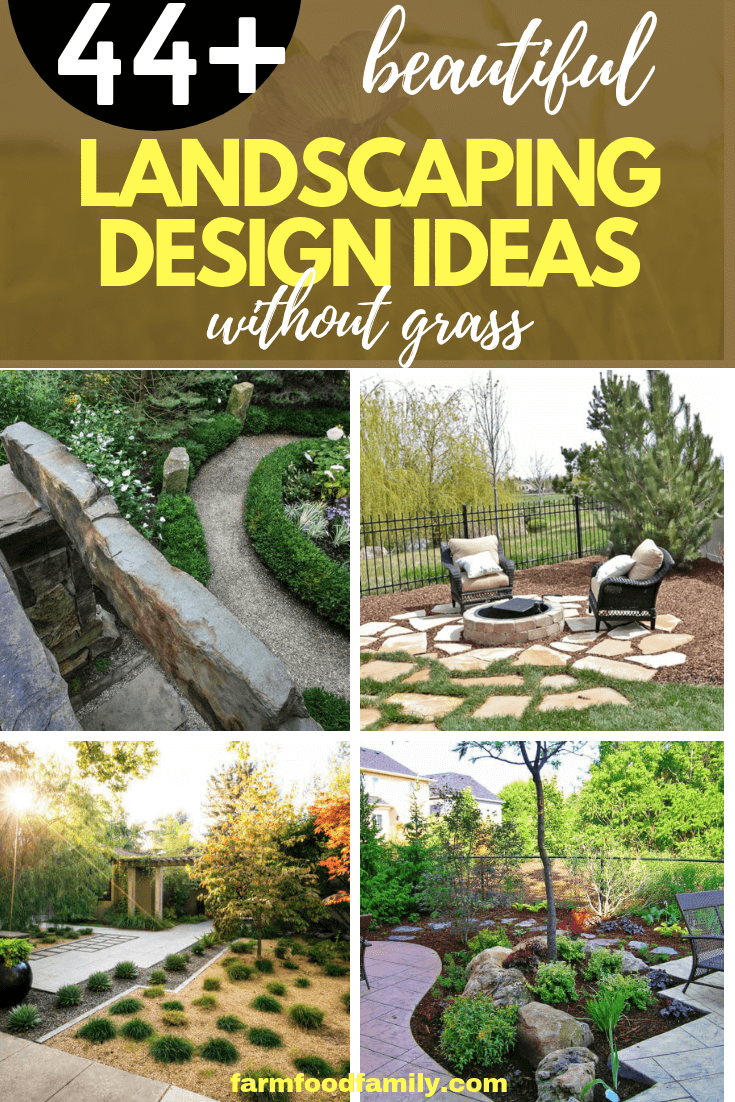
44+ Landscaping Ideas without grass
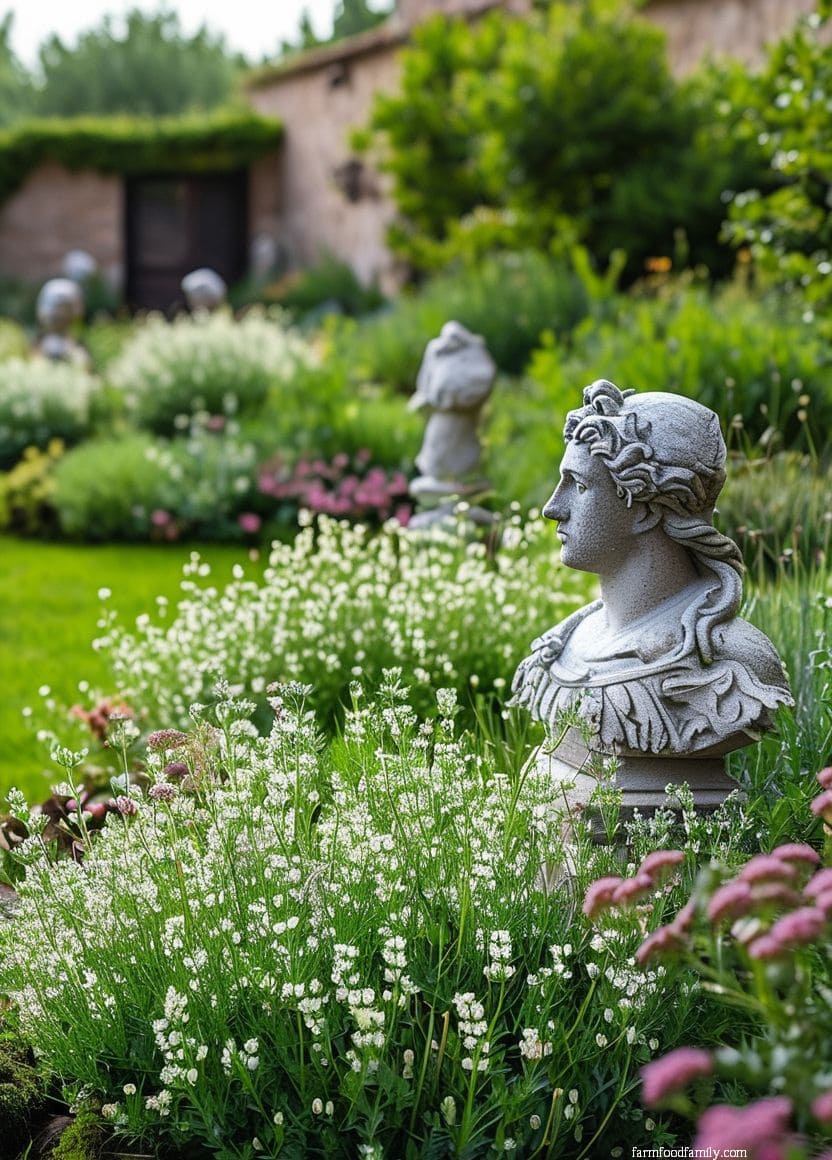
1. Peaceably Backyard Landscaping without Grass
2. Backyard without grass
3. Foot-friendly pea gravel
4. Suburban homestead
5. Amazing Backyard Makeover
6. A butterfly friendly canyon
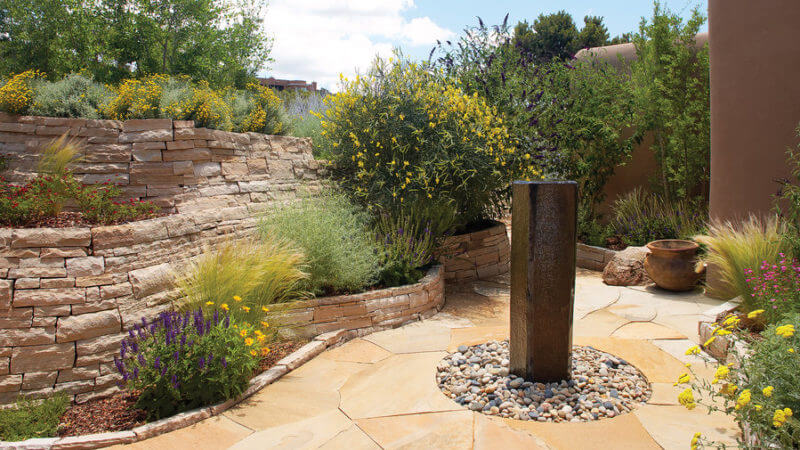
7. Lawn-free tapestry

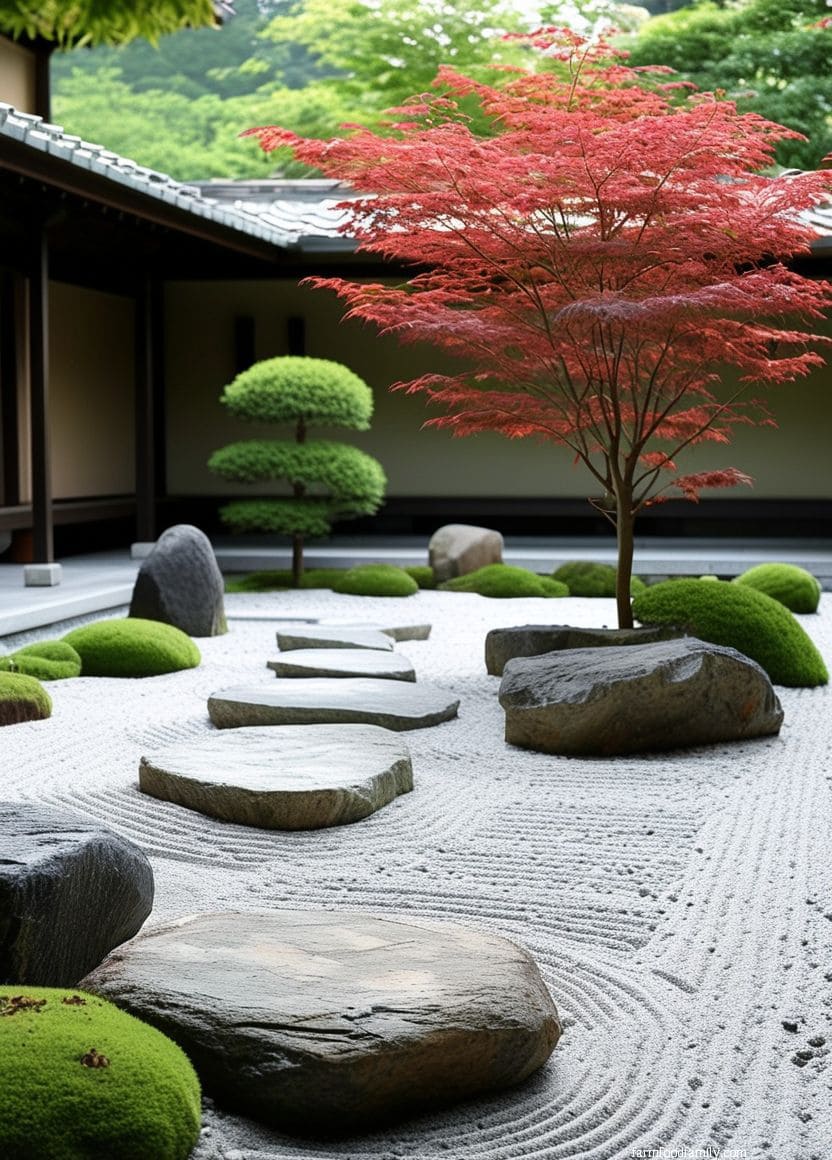
8. Zen retreat
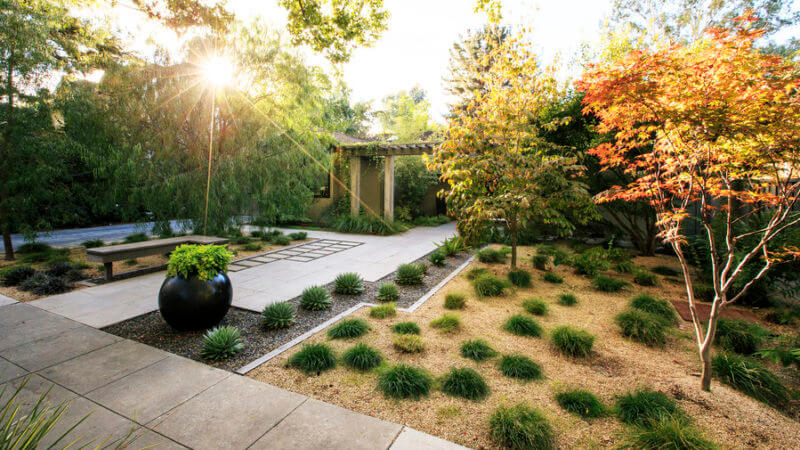
9. Front lawn no water landscaping
10. Reduce lawn makeover
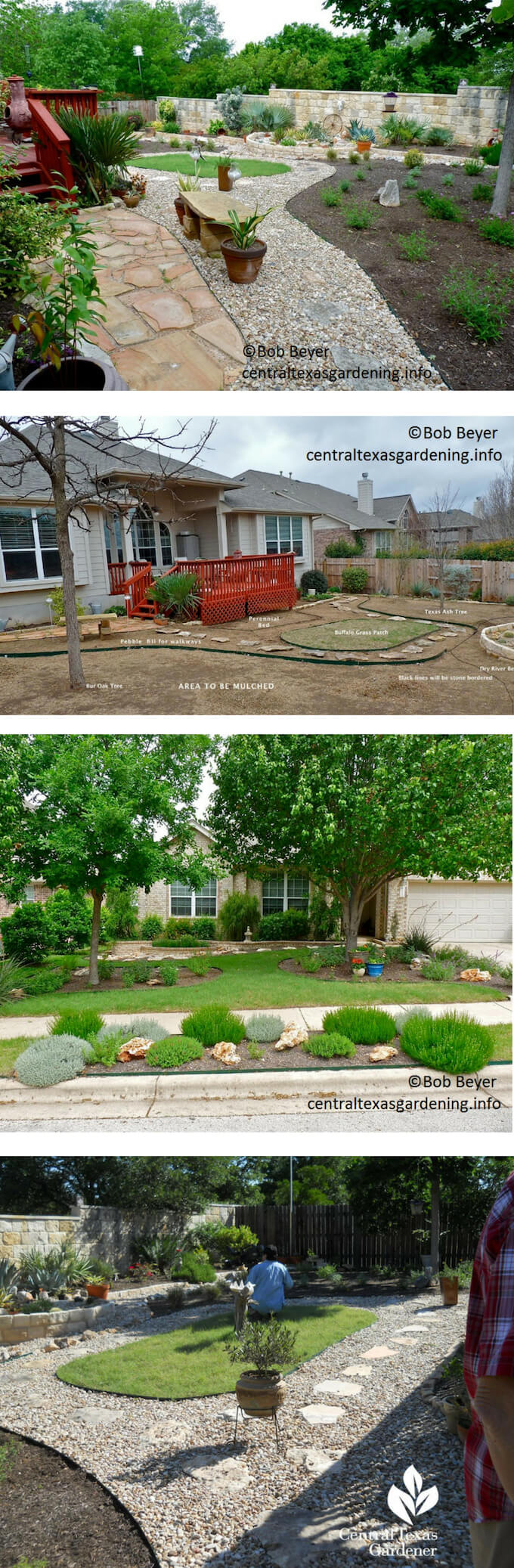
11. Front yard landscape without grass
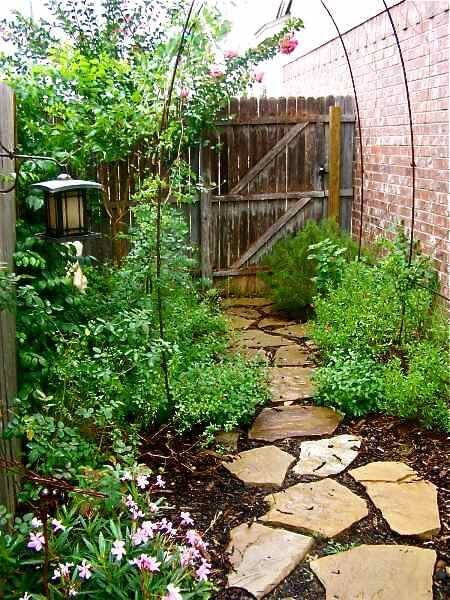
12. Elegant Elements
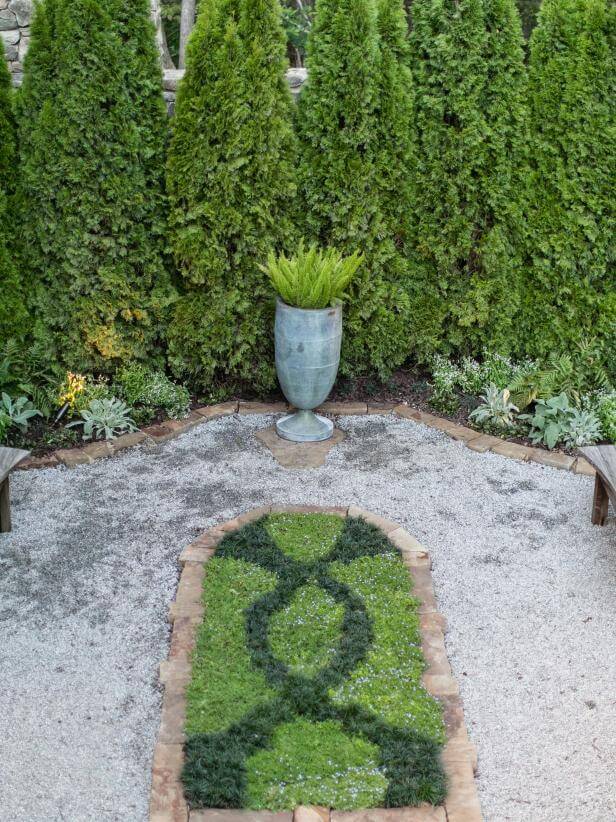
13. Contemporary Courtyard
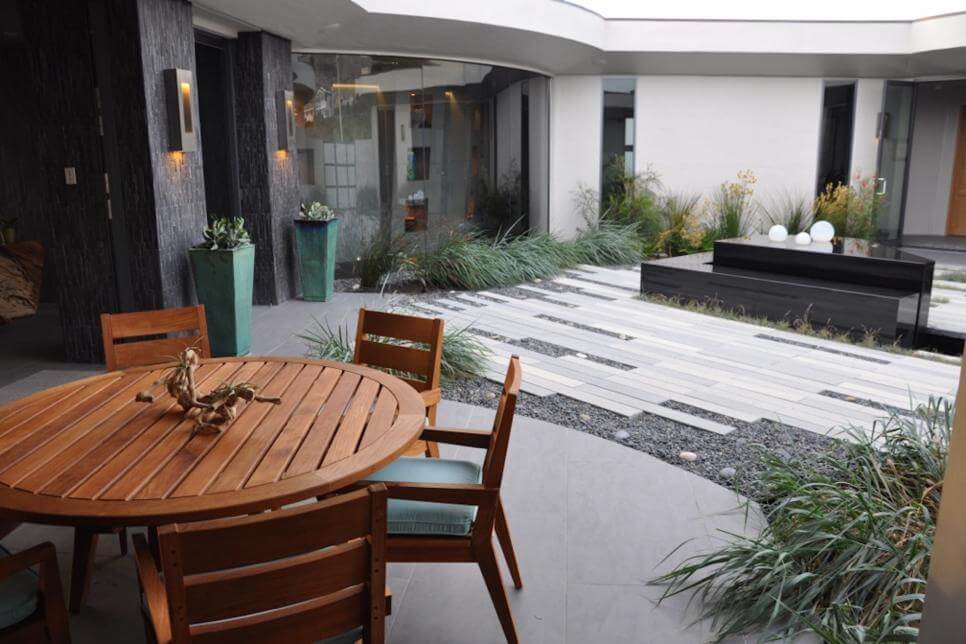
14. Solar system
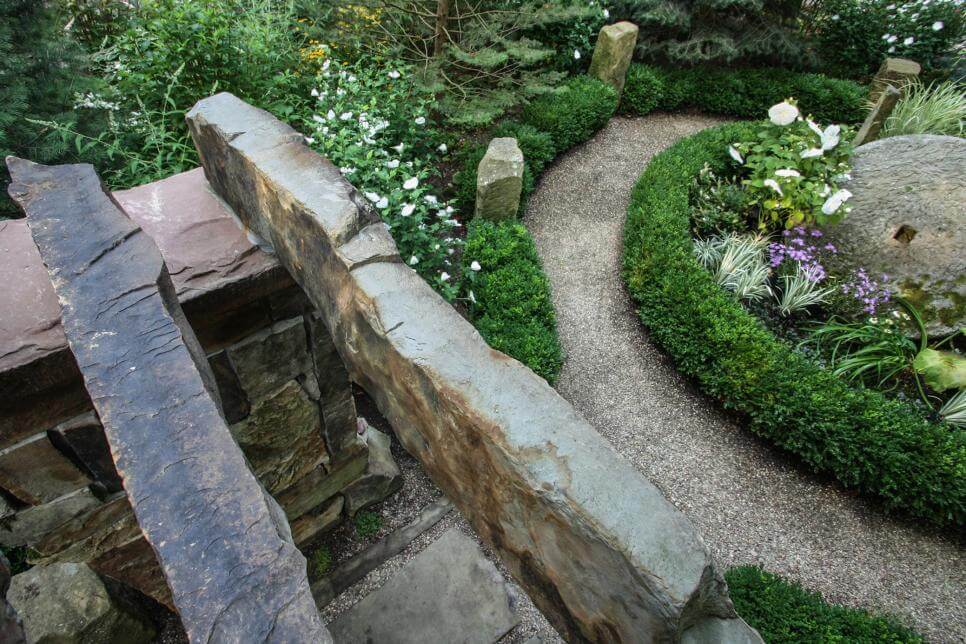
15. Charming Courtyard
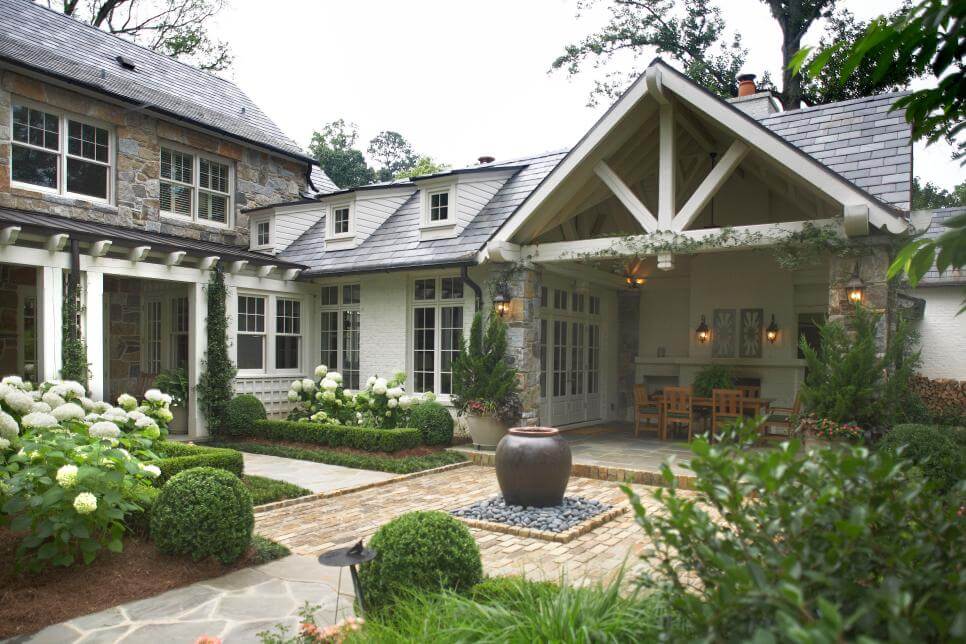
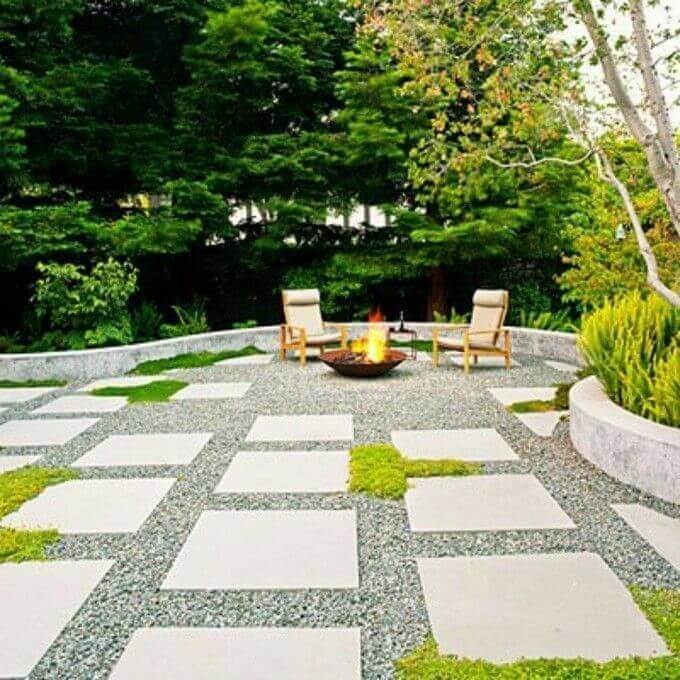
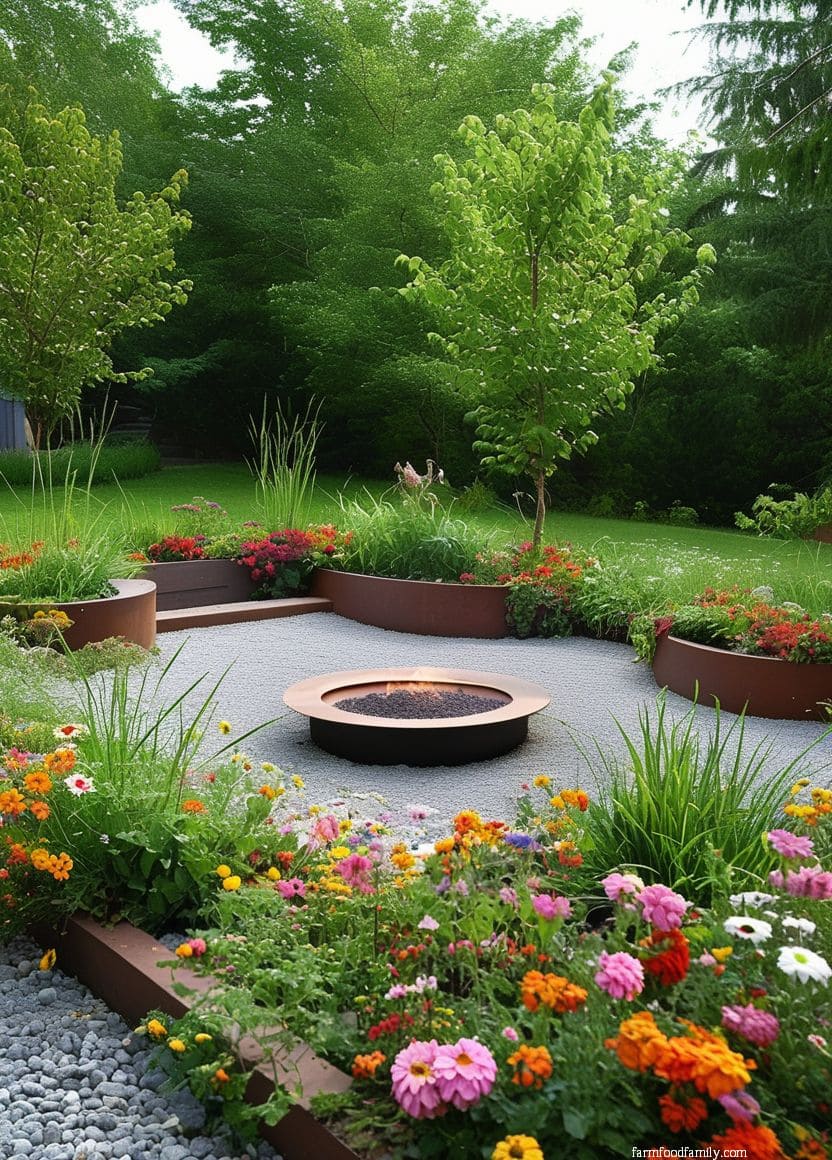
16. Circles and squares
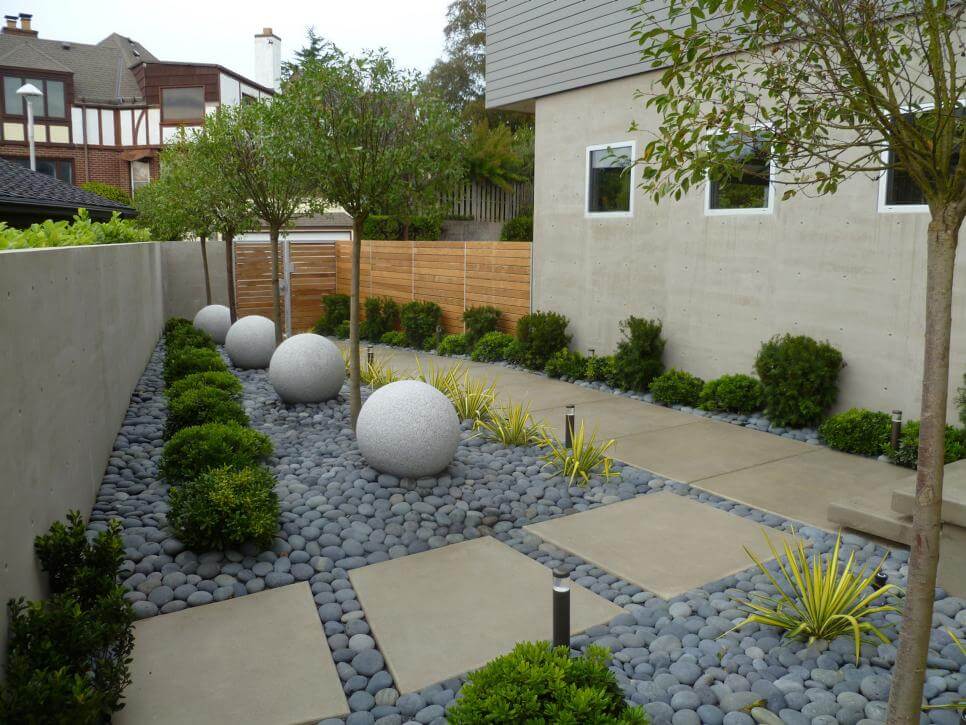
17. Water Feature
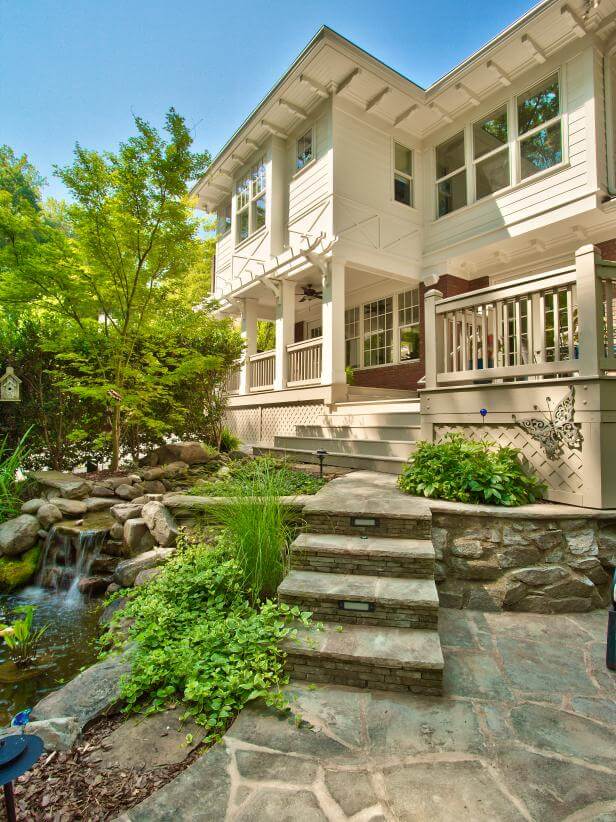
18. Lawn substitute
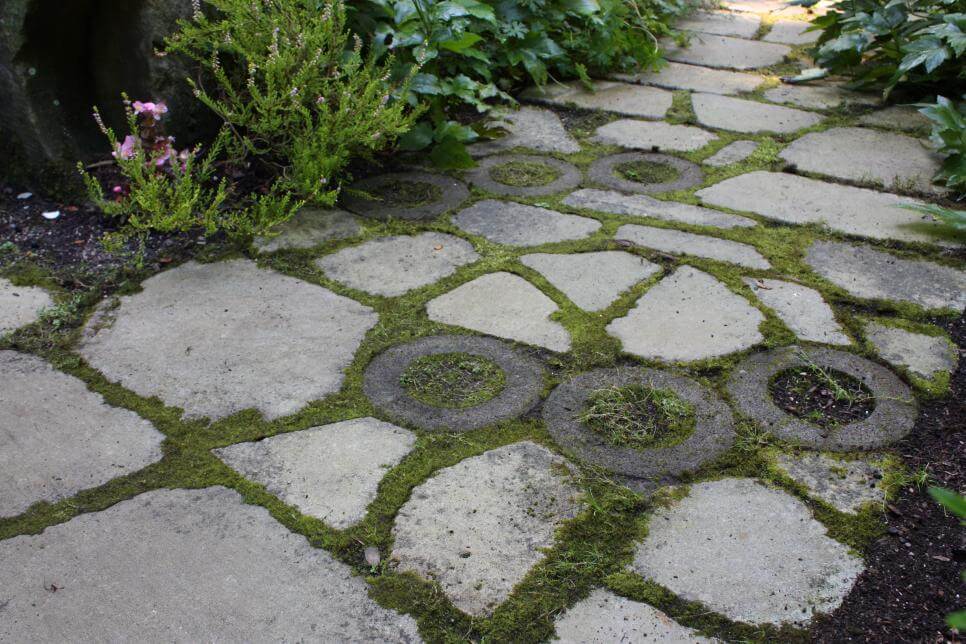
19-20. Garden Path

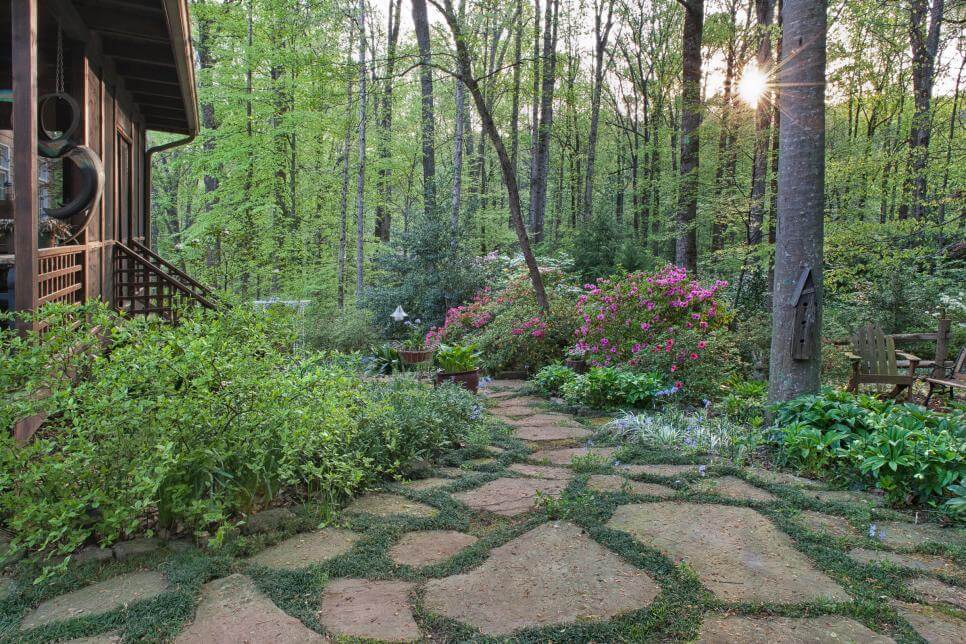
21-43. Landscaping without grass
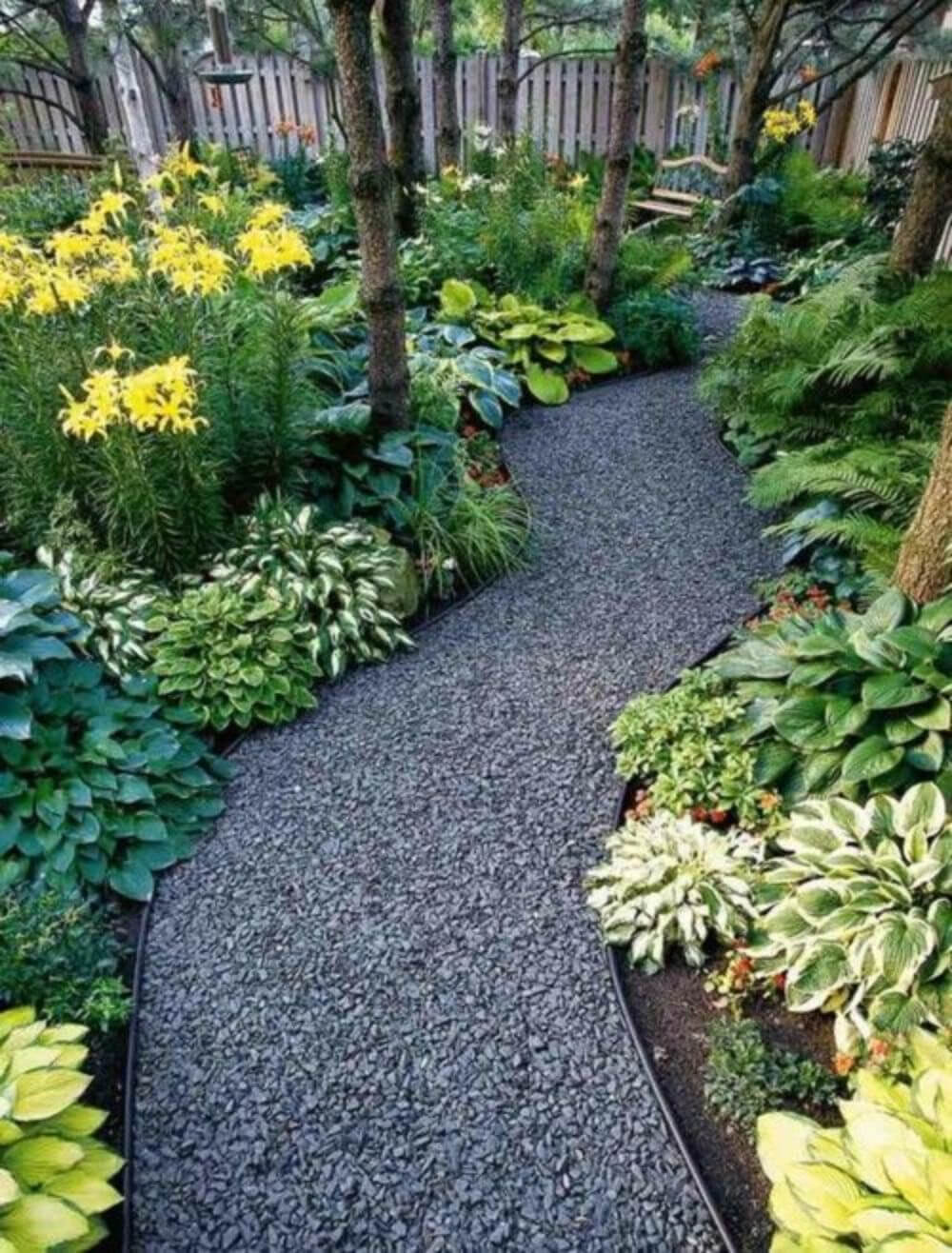
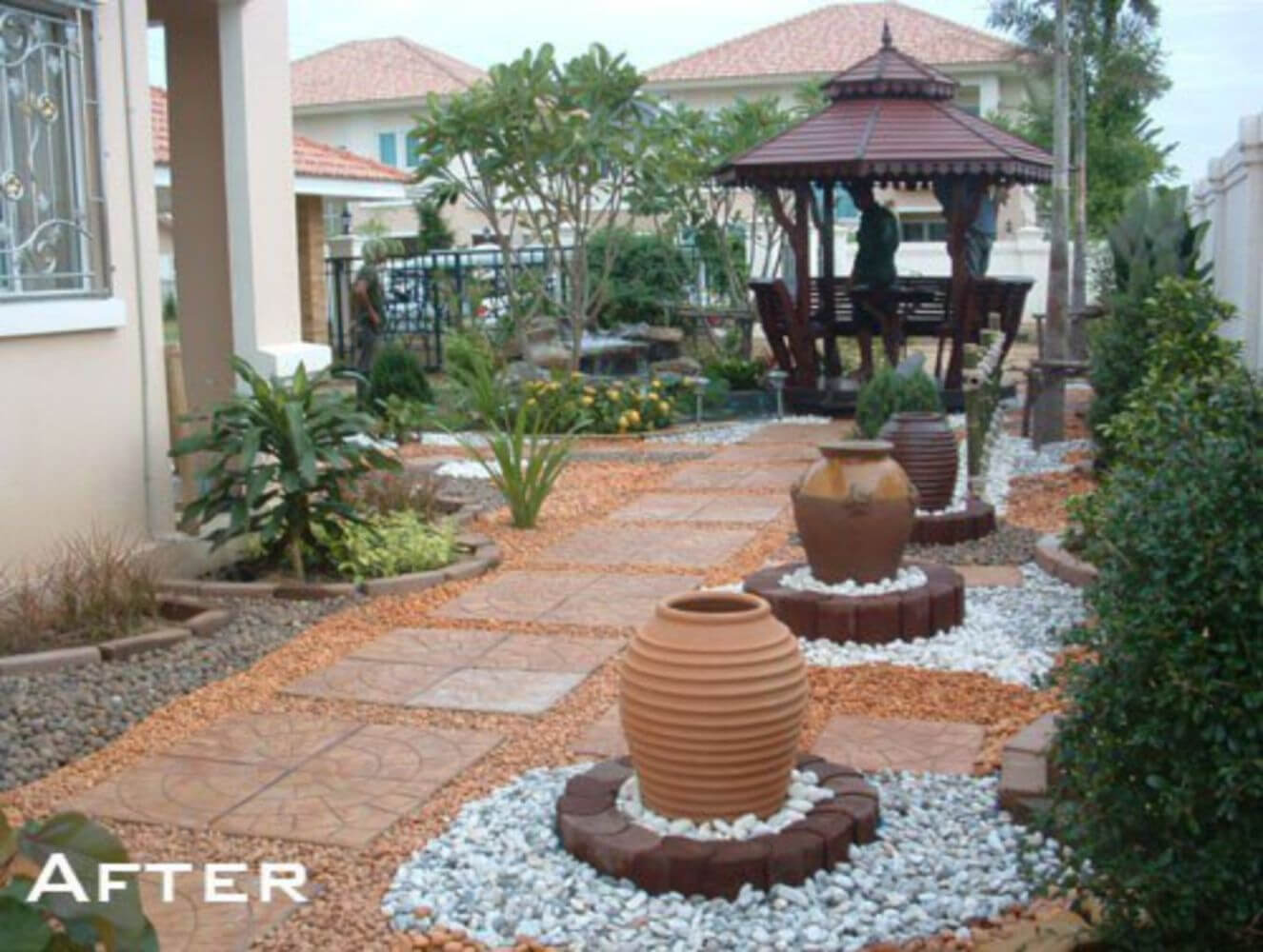
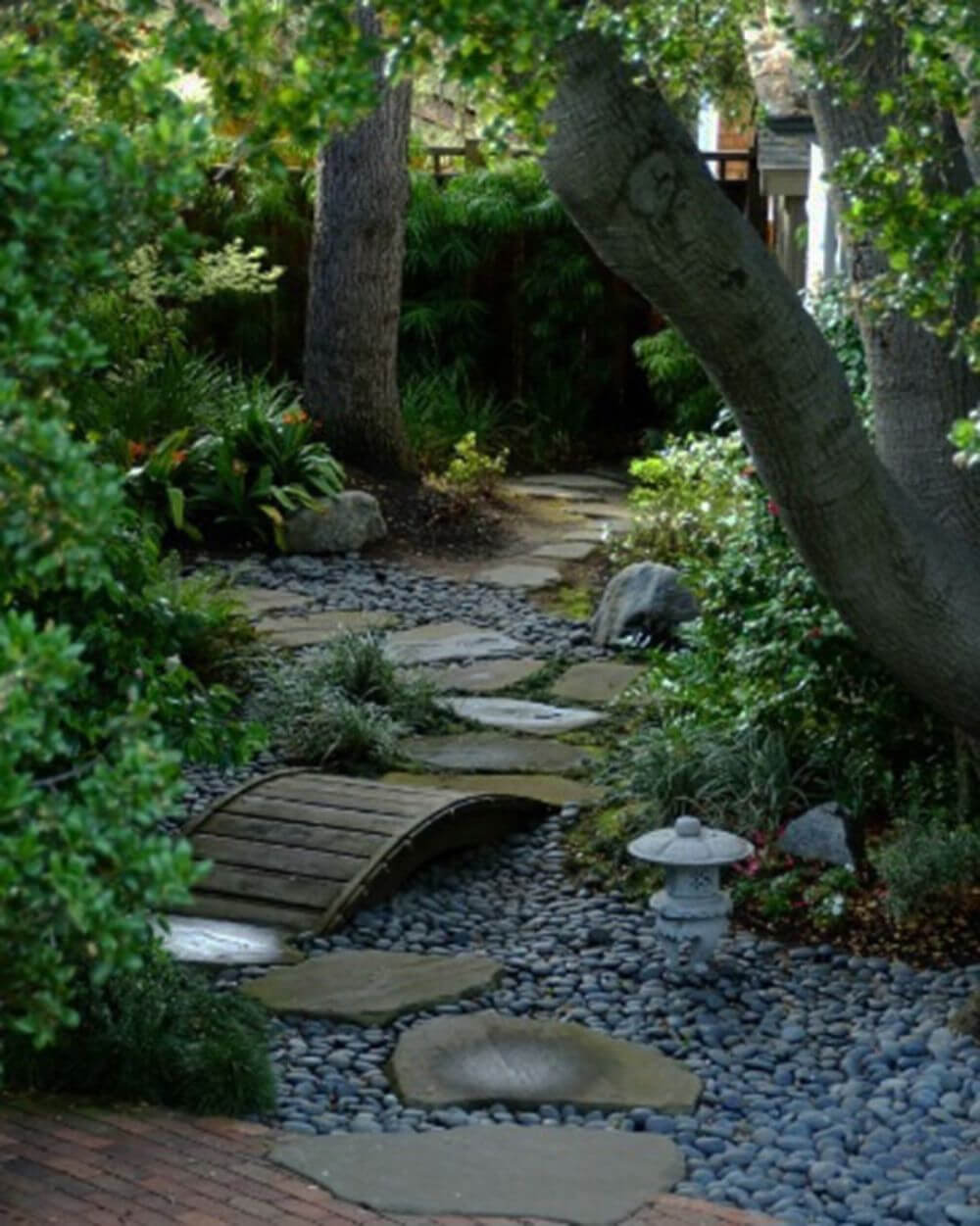
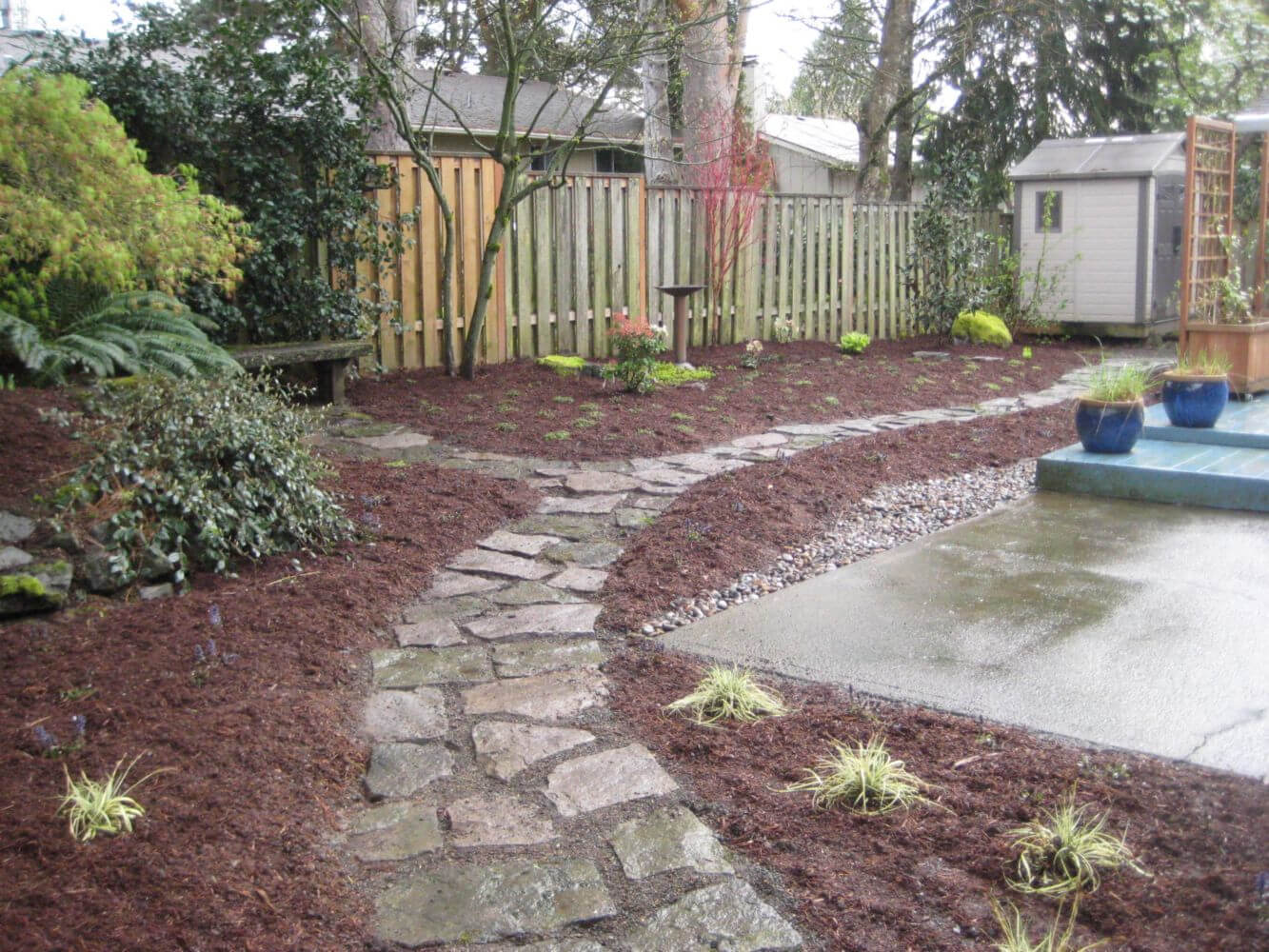
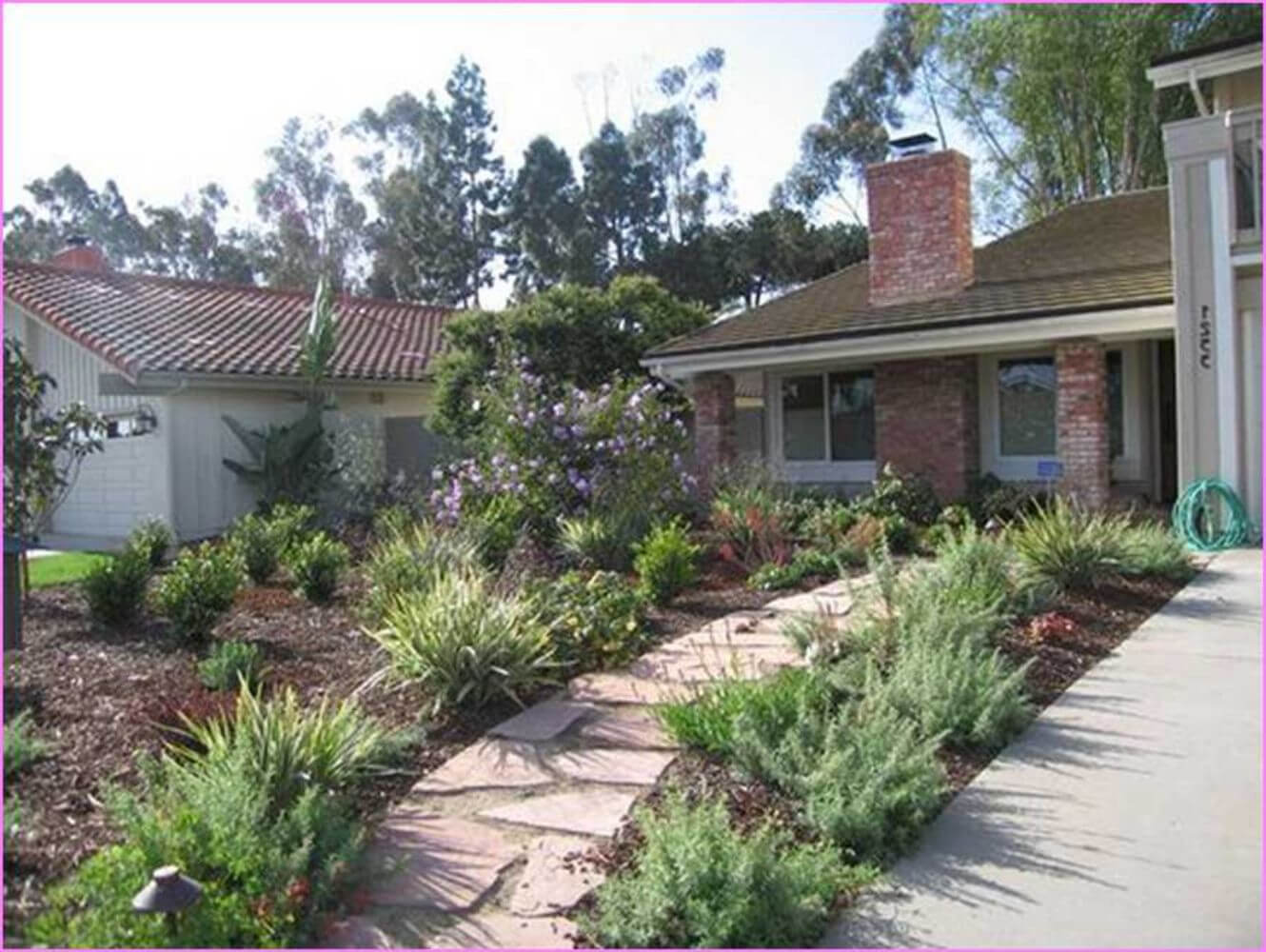
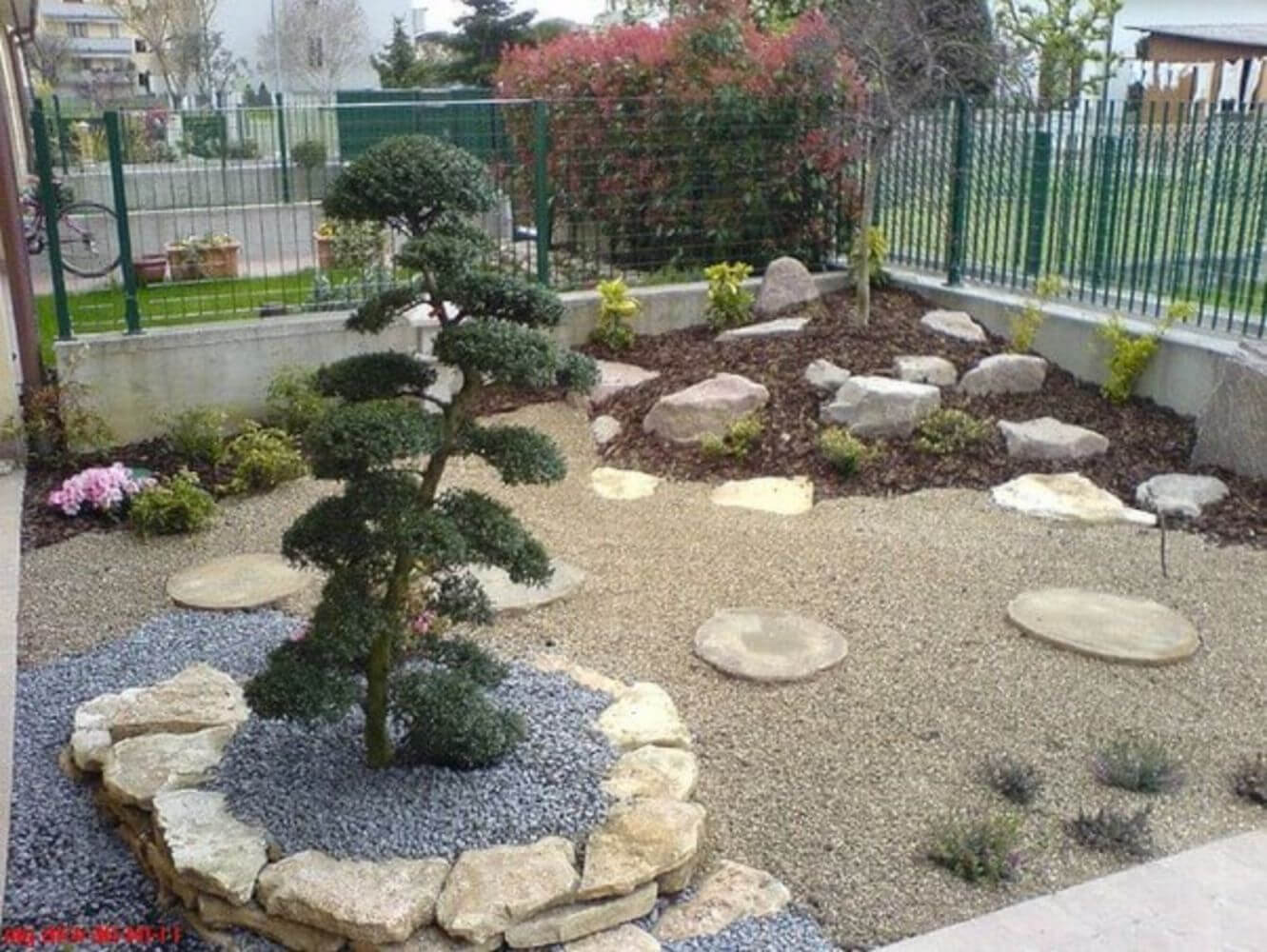
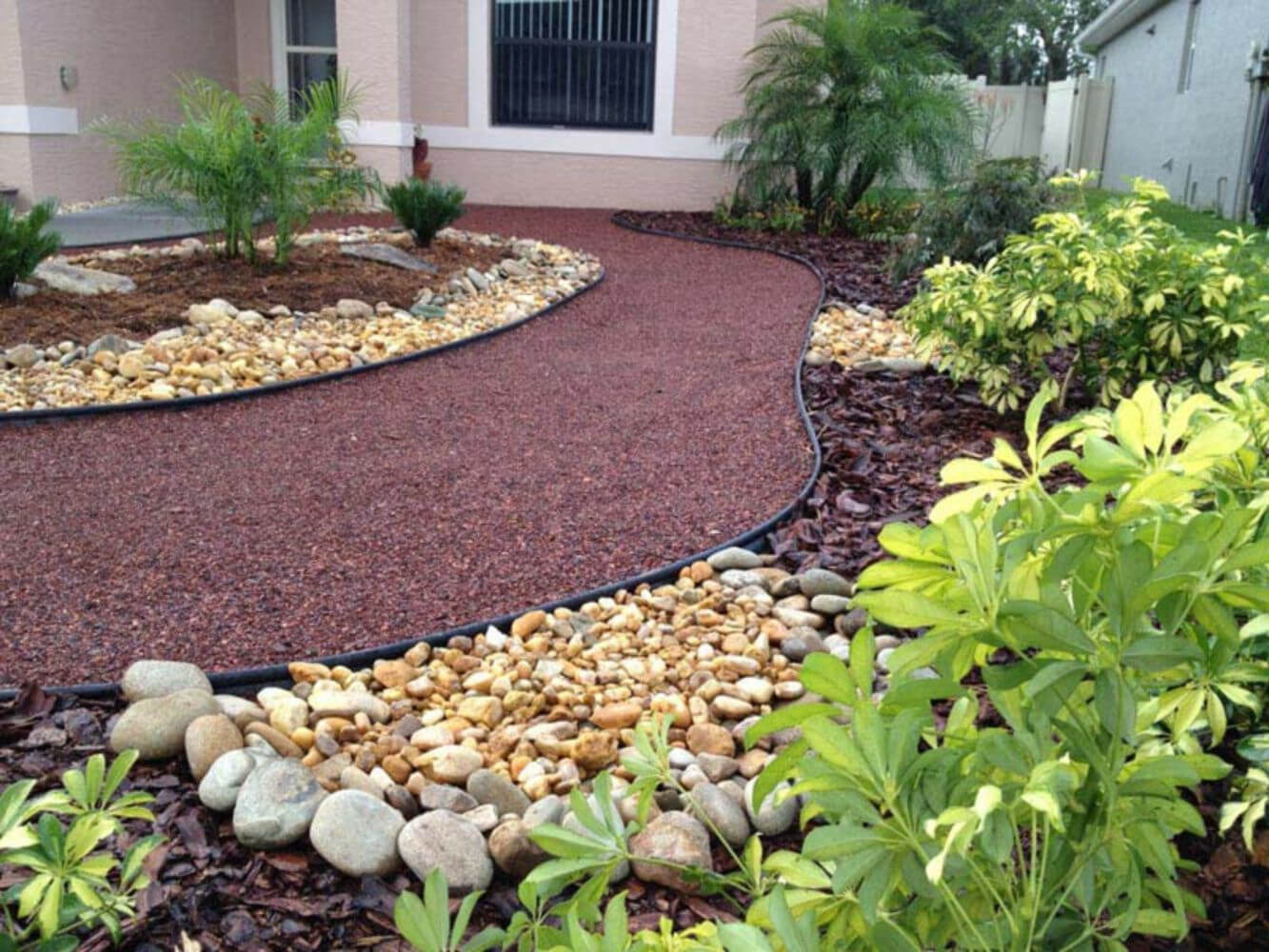



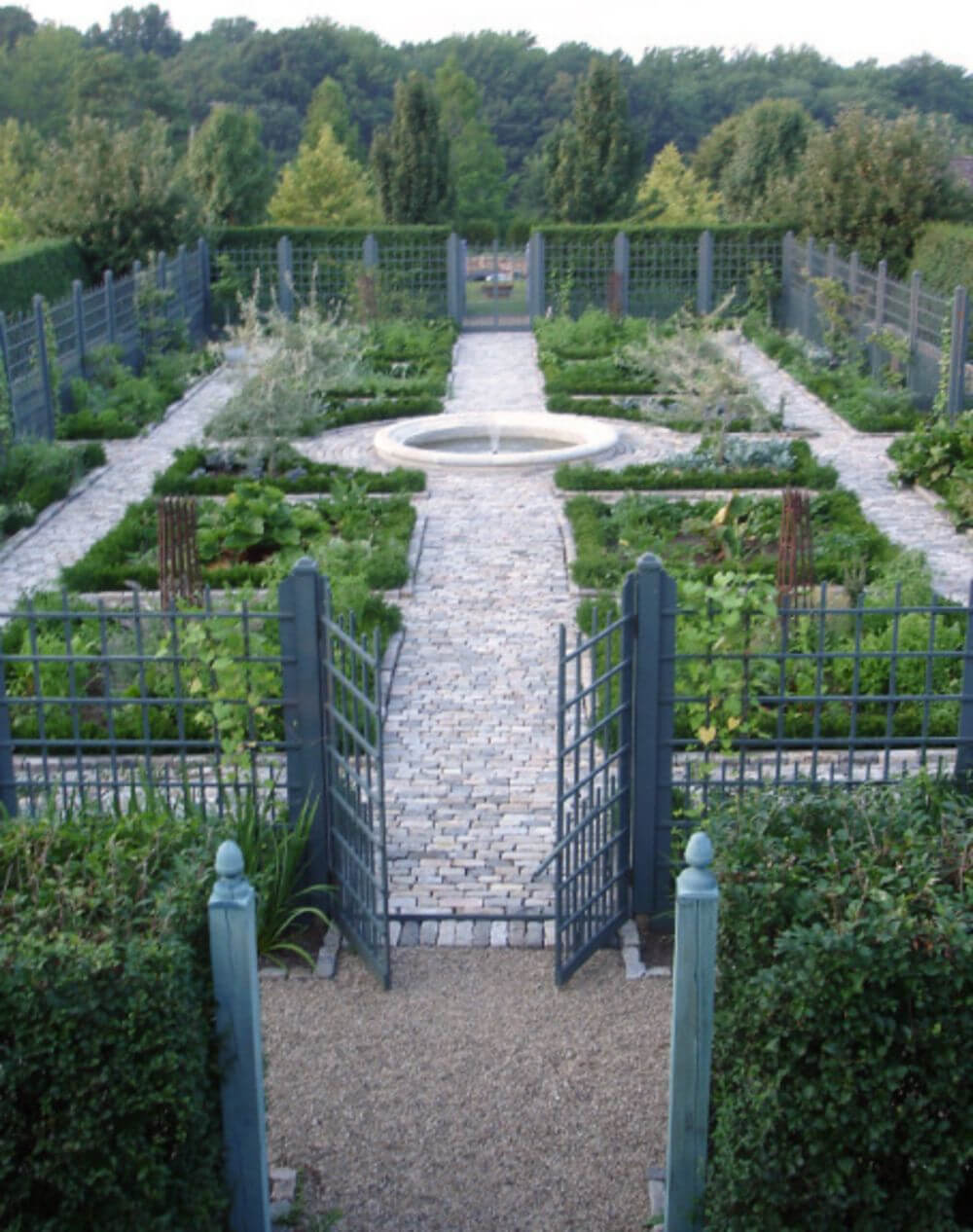
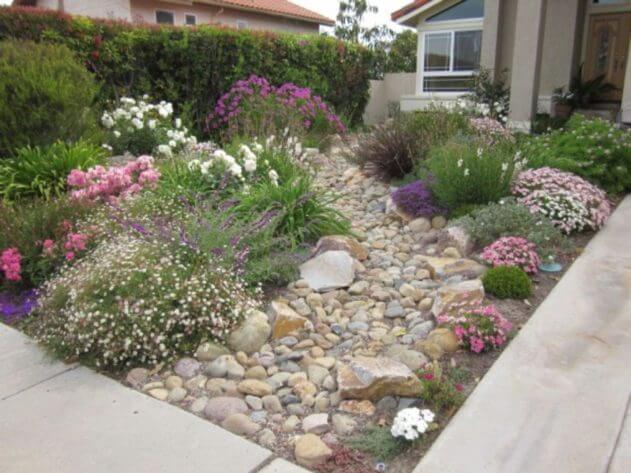
44. Beautiful grassless Yards
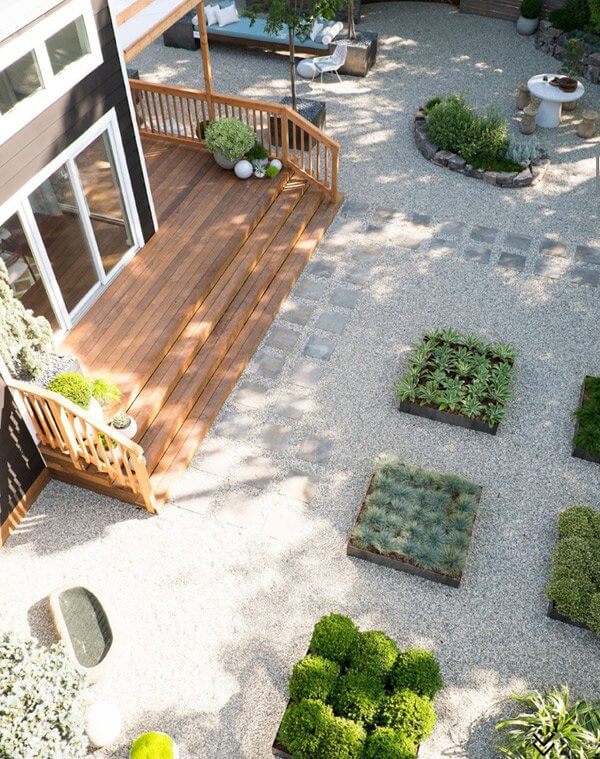
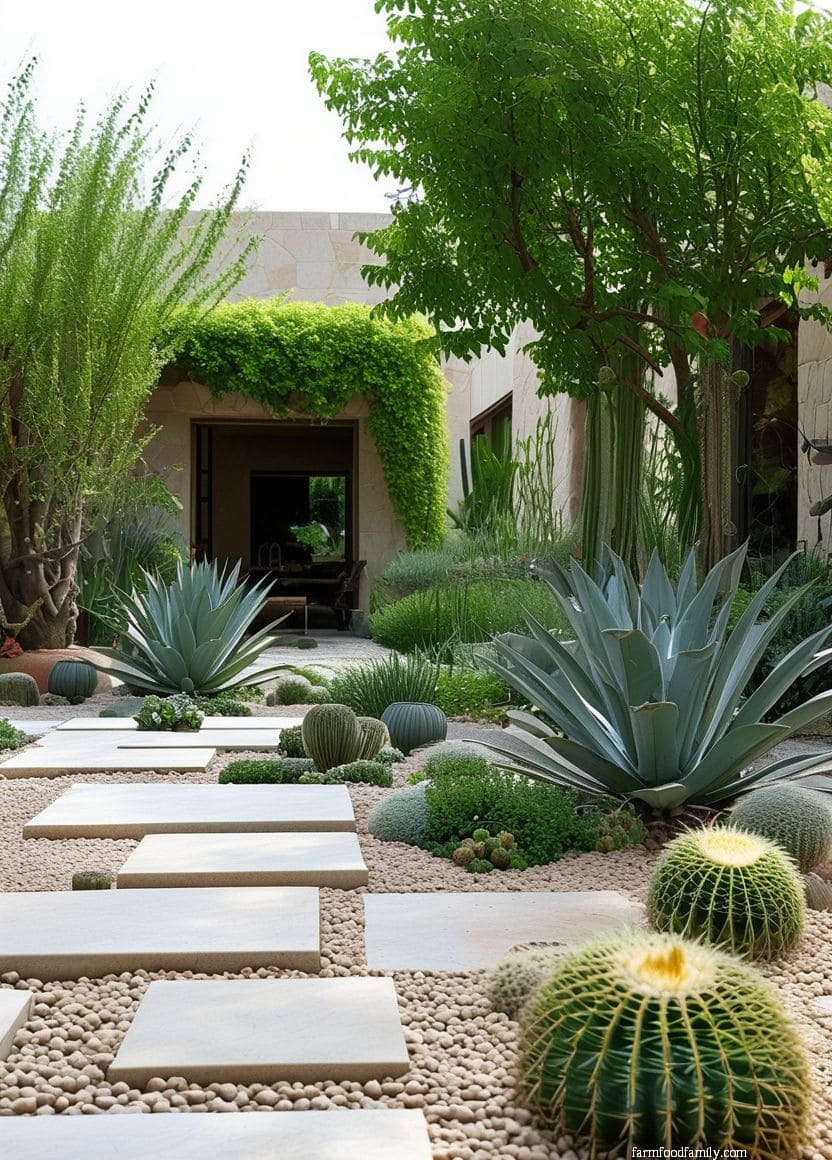
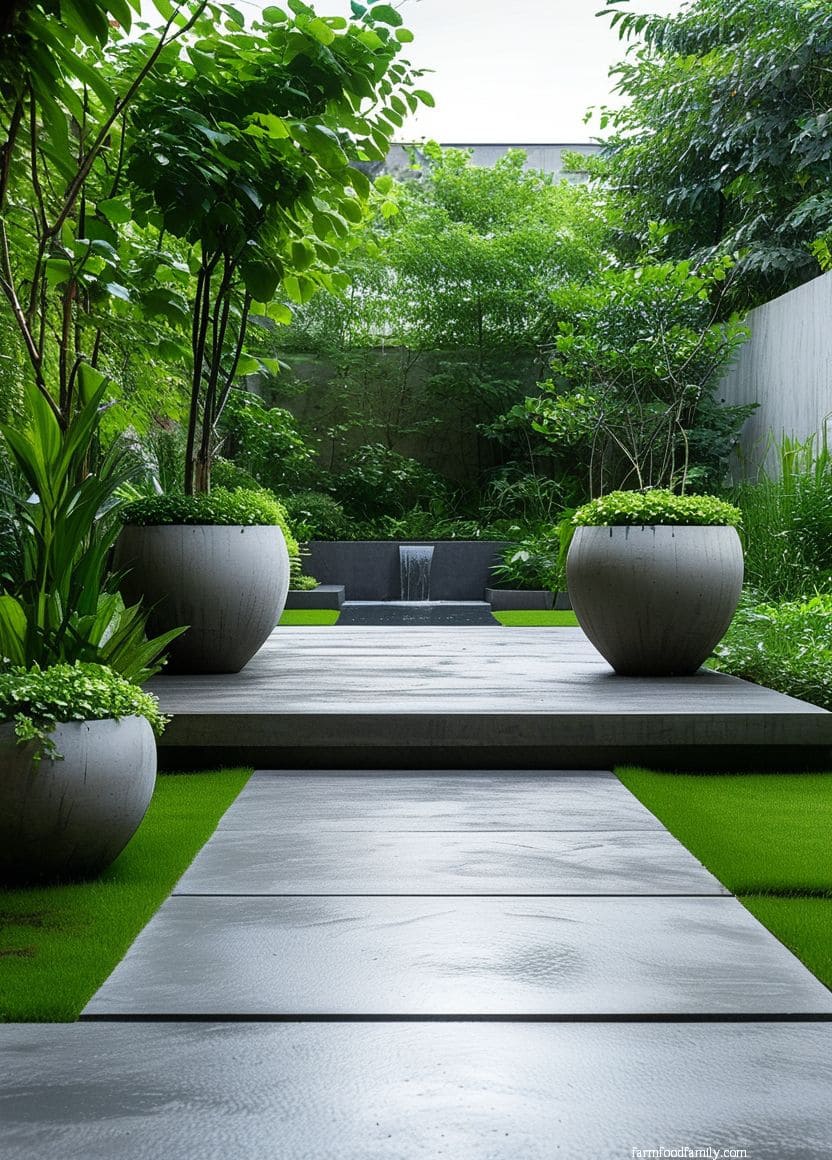
Frequently Asked Questions
Is a lawn-free yard really “set it and forget it”?
No. Every option on this list still needs some upkeep, gravel beds get weeds eventually, groundcover needs a spring tidy-up, turf needs occasional rinsing. As one Reddit commenter summed it up, “No landscaping is set it and forget it, not even a gravel bed” (r/landscaping). The realistic win is less work than mowing every week, not zero work.
What’s the cheapest way to convert a yard without hiring a landscaper?
A real budget conversion shared on Reddit came in around $700: weed-whack the area, cover it with cardboard to smother the grass, top a seating area with three inches of pea gravel, cover the rest with about six inches of mulch, then plant inexpensive native, drought-resistant plugs into it (r/landscaping). It won’t look finished on day one, but it fills in within a season or two.
Is No Mow May enough to actually help pollinators?
It helps, but it’s a starting point, not a full solution. The Xerces Society, which co-stewards the No Mow May campaign in the US, is upfront about this: delaying mowing in spring creates early-season habitat, but it needs to be paired with planting native flowering species and cutting out pesticides to make a real difference for pollinators long-term.
Never miss an update — choose FarmFoodFamily as your preferred source on Google.
How it works: Tap the button below to open Google's settings page, then check the box next to FarmFoodFamily.
Tap the checkbox to turn it blue — that's how you know it's set.