20 Mason Jar Fairy Garden Ideas (DIY Themes, Plant Picks, and How to Keep Them Alive)
Mason jar fairy gardens fit on any windowsill, but most tutorials skip the drainage problem that kills plants by week two. These 20 themed ideas come with real plant picks, layer-by-layer build steps, and care tips that keep your jar going for months.

Never miss an update — choose FarmFoodFamily as your preferred source on Google.
How it works: Tap the button below to open Google's settings page, then check the box next to FarmFoodFamily.
Tap the checkbox to turn it blue — that's how you know it's set.
Mason jar fairy gardens fit on any windowsill, but most tutorials skip the drainage problem that kills plants by week two. These 20 themed ideas come with real plant picks, layer-by-layer build steps, and care tips that keep your jar going for months.
Products We Recommend
This post contains affiliate links. We may earn a commission on qualifying purchases at no extra cost to you.

PRETMANNS Fairies for Fairy Garden Accessories Kit (6 Piece)
Starter kit with two fairies, a swing, squirrel, and mushrooms scaled for small containers
Shop Now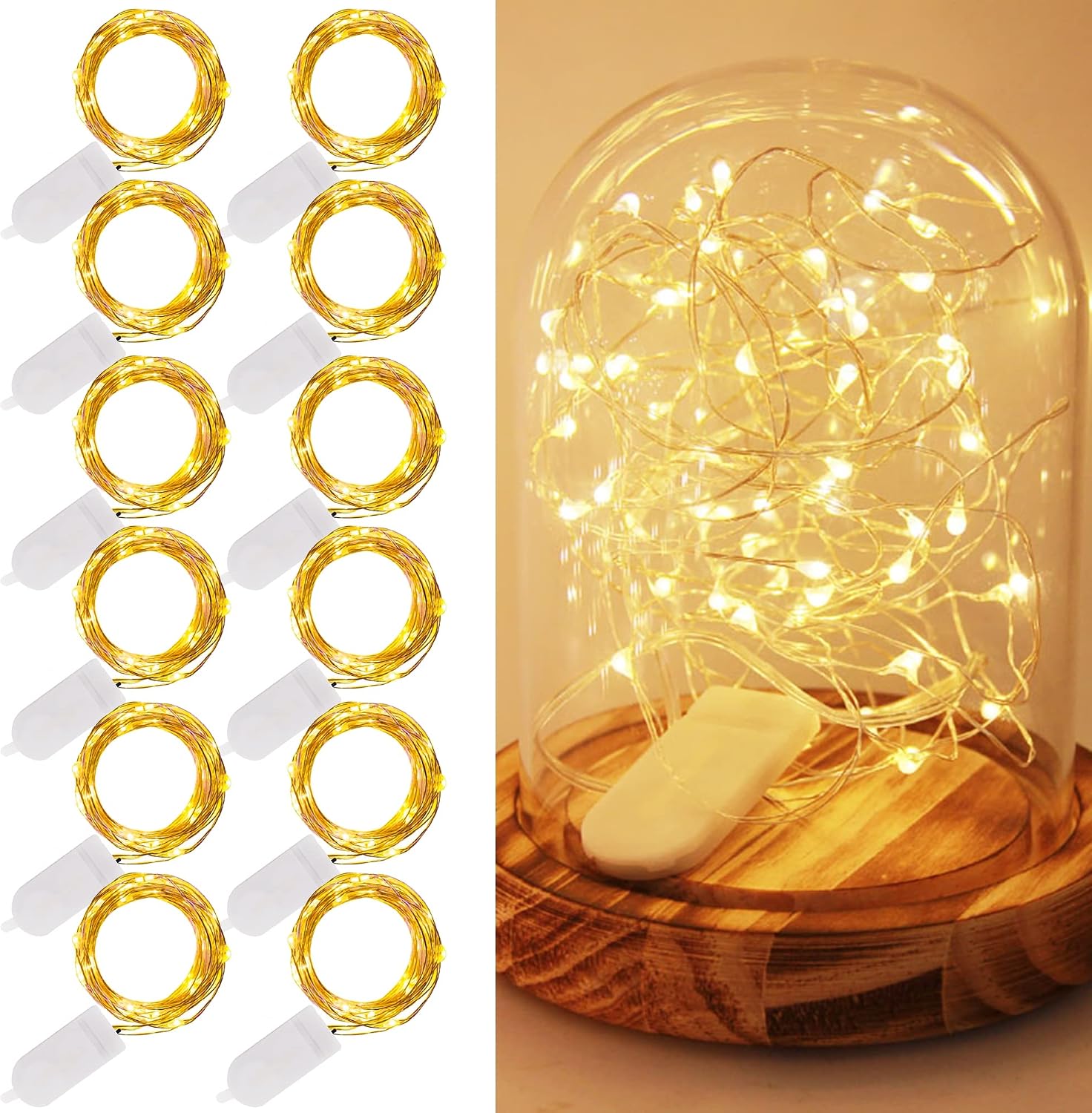
WATERGLIDE Fairy Lights Battery Operated (12 Pack, 7 ft, Warm White)
Silver wire fits through a jar opening; batteries included; designed for mason jar decor
Shop Now
Mosser Lee ML0810 Horticultural Charcoal (2.25 dry qt)
Pre-screened fine charcoal that layers cleanly between gravel and soil in small containers
Shop NowA mason jar fairy garden is a miniature landscaped scene built inside a wide-mouth mason jar, using small plants, figurines, and natural materials to create a tiny themed world. They work as windowsill decor, handmade gifts, or a creative weekend project. They’re also one of the most accessible container garden projects you can do with kids. Our guide to container garden projects for kids has more ideas if you’re looking for a series of activities.
Because the jar holds no drainage hole, the key to keeping plants alive is a gravel base layer that pulls excess water away from roots, combined with drought-tolerant plant choices and careful watering. Skip the gravel and most plants die within two weeks.
Beverly Turner, co-author of Fairy Gardening: Creating Your Own Magical Miniature Garden (Skyhorse, 2013) and a pioneer of the fairy garden movement, recommends beginning with a strong single theme (woodland, beach, cottage, or seasonal) before choosing figurines. Picking three cohesive design elements first prevents a cluttered jar that looks busy instead of enchanting.
Answer 4 quick questions and get matched to the exact fix for your yard — drainage, budget, layout, or something else entirely.
Take the Free QuizThe build takes about 30 to 45 minutes for most of these ideas. You need a wide-mouth quart mason jar, a bag of small pebbles, horticultural charcoal, well-draining potting mix, your plants, and your miniatures. Tweezers or long chopsticks help a lot when placing figurines through the jar opening.
Before You Build: The Drainage Problem Every Tutorial Skips
Mason jars have no drainage holes, which means water has nowhere to go once it hits the soil. Roots sitting in soggy soil rot within days.
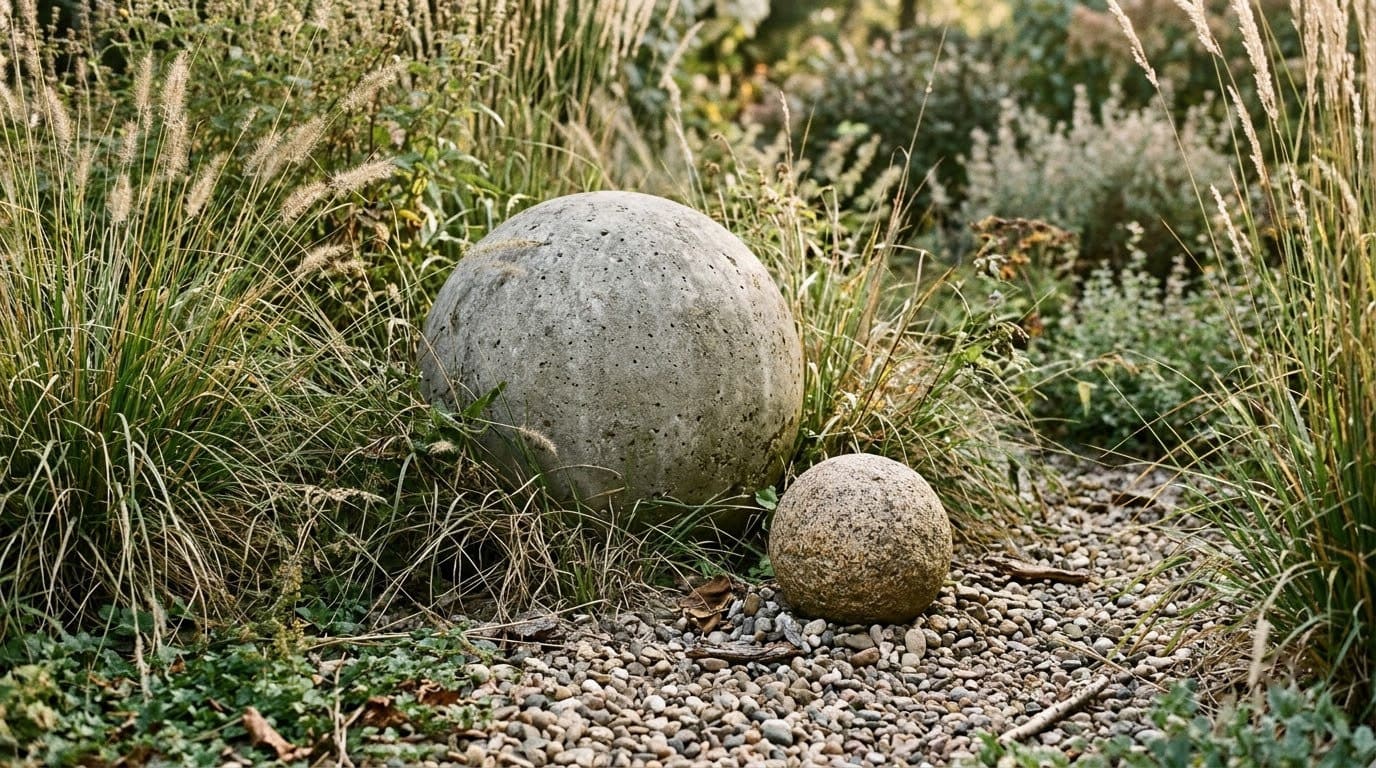
A two-inch layer of small pebbles or river gravel at the bottom of the jar creates a reservoir below the soil line. Excess water drains down into the gravel and stays away from roots. Add a quarter-inch layer of horticultural charcoal on top of the gravel to prevent the reservoir water from going stagnant and developing odors.
For the soil layer, a well-draining succulent and cactus mix works better than standard potting soil. Standard potting soil holds too much moisture for drainage-free containers. Our detailed guide on planting succulents in containers without drainage holes covers the gravel-and-charcoal method in full and explains watering frequency for each season.
Pack two to three inches of cactus mix over the charcoal, firm it gently, then plant. Avoid compacting the soil so tightly that water cannot move through it at all.
Most yard problems trace back to one specific, fixable cause. Find yours in 4 quick questions.
Take the Free QuizHow to Choose Plants That Survive in a Mason Jar
The wrong plant choice is the second most common reason mason jar gardens fail. Tropical plants that love moisture (peace lily, pothos, ferns) seem easy but they need consistent watering that a drainage-free jar cannot handle safely. Stick to plants that tolerate dry-down periods.
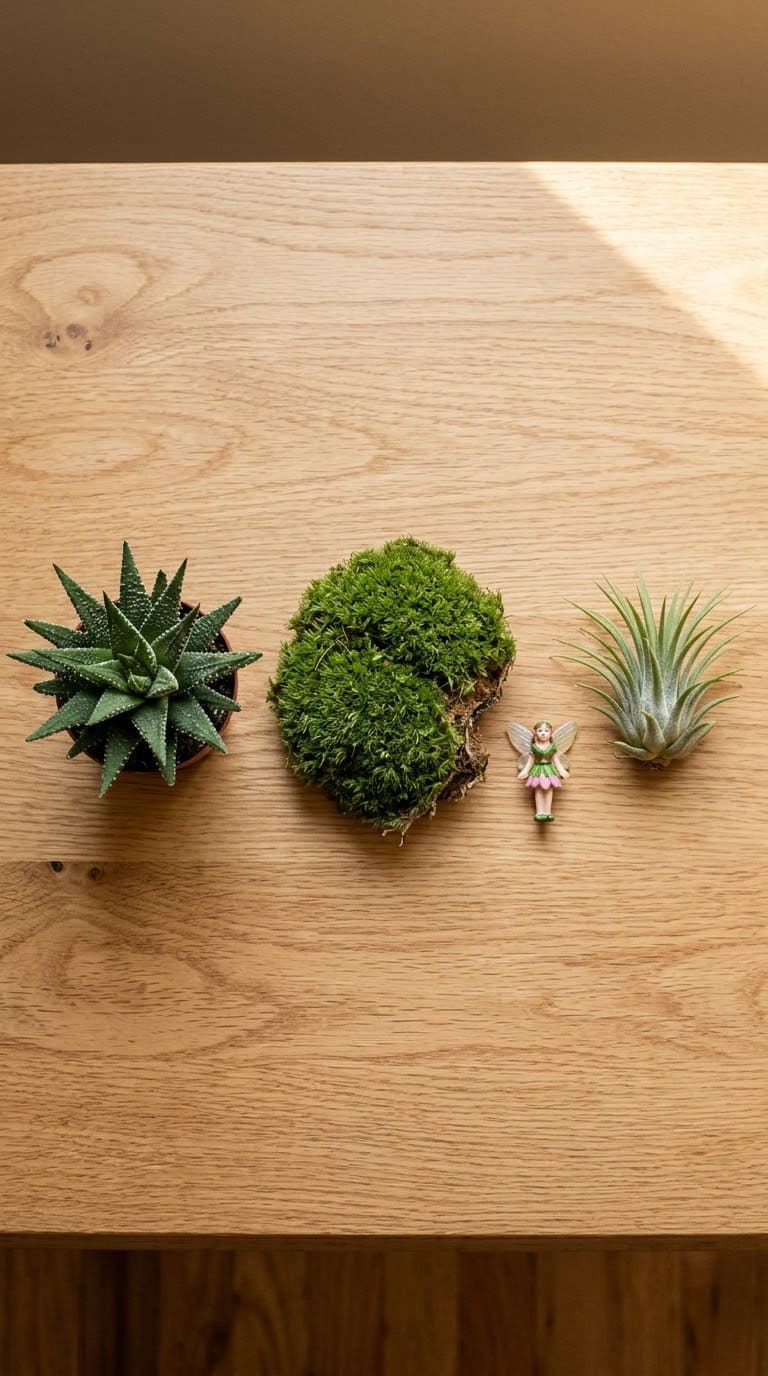
For closed or nearly closed lids: Moss is the most forgiving choice. Pillow moss, cushion moss, and sheet moss thrive in the high humidity of a covered jar and need almost no supplemental watering once established. Our breakdown of types of moss for containers covers which varieties root fastest and how to source them locally or online.
For open-top or loose-lid jars: Small succulents handle the drier conditions of an open jar and need watering only every 10 to 14 days. Haworthia, compact Echeveria, and dwarf Sedum varieties are the most forgiving. Air plants (Tillandsia) work in open-top jars with no soil at all. Mist them twice a week, shake excess water out, and let them dry within four hours.
Faux plants: Dried preserved moss, miniature dried flowers, and high-quality silk ferns are completely valid. They never die, need no watering, and look convincing through glass. For a long-term display with zero maintenance, faux plants are the practical choice for anything other than the self-sustaining terrarium.
20 Mason Jar Fairy Garden Ideas
Woodland and Forest Themes
1. Mossy Mushroom Cottage
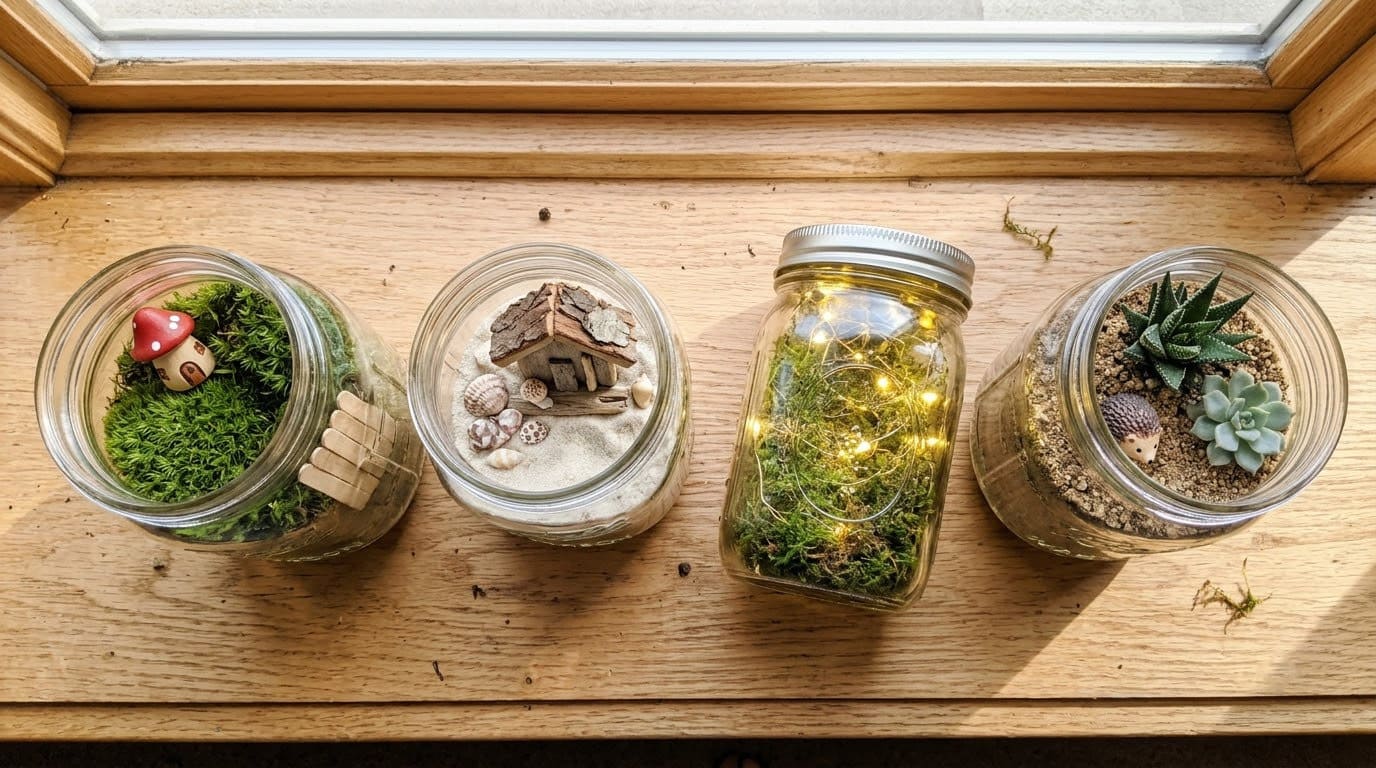
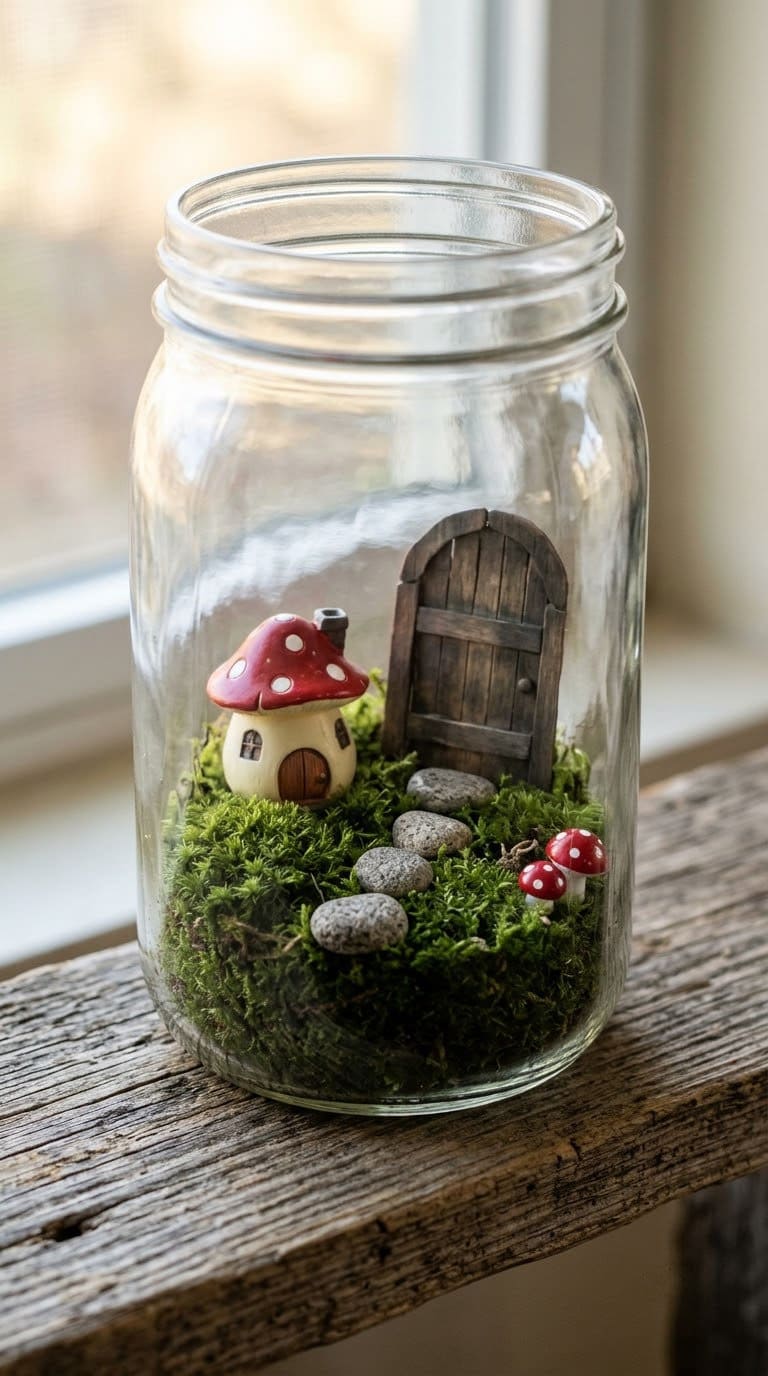
Layer pillow moss around a tiny wooden or resin mushroom house placed off-center in a quart jar. Add a craft-stick door stained brown with an ink pad at the jar’s back wall and a clay acorn cap as the knob.
A cluster of small mushroom figurines from a hobby store fills the opposite corner, and three or four river pebbles along the front edge suggest a winding path. Best plants: cushion moss.
Difficulty: beginner. Cost: $10–$18.
Starter kit with two fairies, a swing, squirrel, and mushrooms scaled for small containers
Shop NowThis post contains affiliate links. We may earn a commission on qualifying purchases at no extra cost to you.
2. Fairy Ring Woodland
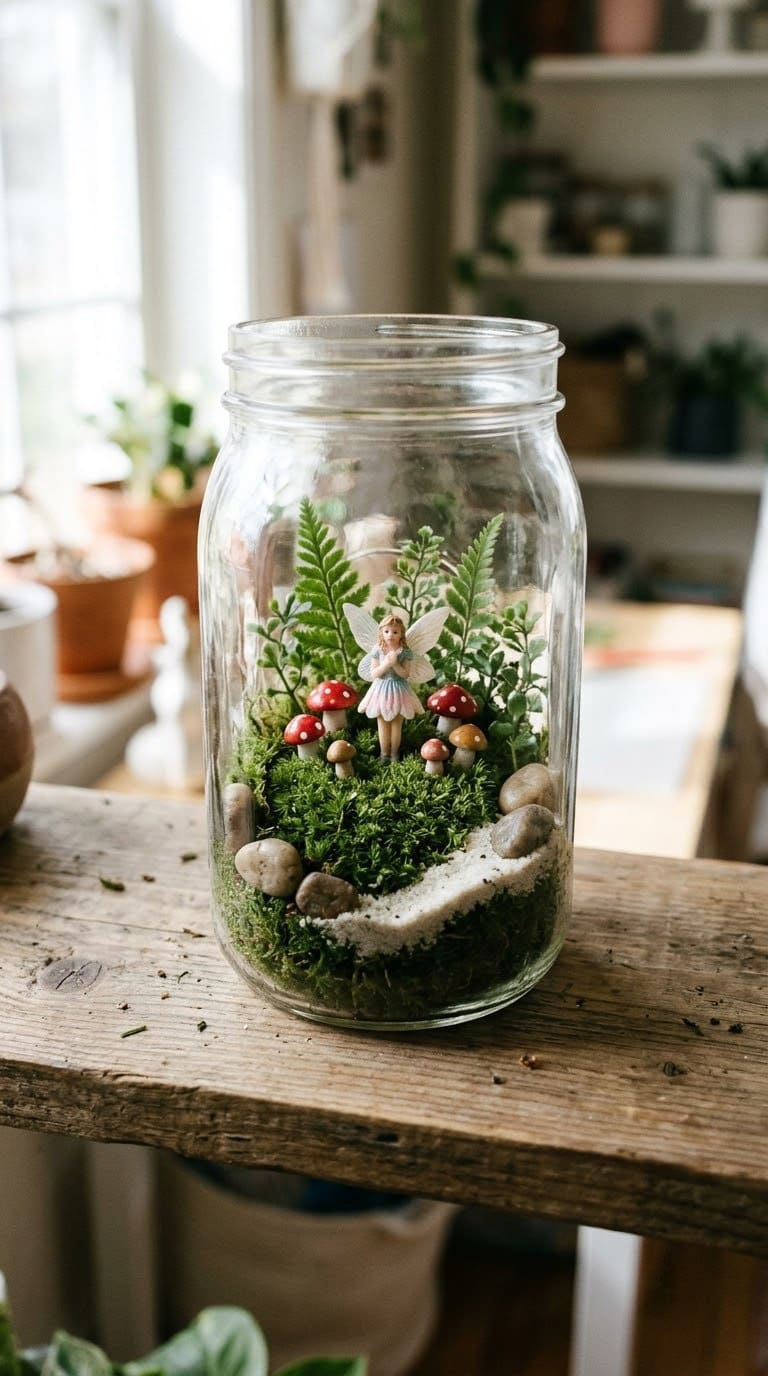
Arrange five to seven miniature painted mushroom caps in a ring around a central fairy figurine, mimicking the fairy rings that form in forest clearings. Pack a dense moss base, add tiny faux ferns tucked behind the figurines, and scatter three to four small rocks along the jar perimeter.
A little fine aquarium sand lining a narrow path between the rocks adds texture contrast against the dark moss. Best plants: sheet moss.
The average homeowner spends $616/year on yard fixes that don't address the real problem. Find out what yours actually is — before you spend another dollar.
Take the Free QuizDifficulty: beginner. Cost: $12–$20.
3. Enchanted Fern Hollow
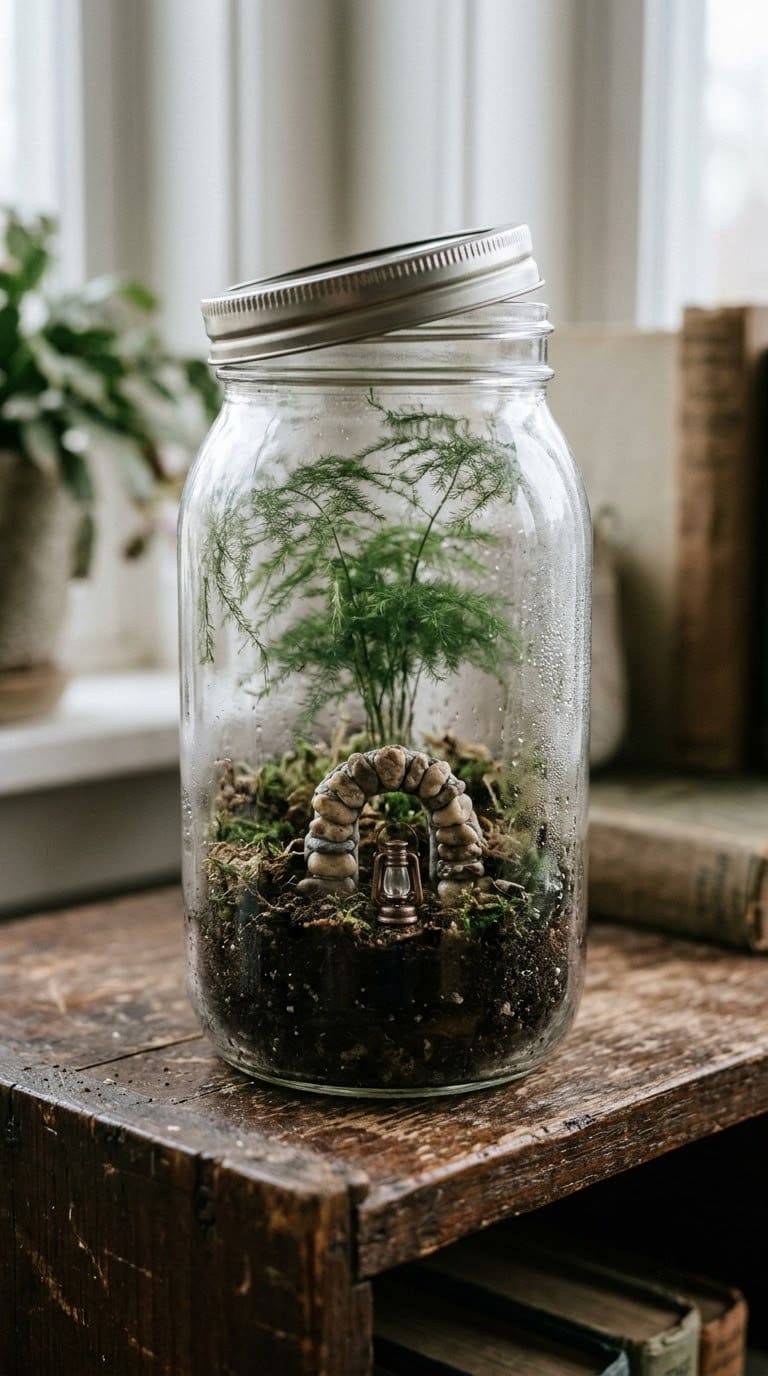
Use a wide-mouth half-gallon jar for this version. Plant one small Asparagus fern or a compact Boston fern at the back where it has room to arch, and build a small stone archway by hot-gluing pebbles together at the base.
A tiny lantern figurine glows convincingly in the center. Leave the lid loose rather than sealed to maintain enough humidity for the fern without causing mold.
Difficulty: beginner–intermediate. Cost: $15–$25.
Beach and Ocean Themes
4. Beach Cottage Shore Scene
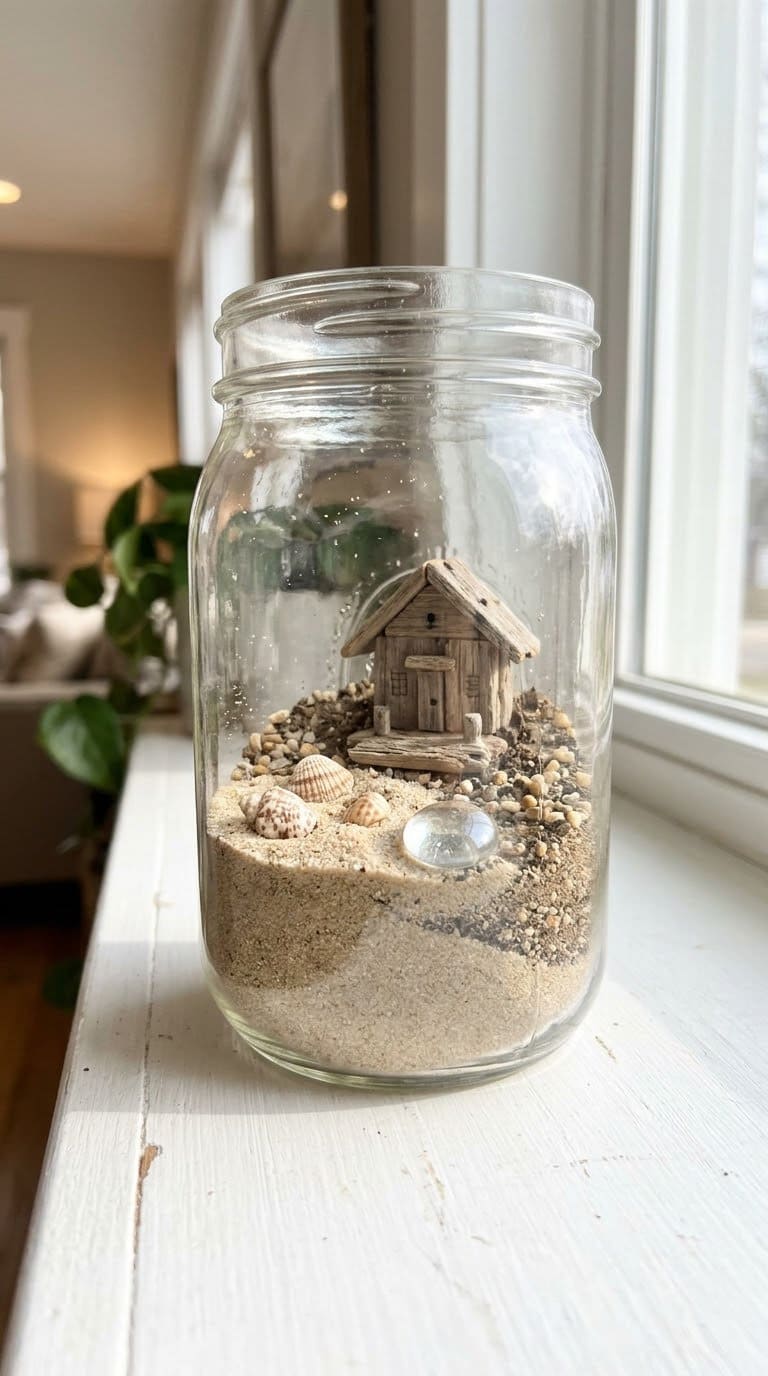
Pour a half-inch of fine craft sand across the jar bottom before adding the gravel and soil layers, leaving a visible sand strip at the jar front through the glass.
A tiny driftwood piece or craft-stick bungalow stands against the back wall. Three or four small seashells and a glass pebble or two lie across the sand near the front glass for a coastal still-life. Faux succulents or dried strawflower keep maintenance low.


Difficulty: beginner. Cost: $10–$18.
5. Mermaid Cove
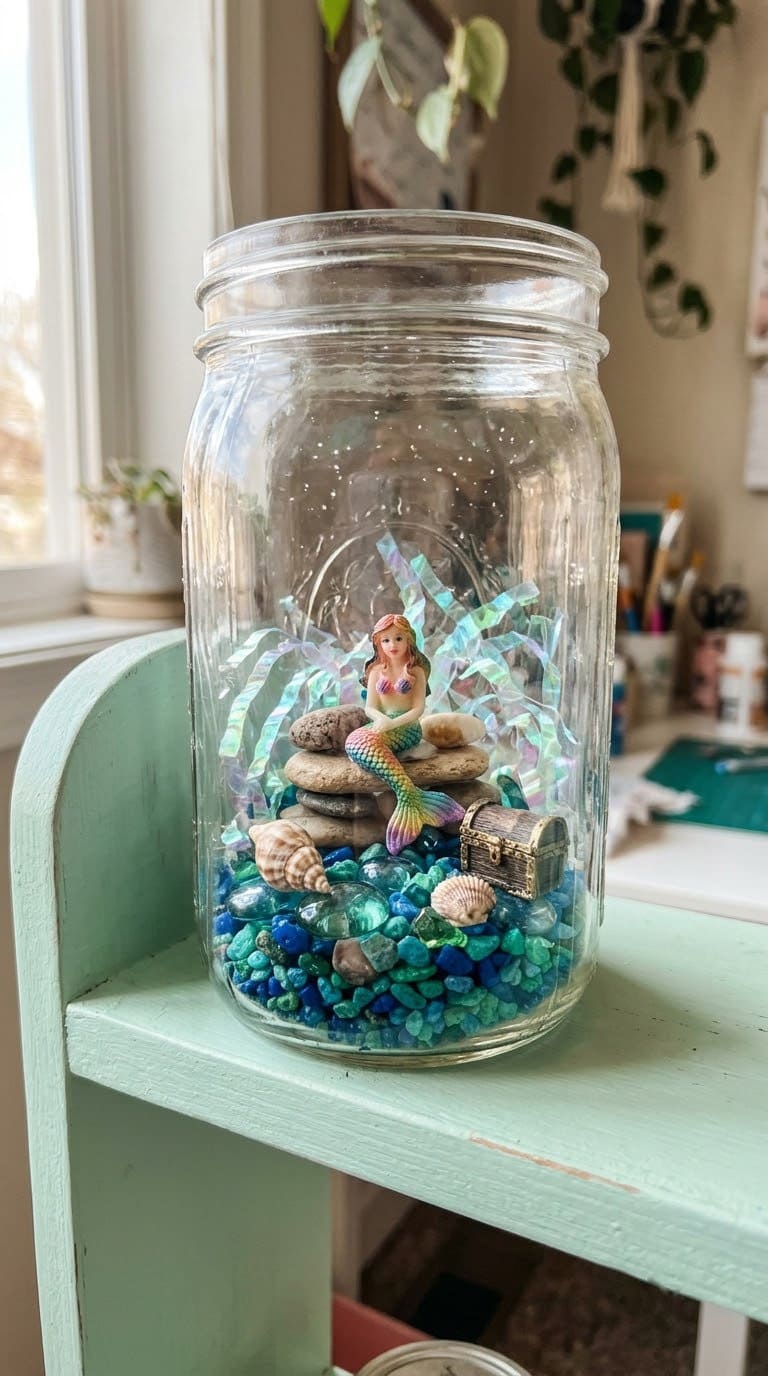
Blue and green tinted aquarium gravel fills the jar floor to suggest underwater color. A small resin mermaid figurine sits on a pebble ledge.
Seashells, a miniature treasure chest, and shredded iridescent cellophane tucked between the rocks suggest water shimmer through the glass. No live plants are needed here. The visual interest comes entirely from color and figurine arrangement.
Difficulty: beginner. Cost: $12–$18.
6. Nautical Lantern Jar
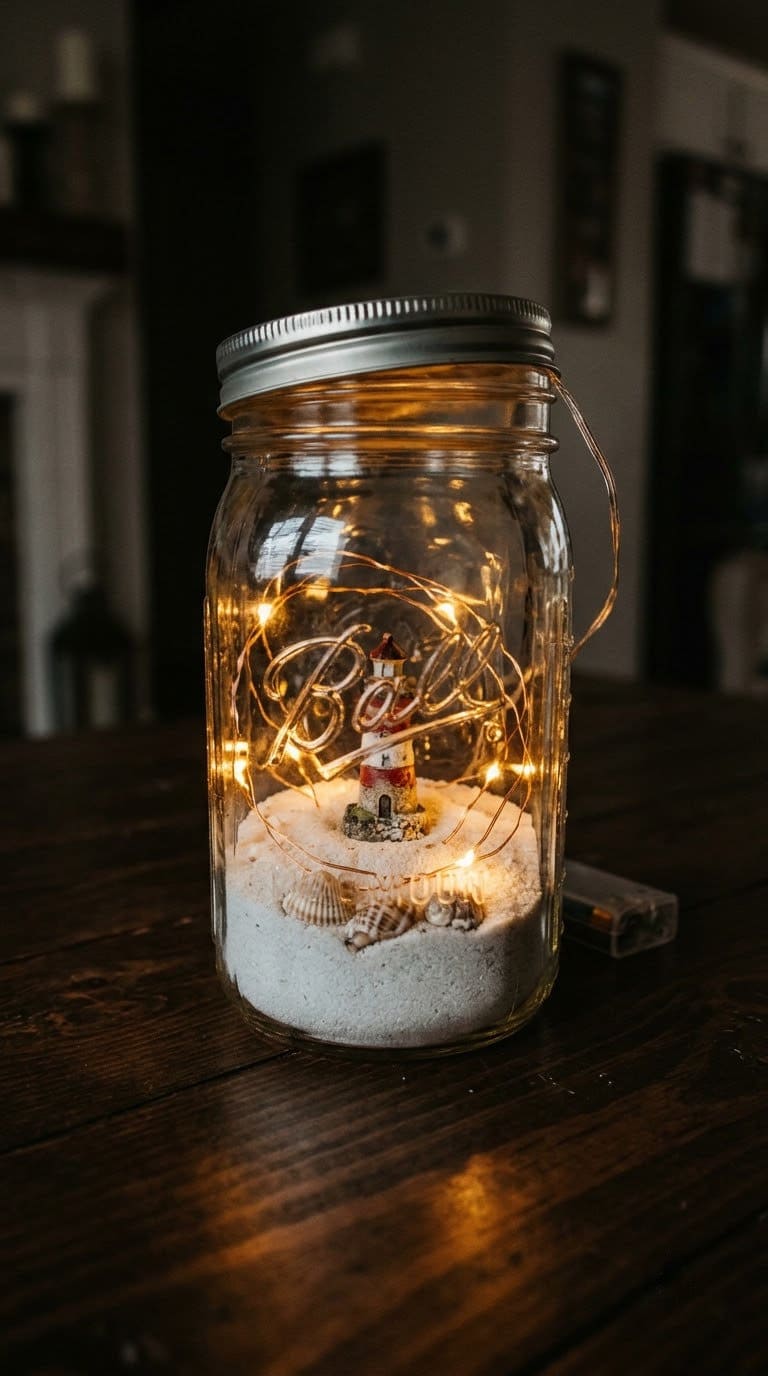
This version uses no plants at all. Coil a strand of small battery-operated LED fairy lights through a clean quart jar, connect the battery pack to the outside so the lid can close partway, then fill around the lights with fine white sand, a miniature lighthouse or anchor figurine, and three or four real seashells.
The warm light glows through the glass for a softly lit coastal lantern. Swap out the seashells seasonally.
Difficulty: beginner. Cost: $15–$22.
Seasonal and Holiday Themes
7. Spring Bloom Cottage
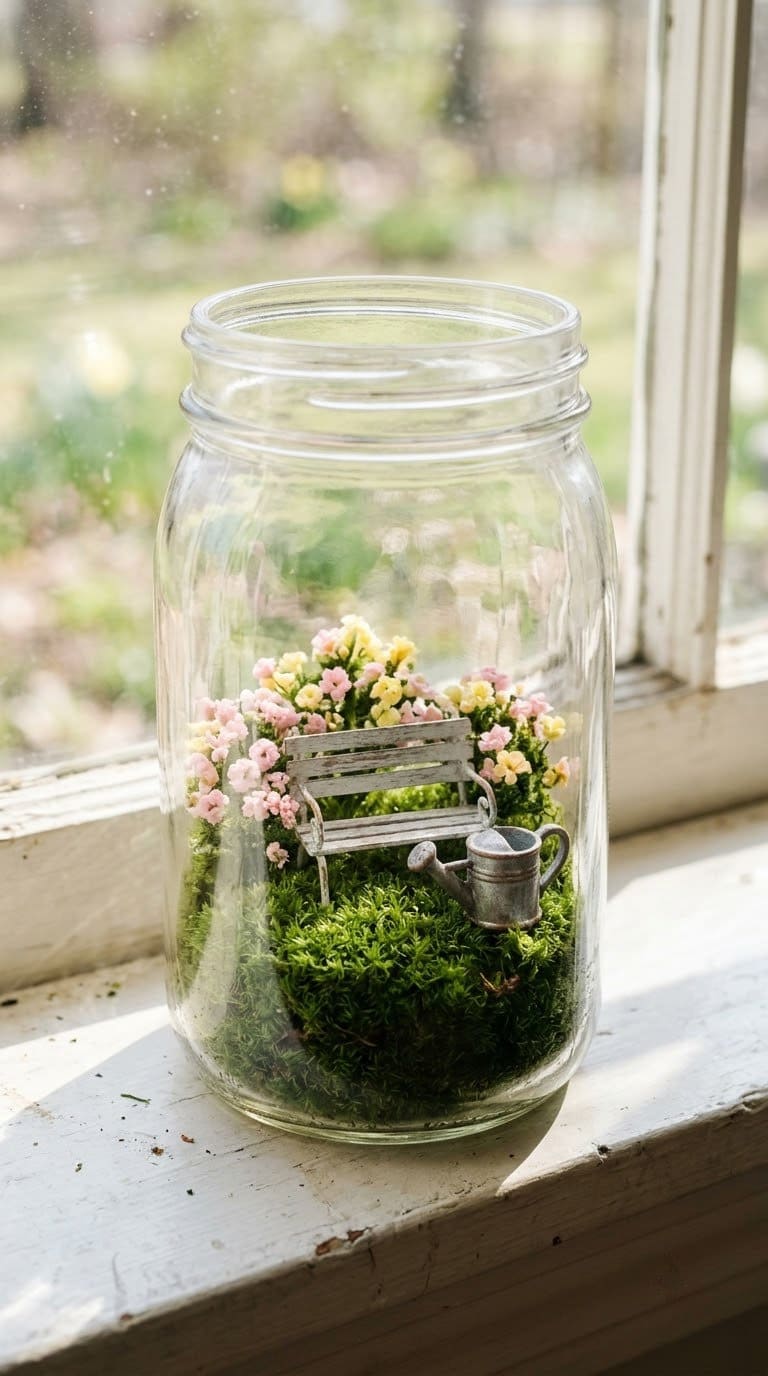
Small faux flowers in pastel pink and yellow cluster around a miniature garden bench. A tiny watering can or birdhouse figurine adds scale. Cushion moss fills the floor and climbs one side of the jar wall.
For a live-plant version, a single small Echeveria at the back adds a living rosette without competing with the figurines for visual space.
Difficulty: beginner. Cost: $12–$20.
8. Autumn Harvest Jar
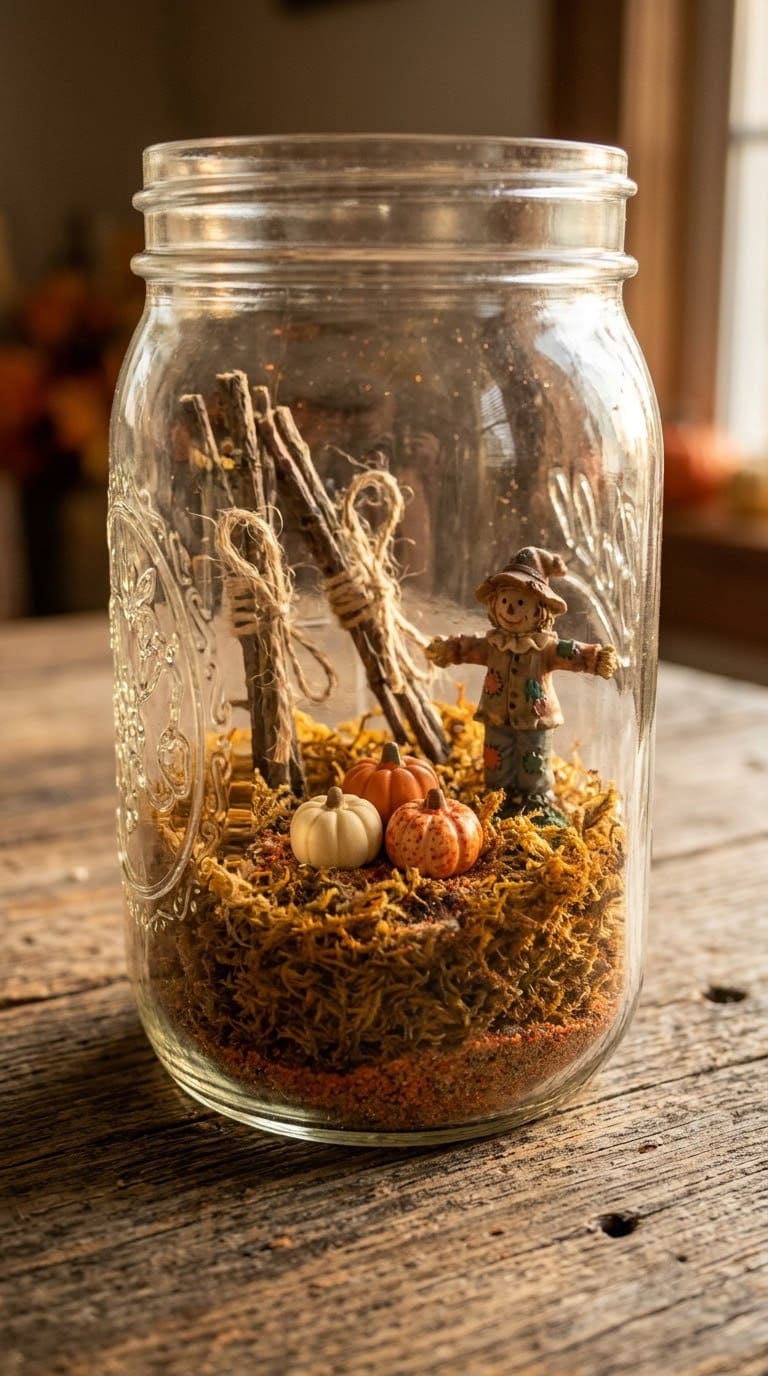
Dried moss in amber and brown tones fills the jar floor. Miniature pumpkins, tiny bundled cornstalks made from twigs, and a small resin scarecrow complete the scene.
A dusting of fine red and orange sand mixed lightly into the soil surface adds seasonal warmth that shows through the glass. This theme holds up well through the full fall season with all faux plant materials.
Difficulty: beginner. Cost: $14–$22.
9. Winter Snow Globe Fairy Garden
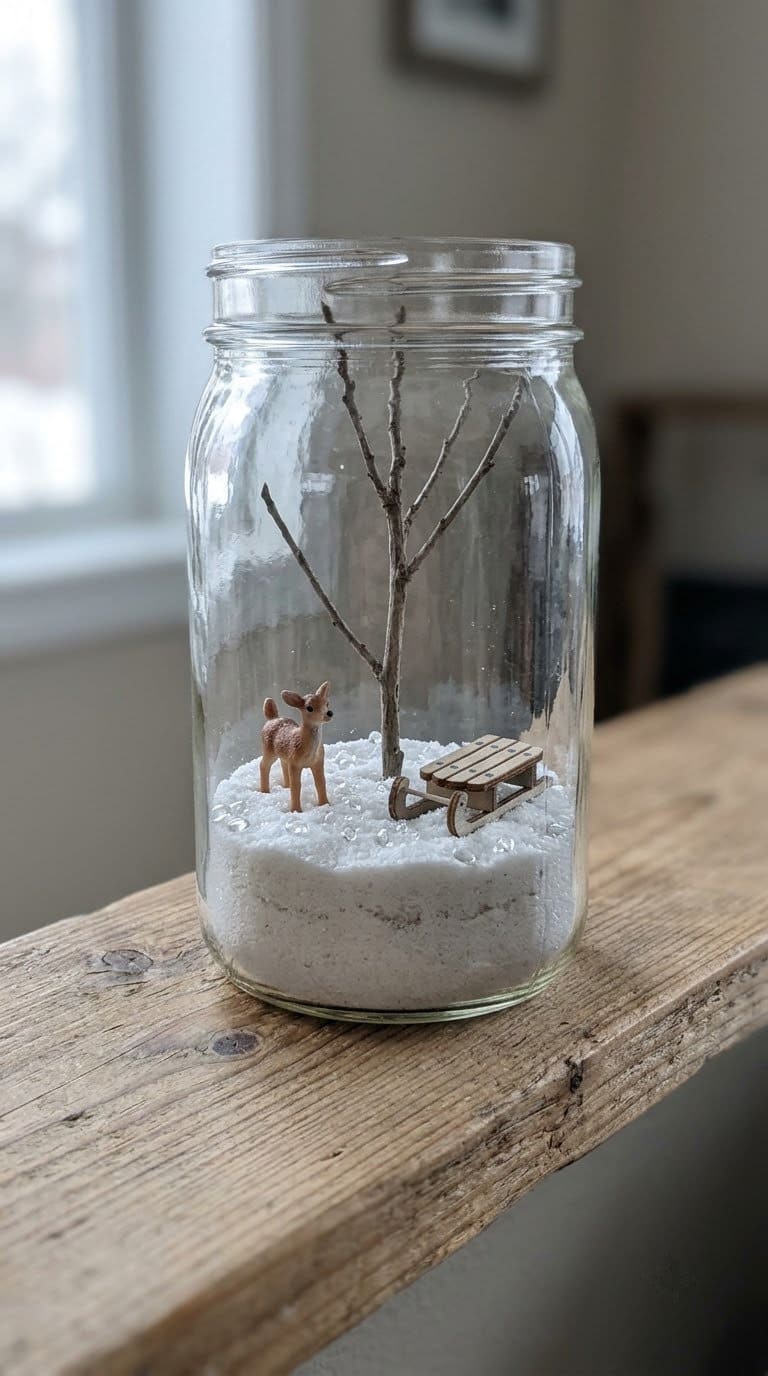
Pack white quartz sand or fine white aquarium gravel thickly over the base soil to suggest a snow cover. A single bare twig cut to fit the jar height serves as a winter tree.
A tiny resin deer or rabbit figurine, a miniature wooden sled, and scattered small clear glass beads as ice crystals finish the scene. No live plants are needed, and the glass of the jar makes this look remarkably like a snow globe on a shelf.
Difficulty: beginner. Cost: $12–$18.
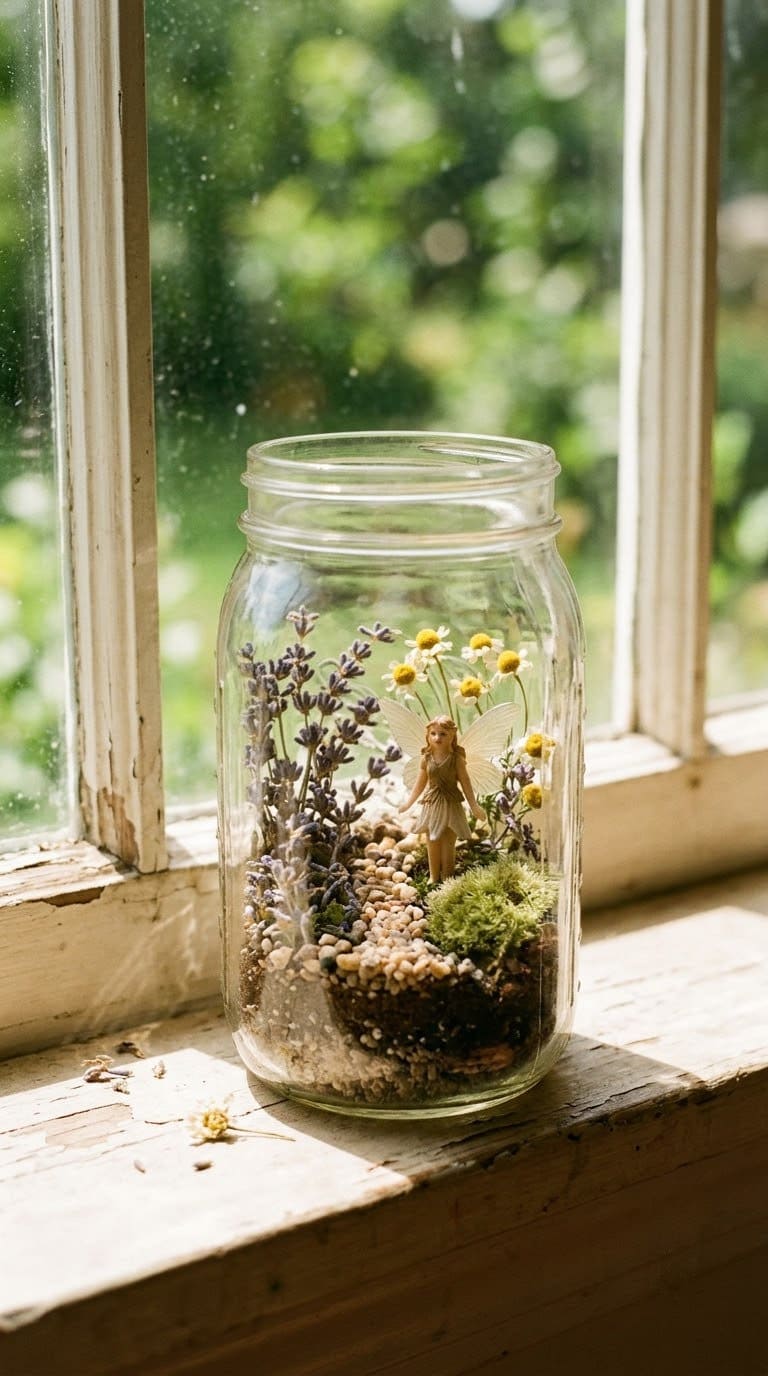
10. Summer Wildflower Garden
A wide-mouth pint jar works well here. Small faux wildflowers (dried lavender stems, tiny chamomile heads, or miniature silk daisies) fill the jar in loose clusters around a fairy figurine.
A fine gravel path and a small moss patch balance the colors. Change out the dried flowers each summer to keep the colors fresh and saturated.
Difficulty: beginner. Cost: $10–$16.
Night Light and Glowing Themes
11. Firefly Glow Lantern
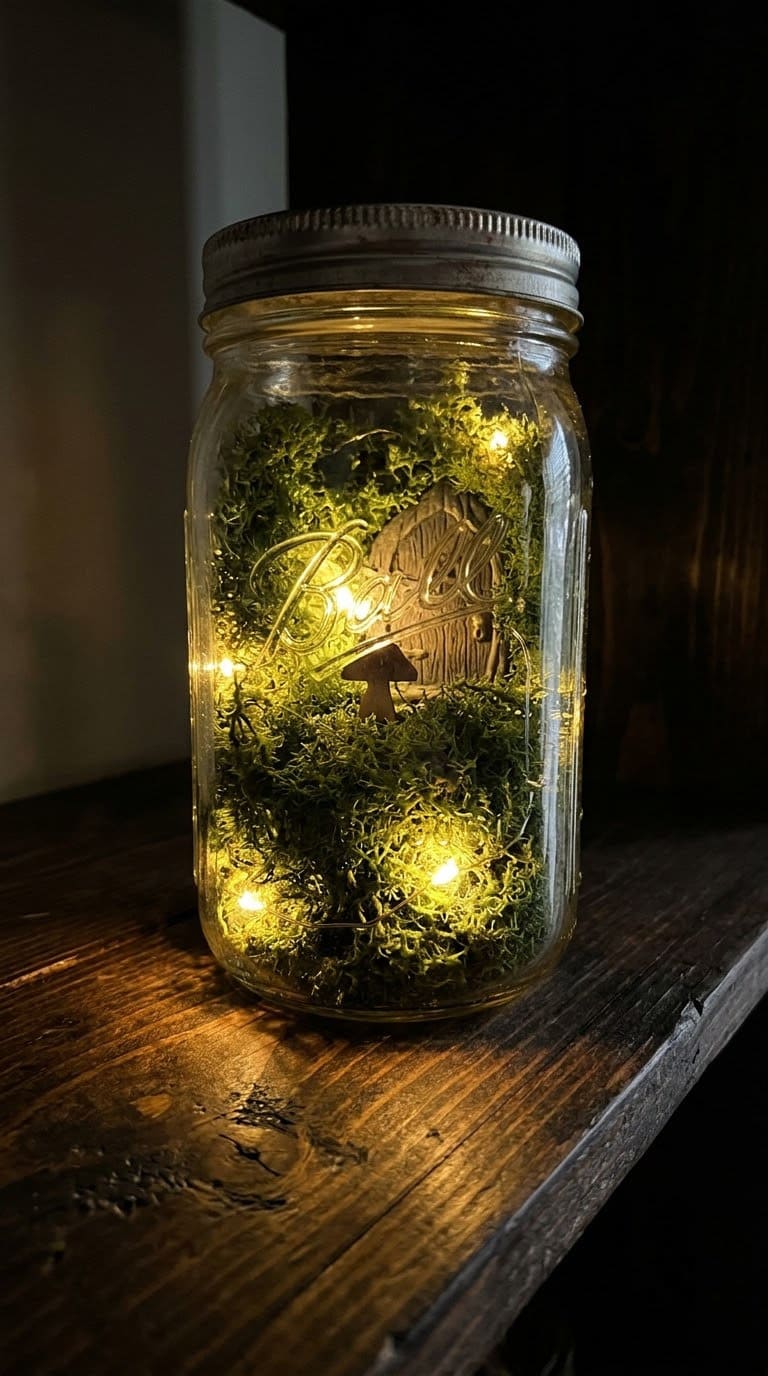
Thread a short strand of warm-white LED fairy lights through the jar, leaving the battery pack outside so the lid can close partway.
Layer the jar with cushion moss, a tiny mushroom figurine, and a small wooden fairy door set against the inner glass wall. The lights glow through the moss at dusk in a diffused golden-green light that closely mimics fireflies in tall grass. Best plants: cushion moss.
Difficulty: beginner. Cost: $16–$24.
12. Twinkling Fairy Light Jar
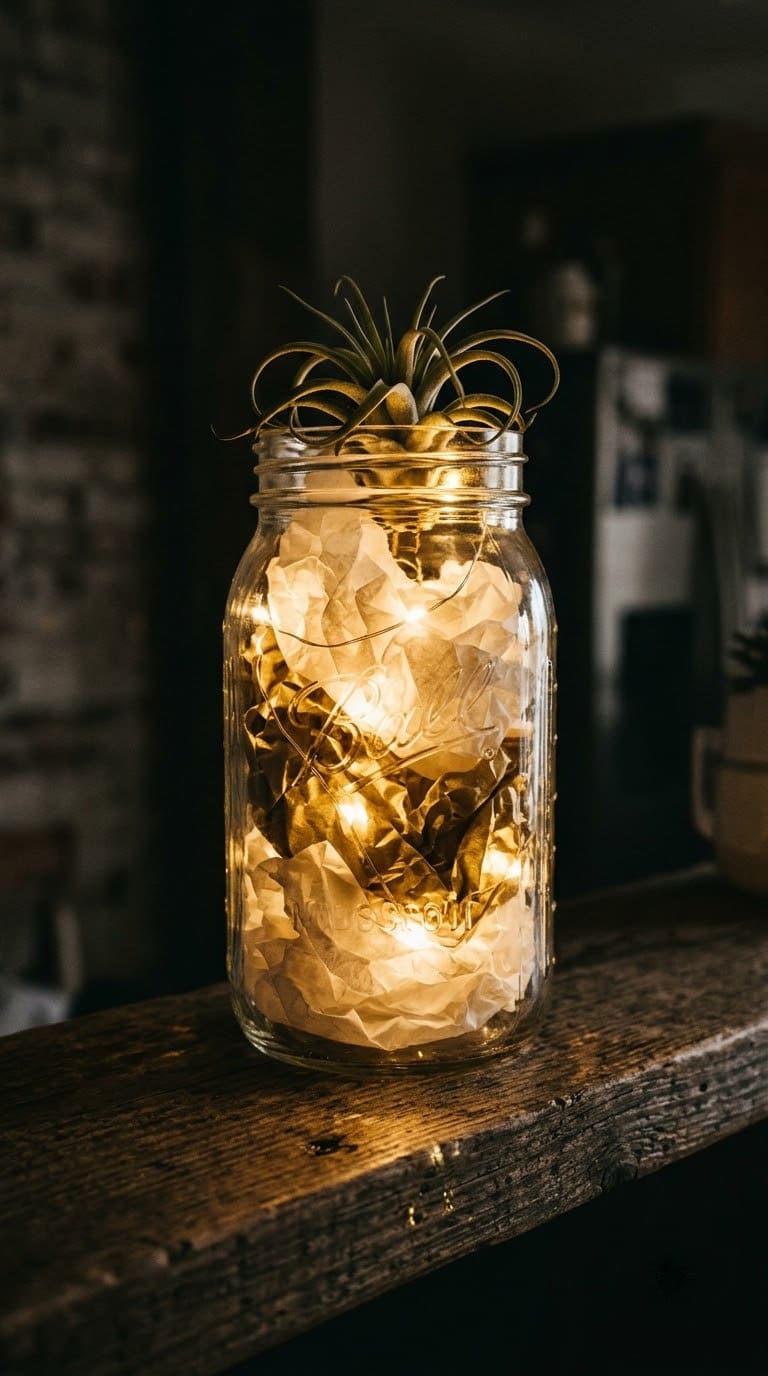
A simpler glowing version skips figurines entirely. Fill a tall quart jar with crinkled tissue paper in soft white and gold, seat a Tillandsia air plant directly on top with no soil, and add fine LED fairy lights around the tissue paper.
The air plant needs misting twice a week through the open top. No lid on this version. The combination of the air plant silhouette and the soft glow behind it gives this jar a natural, ethereal quality.
Difficulty: beginner. Cost: $14–$20.
Vintage and Cottage Themes
13. Victorian Tea Garden
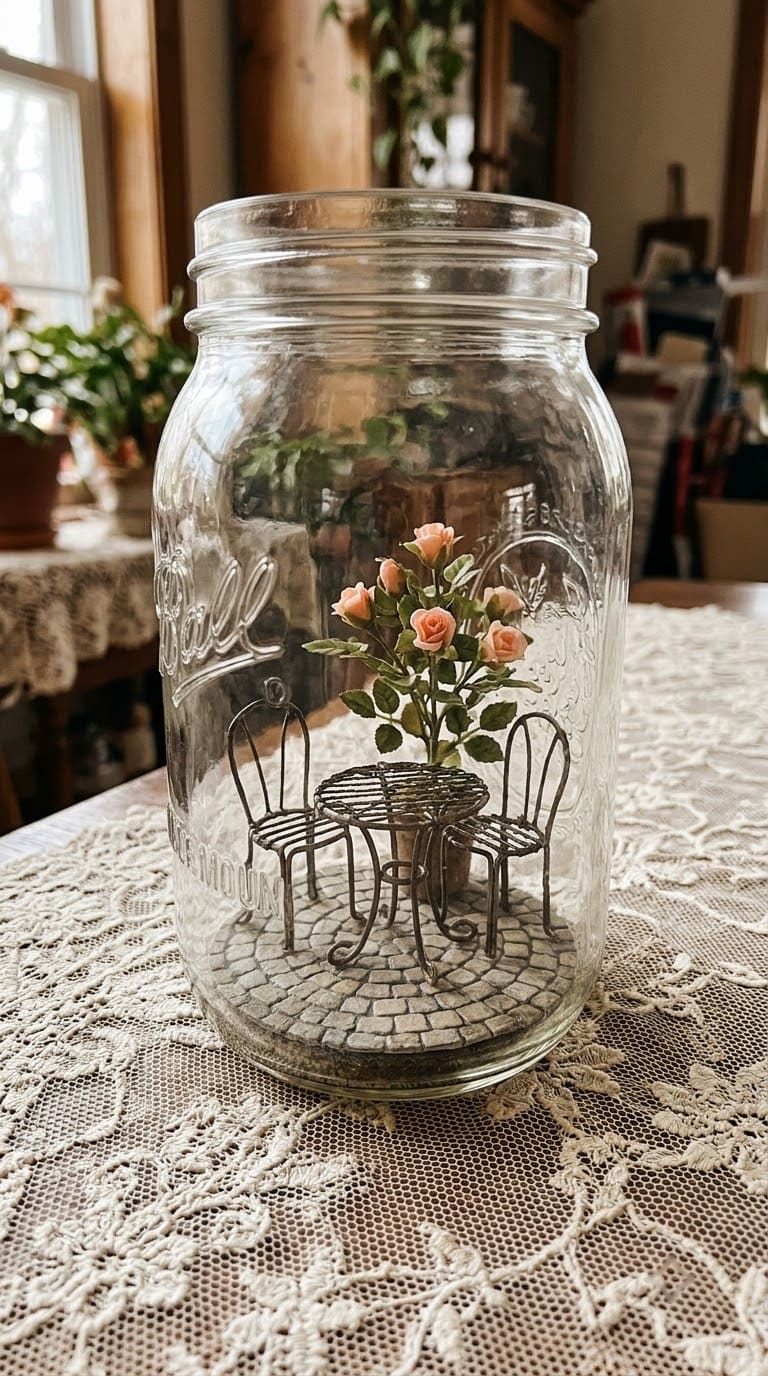
A miniature wrought-iron bistro table and two chairs anchor this scene. Faux tea roses or a single live miniature rose at the back add floral scale. Miniature roses (Rosa chinensis minima) are among the smallest available and can survive in an open-top jar with six or more hours of indirect light.
A cobblestone stepping-stone sheet cut to fit lines the base and shows through the glass. See our guide on growing miniature roses indoors for light and watering requirements if you go with a live plant.
Difficulty: intermediate. Cost: $20–$30.
14. Rustic Farmhouse Jar
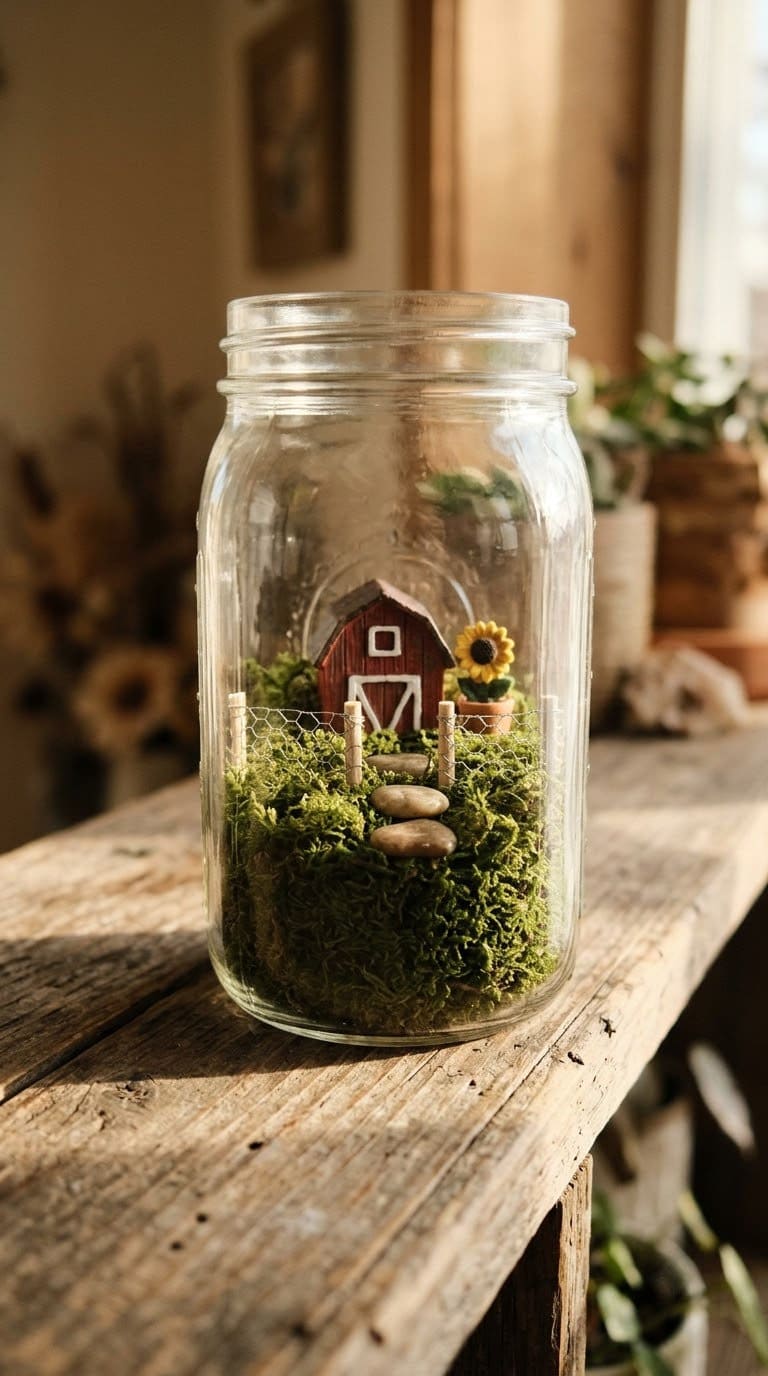
A tiny red barn or silo figurine, a faux chicken-wire fence piece made from small-gauge hardware cloth, and a small potted faux sunflower give this theme its country character.
Moss fills the ground level and two or three pebbles serve as stepping stones toward the barn door. The warm red of the barn figurine against green moss is one of the most popular color combinations for this style of fairy garden.
Difficulty: beginner. Cost: $14–$22.
15. Country Cottage Garden
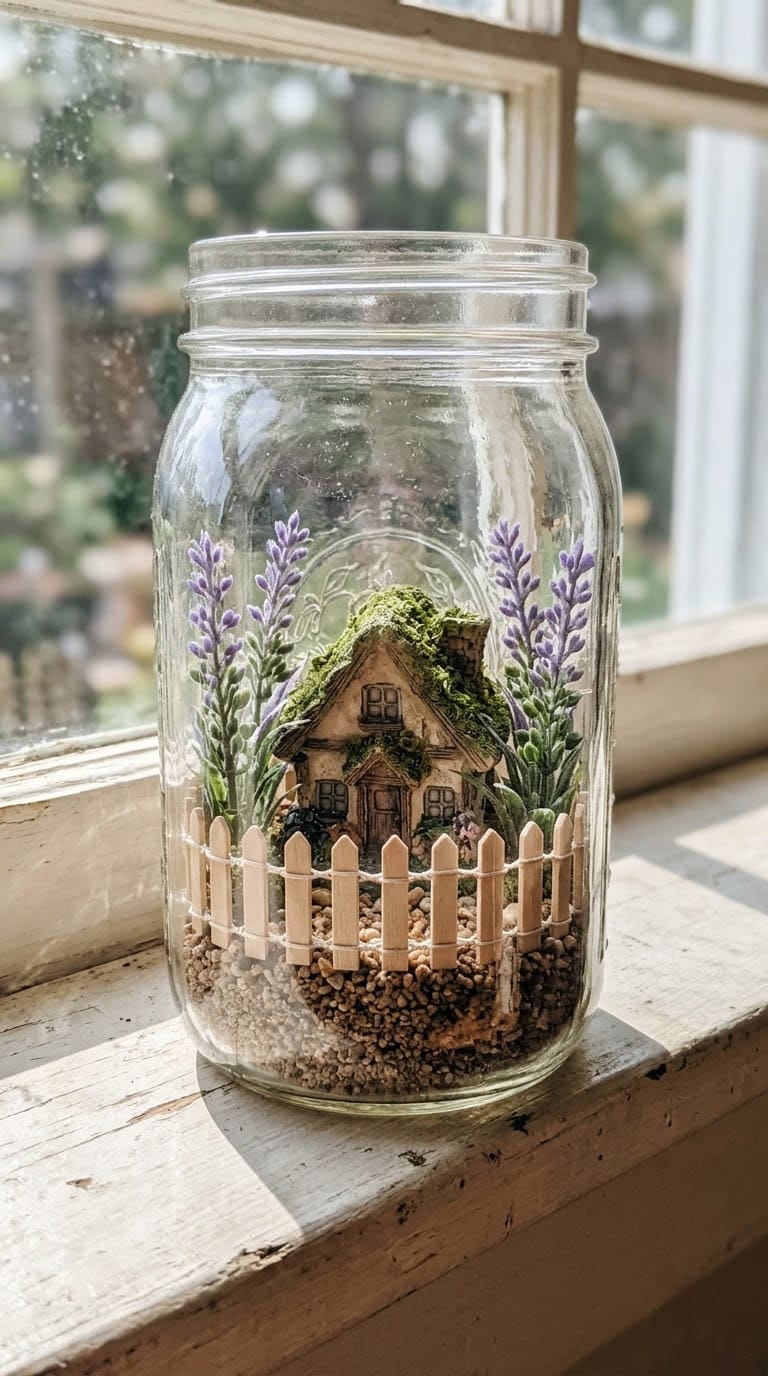
A moss-covered roof cottage figurine sits in the center of a quart jar. Flank it on both sides with small faux lavender stems and a miniature picket fence section cut from craft sticks and glued in a straight row.
Fine brown gravel covering the floor suggests a garden path. This is one of the most gifted versions because it reads as a complete scene at first glance without needing explanation.
Difficulty: beginner. Cost: $12–$20.
Desert and Succulent Themes
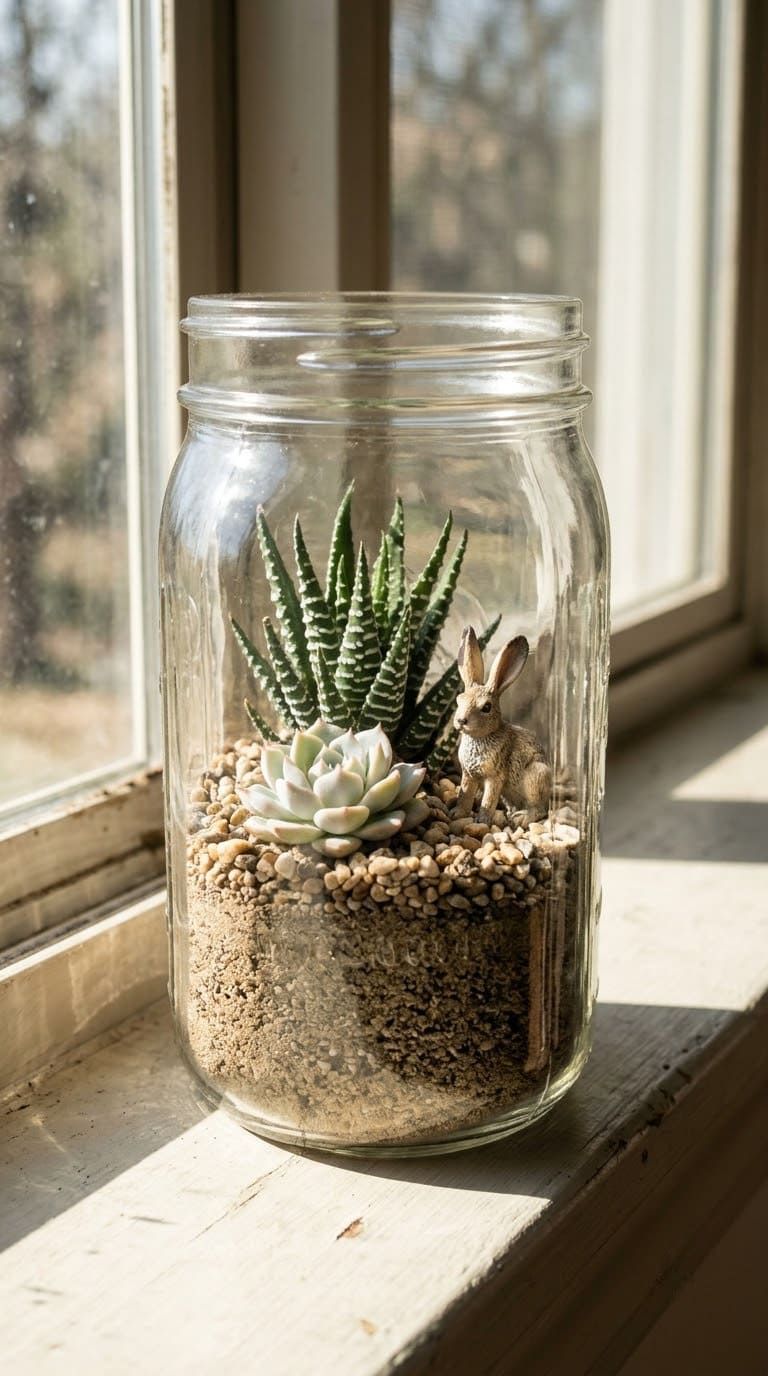
16. Desert Oasis Fairy Garden
An open-top wide-mouth quart jar is the right choice for succulents. They need airflow to prevent rot. Layer fine tan craft sand or cactus potting mix on top of the gravel base.
Plant a small Haworthia at the back and a compact Echeveria at the front. A tiny cactus figurine keeps the desert scale right without the watering demands of cactus. Water every 10 to 14 days with one tablespoon directed at the soil, not the leaves. Browse these succulent garden ideas for more plant combinations that work well in open containers.
Difficulty: beginner–intermediate. Cost: $18–$28.
17. Cactus Village
Use a wide-mouth half-gallon jar for this version to give two or three small cacti enough room to breathe. Use folded newspaper as tongs when planting to handle spines safely.
A tiny adobe house figurine and a saguaro cactus figurine keep the southwestern theme consistent. Remove the lid permanently for cactus. They need full airflow and dislike any humidity buildup. Water once every three weeks maximum during the growing season.
Difficulty: intermediate. Cost: $20–$30.
Minimal and Modern Themes
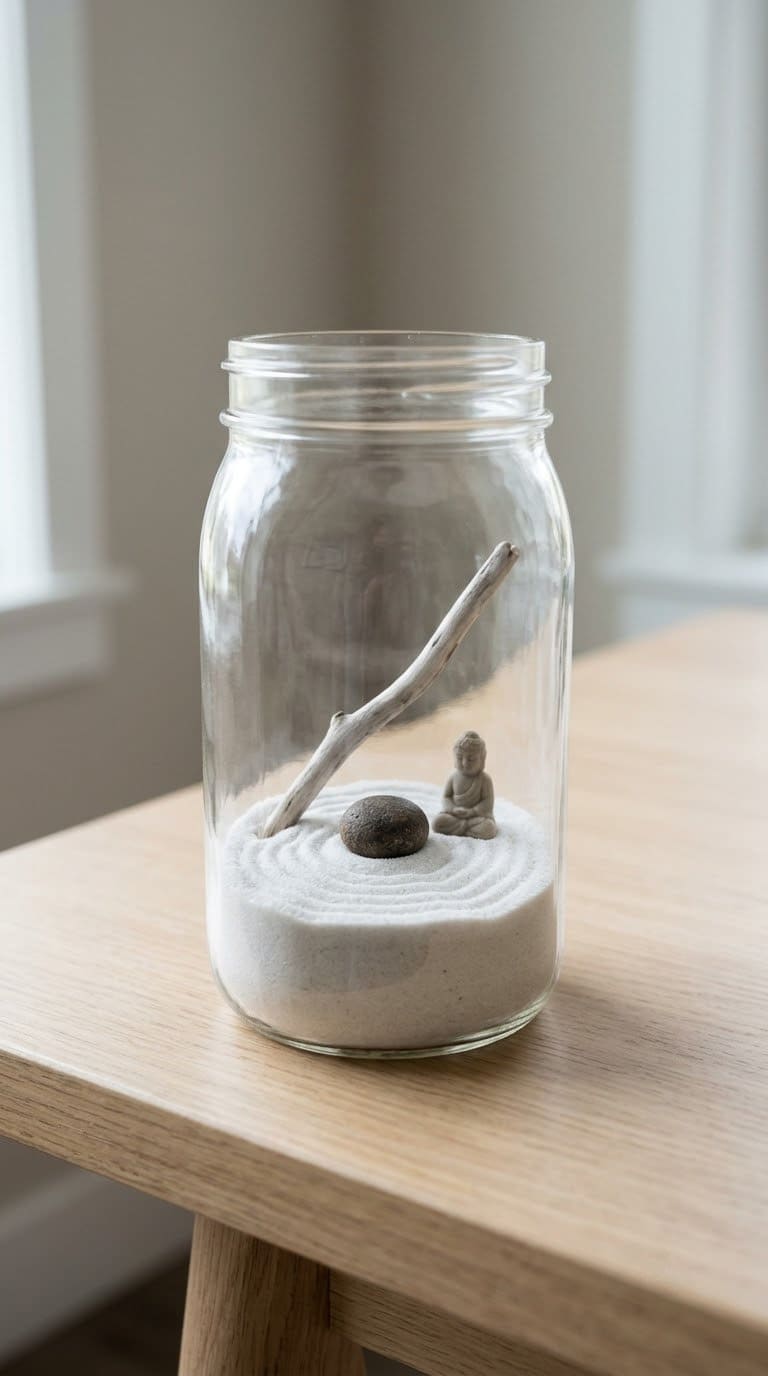
18. Zen Stone Garden
Layer fine white or gray sand into a quart jar in a smooth, even coat visible through the glass. Use a bamboo skewer to rake a simple wave or raked-line pattern into the surface.
A single dark river stone, a tiny Buddha or smooth stone figurine, and one small piece of driftwood complete the scene. No live plants, no watering, no maintenance. This is one of the most popular desk and windowsill versions among people who love the look but not the upkeep.
Difficulty: beginner. Cost: $10–$16.
19. Air Plant Boho Jar
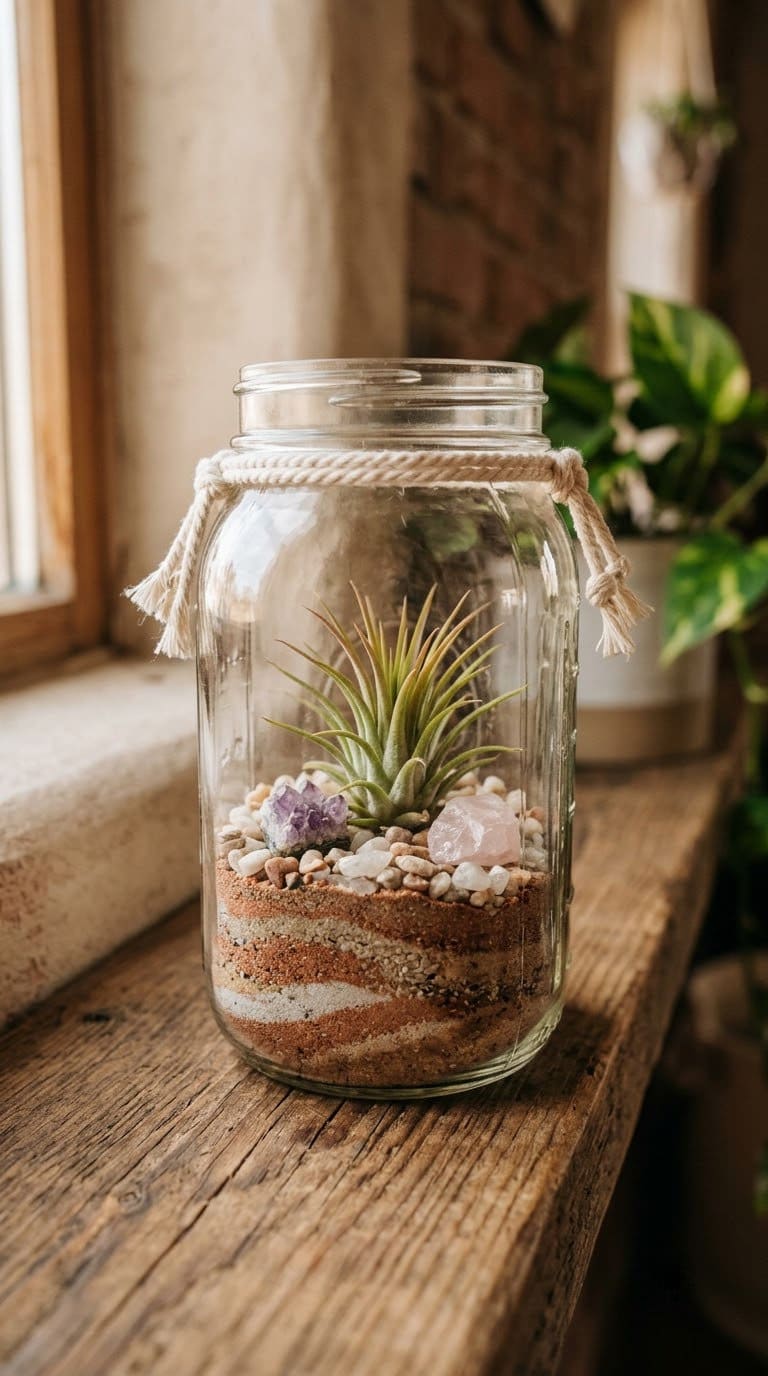
An open-top jar with no soil at all. Place a small Tillandsia air plant directly in the jar on a bed of colored sand or loose quartz pebbles. Tie a short macramé cord around the jar neck and add two small crystals inside for texture.
The air plant needs misting twice a week. After misting, tip the jar sideways and shake it gently to drain any standing water so the plant dries within four hours. No soil, no repotting, no seasonal changes needed.
Difficulty: beginner. Cost: $12–$20.
20. Self-Sustaining Terrarium Jar
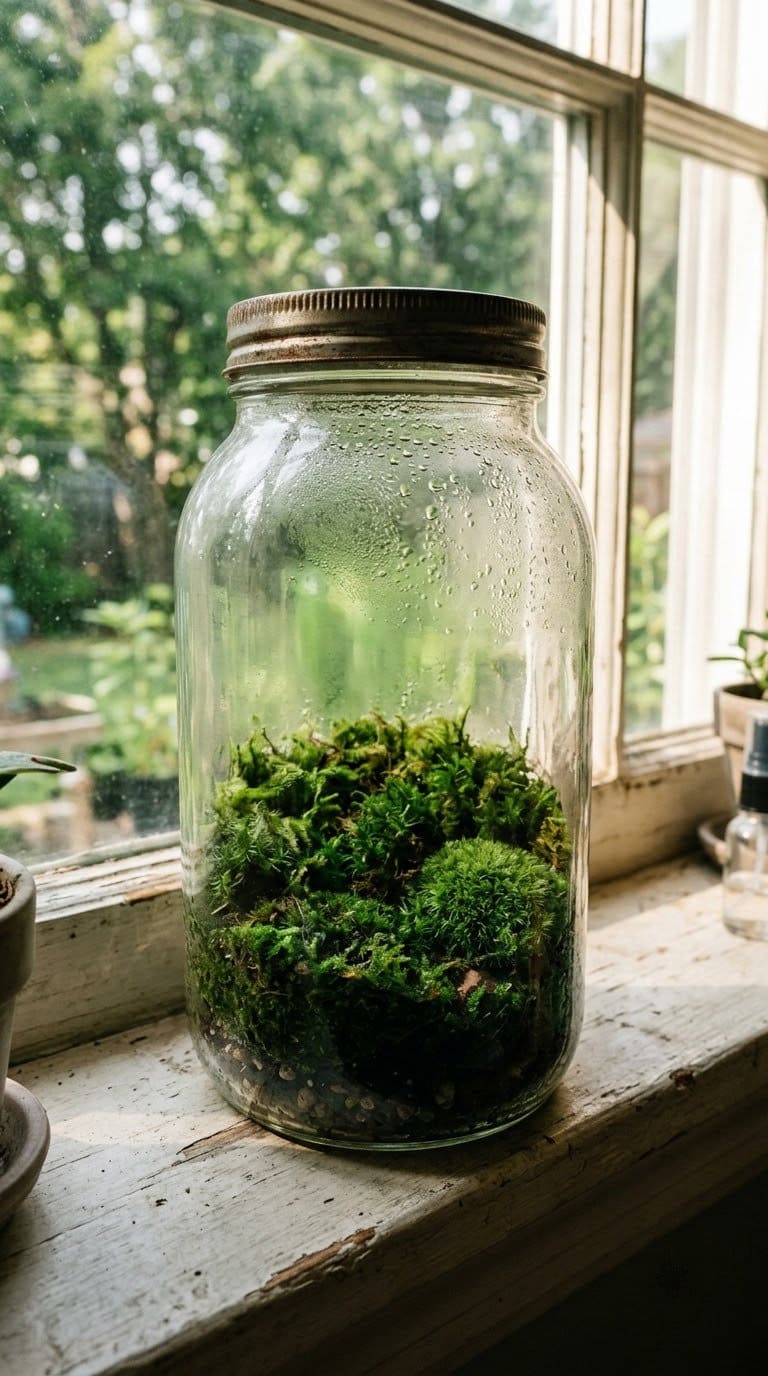
This is the most technically involved of the 20 ideas but requires the least maintenance once it balances. Use a large wide-mouth half-gallon jar with a tight-fitting lid.
Layer gravel, charcoal, and a moisture-retaining peat-based soil mix with live moss planted densely across the floor. Set the jar in bright indirect light and place the lid on.
After the first week, open the lid once daily for 10 minutes to release excess condensation. Once the system balances (light fogging each morning that clears by afternoon), seal it and check for dryness only if the glass stays completely clear for two full weeks.
Difficulty: intermediate. Cost: $20–$30.
What Size Mason Jar Works Best
A pint jar (16 oz) works for minimal all-faux scenes or a single Tillandsia air plant. It’s too tight for tools, so avoid live planting in a pint unless you’re only pressing moss against the walls with a chopstick.
A wide-mouth quart jar (32 oz) is the best starting size for most projects. It holds one small plant plus figurines and accessories comfortably. Regular-mouth quart jars are much harder to work inside. Wide-mouth is essential for anything beyond pressing moss to the glass.
A wide-mouth half-gallon jar (64 oz) gives you room for two to three small plants, more figurine arrangements, and larger hardscape elements like a small stone path or archway. The desert oasis, cactus village, enchanted fern hollow, and self-sustaining terrarium all work best at this size.
Maintaining Your Mason Jar Fairy Garden
Water sparingly and consistently. For live-plant jars, one to two tablespoons every 10 to 14 days is enough for most drought-tolerant plants. Look through the glass at the gravel layer. If you see water pooling at the bottom, skip the next watering entirely and wait until the gravel looks dry.
For sealed or nearly sealed terrarium jars, condensation management matters more than any watering schedule. Light fogging each morning that clears within two hours means the moisture balance is right. Constant heavy fog that never clears means too much water. If that happens, open the lid for a full day, wipe the jar dry, and reduce the next watering by half.
Clean the inside glass with a cotton swab dipped in water to remove mineral deposits or soil marks that build up along the waterline. Replace figurines when they fade or chip. Moss can be refreshed with a light mist directly on the plant surface without disturbing the rest of the jar.
Common Mistakes to Avoid
Skipping the gravel base is the most common mistake. Even one over-watering event becomes a root-rot problem when there is no place for water to drain. The gravel layer is not optional for any live-plant jar. Use cactus mix or a perlite-amended potting mix rather than standard potting soil, which holds too much moisture.
Using a sealed lid with succulents or air plants traps humidity that neither plant tolerates. Succulents and air plants need an open top or a loose lid sitting slightly askew. Moss benefits from the moisture and is the only plant that works well in a sealed jar.
Buying figurines and accessories without checking dimensions is a common frustration. Standard fairy garden sets sold at craft stores are often sized for outdoor garden beds, not pint or quart jars. Look for accessories specifically labeled “terrarium” or “mini” and measure the jar opening diameter before buying. Our roundup of DIY fairy garden accessories includes handmade options sized for small containers.
Real Plants vs Faux: Which Works Better?
| Factor | Real Plants | Faux Plants |
|---|---|---|
| Longevity | Months to years with care | Indefinite |
| Maintenance | Watering every 10–14 days | None |
| Best jar type | Open-top or loose lid | Any |
| Best plant picks | Moss, succulents, air plants | Silk, dried, resin |
| Cost | $15–$35 with plants | $10–$25 total |
| Difficulty | Beginner–intermediate | Beginner |
Frequently Asked Questions
What plants grow best in a mason jar fairy garden? Moss is the best plant for closed or nearly closed jars because it thrives on the humidity inside a sealed container. For open-top jars, small succulents such as Haworthia and compact Echeveria tolerate the dry conditions well and need watering only every 10 to 14 days. Air plants (Tillandsia) work in any open-top jar with no soil. Just mist twice a week and shake out the standing water. Avoid tropical houseplants, which need consistent moisture that a drainage-free jar cannot provide safely.
Do mason jar fairy gardens need drainage holes? No drainage holes are needed if you build a two-inch gravel base at the bottom of the jar before adding soil. The gravel layer acts as a reservoir that pulls excess water below root level. Adding a thin layer of horticultural charcoal on top of the gravel prevents the water in that reservoir from going stagnant. Without this layering, over-watering causes root rot within days.
How do you keep a mason jar fairy garden from getting moldy? Mold develops when excess moisture has nowhere to escape. Use an open-top jar or set the lid slightly askew for any build that contains succulents, air plants, or dried materials. Only sealed terrariums with live moss can tolerate a tight-fitting lid. Those need daily lid-opening for the first week until the moisture level stabilizes. A layer of horticultural charcoal in the build prevents the stagnant-water odors that often accompany early-stage mold.
What size mason jar is best for a fairy garden? A wide-mouth quart jar is the best starting size for most first-time builders. It holds one small plant plus figurines and accessories with enough room to work a pair of tweezers inside. Regular-mouth quart jars are much harder to assemble inside. Wide-mouth half-gallon jars give more room for multiple plants or larger scenes and are the right choice for the cactus village, desert oasis, and self-sustaining terrarium ideas.
How often do you water a mason jar fairy garden? For live succulents in an open-top jar, water every 10 to 14 days with one to two tablespoons. For live moss in a sealed or covered jar, water once every three to four weeks. The enclosed environment holds moisture much longer. For air plants in an open jar, mist twice a week and tip the jar to drain standing water after each misting. For all-faux jars, no watering is needed at all.
Never miss an update — choose FarmFoodFamily as your preferred source on Google.
How it works: Tap the button below to open Google's settings page, then check the box next to FarmFoodFamily.
Tap the checkbox to turn it blue — that's how you know it's set.