18 Beautiful Round Raised Garden Bed Ideas That Actually Work in Any Yard
I spent an afternoon last spring trying to talk a neighbor out of building a keyhole bed on the one sloped corner of his yard that gets full sun. He built it anyway. Three storms later, the compost basket in the middle was sitting in standing water and half his tomato starts rotted at the…

Never miss an update — choose FarmFoodFamily as your preferred source on Google.
How it works: Tap the button below to open Google’s settings page, then check the box next to FarmFoodFamily.
Tap the checkbox to turn it blue — that’s how you know it’s set.
I spent an afternoon last spring trying to talk a neighbor out of building a keyhole bed on the one sloped corner of his yard that gets full sun. He built it anyway.
Three storms later, the compost basket in the middle was sitting in standing water and half his tomato starts rotted at the root. That’s the thing nobody tells you about round beds: the shape is genuinely great for a garden, but it punishes bad siting more than a square bed does, because there’s no straight edge to just build a French drain along.
This guide covers 18 real round raised bed styles, from cheap DIY builds you can finish in a weekend to bigger metal and stone projects, plus the material and siting choices that actually determine whether the thing lasts five years or fifteen.
Choosing materials and siting your round bed
Before picking a style, get two decisions right: what the walls are made of, and where the bed actually sits. Both mattered more in my research than any of the shape variations below.
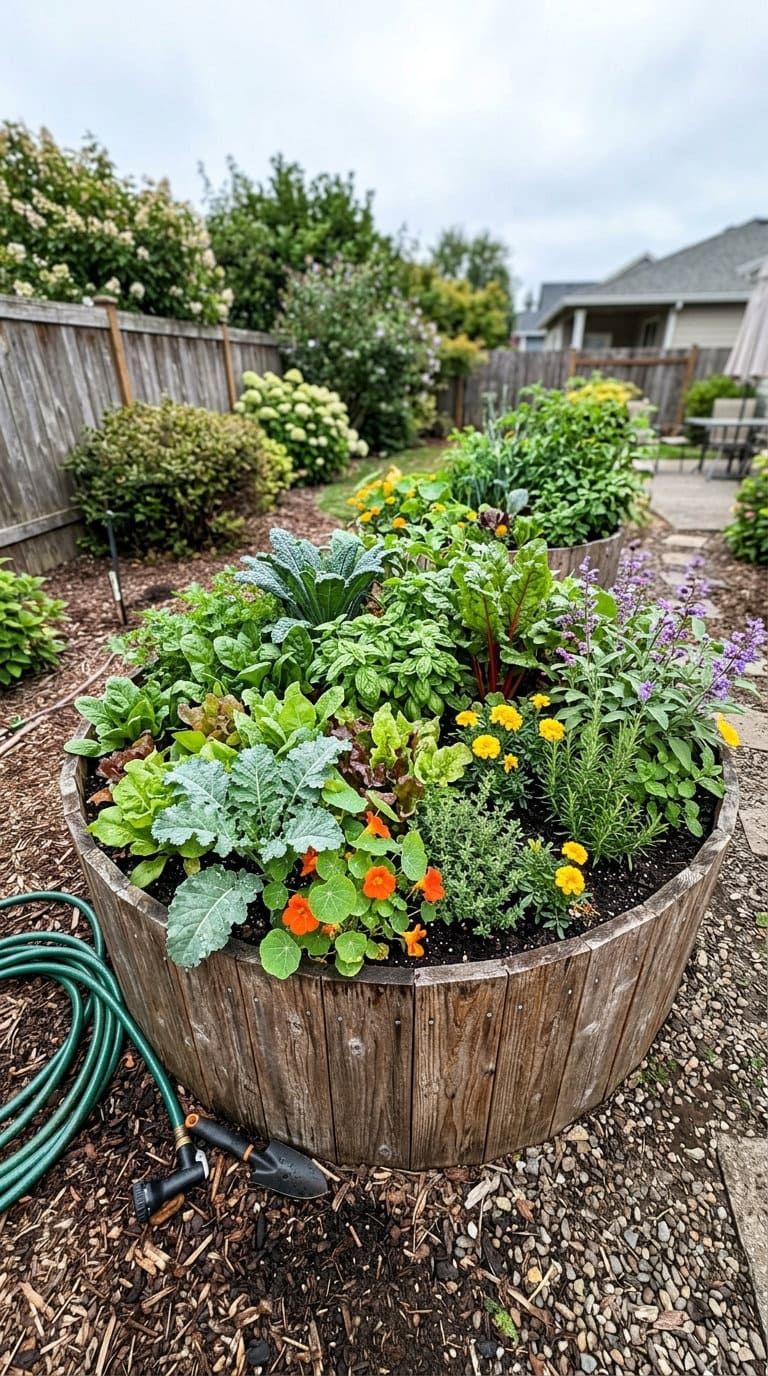
Cedar or redwood is still the default recommendation from most working gardeners, and Kevin Espiritu, founder of Epic Gardening, makes the case for it in his raised bed materials guide: the natural oils resist rot and pests without any chemical treatment, and a well-built cedar bed lasts 15 to 20 years with basically no maintenance. It also holds soil temperature more evenly, which matters if you’re in a cooler climate and trying to get an early start.
Galvanized or corrugated steel is the other real contender, and it’s what most of the “modern” round beds in this list are built from. It’s tougher, it lasts 30-plus years, and it warms up faster in spring, which is good for heat-loving crops.
Answer 4 quick questions and get matched to the exact fix for your yard — drainage, budget, layout, or something else entirely.
Take the Free QuizOne real safety note here, not a hypothetical: don’t build a bed wall out of painted metal roofing panels. Ask Extension, the Cooperative Extension System’s expert Q&A service, has fielded this exact question, and the answer is that paint on roofing metal can contain heavy metals that leach out as the paint ages and peels. If you’re using metal, use material actually rated for garden beds, not a leftover roofing panel from the shed project.
Where you put it matters almost as much as what it’s made of. Round and keyhole beds handle slopes badly. A forum thread on permies.com about a circular keyhole garden on a slope lays this out well: water doesn’t drain evenly around a curved wall the way it does off a straight one, so on a slope it pools unevenly in the bed, and worse, in the compost basket if you’re doing a keyhole design.
If your only sunny spot is sloped, terrace it or build a retaining structure first, don’t just set the bed down and hope. And if you’re placing a bed near a retaining wall, Skagit County’s WSU Master Gardener program recommends keeping a roughly 4-foot clearance for every 2 feet of bed height, so the soil load doesn’t push against the wall.
Cost-wise, think in three tiers as you go through the ideas below: DIY-cheap (scrap wood, reclaimed materials, a weekend and a small hardware run), needs tools and a modest budget (purchased lumber or a kit, a real but manageable spend), and bigger investment (custom metal, stone, or multi-tier builds, priced more like a small contractor project).
These are deliberately qualitative, not price quotes, actual cost depends heavily on your region and what you can source secondhand, they’re meant to help you triage which ideas fit your actual weekend and wallet.
Related: 25+ Waist High Raised Garden Bed Plans

18 round garden bed ideas
1. Vegetable Garden Design
Most yard problems trace back to one specific, fixable cause. Find yours in 4 quick questions.
Take the Free Quiz
Garden-rated galvanized steel panels that can be configured into a round or oval layout, 17-inch height, avoids the painted-roofing-panel safety issue covered above.
Shop NowThis post contains affiliate links. We may earn a commission on qualifying purchases at no extra cost to you.
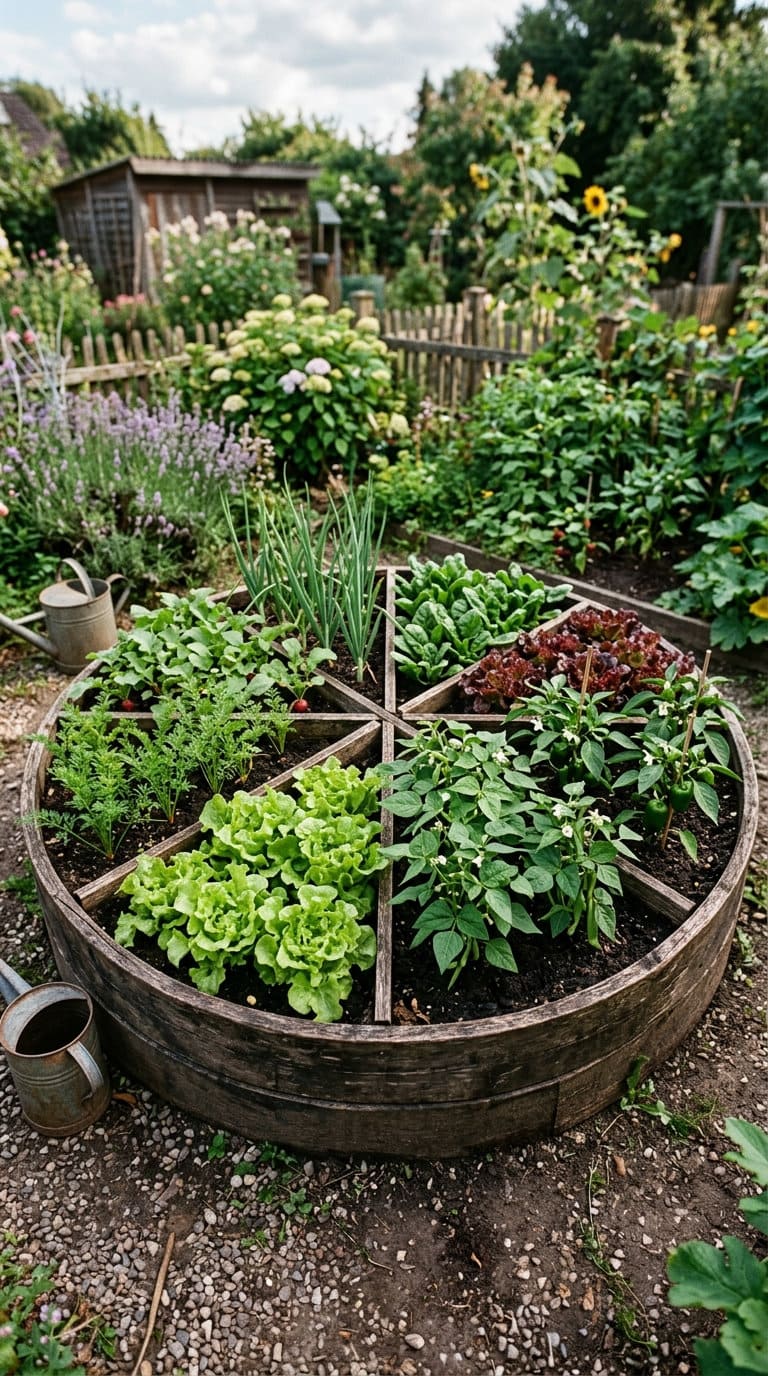
A straightforward circular cedar or pine frame planted in wedges, like a pie, so you can rotate crops without disturbing neighboring plants. This is the workhorse layout if you’re growing food, not just decorating.
Cost tier: needs tools and a modest budget, since you’re framing a full circle rather than reusing scrap. Keep it under about 6 feet across so you can reach the center from any angle without stepping on the soil.
2. Veggie Garden without digging
Source: freecycleusa
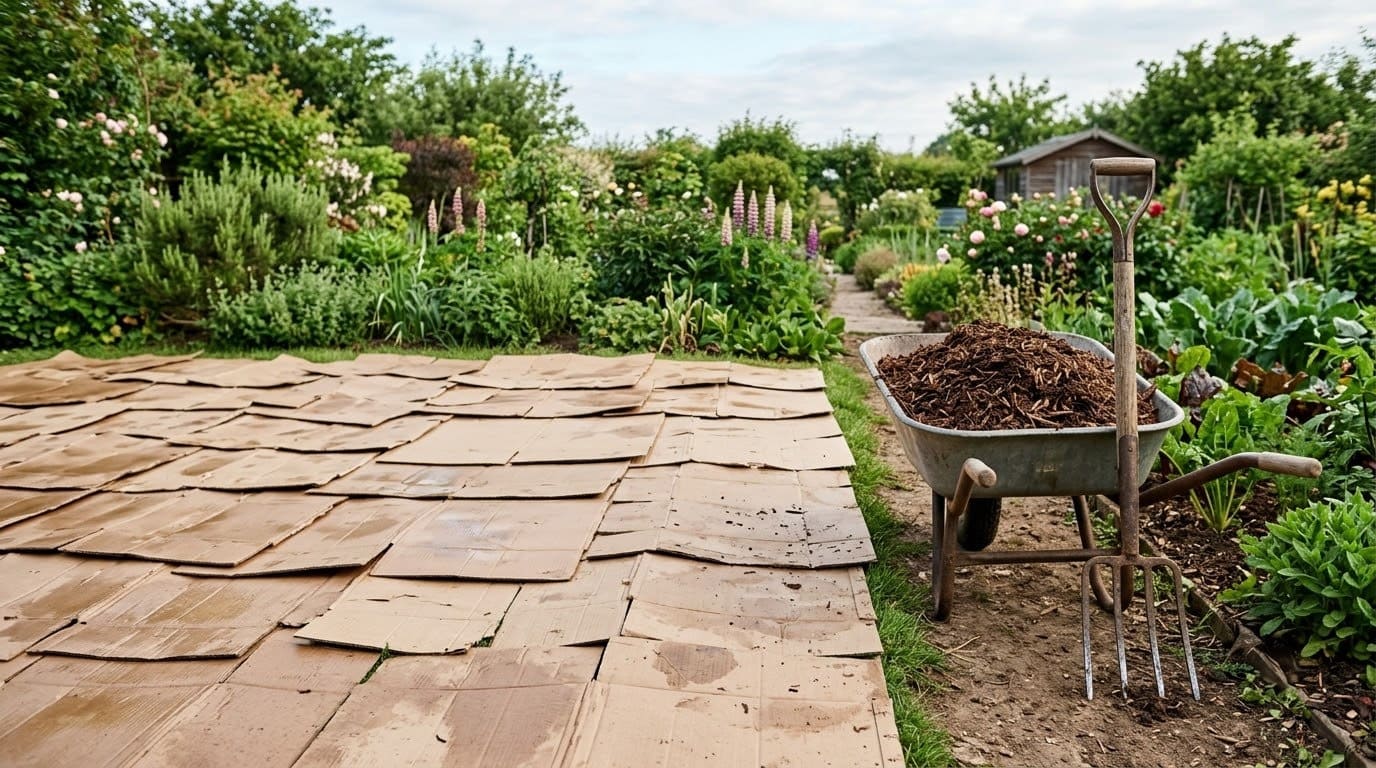
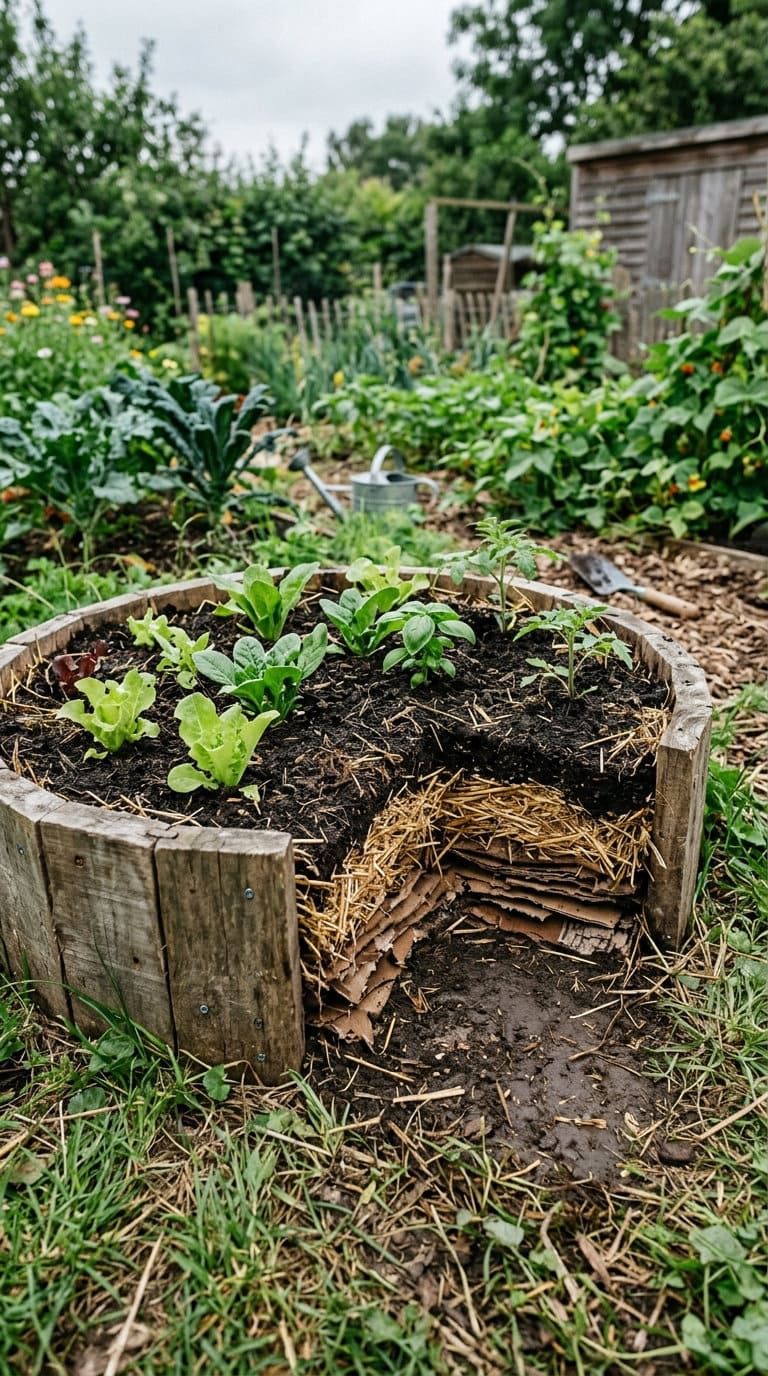
A no-dig round bed built directly on top of grass or hard soil using cardboard, compost, and mulch layers inside a low circular frame. Cost tier: DIY-cheap, honestly one of the cheapest builds on this list since you’re skipping excavation entirely.
It takes longer to establish (a full season before the soil underneath fully breaks down) but it’s the easiest option if your yard has compacted or rocky ground.
3. Log Garden Bed
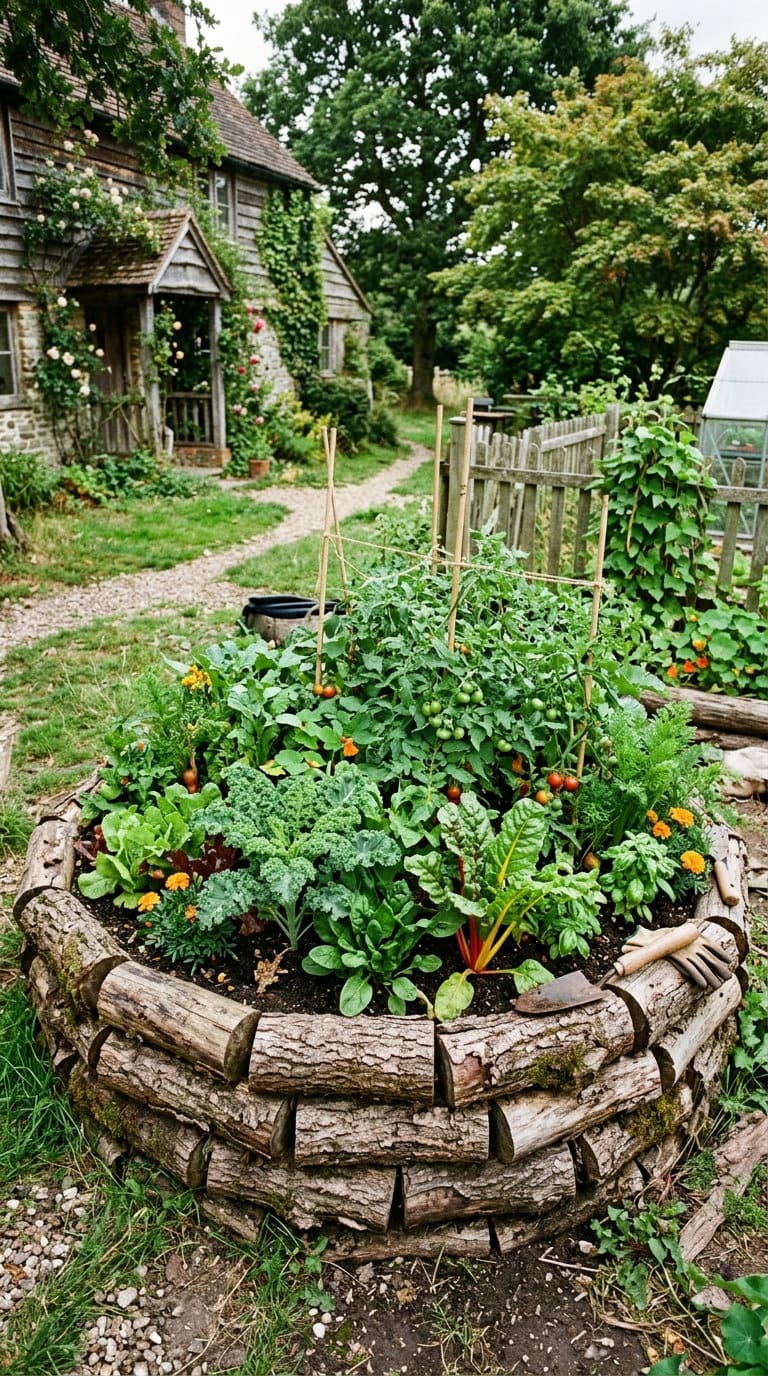
Stacked or standing logs form the circular wall, either laid horizontally like a log cabin or set vertically like a small palisade. Cost tier: DIY-cheap if you have access to felled wood, otherwise the logs themselves can get pricey.
Durability depends heavily on wood type, untreated softwood logs in ground contact will need replacing within a few years, hardwood or cedar logs last considerably longer.

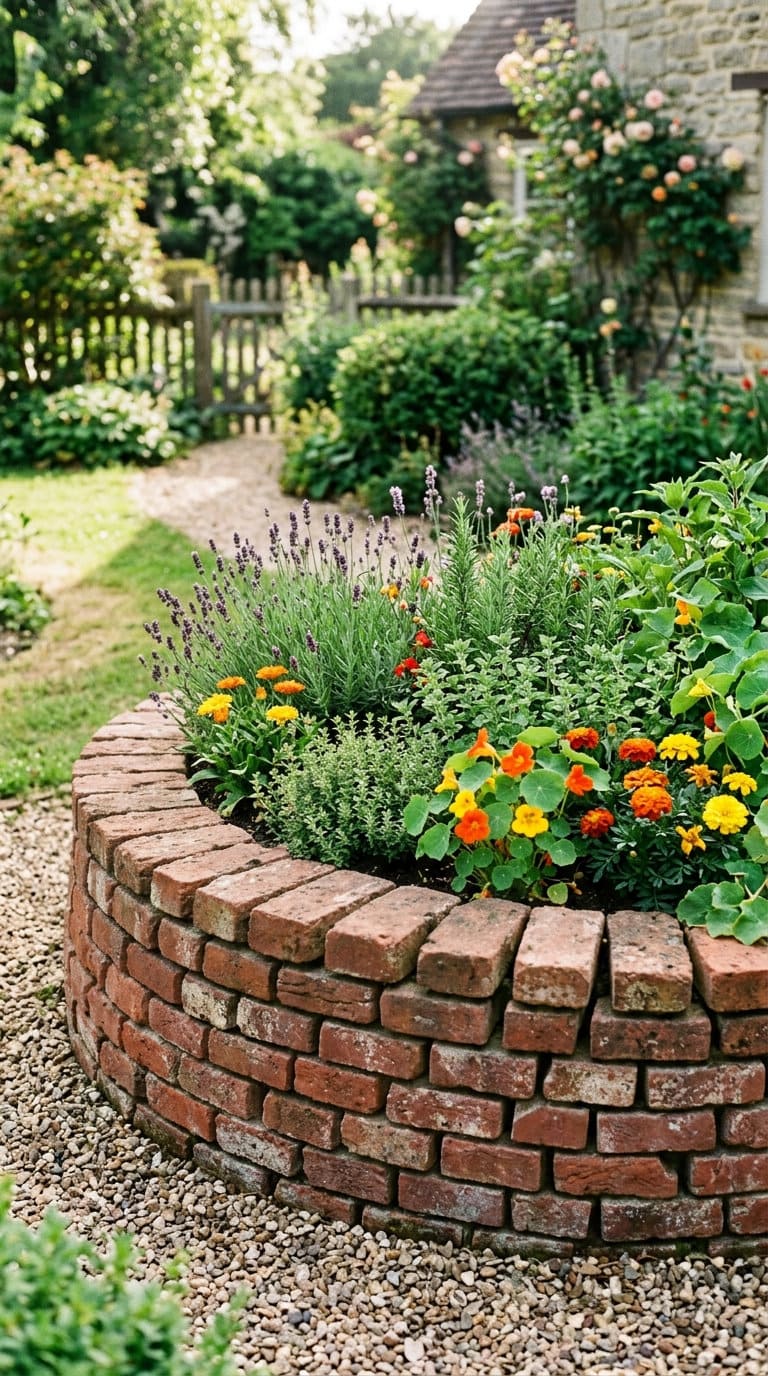
4. Brick Garden Bed
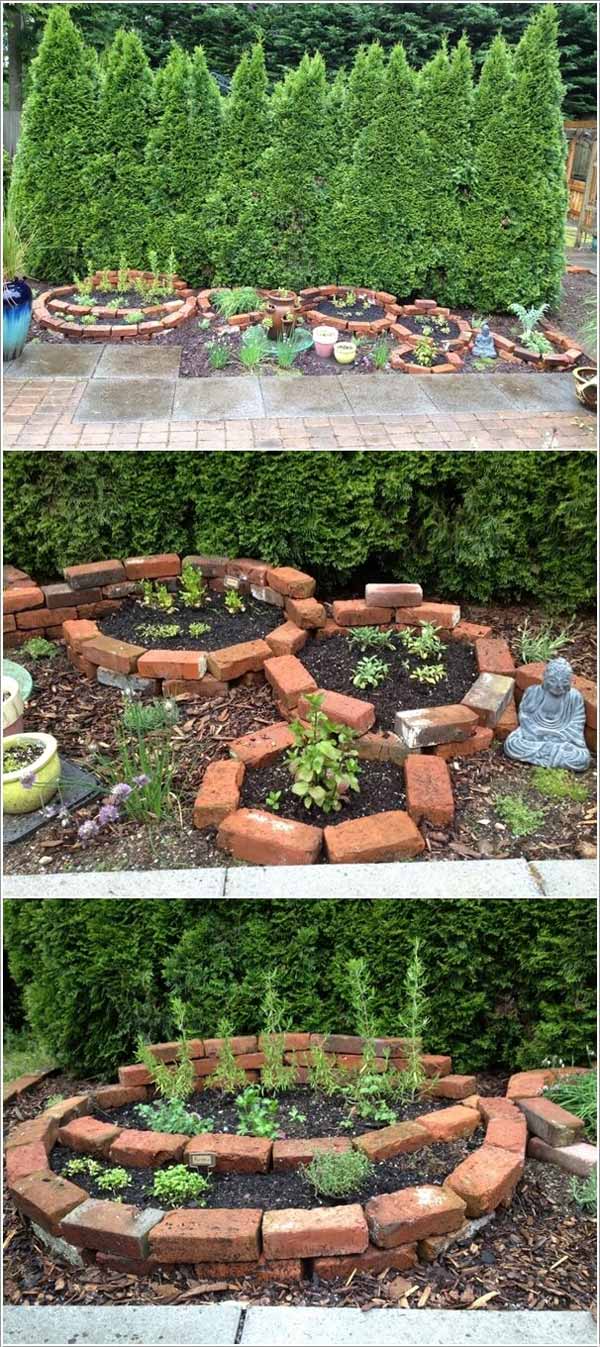
A low circular wall of dry-stacked or mortared brick. Cost tier: bigger investment if mortared (this is closer to a small masonry project), DIY-cheap-ish if dry-stacked without mortar, though dry-stacked brick walls need a slight inward lean to stay stable over time.
The average homeowner spends $616/year on yard fixes that don't address the real problem. Find out what yours actually is — before you spend another dollar.
Take the Free QuizBrick holds heat well, which is nice in spring but can stress roots in a hot summer if the bed isn’t mulched.
5. Metal planter
Source: houzz
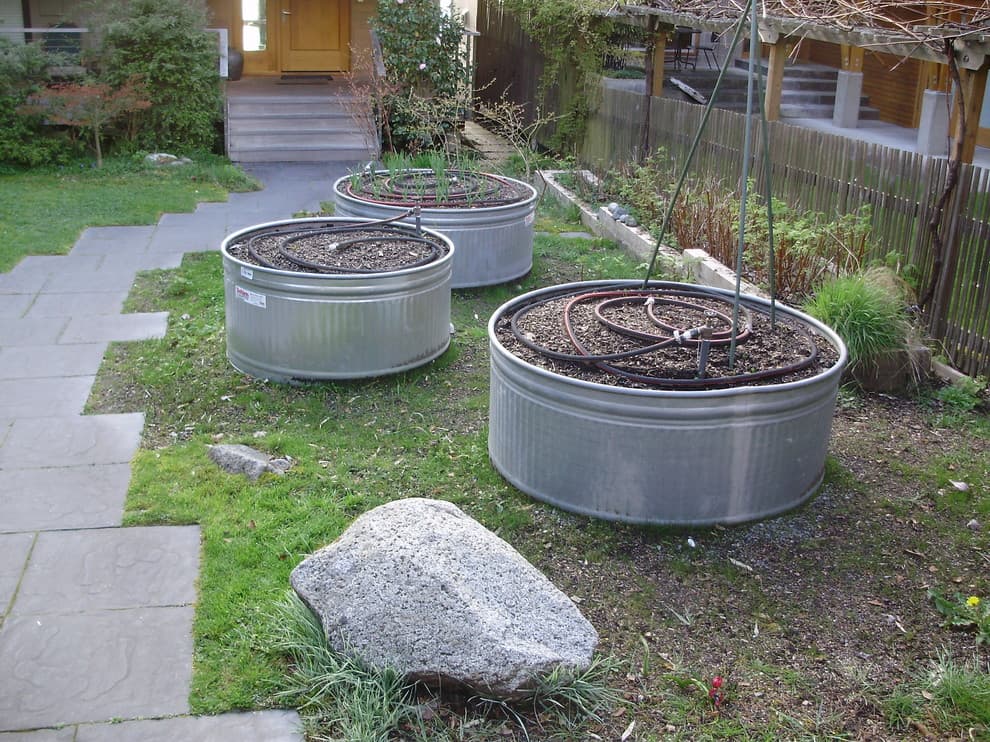
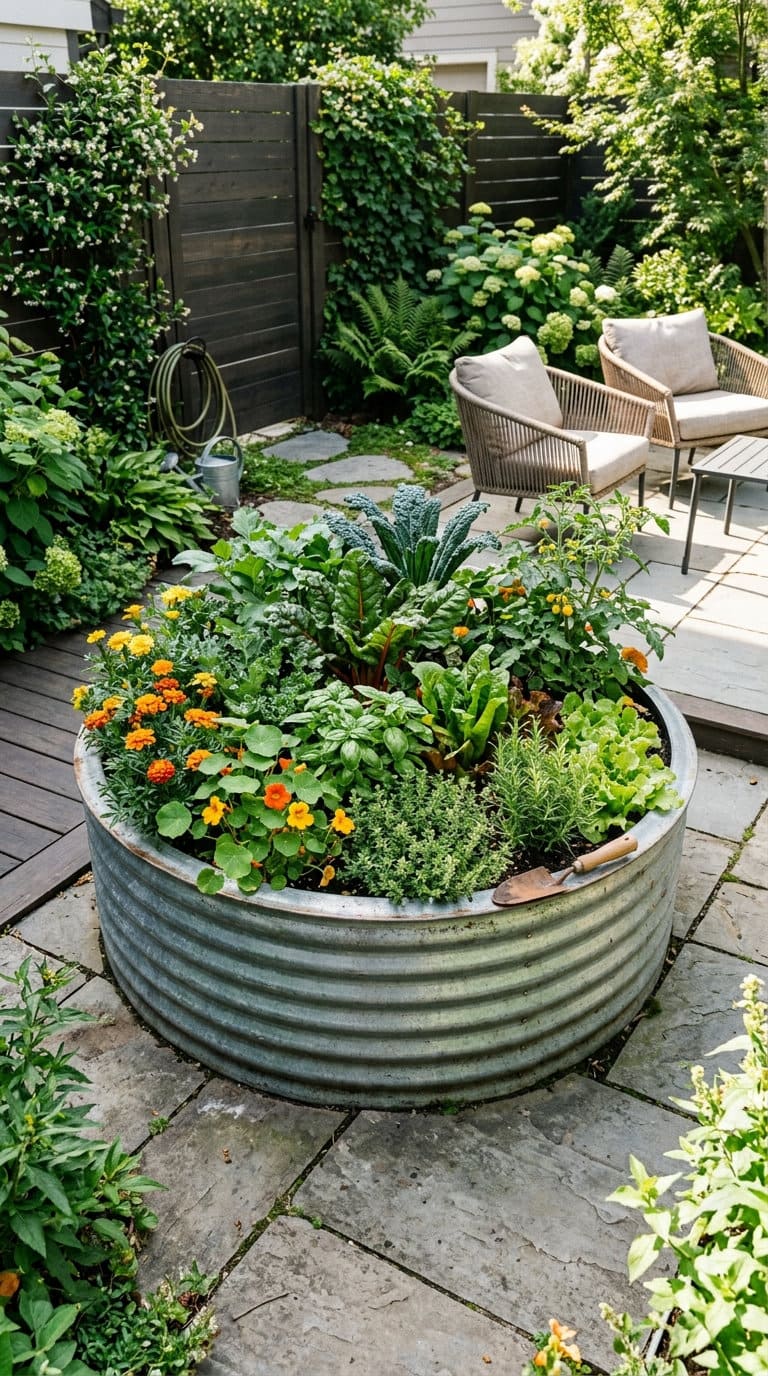
A prefabricated or custom galvanized steel ring, the modern option most garden retailers sell as a kit. Cost tier: needs tools and a modest budget for a mid-size kit, bigger investment for large or custom sizes.
This is where the painted-roofing-panel warning above actually applies, buy a kit or sheet metal rated for raised beds, not leftover roofing stock.
6. Square logs
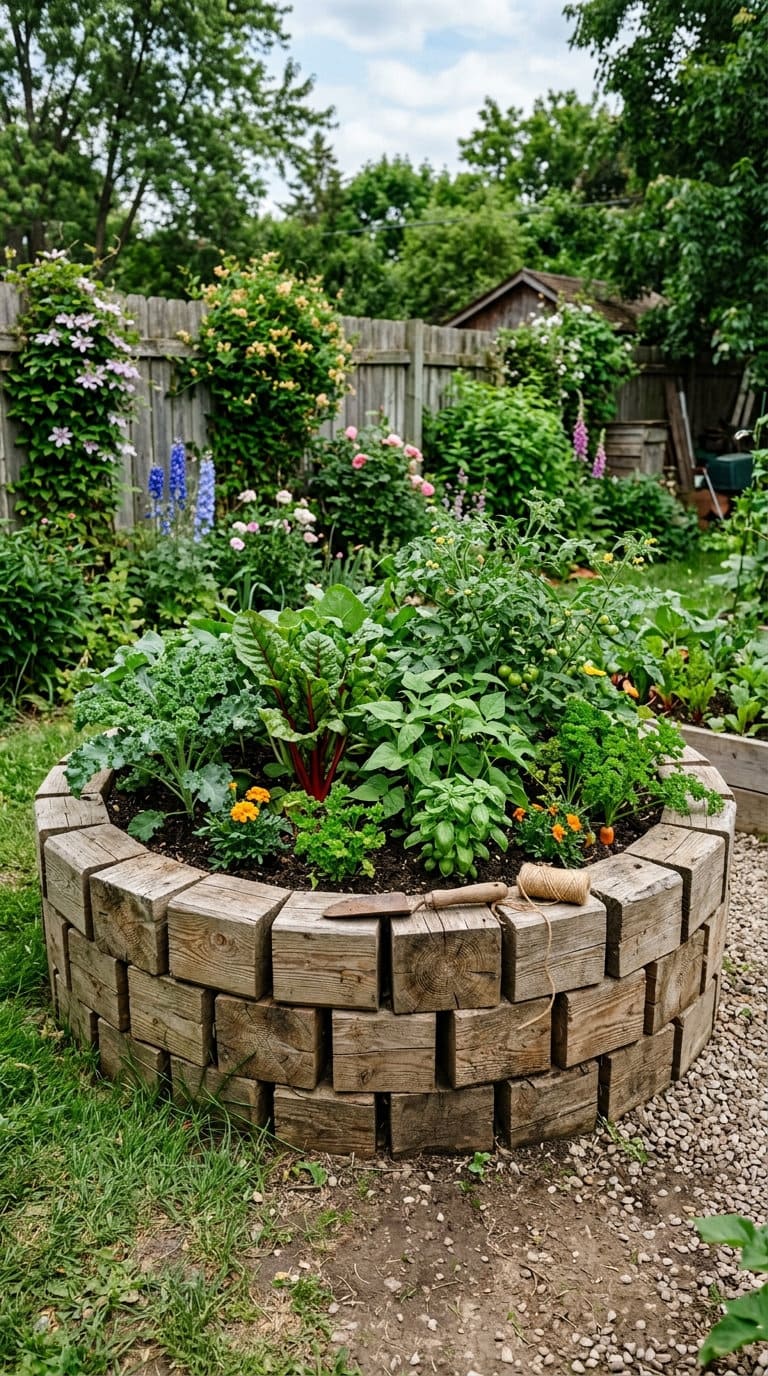
Same log-wall idea as #3, but using milled square-cut logs instead of round ones, which stack tighter and need less gap-filling.
Cost tier: needs tools and a modest budget, milled lumber costs more than scavenged round logs but the tighter fit means less soil loss through gaps.
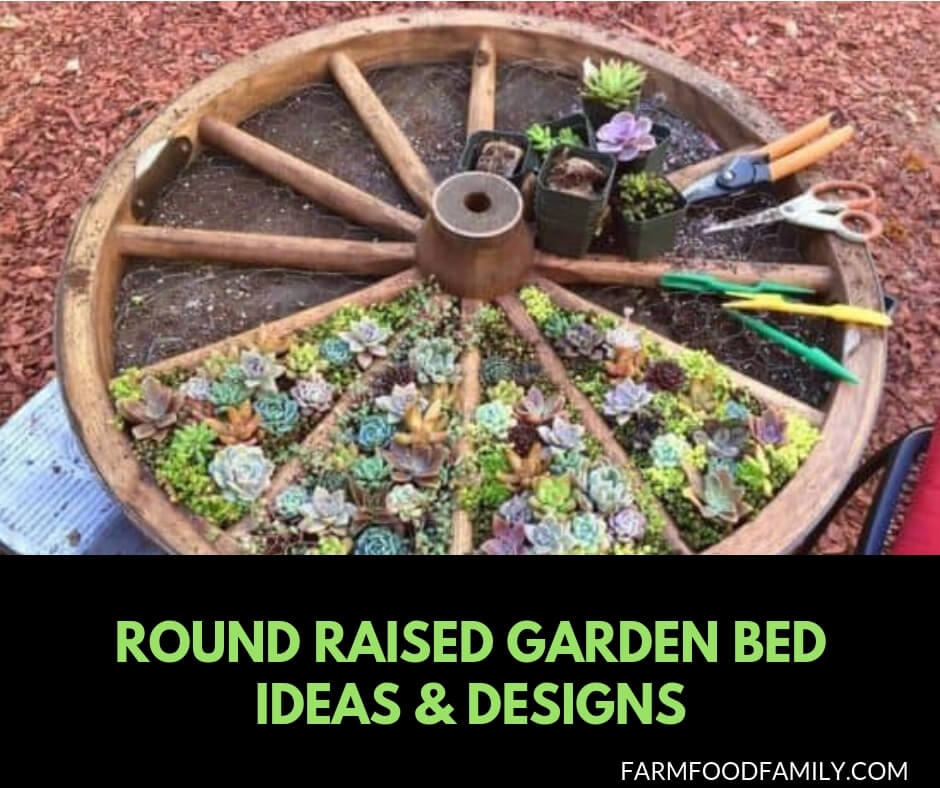
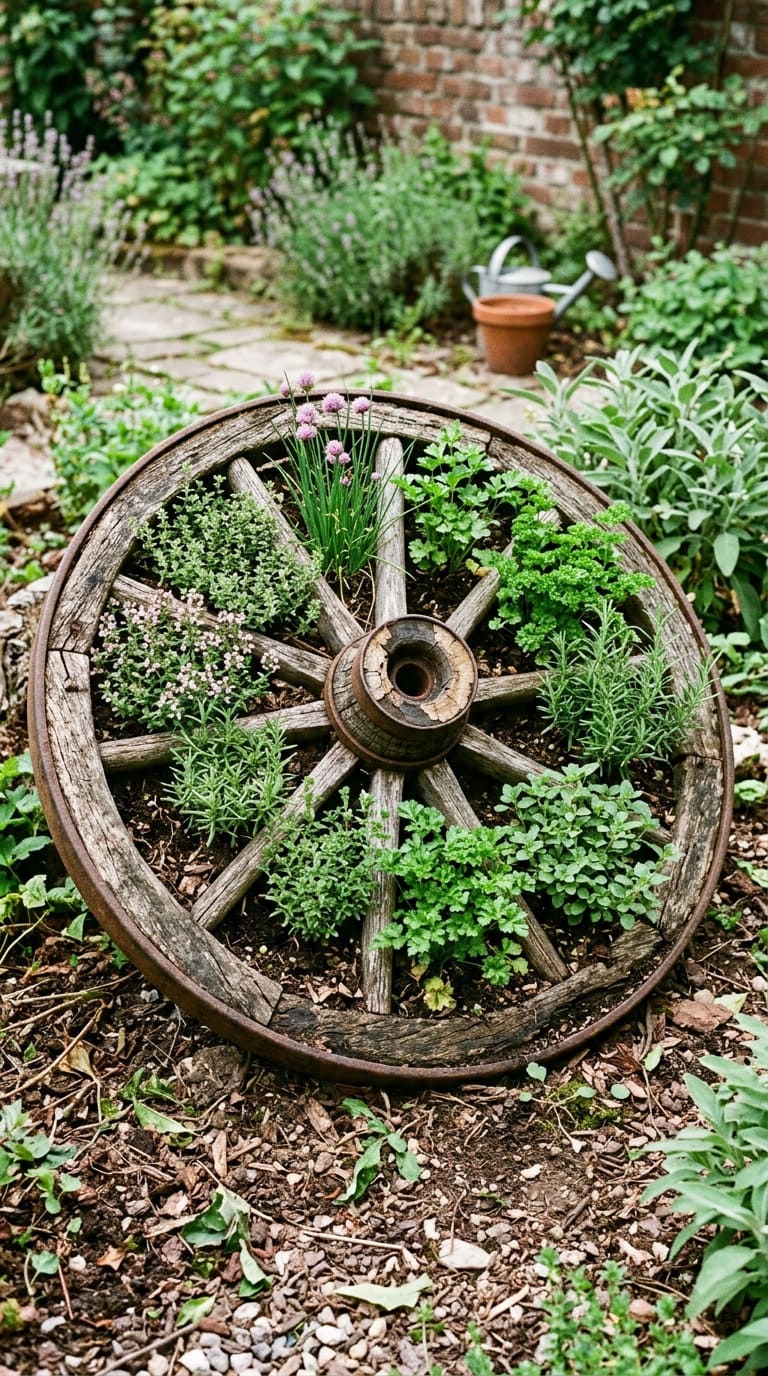
7. Wheel herb garden

Source: growsonyou
An old cartwheel or wagon wheel laid flat, with herbs planted in the spoke sections. This one’s more decorative than productive, herbs are shallow-rooted enough to work in the thin soil pockets between spokes.
Cost tier: DIY-cheap if you already have or can source an old wheel, otherwise decorative reproduction wheels sold specifically for this purpose cost noticeably more than a salvaged one.
8. Stone garden bed

Source: growingthehomegarden
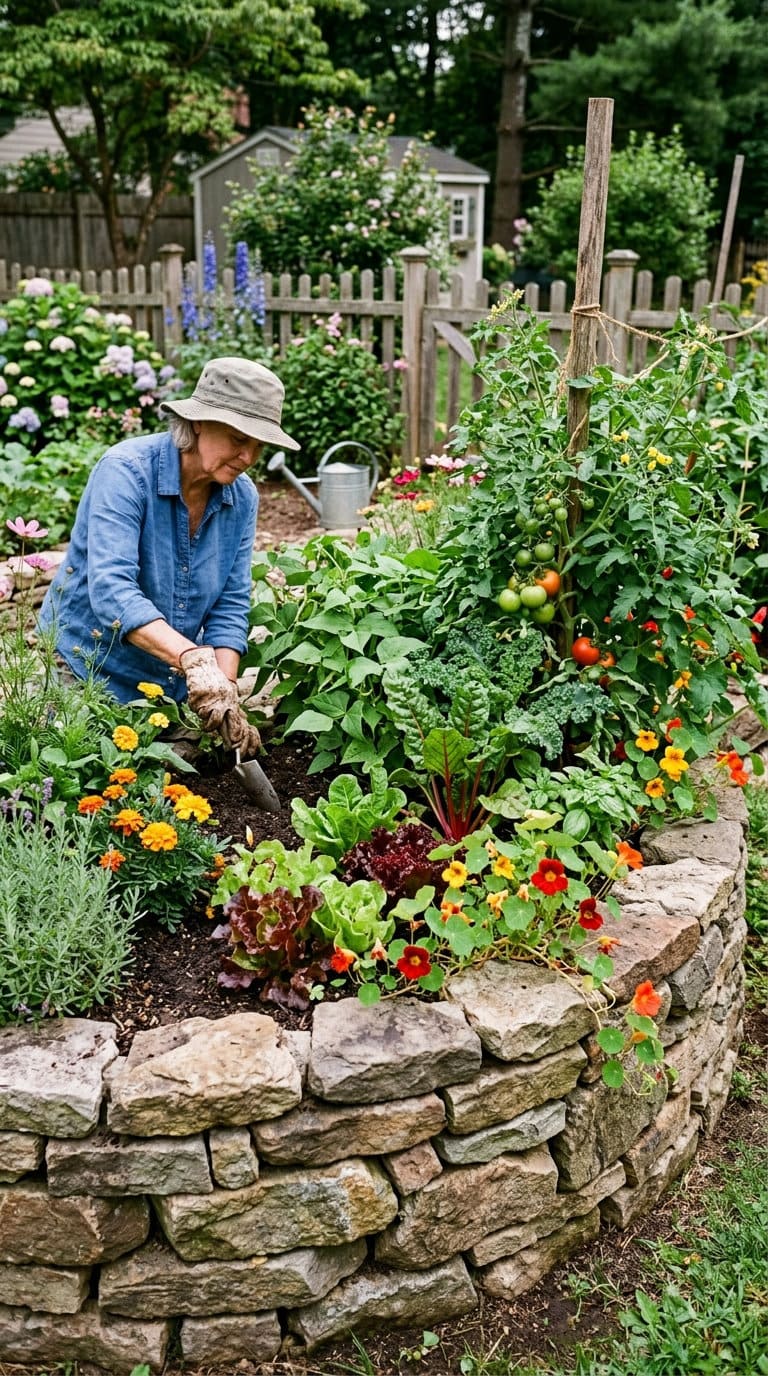
Fieldstone or landscape stone stacked into a low circular wall, similar to the brick option but with irregular stone shapes.
Cost tier: bigger investment if you’re buying stone by the pallet, DIY-cheap if you’re clearing stone off your own property (a real option in a lot of New England and upper Midwest yards). Like the retaining-wall clearance note above, a taller stone wall needs a wider, more stable base than a low one.
9. Colorful Block Garden Bed
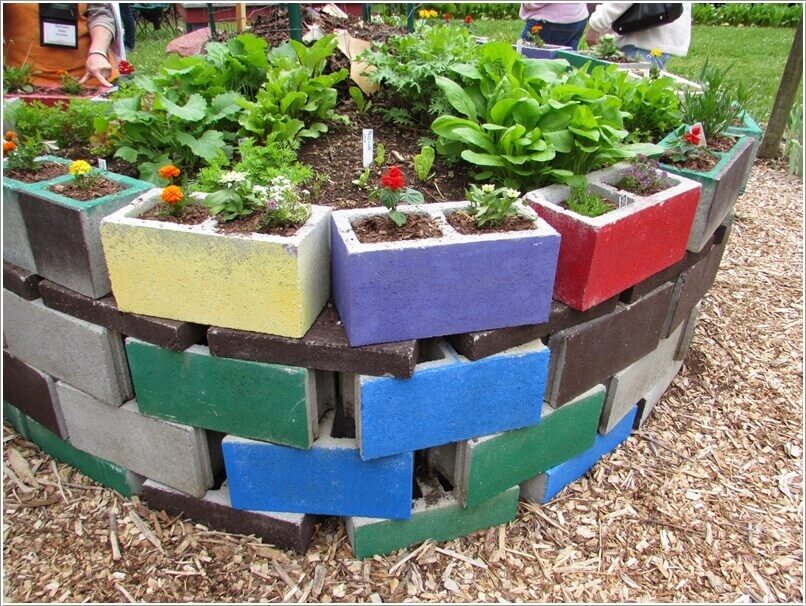
Painted concrete or cinder blocks arranged in a circle, sometimes stacked two courses high for a taller bed. Cost tier: DIY-cheap, concrete blocks are cheap and widely available, and paint is optional.
One real caution: use exterior masonry paint, not leftover interior paint, since it needs to handle direct sun and moisture without flaking into the soil.
10. Willow Raised Bed
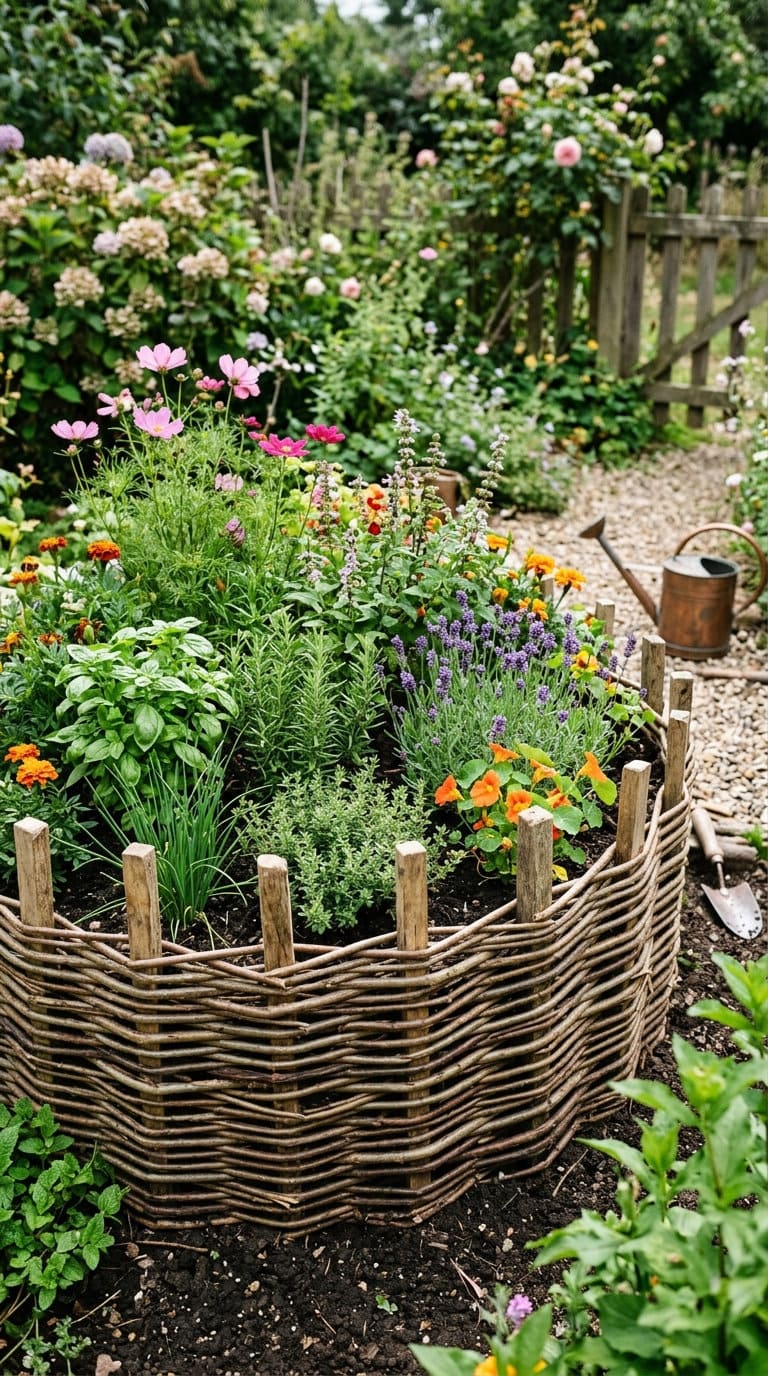
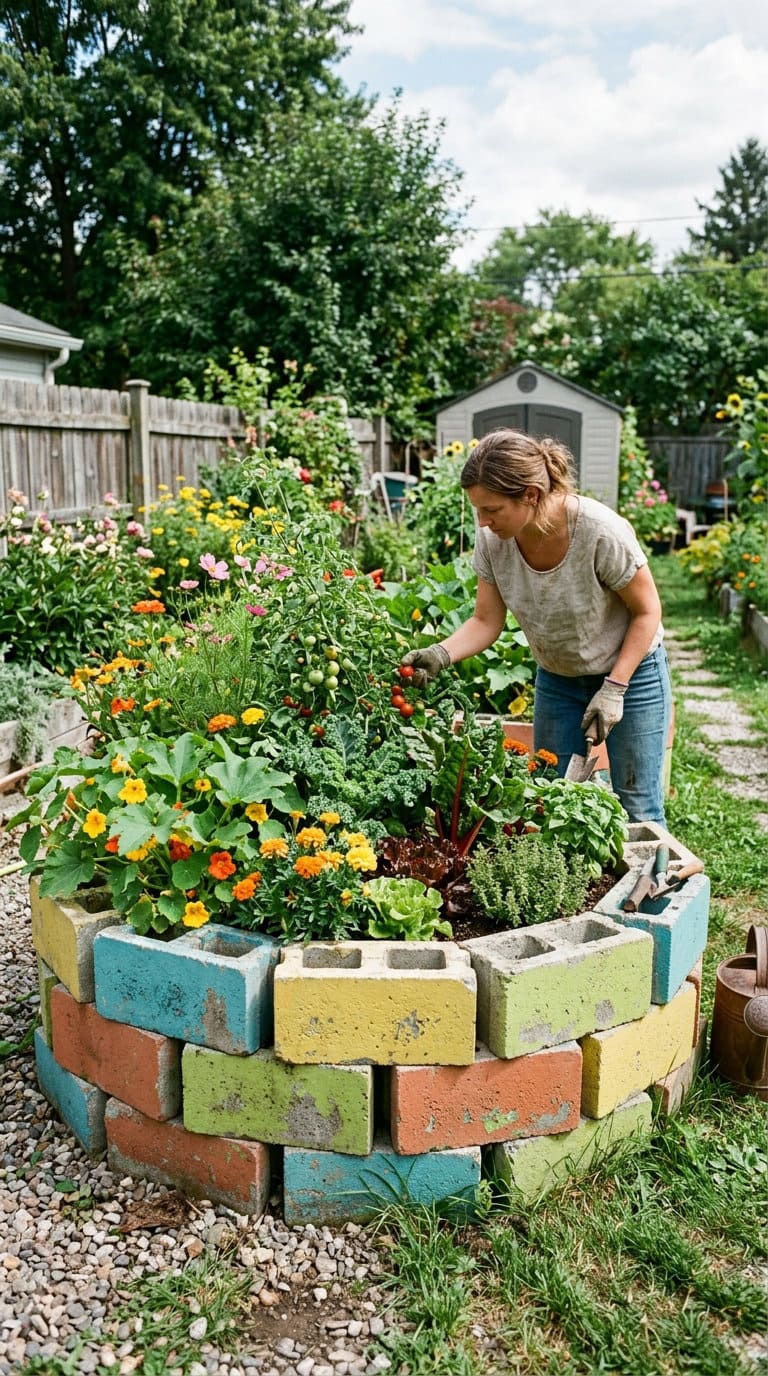
A woven willow (wattle) wall, built by weaving flexible willow branches between upright stakes. Cost tier: DIY-cheap if you’re harvesting your own willow, otherwise pre-cut willow withies for a small bed are a modest purchase, not a major one.
It’s genuinely one of the more artisanal builds here and a good weekend project if you want something that doesn’t look store-bought, but plan on rebuilding the wall every 3 to 5 years as the willow breaks down.
11. Garden bed from steel pipe
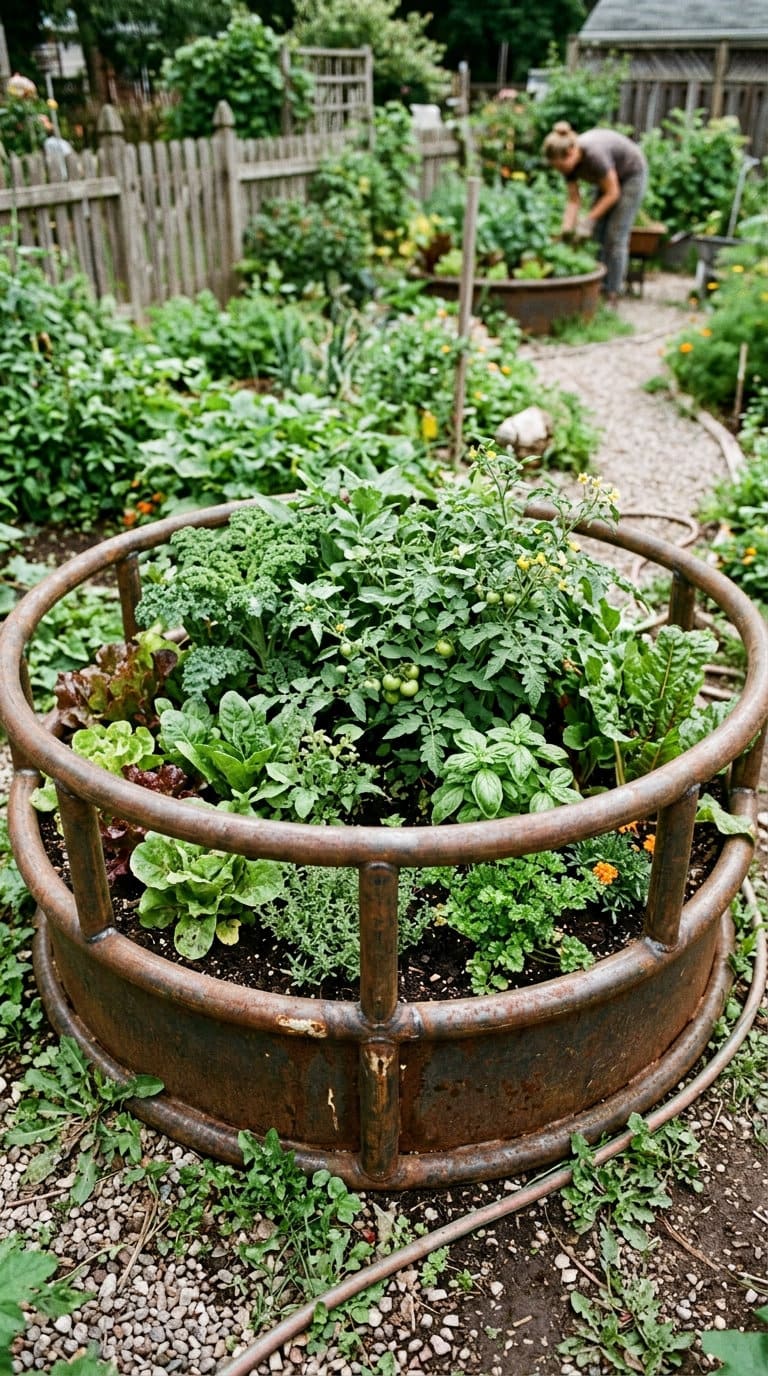
Sections of steel pipe (often reclaimed) bent or welded into a circular frame. Cost tier: bigger investment unless you have welding access and reclaimed pipe on hand, in which case it drops to DIY-cheap. This is one of the more durable options on the list if the pipe is properly rust-treated first.
12. Tired garden bed
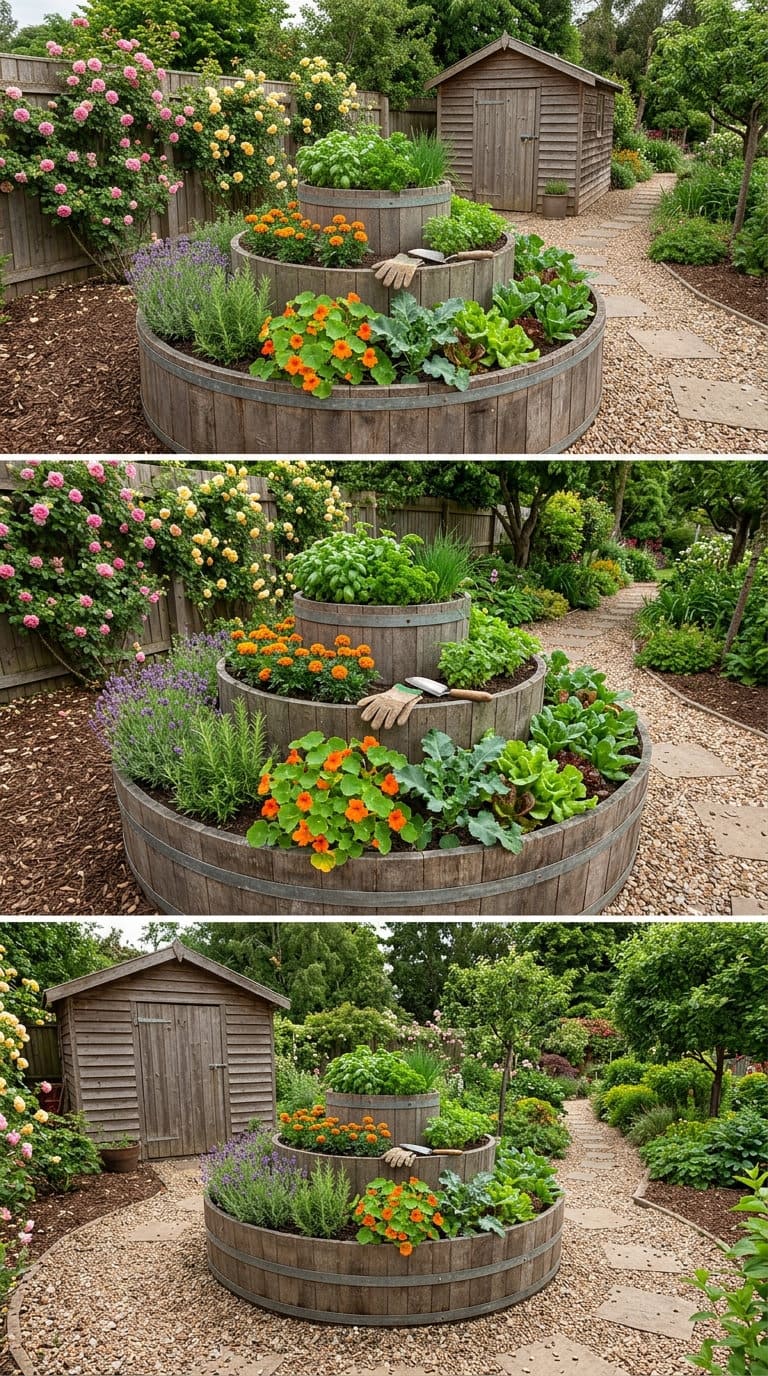
A round bed built in stacked, narrowing tiers, like a small wedding cake, giving you more planting surface per square foot of footprint and easier access to lower tiers without bending as far.
Cost tier: needs tools and a modest budget, tiering roughly doubles the material and joinery work compared to a single-ring bed. This is a genuinely good option for anyone with mobility limitations, since the top tier can sit at standing-reach height.
13. Steel Raised Bed
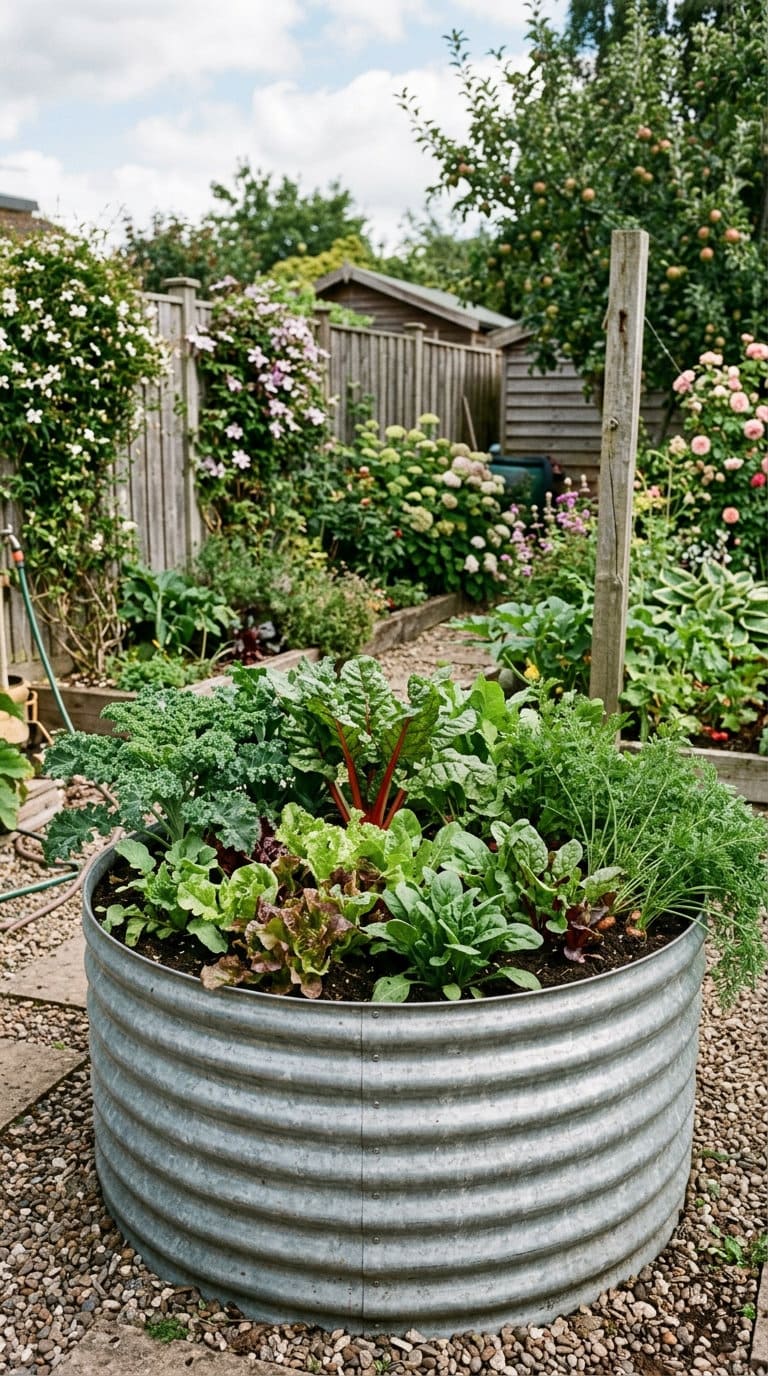
A taller, single-ring galvanized steel bed, deeper than the metal planter in #5, sized for root vegetables or deep-rooted perennials. Cost tier: bigger investment for a tall custom ring.
Same rule as #5 and the materials section above applies here even more directly, since a taller steel bed holds more soil weight against the walls, buy garden-rated steel, not scrap roofing.
14. Keyhole garden
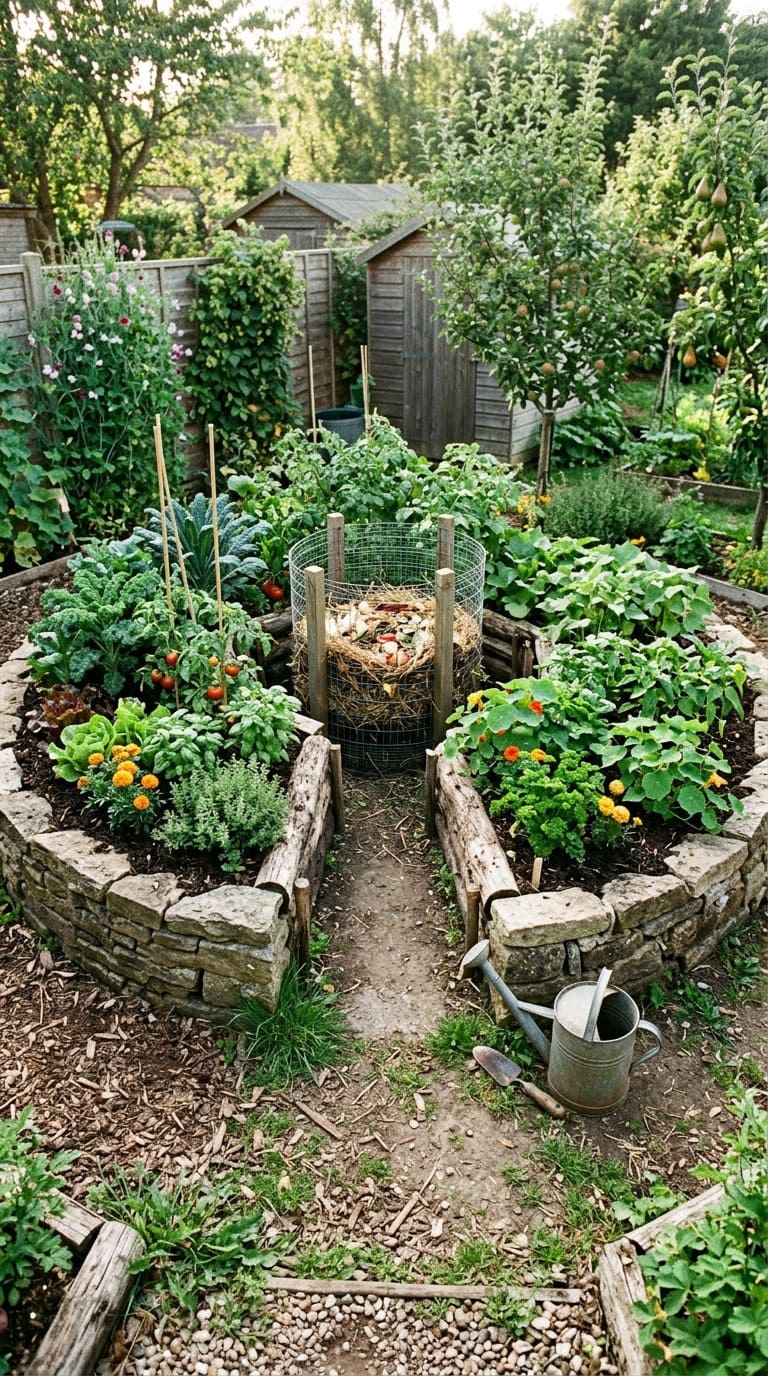
The classic permaculture design: a circular bed with a wedge cut out leading to a central compost basket, so kitchen scraps feed the whole bed as they break down.
Cost tier: needs tools and a modest budget for the frame plus a wire compost cage. This is the design most exposed to the slope-drainage problem from the materials section above, if your site isn’t close to level, either terrace it first or skip the keyhole cutout and build a simple closed ring instead.
15. Pipe Garden Bed
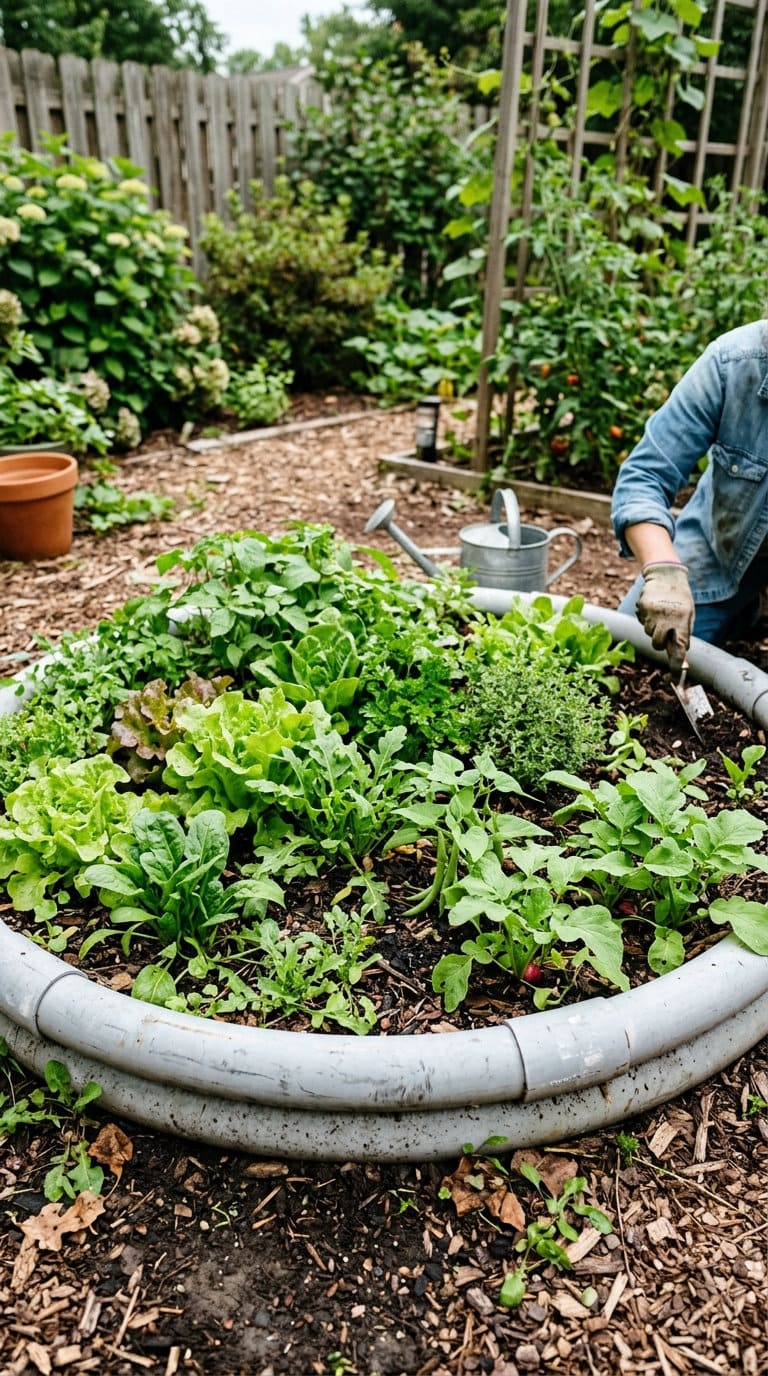
Similar to #11 but using PVC or lighter-gauge pipe instead of steel, a much cheaper and lighter option, though less durable and not rated for heavy soil loads in a tall bed. Cost tier: DIY-cheap. Keep these low, under about a foot tall, PVC isn’t structural enough for a deep bed.
16. Circular Garden Bed
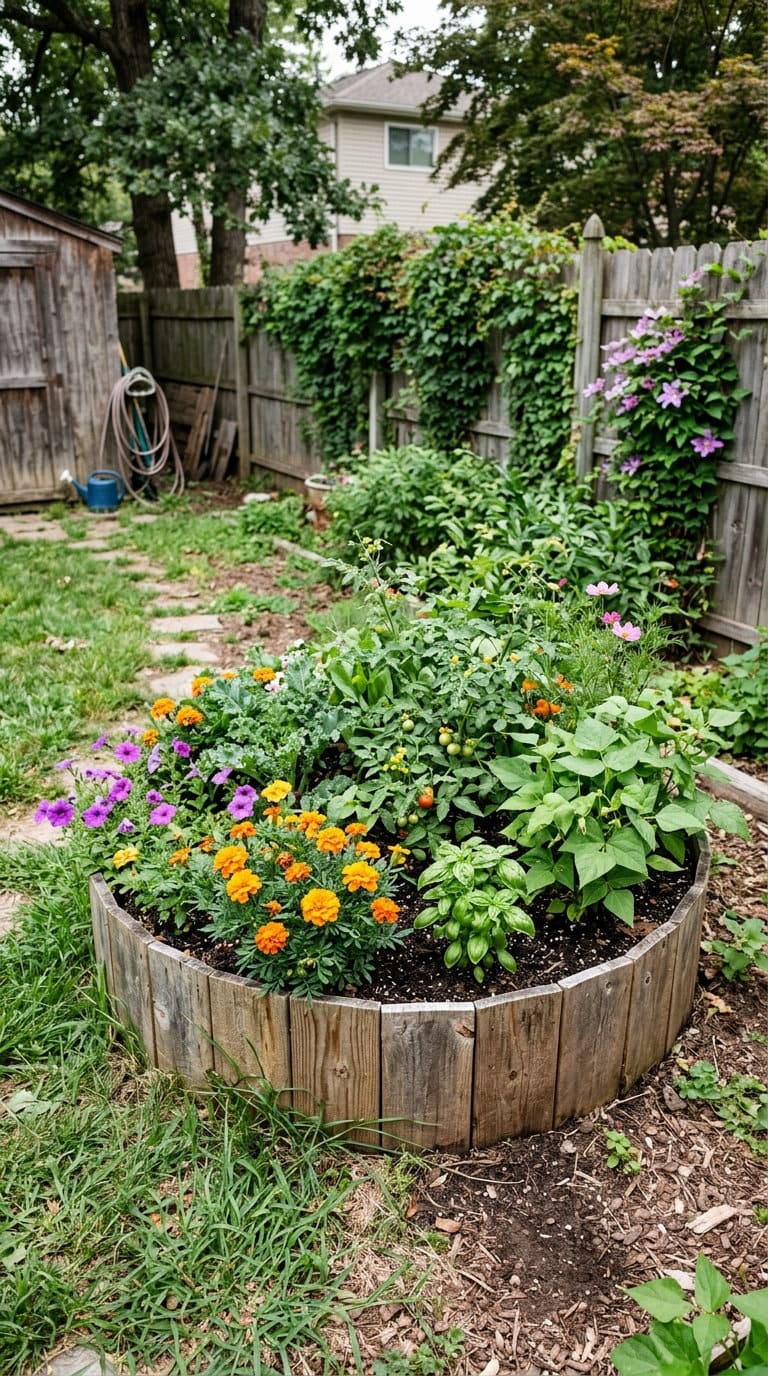
A general catch-all for a simple single-ring wood or composite bed, the most straightforward build on this list if you just want the round shape without a specific material story. Cost tier: needs tools and a modest budget for a basic composite or pine kit.
17. Plants as Garden Bed Edging
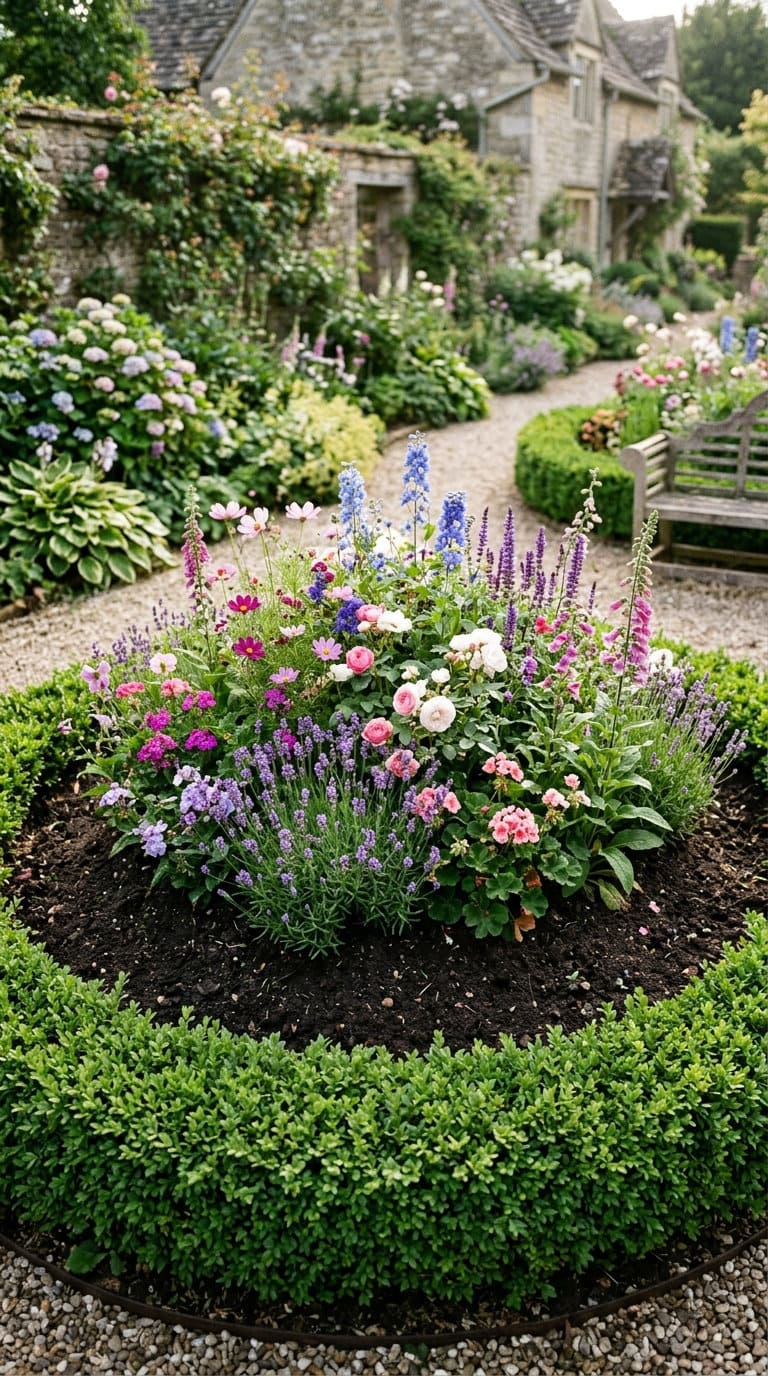
Instead of a hard-walled frame, a mounded round bed edged with a dense, low-growing border plant like boxwood, dwarf mondo grass, or creeping thyme. Cost tier: DIY-cheap on materials (no wall to build) but the plant border itself takes a season or two to fill in and needs trimming to hold the circular shape.
18. Stone Edging around Mailbox
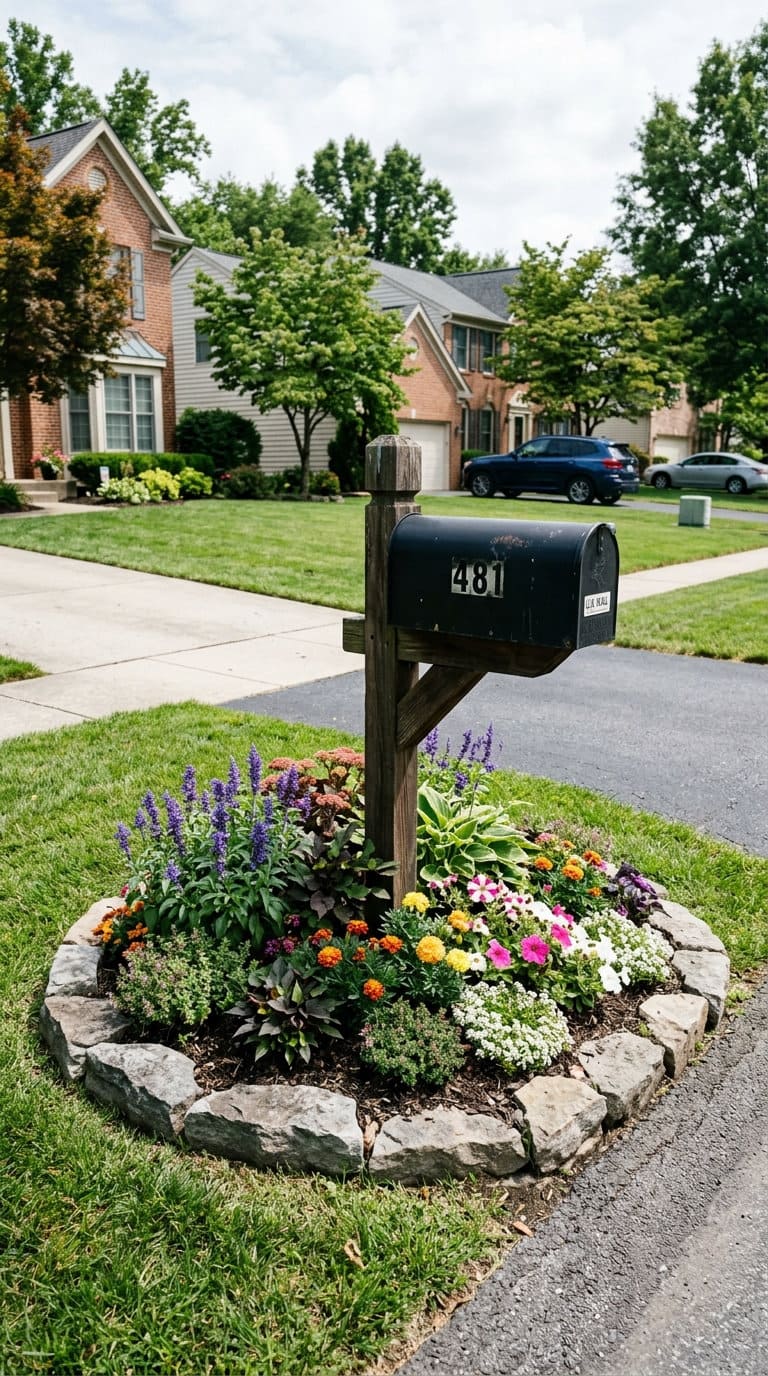
A small round bed wrapping the base of a mailbox post, edged in stone or brick, usually planted with low perennials or seasonal color rather than vegetables.
Cost tier: DIY-cheap, this is the smallest build on the list, often just enough edging stone to fill a wheelbarrow. It’s a genuinely easy weekend project if you want to try the round-bed shape somewhere low-stakes before committing to a bigger build.
Planting and maintenance tips
Soil. Round beds lose moisture from the full circumference, not just two sides like a rectangular bed, so they dry out a bit faster. A slightly richer, more moisture-retentive mix (more compost, less straight topsoil) helps offset that.
Plant selection. Wedge-planted round beds work well for anything you’d rotate seasonally, lettuce, herbs, root vegetables. Taller crops like tomatoes or pole beans do better toward the center so they don’t shade the rest of the bed.
Irrigation. A single center-mounted sprinkler head or a soaker hose coiled in a spiral covers a round bed more evenly than a straight drip line does. Worth the extra fittings if you’re building a bed over 5 feet across.
Seasonal care. Wood and willow walls need a yearly check for rot at the soil line, that’s where moisture sits longest. Metal beds need almost none, just a rust check on any exposed cut edges.
FAQs about round garden bed ideas
Why choose a round garden bed over a rectangular one?
Mostly access and aesthetics. You can reach the center of a round bed from any angle without stepping into it, which matters for wedge-planted layouts, and the shape reads as a focal point in a yard rather than a utilitarian box.
What materials are best for constructing a round garden bed?
Cedar or redwood for a natural build that lasts 15 to 20 years, or galvanized/corrugated steel rated for garden use if you want 30-plus years of durability, per Kevin Espiritu’s materials guide at Epic Gardening. Avoid painted metal roofing panels, Ask Extension flags a real leaching risk as the paint ages.
Can round garden beds fit in small spaces?
Yes, several ideas on this list (the mailbox edging, the wheel herb garden, a small pipe-edged bed) work in a 2 to 3 foot diameter footprint.
Is a sloped yard a problem for a round garden bed?
Yes, more than for a square bed. Water doesn’t drain evenly around a curved wall on a slope, and it can pool in the center, especially with a keyhole design’s compost basket, according to a real builder’s account on permies.com. Terrace the site first, or pick a different bed shape for that spot.
How close can a round bed sit to a retaining wall?
Skagit County’s WSU Master Gardener program recommends roughly 4 feet of clearance for every 2 feet of bed height, so the added soil weight doesn’t push against the wall.
What are some good planting ideas for a round garden bed?
Wedge-planted vegetables, a wheel-style herb garden, or a mounded flower bed edged in low border plants all work well with the shape. Match the idea to what you actually want to grow, not just what looks good.
How do I prepare the soil for a round garden bed?
A richer mix than you’d use in a straight bed, since round beds dry out slightly faster across their full circumference. More compost, less straight topsoil.
Can I build a round garden bed on a budget?
Yes. The no-dig veggie garden, log bed, wheel herb garden, and mailbox edging are all realistically low-cost builds if you’re resourceful about sourcing materials secondhand.
Products We Recommend
This post contains affiliate links. We may earn a commission on qualifying purchases at no extra cost to you.
Vego Garden 17-in-1 Modular Metal Raised Garden Bed
Garden-rated galvanized steel panels that can be configured into a round or oval layout, 17-inch height, avoids the painted-roofing-panel safety issue covered above.
Shop Now

Willow Wattle Fence Panels
Pre-woven willow wattle panels, useful for building or repairing a willow-style bed wall (idea #10) without hand-weaving from raw withies.
Shop NowNever miss an update — choose FarmFoodFamily as your preferred source on Google.
How it works: Tap the button below to open Google's settings page, then check the box next to FarmFoodFamily.
Tap the checkbox to turn it blue — that's how you know it's set.