10 Truly Scary Halloween Decorations That Use Sound, Light and Surprise
The scariest Halloween displays rely on timing, sound and shadow more than rubber gore, and you can build all three at home as long as you keep it safe.

Never miss an update — choose FarmFoodFamily as your preferred source on Google.
How it works: Tap the button below to open Google's settings page, then check the box next to FarmFoodFamily.
Tap the checkbox to turn it blue — that's how you know it's set.
The scariest Halloween displays rely on timing, sound and shadow more than rubber gore, and you can build all three at home as long as you keep it safe.
Products We Recommend
This post contains affiliate links. We may earn a commission on qualifying purchases at no extra cost to you.

Kunodi Outdoor Waterproof Bluetooth Speaker, Portable Mini
A small waterproof speaker you can hide in a shrub for the whisper loop. Keep the volume low and check its water rating before leaving it out overnight.
Shop Now
JOSU 24 PCS Flameless Tea Lights with Remote and Timer
Battery flicker candles that give the glow without an open flame. They are small and light, so tuck them into jars so wind can't tip them.
Shop Now
DEWENWILS Motion Sensor Outlet, Indoor and Outdoor, 50 FT Range
A plug-in motion sensor that can switch a prop or a light when someone walks up. It has a lower average rating, so test it at your door before the night.
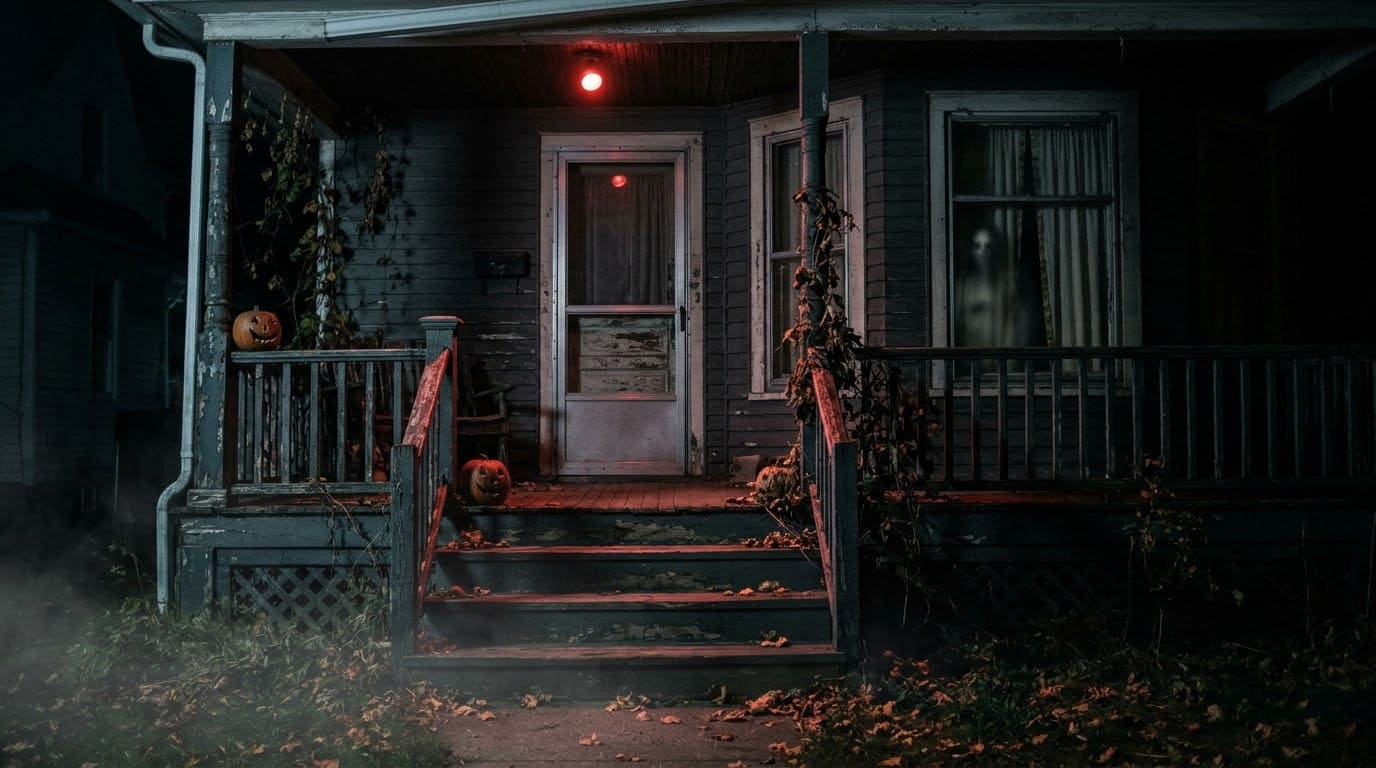
Shop NowA pile of plastic skeletons rarely scares anyone. A quiet porch, a creak behind you and a shape in a window will. That’s the difference between decorating and haunting.
Scary comes from what people expect to happen and what happens instead. So this guide is built around the scare itself: sound, light, motion and surprise. We keep the props simple and the safety rules clear.
If you want ghosts, graveyards or party decor, we have those covered in our Halloween ghost decorations and tombstone ideas.
Quick Answer
Build the scare in layers. Start with sound, because it does most of the work.
Add low, dim light so people see just enough. Finish with one moment of surprise, timed for when a visitor stops walking.
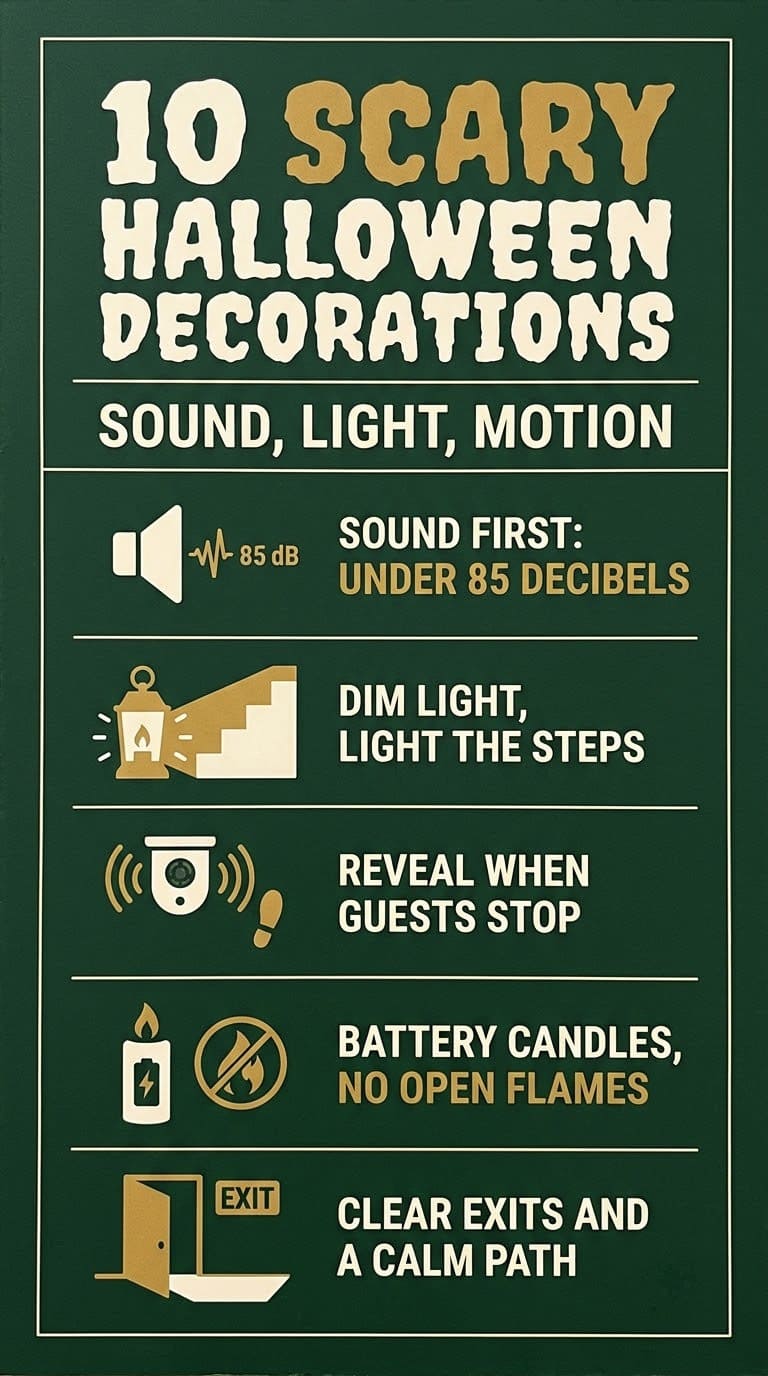
Keep sound under 85 decibels, use brief flashes instead of strobes, and avoid open flames. Leave a clear exit and a calm path for anyone who wants to skip the scary part.
But don’t try everything at once. One strong scare beats five weak ones, and a small yard can feel frightening with just a hidden speaker and one good shadow.


Plan the walk like a short story, then test it at night. Start small, with one hidden speaker and one dim light. You can add the rest next weekend, once you see how the first scare lands with your visitors.
How Do You Build a Scare That Works?
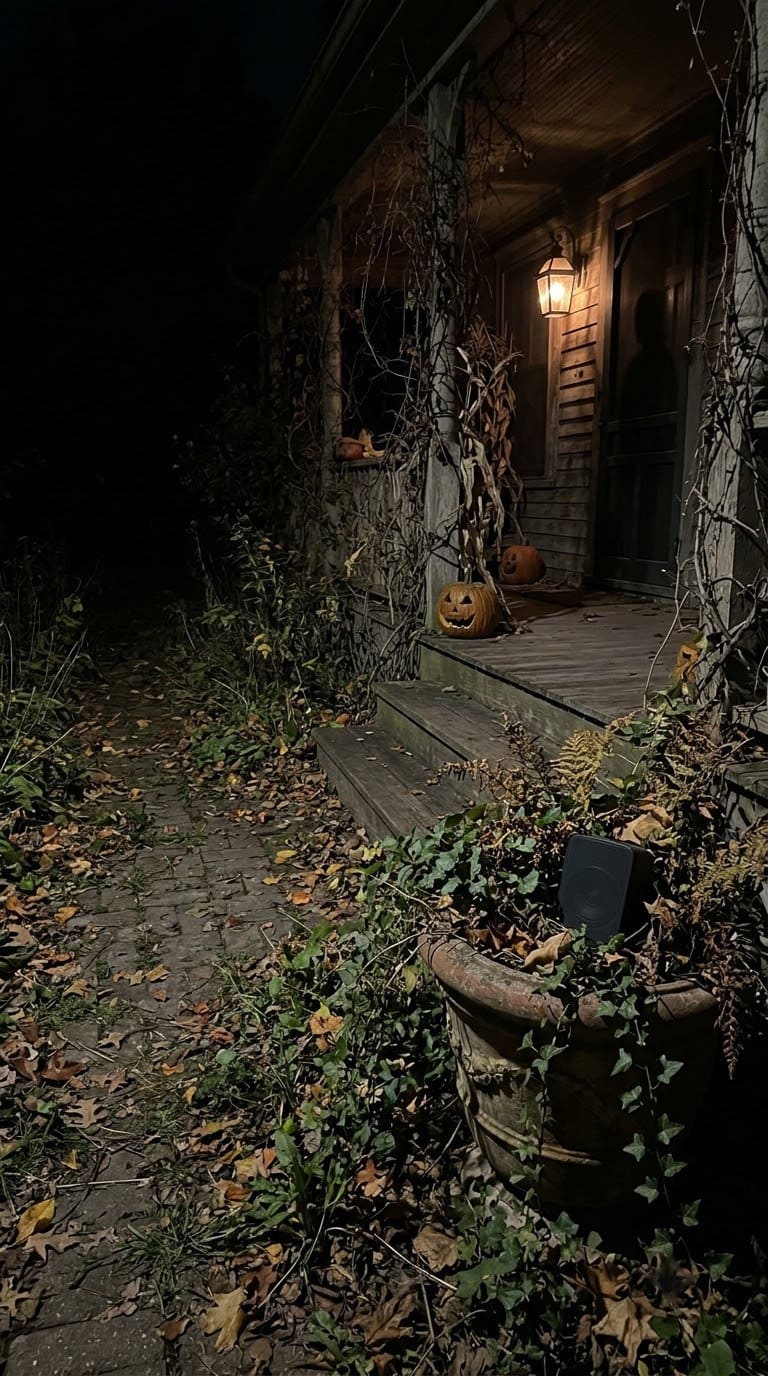
Good haunts follow a rhythm. Alexander Roberts, a product manager at the design-software company Homestyler, describes it in his haunted house guide. He suggests building suspense for 3 to 4 minutes, then a 10 to 20 second scare, then a calm space to decompress.
That fits a front walk perfectly. The path to your door is the build, and the scare is at the porch.
The calm is the steps back to the street.
Use this simple map.
| Stage | What happens | What you need |
|---|---|---|
| Build | Dim light, low sound, a strange smell of leaves | Hidden speaker, one dim bulb |
| Hold | A pause, silence, a faint shape | Silhouette, window |
| Scare | A short sudden reveal | Motion trigger, prop |
| Calm | A bright, safe exit | Warm porch light, candy bowl |
Our take: give every scare a calm moment after it. People enjoy fear more when they get to laugh afterward.
Sound Ideas: The Heart of the Scare
Sound is the cheapest and the strongest tool. We’d spend a third of any scare budget here.
1. A Whisper Loop From a Hidden Speaker
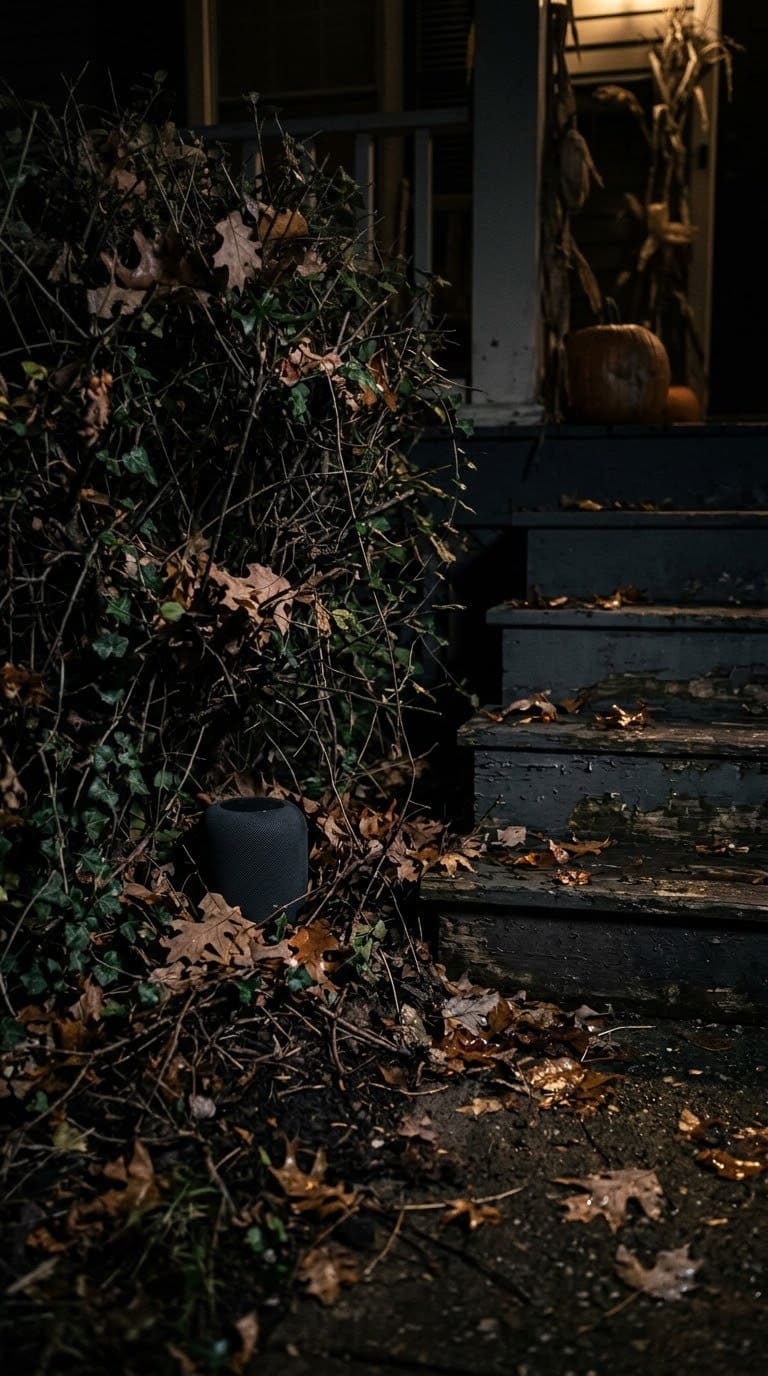
A low whisper loop makes people feel watched. Hide a small speaker in a shrub or under a bench. Loop a quiet track of whispers, creaks and a distant drone.
A small waterproof speaker you can hide in a shrub for the whisper loop. Keep the volume low and check its water rating before leaving it out overnight.
Shop NowThis post contains affiliate links. We may earn a commission on qualifying purchases at no extra cost to you.
Place the speaker off to one side, not in front. When people can’t locate the source, the sound feels like it’s coming from everywhere. That mystery is what makes it creepy.
Keep the volume low. Stay under 85 decibels, and drop it at night if neighbors are close. Our take: a soft sound that people lean toward is scarier than a loud one they ignore.
- Time: about 20 minutes.
- Cost: low, using a phone and a speaker you own.
- Where: shrubs, planters, porch swing.
2. A Silence Before the Sound
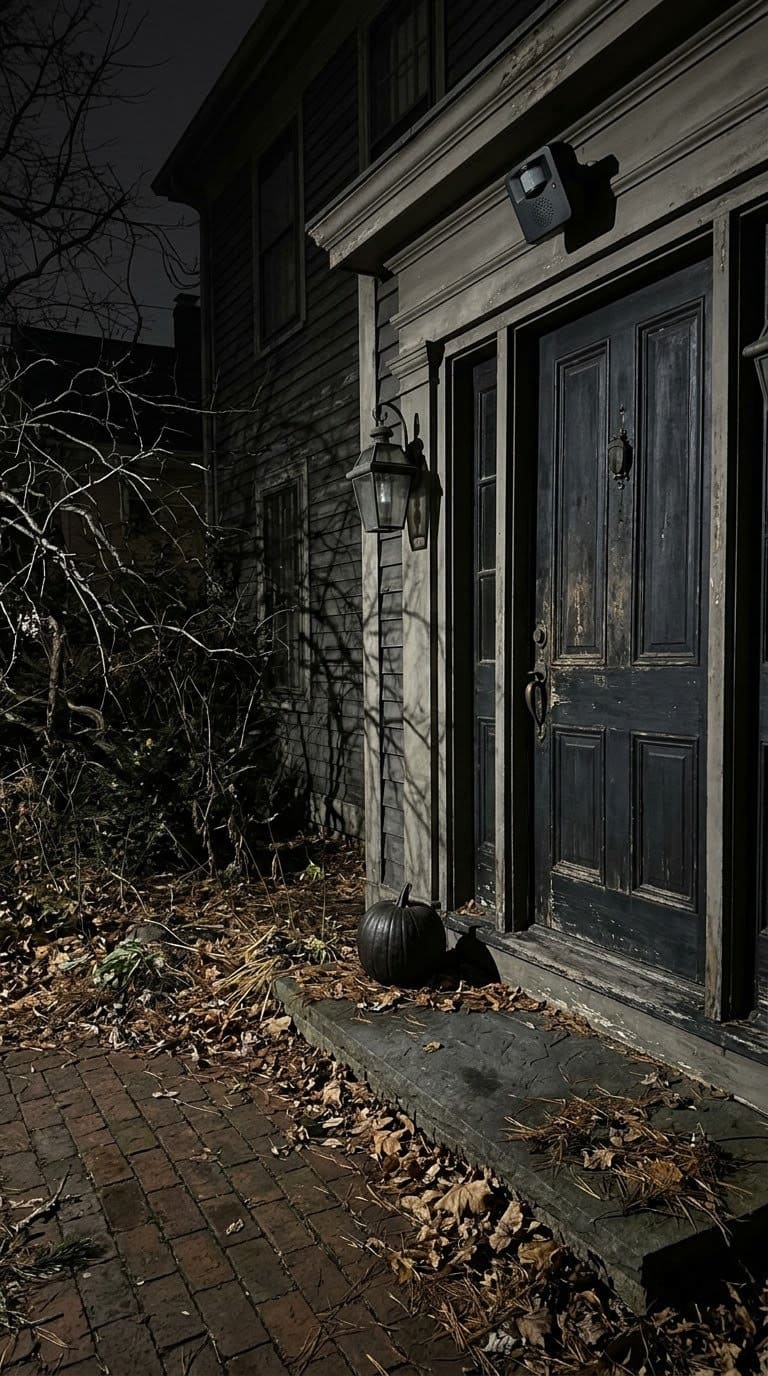
Silence is a scare tool. Have the whispers stop right before the main jolt. In that quiet, people tense up.
Use a motion sensor to cut the loop and play a single sound: a knock, a growl or a scream.
Make the silence short. A moment of quiet right before a scare is plenty. Our take: the stop is scarier than the start.
- Time: 30 minutes.
- Cost: low to medium.
- Where: porch step or doorway.
3. A Heartbeat or Footsteps Under the Porch
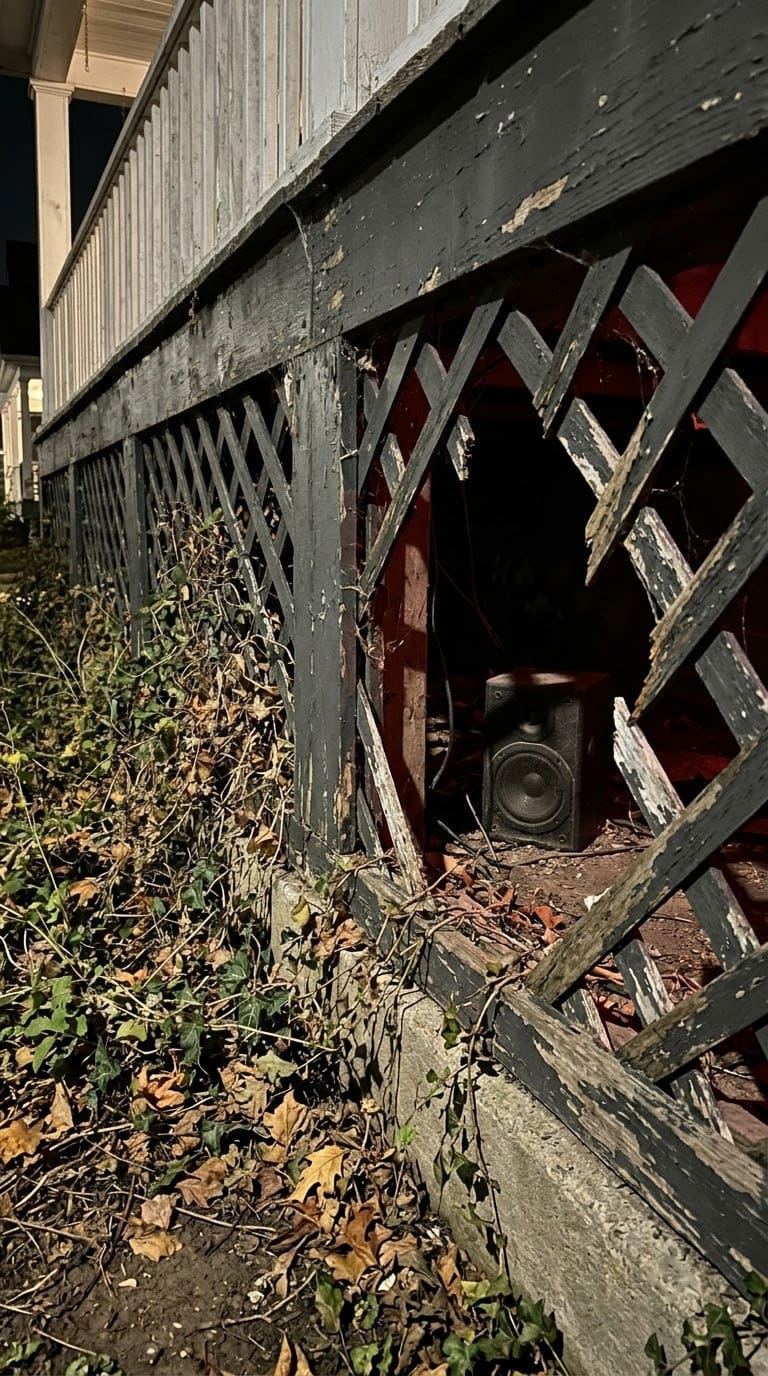
A slow heartbeat under the floorboards is a great unsettling sound. It tells visitors something is underneath. Play it very low, and speed it up when someone approaches.
Use the same hidden speaker trick. Tuck it inside the lattice or inside a hollow bench.
Don’t overdo it. A single steady beat does more than a chaotic mix of noises. Our take: keep one sound per scene.

- Time: 20 minutes.
- Cost: low.
- Where: porch skirting, hollow bench.
Light Ideas: Seeing Just Enough
Light controls what people notice. In a scary display, less is more.
4. Flicker Bulbs, Not Flames
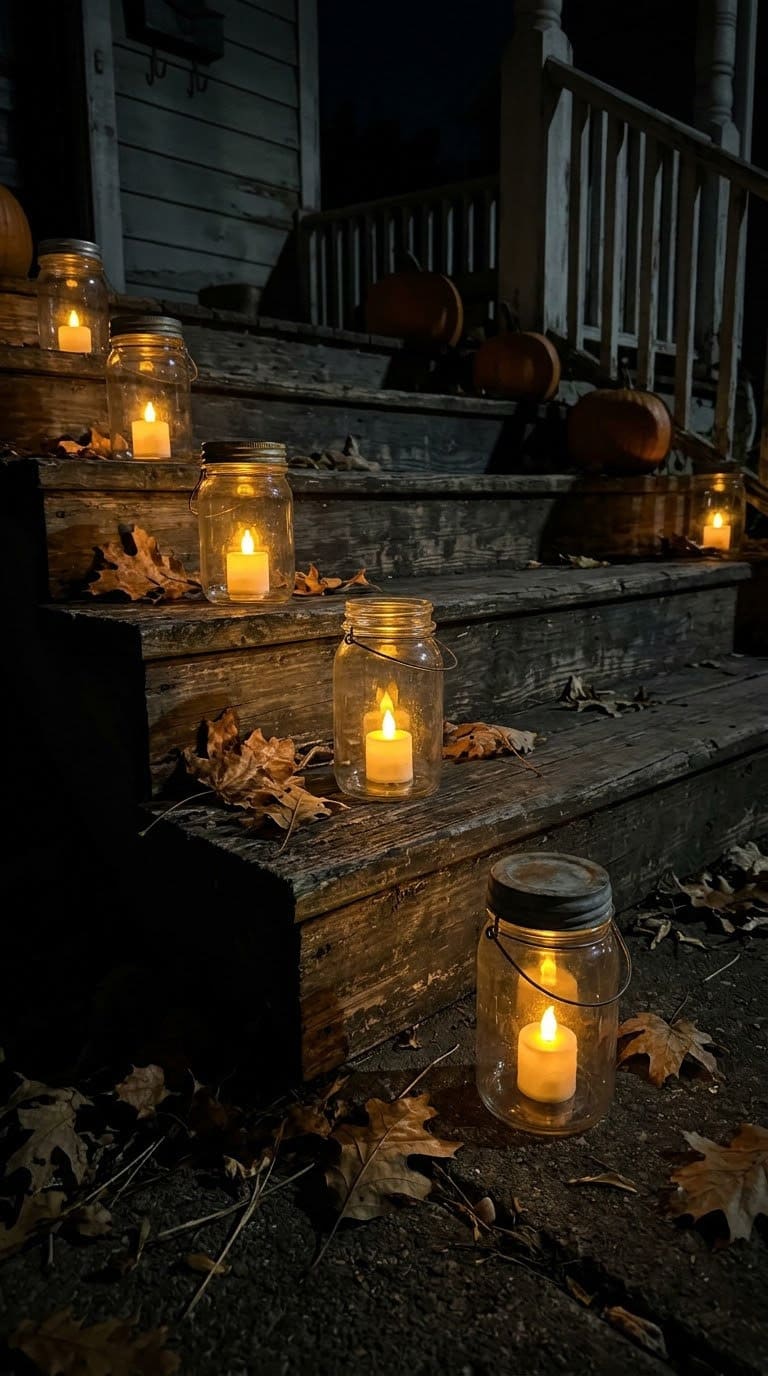
Flickering light feels alive. Use battery candles or flicker bulbs in lanterns and jars. Keep them low to the ground so shadows climb the walls.
Open flames are a risk beside costumes and dried decorations. The Holiday Park Volunteer Fire Department, passing on NFPA tips, says to use battery candles or glow sticks instead of a flame.
It also says dried flowers, cornstalks and crepe paper ignite easily, so keep them away from heat.
Our take: battery flicker looks nearly as good, and you never have to worry about a sleeve touching it.
- Time: 15 minutes.
- Cost: low.
- Where: steps, windowsills, hanging jars.
5. One Red Light, One Cold Light
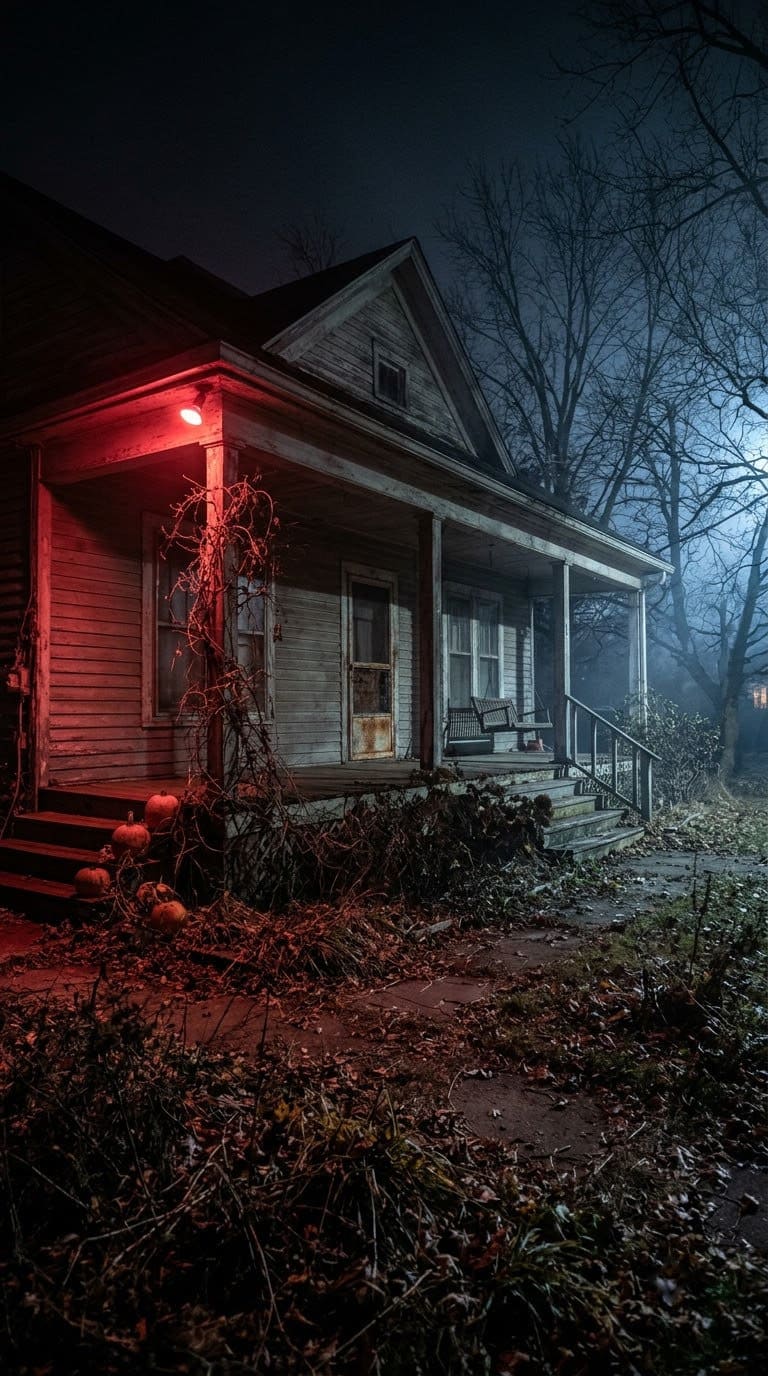
Two colors tell a story. Use a deep red on the spot you want to feel dangerous. Use a cooler white or blue where you want a ghostly feel.
Cooler tones around 4000 to 5000K feel moonlit or ghostly. Warm dim LEDs around 1800 to 2200K feel older and candlelit.
Keep ambient light low, roughly 10 to 30 lux, but light stairs and steps more brightly so no one trips.
Our take: never leave steps dark. A scared person who falls isn’t having fun. Light the steps and darken the rest.
- Time: 30 minutes.
- Cost: low to medium.
- Where: porch, garage, side yard.
6. A Shadow Figure Behind a Curtain
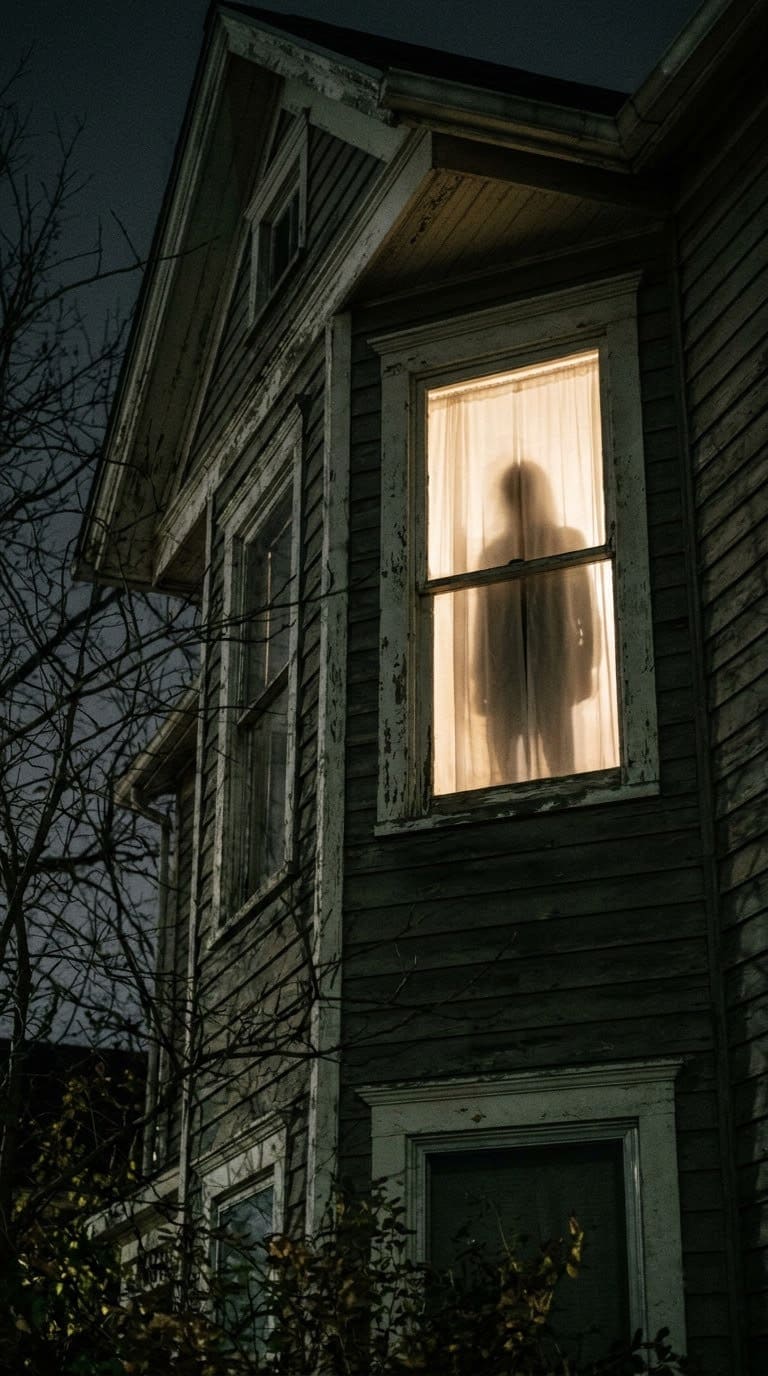
A silhouette in a window scares people more than a clear figure. Put a light behind a thin curtain, then place a cutout or mannequin between the light and the glass.
Move it with a hidden string or a slow fan so it seems to shift. Keep it high, like a second-floor window, so it feels out of reach.
A good order is a faint silhouette, a moment of stillness, then a reveal at an angle to the guest’s path. Our take: keep the face hidden. The mind fills in the rest.
- Time: 30 minutes.
- Cost: low.
- Where: upstairs or street-facing windows.
Motion Ideas: The Surprise
Motion is where the jolt happens. It’s also where timing matters most.
7. A Motion-Triggered Reveal
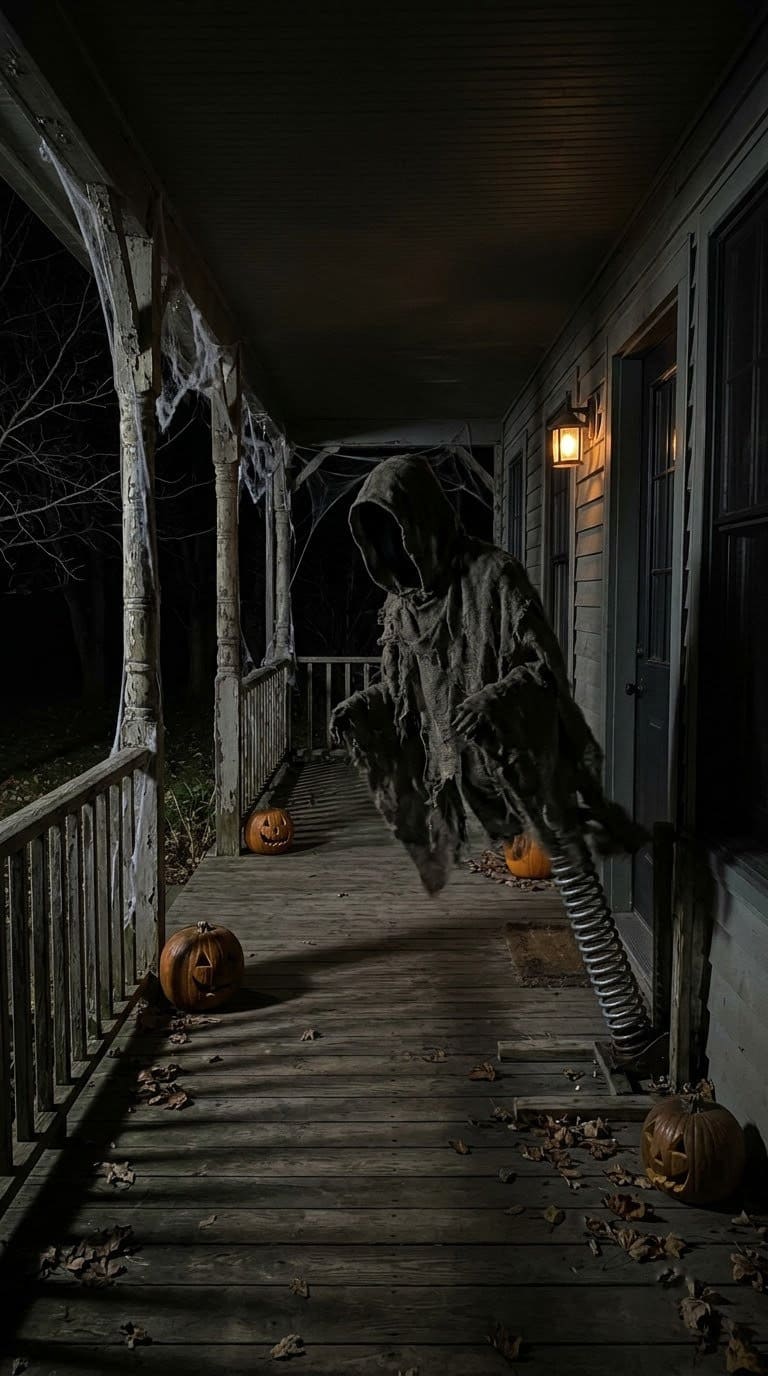
A prop that moves when someone arrives is a classic. A motion sensor can trigger a lunging figure, a dropping spider or a rising ghost.
Trigger reveals when guests stop, not while they’re moving. Tie the cue to a spot on the ground, such as a marker, rather than a fixed timer.
Put a doormat or a tile where visitors will pause, and place the trigger there.
Our take: test the trigger with three people. Surprises that fire at the wrong time look silly, not scary.
- Time: 1 hour.
- Cost: medium.
- Where: porch post, doorway, garage.
8. Something Moves on a Thread
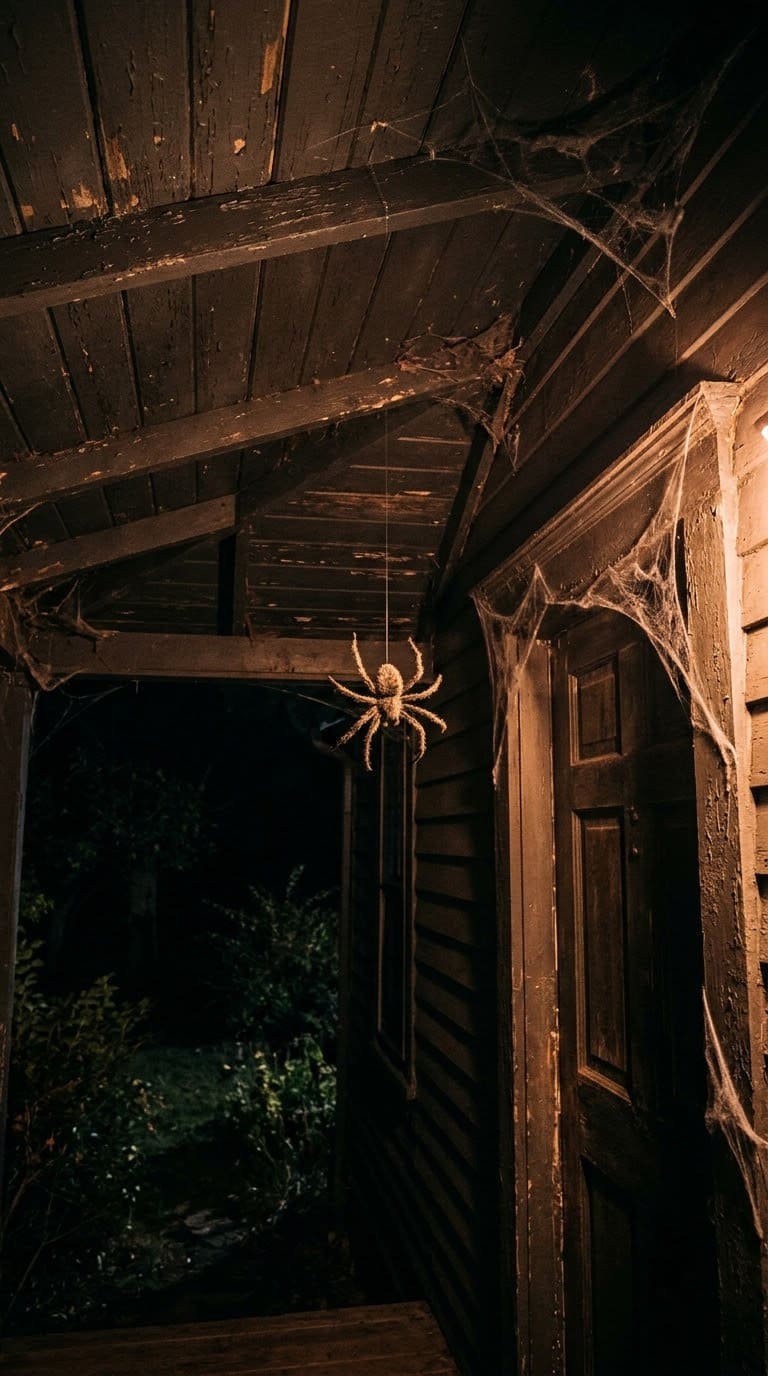
Not every scare needs a motor. A spider on a thin line, or a tree branch on a pulley, can drop or sway when you pull. Use clear line and tie it off safely.
Hide the line behind a post. Pull it when a visitor is looking elsewhere. A small drop makes a big gasp.
Keep it out of faces. Our take: a scare should startle, never hit. Tie it at head height or above, and move it in a gentle arc.
- Time: 30 minutes.
- Cost: low.
- Where: porch ceiling, doorway, tree.
Set Ideas: A Scene That Feels Lived In
A good scene sells the scare. This is where props pay off.
9. An Abandoned Porch
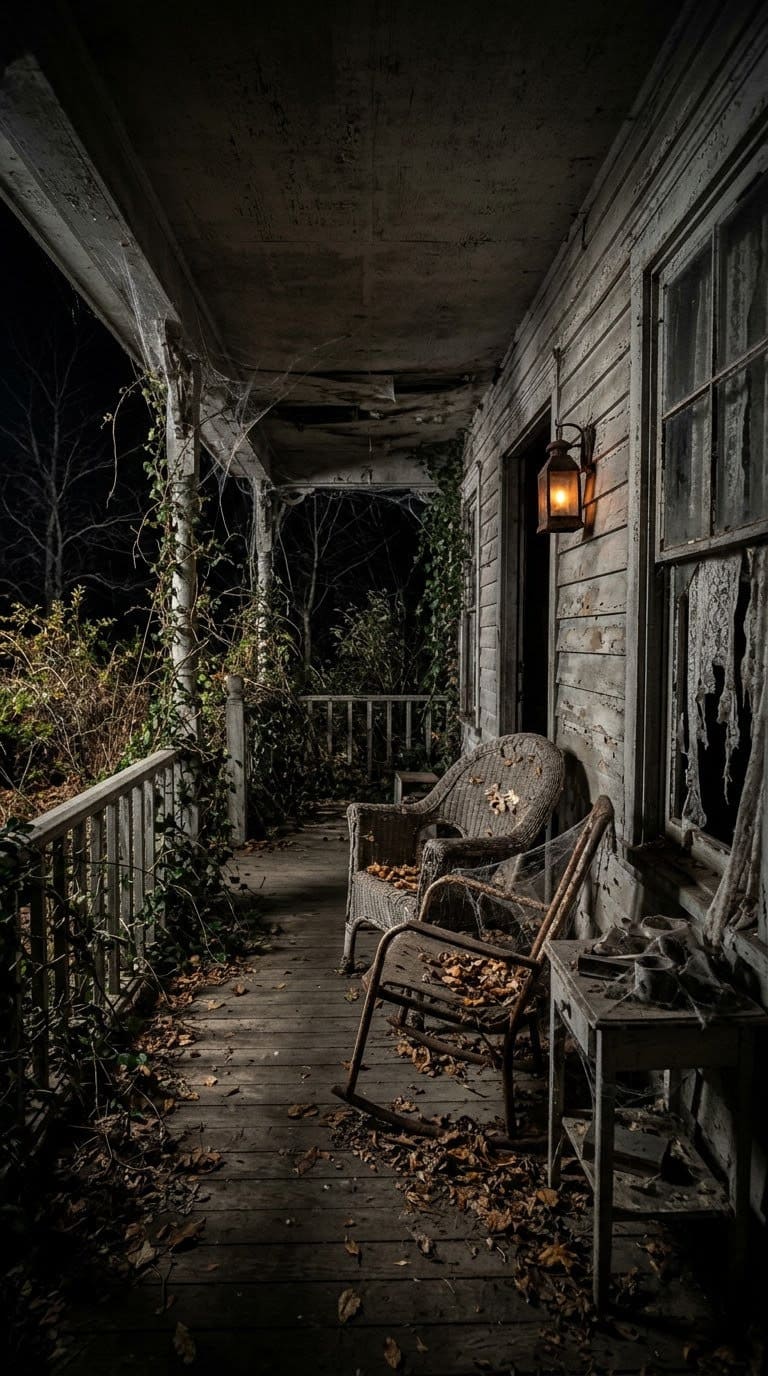
A porch that looks lived in and left suggests a story. Tilt a rocking chair and drape a torn curtain.
Let fake cobwebs cover a lamp and a mailbox.
Leave a small clue: a child’s shoe, a half-open door, a letter on the floor. People love to read the story.
Keep the clutter off the walk, and keep paths and exits clear.
Our take: skip dark, crowded scenes near stairs. Our Halloween porch decoration ideas have more set pieces.
- Time: 1 hour.
- Cost: low.
- Where: porch, entry.
10. Low Fog Across the Ground
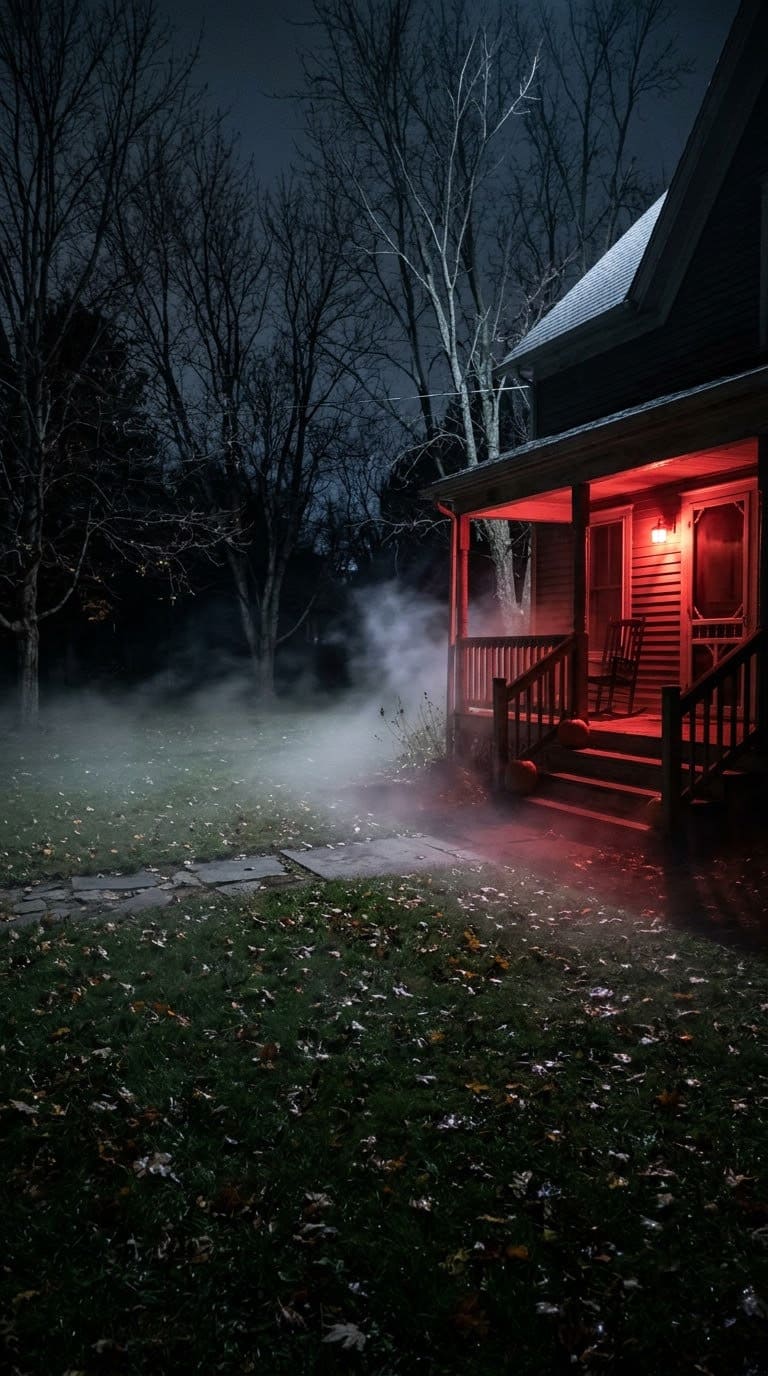
Fog makes a yard feel unreal. A thin layer at ankle height hides the ground and softens edges. Light it with red or green from below.
Use a water-based fog fluid and ventilate between uses. Keep machines outdoors or in a well-aired space. Never run fog near smoke alarms.
Our take: use fog sparingly. Too much hides steps and makes people stumble. A thin low layer is enough.
- Time: 30 minutes.
- Cost: medium.
- Where: yard, path, garden bed.
Which Scare Fits Your Home?
| Idea | Scare type | Cost | Best for |
|---|---|---|---|
| Whisper loop | Sound | Low | Any porch or yard |
| Silence then sound | Sound | Low | Front door |
| Heartbeat under porch | Sound | Low | Raised porch |
| Flicker bulbs | Light | Low | Steps and windows |
| Red and cold light | Light | Low to medium | Porch and garage |
| Shadow figure | Light and motion | Low | Upstairs window |
| Motion reveal | Motion | Medium | Doorway |
| Thread drop | Motion | Low | Ceiling |
| Abandoned porch | Set | Low | Entry |
| Low fog | Atmosphere | Medium | Lawn |
How Do You Keep a Scary Display Safe?
A scare only works if everyone is okay afterward. We’d run through these checks before dark.
- Keep decorations away from bulbs, heaters and open flames.
- Use battery candles or glow sticks, not open flames.
- Keep exits, stairs and walks clear of props.
- Check that smoke alarms work.
- Use outdoor-rated lights and cords, and plug them into a GFCI circuit.
- Keep cords out of puddles and traffic.
- Turn all effects off before you sleep or leave.
The Electrical Safety Foundation International says to use only lights and cords marked for outdoor use, fasten them without damaging the insulation, and avoid overloading outlets.
For flashing light, we’d skip strobes. Use brief timed flashes if you need them, and post a sign. Some people are sensitive to rapid flashing, so give a warning at the gate.
How Do You Make It Fair for Kids and Neighbors?
Not every visitor wants a big scare. A fair display gives a choice.
Post a small sign: “Scary stuff ahead.” Set a calm path or a side gate for young kids. Keep the scare sounds off earlier in the evening, when little ones come by.
Talk to your neighbors in advance. Tell them the hours and the volume. A scary yard that annoys the street won’t be welcome next year.
And skip themes that mock people or illnesses, and skip anything that looks like a harmed child. A made-up monster is scary enough.
What Does a Budget Scary Setup Cost?
You can build a strong scare cheaply. Most of the effect comes from things you already own.
| Item | What it does | Where to find it |
|---|---|---|
| Phone and Bluetooth speaker | Sound loop | Home |
| Battery candles | Flicker light | Dollar store |
| Red bulb | Danger glow | Hardware store |
| White sheet and lamp | Shadow figure | Home |
| Fishing line | Drop and sway | Craft store |
| Motion sensor | Trigger | Online or hardware store |
Our dollar store Halloween decorations guide shows cheap finds.
Common Mistakes to Avoid
- Too loud. Keep sound below 85 decibels.
- Lighting the whole yard. Dark areas are the scary part. Just light the steps.
- Scares that fire on a timer. Trigger them when people stop.
- Open candles near costumes. Use battery lights.
- Blocking exits. Keep paths and doors clear.
- Using strobes with no warning. Skip them or post a sign.
Frequently Asked Questions
What is the scariest Halloween decoration idea?
A hidden sound plus a moment of silence plus a sudden reveal. The sound builds tension and the reveal releases it.
How loud should Halloween sound effects be?
Keep them under 85 decibels, and lower at night if neighbors are close.
Are fog machines safe for a Halloween display?
Use a water-based fog fluid, ventilate between uses, and keep fog away from smoke alarms and steps.
Should I use strobe lights?
We’d skip them. Rapid flashing can bother some people, so use brief timed flashes and post a warning.
How do I make a scare work for kids?
Use softer light, fewer jump scares, and a calm path or side gate.
Your Weekend Plan
- Friday: pick one sound loop and one light.
- Saturday: build the reveal and test the trigger at night.
- Sunday: add the safety sign and walk the path.
Start with a hidden speaker and a dim light. It’s the cheapest and most effective scare.
Never miss an update — choose FarmFoodFamily as your preferred source on Google.
How it works: Tap the button below to open Google's settings page, then check the box next to FarmFoodFamily.
Tap the checkbox to turn it blue — that's how you know it's set.