30+ Stunning Deck Railing Ideas That Will Transform Your Outdoor Space
A deck railing has to do two things that pull in different directions: look good, and actually keep people from falling off the deck. Twenty-eight ideas below, then the code and safety questions people actually search for, corrected against the real IRC and IBC requirements rather than a rough guess at them. Related: 30 Porch…

Never miss an update — choose FarmFoodFamily as your preferred source on Google.
How it works: Tap the button below to open Google’s settings page, then check the box next to FarmFoodFamily.
Tap the checkbox to turn it blue — that’s how you know it’s set.
A deck railing has to do two things that pull in different directions: look good, and actually keep people from falling off the deck.
Twenty-eight ideas below, then the code and safety questions people actually search for, corrected against the real IRC and IBC requirements rather than a rough guess at them.
Related: 30 Porch railing ideas
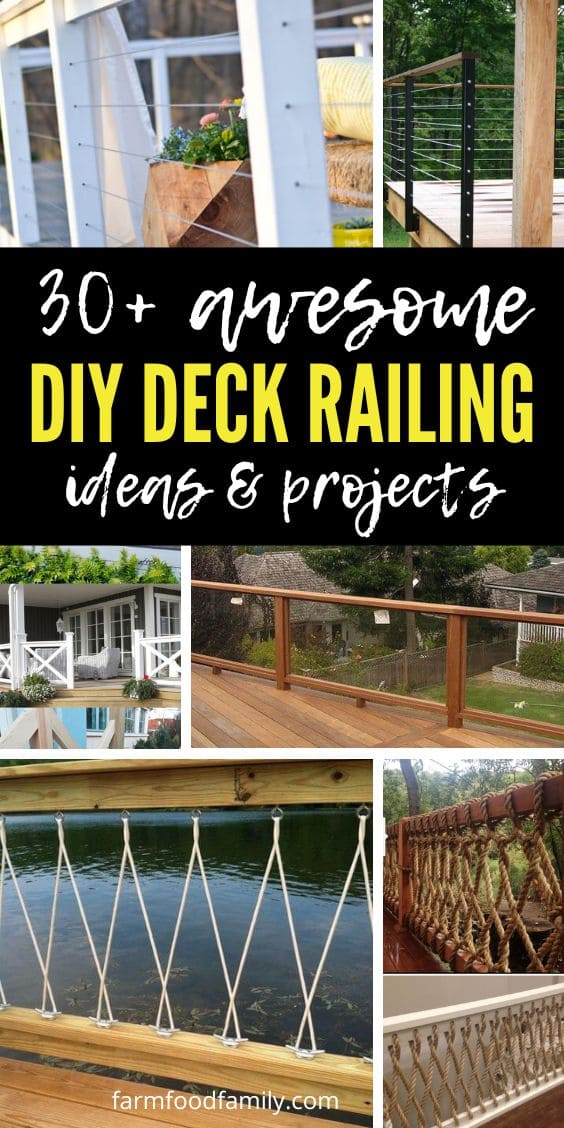
DIY Deck Railing Ideas
1. Recycled Pallets Railing
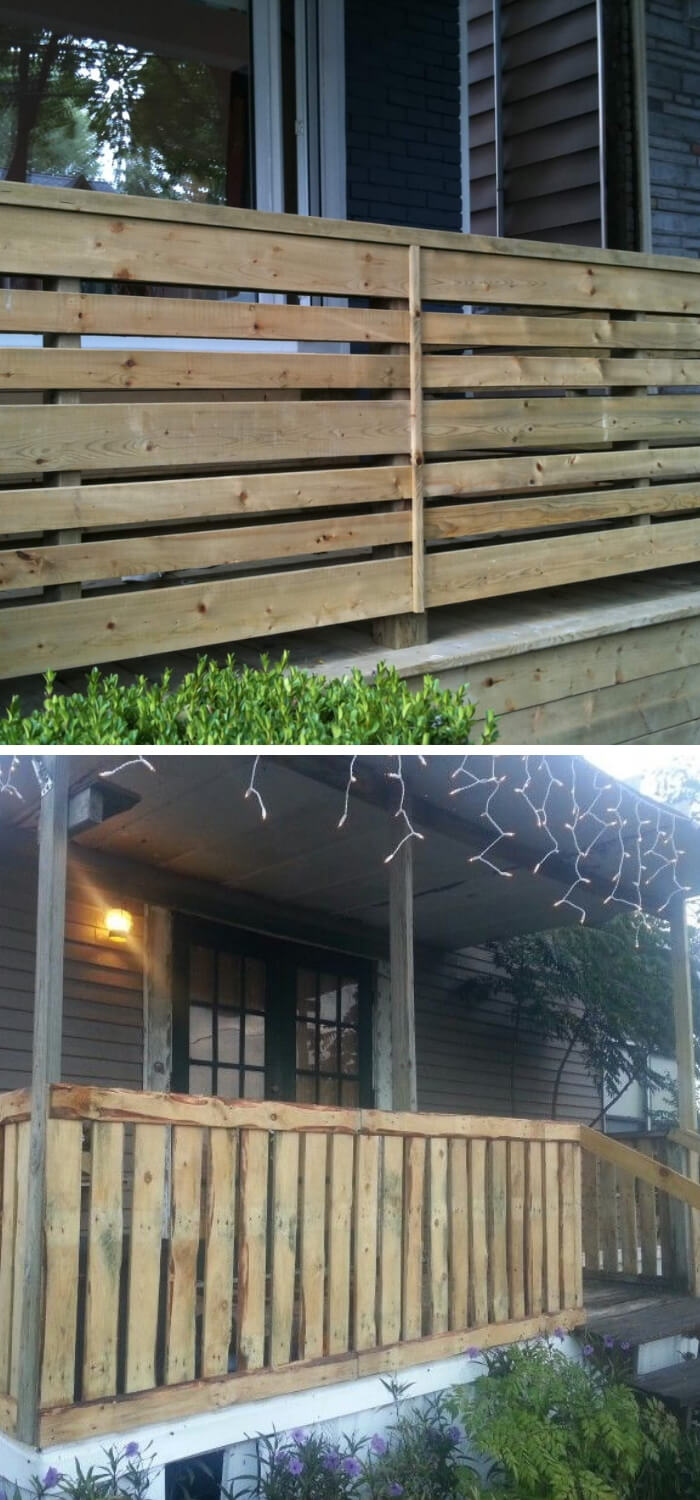
For a genuinely low-cost option, reclaimed pallets fitted between existing posts is about as cheap as deck railing gets.
There’s no real tutorial needed here, just enough pallets on hand and a willingness to arrange them until the fit looks right.


It’s a fast weekend project more than a polished design statement.
Answer 4 quick questions and get matched to the exact fix for your yard — drainage, budget, layout, or something else entirely.
Take the Free Quiz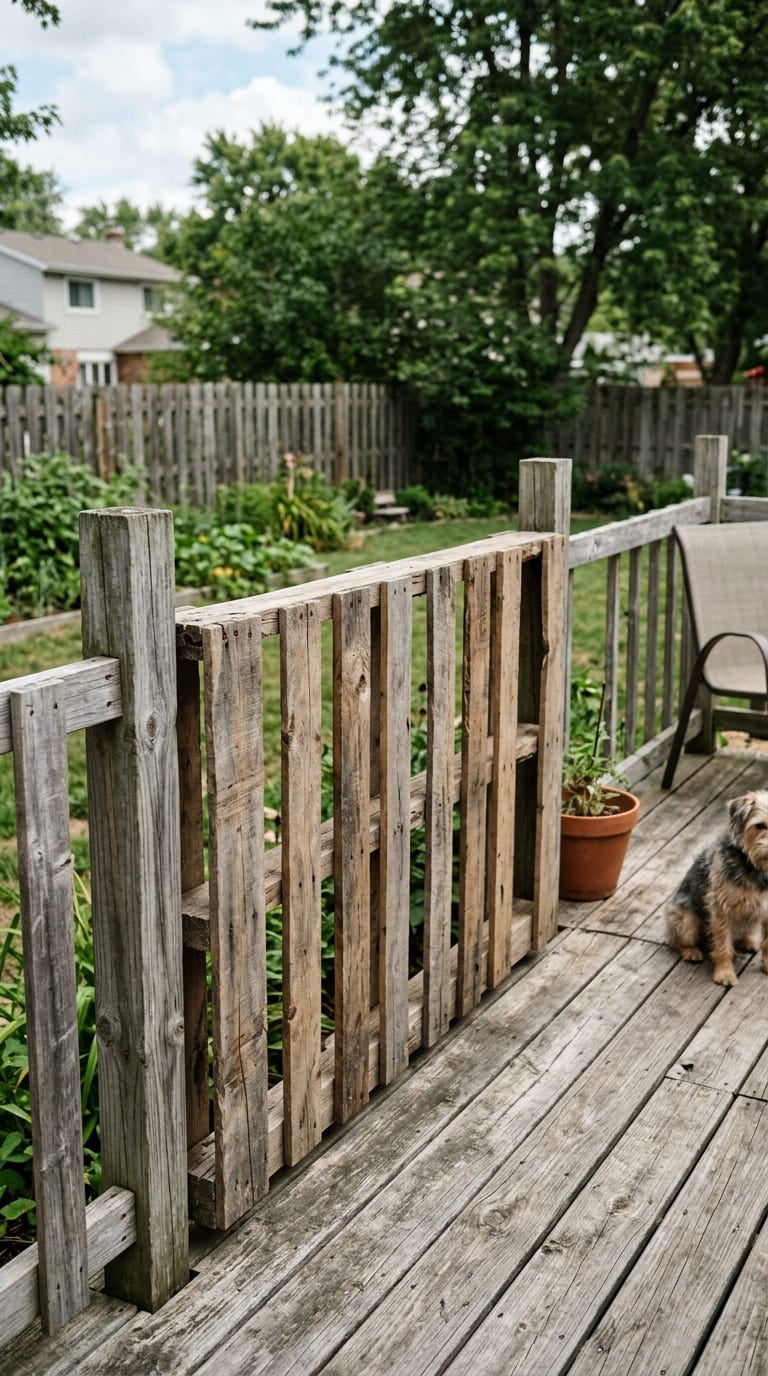
2. Landscape Retaining Wall as a Railing
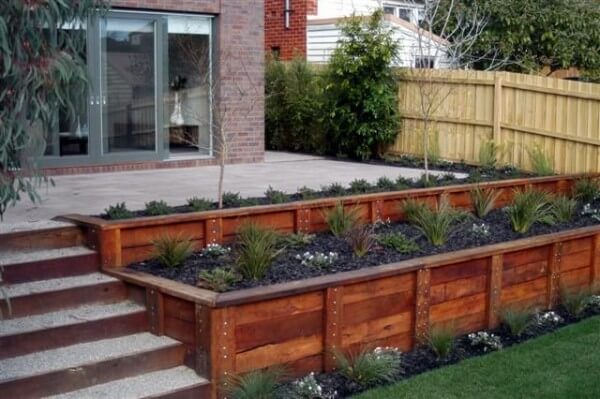
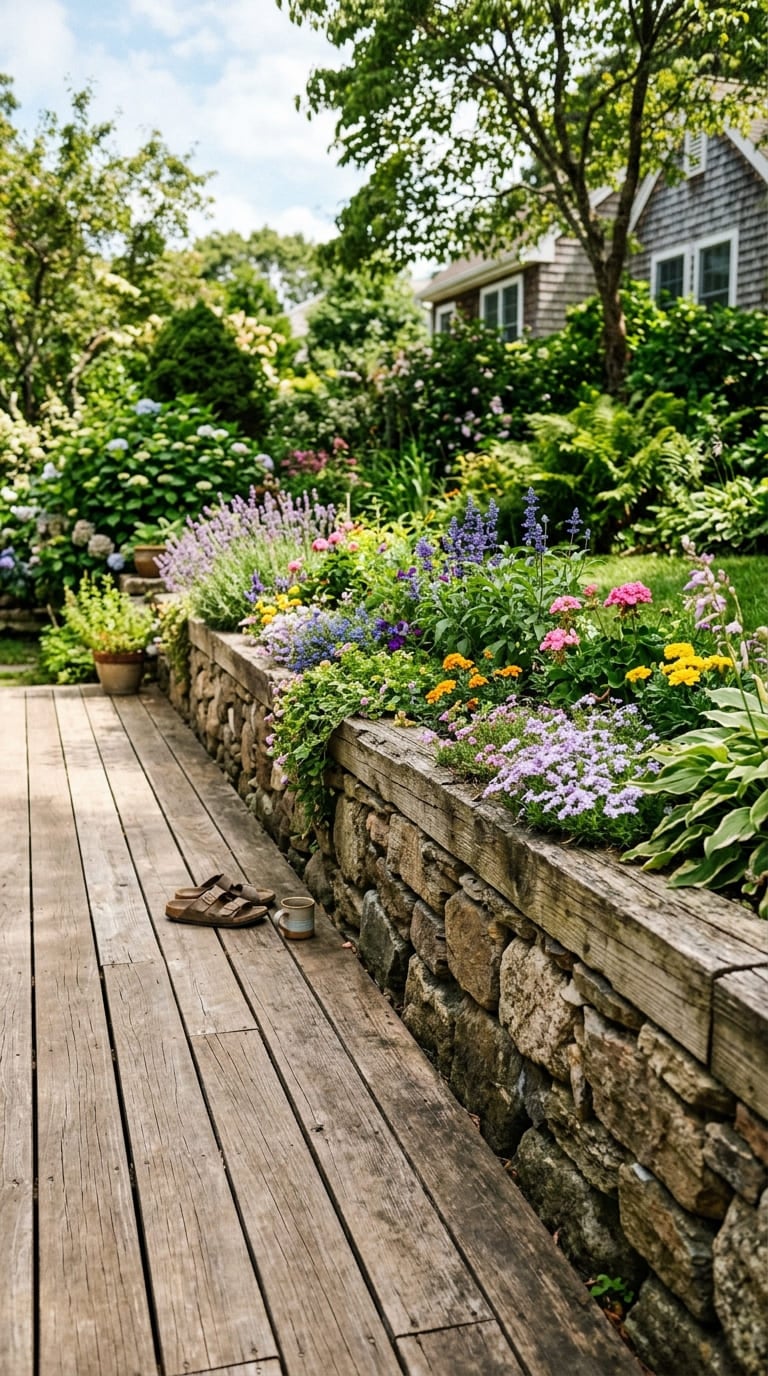
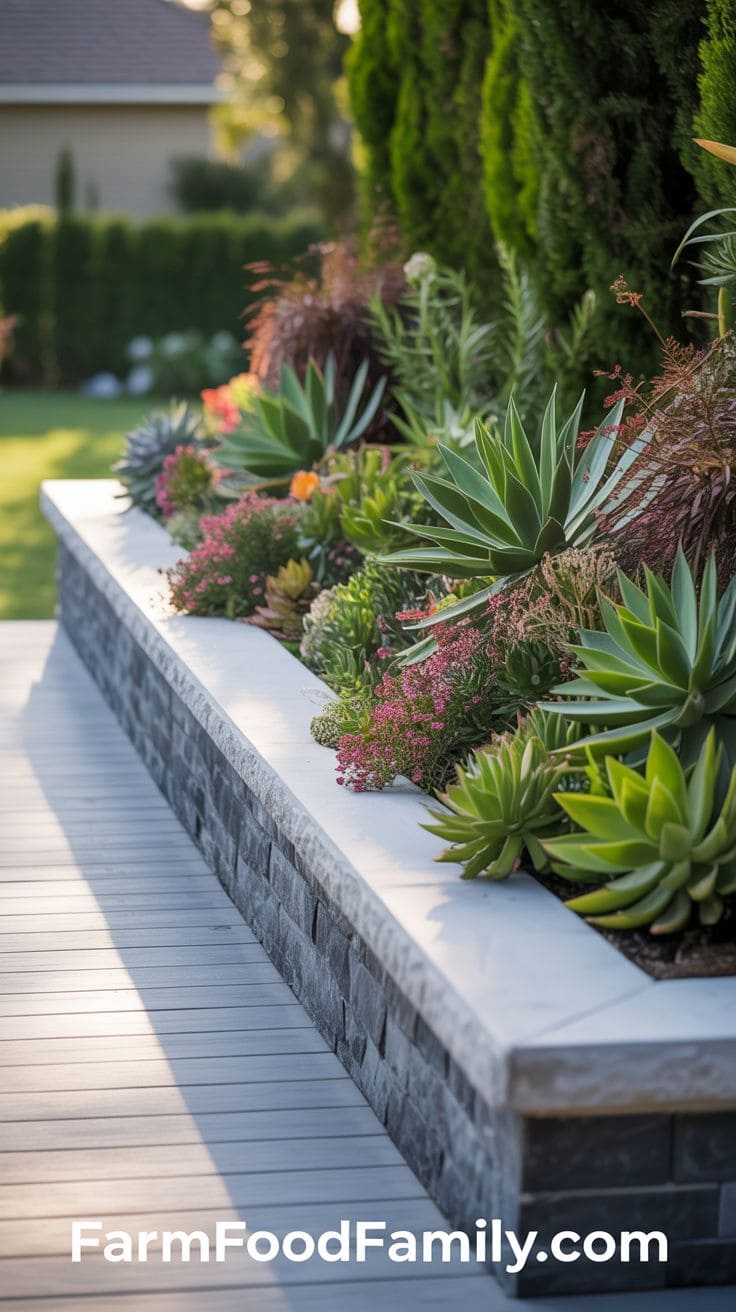
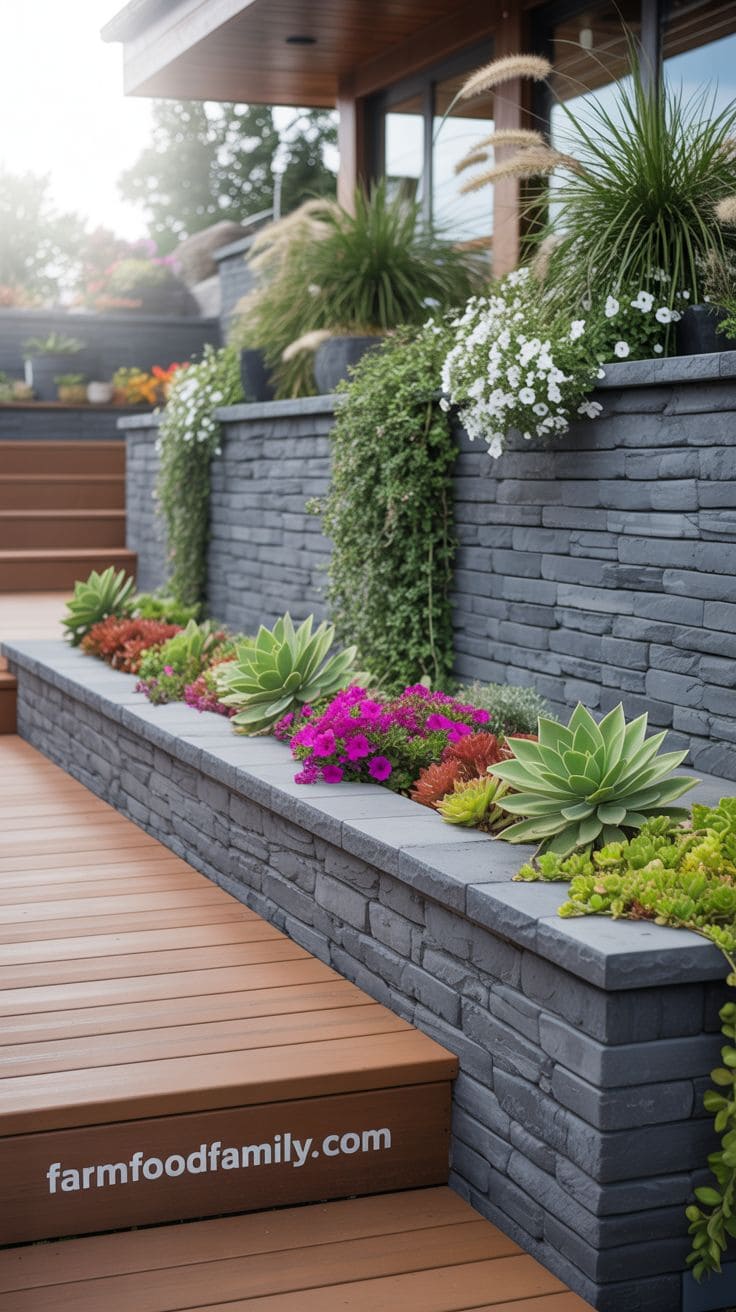
Instead of traditional posts and spindles, a low retaining wall can double as the deck’s edge boundary.
Planting flowers along the top softens what would otherwise read as a purely structural feature, and it works particularly well on a deck built into a slope where a retaining wall already makes structural sense.
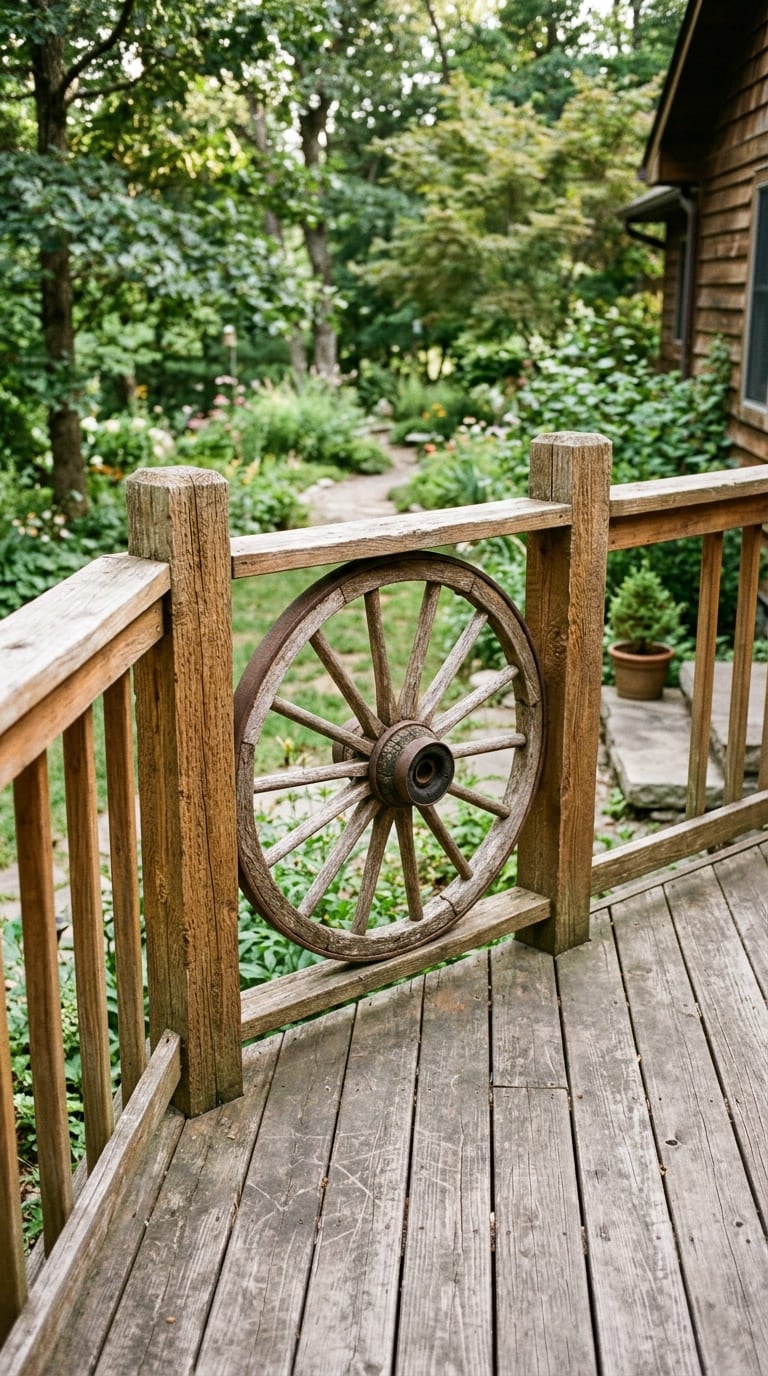
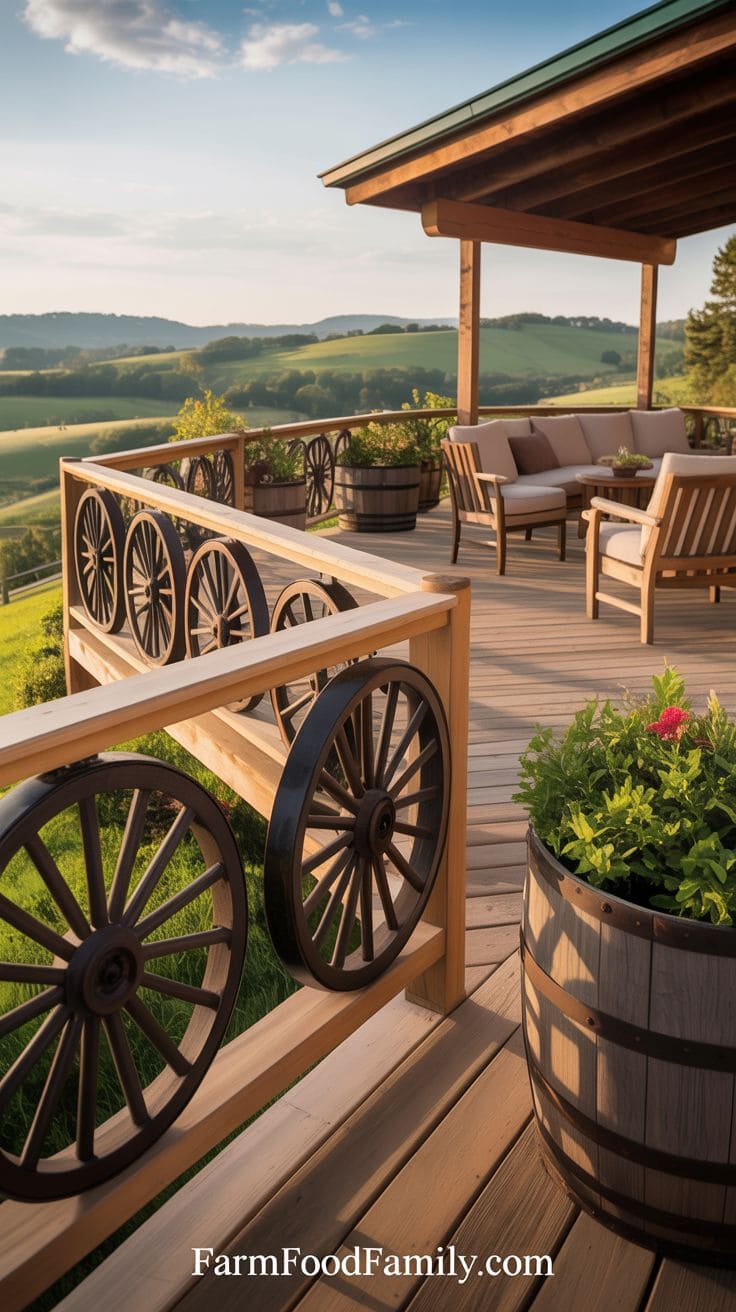
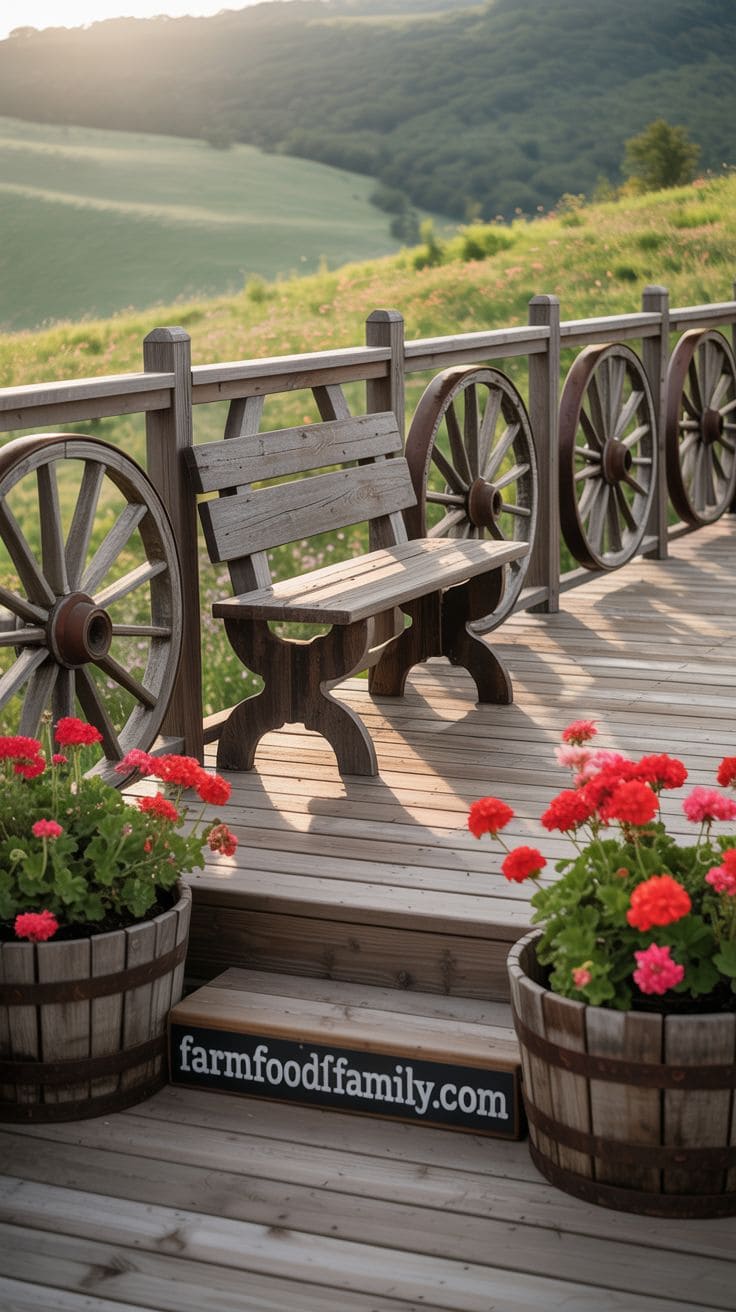
3. Wagon Wheel Deck Railing
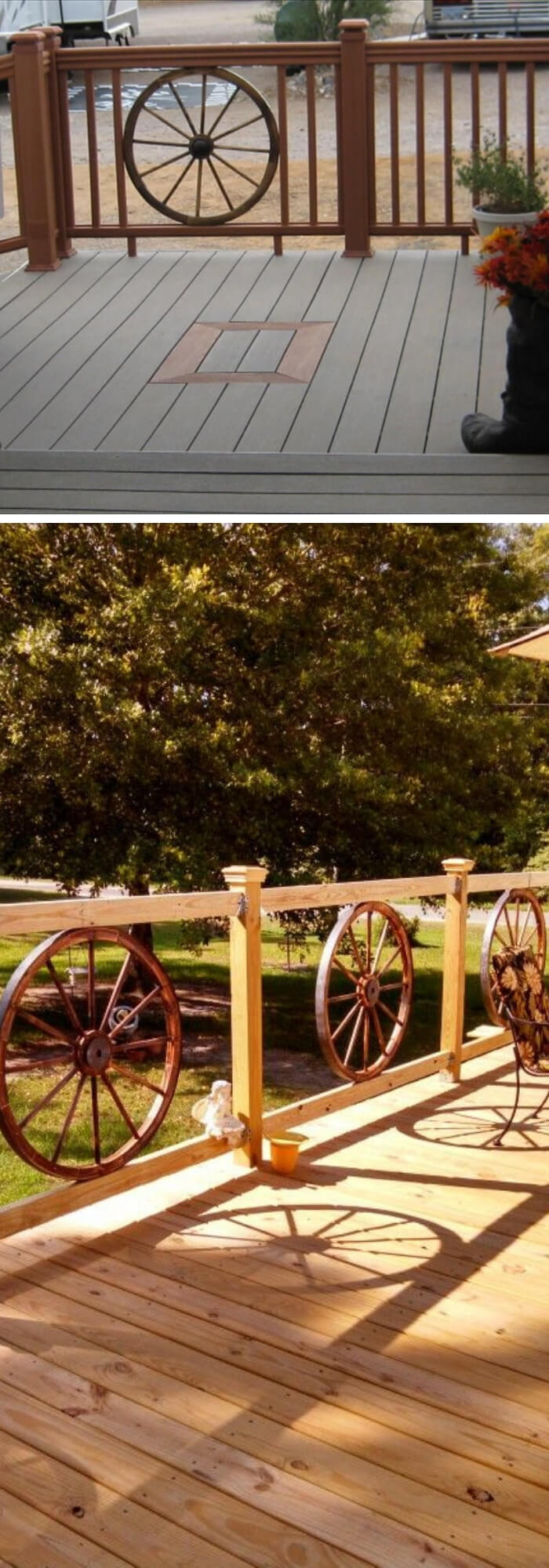
An old or reclaimed wagon wheel worked into the railing design gives a deck a genuinely rustic, collected-over-time look.
A new reproduction wheel reads as cleaner and more polished if that’s the preferred direction; a genuinely weathered one leans further into the rustic aesthetic.
4. Tree Branch Decking
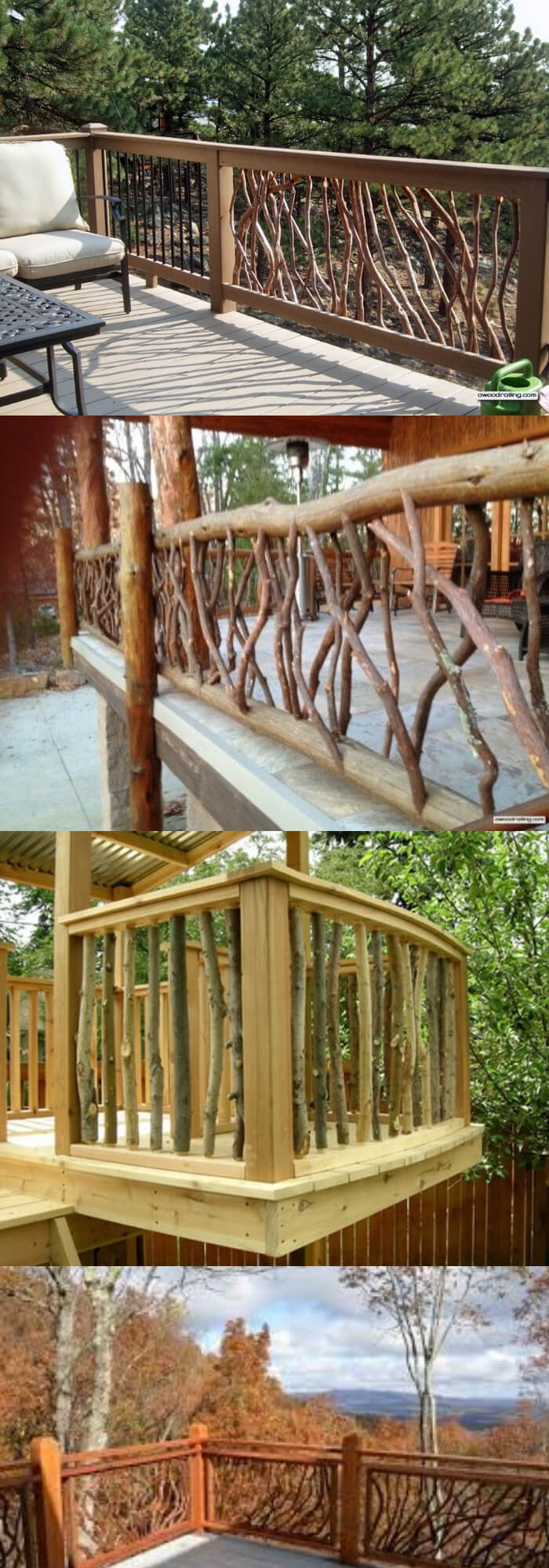
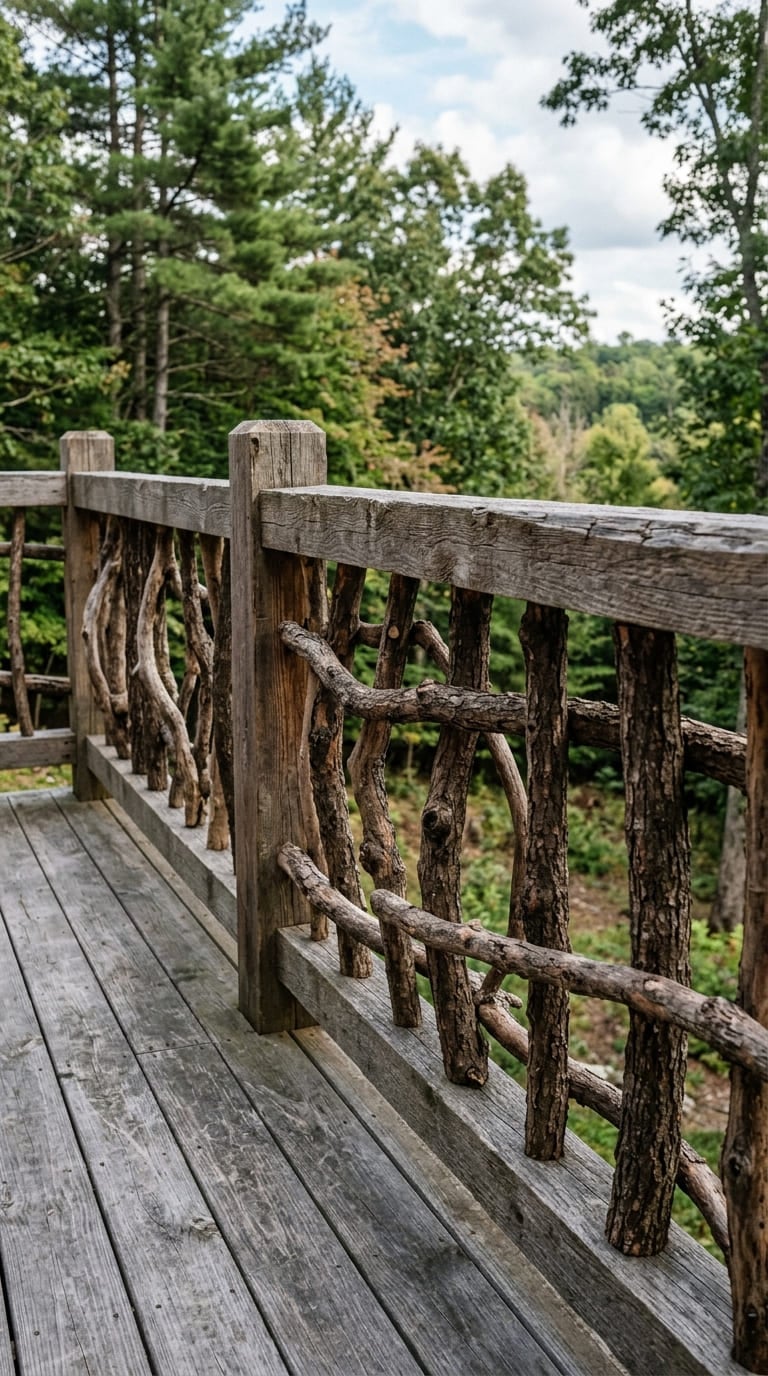
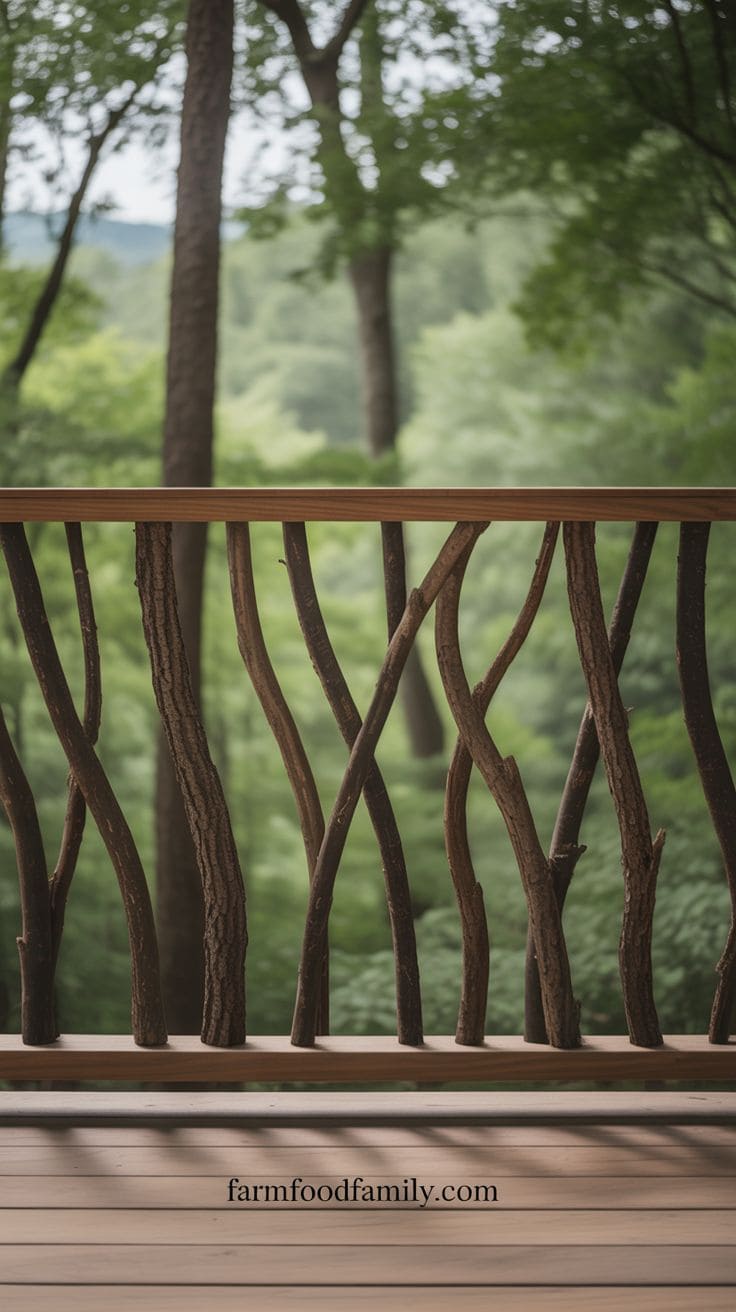
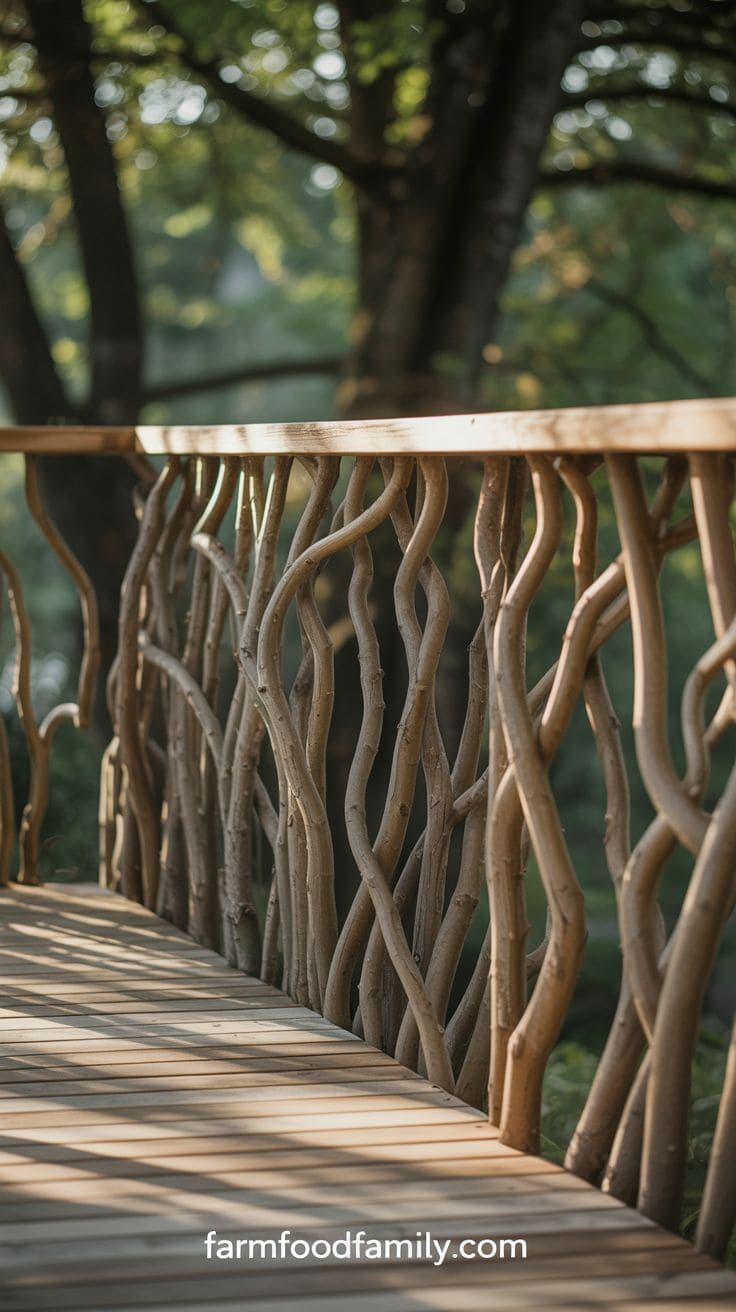
Swapping standard spindles for real tree branches turns a deck railing into something closer to a rustic art piece than a functional afterthought.
It works best for anyone who already has fallen branches or storm debris on hand, since sourcing branches specifically for this can get surprisingly time-consuming.
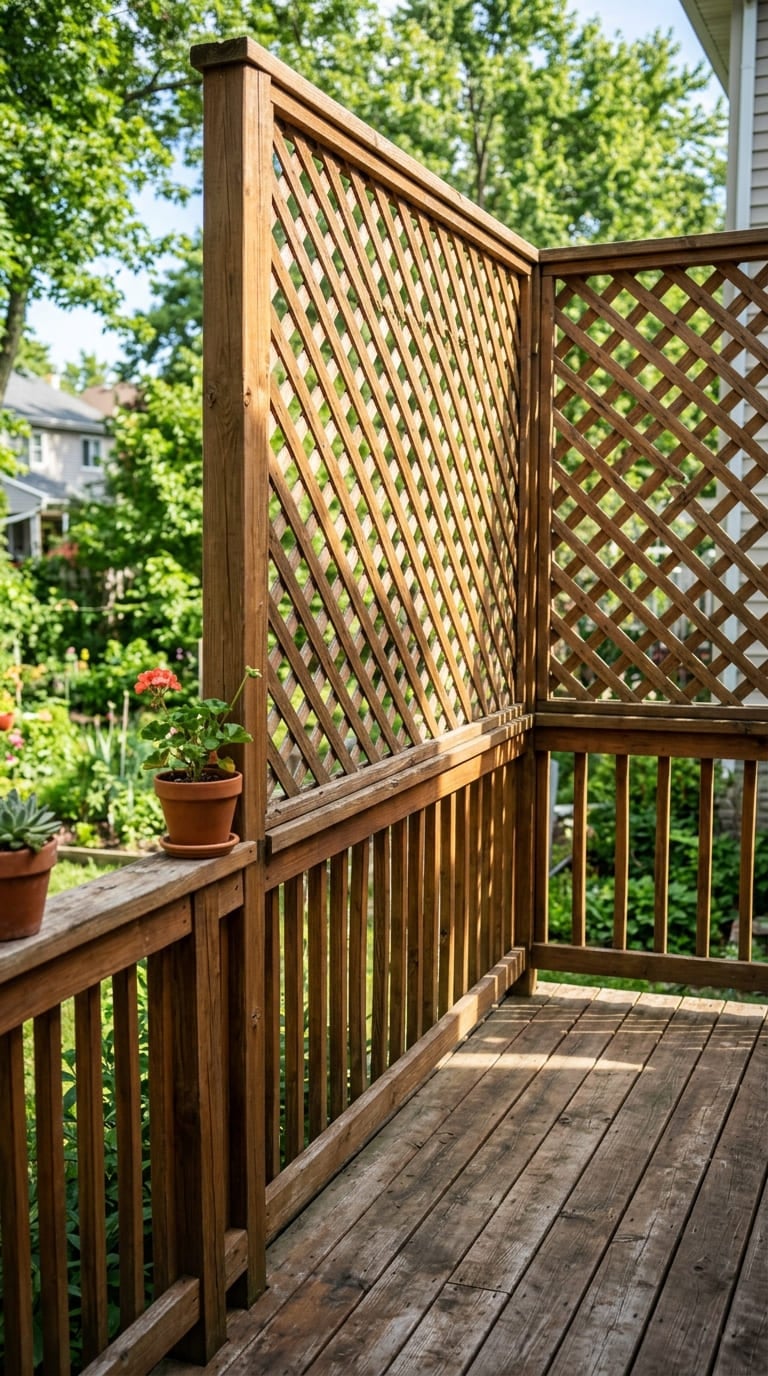
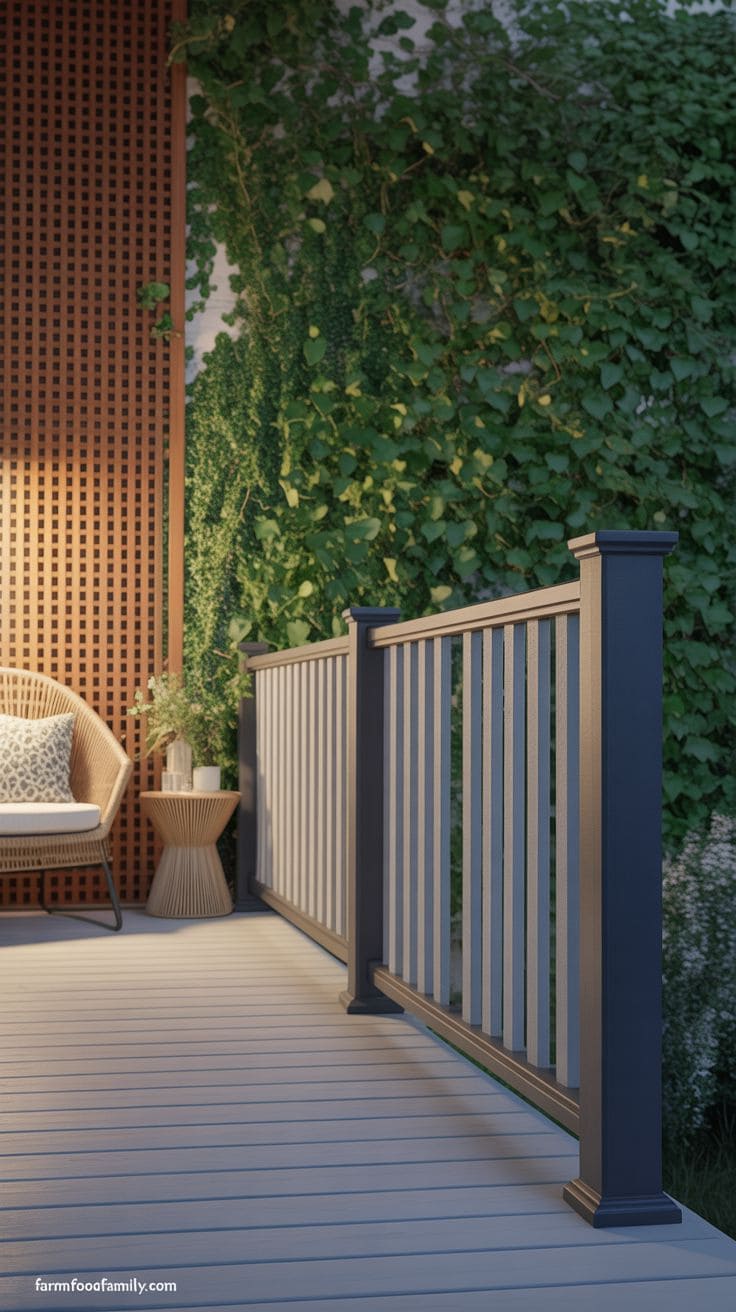
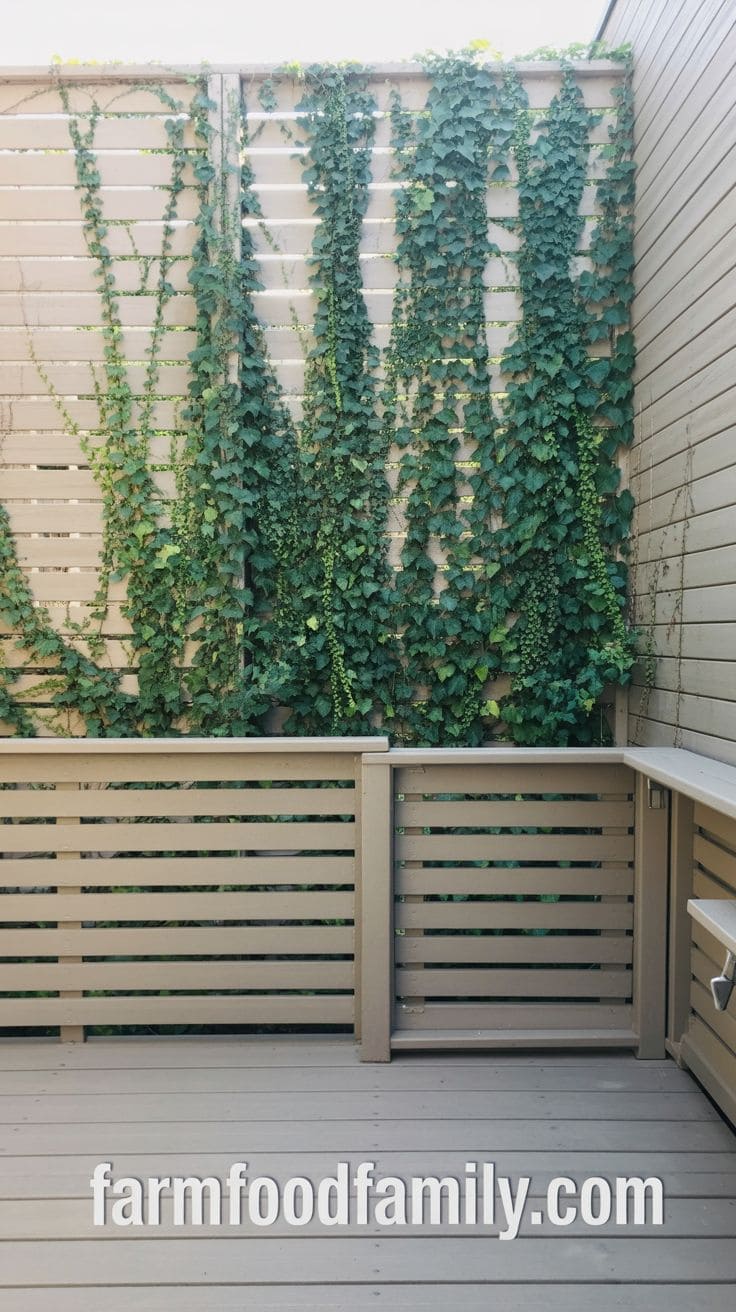
5. Wood Lattice Privacy Screen
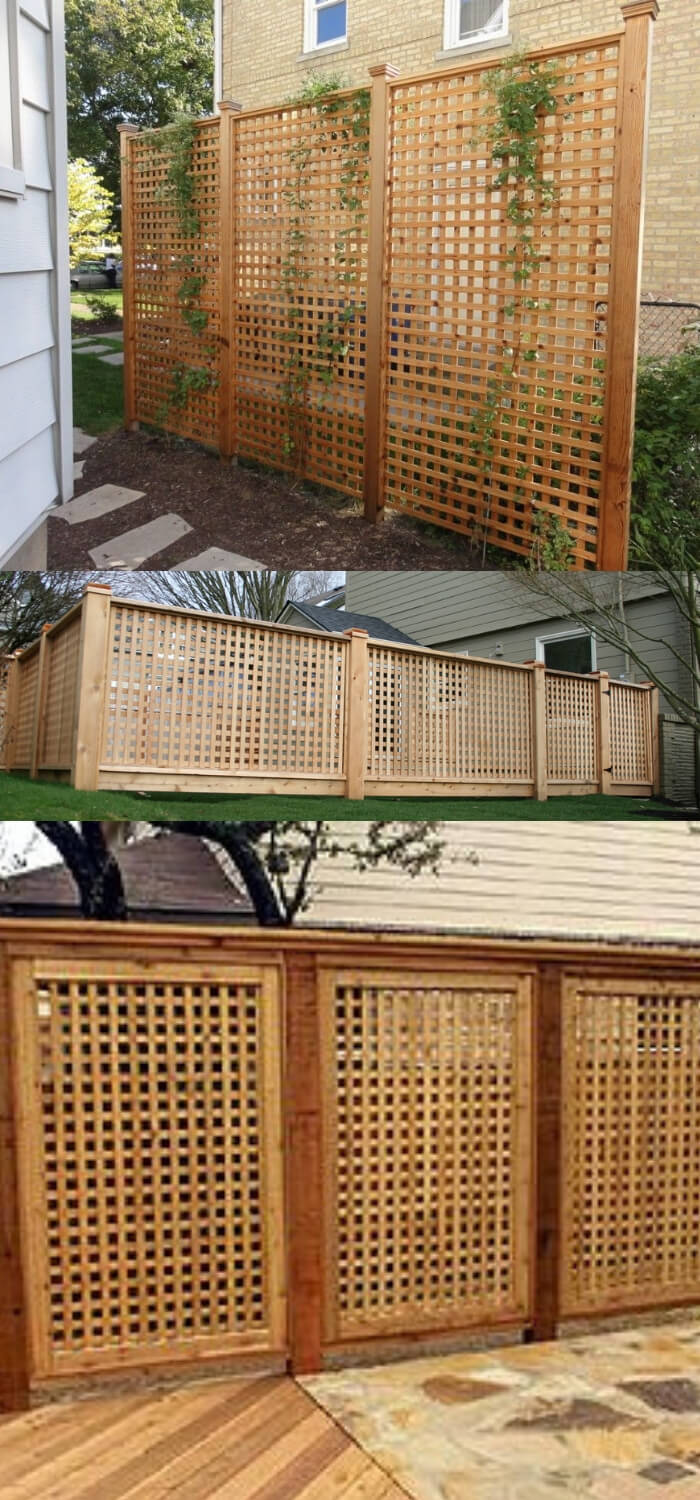
A deck with too little privacy doesn’t need a full redesign, just a wood lattice screen built around the perimeter.
Most yard problems trace back to one specific, fixable cause. Find yours in 4 quick questions.
Take the Free QuizIt solves the sightline problem without closing the space in completely, since lattice still lets light and air through.
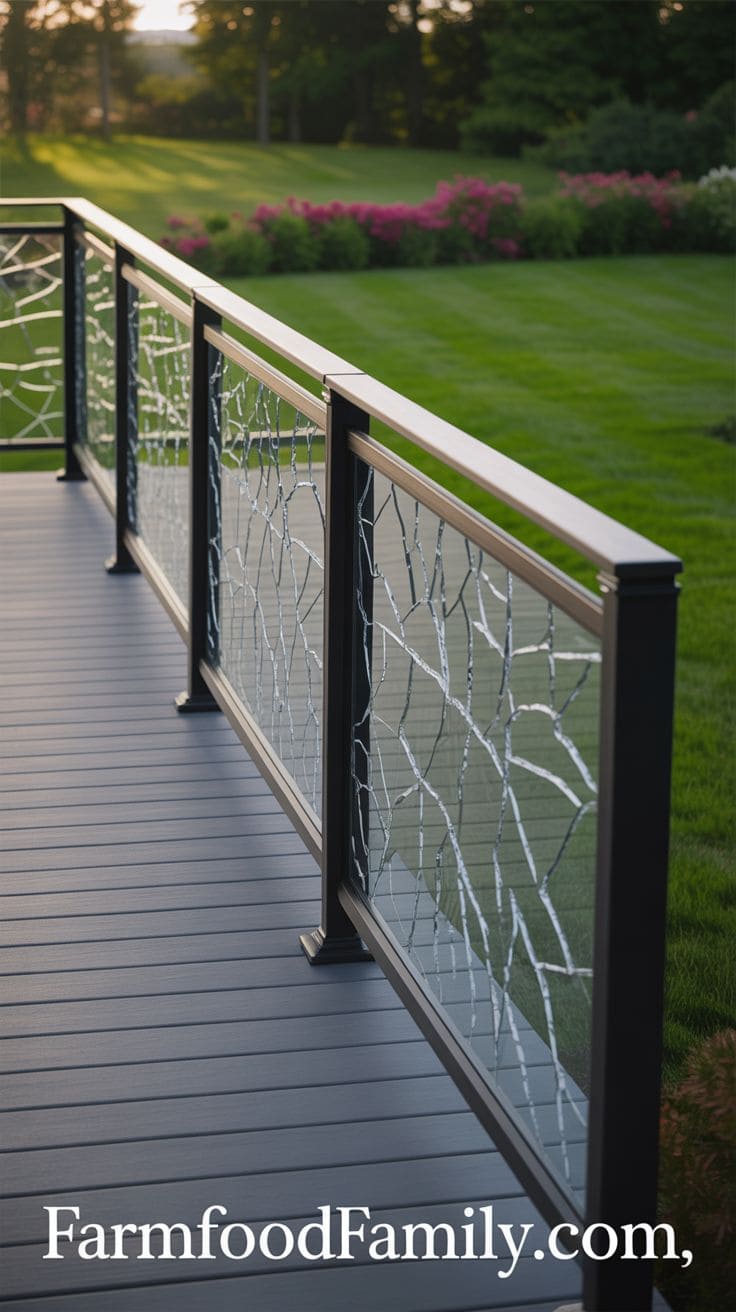
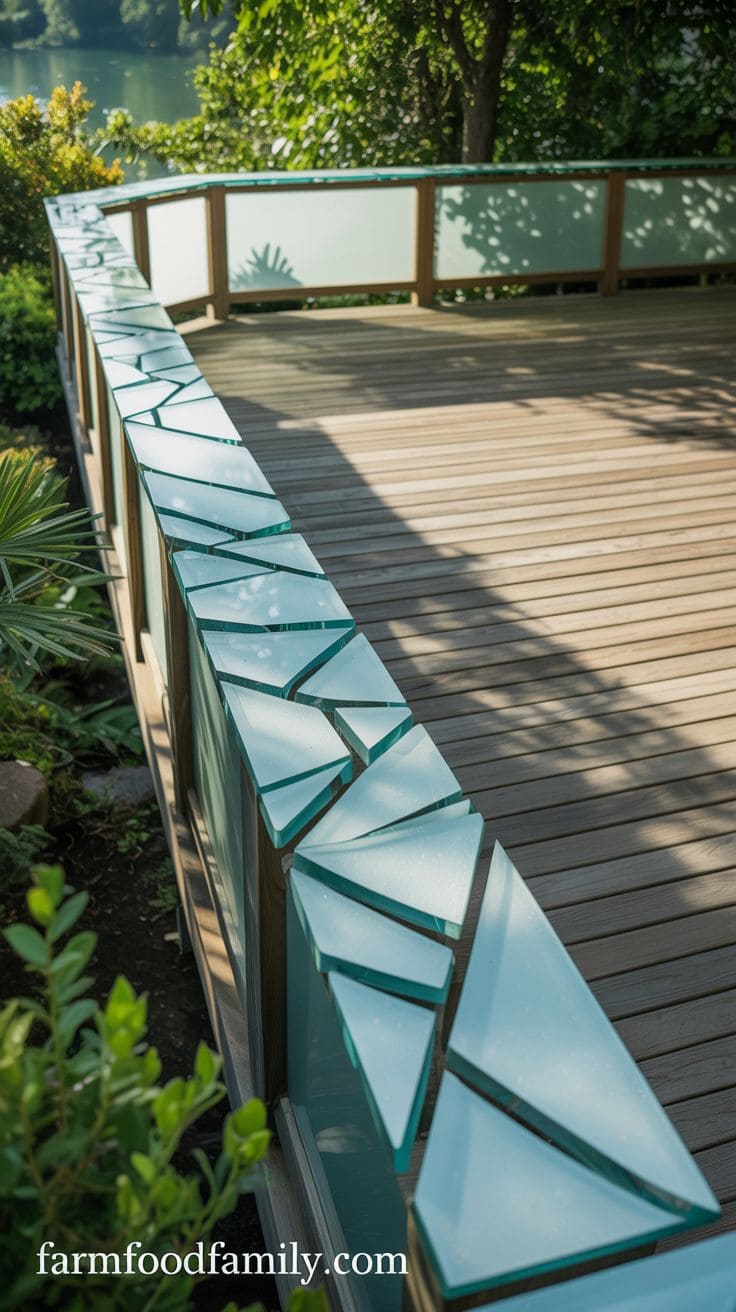
6. The “Cracked Ice” Deck Railing

This is a beautiful deck railing that is generally built by professional custom deck designers. When fully designed, you may be able to swing it if you only have a crafty mind.
After it is done, the cracked ice deck railing provides the best place to relax and hang out with your family. Although it may seem to be expensive, its impact on your house worth it.
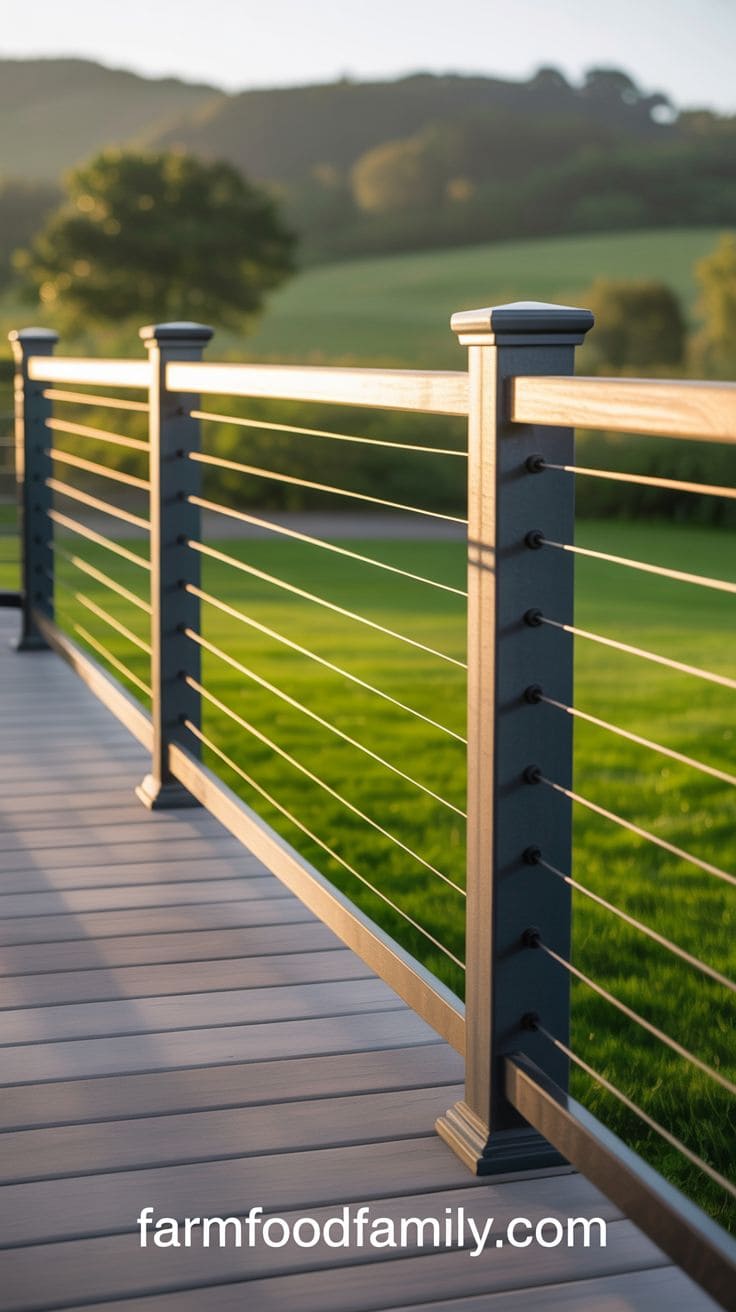
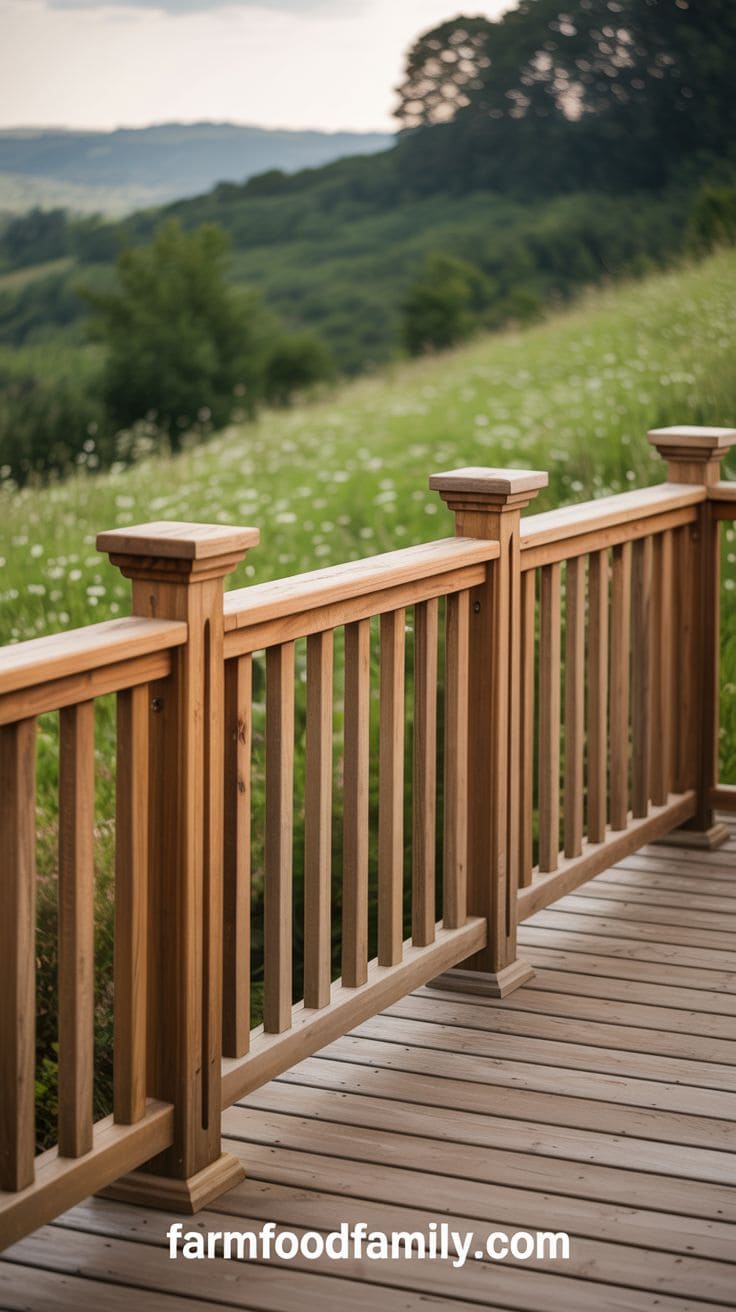
7. Posts Mounted Outside the Deck Frame
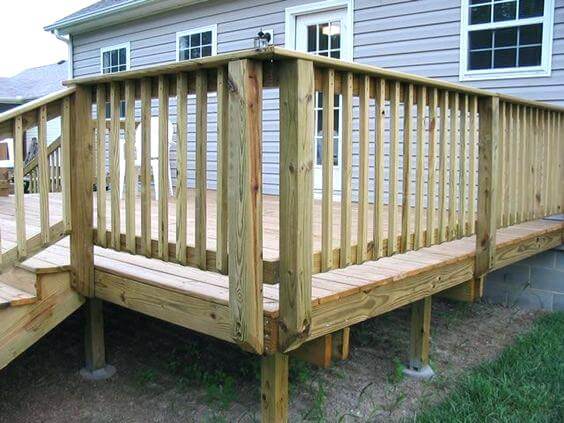
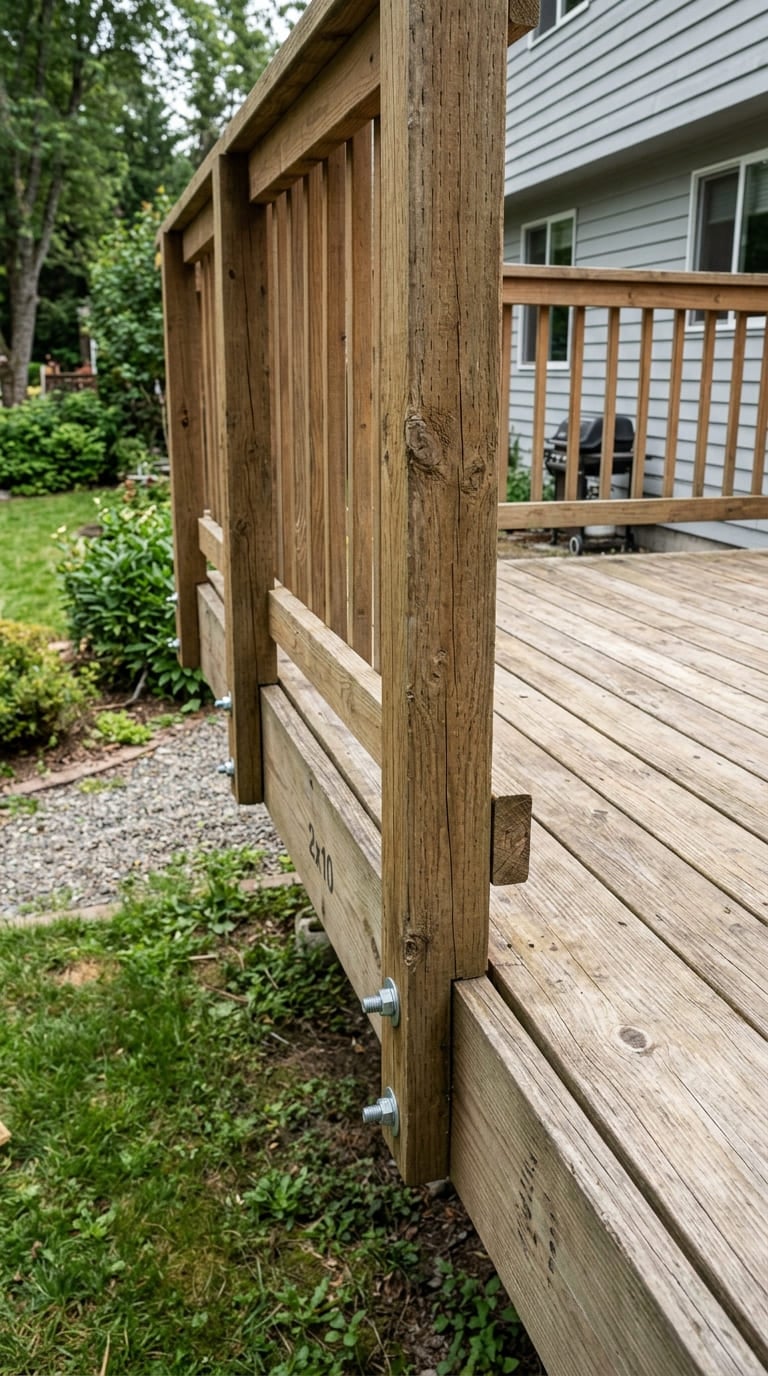
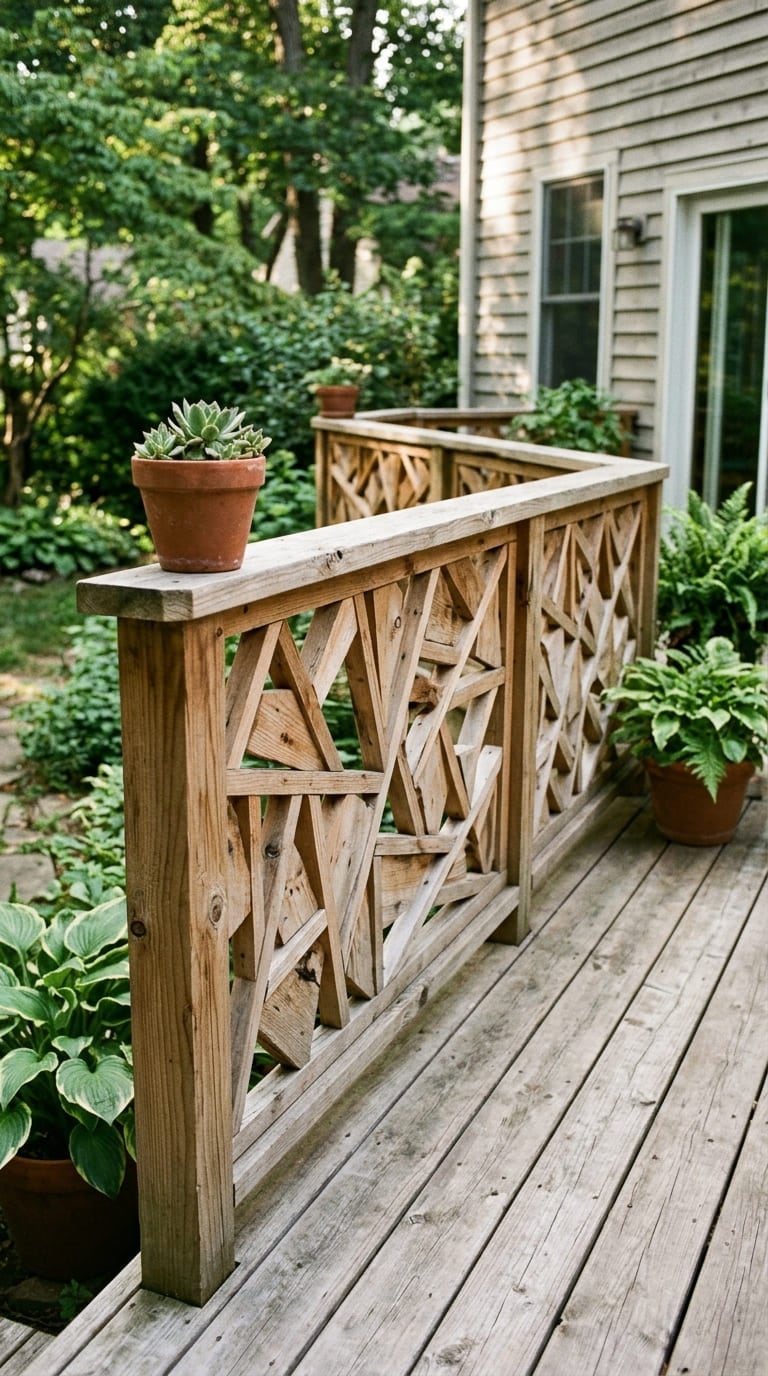
Mounting the railing posts on the outside face of the deck, rather than the standard inside placement, is a small structural choice that changes the whole silhouette.
It’s a subtle way to make a build feel different from the standard deck-railing template without changing the materials at all.
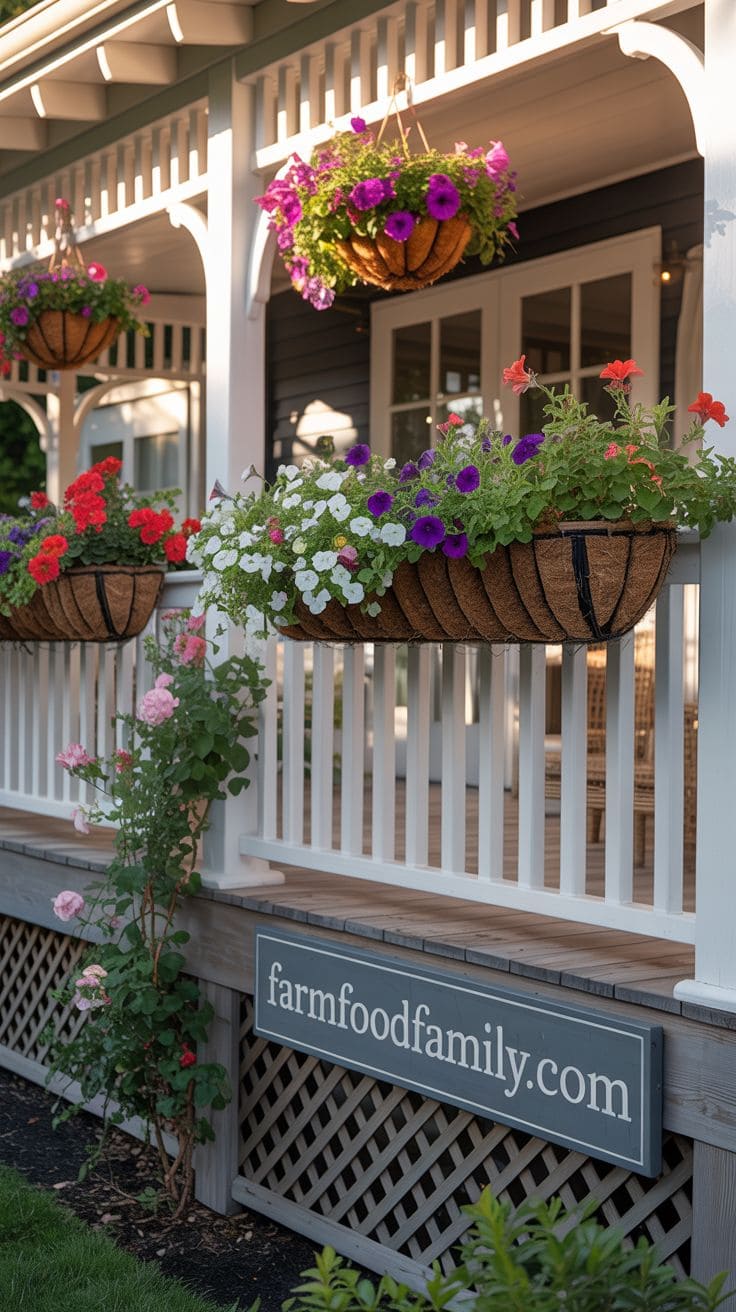
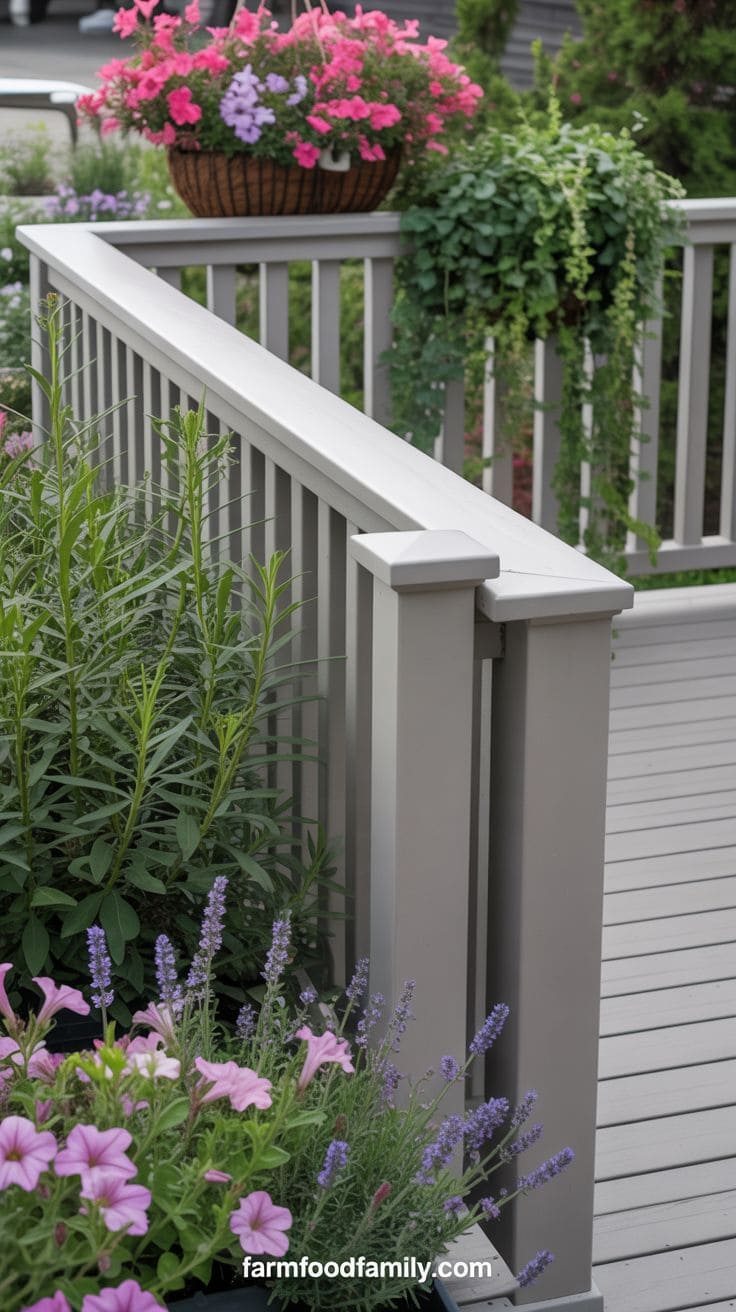
8. Lattice Porch Panels
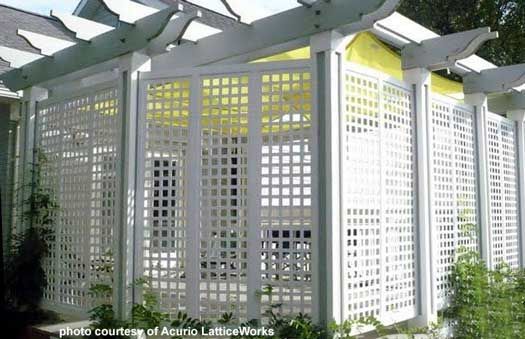
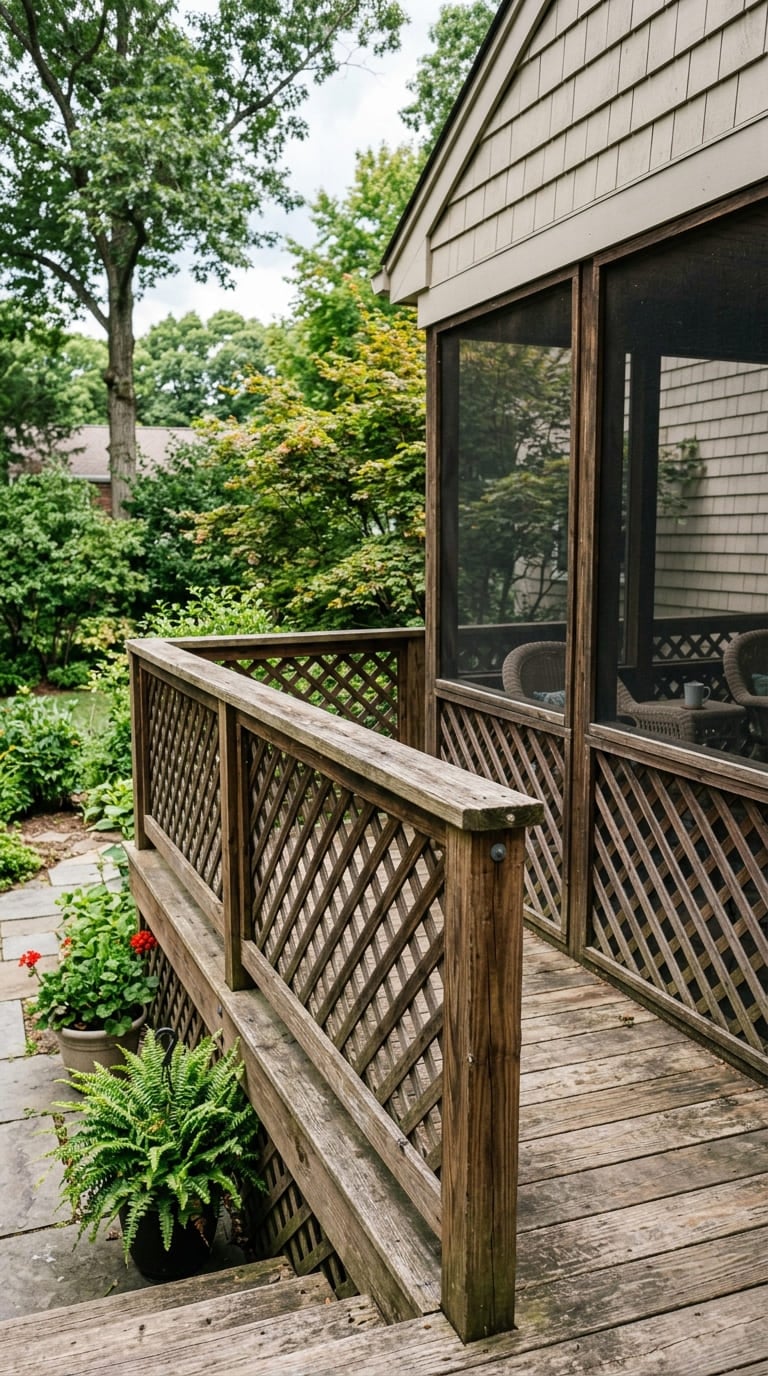
For anyone already working with lattice around a screened porch, extending the same material to the deck railing keeps the whole exterior visually consistent.
It’s genuinely simple to cut and fit, one of the more approachable projects on this list for a first-time DIYer.



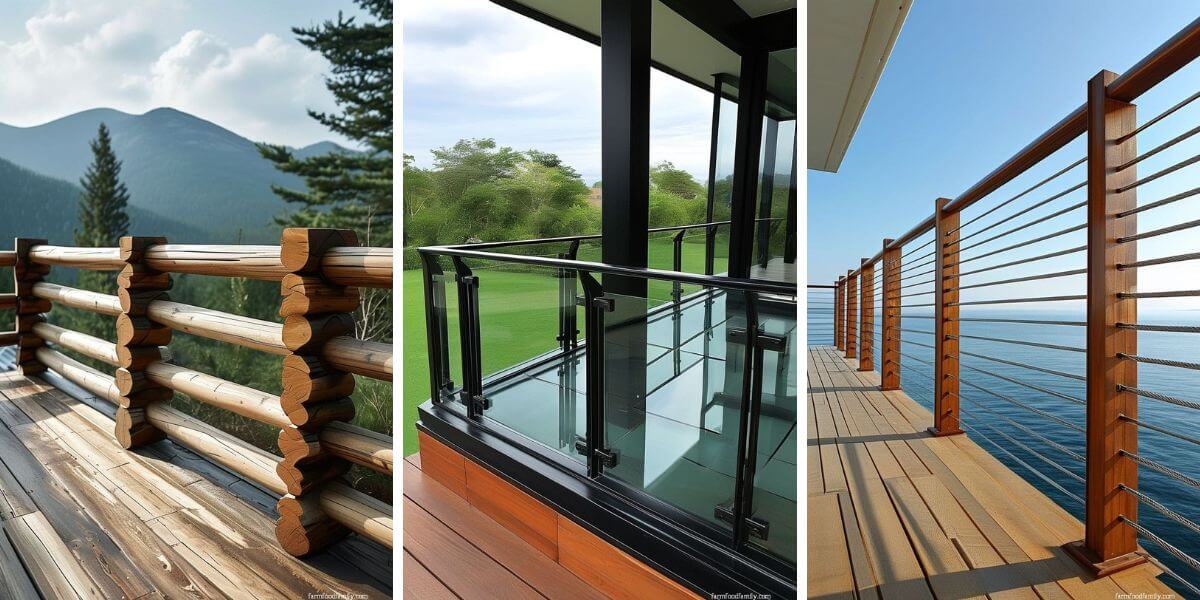
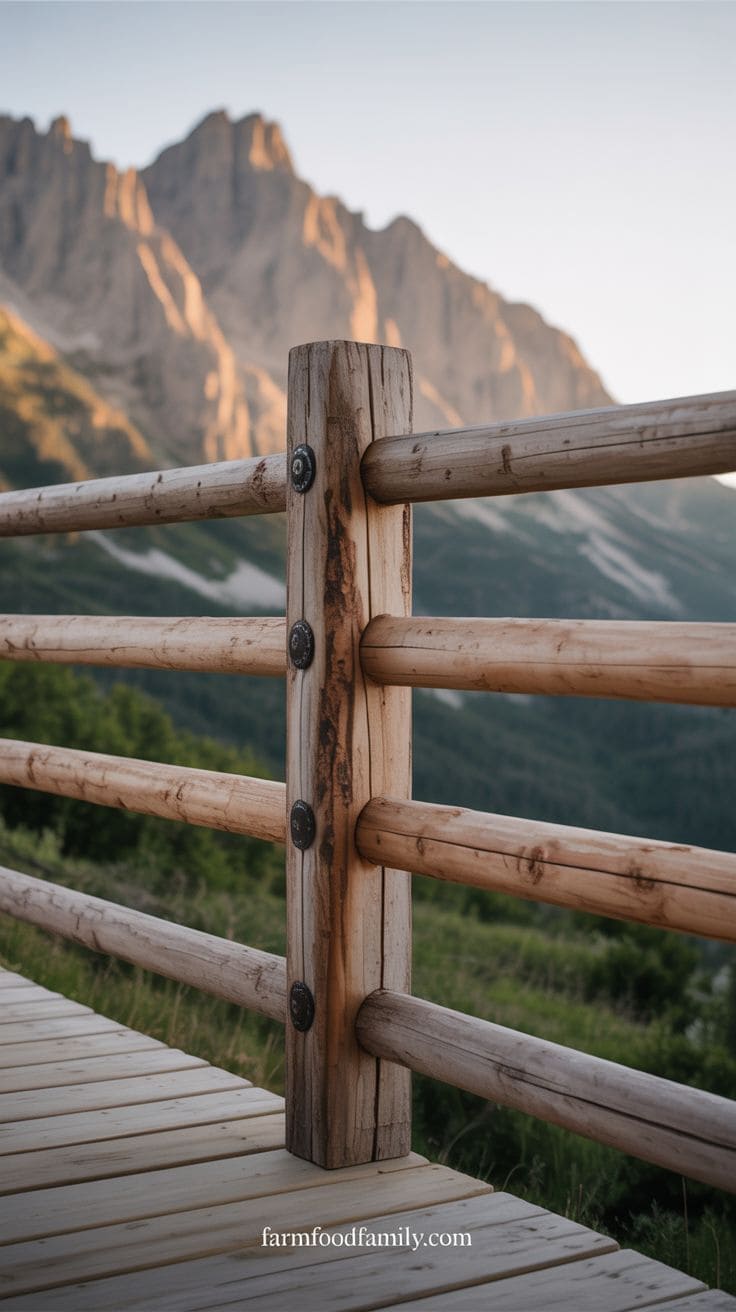
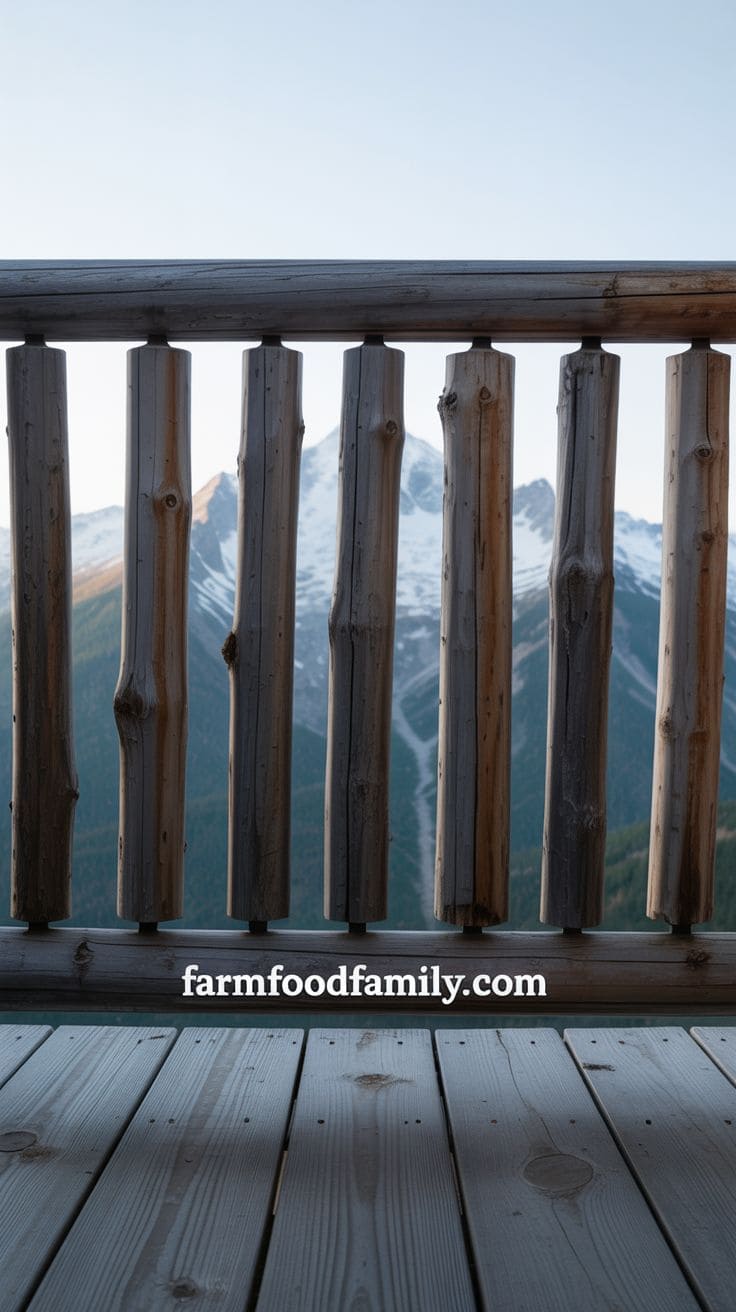
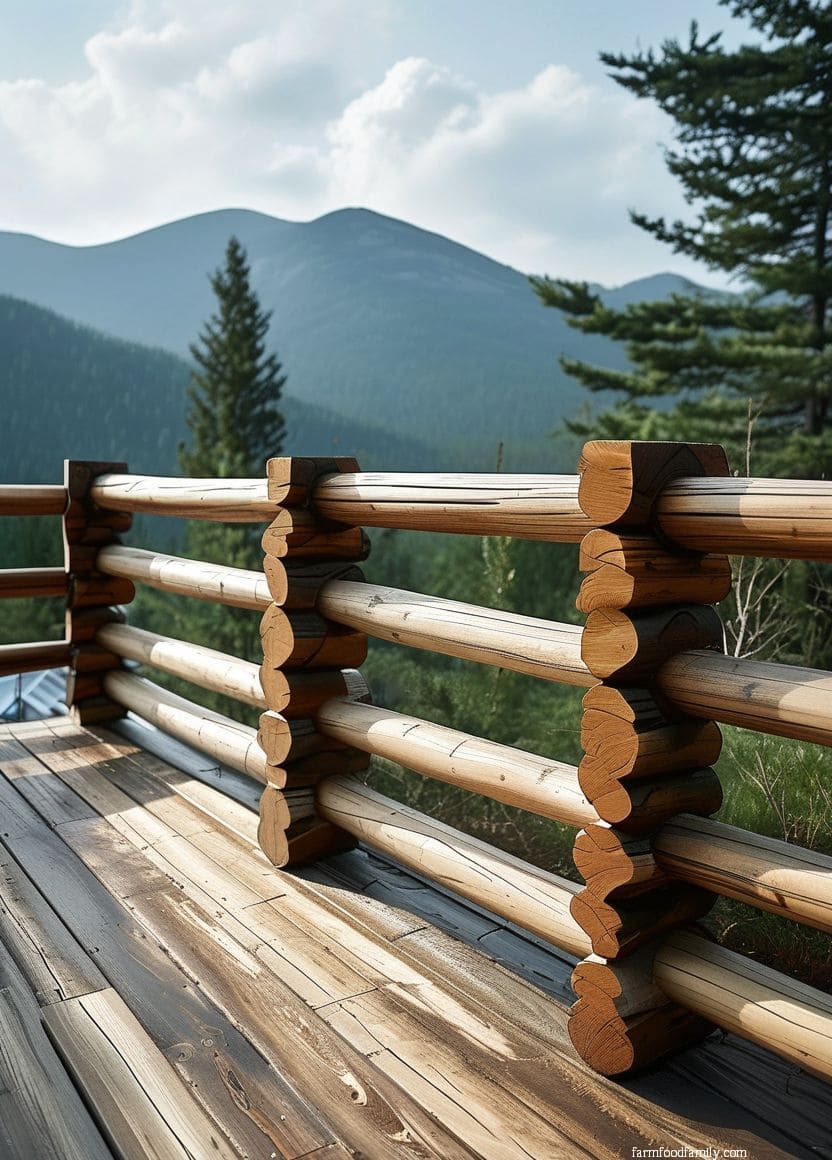
9. Branch or Log Railing
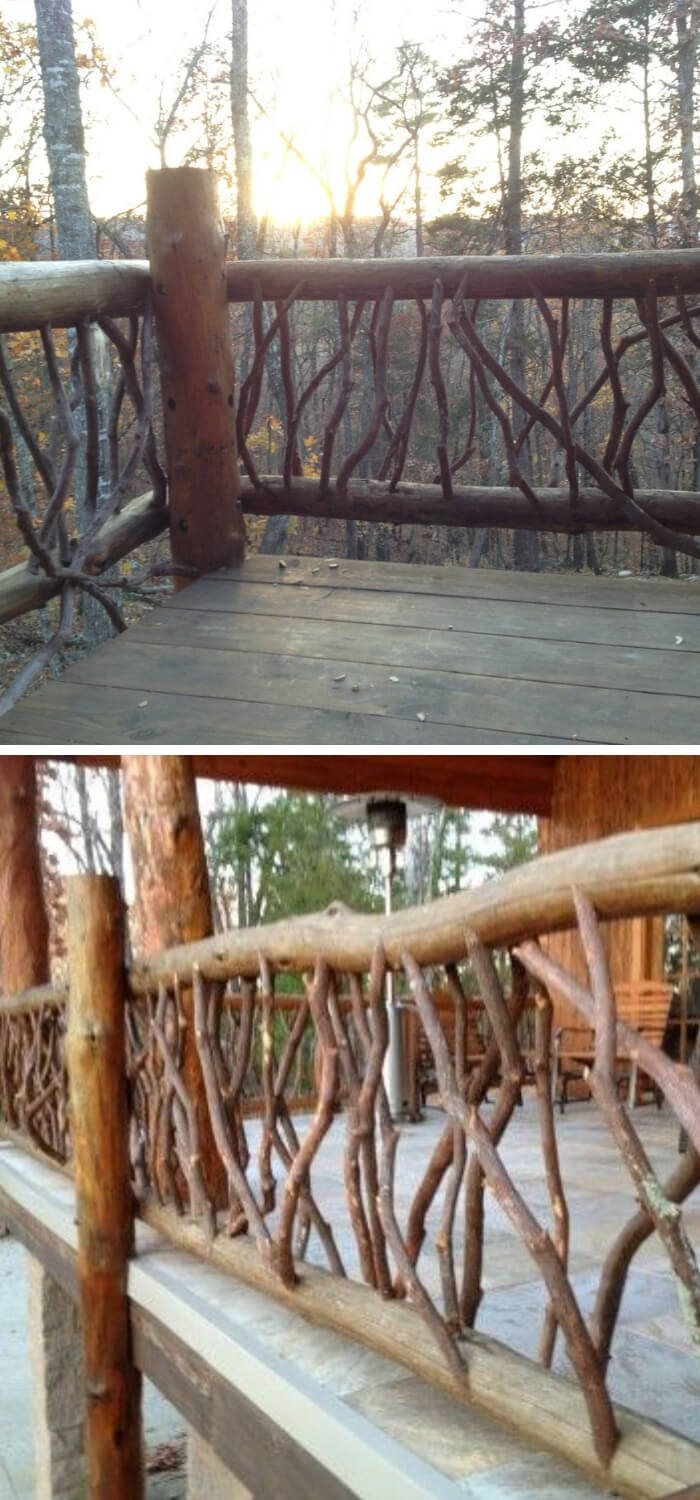
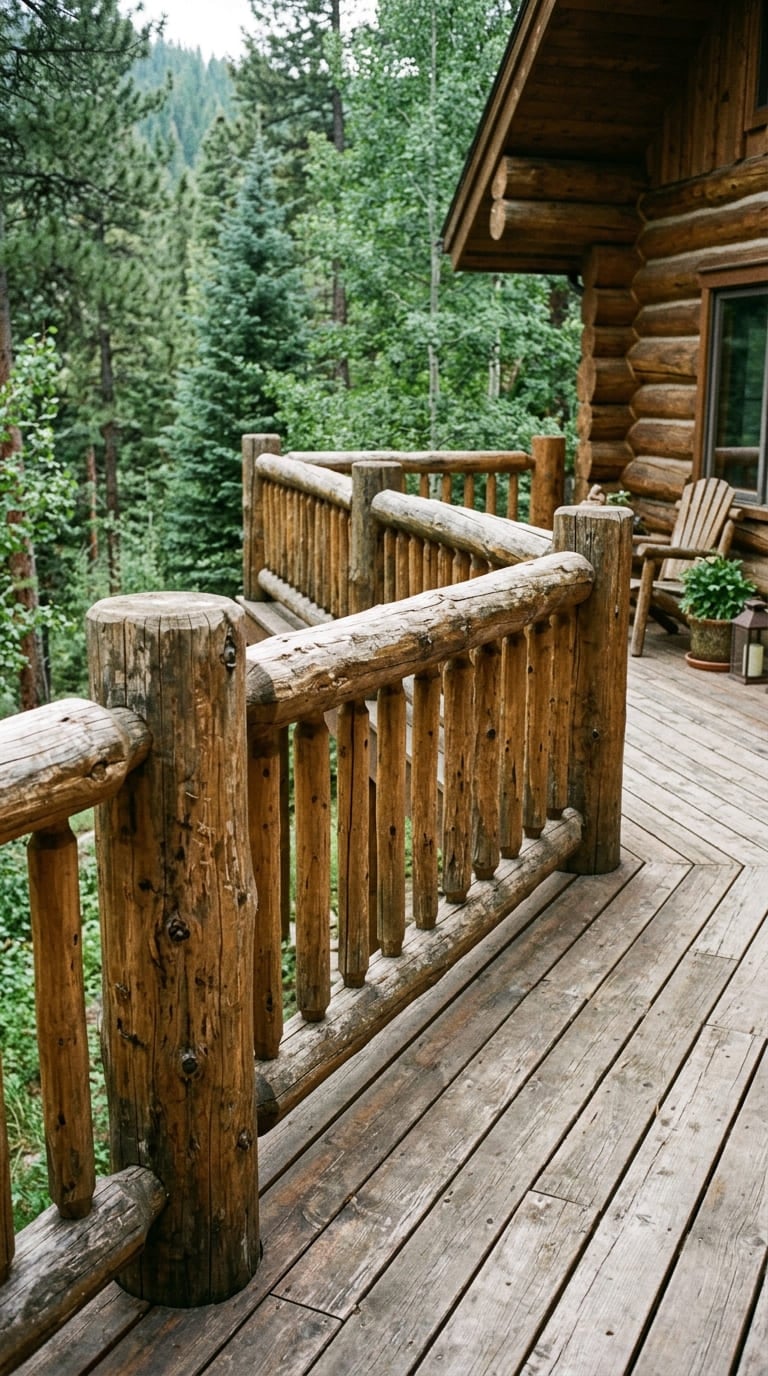
A close cousin to the tree branch idea above, this version uses full logs rather than smaller branches, which reads as more substantial and works especially well for a cabin or heavily rustic-themed deck.
The scale difference matters: logs carry more visual weight than branches and suit a bigger, more rugged build.
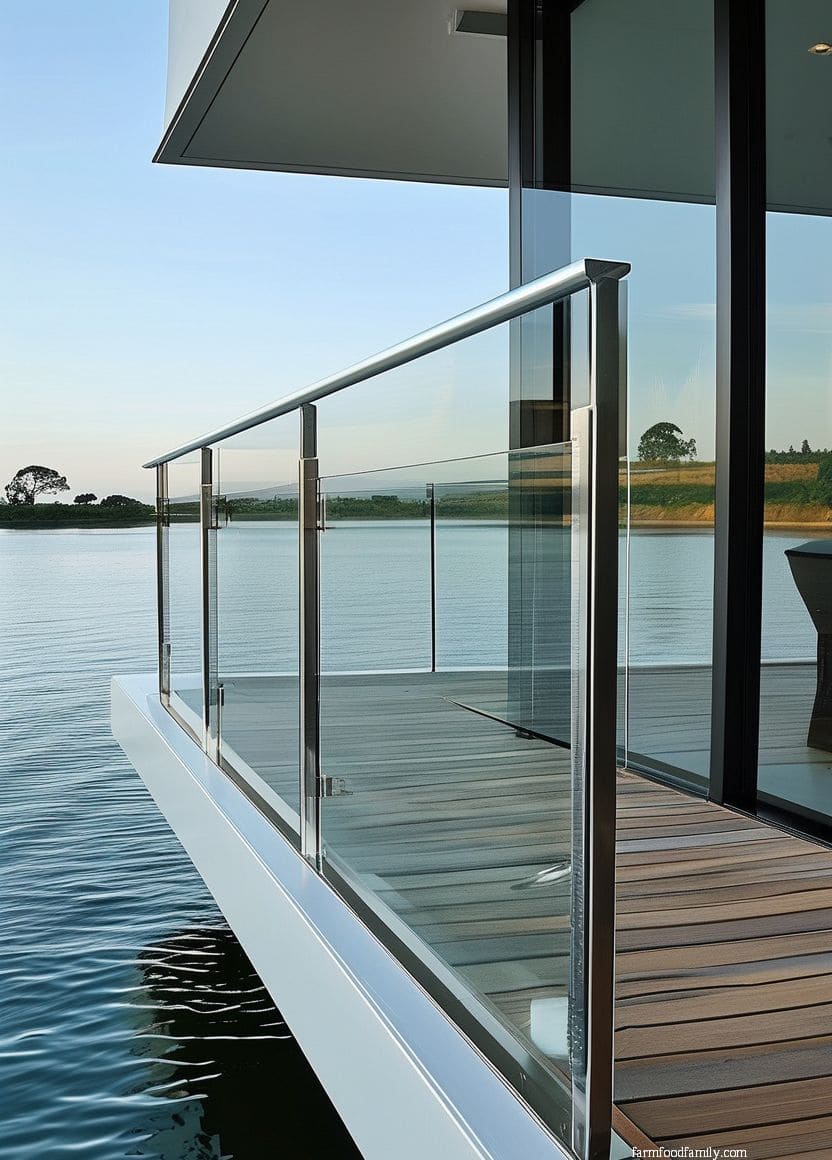
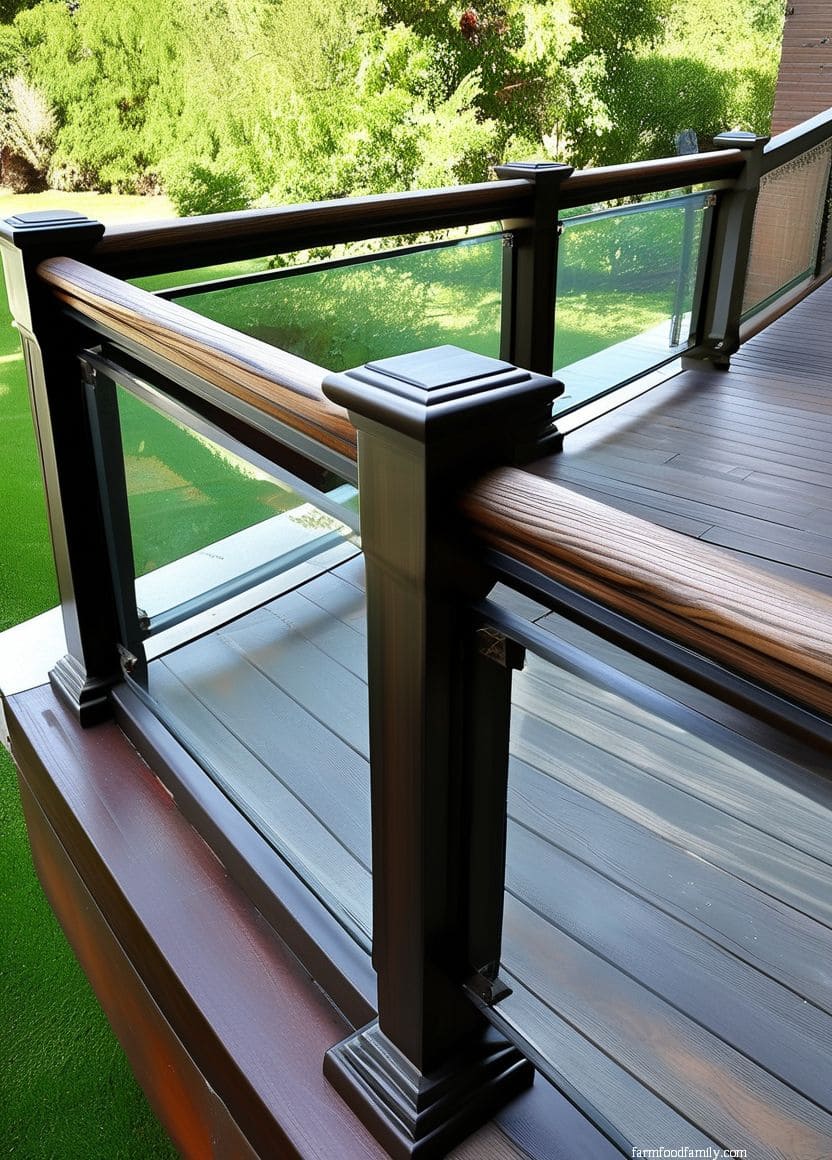
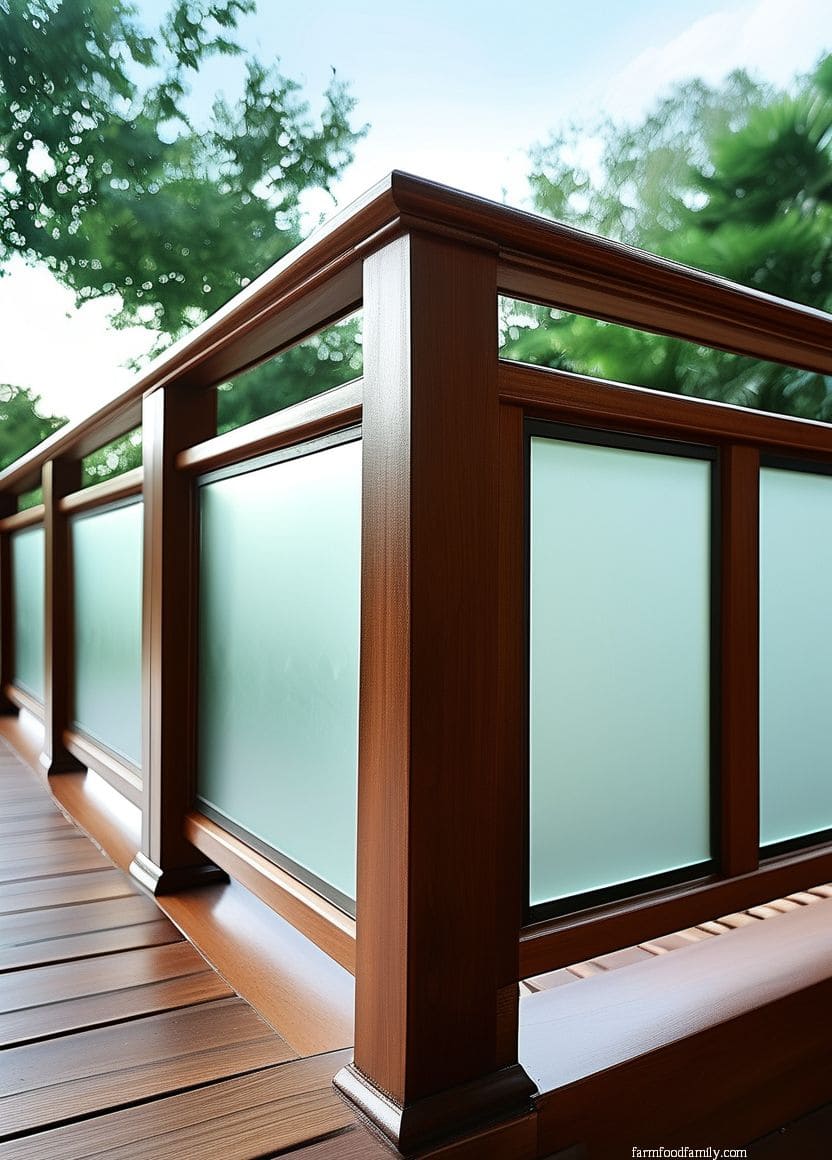
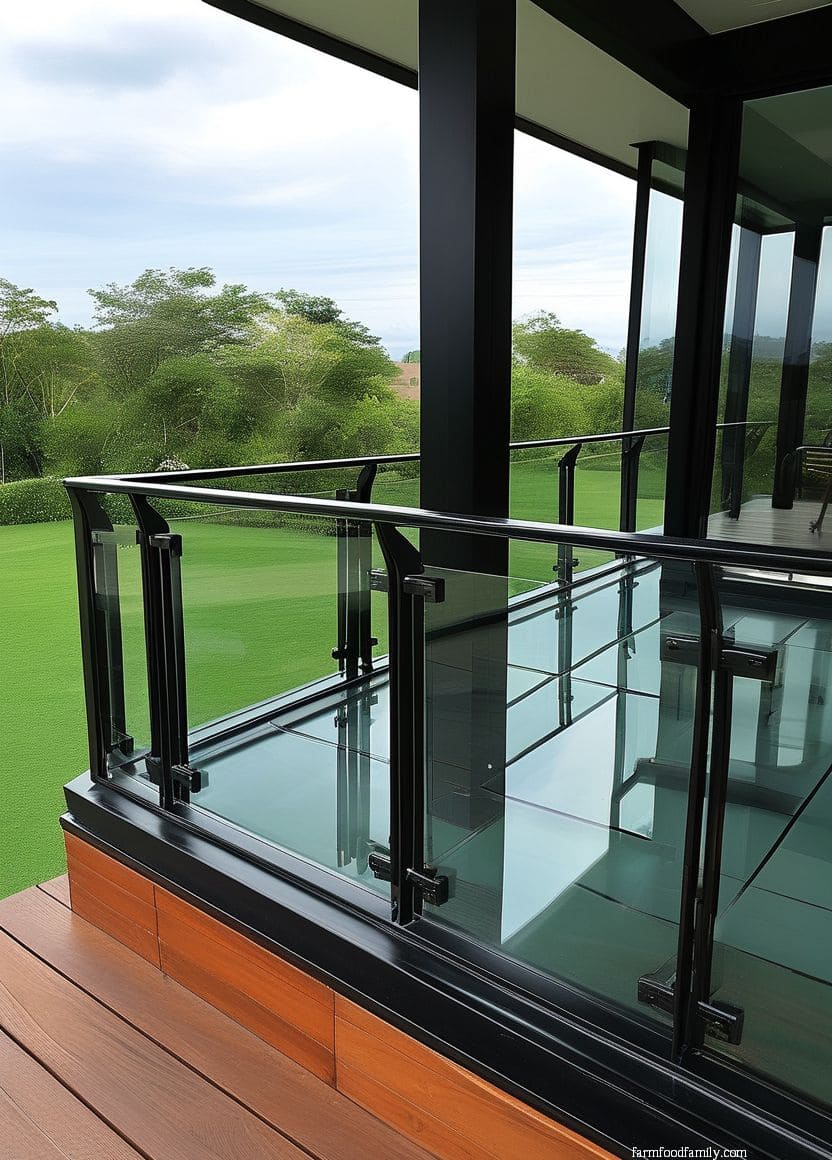
10. Plexiglass Railing
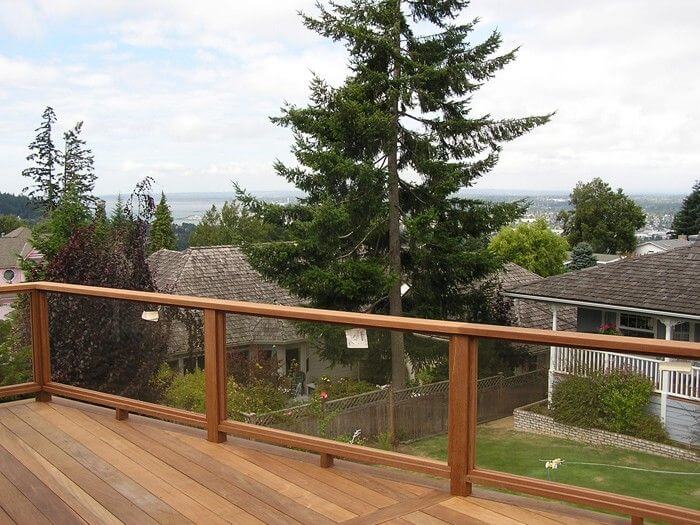
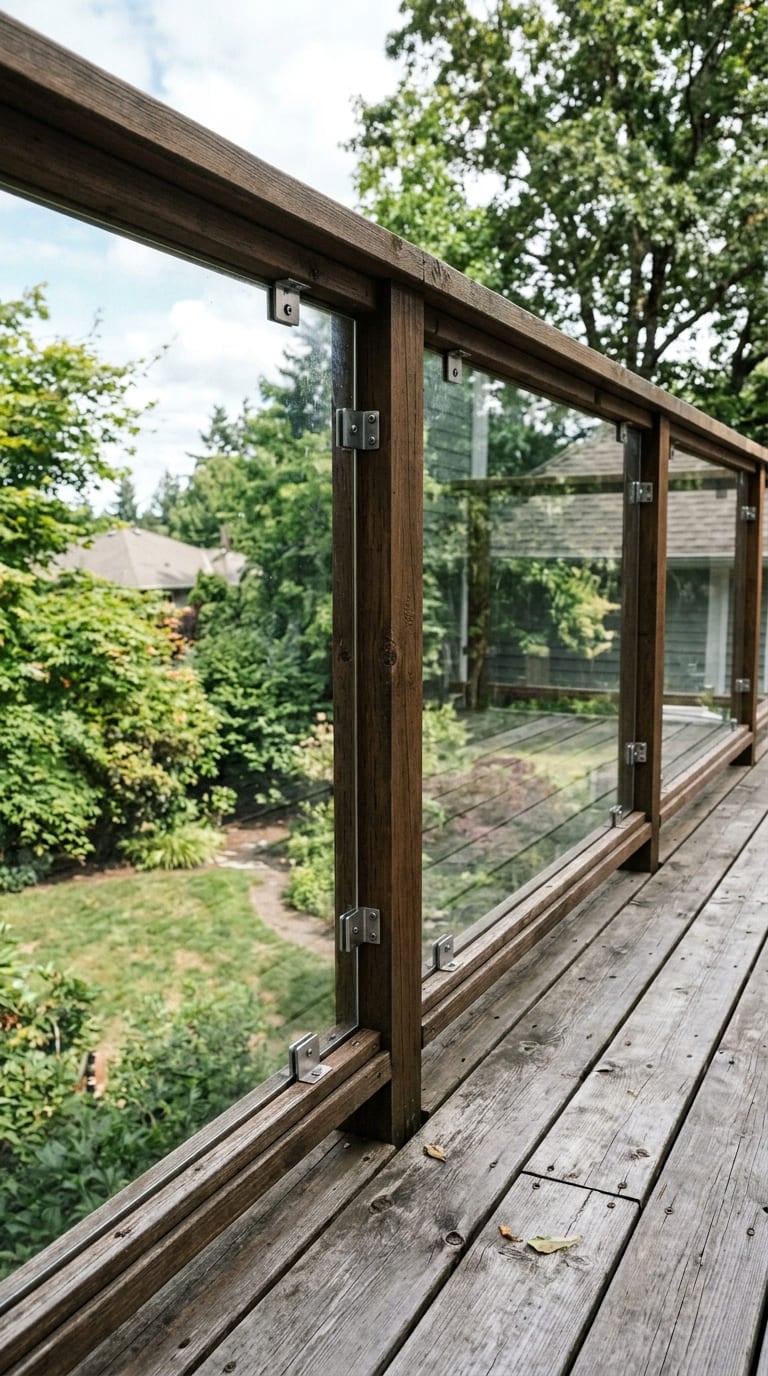
For anyone who wants an unobstructed view without giving up a railing entirely, plexiglass panels solve that directly.
The average homeowner spends $616/year on yard fixes that don't address the real problem. Find out what yours actually is — before you spend another dollar.
Take the Free QuizIt’s genuinely transparent, keeps the safety barrier in place, and unlike open designs, doesn’t compromise on wind or child safety the way a fully open edge would.
This one is worth having a professional involved in, since panel mounting needs to meet the same load requirements as any other railing infill.
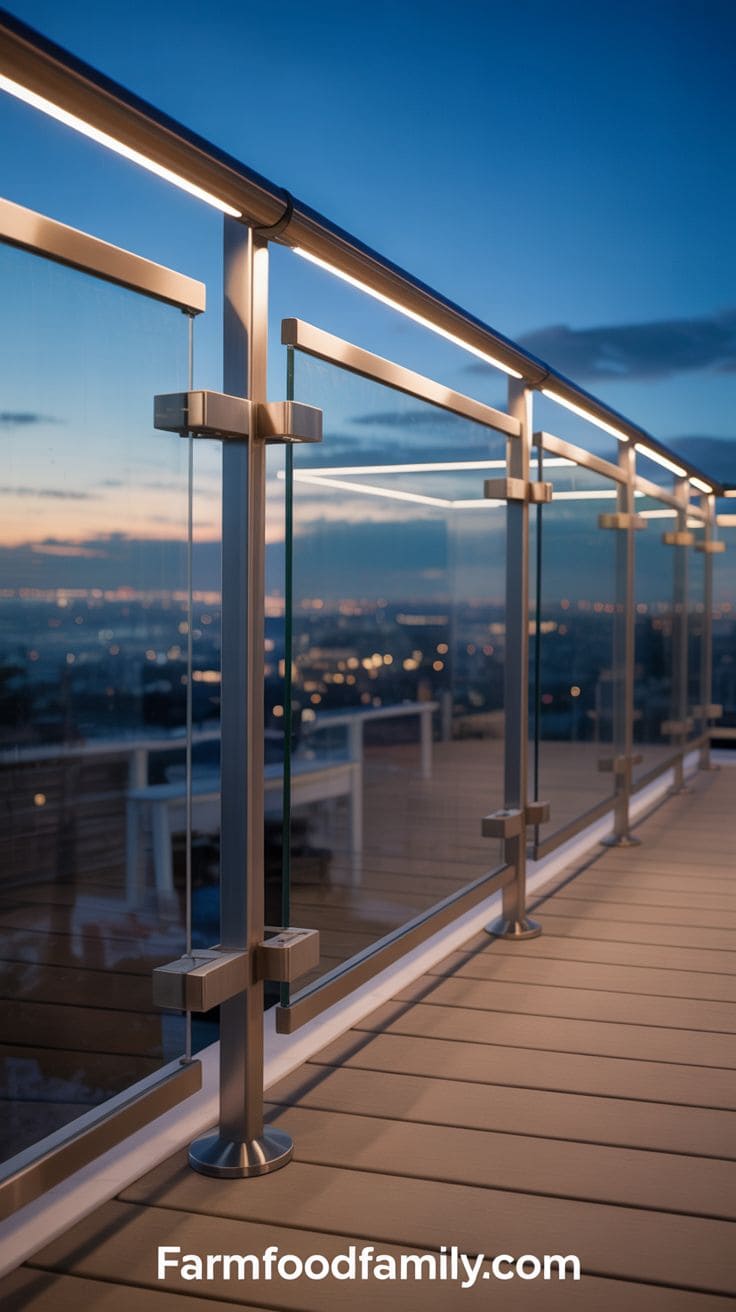

11. Birch Wood Railing
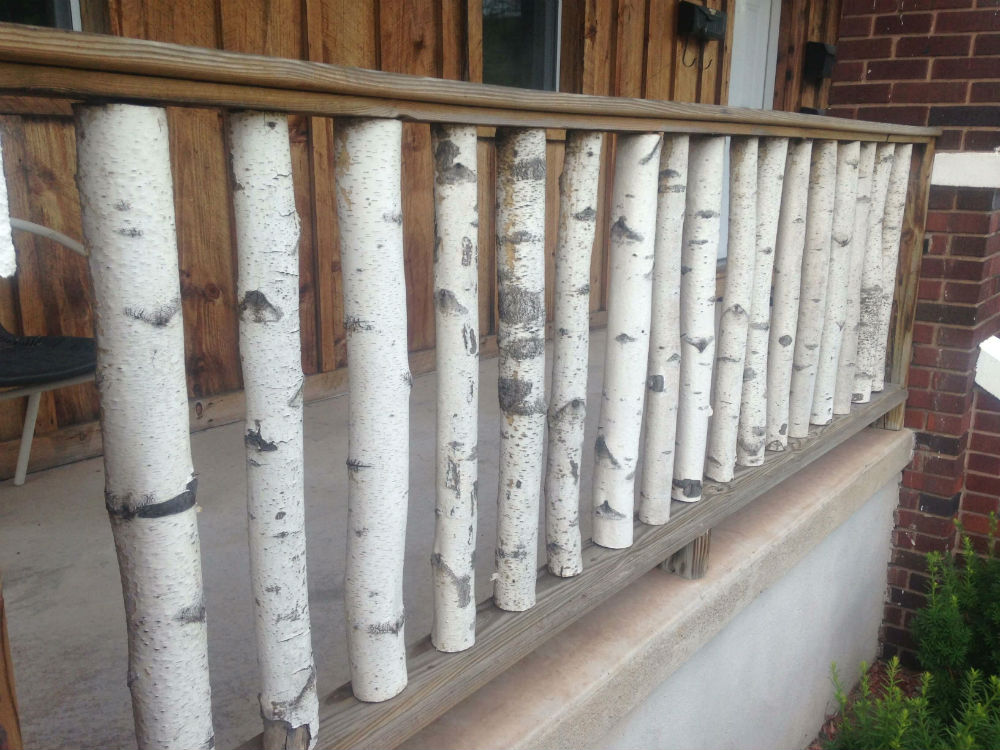
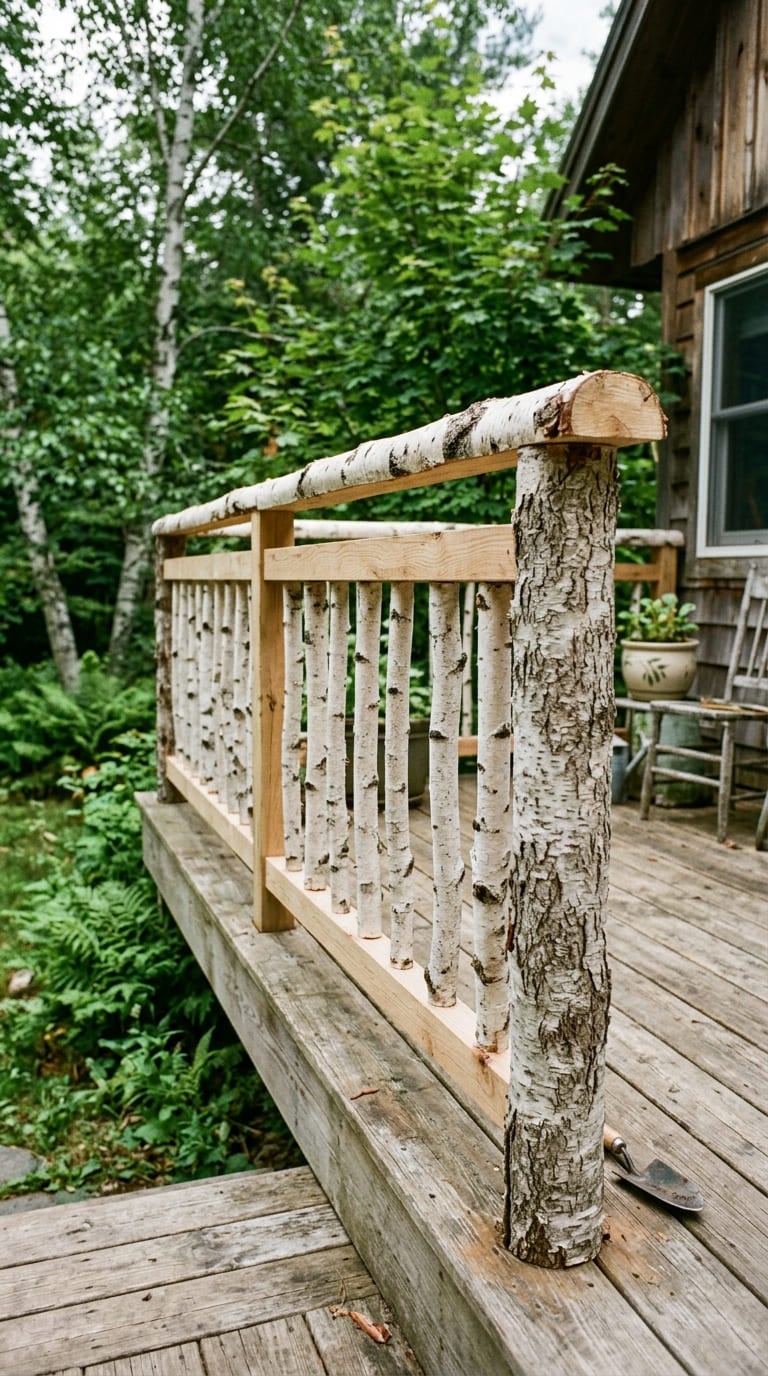
If birch is already on hand, either from a property with birch trees or leftover building material, it makes an inexpensive, attractive railing material. It’s a straightforward way to use material that would otherwise go to waste.
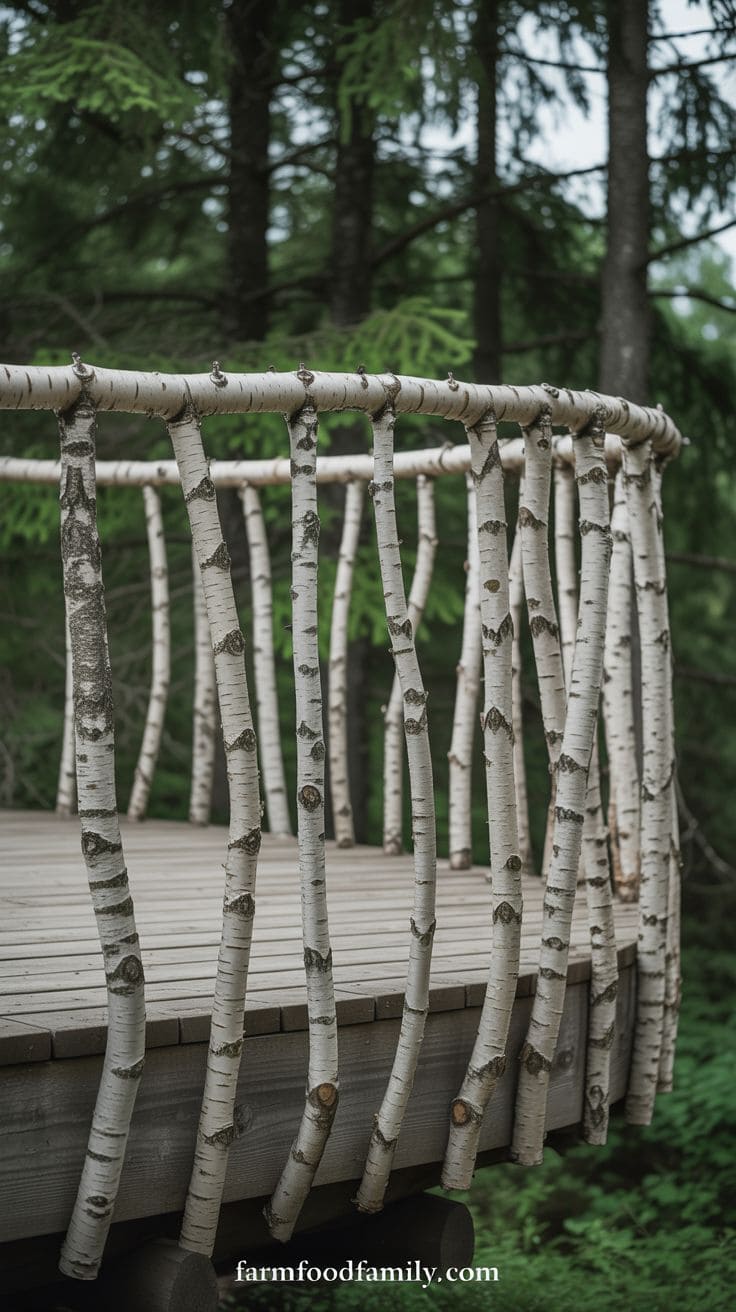
12. The Deck Slide
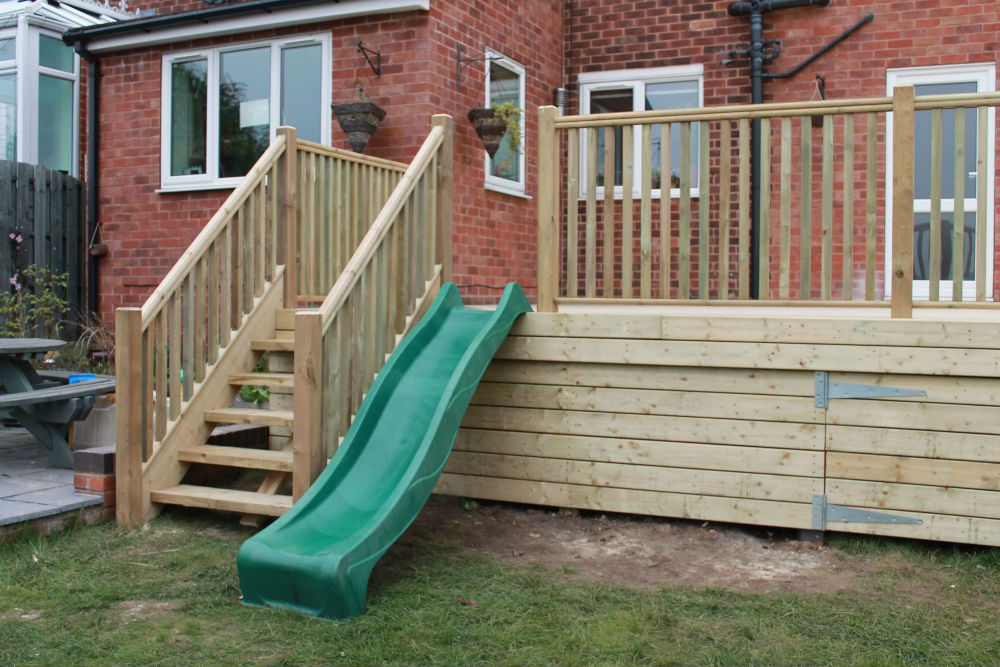
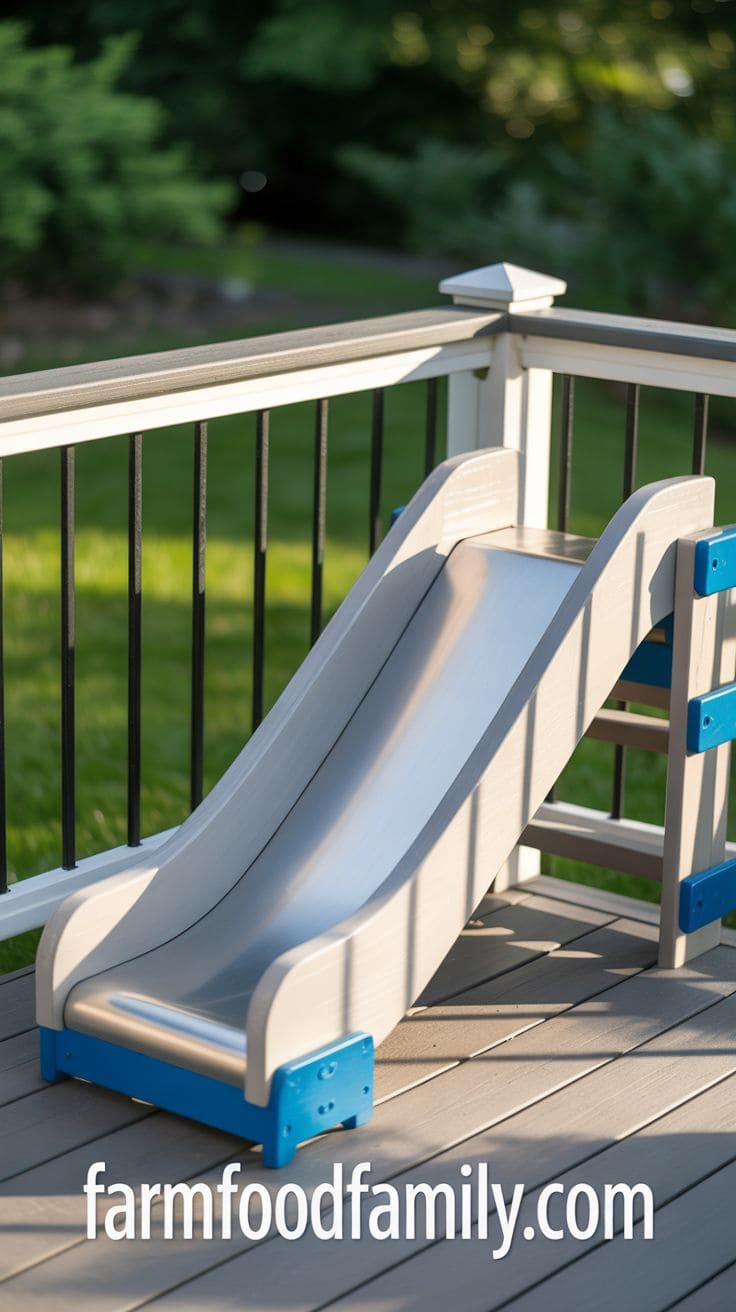
Although this is not a railing design, it is just a way of adding spice to your deck railing. This is a great especially if you have kids because it will help them get down the deck and it will prevent kids from falling down the deck.
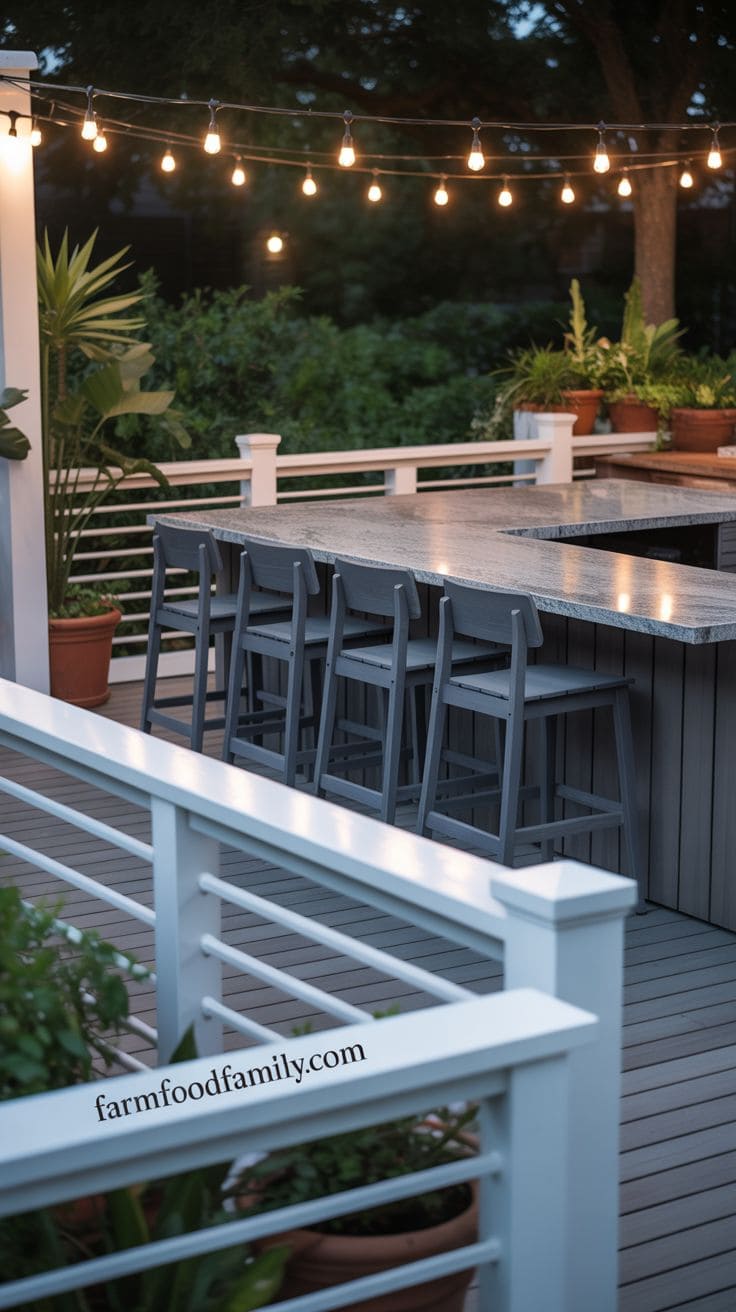
13. Belly-Up Bar Rail
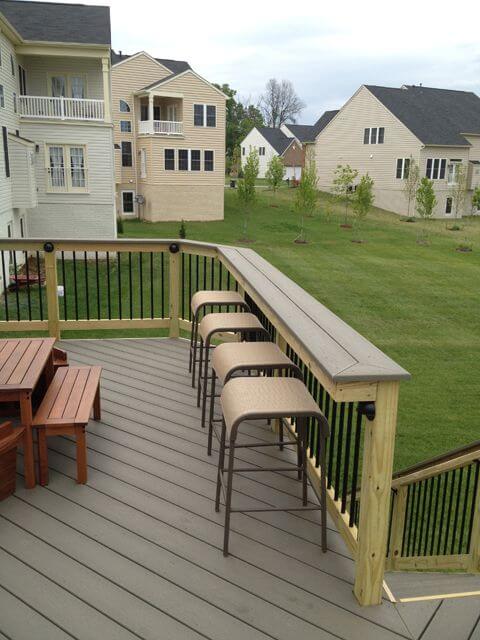
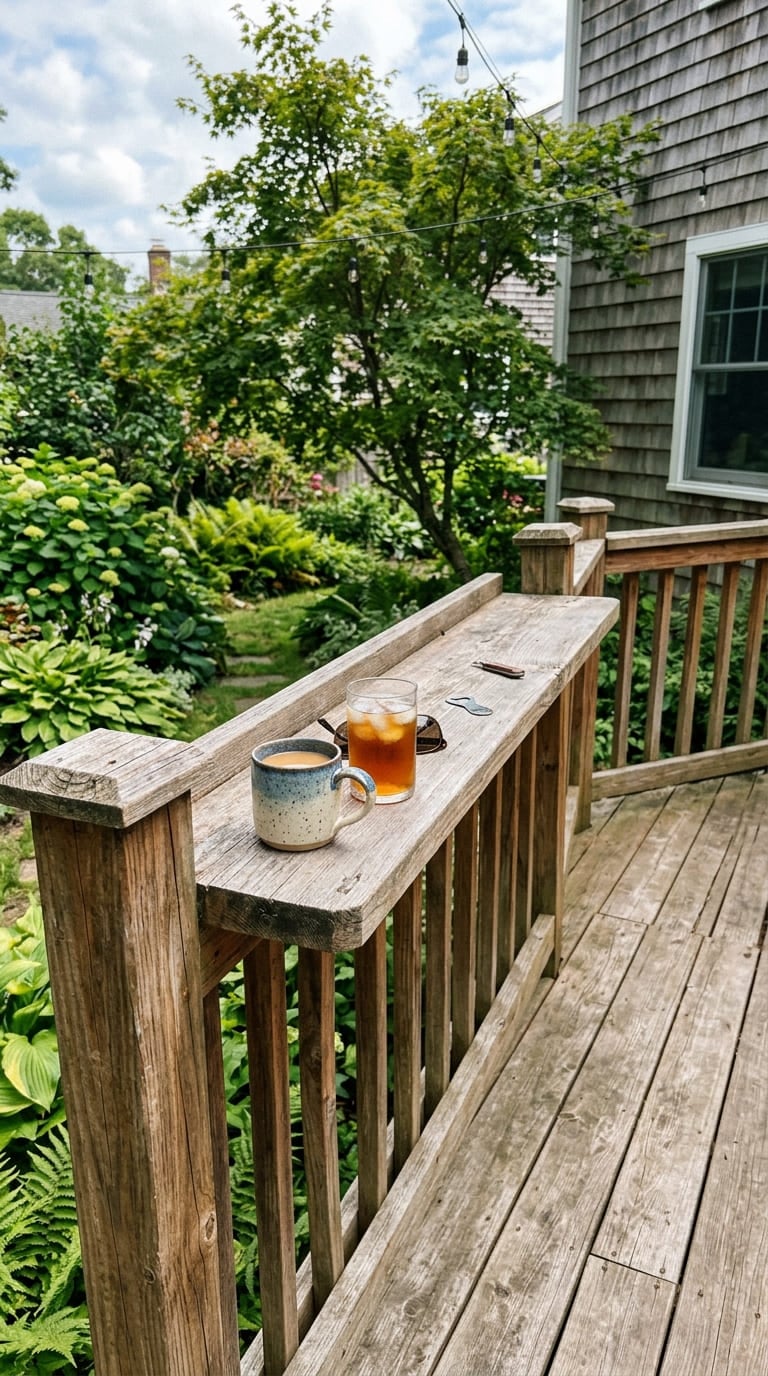
Working a small bar area into the deck railing, a slightly wider top rail with room for a drink, doesn’t require rebuilding the whole railing system. It’s a functional upgrade layered onto an existing design rather than a replacement for it.
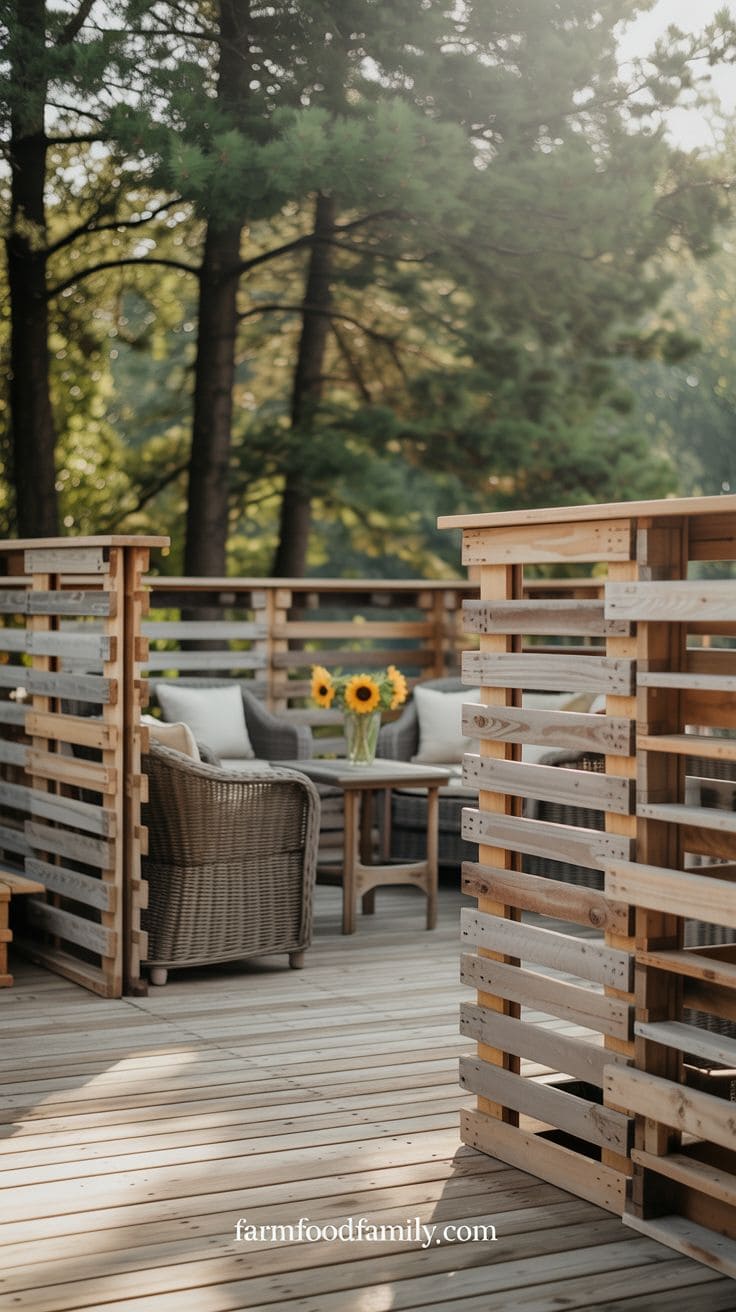
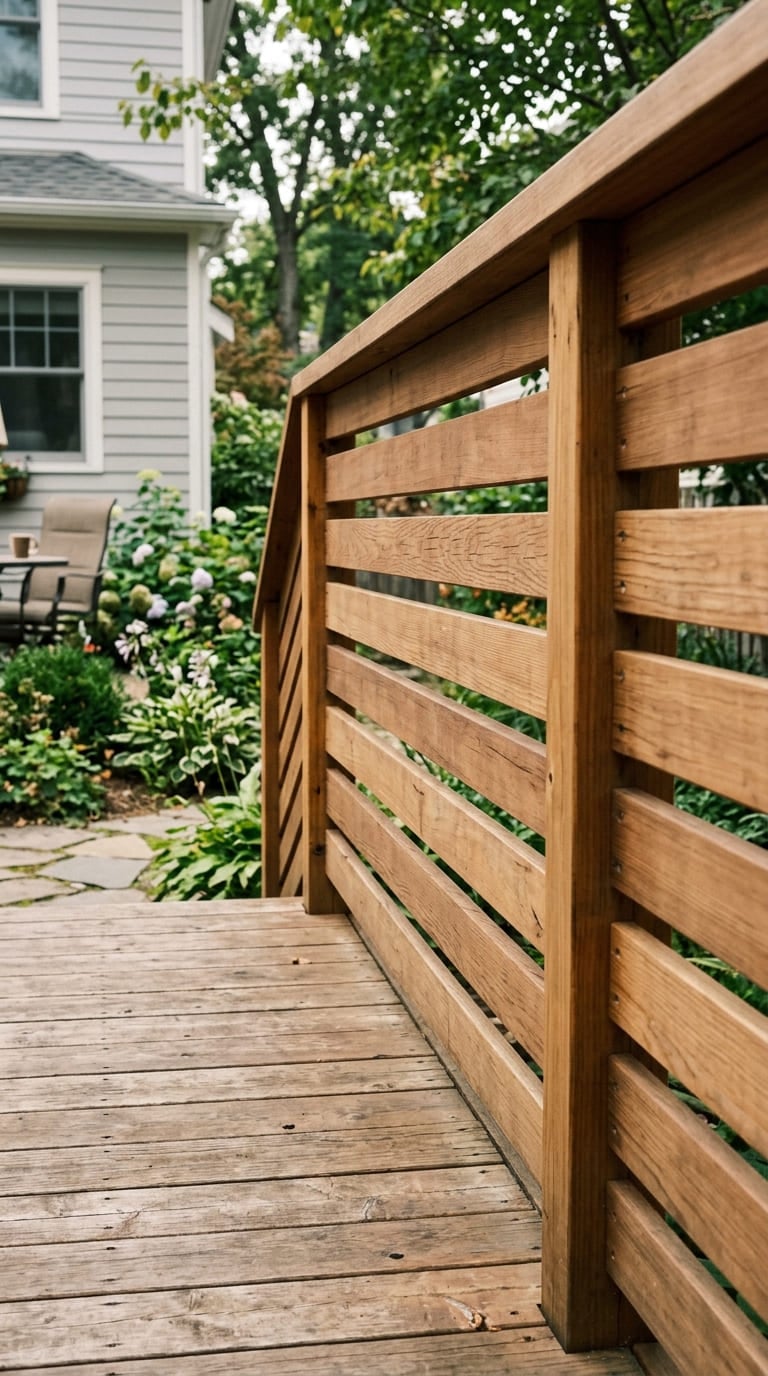
14. Horizontal Deck Railing
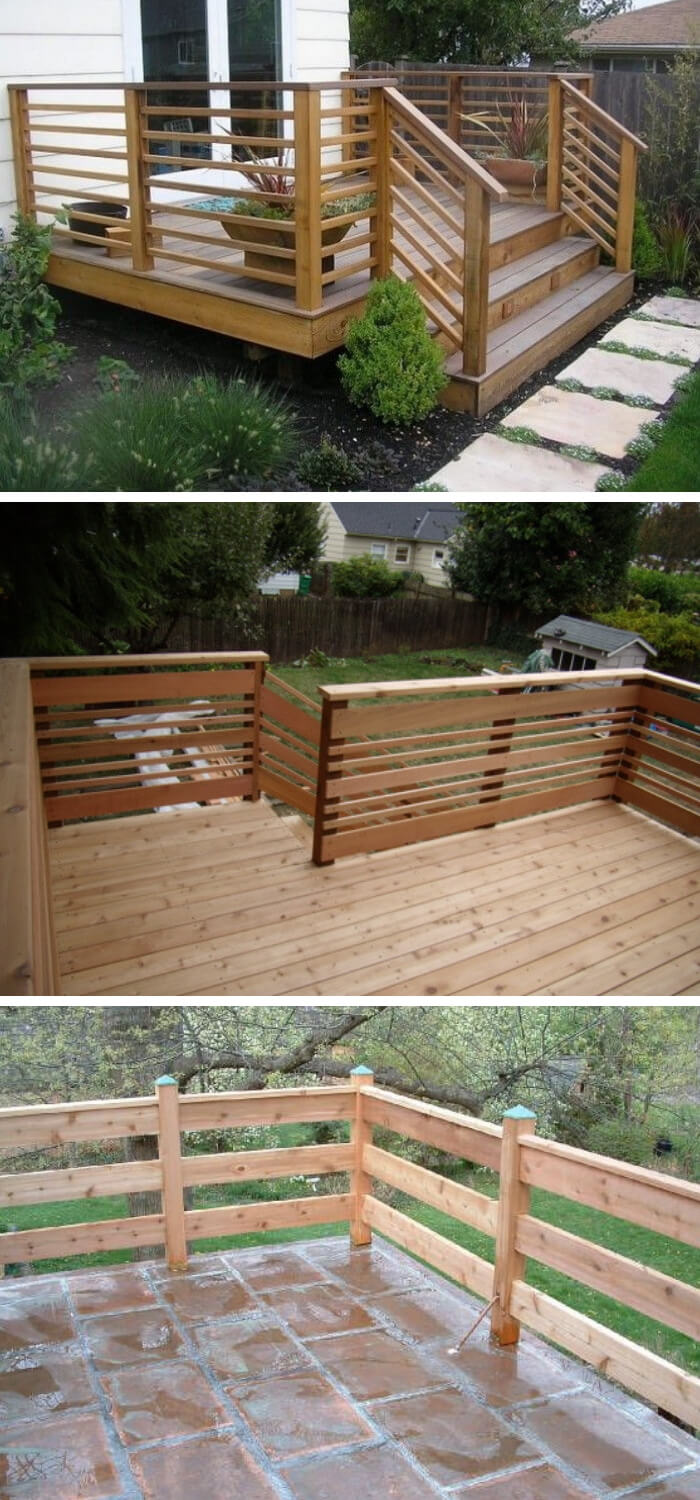
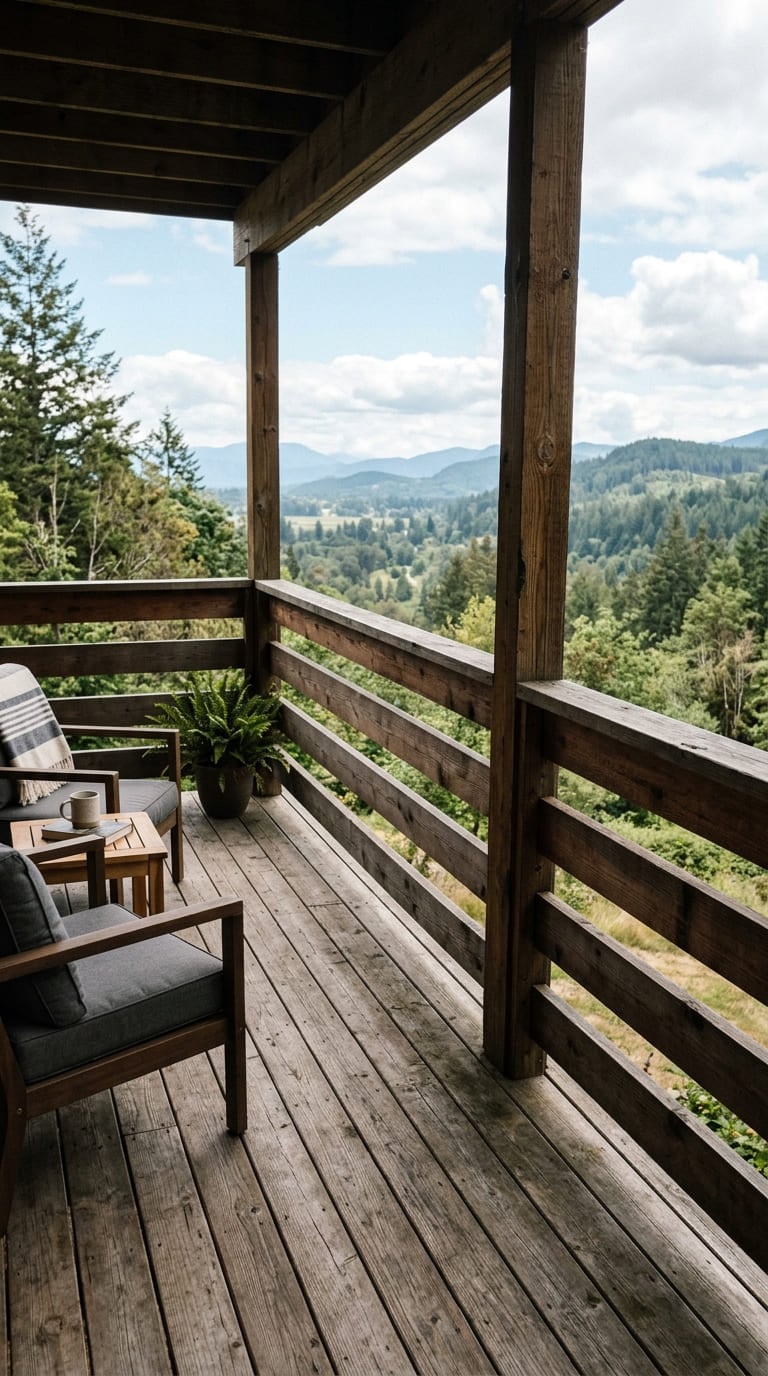
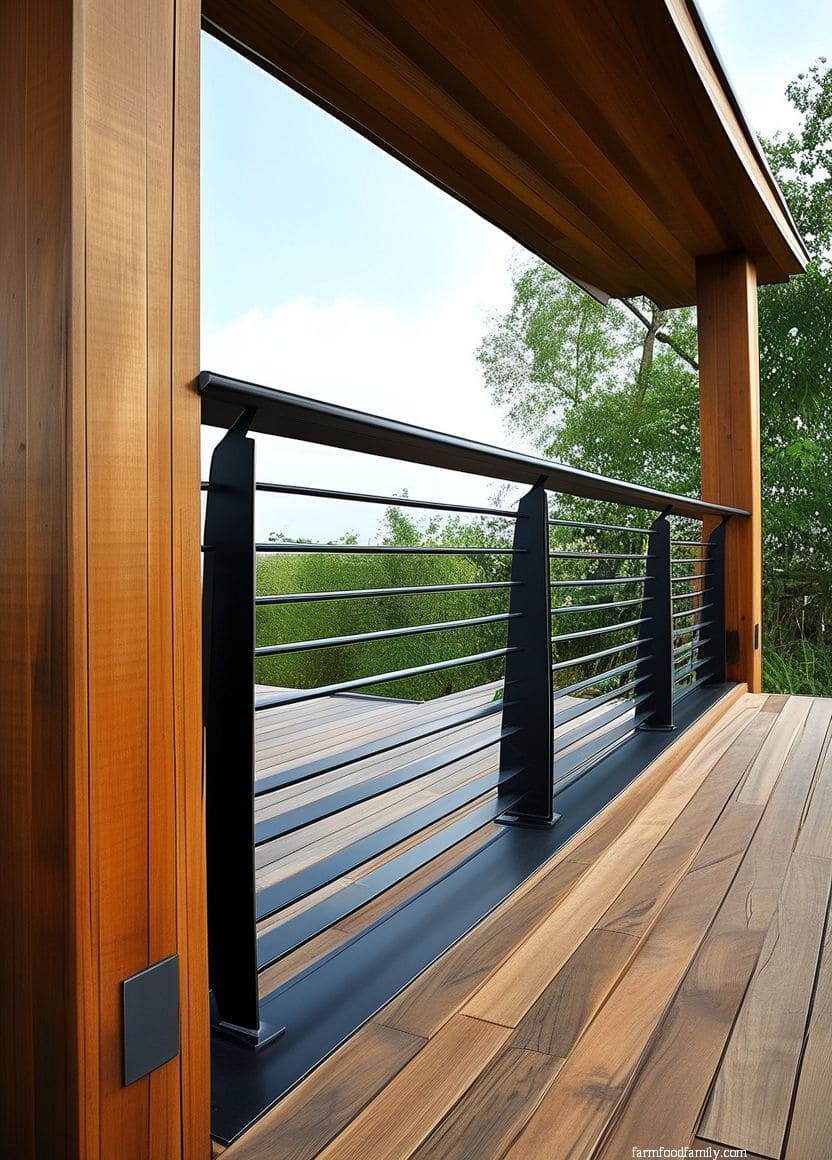
Thick, horizontal boards in place of standard vertical spindles read as noticeably more modern, and the wider surface area brings a bit of visual warmth that’s especially welcome in cooler months. It’s also one of the more requested styles for a reason: a wide, unobstructed horizontal line tends to make a deck’s view feel more open than a busier vertical pattern does.
One real caveat worth checking before committing to this look: national model codes (IRC and IBC) don’t restrict horizontal orientation itself, the standard 4-inch opening rule applies the same way regardless of orientation. But a handful of cities, including Chicago, Baltimore, Pittsburgh, and Washington D.C., restrict or ban horizontal railings specifically over concerns that horizontal members are easier for a small child to climb, sometimes called the “ladder effect.” Worth a quick check with the local building department before committing to this style.
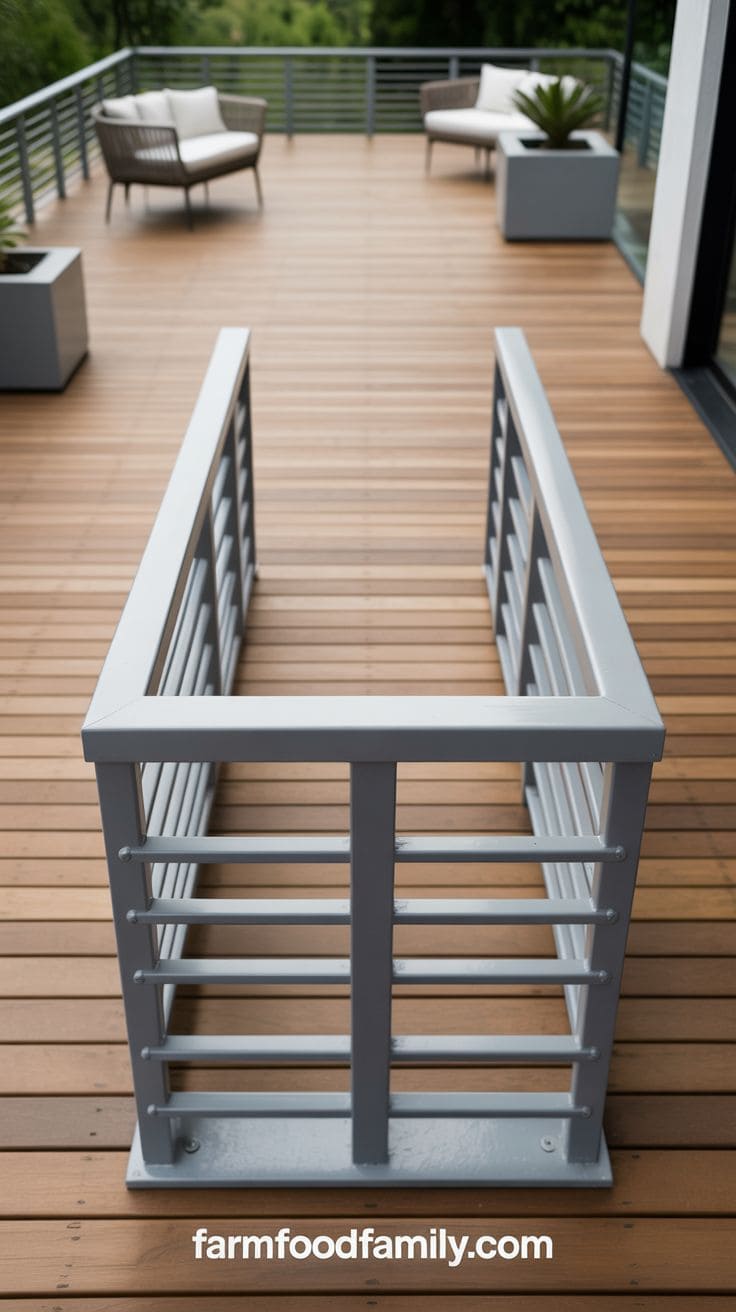
15. The West Village Terrace Railing
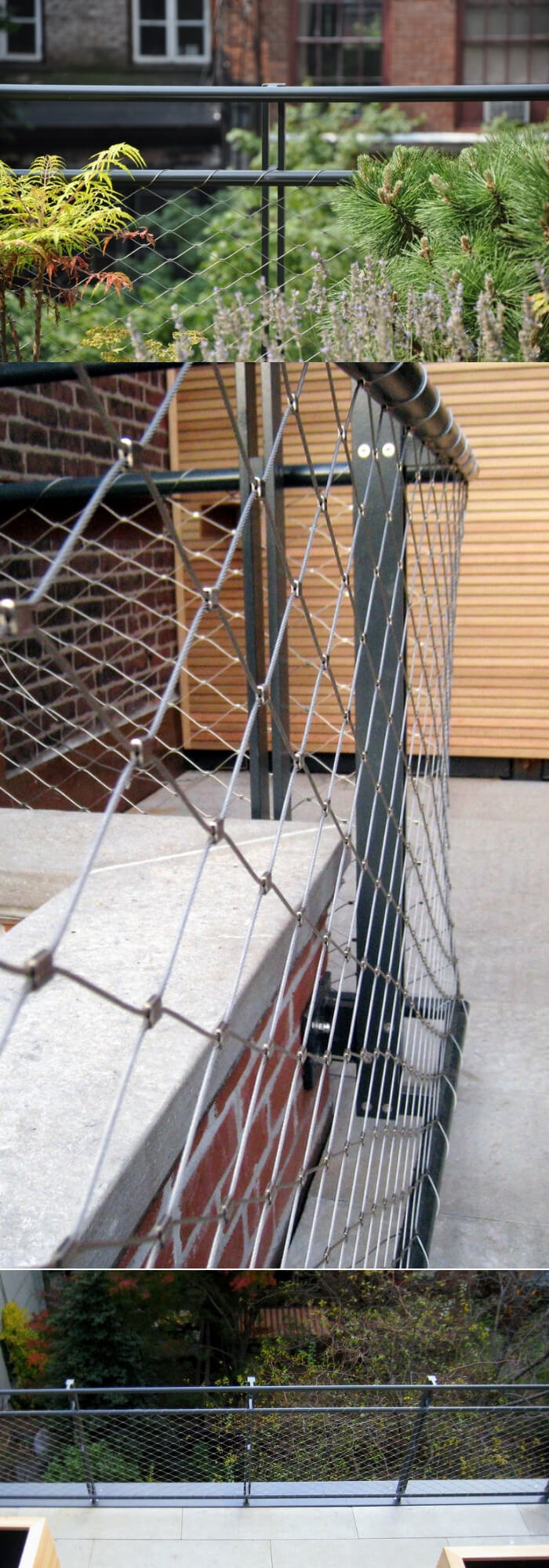
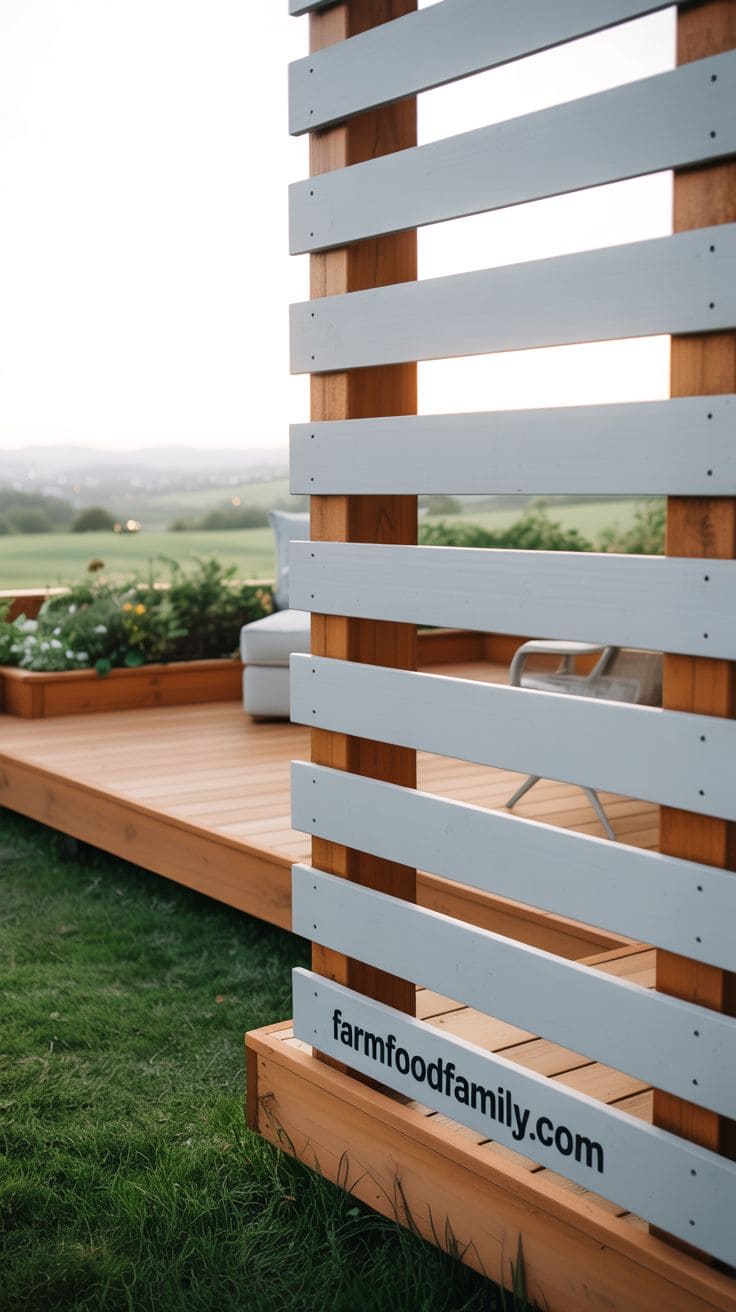
For a lower-budget custom look, this design borrows its proportions from a real commercial terrace railing project rather than a generic template. It’s not the easiest build on this list, but it’s genuinely doable as a DIY project, and it holds up well over time.
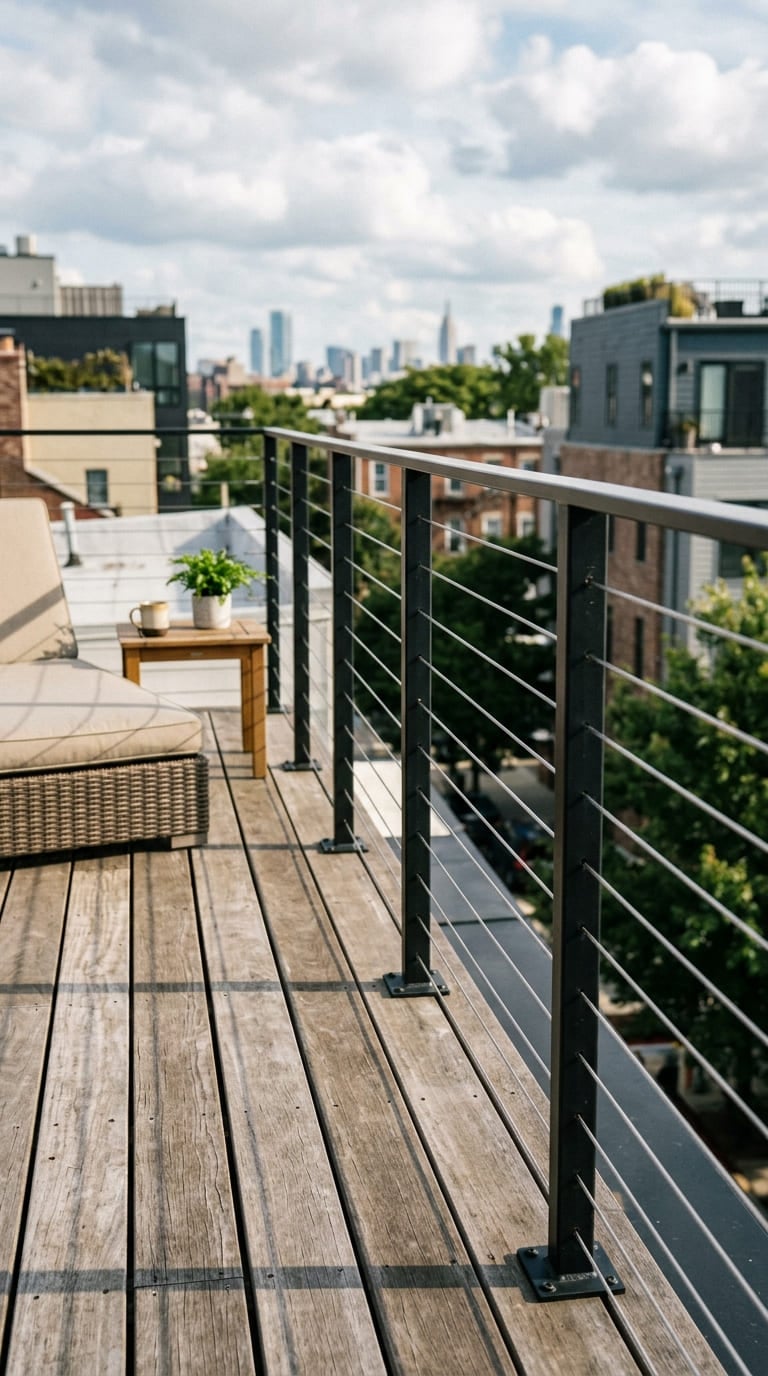
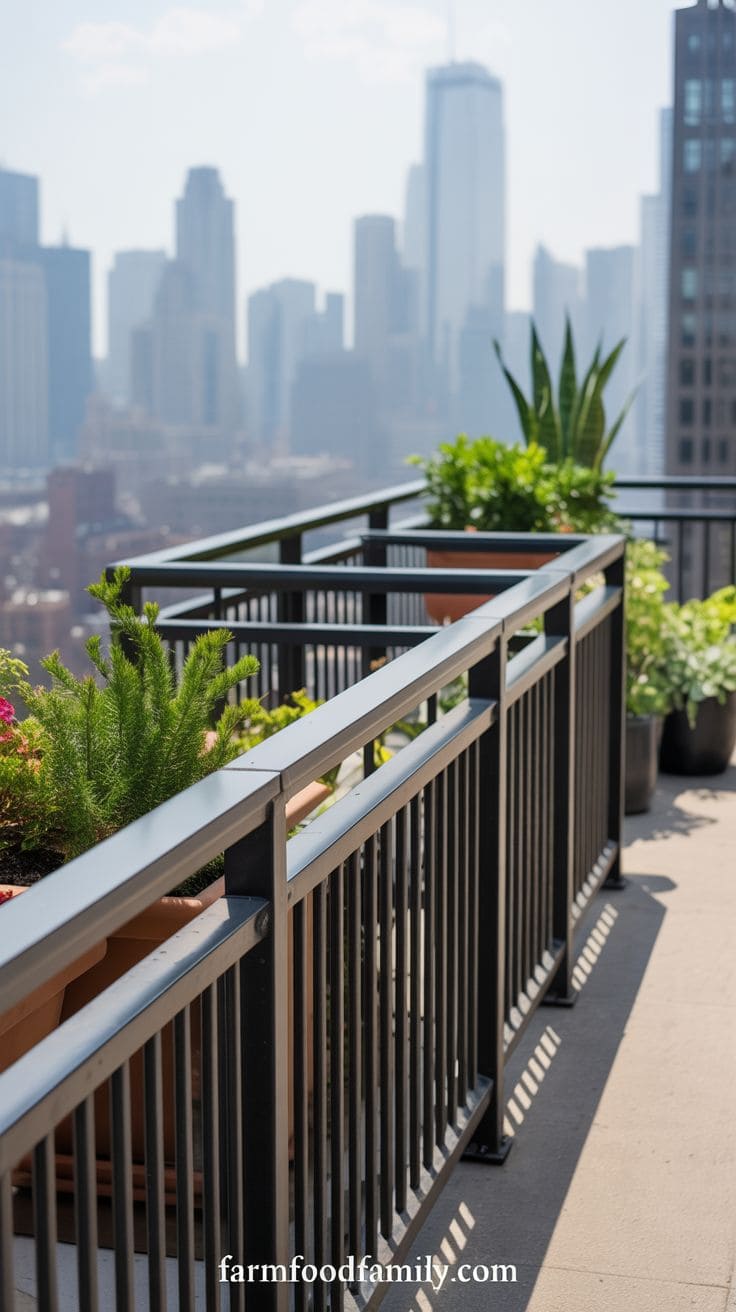
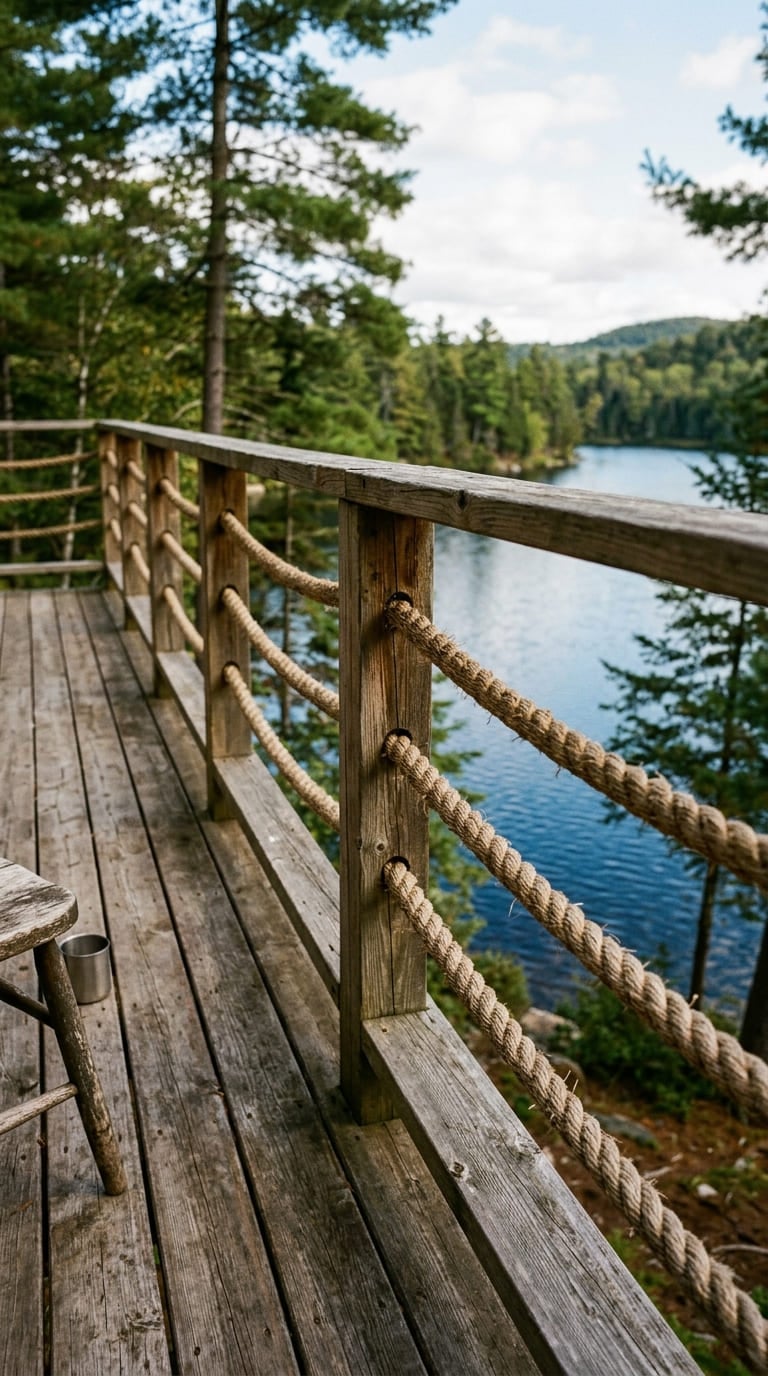
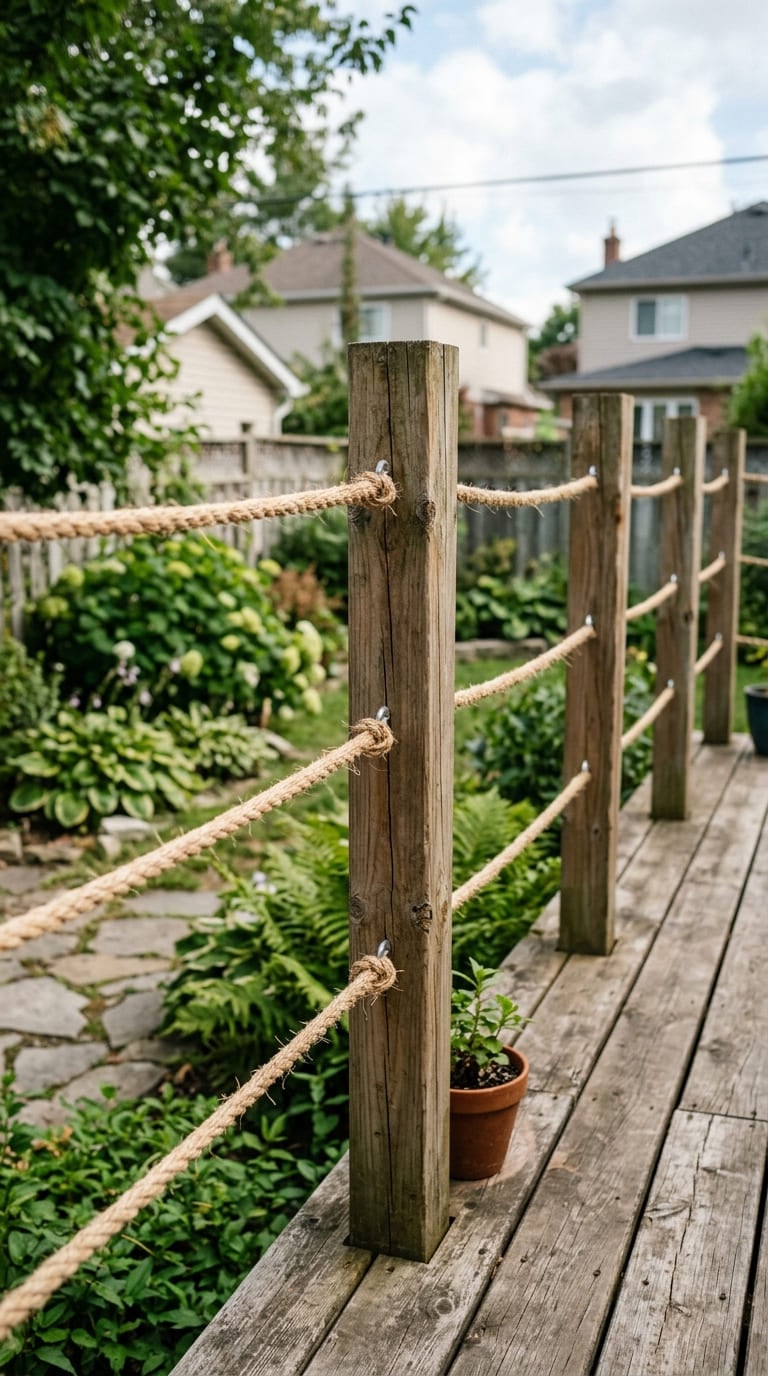
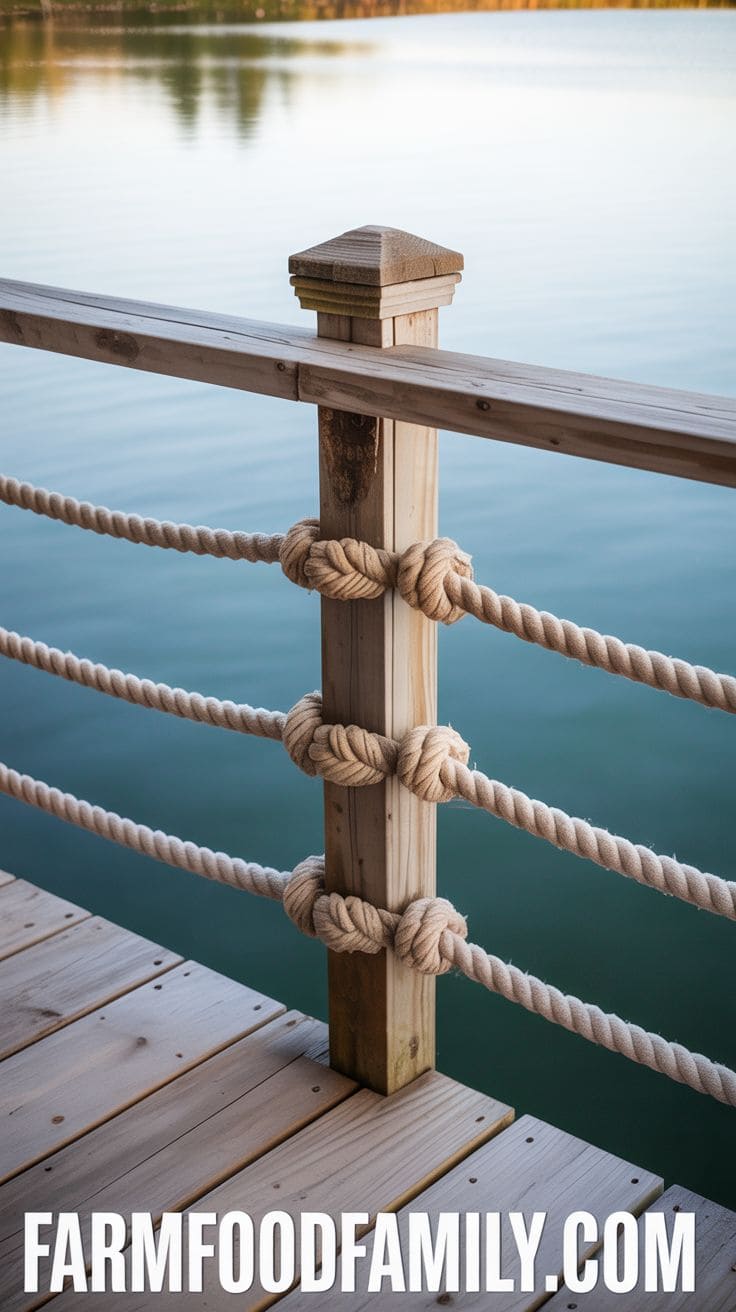
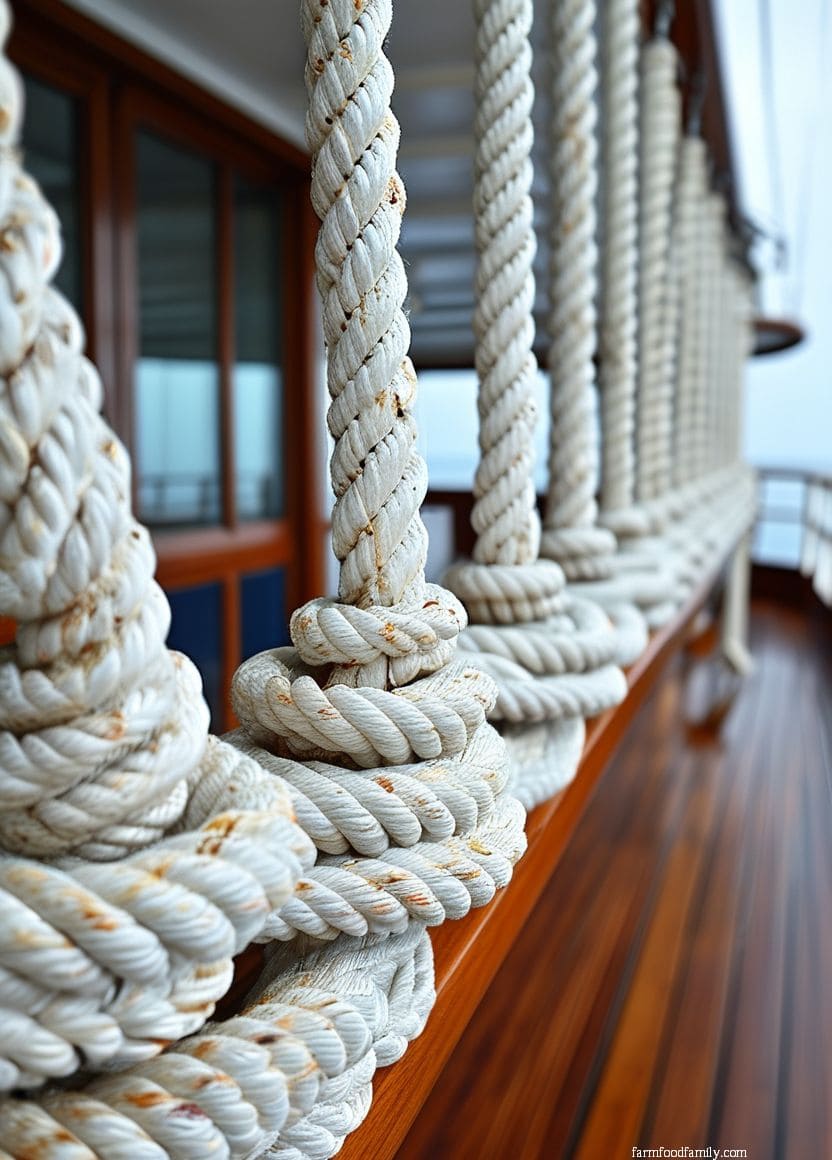
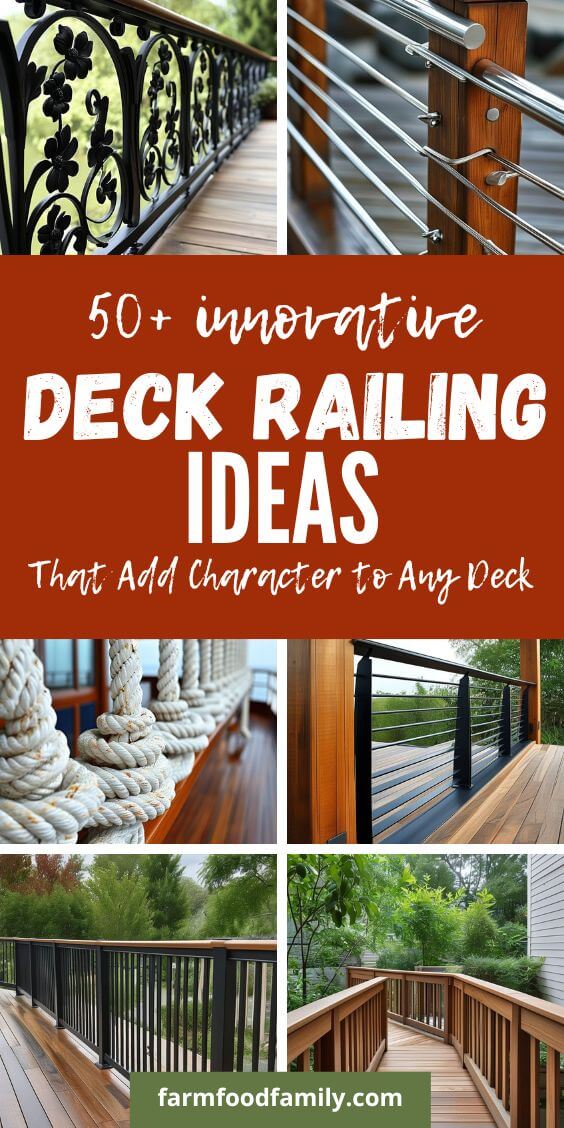
16. Thick Rope Railing
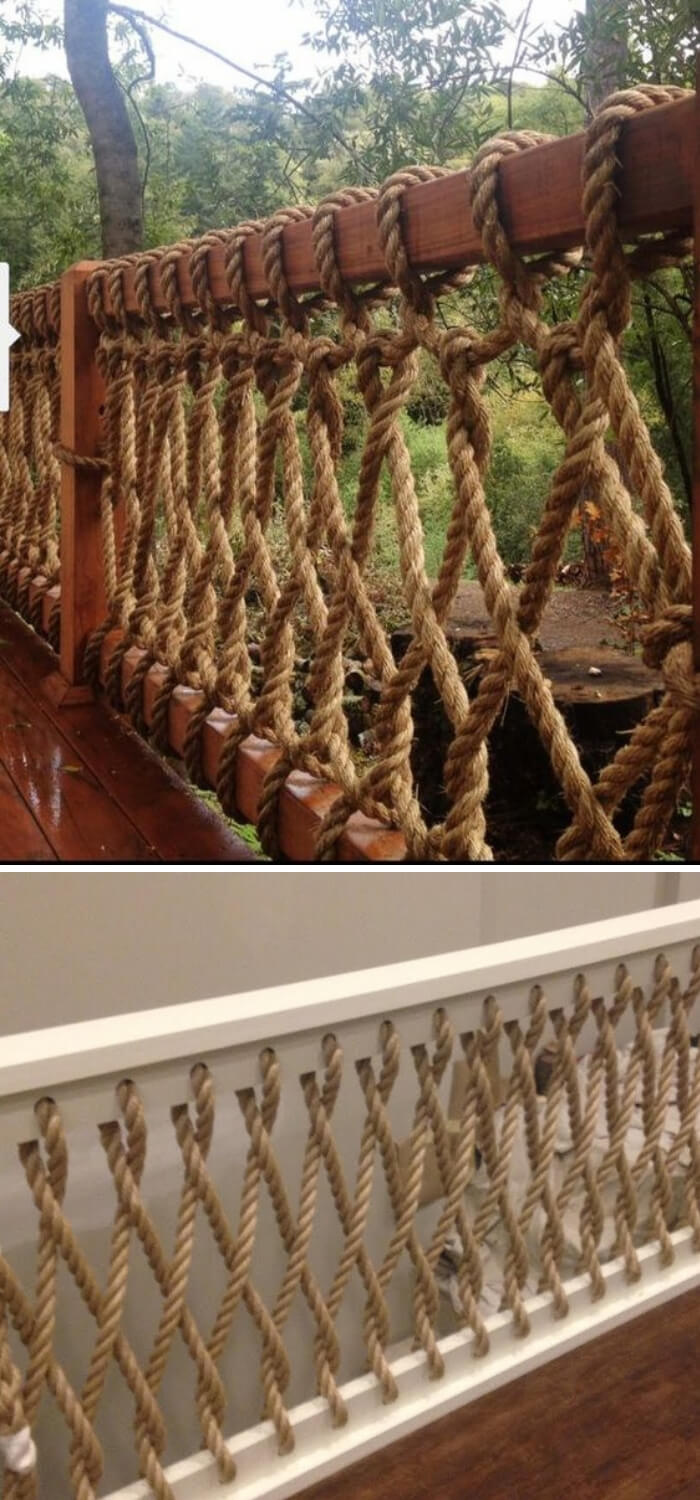
Rope railing, built with substantial marine-grade rope rather than anything thin, suits a lake house or cabin setting especially well.
It’s increasingly common in suburban builds too, where the nautical reference reads as relaxed rather than theme-y.
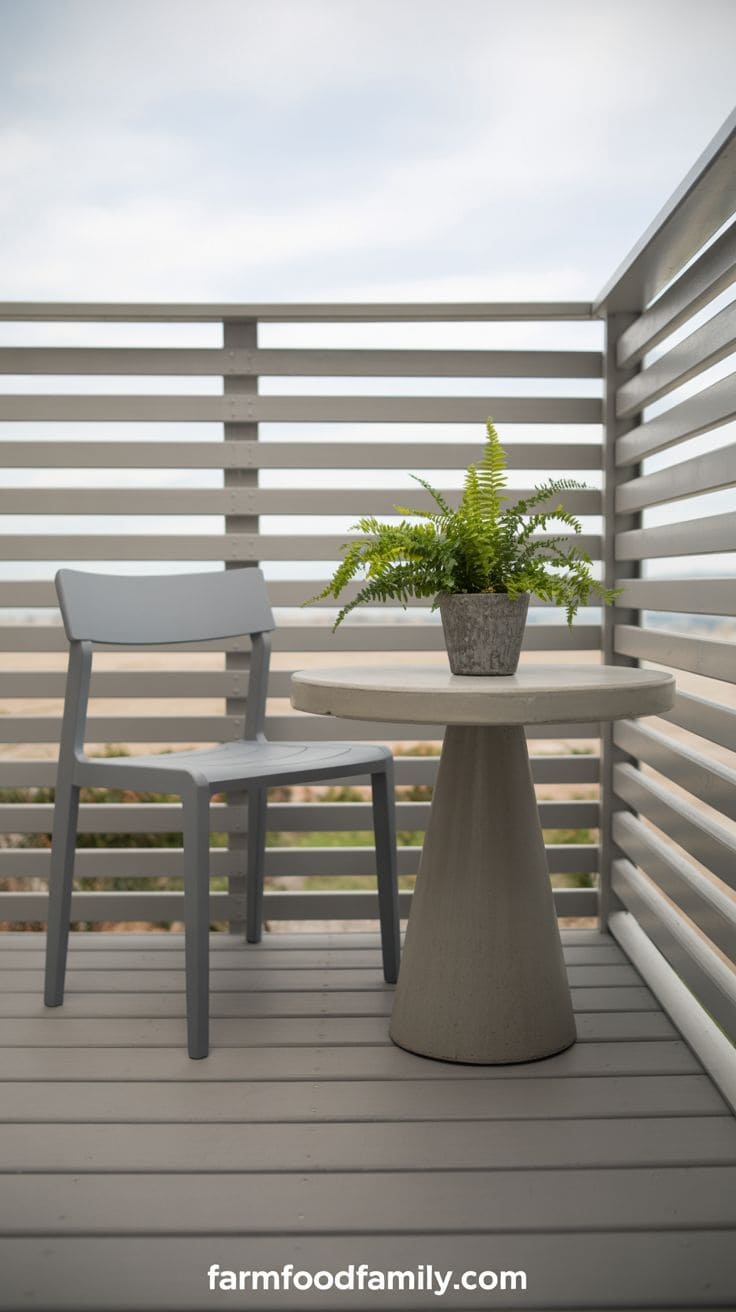
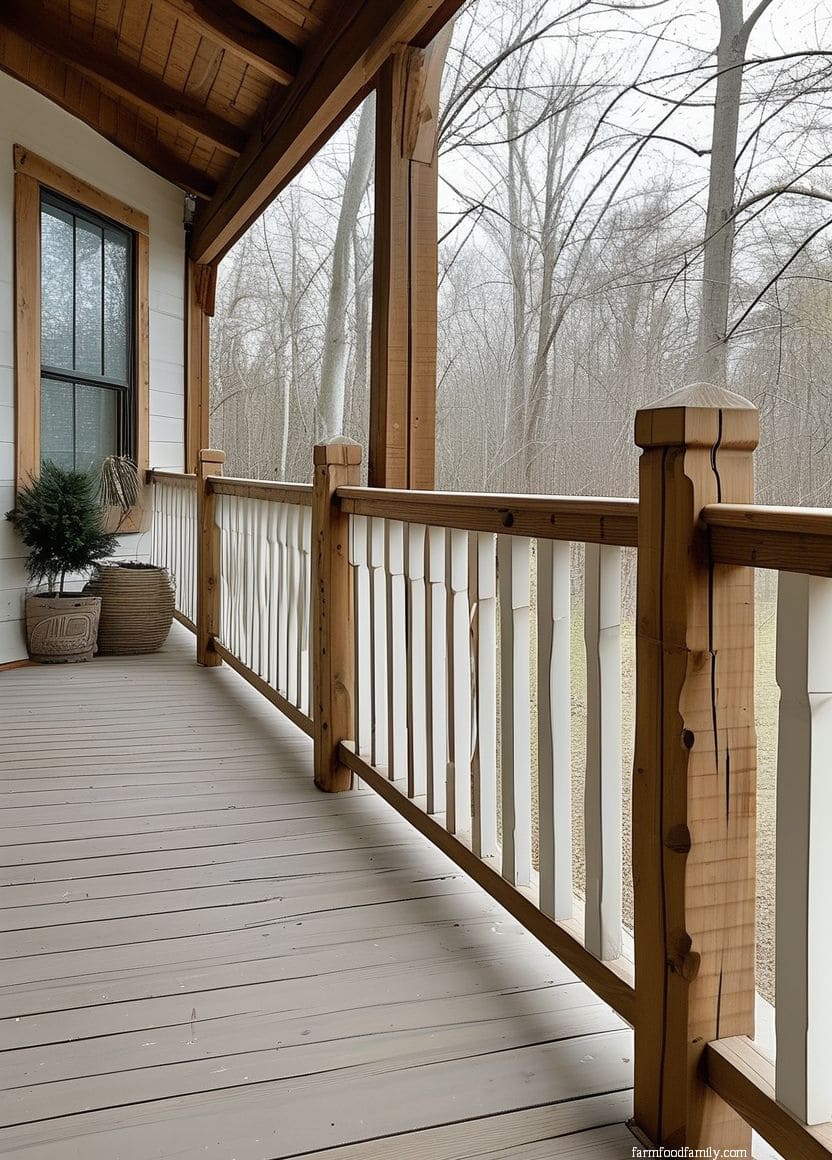
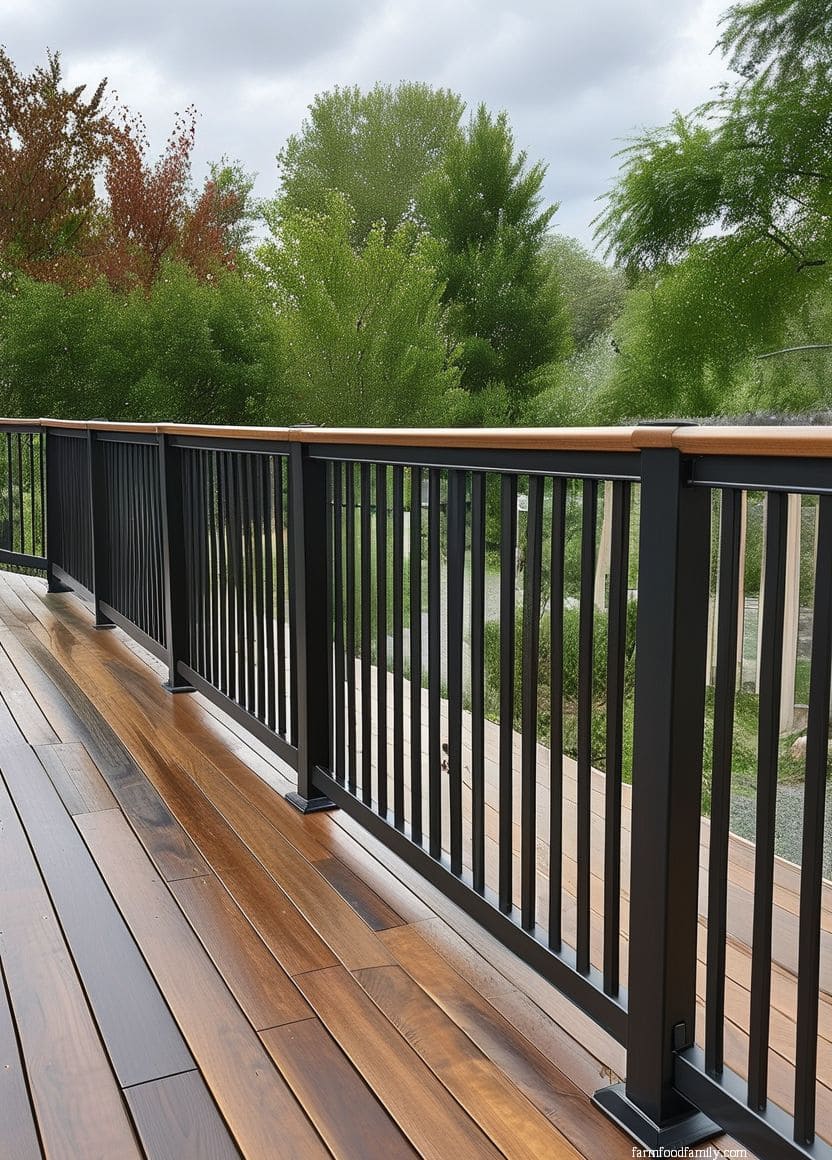
17. Flat Slat Railing
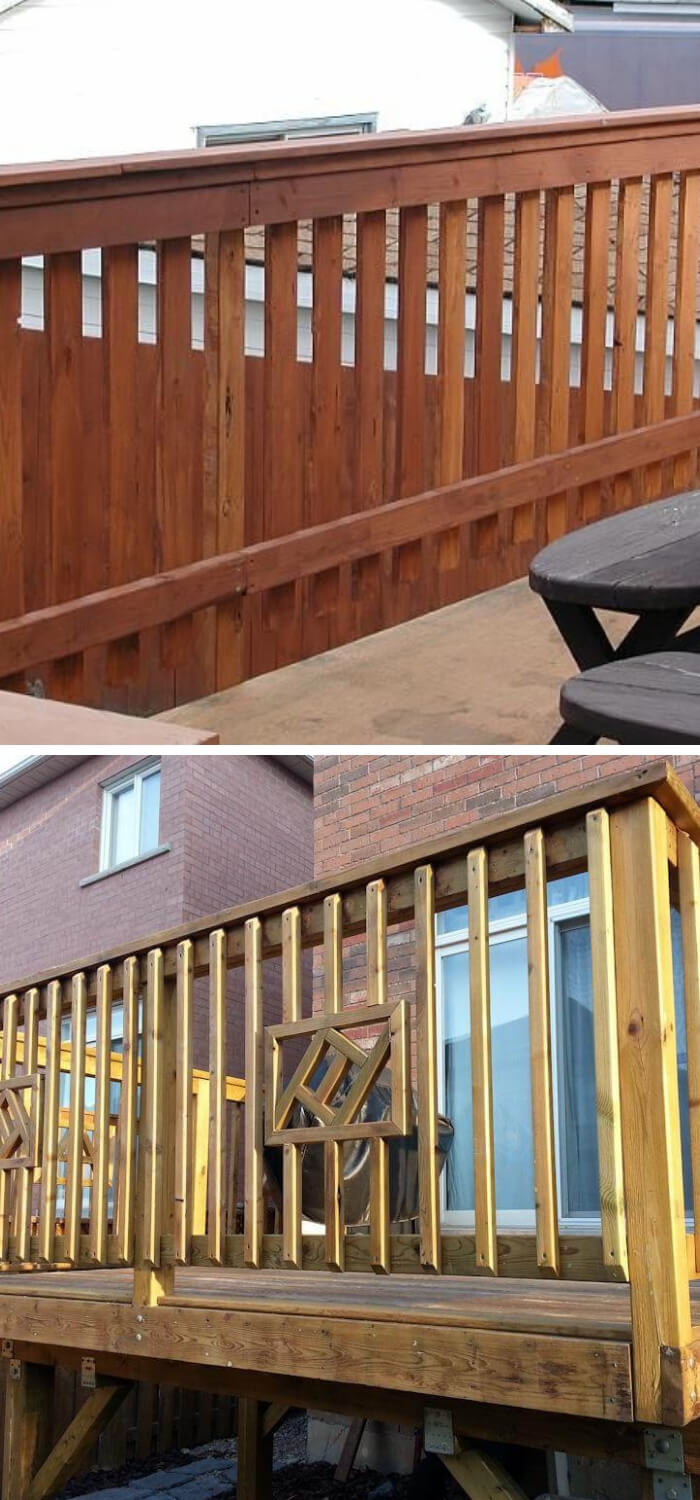
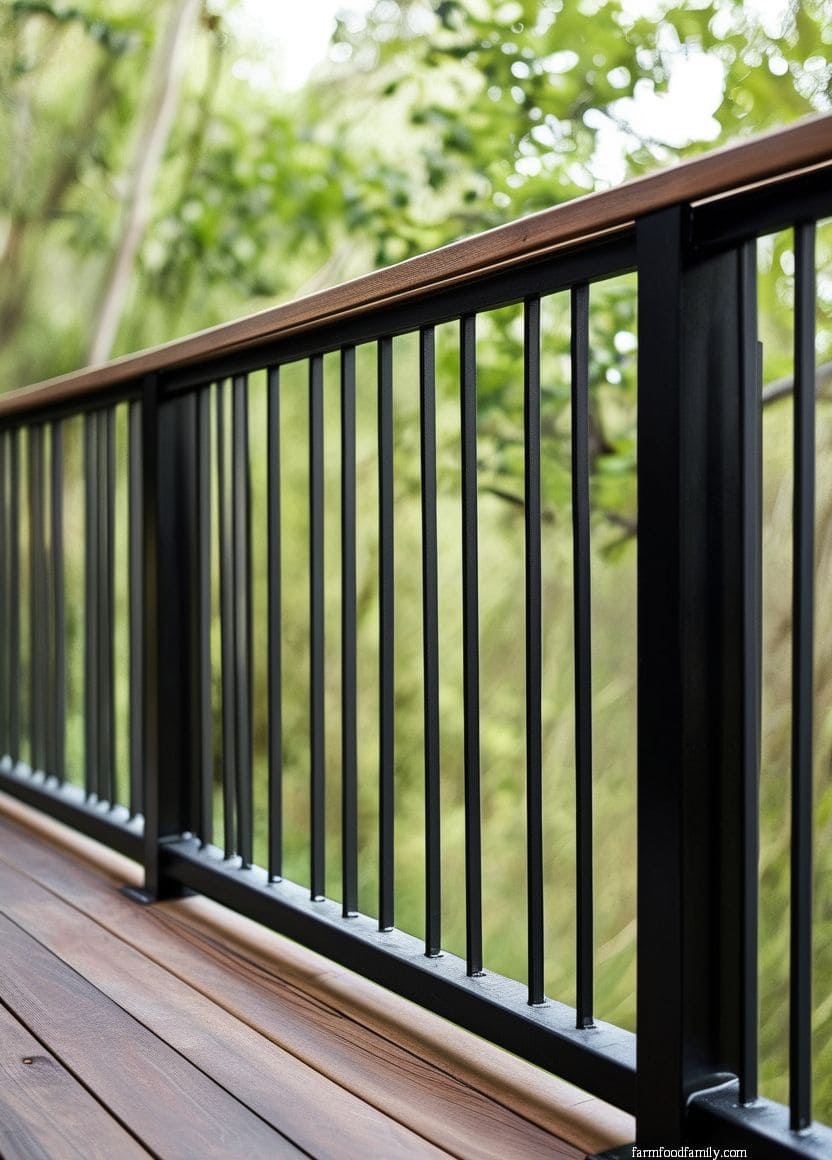
Flat slats are a cleaner, more modern update on the standard round spindle. The change is subtle on paper but reads as a real upgrade in person, moving a deck from a basic, builder-grade look toward something more deliberately designed.
One real installer tip from a builder thread that pulled 84 upvotes: turning the slats 90 degrees, so the flat face rather than the edge faces outward, closes up the visual gap between them and makes it easier to stay within the 4-inch opening limit without adding extra pickets.
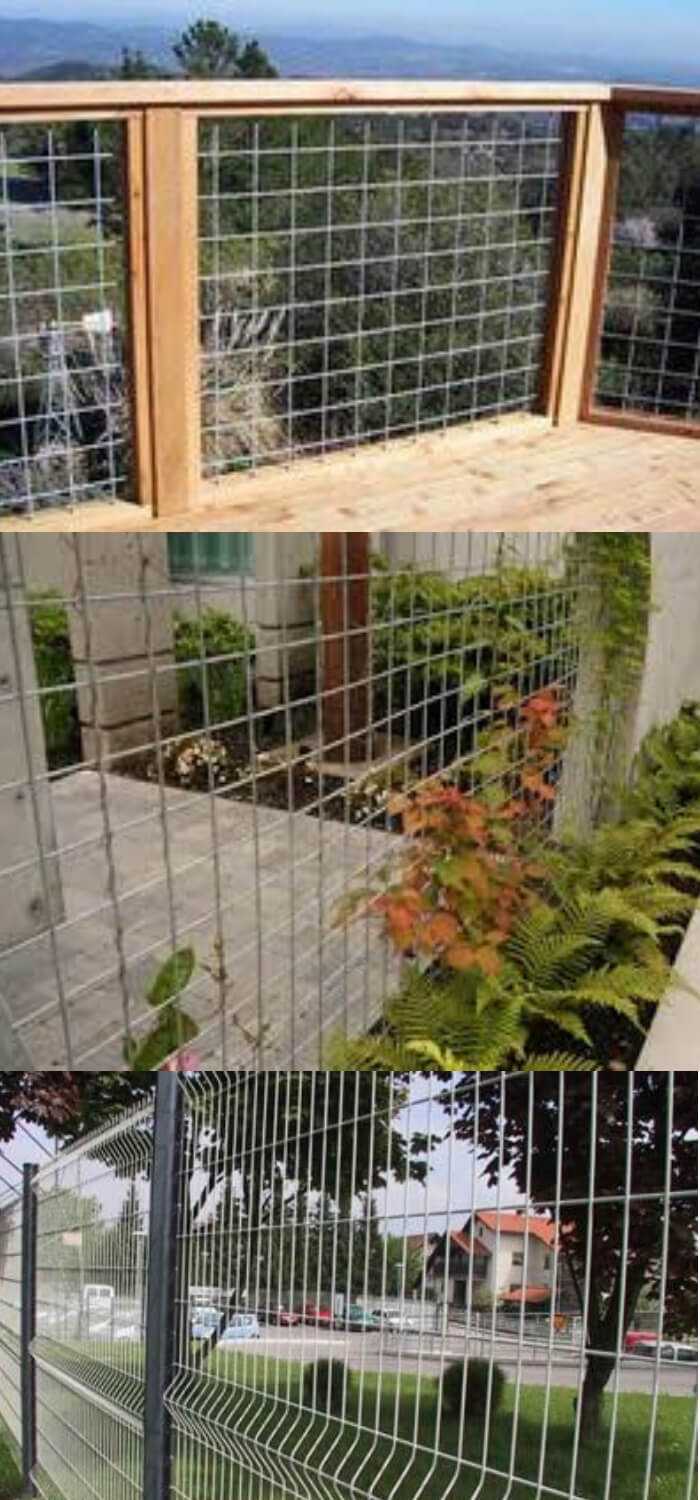
18. Modern Porch Railing With Hog Fencing

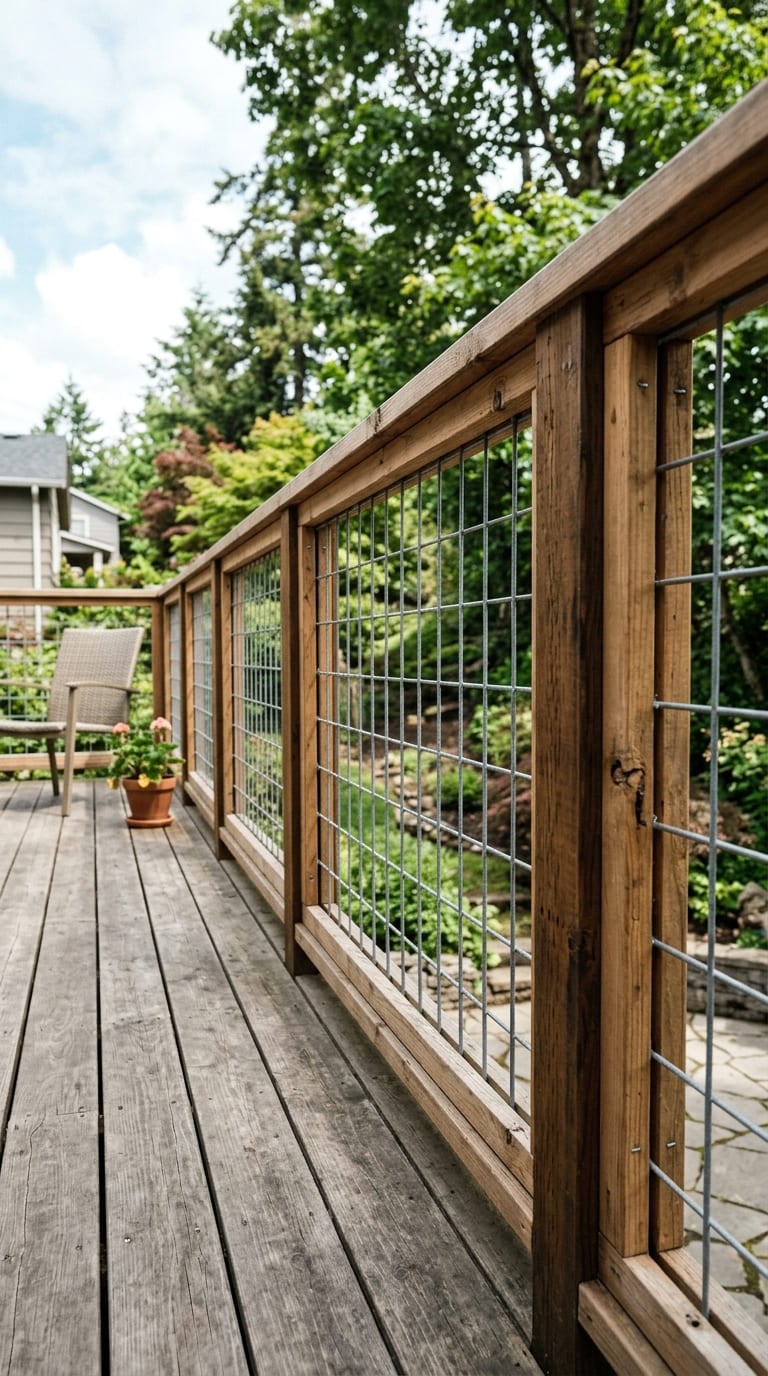
Hog fencing, the galvanized wire panel typically used for livestock enclosures, has become a genuinely popular modern railing infill.
It’s inexpensive, durable, and reads as intentionally industrial rather than makeshift when paired with clean wood or metal posts.
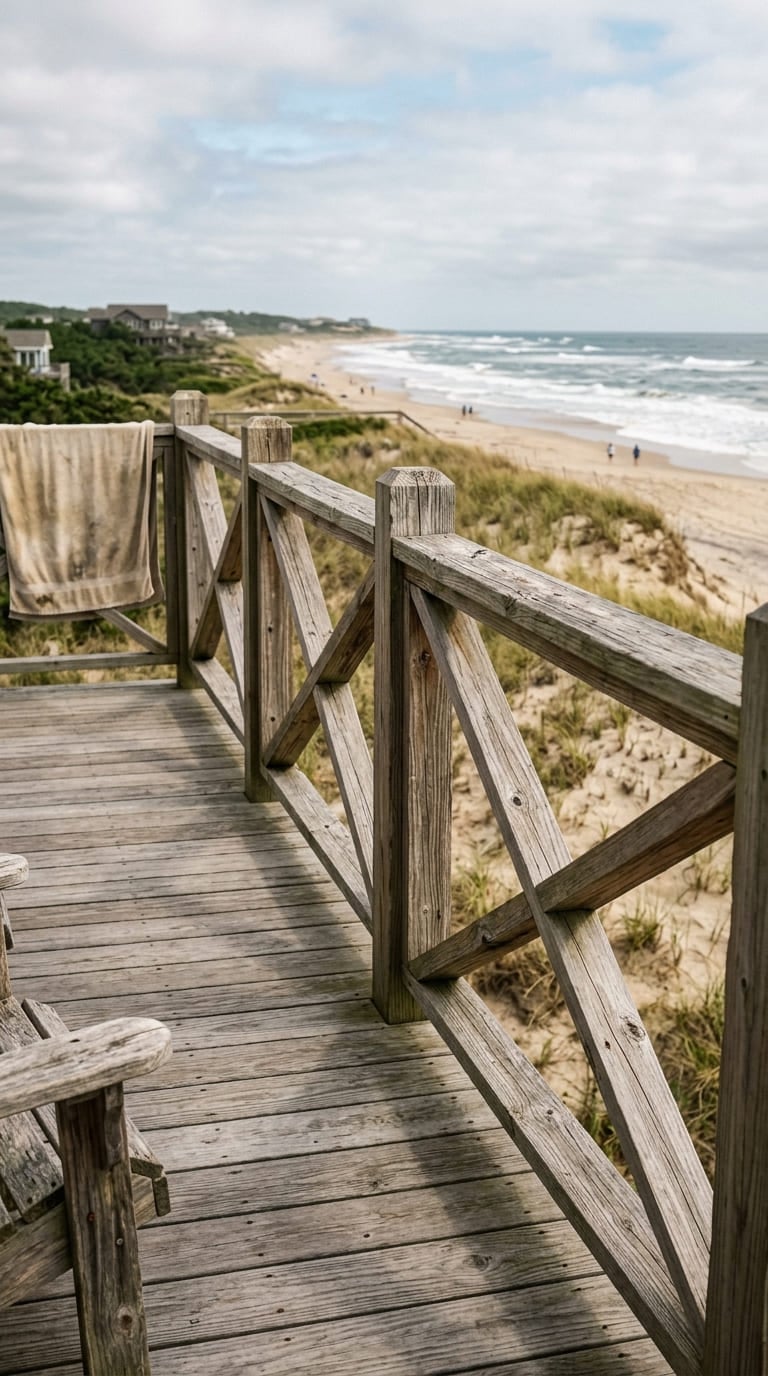
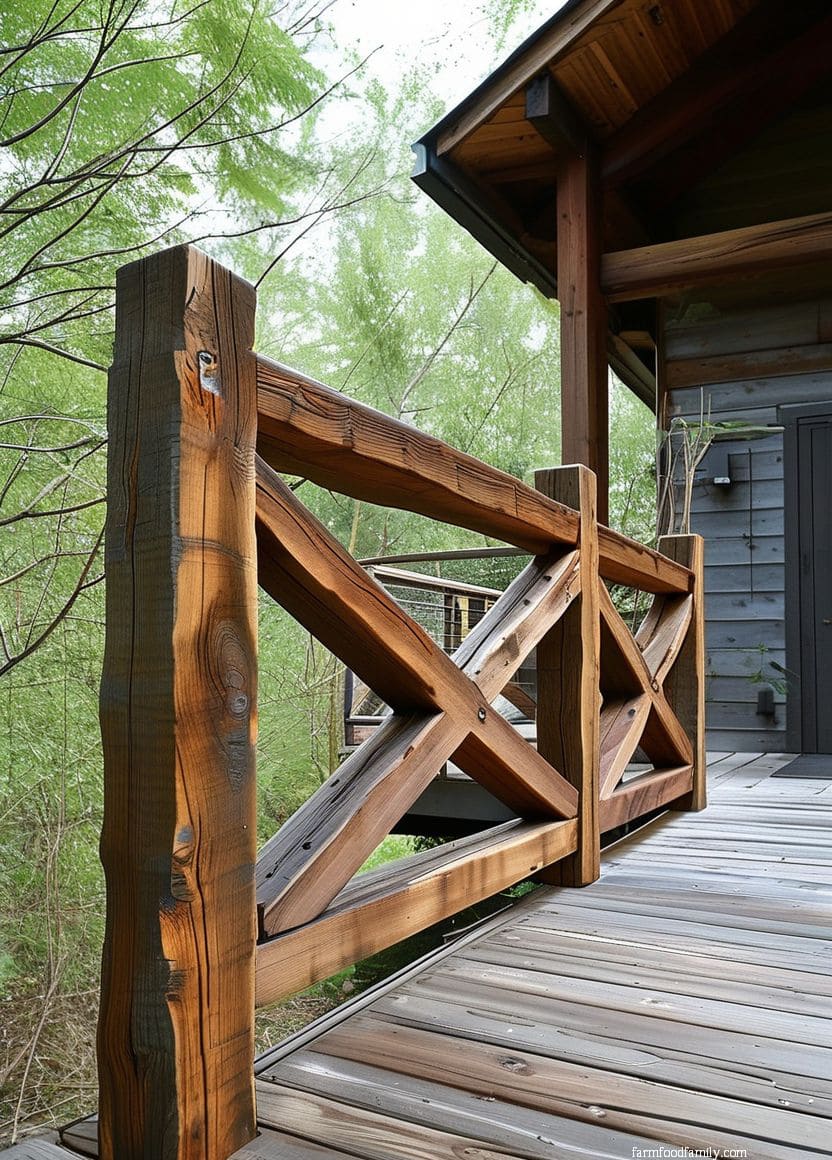
19. Criss-Cross Railing
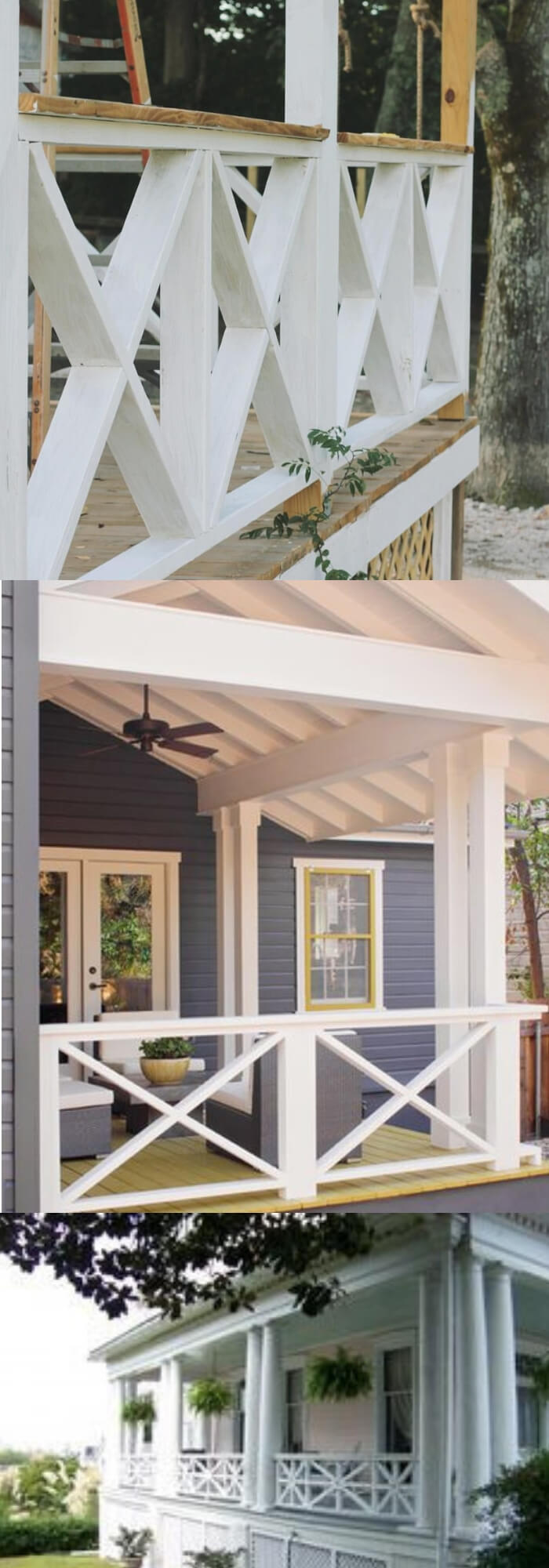
An X-pattern railing works especially well for a beach-house or coastal-style deck, and it does double duty keeping anyone from crawling underneath a raised porch.
It’s a genuinely simple build, one of the more accessible DIY options here for anyone newer to building projects.
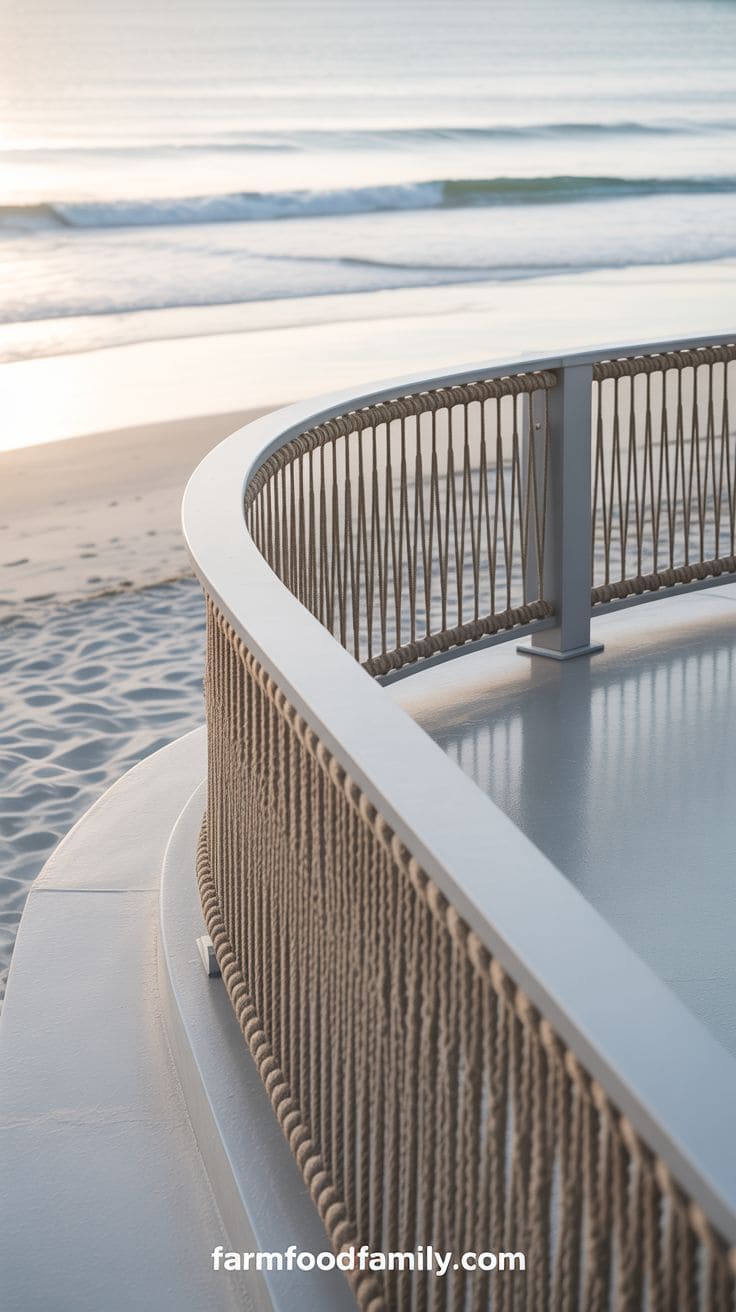
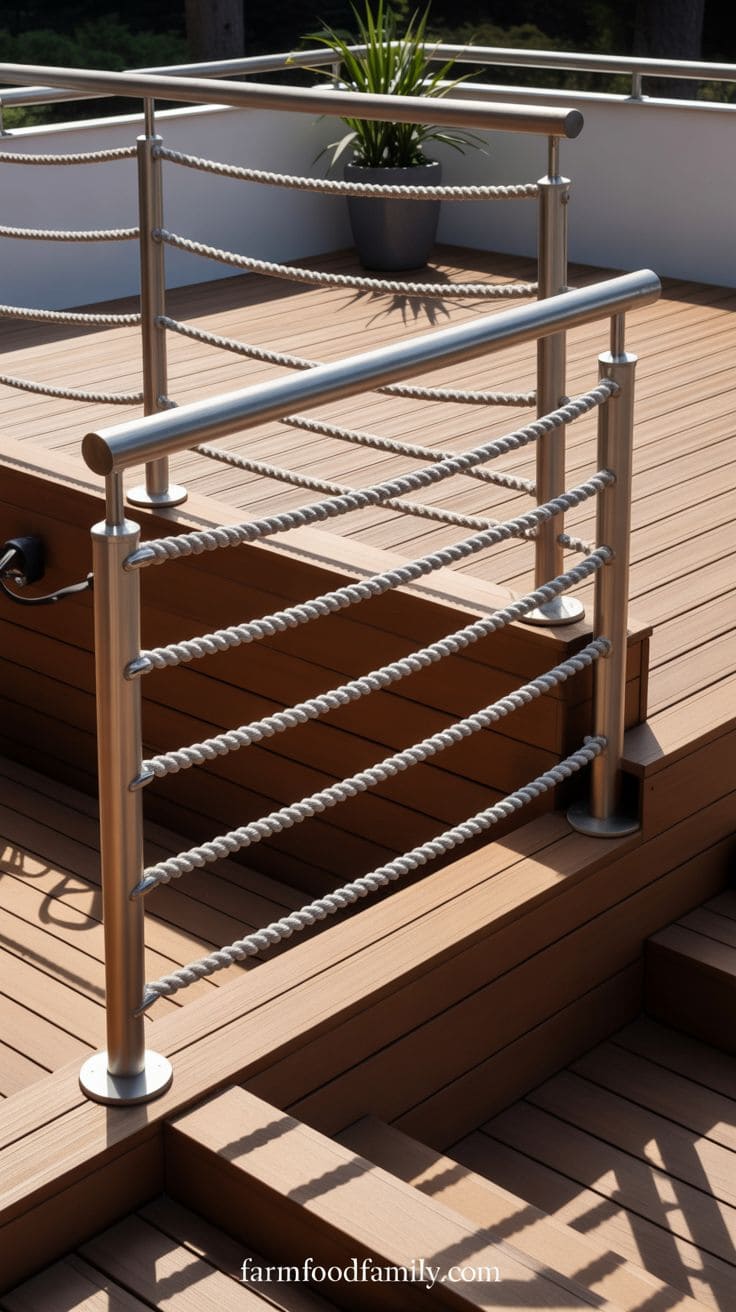
20. Thin Rope Railing
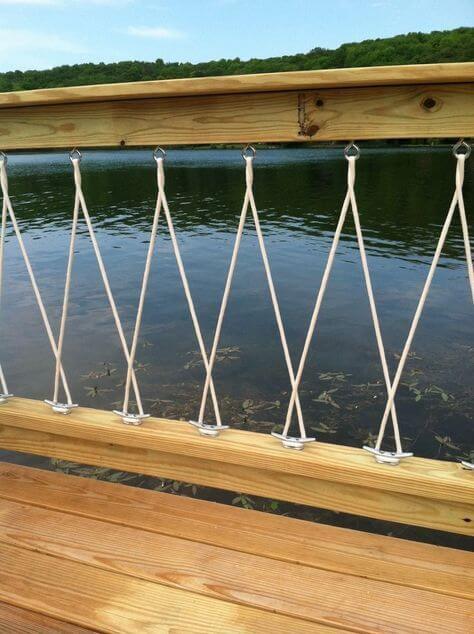
The thinner version of rope railing above trades some of the rope’s visual bulk for a lighter, simpler look.
It’s more manageable as a first-time DIY project than the thicker version, since thinner rope is easier to work with and tension correctly.
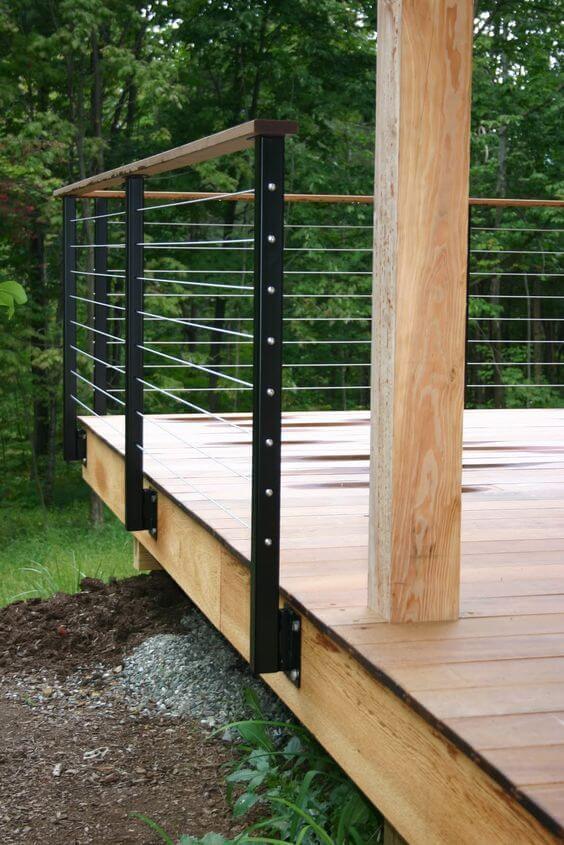
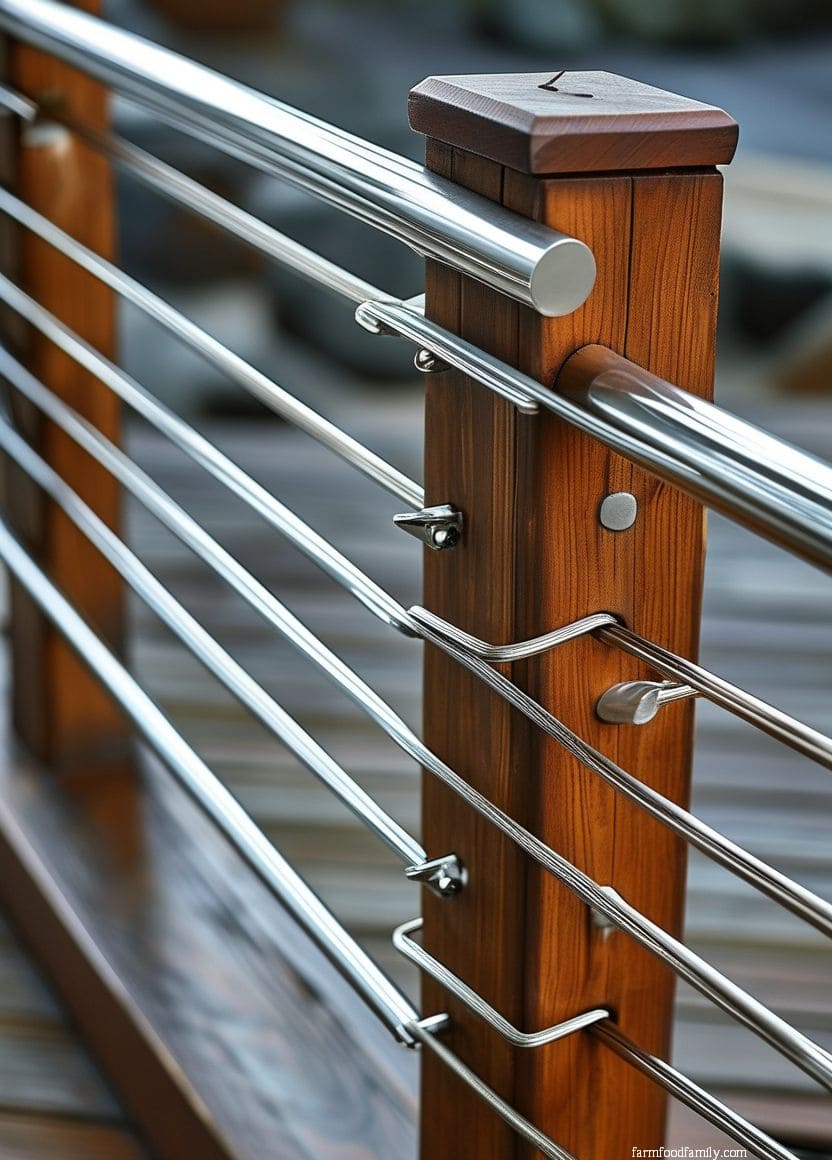
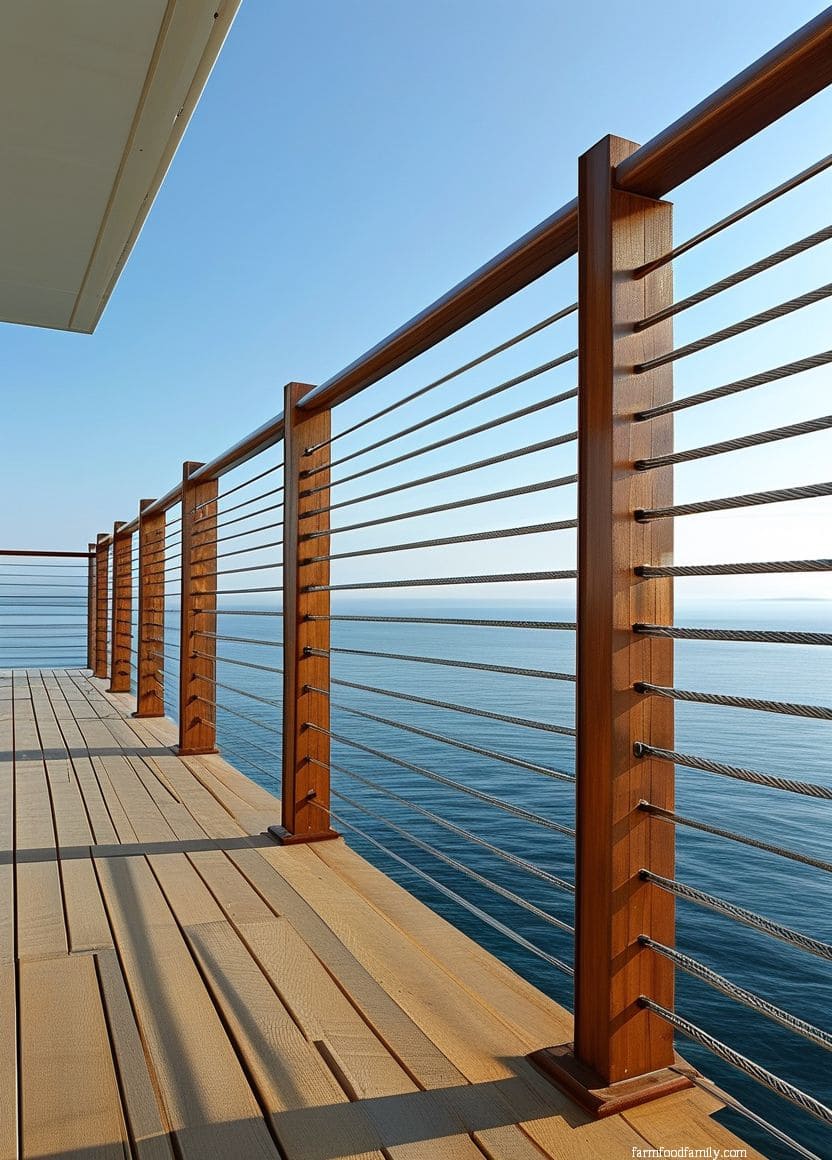
21. DIY Wire Railing
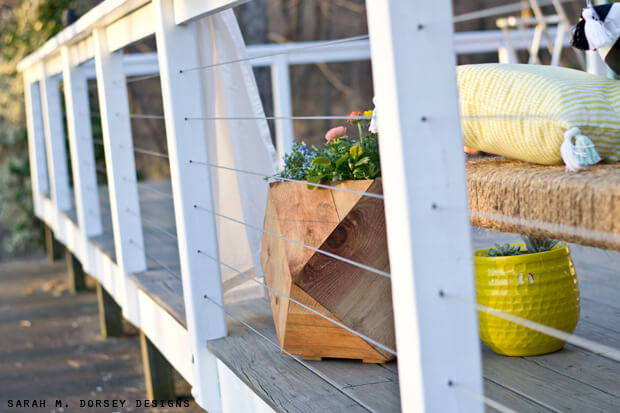
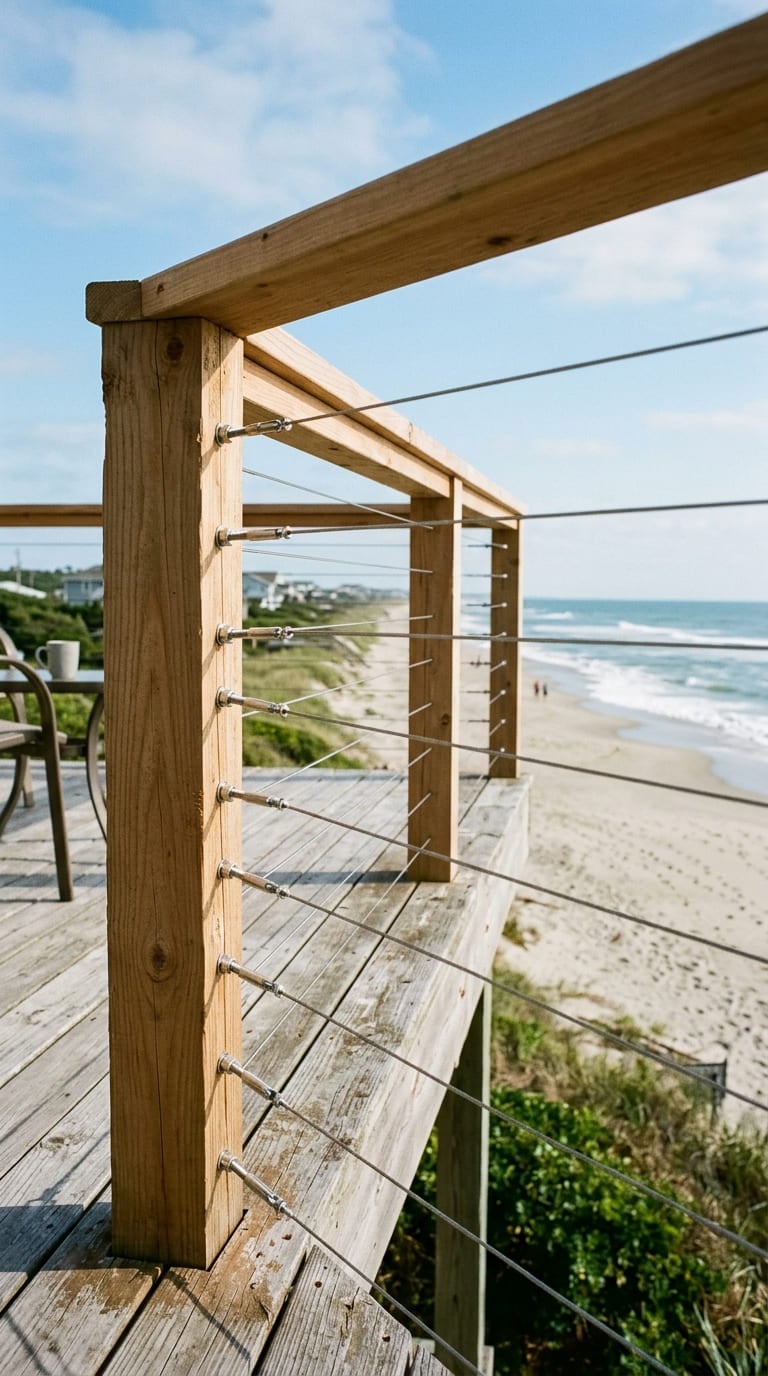
Wire railing suits a deck with a real view, whether that’s a beach or a backyard worth showing off, since thin wire cables disappear visually in a way thicker materials don’t.
Getting the tensioning right takes some real planning before starting, this isn’t a project to improvise.
22. Store-Bought Railing Kits
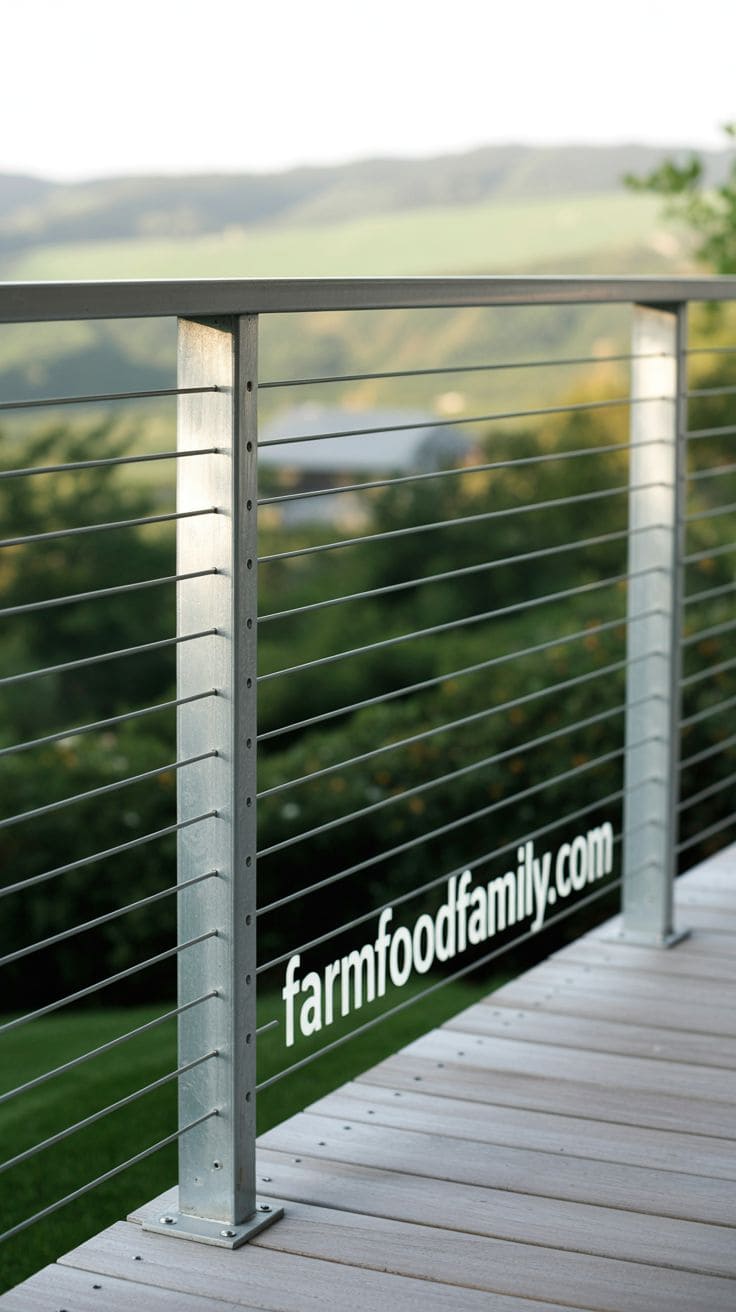
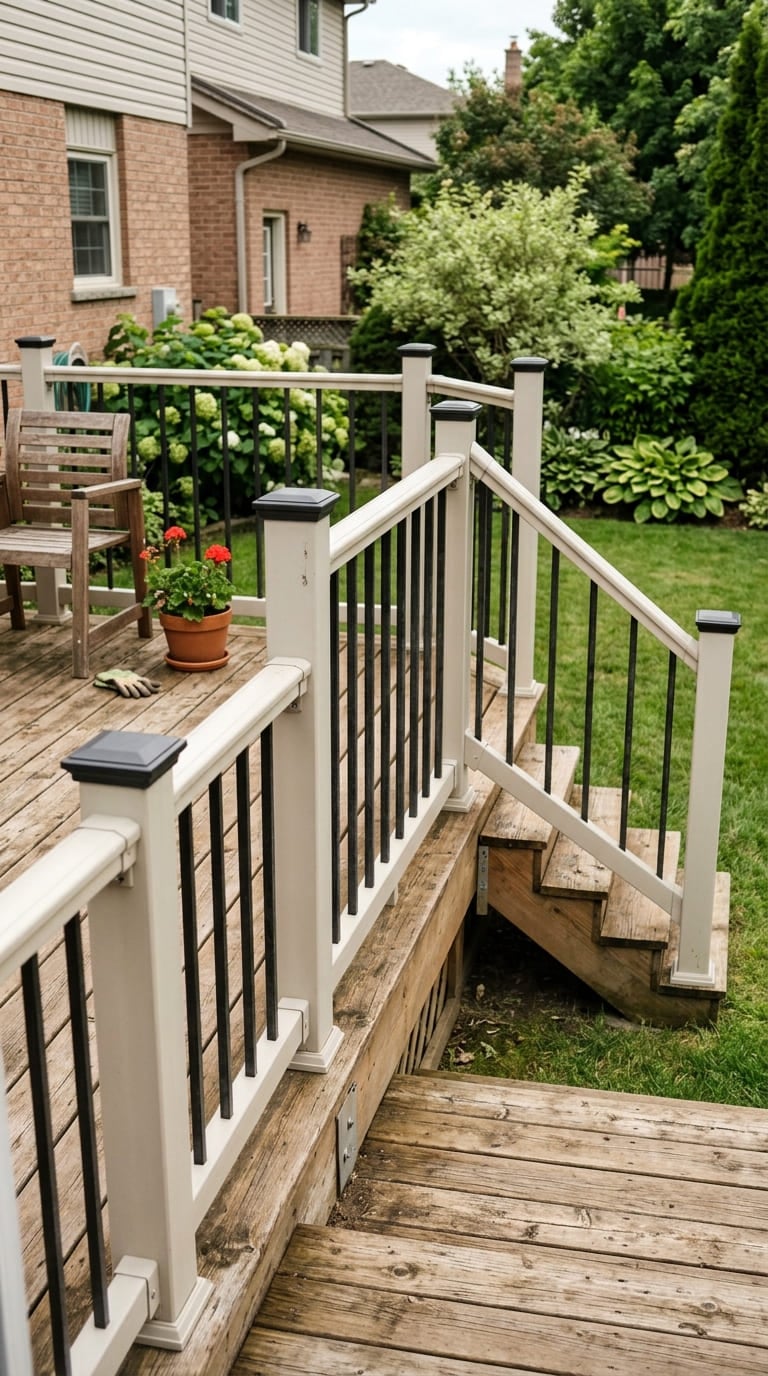
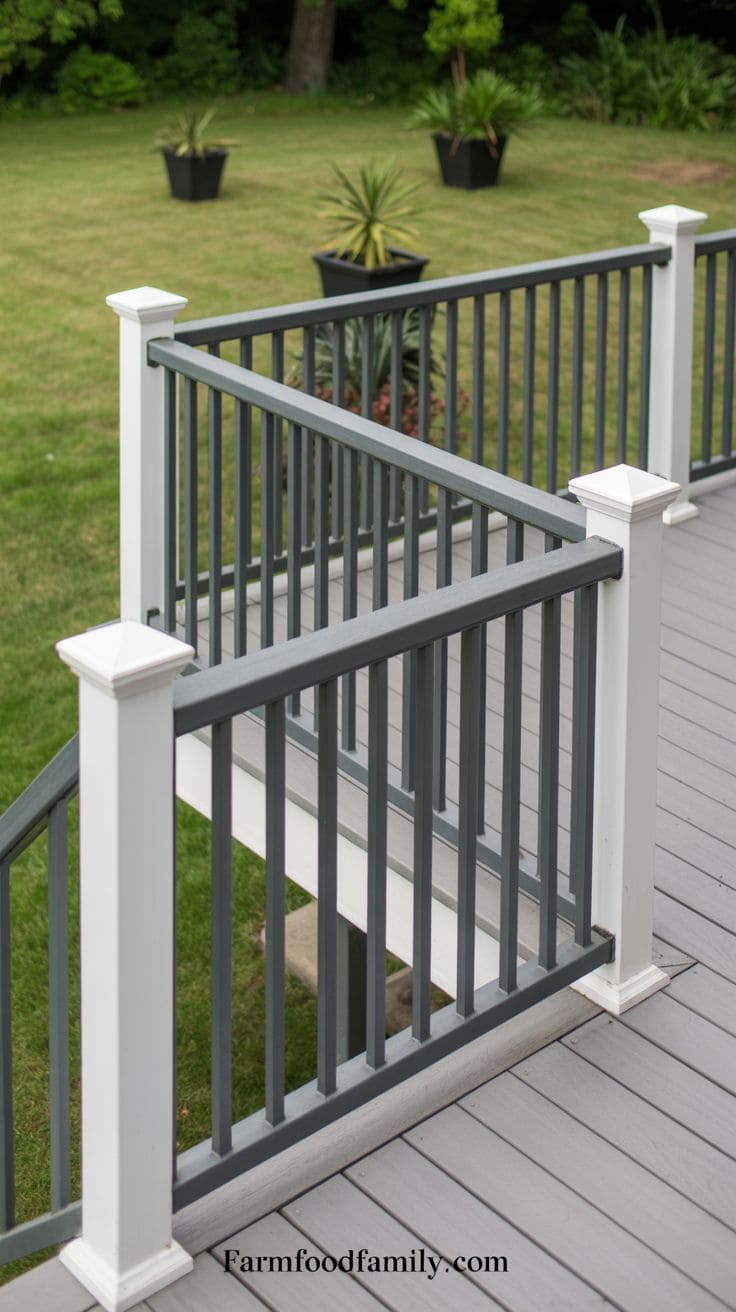
Pre-made railing kits remain one of the most time-efficient options on this list. The creative work shifts from building to arranging and finishing, choosing the layout, adding personal touches, and installing correctly, rather than fabricating the components from scratch.
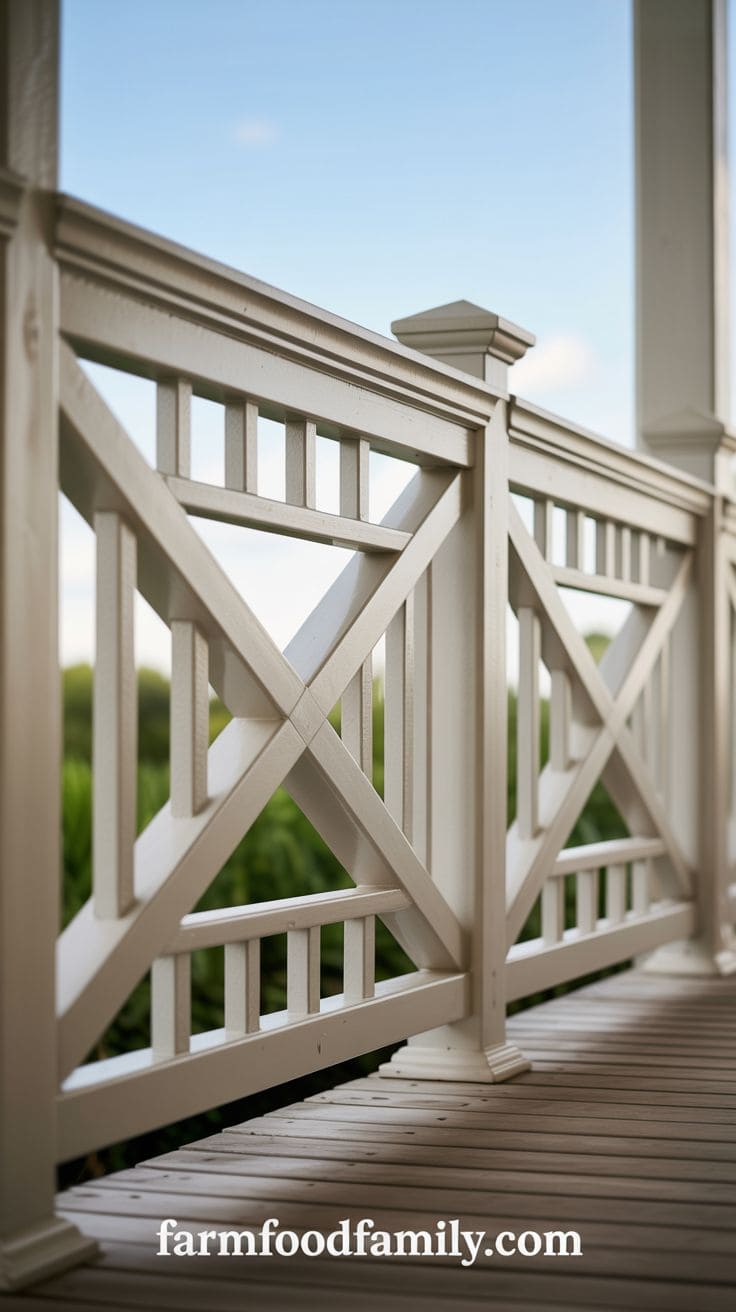
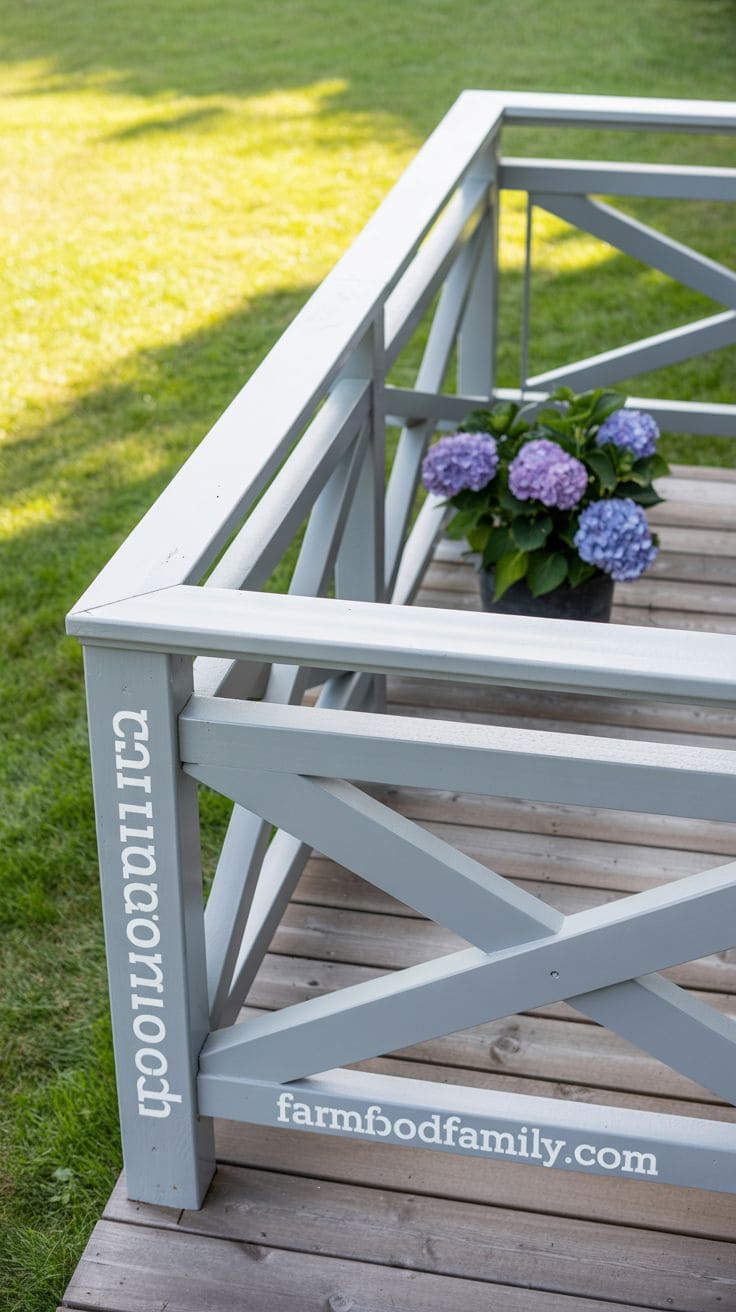
23. The X-Shaped Porch Railing
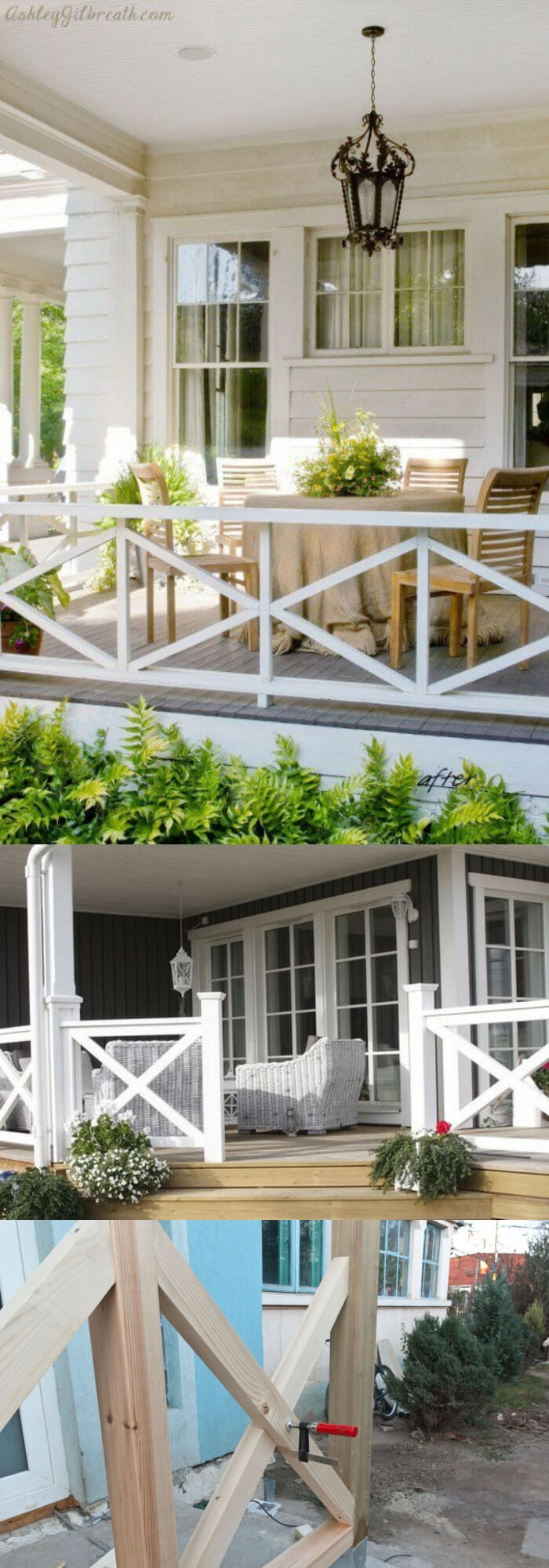
This deck railing idea for porch is great for a country setting or a beach setting. The design looks very simple making it one of the simpler DIY you can create.
This is a great idea for you especially if your deck is not too high off the ground. It allows perfect view and prevents you from falling.
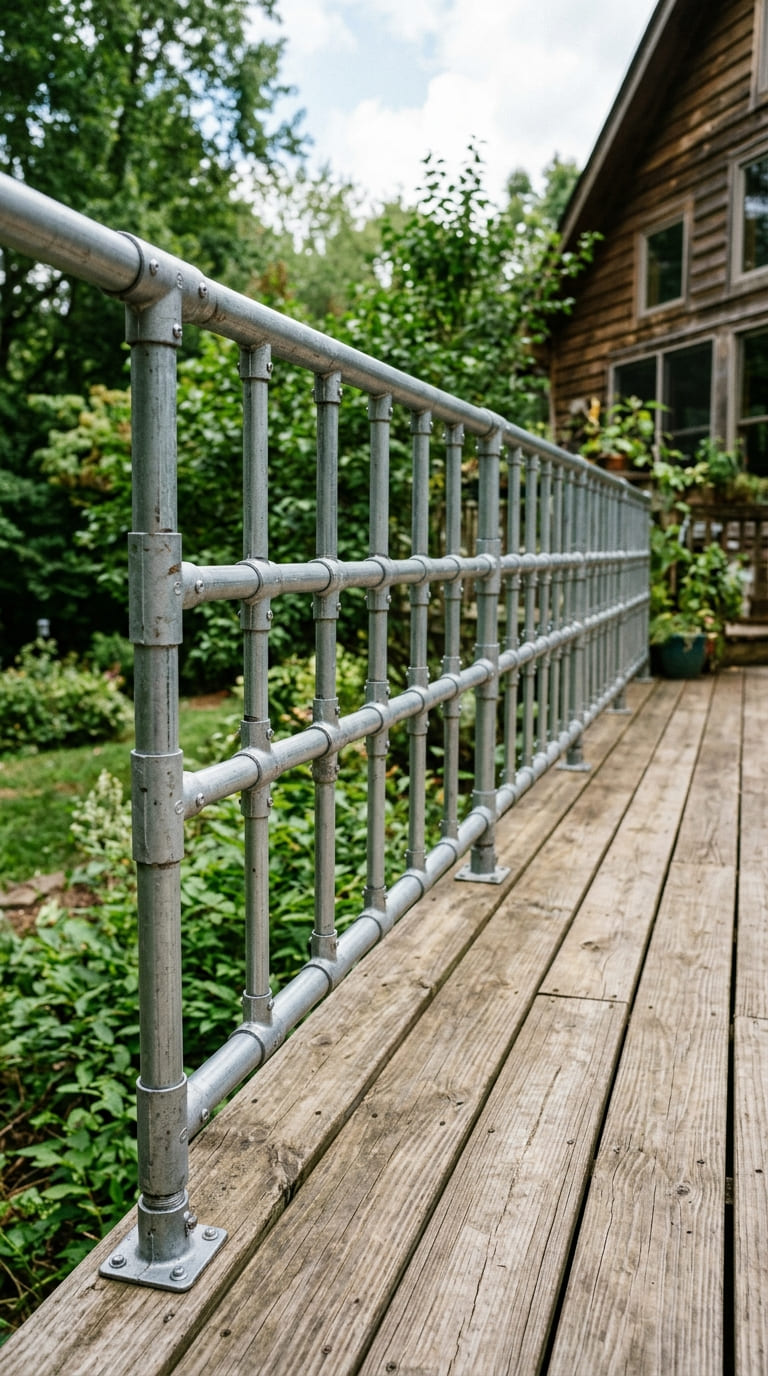
24. Galvanized Pipe Railing

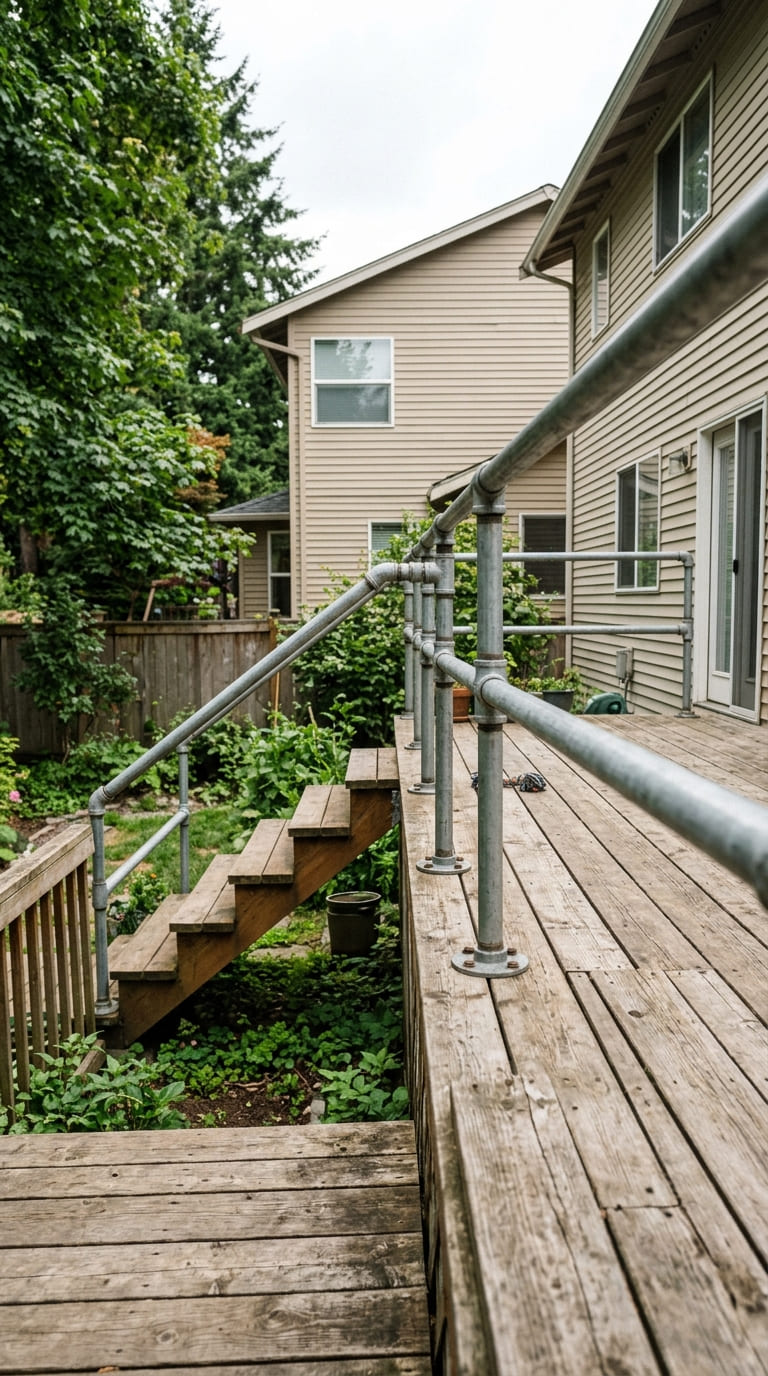
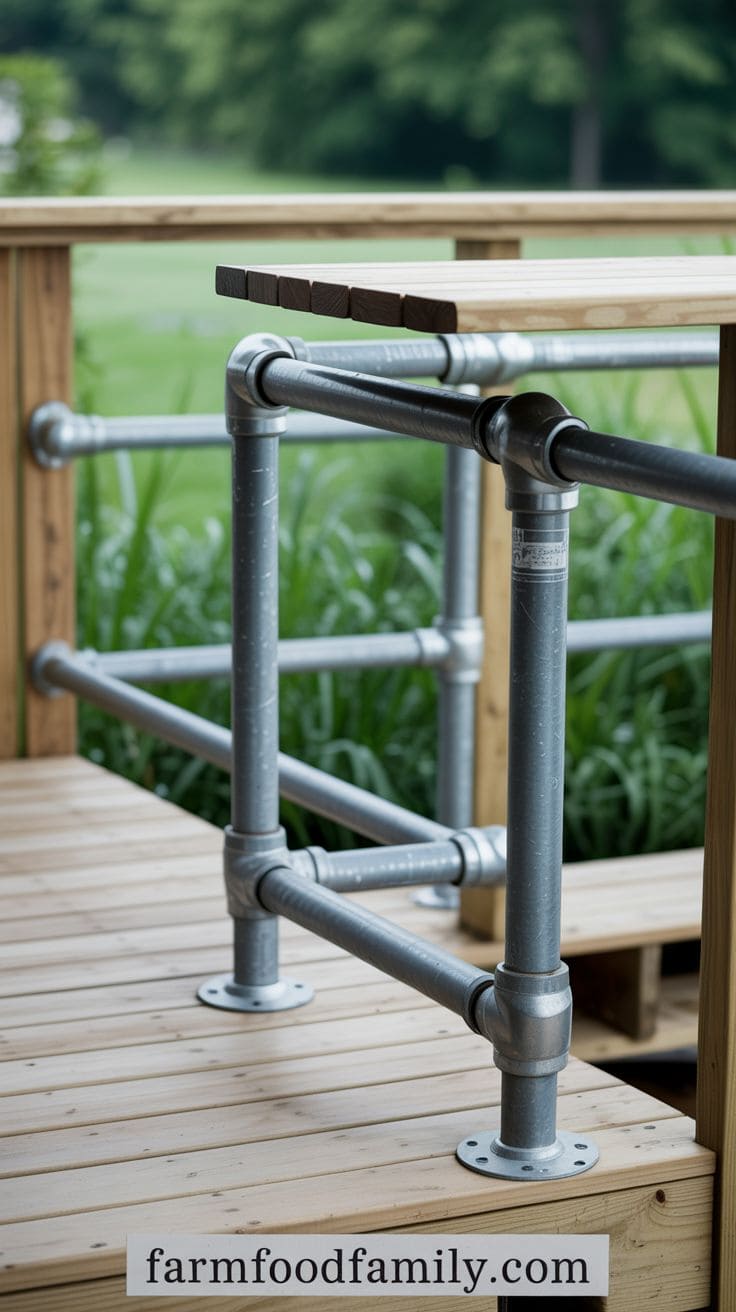
Galvanized pipe is a budget-friendly, durable railing material that reads as intentionally industrial.
It doesn’t require a formal tutorial to work with, standard pipe fittings make the assembly fairly forgiving, and it holds up well in a range of climates.
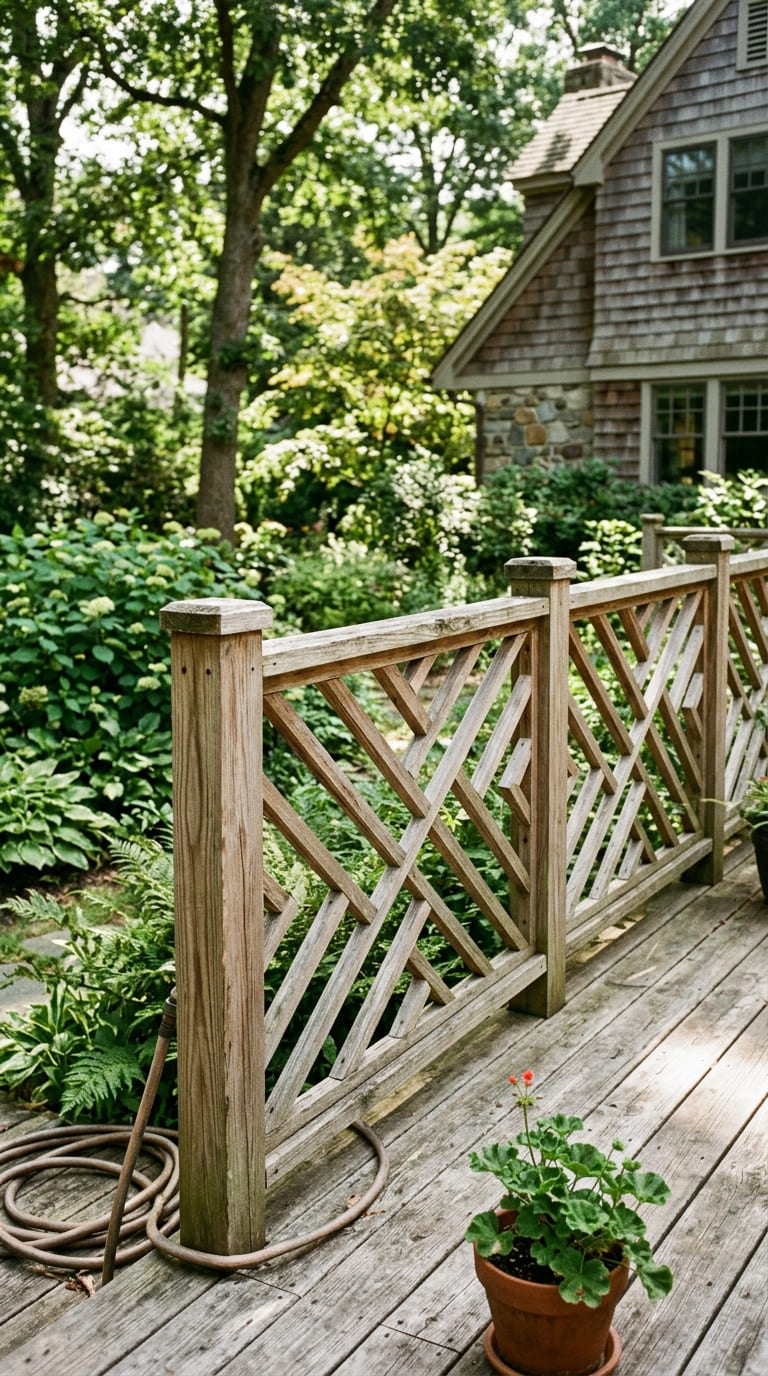
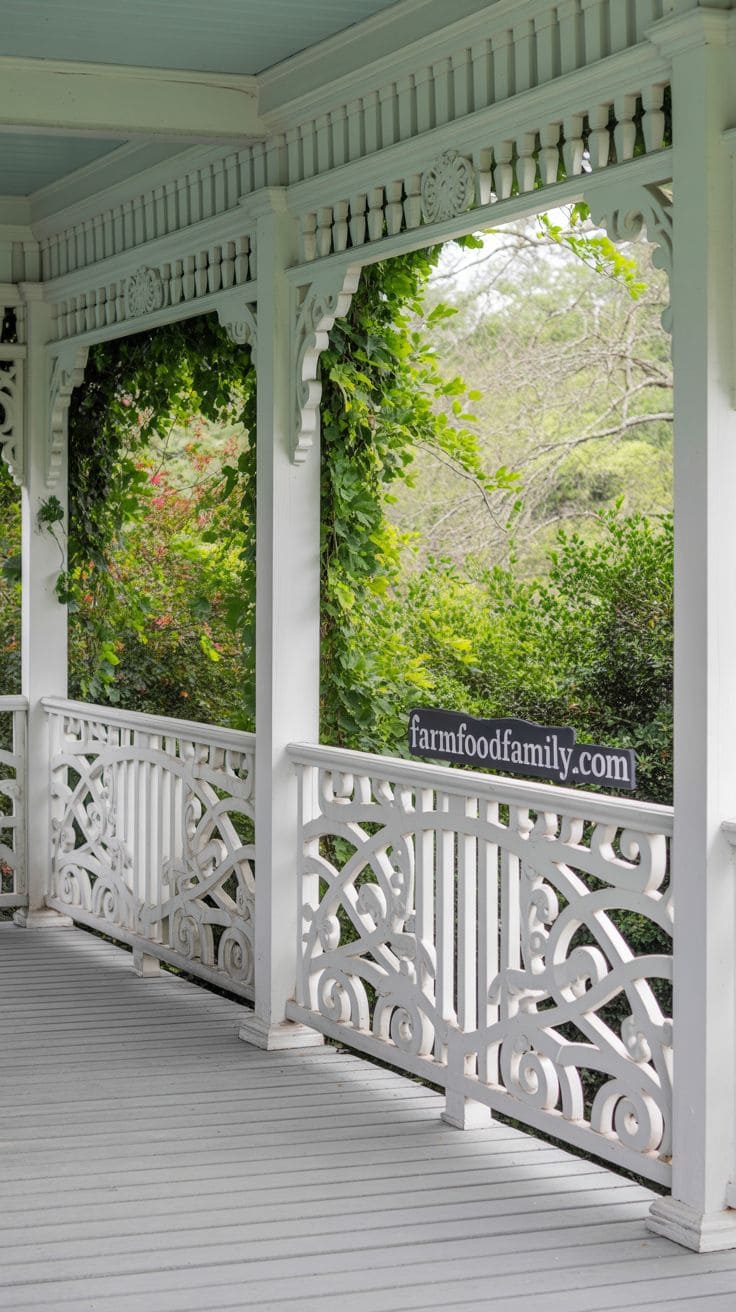
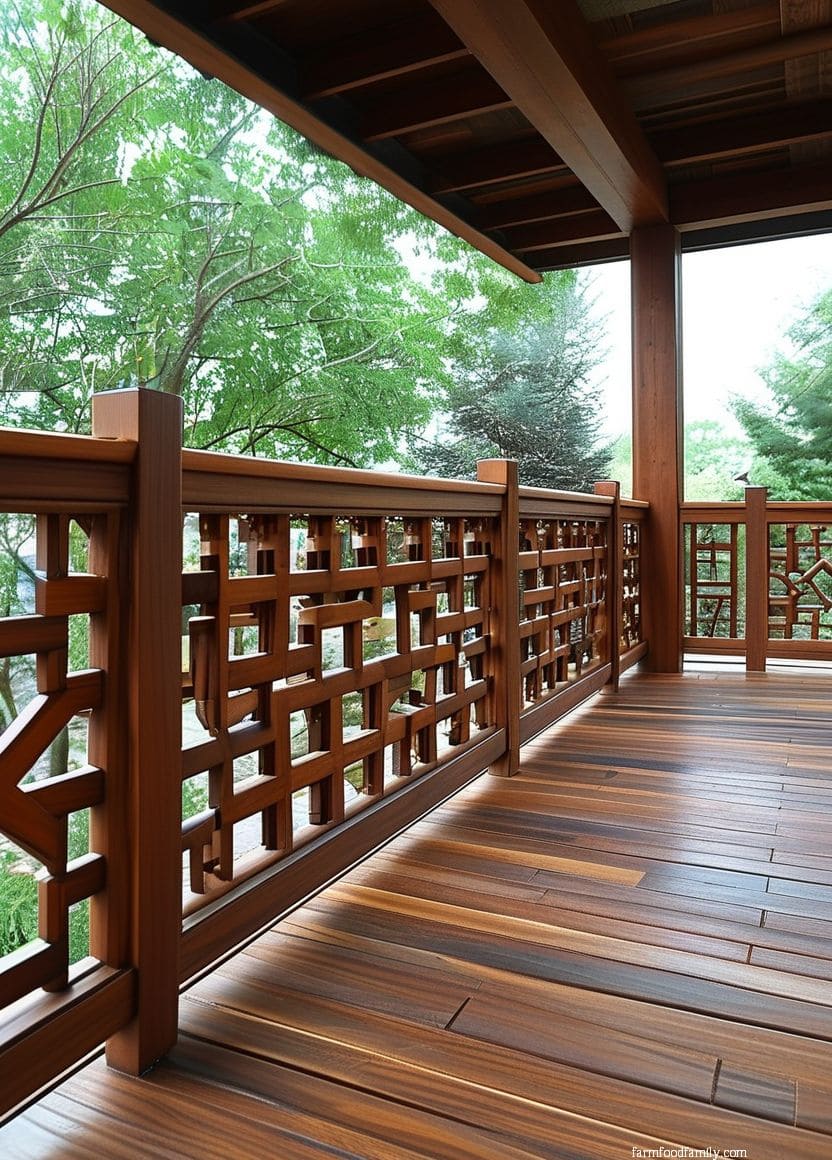
25. Chippendale Railing
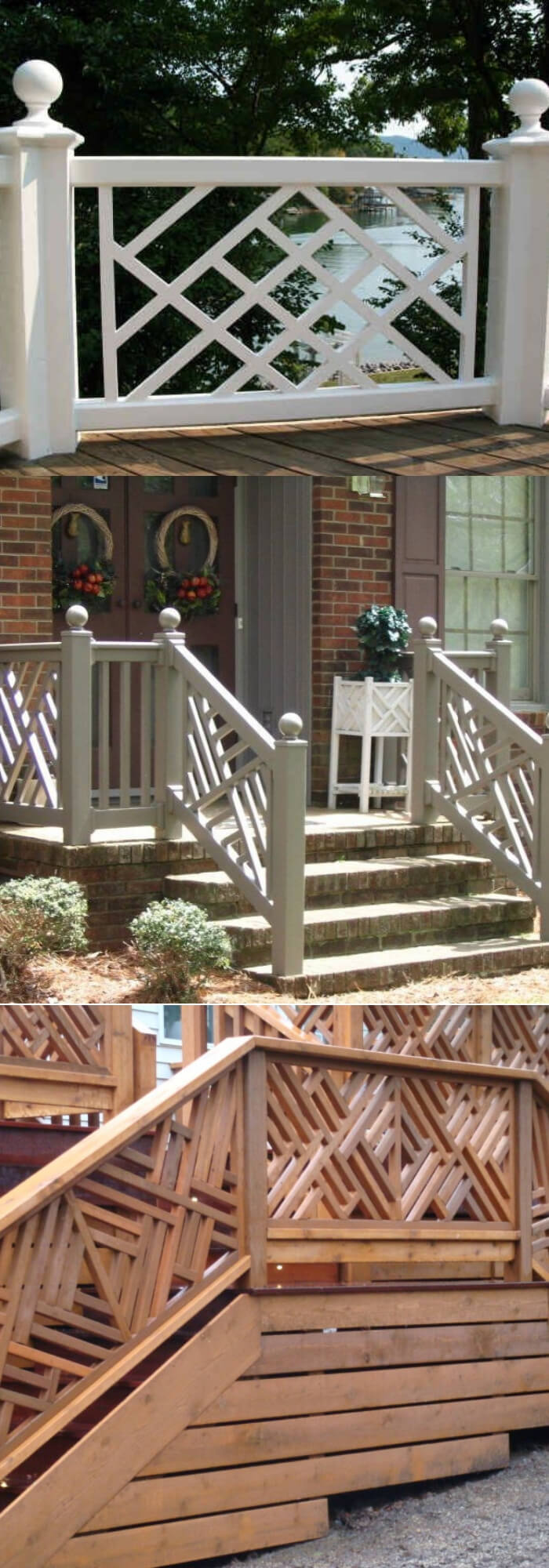
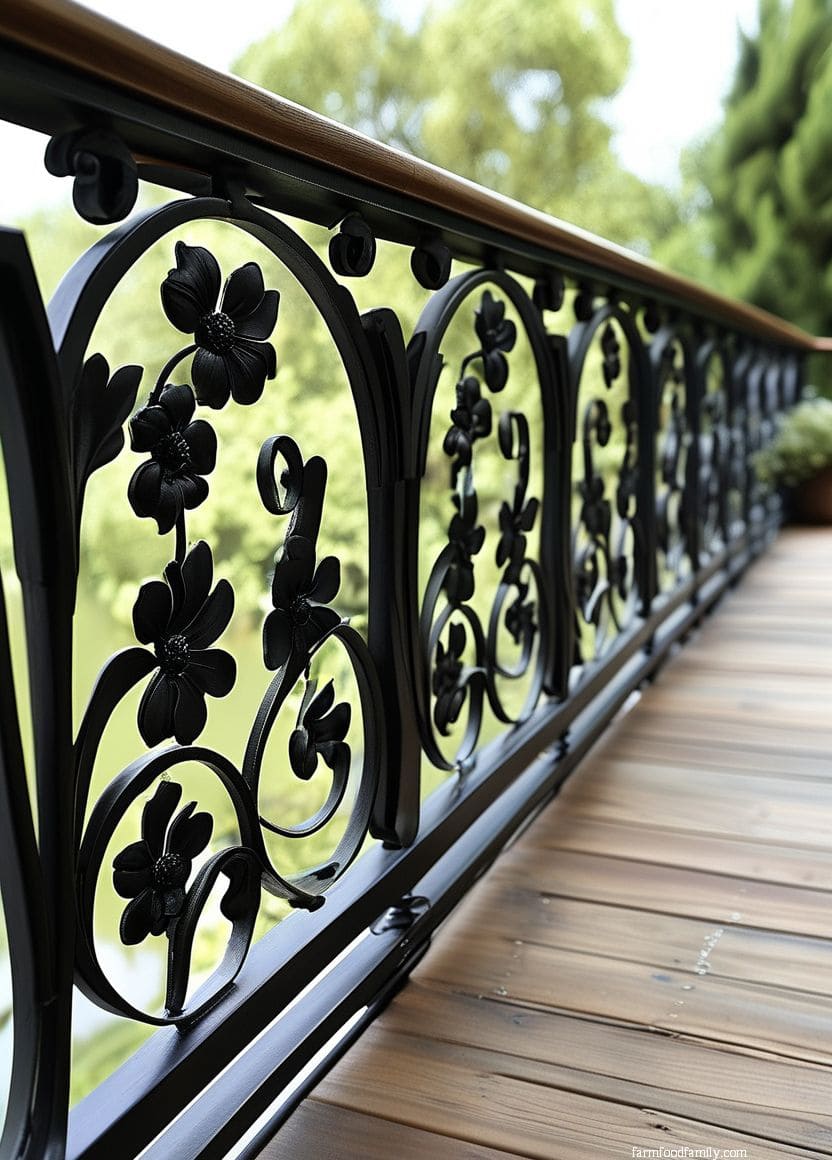
The Chippendale pattern, a lattice-like geometric design with a distinctly traditional pedigree, is a genuinely distinctive option for anyone who wants a railing that reads as more architectural than functional.
It takes some practice to get the joinery right, but the result looks meaningfully different from anything on the standard-spindle end of this list.
26. Cattle Panel Railing
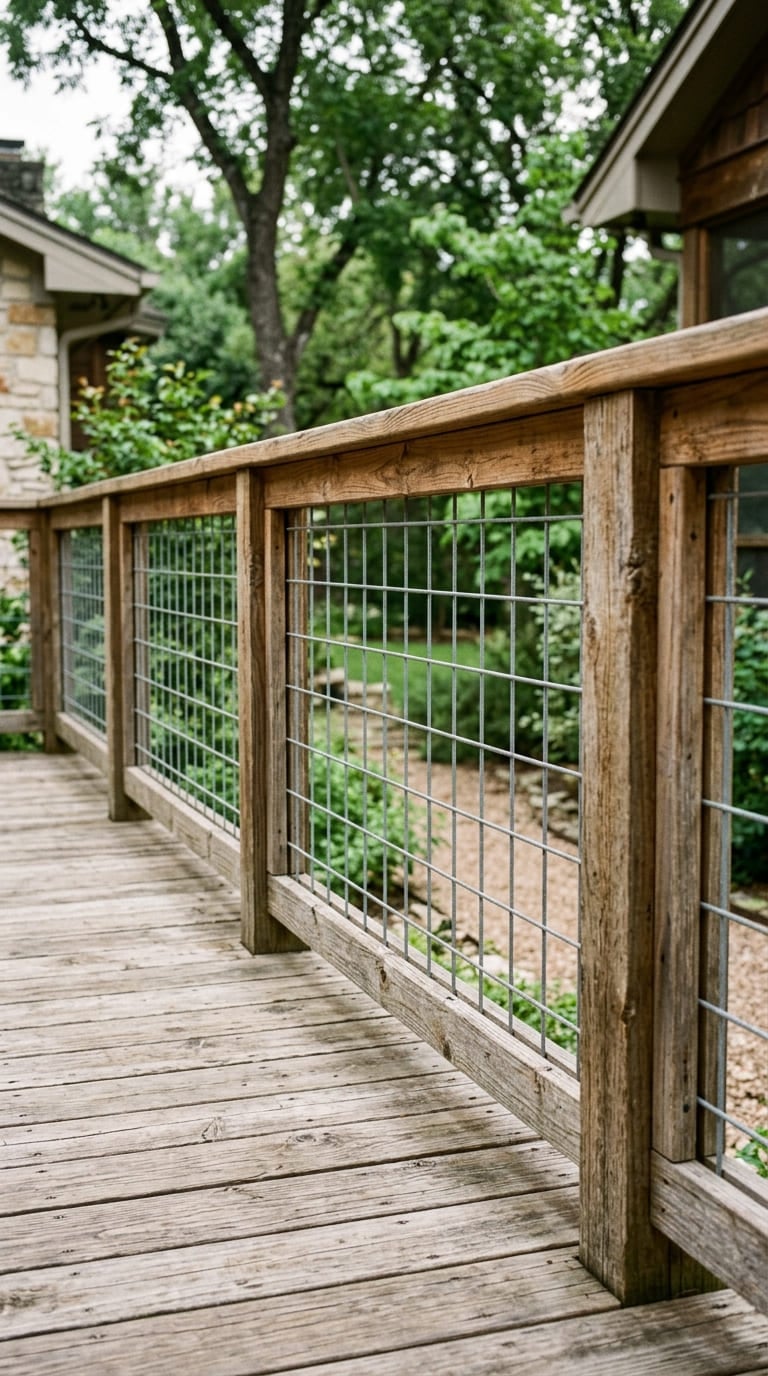
Cattle or hog panel, the same rigid wire fencing used in agricultural settings, makes a genuinely simple deck railing infill. It works especially well modified to fit within an existing top rail, and it’s one of the more budget-friendly options here for anyone who wants an open, see-through railing without the cost of cable.
27. The DIY Deck Railing
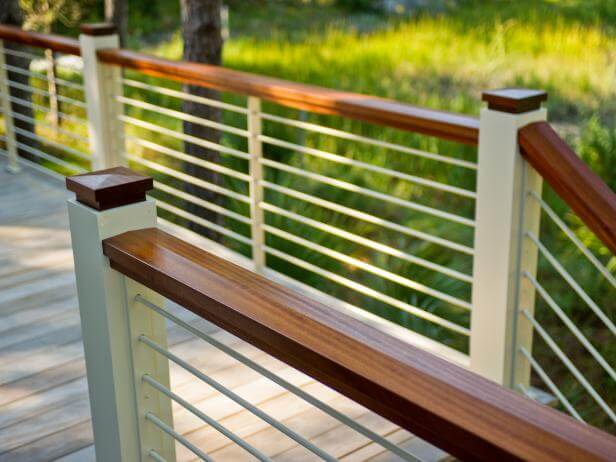
This simple DIY deck railing idea is very simple to design and it involves the use of cattle or hog paneling. You can modify the paneling if you already have an extra railing at the top. For those in need of a very simple DIY deck railing, this might be of help.
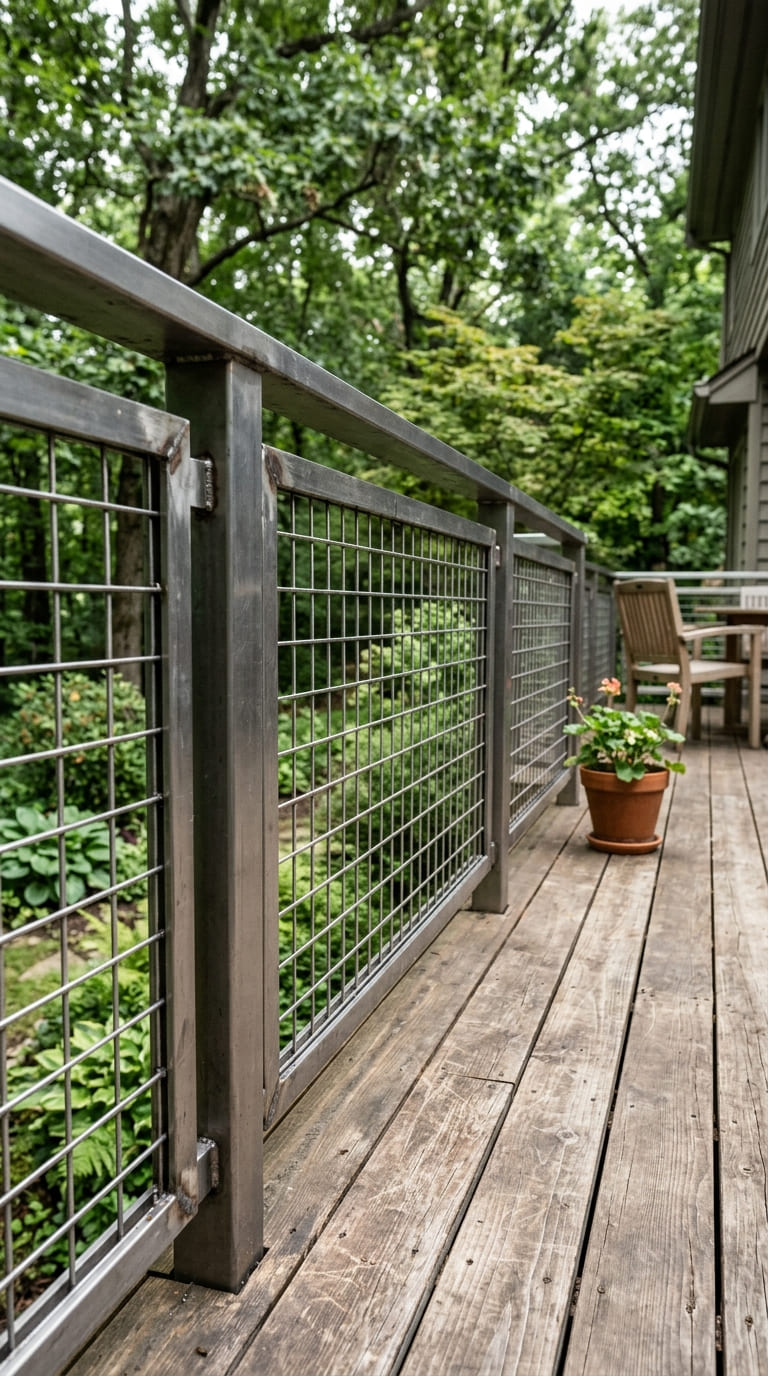
28. Stainless Steel Welded Mesh Railing
Welded stainless mesh is a strong, distinctive option that costs less than it looks like it should.
It does typically call for a real tutorial or professional install to get the tensioning and framing right, but the durability and clean look make it worth the extra step for a lot of people.
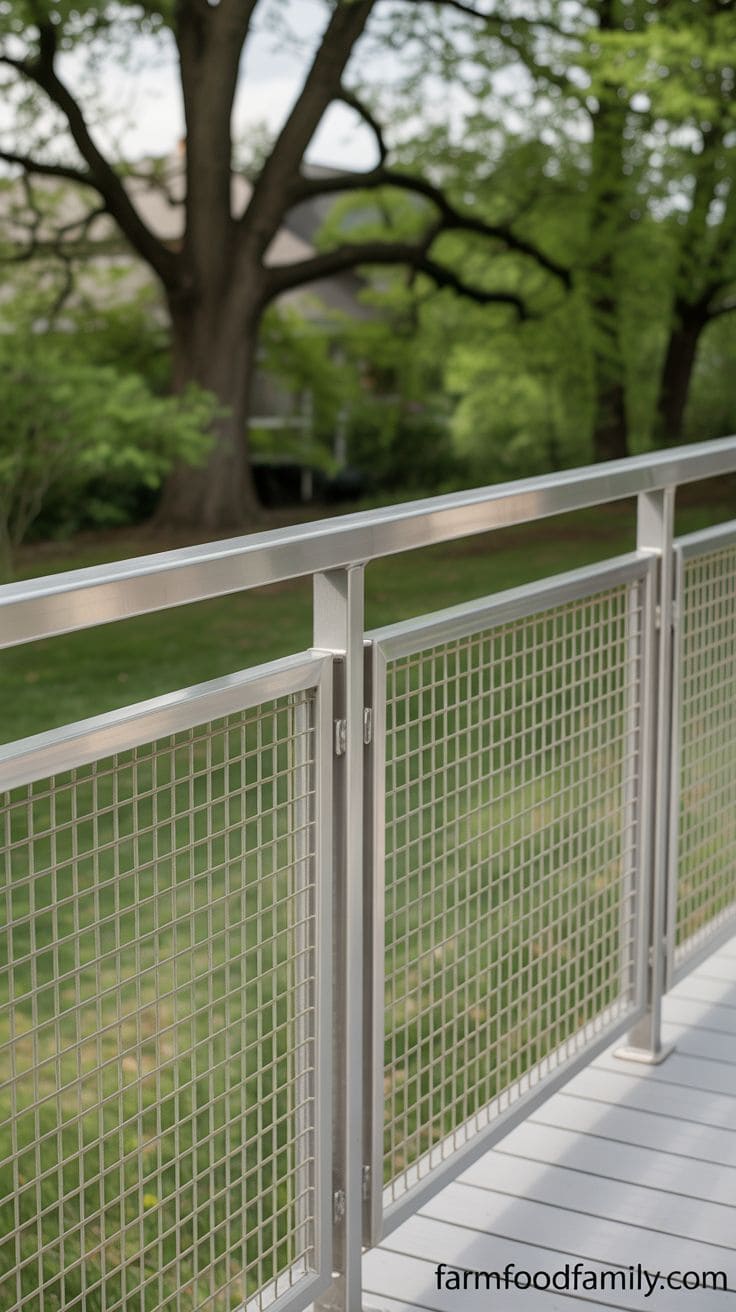
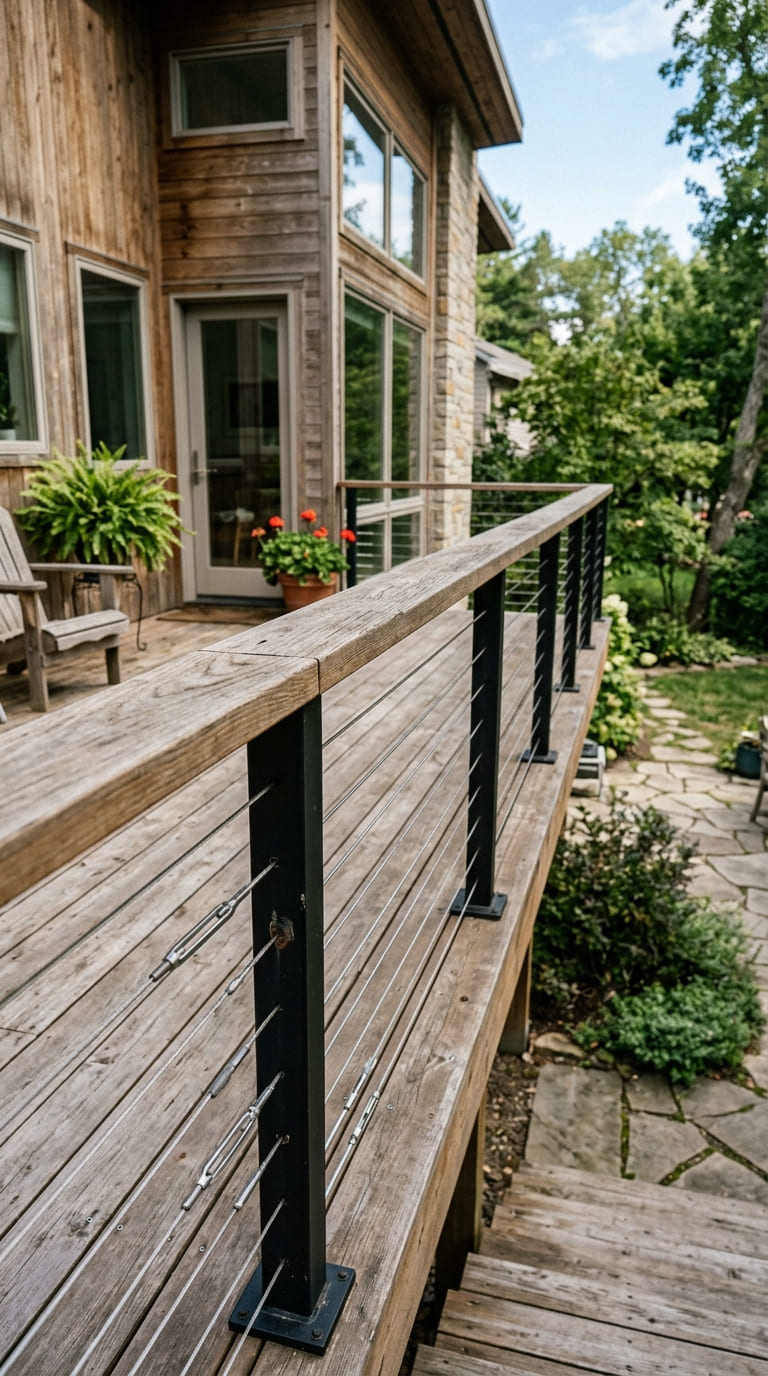
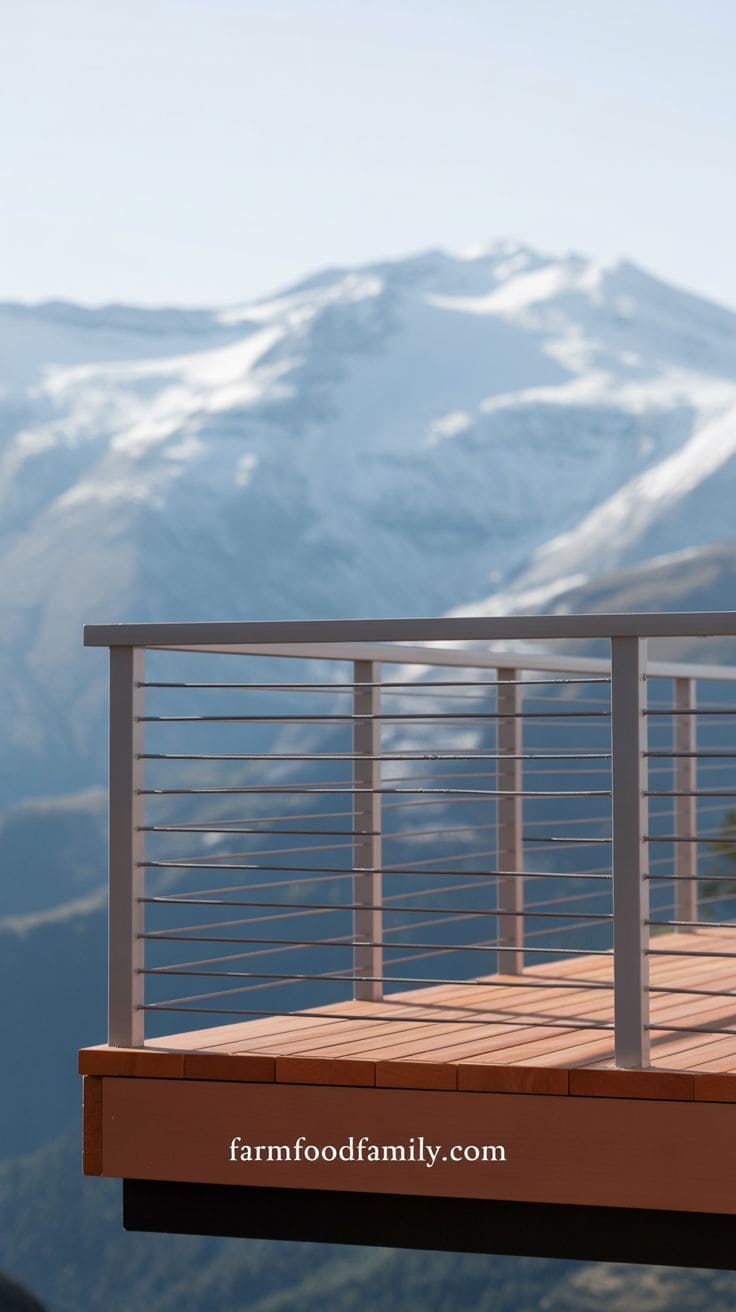
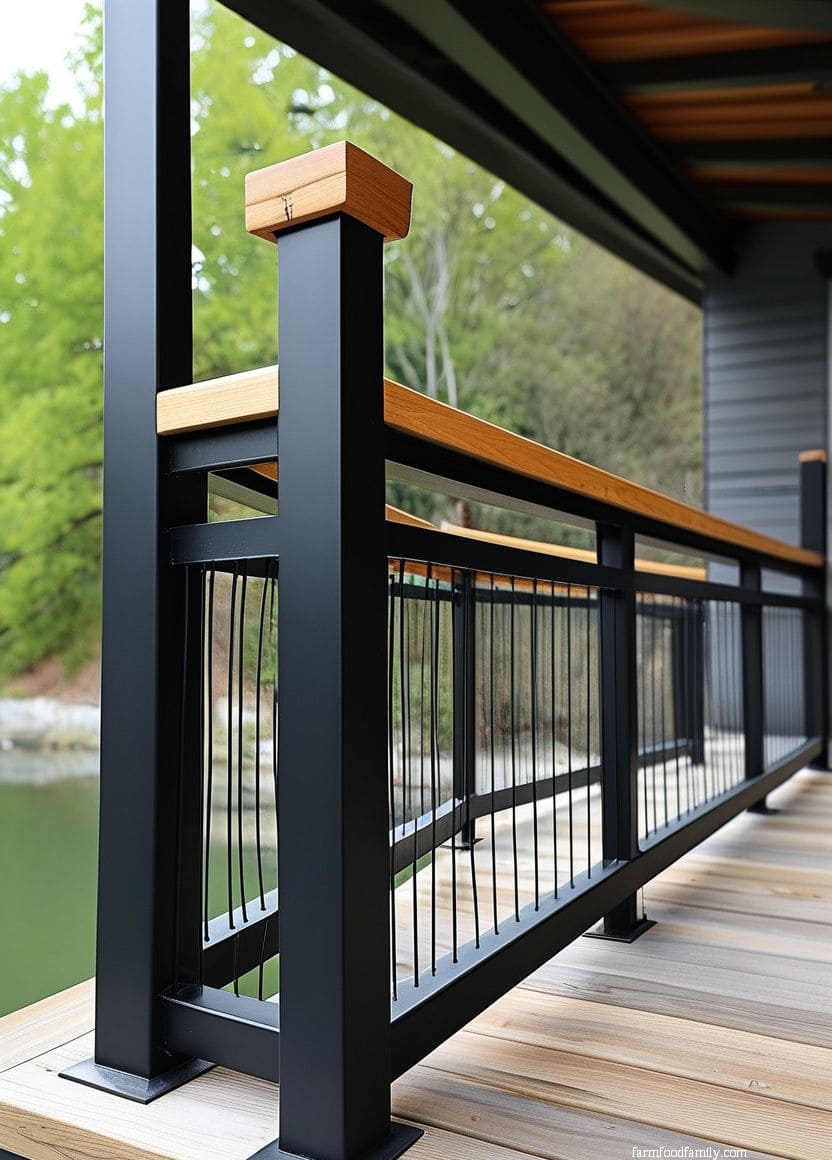
29. Modern Wire Railing
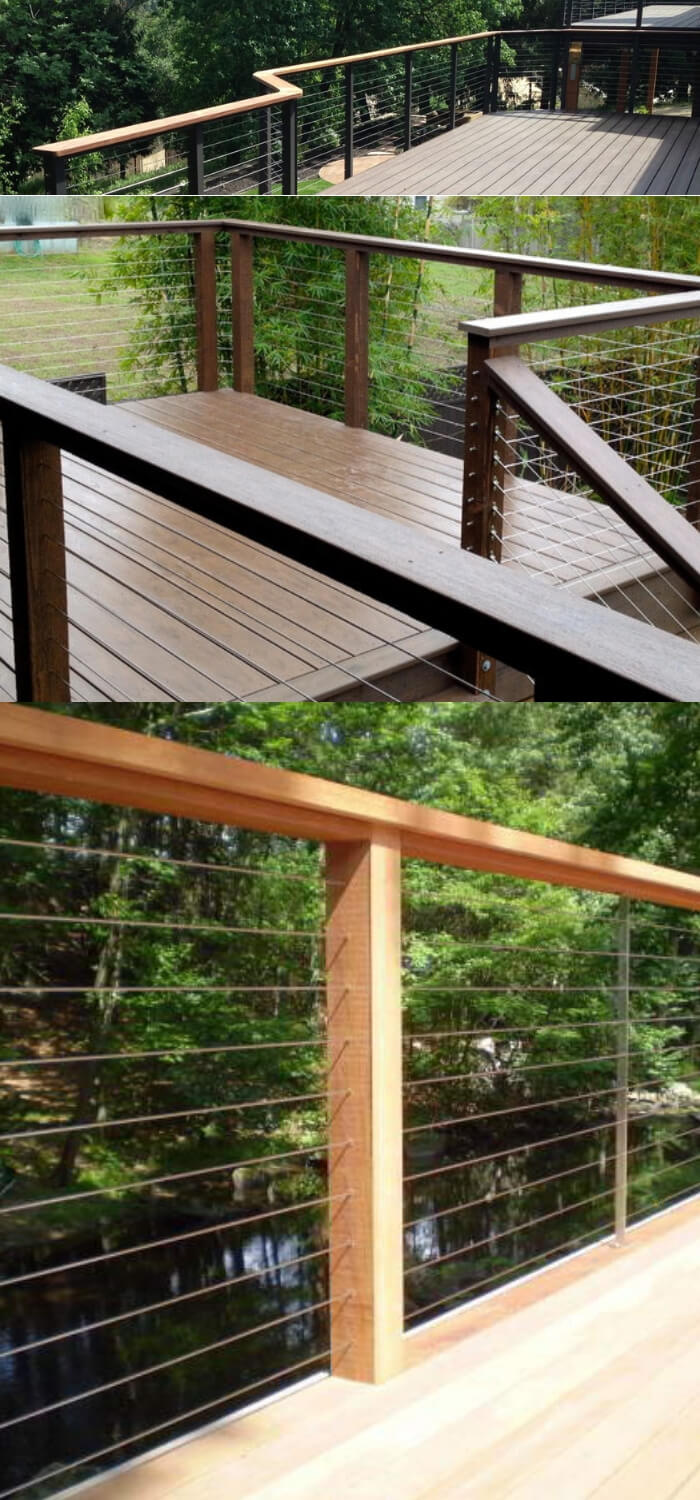
Most deck railings, even the more unusual ones on this list, are still built primarily from wood.
Modern wire railing breaks from that: wire infill and metal posts on a wood base frame is a genuinely different structural approach, not just a different finish on the same design.
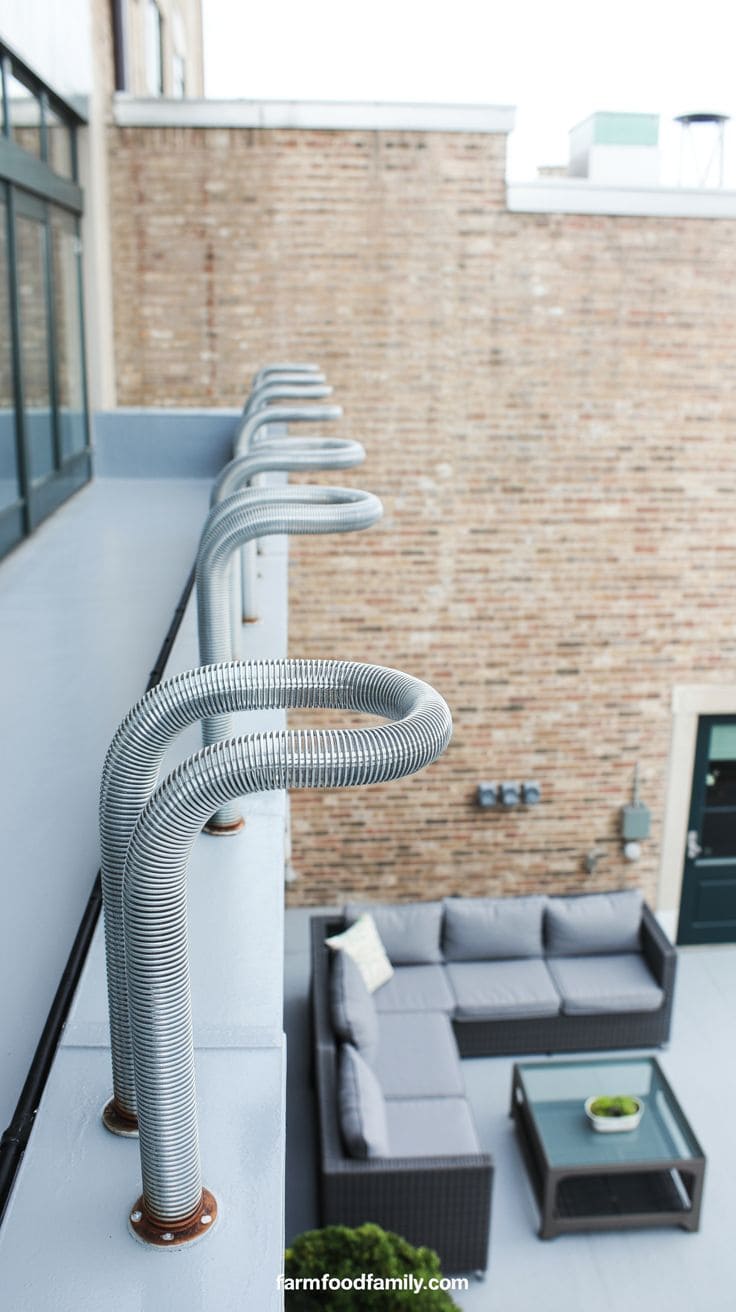
30. Electrical Conduit Railing
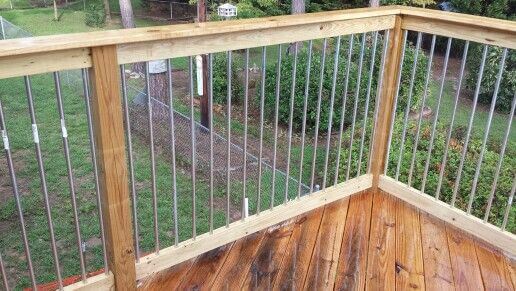
Repurposing electrical conduit, the rigid metal tubing normally used to protect wiring, as railing posts or top rails is an inexpensive way to get a clean, industrial metal look without paying for purpose-built railing components. It takes some fitting know-how, but the material itself is cheap and widely available.
31. Composite or Vinyl Railing
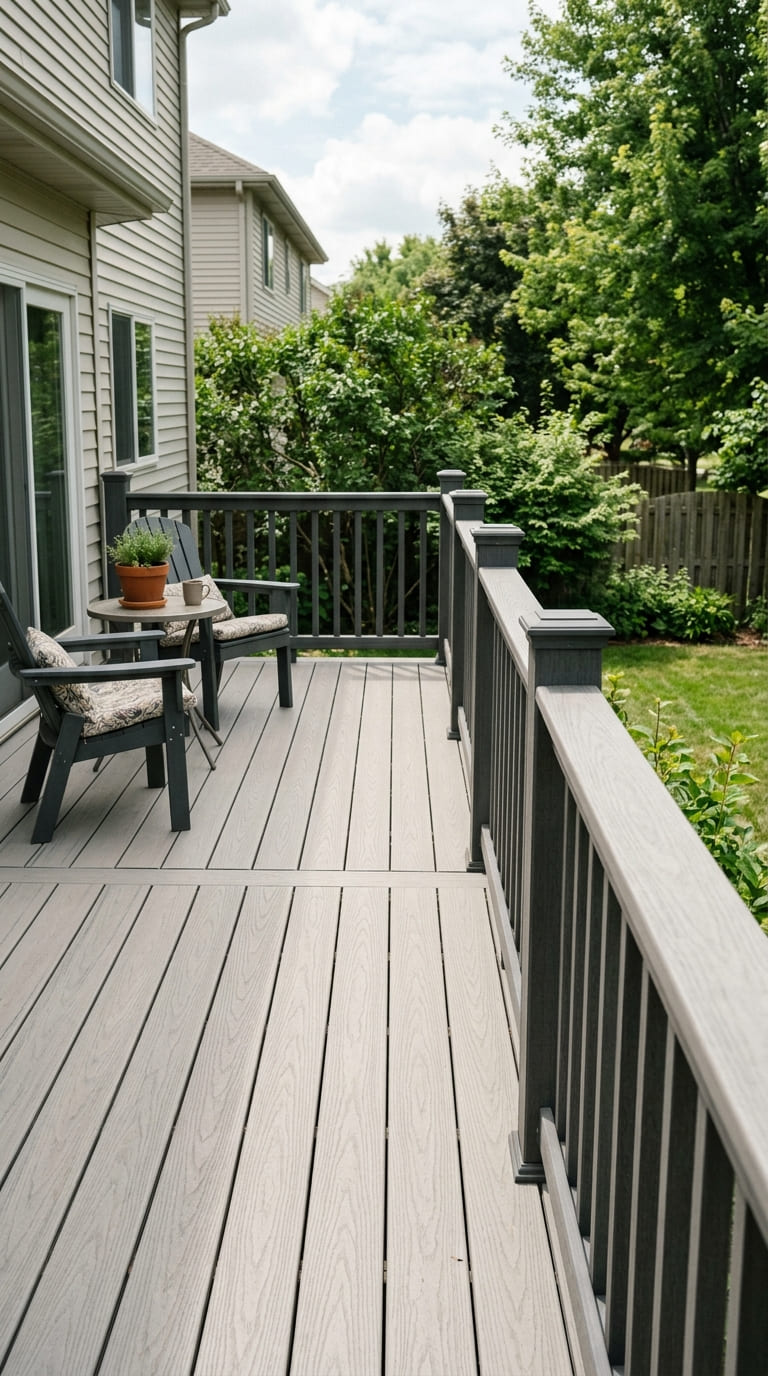
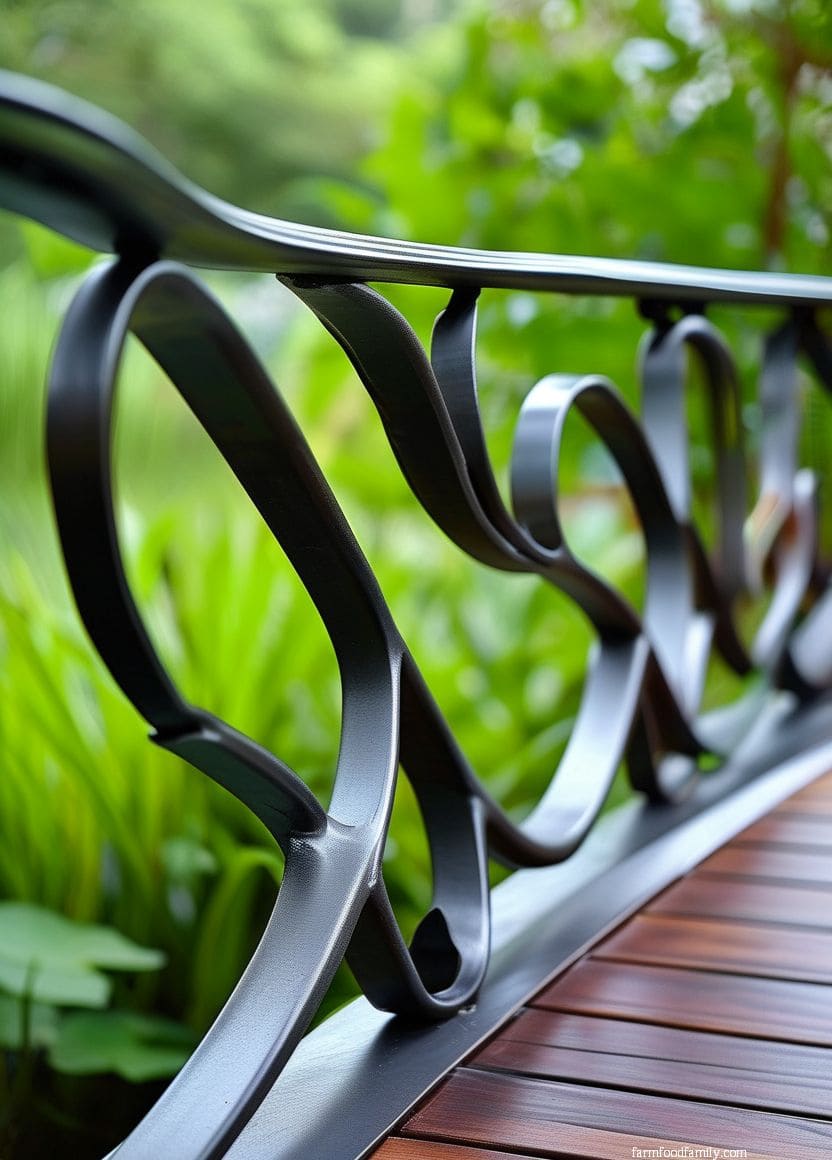
Skipping wood altogether, composite and vinyl railing systems have become the default choice for a lot of homeowners specifically because they don’t rot, split, warp, or need annual staining the way wood does.
The tradeoff is upfront cost and a more limited range of finishes compared to what’s possible with custom wood or metal work, but for anyone who wants a install-once, maintain-rarely railing, this is usually the answer.
Deck Railing Code and Safety FAQs
Style is only half the decision. The other half is whether the railing actually meets code and keeps people safe, and this is the part most deck railing roundups get wrong or skip entirely.
What is the code for railing on a deck?
Any deck more than 30 inches above grade needs a code-compliant guardrail, per the International Residential Code (IRC). That’s the single trigger height, there isn’t a separate weight or tread-depth threshold layered on top of it for whether a railing is required at all. Once a railing is required, it has to meet real structural load standards too: the top rail needs to resist a 200-pound point load applied at any single spot, or 125 pounds per linear foot applied horizontally or vertically, whichever governs, per the IBC’s testing standard.
How much do deck railings cost?
Costs vary widely by material and length, roughly $100 to $700 covers a lot of standard wood or basic material projects including labor, but material choice moves that number a lot. Cable and composite systems generally run higher than basic wood spindle railing.
What is better vinyl or aluminum railing?
Both resist rust and corrosion well and both are genuinely low-maintenance. Vinyl has an edge for a lot of homeowners specifically because it doesn’t fade, doesn’t need sealing, and never needs staining, three real maintenance tasks that aluminum can also mostly avoid but that vinyl skips entirely.
Does my deck need a railing?
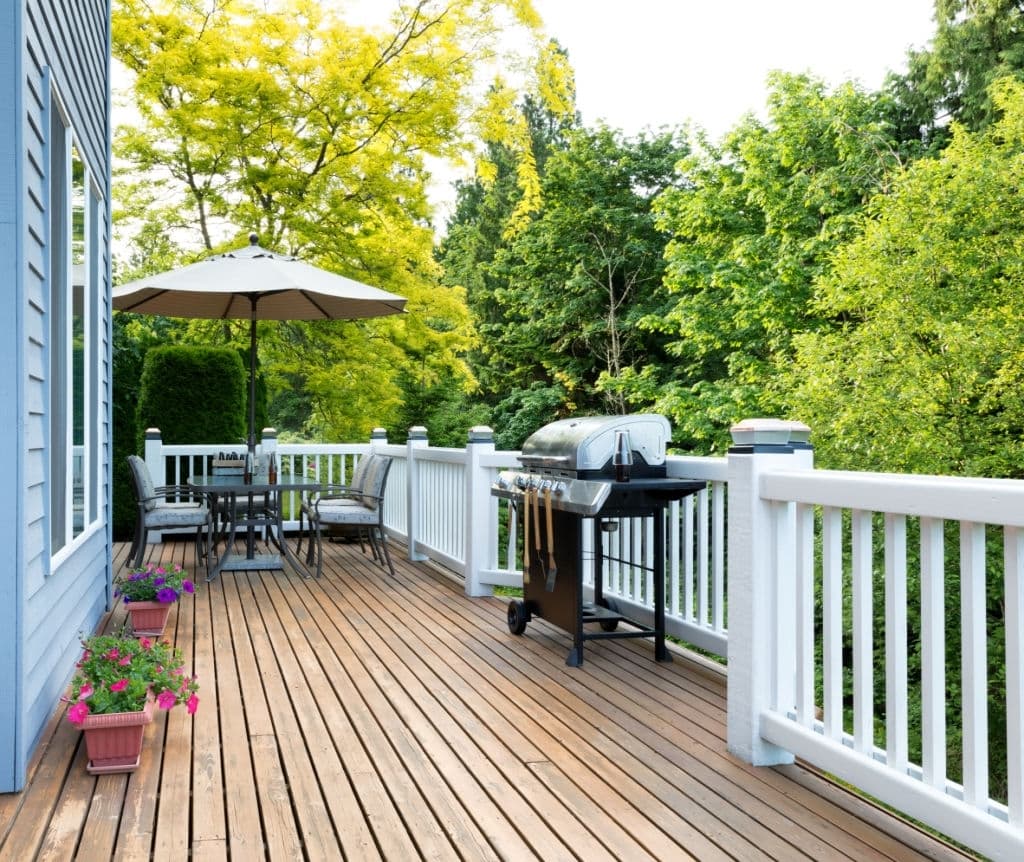
The general threshold is 30 inches: below that height, code typically doesn’t require a railing. That said, the terrain underneath still matters. A 20-inch-high deck over a rocky slope or a pool is a different safety calculation than the same height over flat, soft grass, and it’s worth adding a railing regardless of the code minimum if the fall risk underneath is real.
How far apart can deck railing posts be?
This is where a lot of guides, including earlier versions of guides like this one, get two different measurements confused. Structural posts themselves can be spaced up to 8 feet apart per the IBC. The 4-inch limit that actually matters for safety applies to something different: the gap between individual balusters, or between the bottom rail and the deck surface, which can’t exceed 4 inches specifically to keep a small child from slipping through. Getting the post spacing and the baluster spacing mixed up is an easy mistake, but it’s an important one to get right before building.
How high should deck railings be?
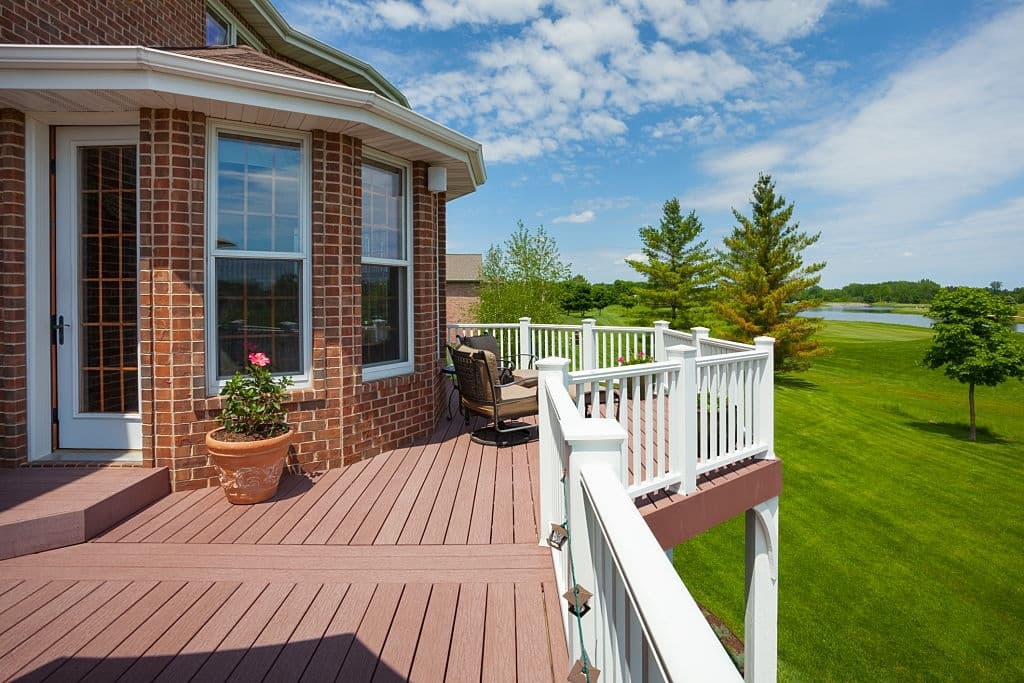
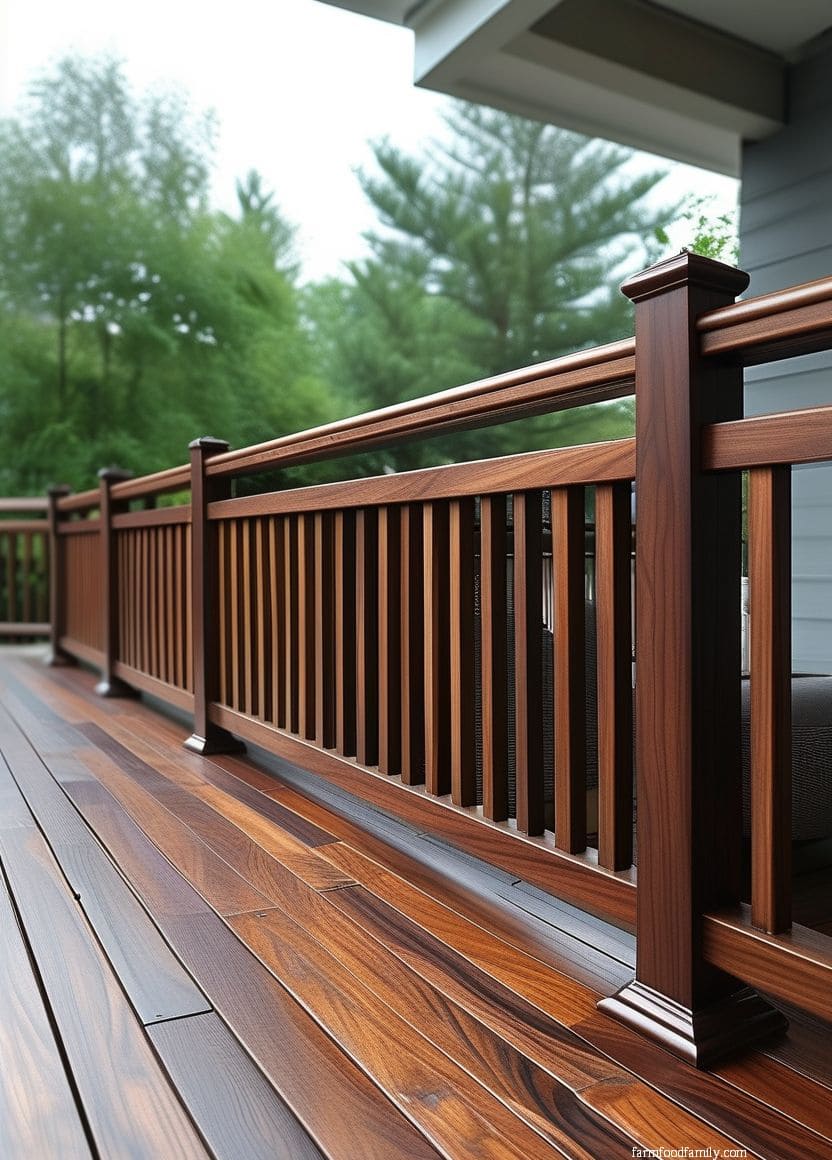
The IRC requires a minimum of 36 inches from the deck surface to the top of the rail for residential decks. Commercial applications, per the IBC, require 42 inches. A handful of states, California among them, require 42 inches even for residential decks, so it’s worth checking local amendments before finalizing a height.
How do you secure a railing on a deck?
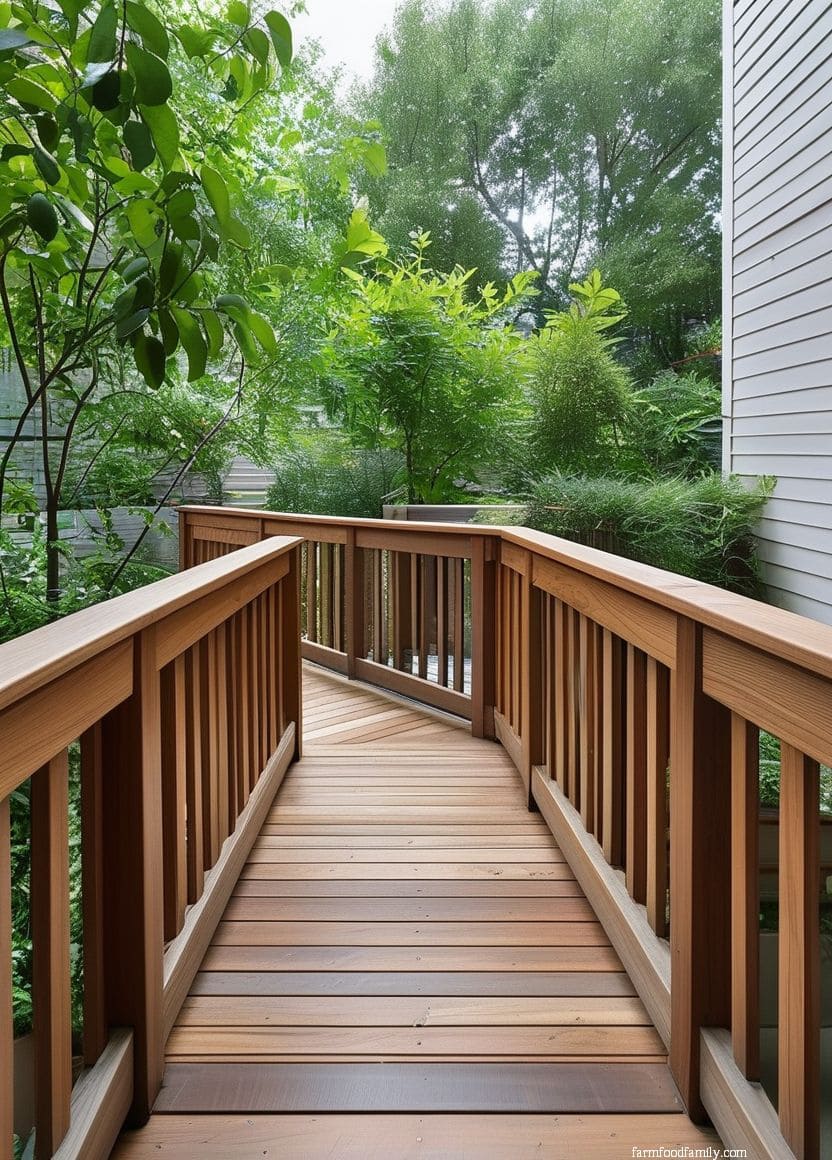
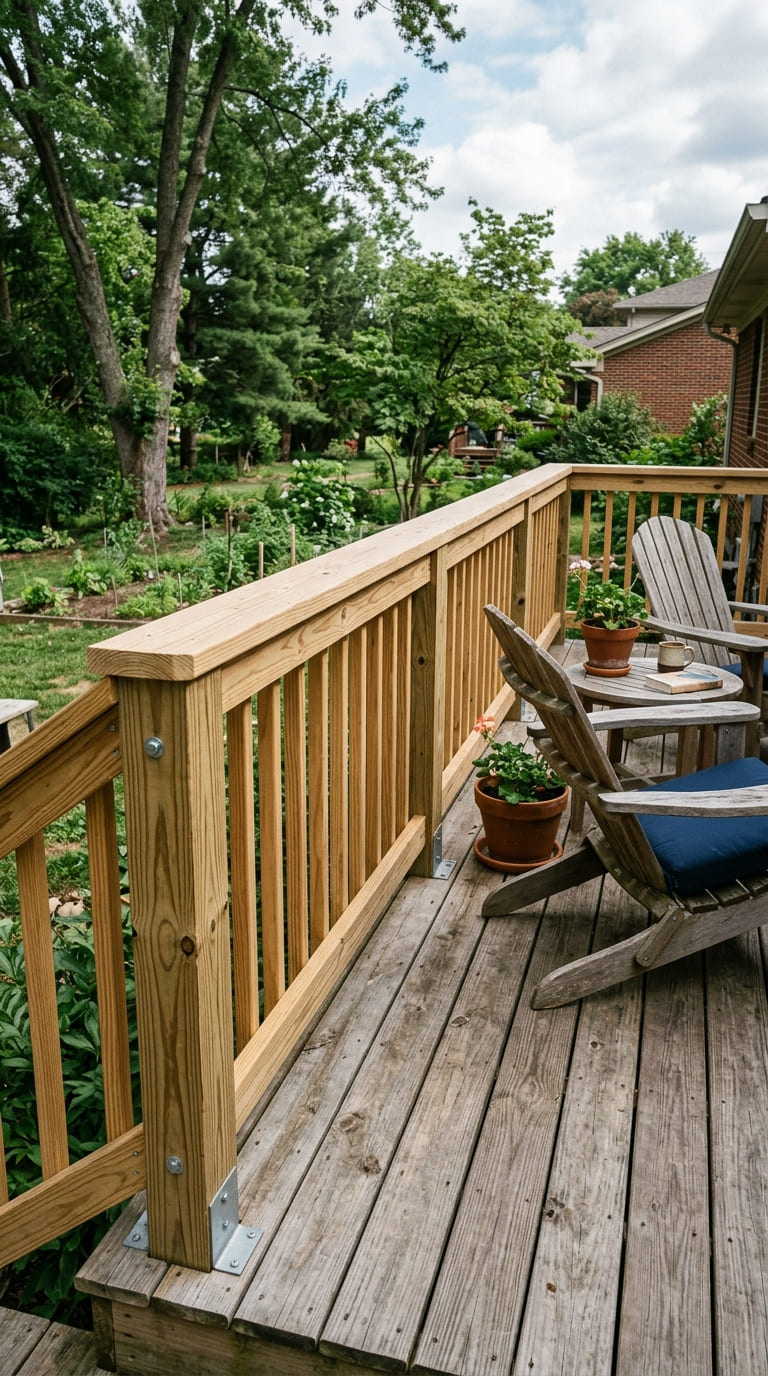
After cutting posts to length, bolt them directly to the rim joists rather than just screwing them, with post spacing not exceeding 8 feet. For a composite system, slide the post sleeve over the wood post core, then the sleeve skirt over that, so both rest cleanly on the deck surface. Secure the top and bottom rails to the posts, then install the balusters and finish with the top cap. Getting the post-to-joist connection genuinely solid matters more than almost anything else in this list, it’s the single point of failure for the whole railing system if it’s done wrong.
Related: 35+ Best Deck Skirting Ideas and Designs
Do you need railings on both sides of deck stairs?
Any stairway with four or more risers needs a handrail on at least one side per the IRC. Wider or taller stairways sometimes require handrails on both sides depending on the exact rise and local code amendments, so it’s worth confirming with a local building department for a specific staircase rather than assuming either way.
Is cable deck railing expensive?
Yes, relative to basic wood railing. Cable systems typically run in the range of $60 or more per linear foot of railing, which adds up across the full perimeter of a deck. That’s a cost tied to the actual length of railing being installed, not the deck’s overall square footage, worth keeping straight when budgeting since those are two different numbers.
Is it OK to notch deck railing posts?
Generally, no. Notching a post to fit a rail creates a structurally weaker connection at exactly the point where the post needs to be strongest. It’s a shortcut that trades long-term structural integrity for a slightly easier install, not a good trade for something people are going to lean on.
Is cable railing cheaper than wood?
Not in materials, cable typically costs more than comparable wood railing upfront. Where it can come out ahead is labor and long-term maintenance: cable installation can be faster than building a full wood spindle system, and there’s no ongoing staining or sealing cost the way there is with wood.
Do outdoor steps need a handrail?
Yes, the same four-or-more-risers rule that applies to deck stairs applies here. Any exterior stairway meeting that threshold needs at least one handrail, with both sides required in some cases depending on stairway width and local code.
One more thing worth knowing before hiring this out: a badly installed railing is a real, recurring problem. Homeowner threads about railing installers doing rushed or incorrect work, wrong spacing, weak post connections, sloppy finishing, come up often enough in renovation communities that it’s worth vetting an installer’s past work specifically, not just their price, before signing off on a railing project.
Conclusion
Thirty real directions is plenty to choose from, whether the goal is a weekend pallet project or a professionally built cable system. Pick the style that fits the house and the budget, but don’t skip the code section above while doing it, a railing that looks right and isn’t actually safe is worse than no railing at all.
You can also try to lay your hands on different styles. The Canopy Tree services in Southern Highlands may be of help to your desired railing designs. Aside from pruning services, they are also a team of expert tree house builders!
Never miss an update — choose FarmFoodFamily as your preferred source on Google.
How it works: Tap the button below to open Google's settings page, then check the box next to FarmFoodFamily.
Tap the checkbox to turn it blue — that's how you know it's set.